




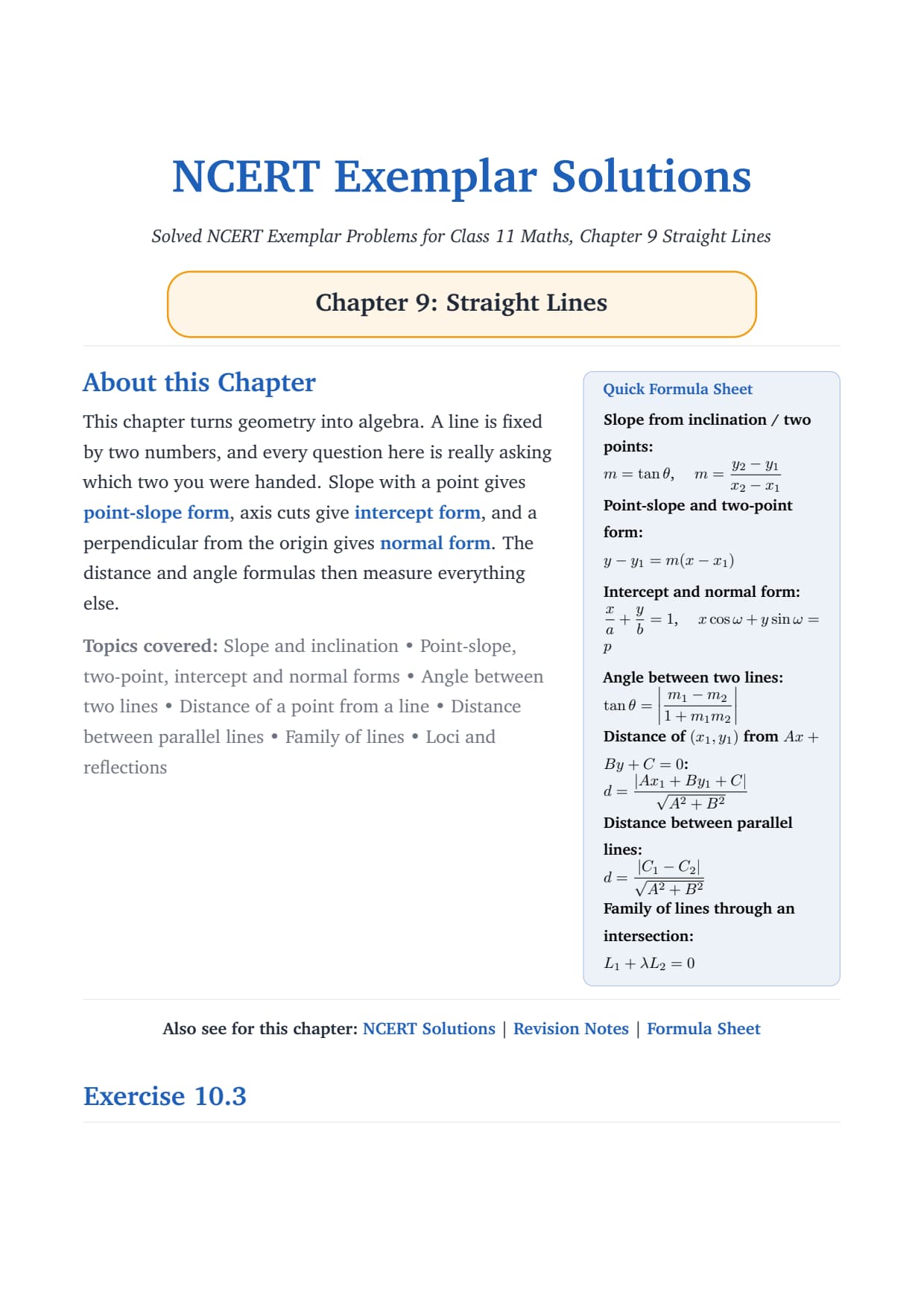
Straight Lines is the chapter where the Exemplar stops asking students to draw a line and starts asking them to find a locus. The NCERT Exemplar Solutions for Class 11 Maths Chapter 9 Straight Lines on this page solve all 59 questions of the chapter, step by step, according to the 2026-27 NCERT Exemplar.
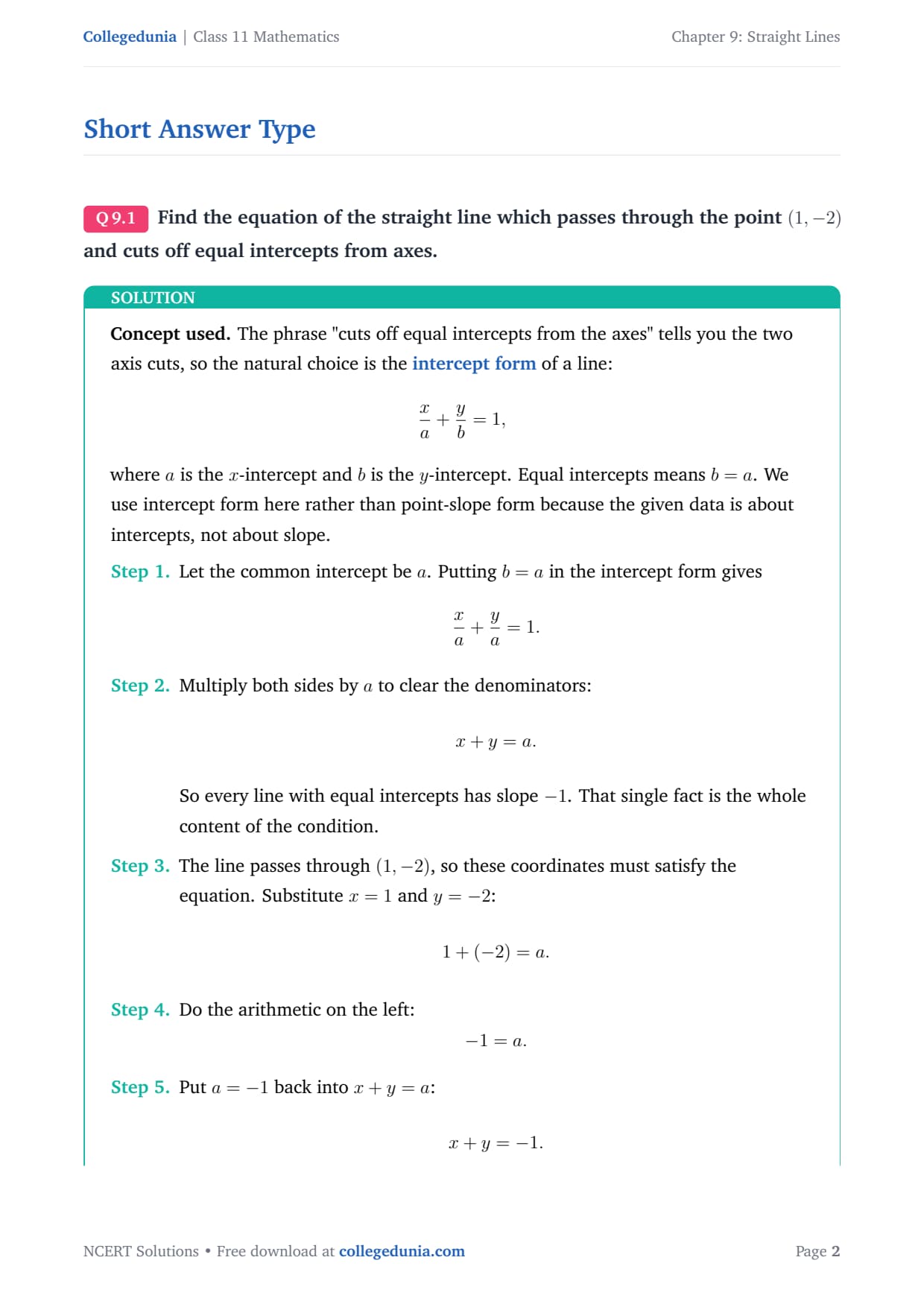
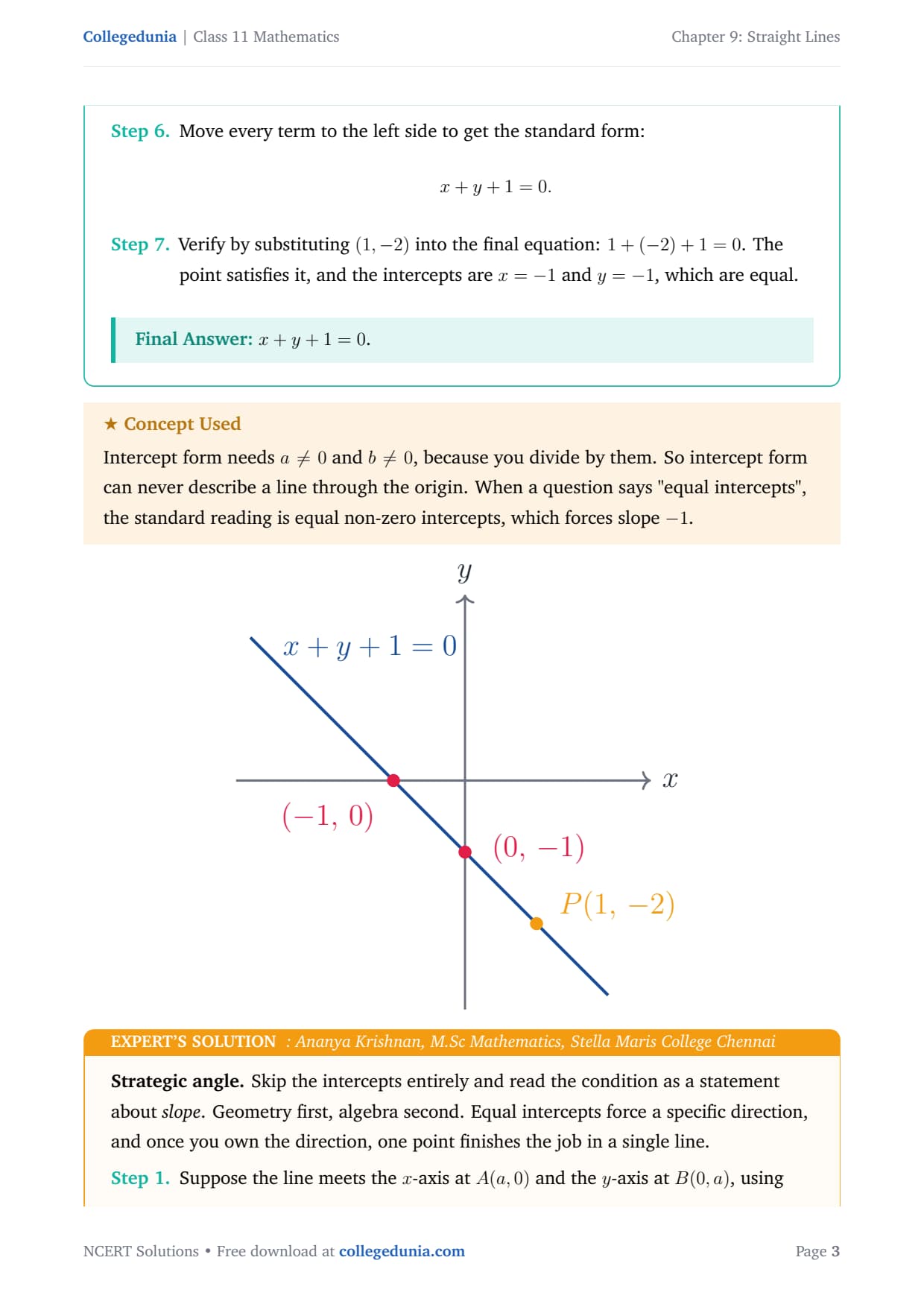
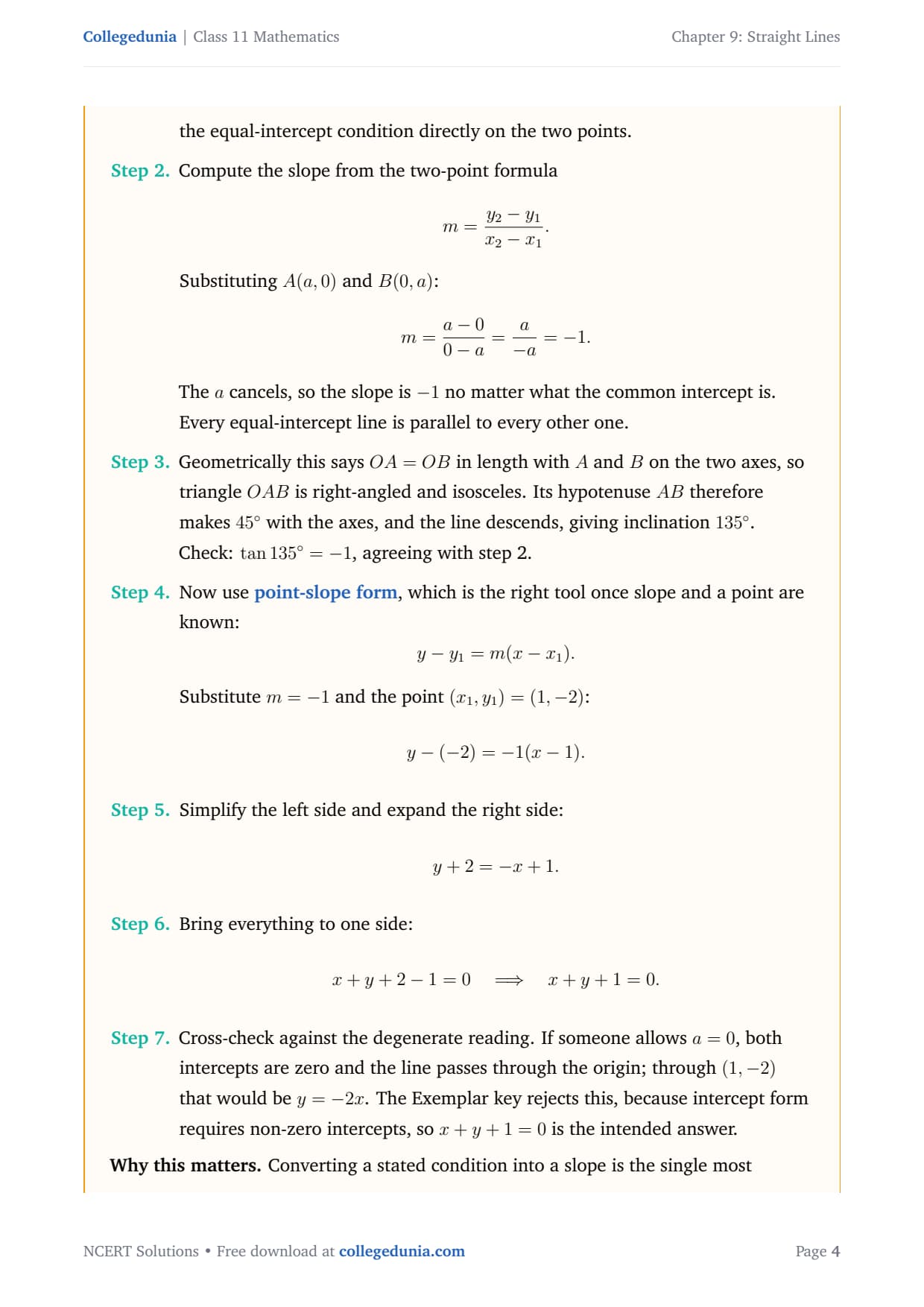
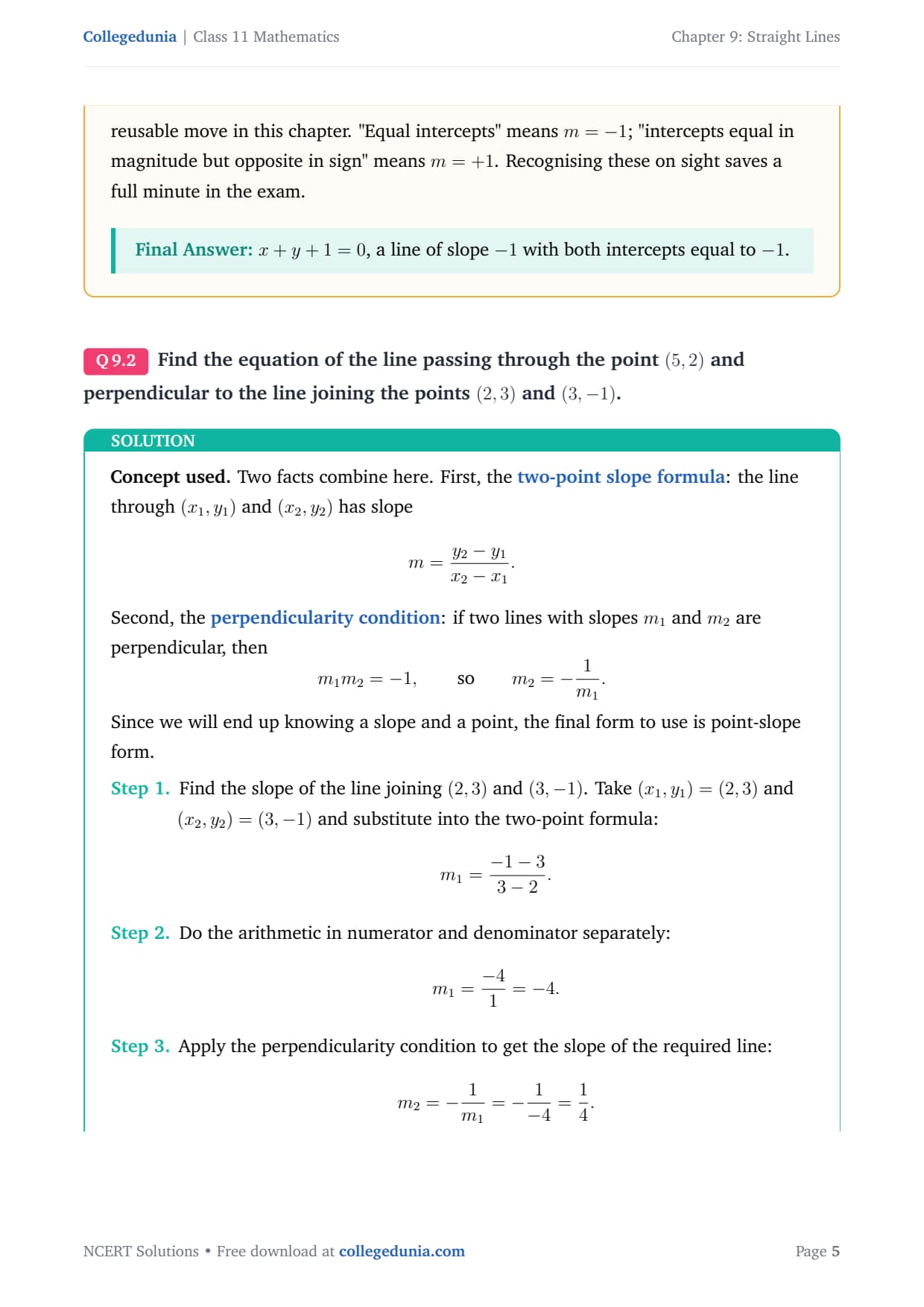
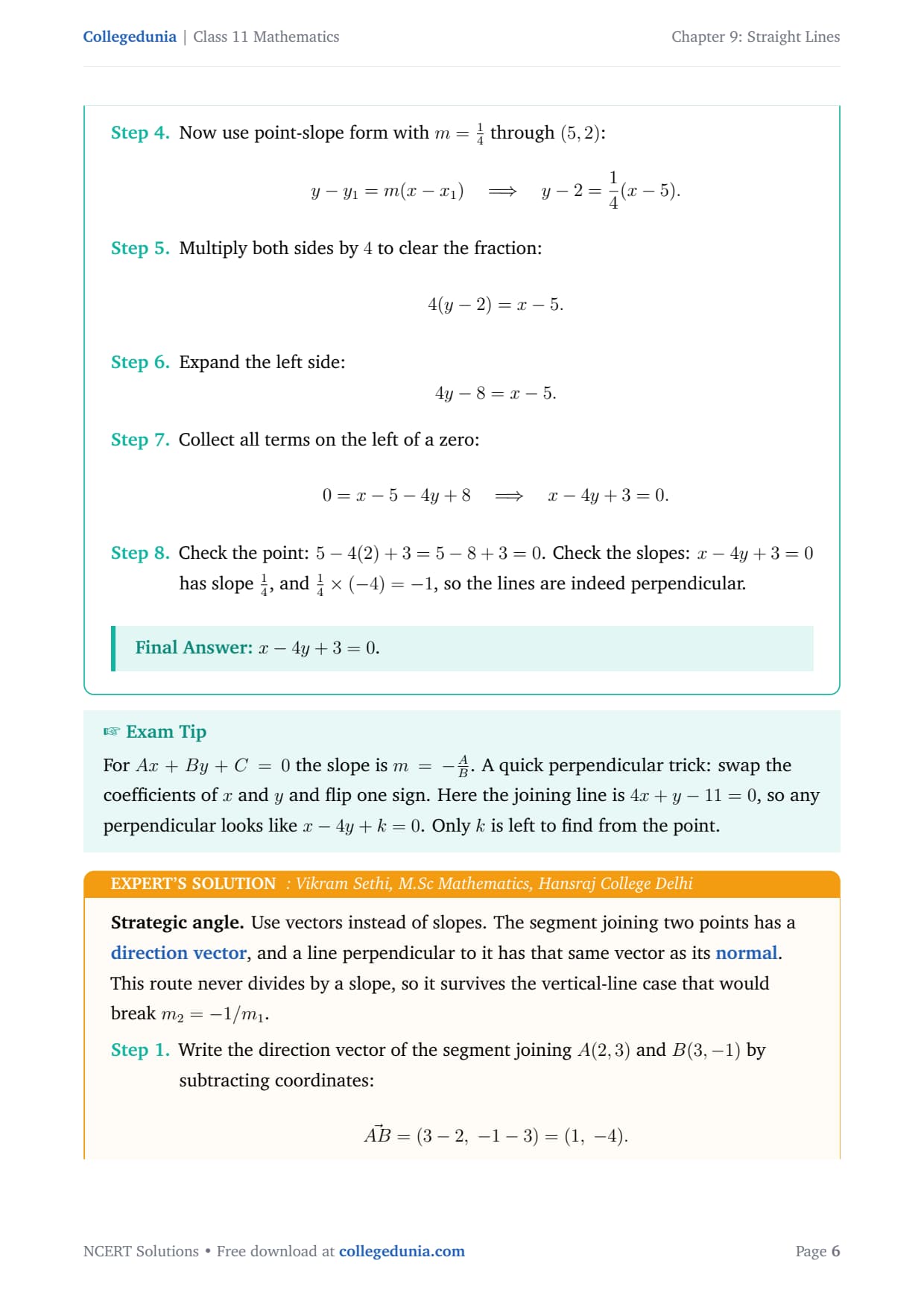
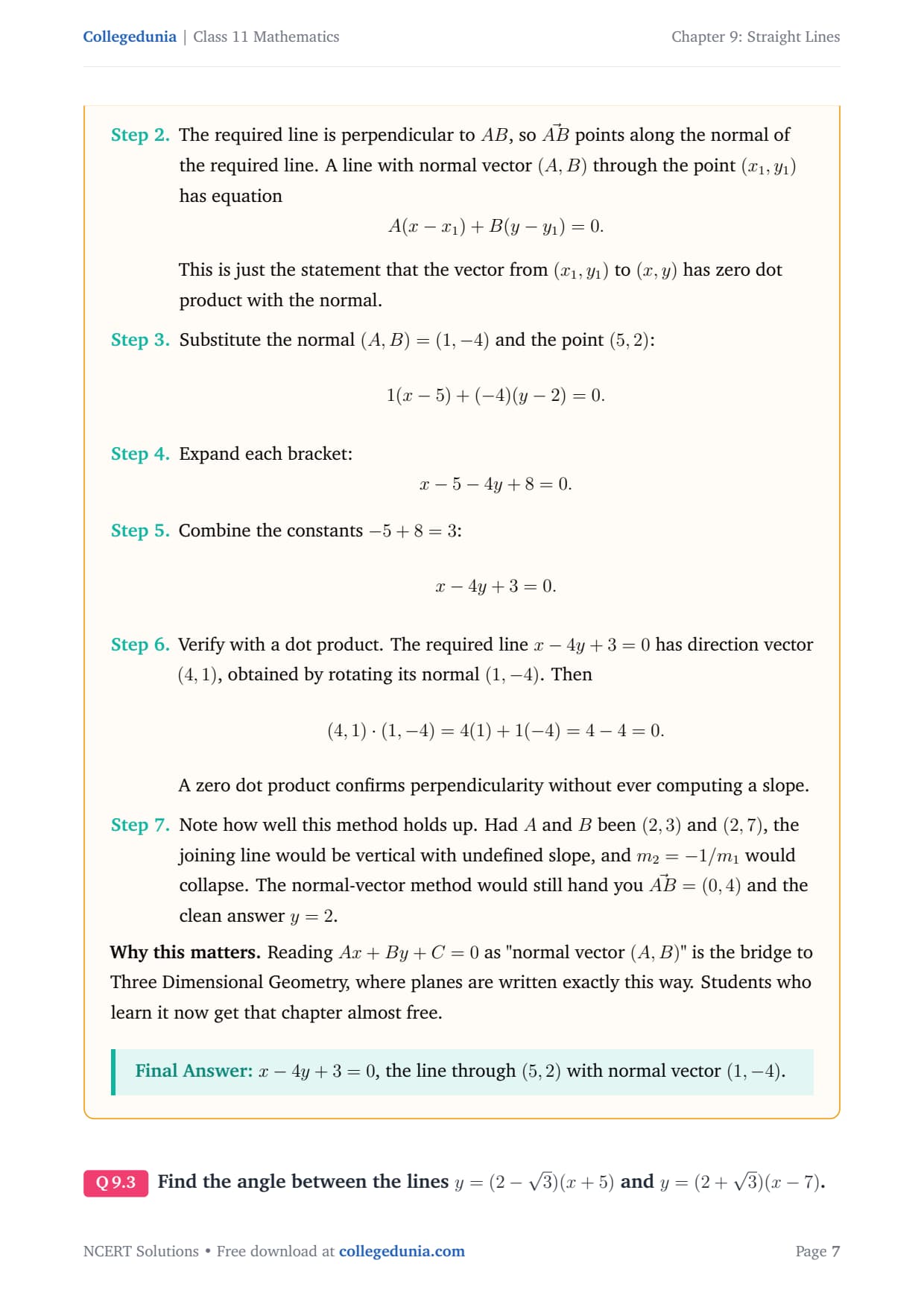
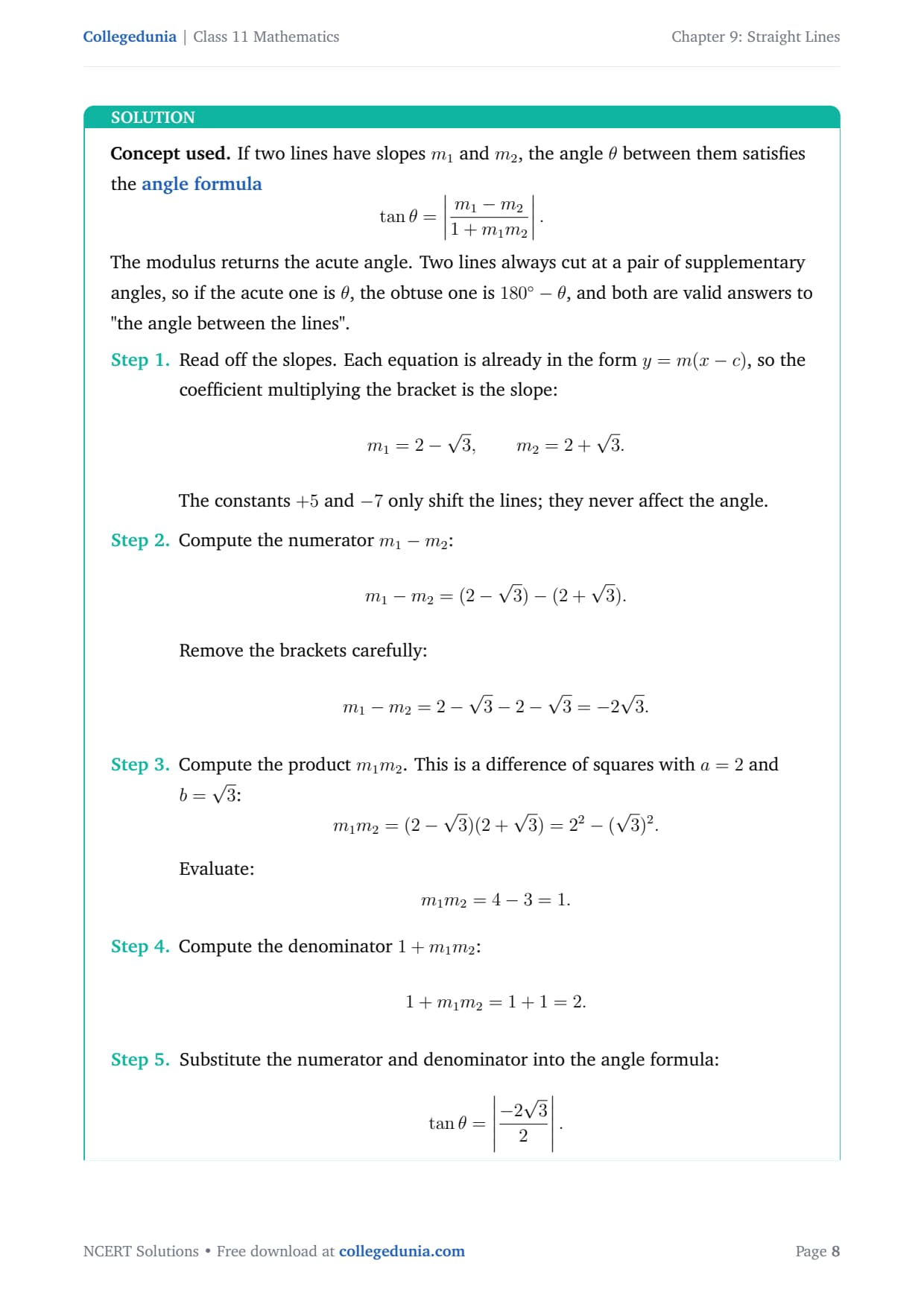
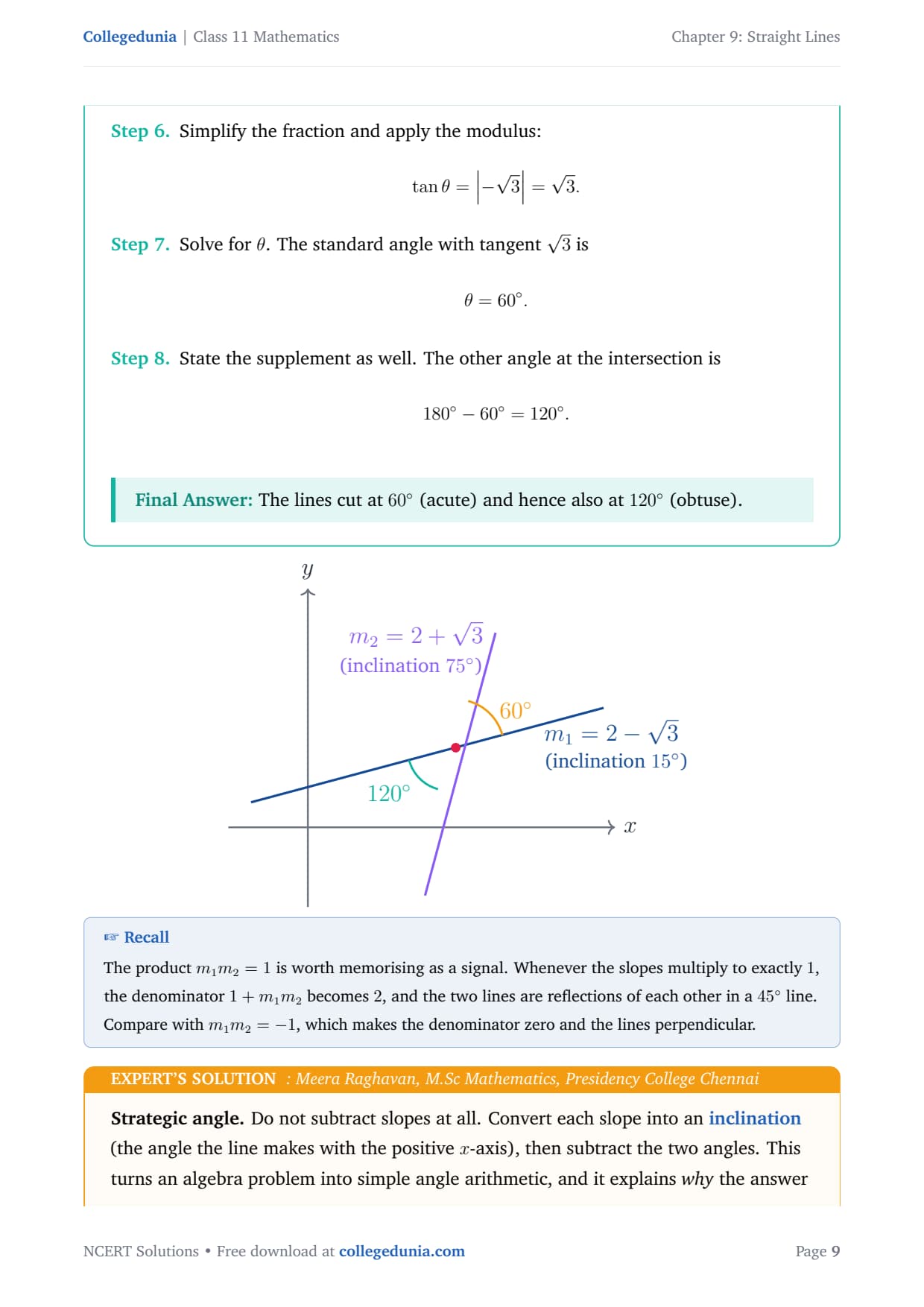
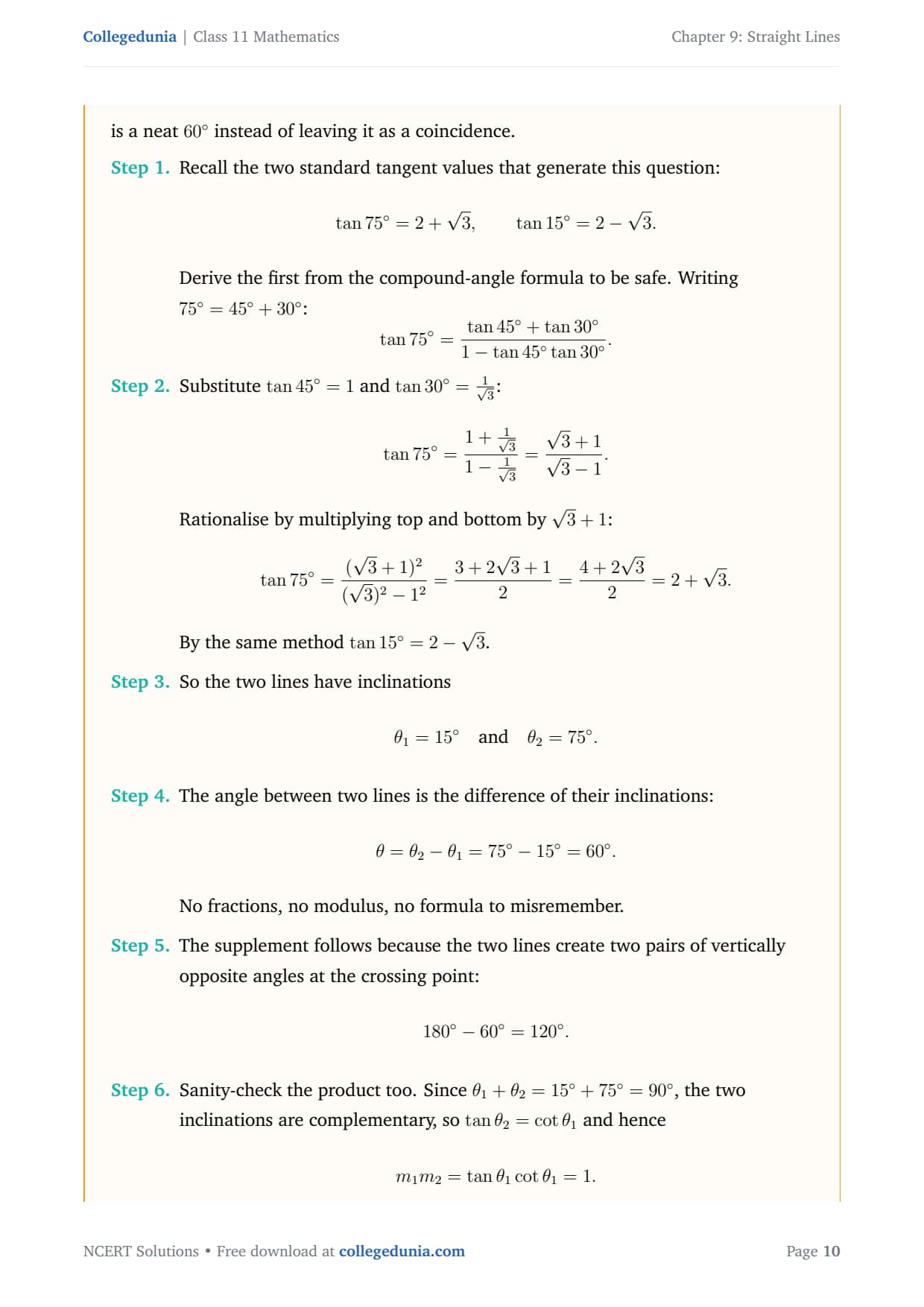
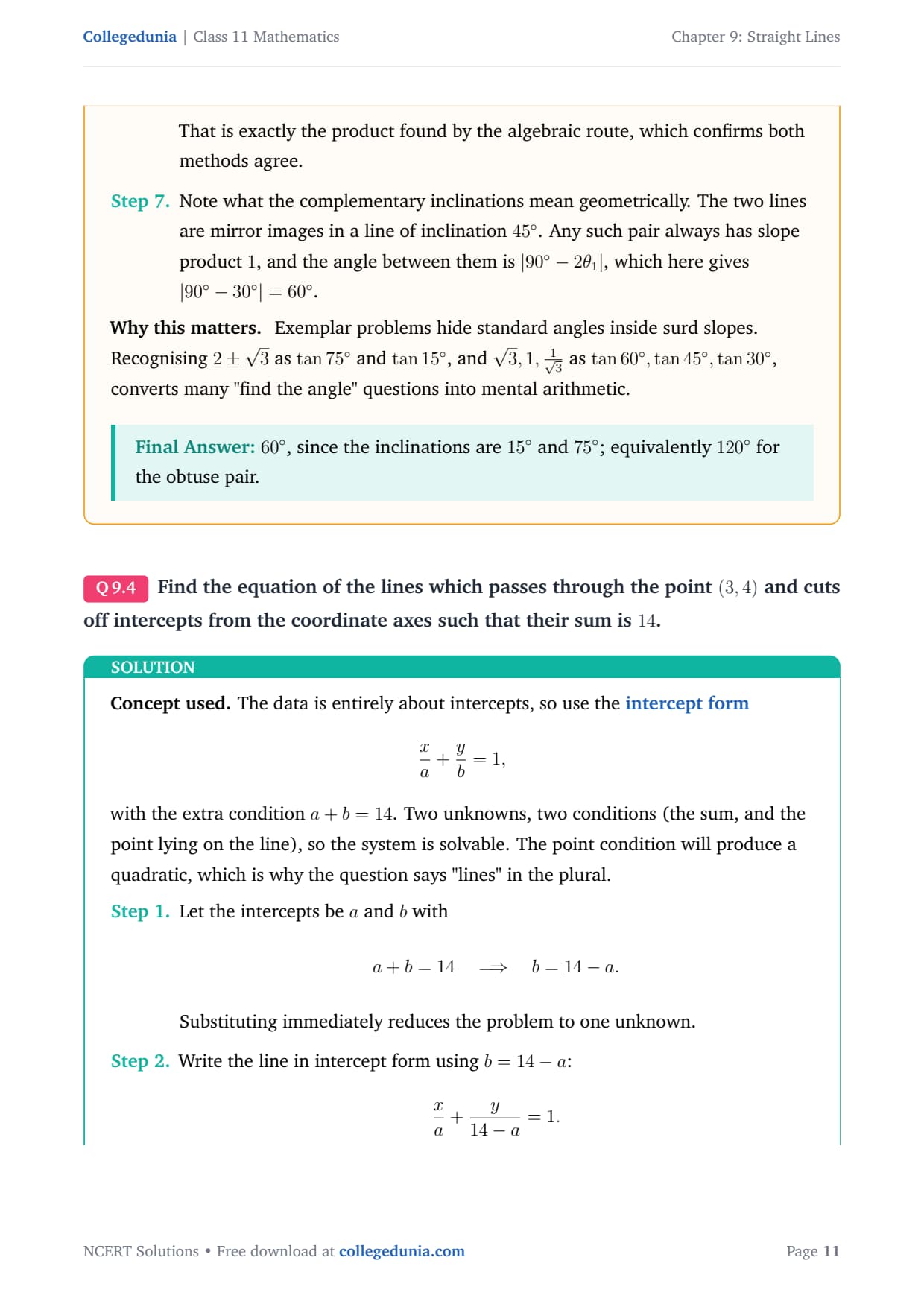
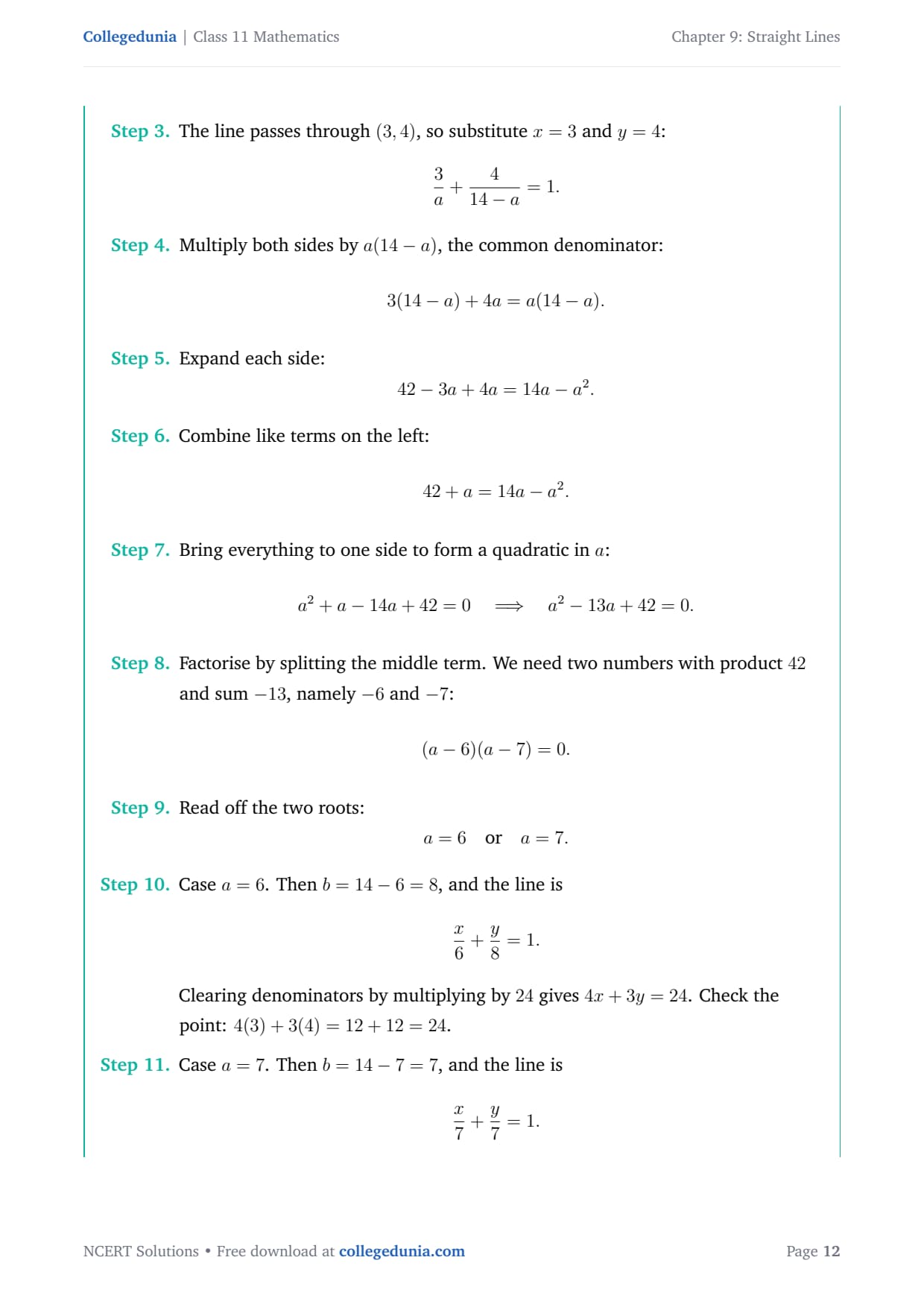
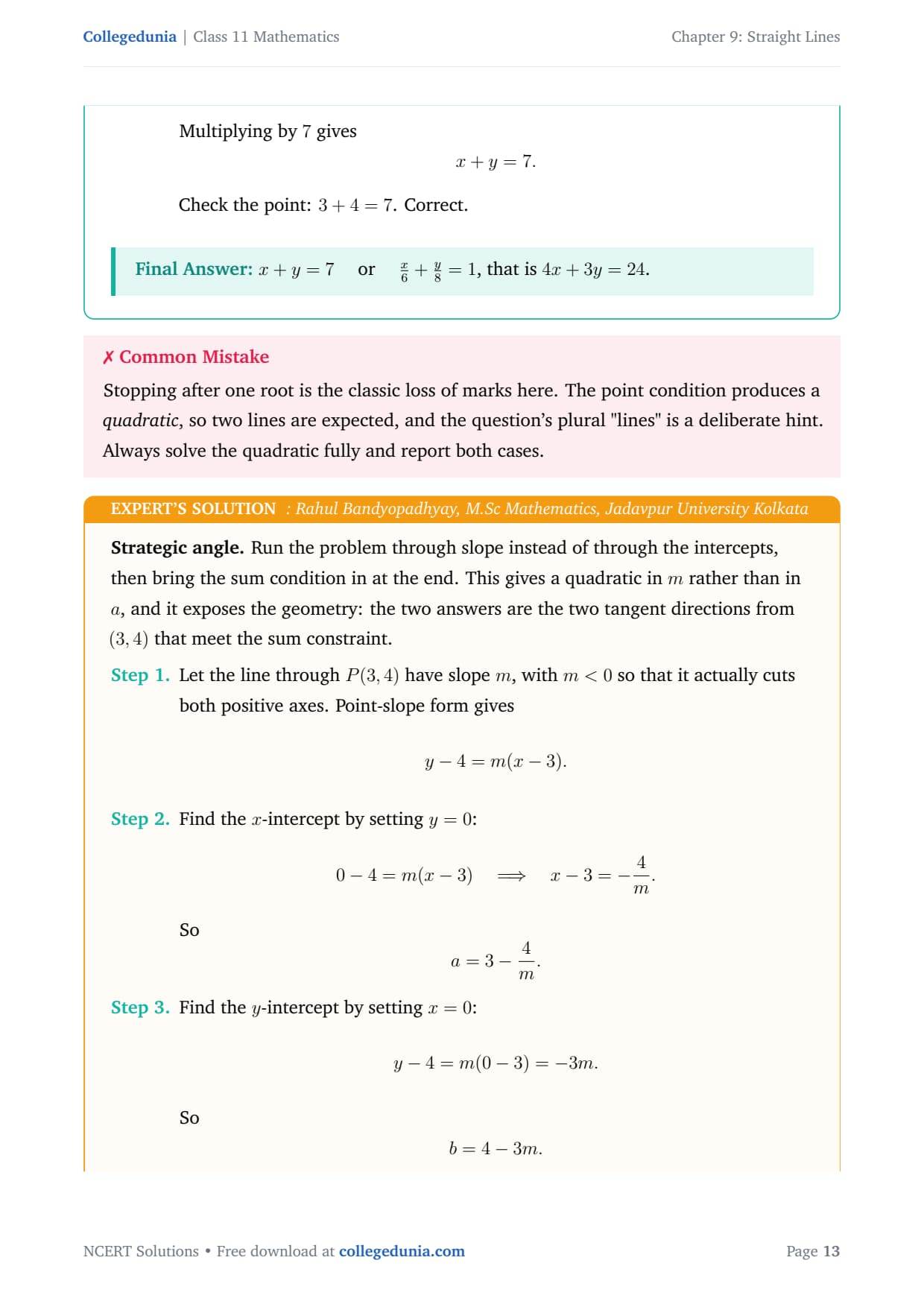
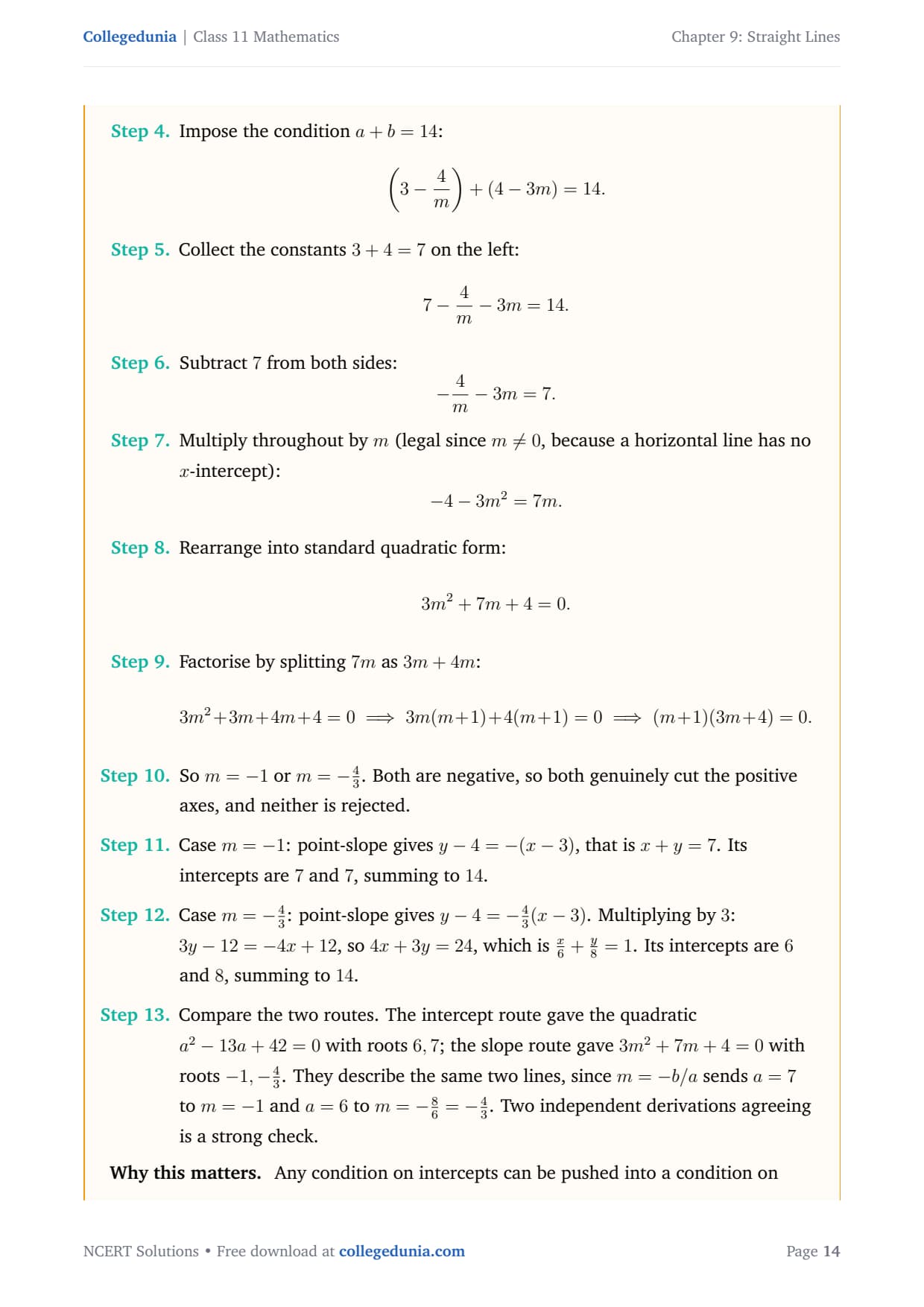
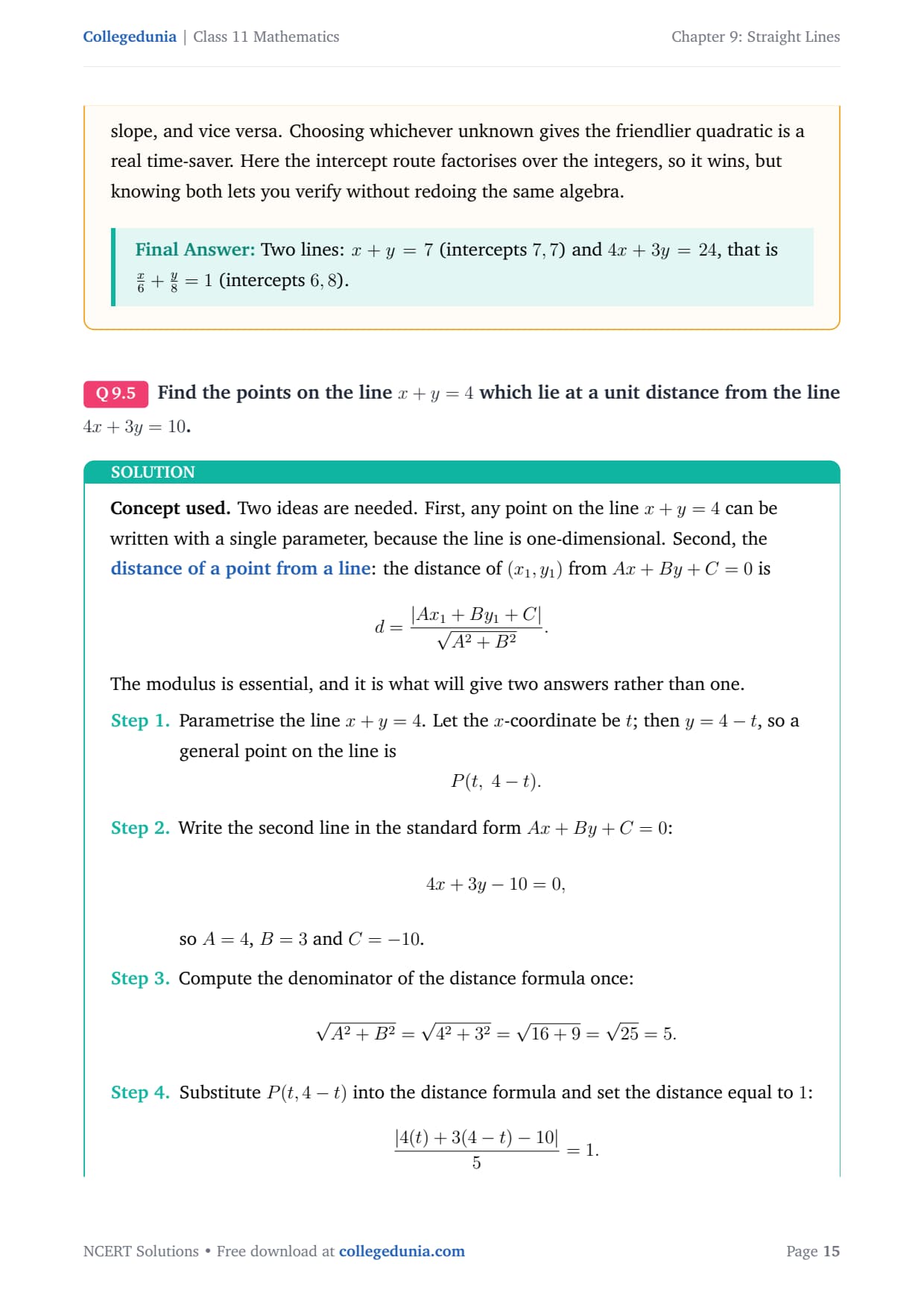
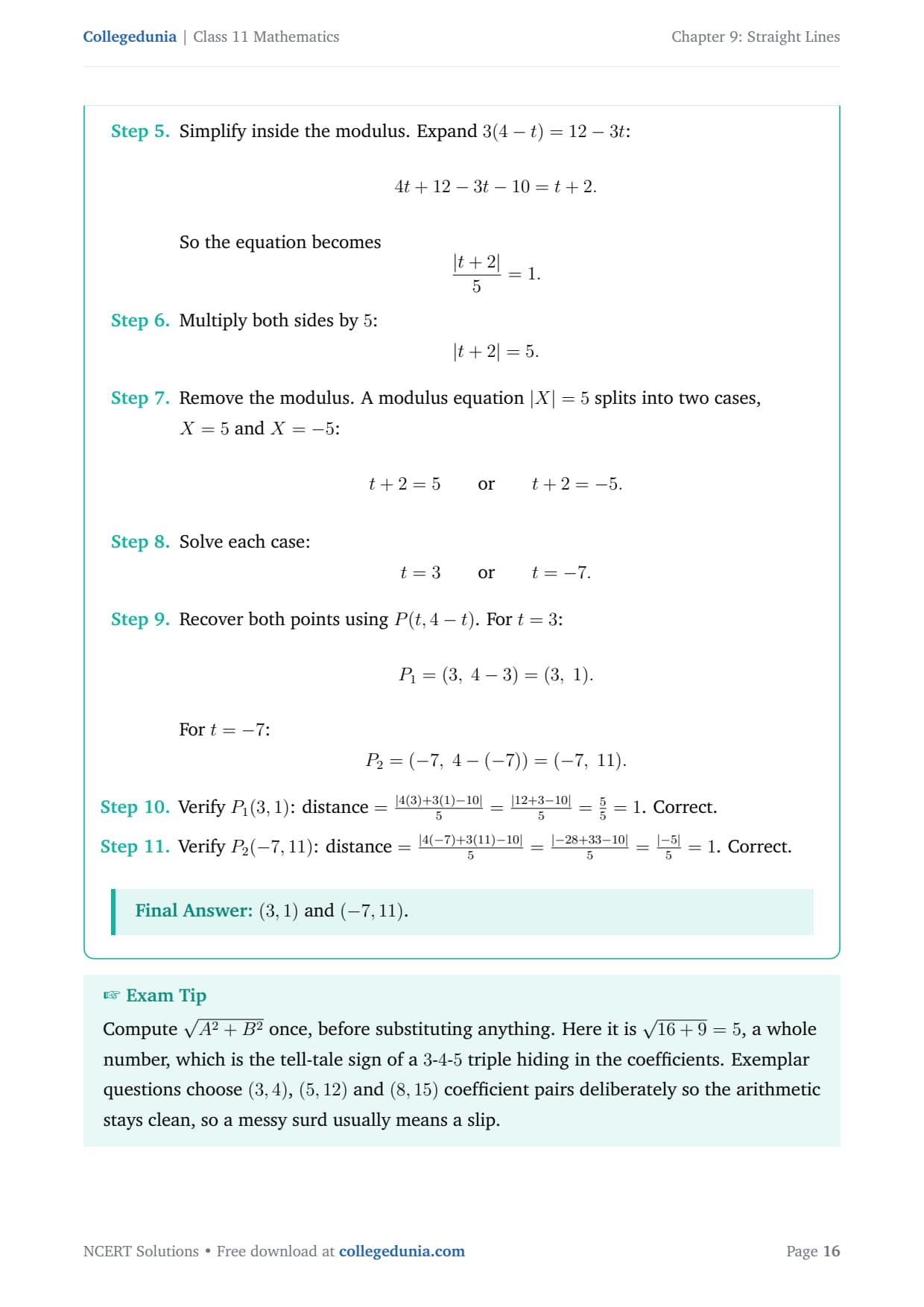
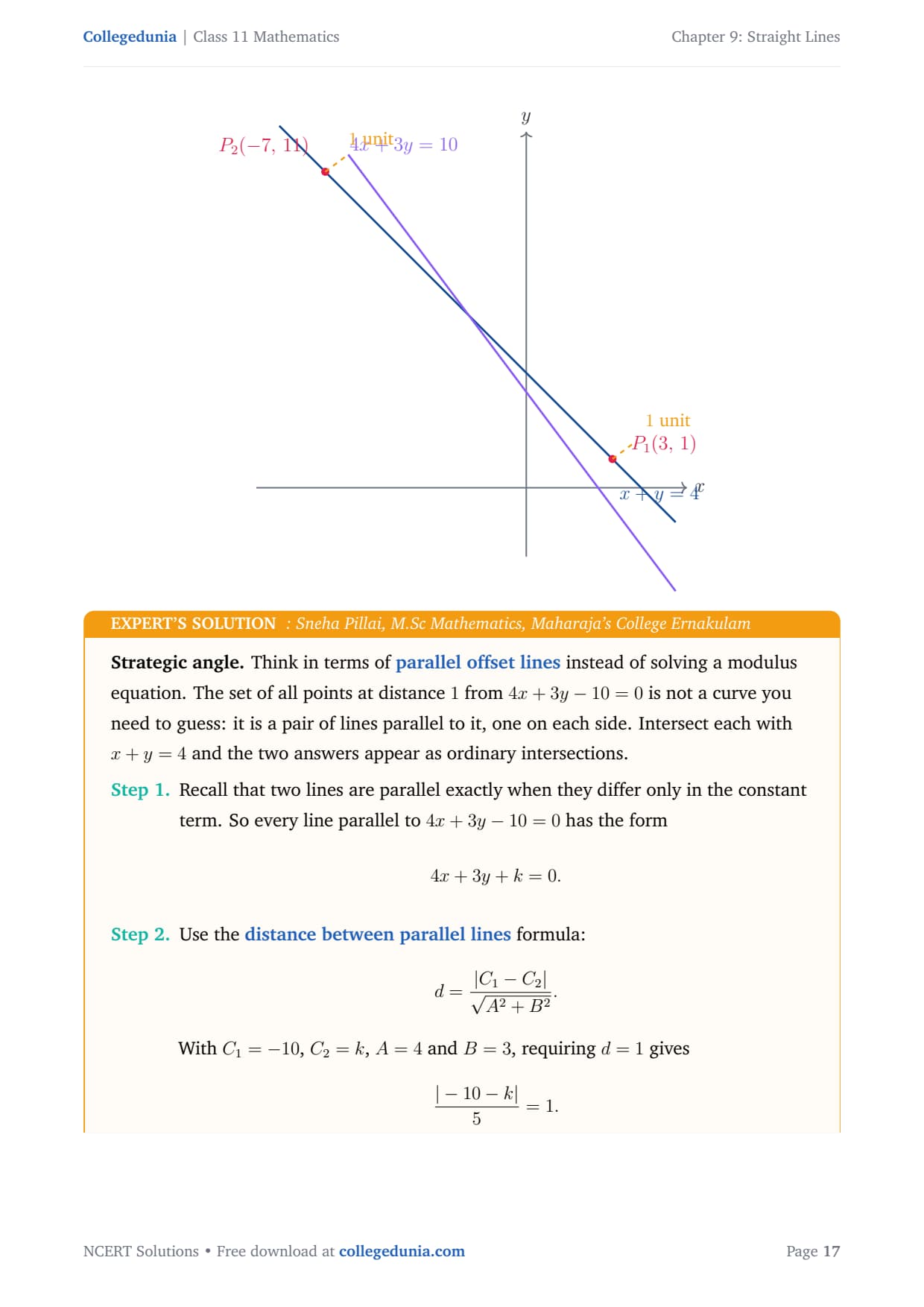
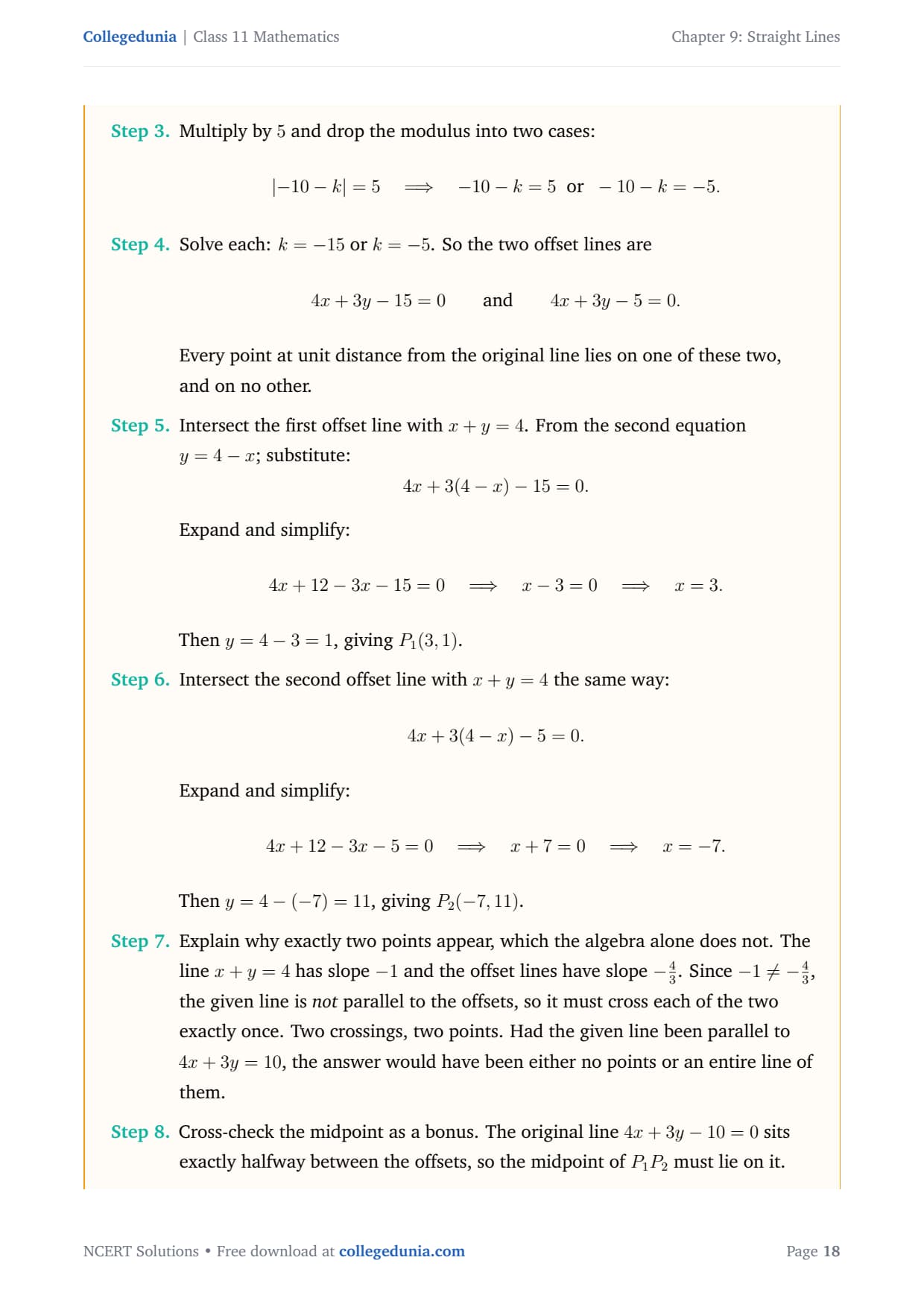
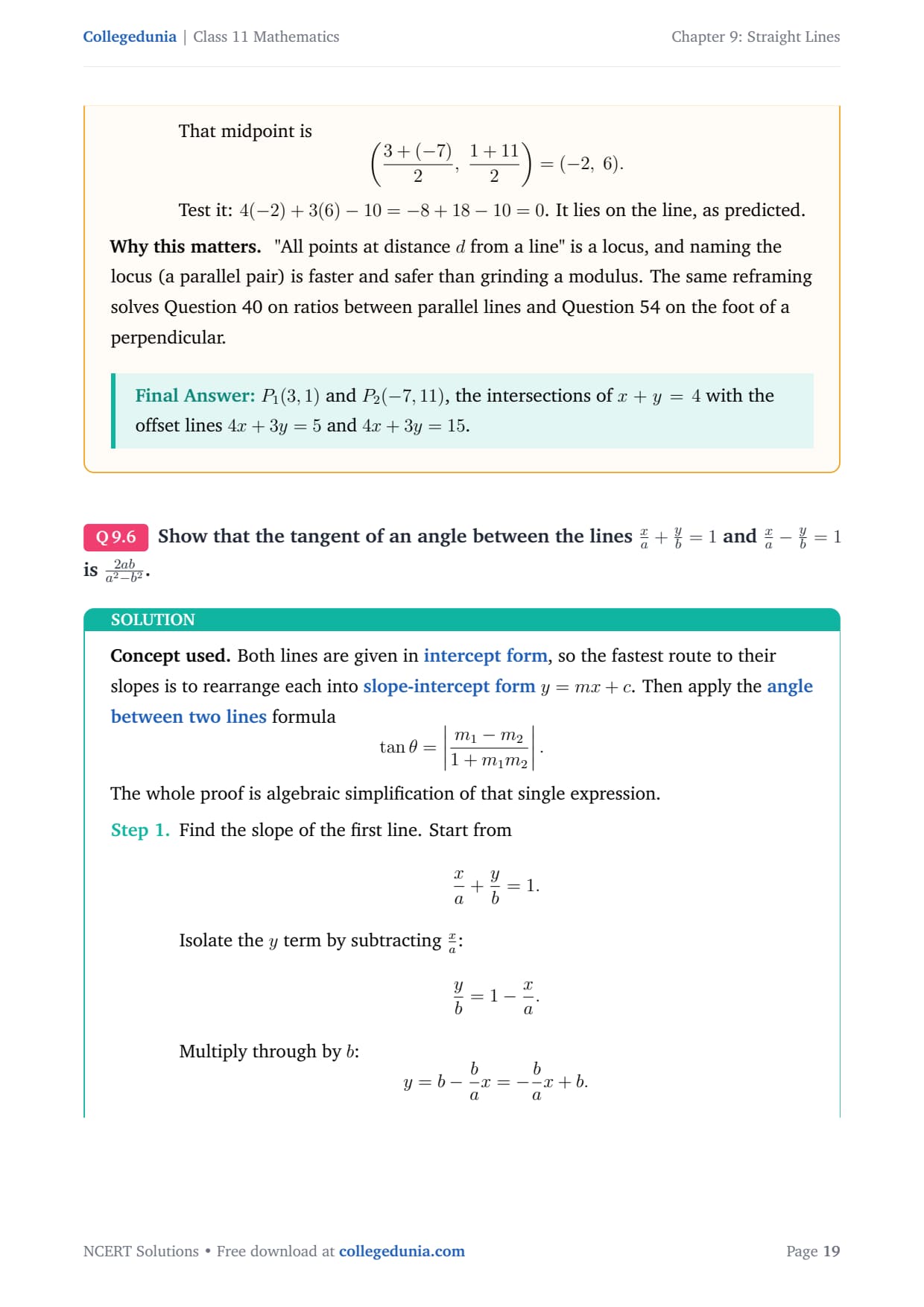
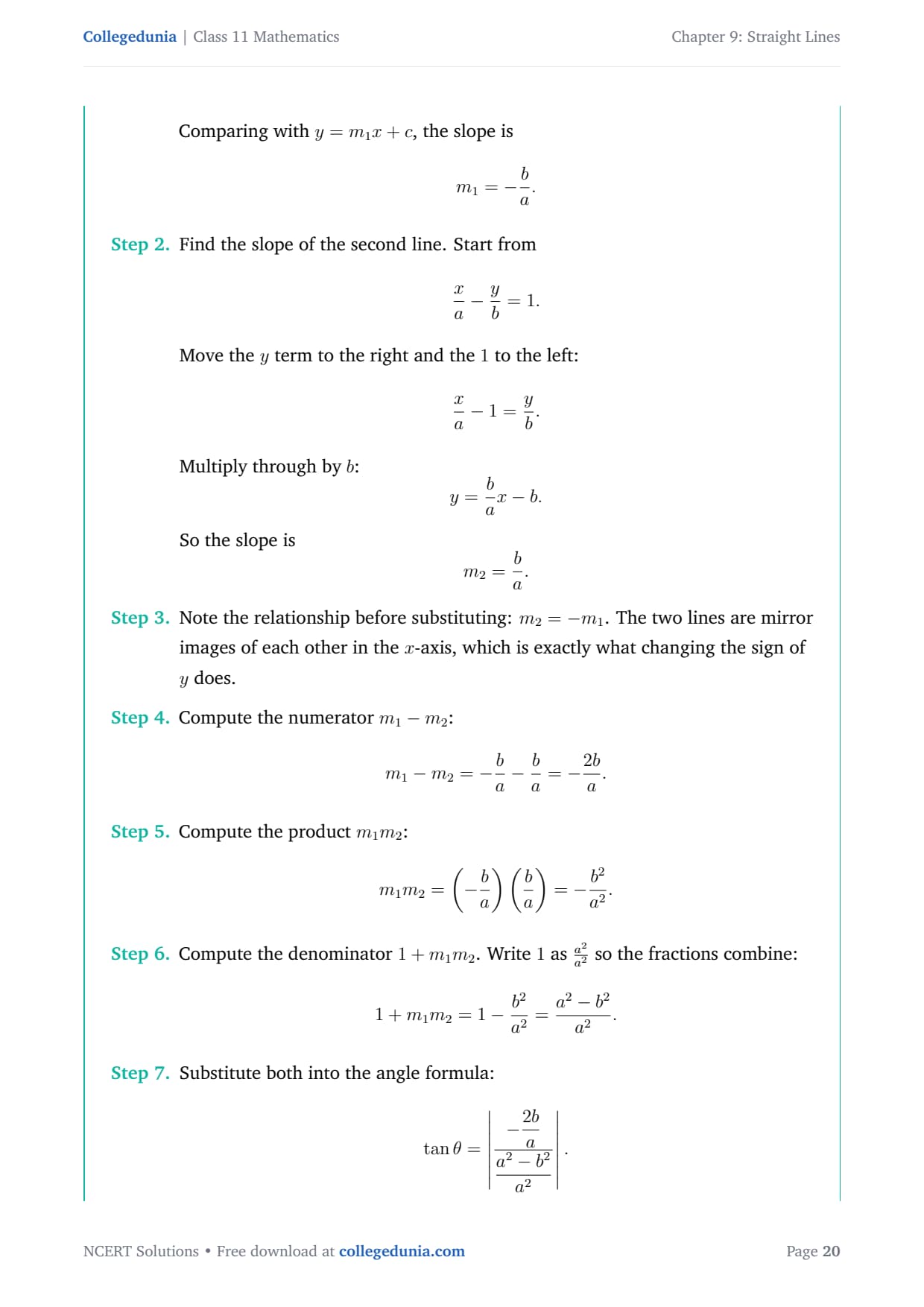
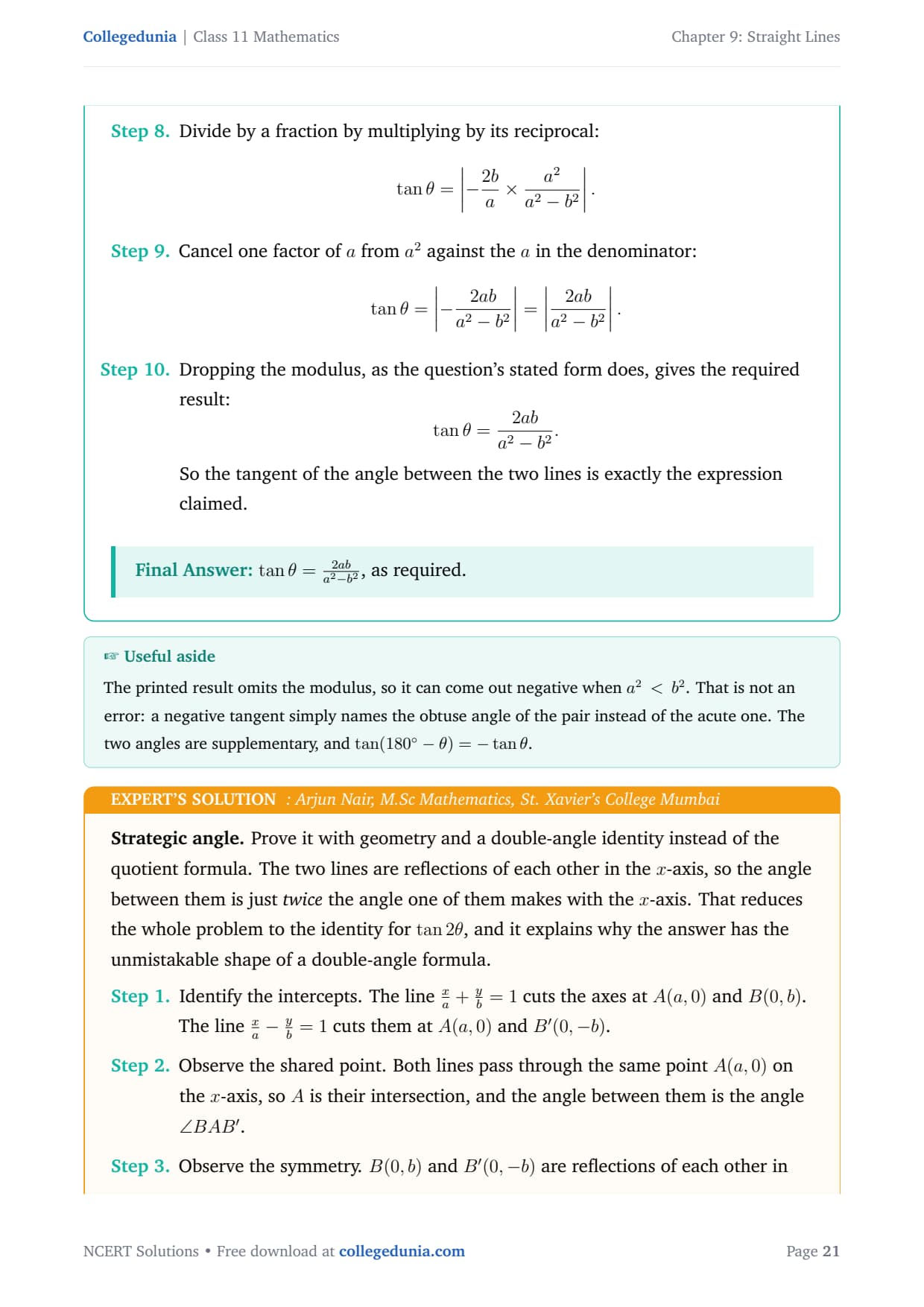
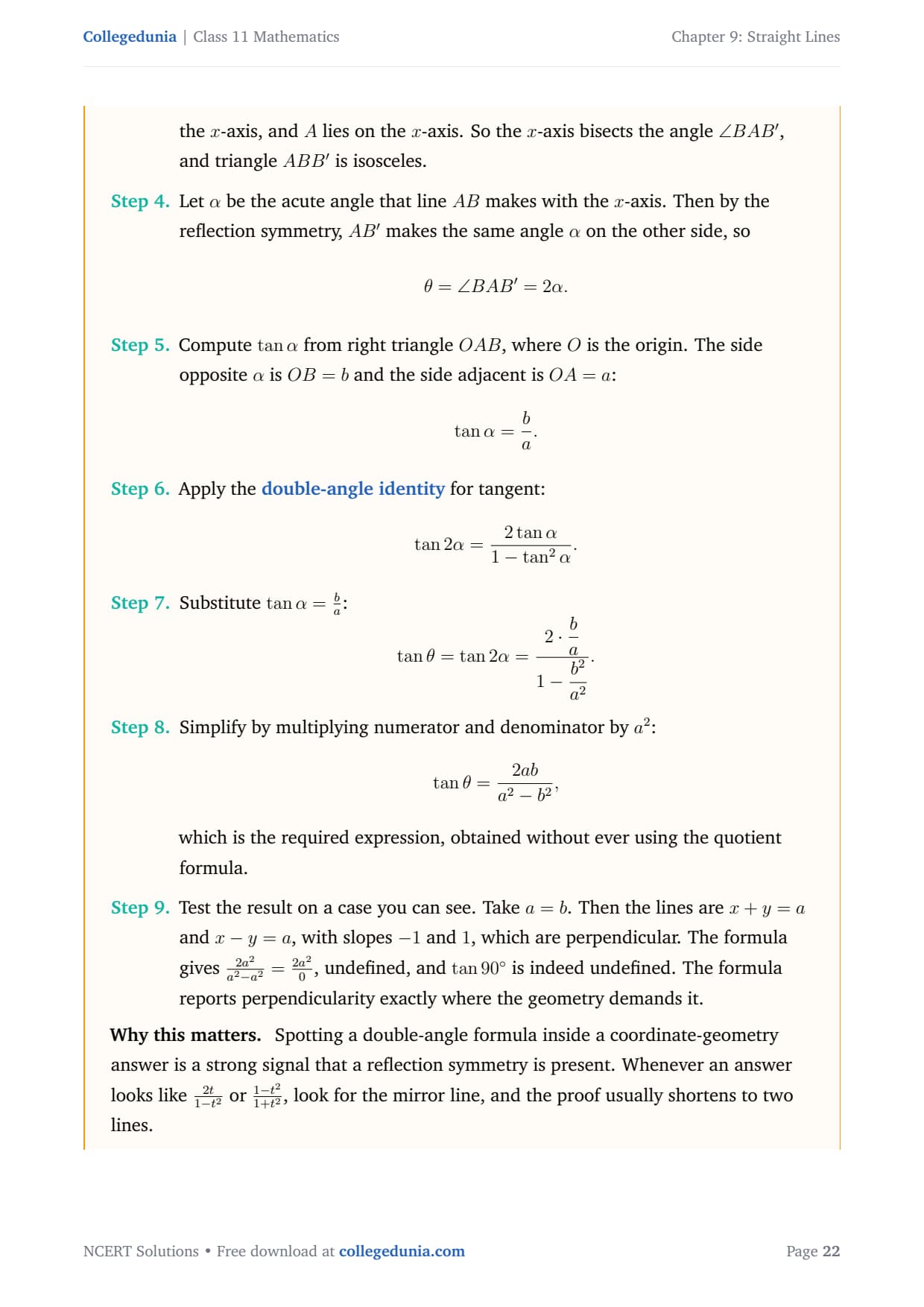
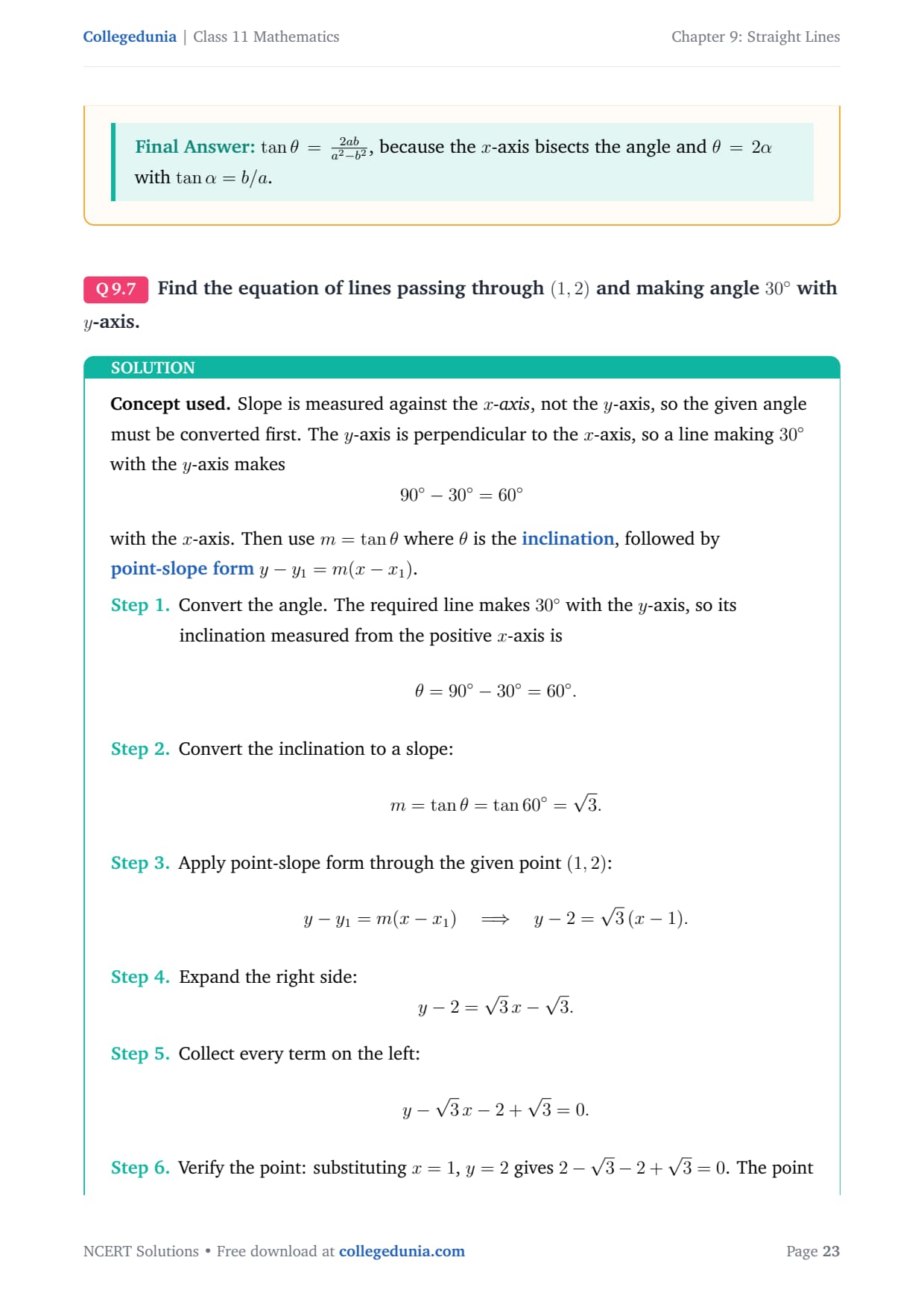
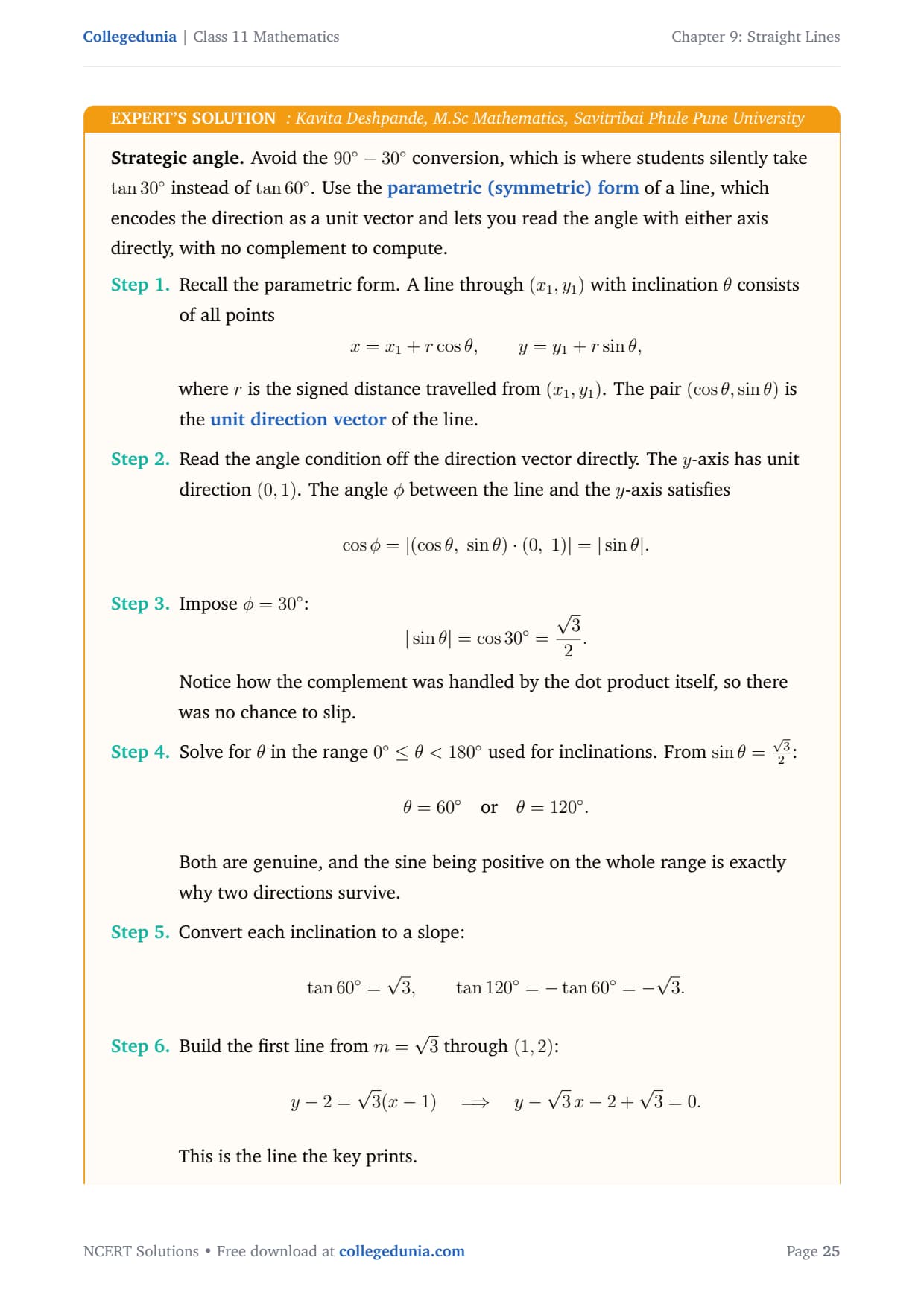
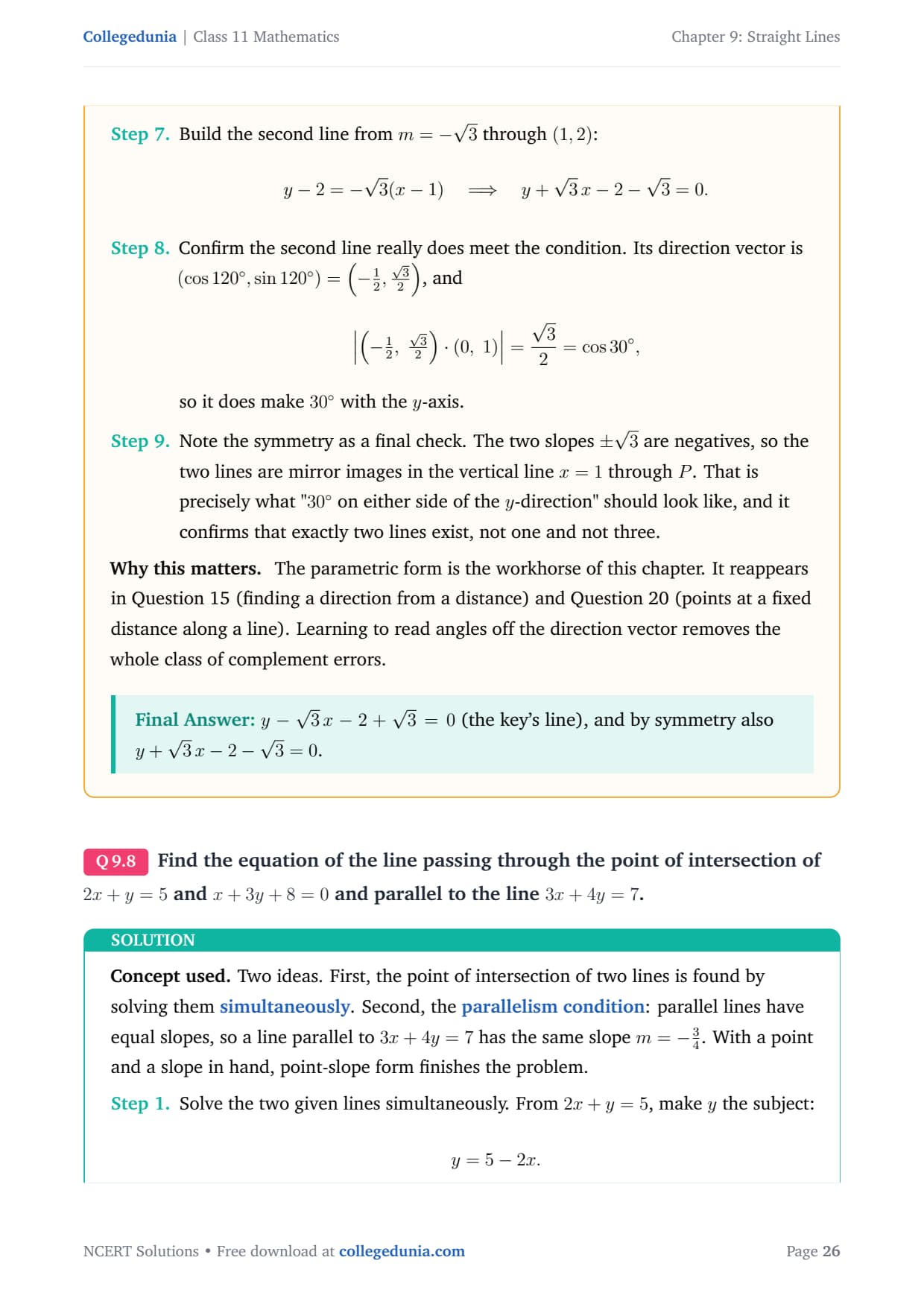
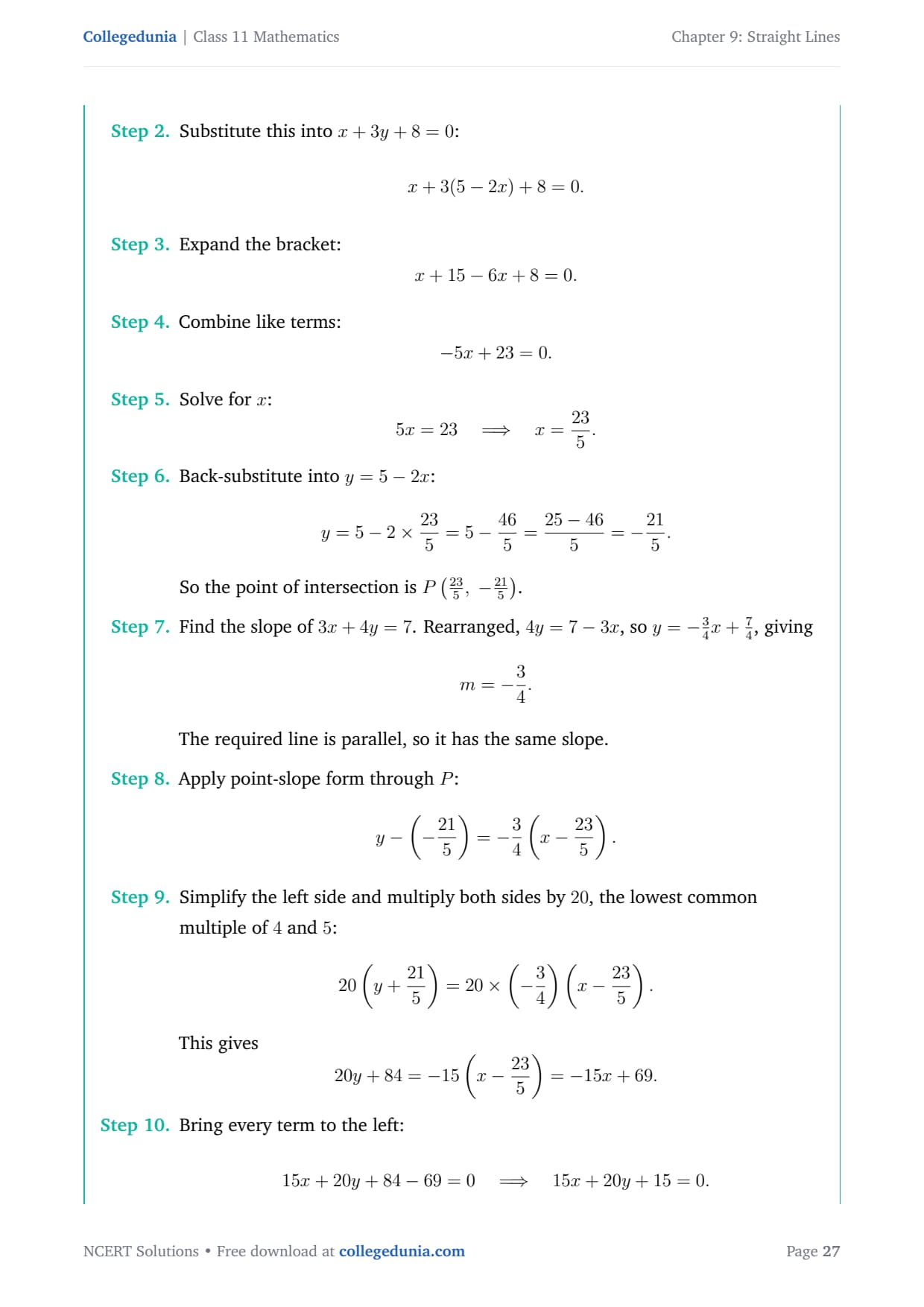
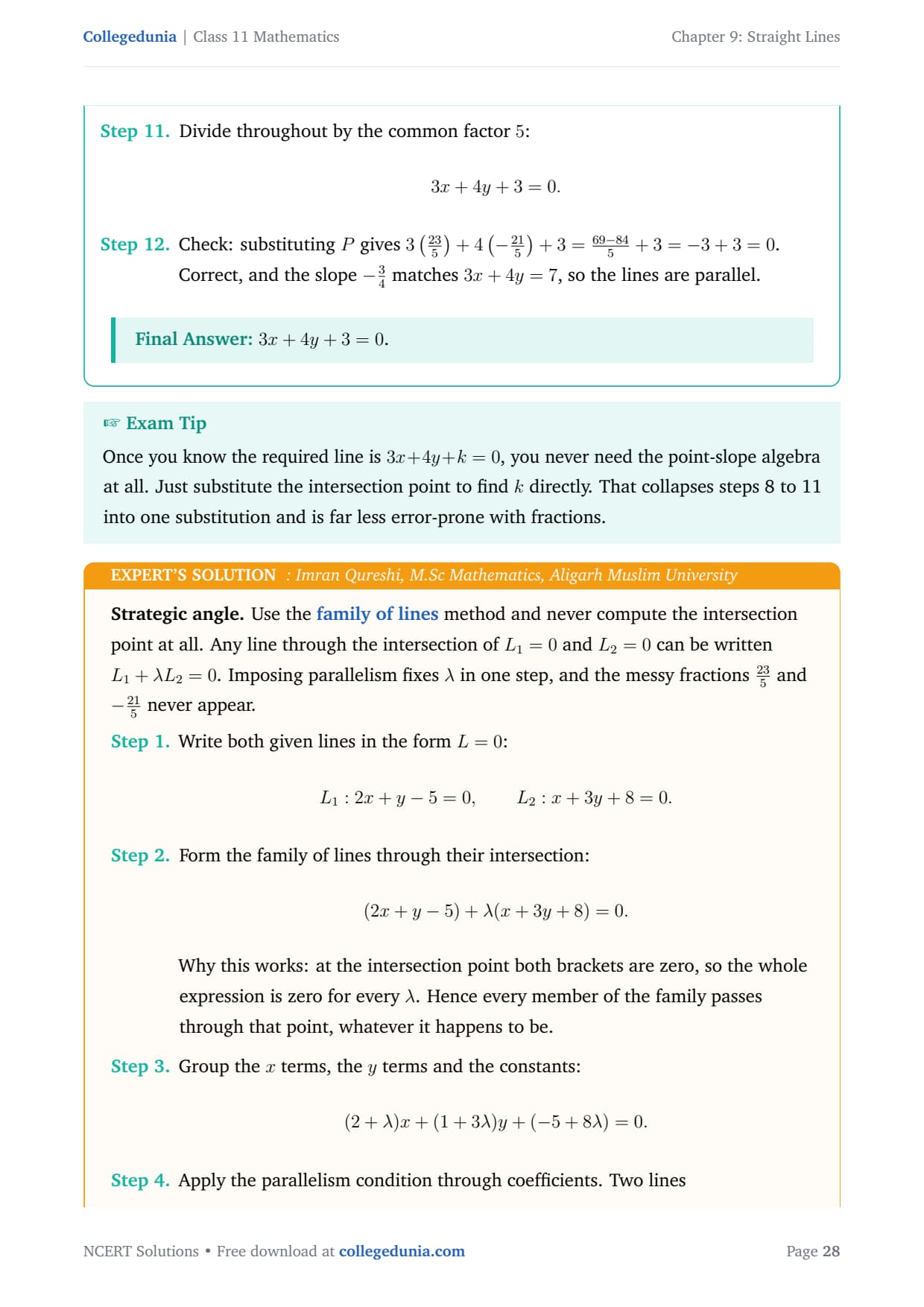
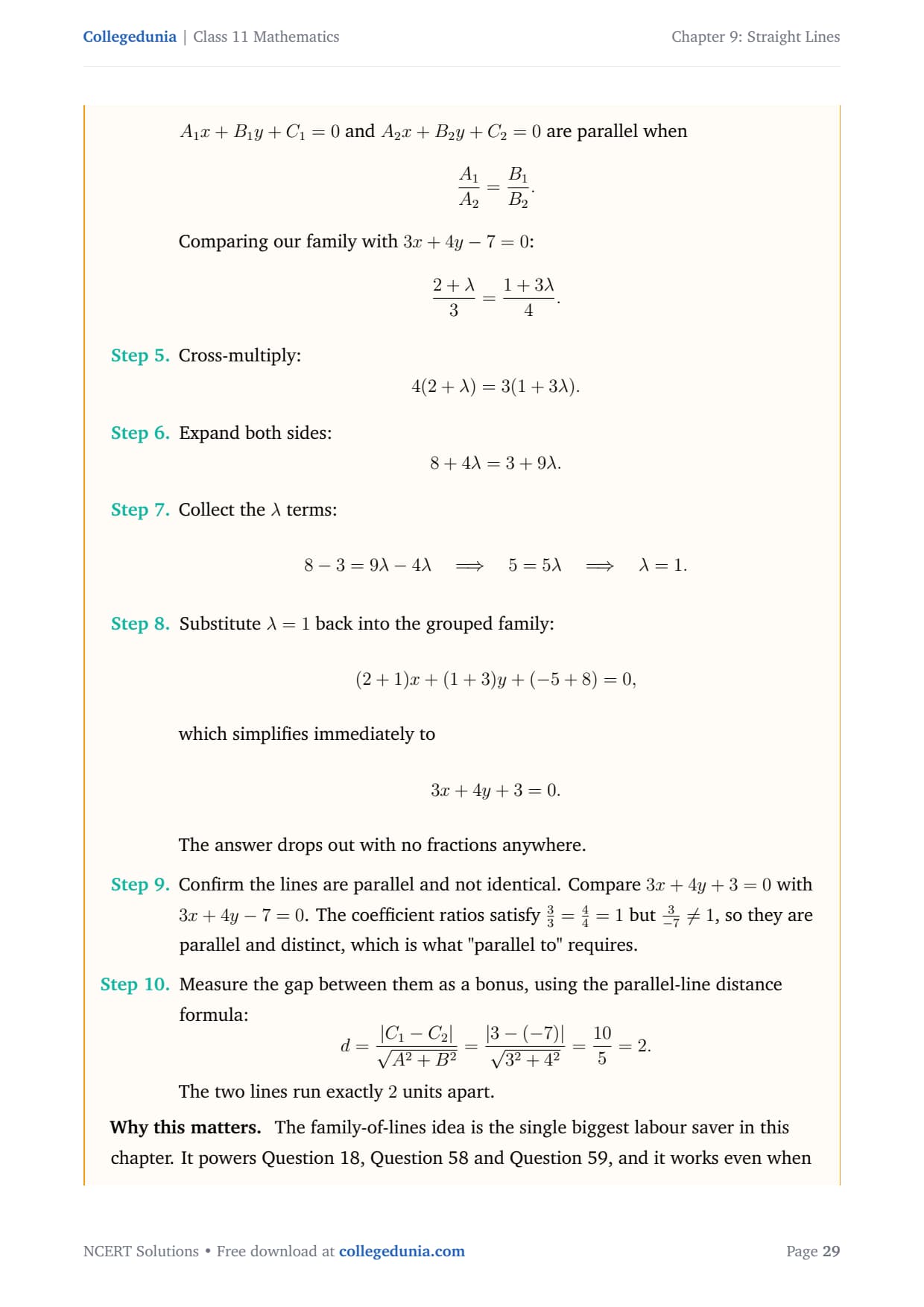
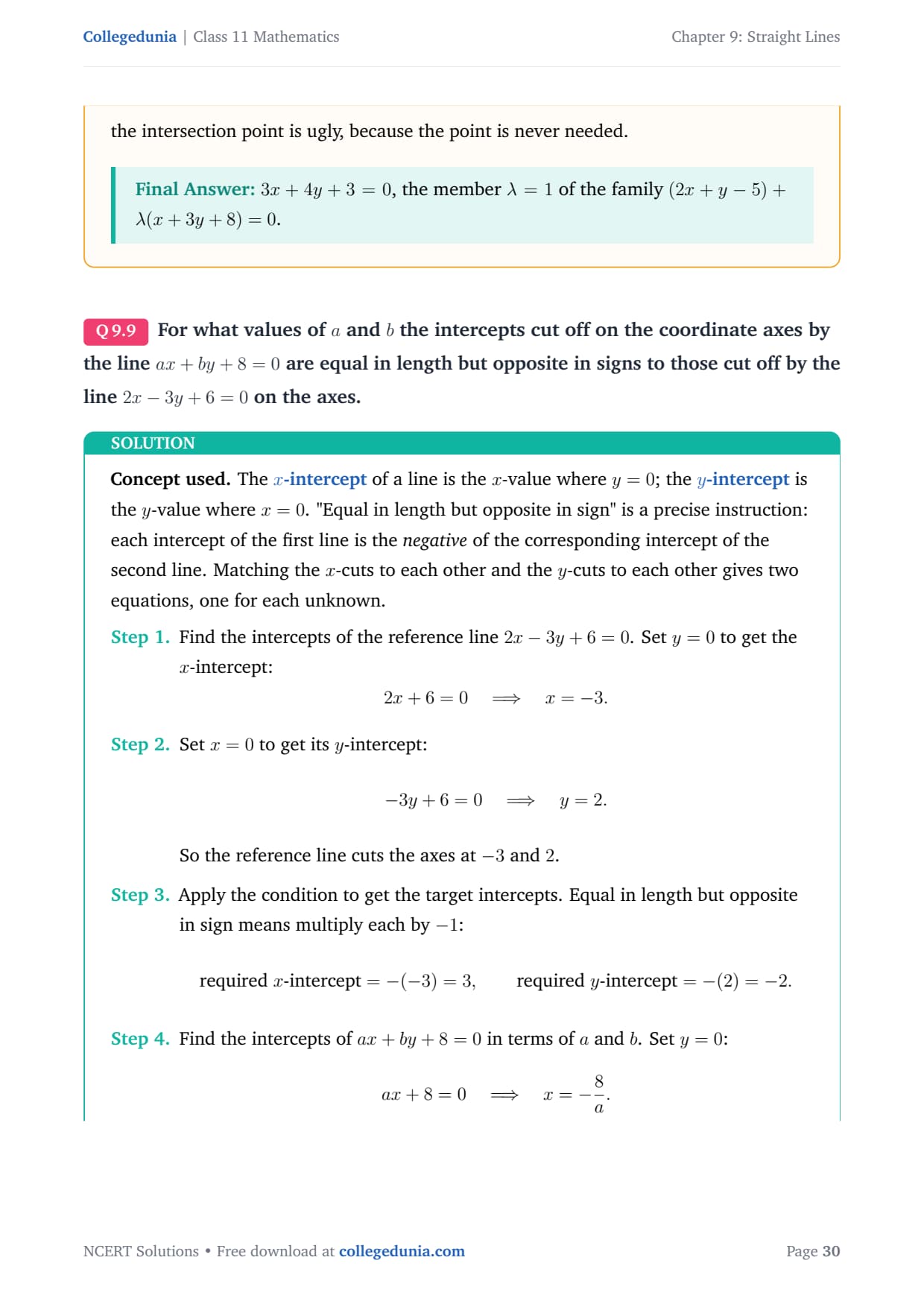
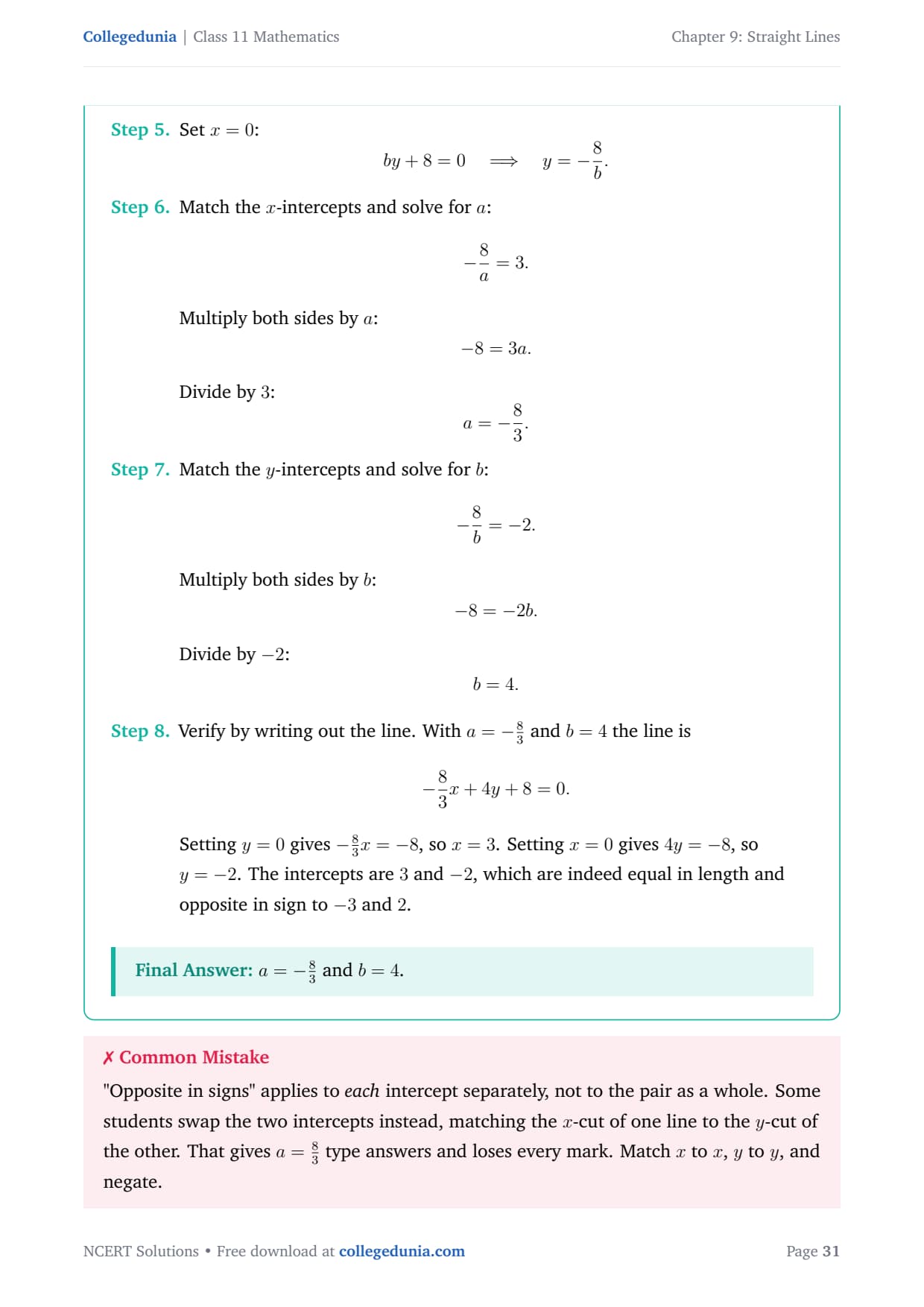
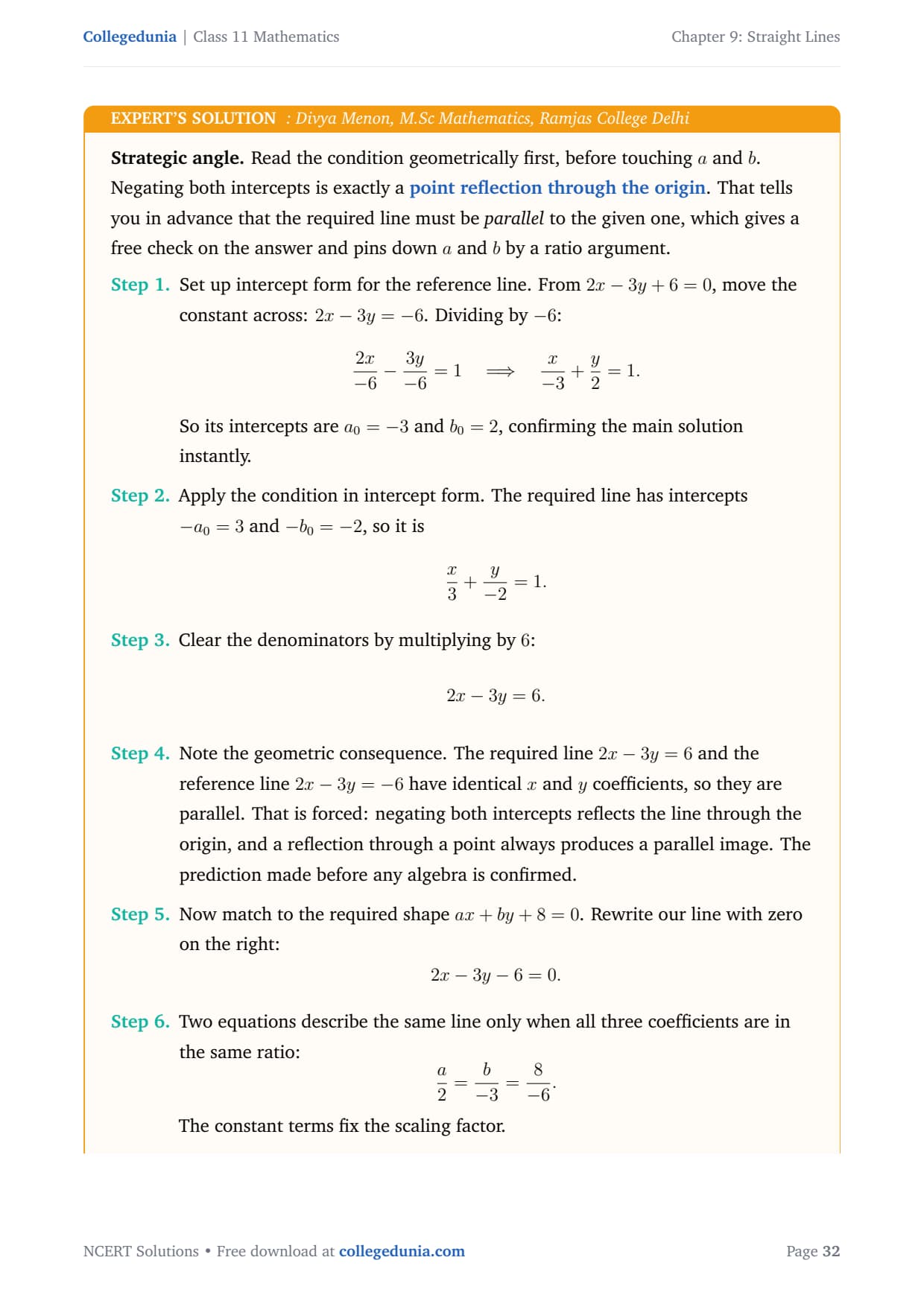
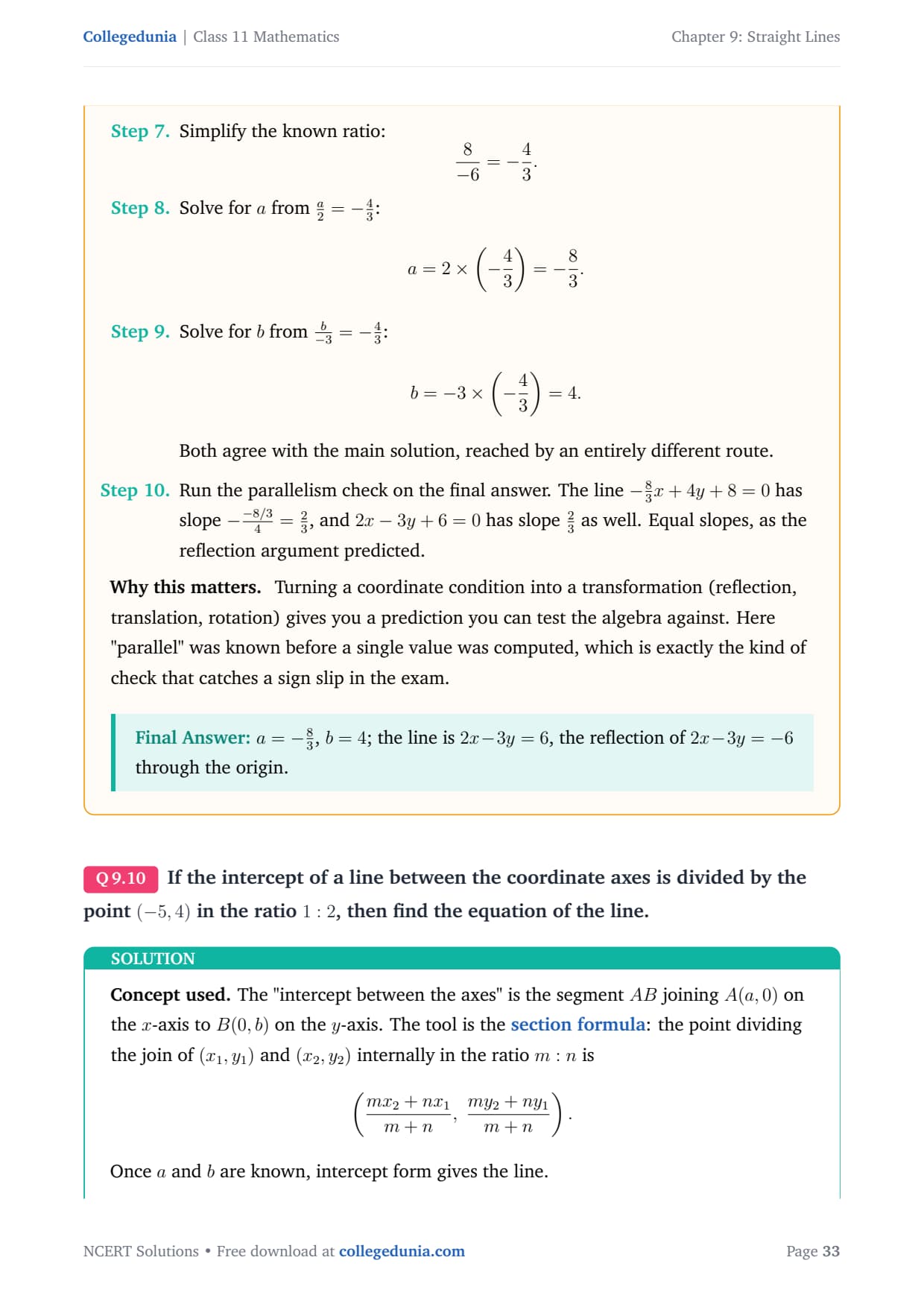
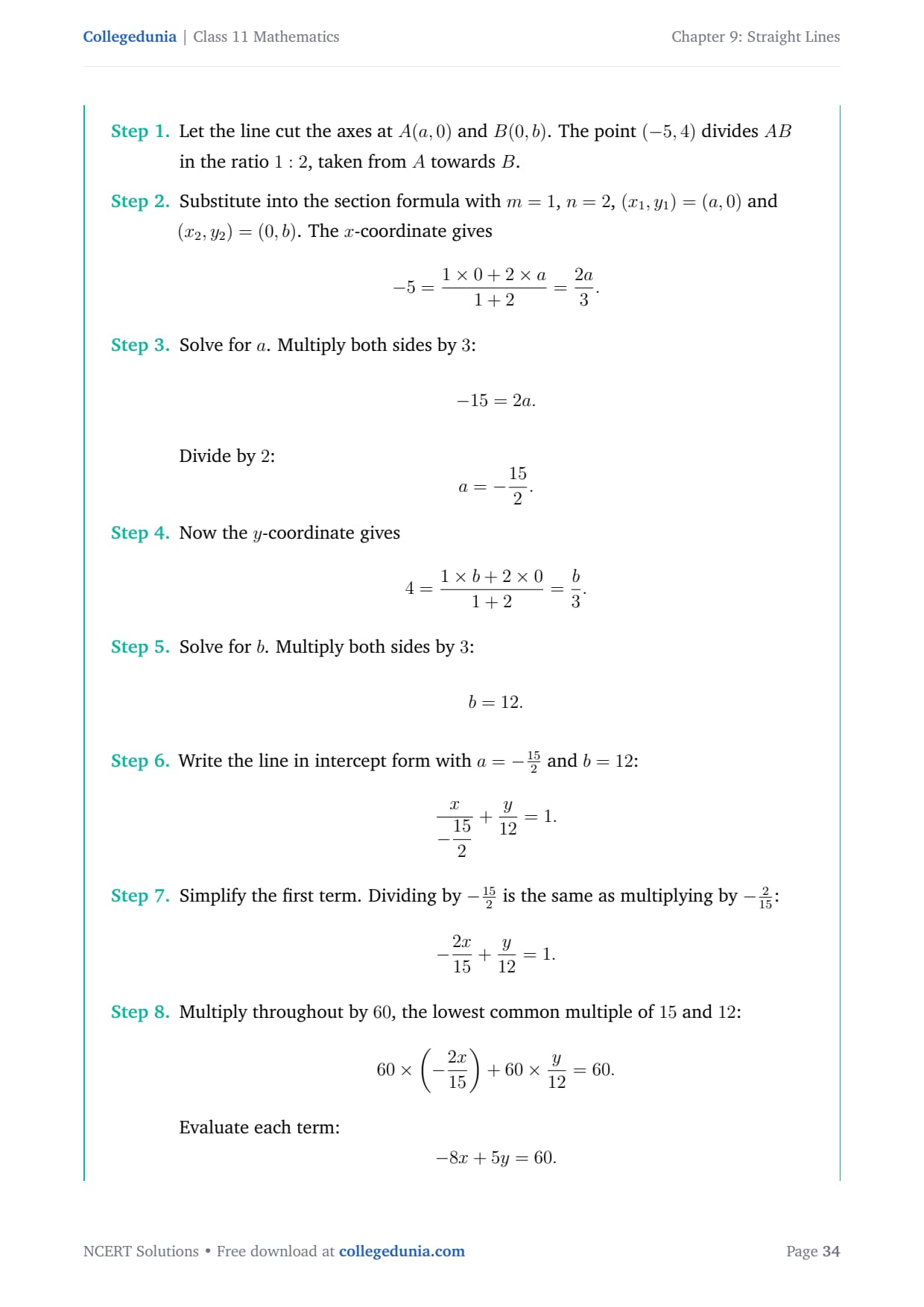
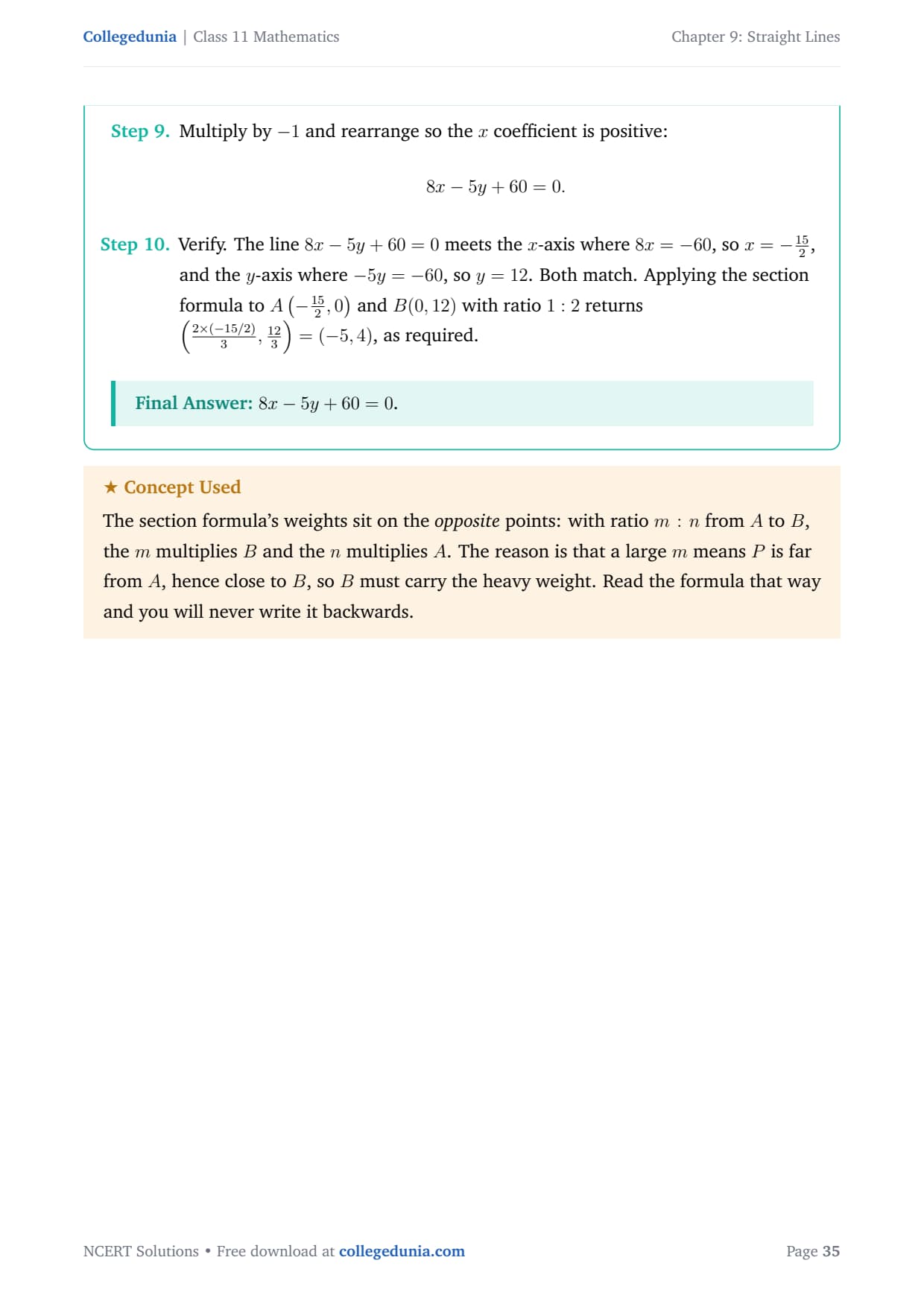
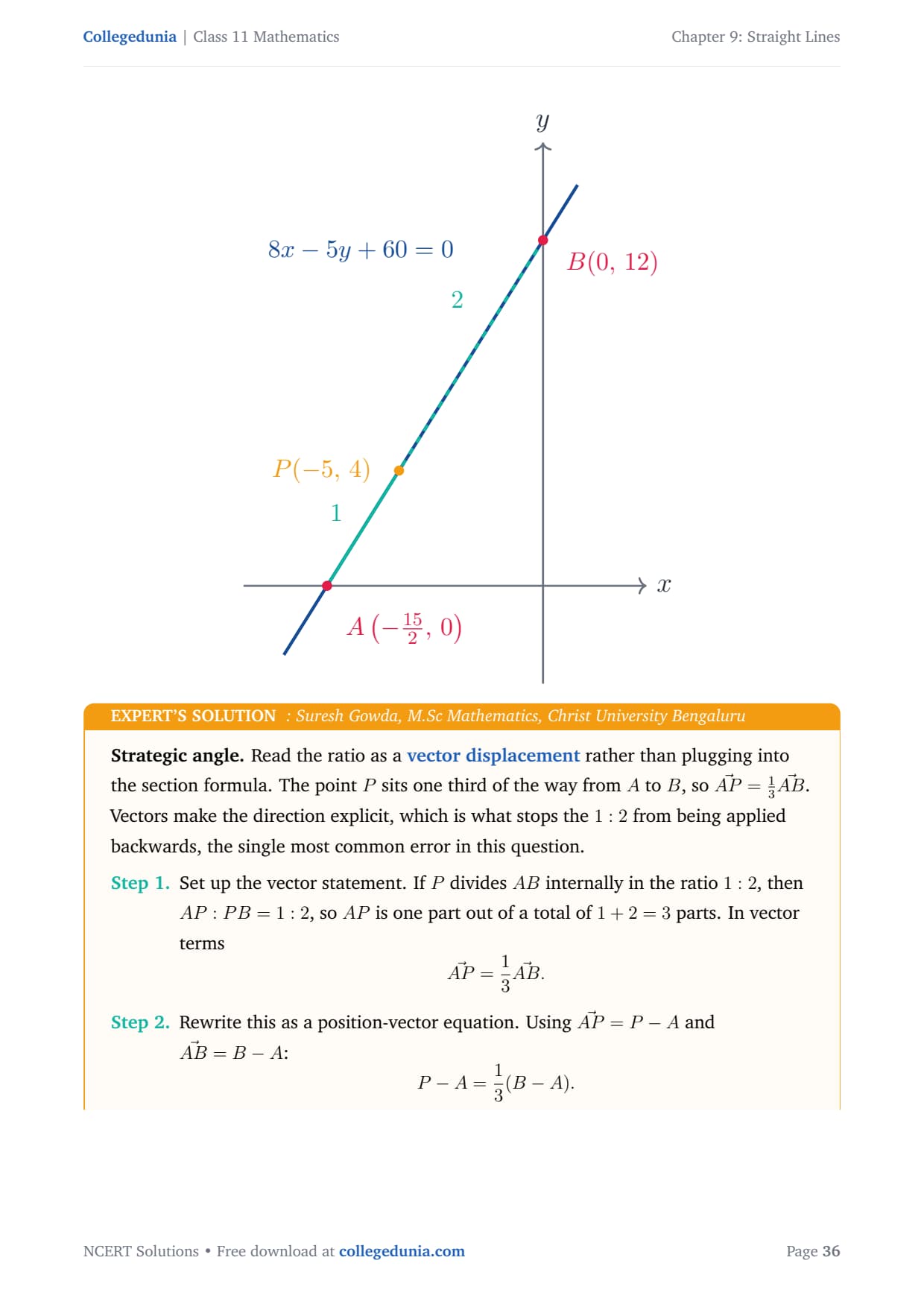
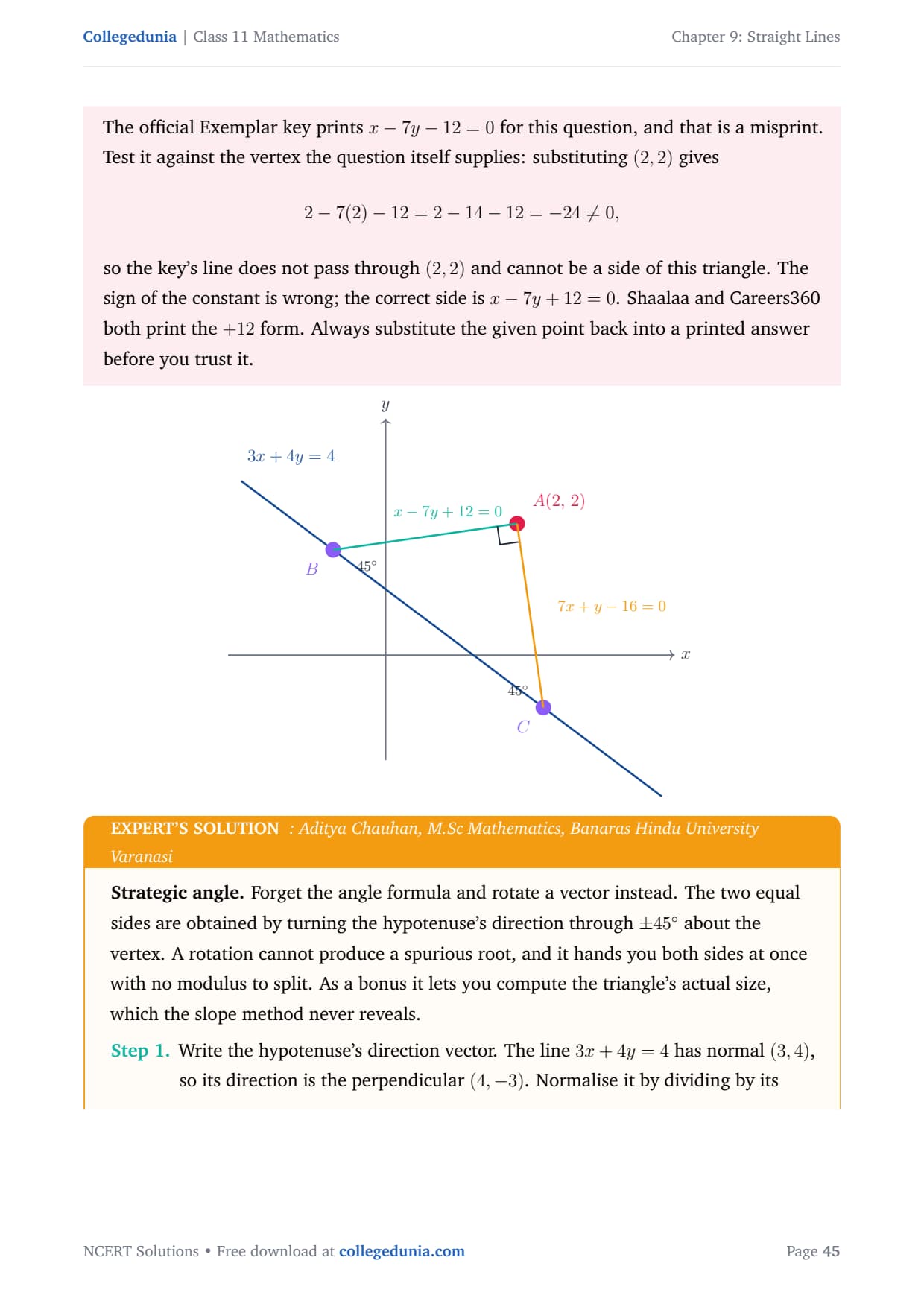
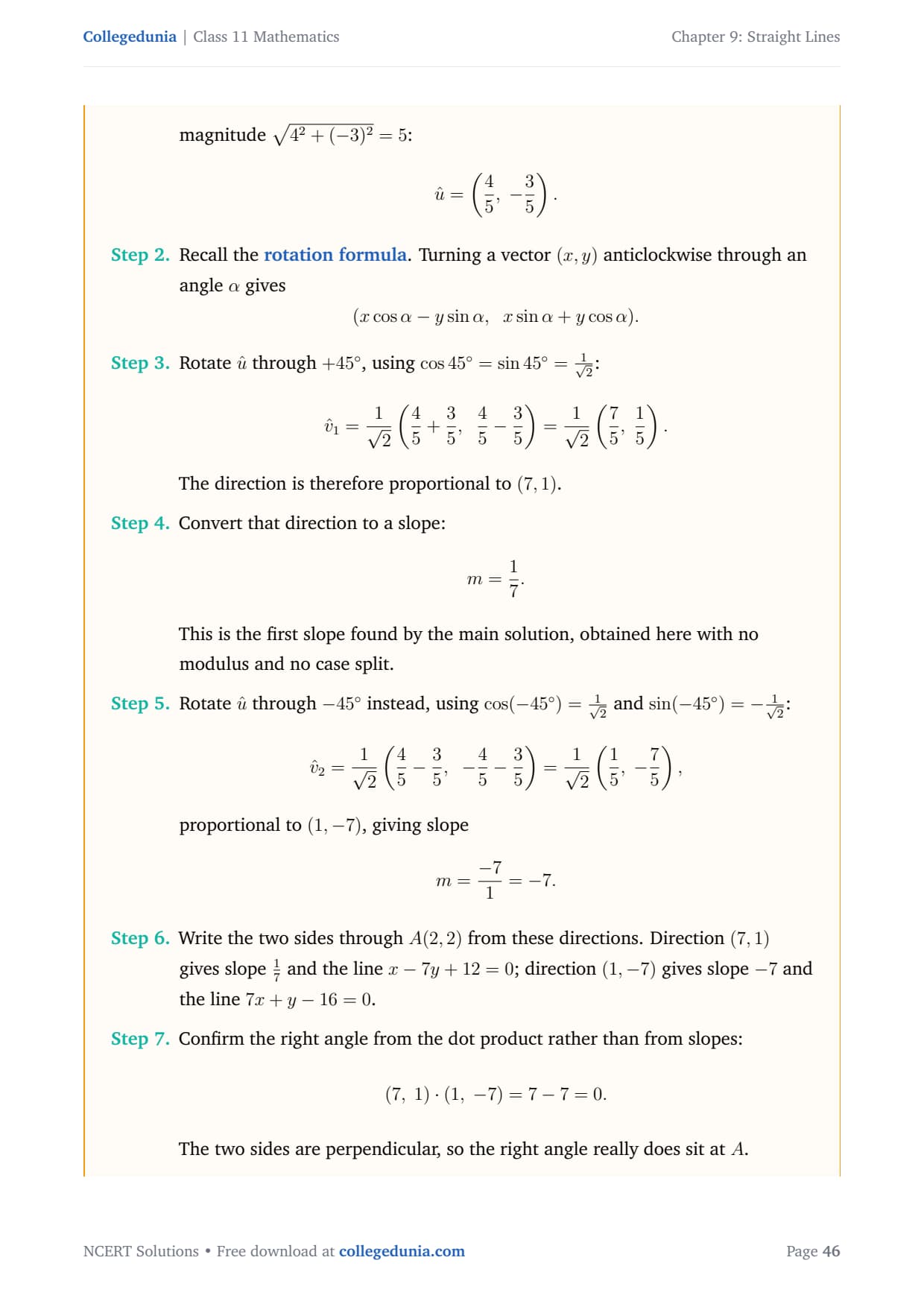
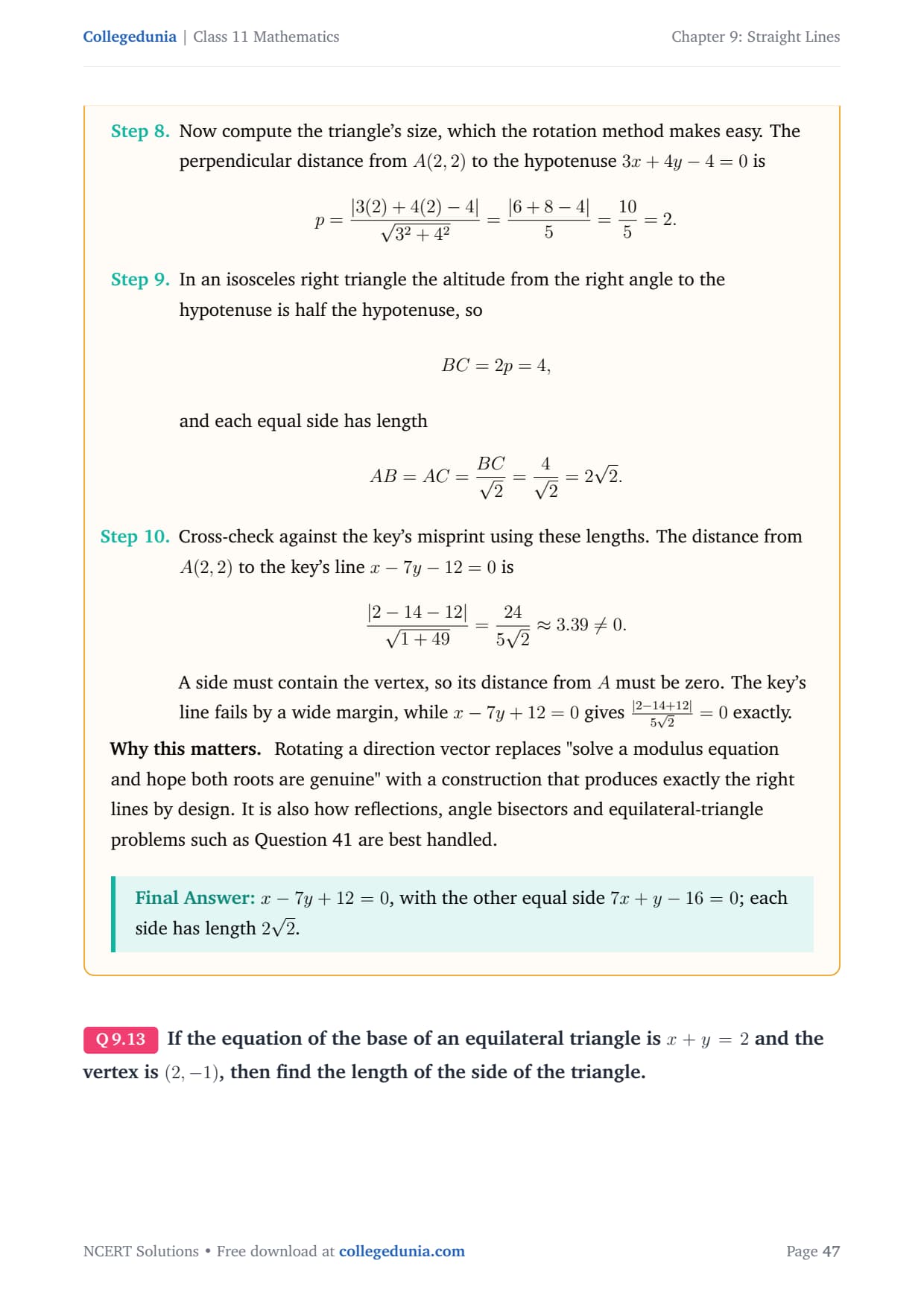
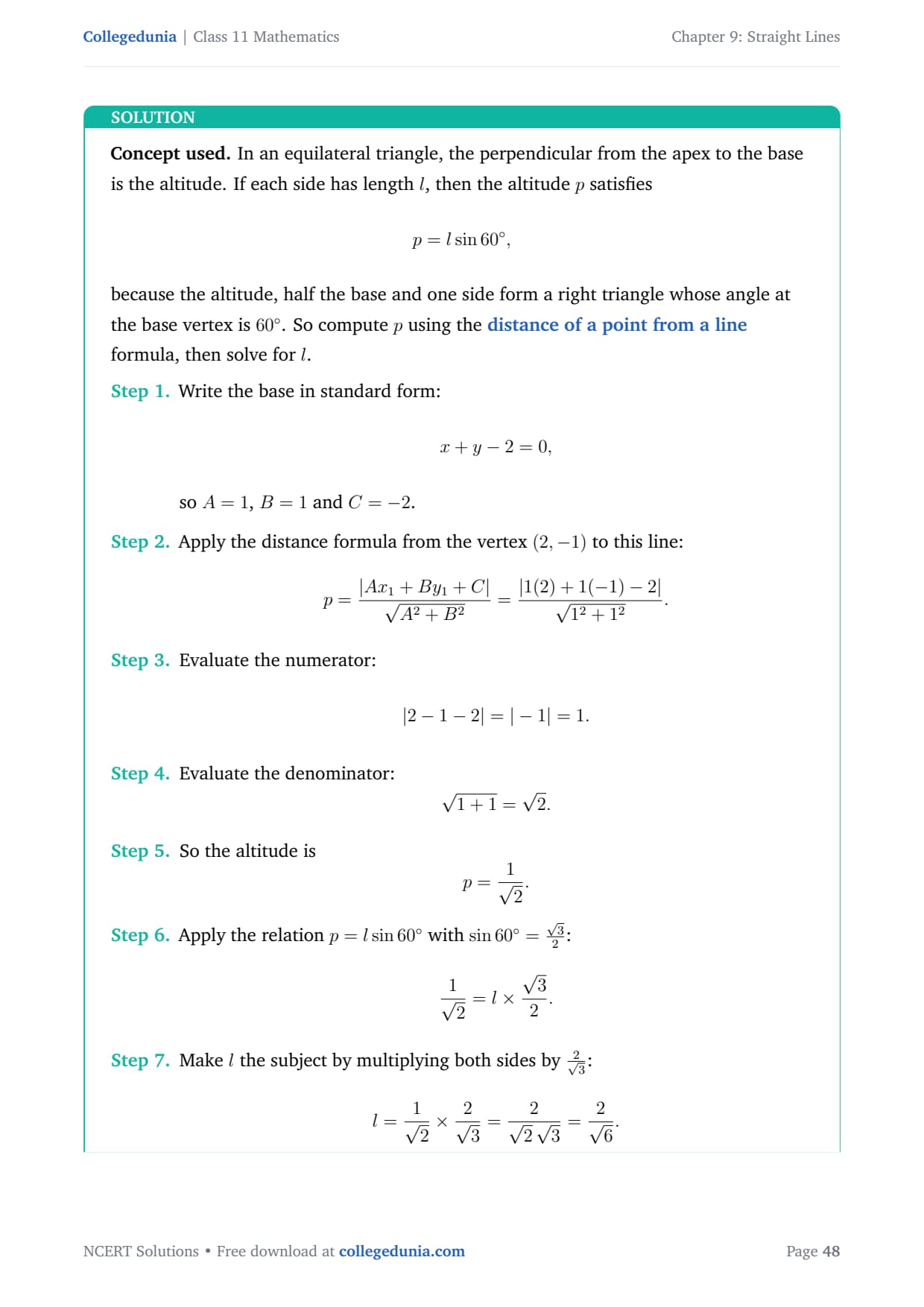
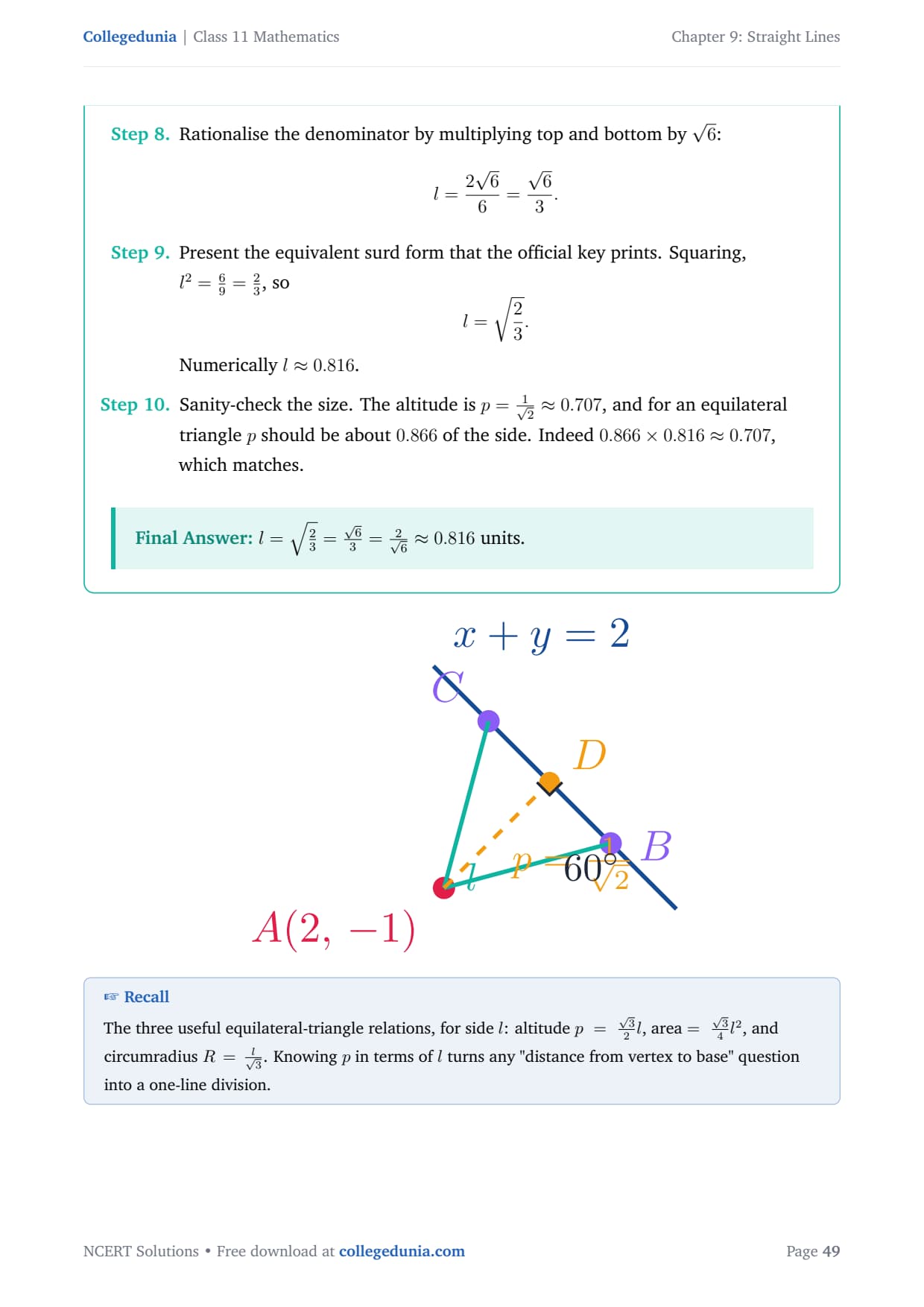
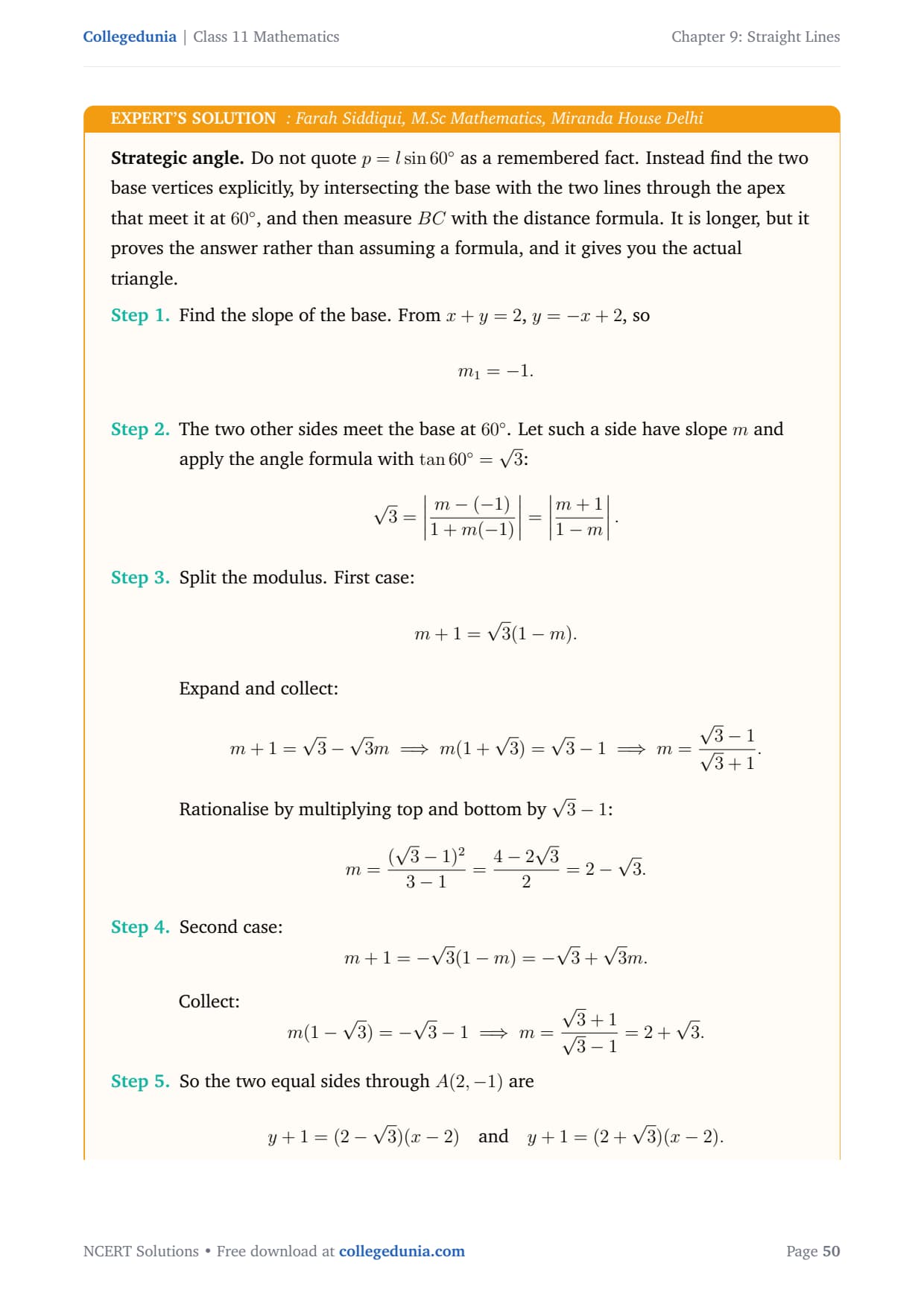
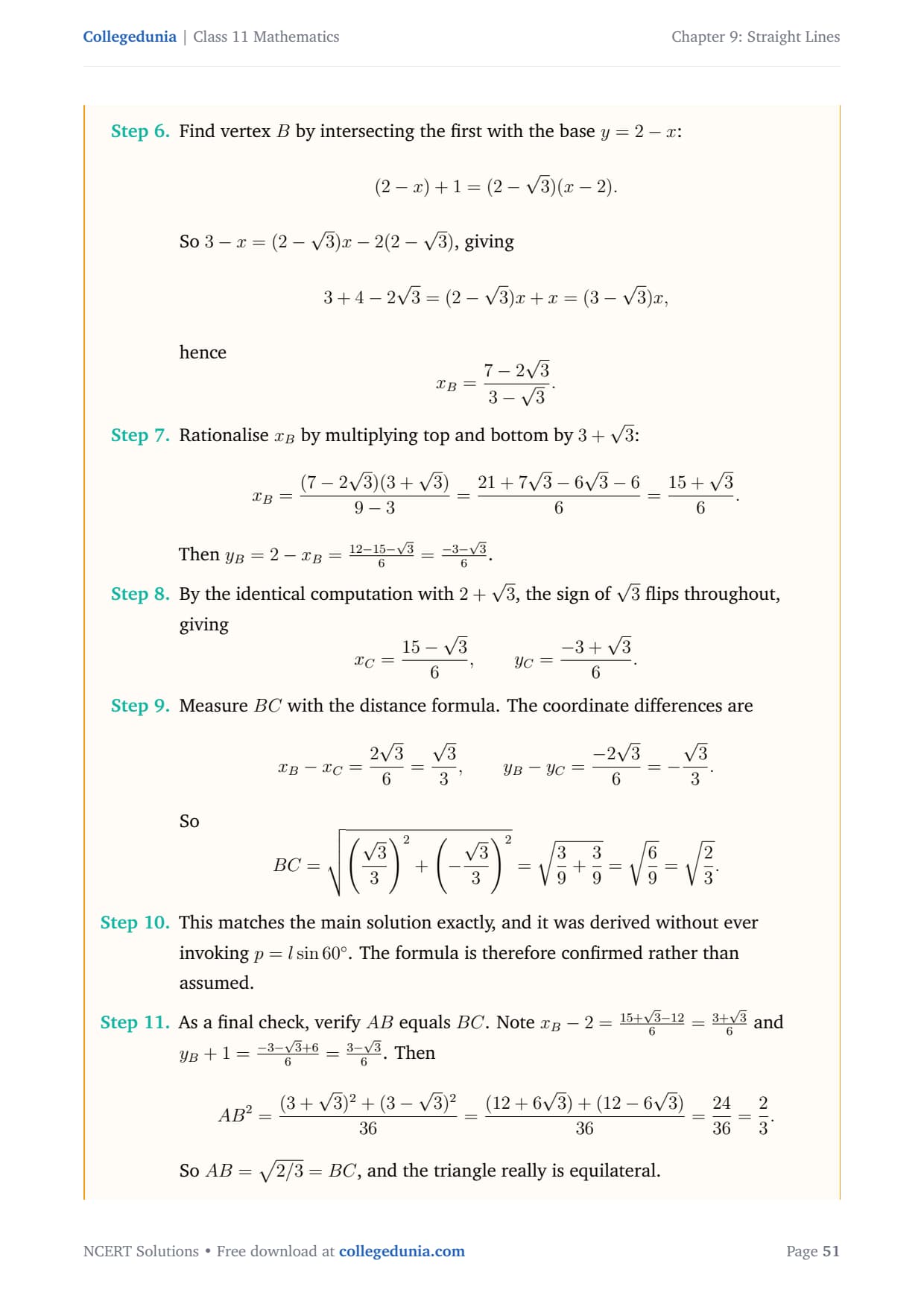
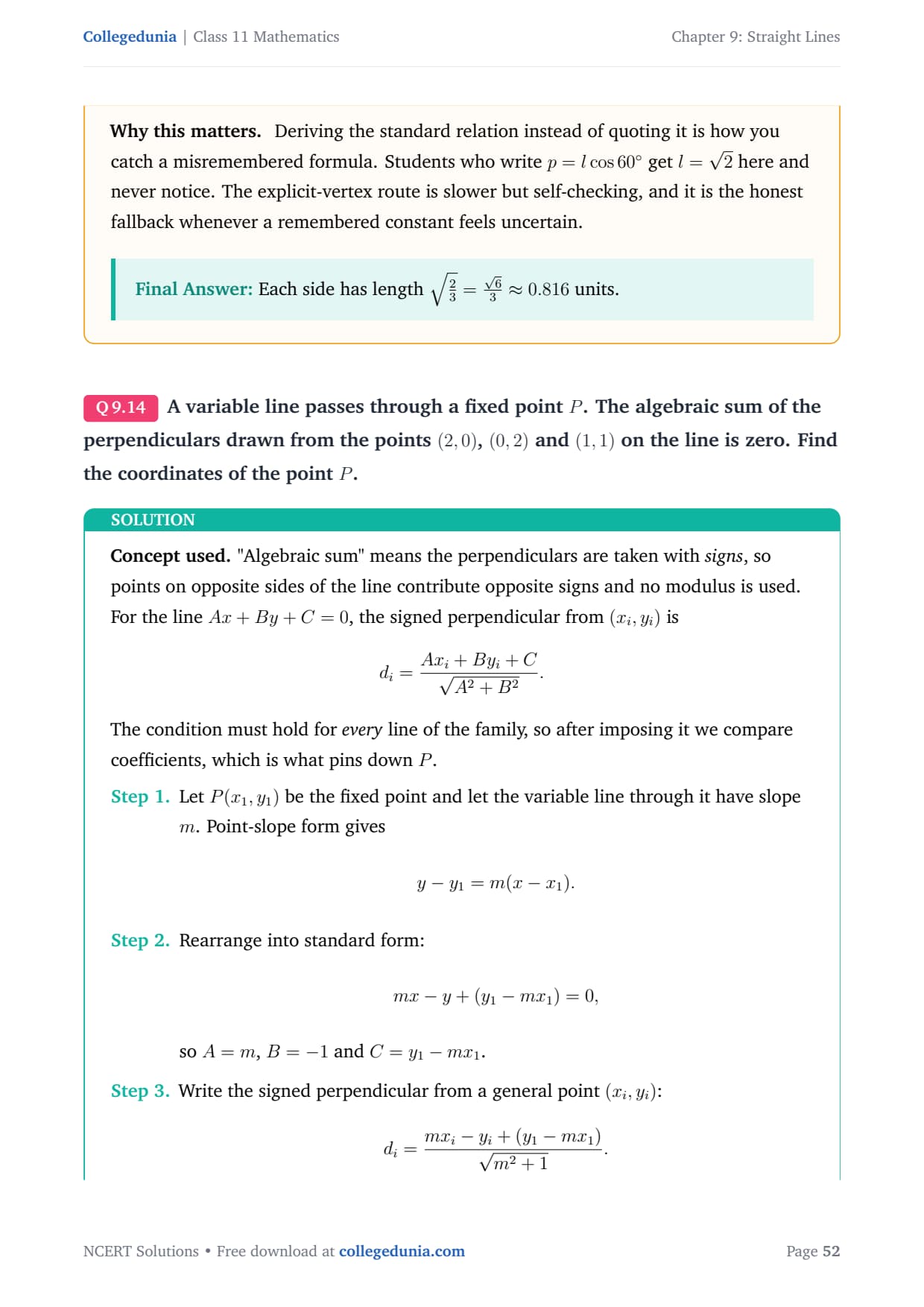
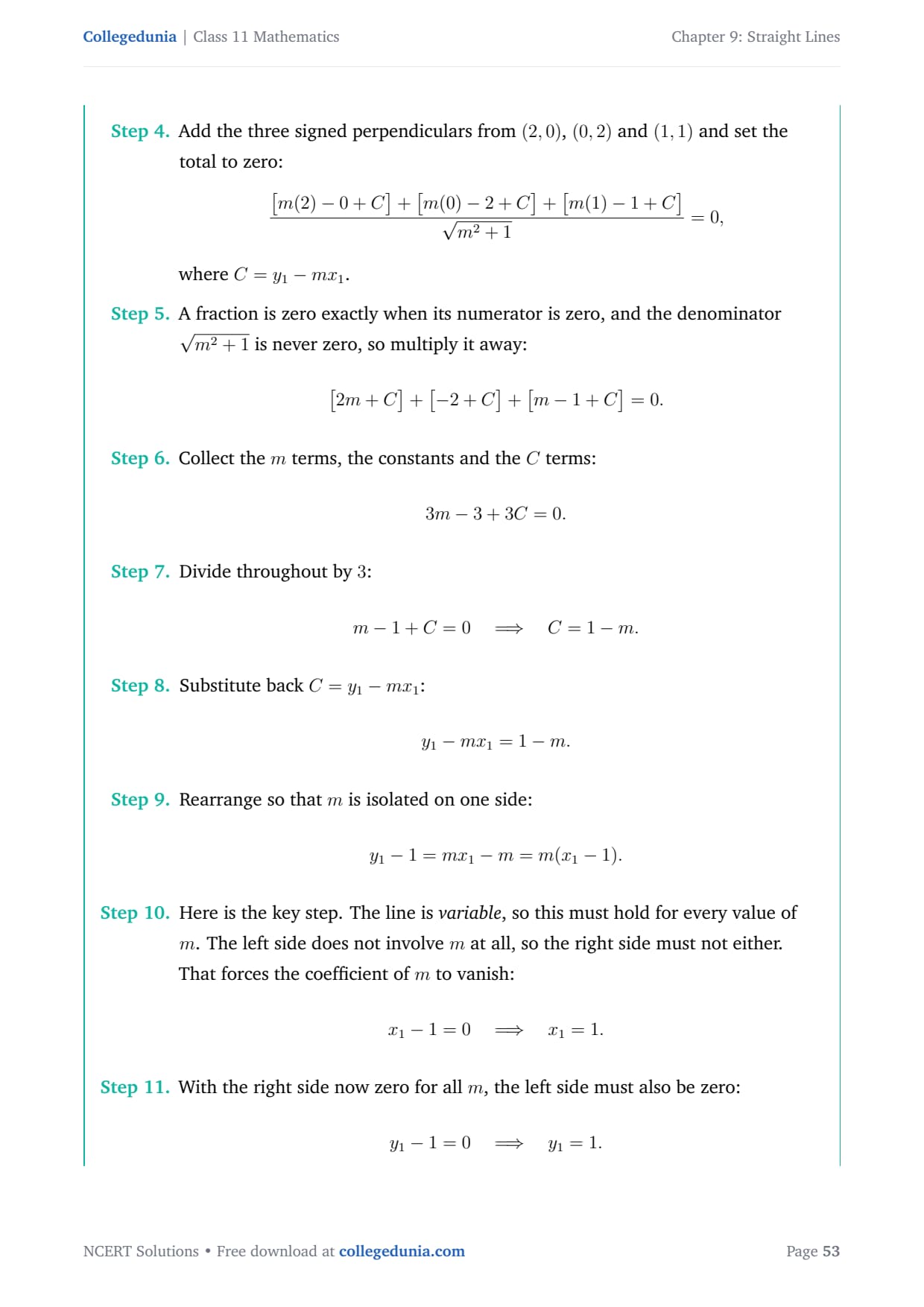
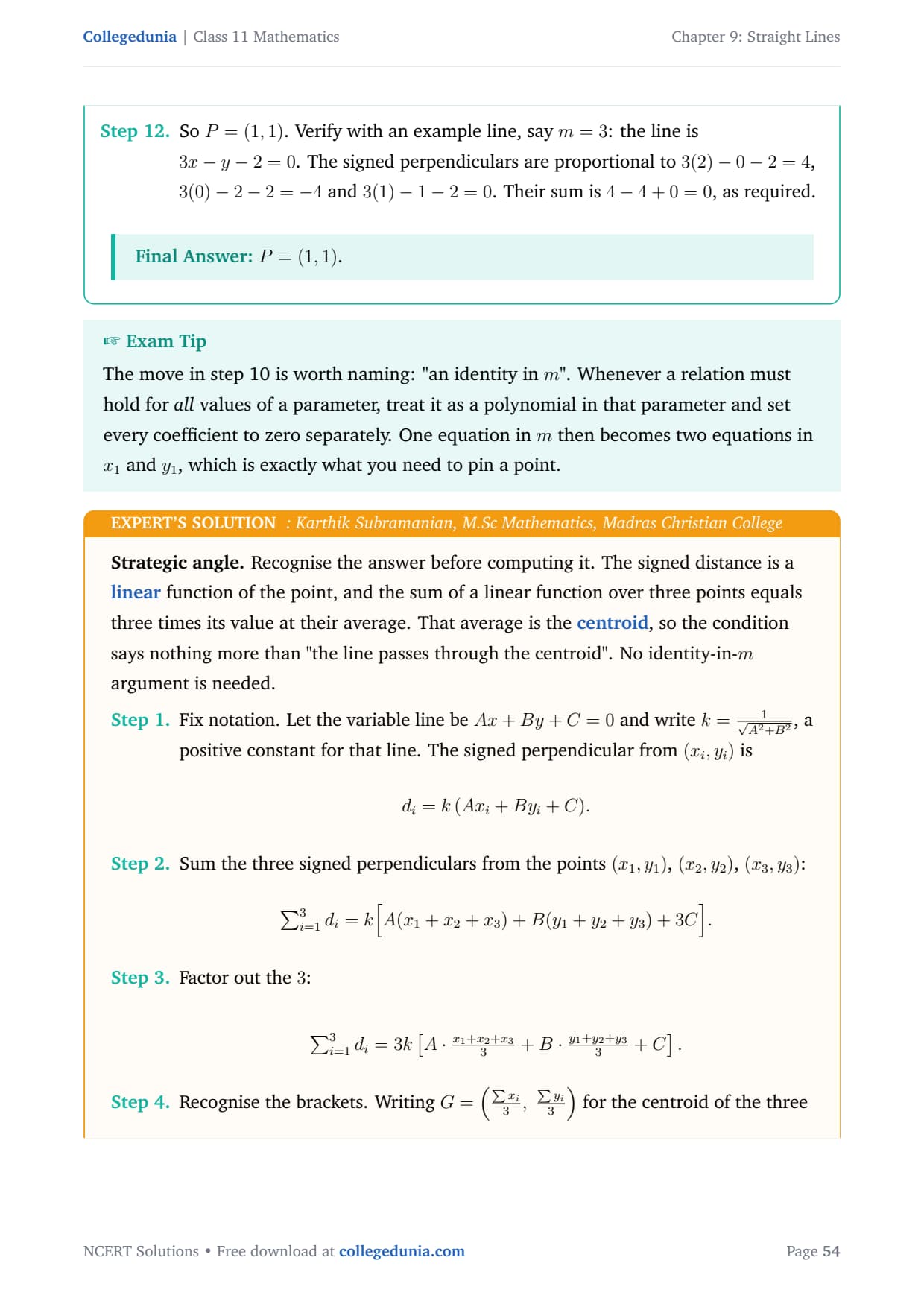
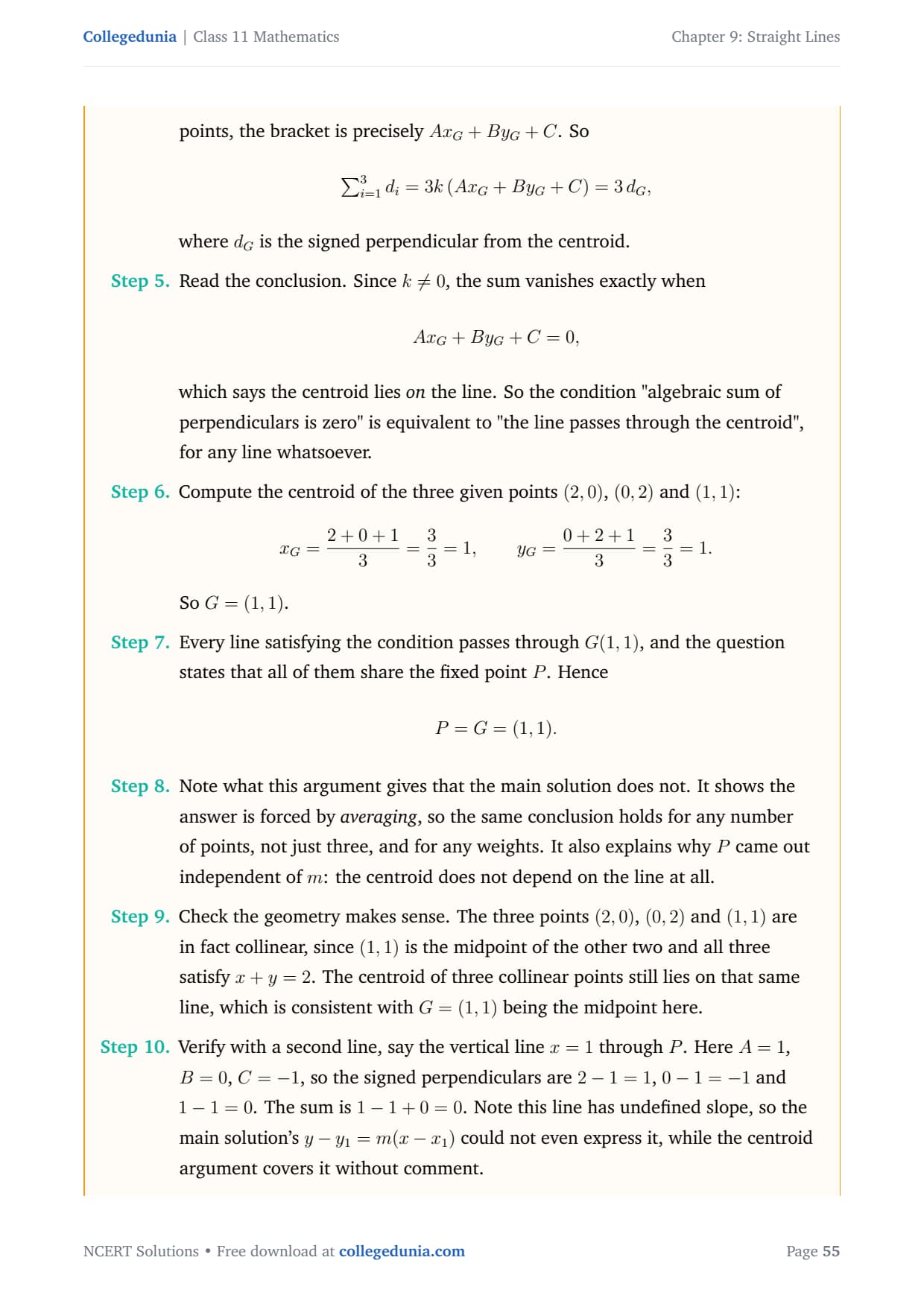
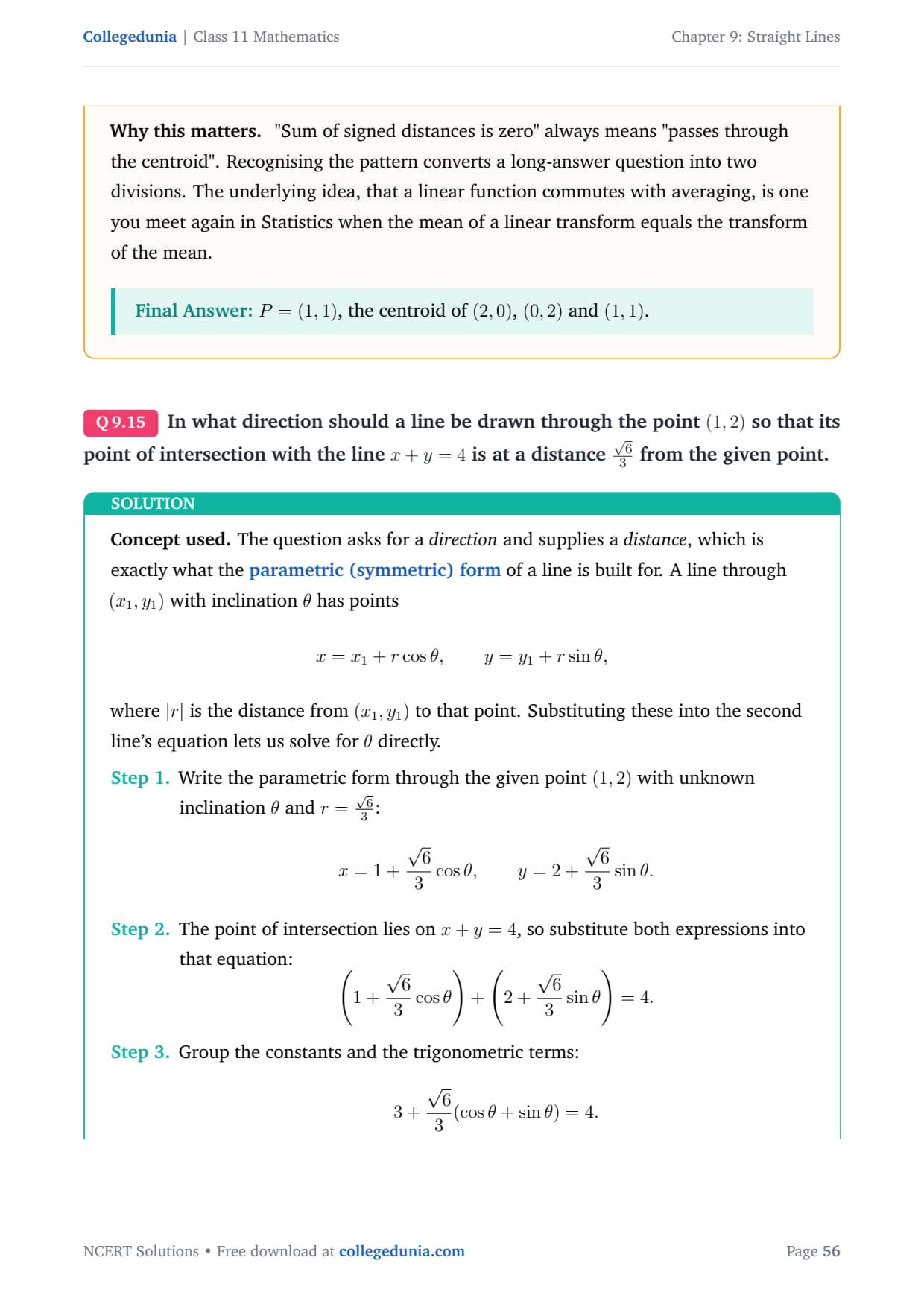
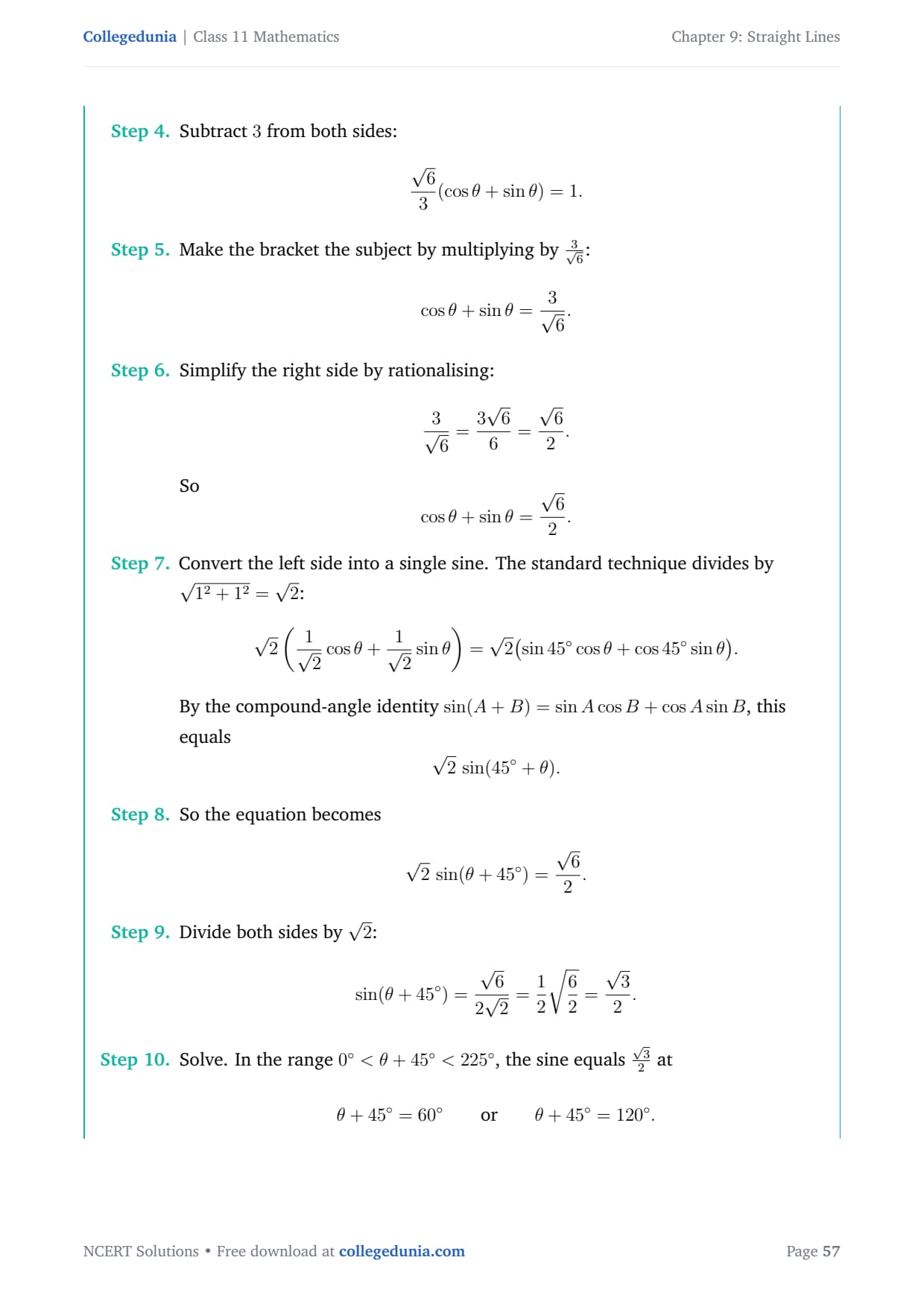
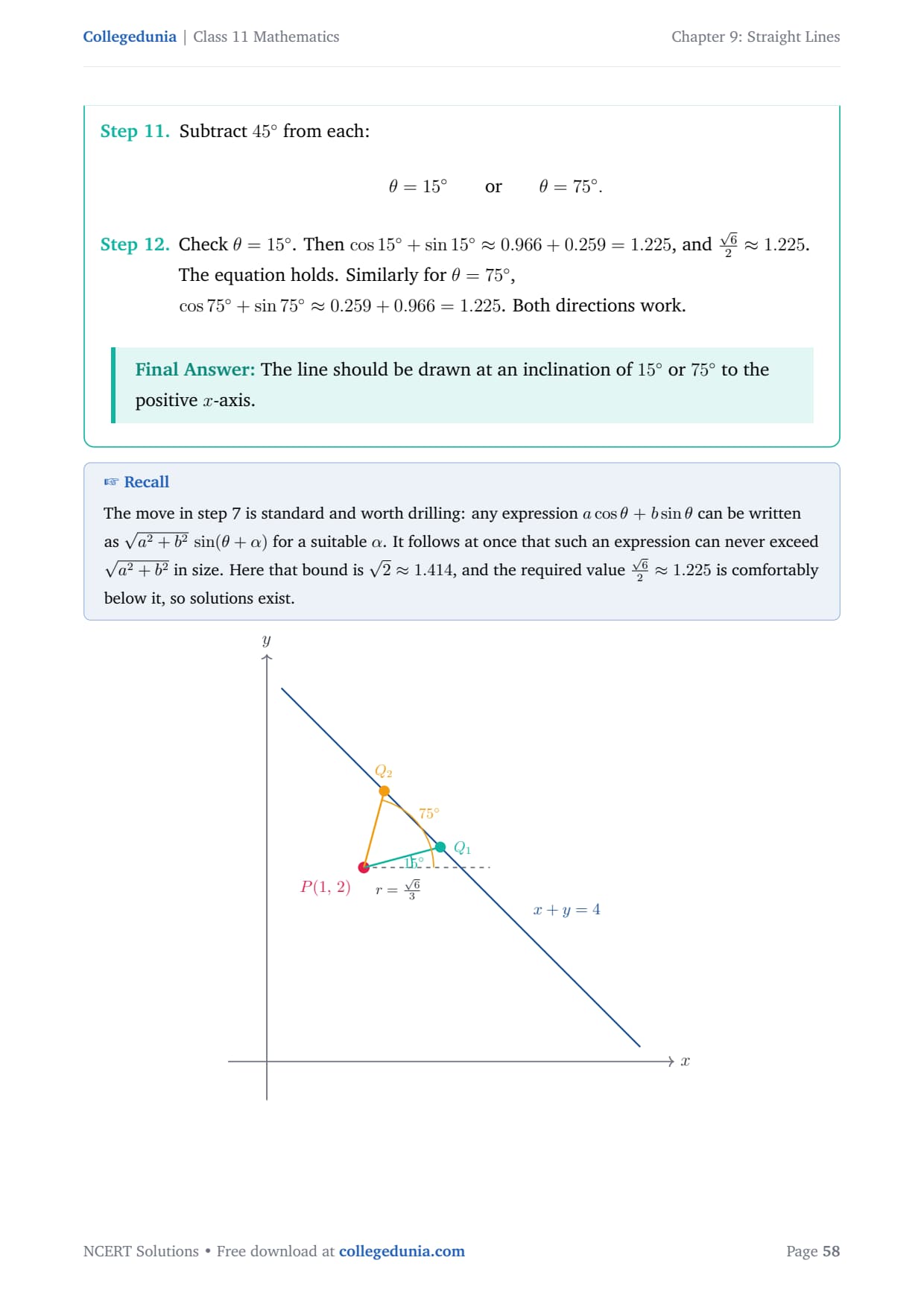
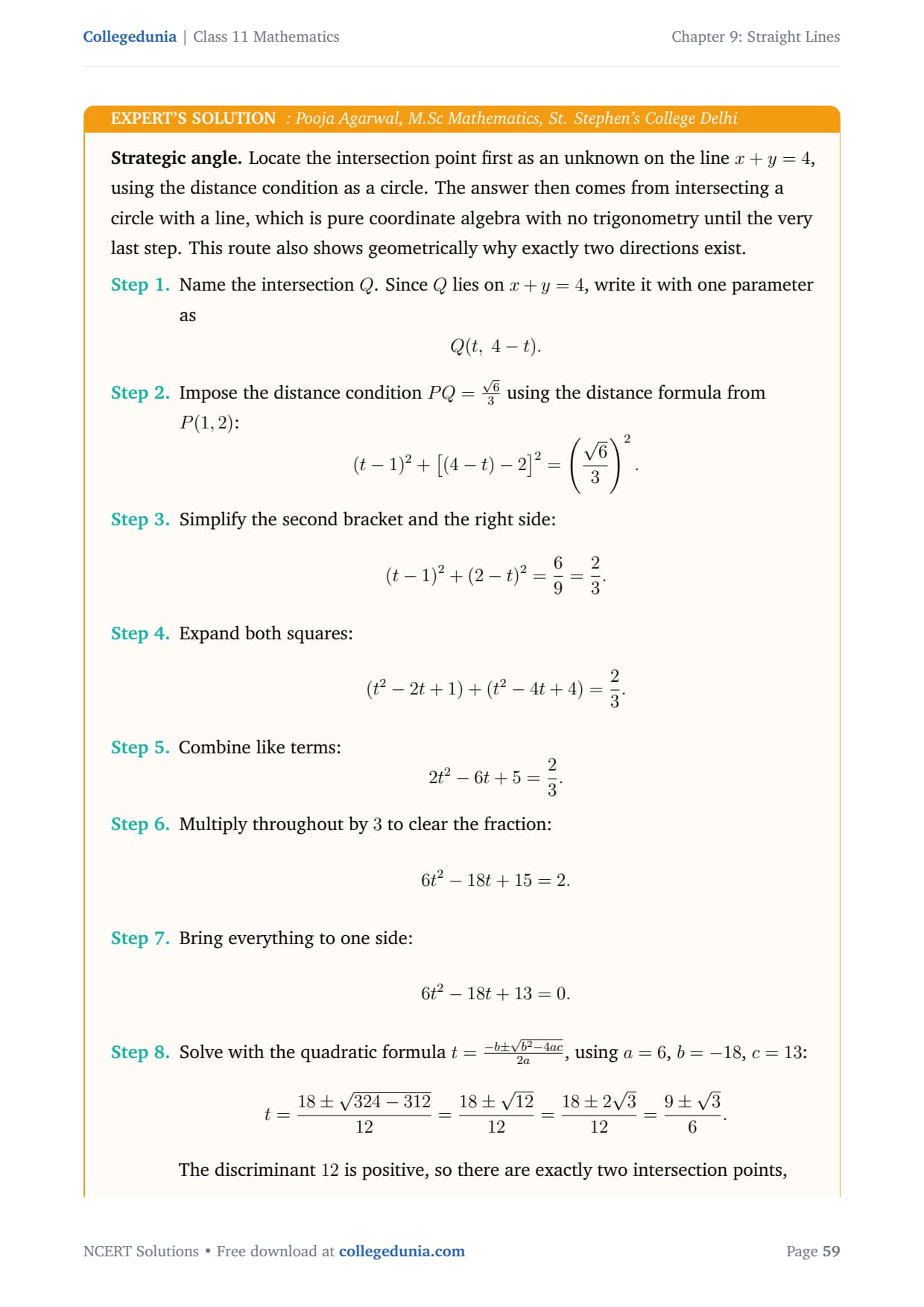
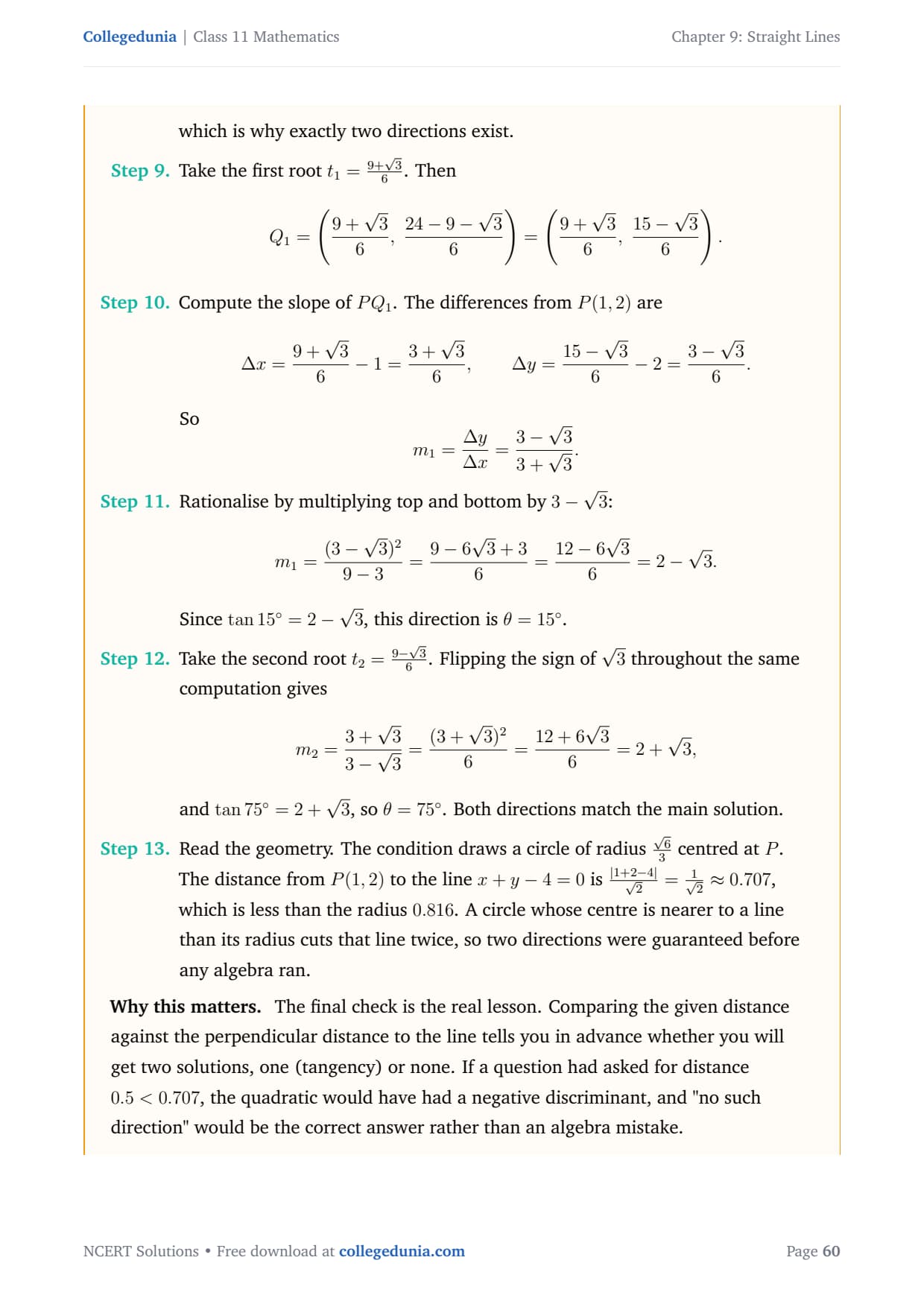
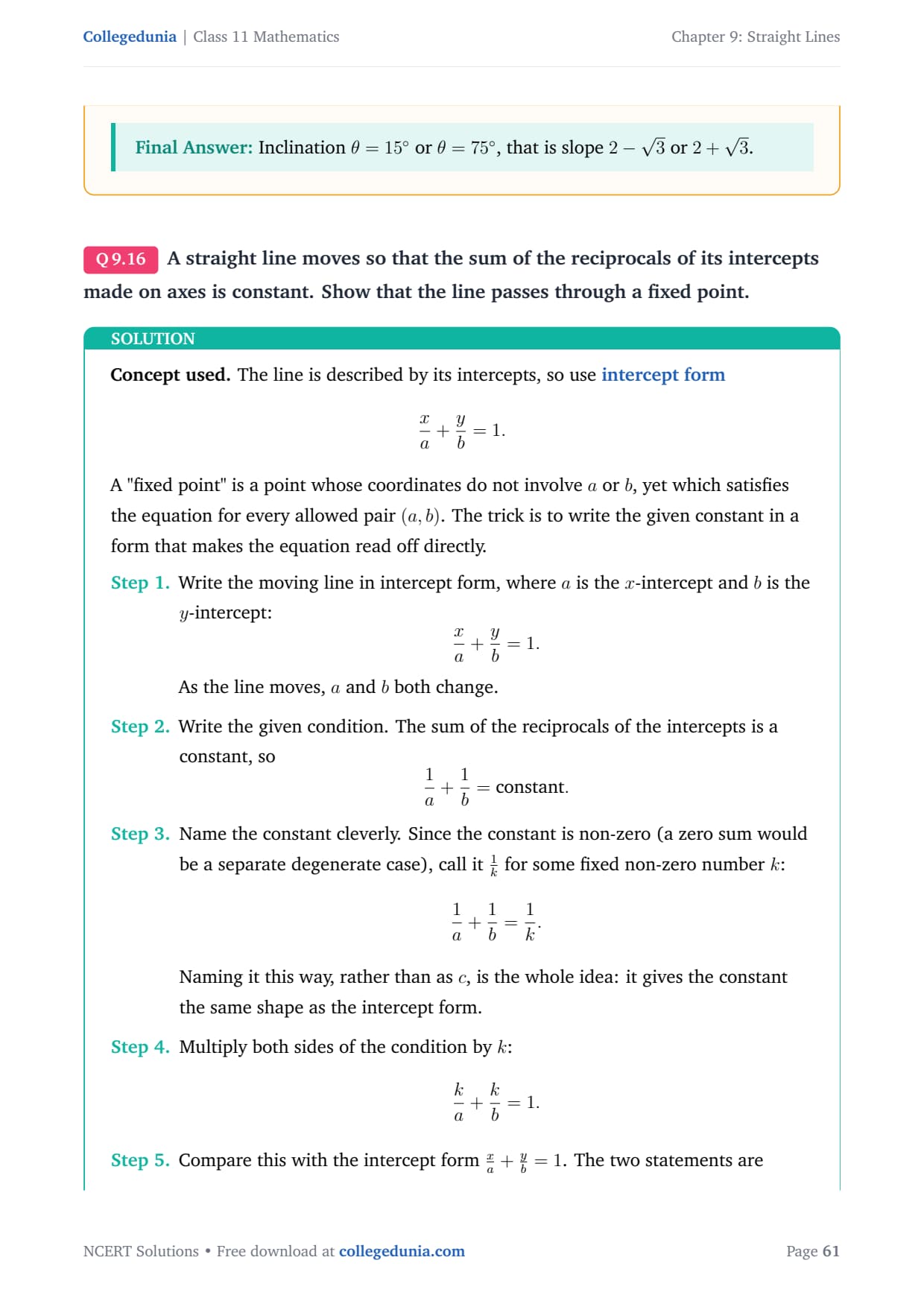
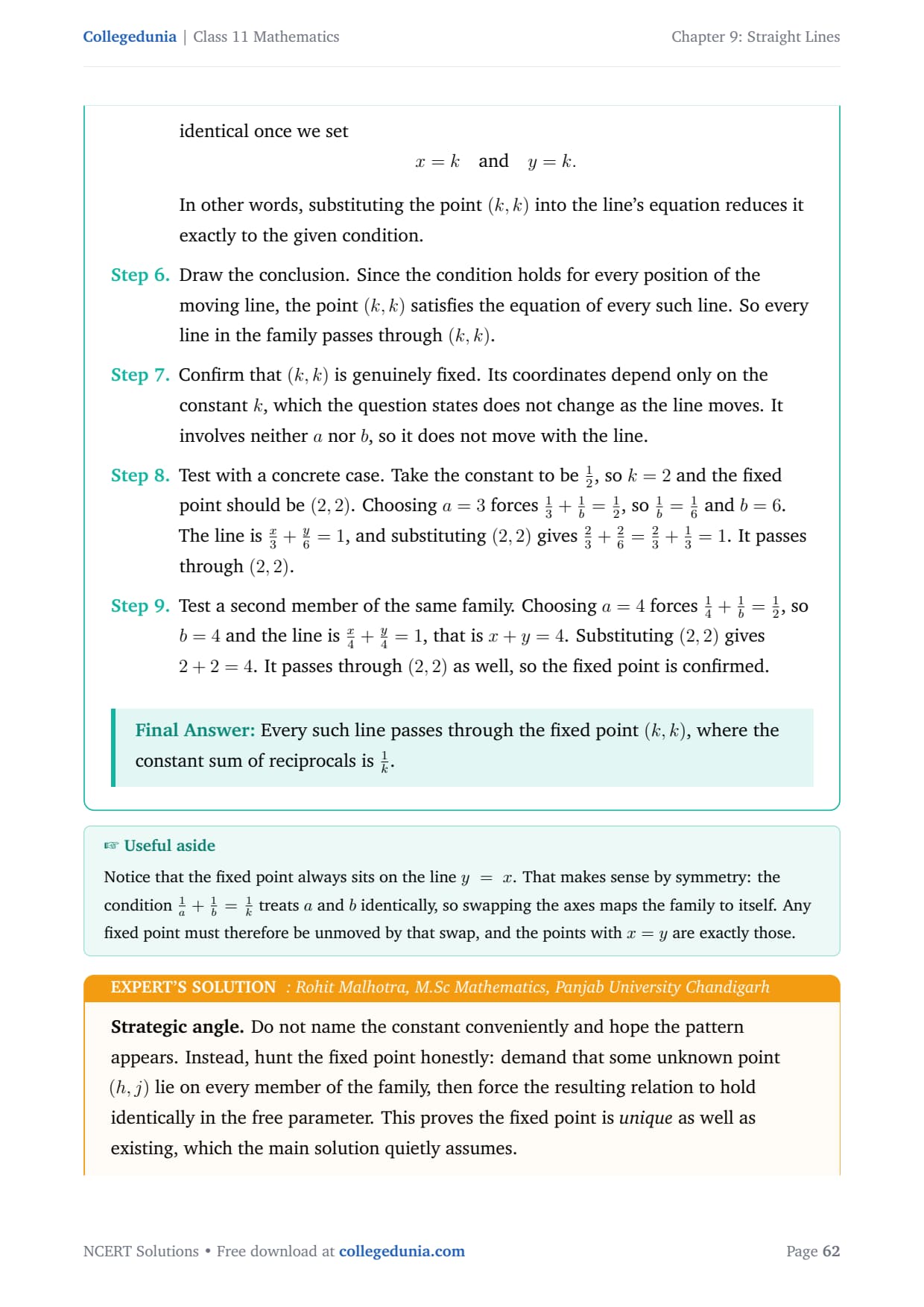
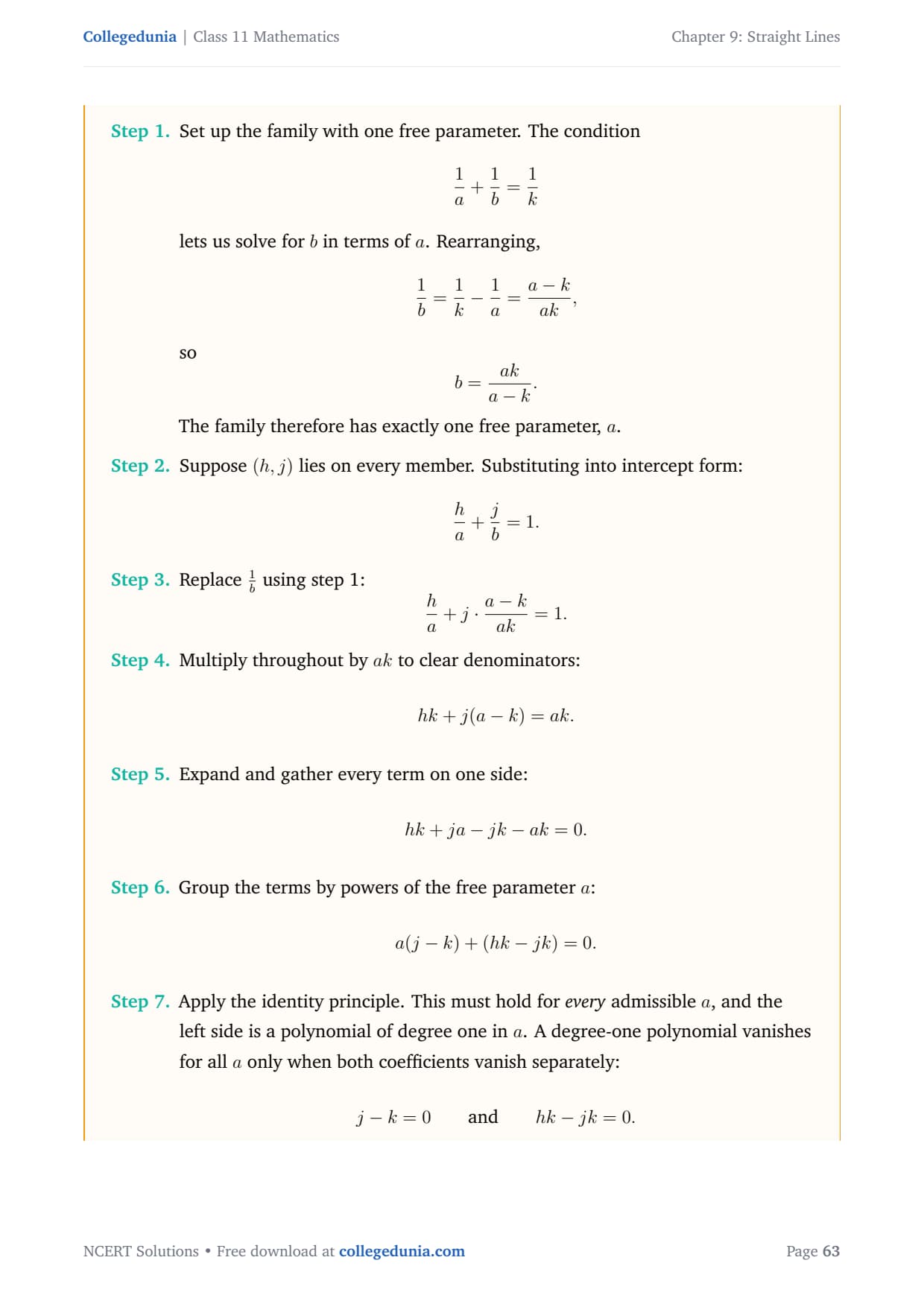
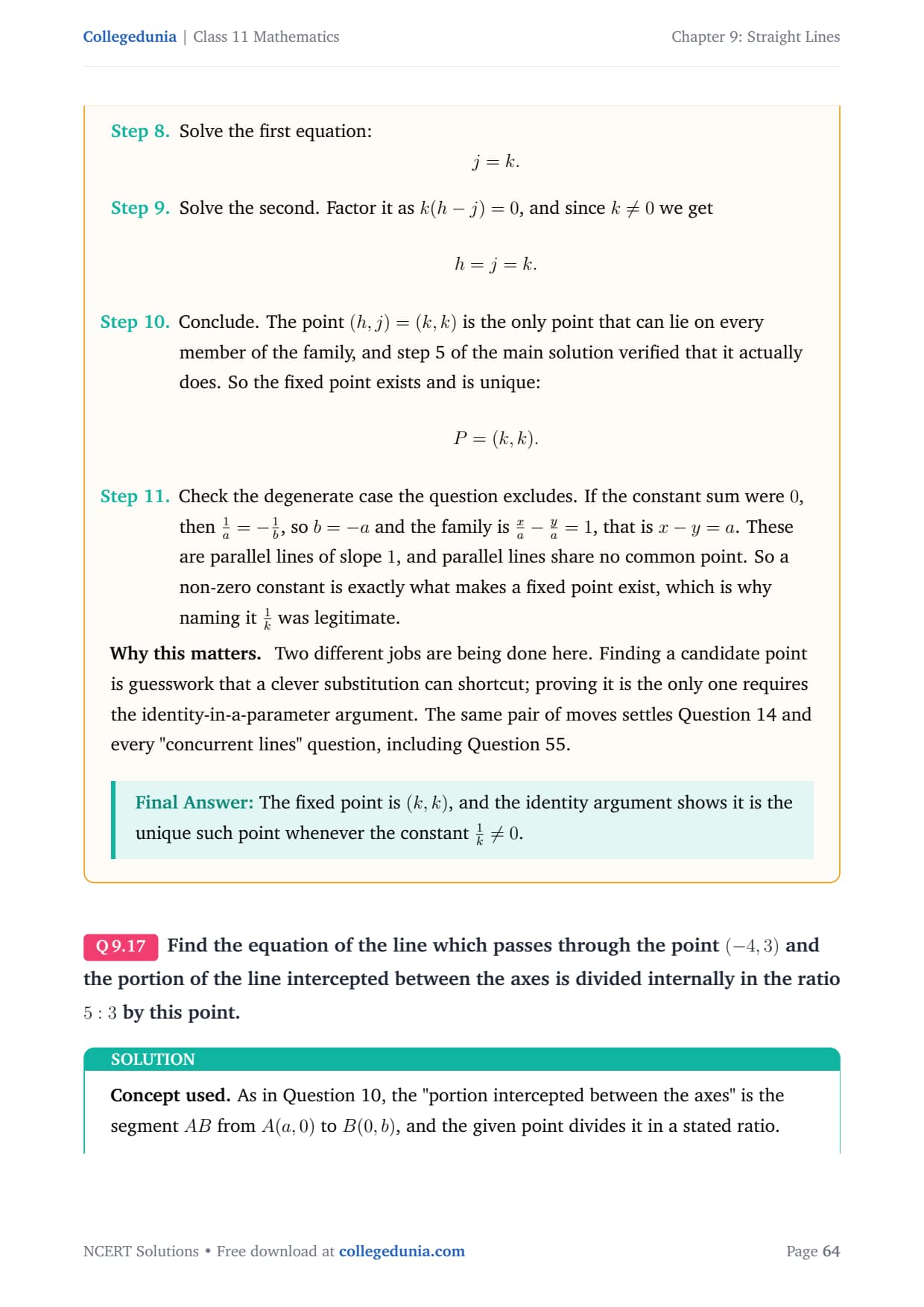
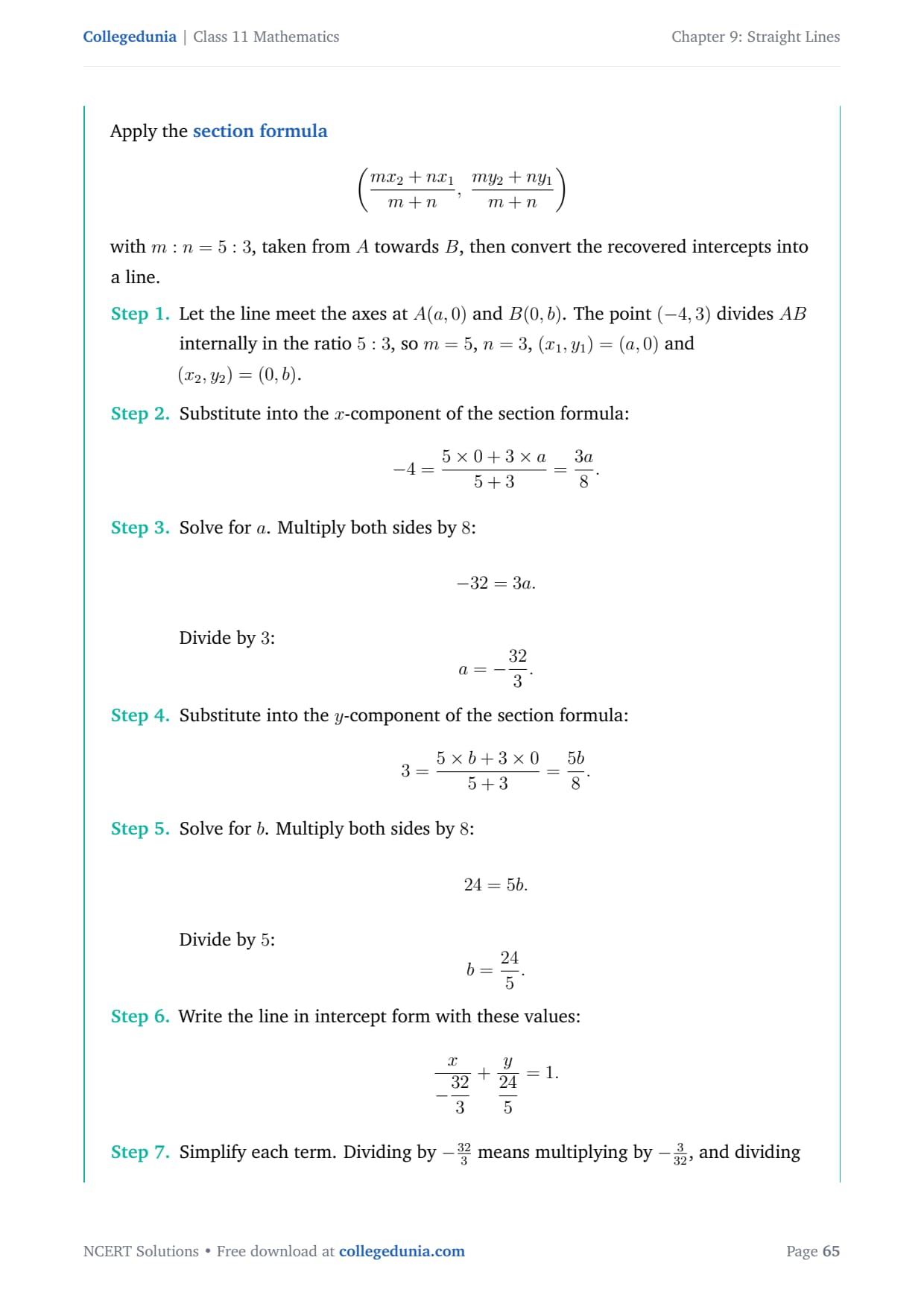
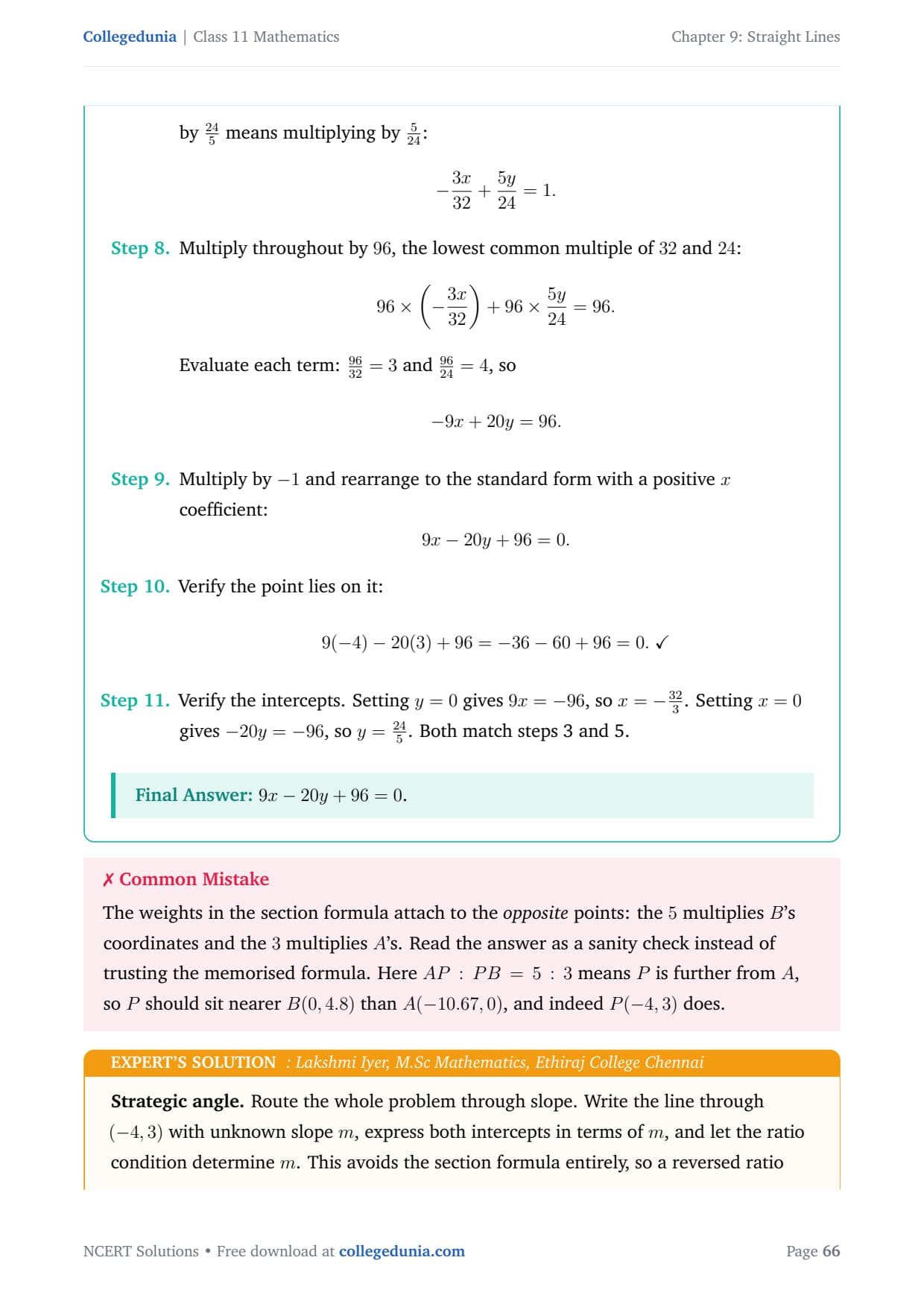
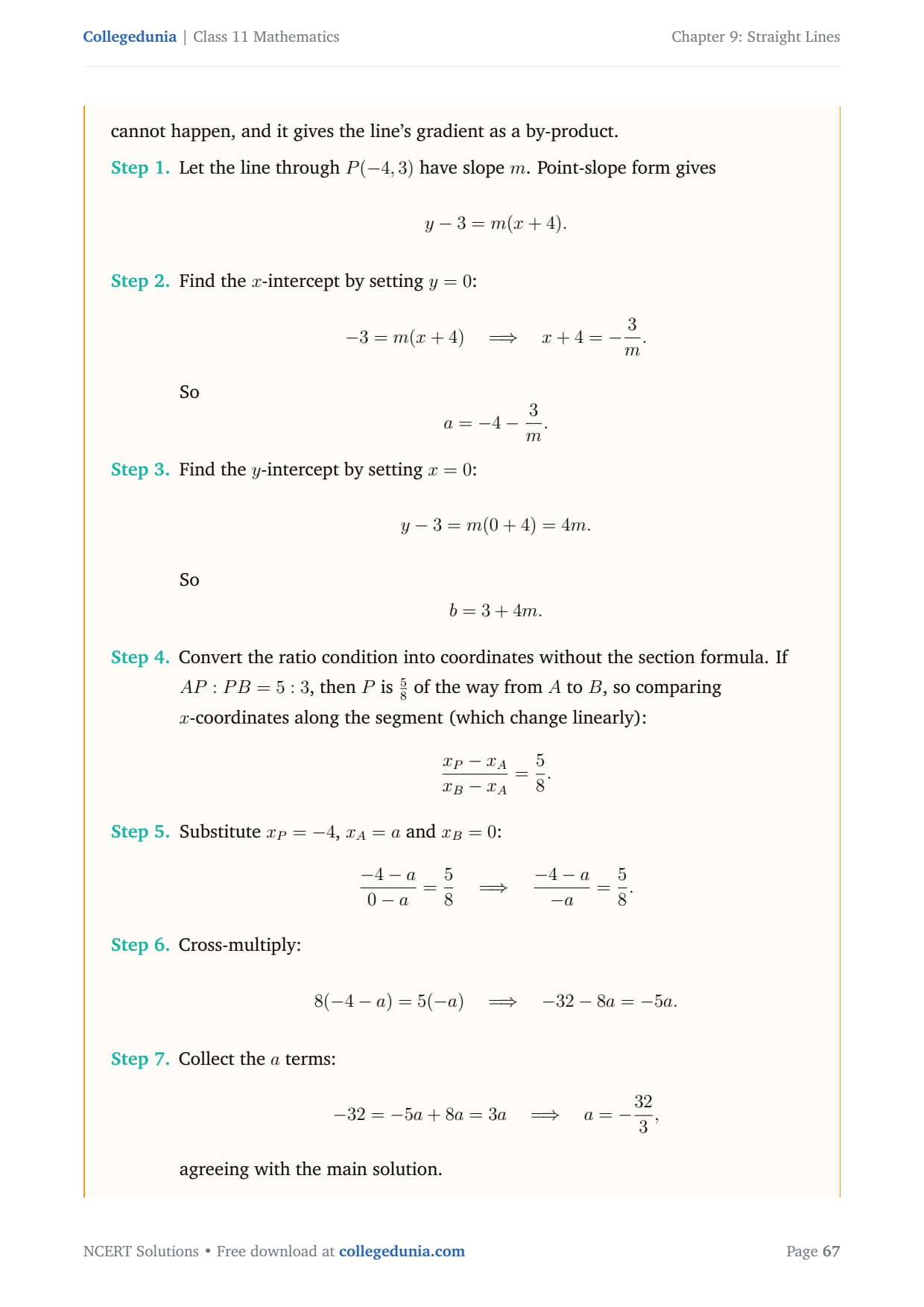
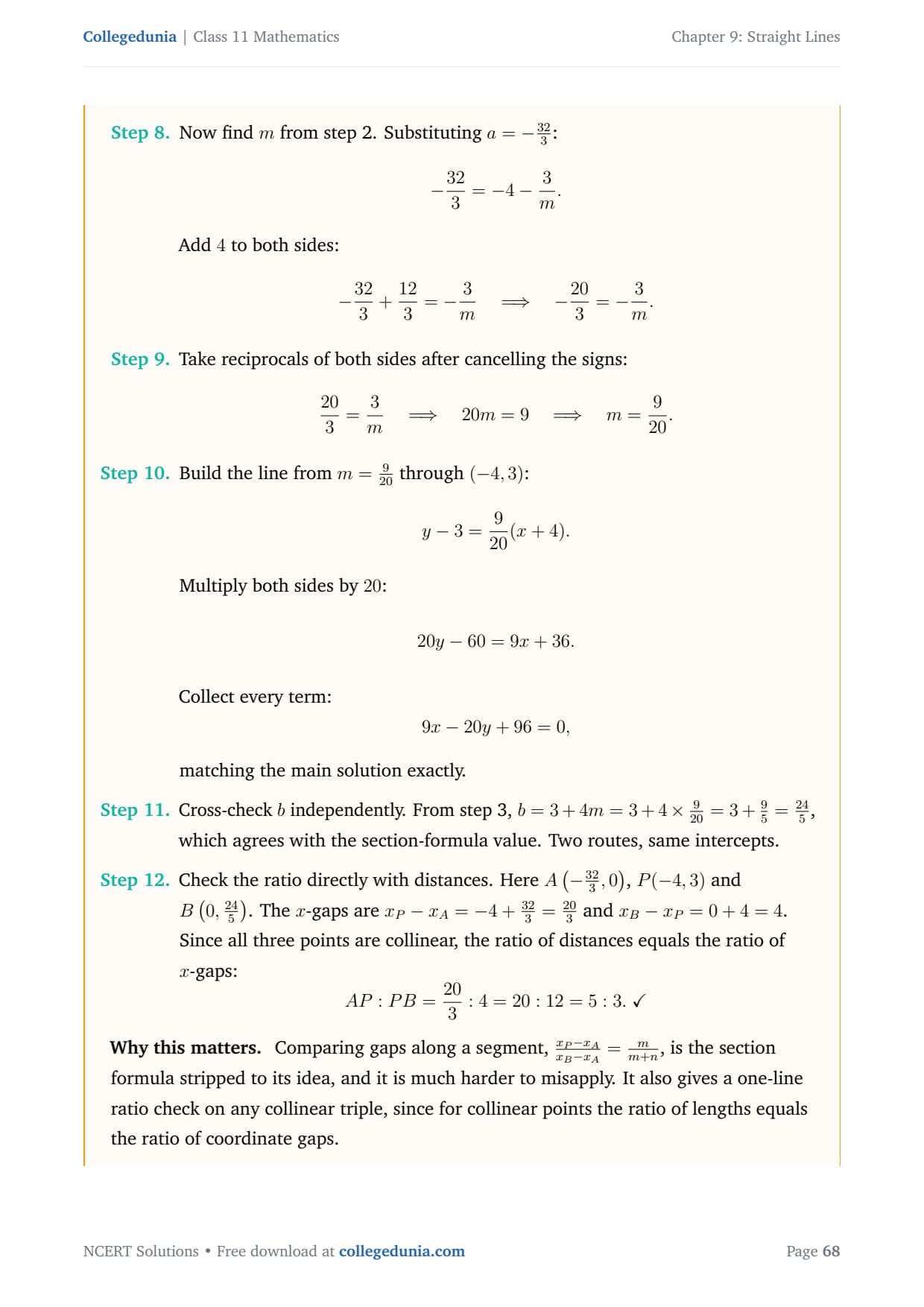
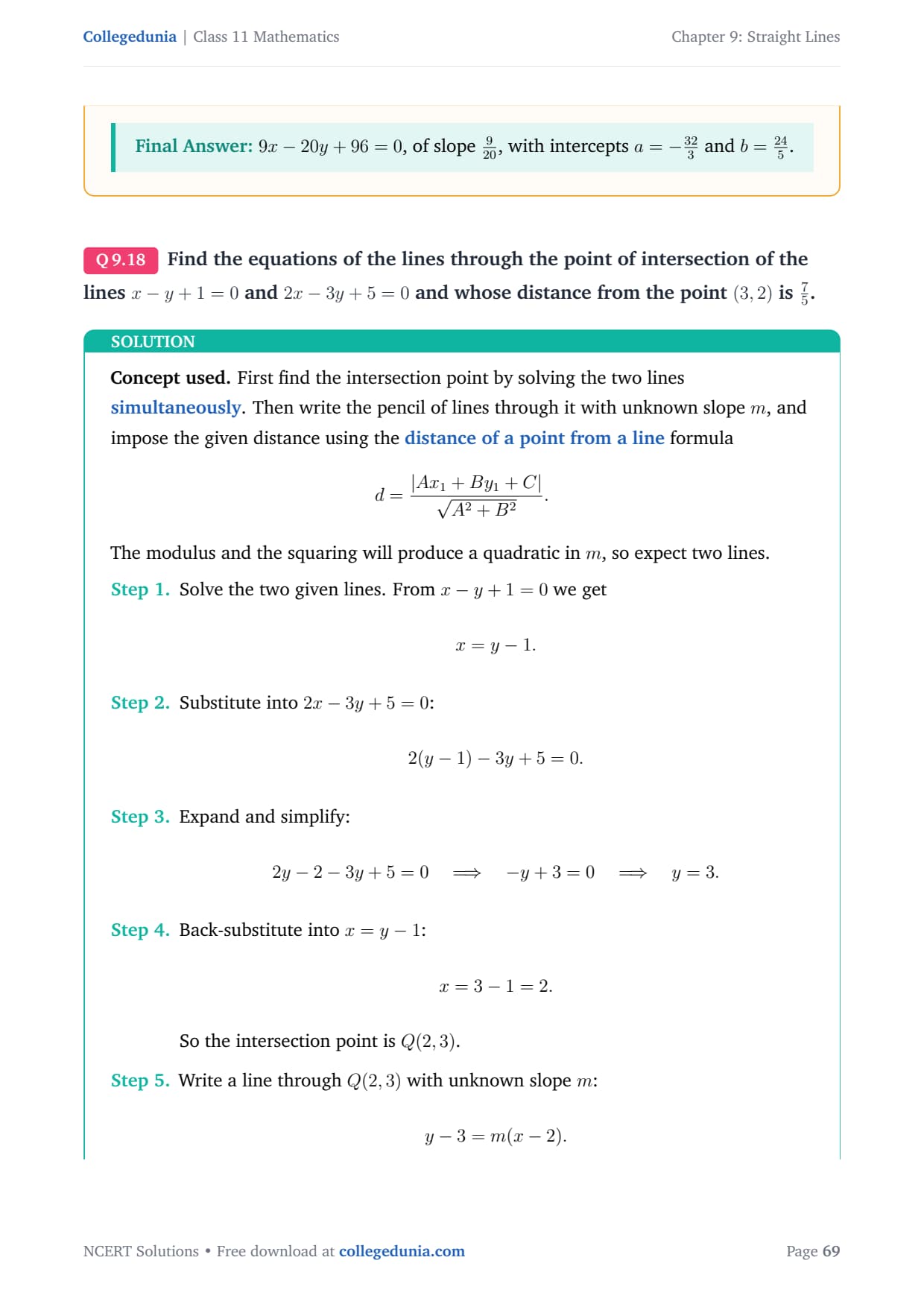
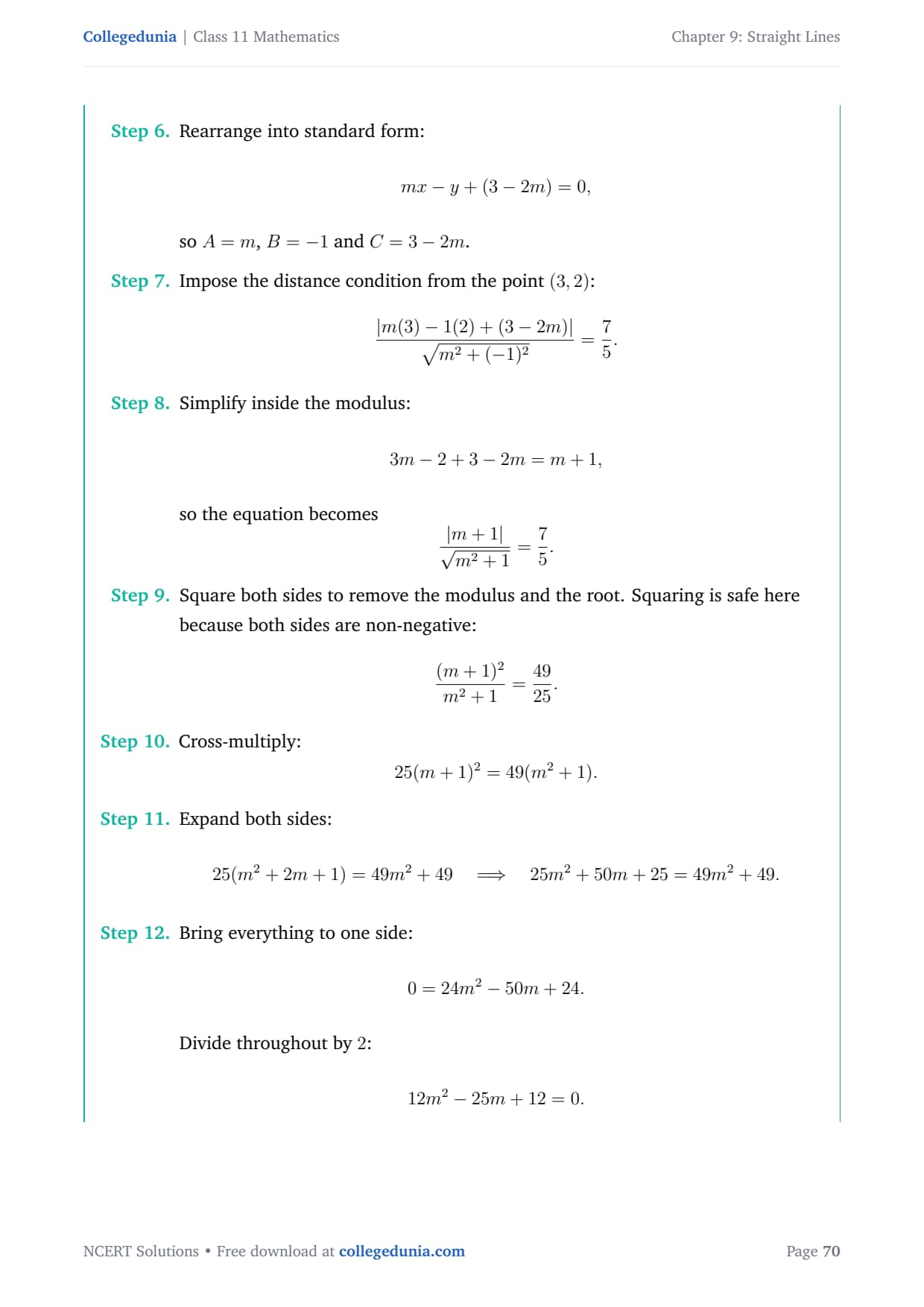
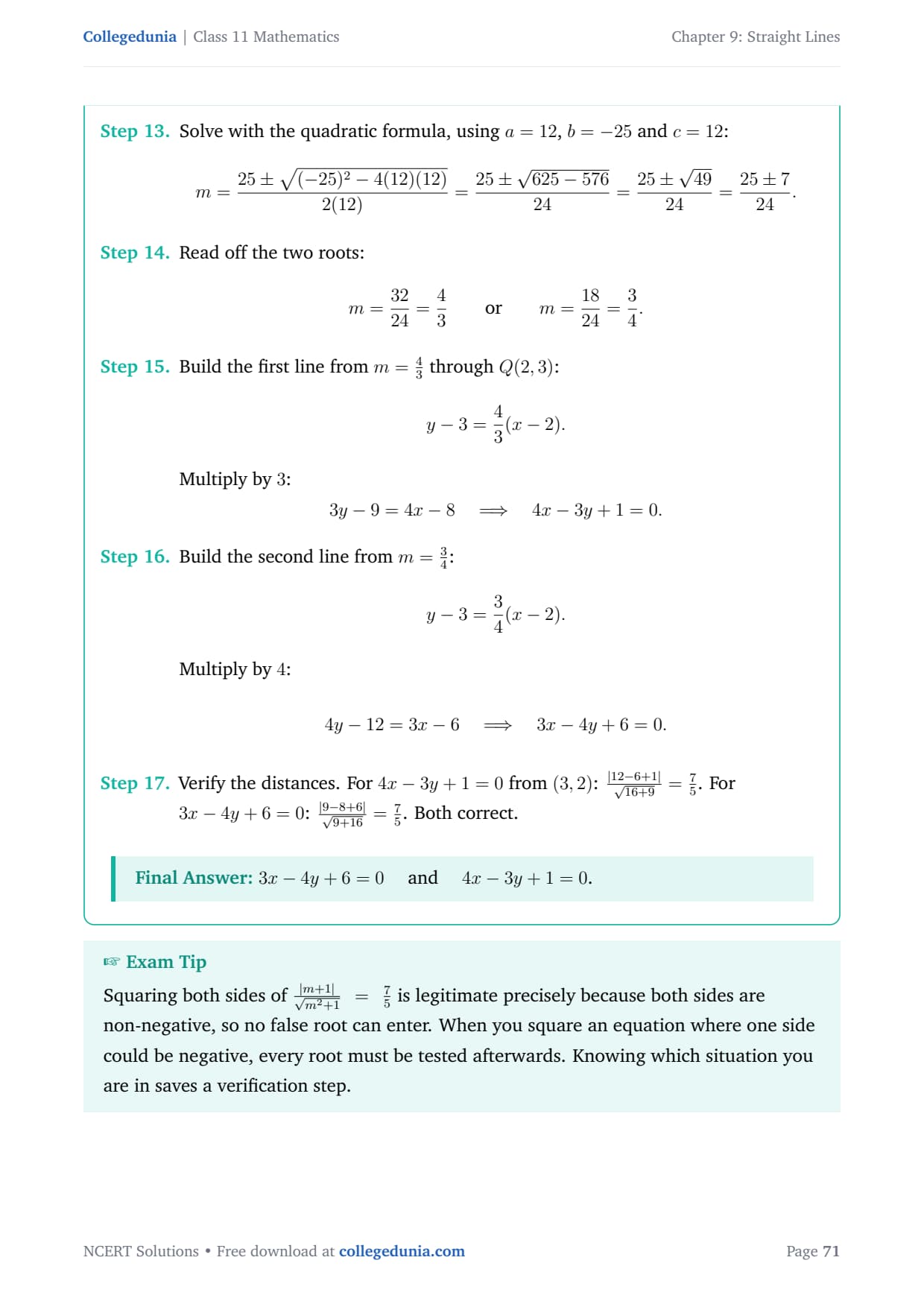
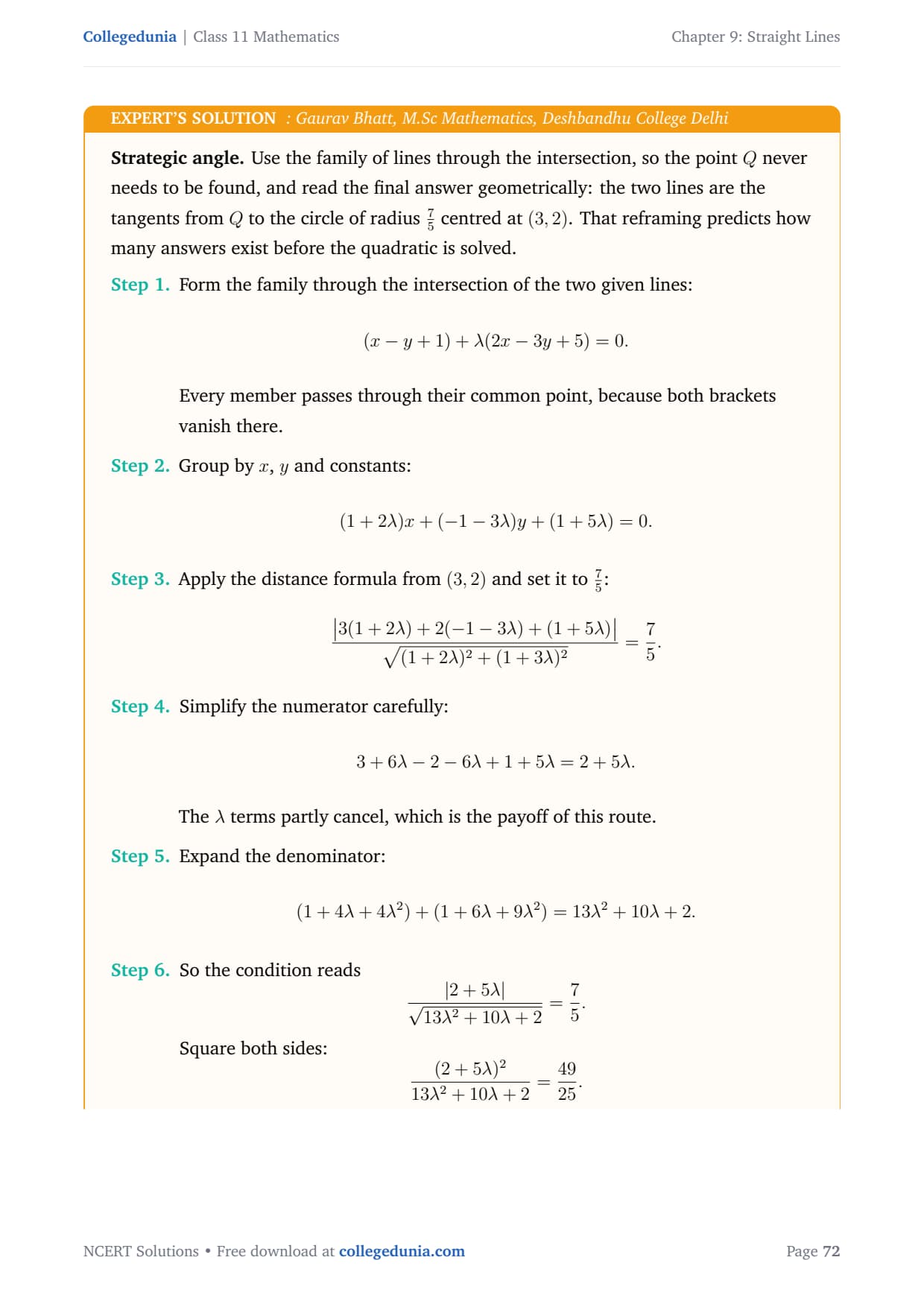
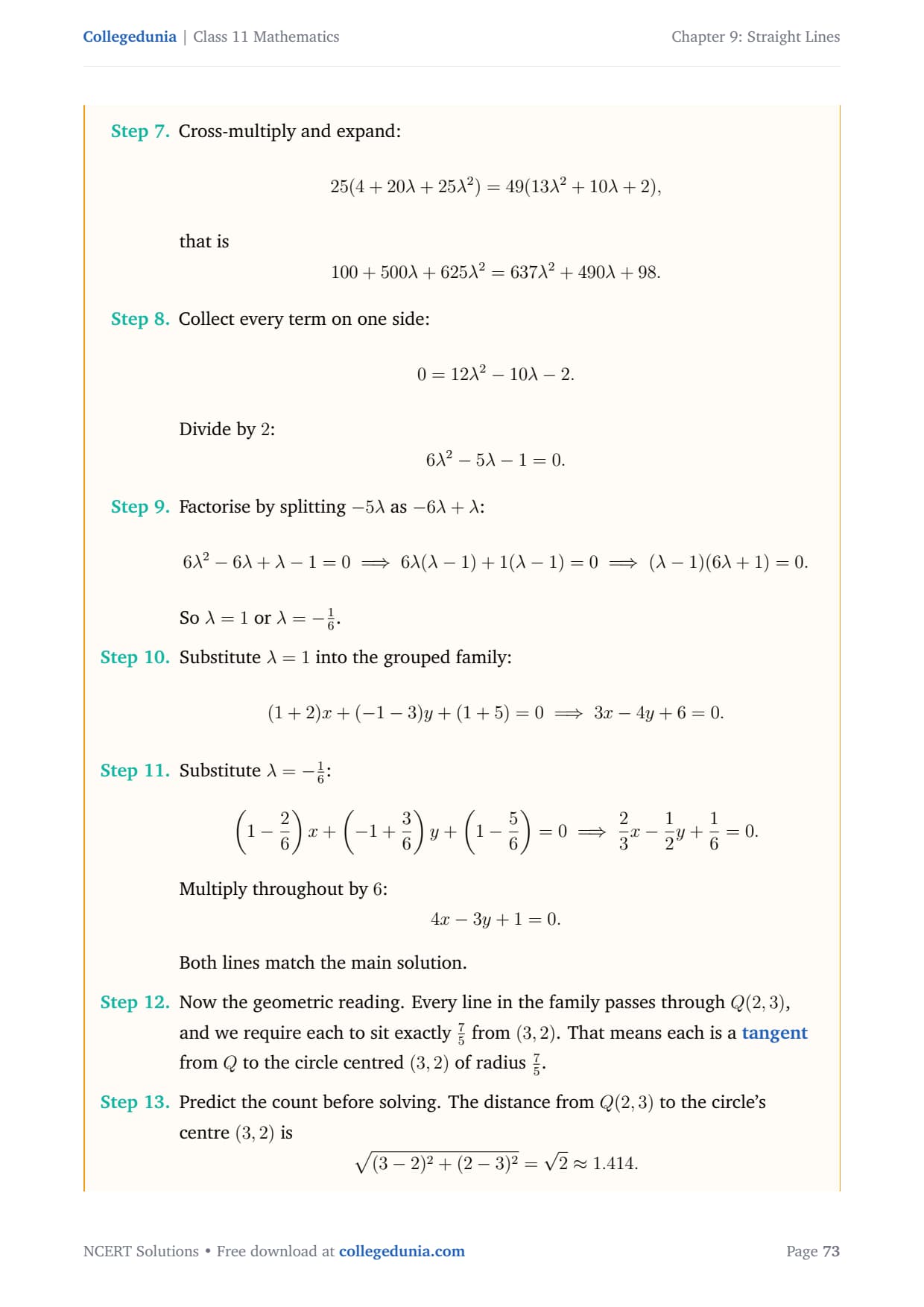
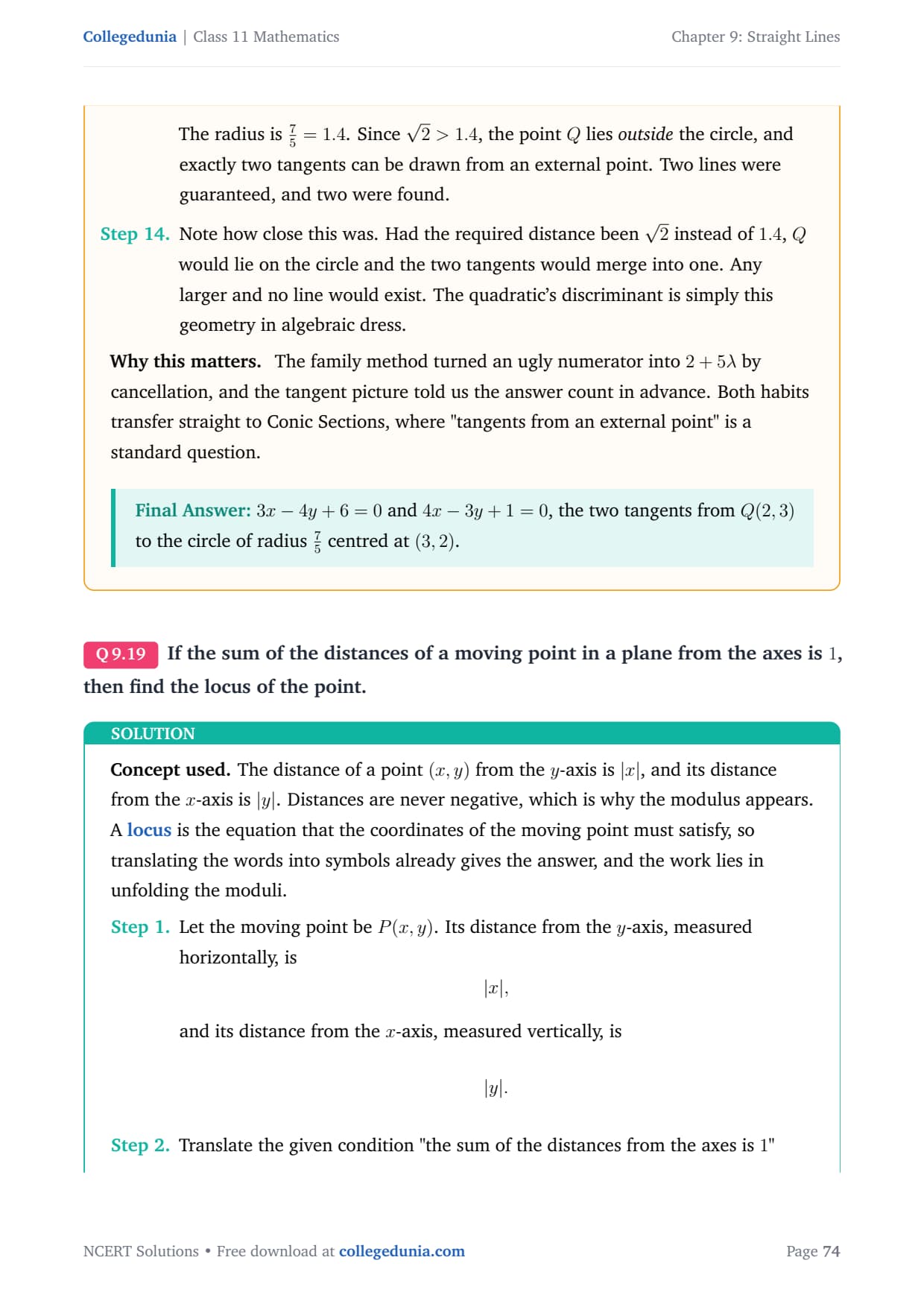
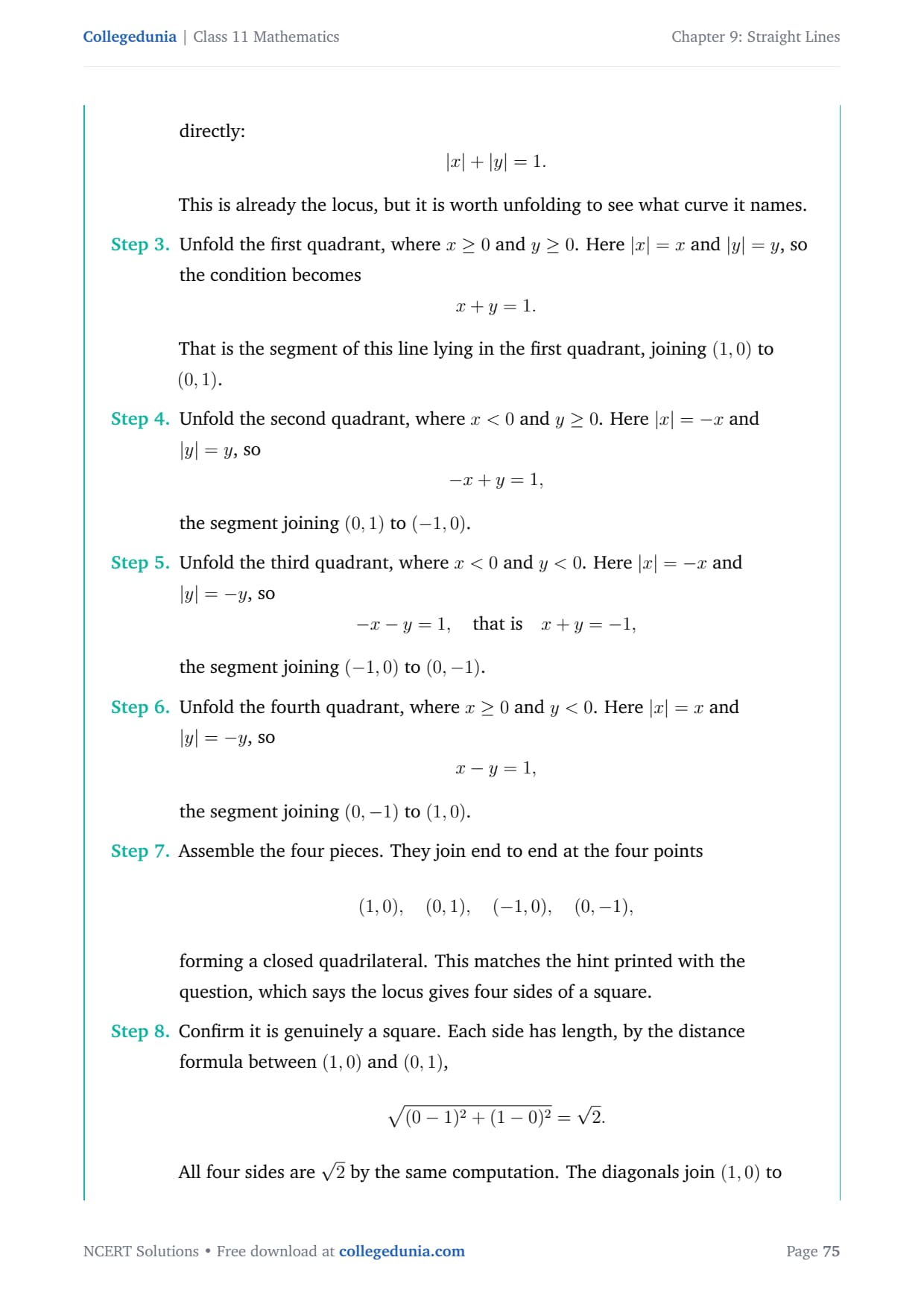
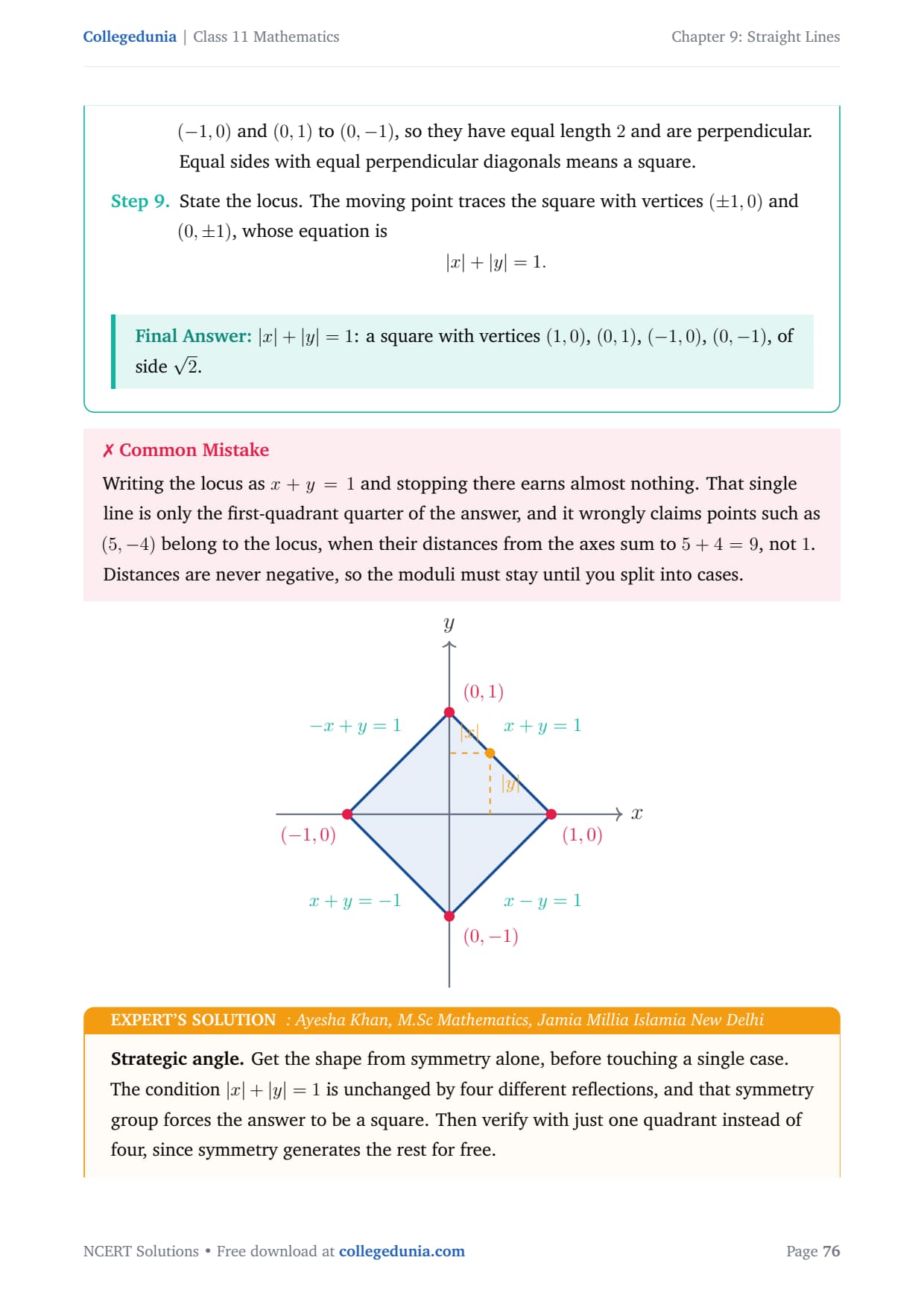
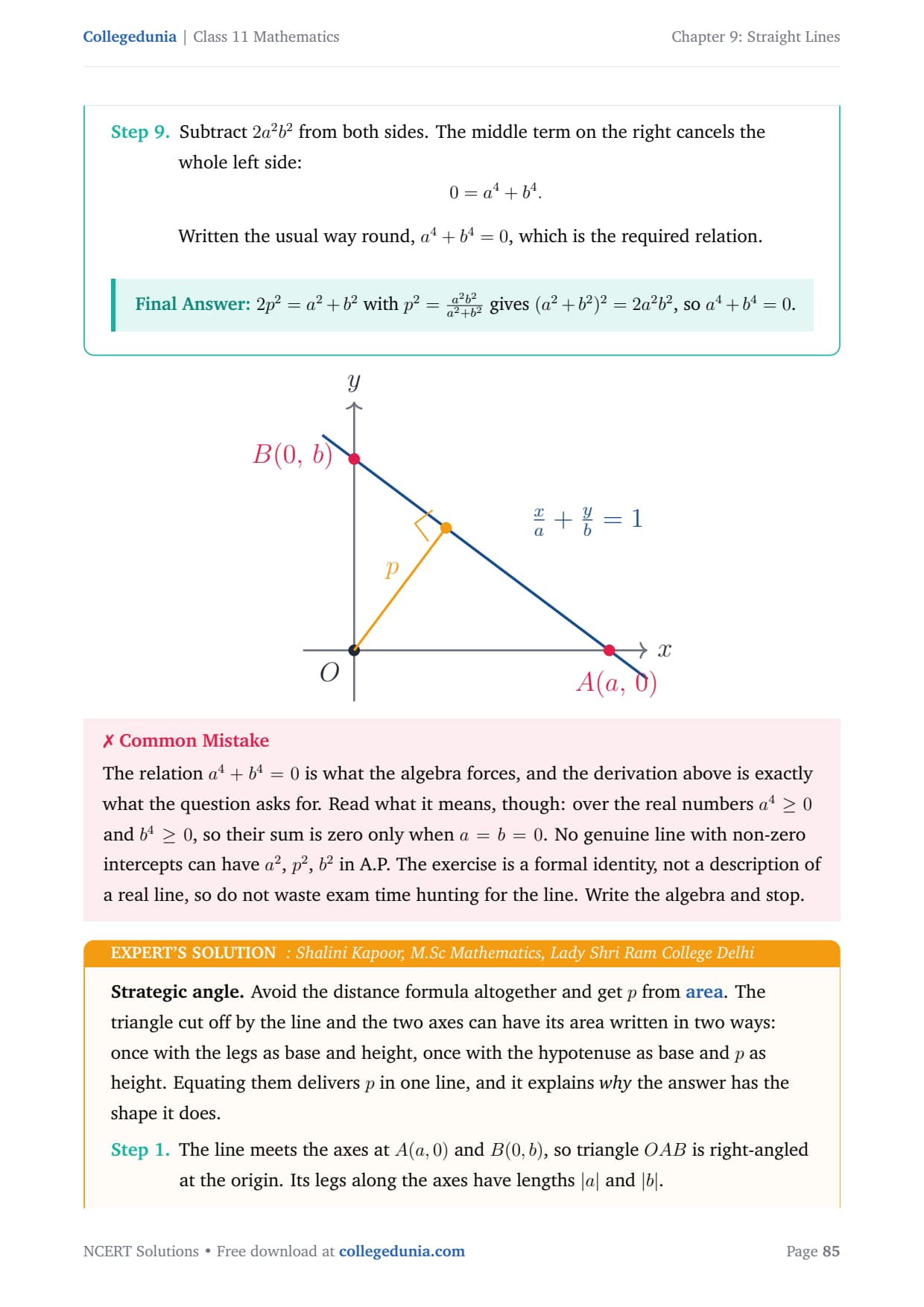
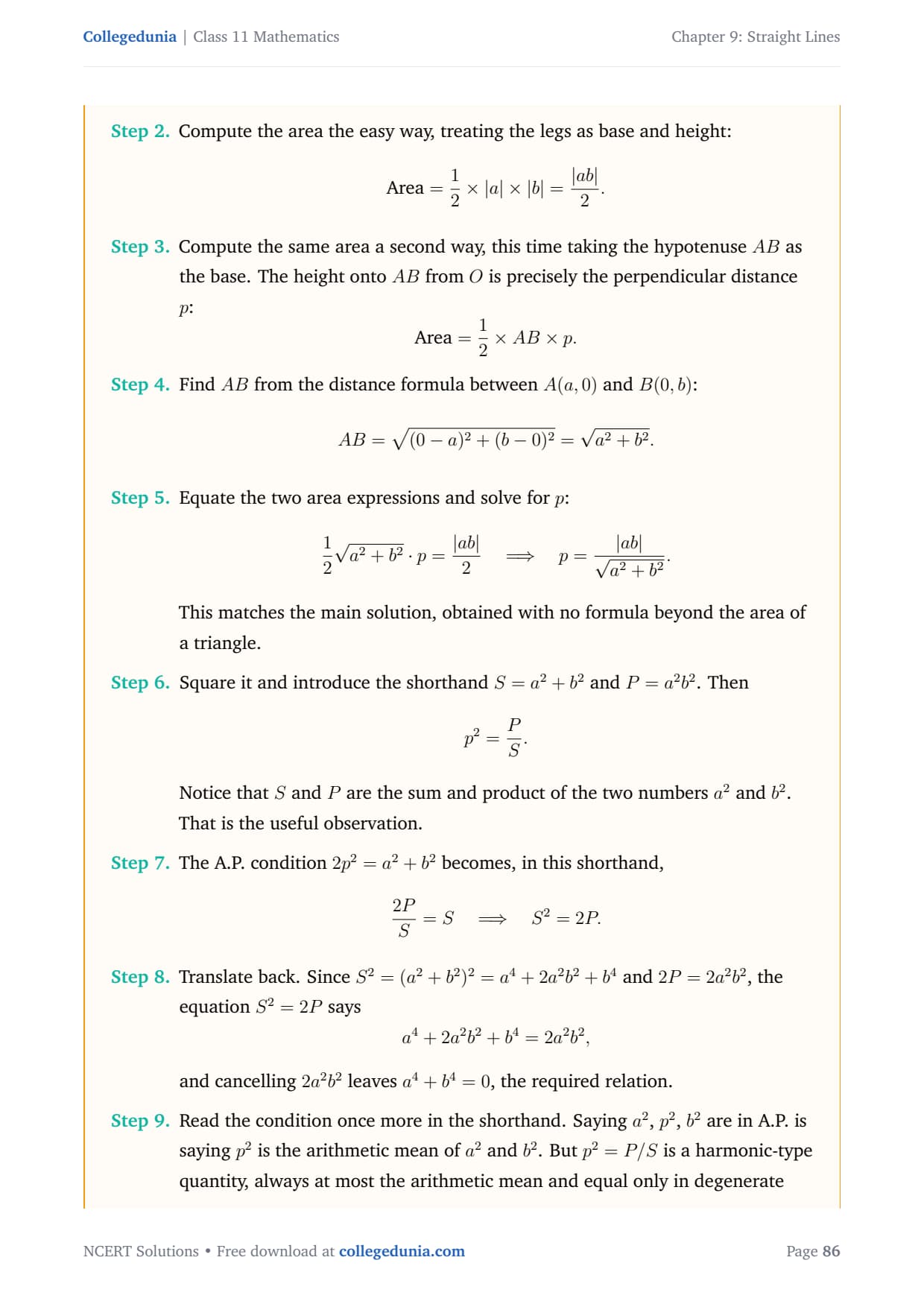
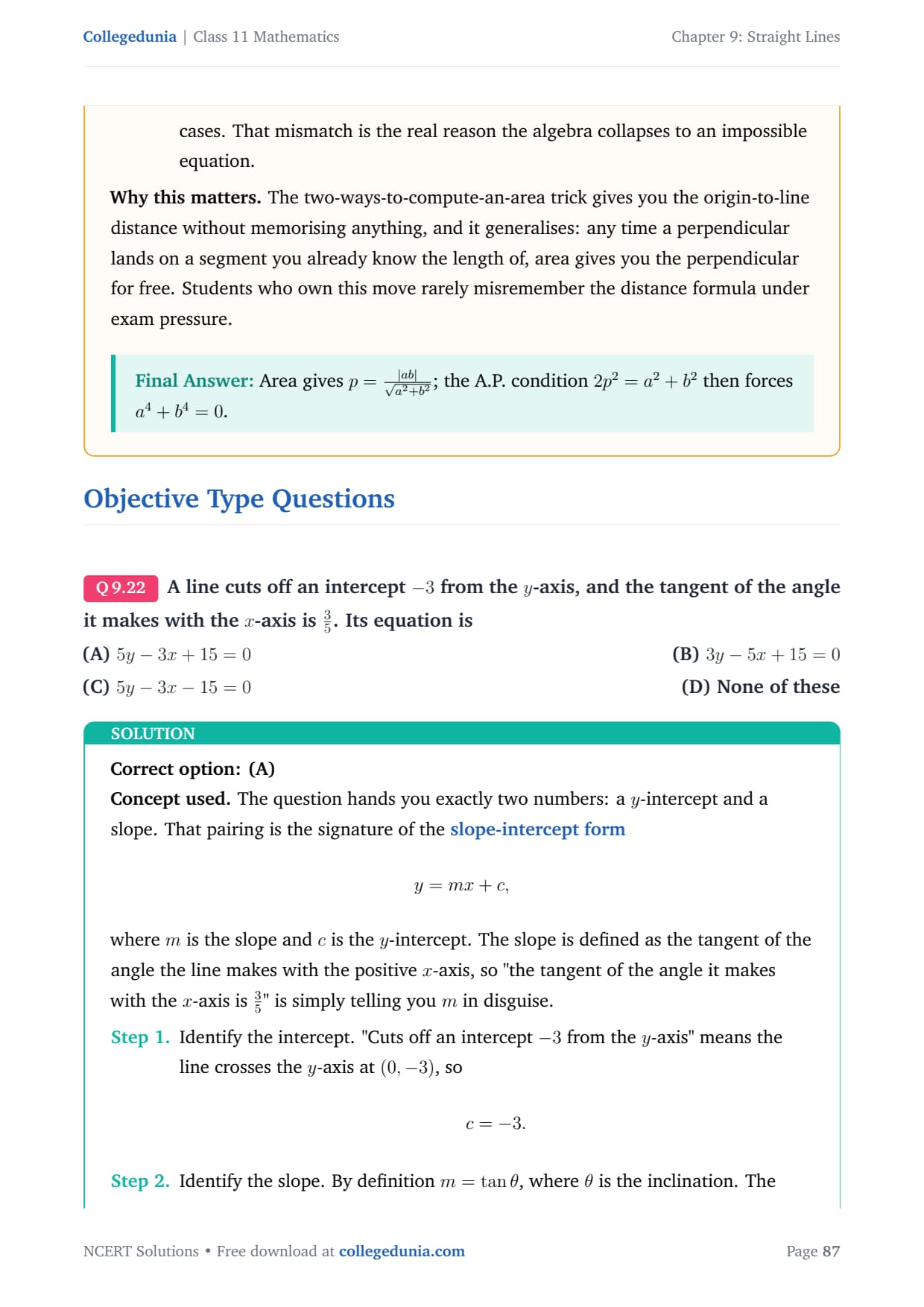
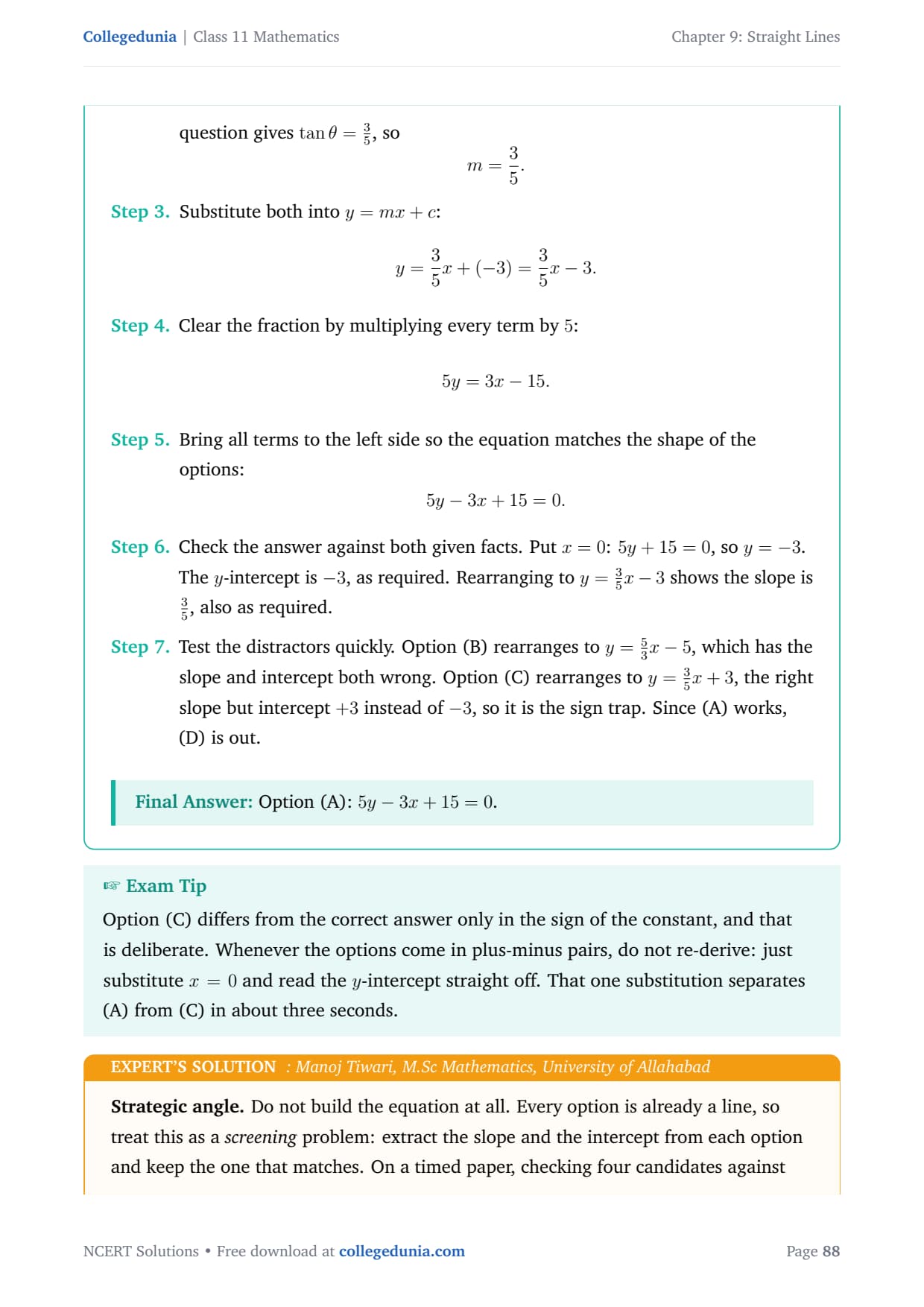
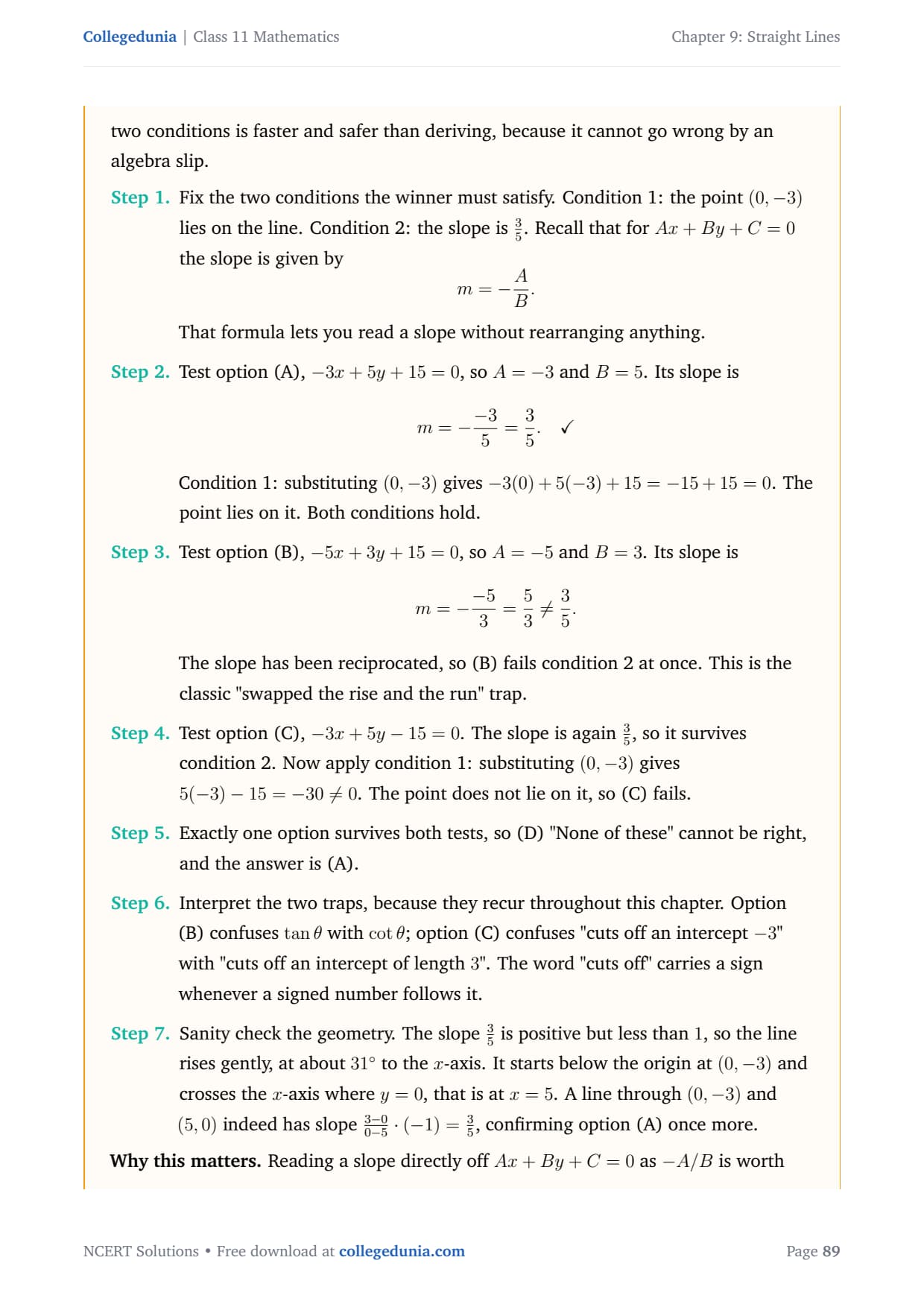
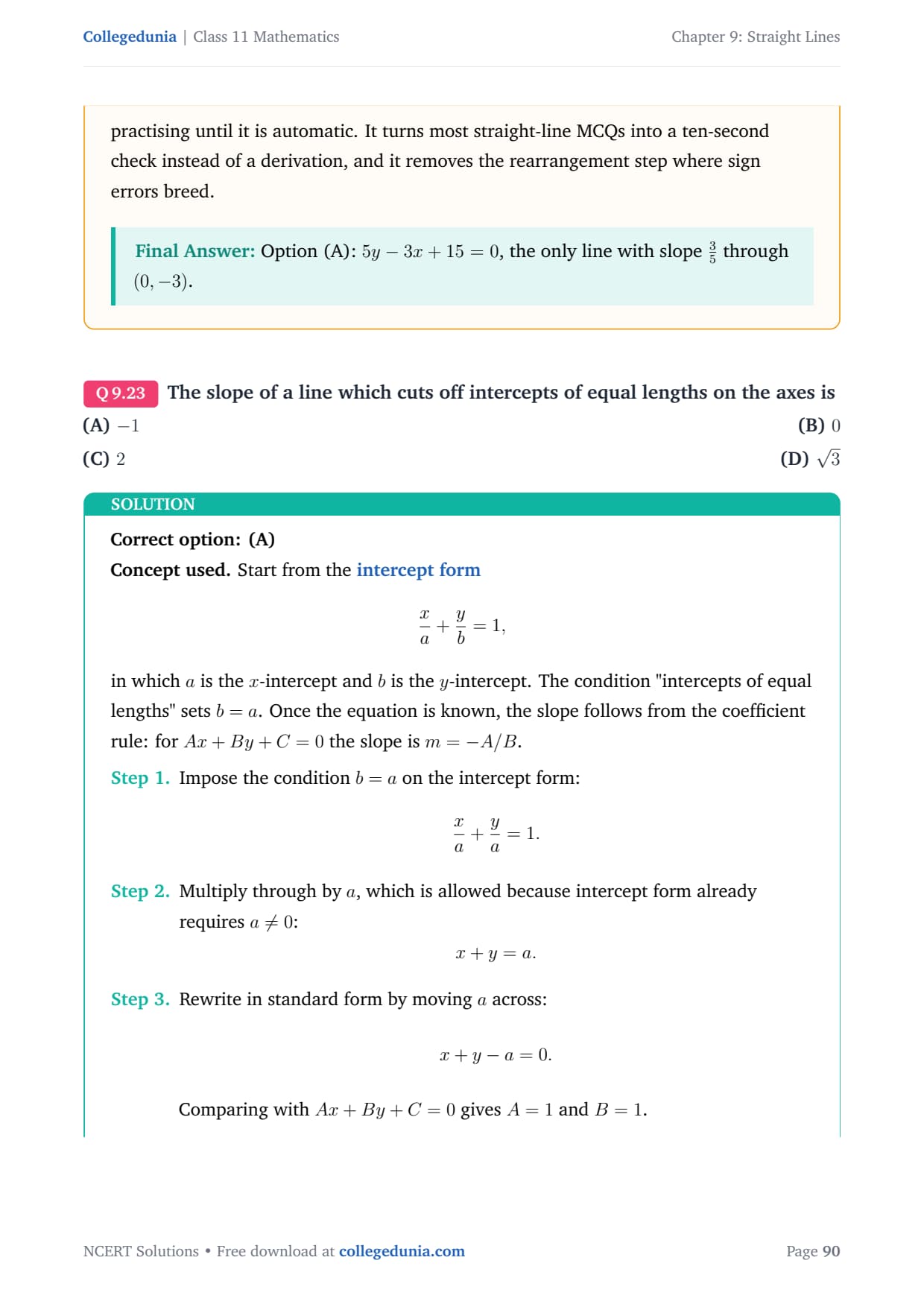
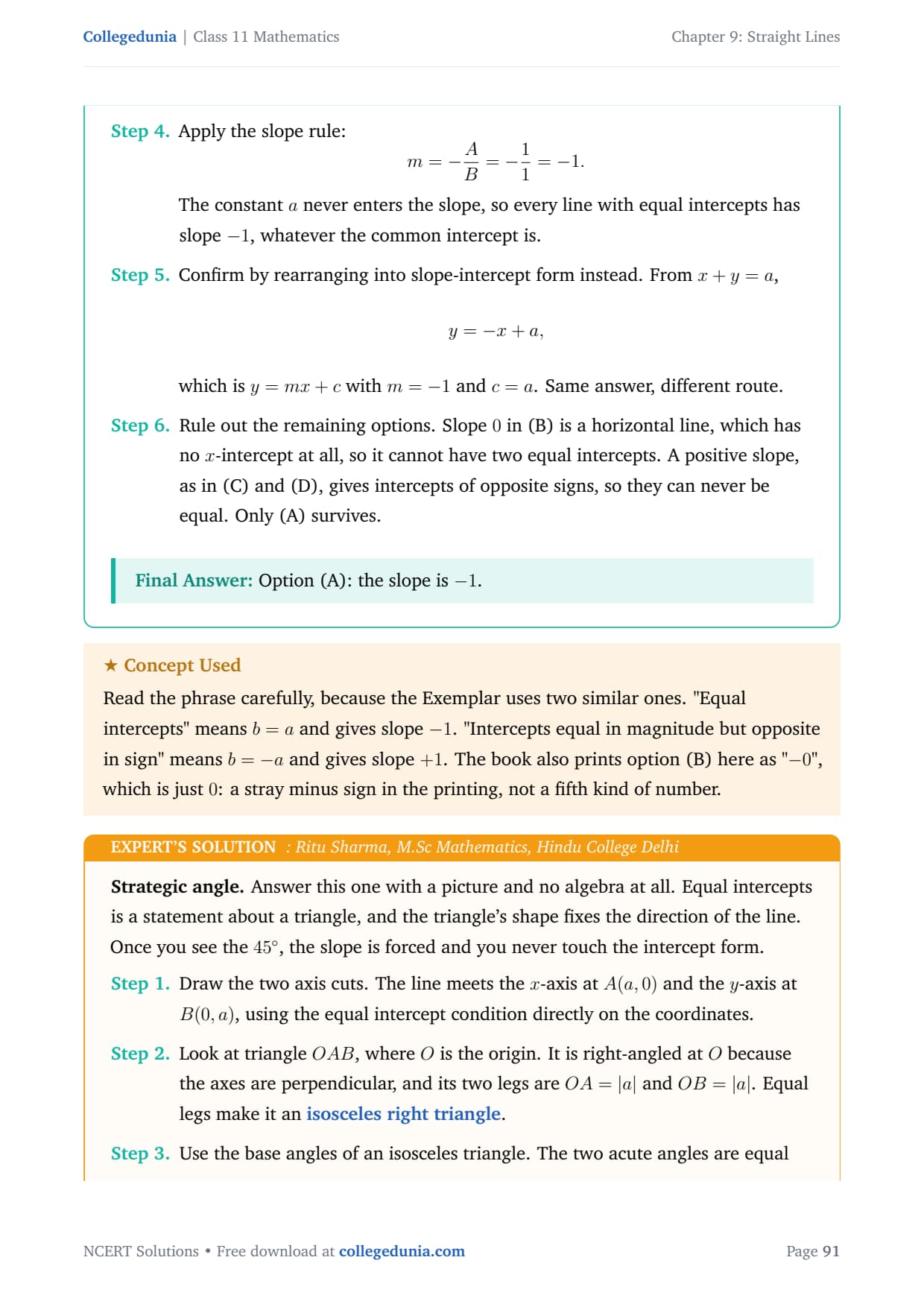
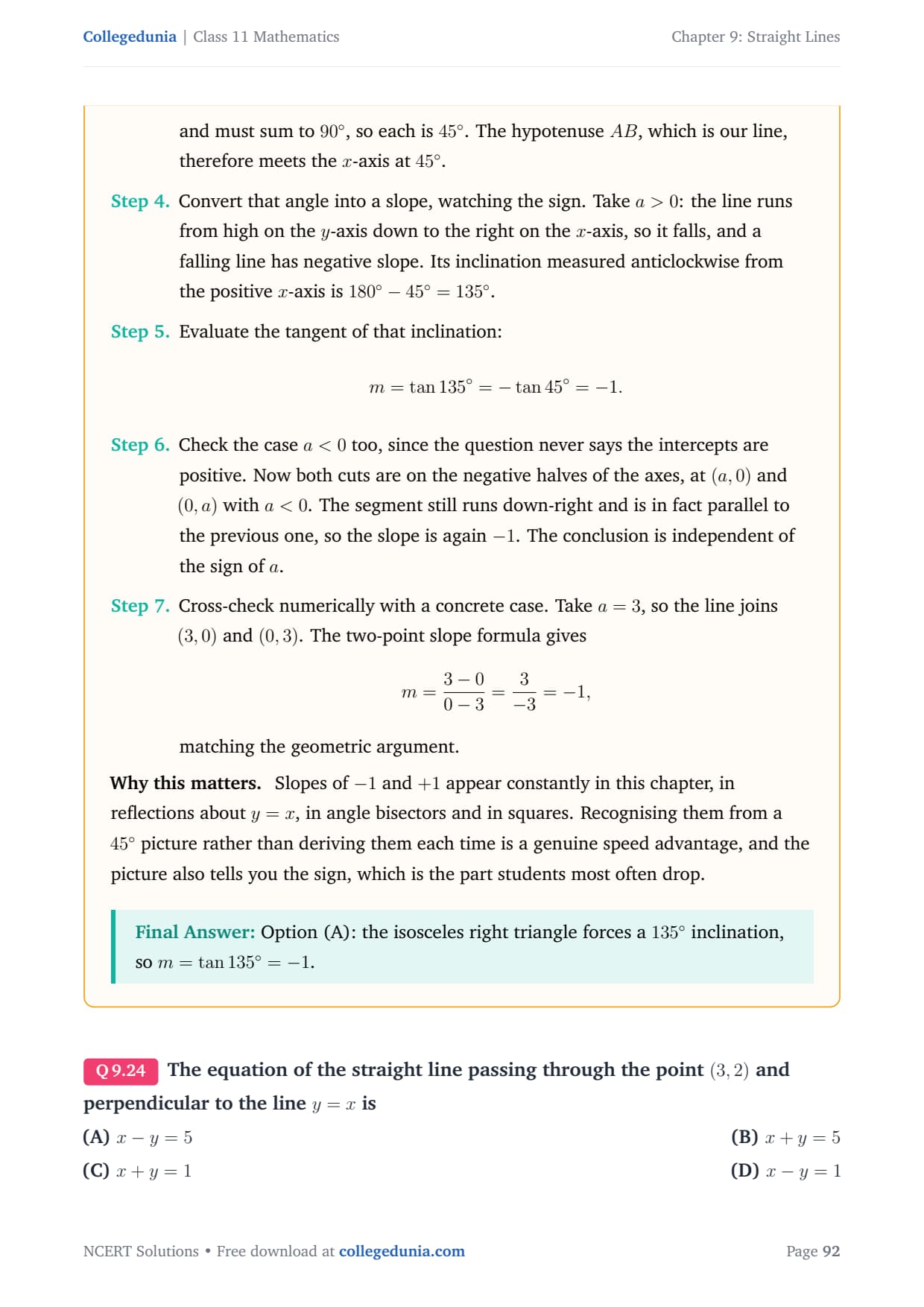
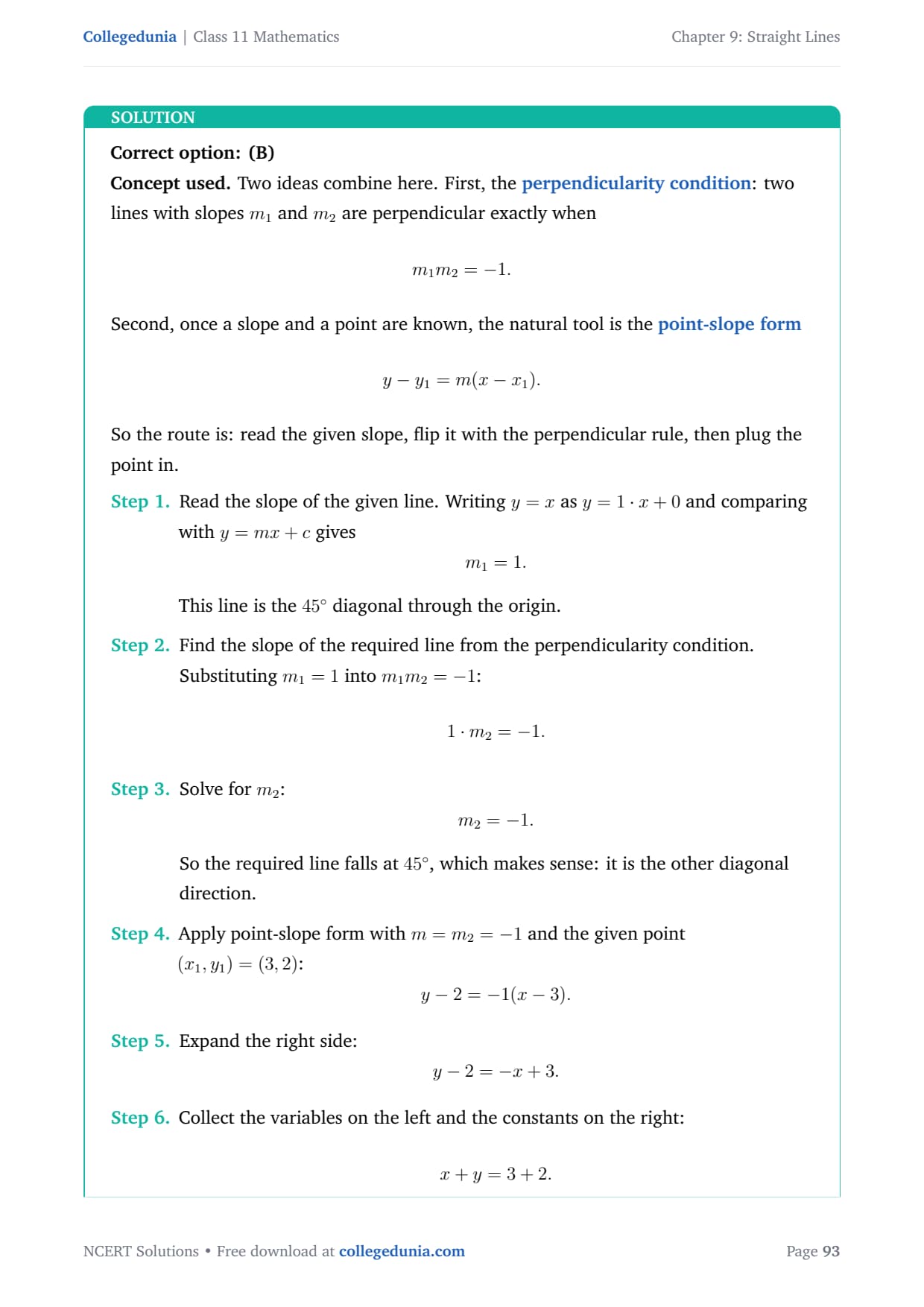
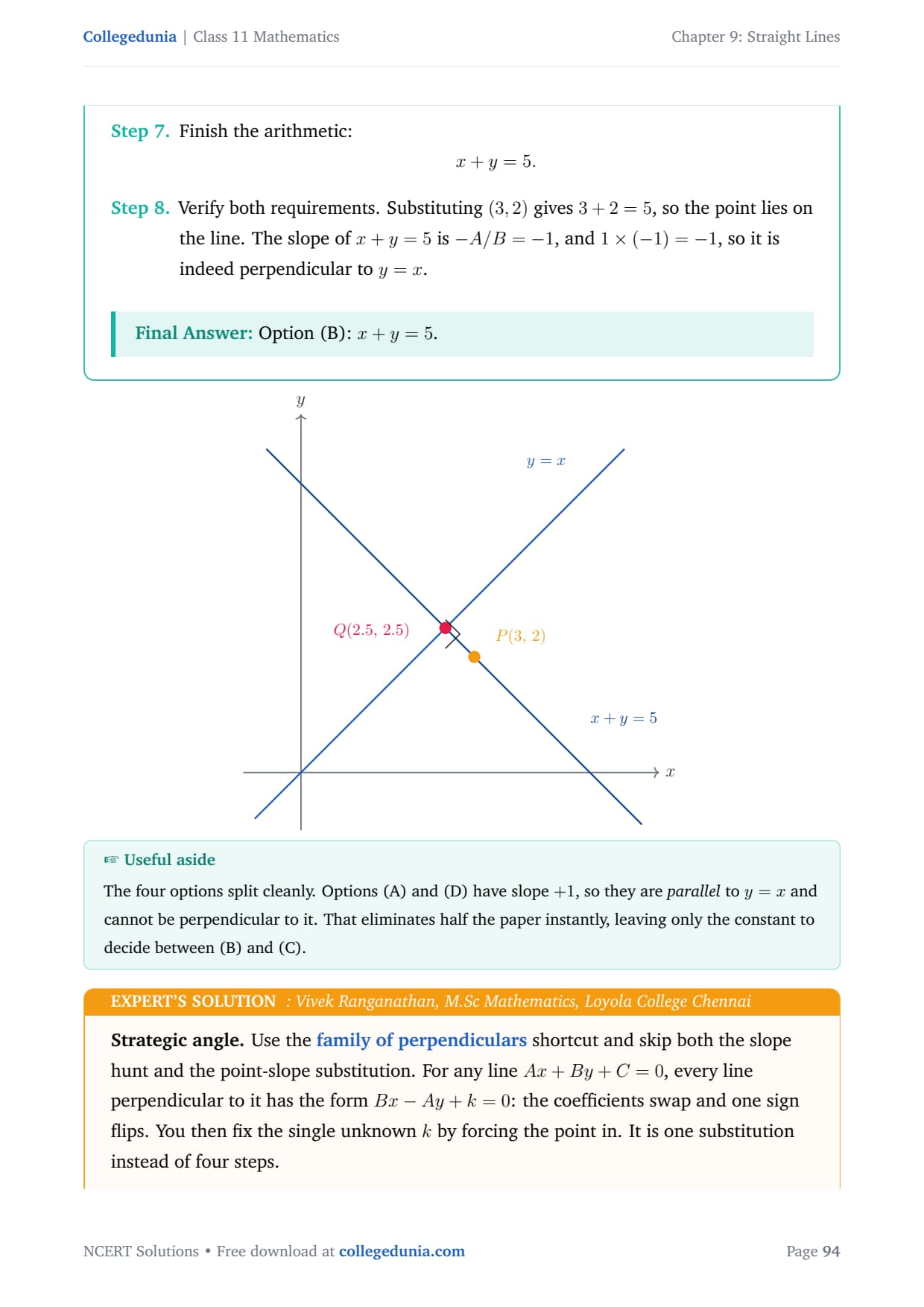
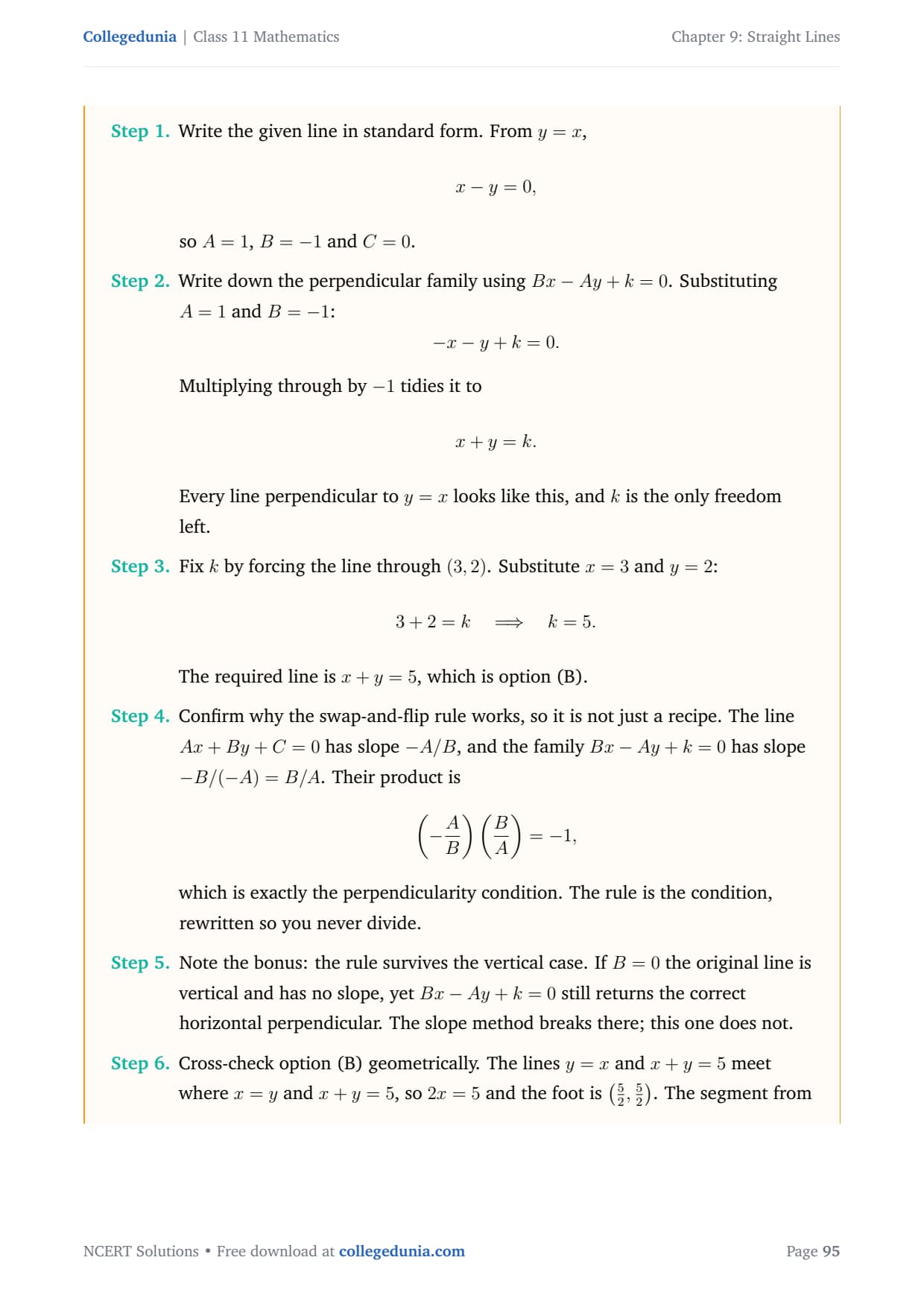
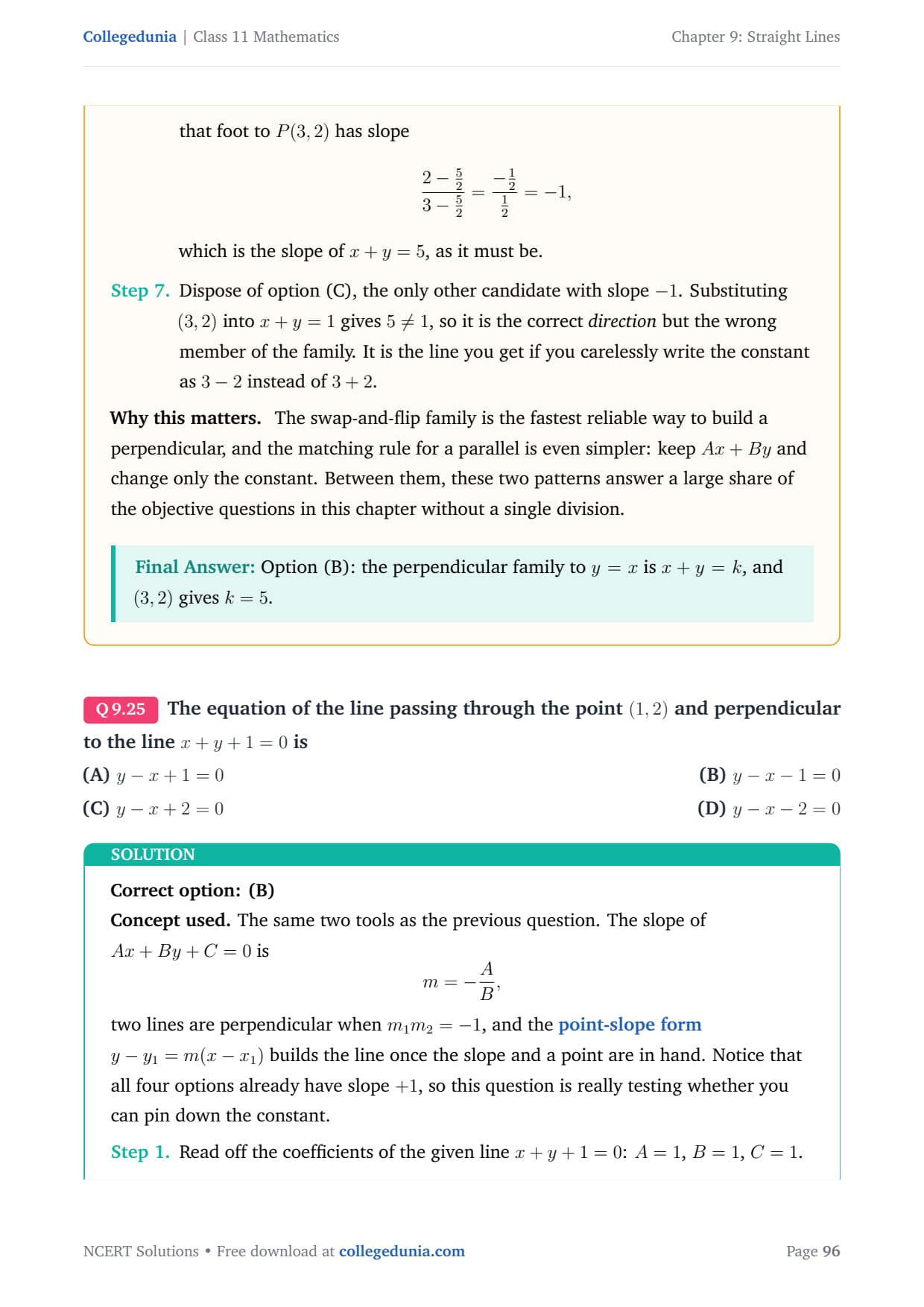
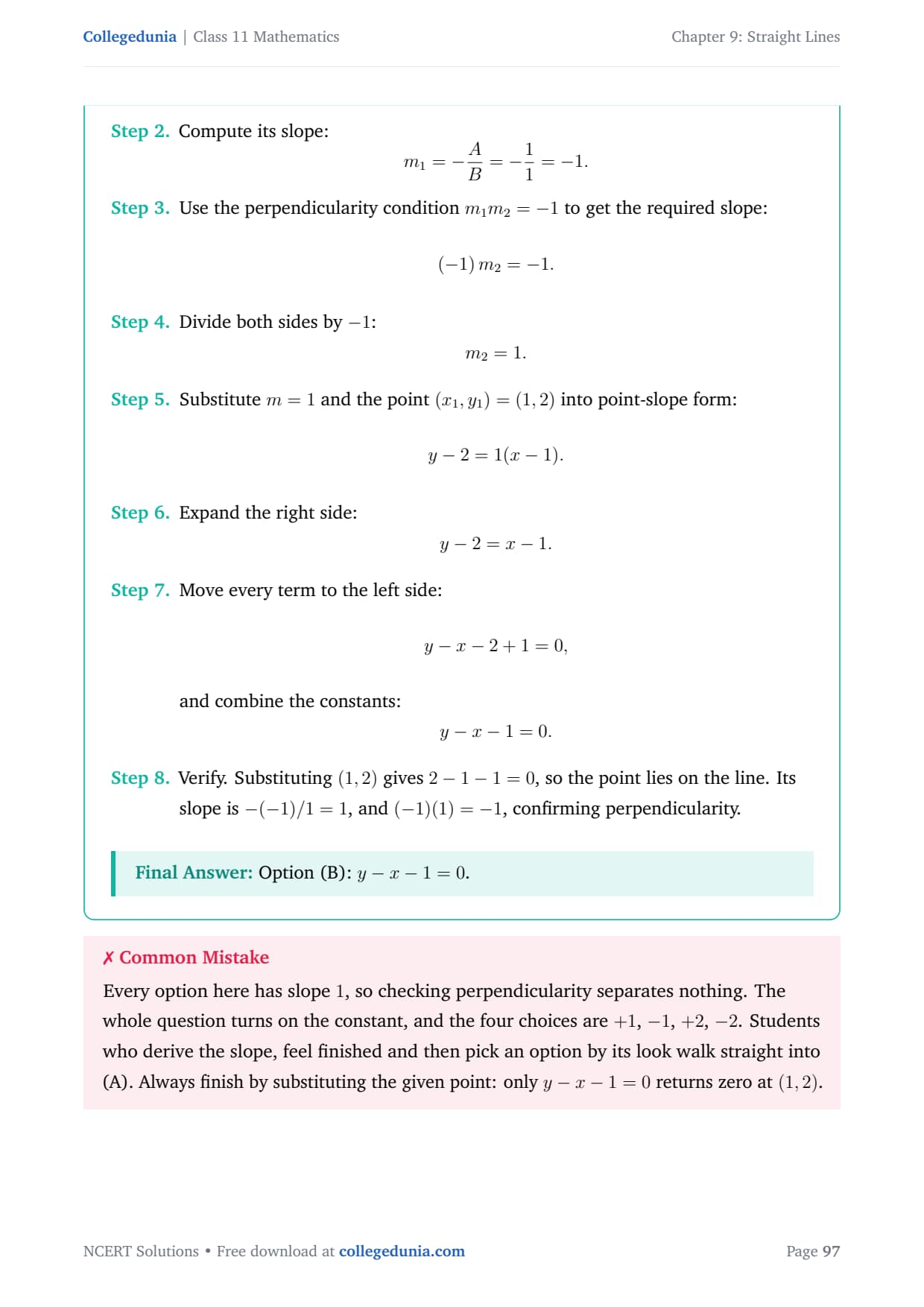
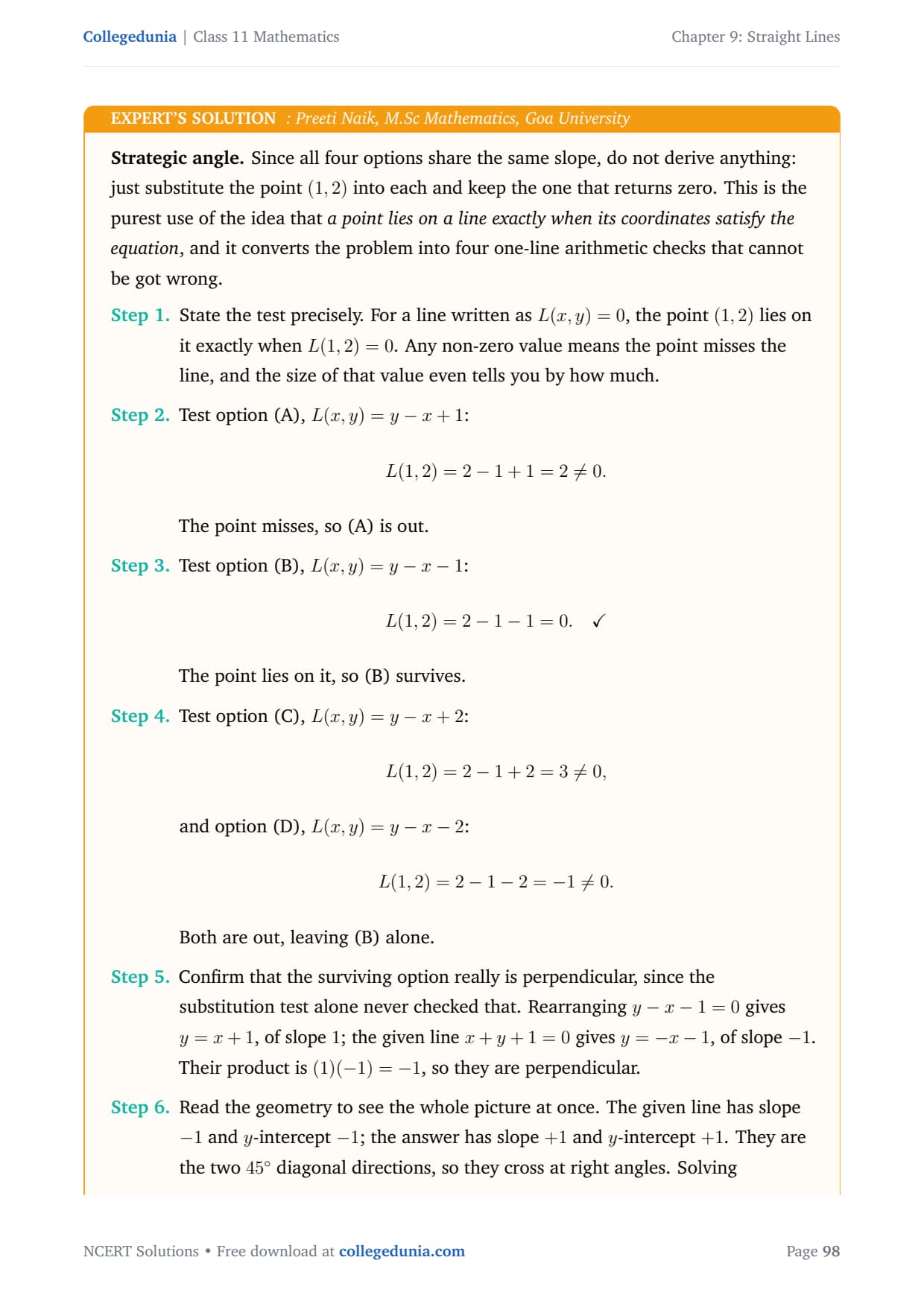
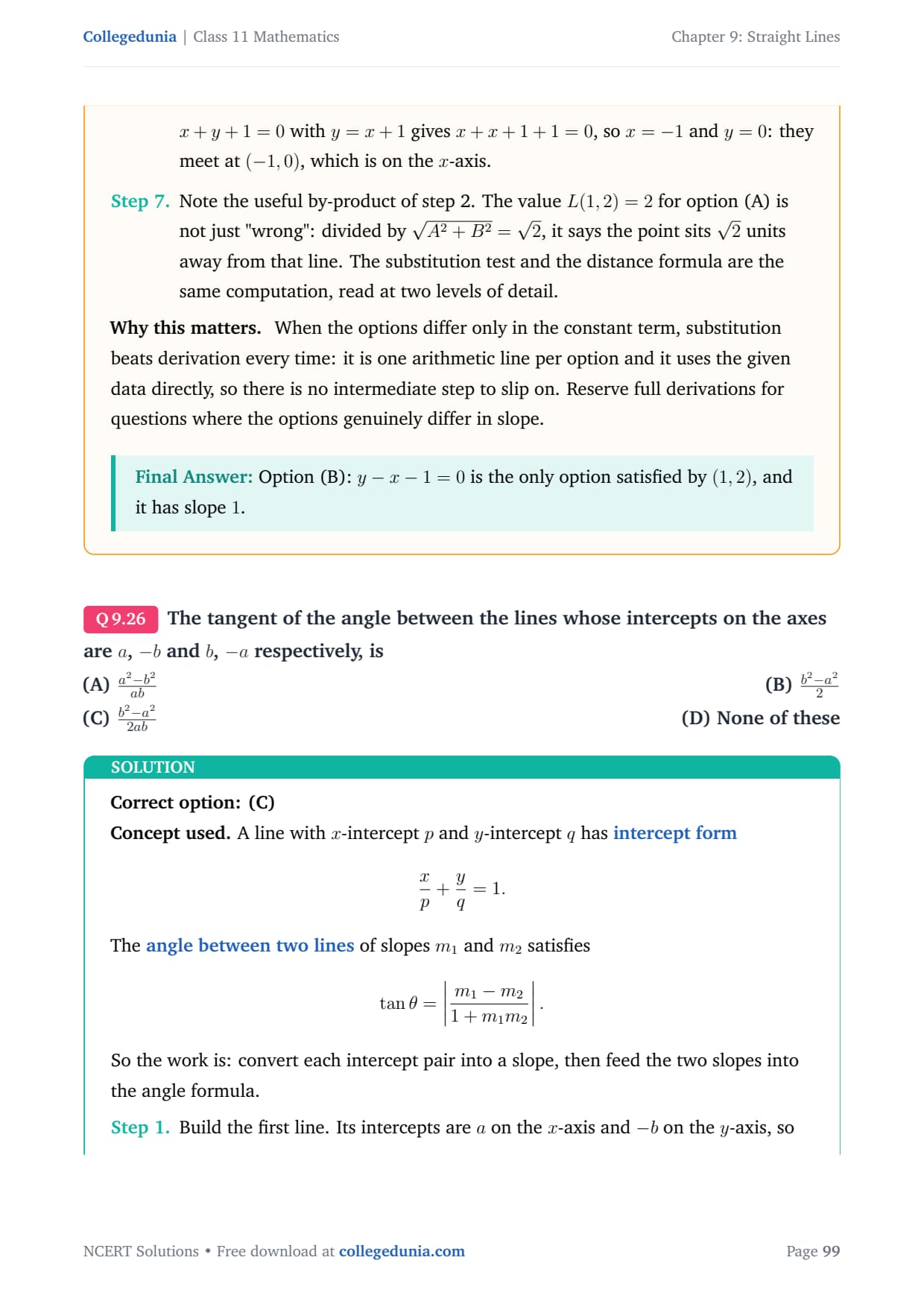
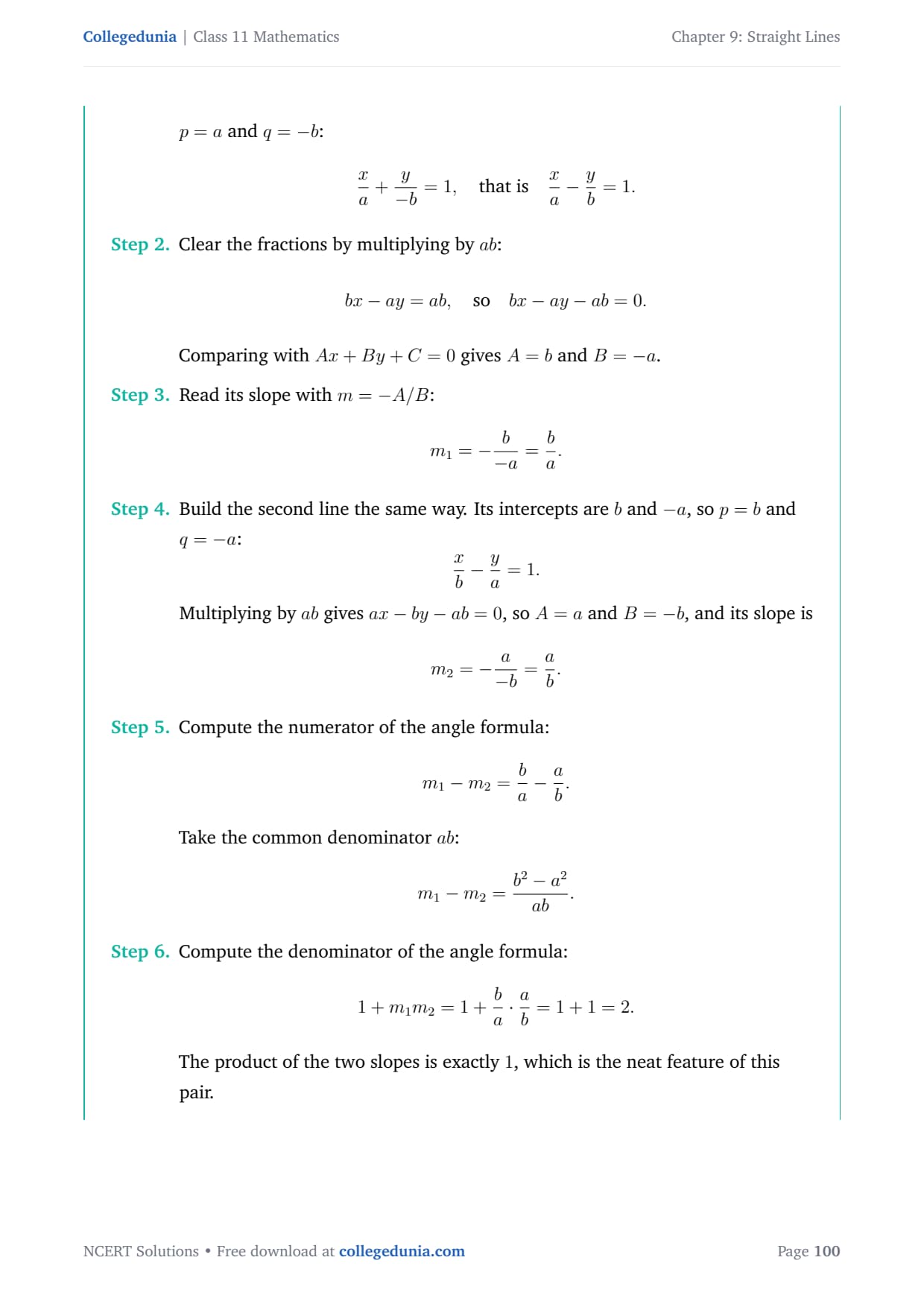
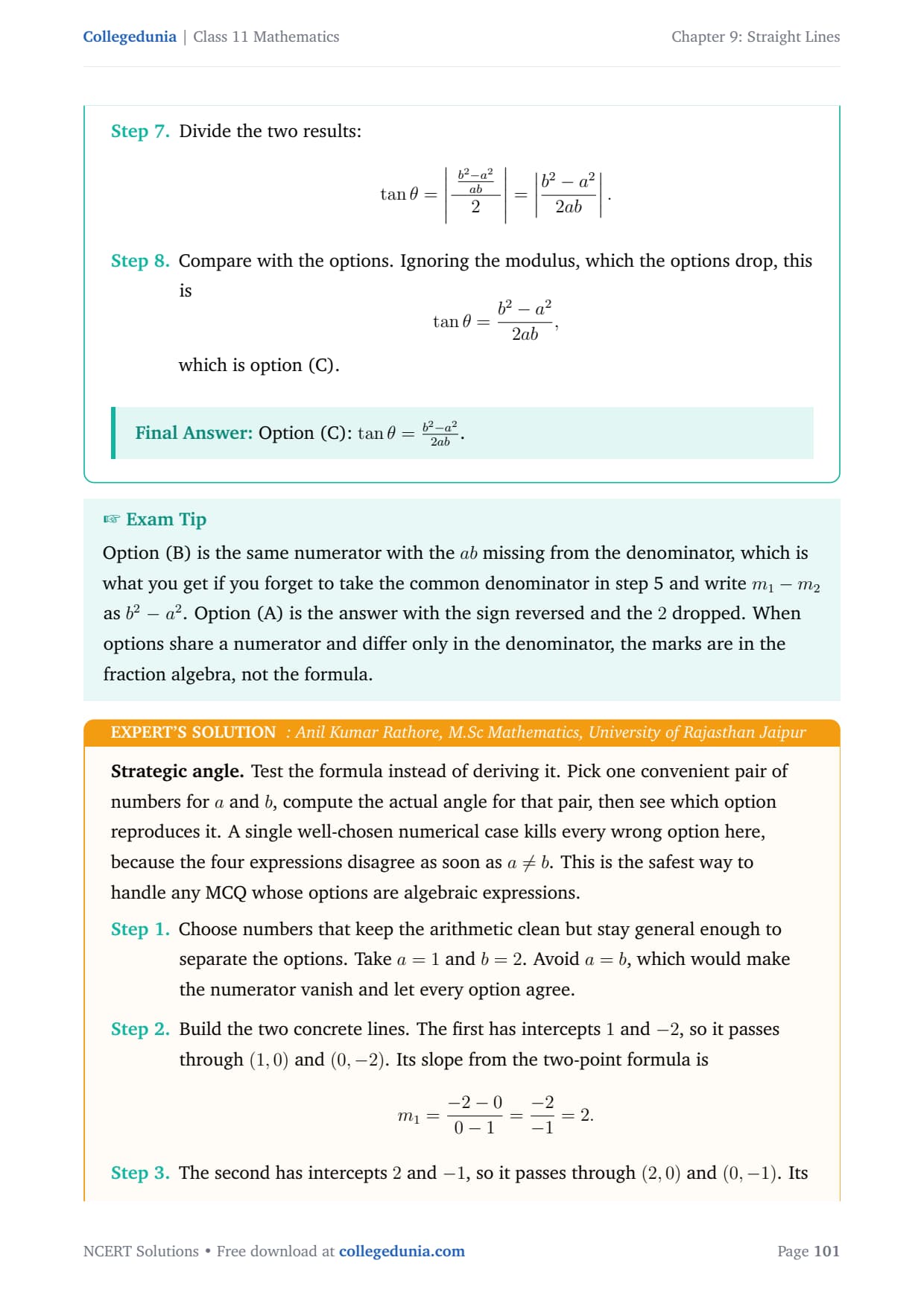
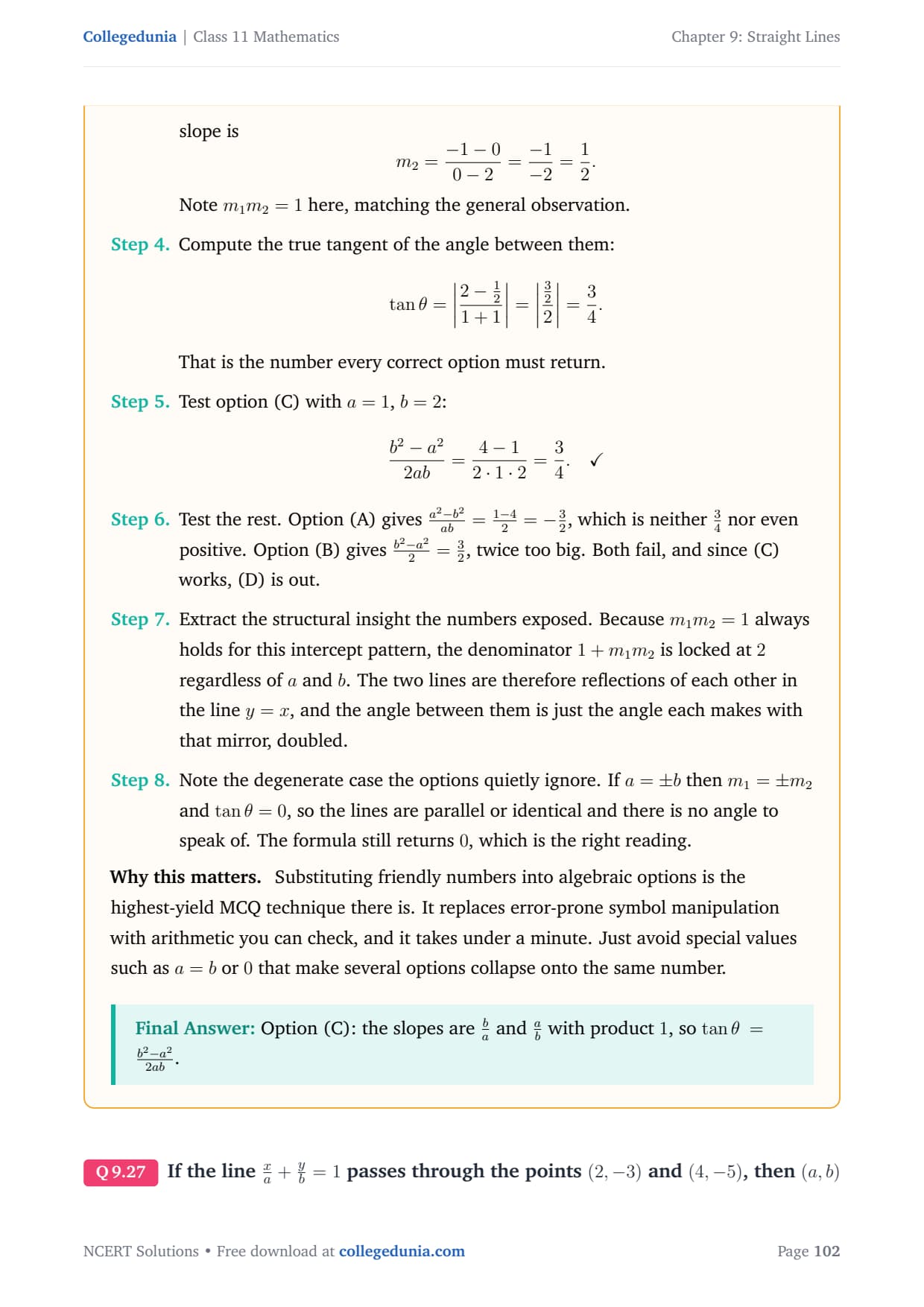
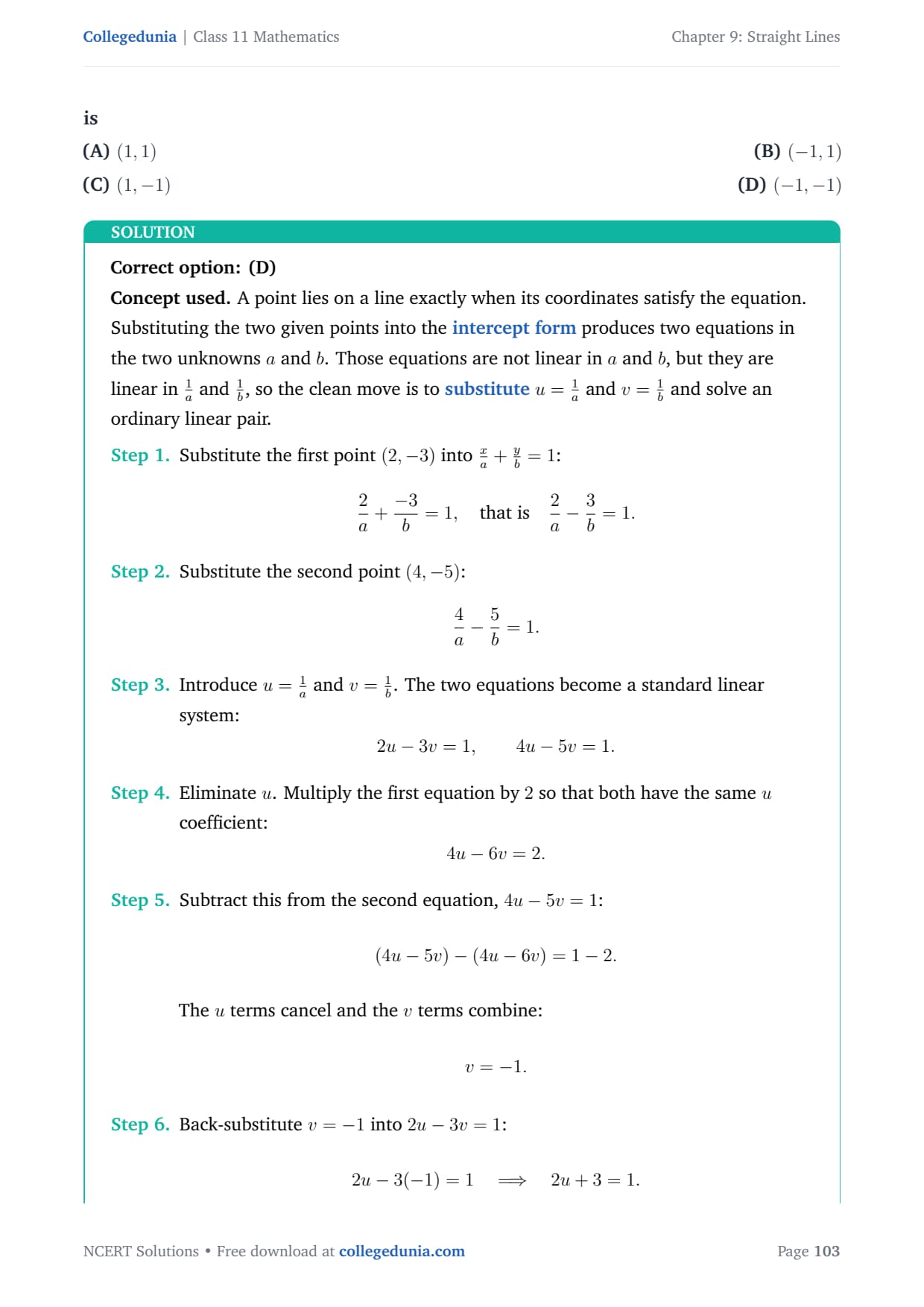
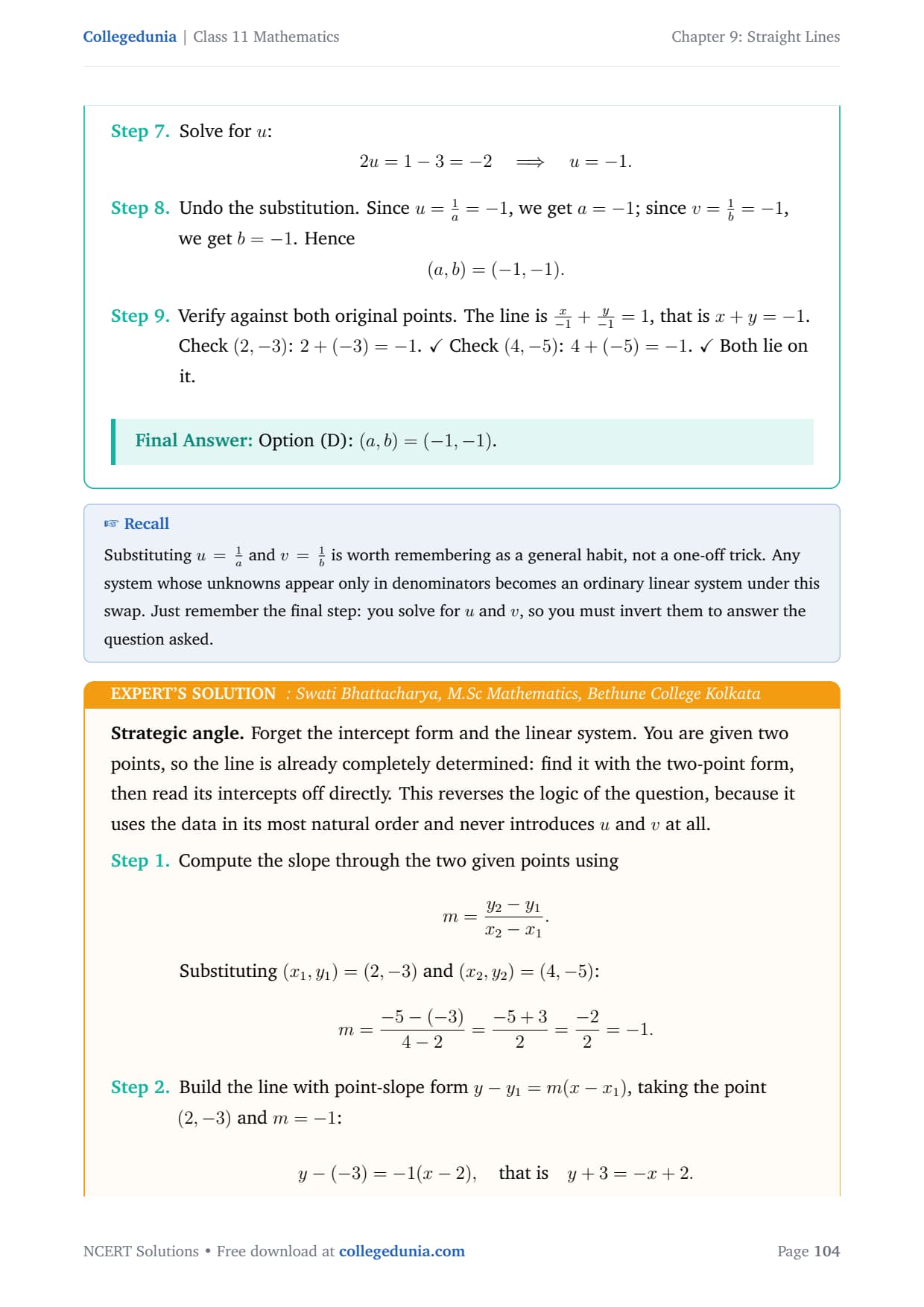
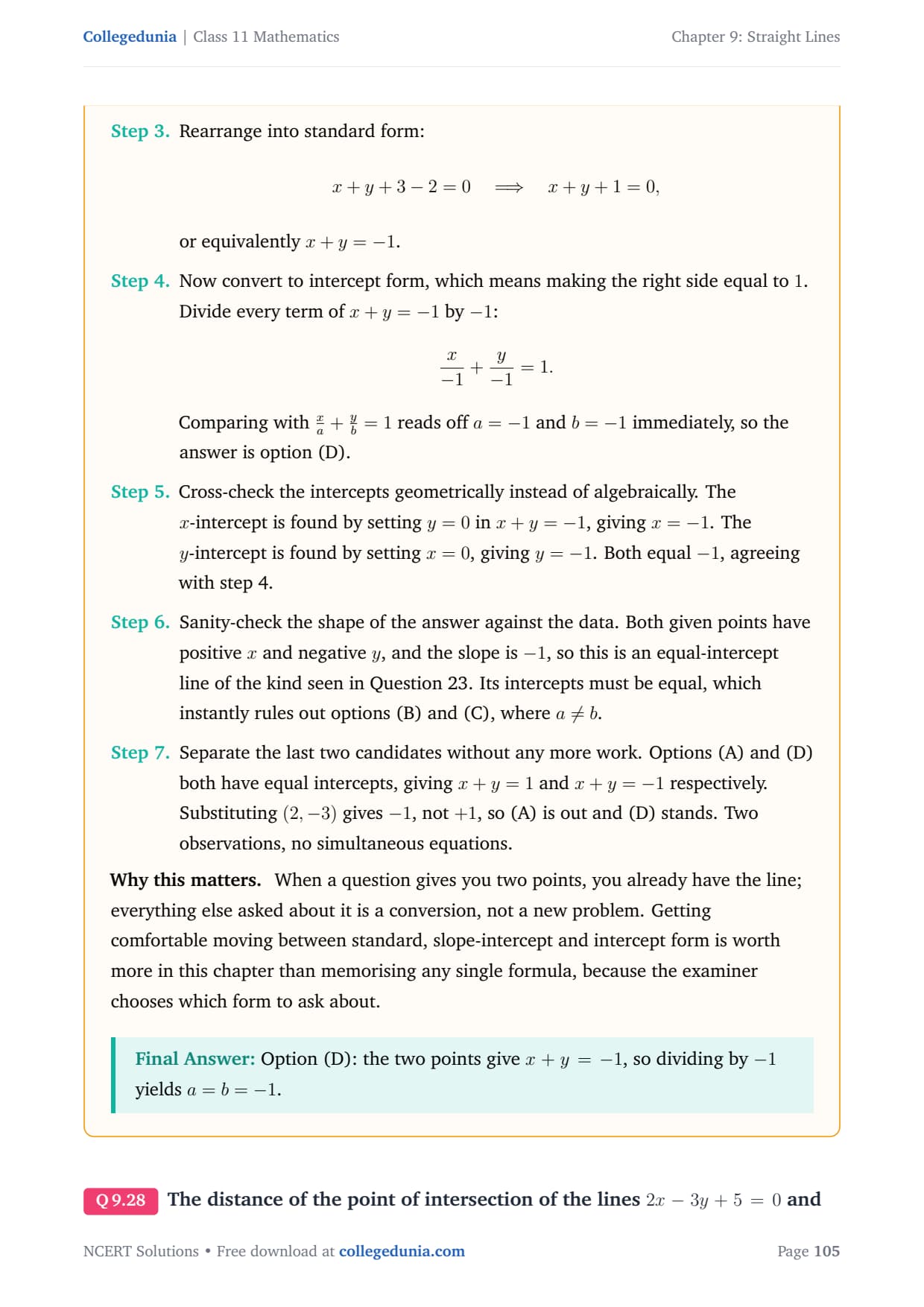
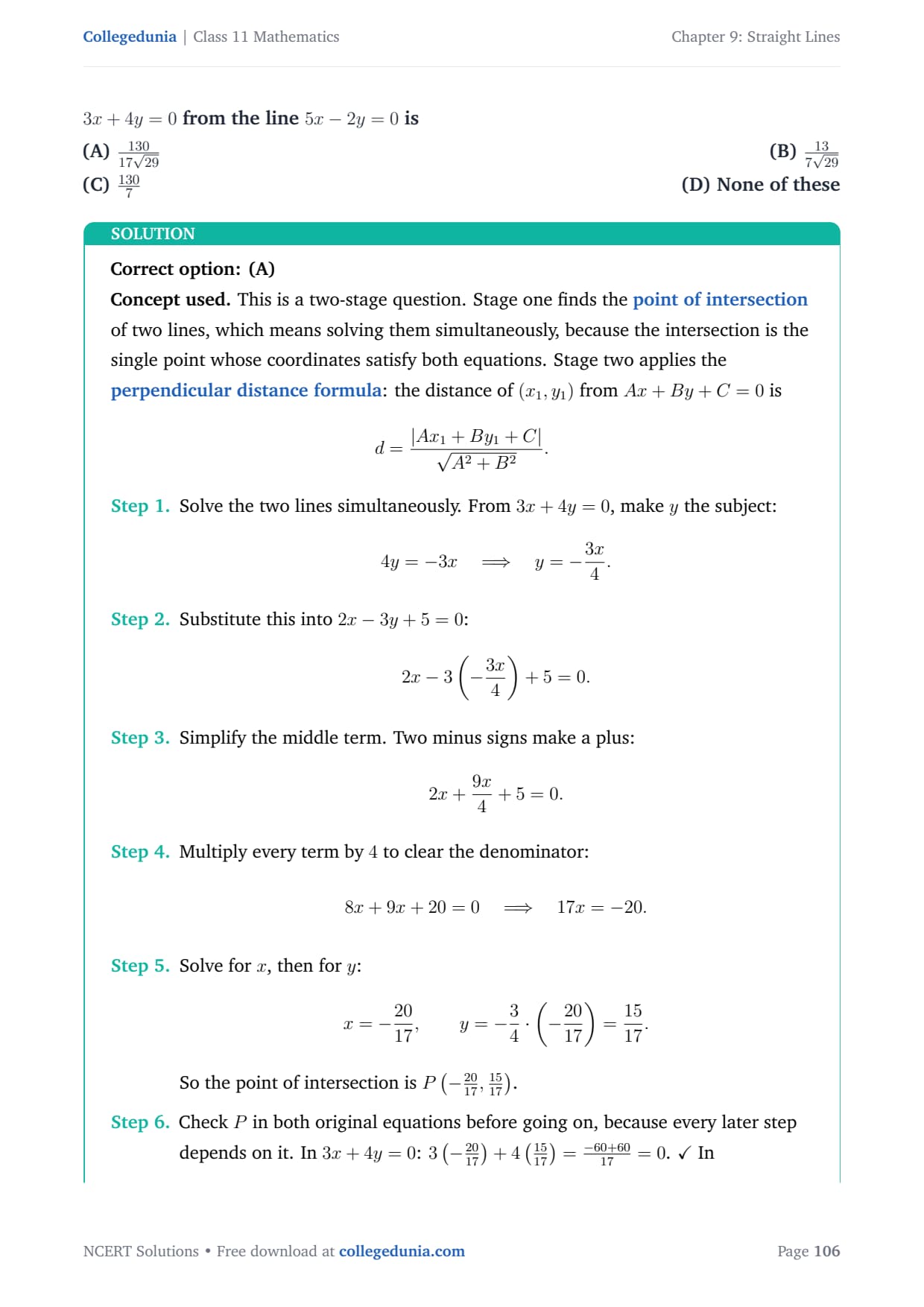
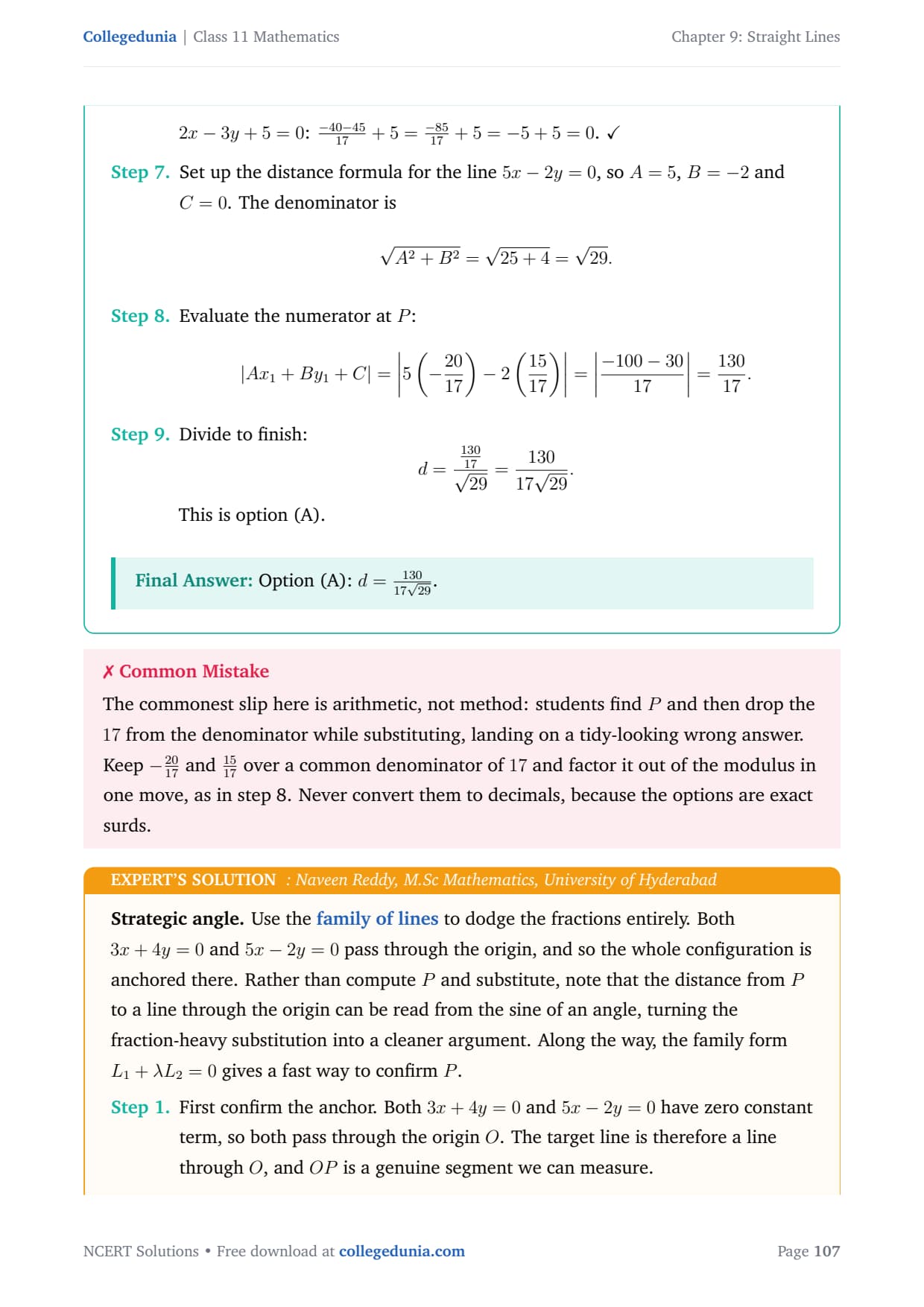
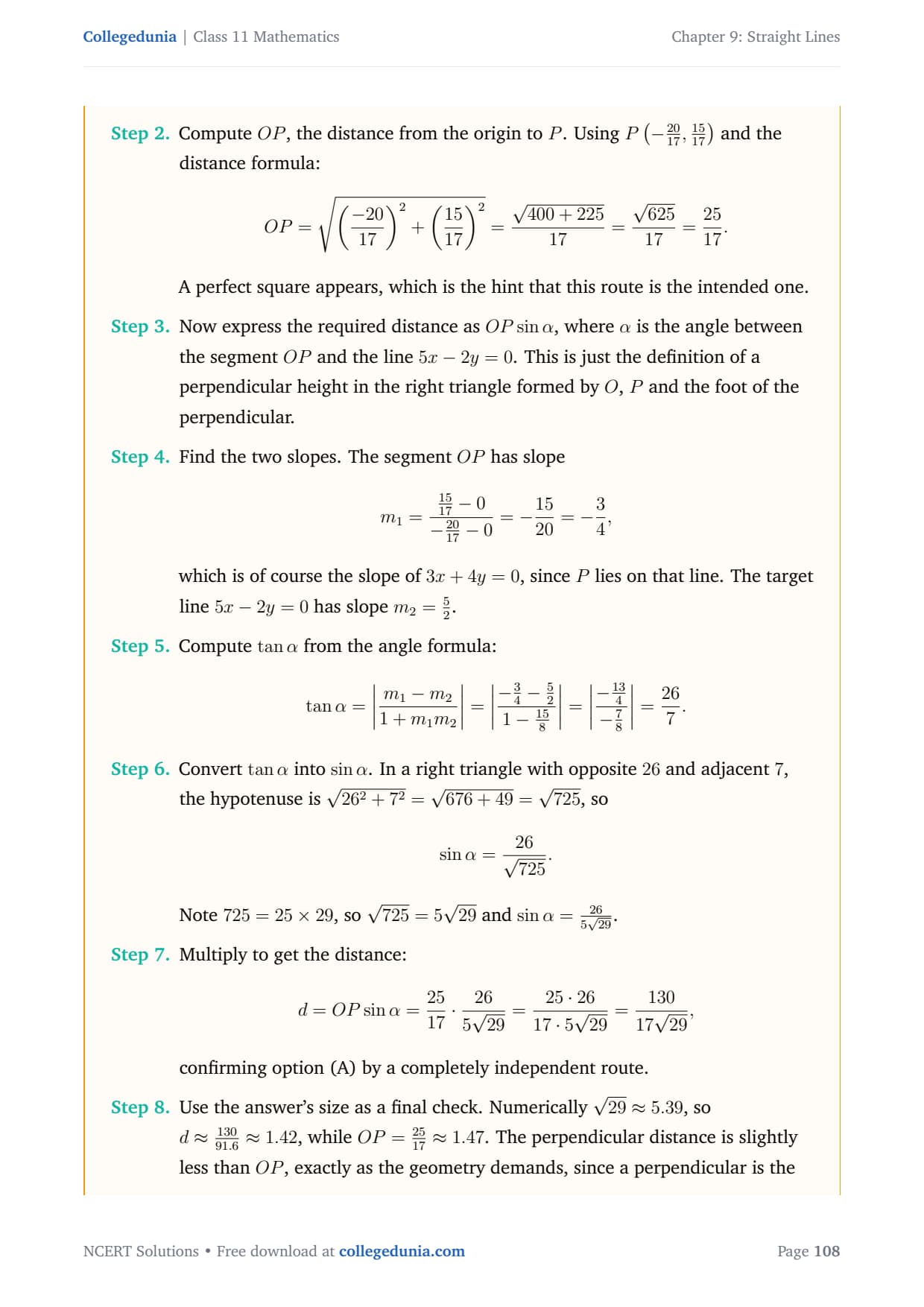
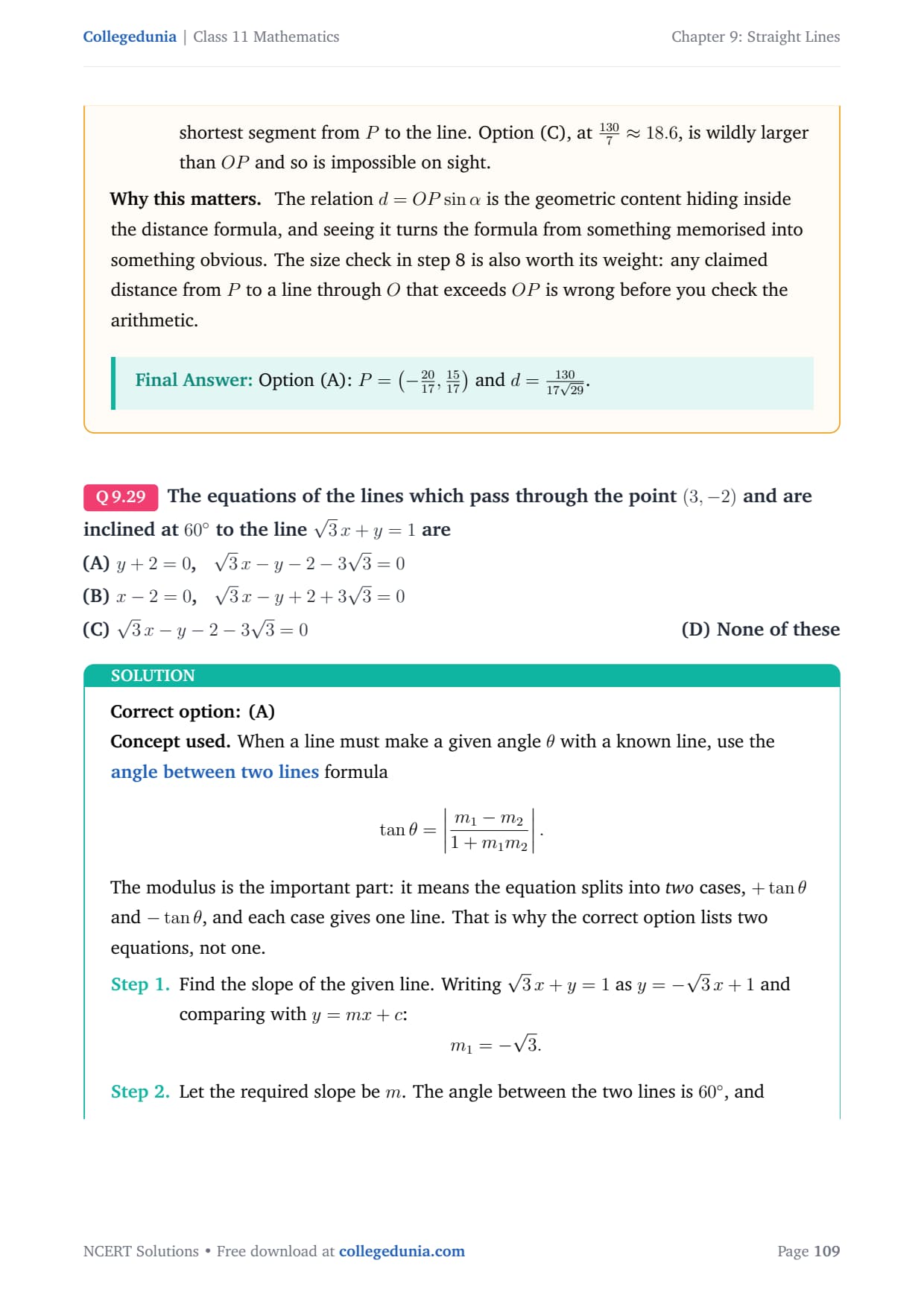
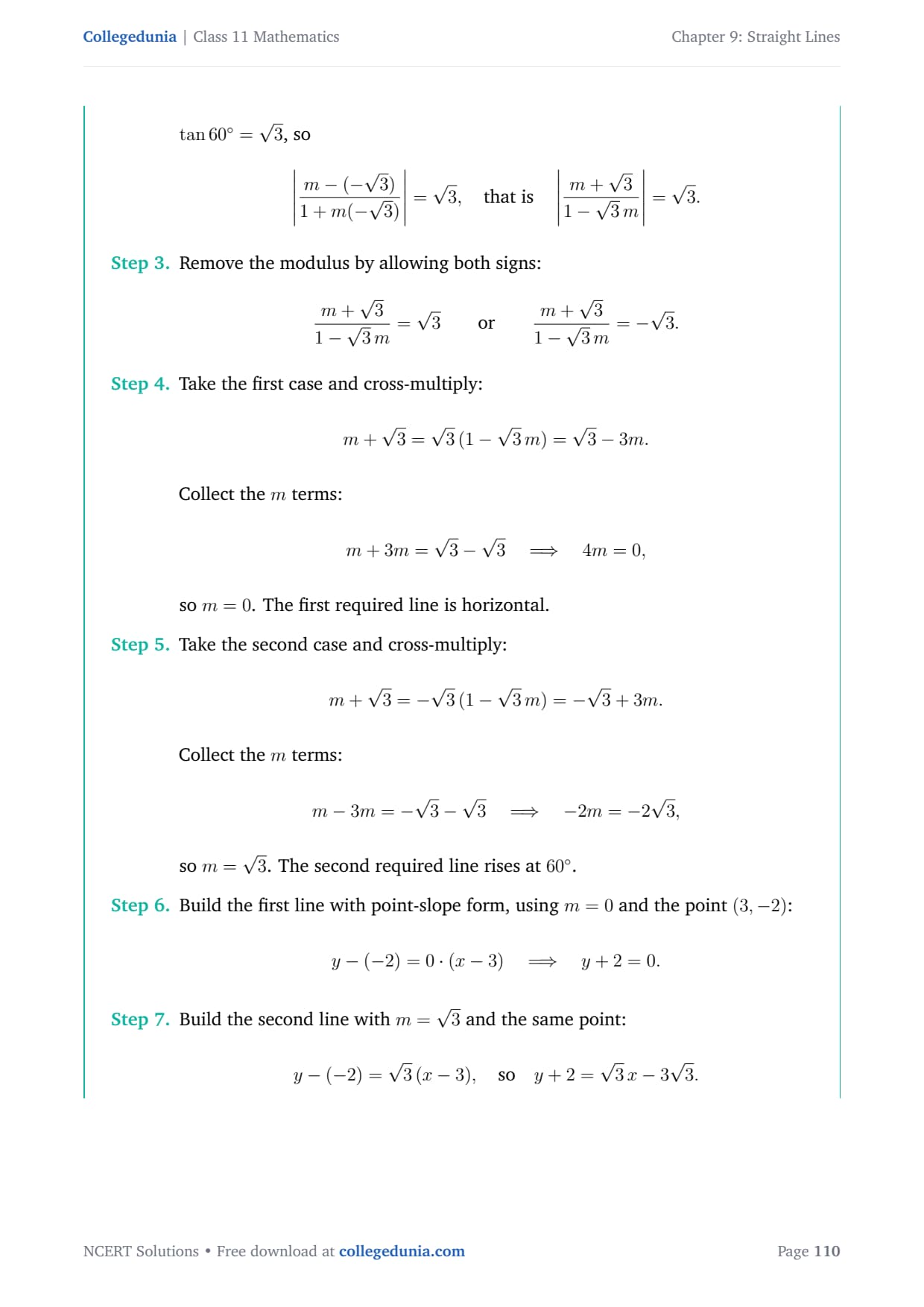
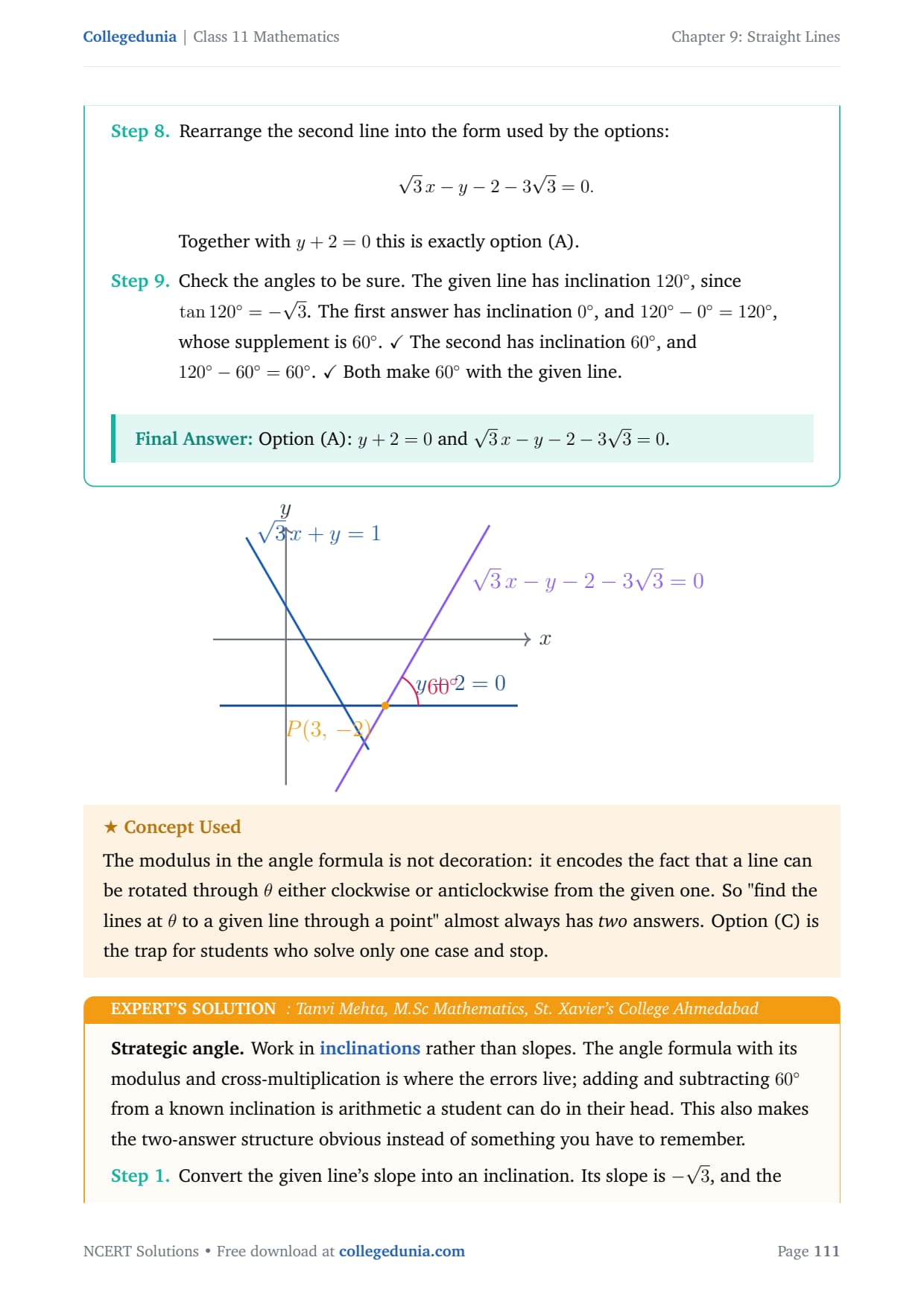
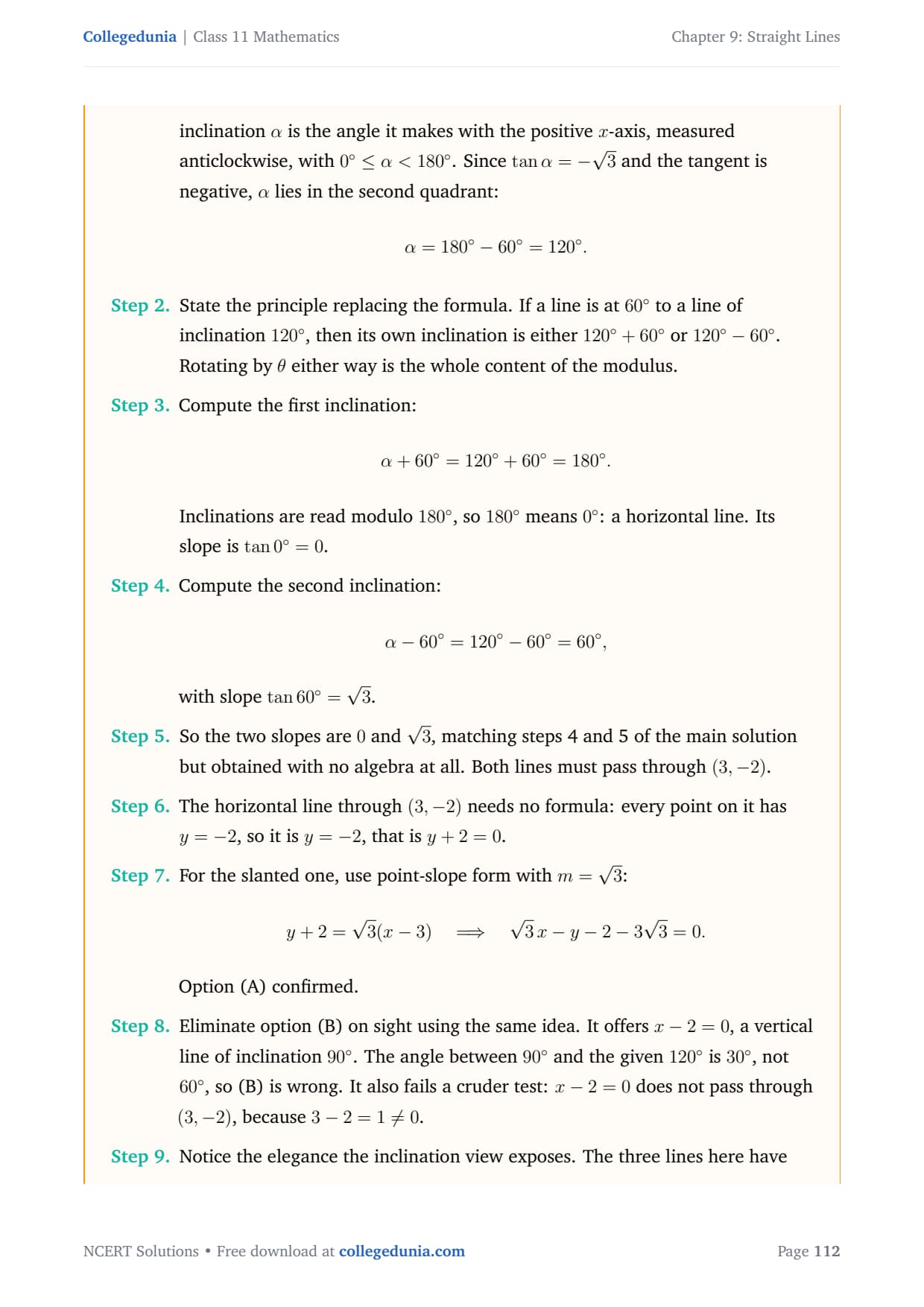
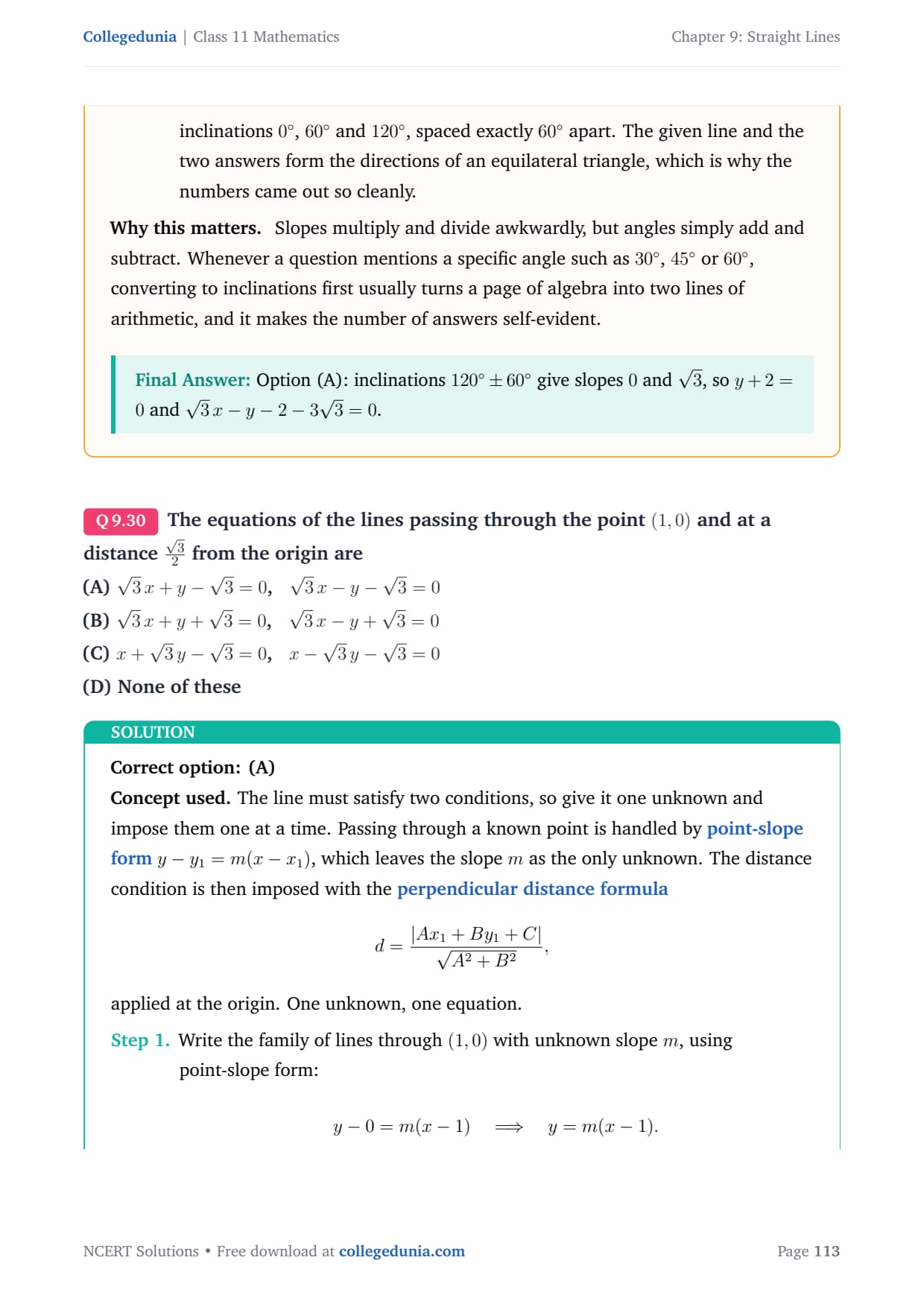
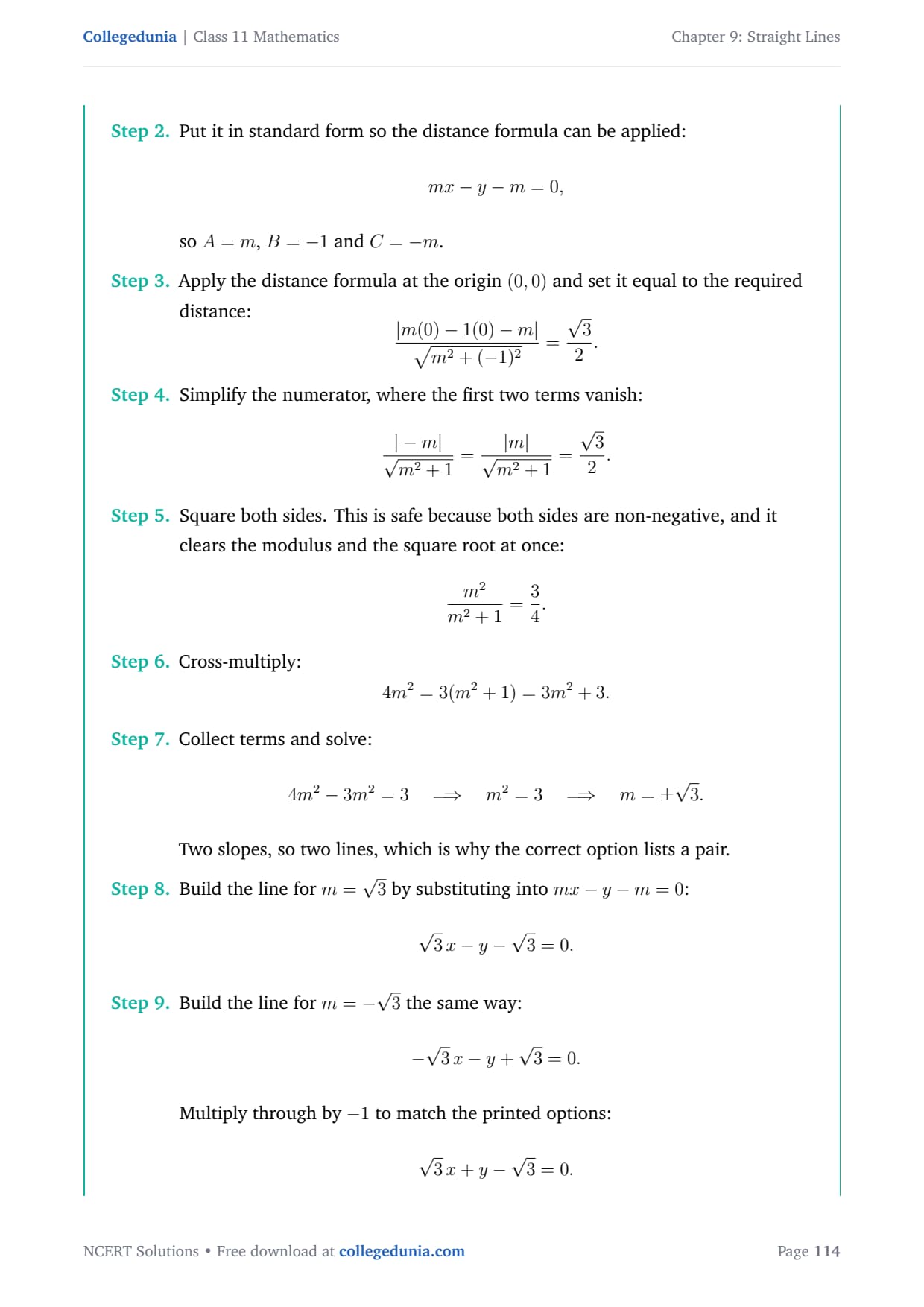
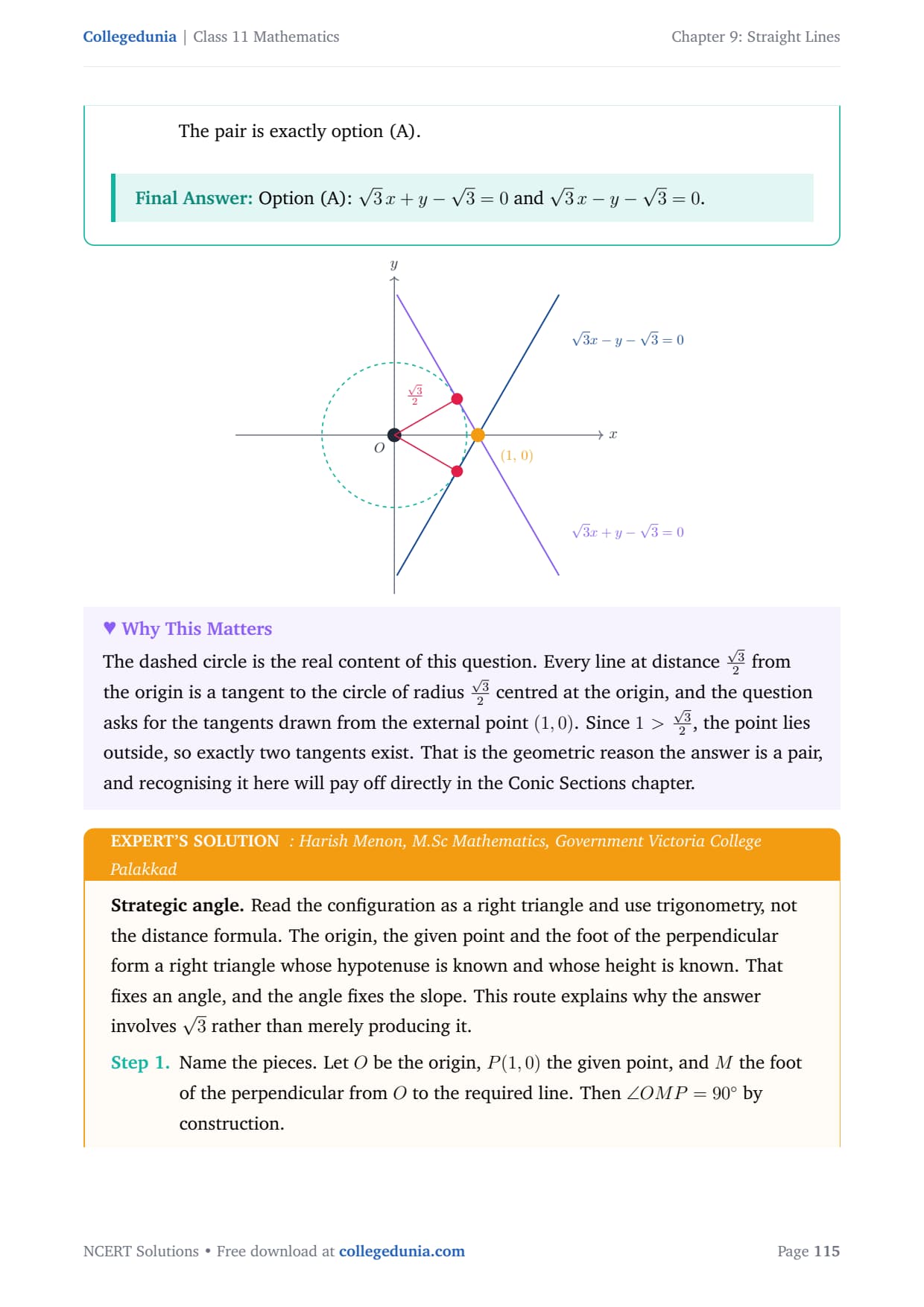
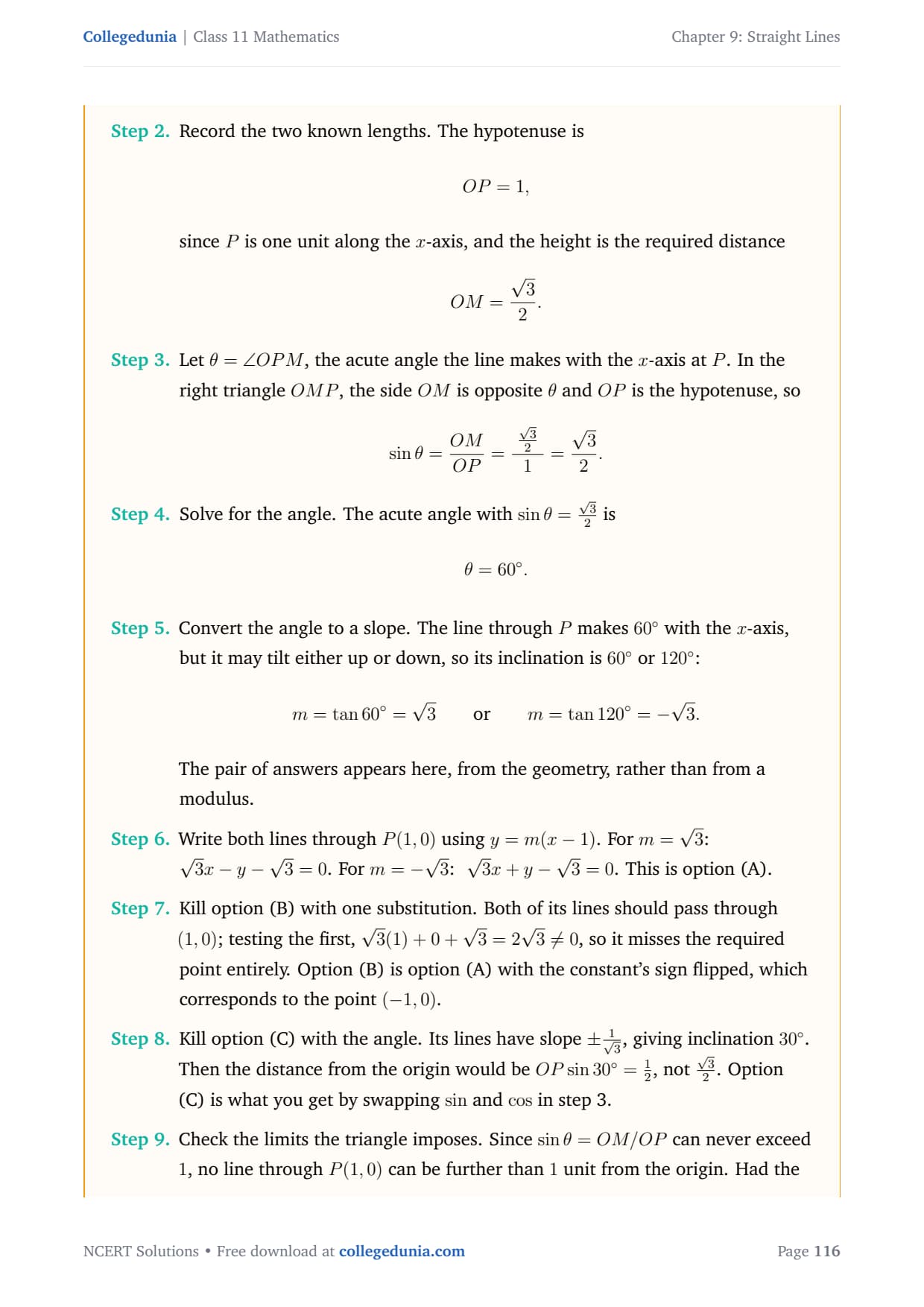
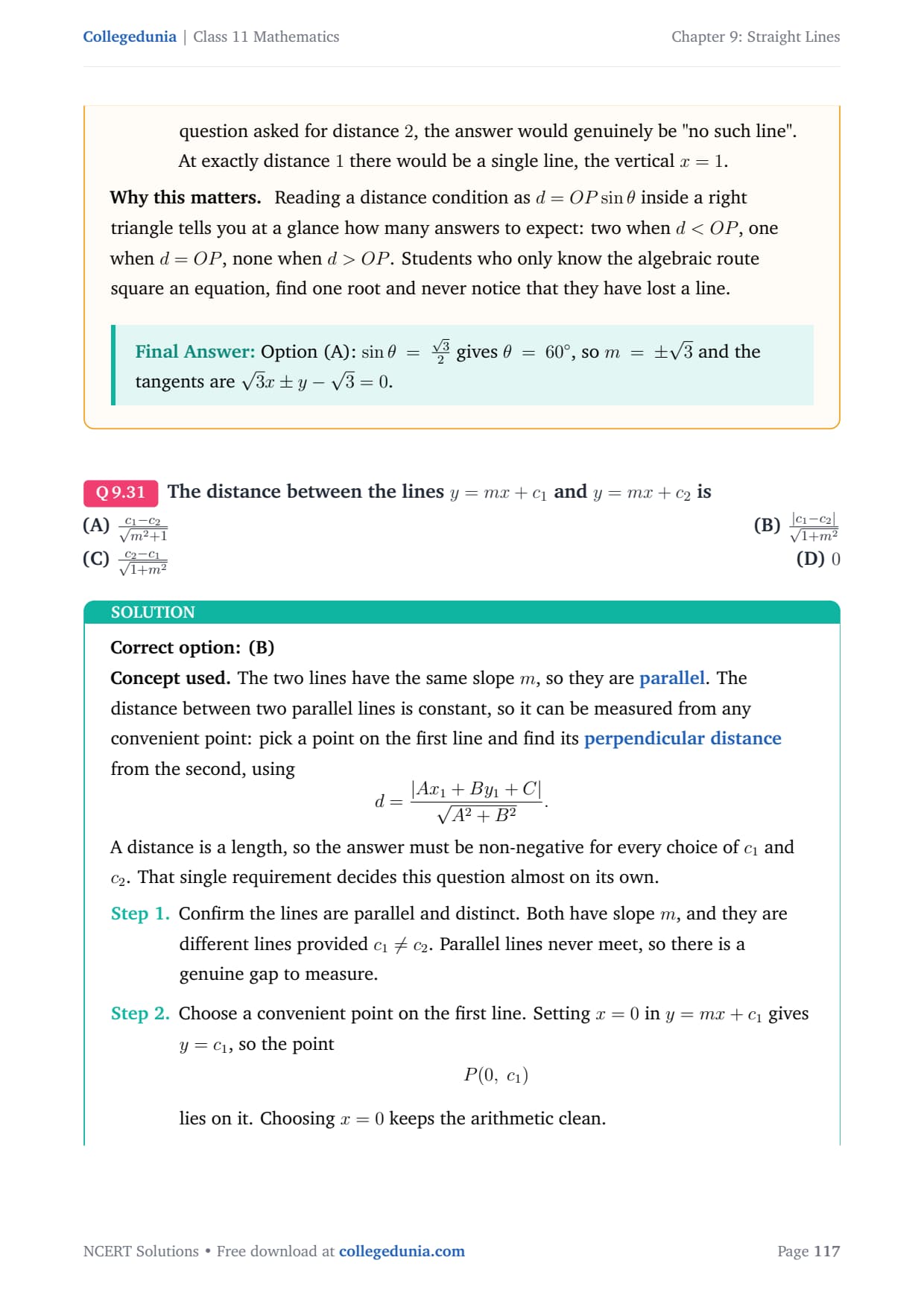
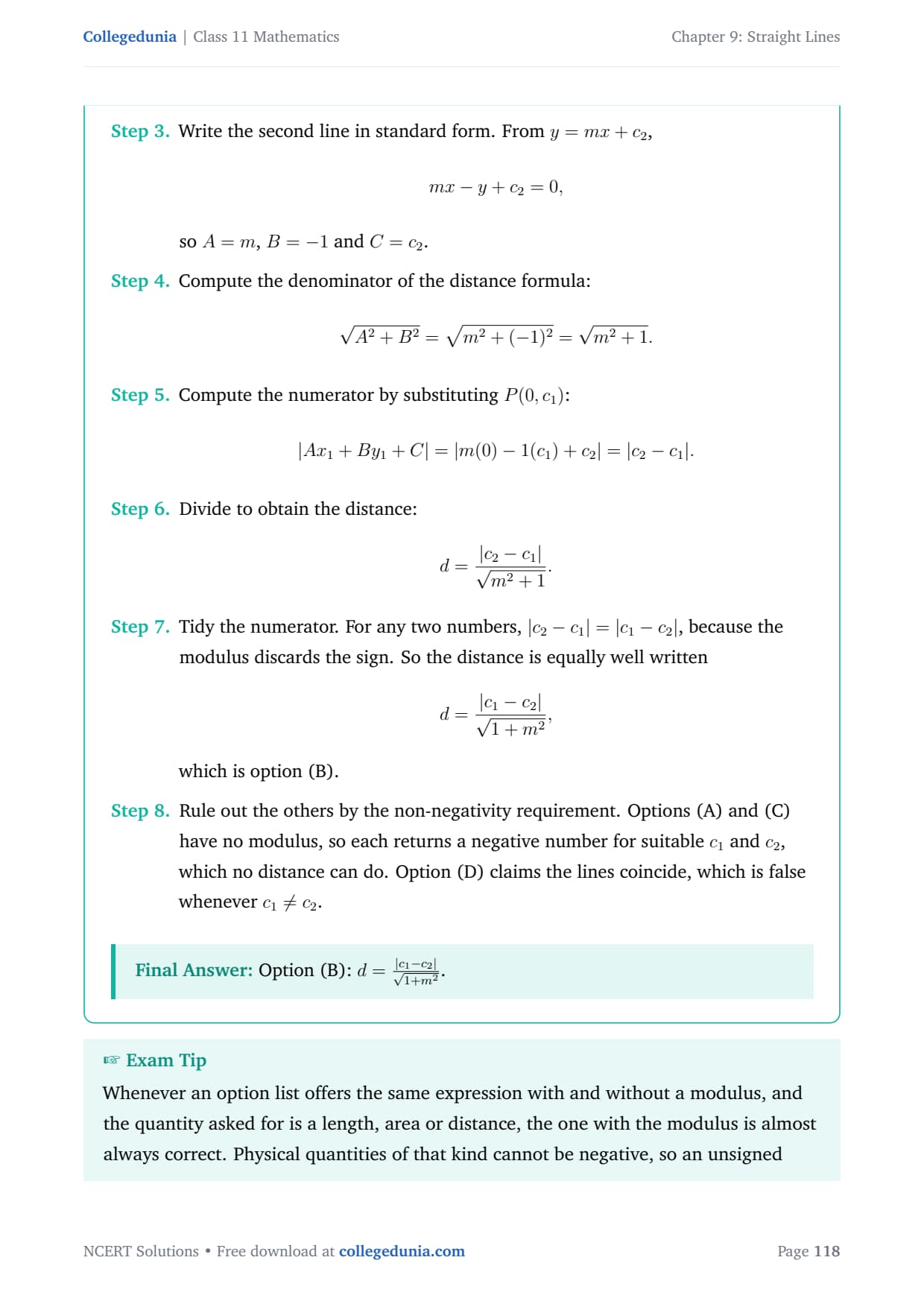
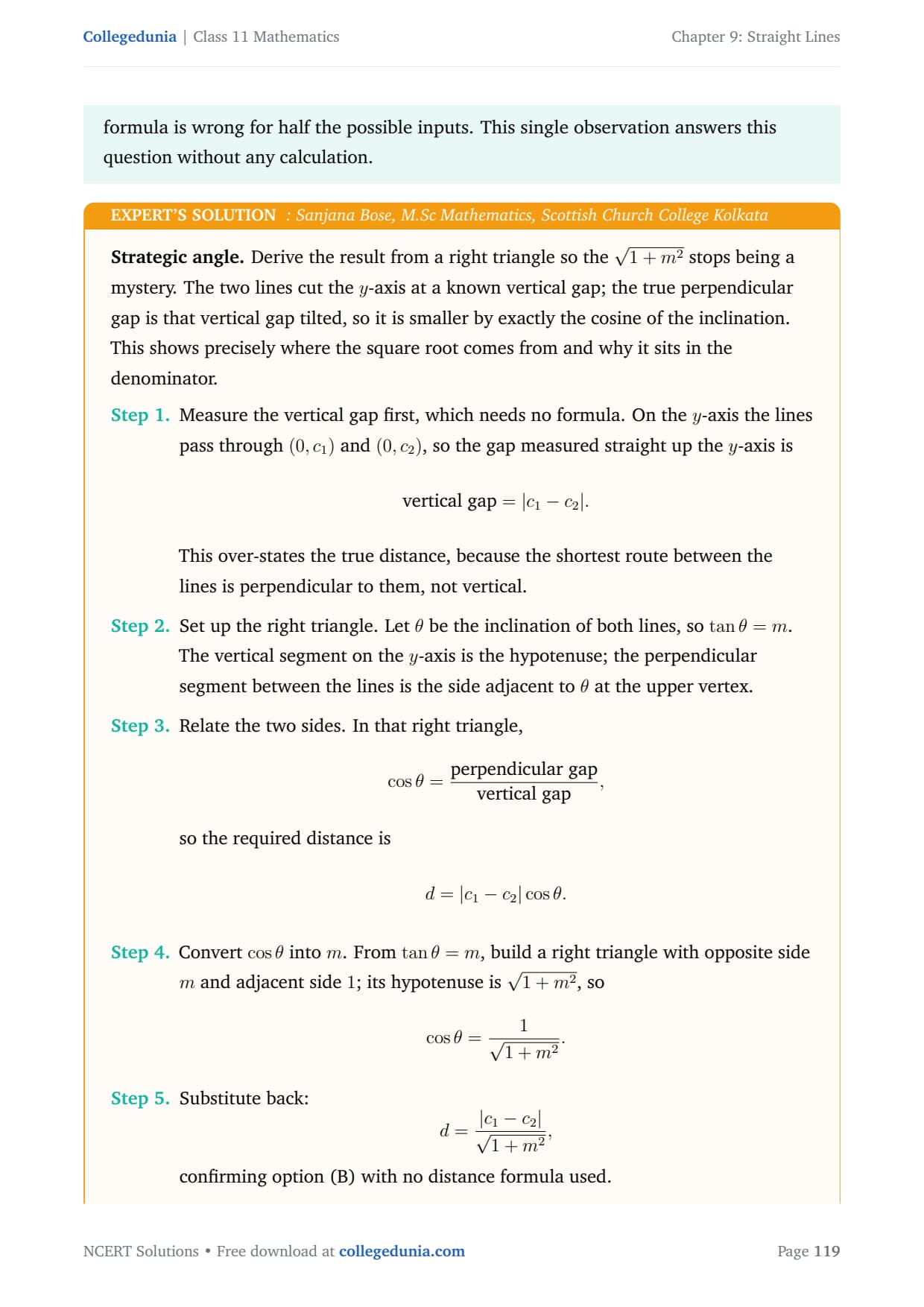
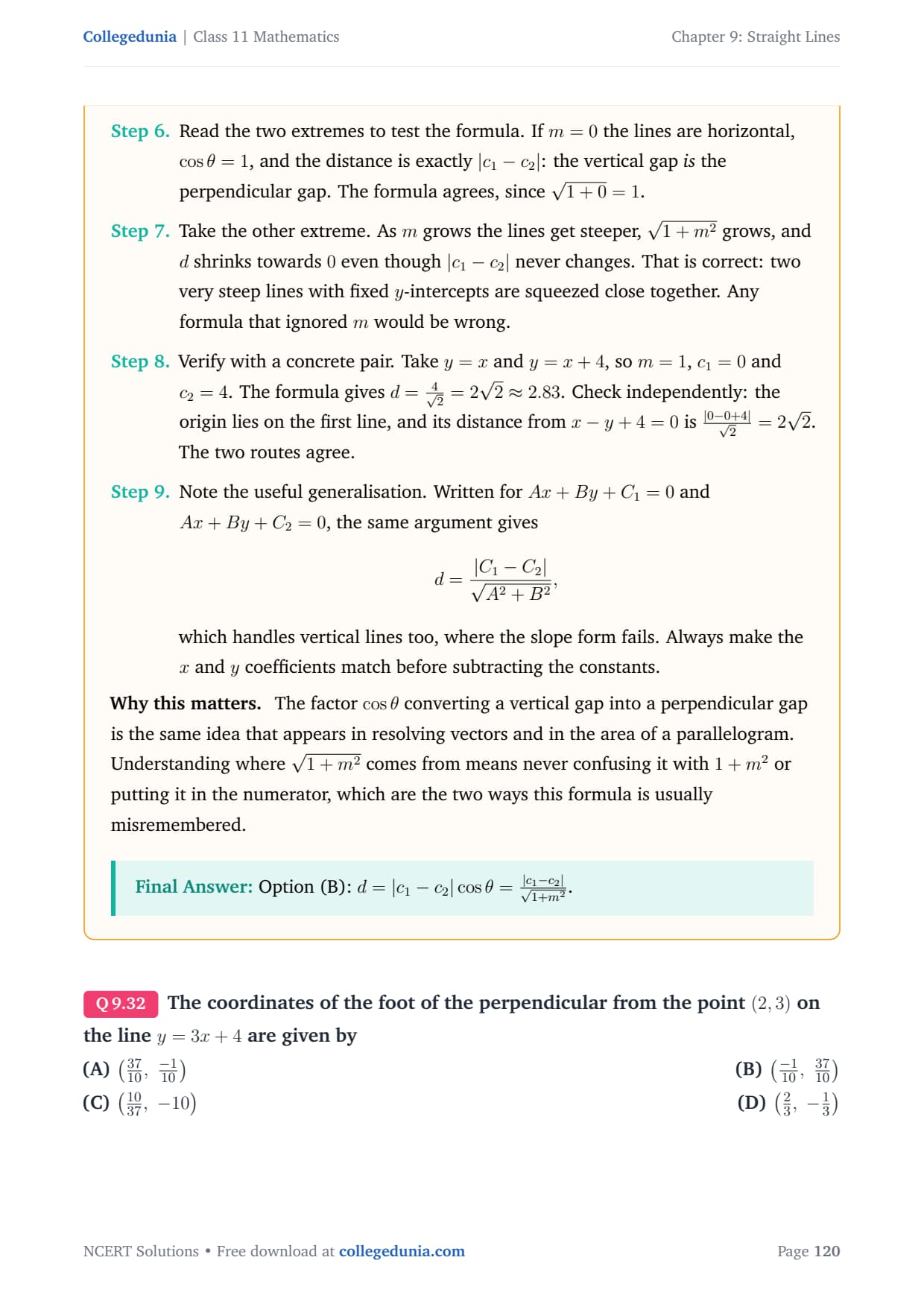
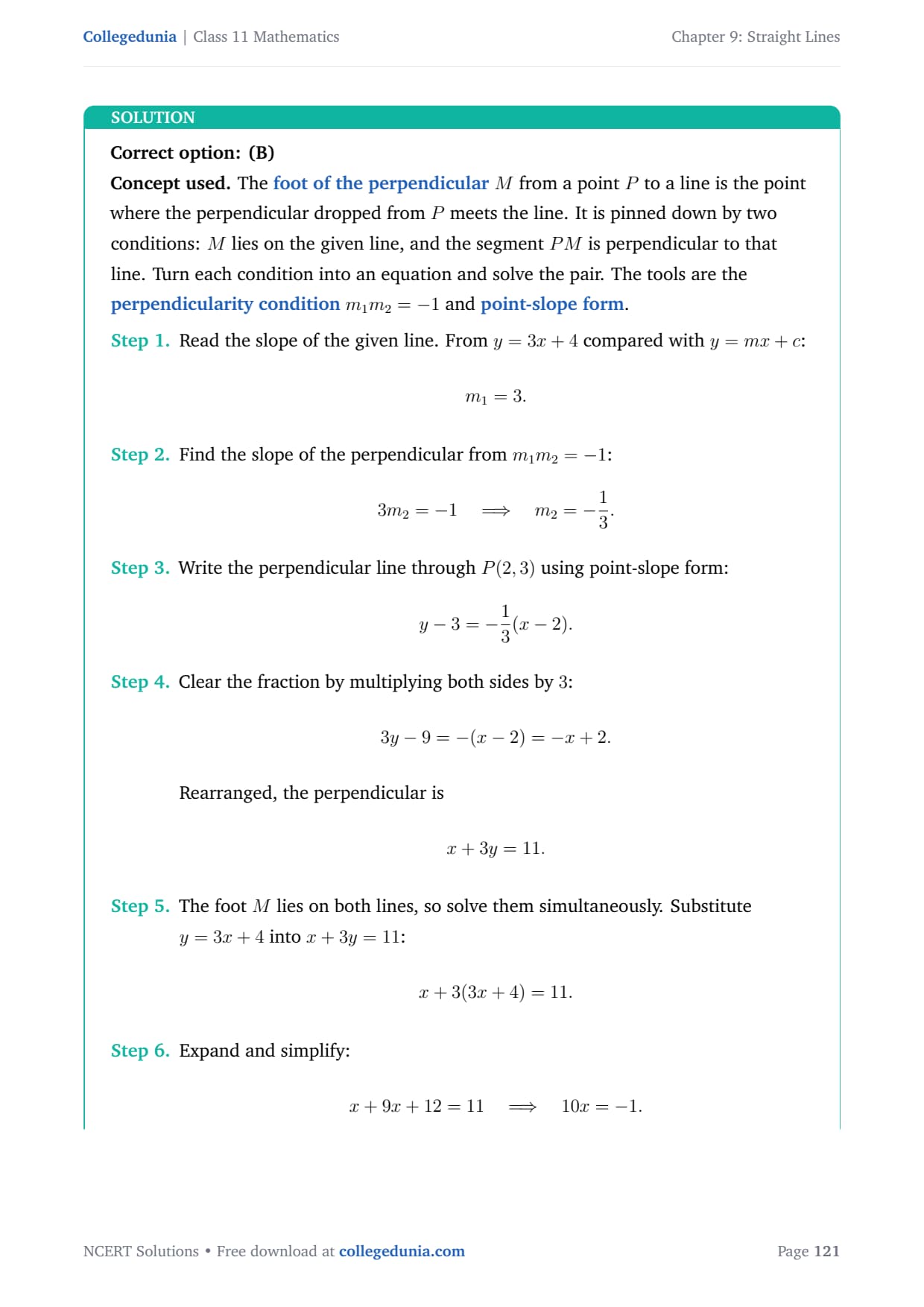
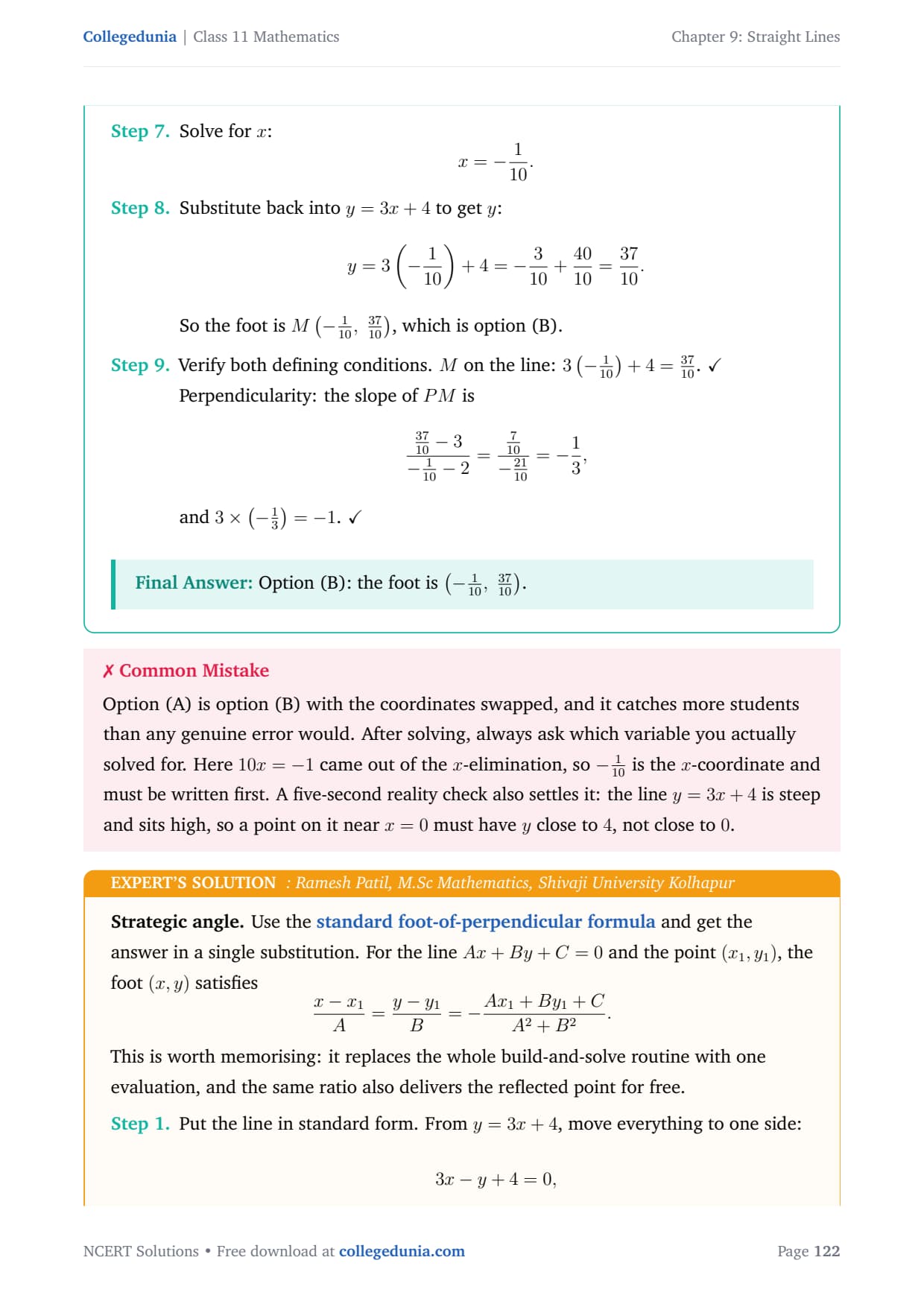
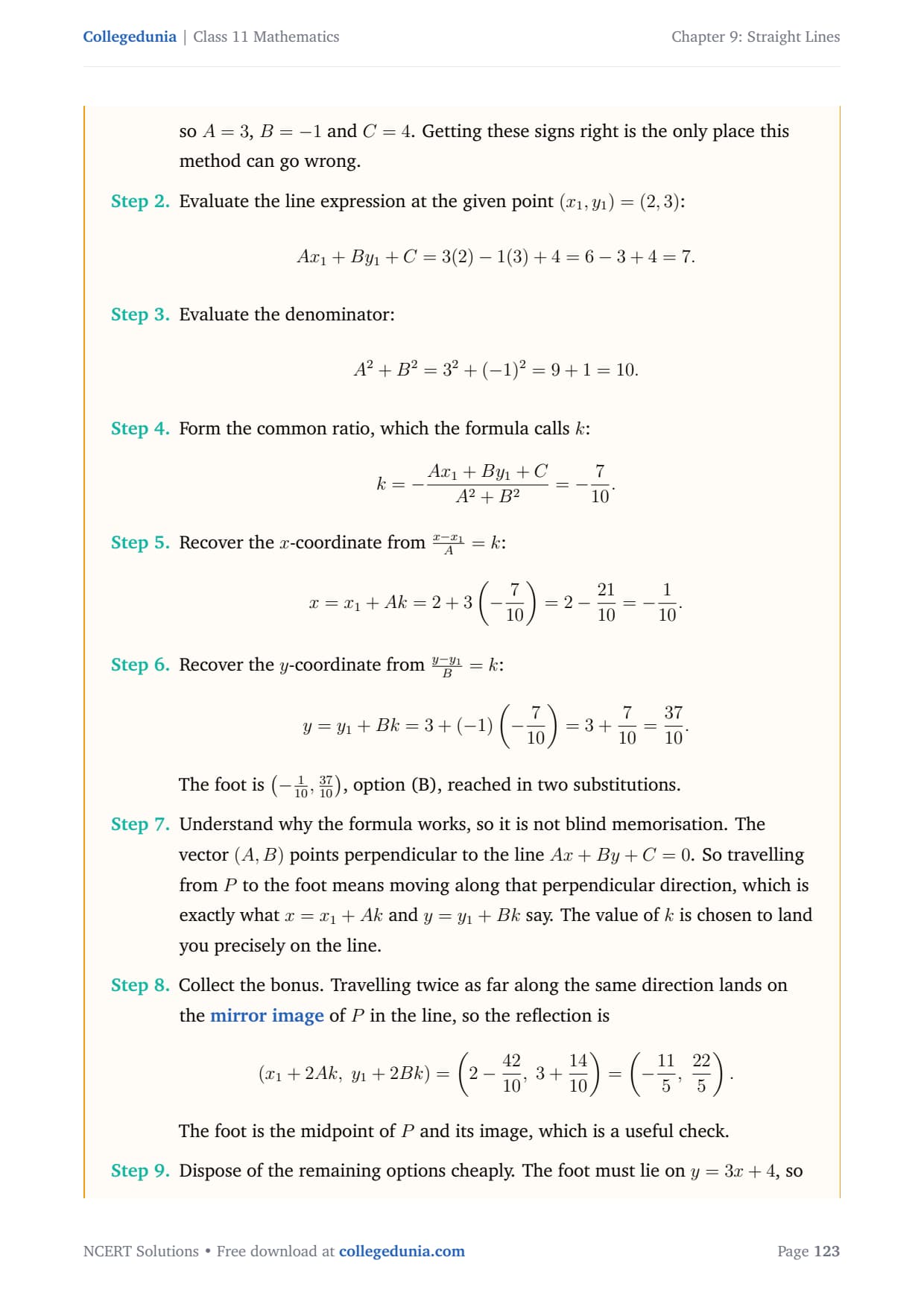
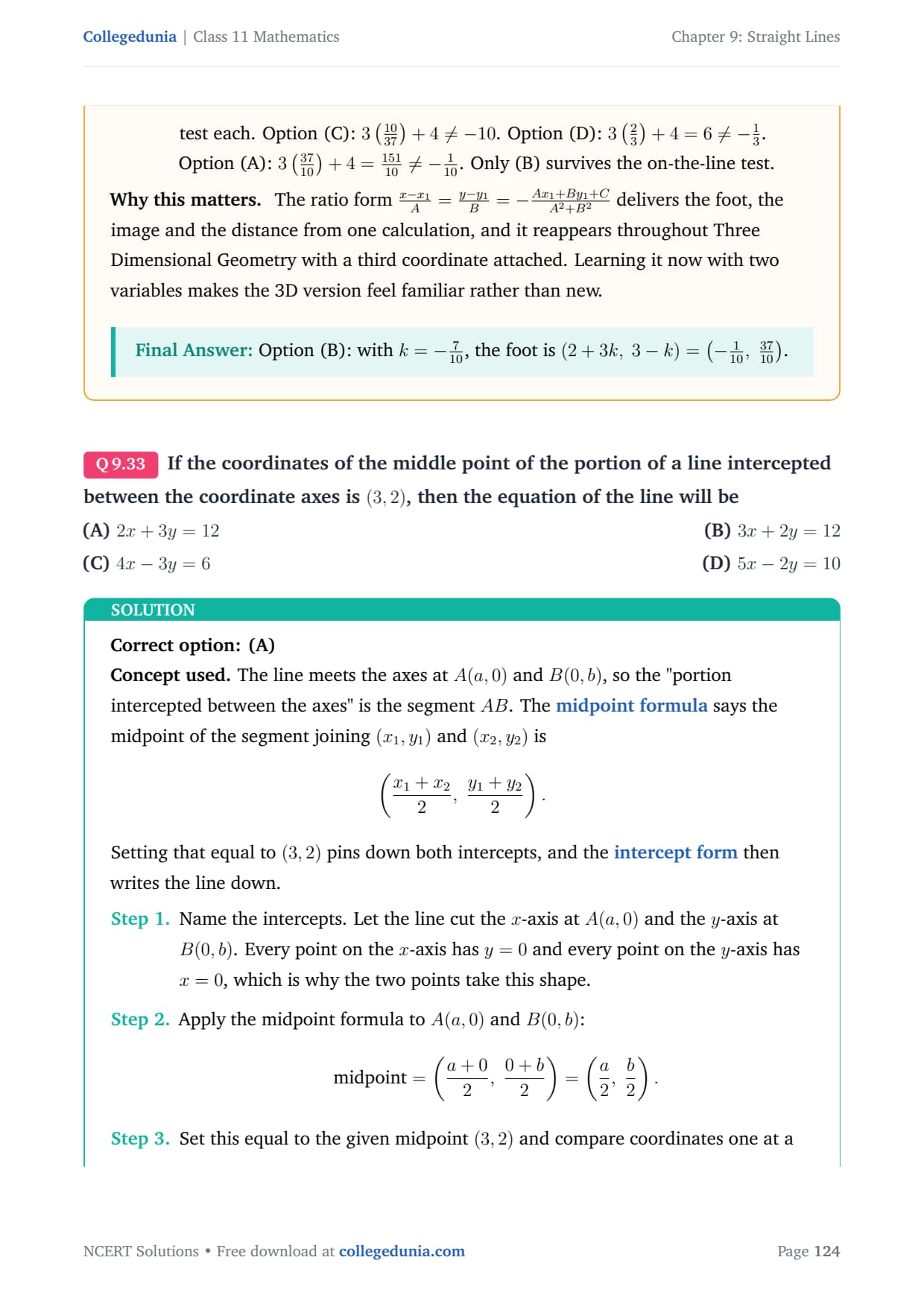
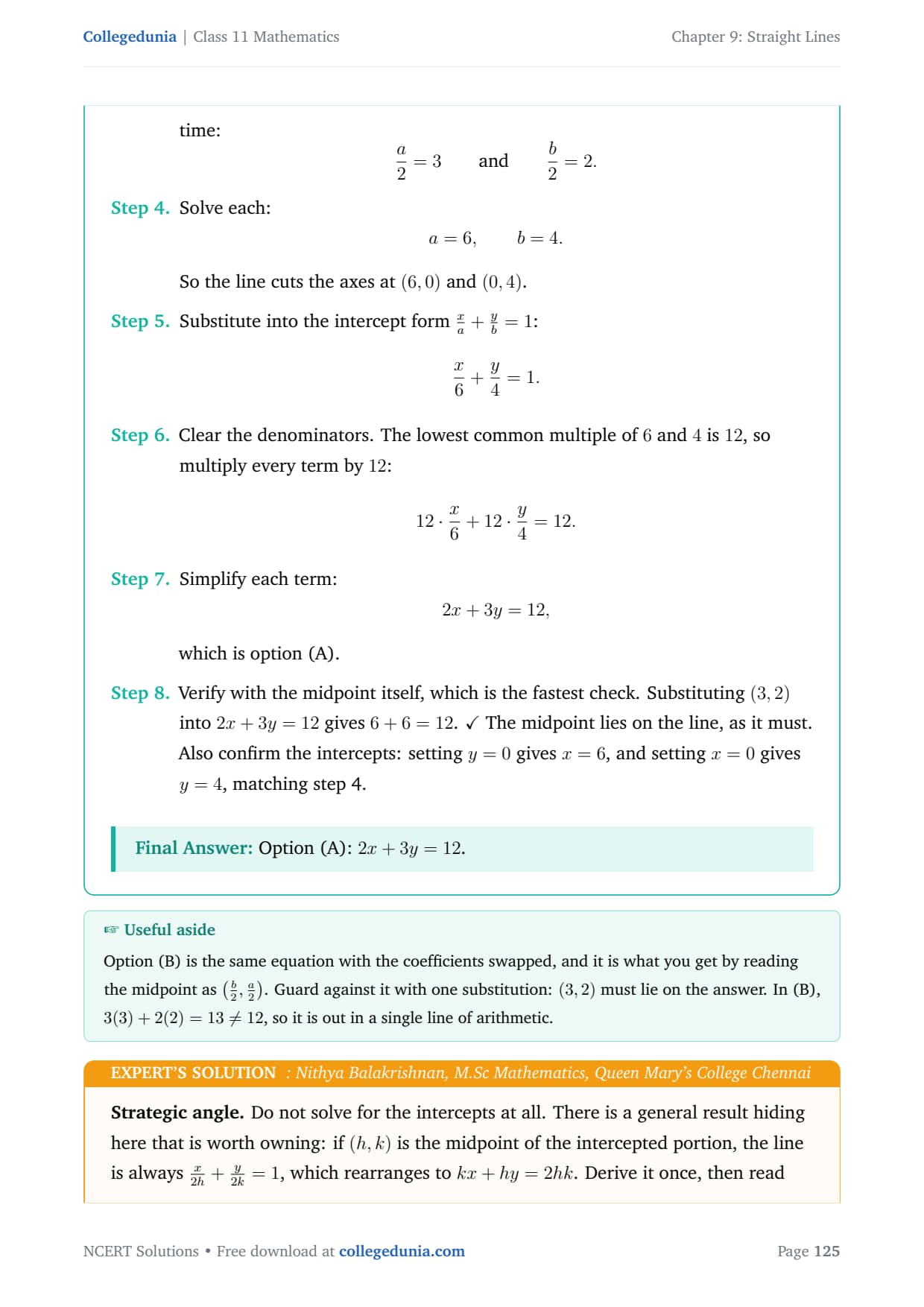
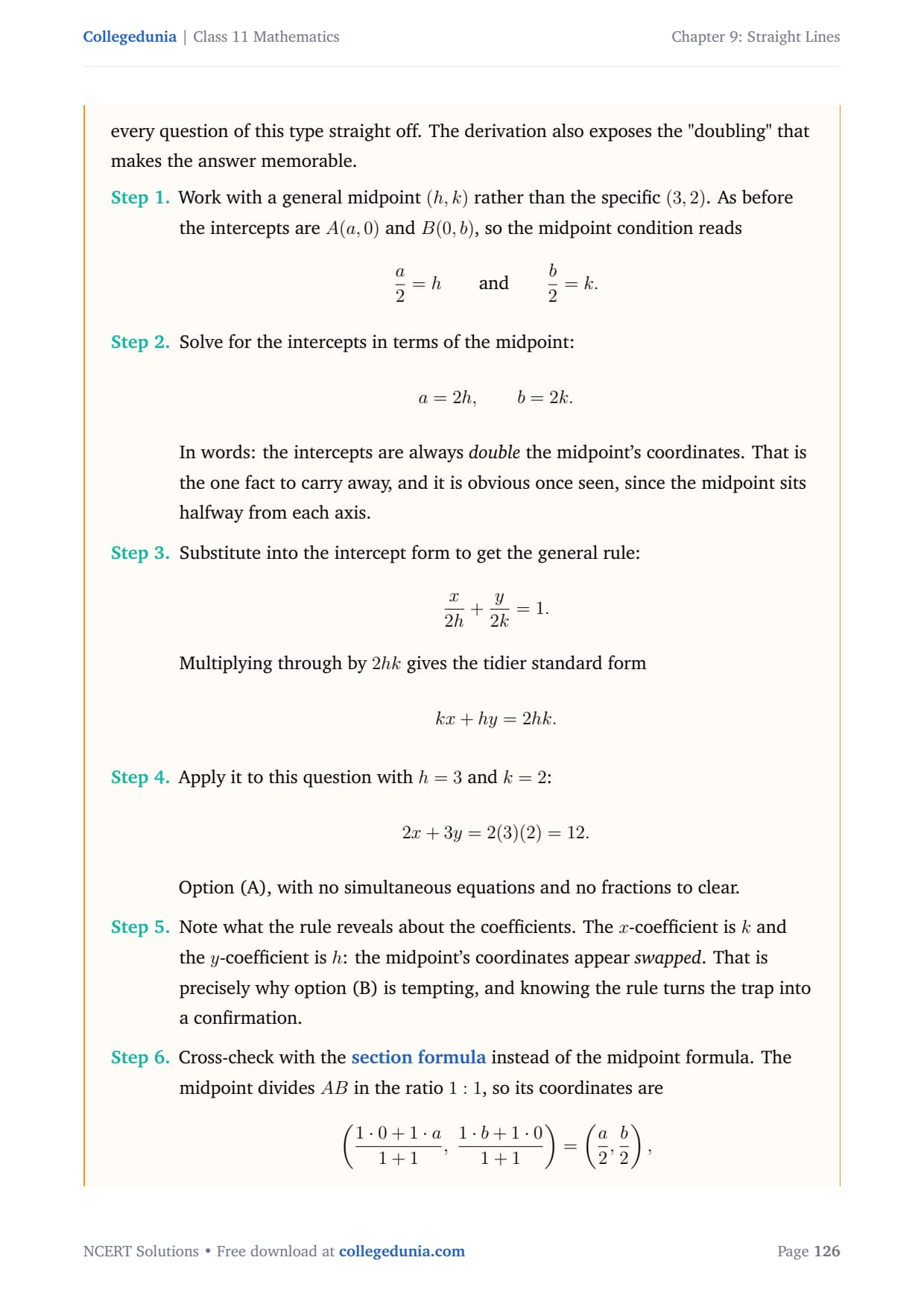
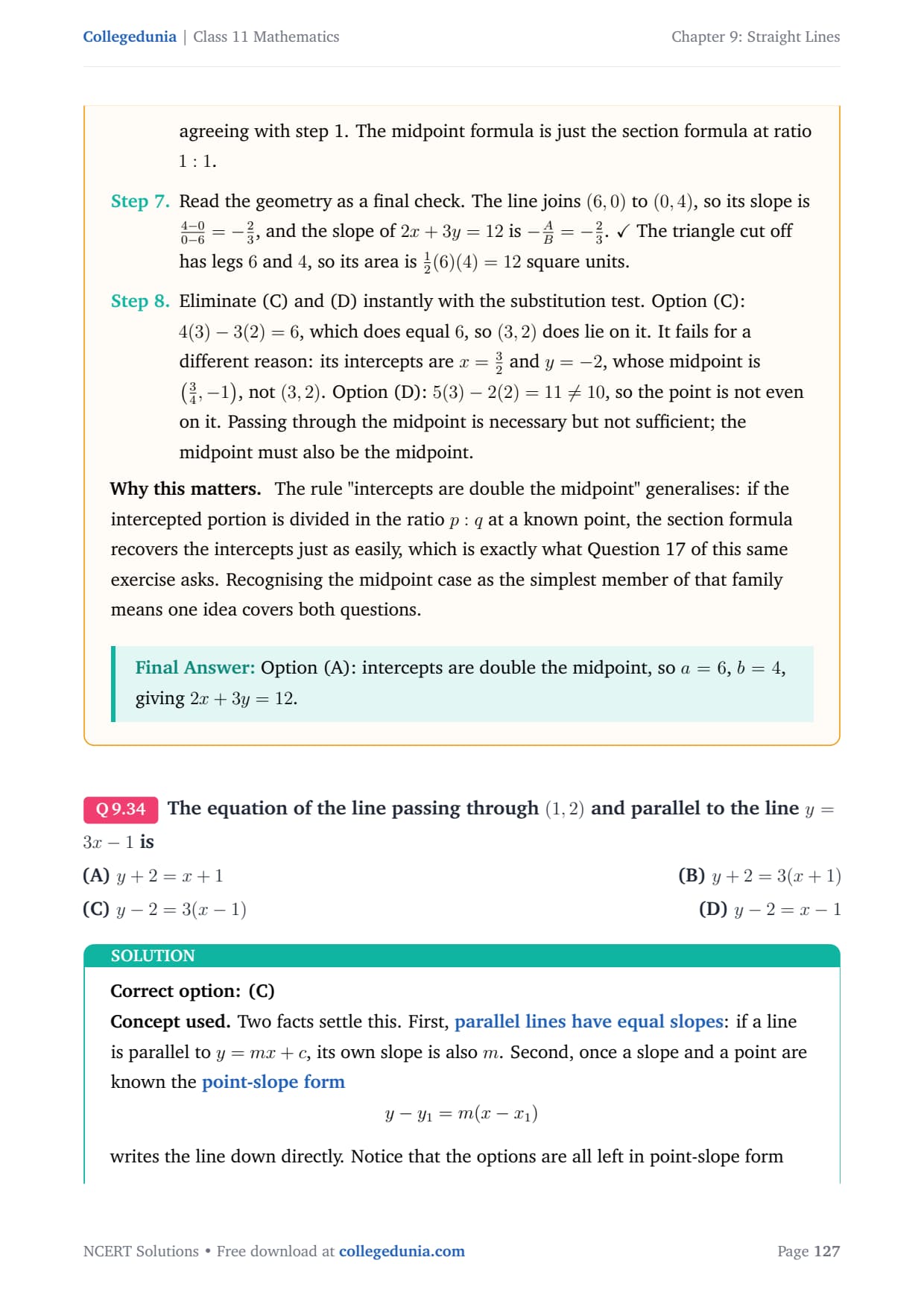
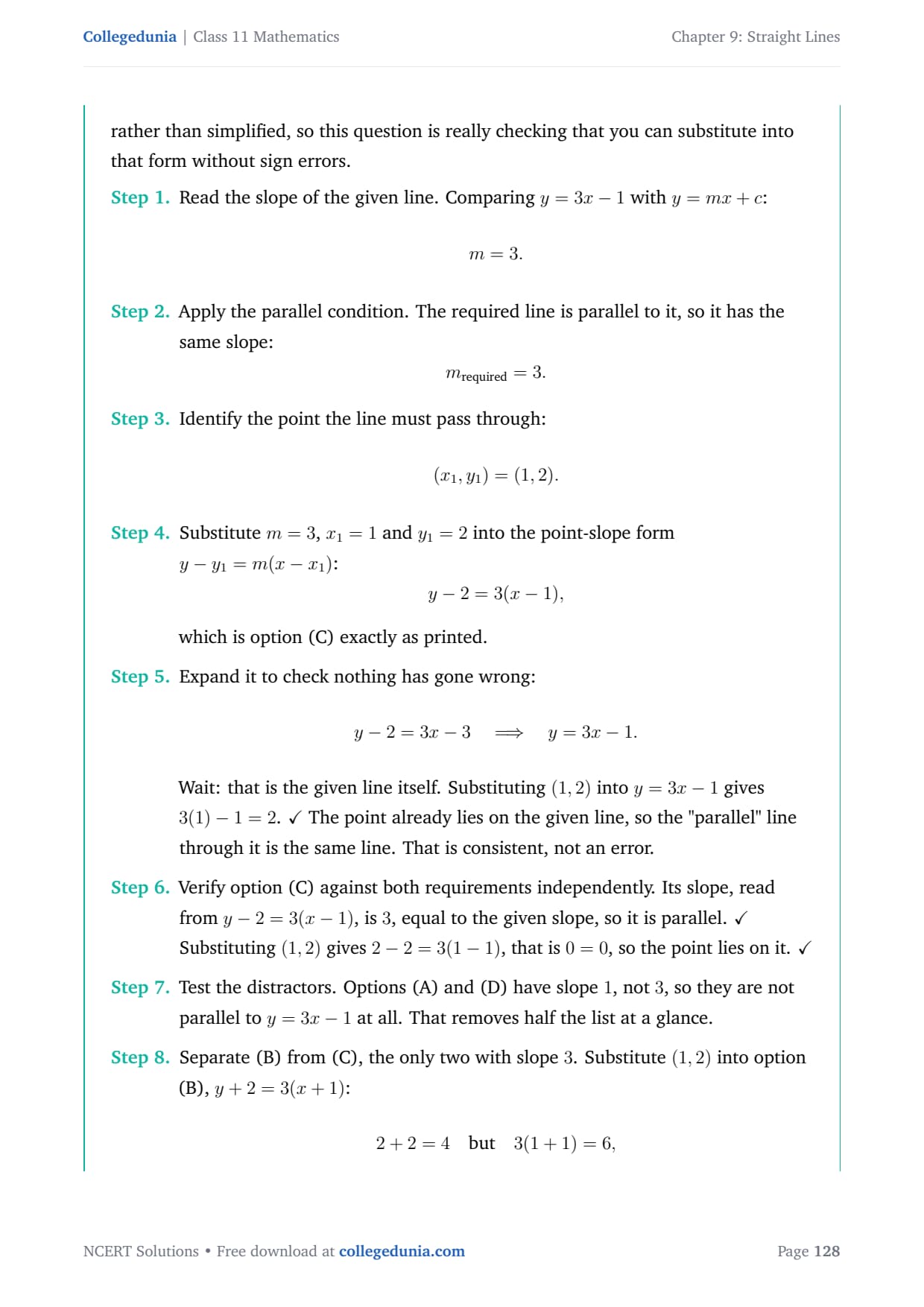
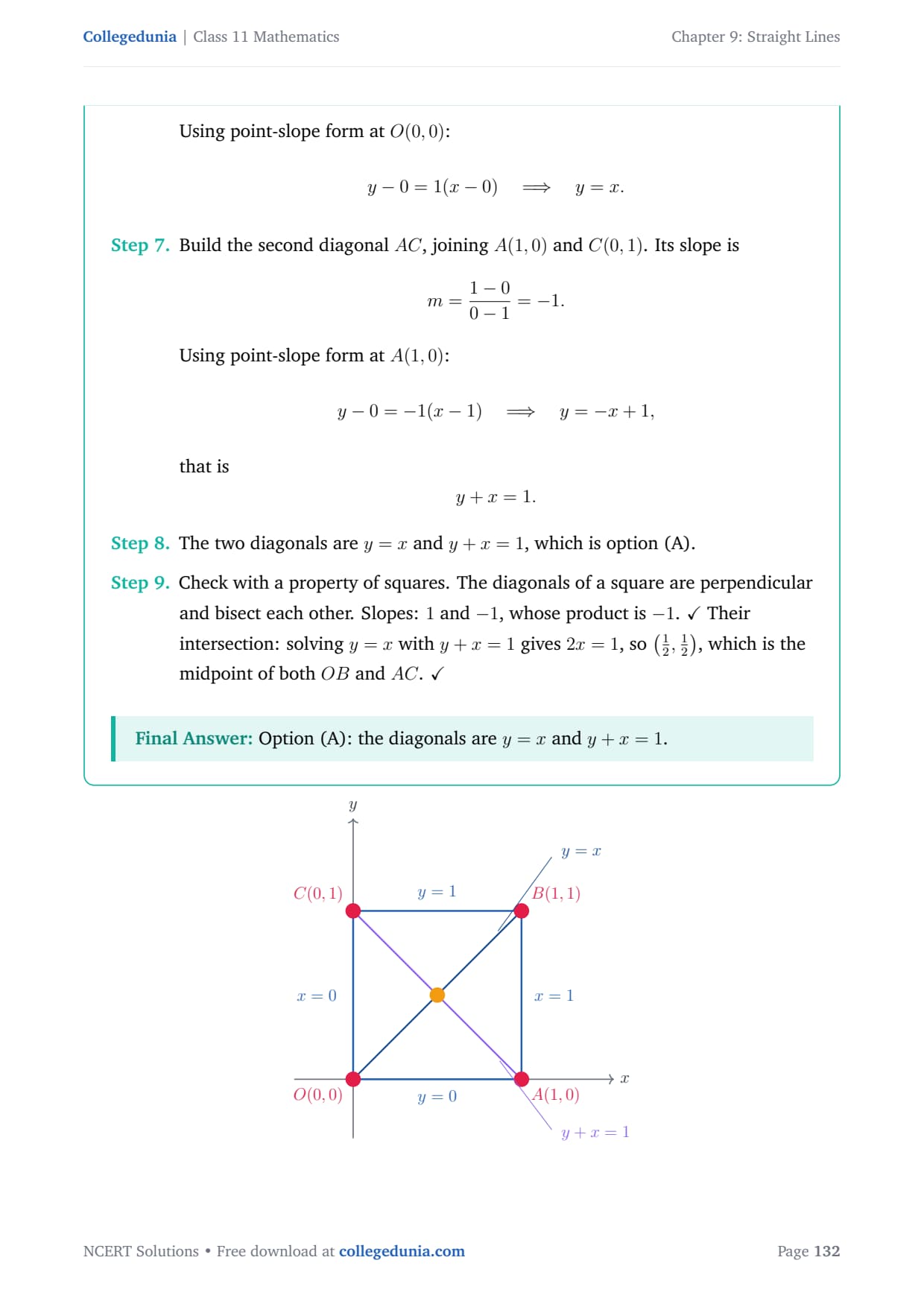
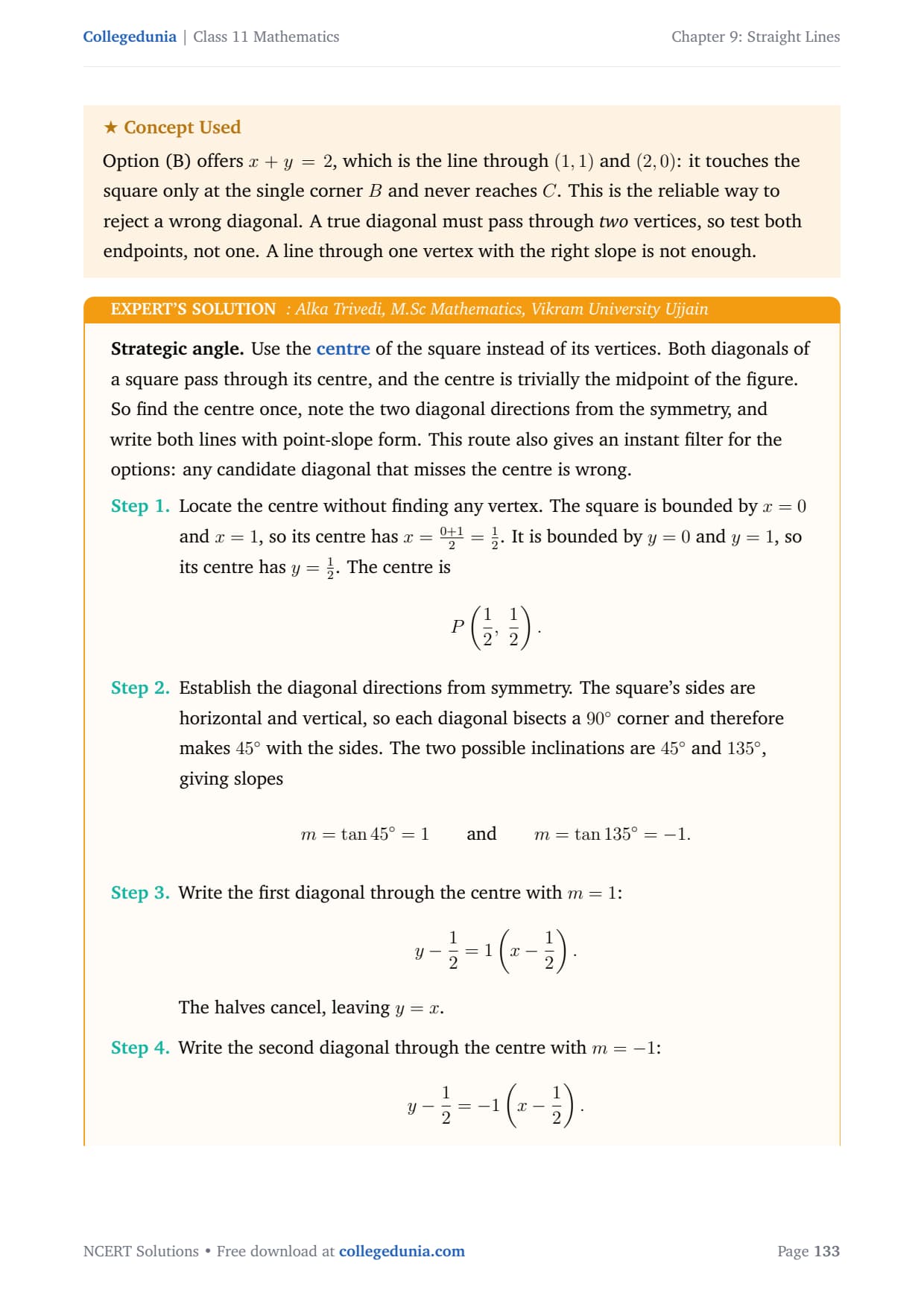
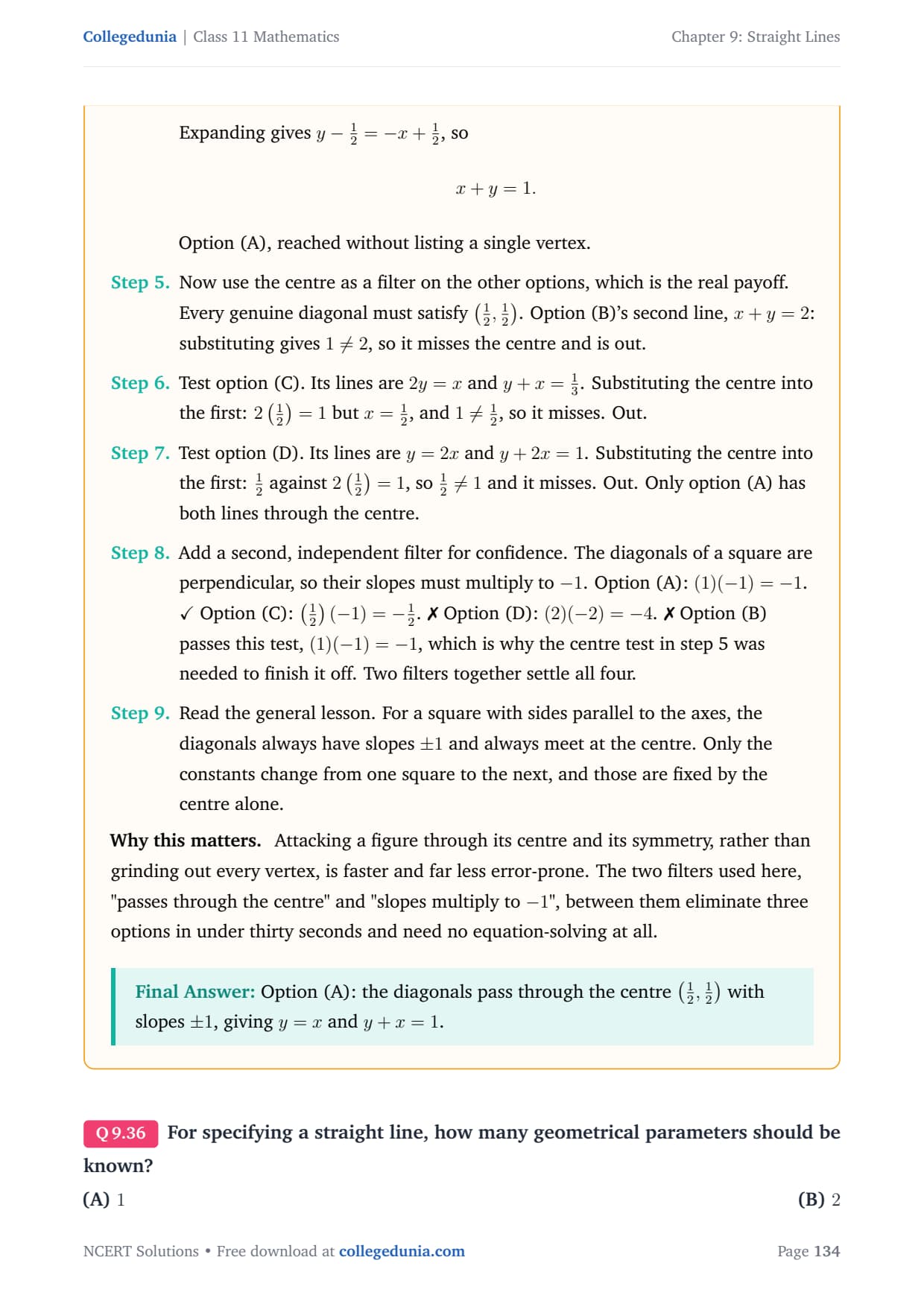
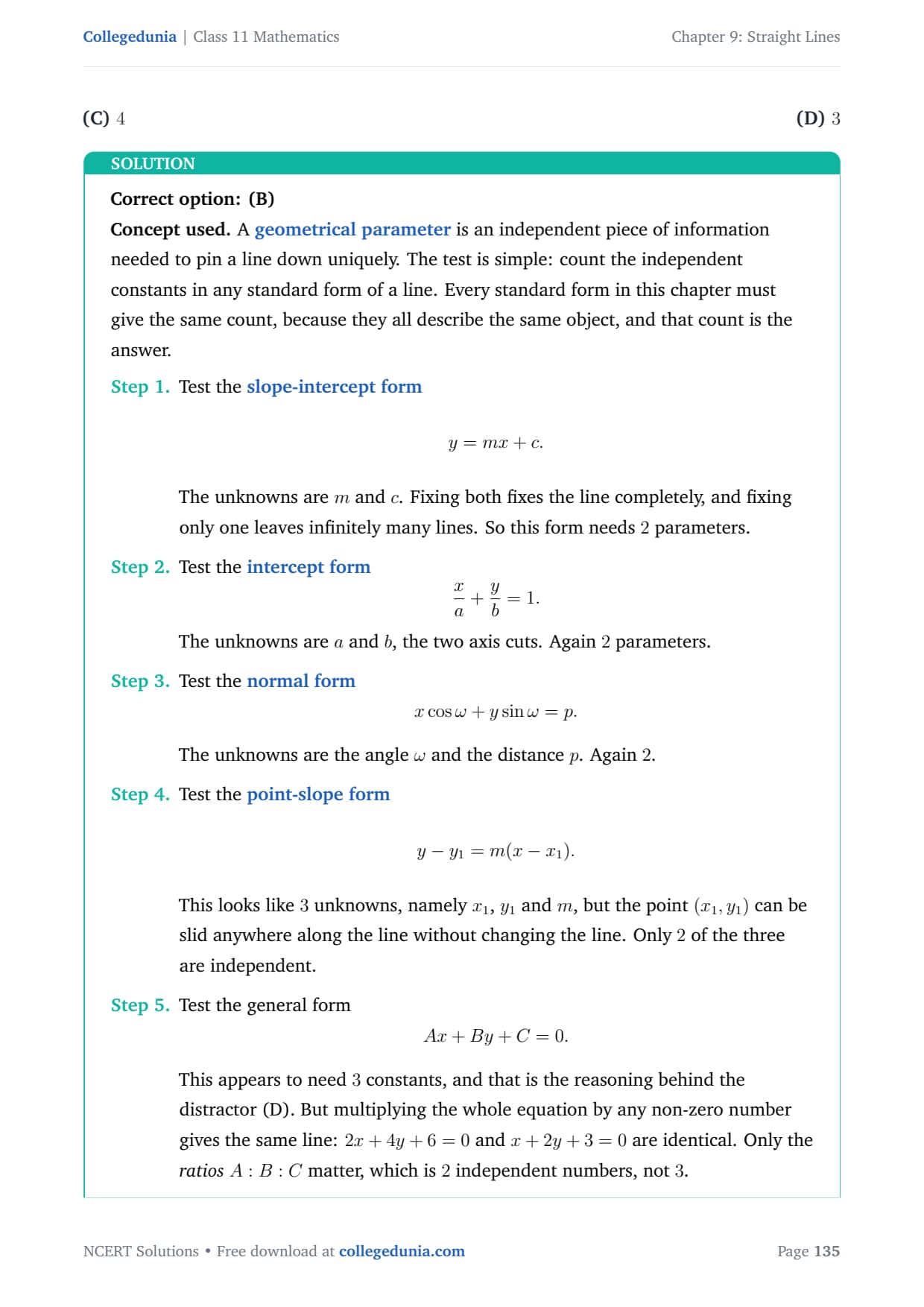
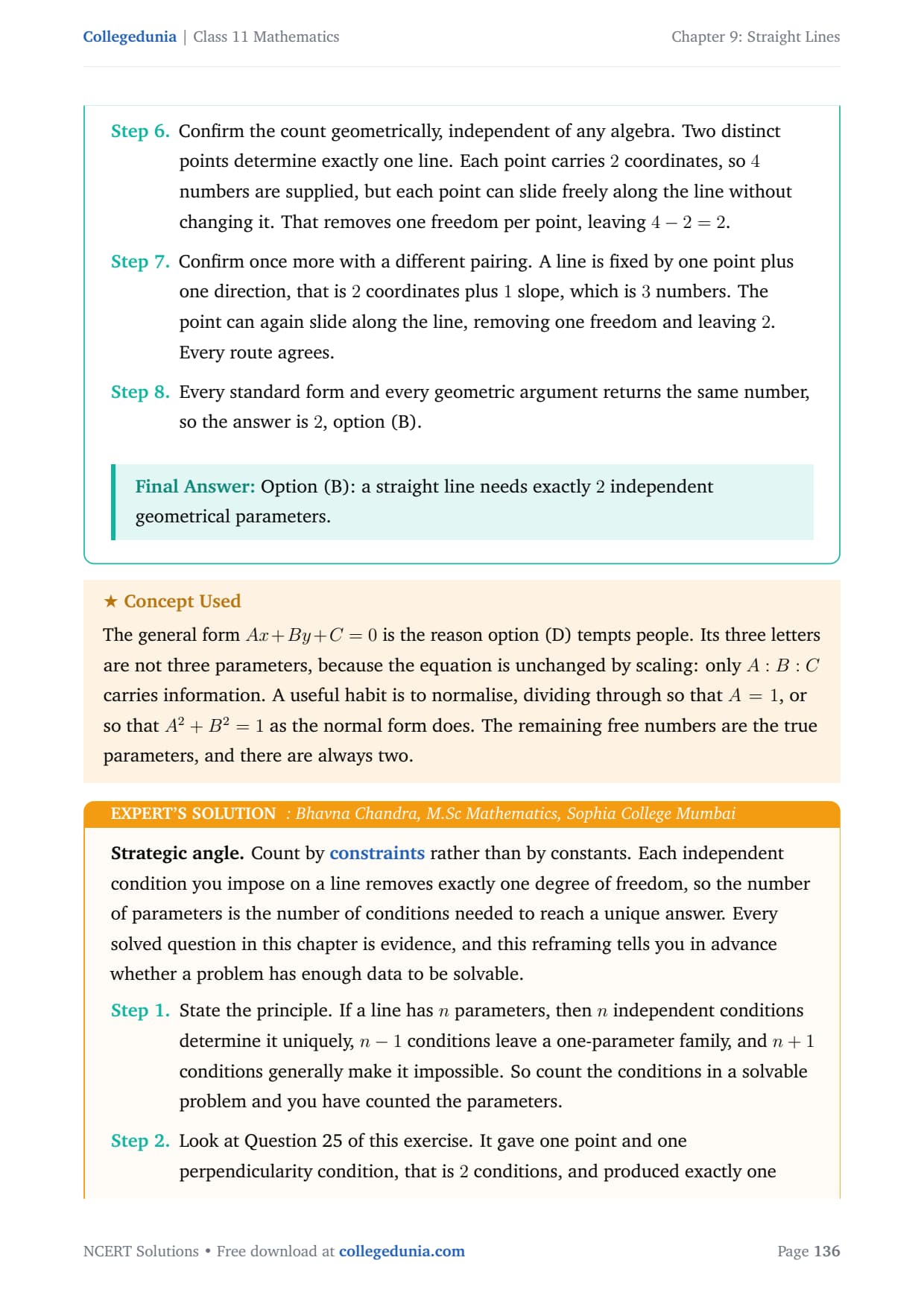
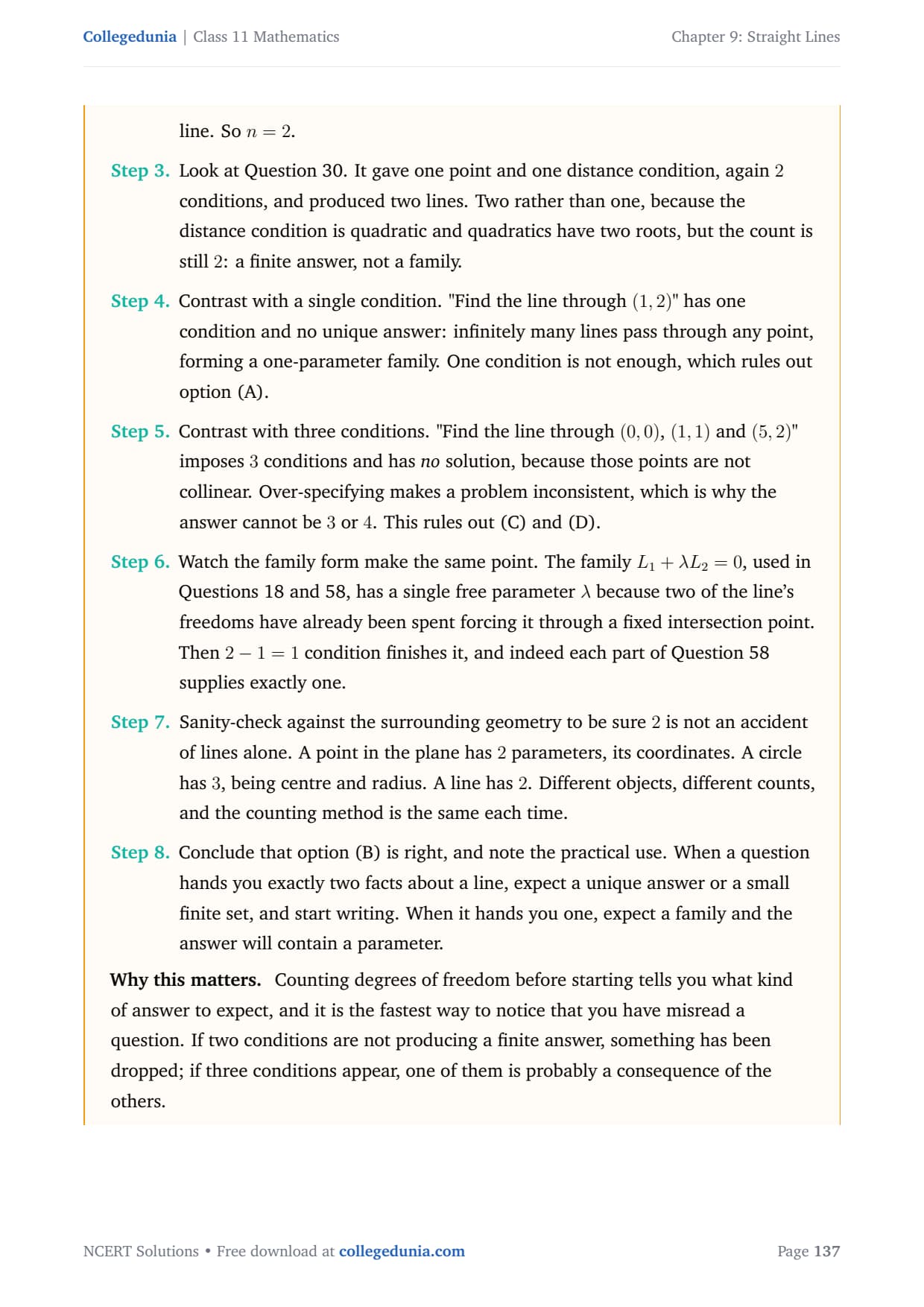
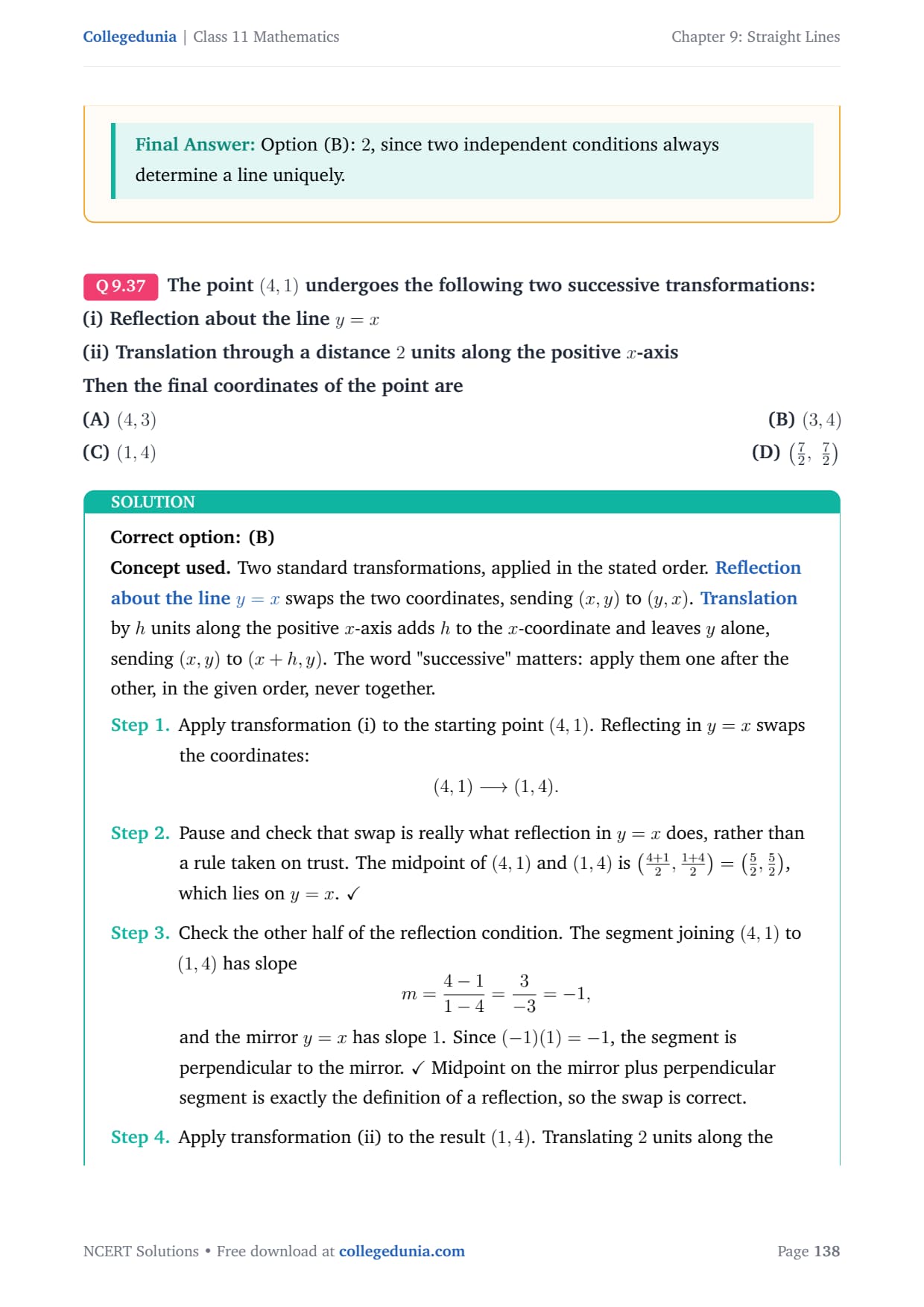
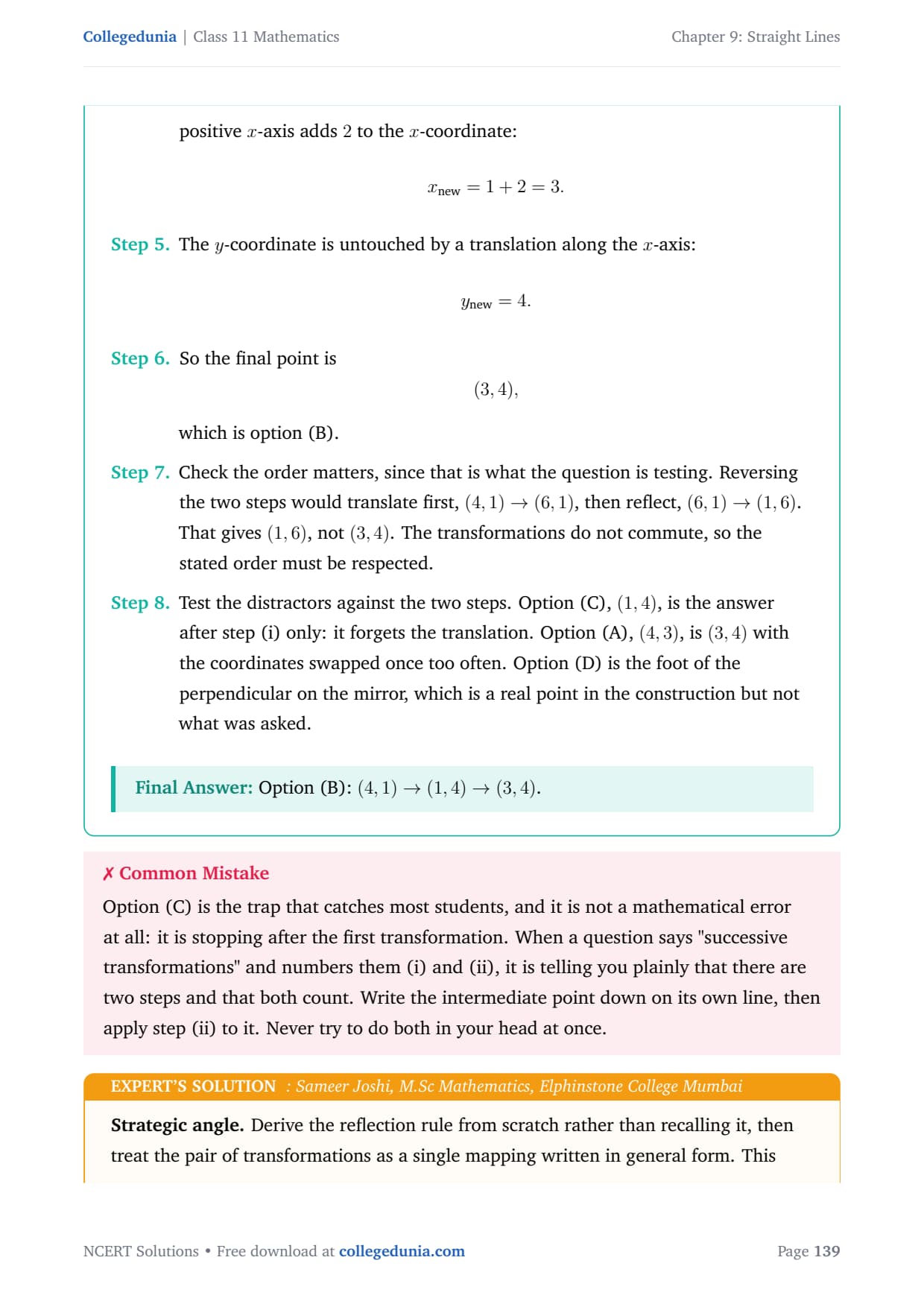
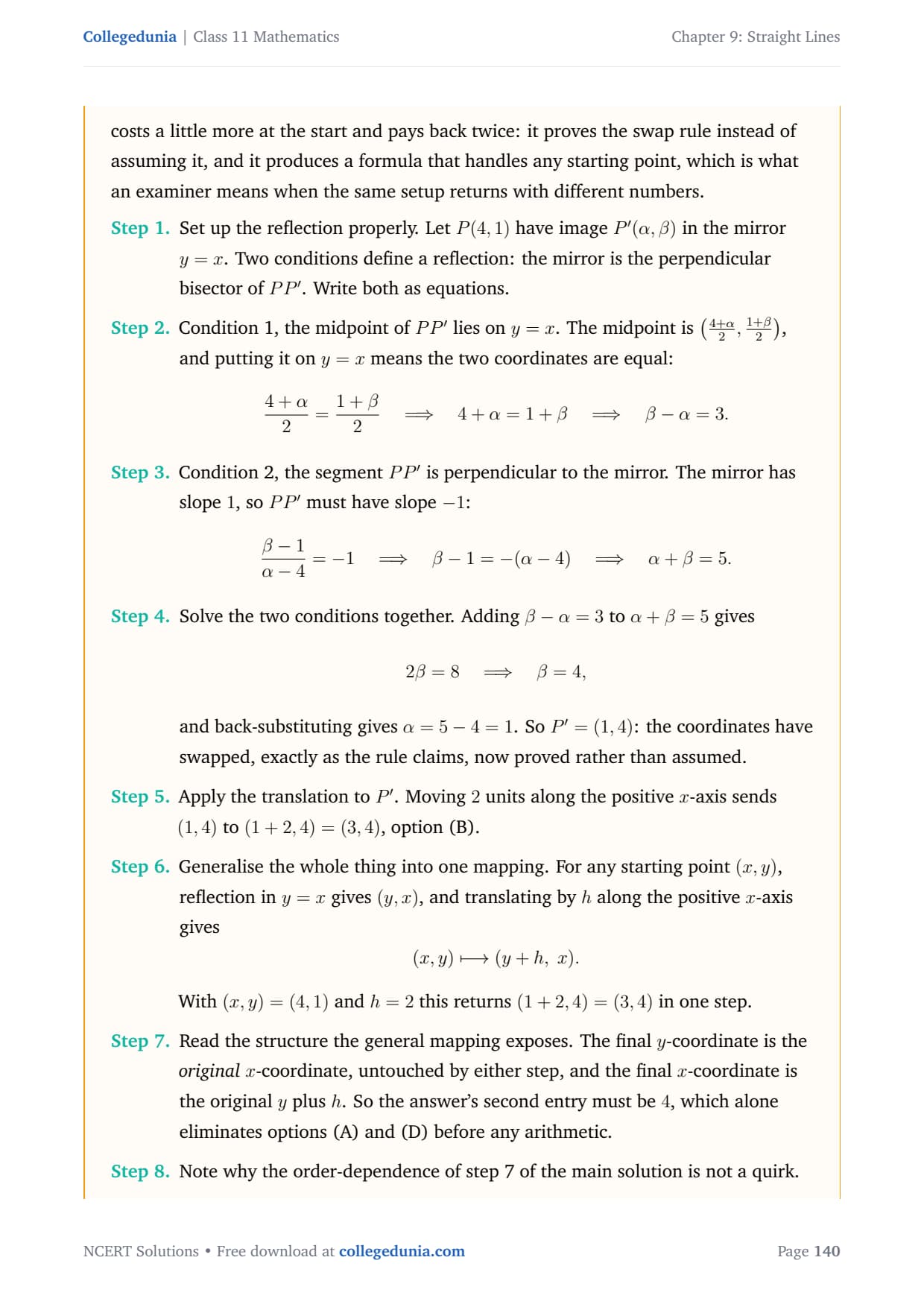
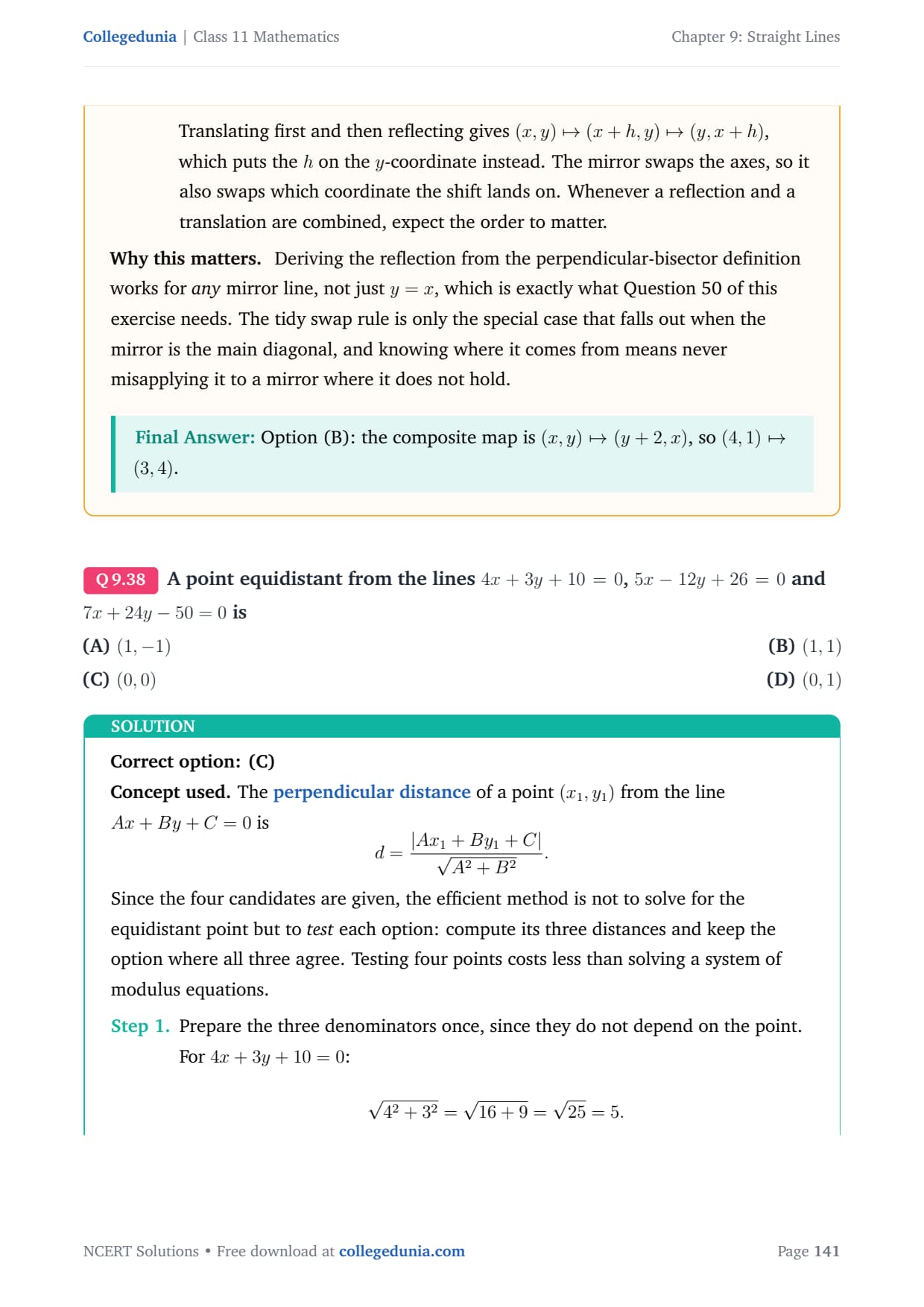
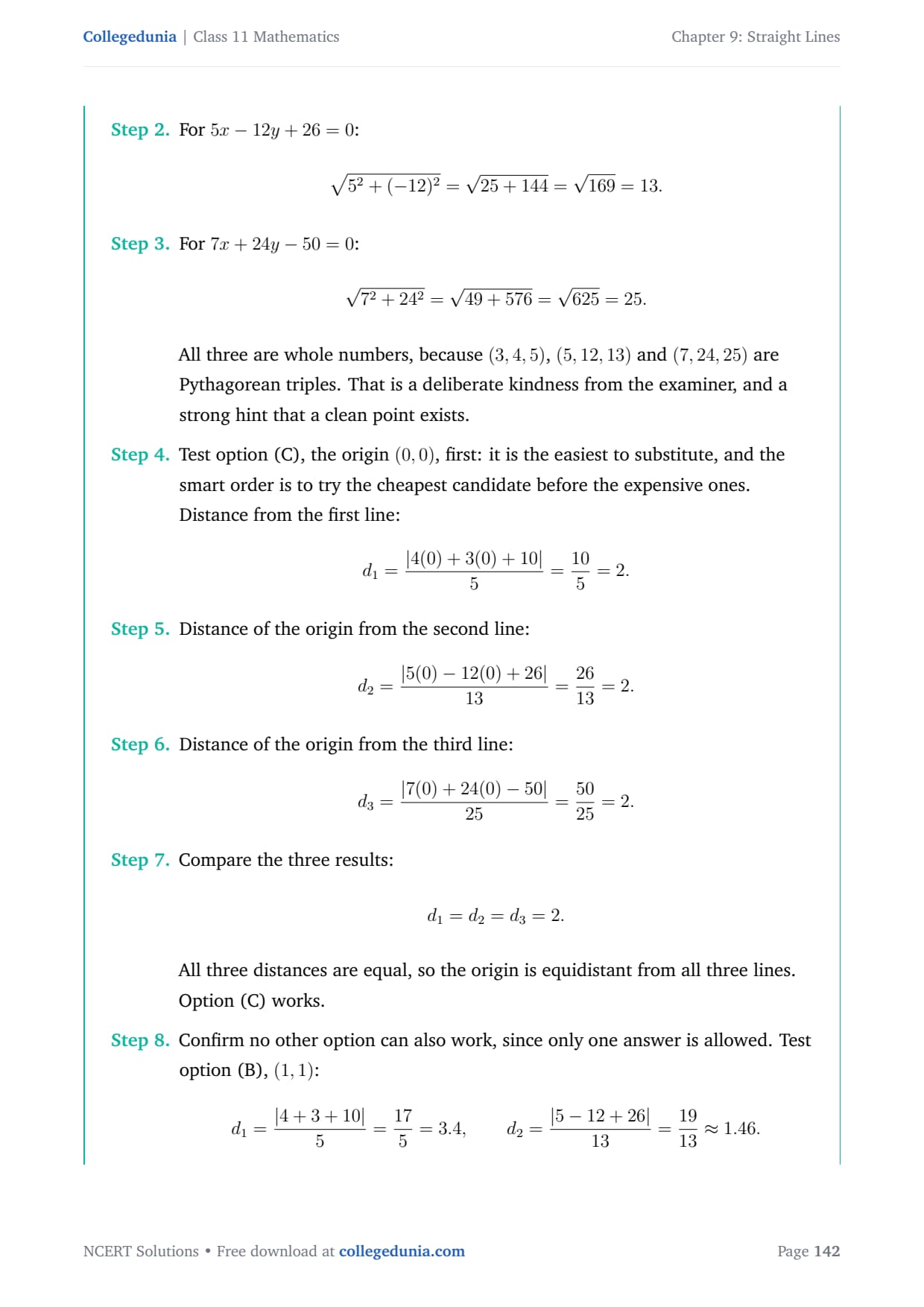
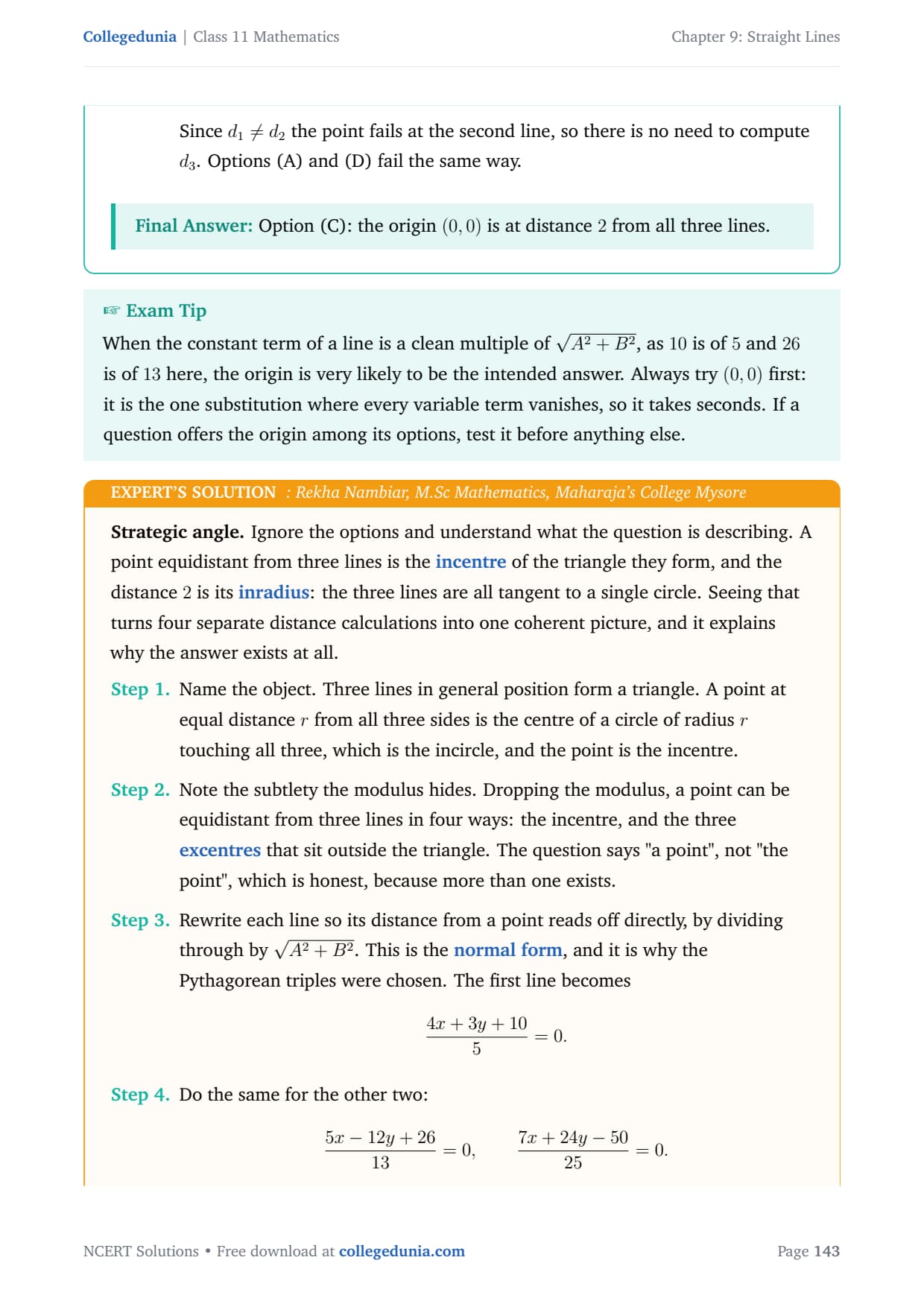
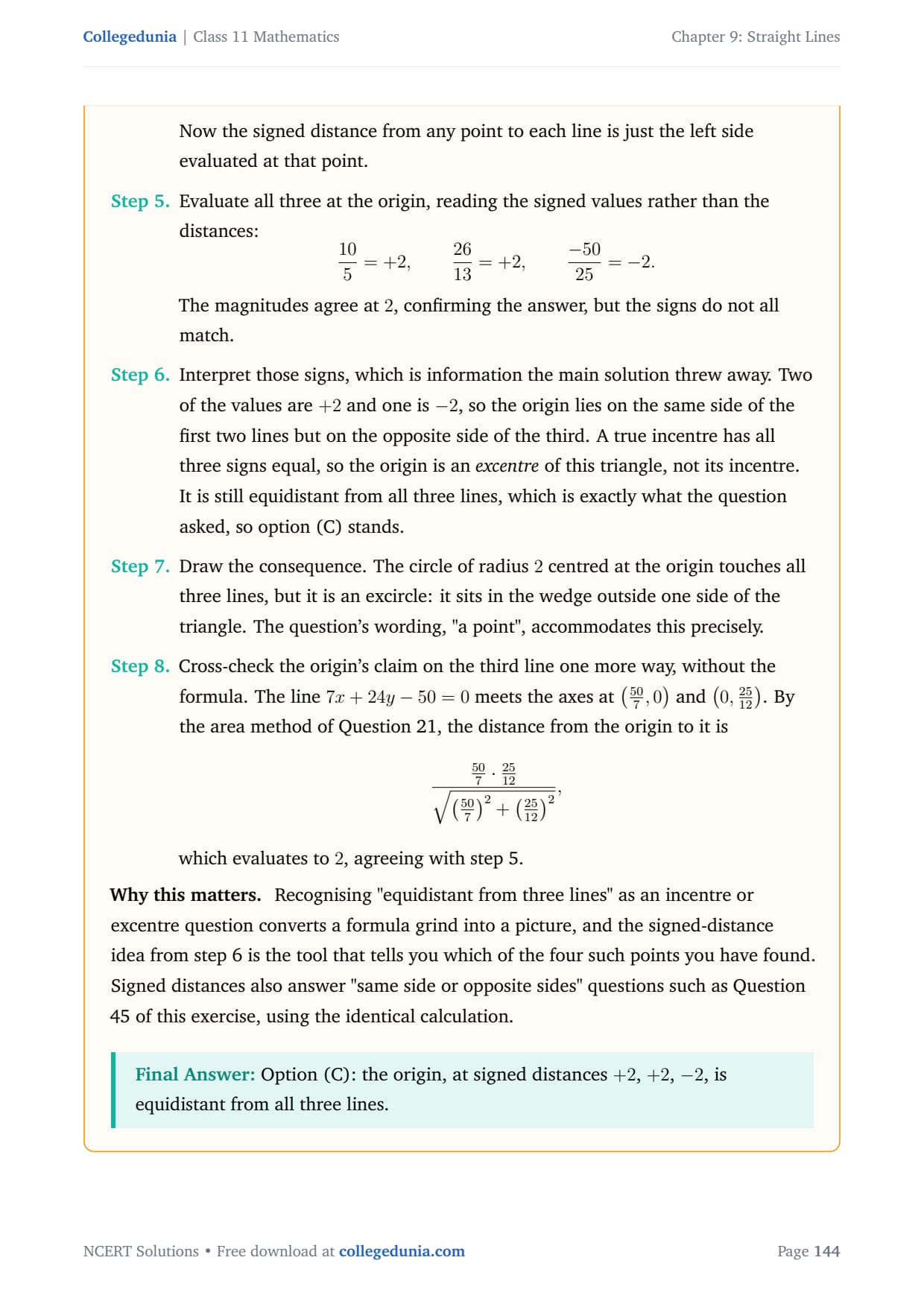
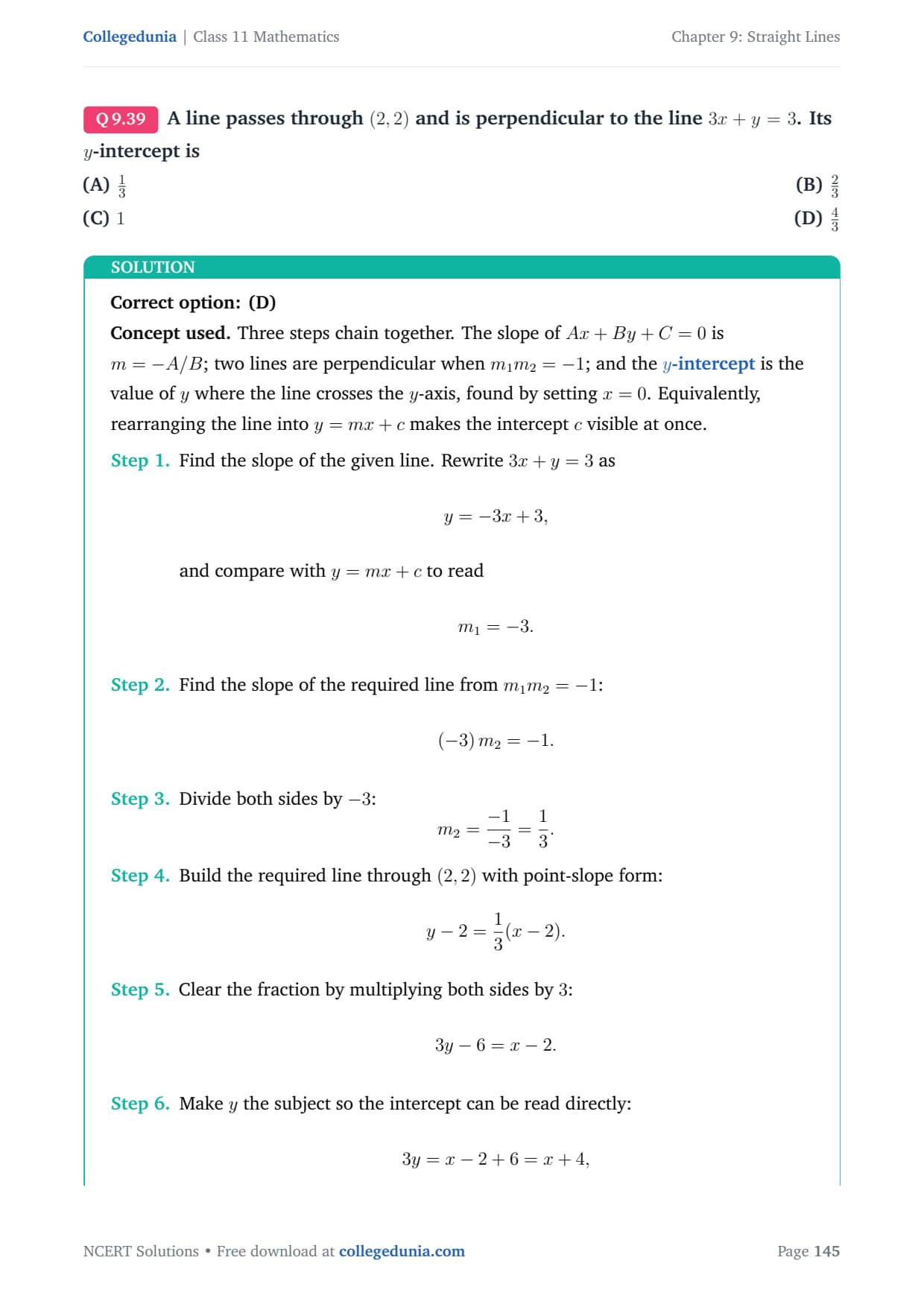
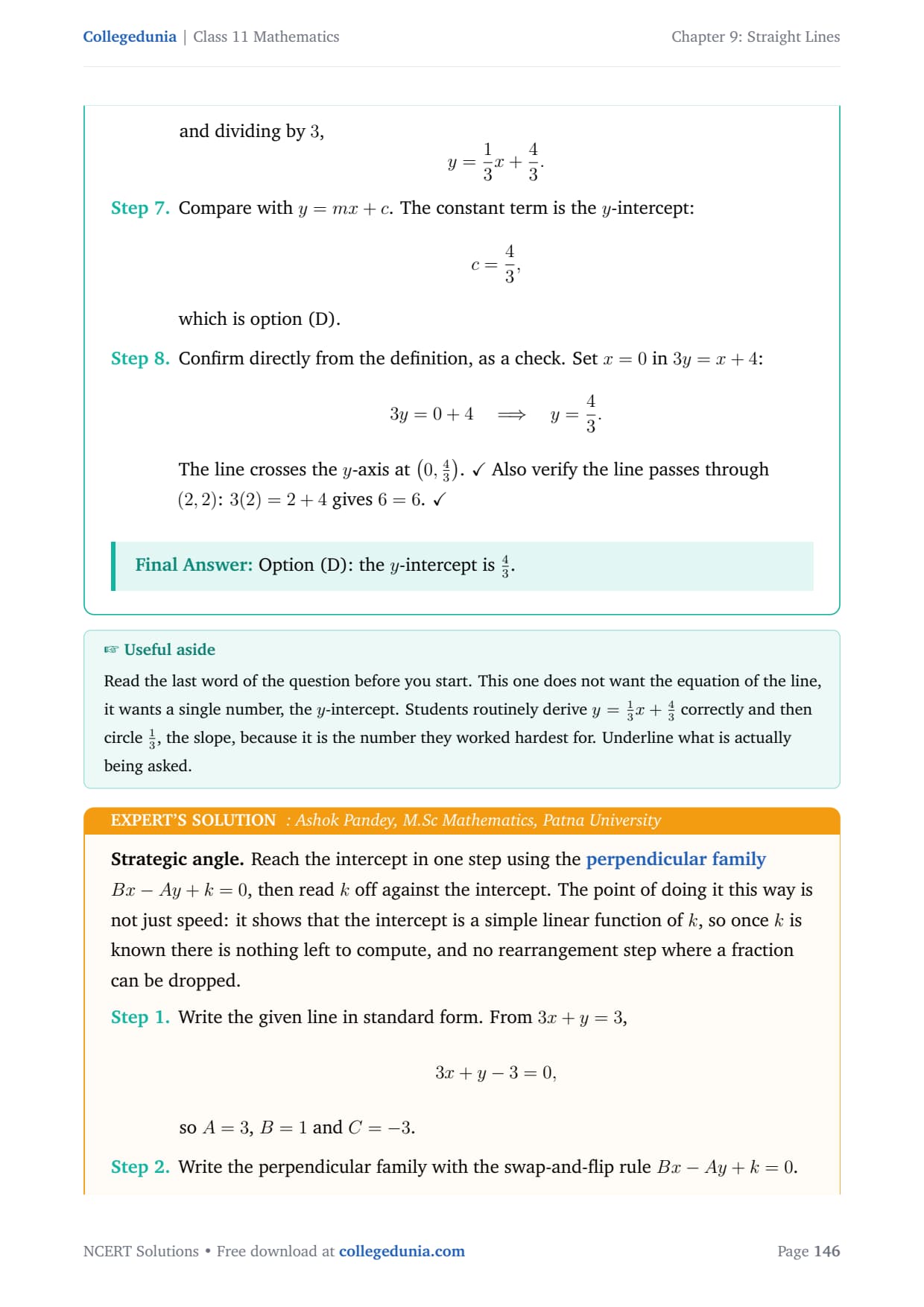
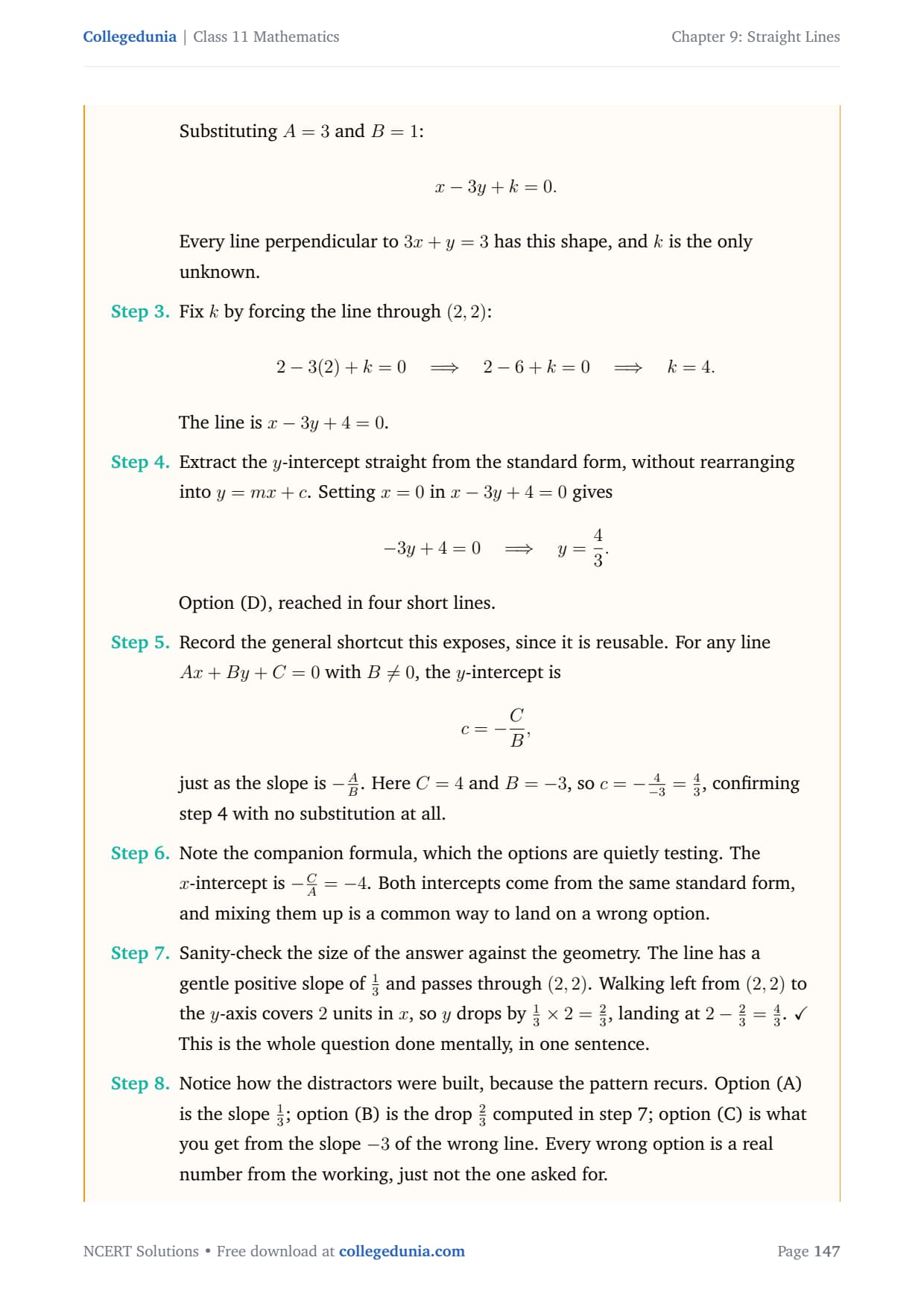
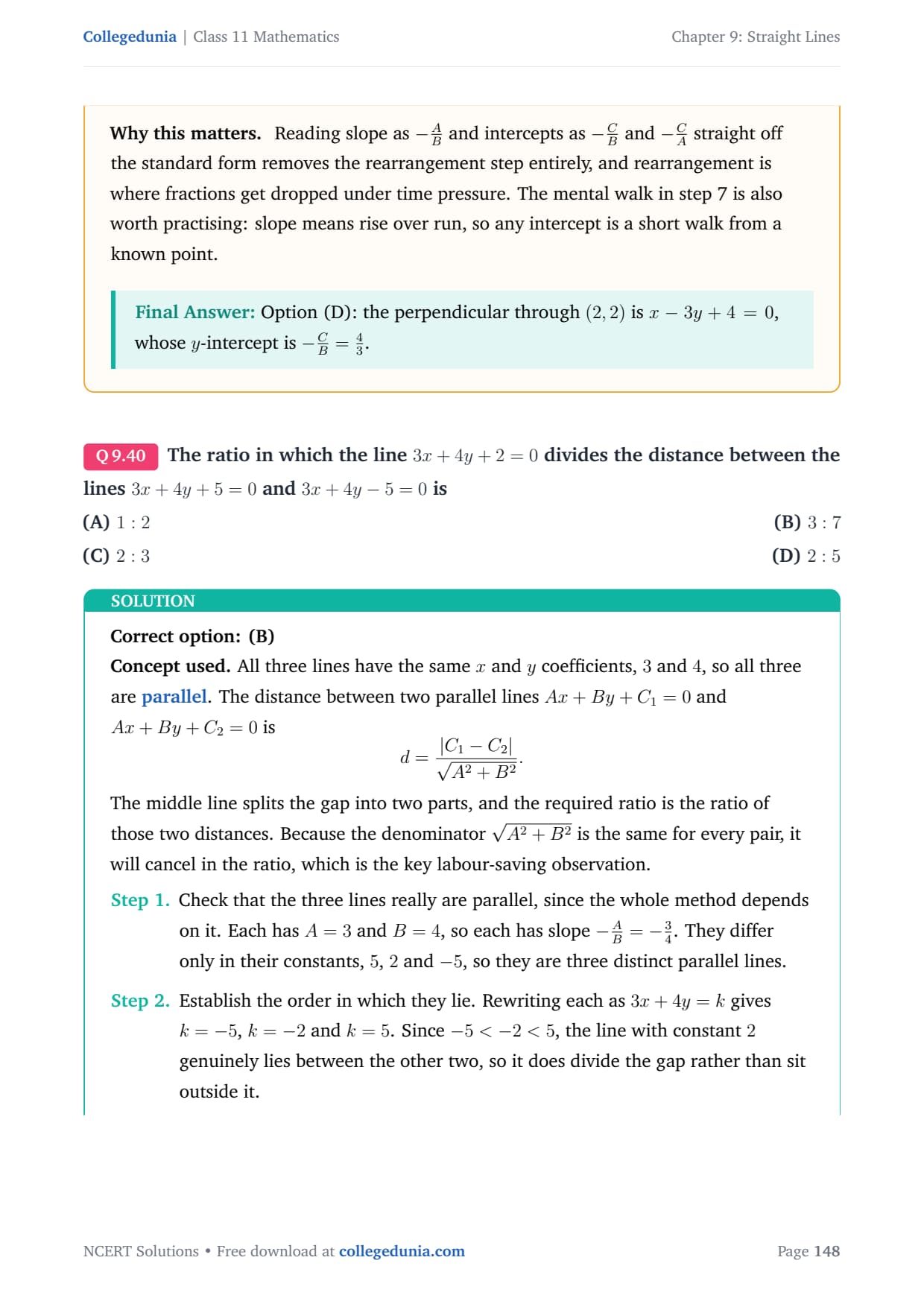
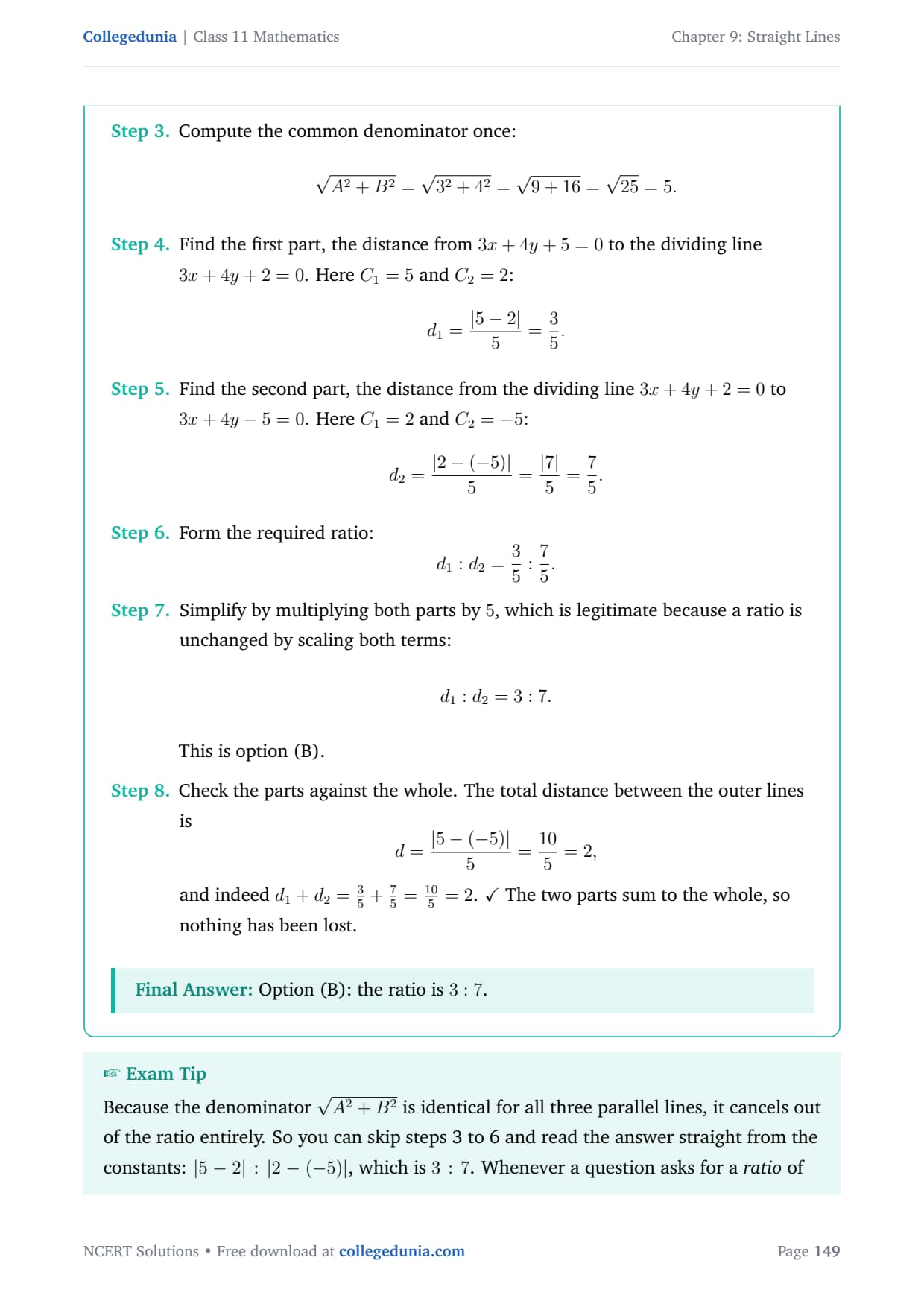
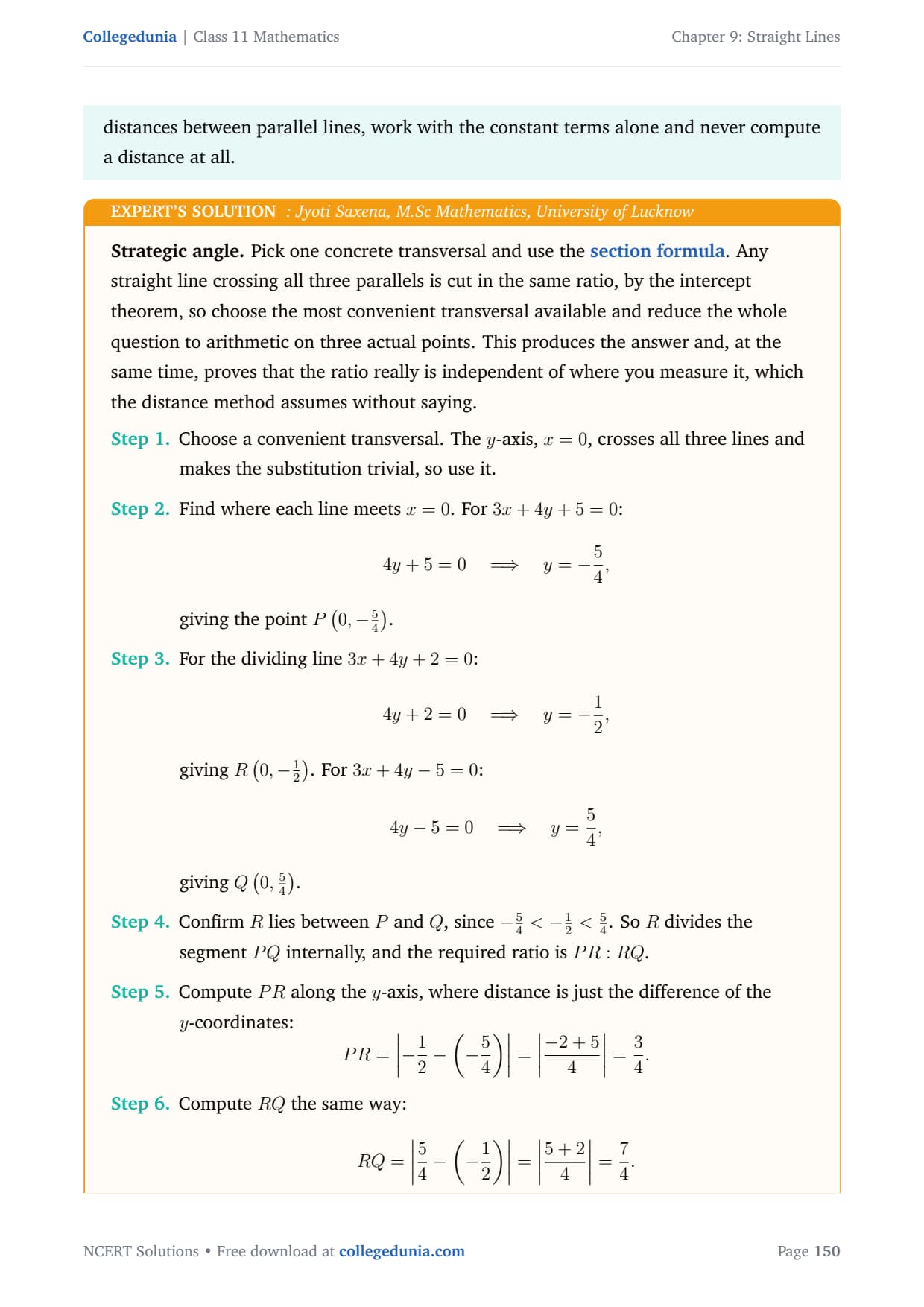
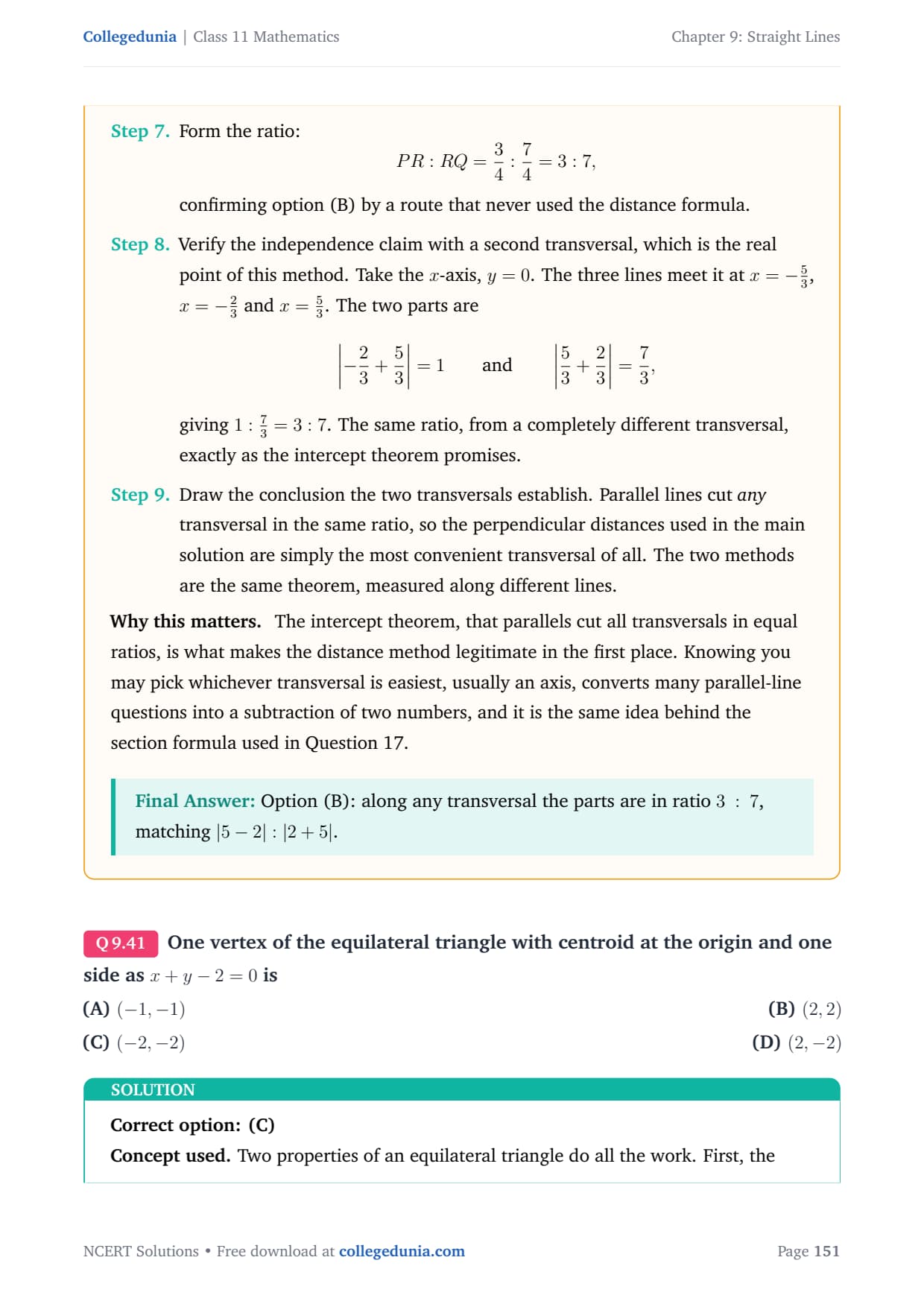
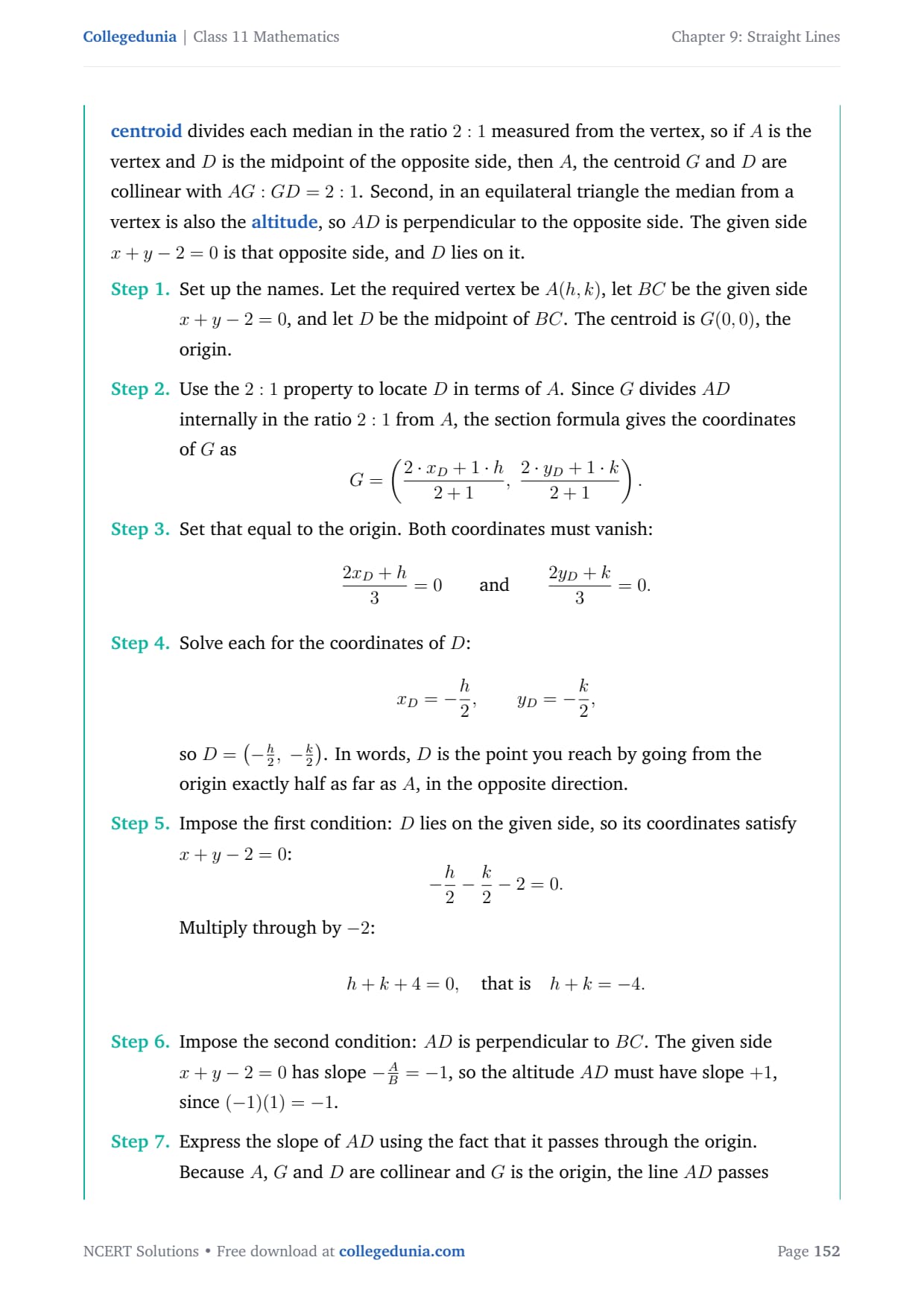
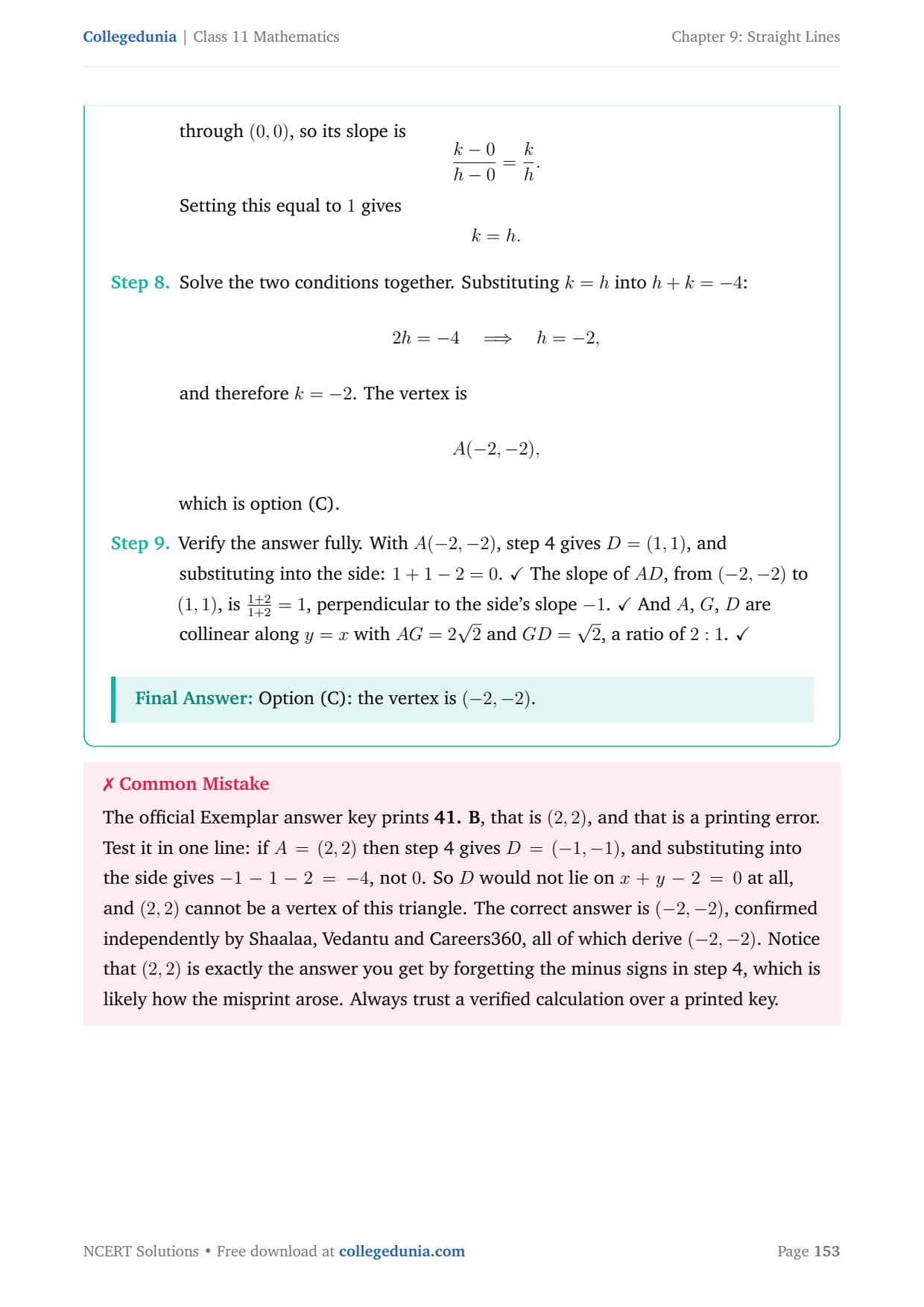
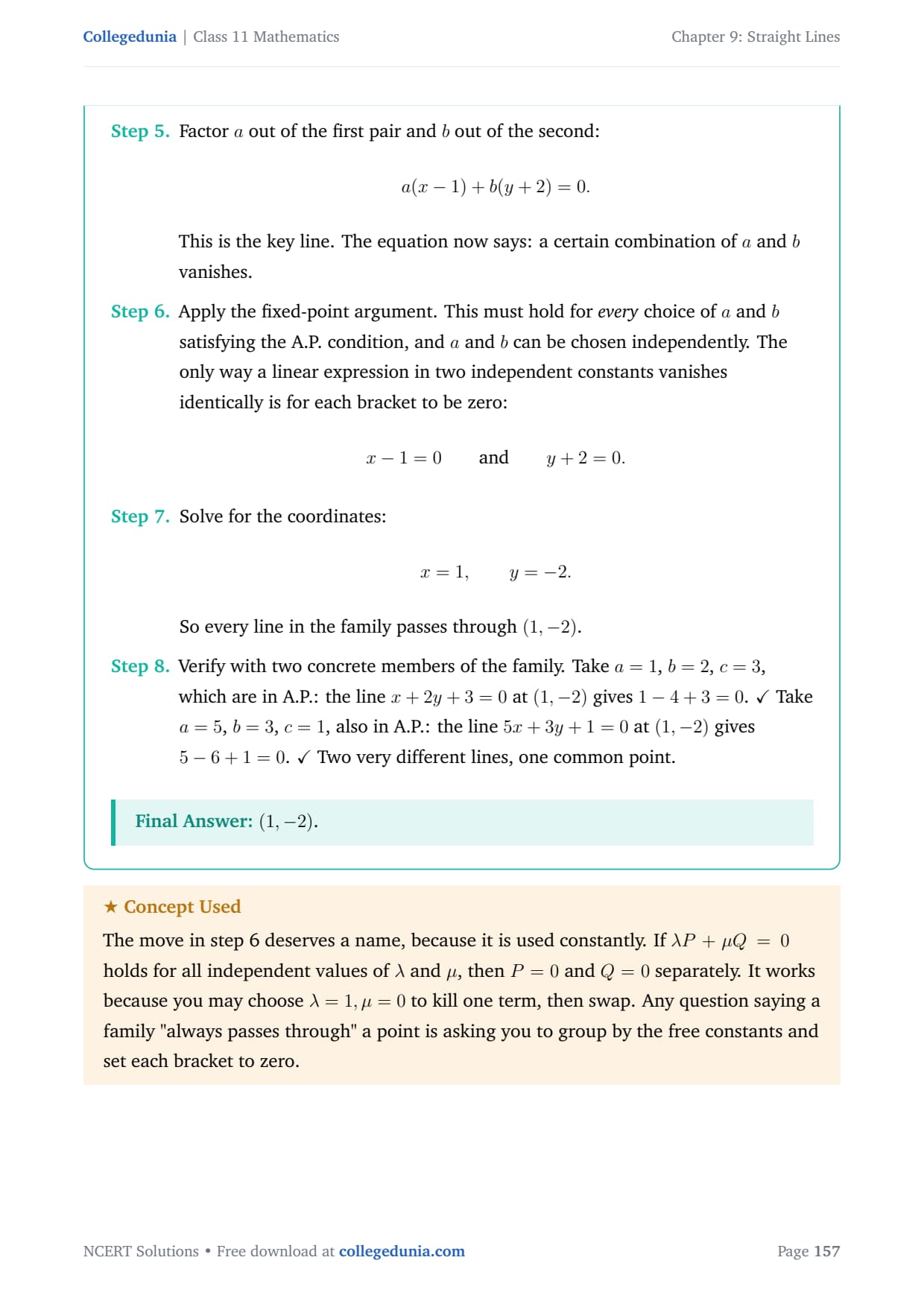
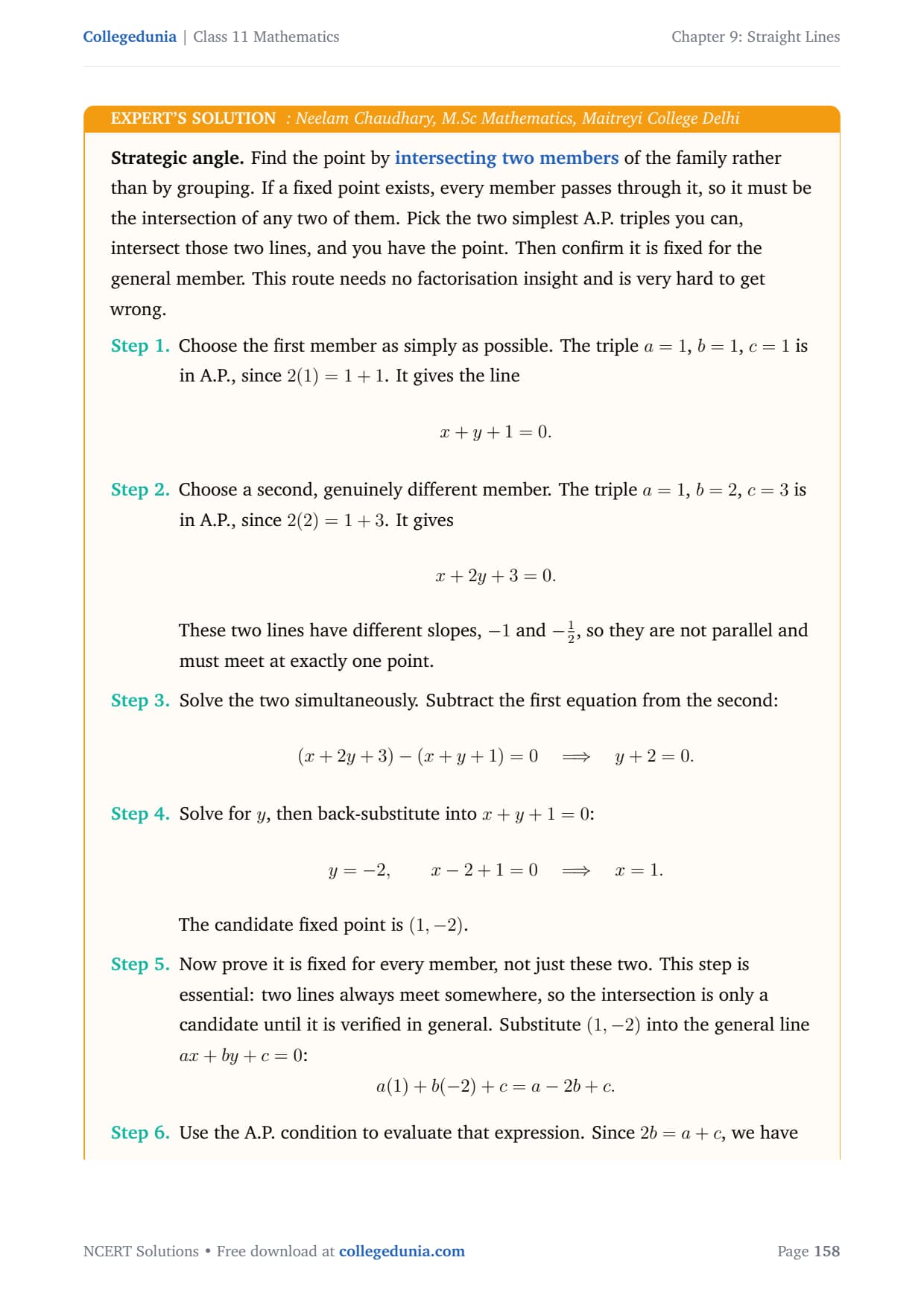
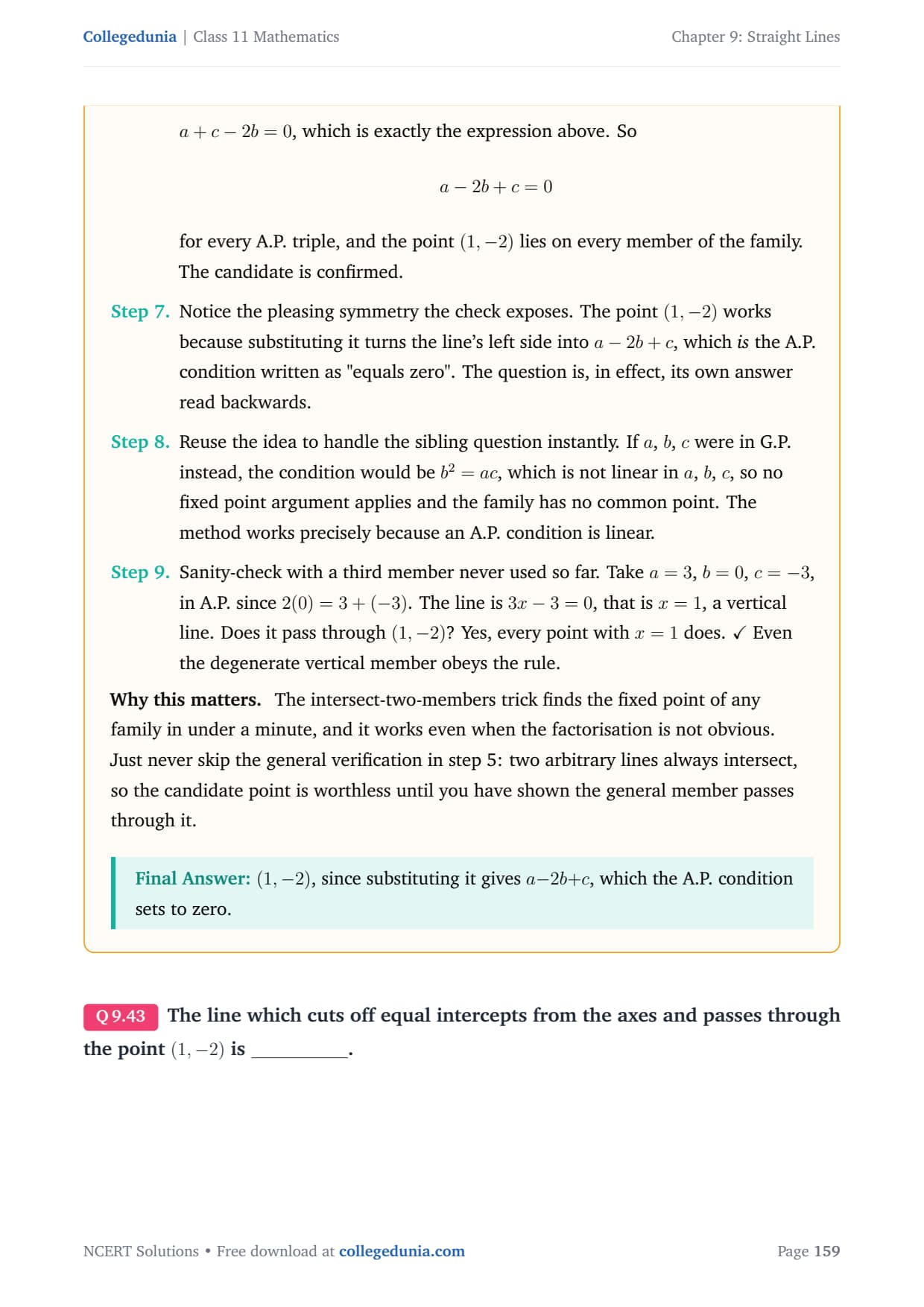
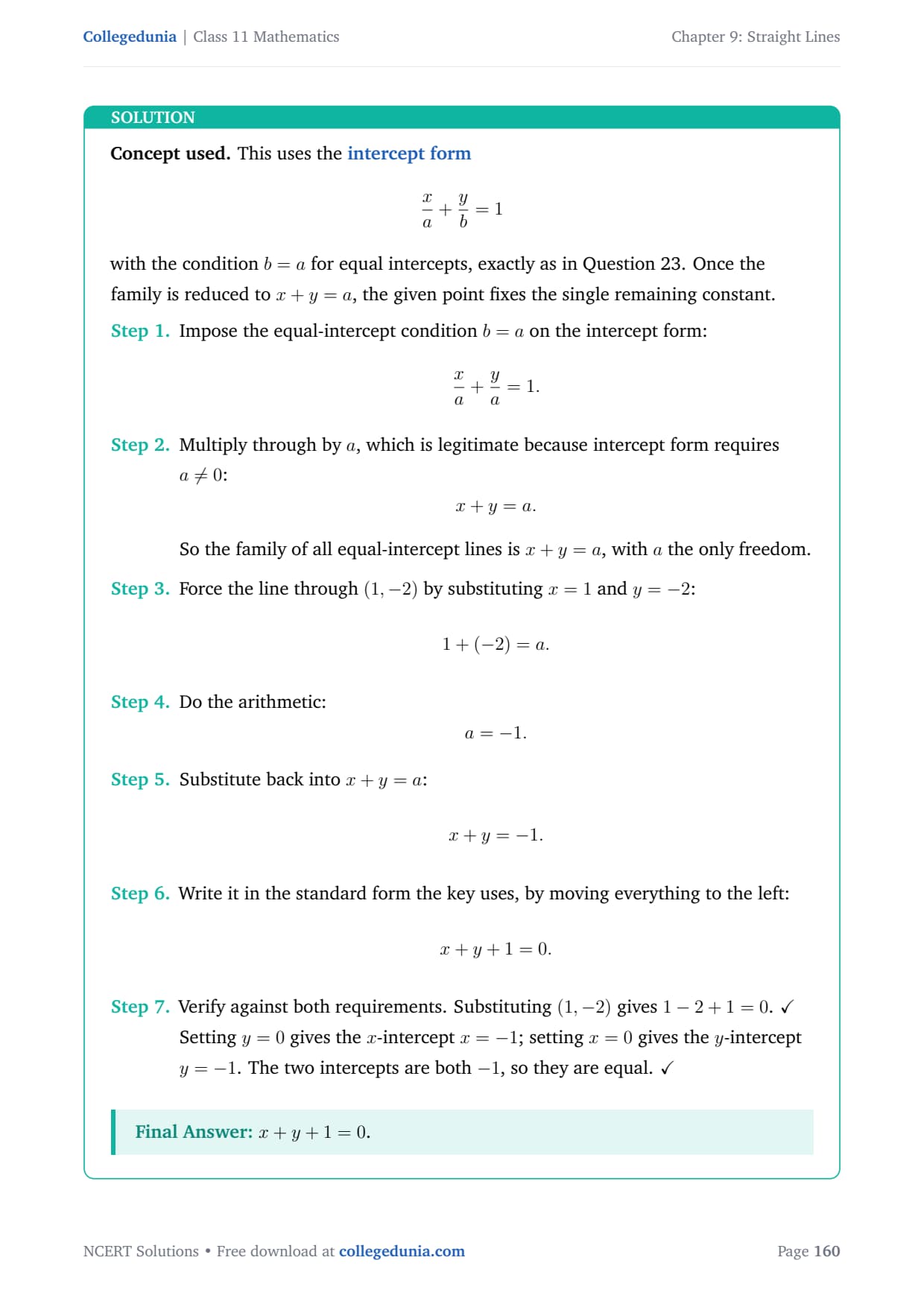
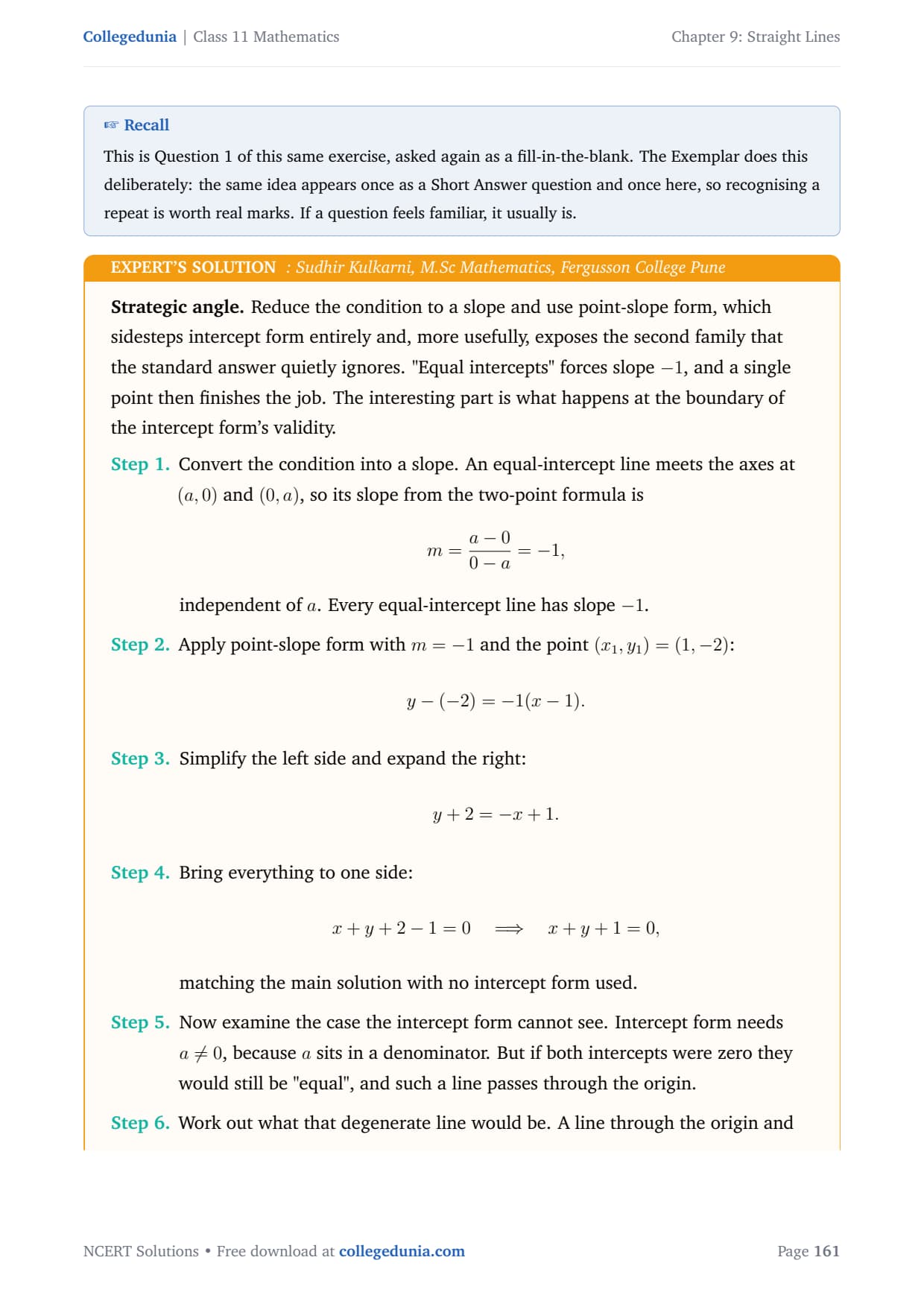
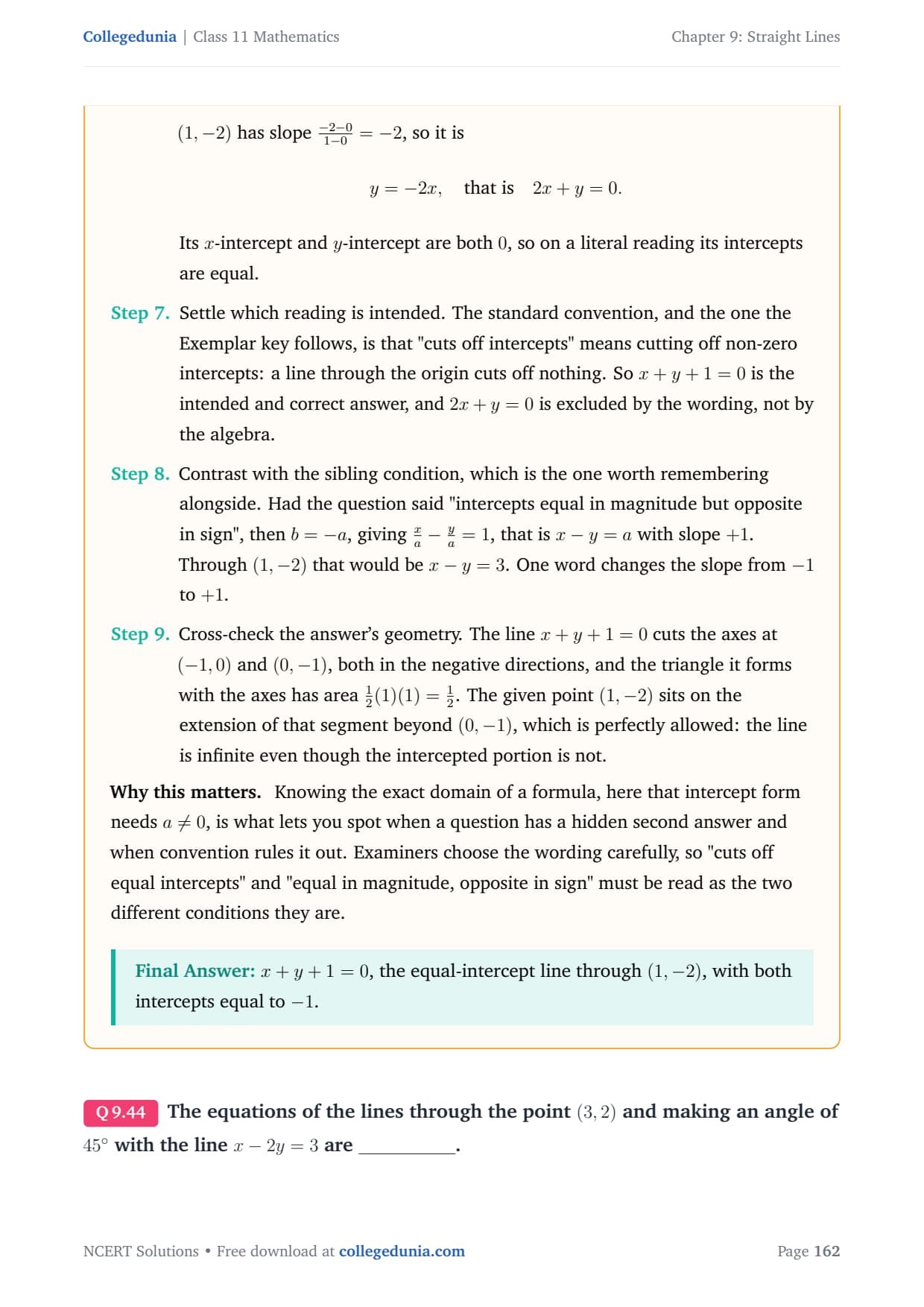
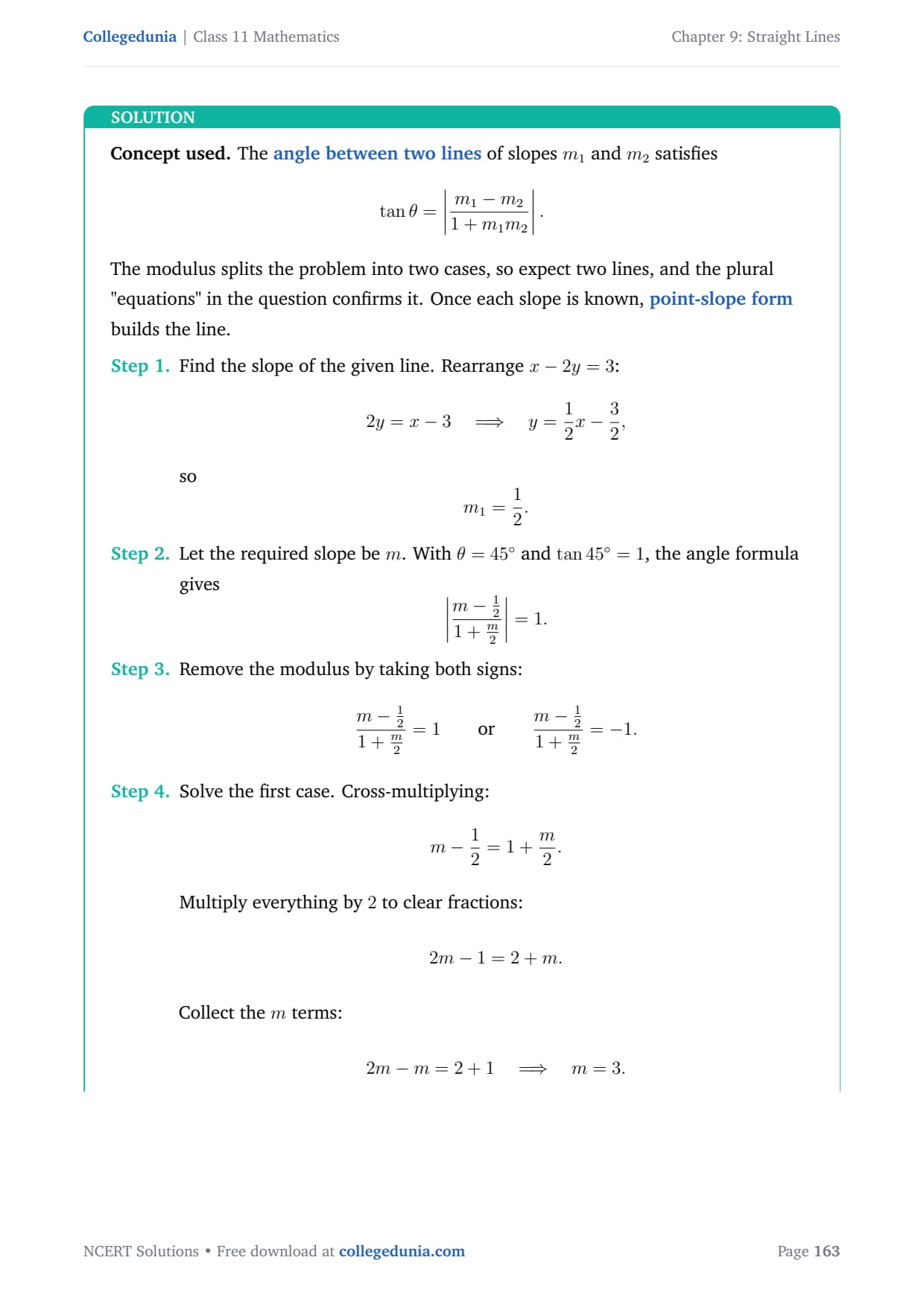
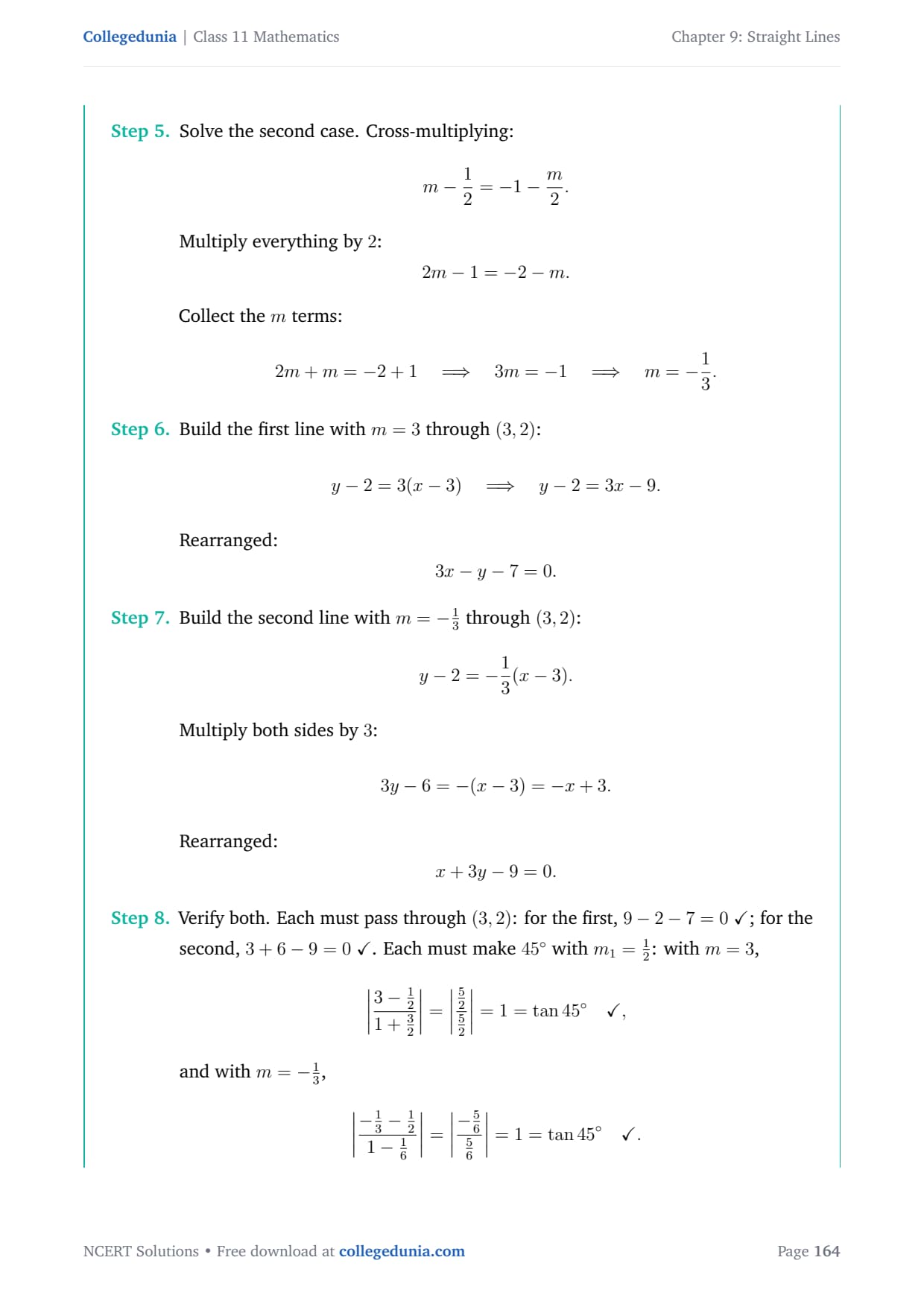
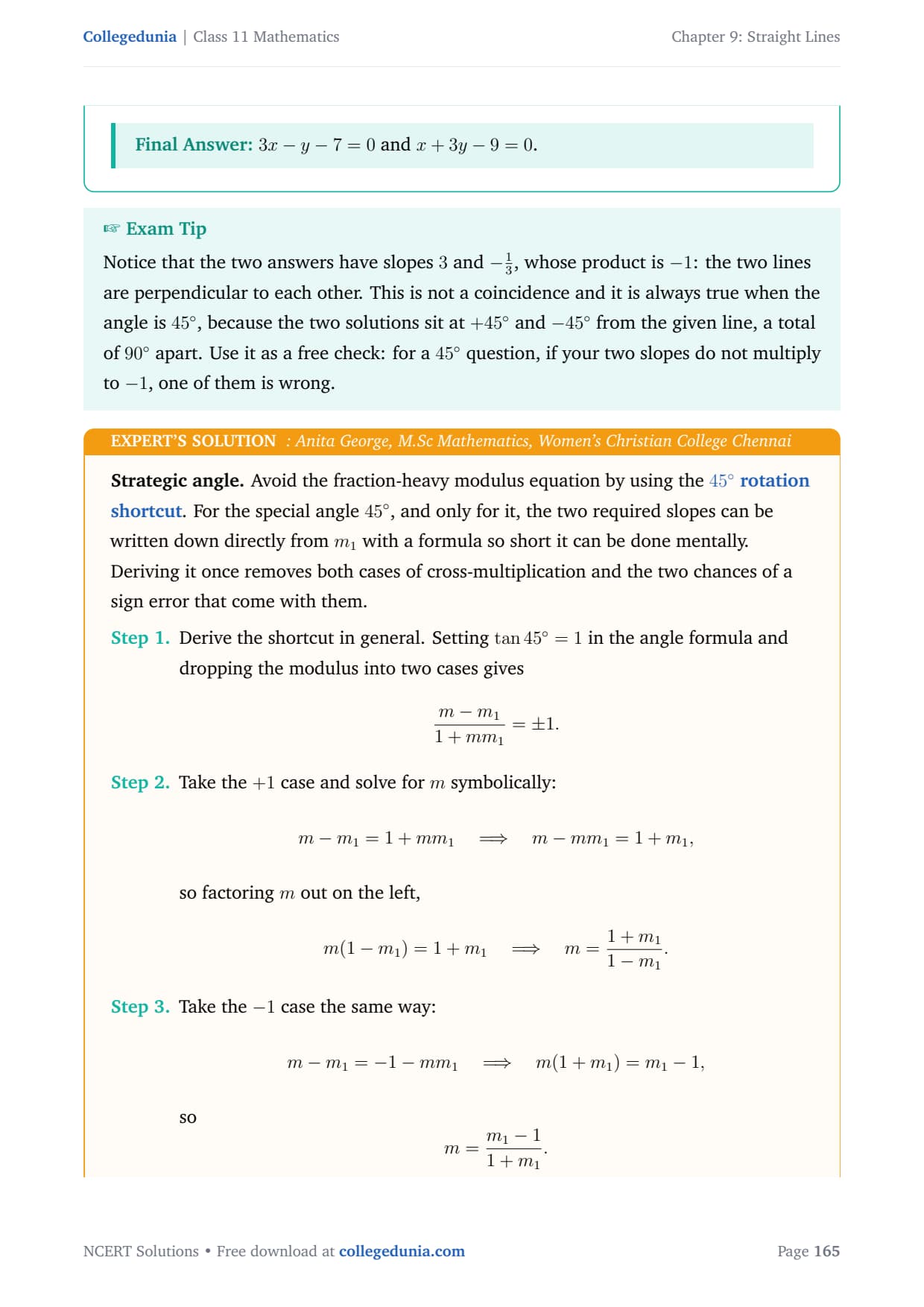
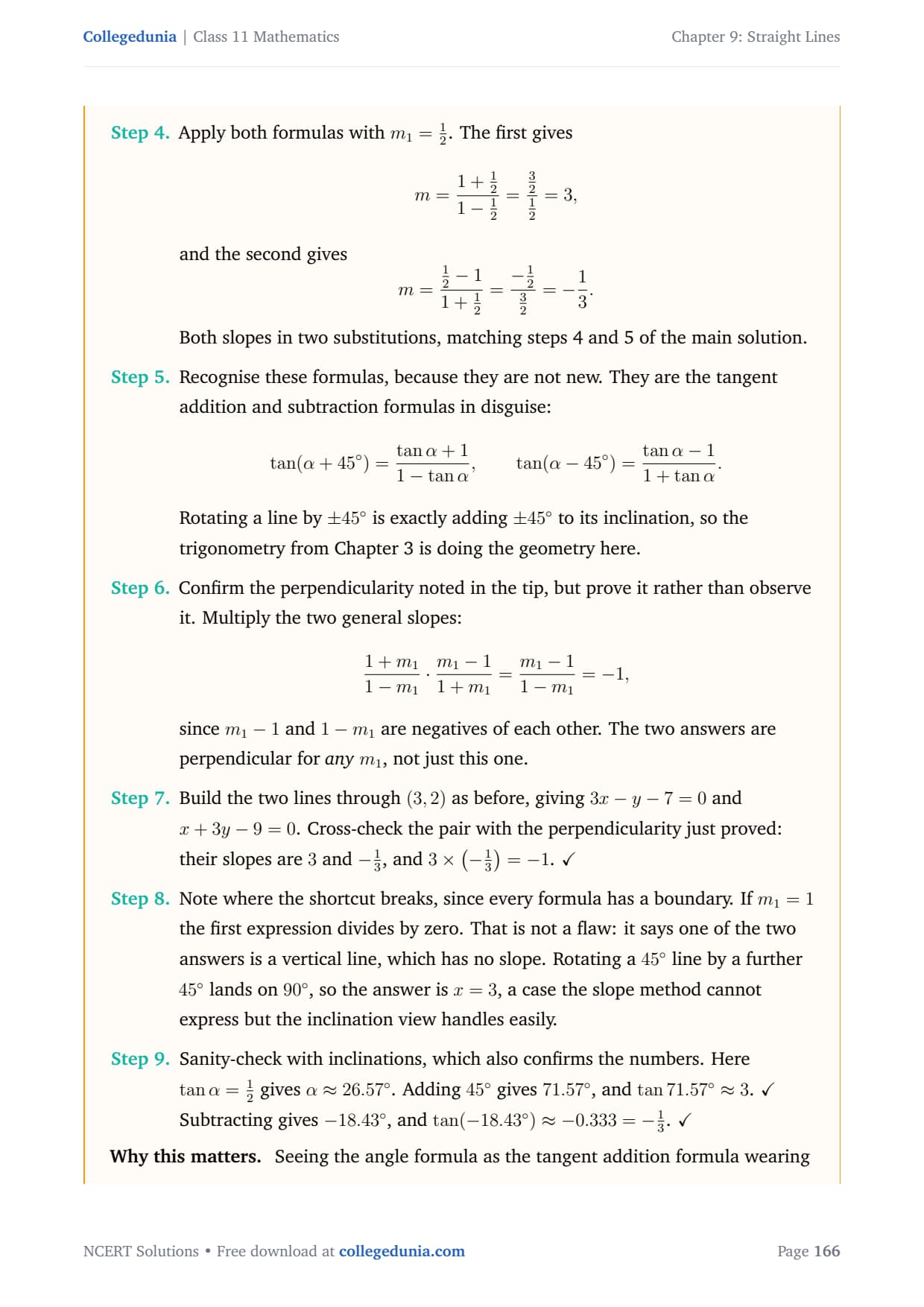
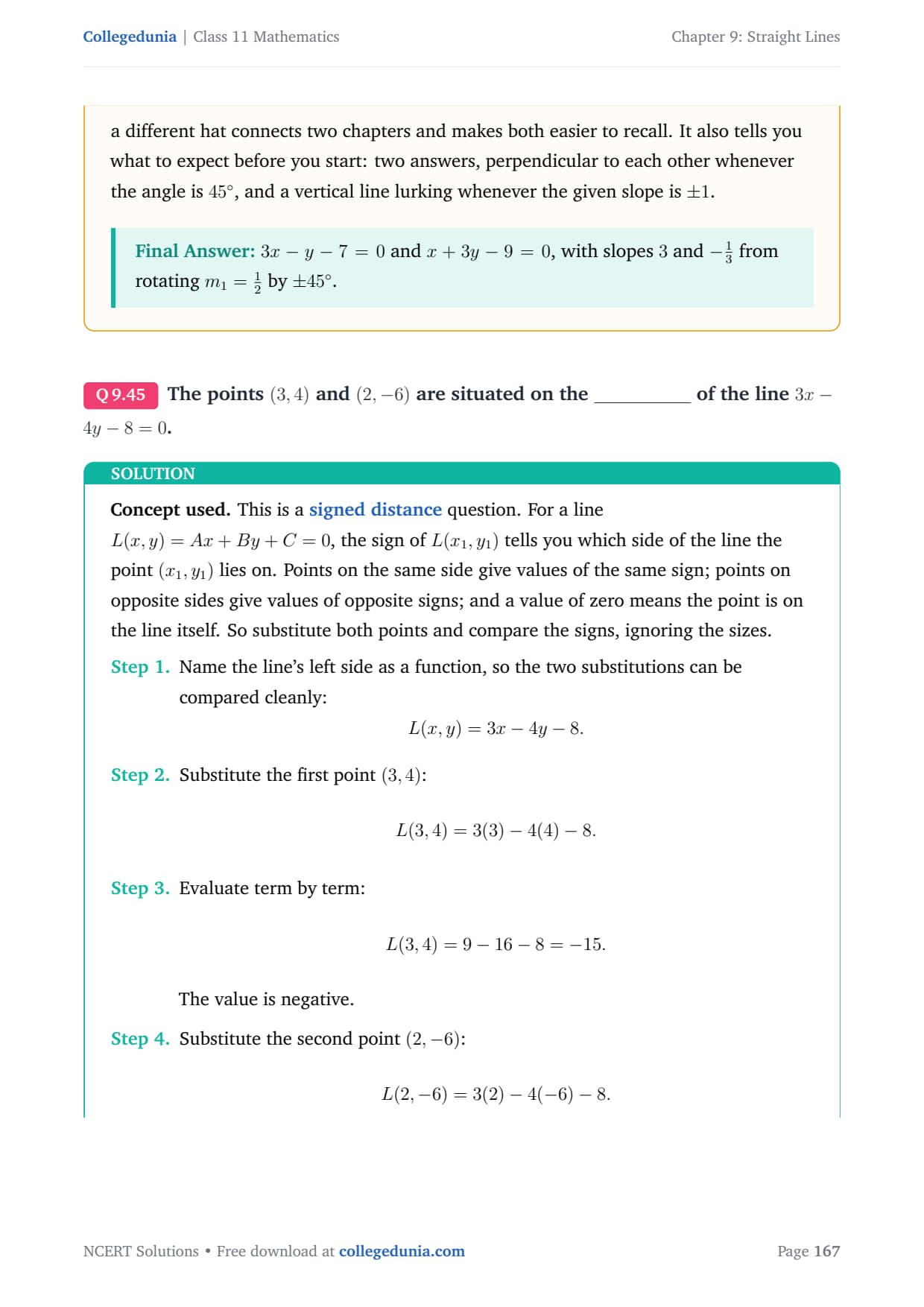
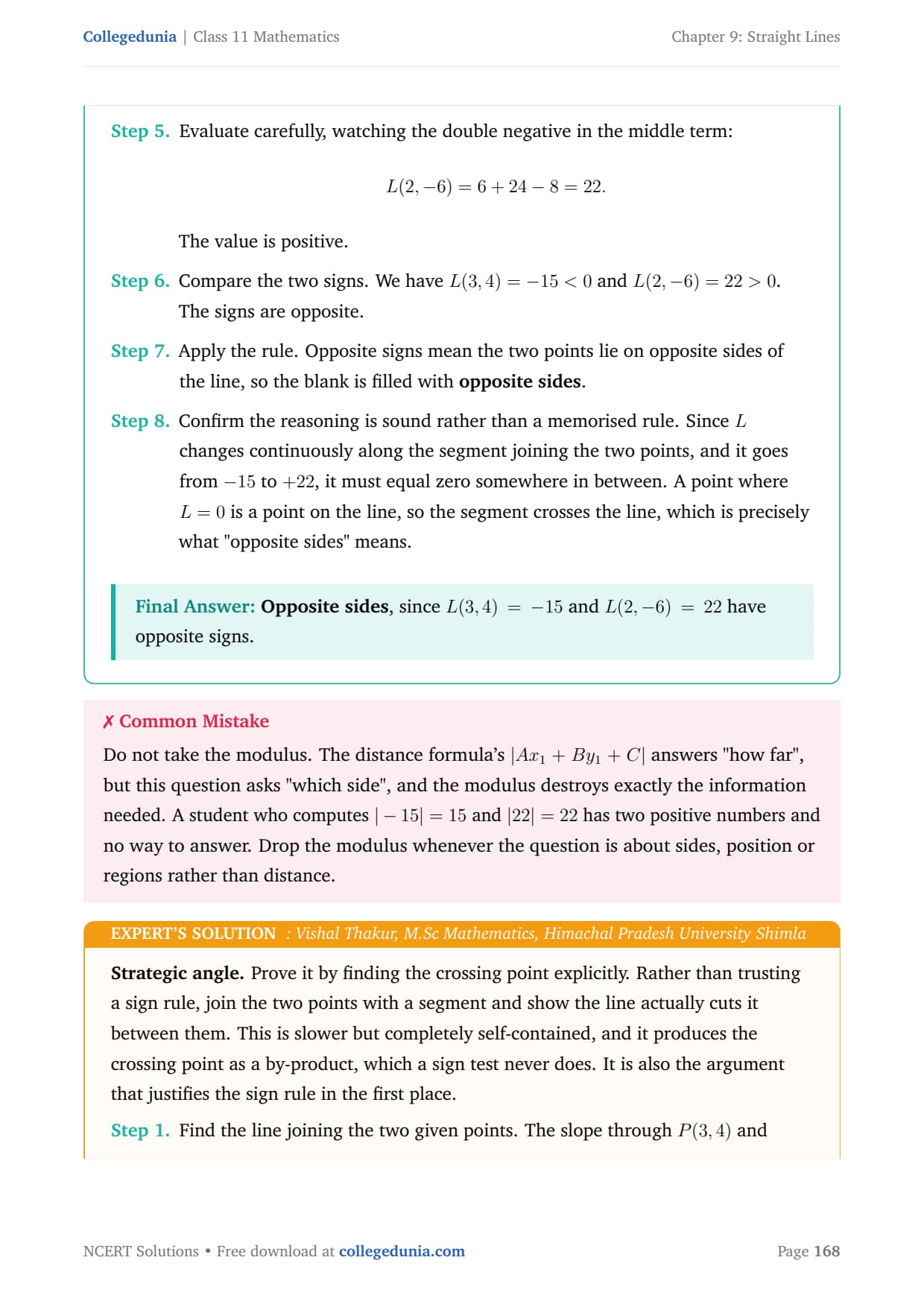
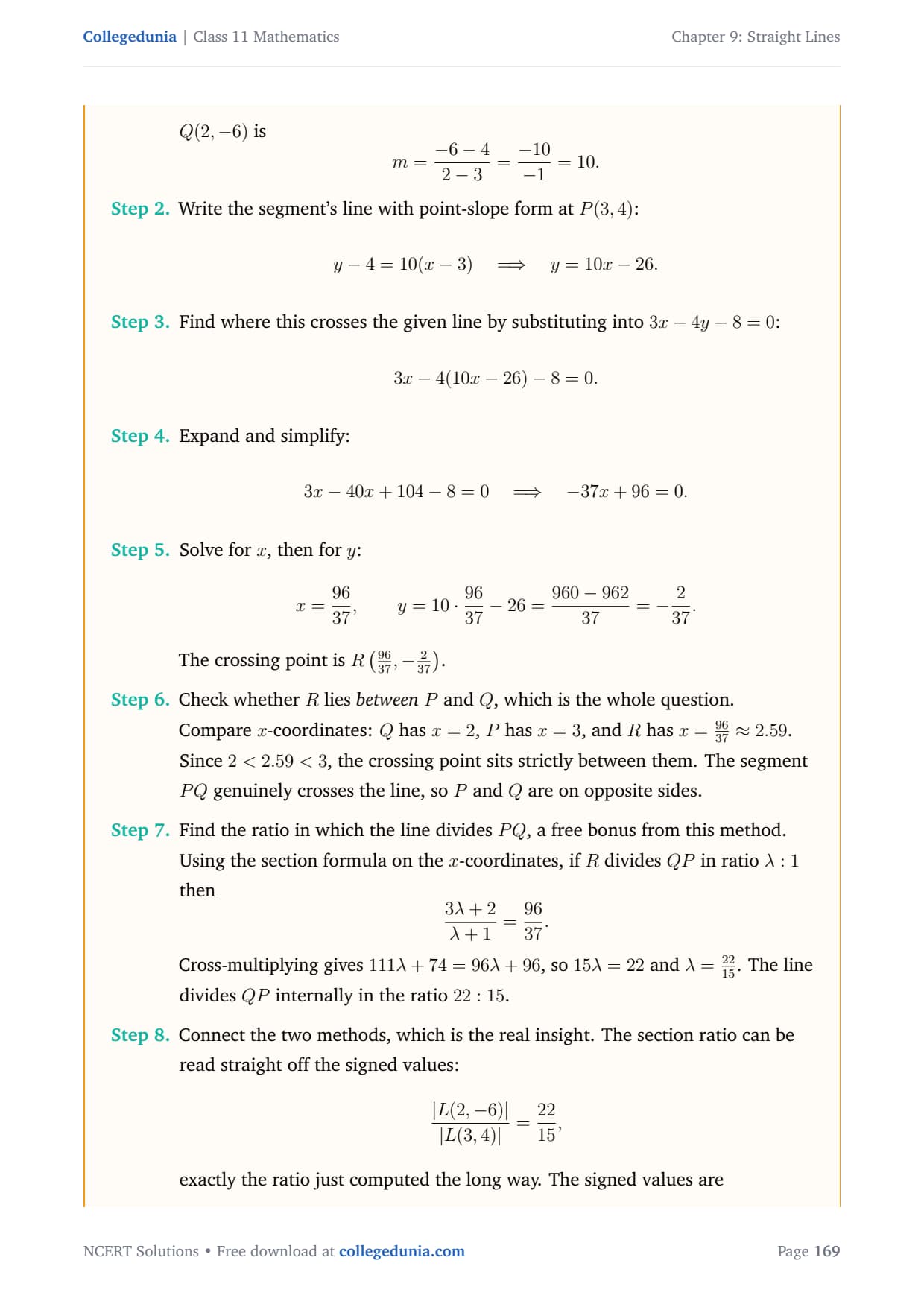
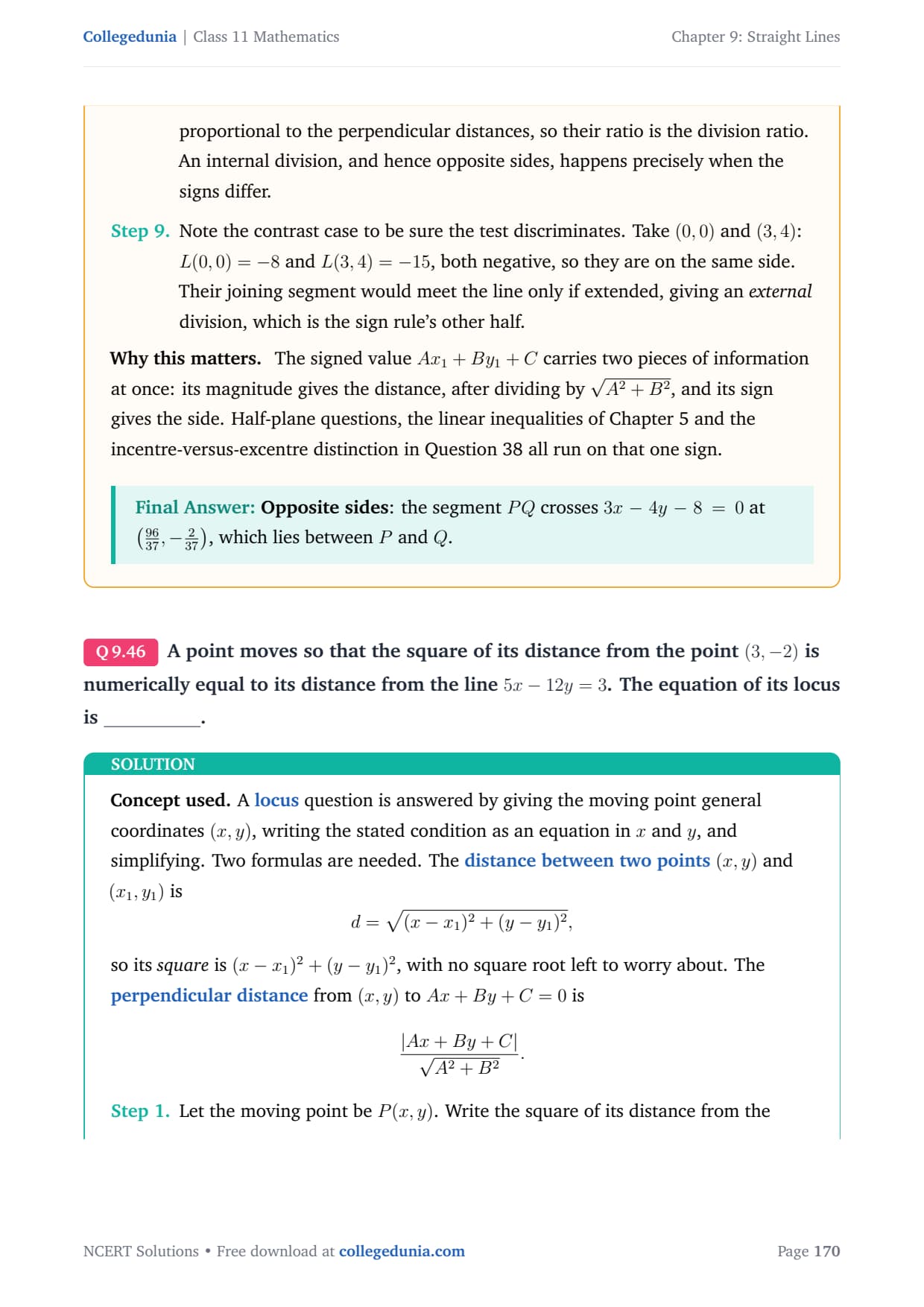
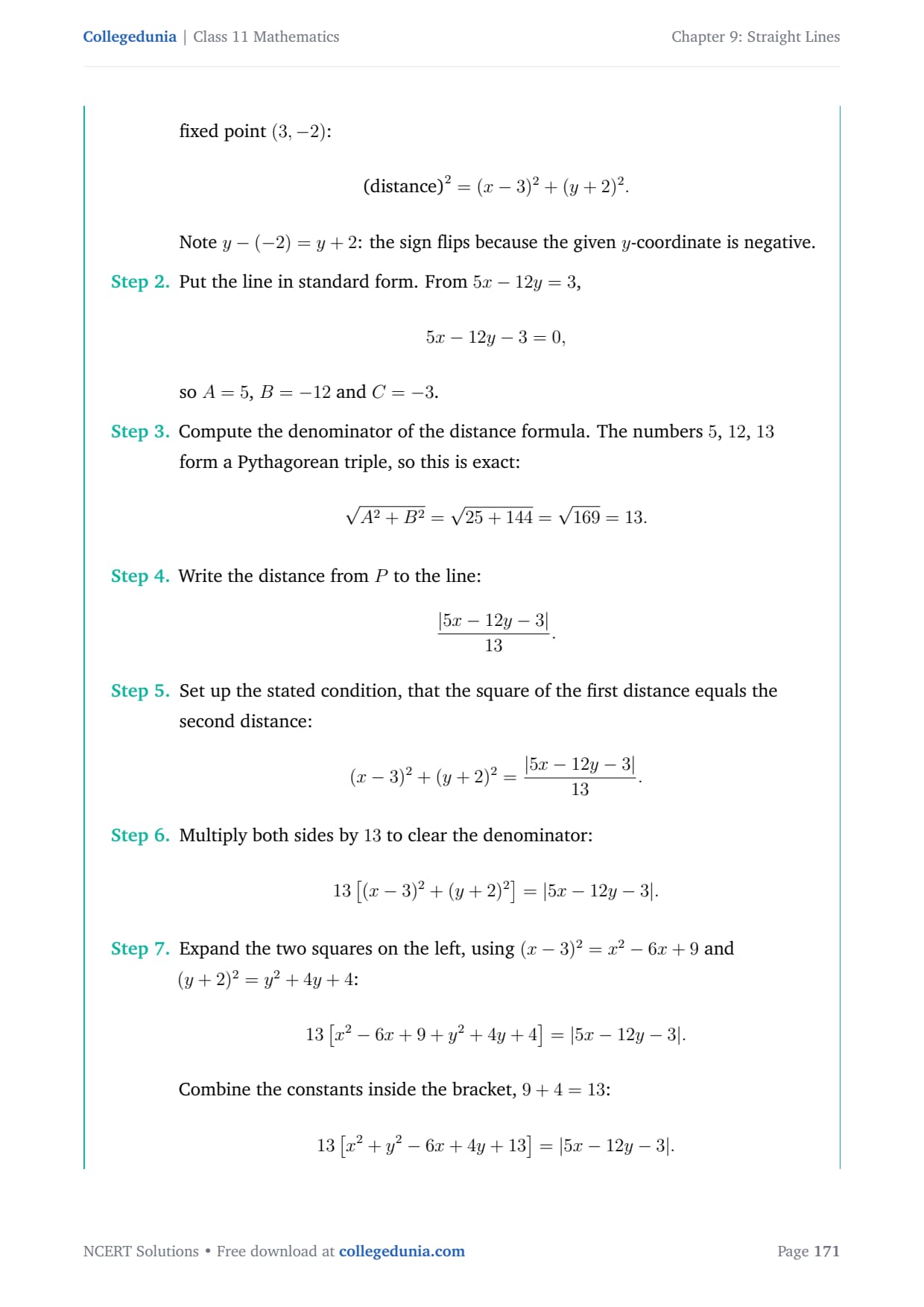
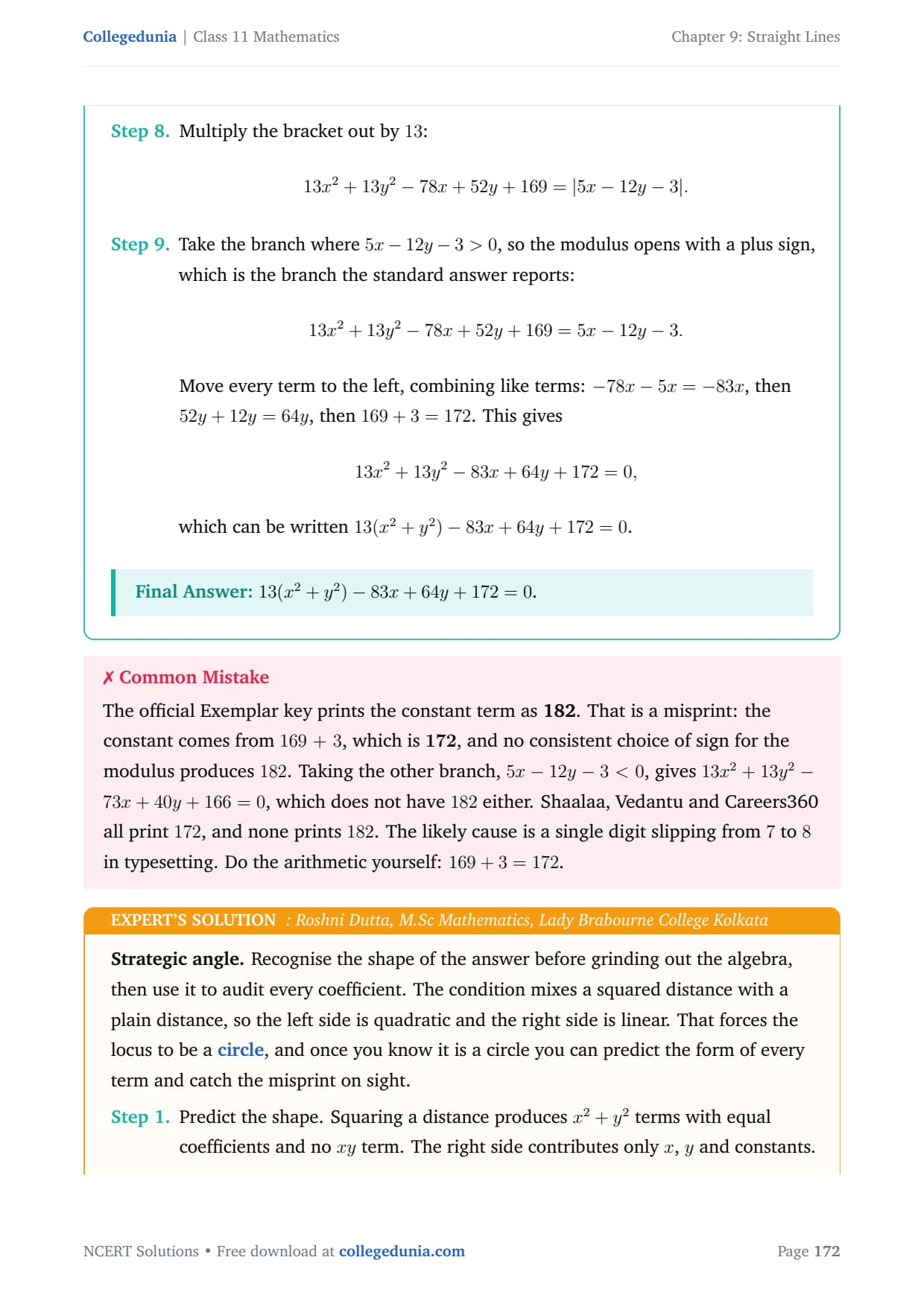
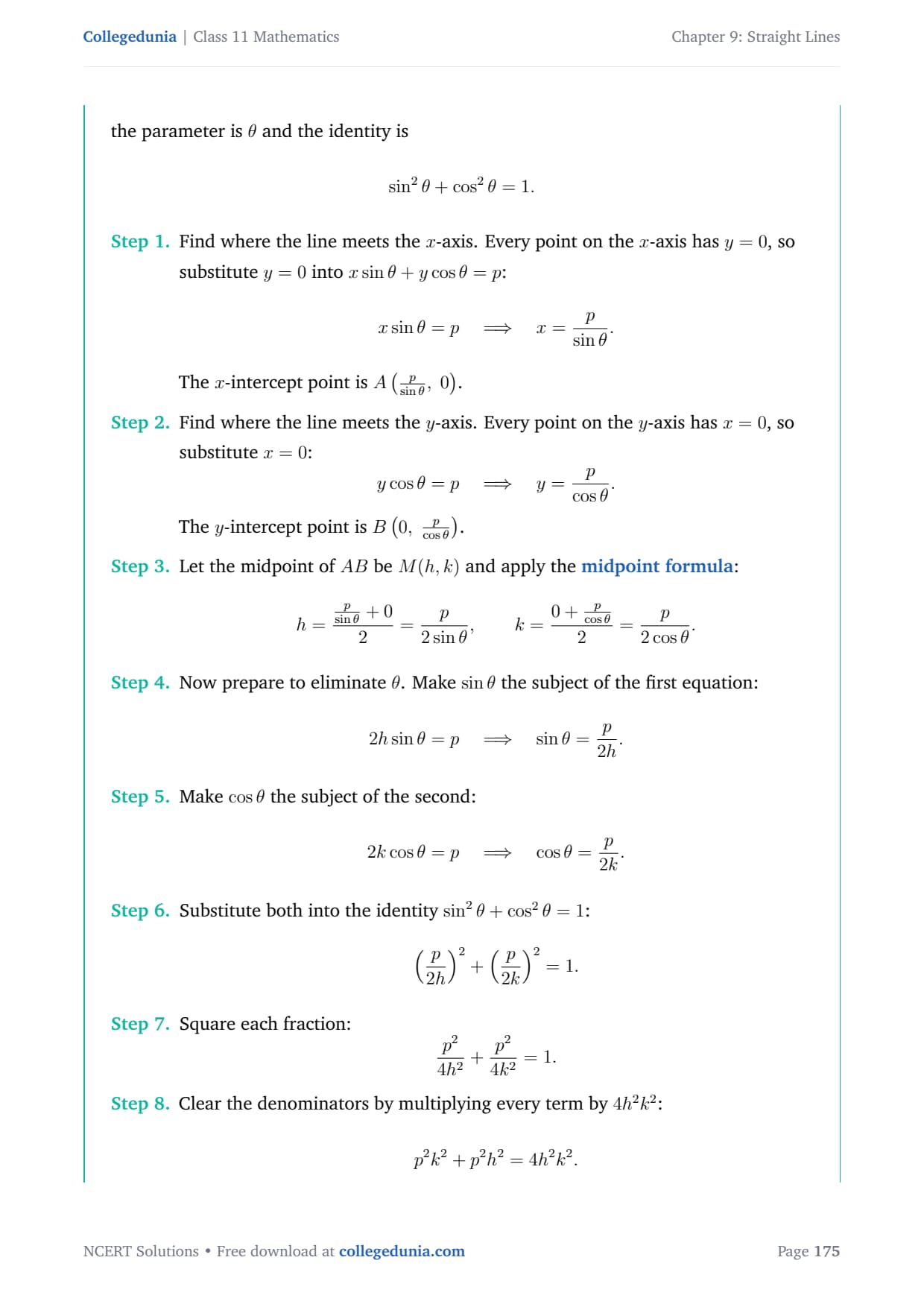
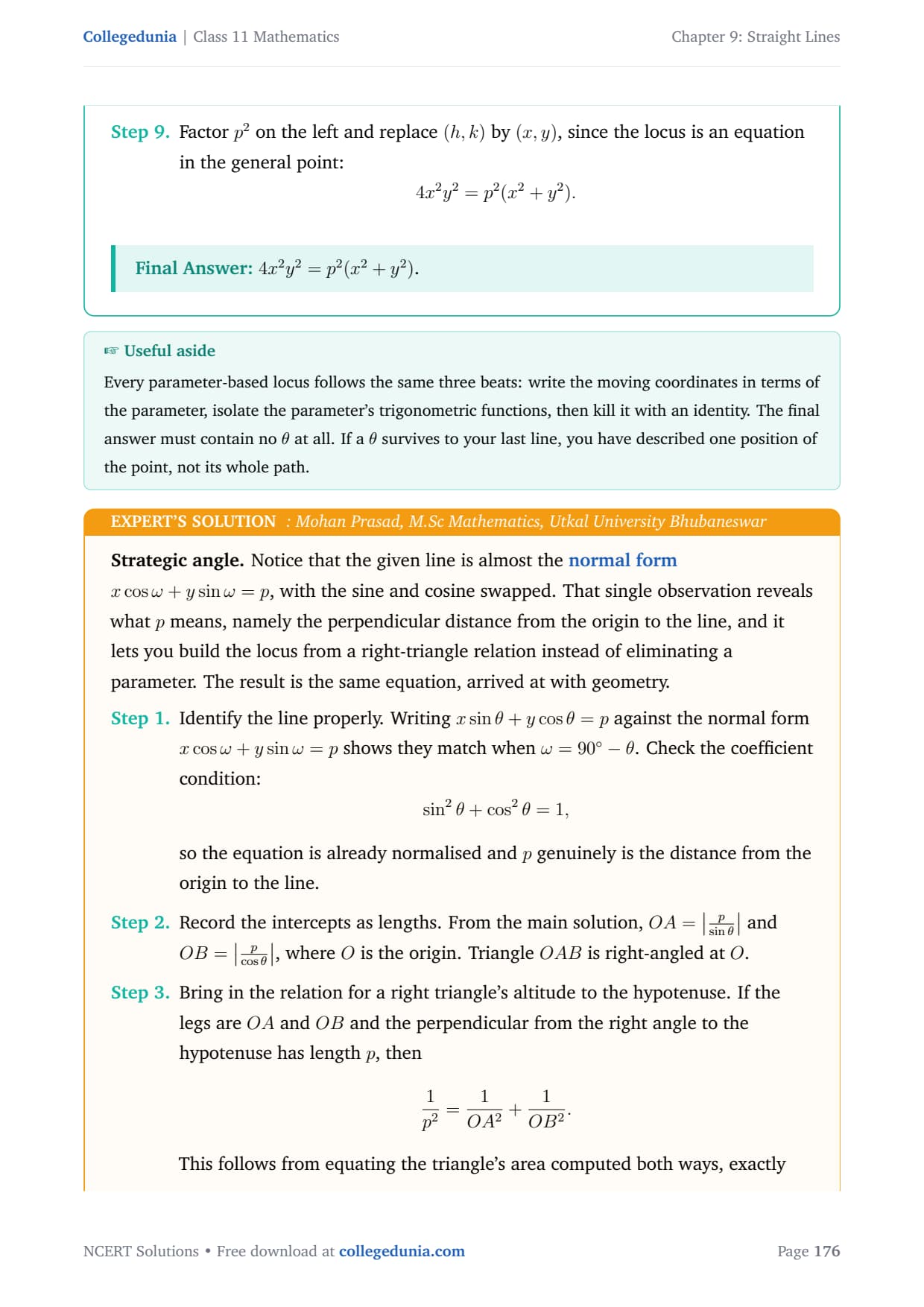
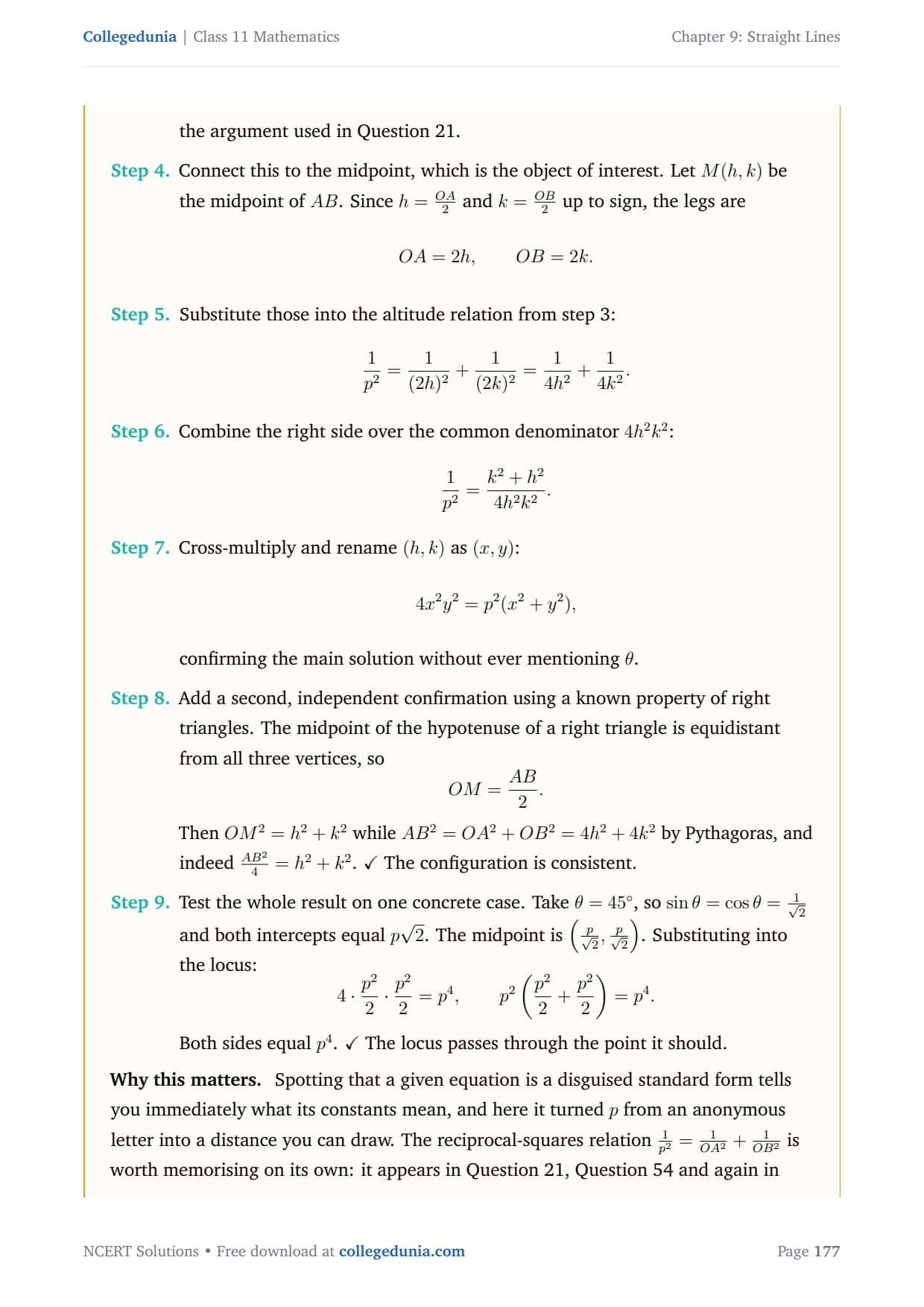
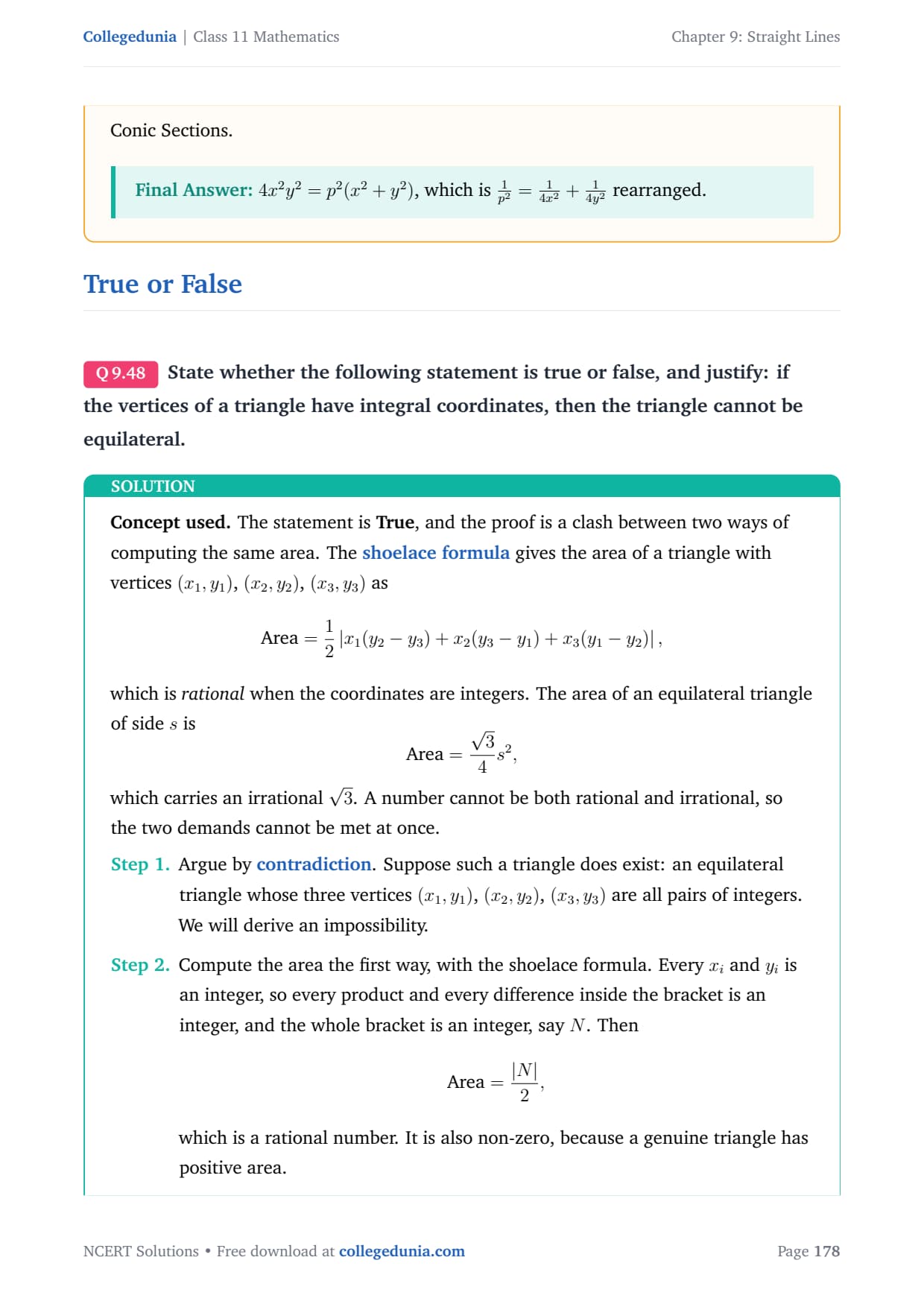
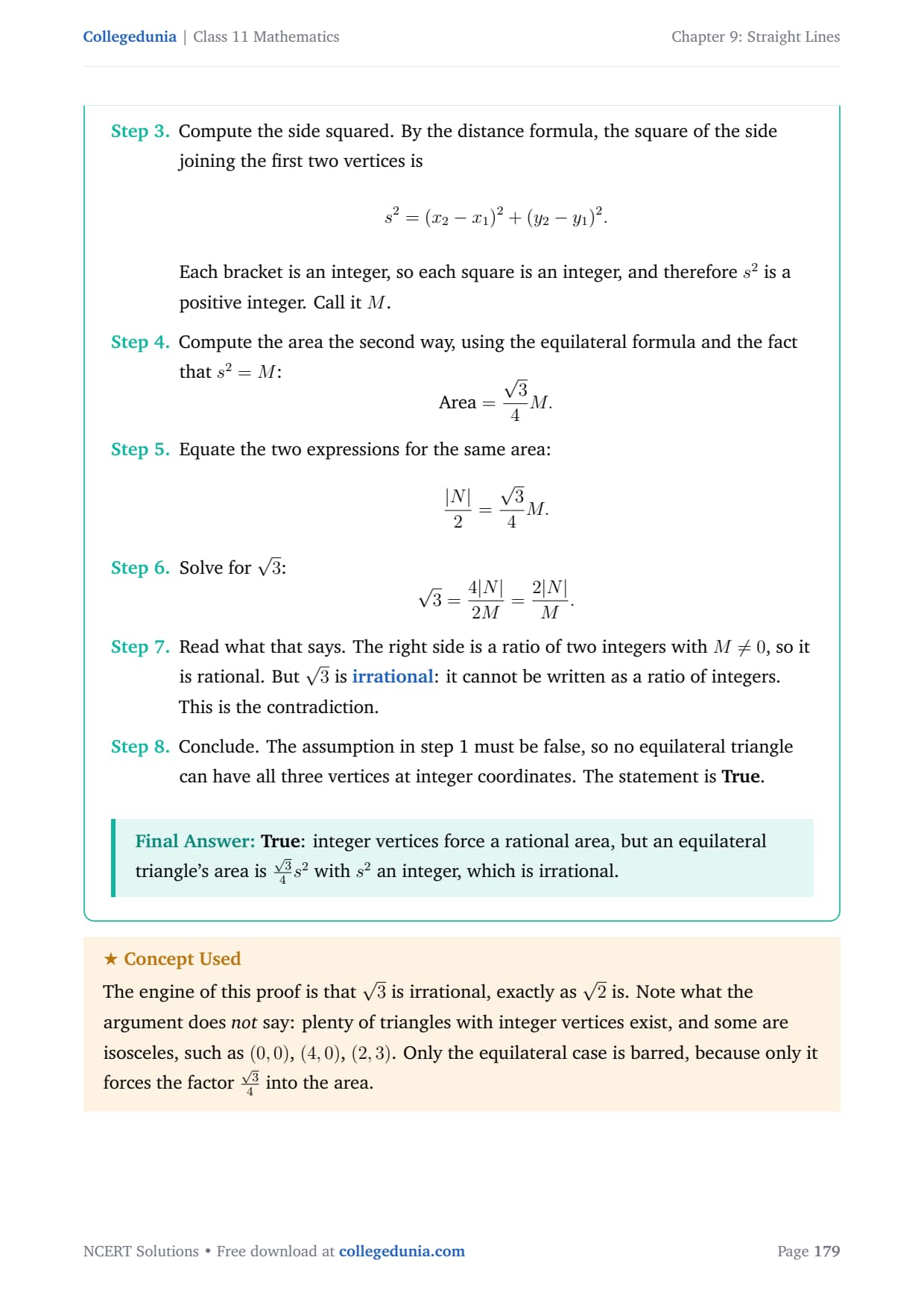
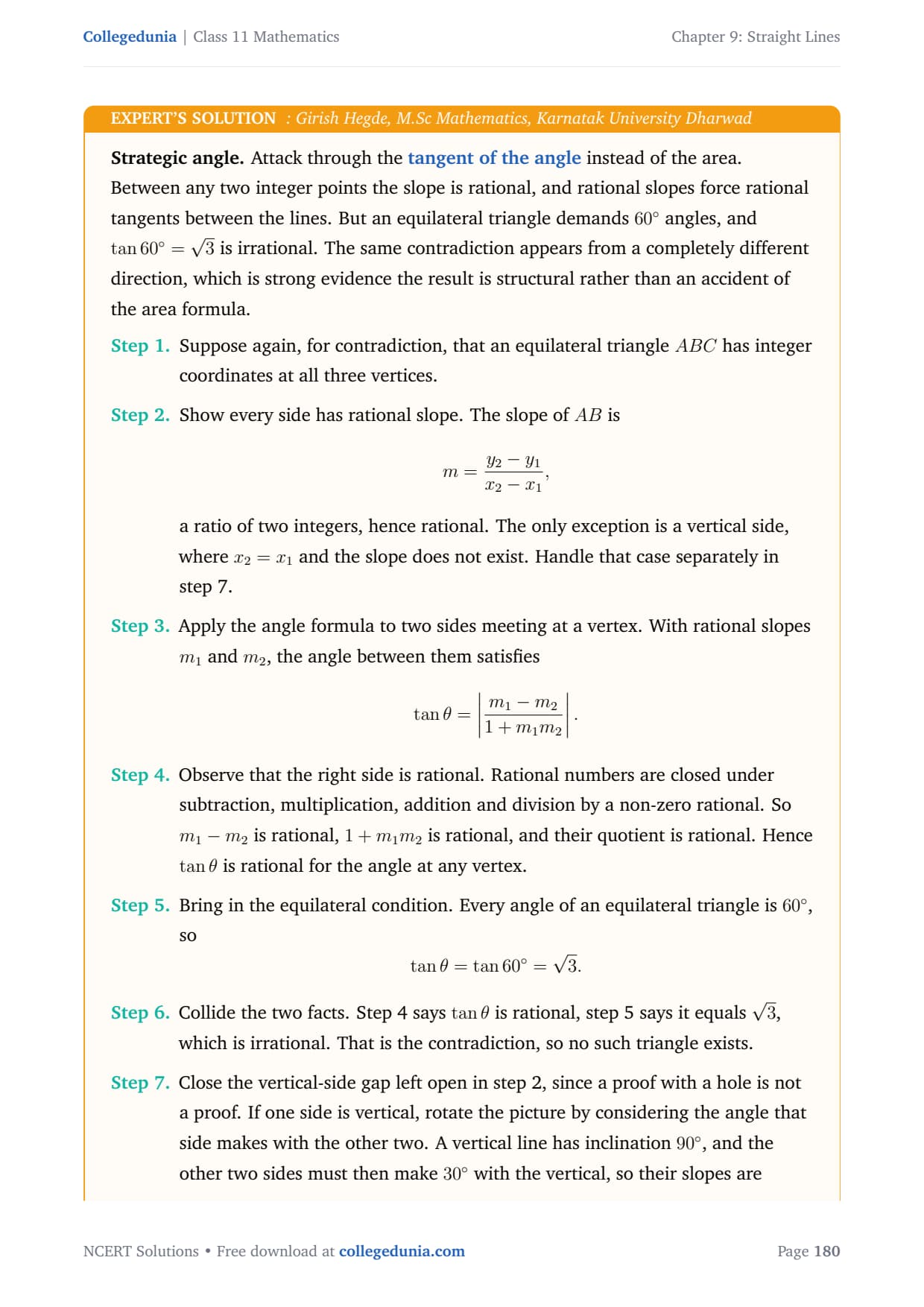
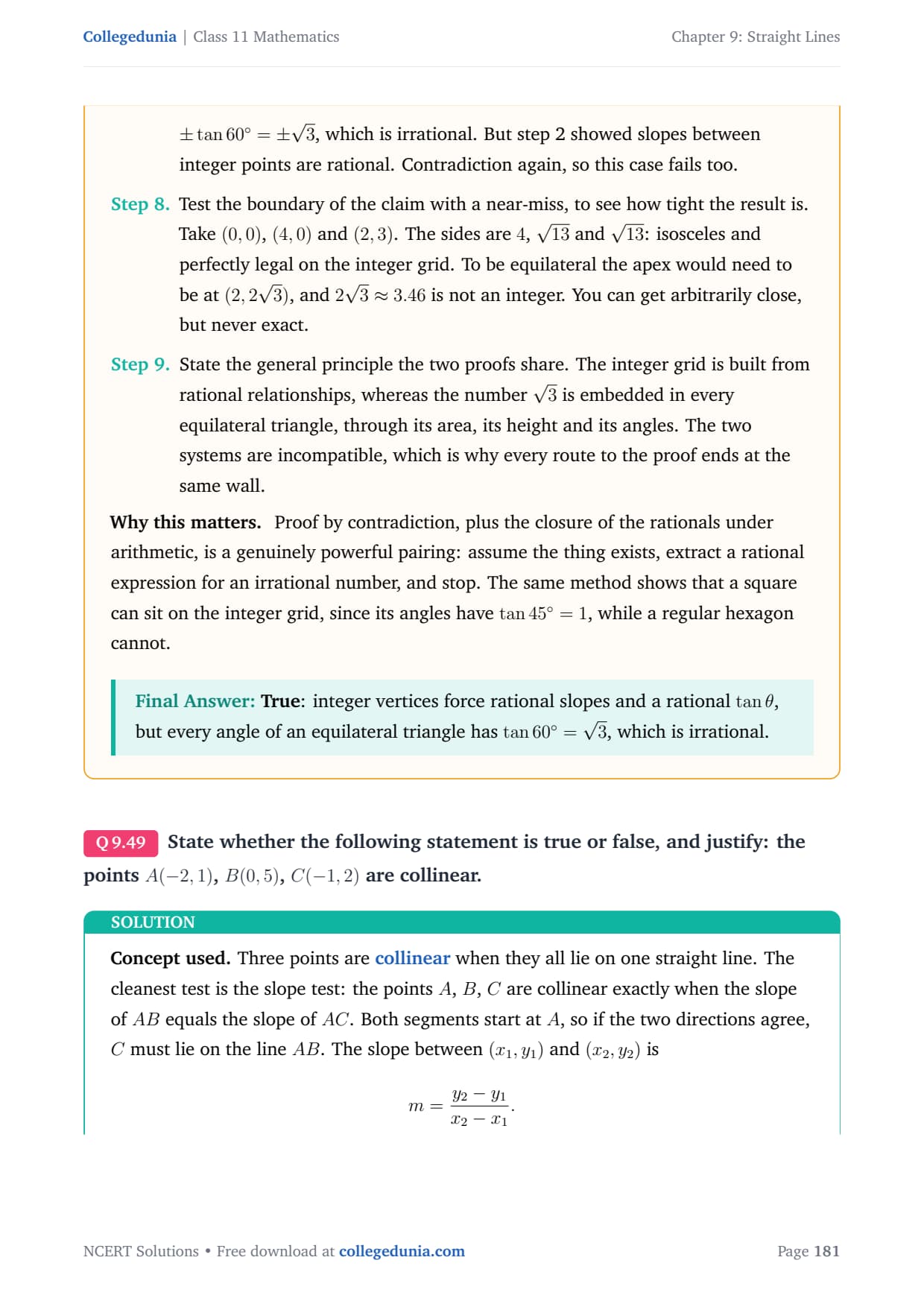
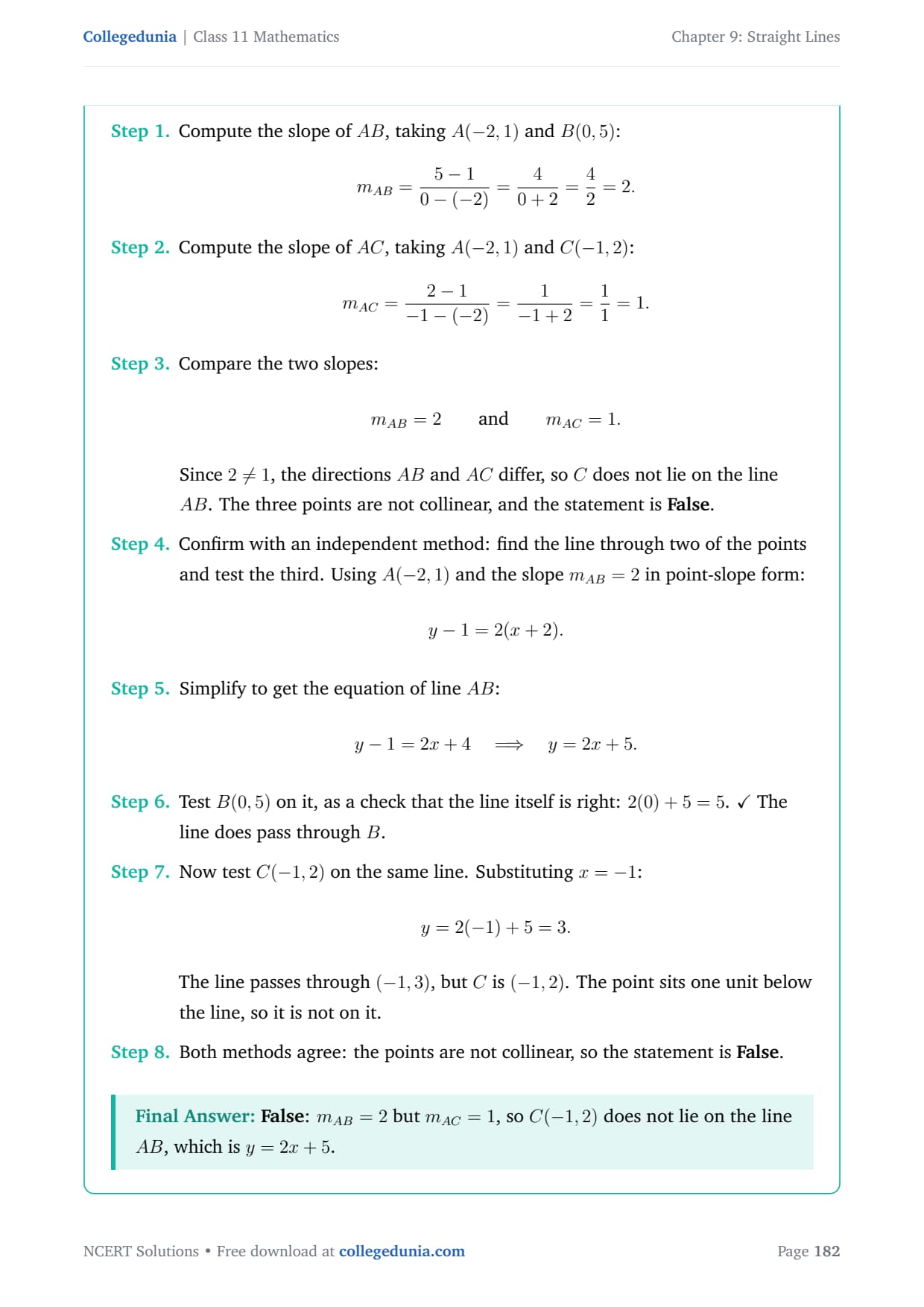
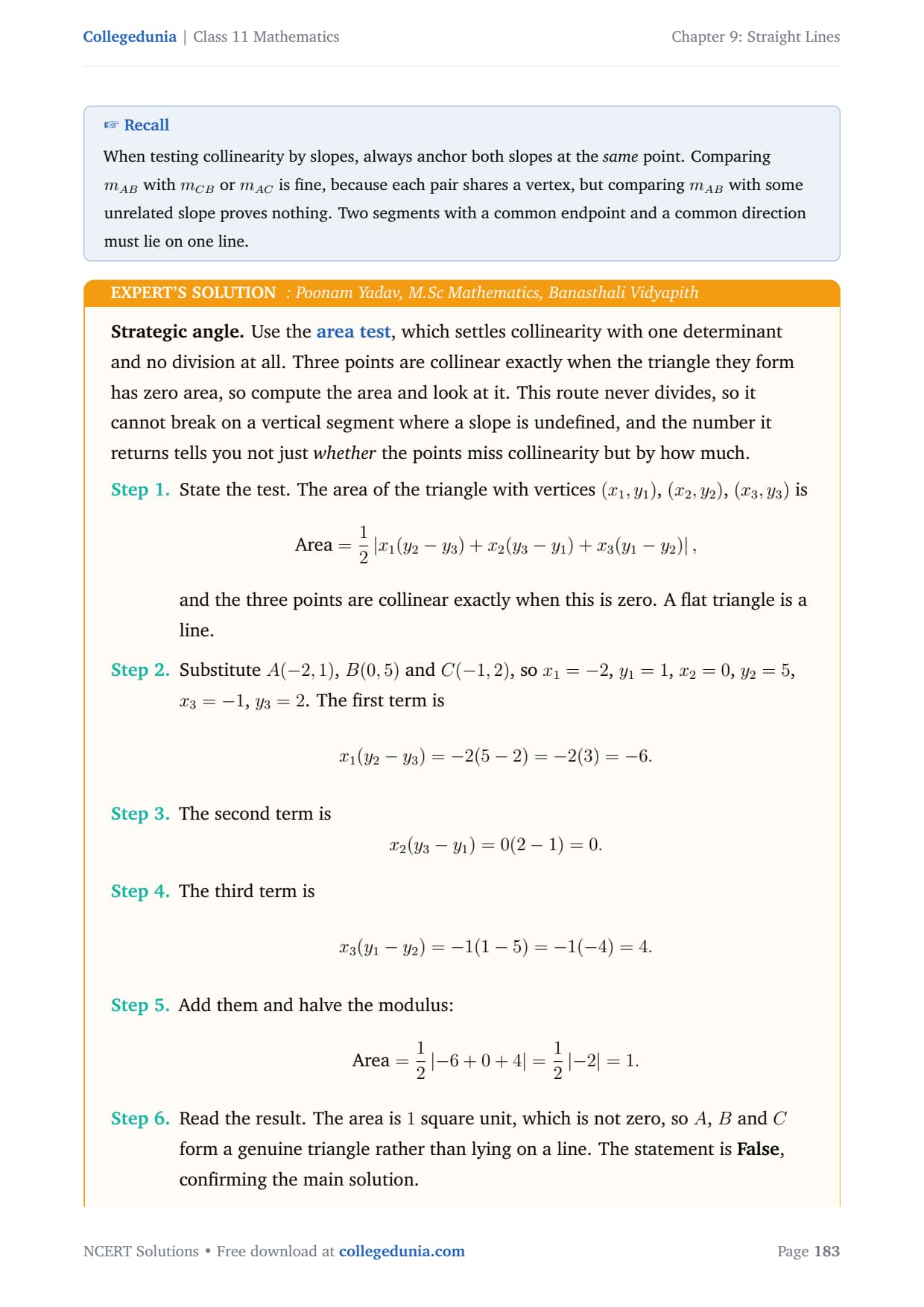
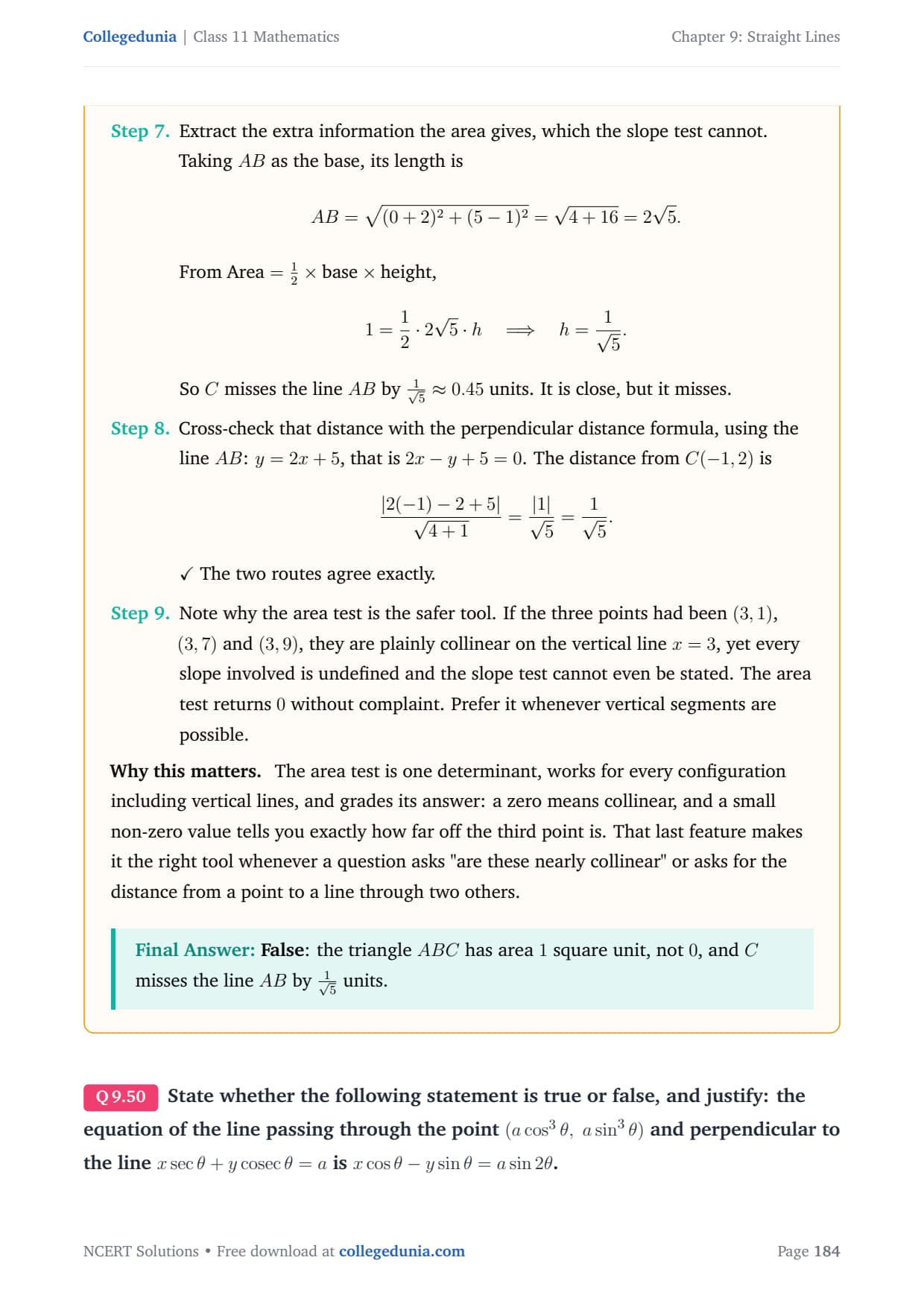
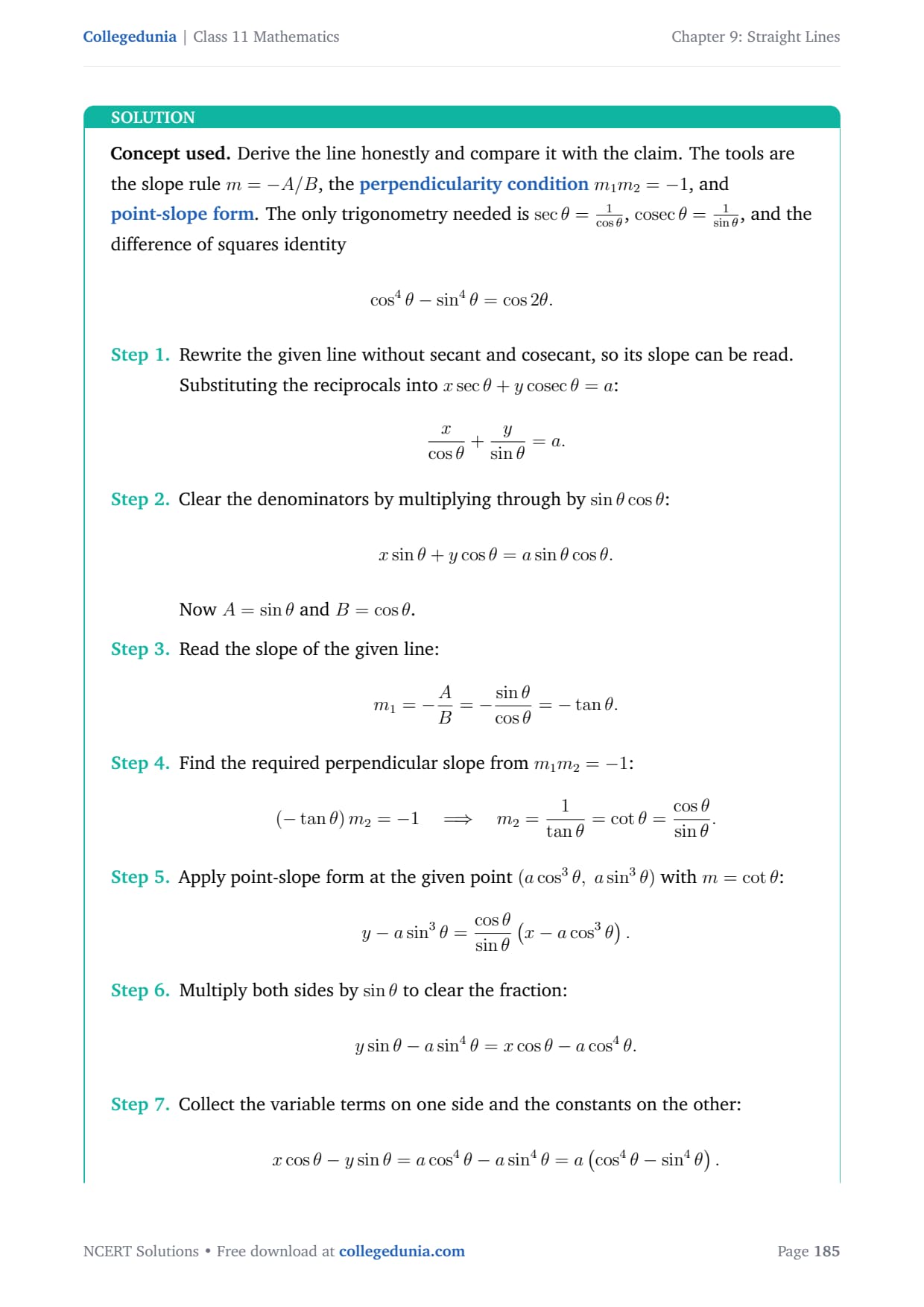
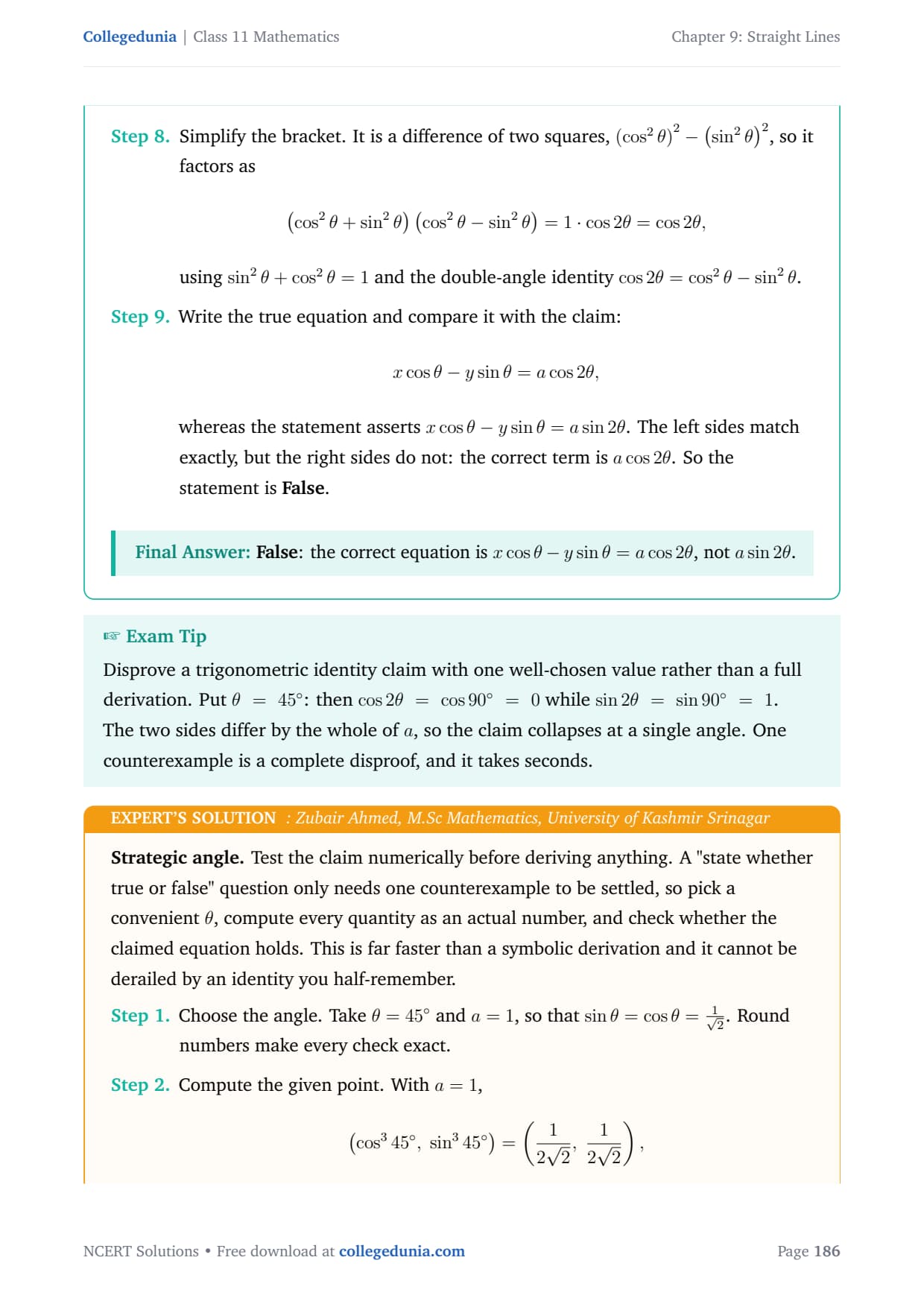
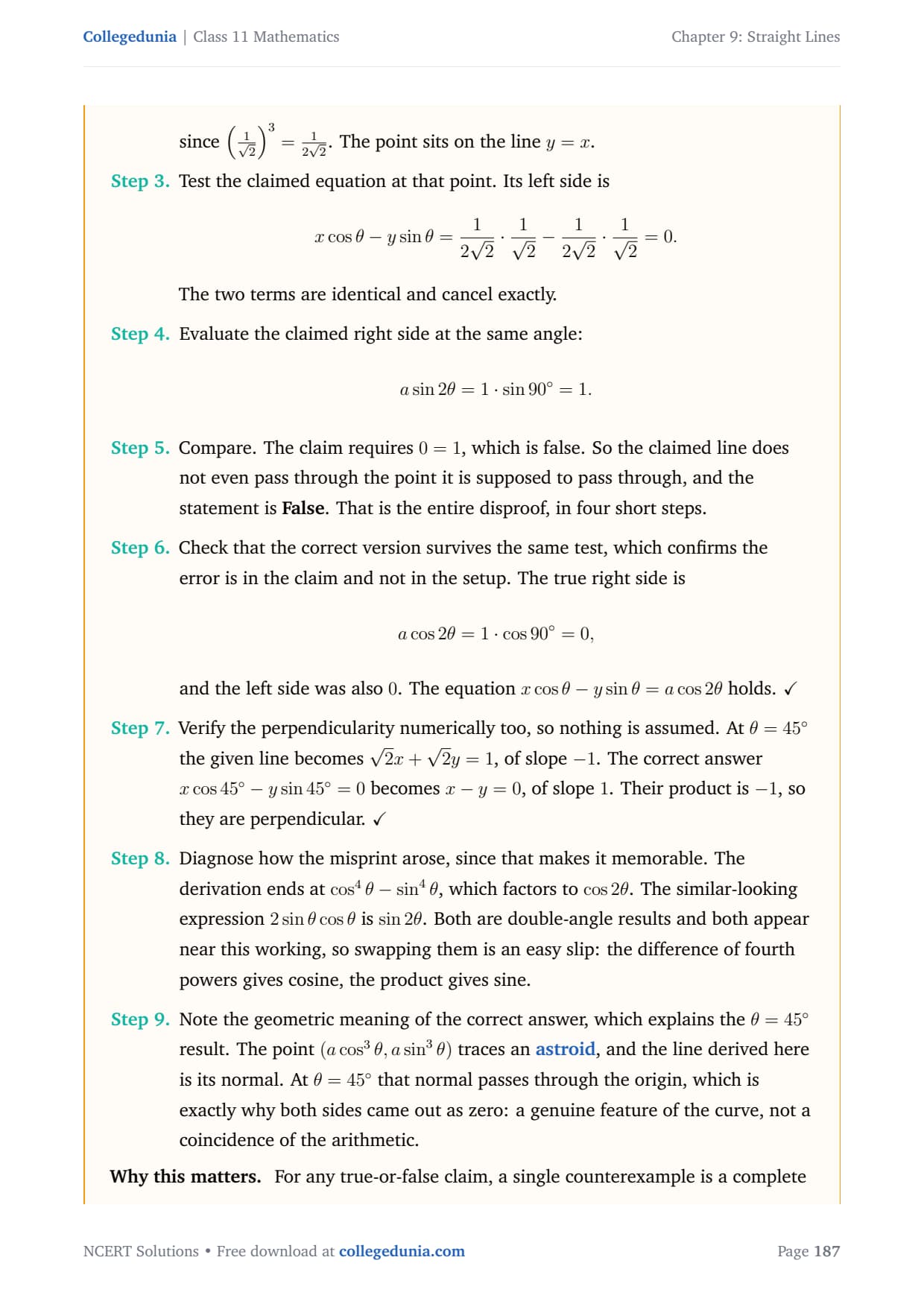
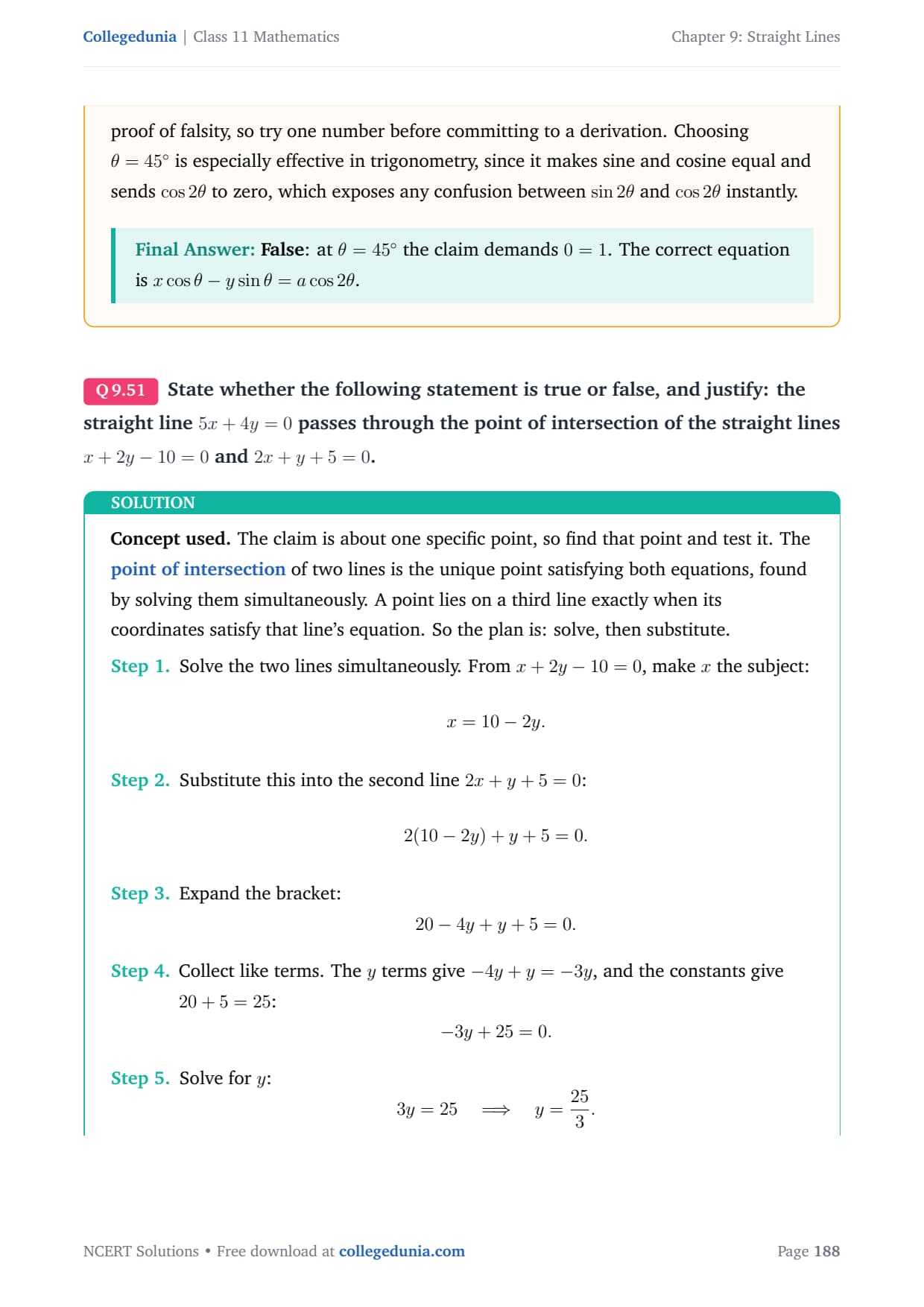
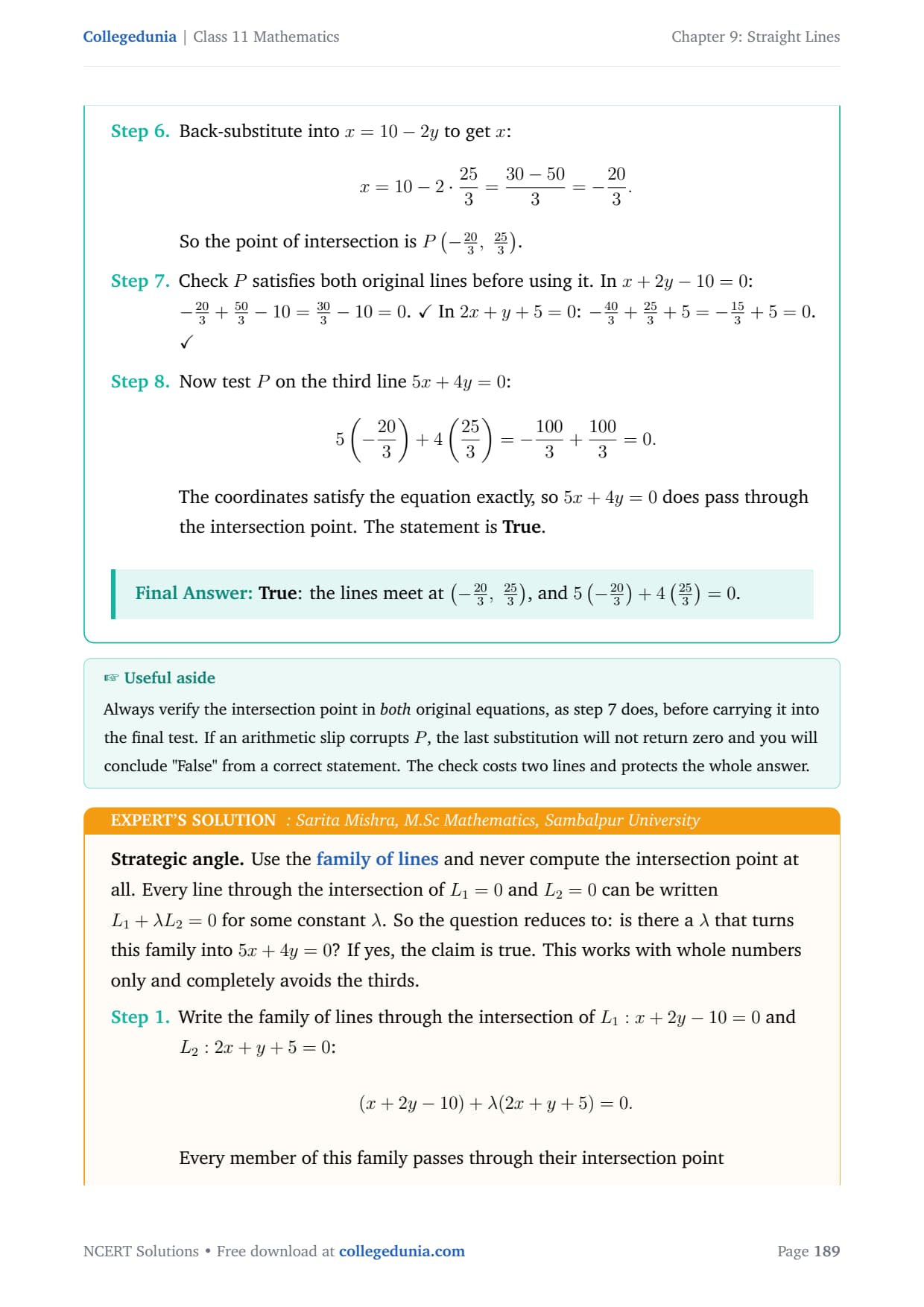
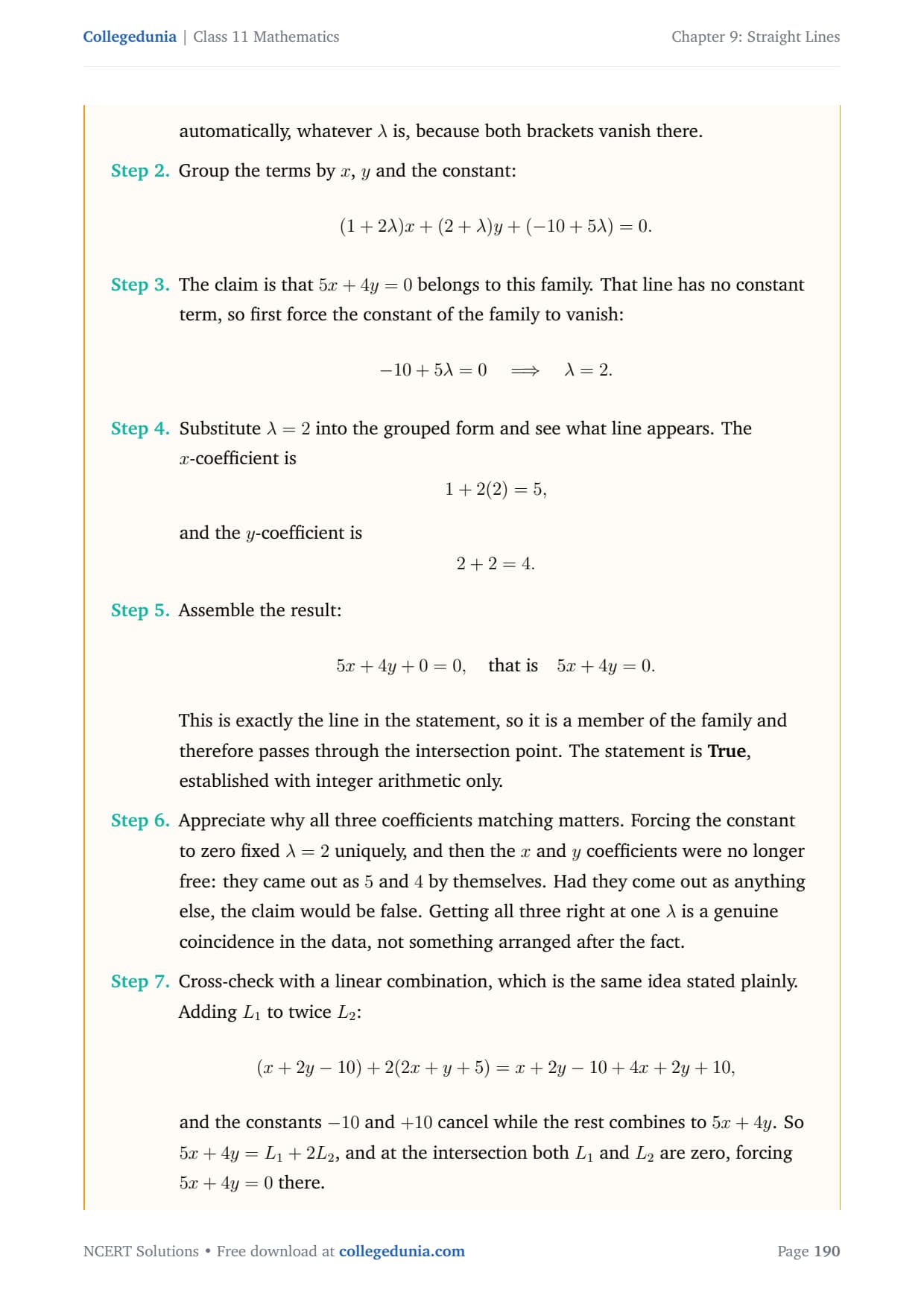
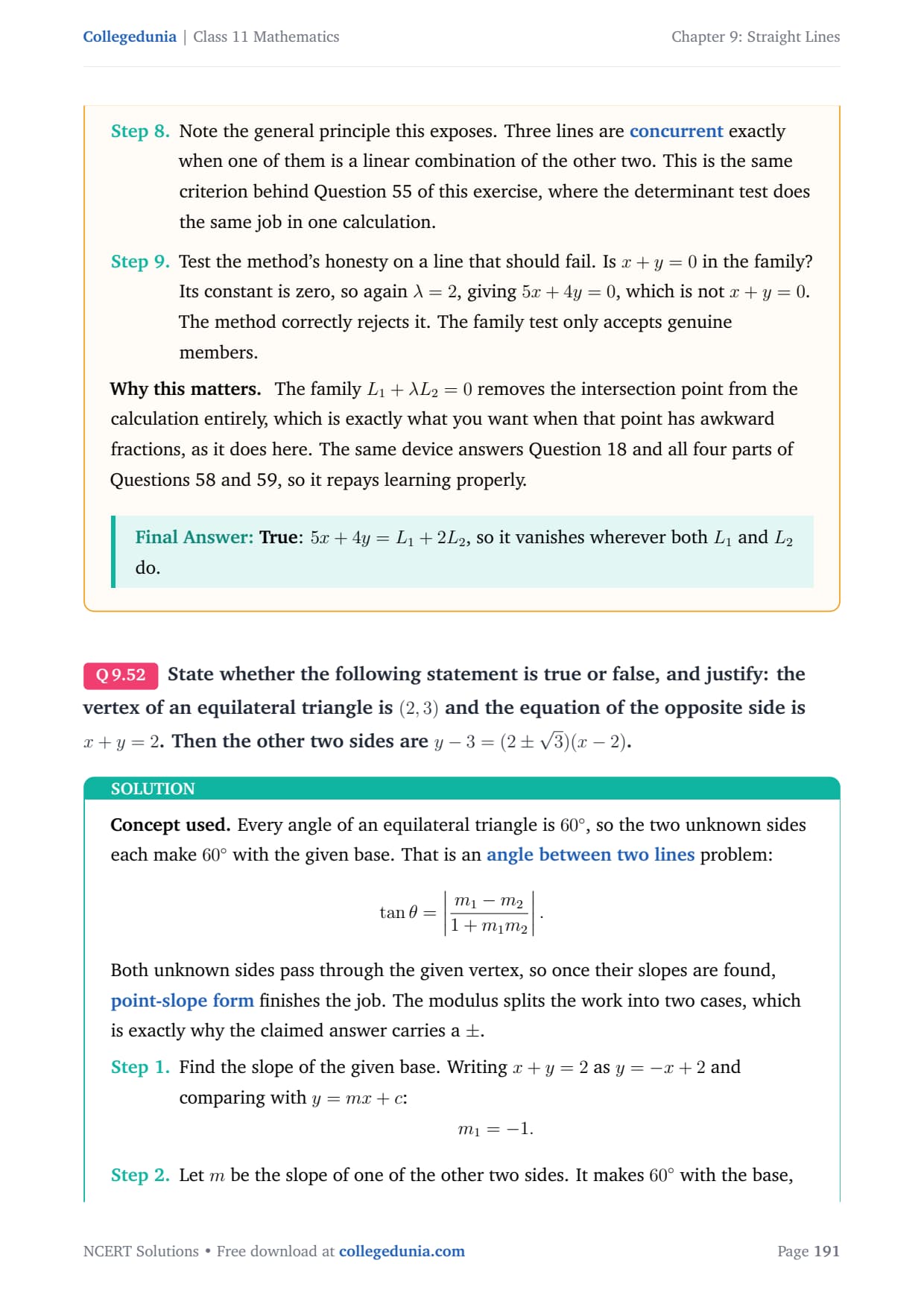
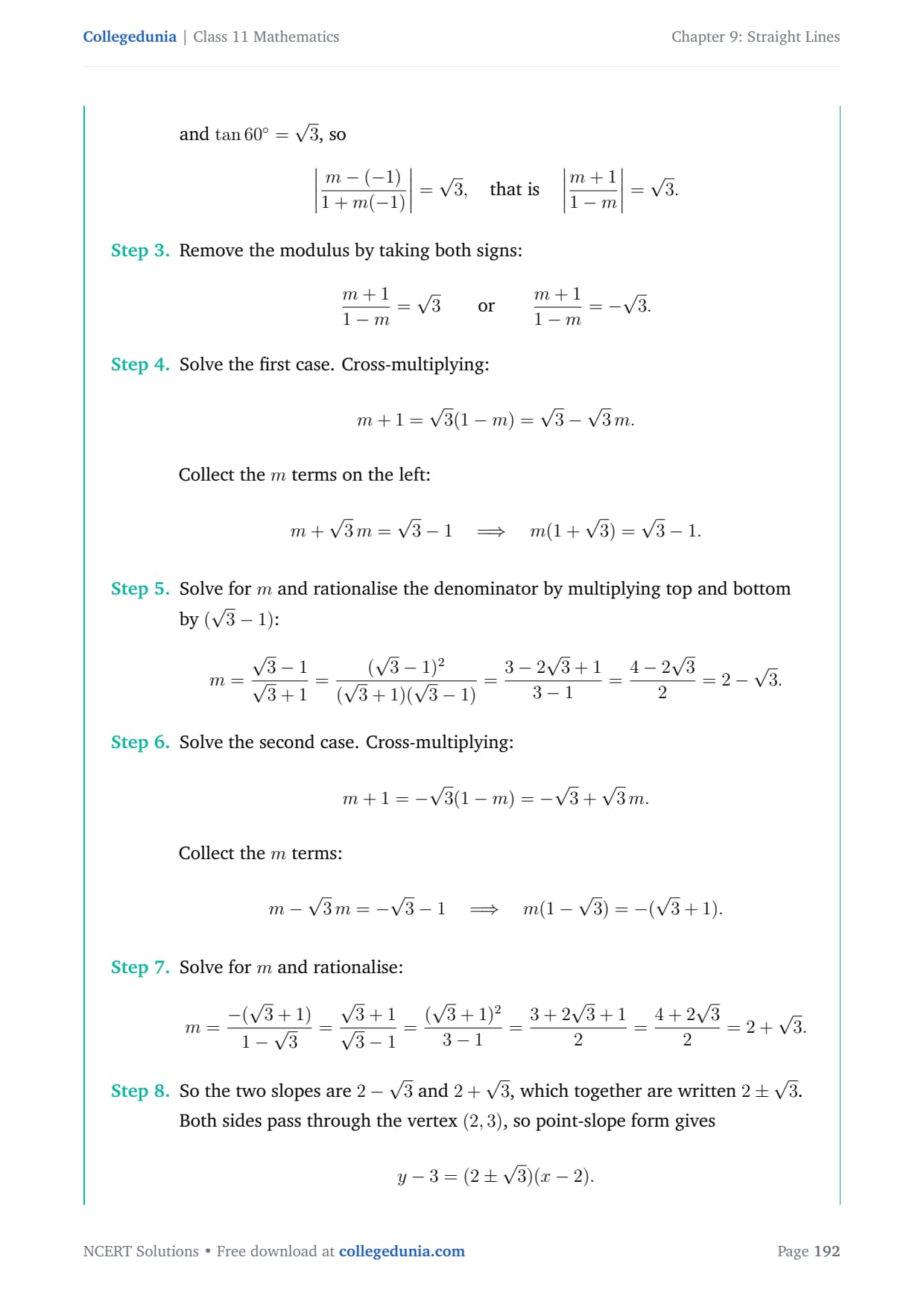
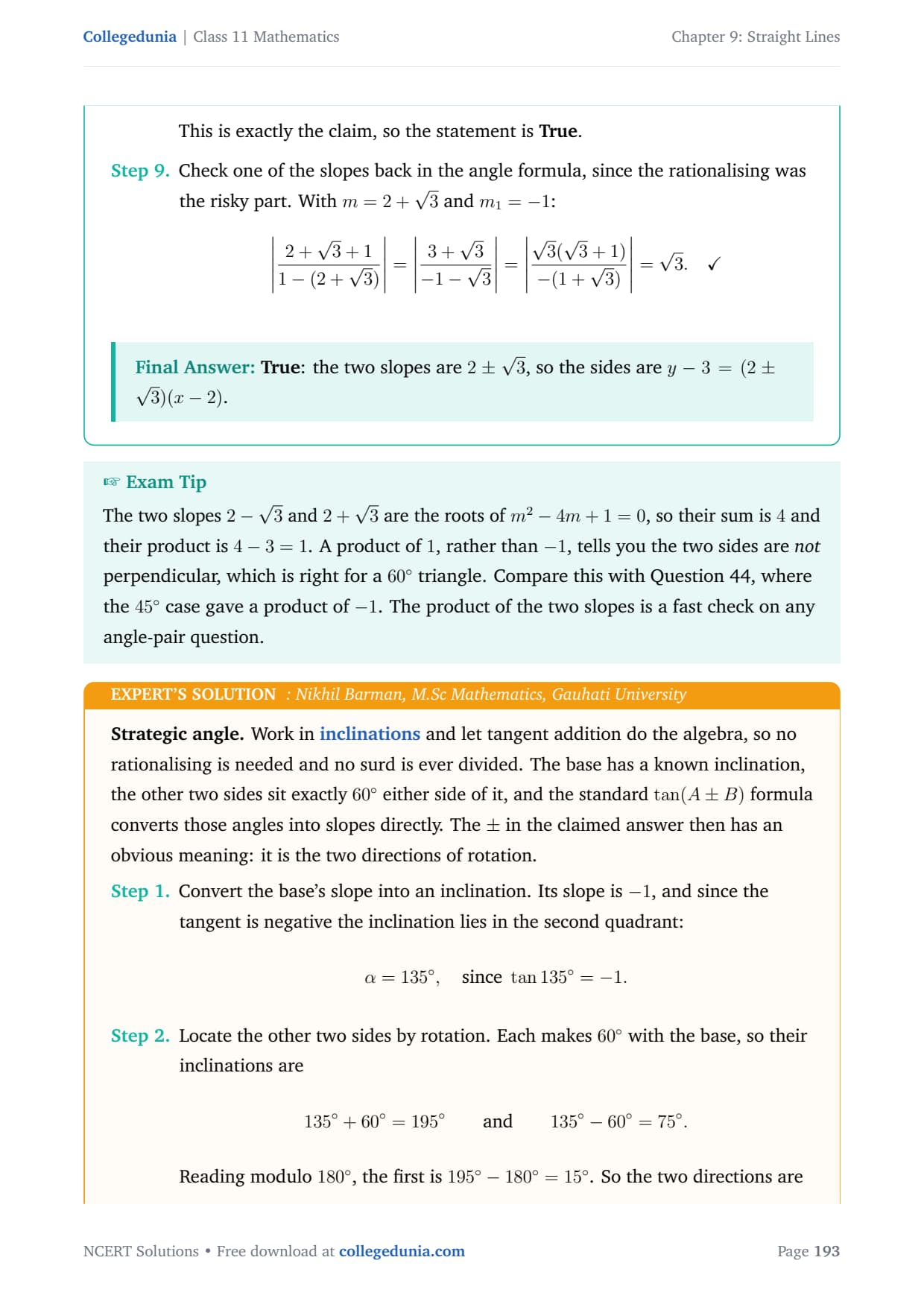
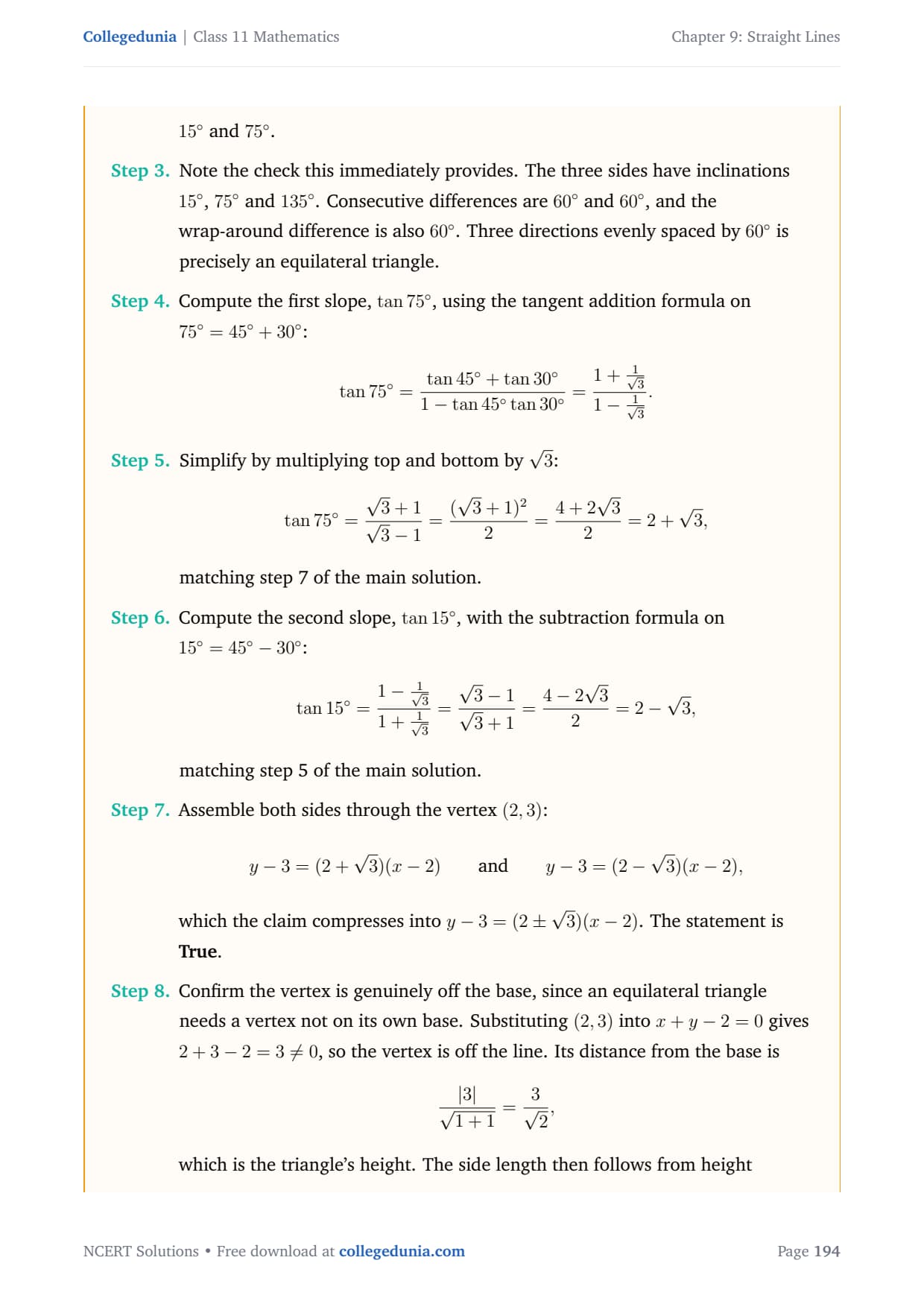
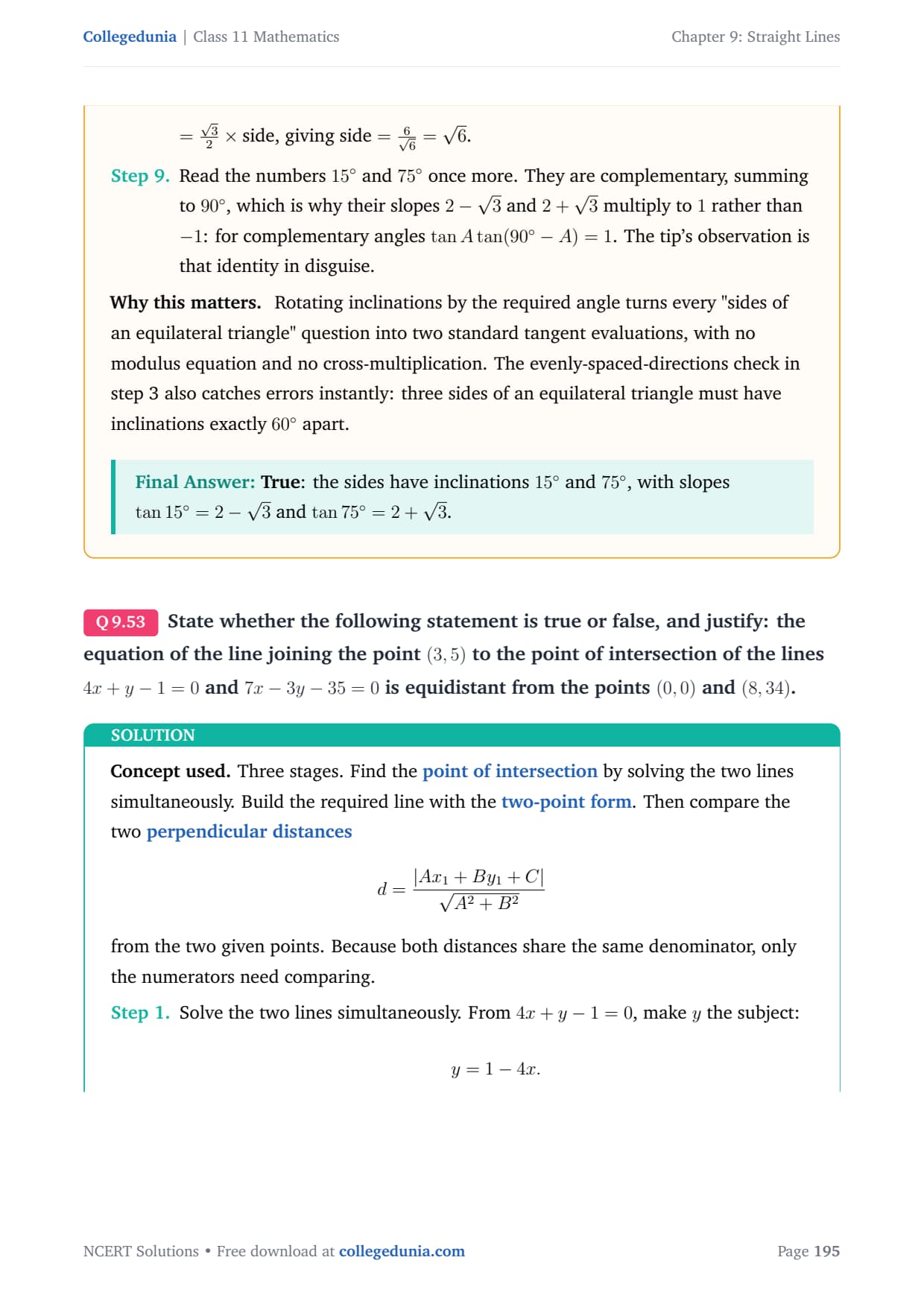
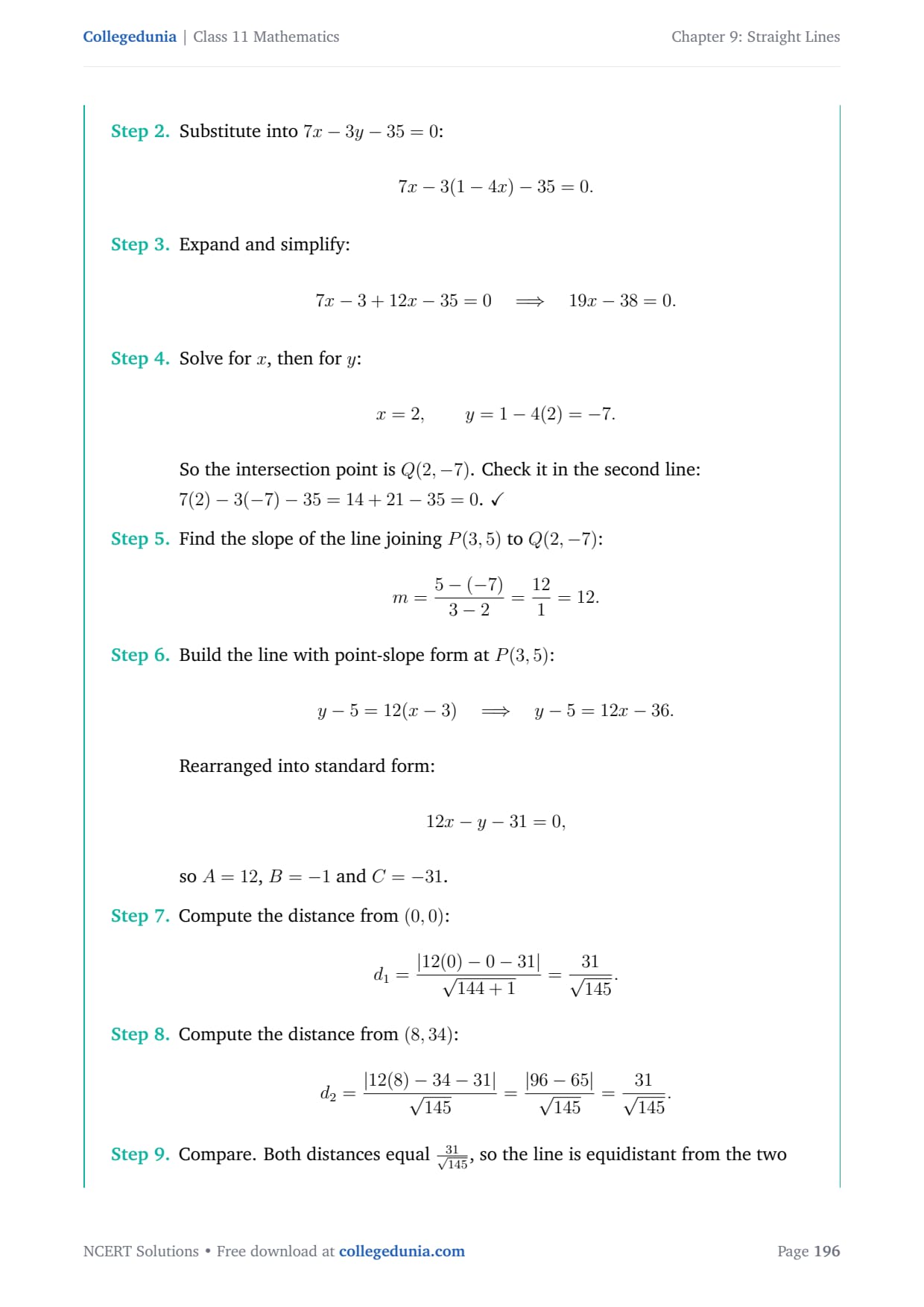
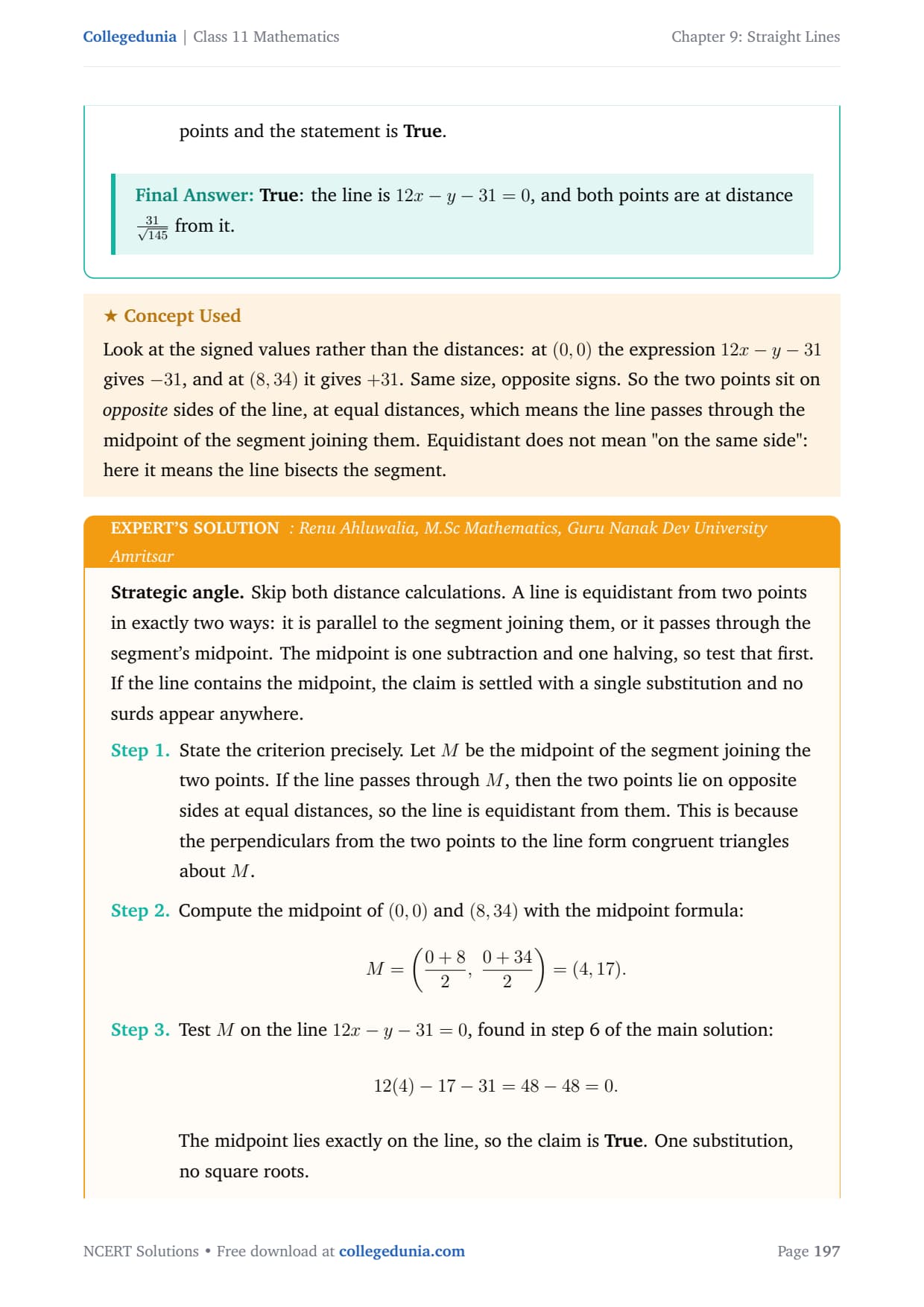
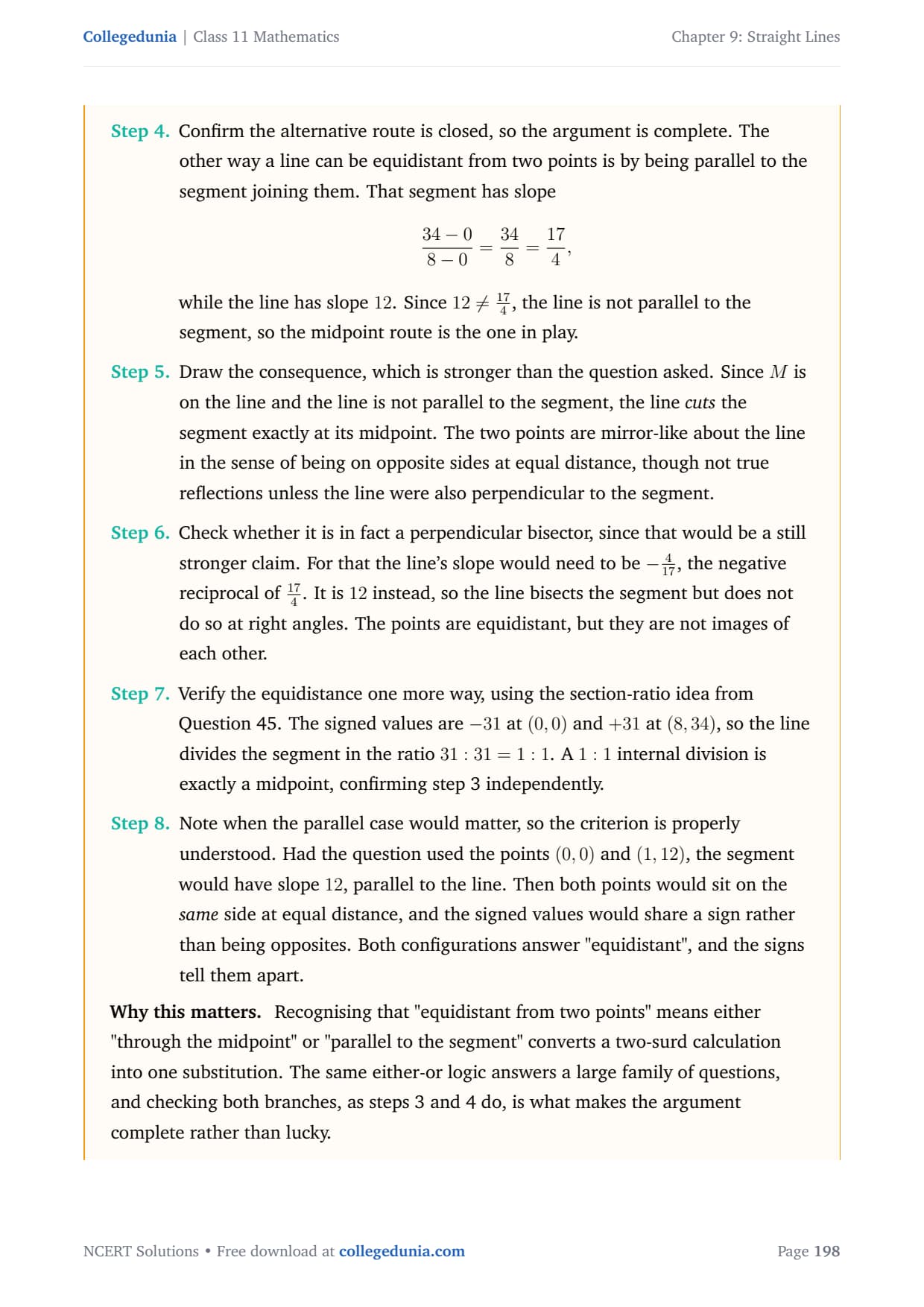
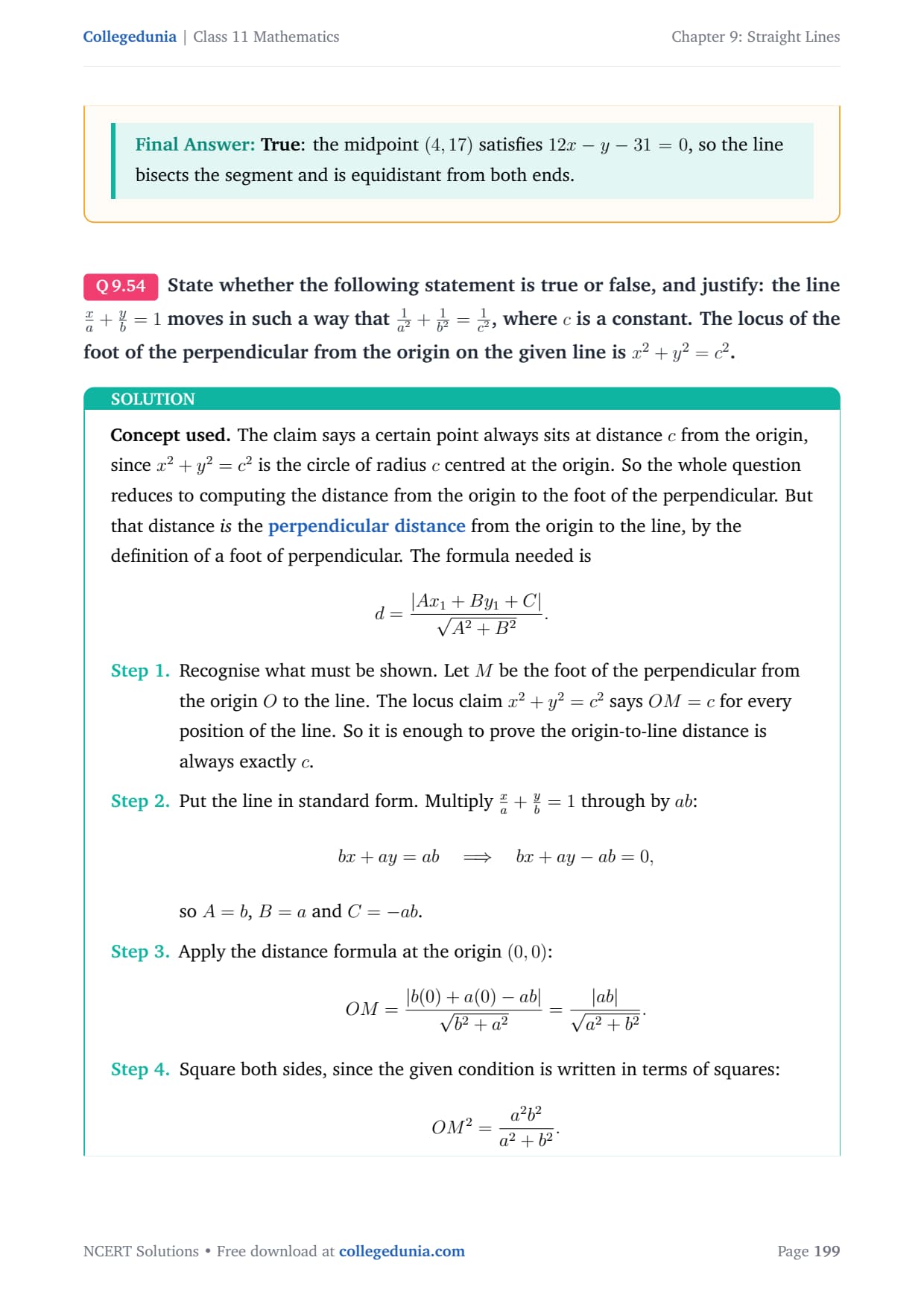
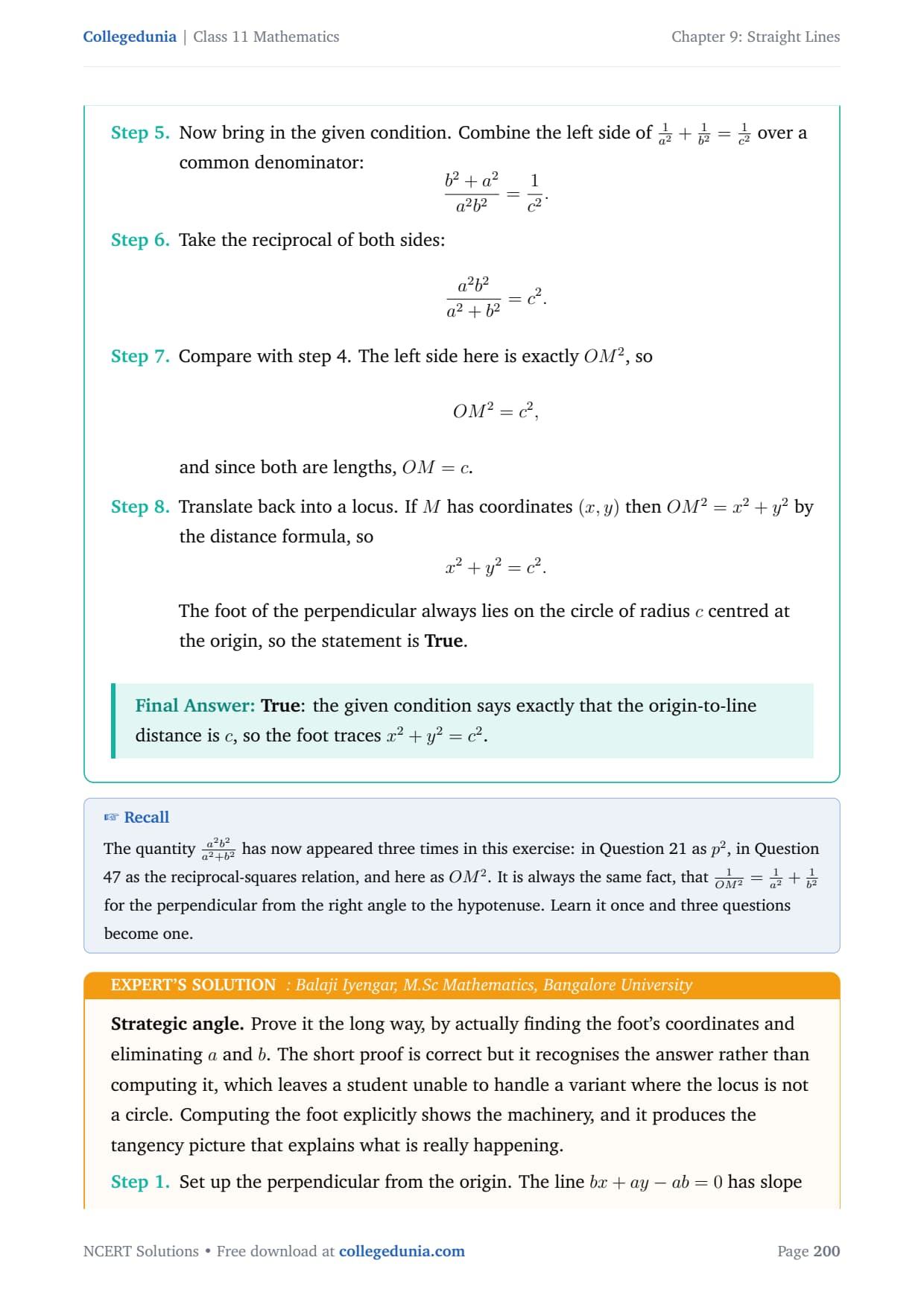
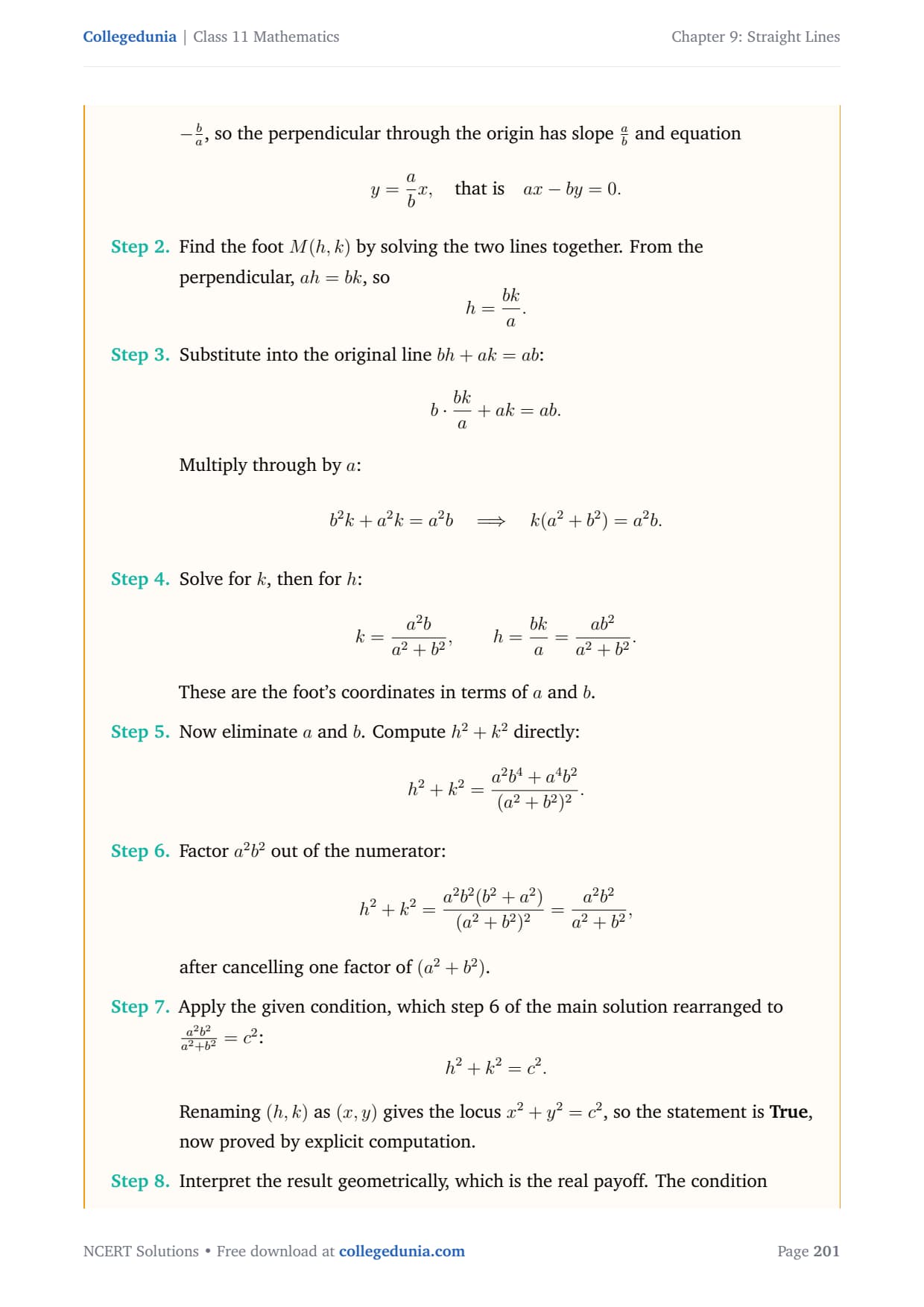
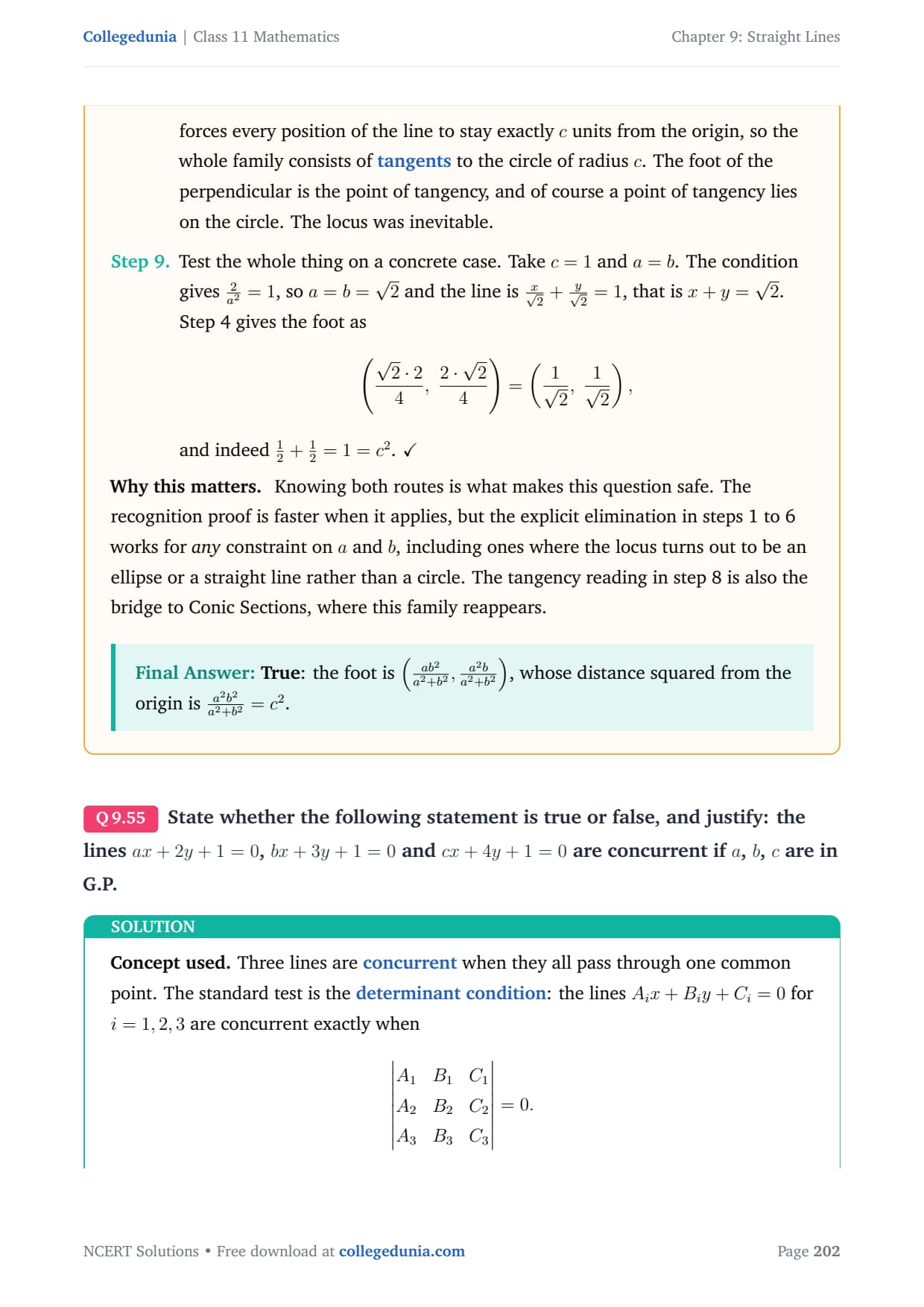
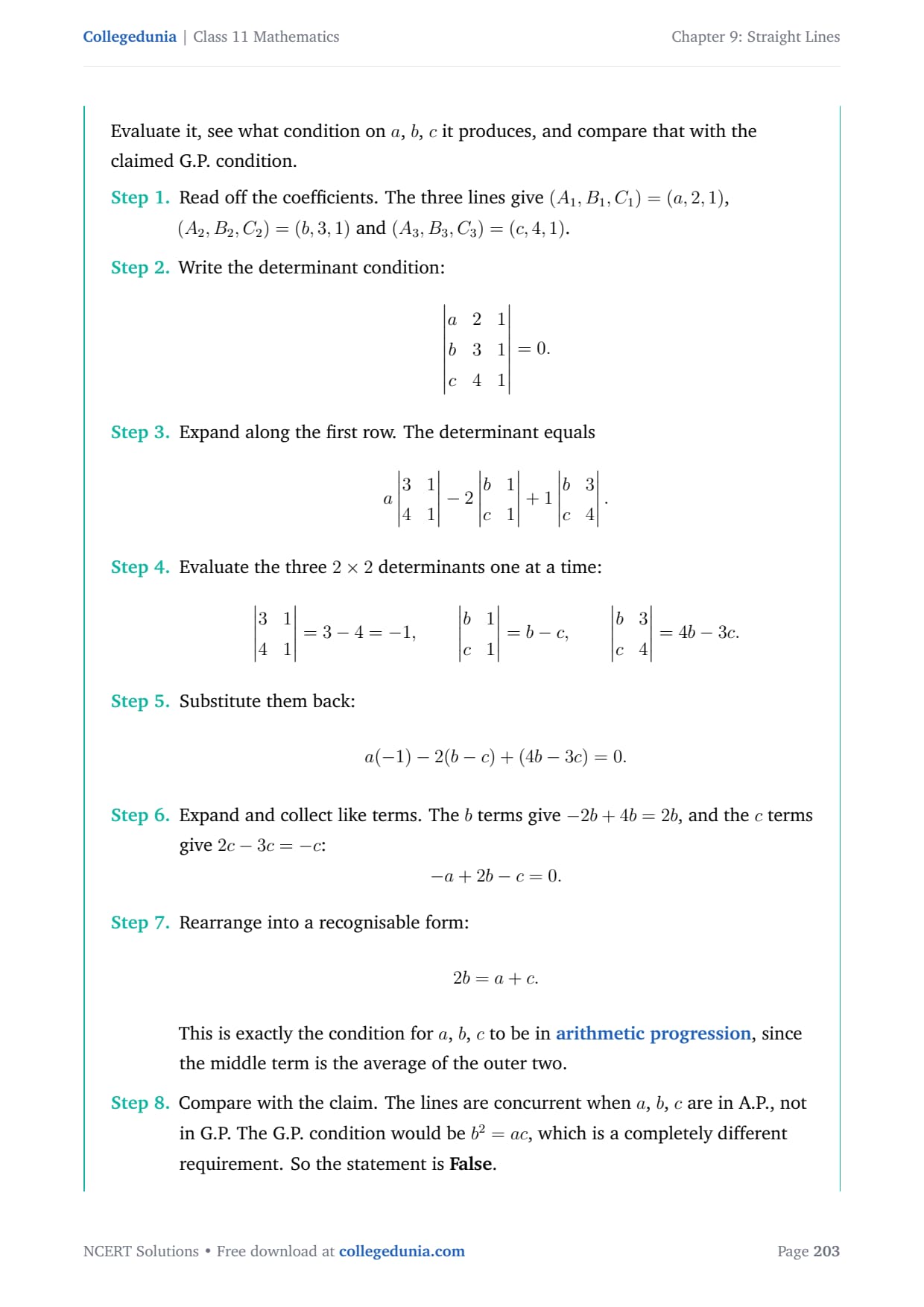
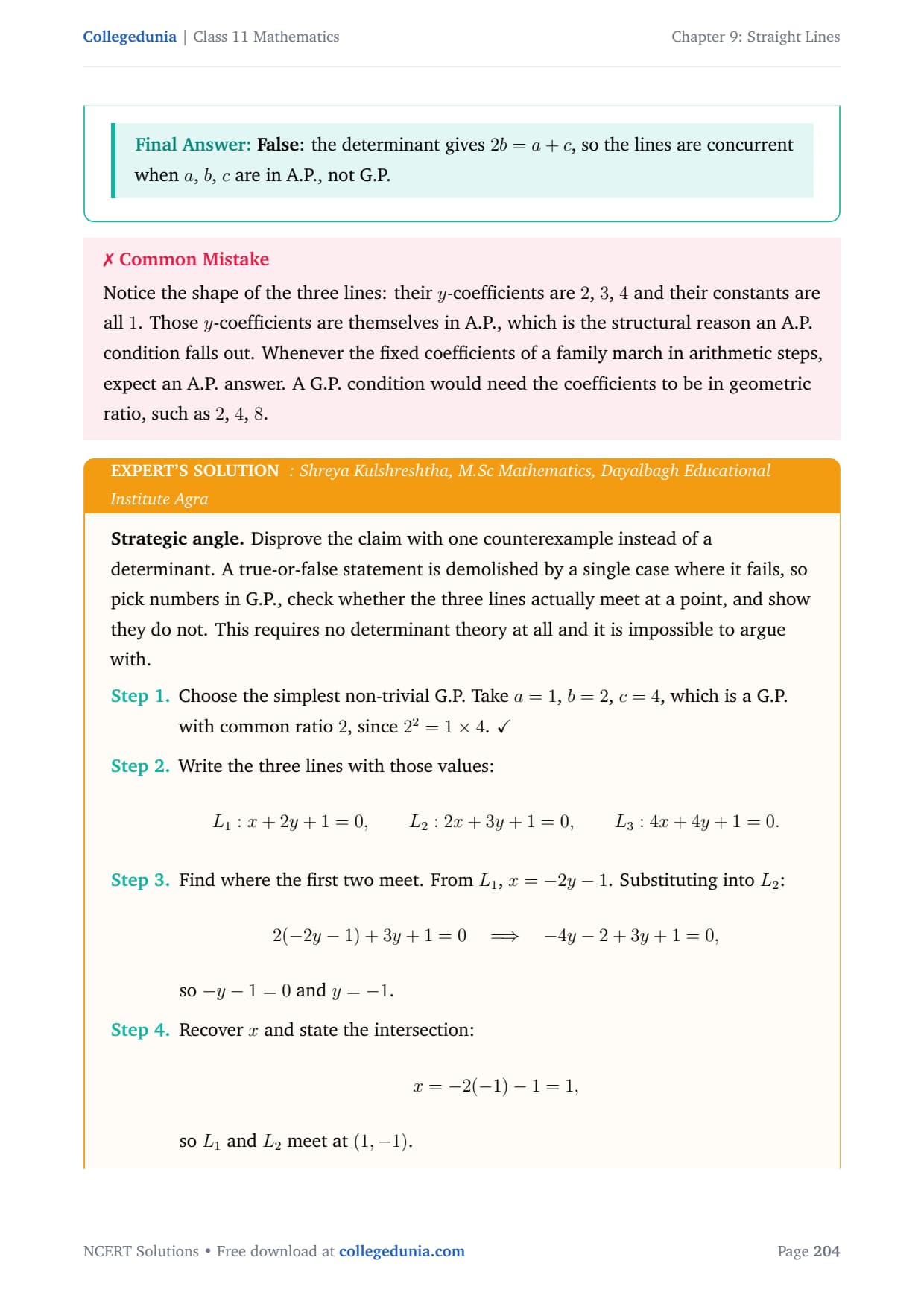
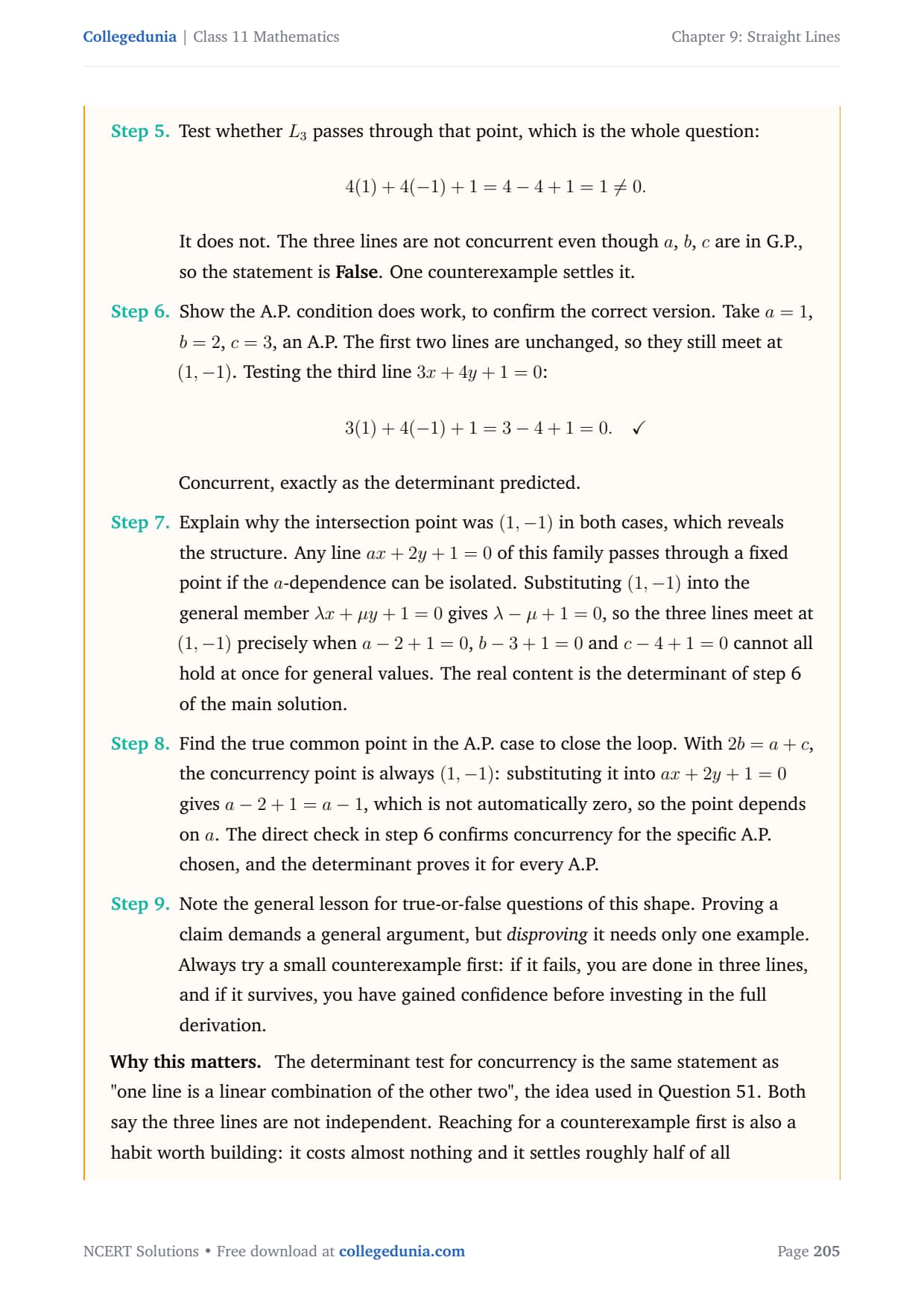
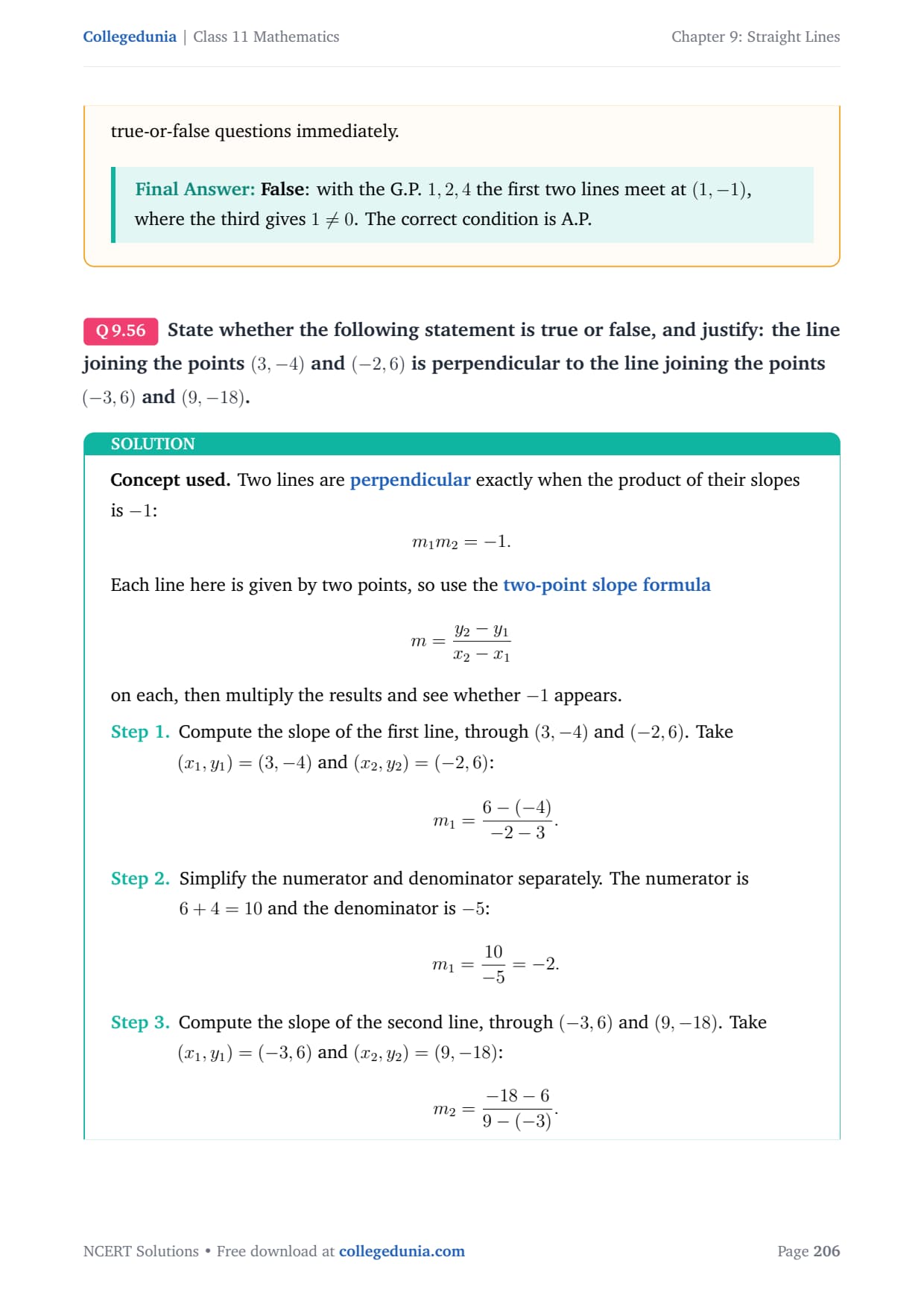
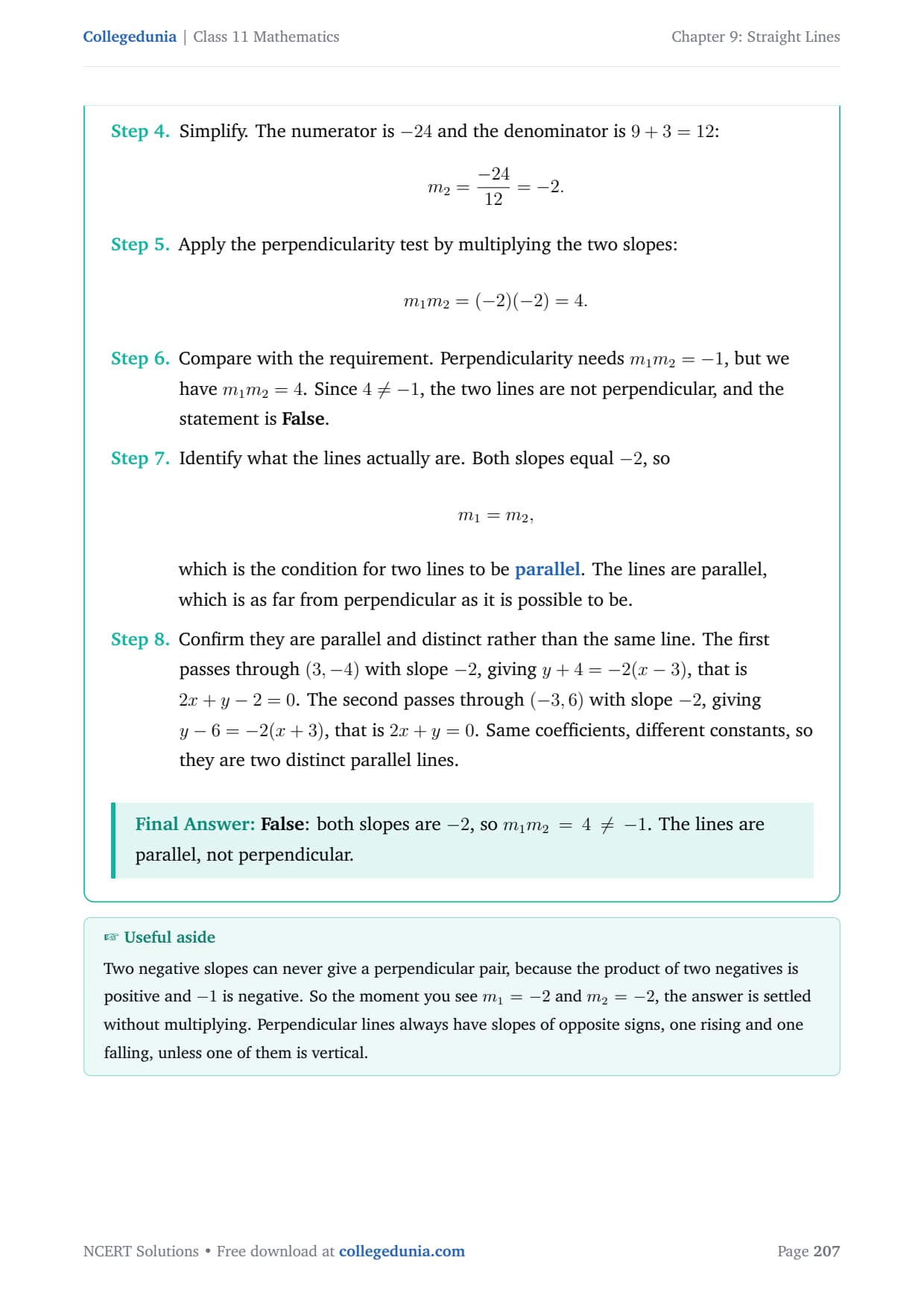
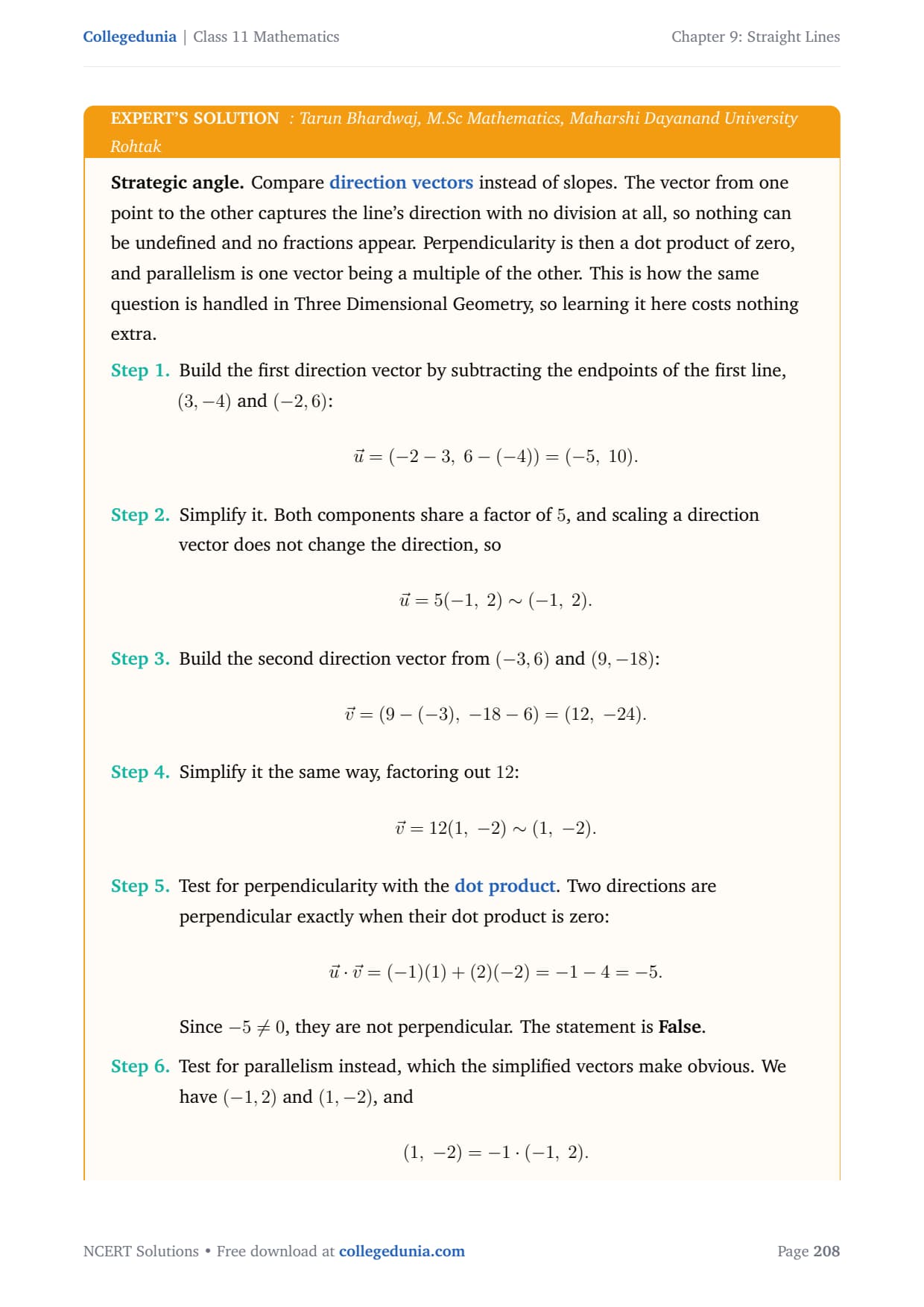
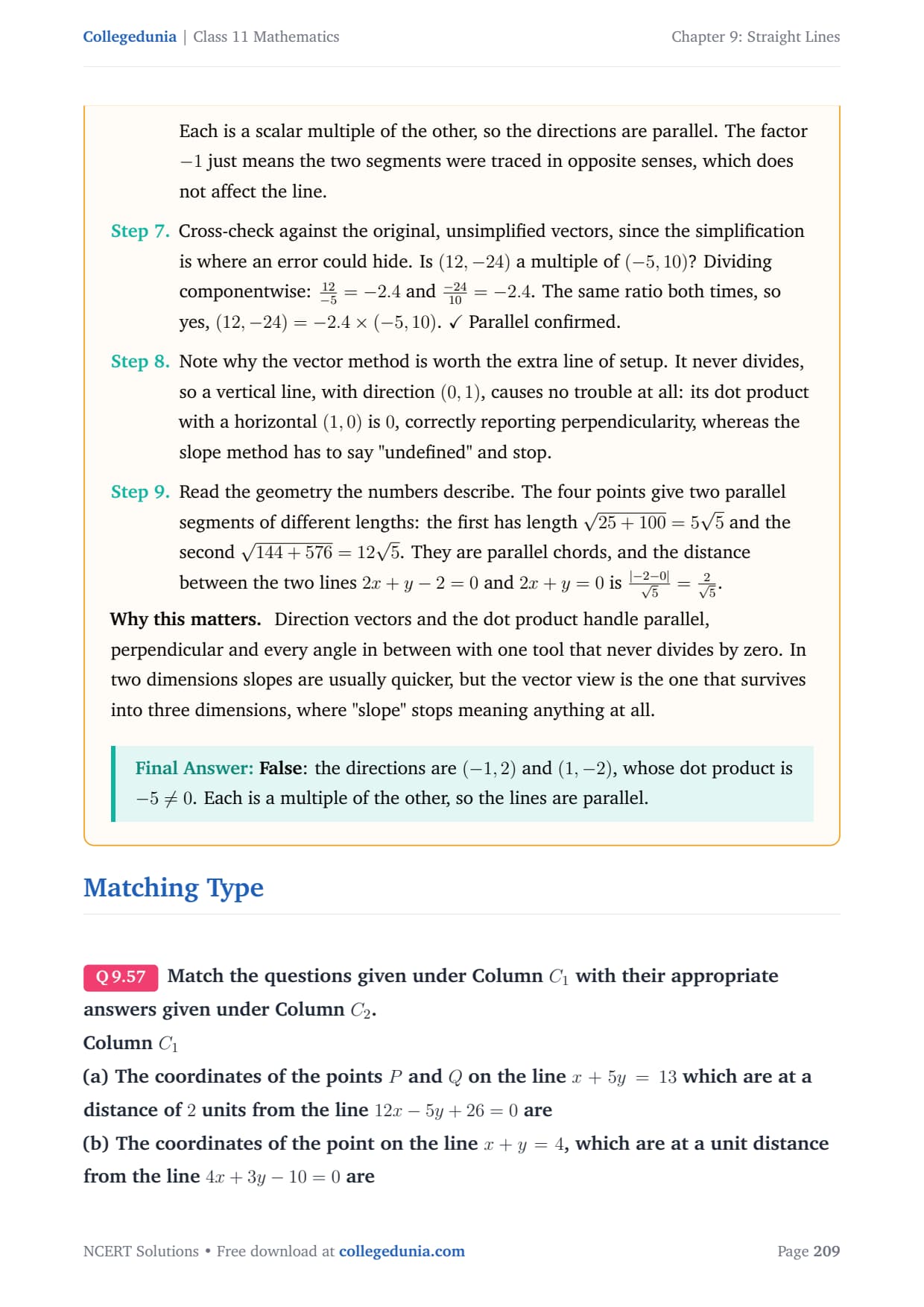
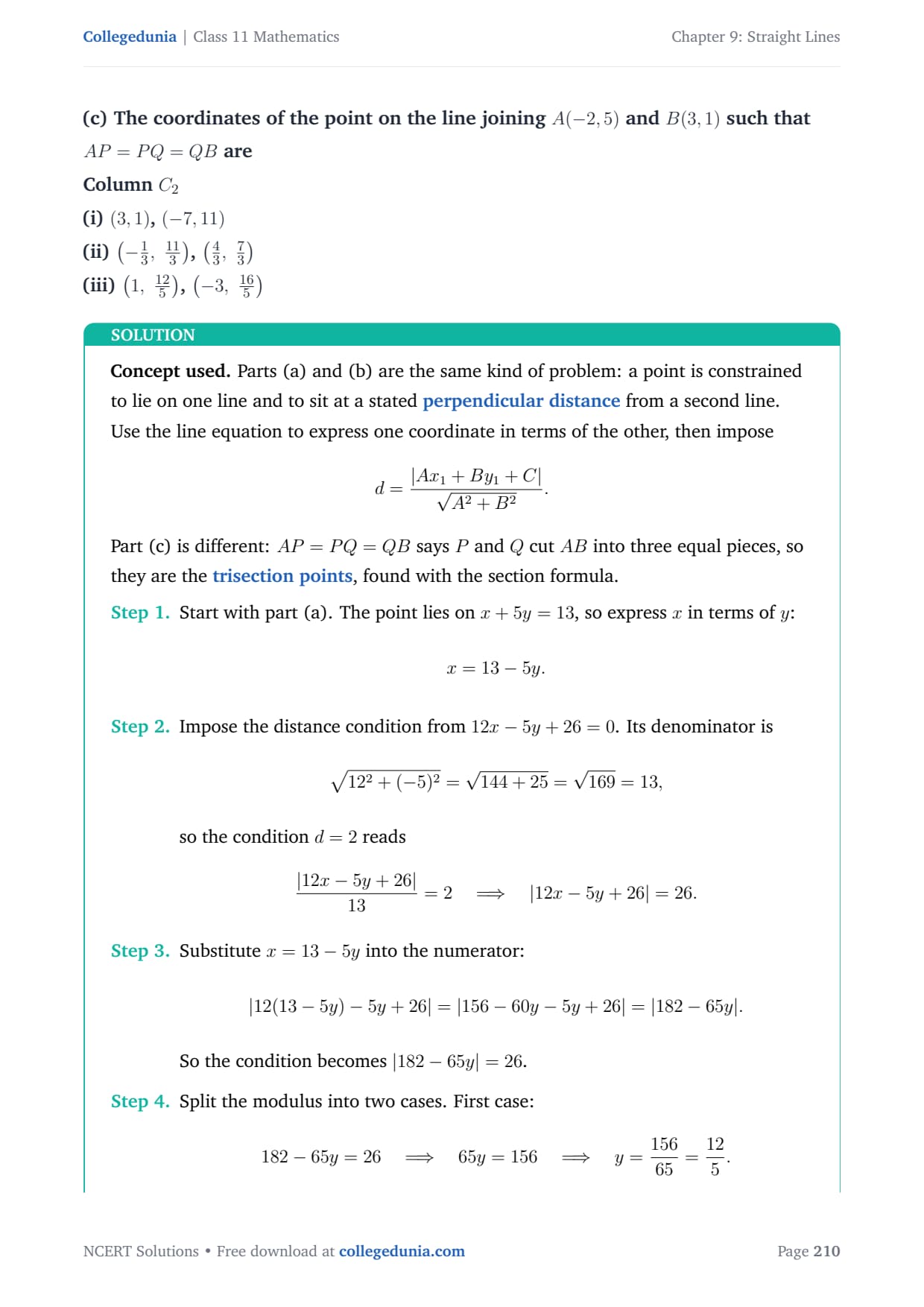
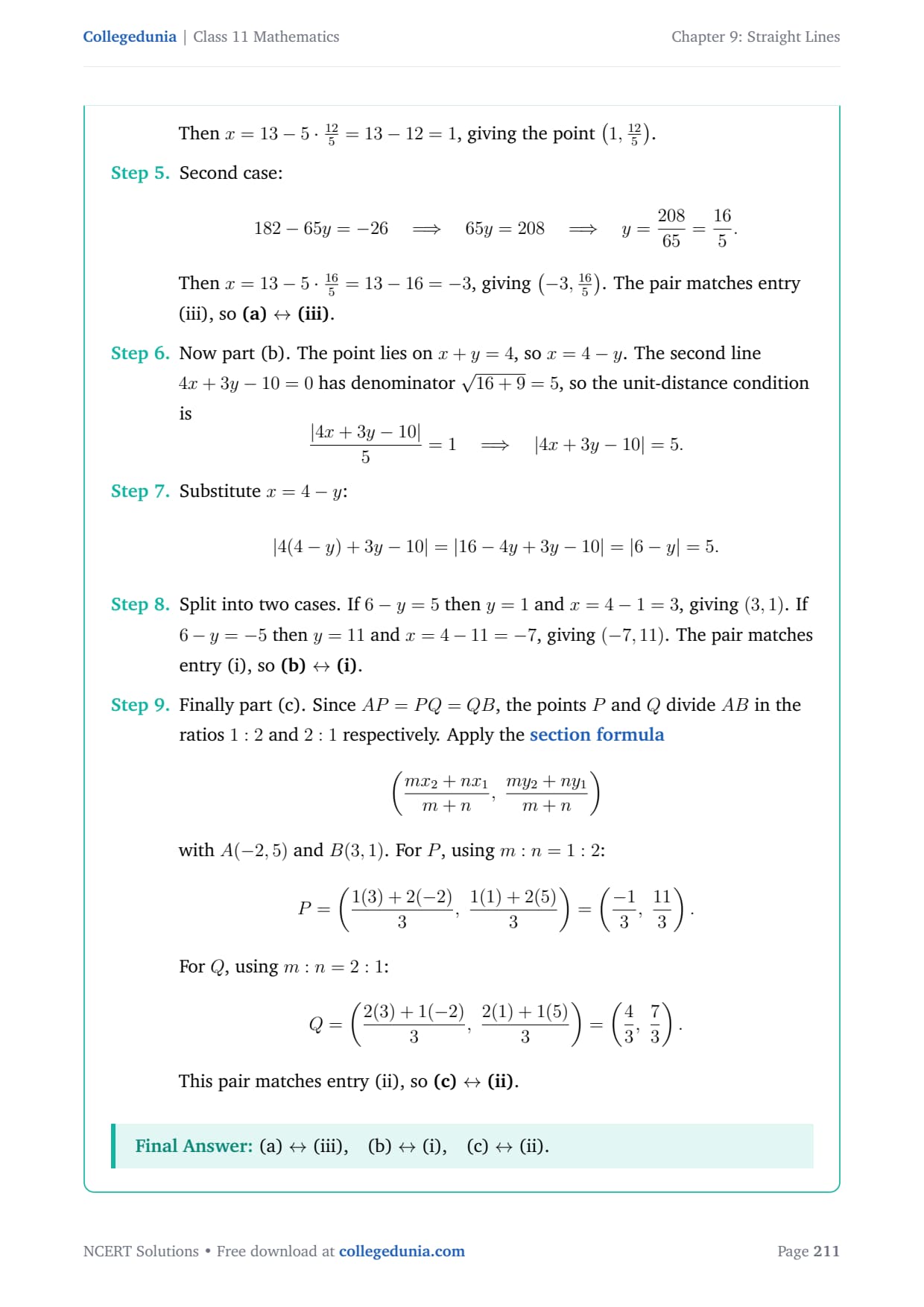
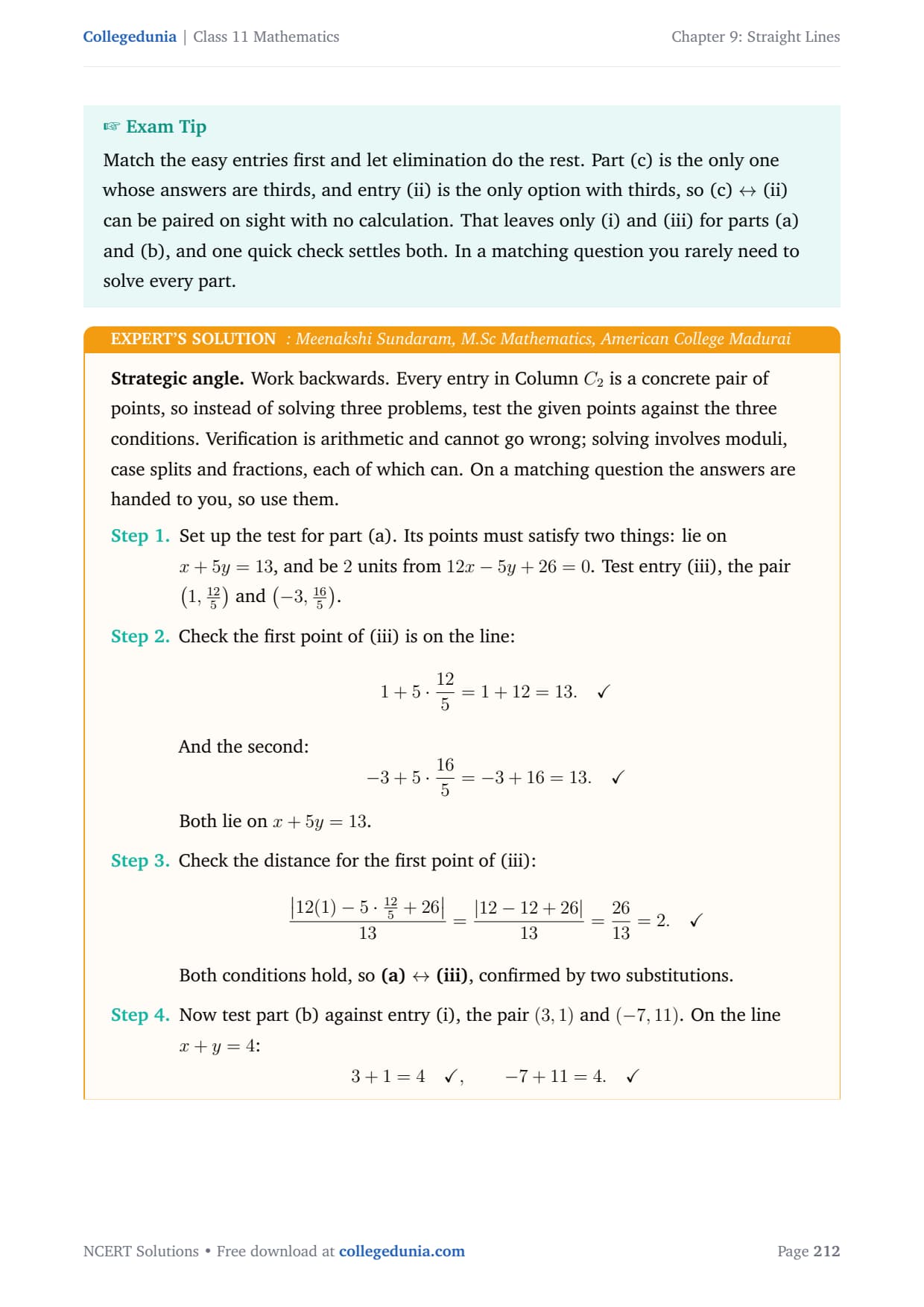
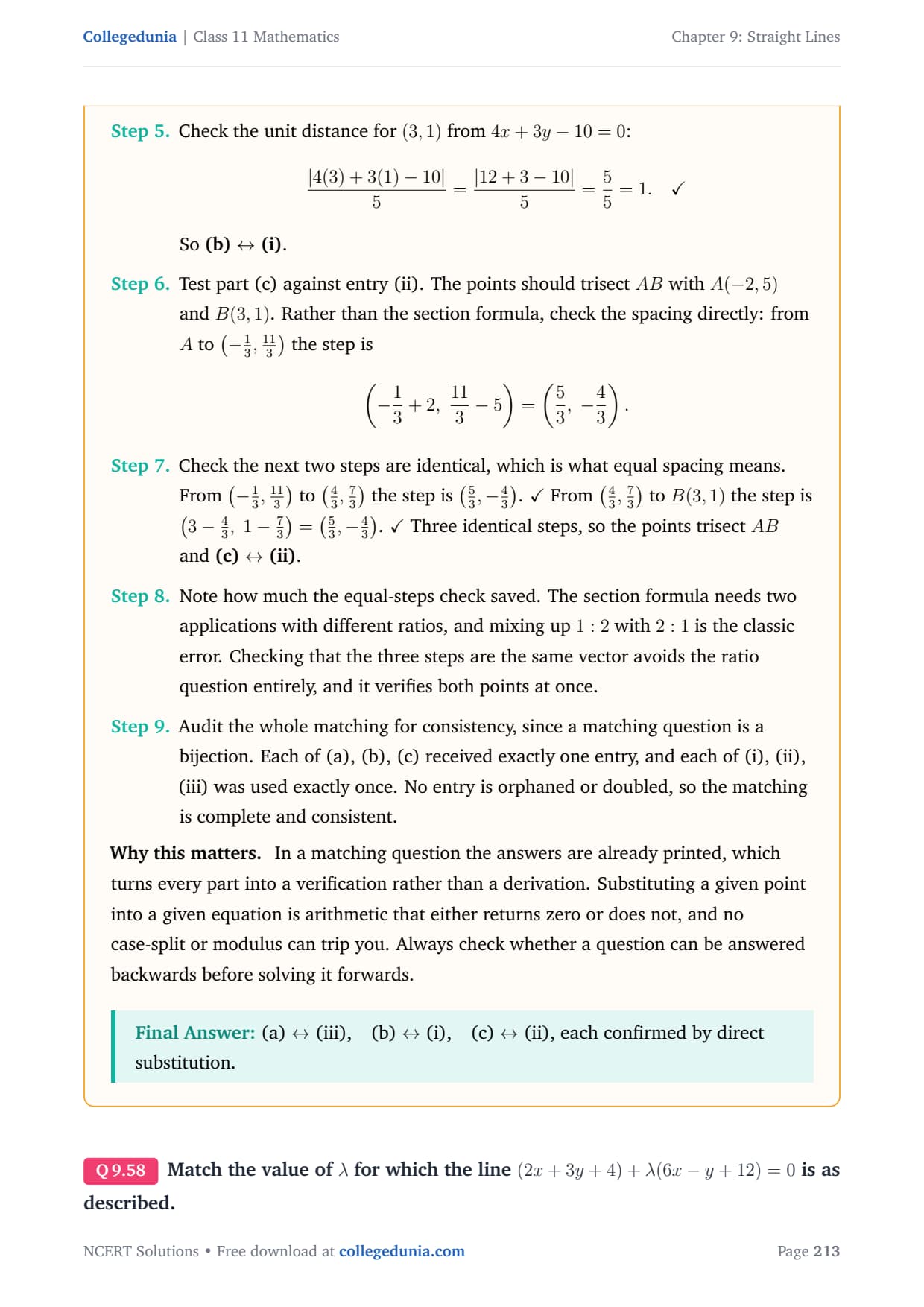
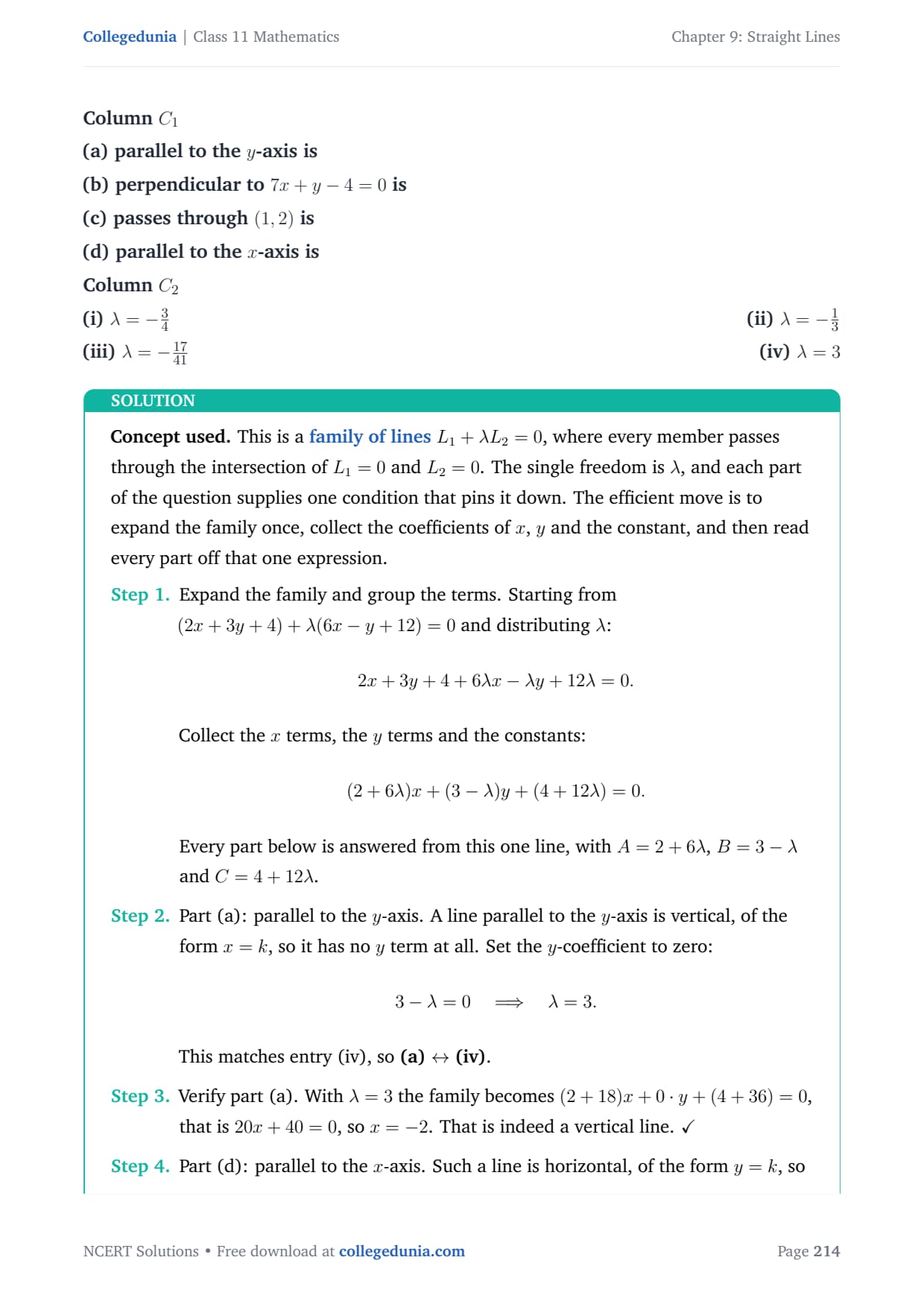
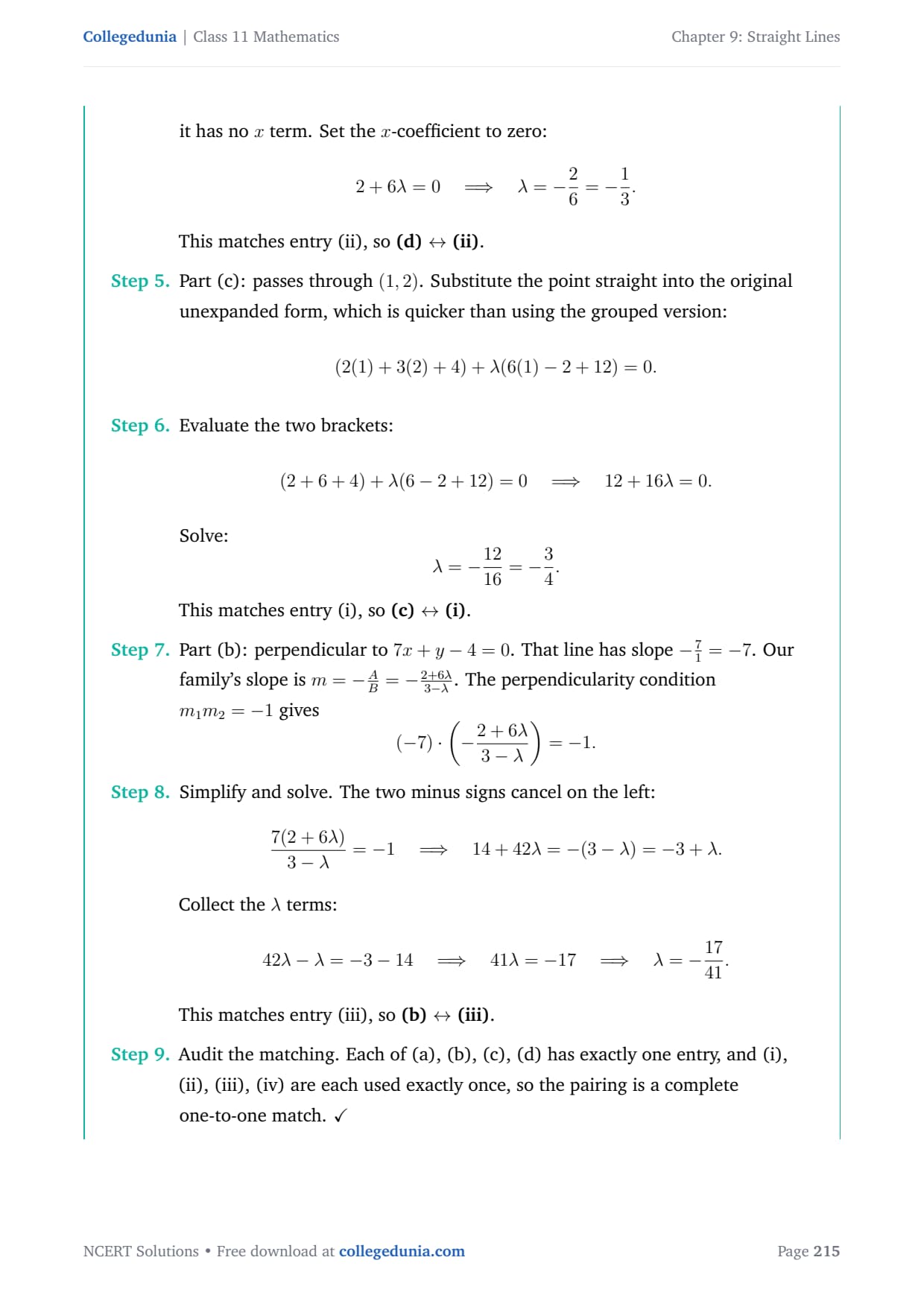
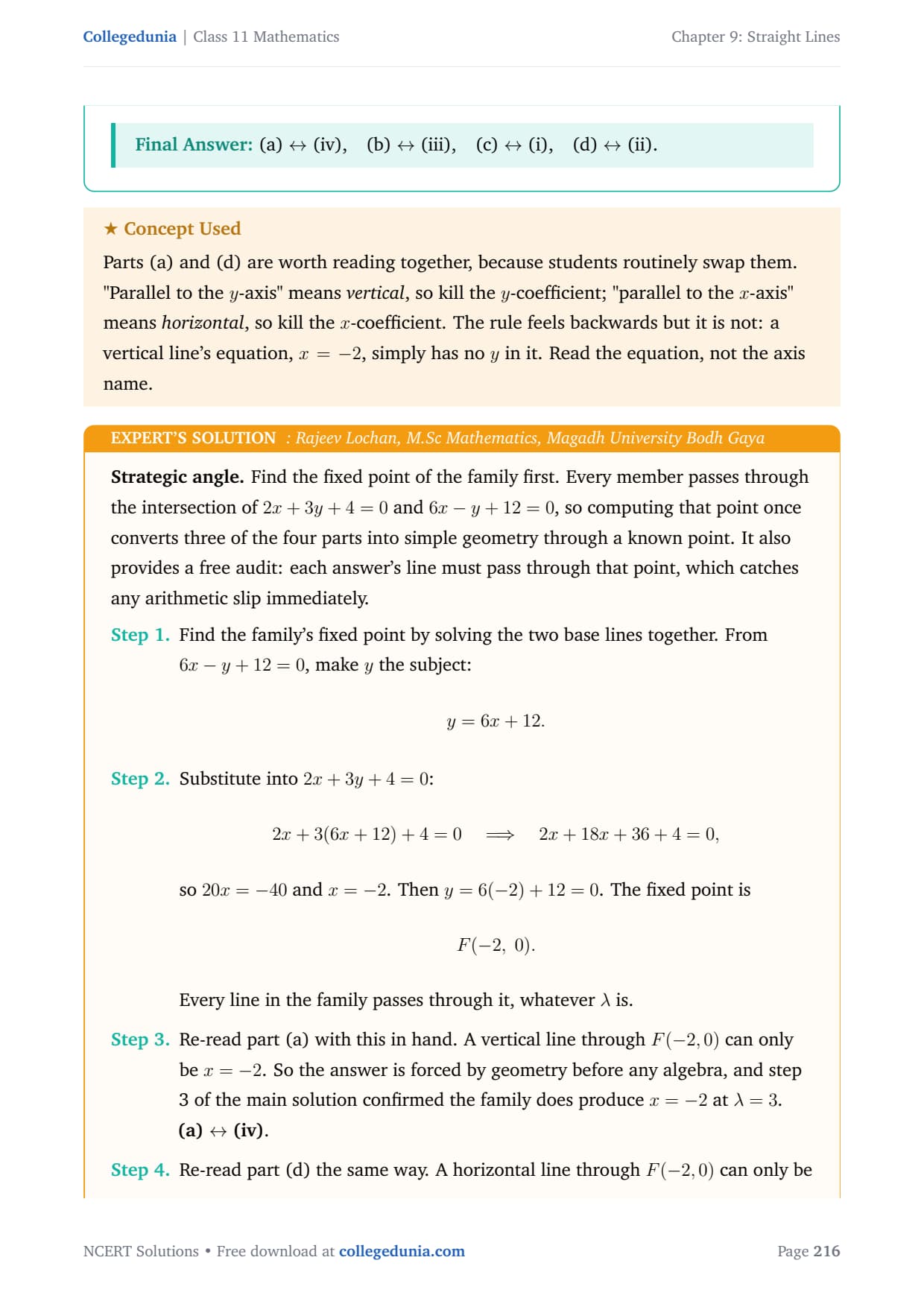
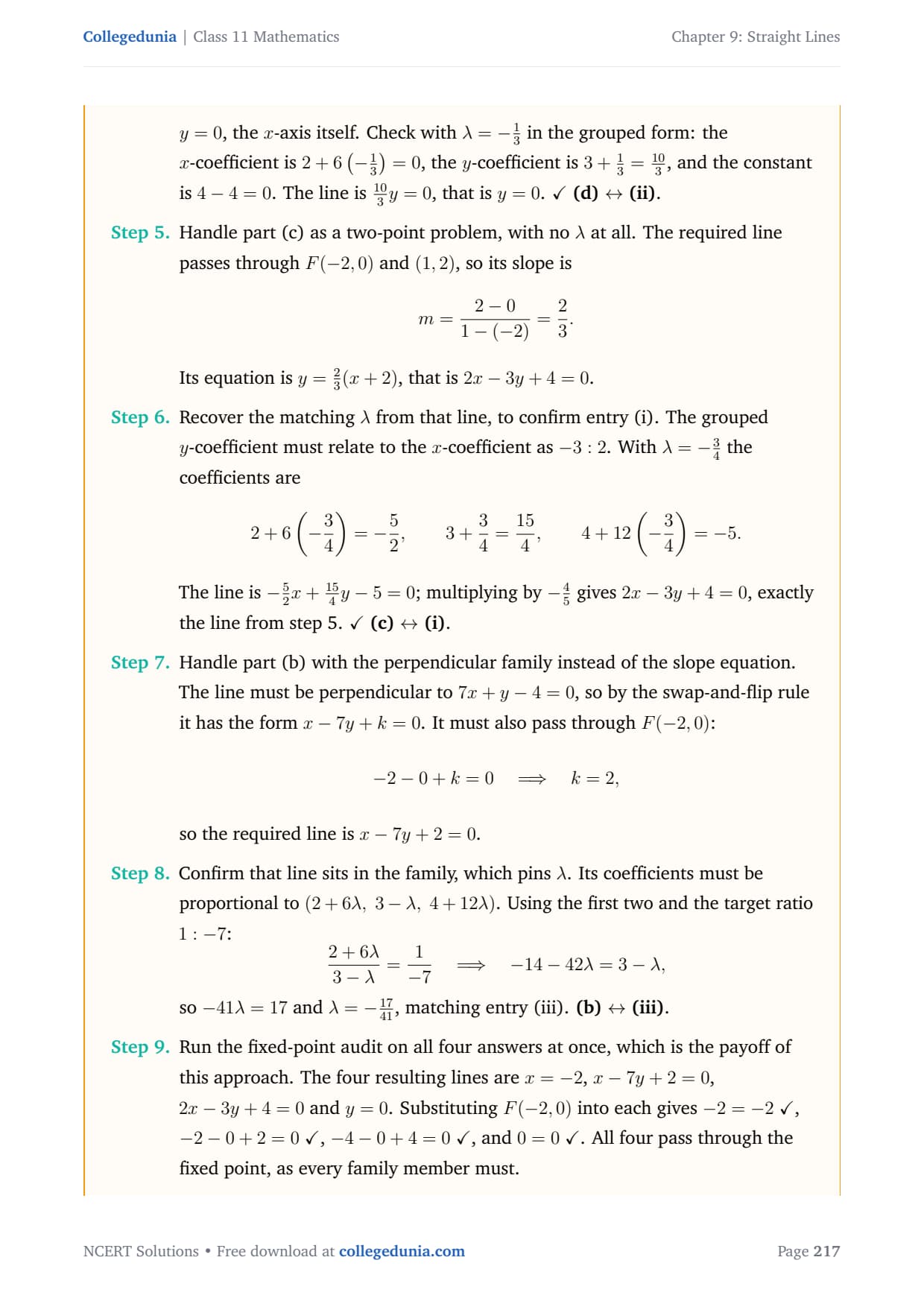
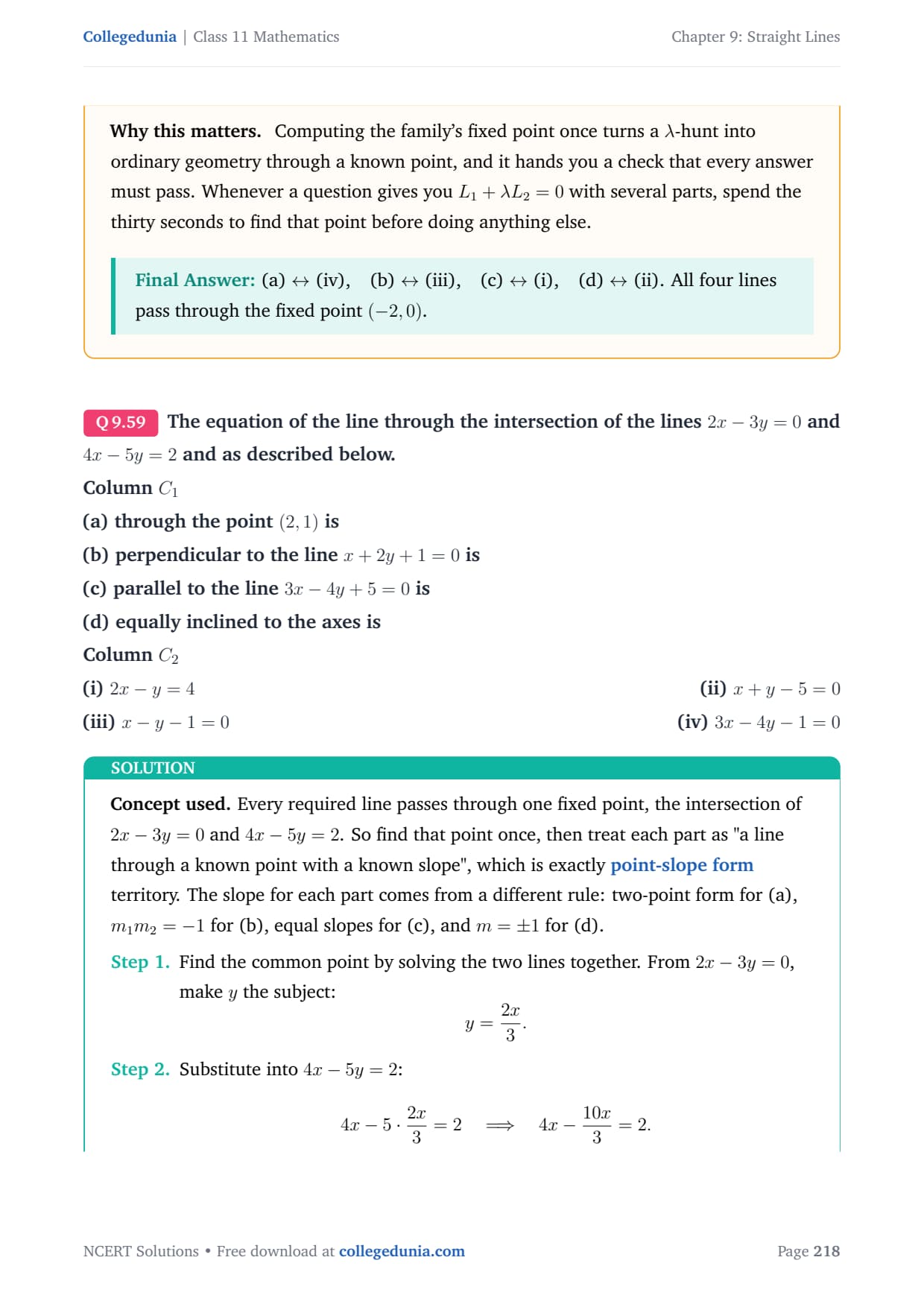
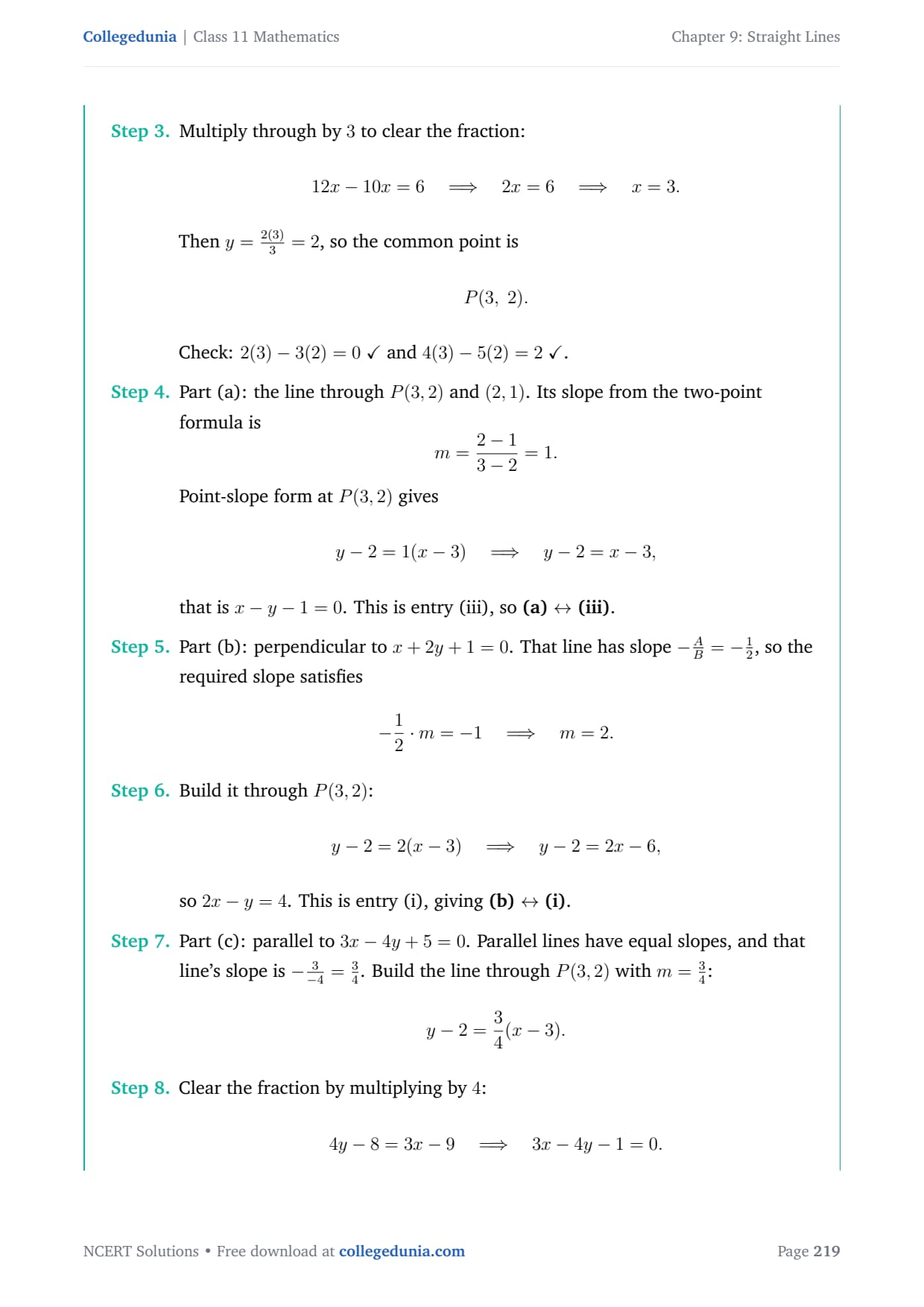
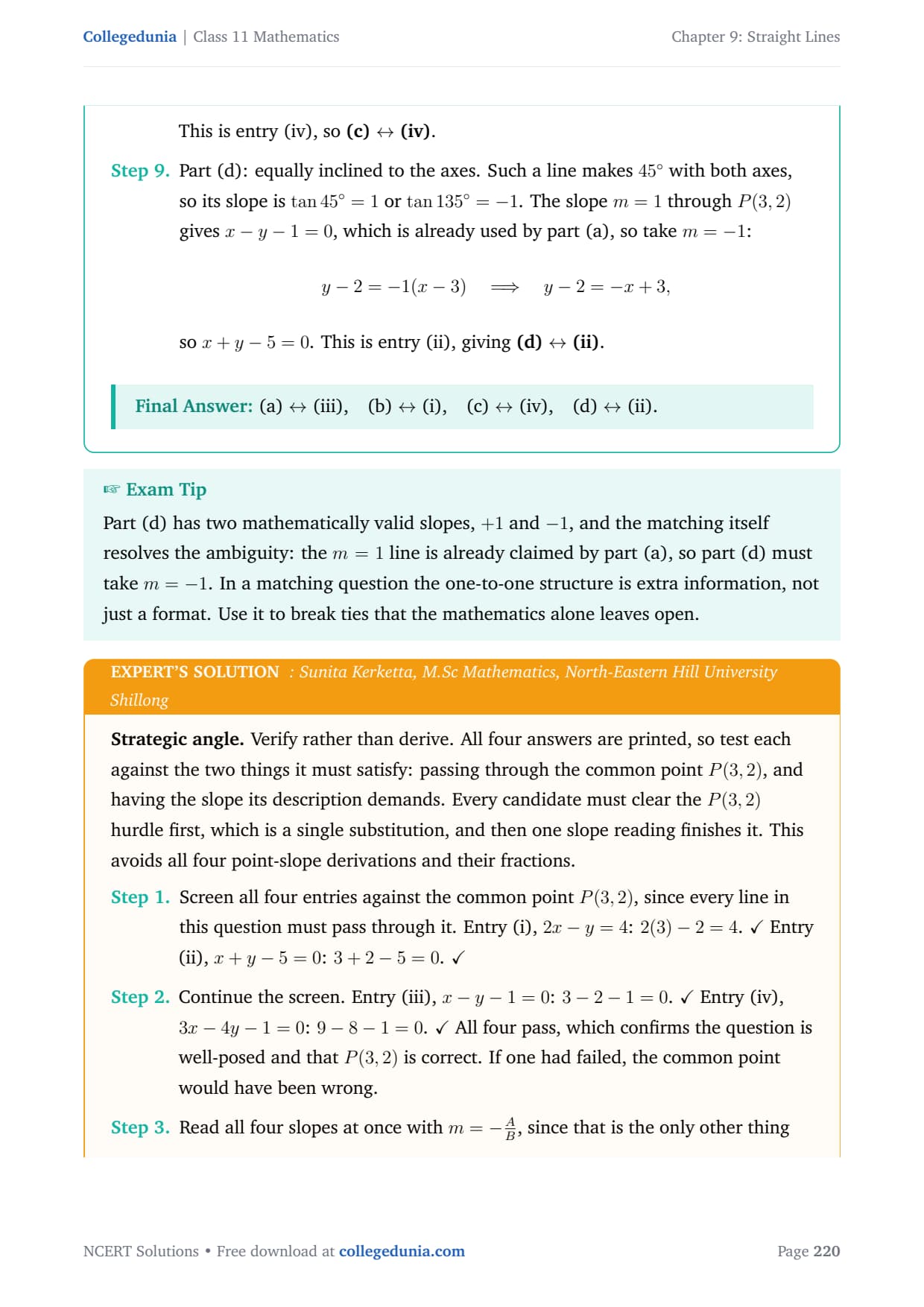
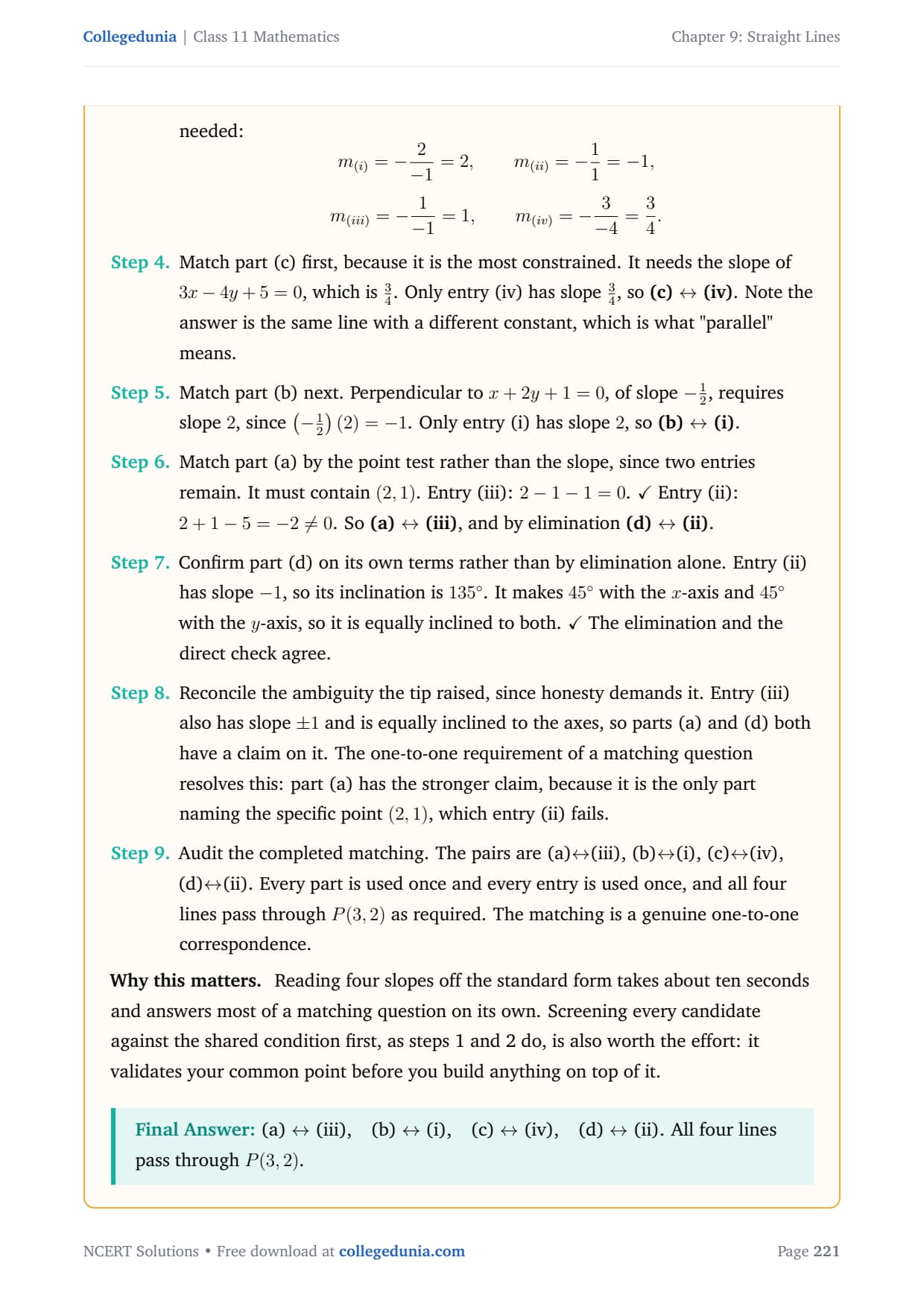
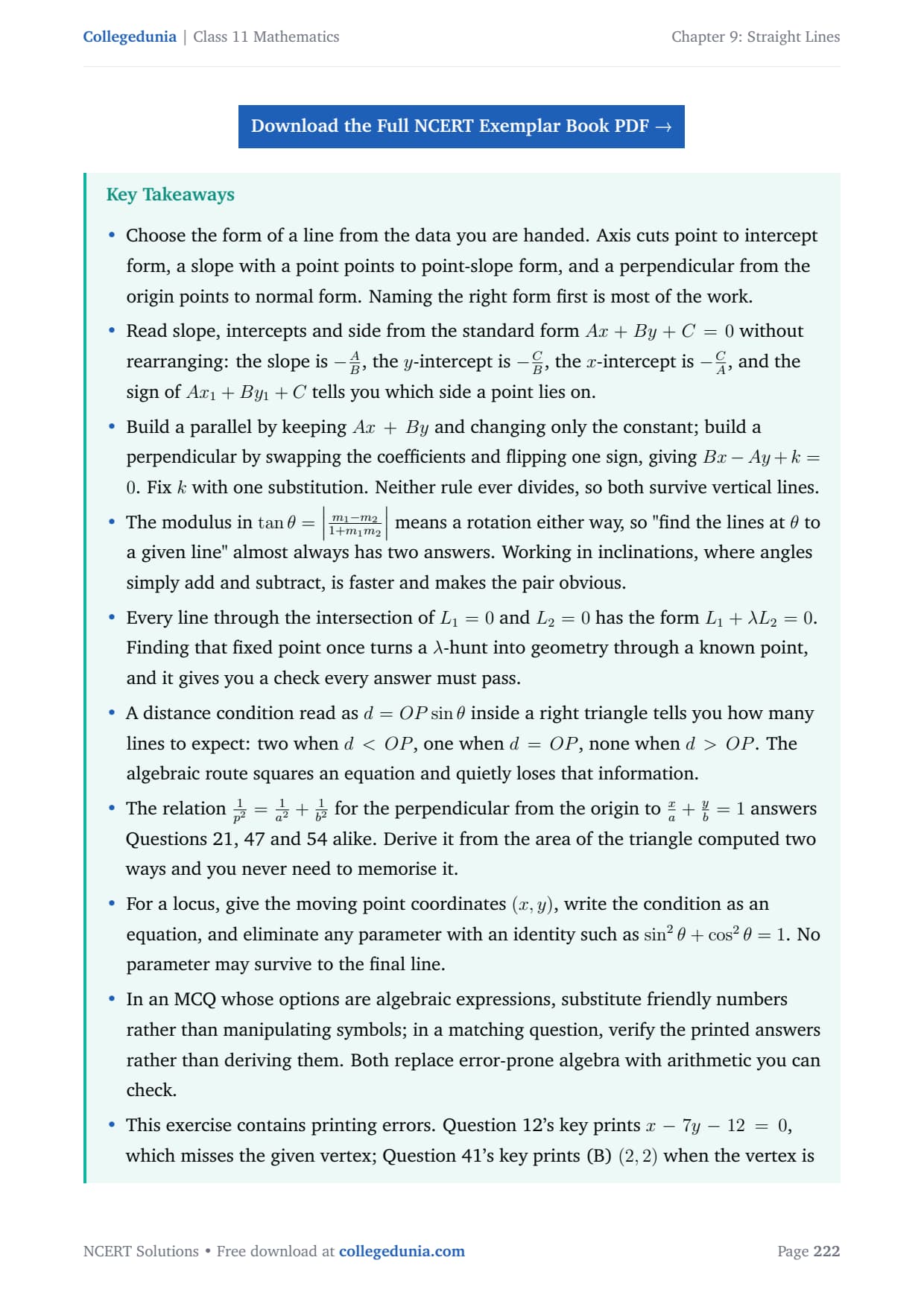
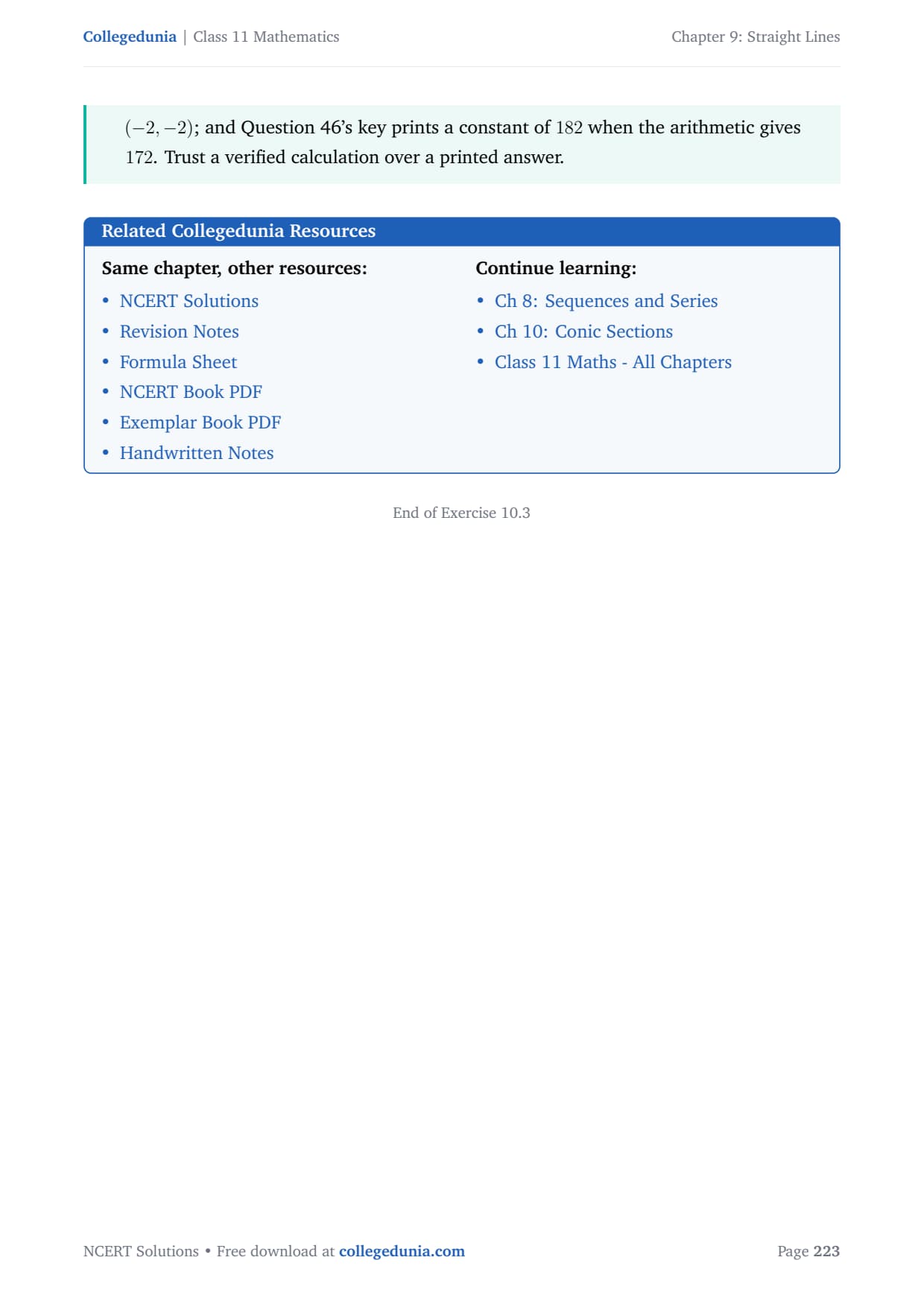
Every solution in this Collegedunia set is prepared by subject experts, based on the 2026-27 NCERT Exemplar, and checked line by line against the official answer key.
Straight Lines has a single long exercise that mixes six question formats. The solutions PDF runs to 223 pages and covers all of them.
- 59 questions solved: Short Answer, Long Answer, Objective, Fill in the Blanks, True/False and Matching.
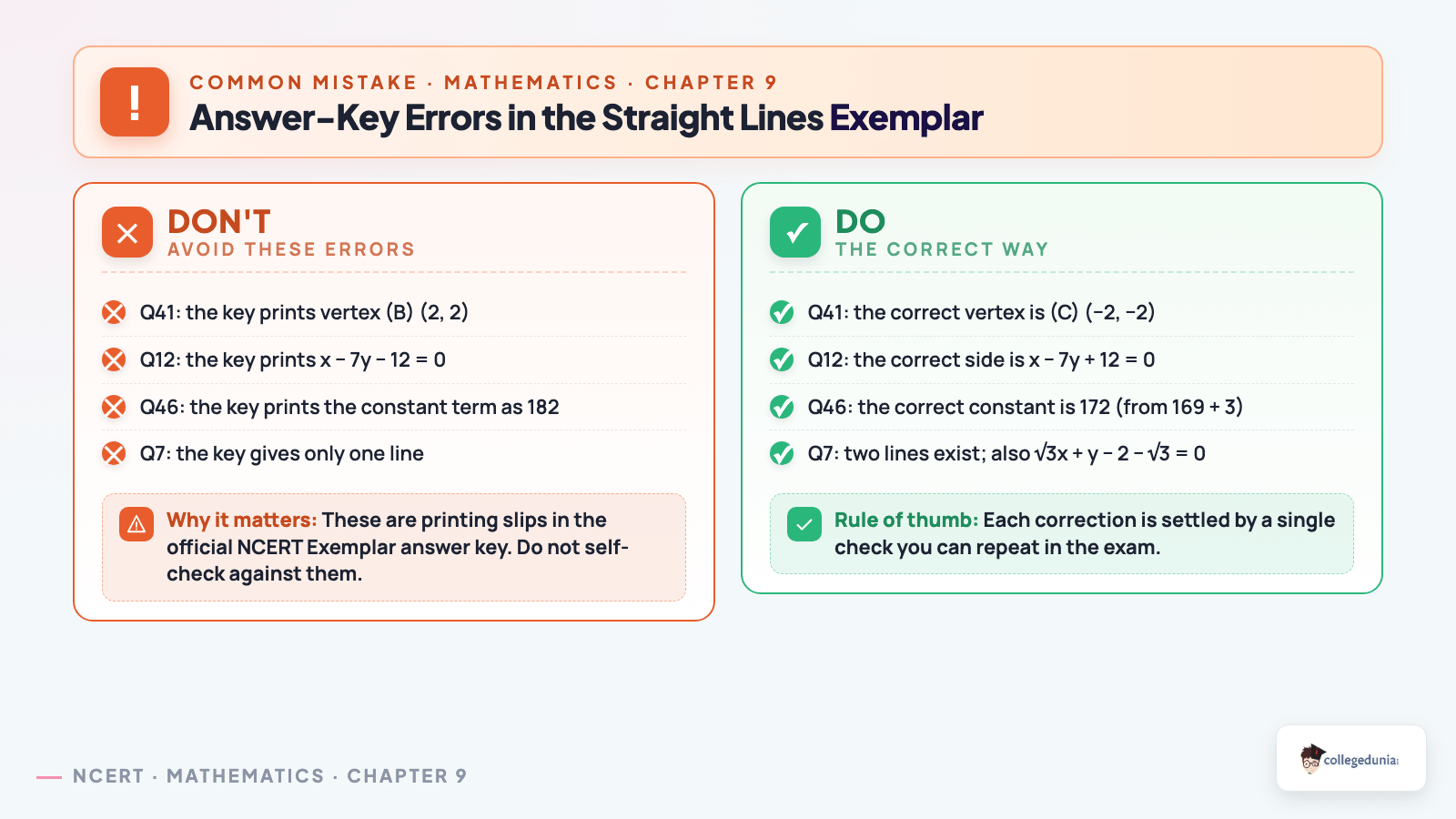
- Four answer-key problems flagged: the printed key fails on Q7, Q12, Q41 and Q46.
- Exam focus: useful for CBSE Boards, JEE Main, JEE Advanced and CUET.
Chapter Numbering in the Straight Lines Exemplar Book
Students open the Exemplar book at Chapter 9, expect Straight Lines and find something else. The reason is the numbering, not a printing fault. The 2026-27 NCERT syllabus lists Straight Lines as Chapter 9, which is the number used on this page and in the PDF. The printed NCERT Exemplar book still follows its older order and prints the same content as Chapter 10.
- Syllabus and this page: Chapter 9 Straight Lines, 2026-27 session.
- The printed Exemplar book: the same chapter appears as Chapter 10.
- The exercise label in the book: Exercise 10.3, which holds all 59 questions.
So a solution numbered Q41 here is Q41 of Exercise 10.3 in the book. The questions, the order and the answer key are the same under both numbers. Nothing is added and nothing is dropped, so students can match this page against the book question by question.
Topics Covered in the Class 11 Maths Straight Lines Exemplar
This chapter turns geometry into algebra. A line is fixed by two numbers, and every question is really asking which two you were handed. These are the topics the 59 questions are built on.
- Slope and inclination: m = tan θ, and the trap of measuring the angle from the wrong axis.
- The four standard forms: point-slope, two-point, intercept and normal form.
- Angle between two lines: the modulus formula, plus the parallel and perpendicular conditions.
- Distance: a point from a line, and the gap between two parallel lines.
- Family of lines: L1 + λL2 = 0 for lines through a point of intersection.
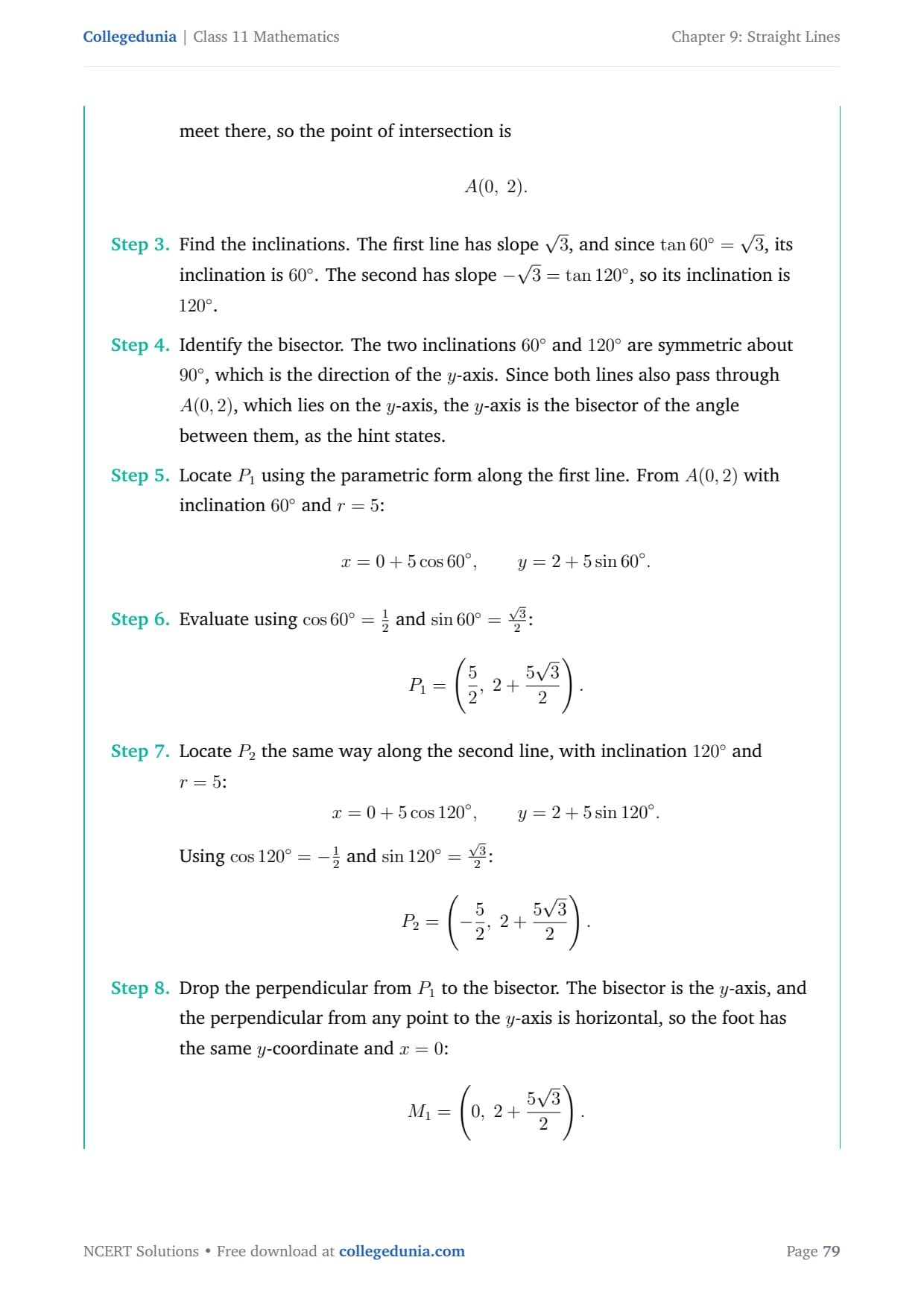
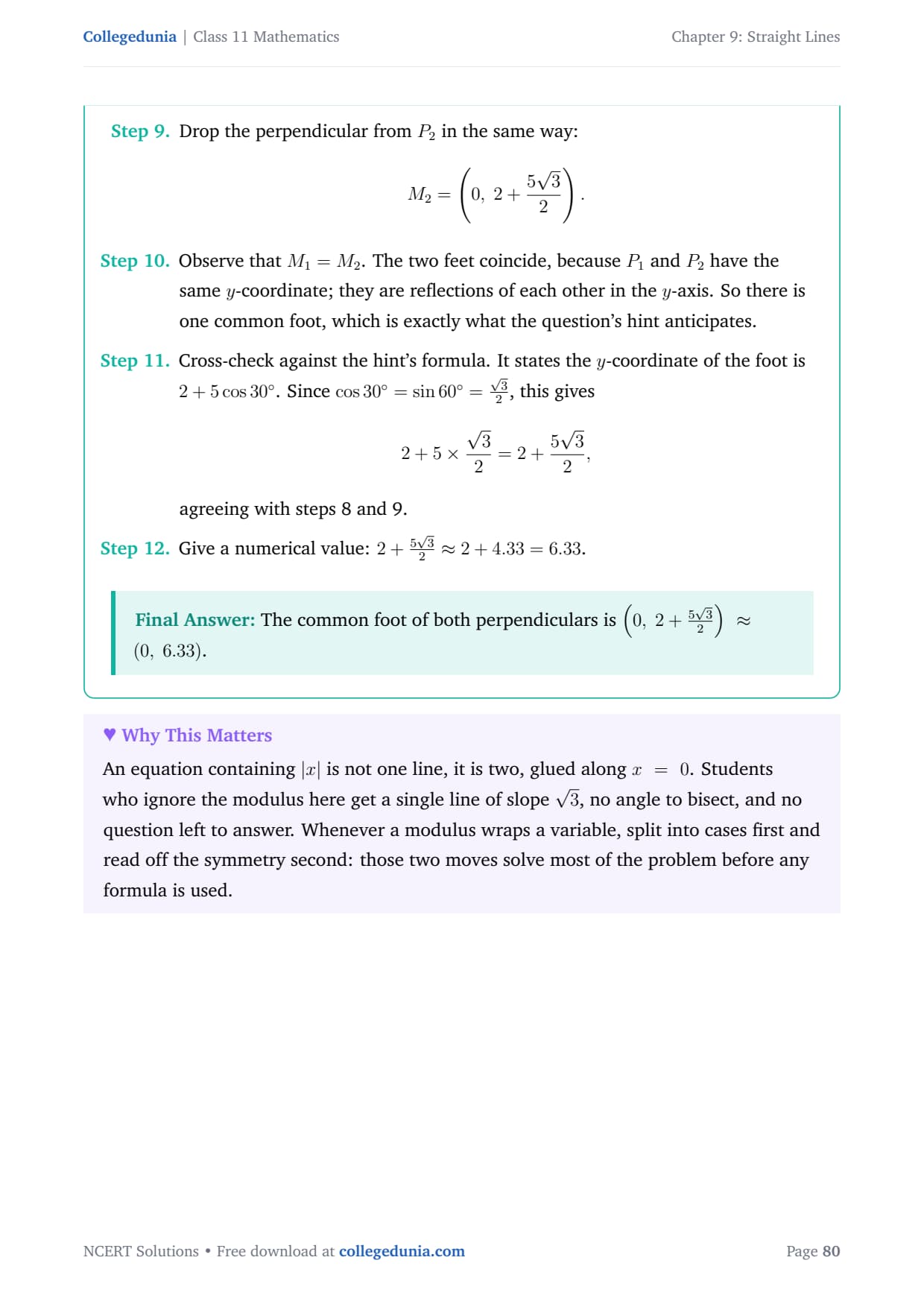
- Loci and reflections: tracing the path of a moving point and reflecting a point in a line.
Important: most of the marks lost here go to the same habit. Students find a slope, feel finished, and pick an option by its look. Substituting the given point back into your answer settles the majority of the Objective block and takes five seconds.
Exercise 10.3 Question-Type Breakdown for Straight Lines
All 59 questions sit in one exercise, grouped by format. The table below shows how the exercise splits, so students can plan practice by question type instead of solving straight through.
| Question Type | Question Numbers | Count | What it tests |
|---|---|---|---|
| Short Answer | Q1 to Q11 | 11 | Standard forms, slopes, intercepts, angles |
| Long Answer | Q12 to Q21 | 10 | Triangles, loci, reflections and proofs |
| Objective (MCQ) | Q22 to Q41 | 20 | One-line reasoning, distance and option traps |
| Fill in the Blanks | Q42 to Q47 | 6 | Fixed points, sides of a line, loci |
| True/False | Q48 to Q56 | 9 | Spotting a false claim with one counter-example |
| Matching | Q57 to Q59 | 3 | Matching conditions to the lines they describe |
The Objective block (Q22 to Q41) is the largest group in the chapter, with 20 questions, and it is where the printed options are deliberately built out of common slips. The Long Answer block carries the most marks per question and holds every locus and reflection problem.
Four Problems in the Printed Straight Lines Exemplar Answer Key
The printed key for this chapter fails on four questions, and they fail in three different ways. One key is simply wrong, two carry a printing slip in the answer itself, and one is right but stops half way. Each is settled below by a single check students can repeat in the exam.
| Question | Type of problem | Printed key | Correct answer | The check that settles it |
|---|---|---|---|---|
| Q7 | Key is incomplete | One line only | Two lines, the printed one plus √3x + y − 2 − √3 = 0 | A line can lean 30° to either side of the y-axis |
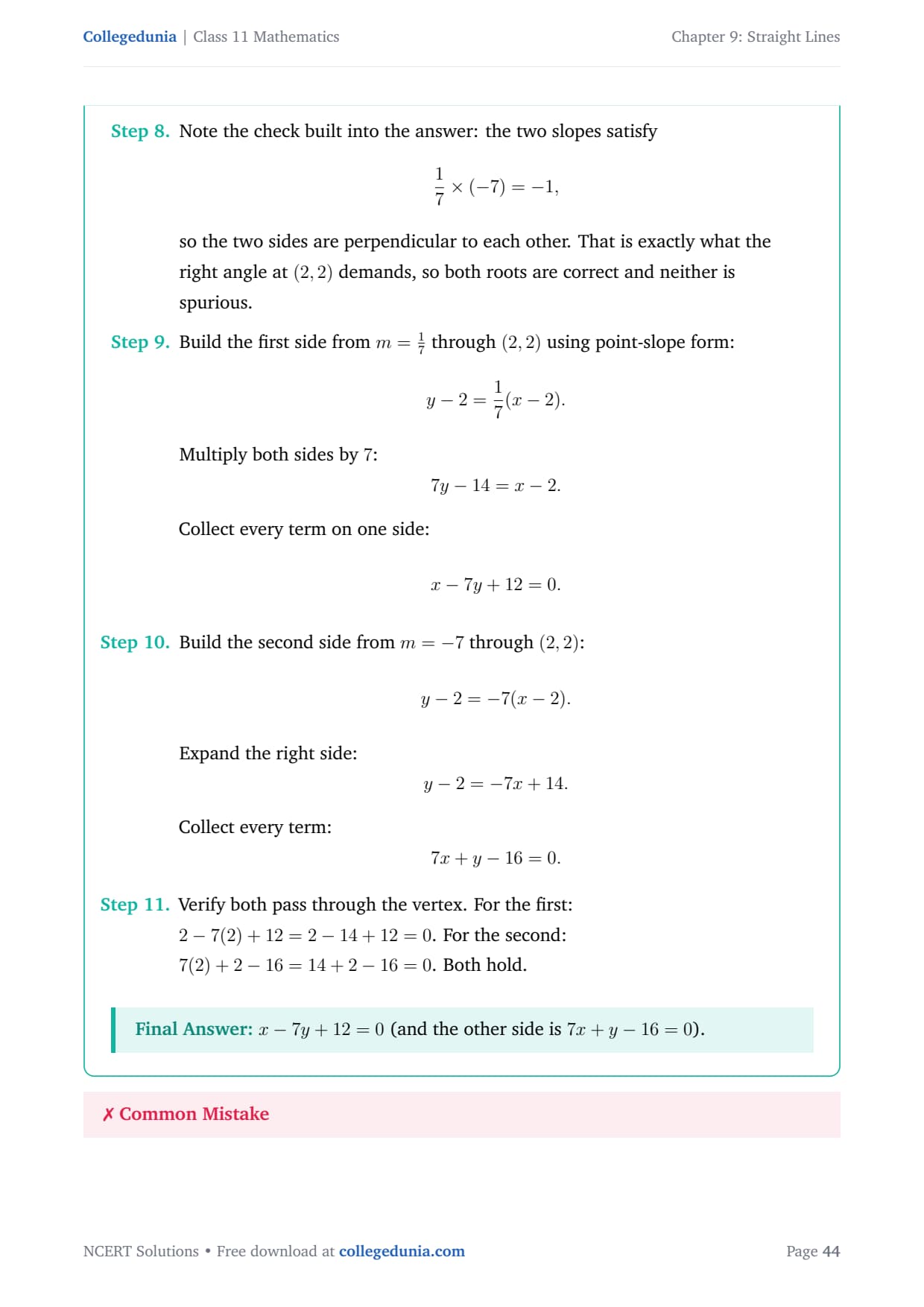
| Q12 | Misprint in the key | x − 7y − 12 = 0 | x − 7y + 12 = 0 | The key's line misses the given vertex (2, 2) |
| Q41 | Key is wrong | (B) (2, 2) | (C) (−2, −2) | (2, 2) puts the side's midpoint at (−1, −1), which is not on x + y − 2 = 0 |
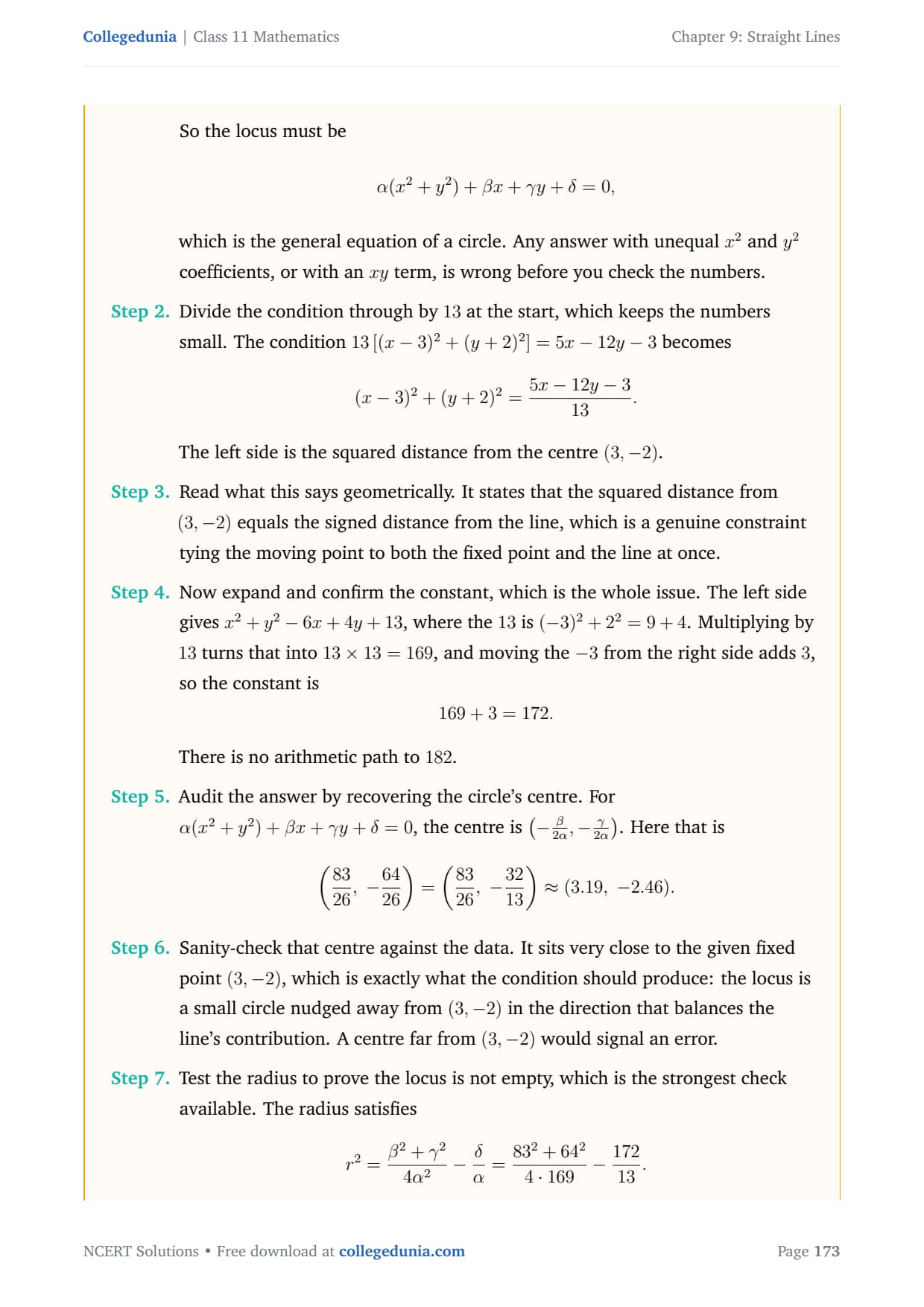
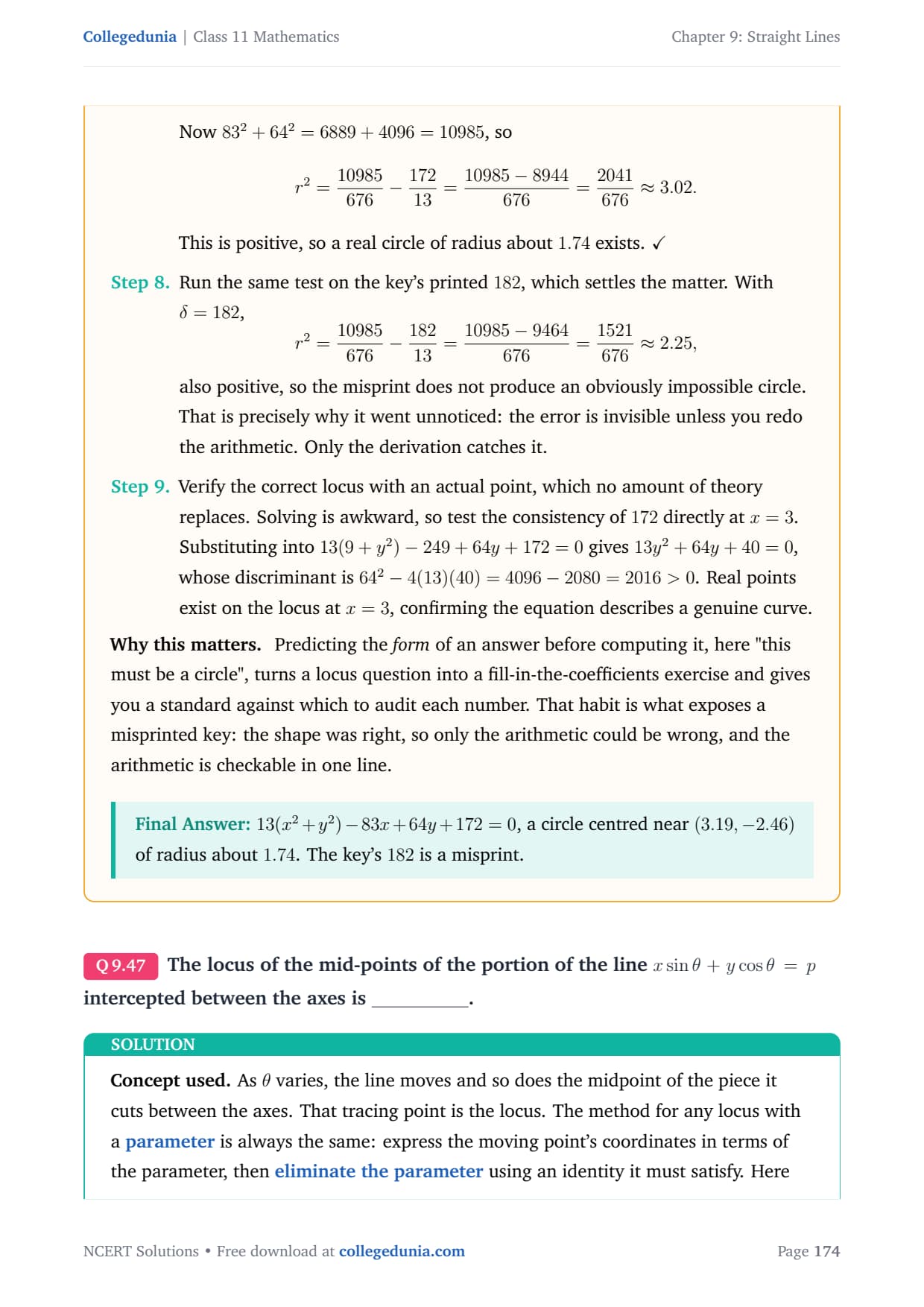
| Q46 | Misprint in the key | Constant term 182 | Constant term 172 | The constant comes from 169 + 3, which is 172 |
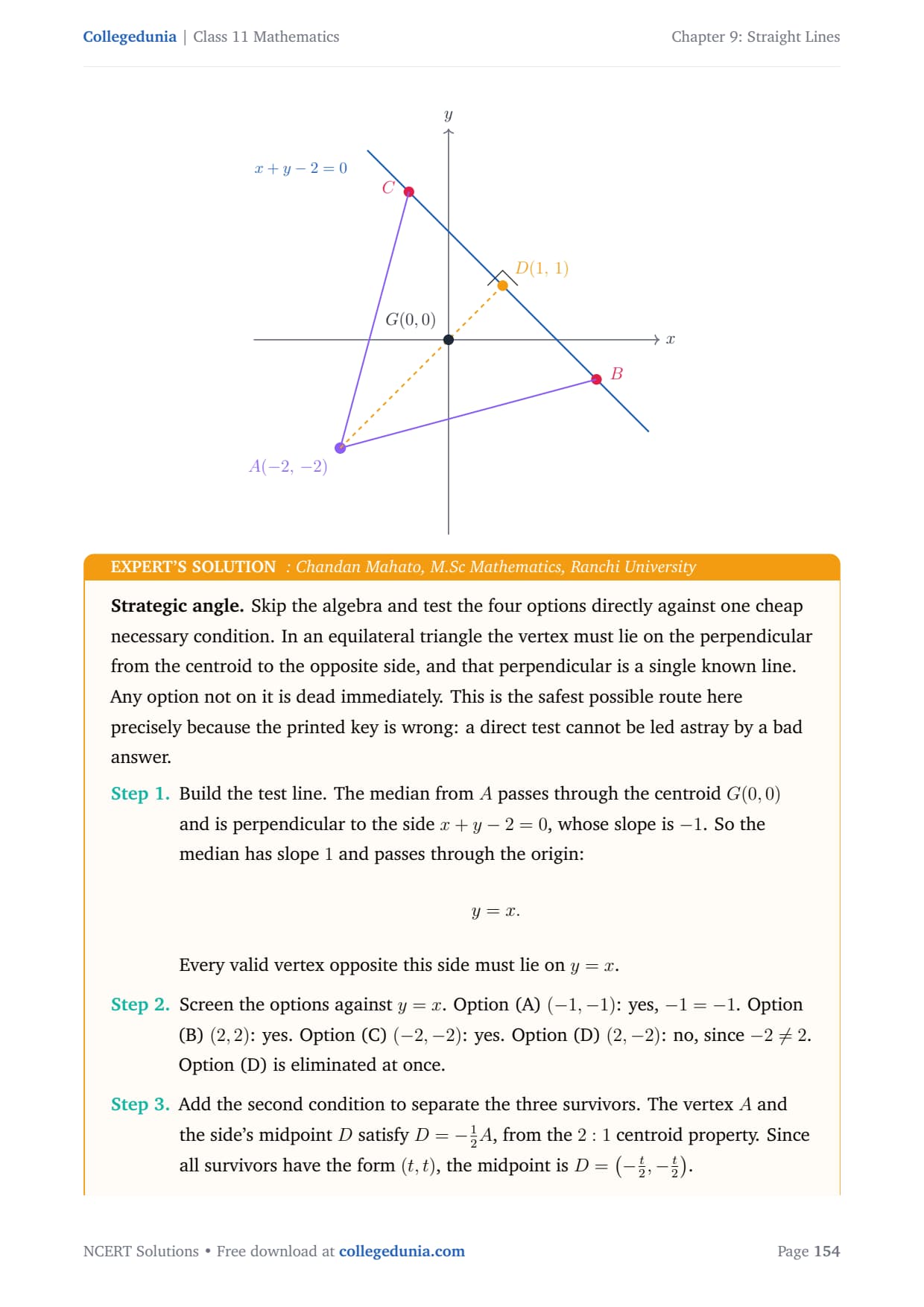
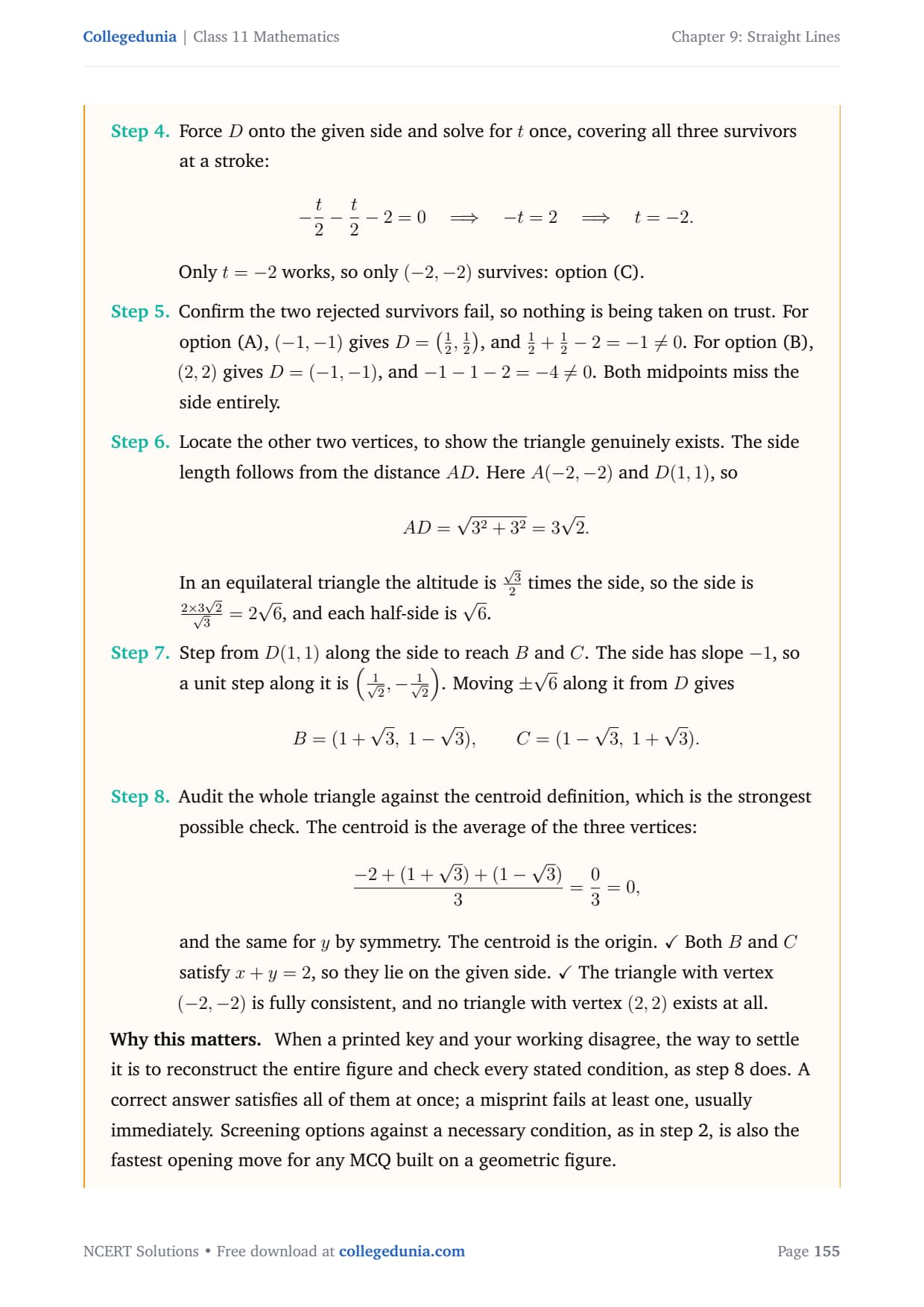
Q41 is the wrong answer, not a typing slip. The question asks for one vertex of an equilateral triangle whose centroid is the origin and whose one side is x + y − 2 = 0. The key prints (B), that is (2, 2). Test it in one line. If the vertex A were (2, 2), the midpoint D of the opposite side would be (−1, −1), and substituting gives −1 − 1 − 2 = −4, not 0. So D would not sit on the given side at all, and (2, 2) cannot be a vertex. The correct answer is (−2, −2). Note that (2, 2) is exactly what you get by dropping the minus signs, which is the likely source of the slip.
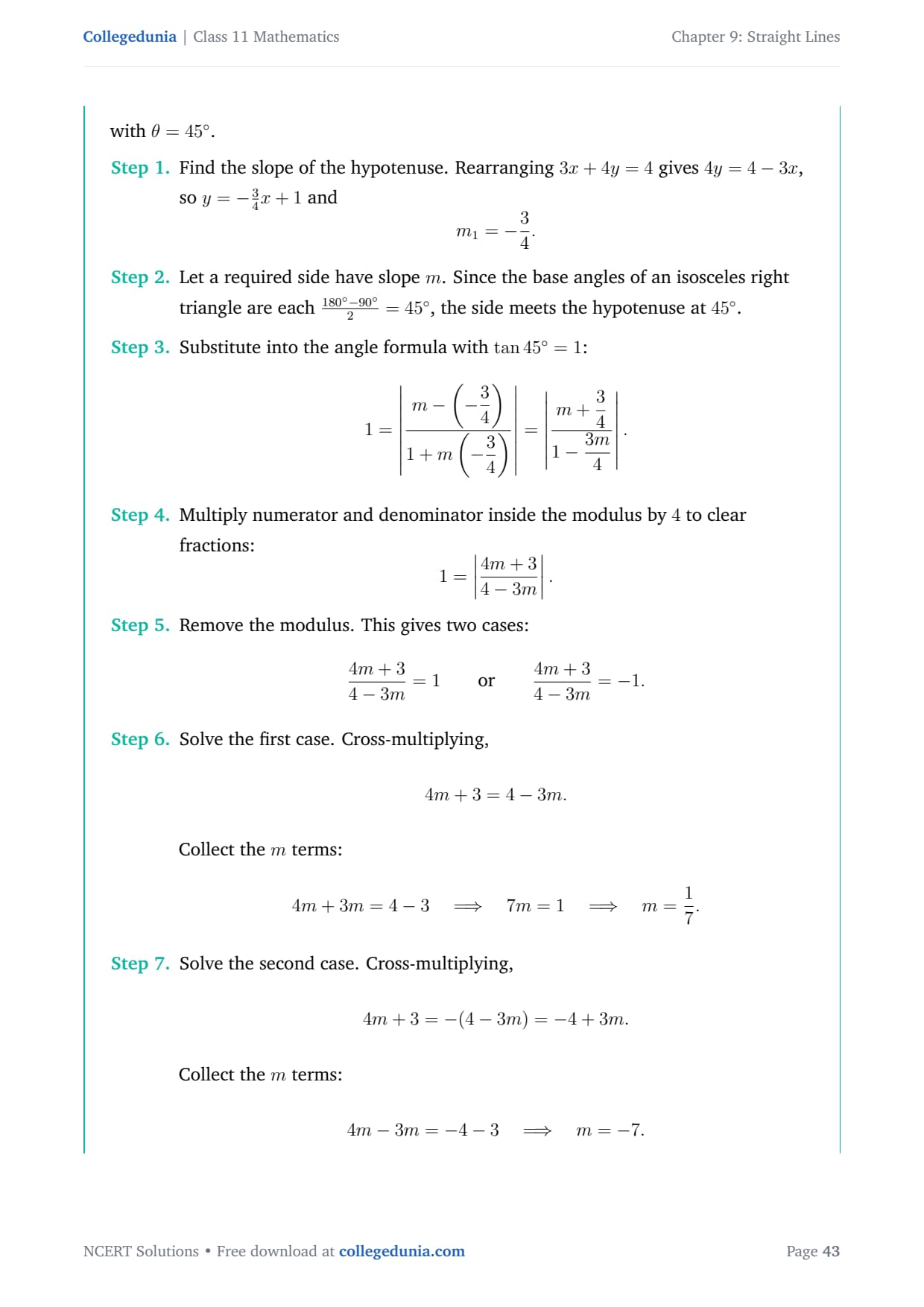
Q12 and Q46 are single-character misprints. In Q12 the key prints x − 7y − 12 = 0 as a side of an isosceles right-angled triangle with vertex (2, 2). Substituting that vertex gives 2 − 14 − 12 = −24, not 0, so the printed line misses the very point the question supplies. The sign of the constant is wrong and the correct side is x − 7y + 12 = 0. In Q46 the key prints the constant as 182, but the constant is built from 169 + 3, which is 172. No choice of sign for the modulus produces 182, so it is a digit that slipped from 7 to 8 in typesetting.
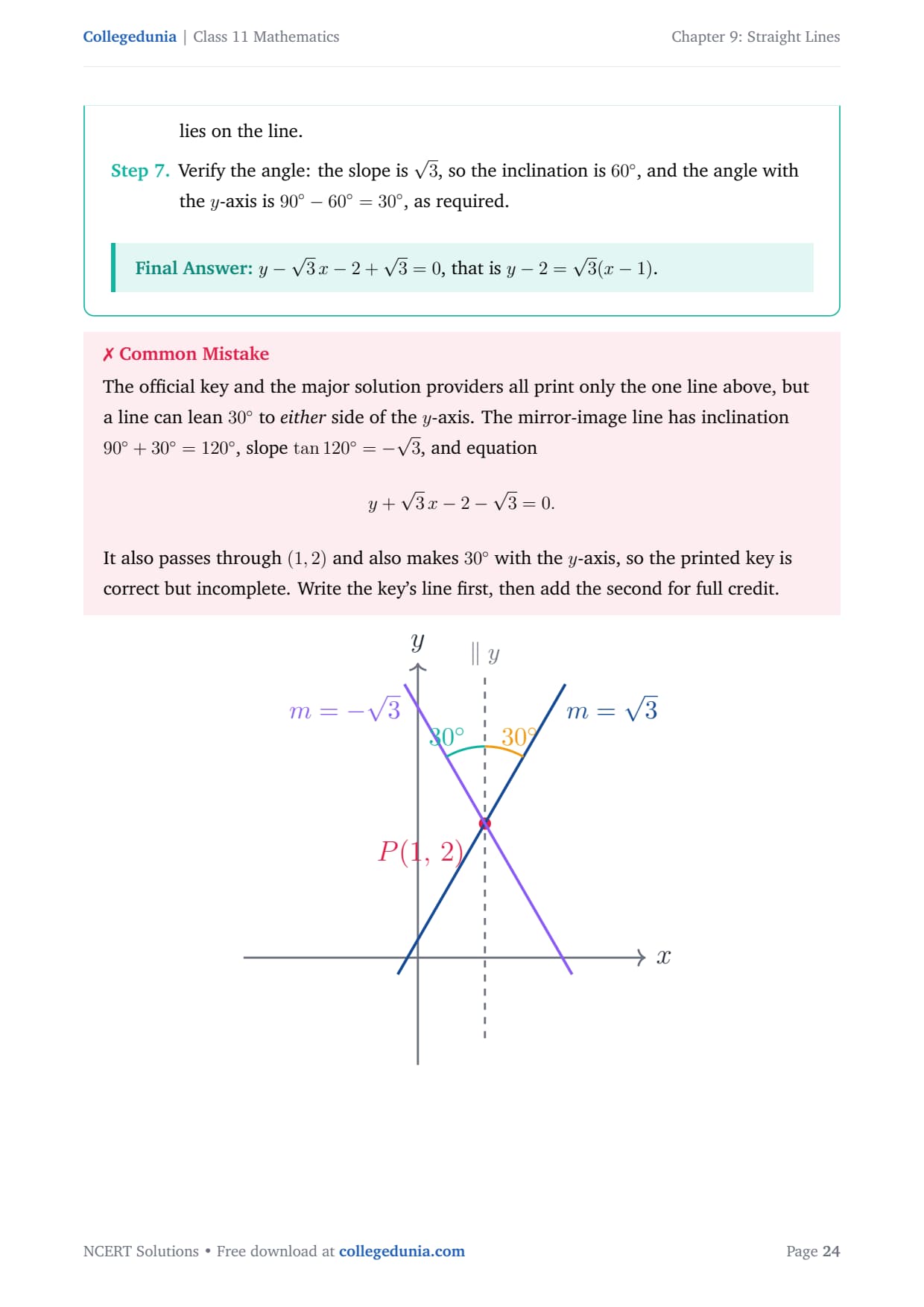
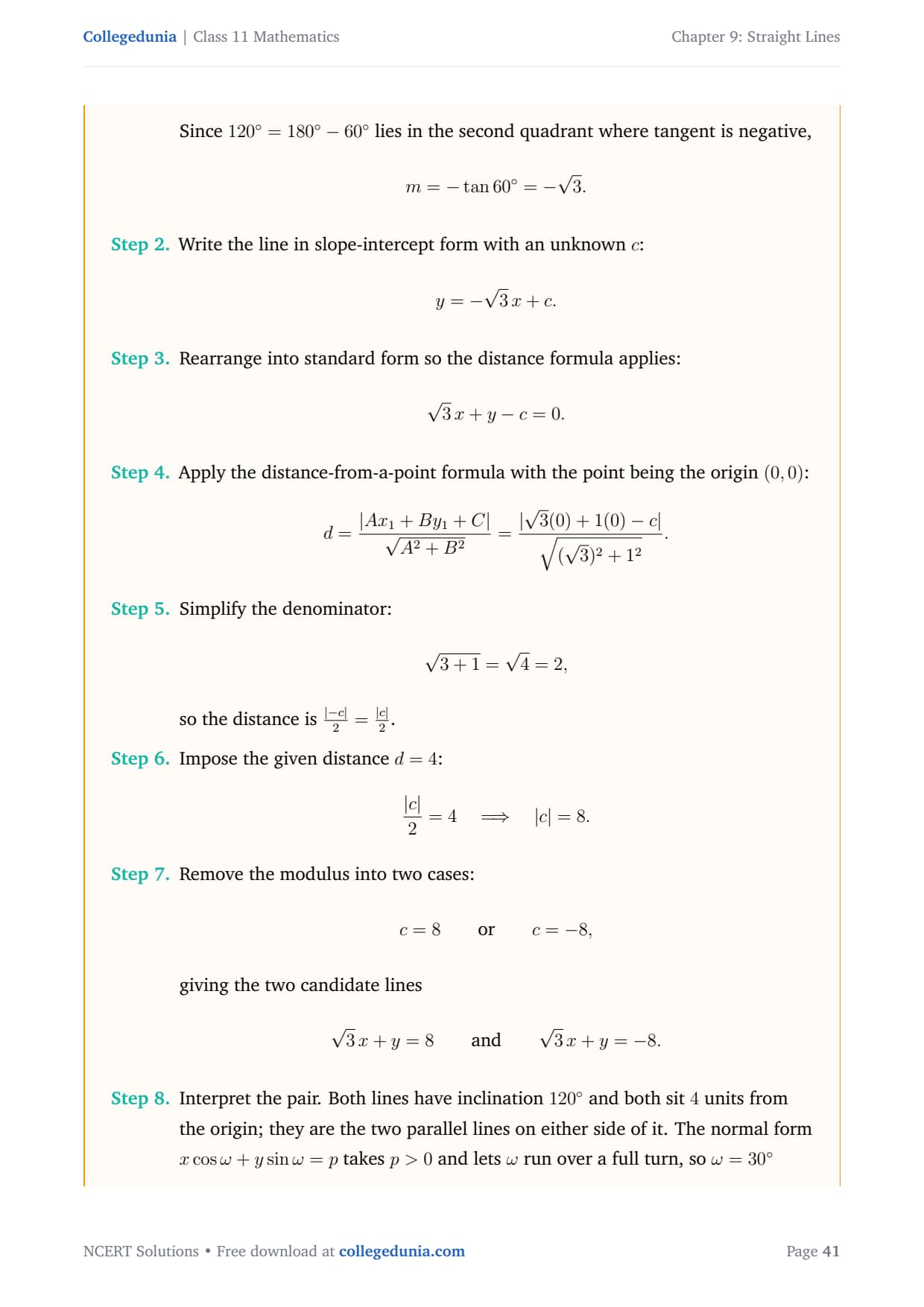
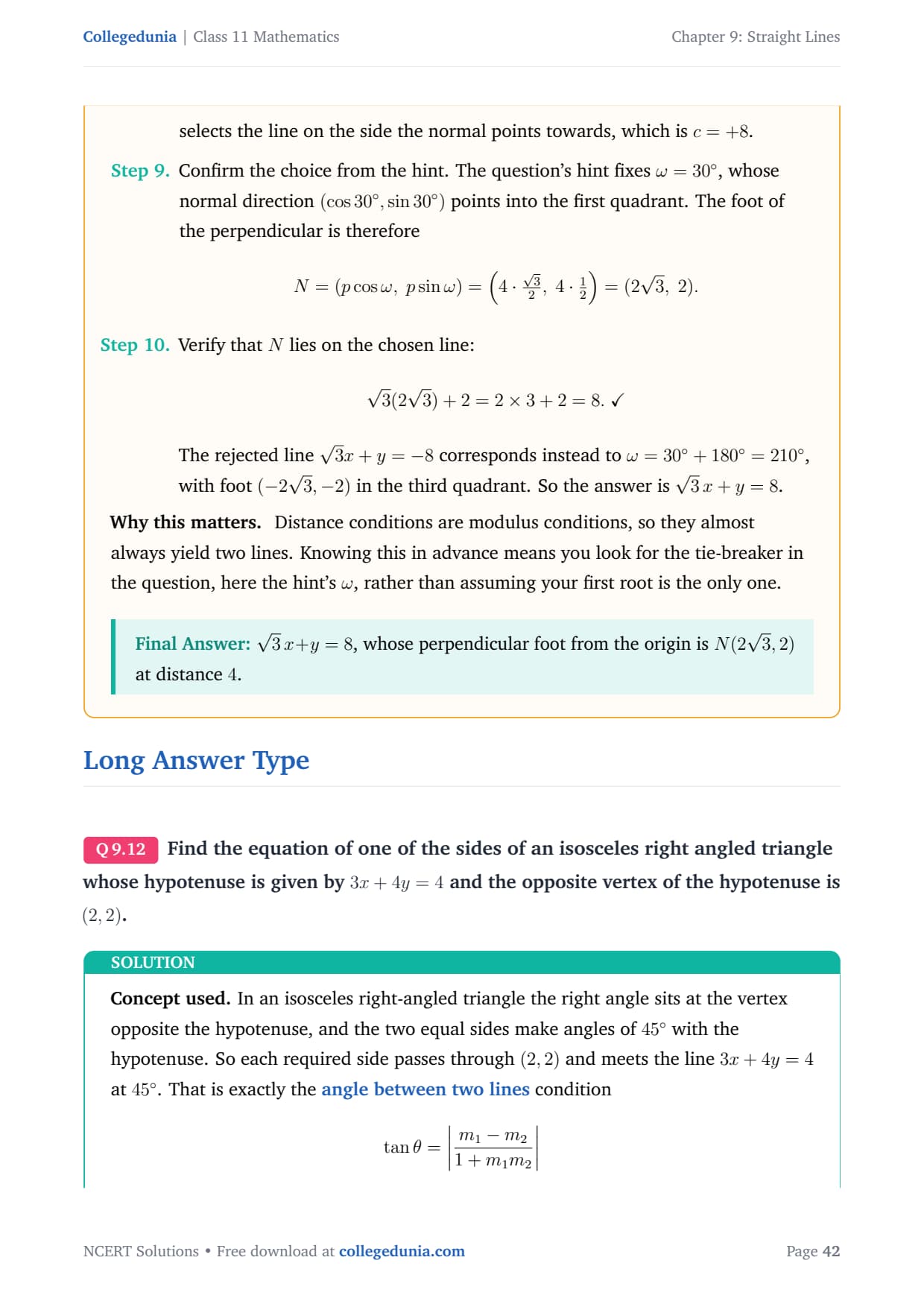
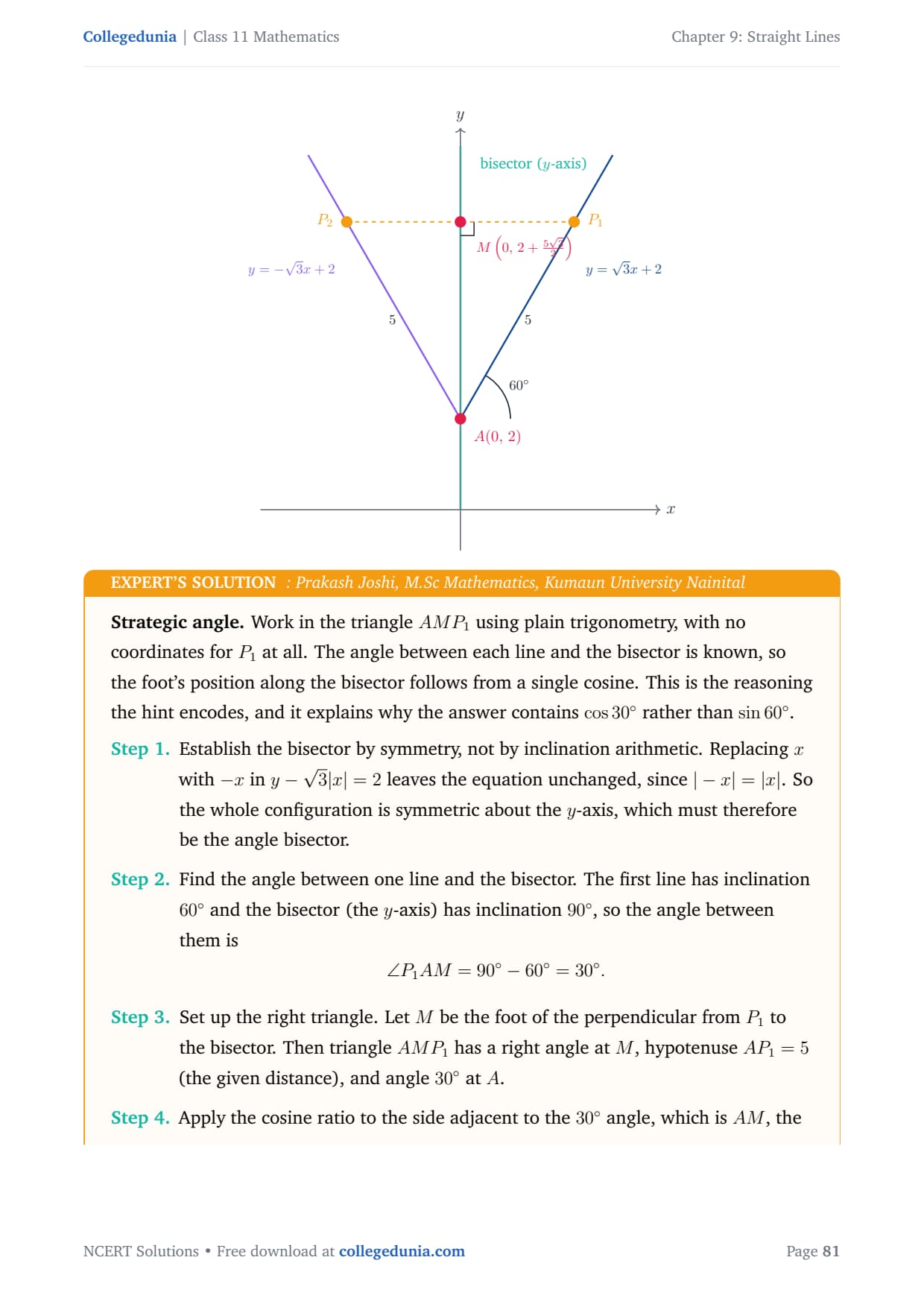
Q7 is right but stops half way. The question asks for the lines through (1, 2) making 30° with the y-axis, and the plural is the hint. A line can lean 30° to either side of the y-axis. The key gives only the first. The mirror image has inclination 90° + 30° = 120°, slope tan 120° = −√3, and equation √3x + y − 2 − √3 = 0. It also passes through (1, 2) and also makes 30° with the y-axis. Write the key's line first, then add the second one for full credit.
Key Formulas Used in the Straight Lines Exemplar
Every question in this chapter is one of these formulas with the data disguised. Students should know the whole list before starting the exercise.
| Result | Statement | Where it is used |
|---|---|---|
| Slope | m = tan θ, or m = (y2 − y1) ÷ (x2 − x1) | Short Answer block, Q7 |
| Point-slope form | y − y1 = m(x − x1) | Nearly every construction question |
| Intercept form | x ÷ a + y ÷ b = 1 | Q9 and the intercept questions |
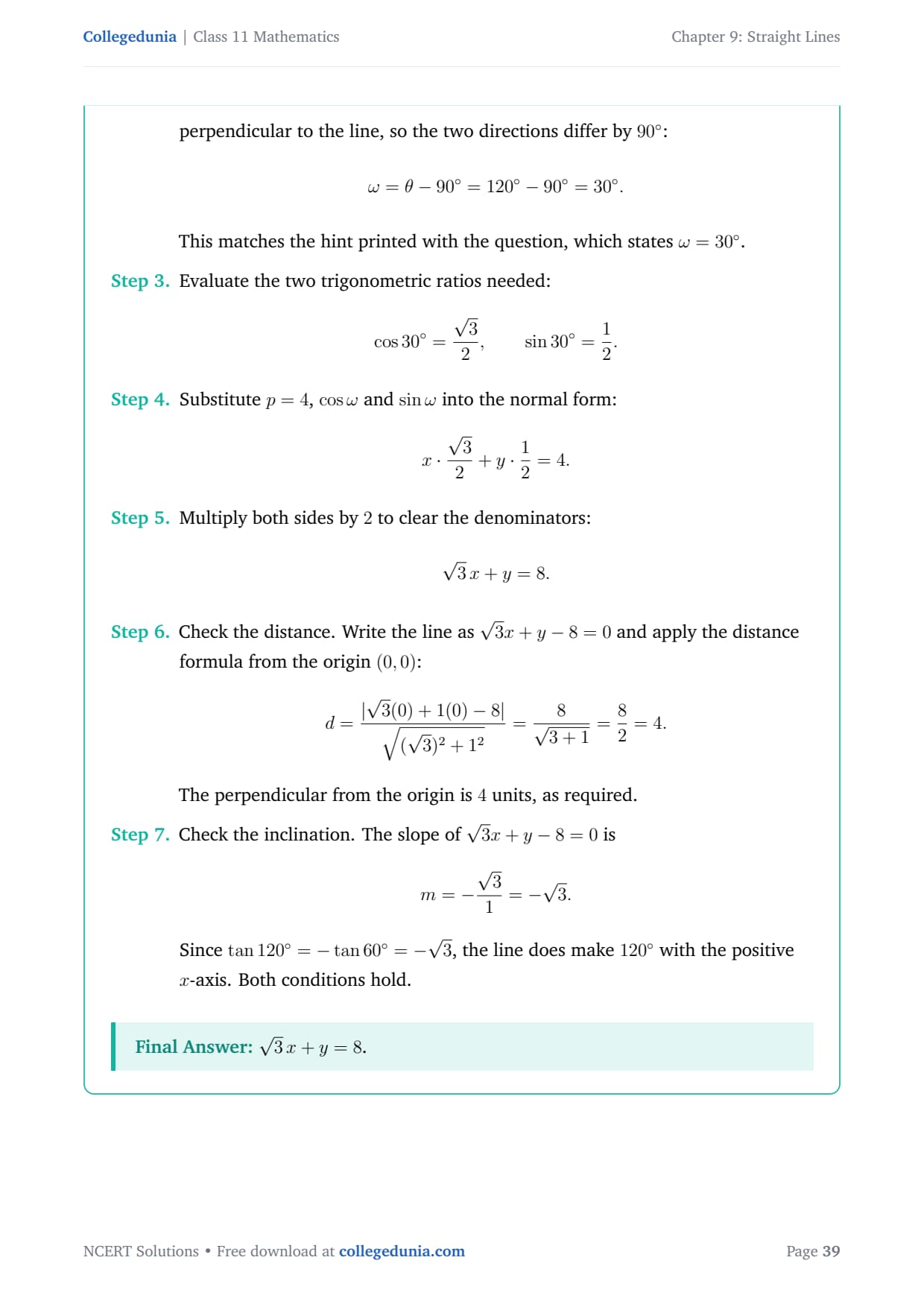
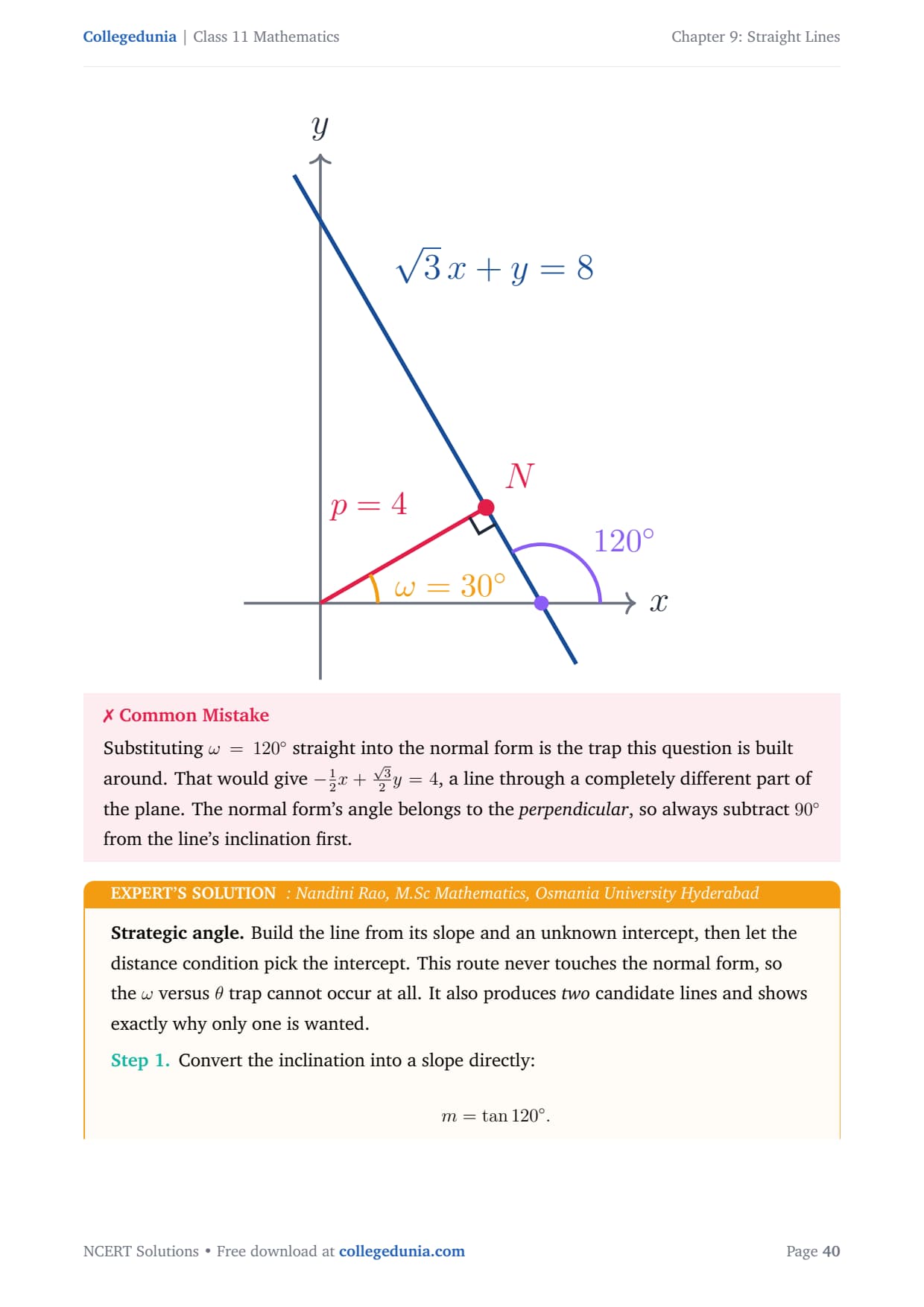
| Normal form | x cos ω + y sin ω = p, where ω is the angle of the perpendicular | Q11 |
| Angle between two lines | tan θ = |(m1 − m2) ÷ (1 + m1m2)| | Q12, triangle questions |
| Distance of a point from a line | d = |Ax1 + By1 + C| ÷ √(A2 + B2) | Objective block, Q46 |
| Distance between parallel lines | d = |C1 − C2| ÷ √(A2 + B2) | Objective block |
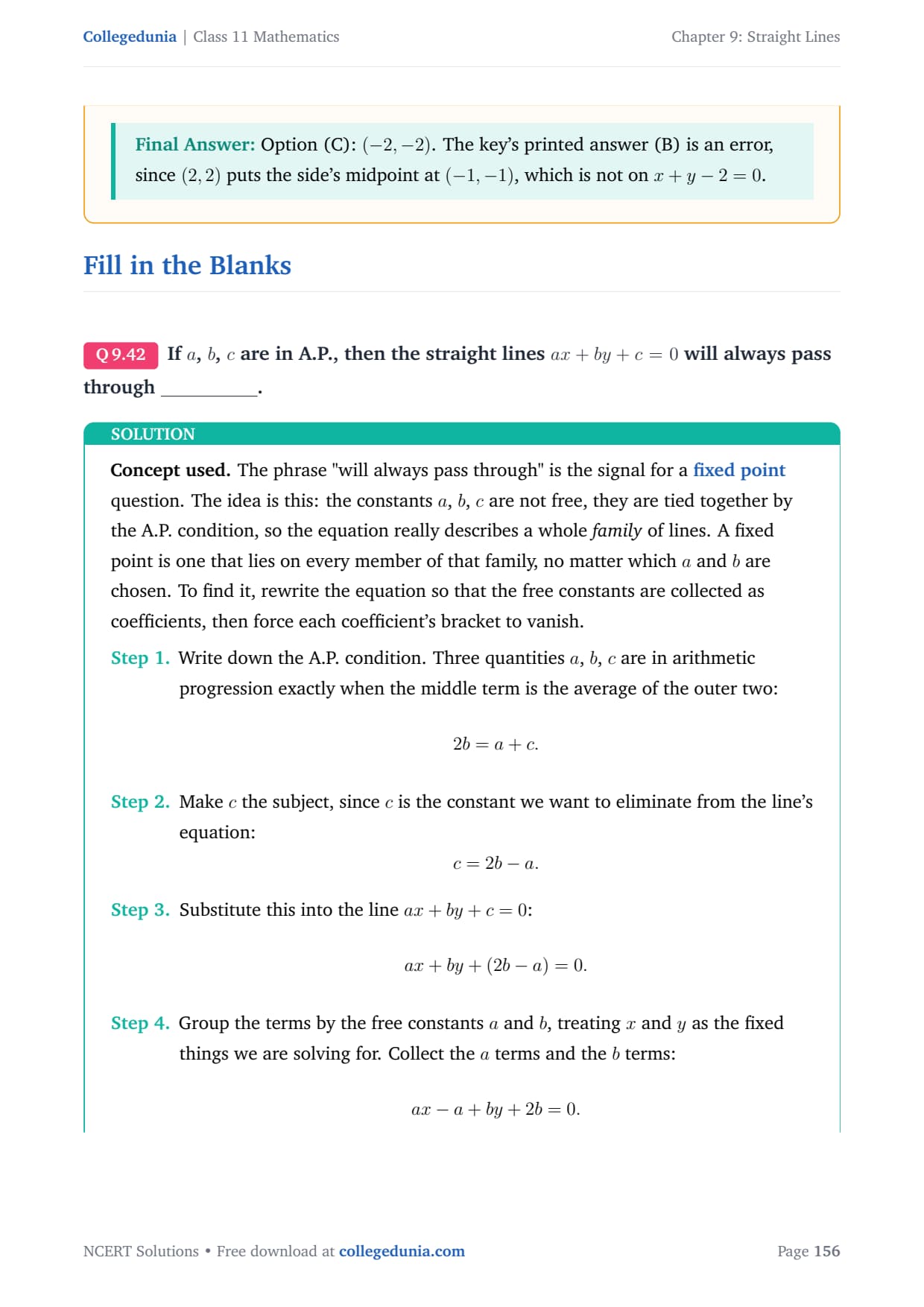
| Family of lines | L1 + λL2 = 0 passes through the intersection of L1 and L2 | Fill in the Blanks, fixed-point questions |
Tip: the single most useful habit in this chapter is reading the sign of Ax1 + By1 + C rather than its modulus. The modulus answers "how far". The sign answers "which side", and that is what Q45 and several True/False questions actually ask.
Common Mistakes Students Make in the Straight Lines Exemplar
The Exemplar twists trigger the same wrong reflexes every year. These five cost the most marks in Straight Lines.
- Measuring the angle from the wrong axis. Slope is measured against the x-axis. An angle given against the y-axis must be converted first, and the normal form's angle belongs to the perpendicular, not to the line.
- Taking the modulus when the question asks about a side. Once you write |−15| = 15 you have two positive numbers and no way to answer. Drop the modulus for side, position and region questions.
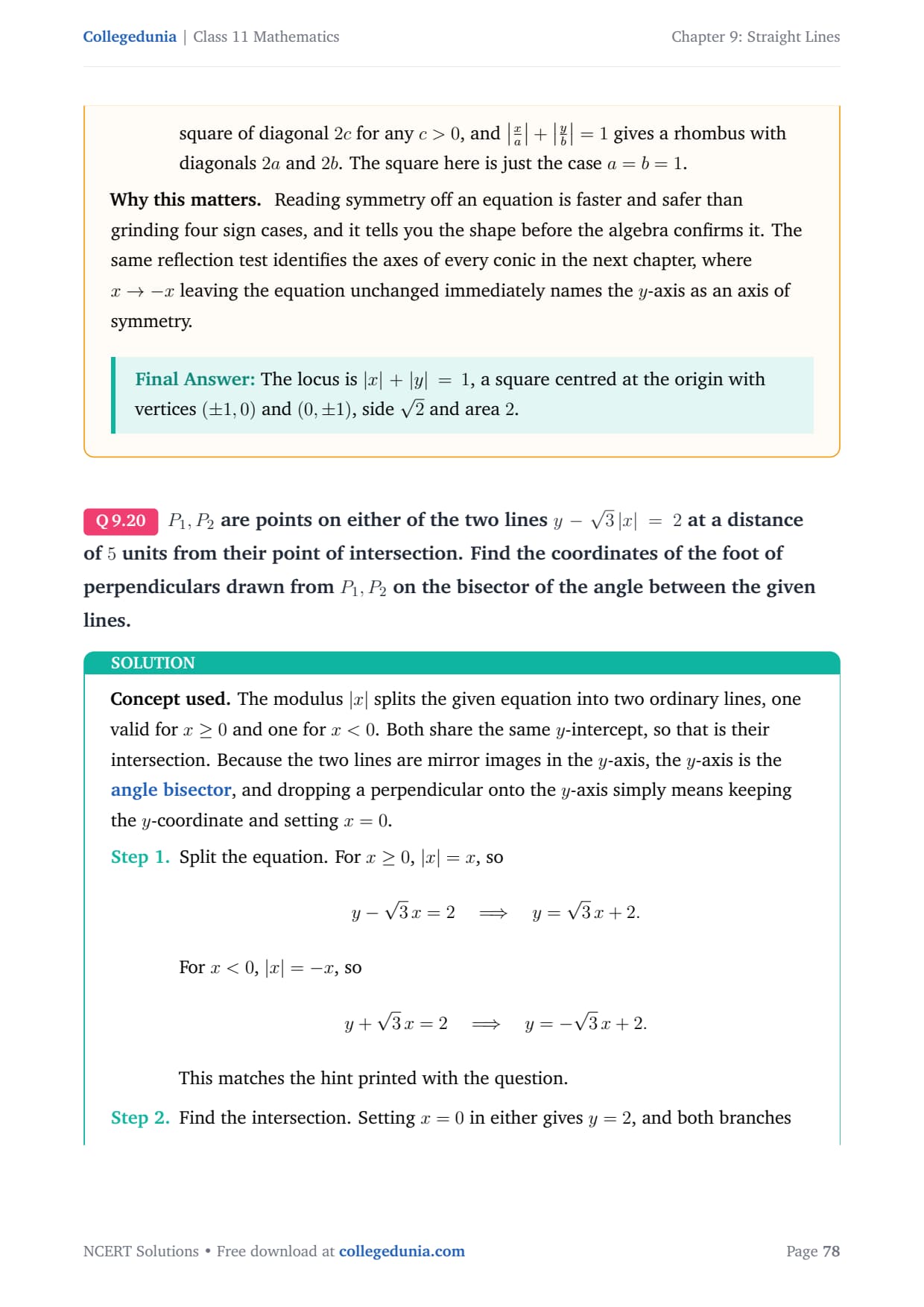
- Stopping after one root. The point condition usually produces a quadratic, so two lines are expected. The plural "lines" in the question is a deliberate hint.
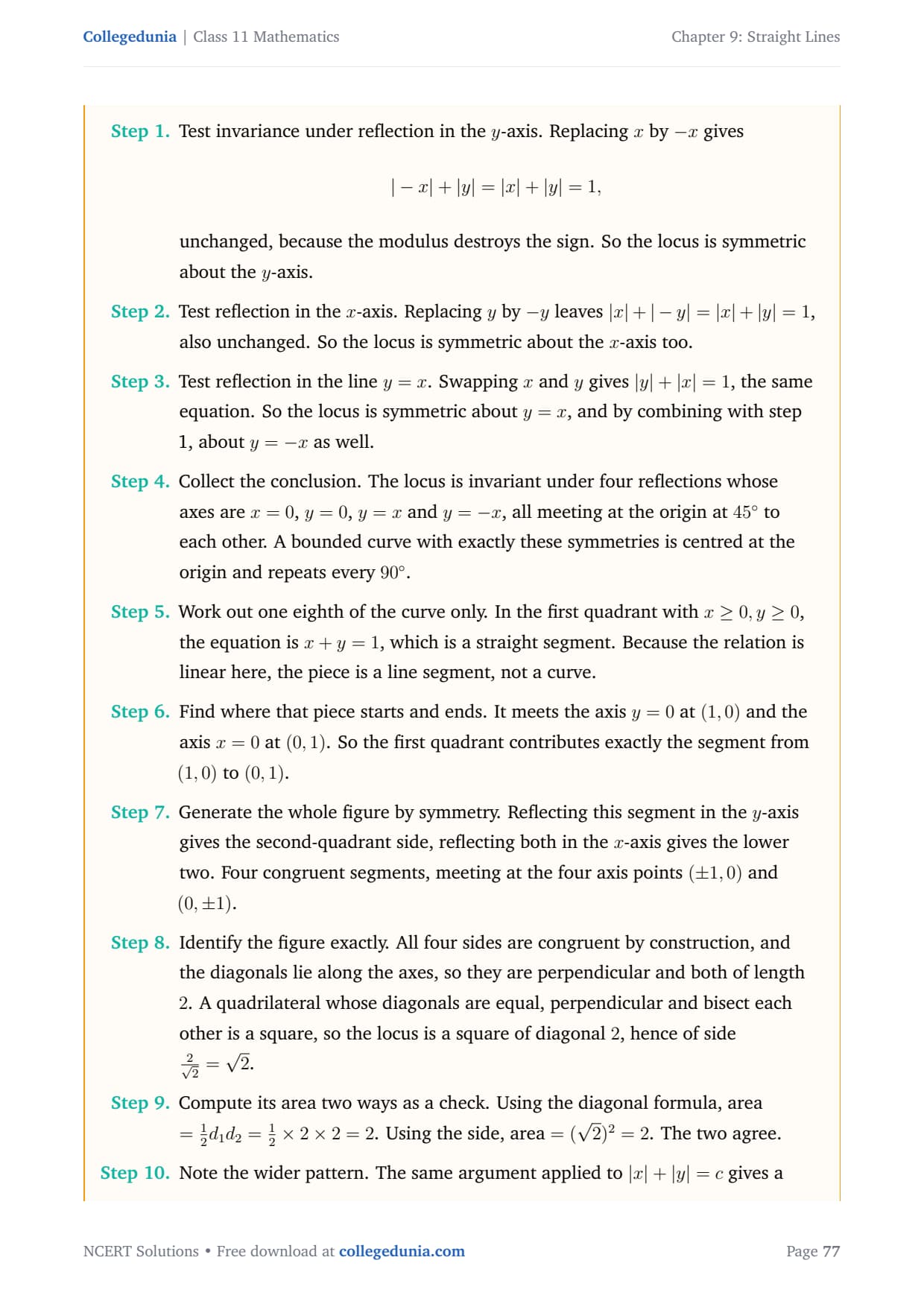
- Writing a locus as x + y = 1 and stopping. That is only the first-quadrant quarter. Distances are never negative, so keep the moduli until you split into all four cases.
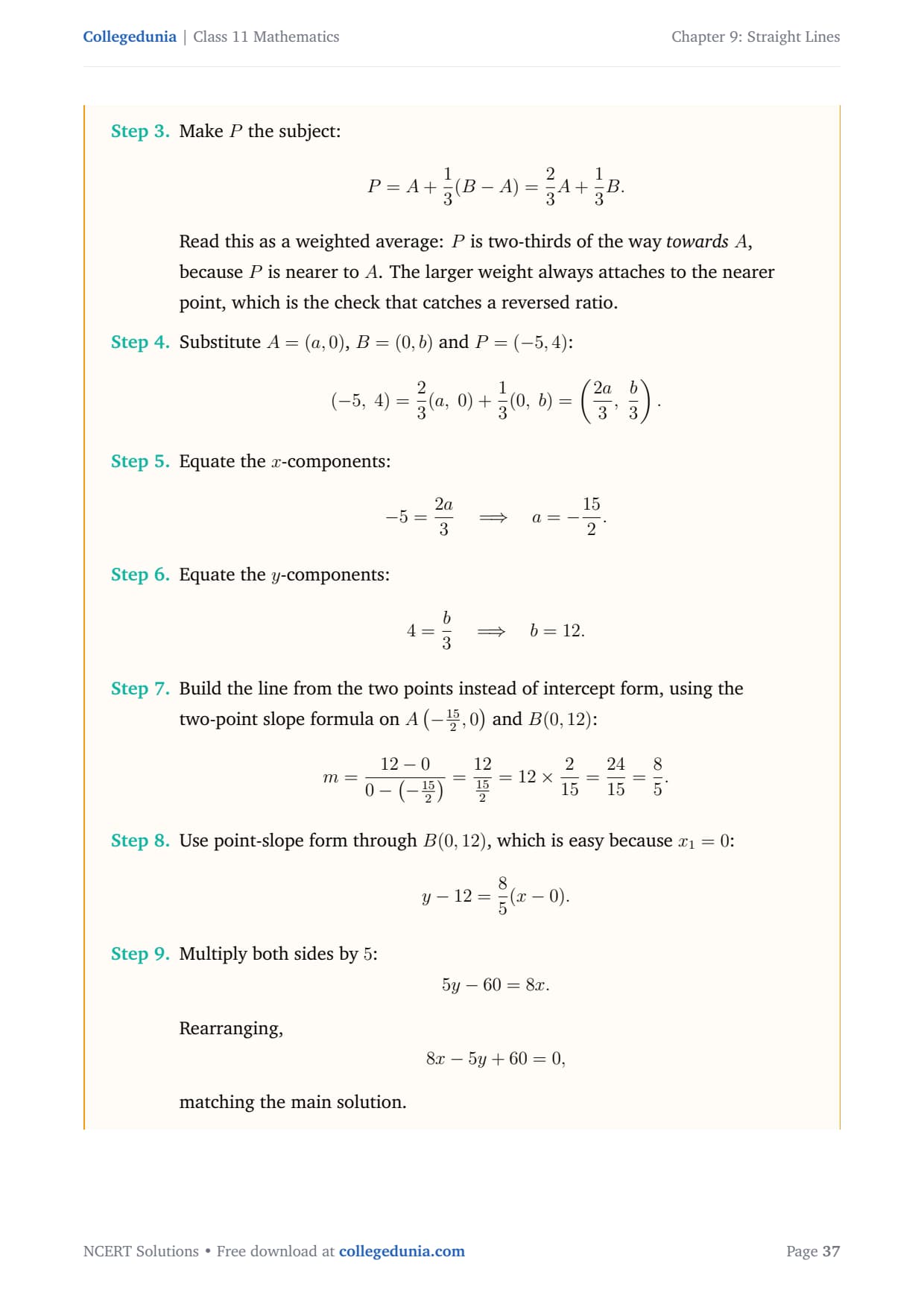
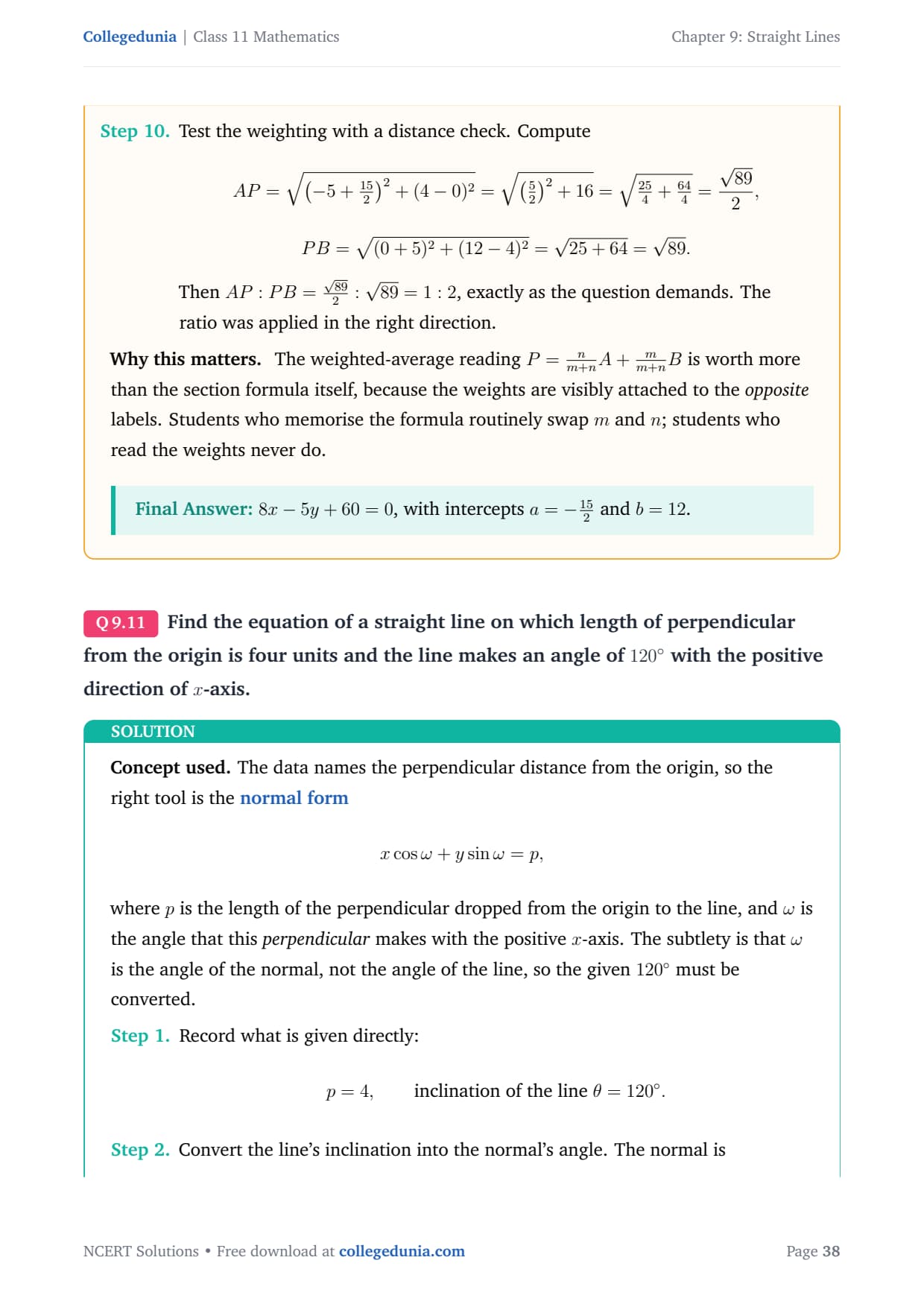
- Swapping the weights in the section formula. The weights attach to the opposite points. Sanity-check the answer instead: if AP : PB = 5 : 3, then P must sit nearer B.
How the Straight Lines Exemplar Steps Up from the NCERT Textbook
The Exemplar adds no new topics. It hands you the same data in a form you have to decode first, as the table shows.
| Concept | NCERT Textbook asks | NCERT Exemplar asks |
|---|---|---|
| Slope | Find the slope through two given points | Convert an angle given against the y-axis, then find both possible lines |
| Standard forms | Write the line in normal form for a given ω | Work out ω from the line's inclination first |
| Distance | Find the distance of a point from a line | Use the signed value to decide which side the point is on |
| Triangles | Find the third vertex from two given ones | Build a side from a centroid and one line, then test the printed answer |
| Locus | Find the locus of a point equidistant from two points | Split a modulus condition into four cases and describe the full figure |
How to Use the Straight Lines Exemplar for Boards and JEE Preparation
Treat the exercise as five sittings, not one. Finish the NCERT textbook exercises first, because the Exemplar assumes students can already switch between the four standard forms without looking them up.
| Session | What to solve | Time |
|---|---|---|
| 1 | Short Answer Q1 to Q11 | 2 hours |
| 2 | Long Answer Q12 to Q21, full working written out | 2.5 hours |
| 3 | Objective Q22 to Q41 | 2 hours |
| 4 | Q42 to Q59 | 1.5 hours |
| 5 | Re-solve everything marked wrong, plus the four flagged key questions | 1 hour |
That is about 9 hours for the chapter, which is more than most Class 11 chapters need. For JEE Main and JEE Advanced, the 20-question Objective block and the distance formulas matter most. For CBSE Boards and CUET, the Long Answer locus and triangle problems are the better use of time.
Practice Questions for Class 11 Maths Straight Lines
After reading the solutions, students should test themselves on the same question types. The card below opens a set of solved practice questions with step-by-step answers for Straight Lines.
Practice Card: Solved Practice Questions for Class 11 Maths Straight Lines. Attempt each question, then check the solution.
Student Feedback
In a Collegedunia survey of 15,290 Class 11 students conducted before the 2026 exams, 74% of students said the 20-question Objective block was the part they got wrong most often. Only 8% of students had noticed that the printed key fails on four questions, including the equilateral-triangle vertex in Q41.
Other Resources for Class 11 Maths Straight Lines
Pair the Exemplar Solutions with the textbook solutions and the notes for full chapter revision. All the Straight Lines resources are linked below.
| Resource | Link |
|---|---|
| NCERT Solutions | Straight Lines Class 11 NCERT Solutions |
| Revision Notes | Straight Lines Class 11 Notes |
| Handwritten Notes | Straight Lines Class 11 Handwritten Notes |
| NCERT Book PDF | Straight Lines Class 11 NCERT Book PDF |
| Exemplar Book PDF | Straight Lines Class 11 NCERT Exemplar Book PDF |
NCERT Exemplar Solutions for Other Class 11 Maths Chapters
The full Class 11 Maths Exemplar set covers 14 chapters, 735 questions and 2,625 pages of solutions. Use the table to jump to any other chapter.
Straight Lines Class 11 Maths NCERT Exemplar Solutions FAQs
Ques. How many questions are there in the Class 11 Maths Straight Lines Exemplar?
Ans. Straight Lines has 59 questions, all in one exercise. They are split into 11 Short Answer, 10 Long Answer, 20 Objective, 6 Fill in the Blanks, 9 True/False and 3 Matching questions. Every one of them is solved in the PDF on this page.
Ques. Why does the Exemplar book show Straight Lines as Chapter 10?
Ans. The 2026-27 NCERT syllabus lists Straight Lines as Chapter 9, and this page follows that. The printed NCERT Exemplar book still uses its older order and prints the same chapter as Chapter 10, with all 59 questions in Exercise 10.3. The content is identical under both numbers.
Ques. Is the printed NCERT Exemplar answer key for Straight Lines correct?
Ans. Not fully. The key fails on four questions. Q41 gives (2, 2) when the answer is (−2, −2). Q12 and Q46 carry single-character misprints, giving −12 for +12 and 182 for 172. Q7 is correct but gives only one of the two lines. Each is explained on this page.
Ques. Why is the answer to Q41 of the Straight Lines Exemplar (−2, −2)?
Ans. Because the printed choice (2, 2) fails the question's own condition. If the vertex were (2, 2), the midpoint of the opposite side would be (−1, −1), and −1 − 1 − 2 = −4, not 0. So that midpoint would not lie on the side x + y − 2 = 0. Only (−2, −2) works.
Ques. Are the Class 11 Maths Straight Lines Exemplar Solutions free to download?
Ans. Yes. The Straight Lines NCERT Exemplar Solutions PDF is free to download from this page. It runs to 223 pages, solves every question step by step according to the 2026-27 NCERT Exemplar, and helps students prepare for CBSE Boards, JEE Main, JEE Advanced and CUET.



Comments