



NCERT Exemplar Solutions for Class 11 Chemistry Chapter 8 Organic Chemistry Some Basic Principles and Techniques solve all 66 questions from the Exemplar book. Every MCQ, Short Answer, Matching, Assertion and Reason and Long Answer problem is solved step by step in the free 248-page PDF, updated for the 2026-27 syllabus.
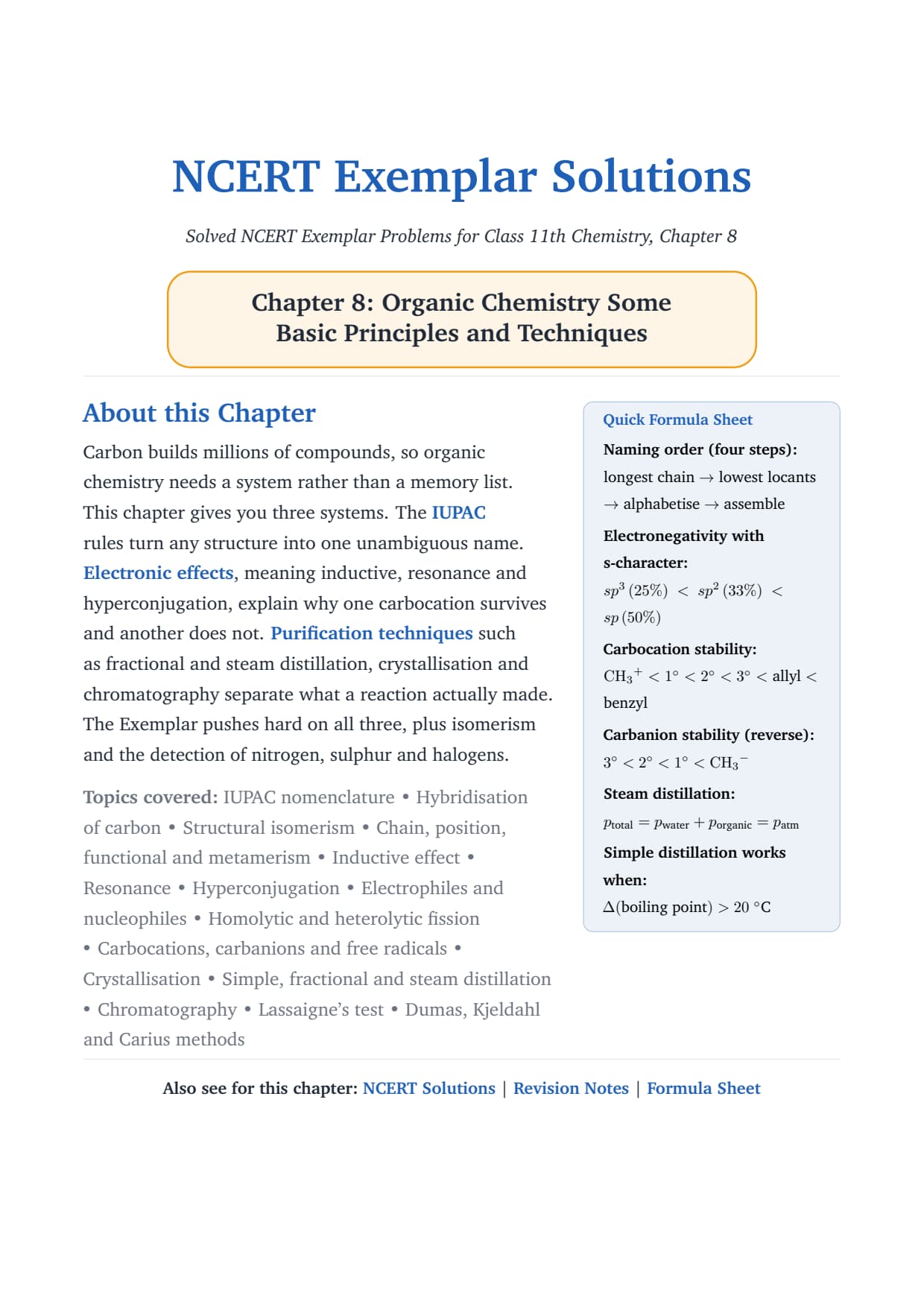
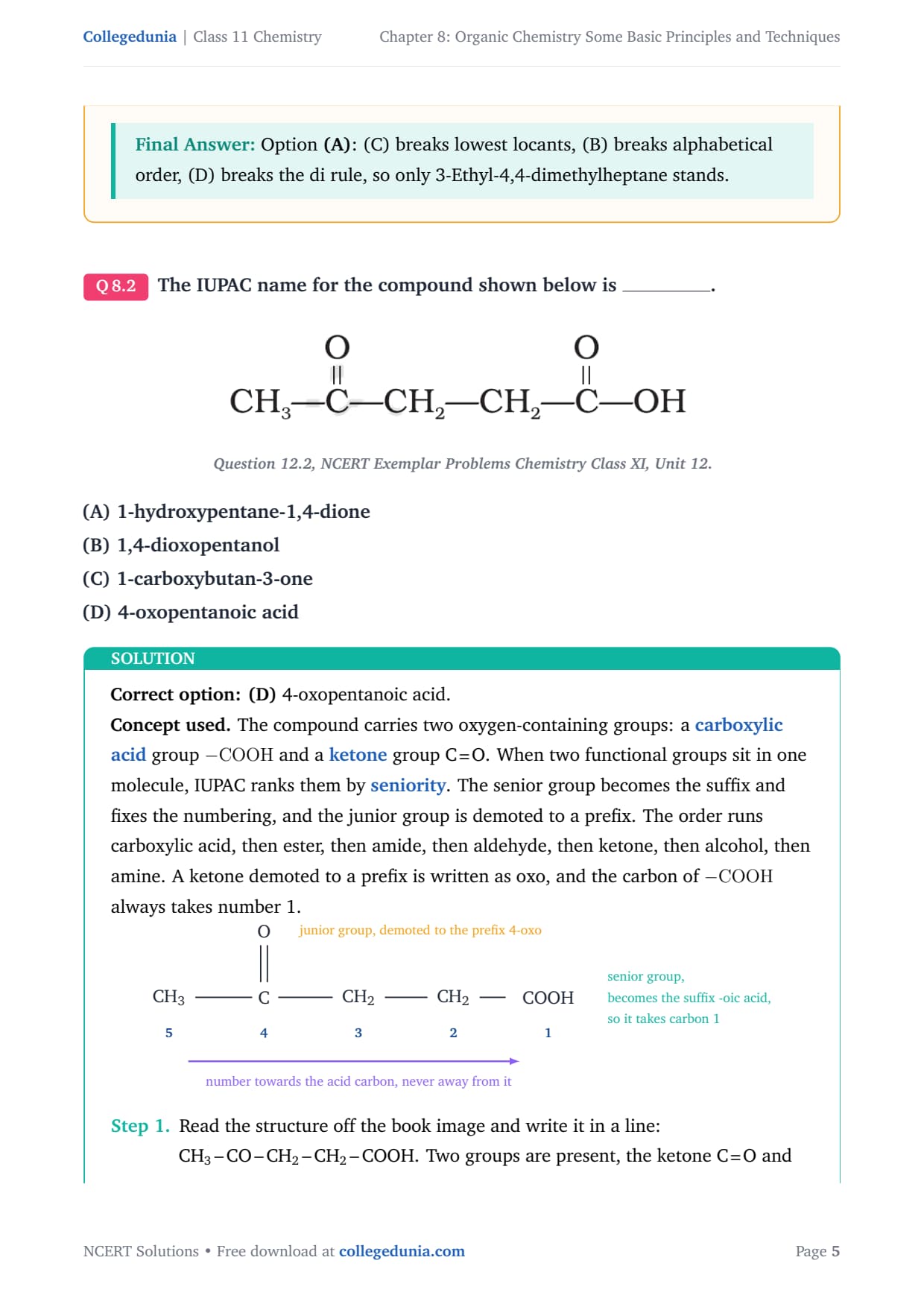
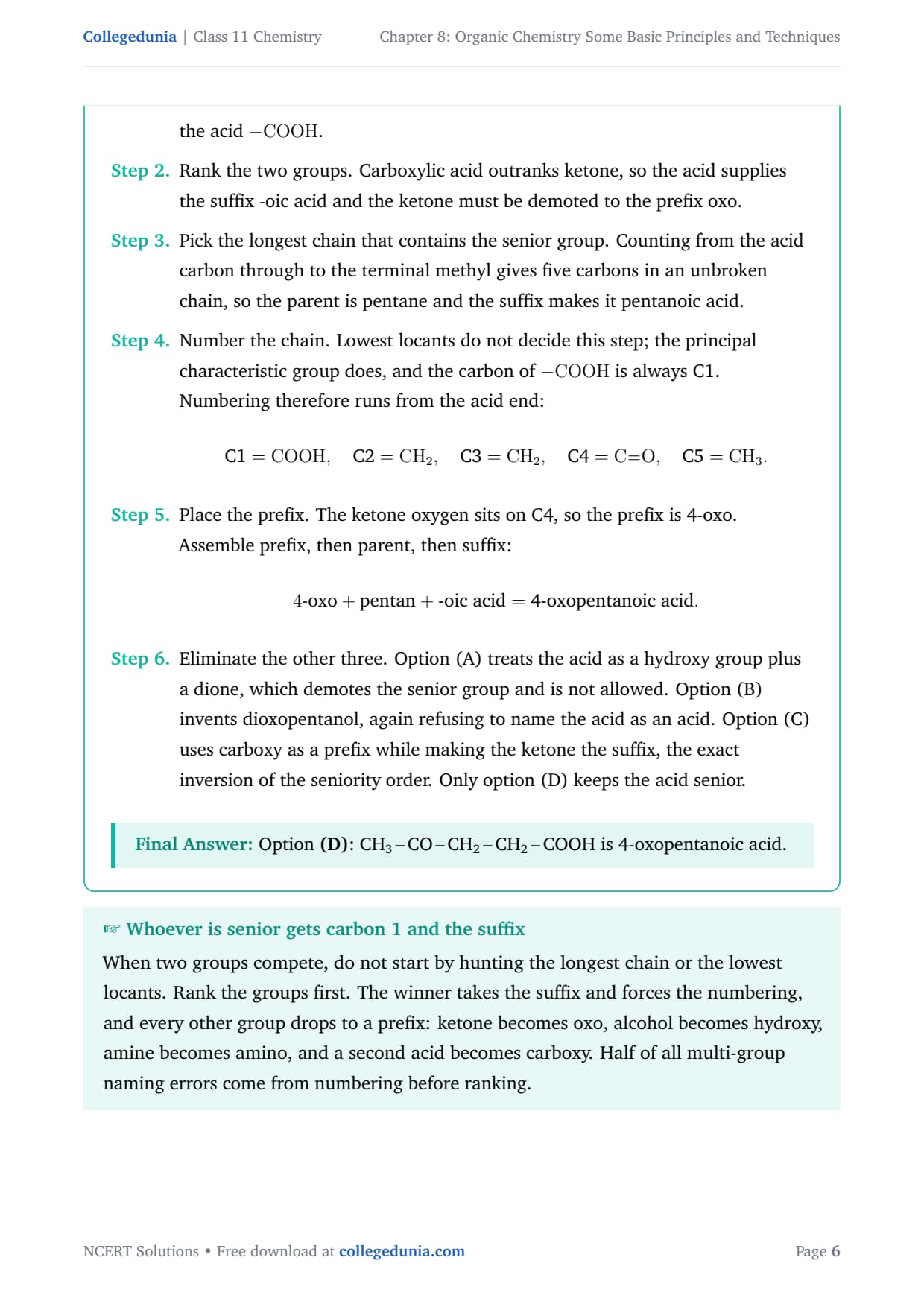
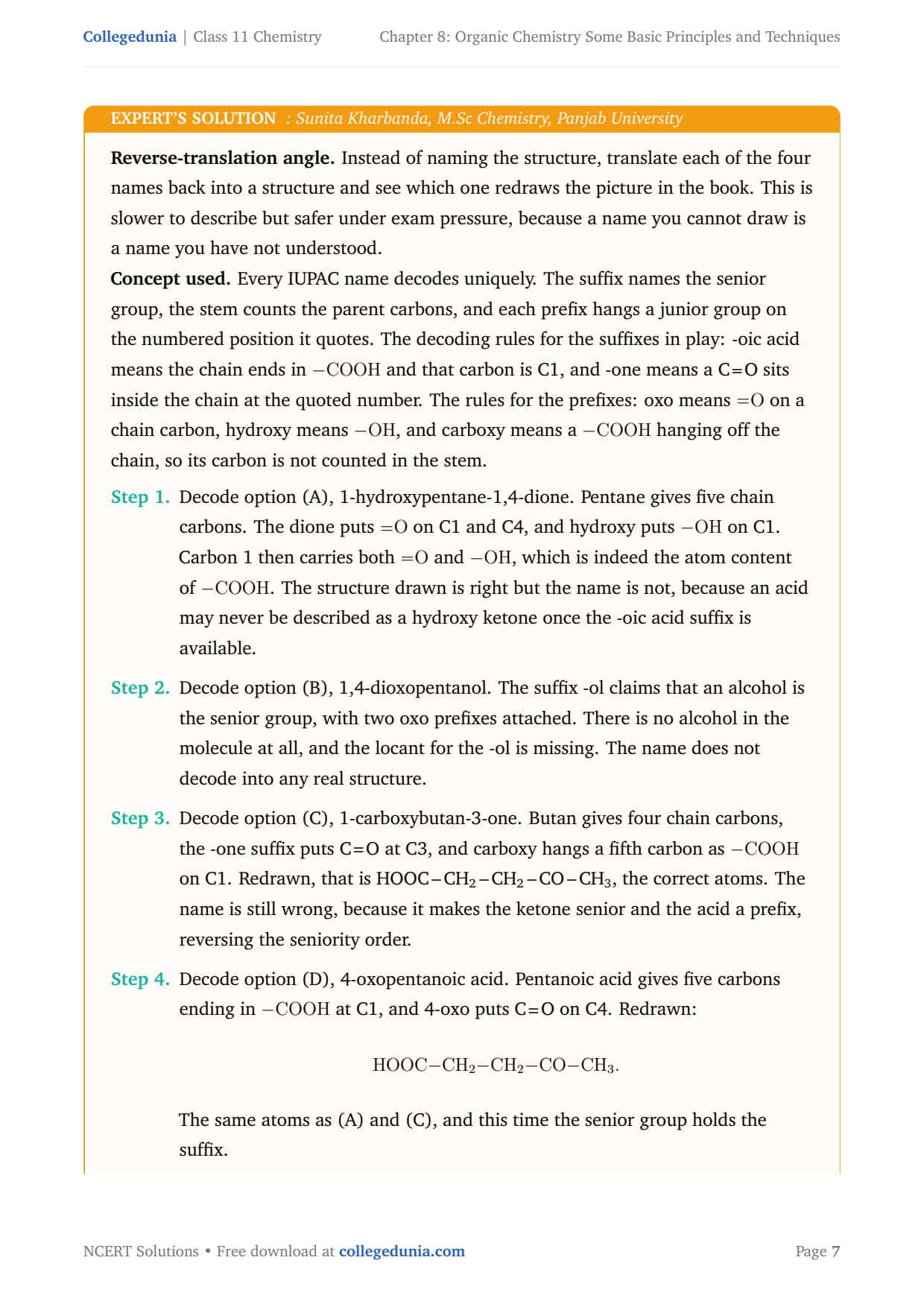
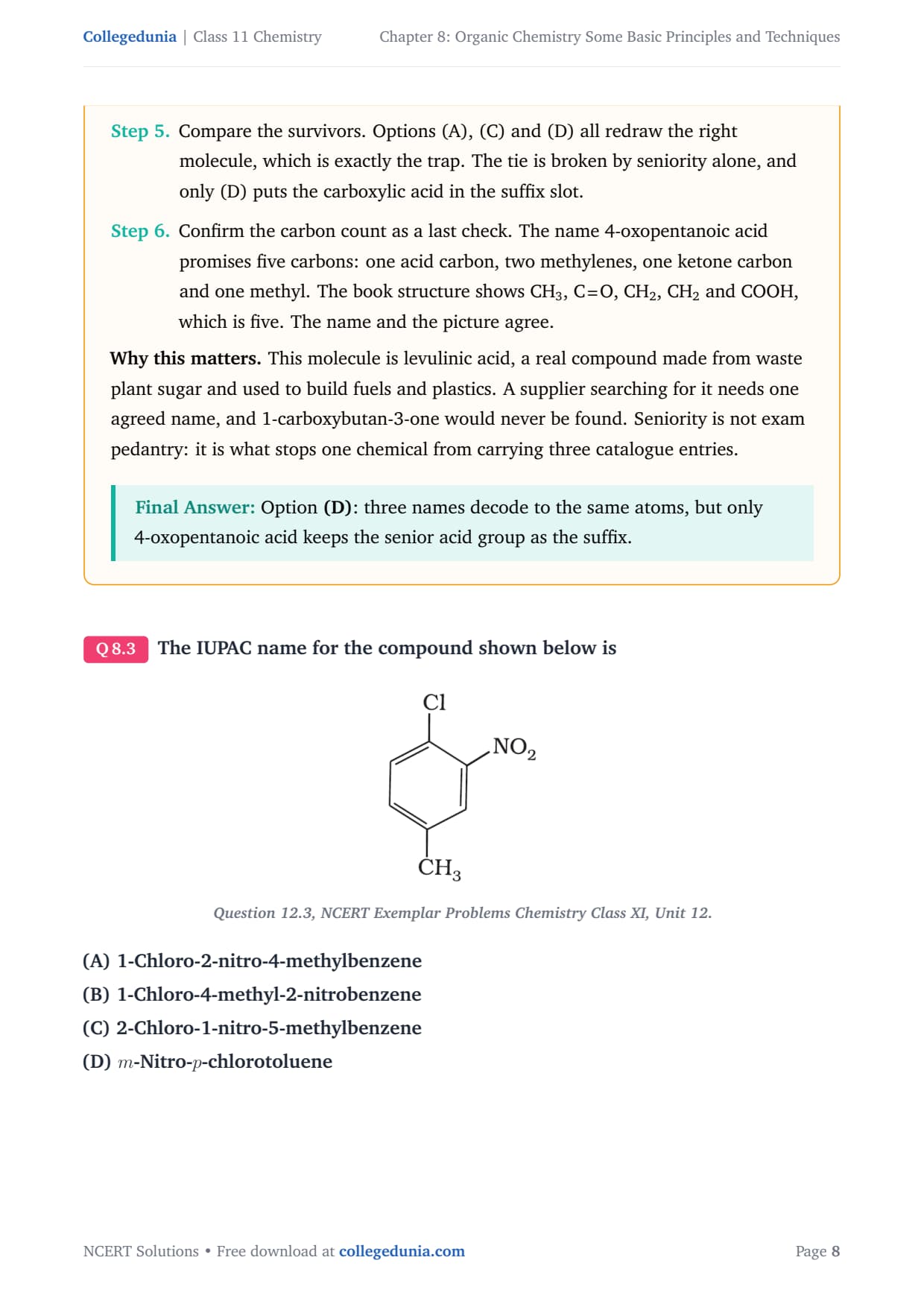
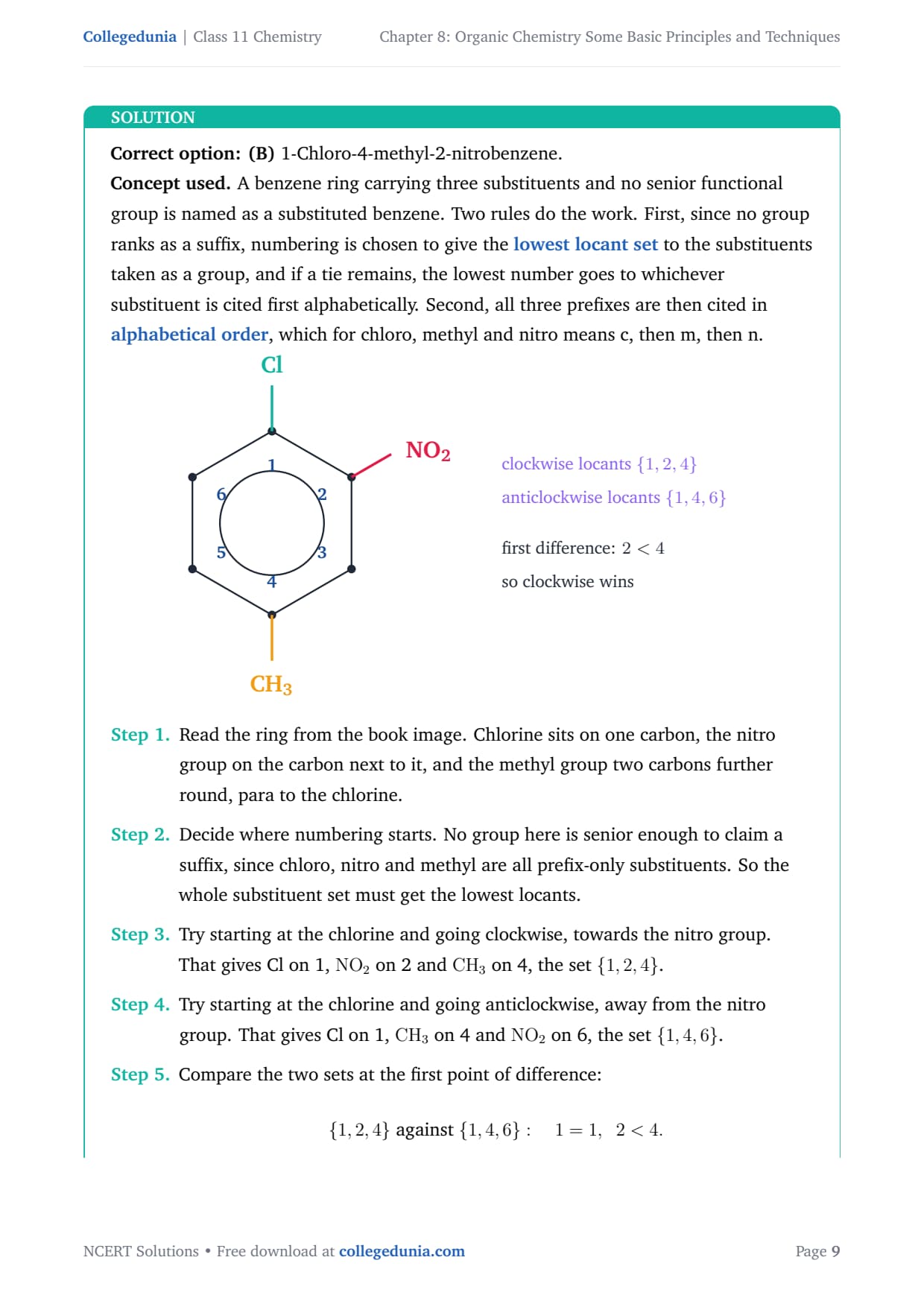
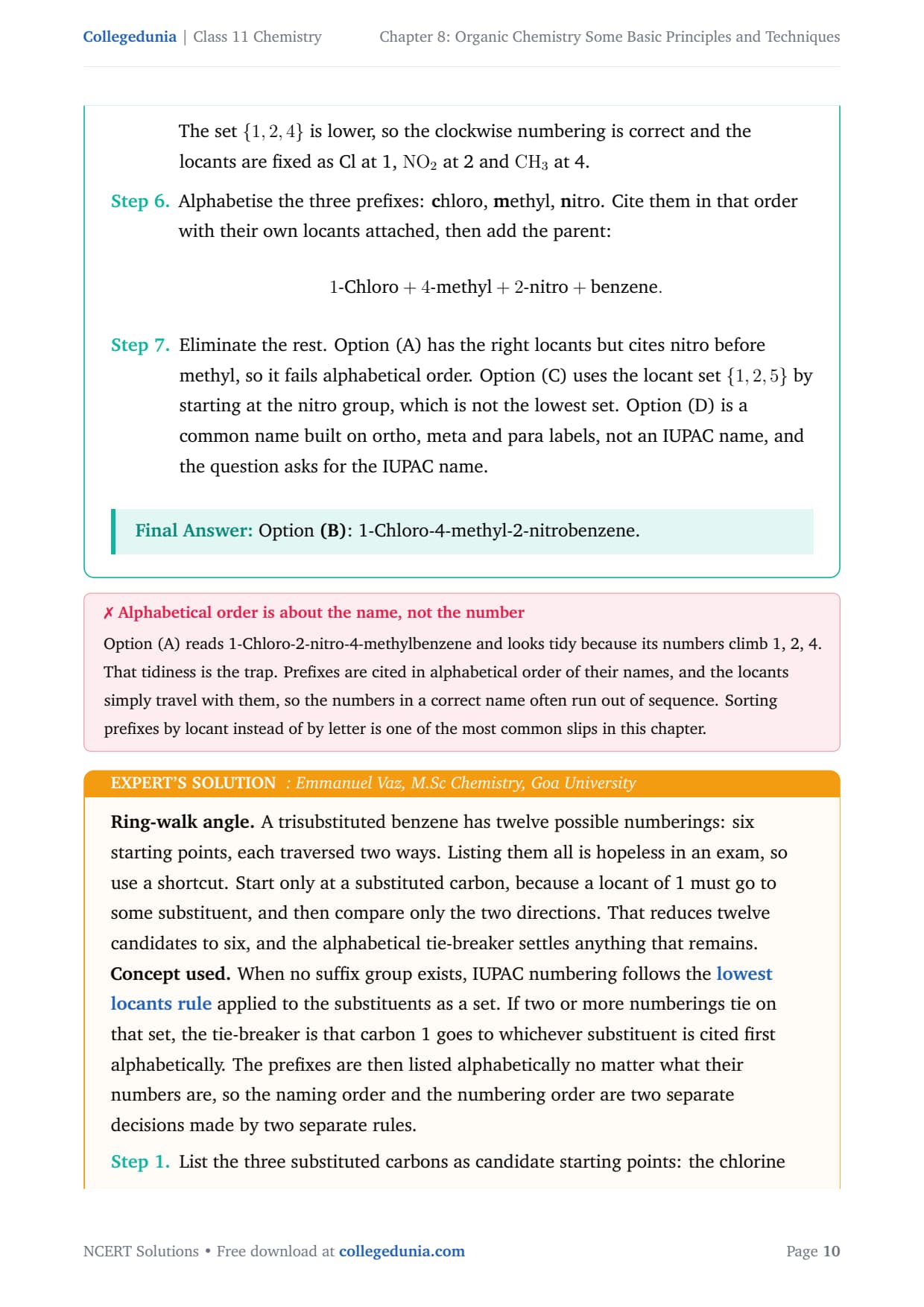
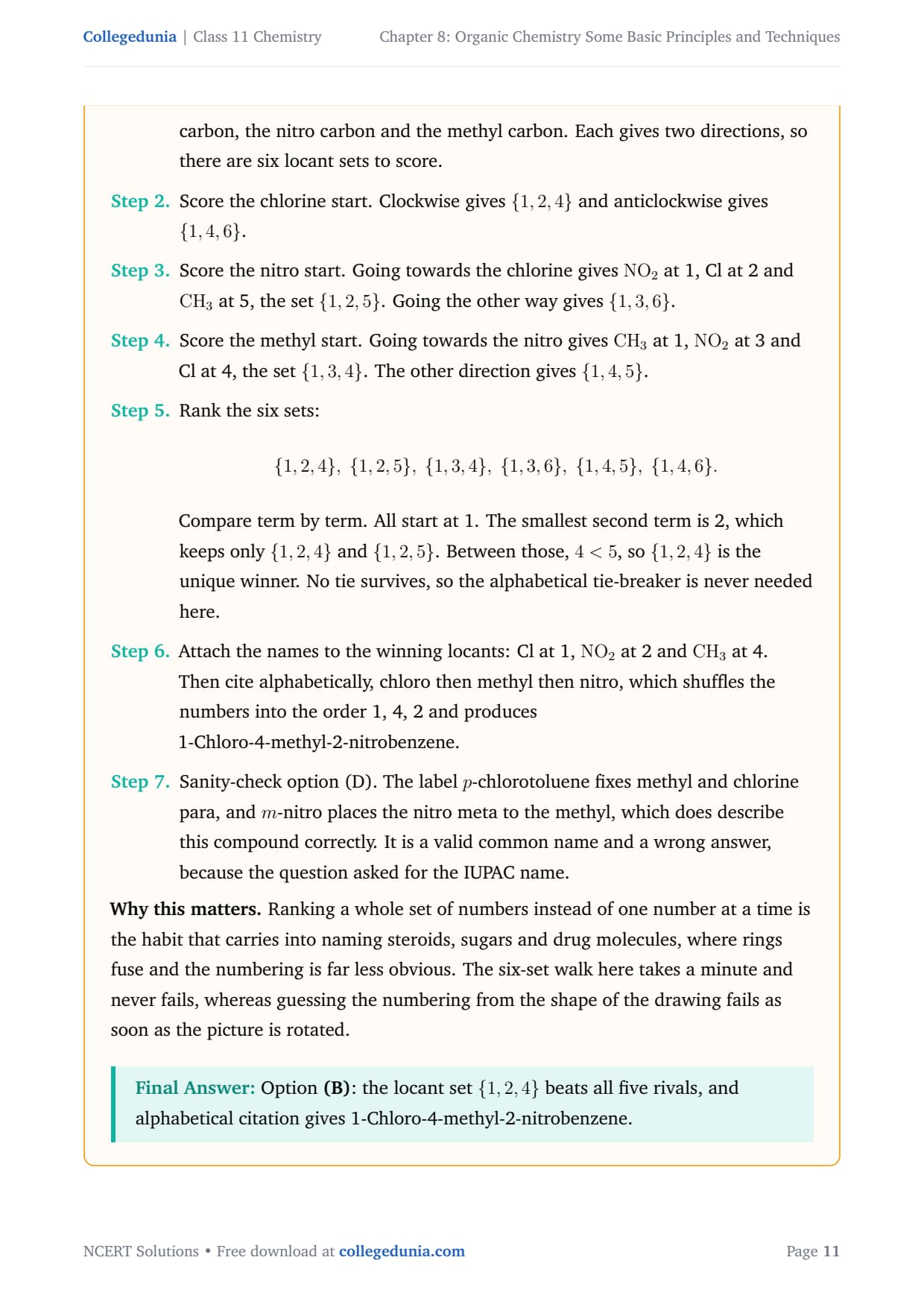
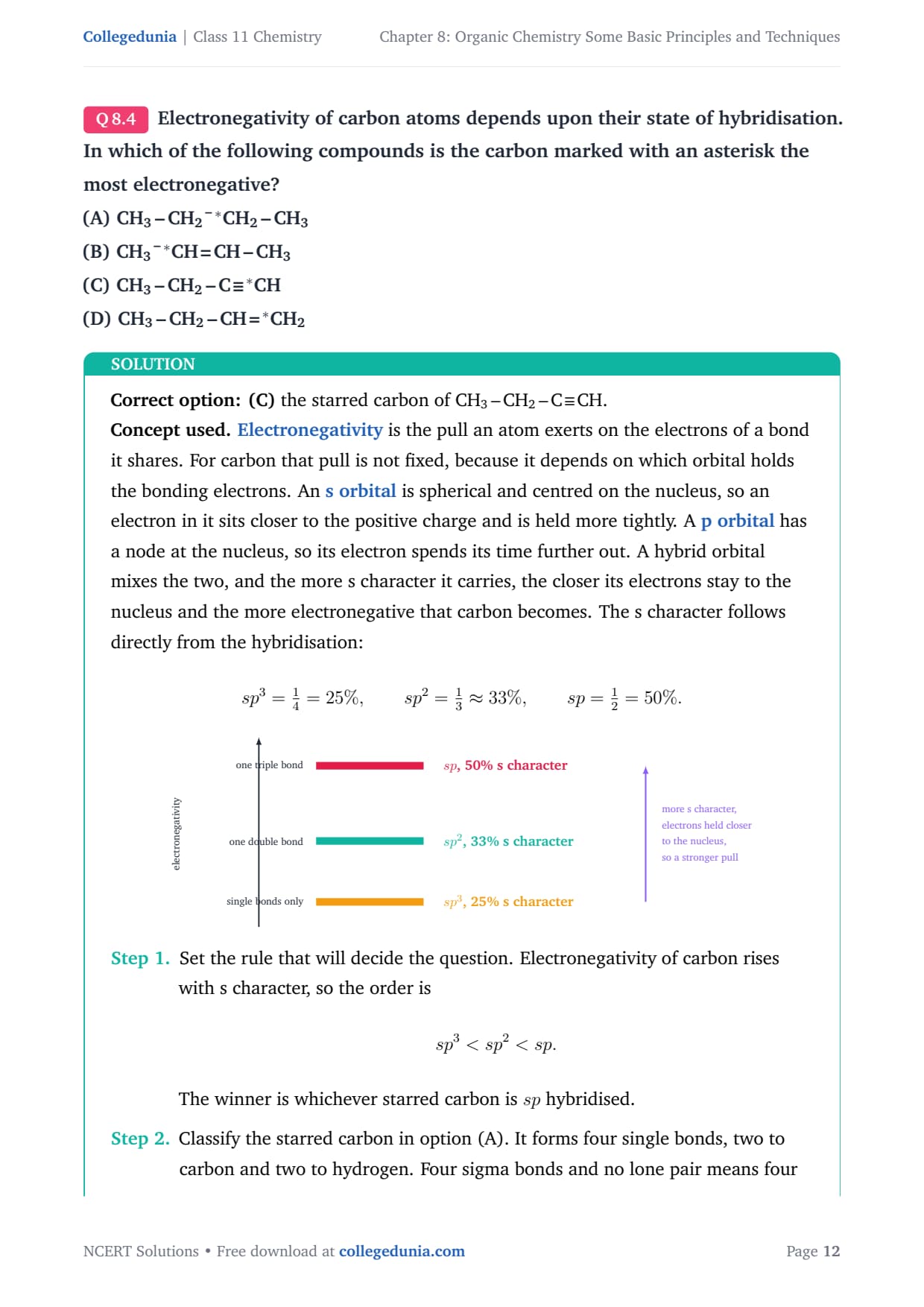
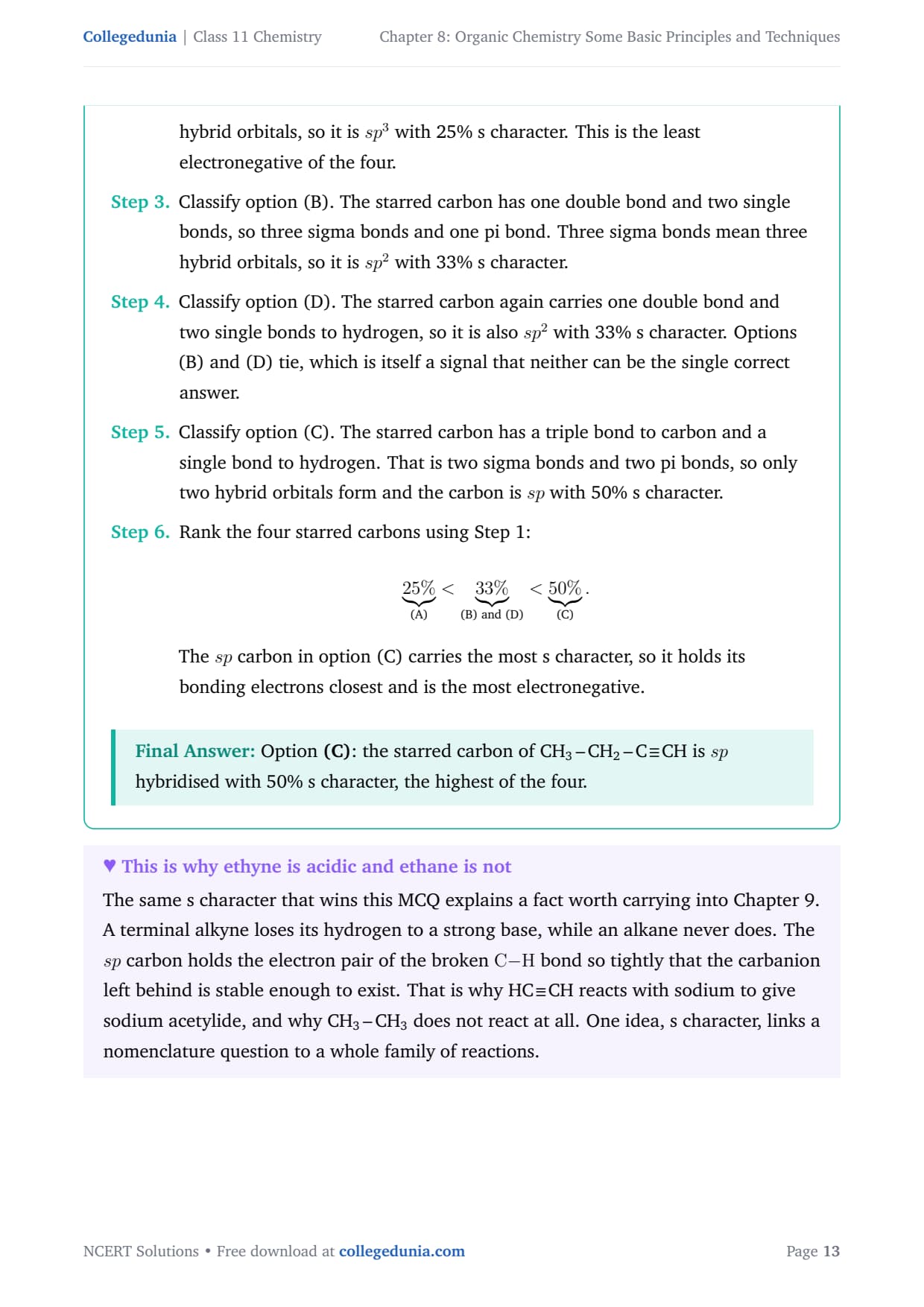
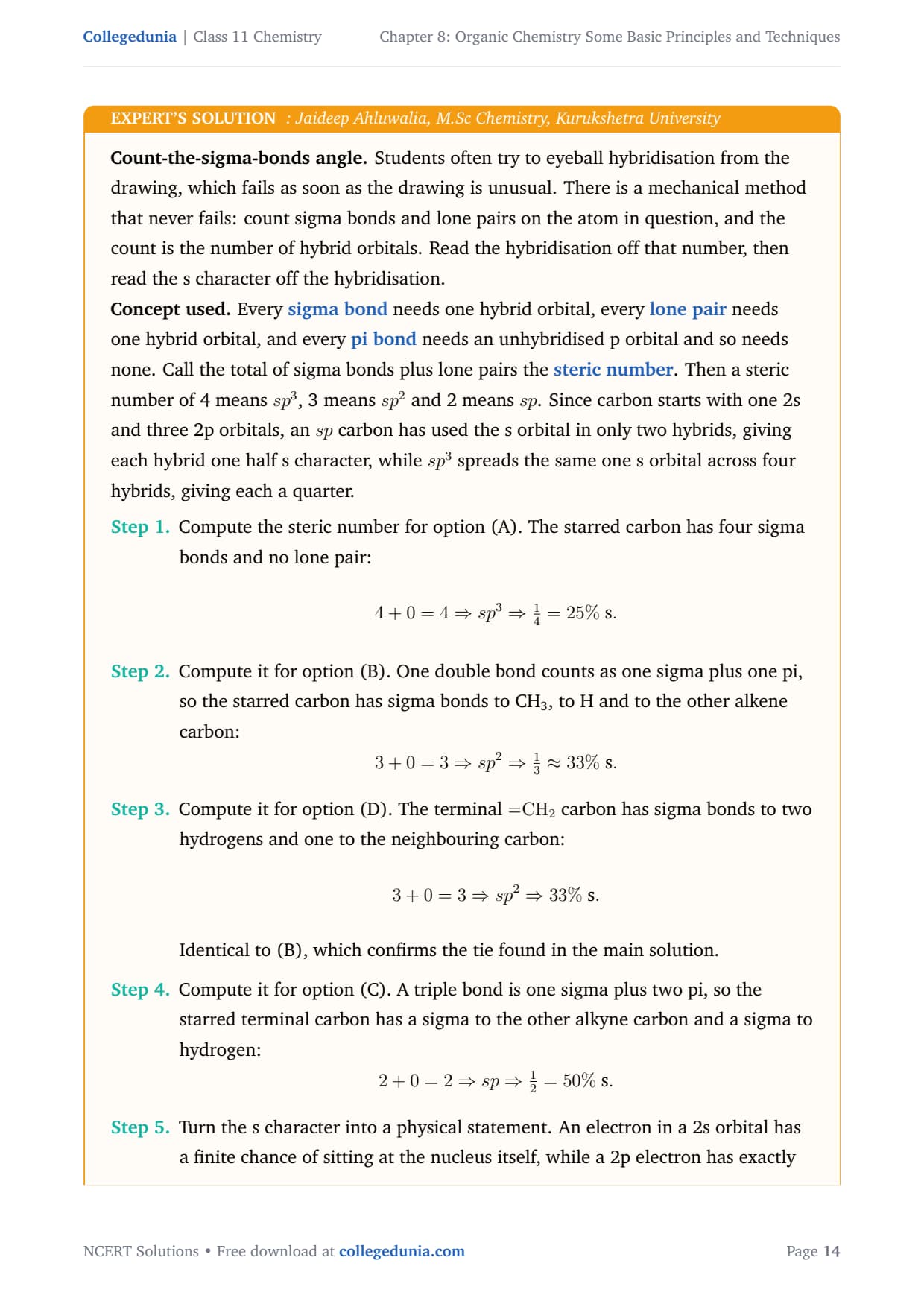
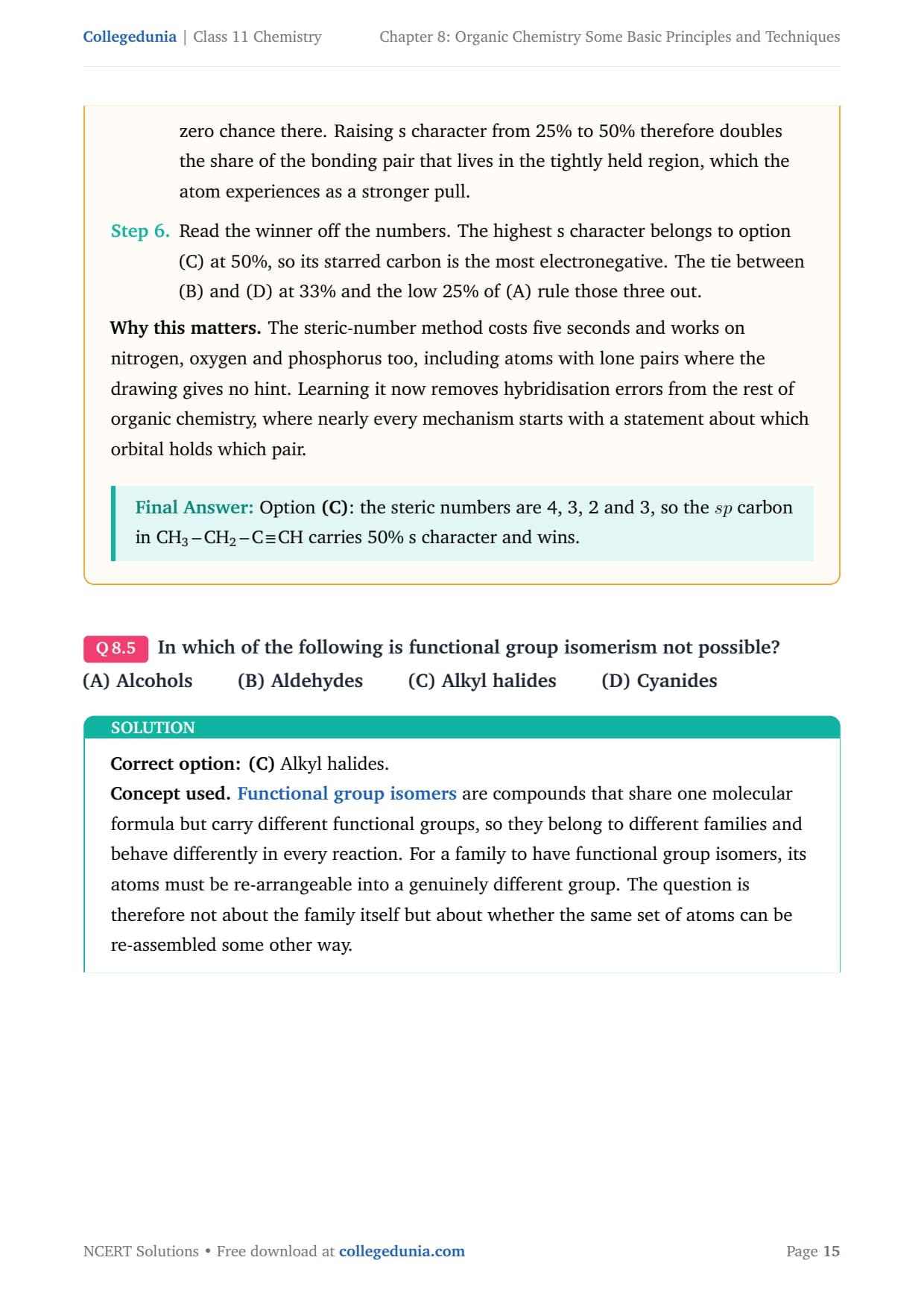
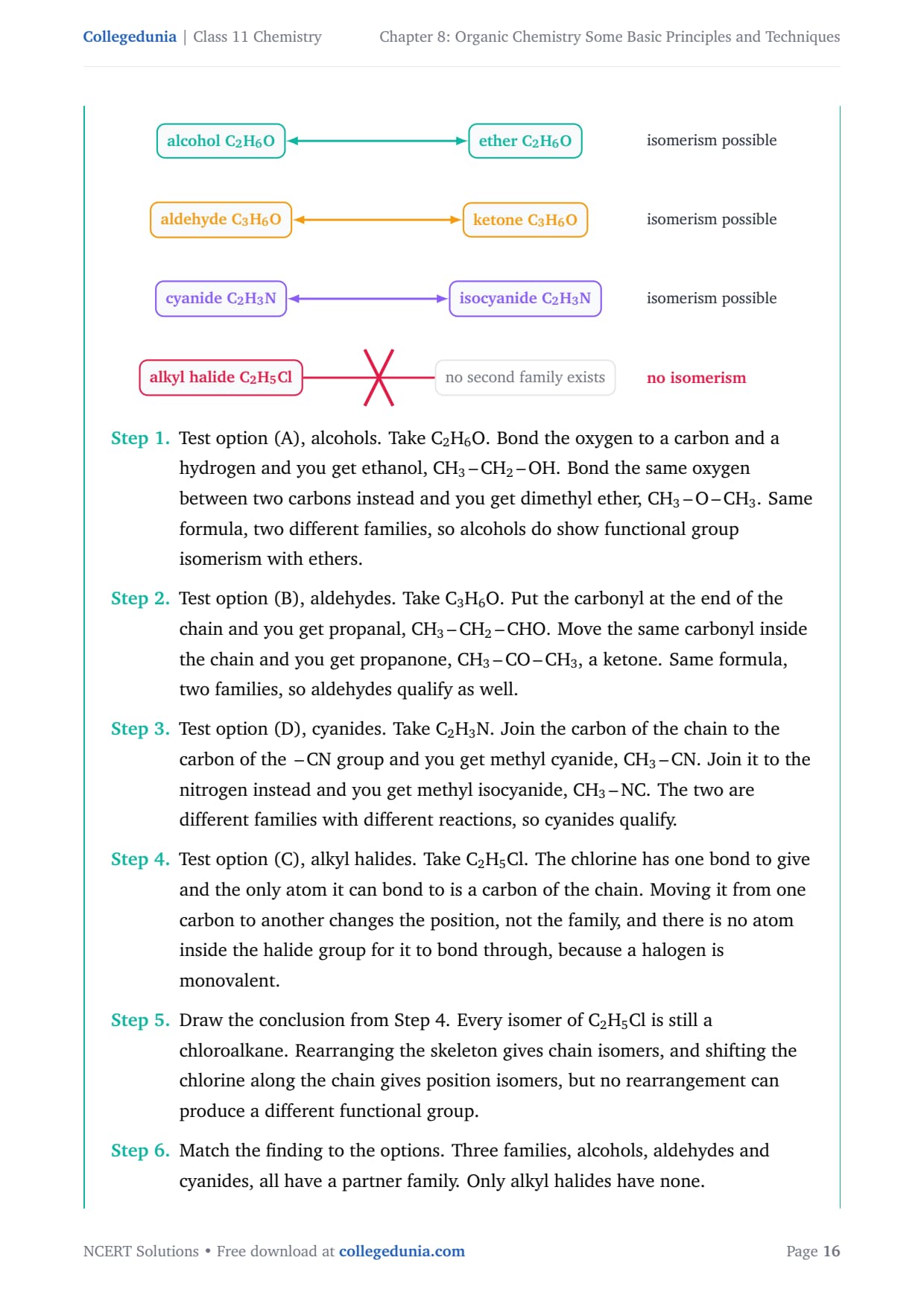
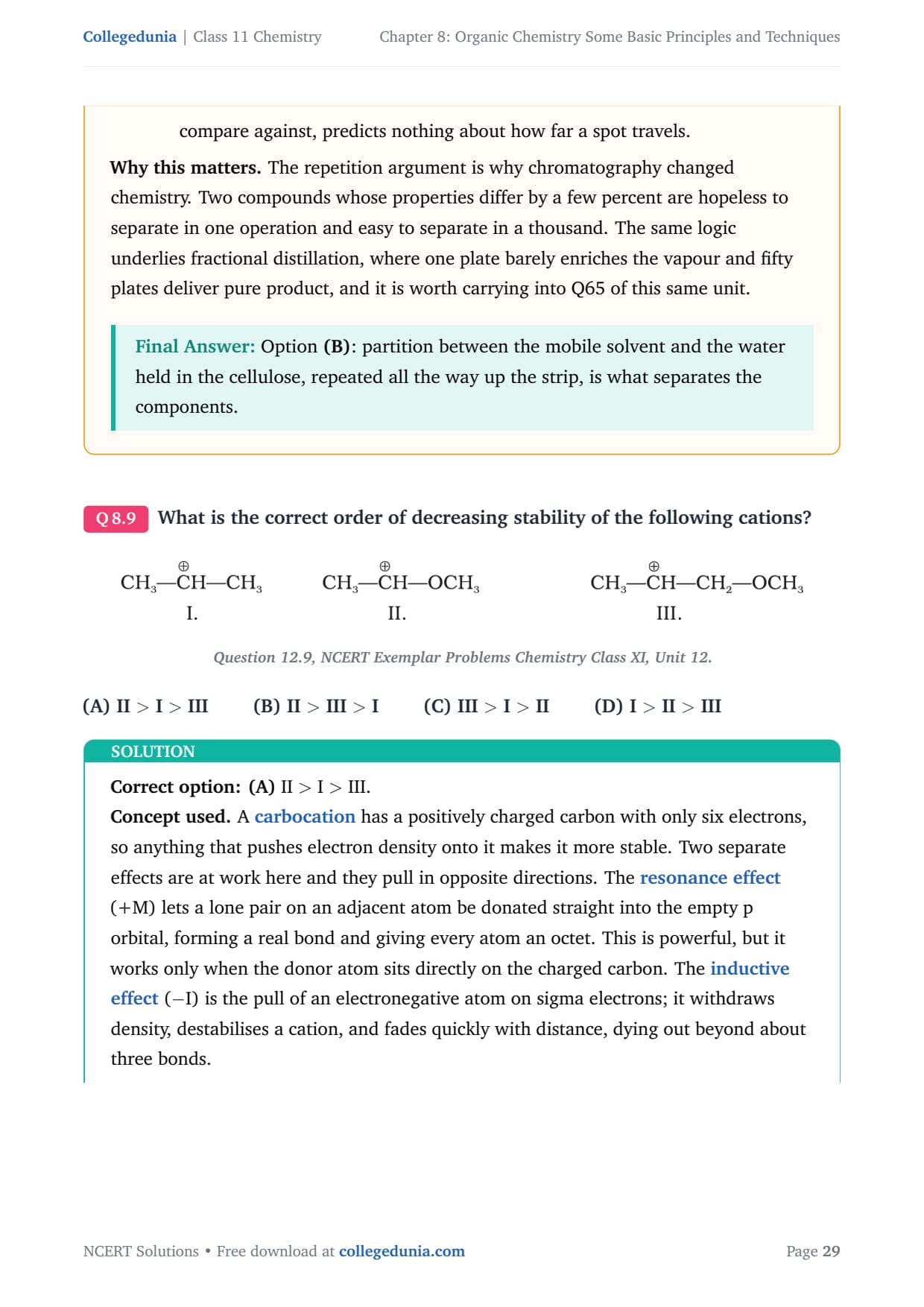
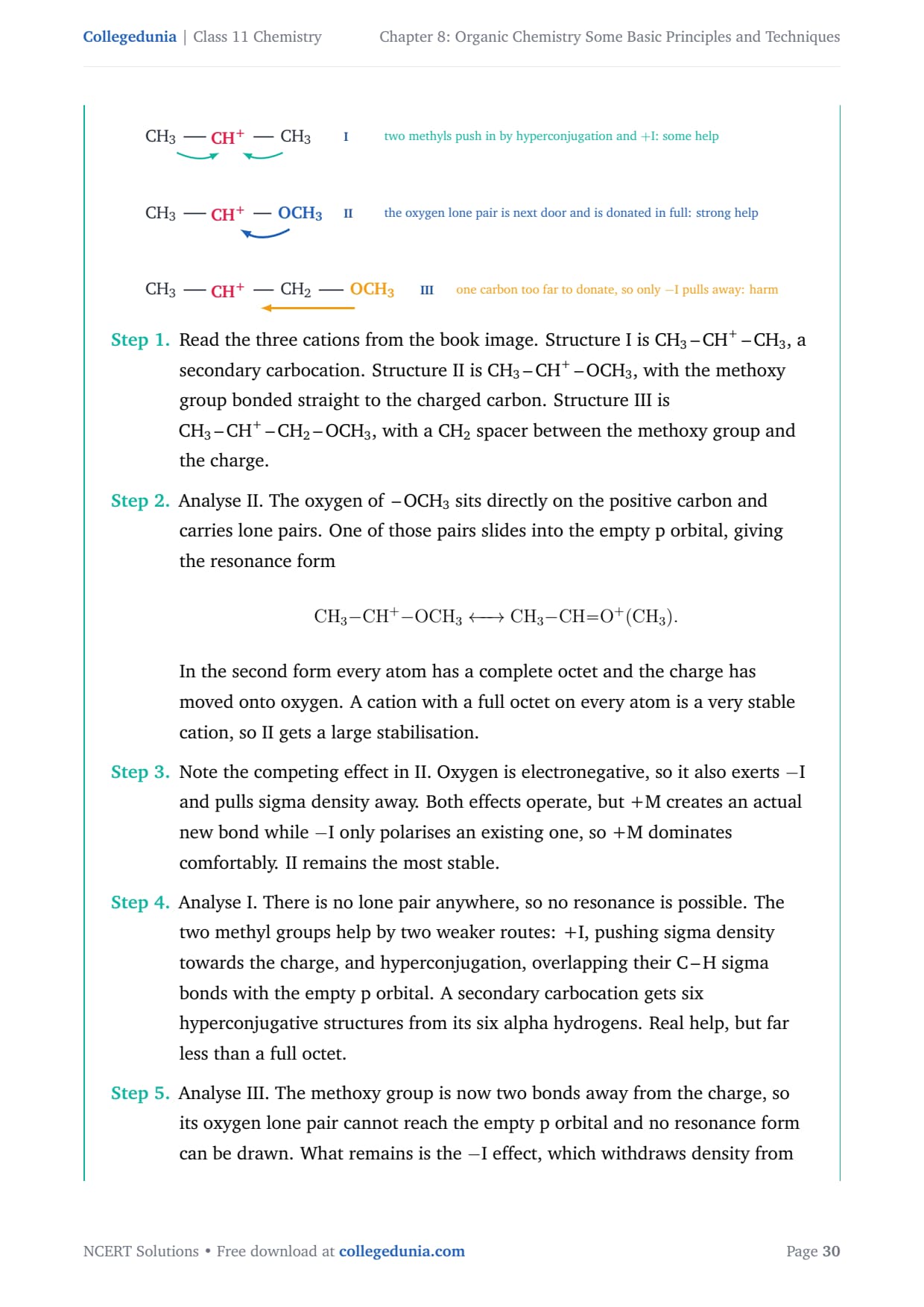
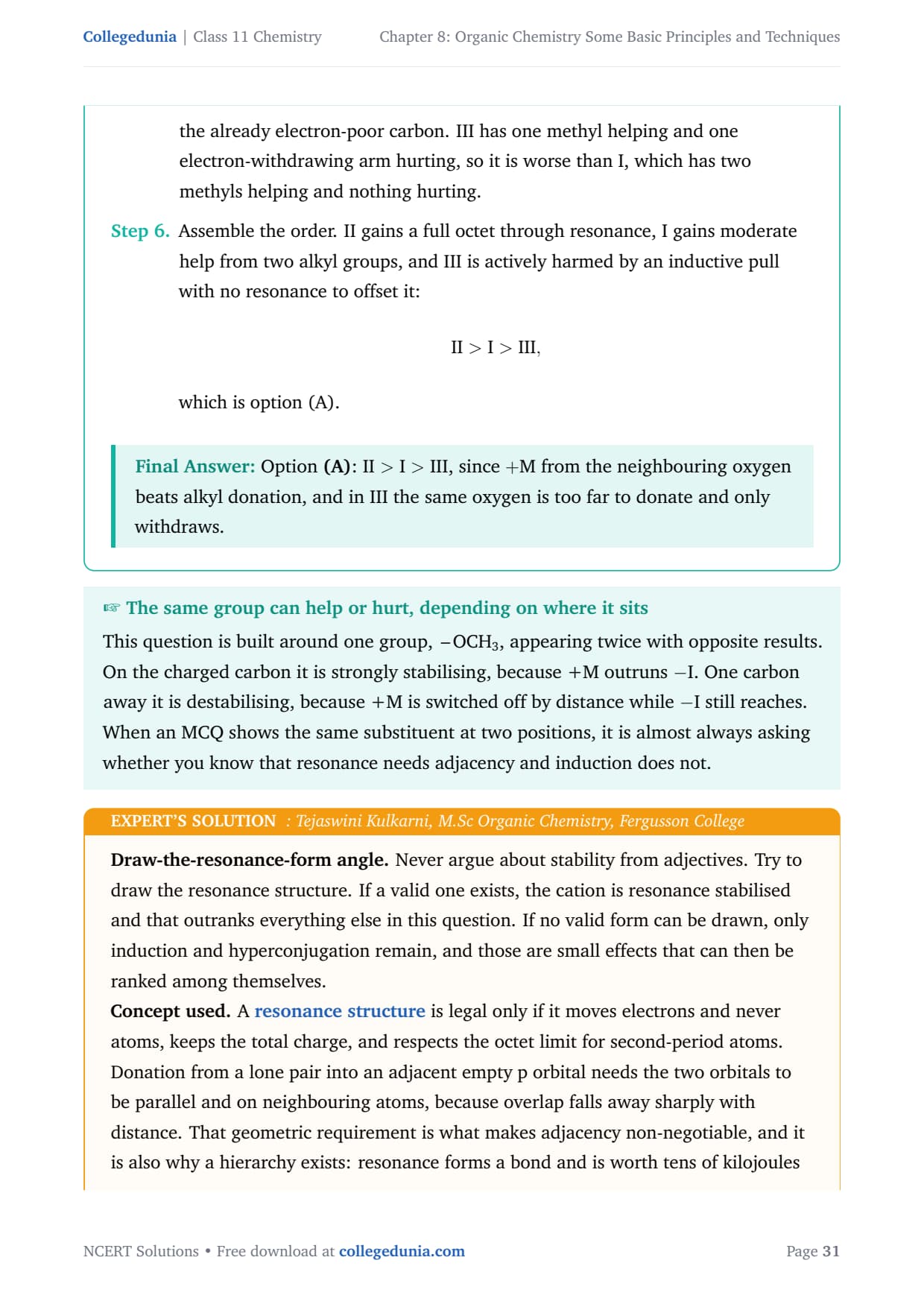
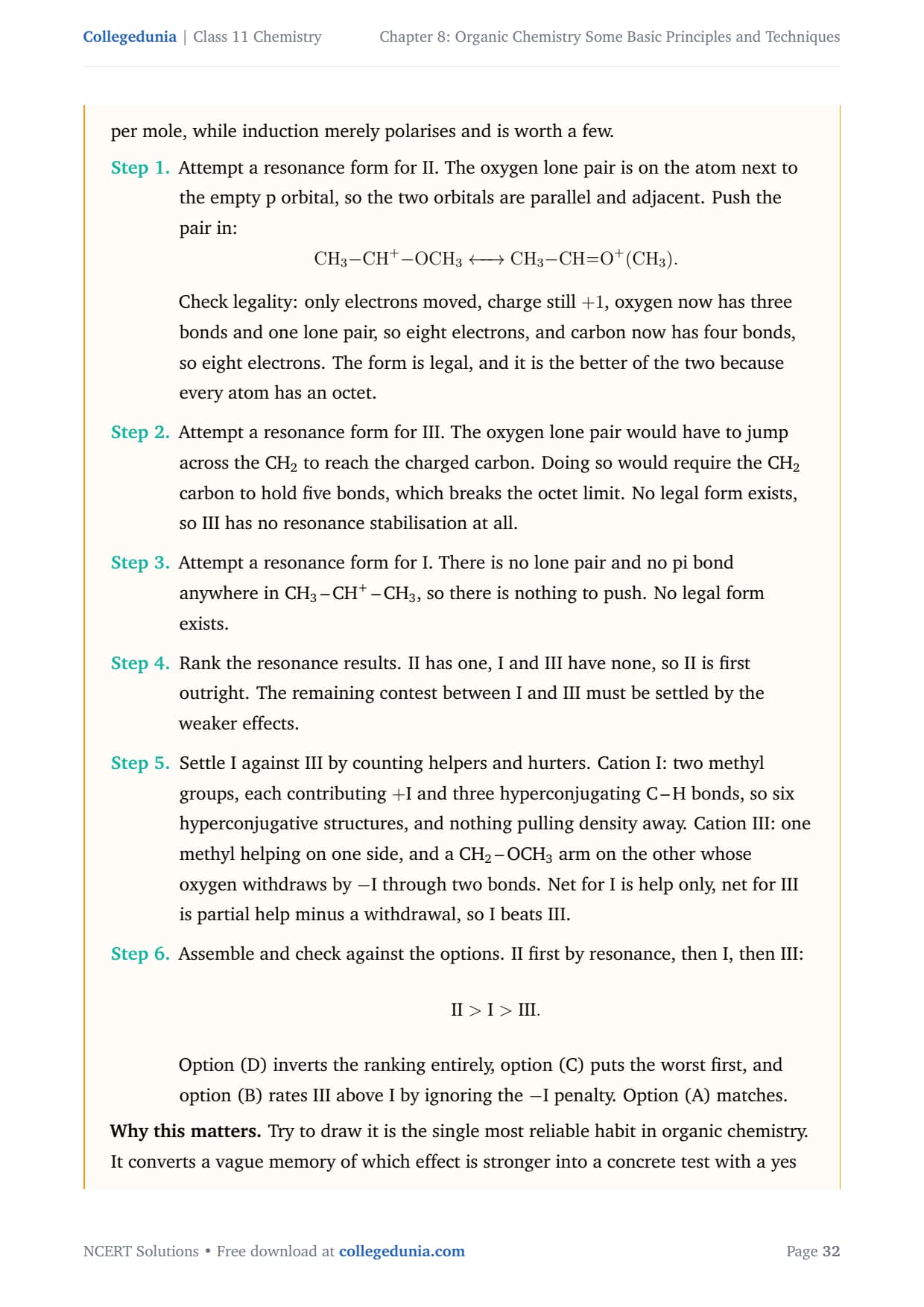
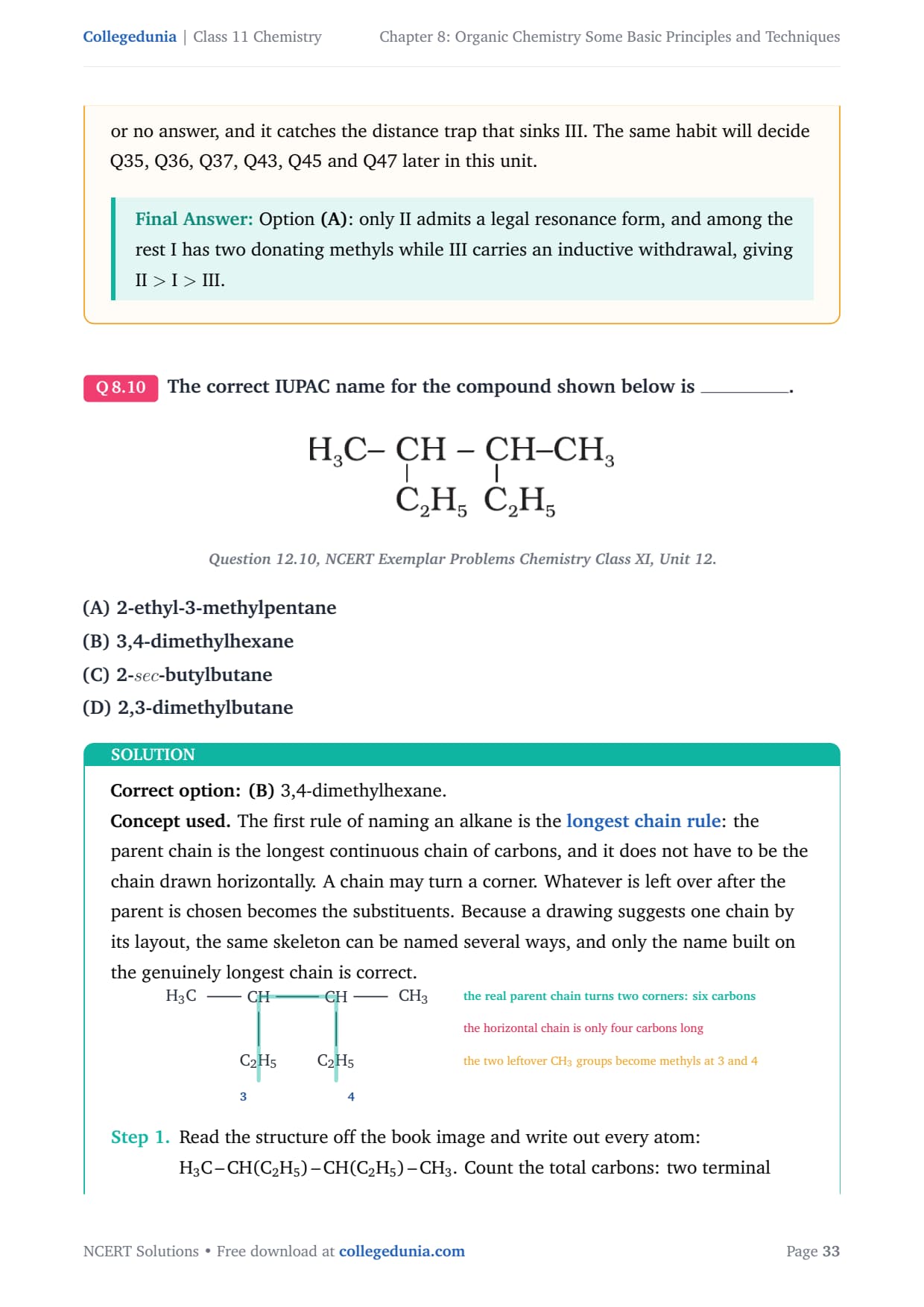
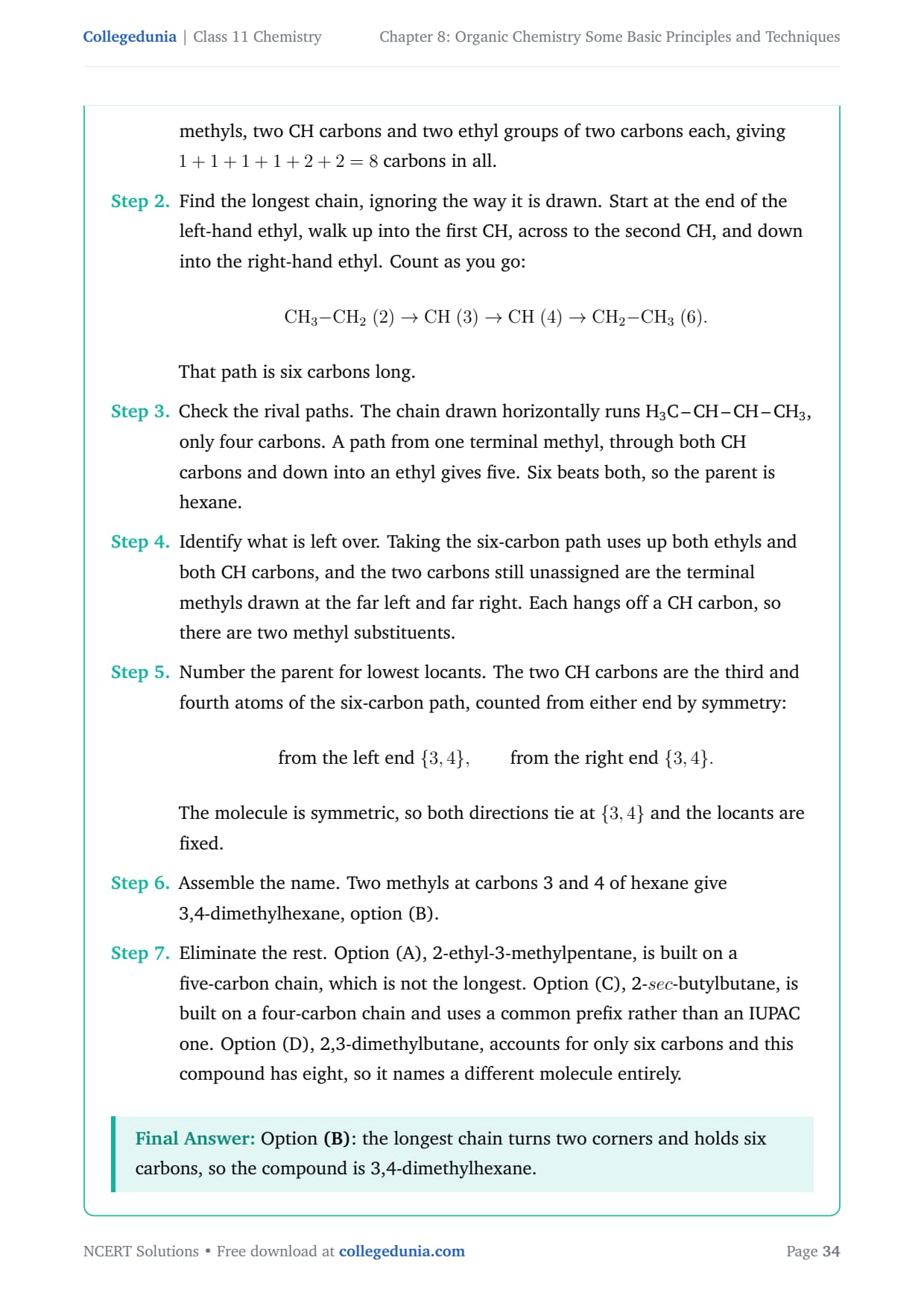
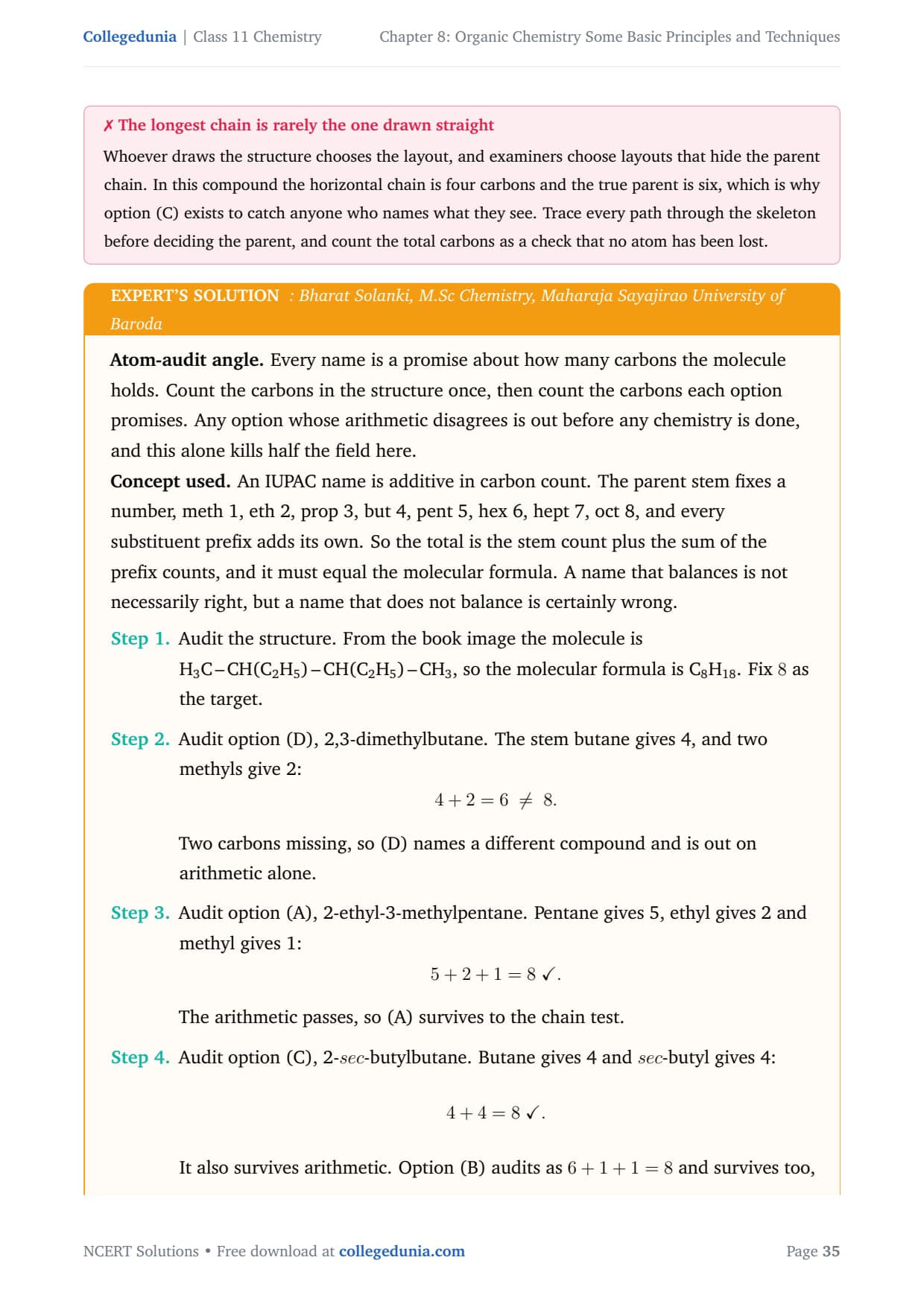
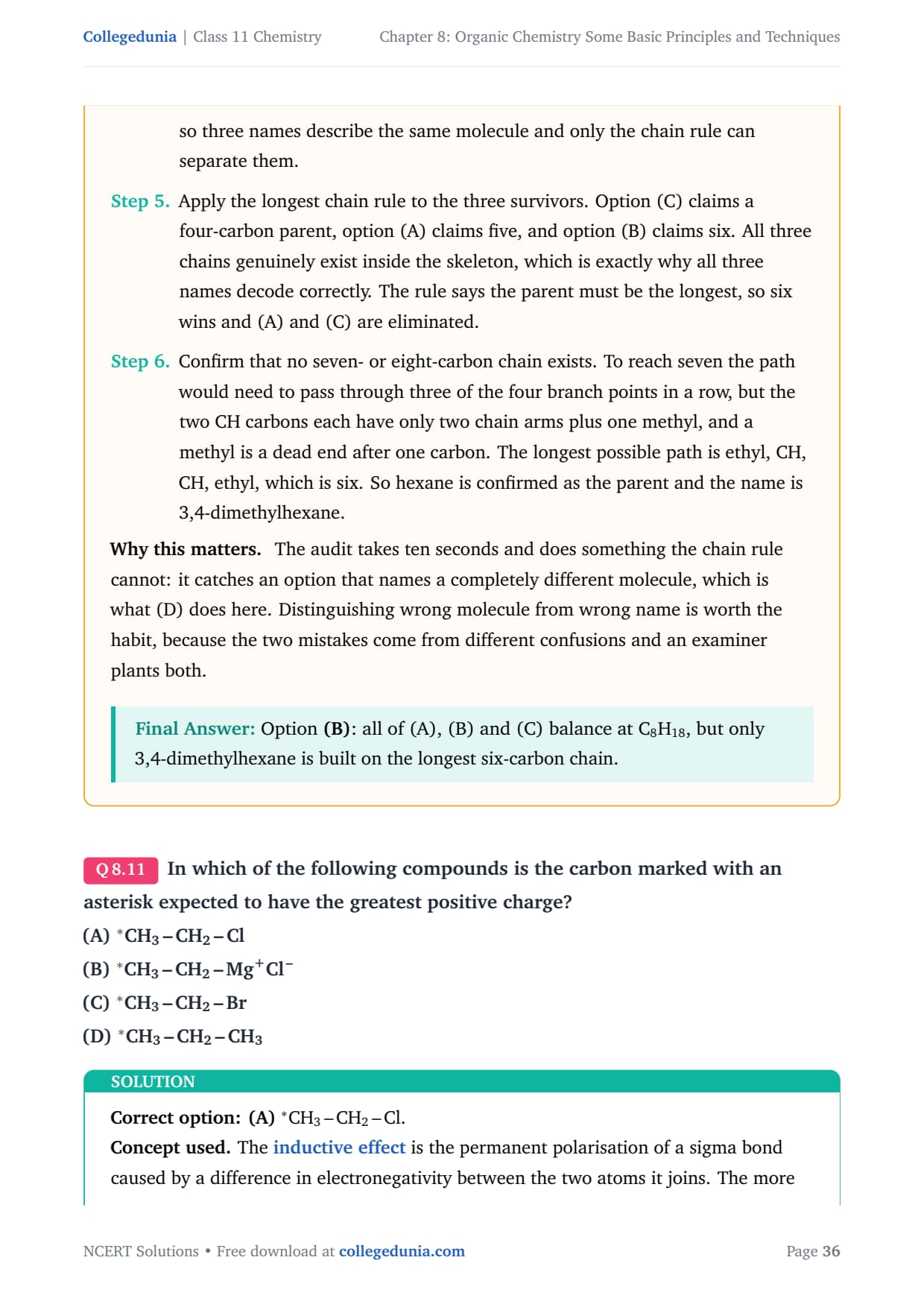
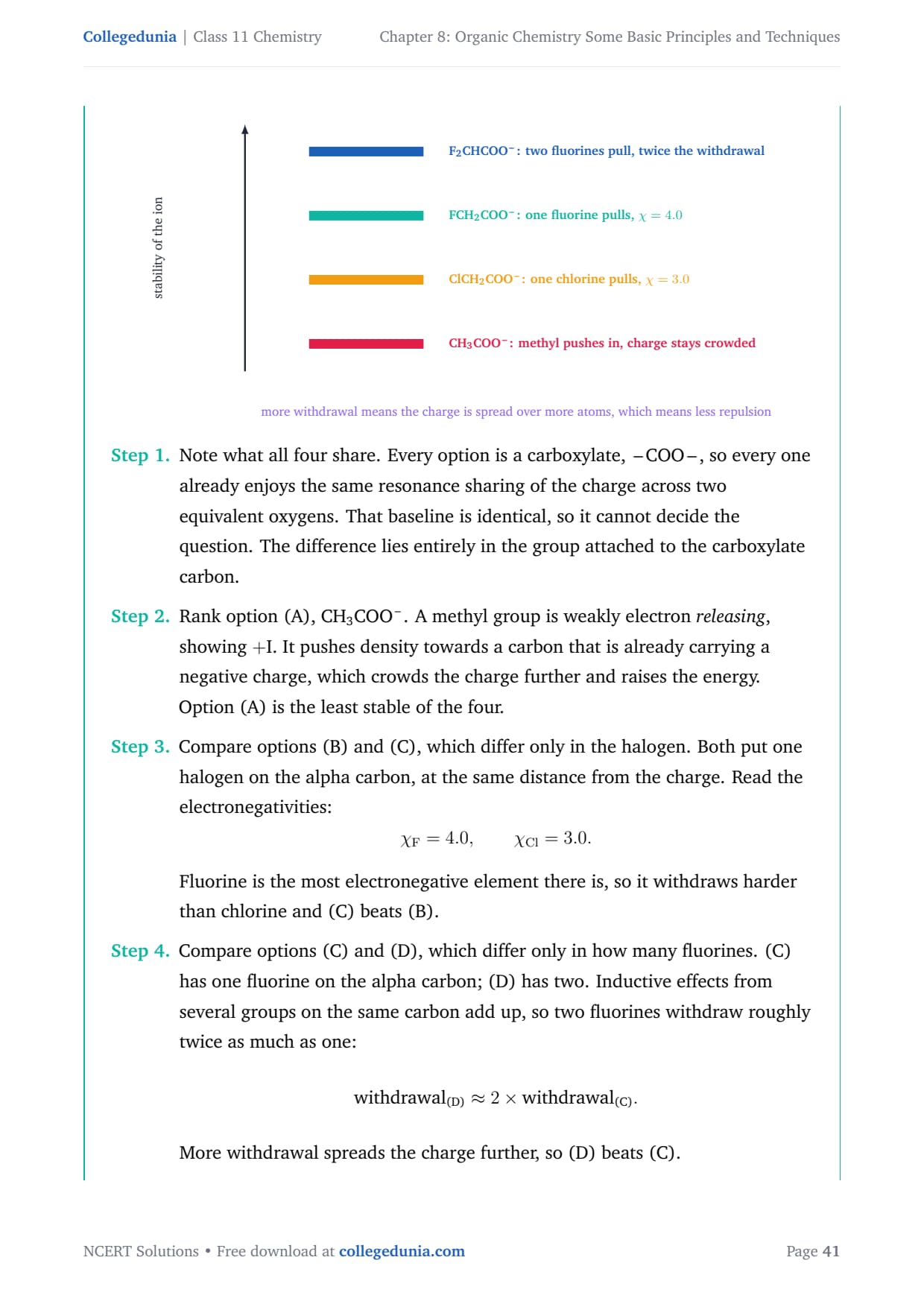
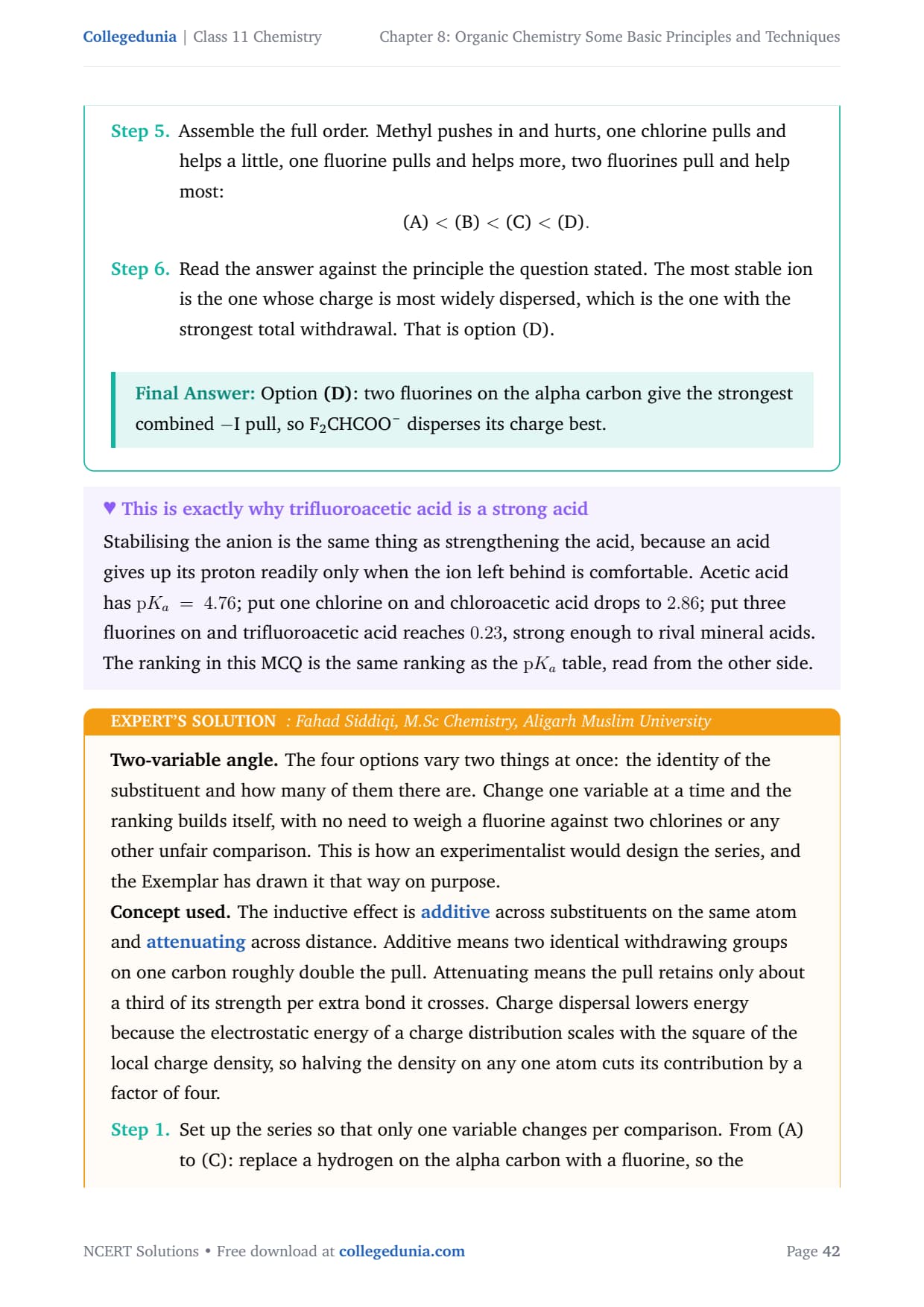
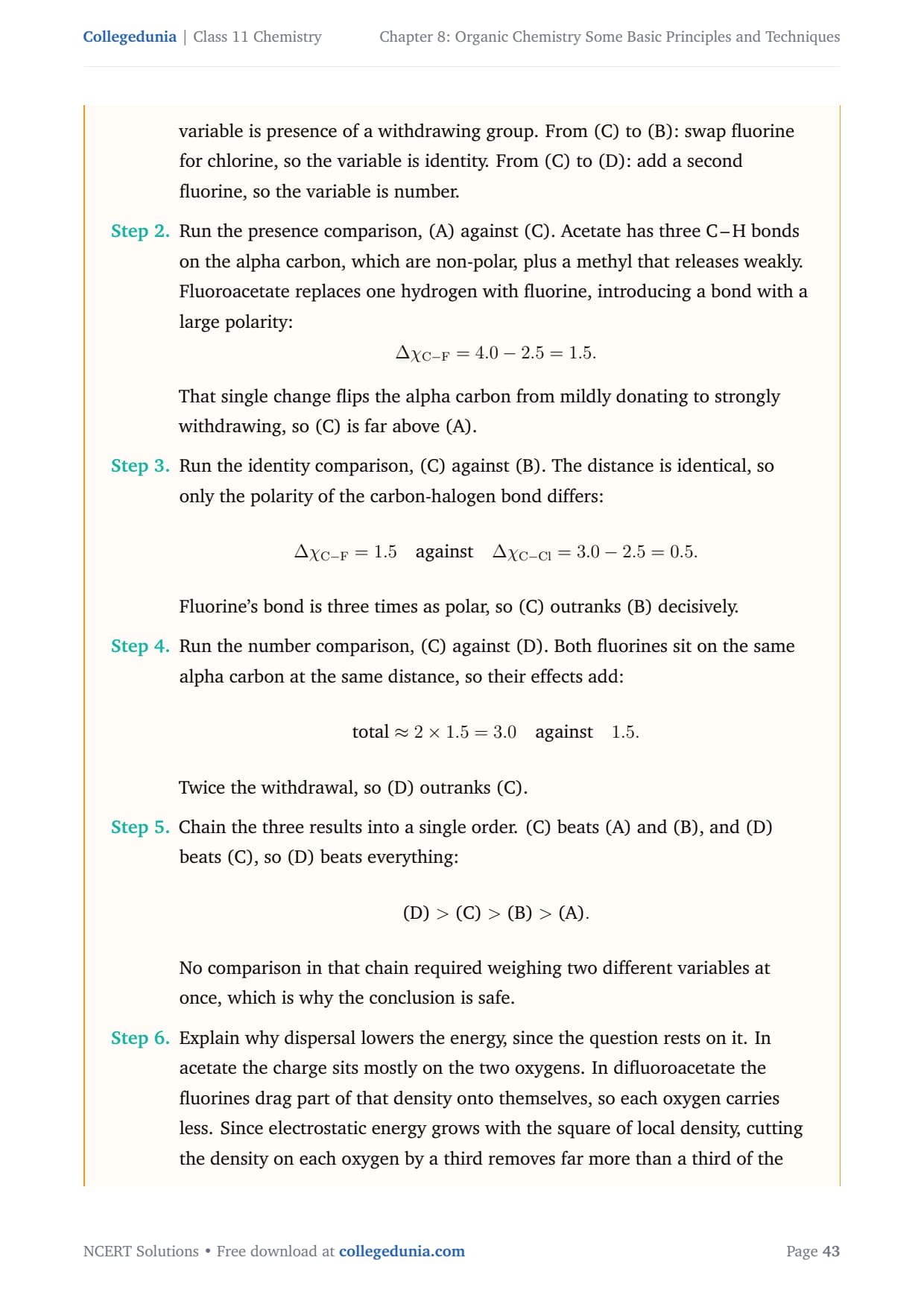
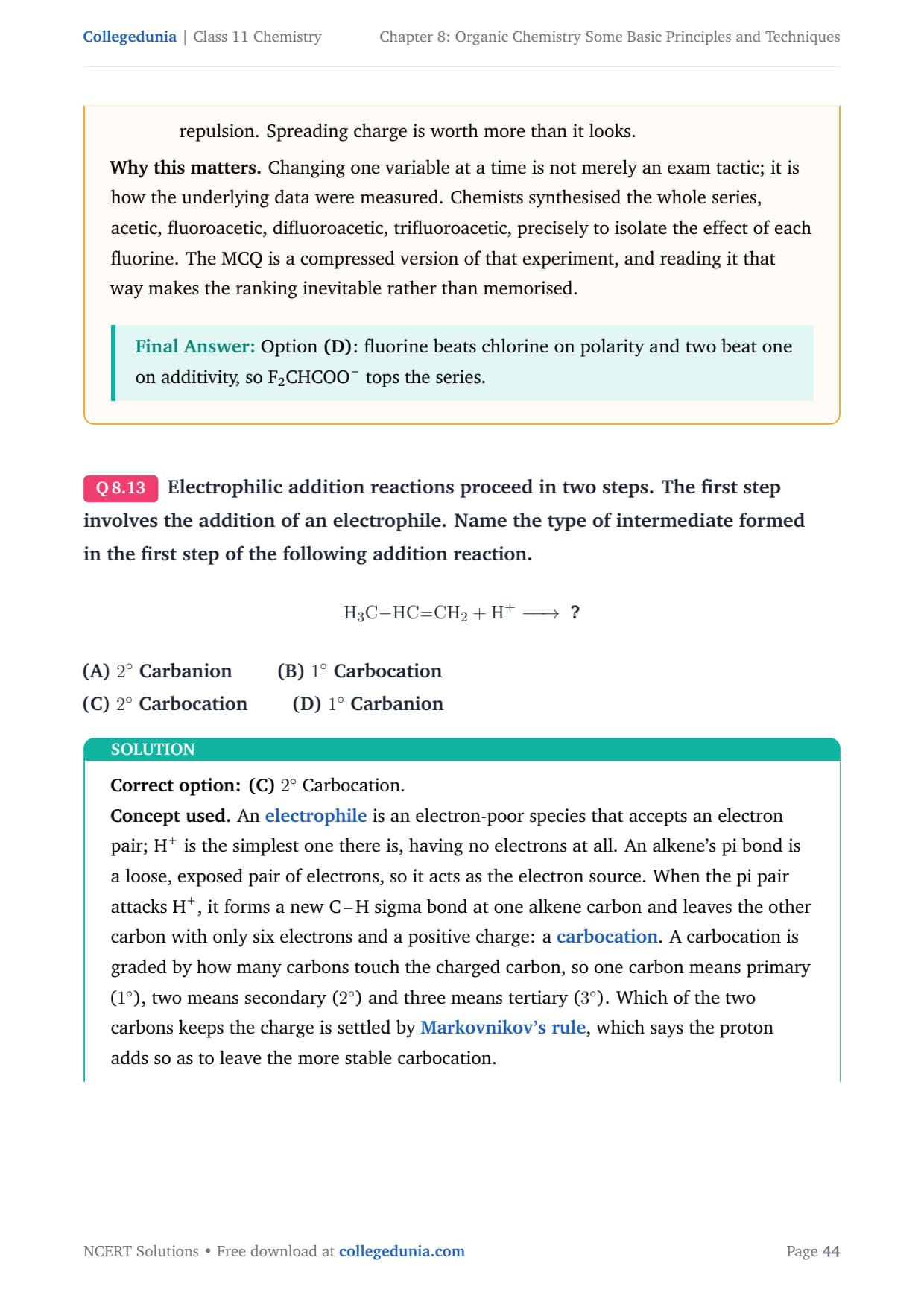
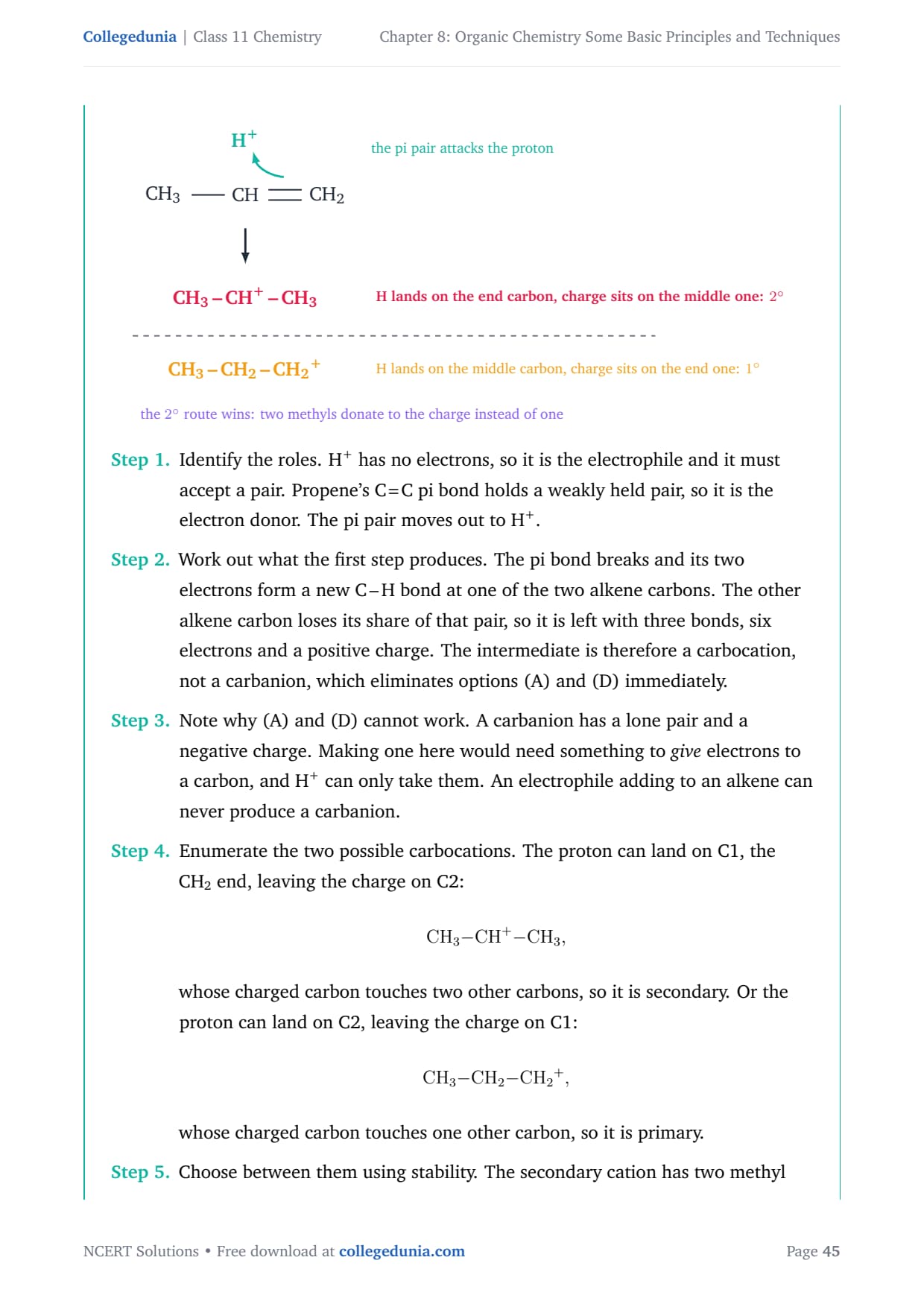
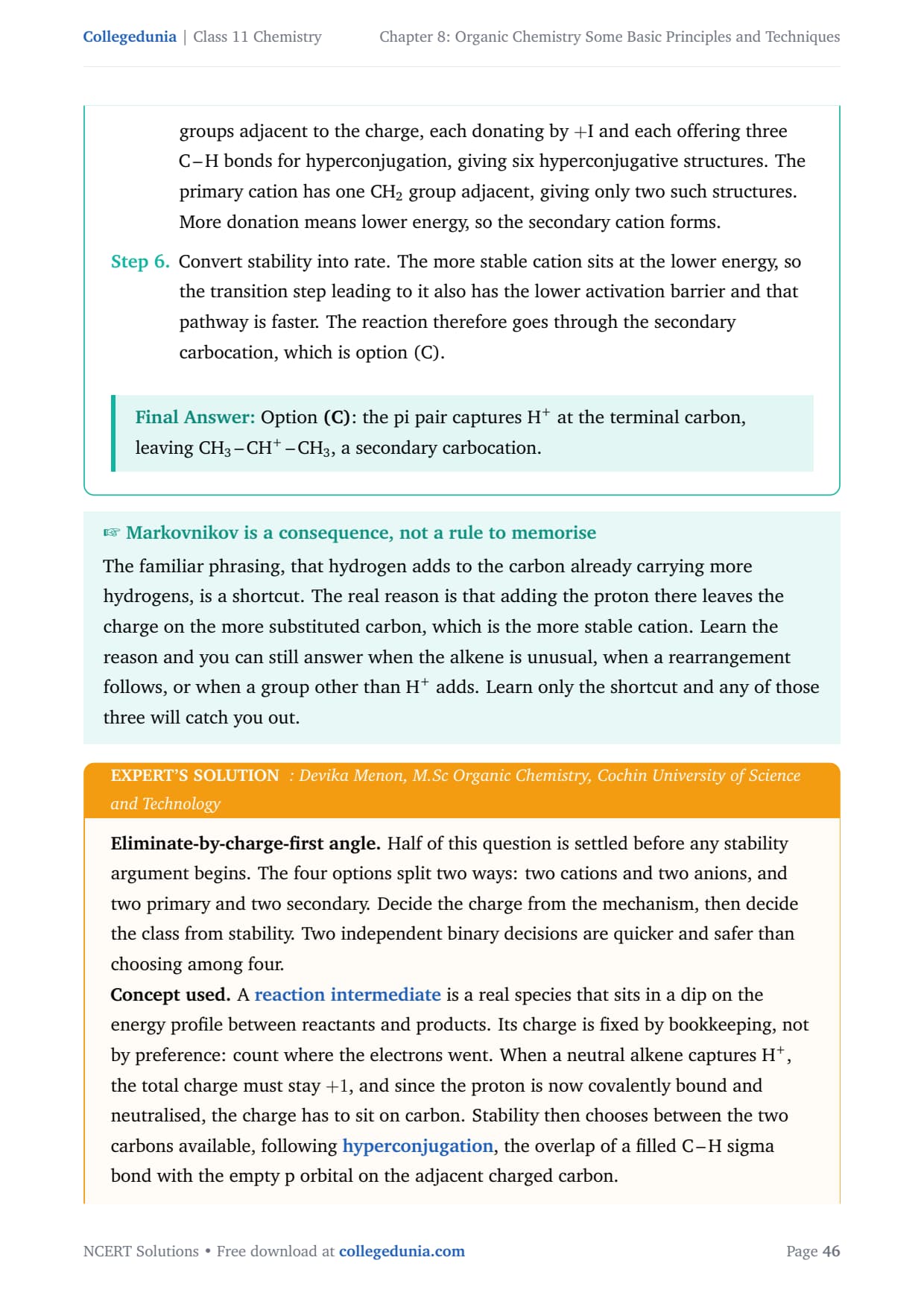
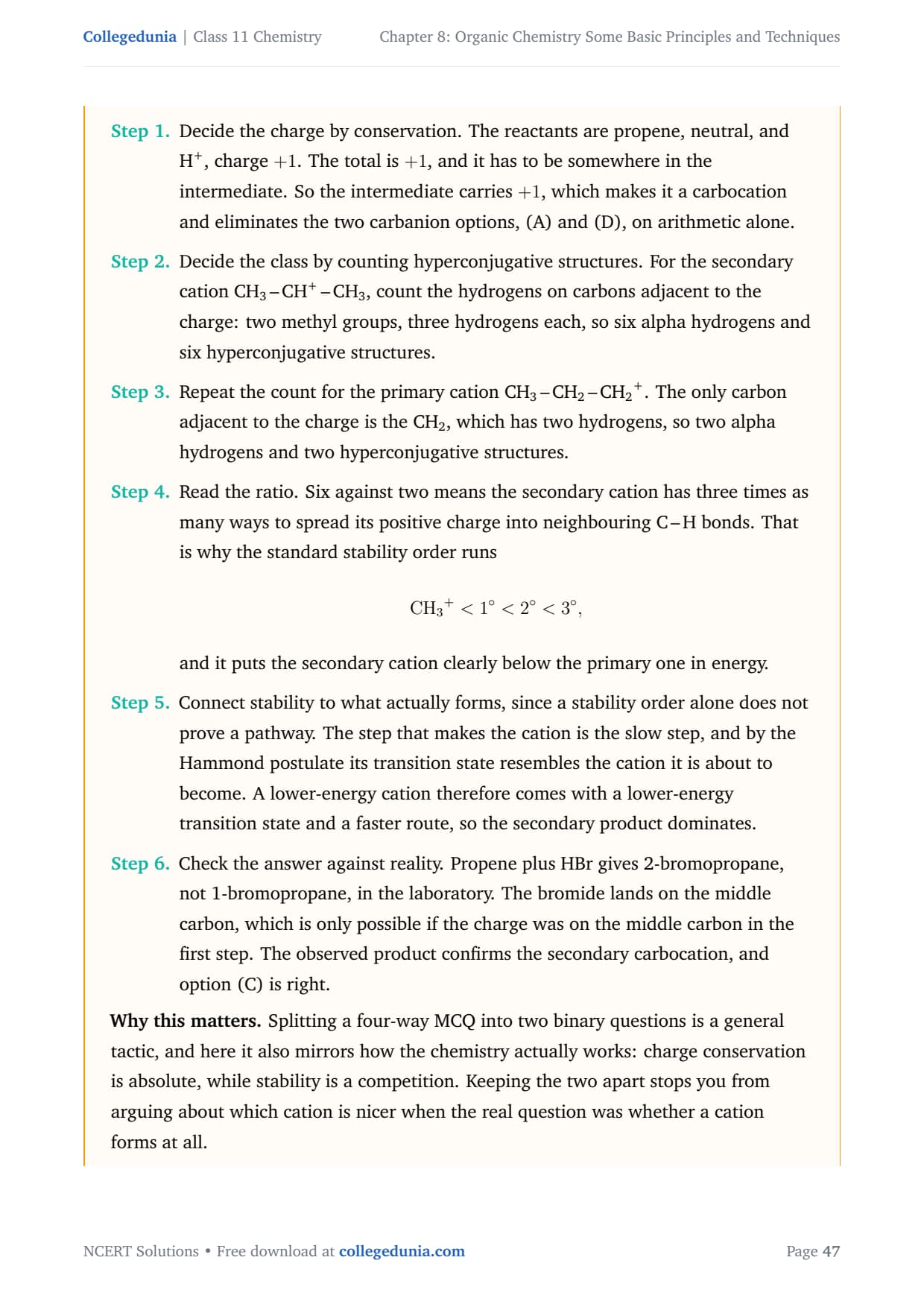
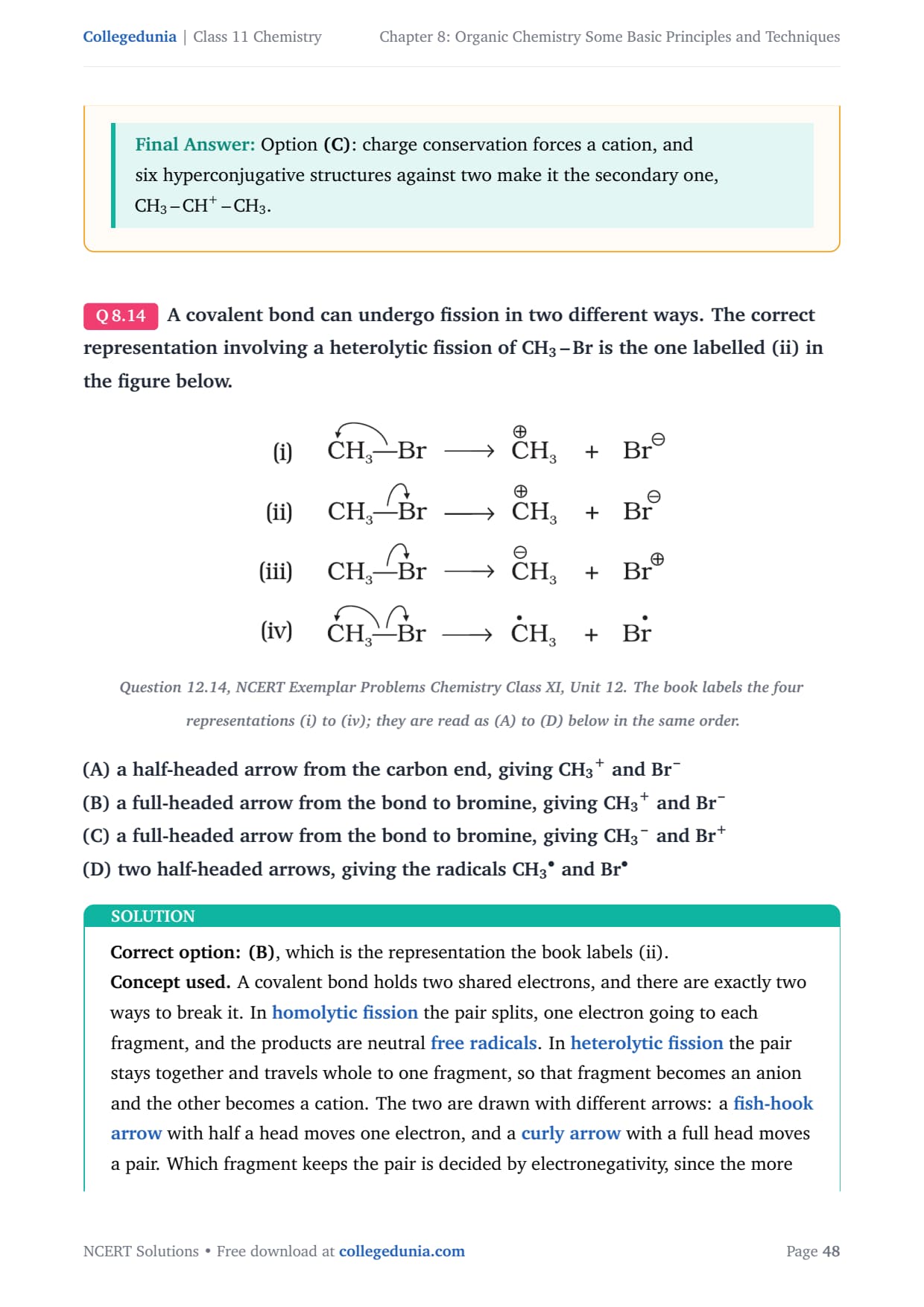
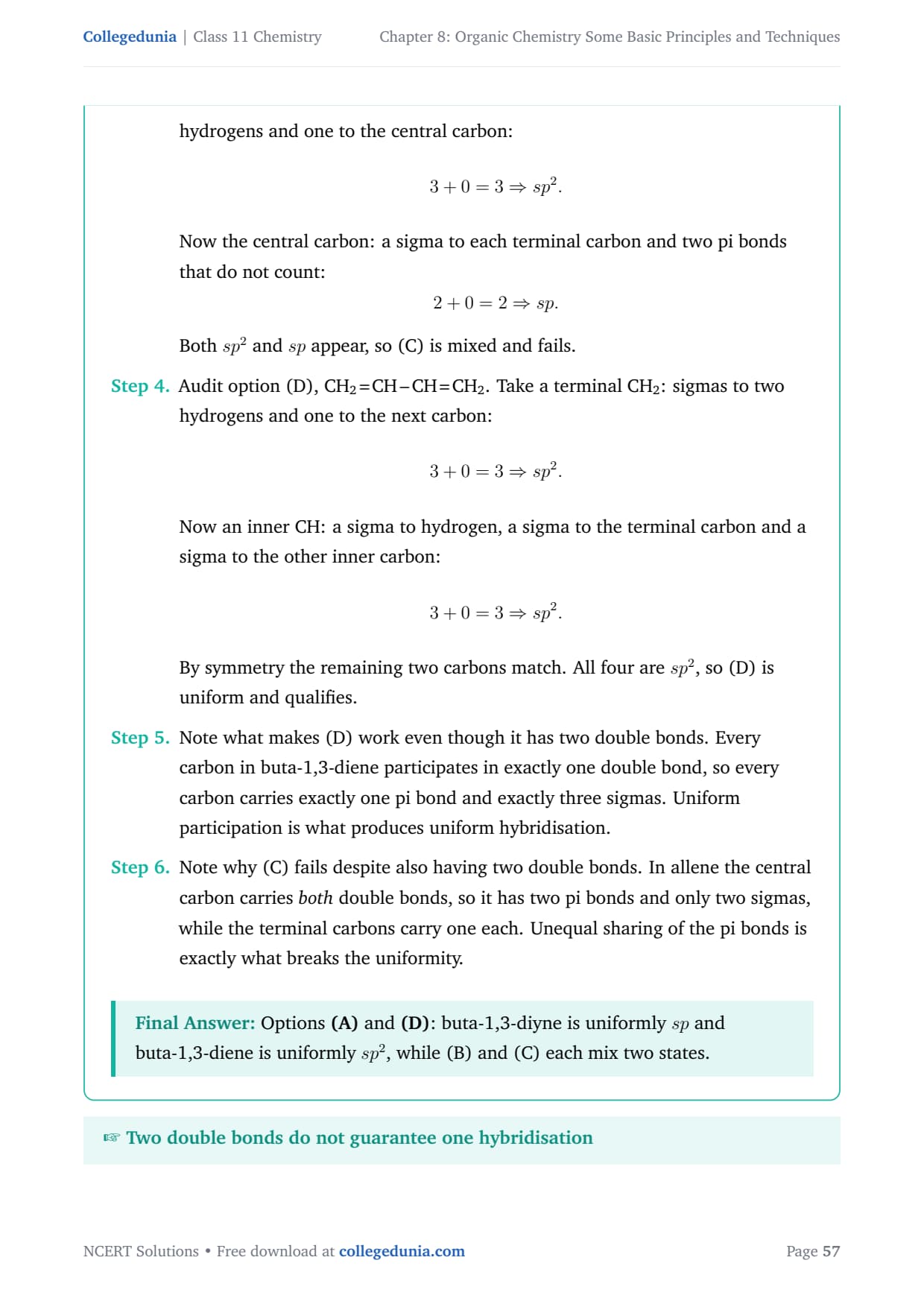
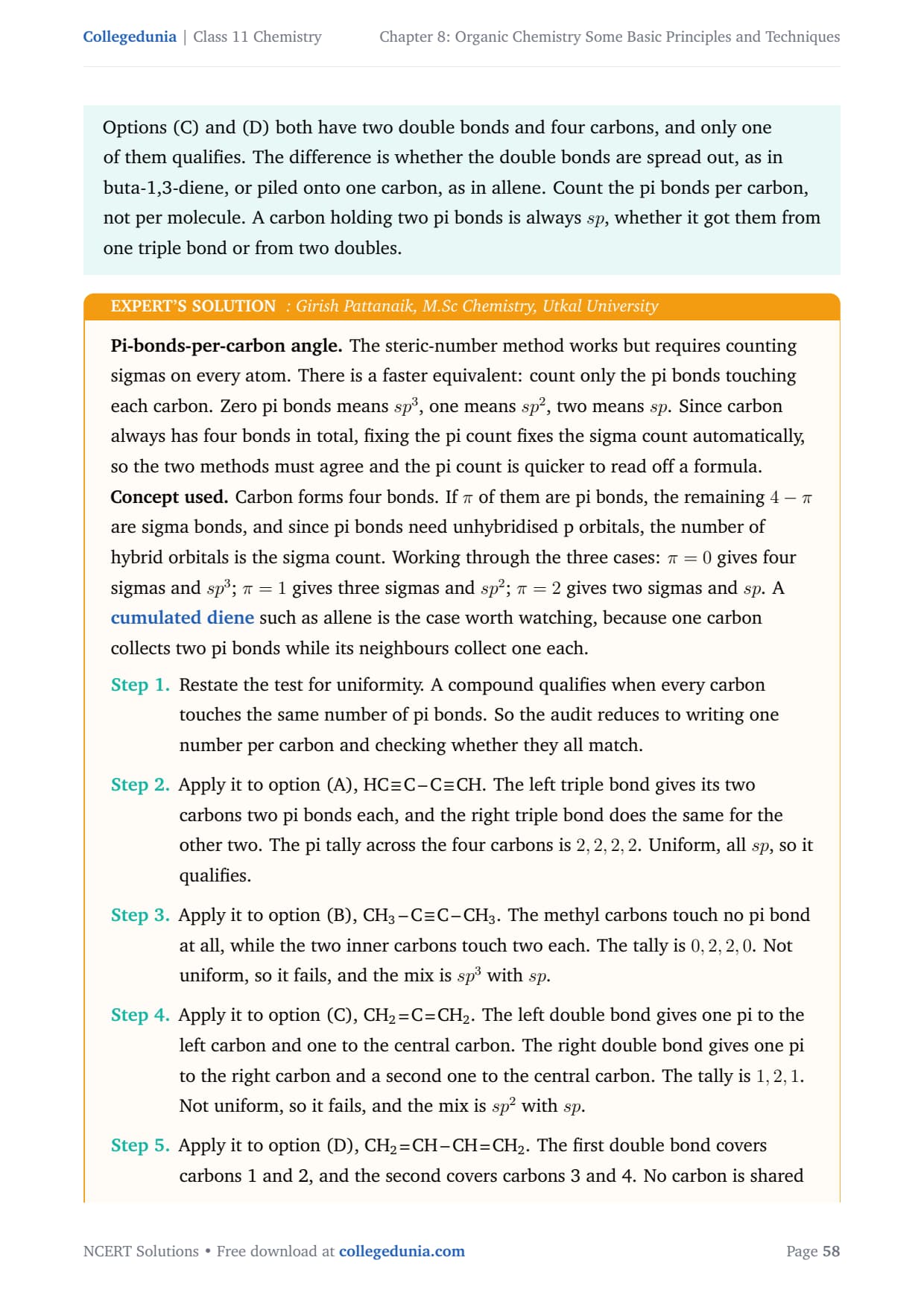
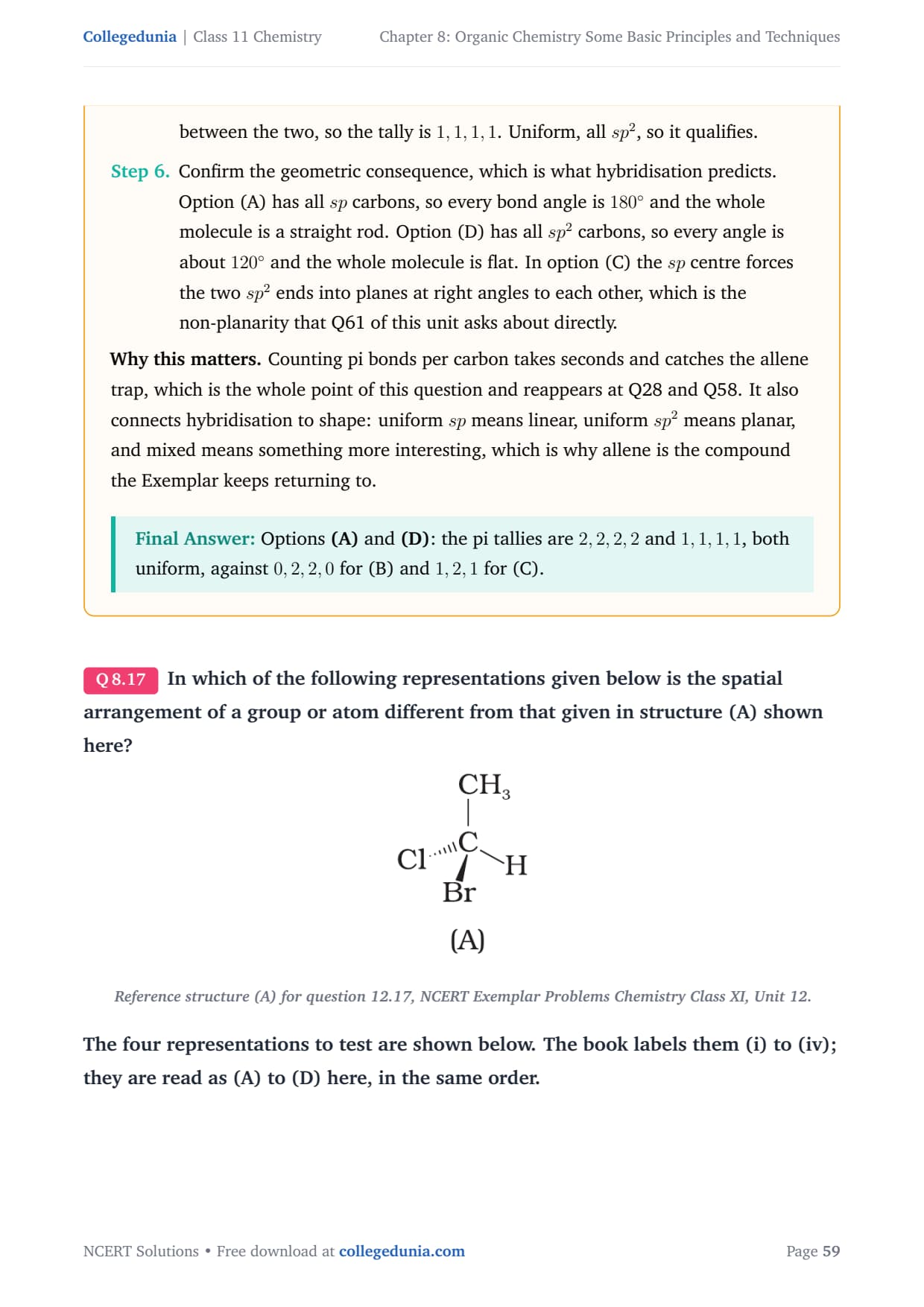
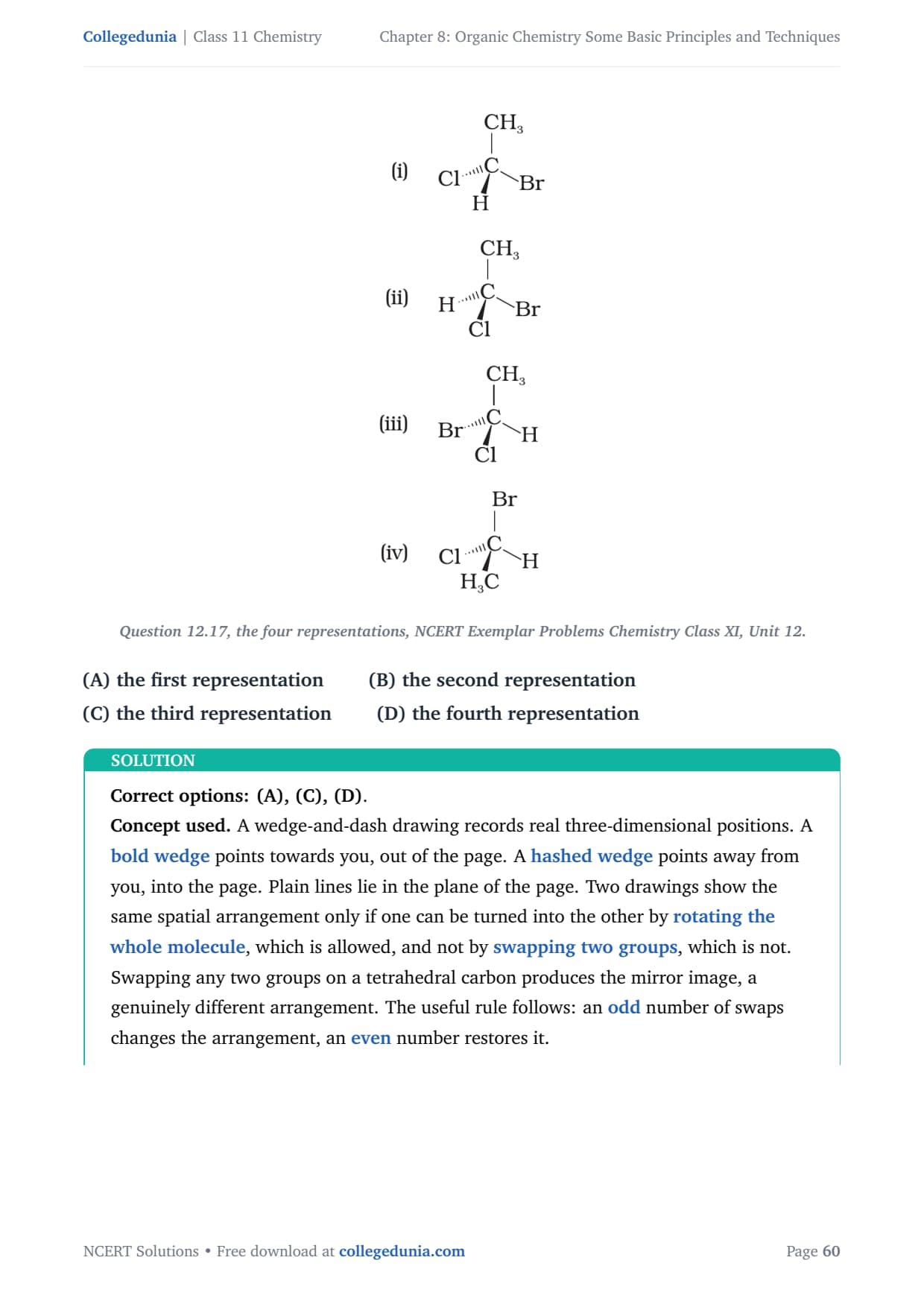
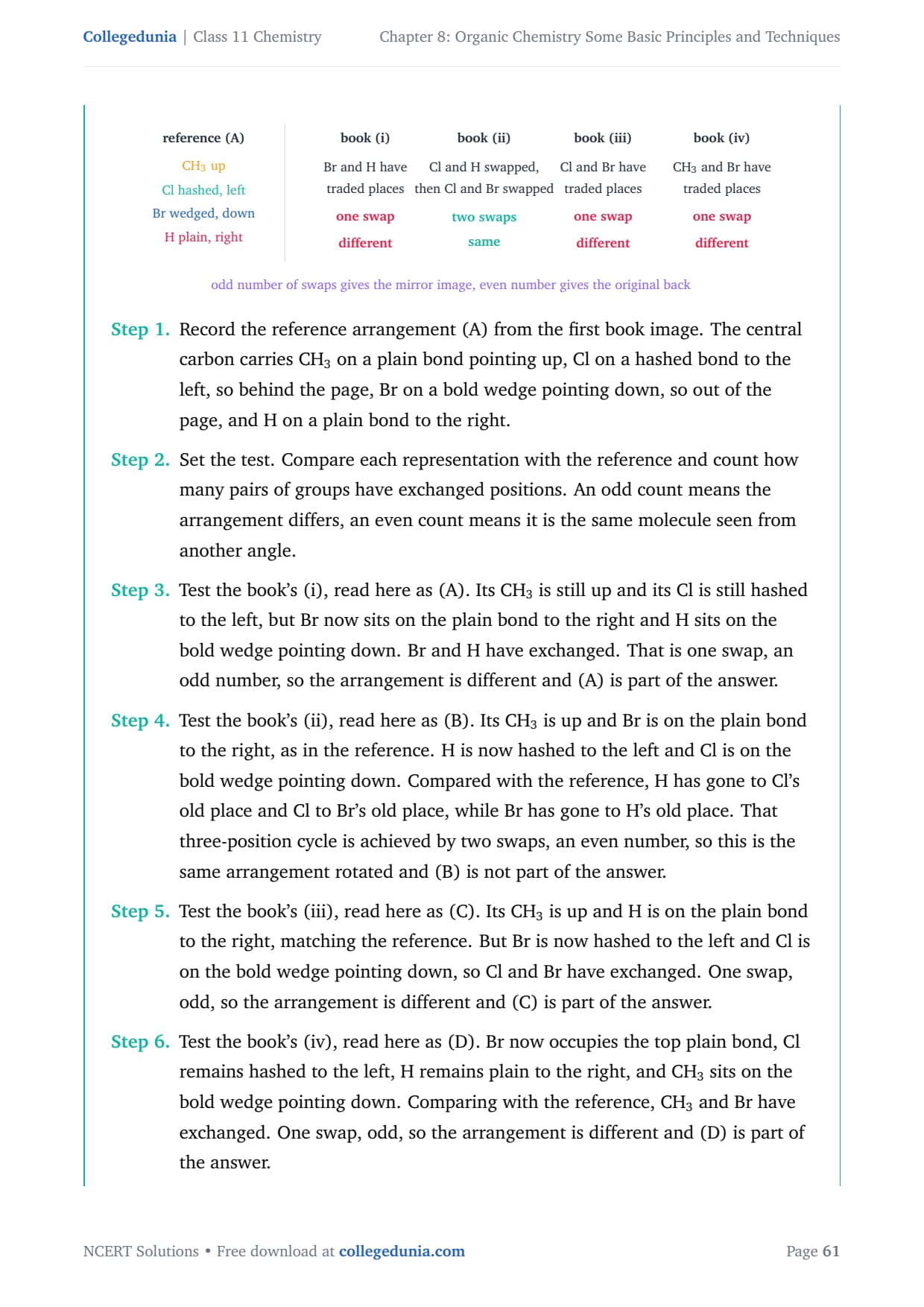
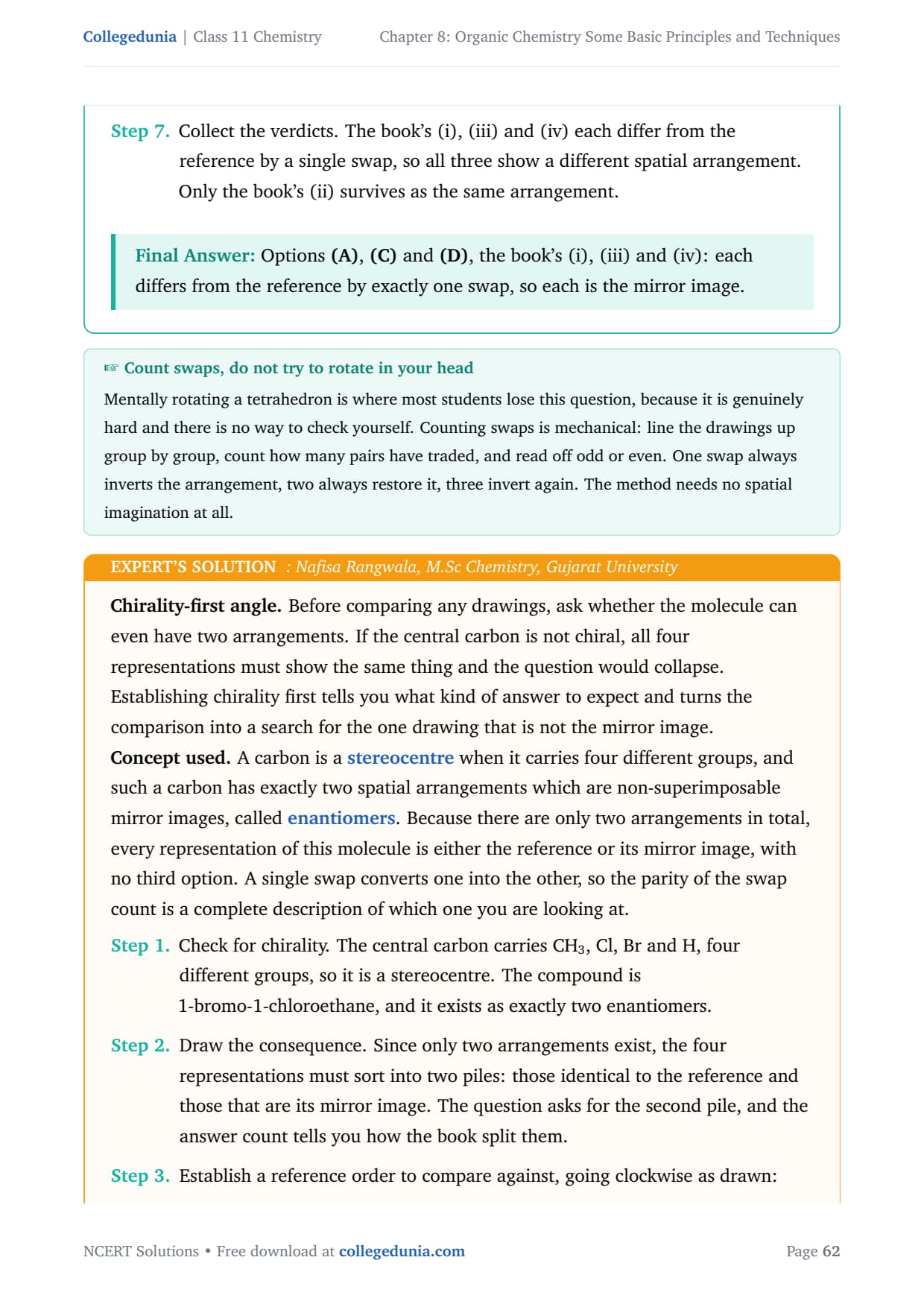
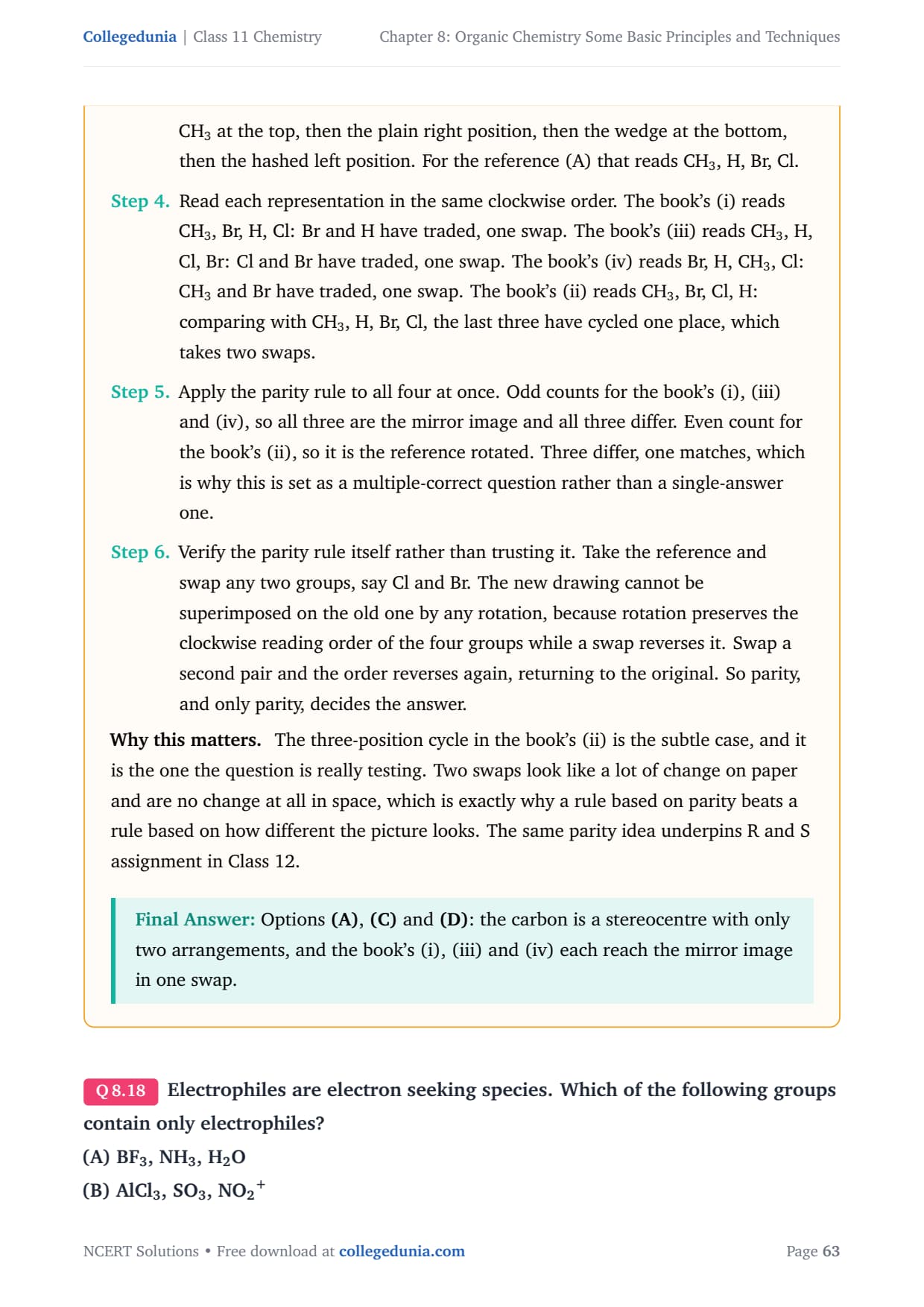
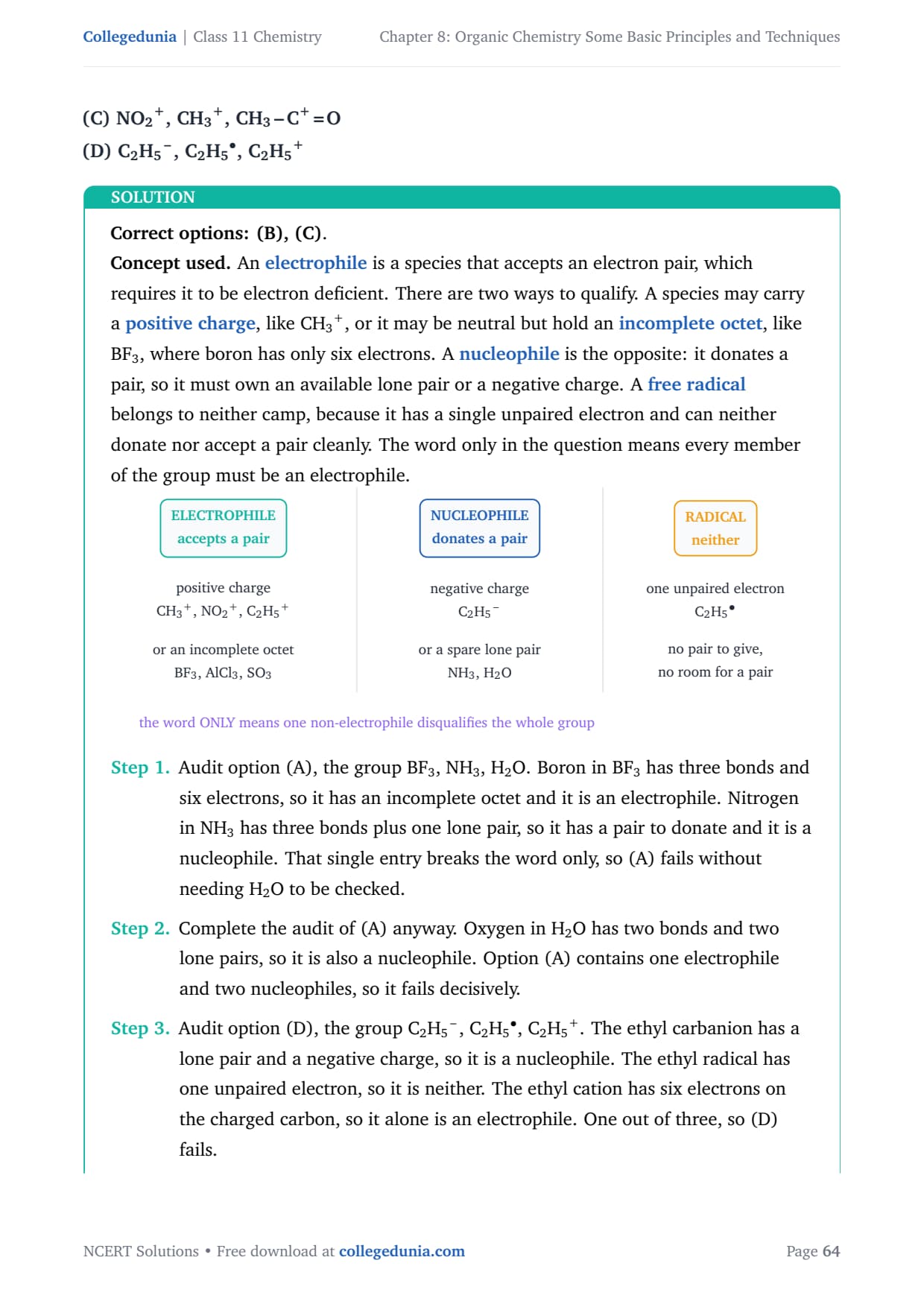
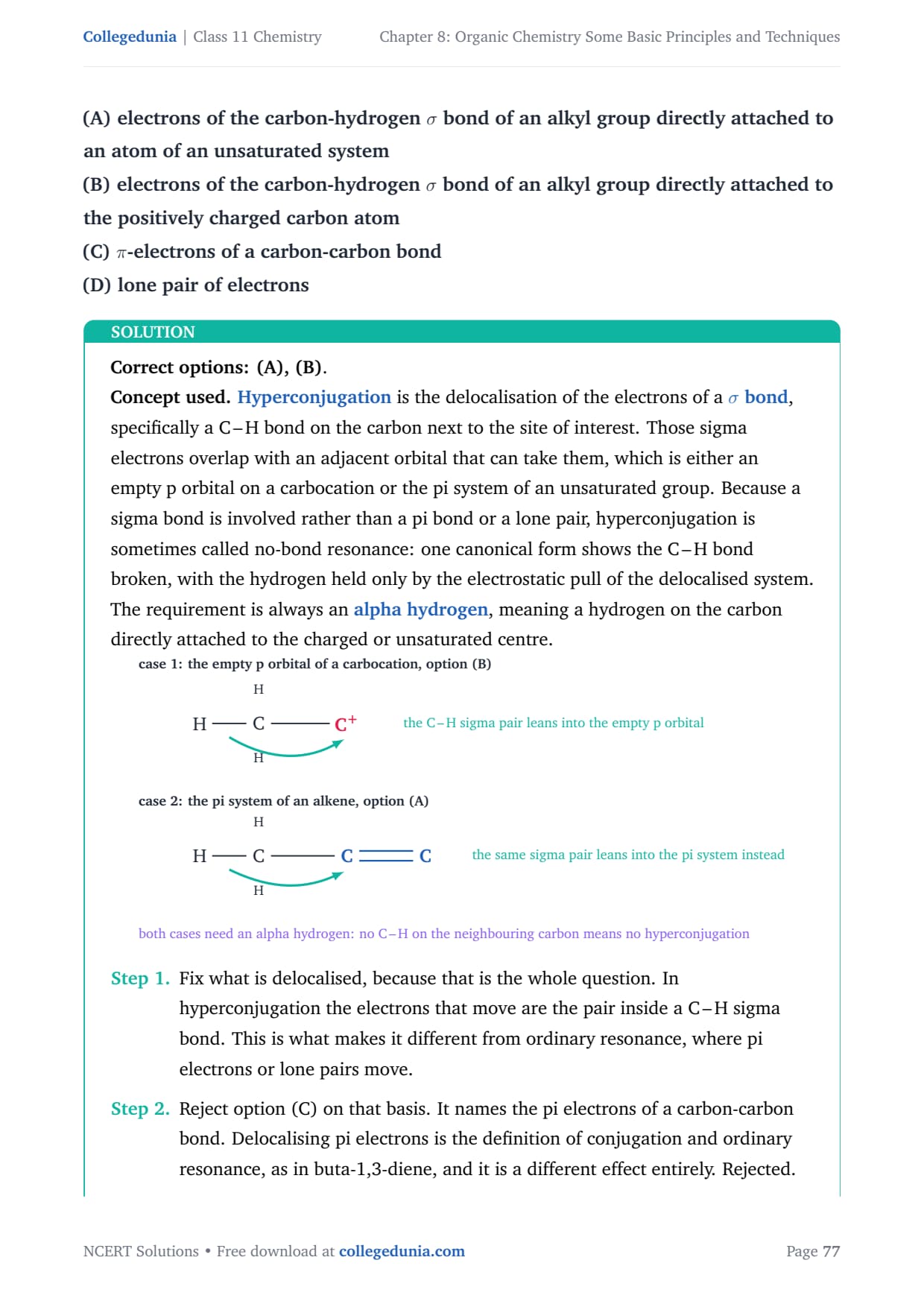
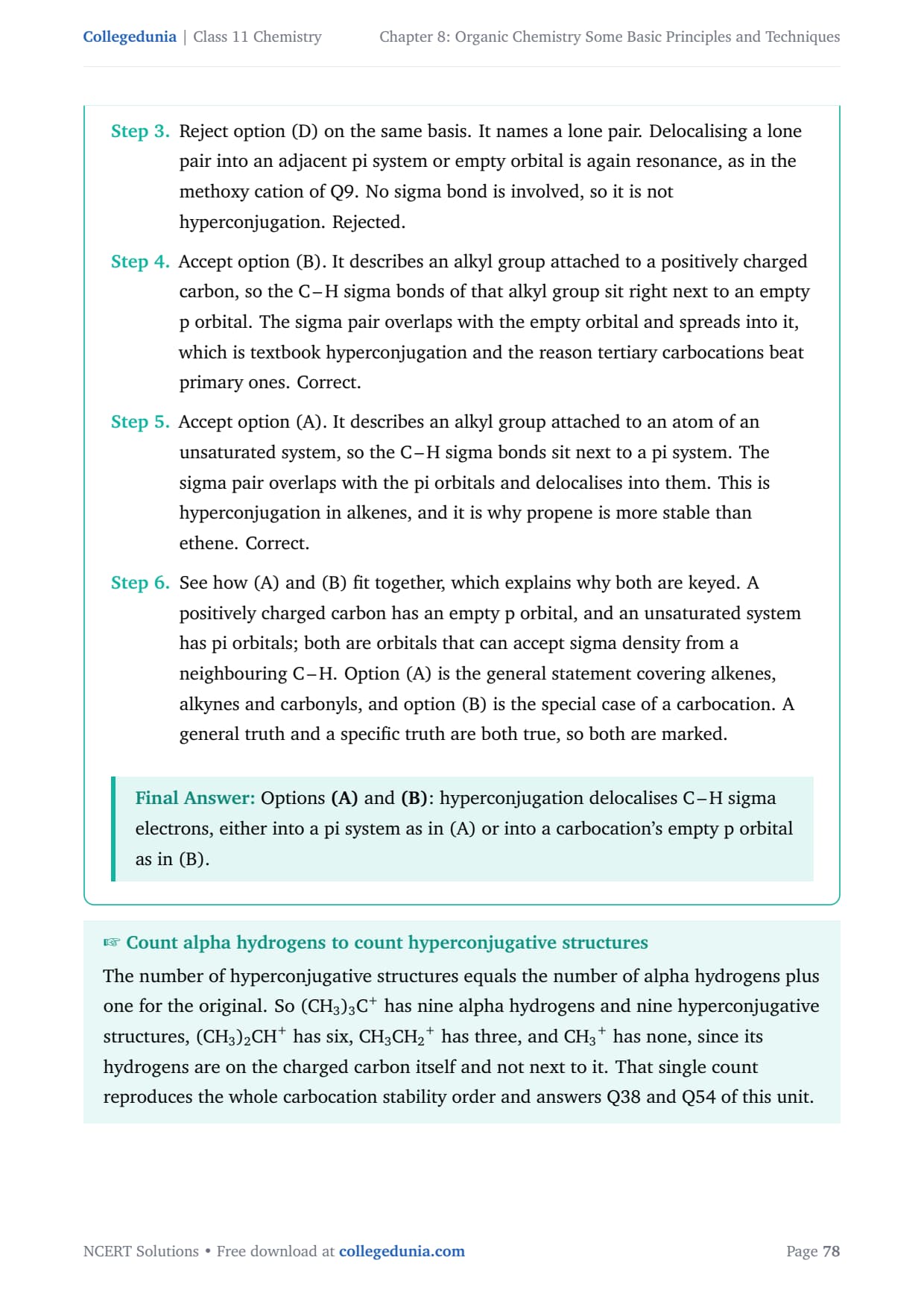
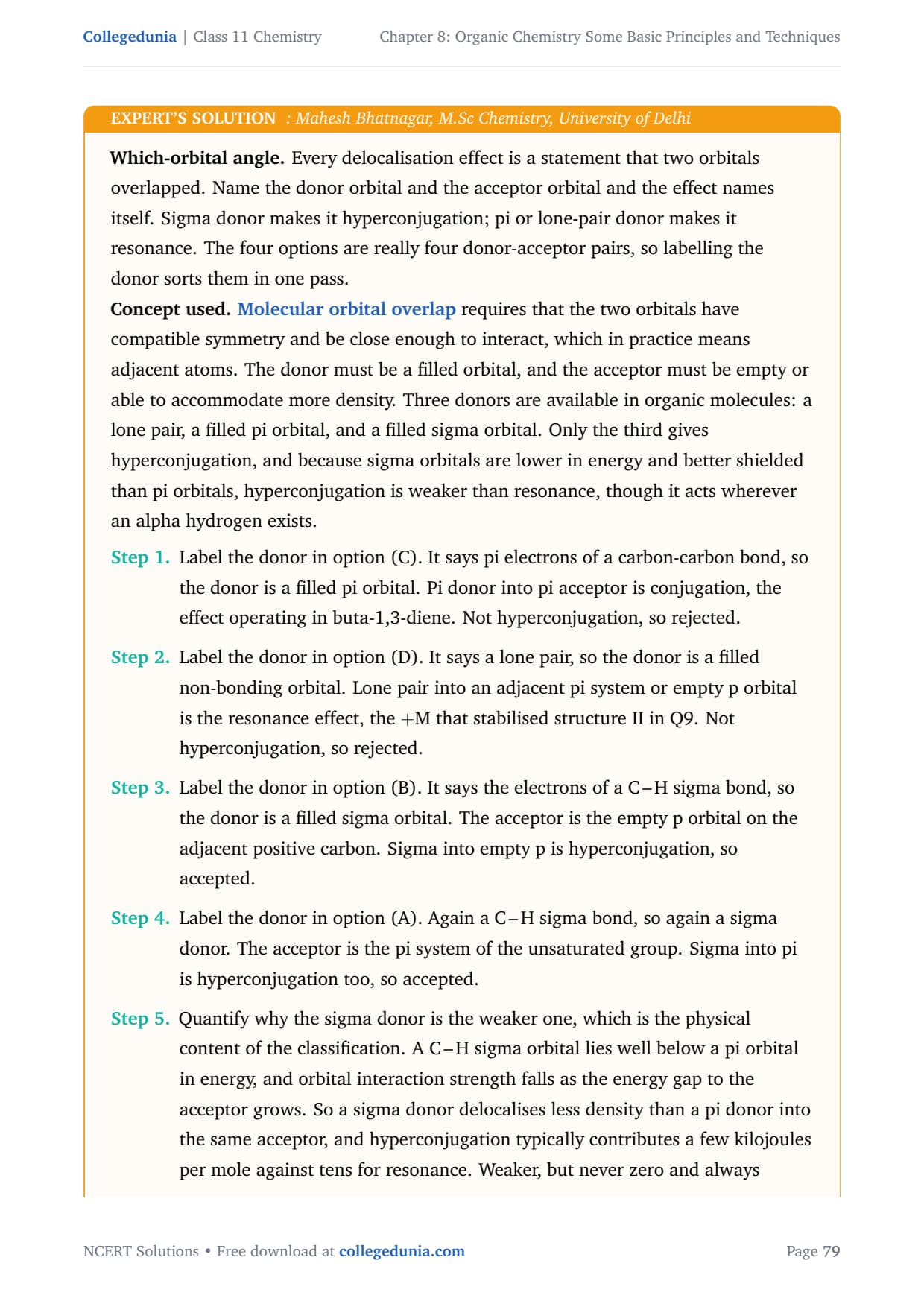
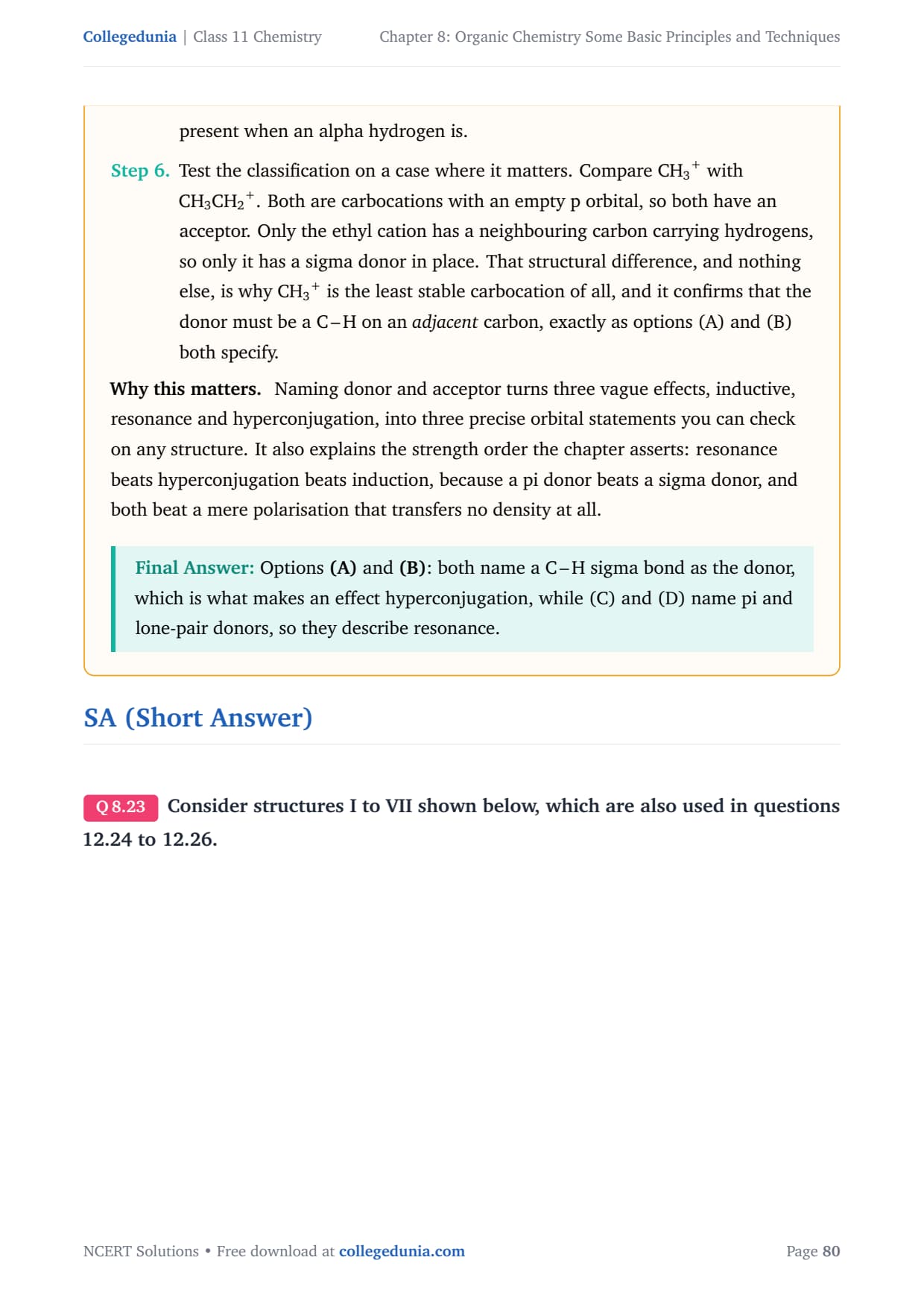
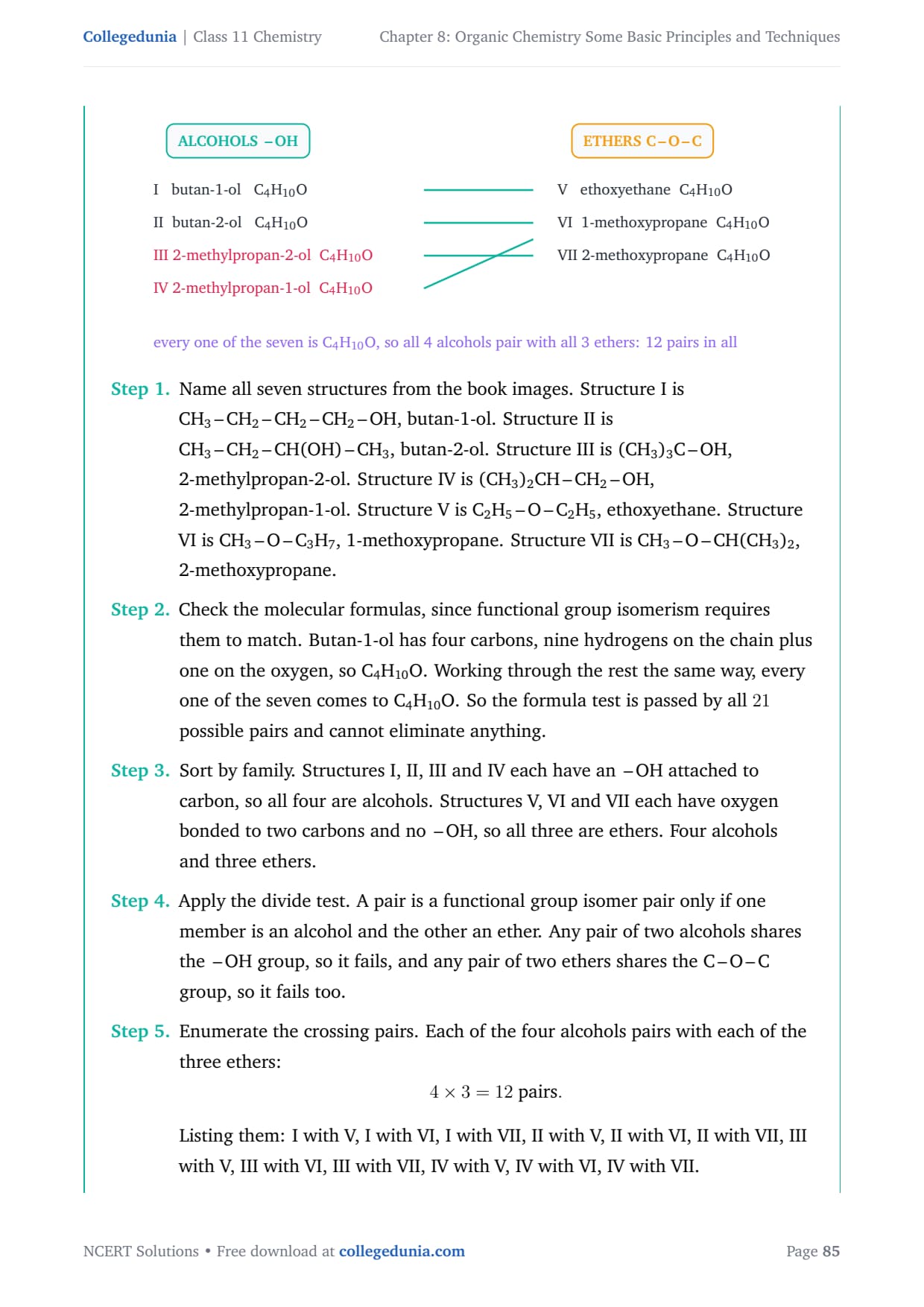
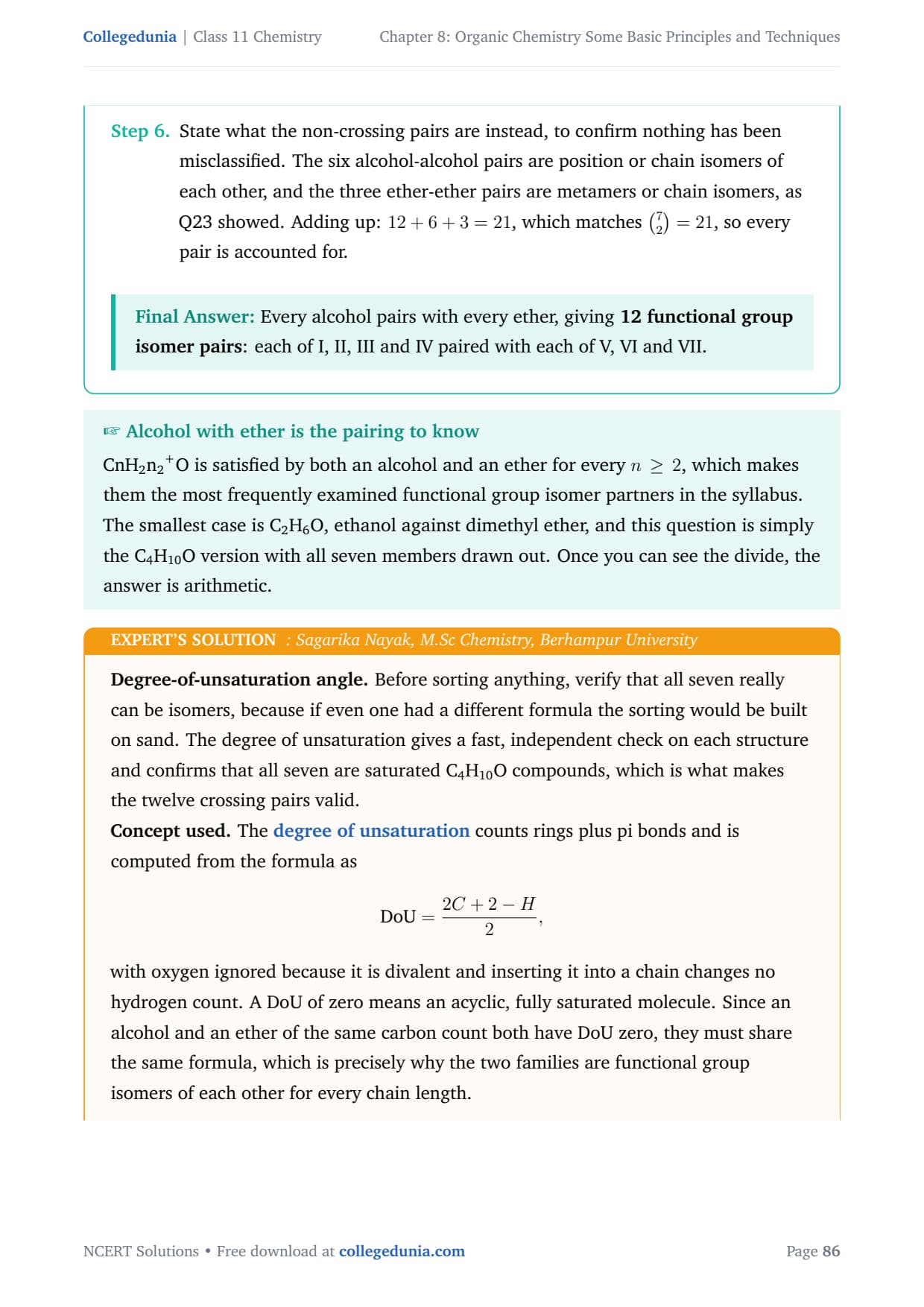
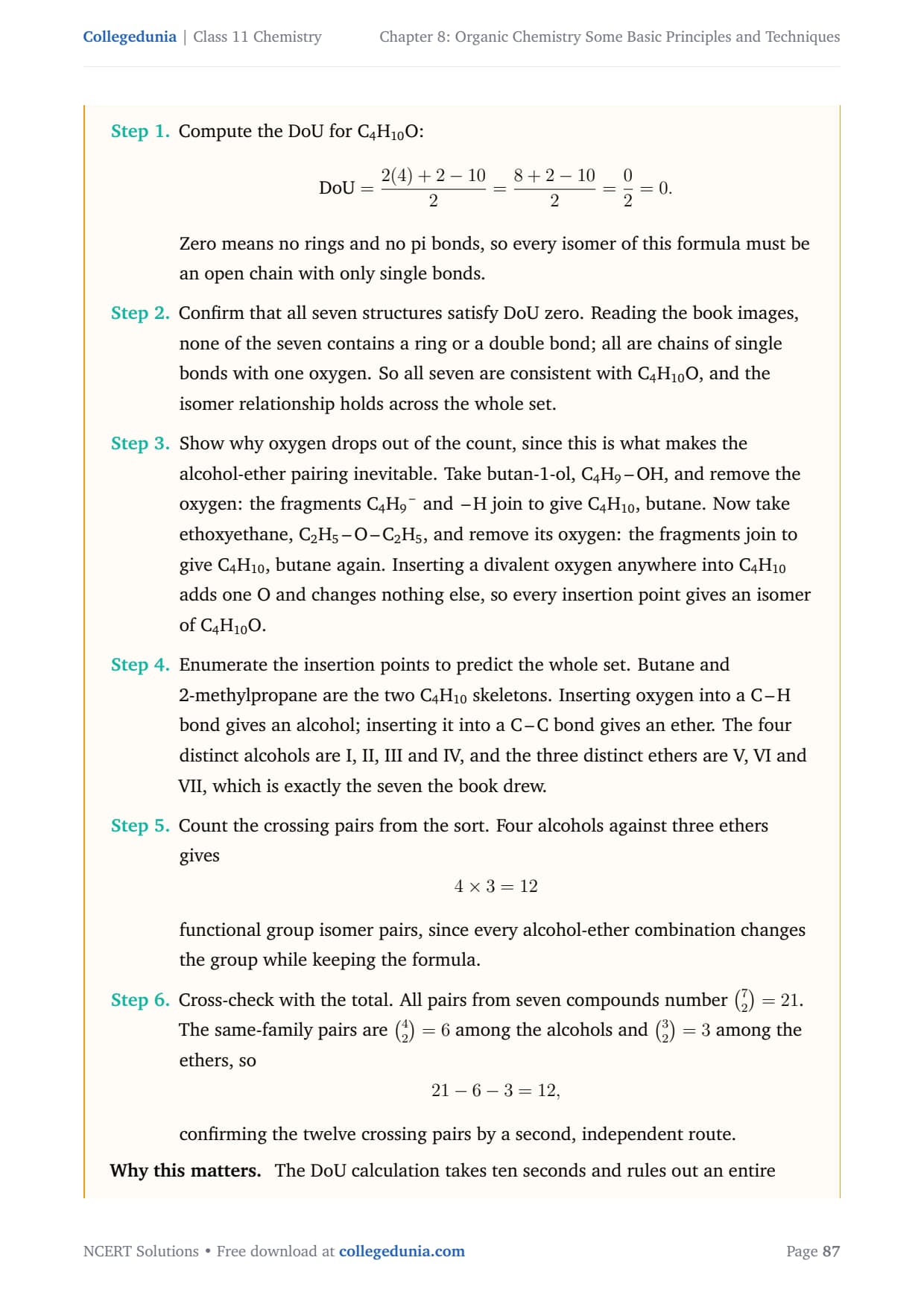
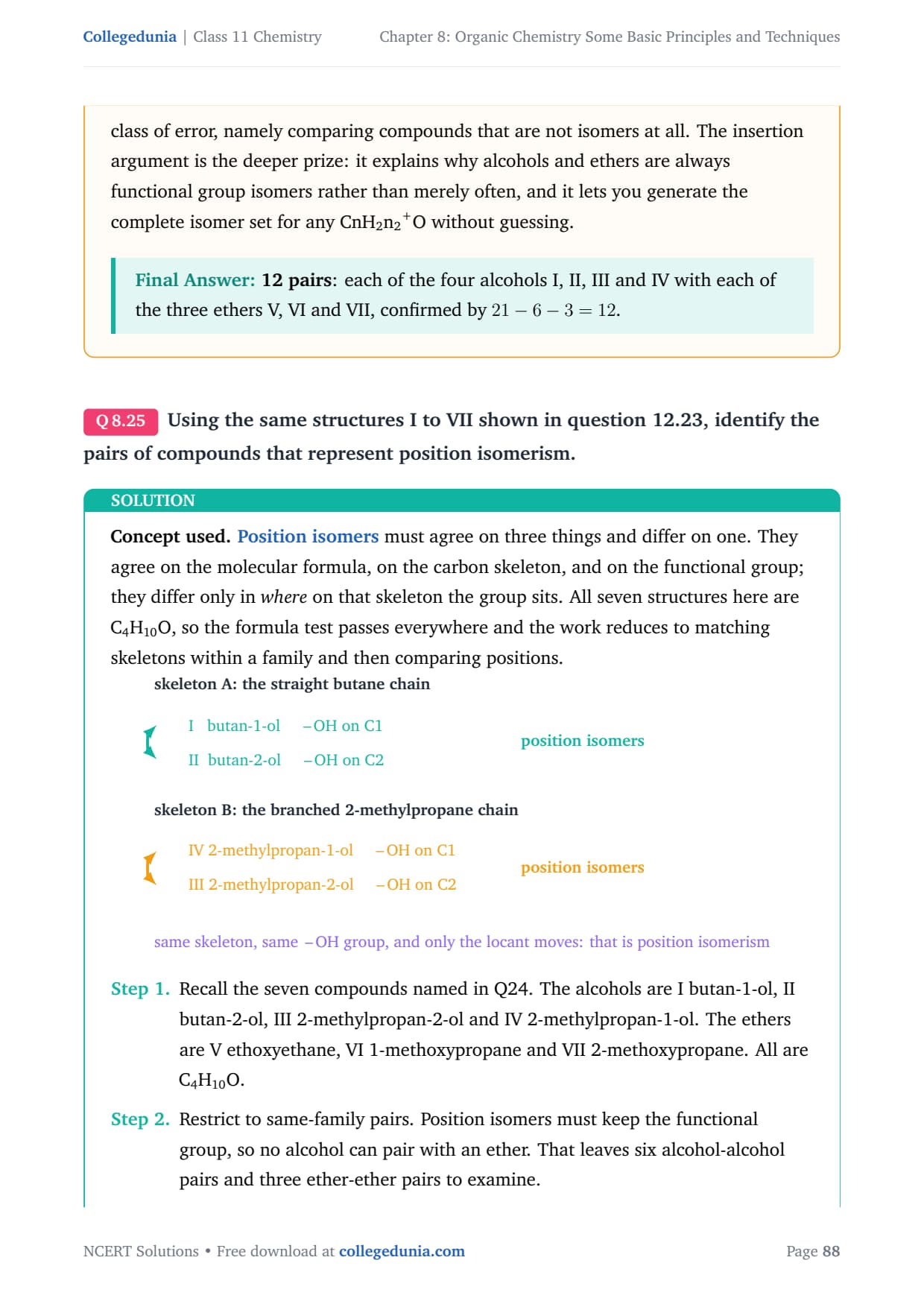
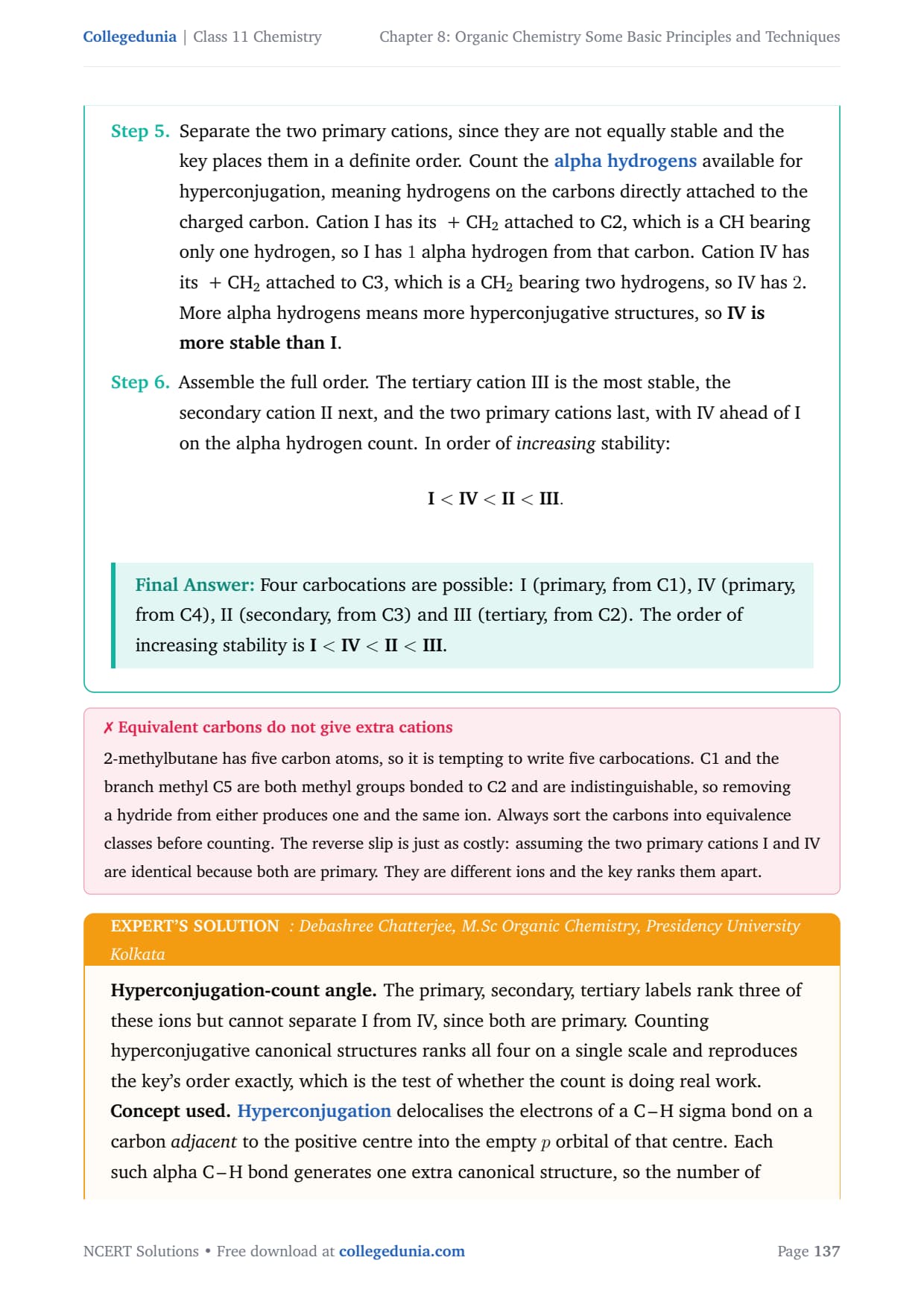
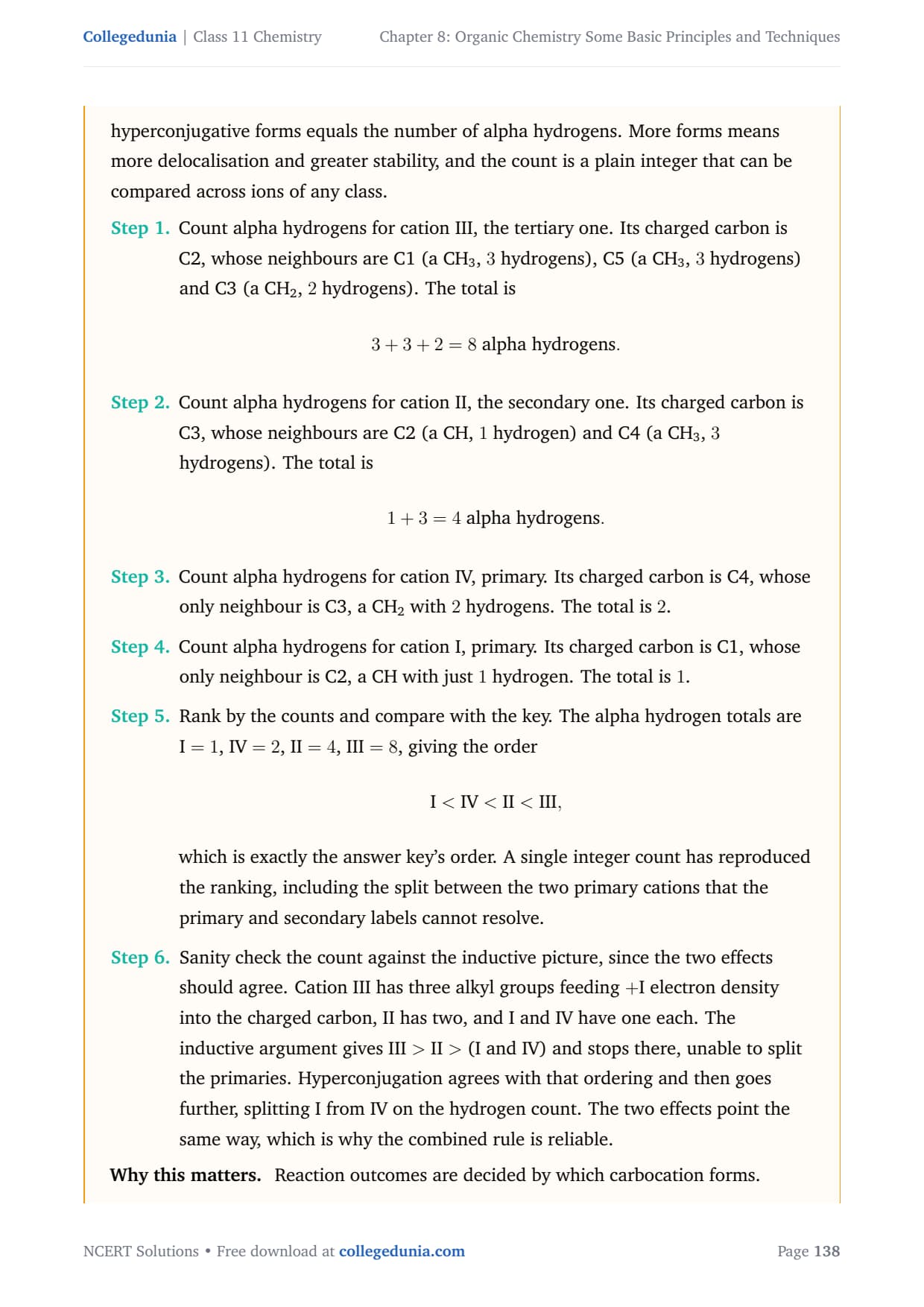
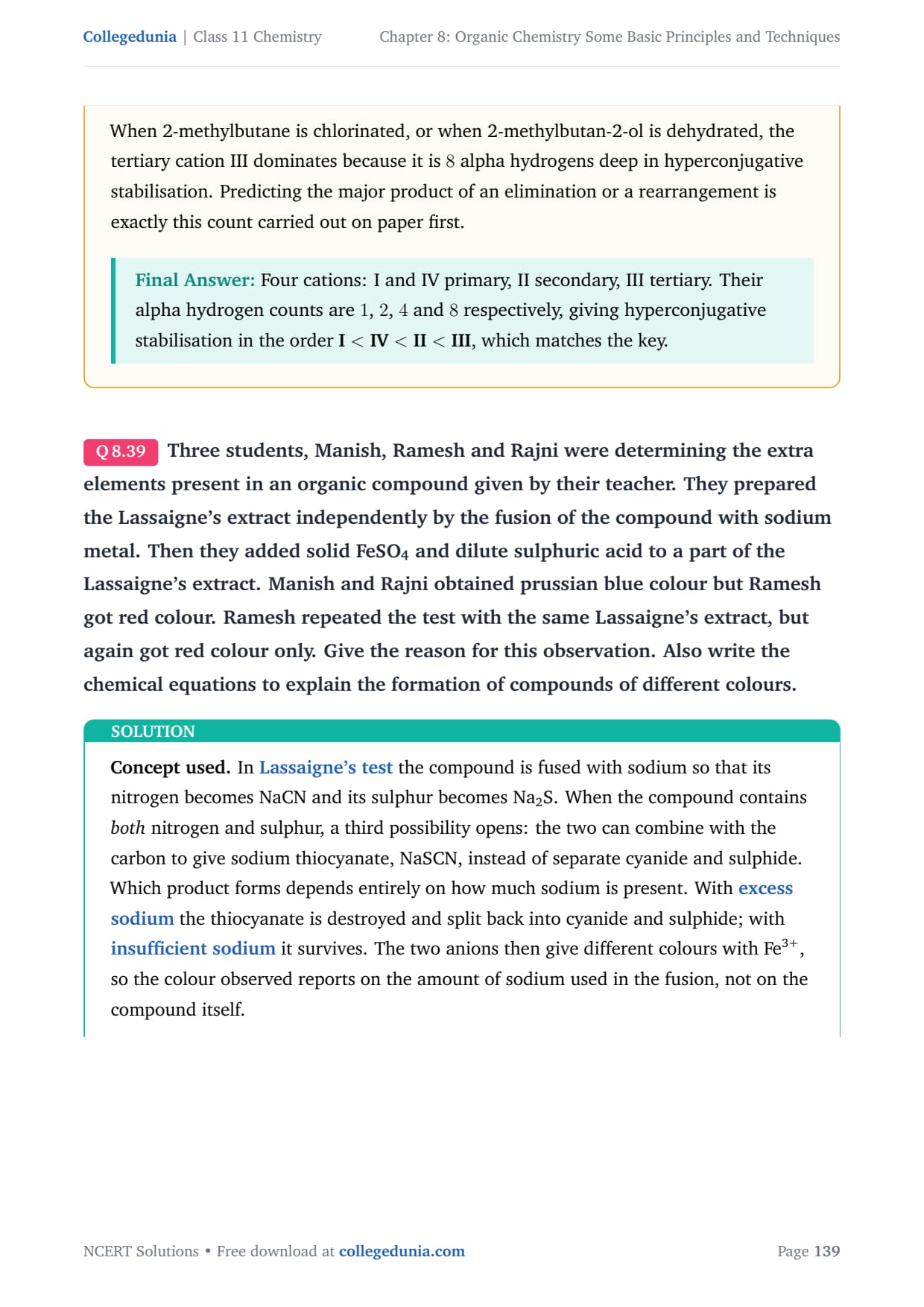
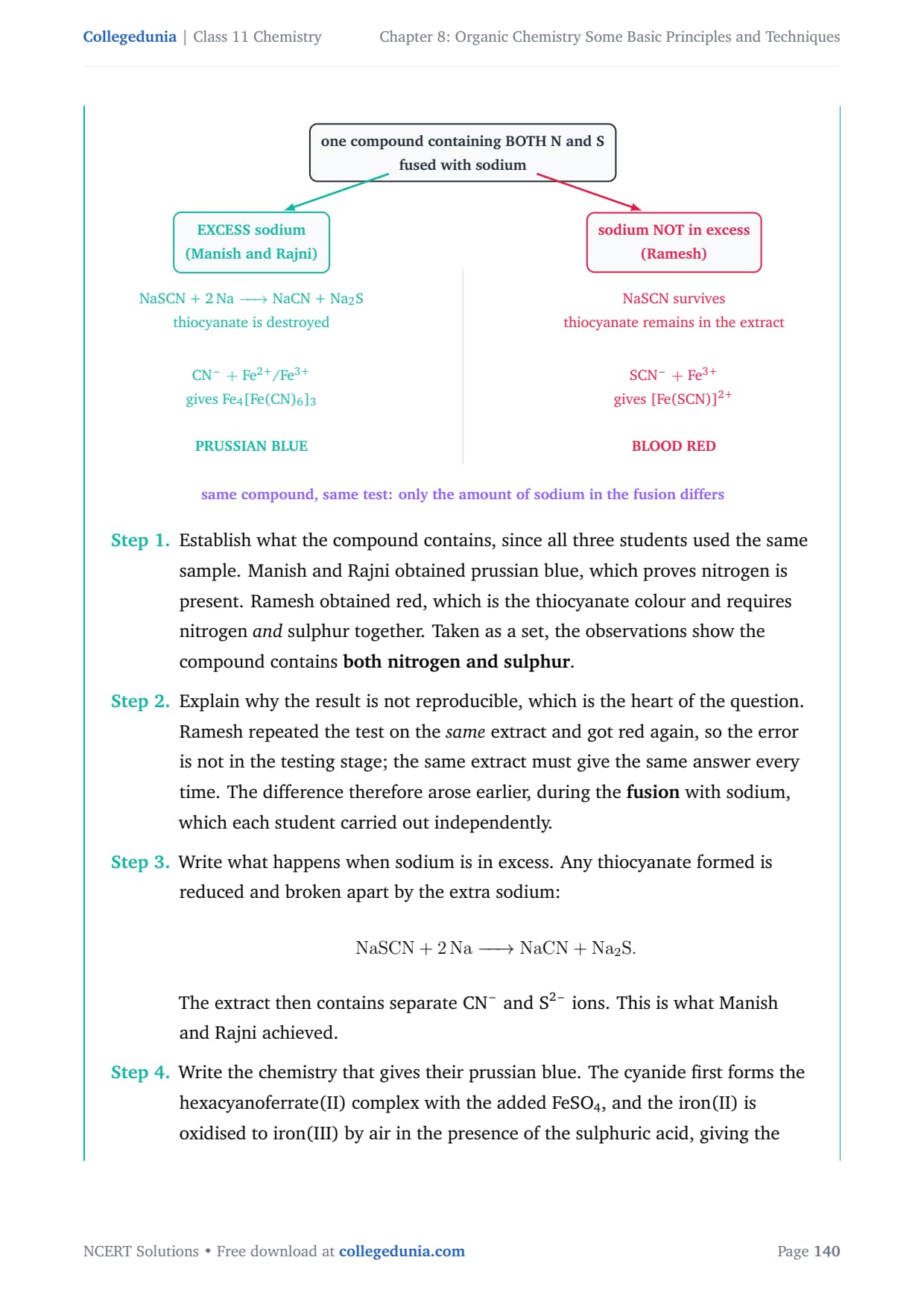
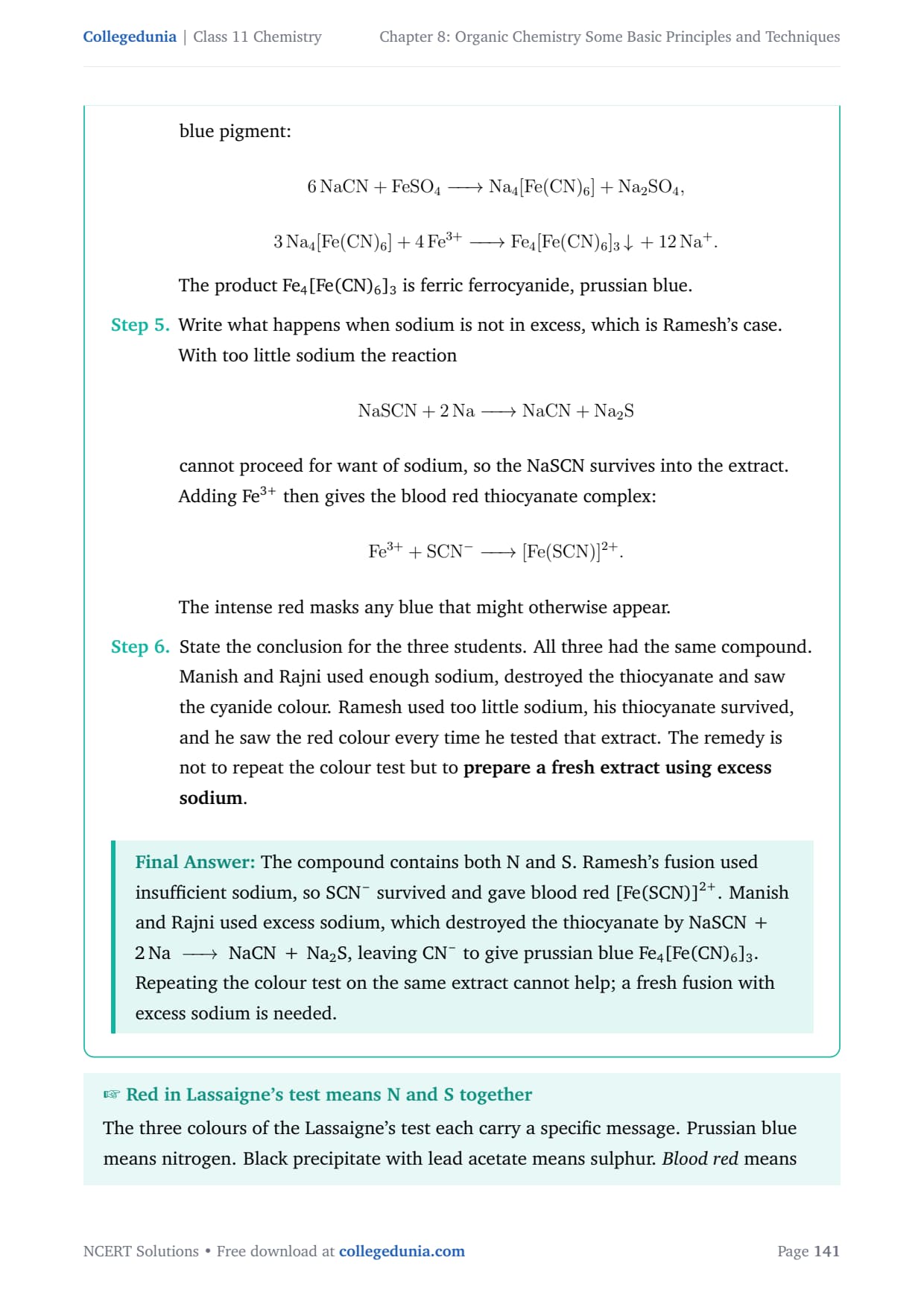
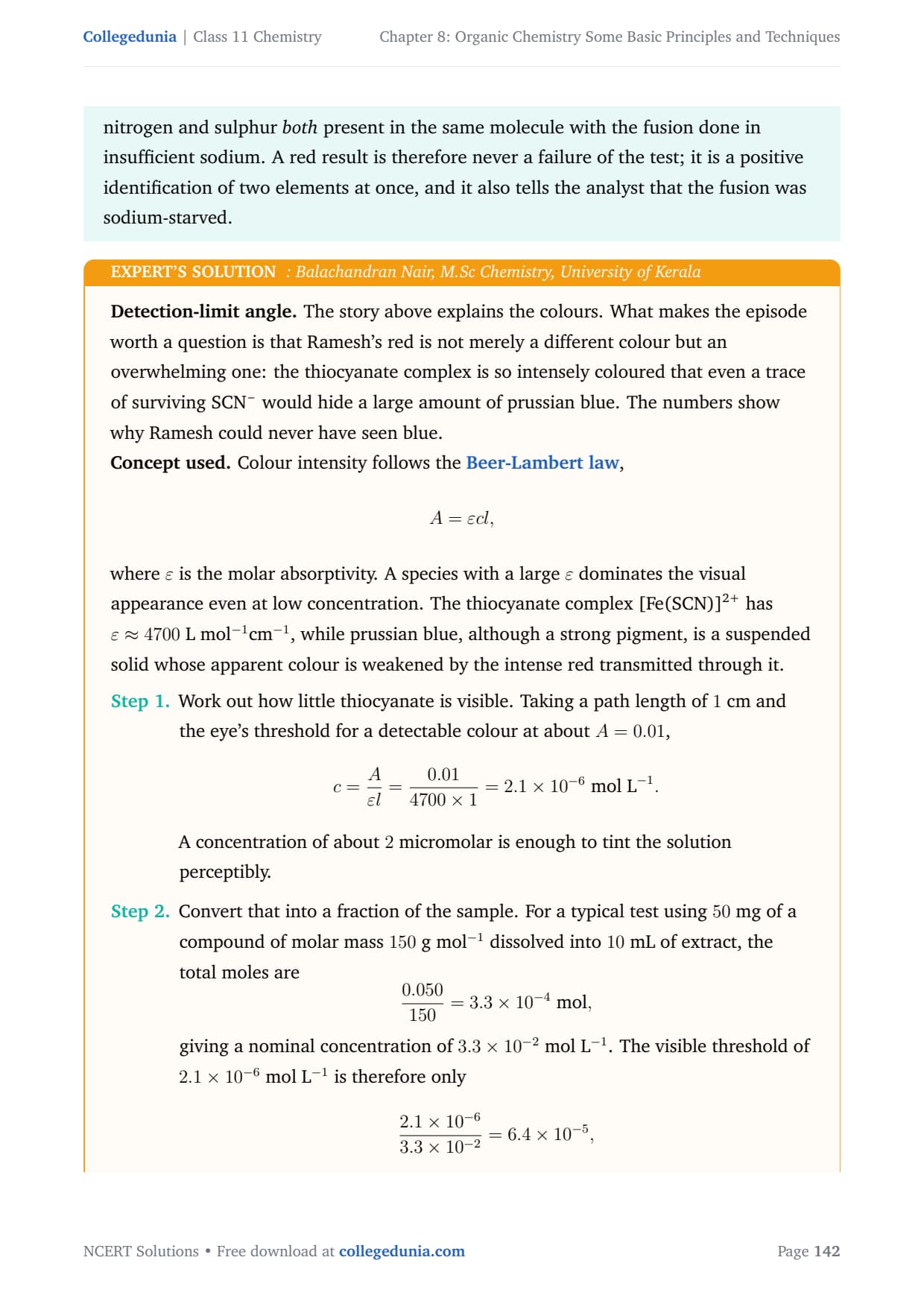
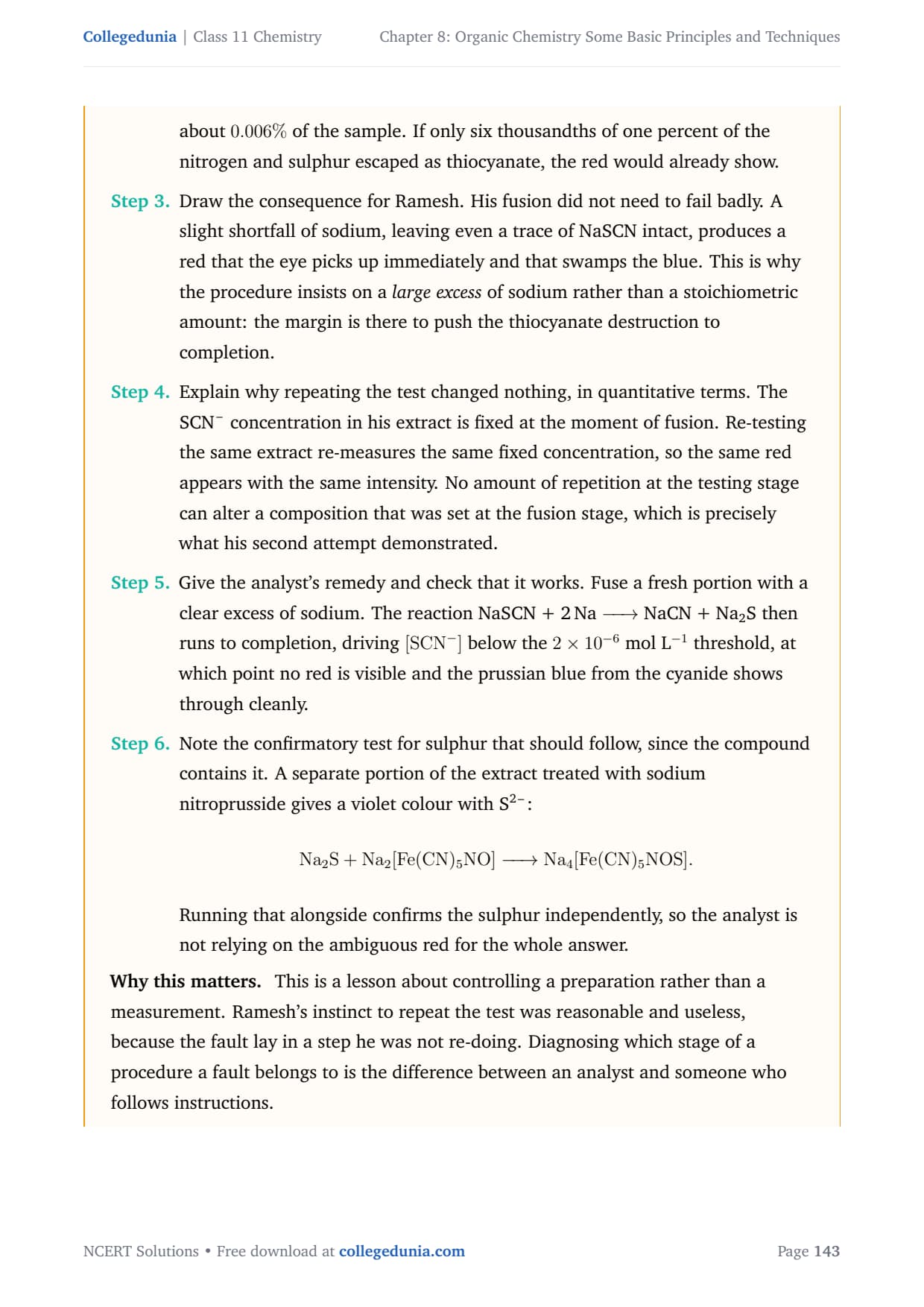
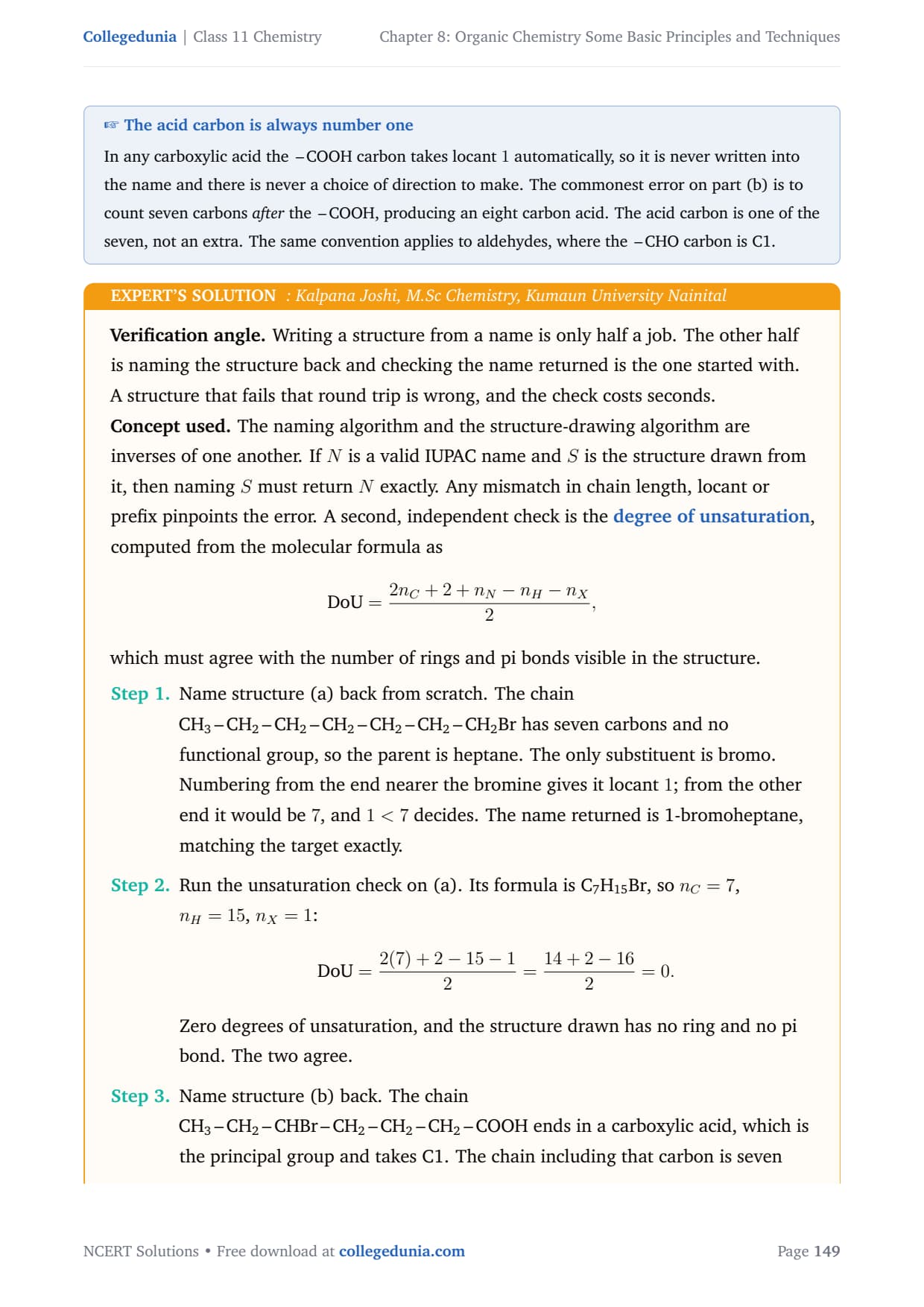
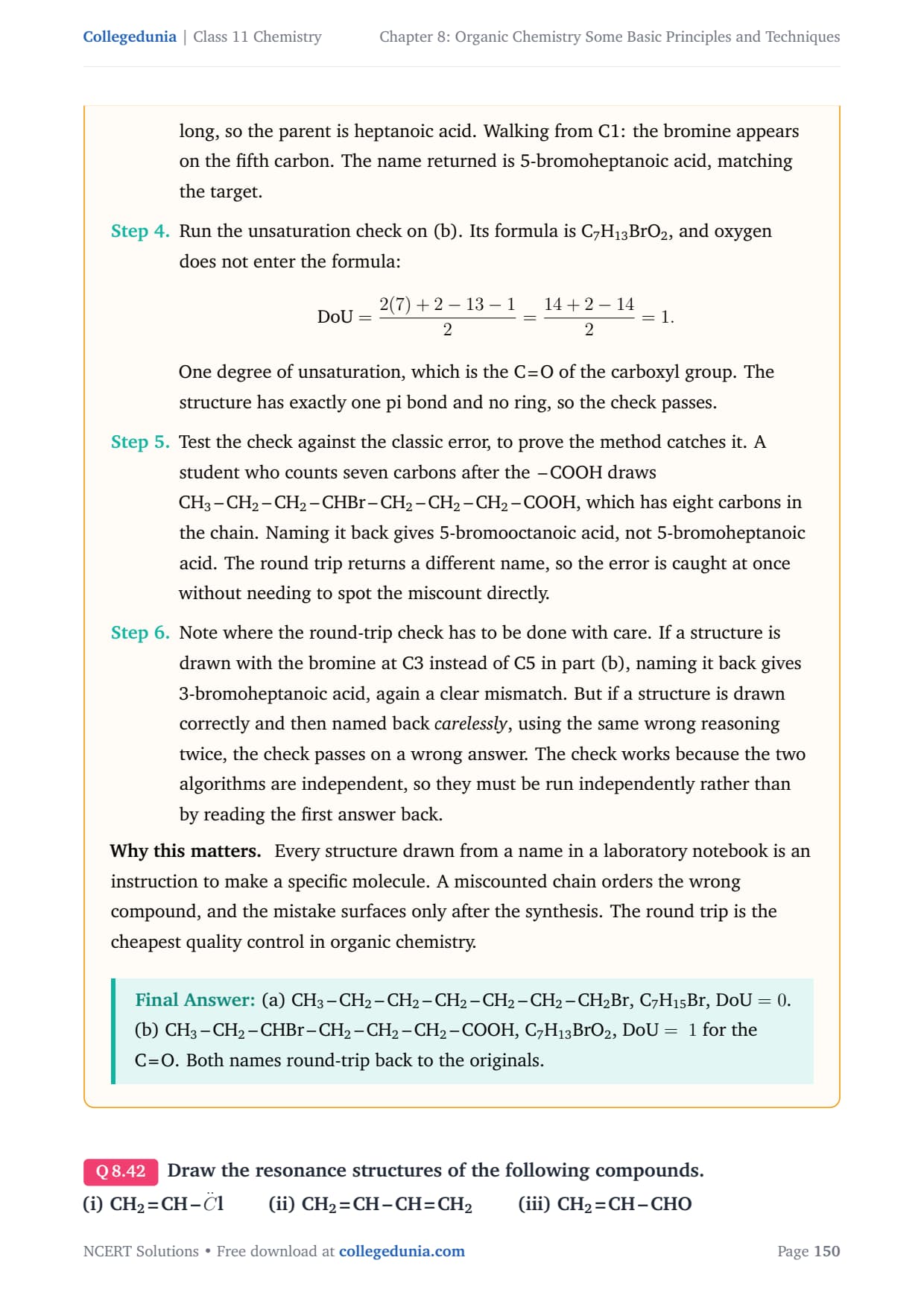
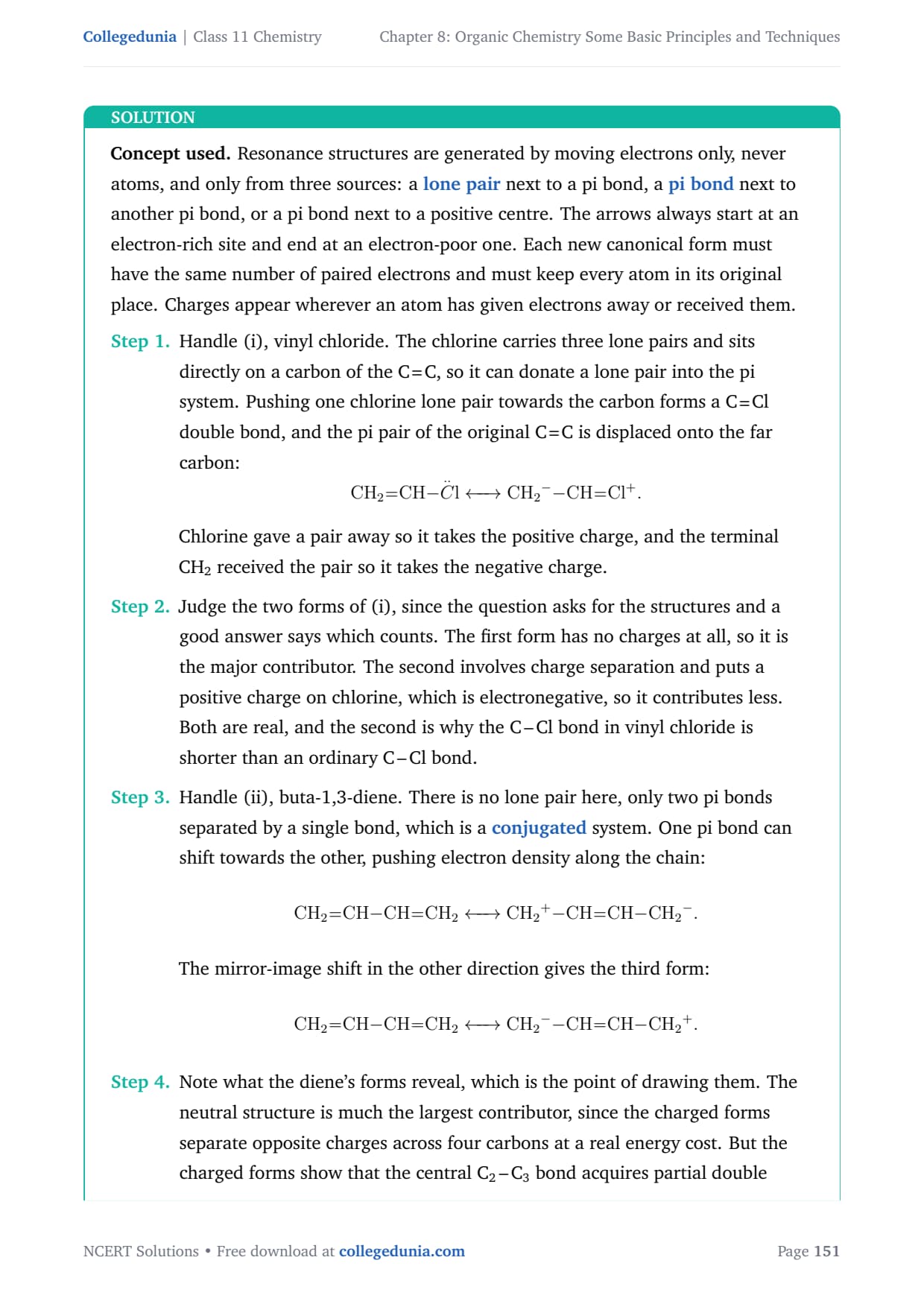
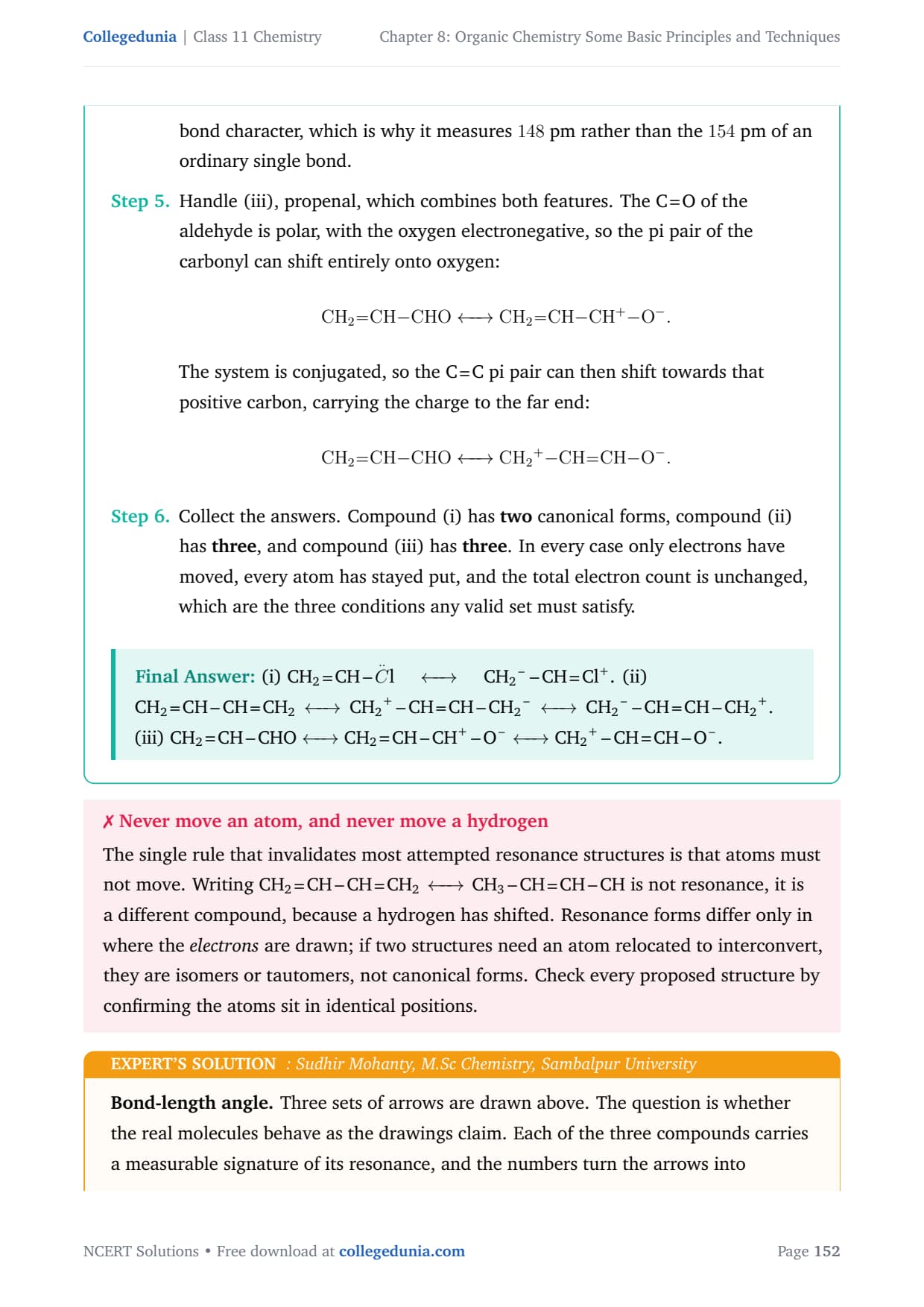
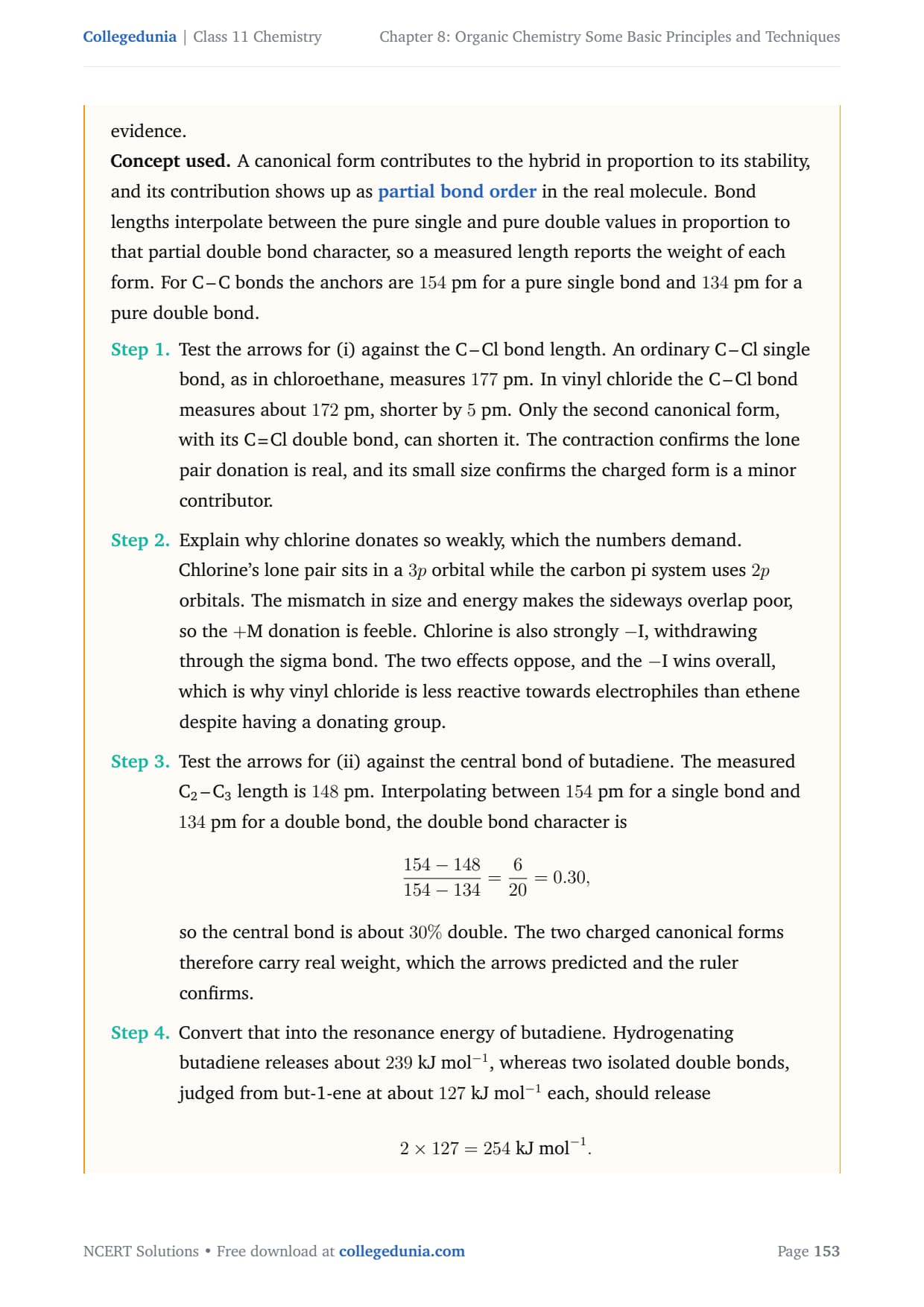
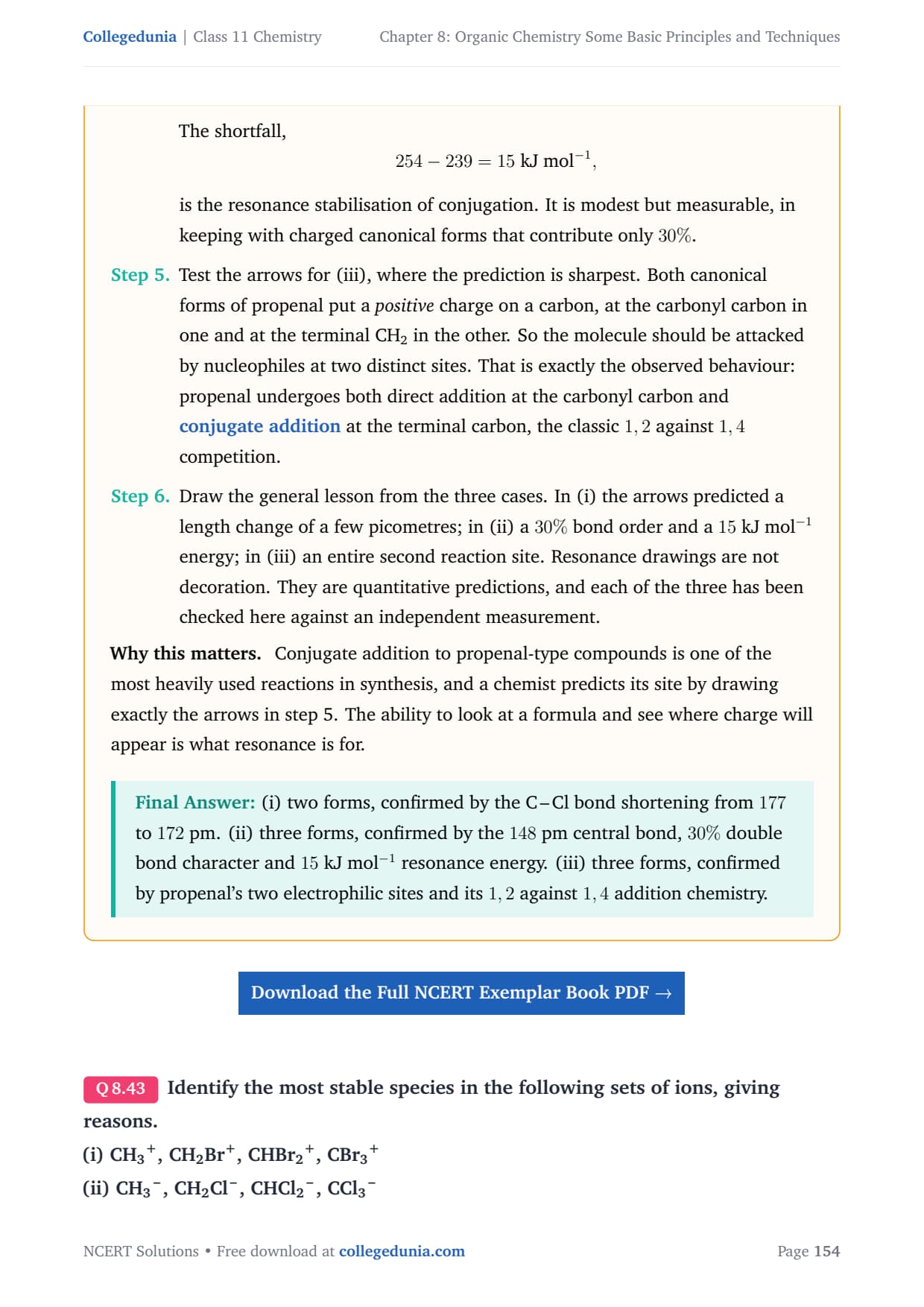
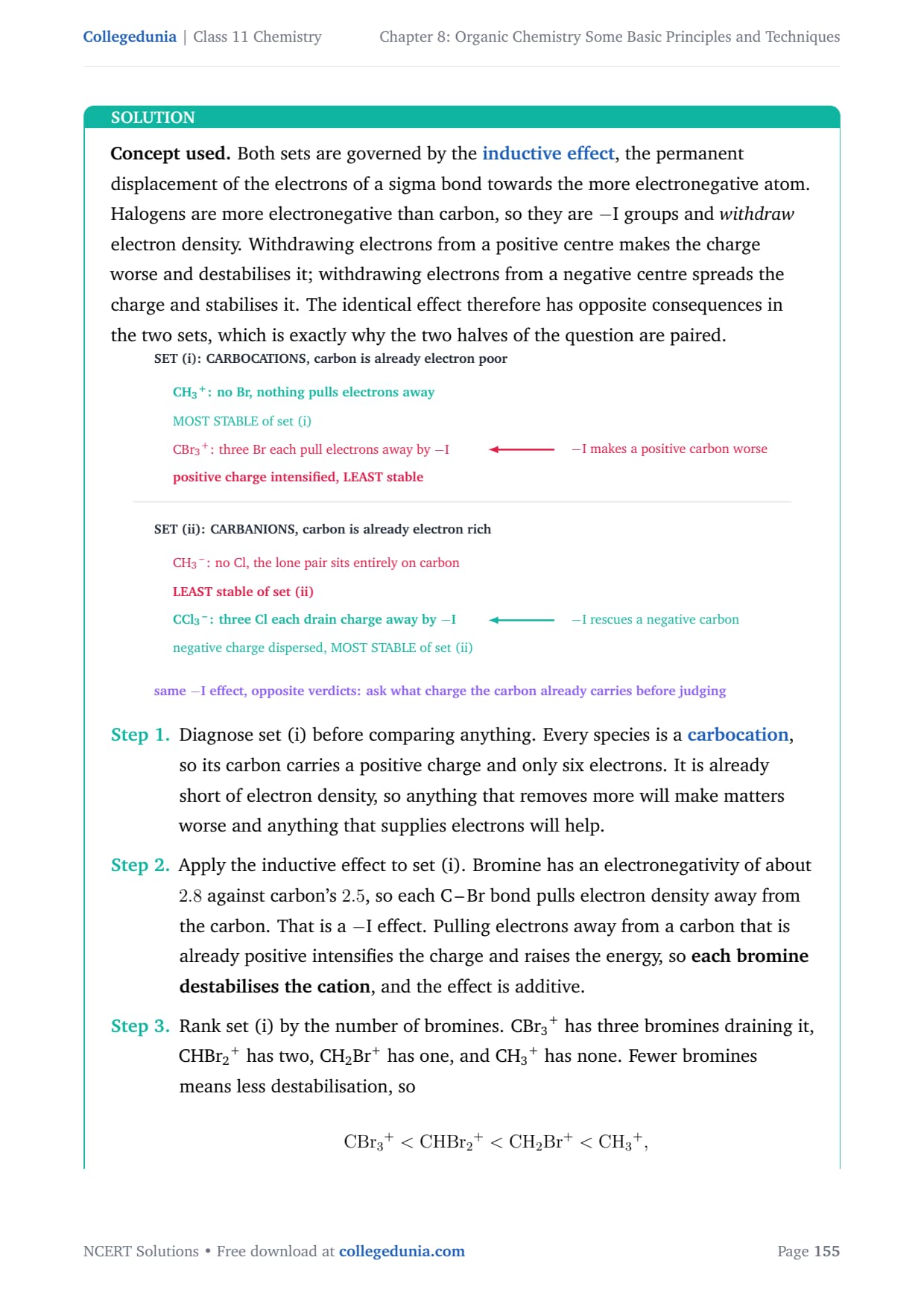
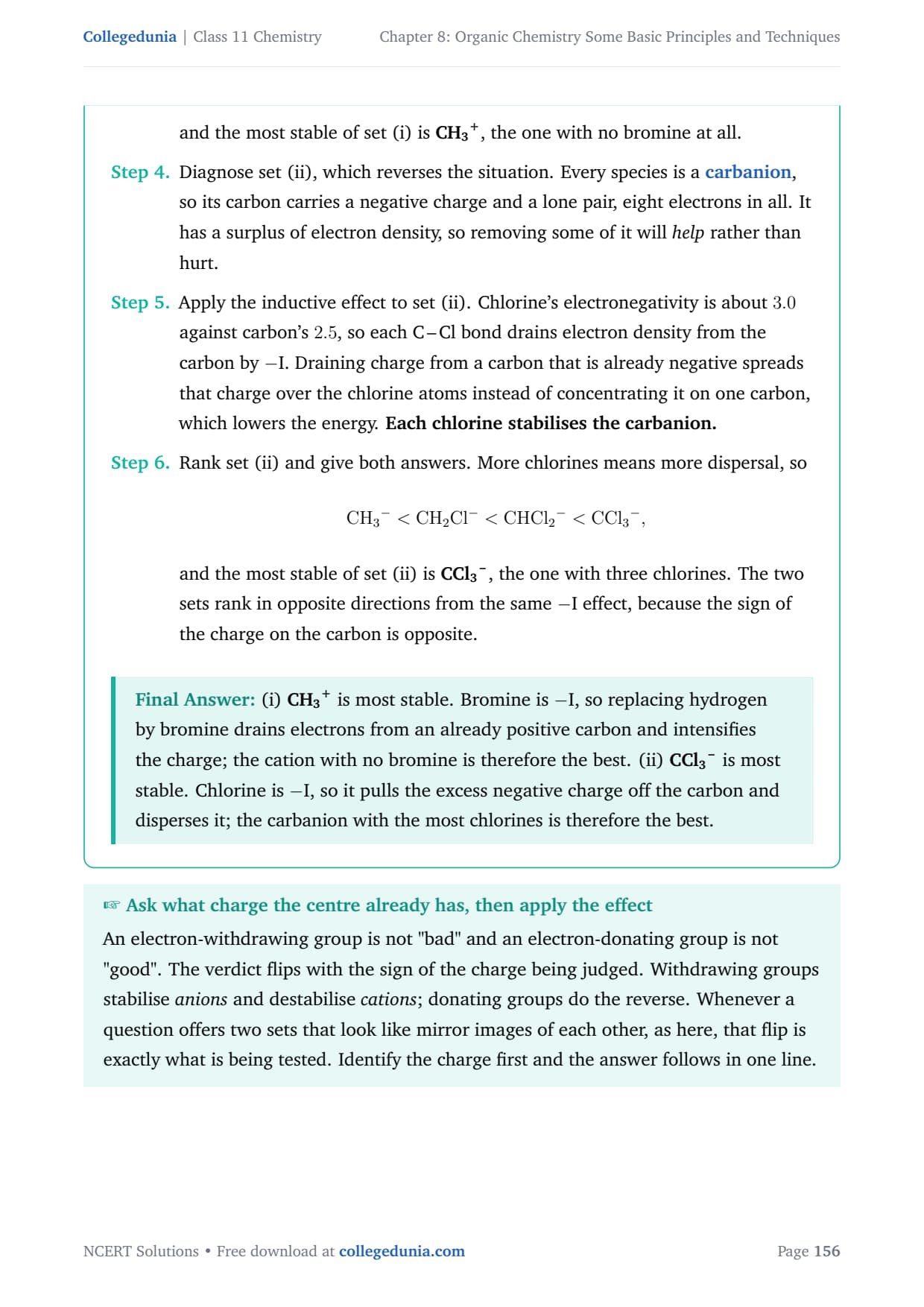

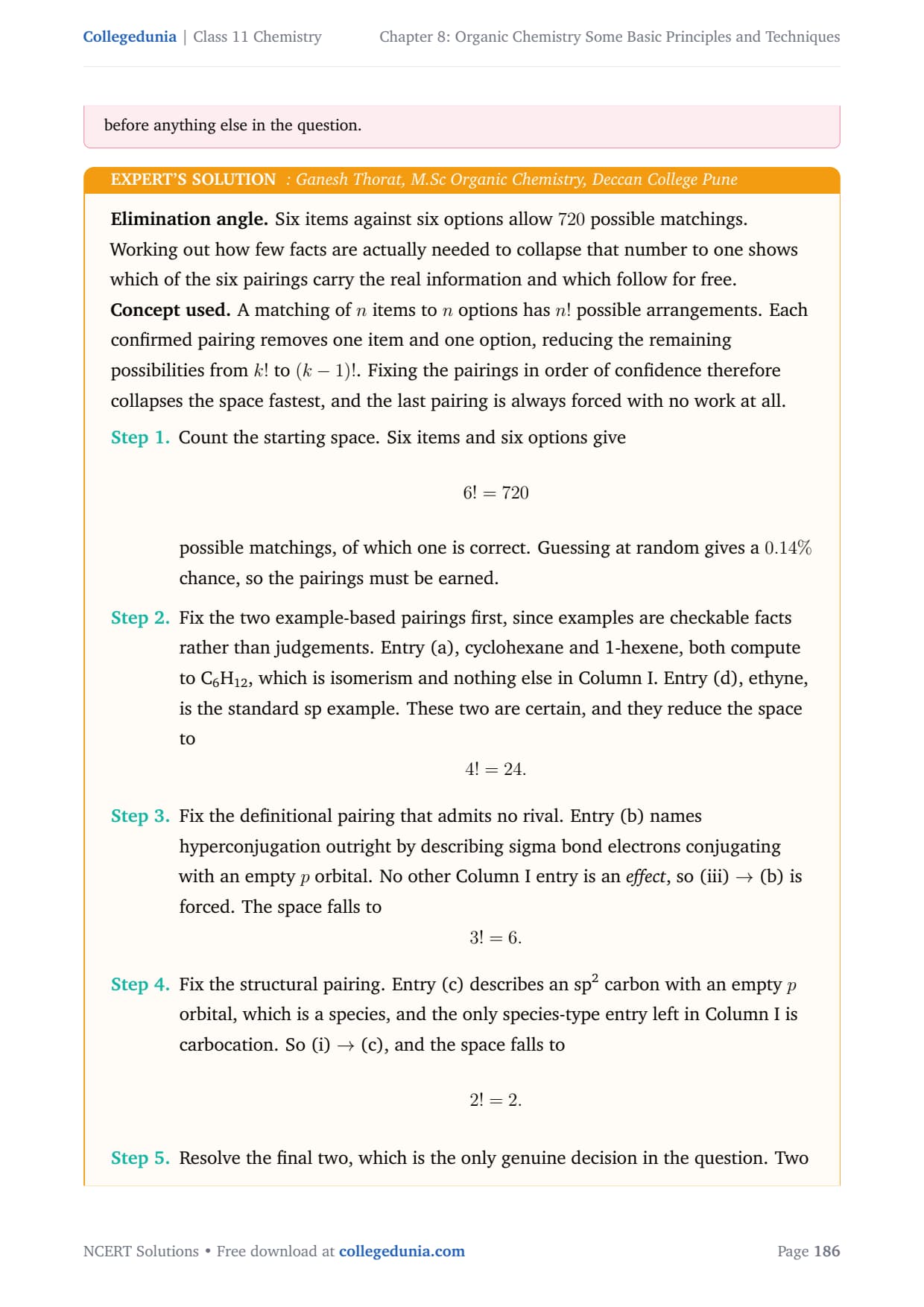
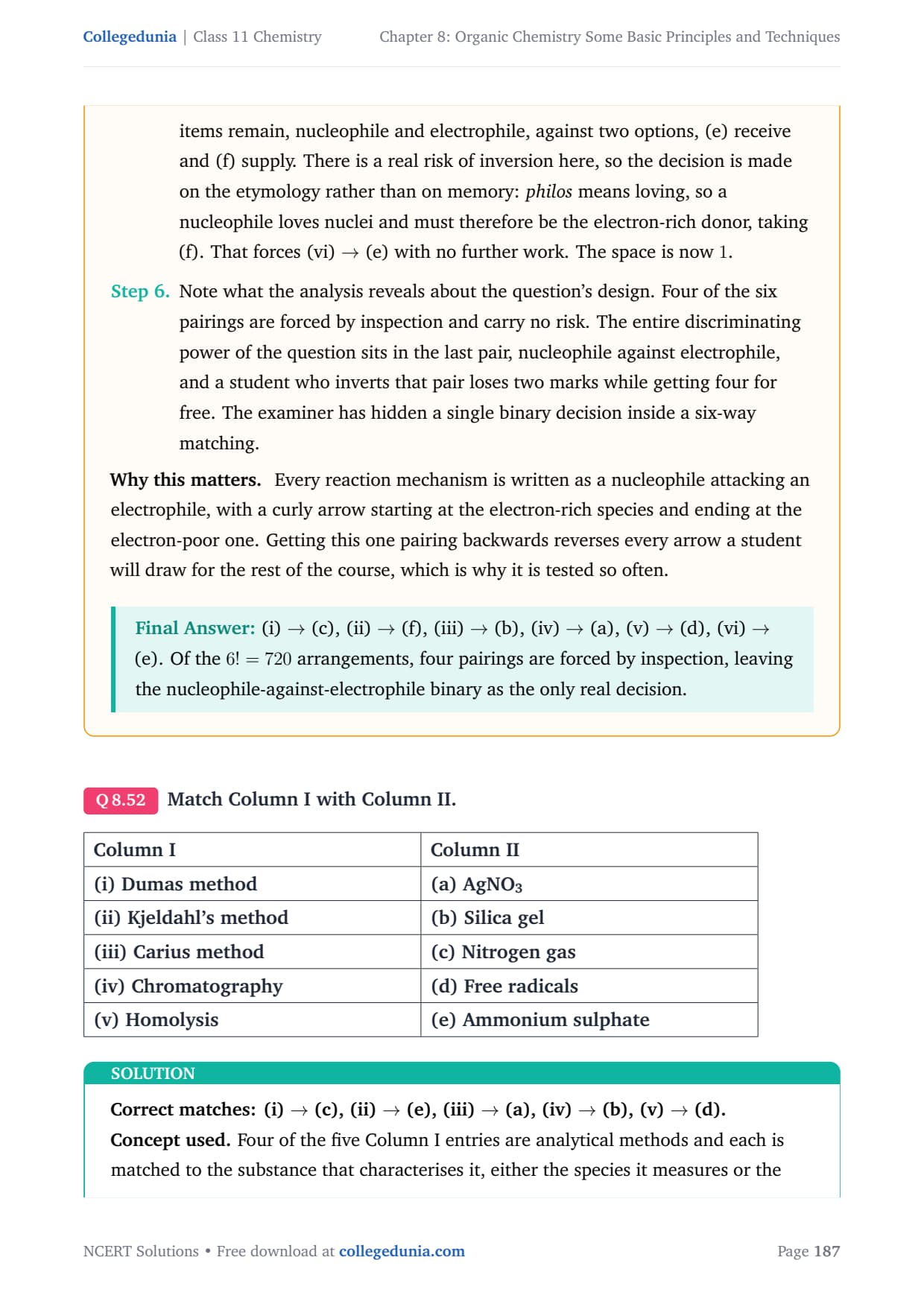
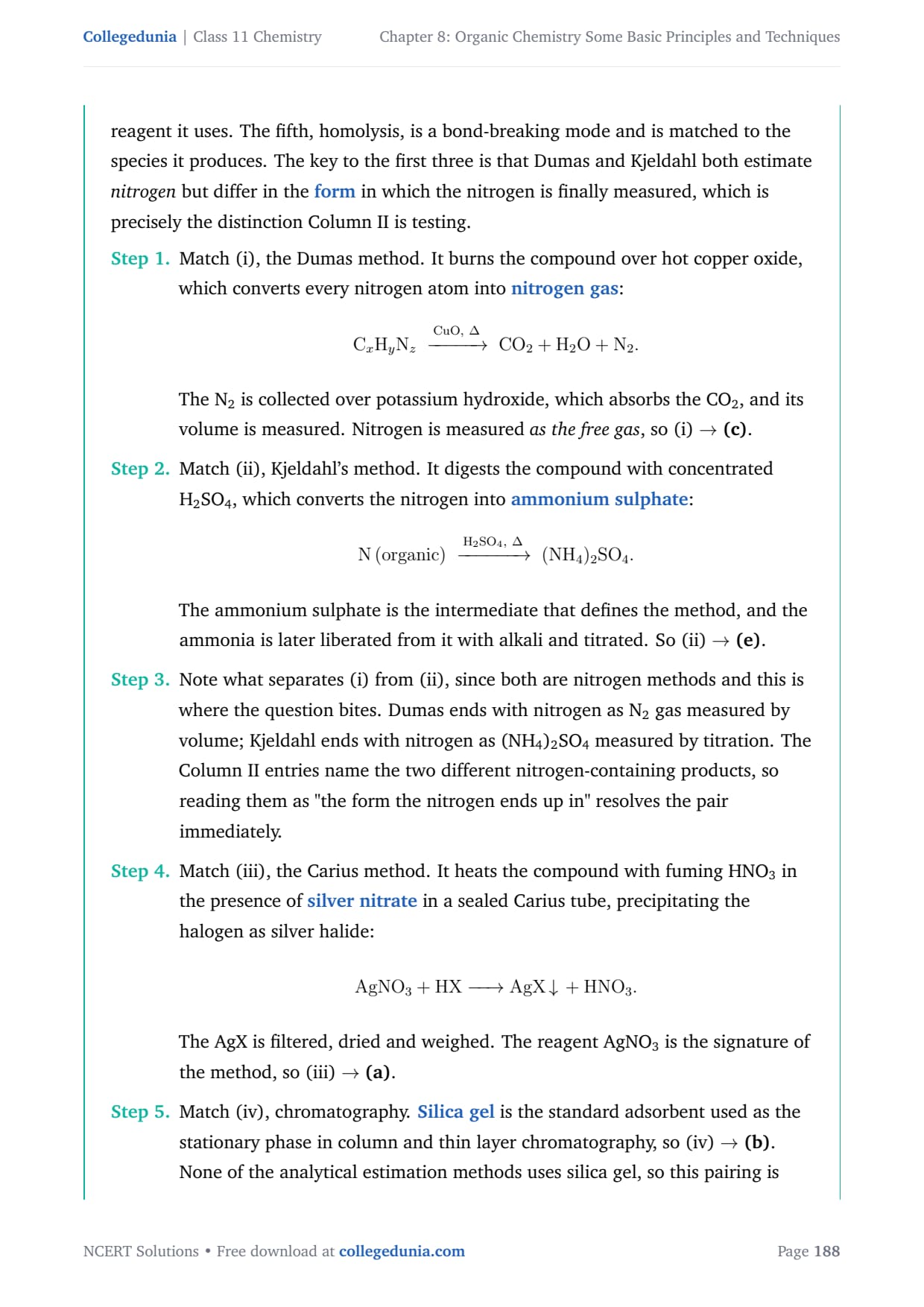
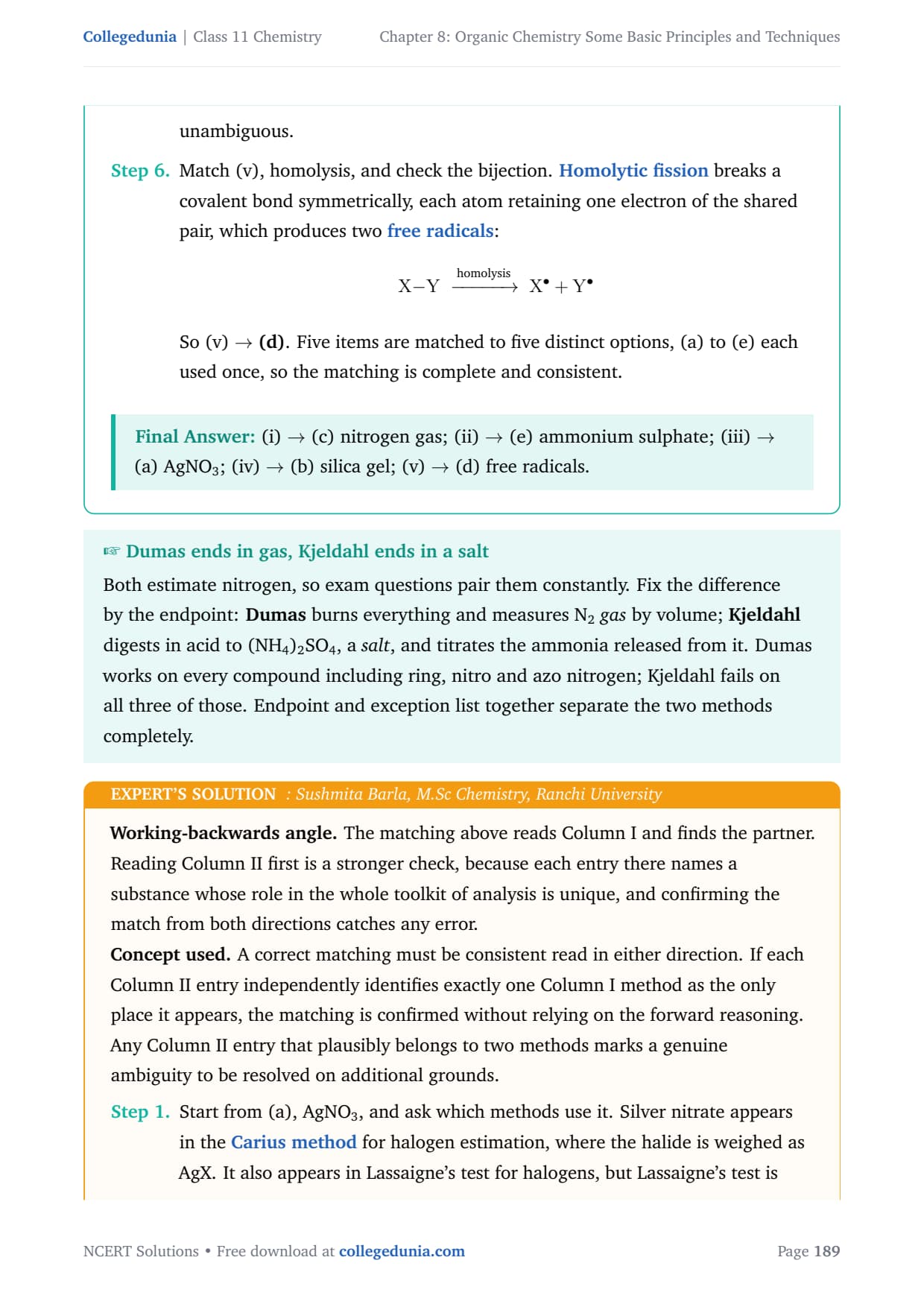
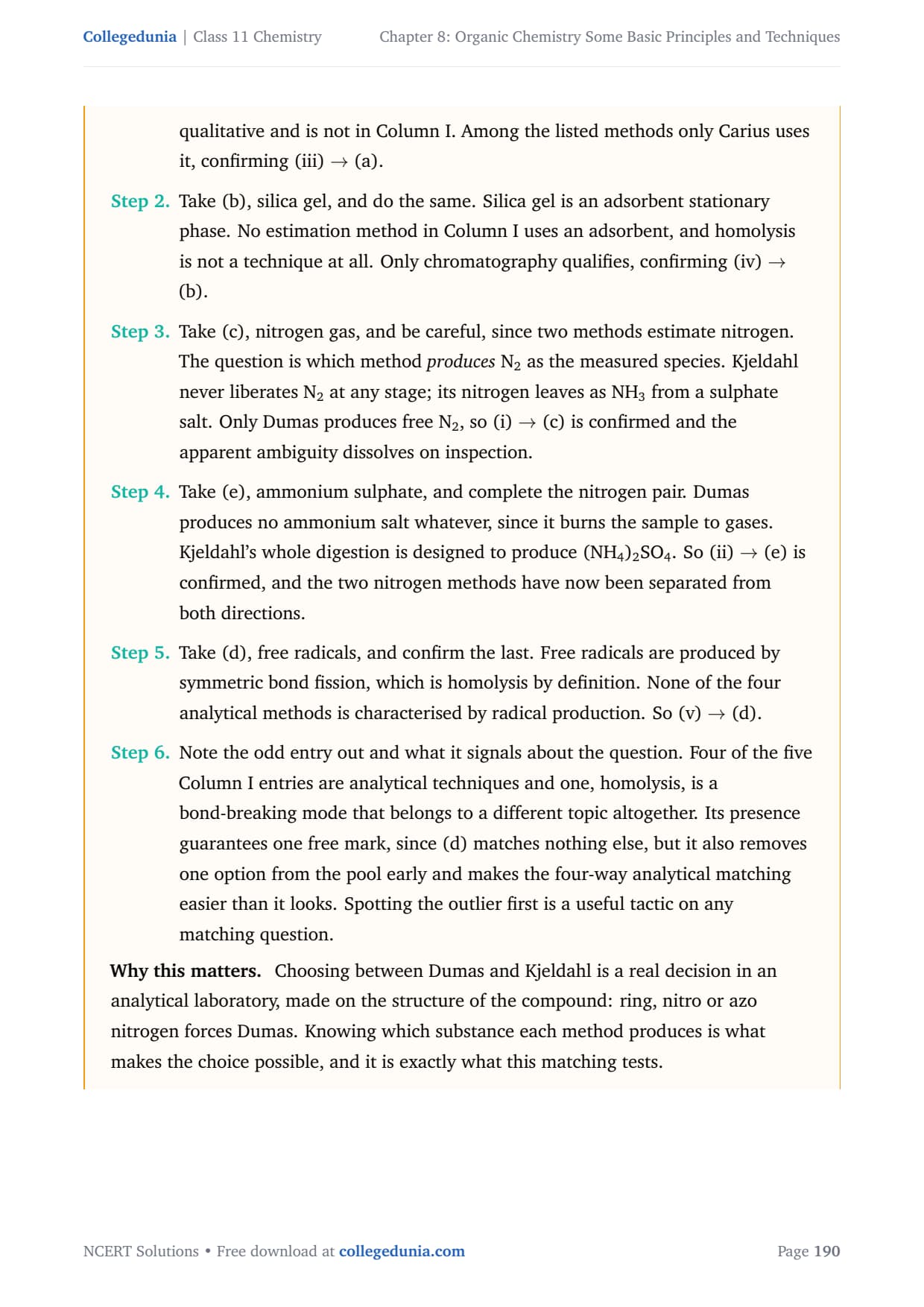
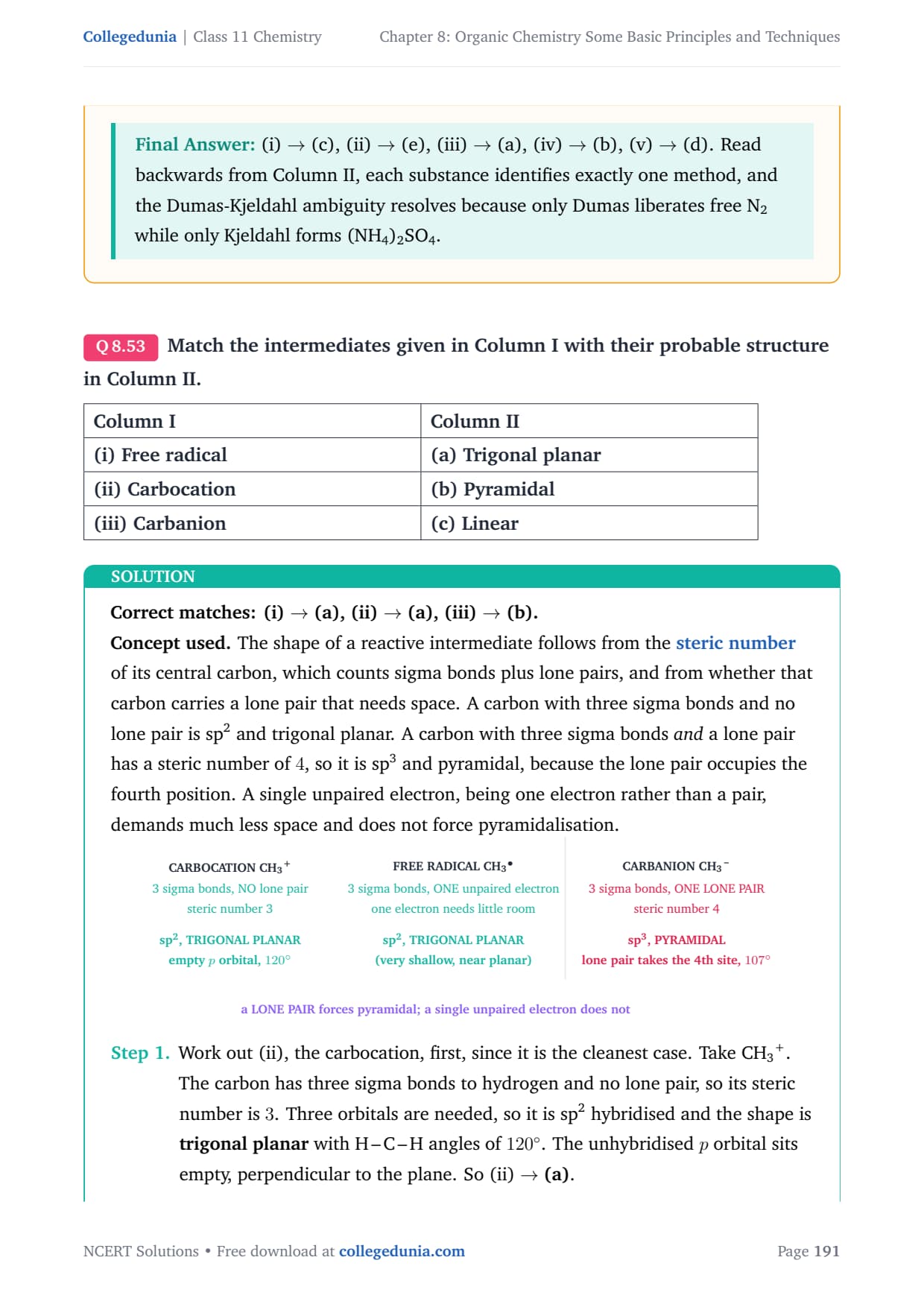
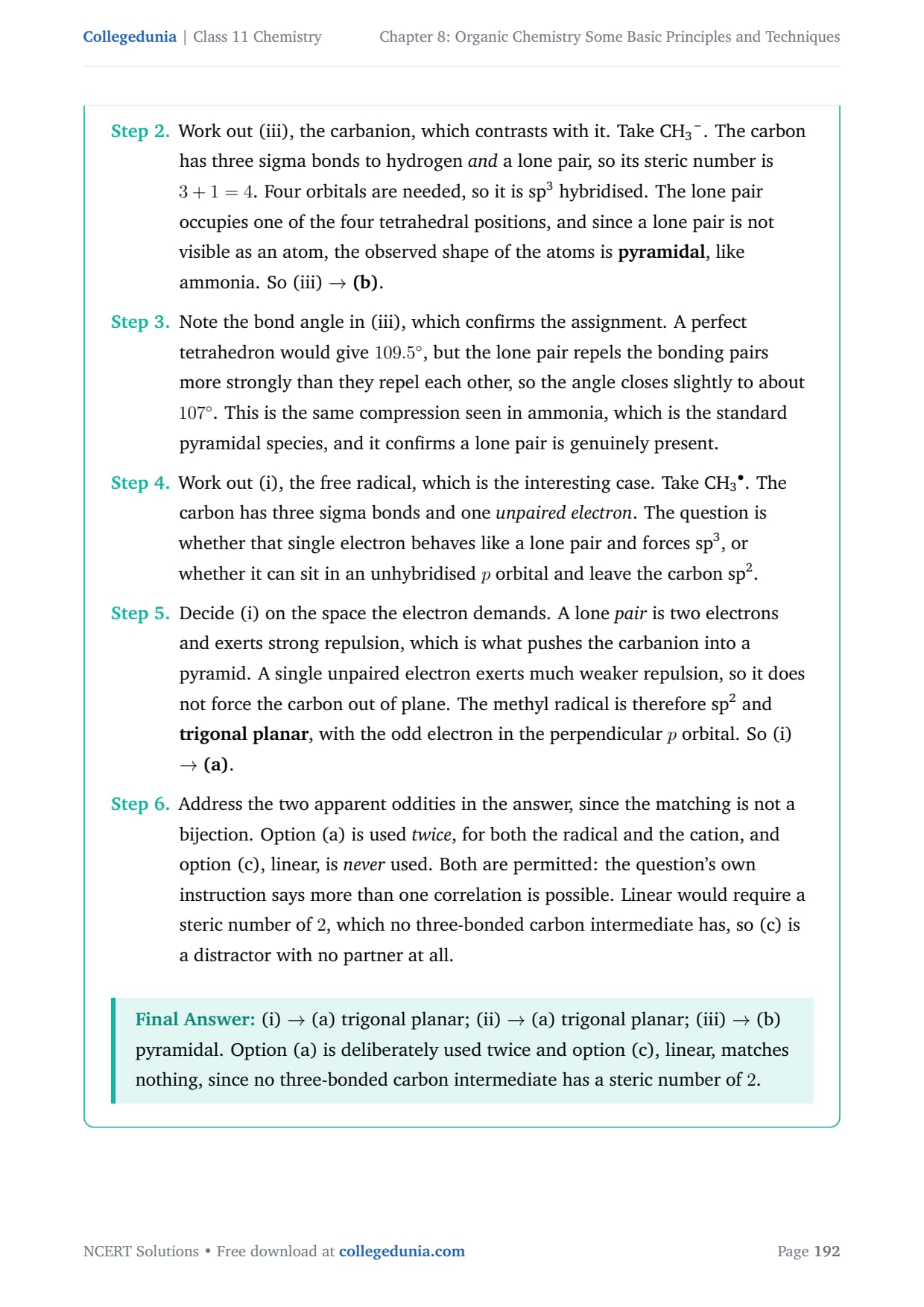
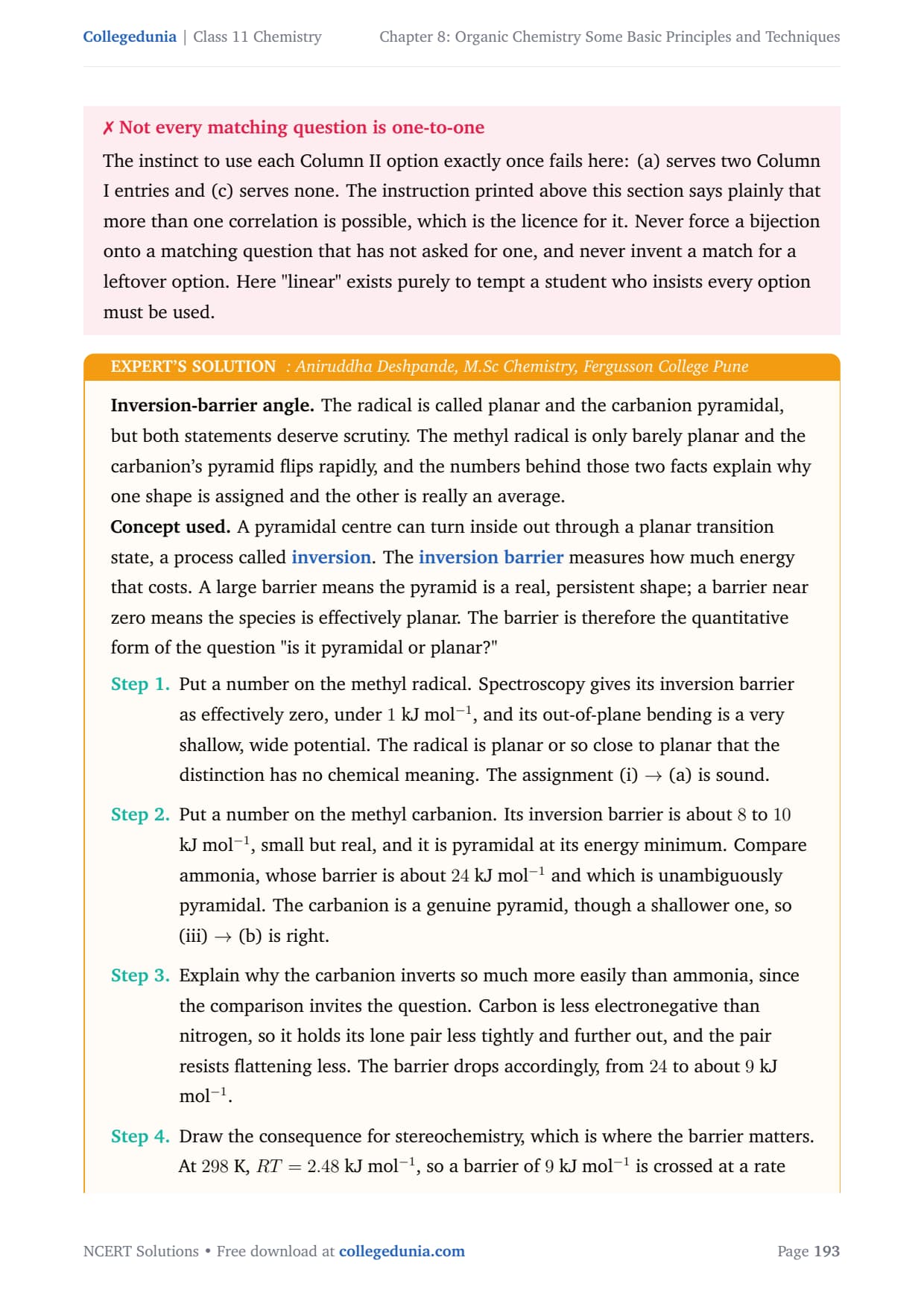
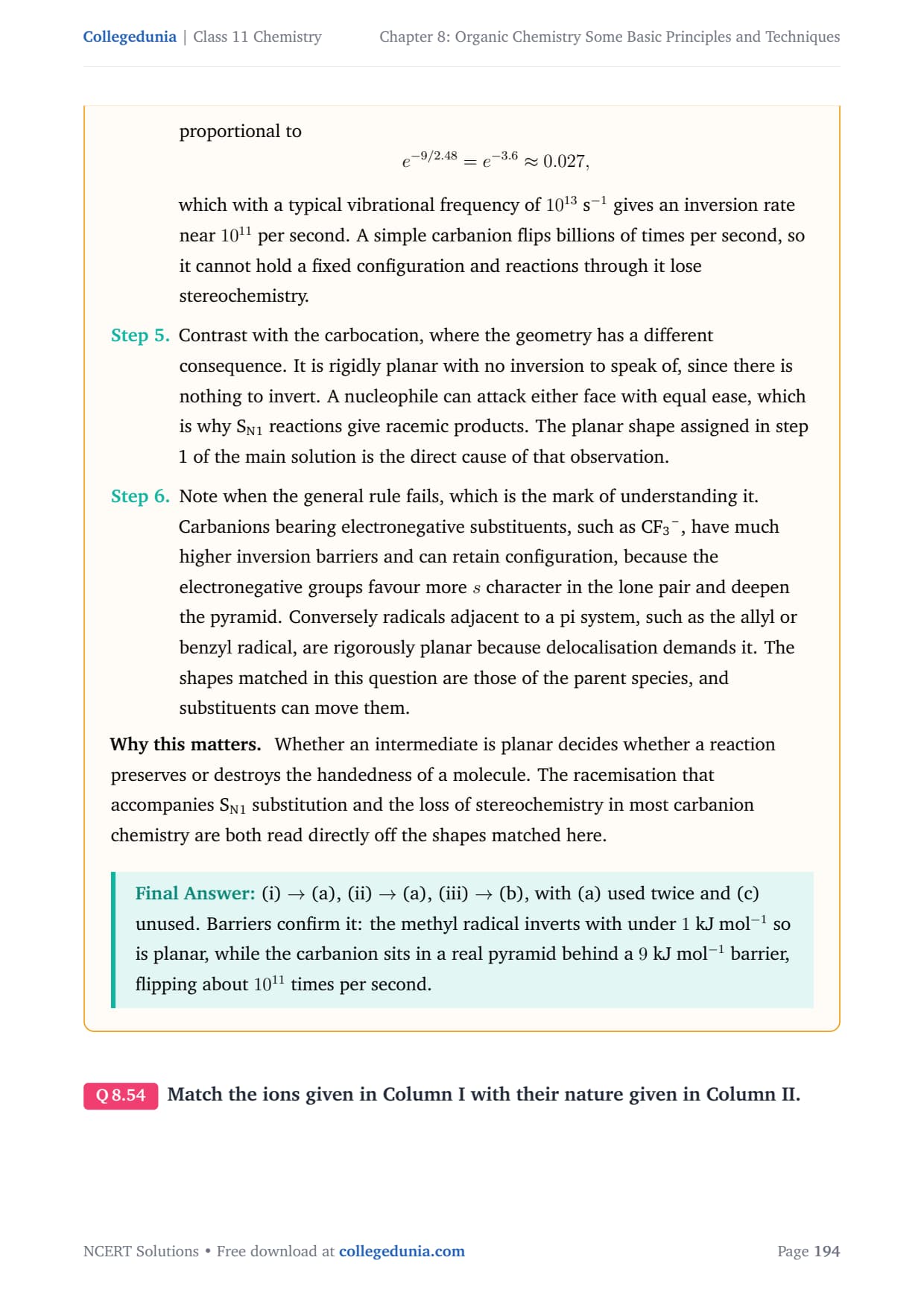
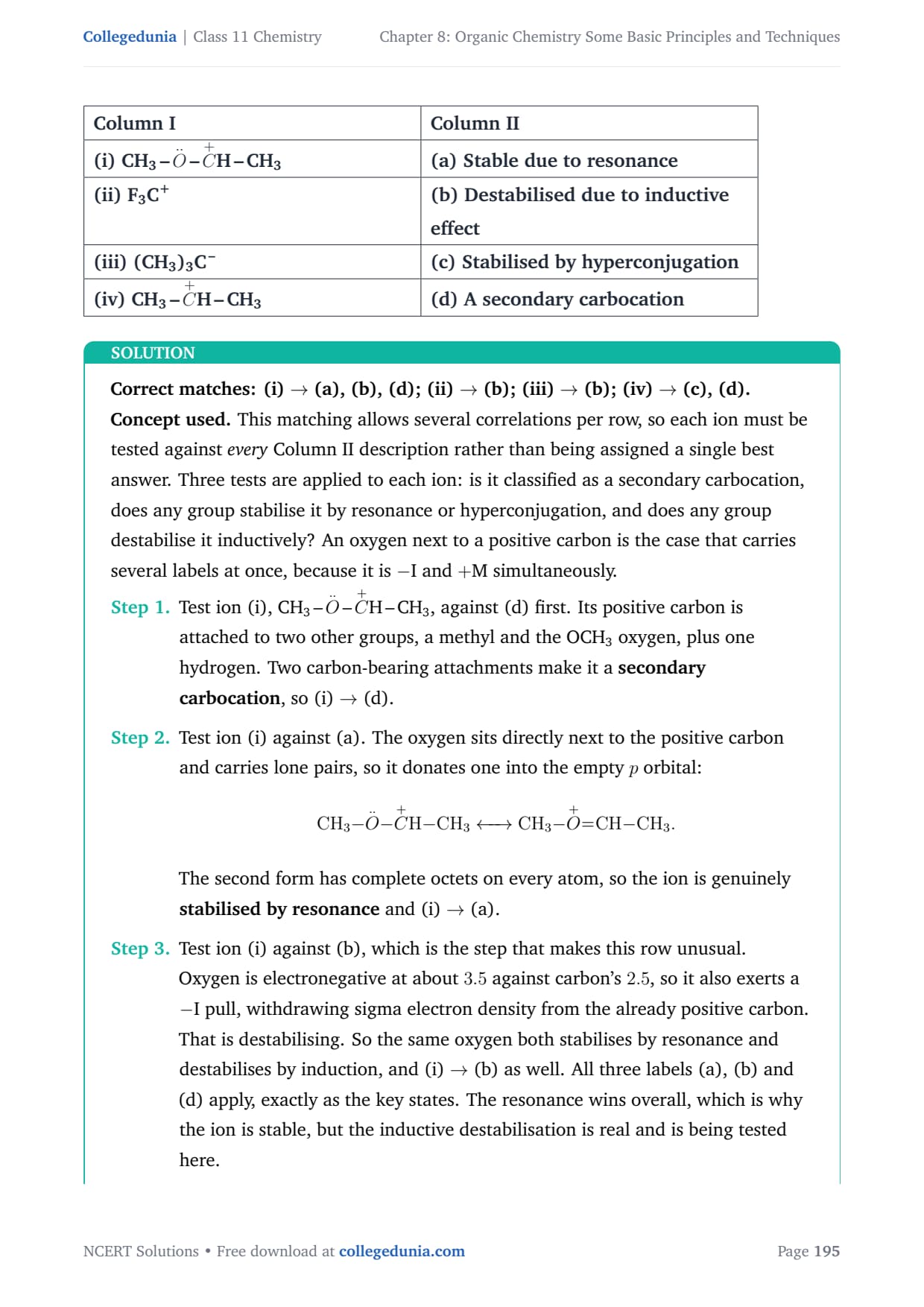
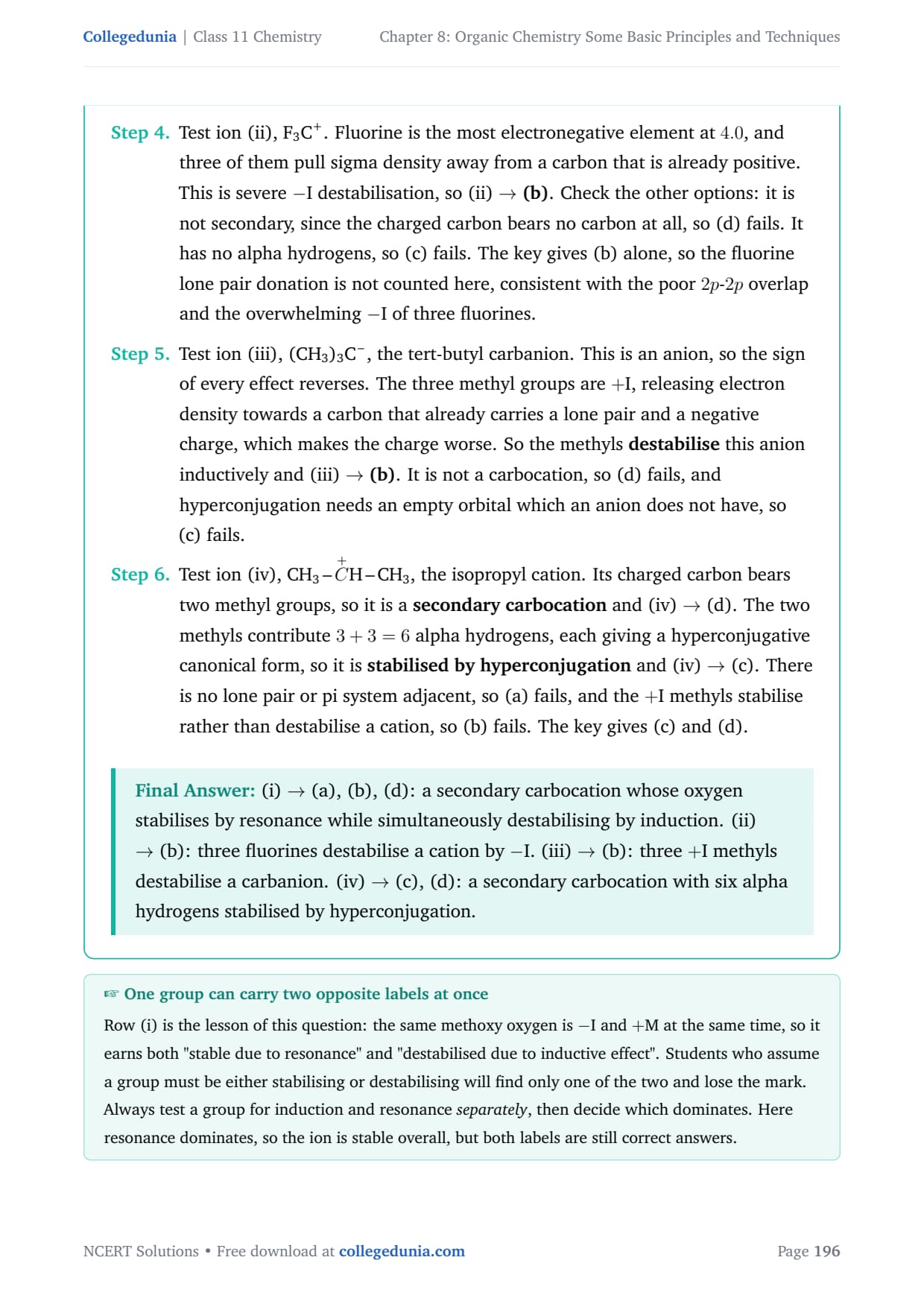
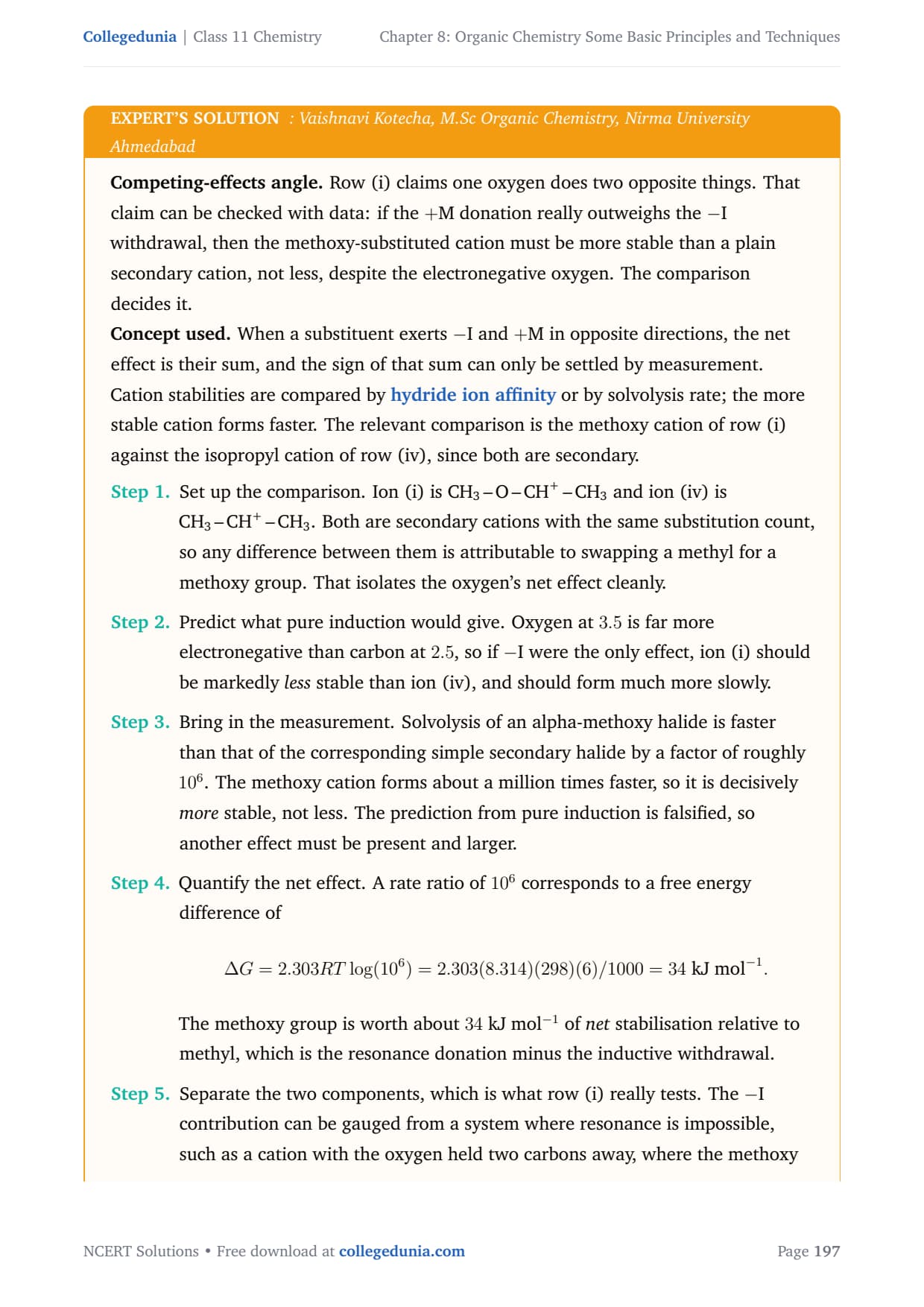
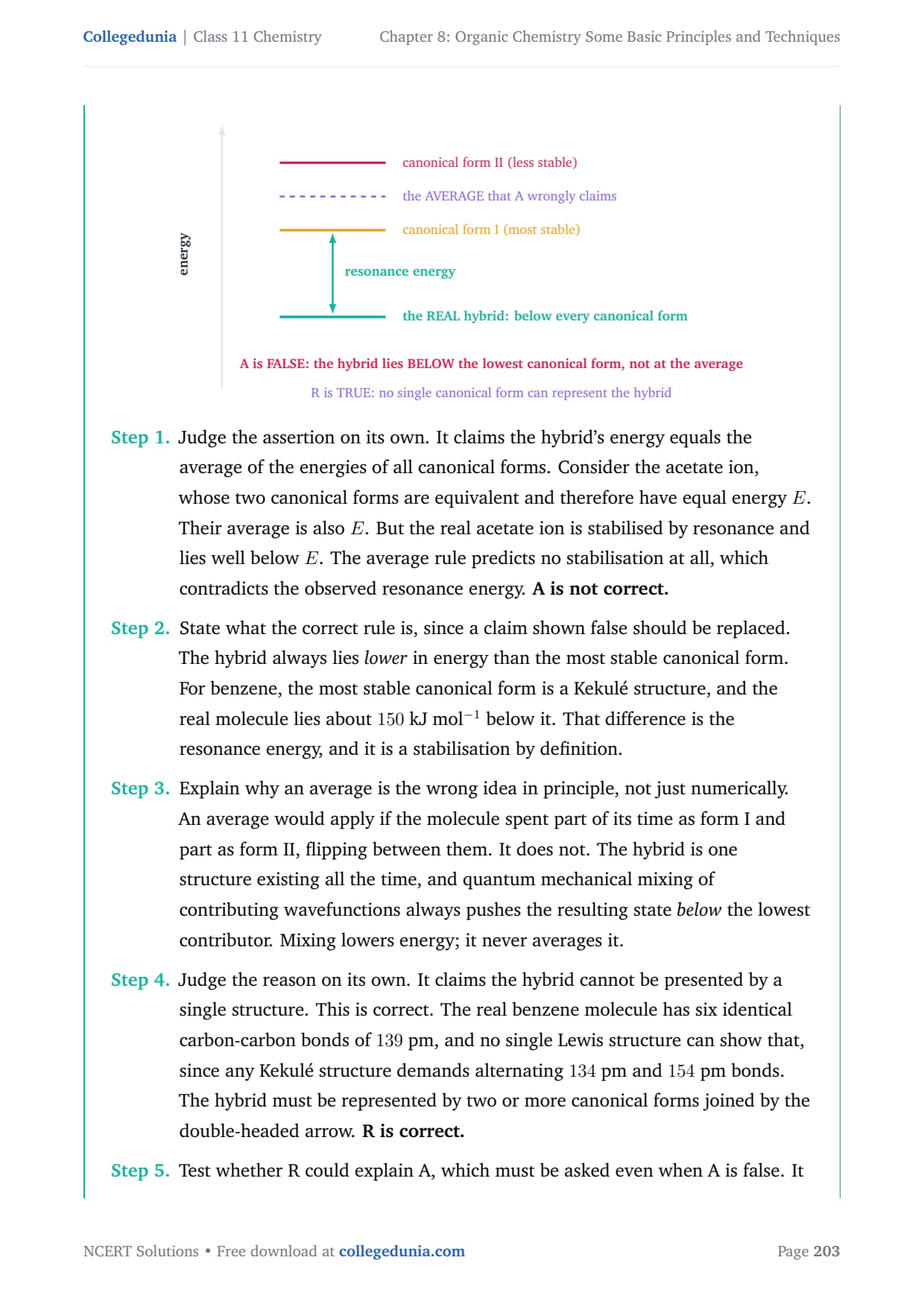
Carbon builds millions of compounds, so this chapter hands you systems instead of lists. IUPAC naming, electronic effects and purification methods all start here, and every reaction in Class 12 leans on them. The Exemplar pushes all three much harder than the textbook exercise does.
- CBSE Weightage: 7 to 9 marks, usually one naming question and one on purification or detection
- JEE Main Weightage: 2 to 3 questions per year, mostly carbocation stability and IUPAC names
- NEET Weightage: 2 to 3 questions per year from nomenclature, isomerism and electronic effects
Every solution is checked against the official NCERT Exemplar key, and all four printing errors in this chapter are worked out in full.
Why Class 11 Chemistry Chapter 8 is Unit 12 in the Printed Exemplar
The printed Exemplar still follows the older 14-unit edition of the book. Because rationalisation dropped several units from the textbook, the two numbering systems no longer line up. Chapter 8 of the new edition is Unit 12 of the Exemplar, published as the source file keep512.
This trips up more students than any single question does. Searching the Exemplar PDF for Unit 8 lands you on Redox Reactions, not organic chemistry. Our solutions print both numbers on every question, so a figure labelled 12.9 in the book is still findable from Chapter 8.
Topics Covered in the Class 11 Chemistry Organic Chemistry Exemplar
The 66 questions sit on four pillars. Each returns in Haloalkanes, Alcohols and every named reaction of Class 12, so the effort here is not one-off.
- IUPAC nomenclature: longest chain, lowest locants, alphabetical order, and assembling the final name
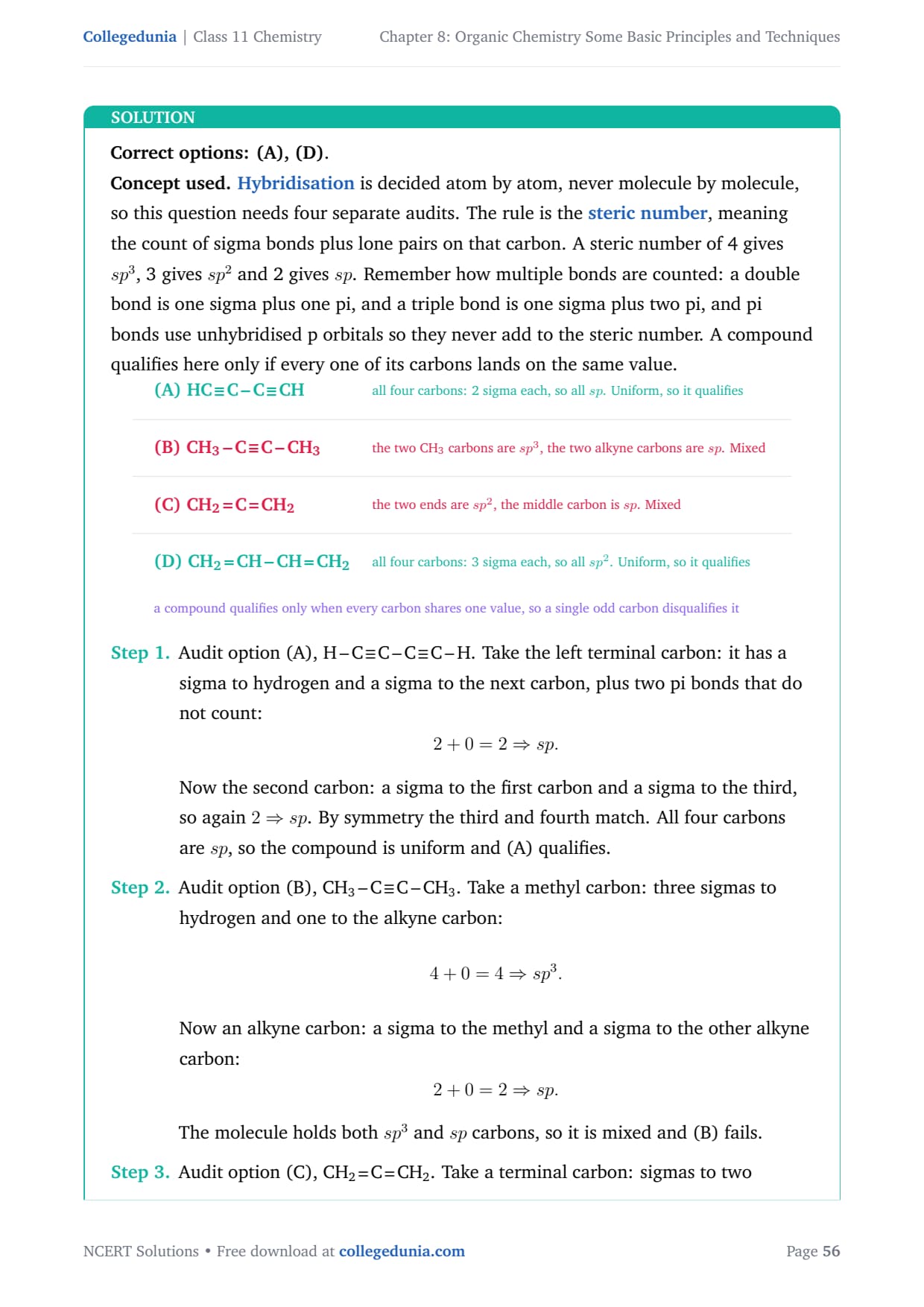
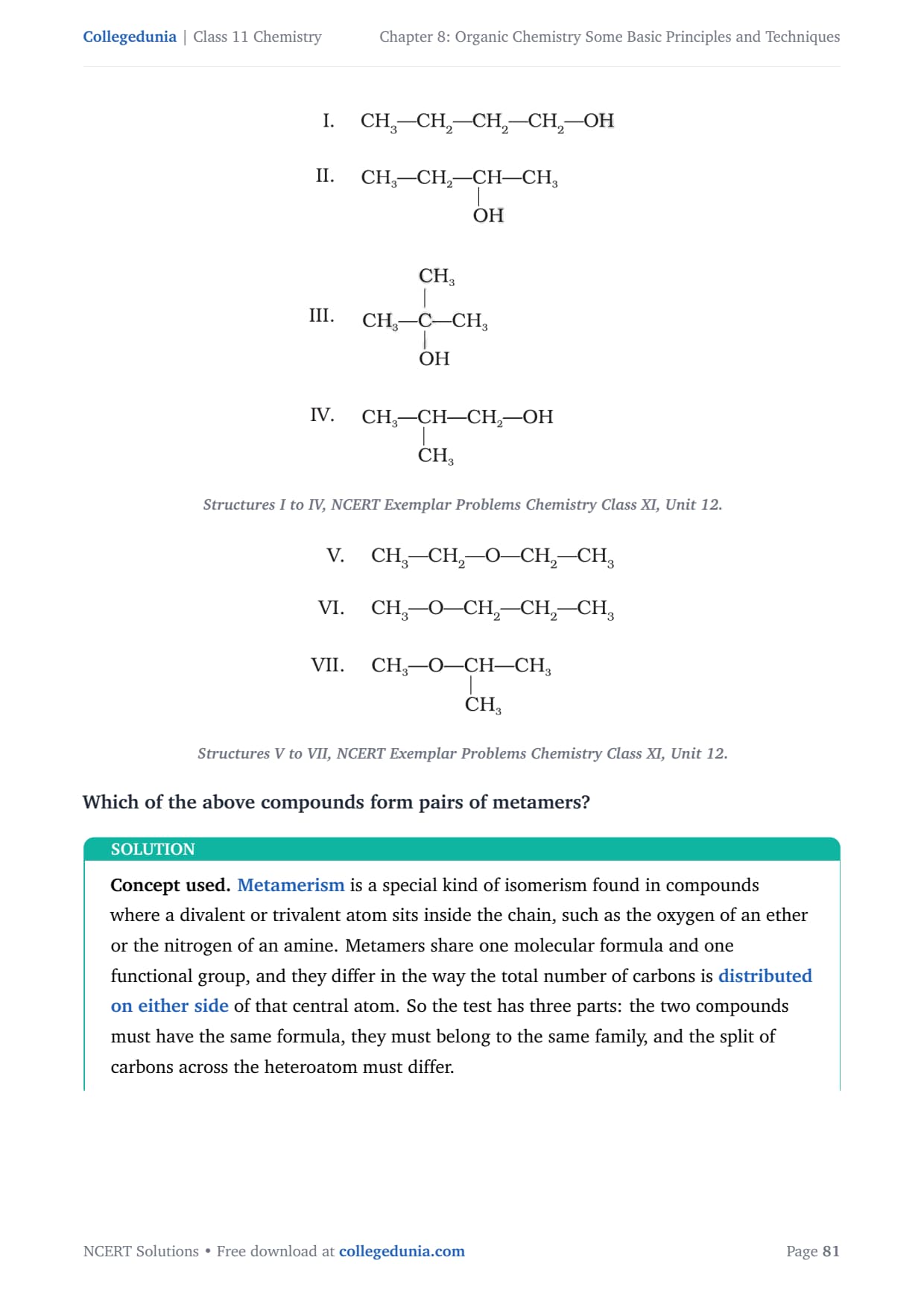
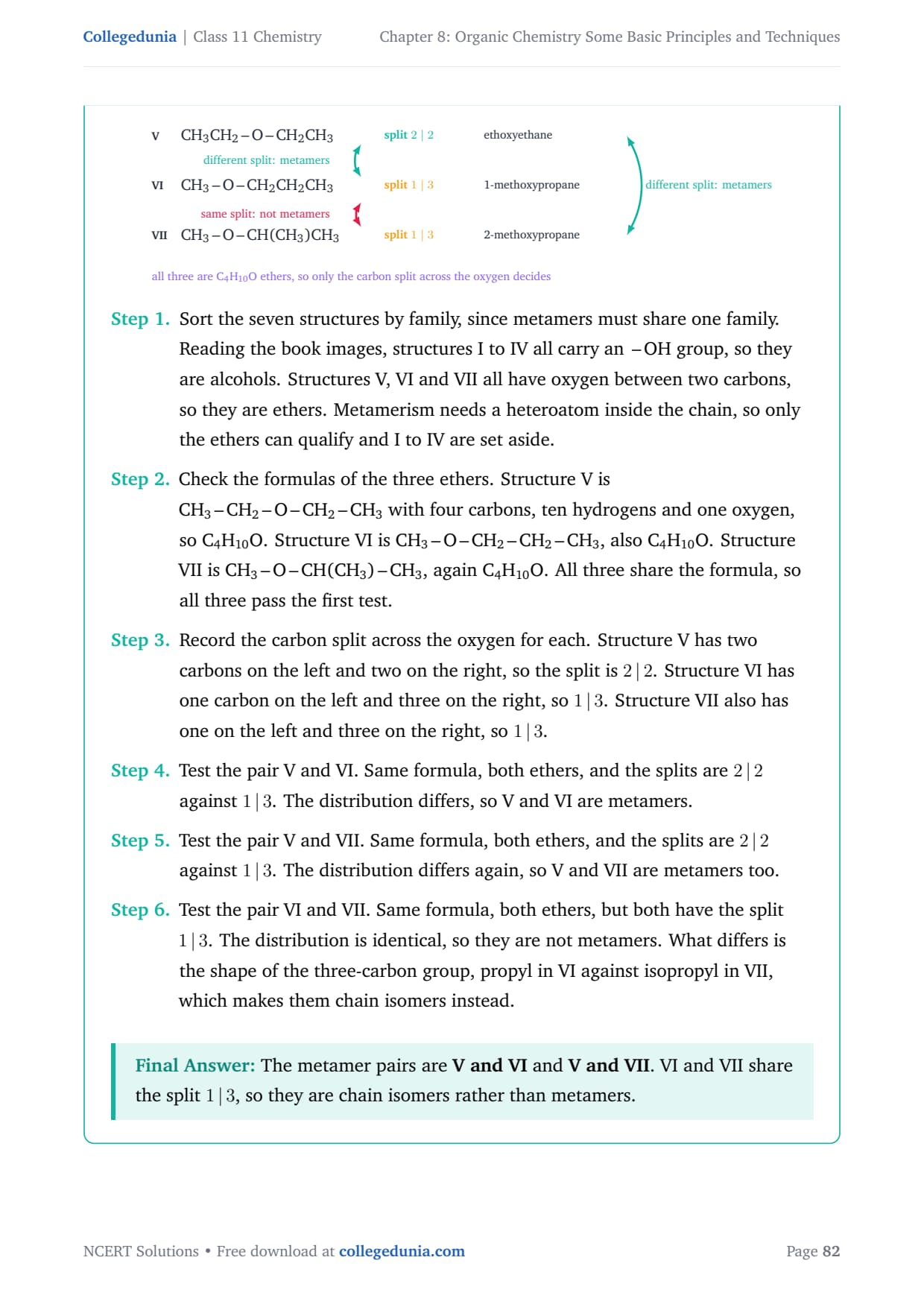
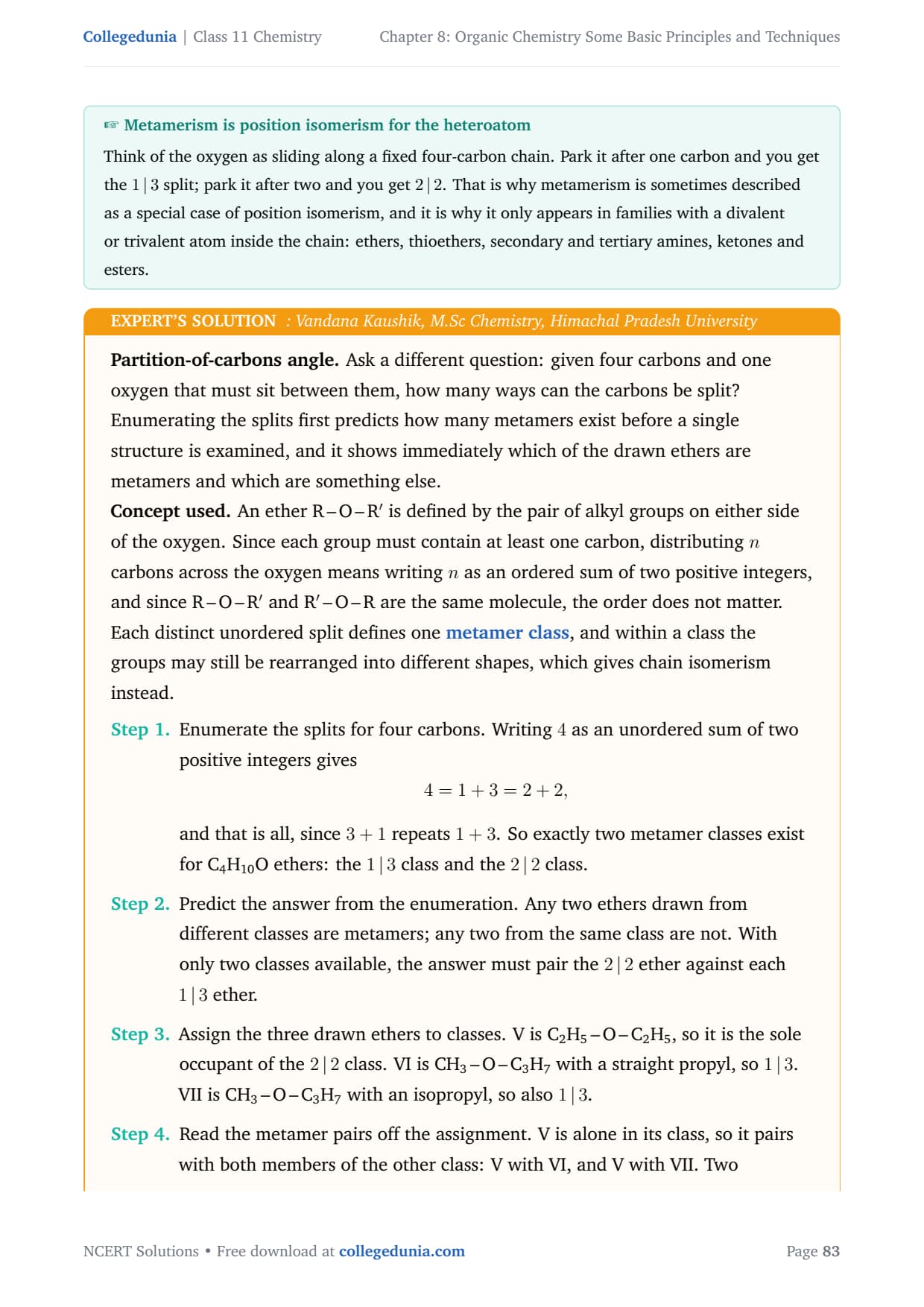
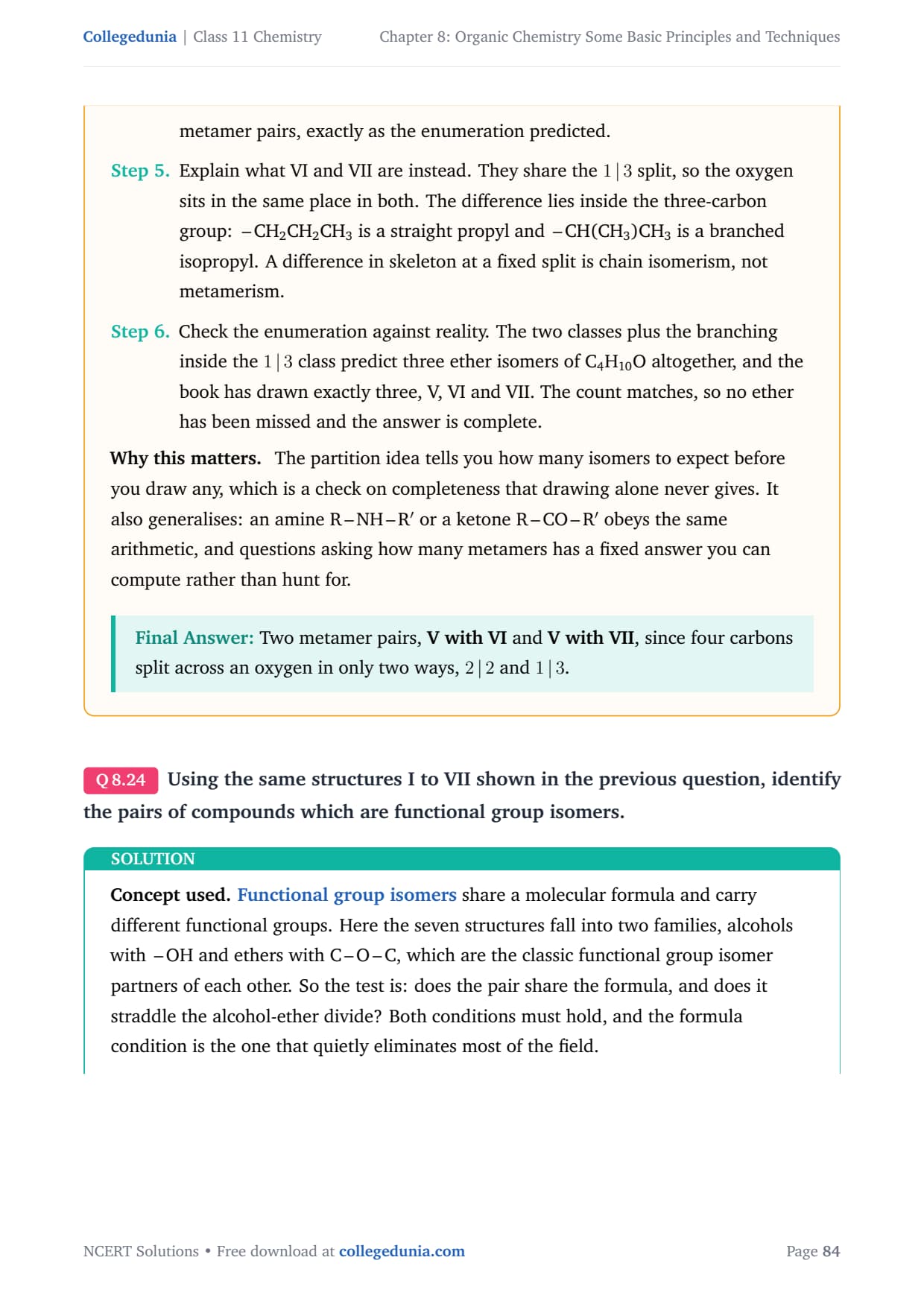
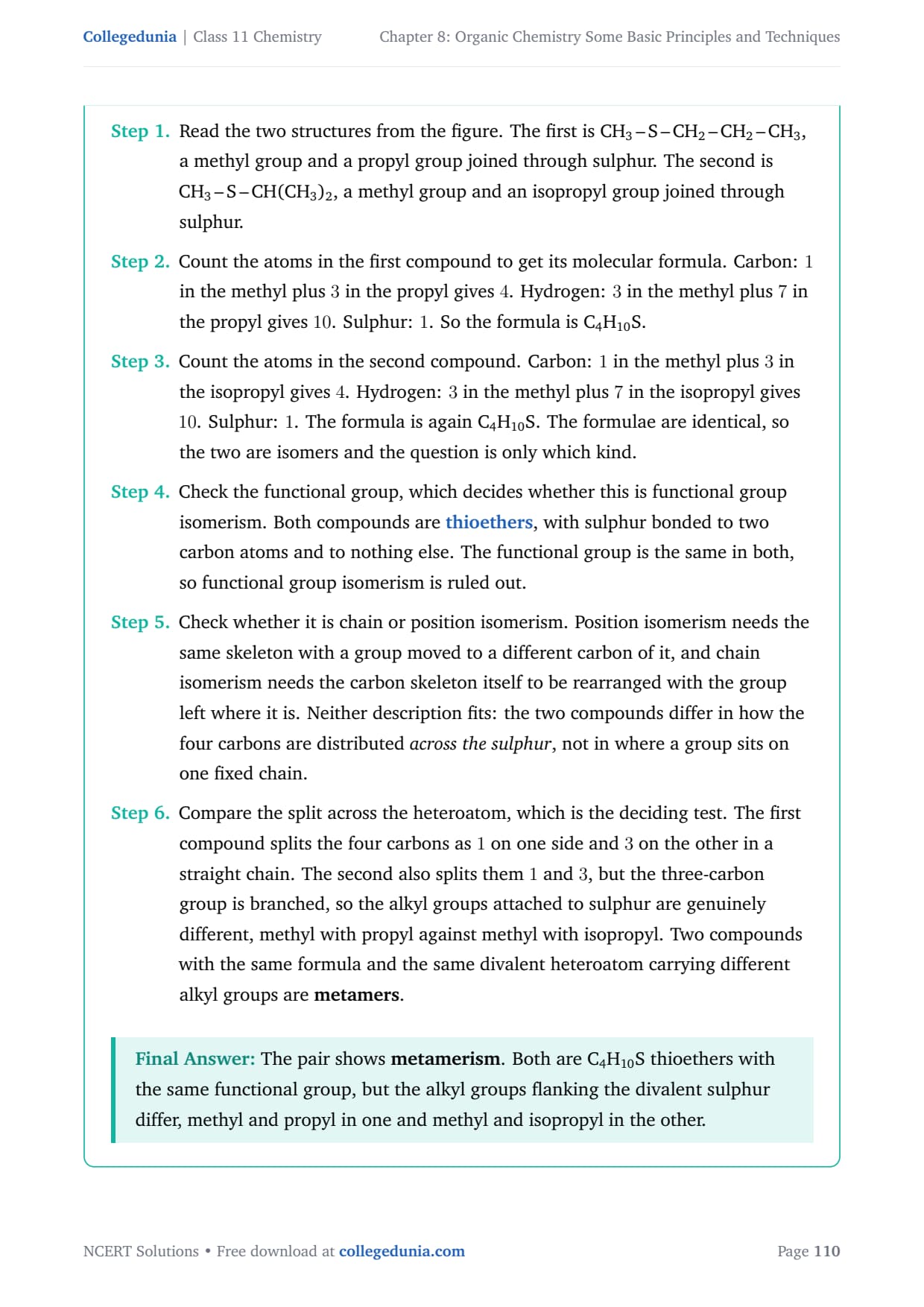
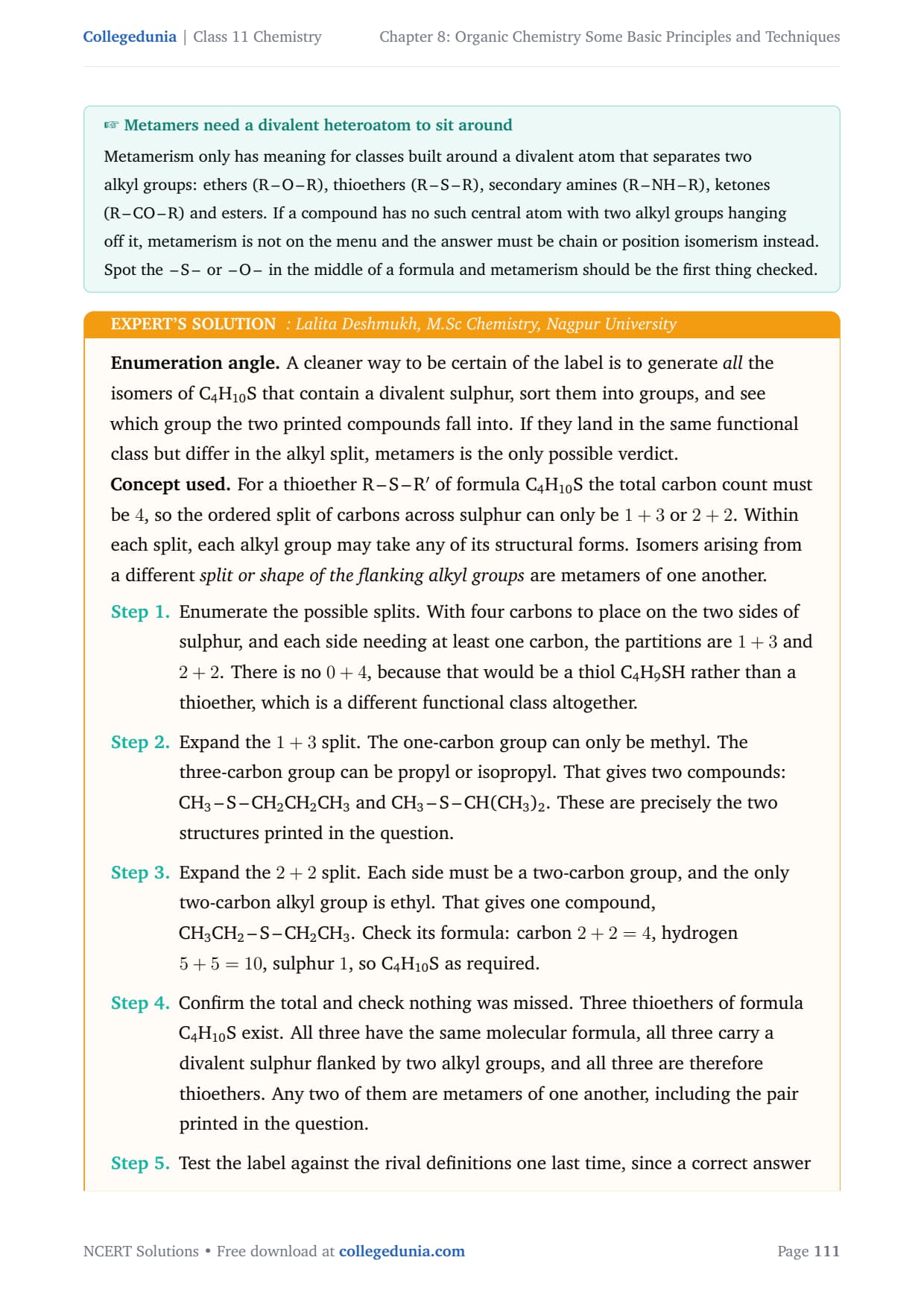
- Structure and bonding: sp, sp2 and sp3 hybridisation, plus chain, position, functional and metamerism
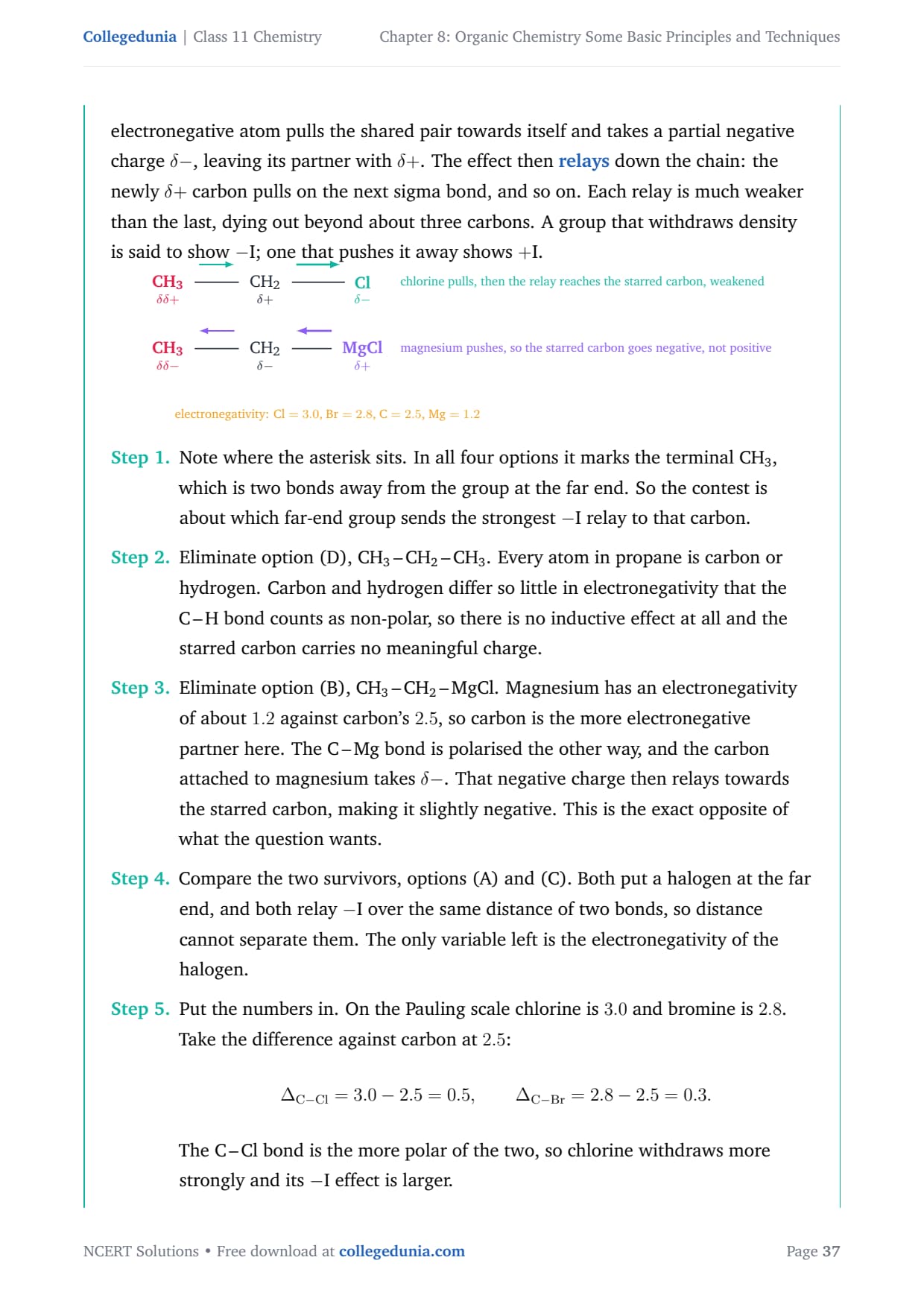
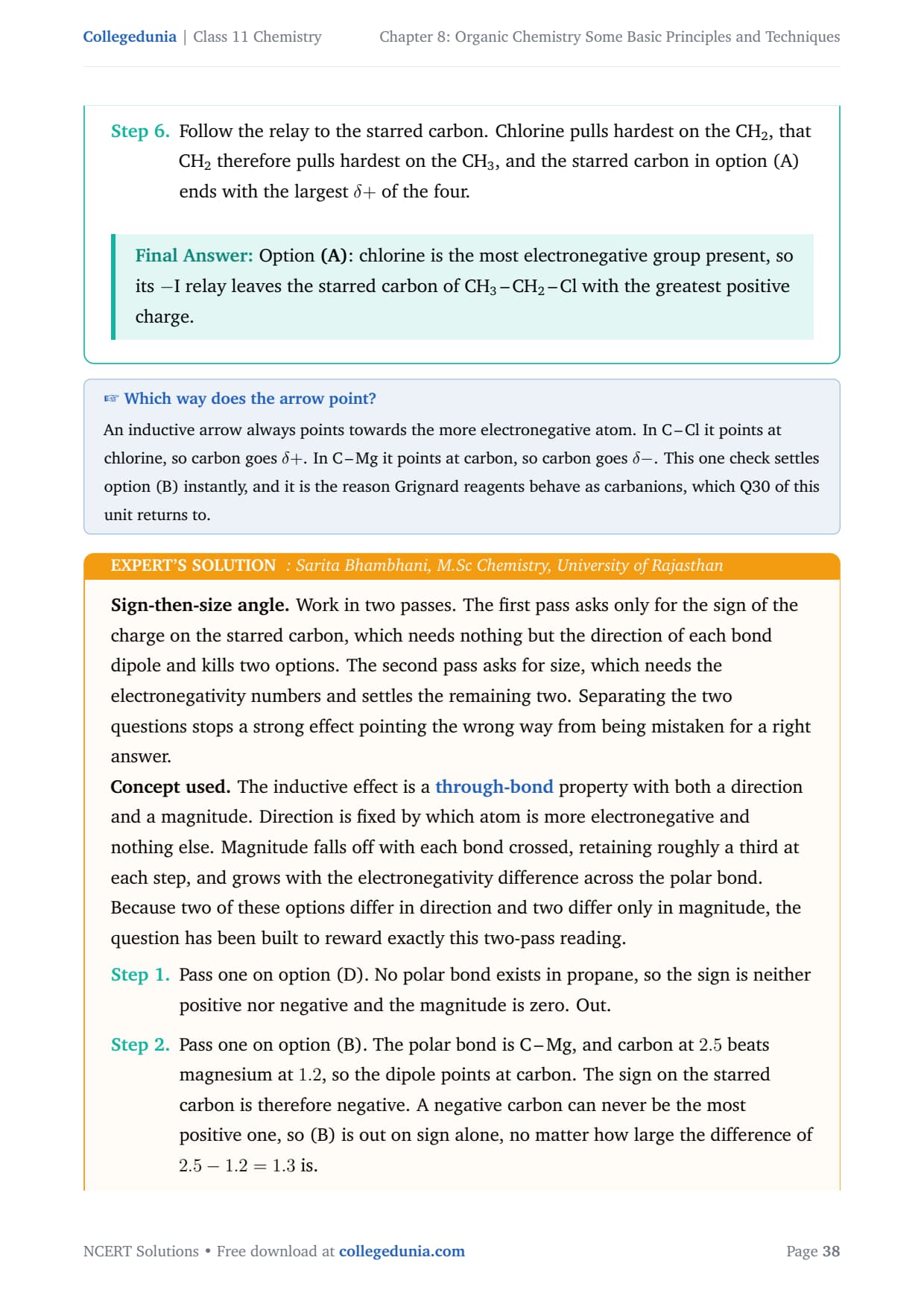
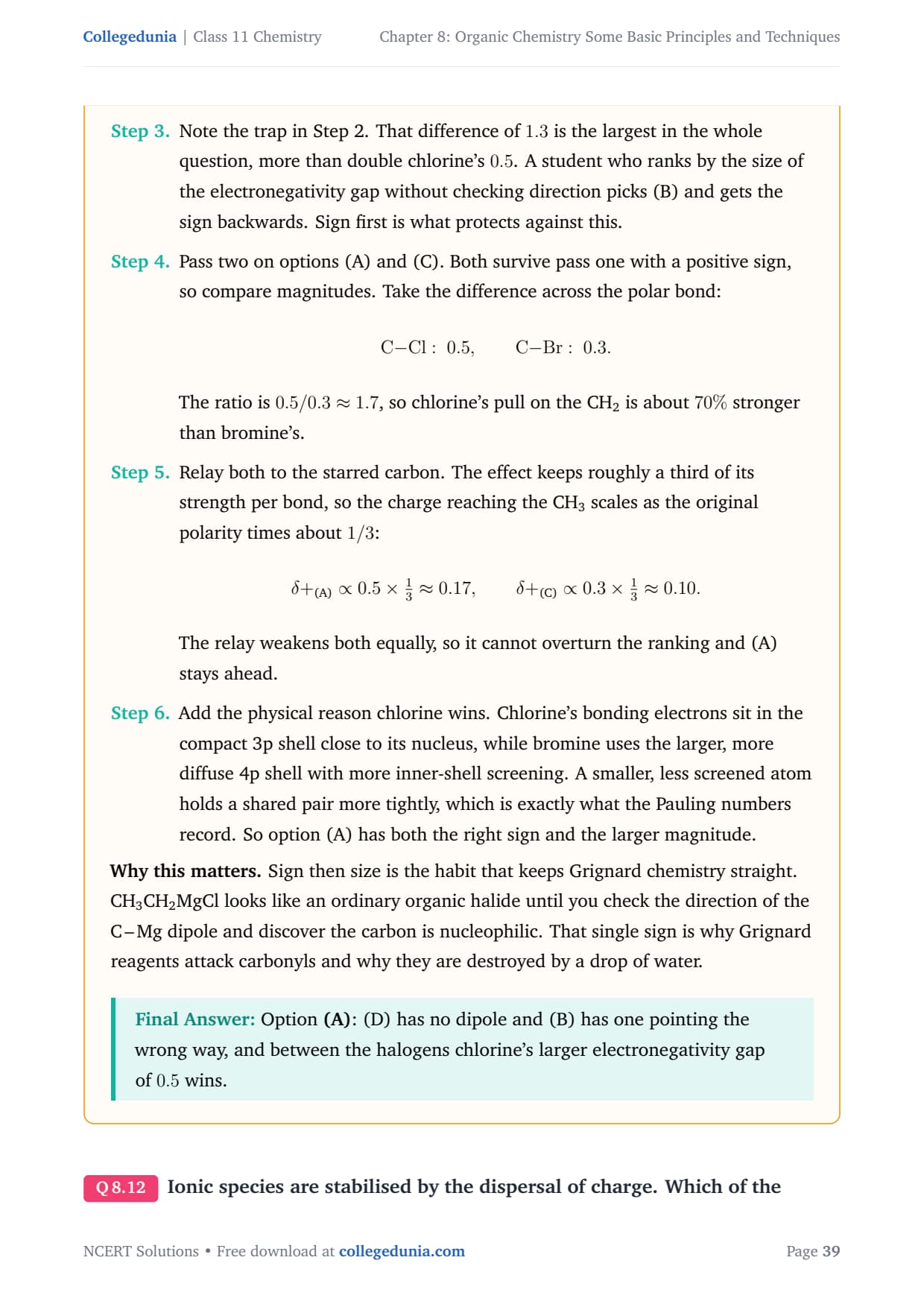
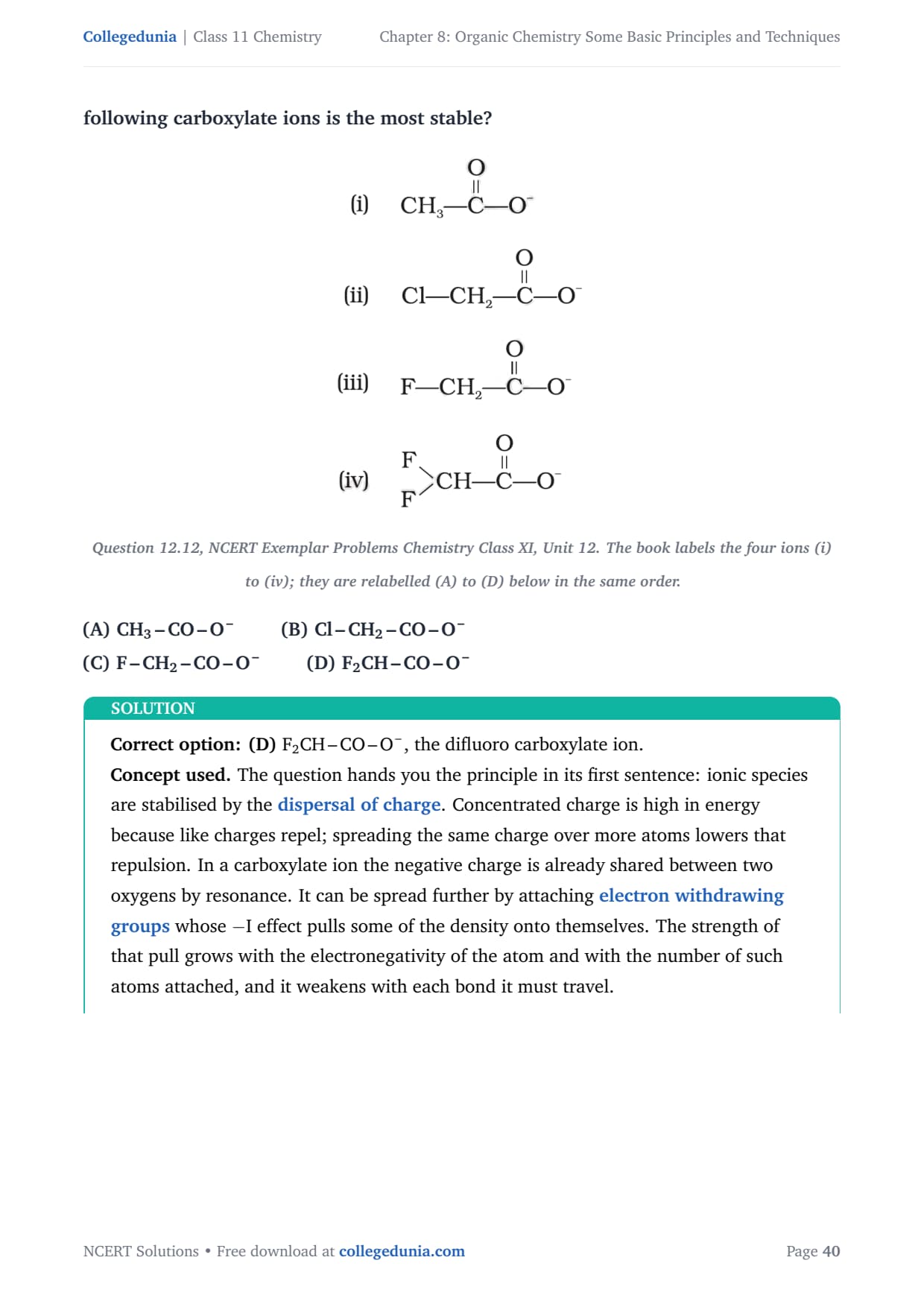
- Electronic effects: inductive effect, resonance, hyperconjugation, and the stability of carbocations, carbanions and free radicals
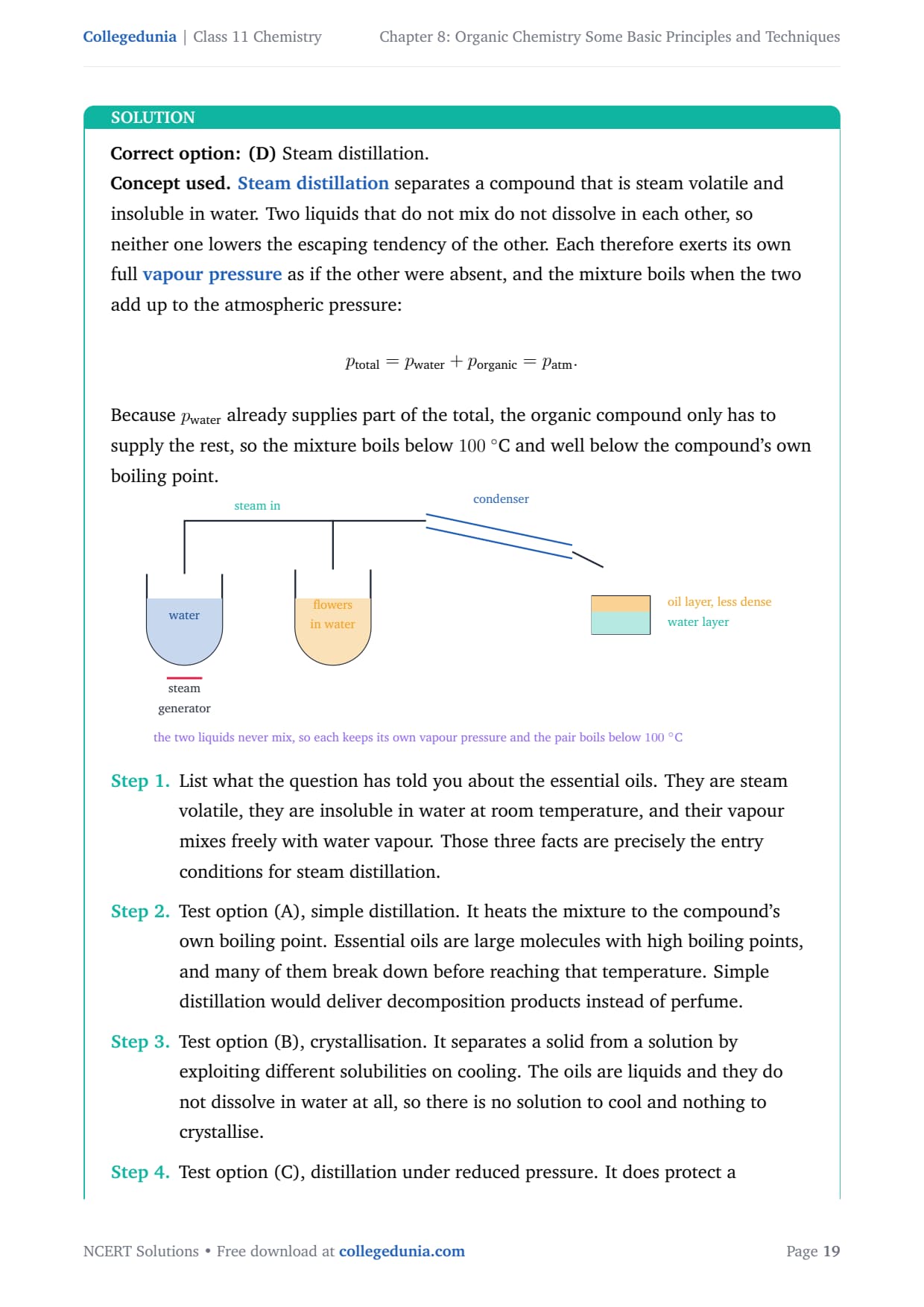
- Techniques: crystallisation, simple, fractional and steam distillation, chromatography, and Lassaigne's test
Question Types in the Organic Chemistry Some Basic Principles and Techniques NCERT Exemplar
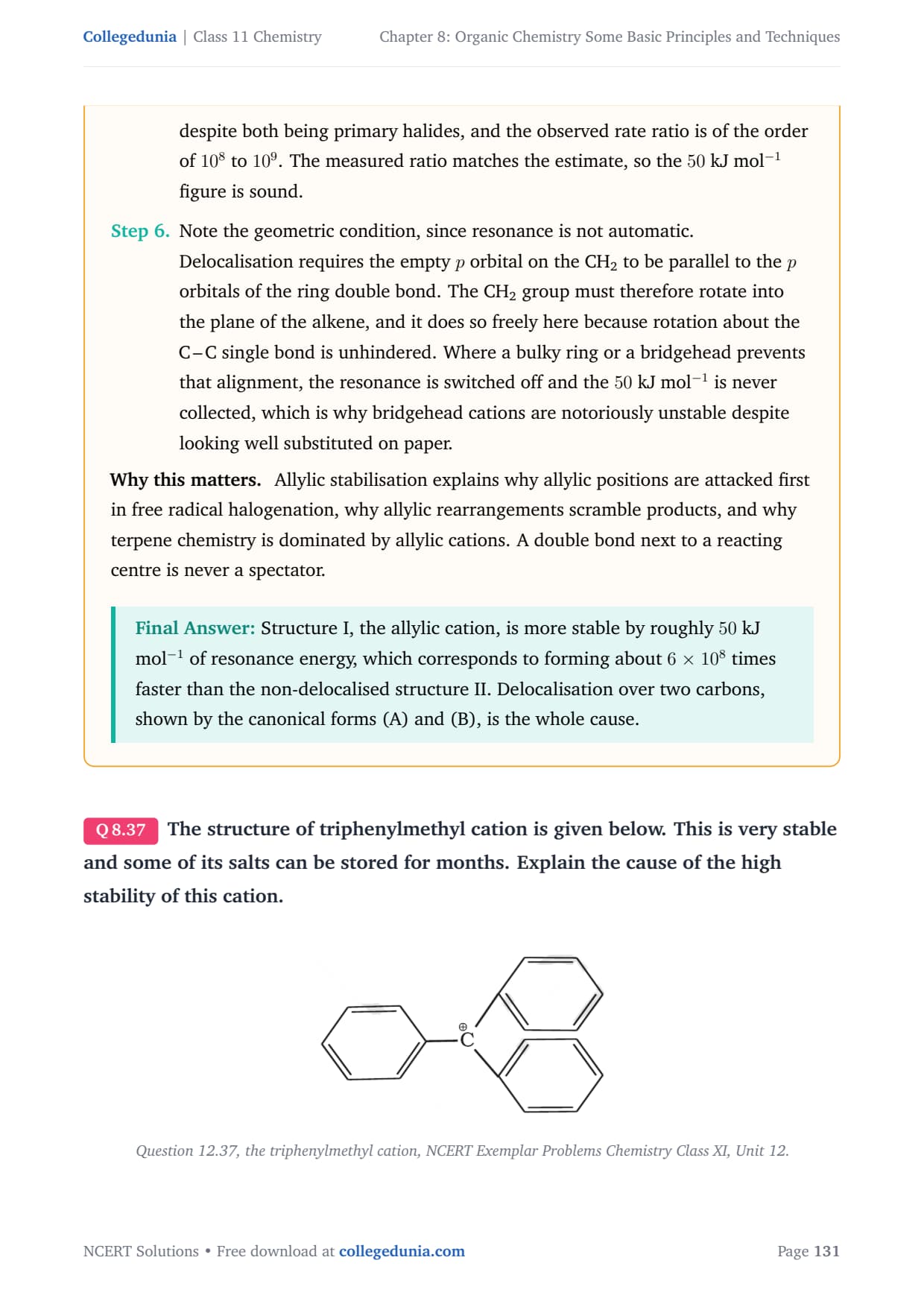
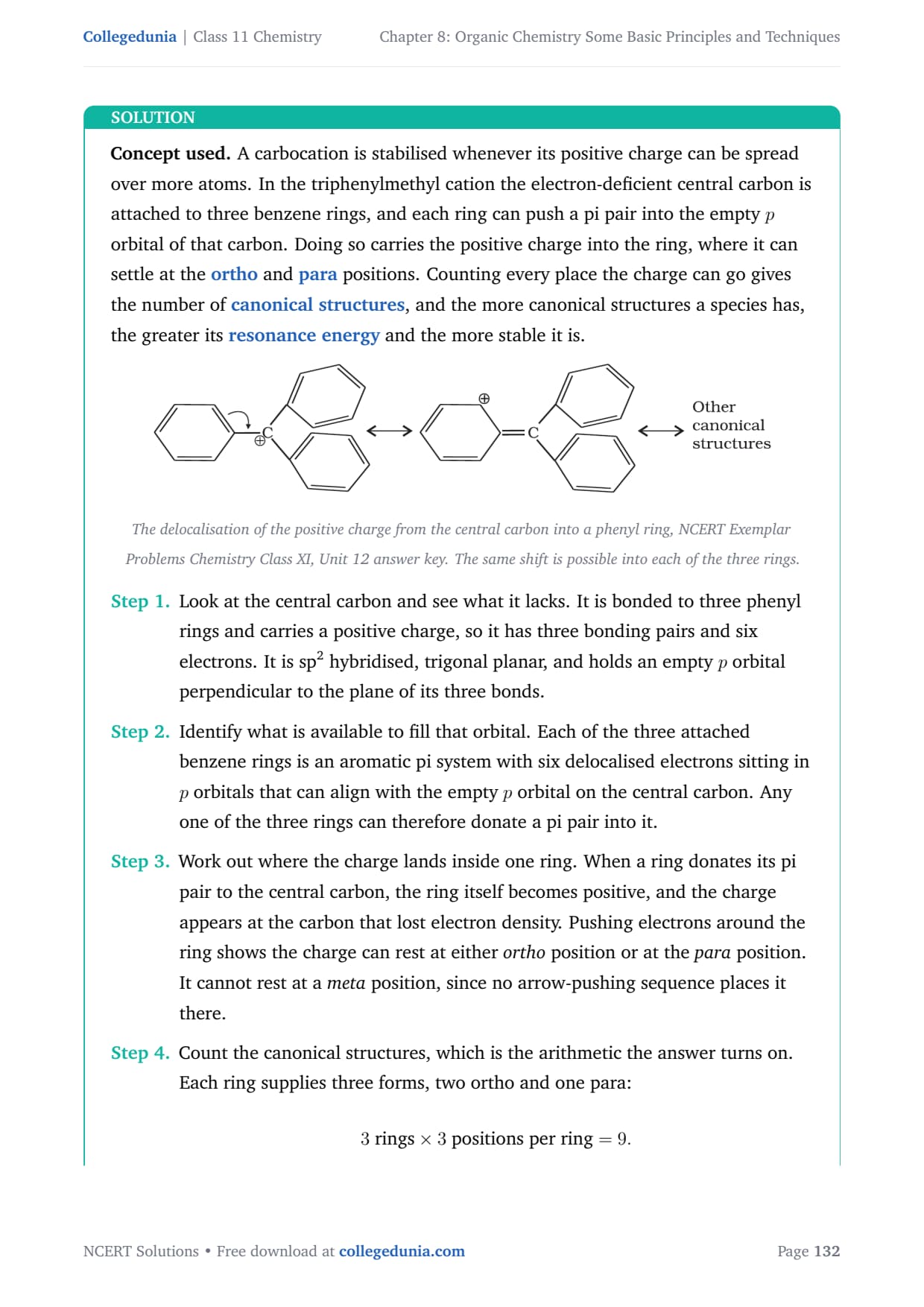
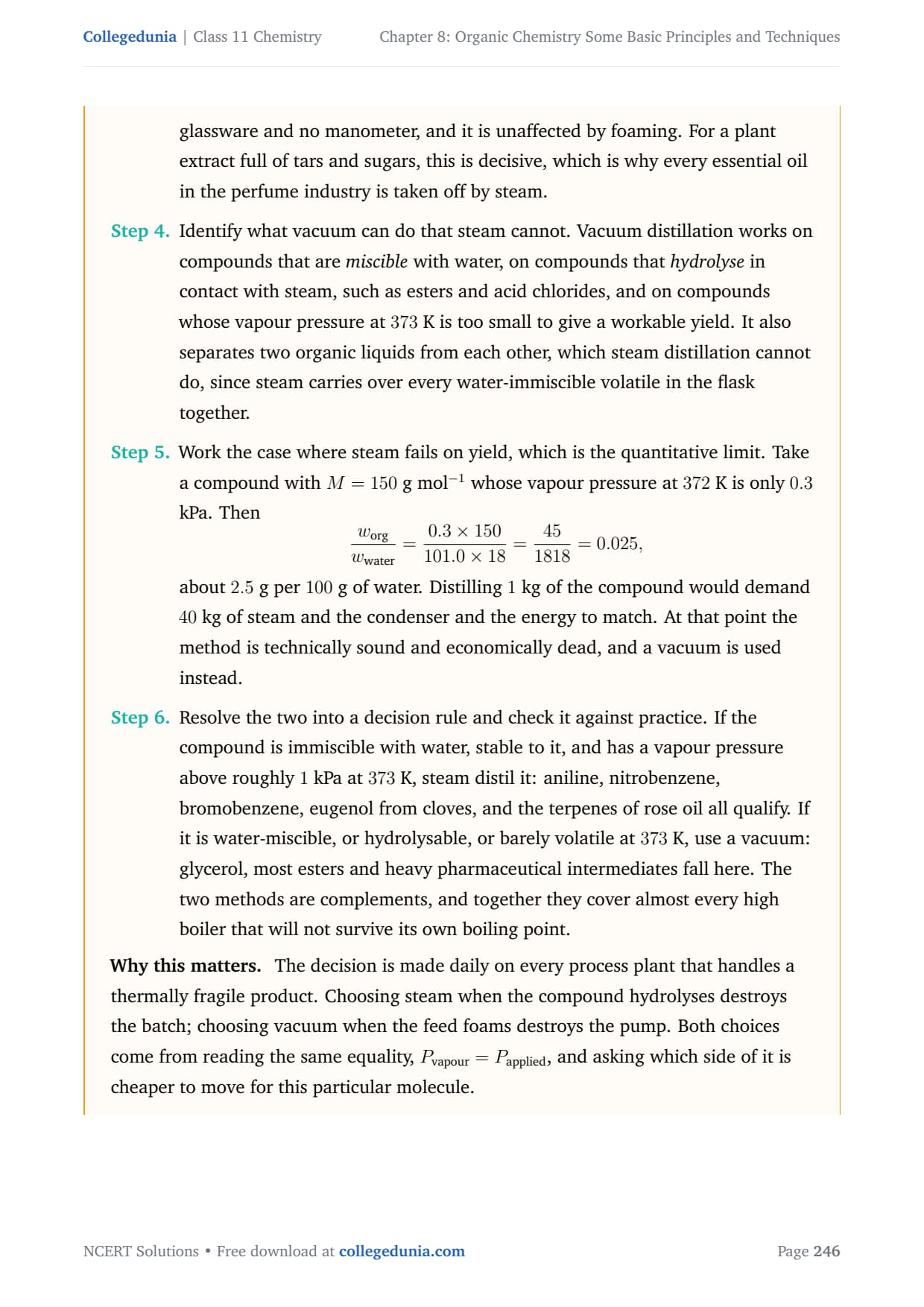
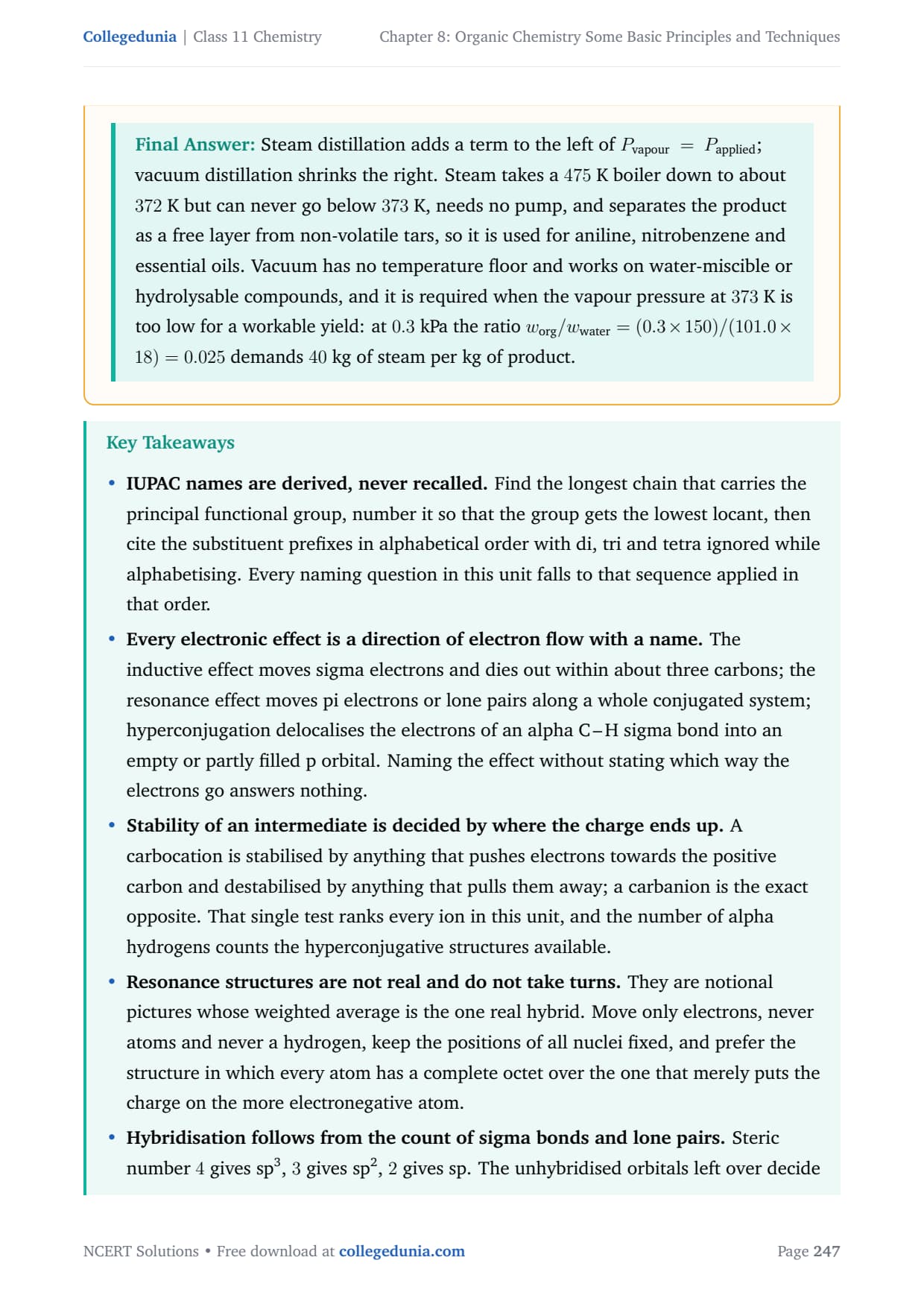
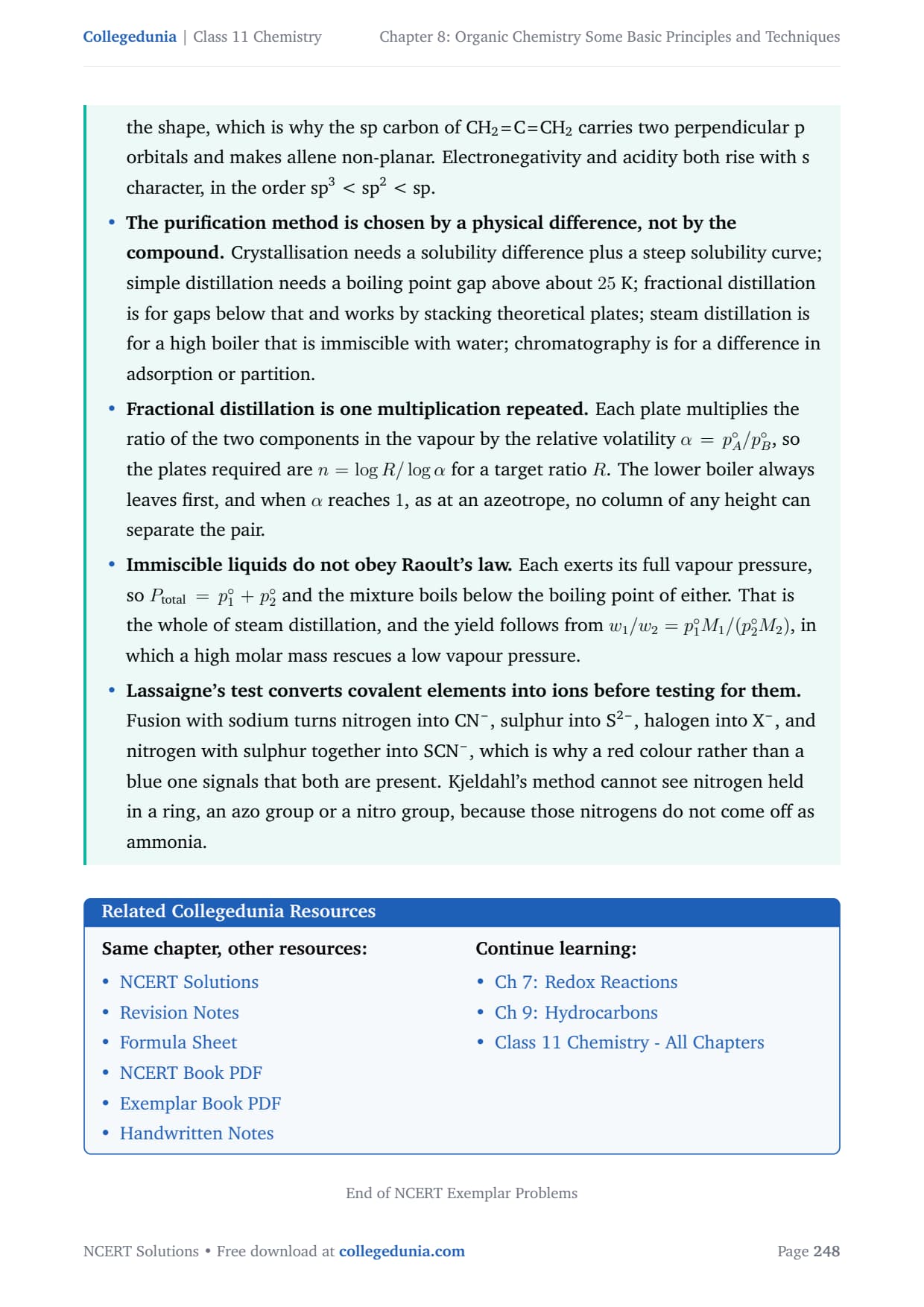
This is the largest Exemplar chapter in Class 11 Chemistry and the most visual one. It carries 19 figures from the Exemplar book, more than any other chapter, and every figure is reproduced in the PDF beside its question.
| Question Type | Count | What It Tests |
|---|---|---|
| MCQ I (single correct) | 15 | Naming, hybridisation and carbocation ranking |
| MCQ II (one or more correct) | 7 | Whether you can reject every wrong option, not just find one right one |
| Short Answer | 27 | Reasoning on resonance, isomerism and choice of purification method |
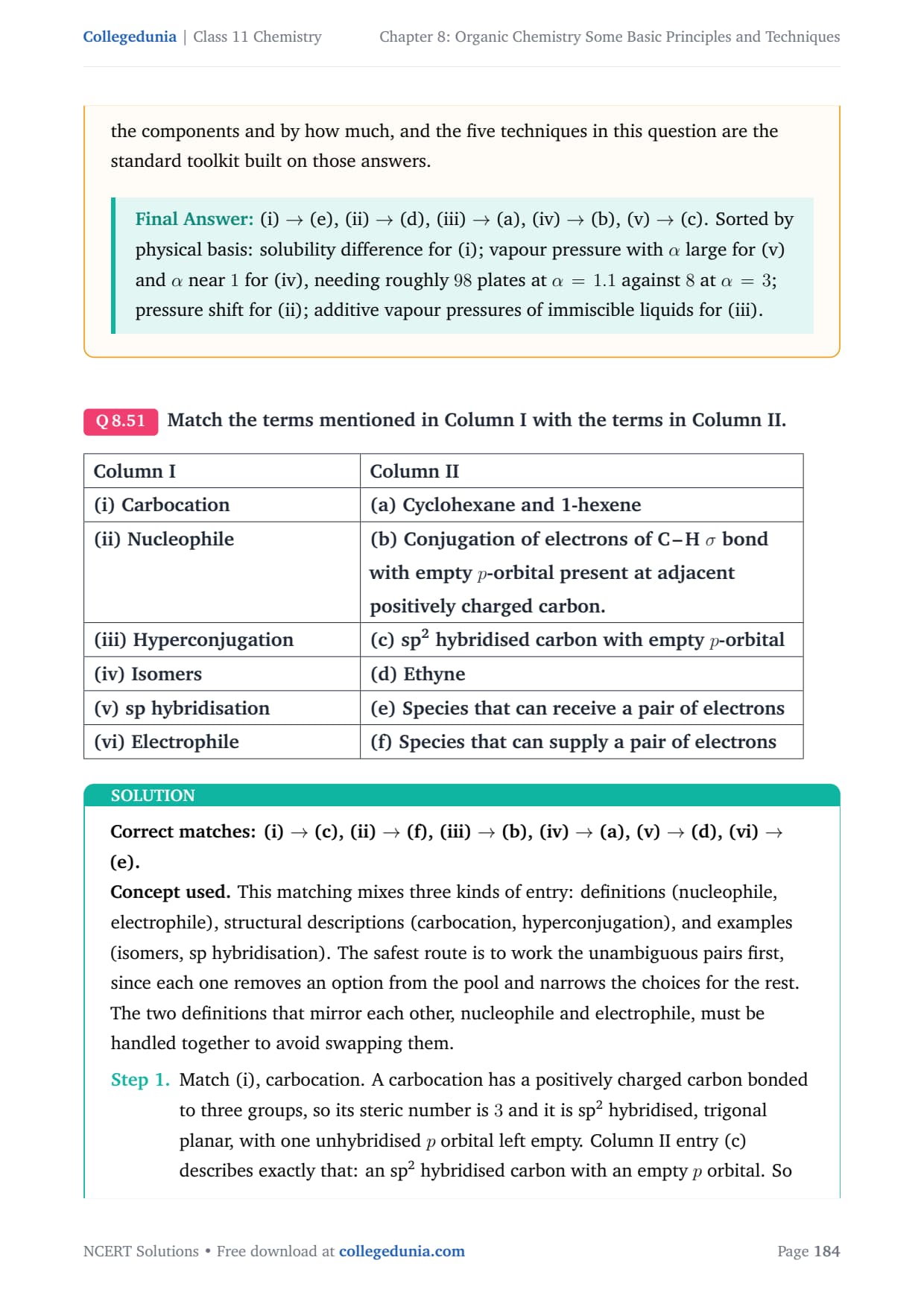
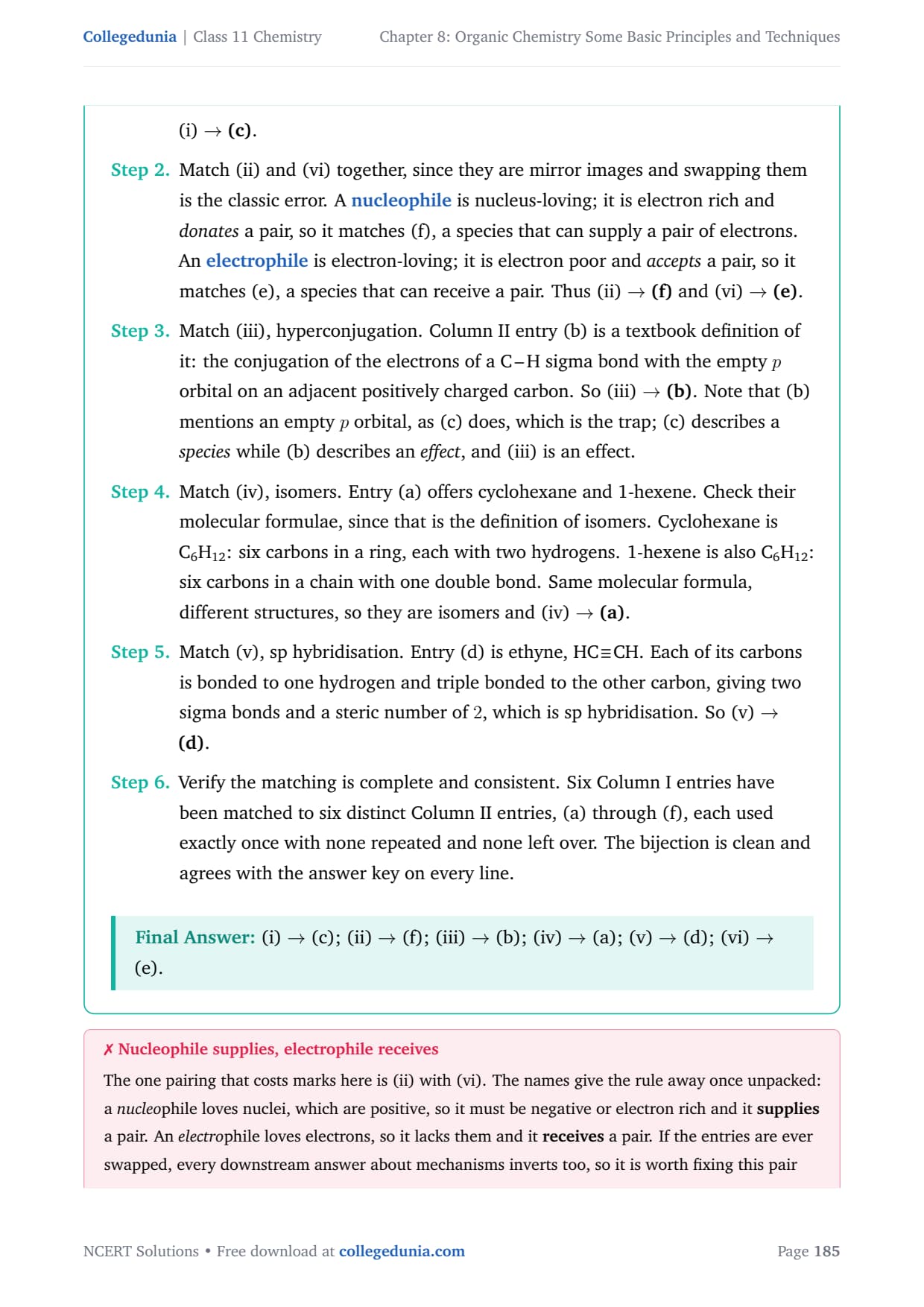
| Matching Type | 5 | Pairing reagents and techniques with what they detect or separate |
| Assertion and Reason | 6 | Whether the reason actually explains the assertion |
| Long Answer | 6 | Drawing every canonical form and ranking them, worth 5 marks |
Four Printing Errors in the Chapter 8 Exemplar
This chapter carries more misprints than any other in the book. All four are explained in the PDF, so you are never asked to accept something that contradicts the rules the chapter just taught.
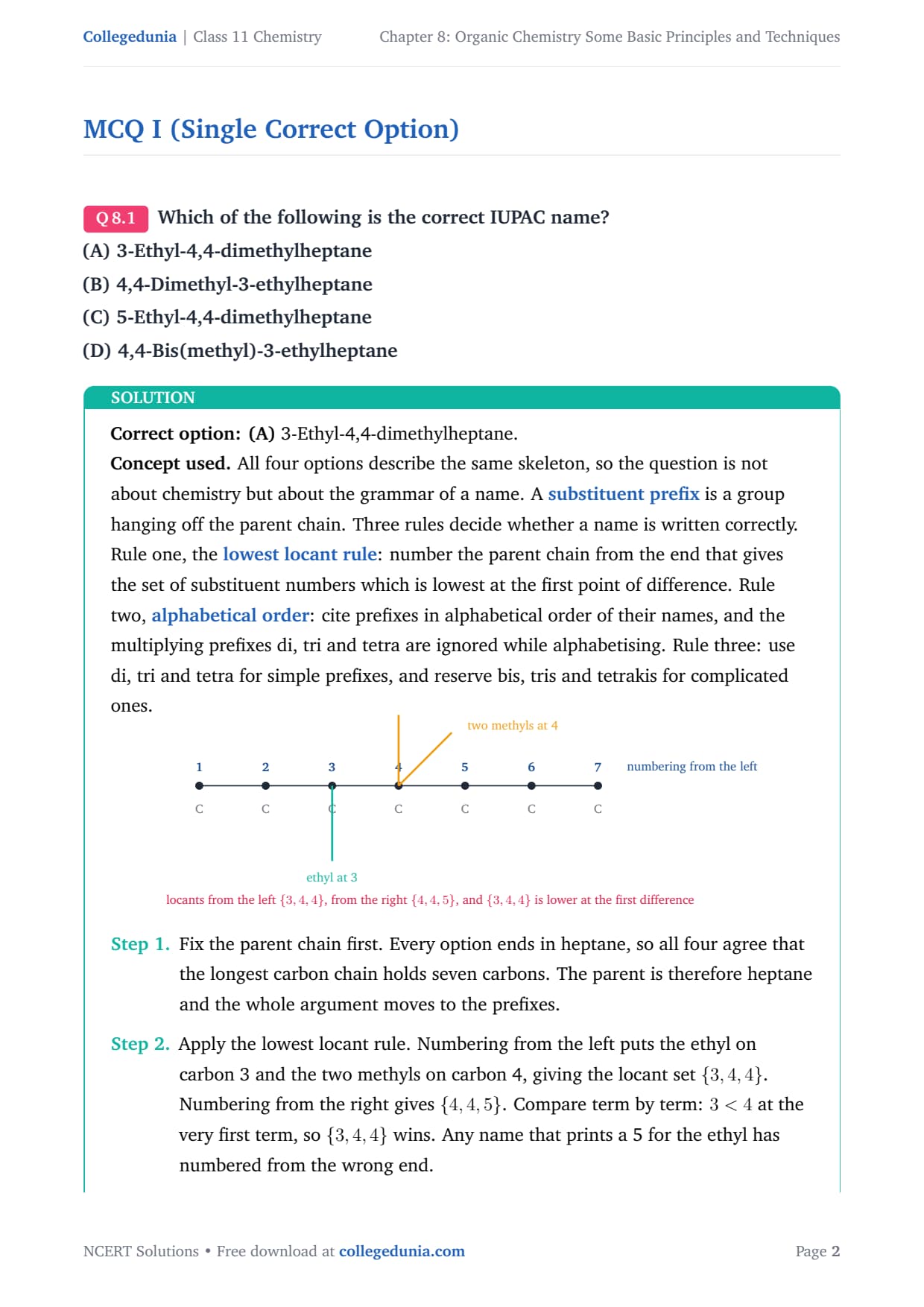
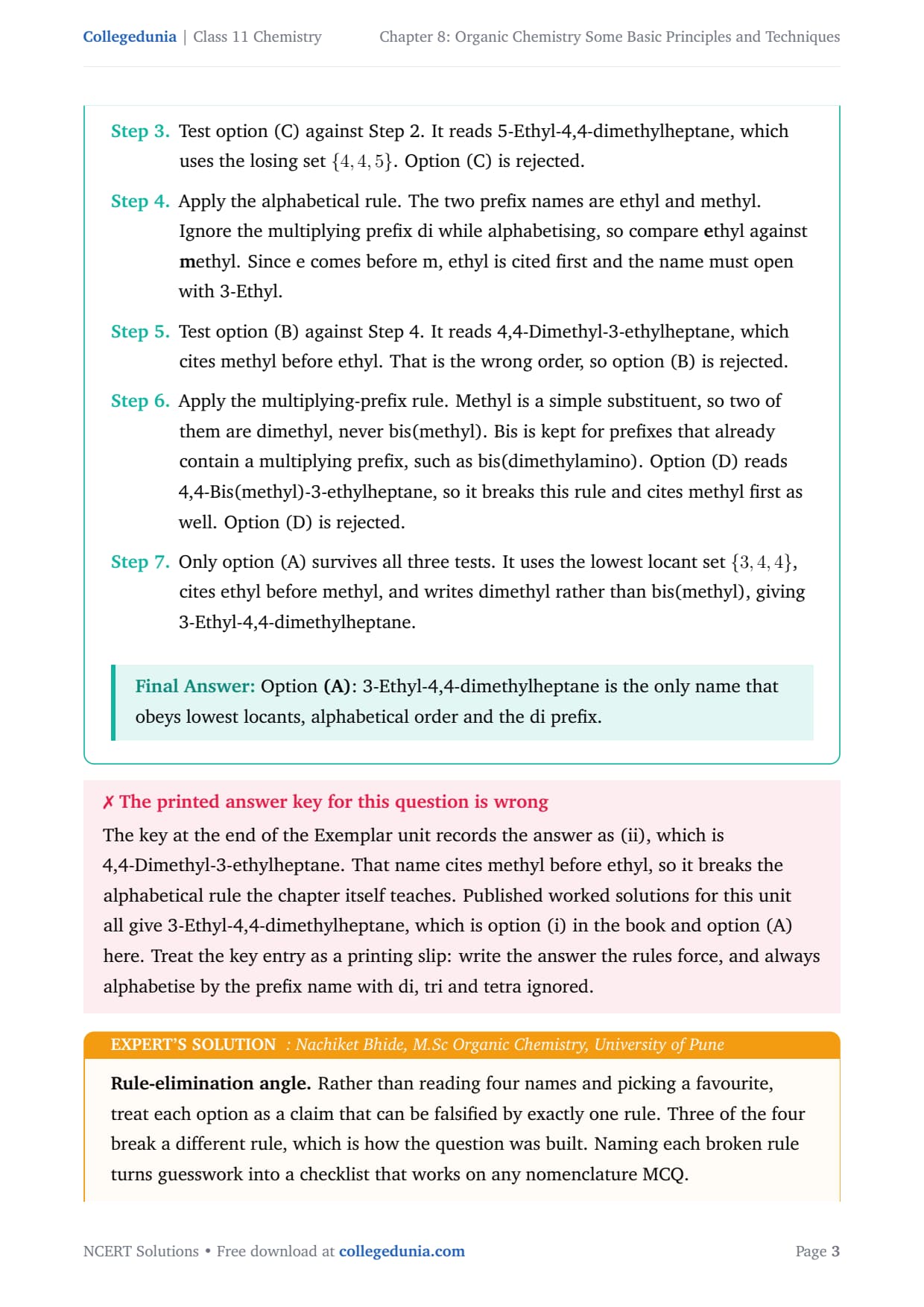
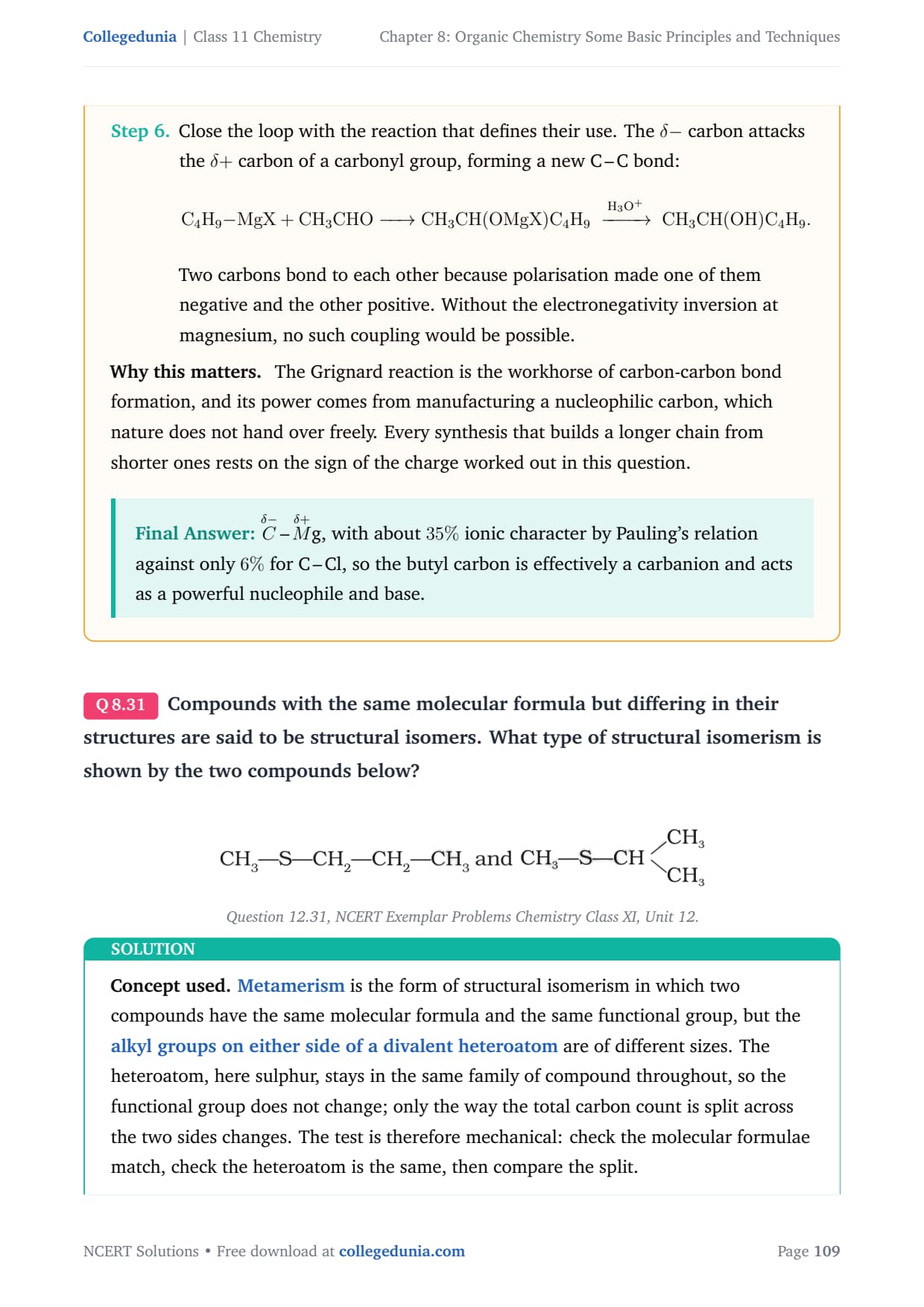
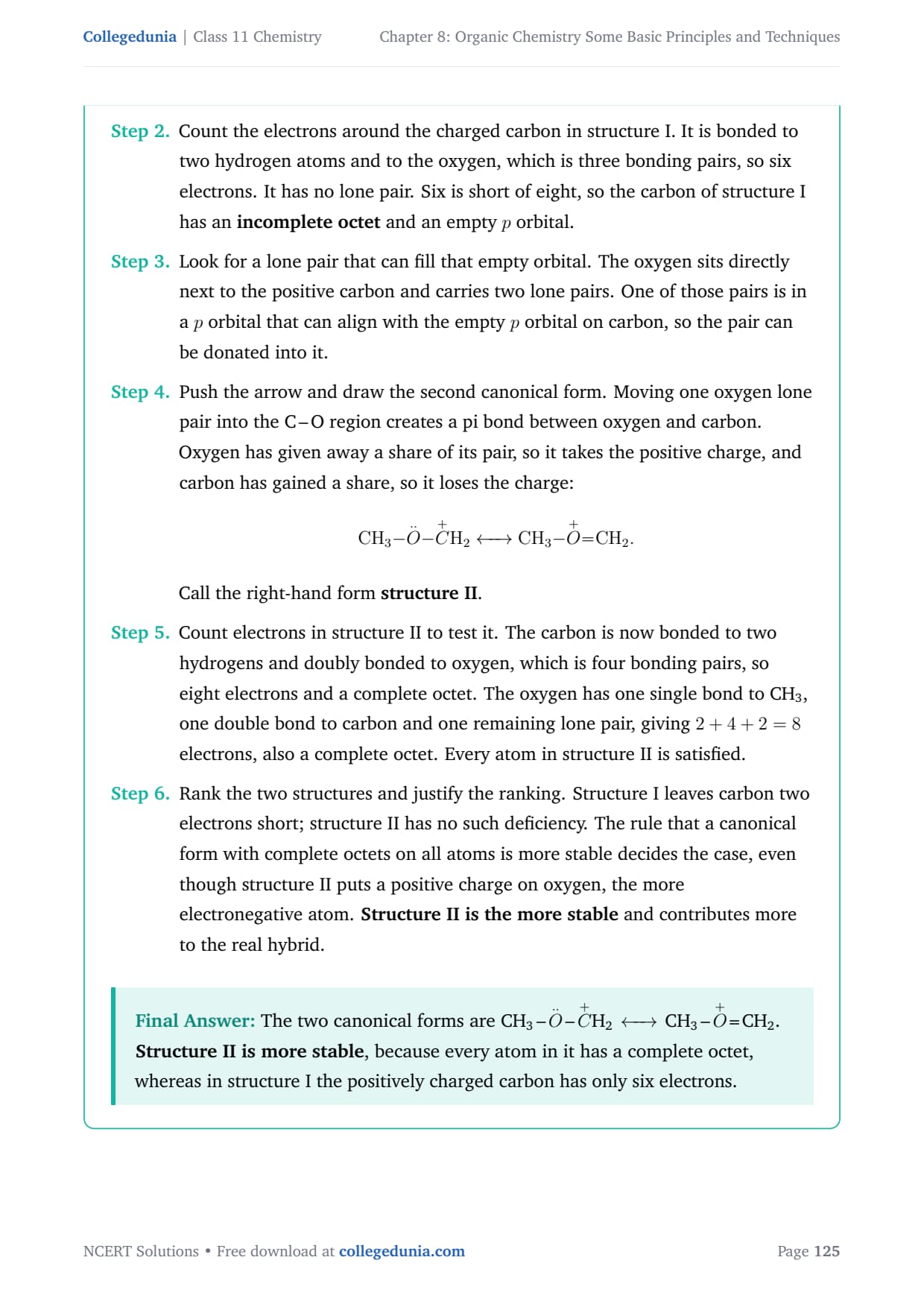
- Question 1: the key records the answer as (ii), 4,4-Dimethyl-3-ethylheptane. That name cites methyl before ethyl, which breaks the alphabetical rule. The correct answer is (i), 3-Ethyl-4,4-dimethylheptane, because di is ignored when you alphabetise.
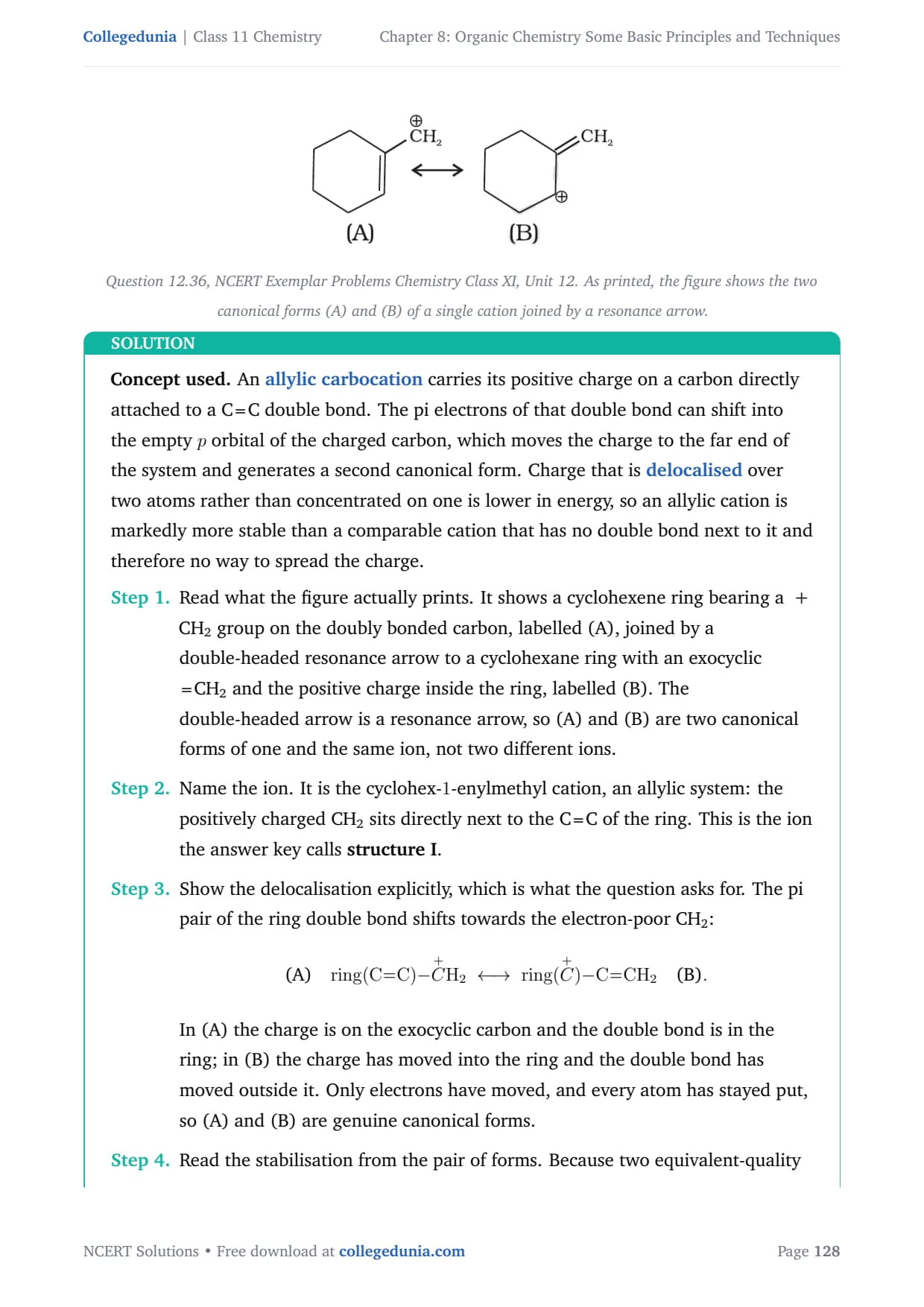
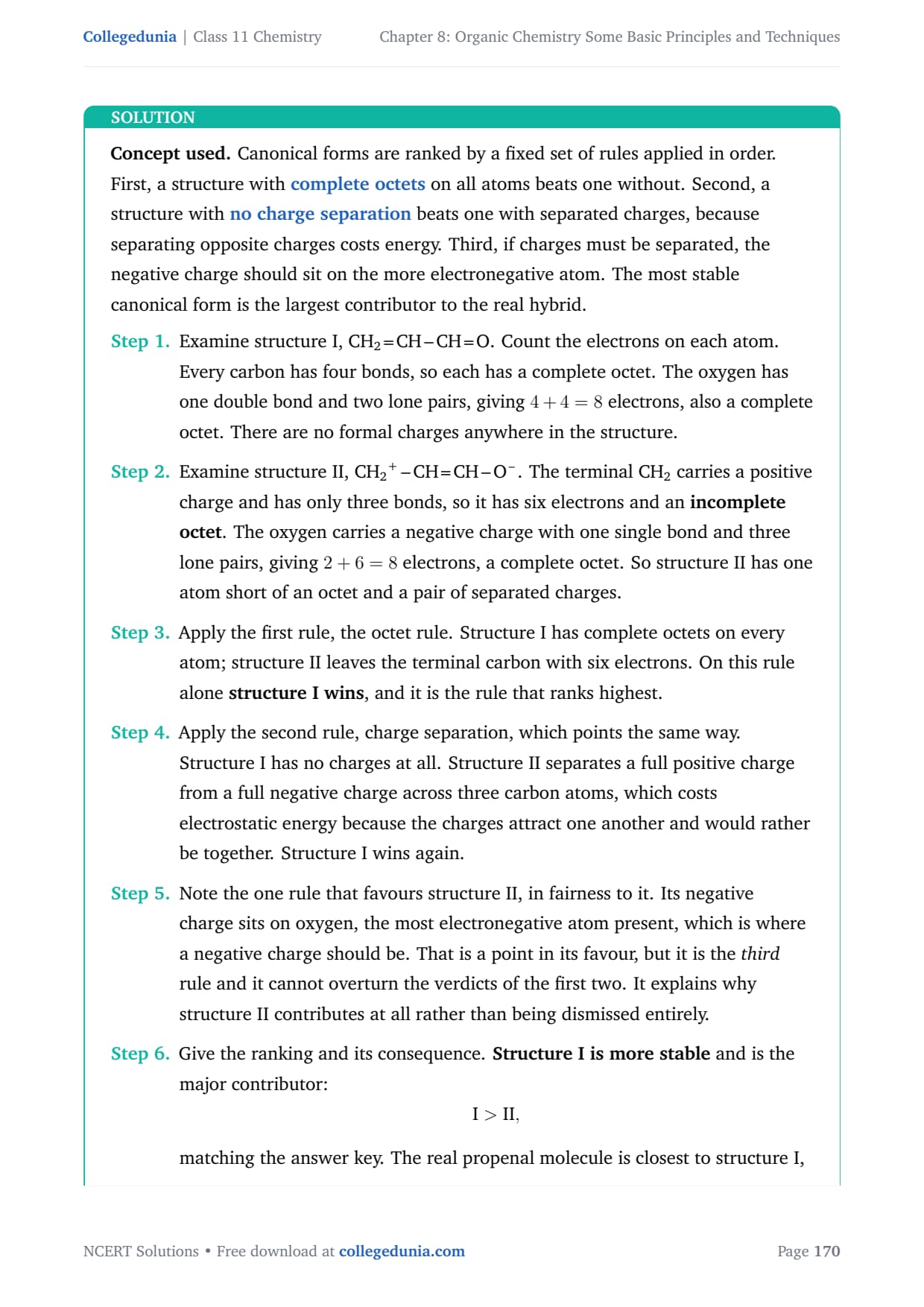
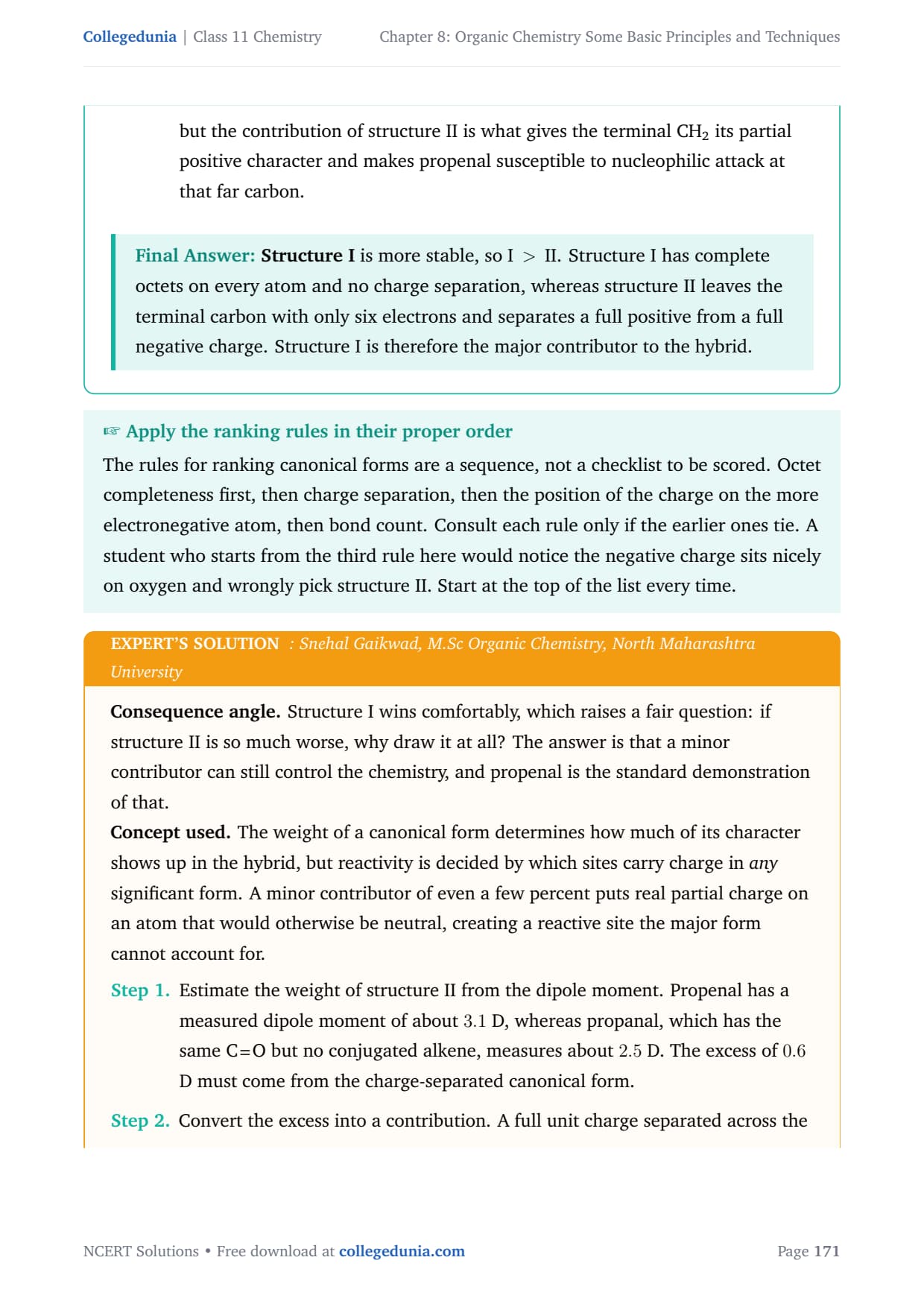
- Question 36: the key answers about "structure I" and "structure II", but the book prints only one ion, drawn as its two canonical forms. The second ion was dropped in typesetting.
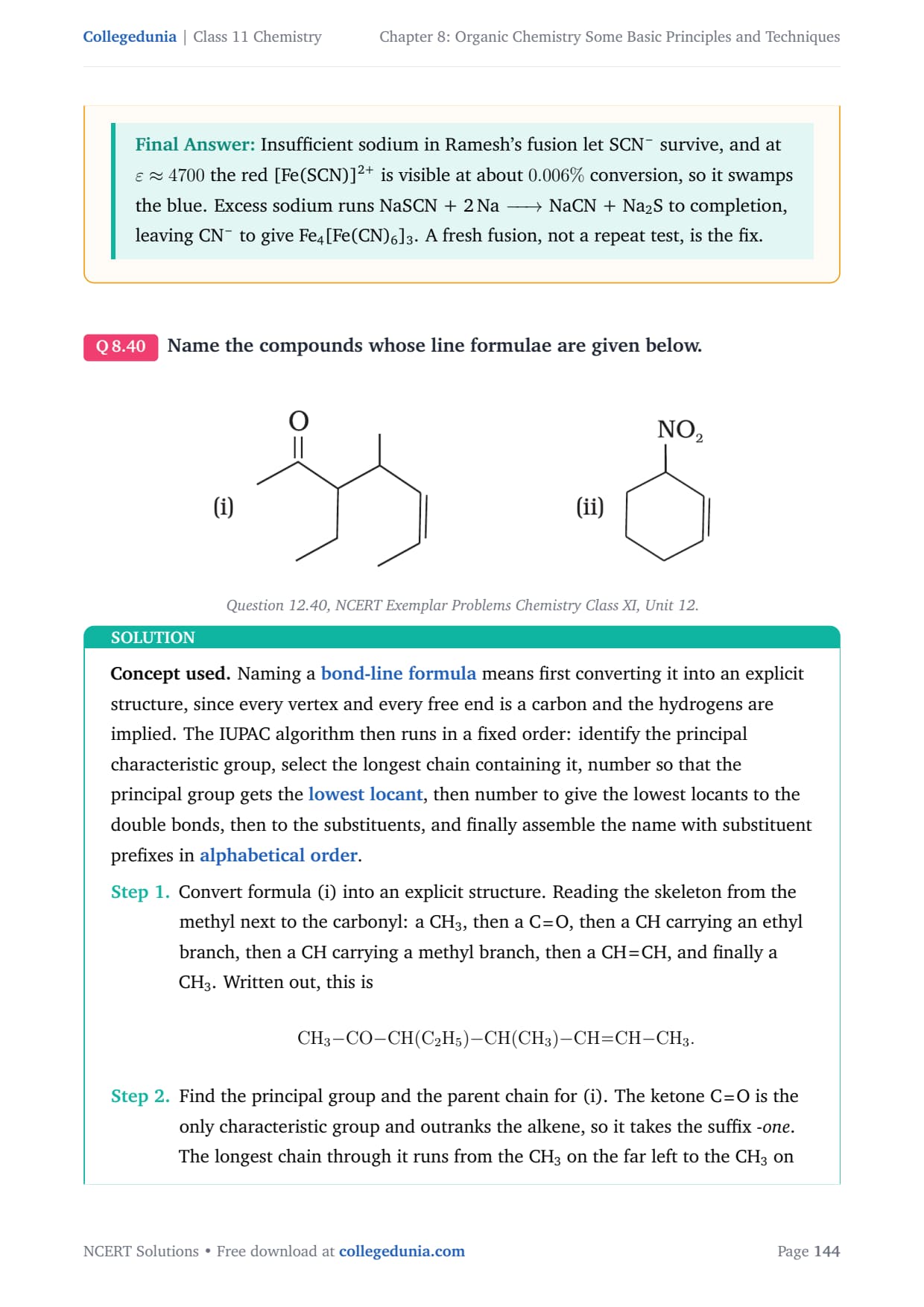
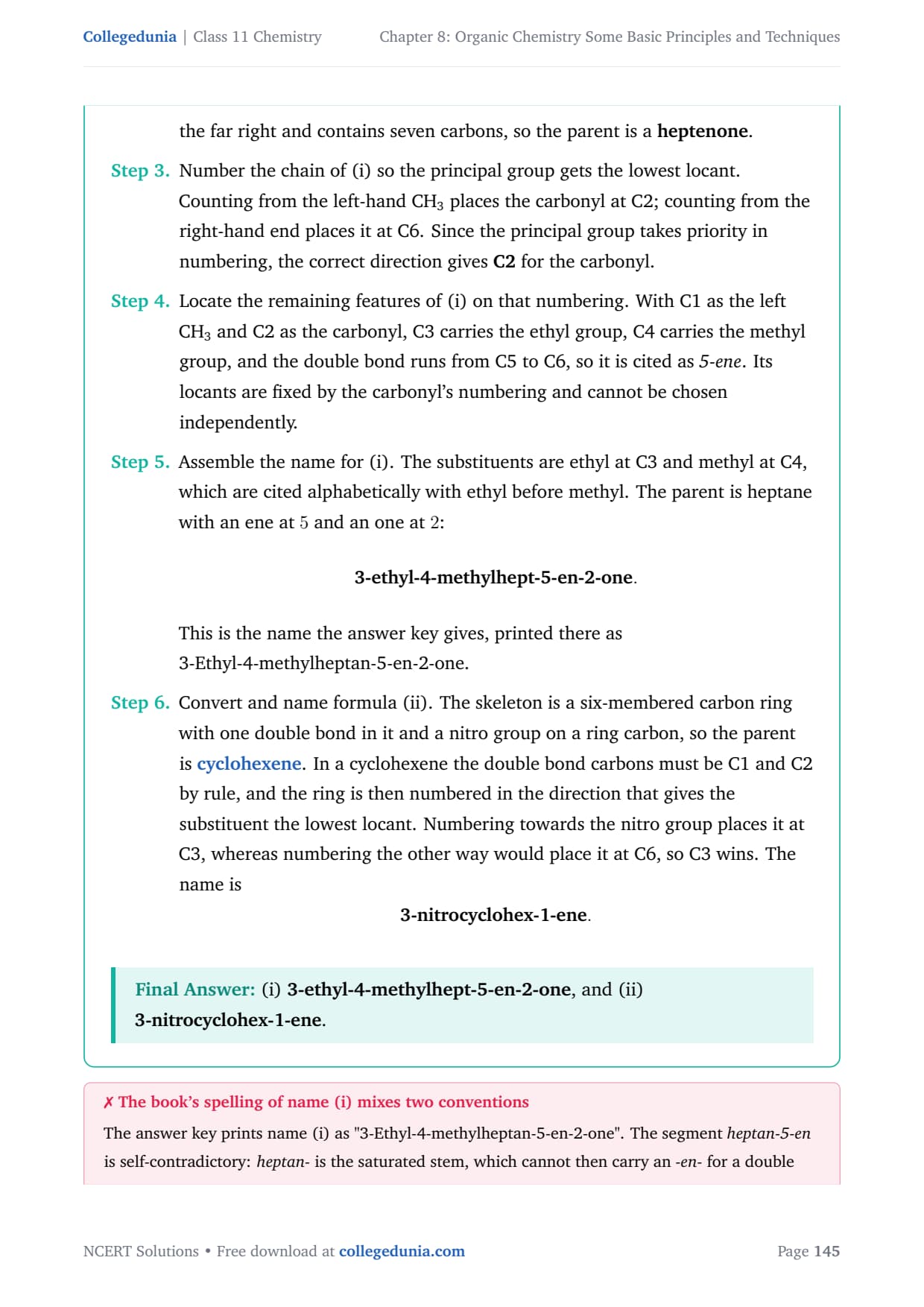
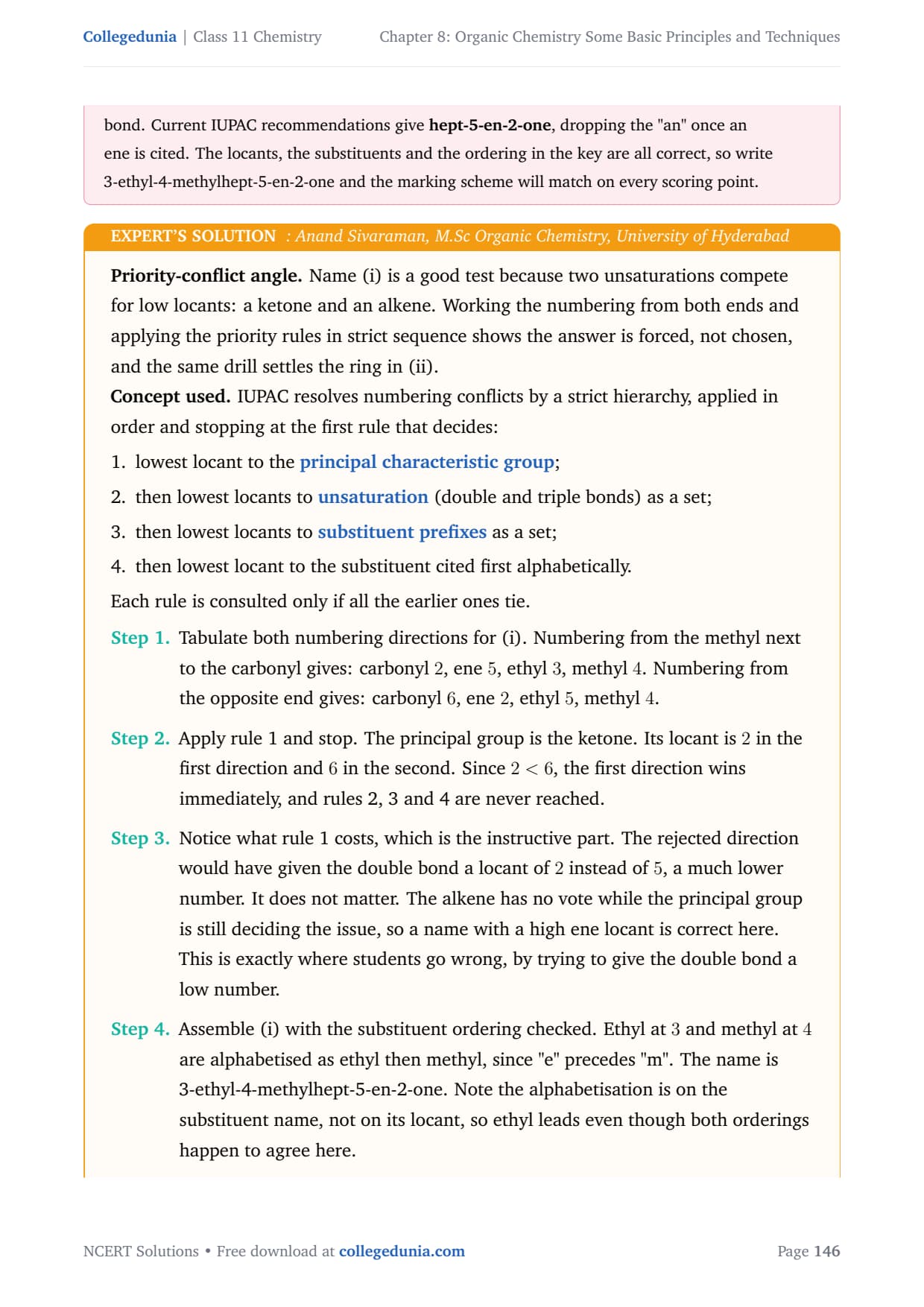
- Question 40: the key prints name (i) as 3-Ethyl-4-methylheptan-5-en-2-one. The segment heptan-5-en contradicts itself, since heptan- is the saturated stem and cannot then carry an -en-. Write 3-ethyl-4-methylhept-5-en-2-one.
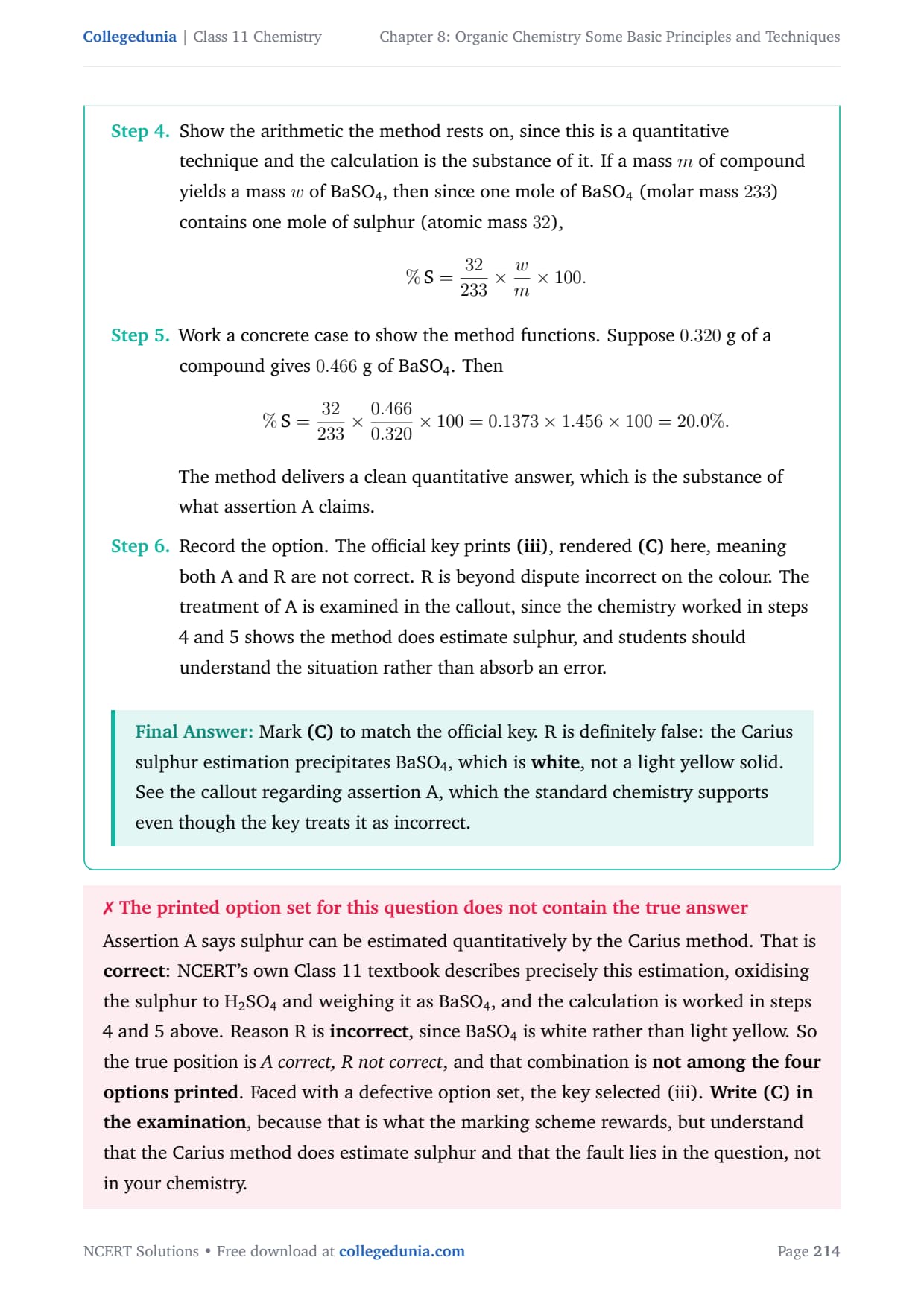
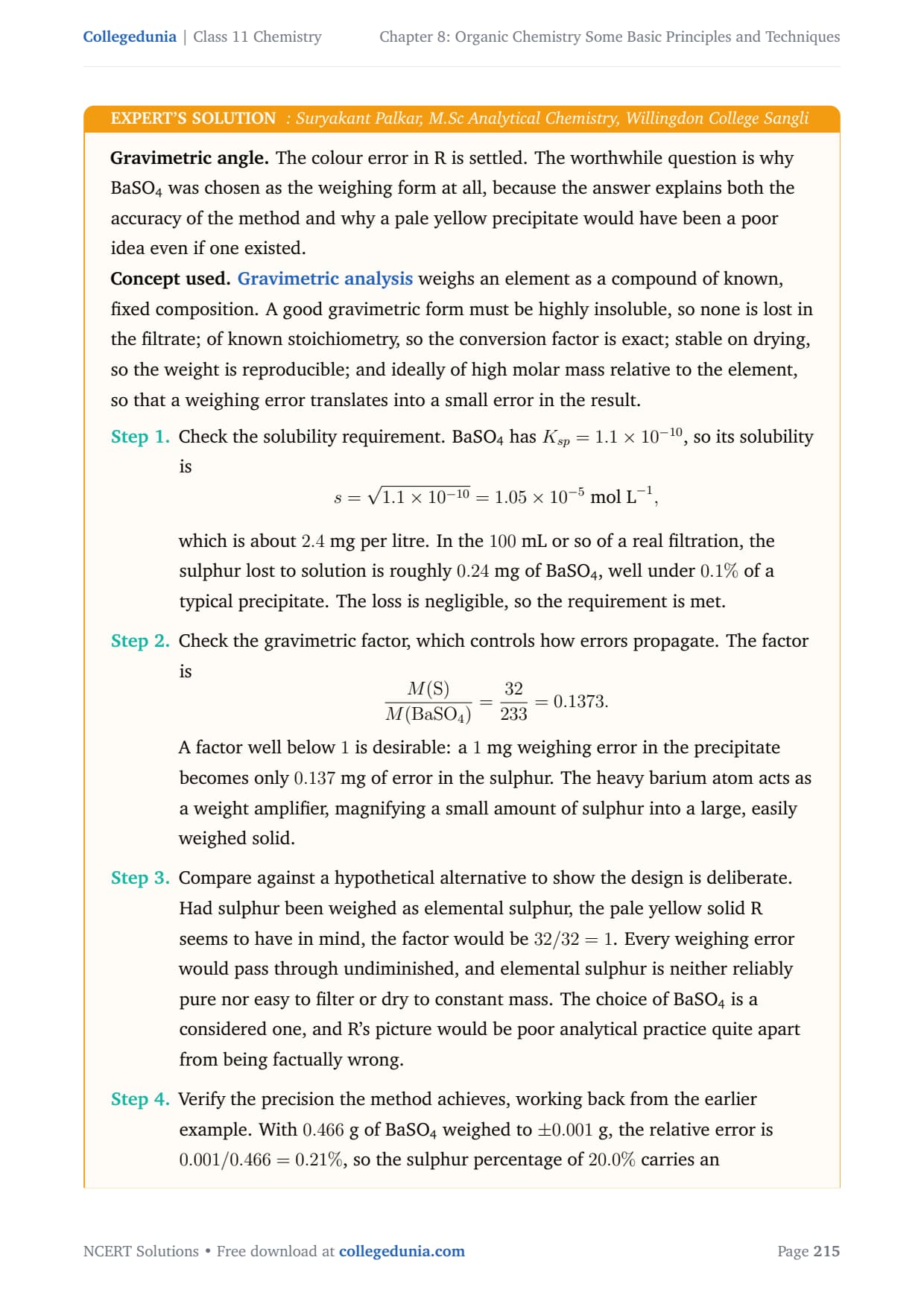
- Question 59: assertion A is correct and reason R is false, since BaSO4 is white rather than light yellow. That combination is not among the four printed options.
Where the key is defective, write what the marking scheme rewards, then learn why it is wrong. Our solution gives the key's answer first and explains the slip after it.
Common Mistakes Students Make in Organic Chemistry
The Exemplar plants wrong options deliberately. These four catch most students, and each is flagged in the PDF at the question where it bites.
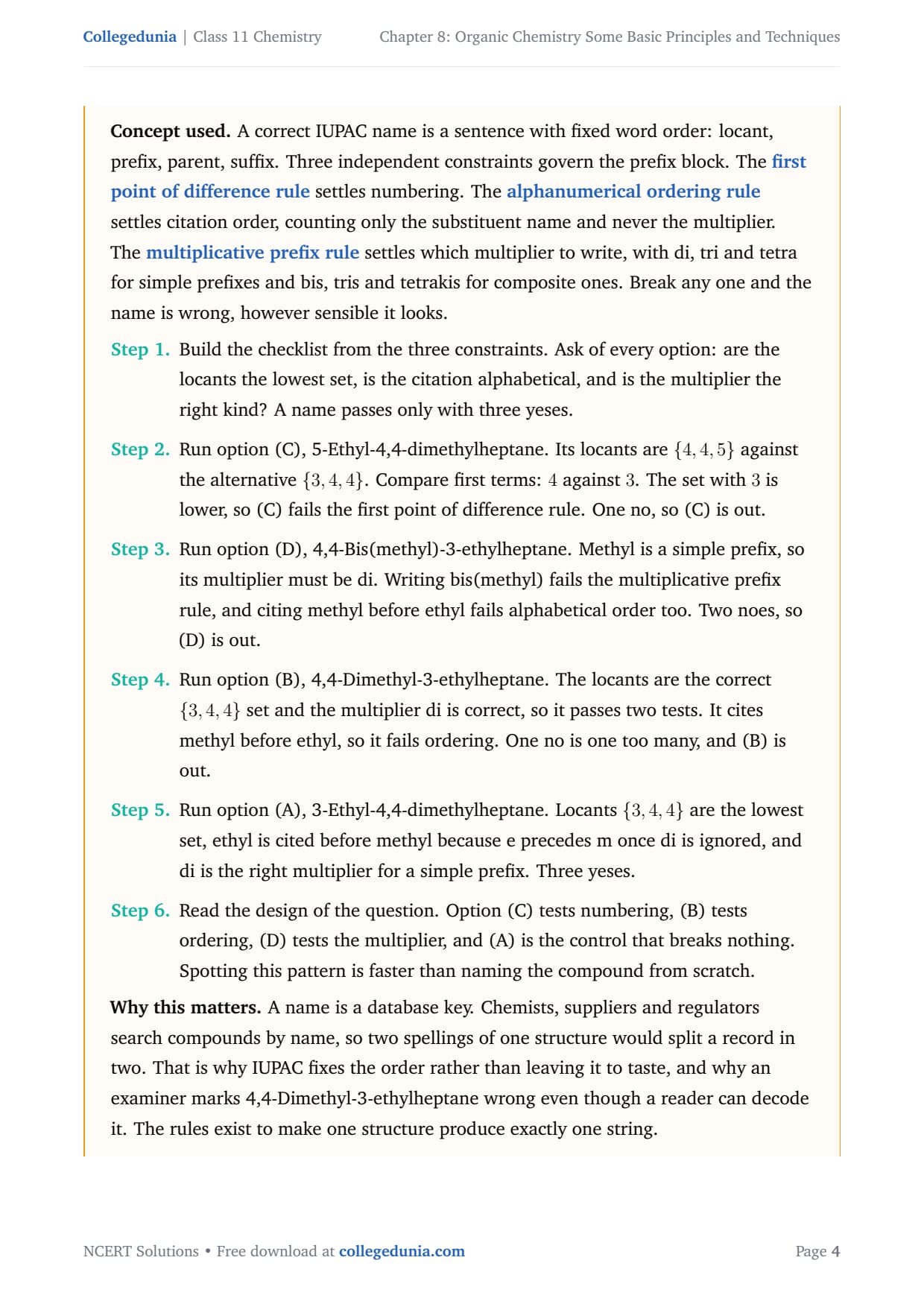
- Alphabetical order: you alphabetise by the substituent name, never by the multiplier. Ethyl comes before dimethyl, because the d in di does not count.
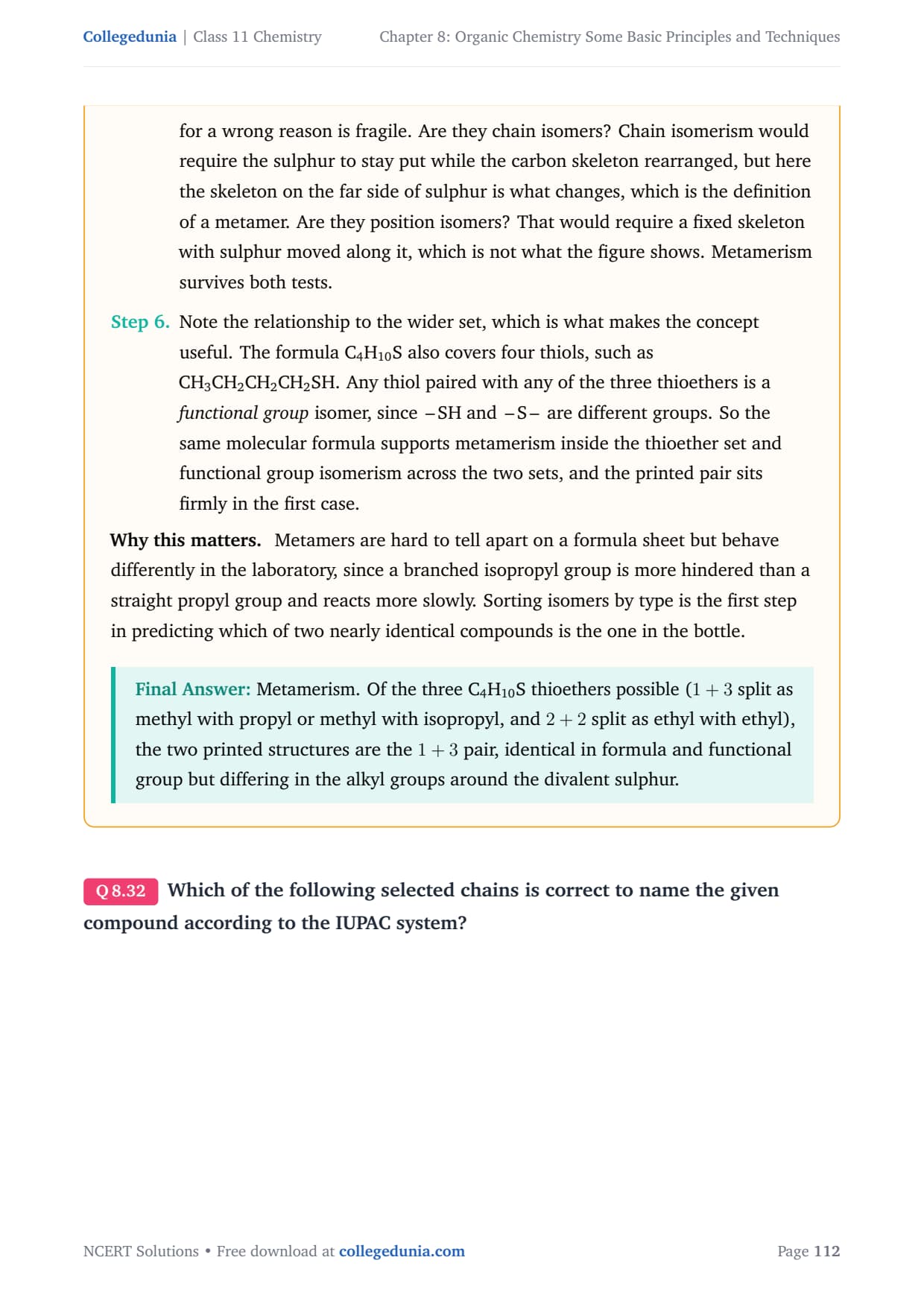
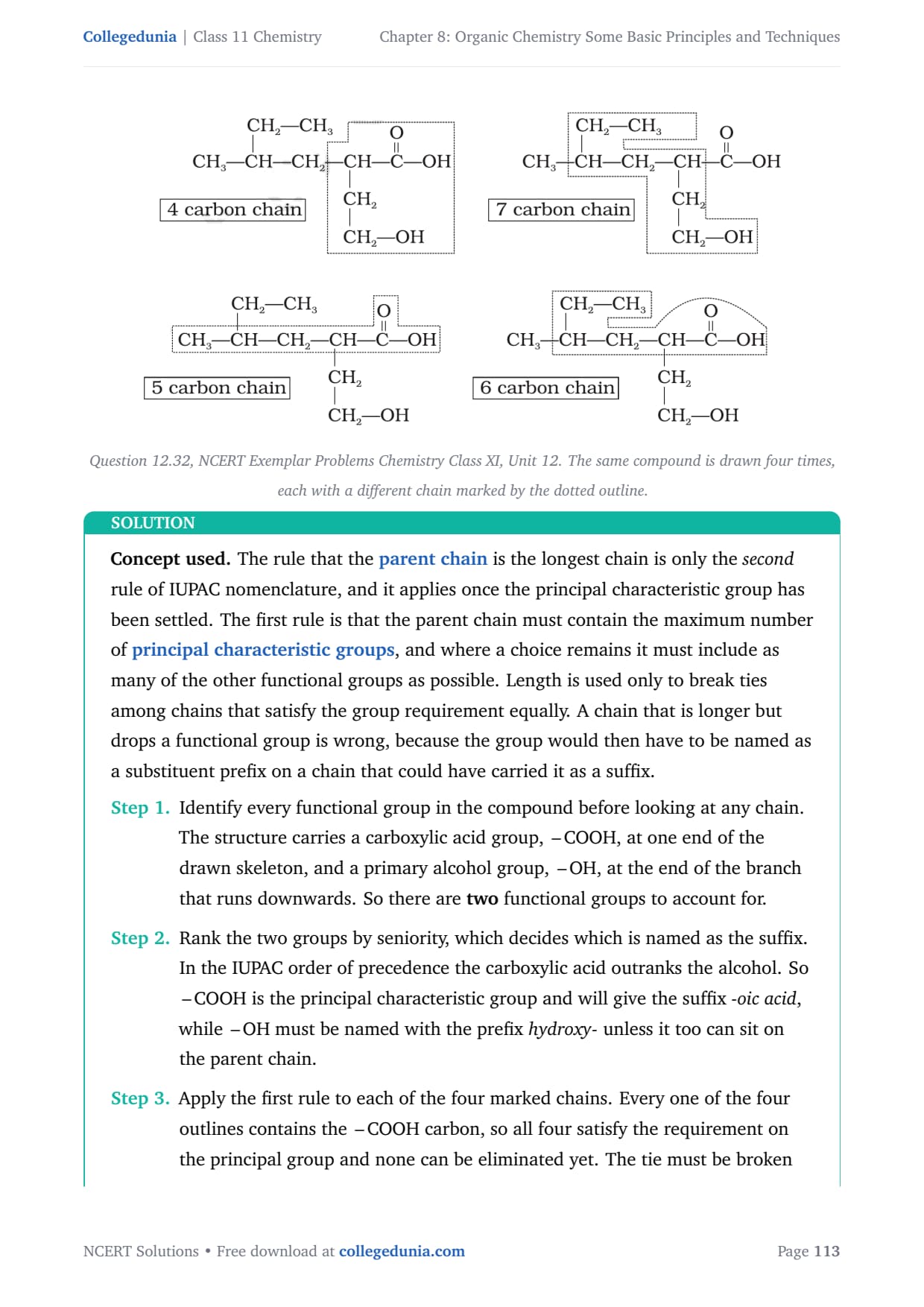
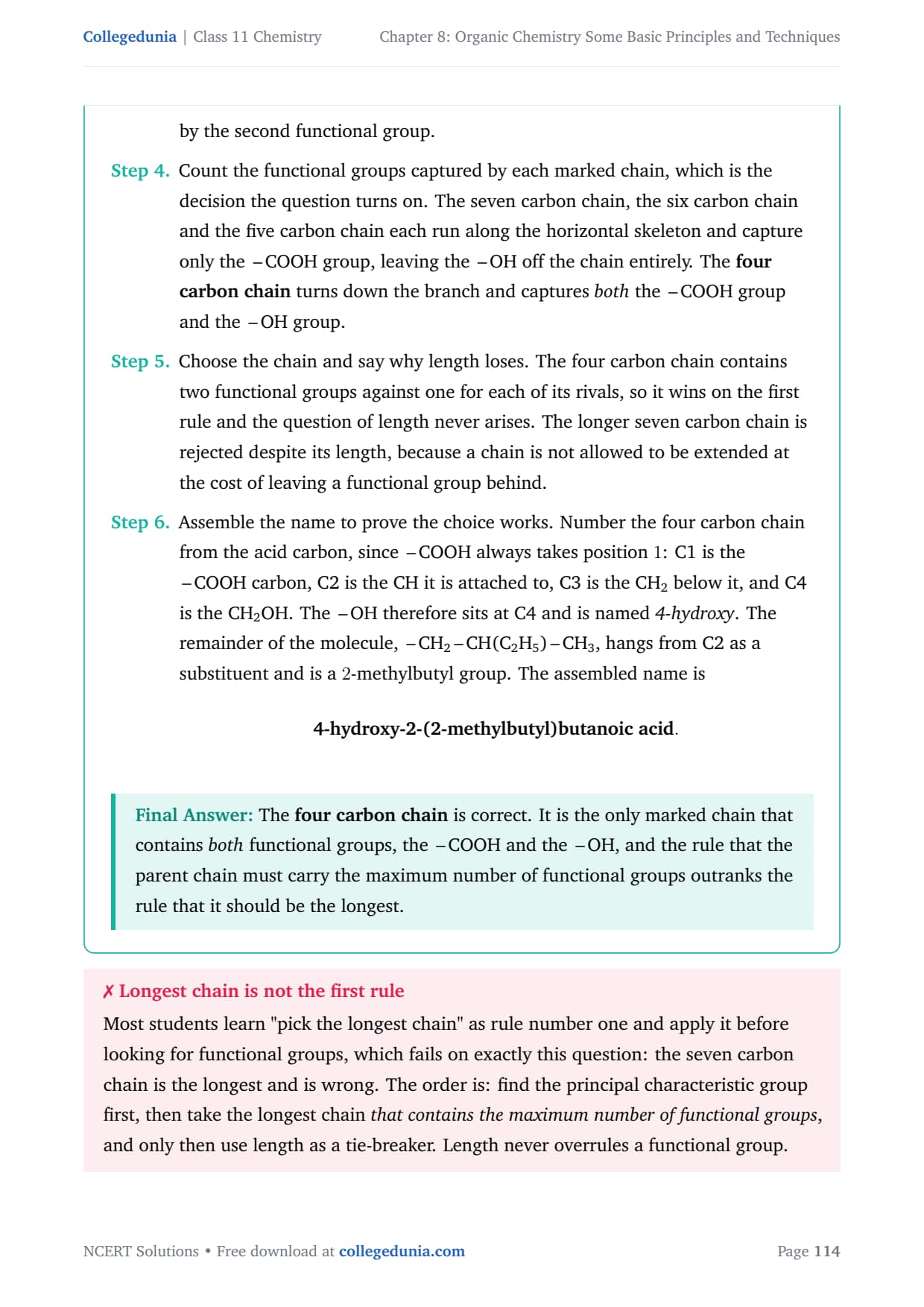
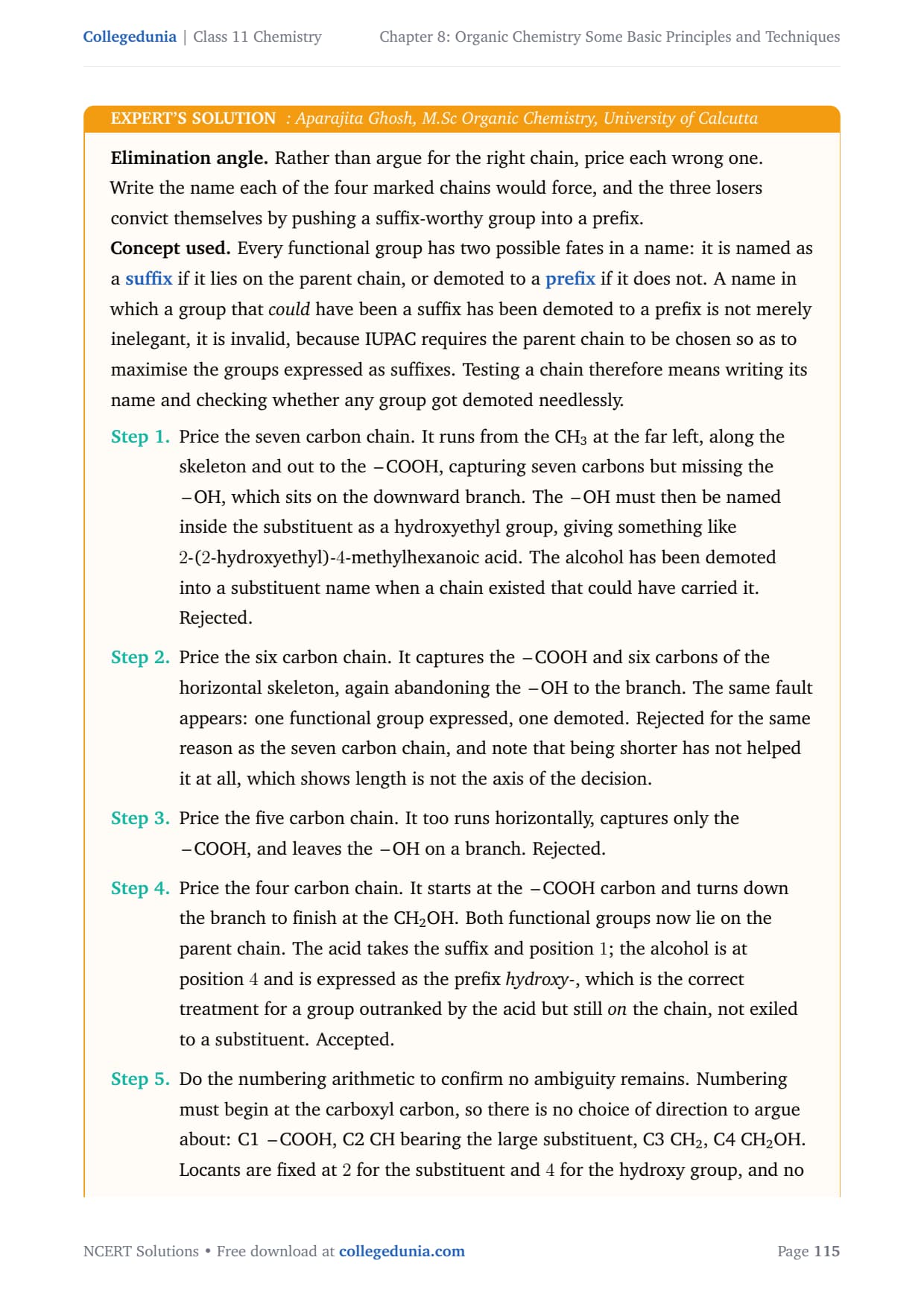
- The longest chain: it is rarely the one drawn straight across the page. In Question 32 the correct parent is the four-carbon chain, since the chain must hold the most functional groups.
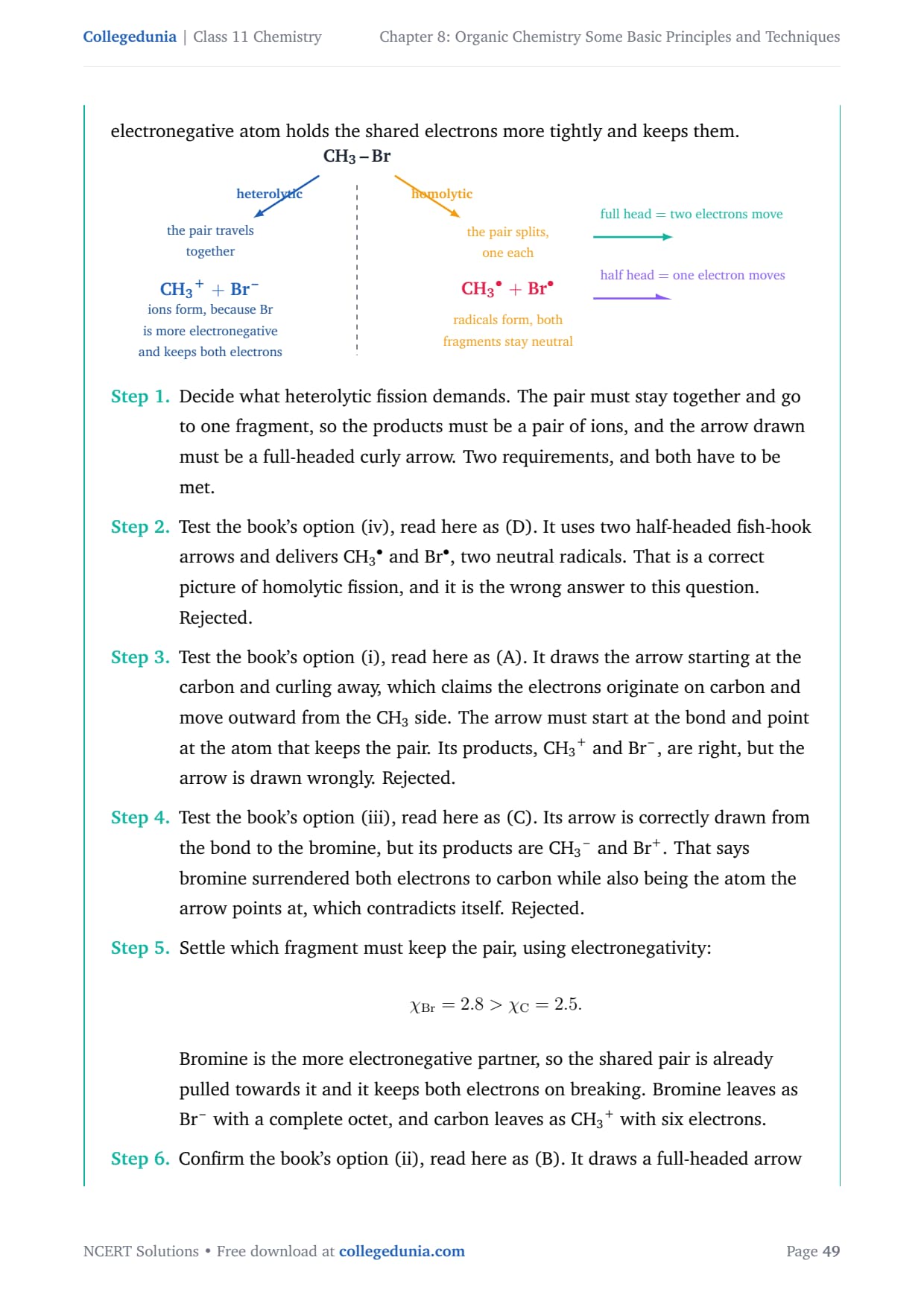
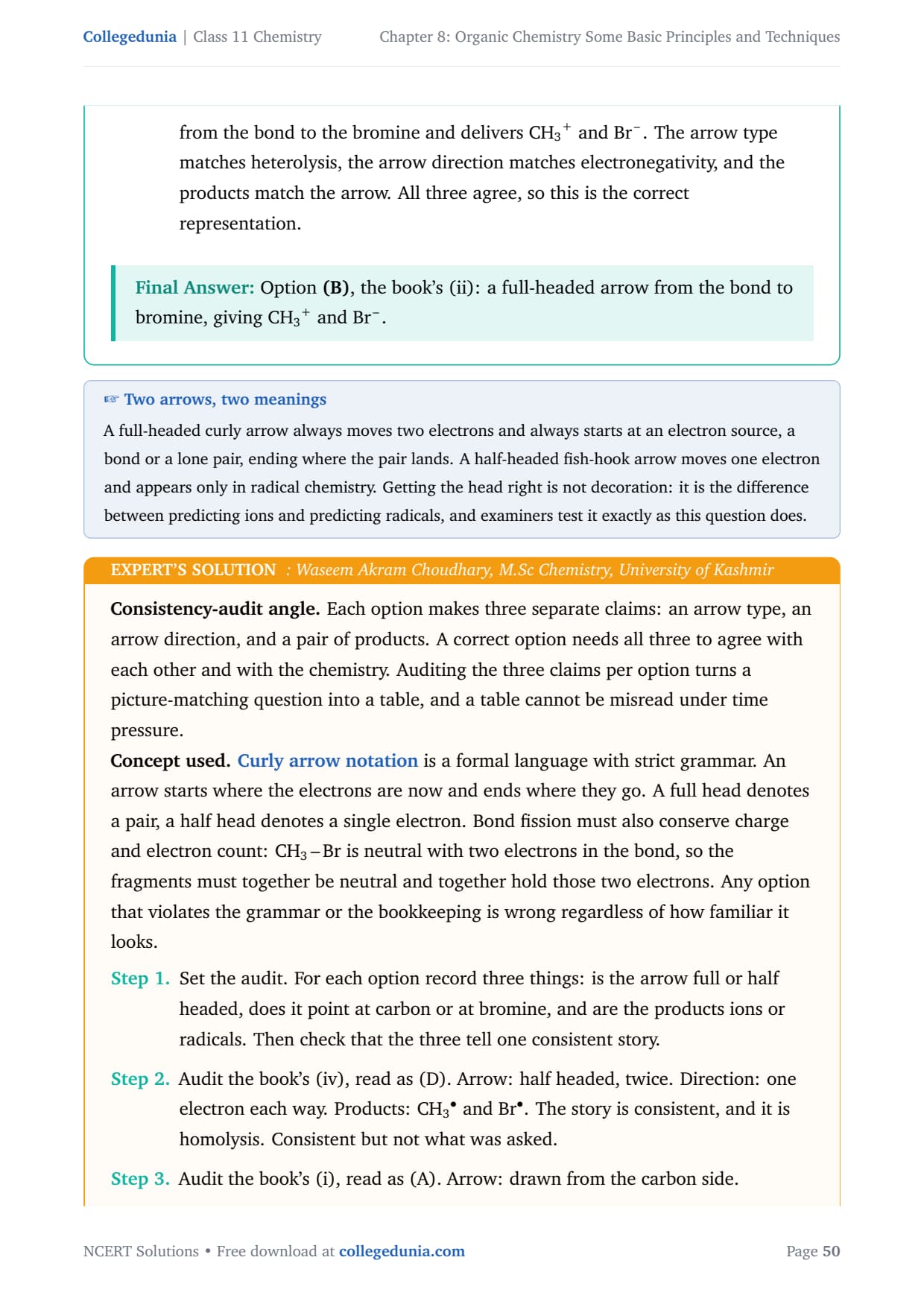
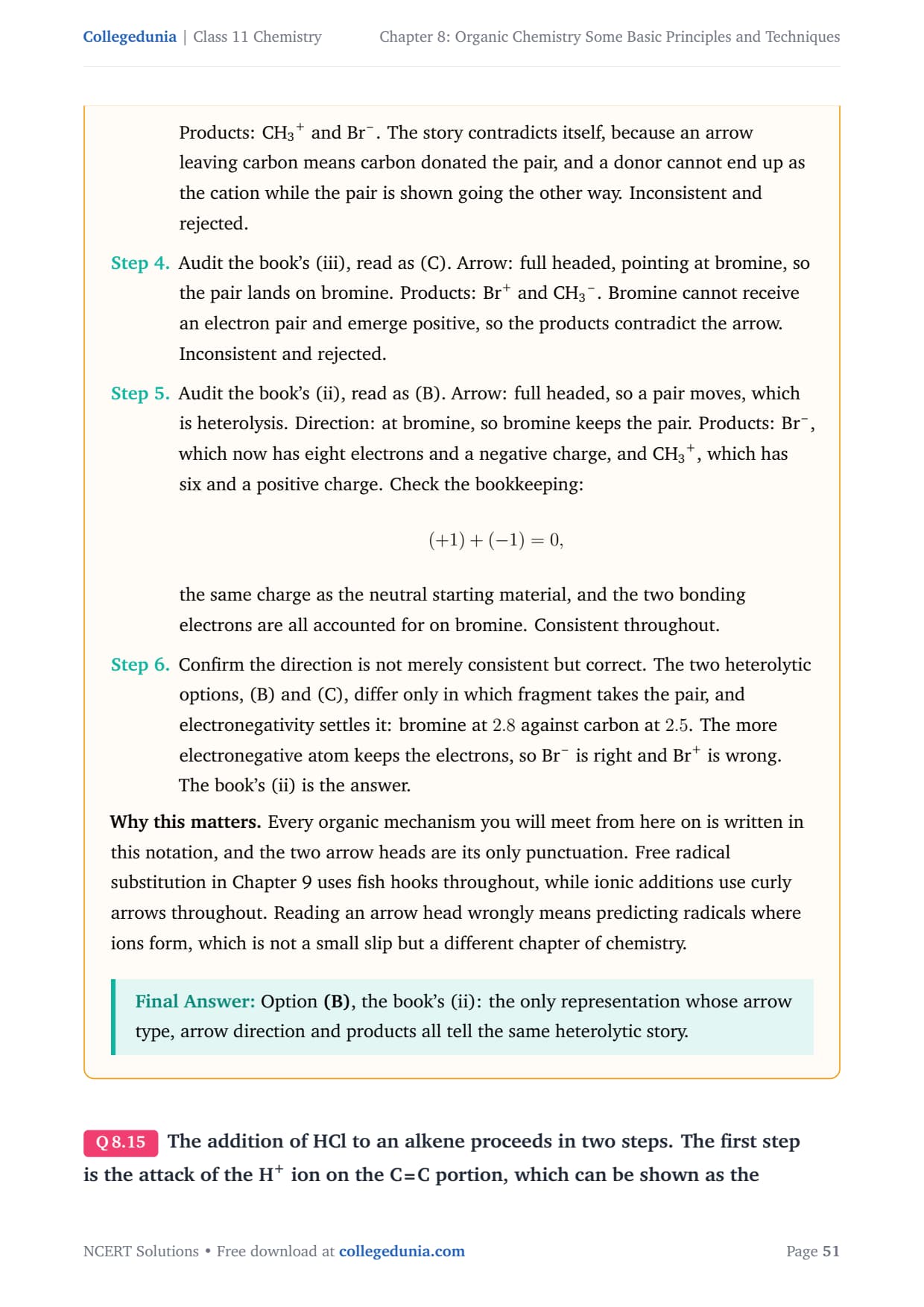
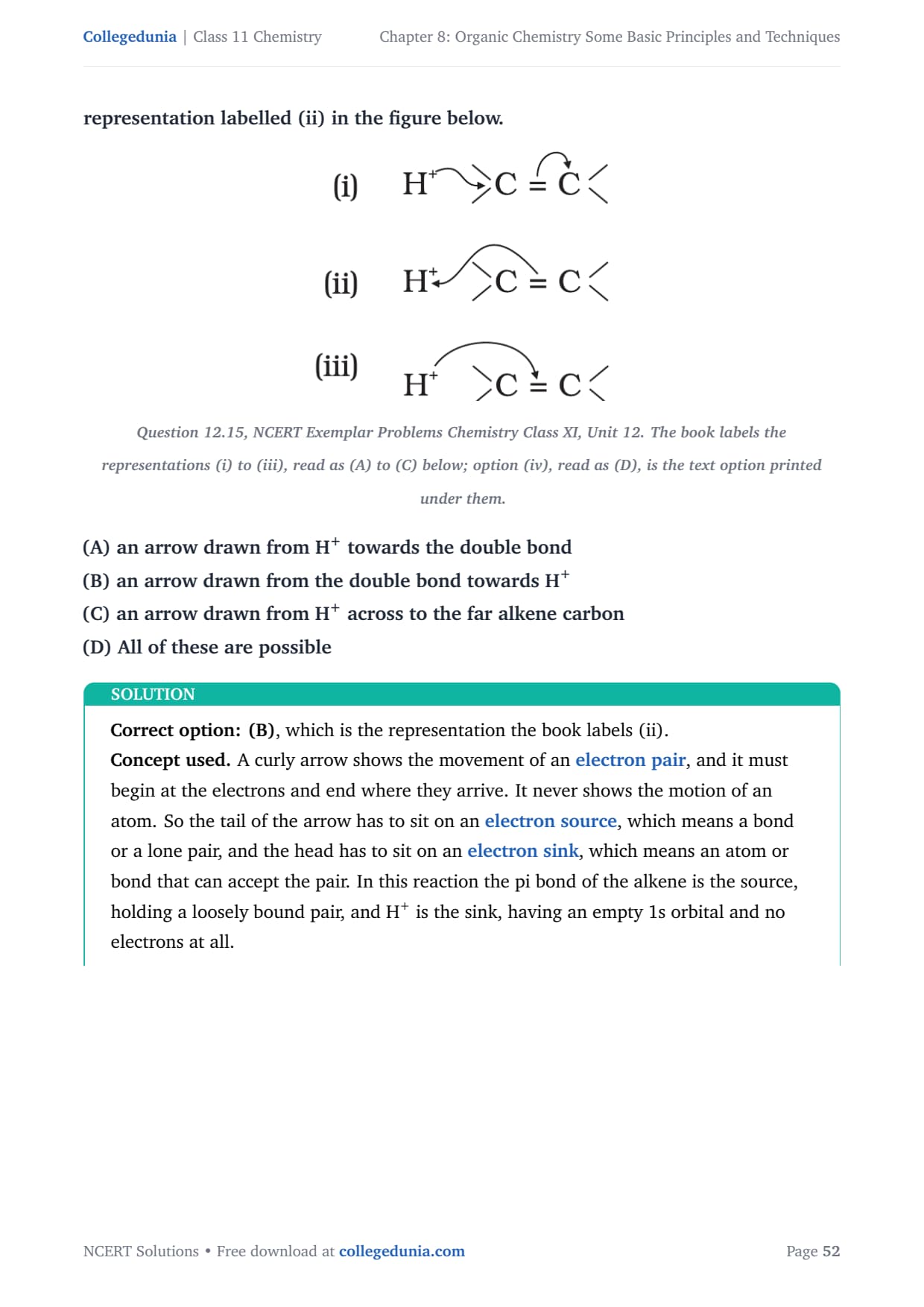
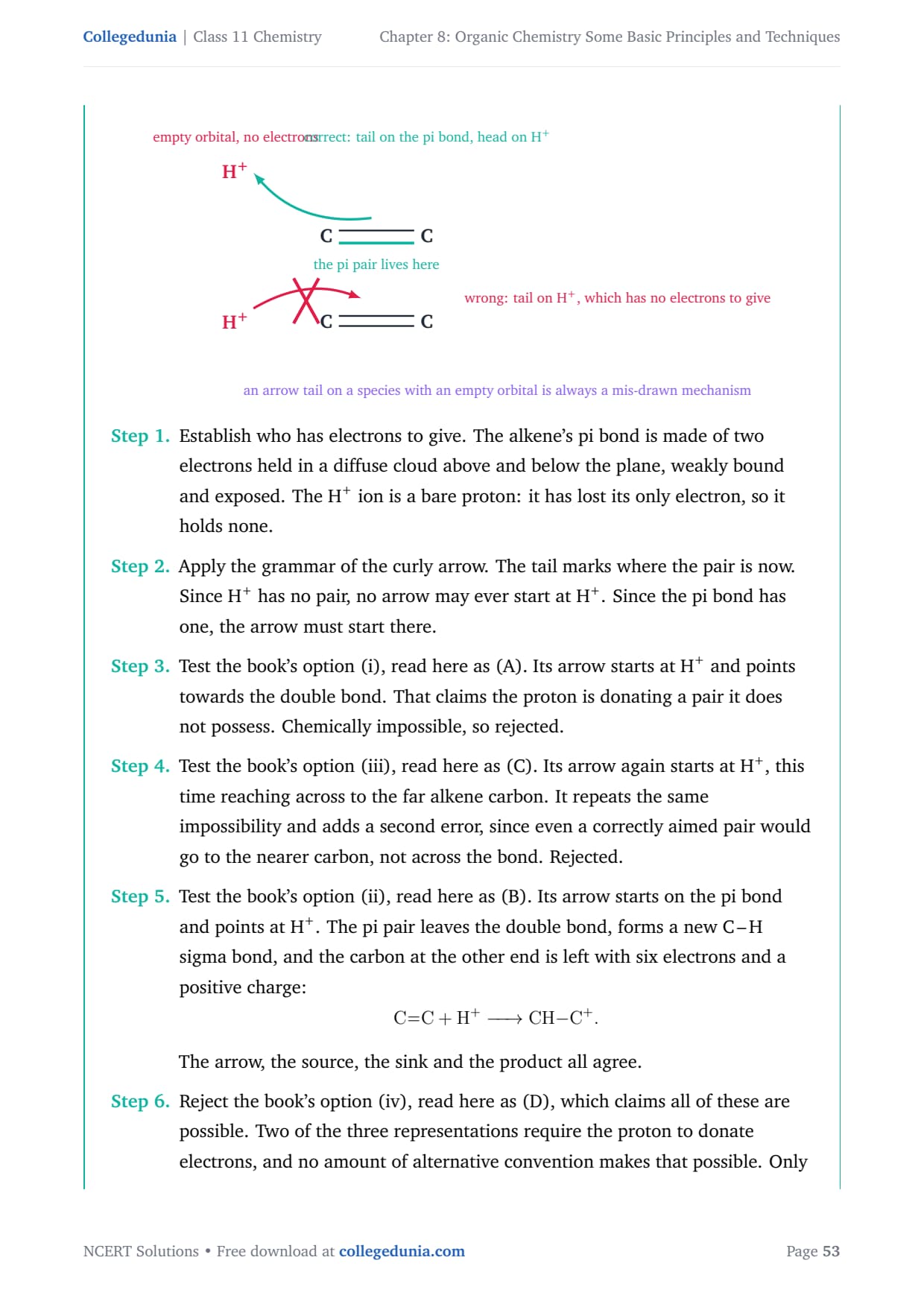
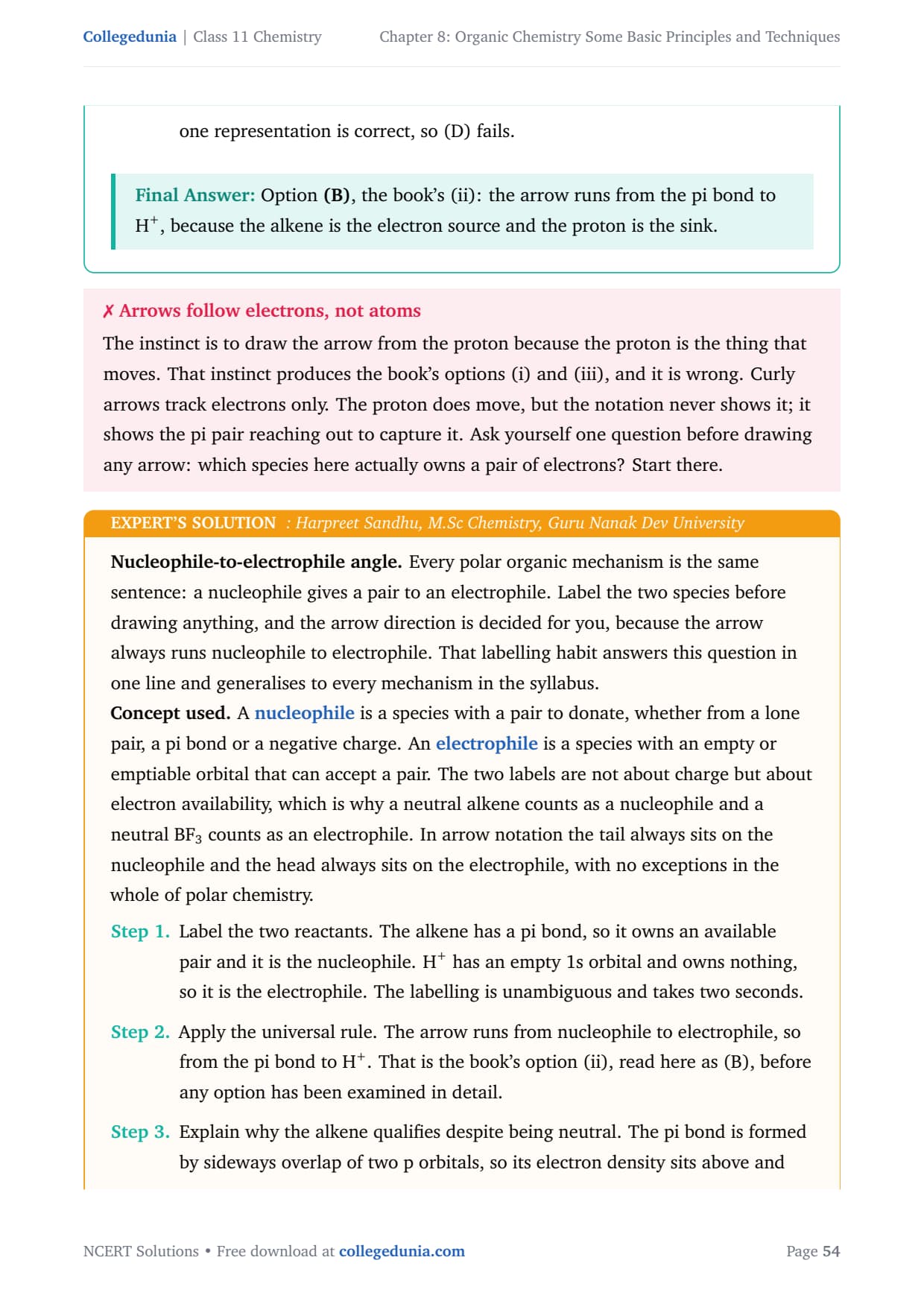
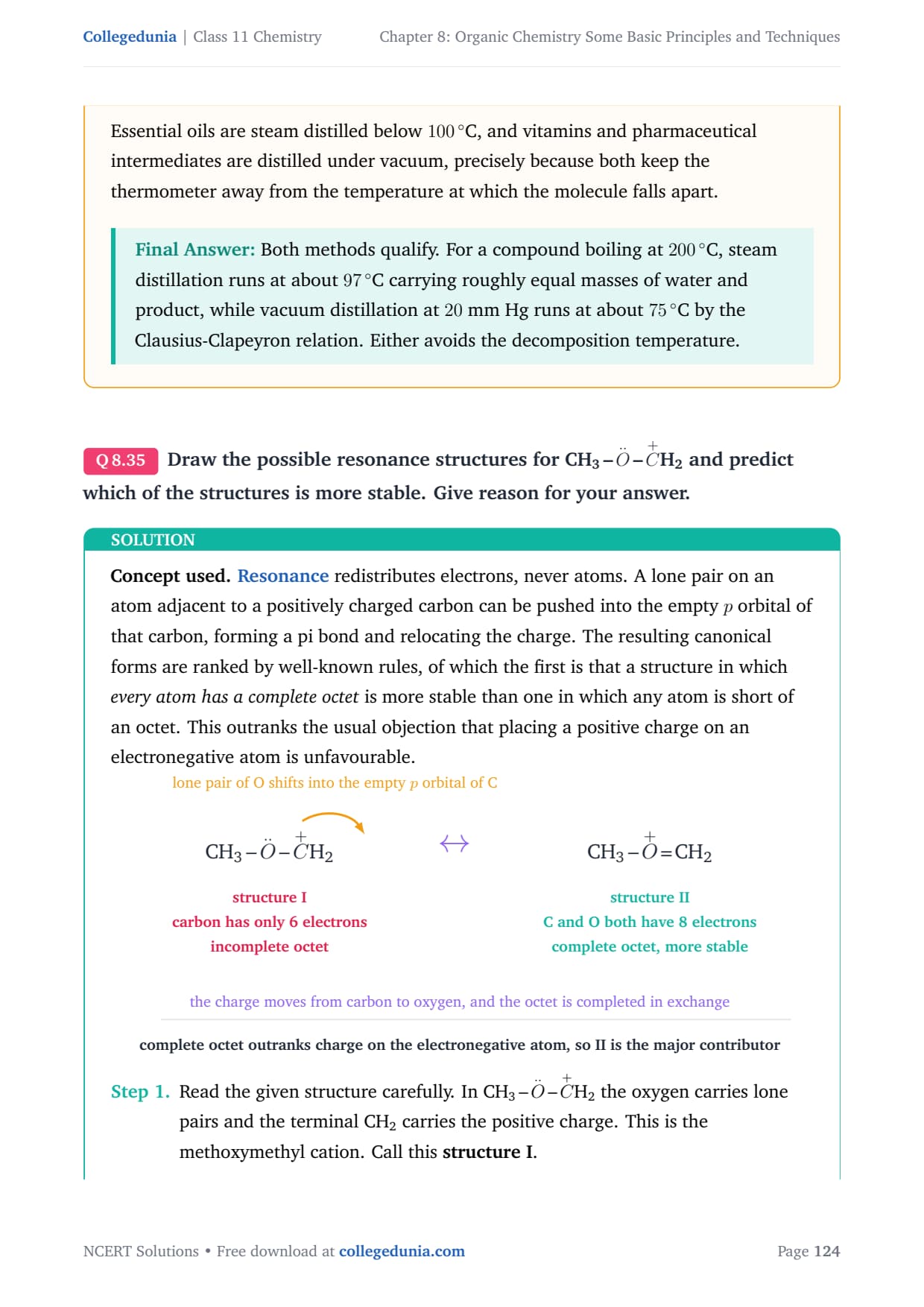
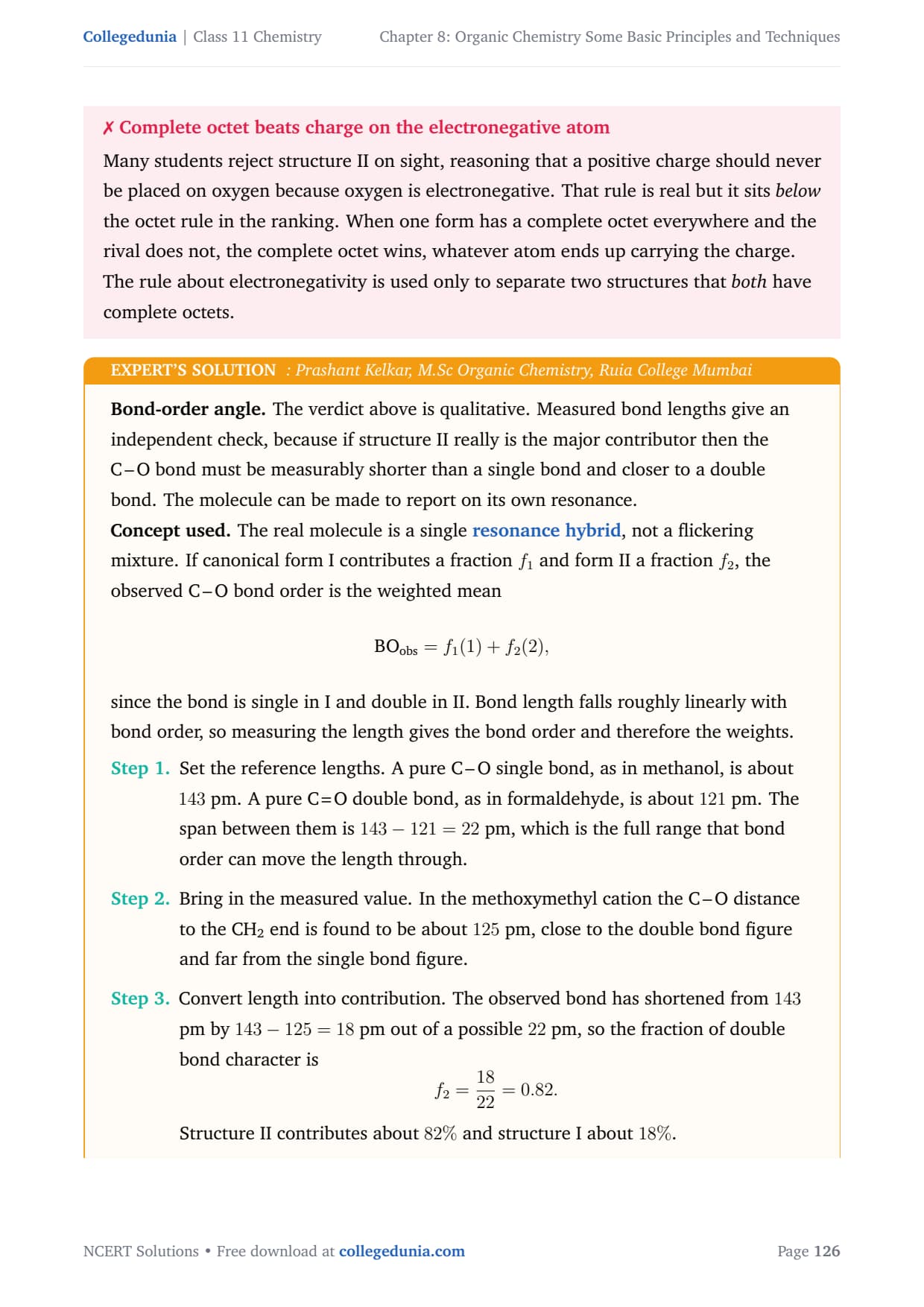
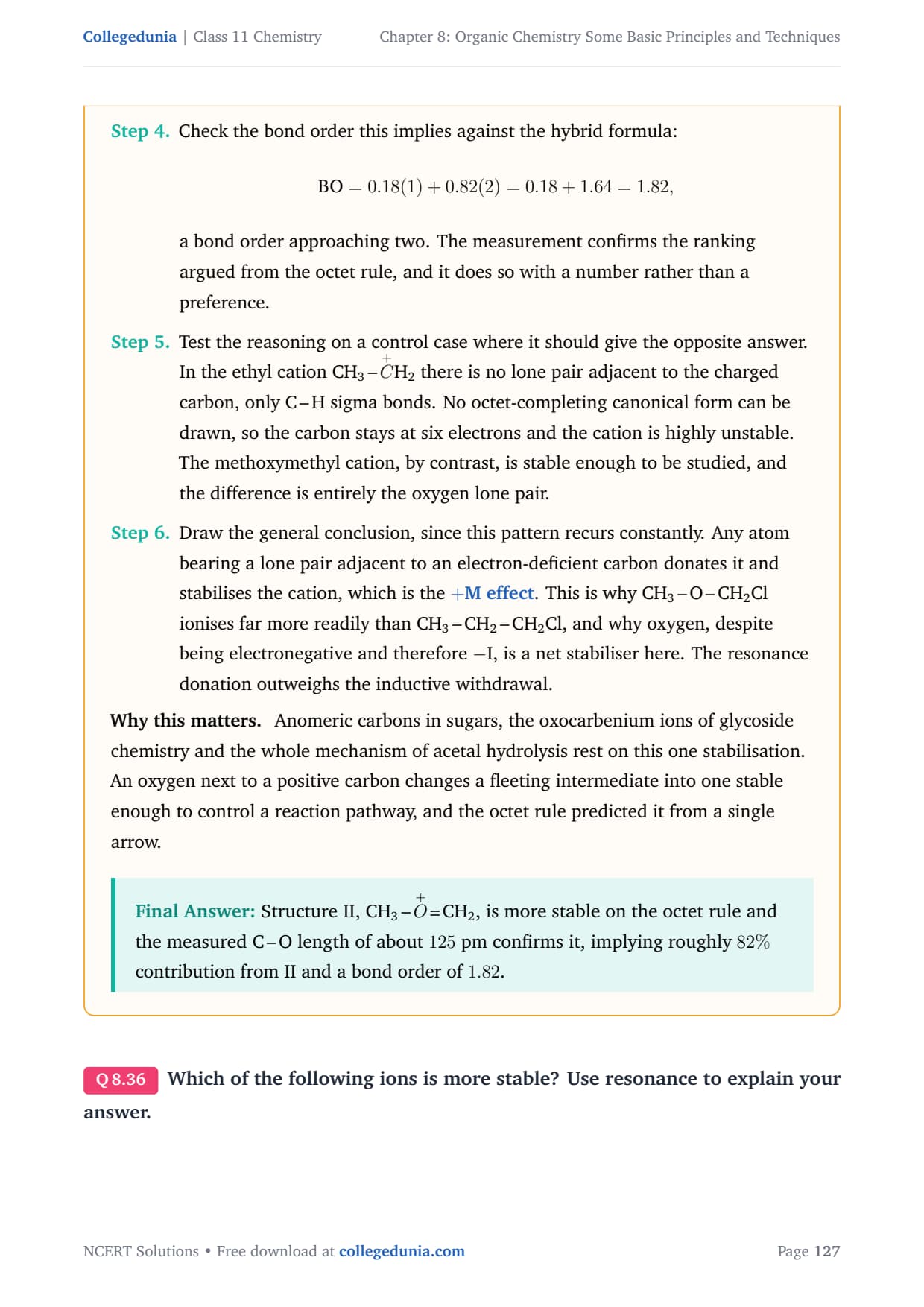
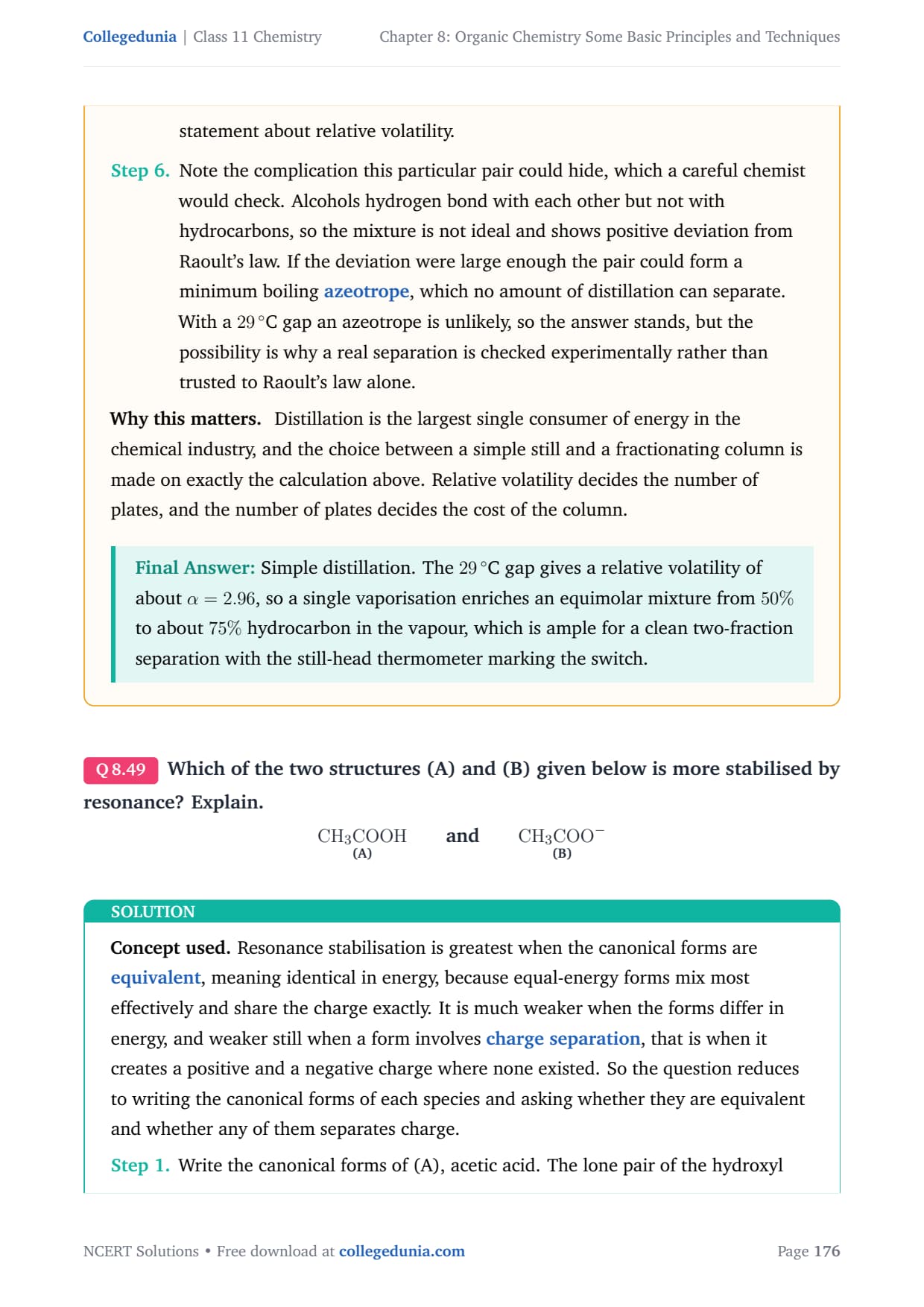
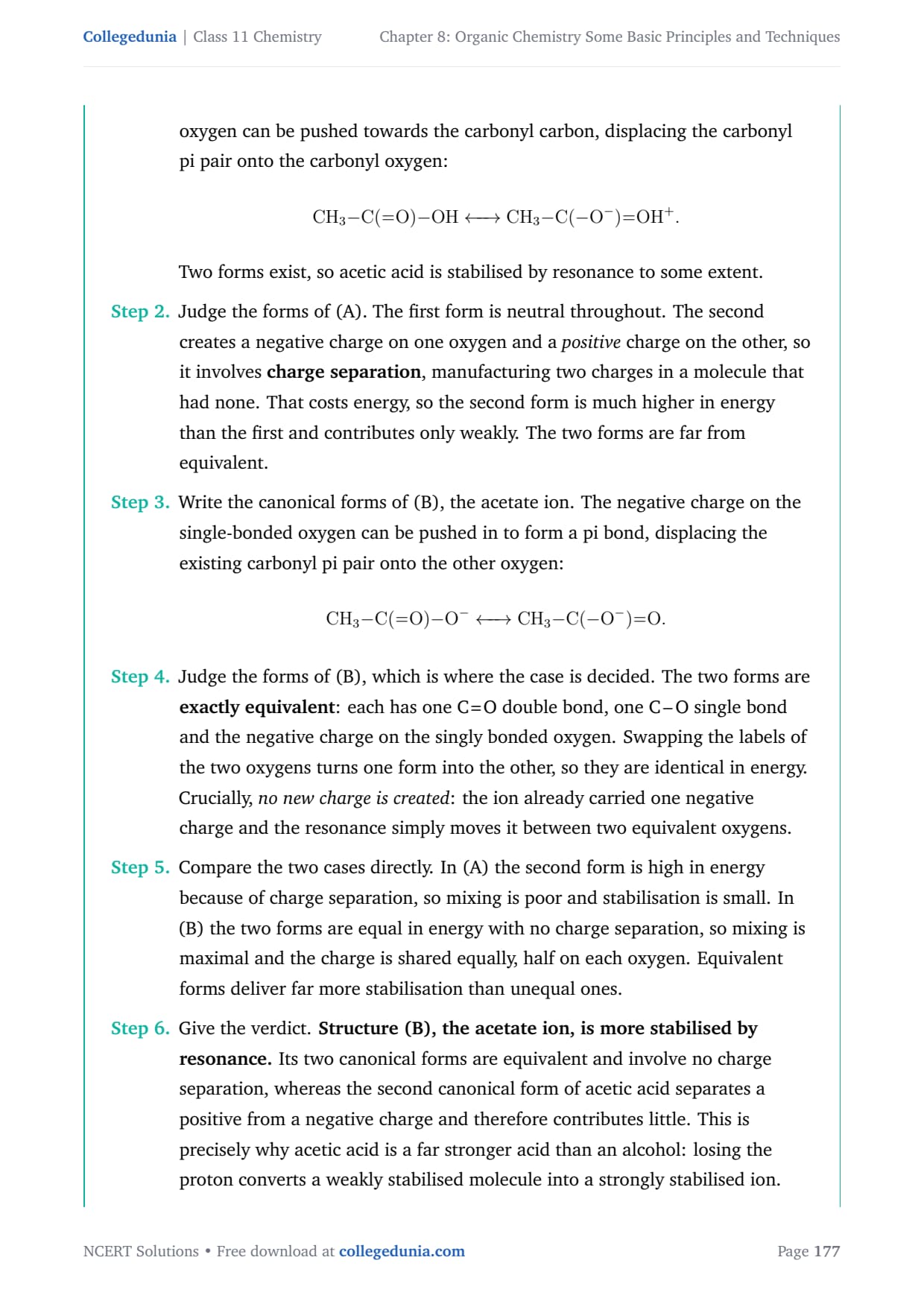
- Resonance arrows: curved arrows move electrons, never atoms and never a hydrogen. A double-headed arrow joins canonical forms of one species, so it never separates two compounds.
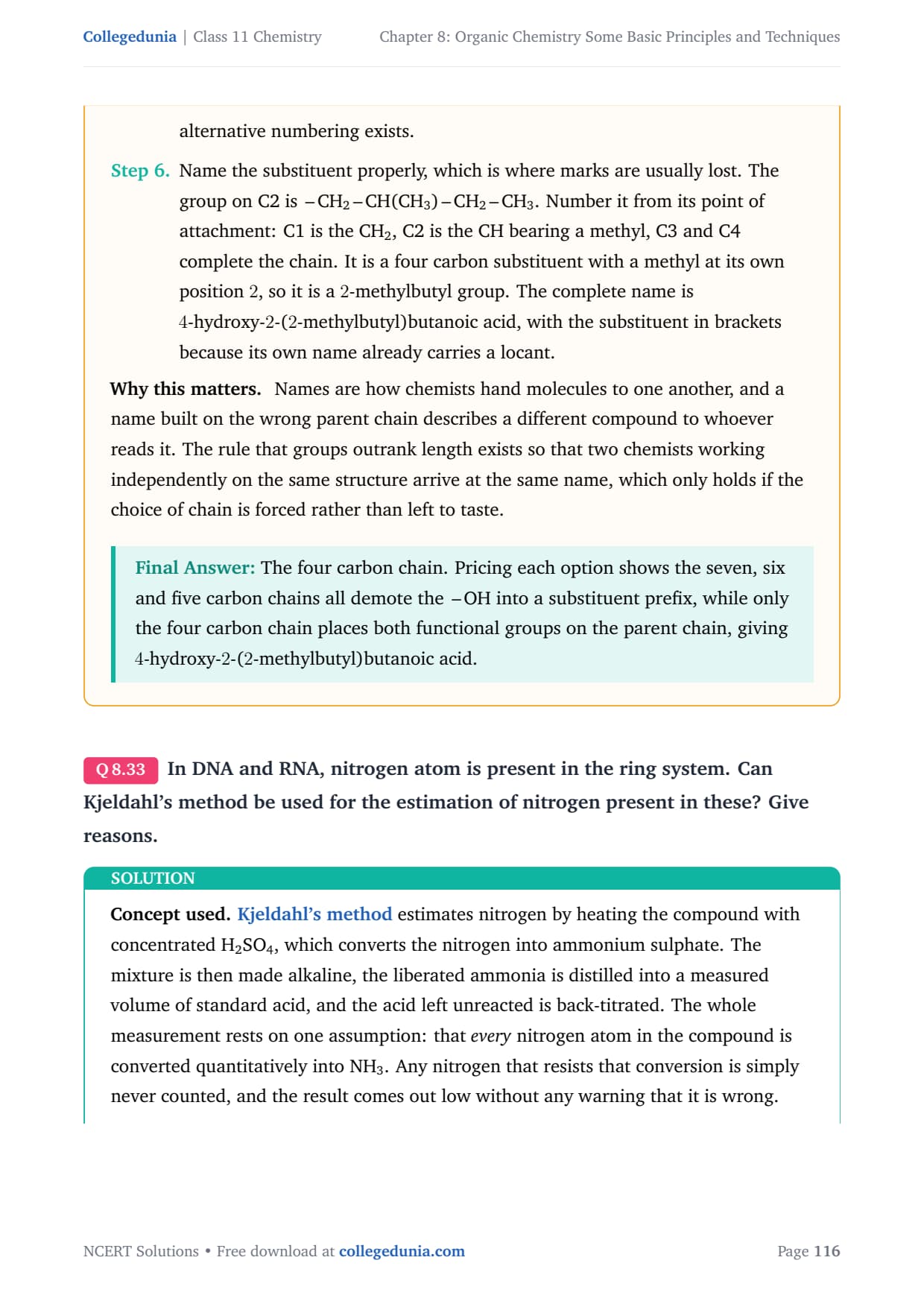
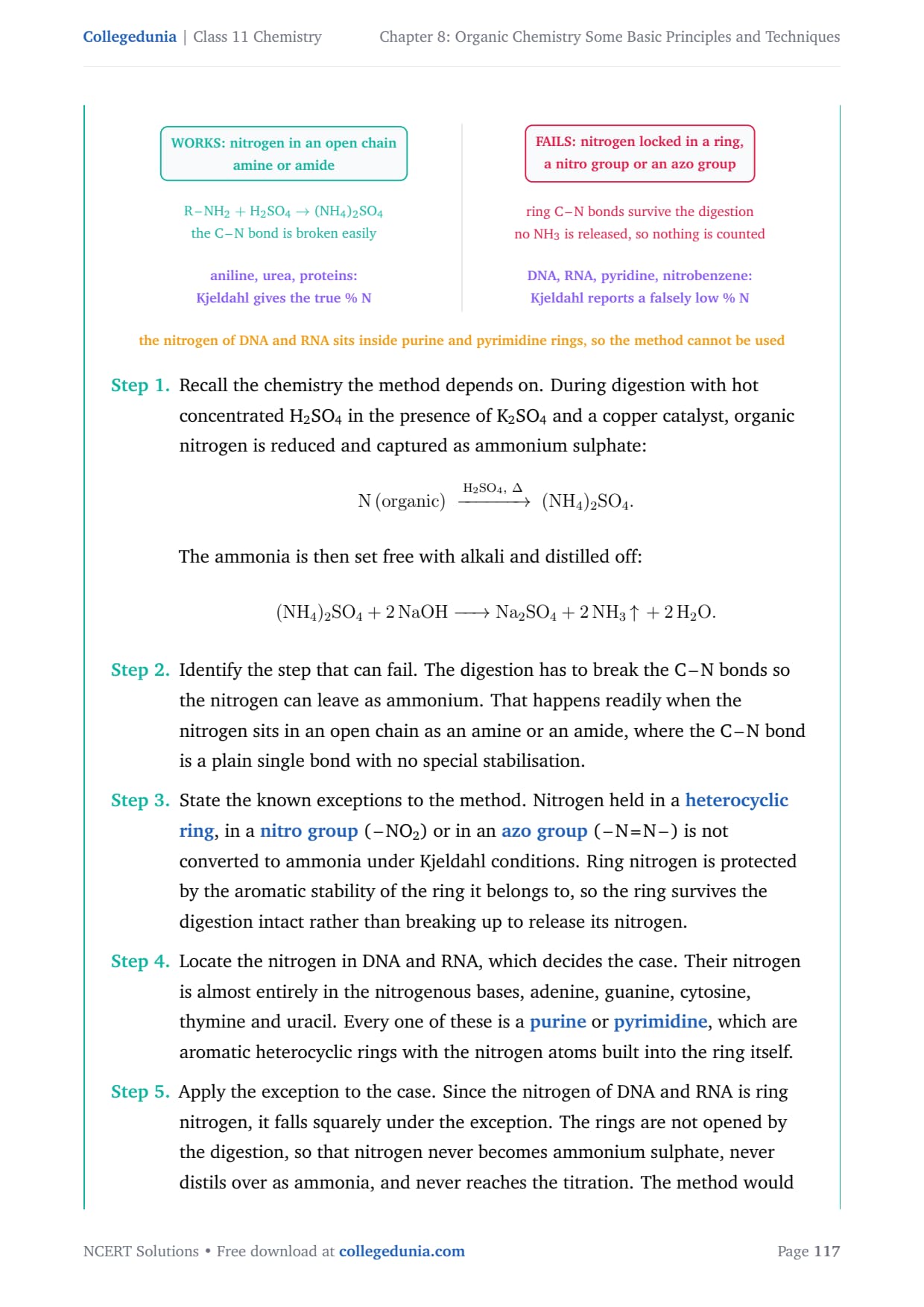
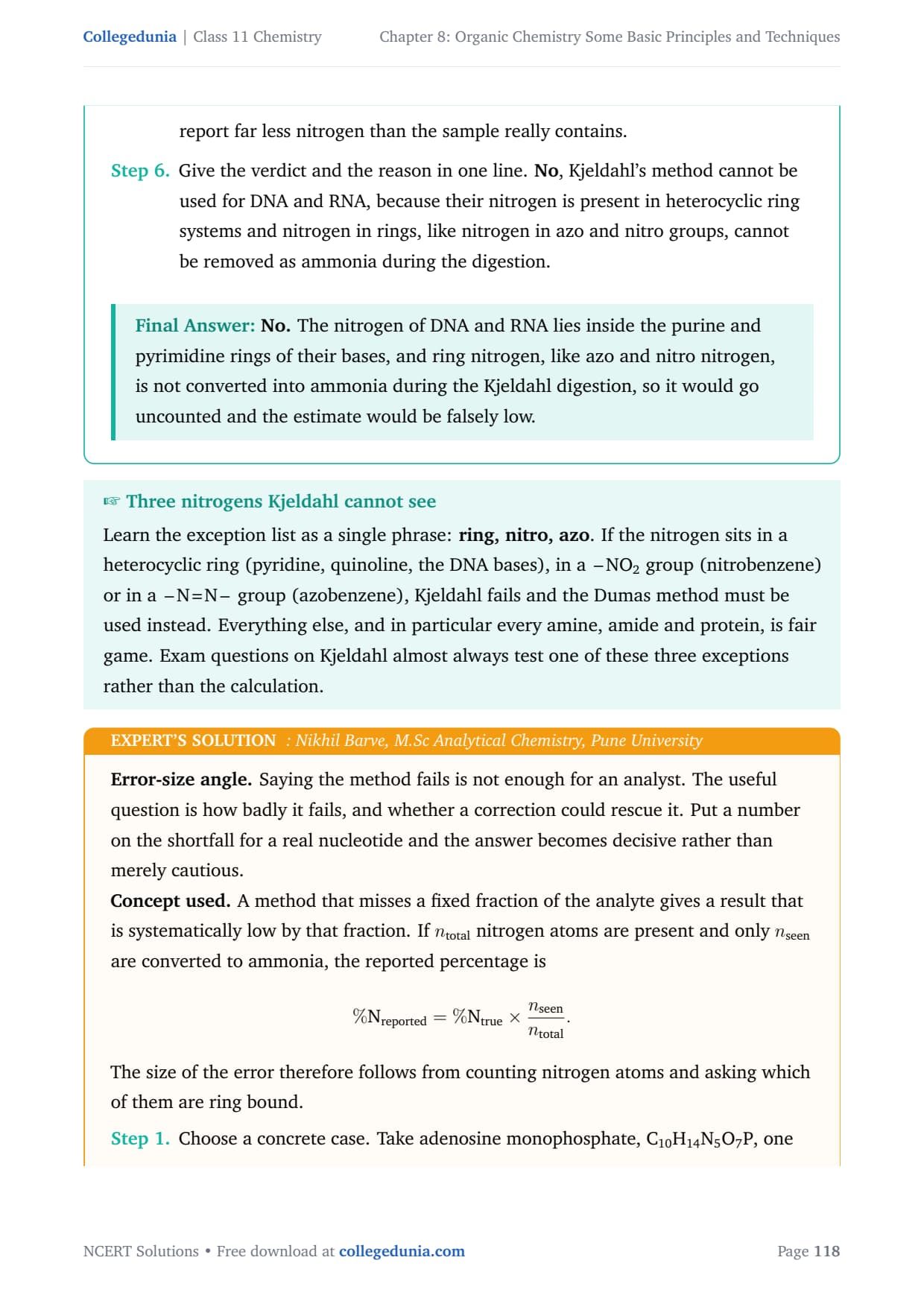
- Kjeldahl's limits: the method fails on DNA and RNA. Nitrogen locked in a ring, an azo group or a nitro group will not come off as ammonia.
How to Use These NCERT Exemplar Solutions for Boards, NEET and JEE
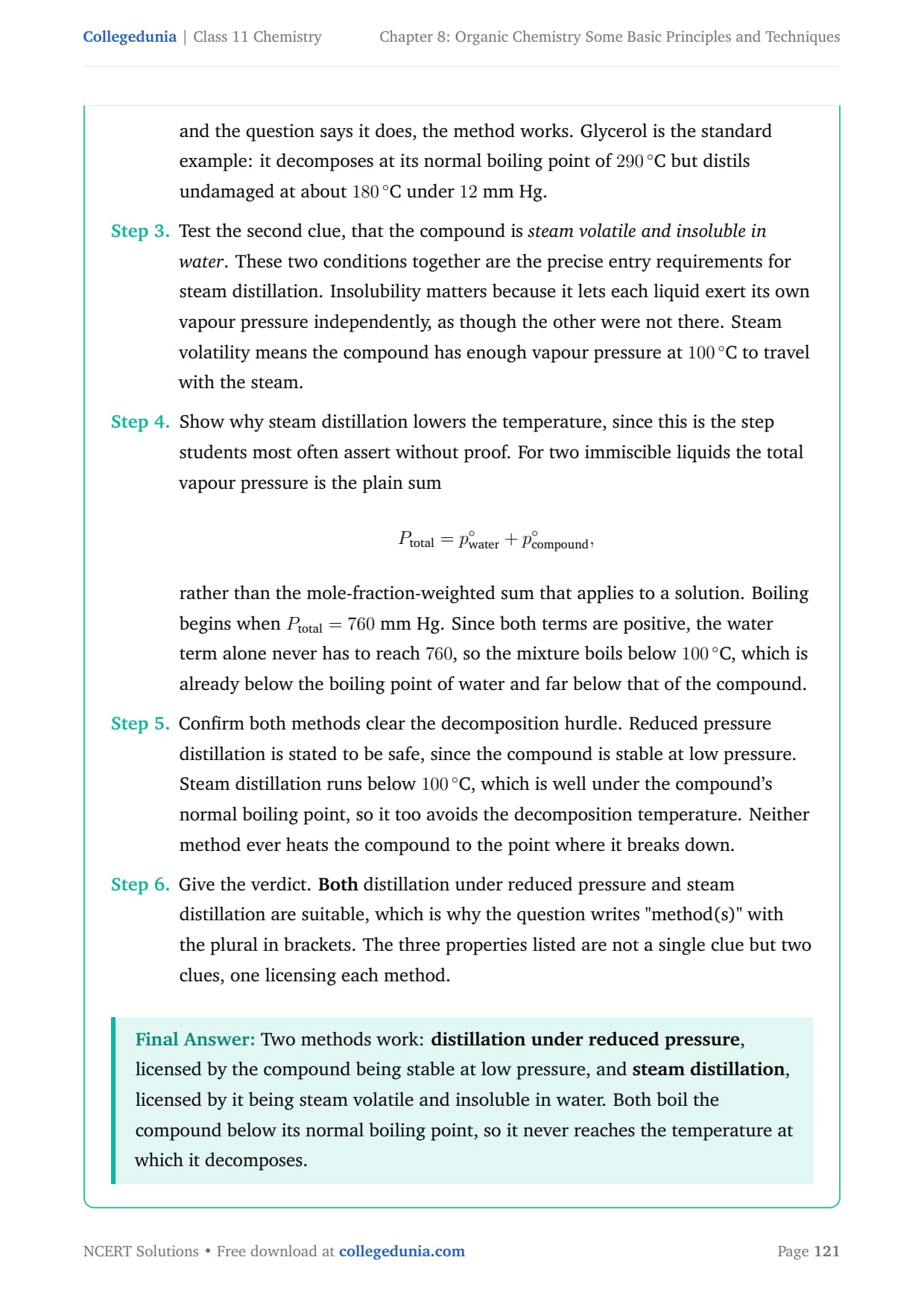
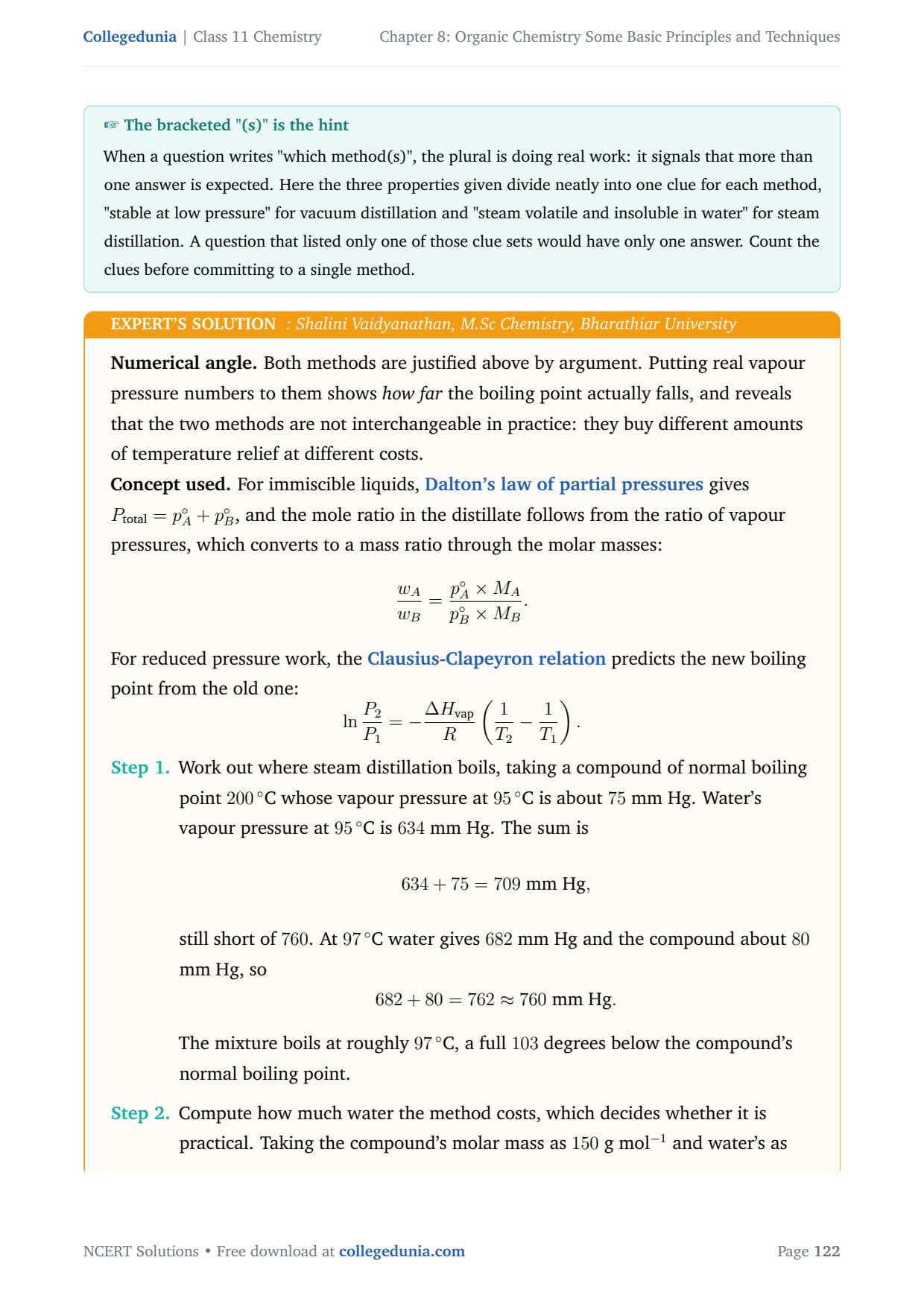
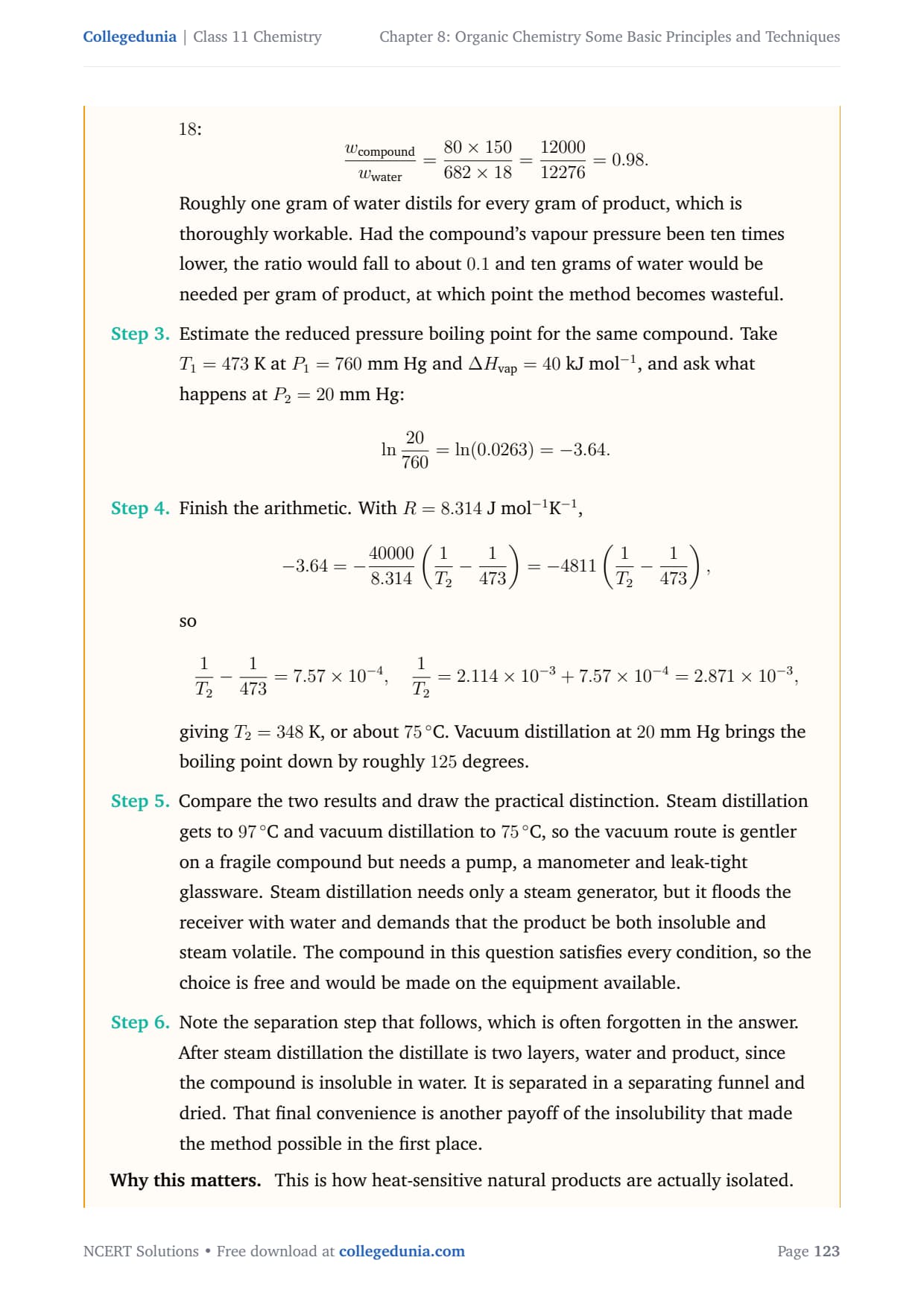
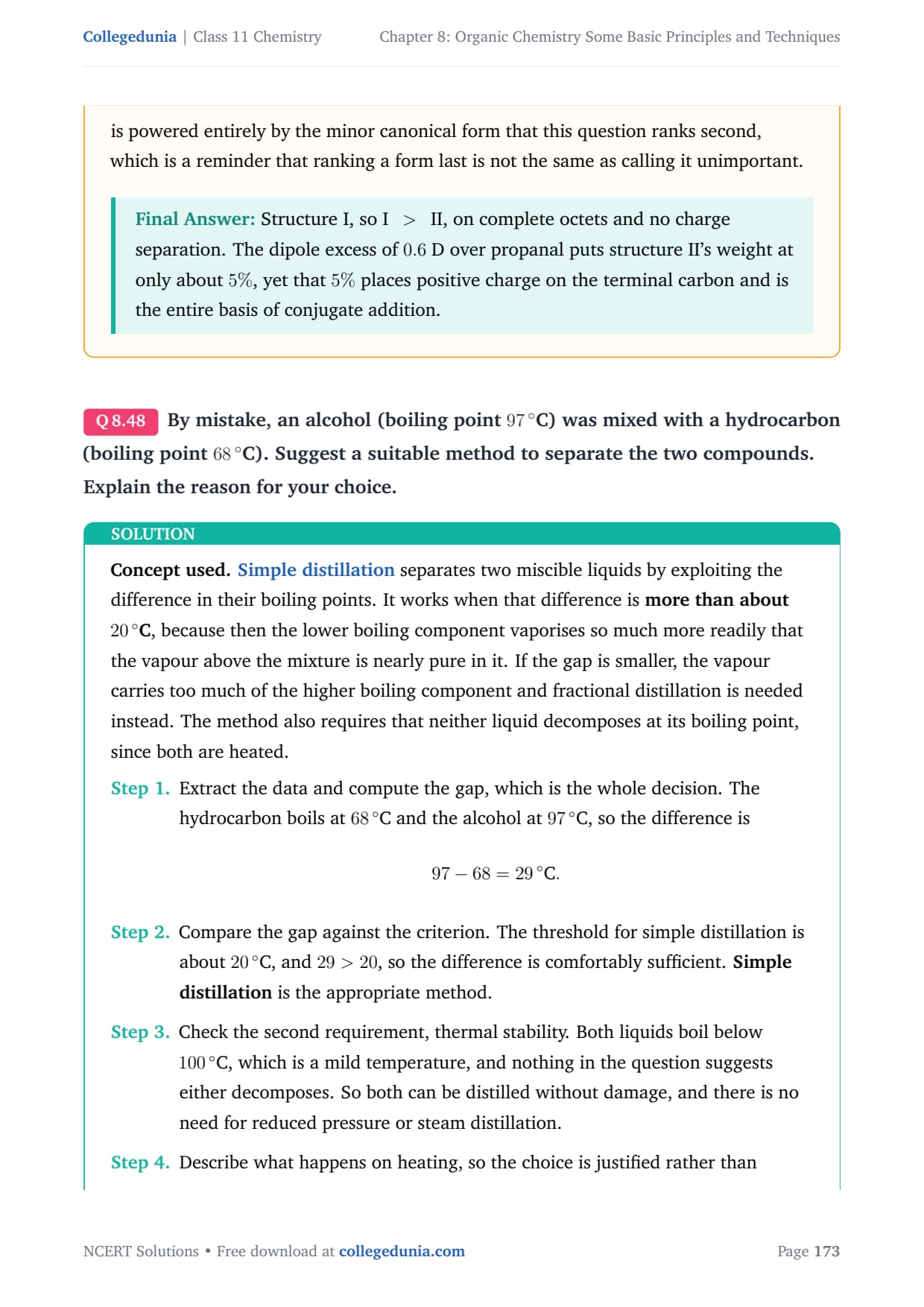
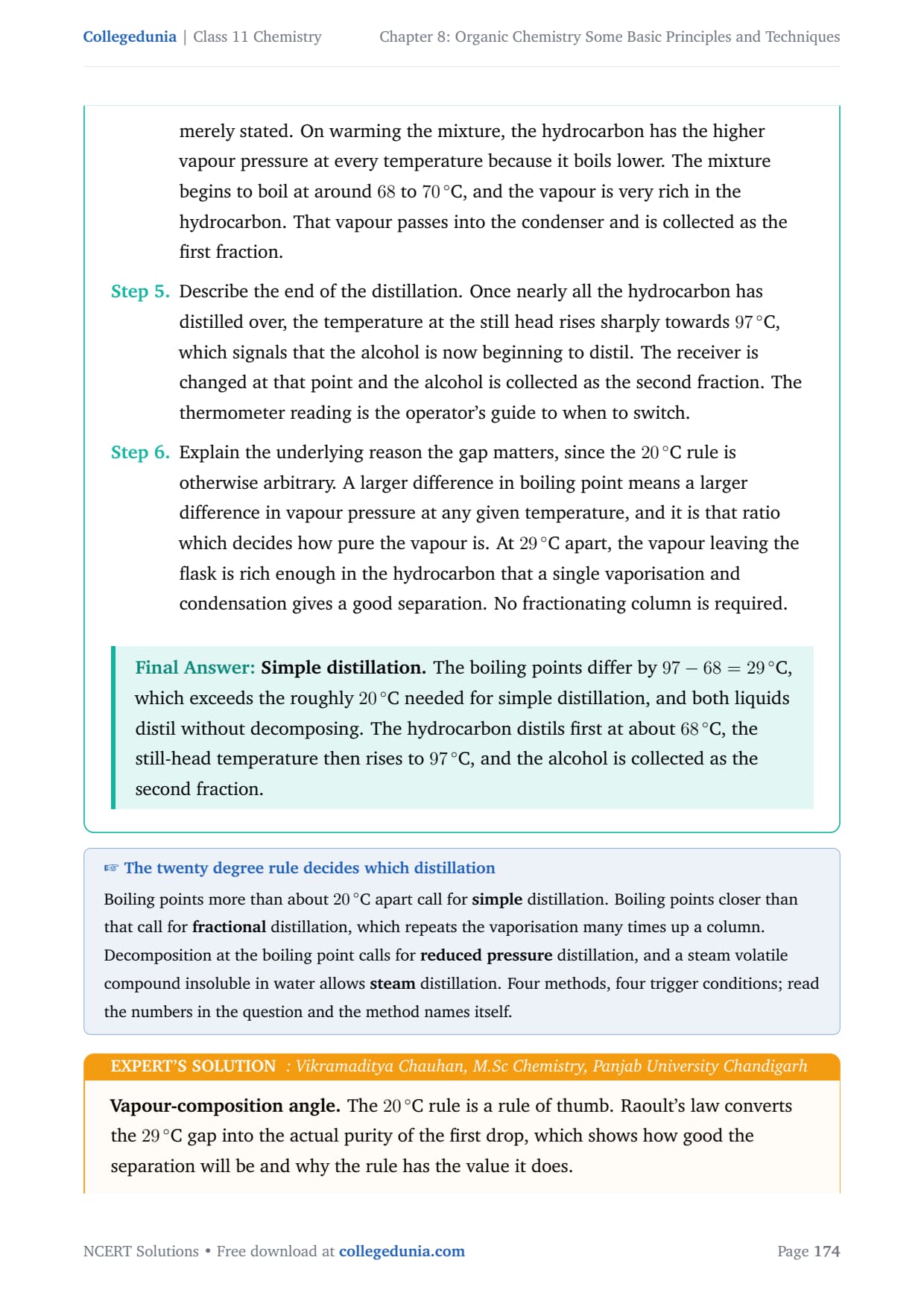
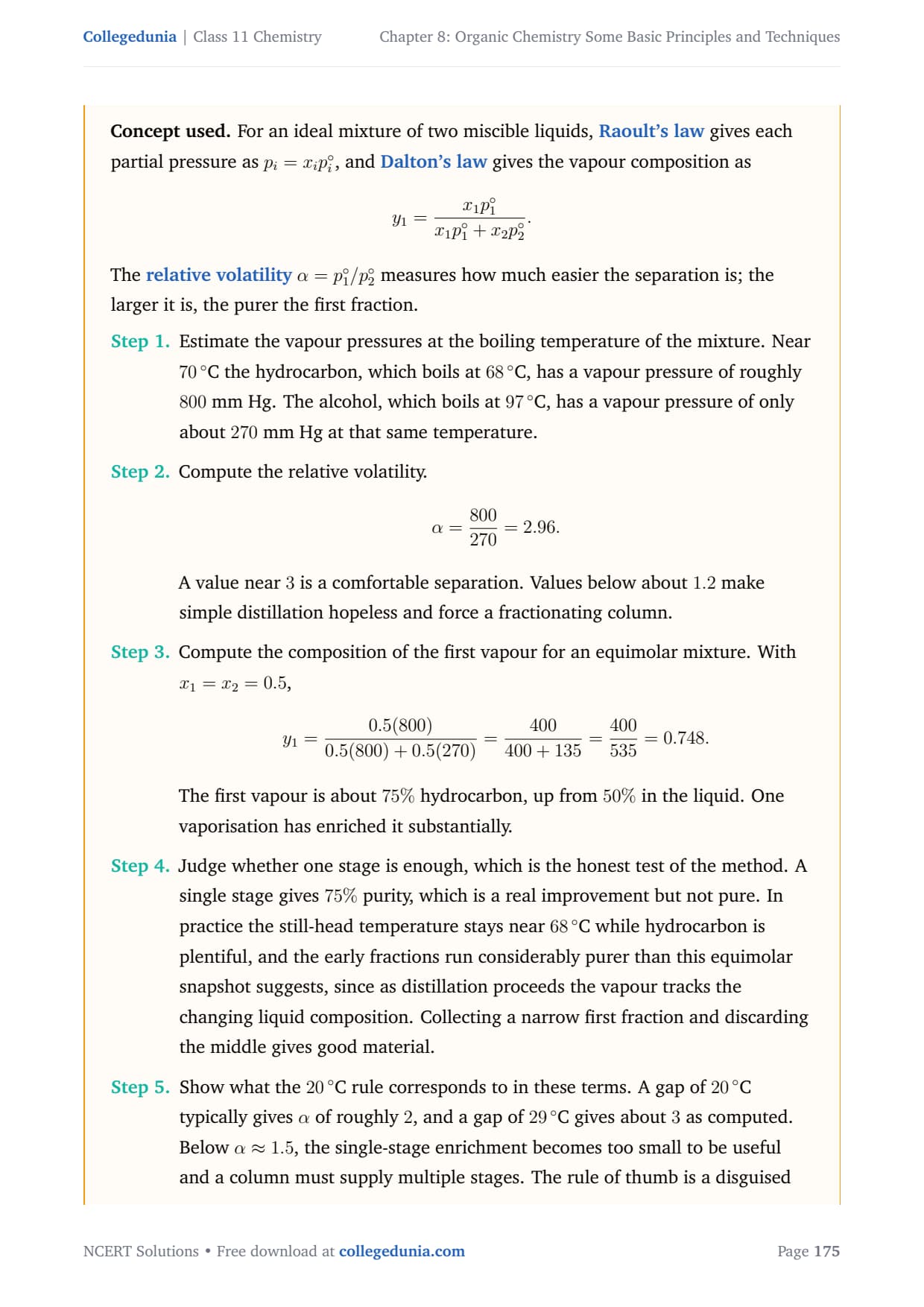
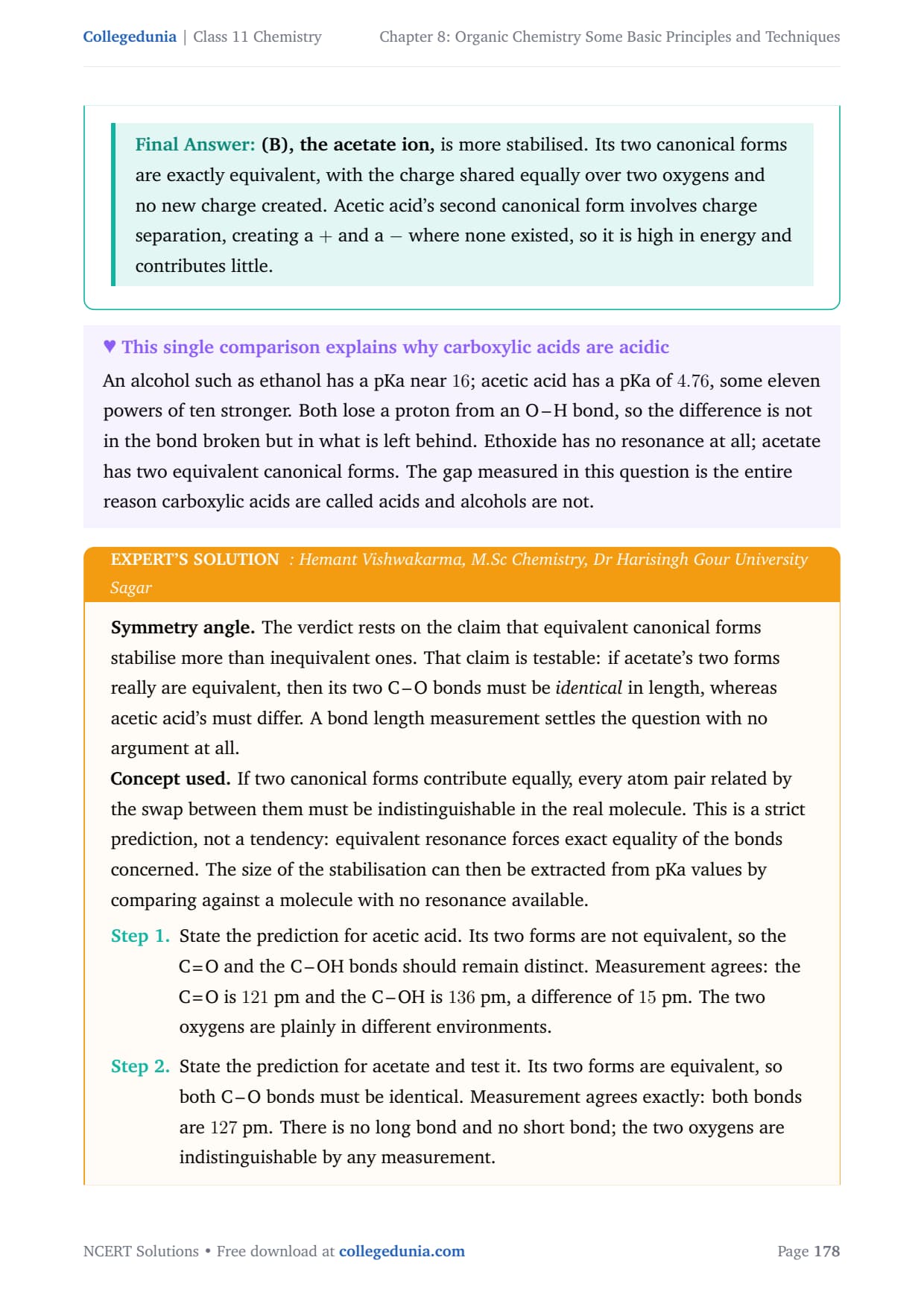
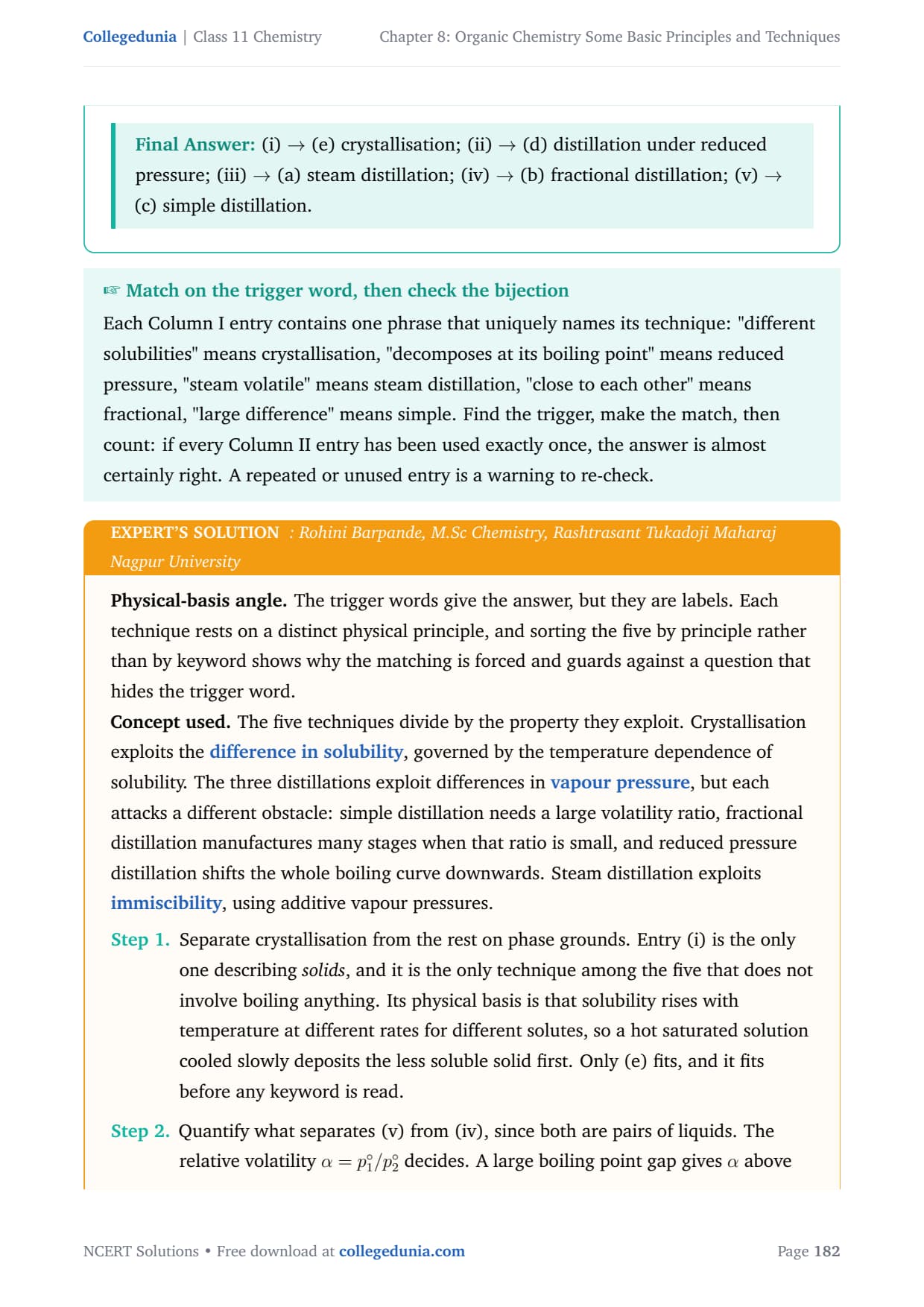
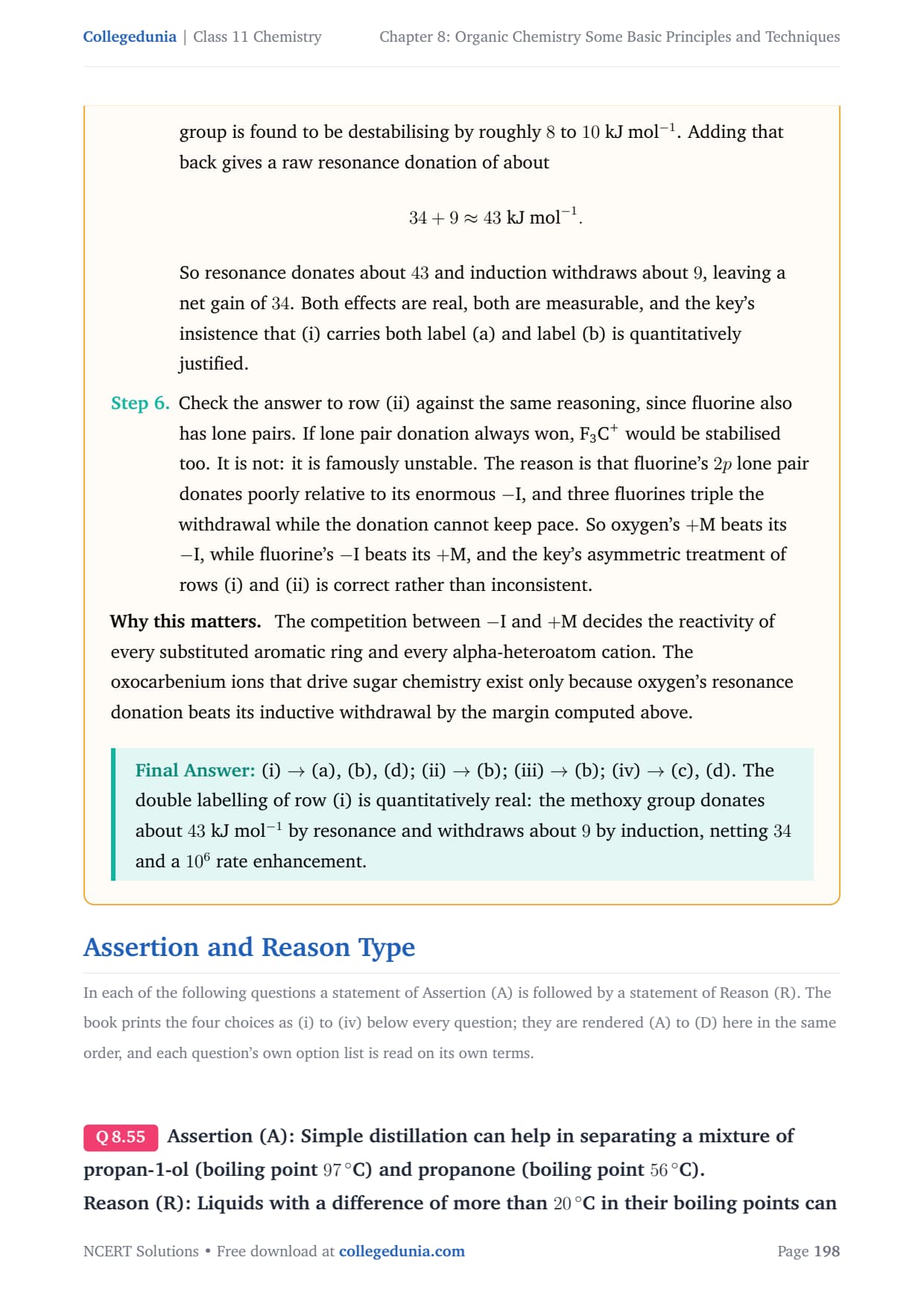
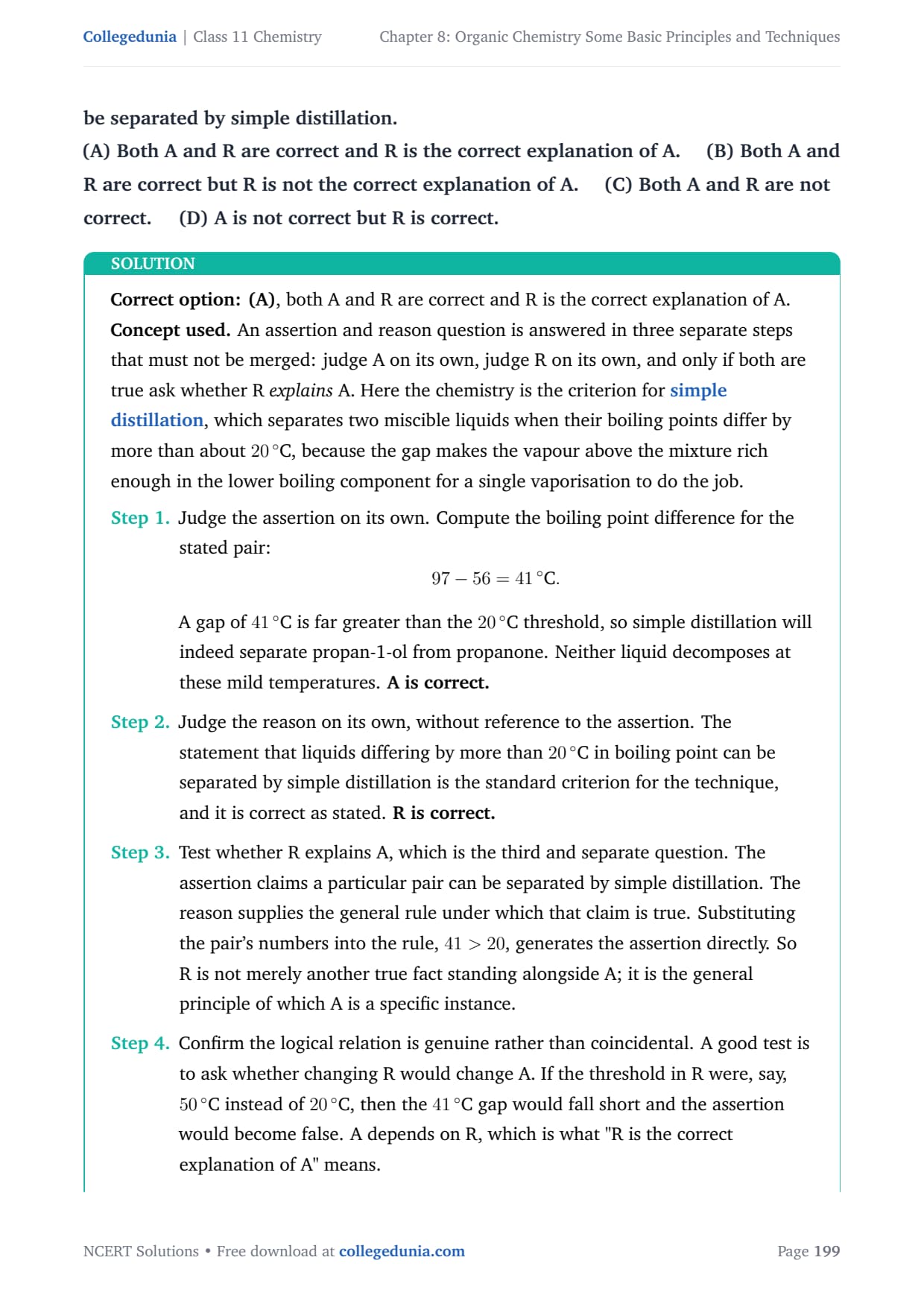
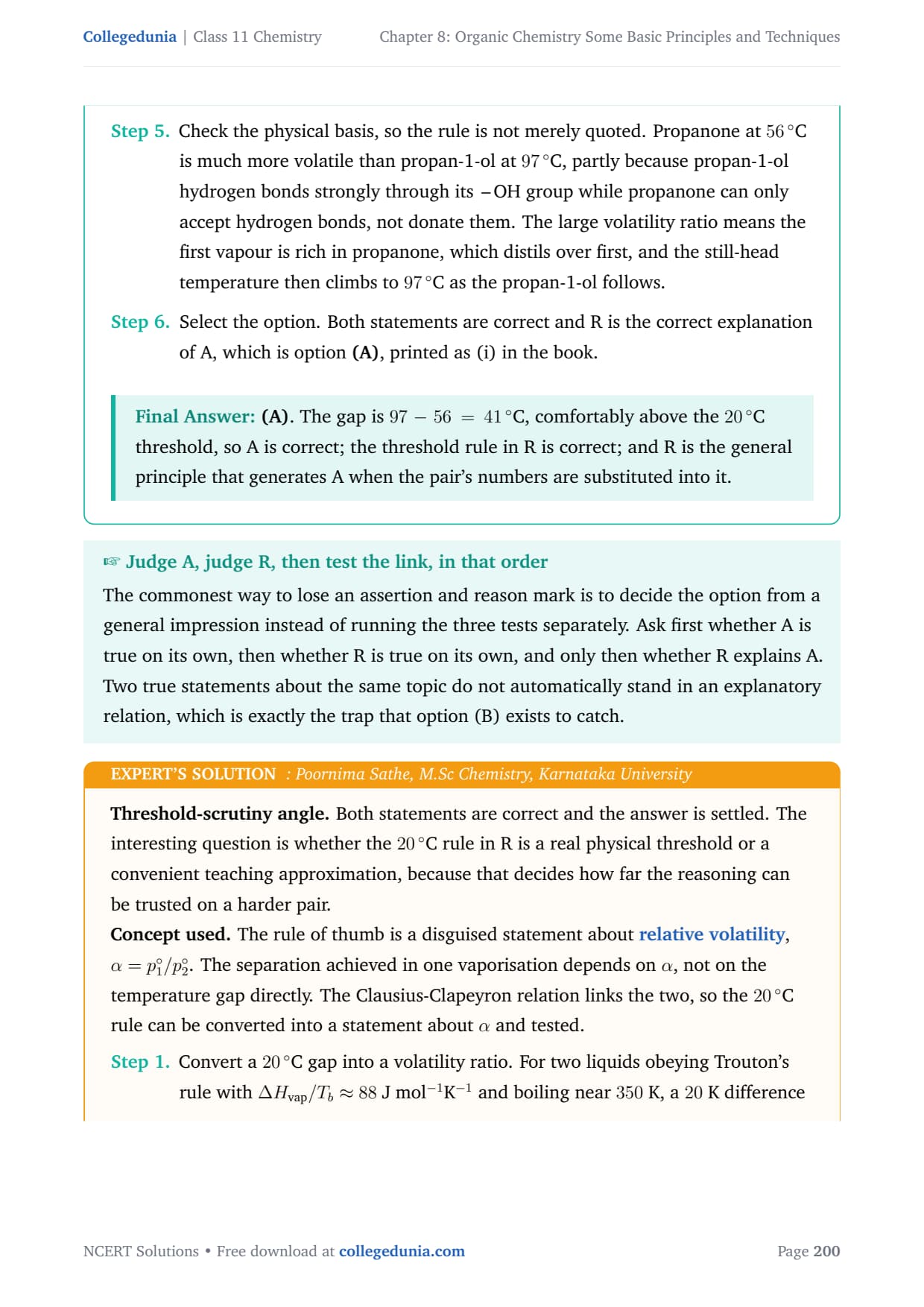
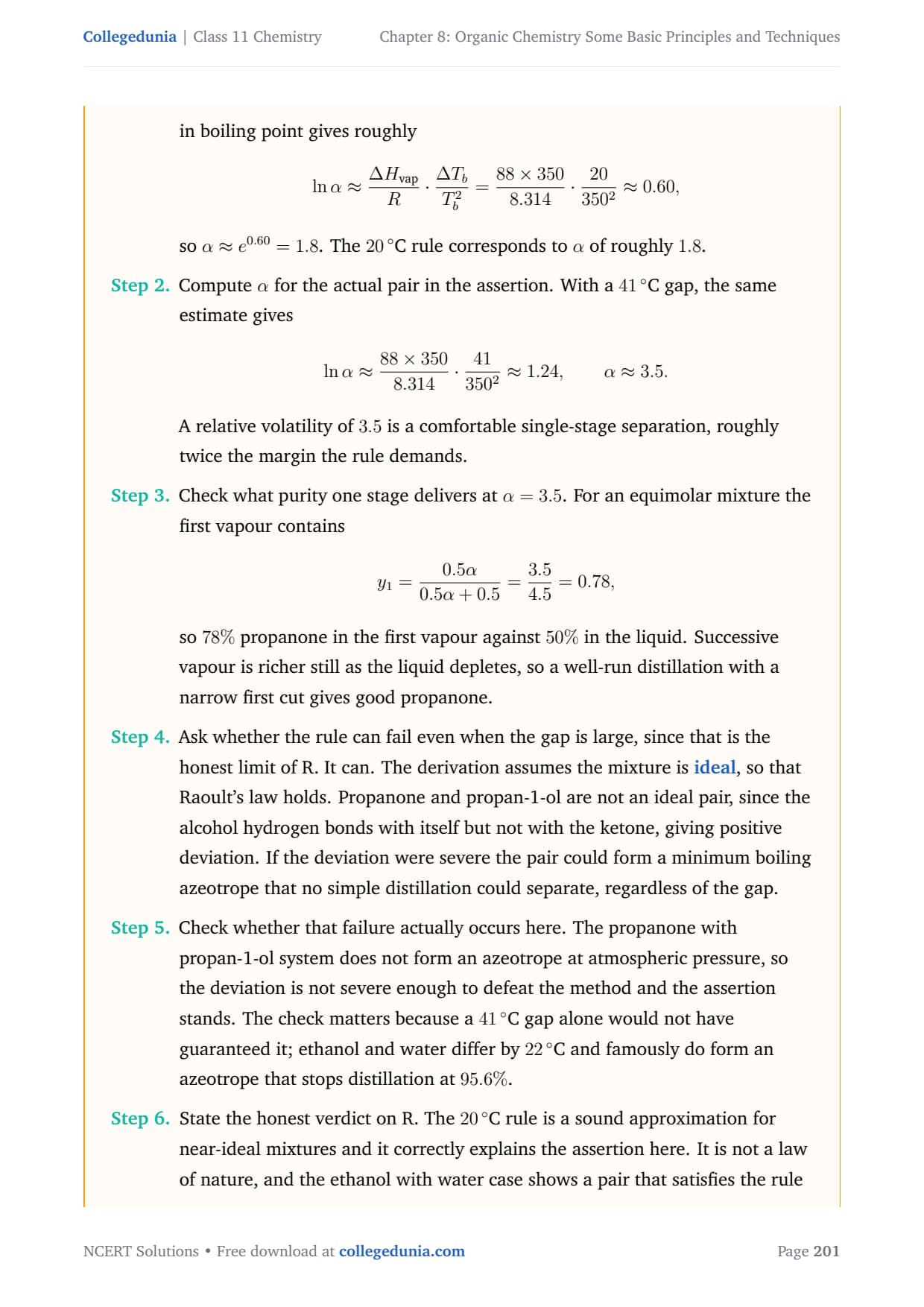
Attempt each question before you open the solution. Question 48 shows why: an alcohol boiling at 97 °C is mixed with a hydrocarbon boiling at 68 °C, and the 29 °C gap alone settles the method as simple distillation.
- Boards: the 27 Short Answer questions match the 2 and 3 mark board pattern almost exactly
- NEET: work the MCQ I set first, since NEET repeats naming and stability questions at that level
- JEE Main: the MCQ II and Long Answer sets are the closest NCERT practice for resonance ranking
Student Feedback
Students using Collegedunia's Class 11 Chemistry Exemplar Solutions told us the resonance questions were the hardest part of this chapter. Around 7 in 10 said that seeing the Unit 12 numbering explained upfront saved them a wasted evening hunting the wrong unit in the Exemplar PDF.
Other Resources for Class 11 Chemistry Organic Chemistry
Collegedunia has the full study material set for this chapter. Read the Notes first, then attempt the Exemplar once IUPAC naming feels steady.
Also Check:
- NCERT Solutions for Class 11 Chemistry Chapter 8
- Class 11 Chemistry Chapter 8 Notes
- Class 11 Chemistry Chapter 8 NCERT Book PDF
- Class 11 Chemistry Chapter 8 Exemplar Questions with Solutions
NCERT Exemplar Solutions for Other Class 11 Chemistry Chapters
Each chapter below has the same step-by-step treatment and a free PDF.
Organic Chemistry Some Basic Principles and Techniques Class 11 NCERT Exemplar Solutions FAQs
Ques. How many questions are there in the Class 11 Chemistry Organic Chemistry Exemplar?
Ans. Chapter 8 has 66 questions, the largest set in the book. They split into 15 MCQ I, 7 MCQ II, 27 Short Answer, 5 Matching Type, 6 Assertion and Reason and 6 Long Answer questions. All 66 are solved in the free 248-page PDF on this page.
Ques. Why is Chapter 8 called Unit 12 in the NCERT Exemplar book?
Ans. The printed Exemplar still follows the older 14-unit edition, while the textbook now has fewer chapters because several units were dropped. Organic Chemistry Some Basic Principles and Techniques is Chapter 8 of the new textbook and Unit 12 of the Exemplar. Our solutions carry both numbers, so the book's figure labels still match.
Ques. Is the printed NCERT Exemplar answer key for this chapter correct?
Ans. Mostly, but four questions carry misprints. Question 1's key breaks its own alphabetical rule, Question 36 is missing a structure, Question 40 prints a self-contradictory name, and Question 59's true answer is not among the printed options. All four are explained on this page and in the PDF.
Ques. What is the correct IUPAC name in Question 1 of the Chapter 8 Exemplar?
Ans. The correct answer is 3-Ethyl-4,4-dimethylheptane, which is option (i). The printed key gives (ii), 4,4-Dimethyl-3-ethylheptane, but that cites methyl before ethyl. You alphabetise by the substituent name and ignore the multiplier, so ethyl is cited before dimethyl.
Ques. When should you use steam distillation instead of simple distillation?
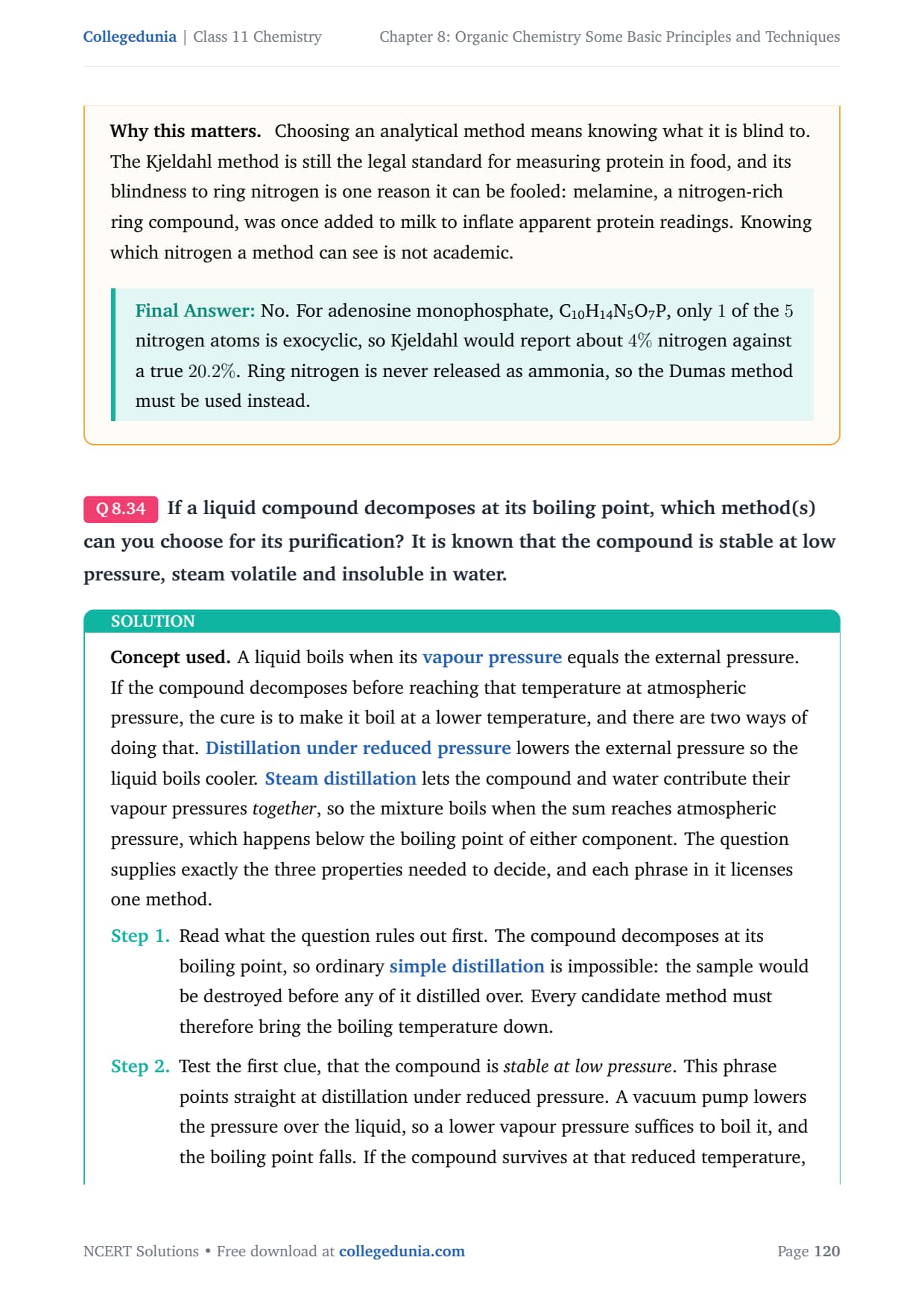
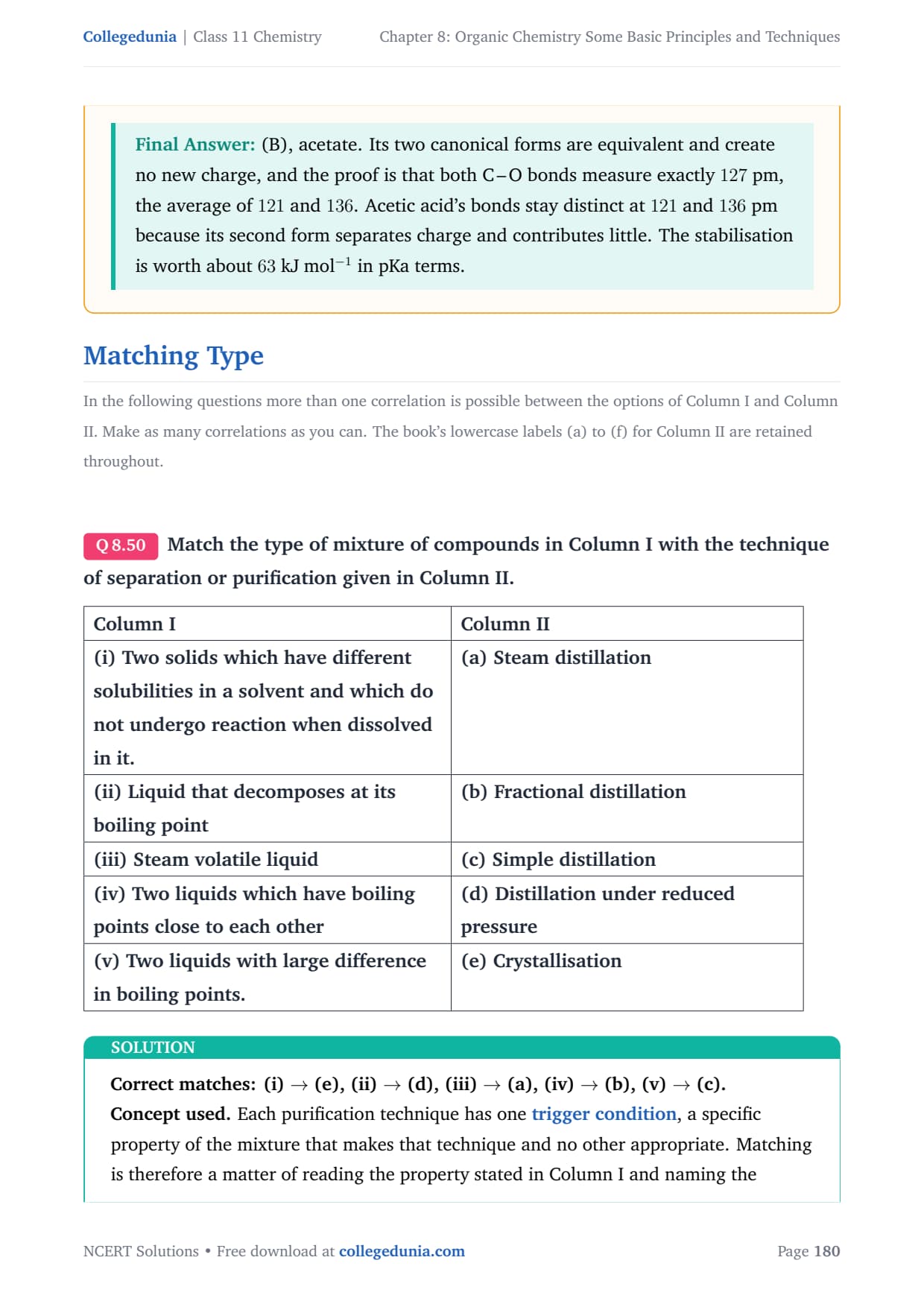
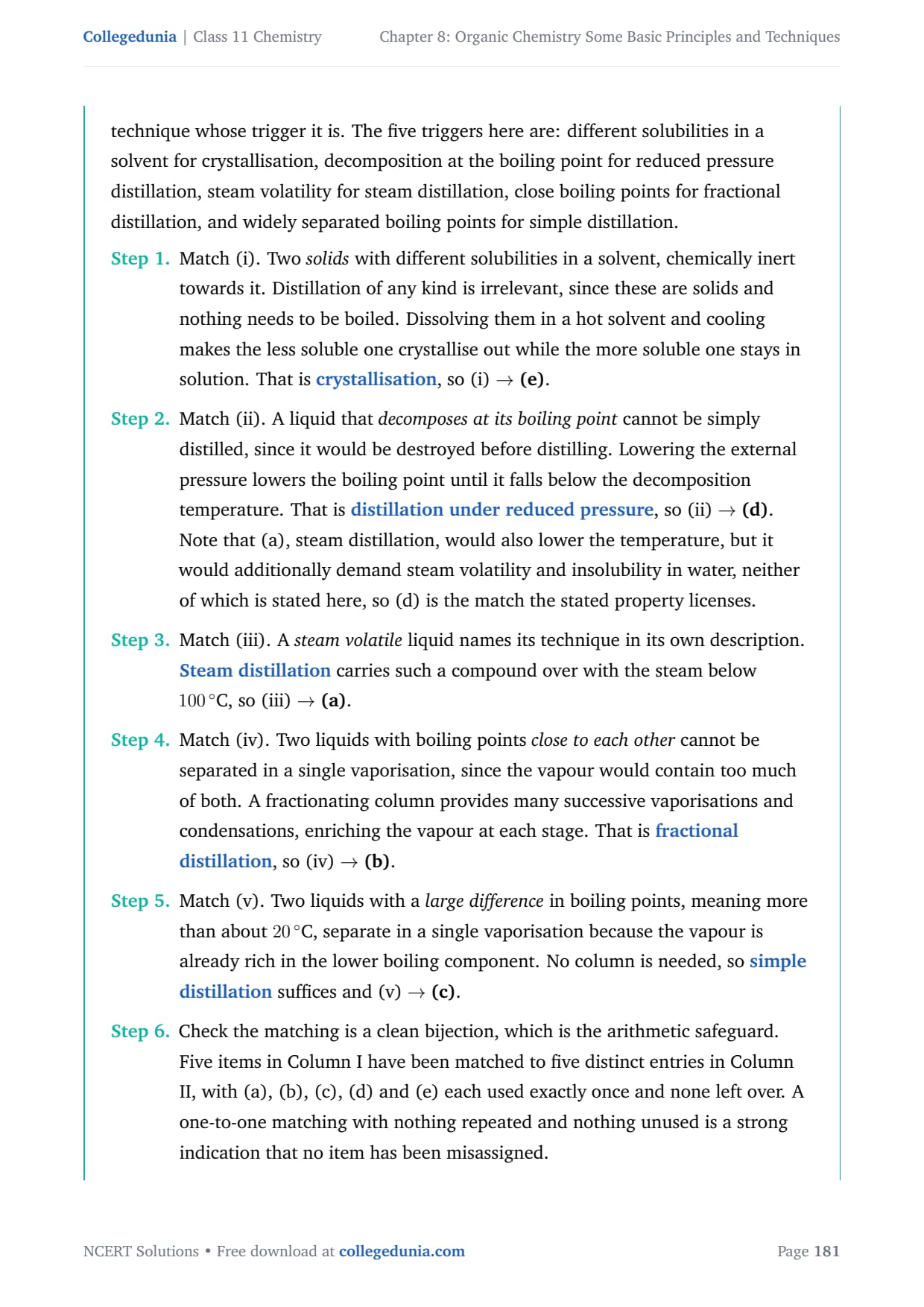
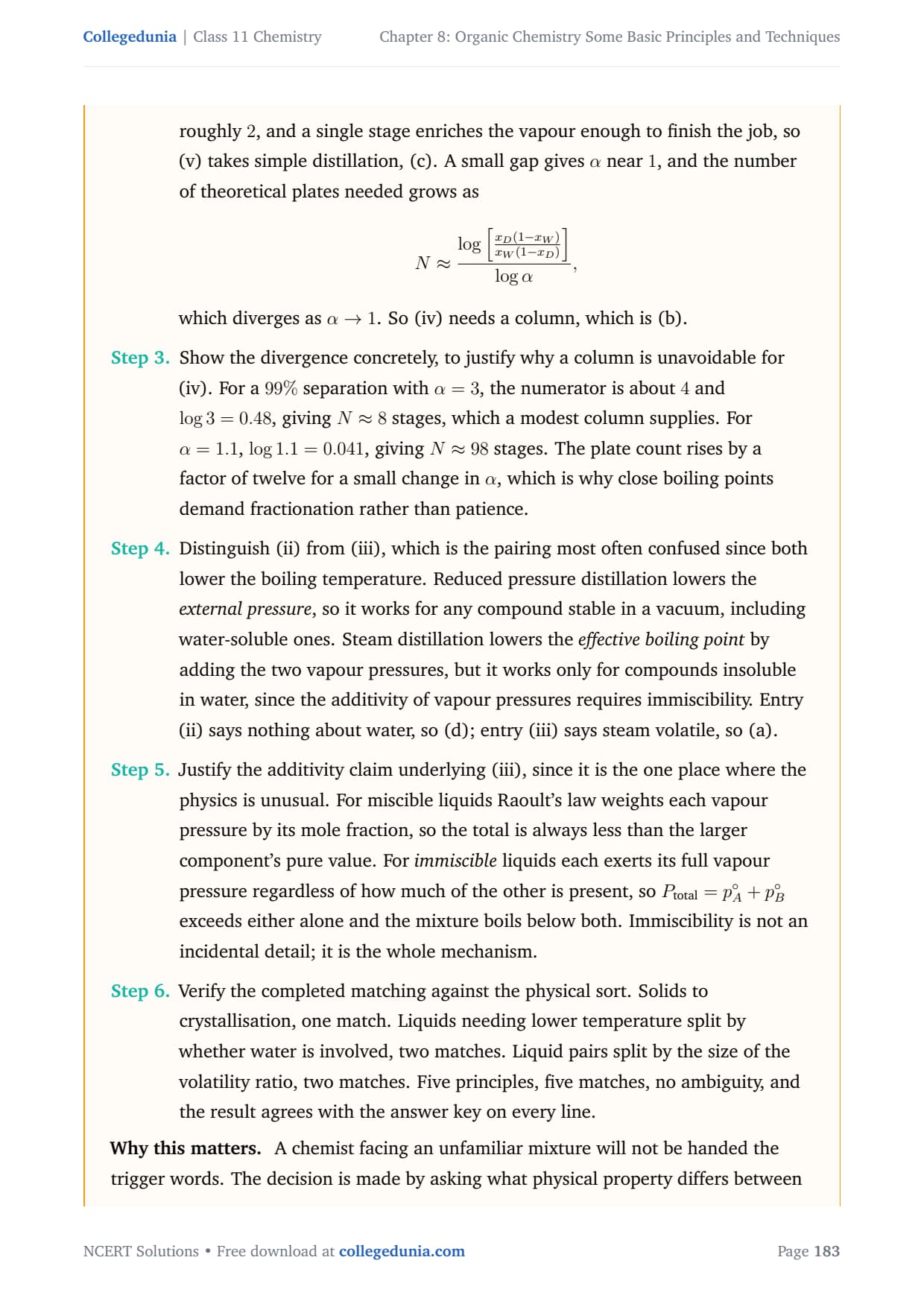
Ans. Use simple distillation when two miscible liquids differ in boiling point by more than 20 °C and neither decomposes. Use steam distillation when the compound is steam volatile, insoluble in water, and would decompose at its normal boiling point. The mixture then boils below 100 °C, which protects the product.



Comments