




NCERT Exemplar Solutions for Class 11 Chemistry Chapter 7 Redox Reactions solve all 38 questions from the Exemplar book. Every MCQ, Short Answer, Matching, Assertion and Reason and Long Answer problem is worked step by step in the free 129-page PDF, updated for the 2026-27 syllabus.
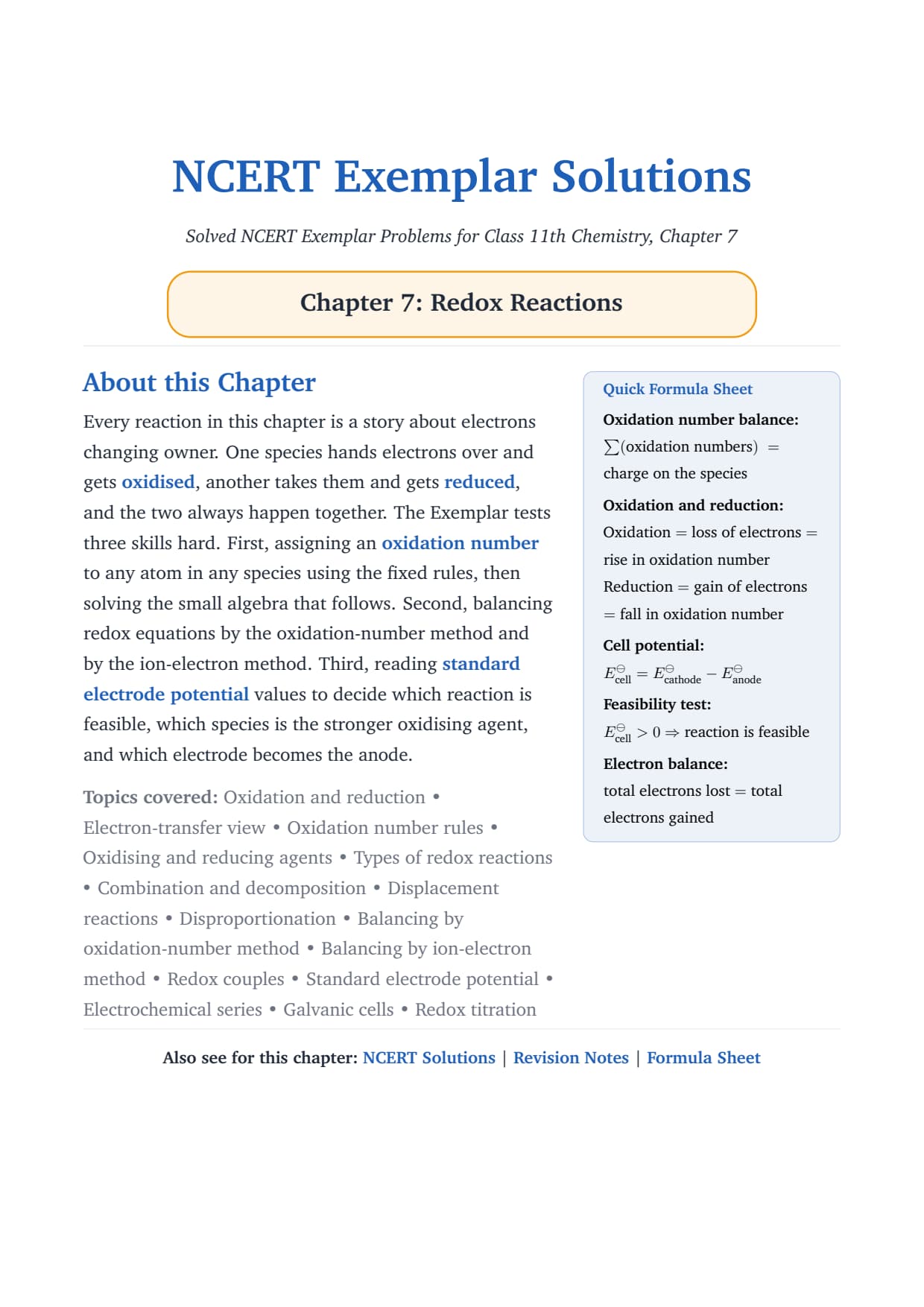
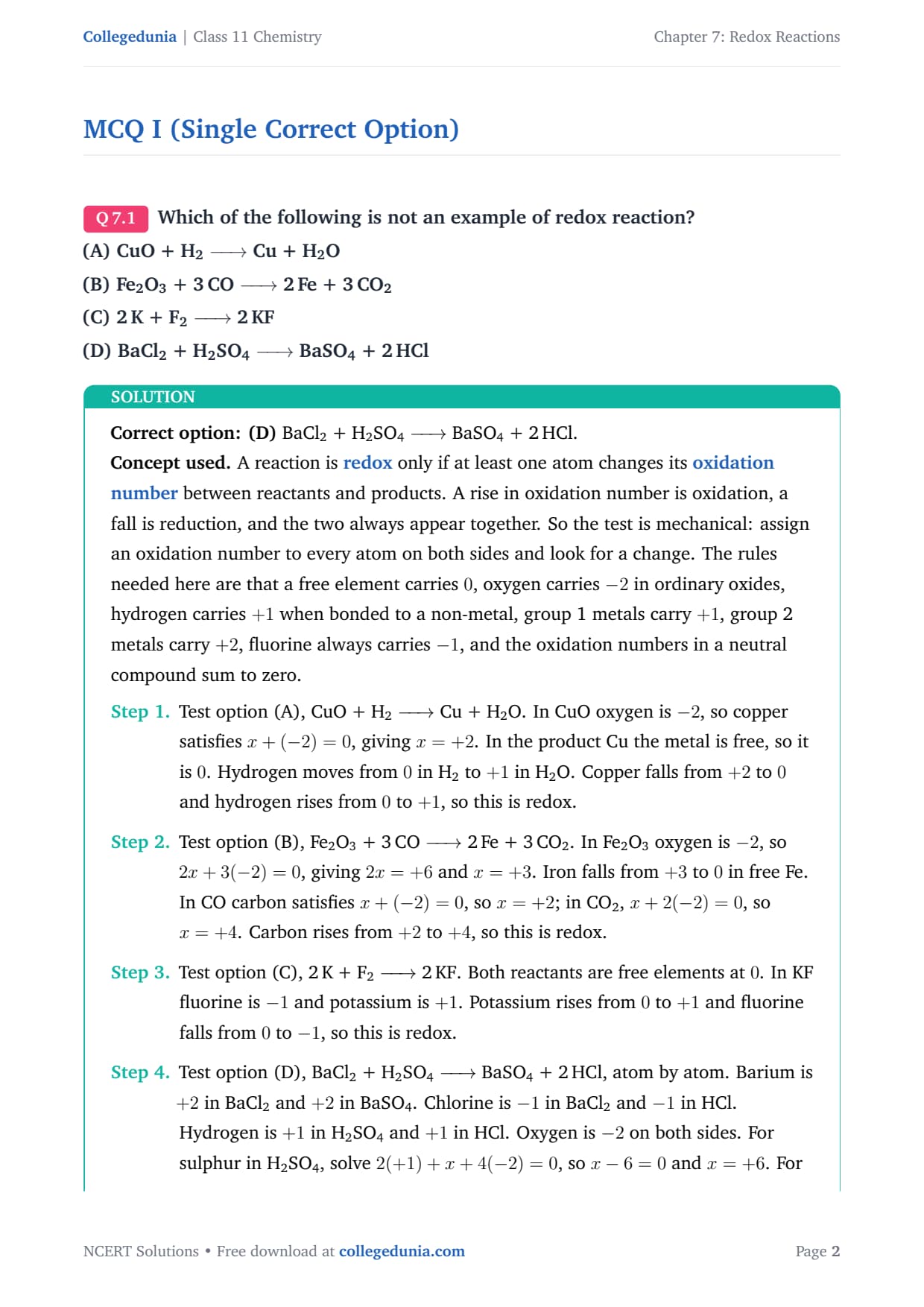
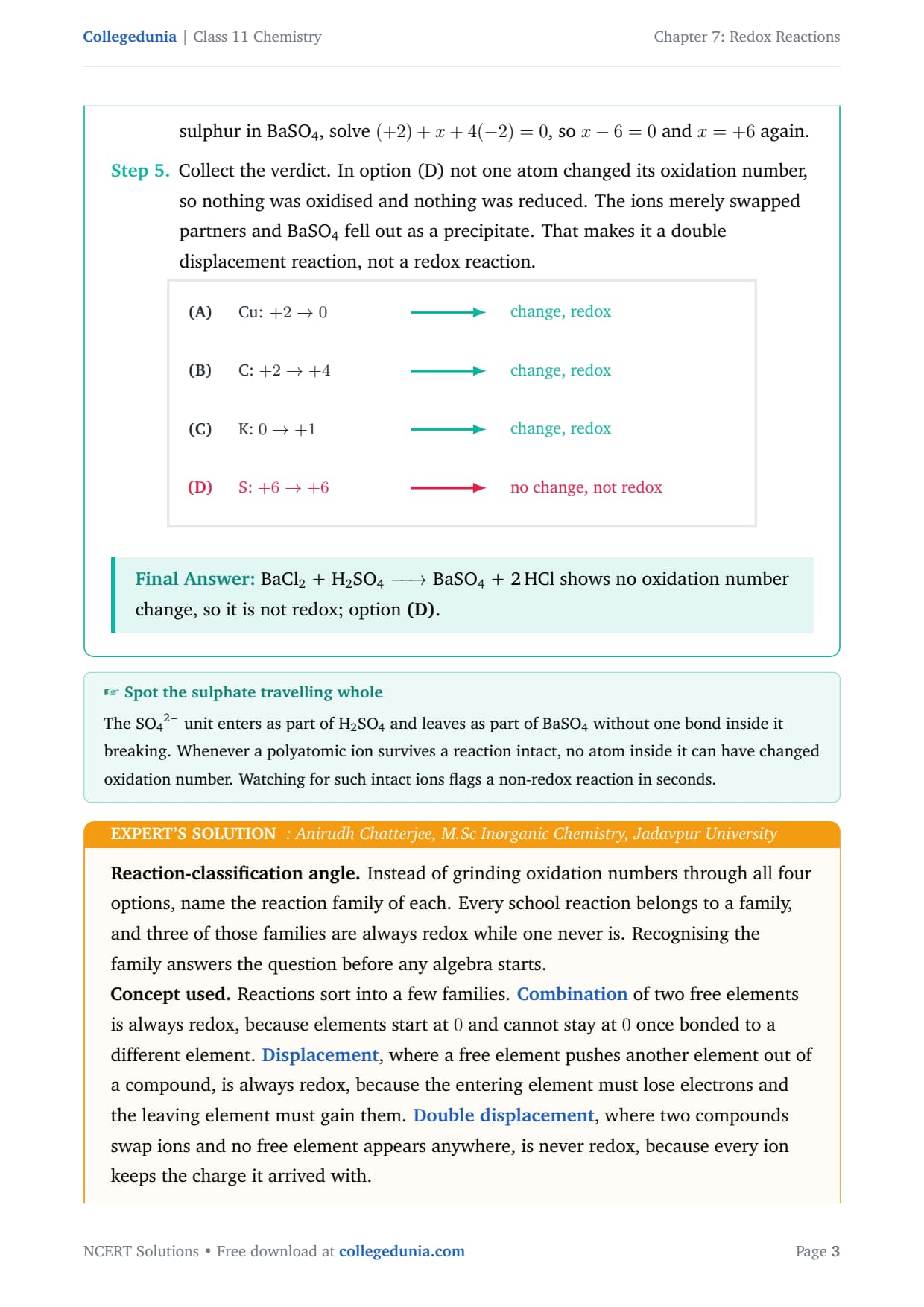
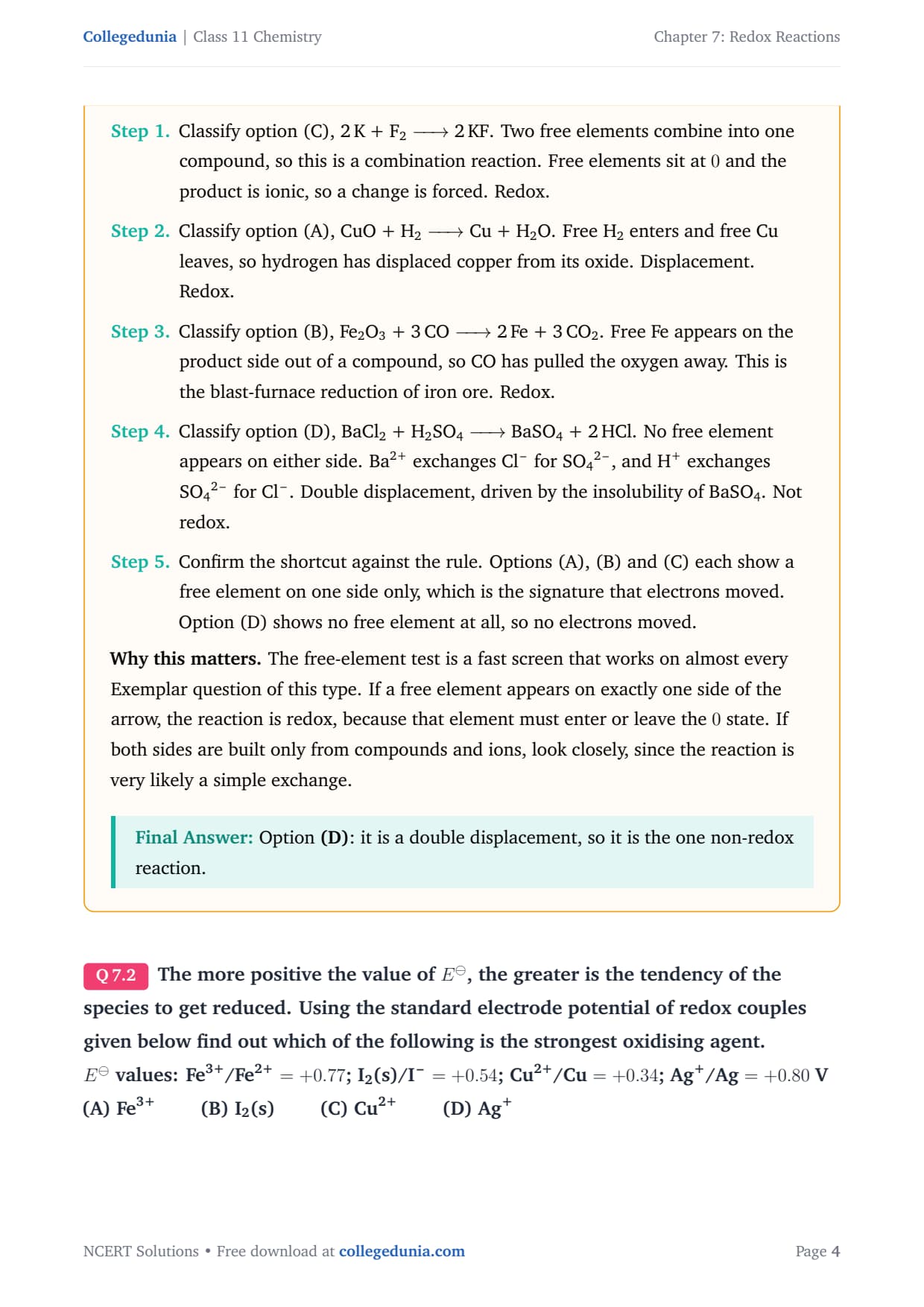
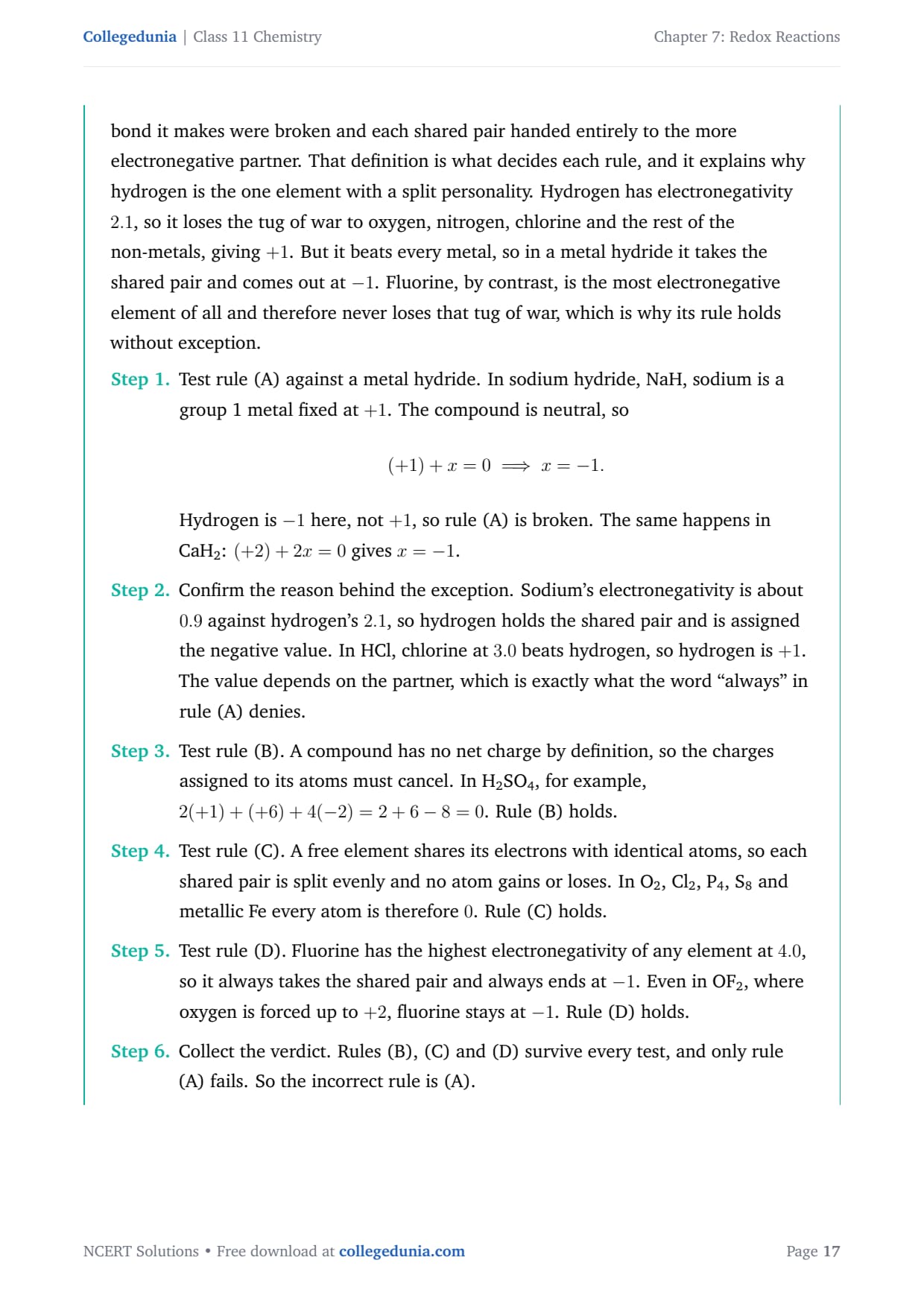
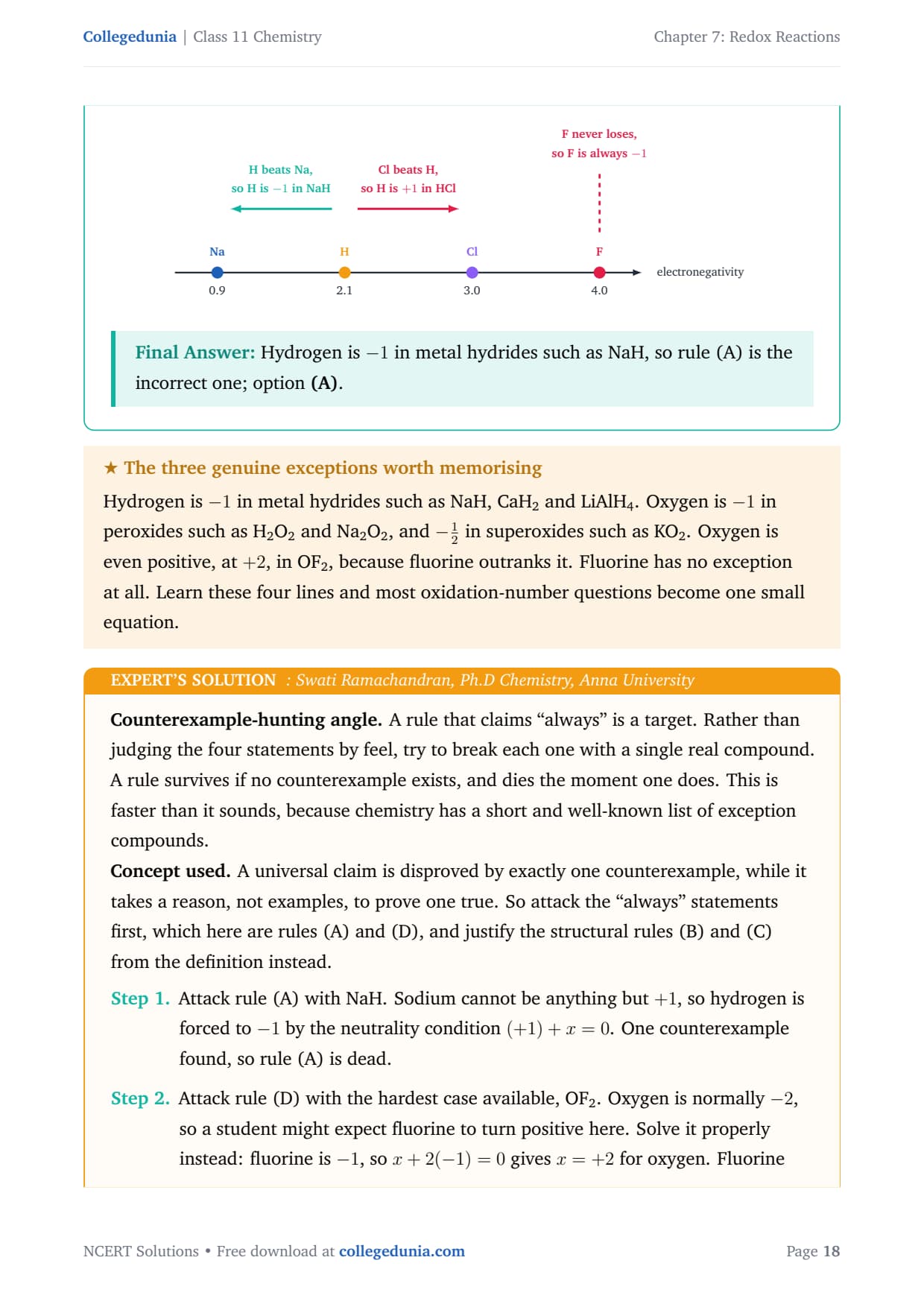
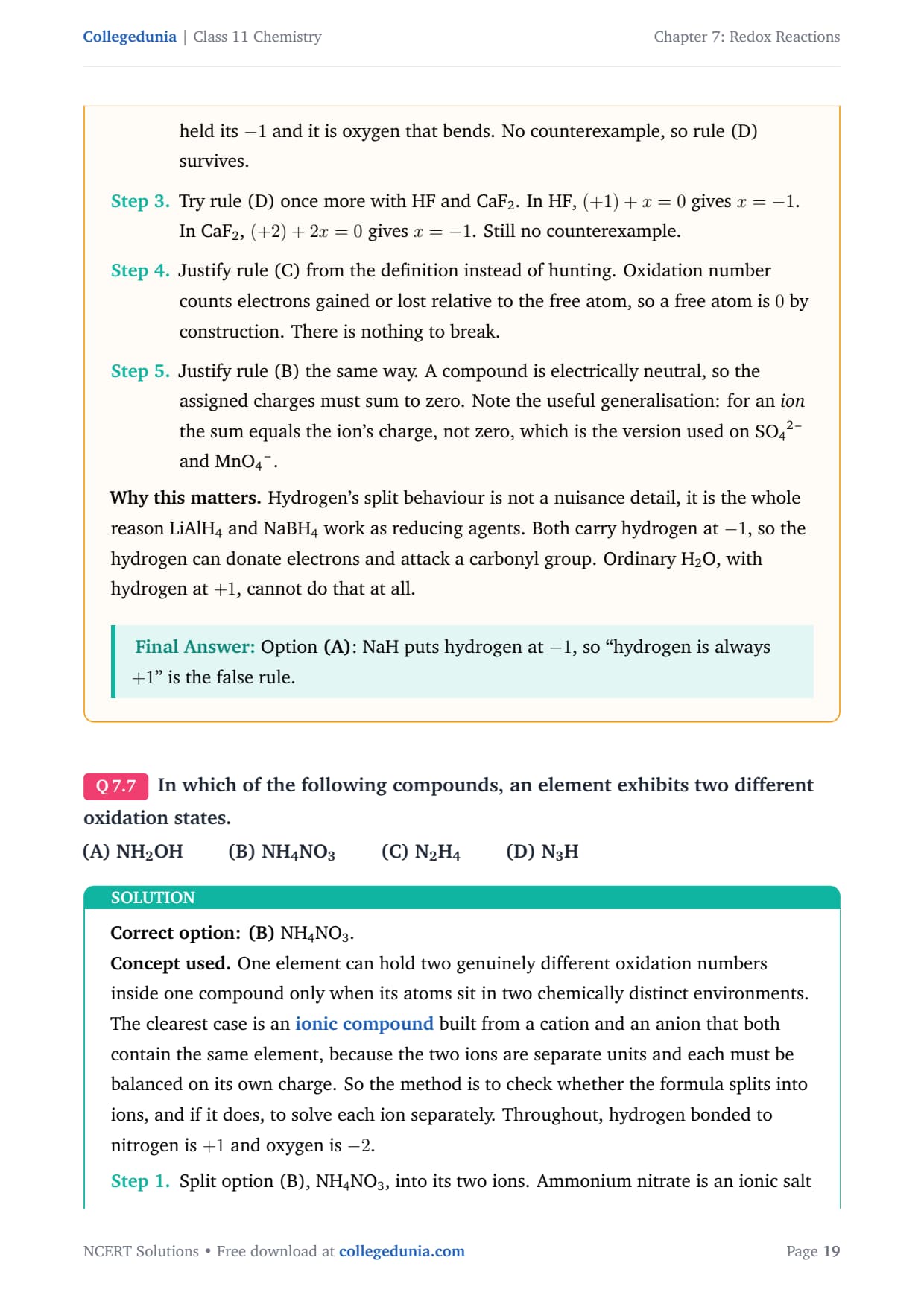
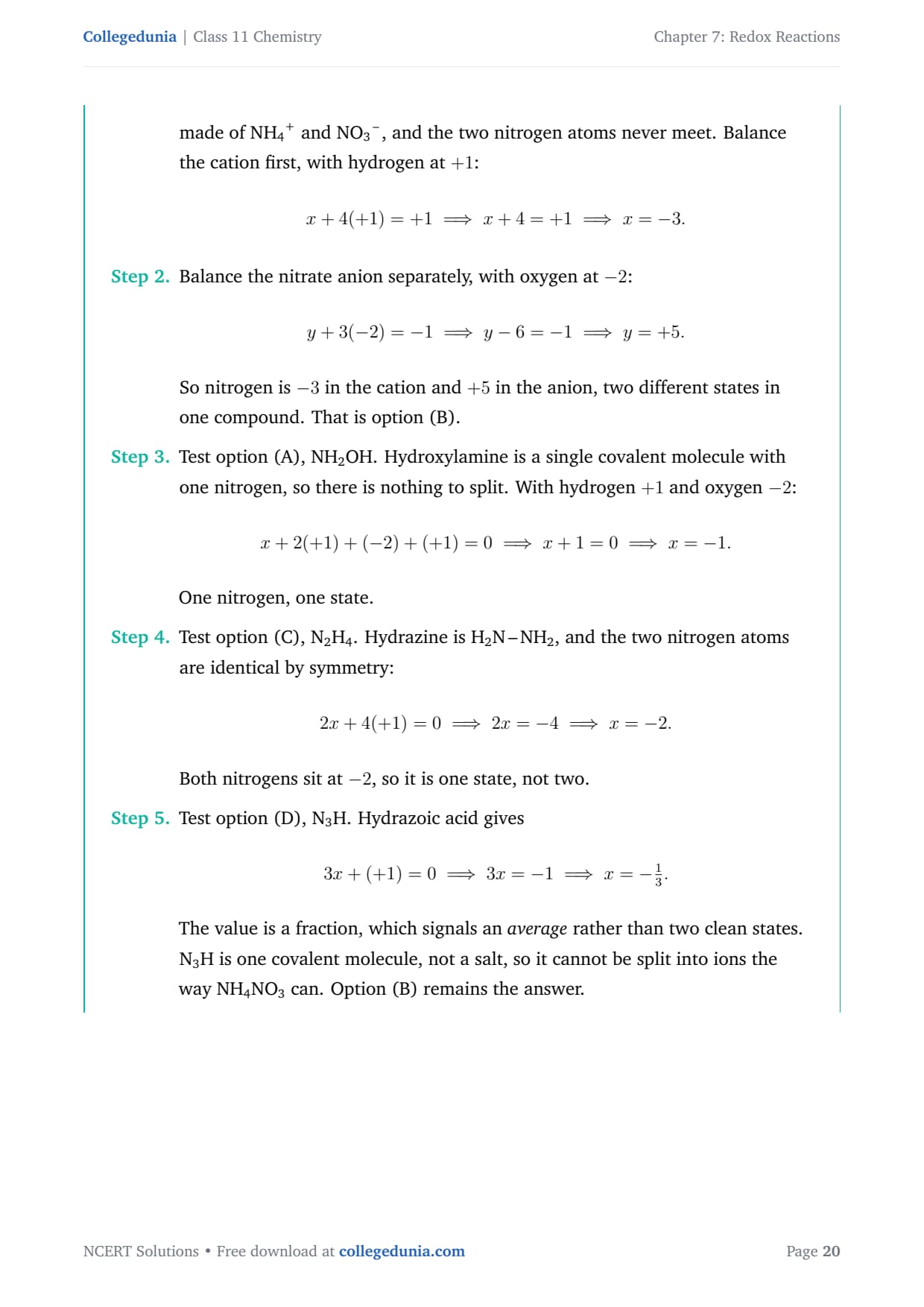
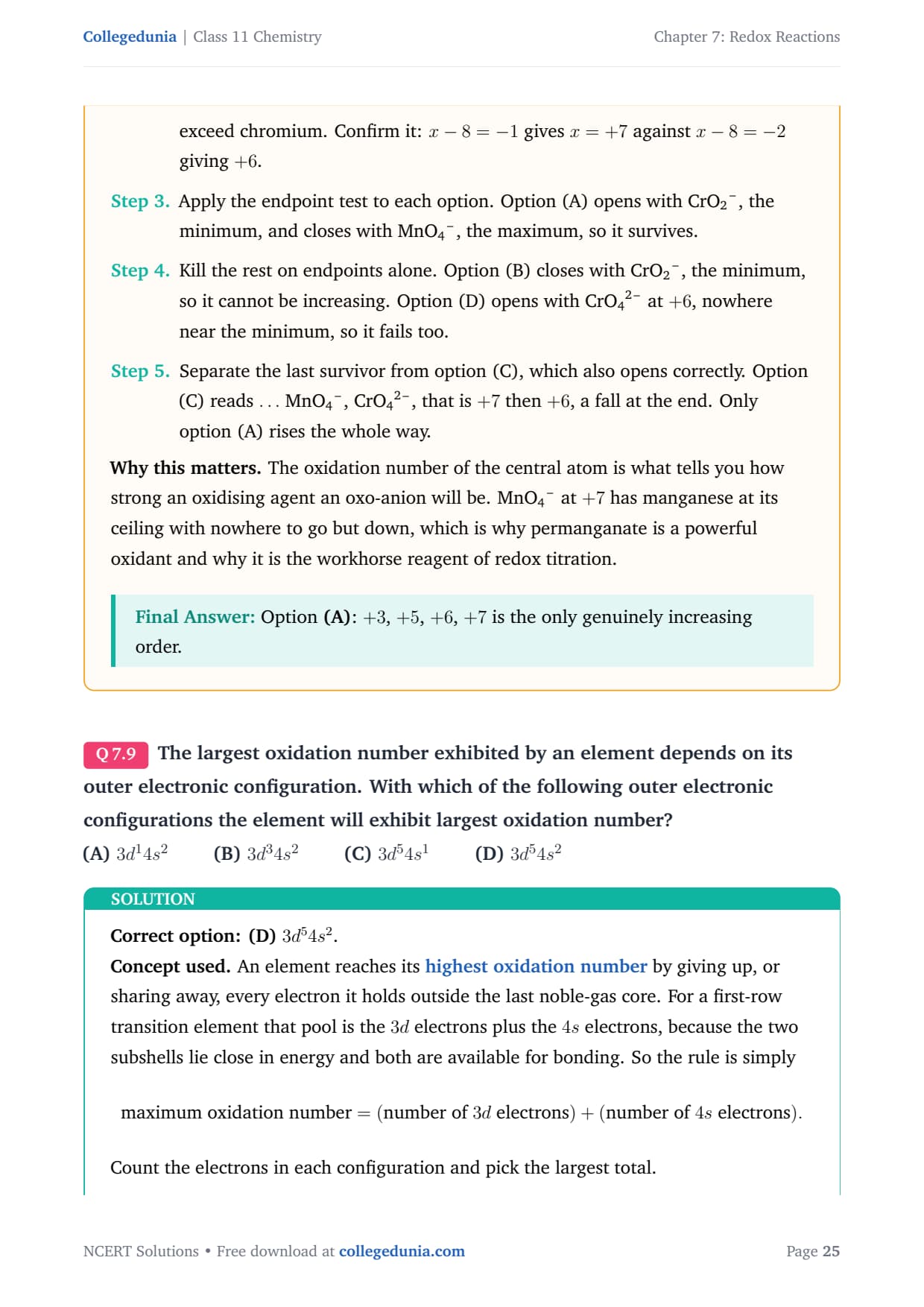
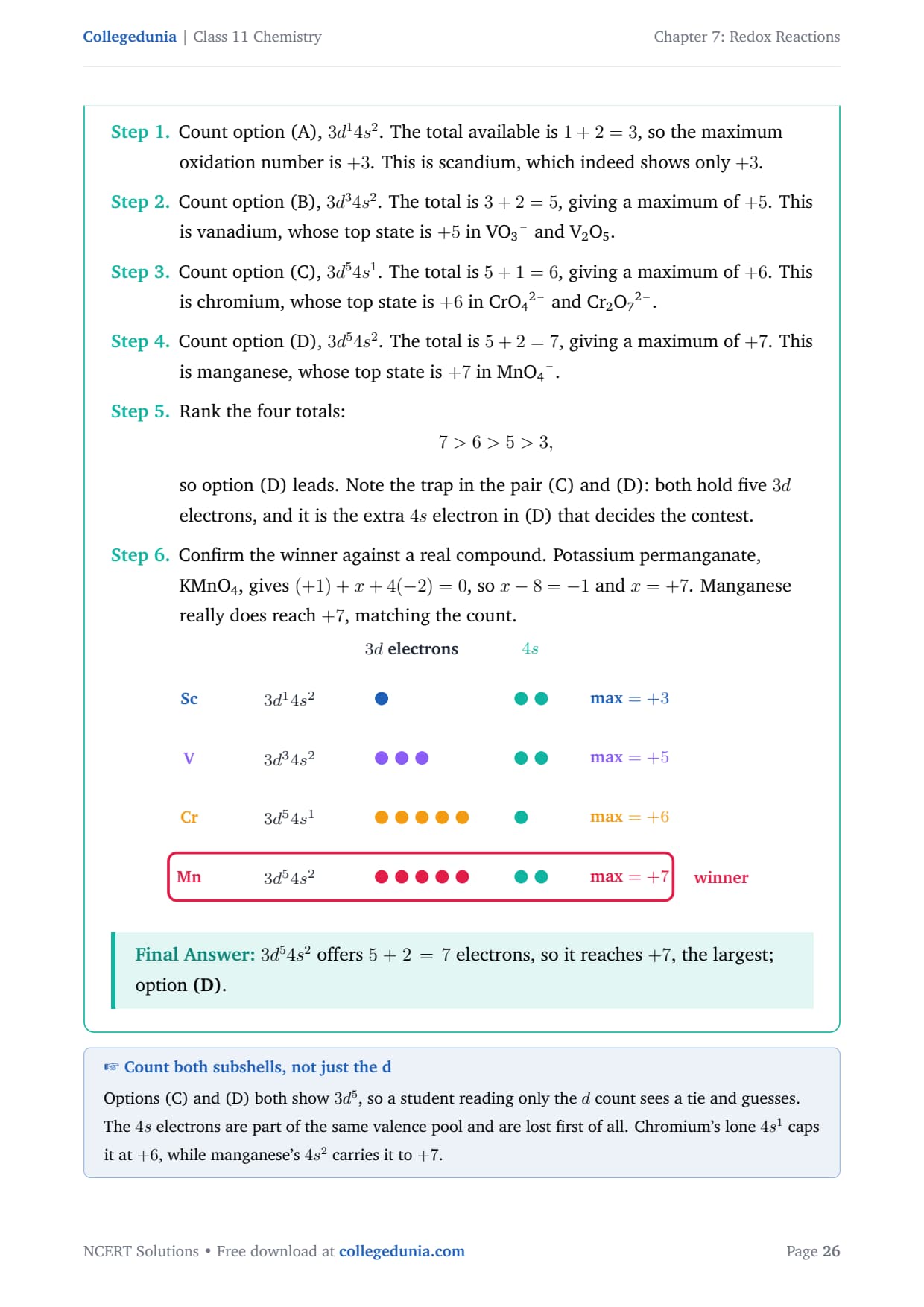
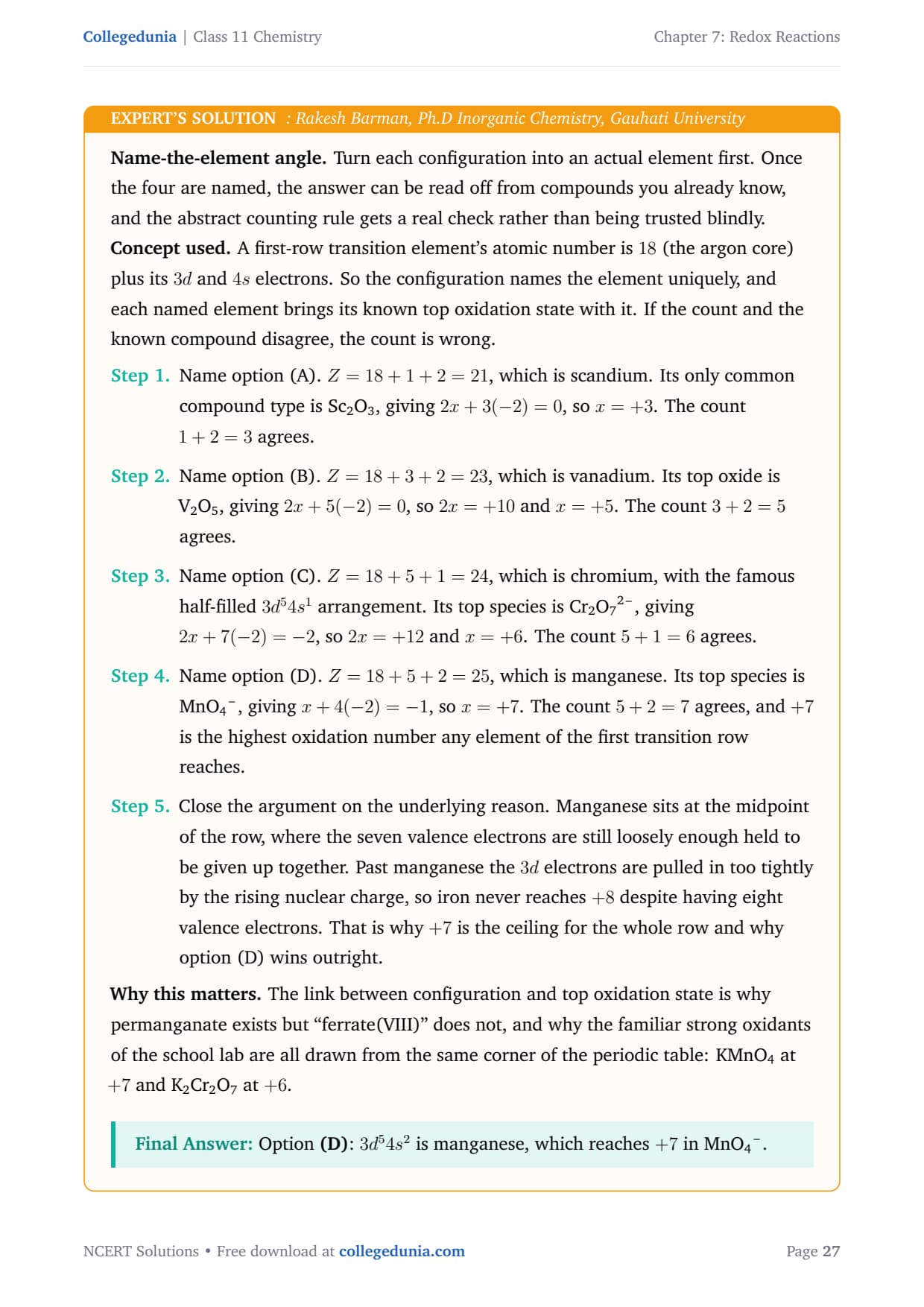
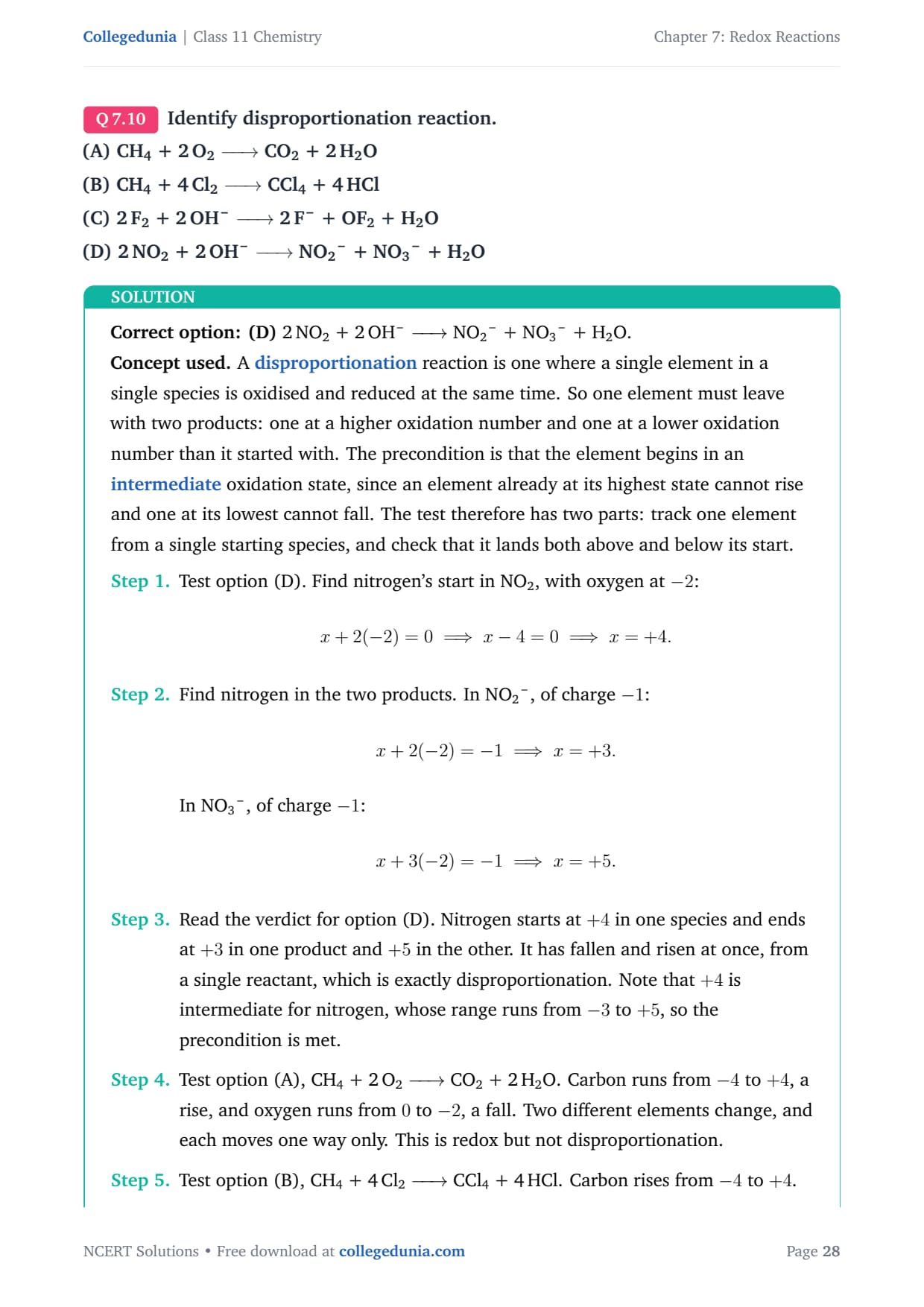
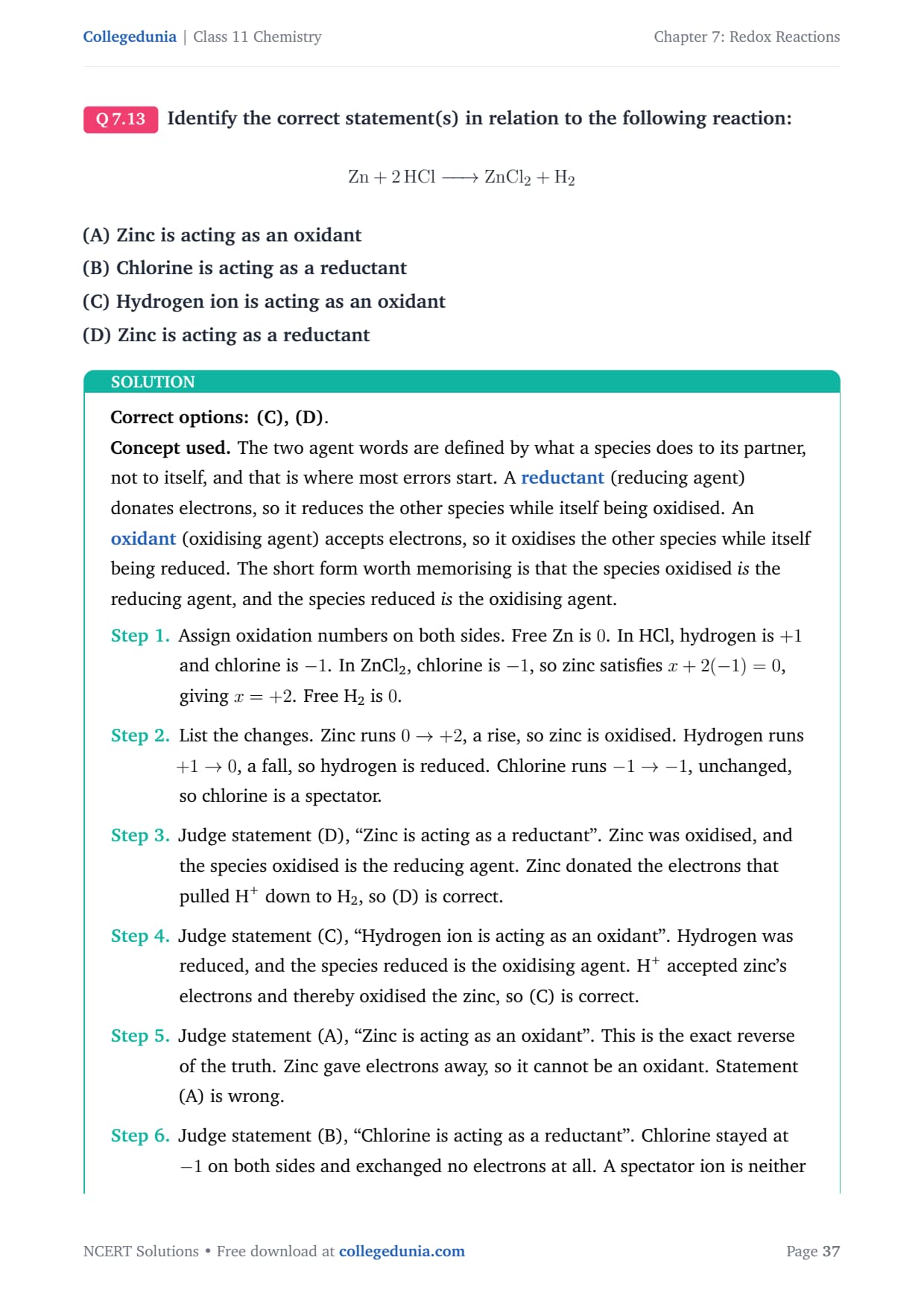
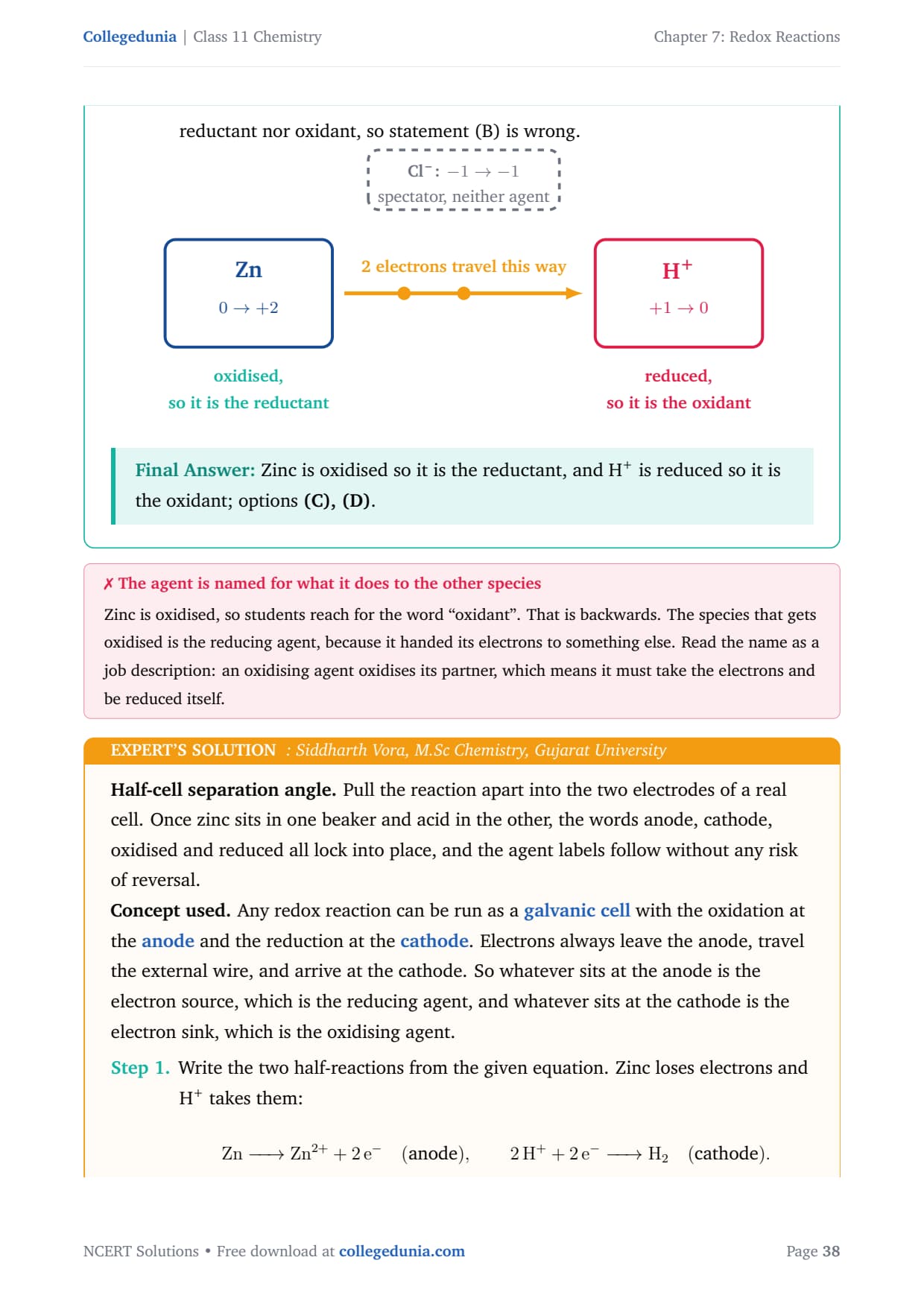
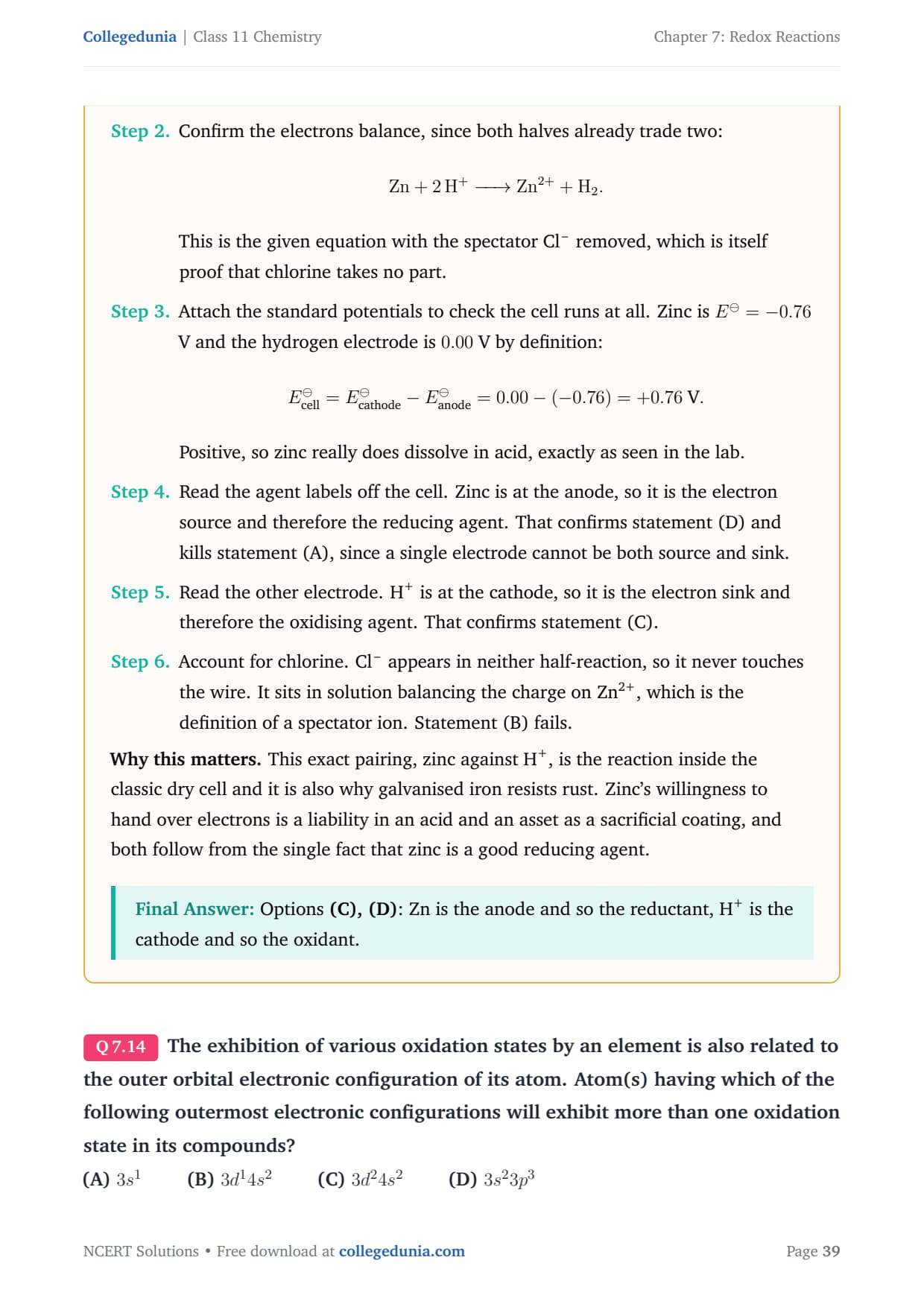
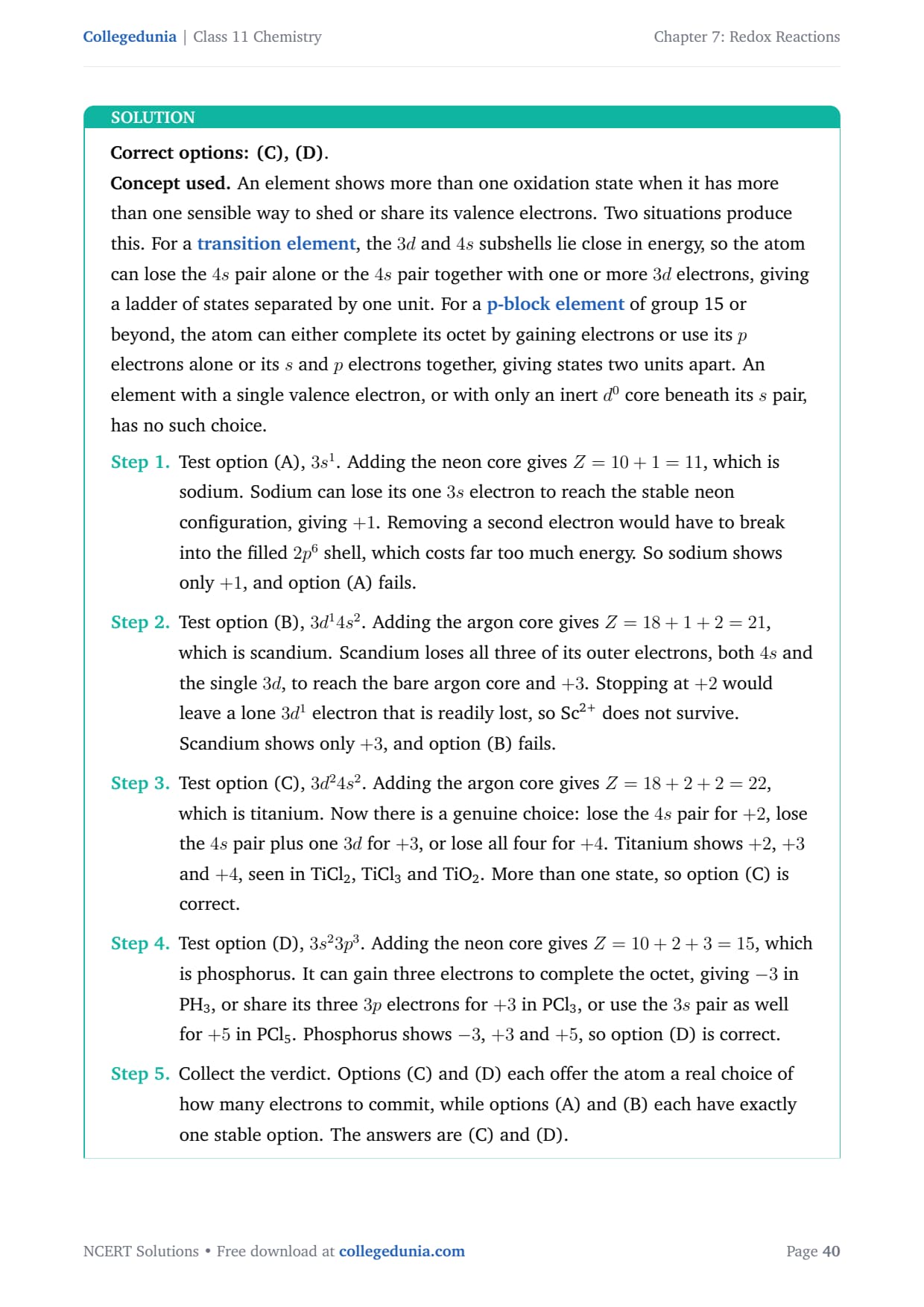
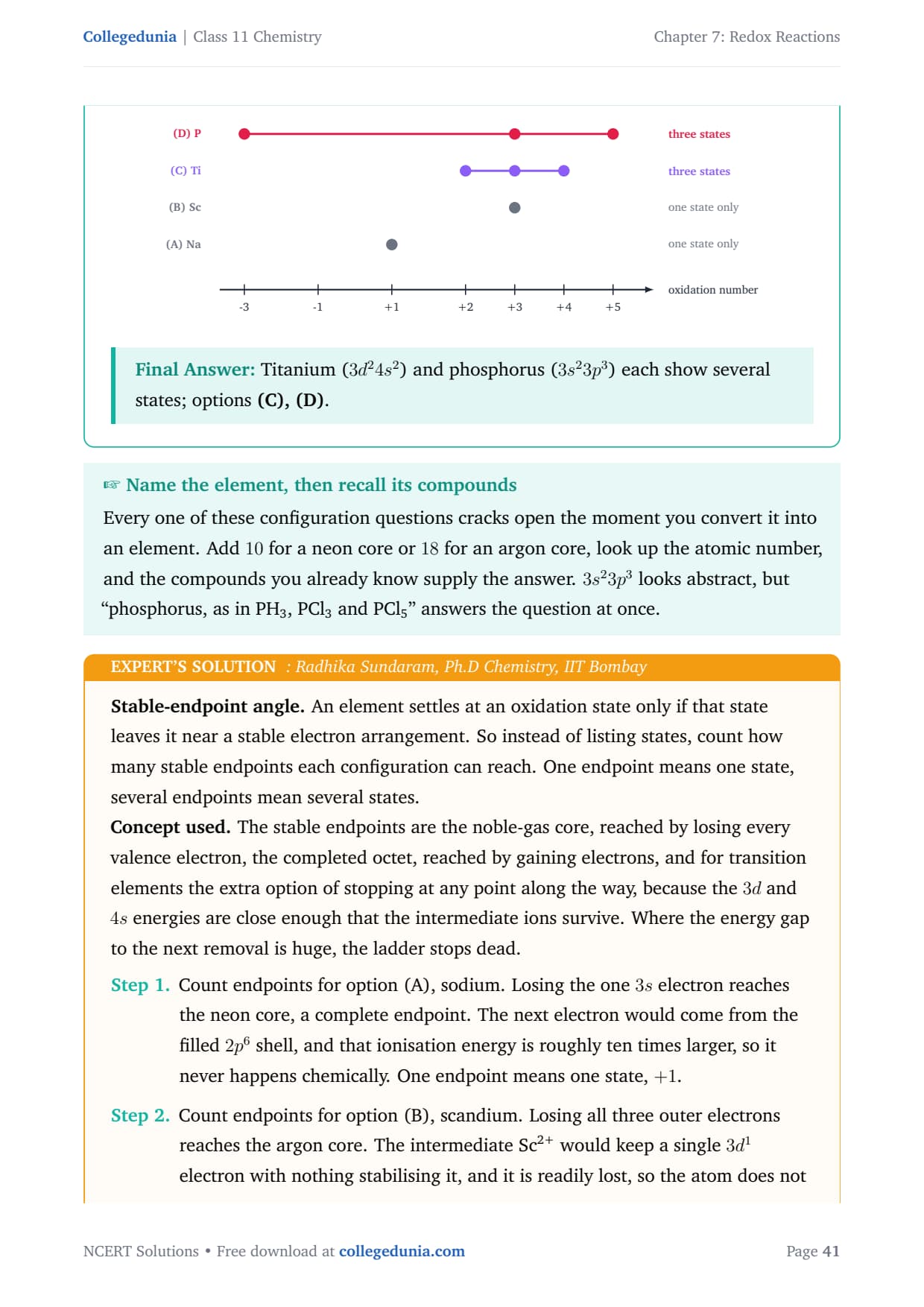
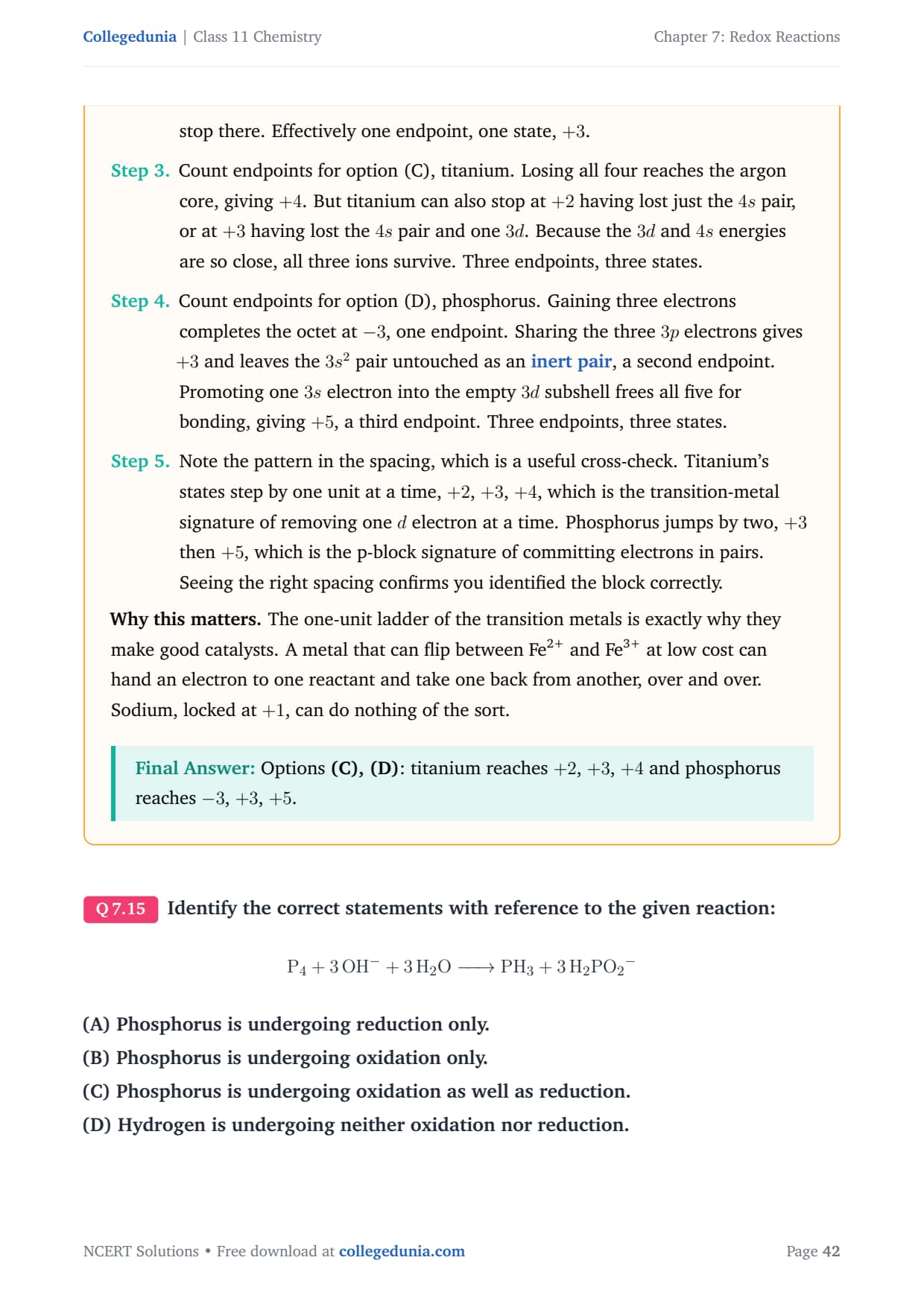
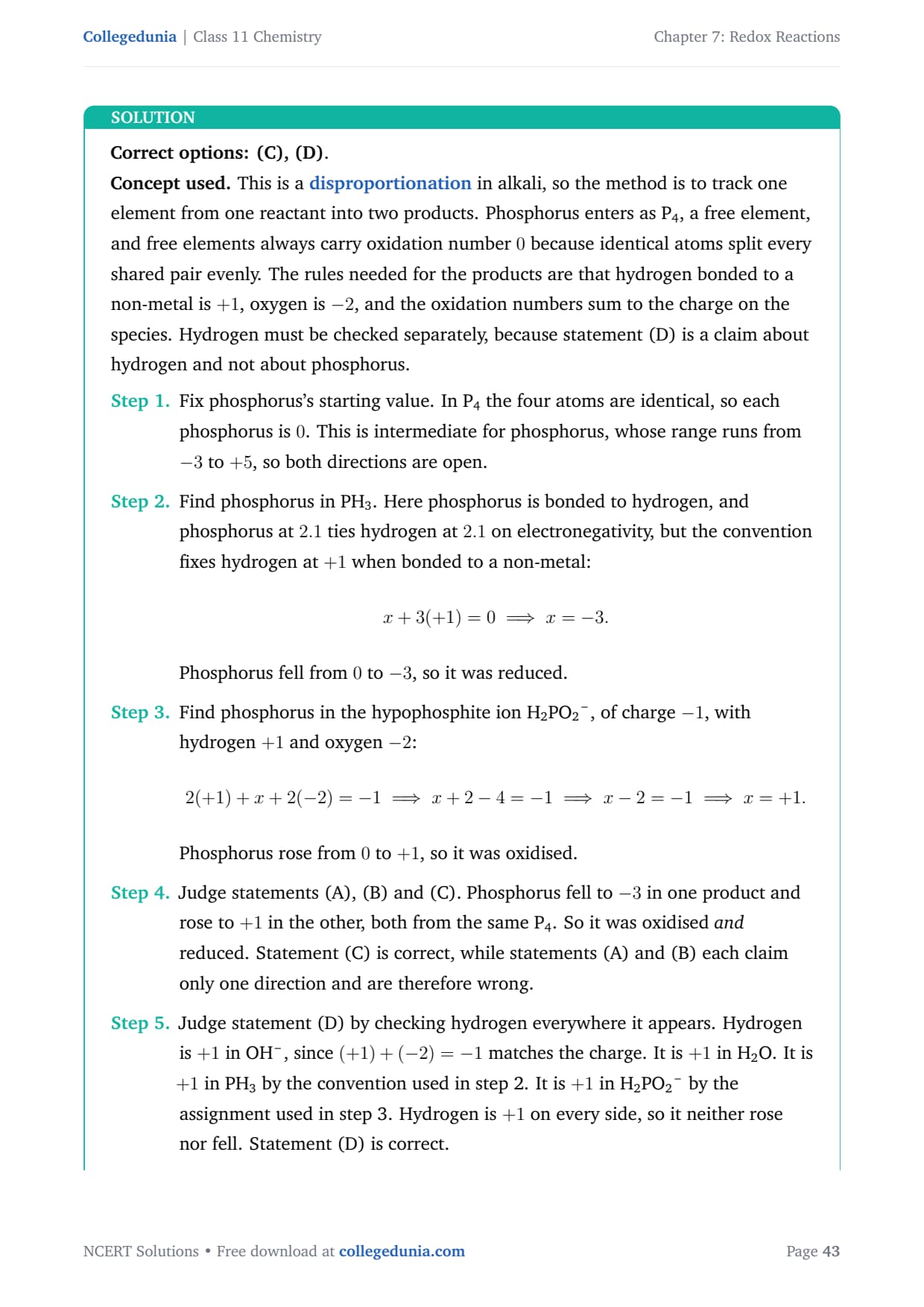
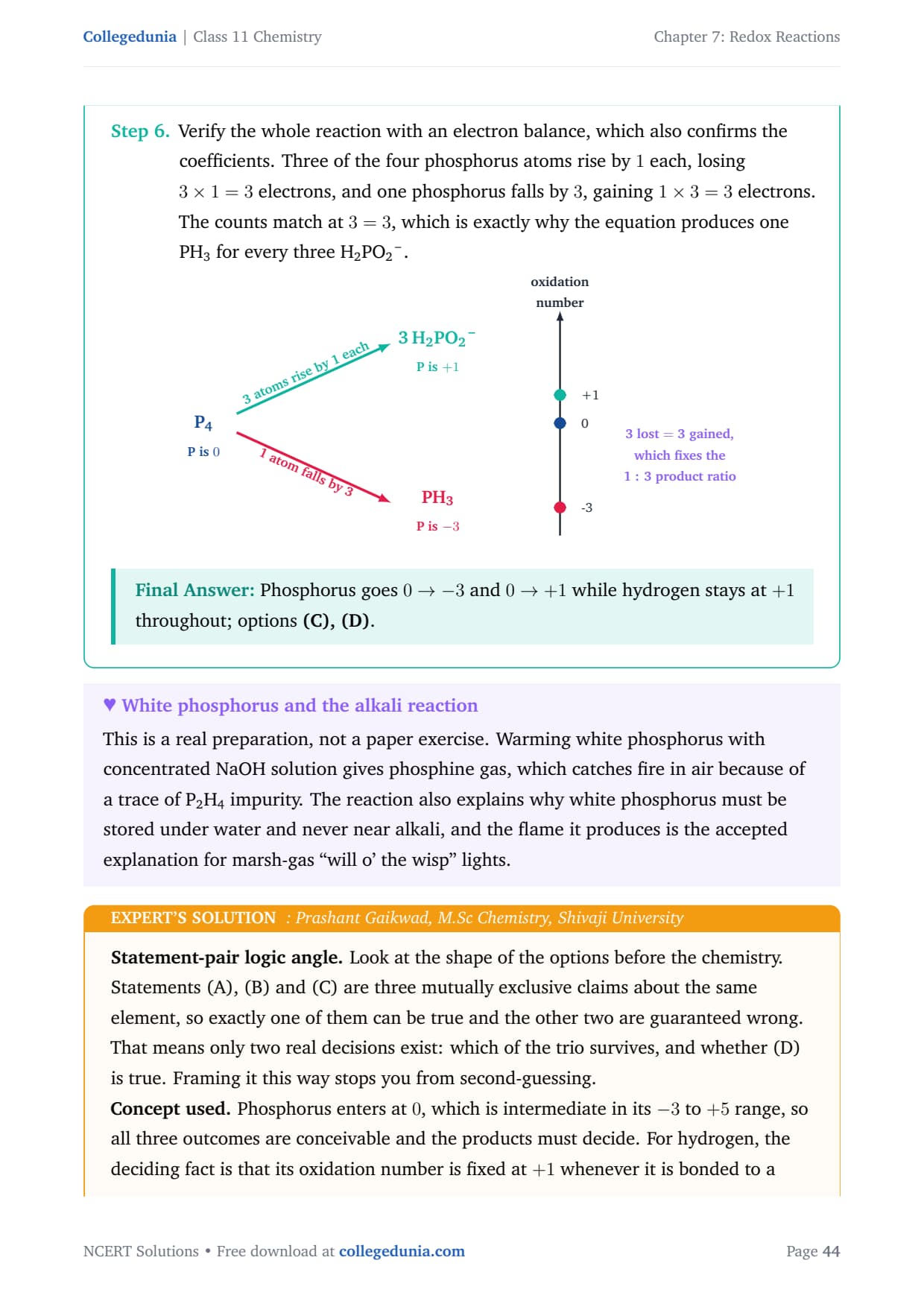
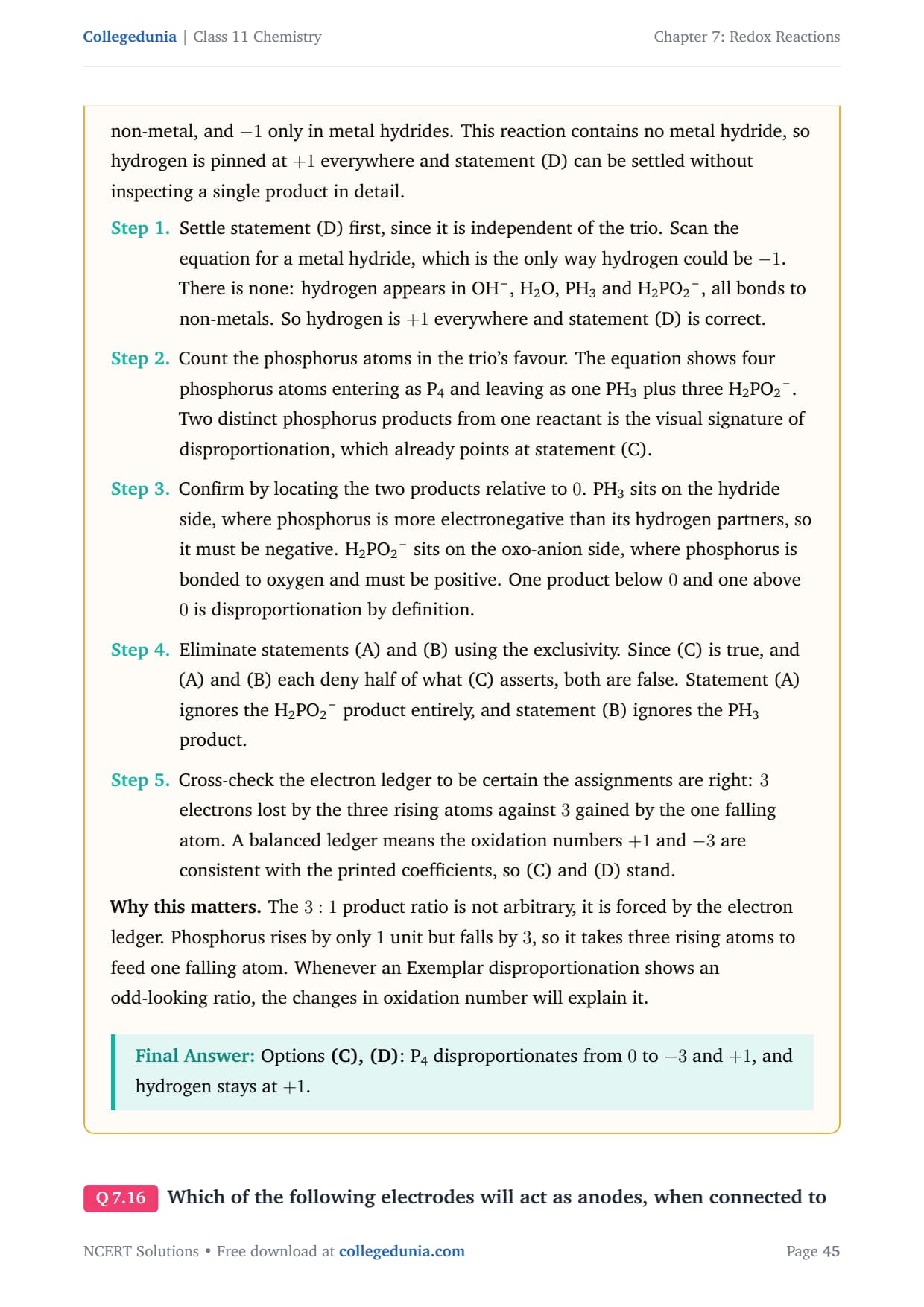
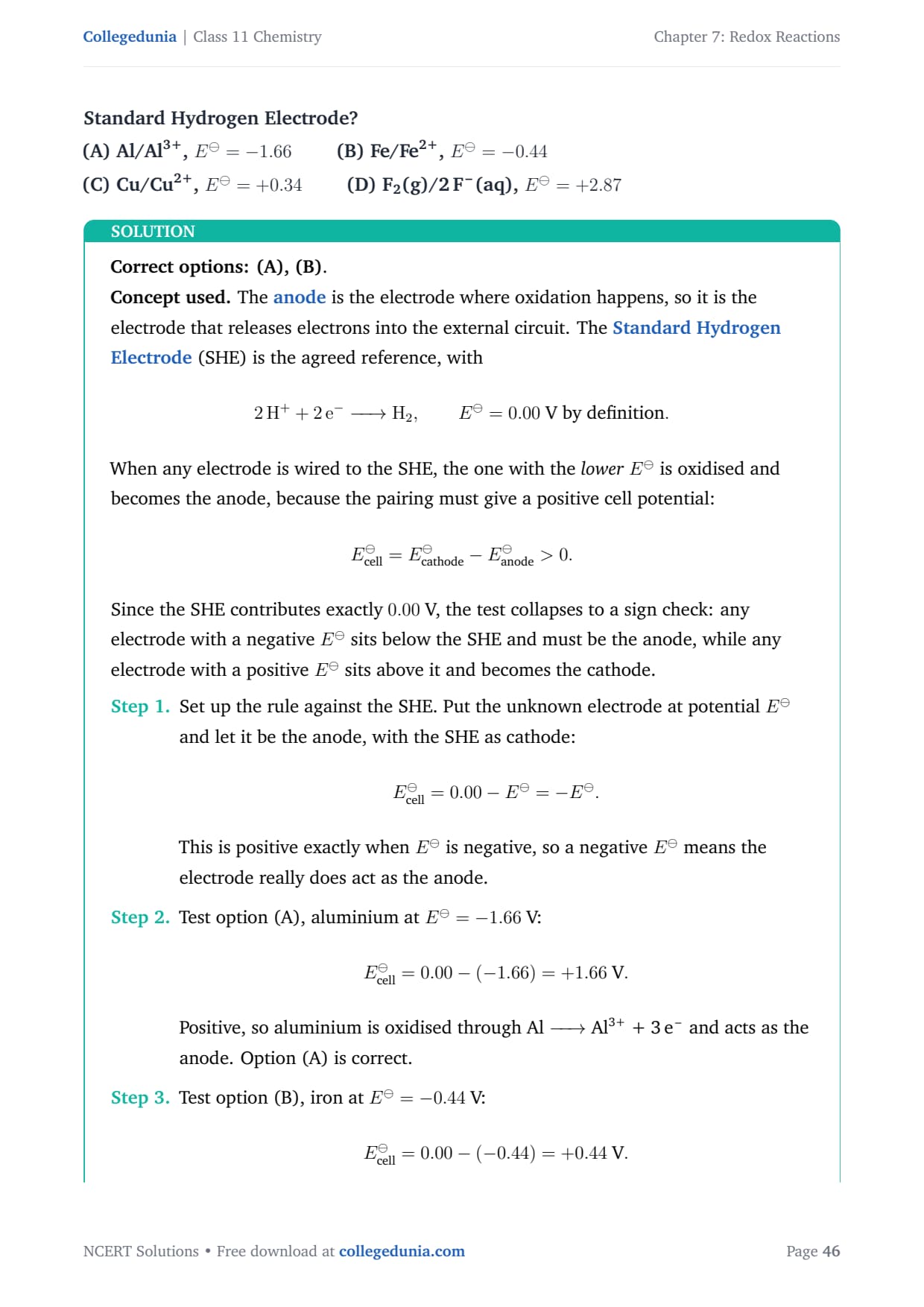
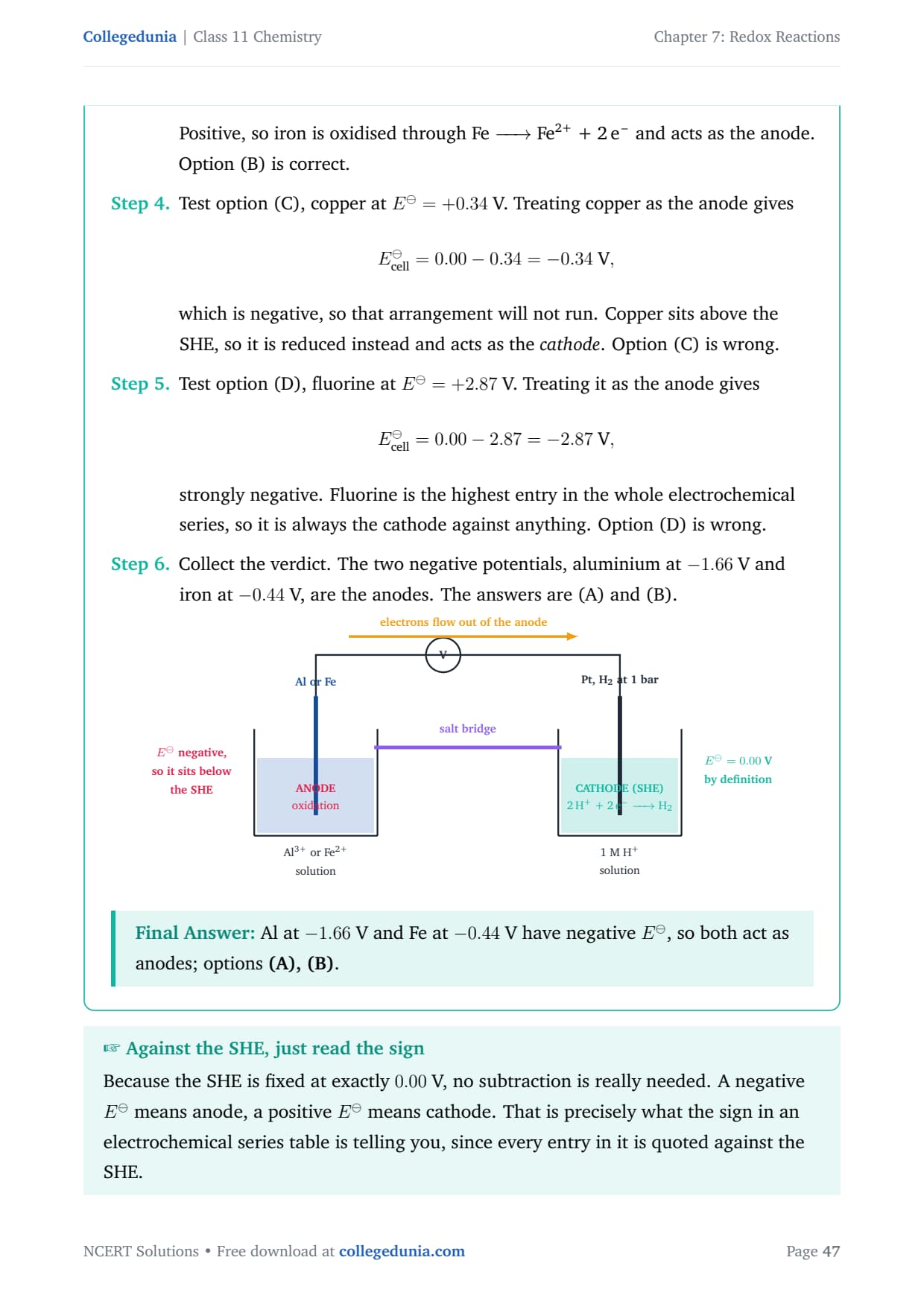
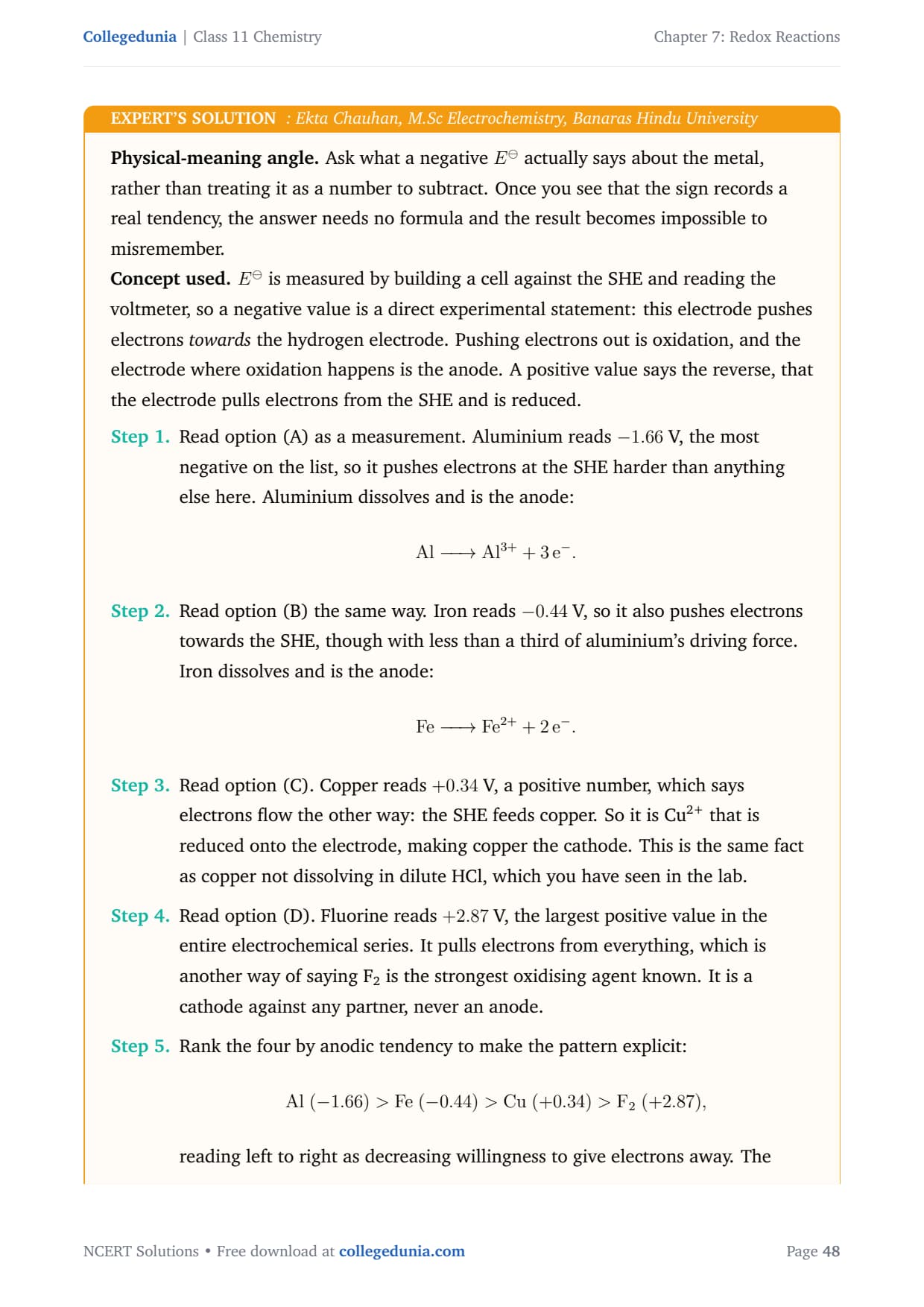
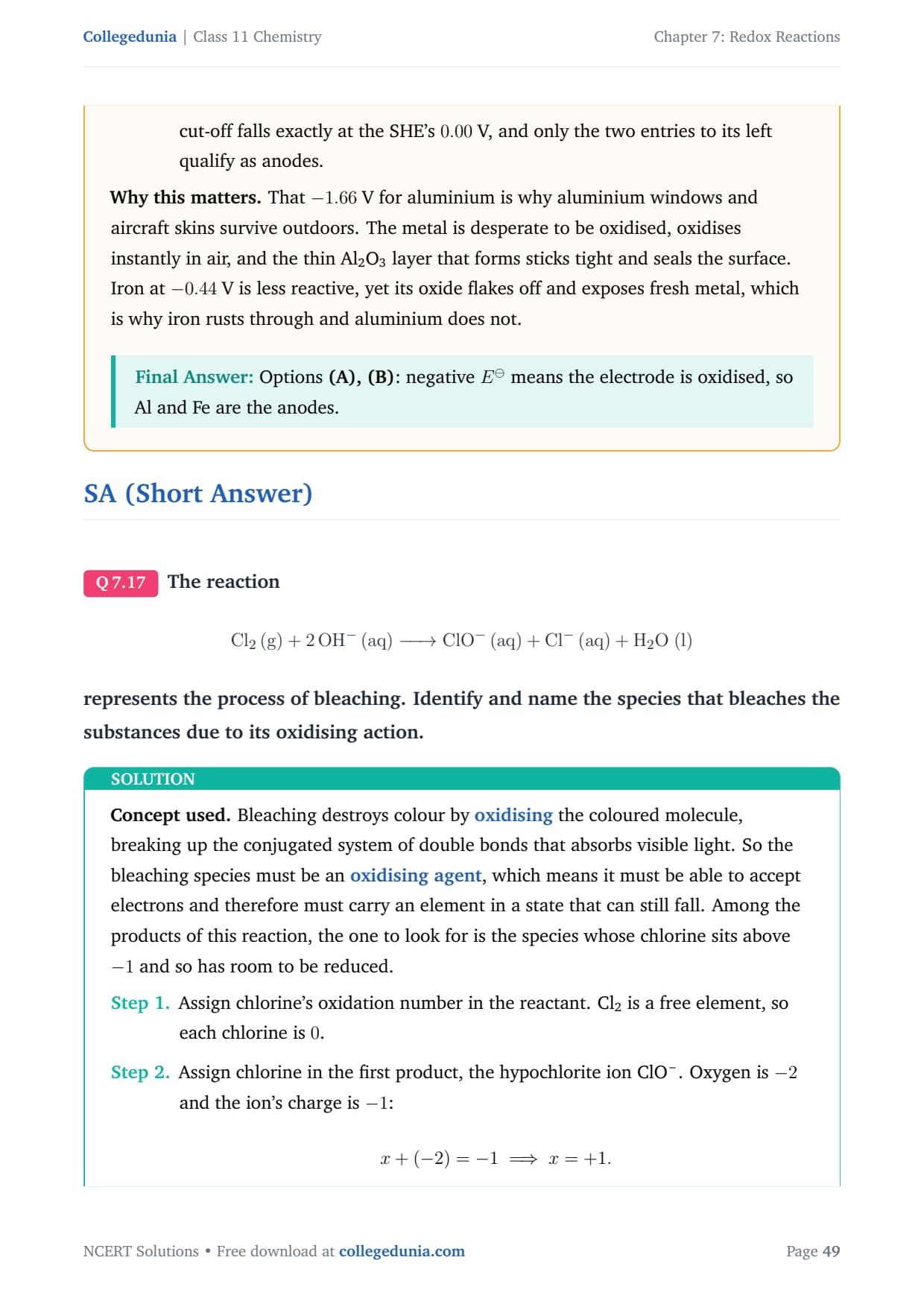
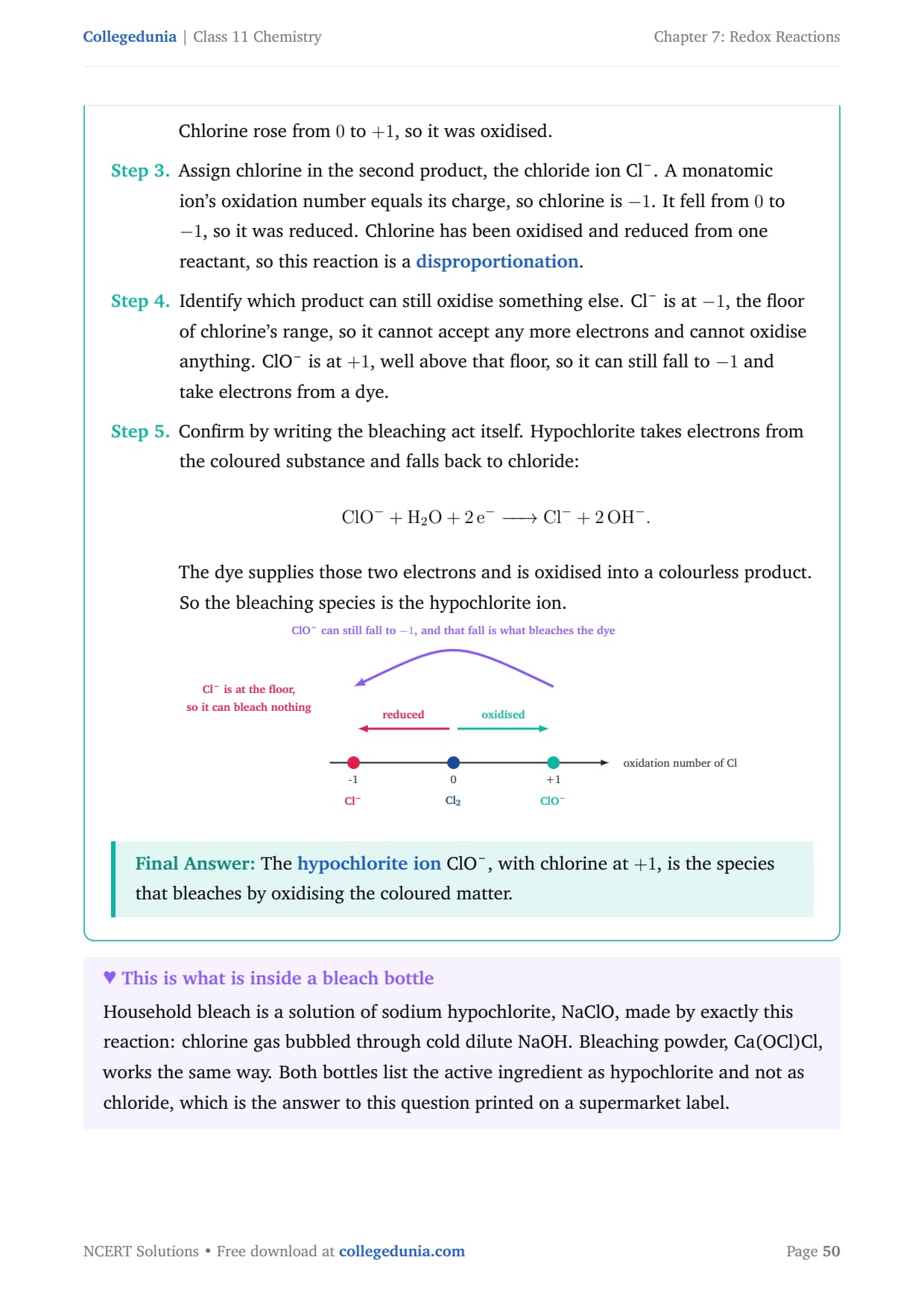
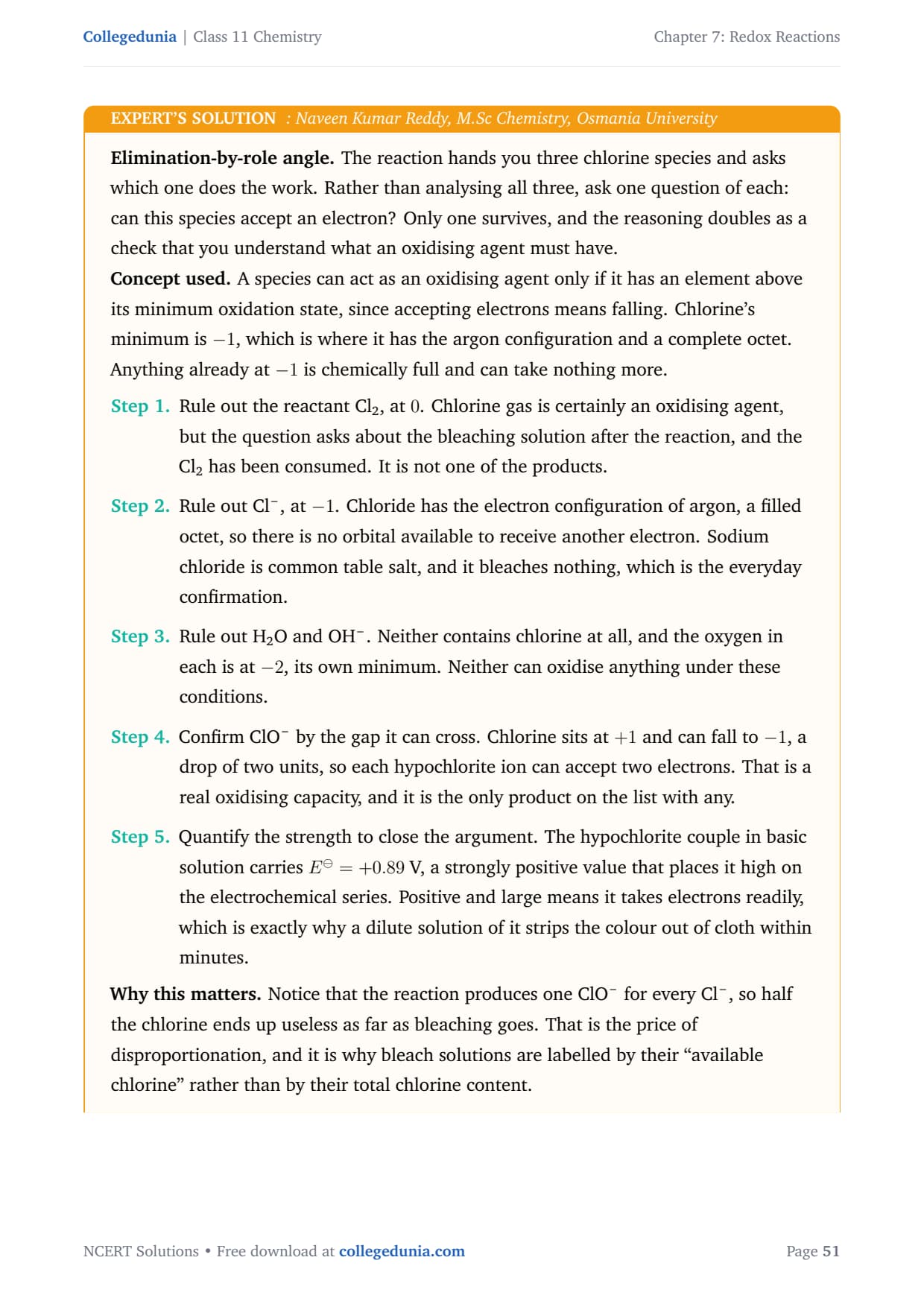
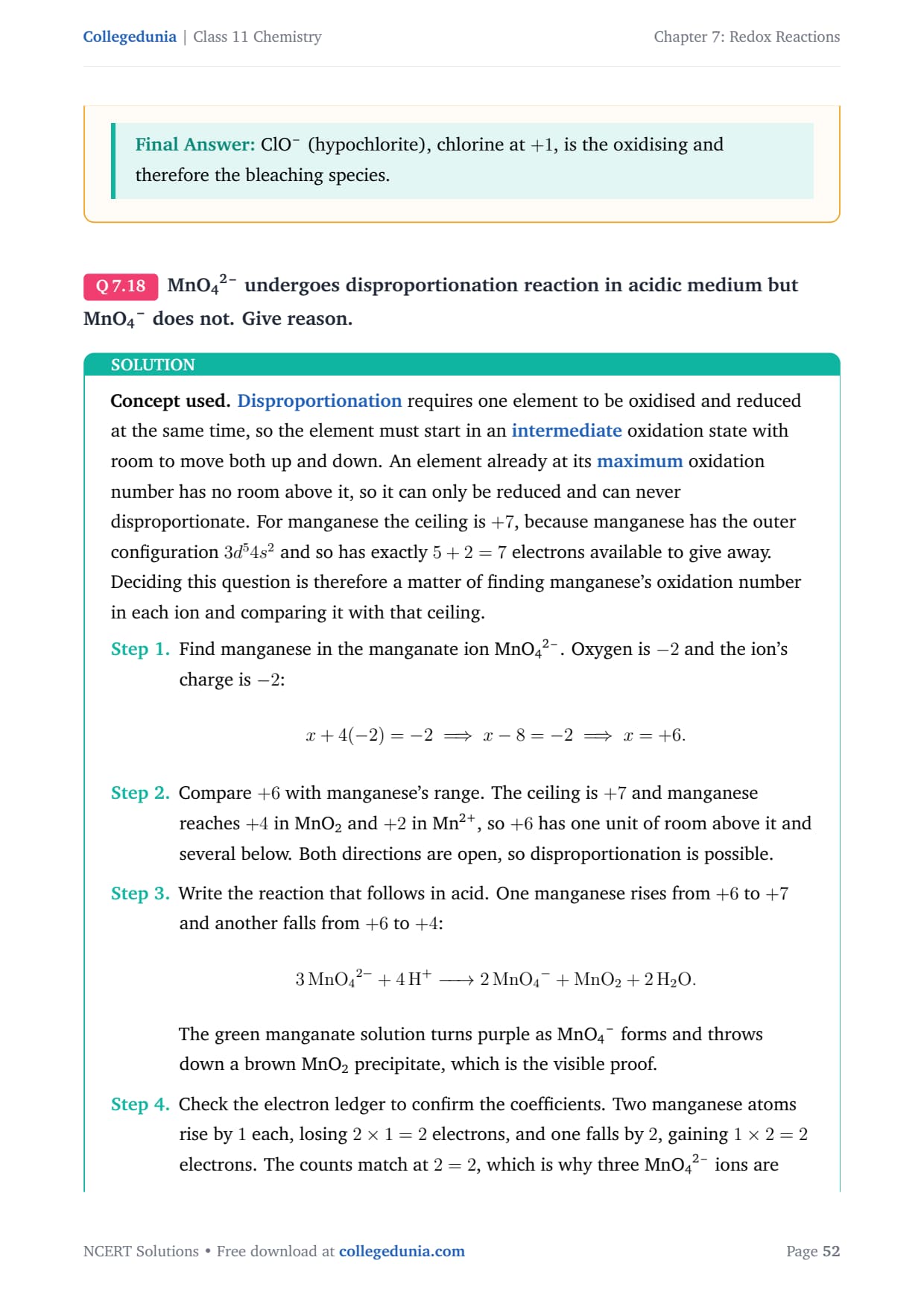
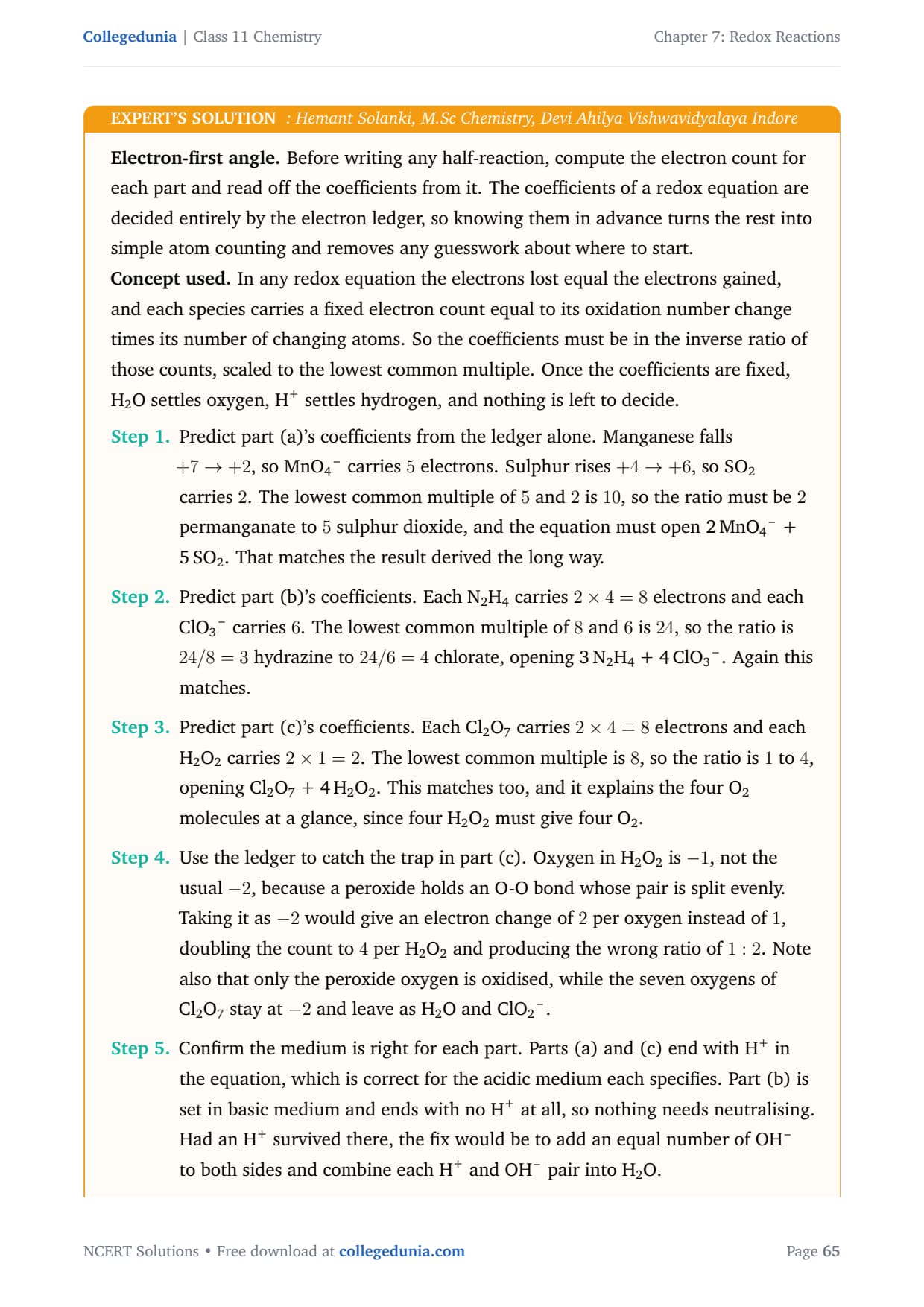
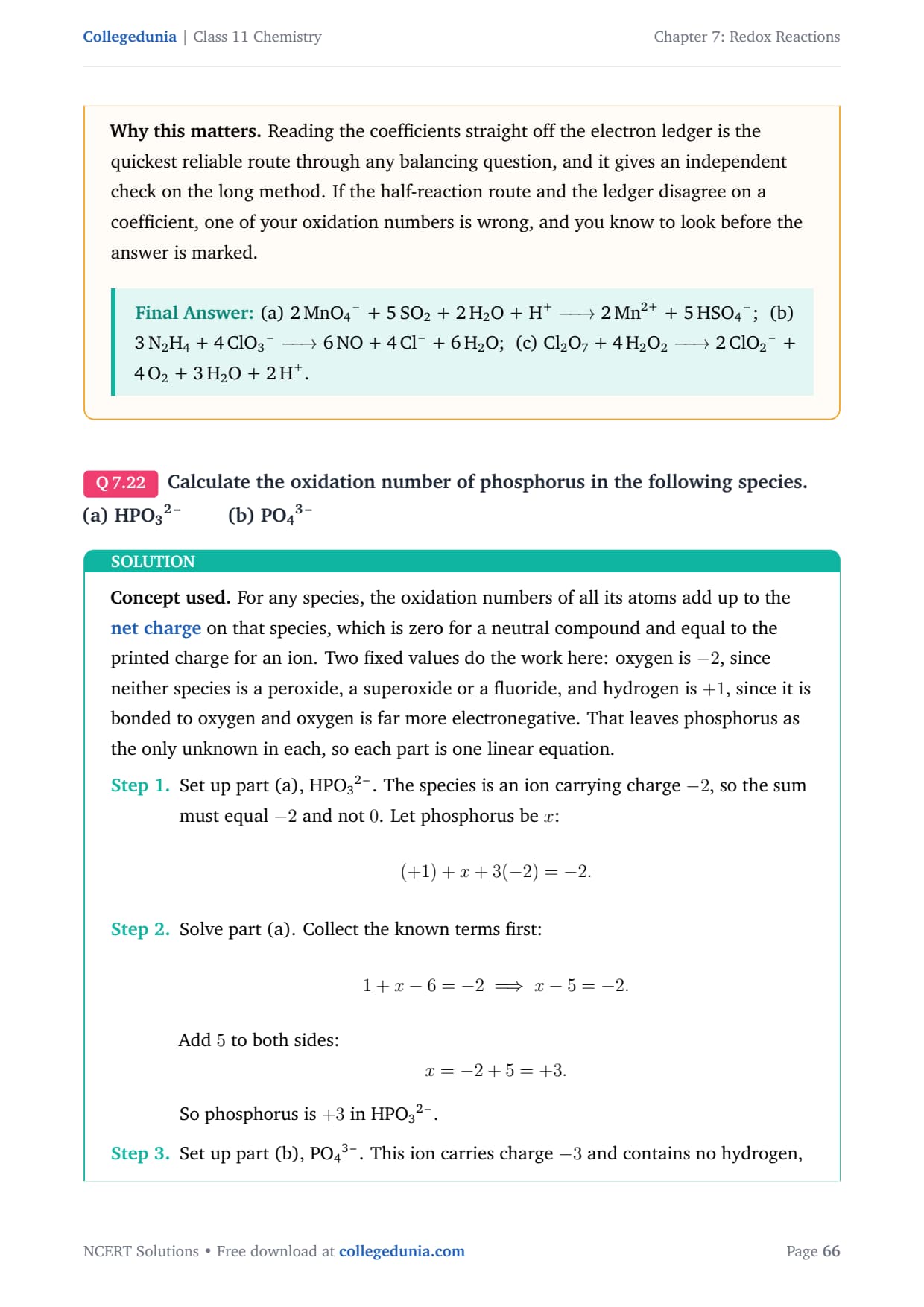
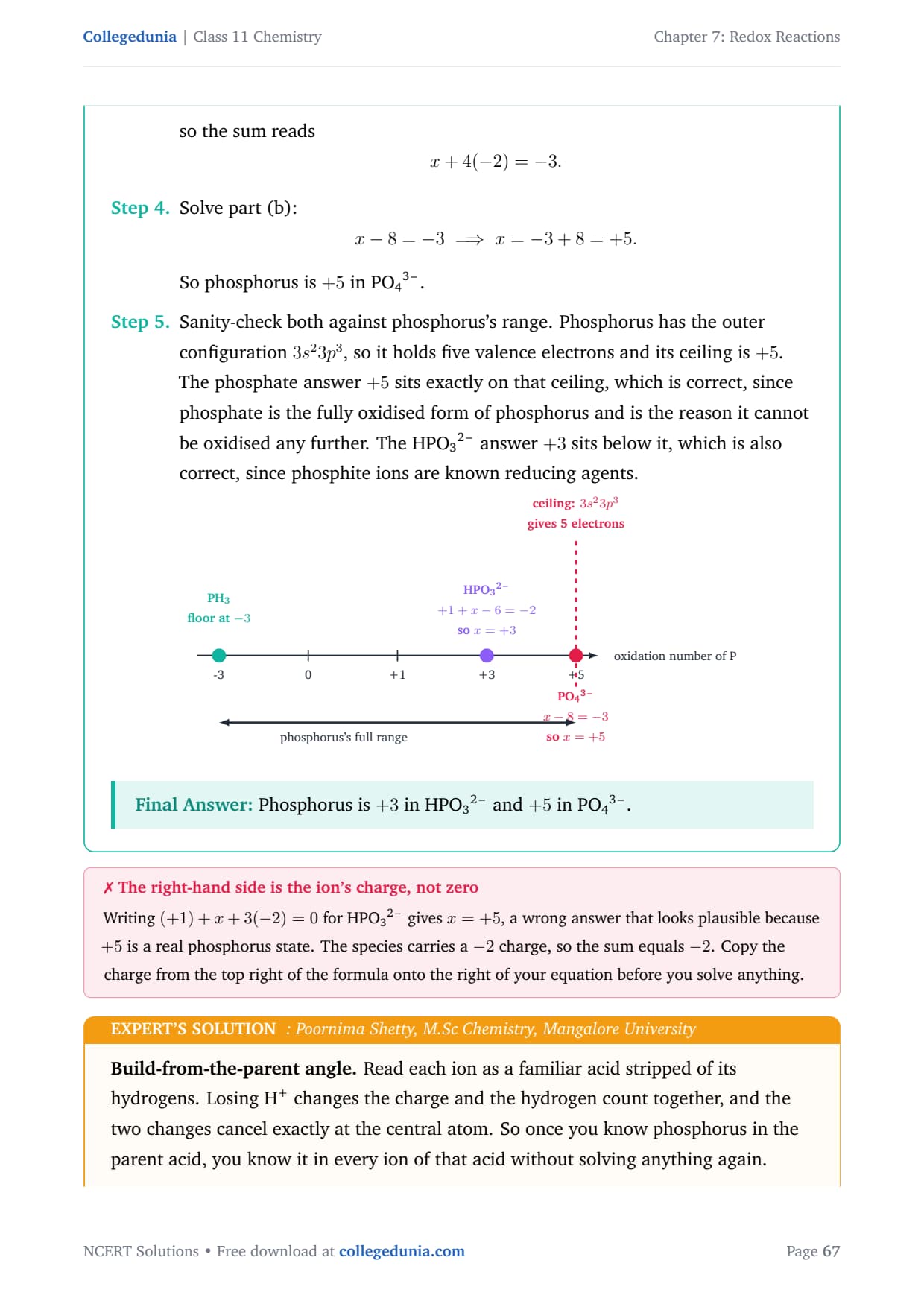
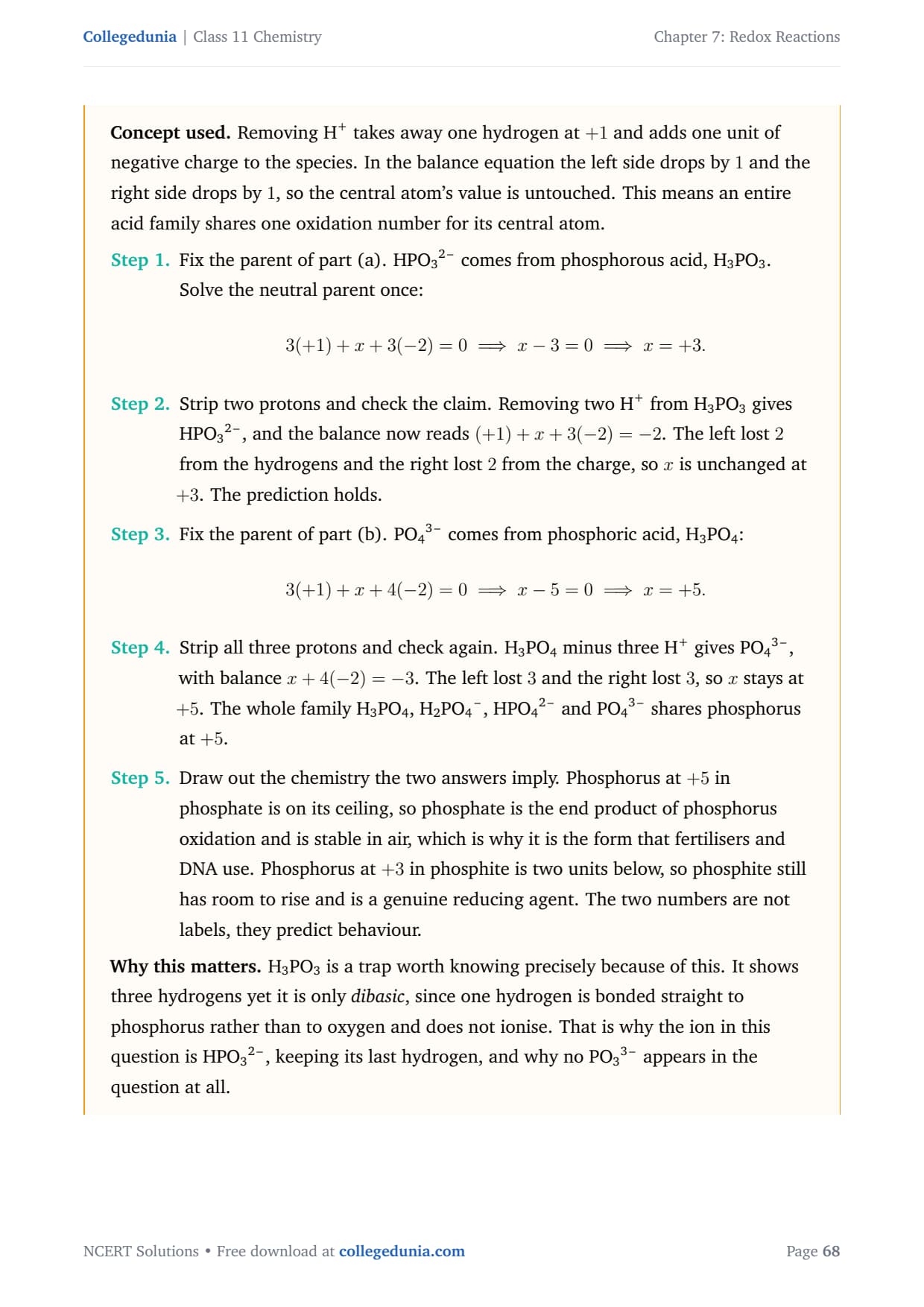
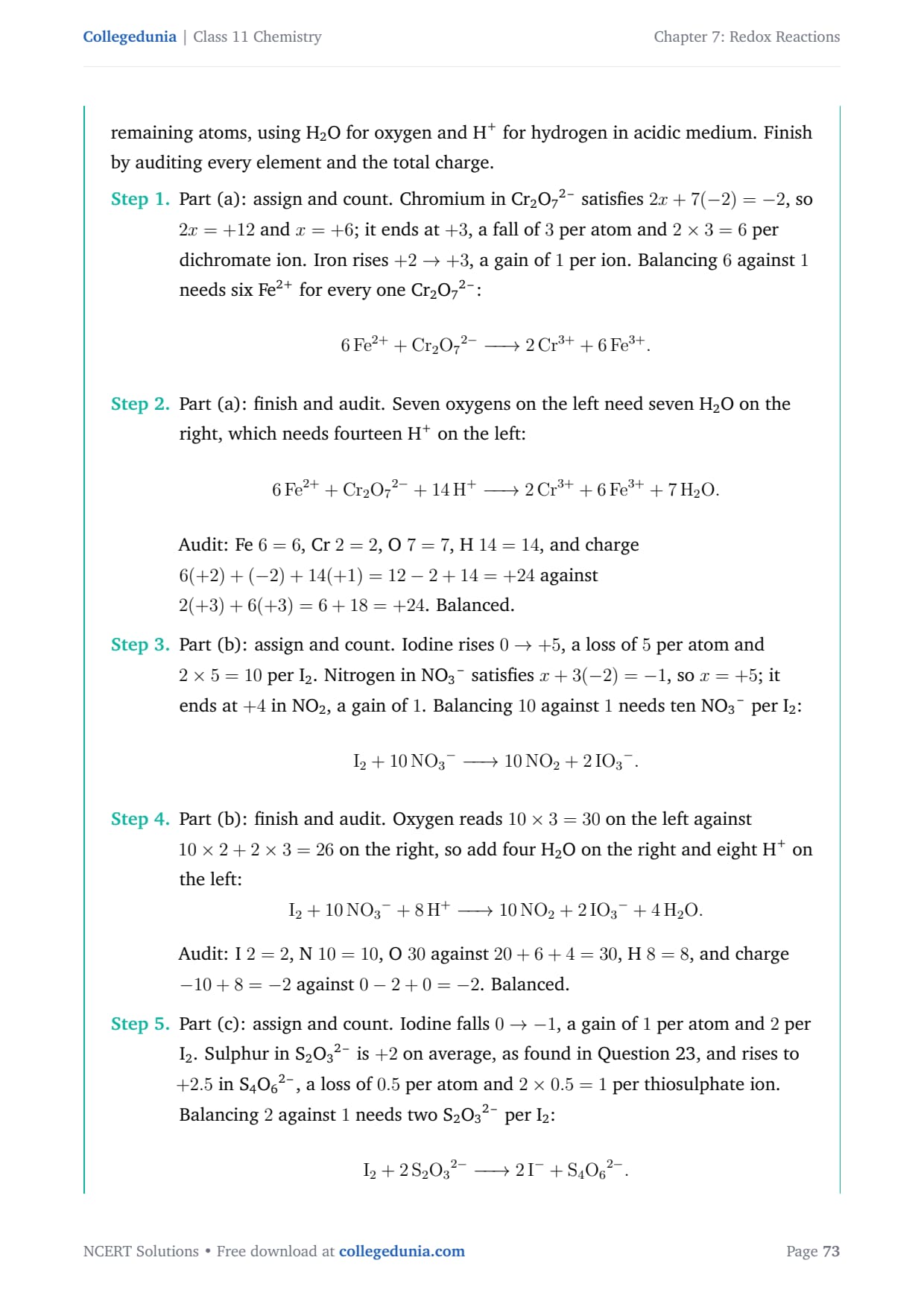
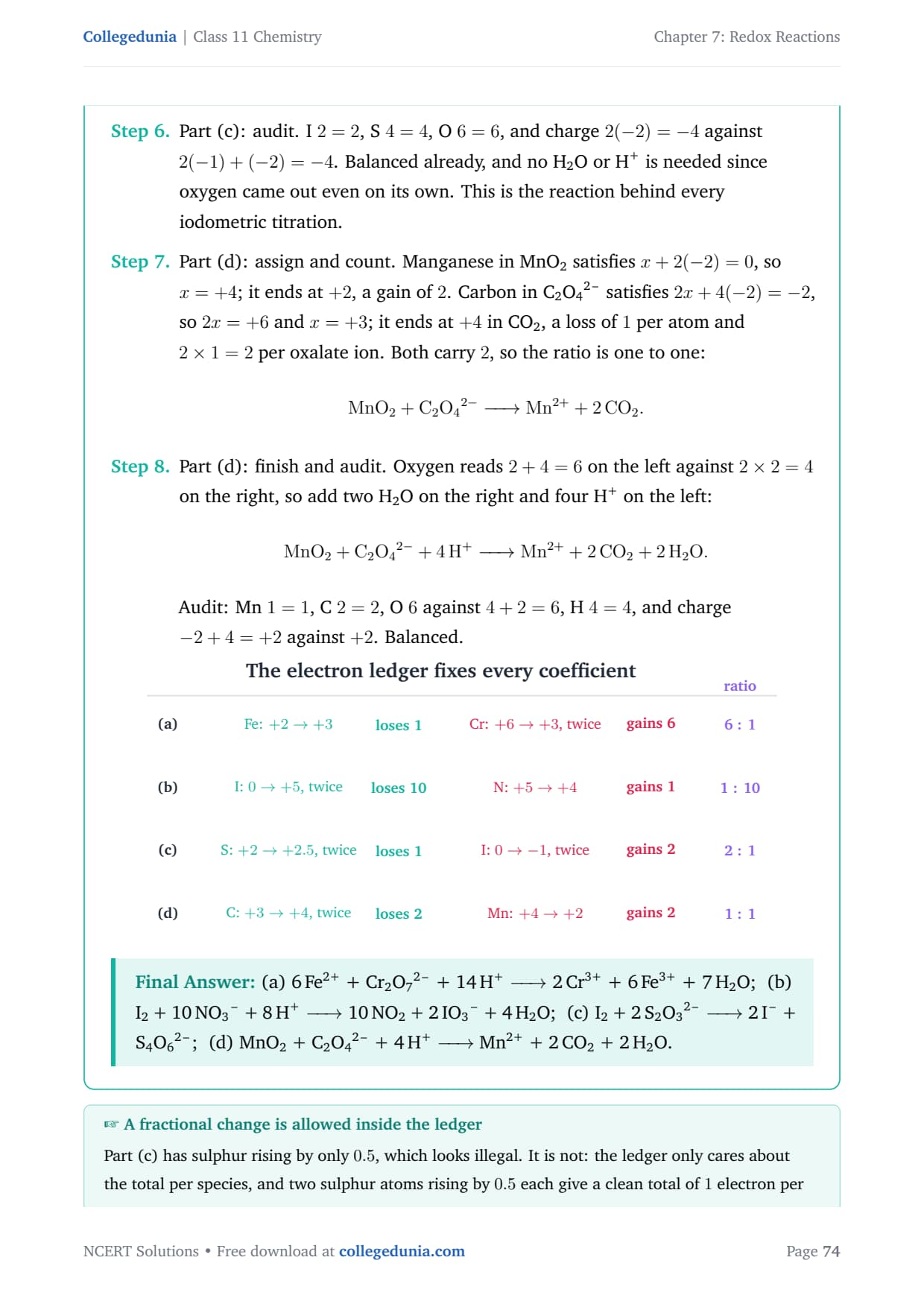
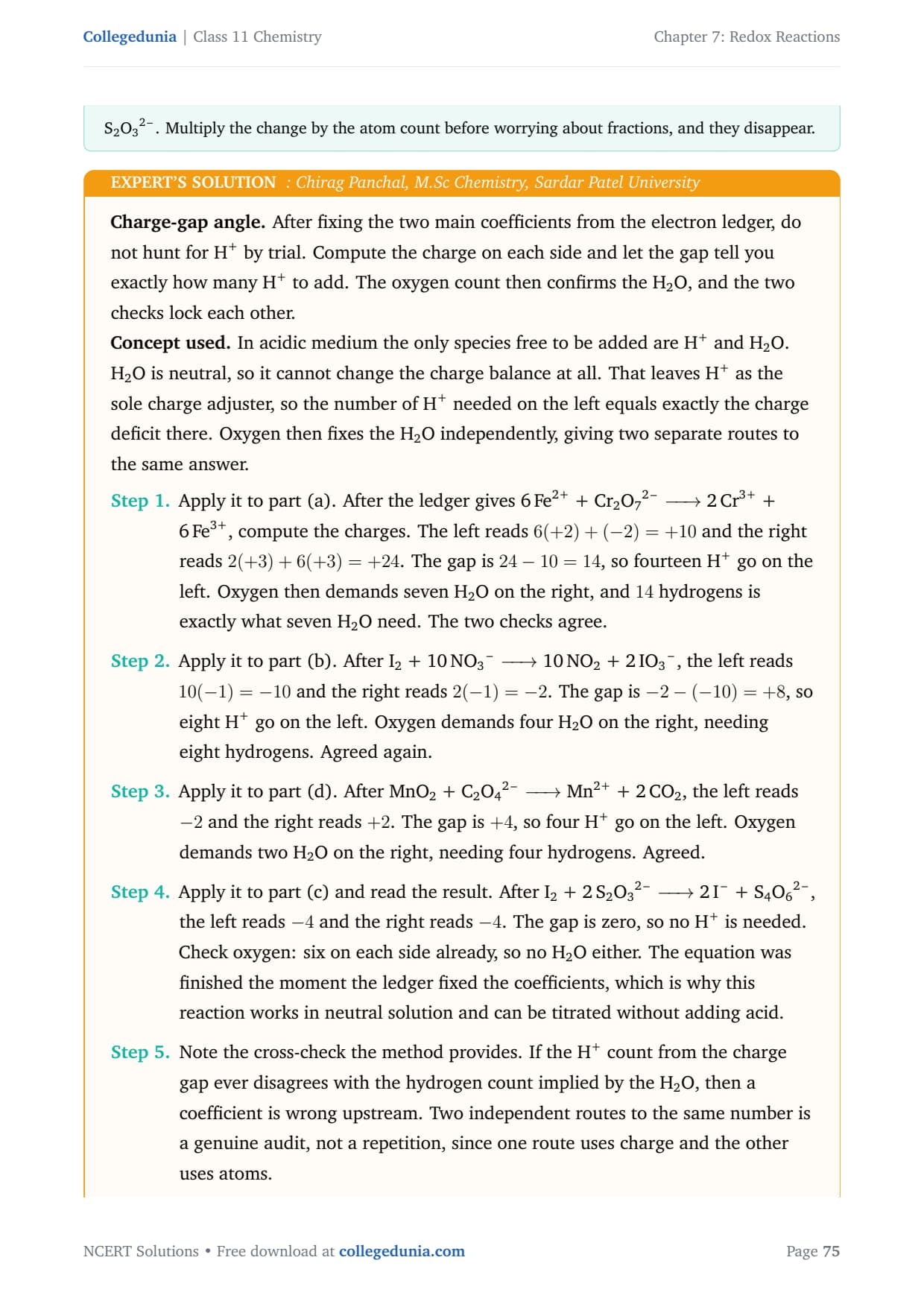
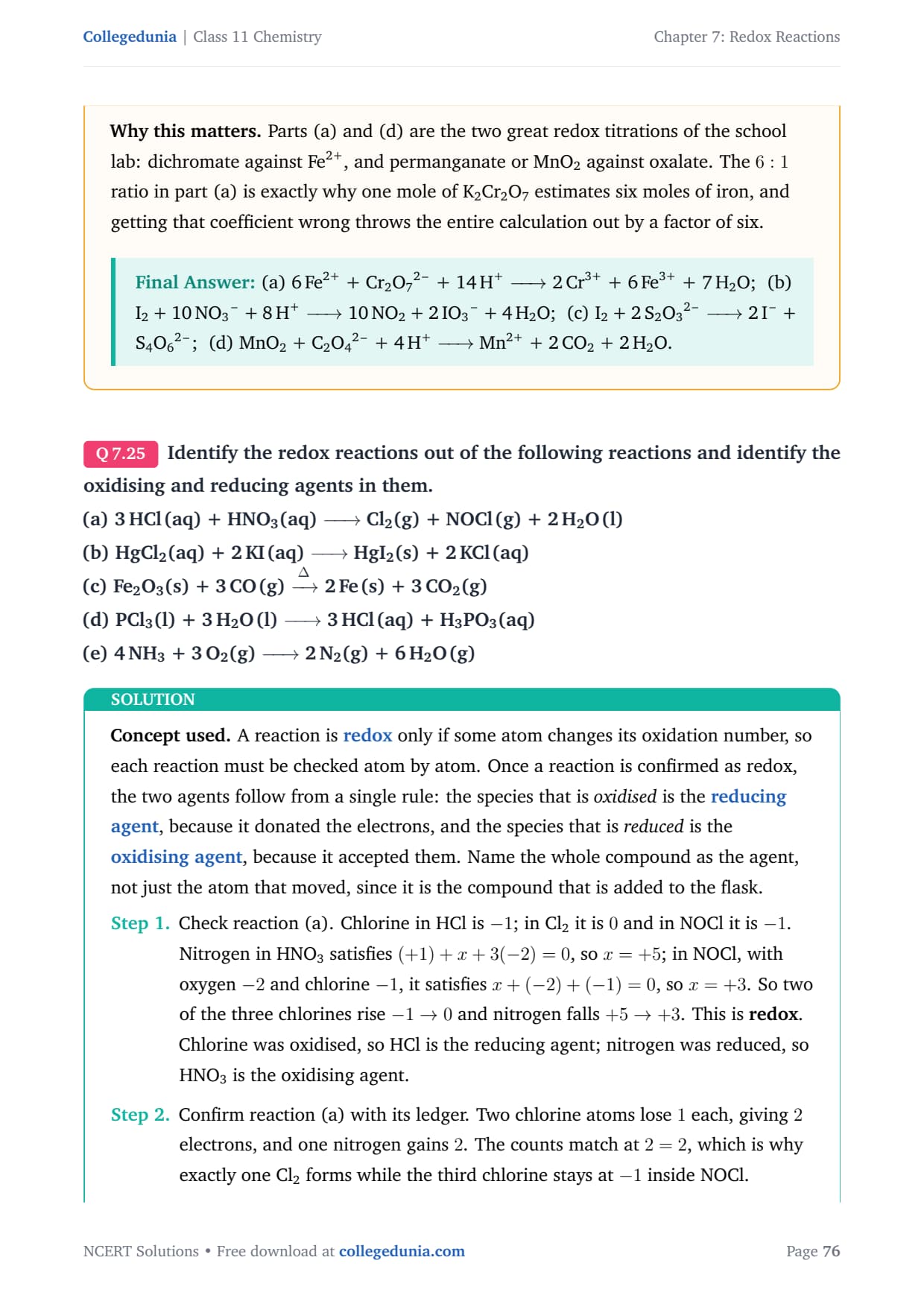
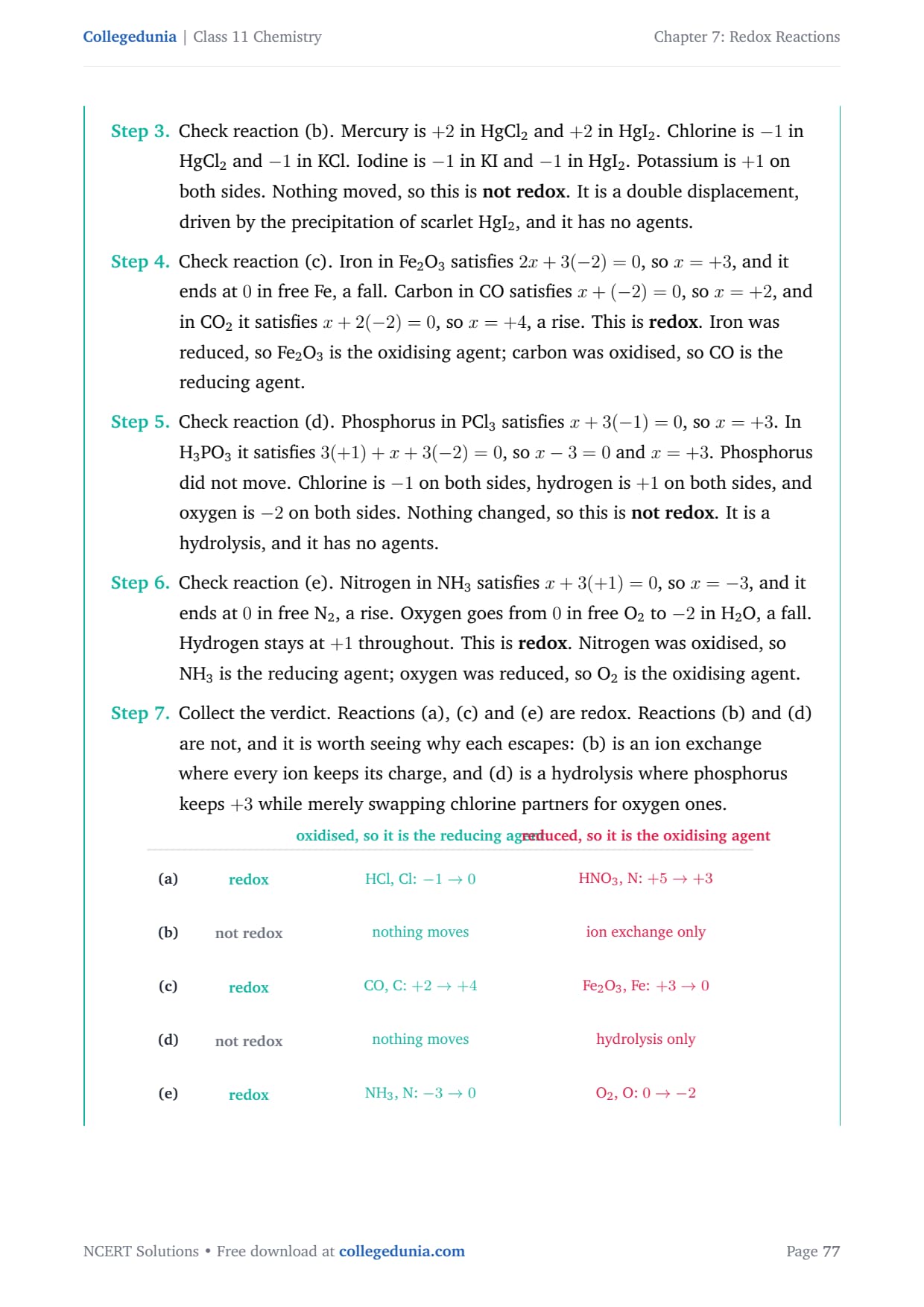
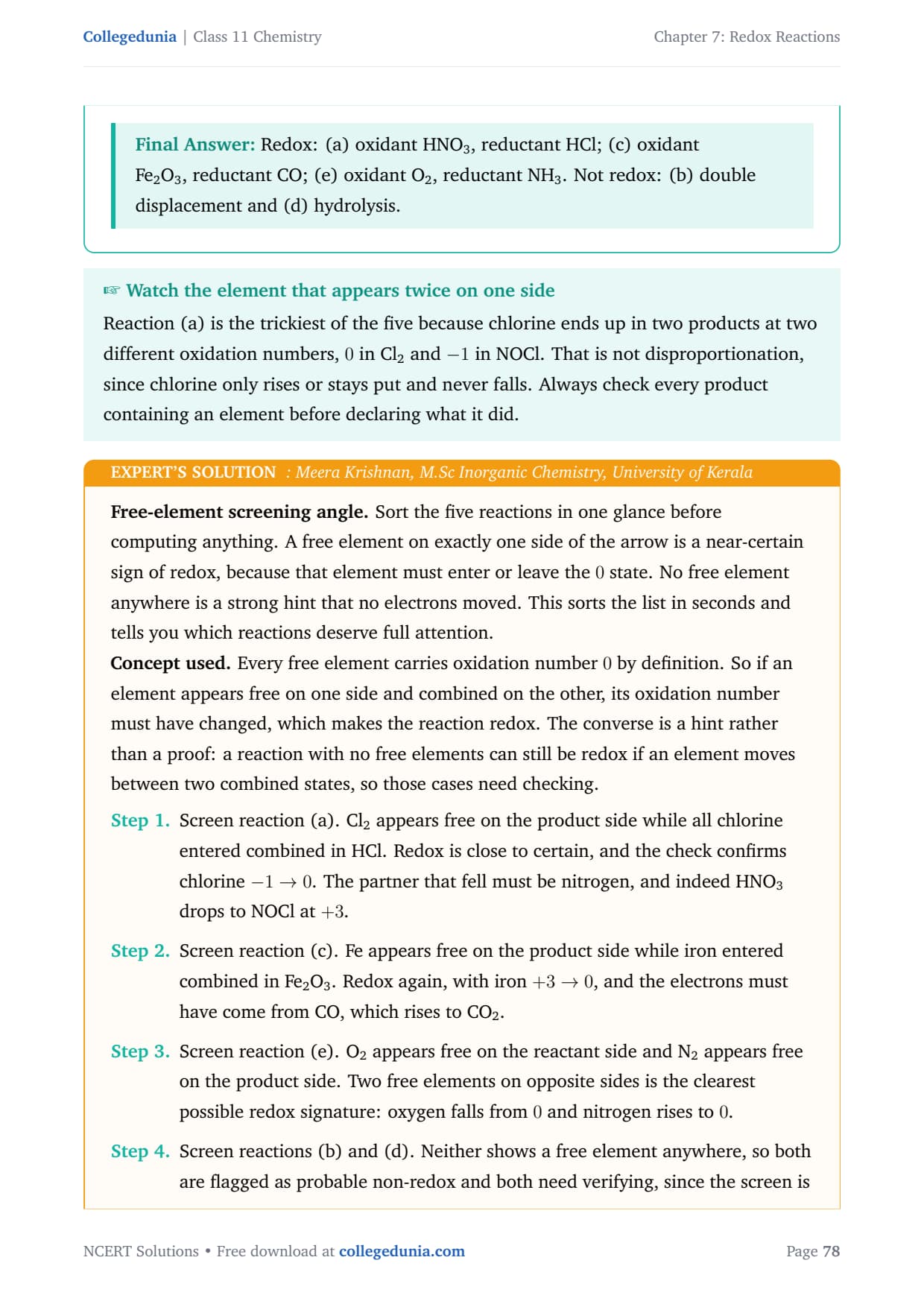
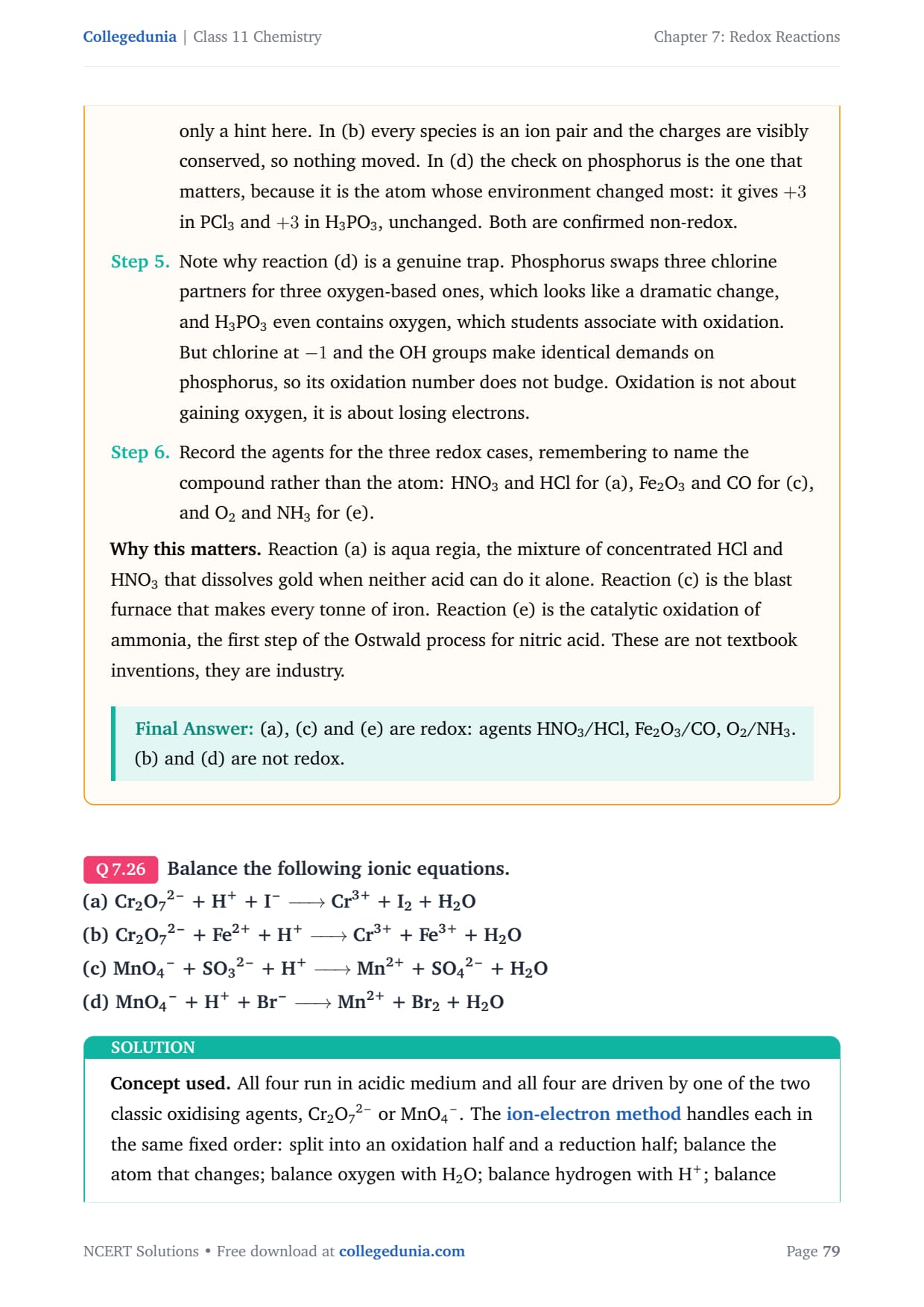
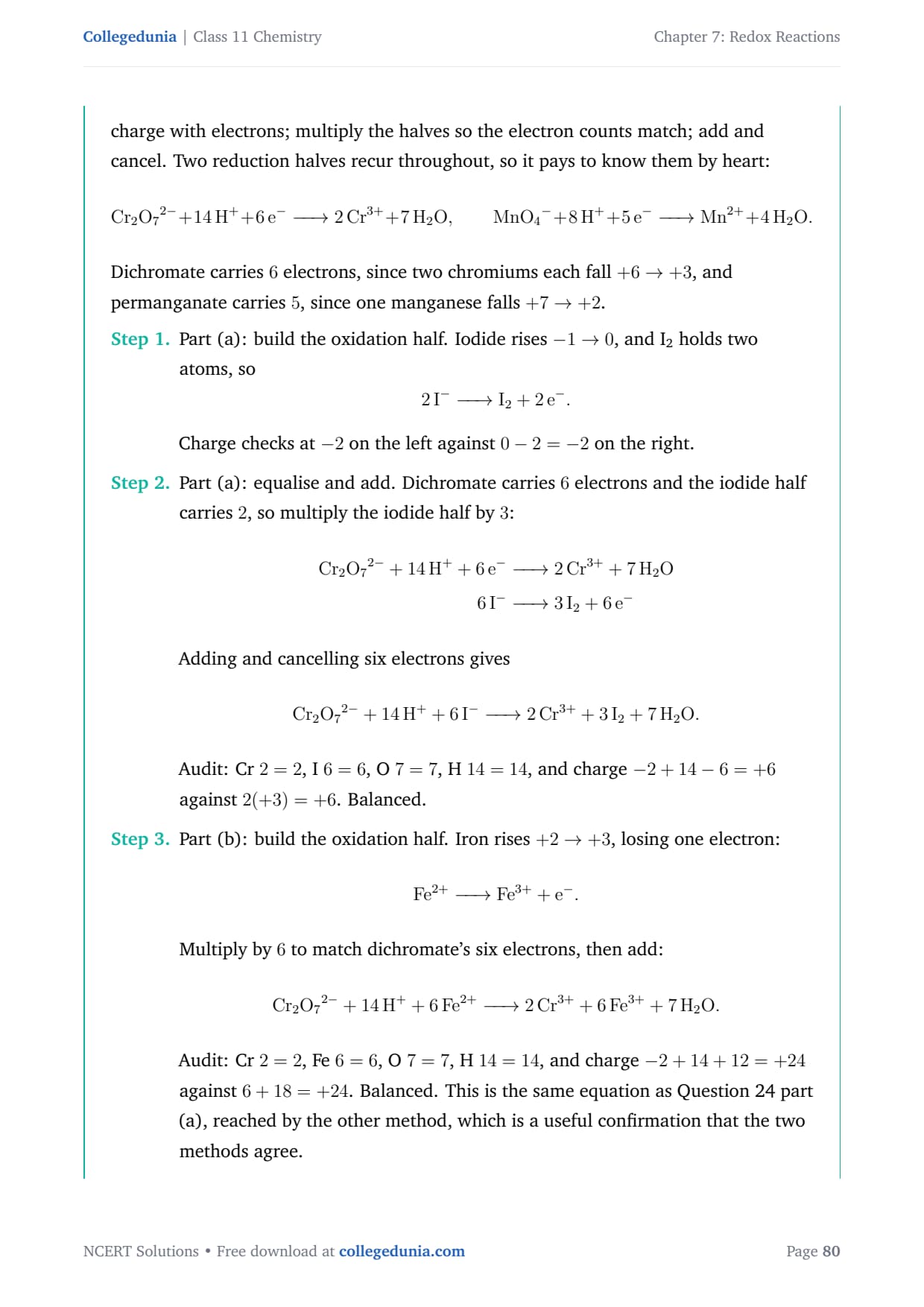
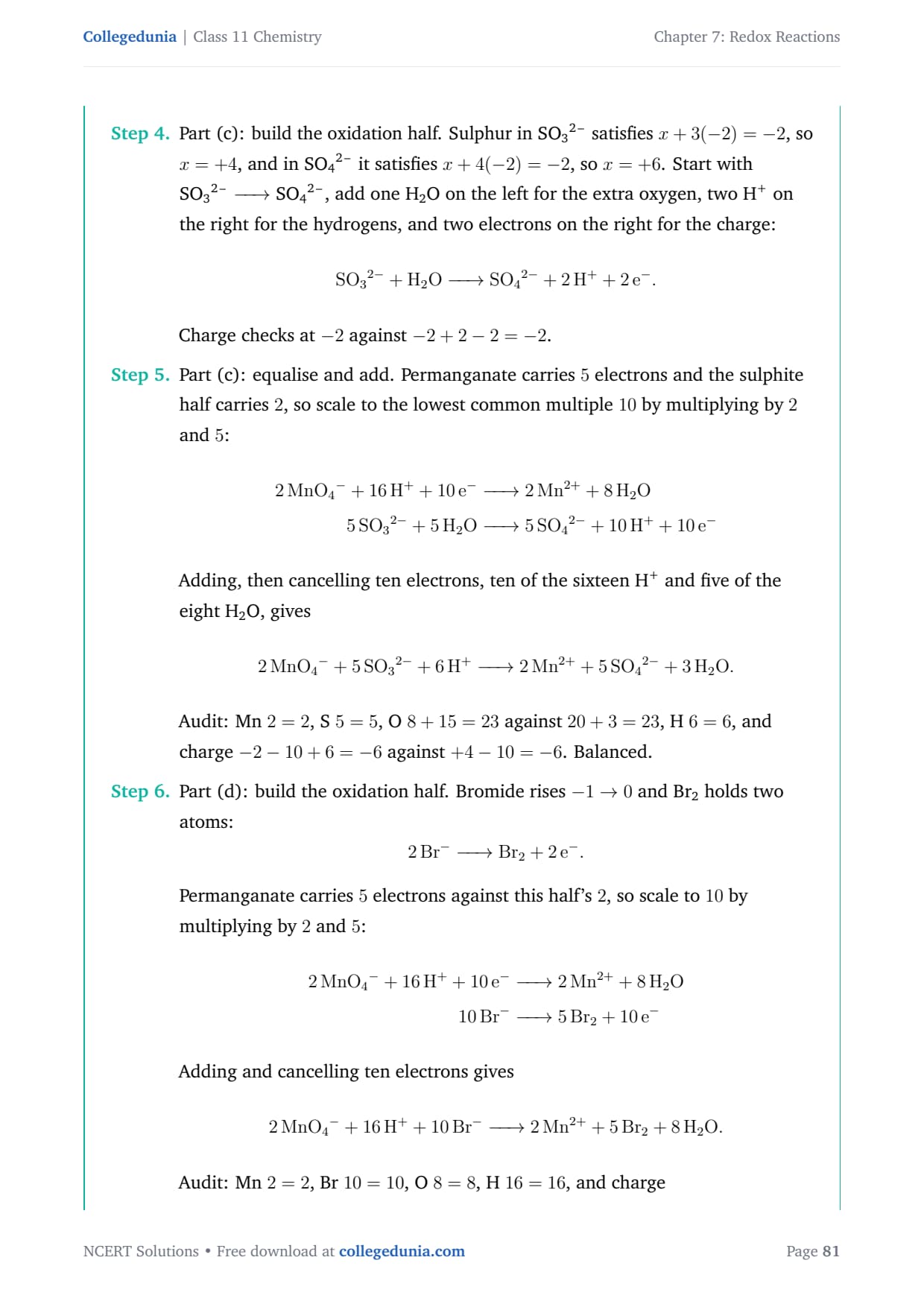
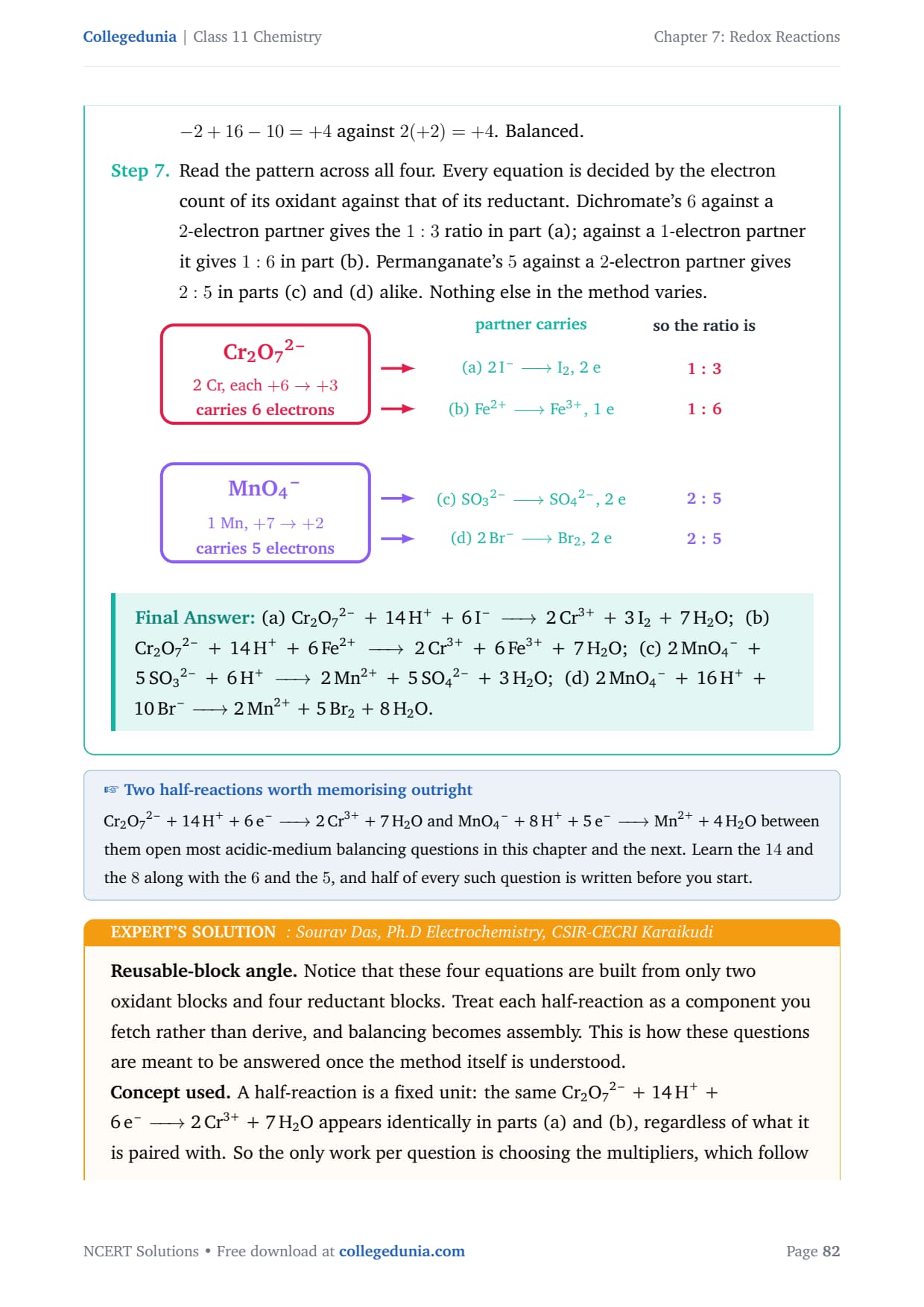
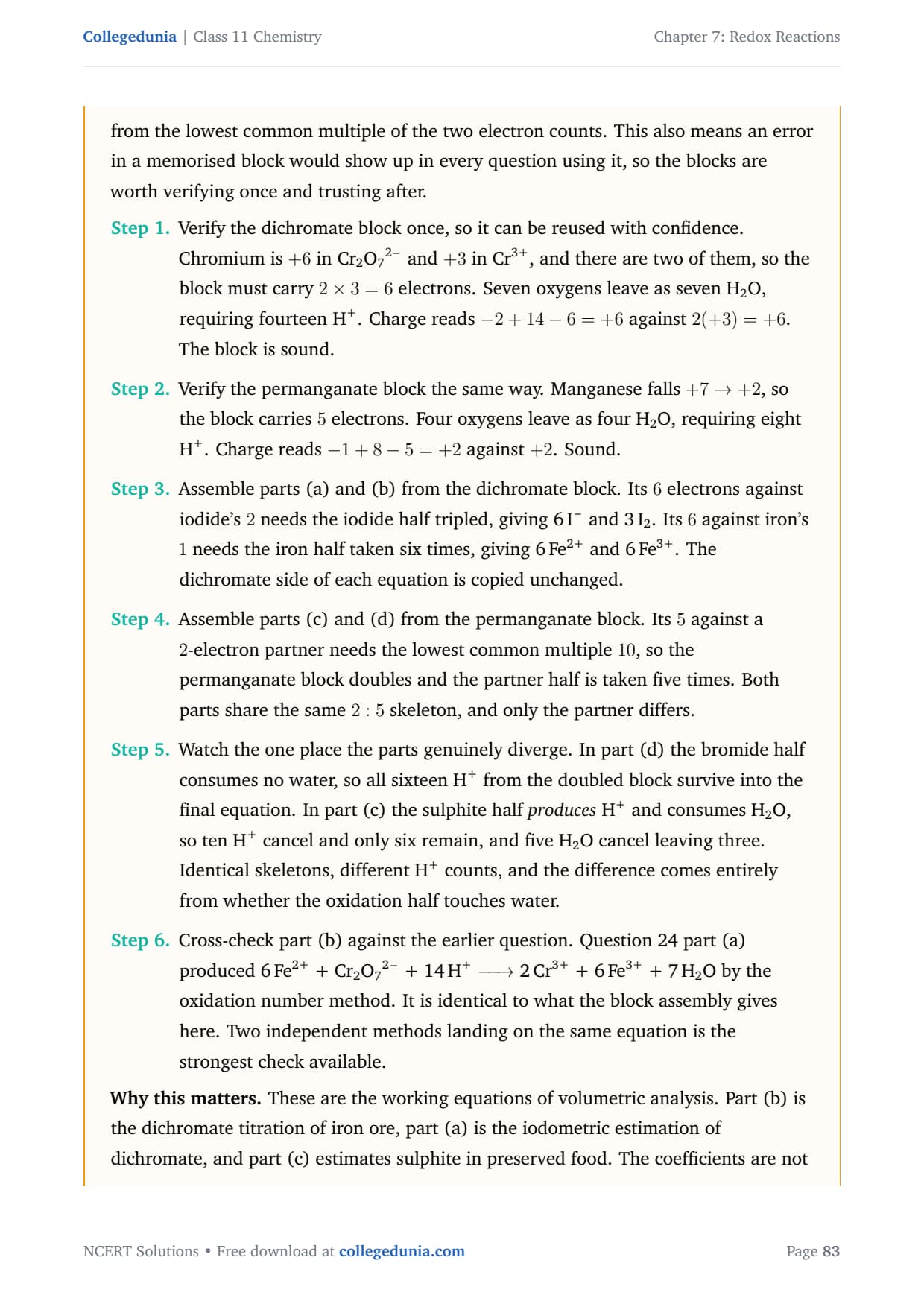
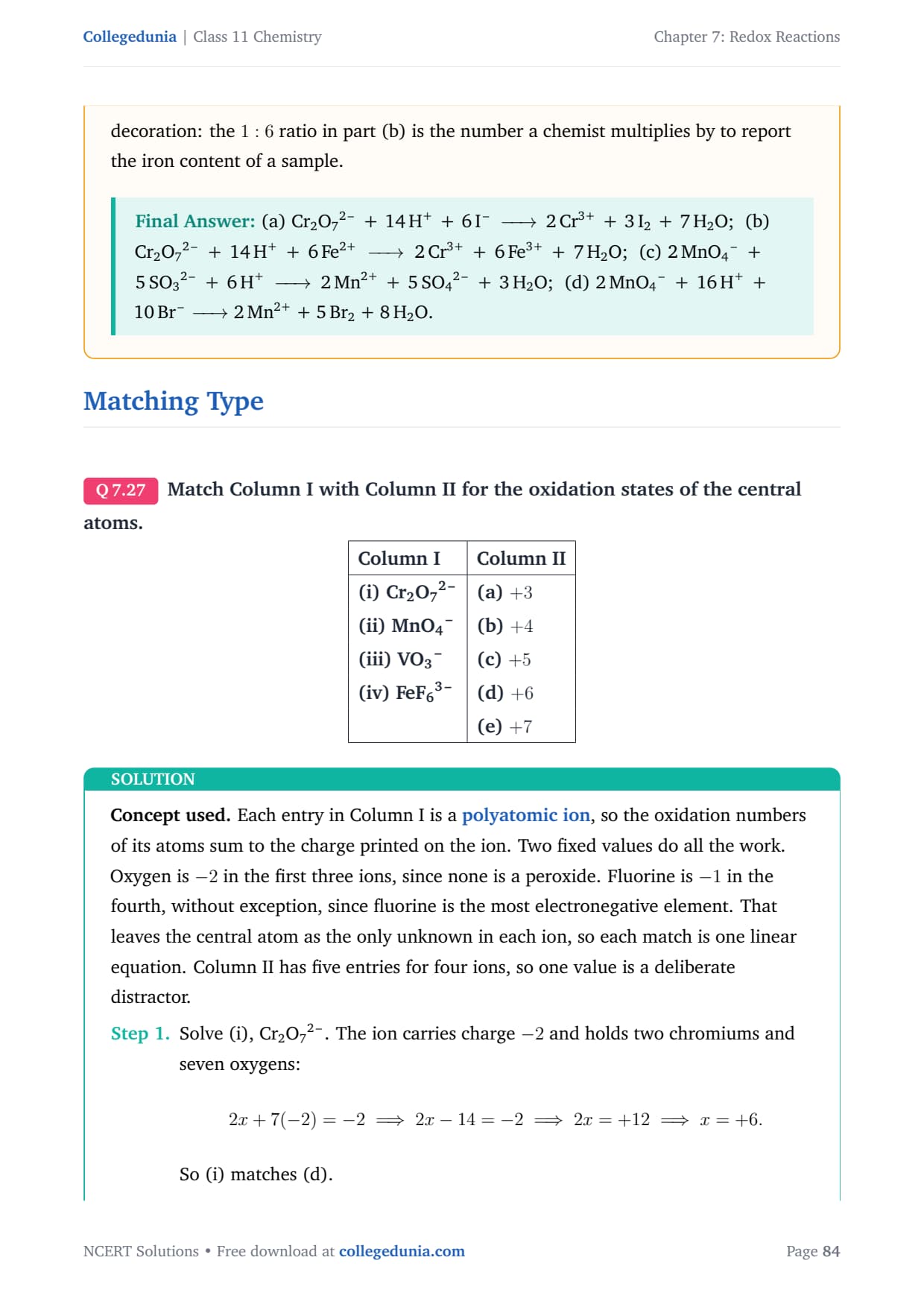
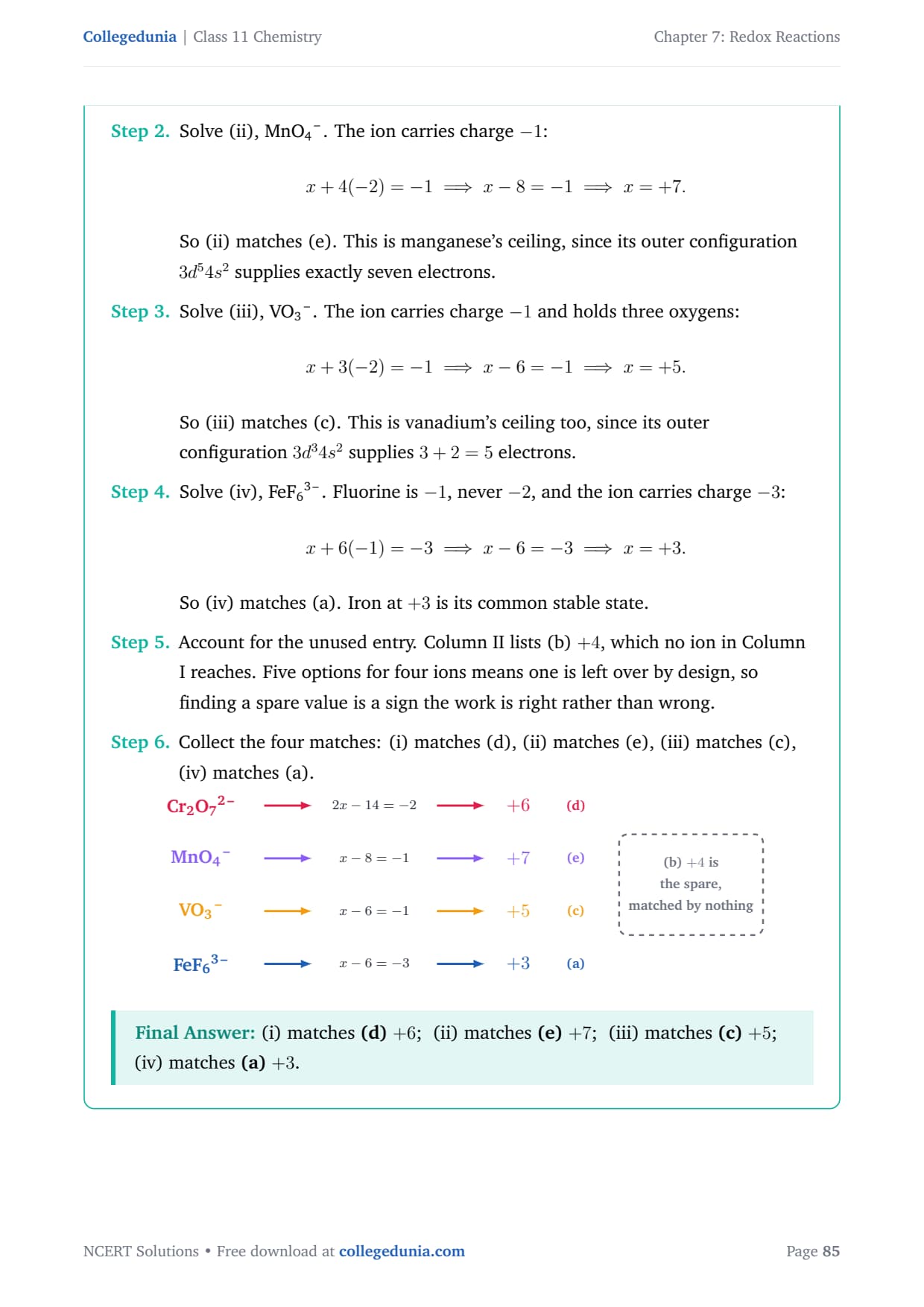
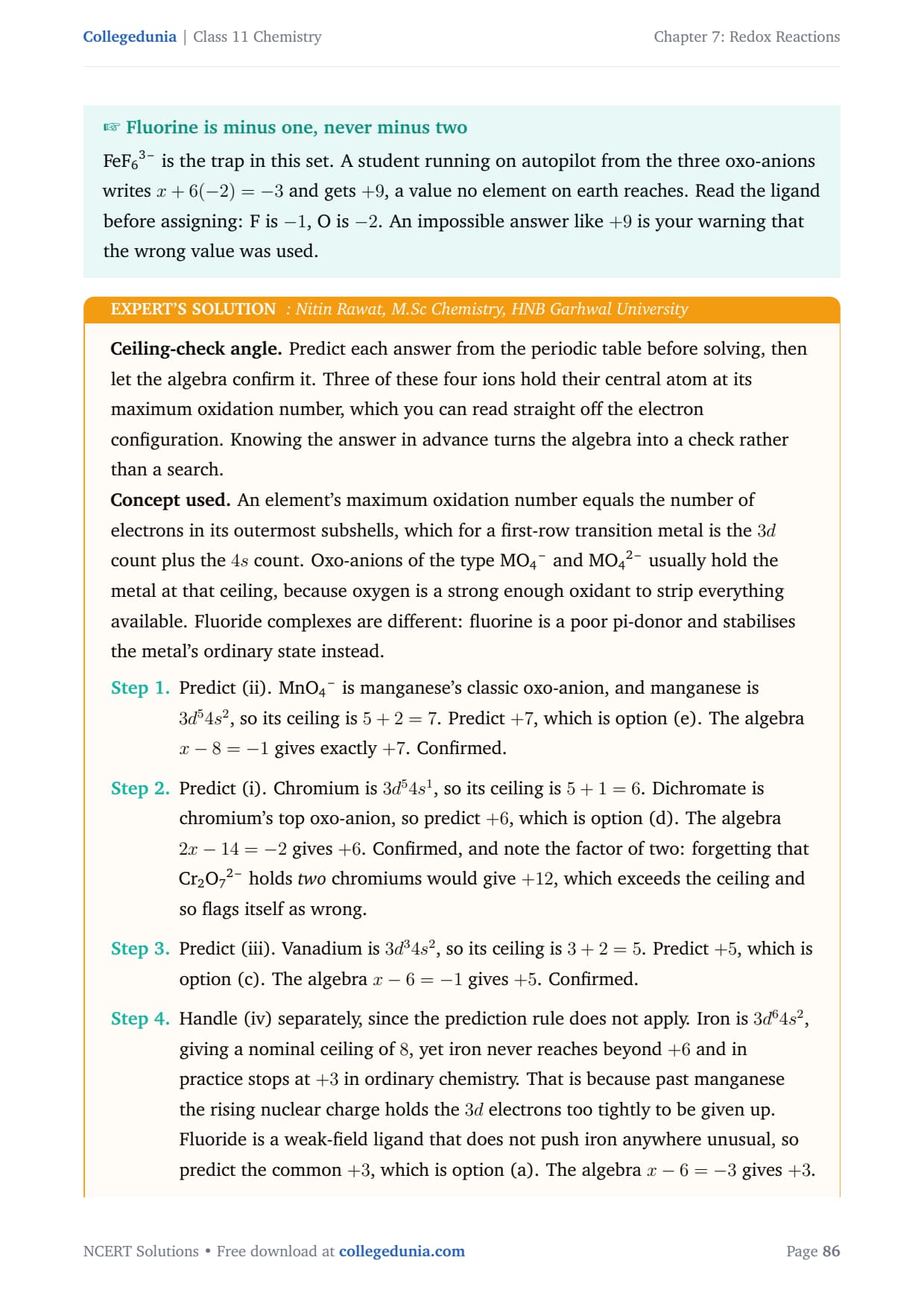
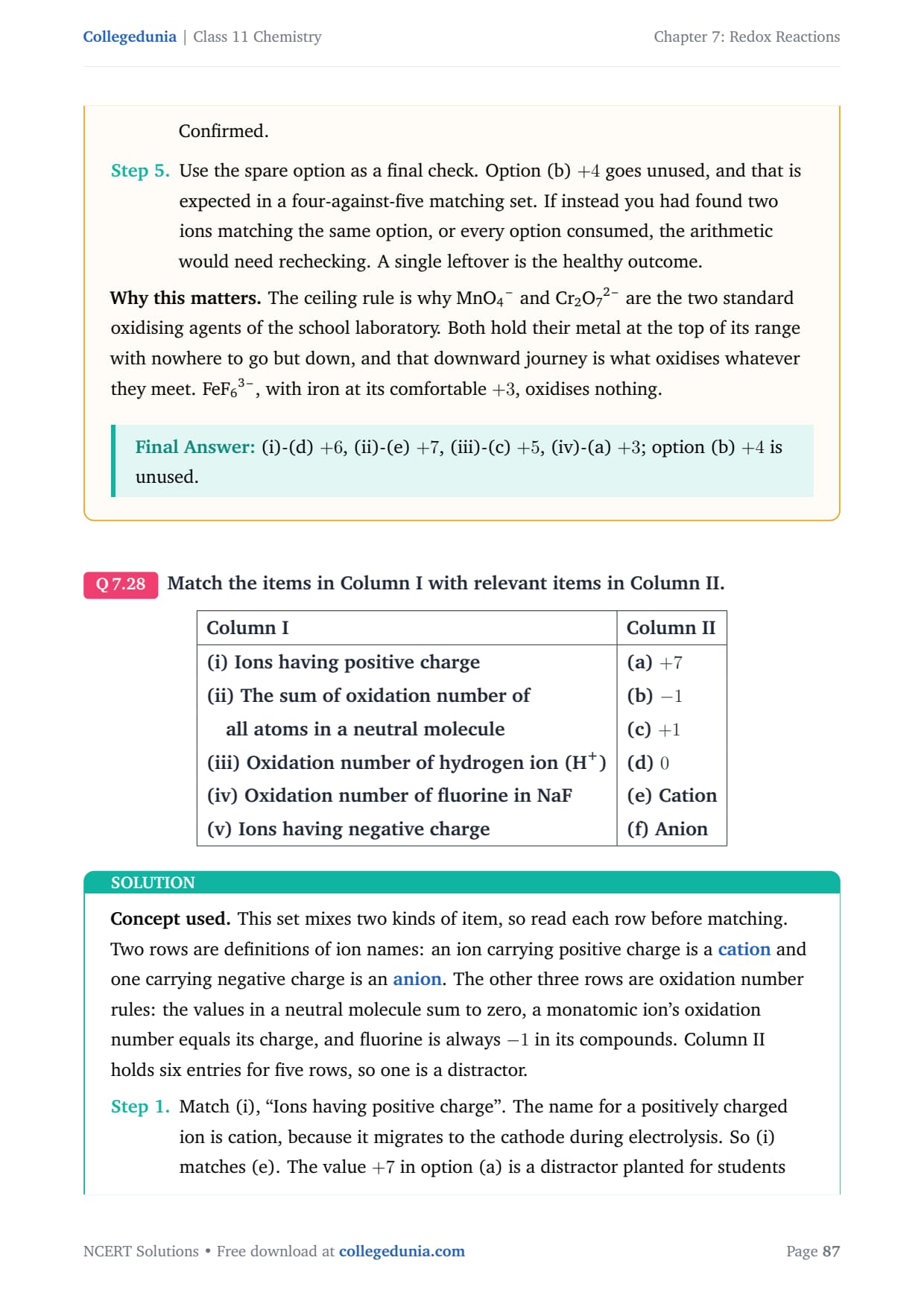
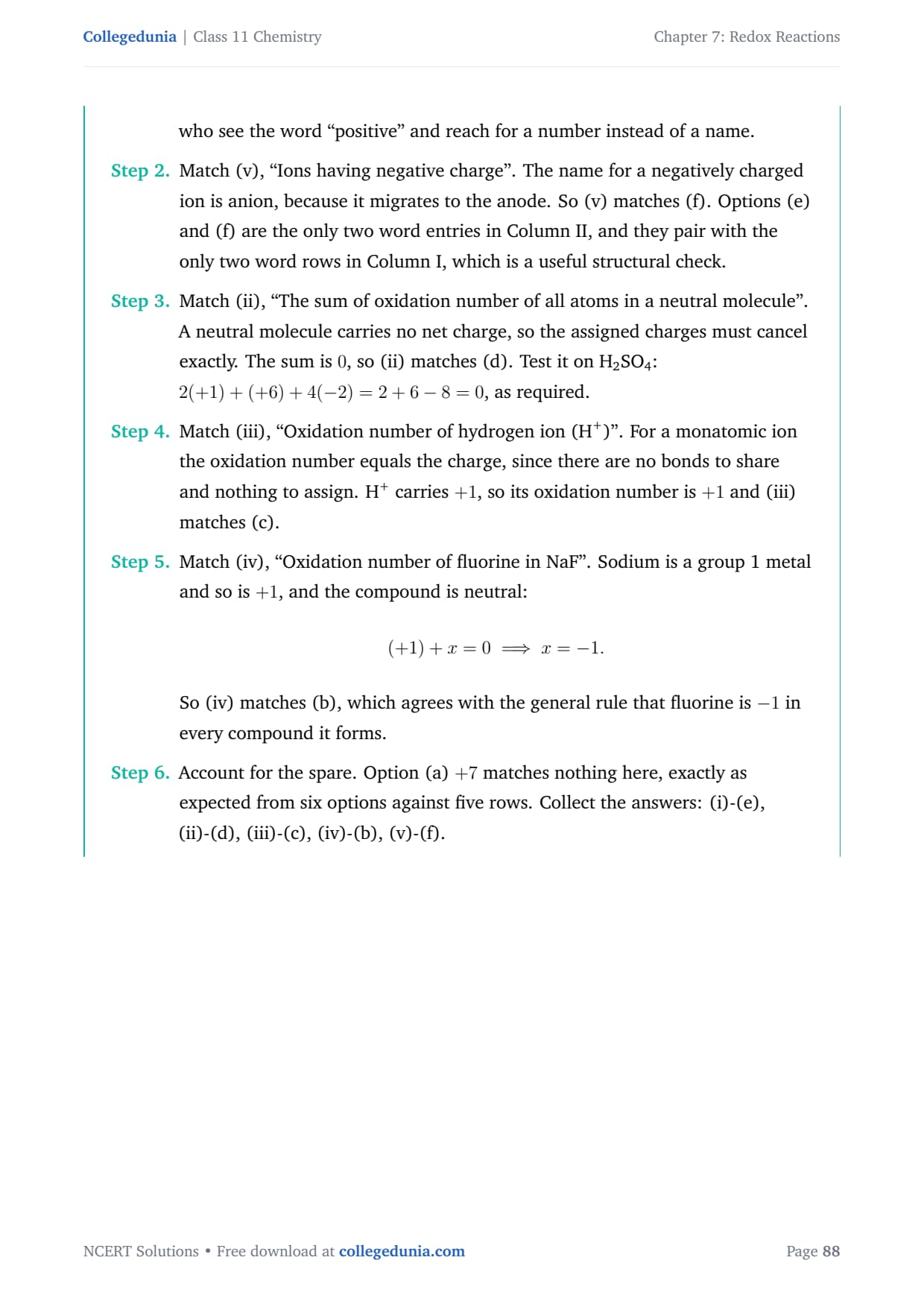
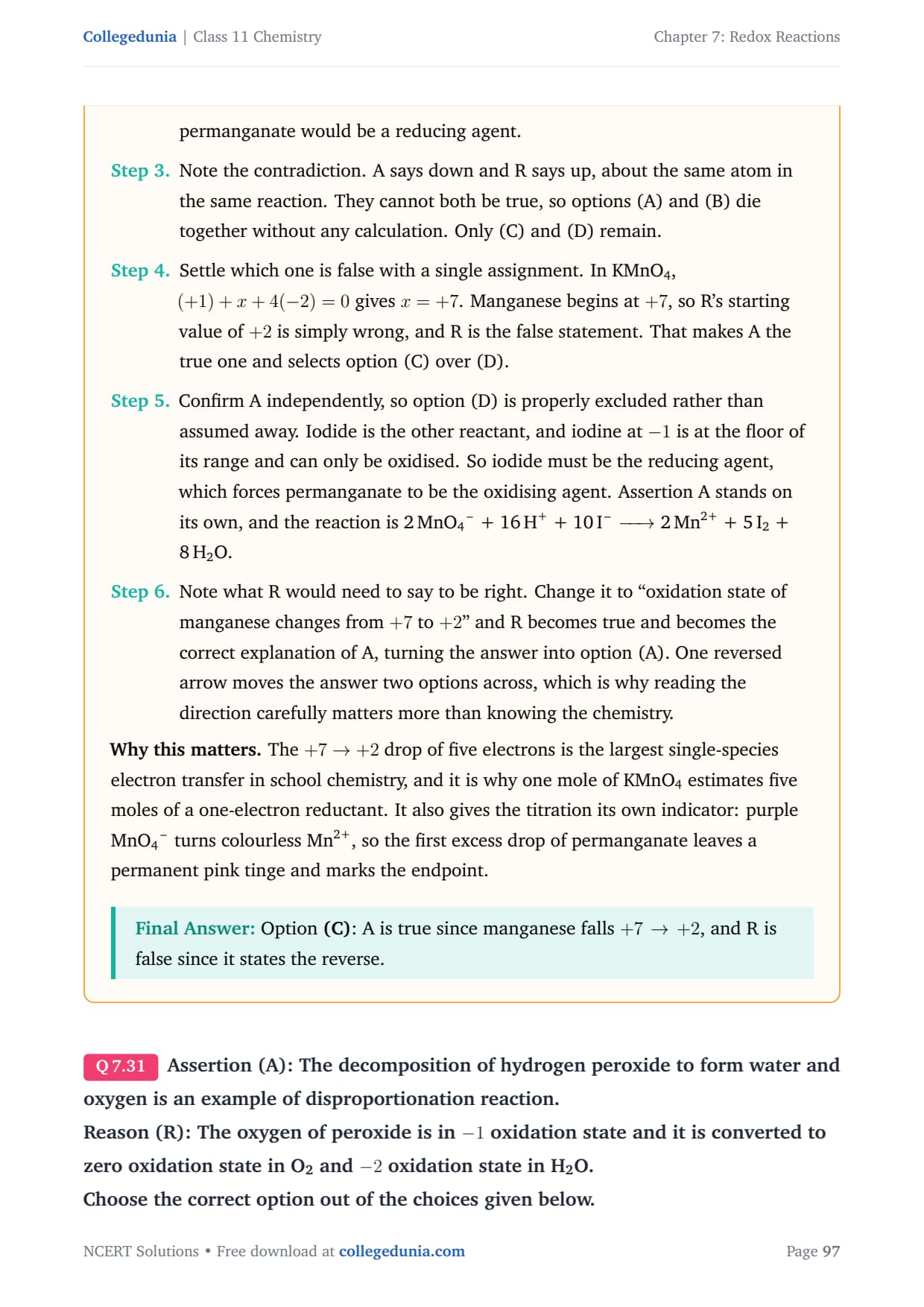
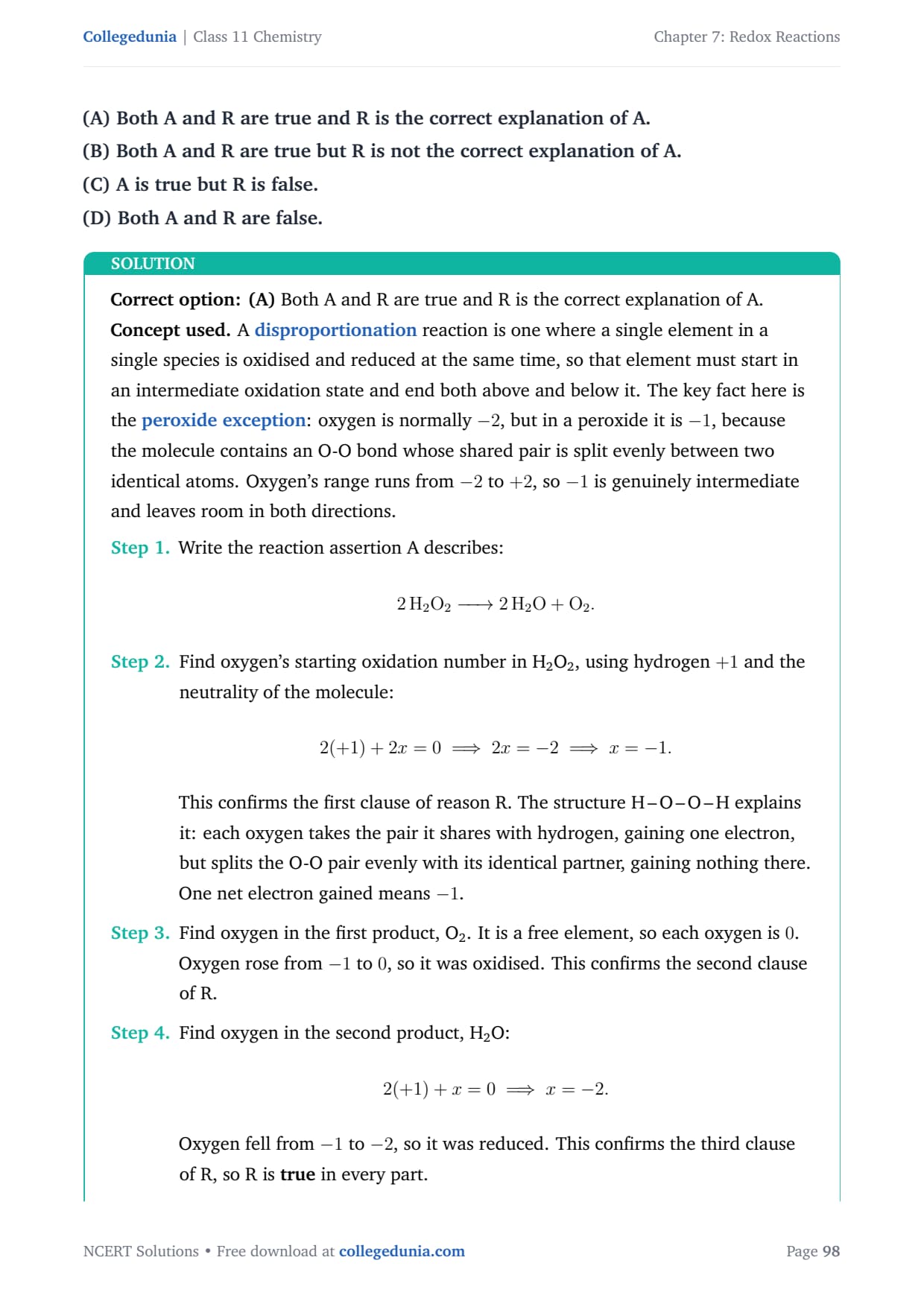
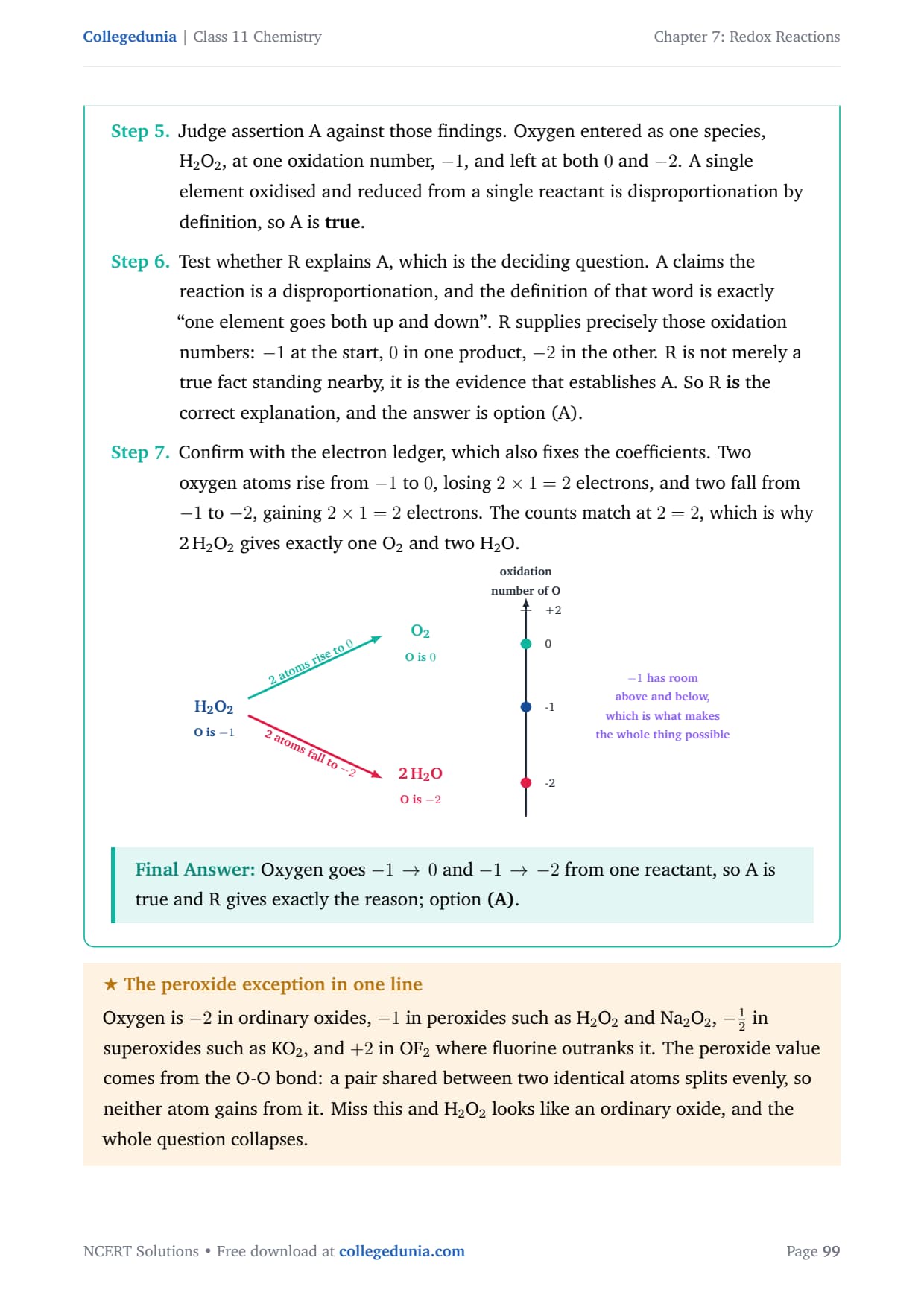
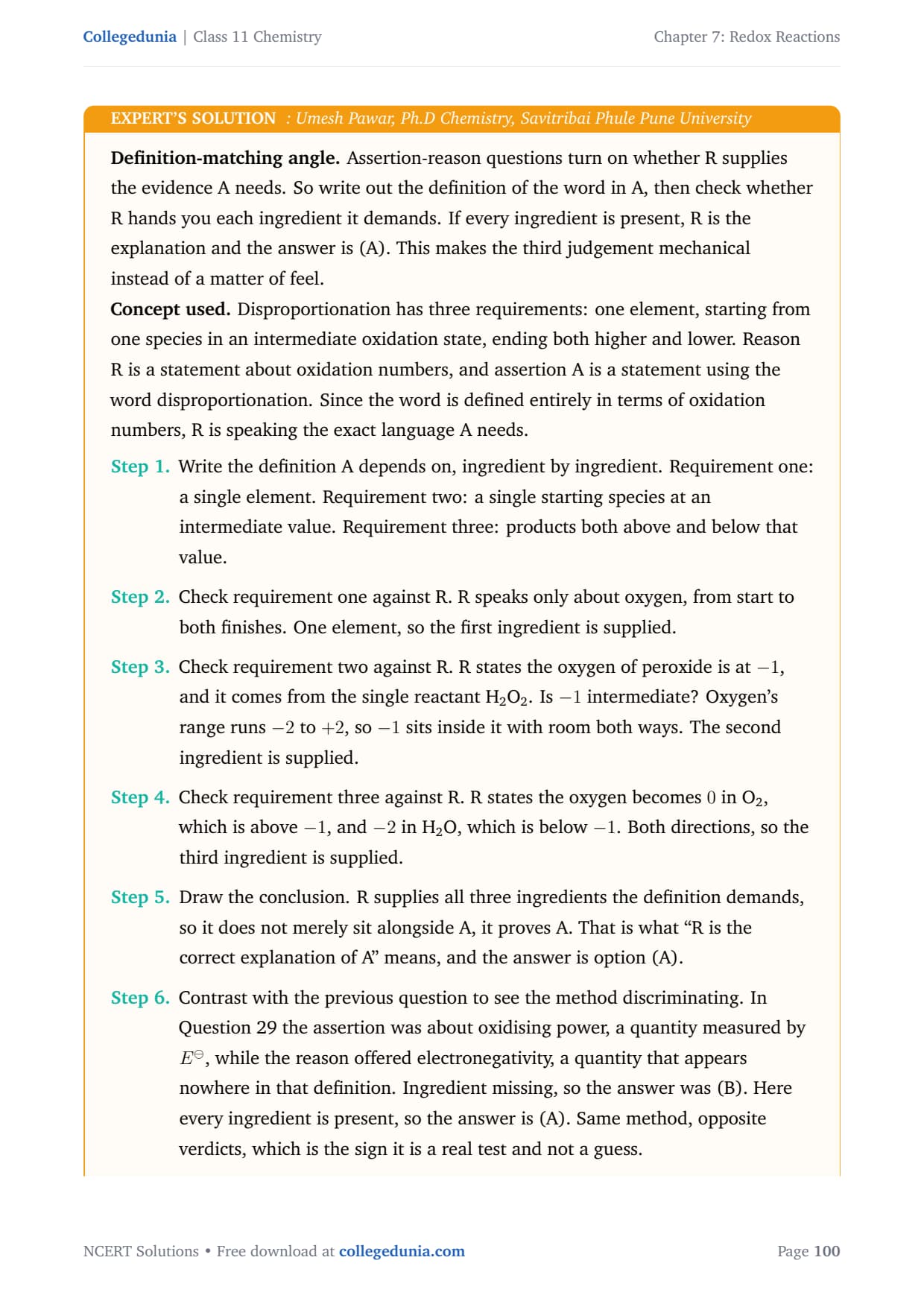
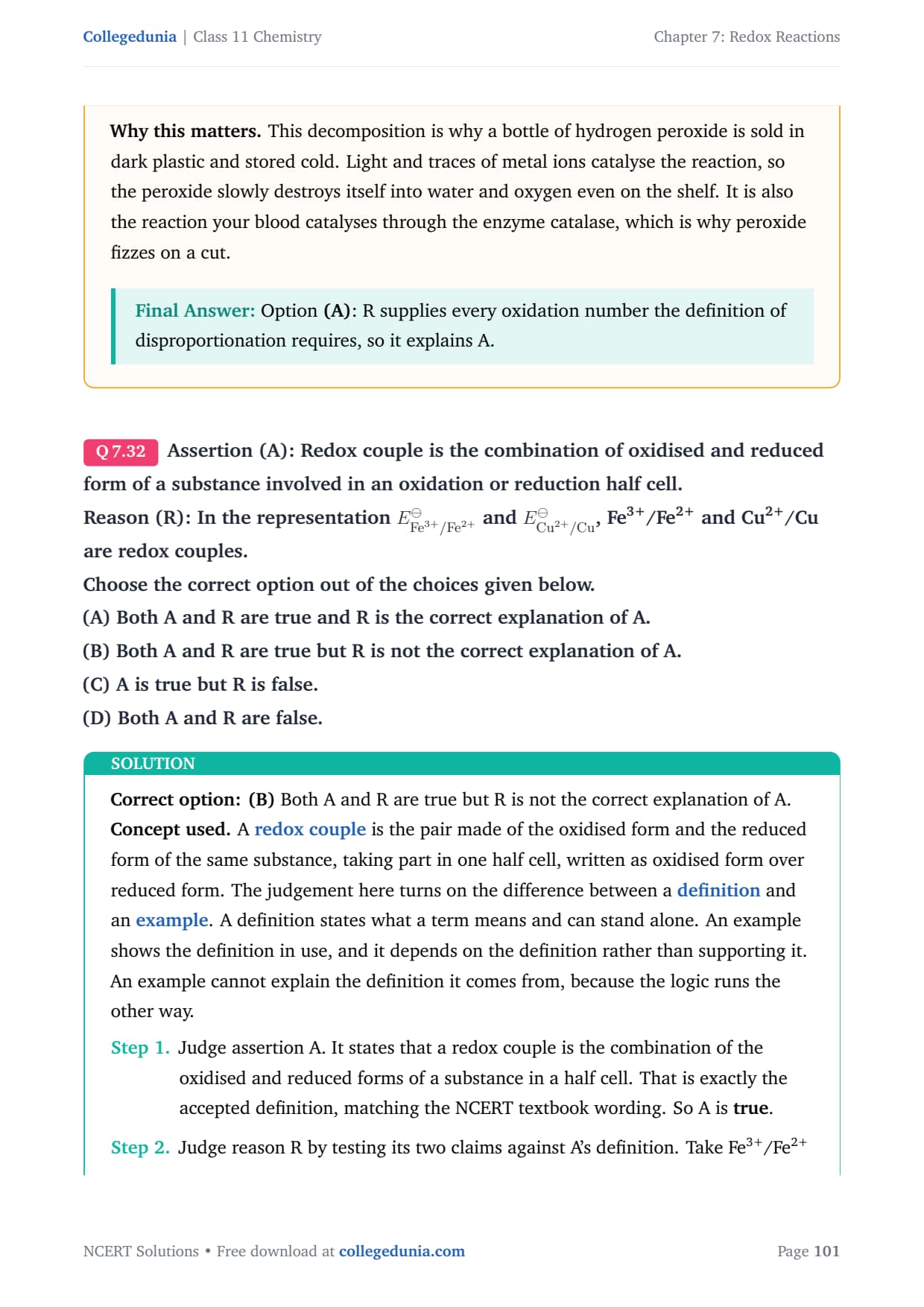
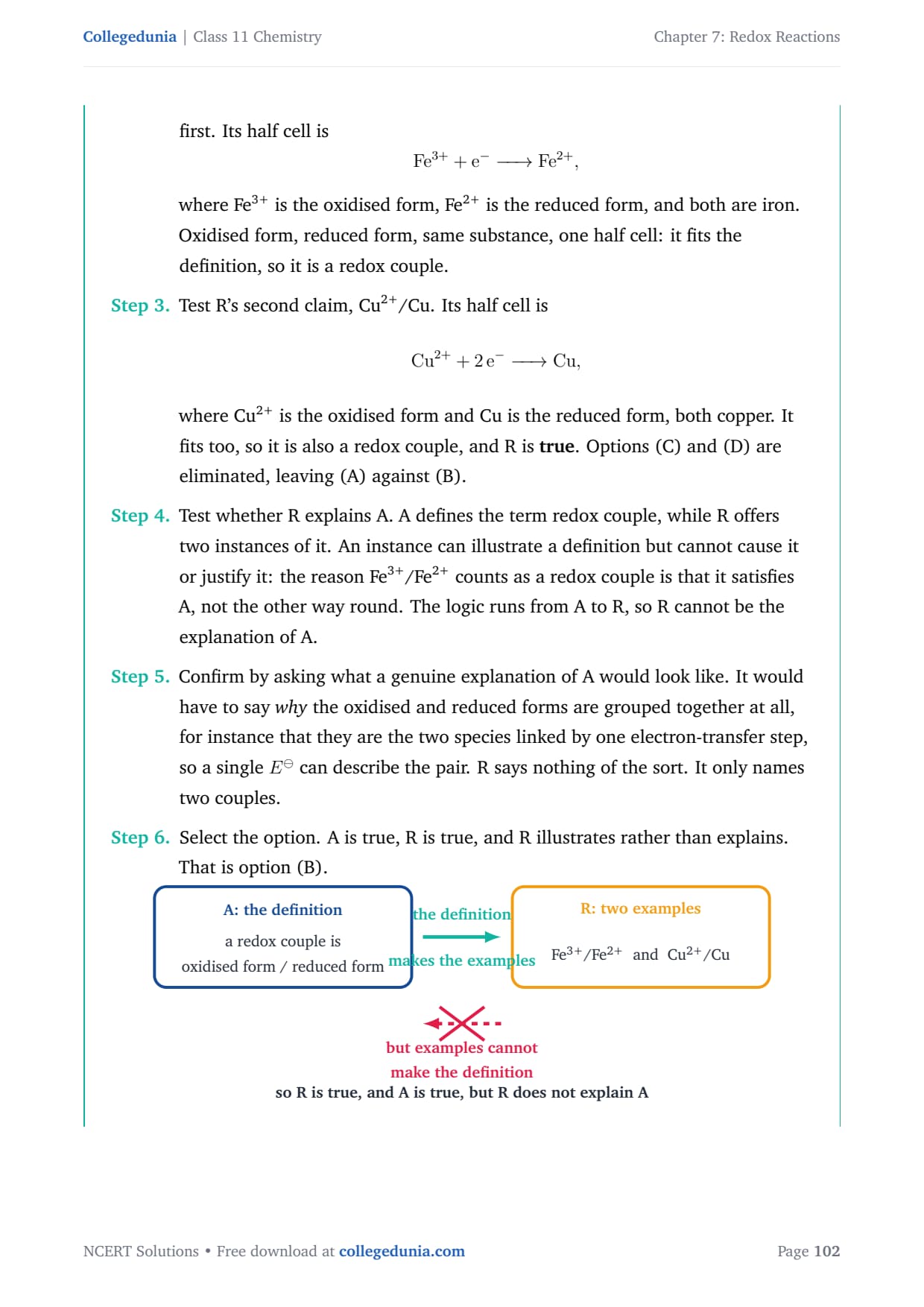
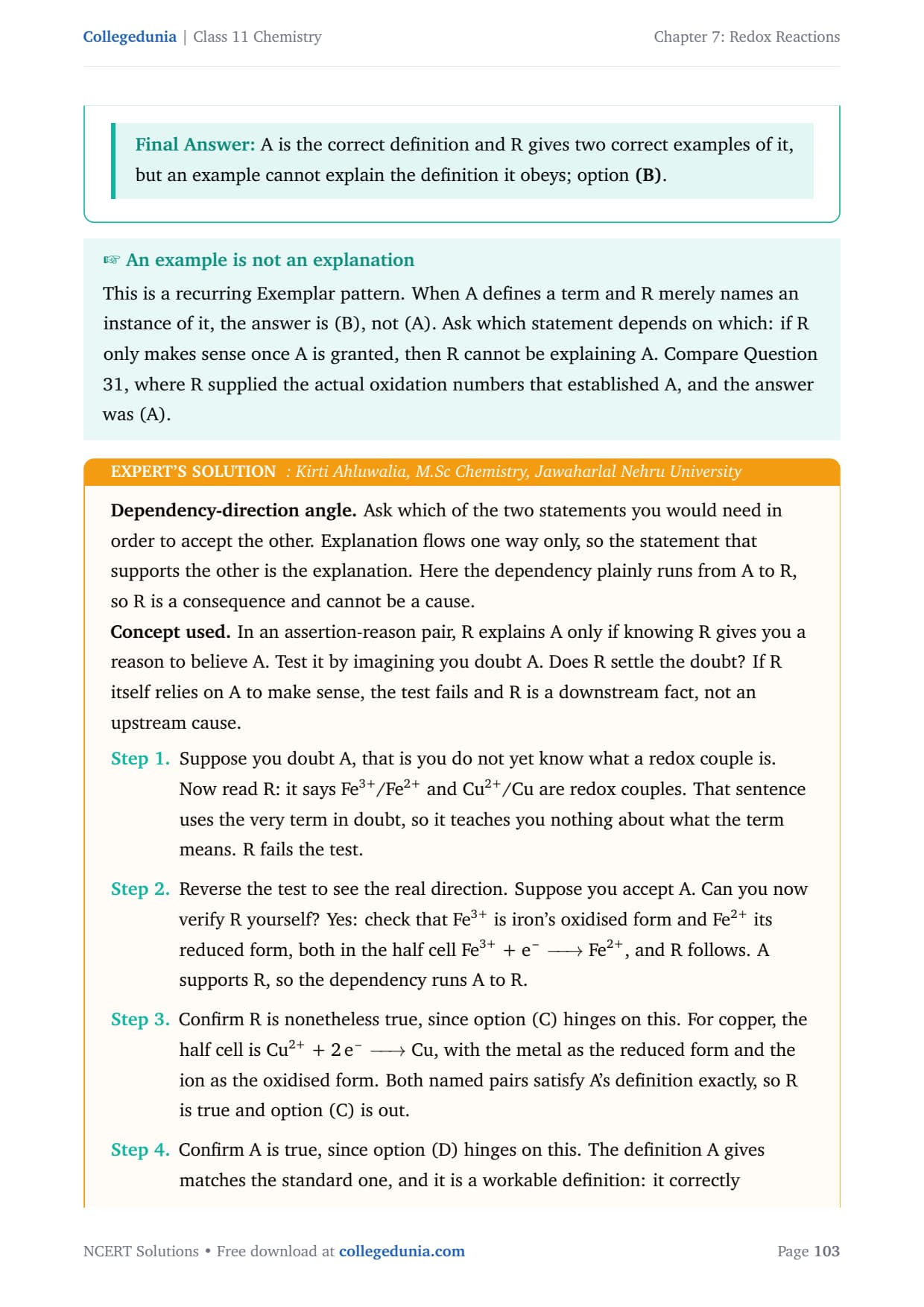
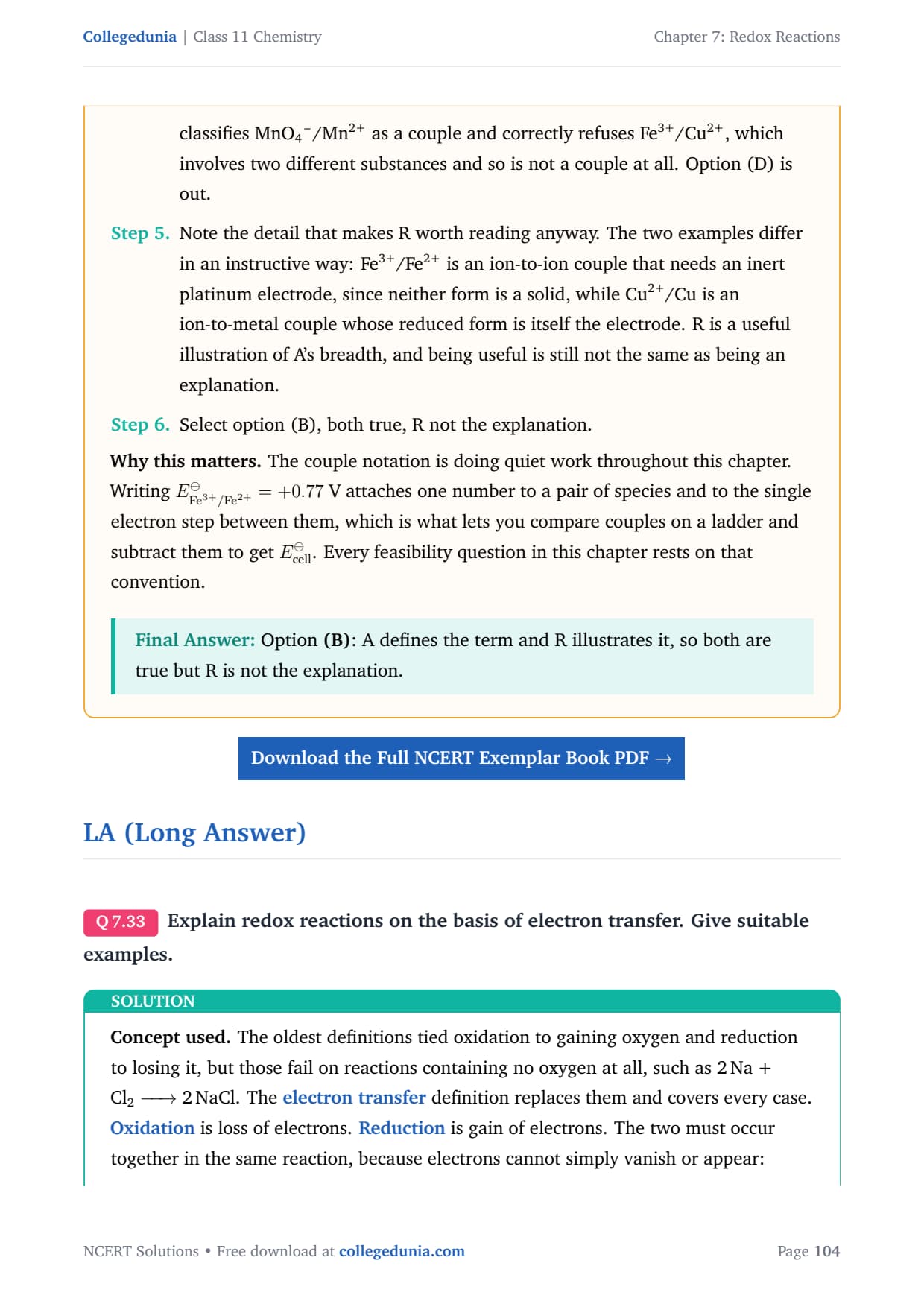
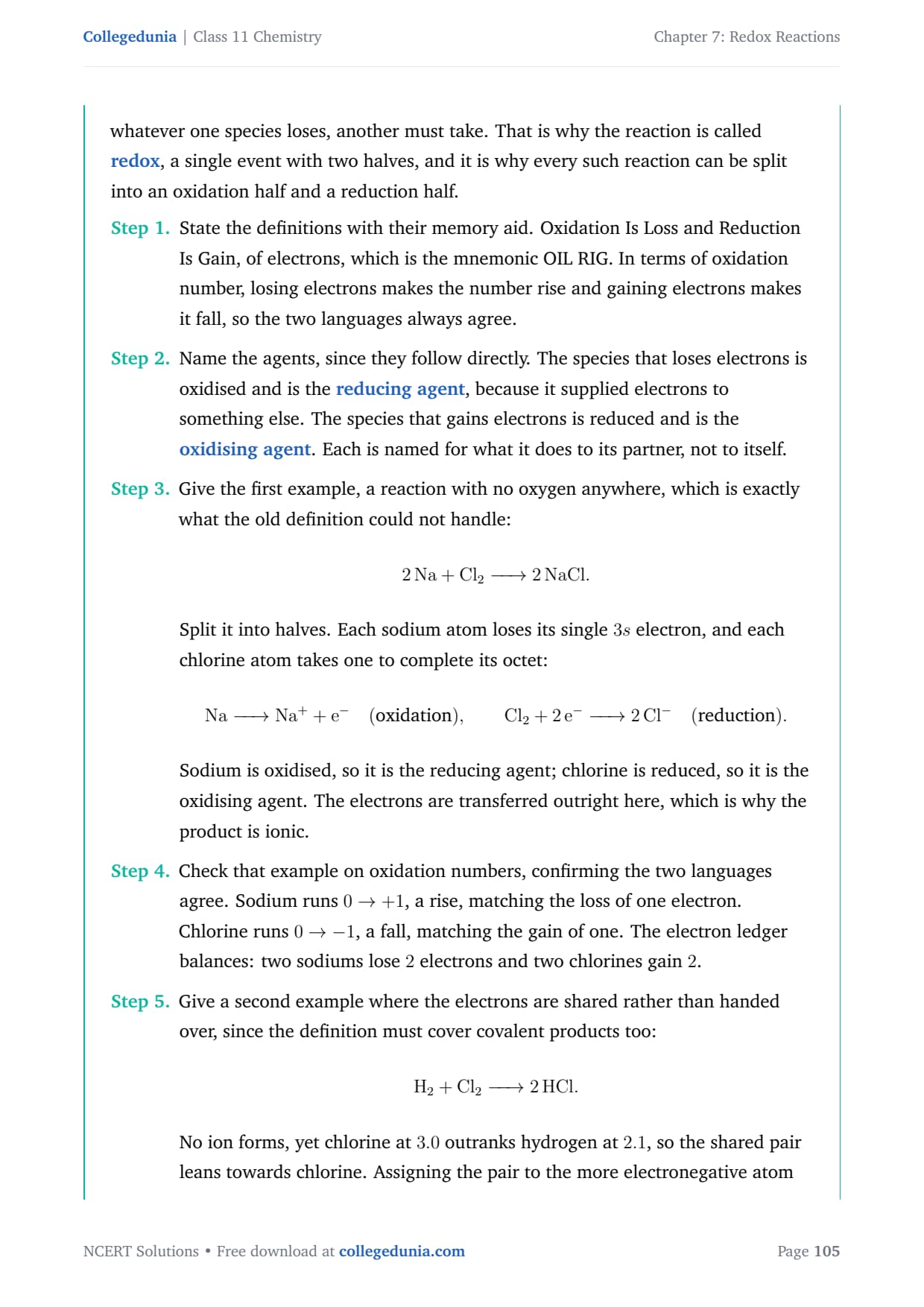
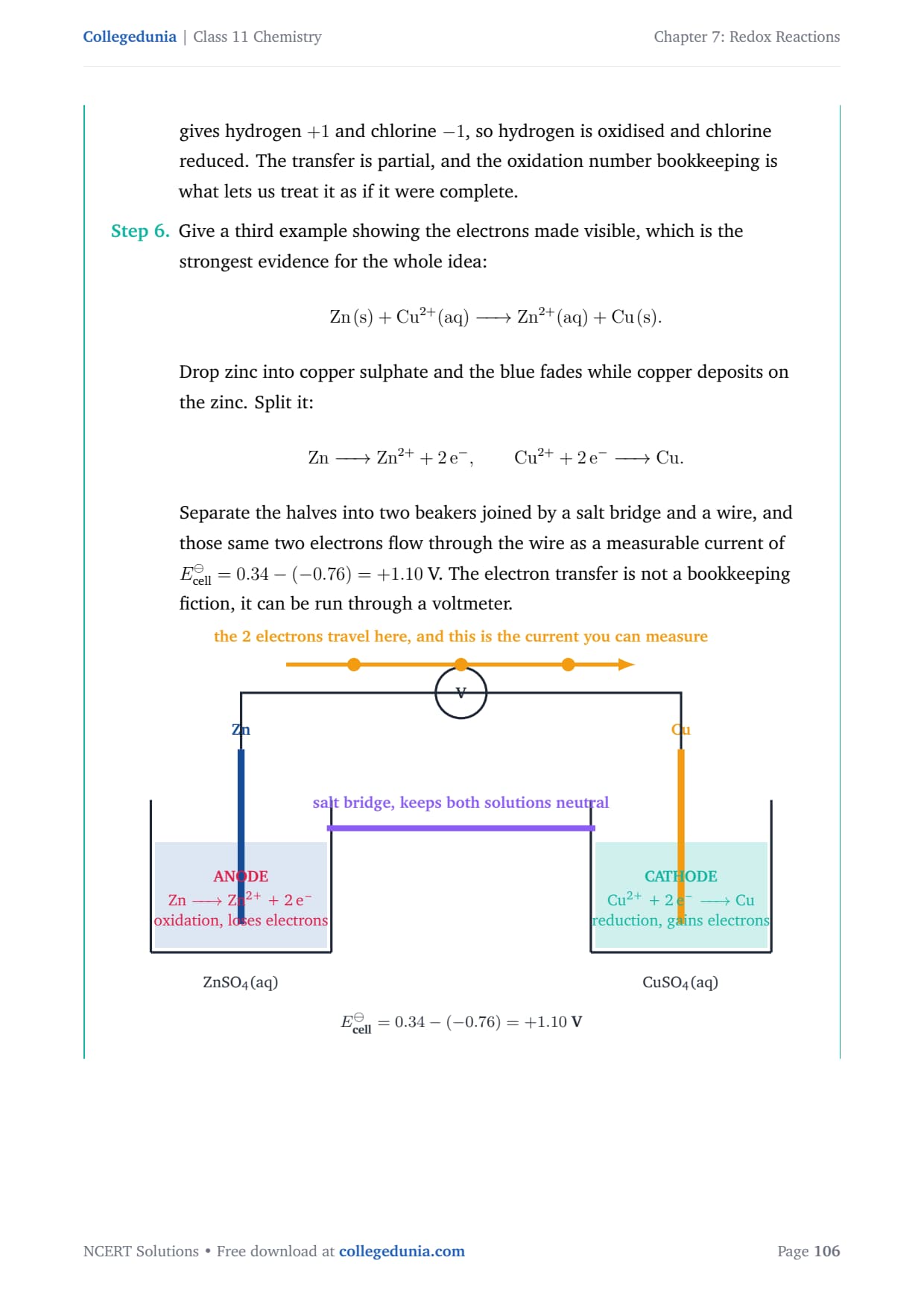
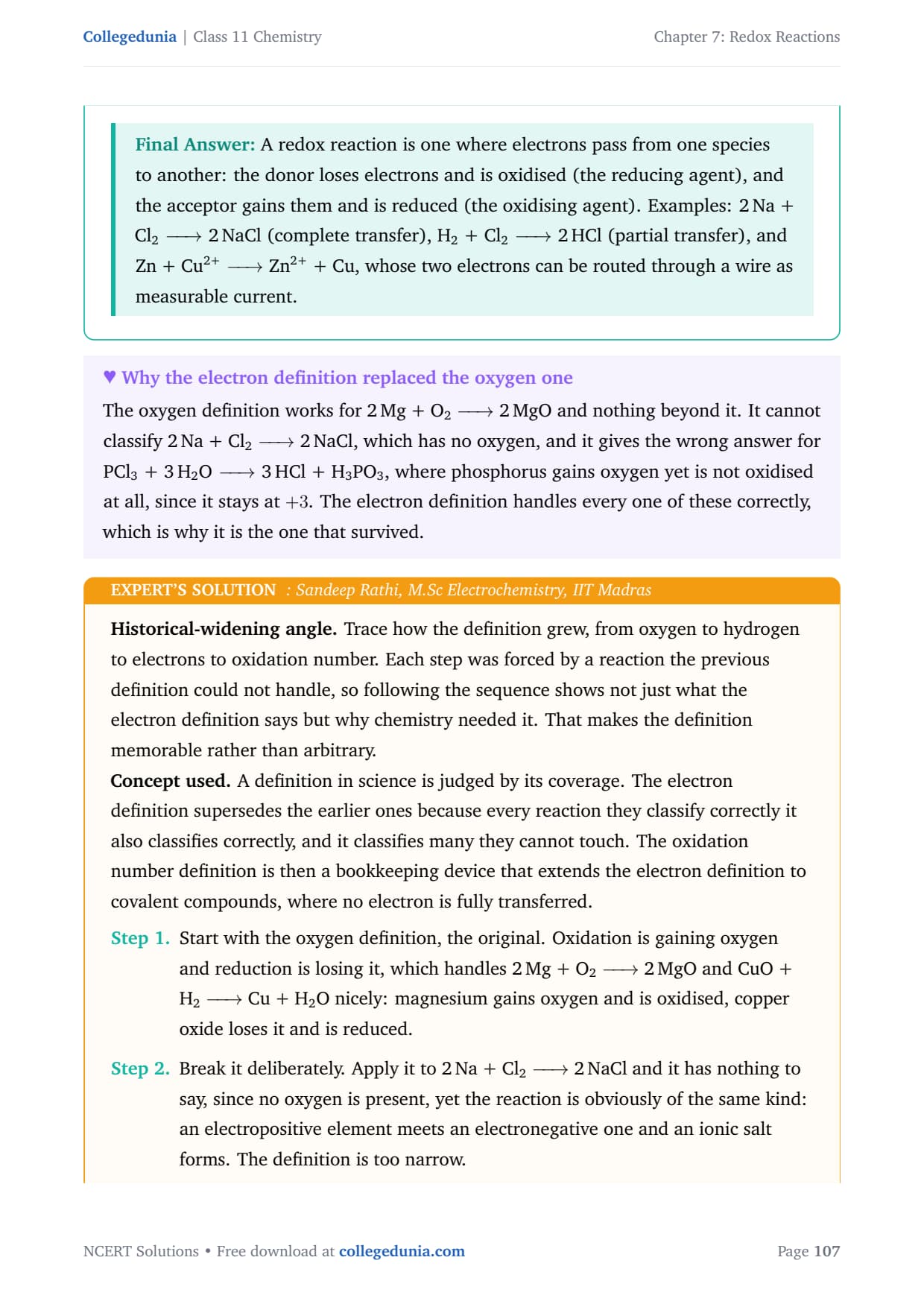
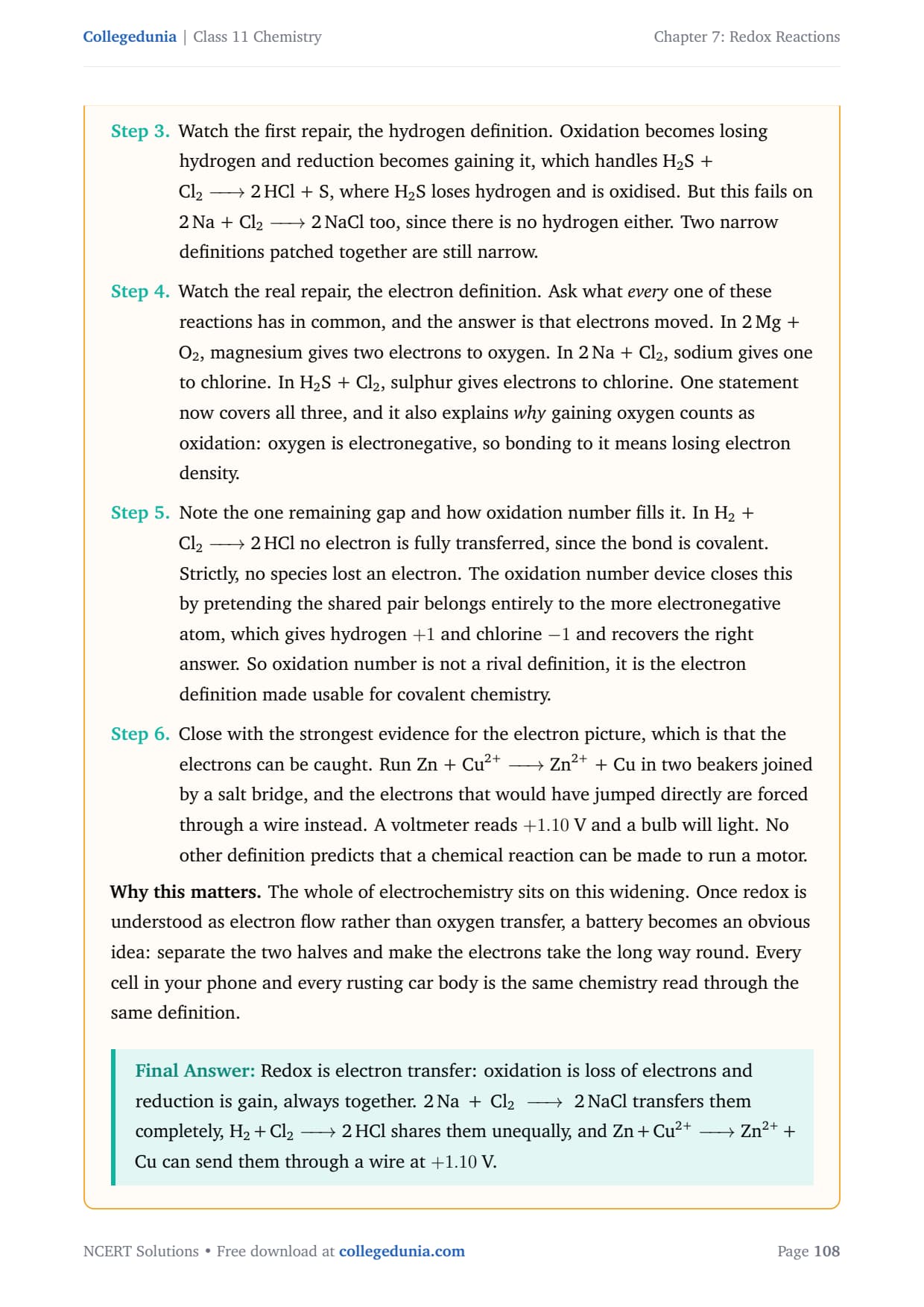
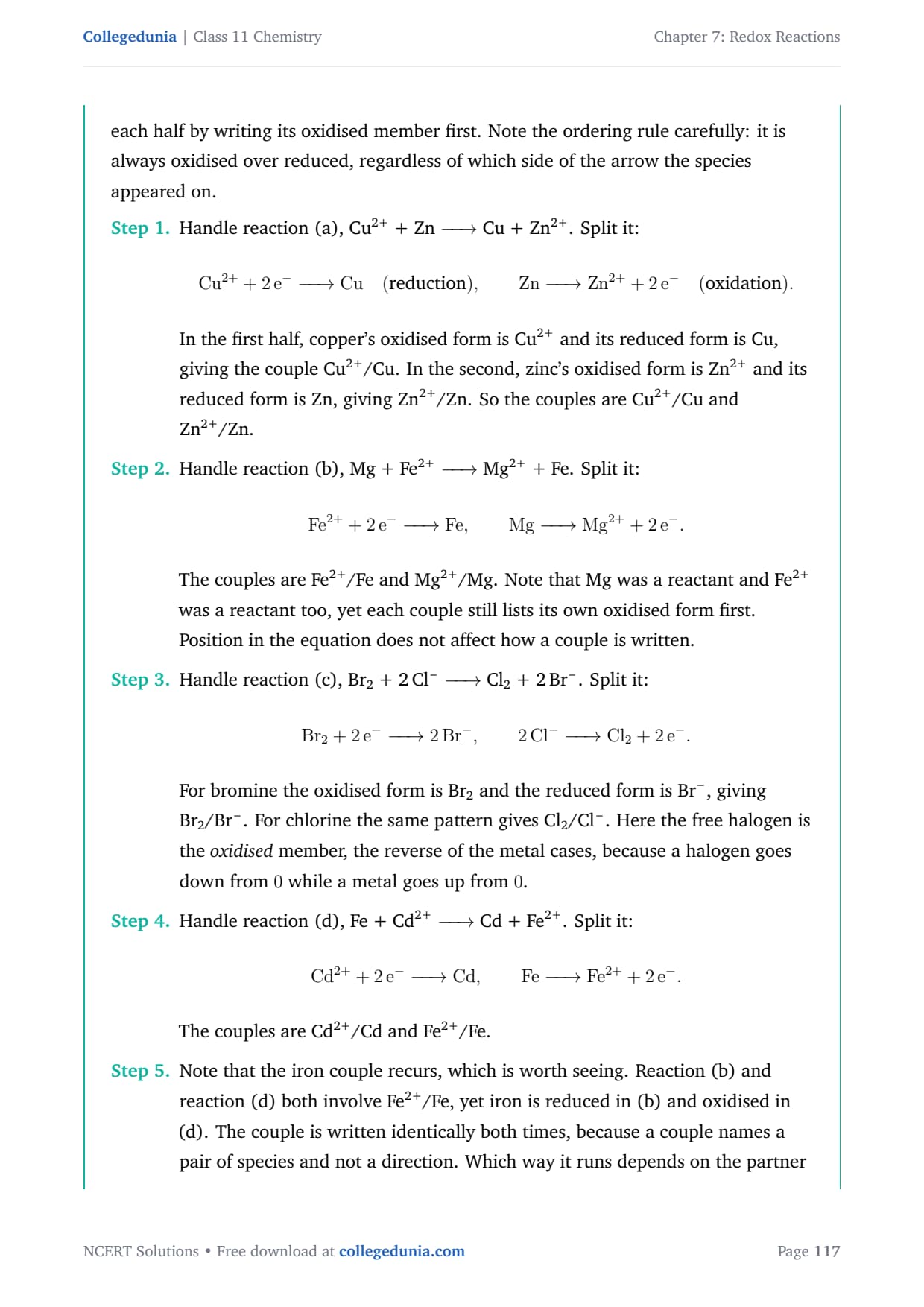
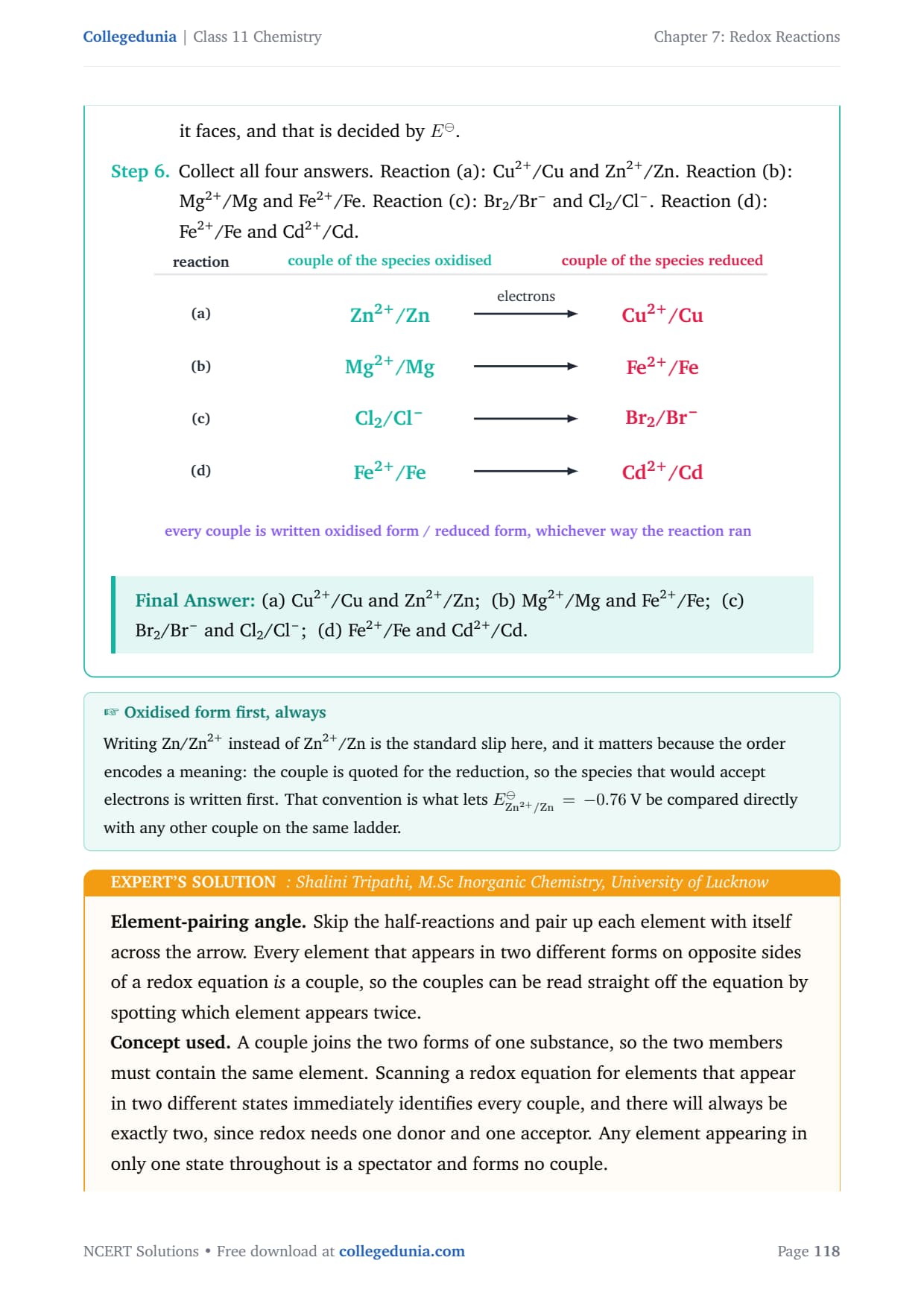
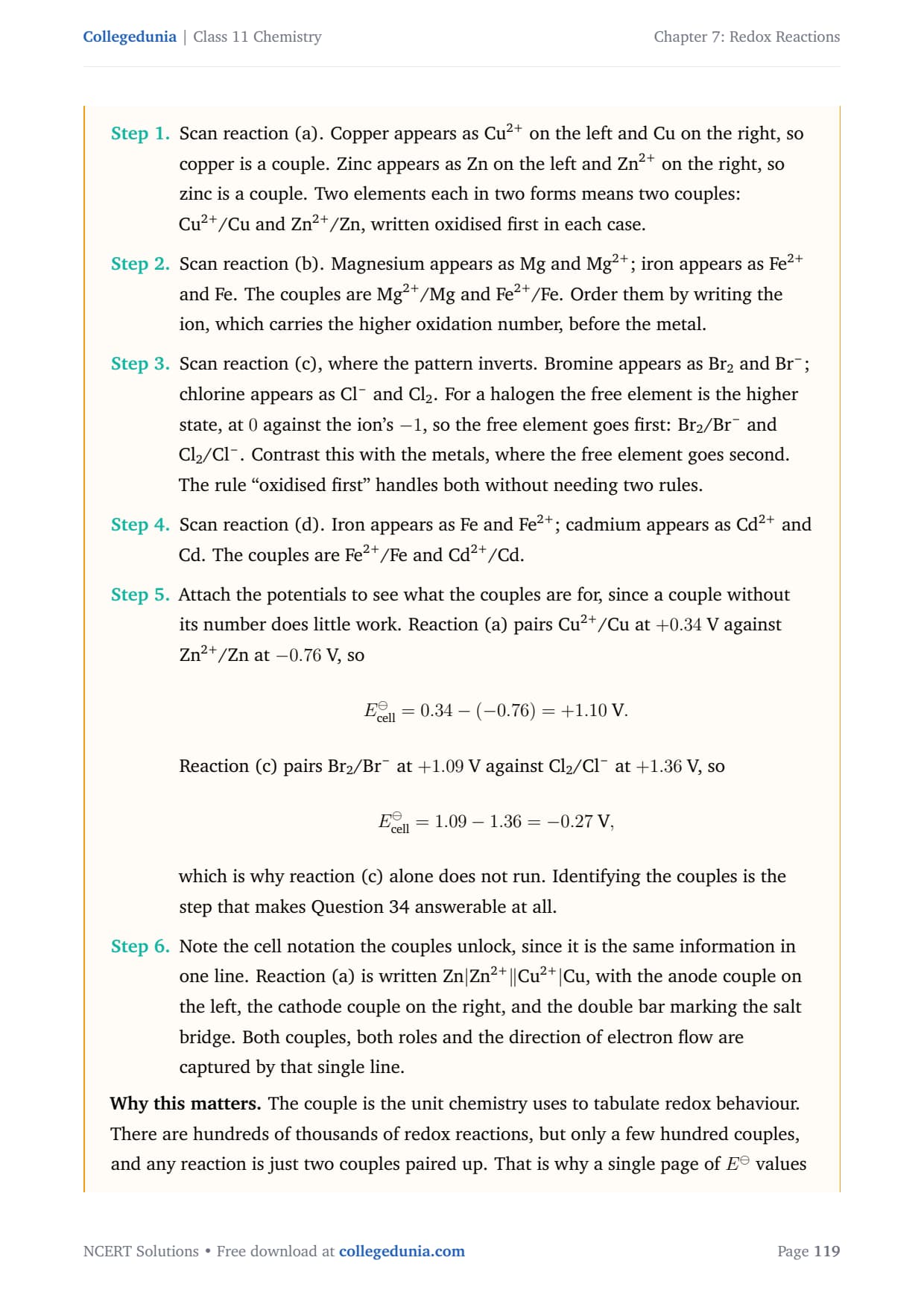
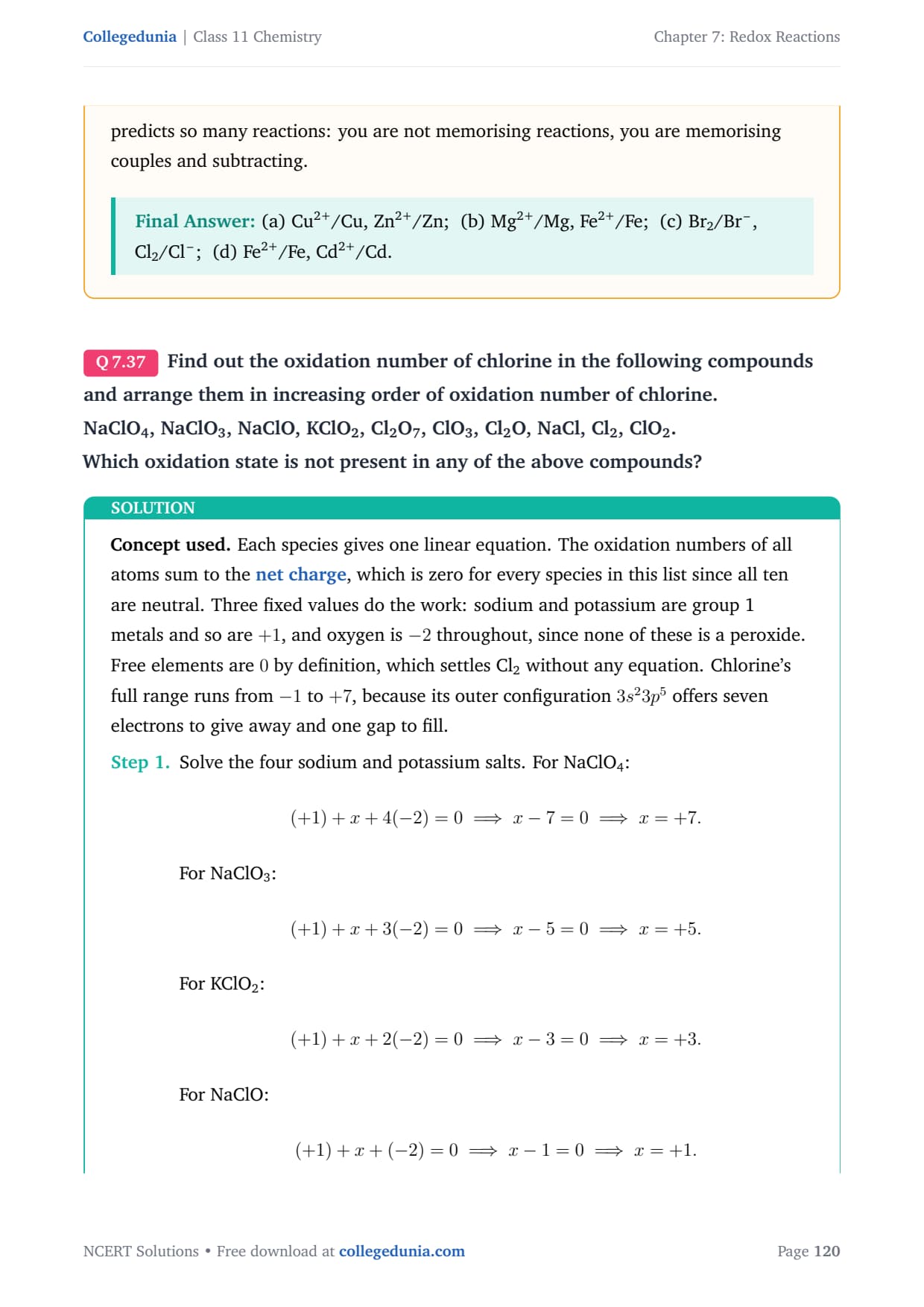
Every reaction here is a story about electrons changing owner. One species hands electrons over and is oxidised, another takes them and is reduced. The Exemplar pushes that idea into oxidation-number algebra, equation balancing and electrode potentials, which is far past the textbook exercise.
- CBSE Weightage: 4 to 6 marks, usually one balancing question and one oxidation-number calculation
- JEE Main Weightage: 1 to 2 questions per year, mostly oxidation numbers and electrode potential comparisons
- NEET Weightage: 1 question per year, generally on oxidising agents or disproportionation
Every solution is checked against the official NCERT Exemplar key, and the three printing errors in this chapter are worked out in full.
Why Chapter 7 Appears as Unit 8 in the Exemplar Book
Students often open the Exemplar and cannot find Redox Reactions at Chapter 7. The printed Exemplar still follows the older 14-unit edition, where this chapter sits as Unit 8. The textbook you study from numbers it Chapter 7. Same content, different unit number. Our solutions are built from that exact source unit, so the question numbers on this page match the book in your hand.
Topics Covered in the Class 11 Chemistry Redox Reactions Exemplar
The 38 questions rest on four skills. Each returns in Class 12 Electrochemistry, so the work here carries forward.
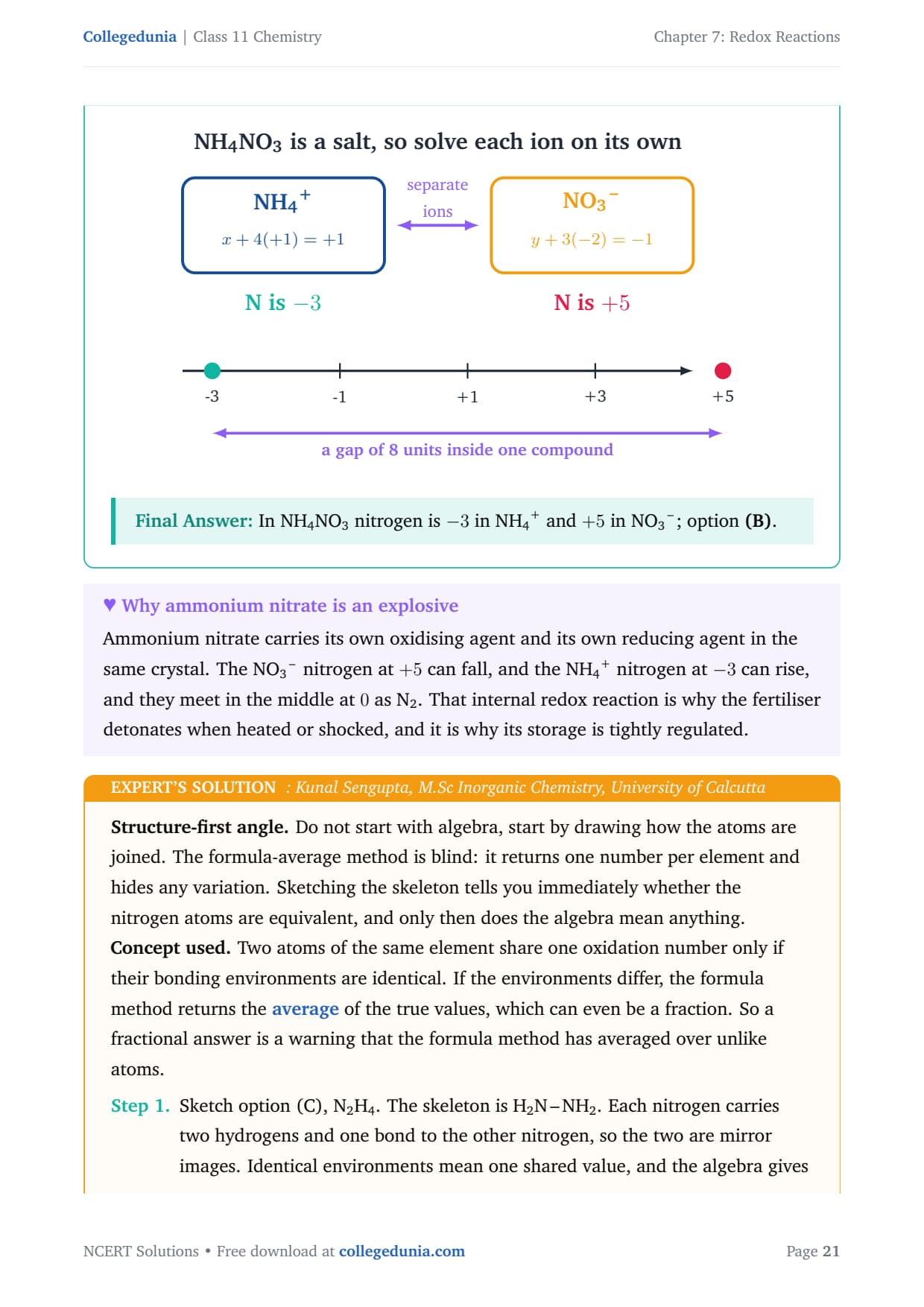
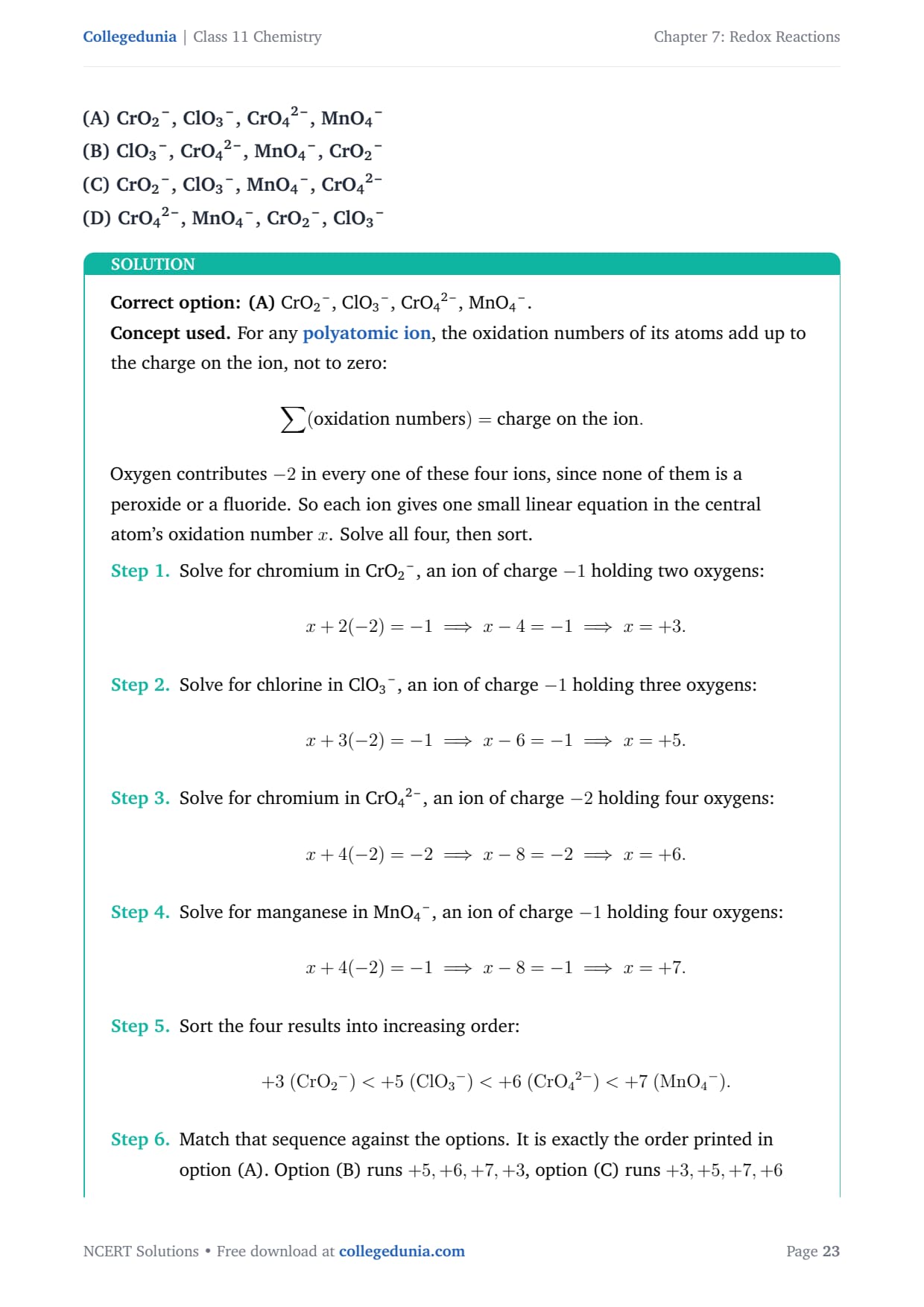
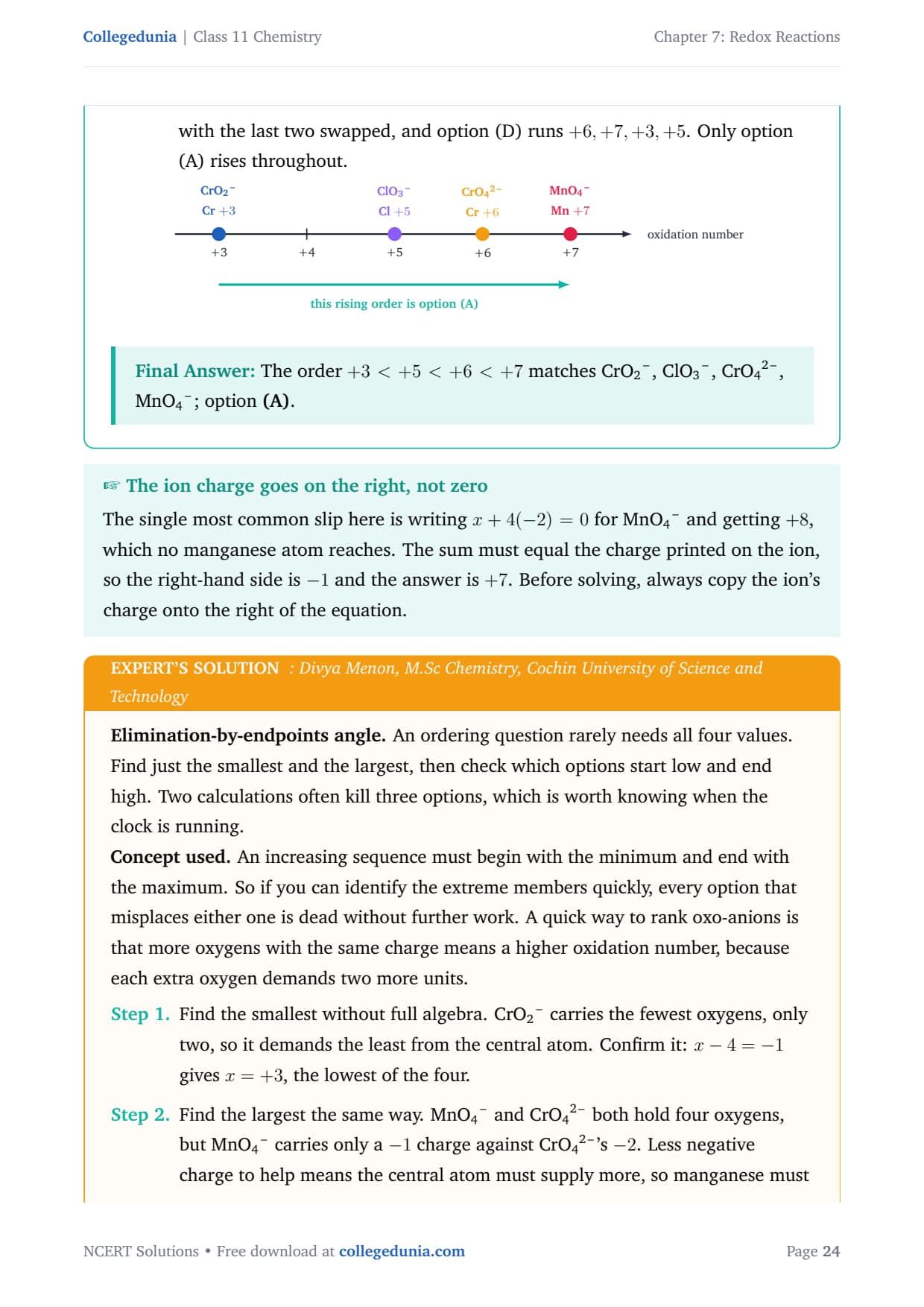
- Oxidation numbers: the fixed rules, and the small algebra that follows from them
- Oxidising and reducing agents: naming the agent by what it does to its partner
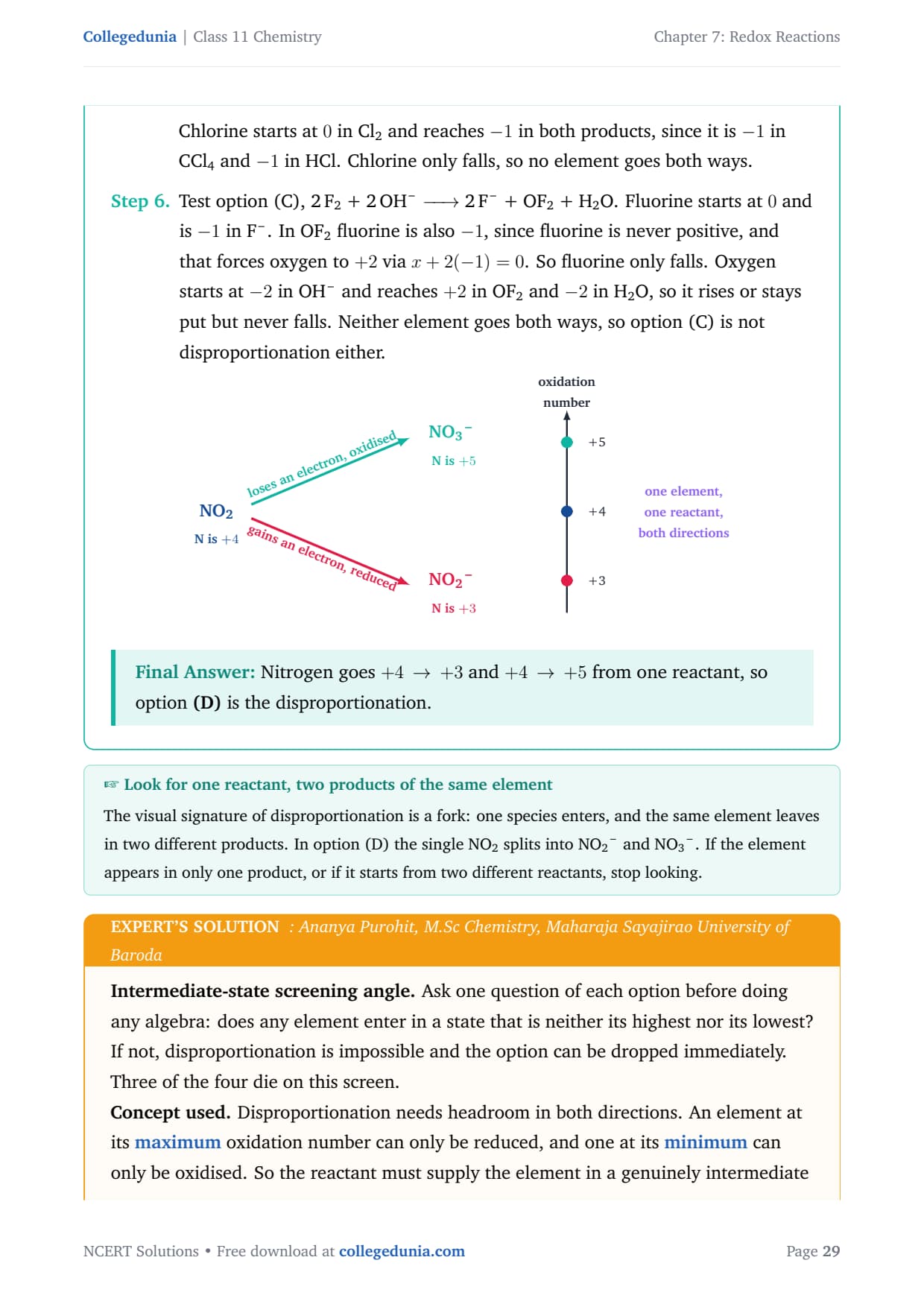
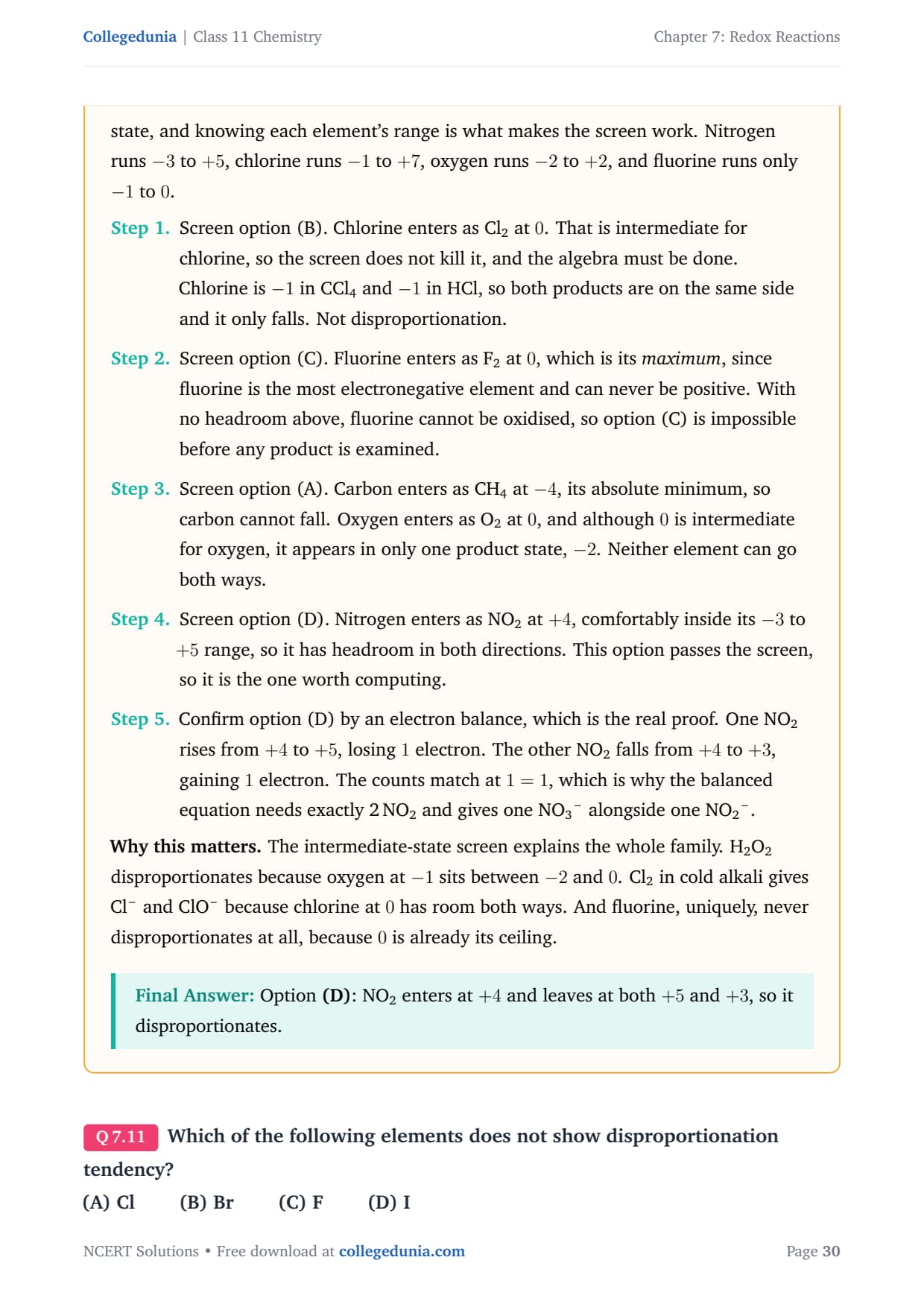
- Types of redox reactions: combination, decomposition, displacement and disproportionation
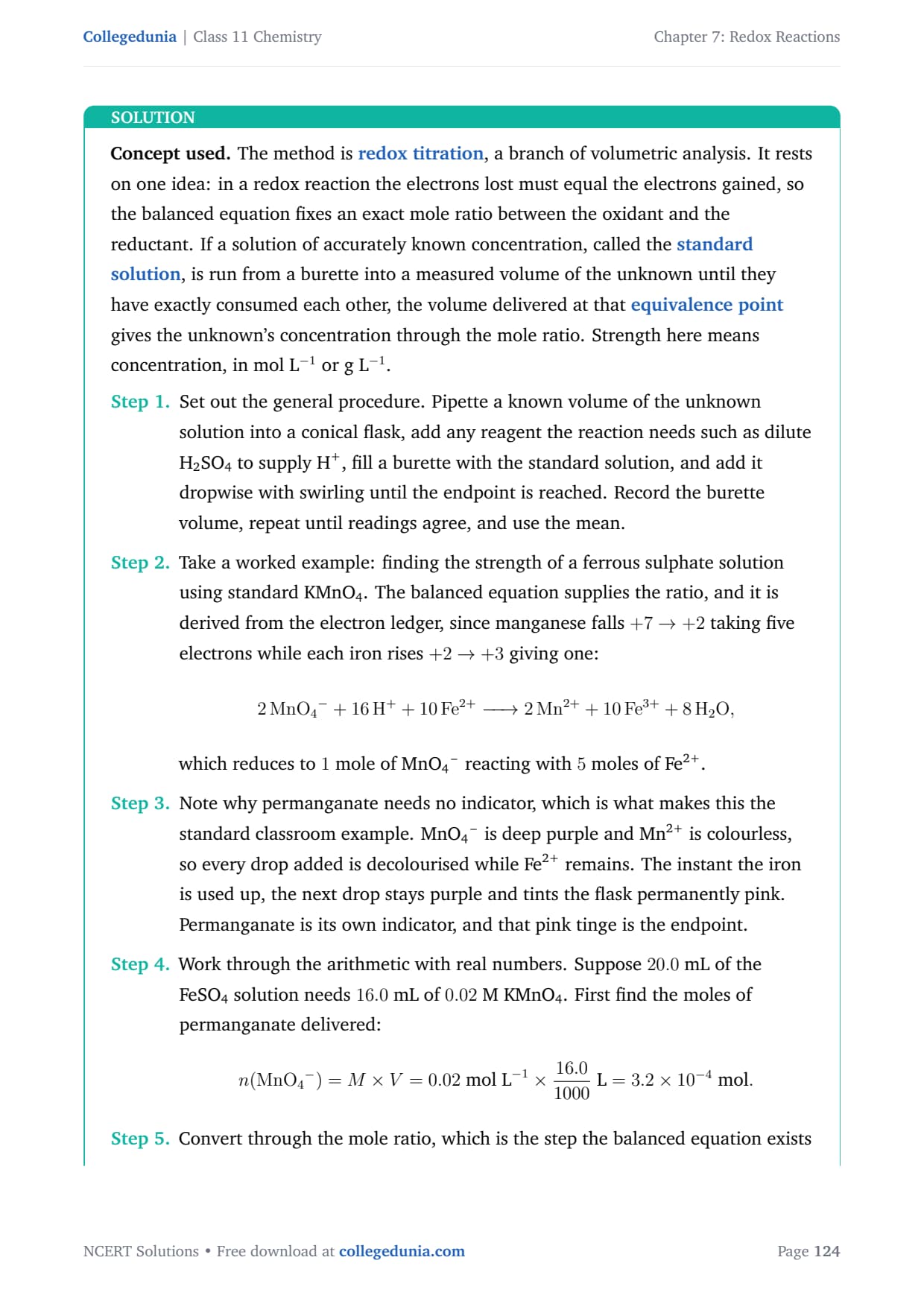
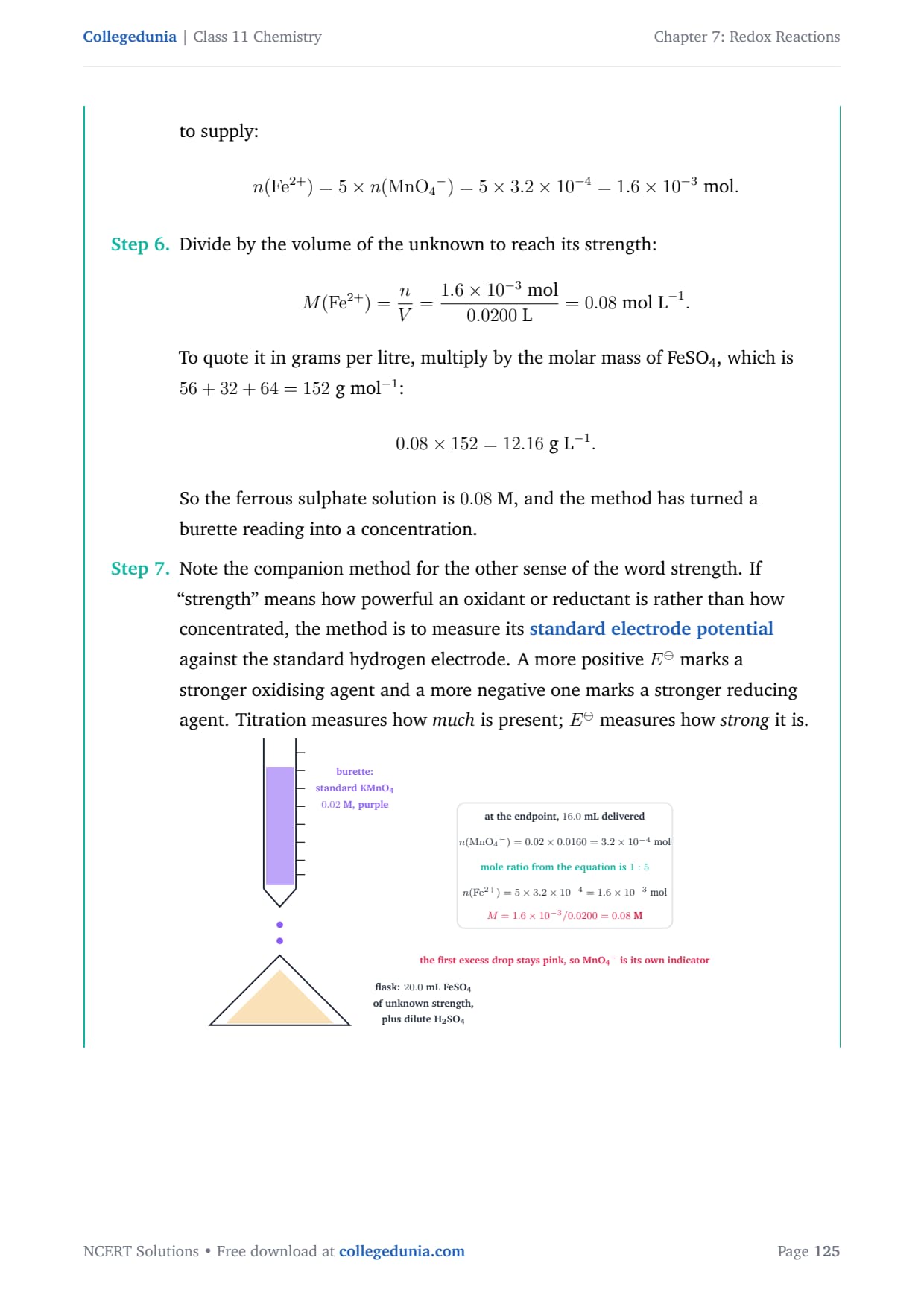
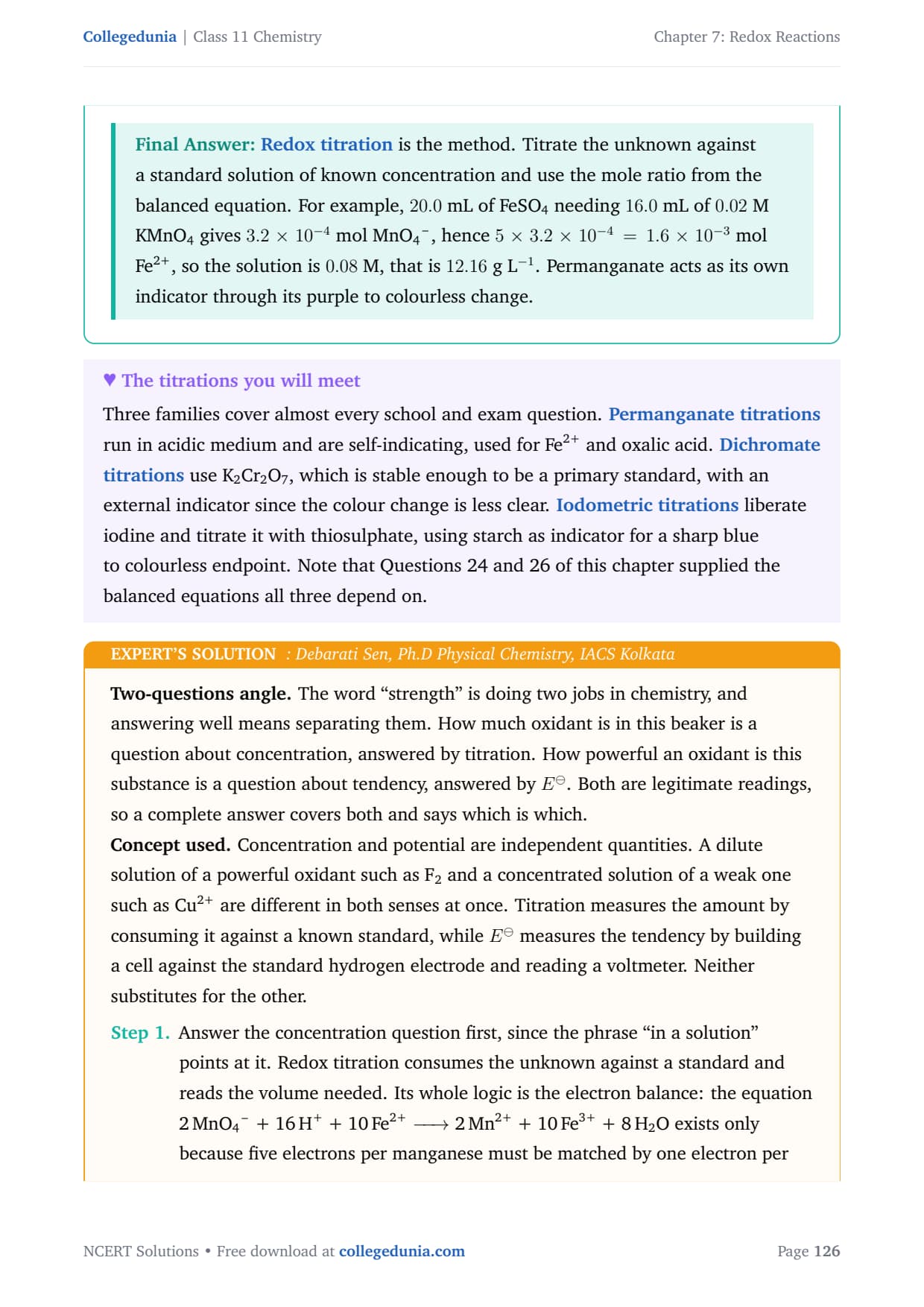
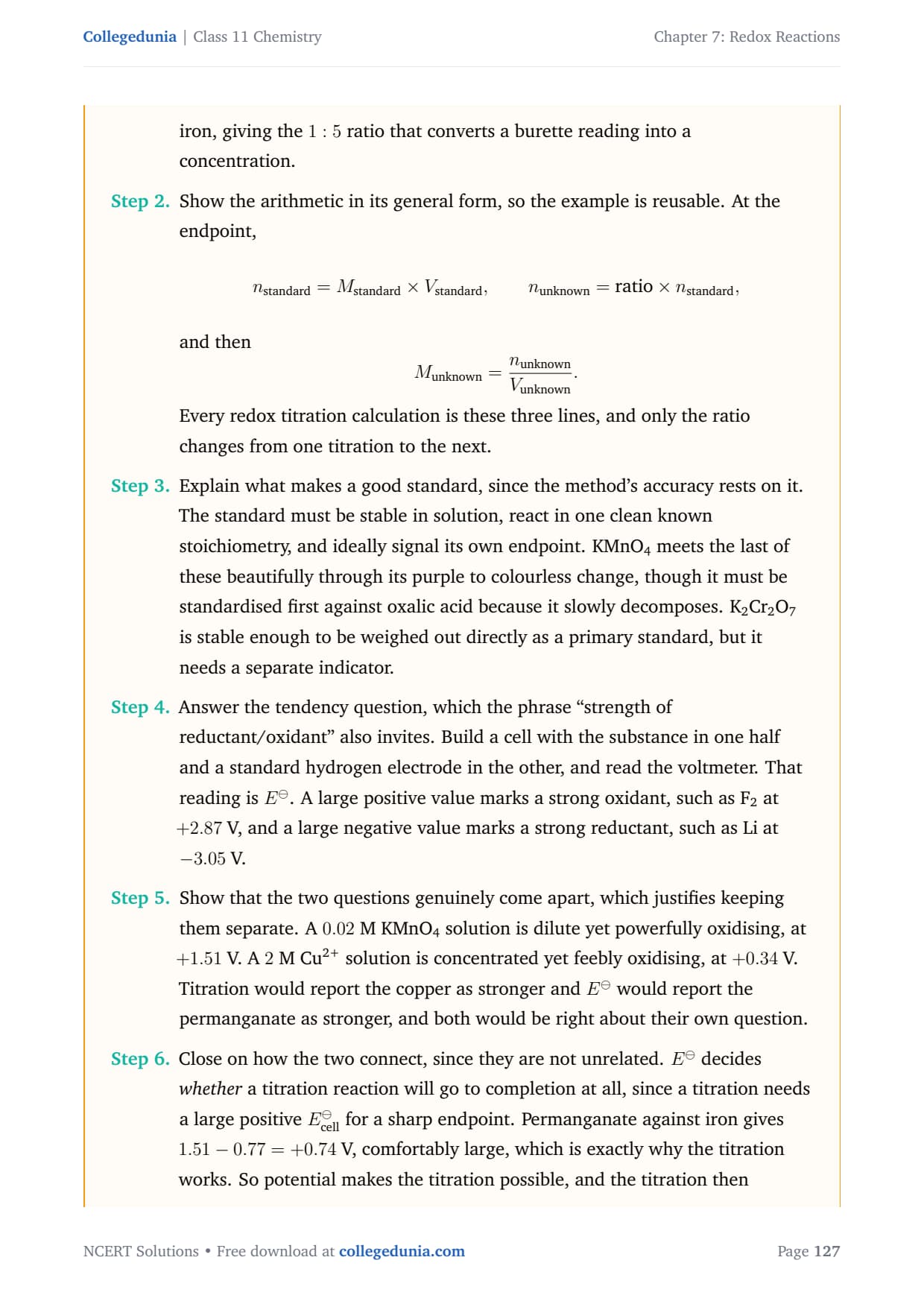
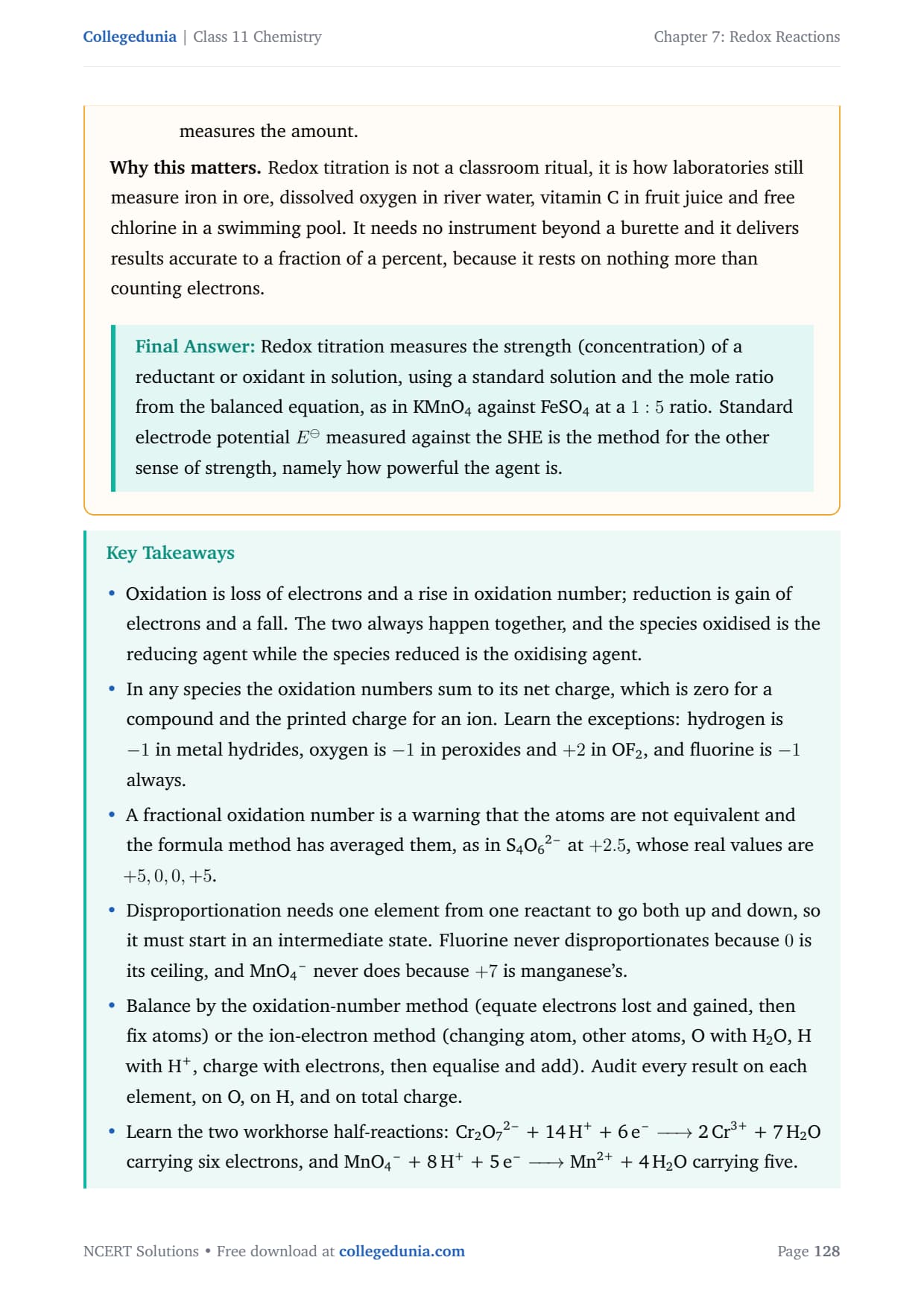
- Electrode potential: feasibility, the electrochemical series, and redox titration
Question Types in the Redox Reactions NCERT Exemplar
Six question types appear in this chapter. The Long Answer set is the heaviest, since each question there needs a full explanation rather than a single number.
| Question Type | Count | What It Tests |
|---|---|---|
| MCQ I (single correct) | 11 | Reading E° values and assigning oxidation numbers |
| MCQ II (one or more correct) | 5 | Rejecting every wrong option, not just finding one right one |
| Short Answer | 10 | Reasoning on agents, disproportionation and oxide behaviour |
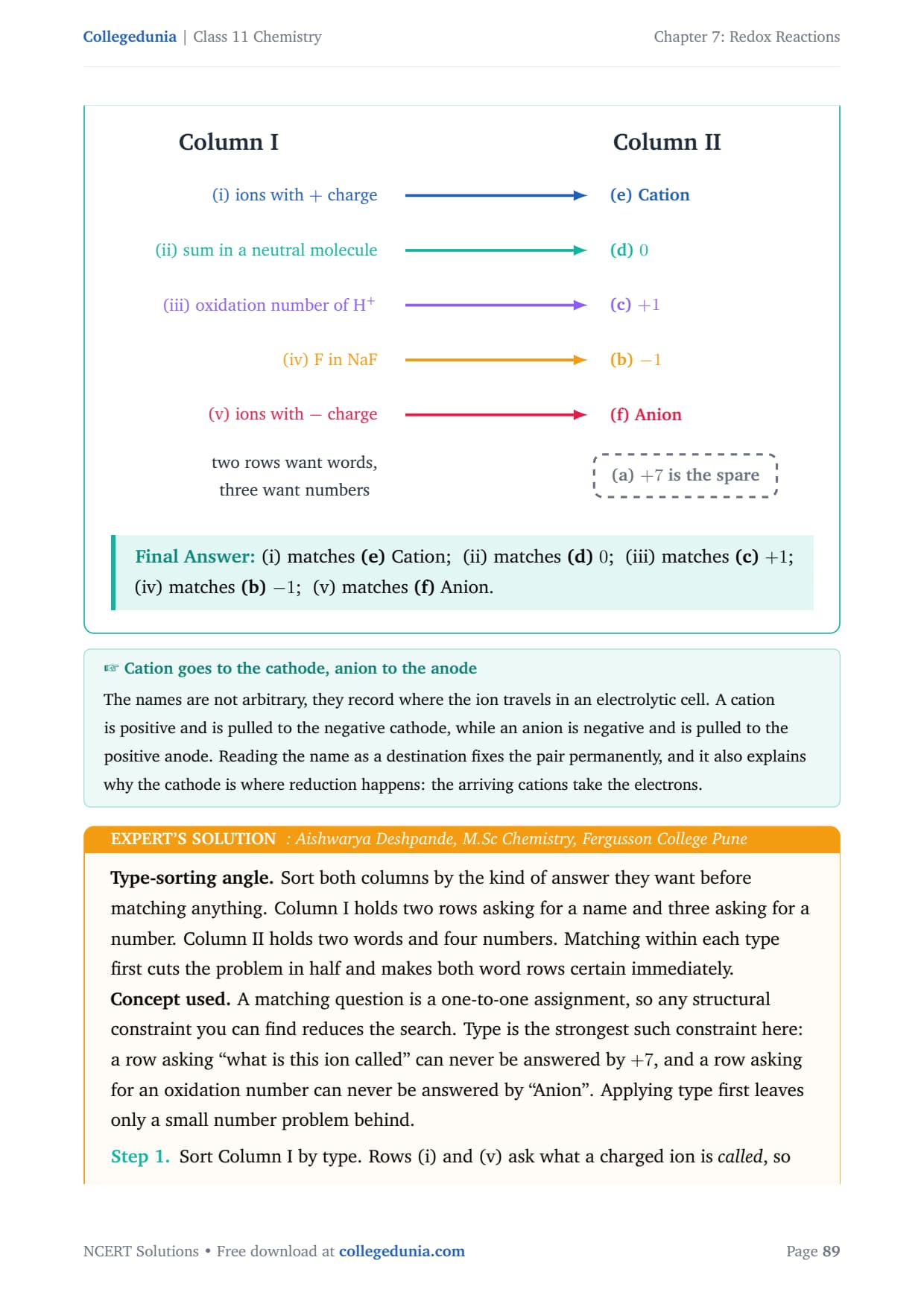
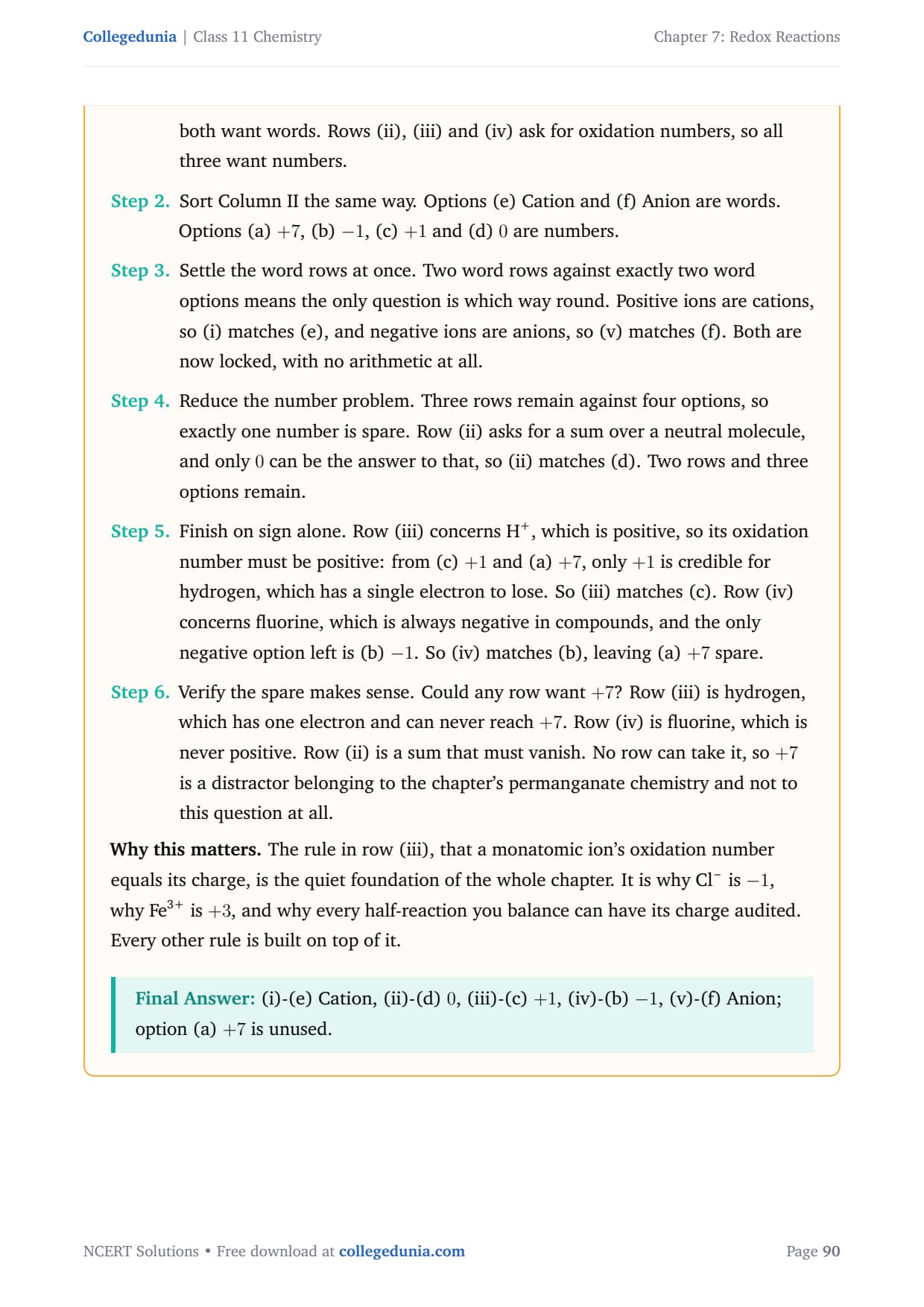
| Matching Type | 2 | Pairing species with their oxidation states and reaction types |
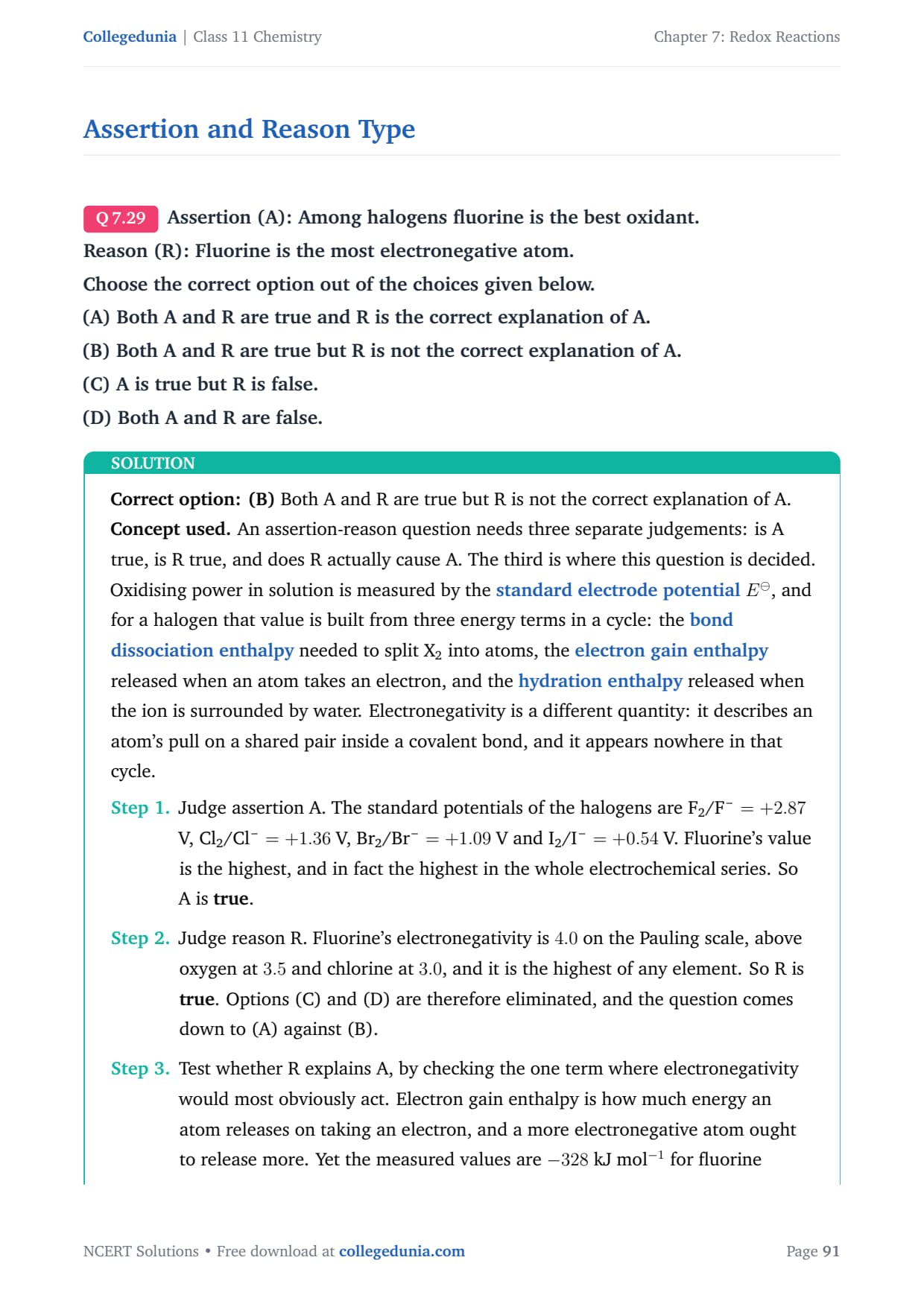
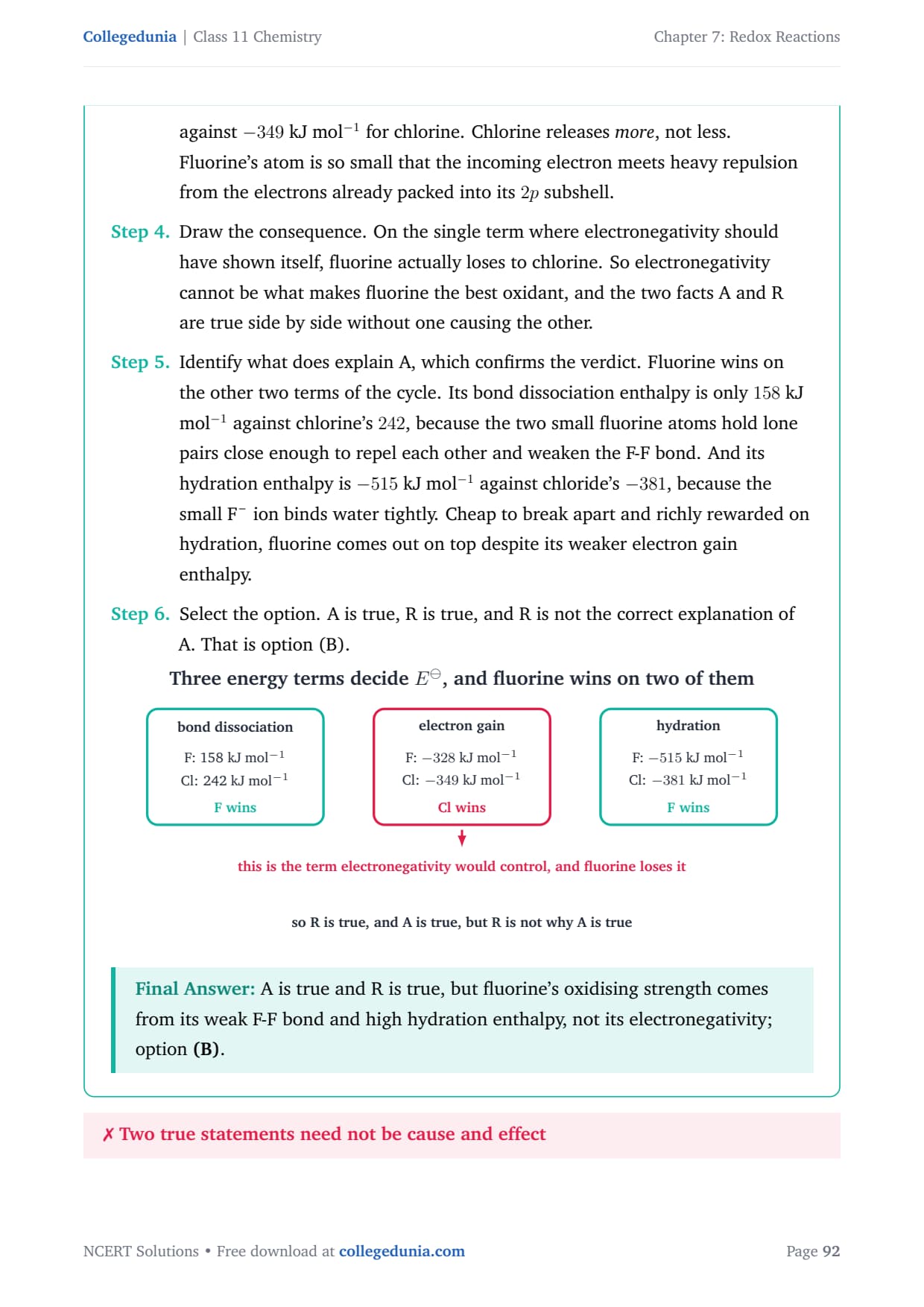
| Assertion and Reason | 4 | Whether the reason actually explains the assertion |
| Long Answer | 6 | Balancing, feasibility and redox titration worth 5 marks |
Three Printing Errors in the Redox Reactions Exemplar
The printed book carries three slips in this chapter. None changes the marked answer, and all three are explained in the PDF.
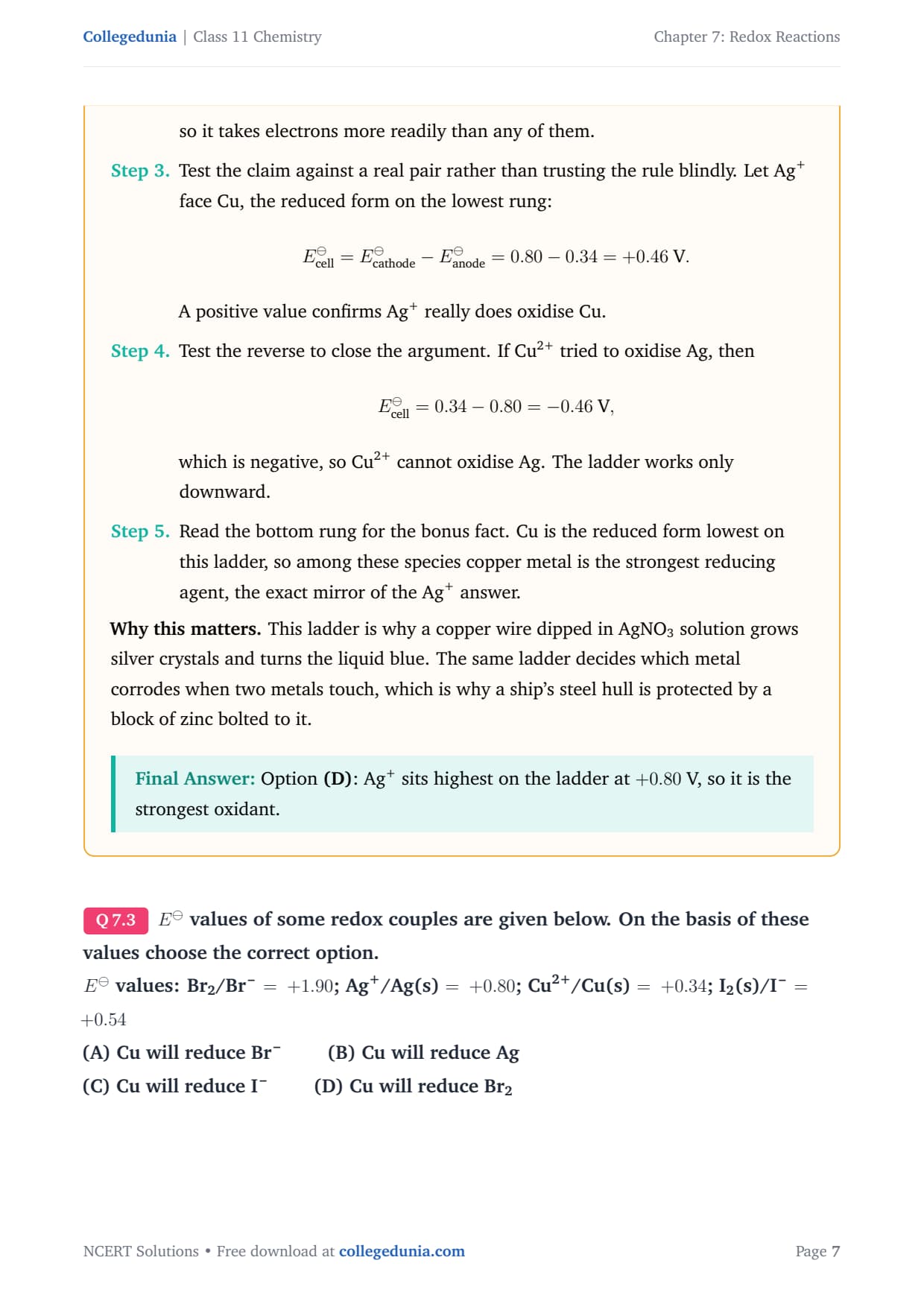
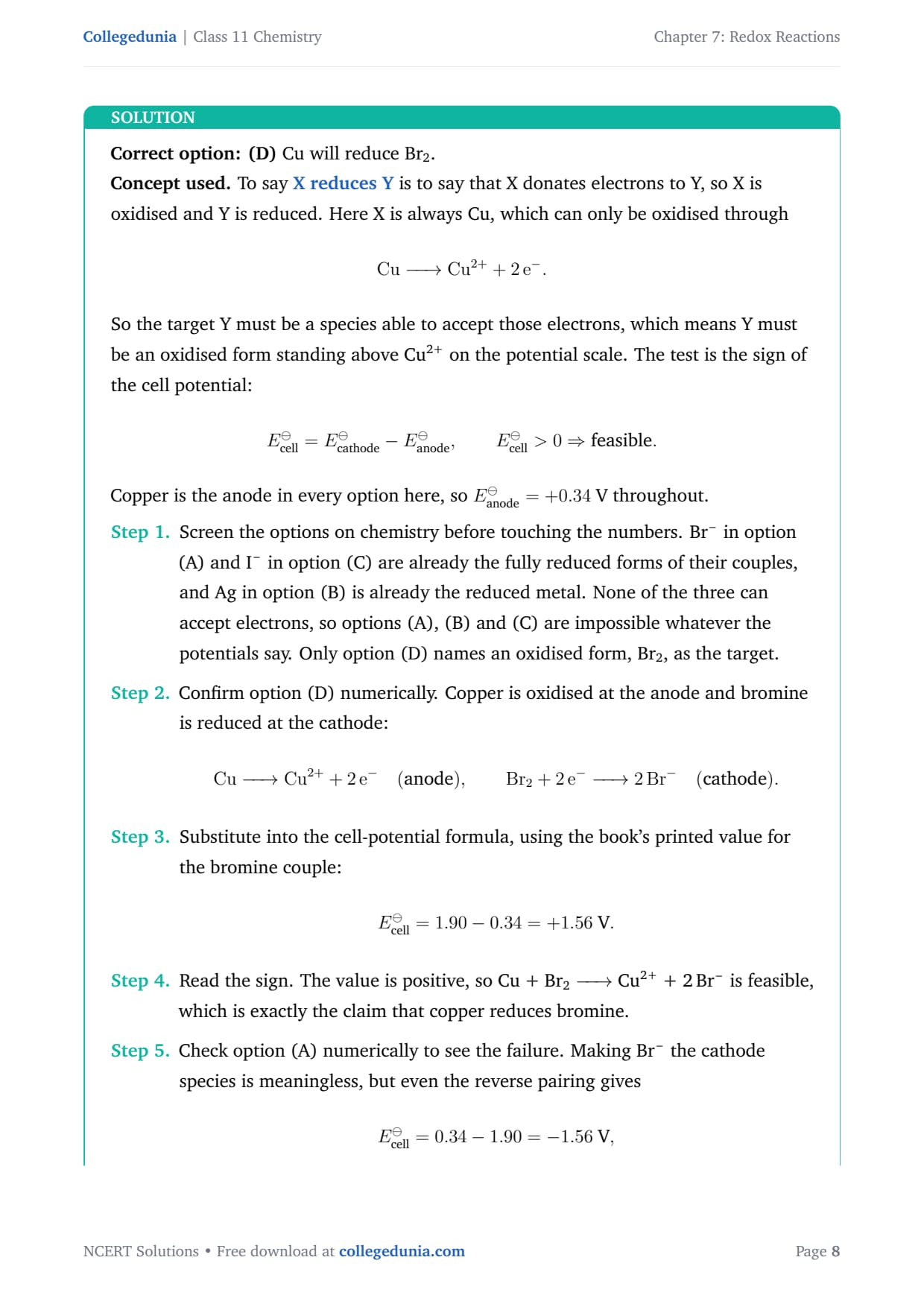
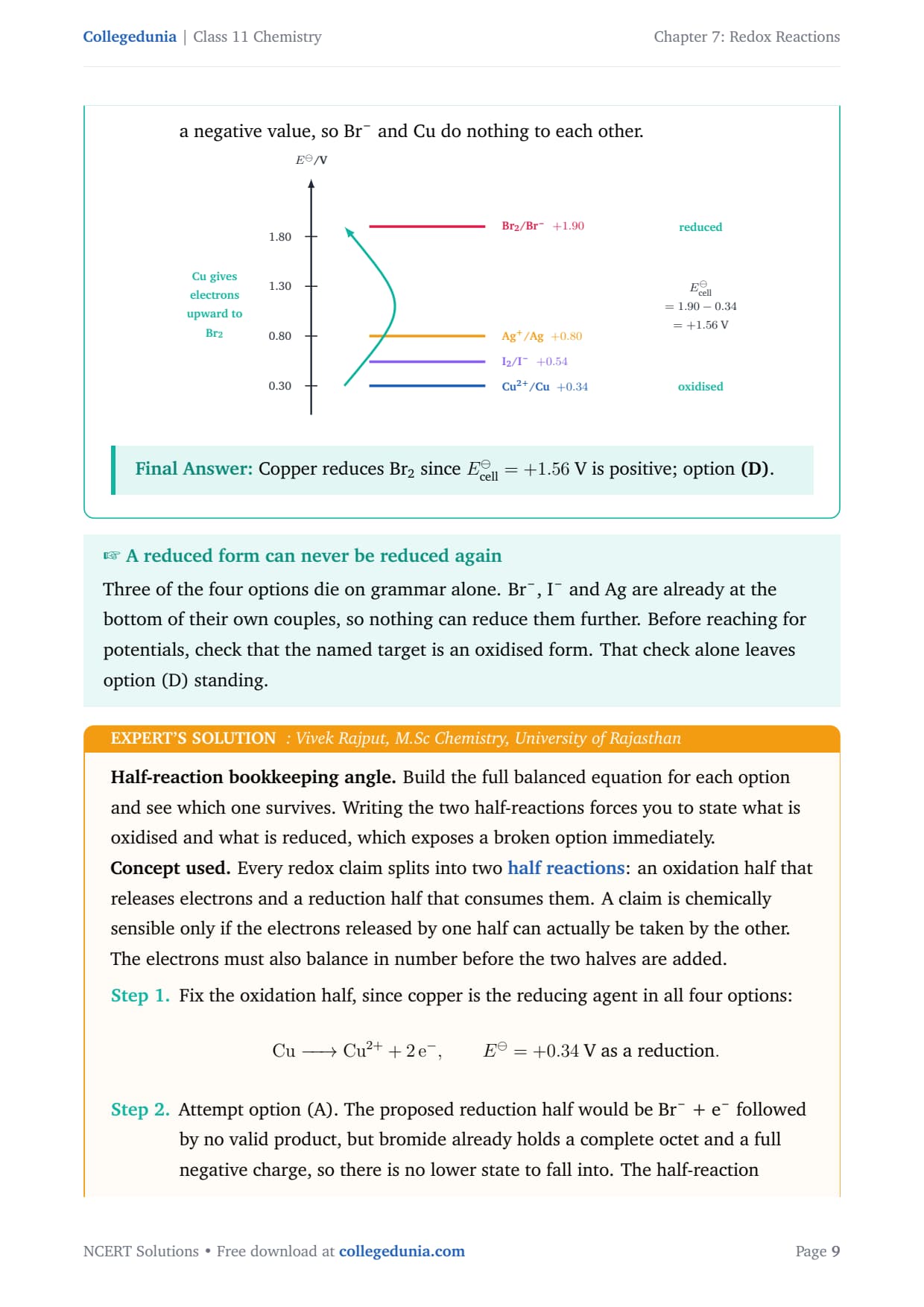
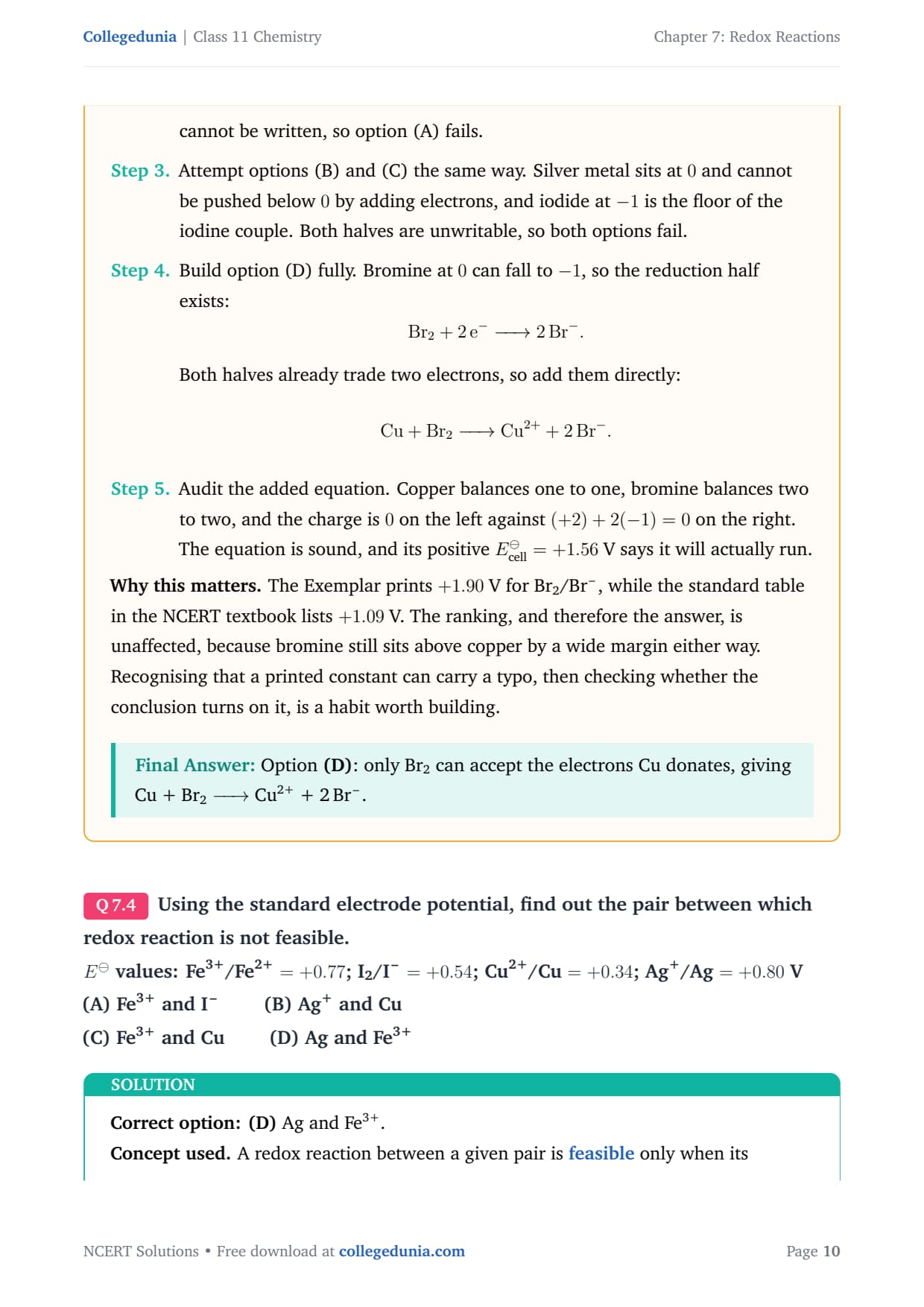
- Question 3: the E° value for the Br2/Br- couple is printed as +1.90 V. The standard NCERT textbook table lists +1.09 V, so the digits look transposed. Bromine still sits well above copper, so option (D) stands either way.
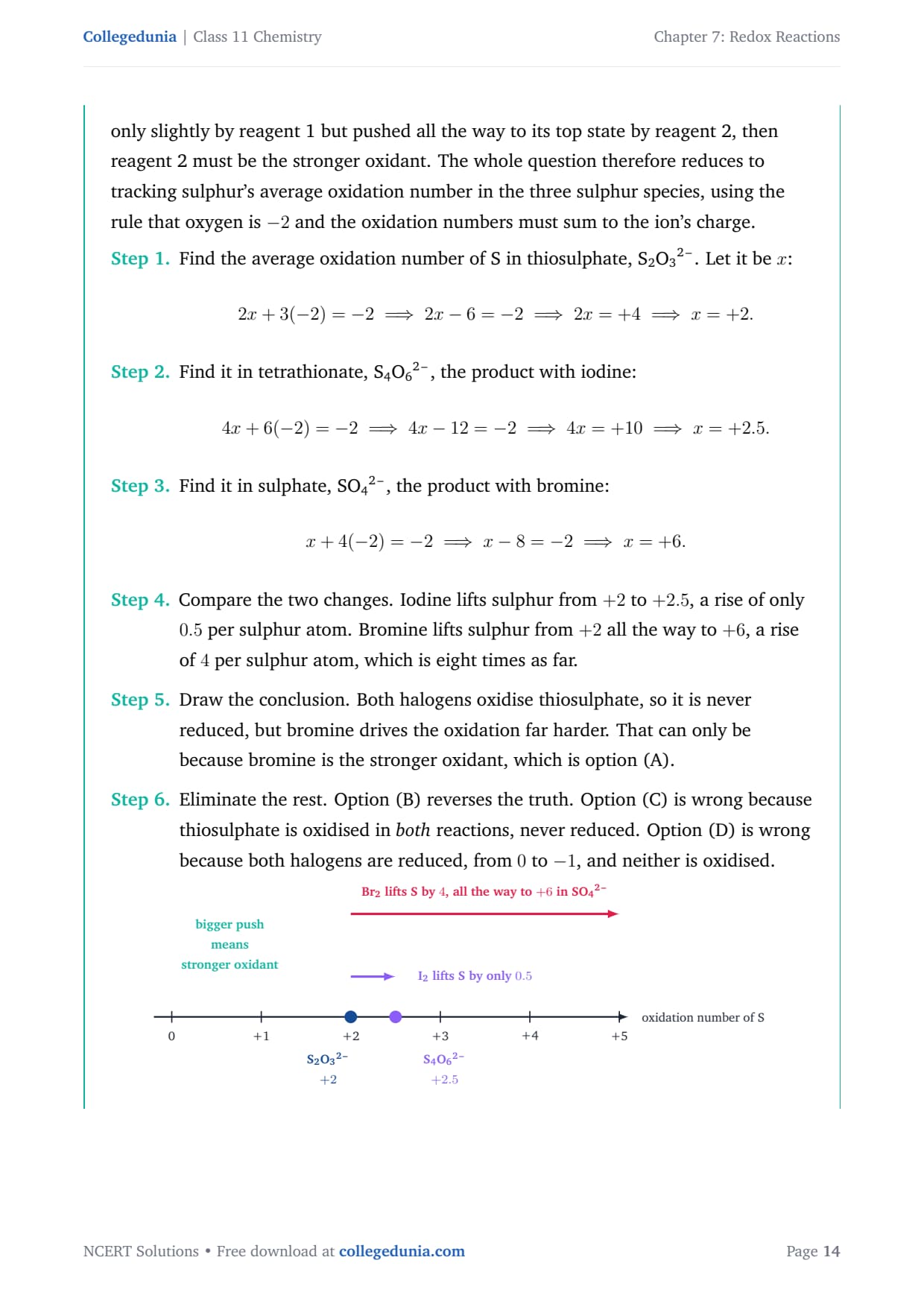
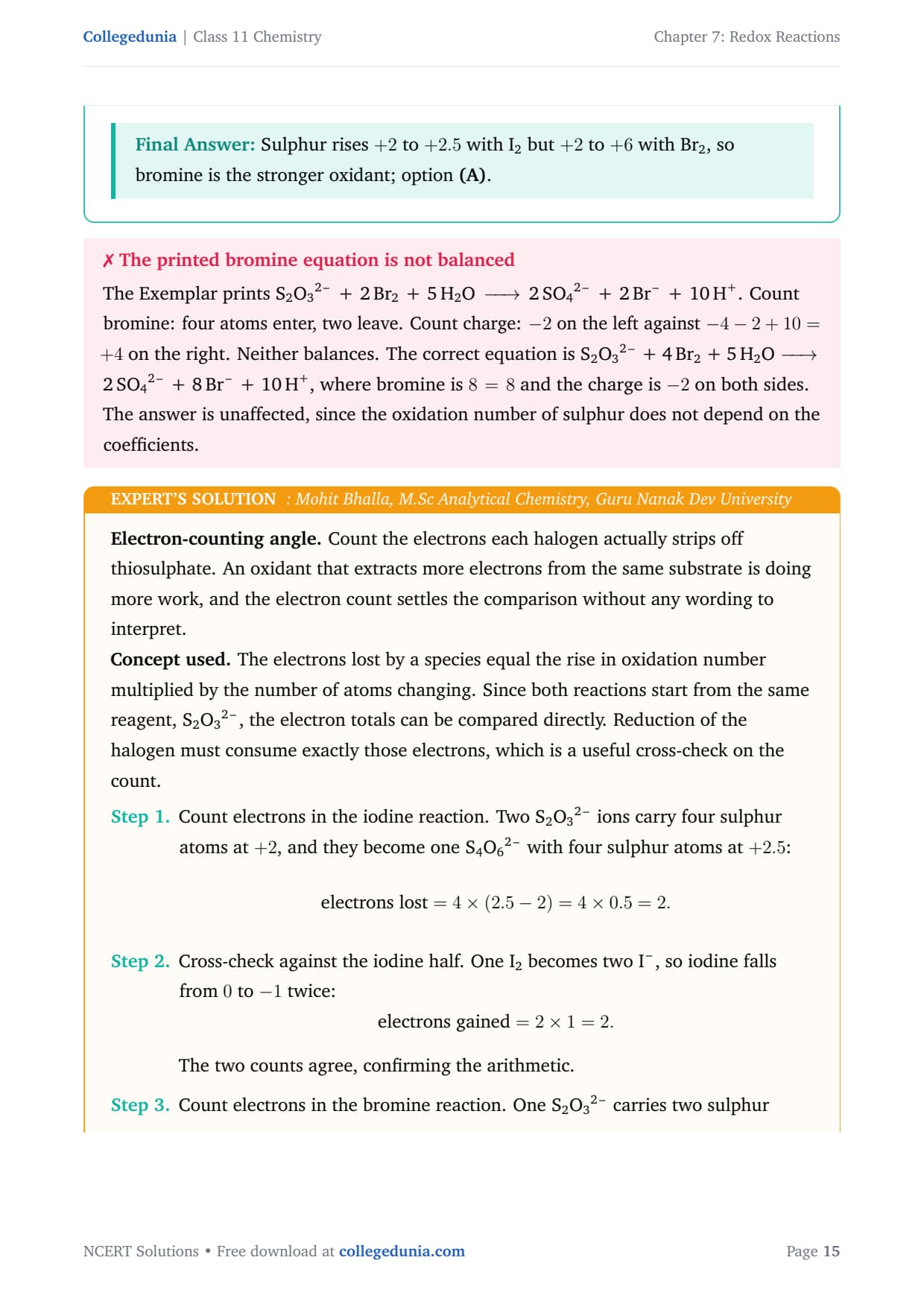
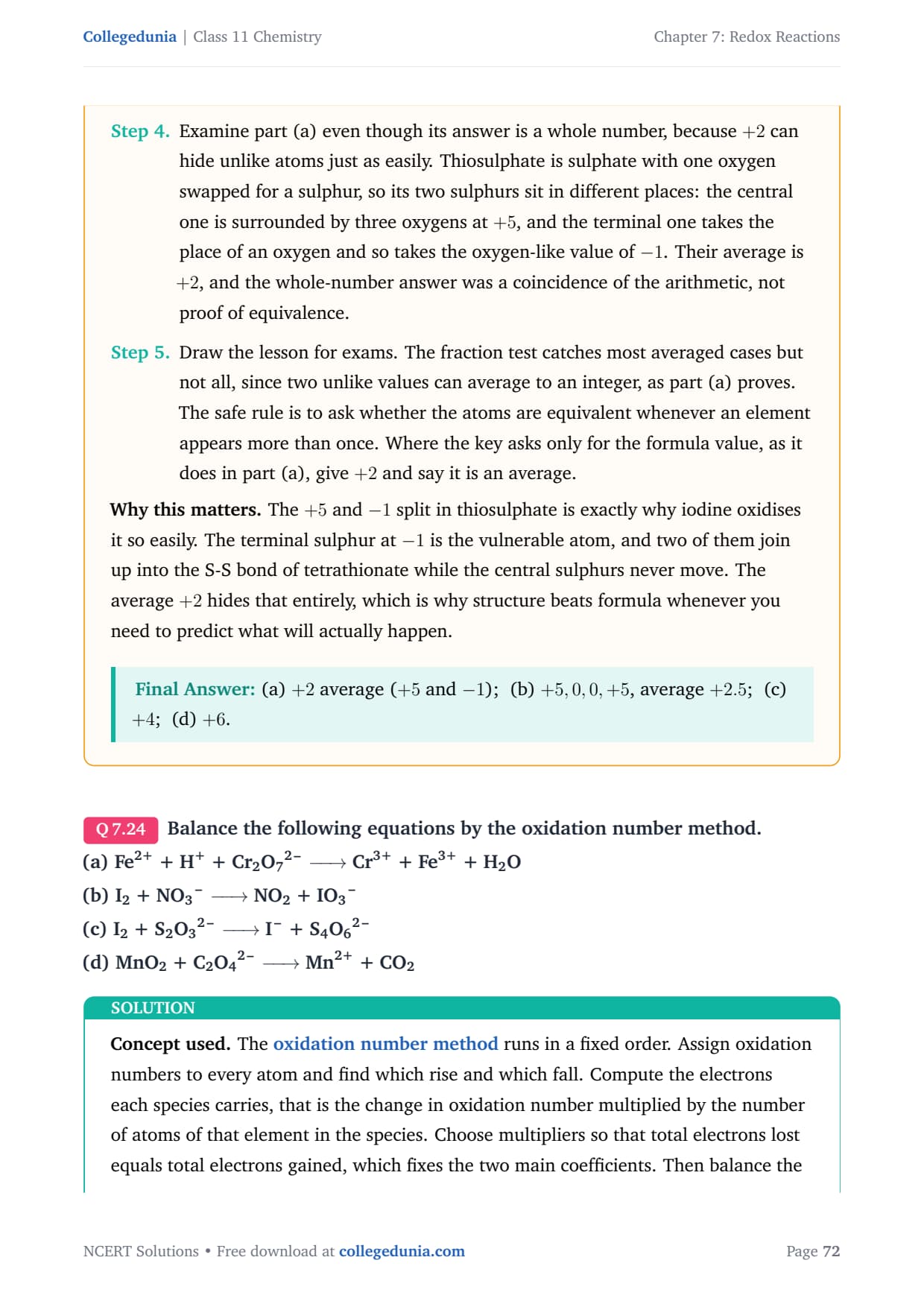
- Question 5: the bromine equation is printed as S2O32- + 2Br2 + 5H2O → 2SO42- + 2Br- + 10H+. Four bromine atoms enter and two leave, and the charge reads -2 against +4. The balanced form needs 4Br2 and 8Br-.
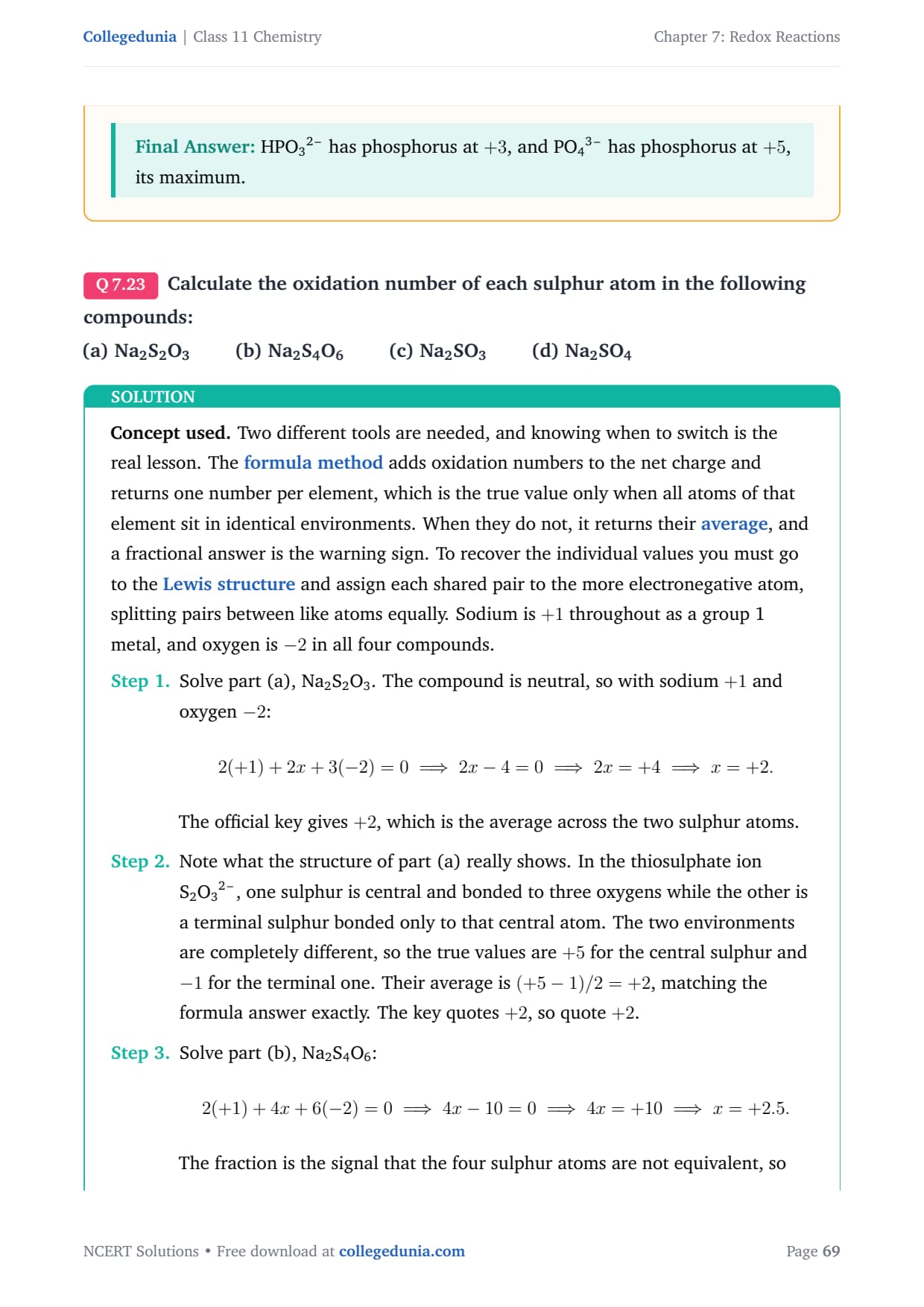
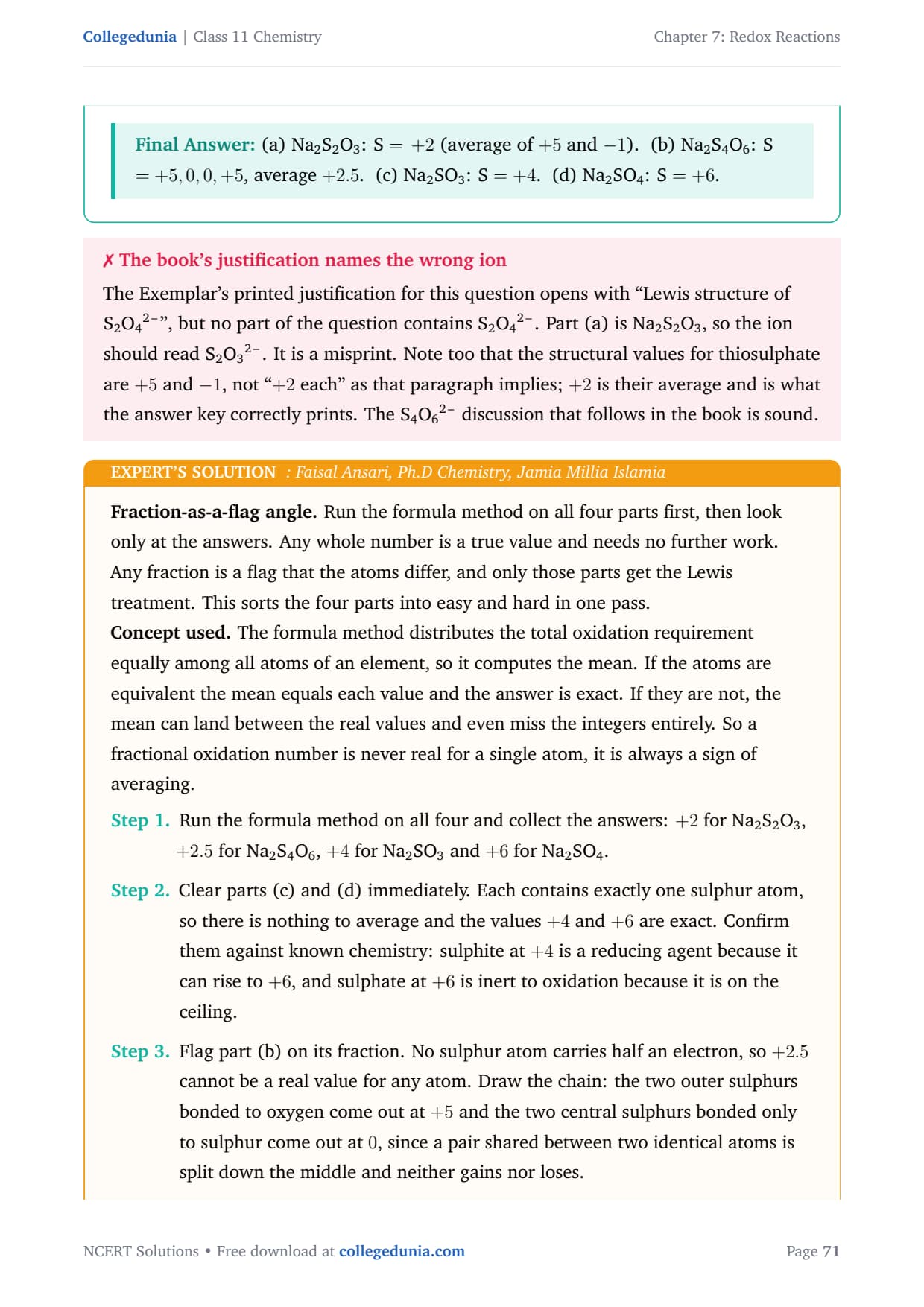
- Question 23: the book's justification opens with the Lewis structure of S2O42-, but no part of the question contains that ion. Part (a) is Na2S2O3, so it should read S2O32-.
Write the key's answer in the exam, but know why it is wrong. The marking scheme follows the printed key, so each solution gives the key's answer first and then explains the slip.
Common Mistakes Students Make in Redox Reactions
The Exemplar plants wrong options on purpose. These four catch most students, and each is flagged in the PDF where it appears.
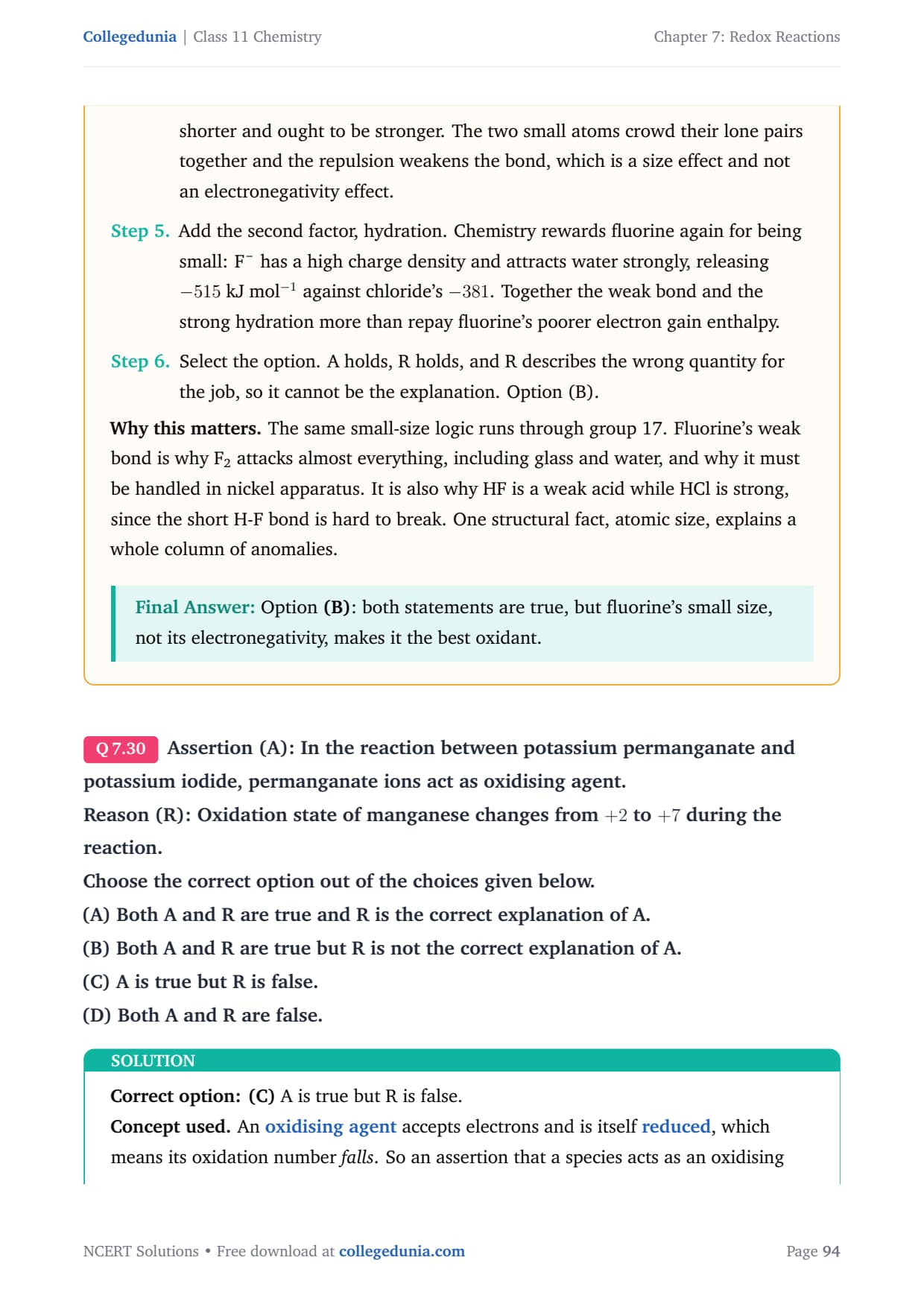
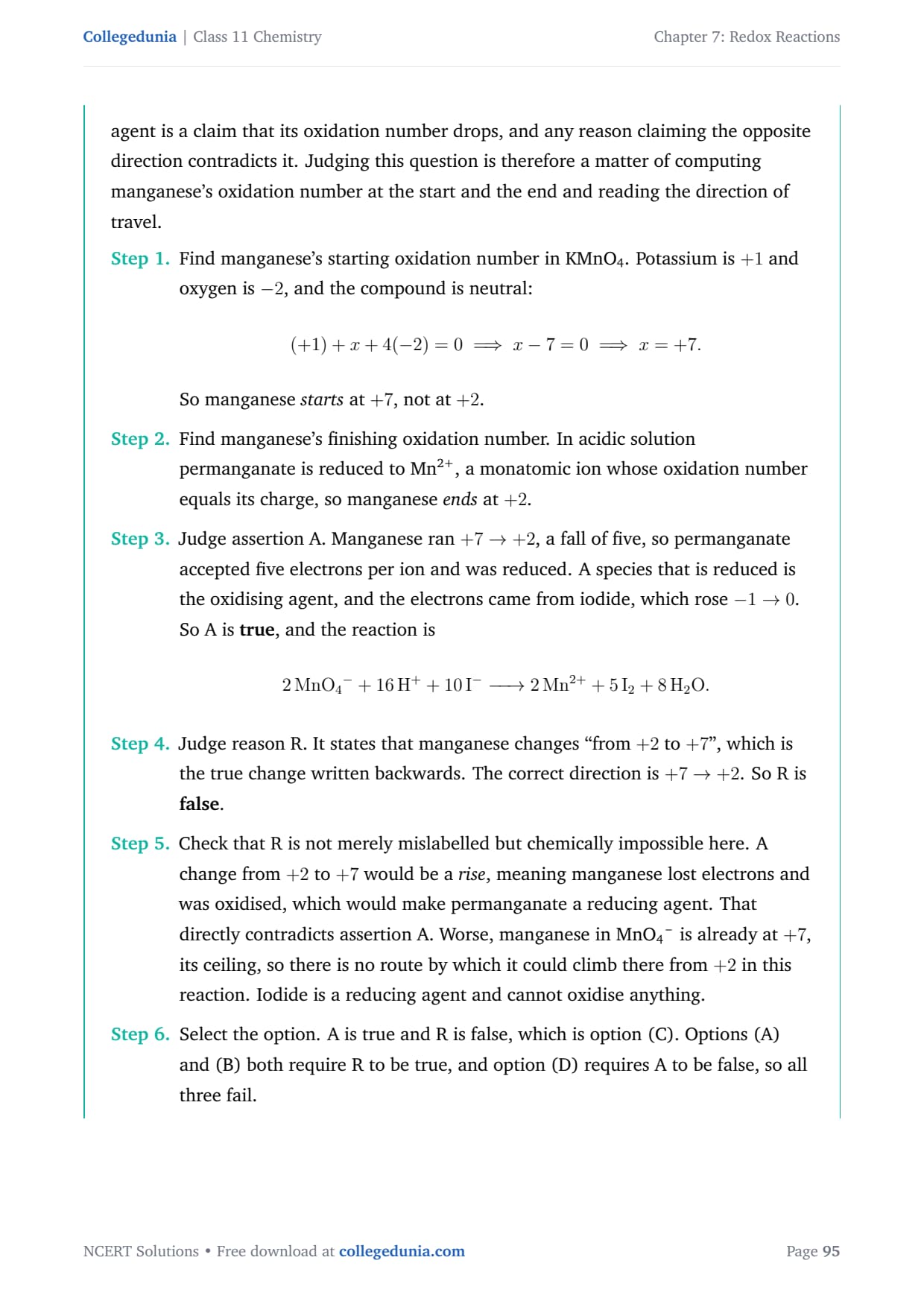
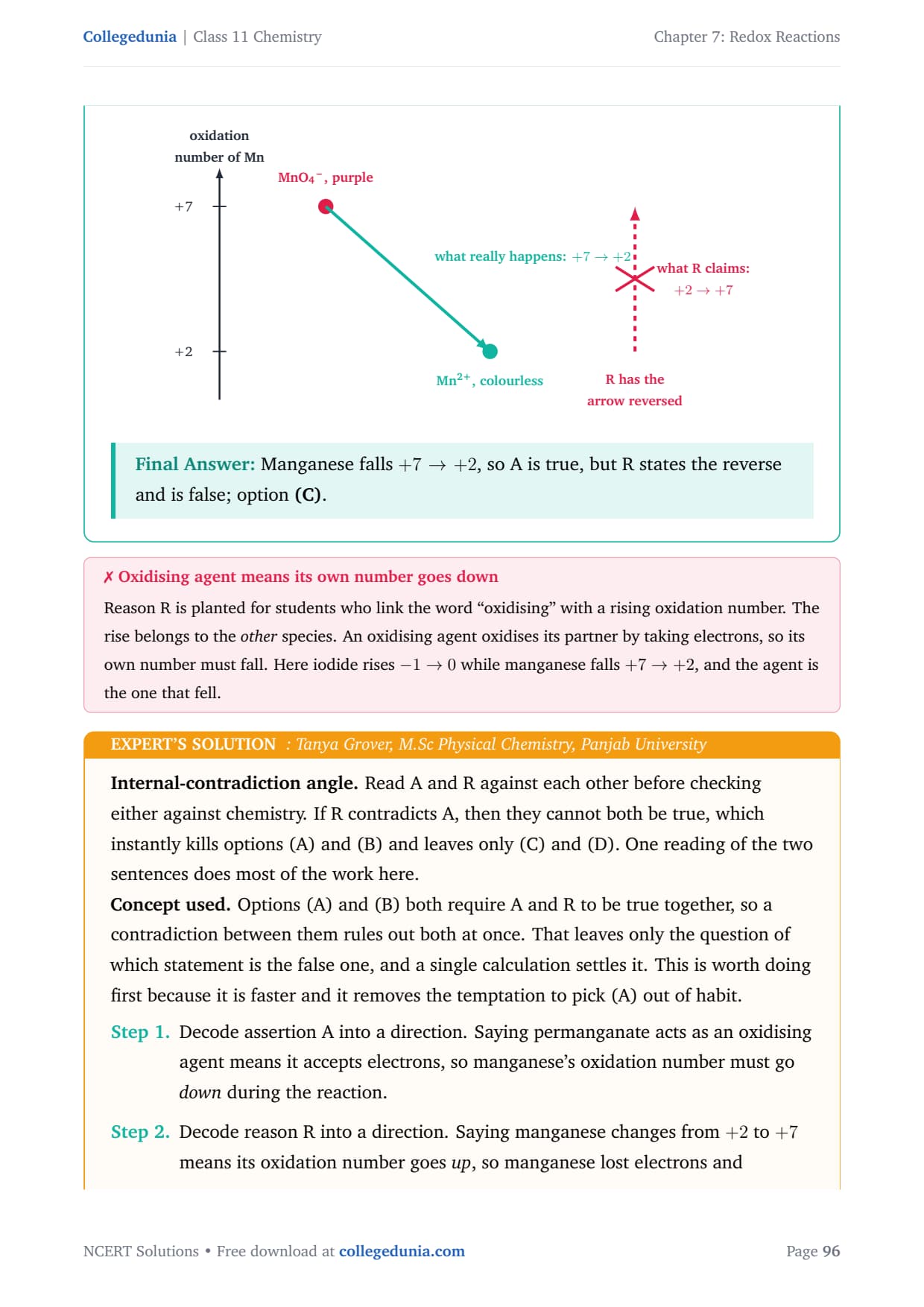
- Naming the agent backwards: zinc is oxidised, so students call it an oxidant. The species that gets oxidised is the reducing agent. An oxidising agent takes electrons, so its own oxidation number falls.
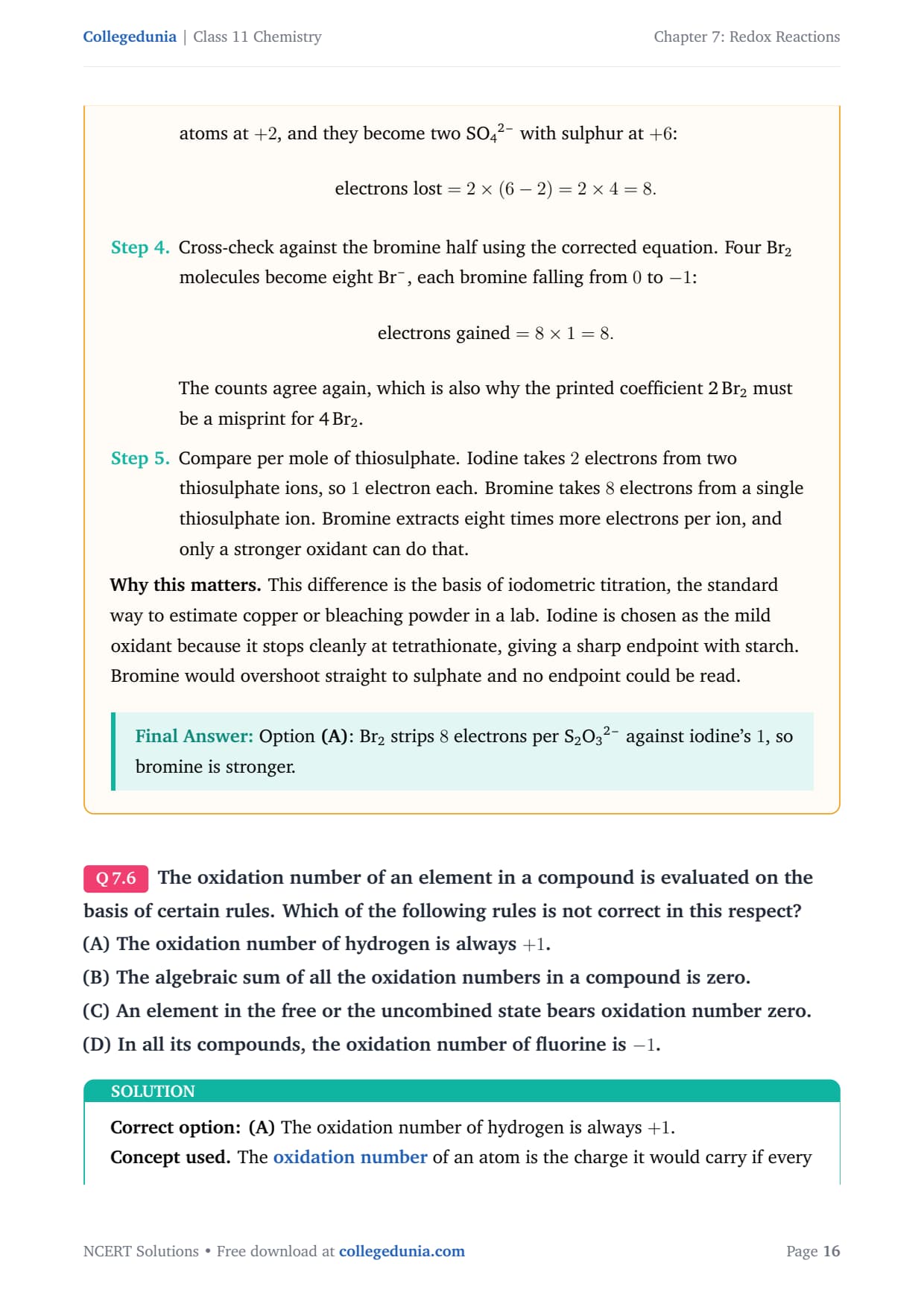
- Equating the sum to zero: for HPO32- the oxidation numbers sum to -2, not 0. Solving (+1) + x + 3(-2) = 0 gives +5, which is wrong but looks plausible.
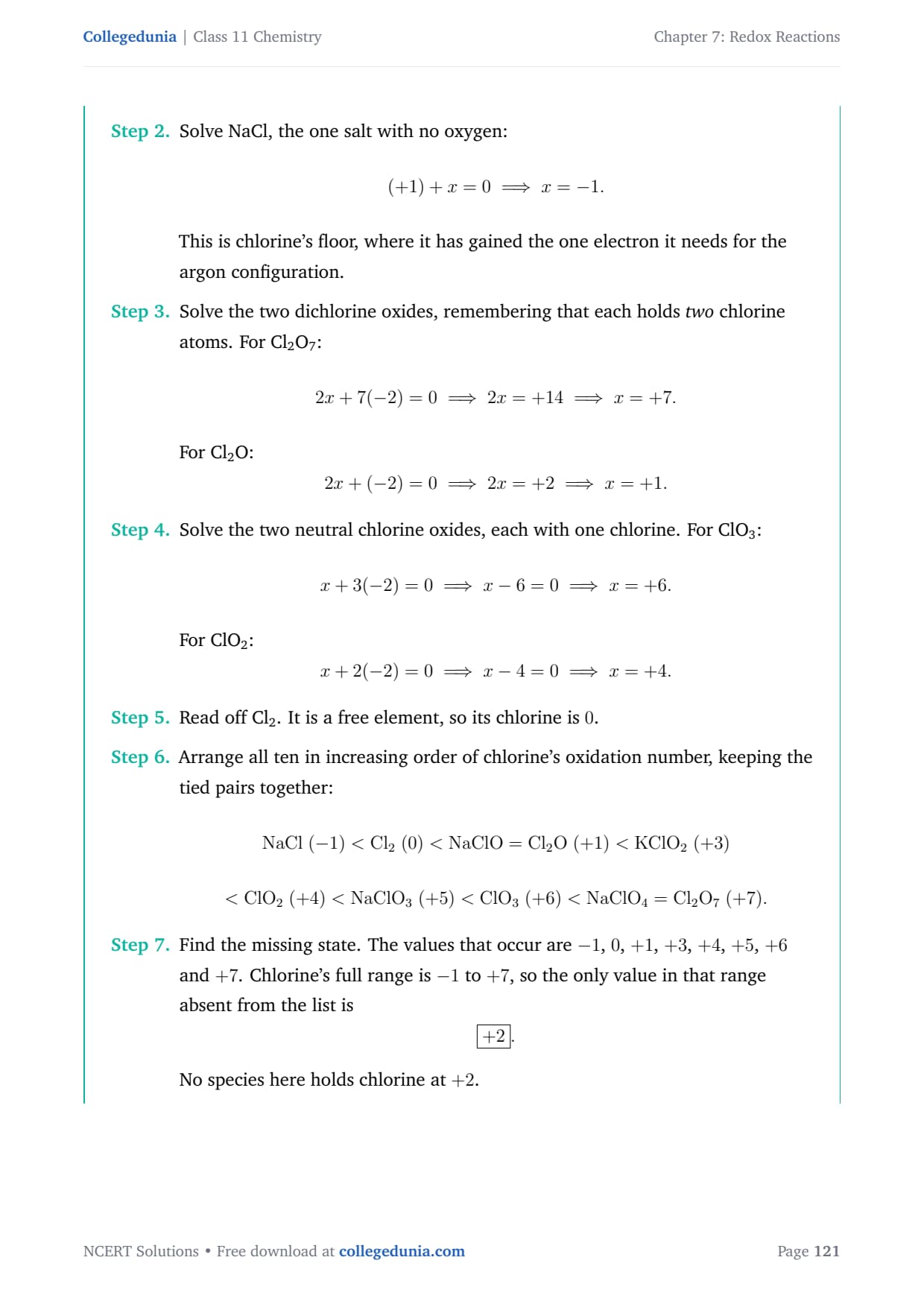
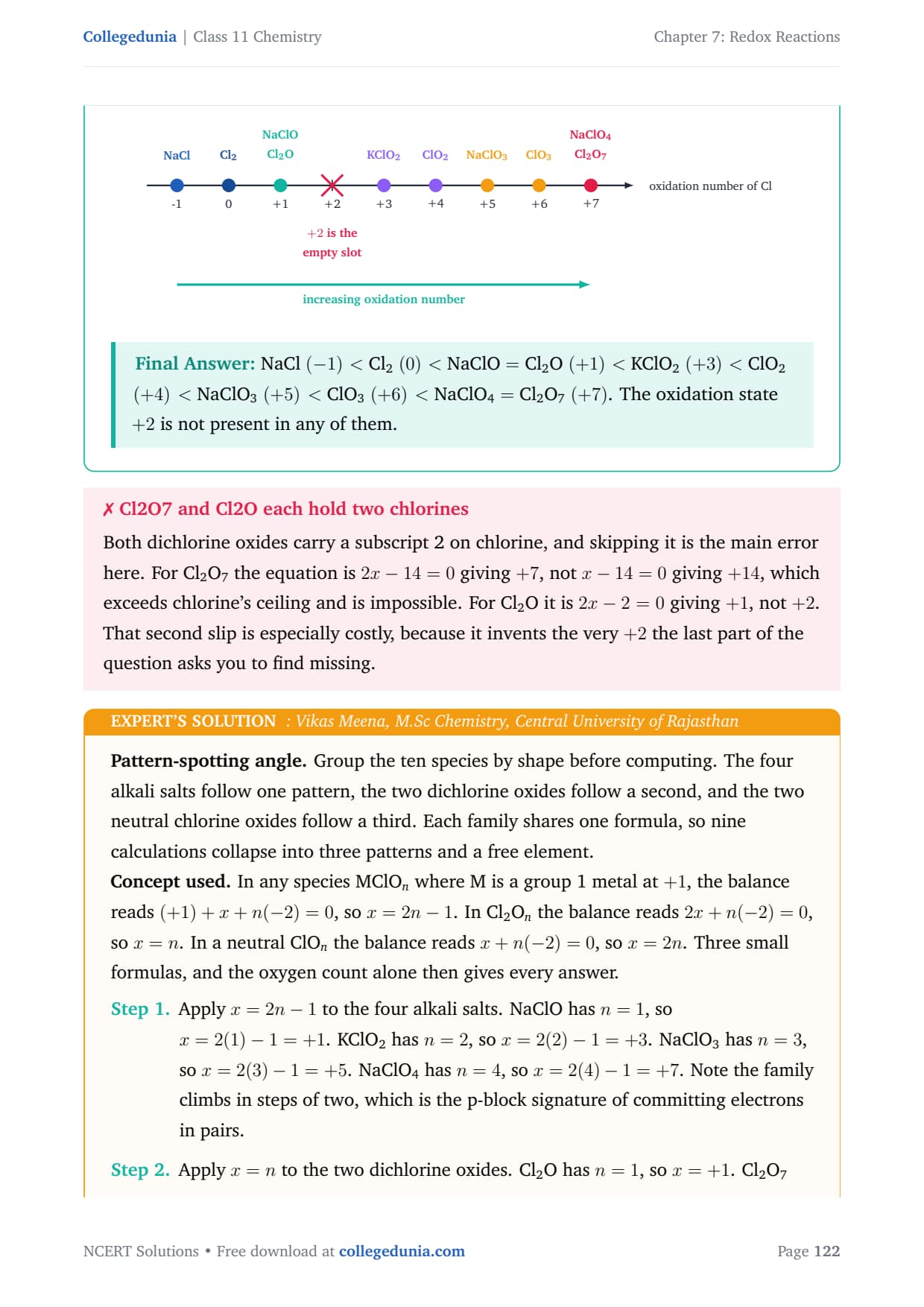
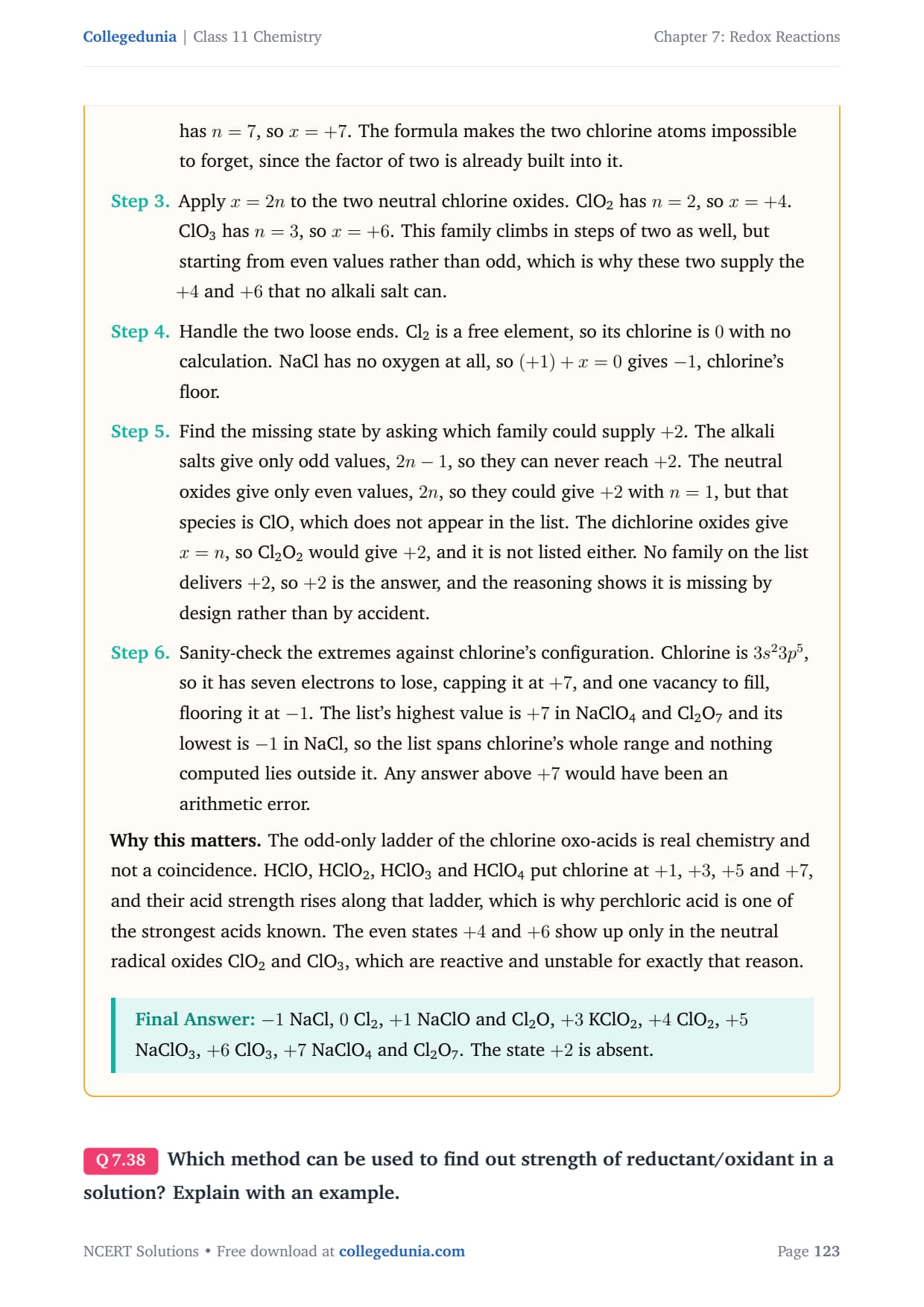
- Missing the subscript 2: in Cl2O7 the equation is 2x - 14 = 0, giving +7. Reading it as x - 14 = 0 gives +14, which no chlorine atom can reach.
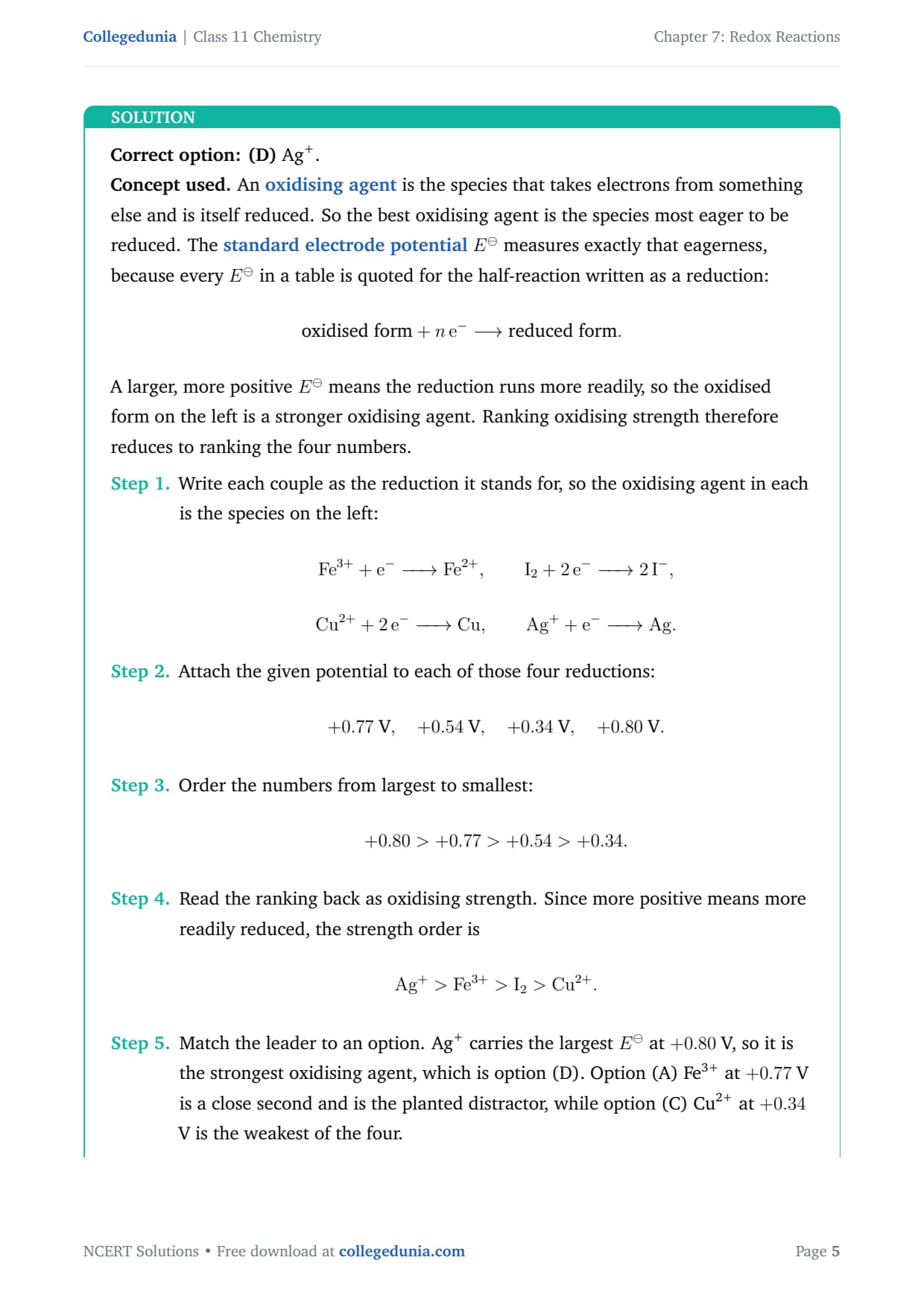
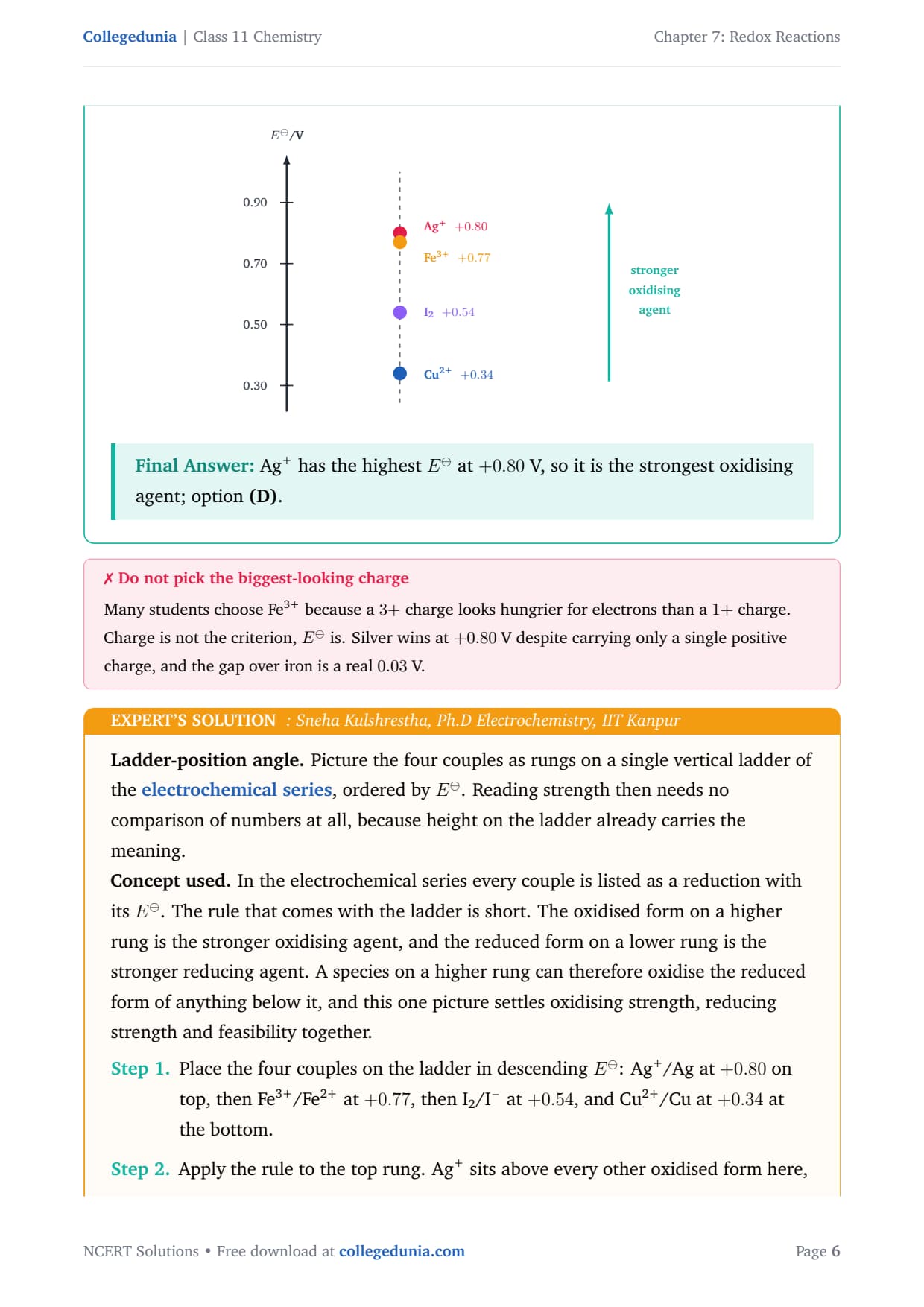
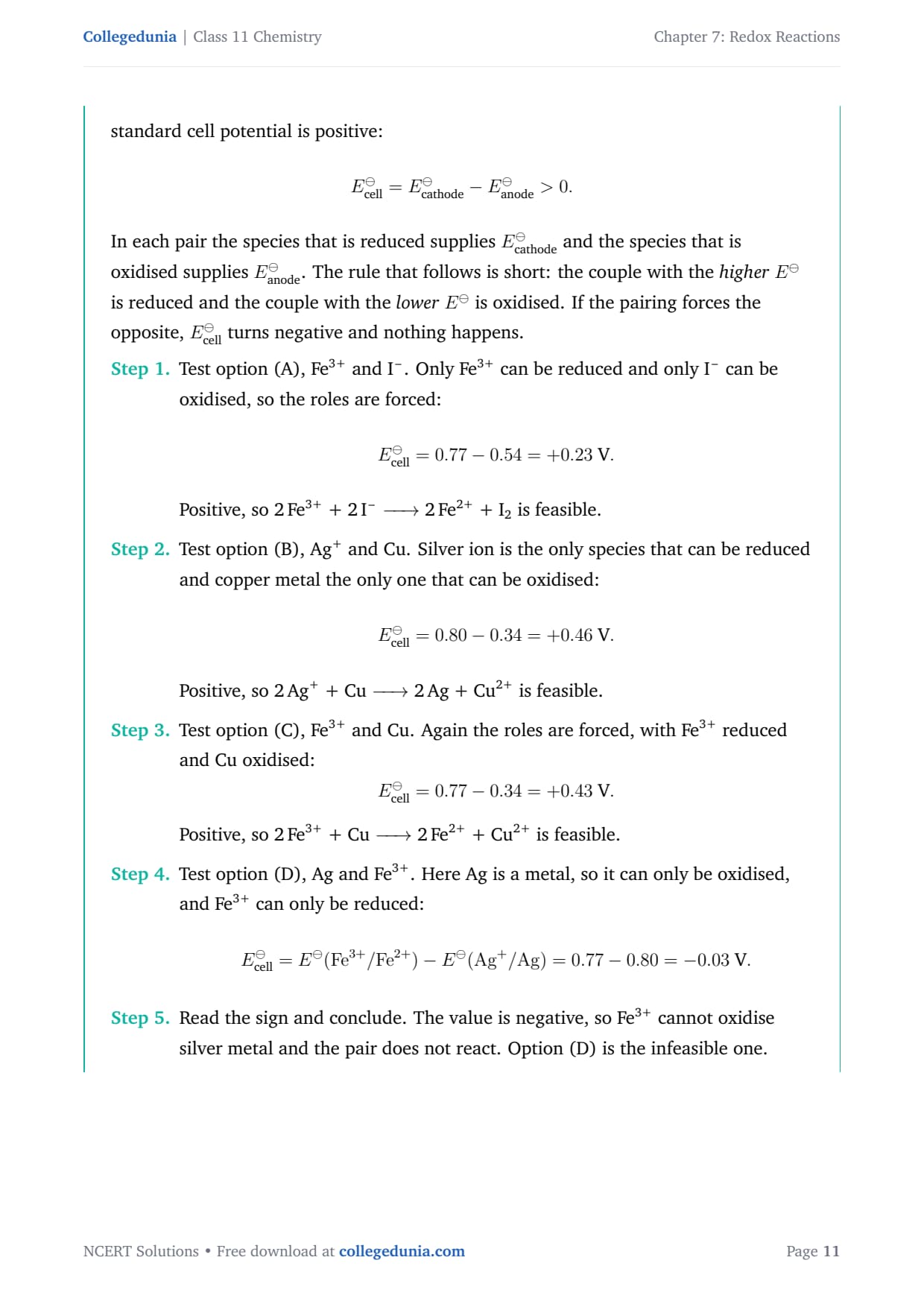
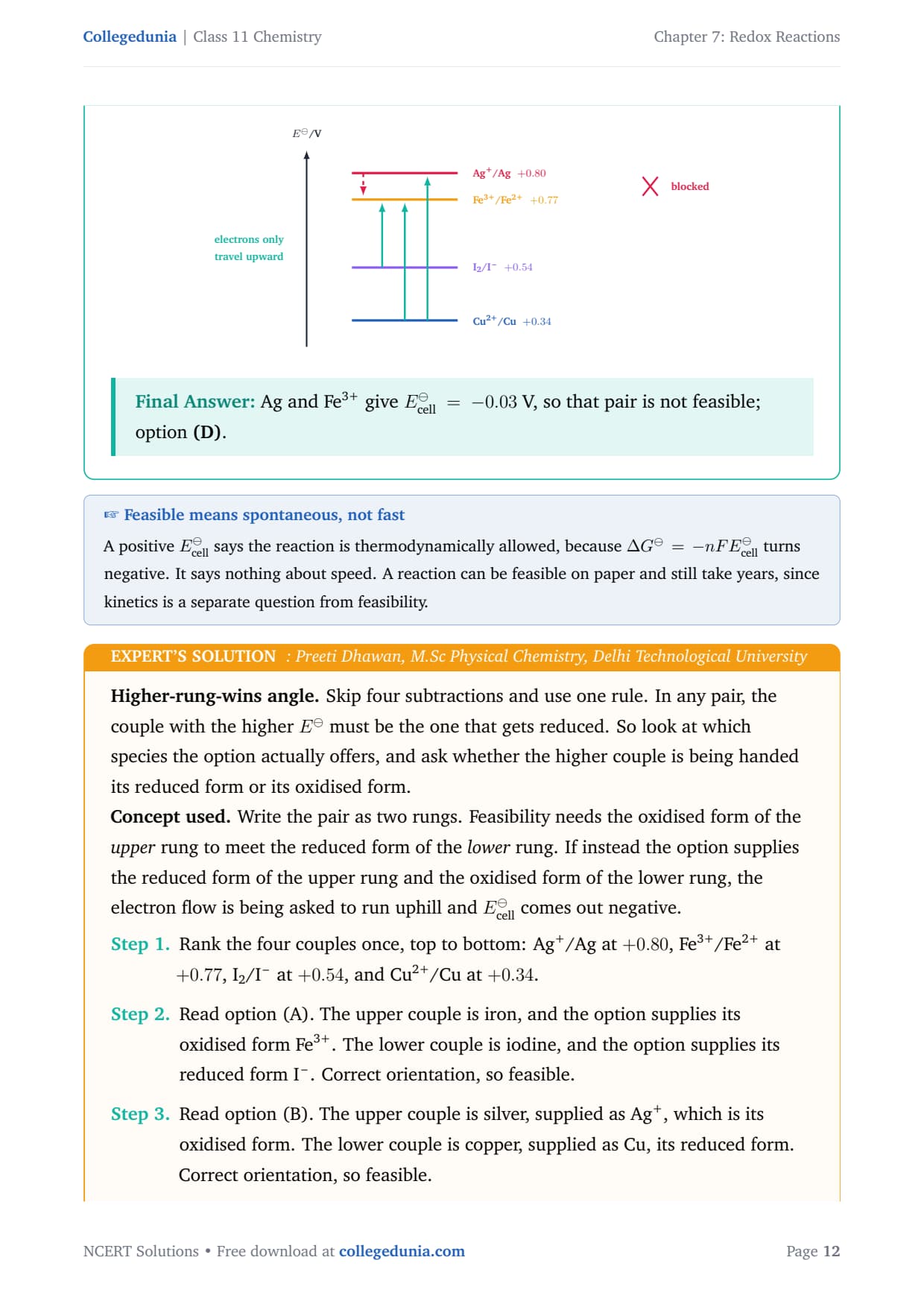
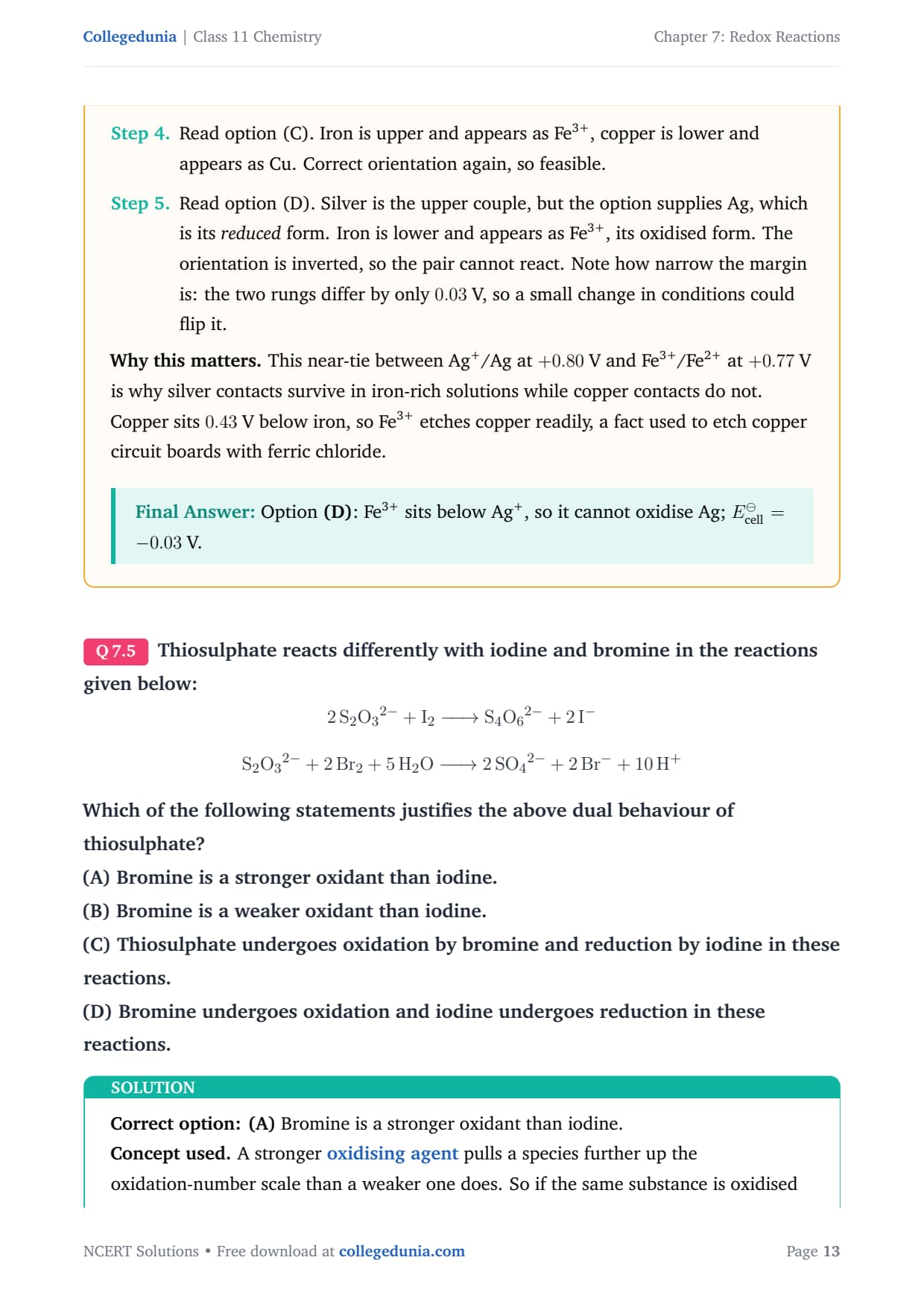
- Judging by charge, not potential: Fe3+ looks hungrier for electrons than Ag+, yet silver wins at +0.80 V. Only E° decides.
How the Exemplar Steps Up from the Class 11 Chemistry Textbook
The textbook hands you a rule and asks you to apply it. The Exemplar asks you to choose the rule, and often to explain why the obvious one fails.
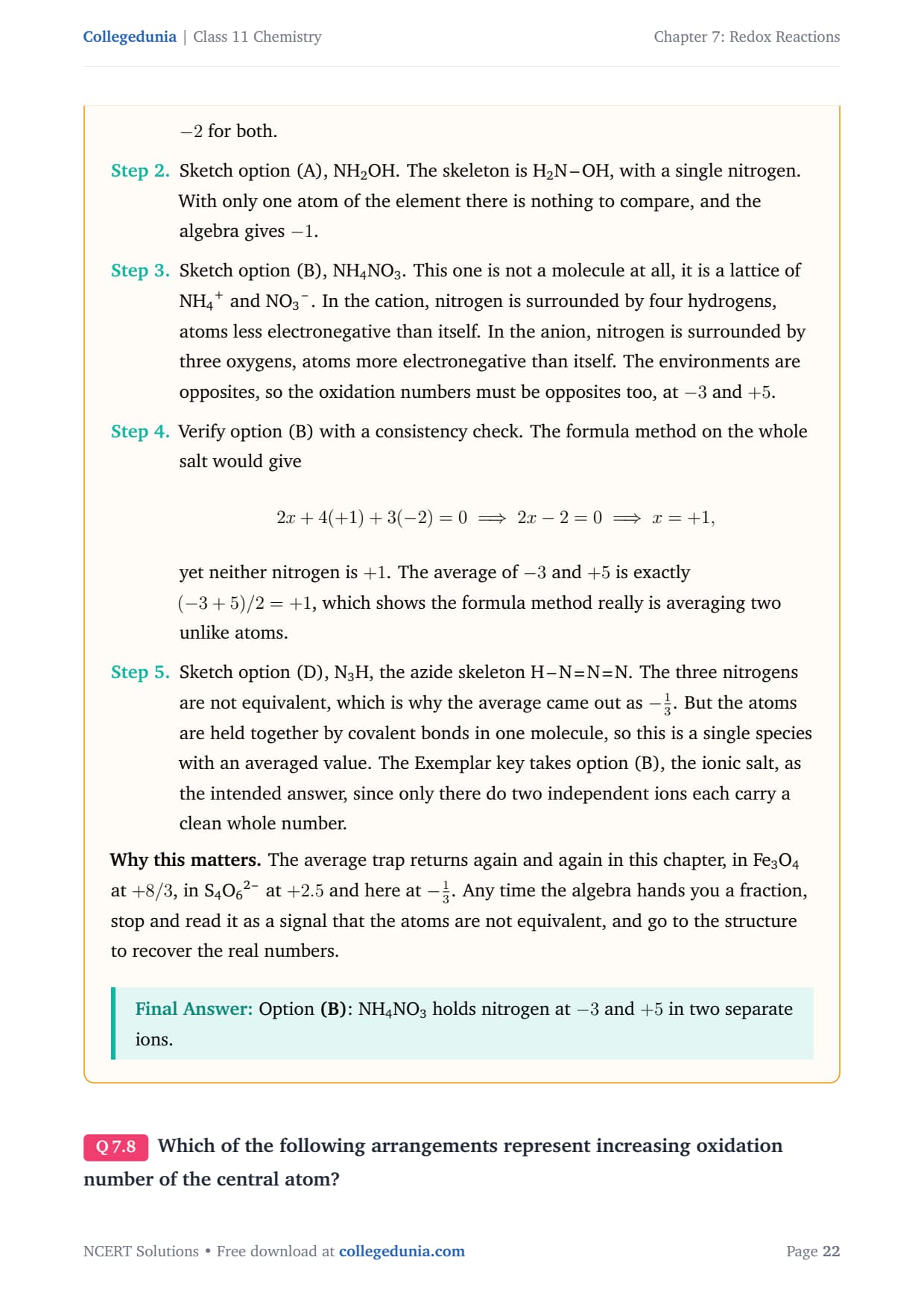
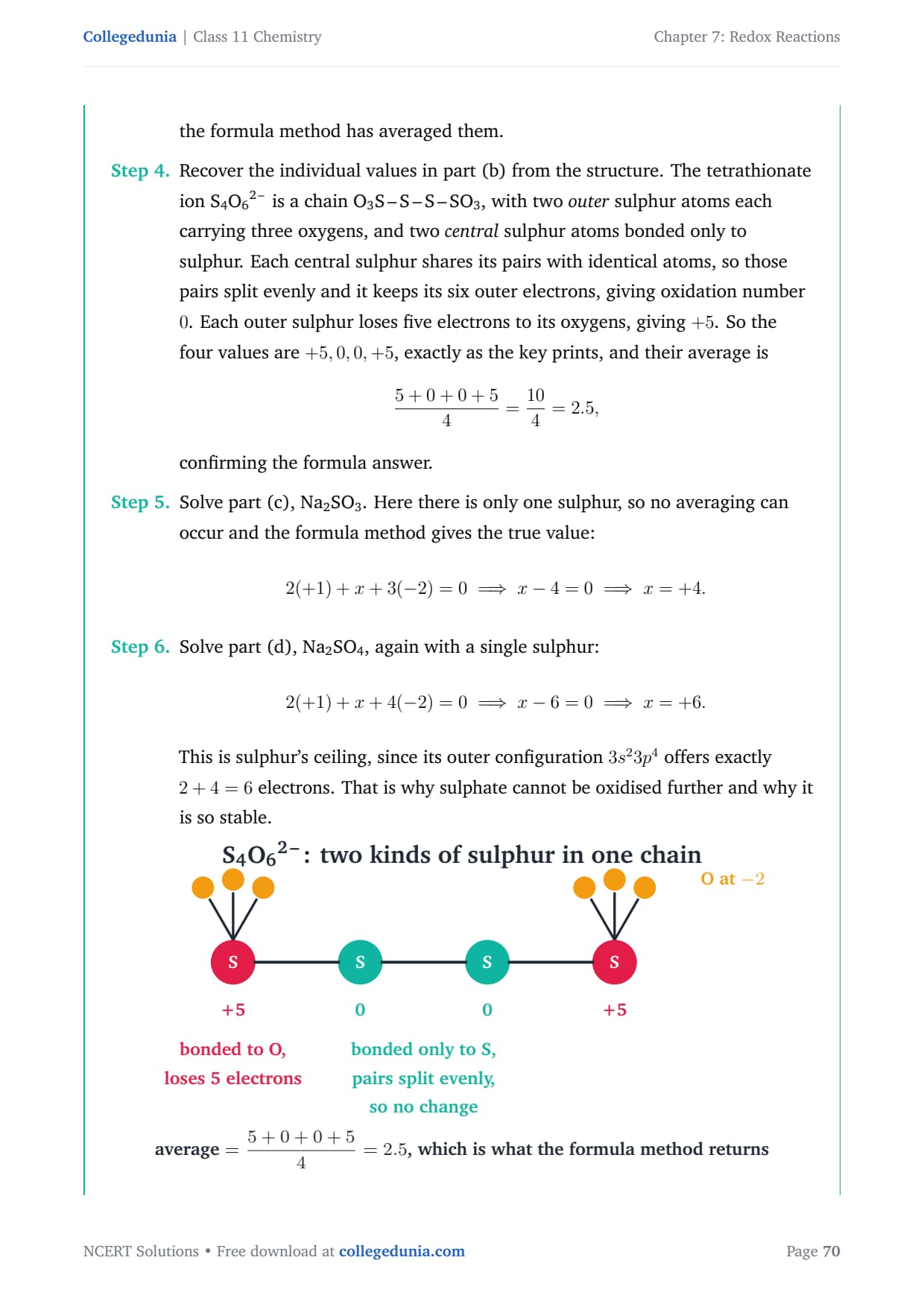
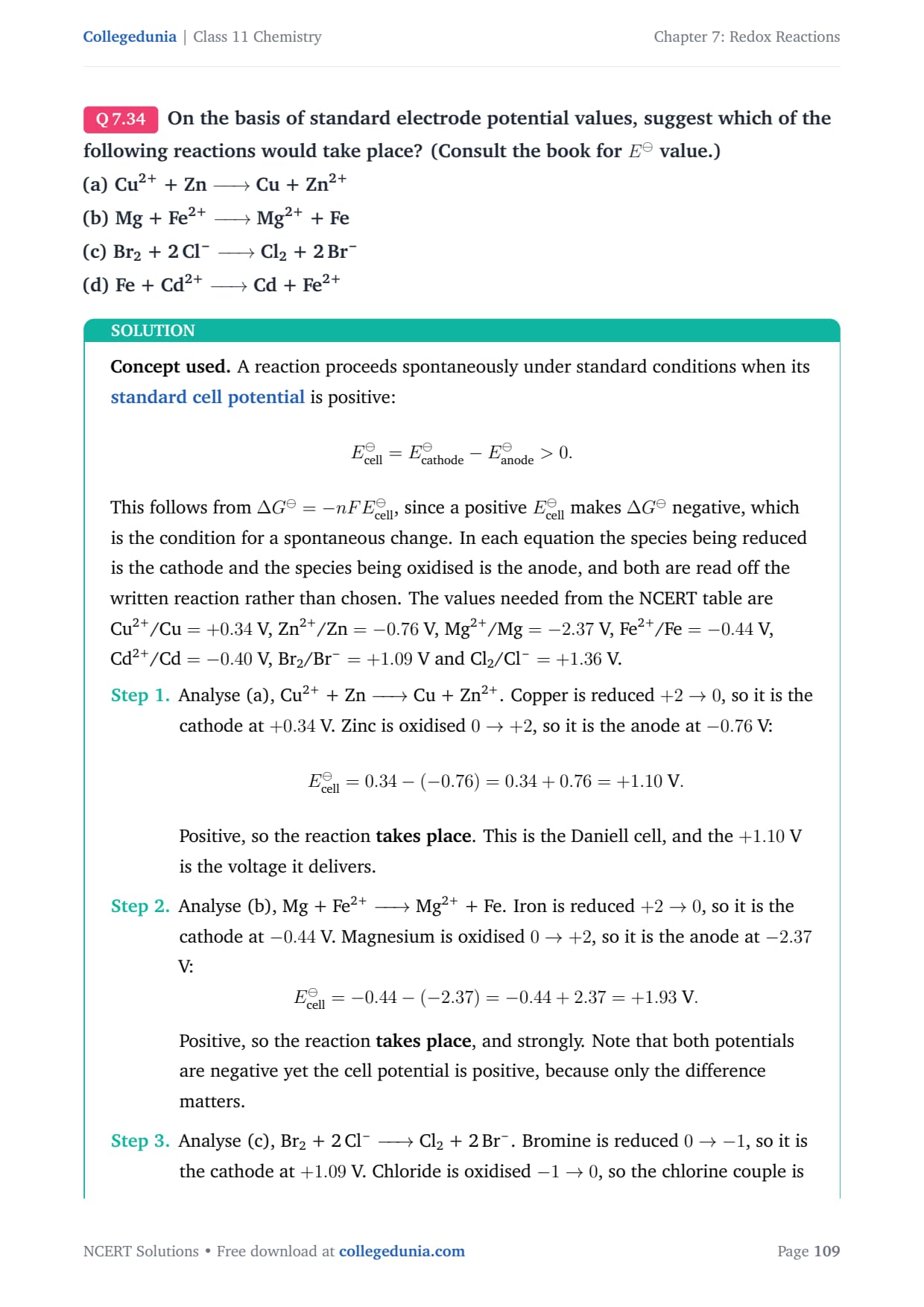
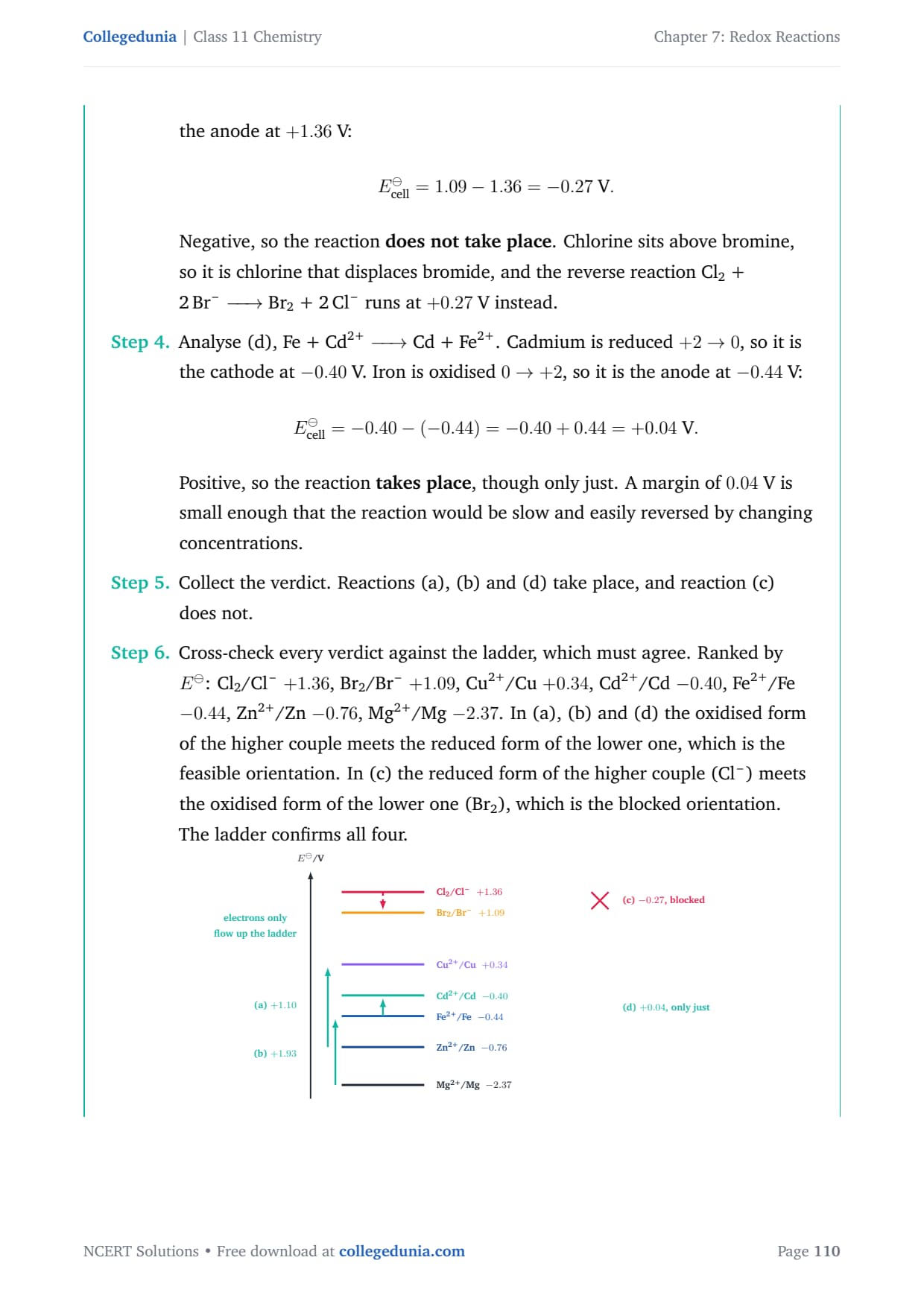
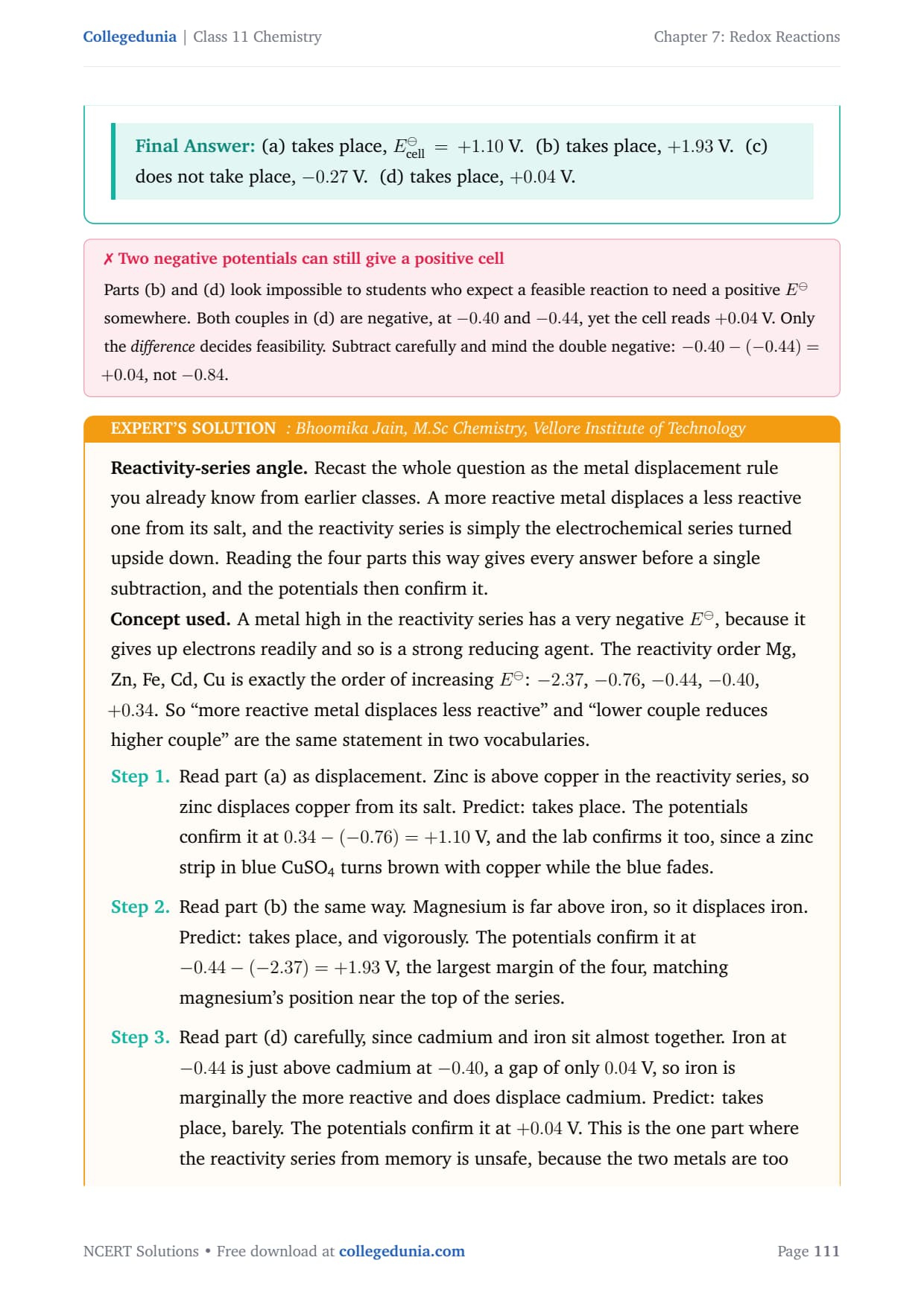
Question 34 shows this well. Parts (b) and (d) look impossible to students who expect a feasible reaction to need a positive value somewhere. Both couples in part (d) are negative, at -0.40 and -0.44, yet the cell reads +0.04 V. Only the difference decides feasibility, and the double negative is where marks go. Question 23 does something similar with sulphur, where a fractional average of +2.5 in Na2S4O6 warns you that the four atoms are not in identical environments.
How to Use These NCERT Exemplar Solutions for Boards, NEET and JEE
Attempt each question before you open the solution. The Exemplar rewards the attempt more than the reading.
- Boards: the Short Answer and Long Answer sets match the 3 and 5 mark board pattern closely
- NEET: work the MCQ I set first, since NEET repeats oxidation-number questions at that level
- JEE Main: the E° questions and the balancing problems in the Long Answer set are the closest NCERT practice available
Student Feedback
Students using Collegedunia's Class 11 Chemistry Exemplar Solutions told us the electrode potential questions were the hardest part of this chapter. Around 7 in 10 said that seeing the agent named by its effect on the partner, rather than by its own change, fixed an error they had repeated all year.
Other Resources for Class 11 Chemistry Redox Reactions
Collegedunia has the full set of study material for this chapter. Use the Notes for a first read, then the Exemplar once oxidation numbers feel steady.
Also Check:
- NCERT Solutions for Class 11 Chemistry Chapter 7
- Class 11 Chemistry Chapter 7 Notes
- Class 11 Chemistry Chapter 7 NCERT Book PDF
- Class 11 Chemistry Chapter 7 Exemplar Questions with Solutions
NCERT Exemplar Solutions for Other Class 11 Chemistry Chapters
Each chapter below has the same step-by-step treatment and a free PDF.
Redox Reactions Class 11 NCERT Exemplar Solutions FAQs
Ques. How many questions are there in the Class 11 Chemistry Redox Reactions Exemplar?
Ans. Chapter 7 has 38 questions. They are split into 11 MCQ I, 5 MCQ II, 10 Short Answer, 2 Matching Type, 4 Assertion and Reason and 6 Long Answer questions. All 38 are solved in the free PDF on this page.
Ques. Why is Redox Reactions numbered Unit 8 in the Exemplar but Chapter 7 in the textbook?
Ans. The printed Exemplar still follows the older 14-unit edition of the book, which places Redox Reactions at Unit 8. The current textbook numbers it Chapter 7. The content is the same, and our solutions follow the question numbers as they appear in the source unit.
Ques. Is the printed NCERT Exemplar answer key for this chapter correct?
Ans. Mostly. Three printing slips appear. Question 3 prints the Br2/Br- potential as +1.90 V against the textbook's +1.09 V, Question 5 prints an unbalanced bromine equation needing 4Br2 and 8Br-, and Question 23 names S2O42- where it means S2O32-. None changes the final marked answer.
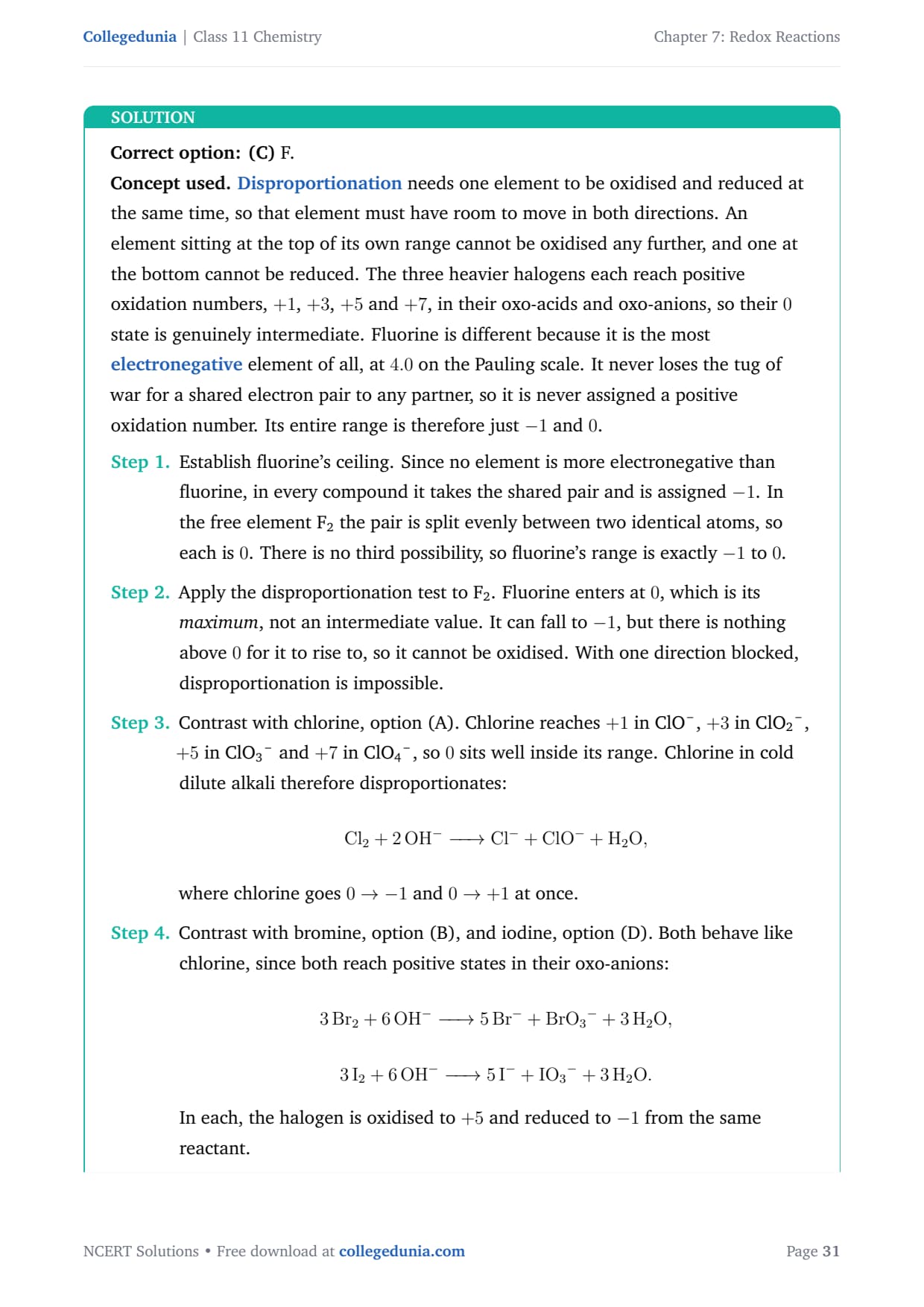
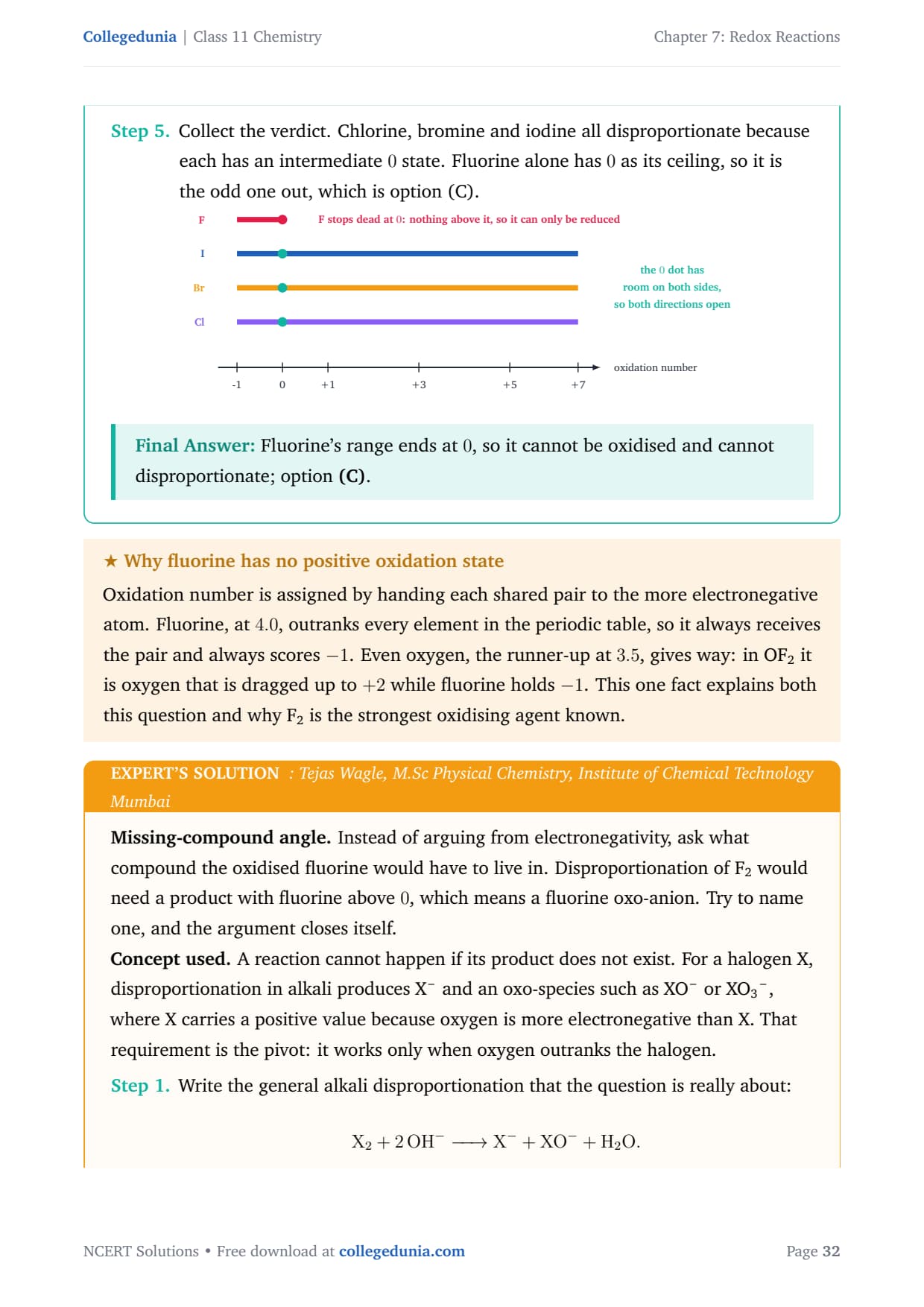
Ques. Why does fluorine not show disproportionation?
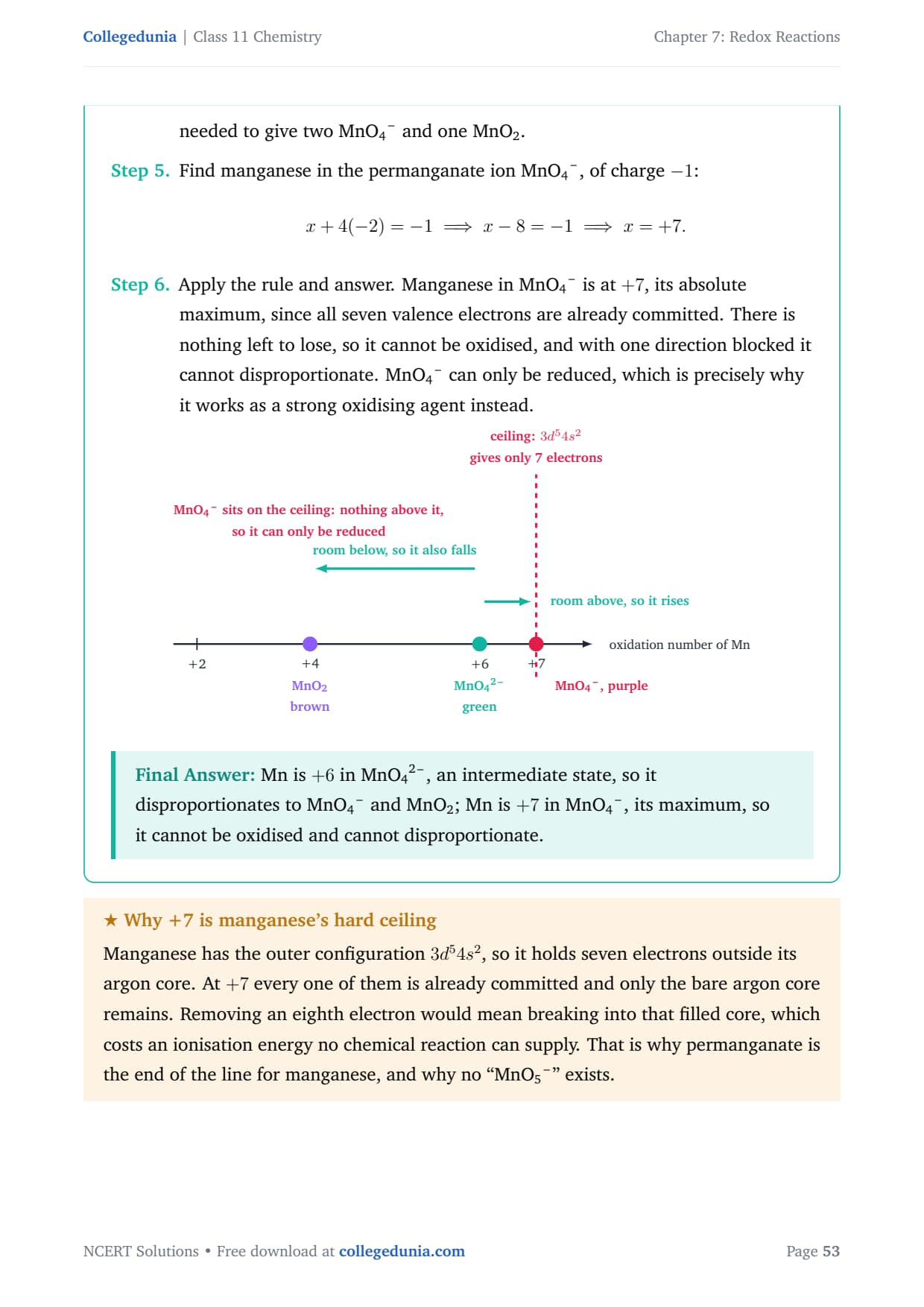
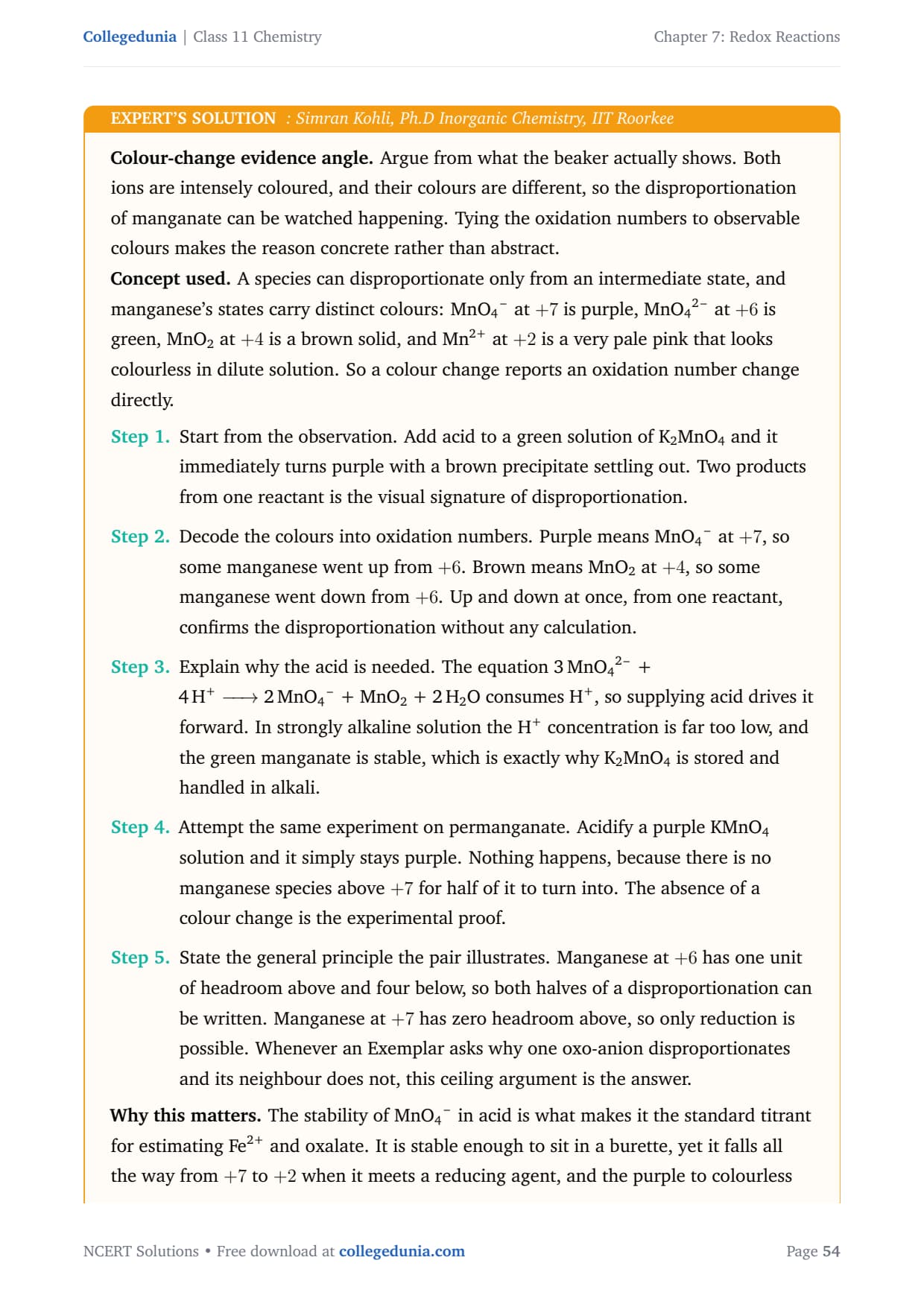
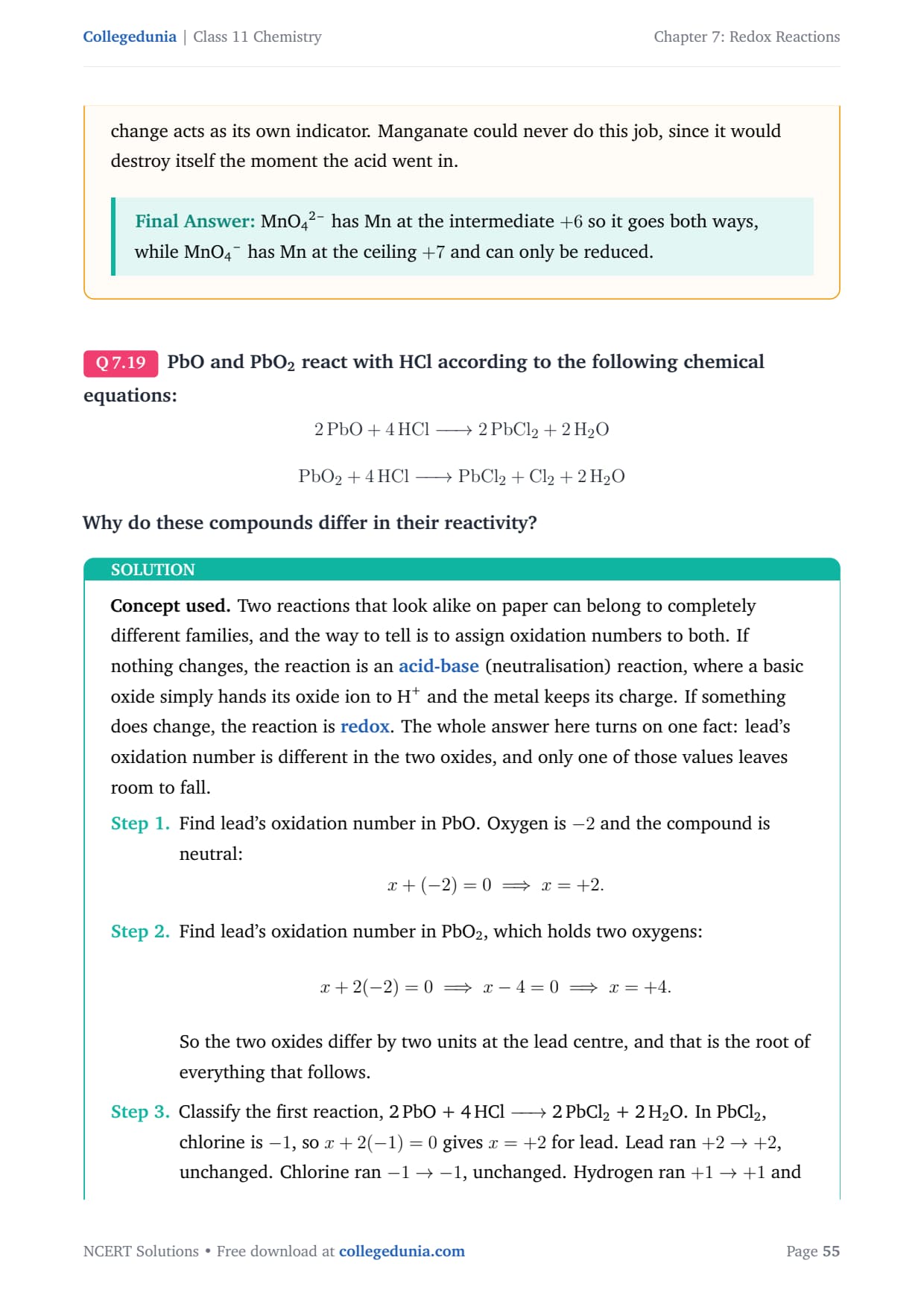
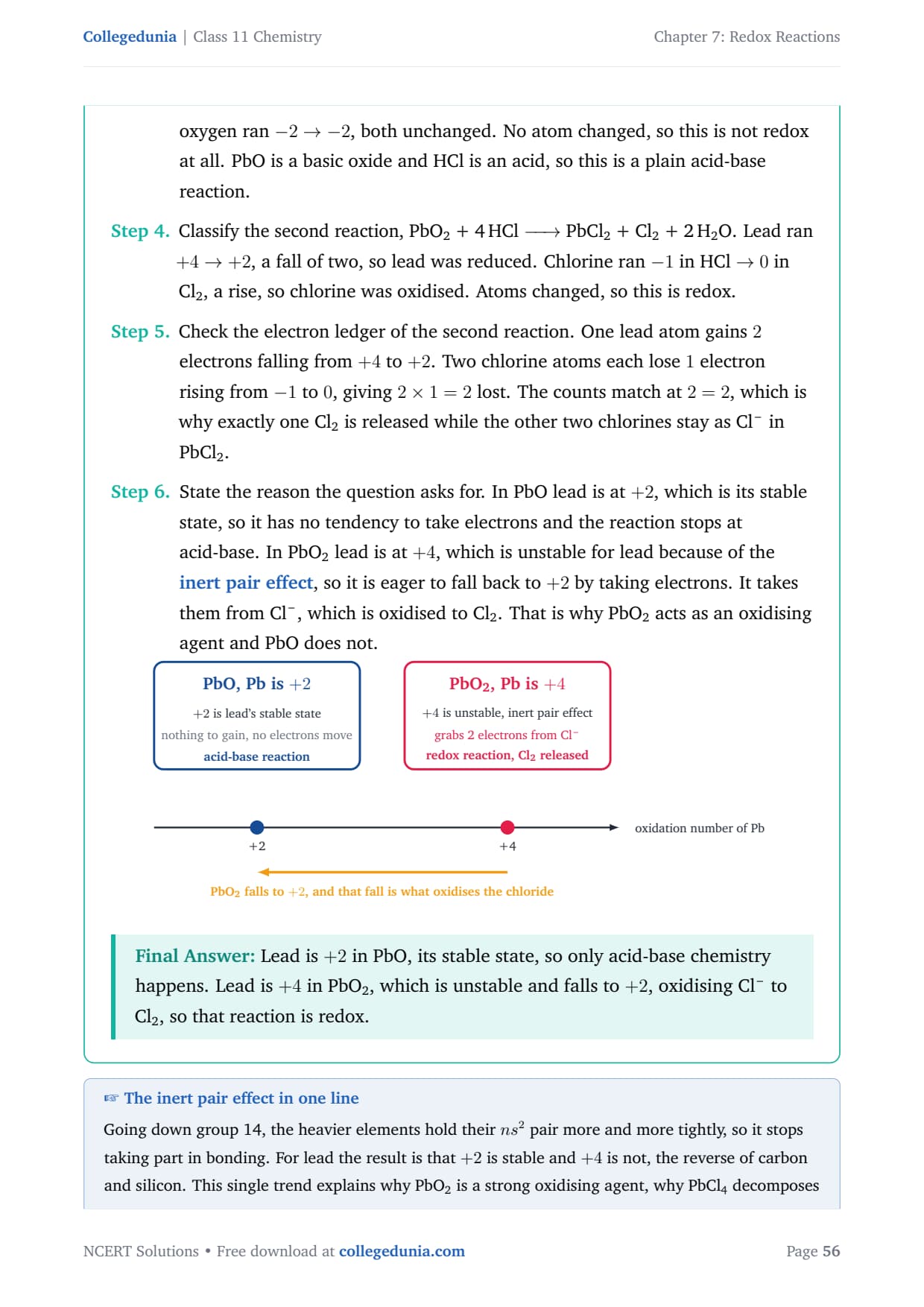
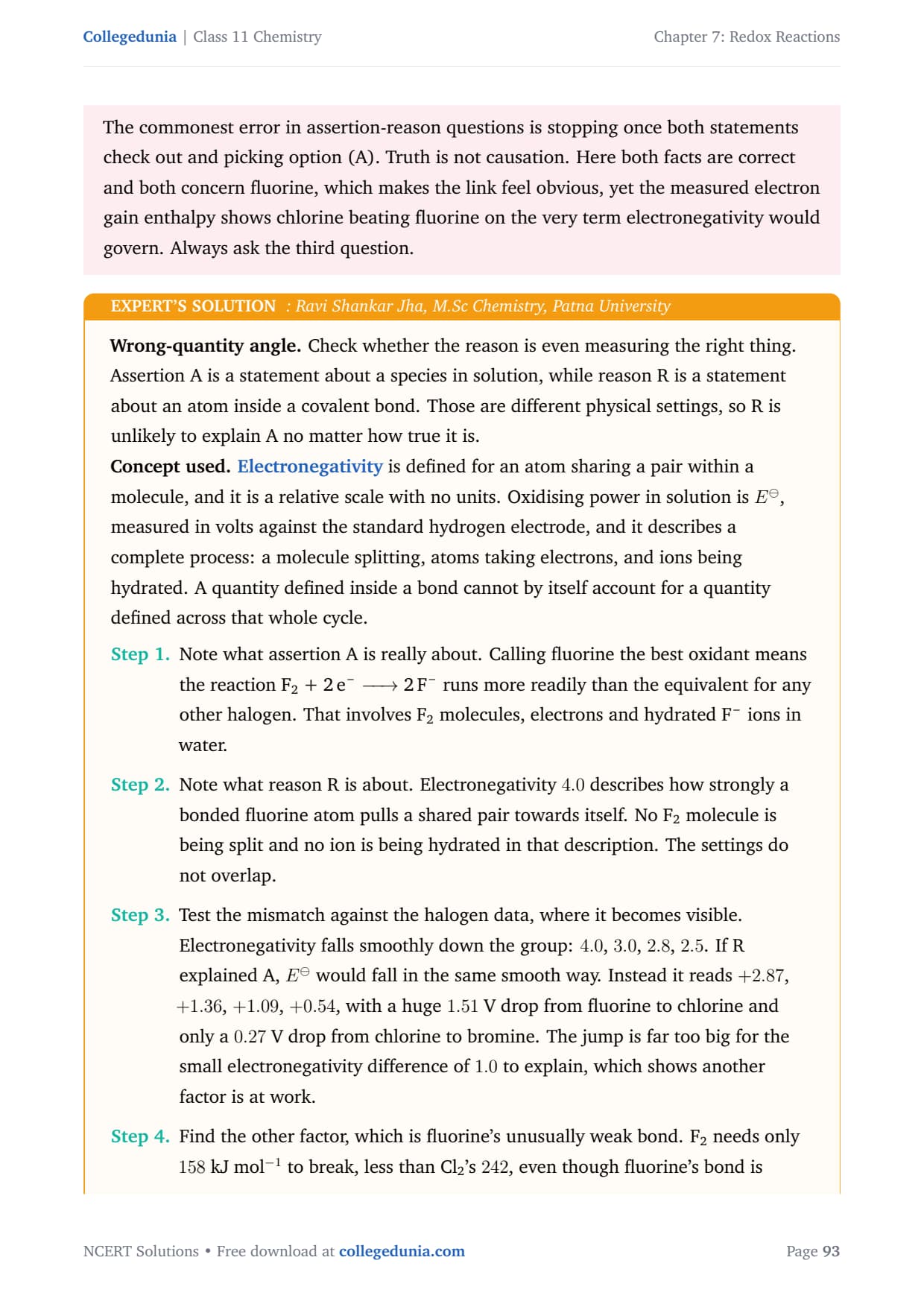
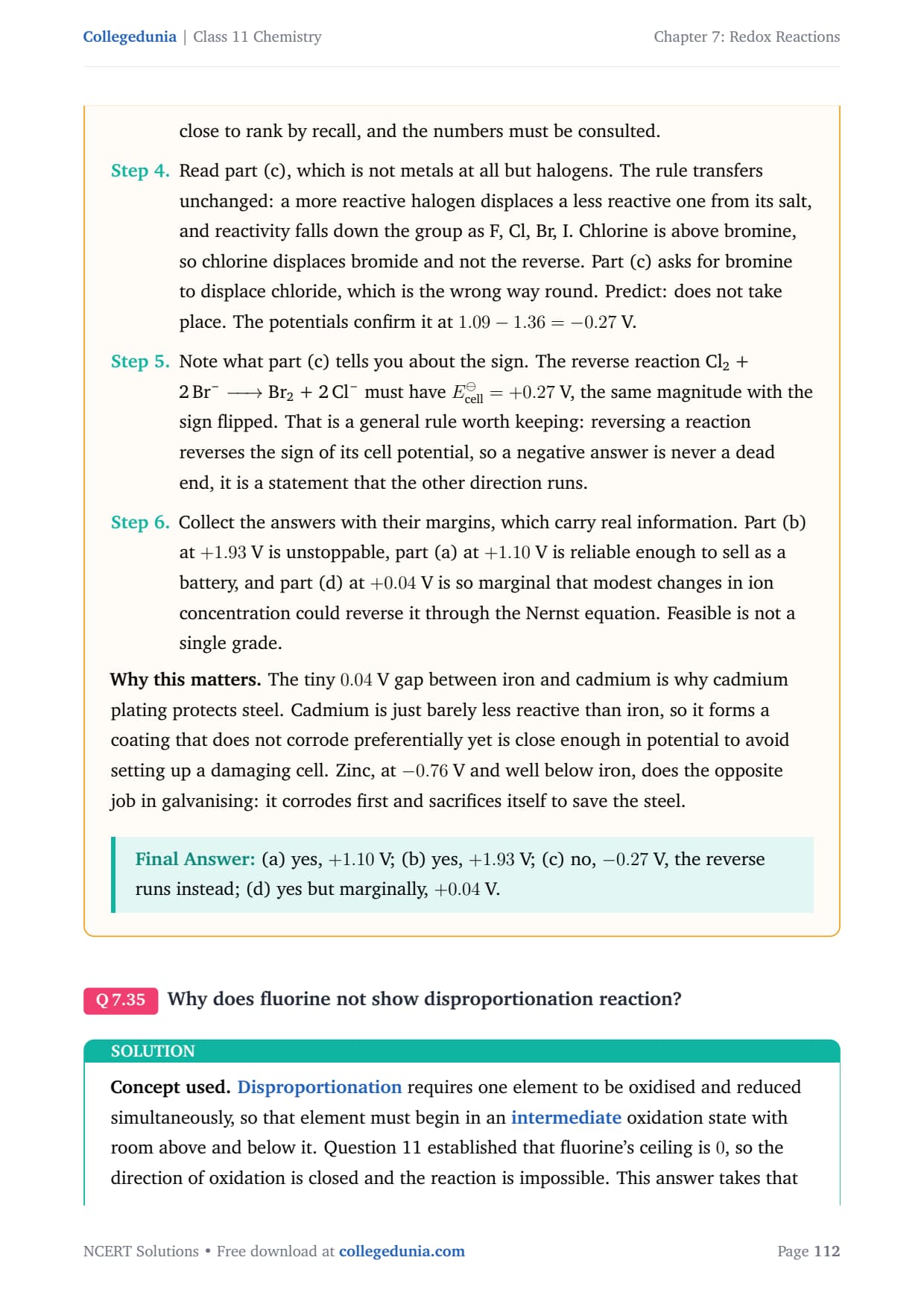
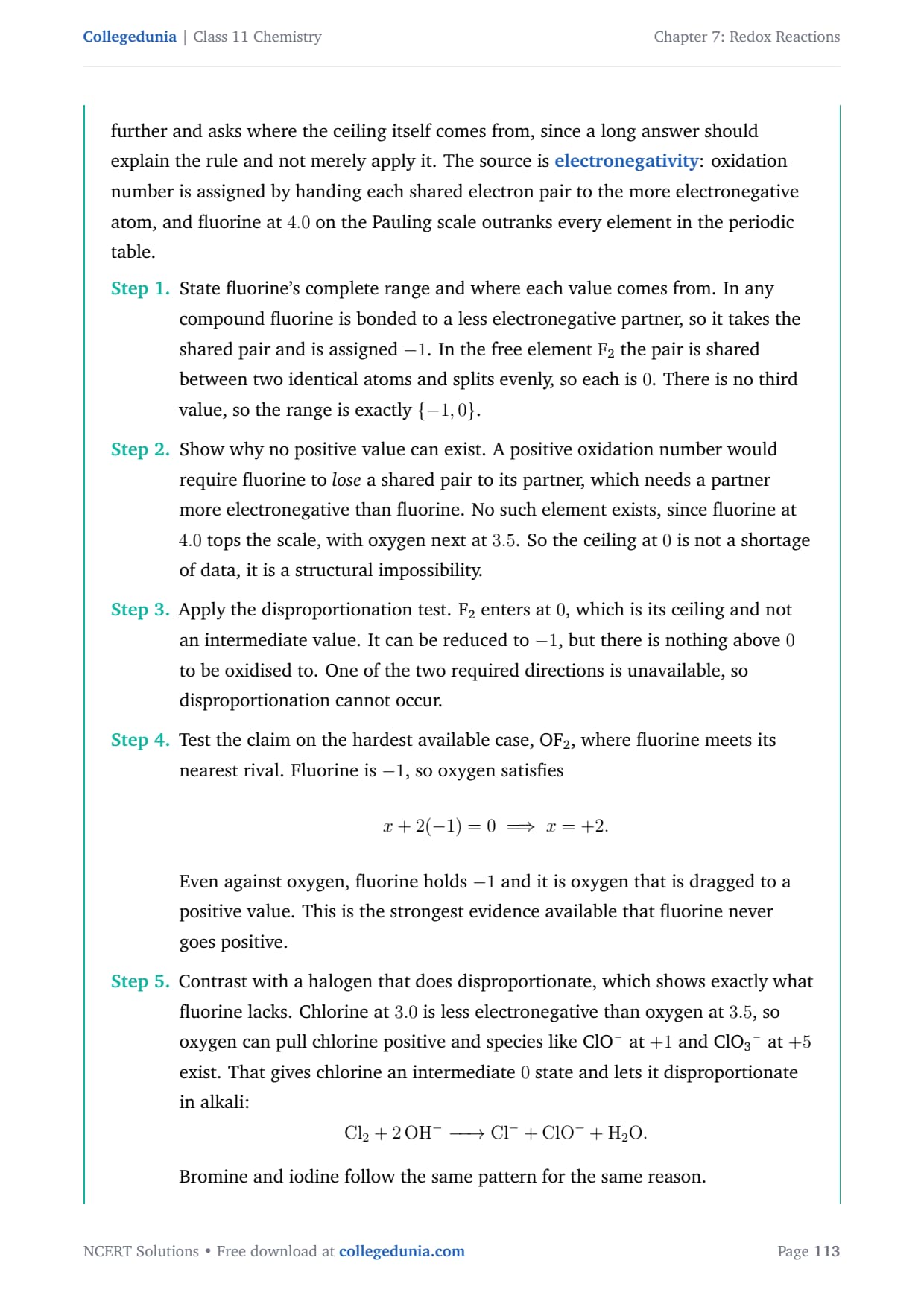
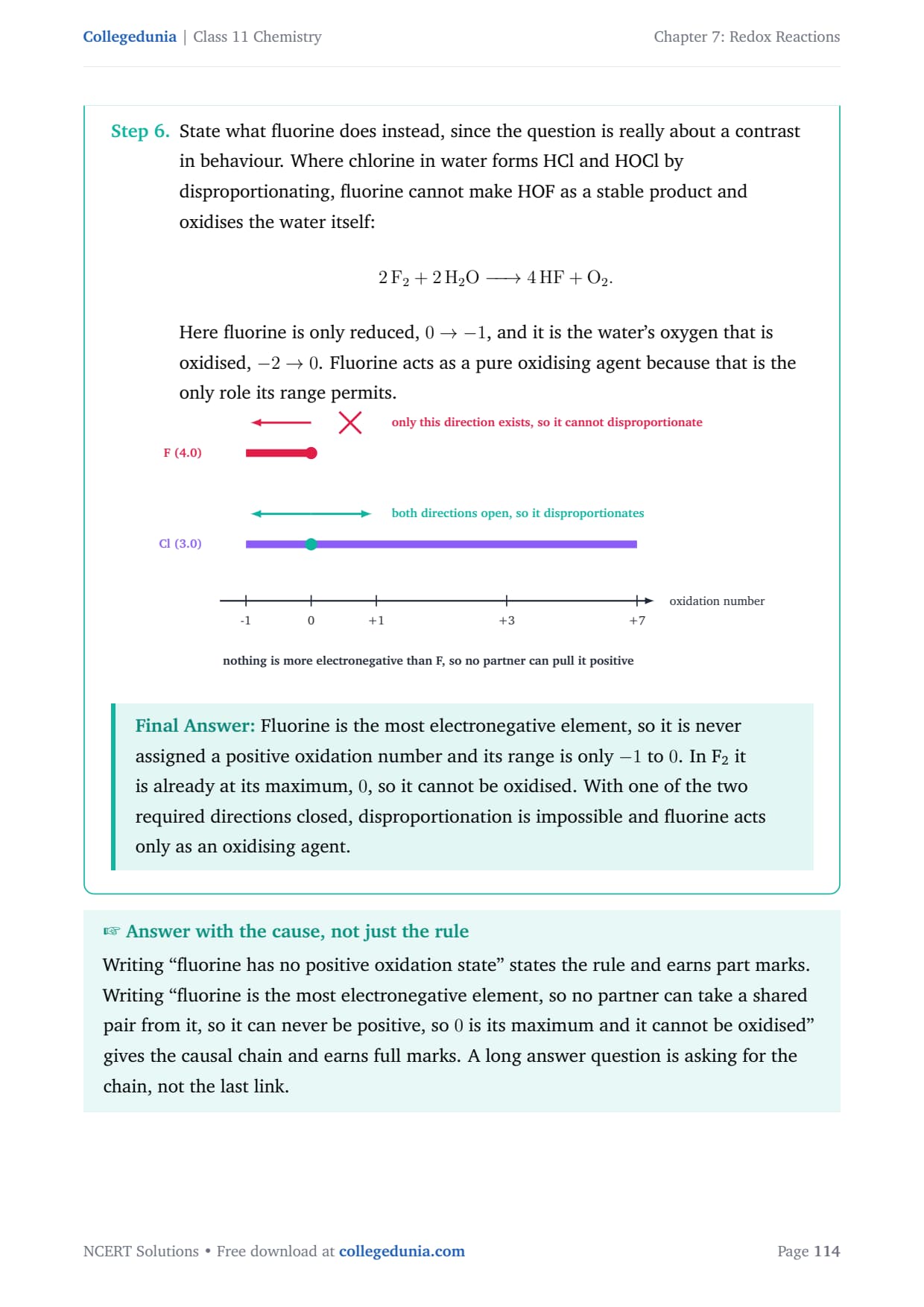
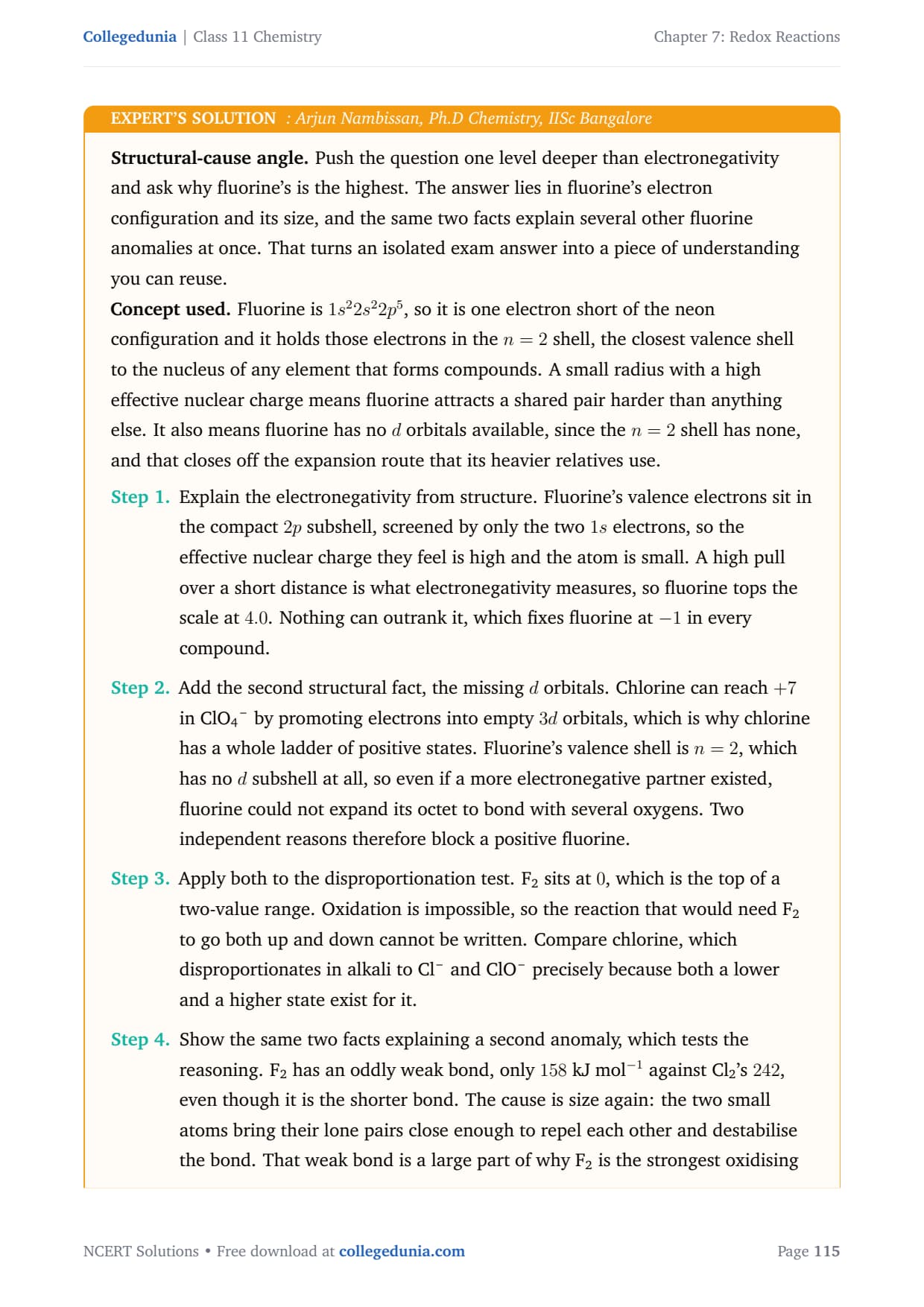
Ans. Disproportionation needs an element in an intermediate oxidation state, with room to rise and to fall. Fluorine is the most electronegative element at 4.0 on the Pauling scale, so it never carries a positive oxidation number. Its ceiling is 0, which closes the oxidation half and makes the reaction impossible. Question 35 covers this in full.
Ques. Can a reaction be feasible when both electrode potentials are negative?
Ans. Yes. Feasibility depends on the difference between the two potentials, not on their signs. In Question 34 part (d), the couples read -0.40 and -0.44, and the cell potential works out to -0.40 - (-0.44) = +0.04 V. The value is positive, so the reaction runs.



Comments