




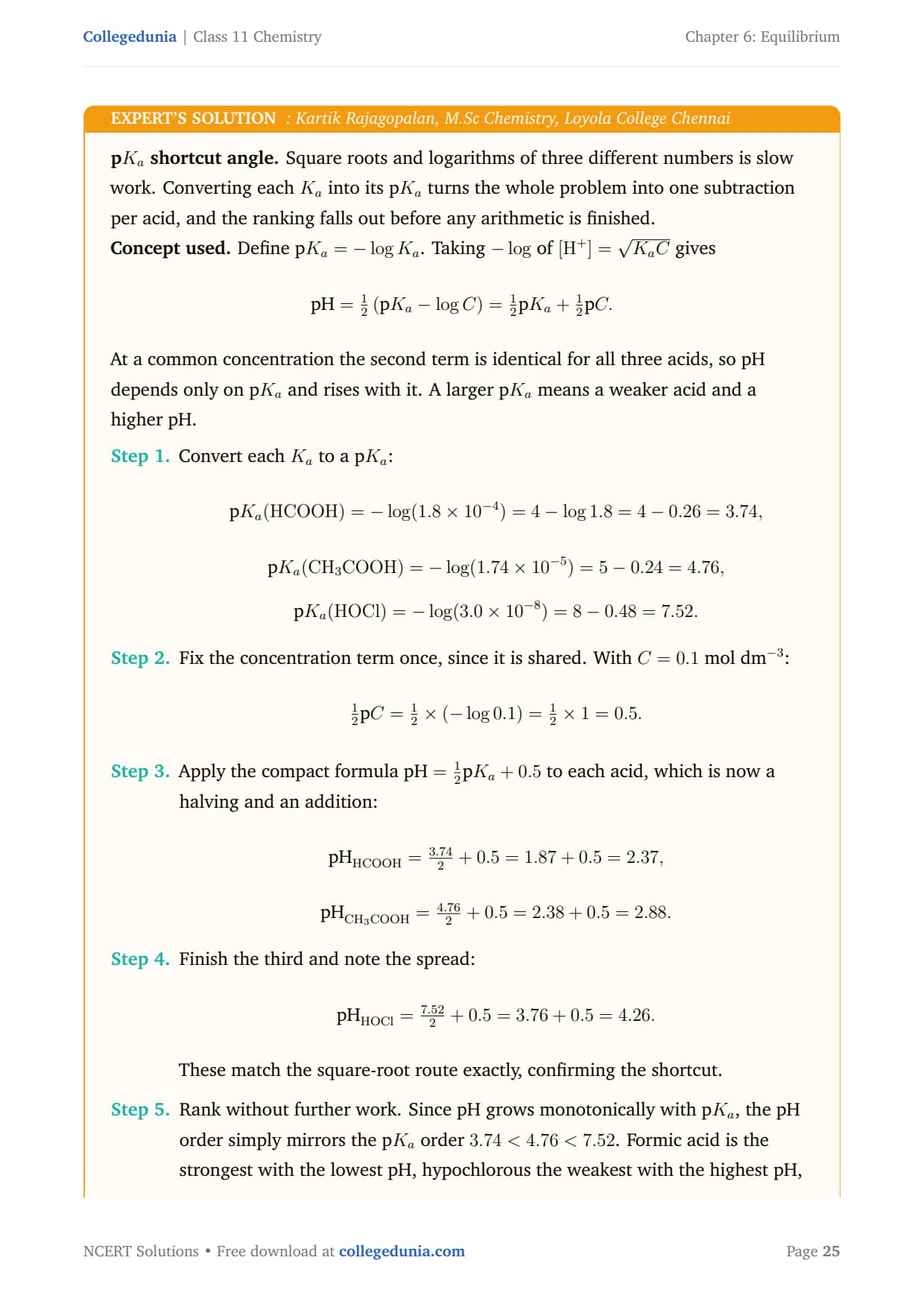
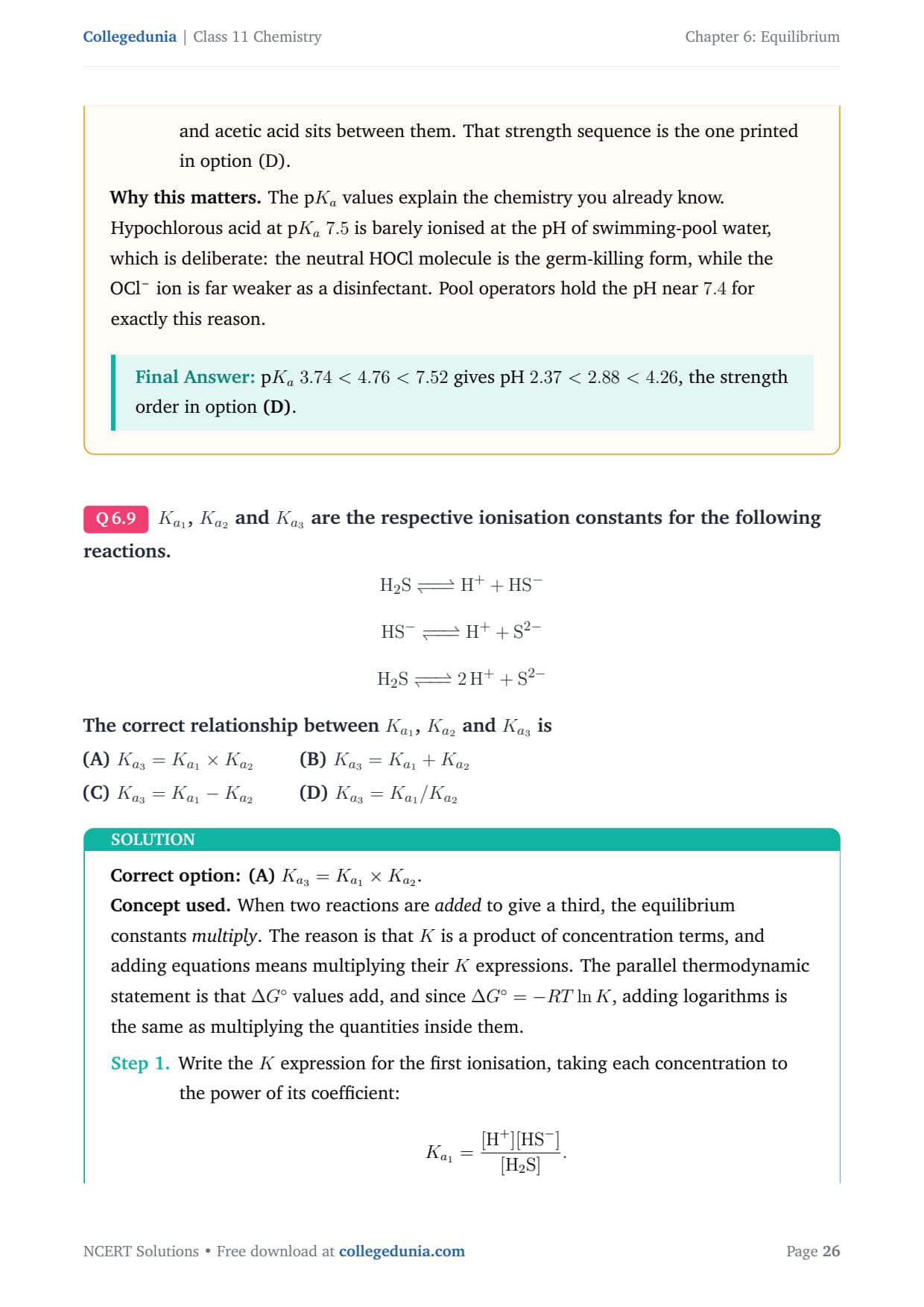
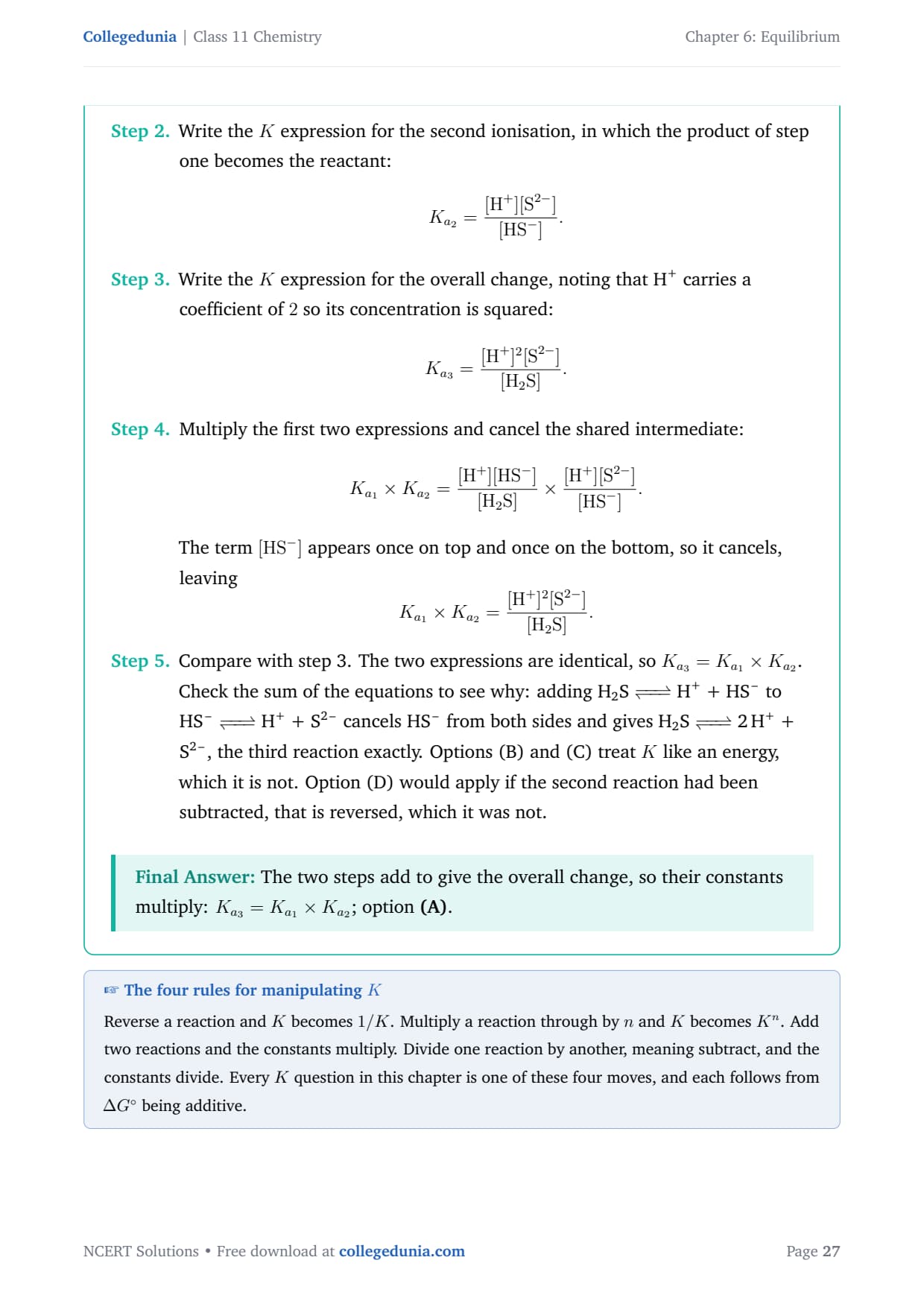
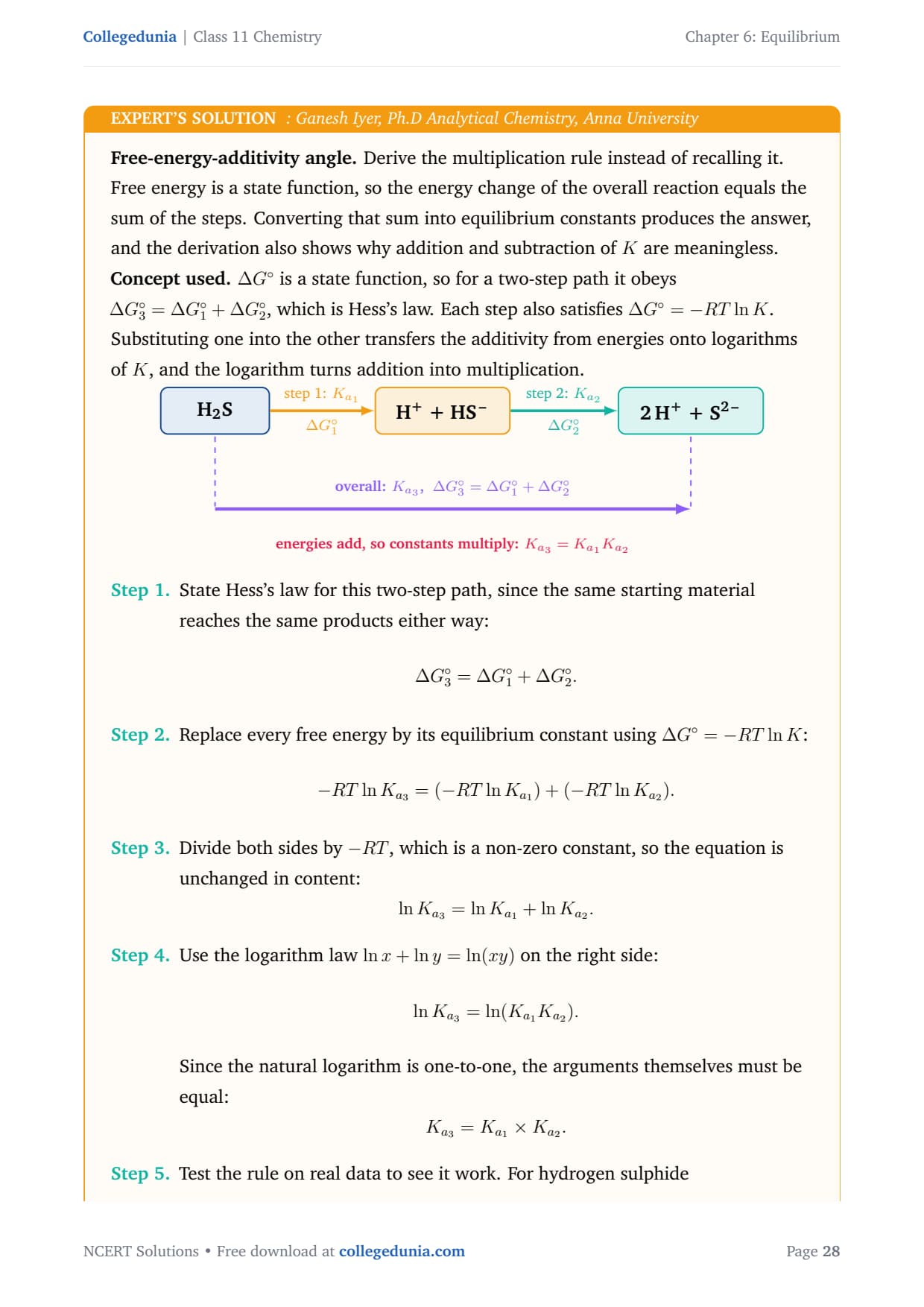
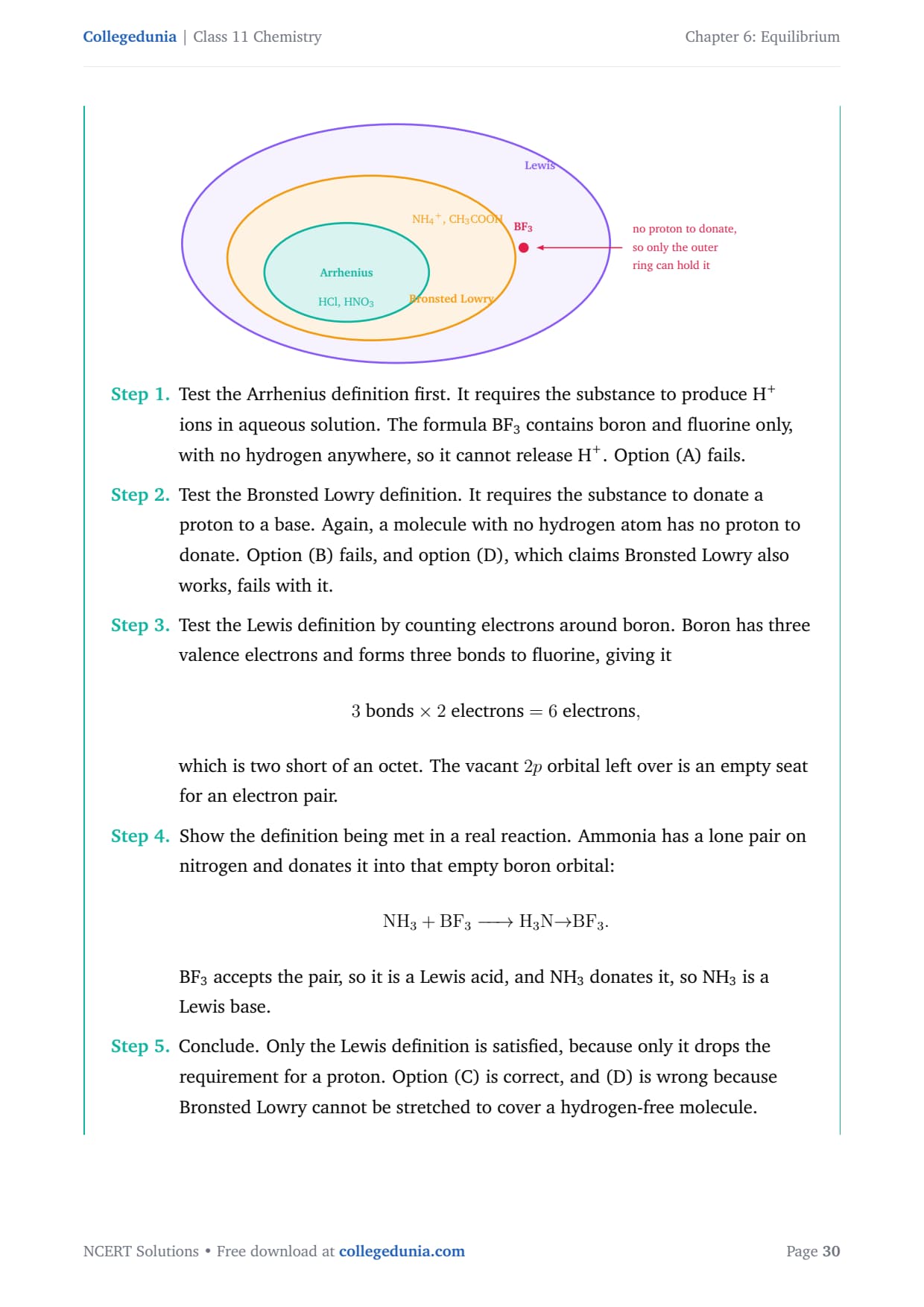
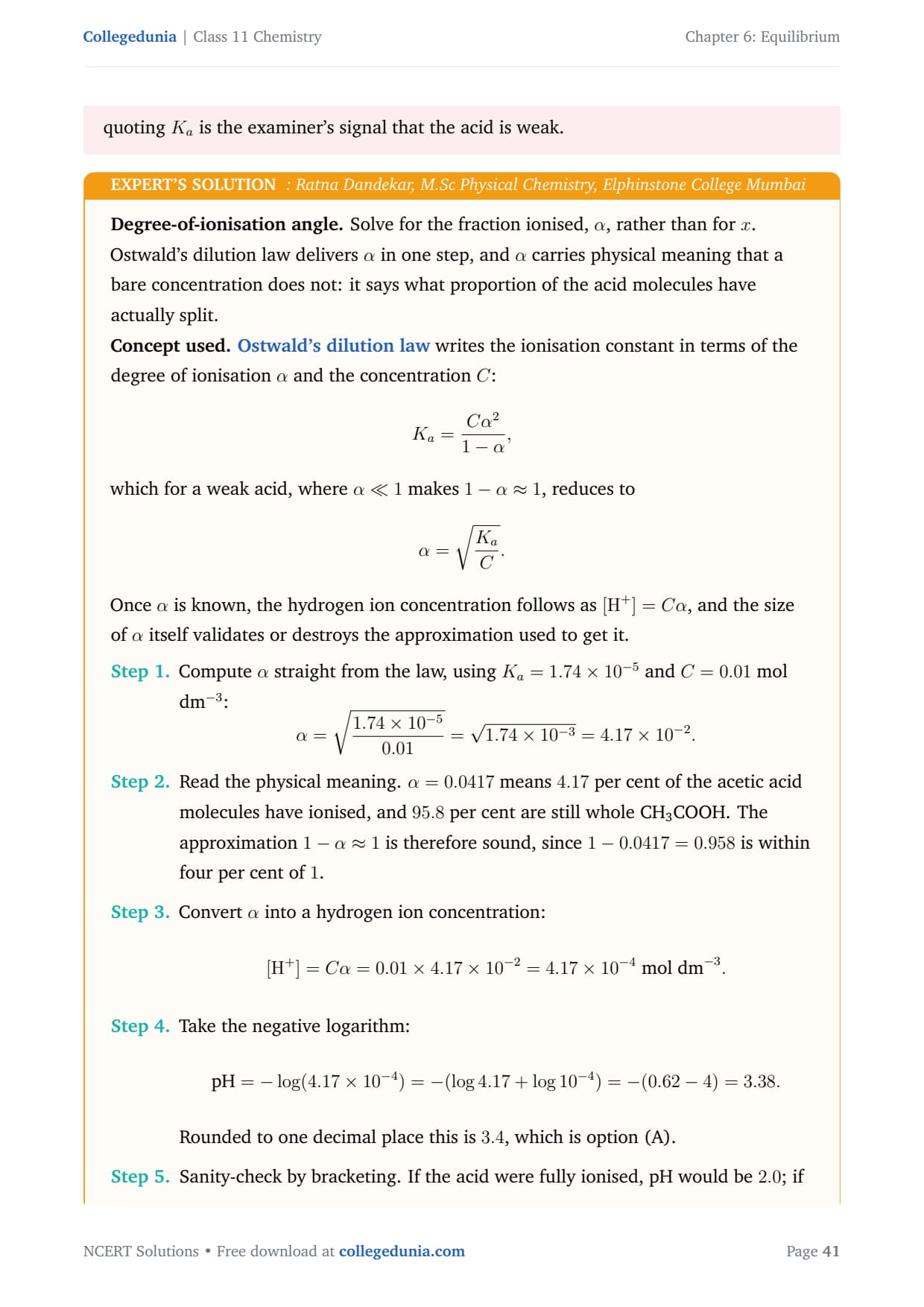
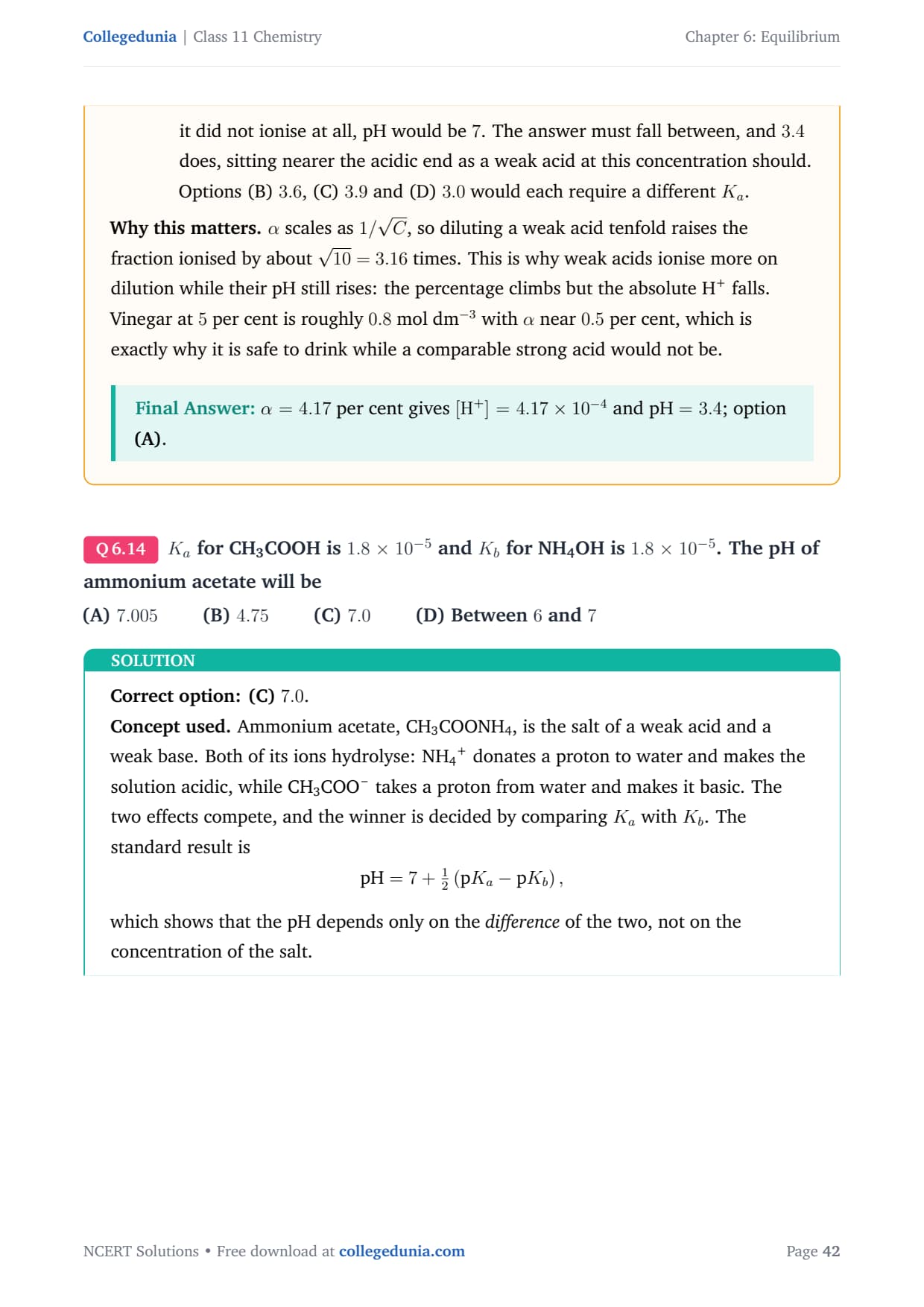
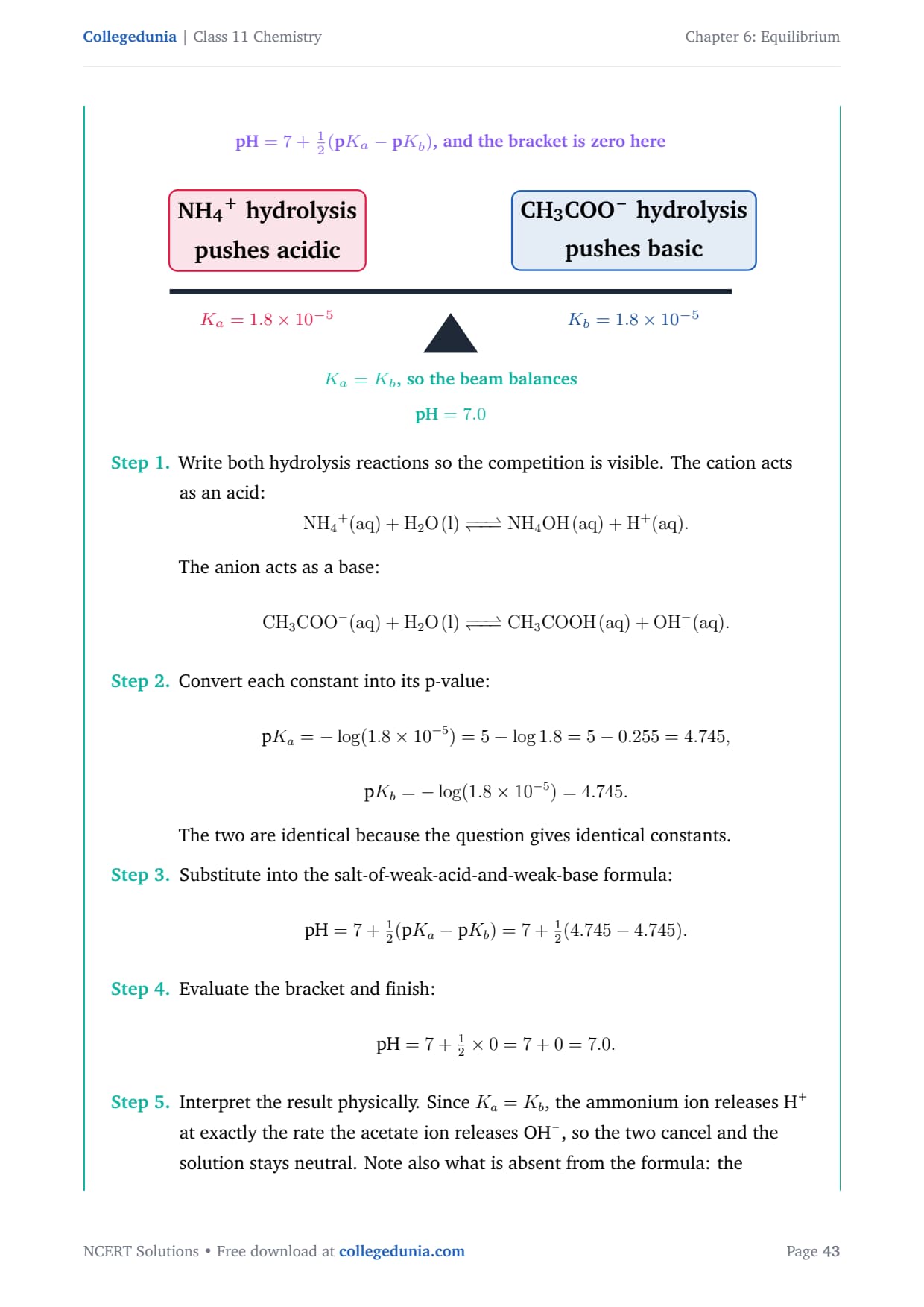
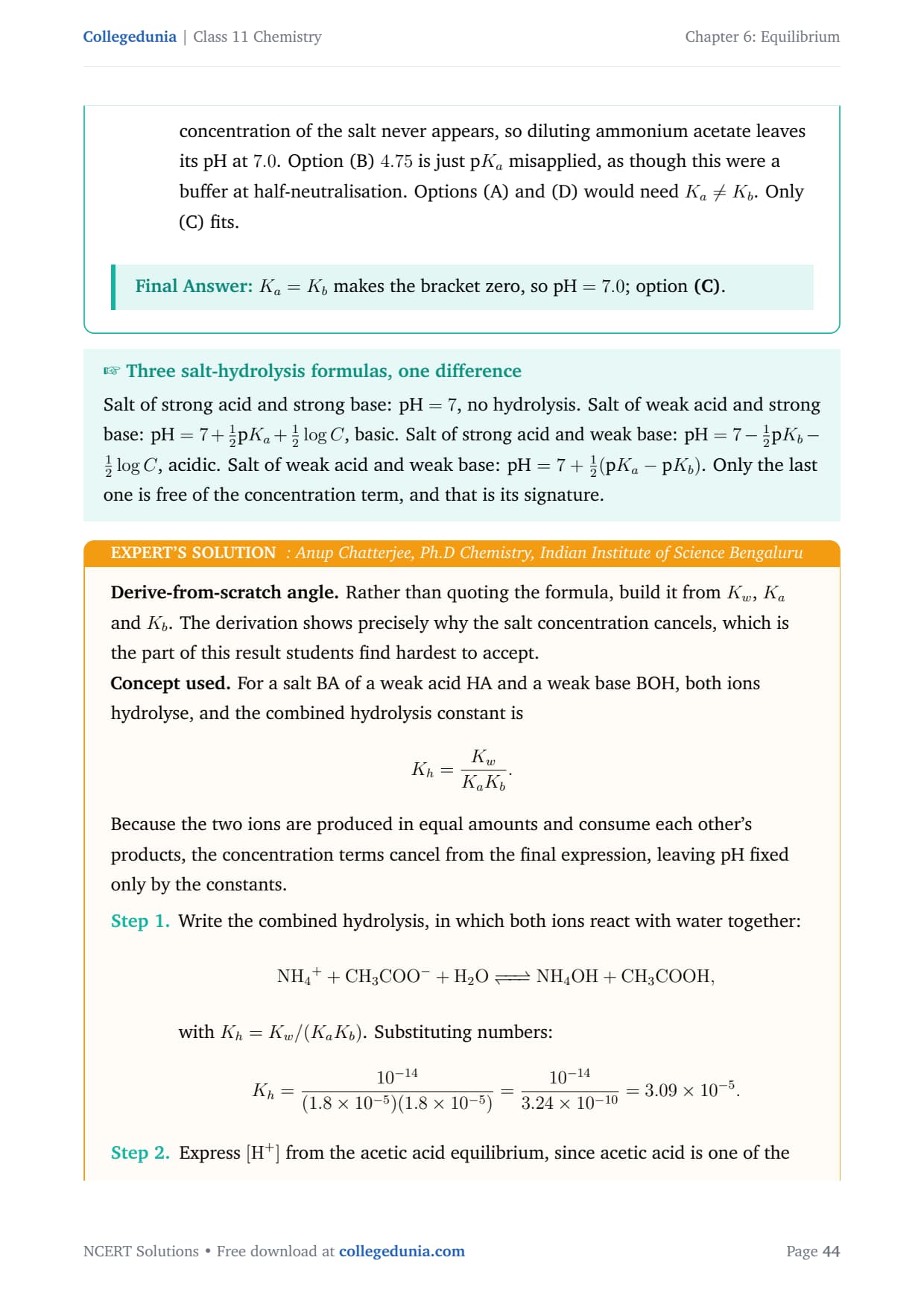
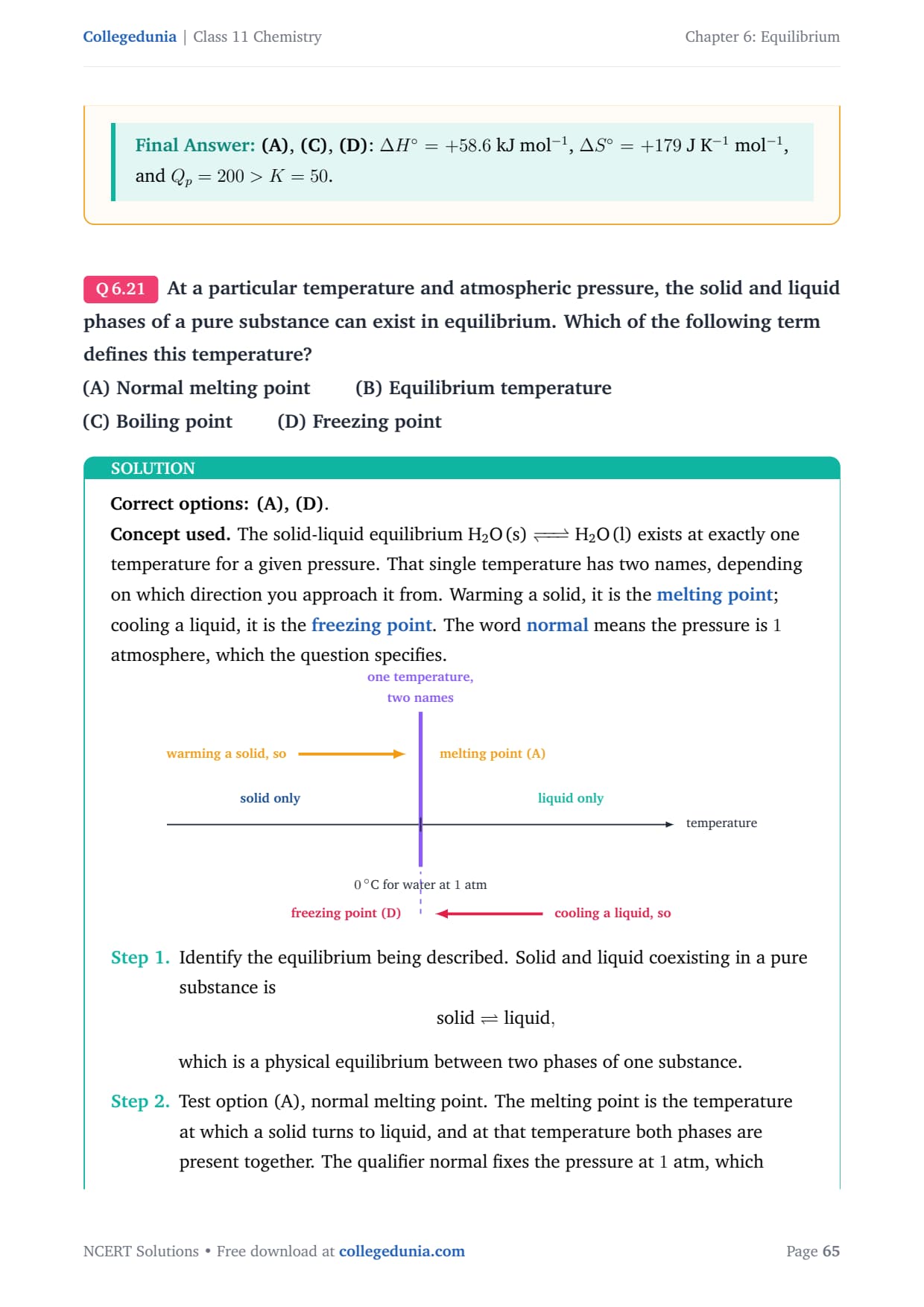
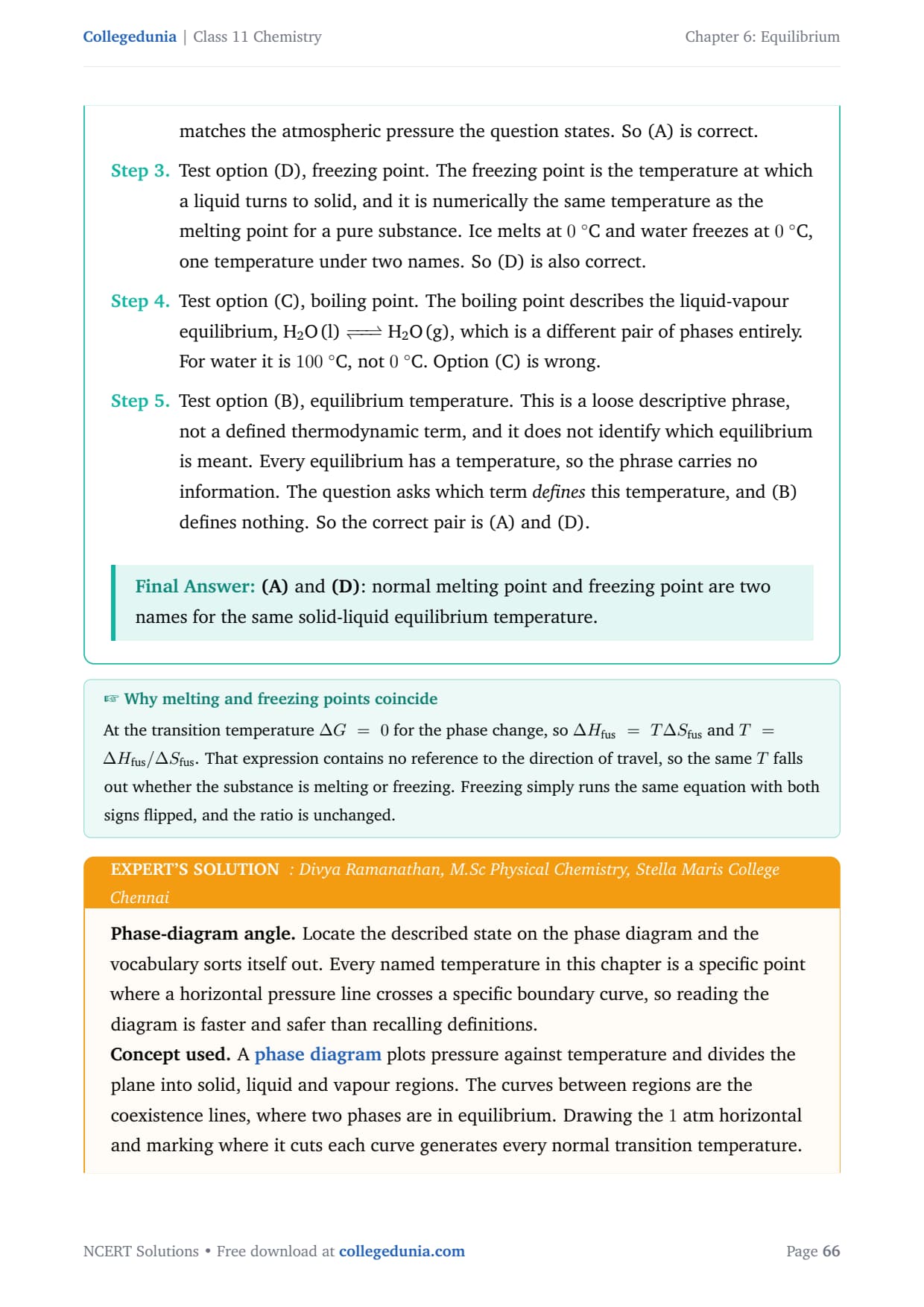
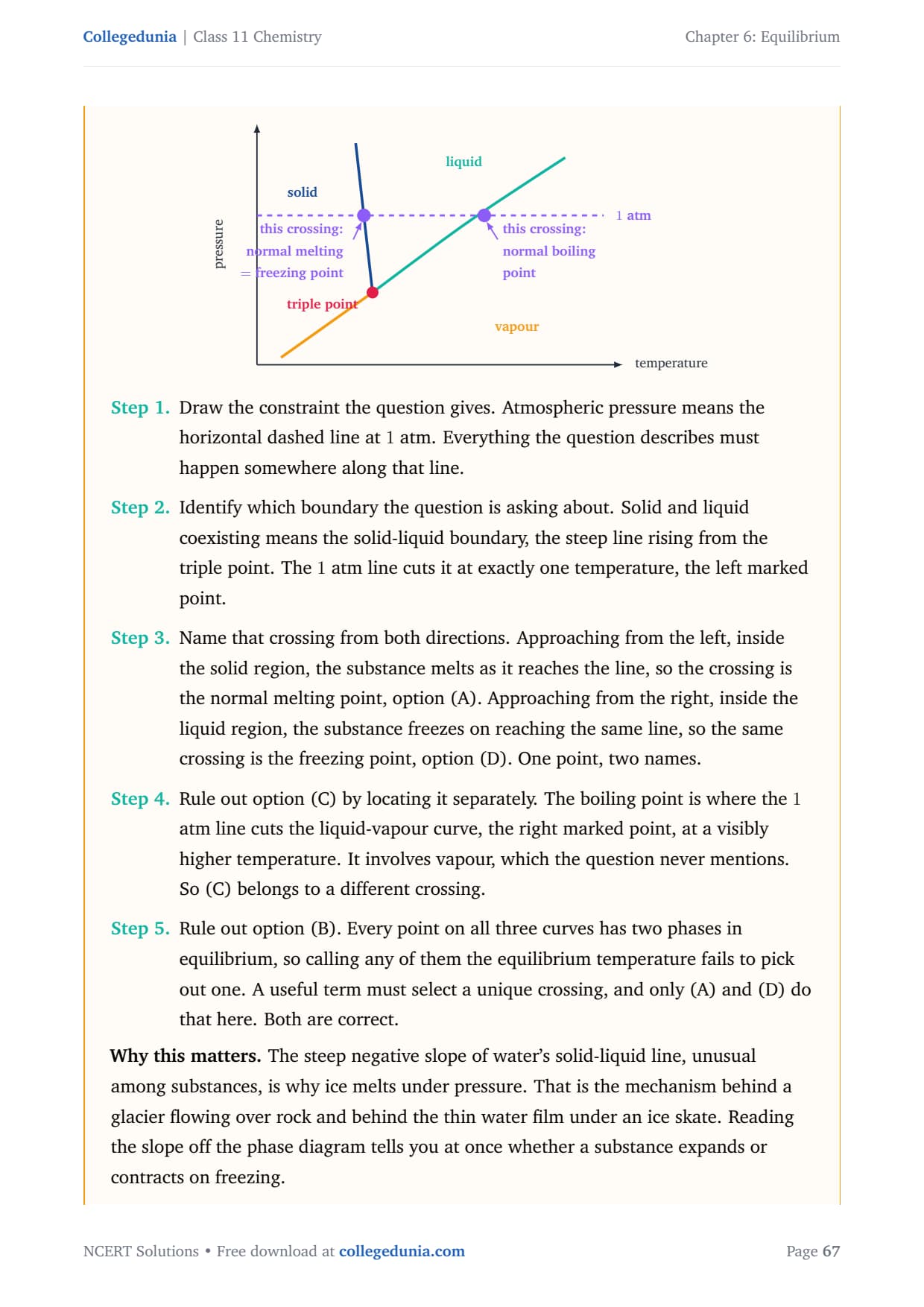
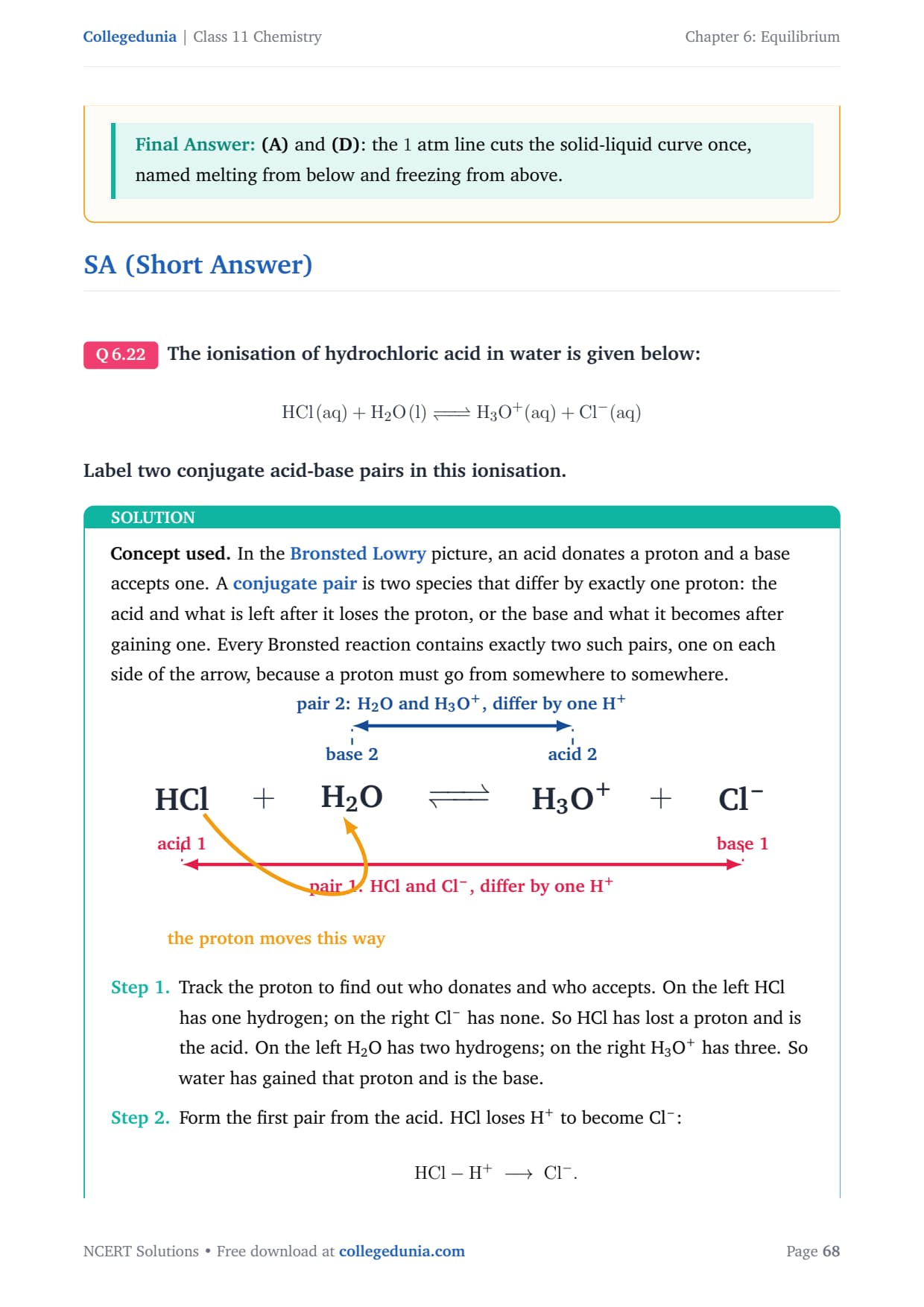
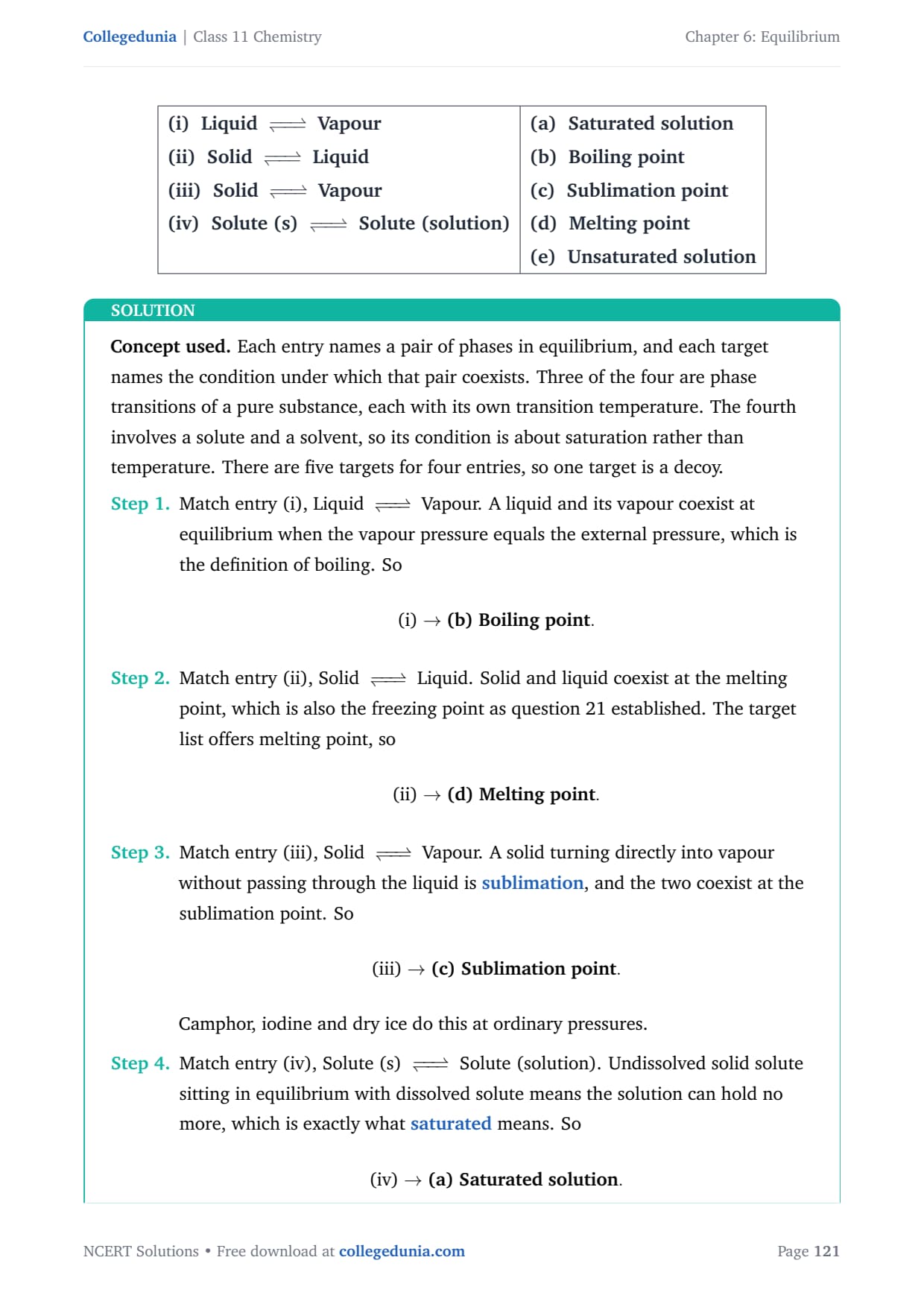
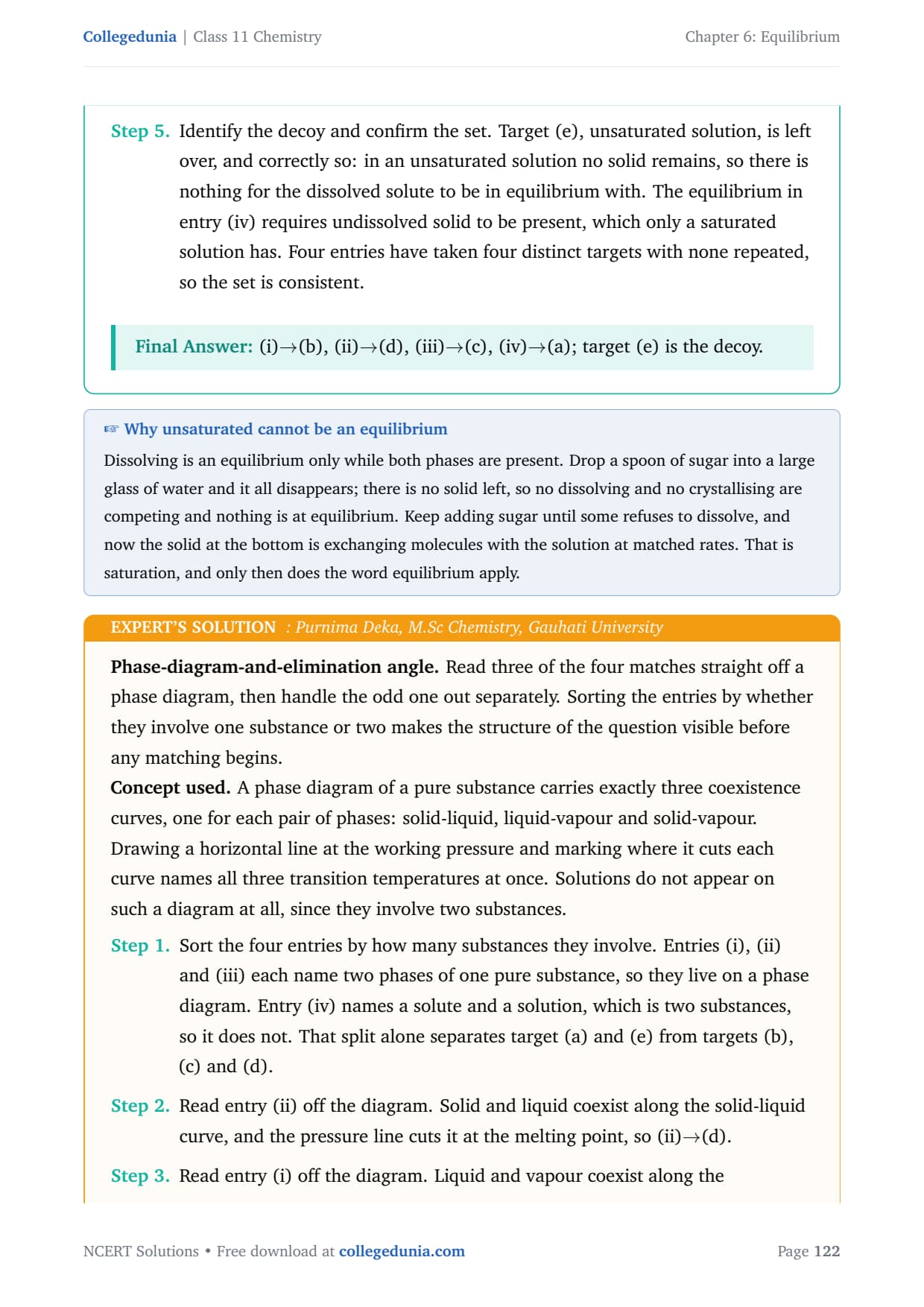
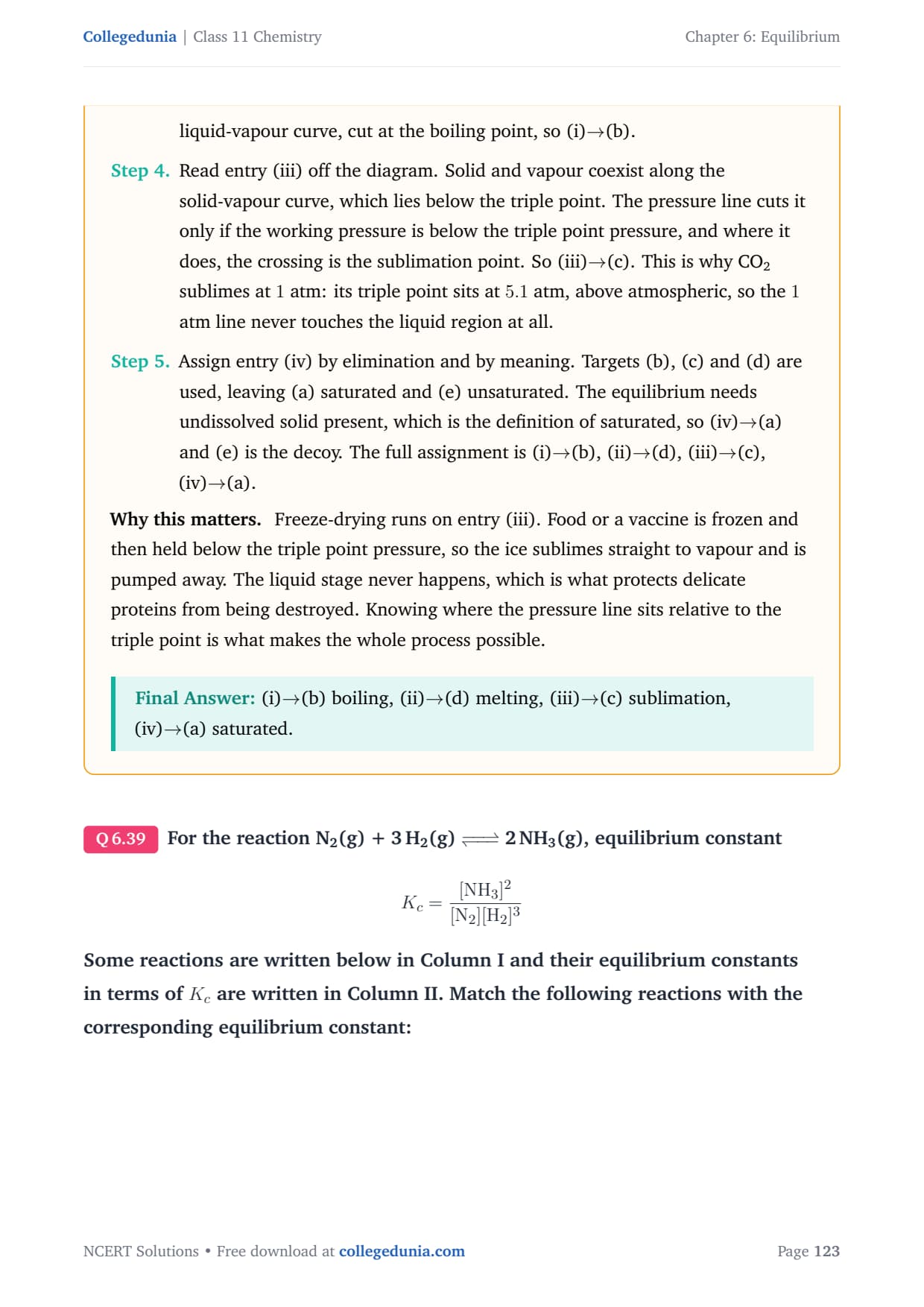
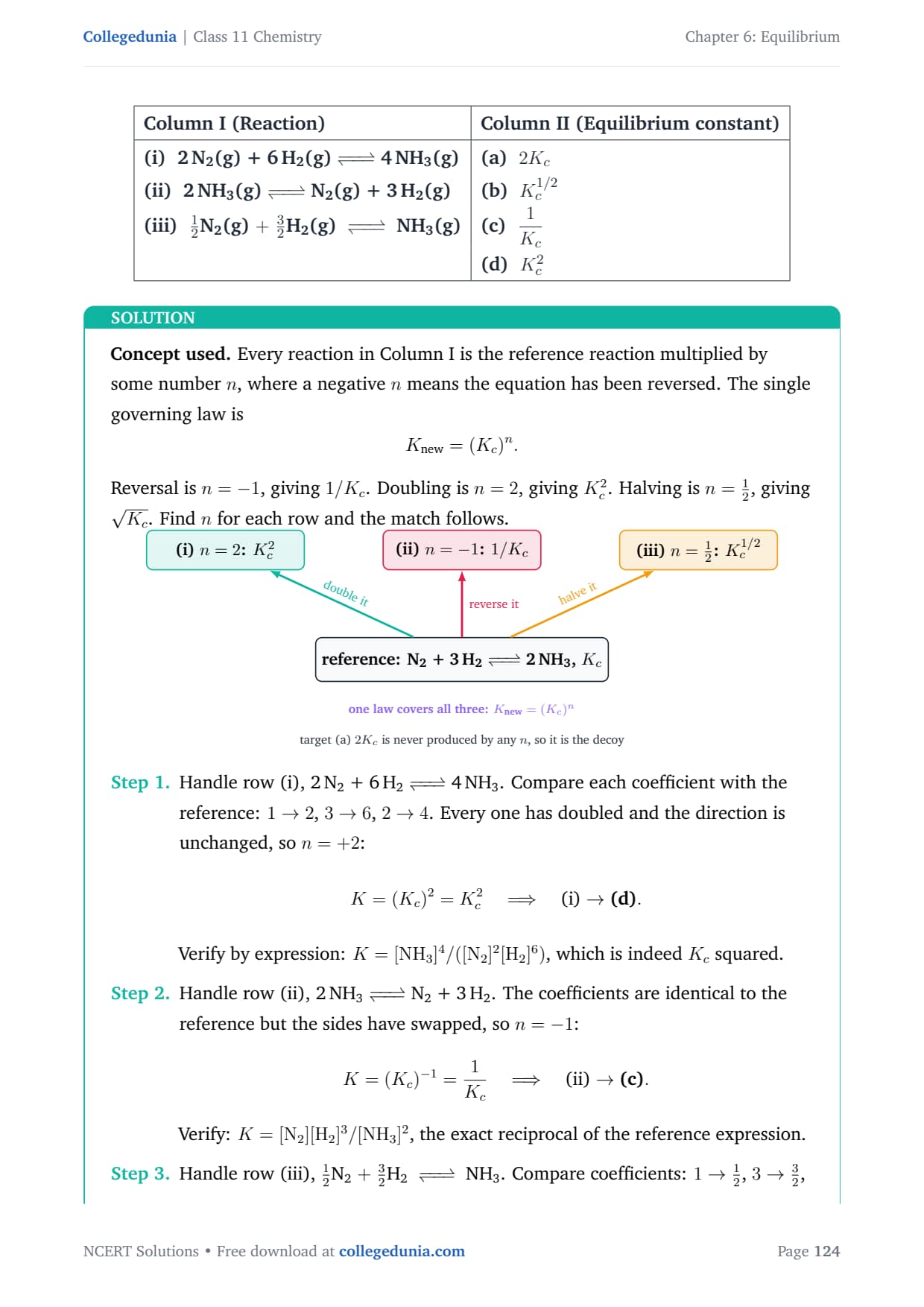
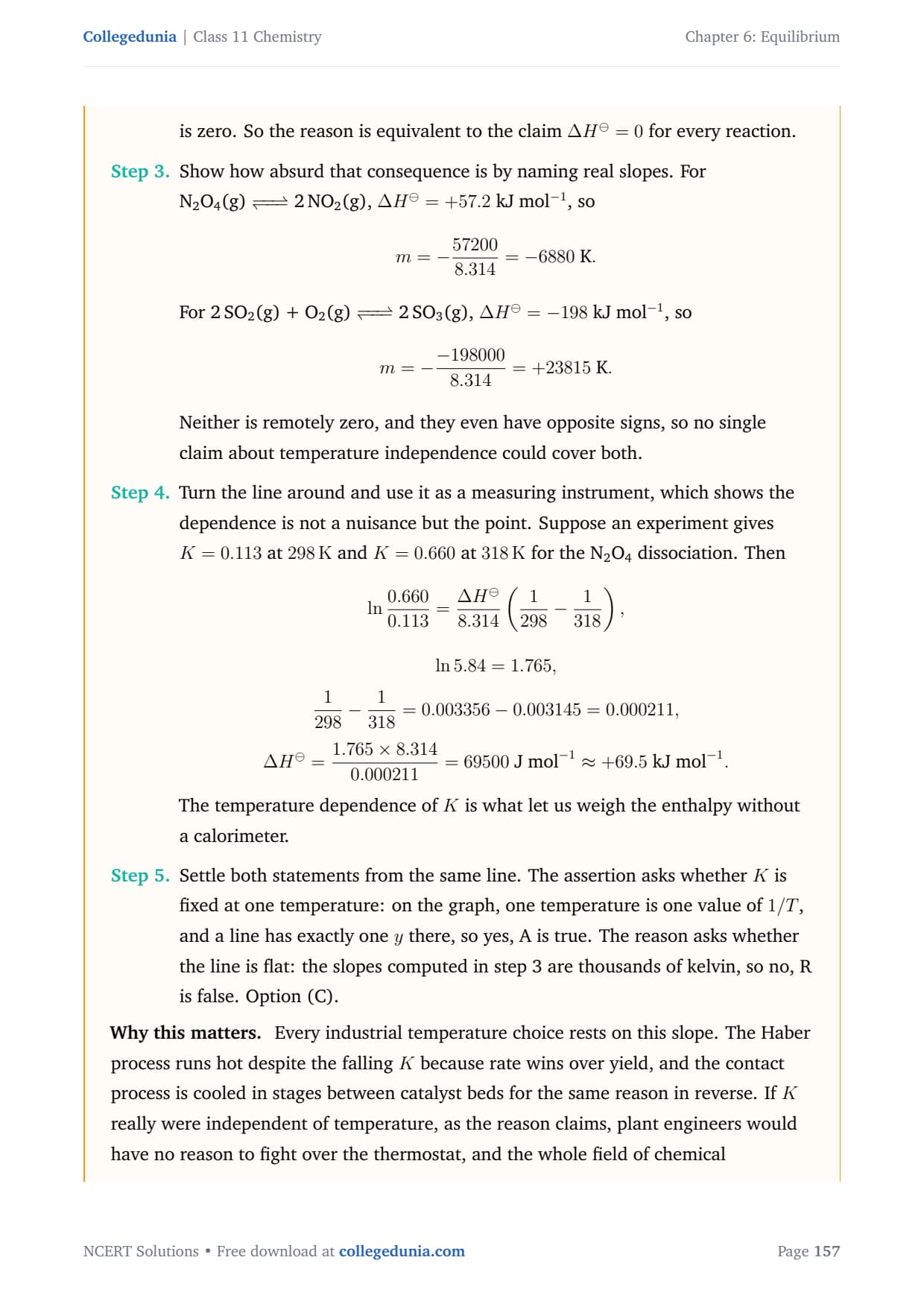
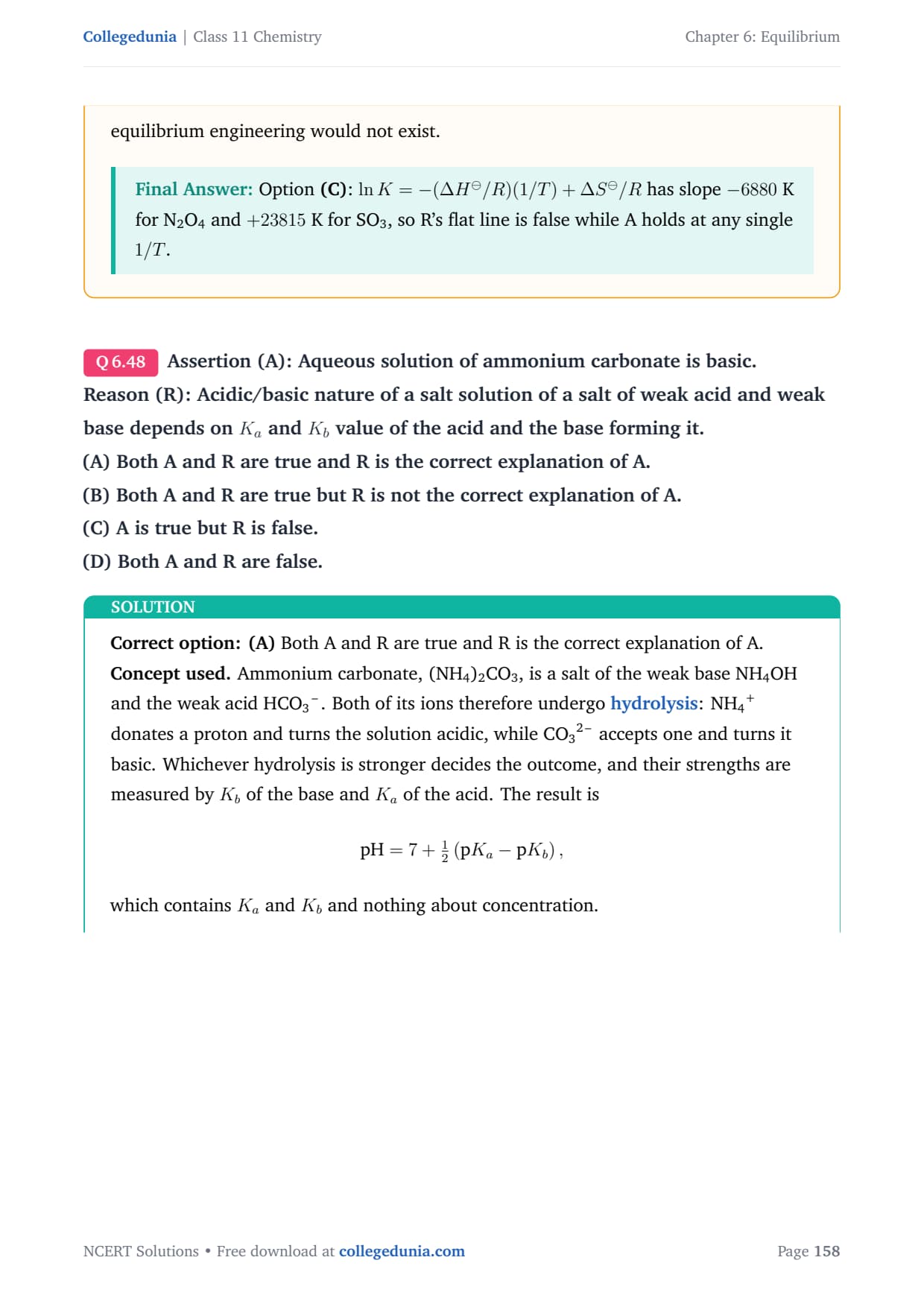
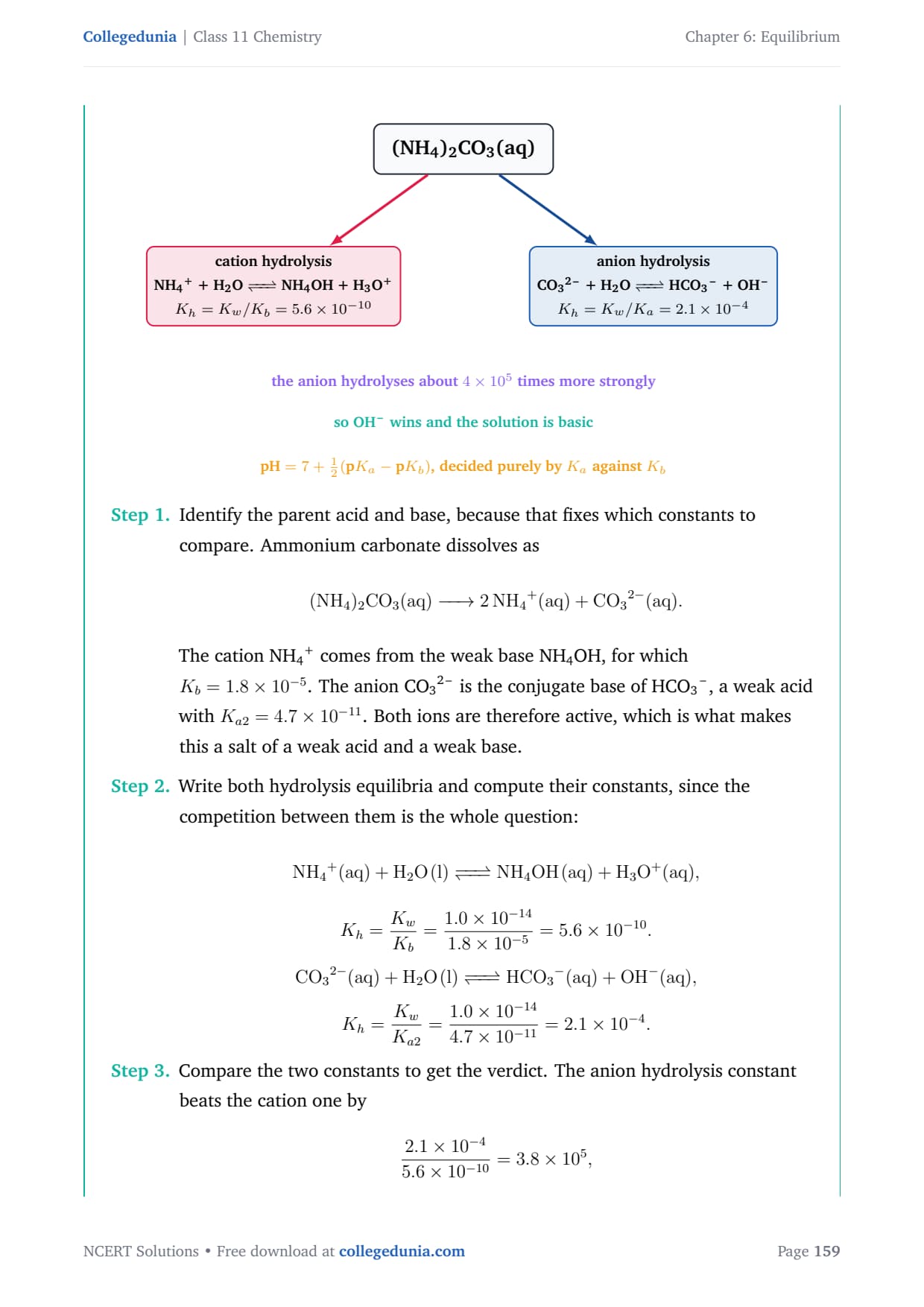
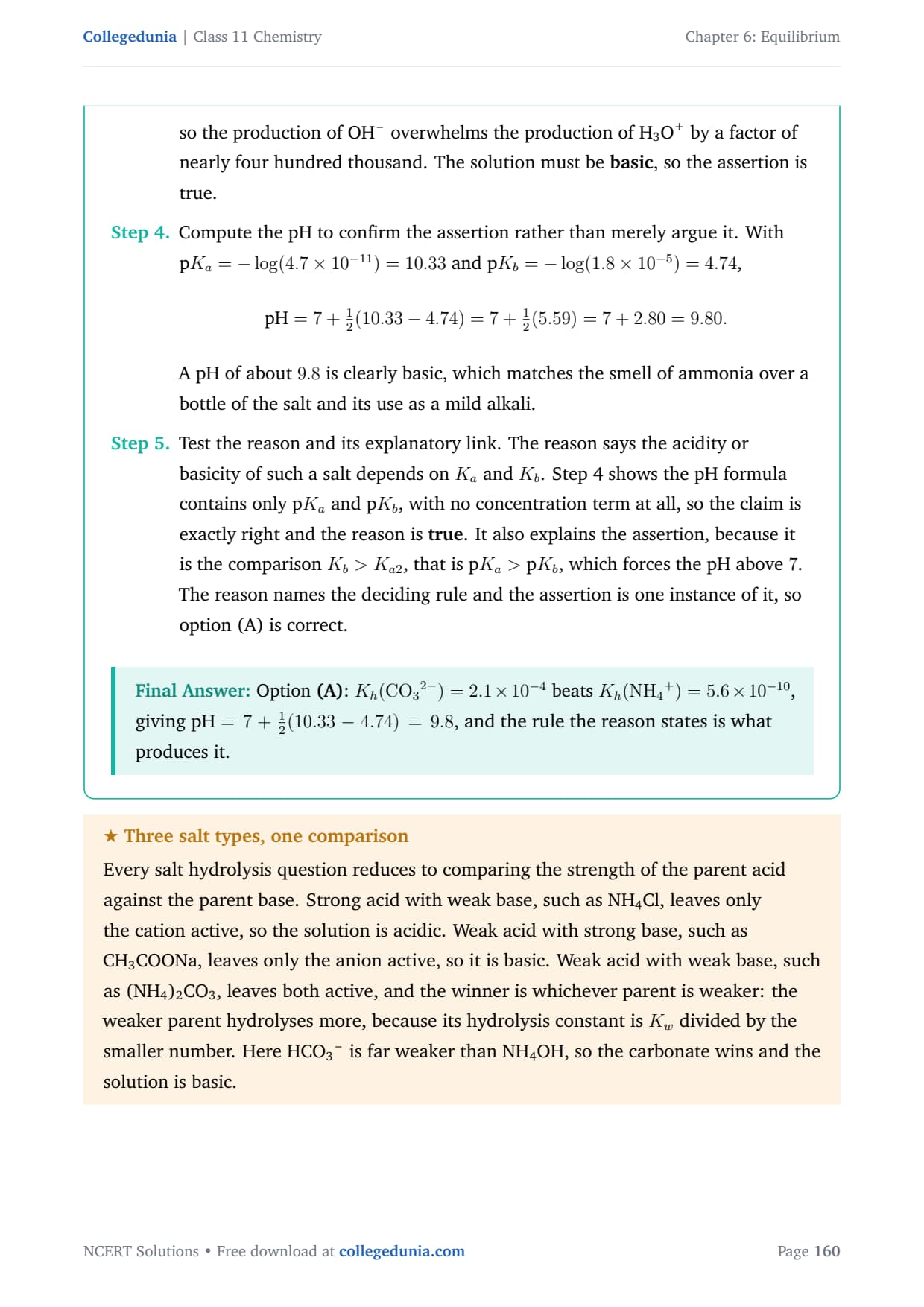
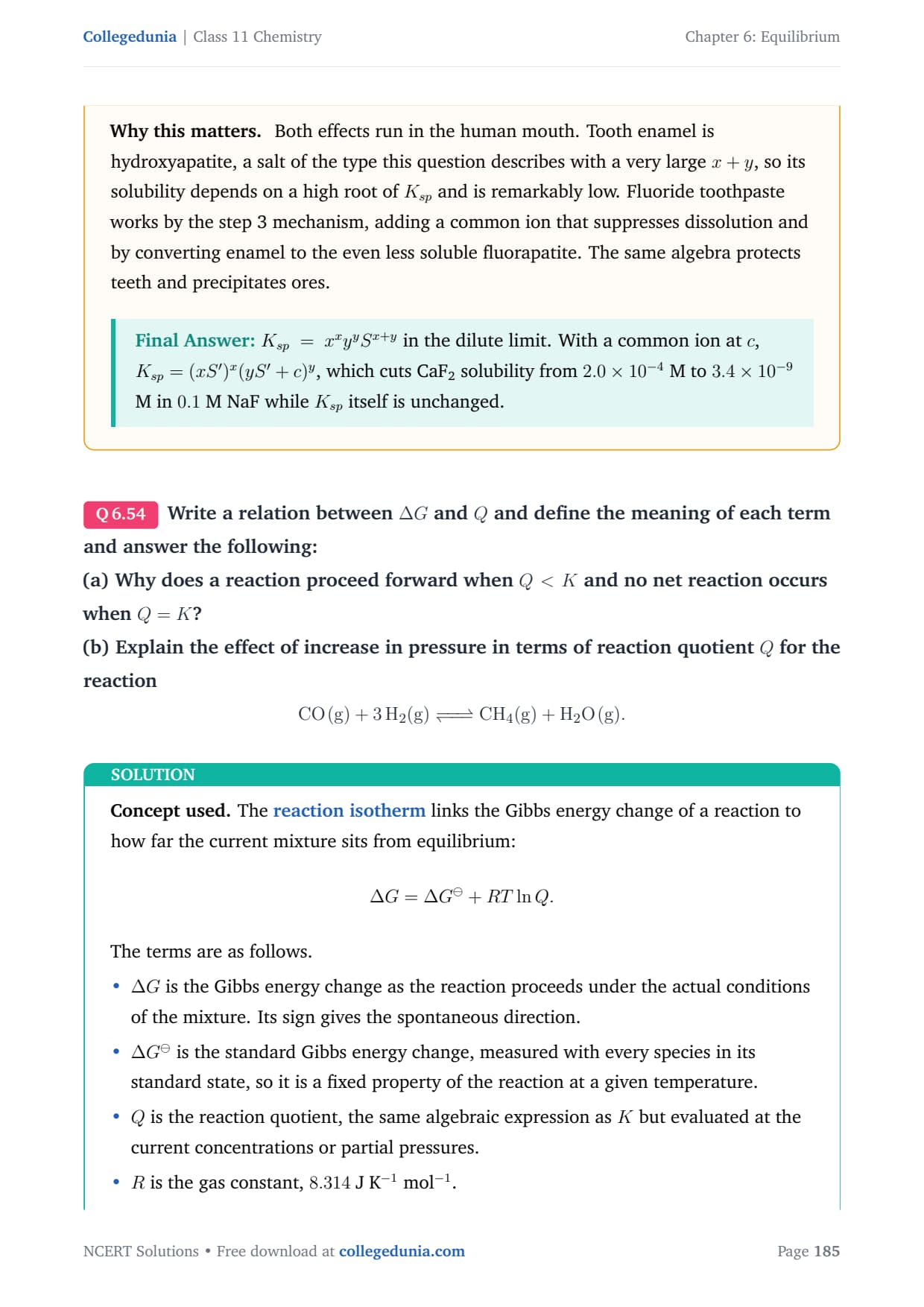
NCERT Exemplar Solutions for Class 11 Chemistry Chapter 6 Equilibrium solve all 54 questions from the Exemplar book. Every MCQ, Short Answer, Matching, Assertion and Reason and Long Answer problem is solved step by step in the free 191-page PDF, updated for the 2026-27 syllabus.
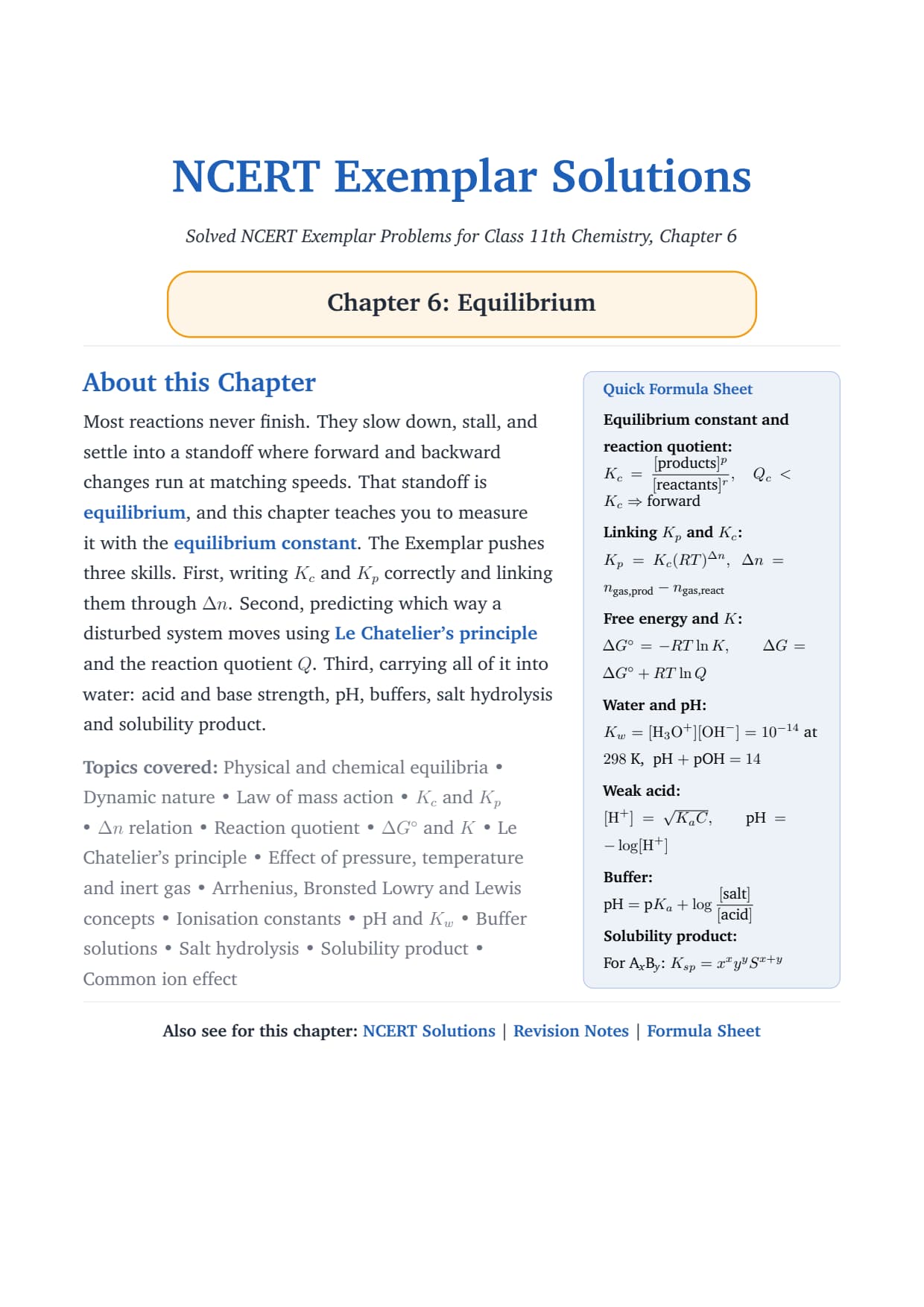
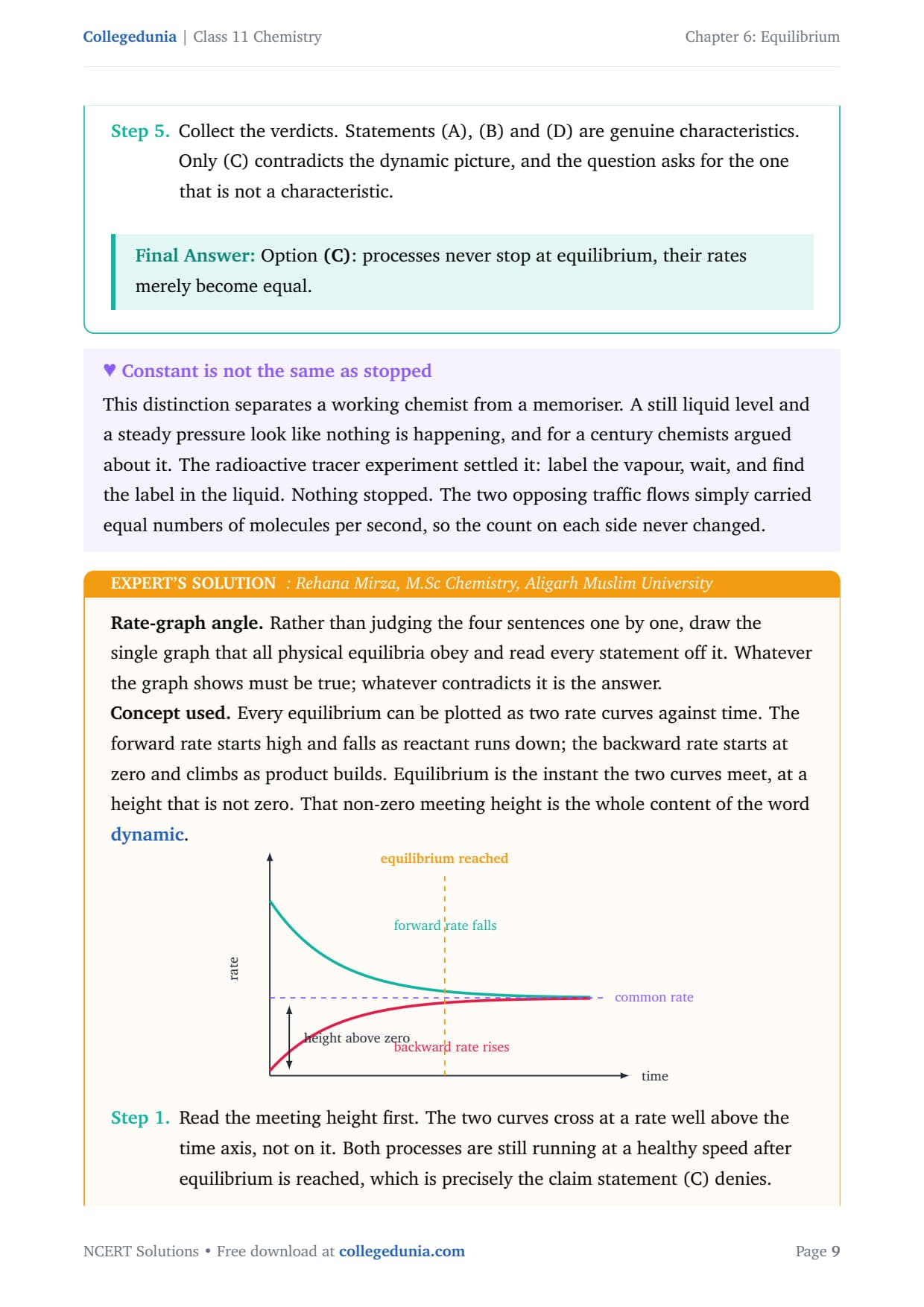
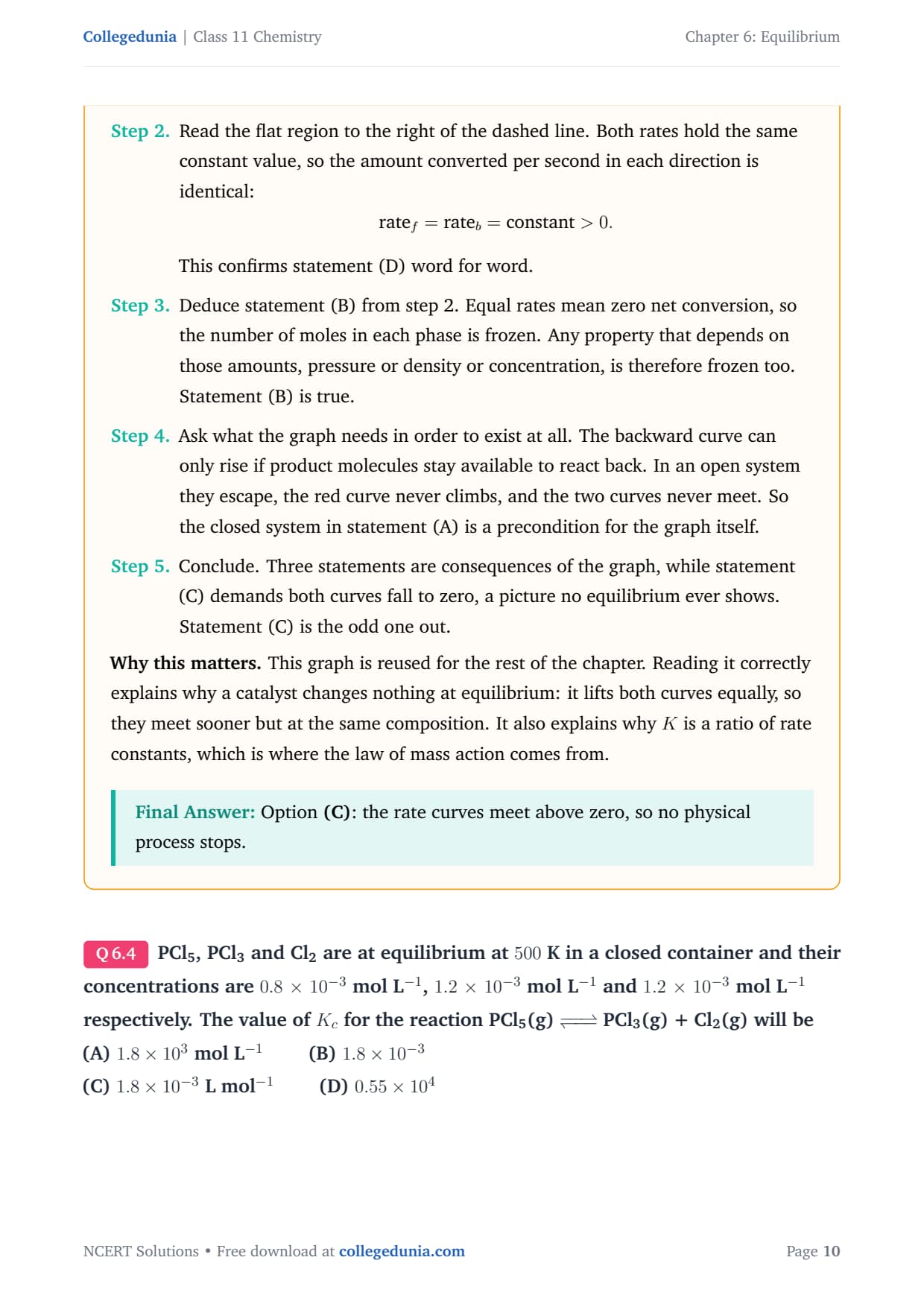
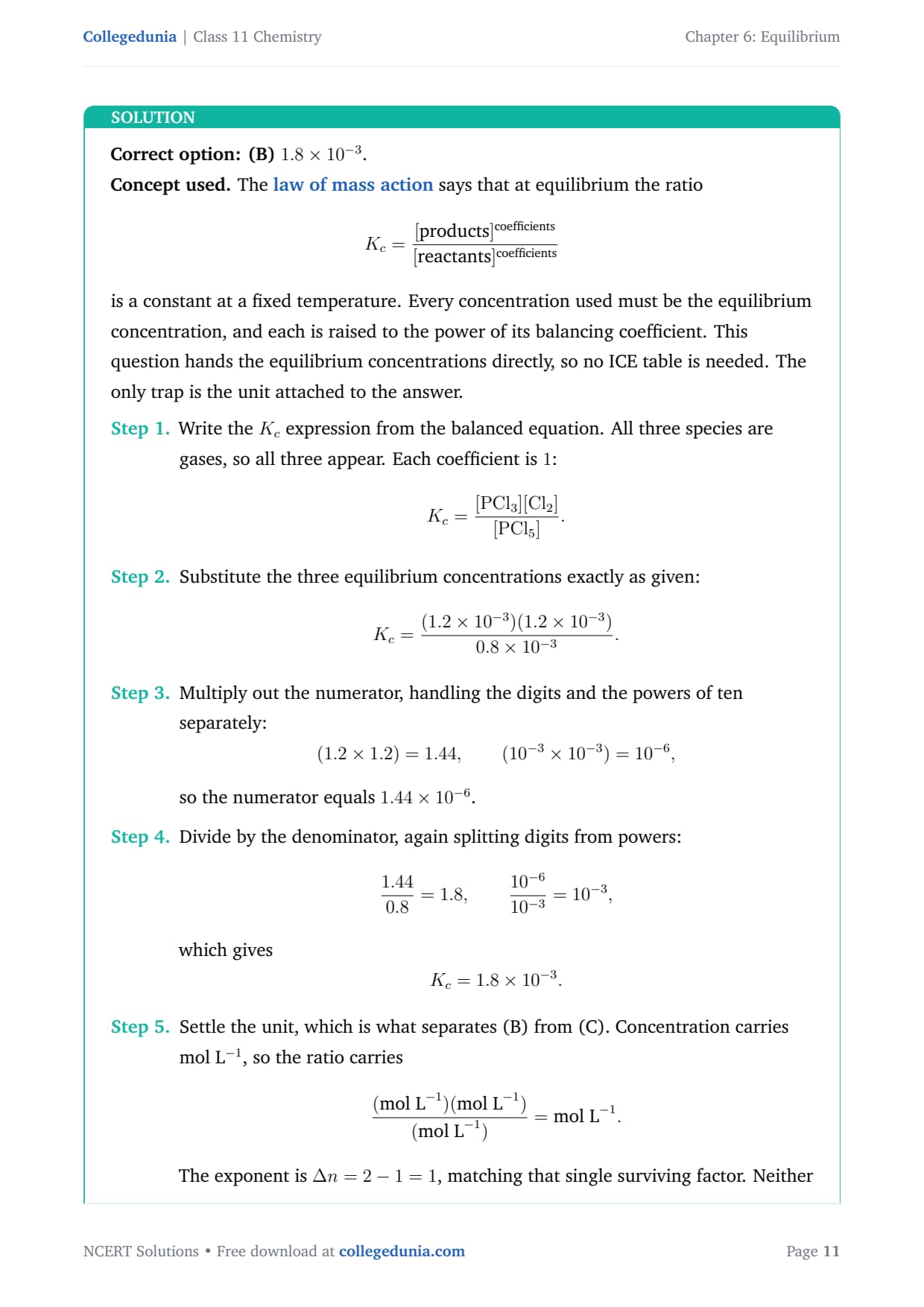
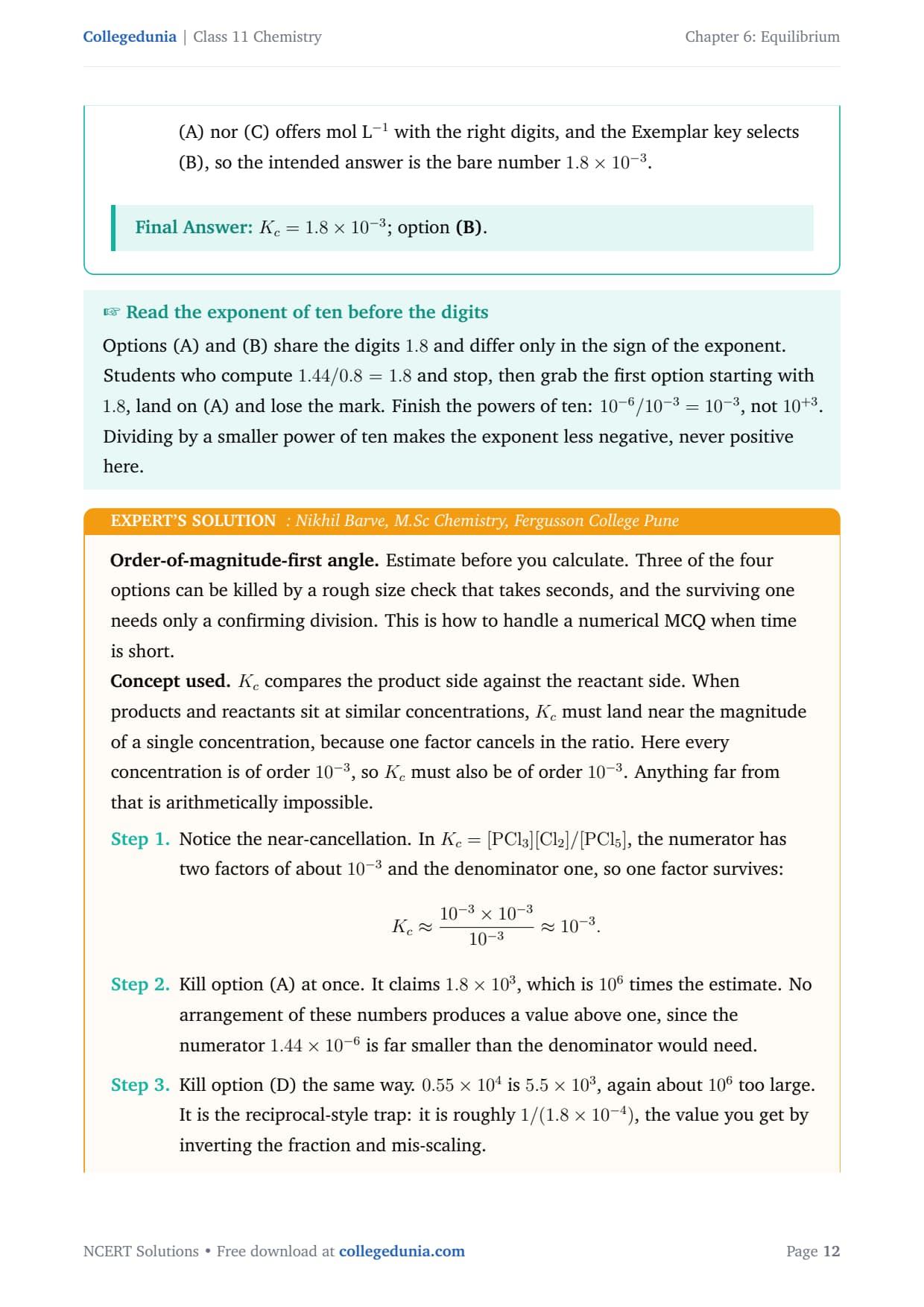
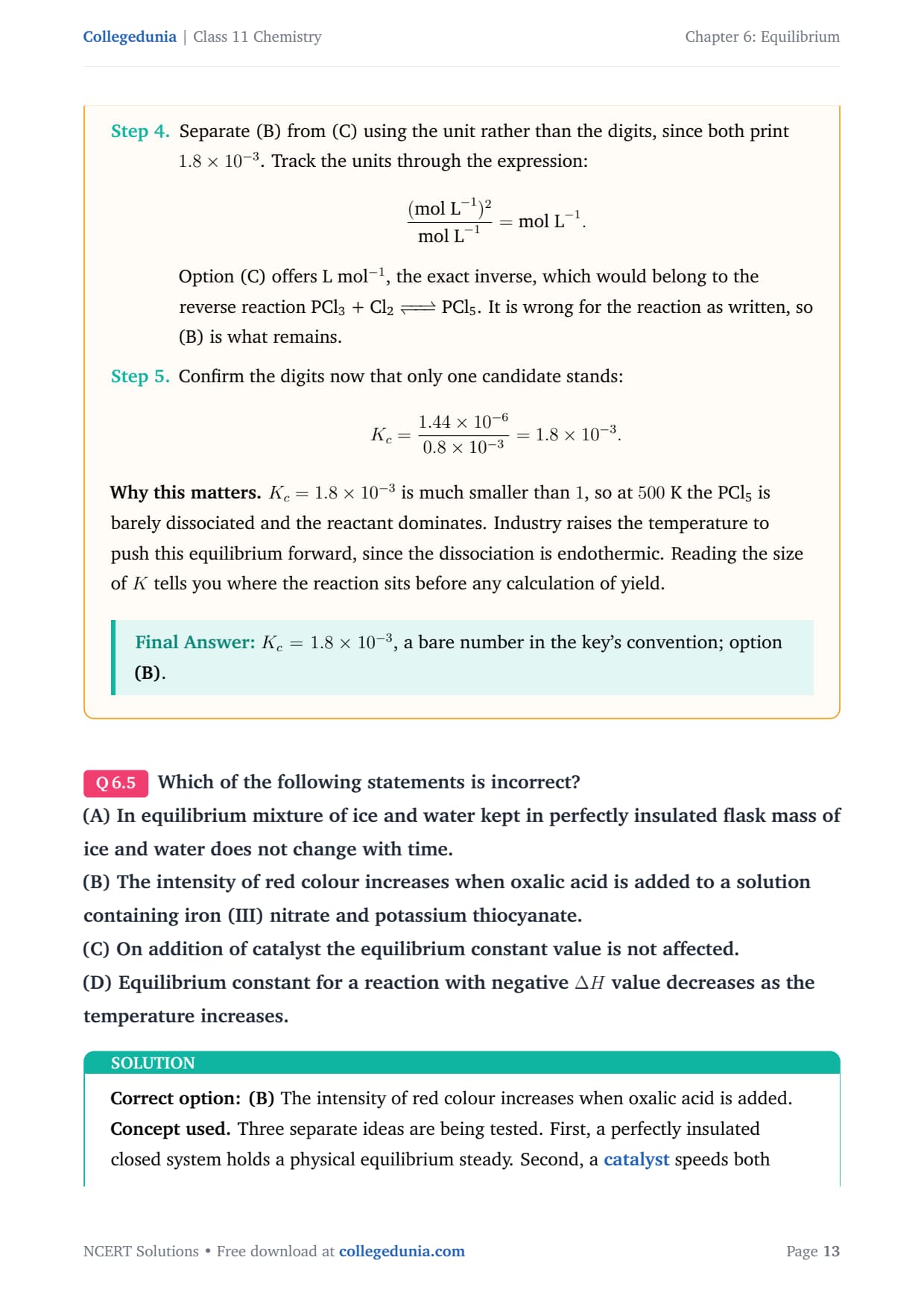
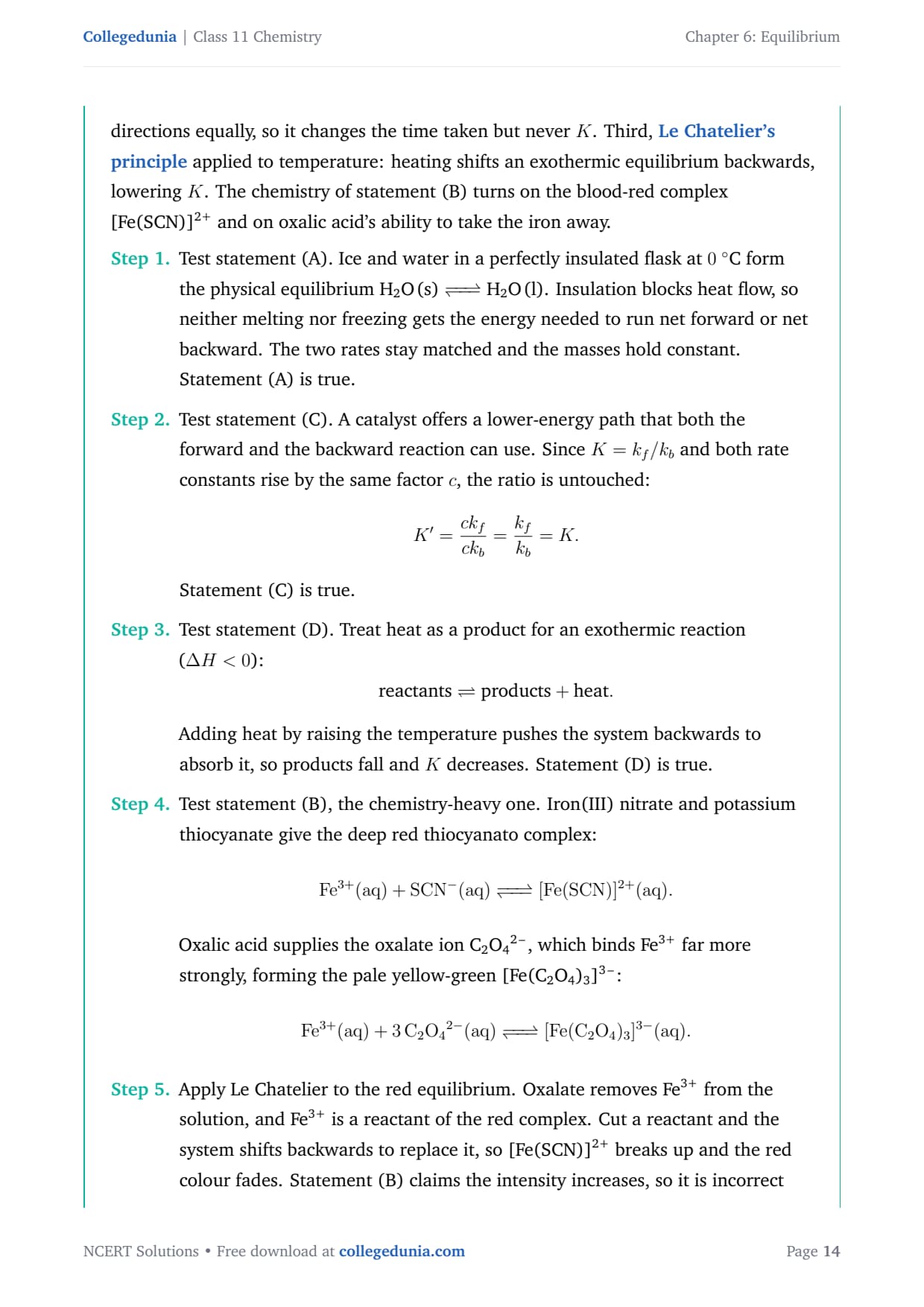
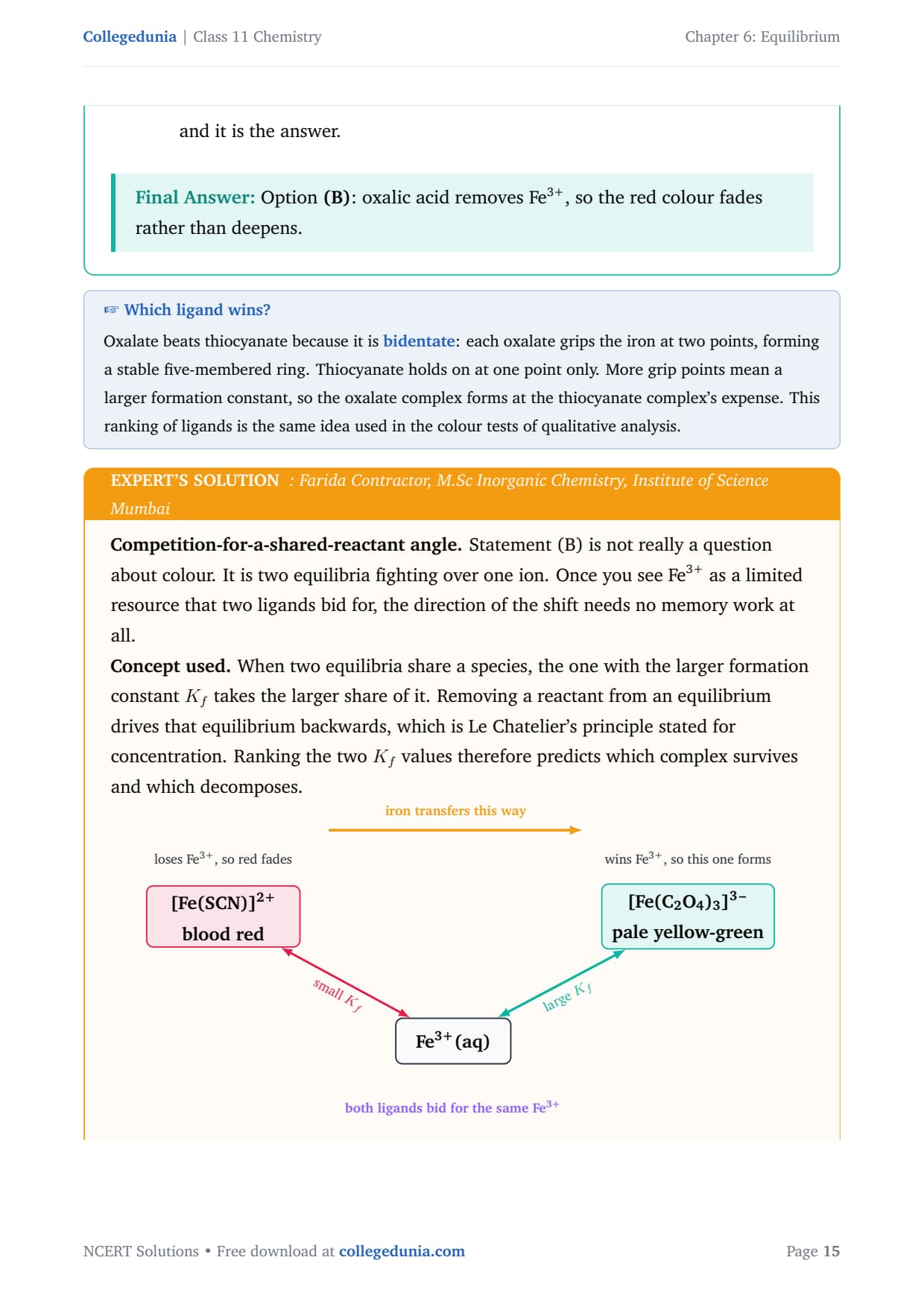
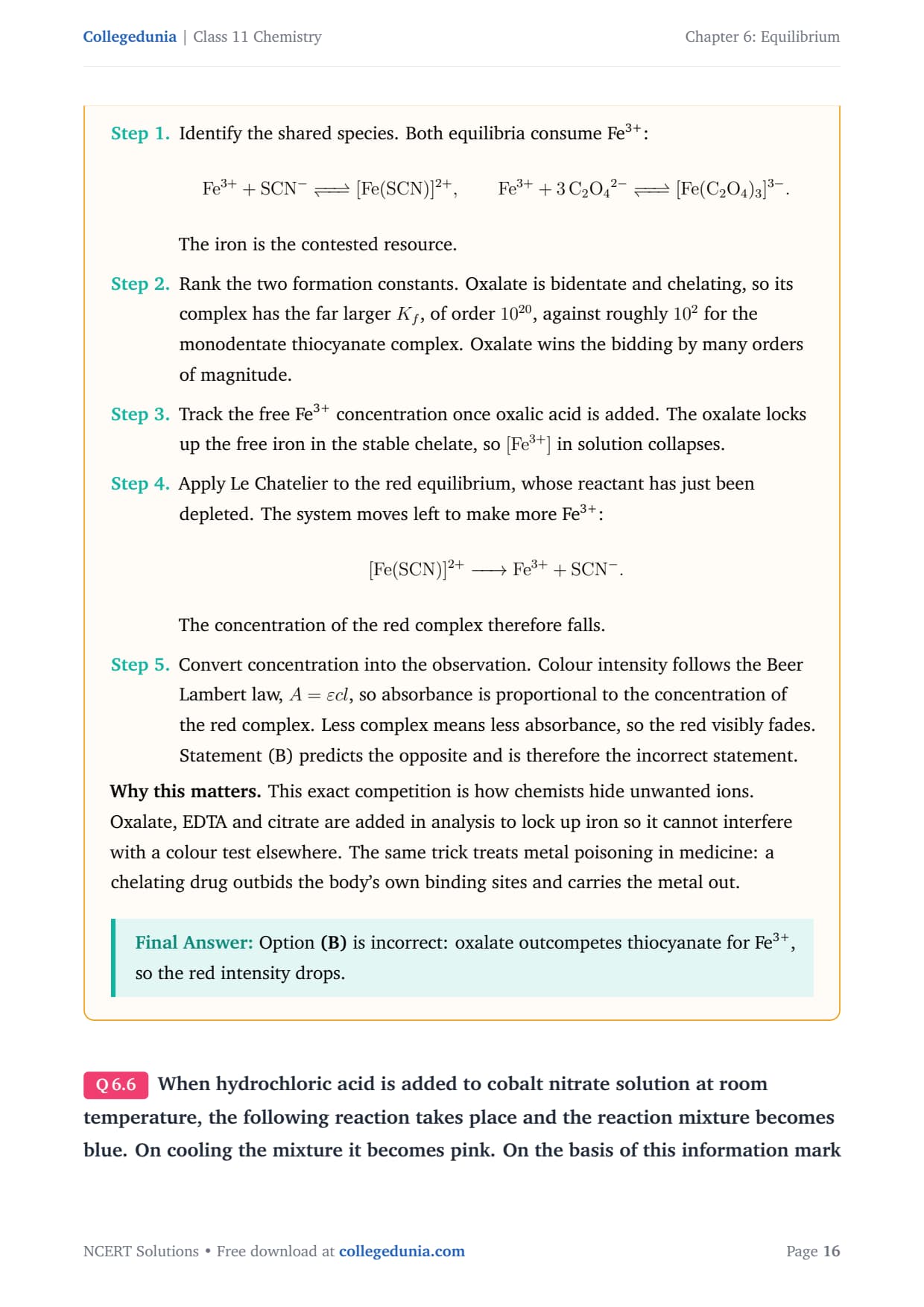
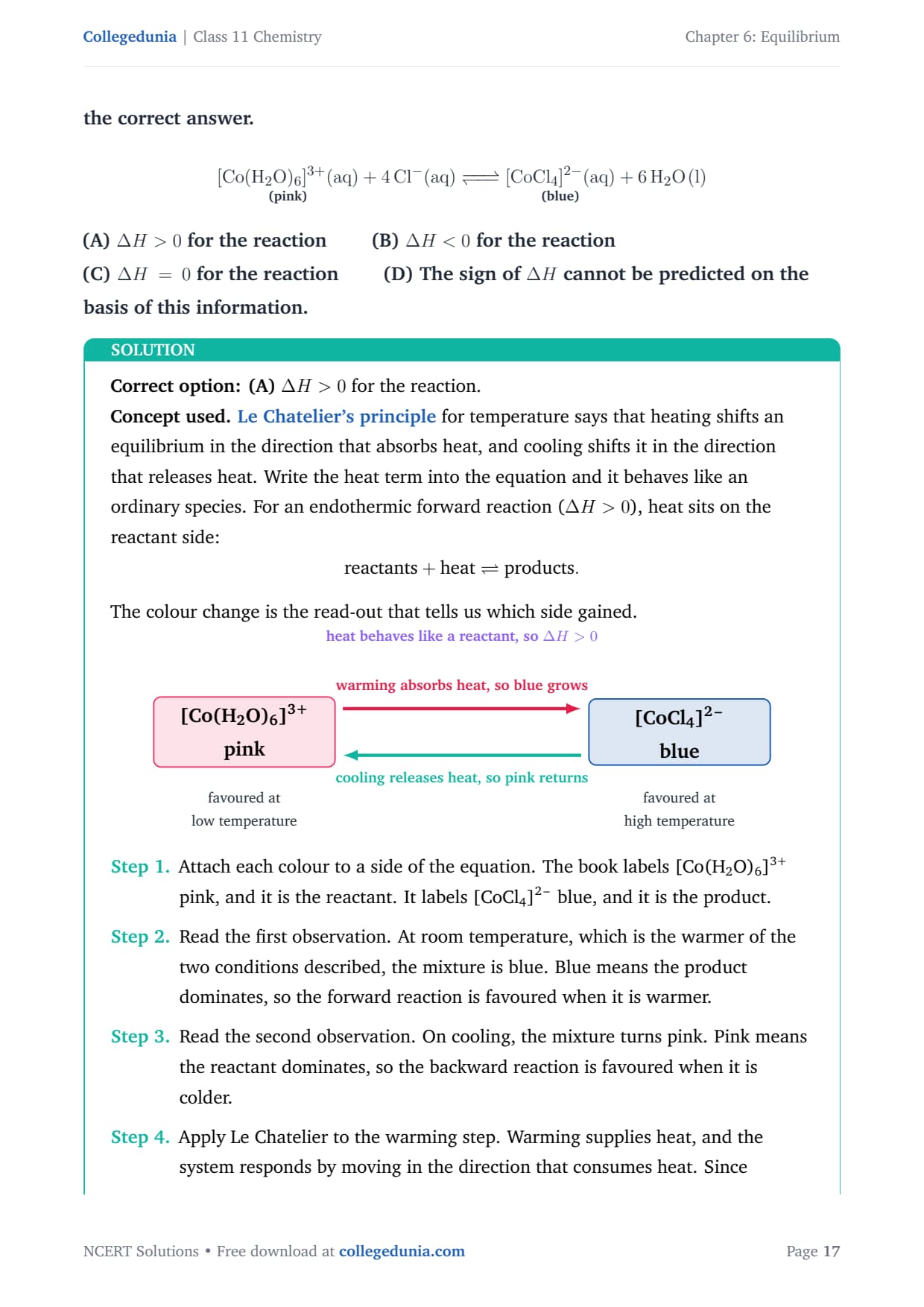
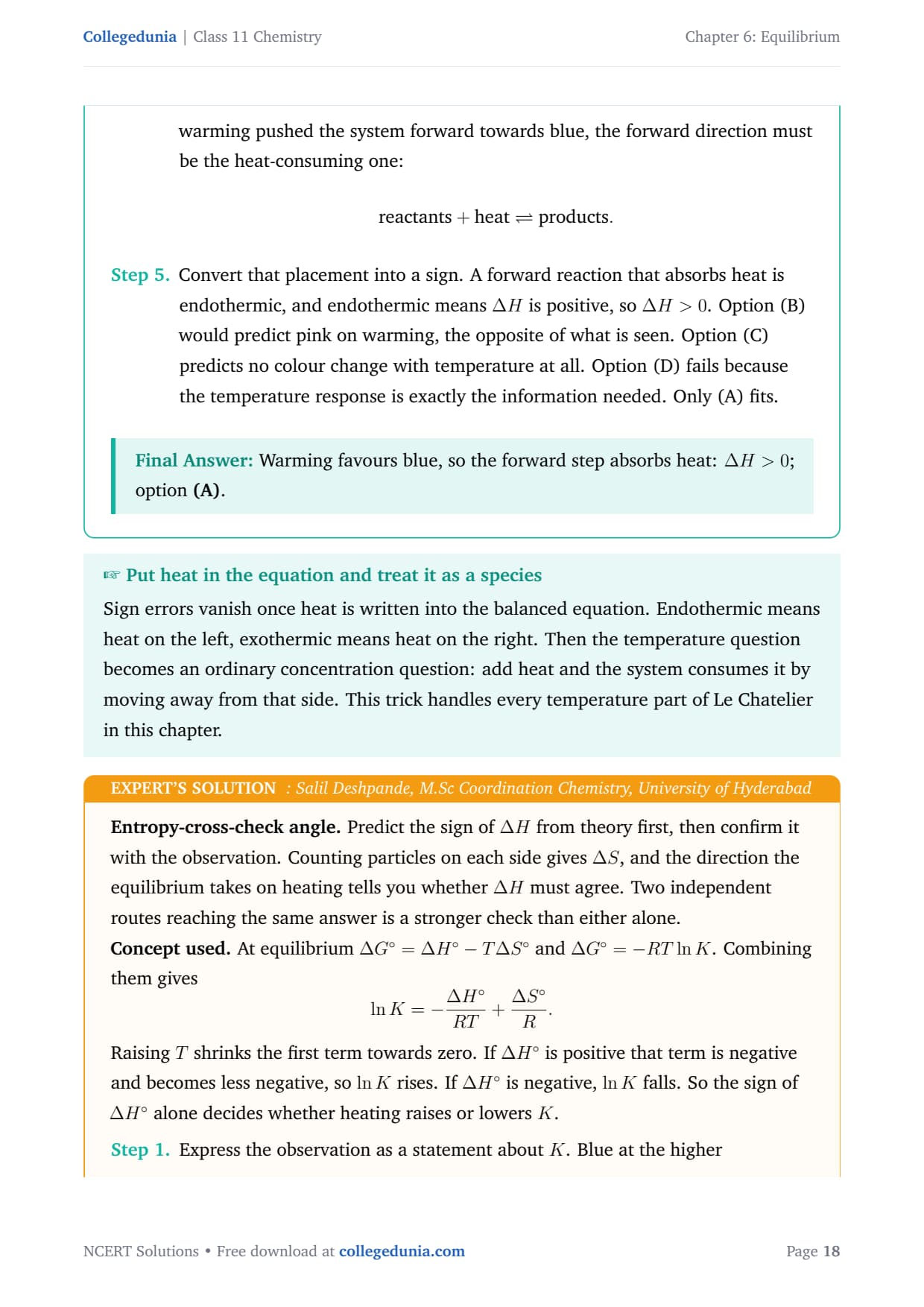
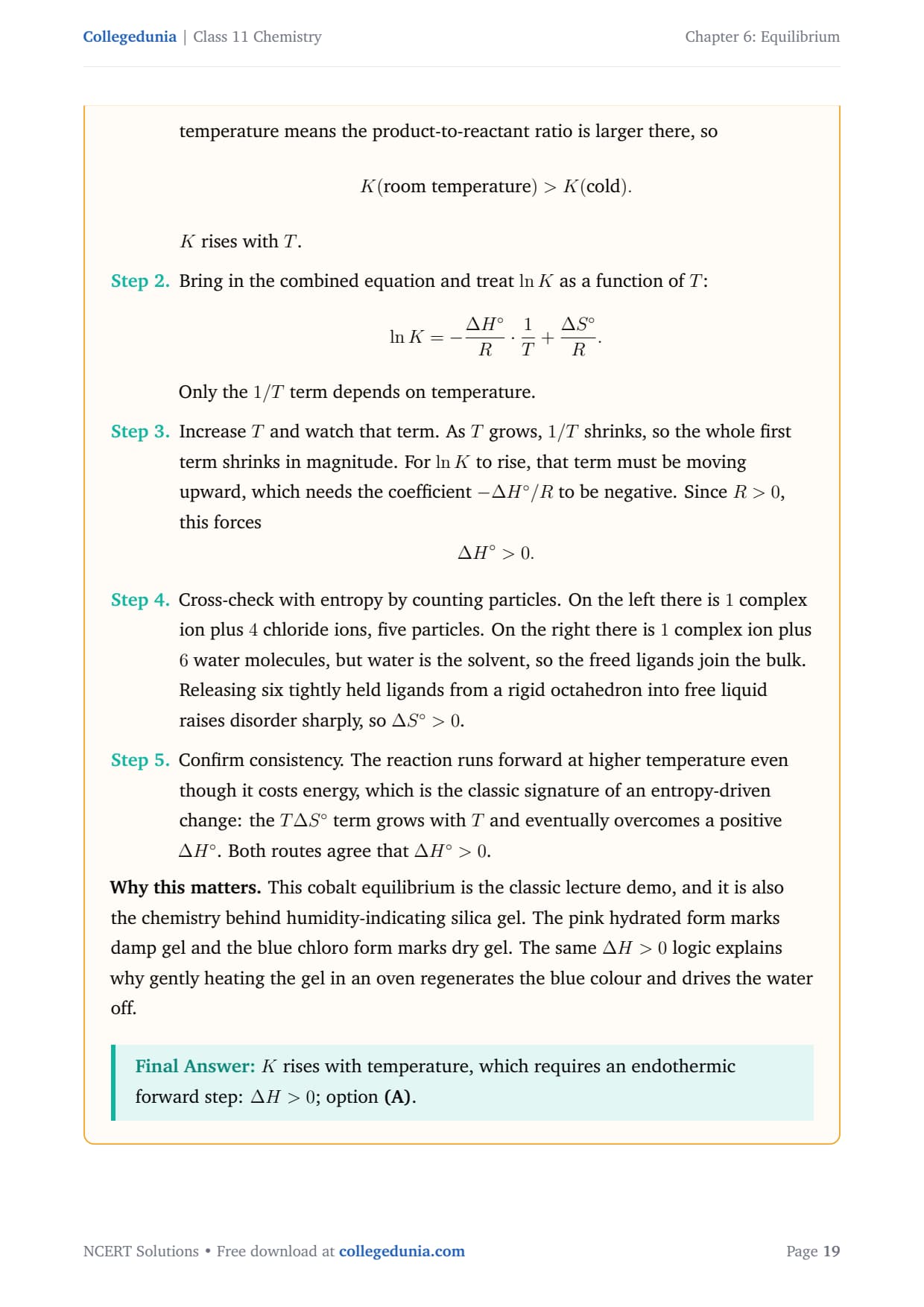
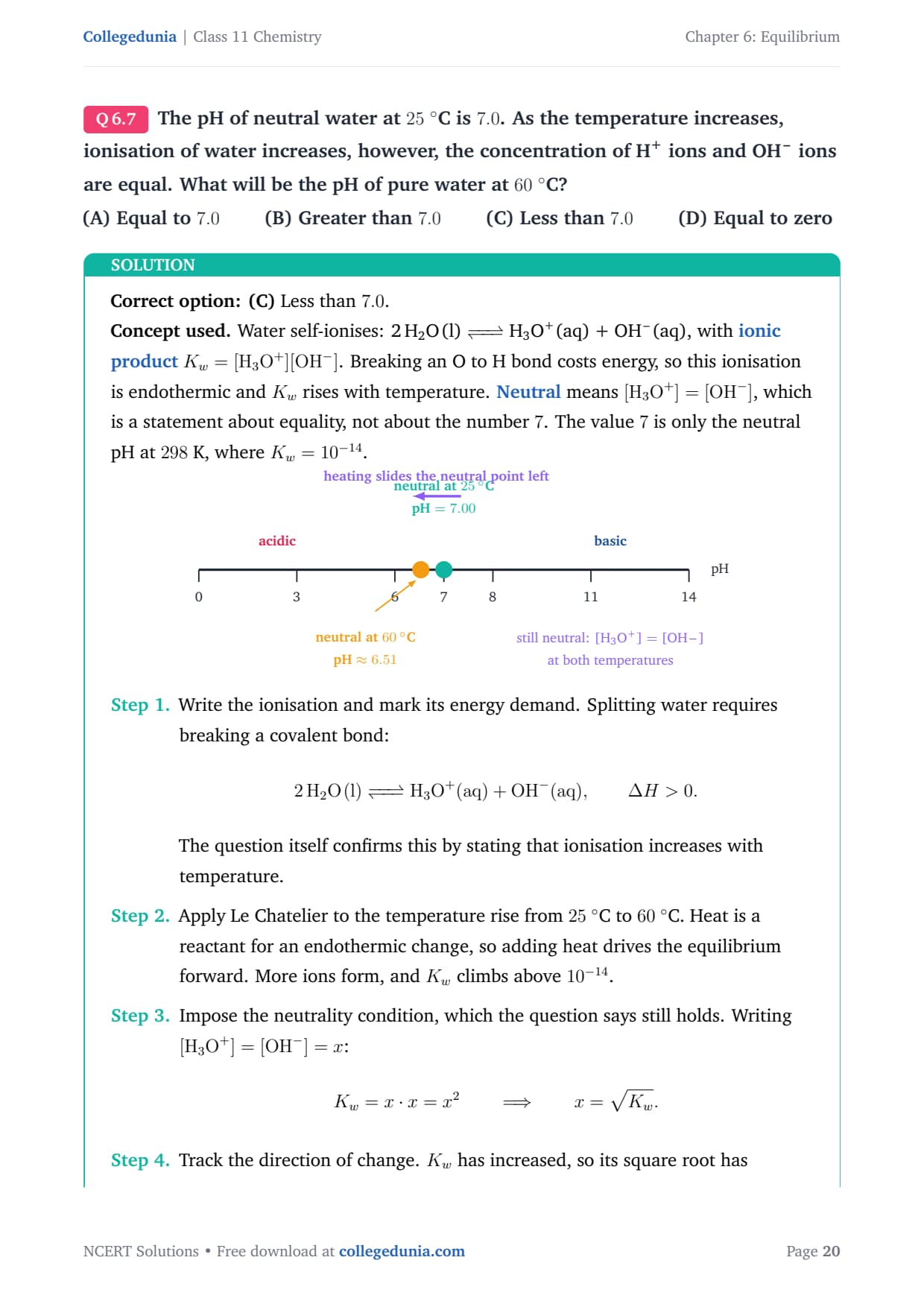
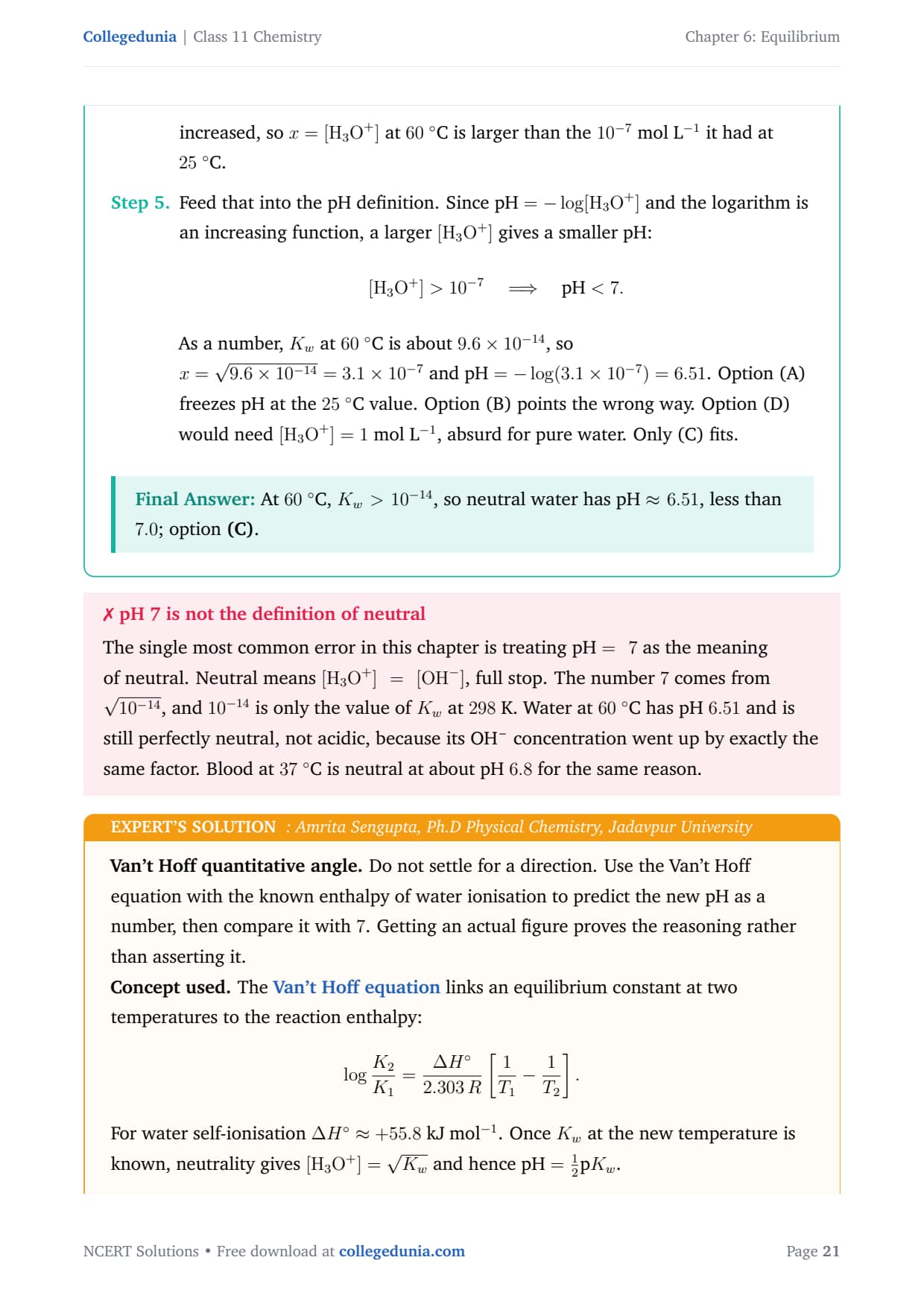
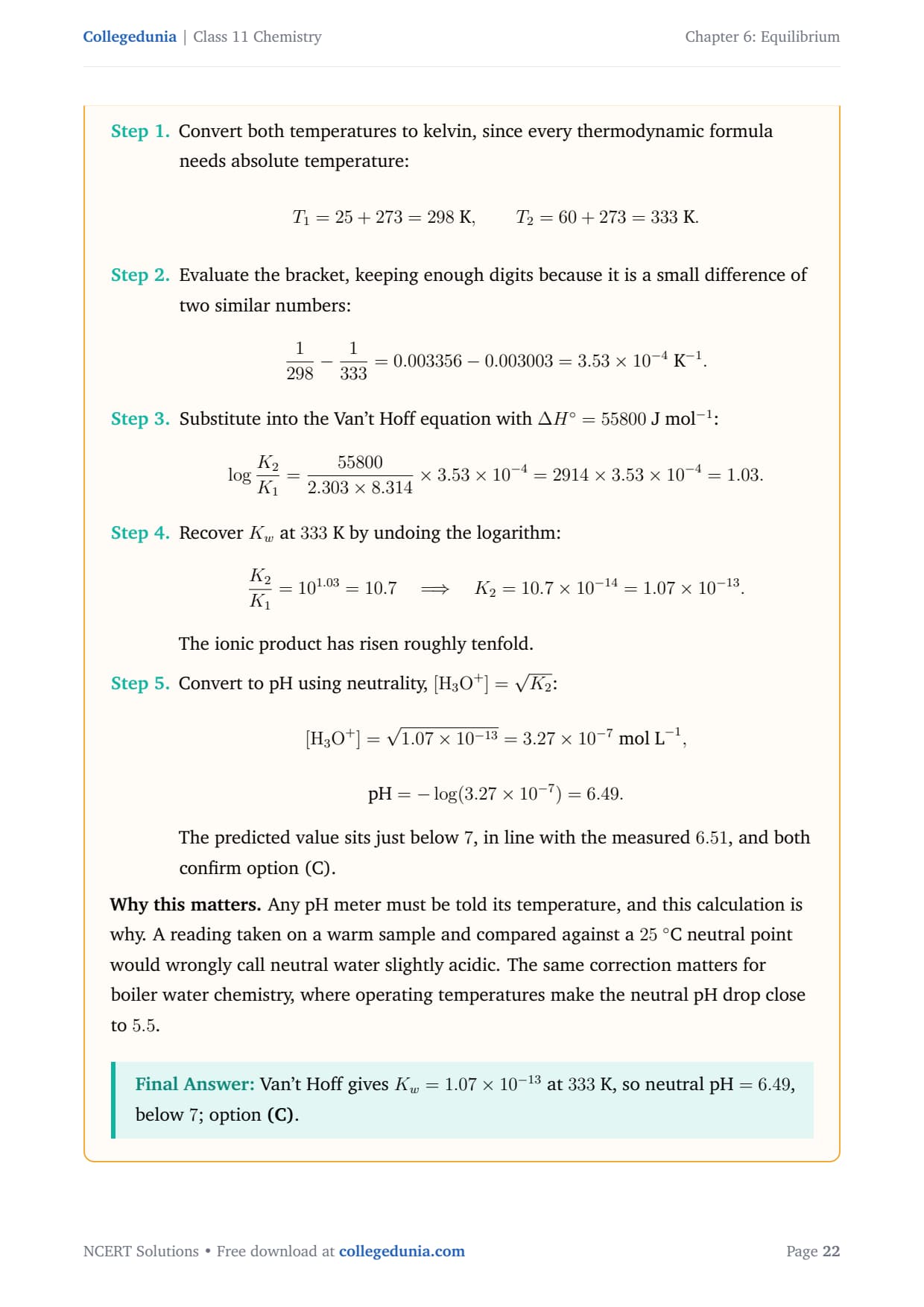
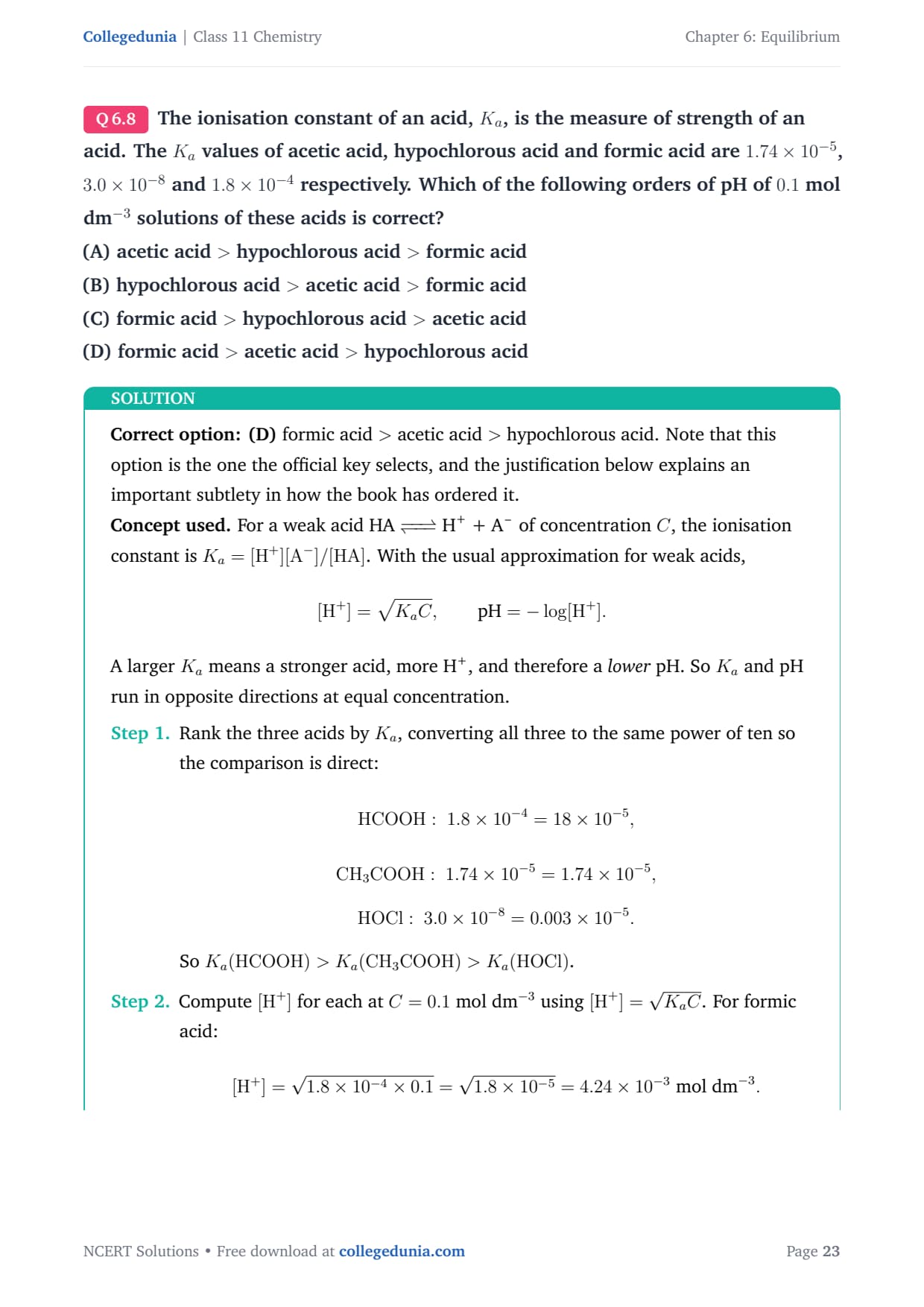
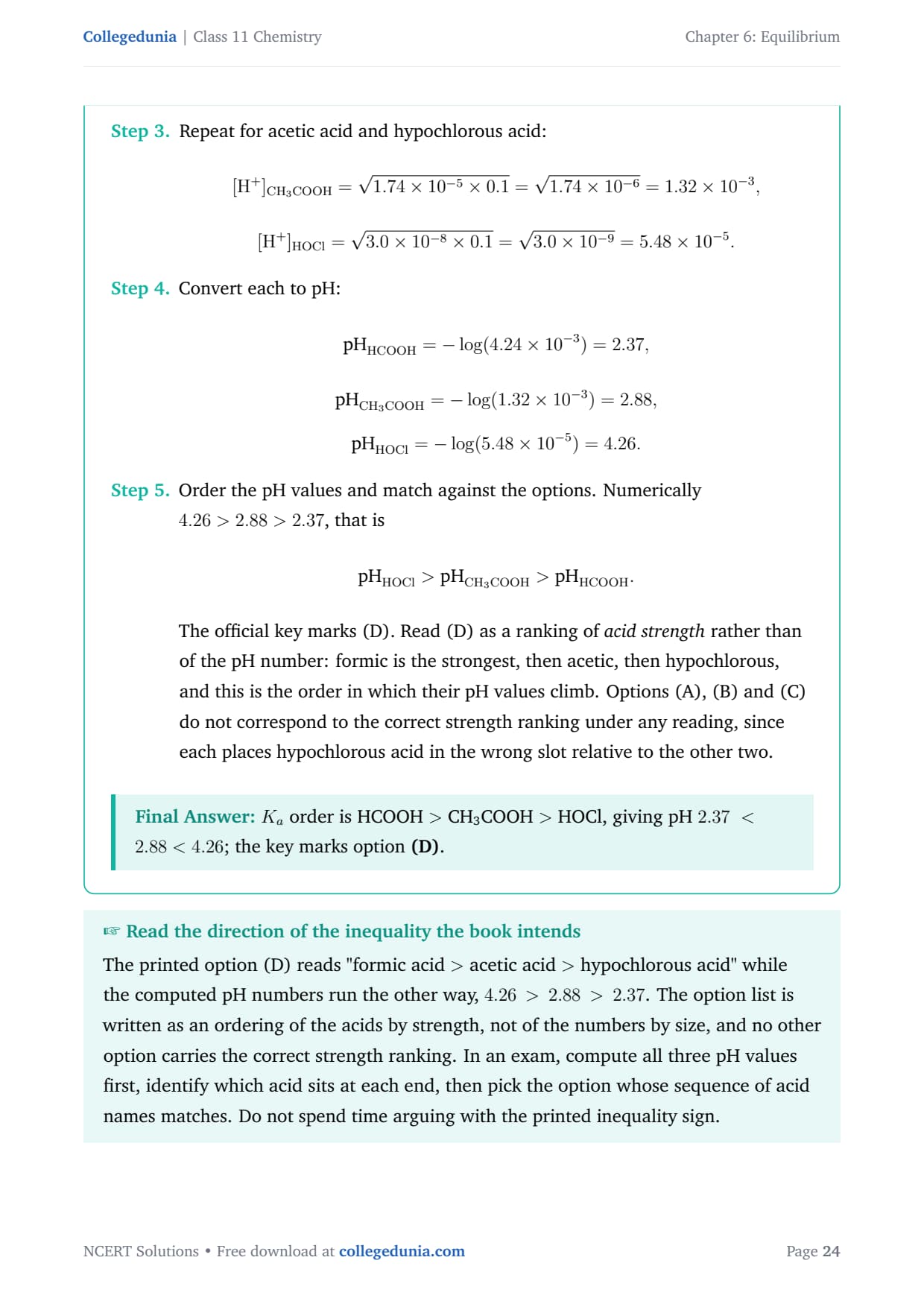
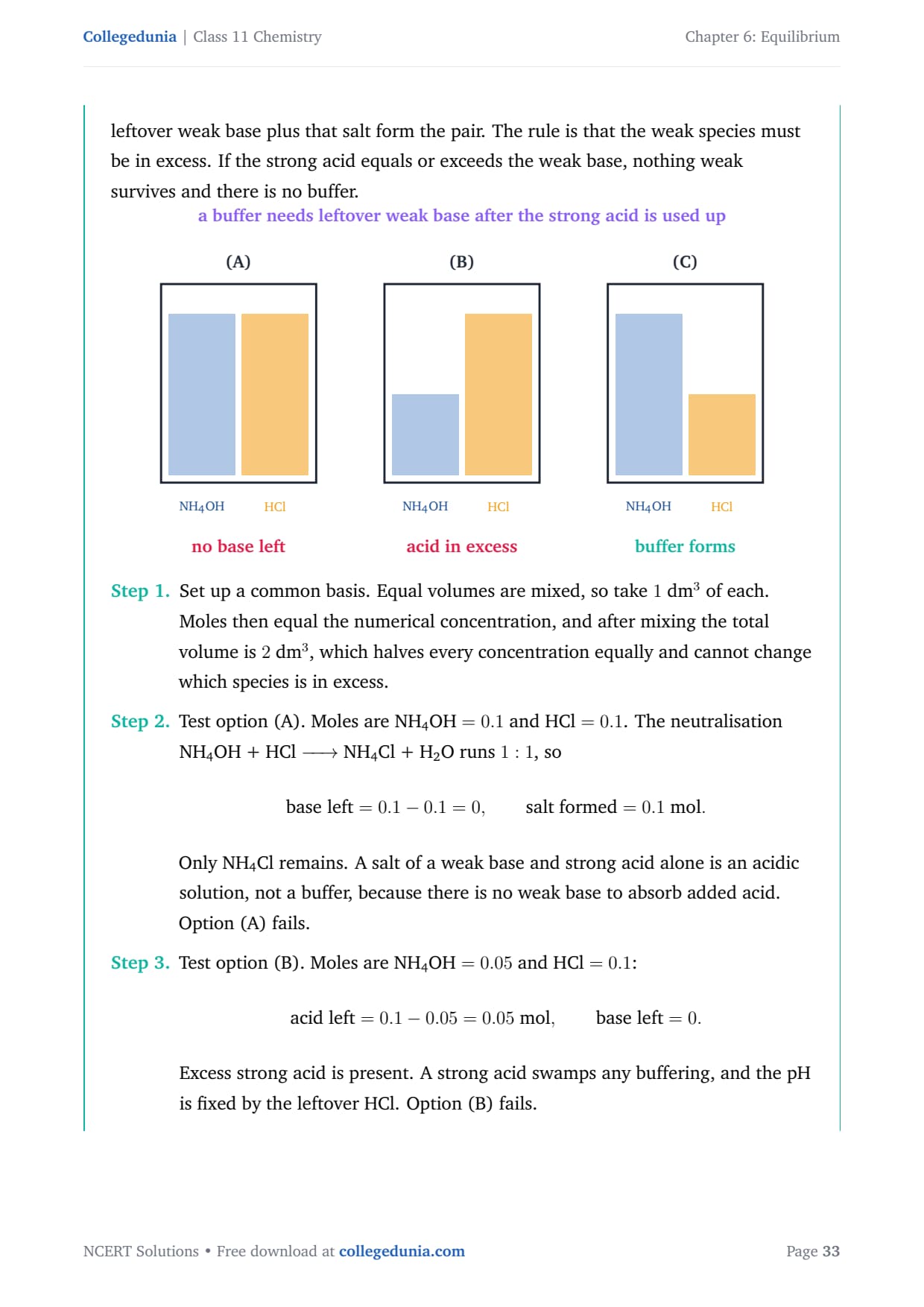
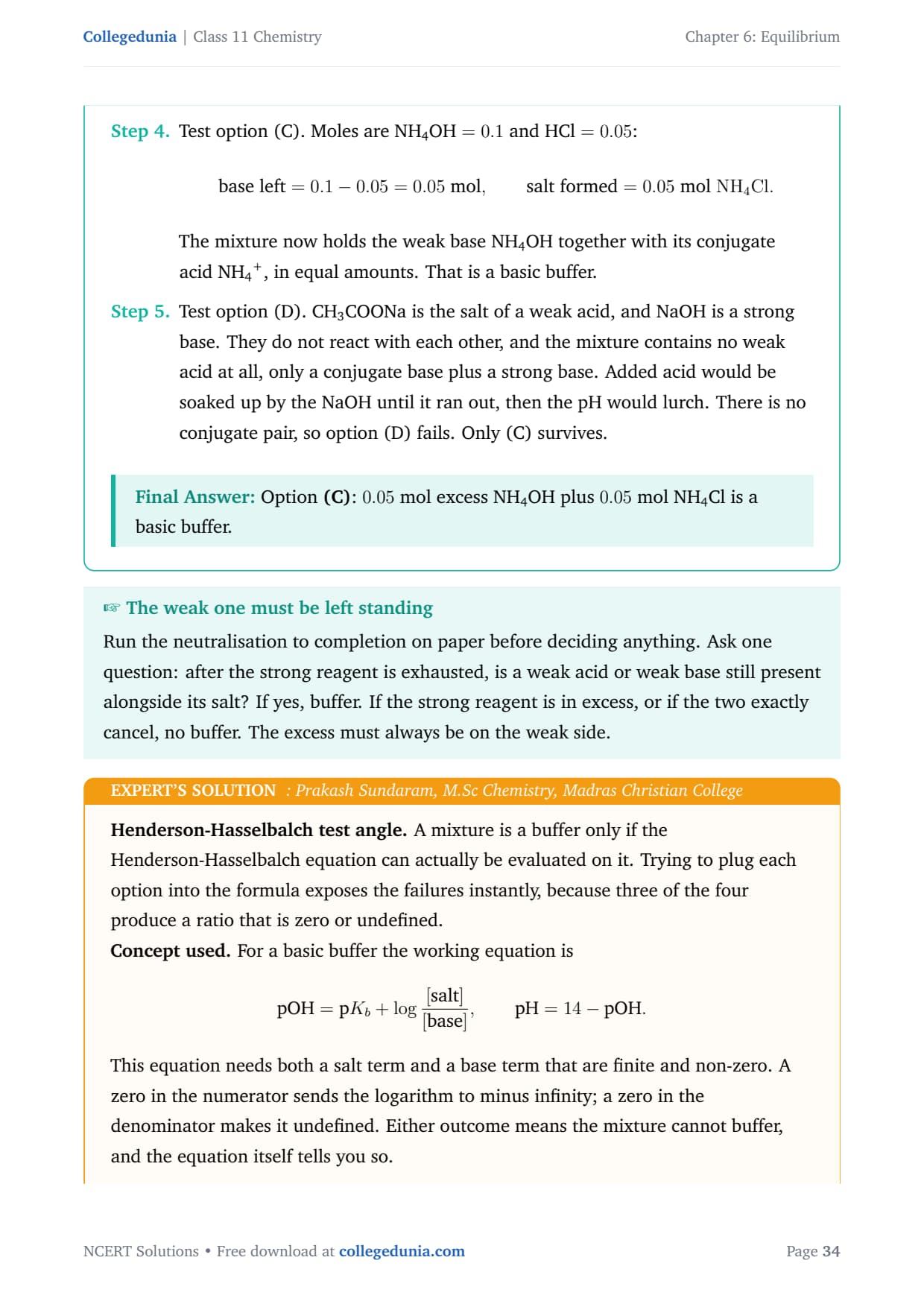
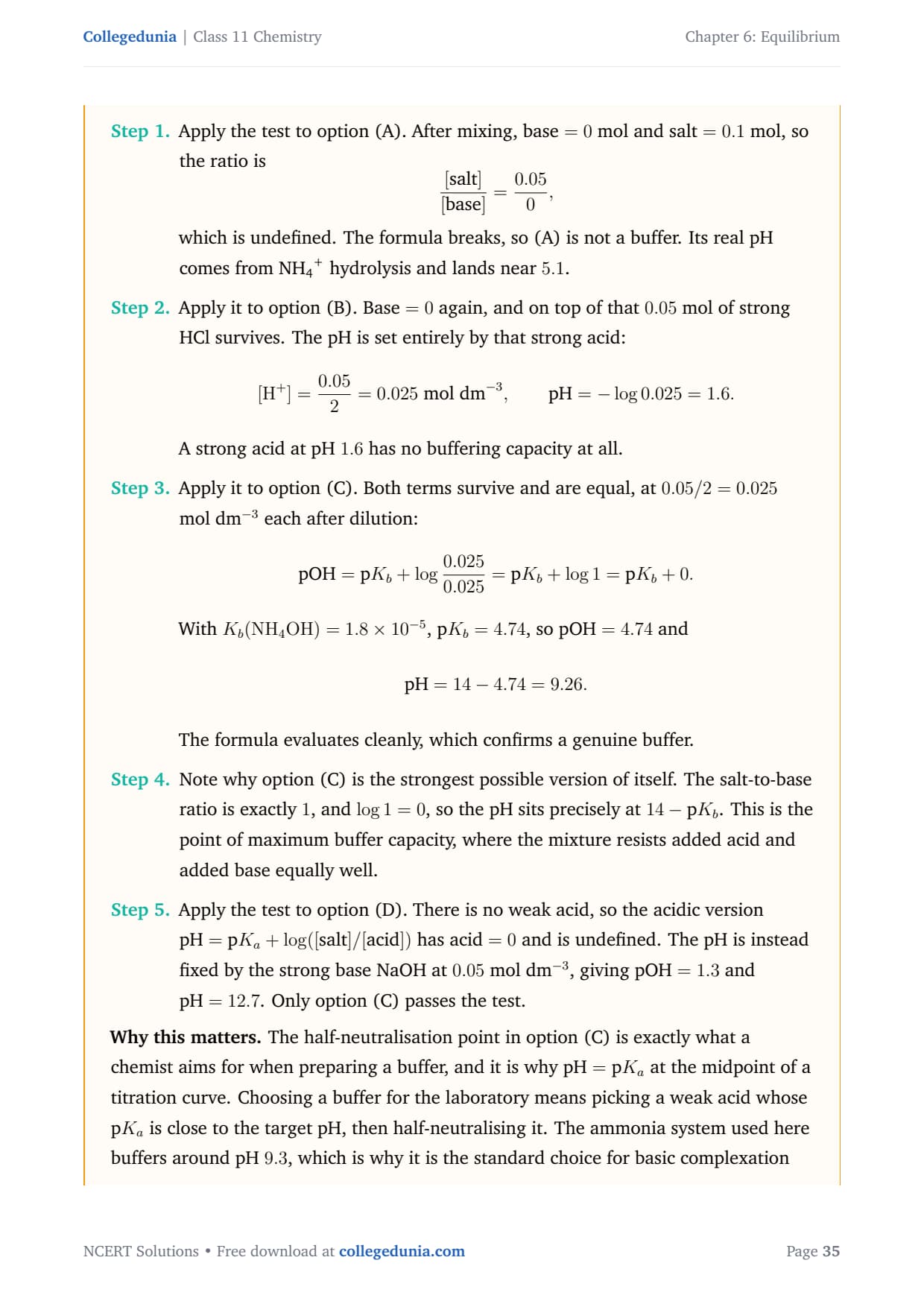
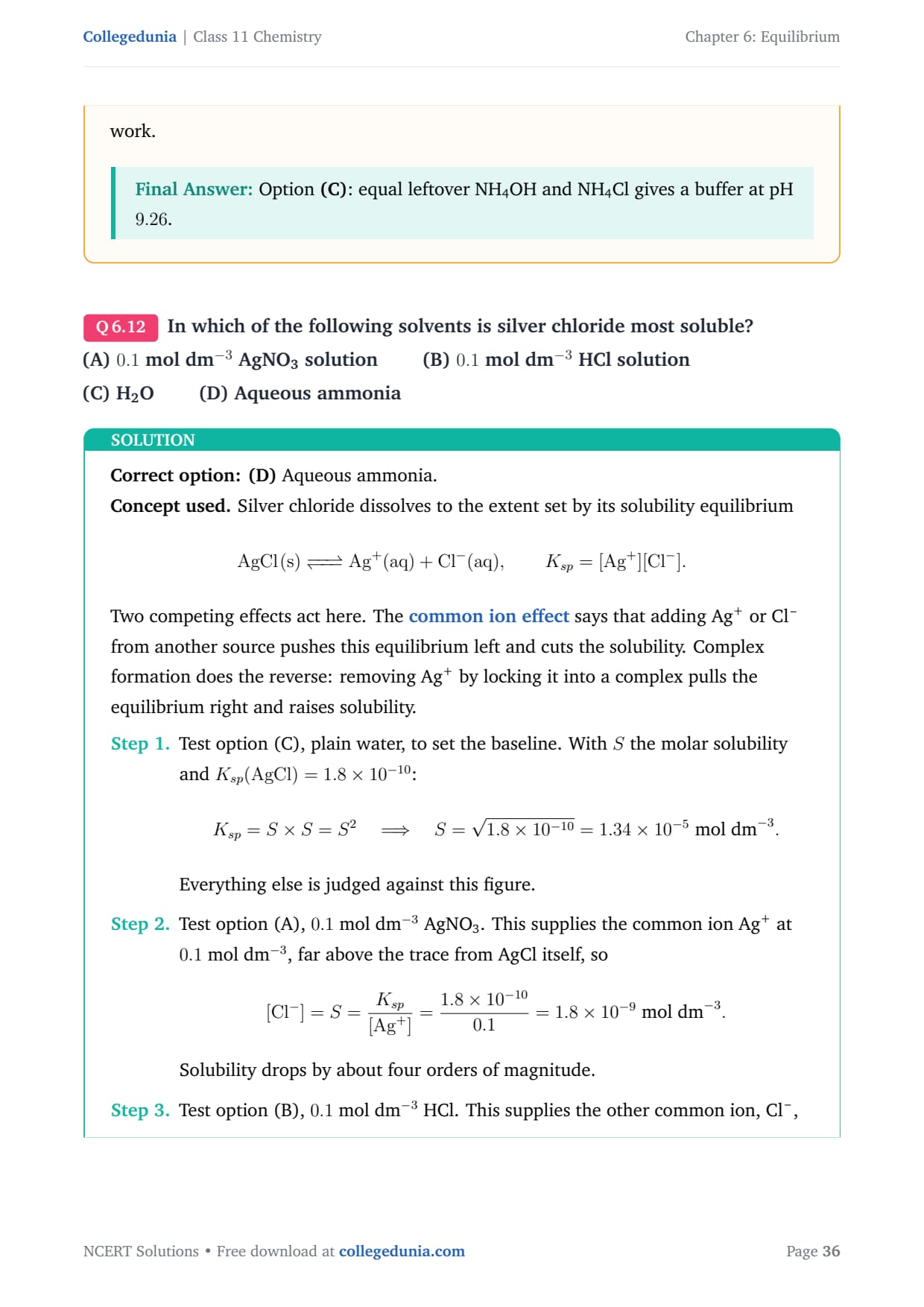
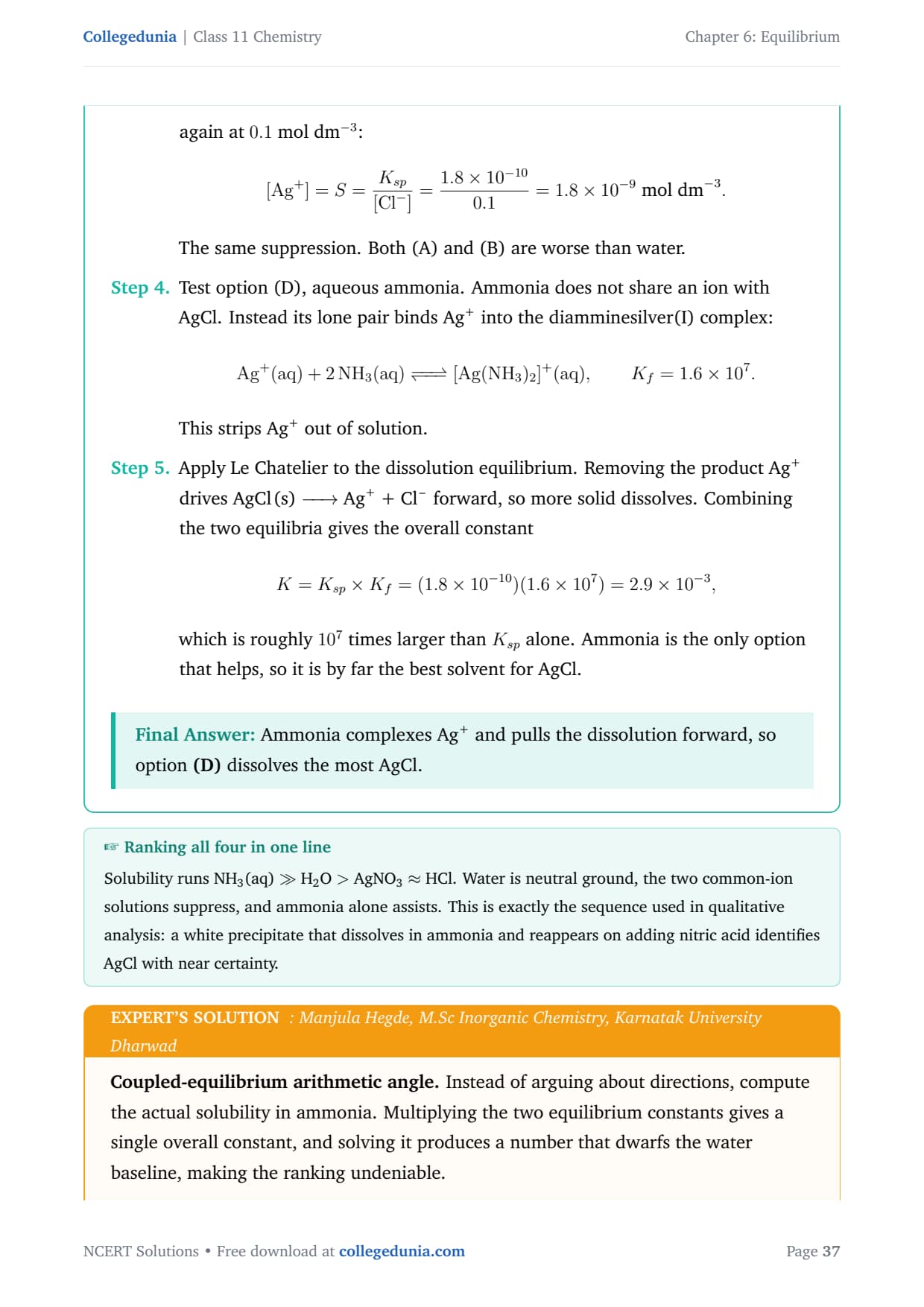
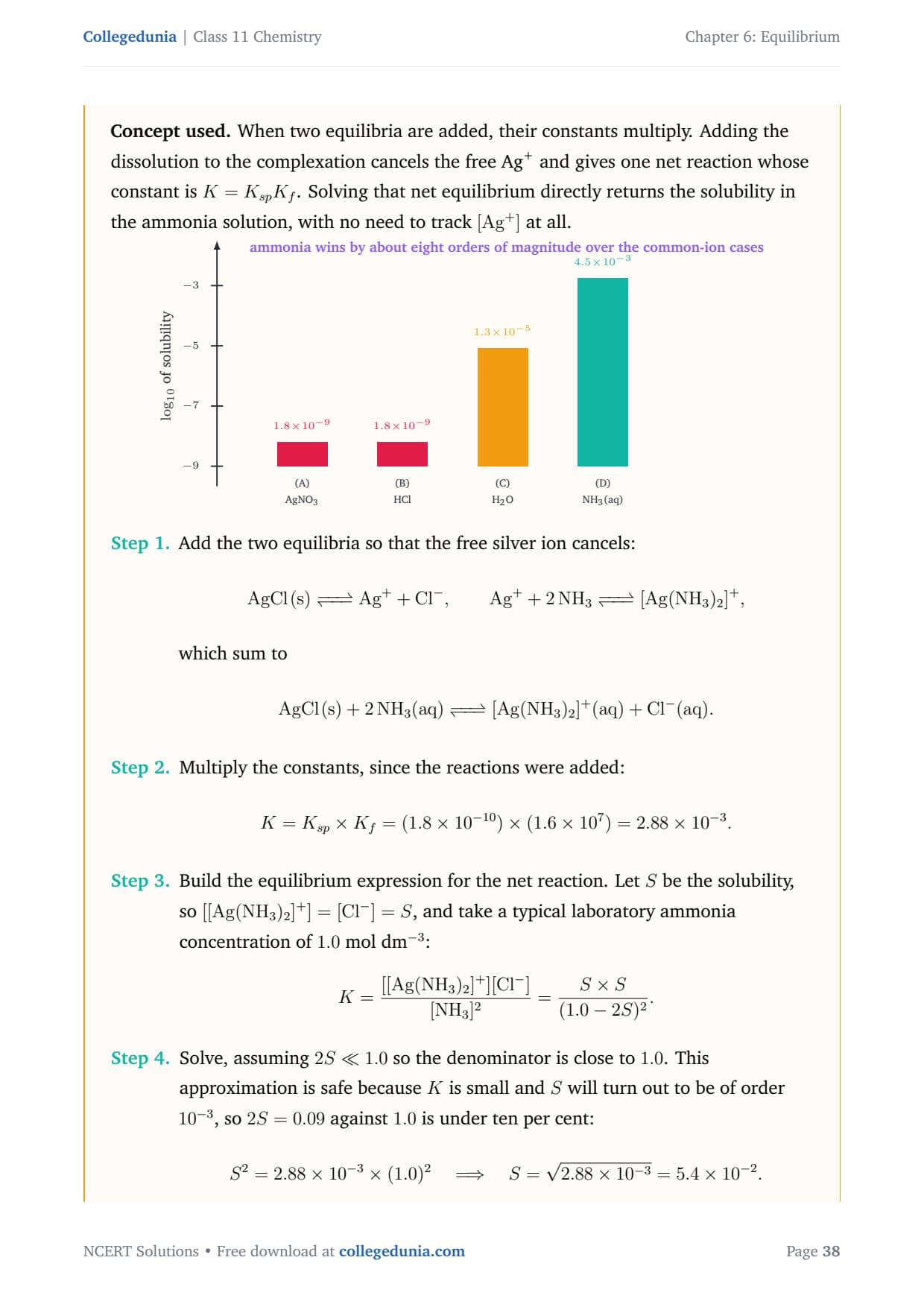
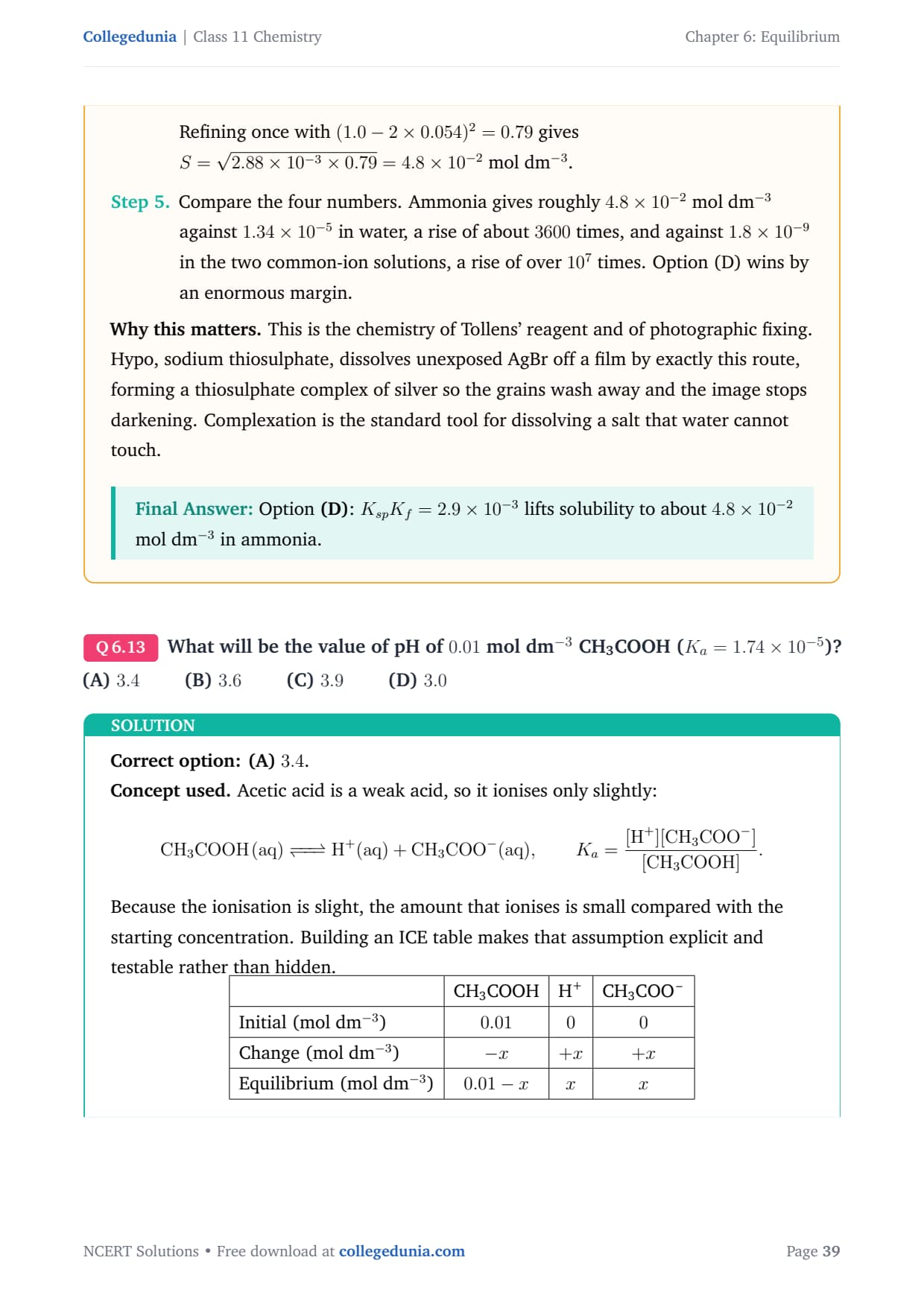
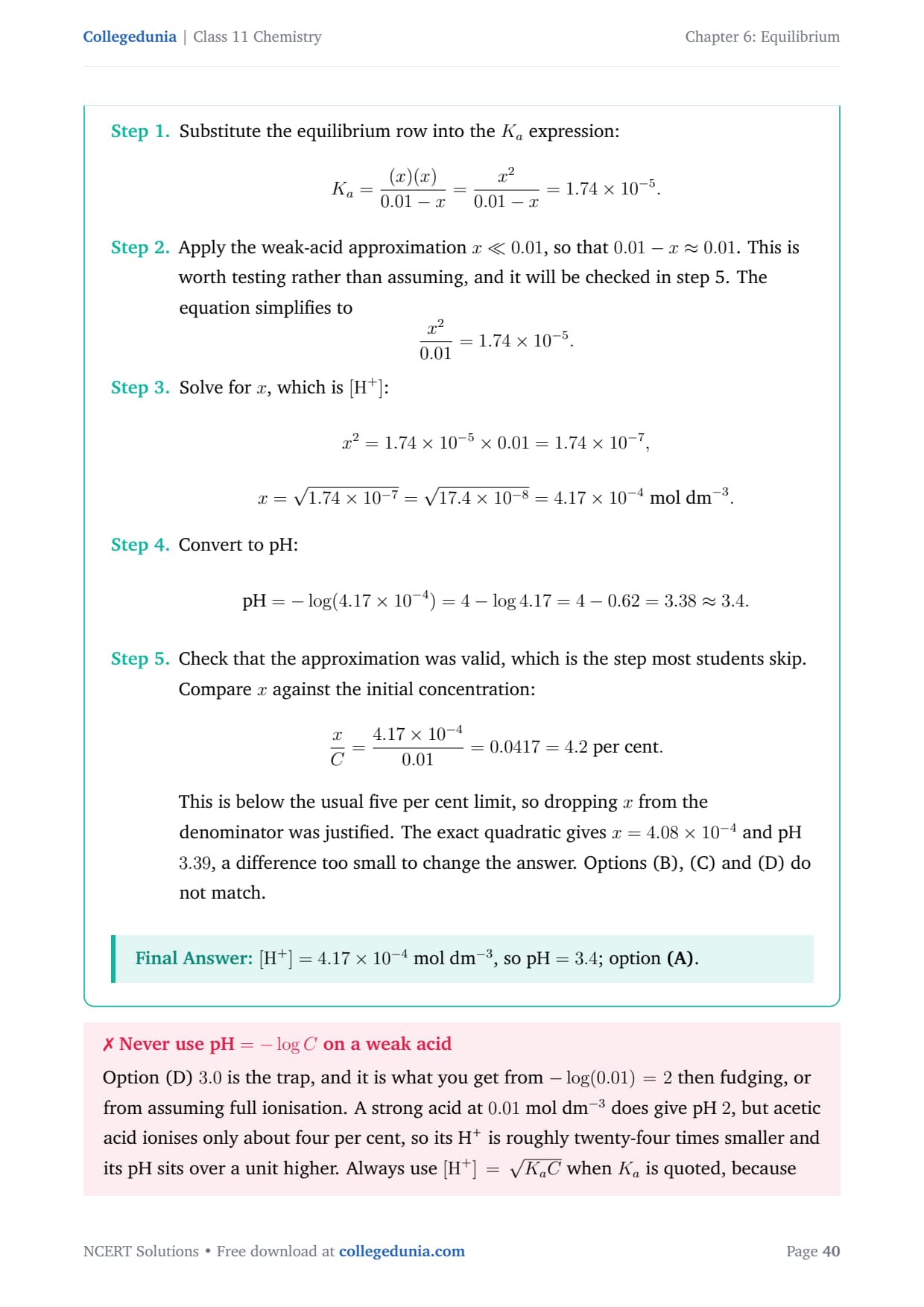
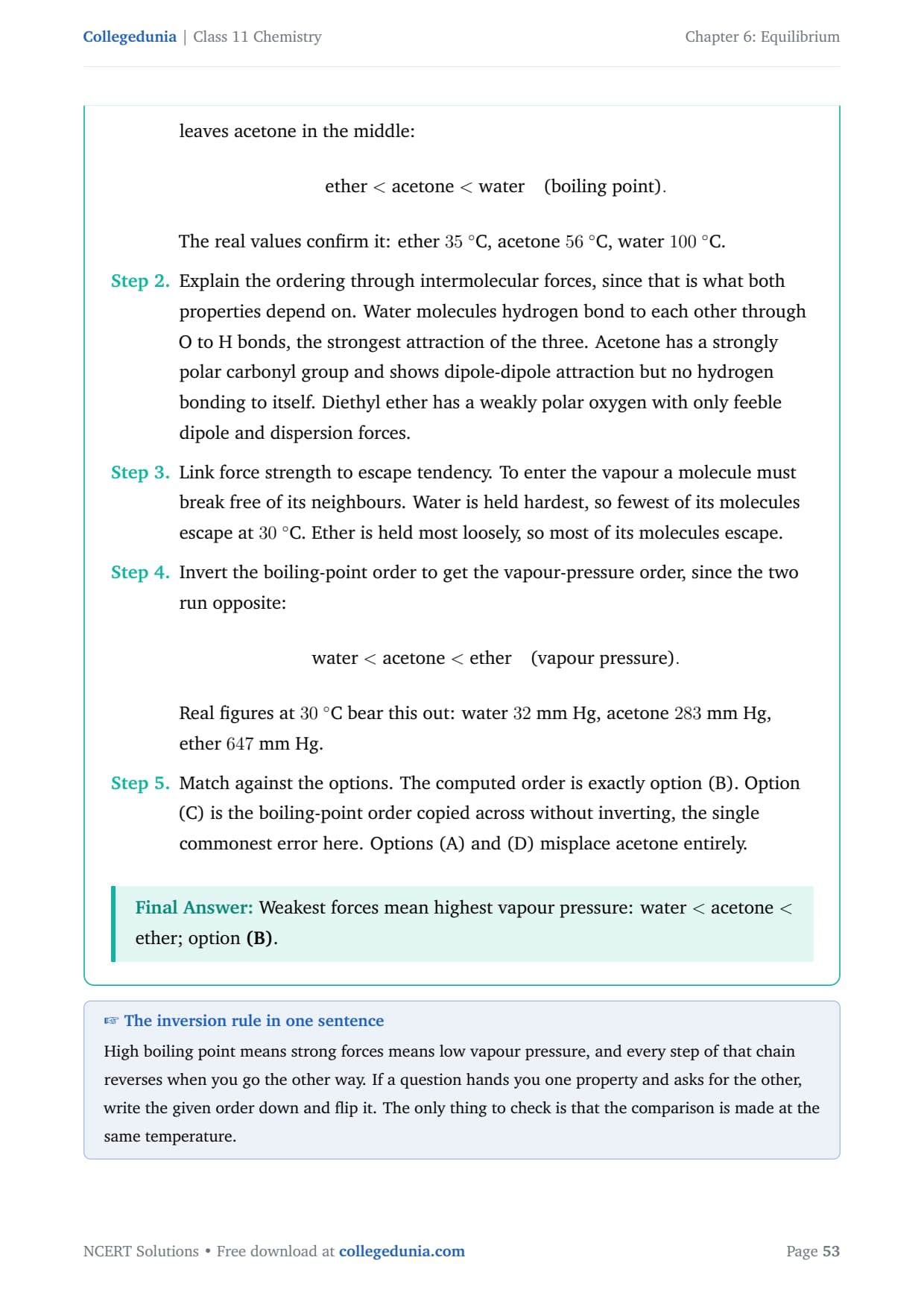
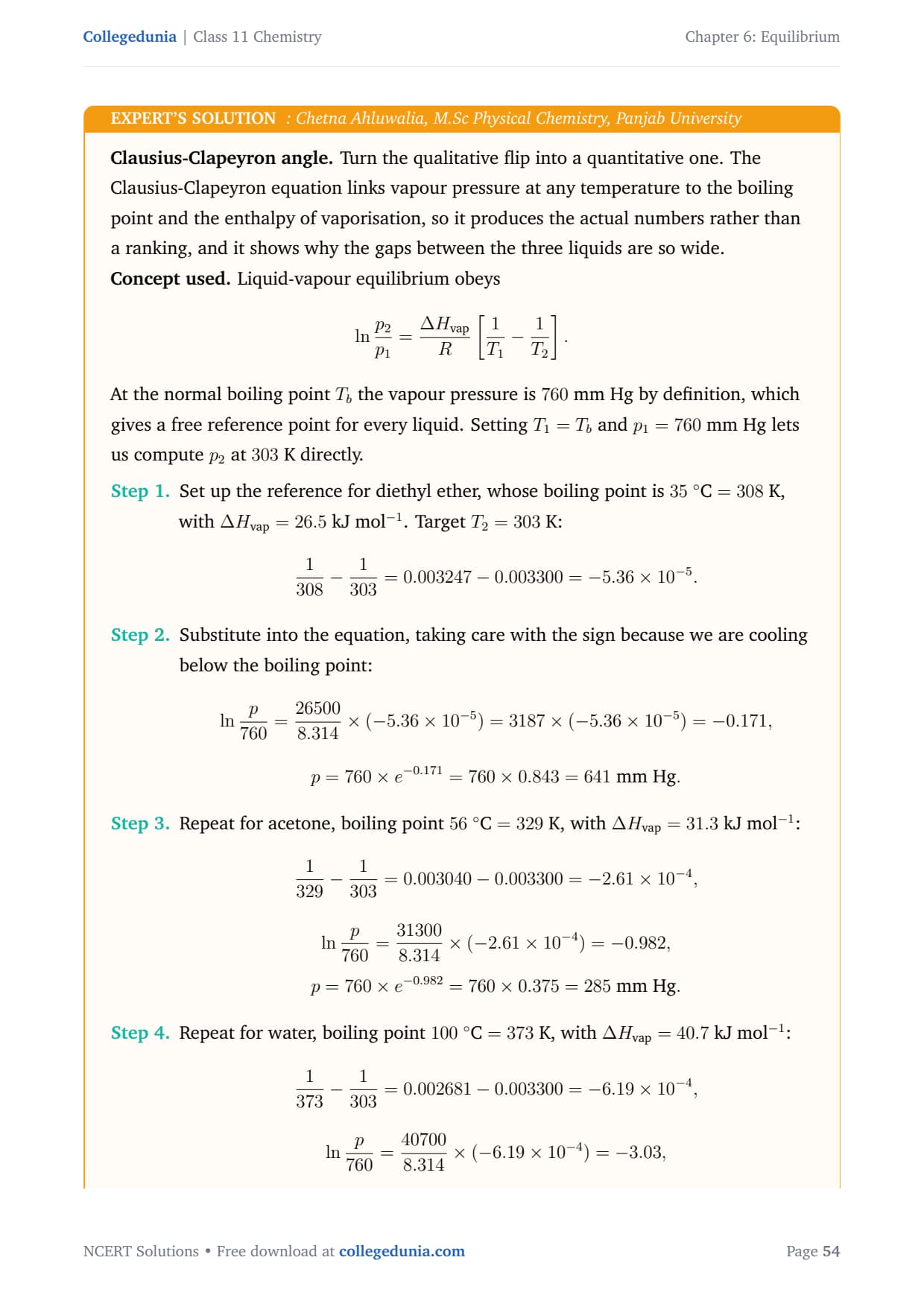
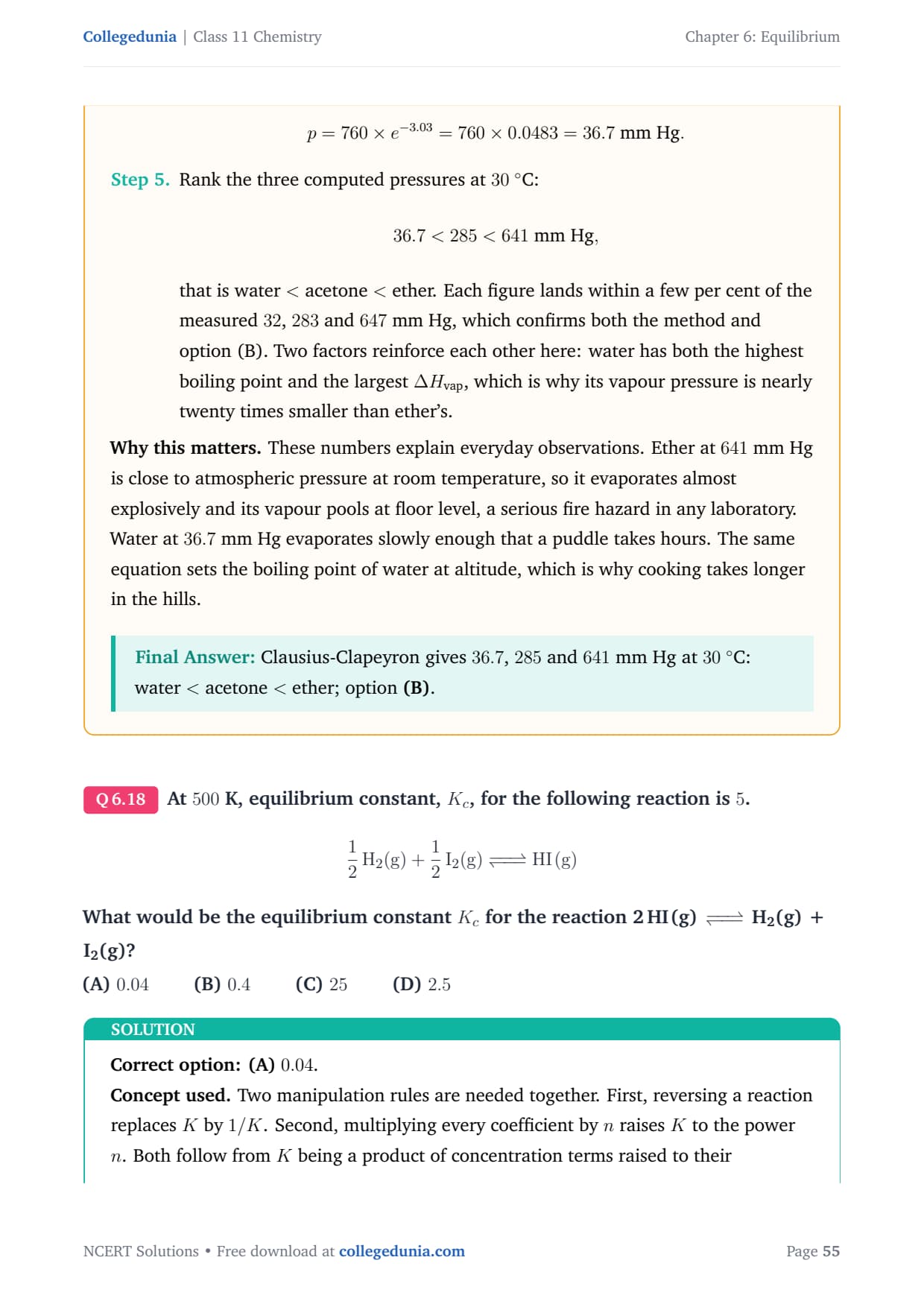
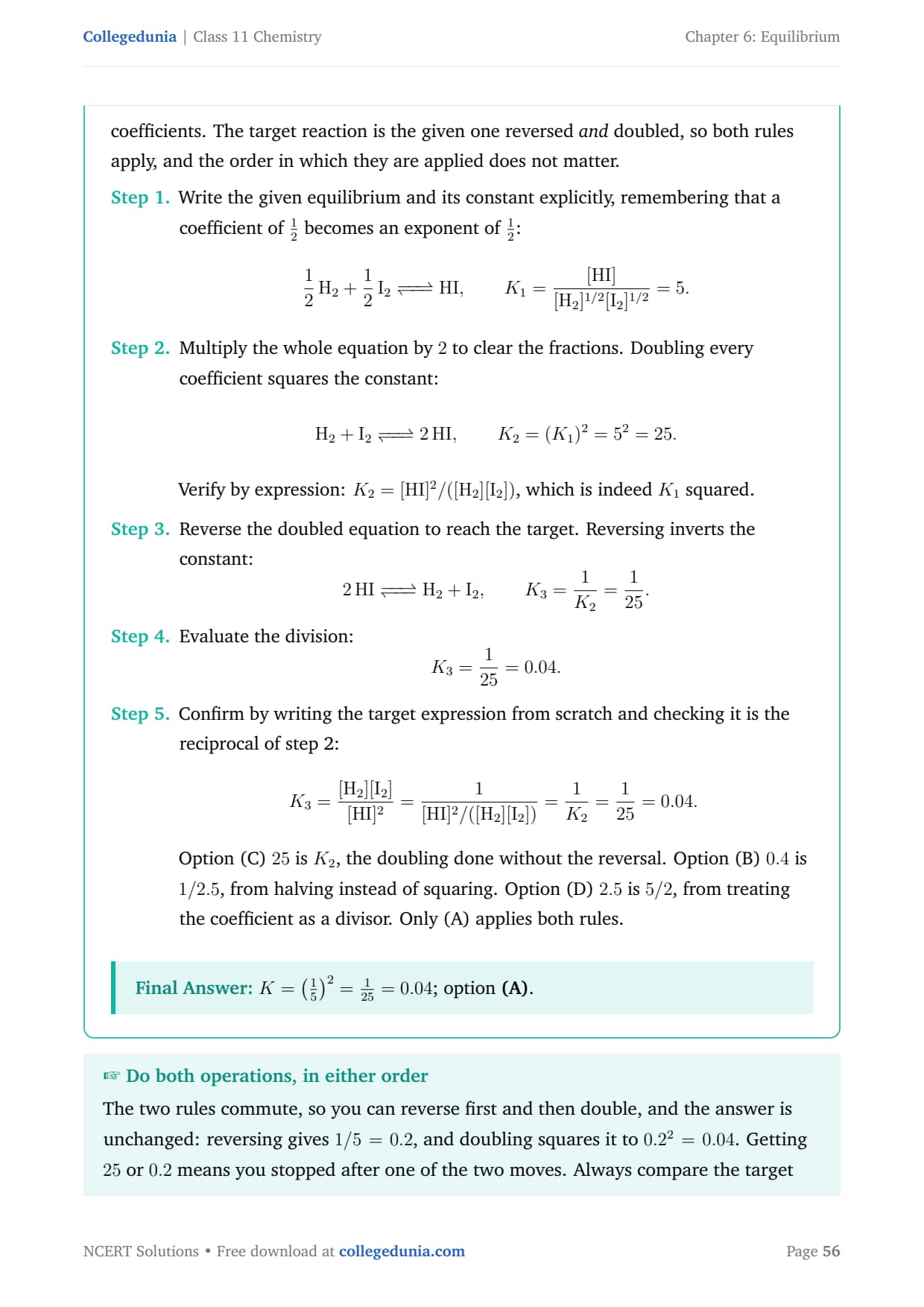
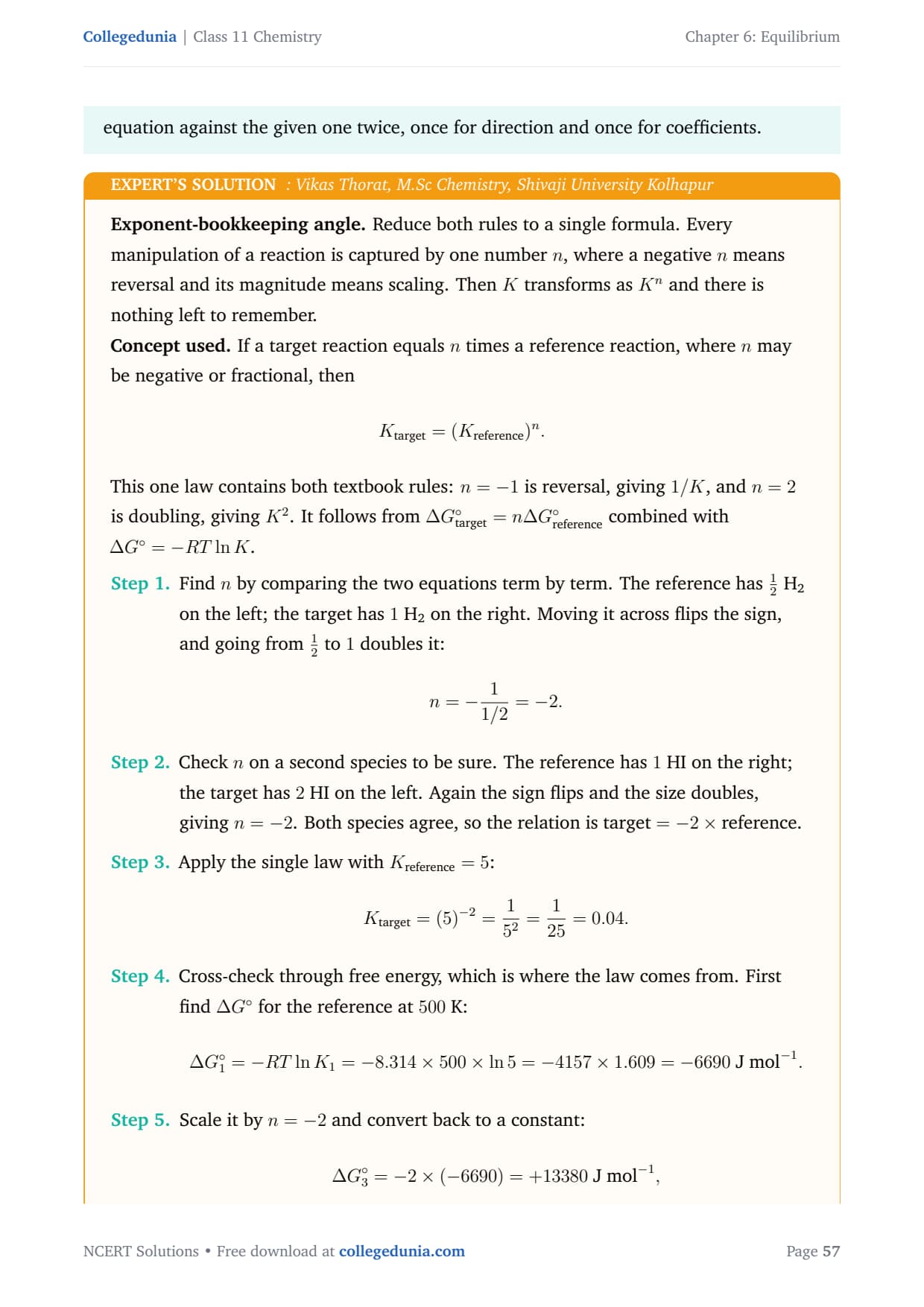
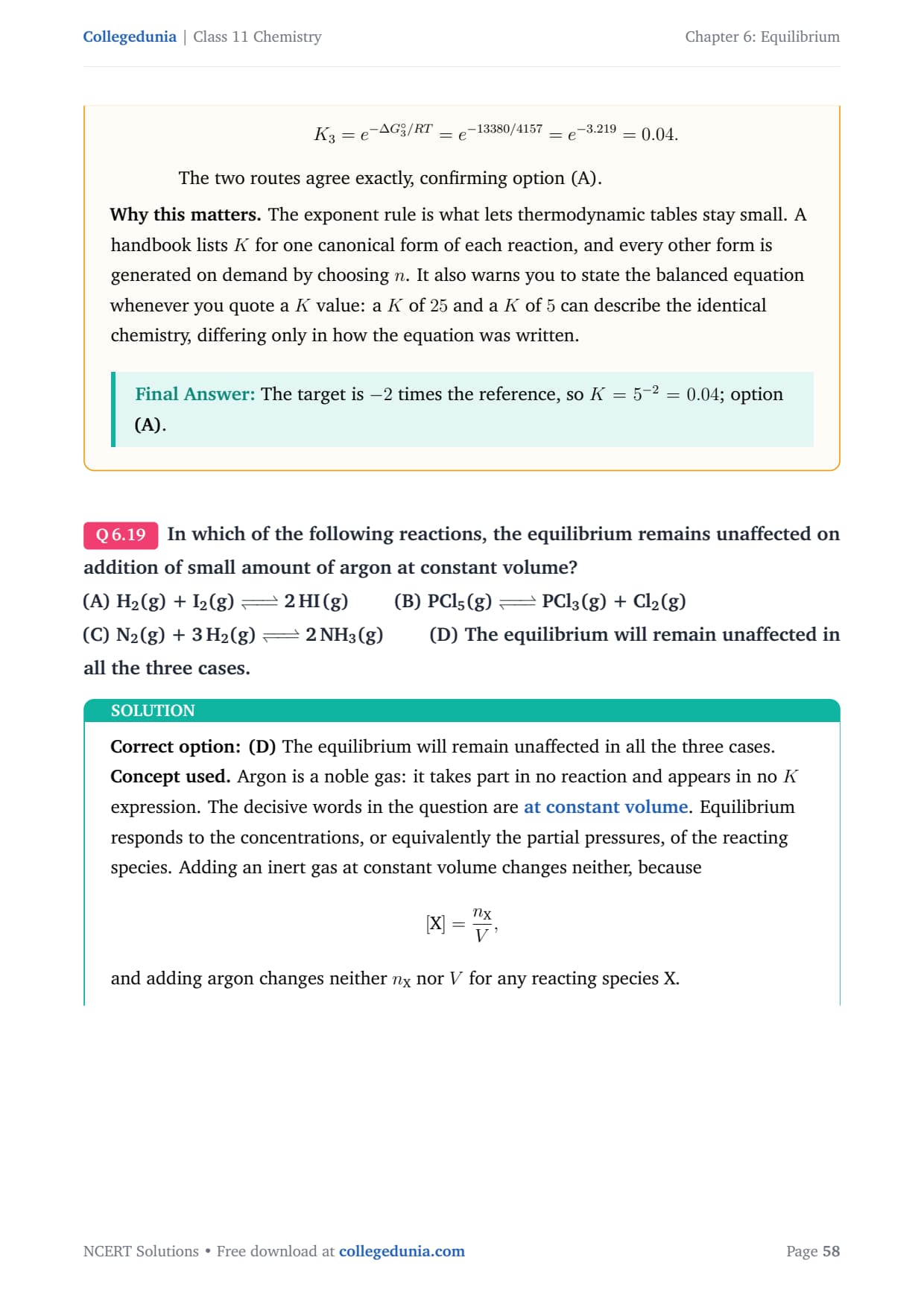
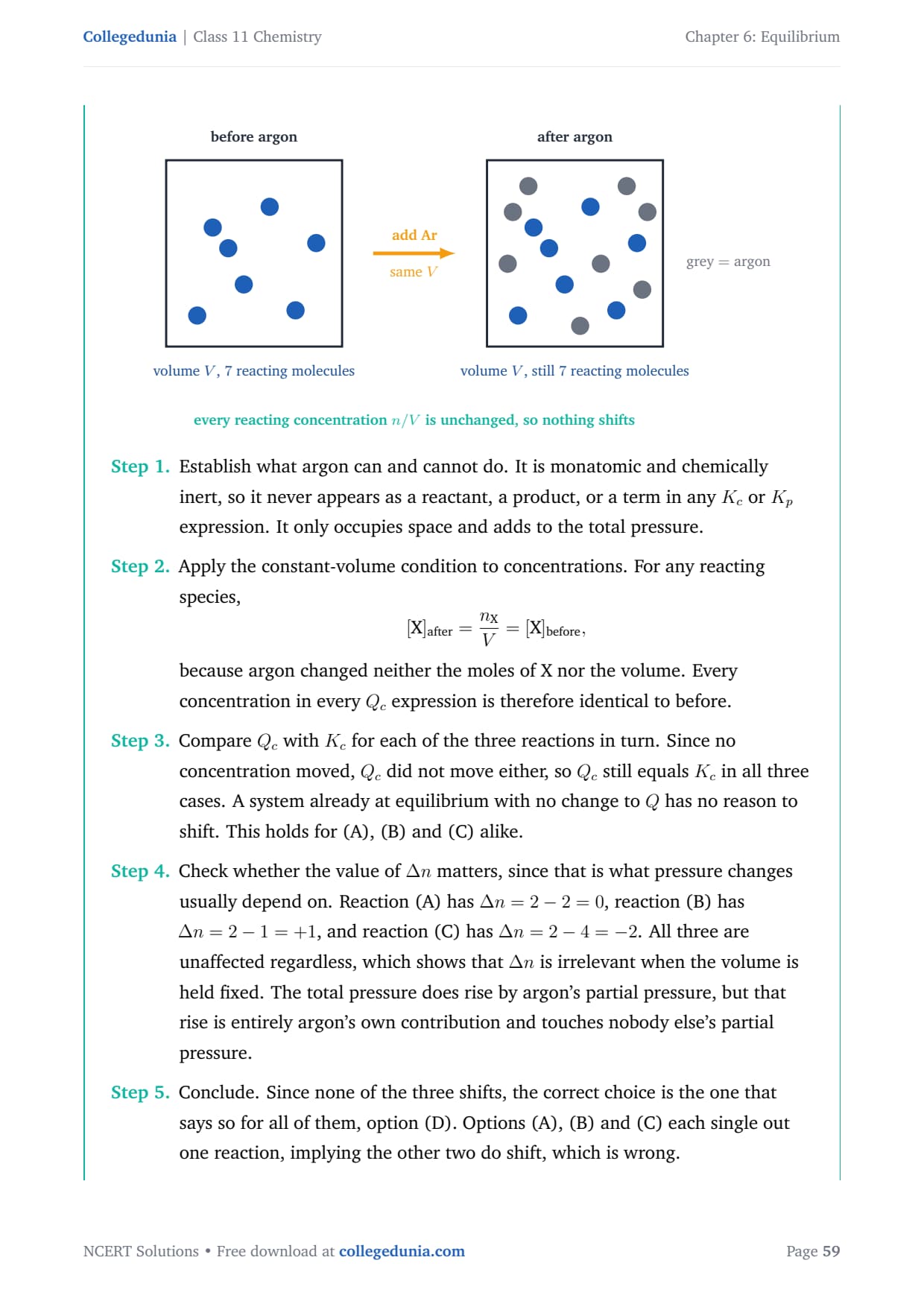
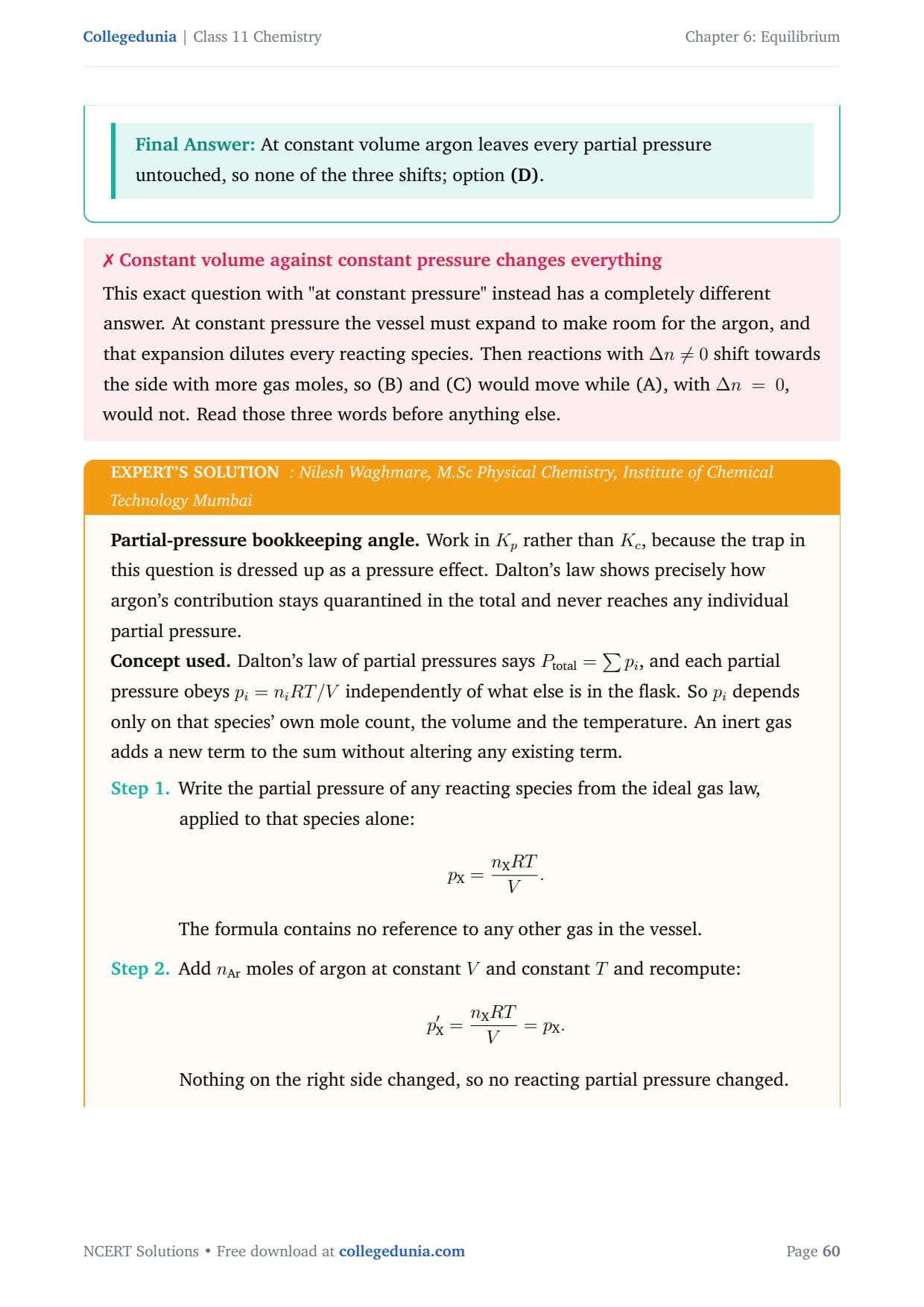
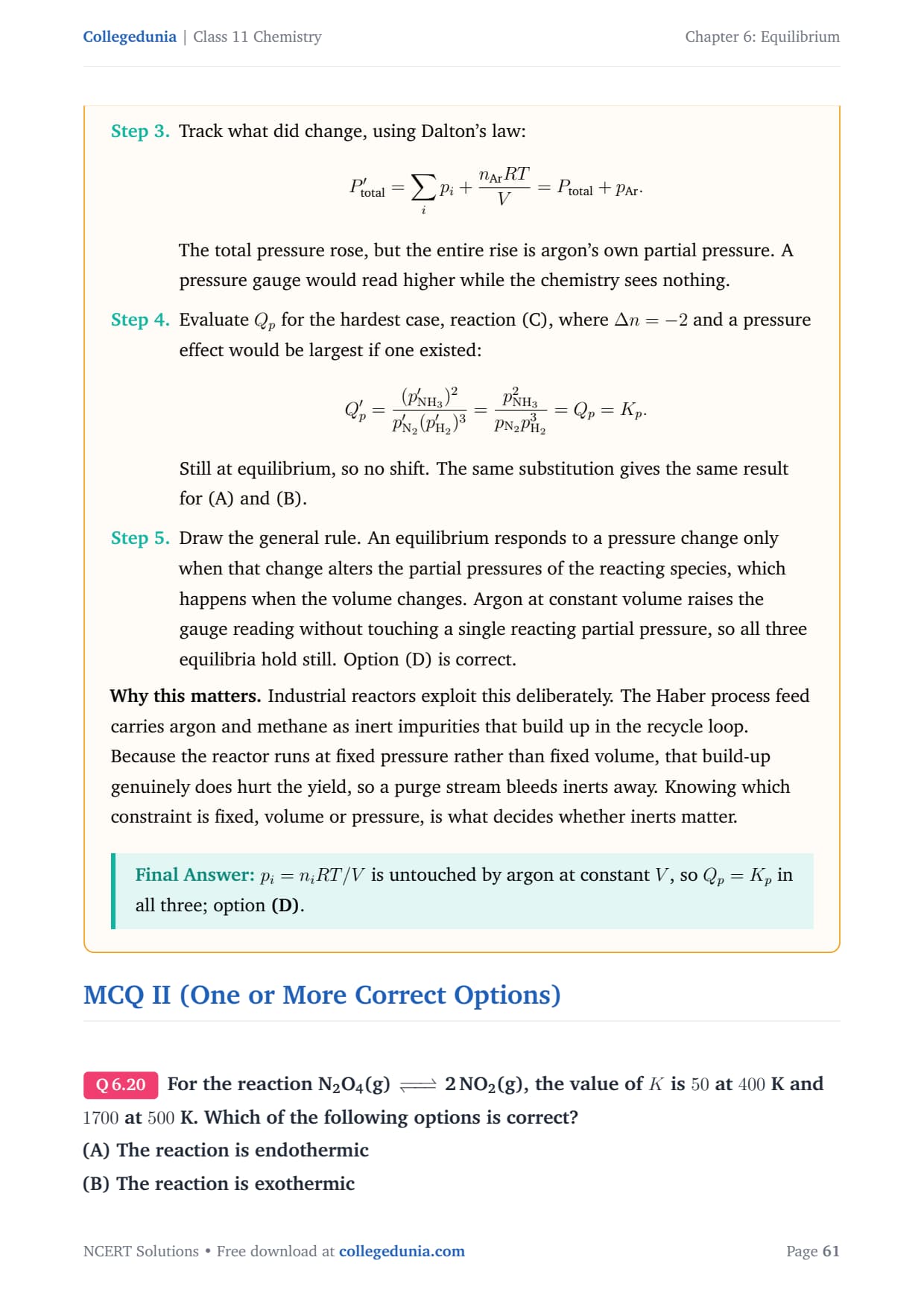
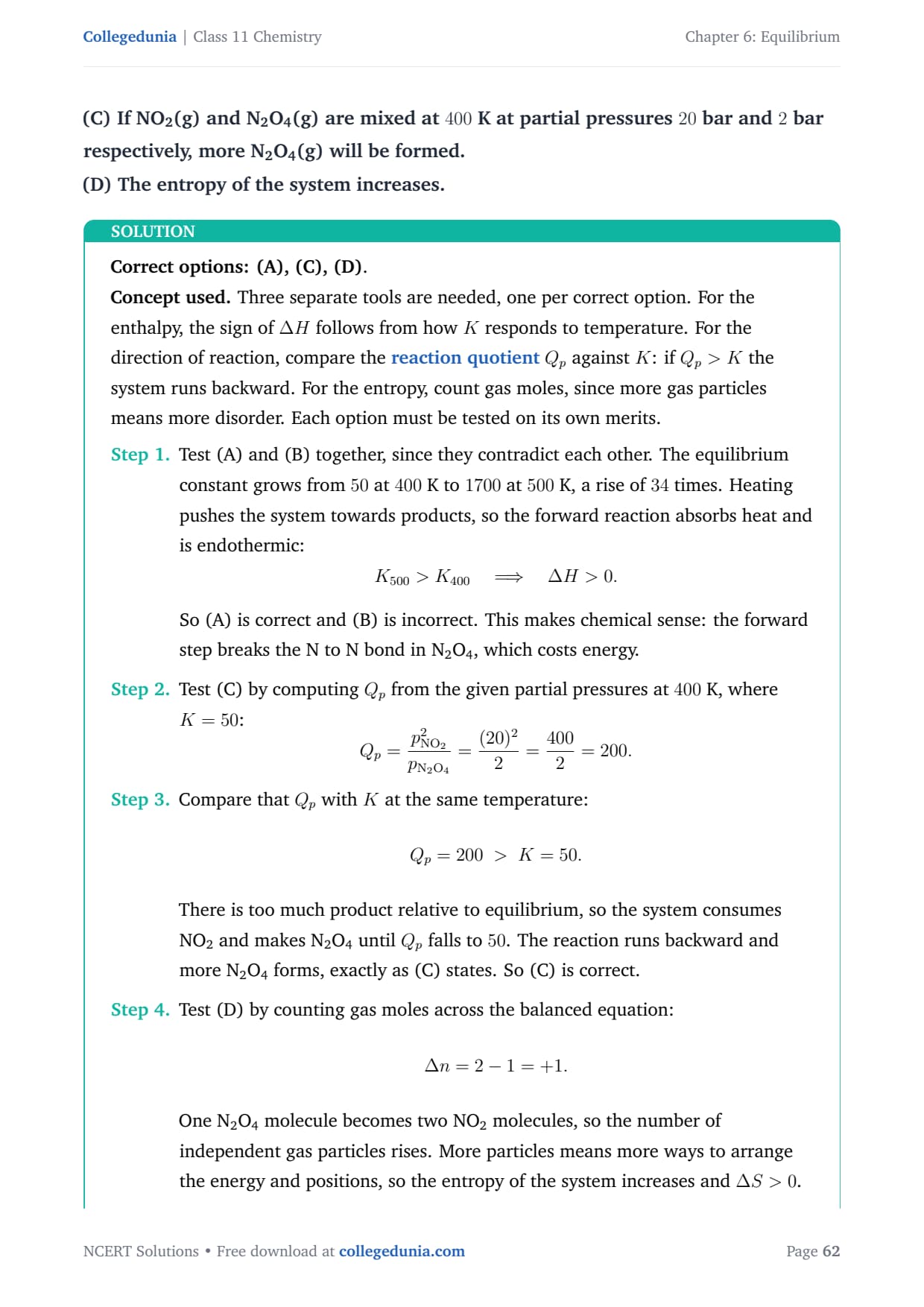
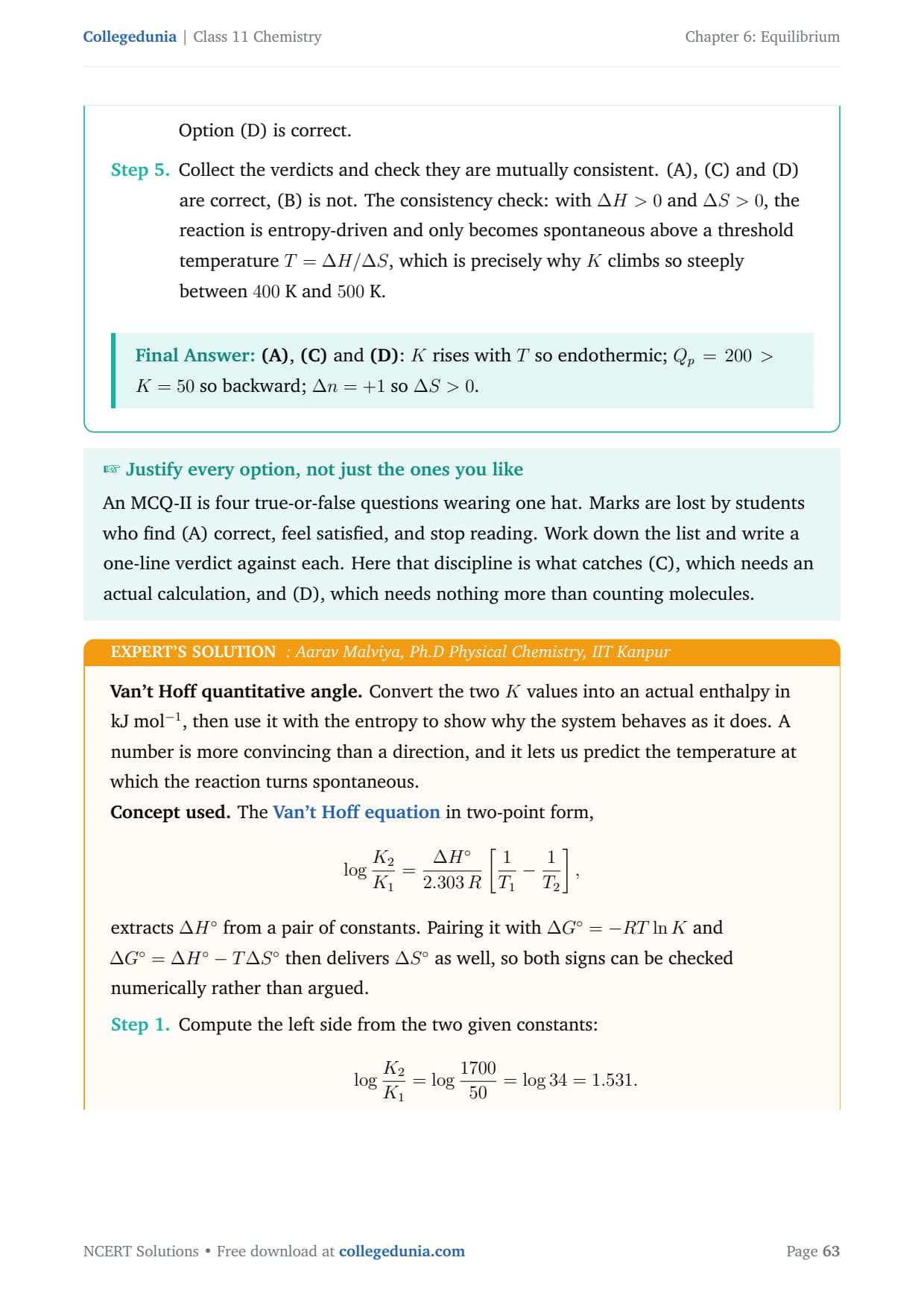
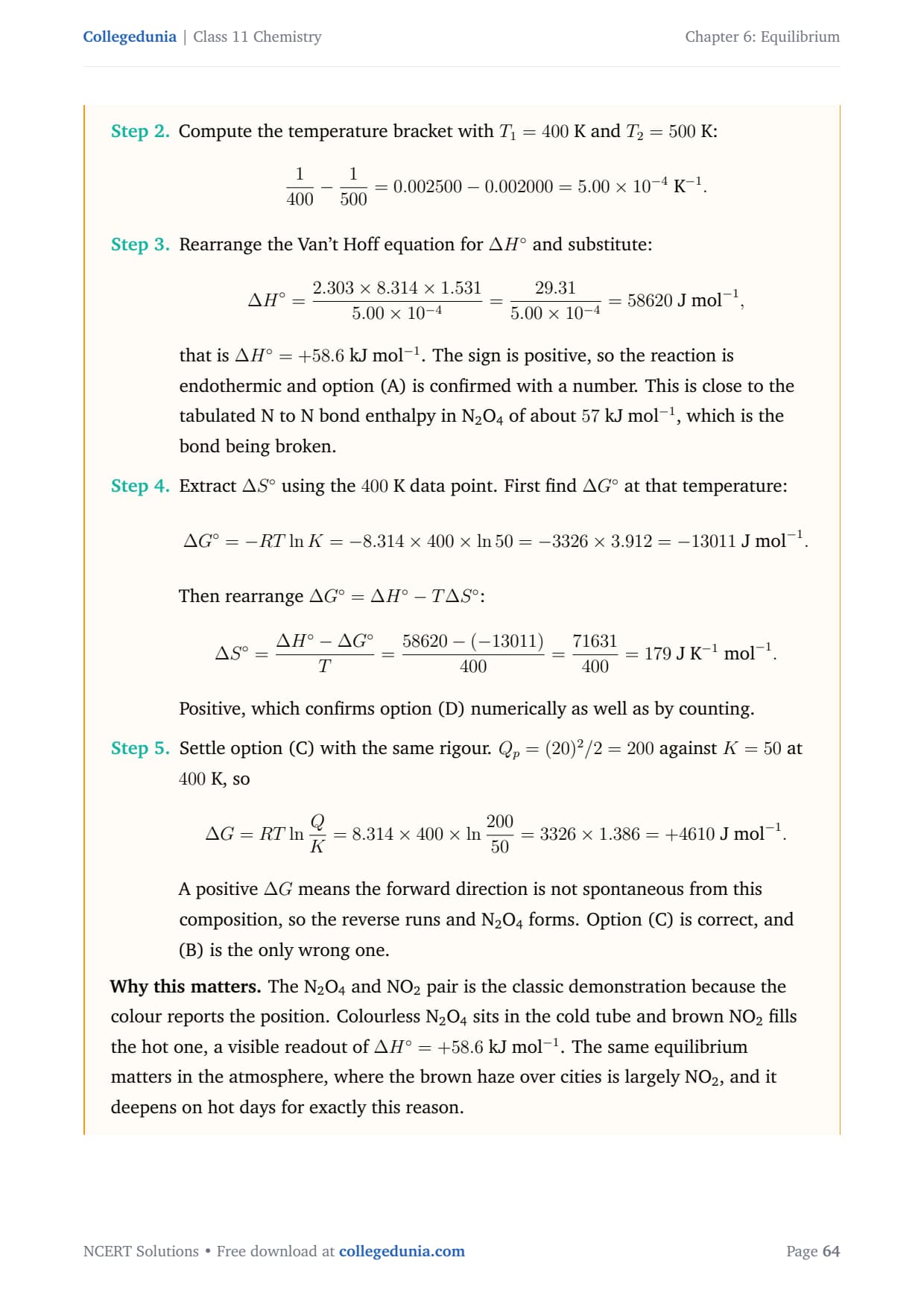
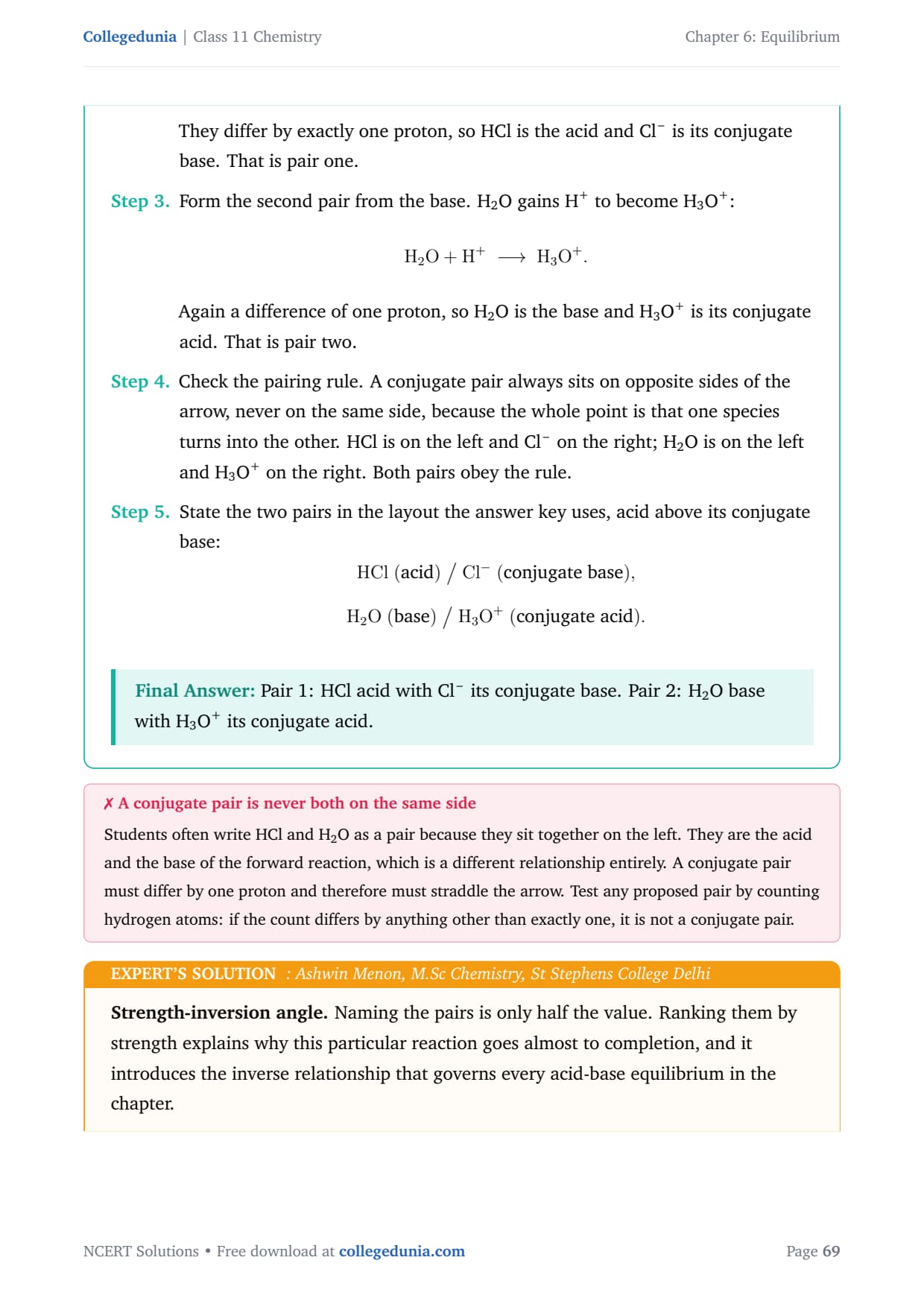
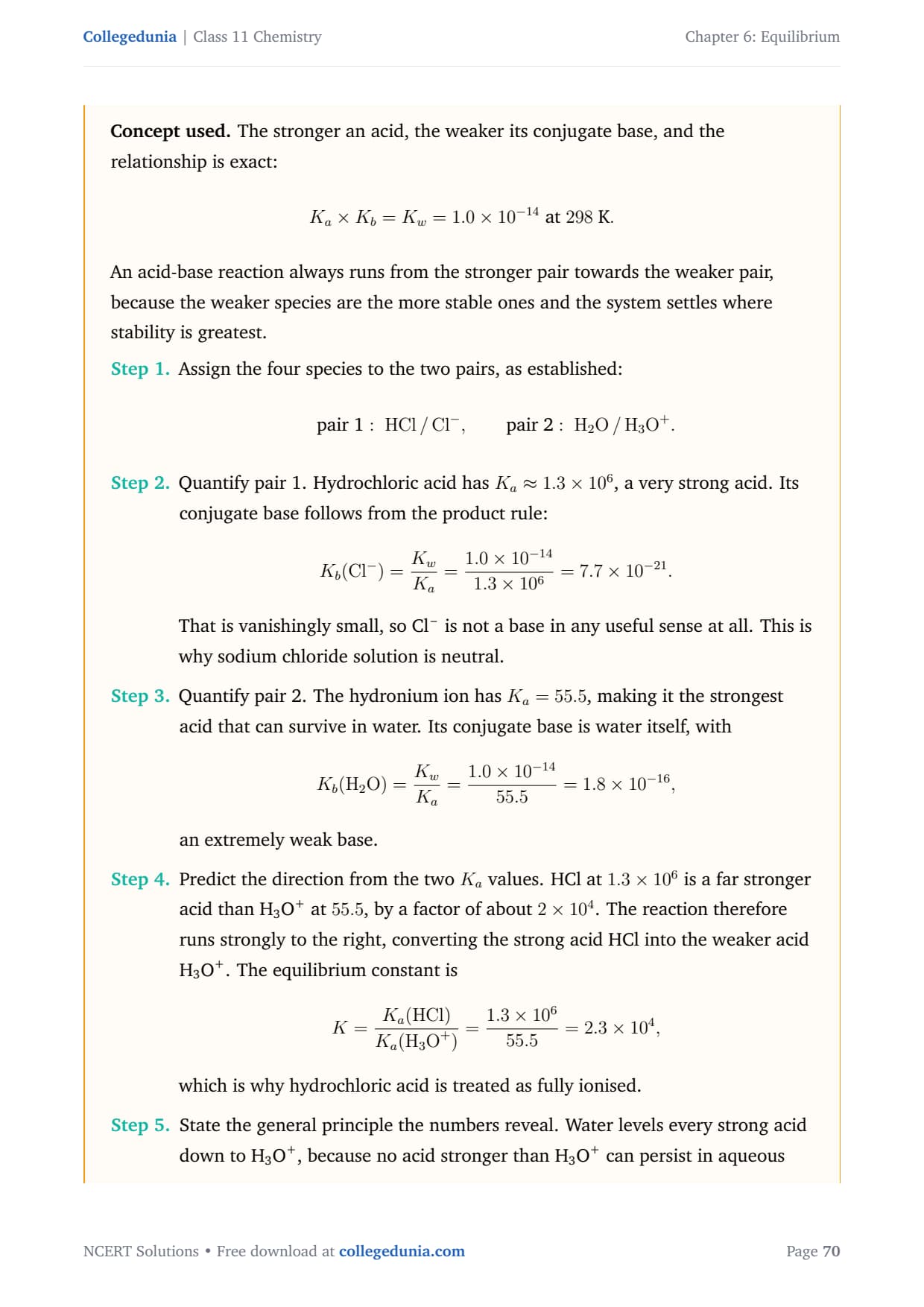
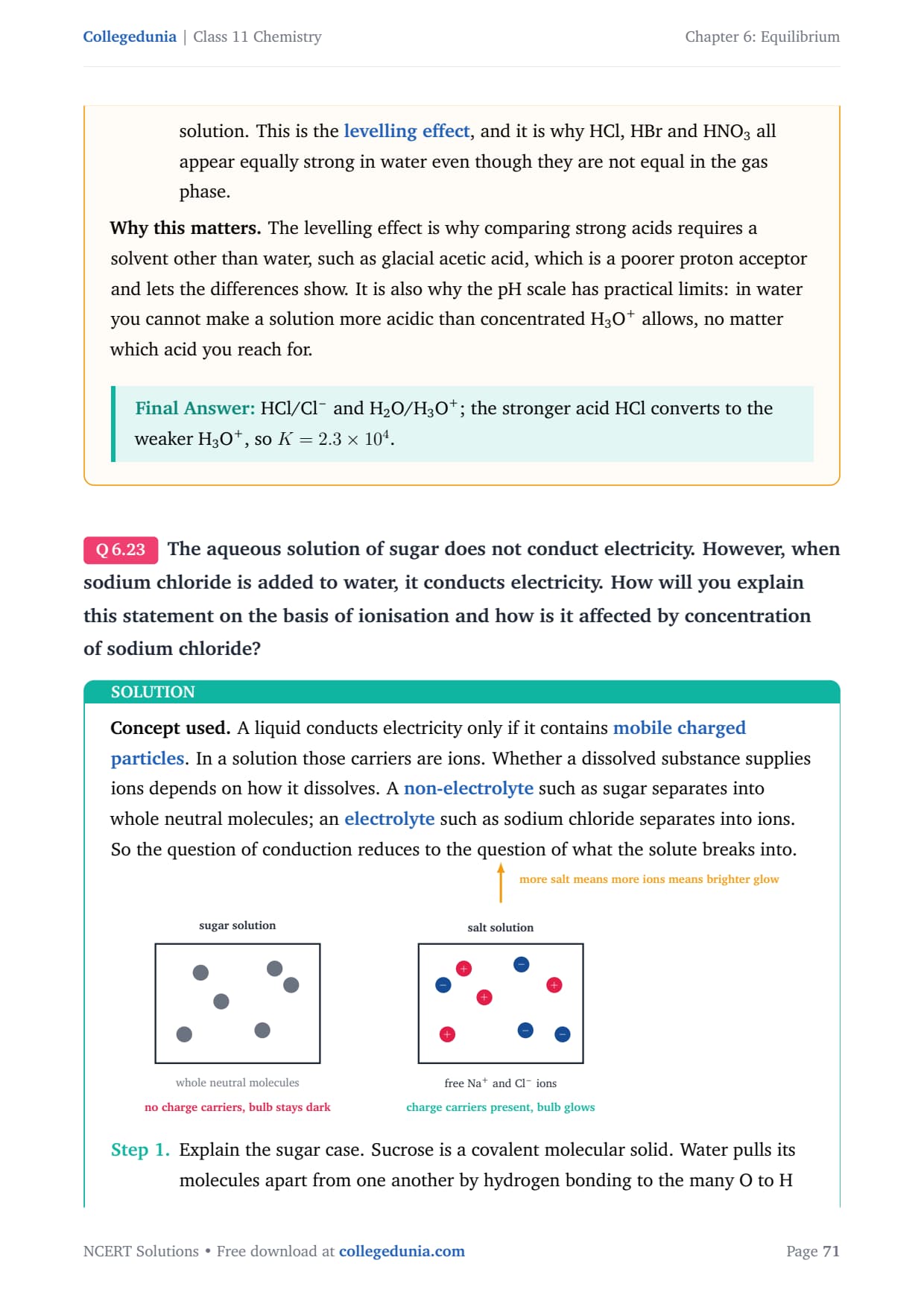
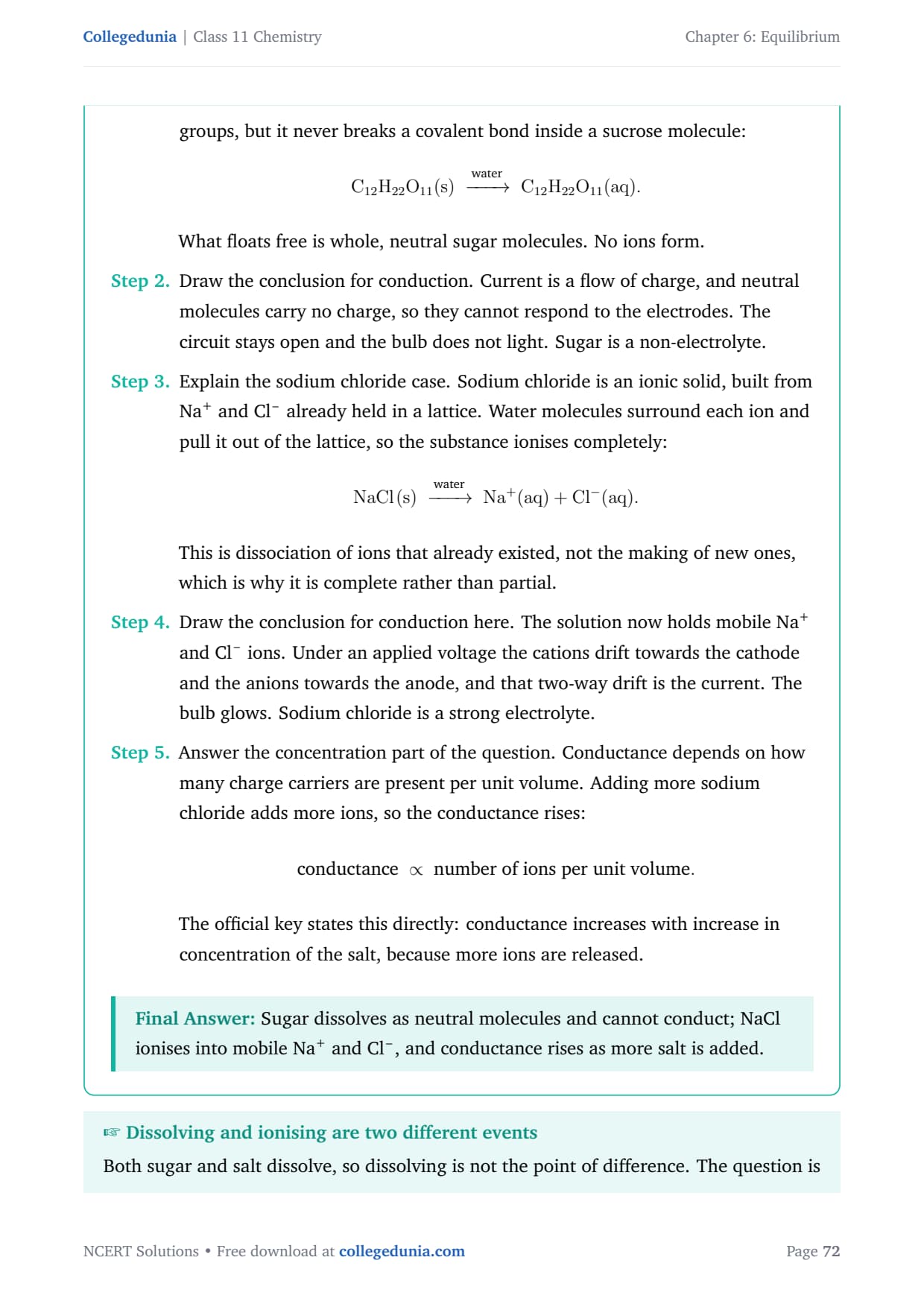
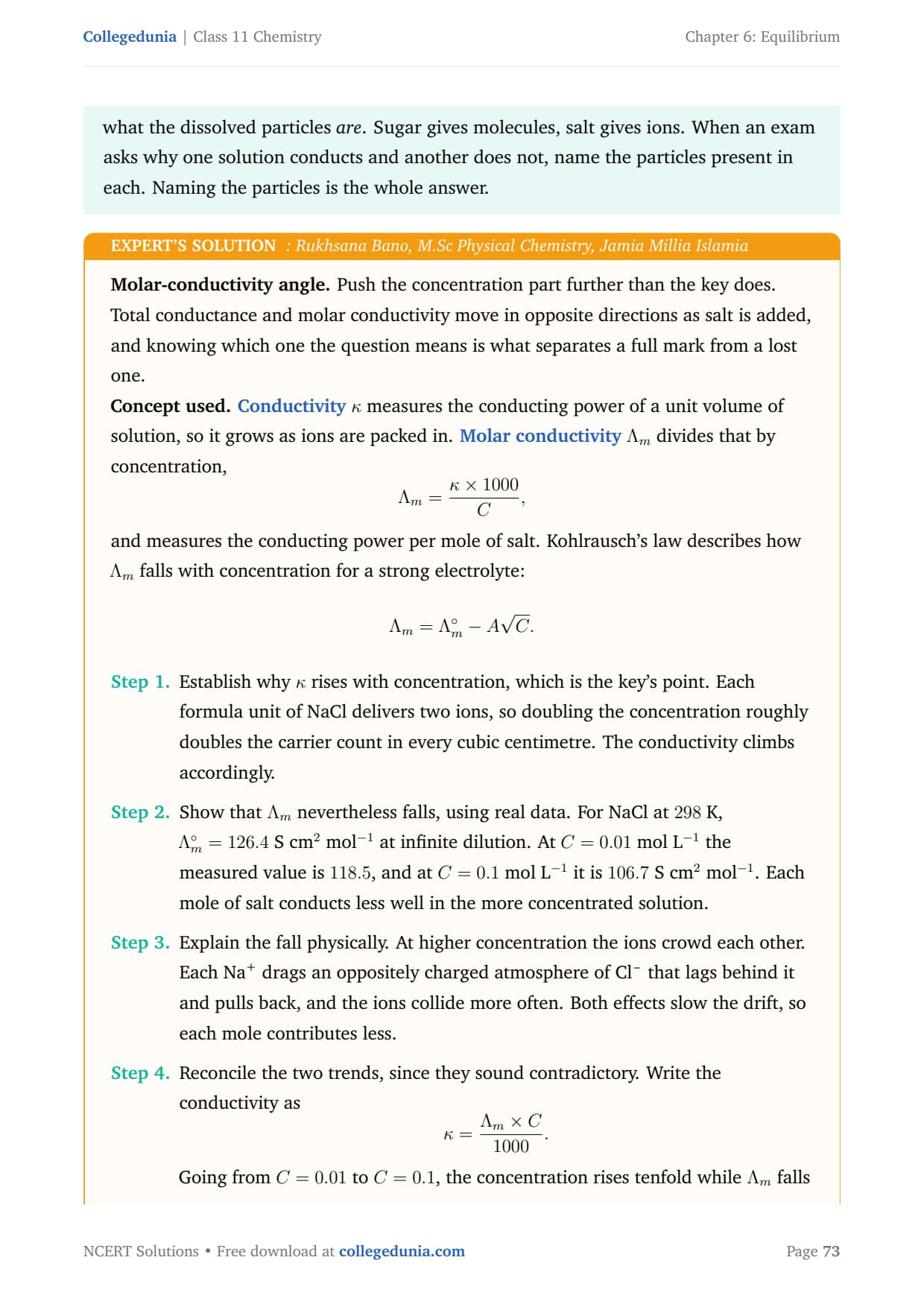
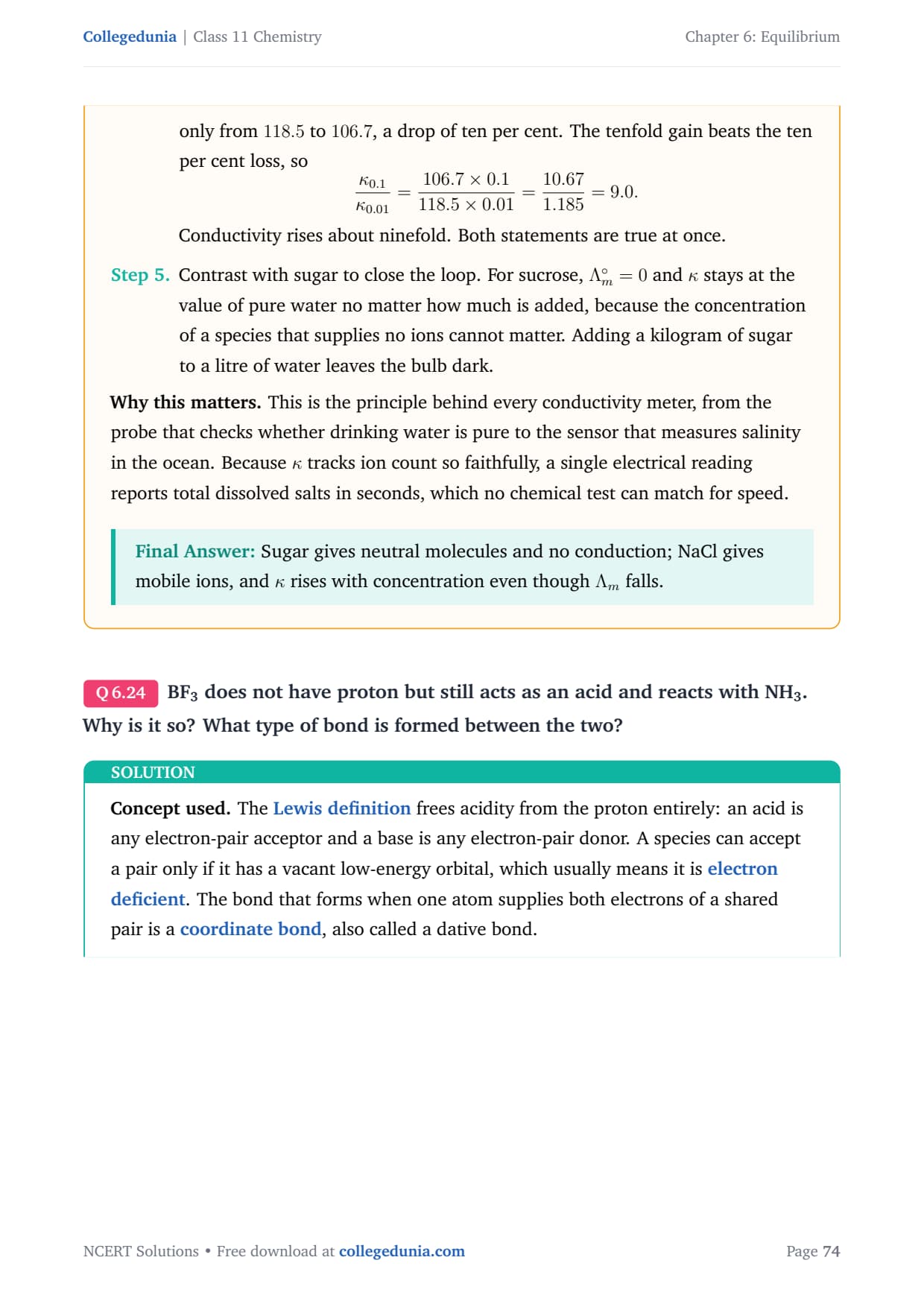
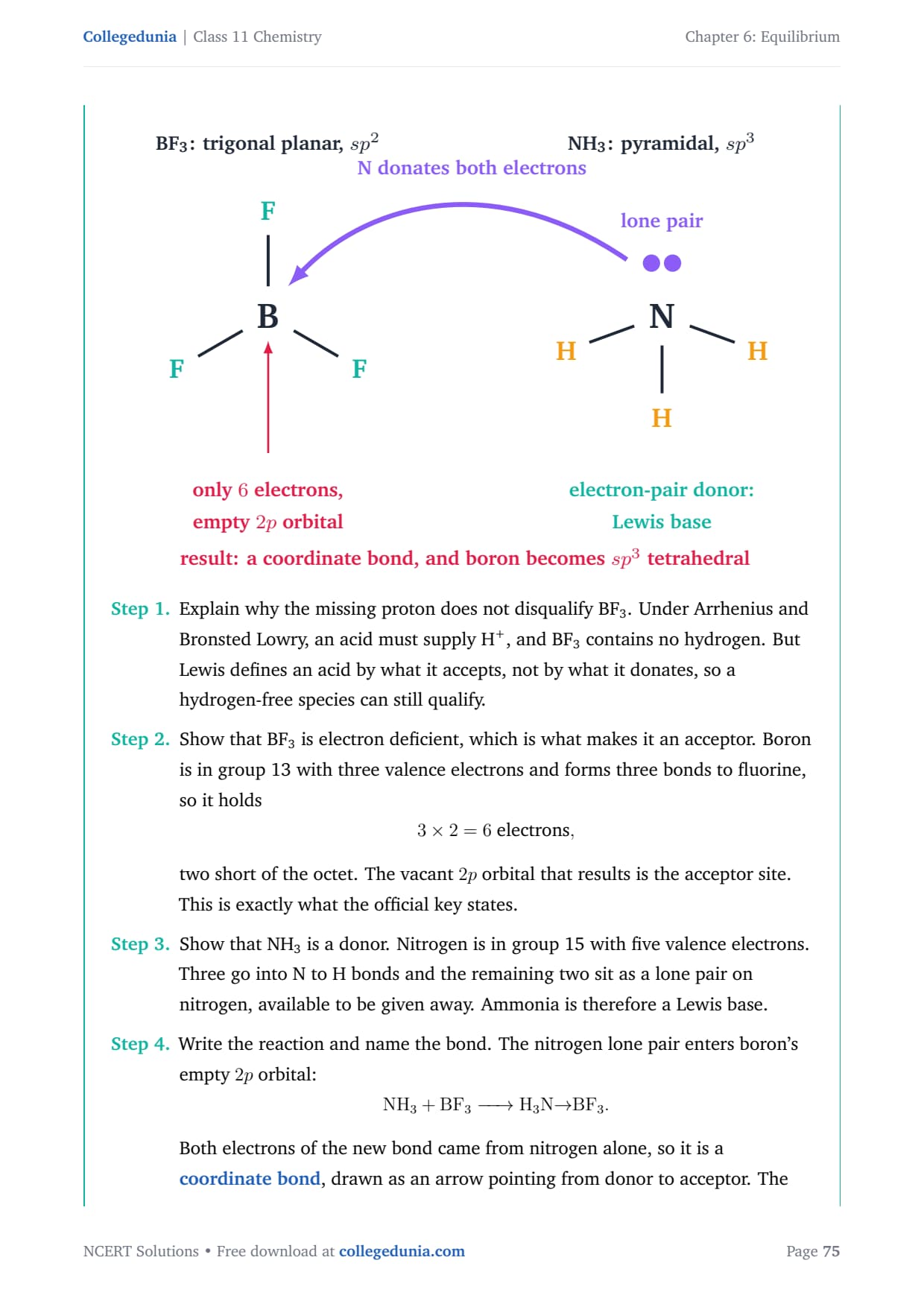
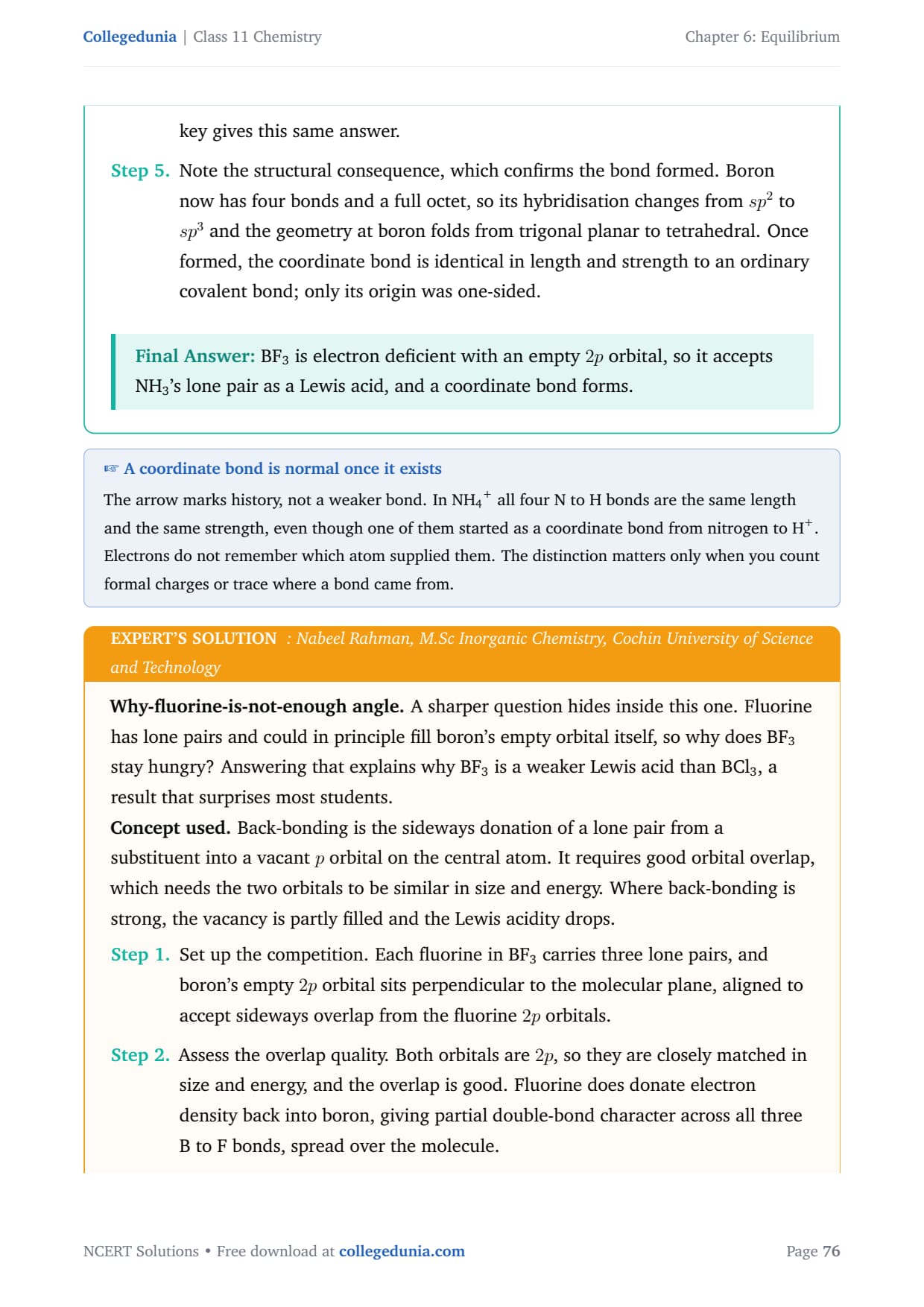
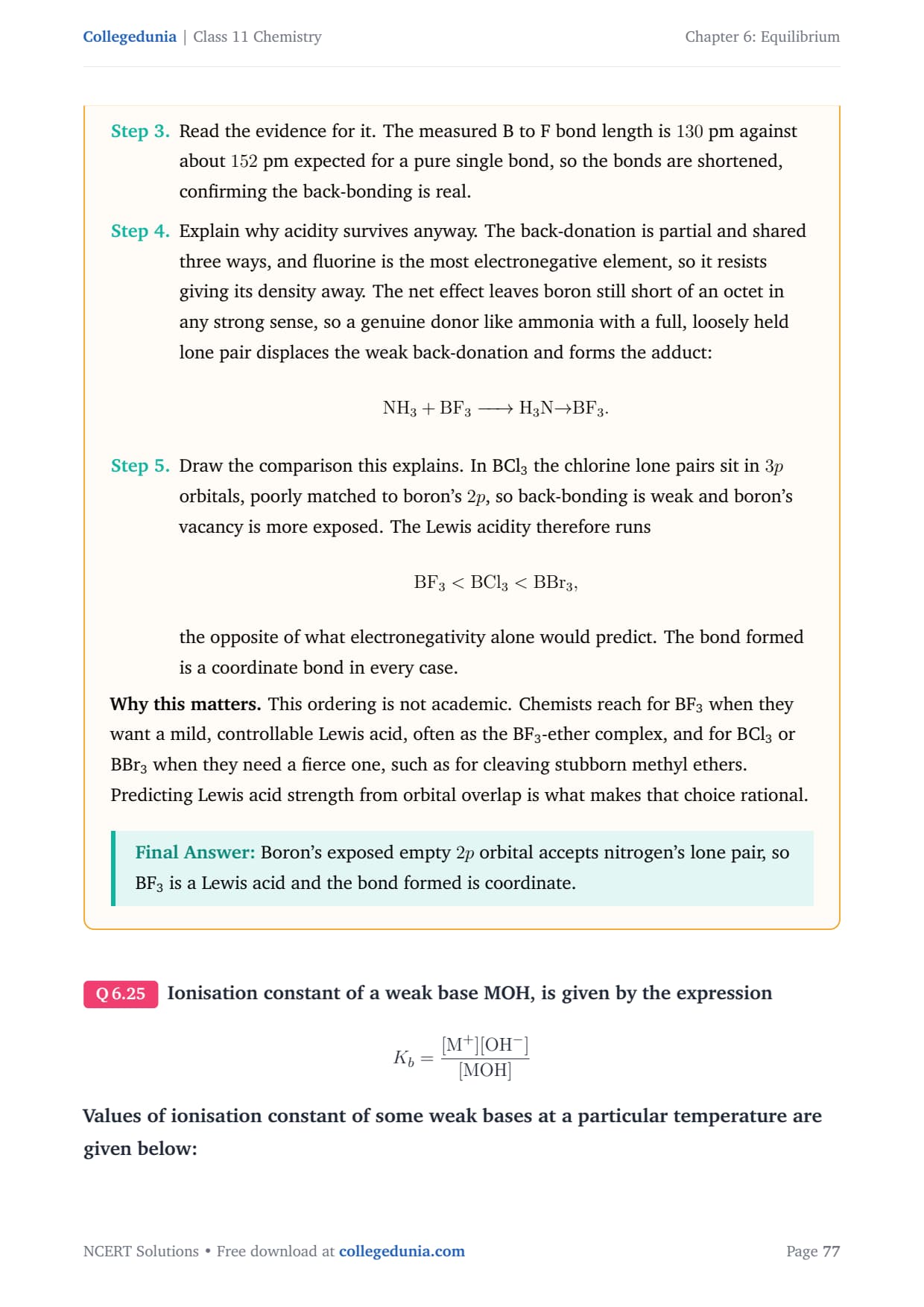
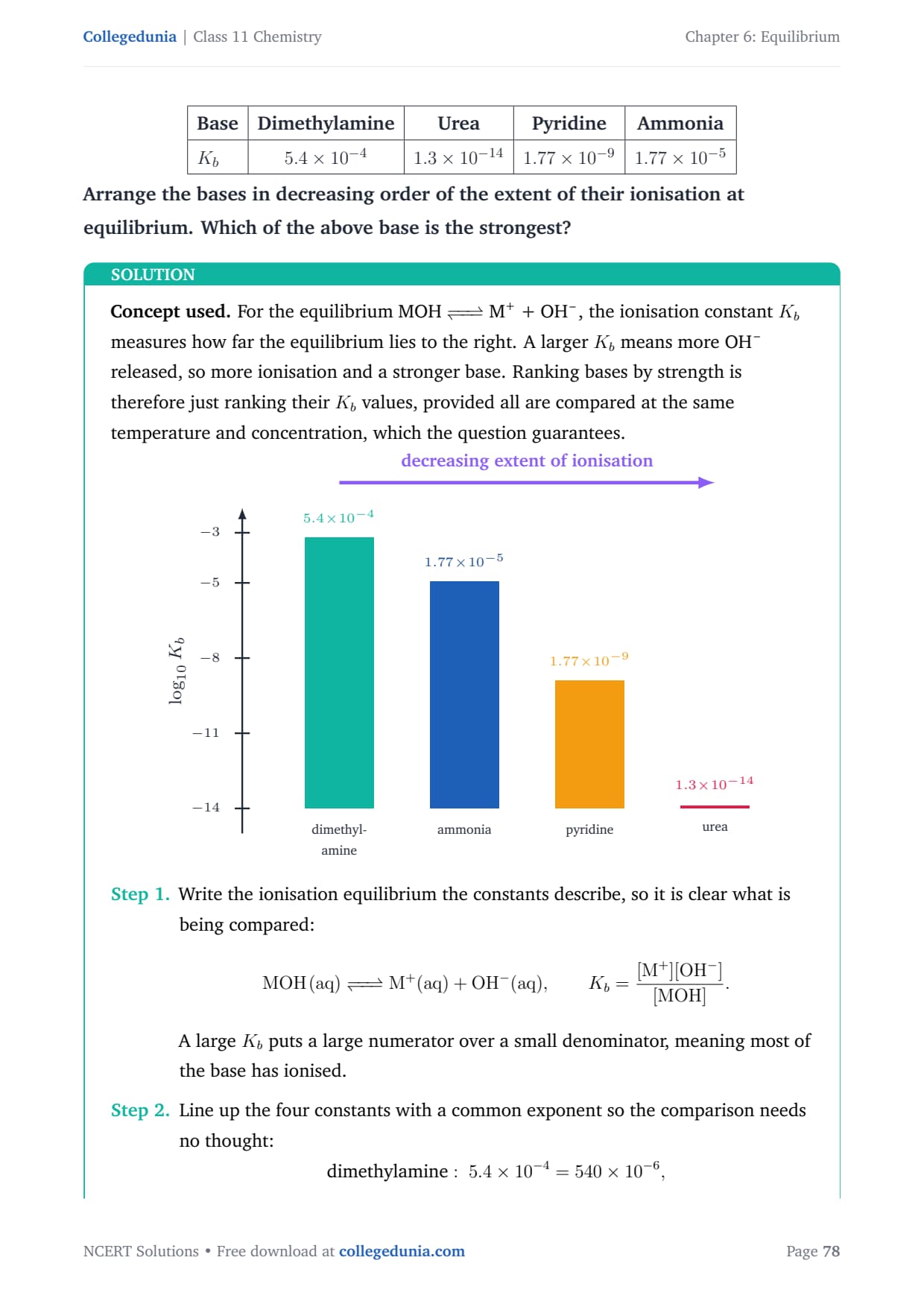
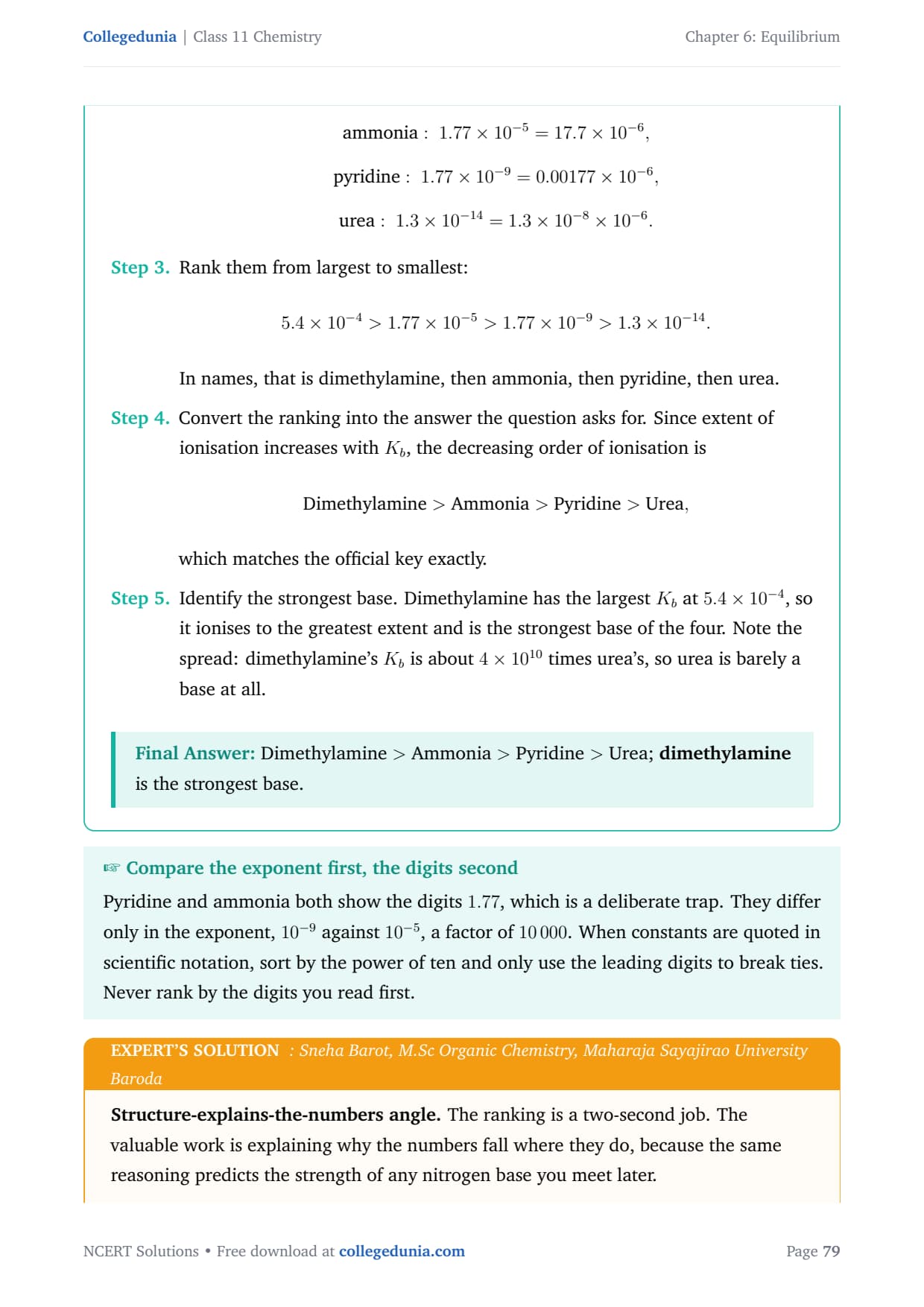
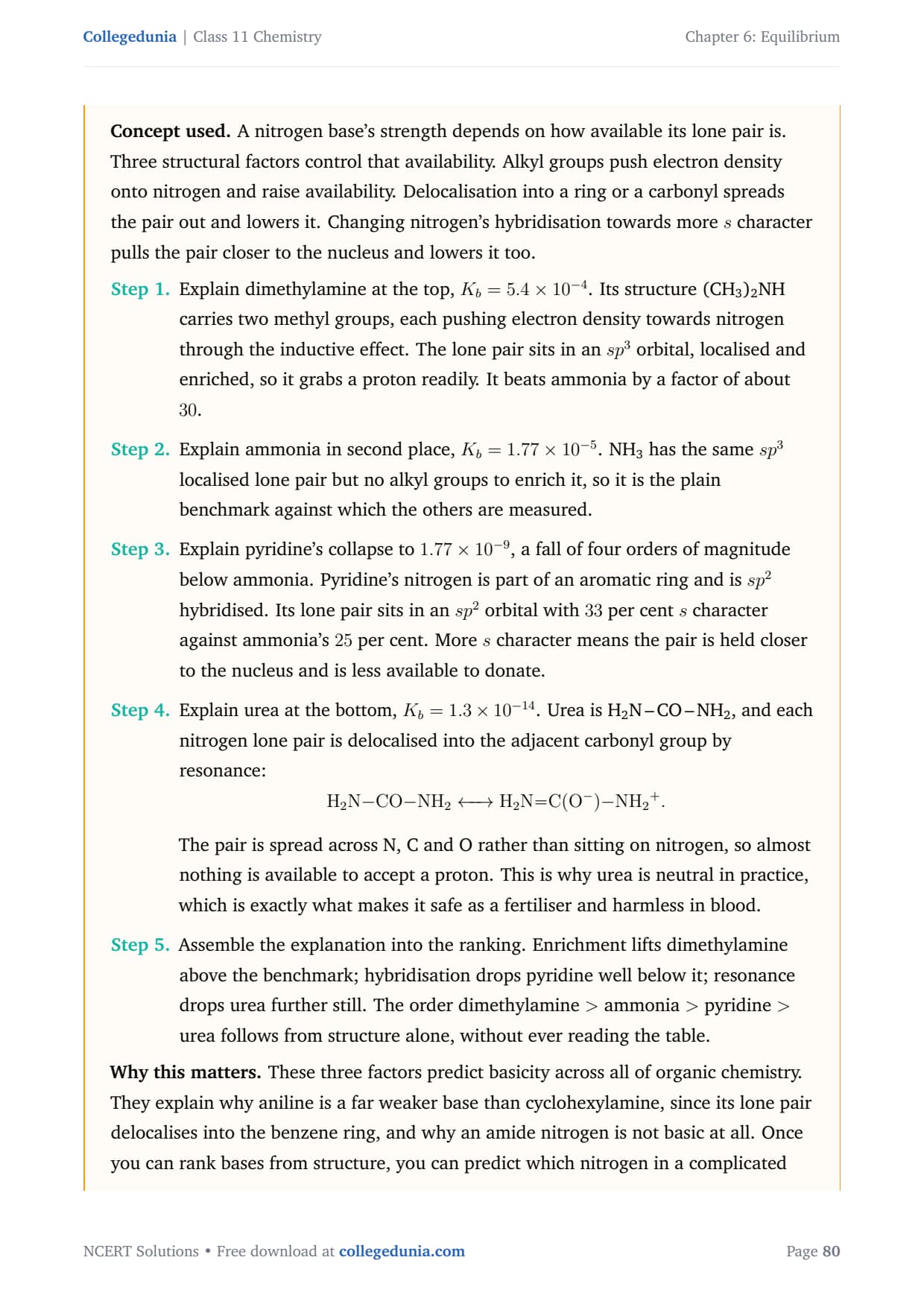
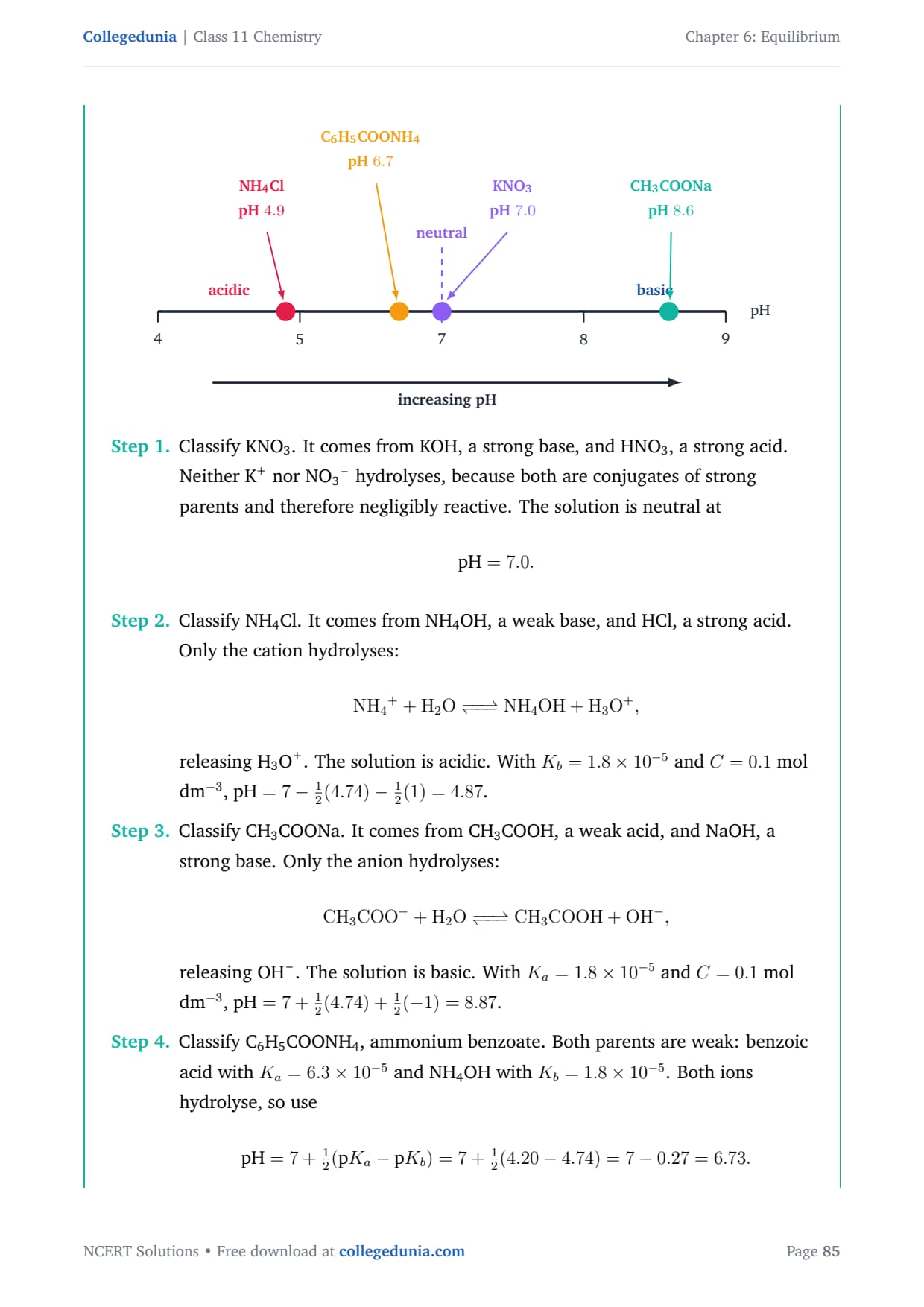
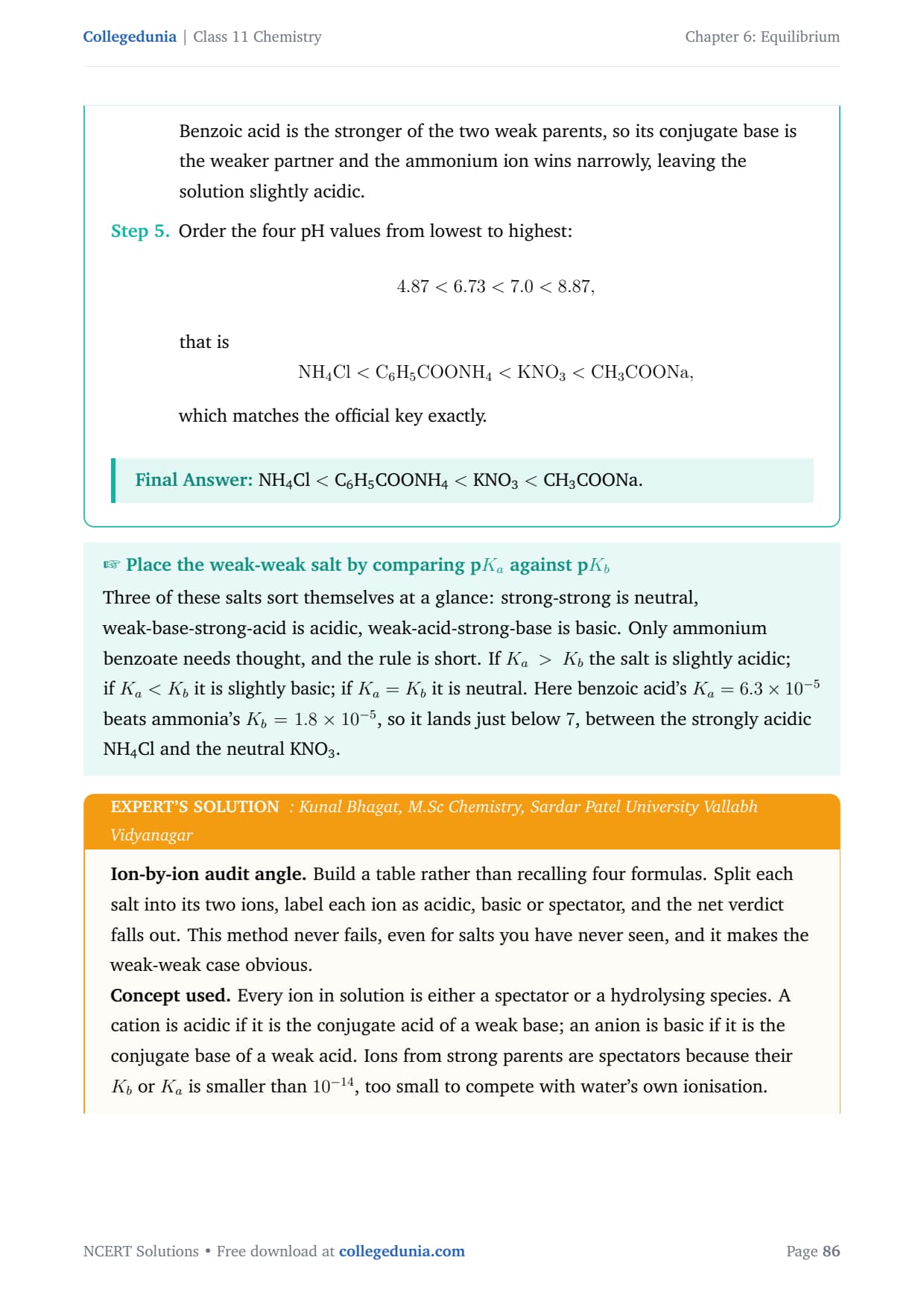
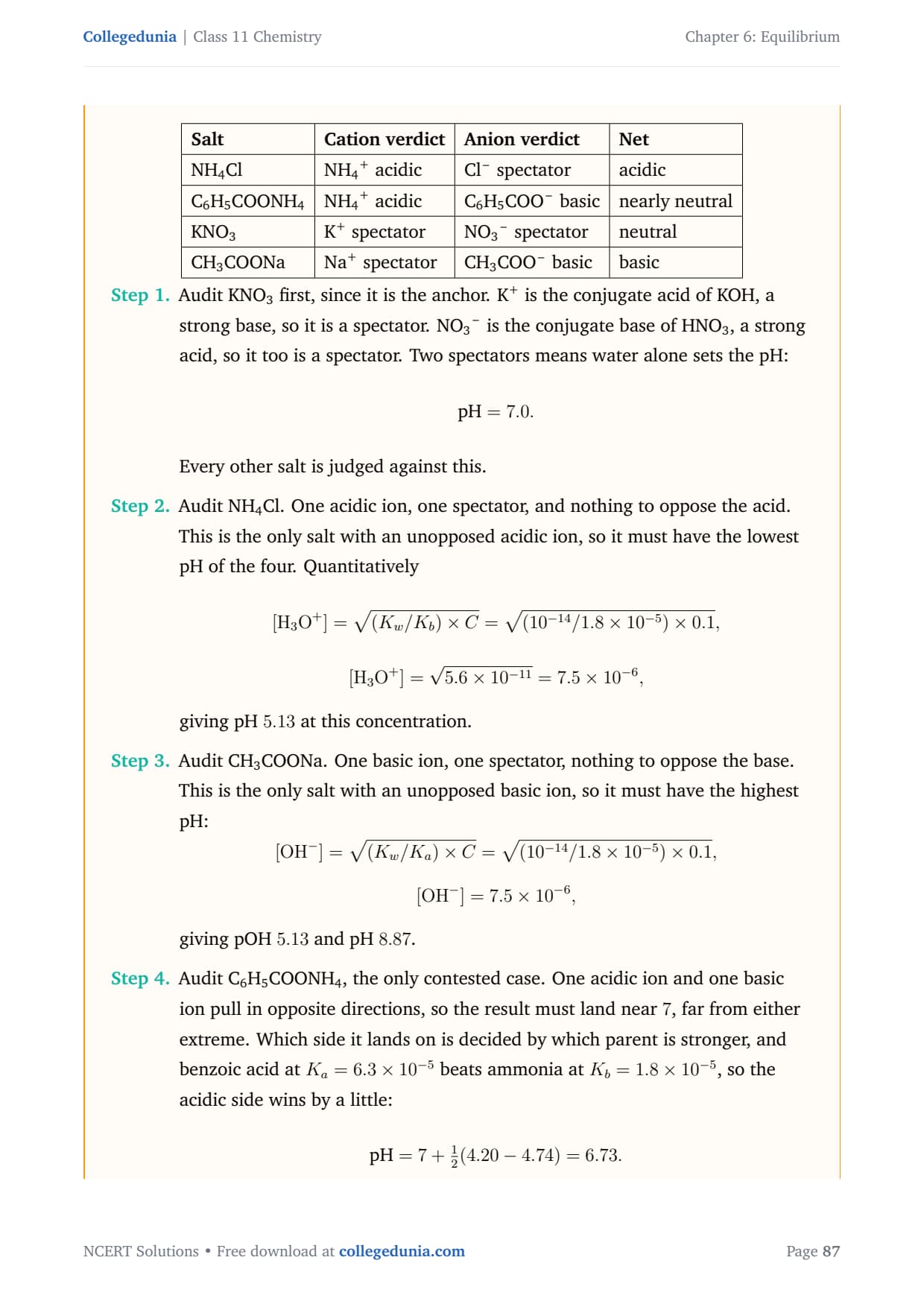
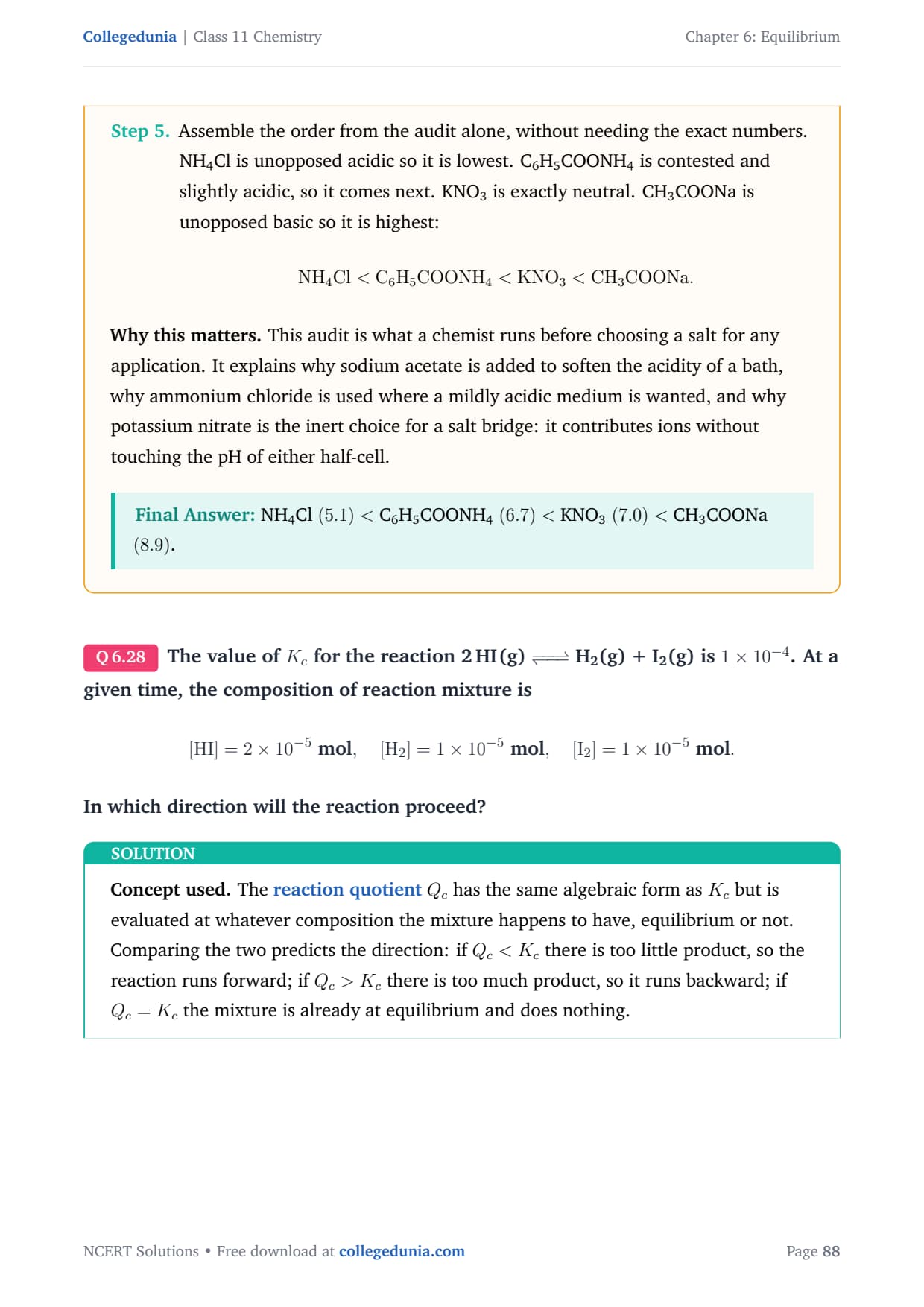
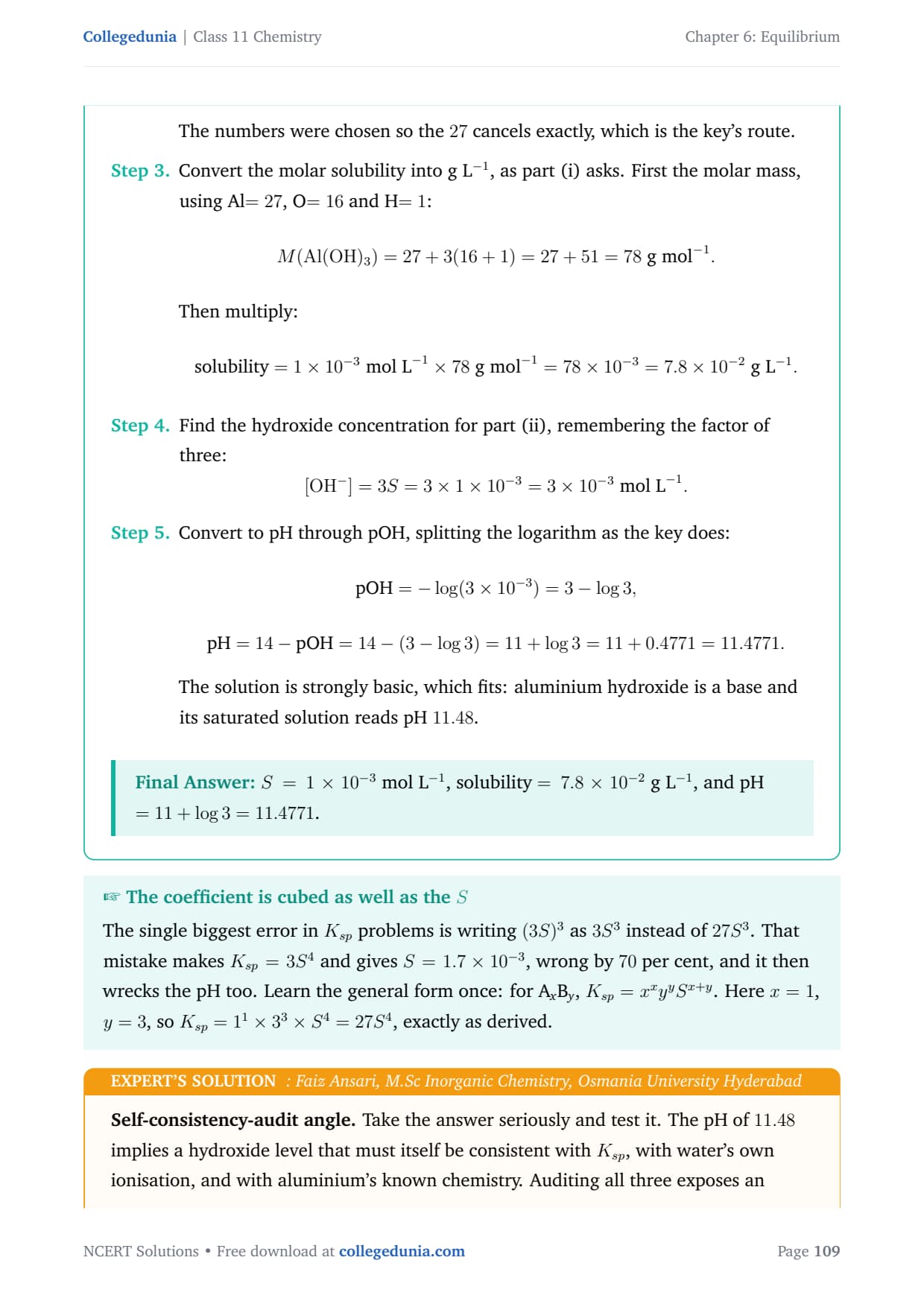
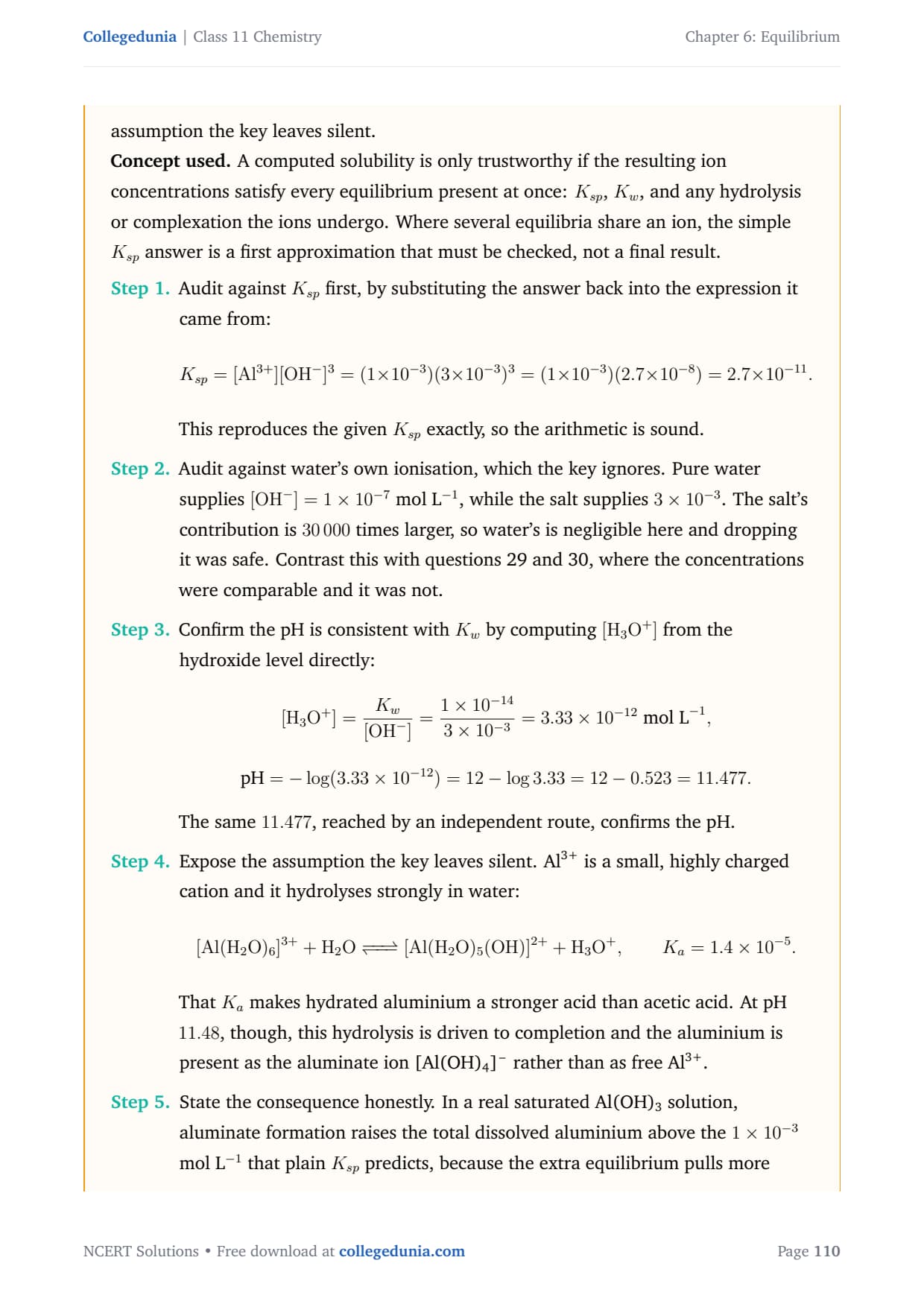
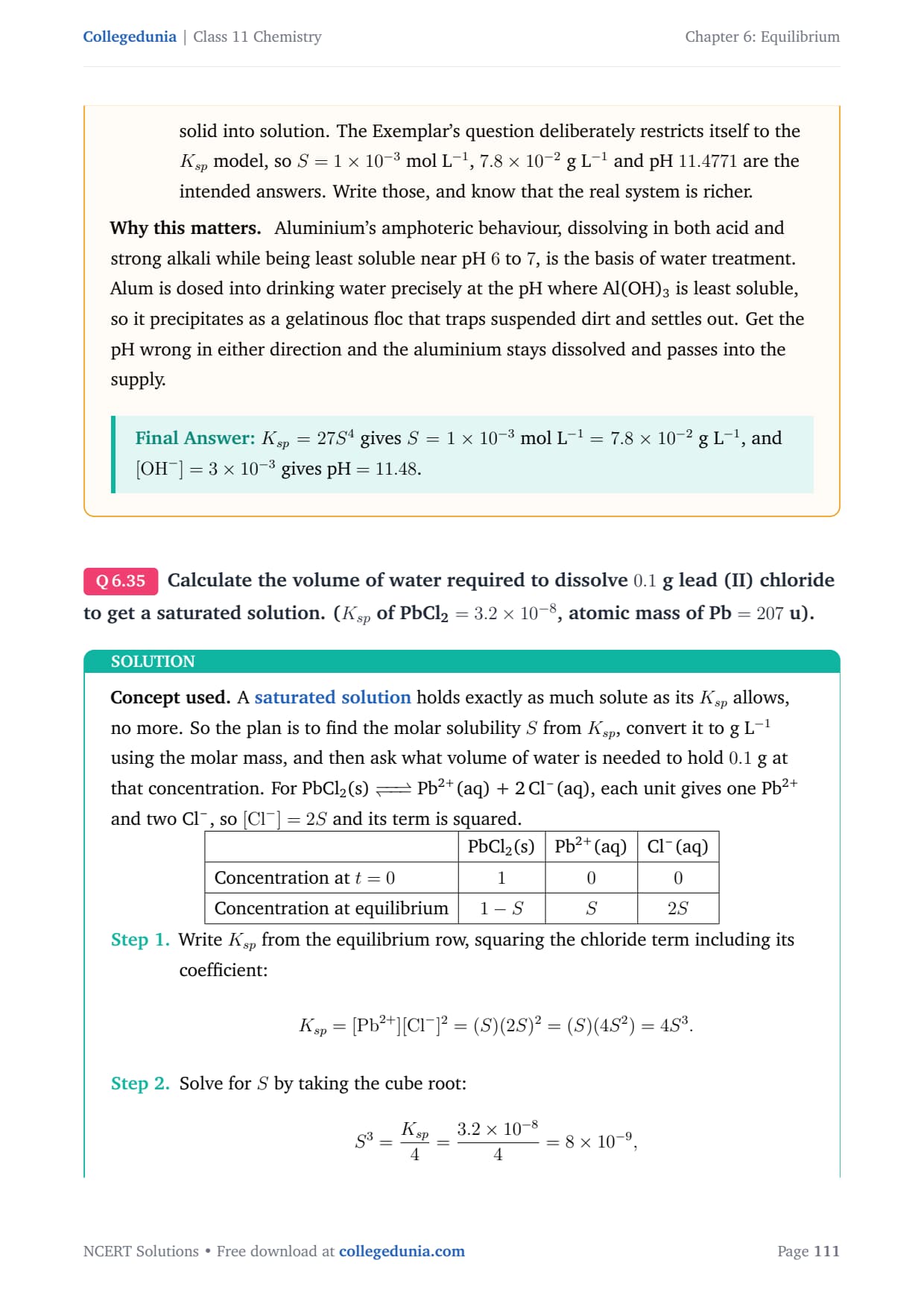
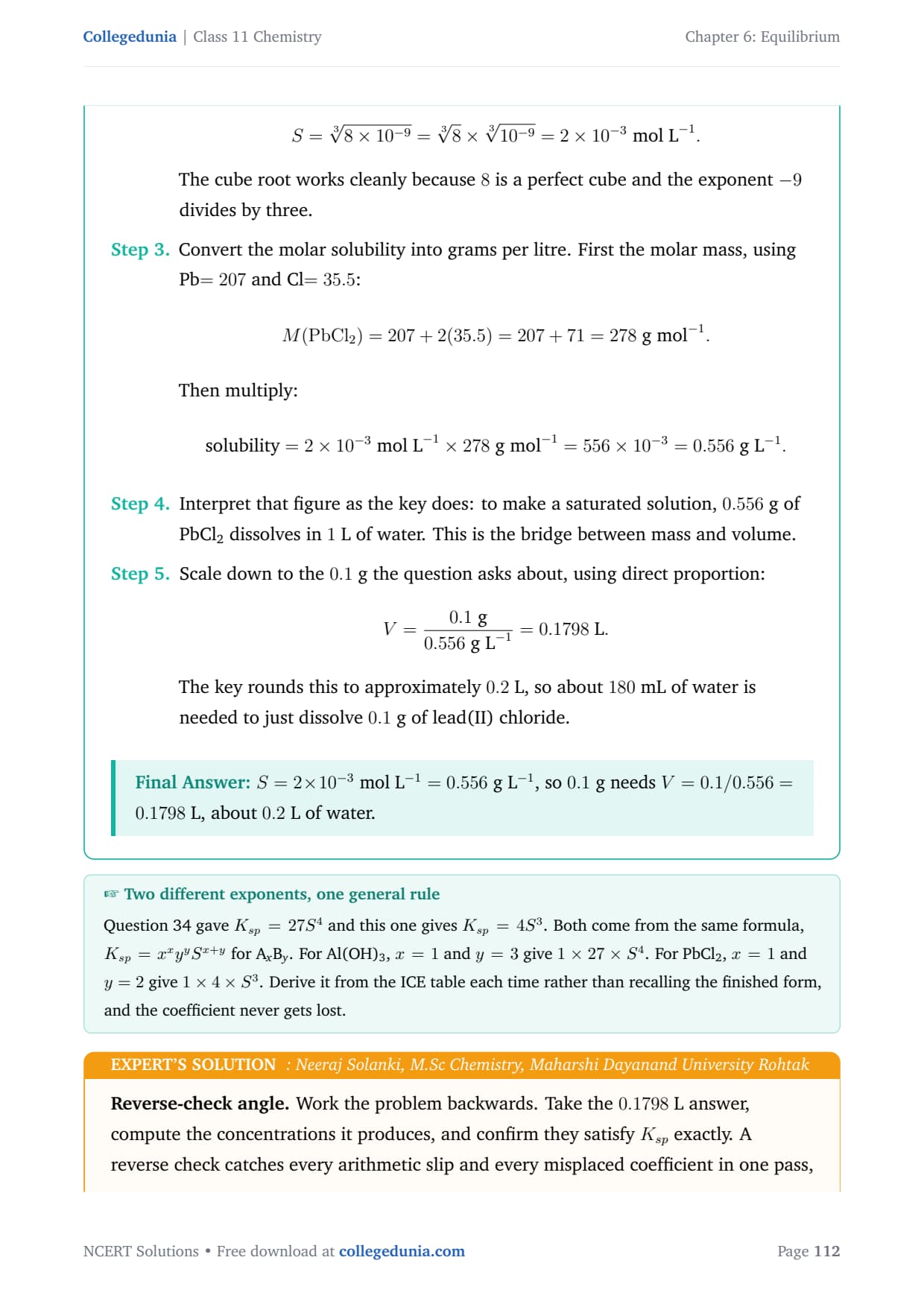
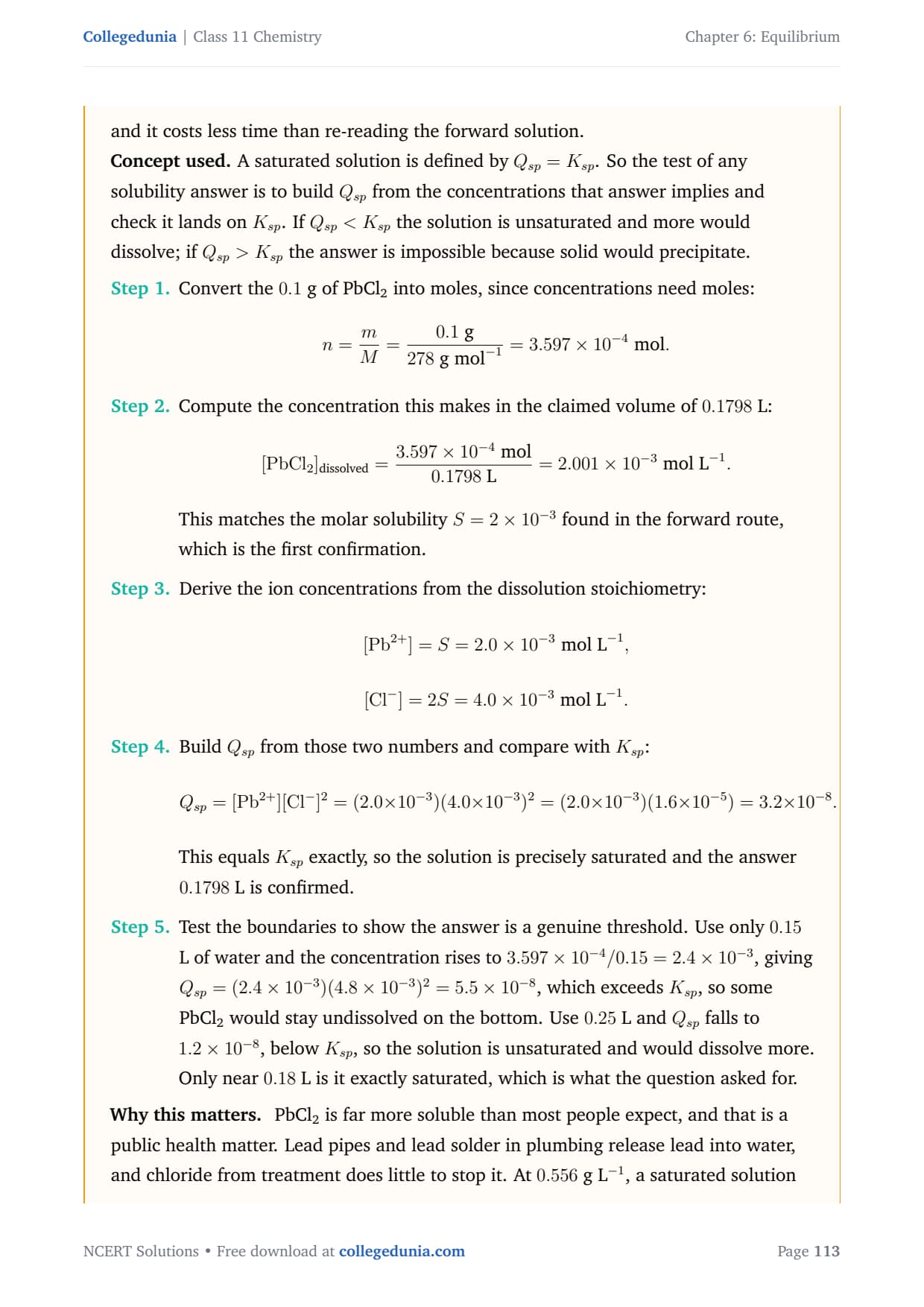
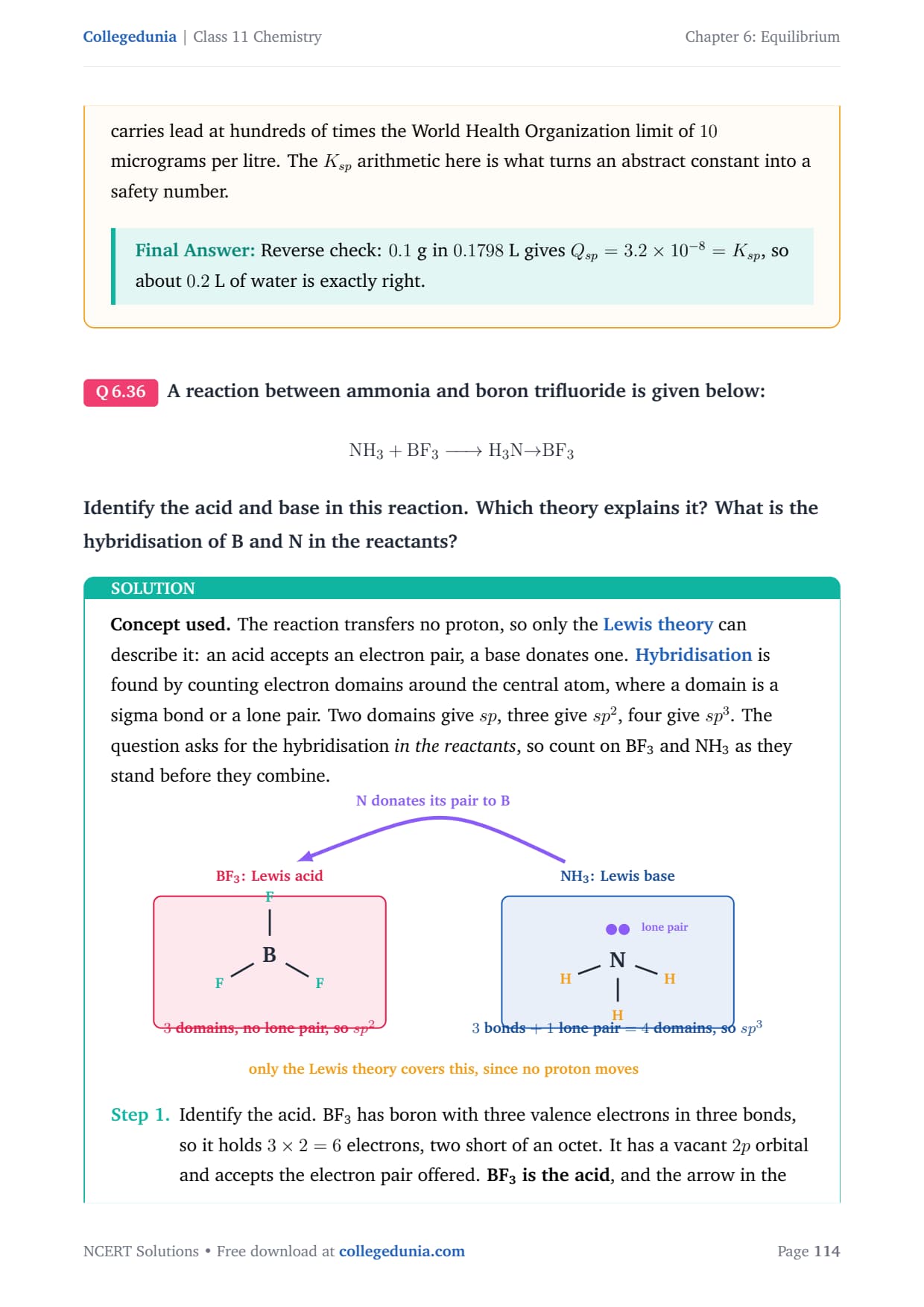
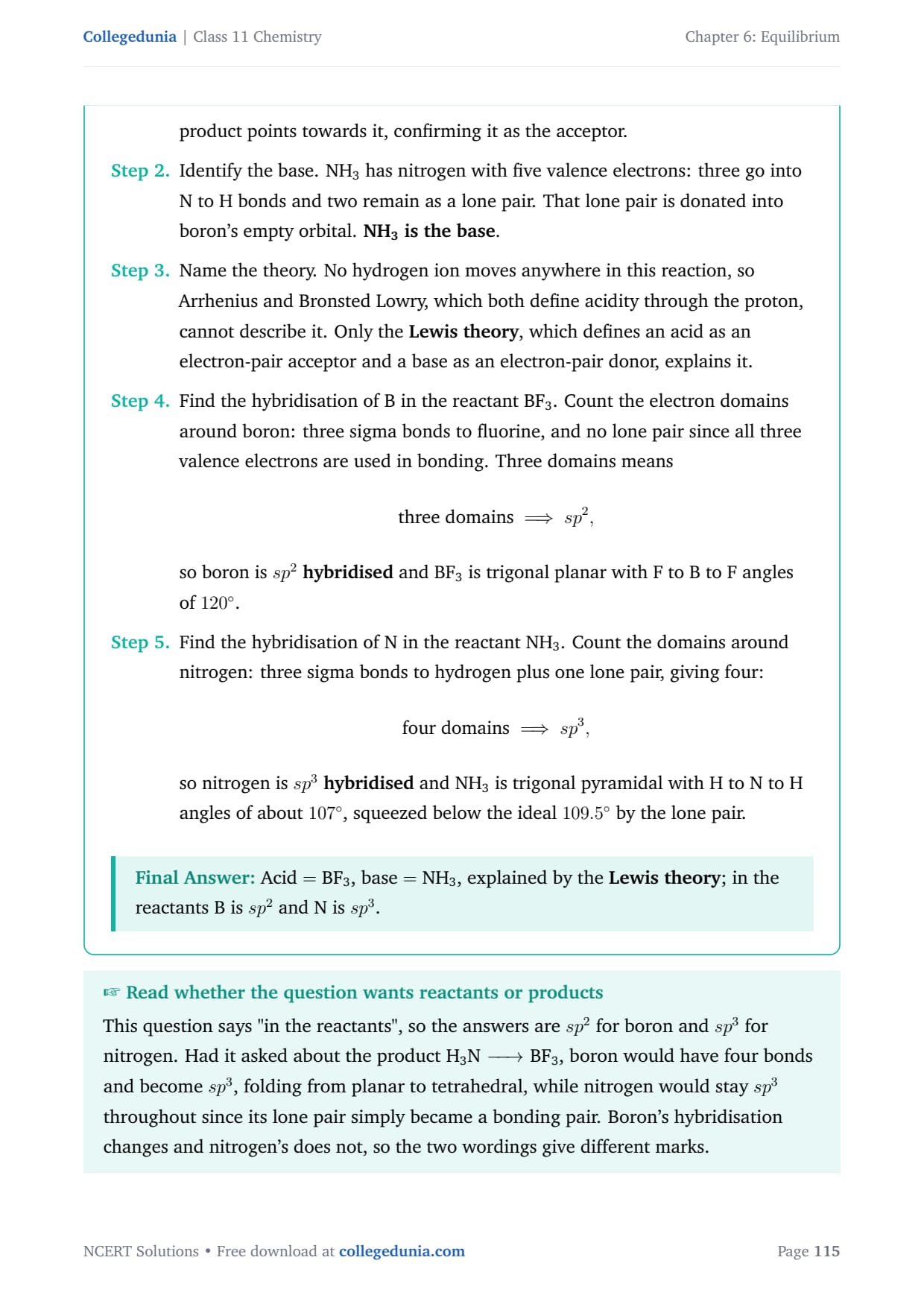
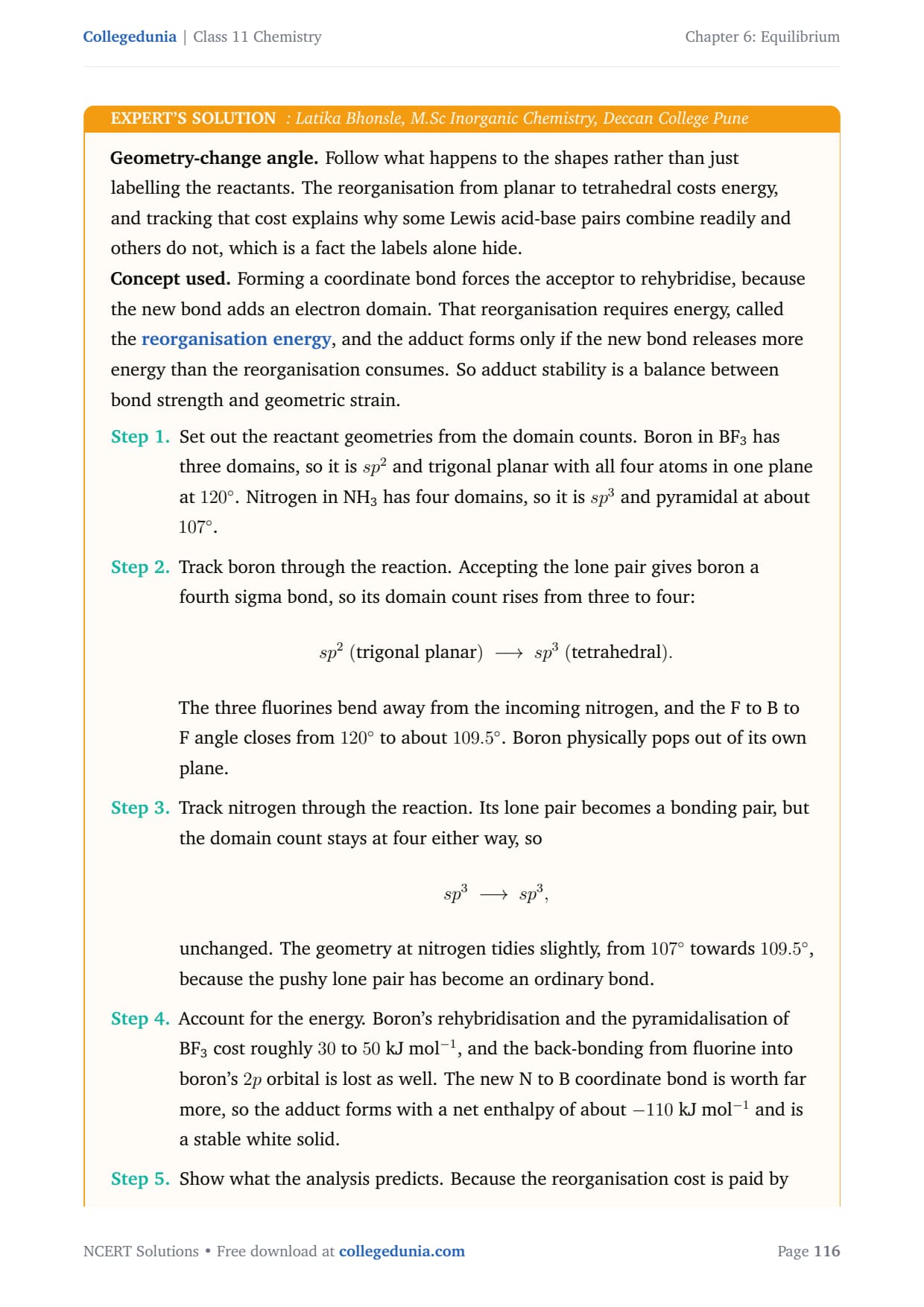
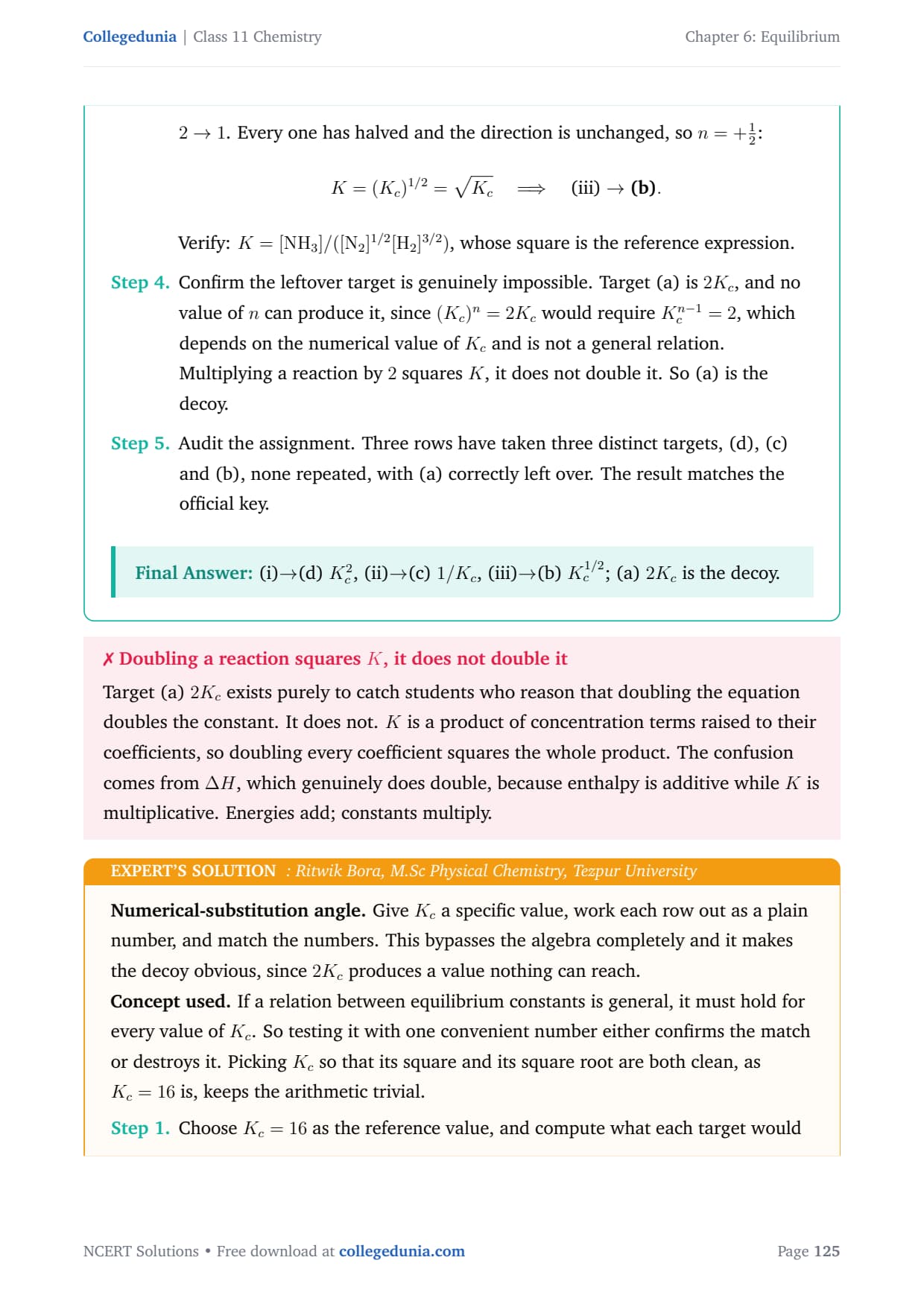
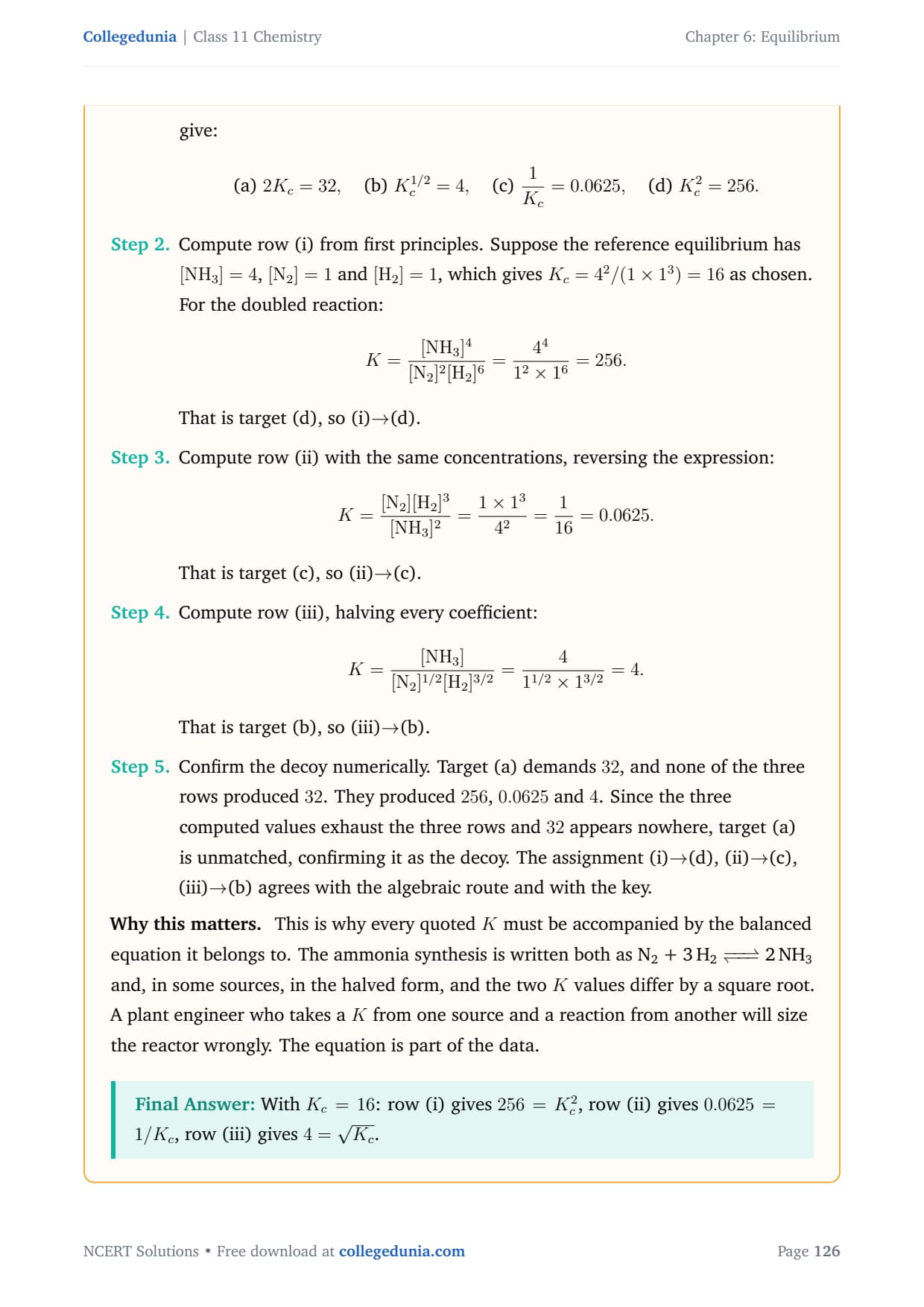
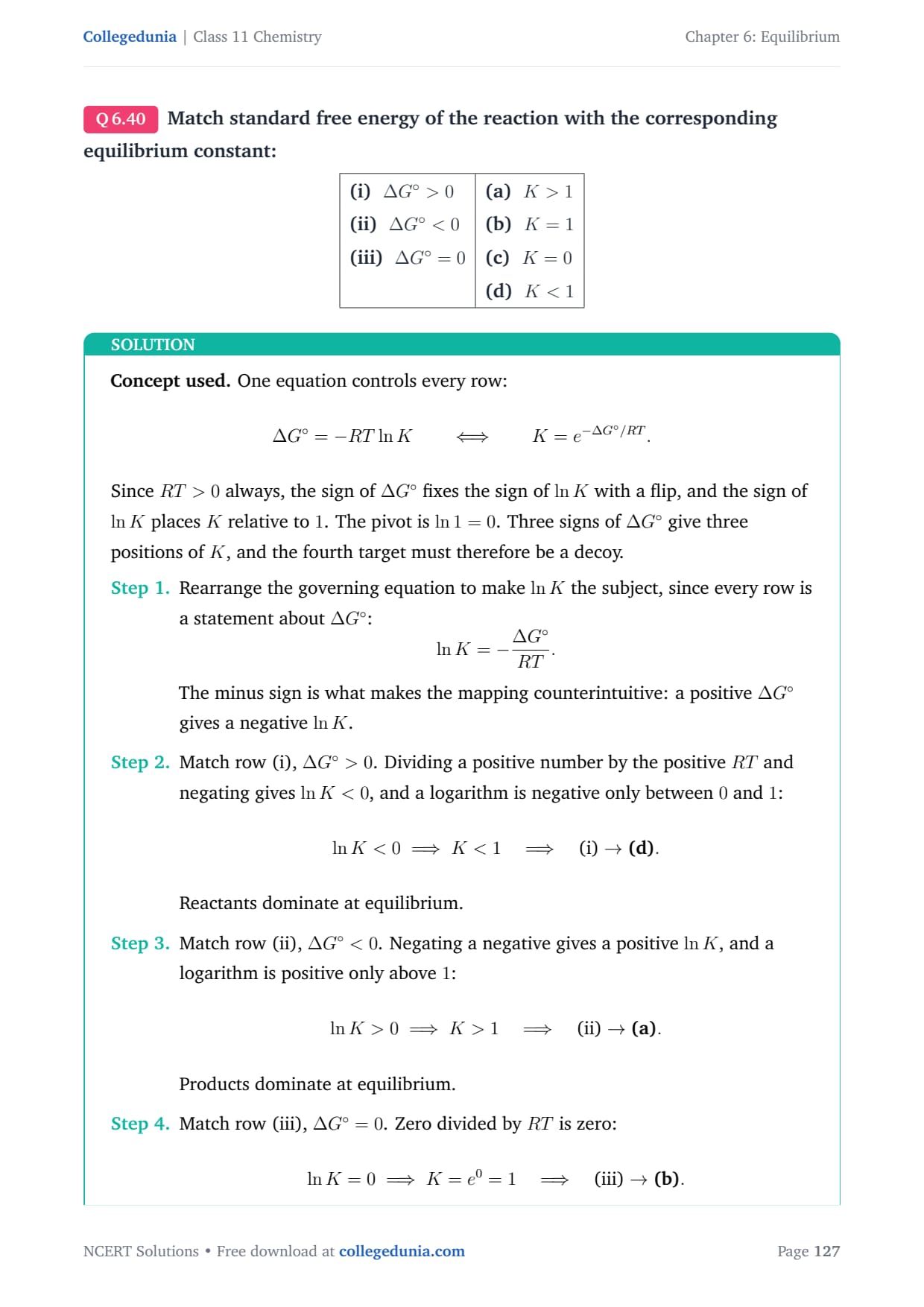
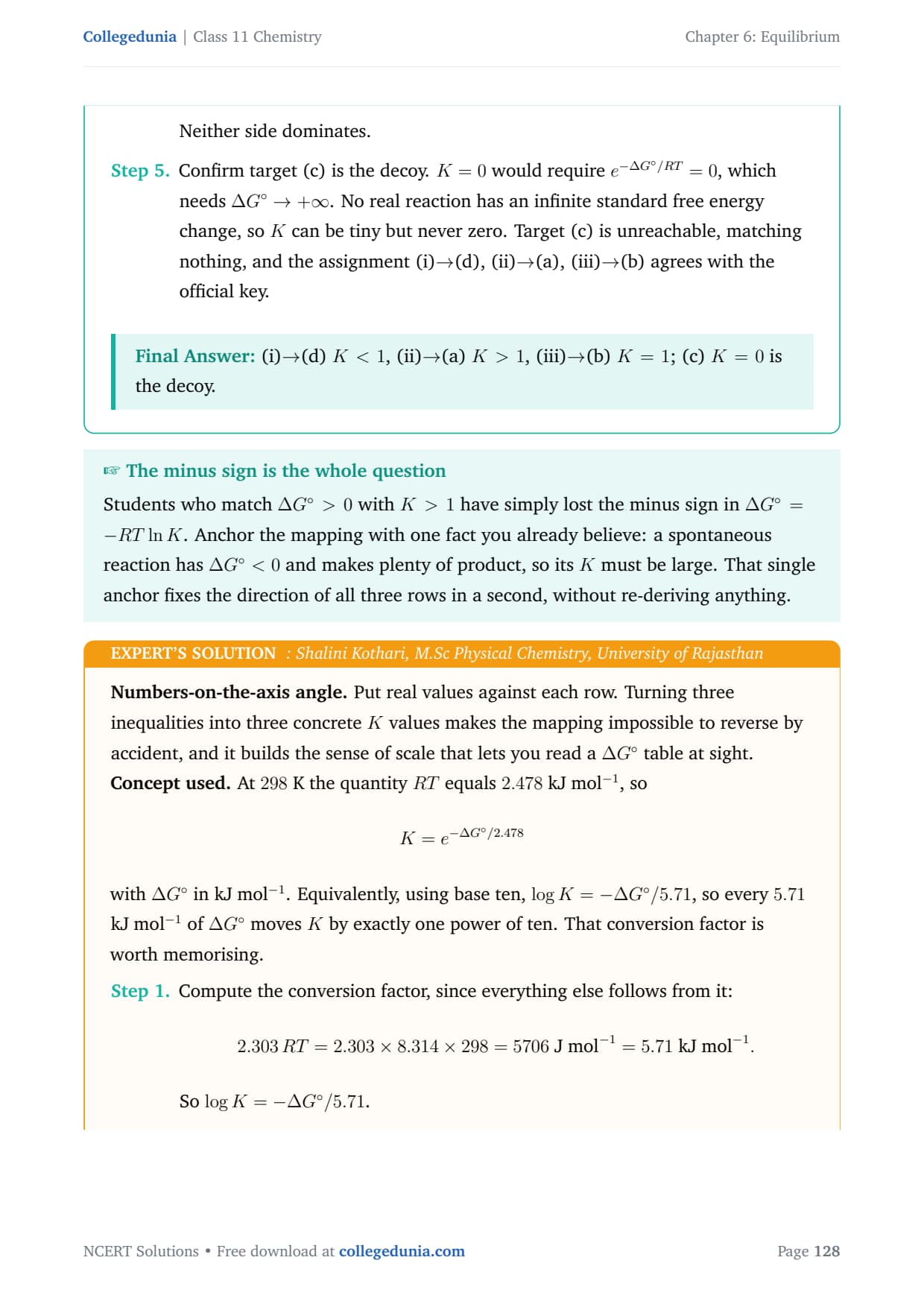
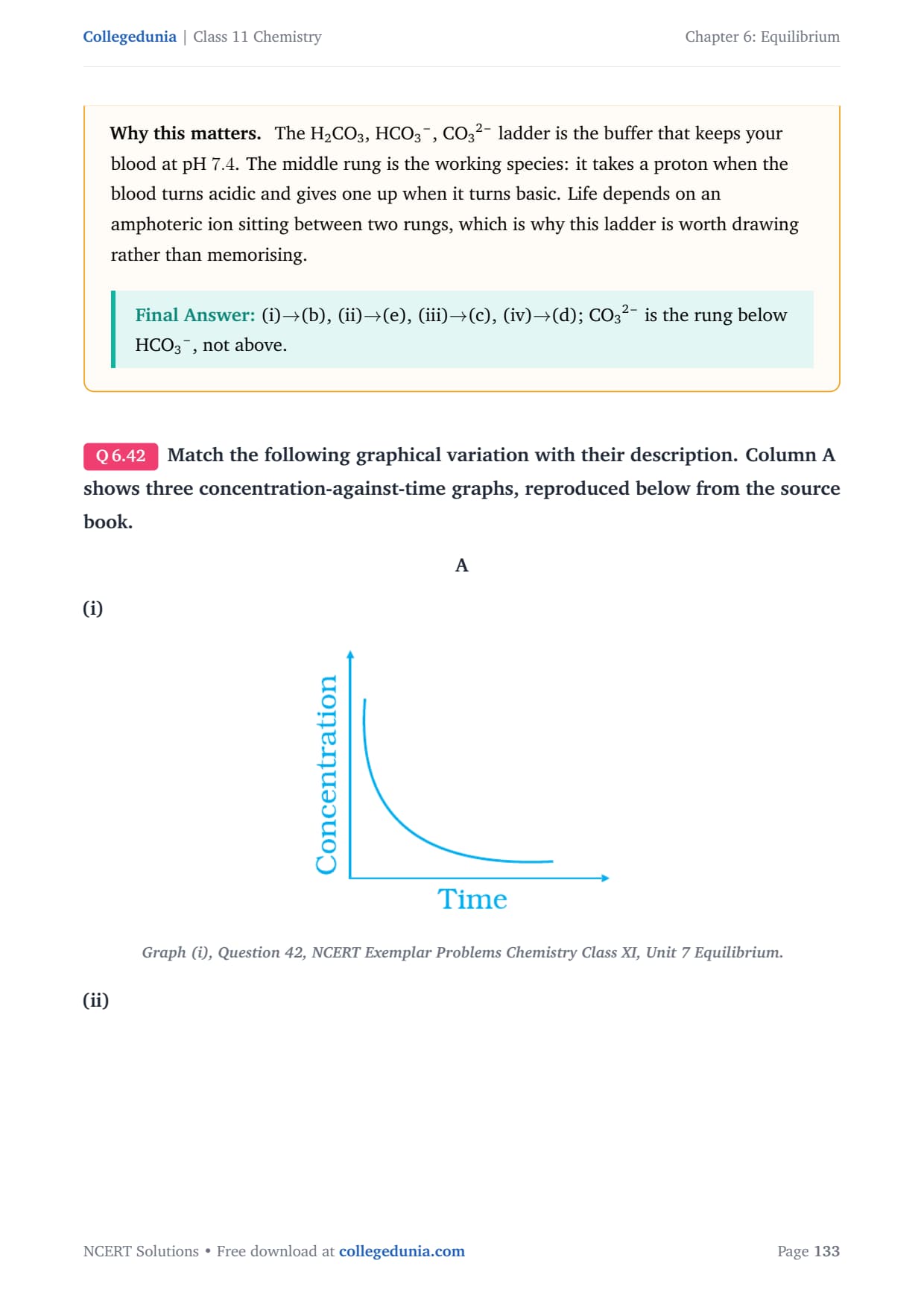
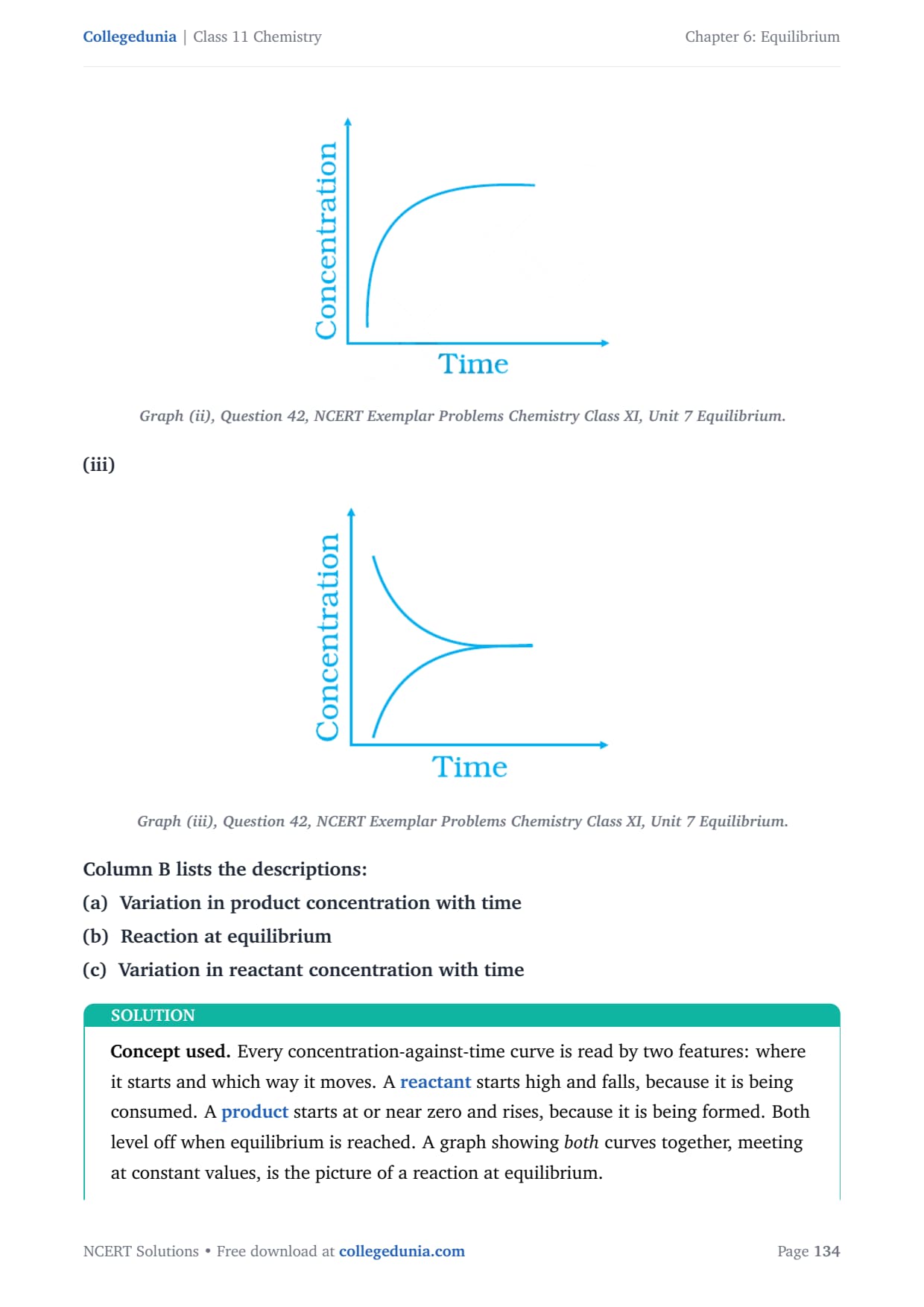
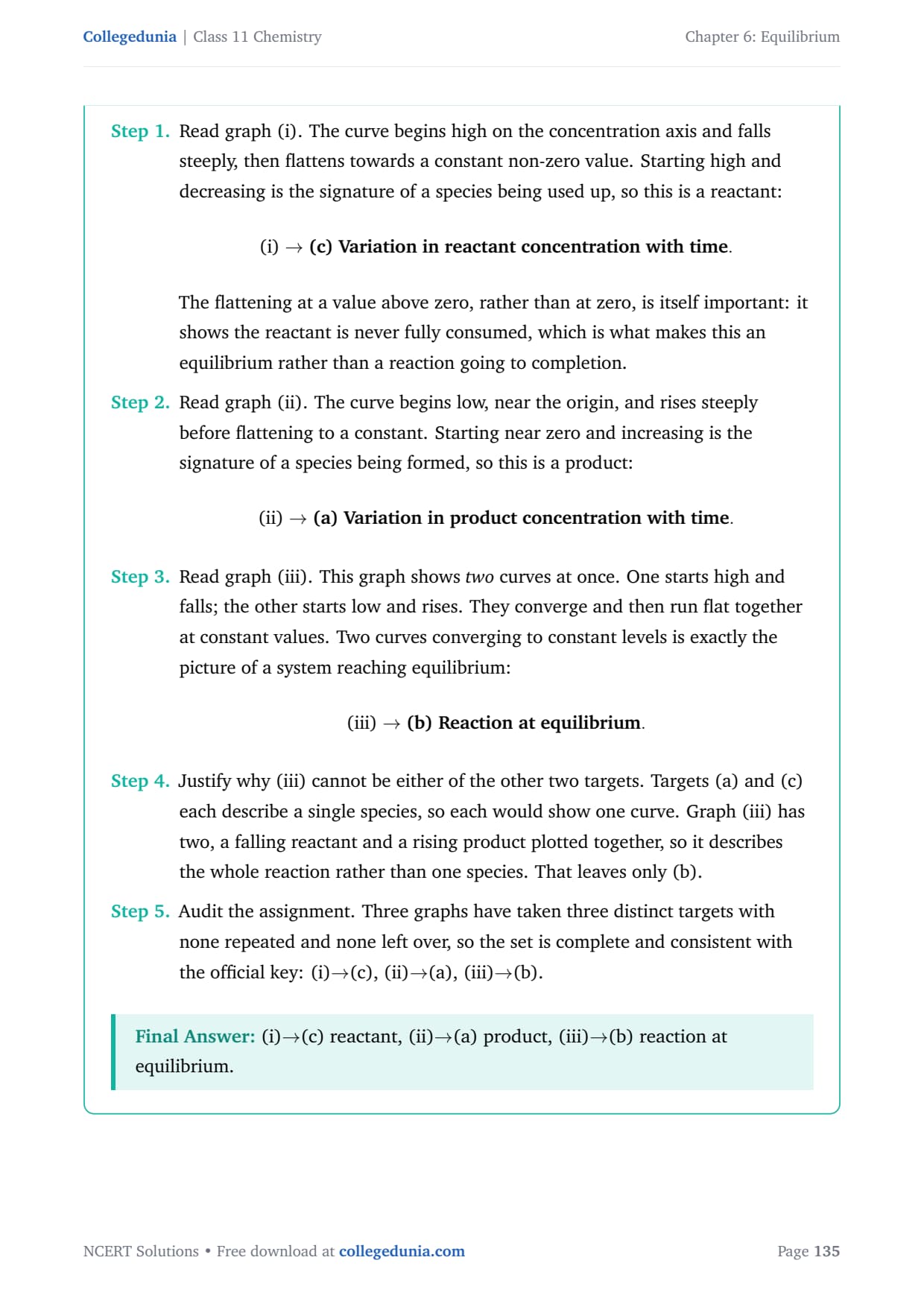
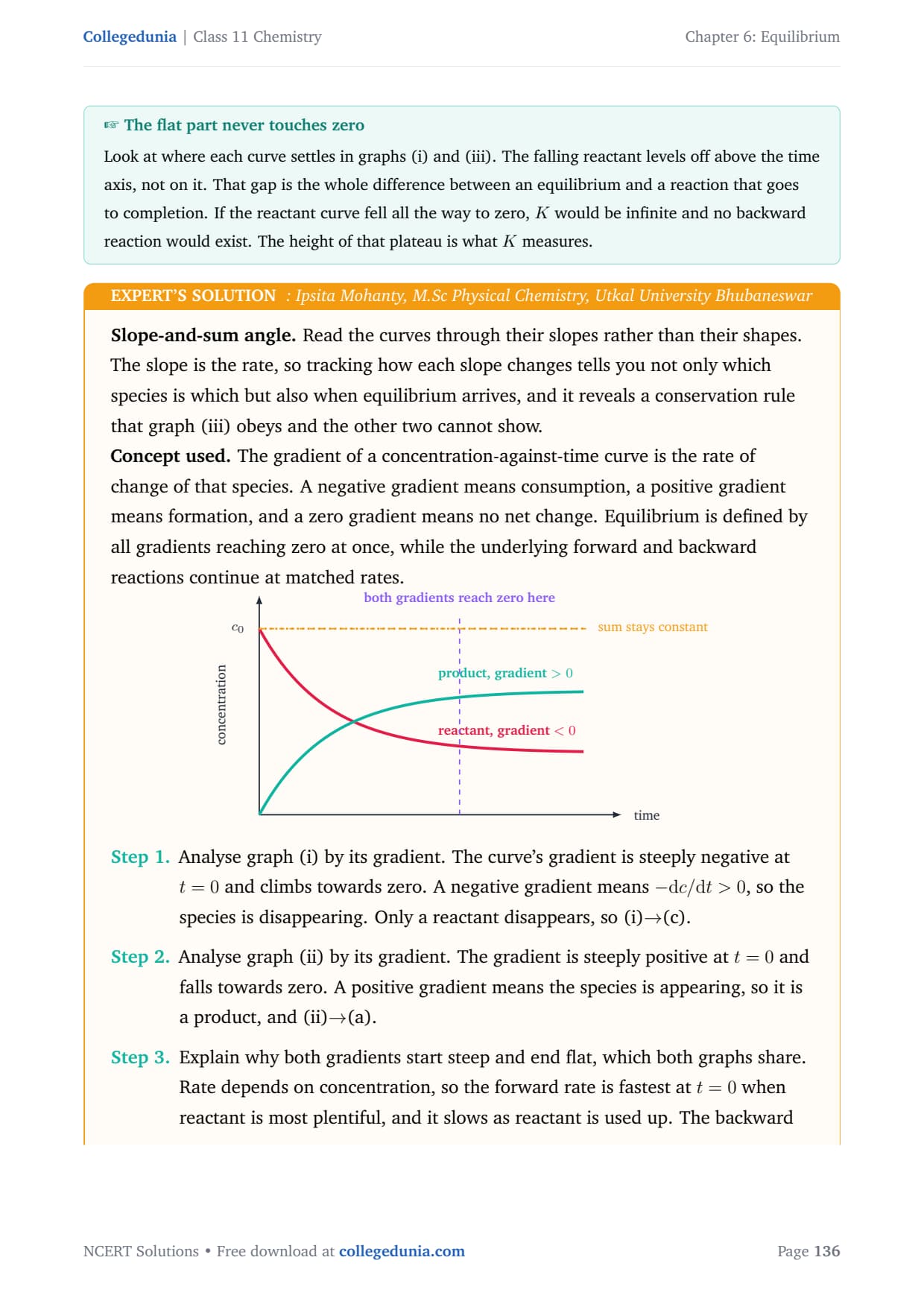
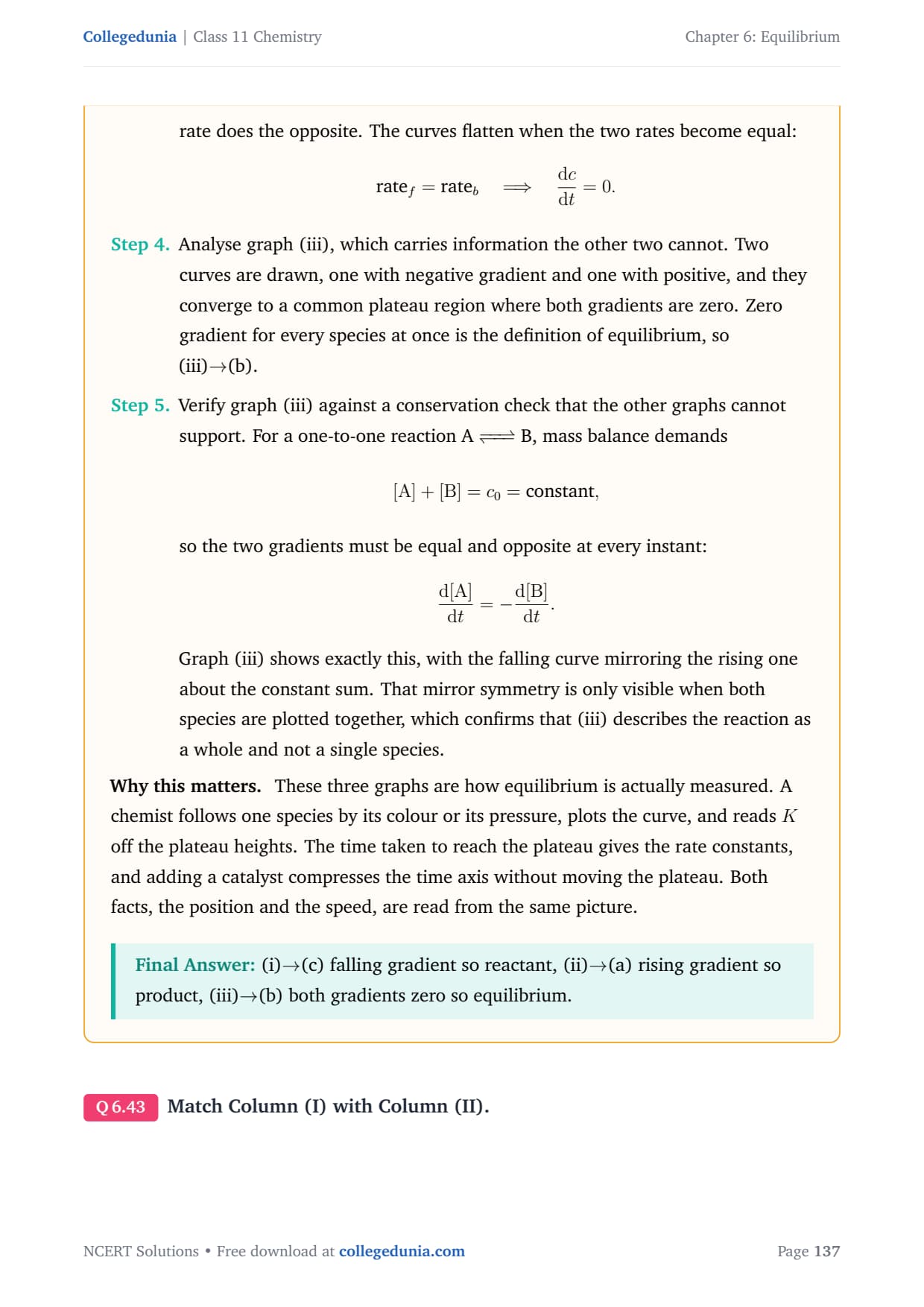
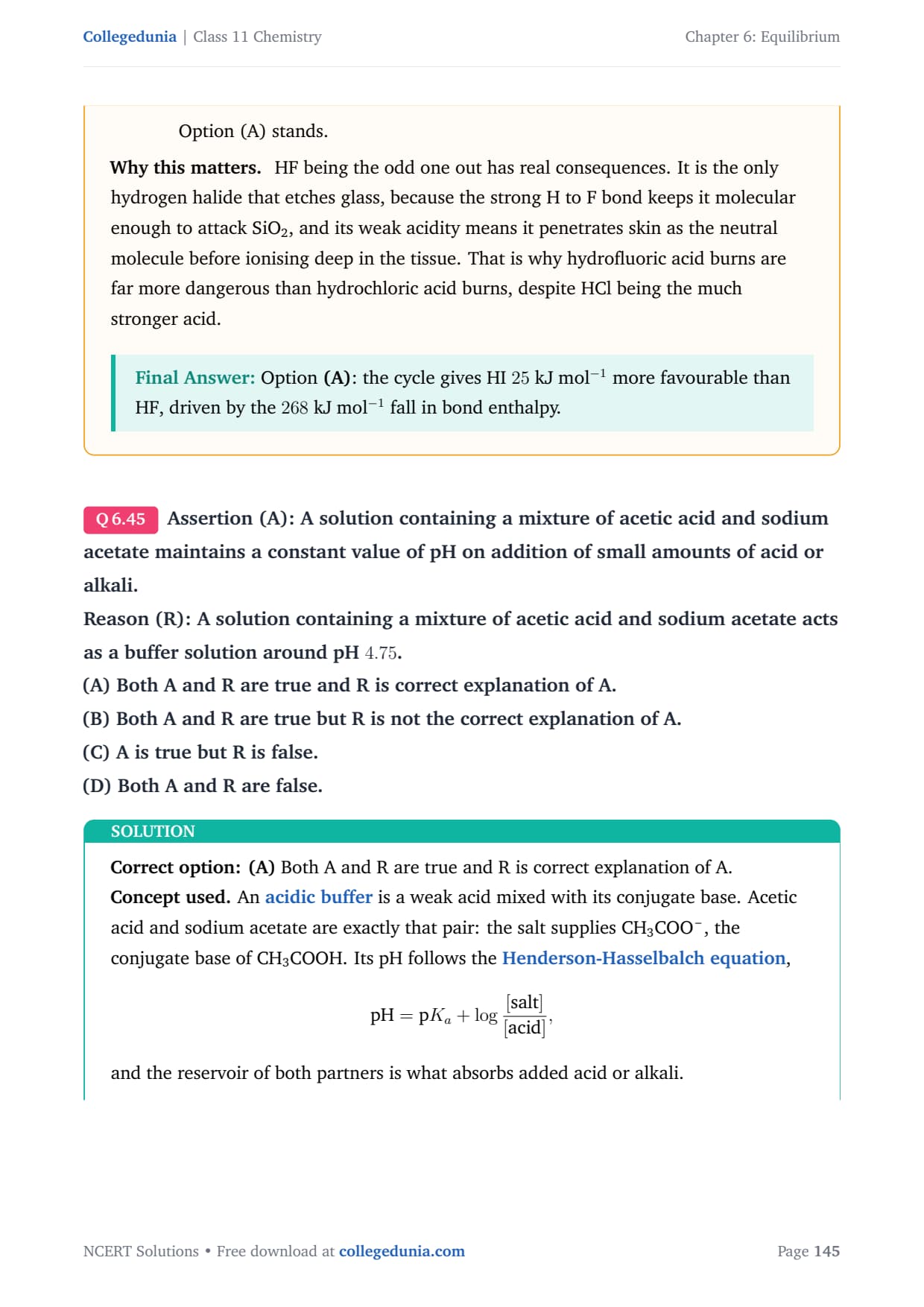
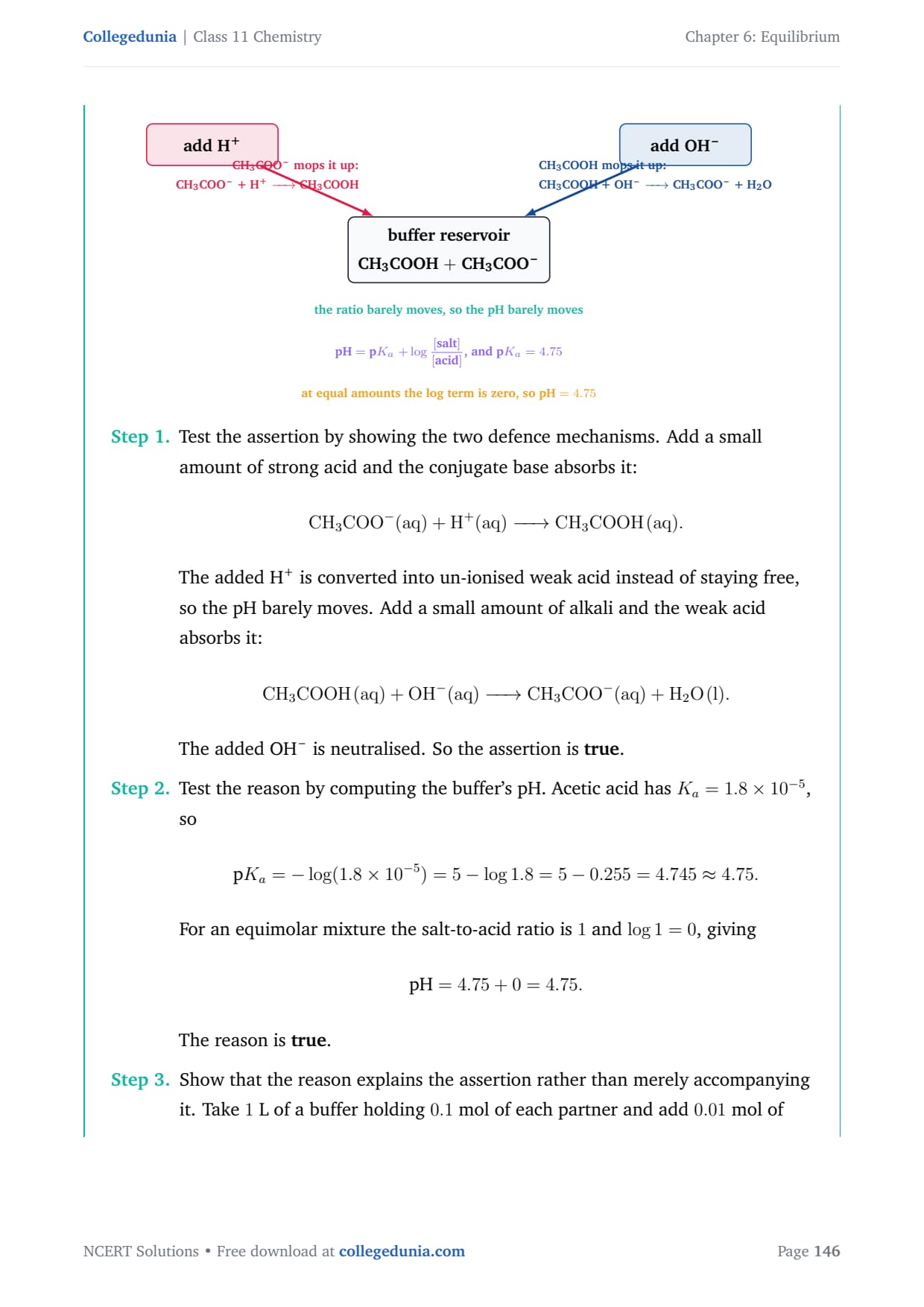
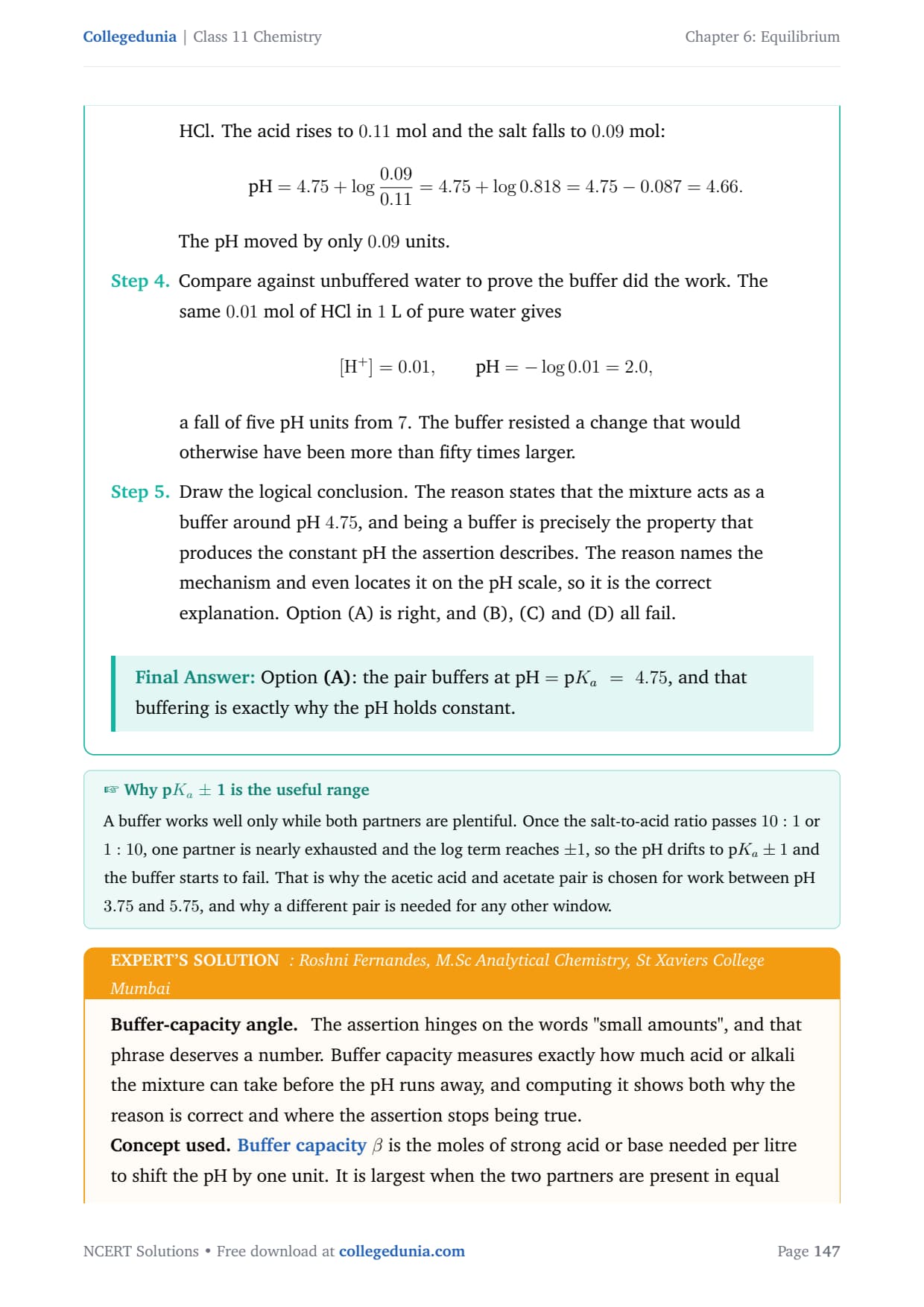
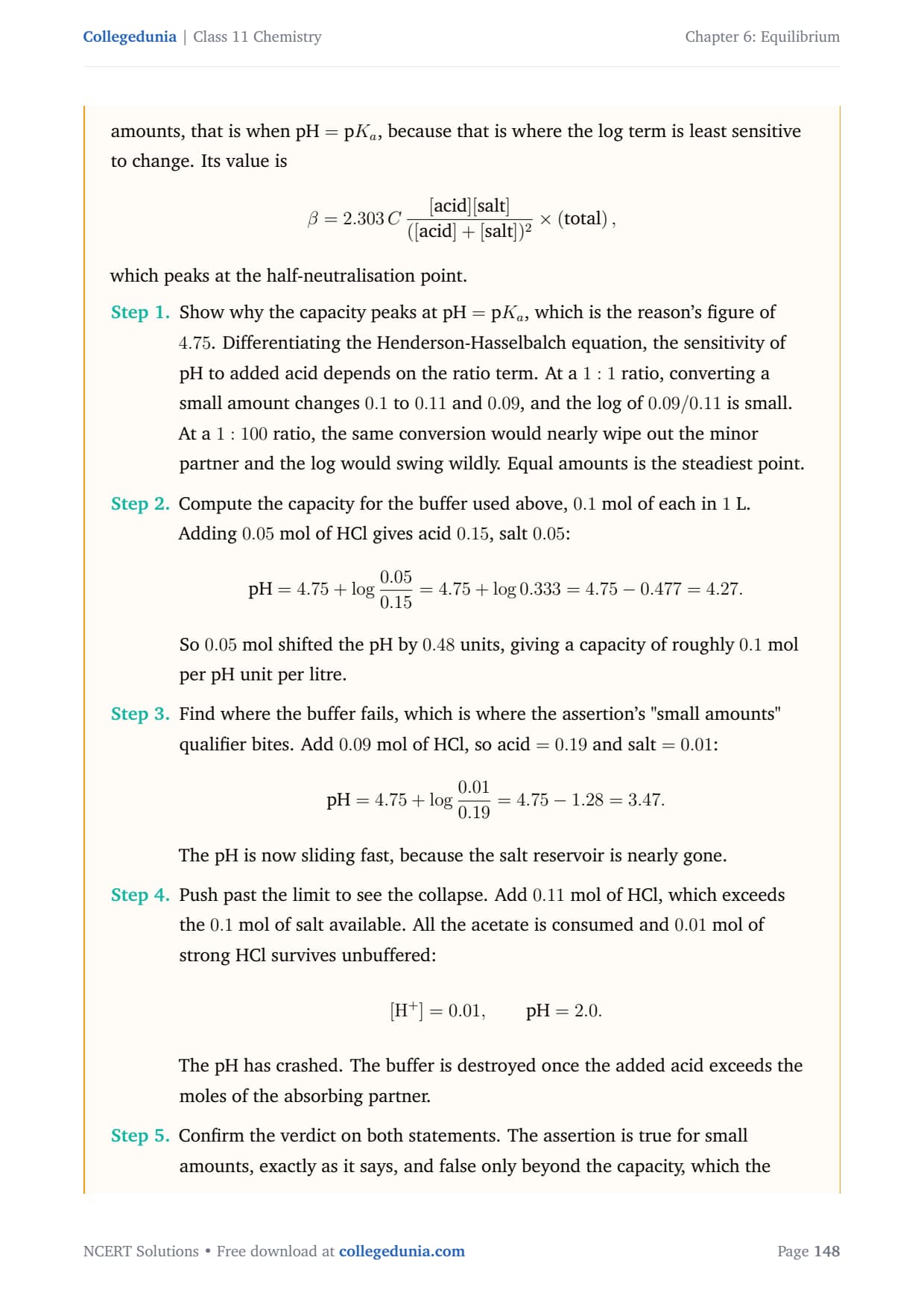
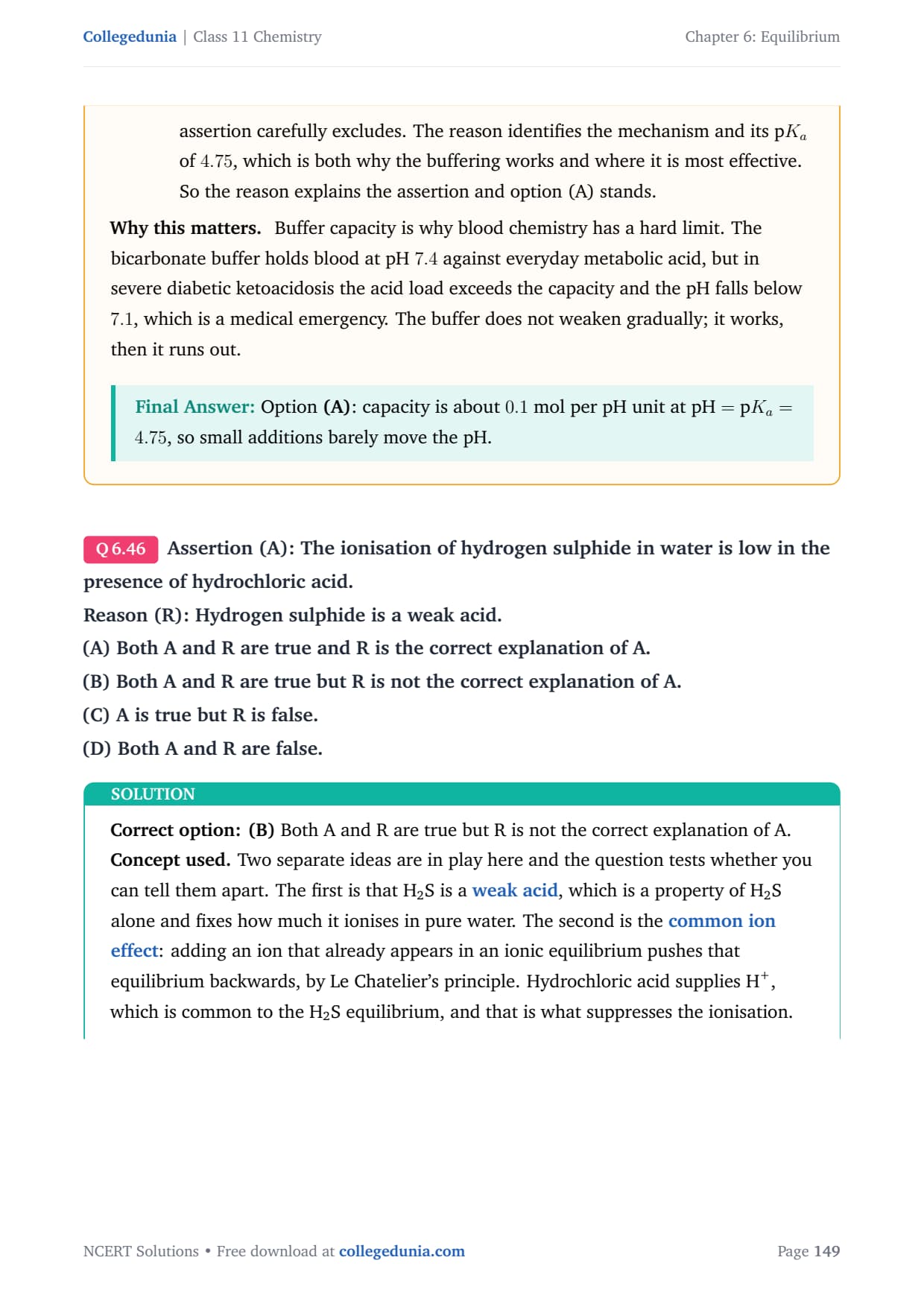
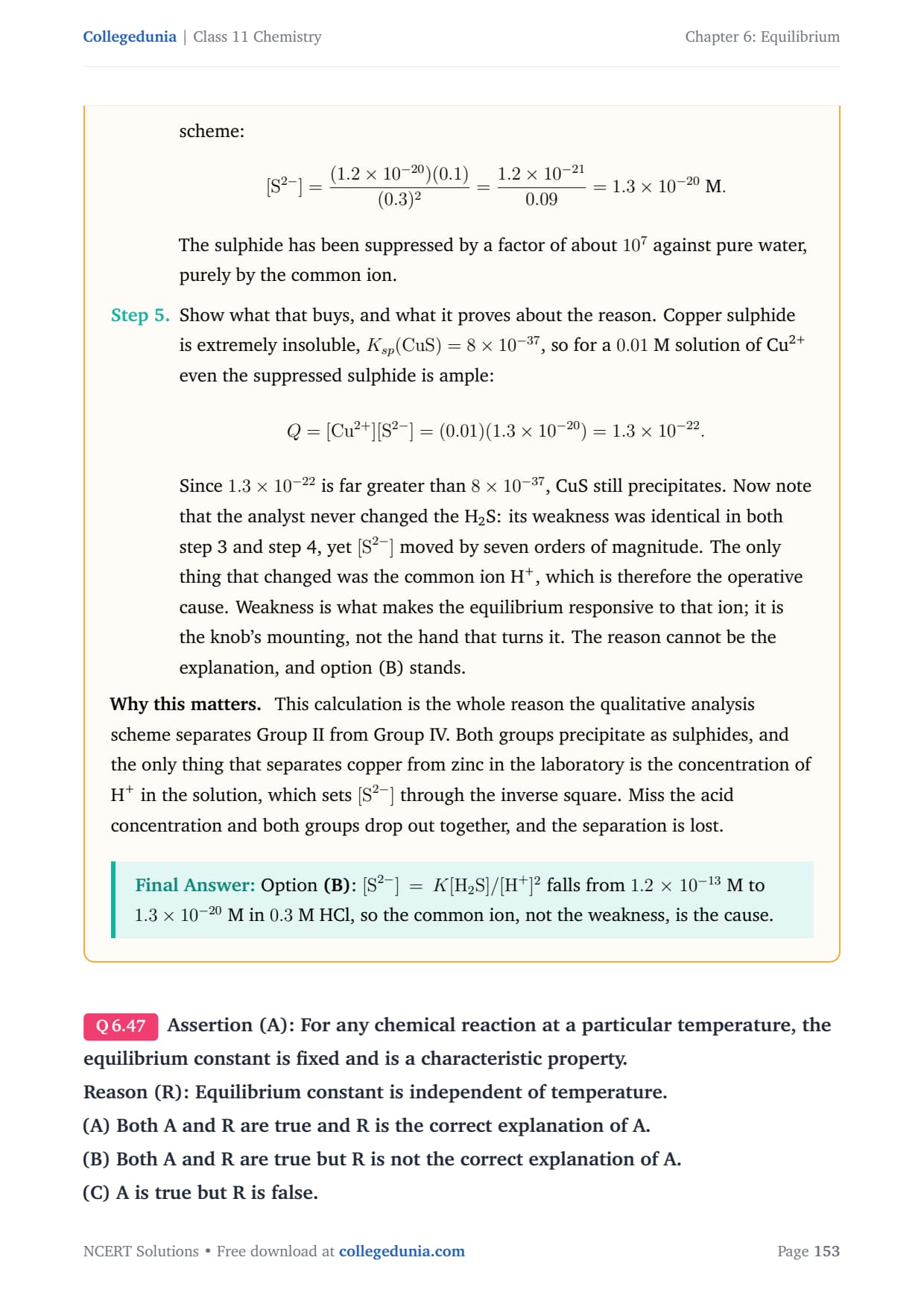
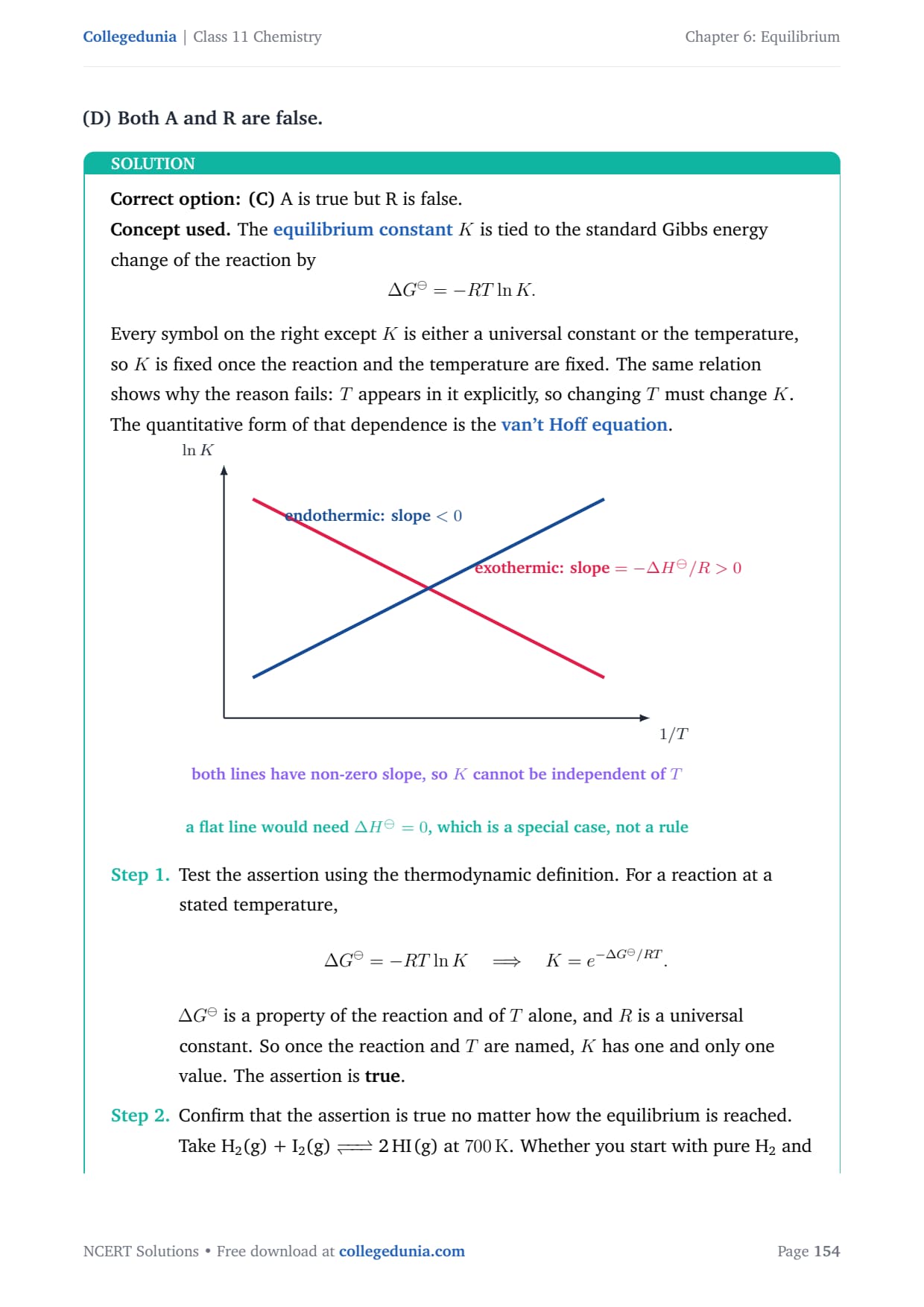
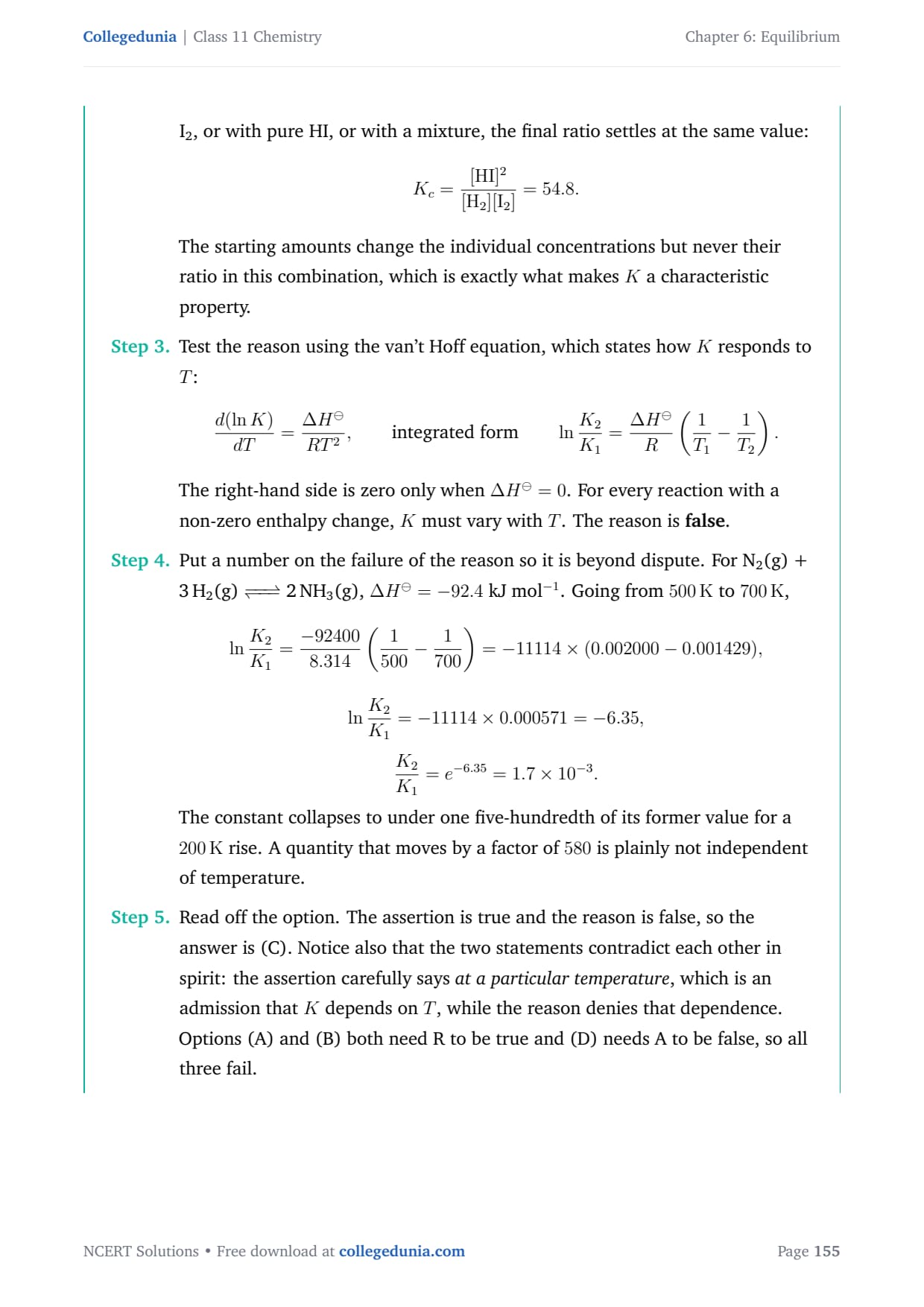
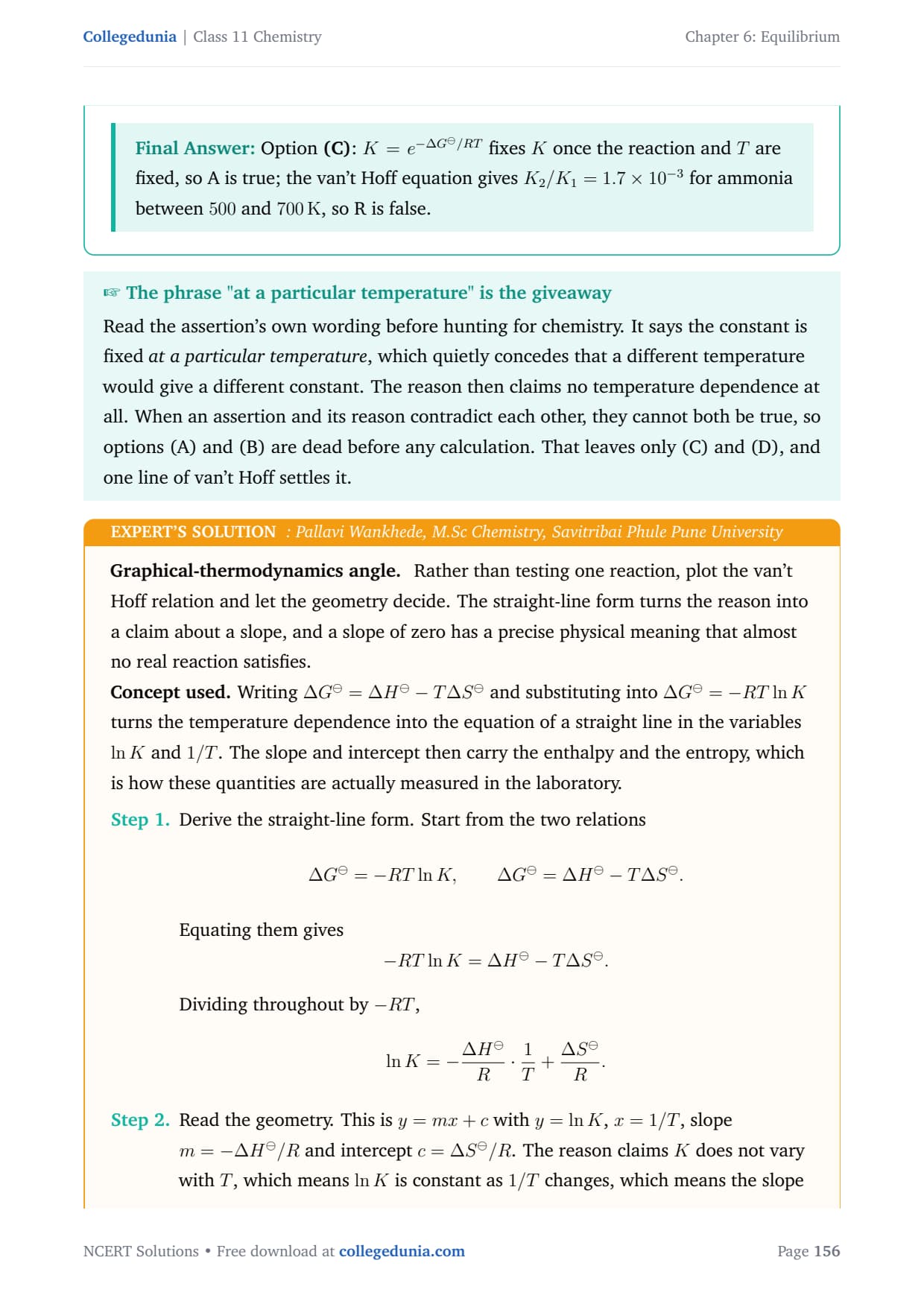
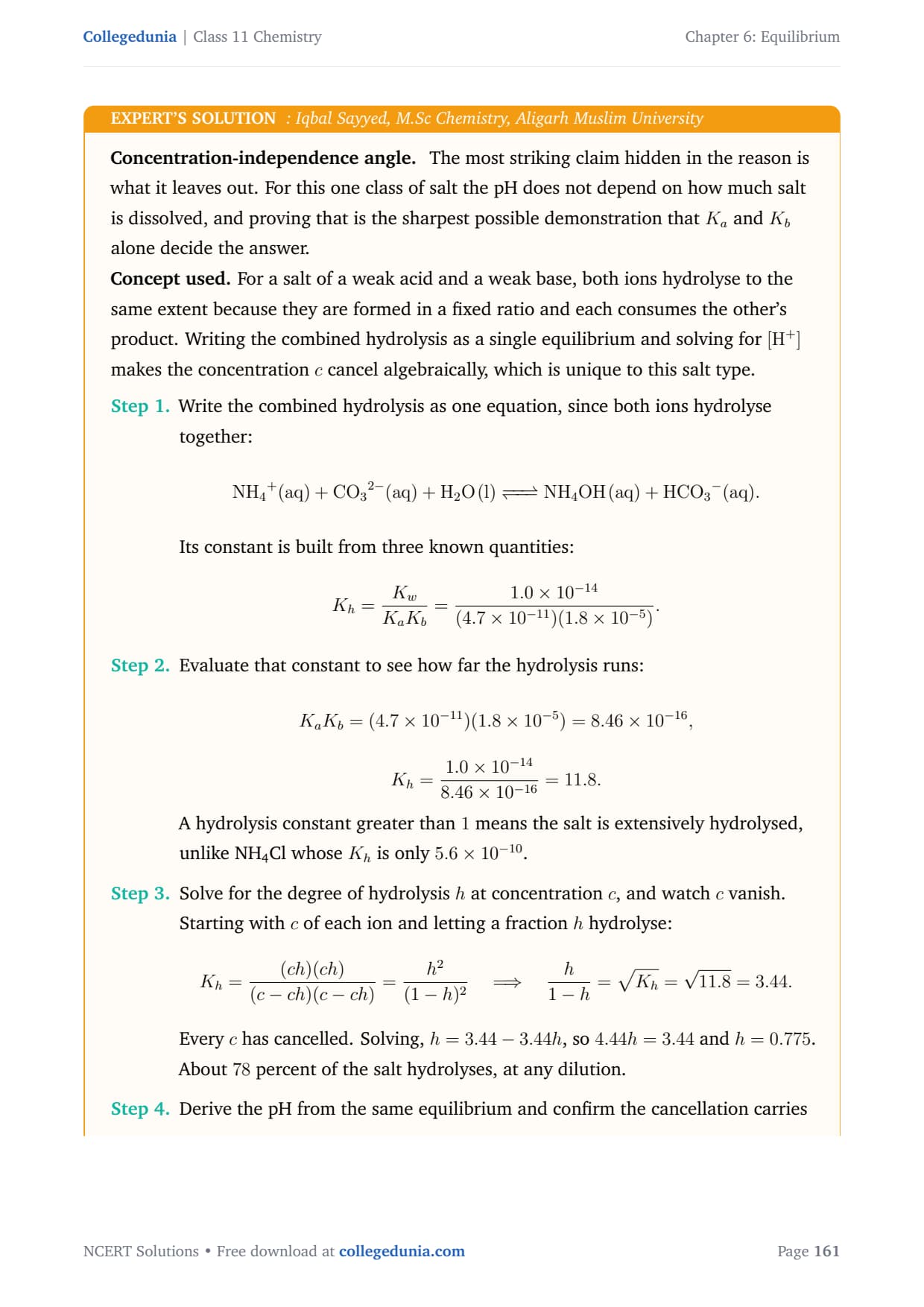
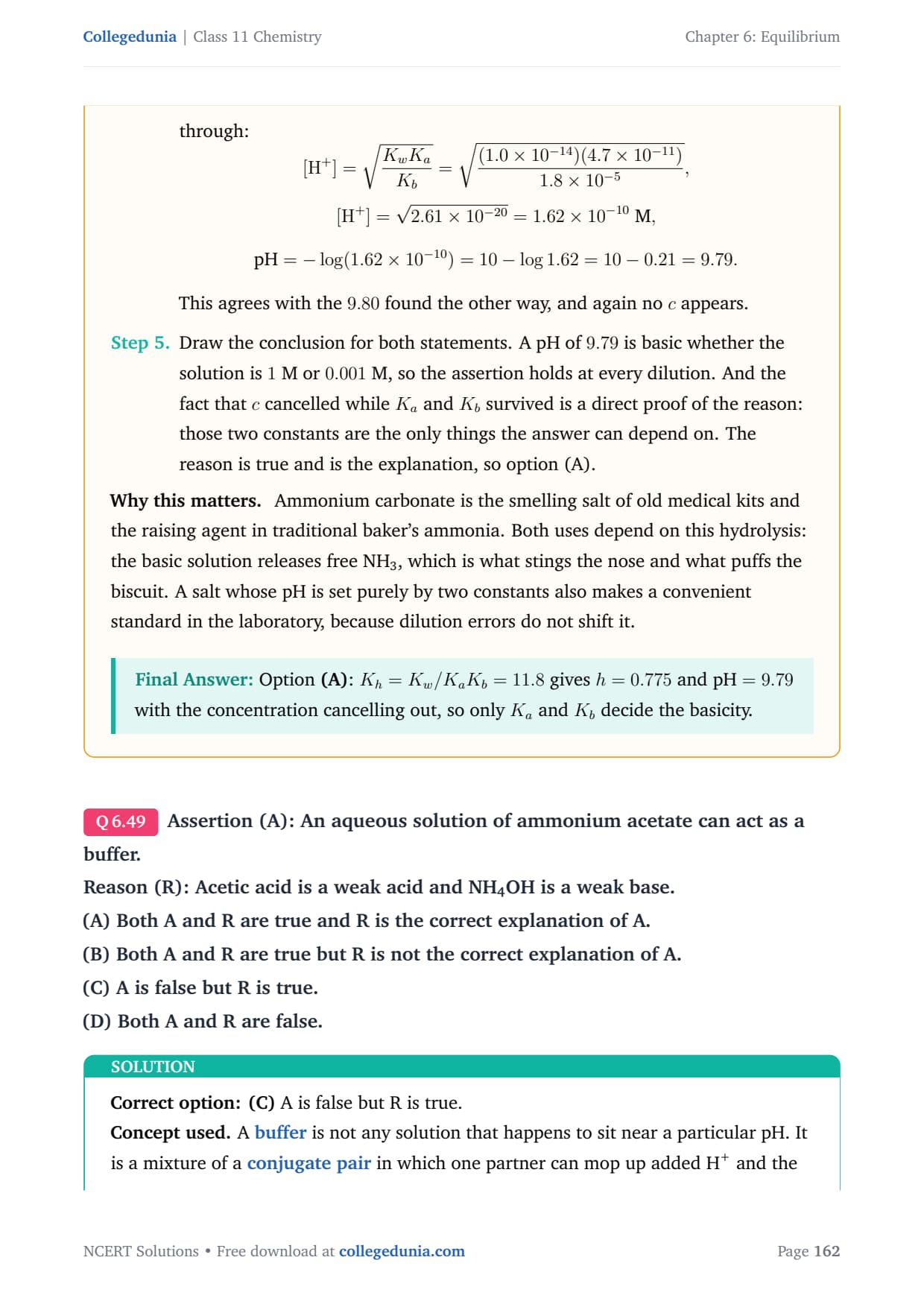
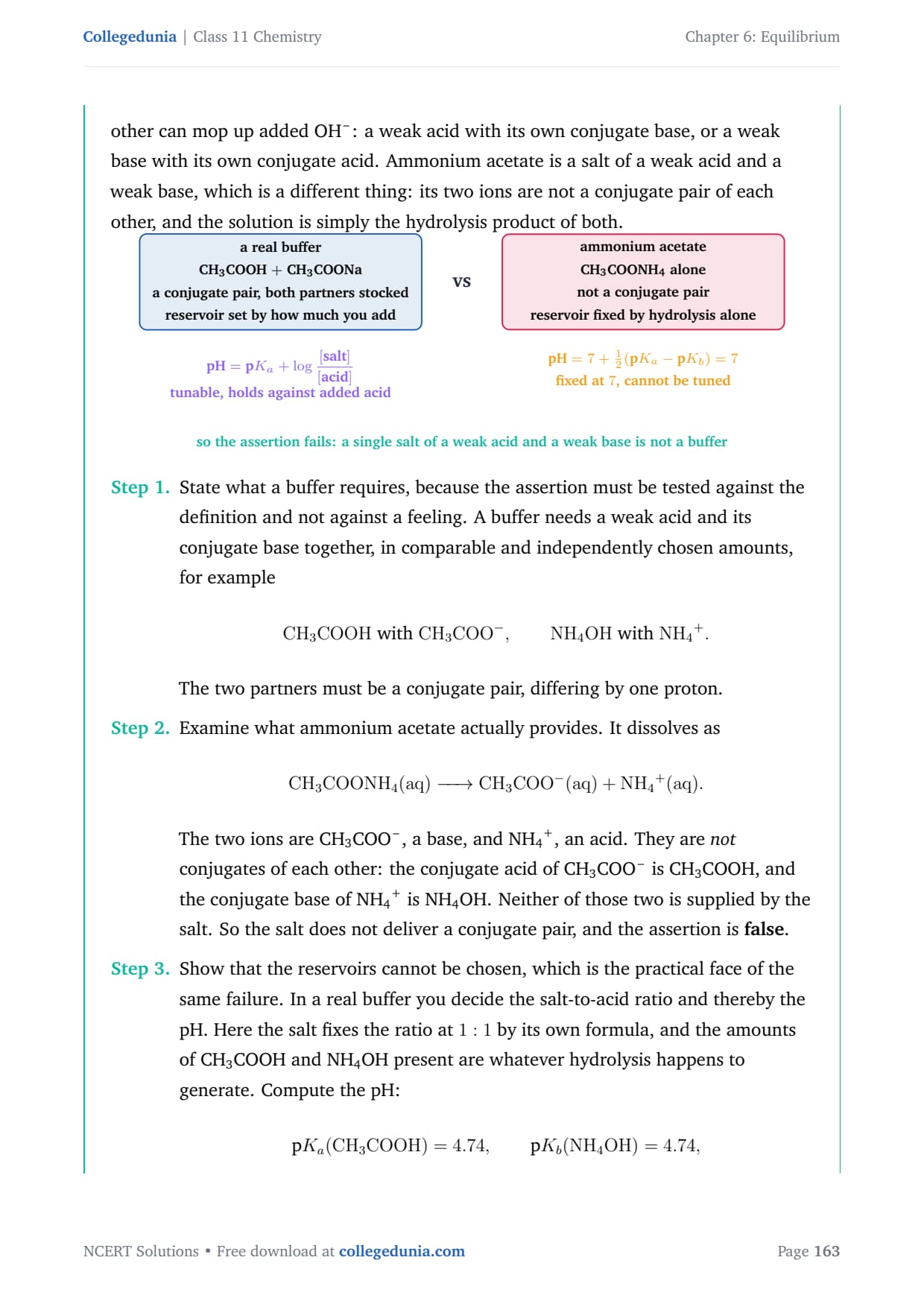
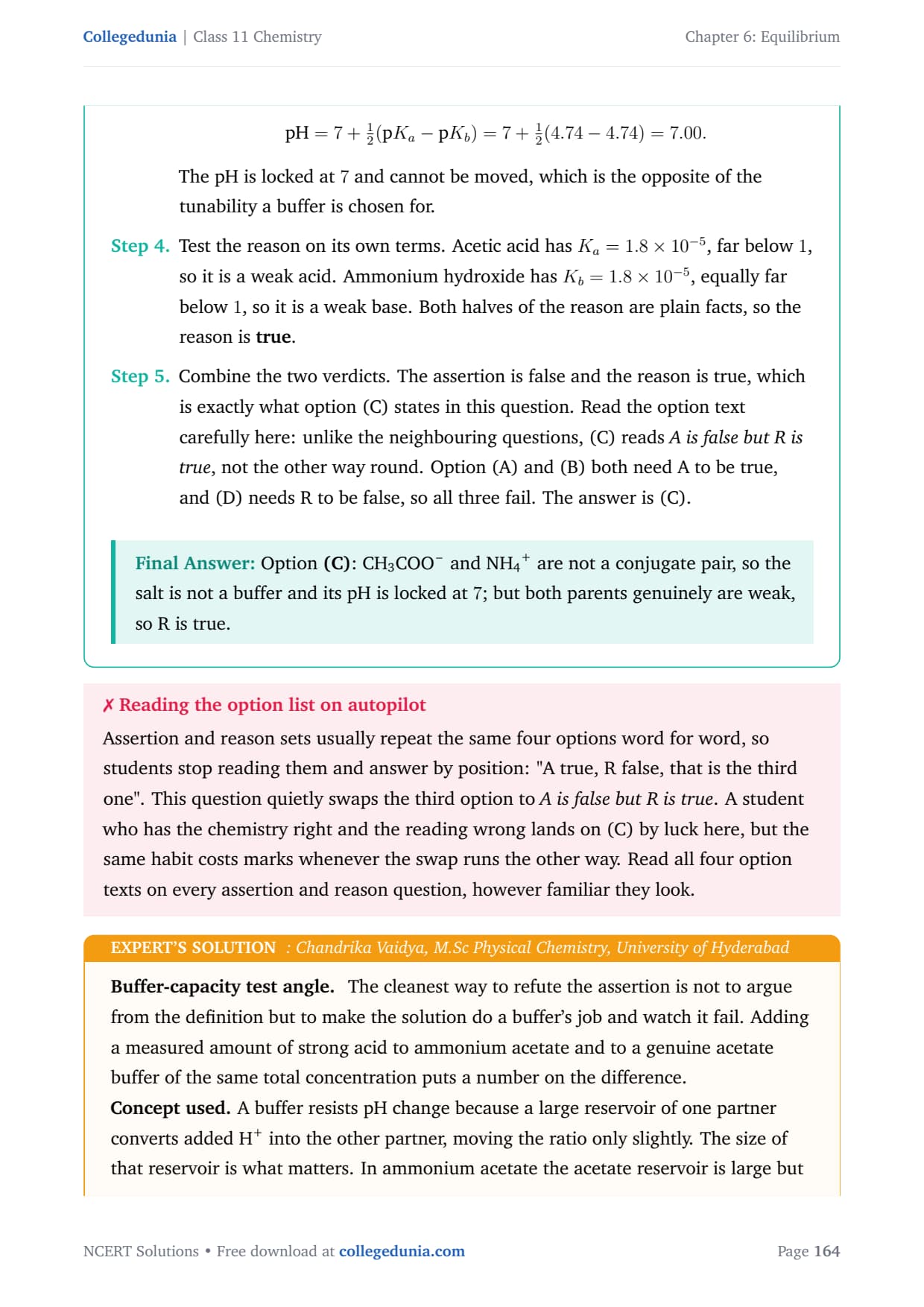
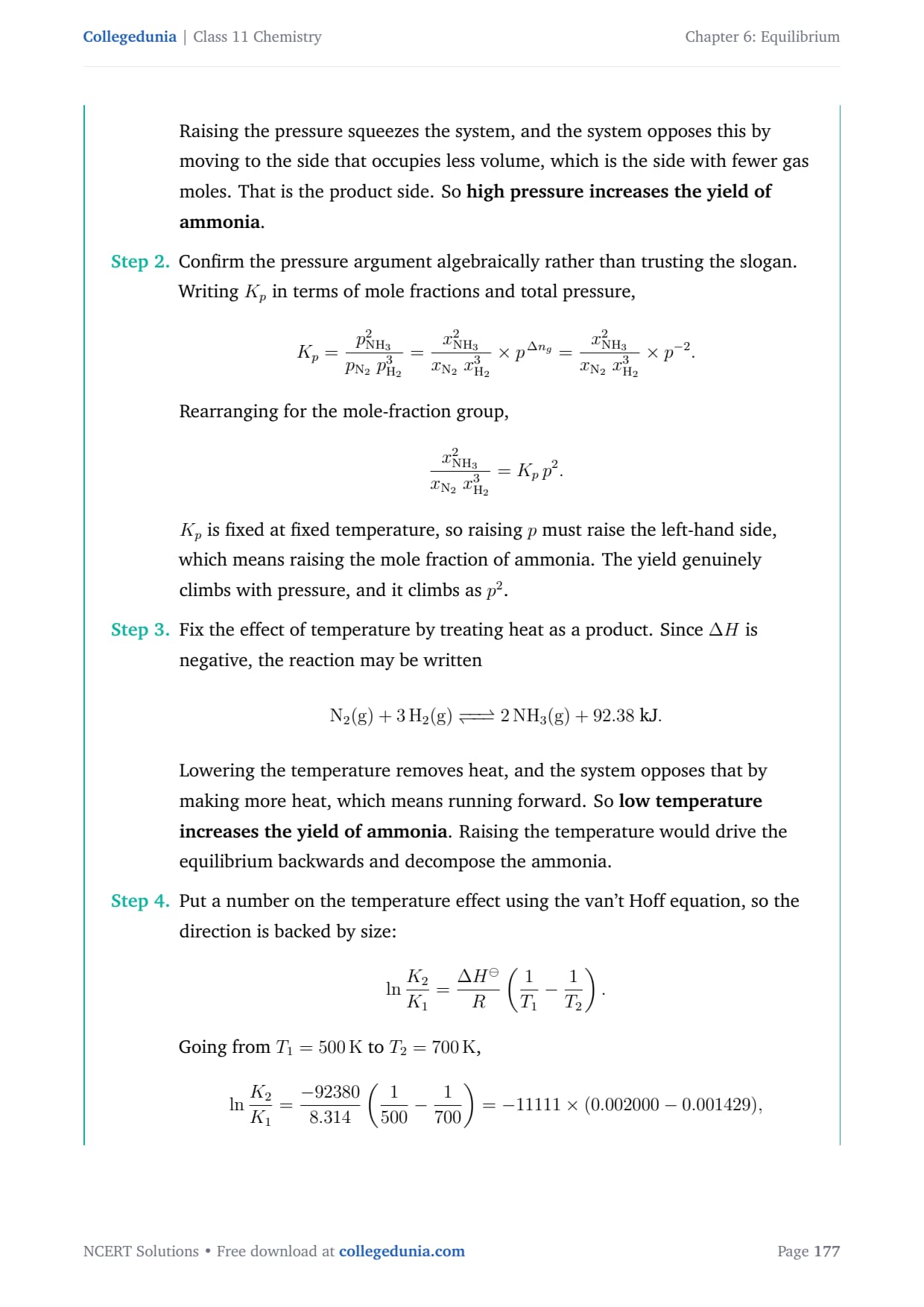
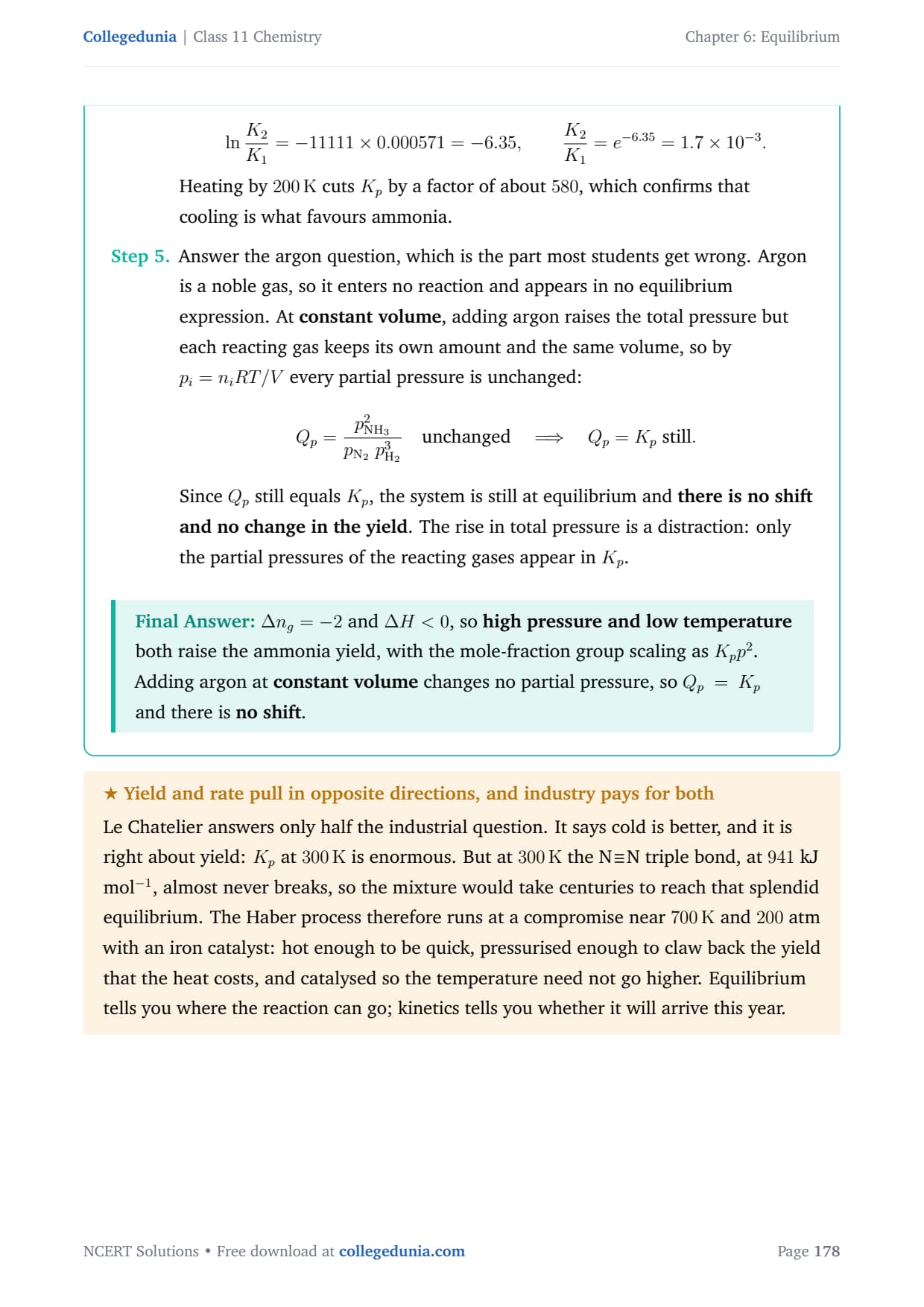
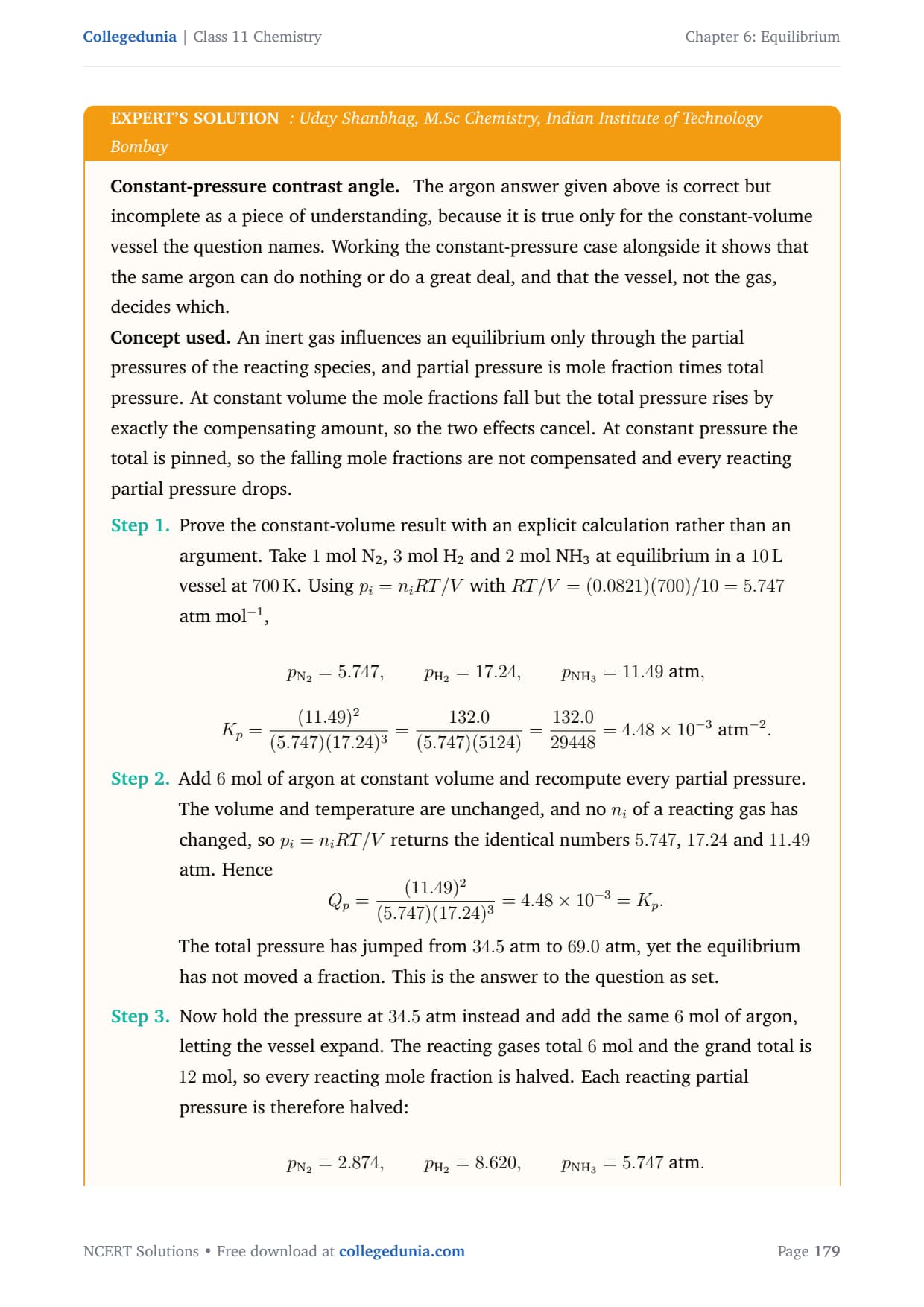
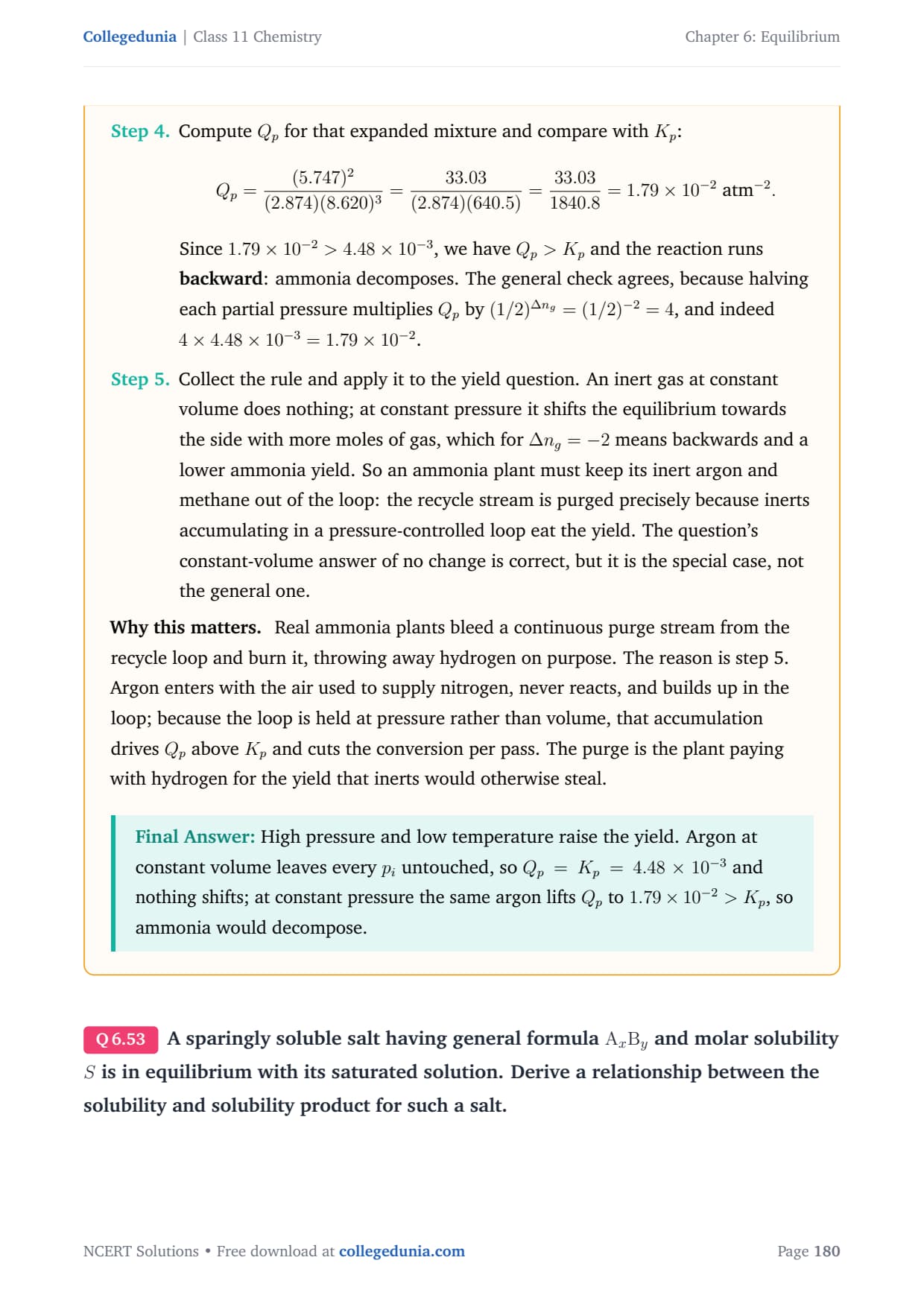
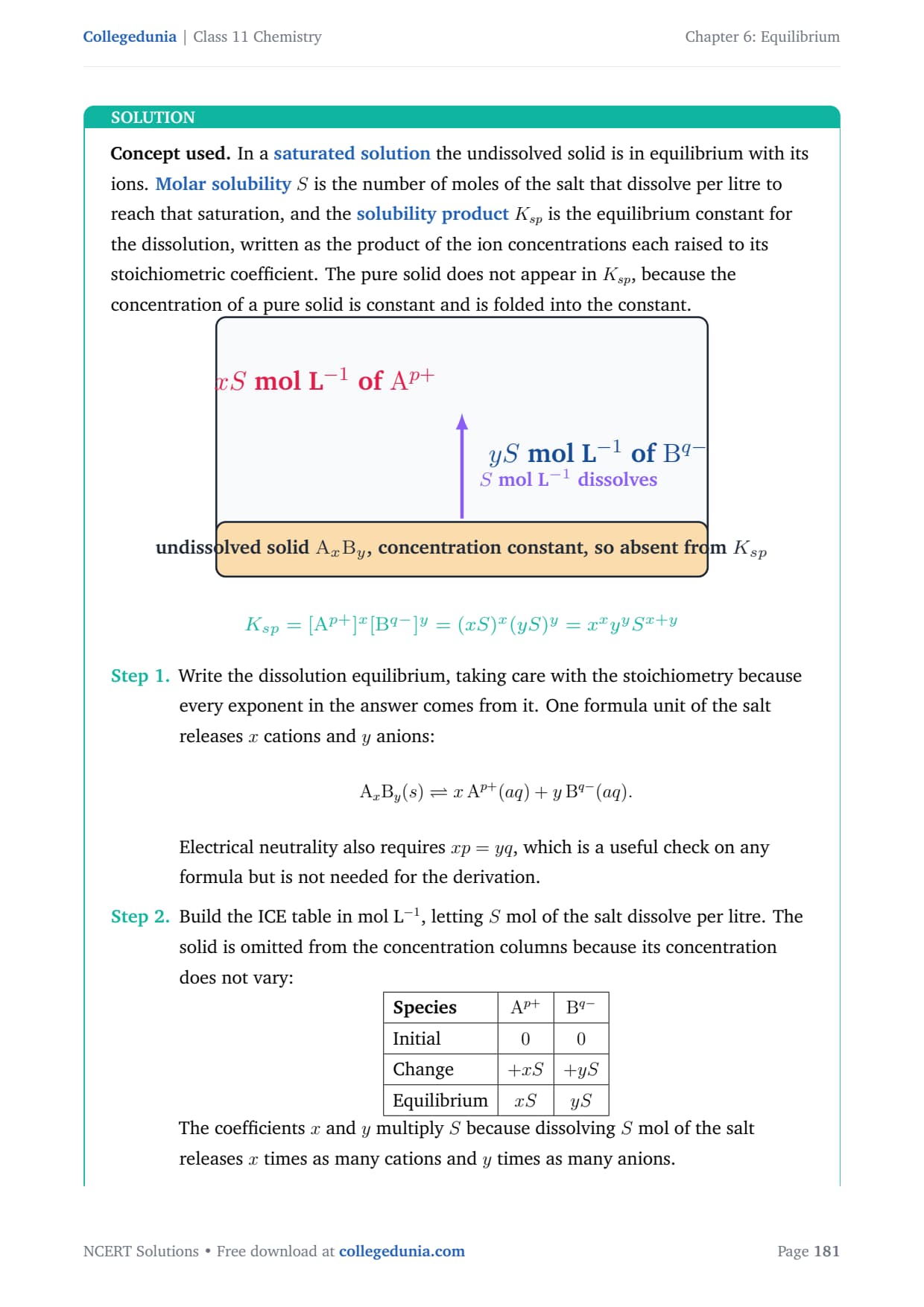
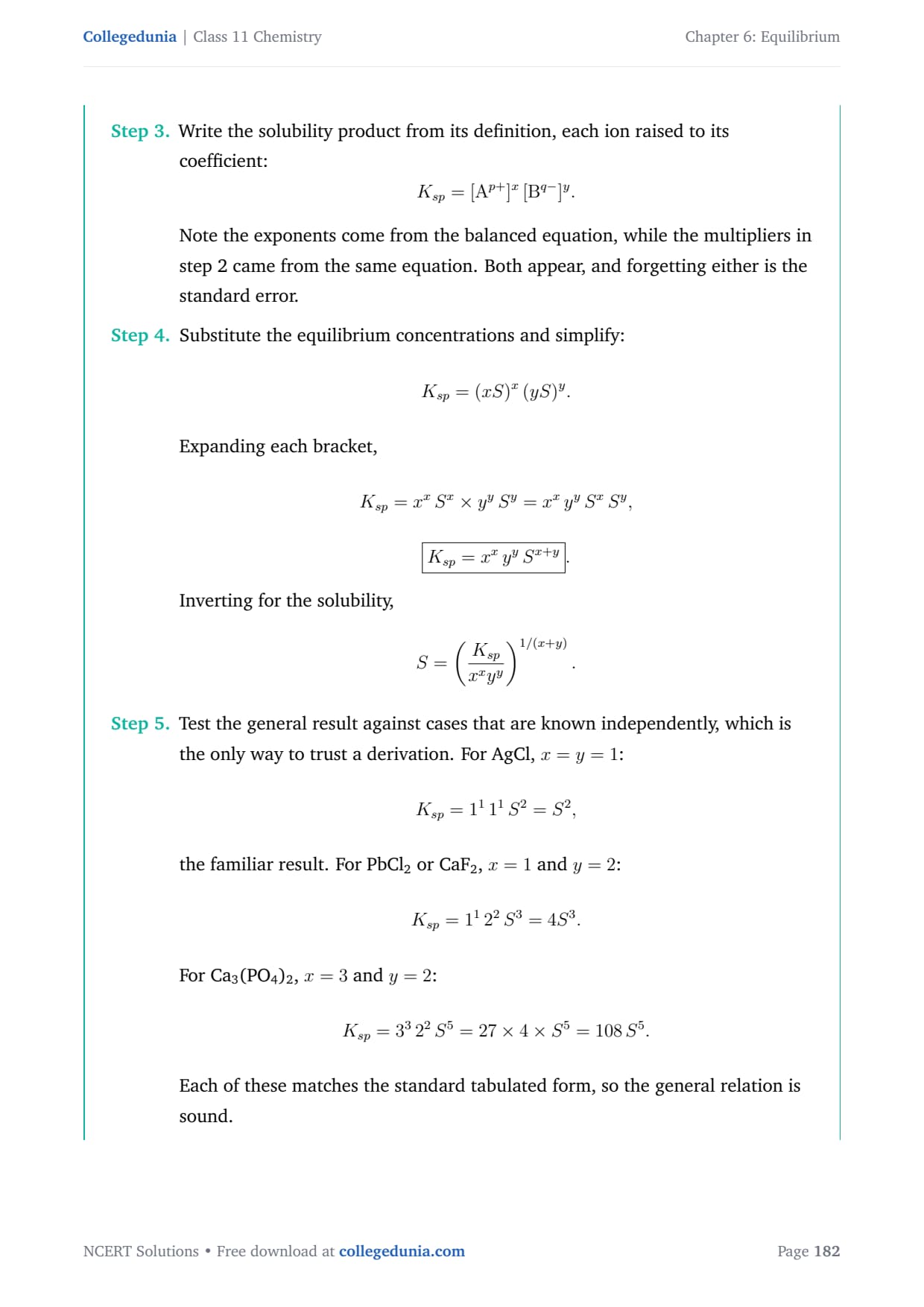
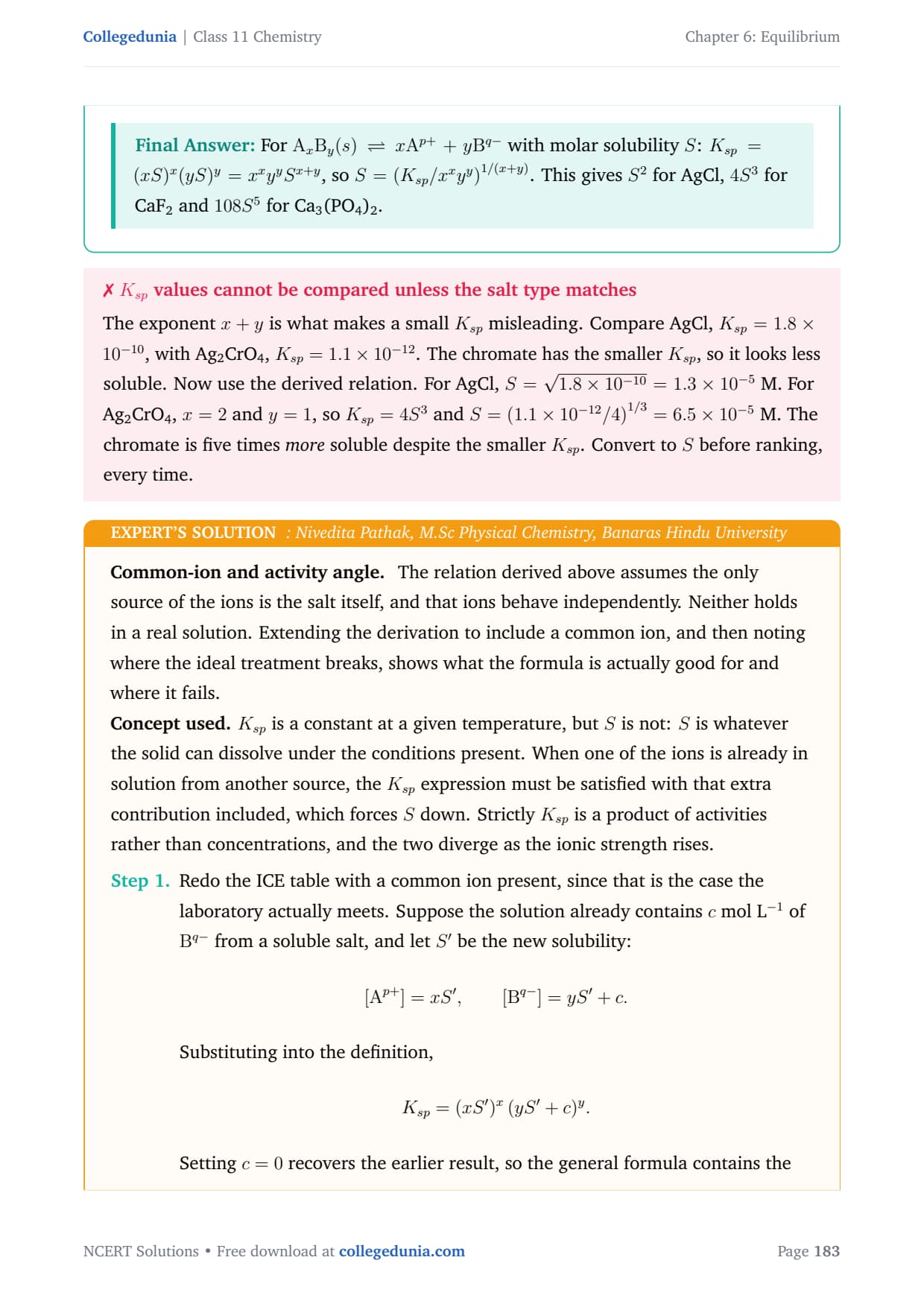
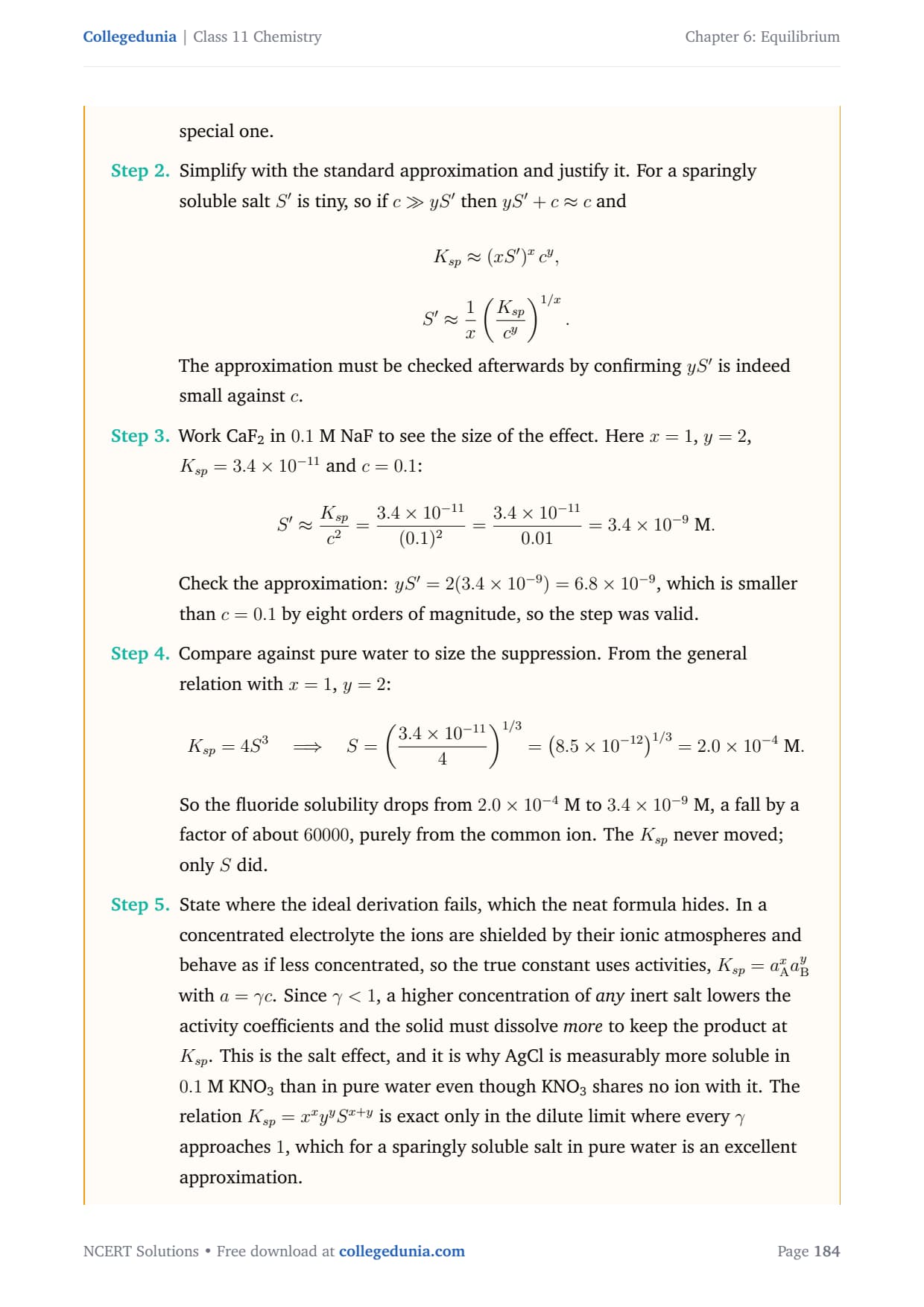
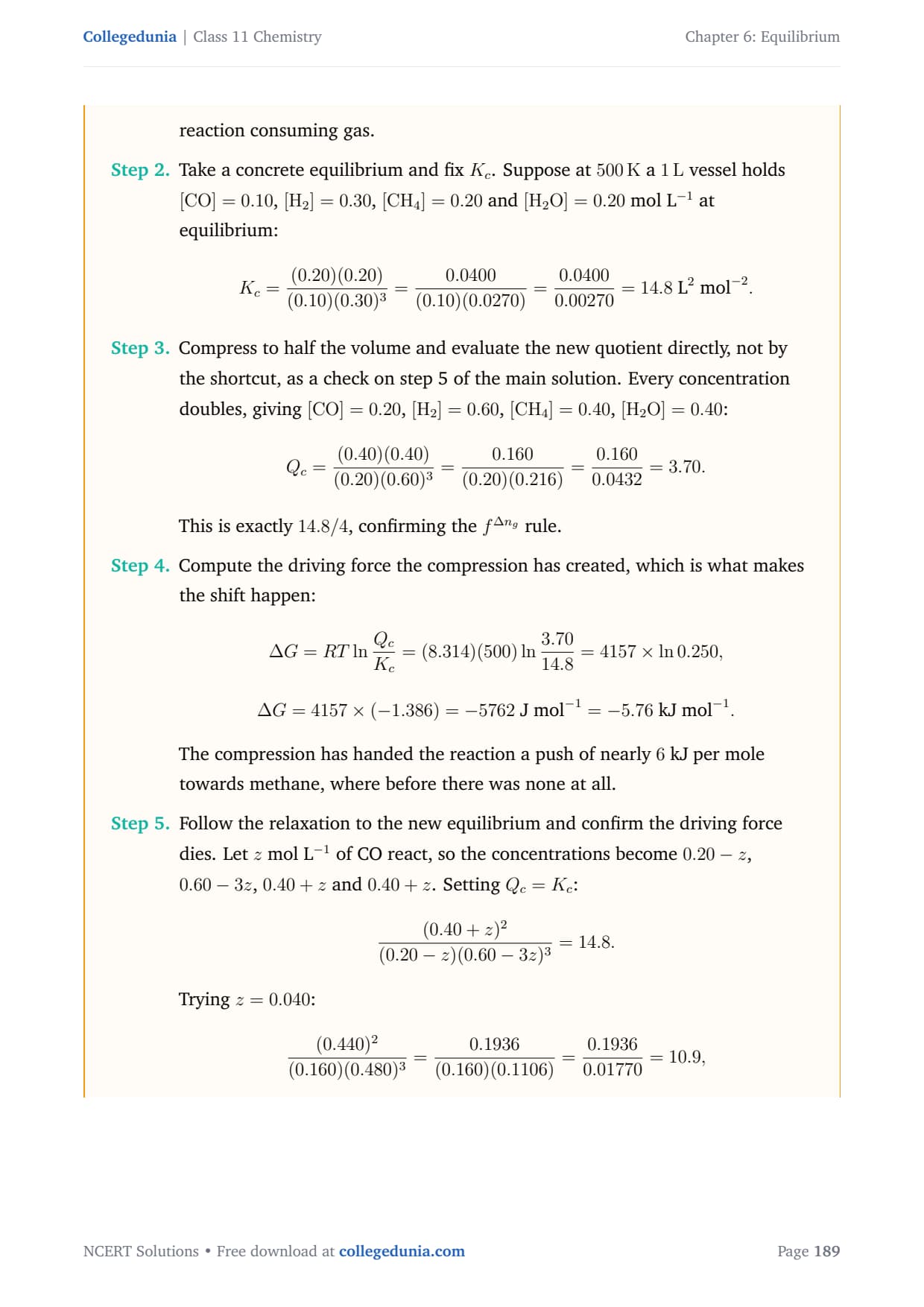
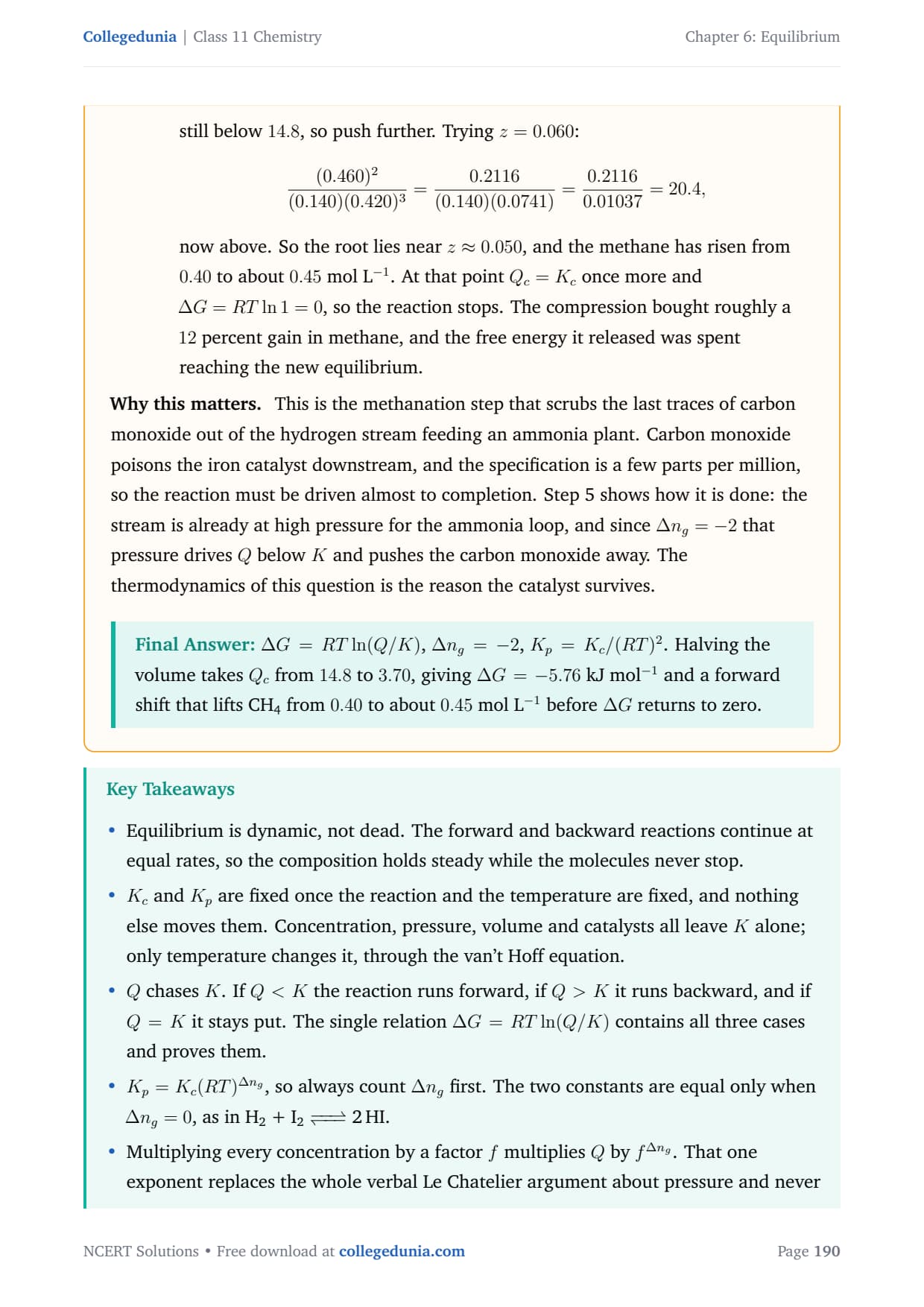
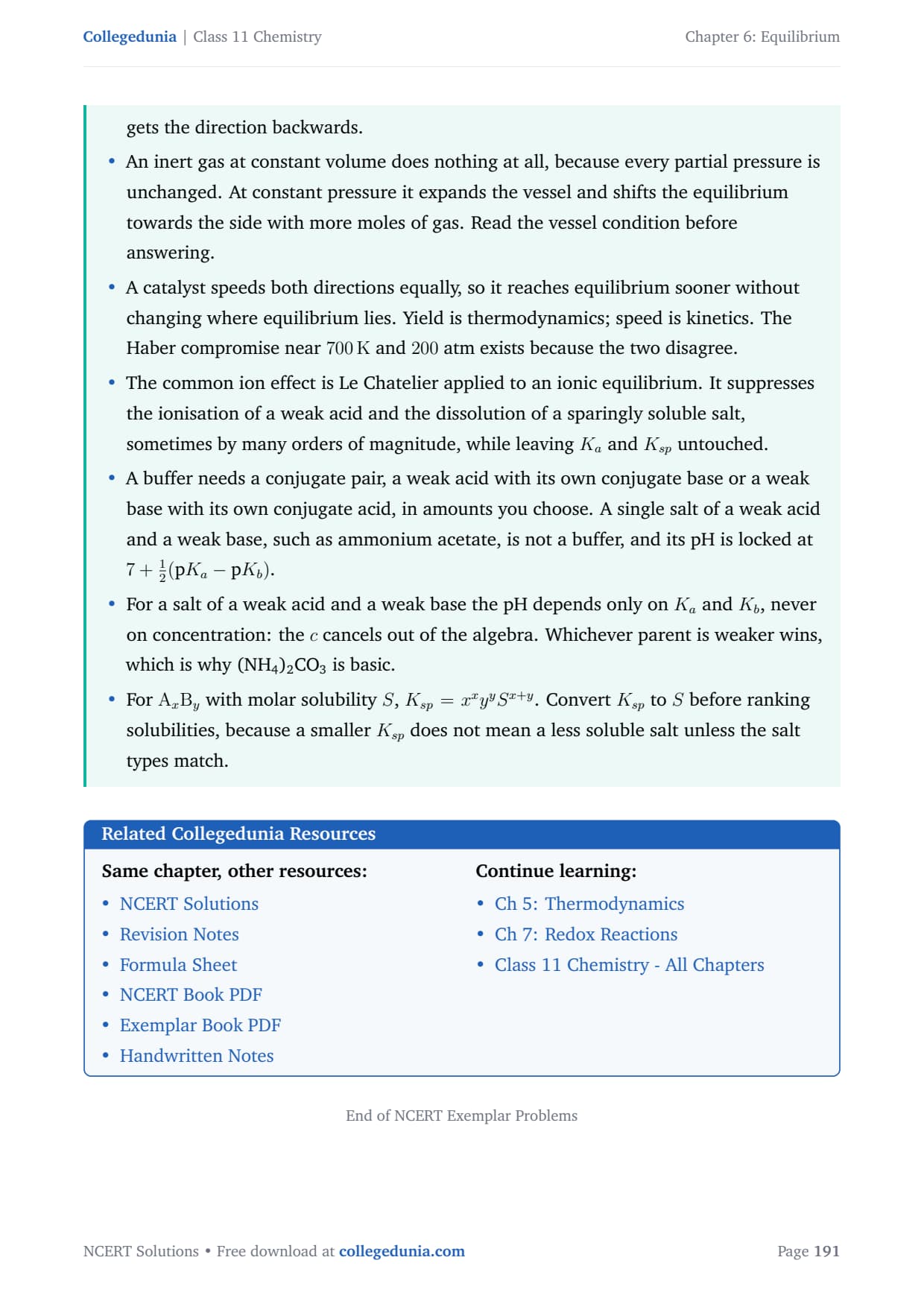
One thing trips students before the chemistry does. The printed Exemplar still follows the older 14-unit edition, so this chapter appears there as Unit 7. Search for Equilibrium by name, not by number, or you will open Redox Reactions instead.
- CBSE Weightage: 7 to 9 marks, usually one pH or buffer numerical plus a Le Chatelier reasoning question
- JEE Main Weightage: 2 to 3 questions per year, mostly Kp against Kc and solubility product
- NEET Weightage: 2 to 3 questions per year from ionic equilibrium, pH and salt hydrolysis
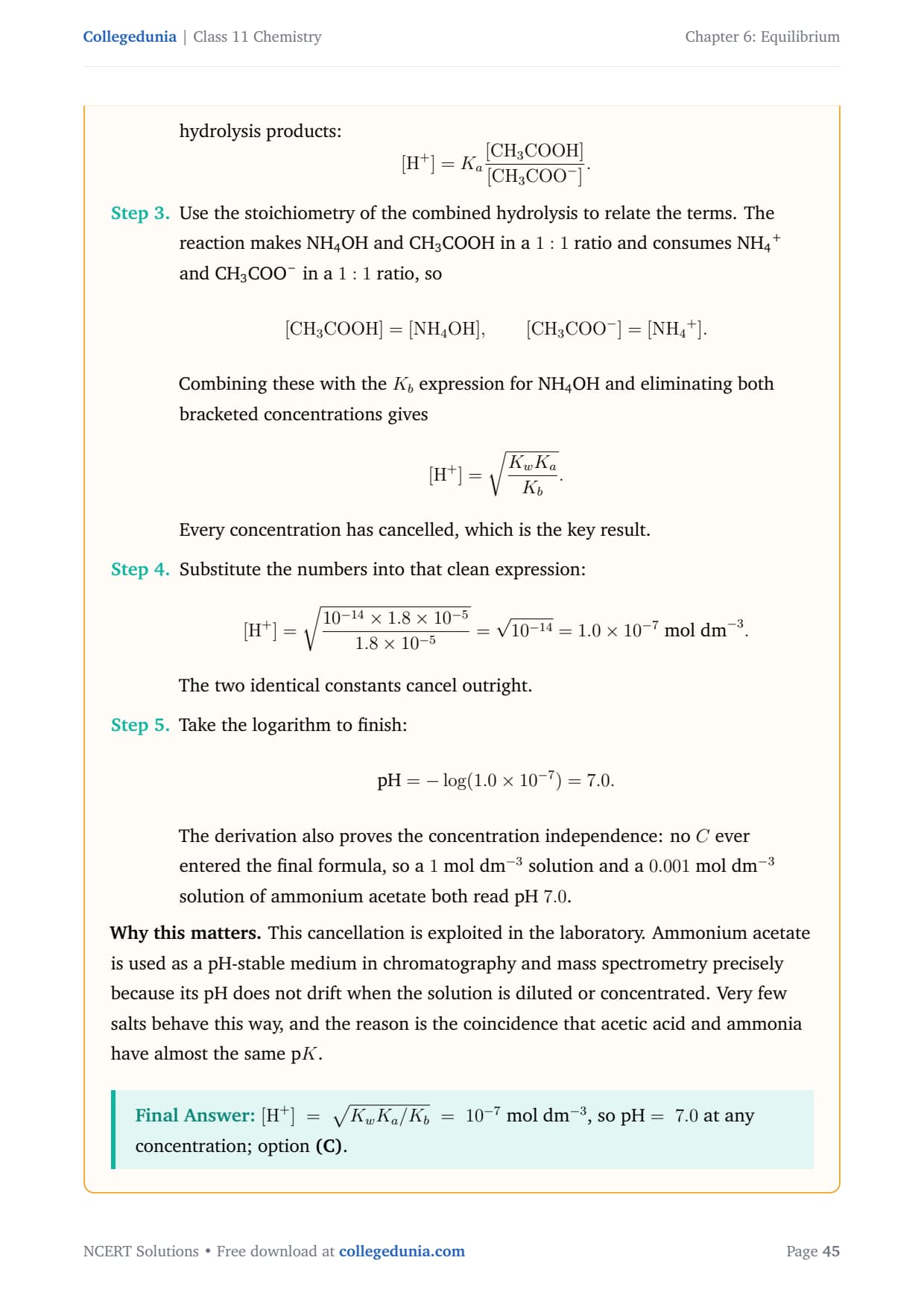
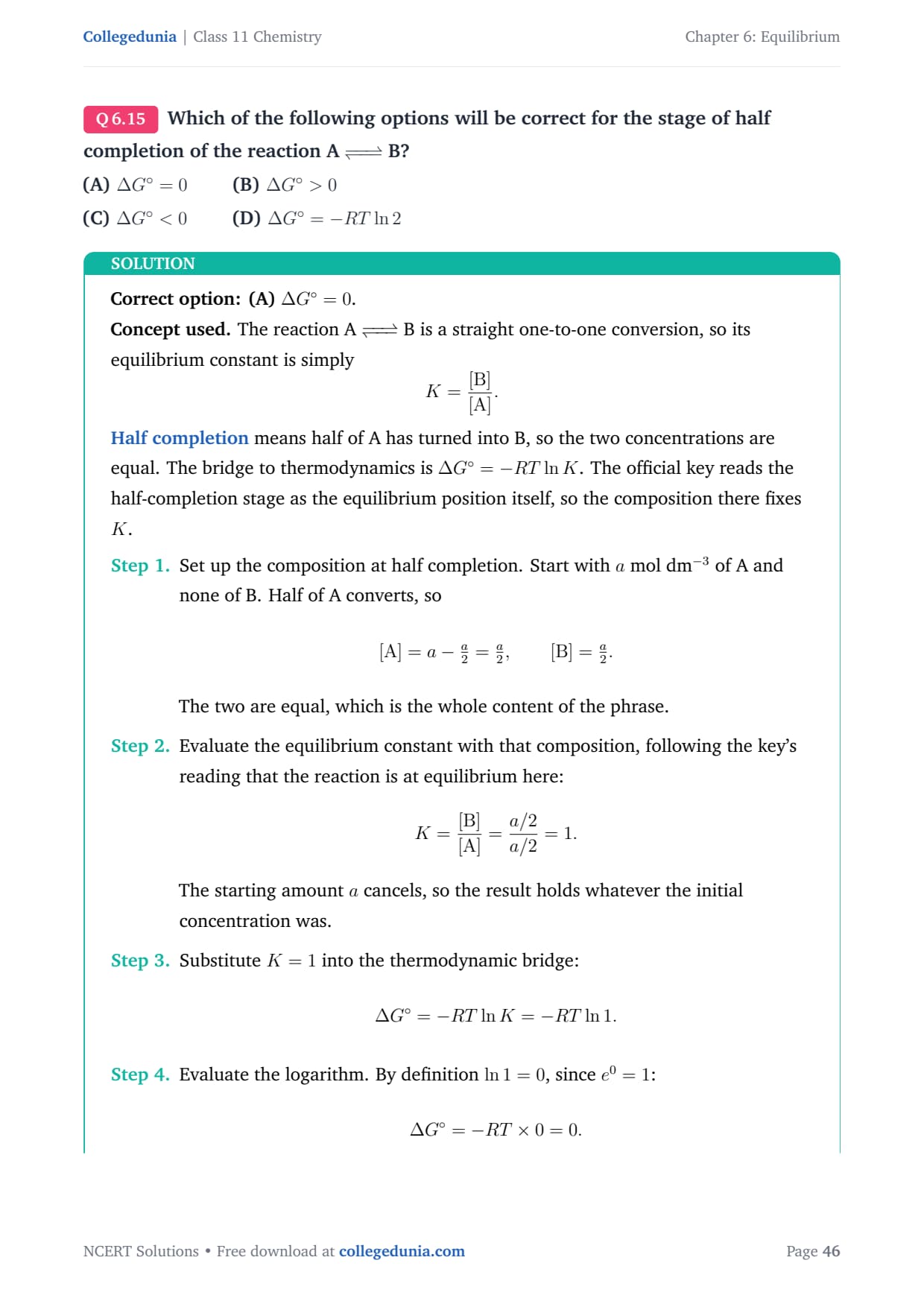
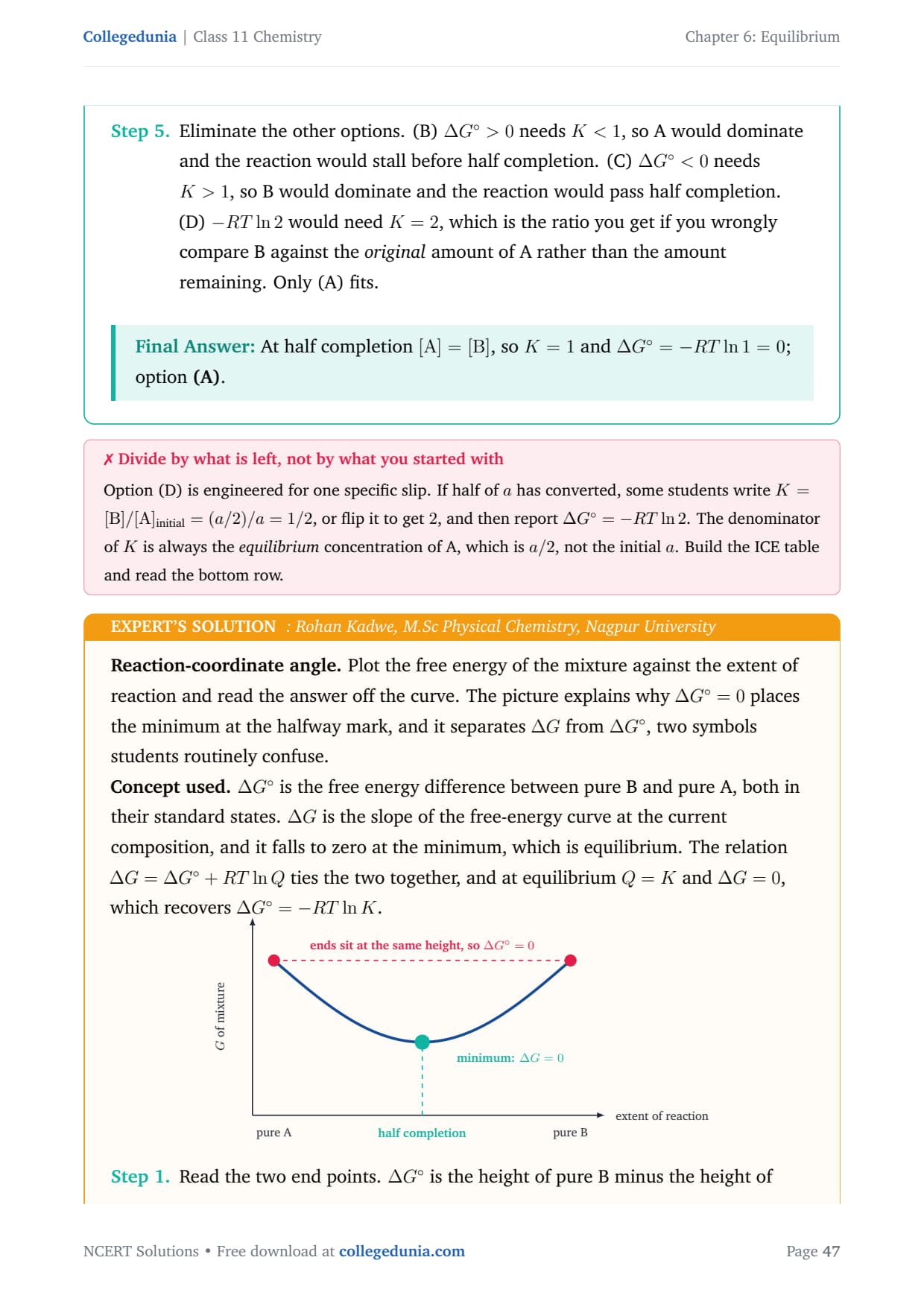
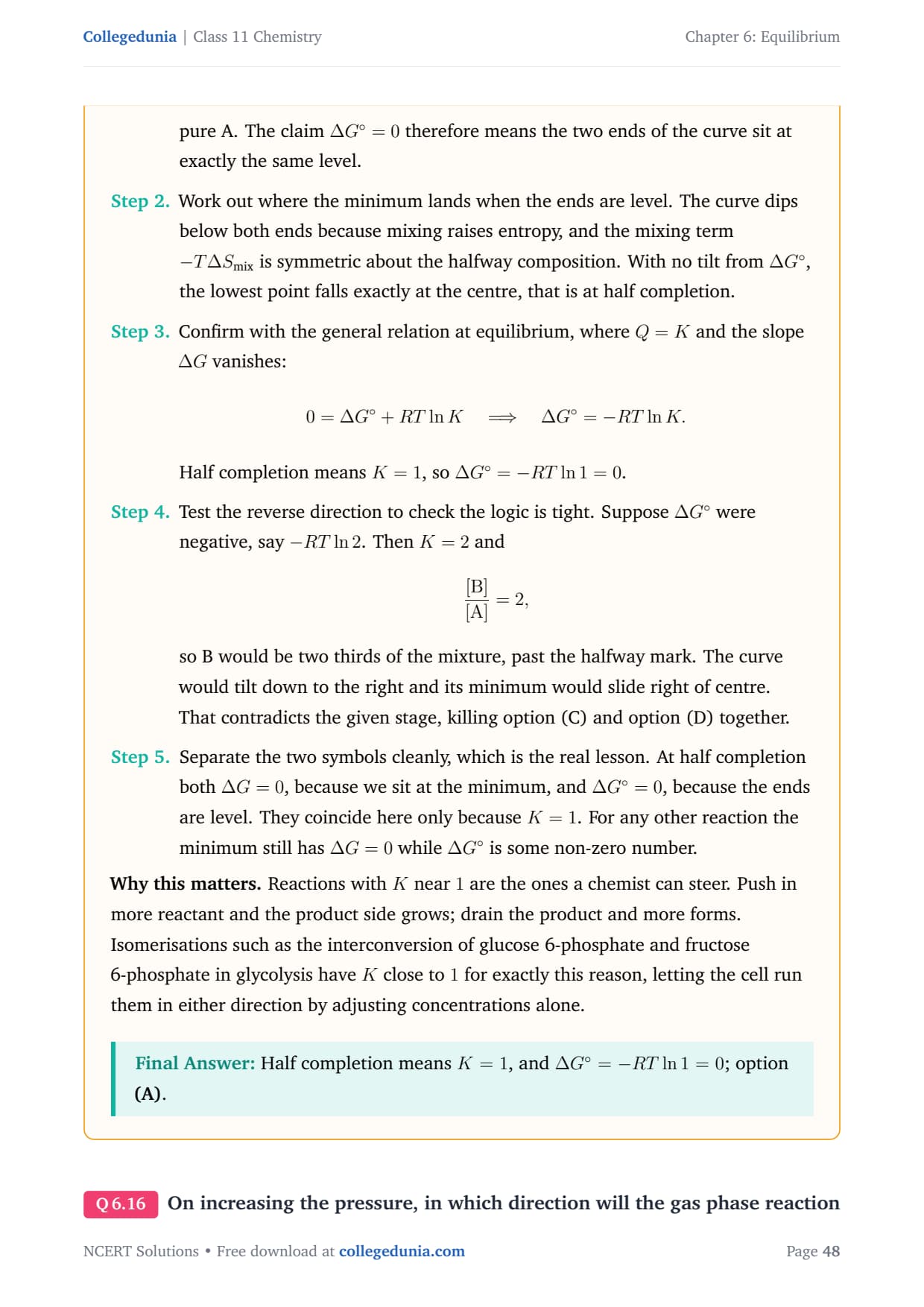
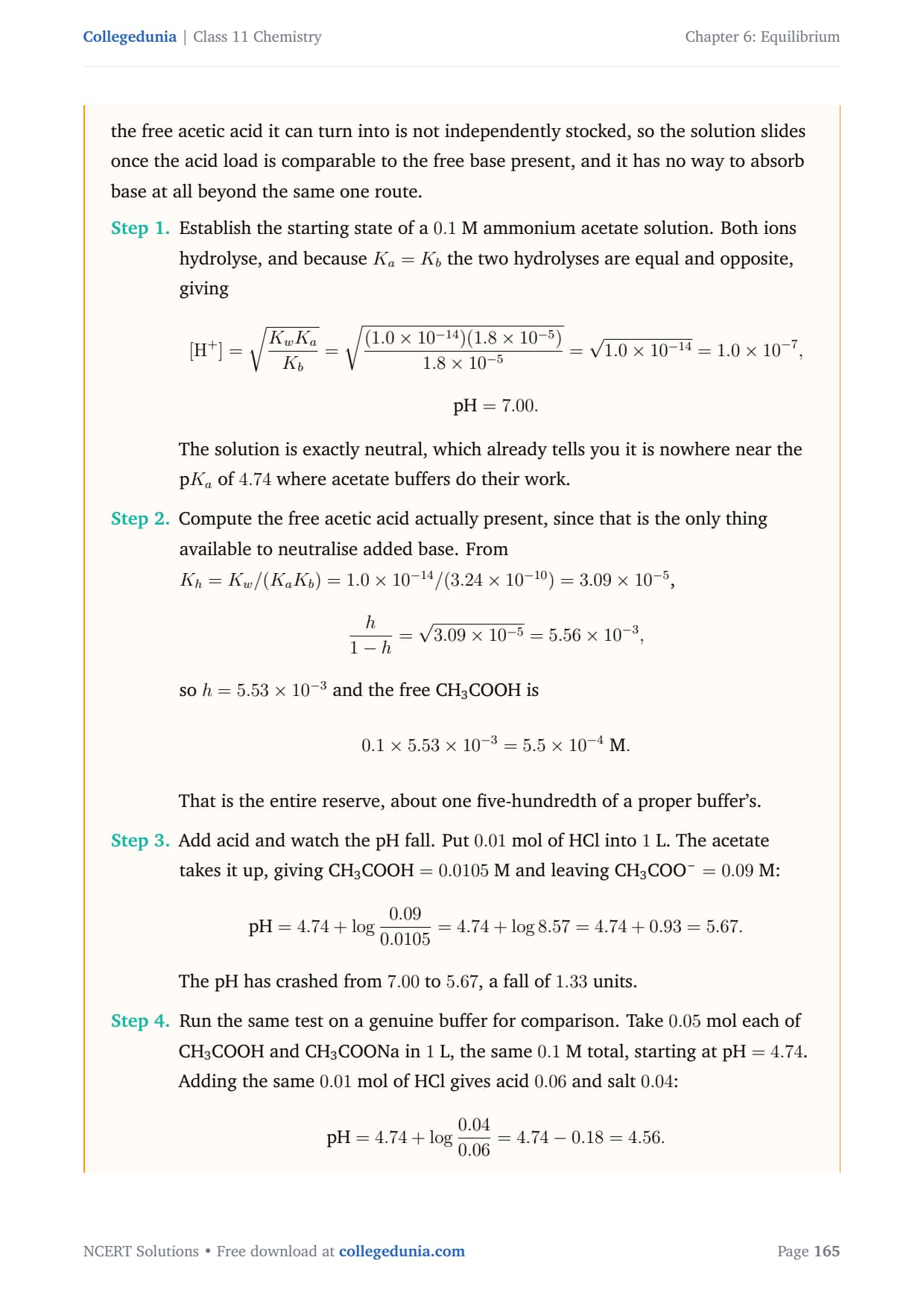
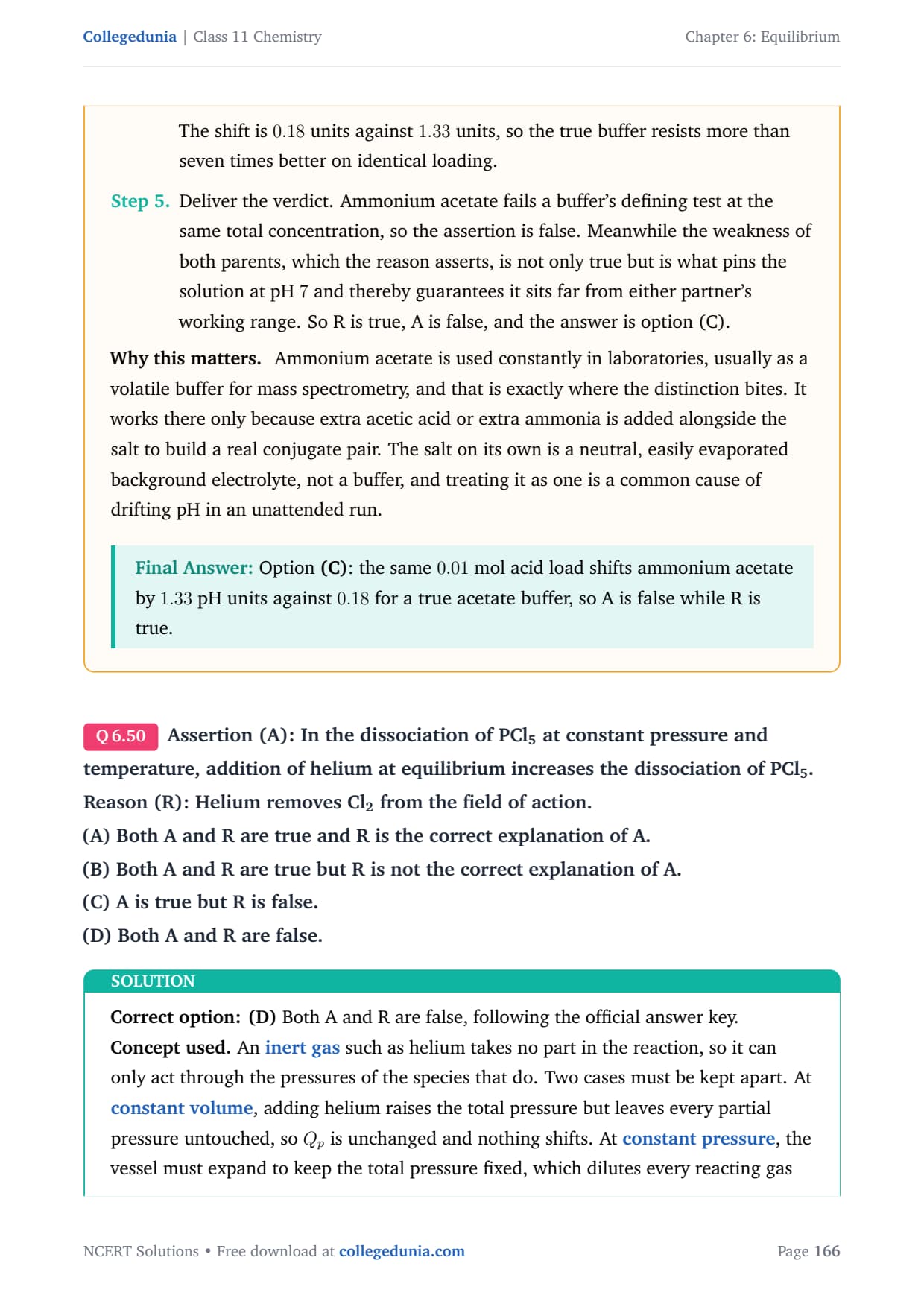
Every solution is checked against the official NCERT Exemplar key, and the four places where the printed book slips are worked out in full.
Topics Covered in the Class 11 Chemistry Equilibrium Exemplar
The 54 questions split into two halves that feel like different chapters. Gaseous equilibrium comes first, then everything moves into water, and the second half carries more marks in both boards and NEET.
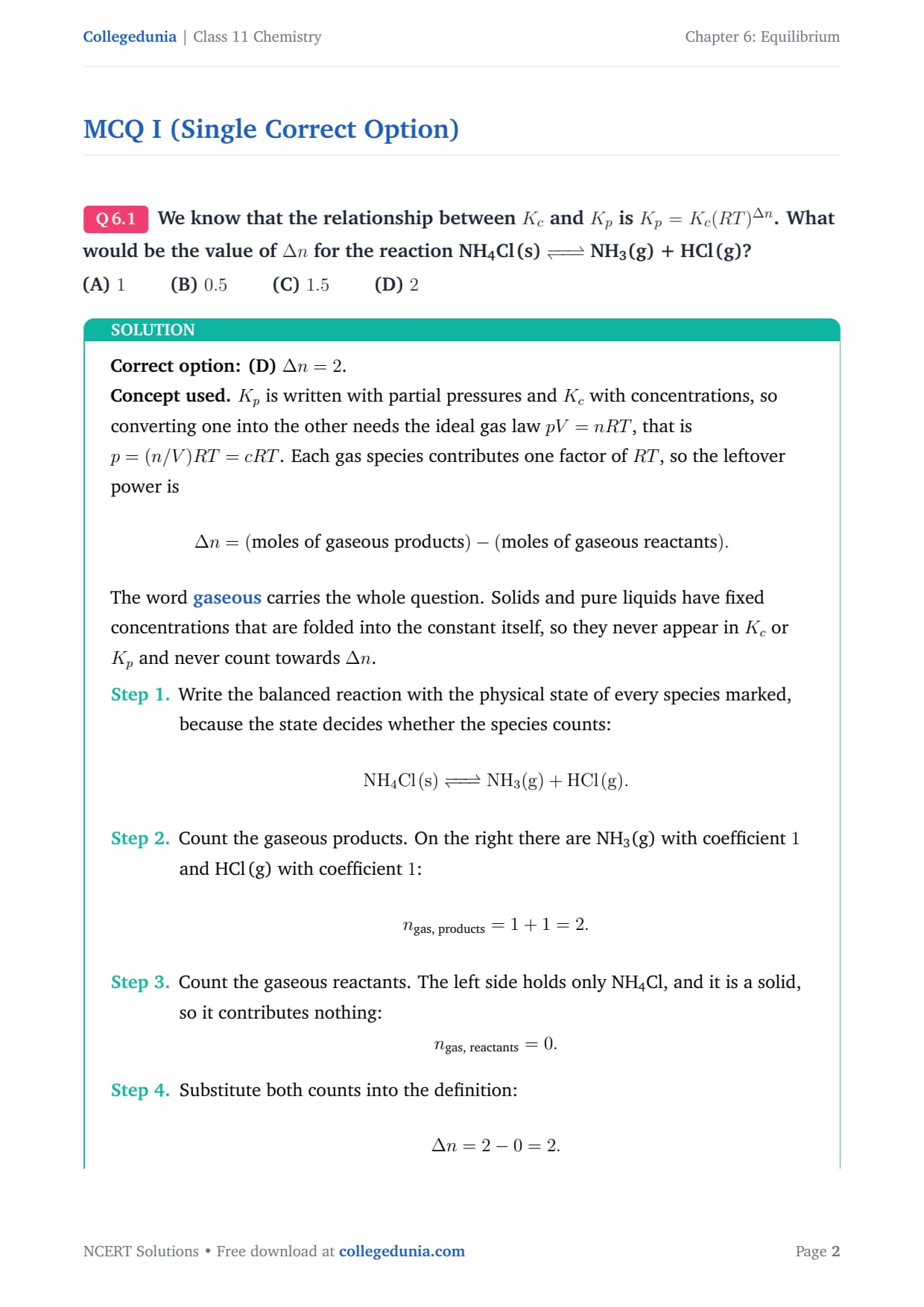
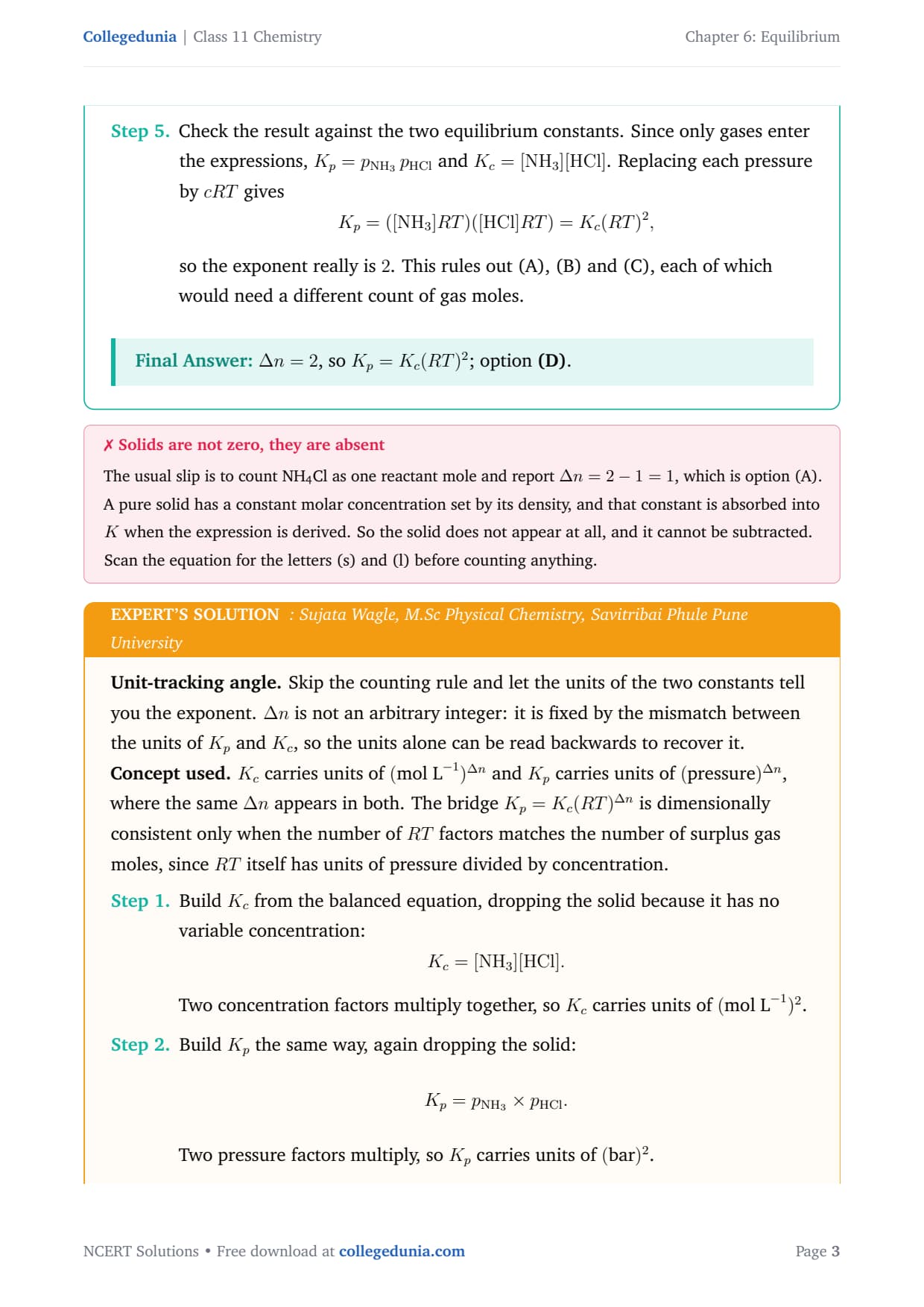
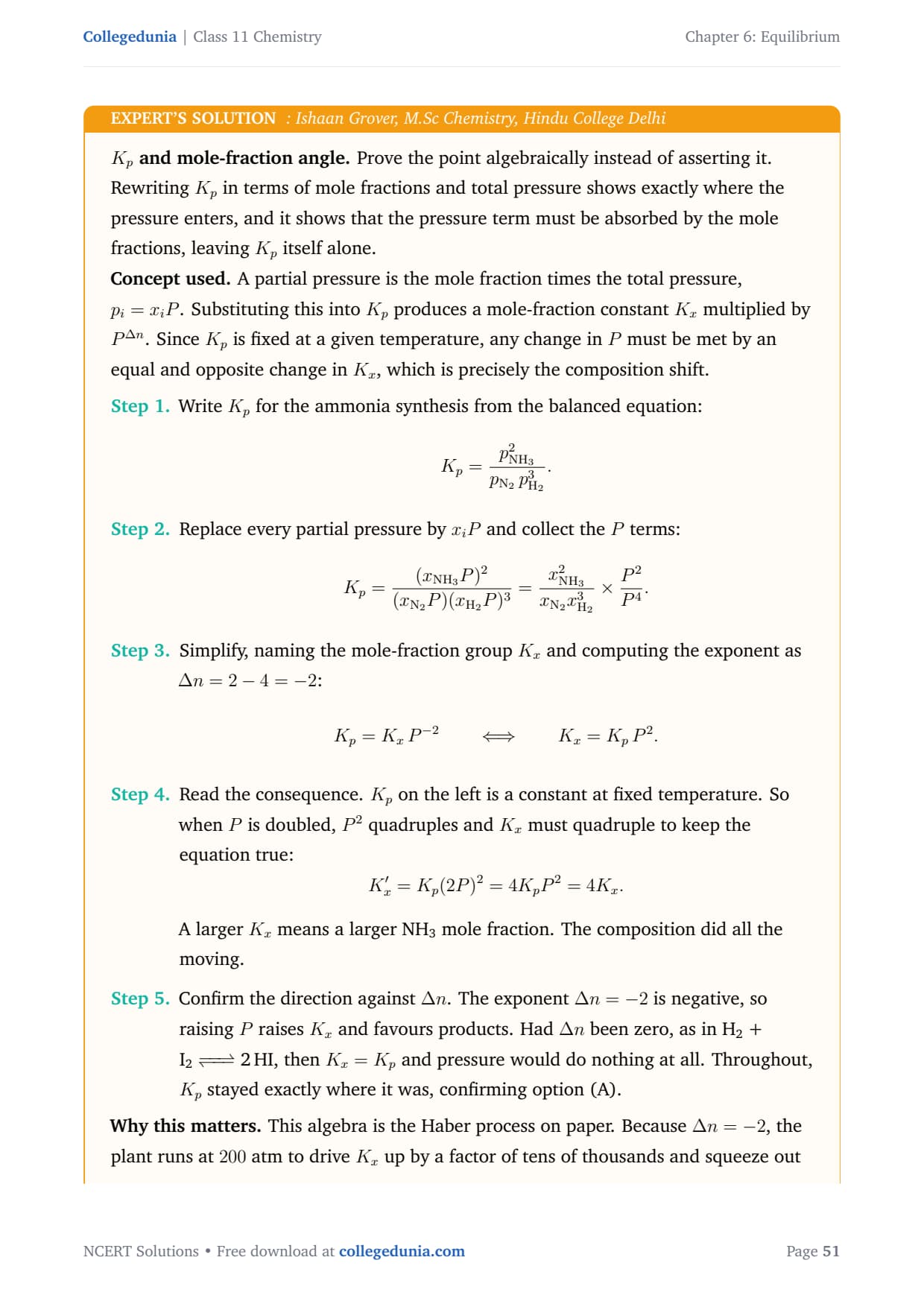
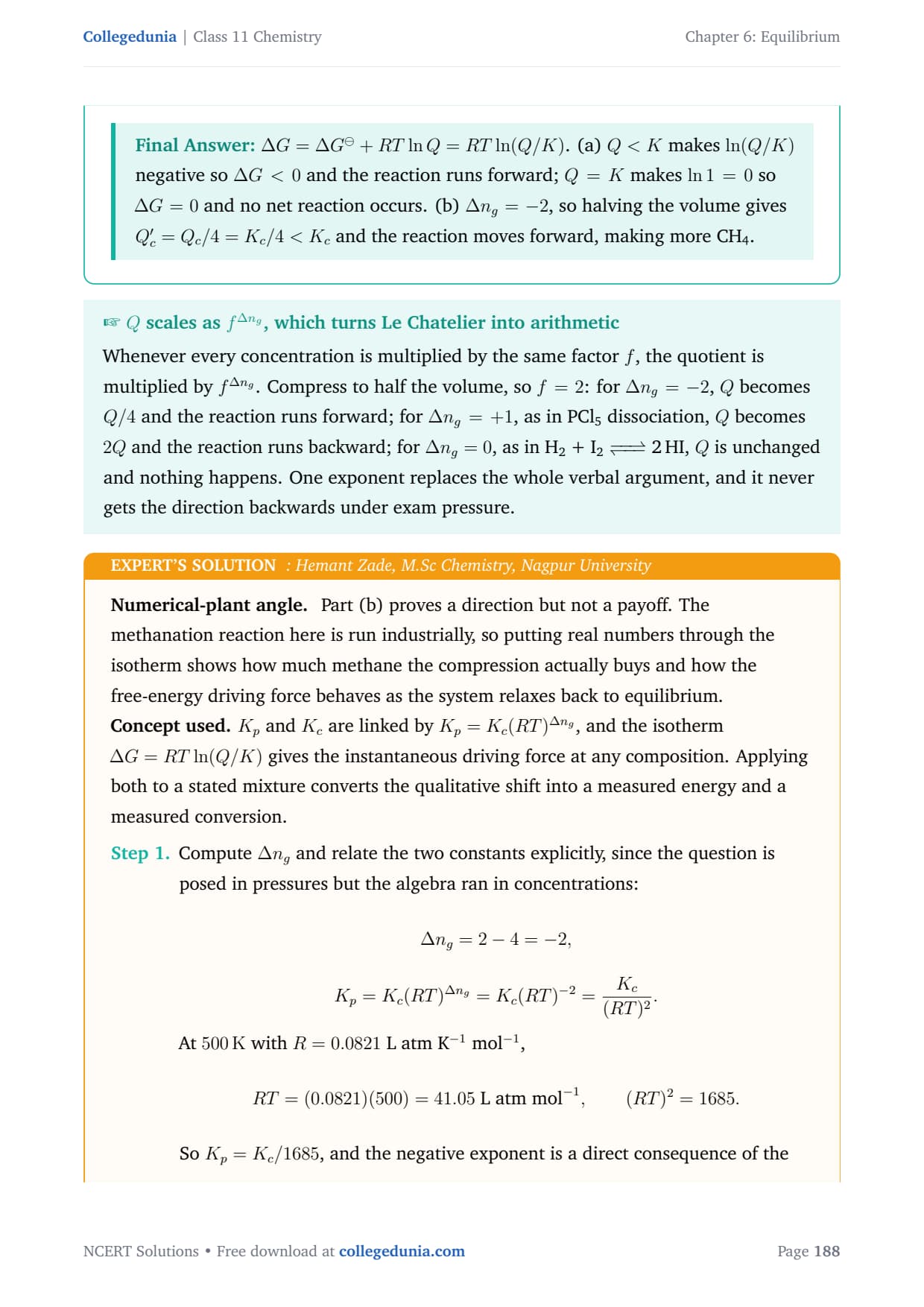
- Equilibrium constants: writing Kc and Kp, linking them through Kp = Kc(RT)Δn, and reading Δn correctly
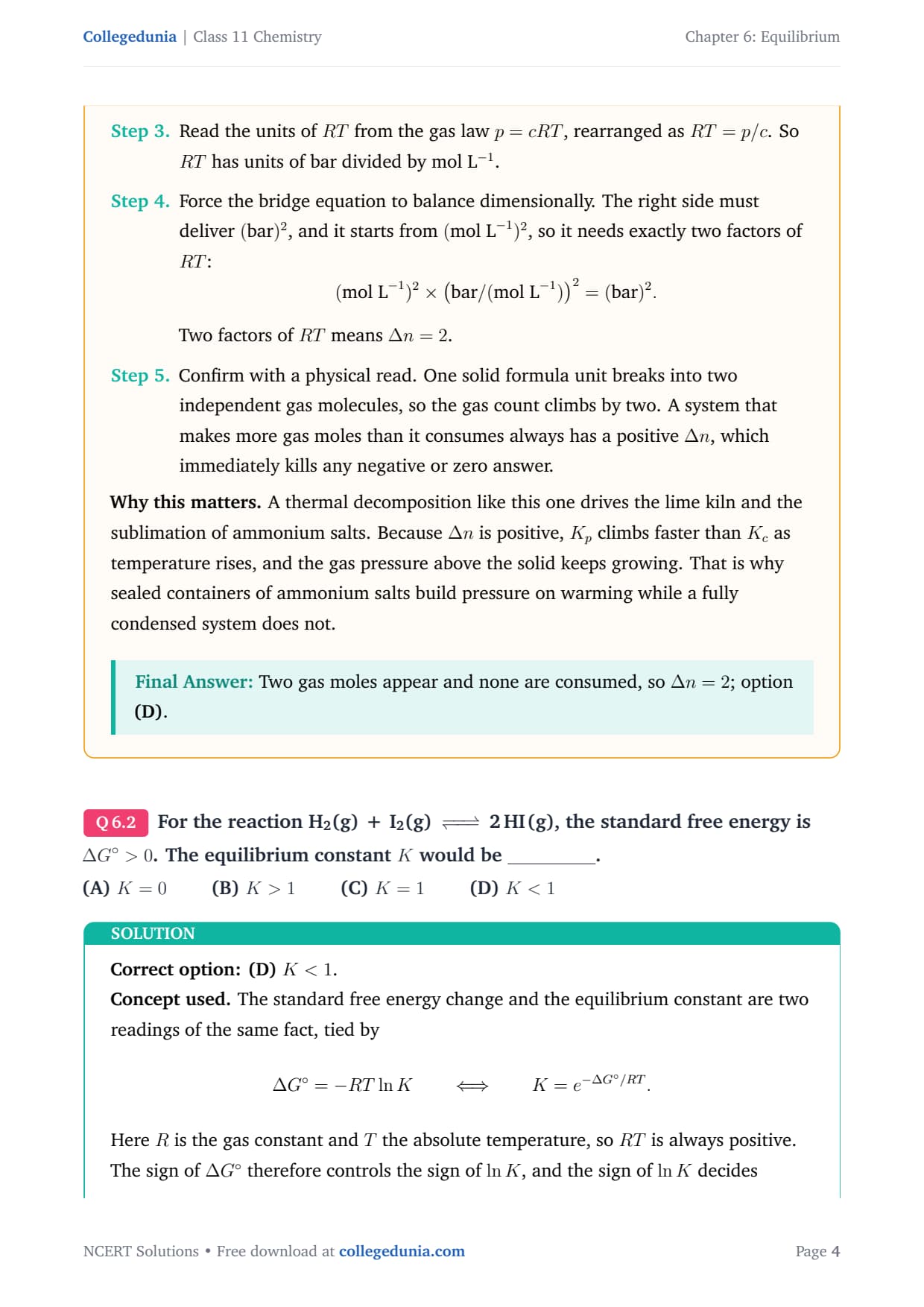
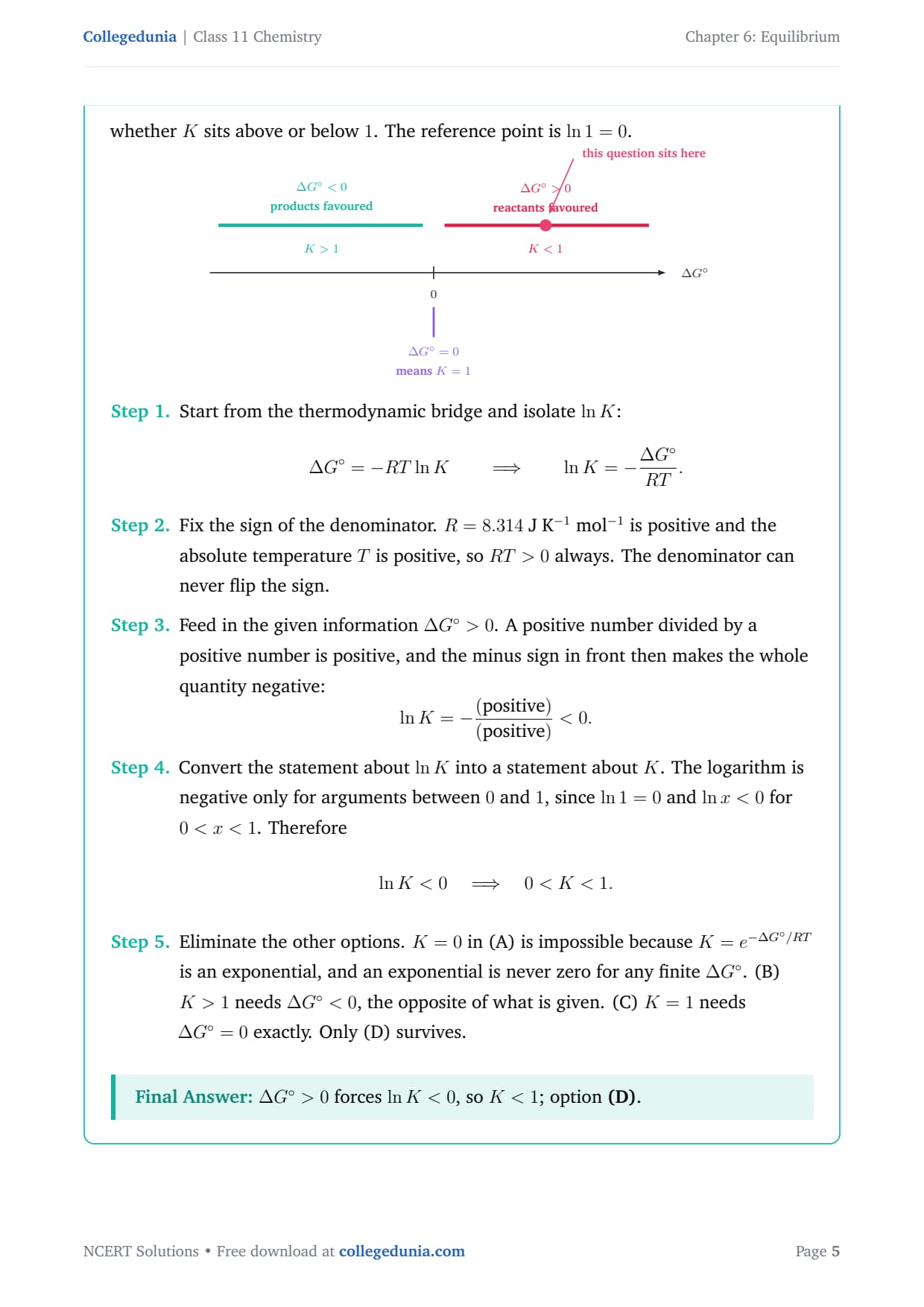
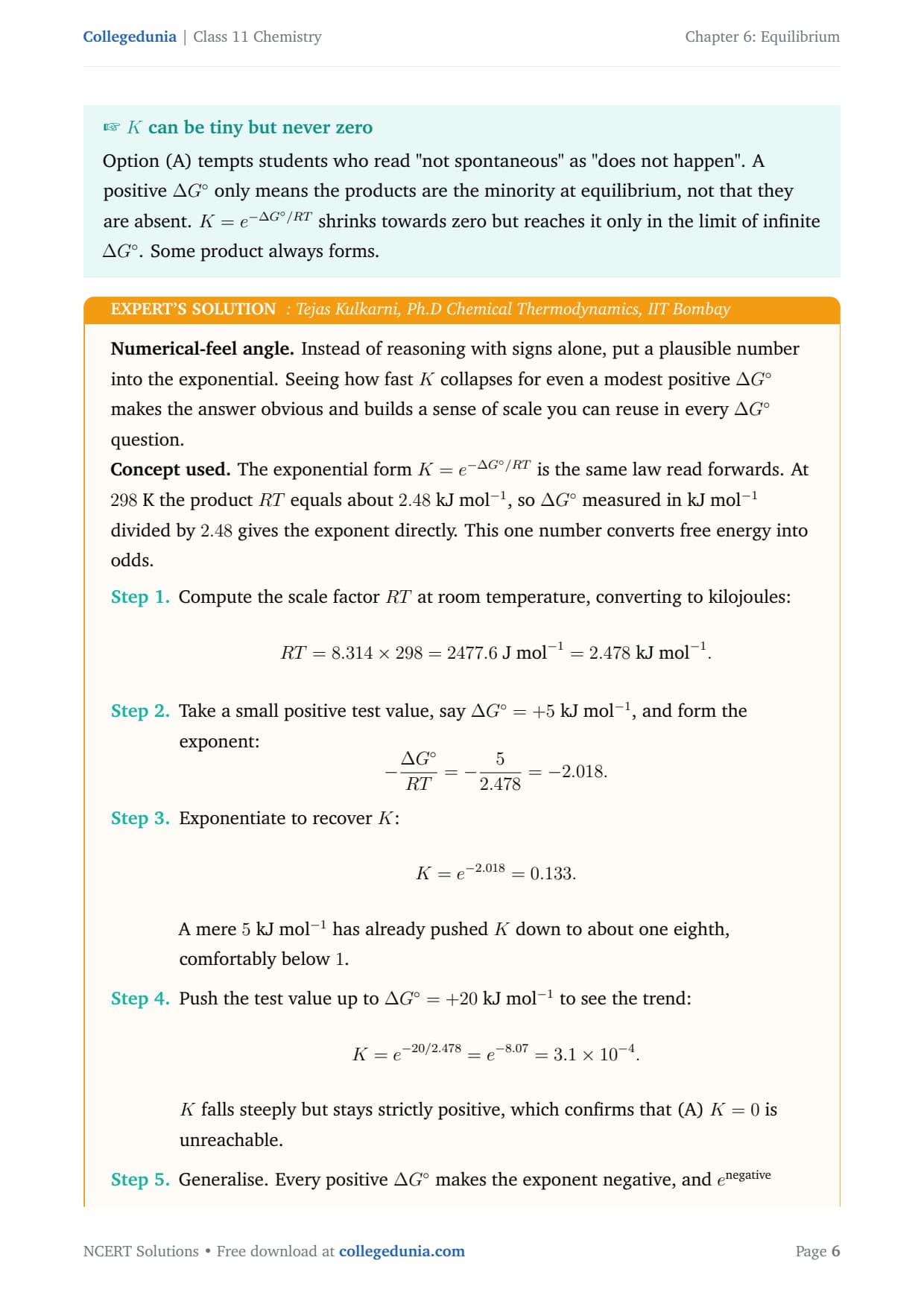
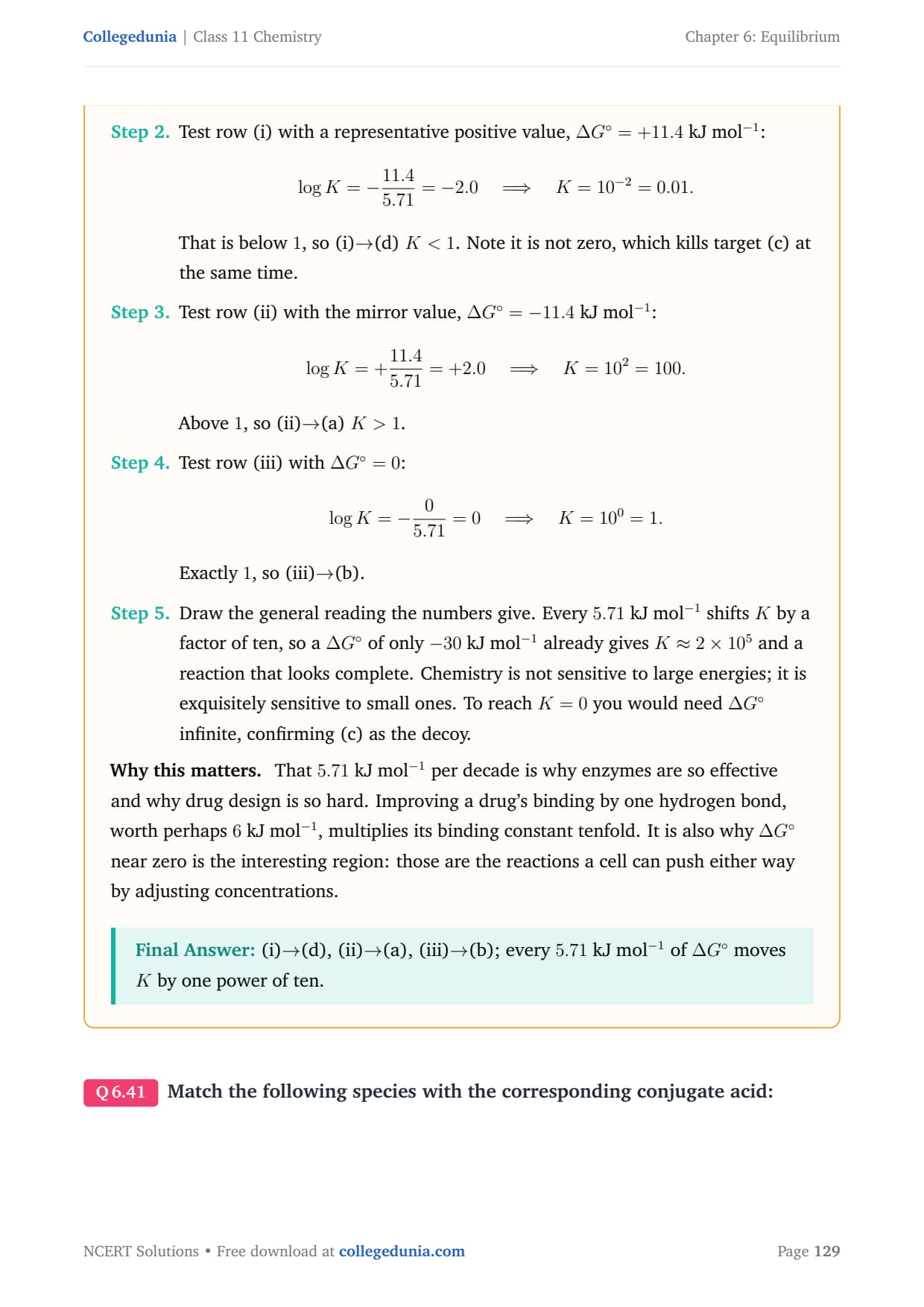
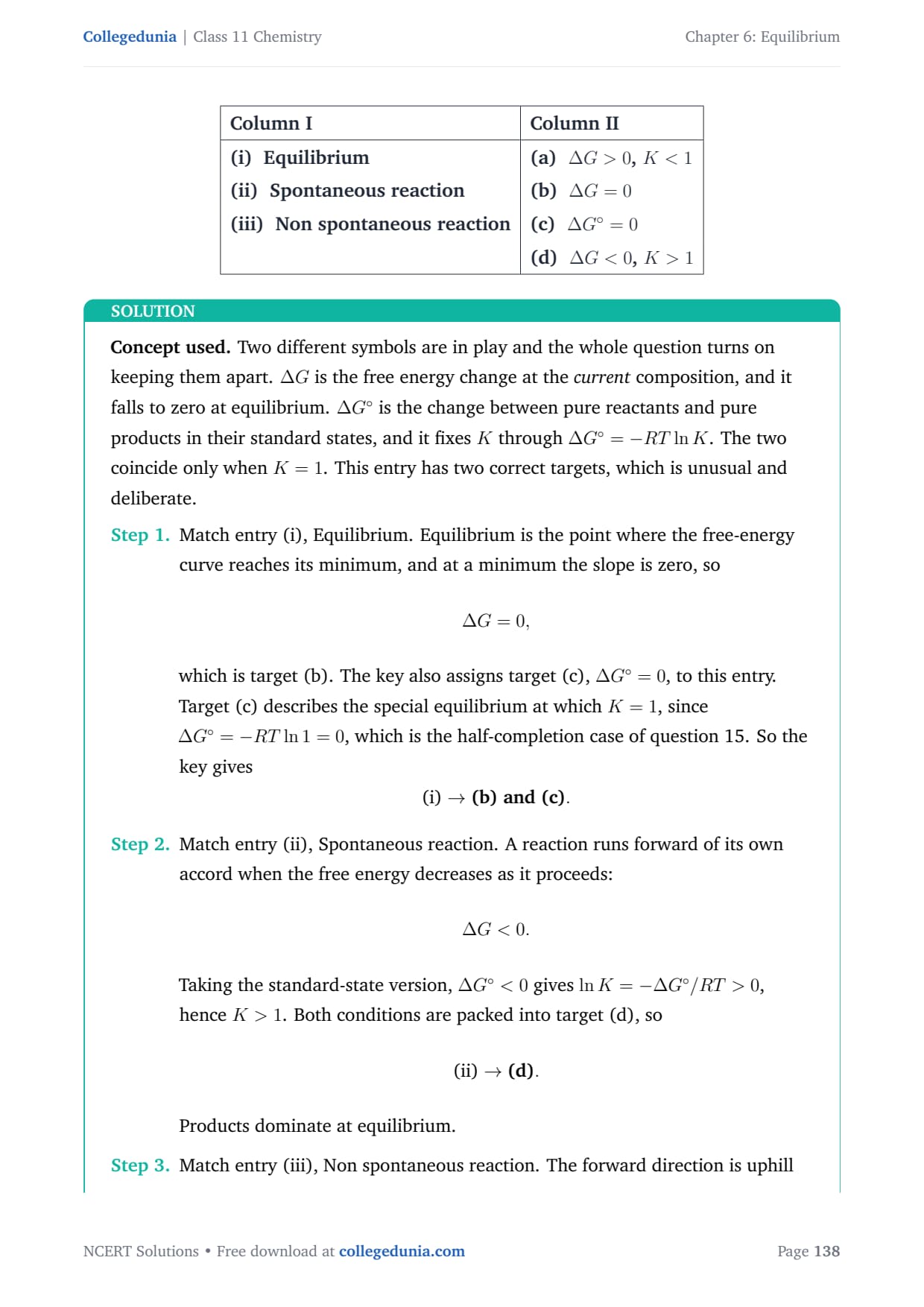
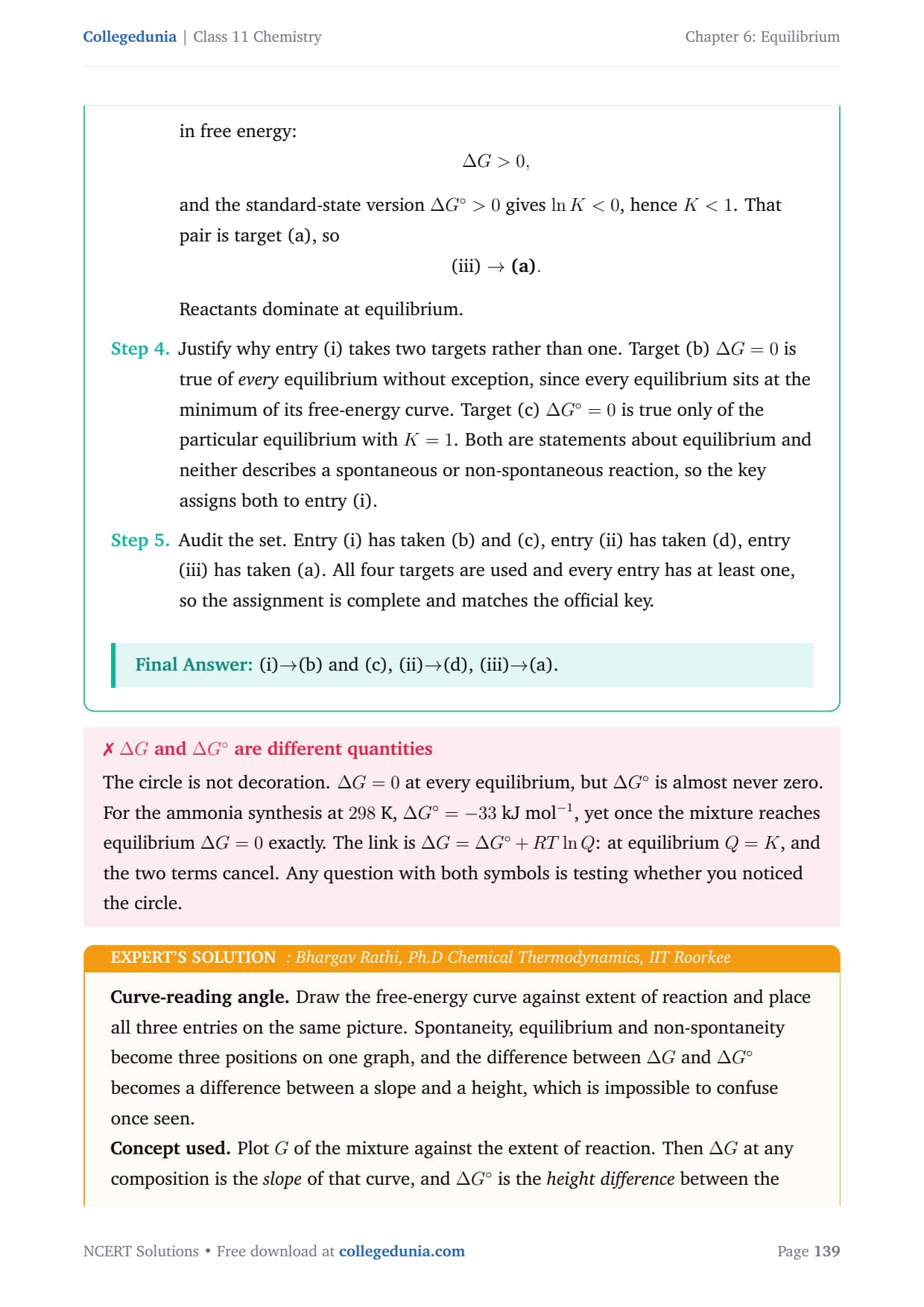
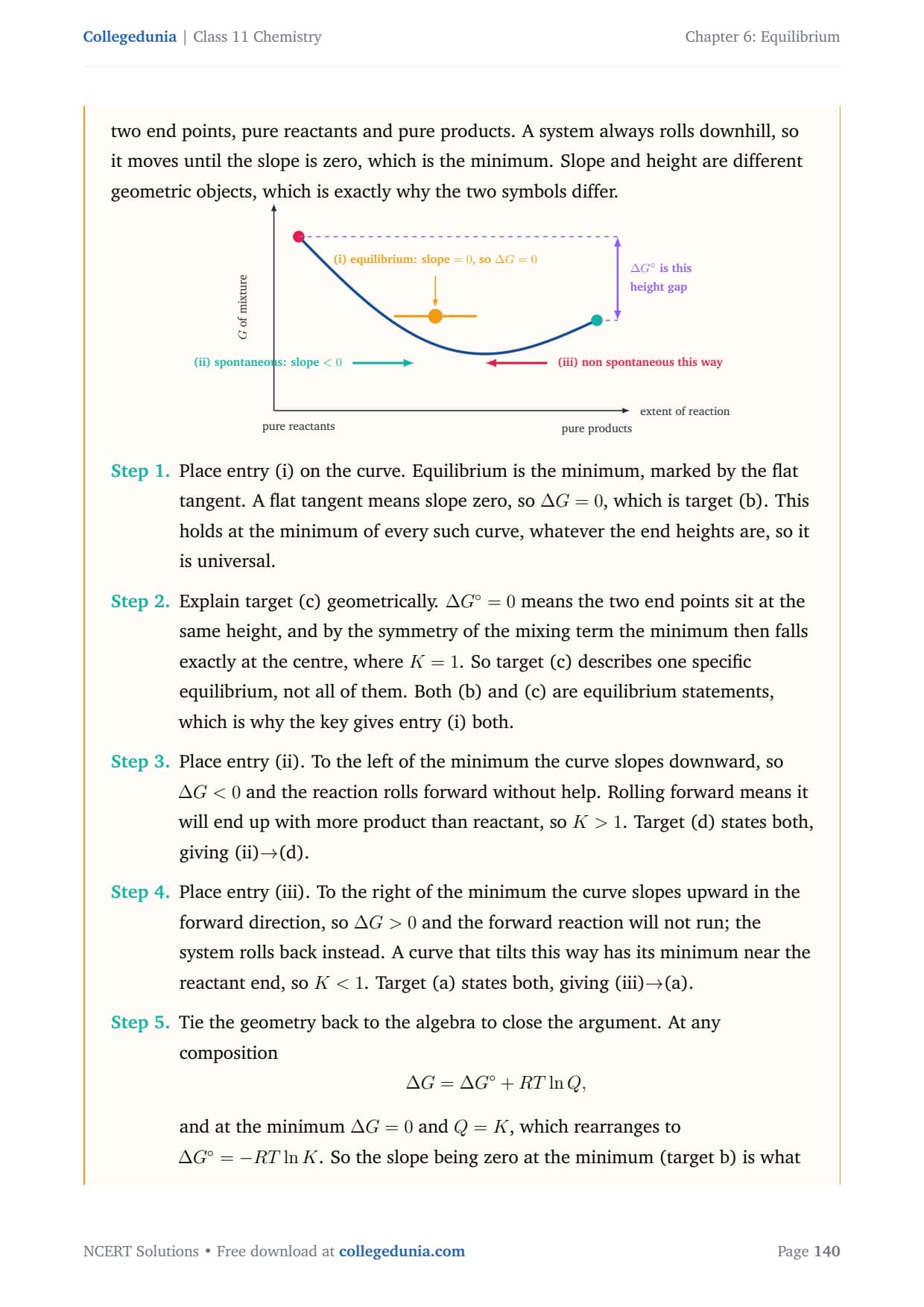
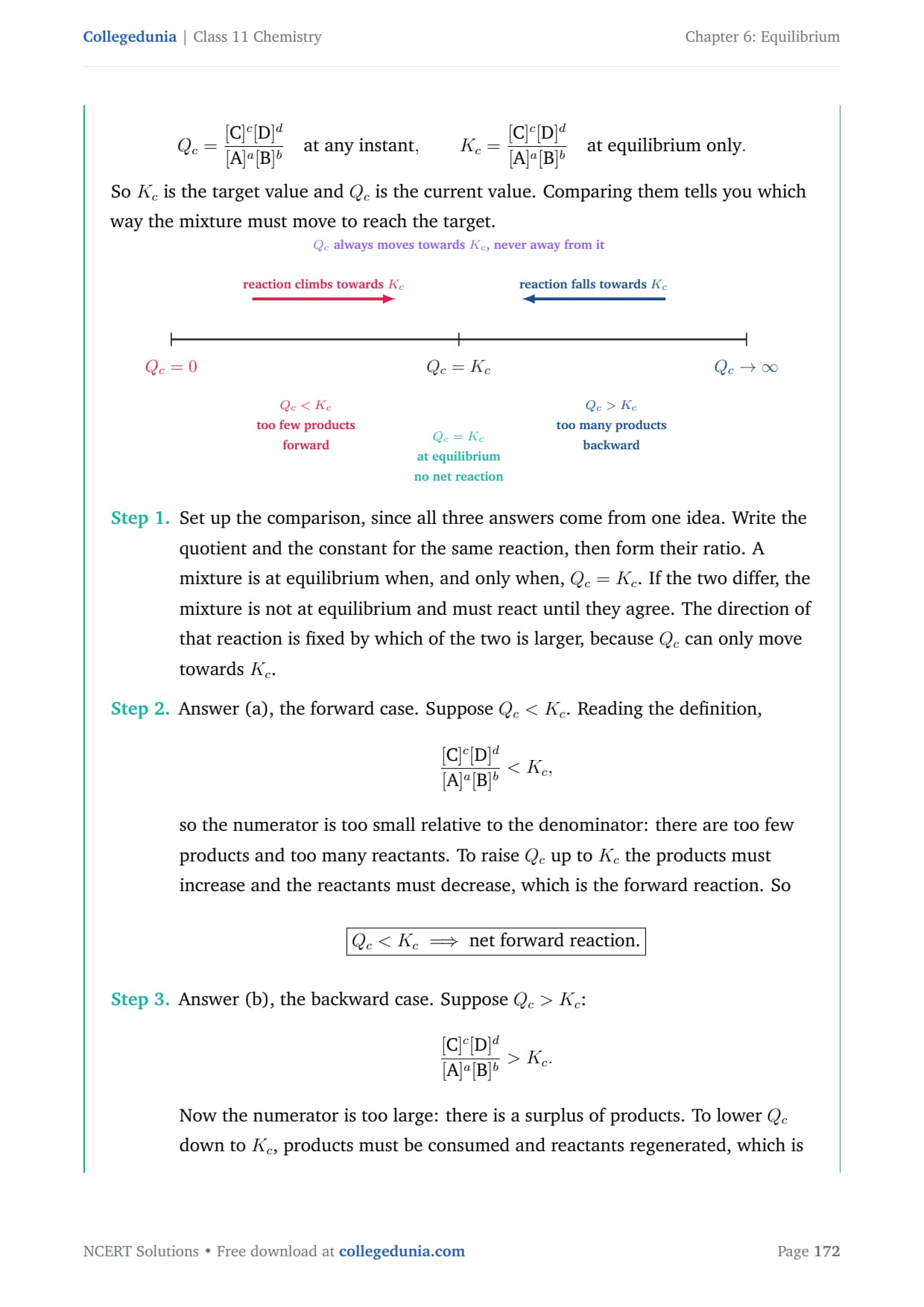
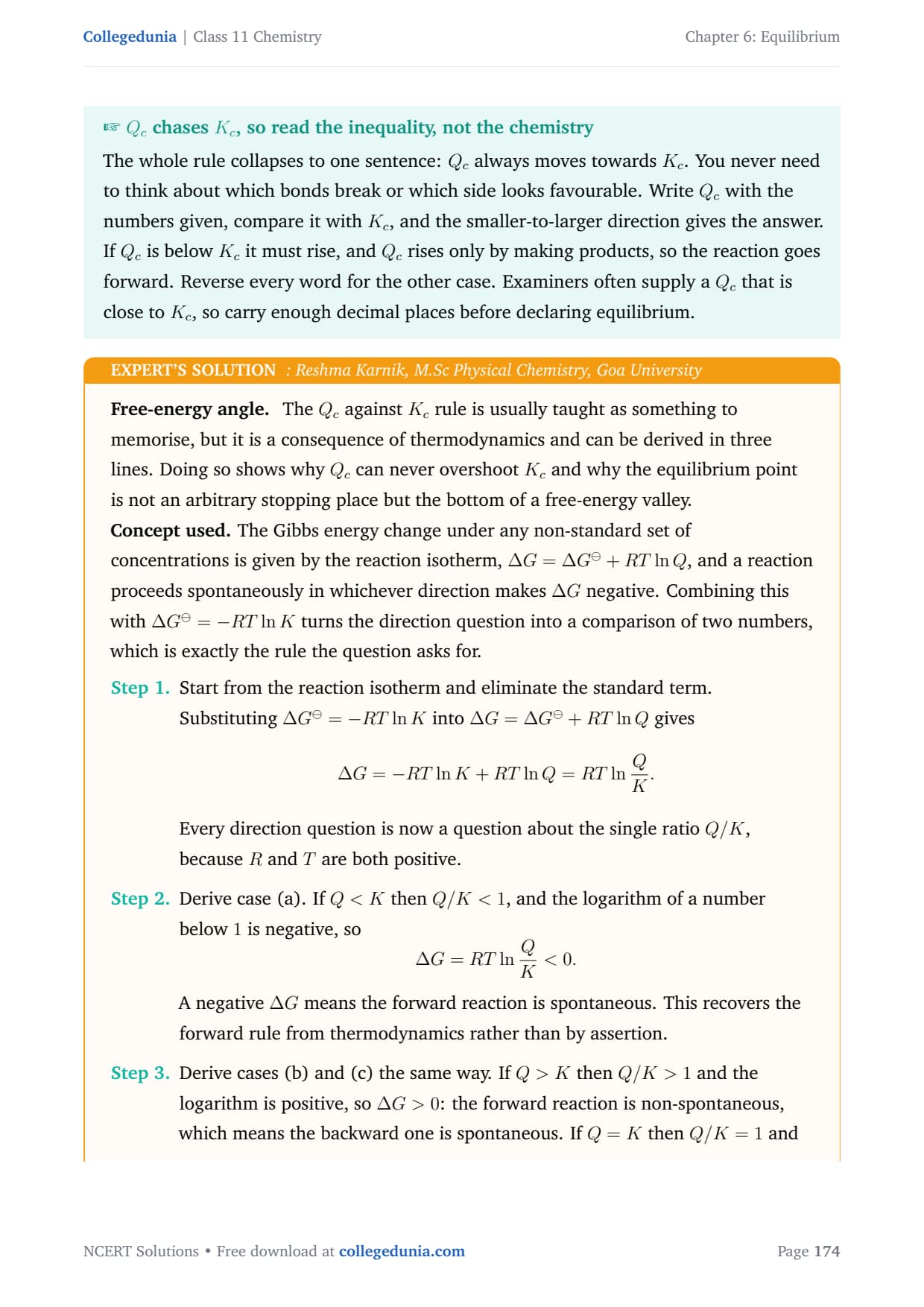
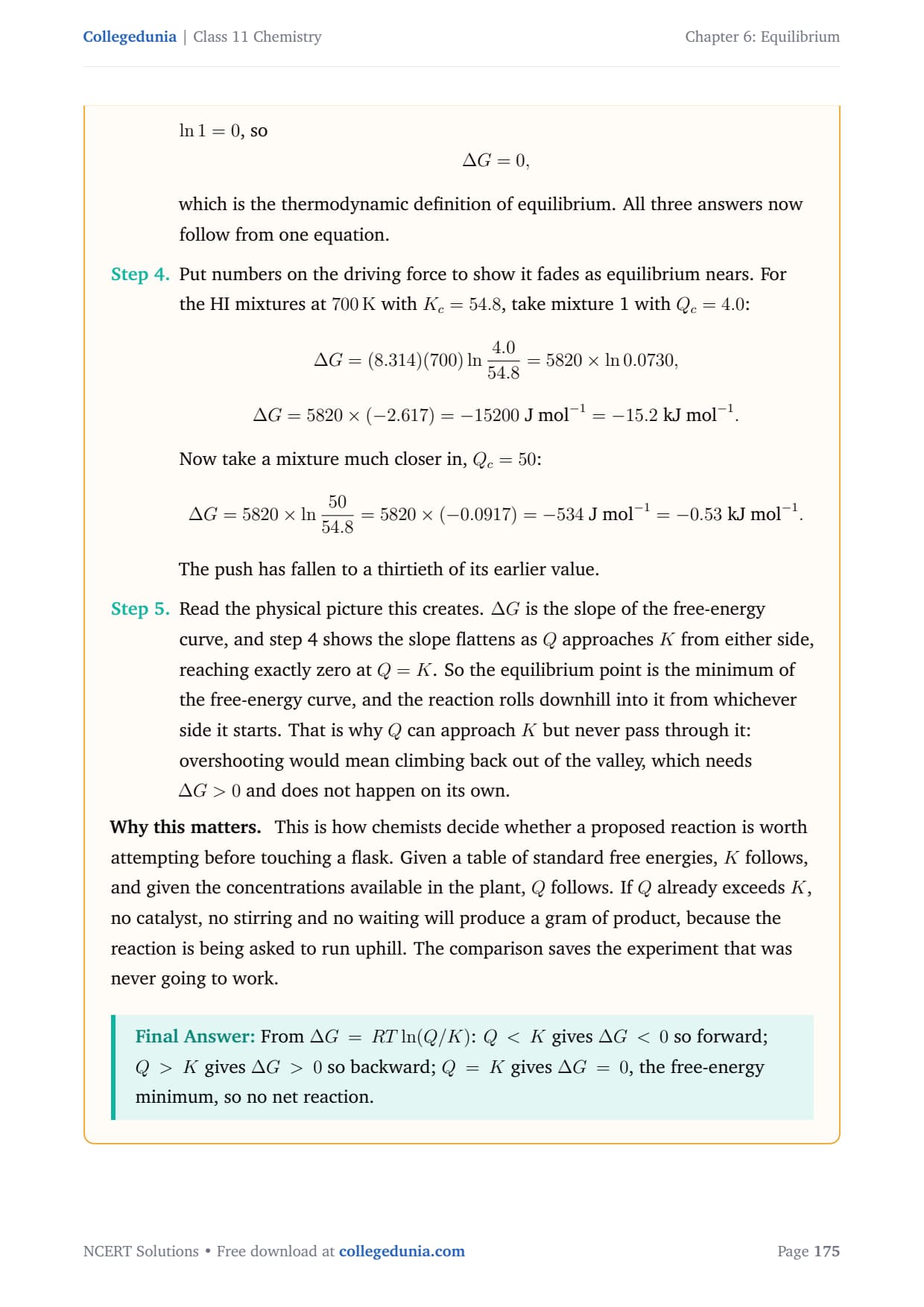
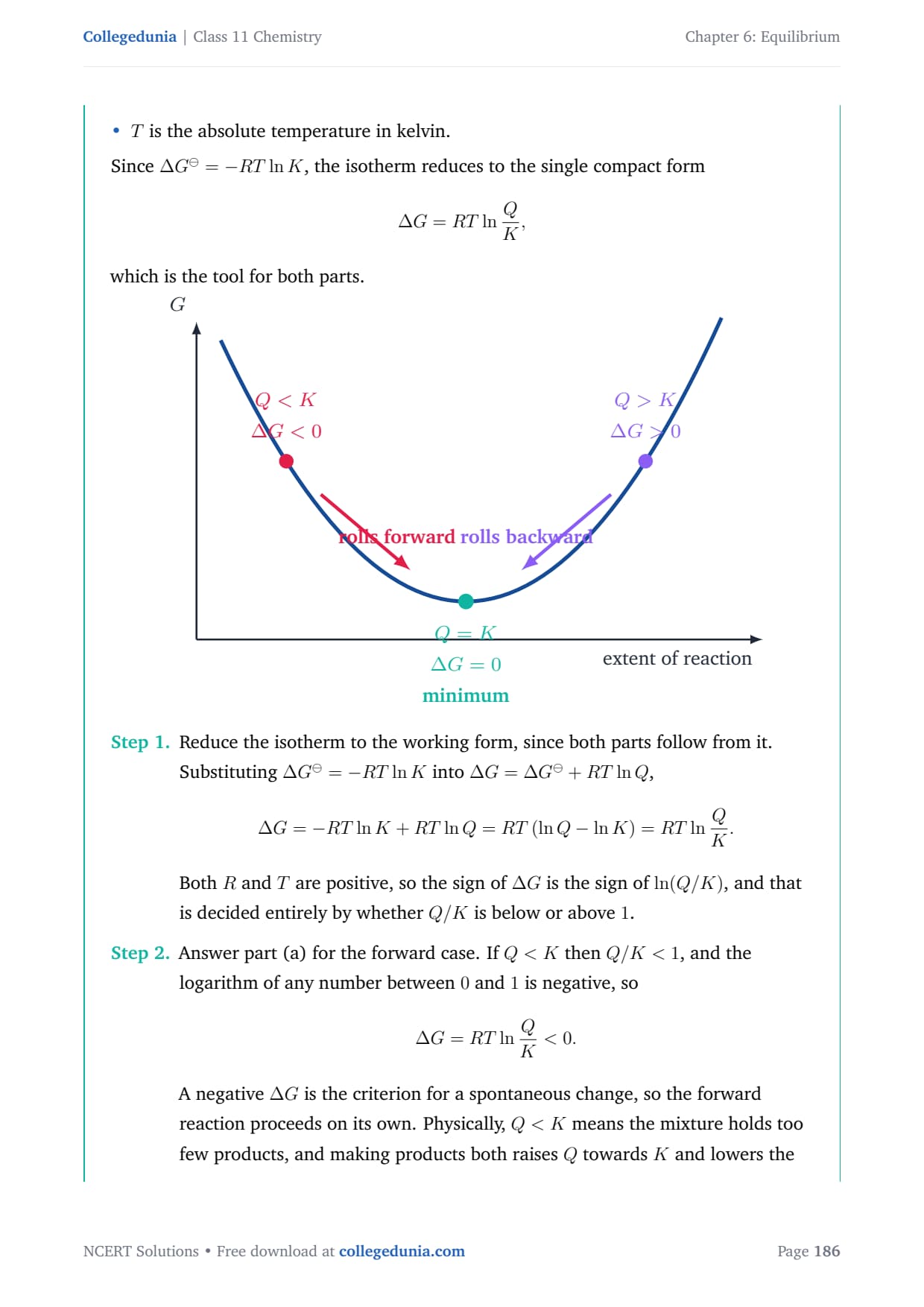
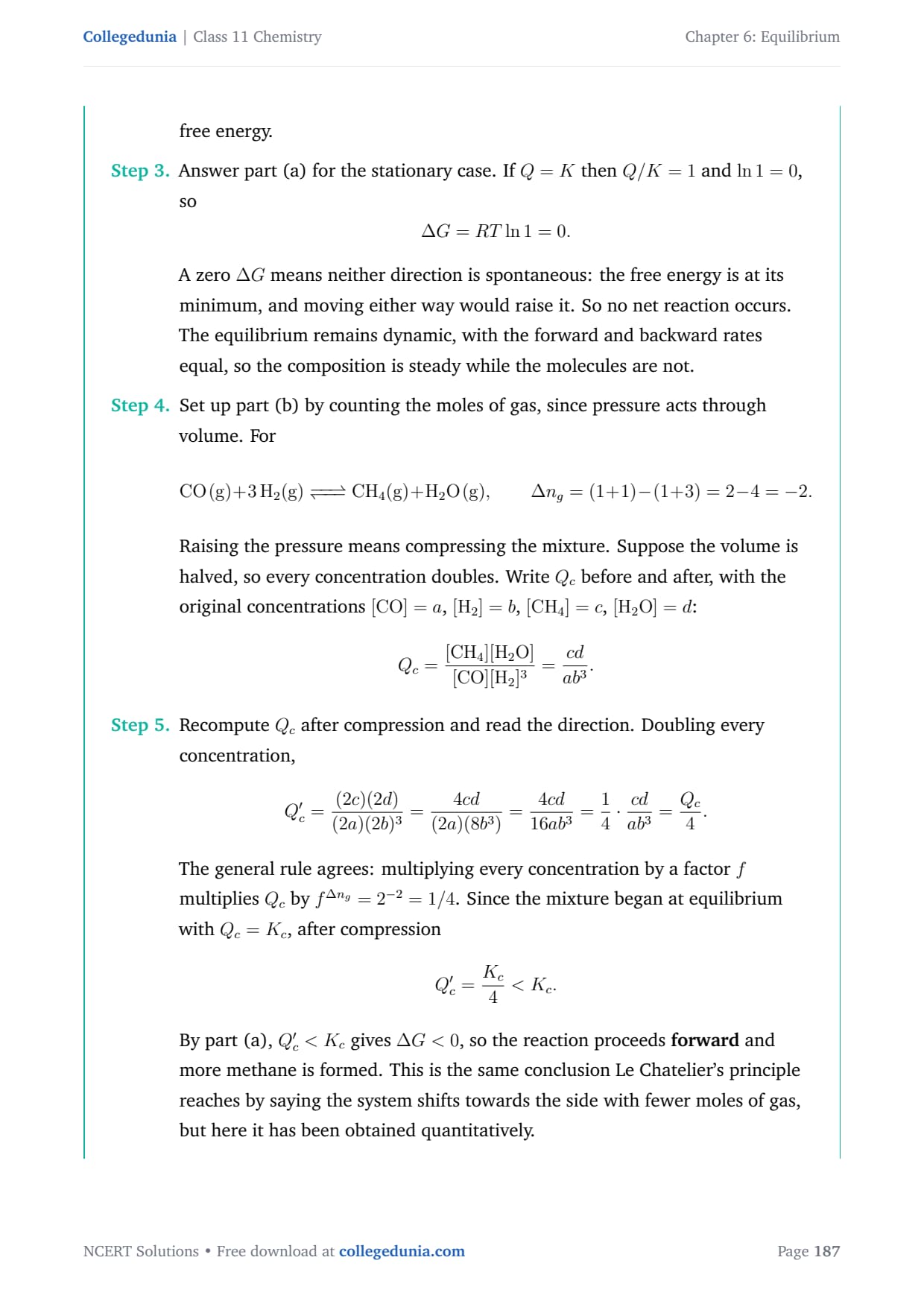
- Direction of change: the reaction quotient Q against K, and ΔG° = -RT ln K
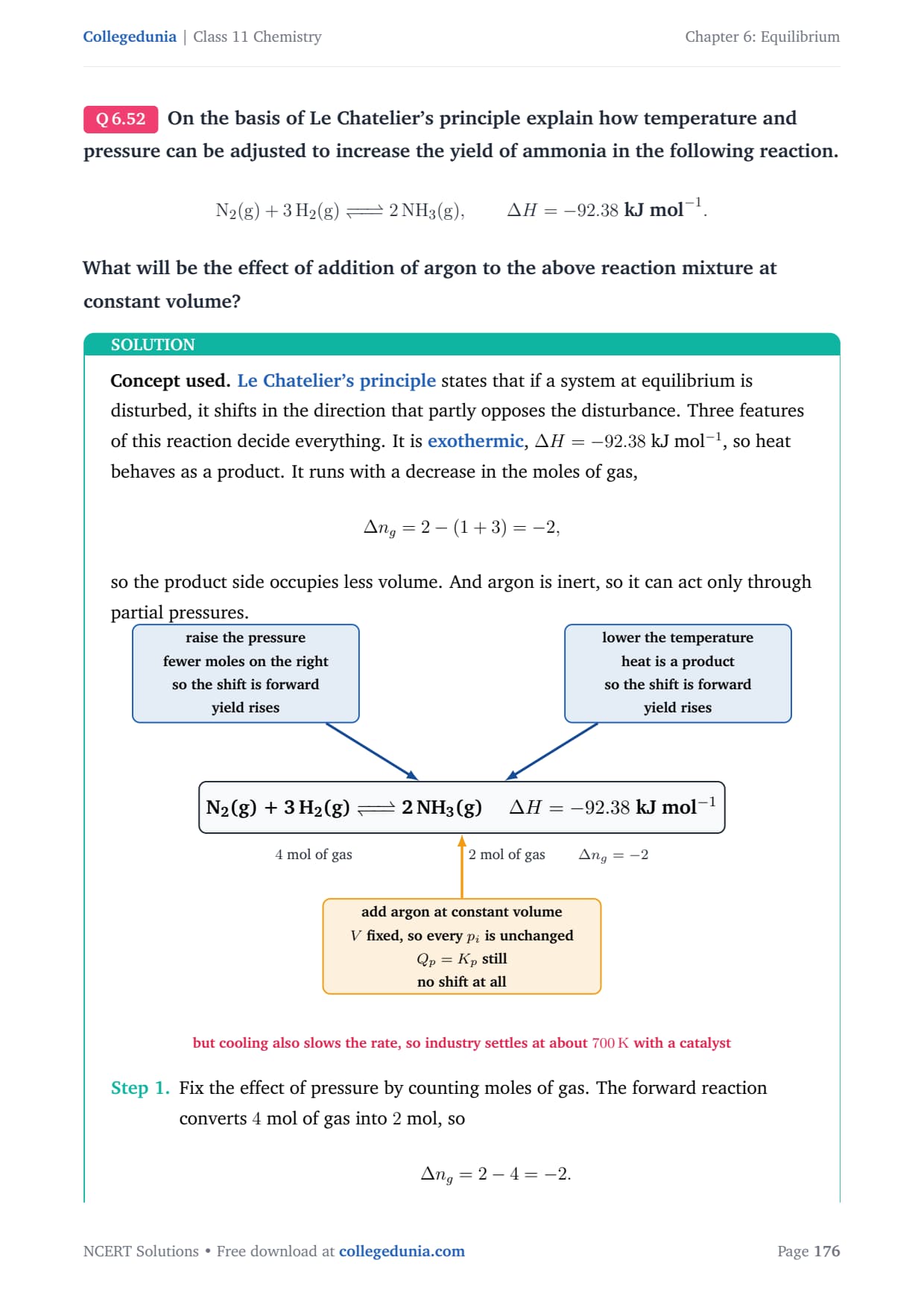
- Le Chatelier's principle: effects of pressure, temperature, dilution and inert gas
- Ionic equilibrium: acid and base strength, pH, Kw = 1.0 × 10⁻¹⁴, buffers, salt hydrolysis and solubility product
Question Types in the Equilibrium NCERT Exemplar
This chapter leans harder on Matching and Assertion and Reason than most of the book does. Both sets reward a student who can state a rule exactly, and both punish one who half remembers it.
| Question Type | Count | What It Tests |
|---|---|---|
| MCQ I (single correct) | 19 | pH, Kc and acid strength calculations |
| MCQ II (one or more correct) | 2 | Whether you can reject every wrong option, not just find one right one |
| Short Answer | 16 | Reasoning on conjugate pairs, hydrolysis and solubility |
| Matching Type | 6 | Pairing conditions with the shift they cause |
| Assertion and Reason | 7 | Whether the reason actually explains the assertion |
| Long Answer | 4 | Multi-step derivations worth 5 marks |
Where the Printed Equilibrium Exemplar Slips
Four questions in this chapter need care, and each is explained in the PDF rather than passed over. The most interesting one is not a typo at all.
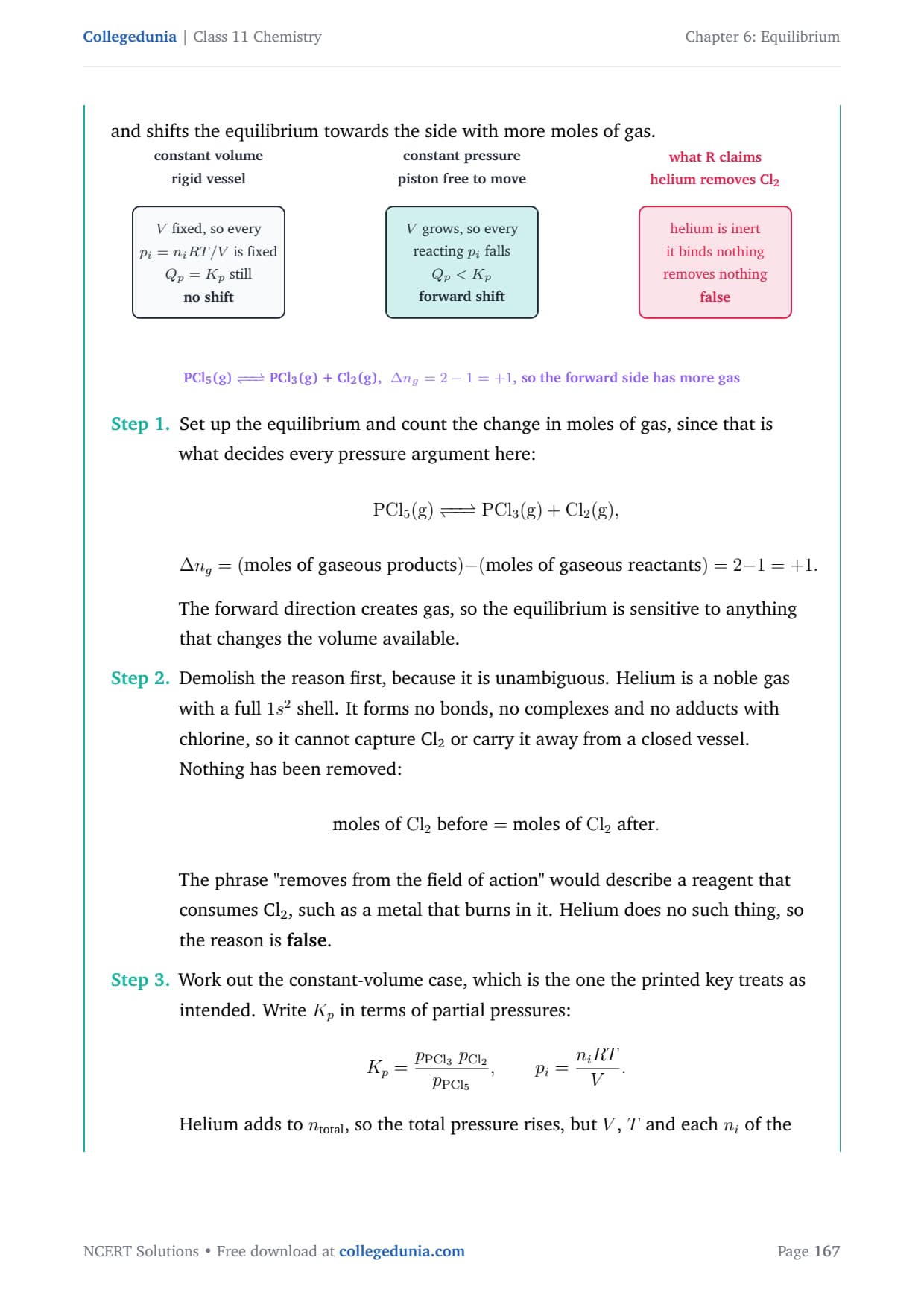
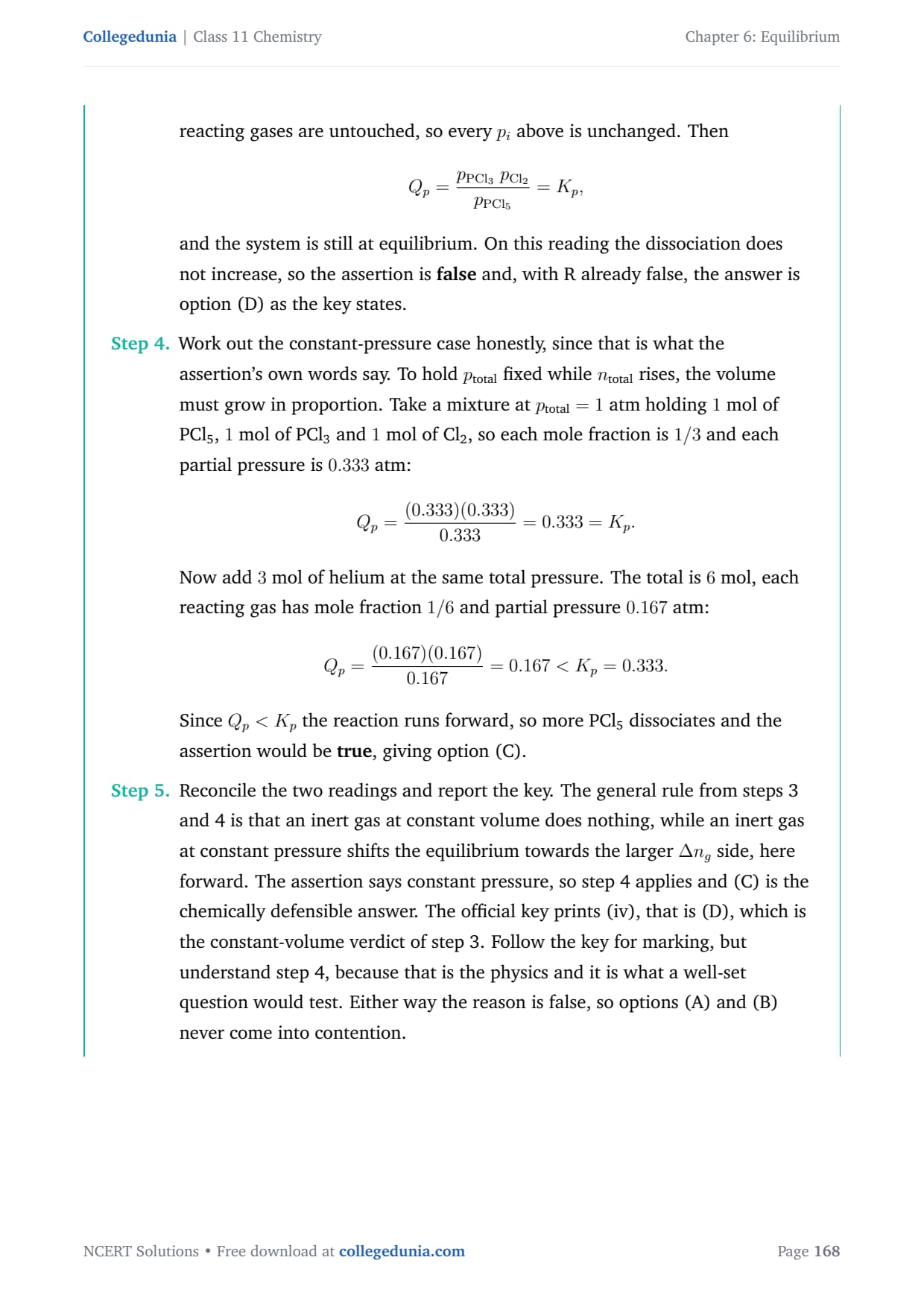
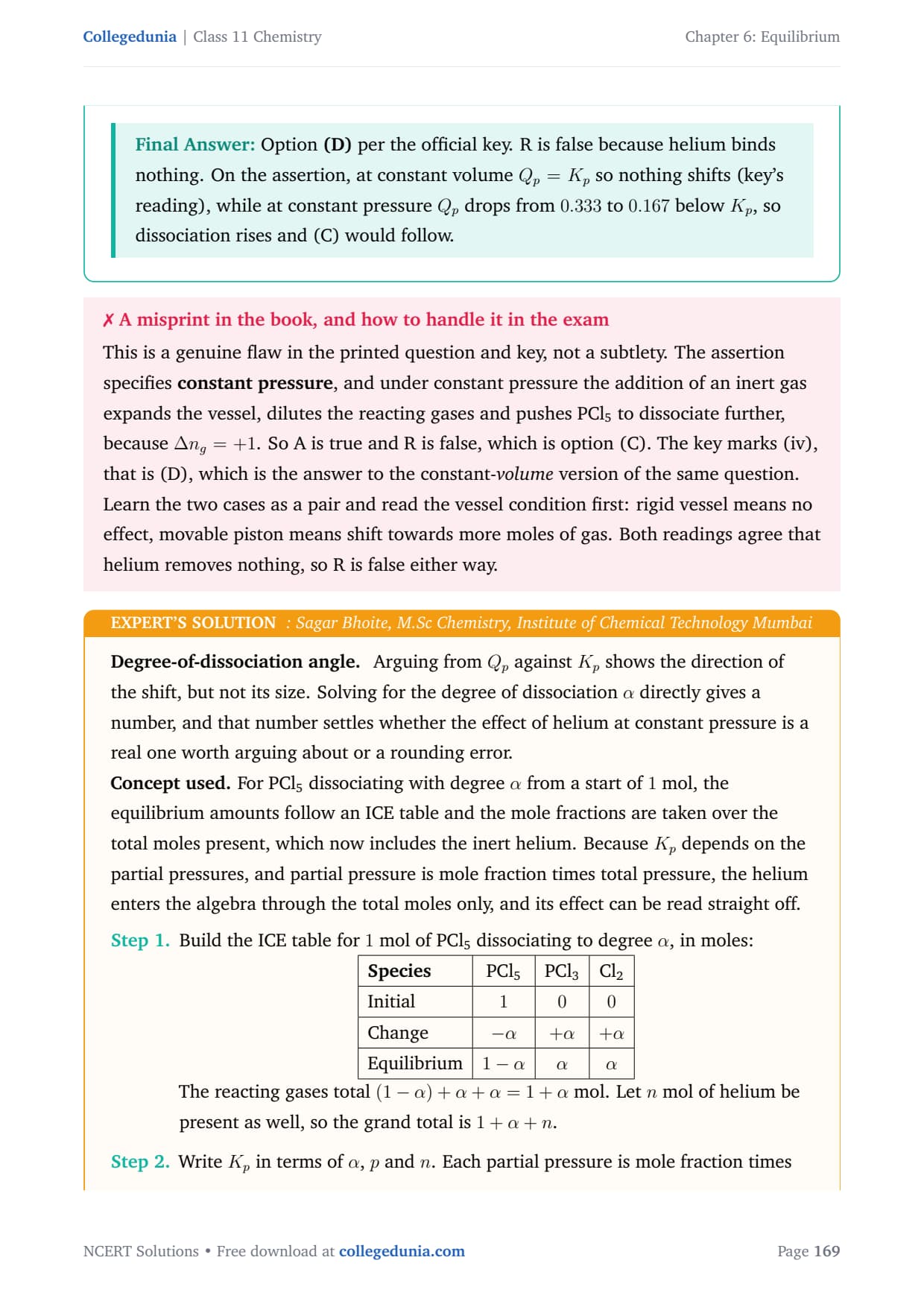
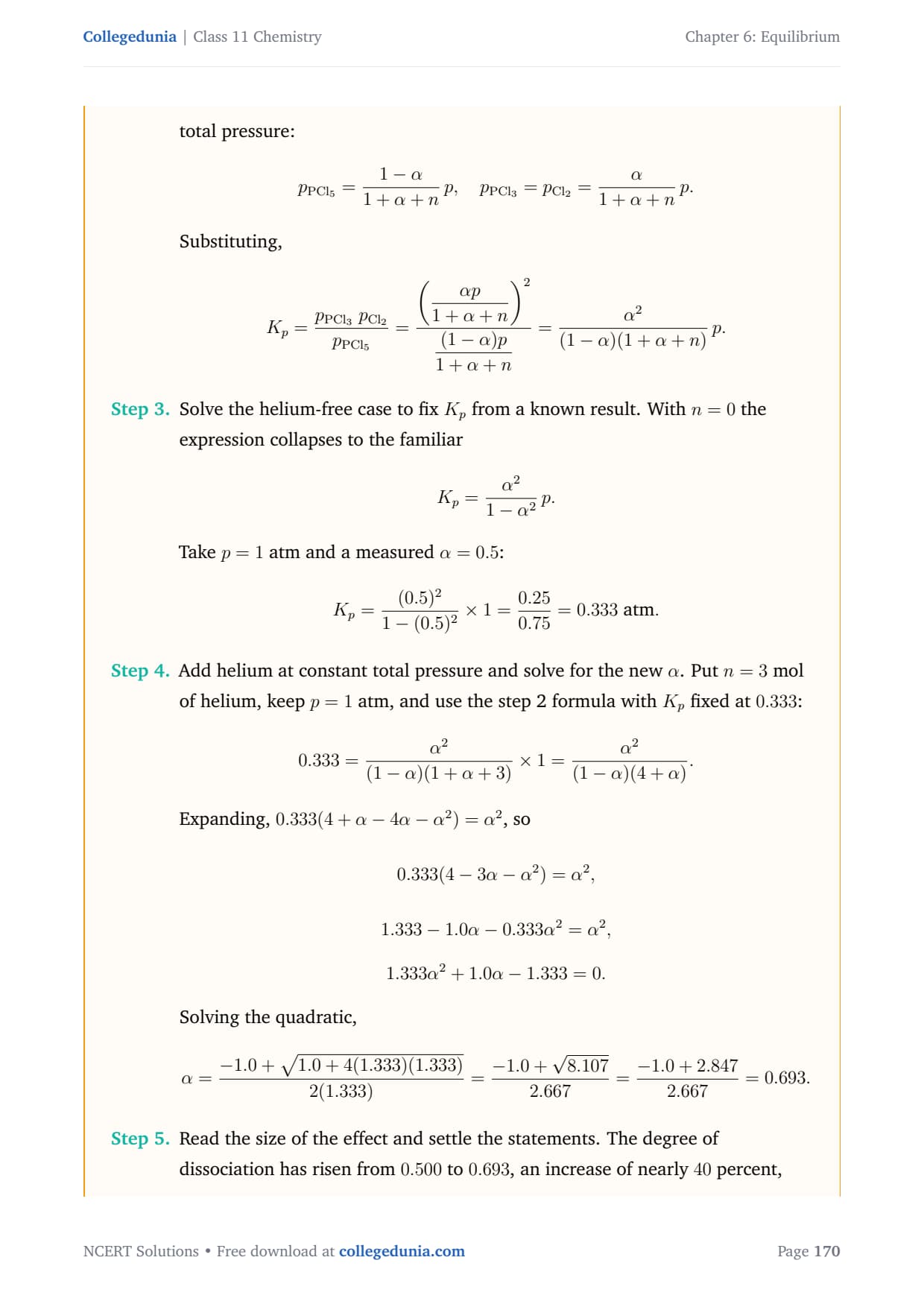
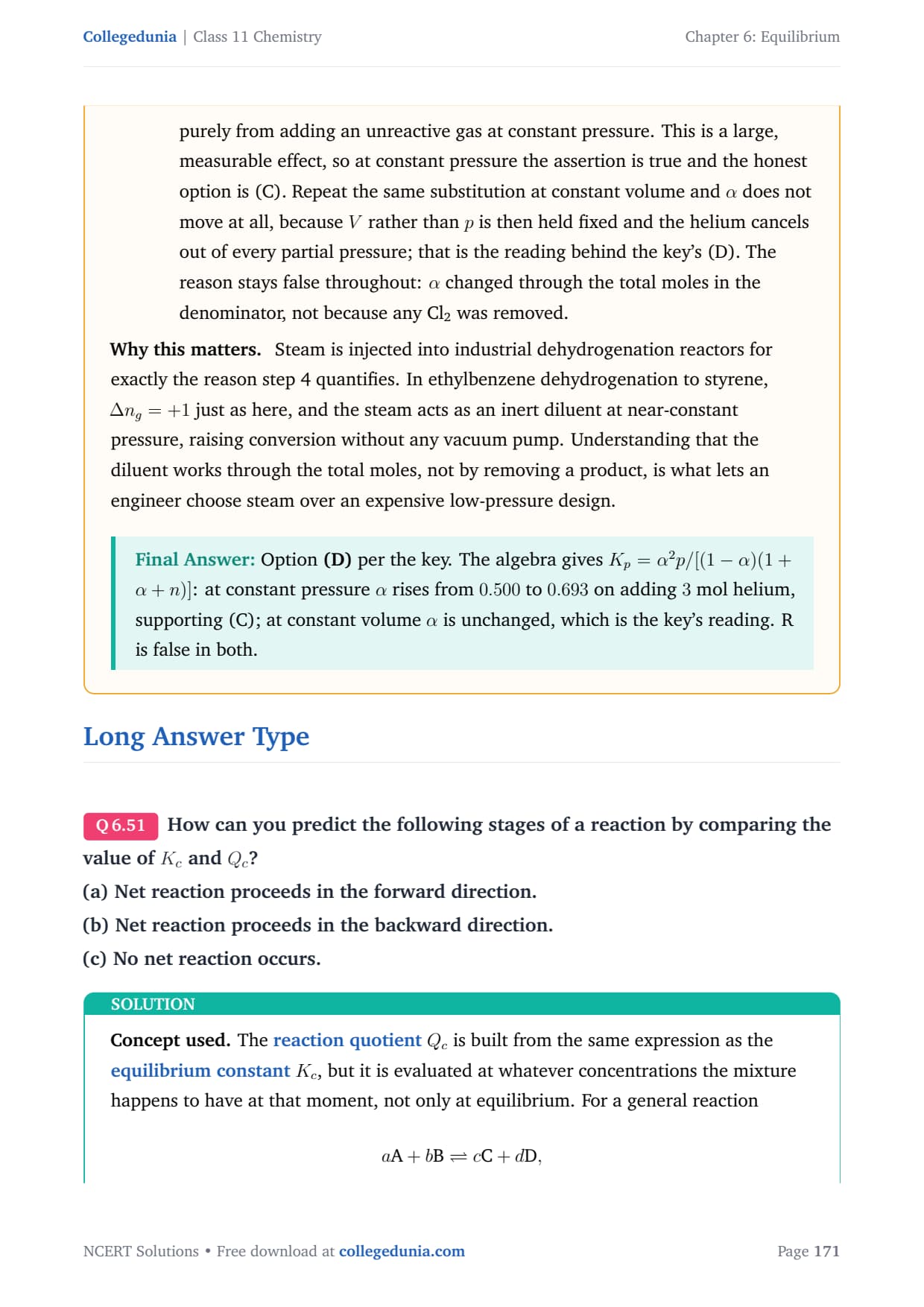
- Question 50: the assertion adds helium to dissociating PCl5 at constant pressure. Under that condition the vessel expands, the reacting gases dilute, and since Δng = +1 the dissociation genuinely rises. So A is true and the honest answer is (C). The key prints (D), which answers the constant-volume version.
- Question 49: its option (iii) reads "A is false but R is true", while Questions 44 to 48 use the opposite wording at (iii). Answering by remembered option position fails here.
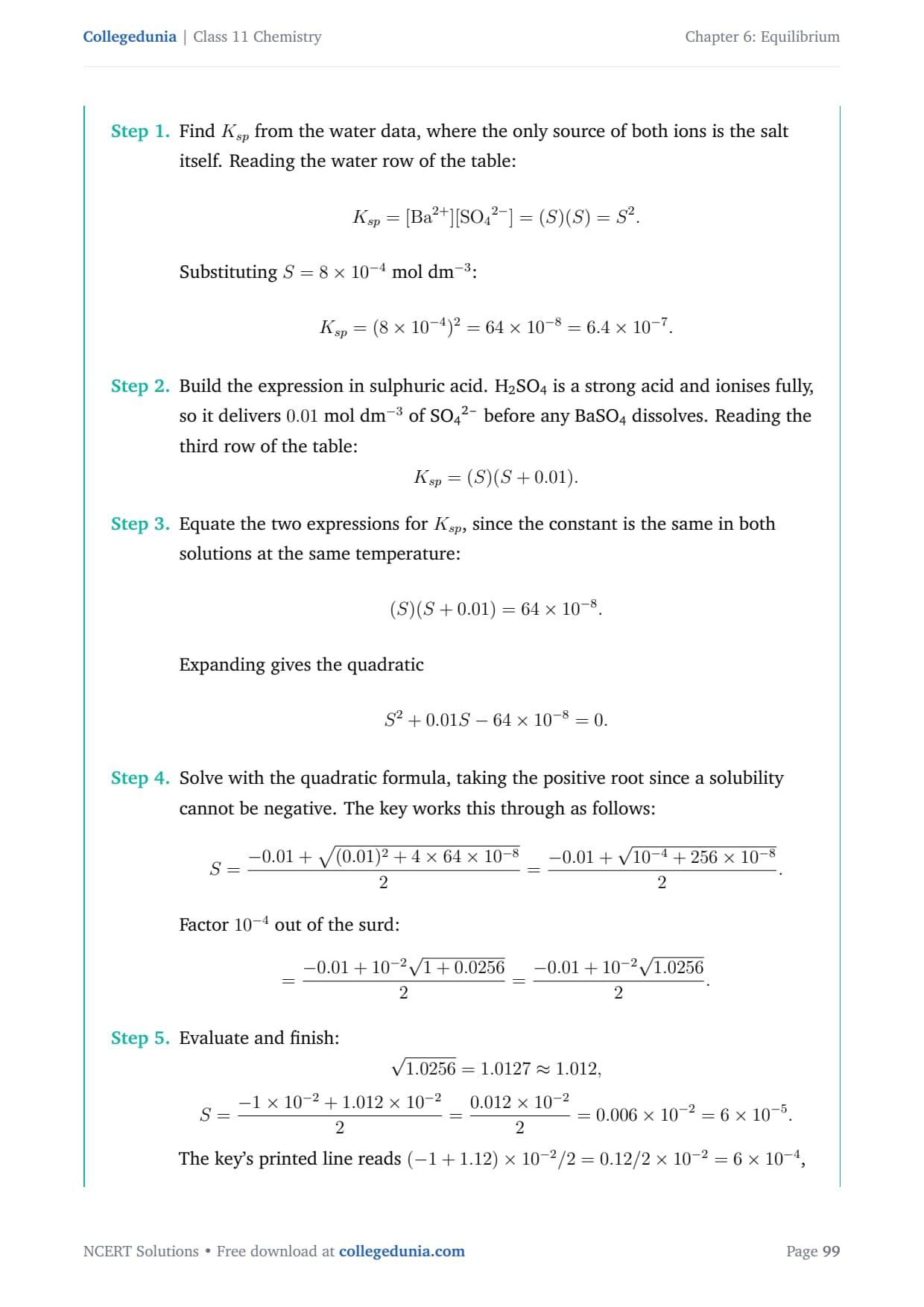
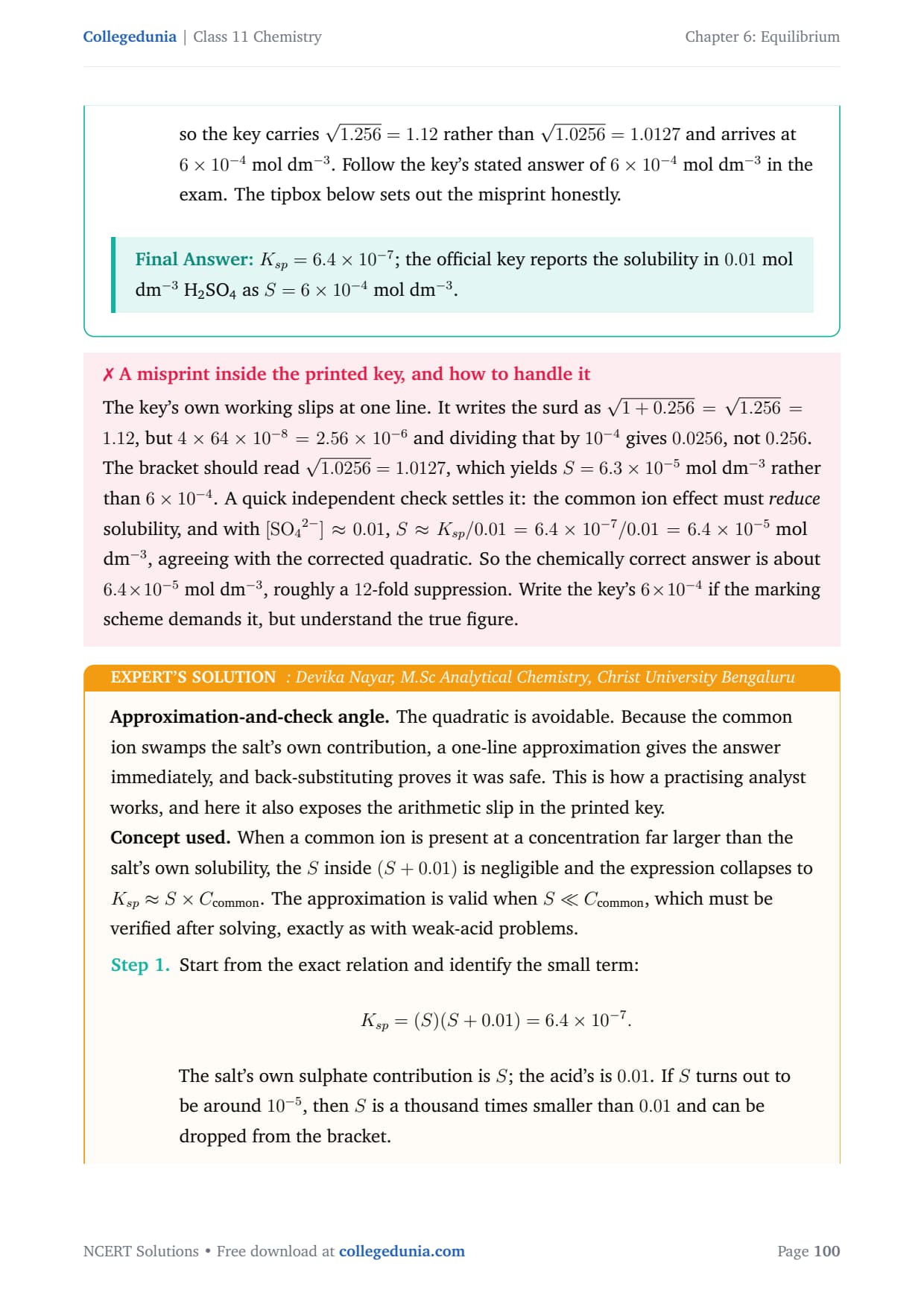
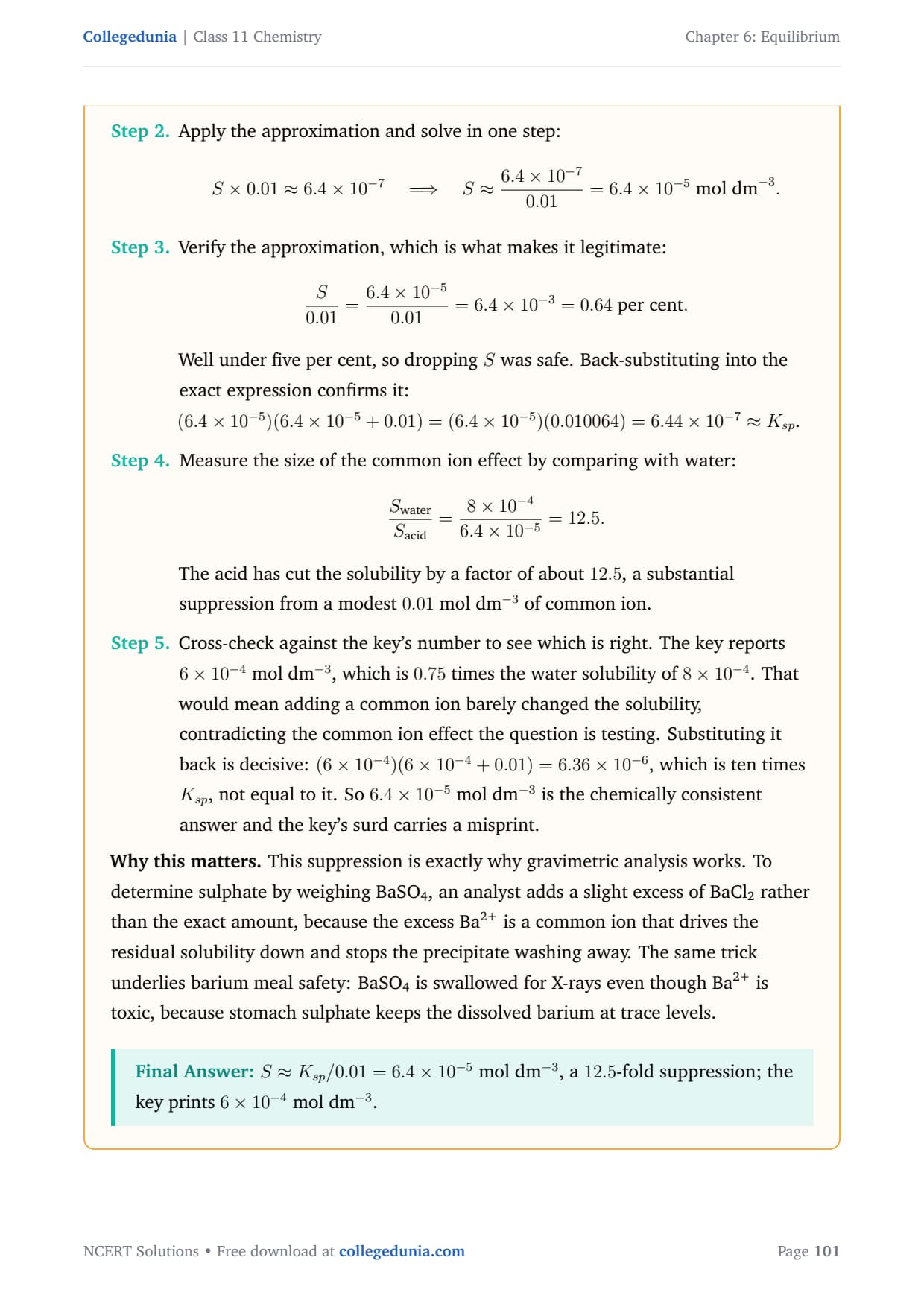
- Question 31: the key's own working writes the surd as √1.256, but 4 × 64 × 10-8 divided by 10-4 is 0.0256. The bracket should read √1.0256, giving 6.3 × 10⁻⁵ mol dm-3.
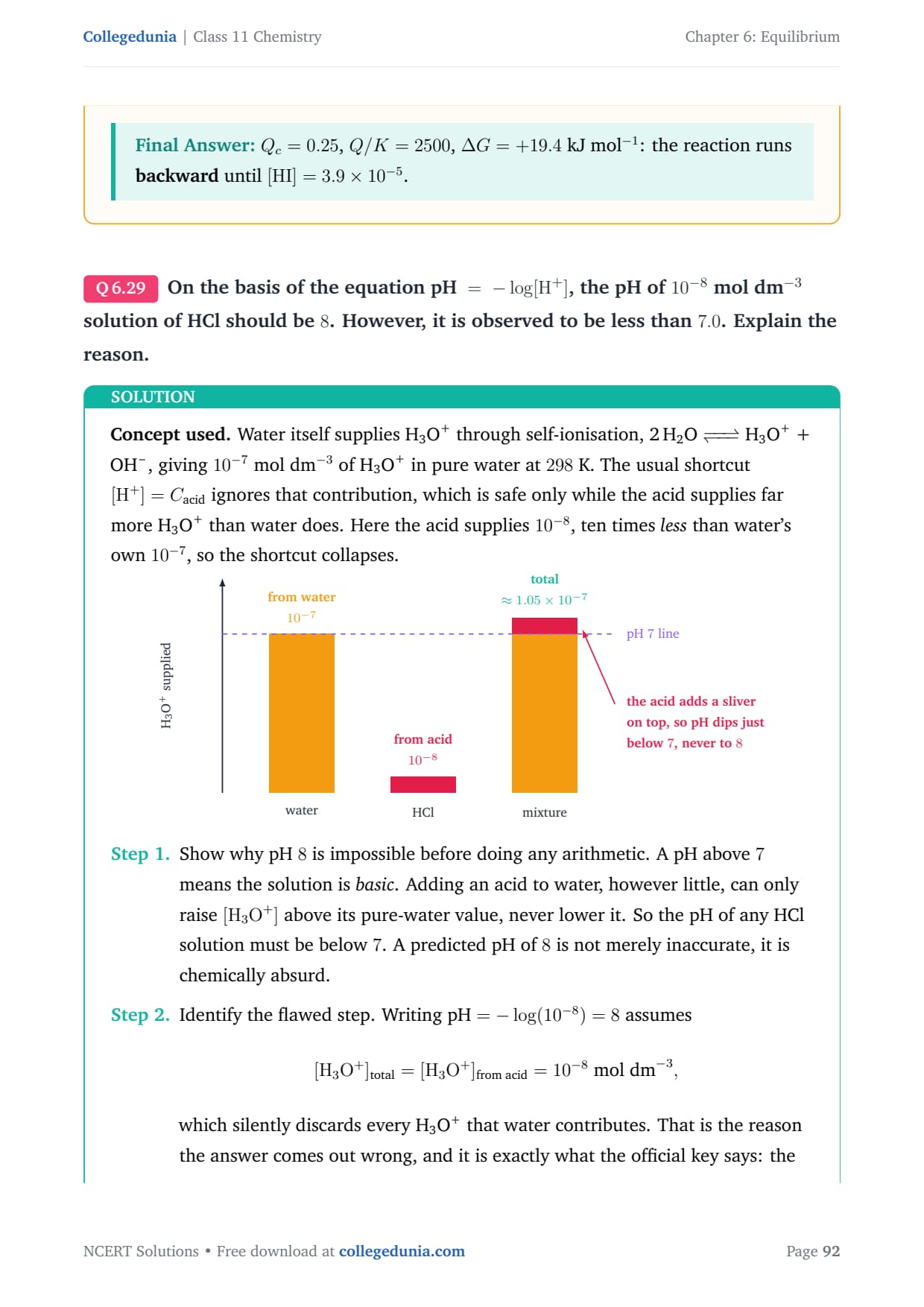
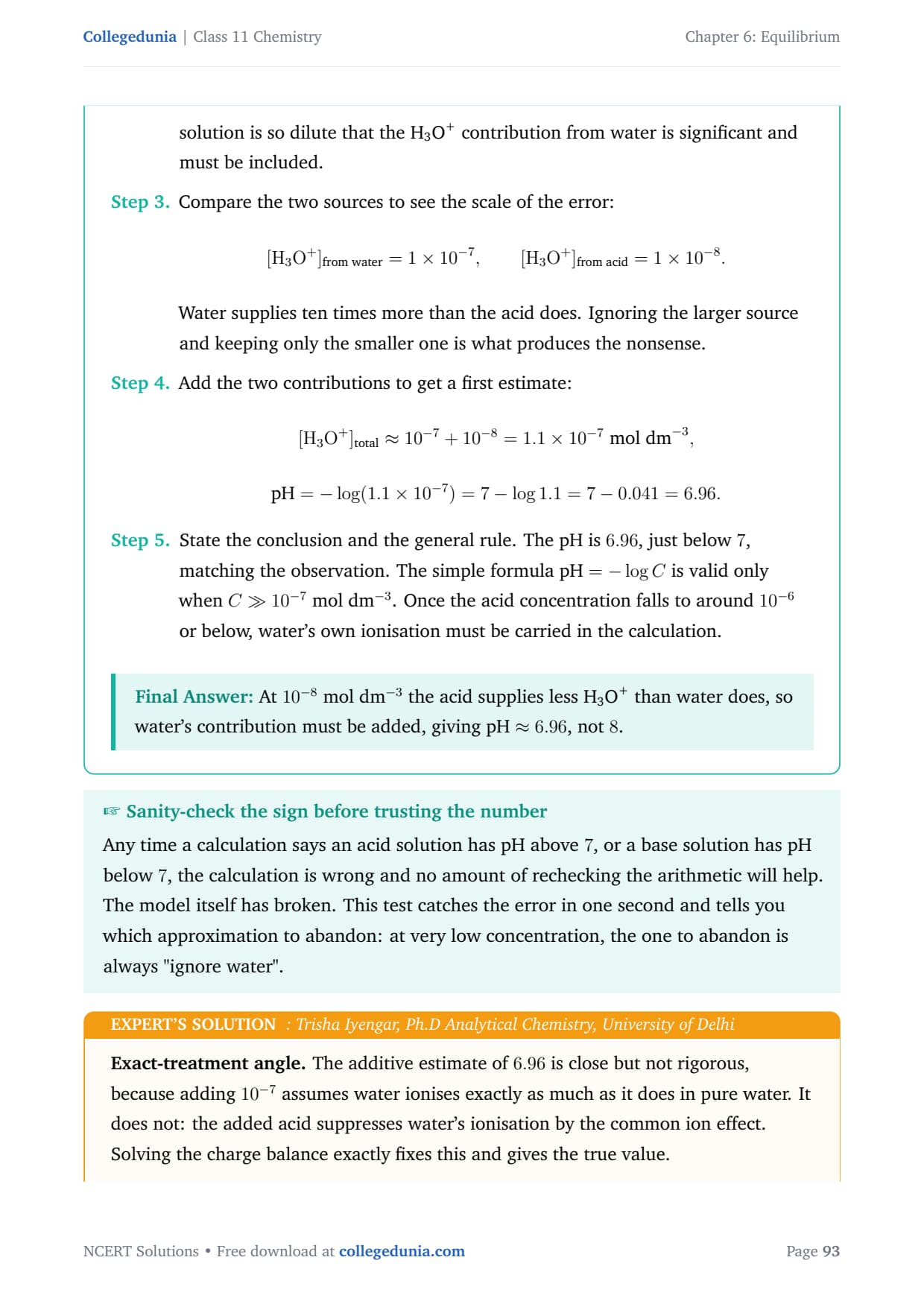
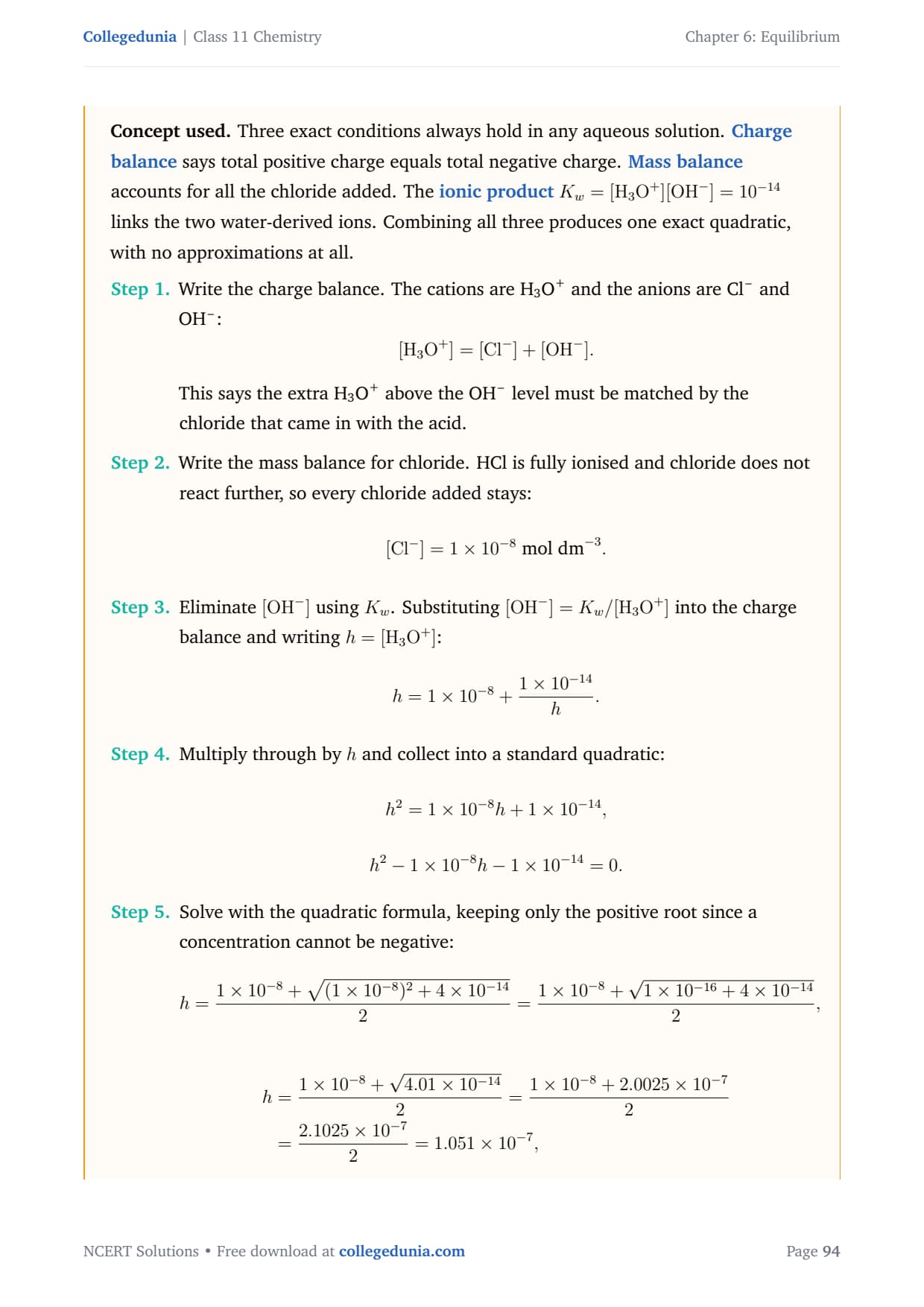
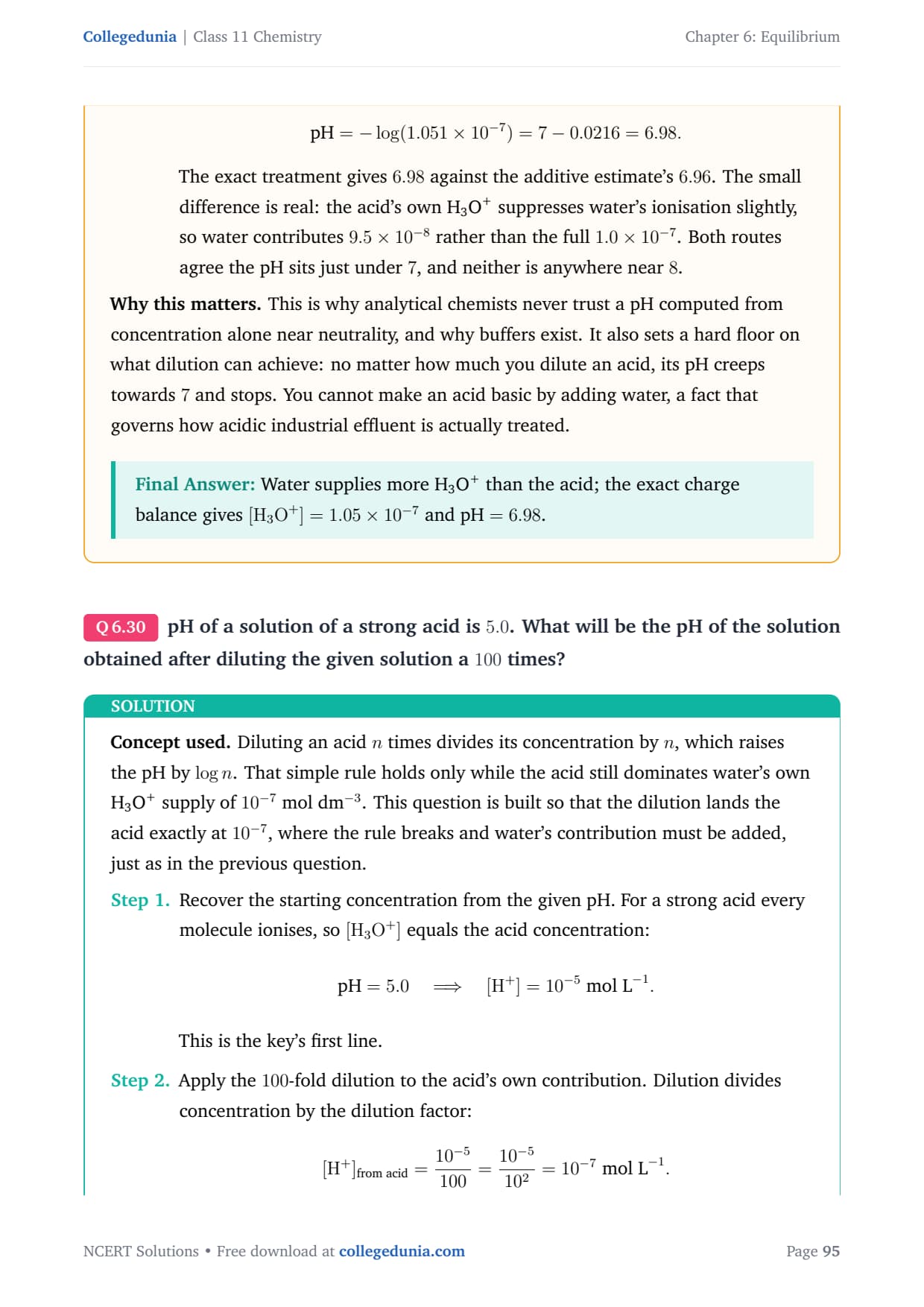
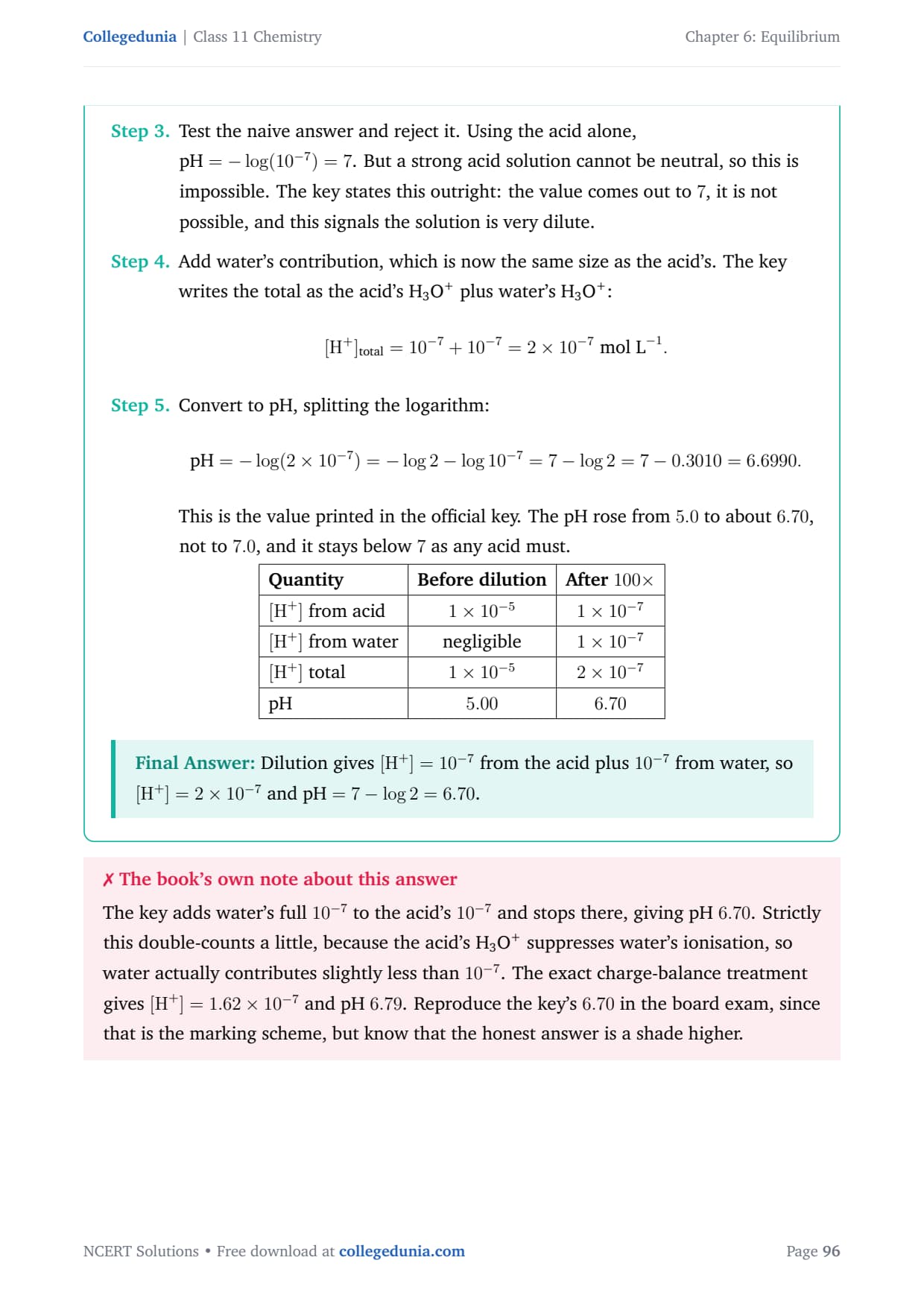
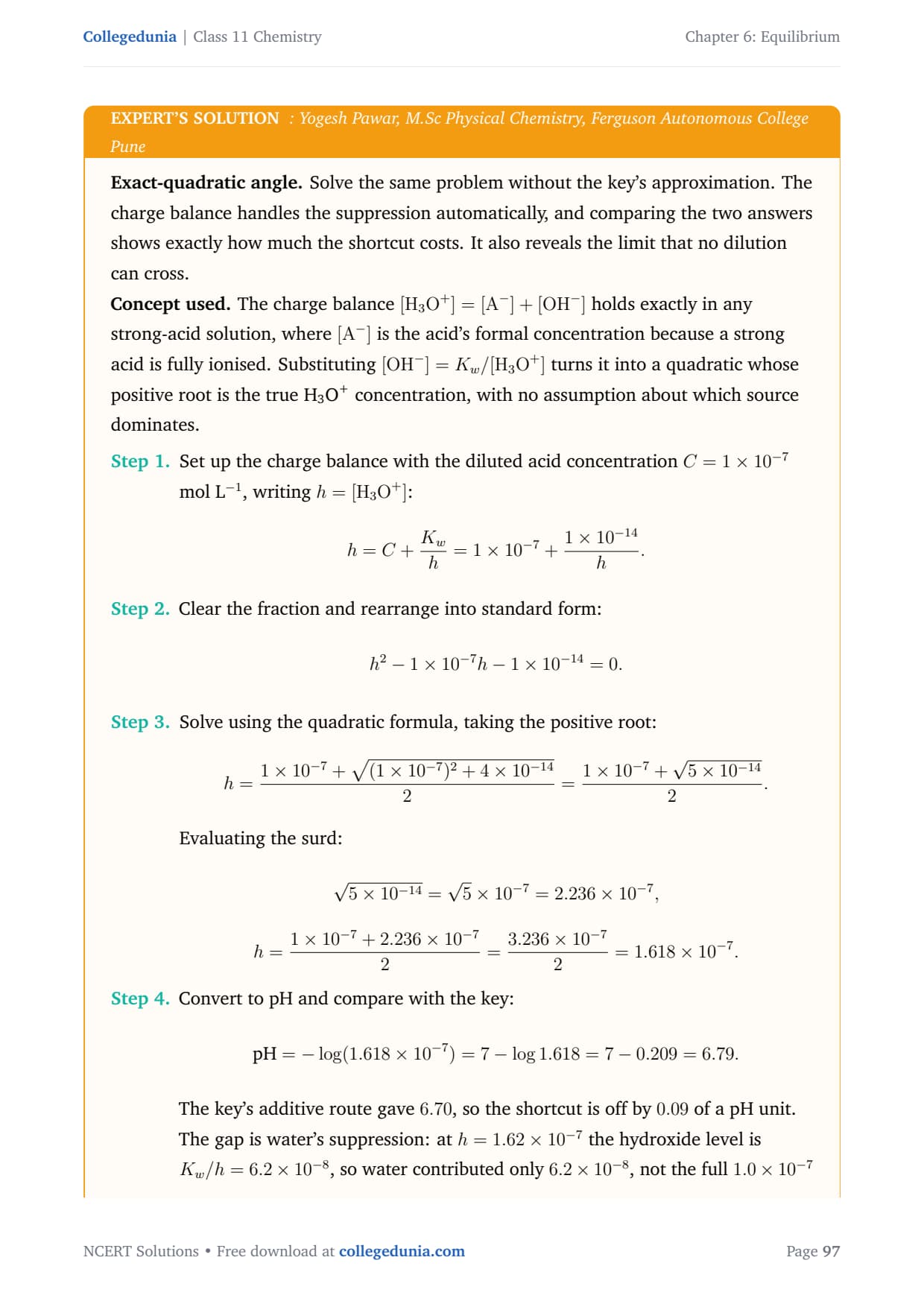
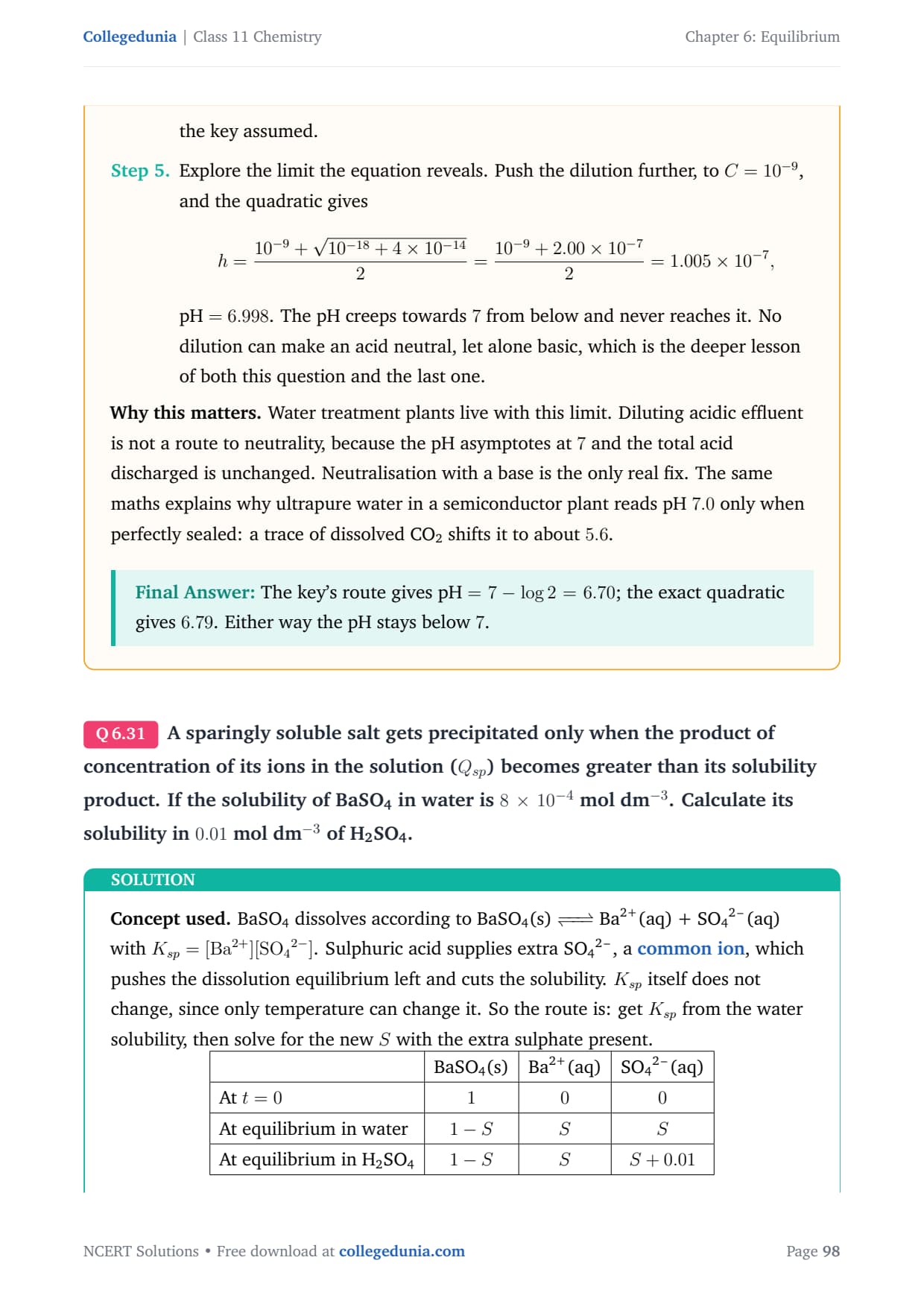
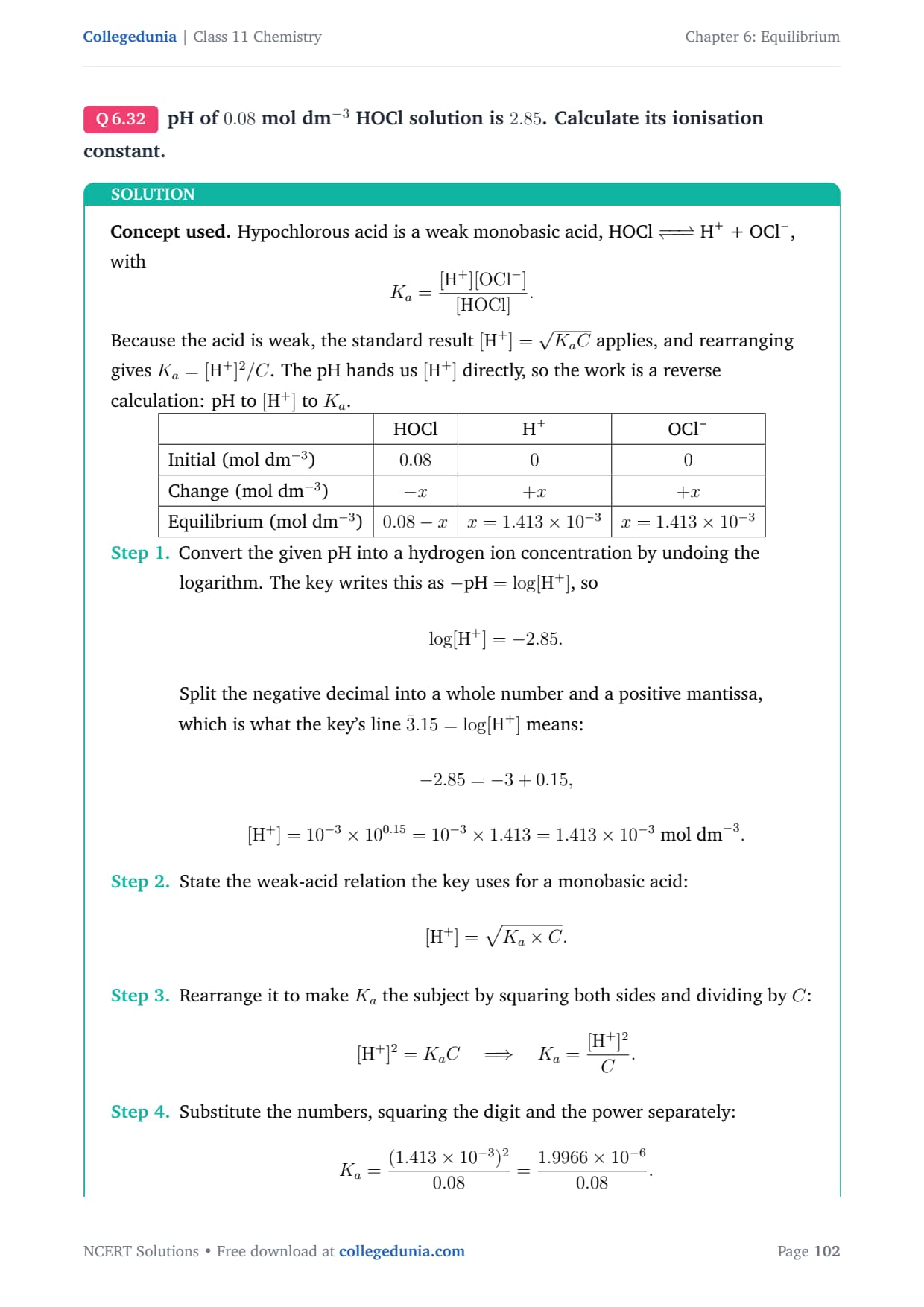
- Question 30: the key adds water's full 10-7 to the acid's and reports pH 6.70. A charge-balance treatment gives 6.79, because the acid suppresses water's own ionisation.
Write the key's answer in the exam, but know why it is wrong. The marking scheme follows the printed key, so our solution gives the key's option and then teaches the real chemistry underneath.
Common Mistakes Students Make in Equilibrium
The Exemplar builds its wrong options around four specific habits. Each one is flagged in the PDF at the question where it bites.
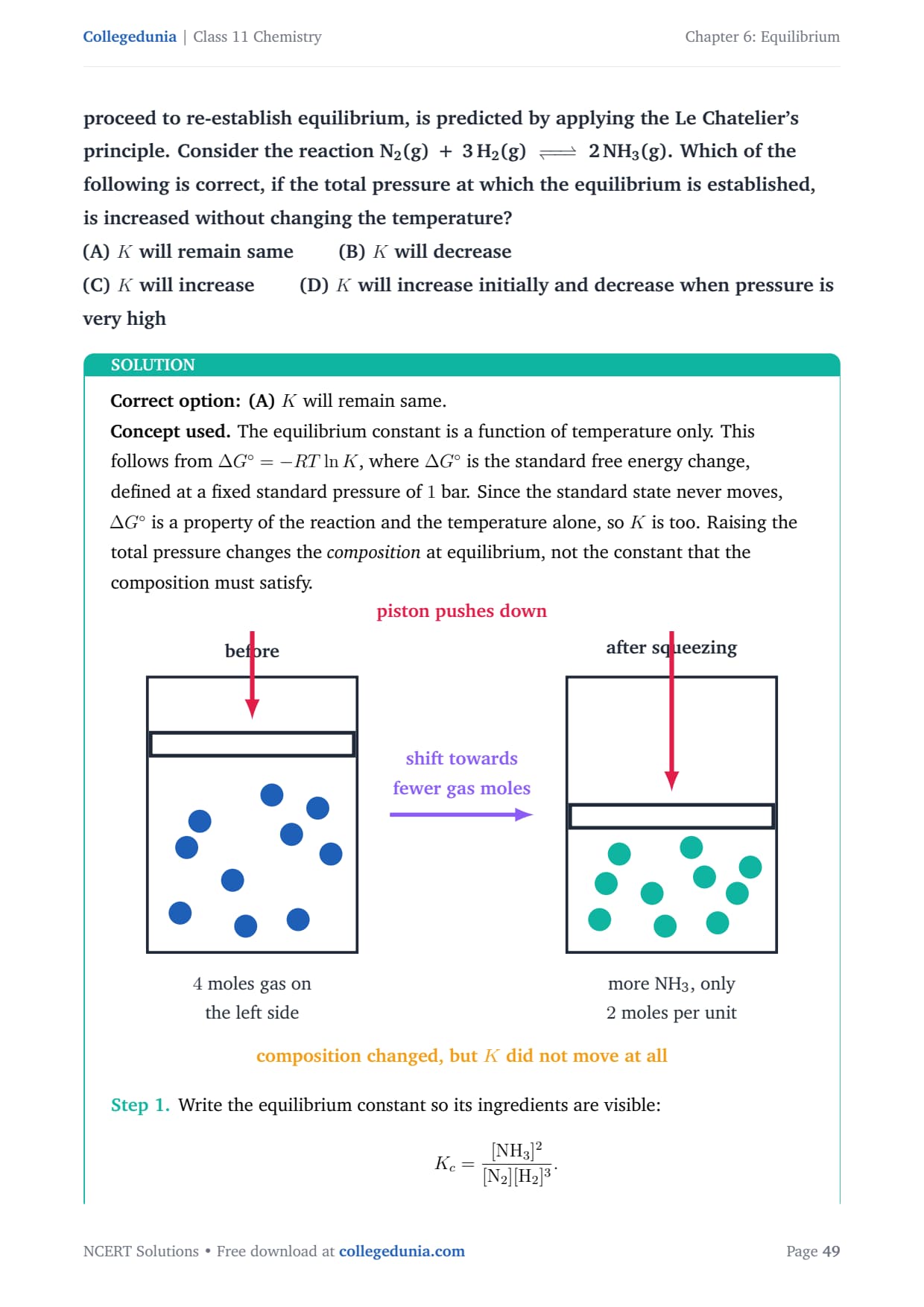
- Reading the vessel condition: a rigid vessel means an inert gas does nothing, while a movable piston means a shift towards more moles of gas. Three words decide the answer.
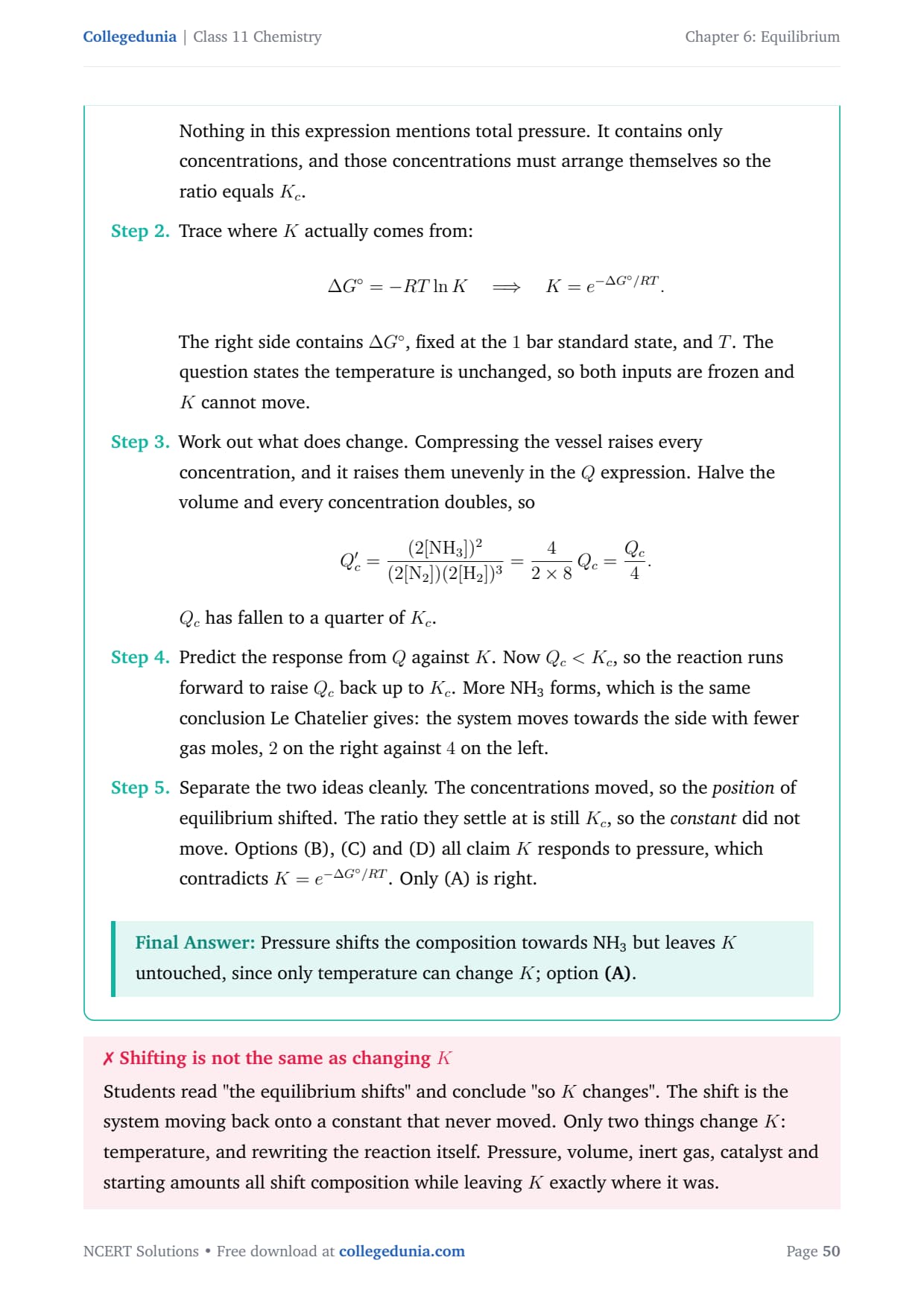
- Shifting against changing K: pressure, volume, inert gas and catalyst all move the composition. Only temperature changes K itself.
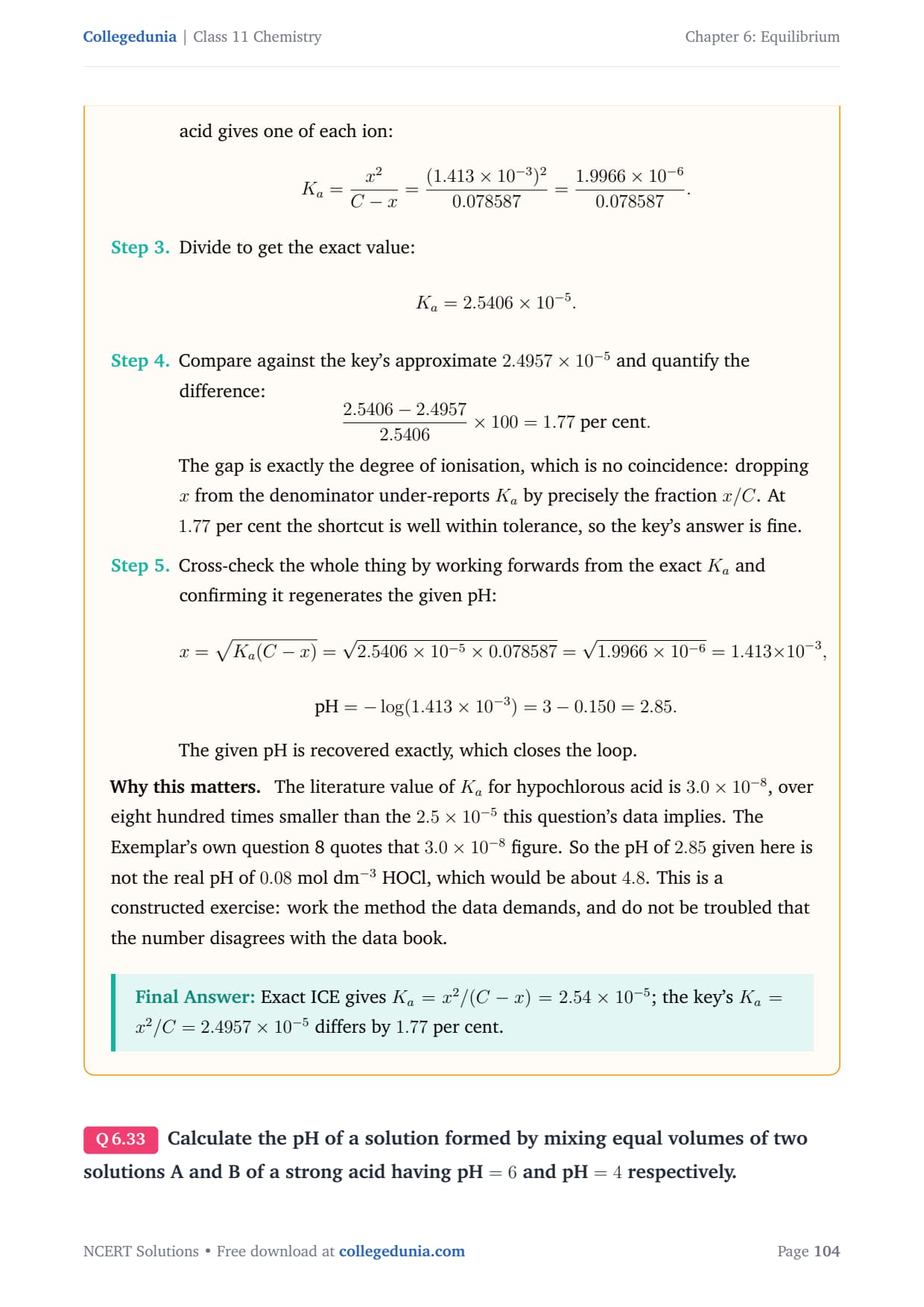
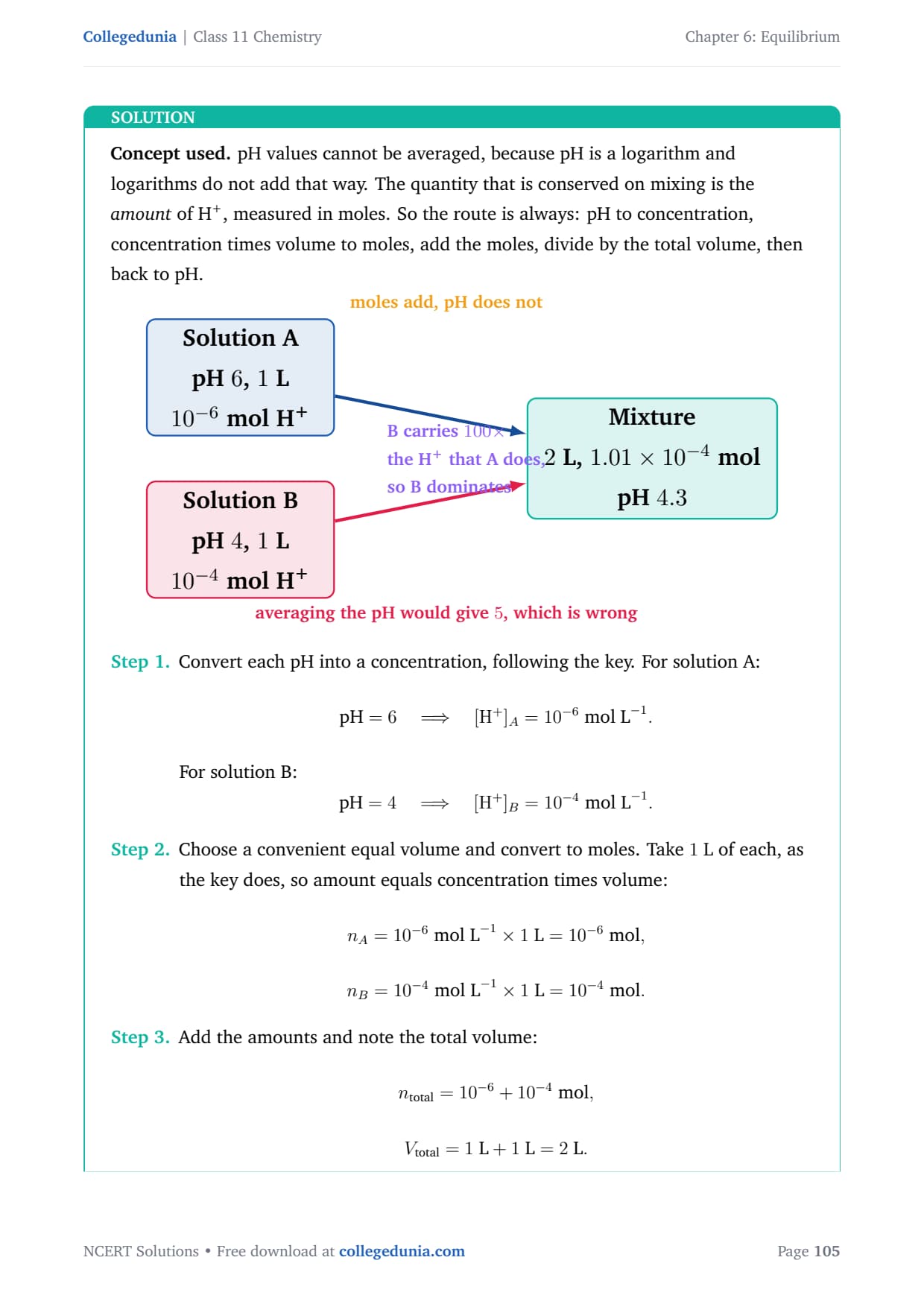
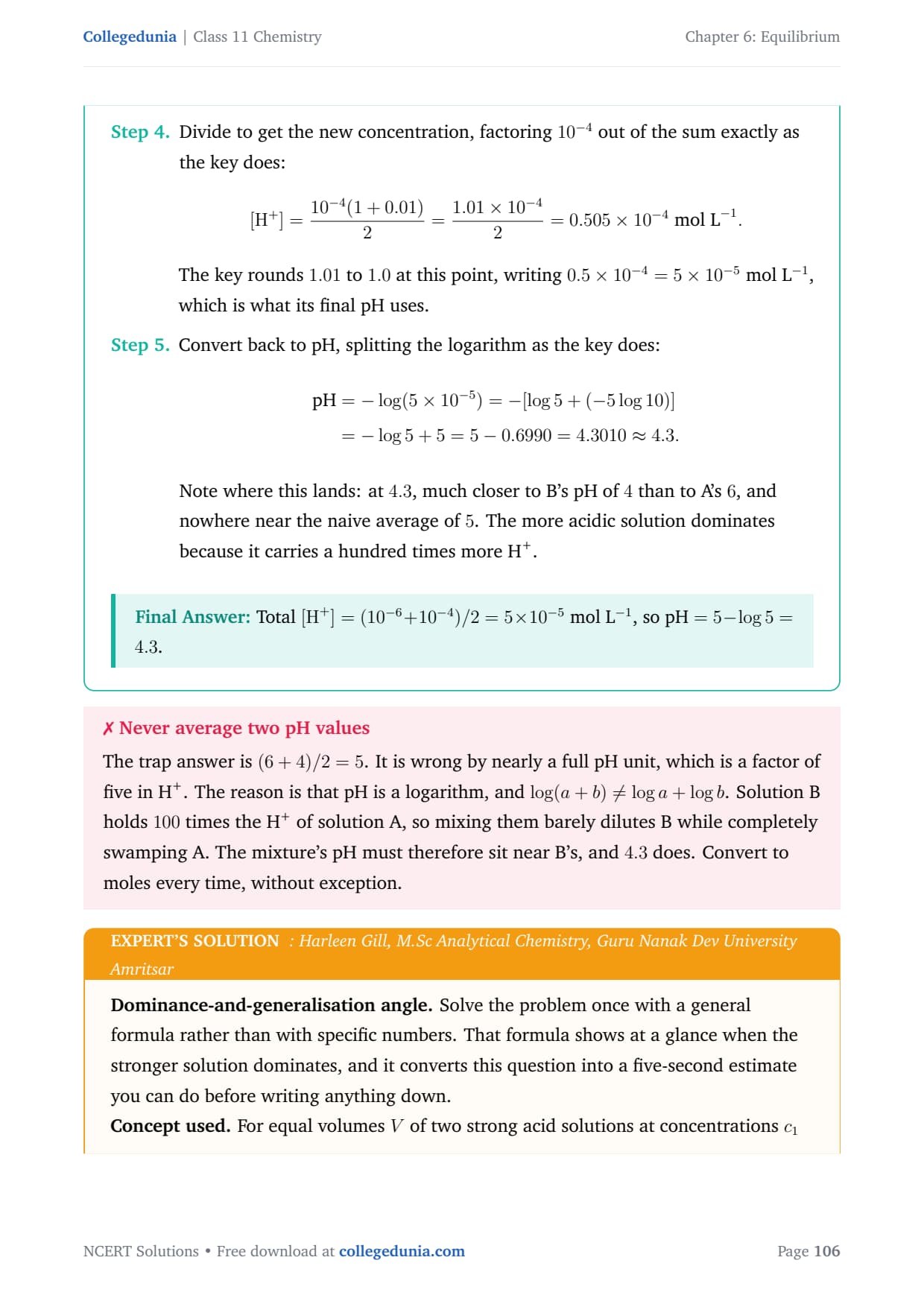
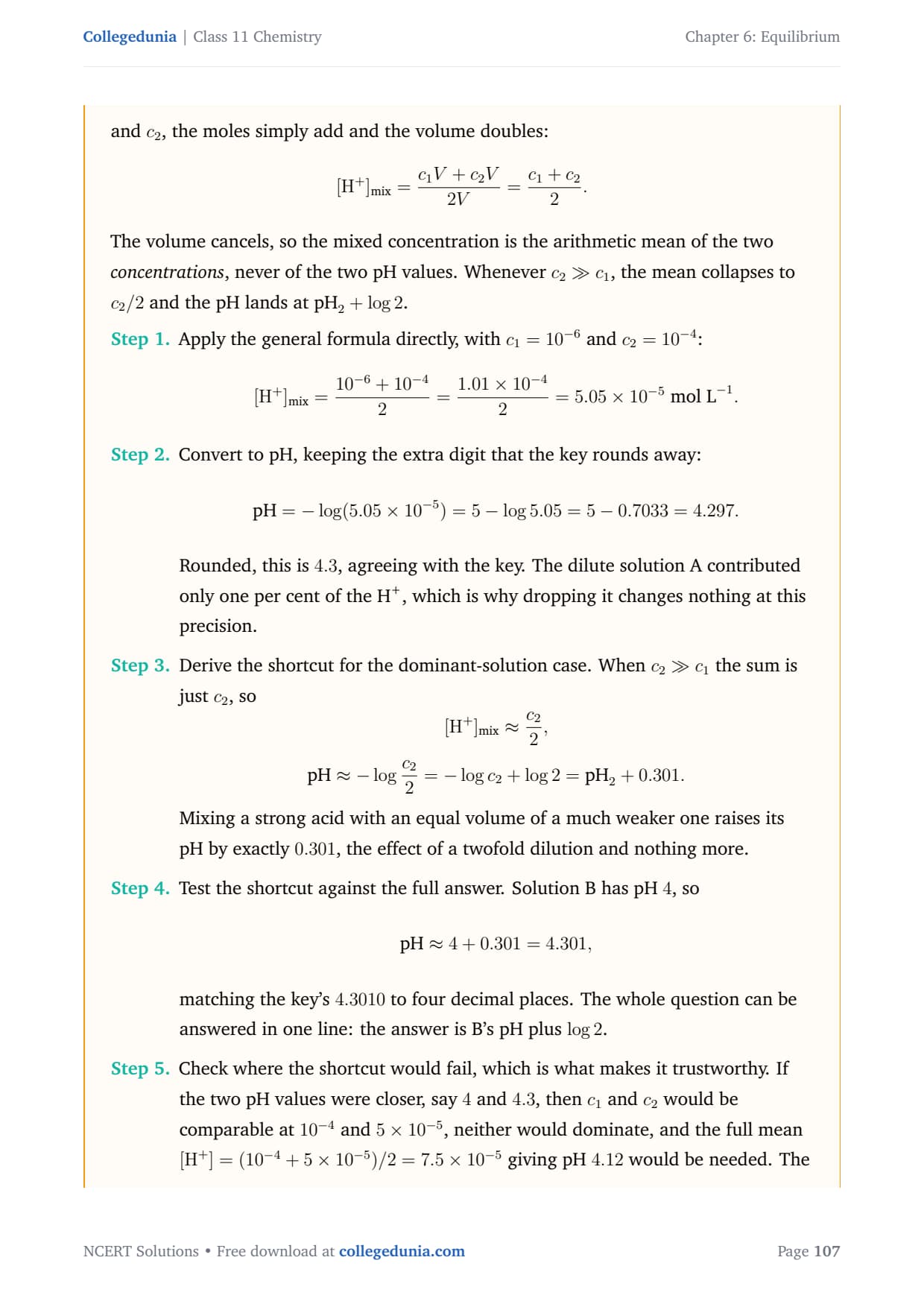
- Averaging pH: mixing a pH 6 and a pH 4 solution gives 4.3, not 5. pH is a logarithm, so convert to moles before you add.
- Counting solids in Δn: a pure solid has constant molar concentration, so it is absorbed into K and never appears. Scan for (s) and (l) before counting.
How the Exemplar Steps Up from the Class 11 Chemistry Textbook
The textbook gives you a rule and asks you to apply it. The Exemplar asks you to pick the rule, then defend the choice.
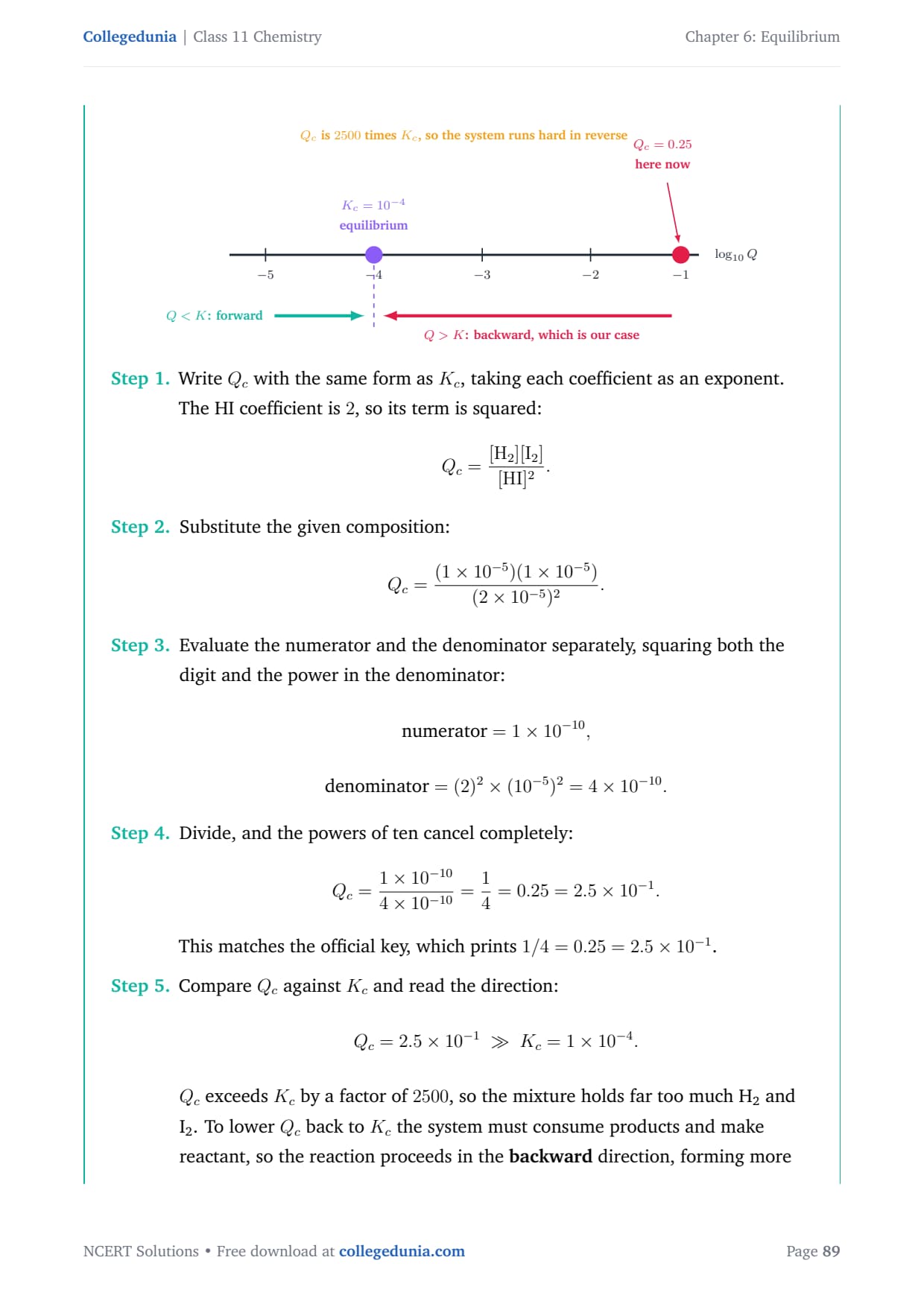
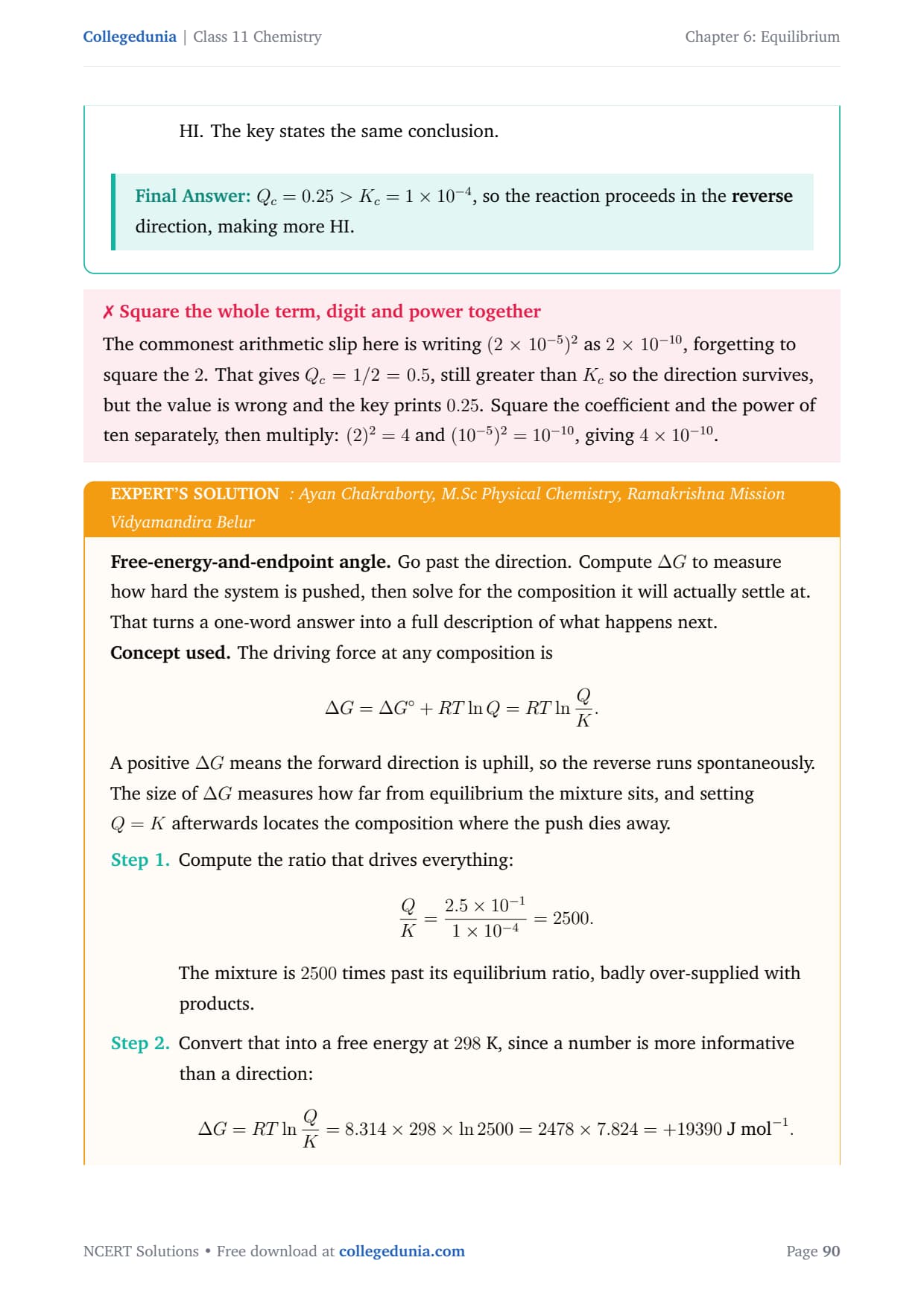
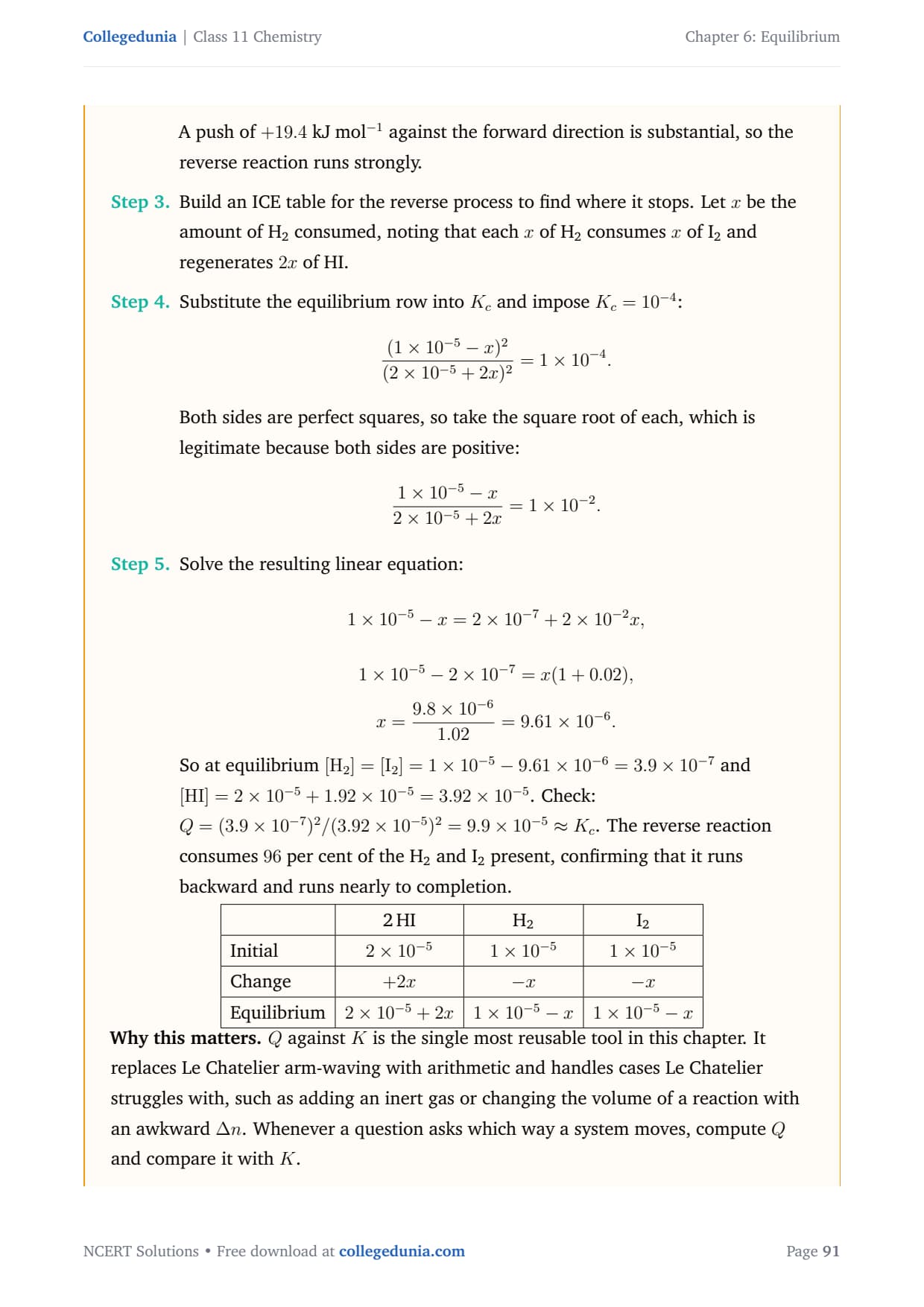
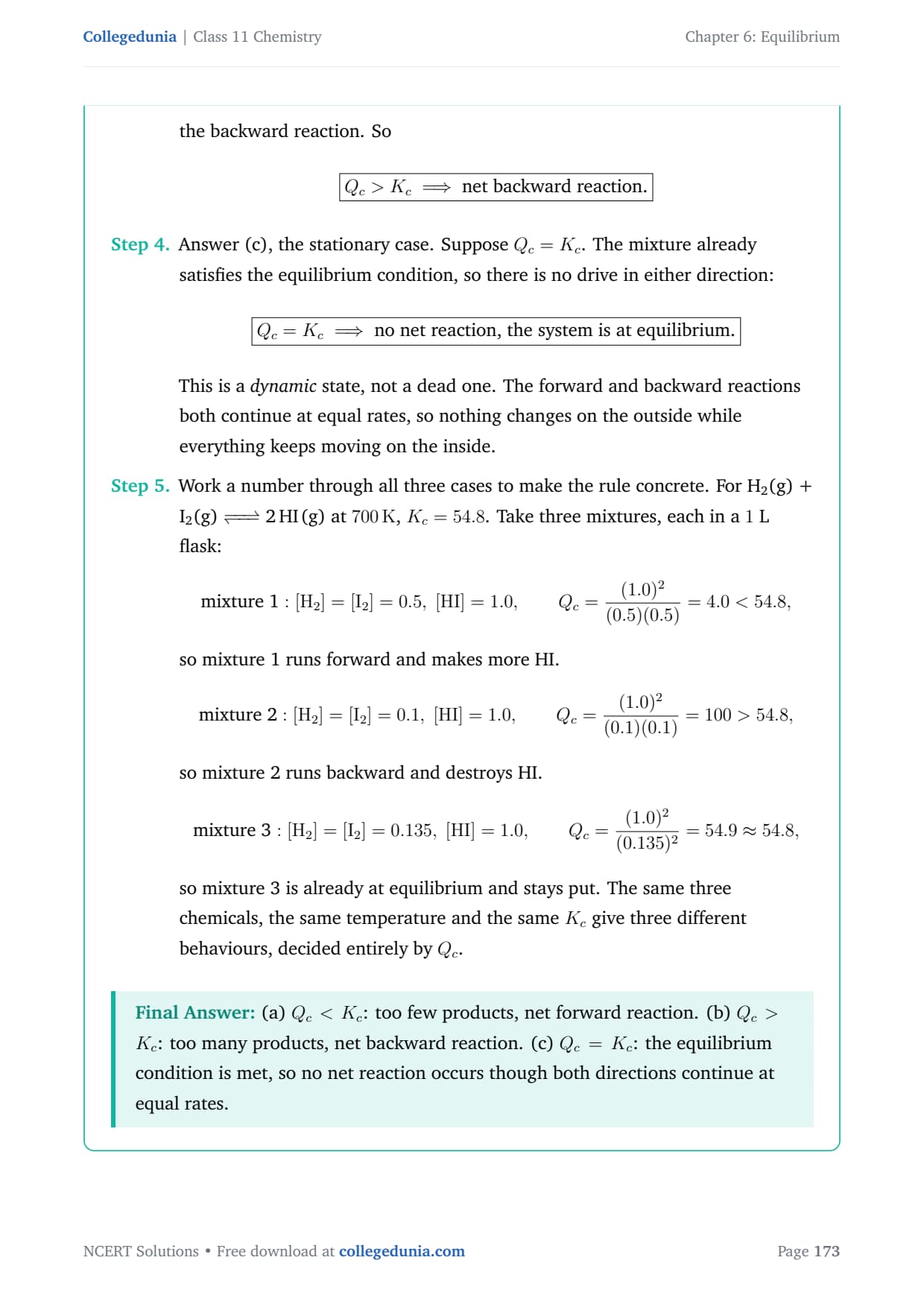
Question 28 shows this well. It gives concentrations and asks for the direction of reaction, so you compute Q = 0.25 and compare it against Kc = 1 × 10⁻⁴. Since Q exceeds K, the reaction runs backward. No formula announces itself, and squaring 2 × 10⁻⁵ without squaring the 2 is the planted slip.
How to Use These NCERT Exemplar Solutions for Boards, NEET and JEE
Attempt each question before you open the solution. The attempt is what builds the judgment this chapter tests.
- Boards: the Short Answer set matches the 3 mark board pattern on hydrolysis and buffers closely
- NEET: work the 19 MCQ I questions first, since NEET repeats pH and acid strength at exactly that level
- JEE Main: the Long Answer set is the best NCERT practice for ΔG, Q and Ksp derivations
Student Feedback
Students using Collegedunia's Class 11 Chemistry Exemplar Solutions told us the inert gas questions confused them more than any calculation. Around 7 in 10 said learning constant volume and constant pressure as a pair, rather than one rule, finally settled it.
Other Resources for Class 11 Chemistry Equilibrium
Collegedunia has the full study set for this chapter. Read the Notes first, then take the Exemplar once Kc and pH feel steady.
Also Check:
- NCERT Solutions for Class 11 Chemistry Chapter 6
- Class 11 Chemistry Chapter 6 Notes
- Class 11 Chemistry Chapter 6 NCERT Book PDF
- Class 11 Chemistry Chapter 6 Exemplar Questions with Solutions
NCERT Exemplar Solutions for Other Class 11 Chemistry Chapters
Each chapter below has the same step-by-step treatment and a free PDF.
Equilibrium Class 11 NCERT Exemplar Solutions FAQs
Ques. How many questions are there in the Class 11 Chemistry Equilibrium Exemplar?
Ans. Chapter 6 has 54 questions. They are split into 19 MCQ I, 2 MCQ II, 16 Short Answer, 6 Matching Type, 7 Assertion and Reason and 4 Long Answer questions. All 54 are solved in the free 191-page PDF on this page.
Ques. Why is Equilibrium printed as Unit 7 in the Exemplar book?
Ans. The printed Exemplar follows the older 14-unit edition, where Equilibrium sat at Unit 7. The current textbook numbers it Chapter 6. The content is identical, so search by chapter name rather than number when you open the official PDF.
Ques. Is the printed NCERT Exemplar answer key for this chapter correct?
Ans. Mostly. Question 50 marks (D), which answers the constant-volume case, though the assertion says constant pressure and (C) is chemically right. Question 31's key mis-writes a surd as √1.256 instead of √1.0256, and Question 30 rounds water's contribution to give pH 6.70 rather than 6.79. All four are explained on this page.
Ques. Does adding an inert gas shift an equilibrium?
Ans. It depends on the vessel. At constant volume the partial pressures of the reacting gases do not change, so Qp equals Kp and nothing shifts. At constant pressure the vessel expands, every reacting partial pressure falls, and the equilibrium moves towards the side with more moles of gas.
Ques. Is the NCERT Exemplar enough for NEET Equilibrium questions?
Ans. For this chapter it covers the ground well. NEET asks two to three questions a year on ionic equilibrium, pH and salt hydrolysis, and they sit at the level of the Exemplar MCQ I set. Work all 19 of those before moving to a coaching module.



Comments