




NCERT Exemplar Solutions for Class 11 Chemistry Chapter 5 Thermodynamics solve all 62 questions from the Exemplar book. Every MCQ, Short Answer, Matching, Assertion and Reason and Long Answer problem is solved step by step in the free 240-page PDF, updated for the 2026-27 syllabus.
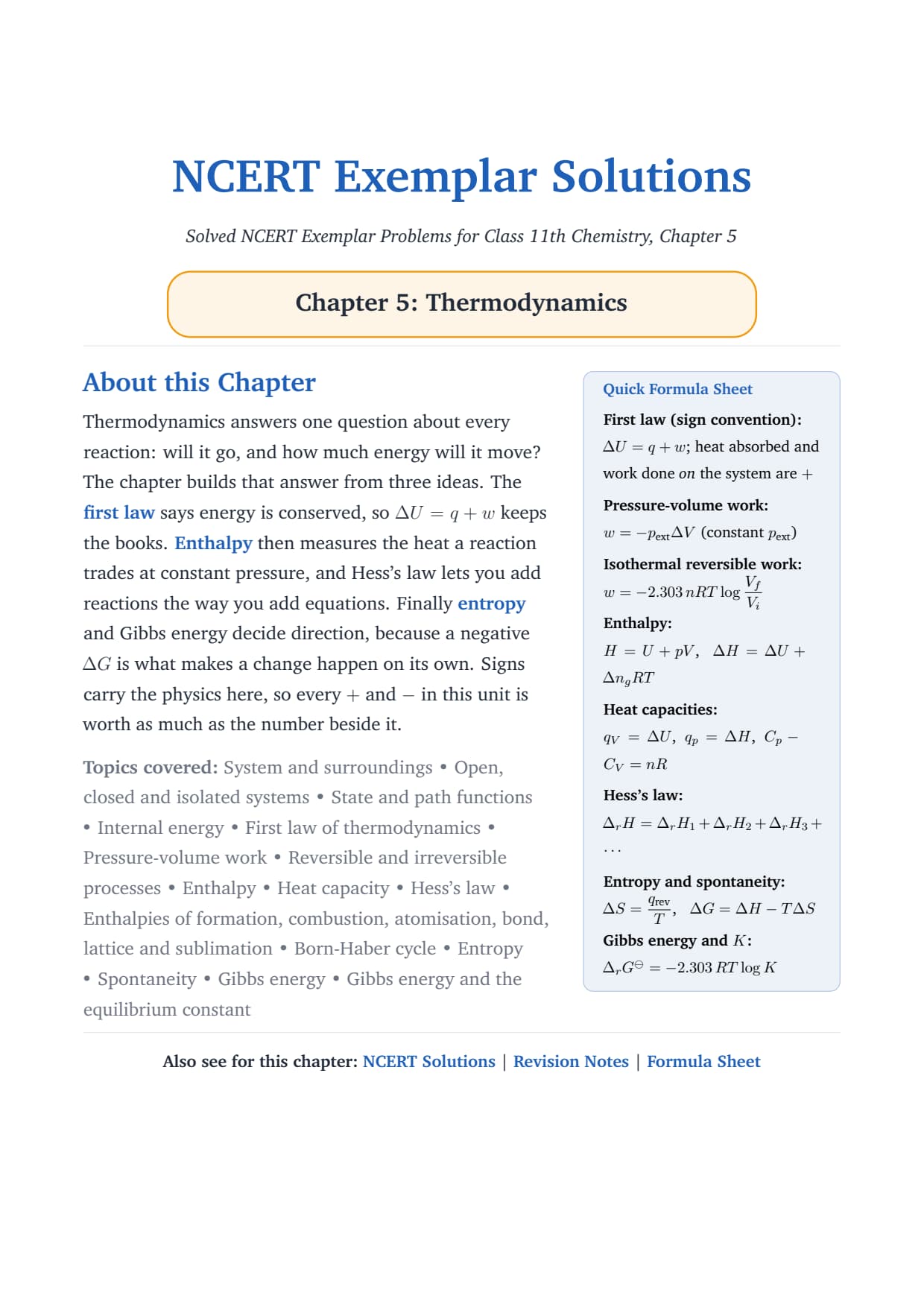
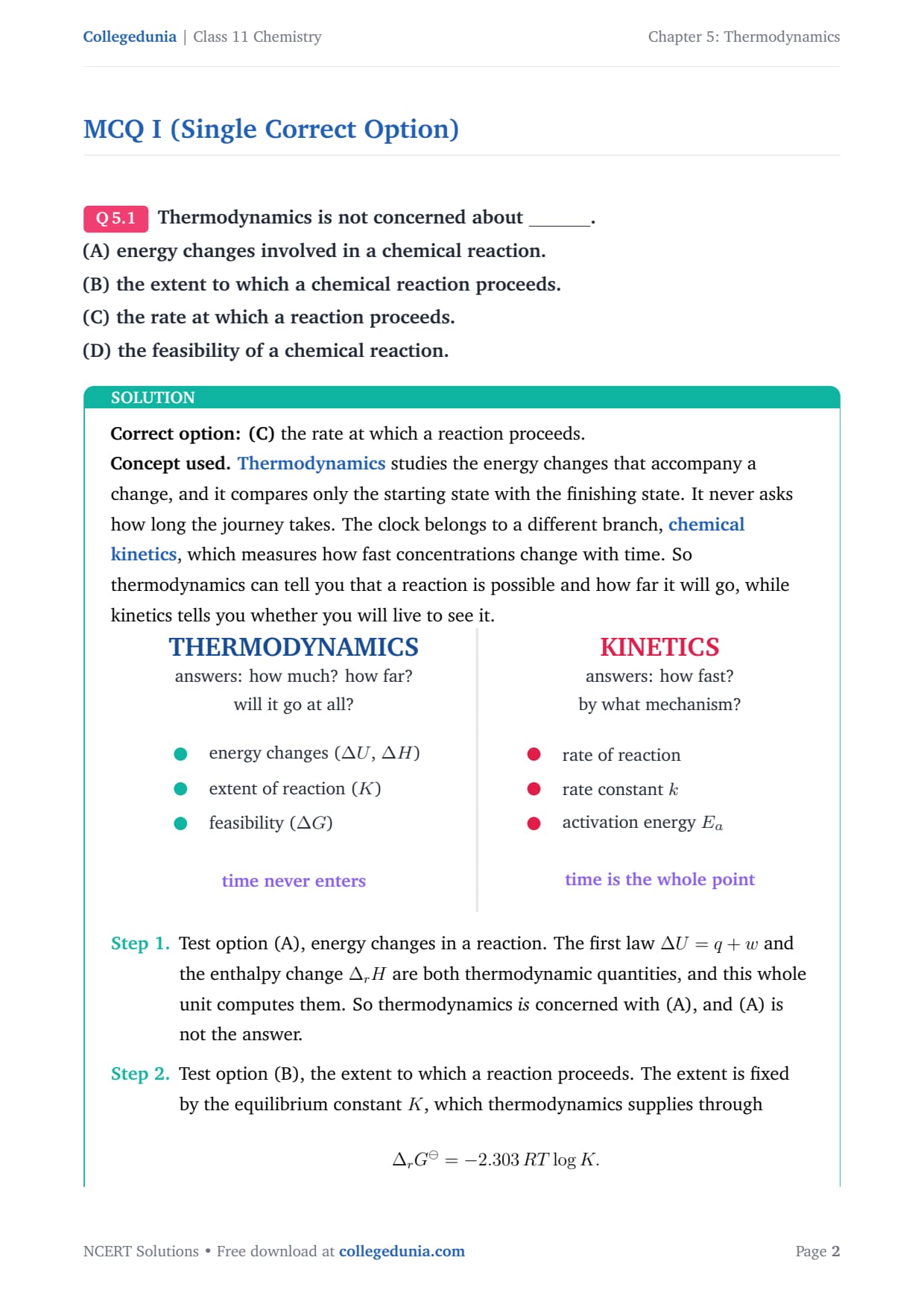
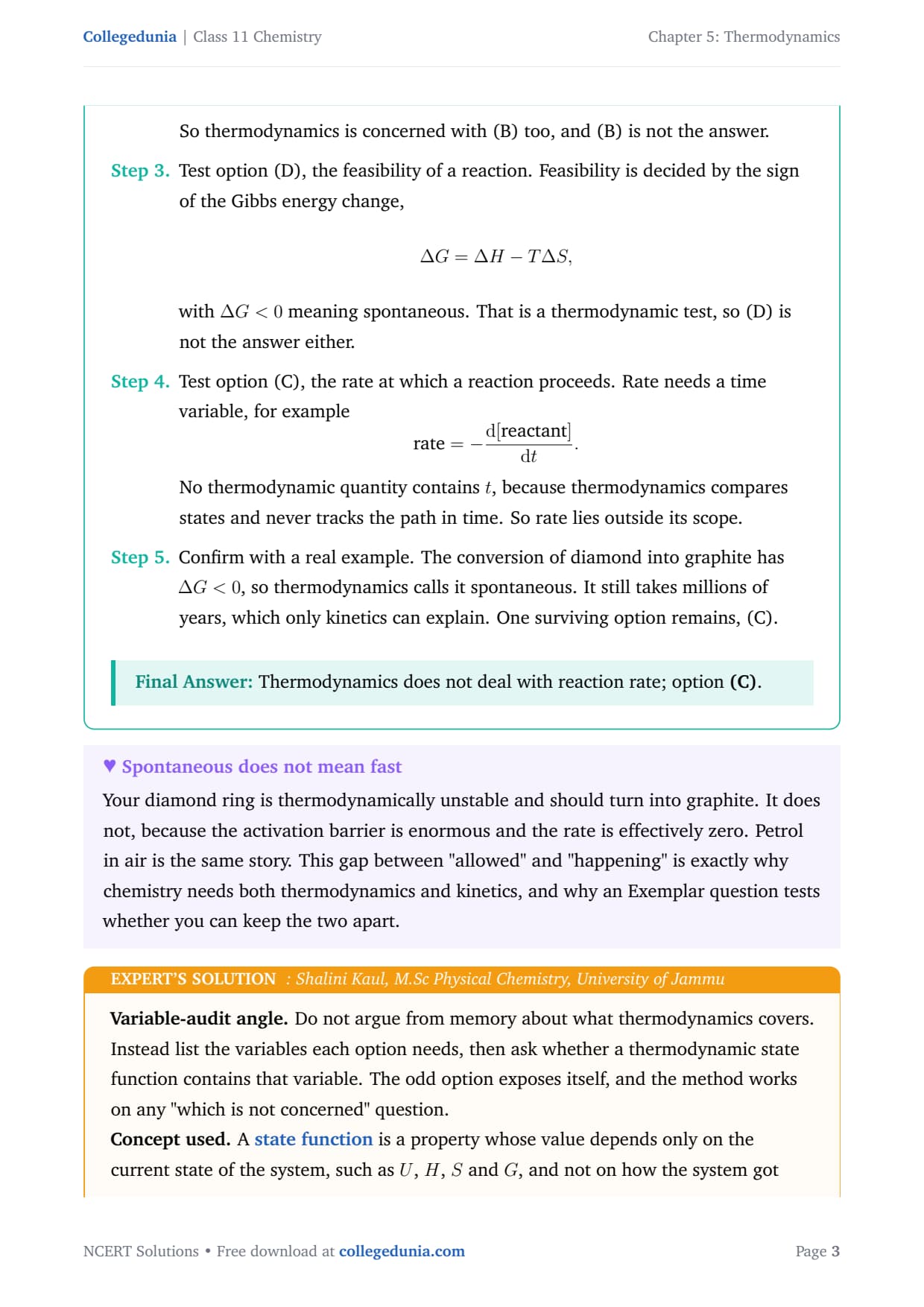
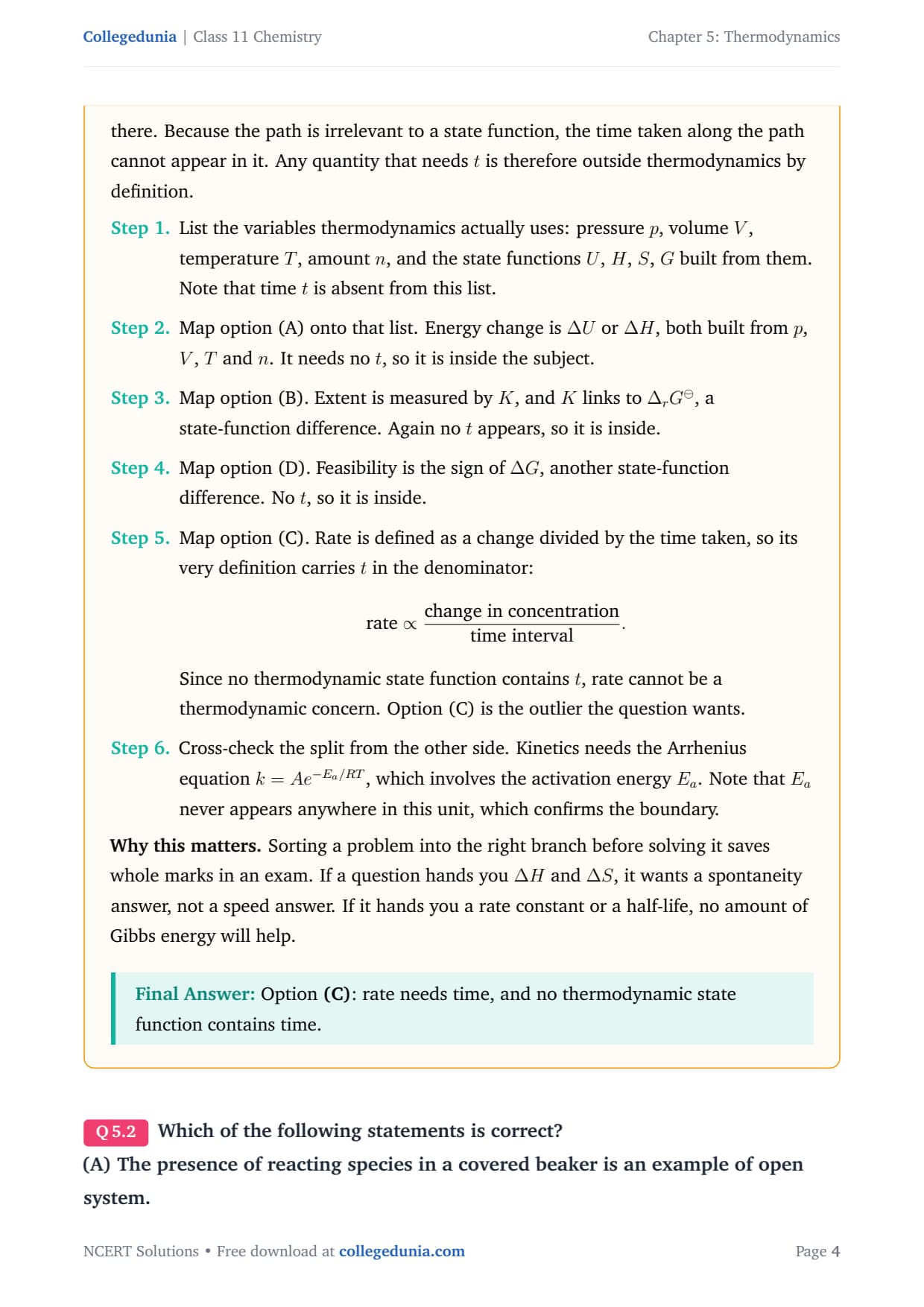
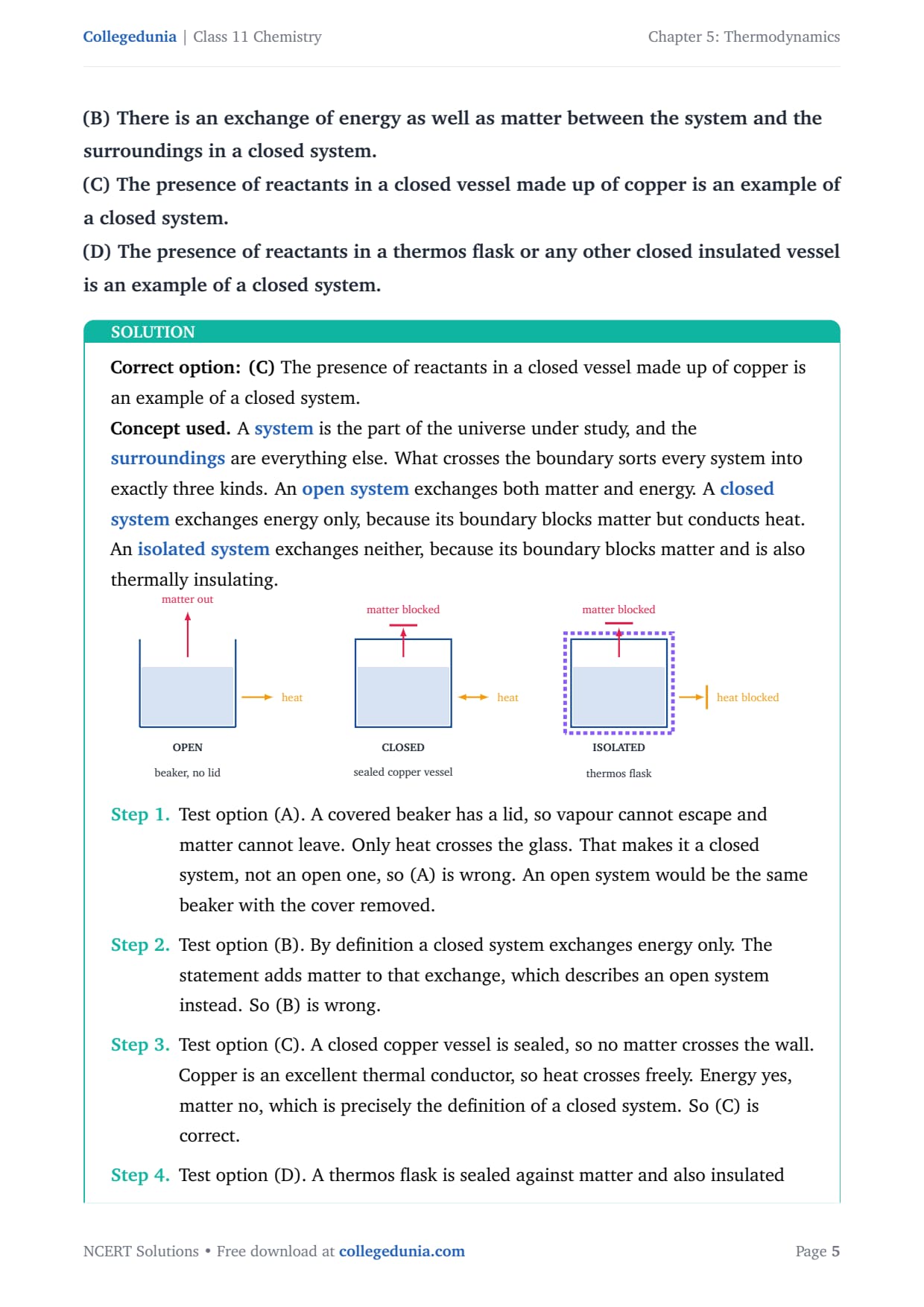
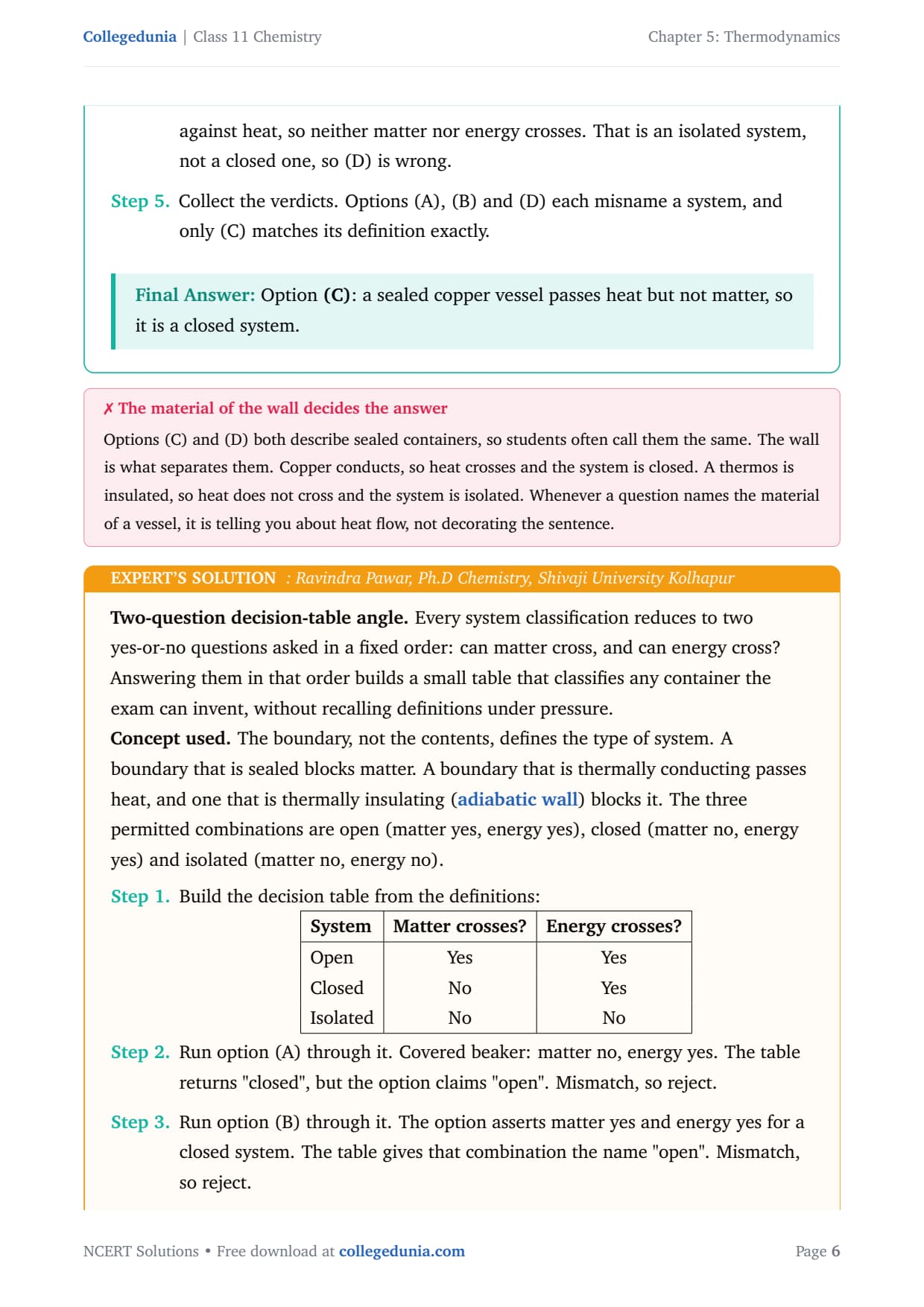
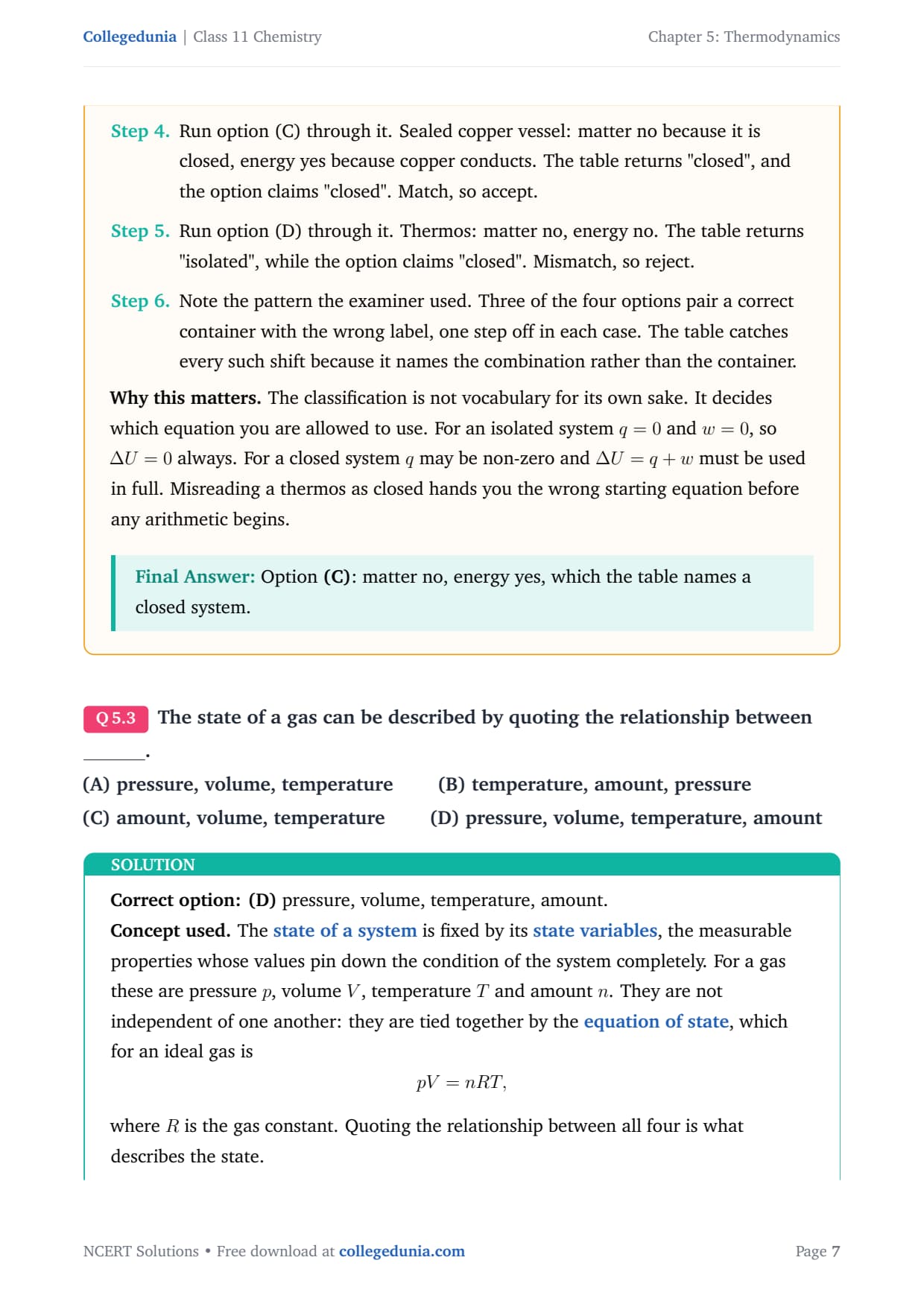
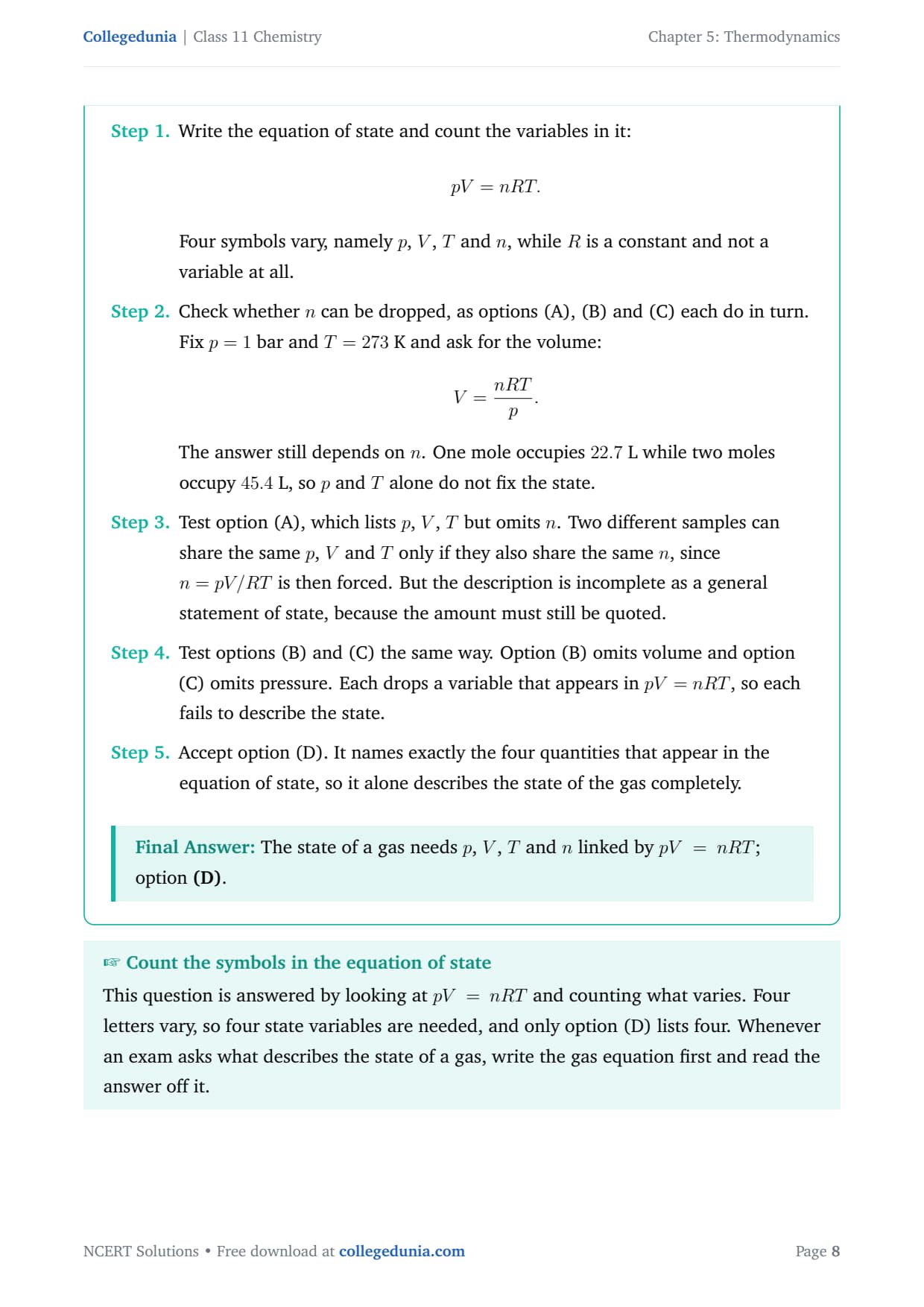
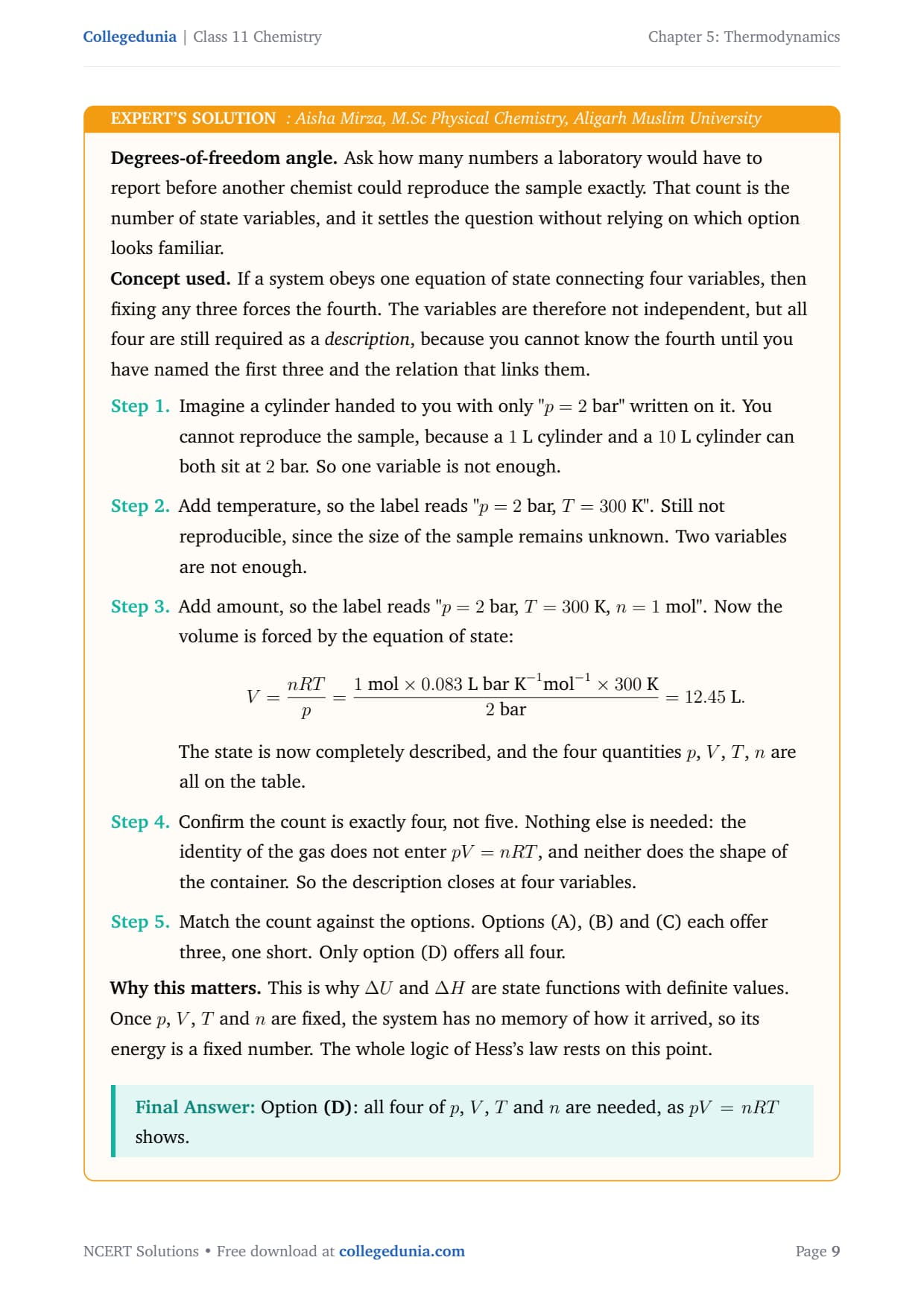
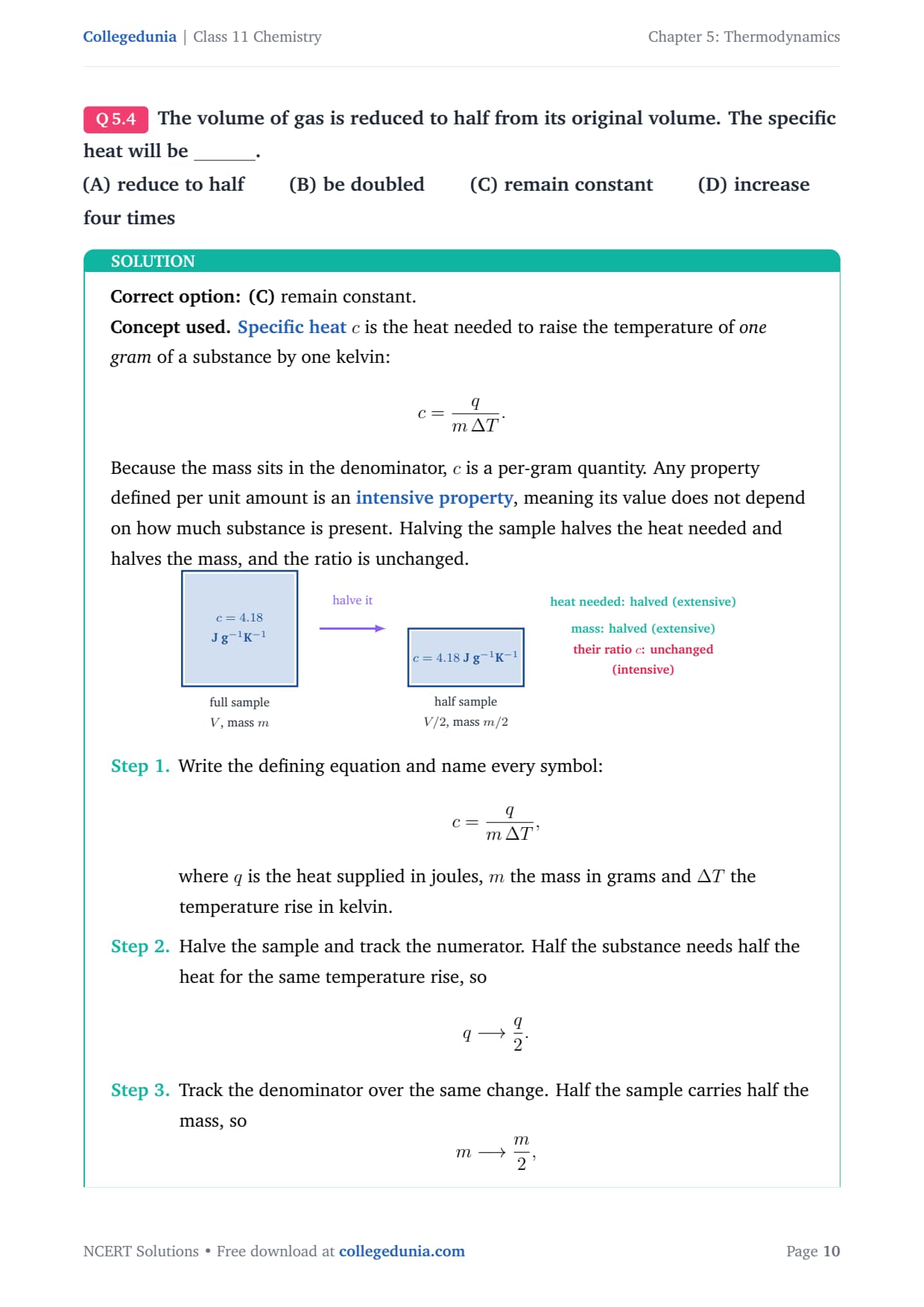
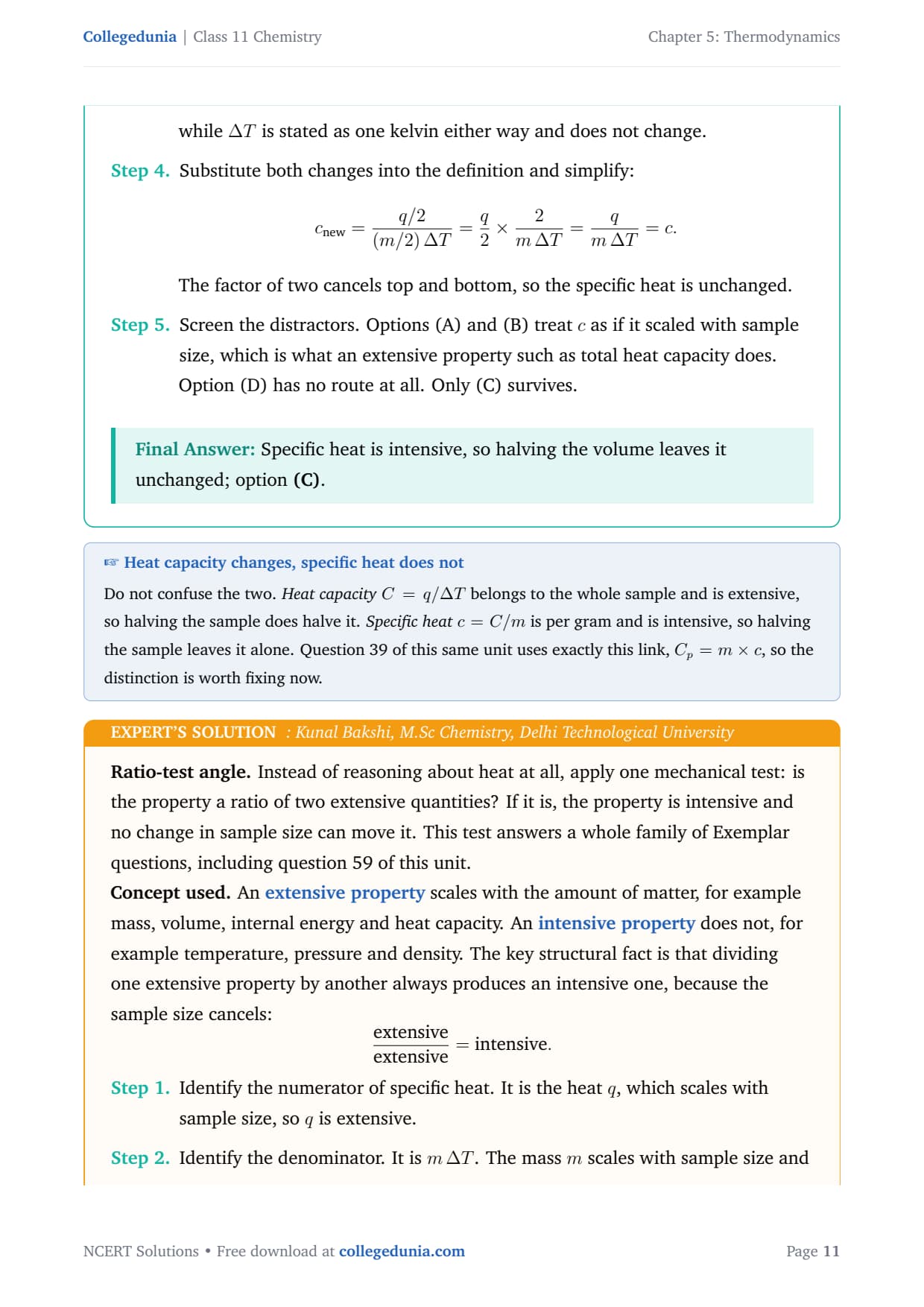
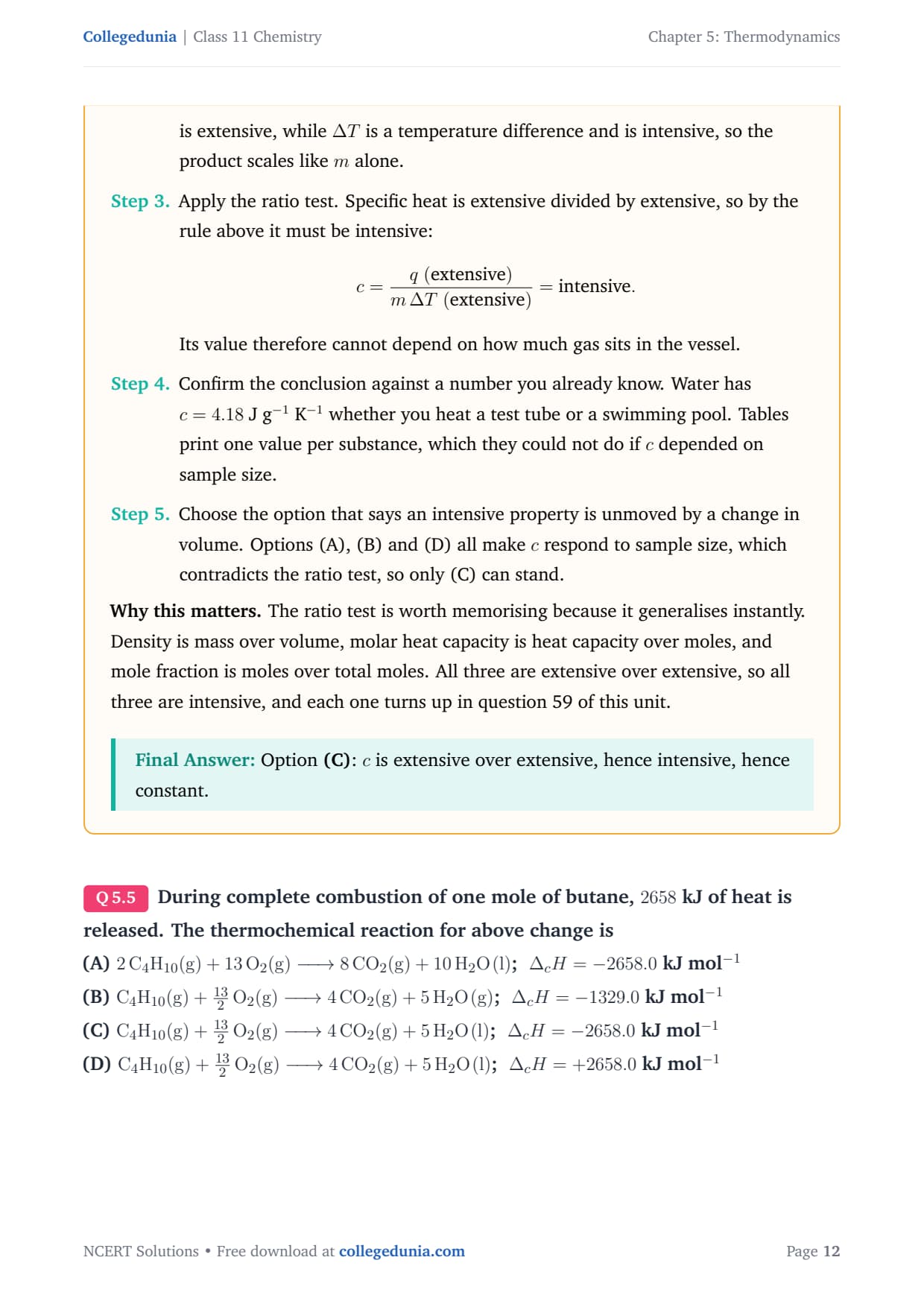
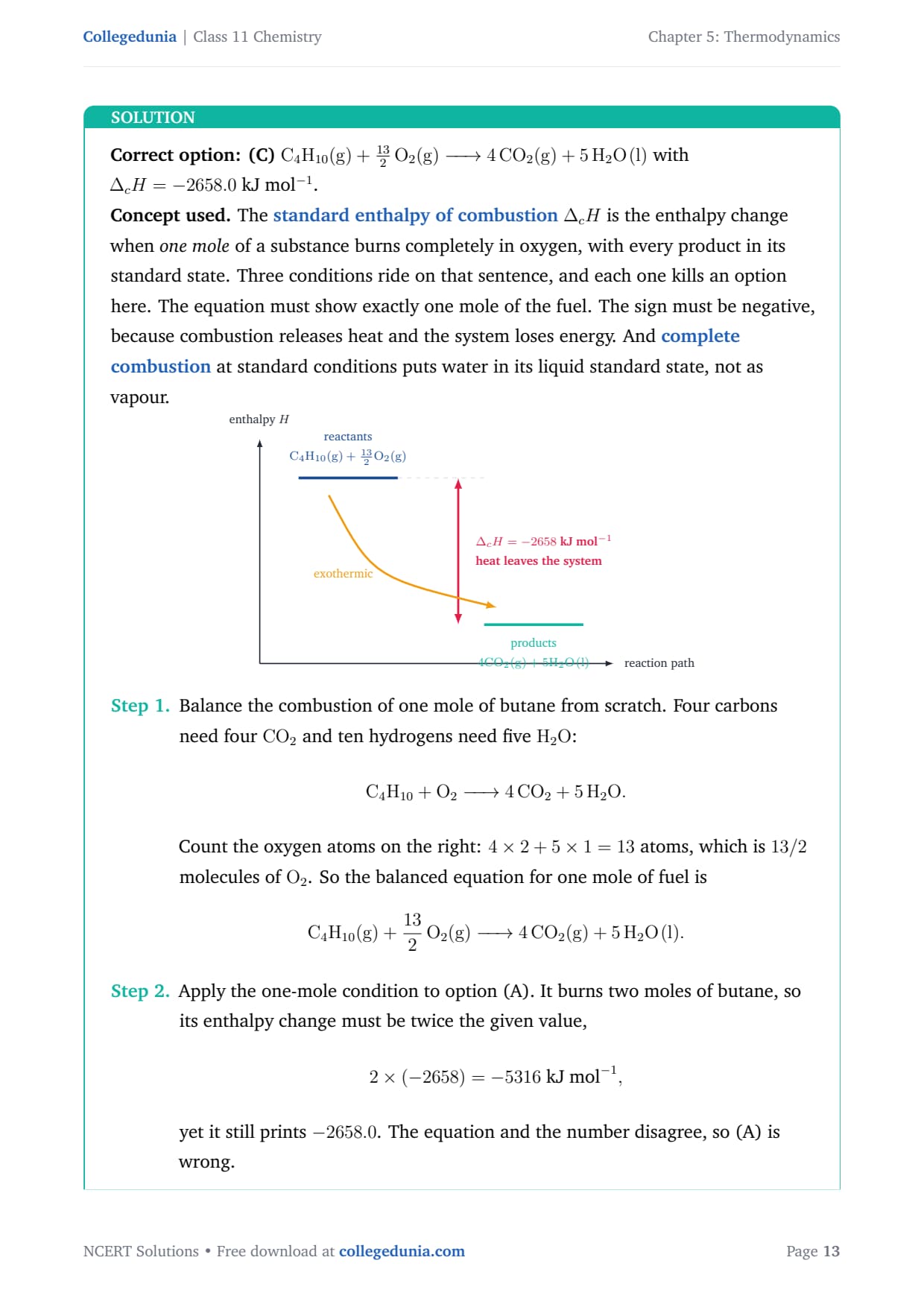
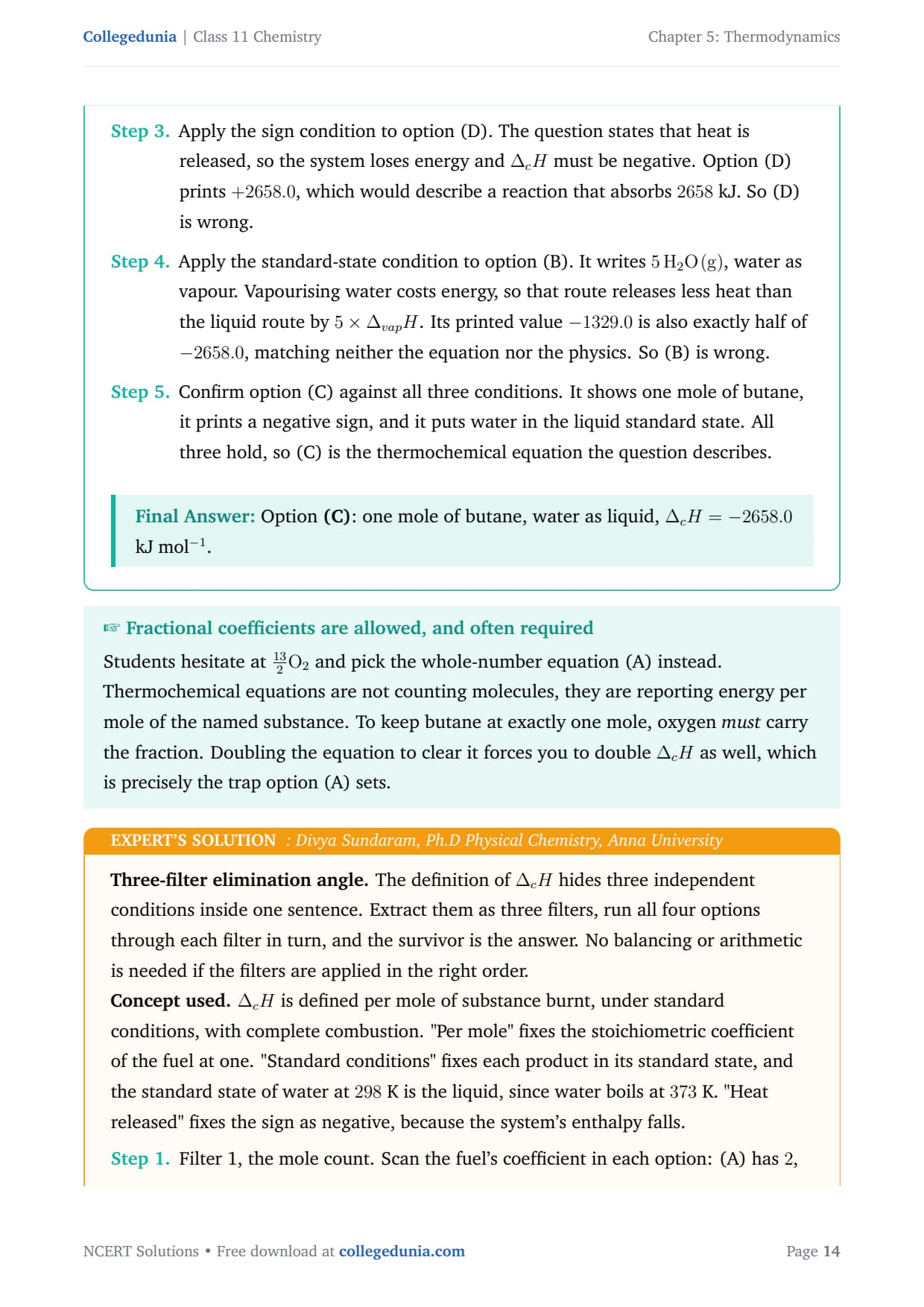
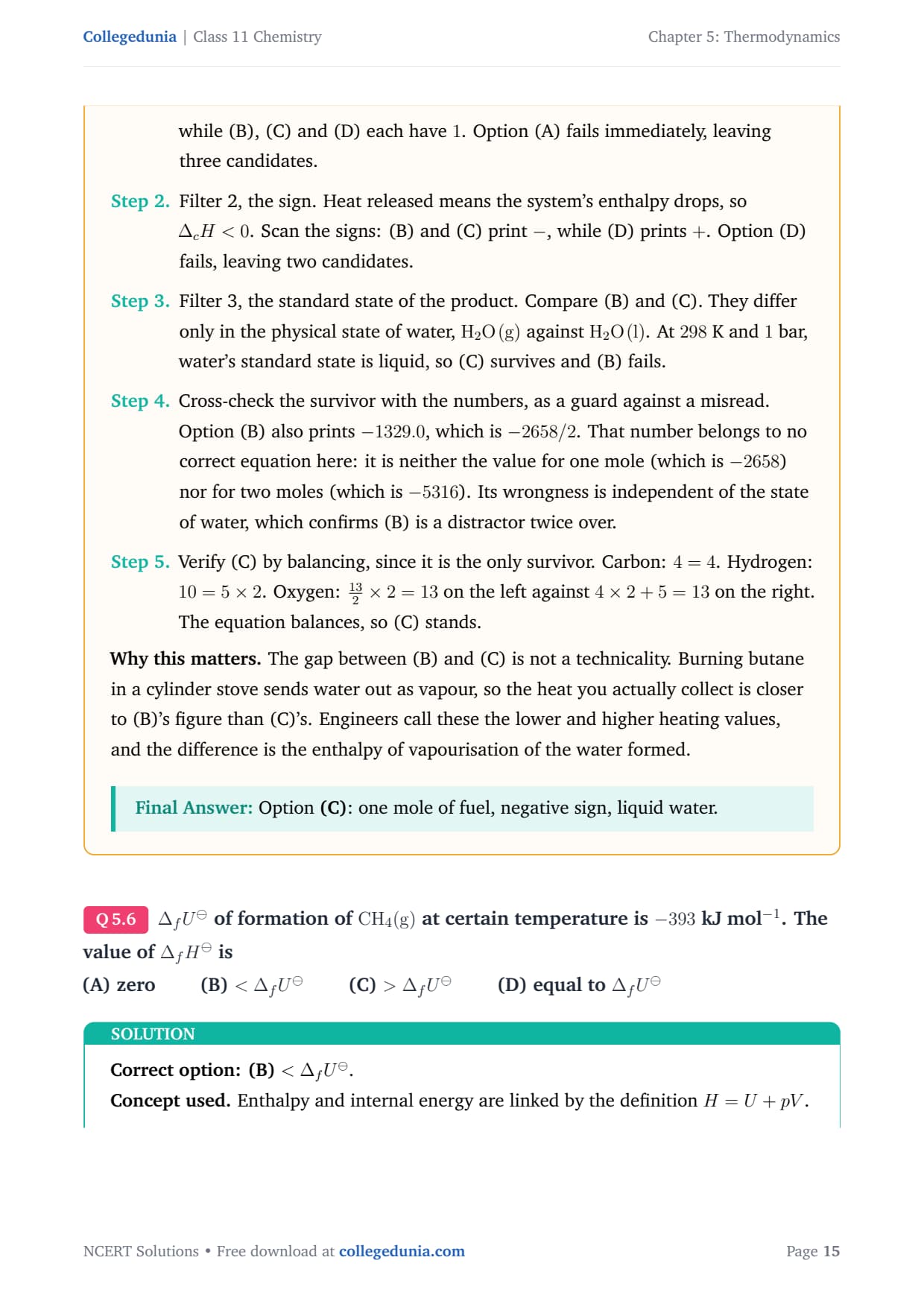
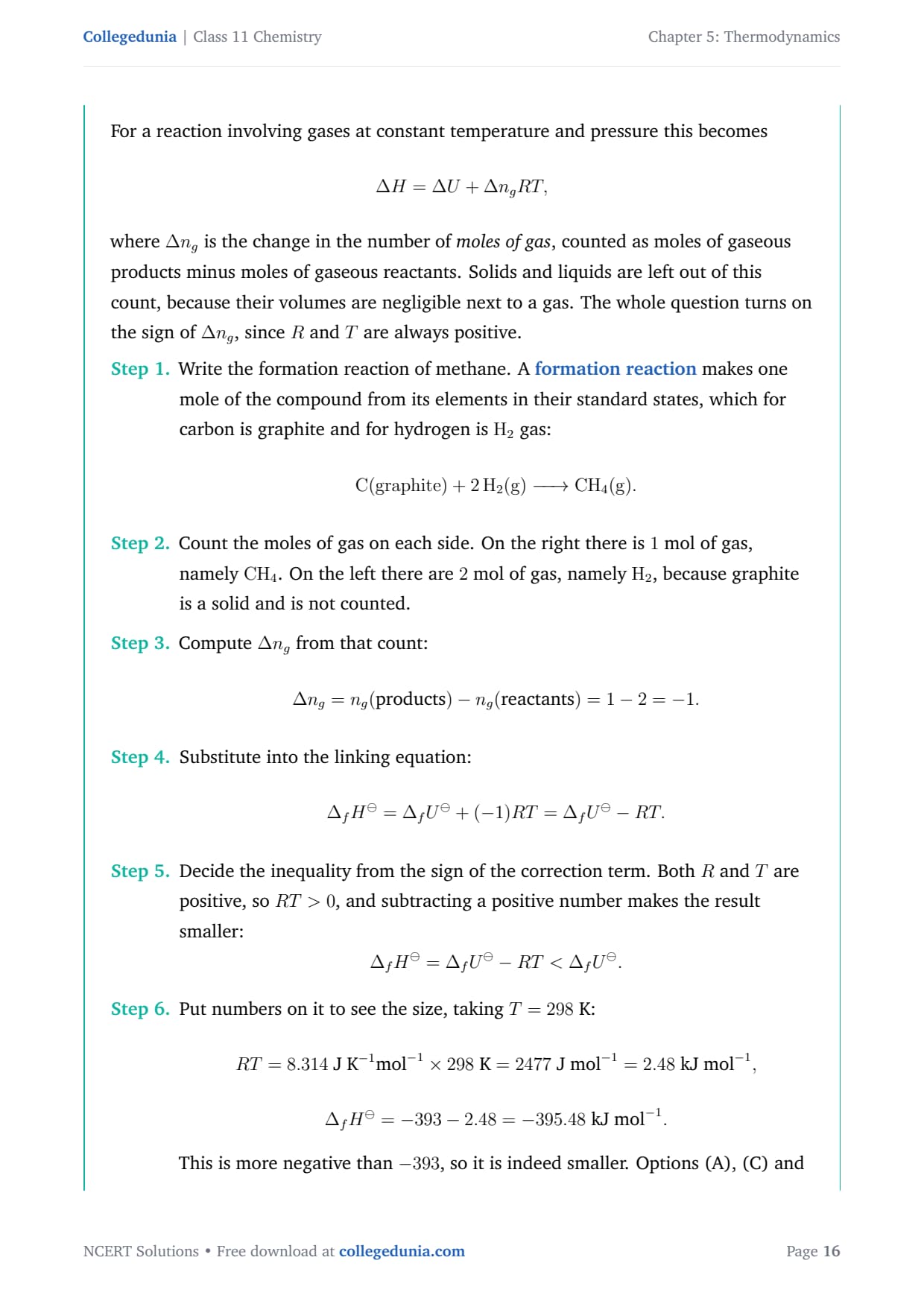
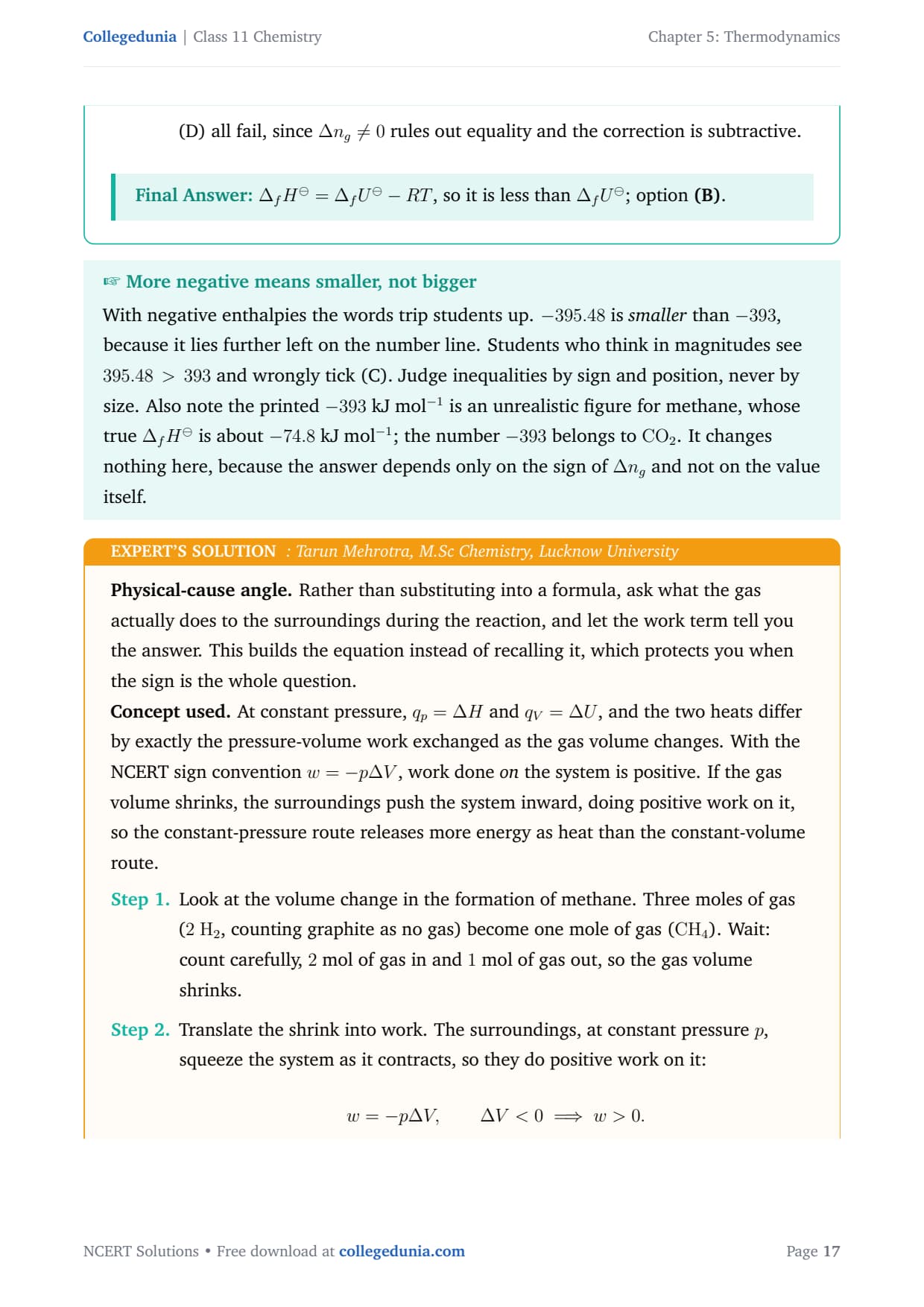
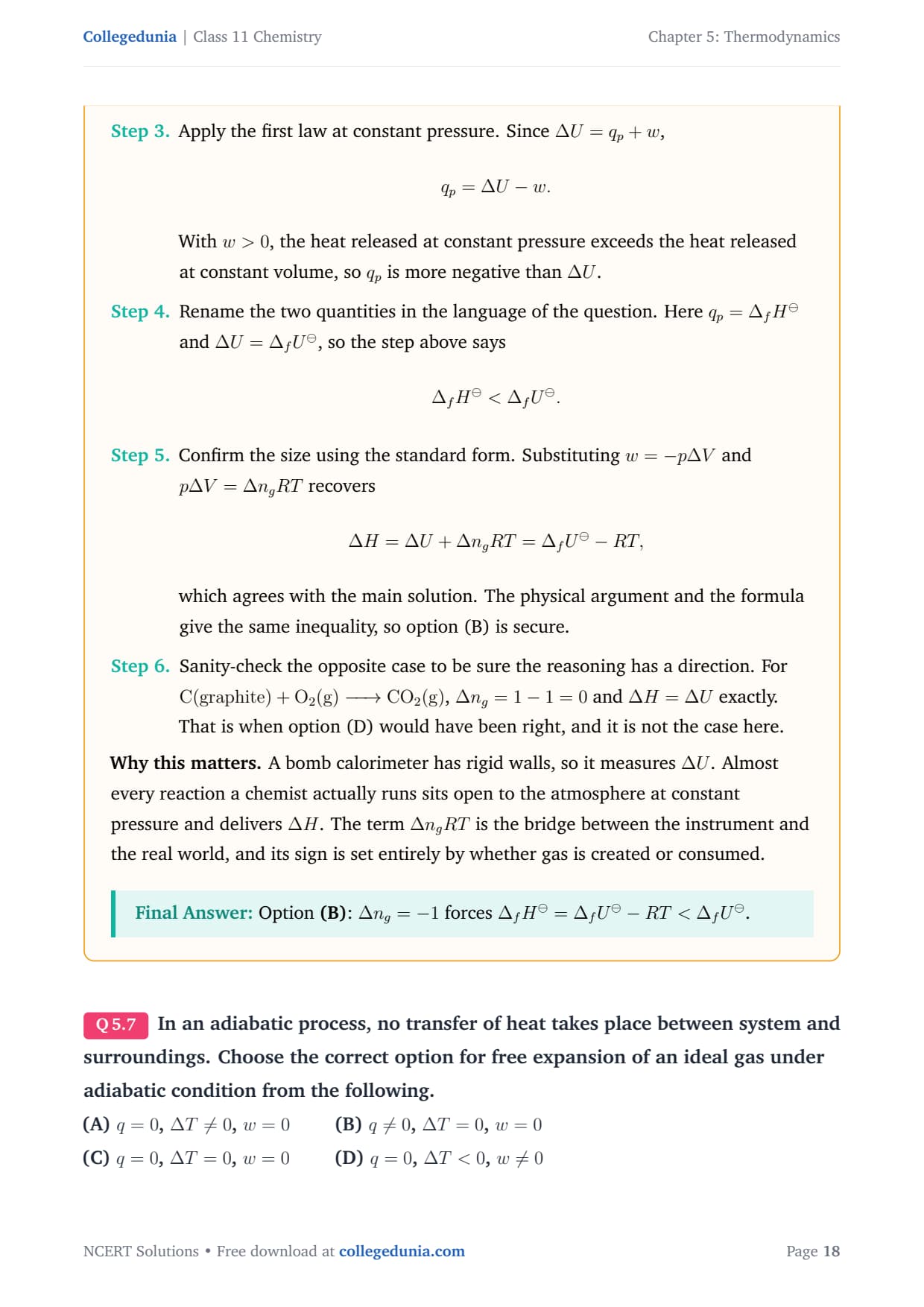
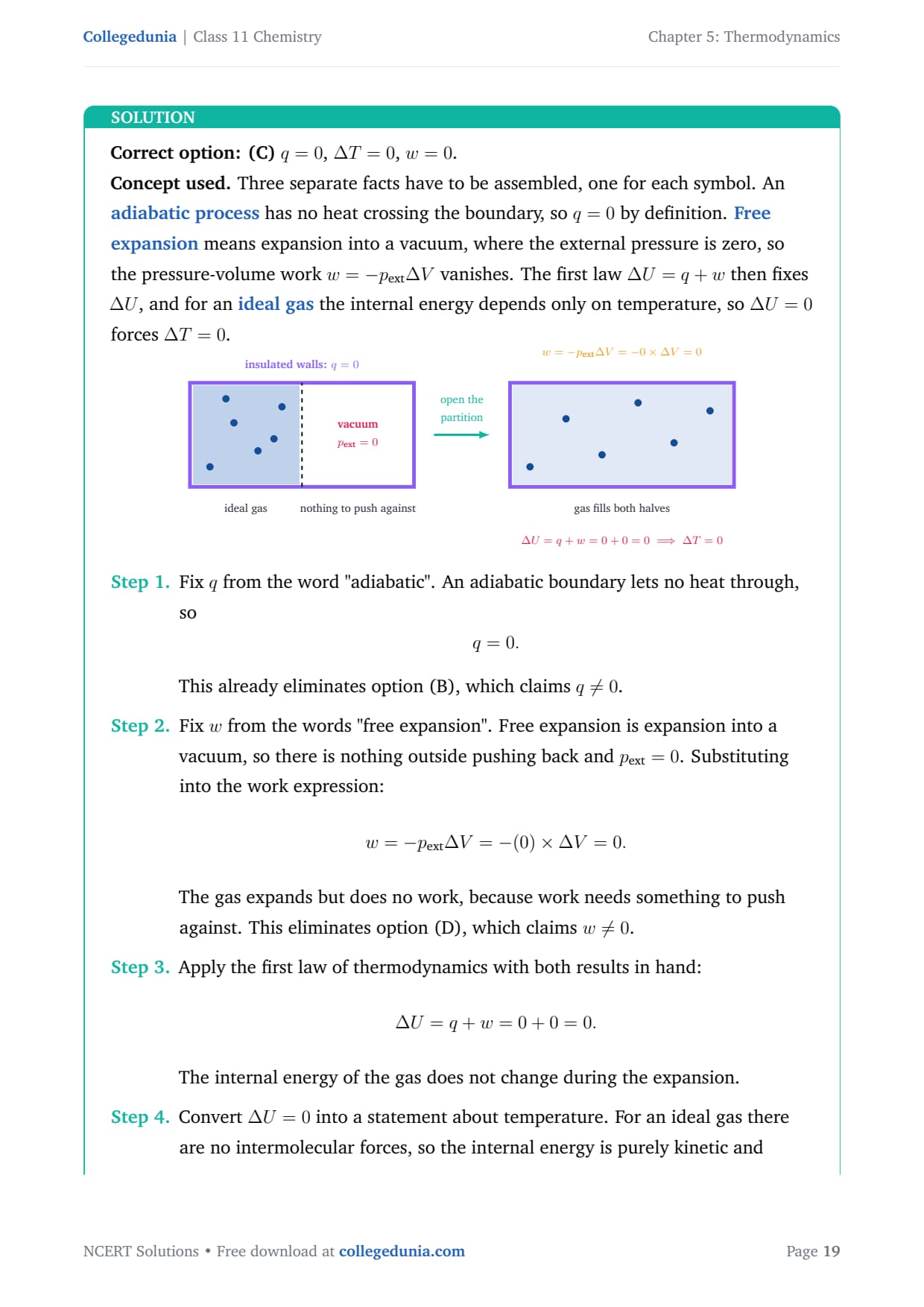
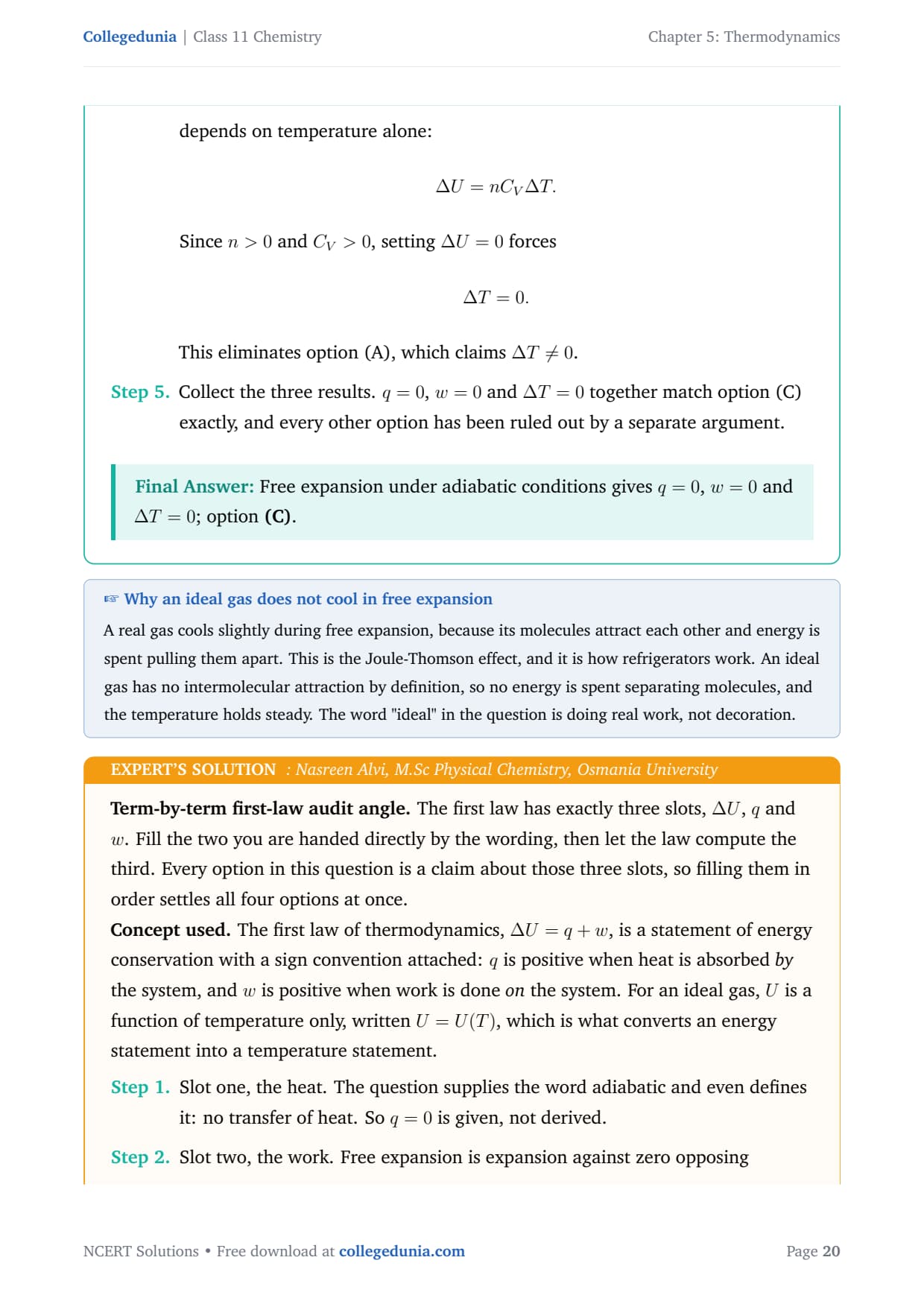
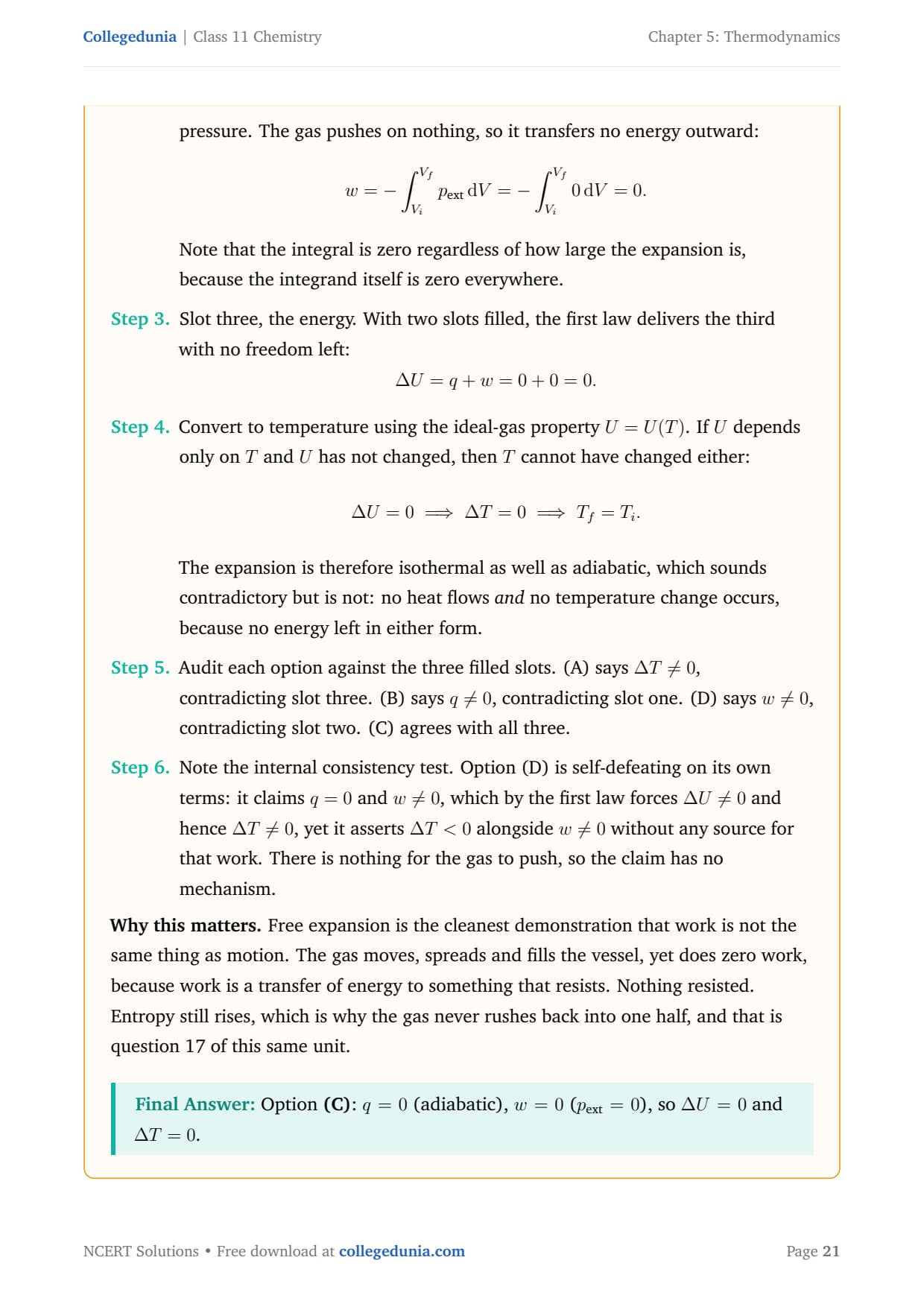
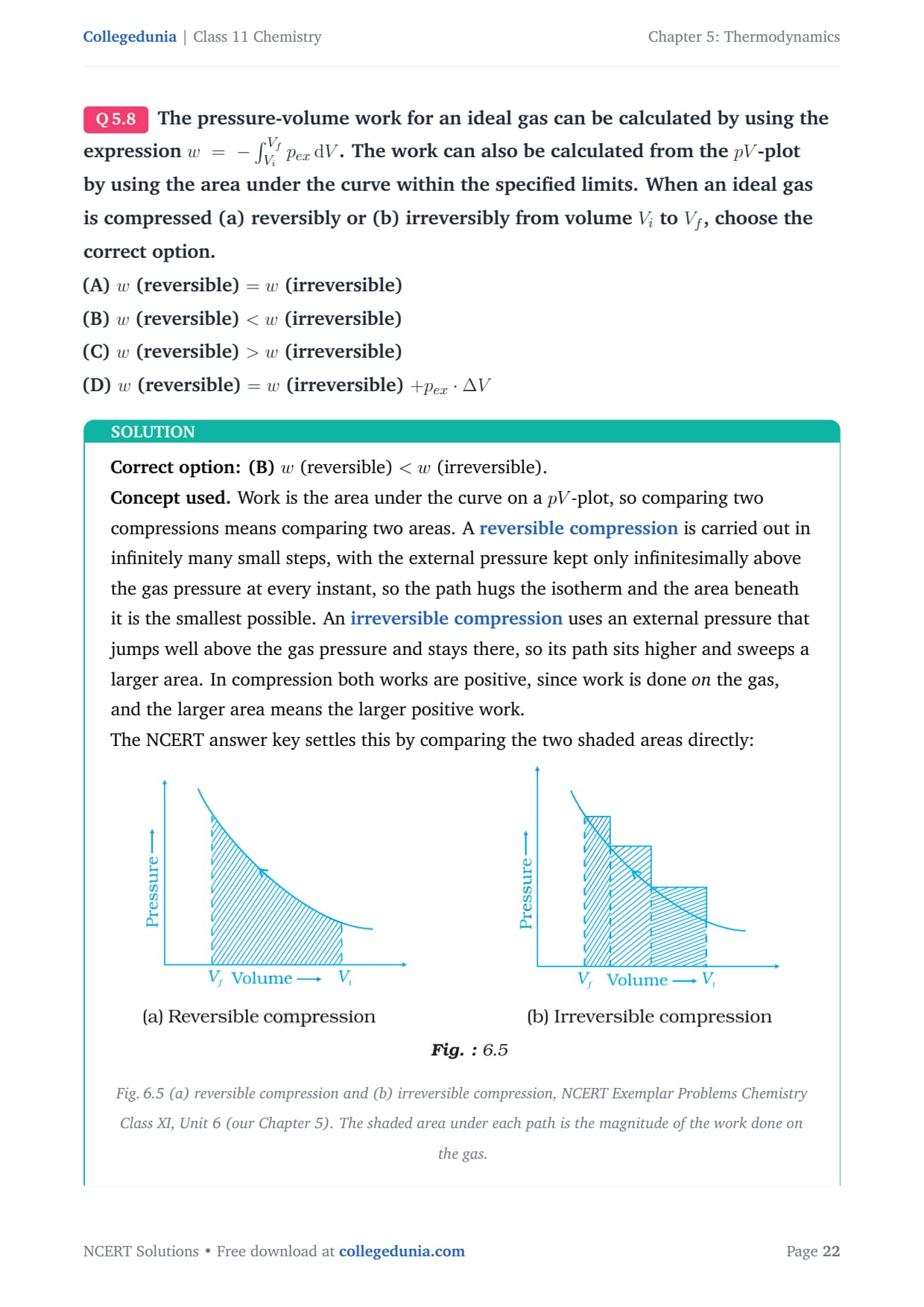
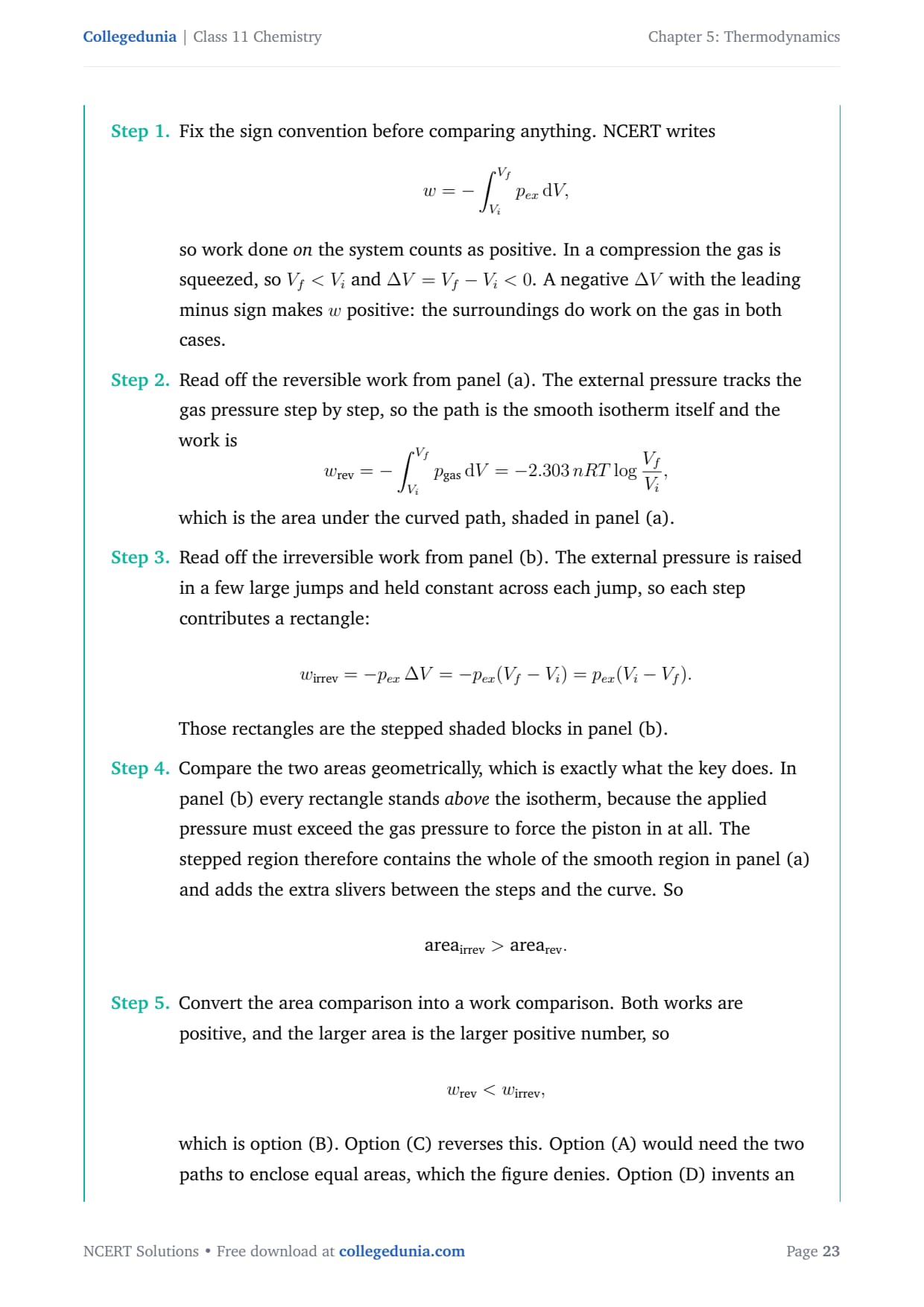
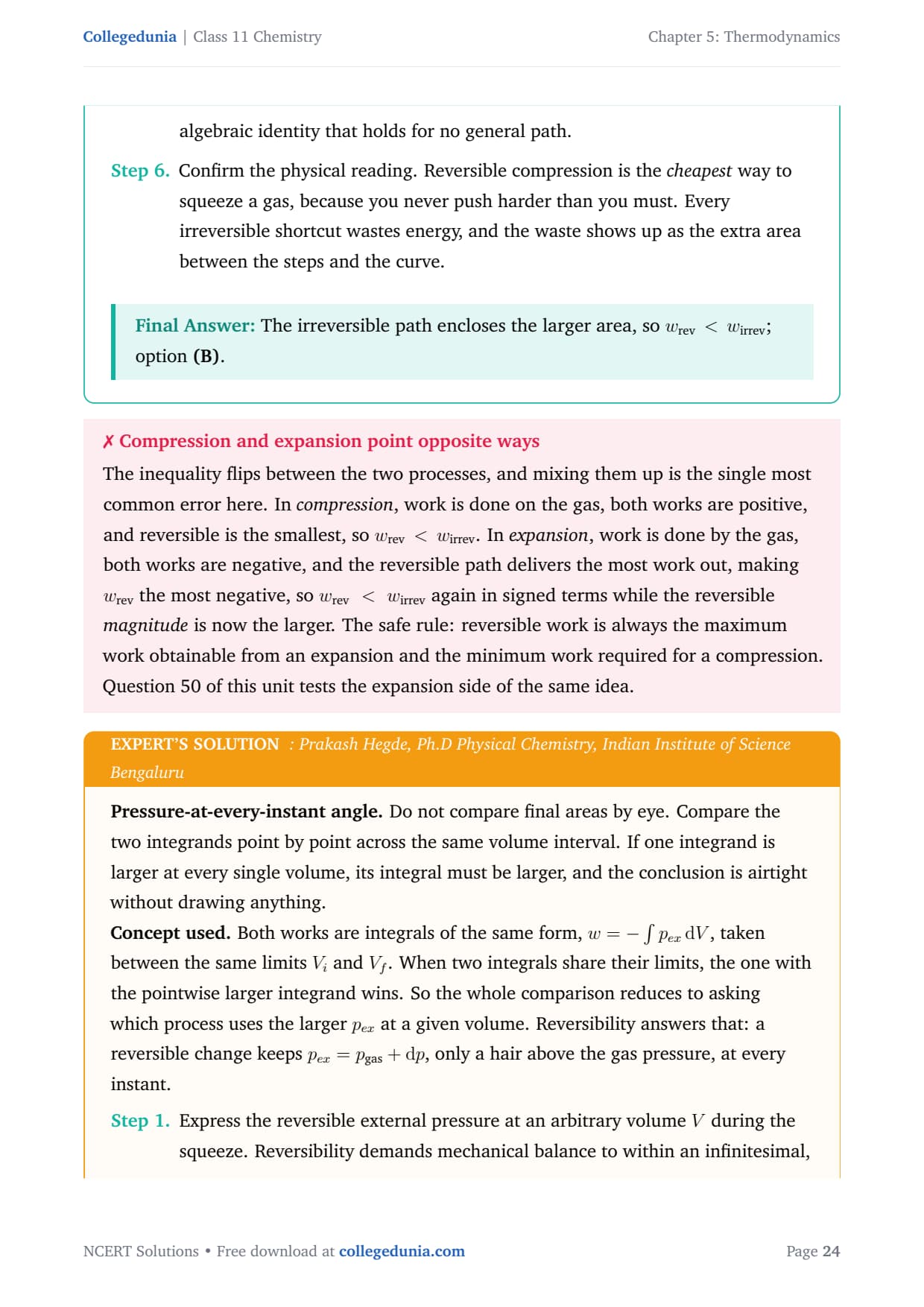
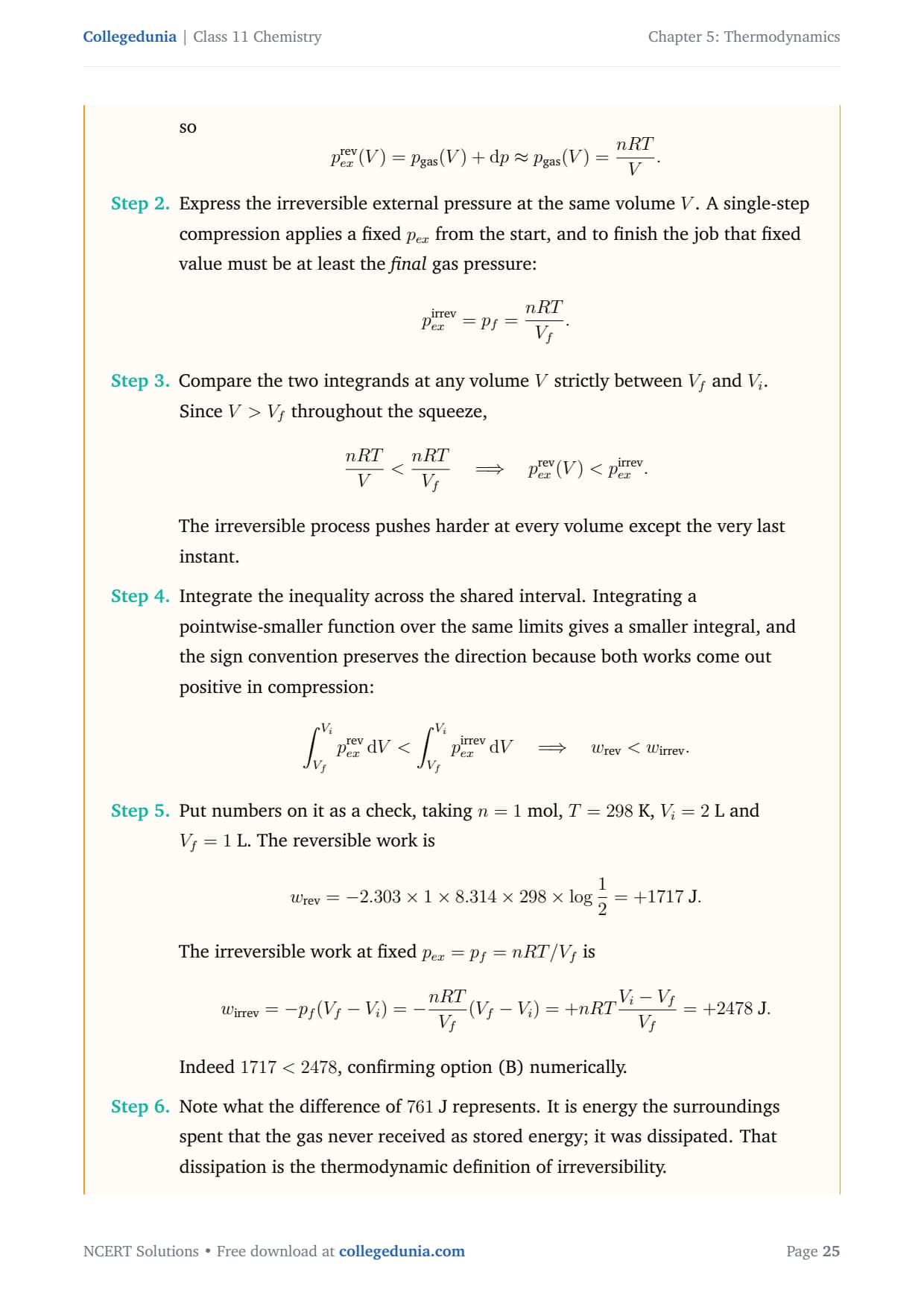
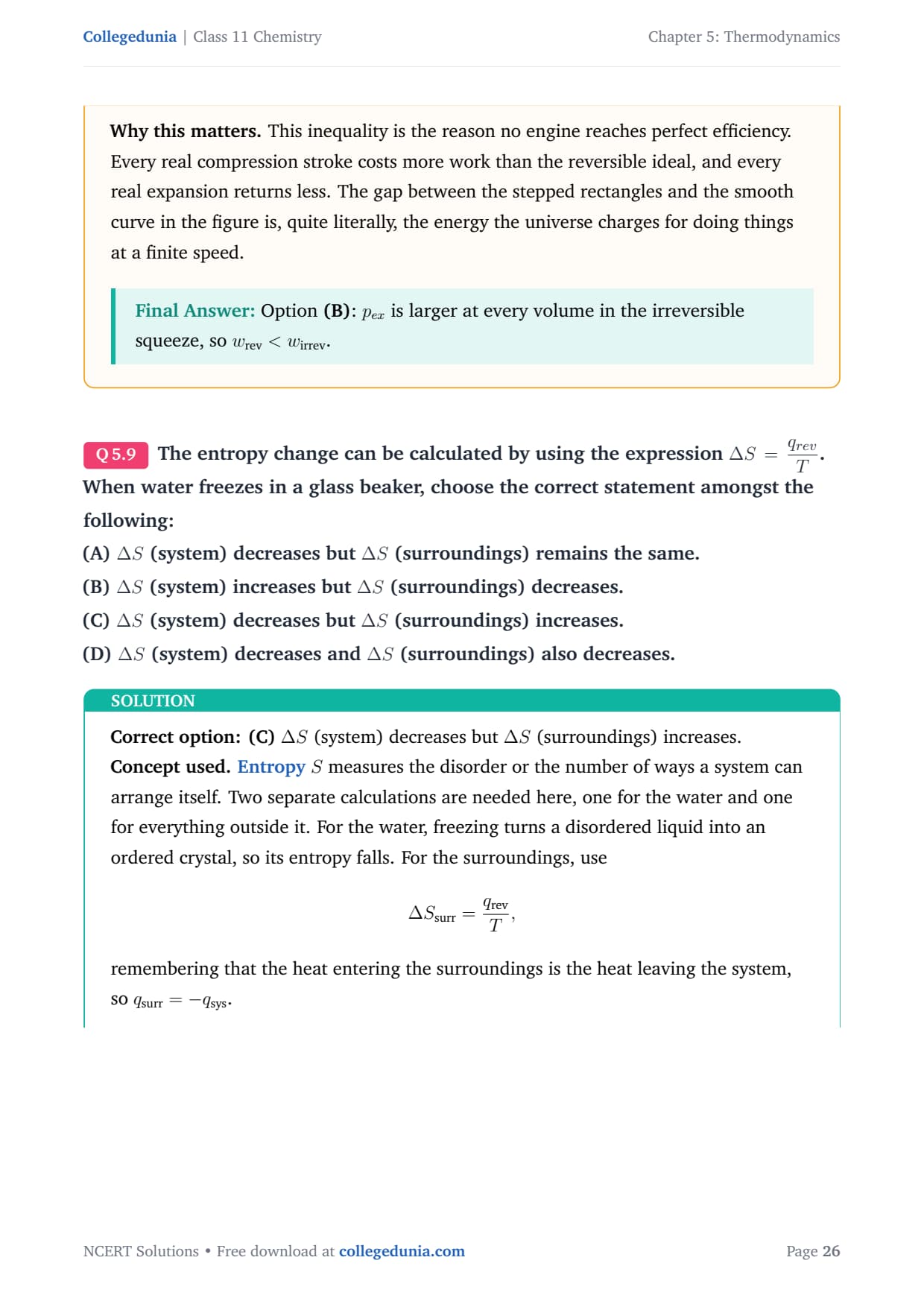
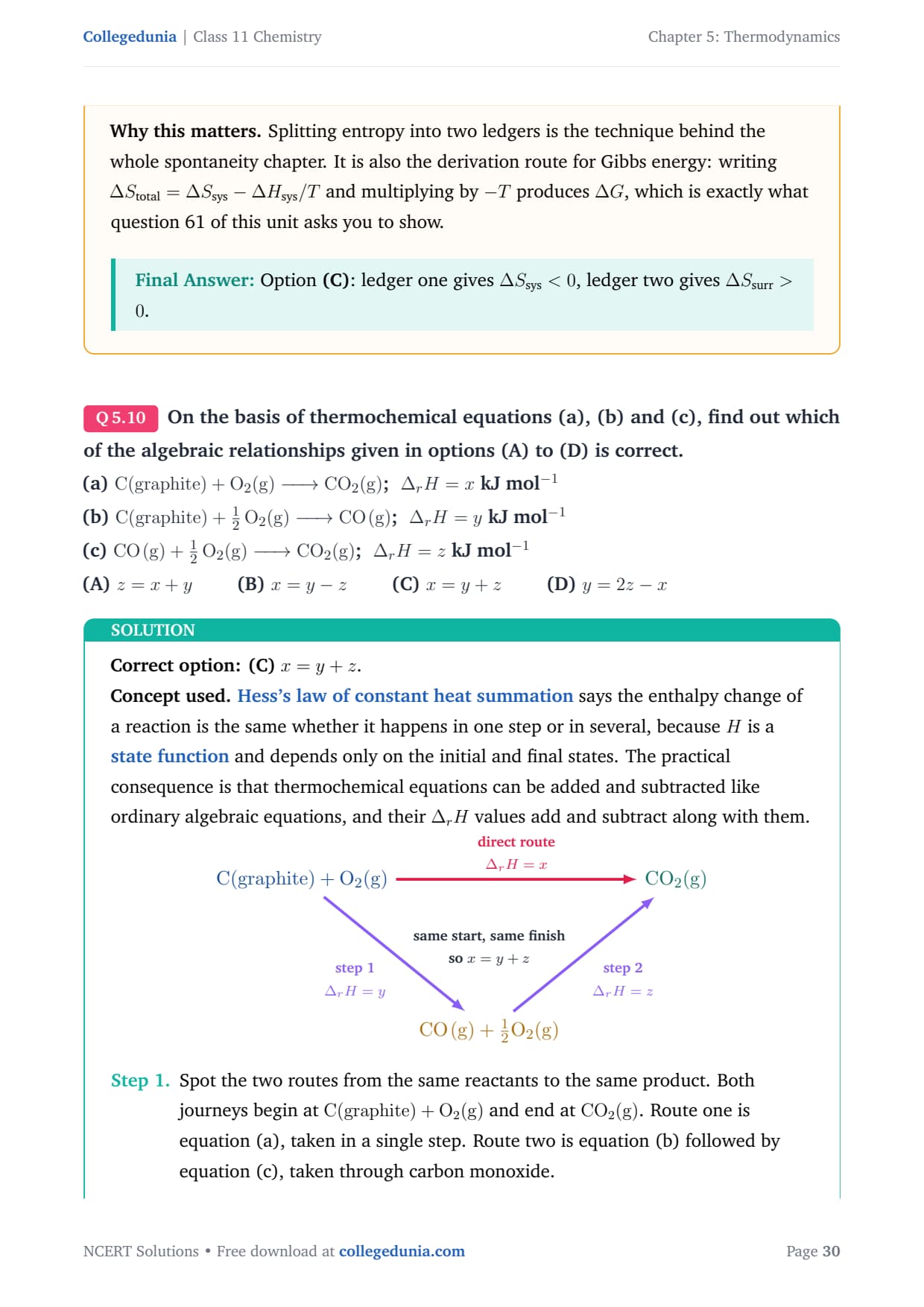
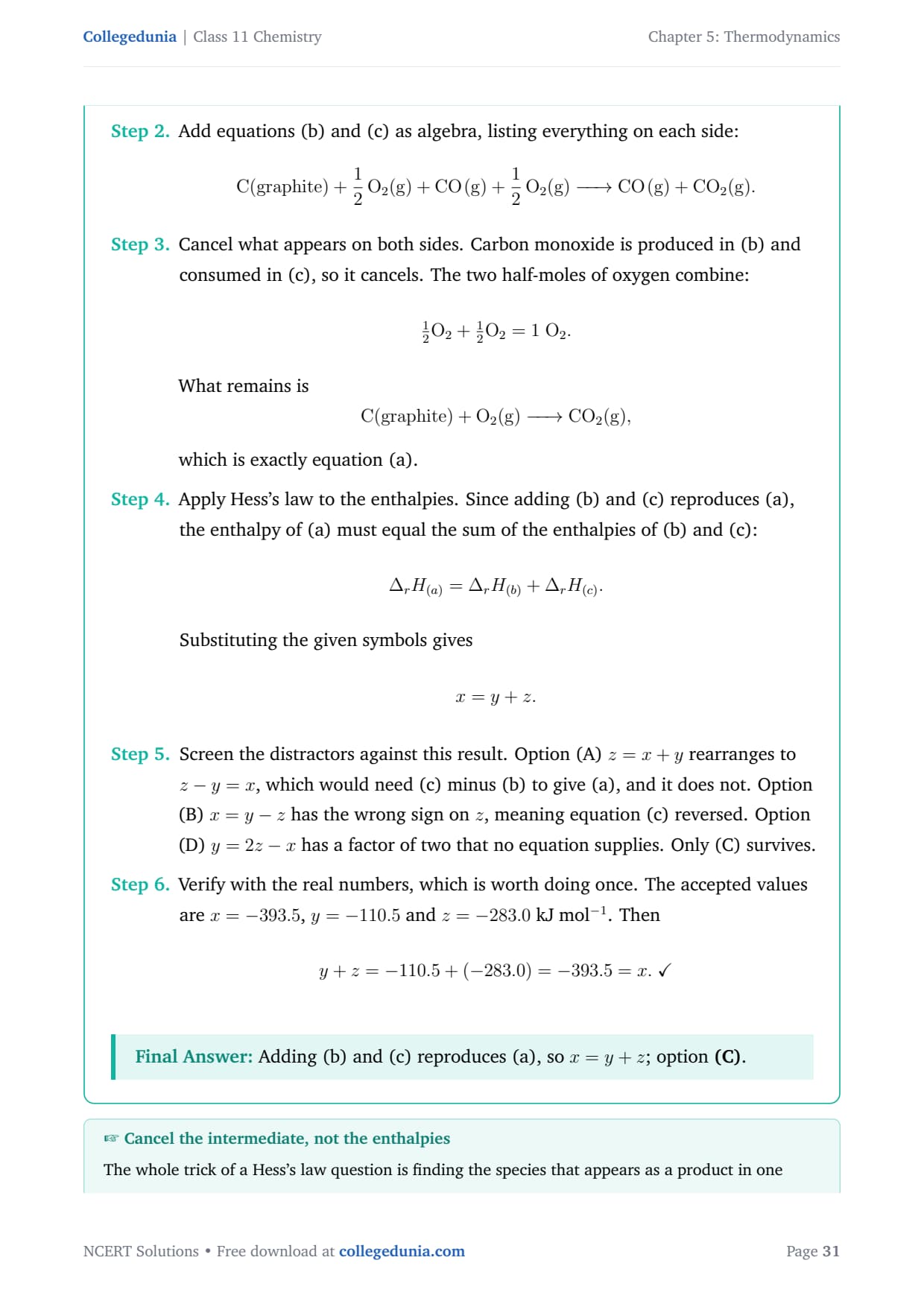
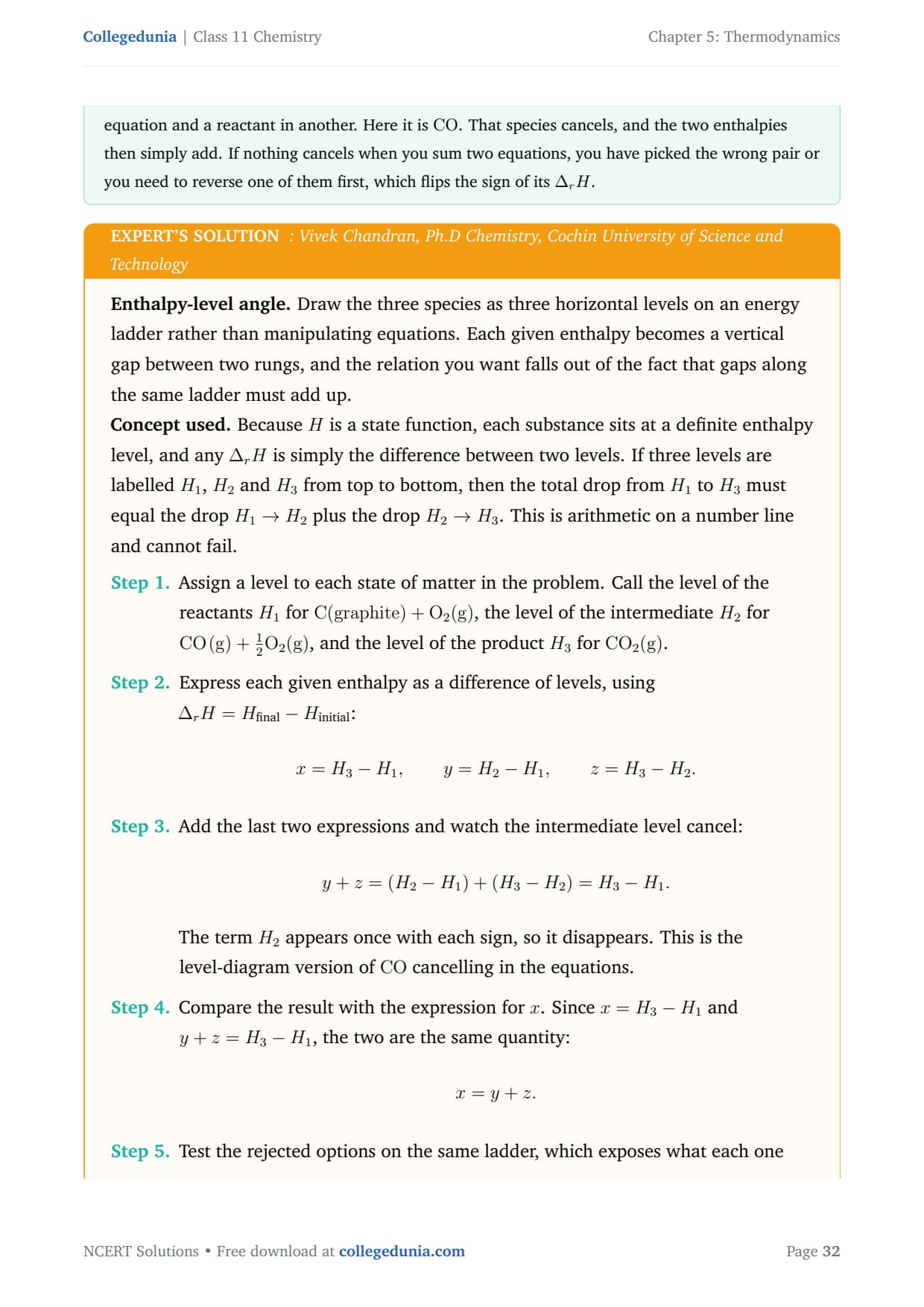
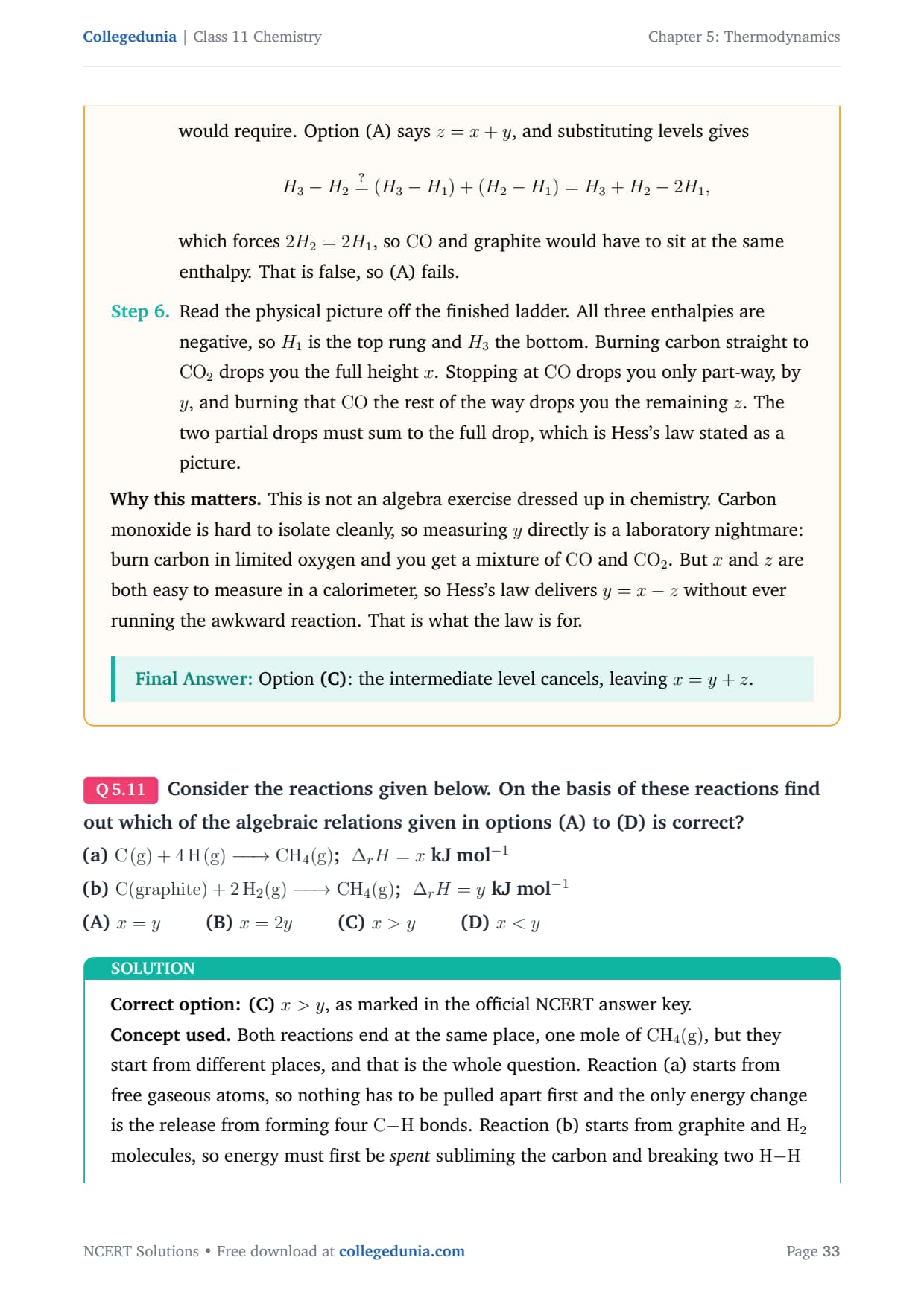
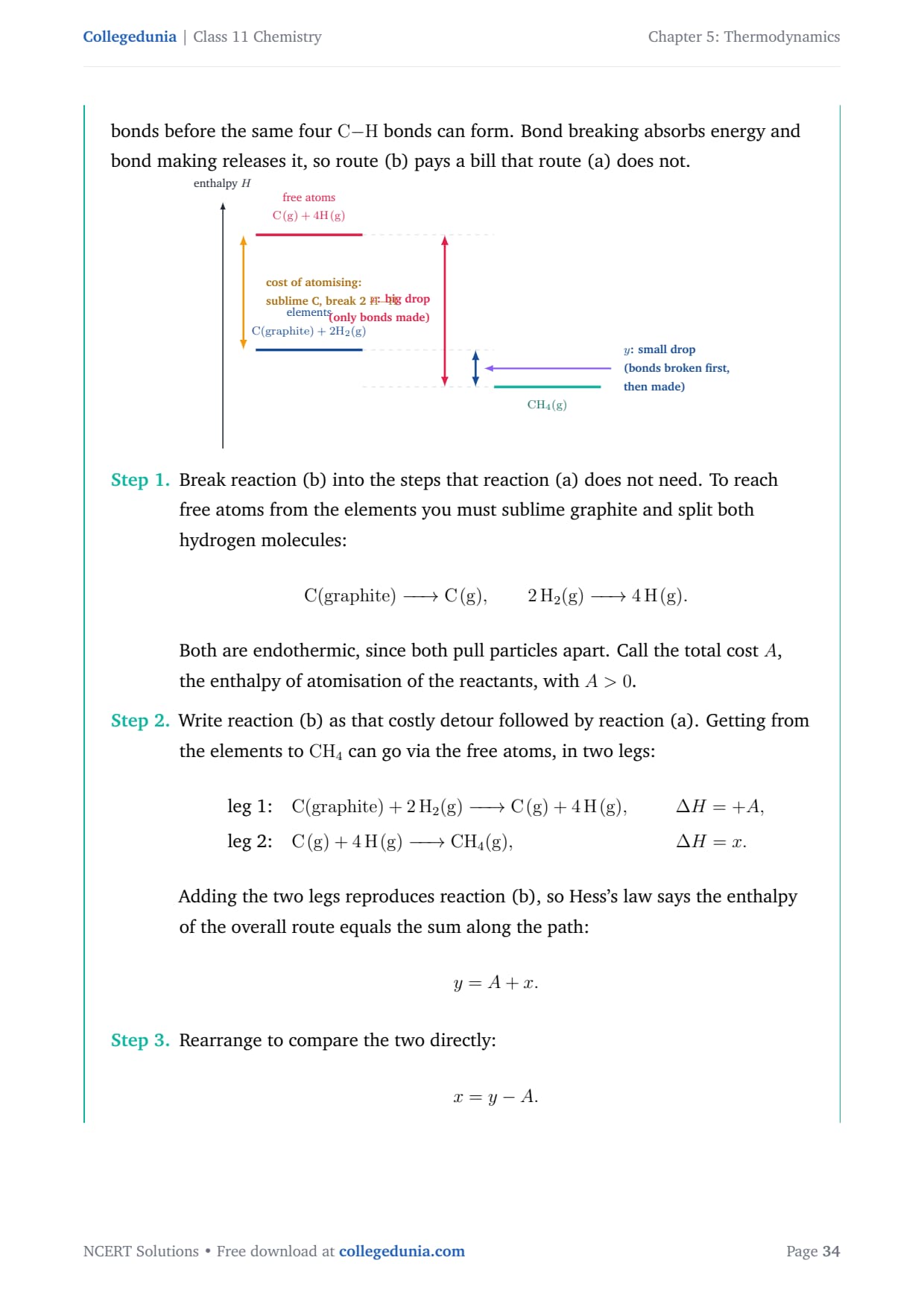
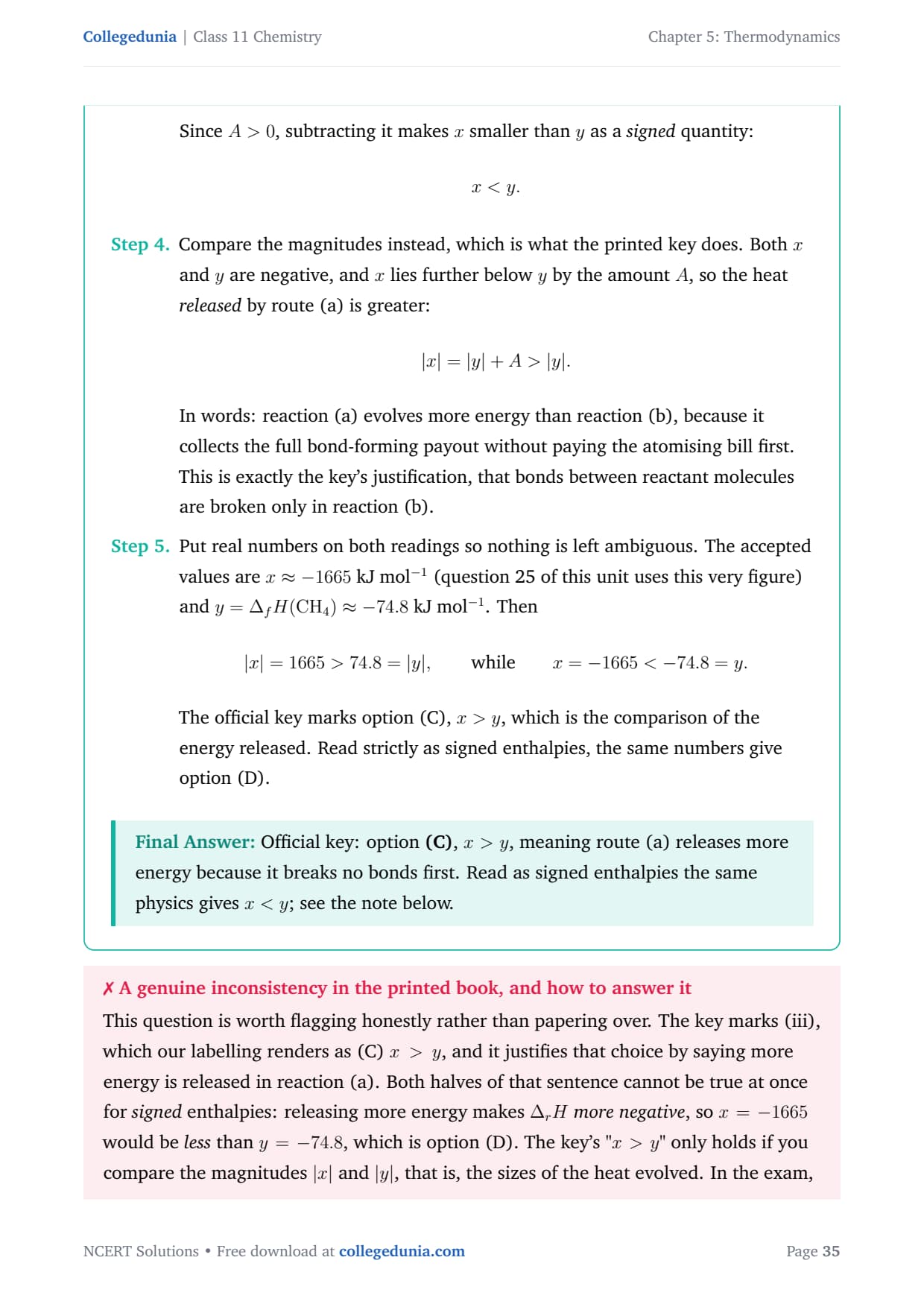
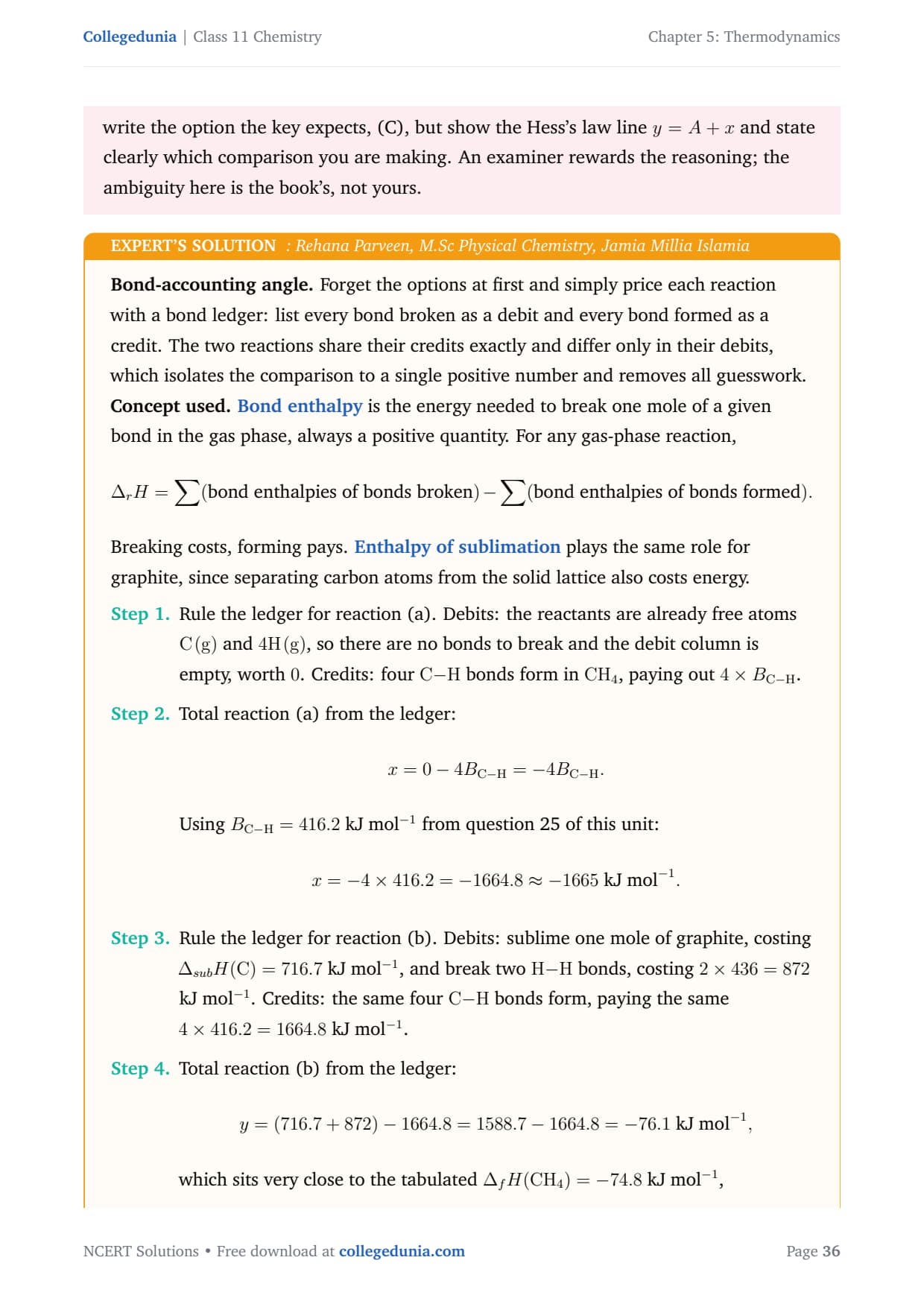
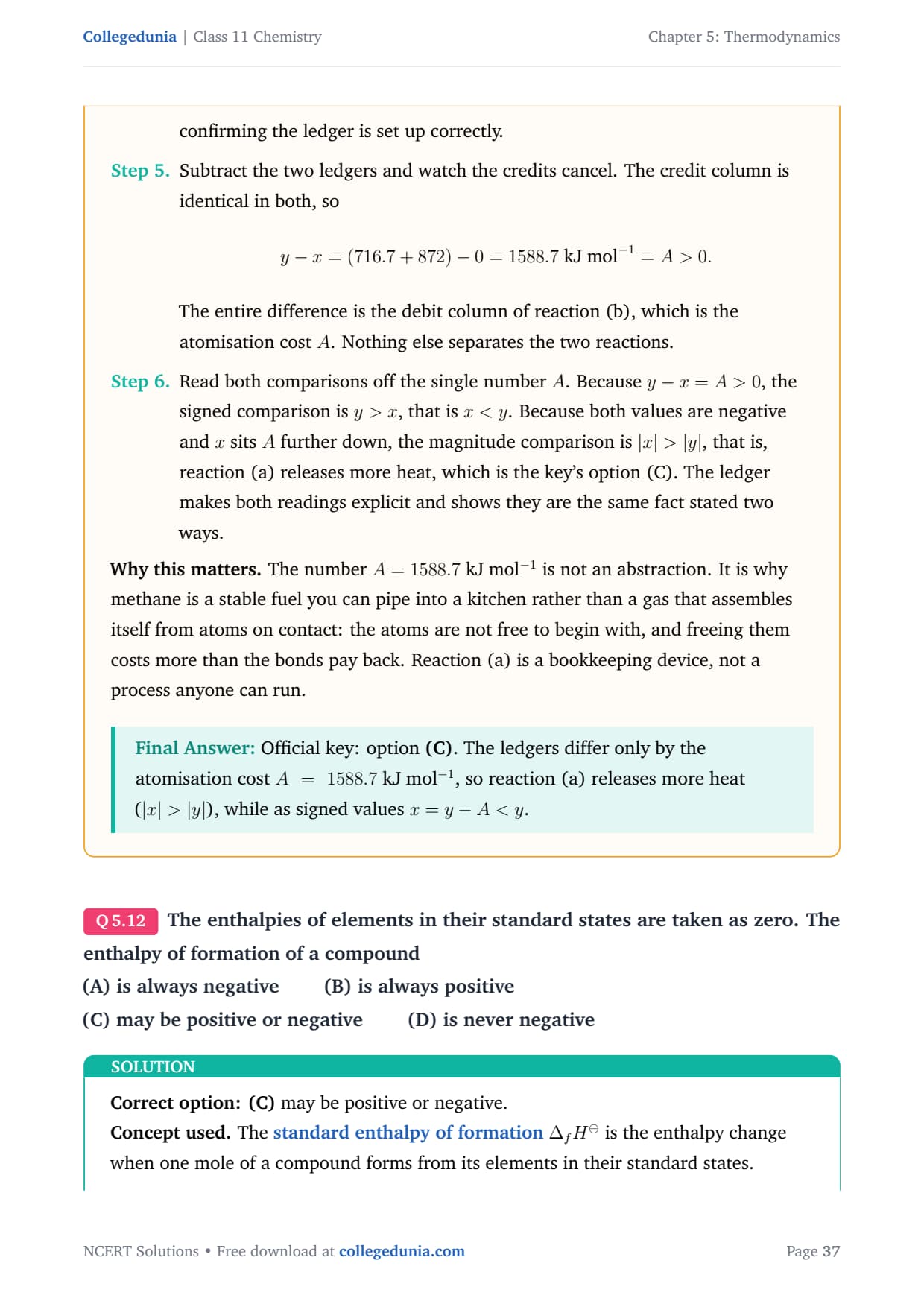
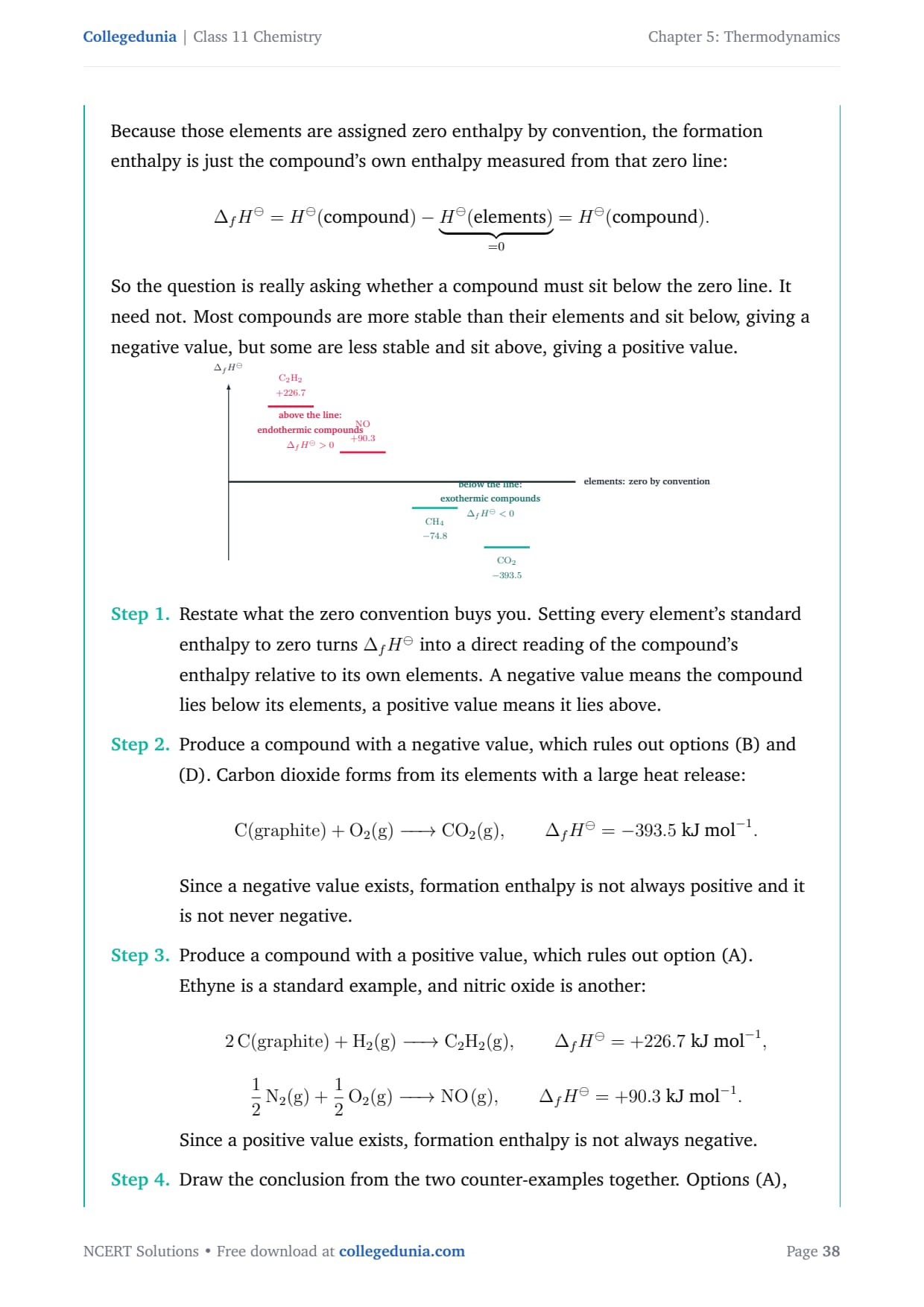
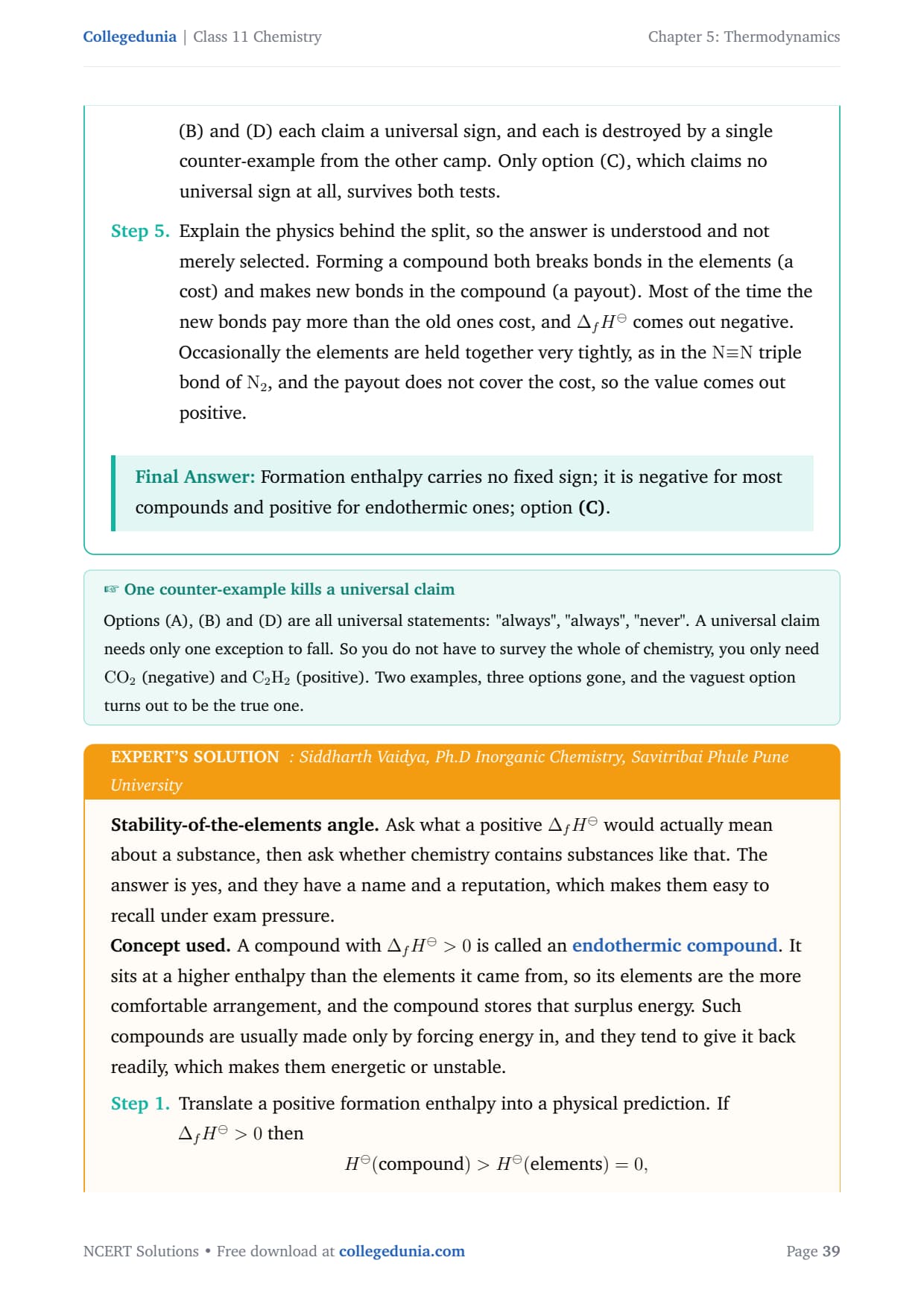
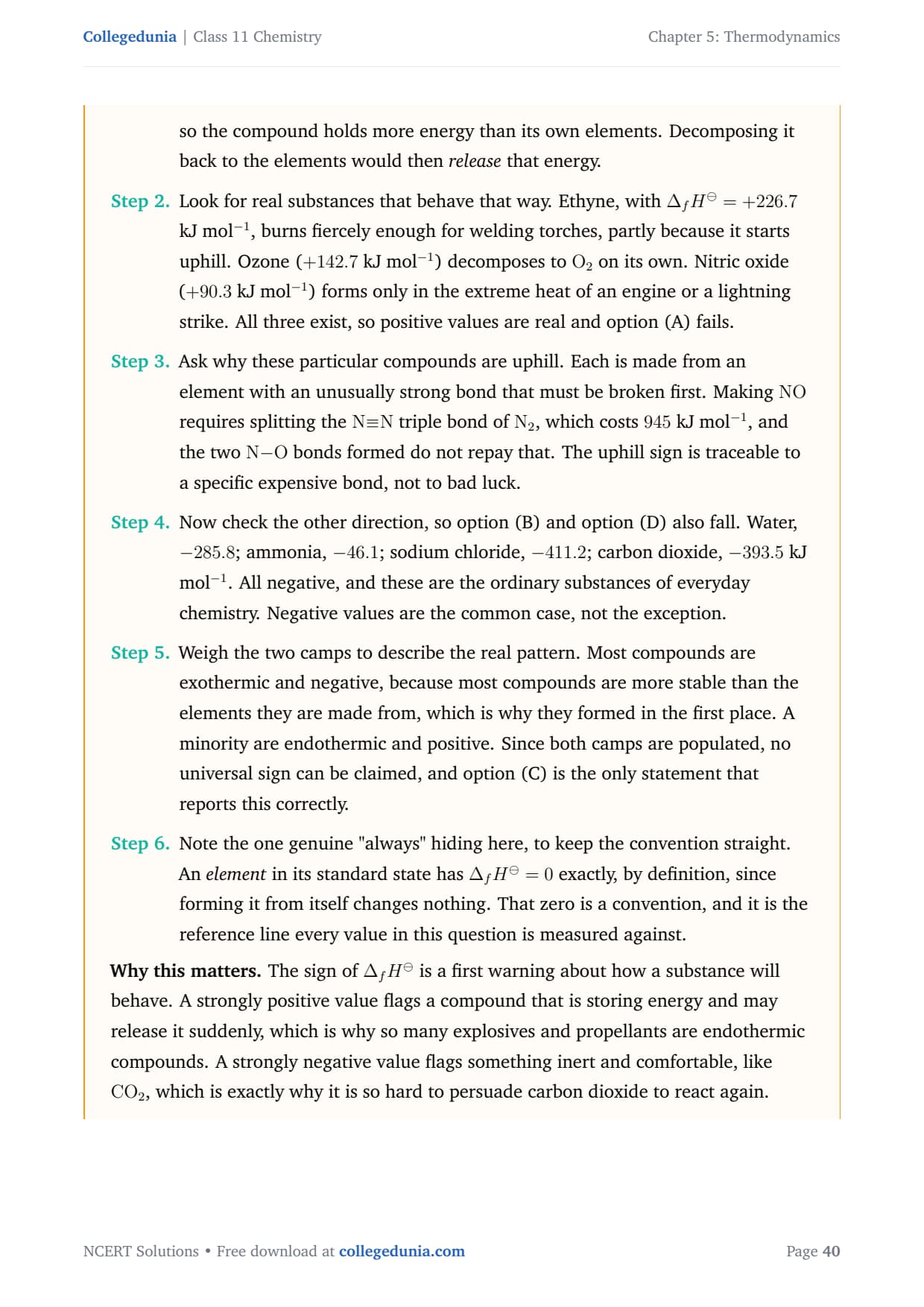
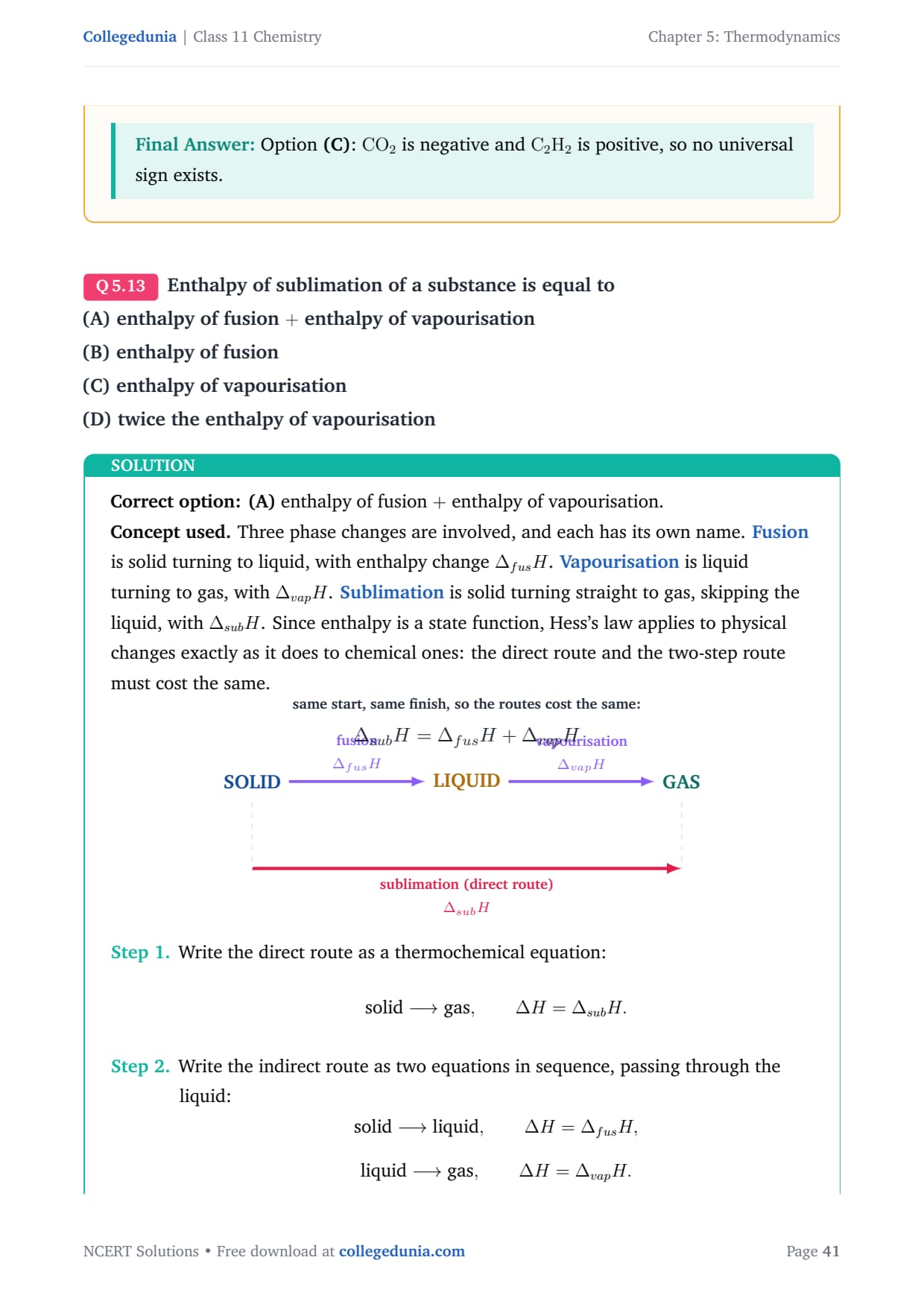
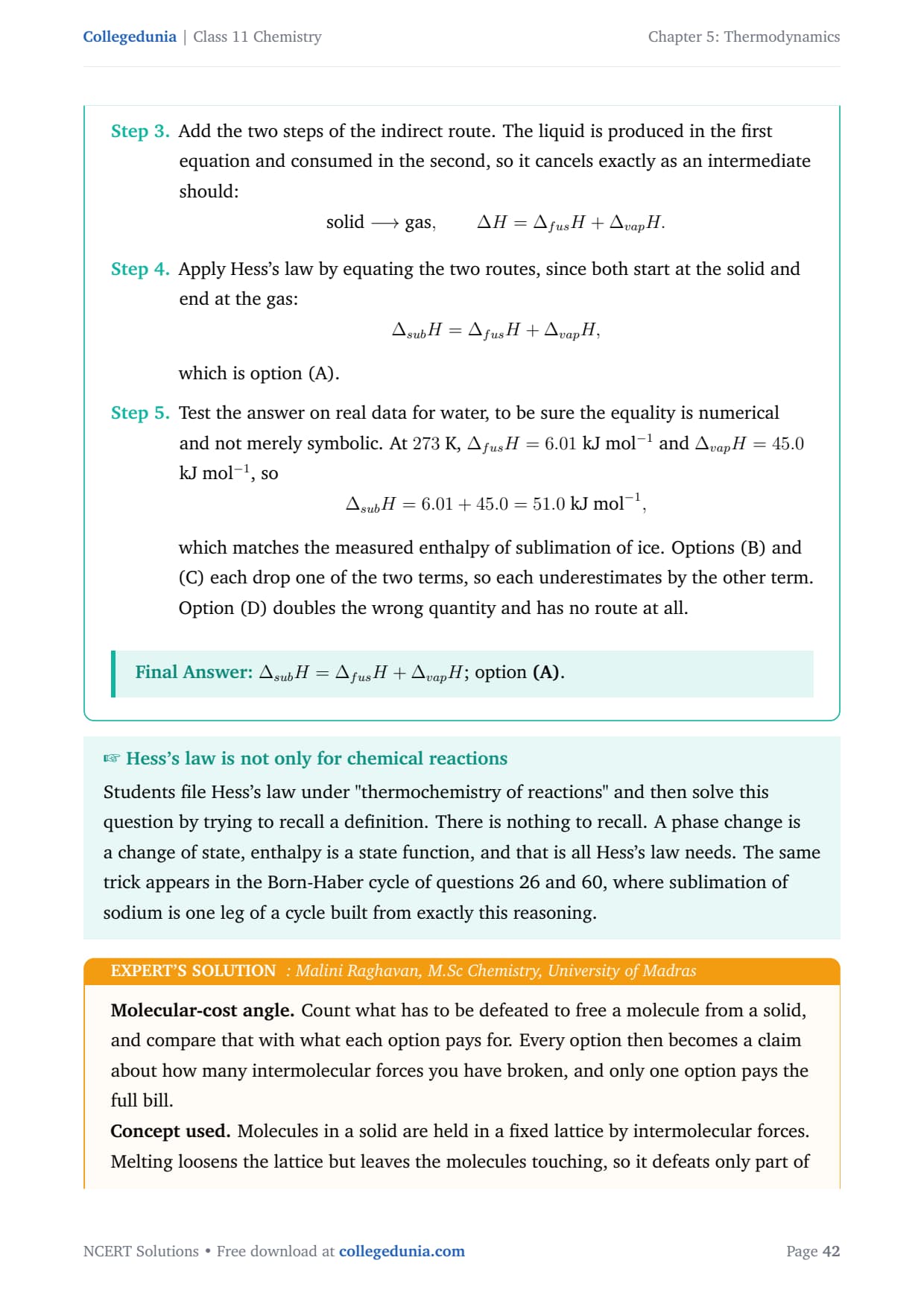
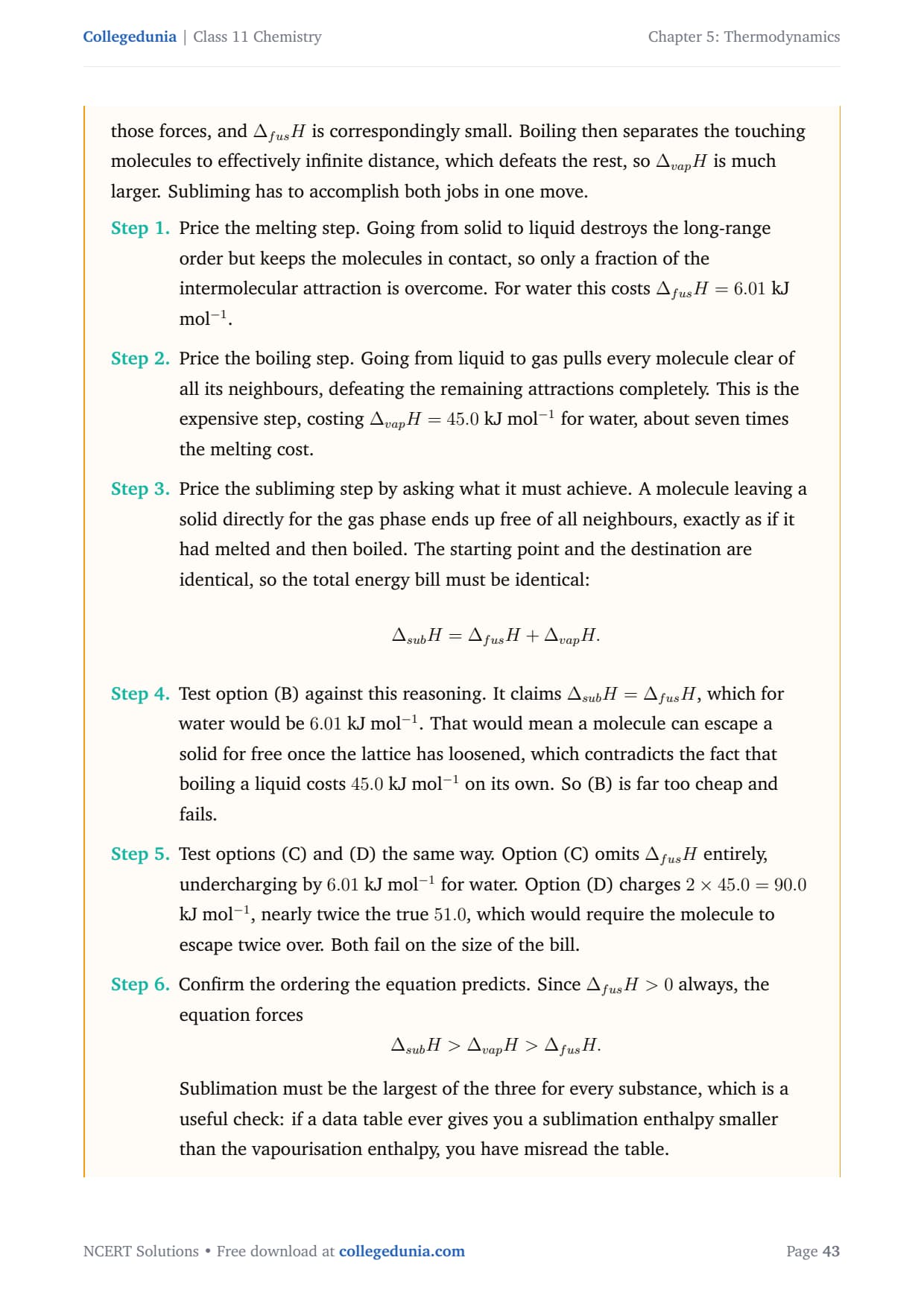
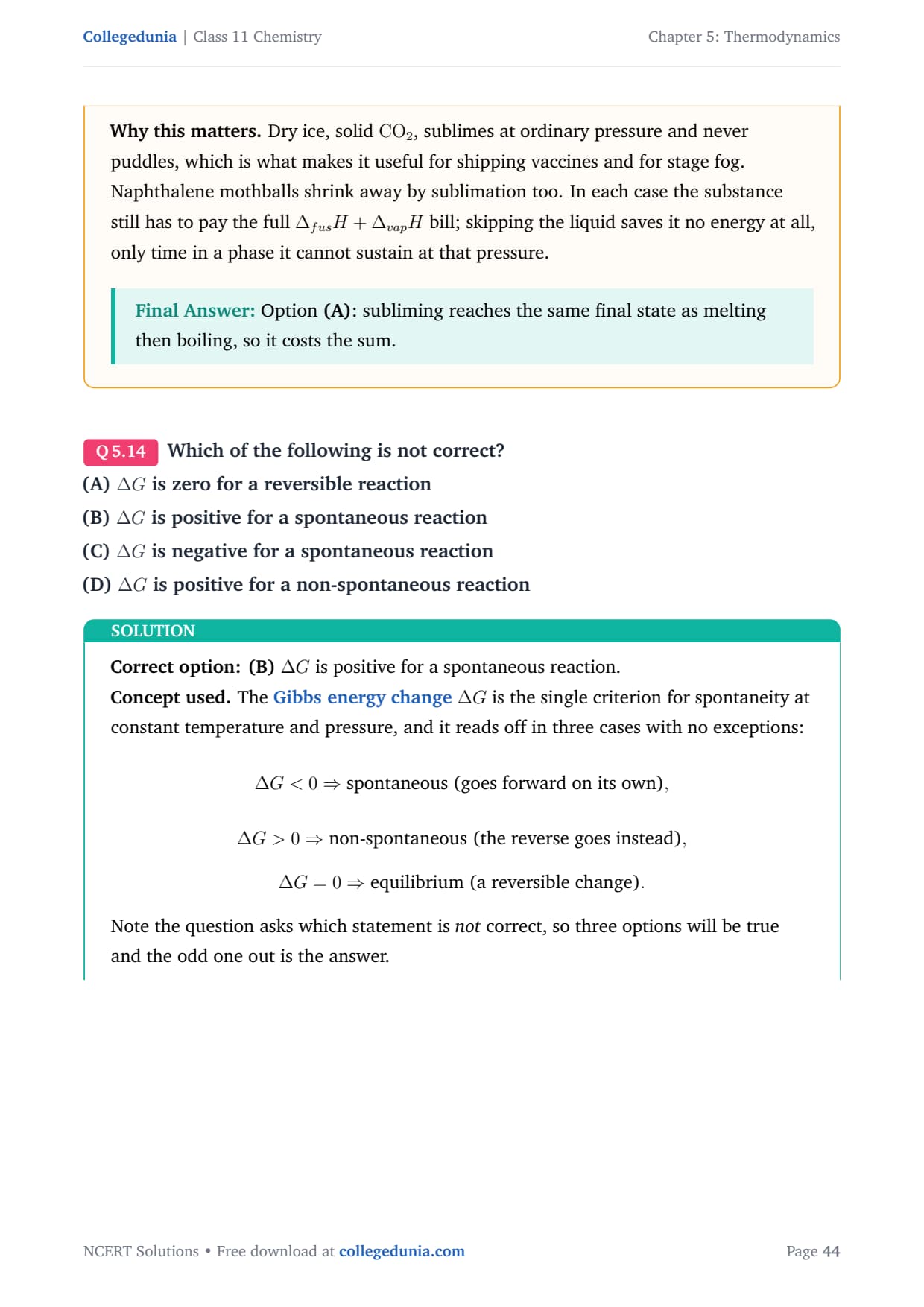
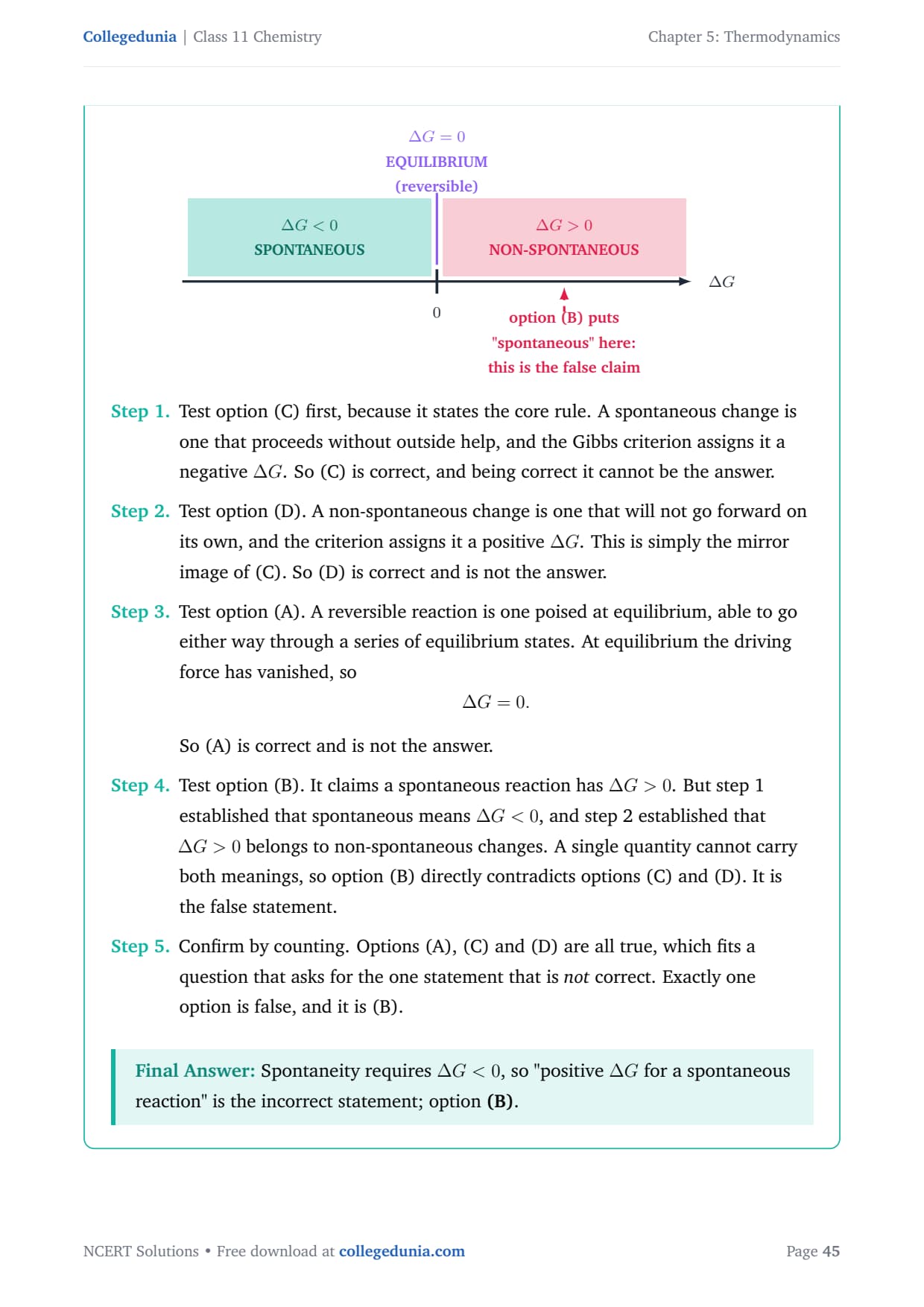
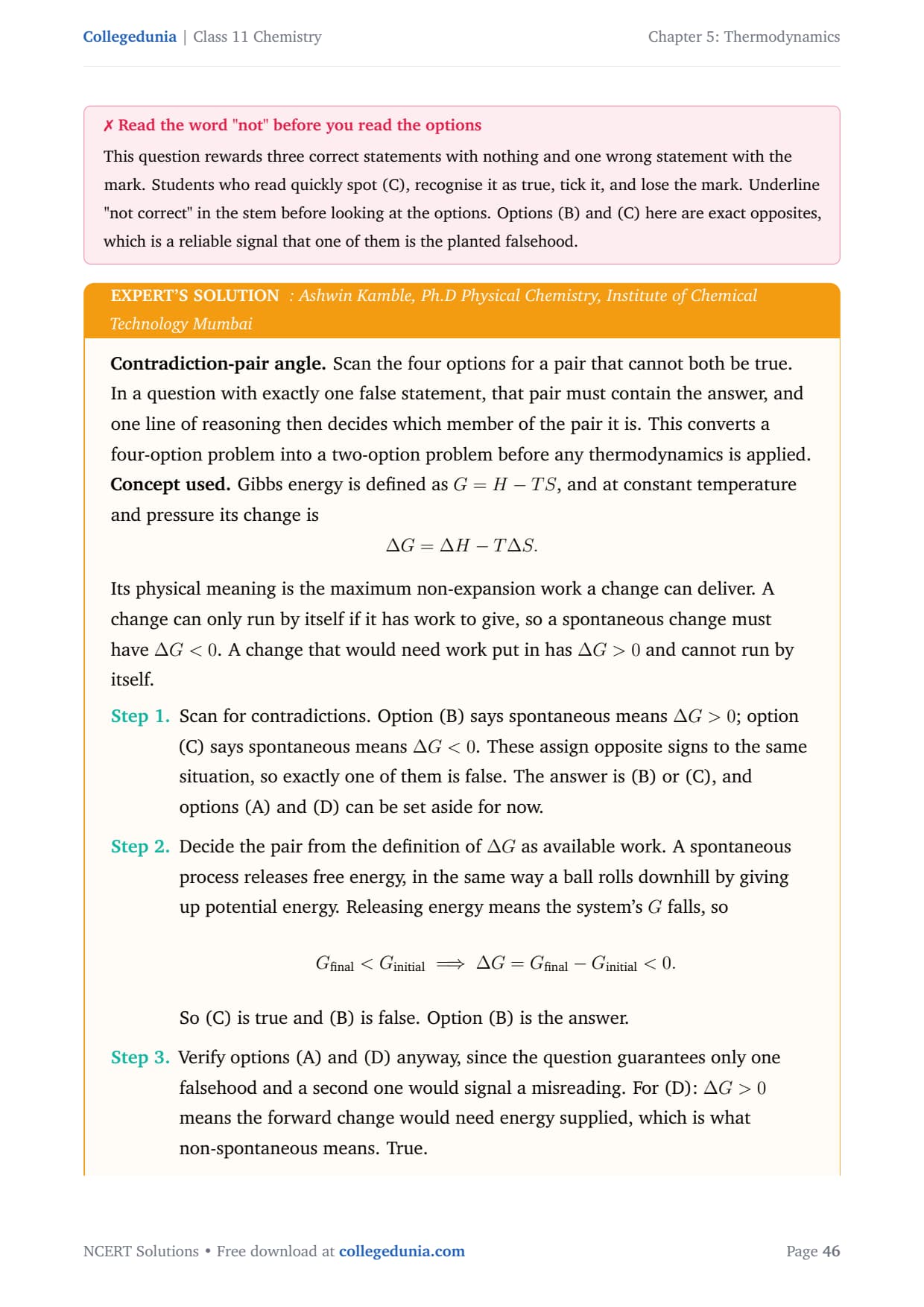
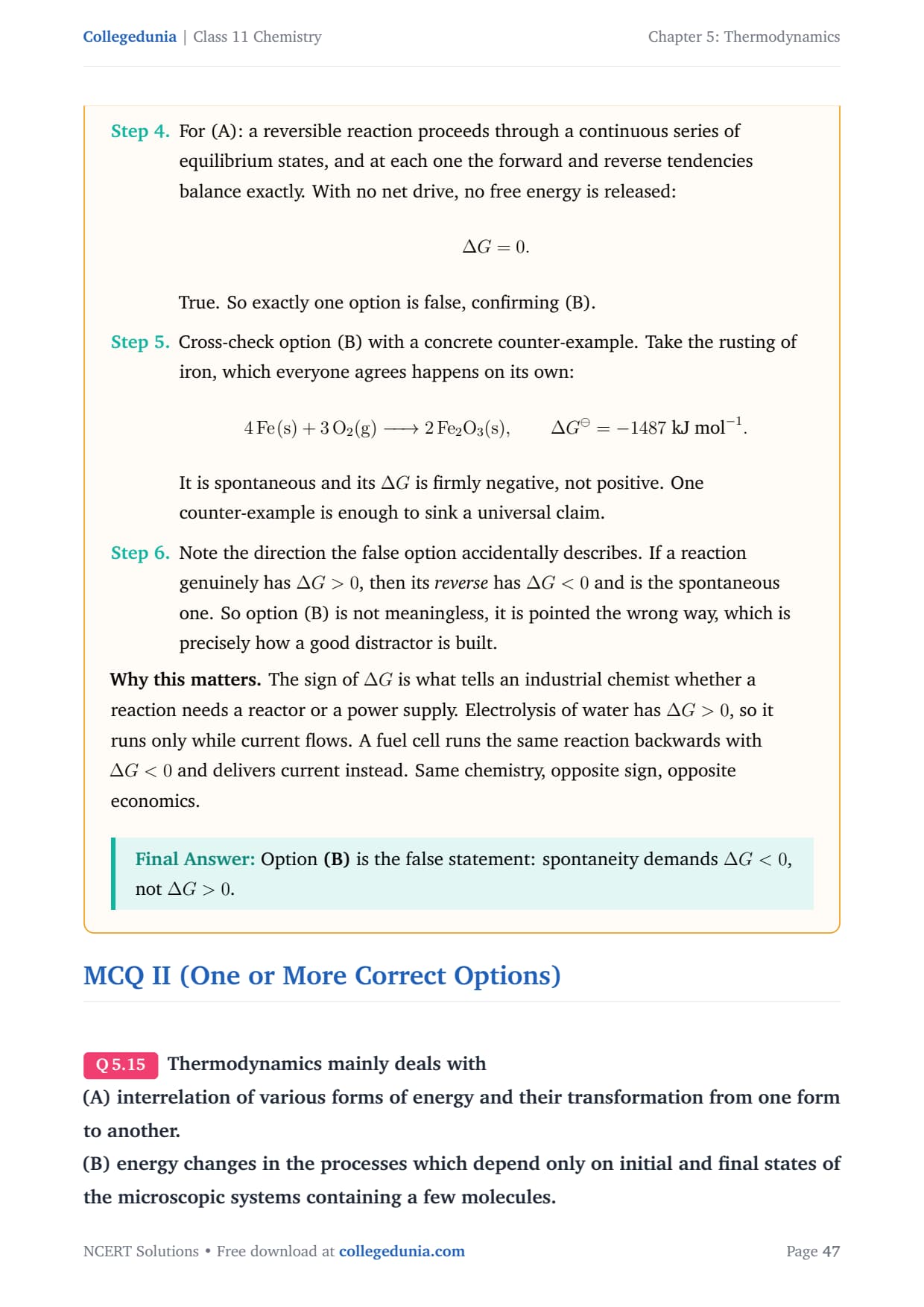
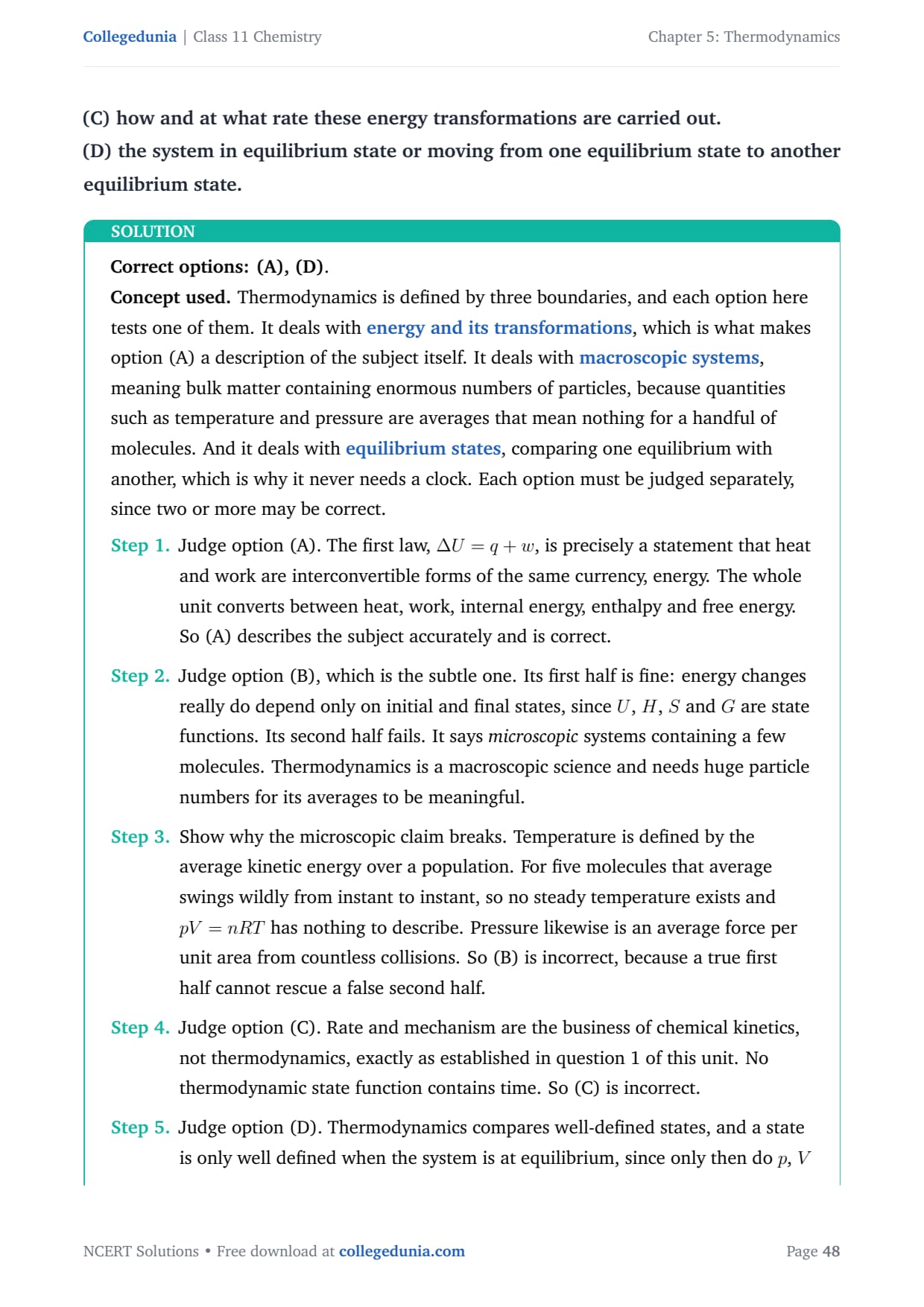
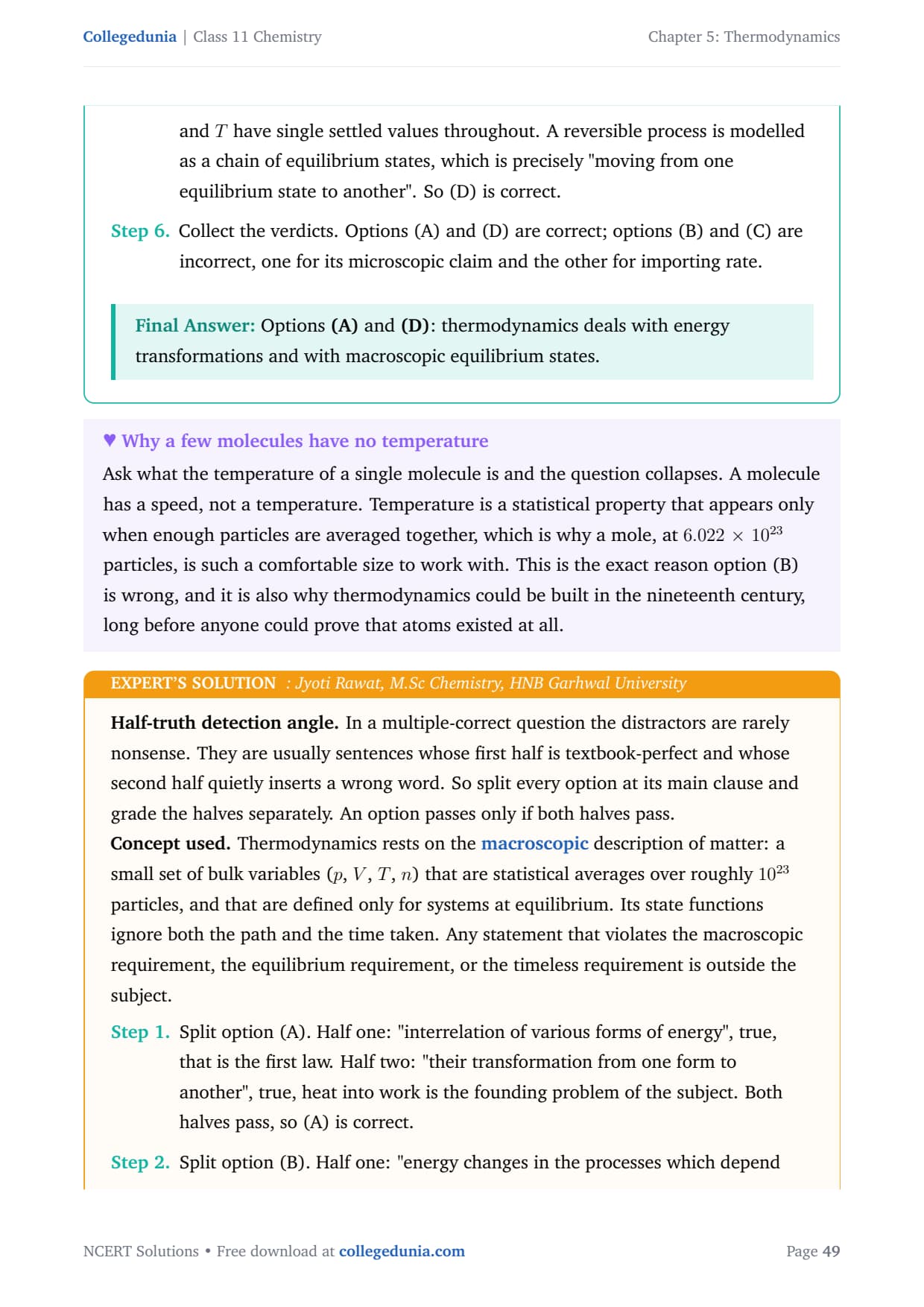
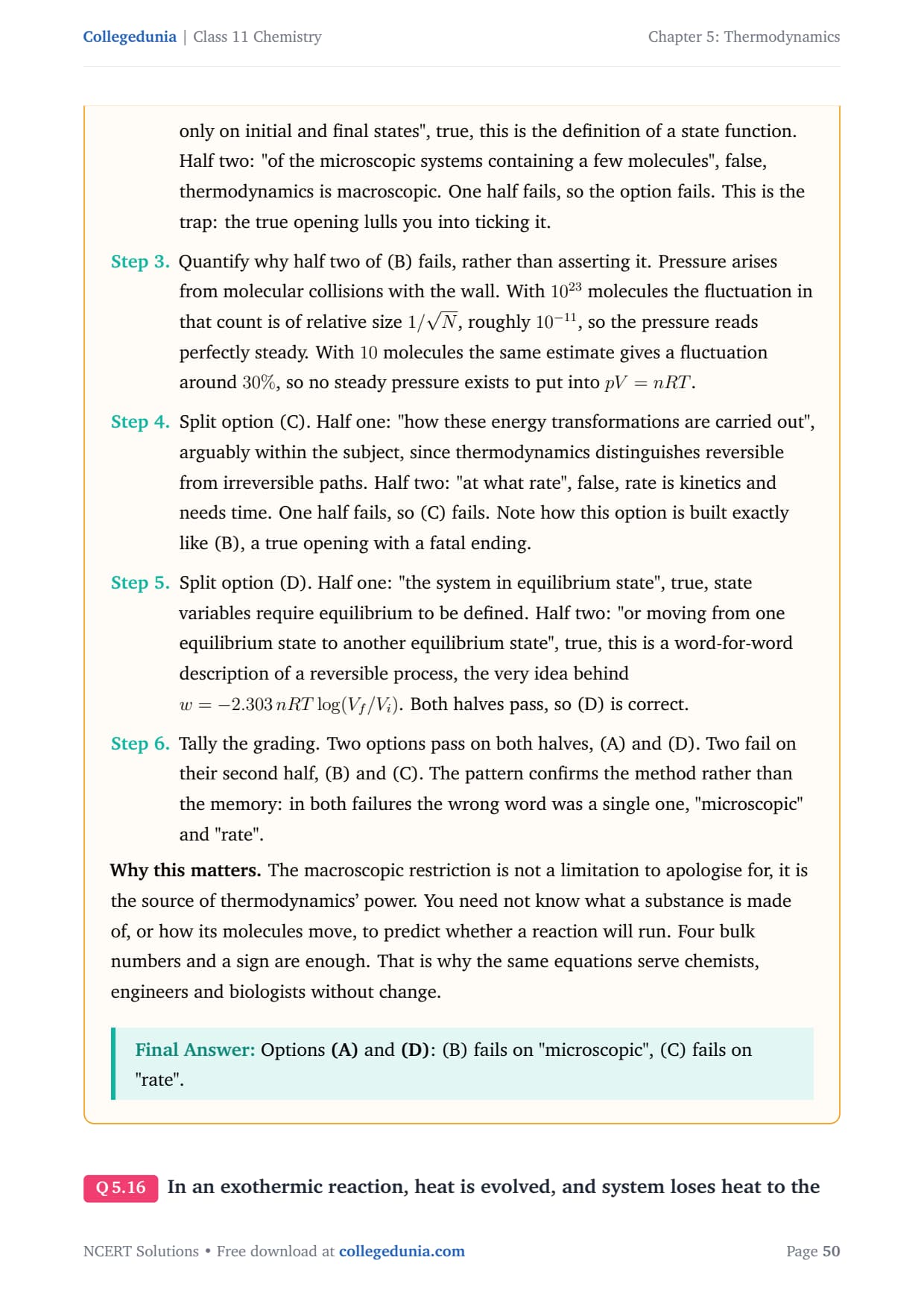
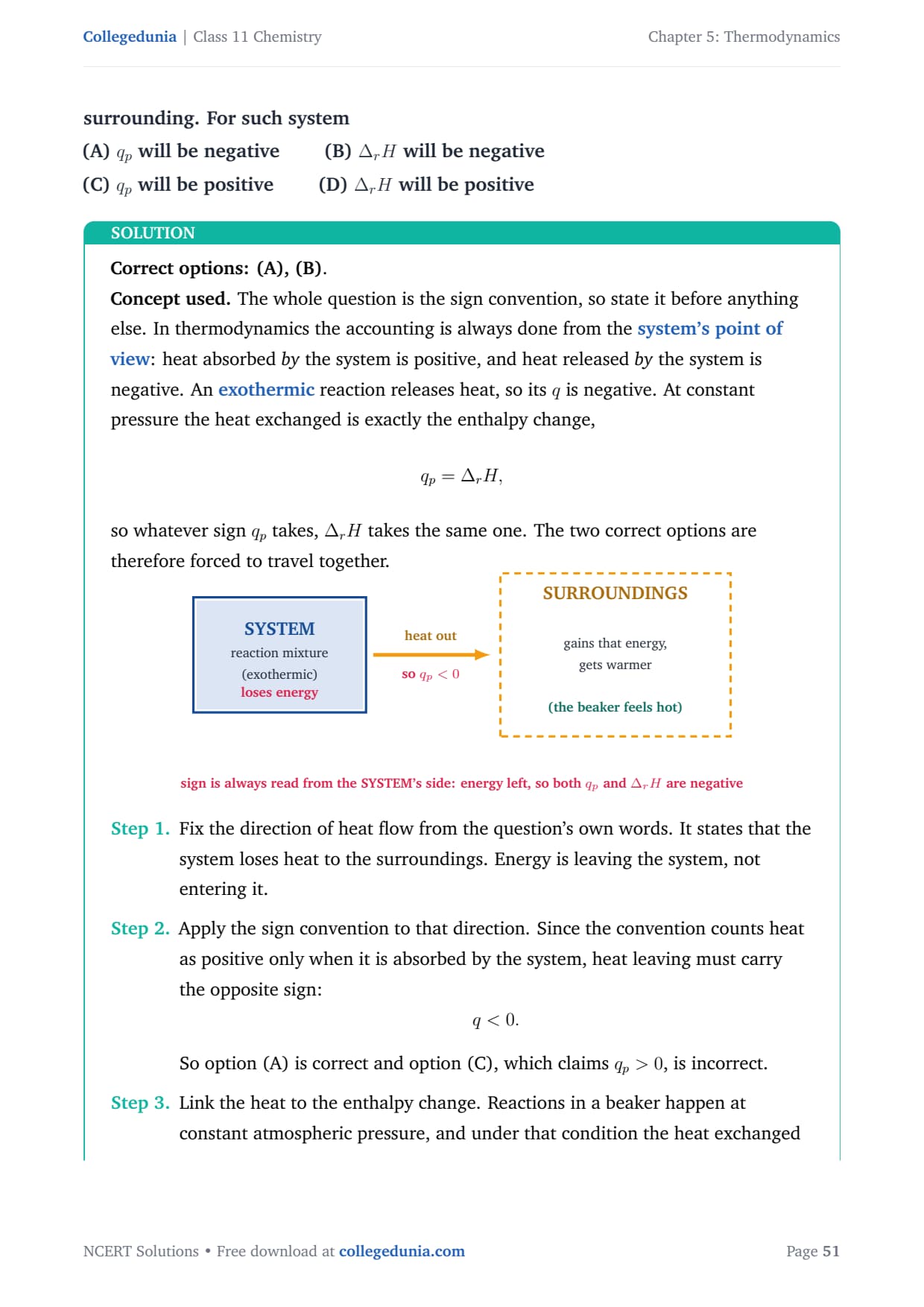
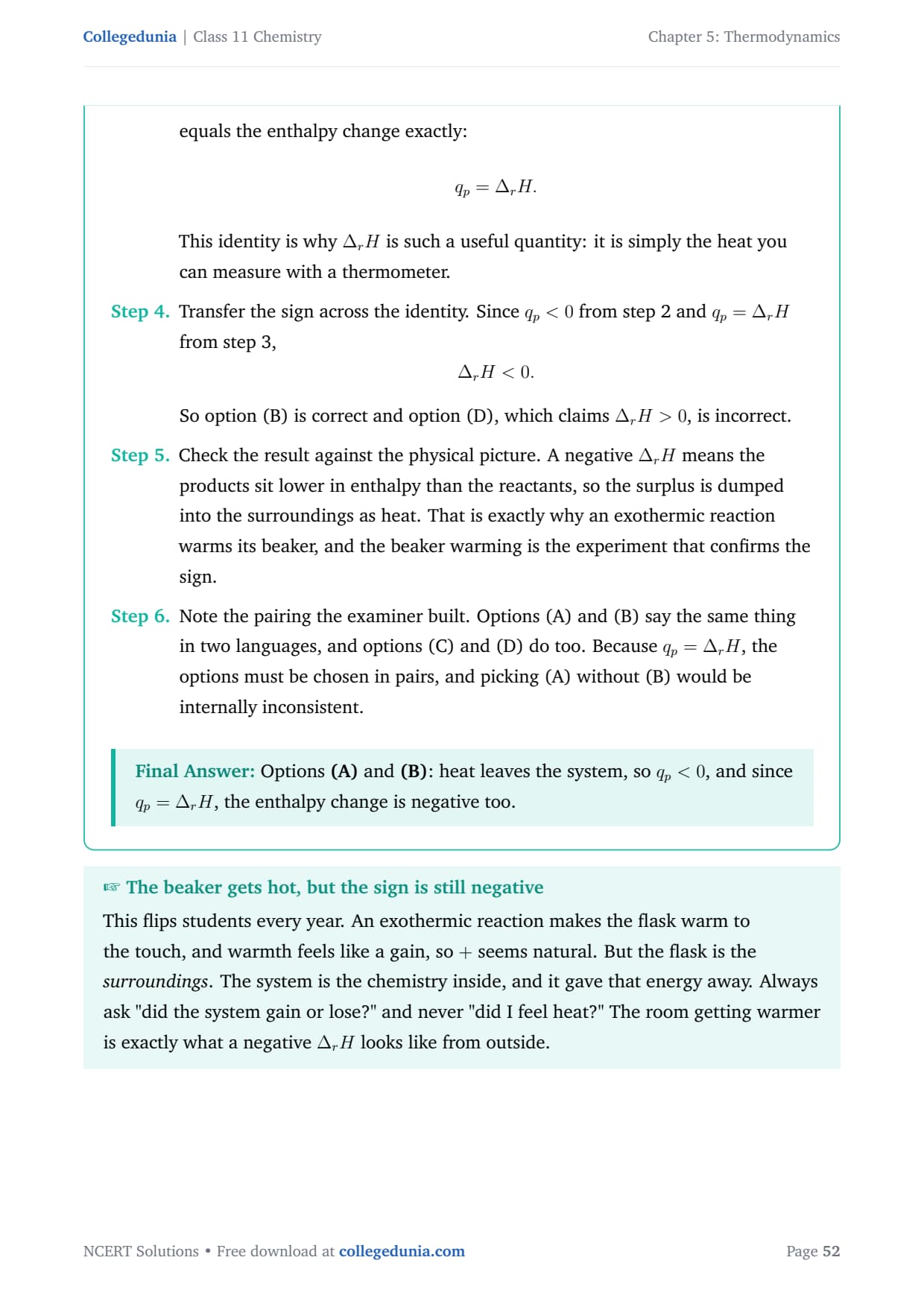
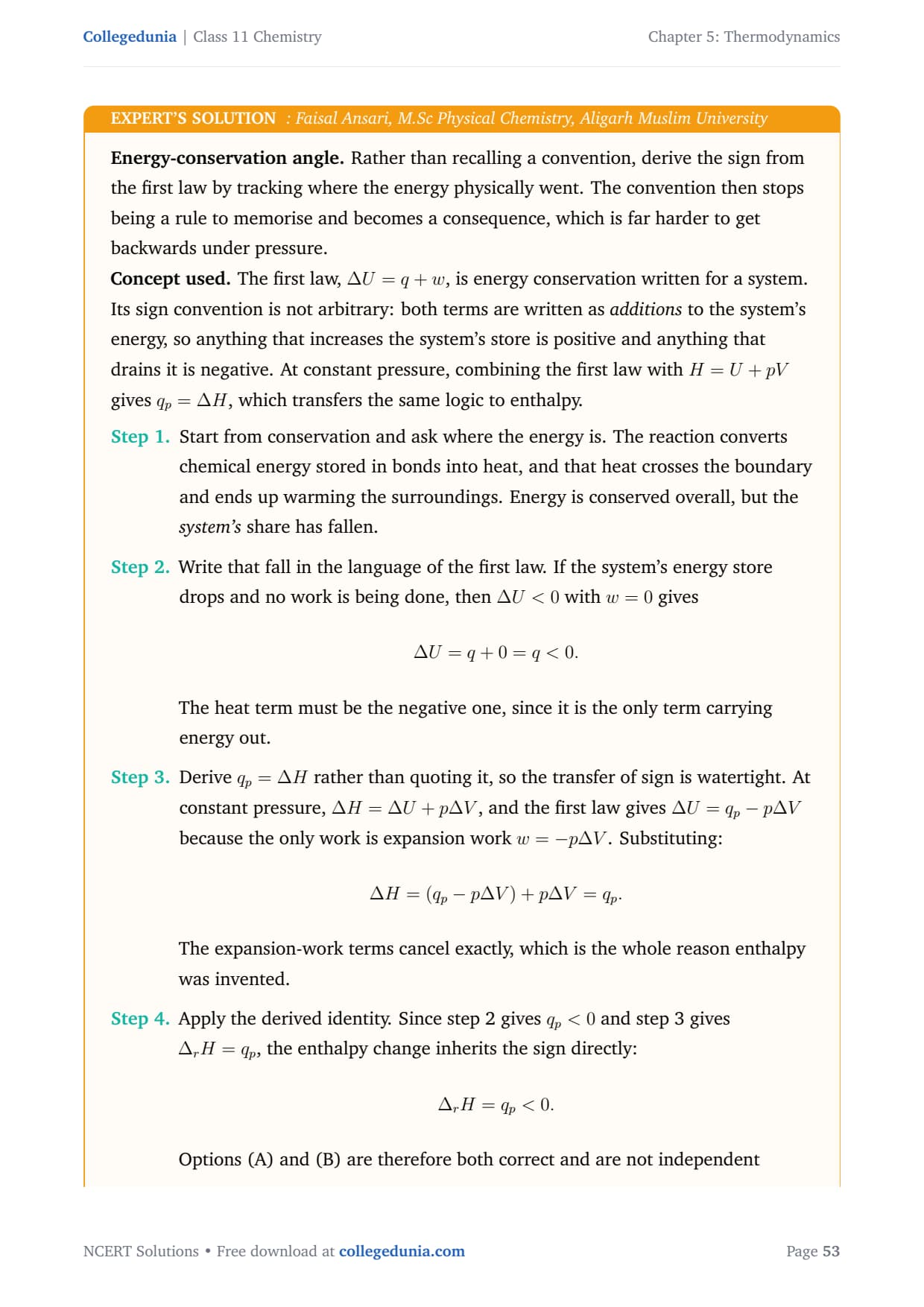
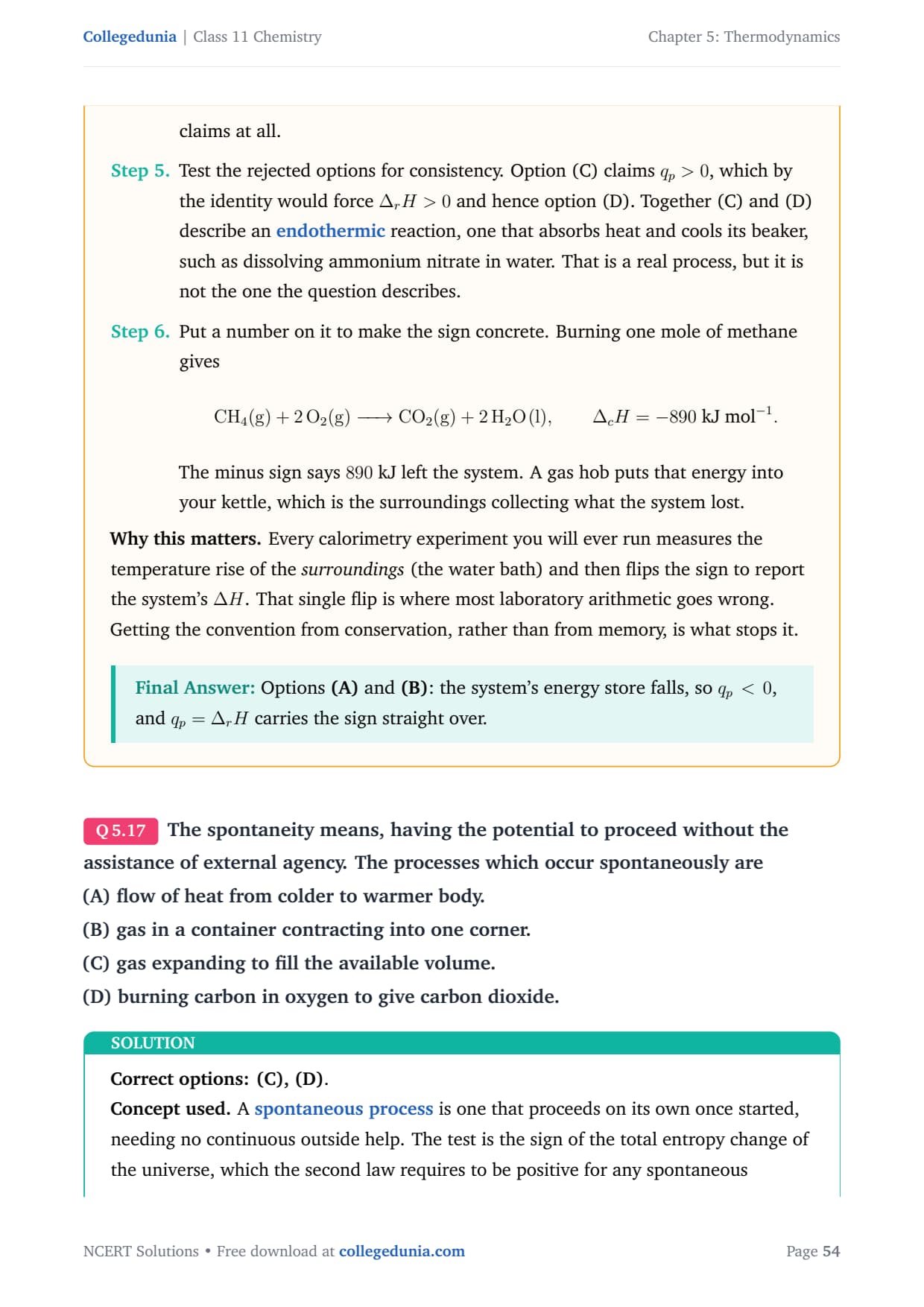
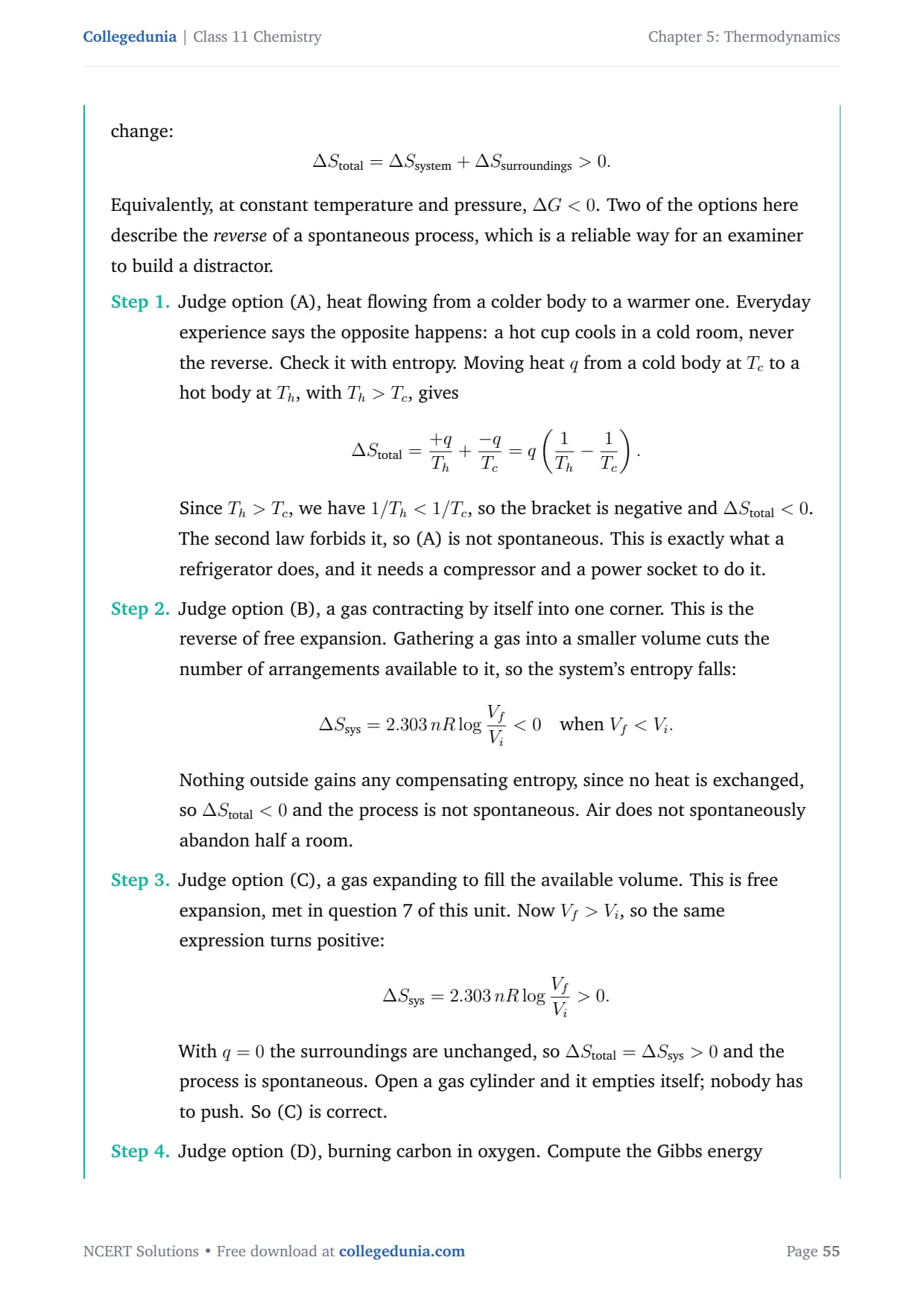
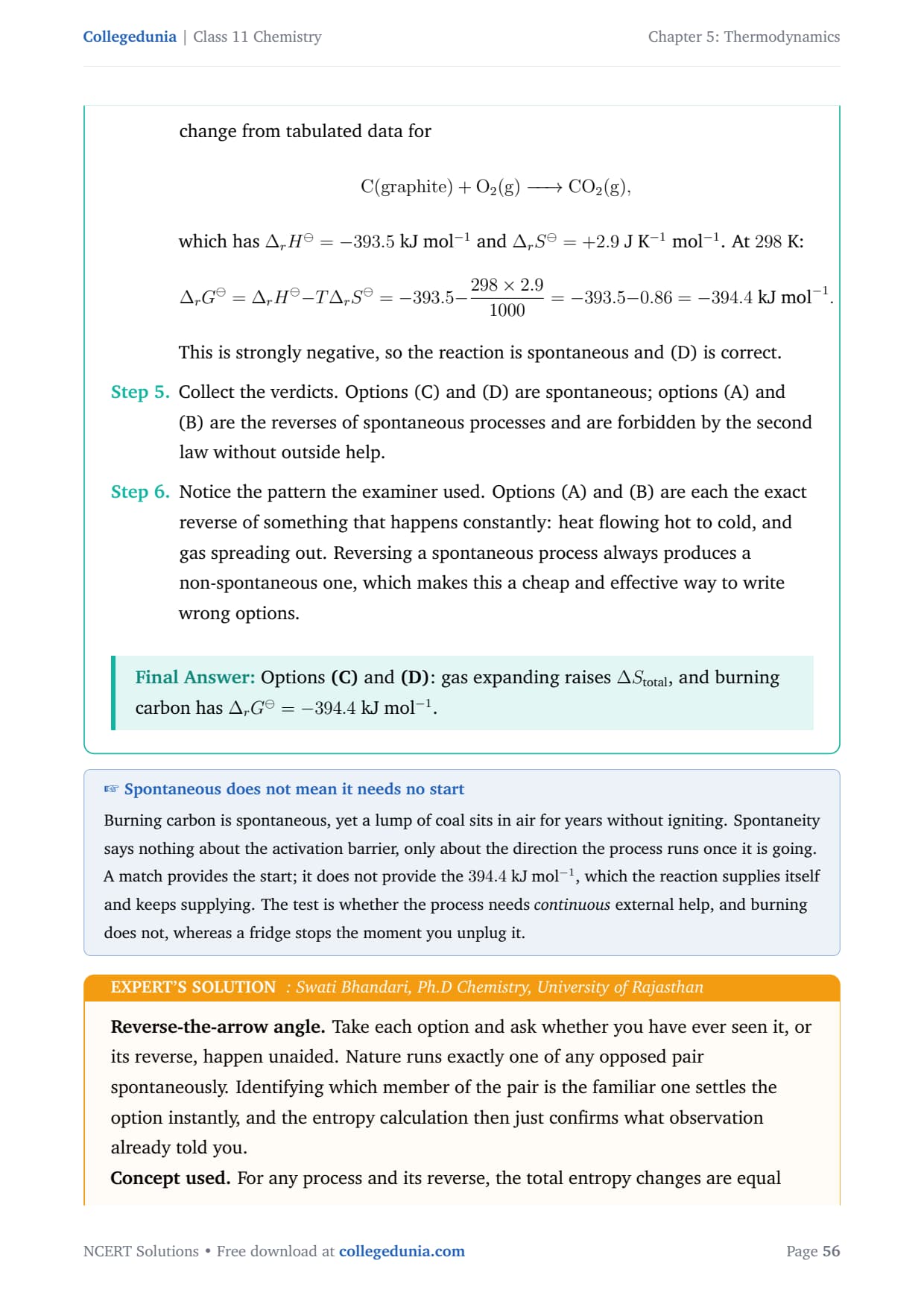
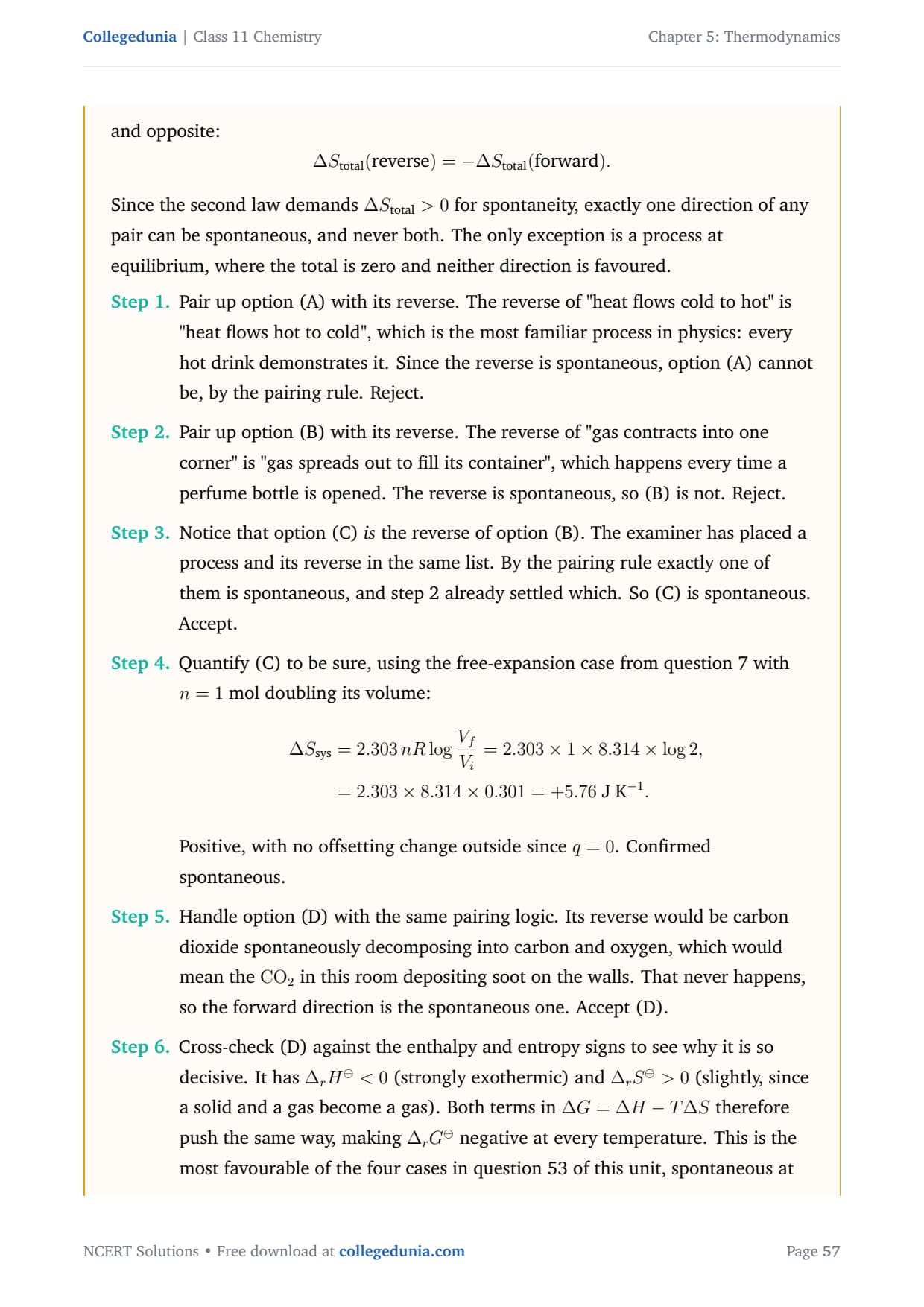
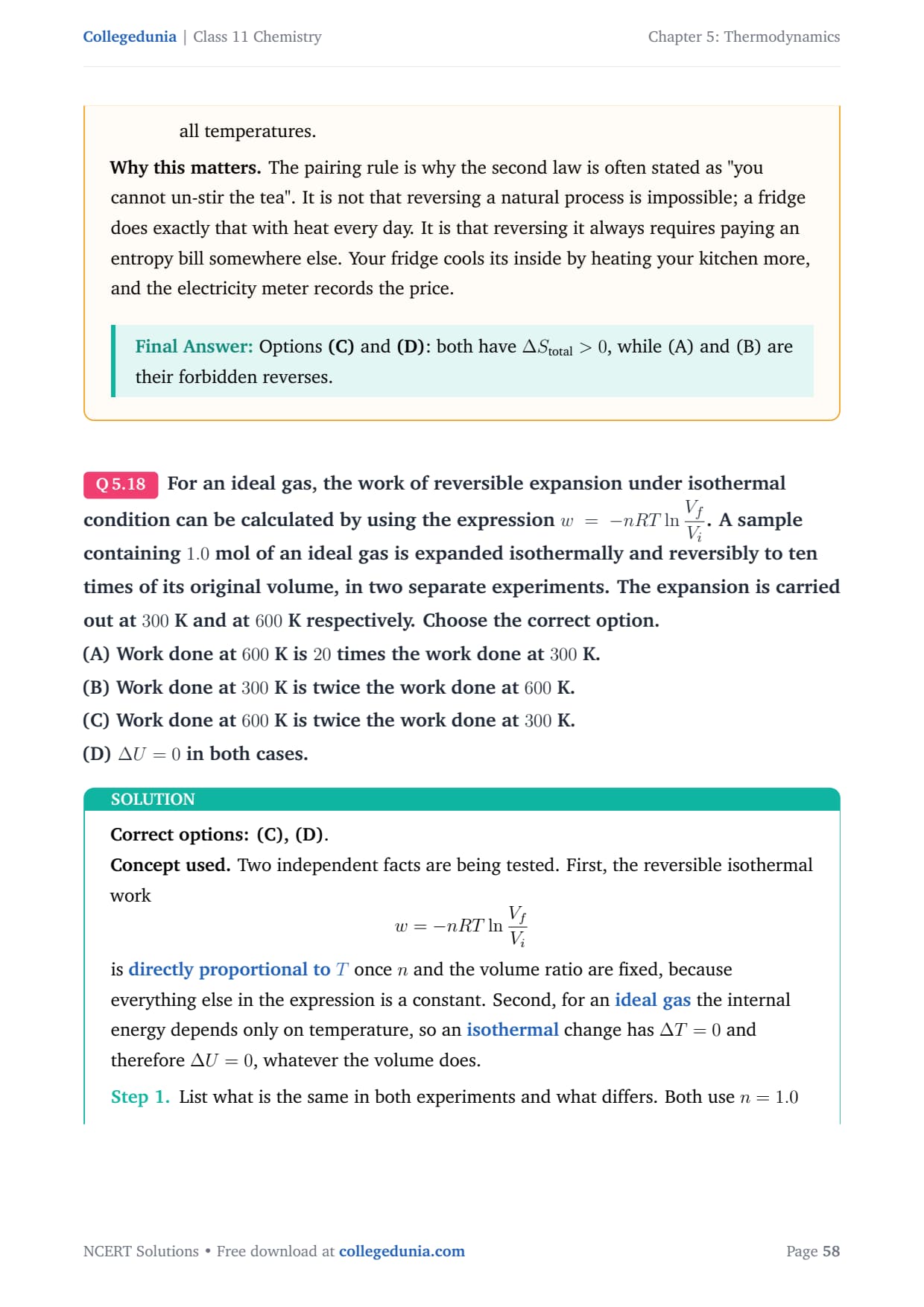
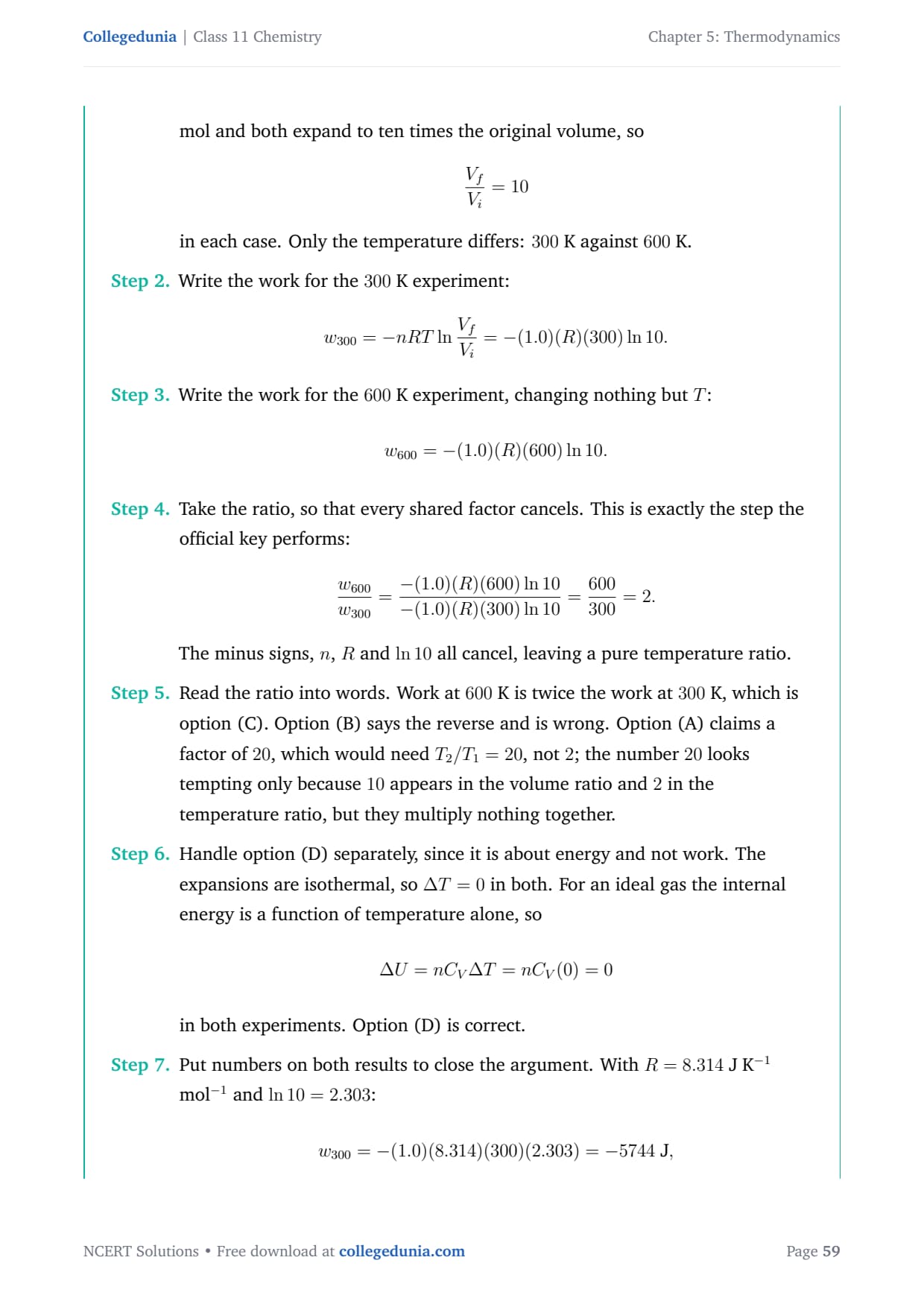
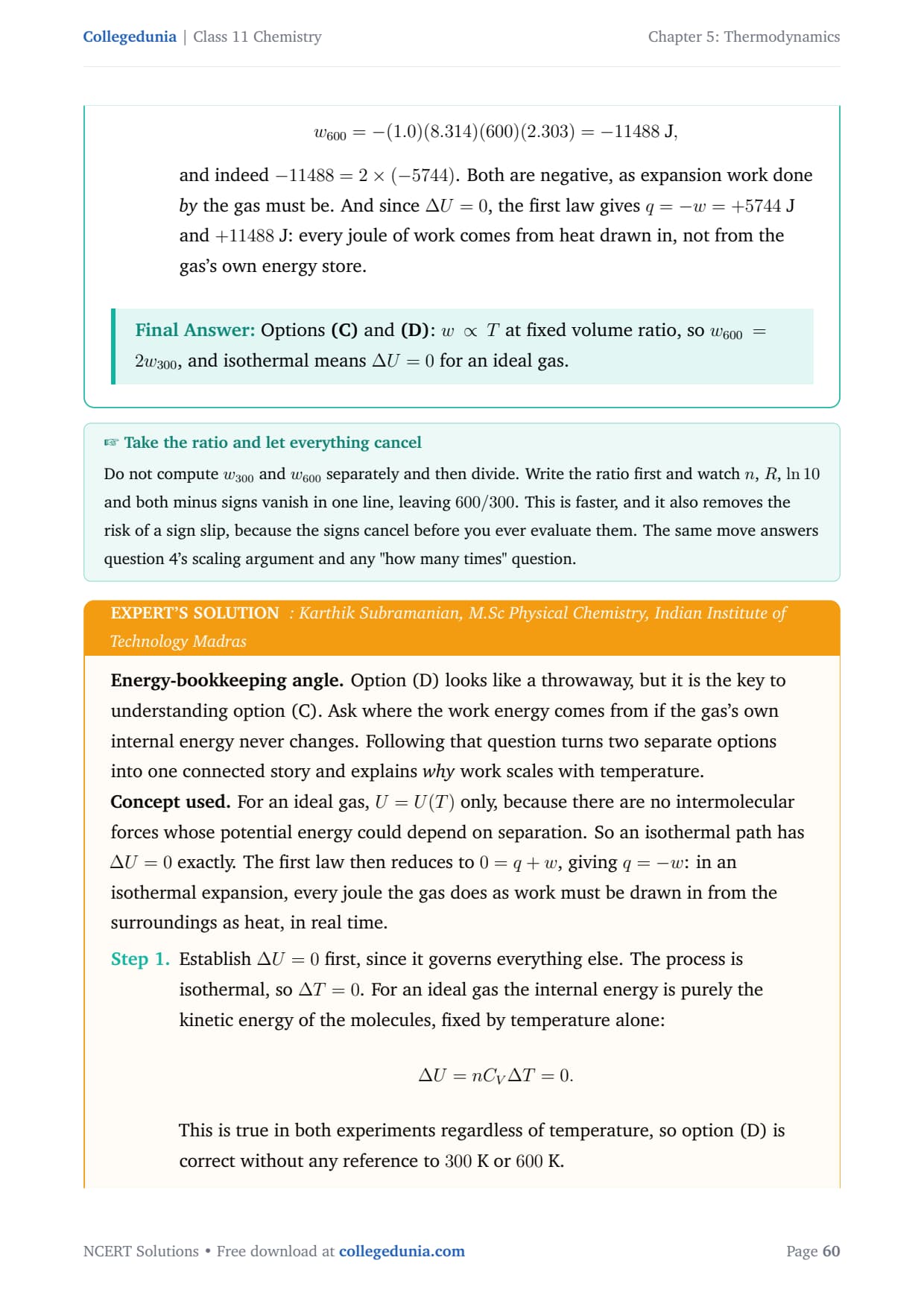
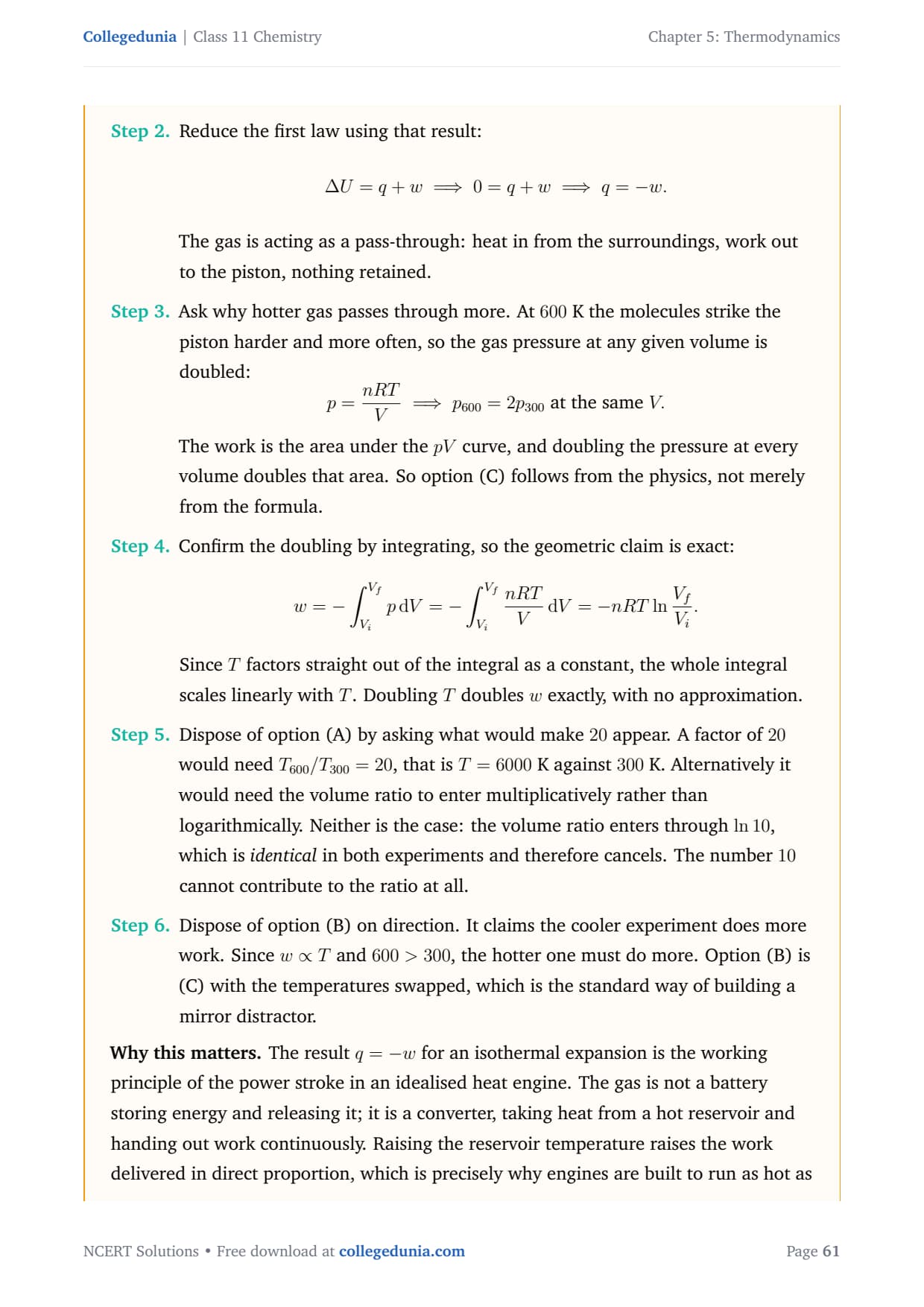
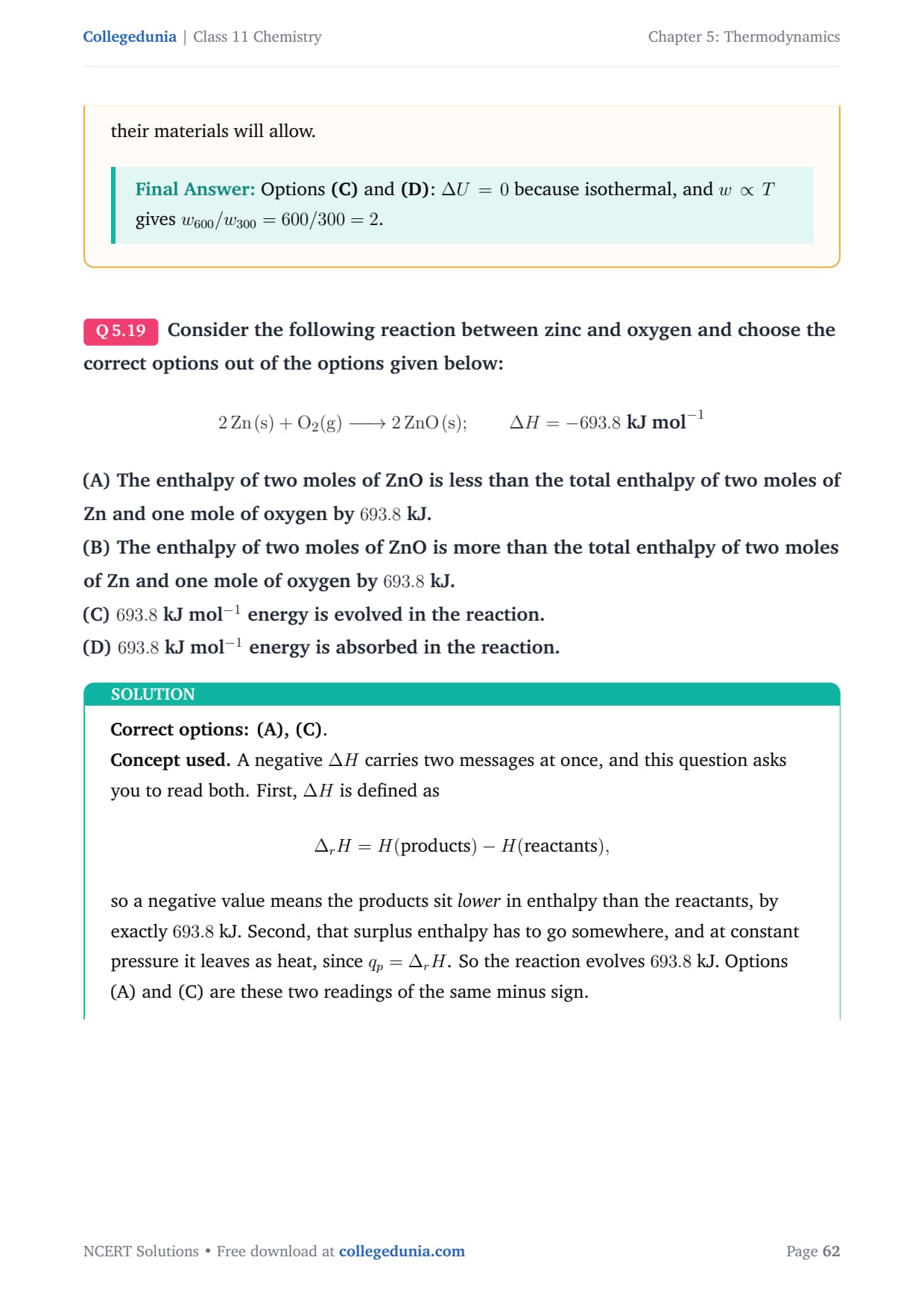
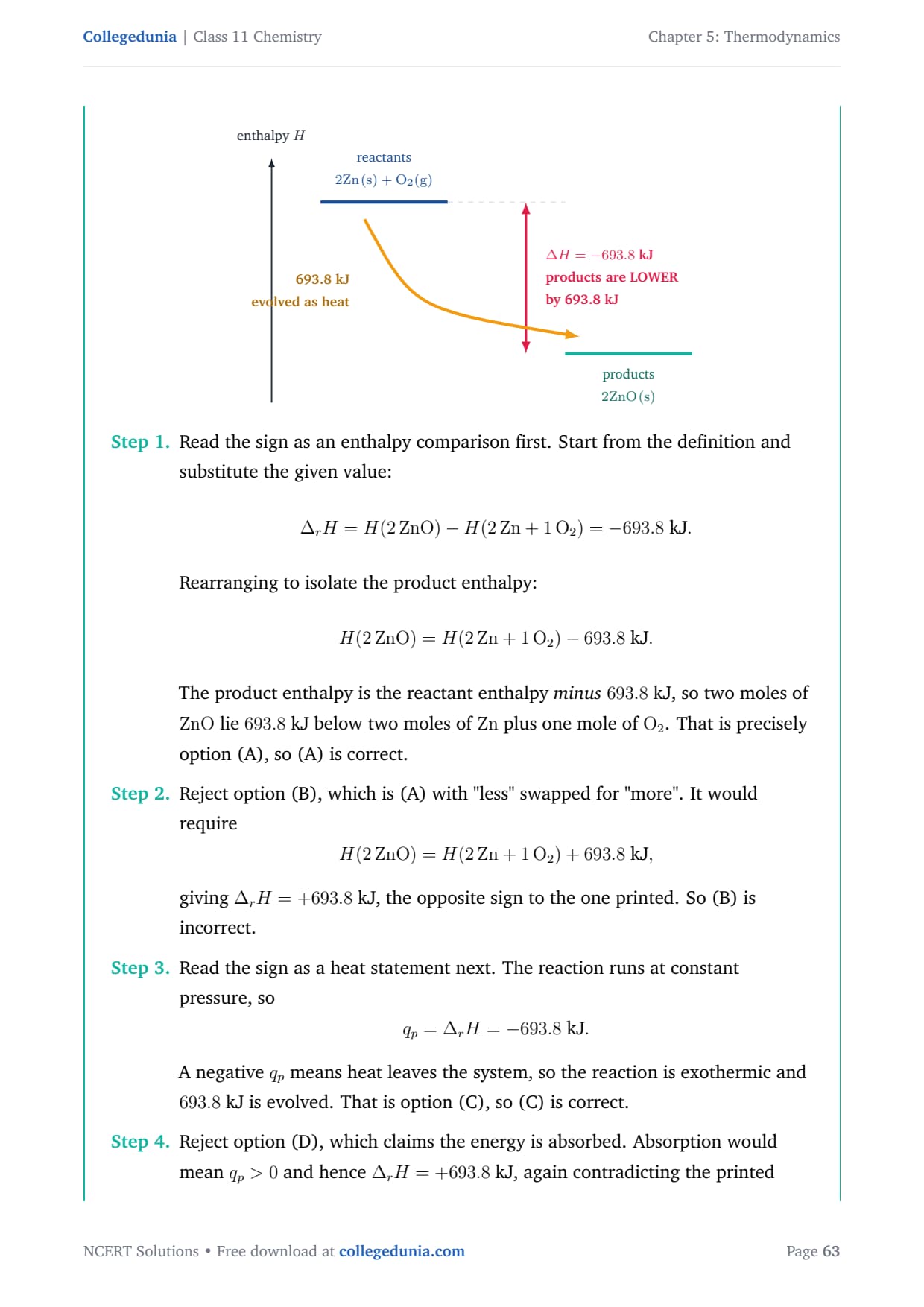
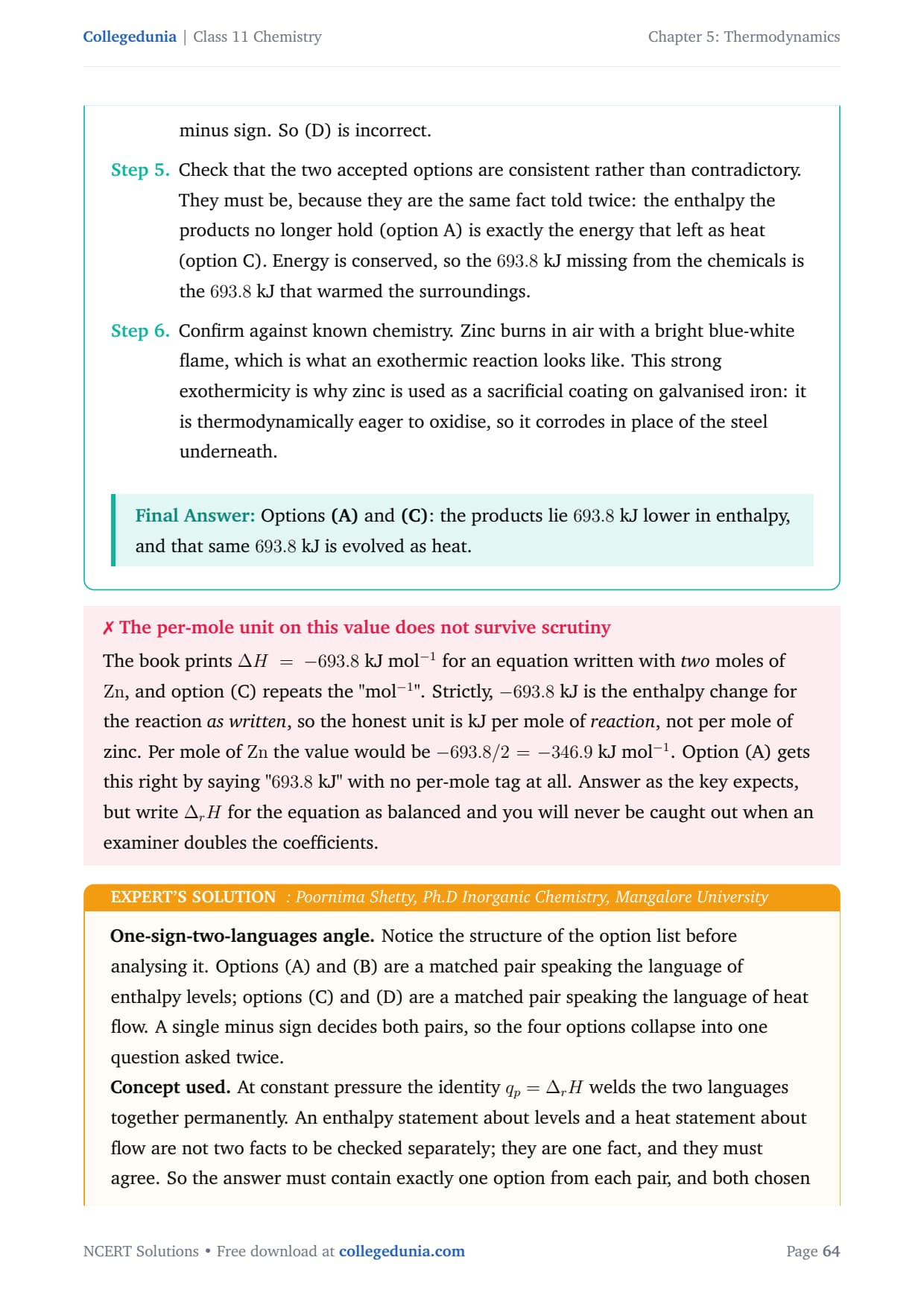
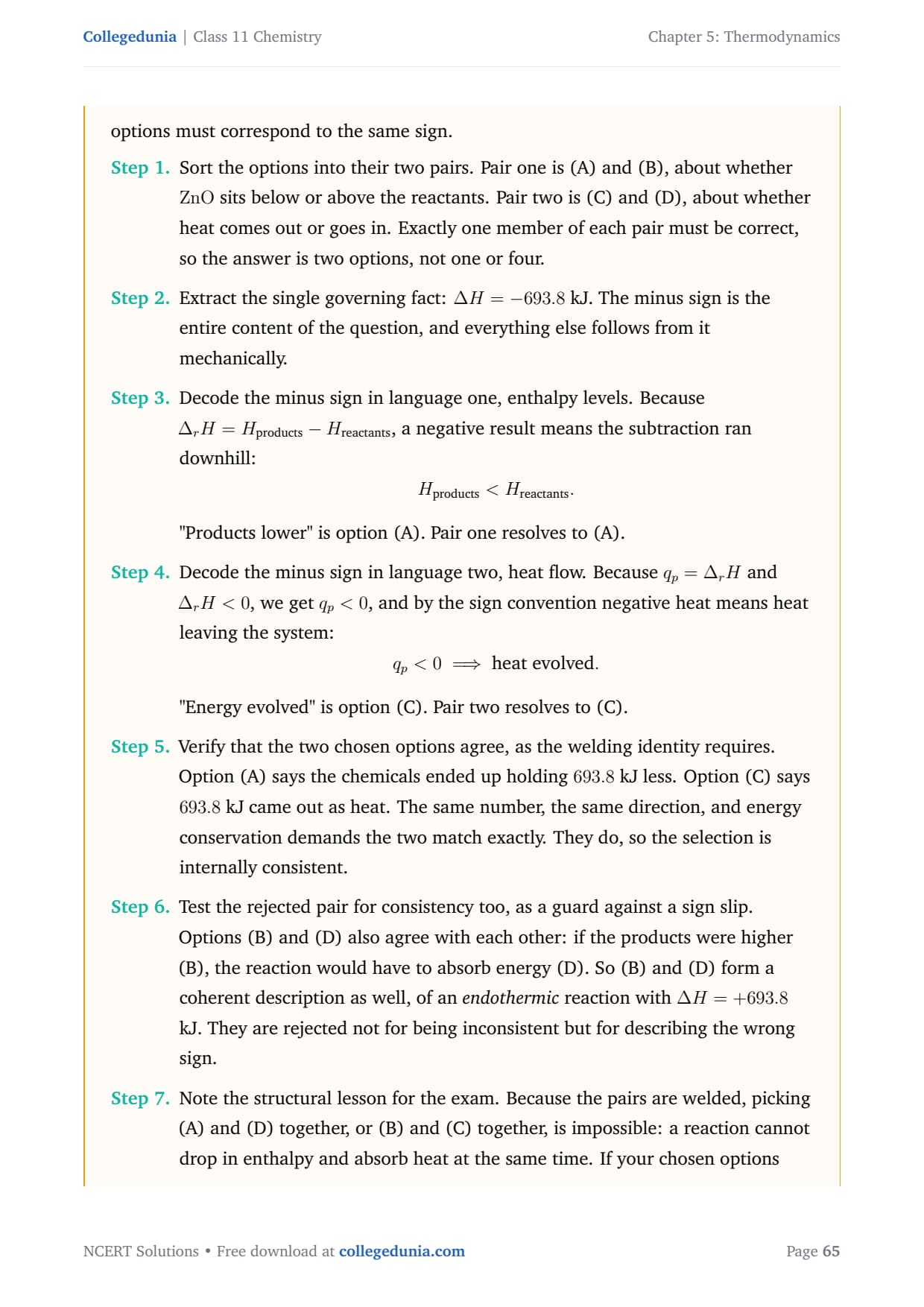
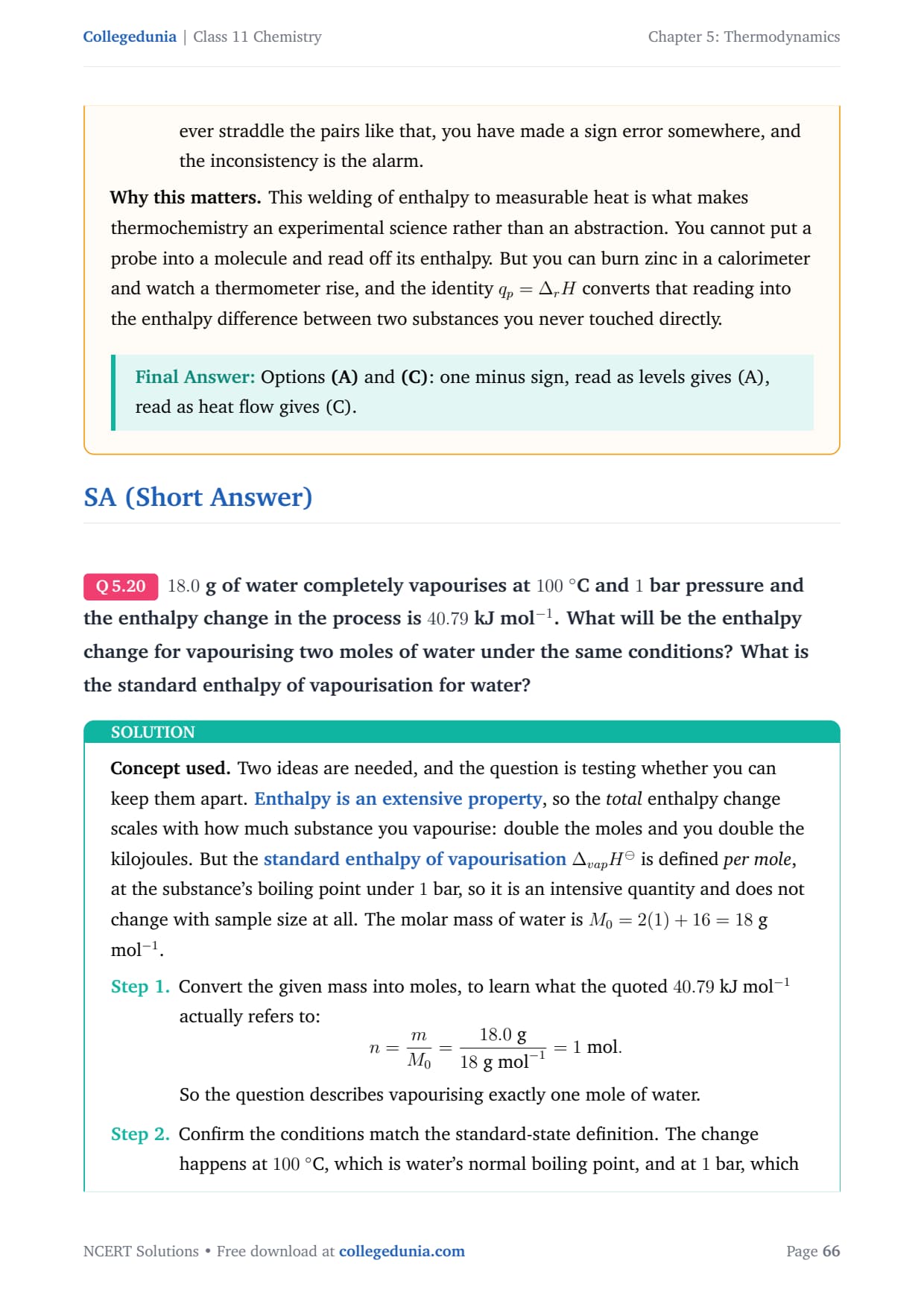
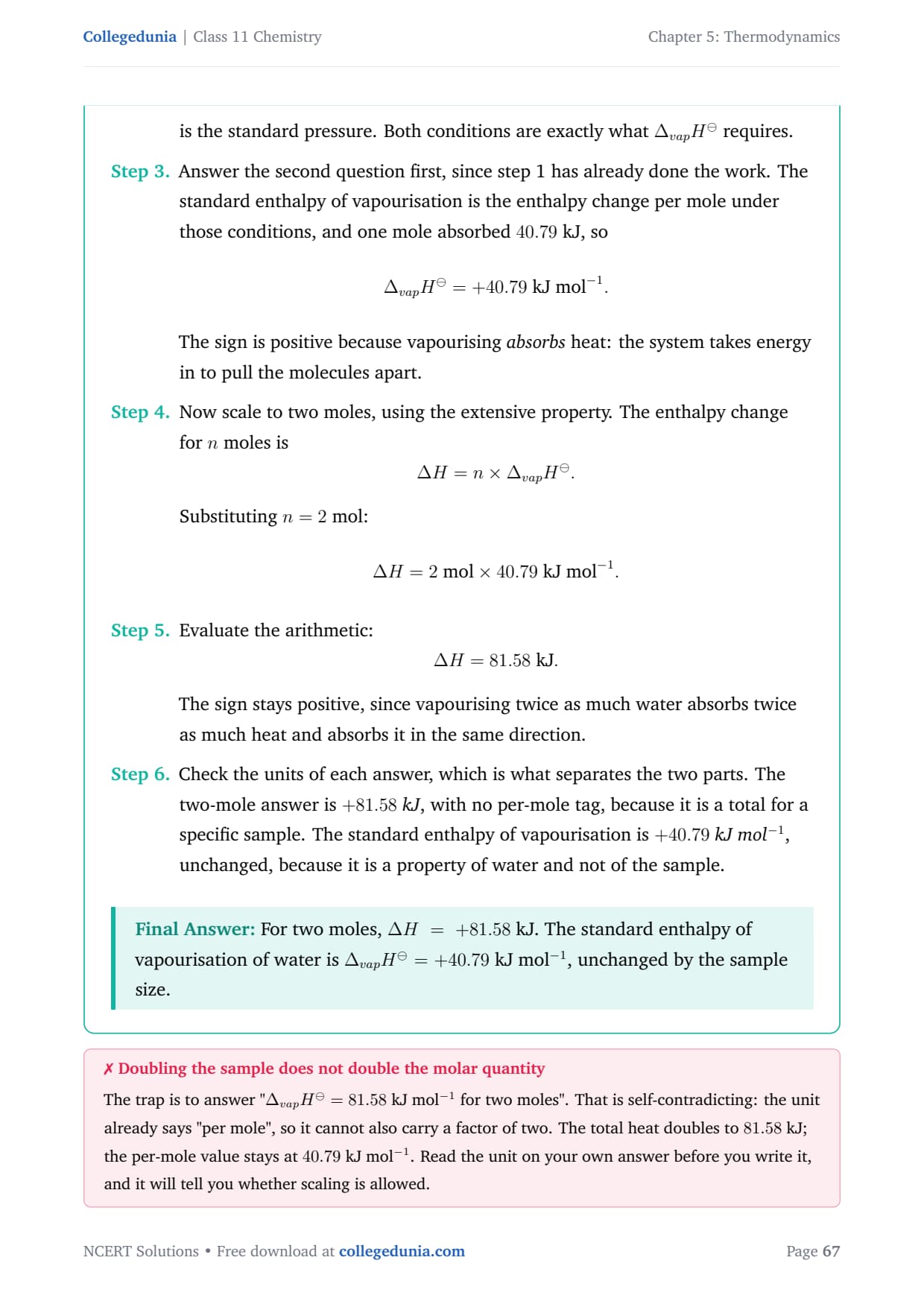
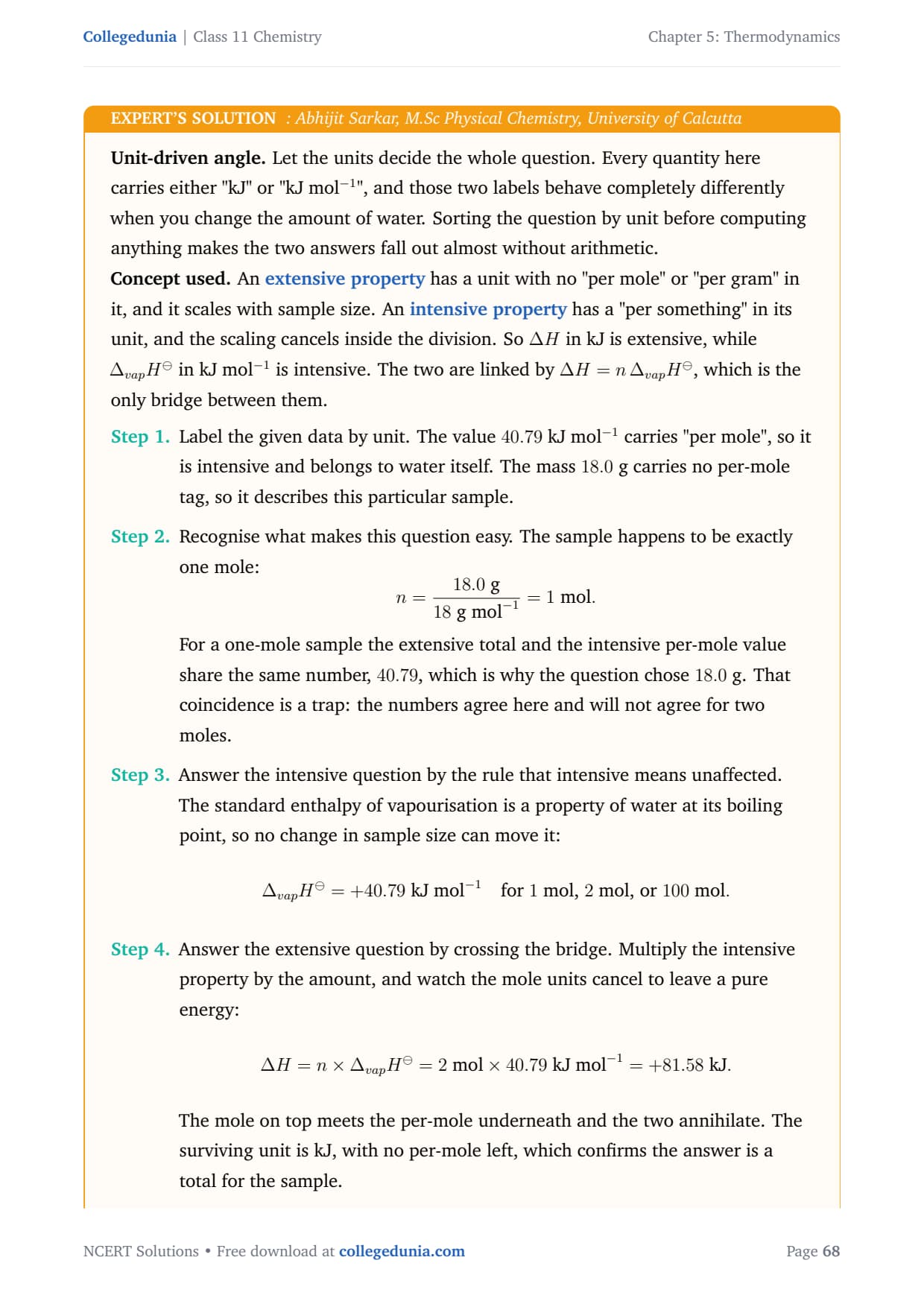
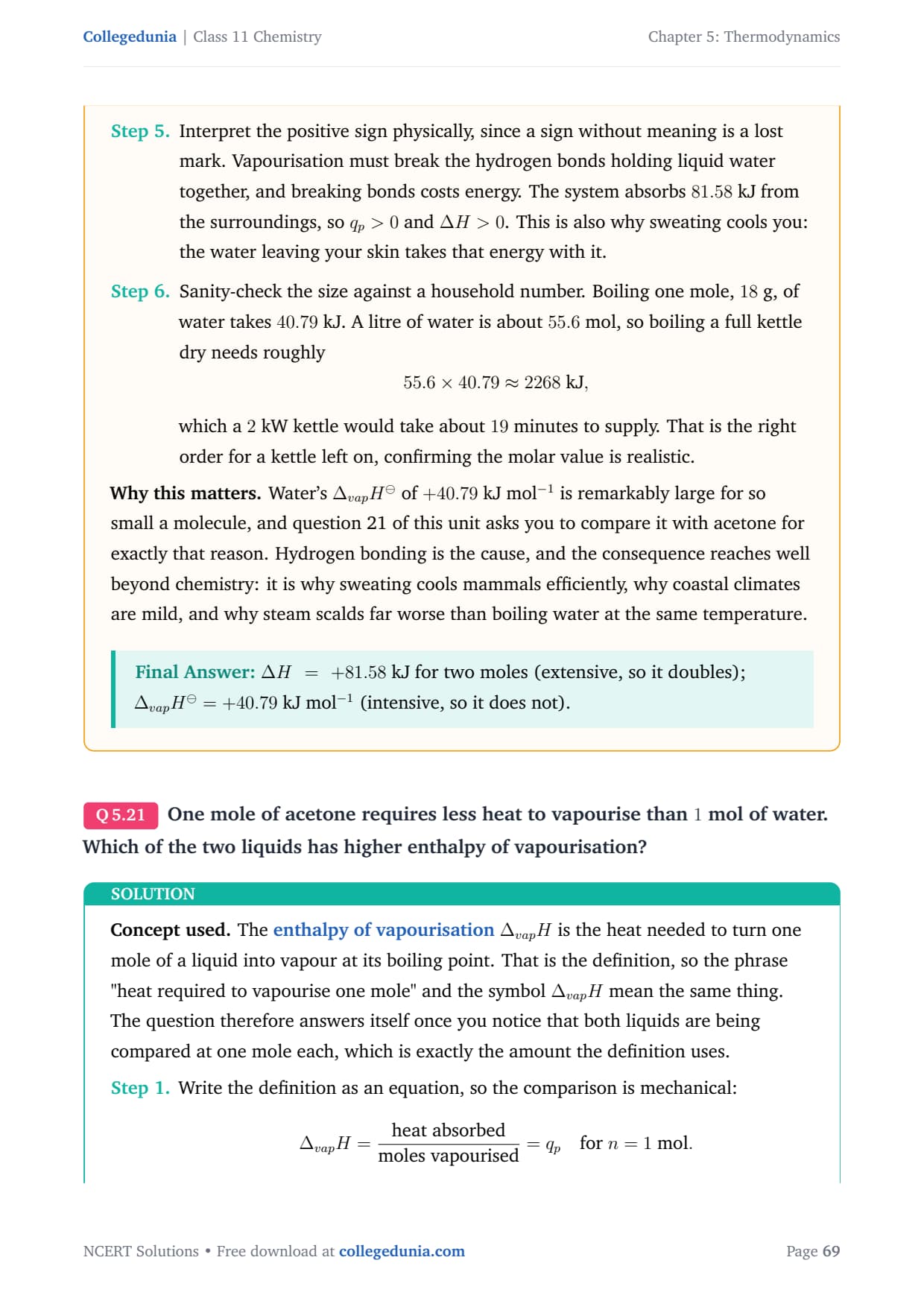
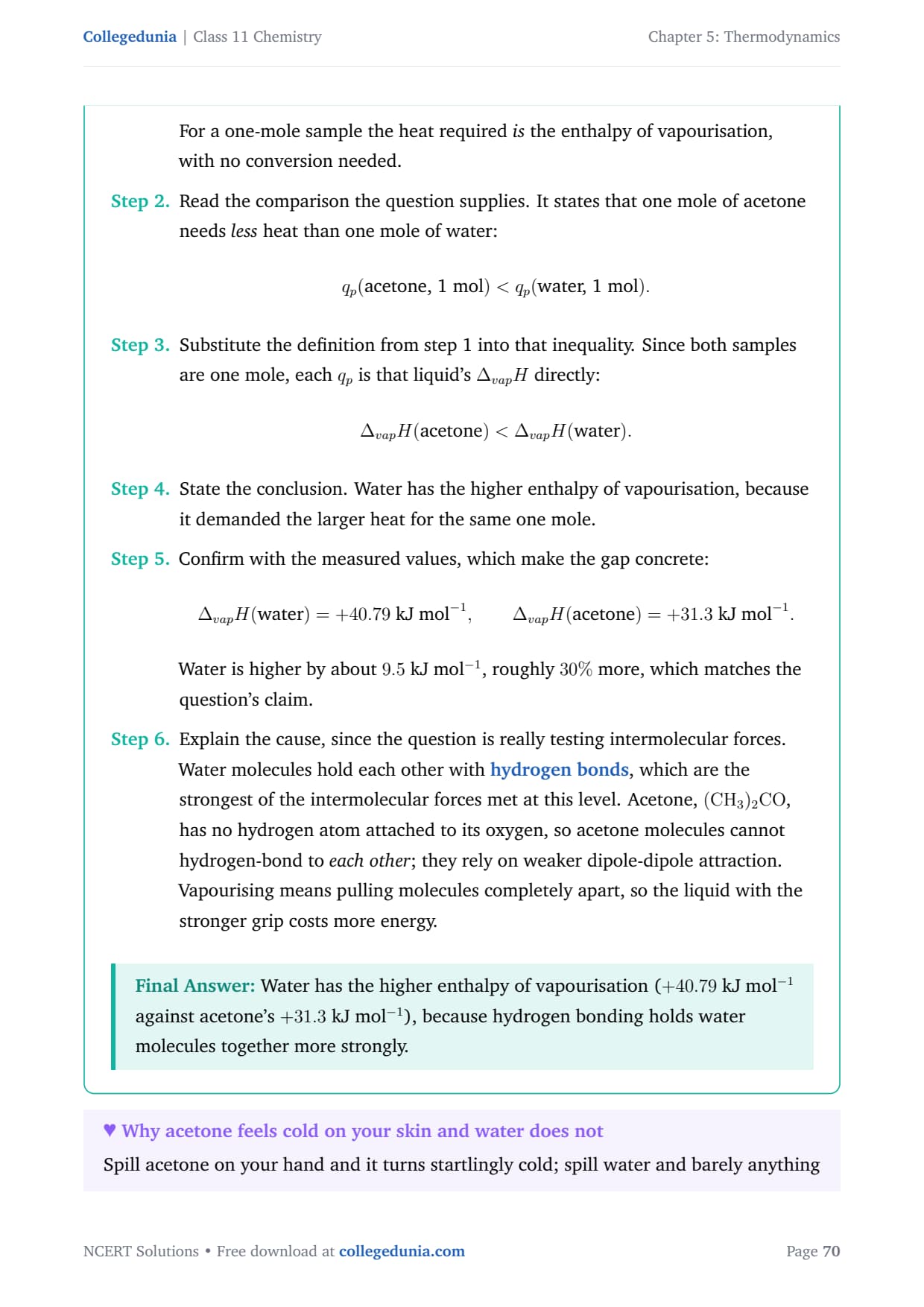
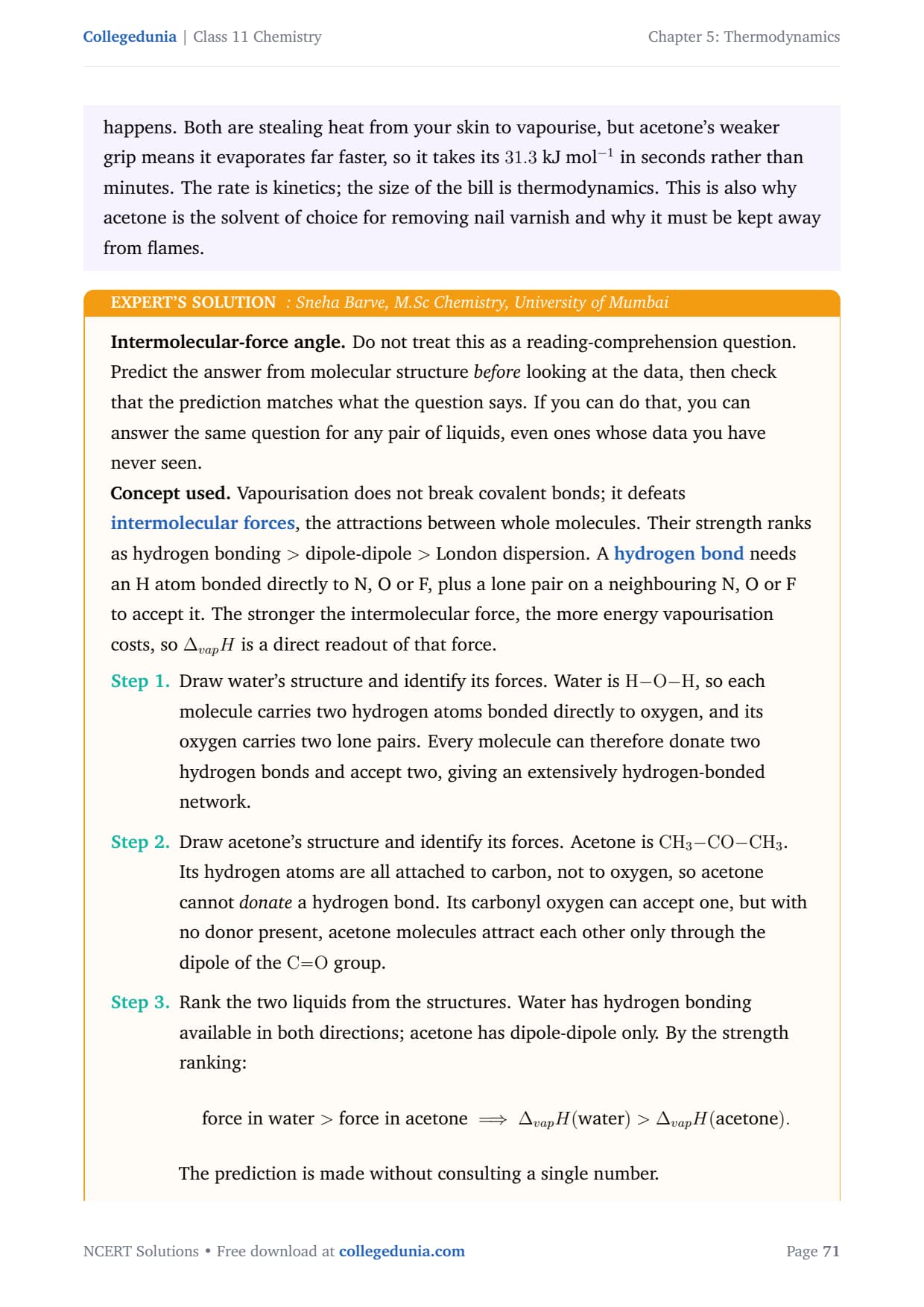
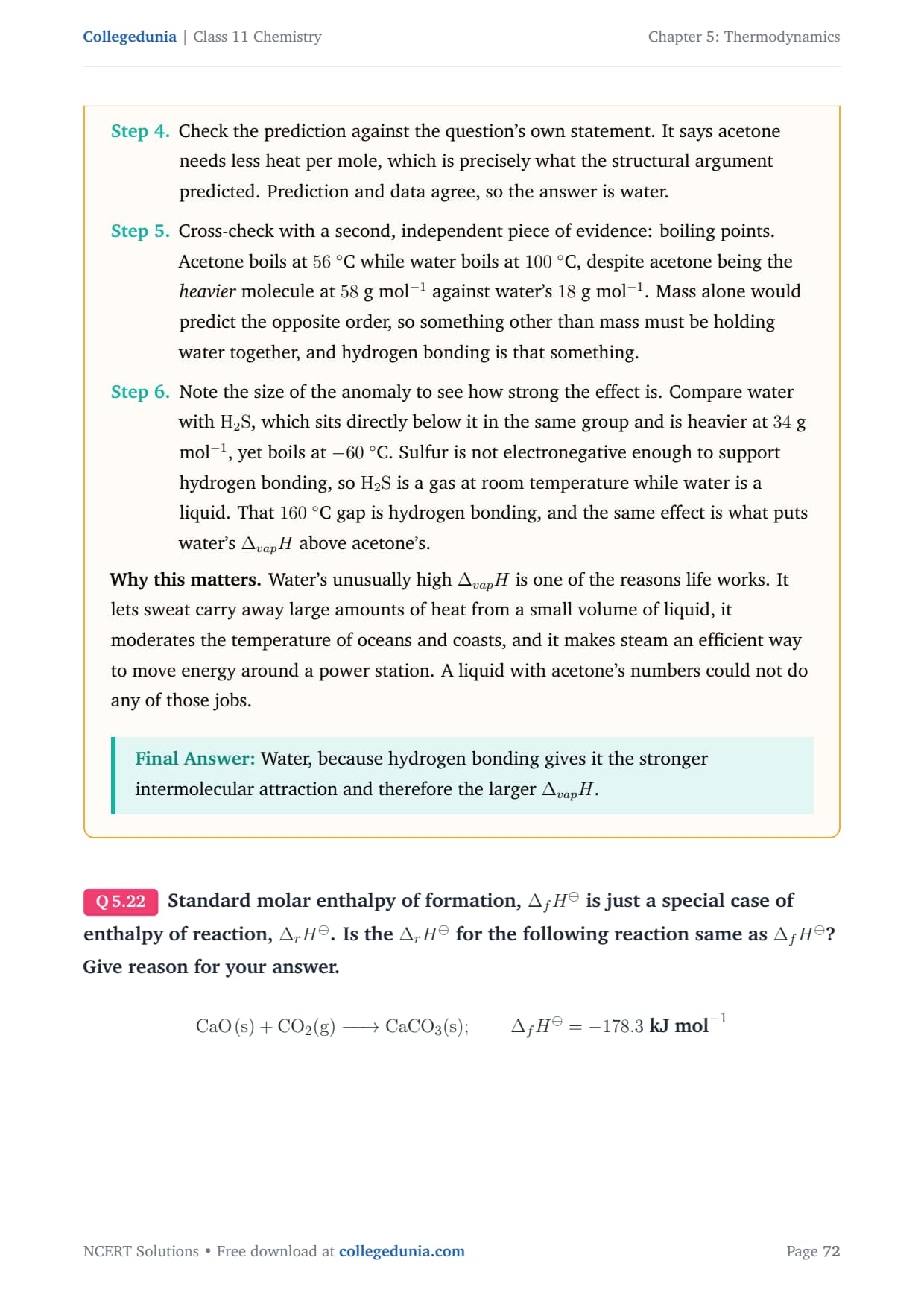
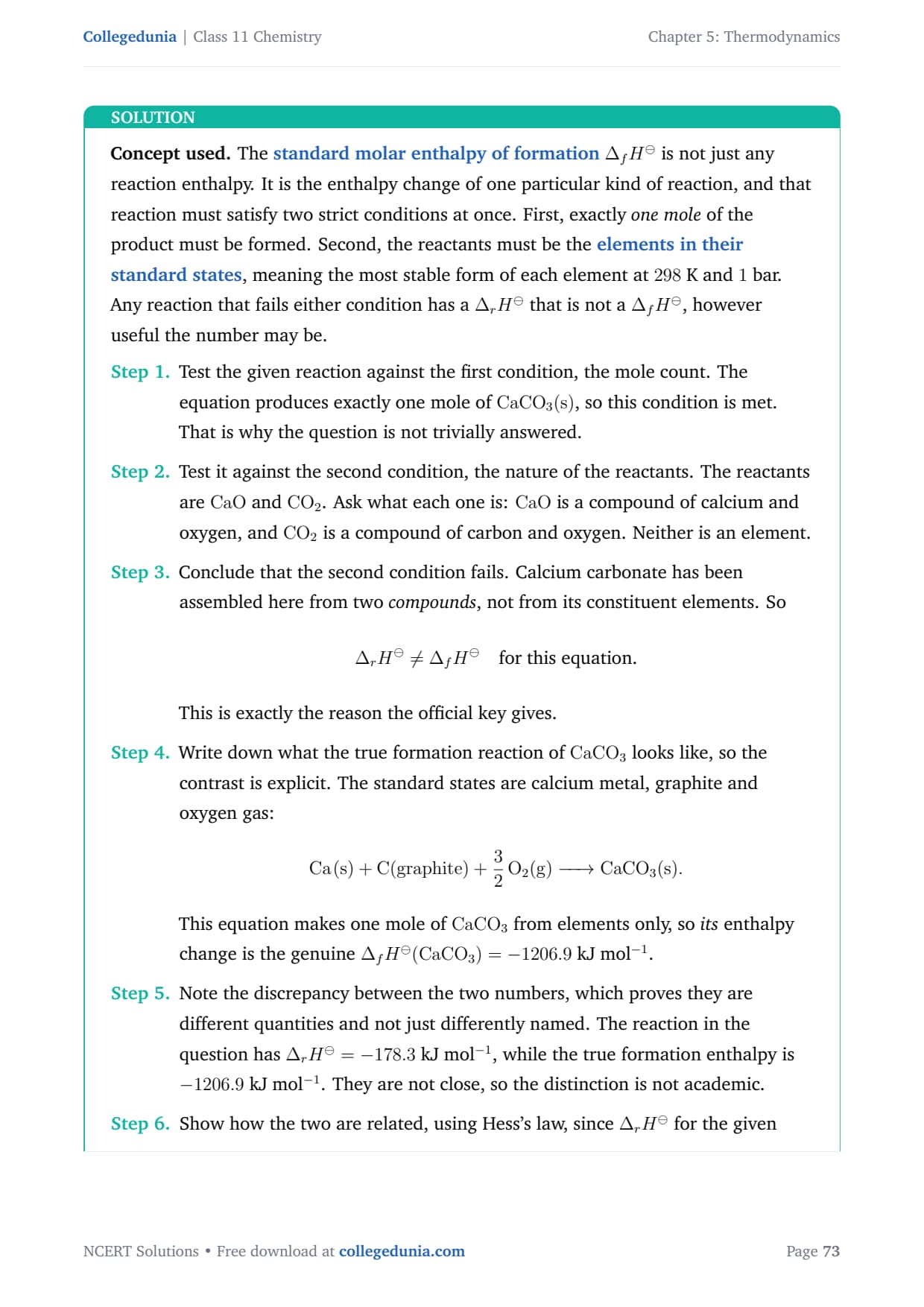
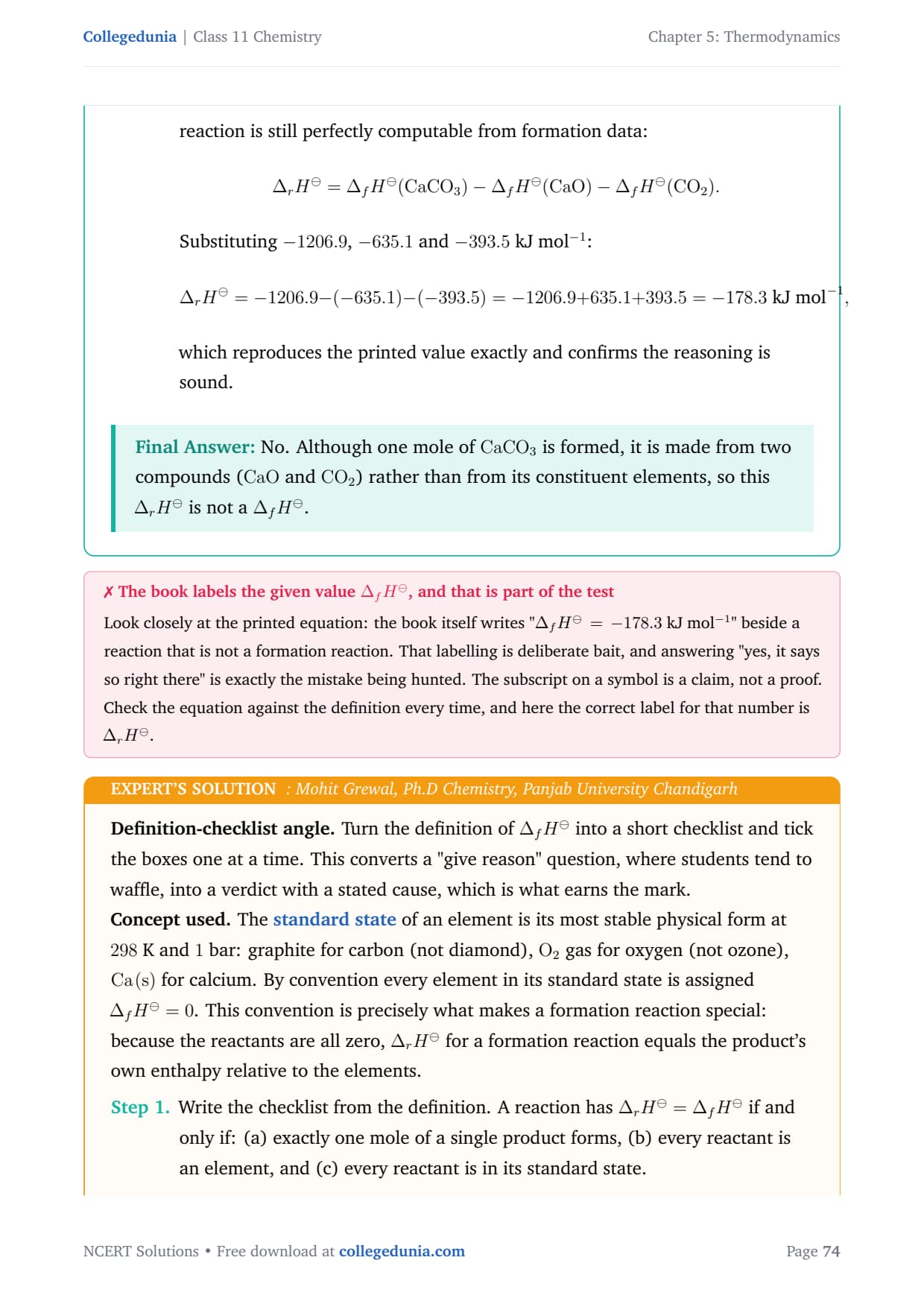
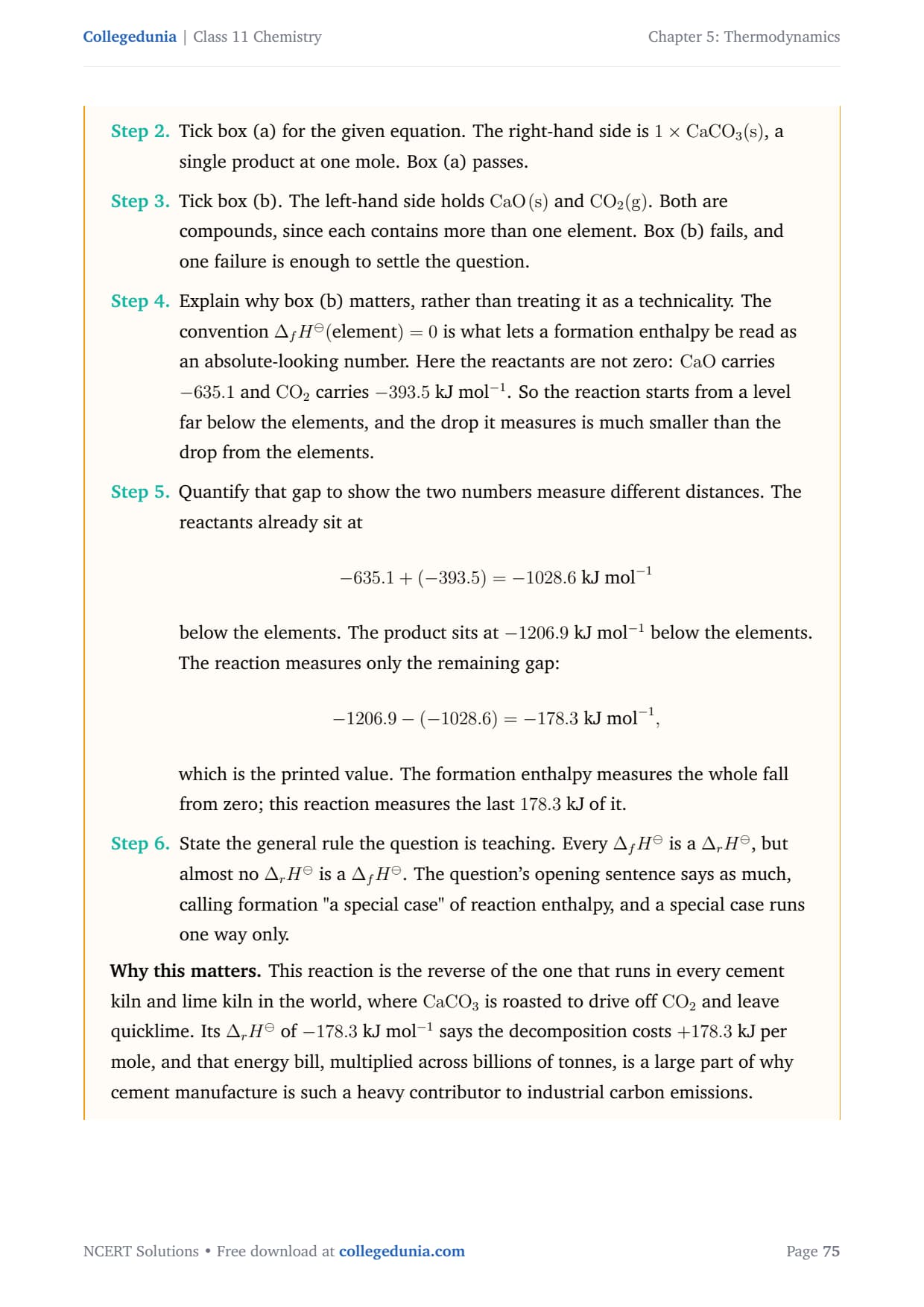
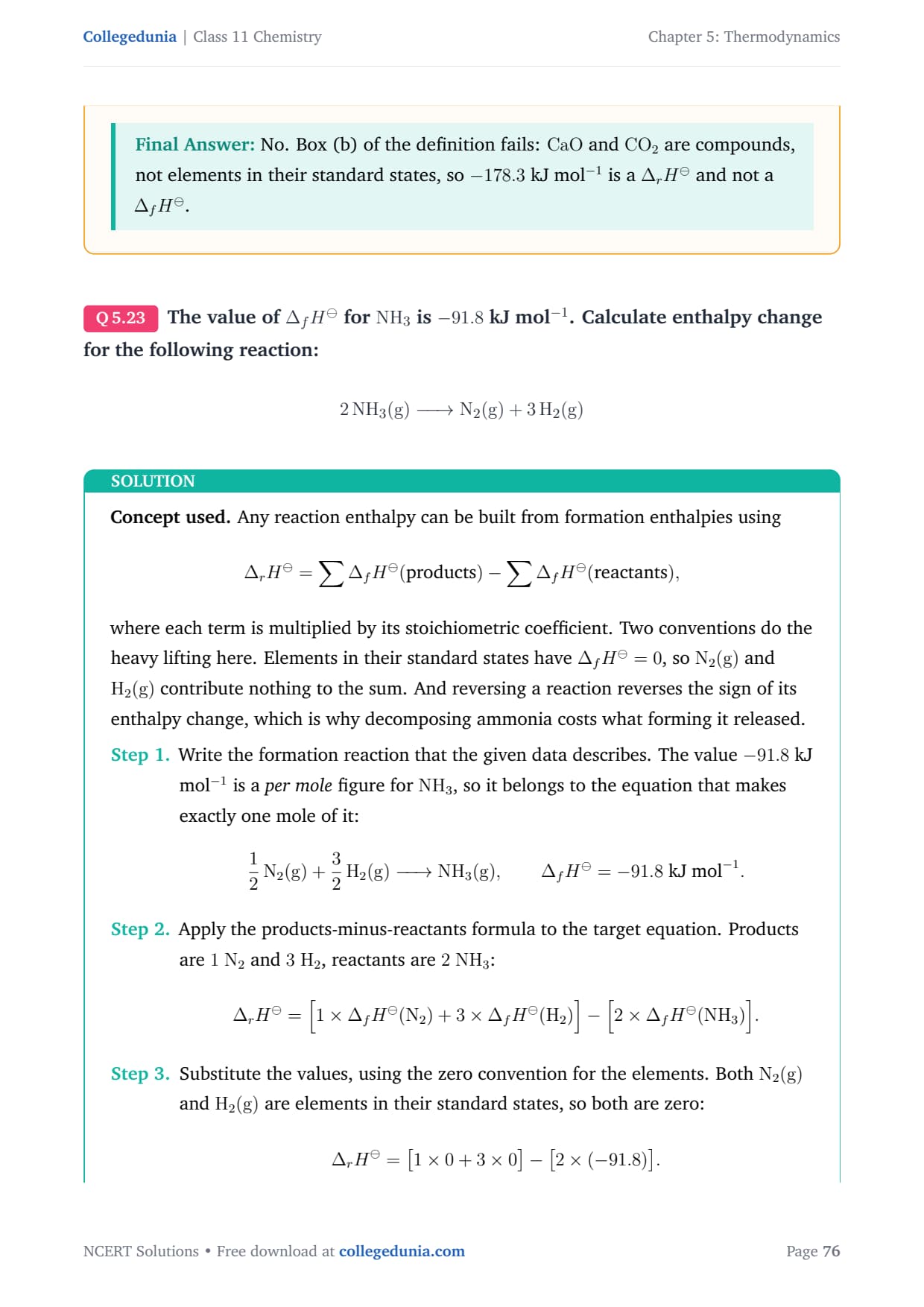
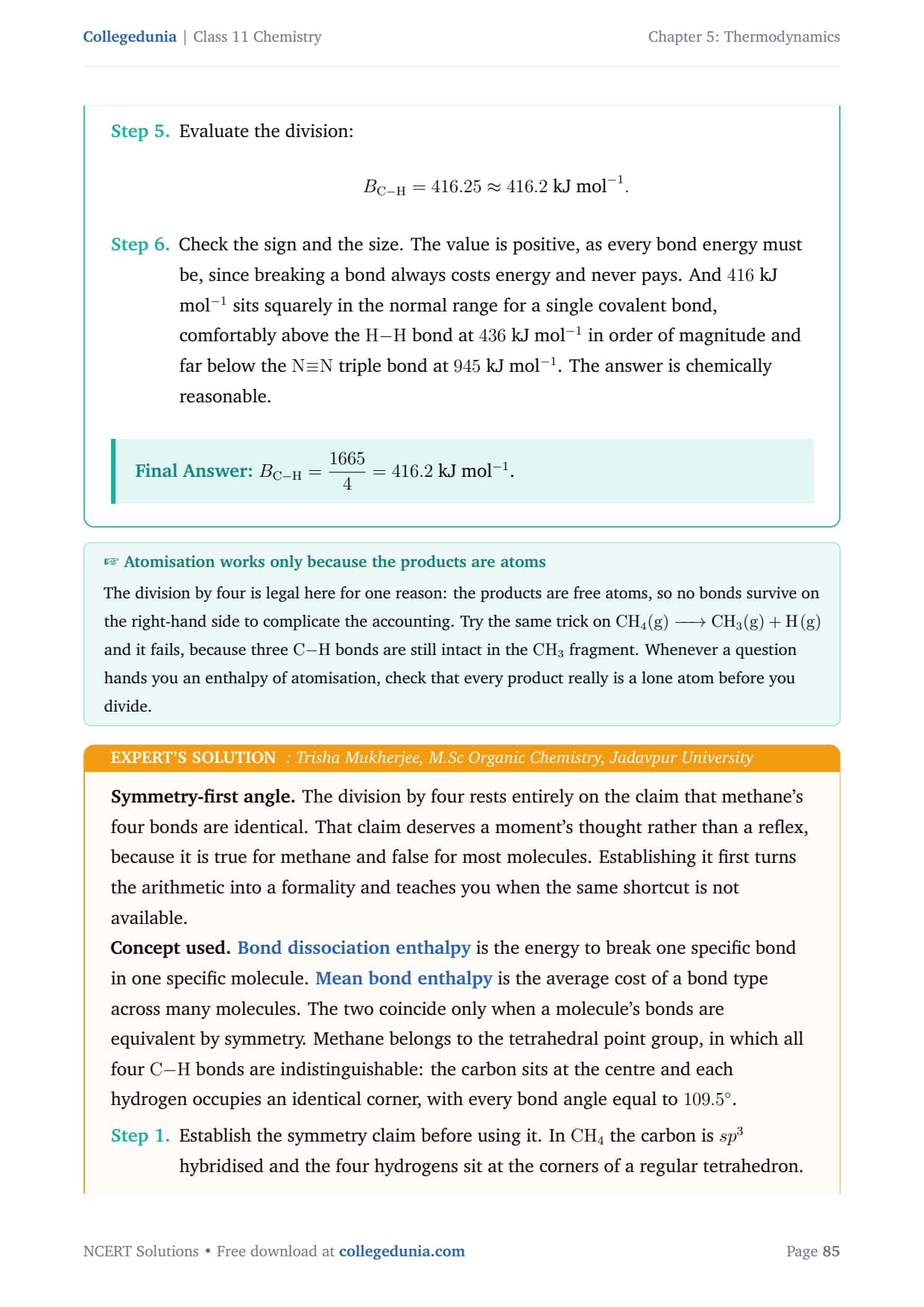
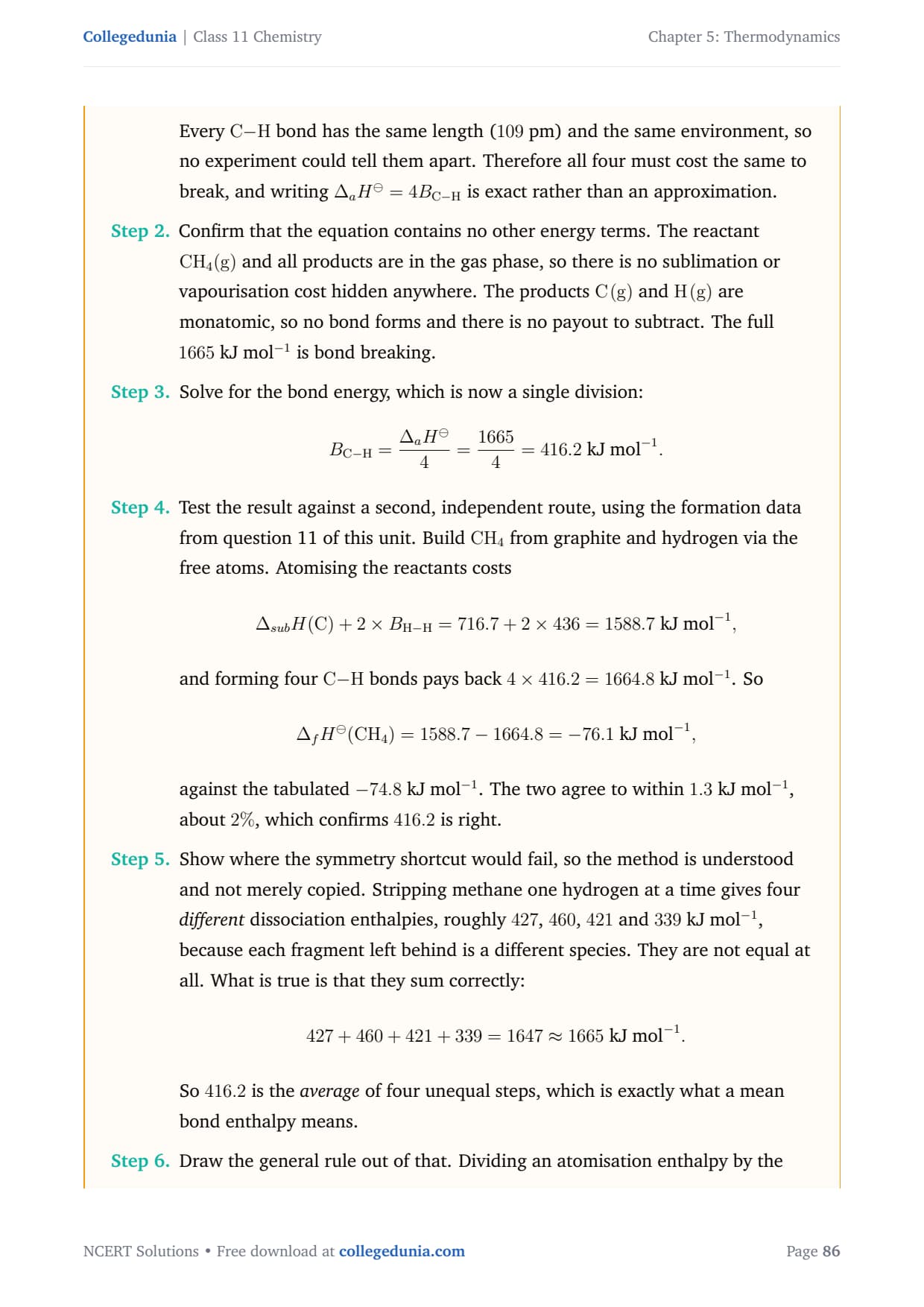
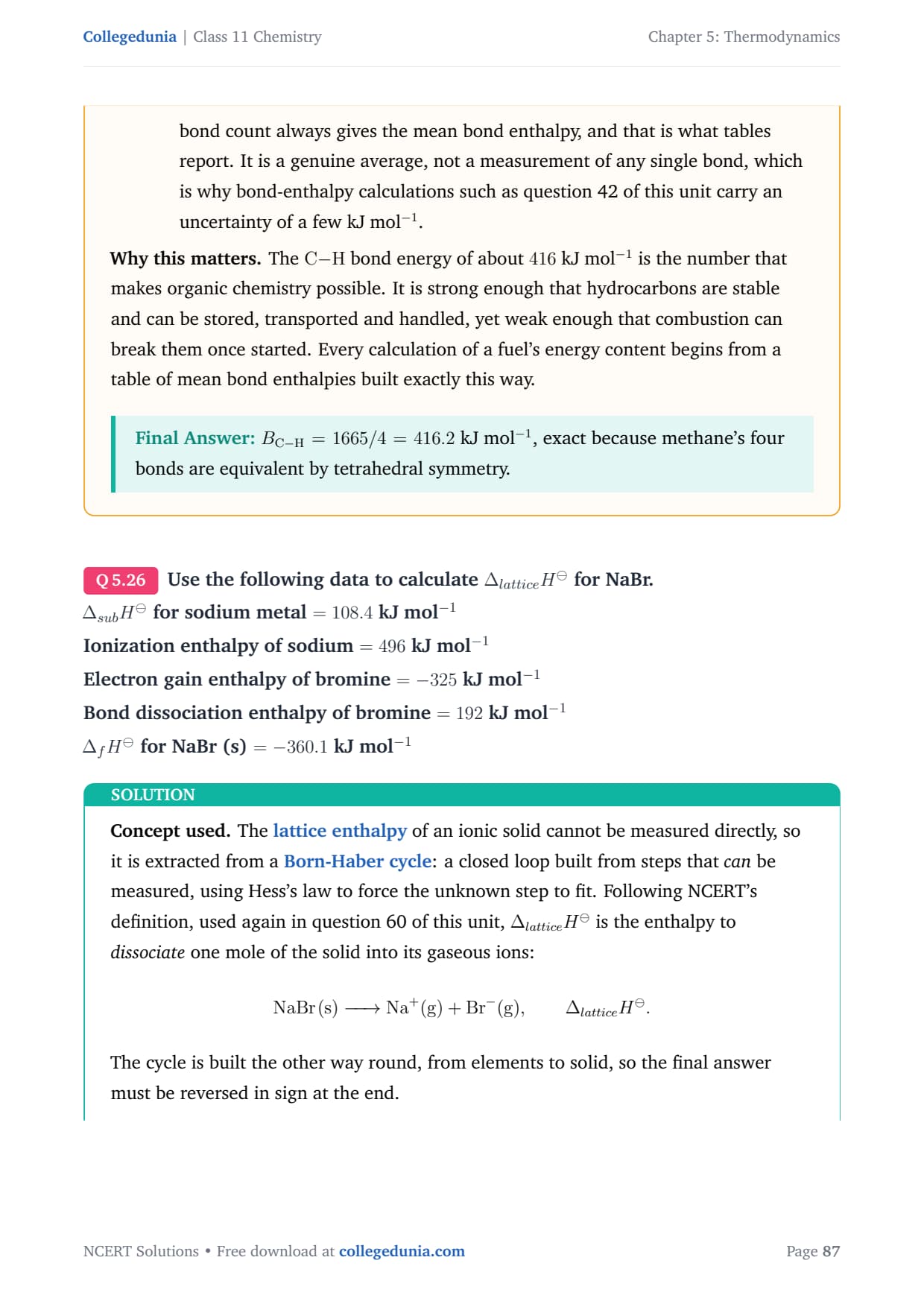
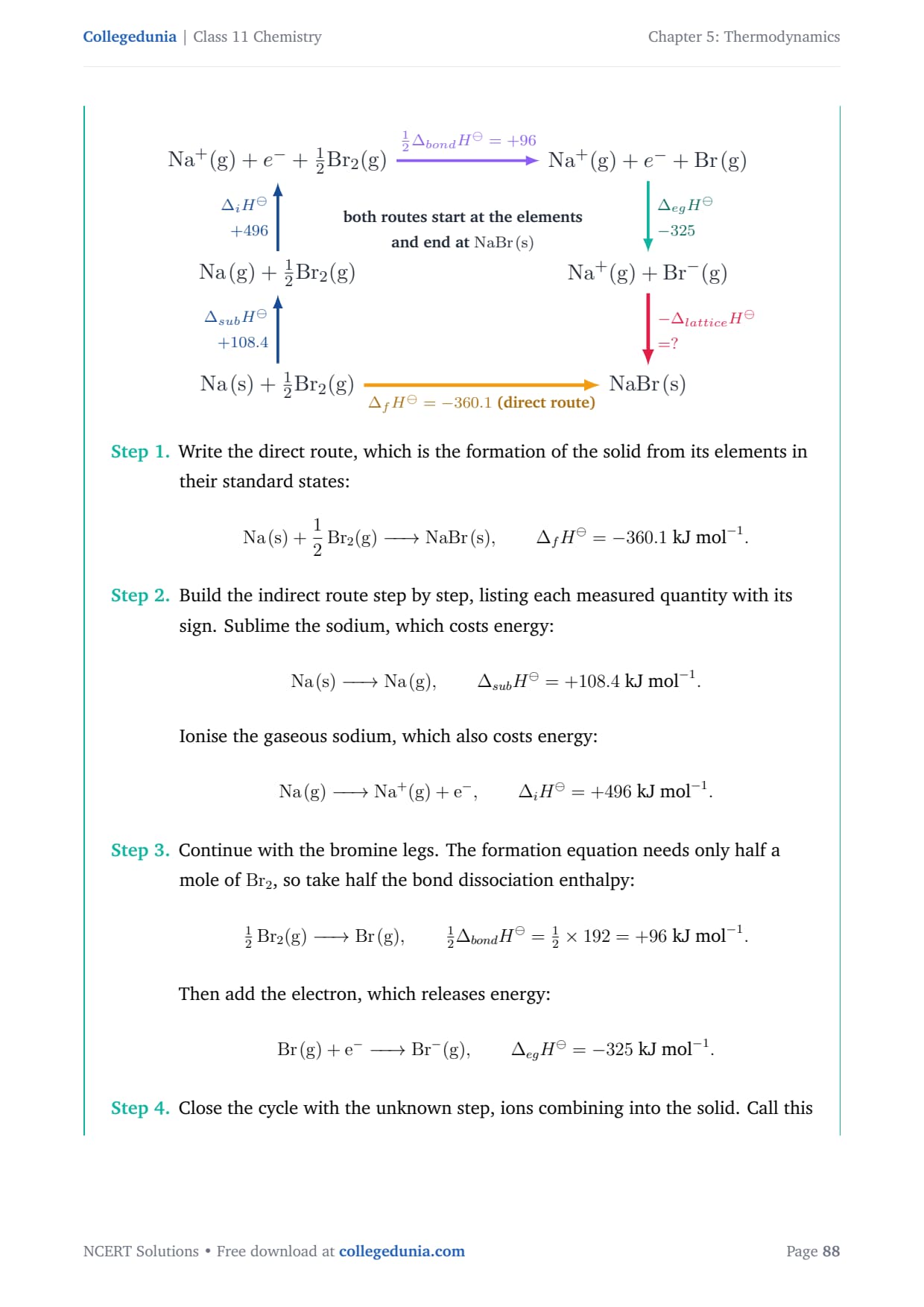
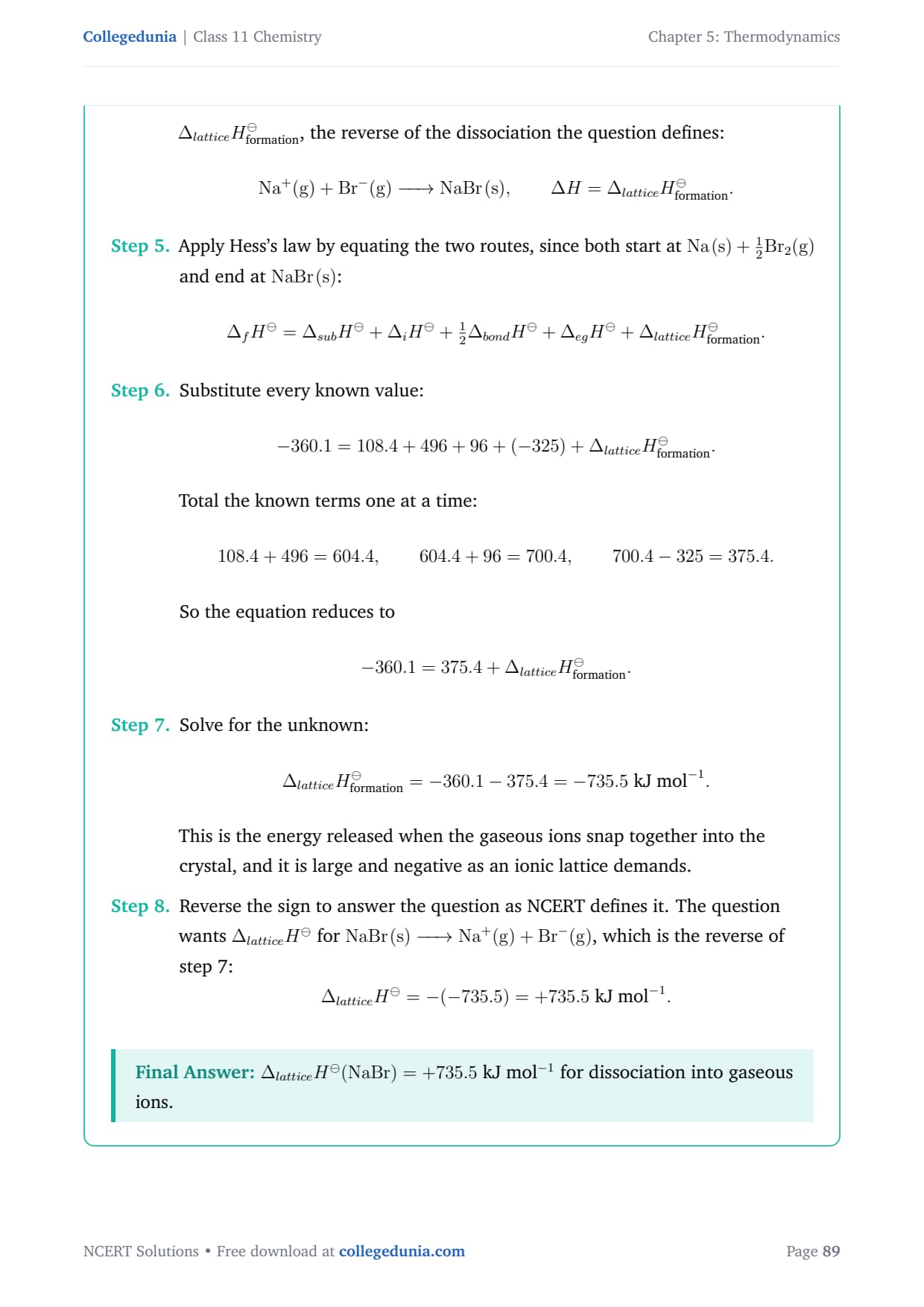
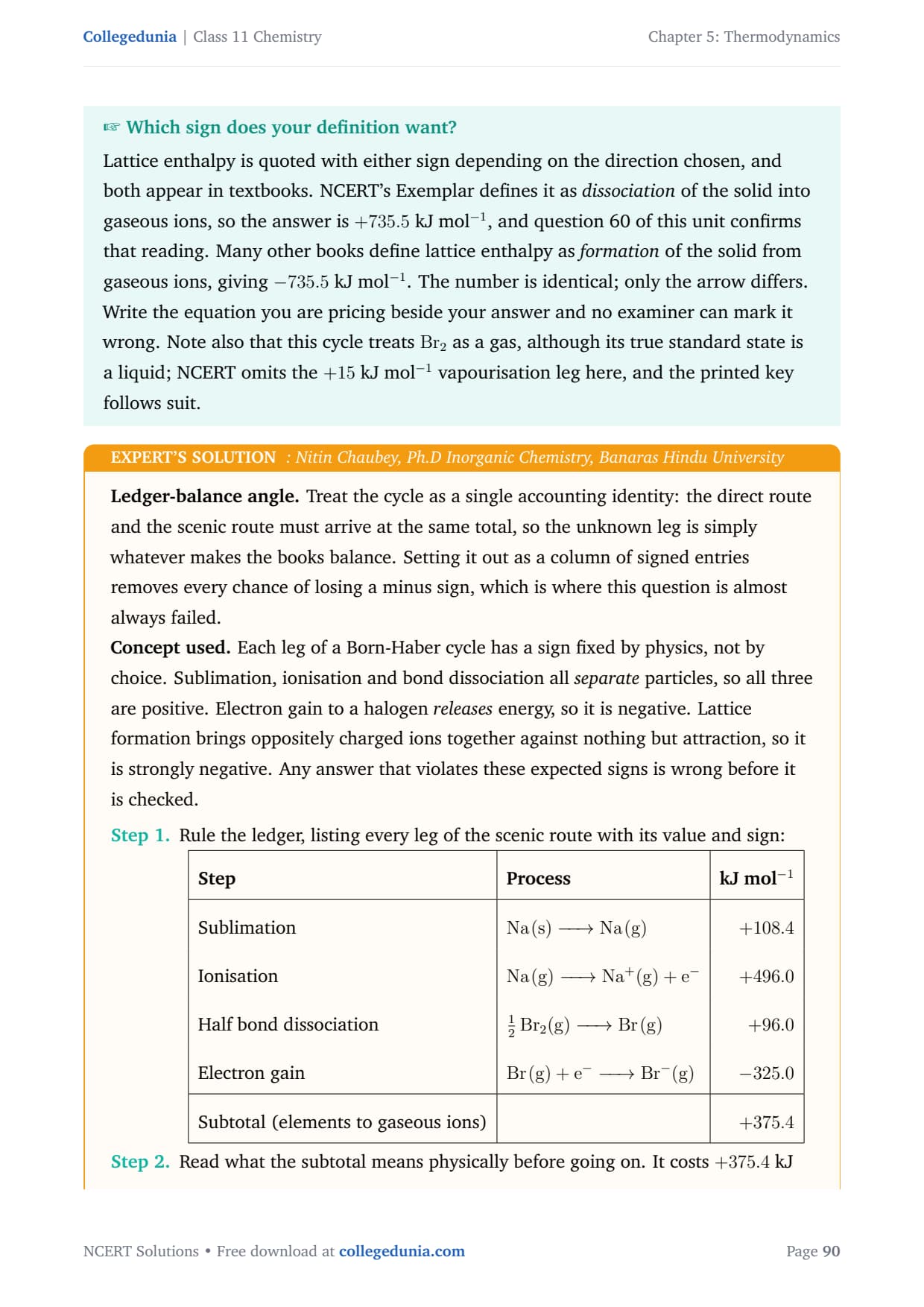
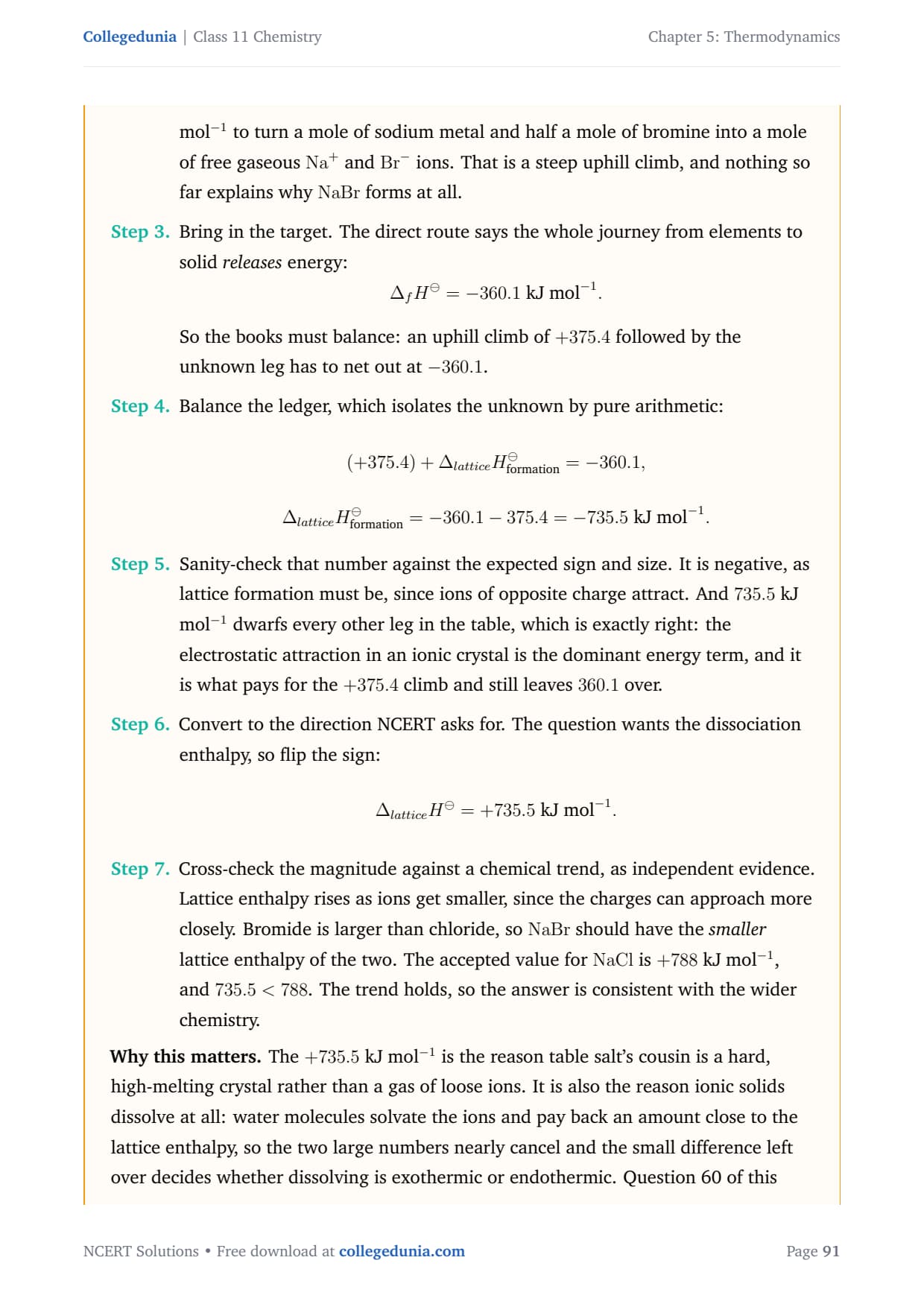
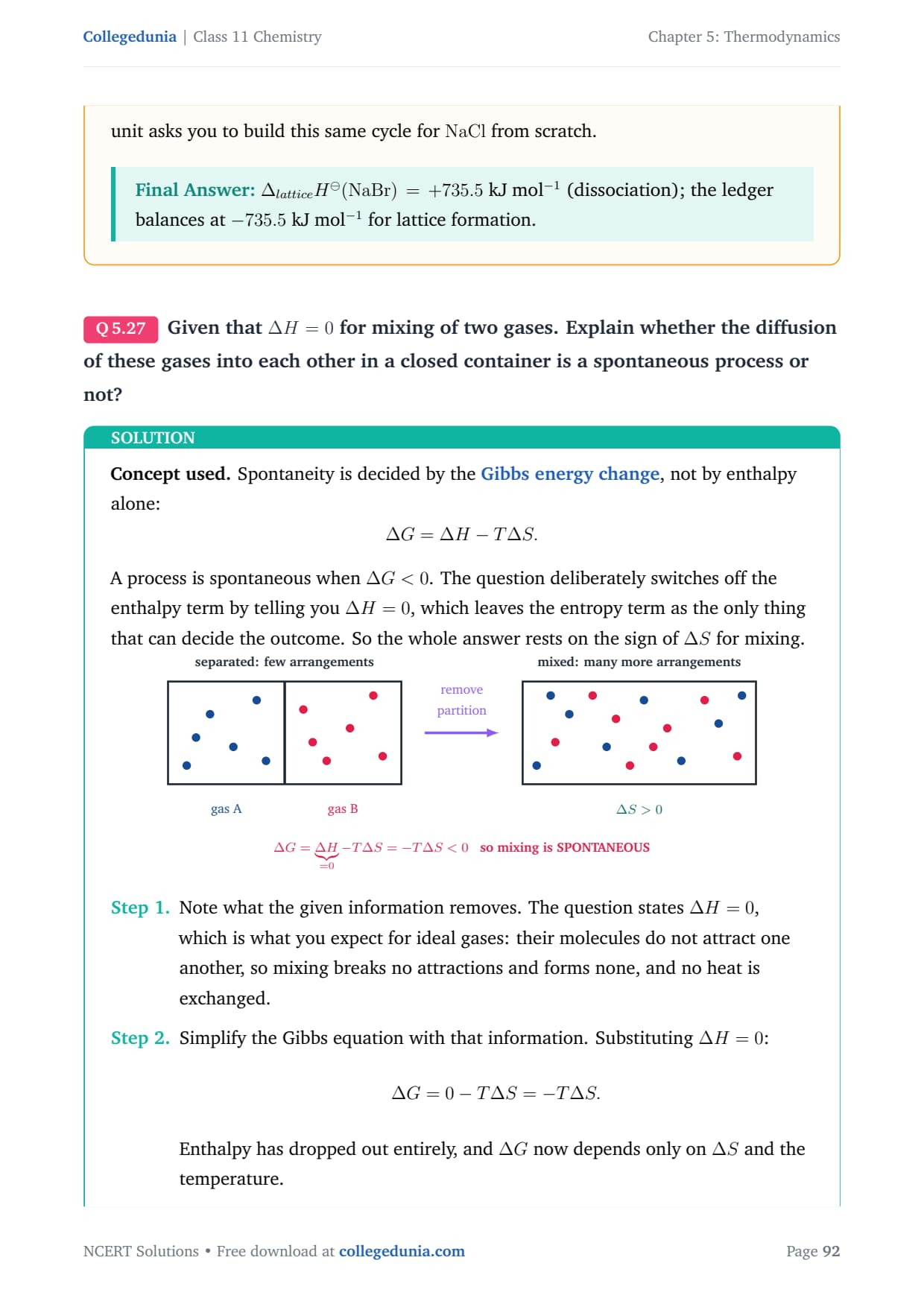
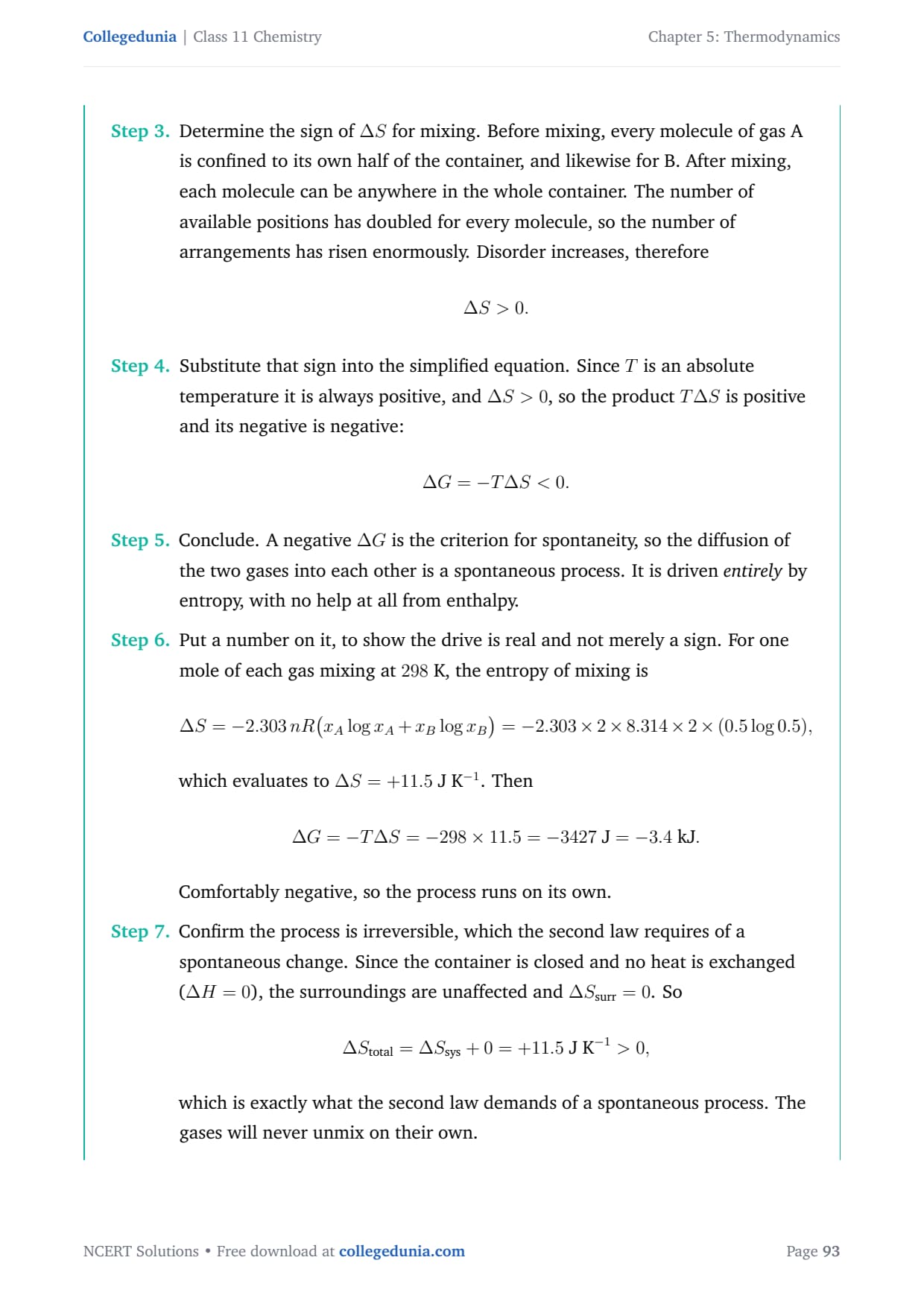
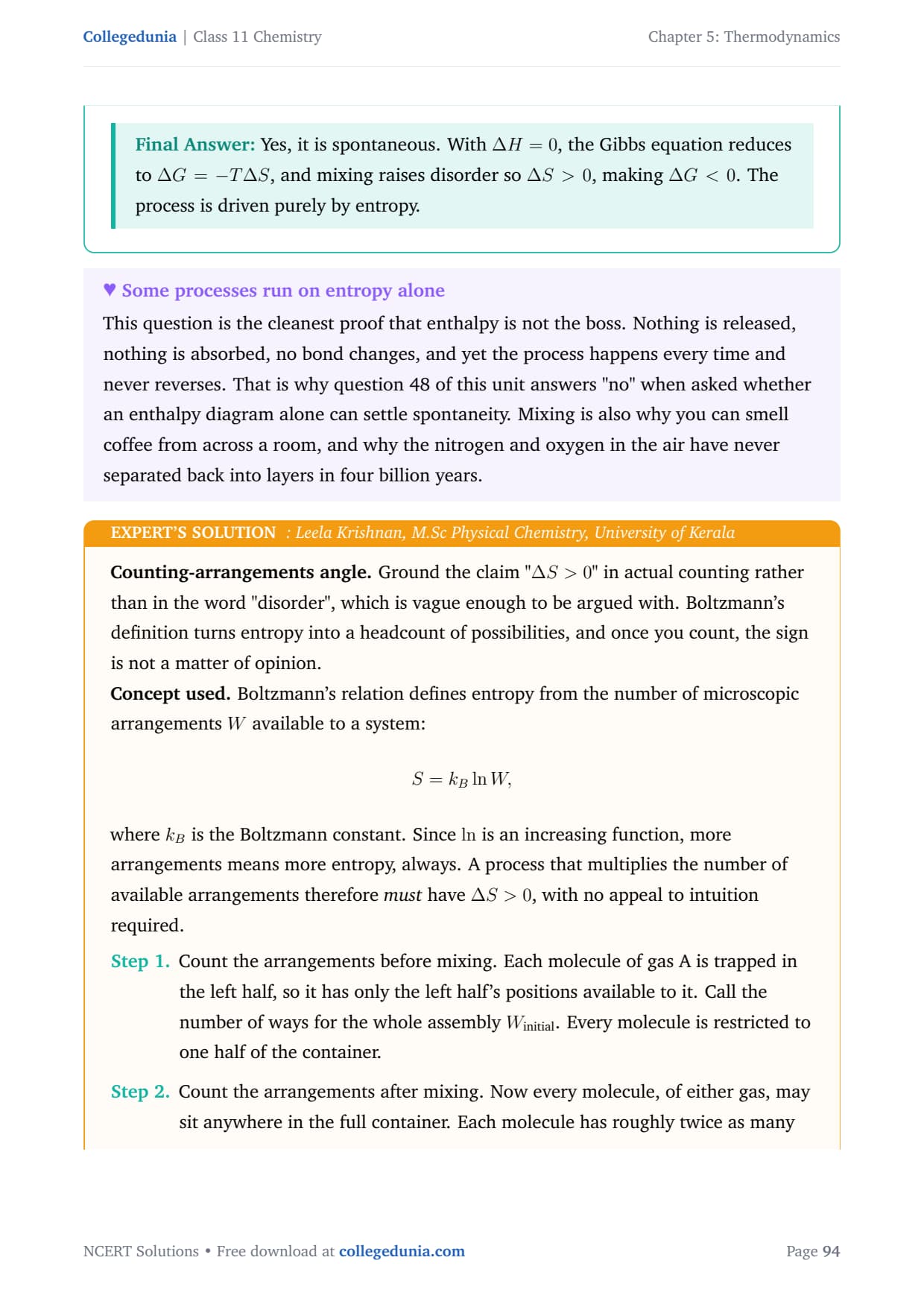
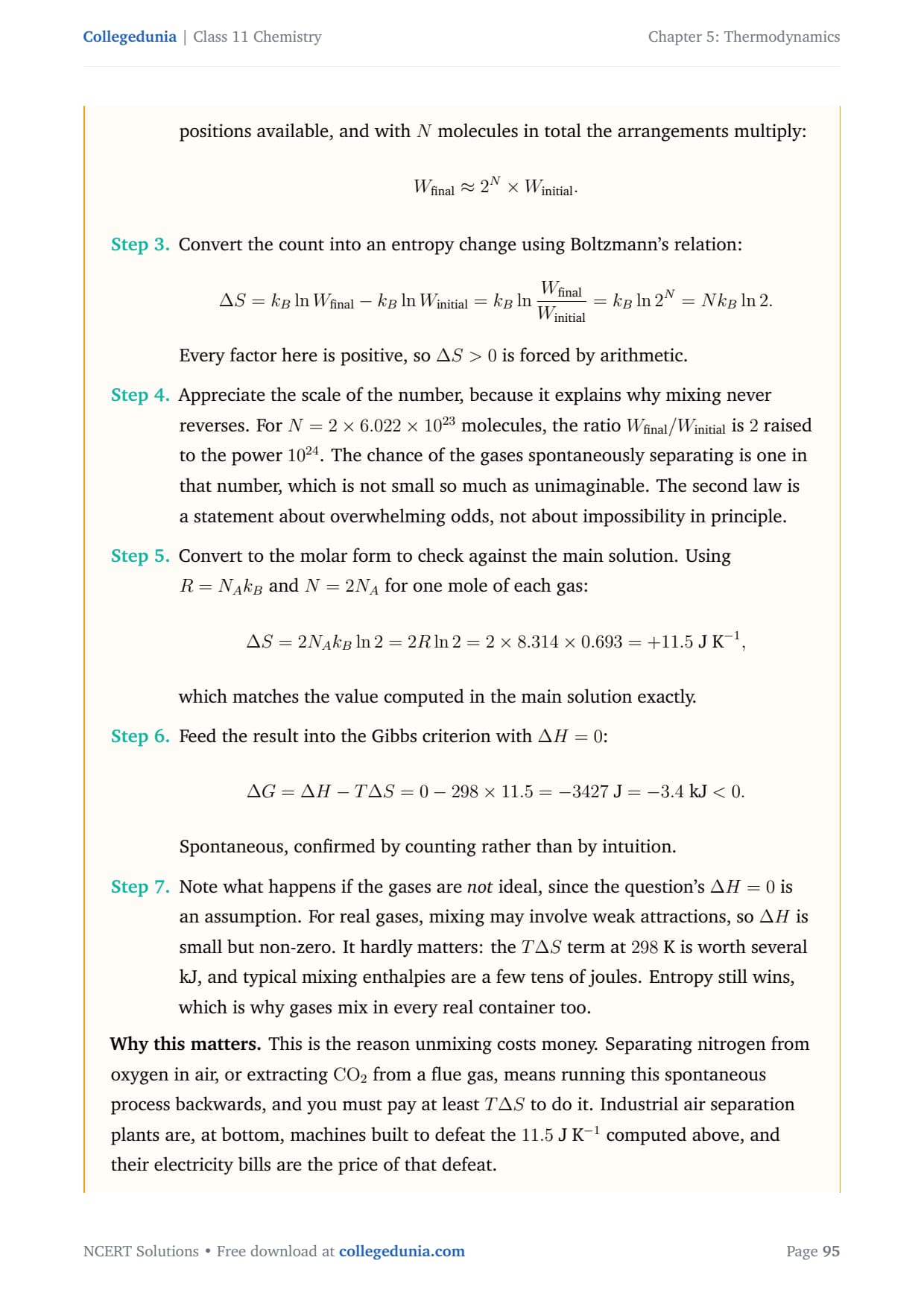
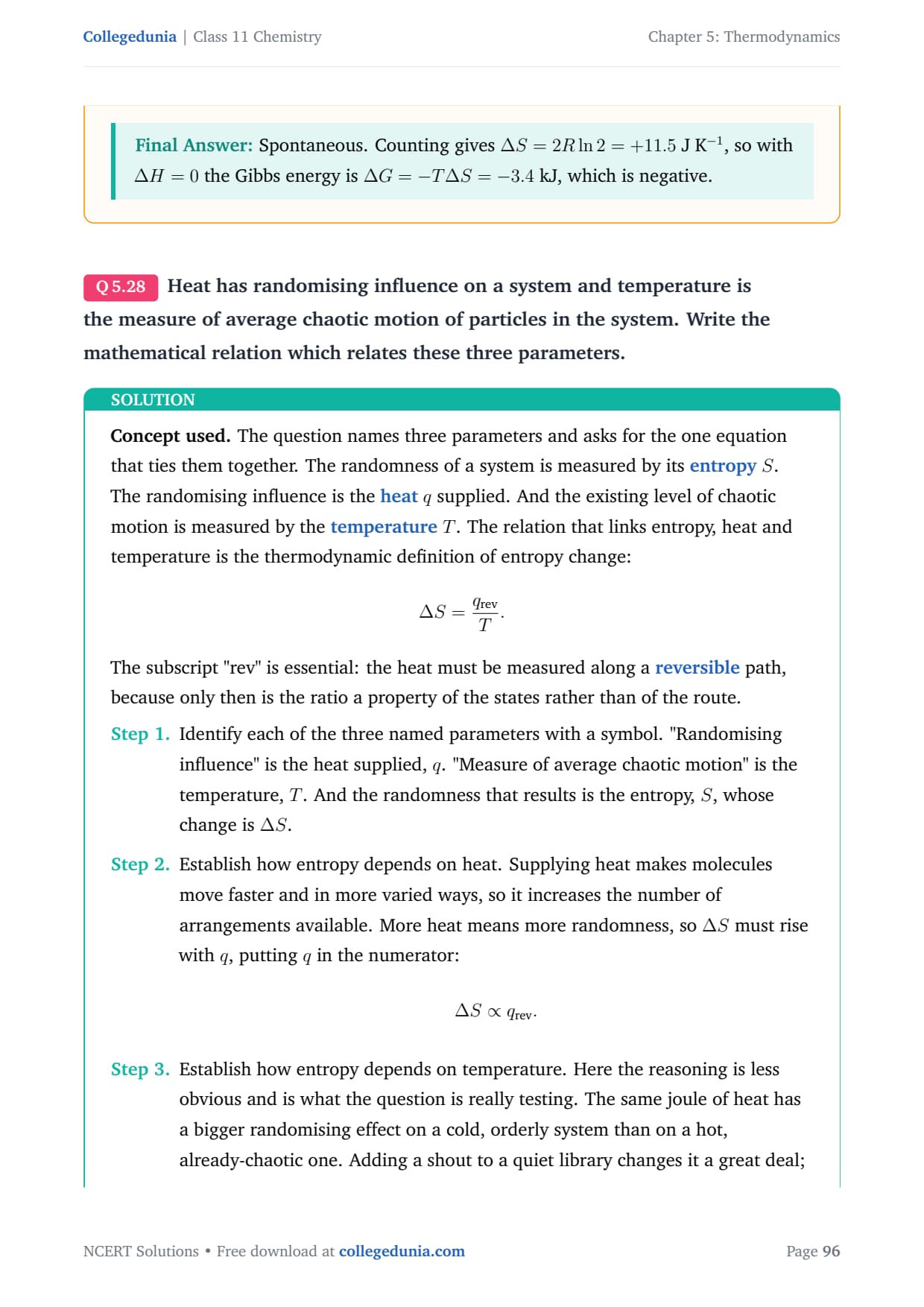
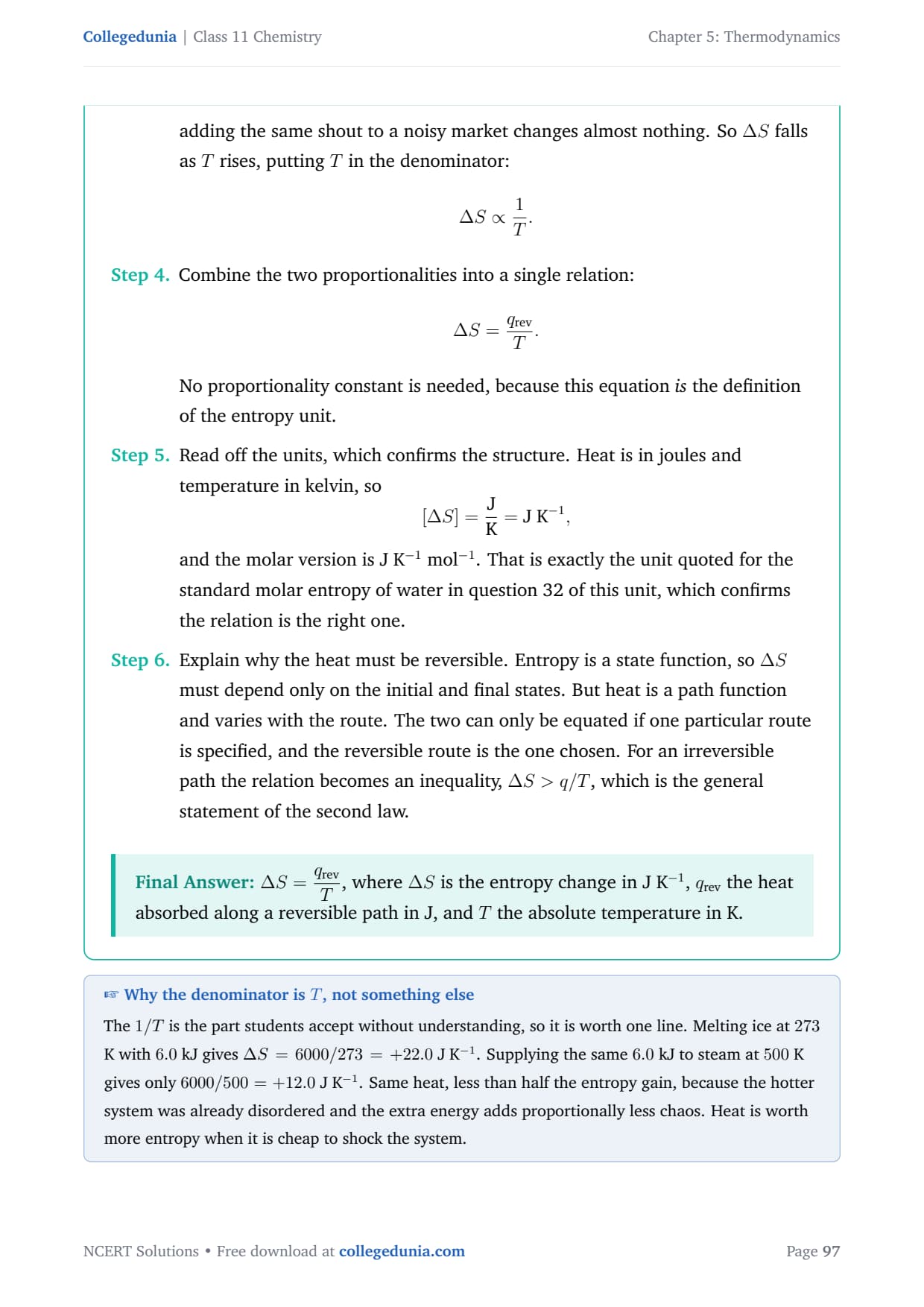
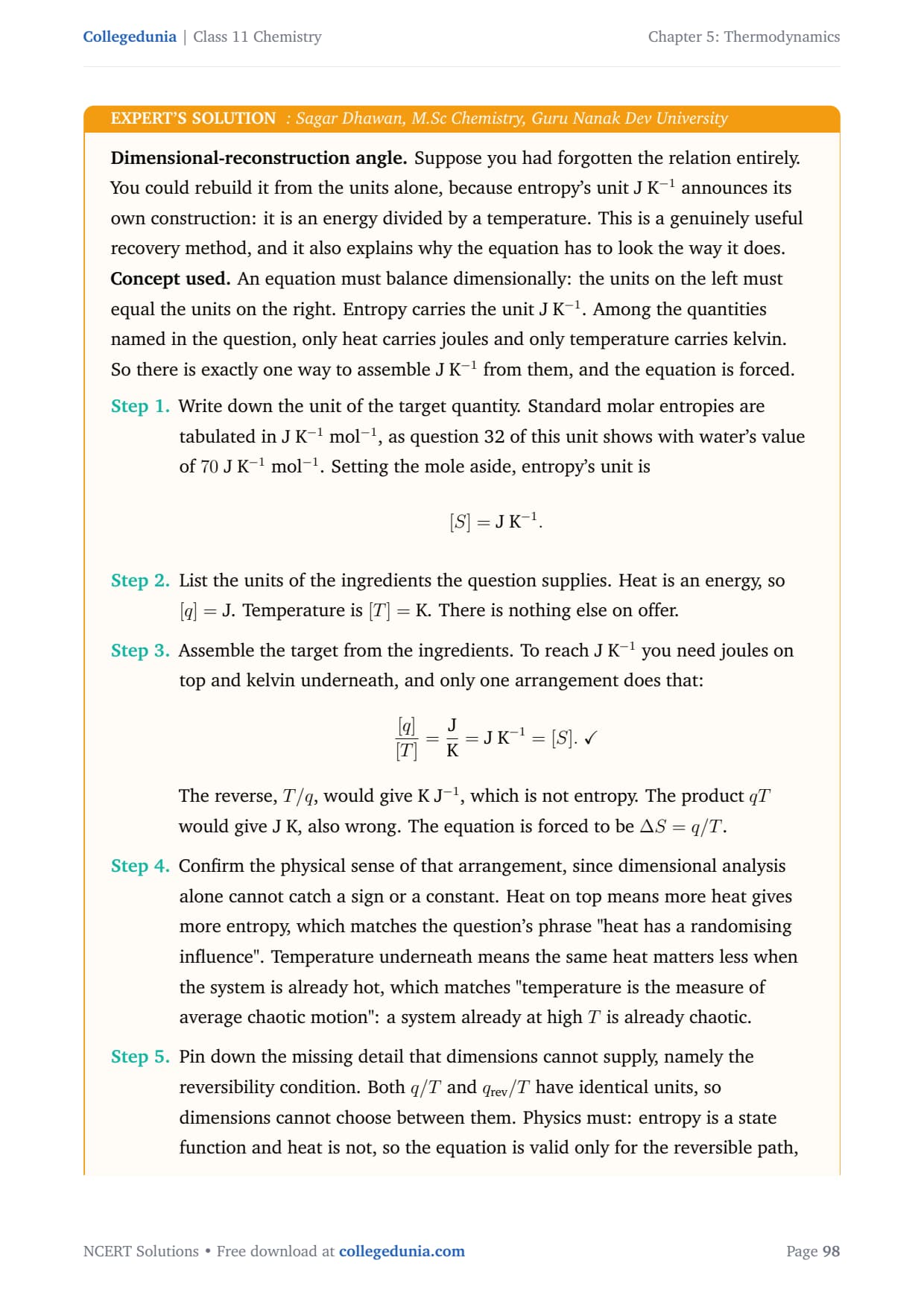
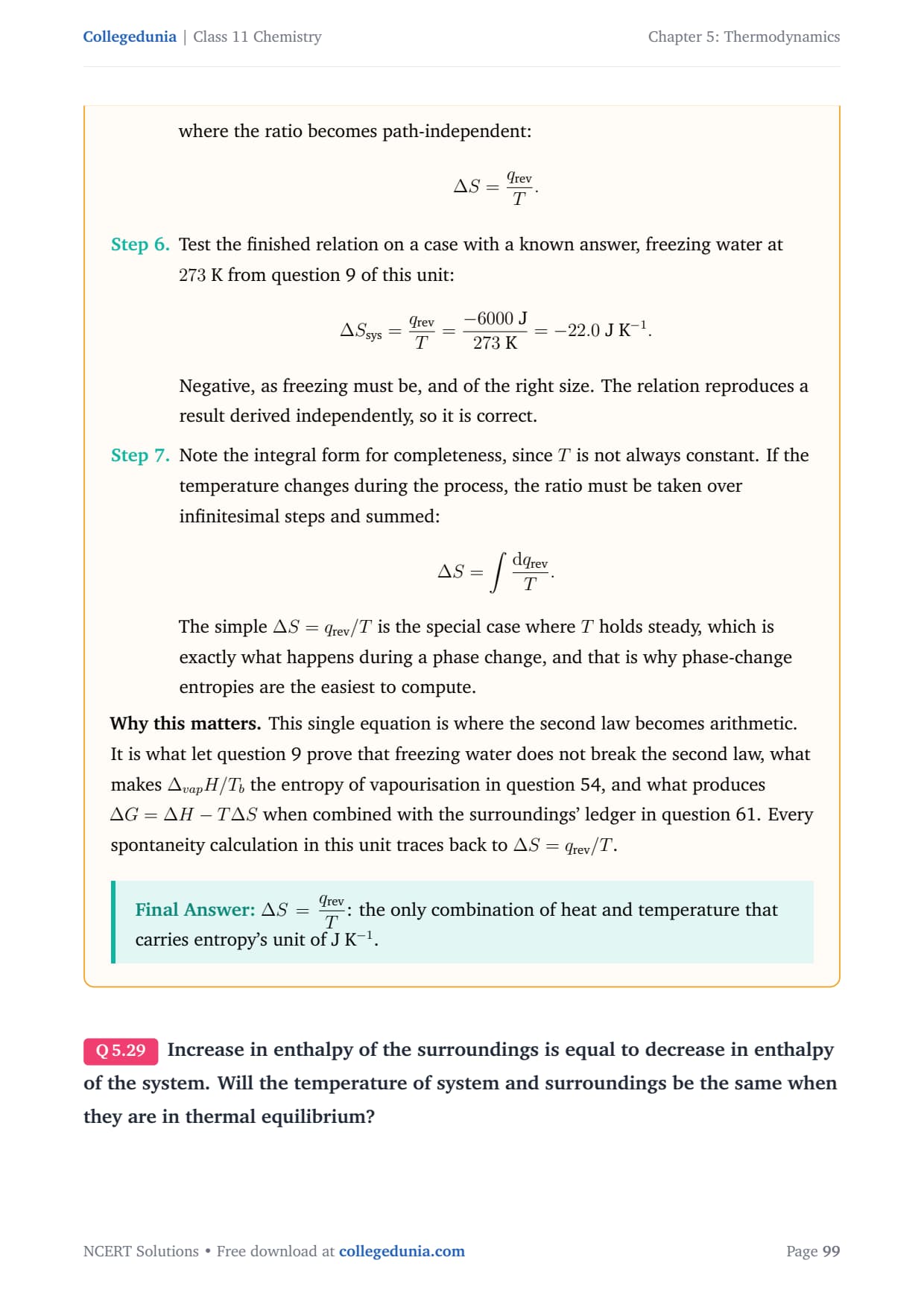
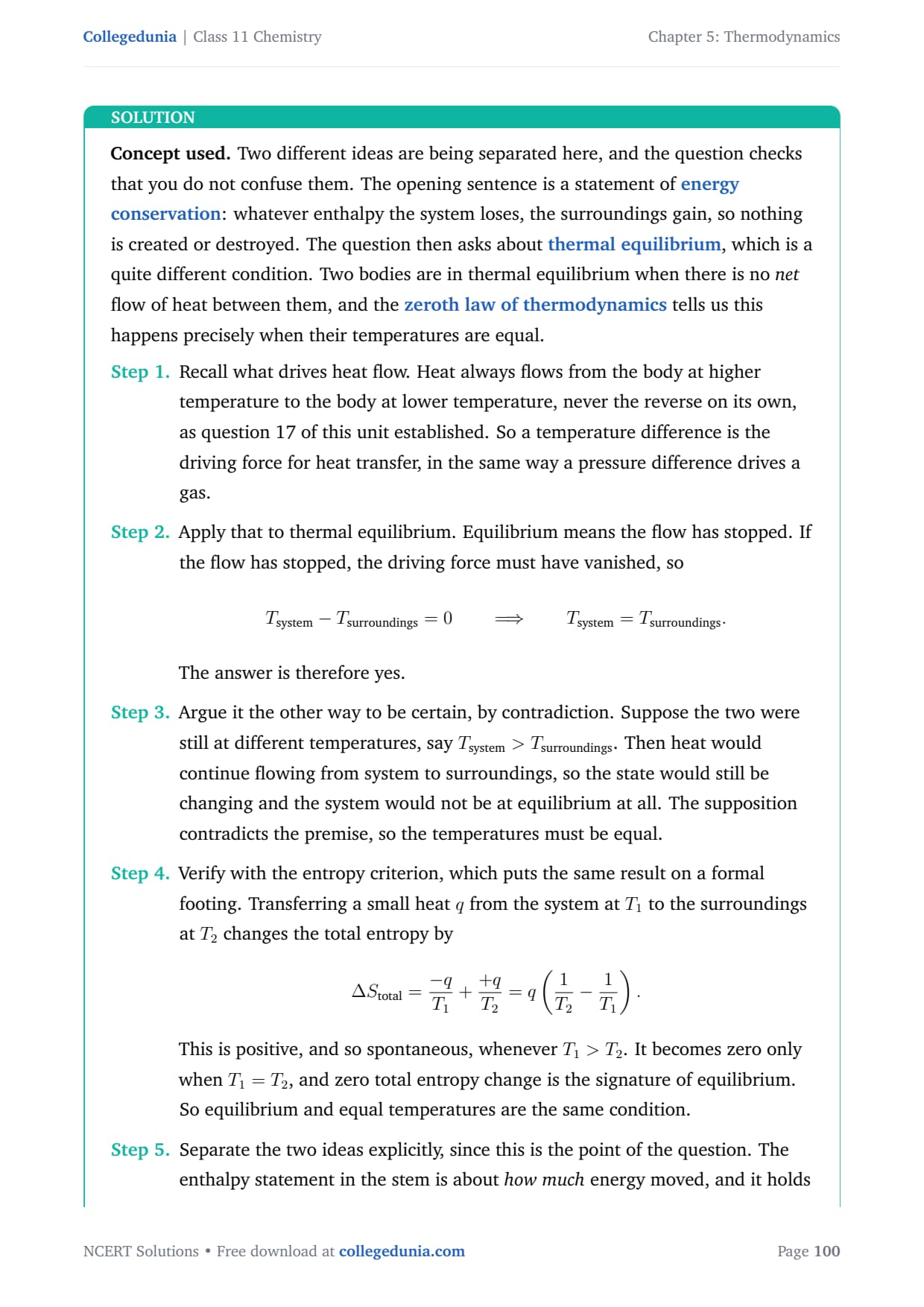
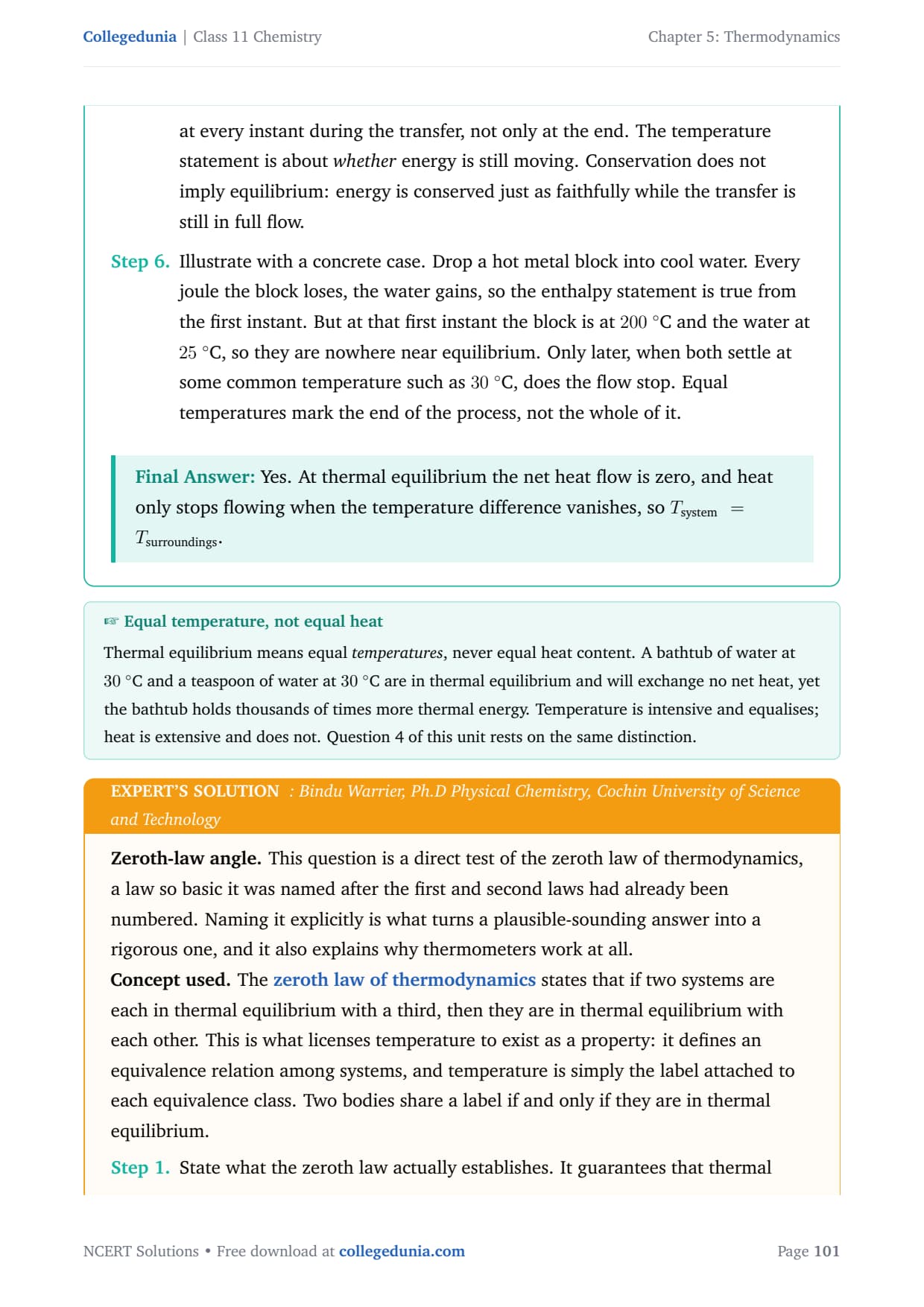
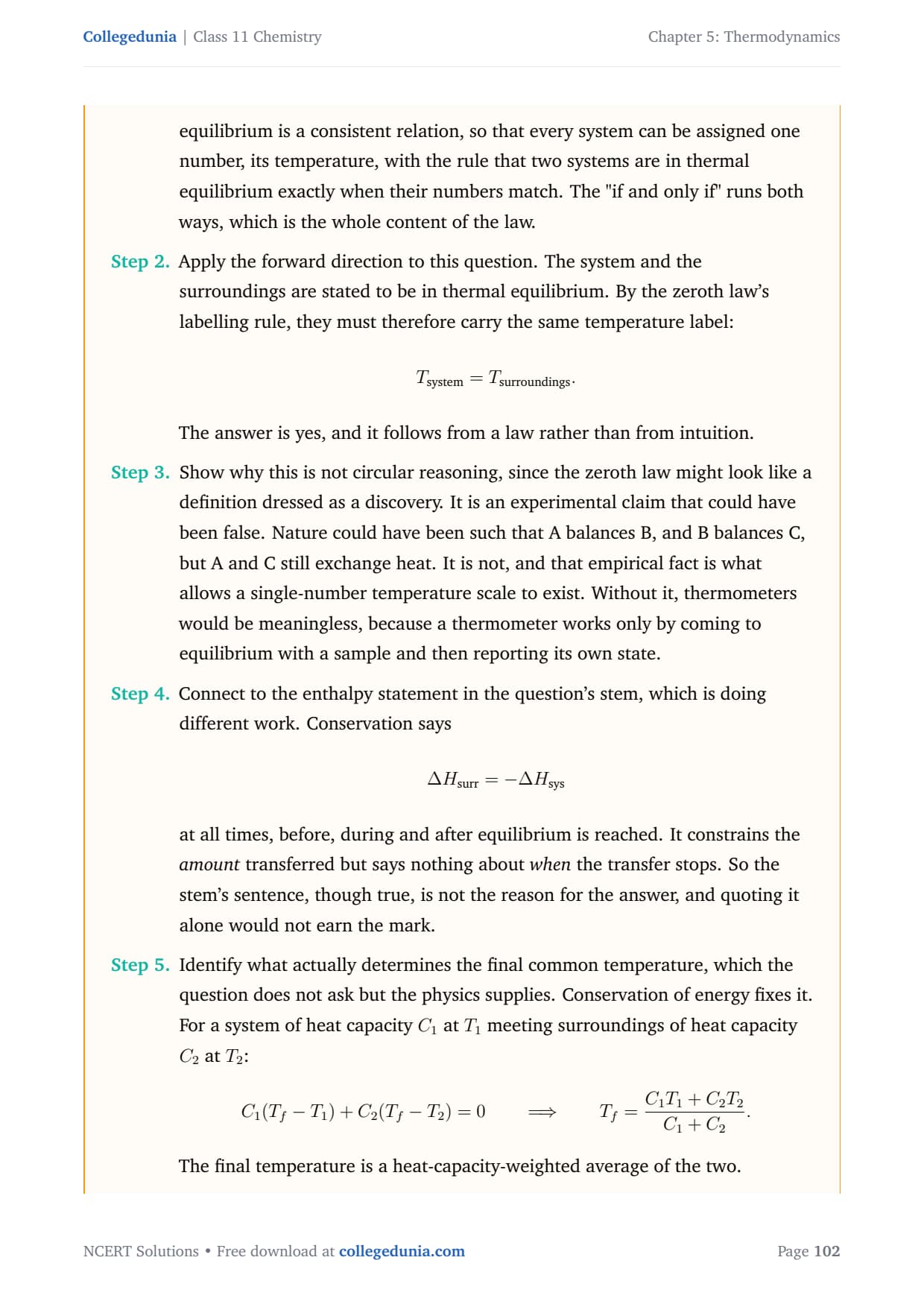
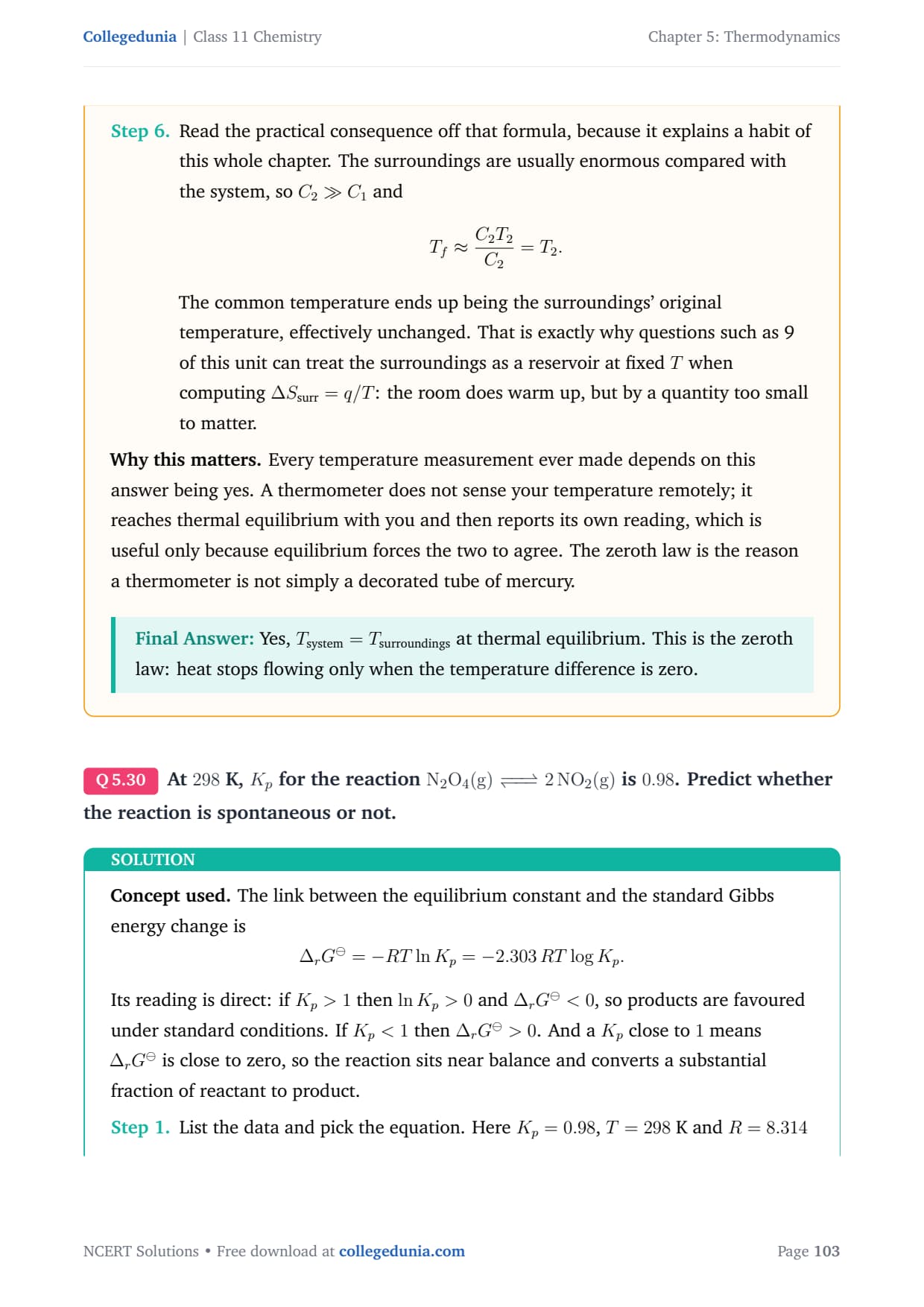
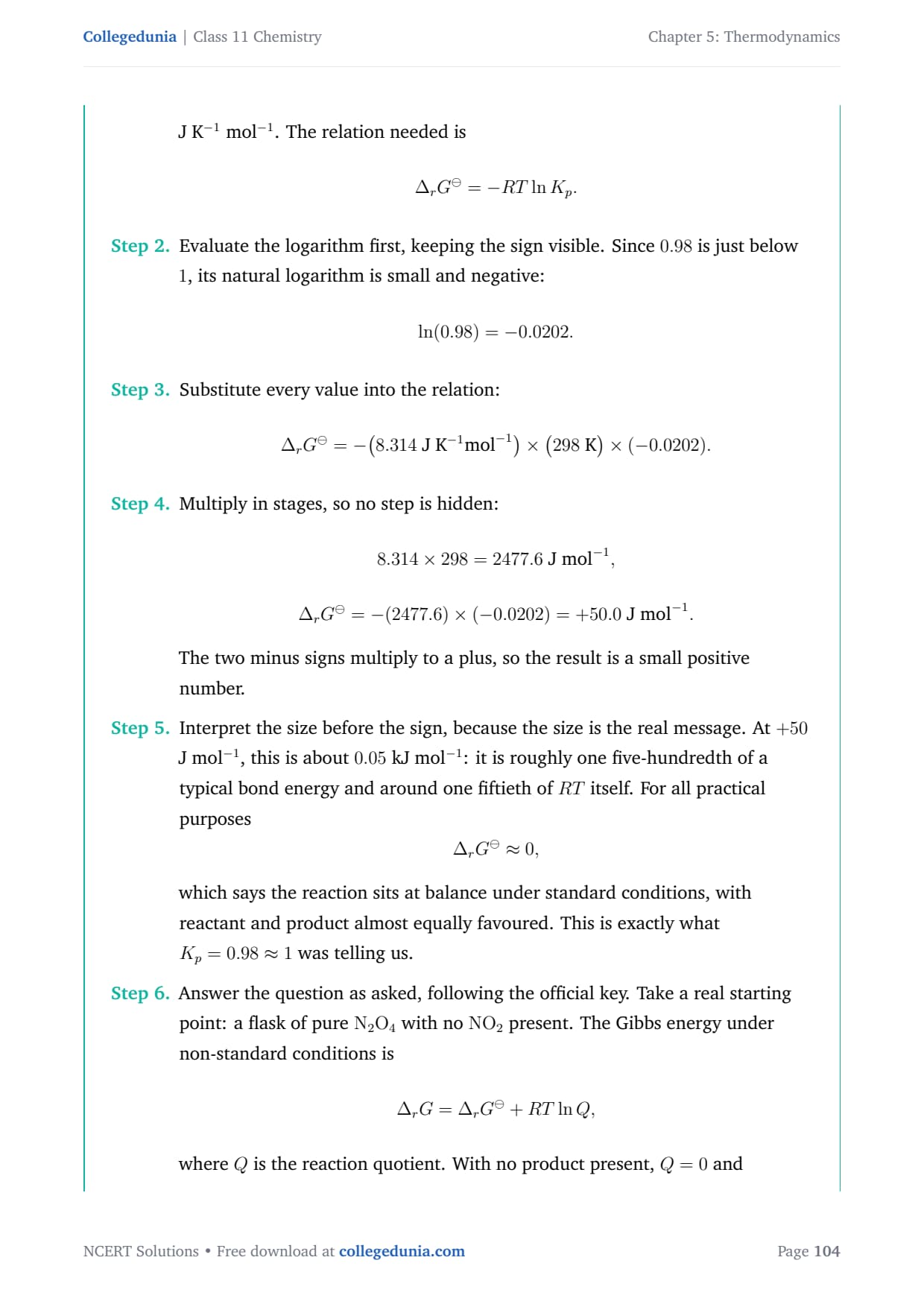
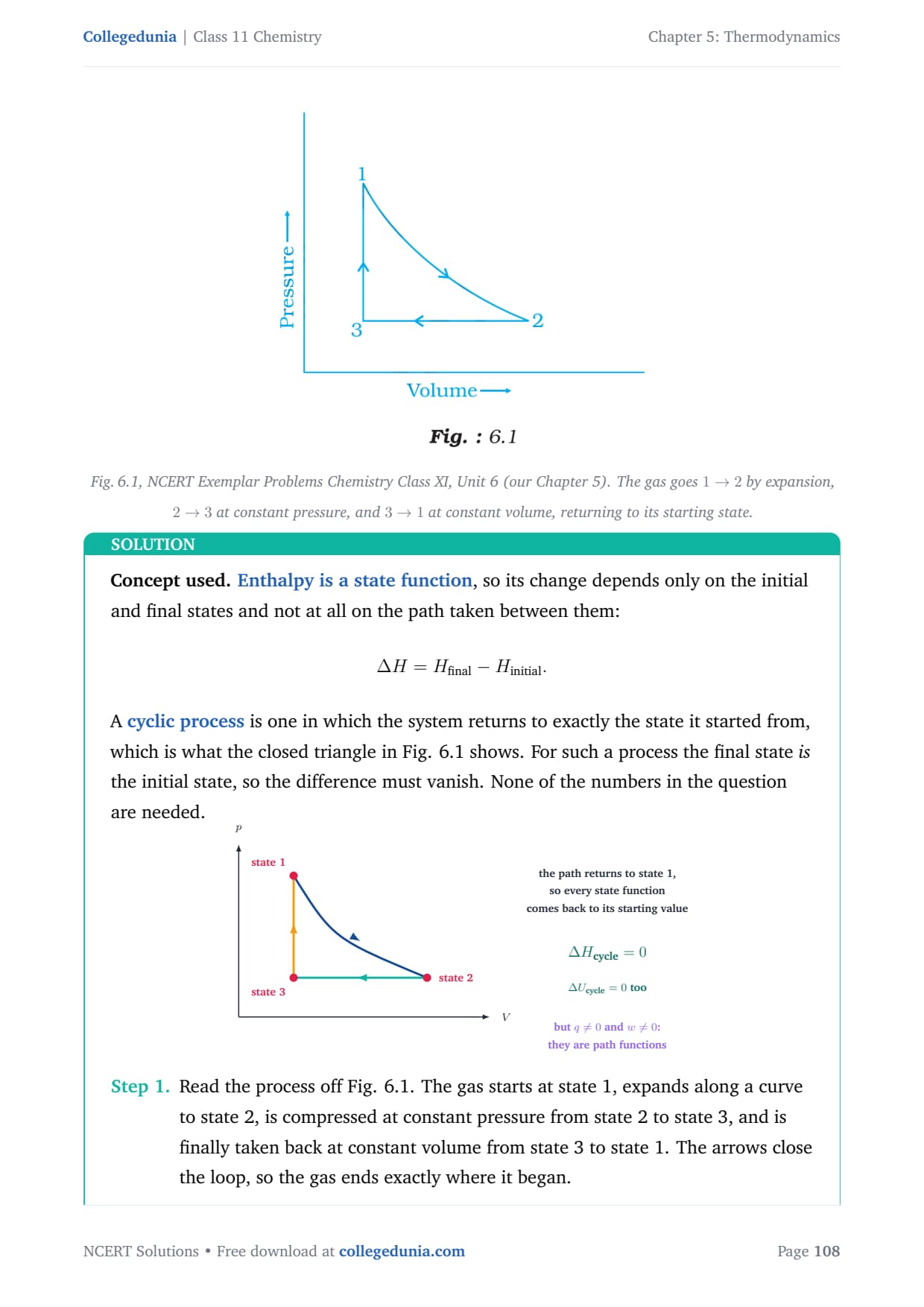
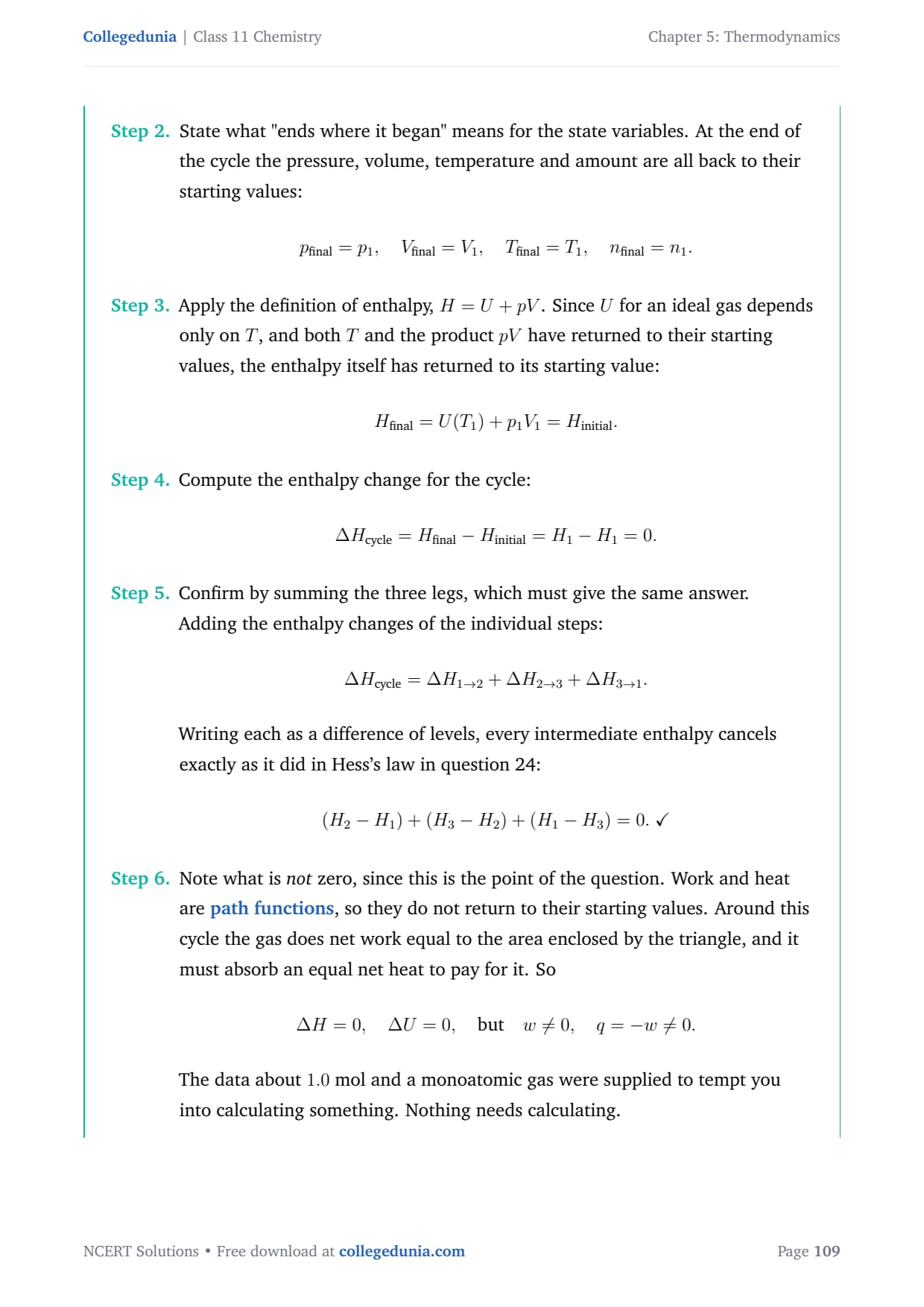
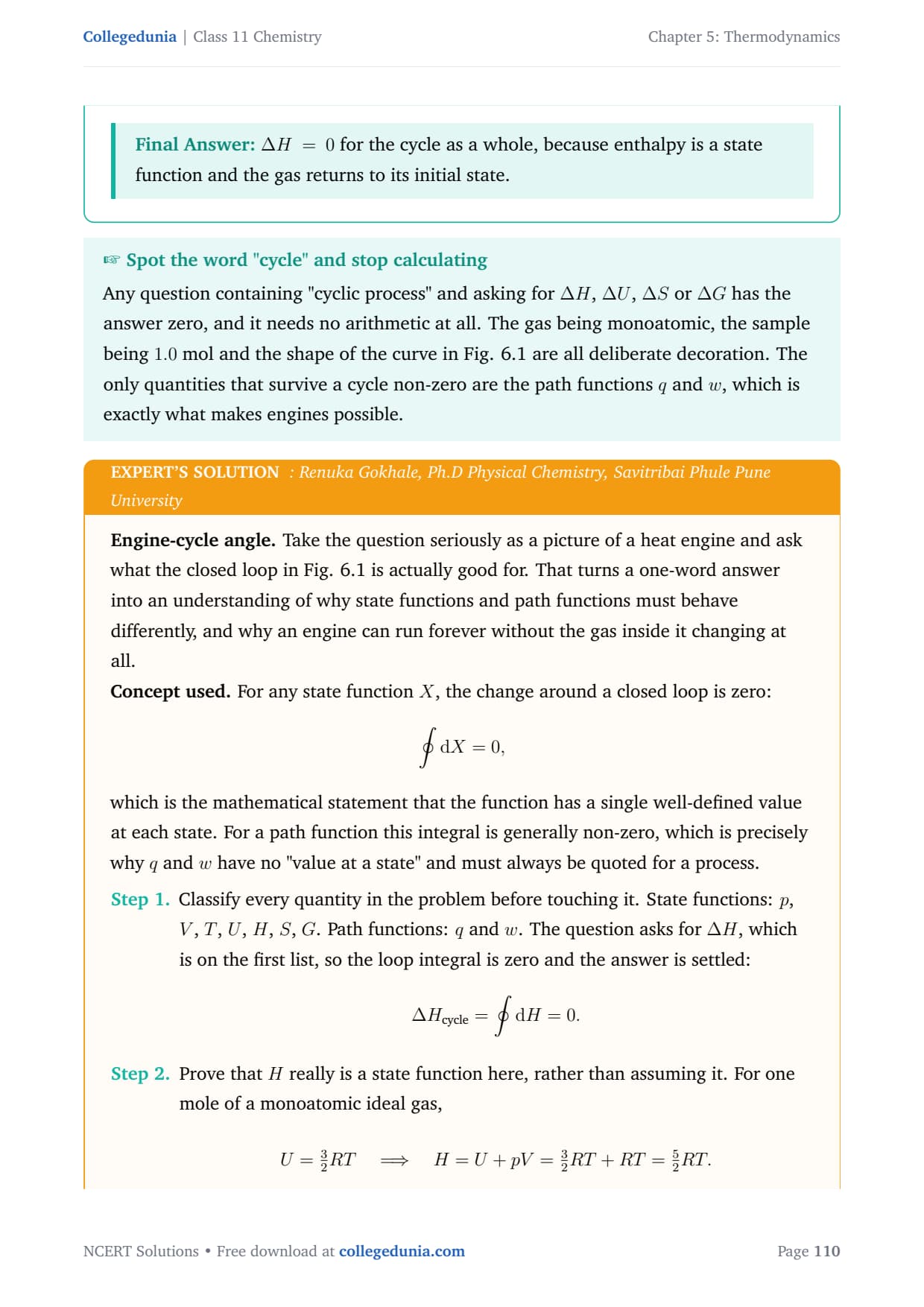
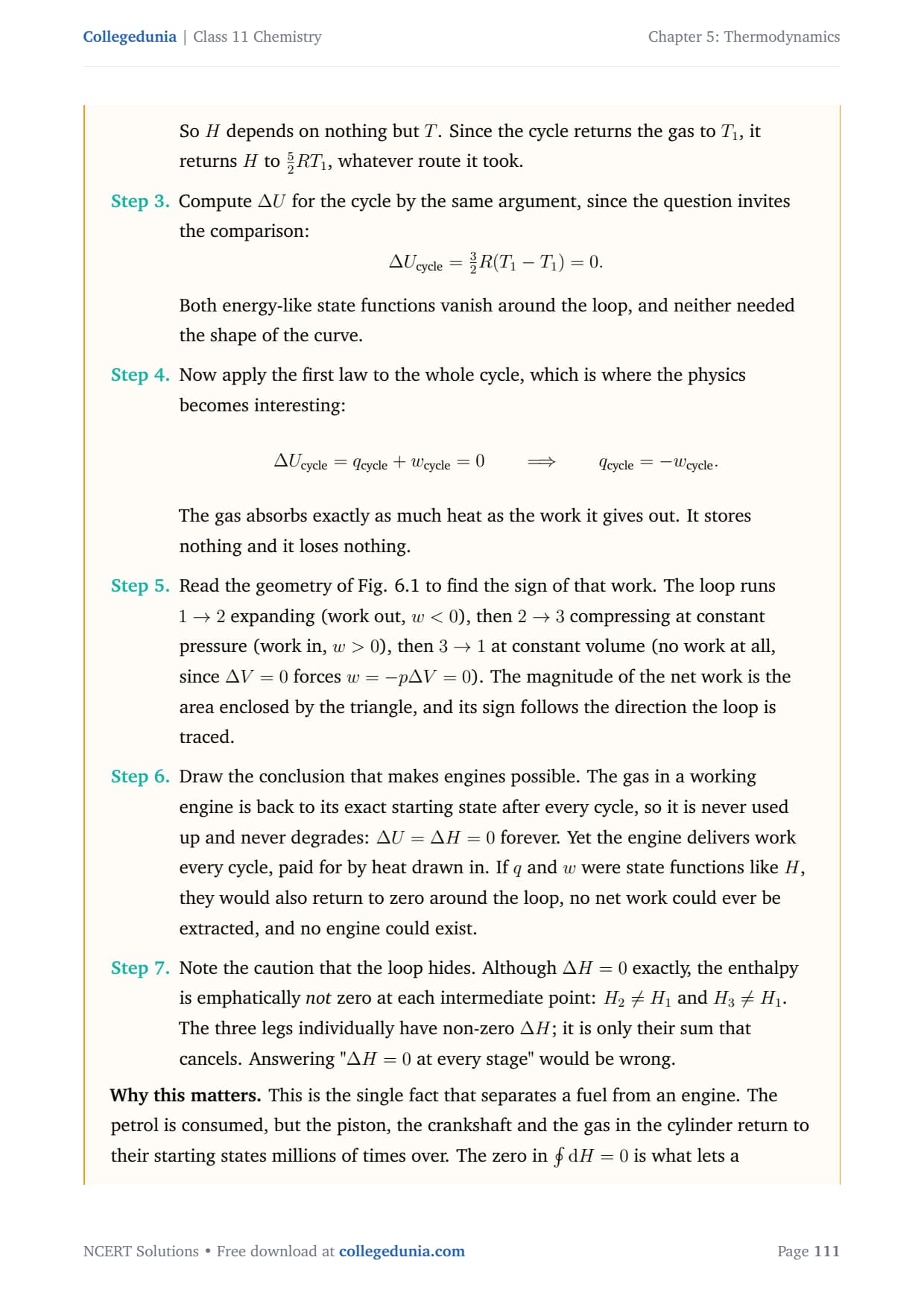
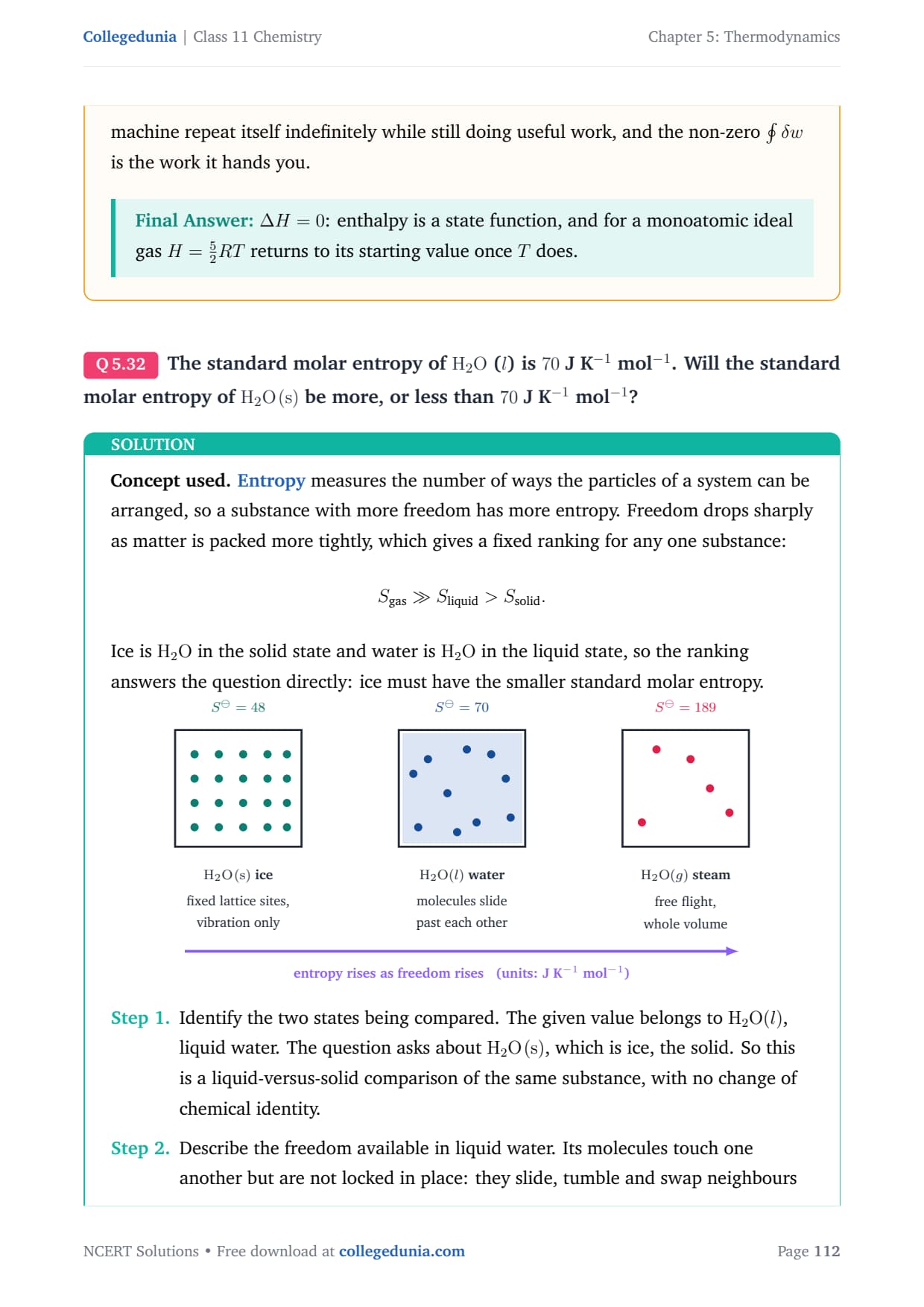
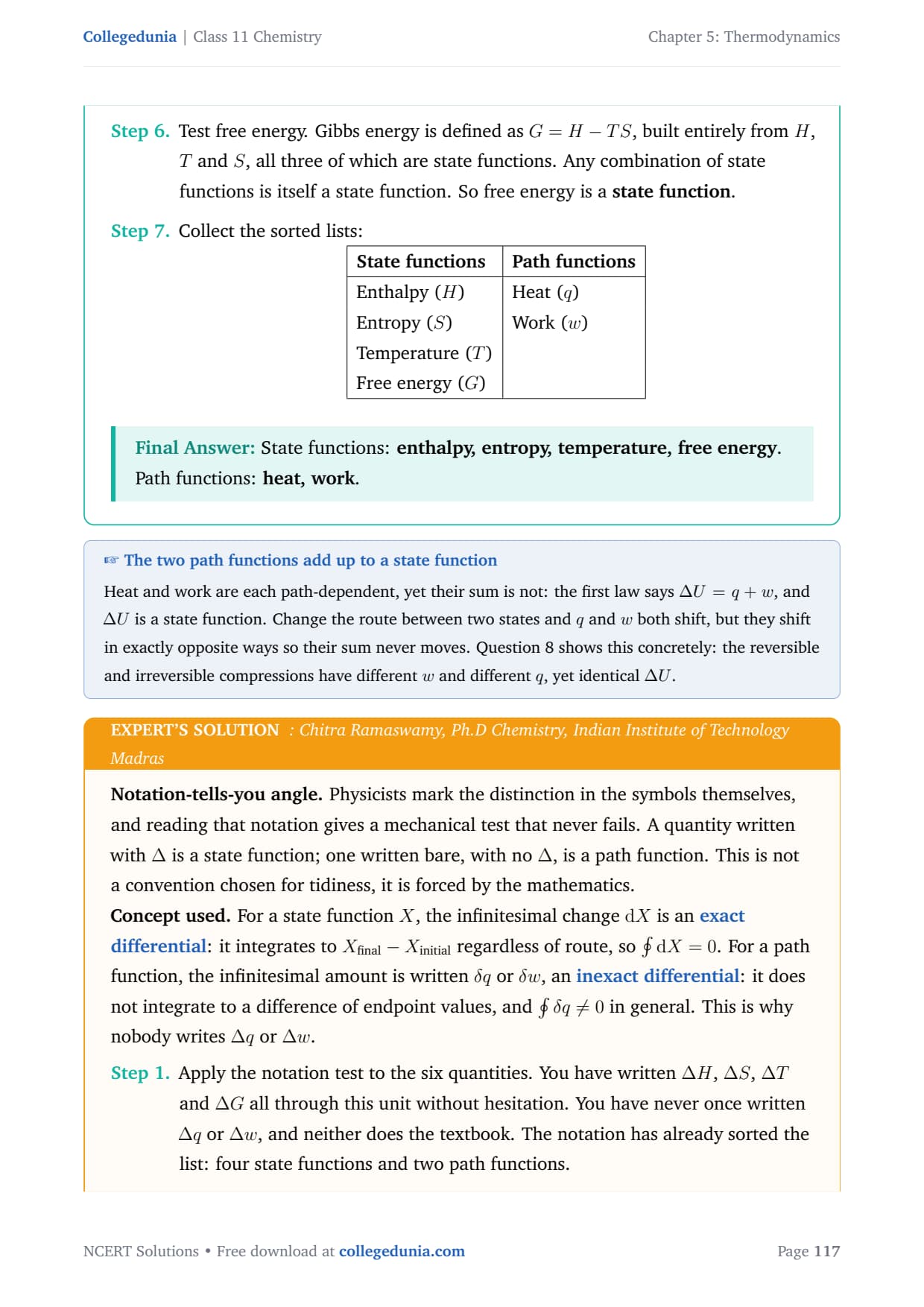
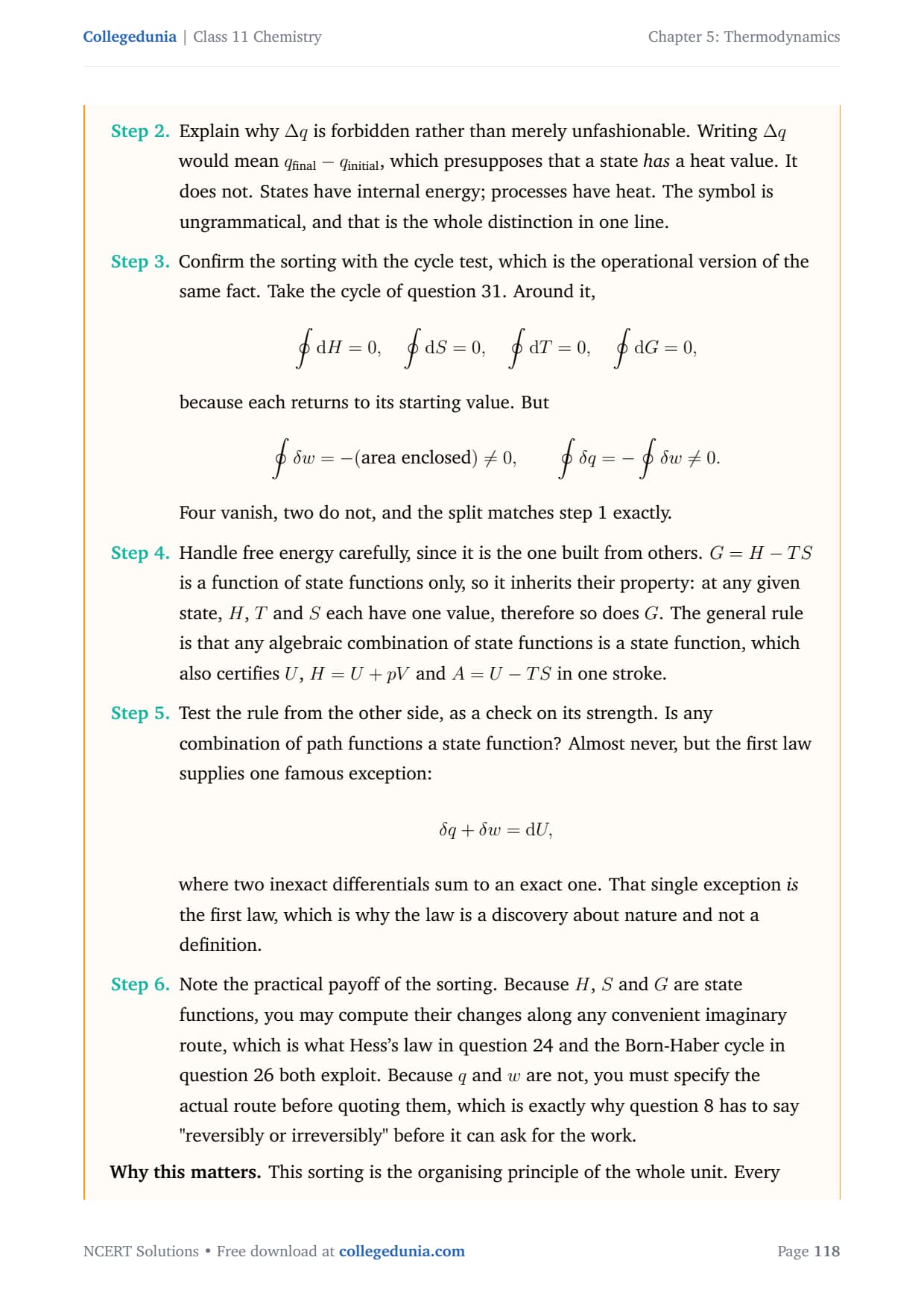
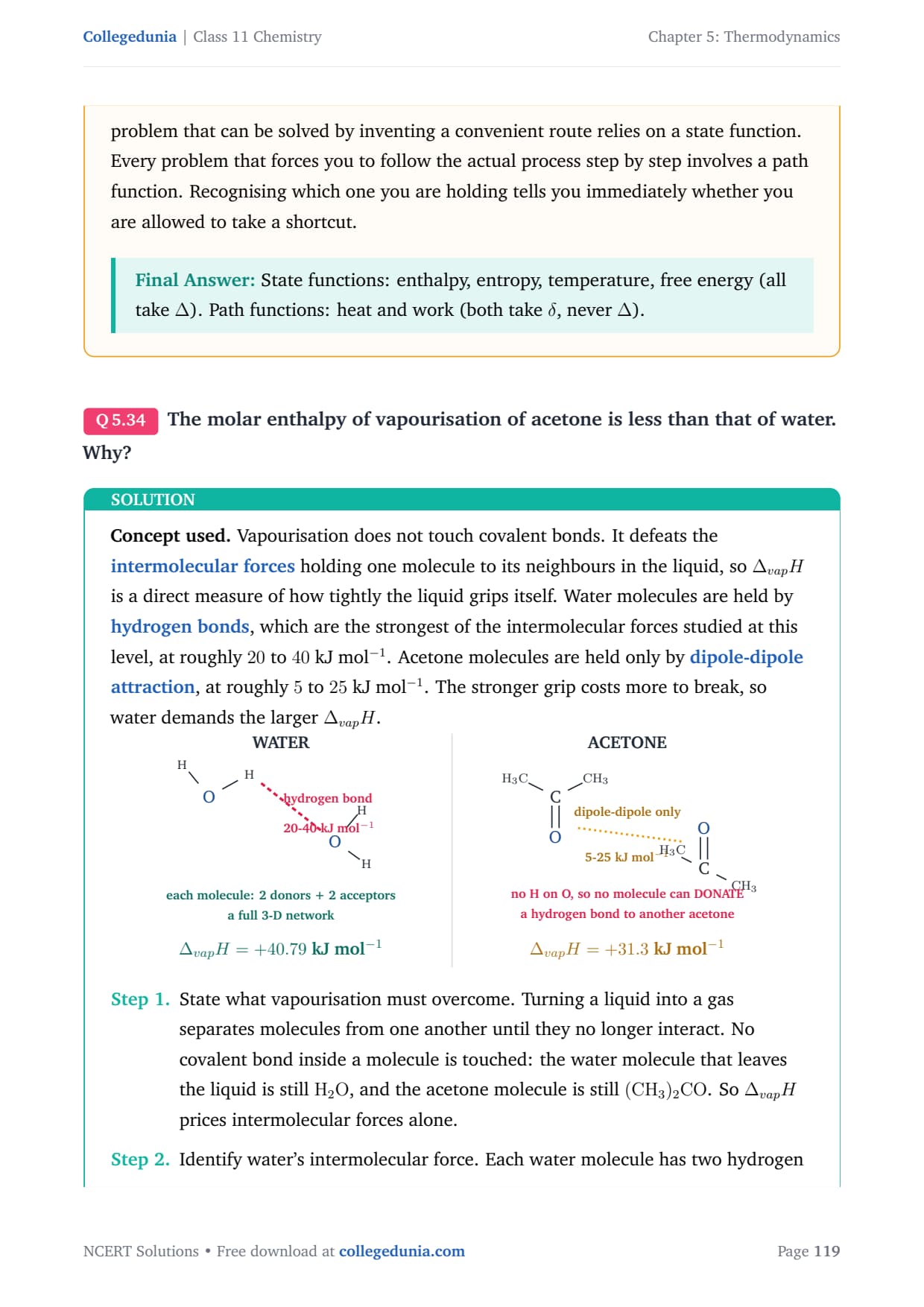
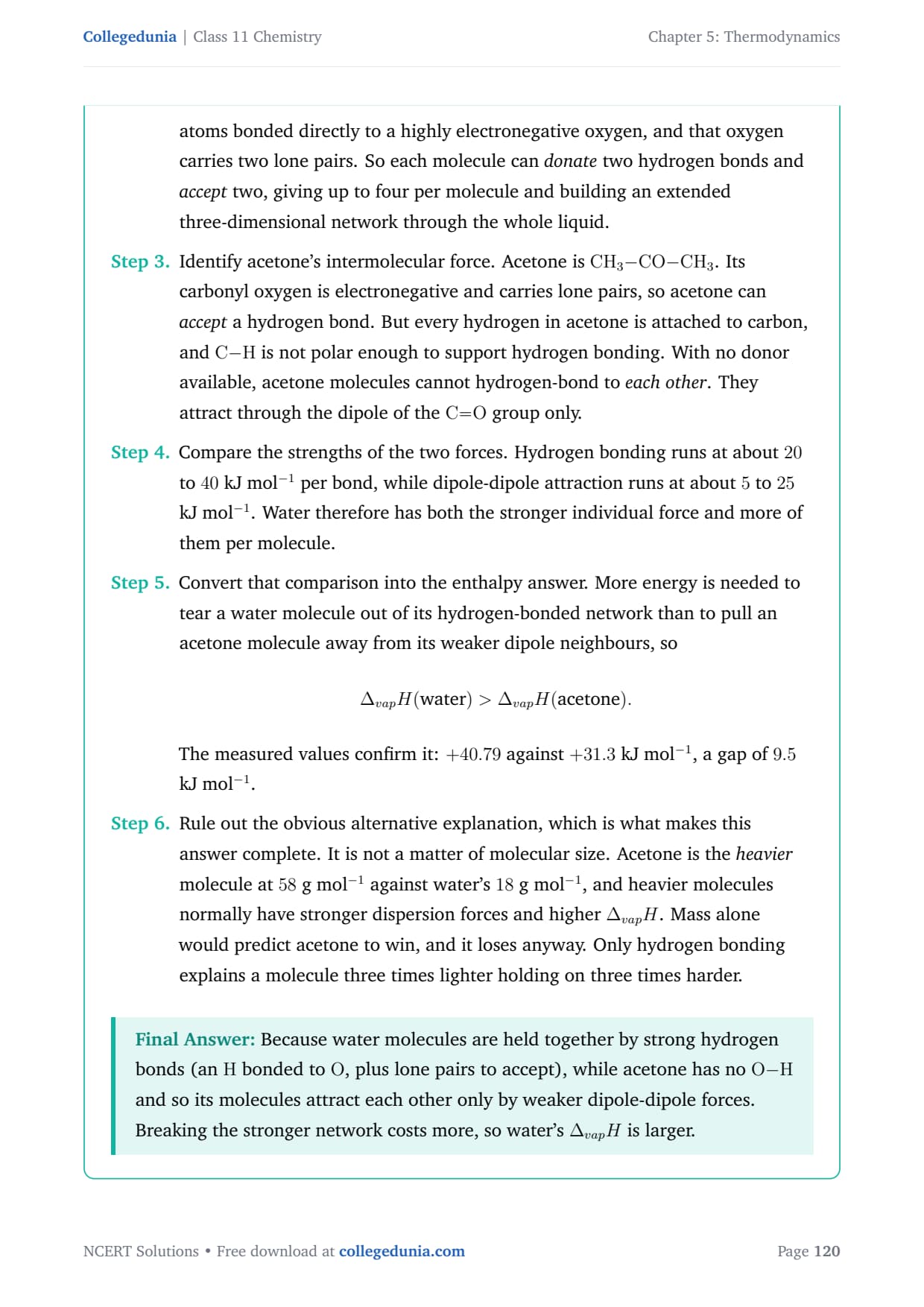
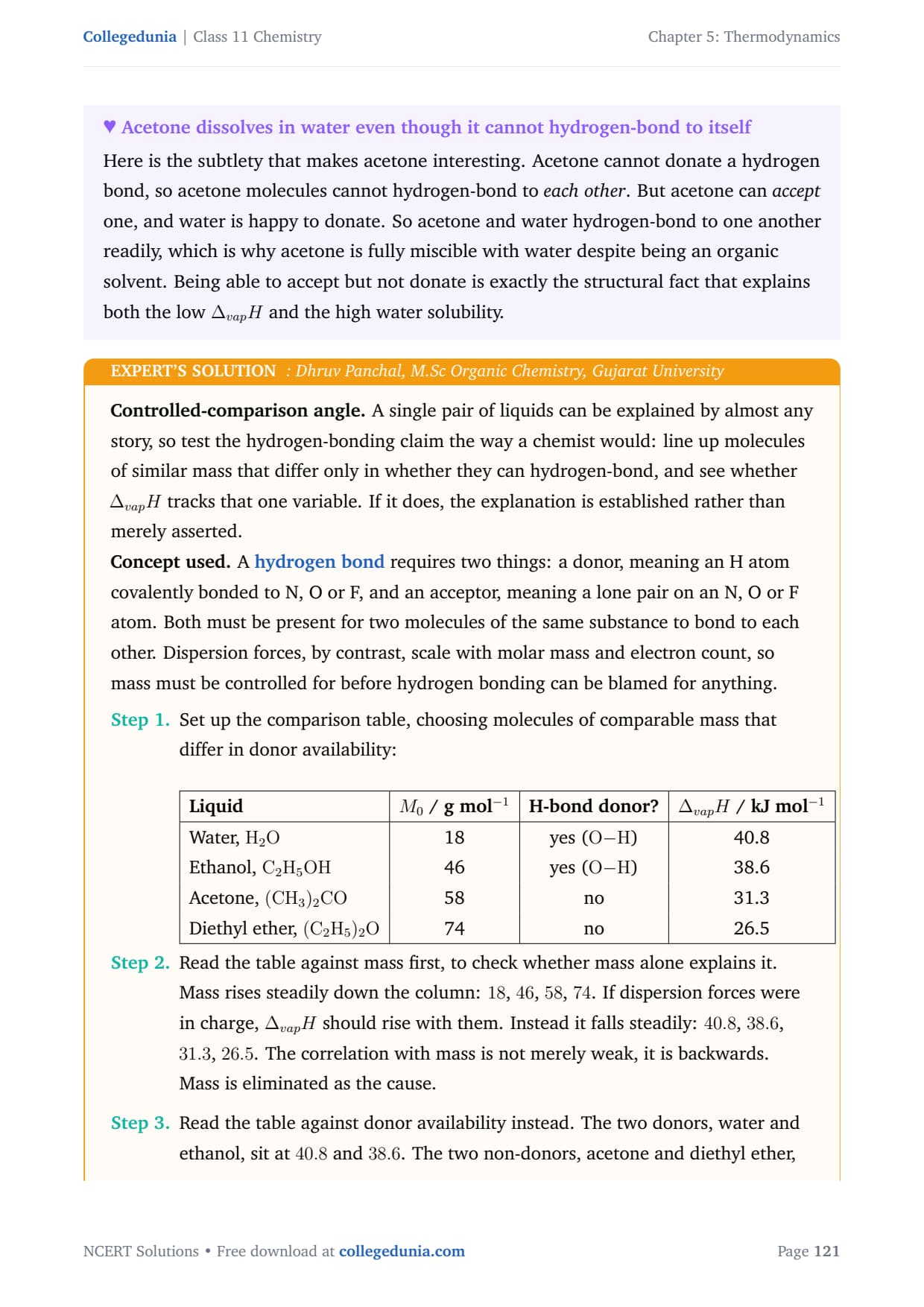
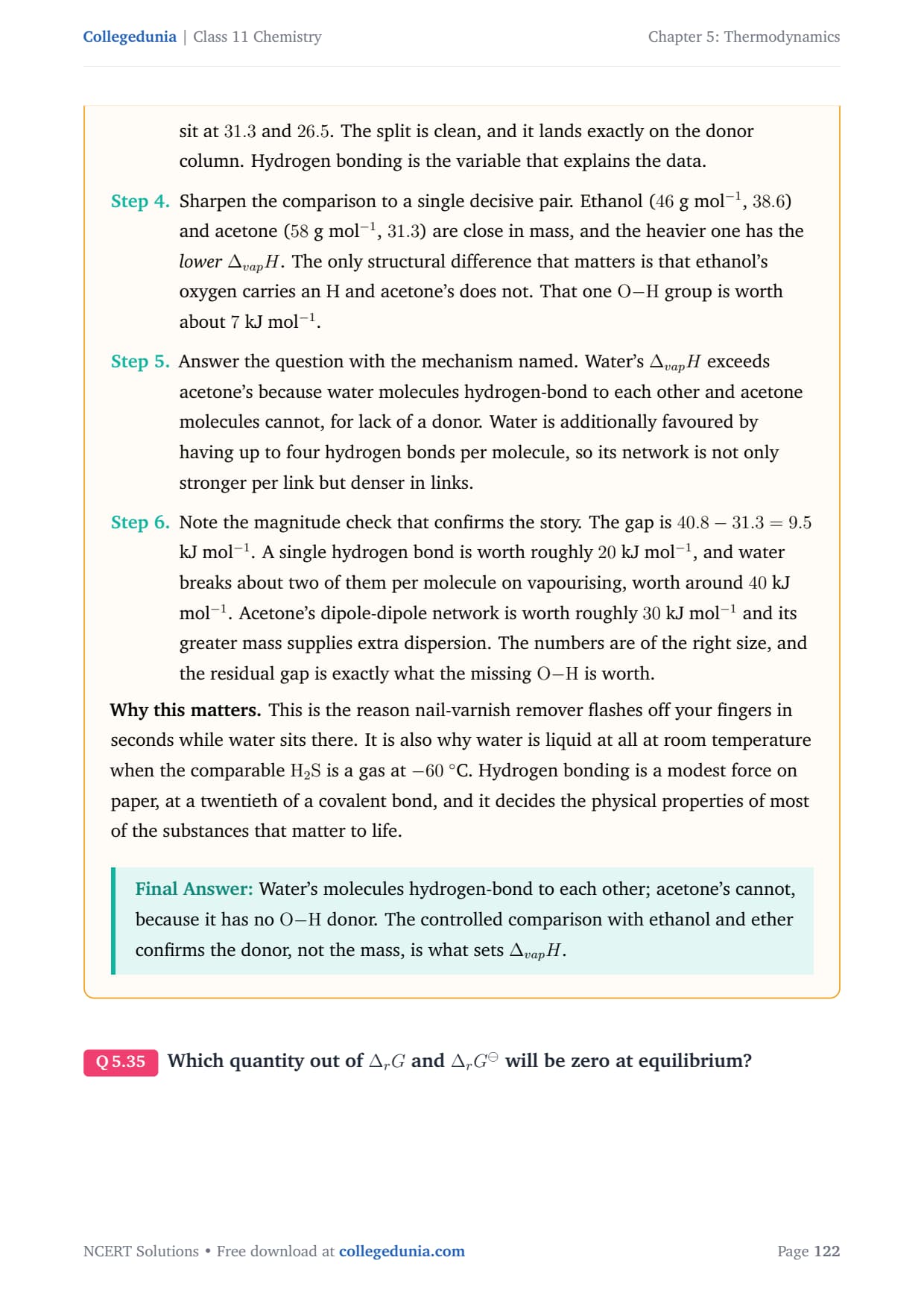
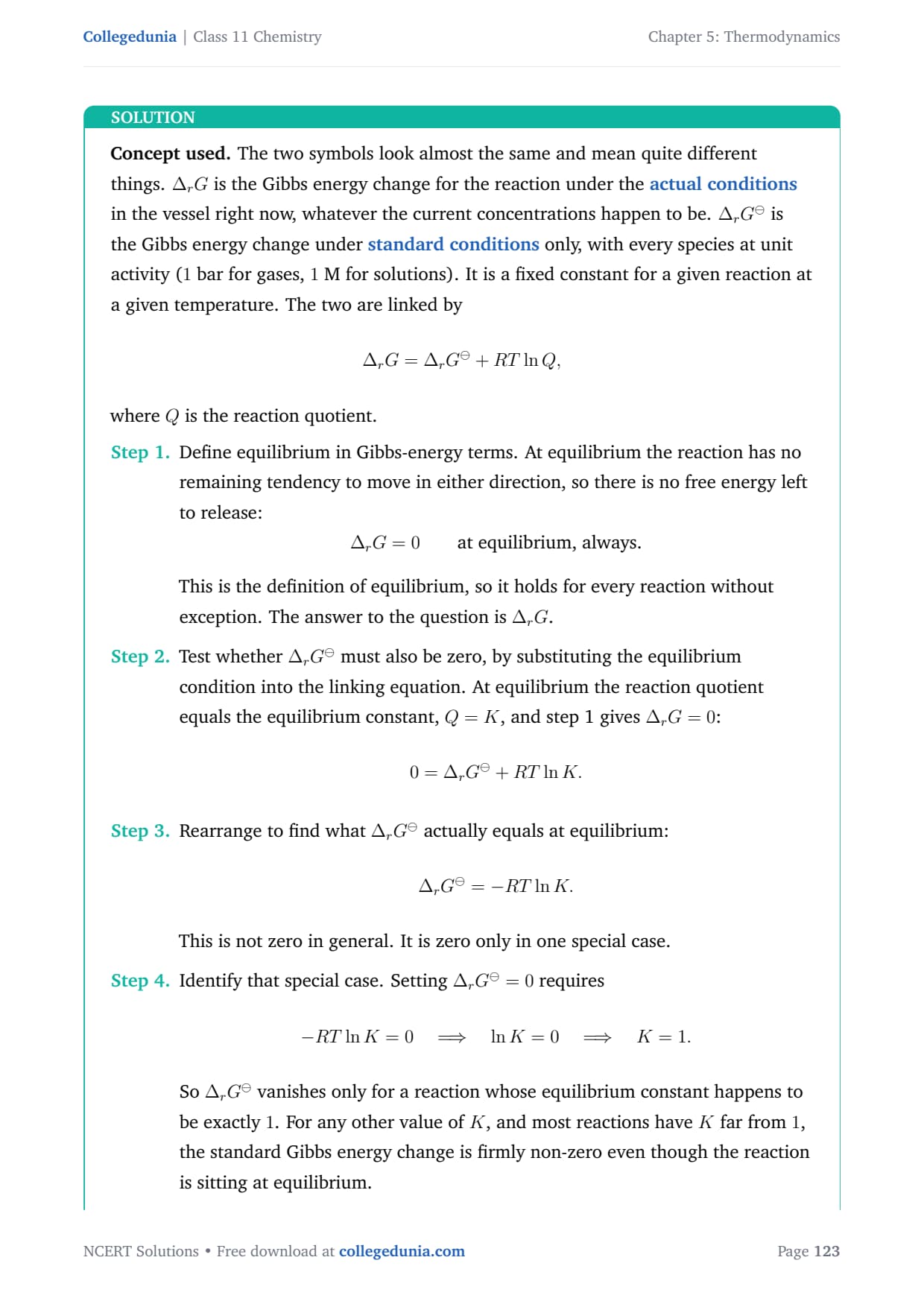
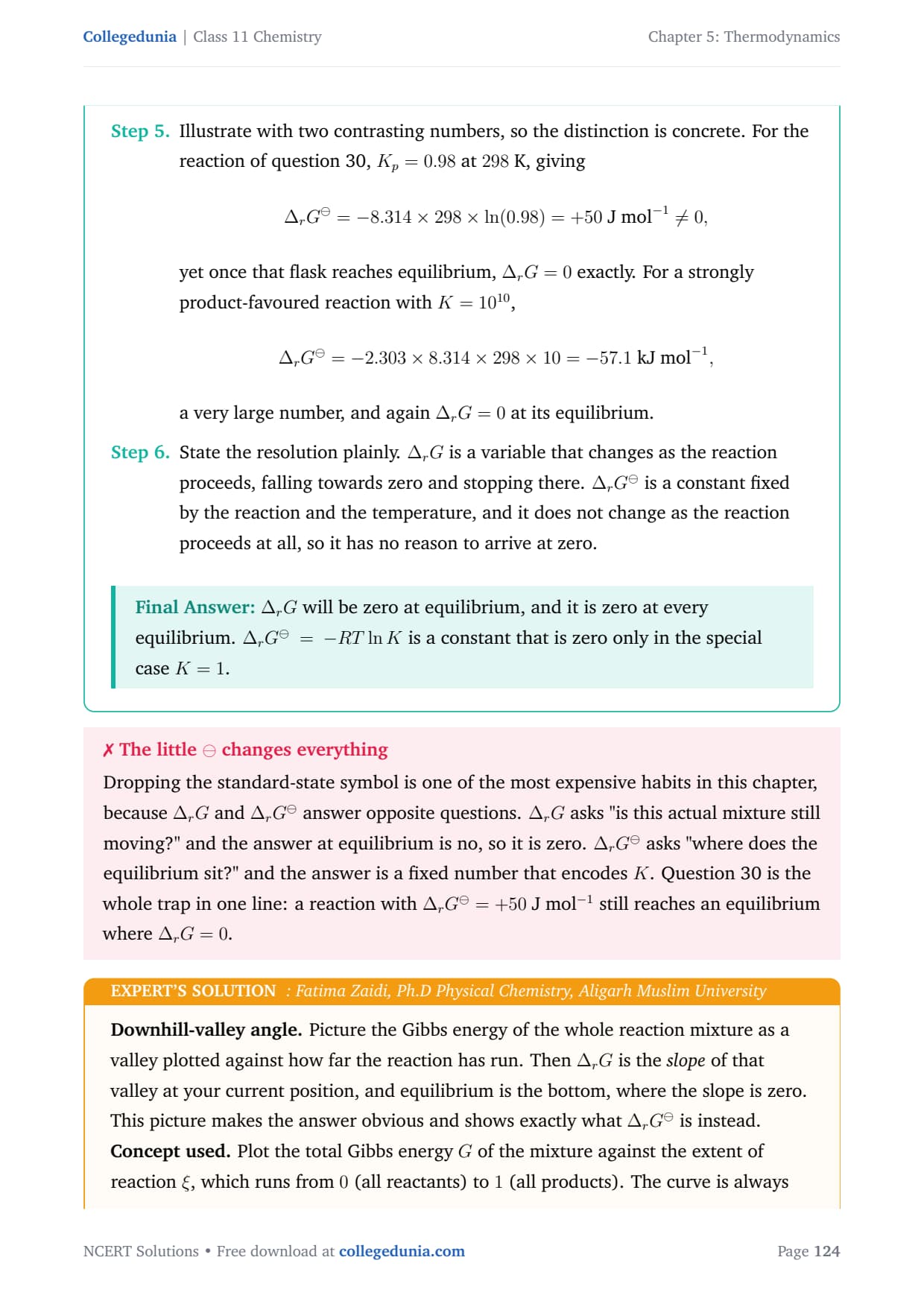
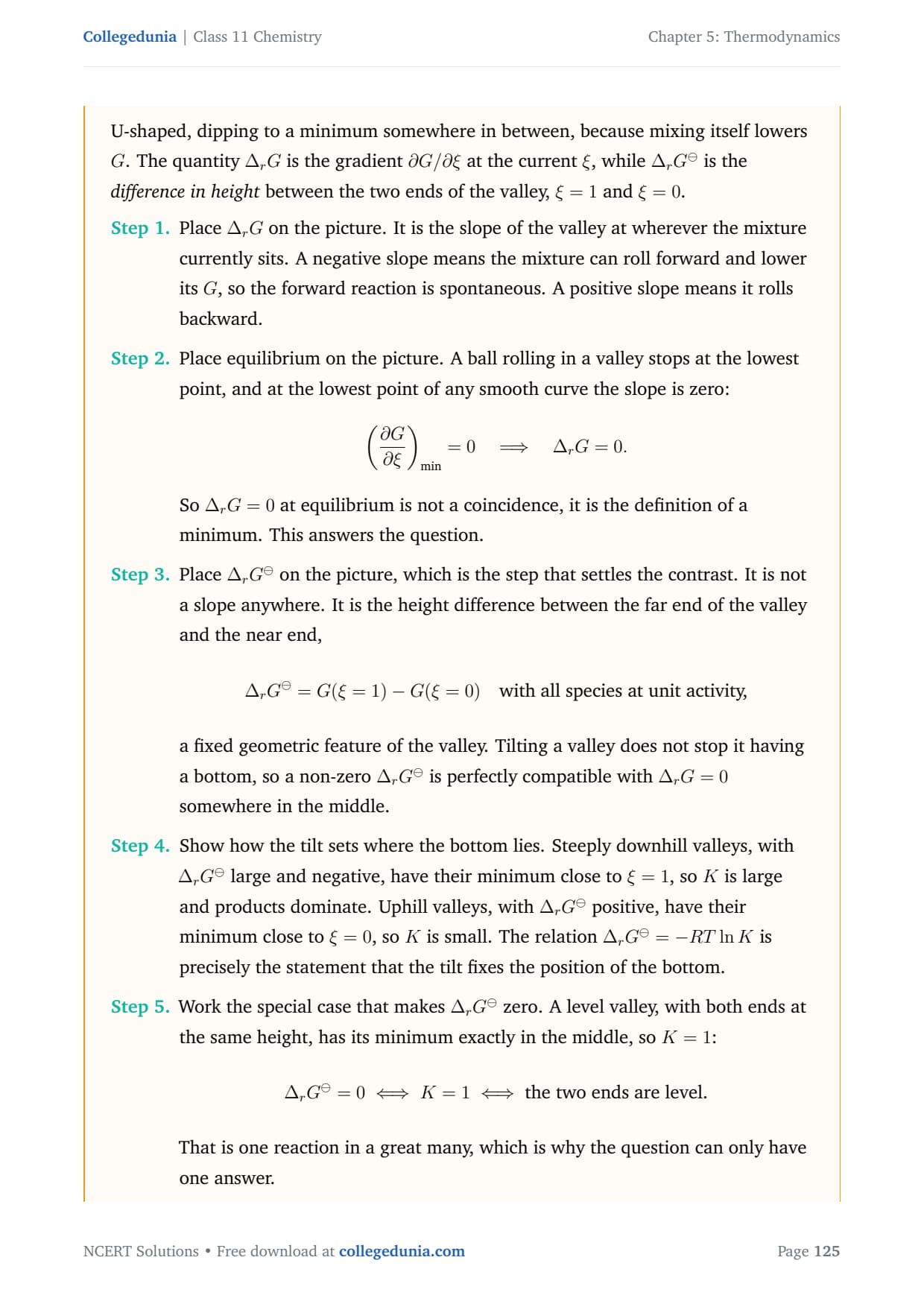
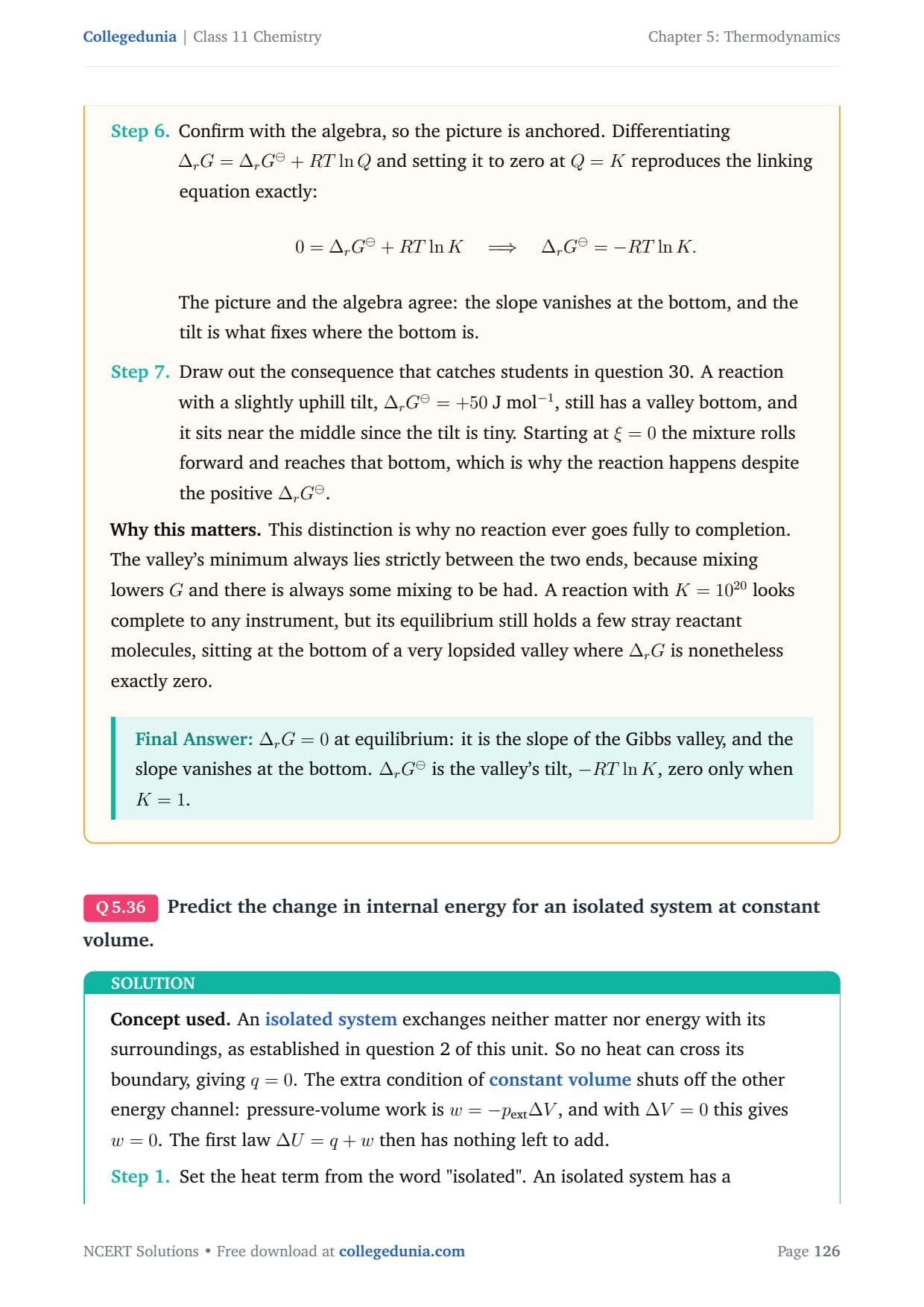
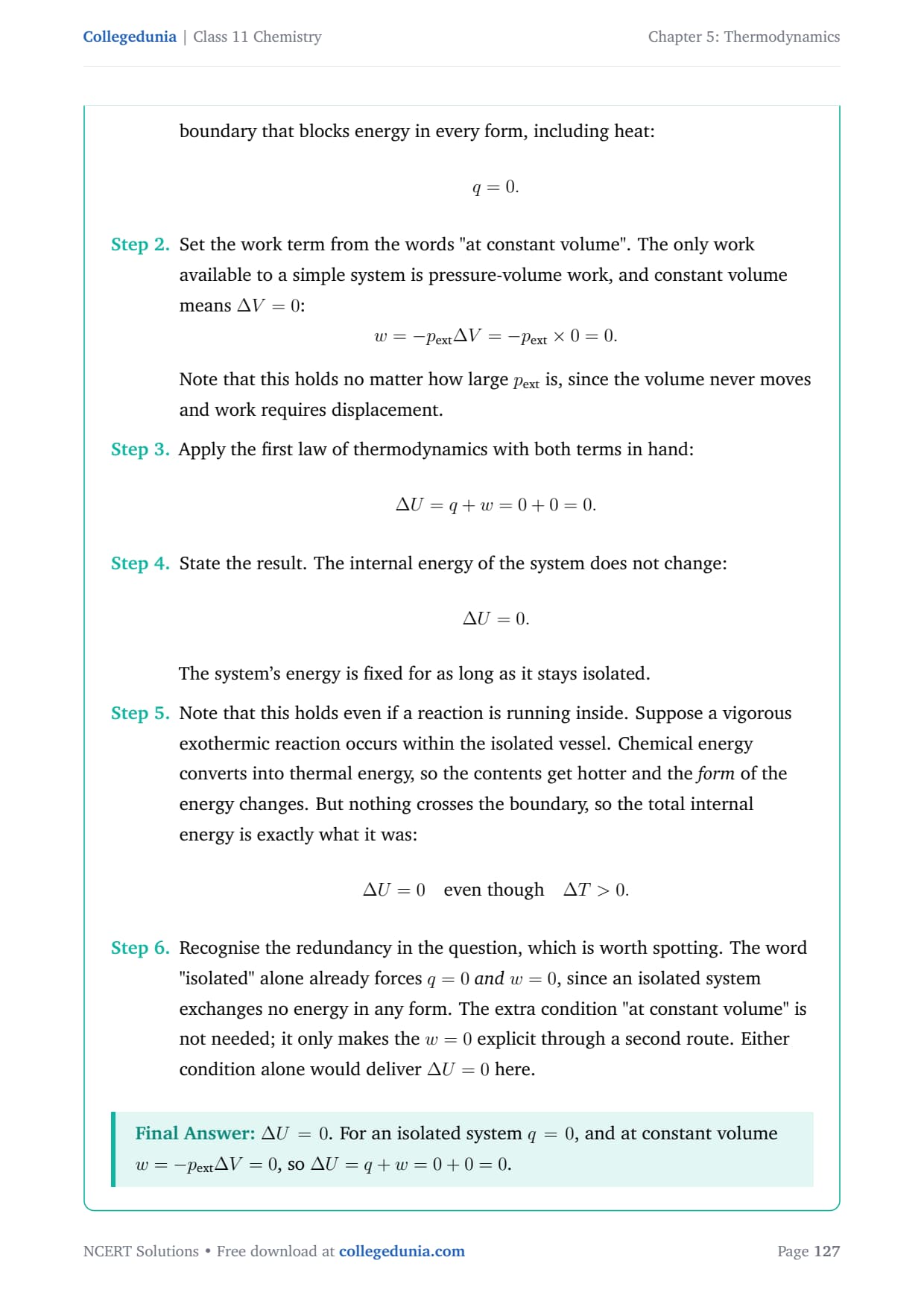
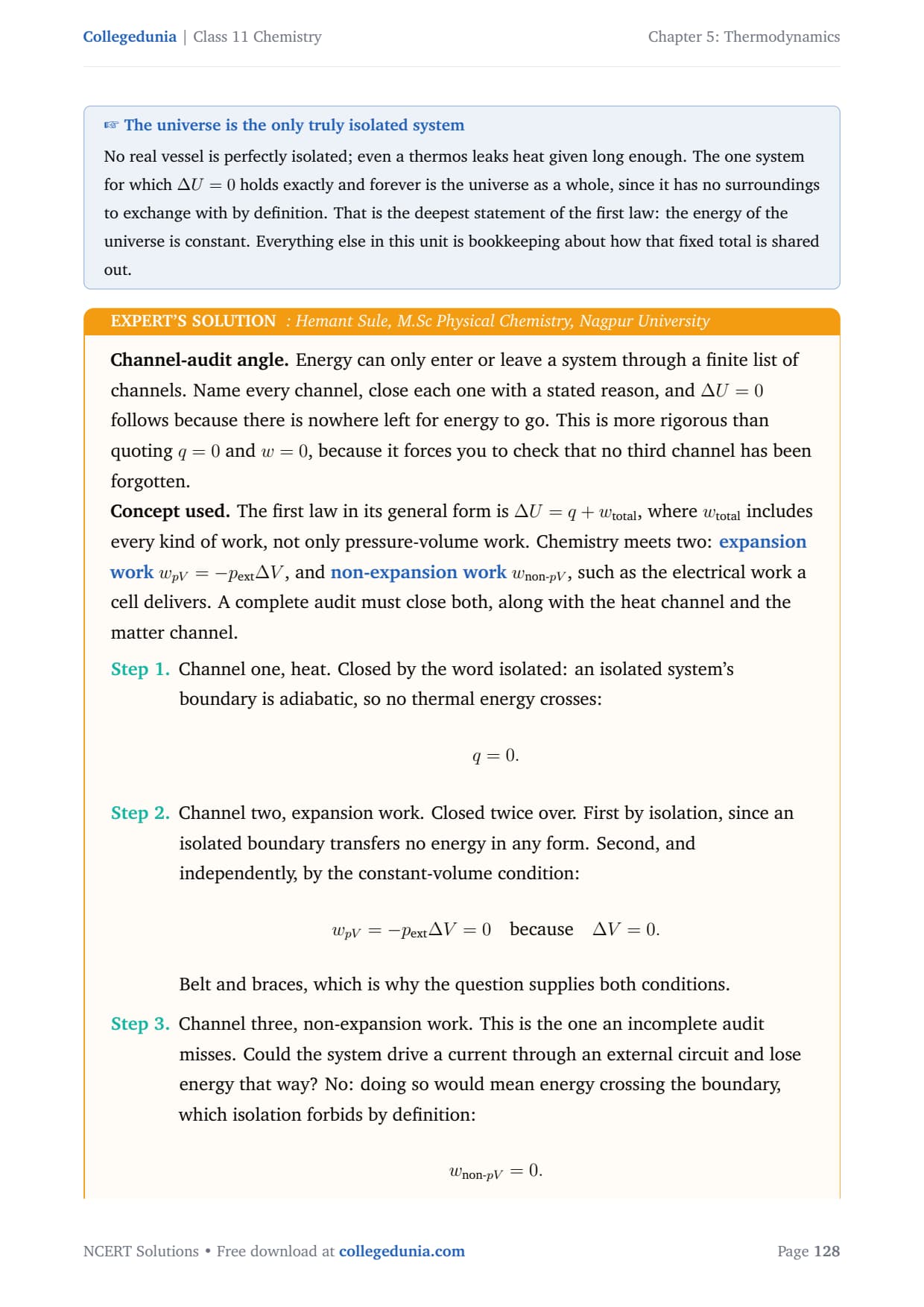
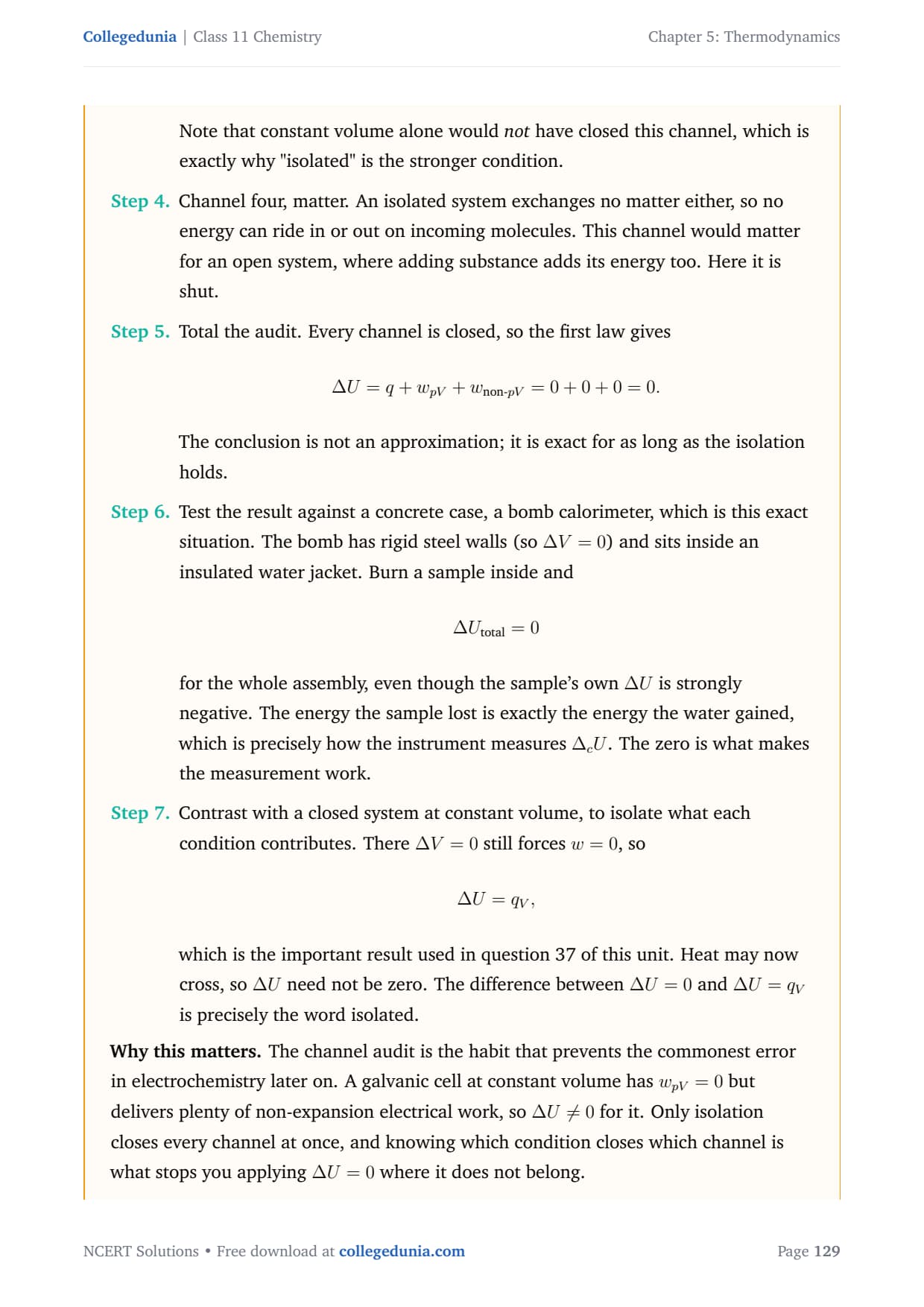
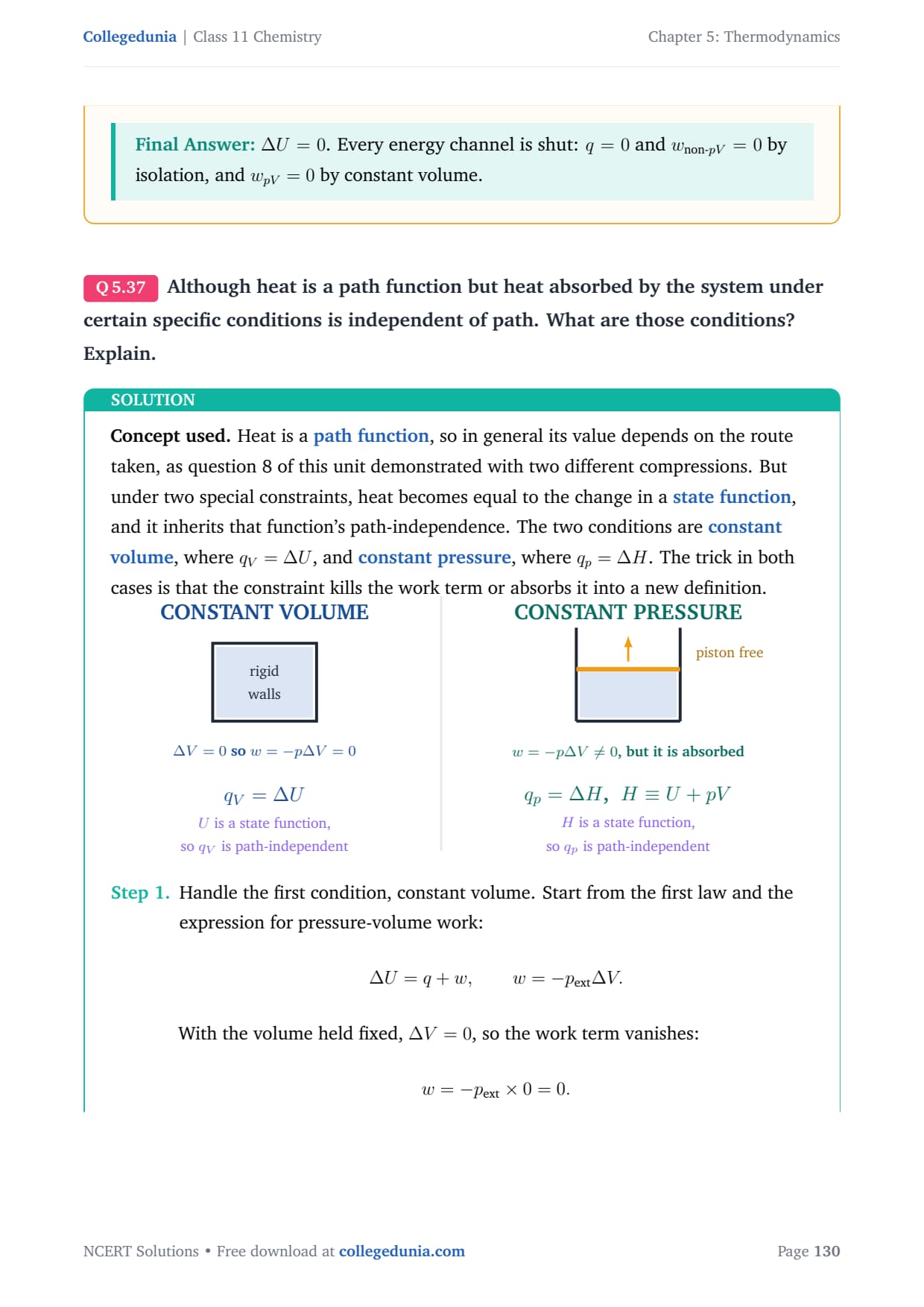
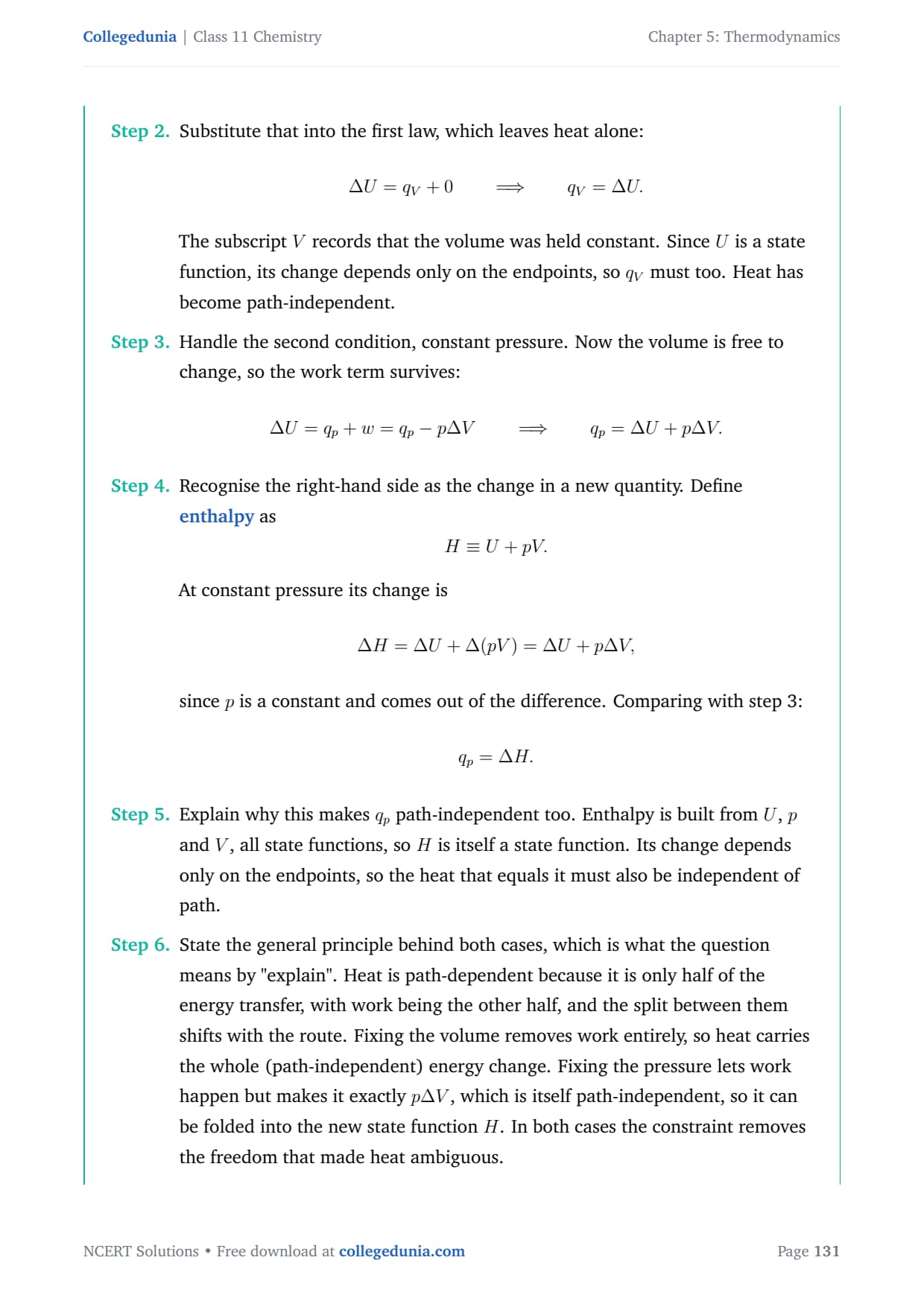
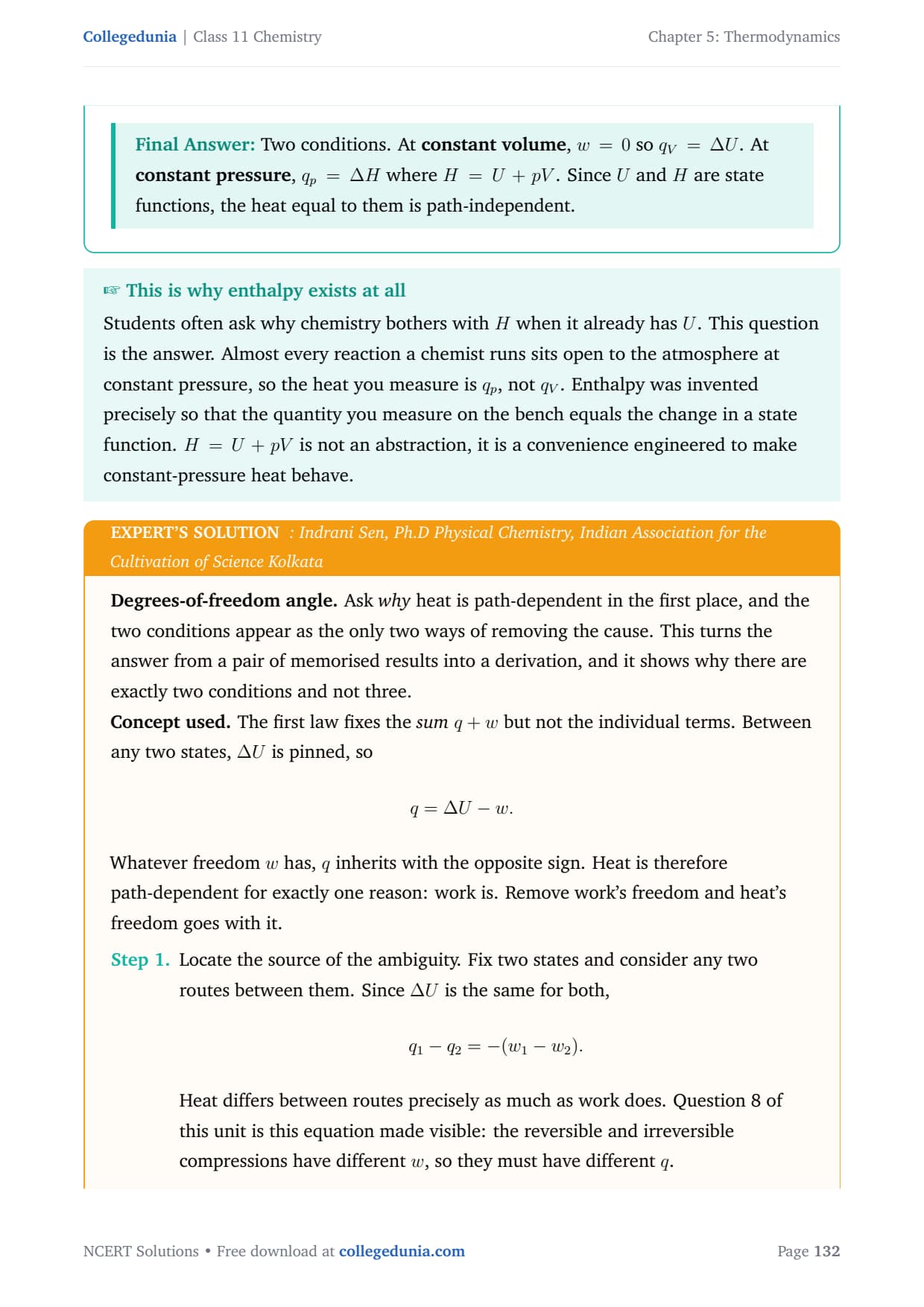
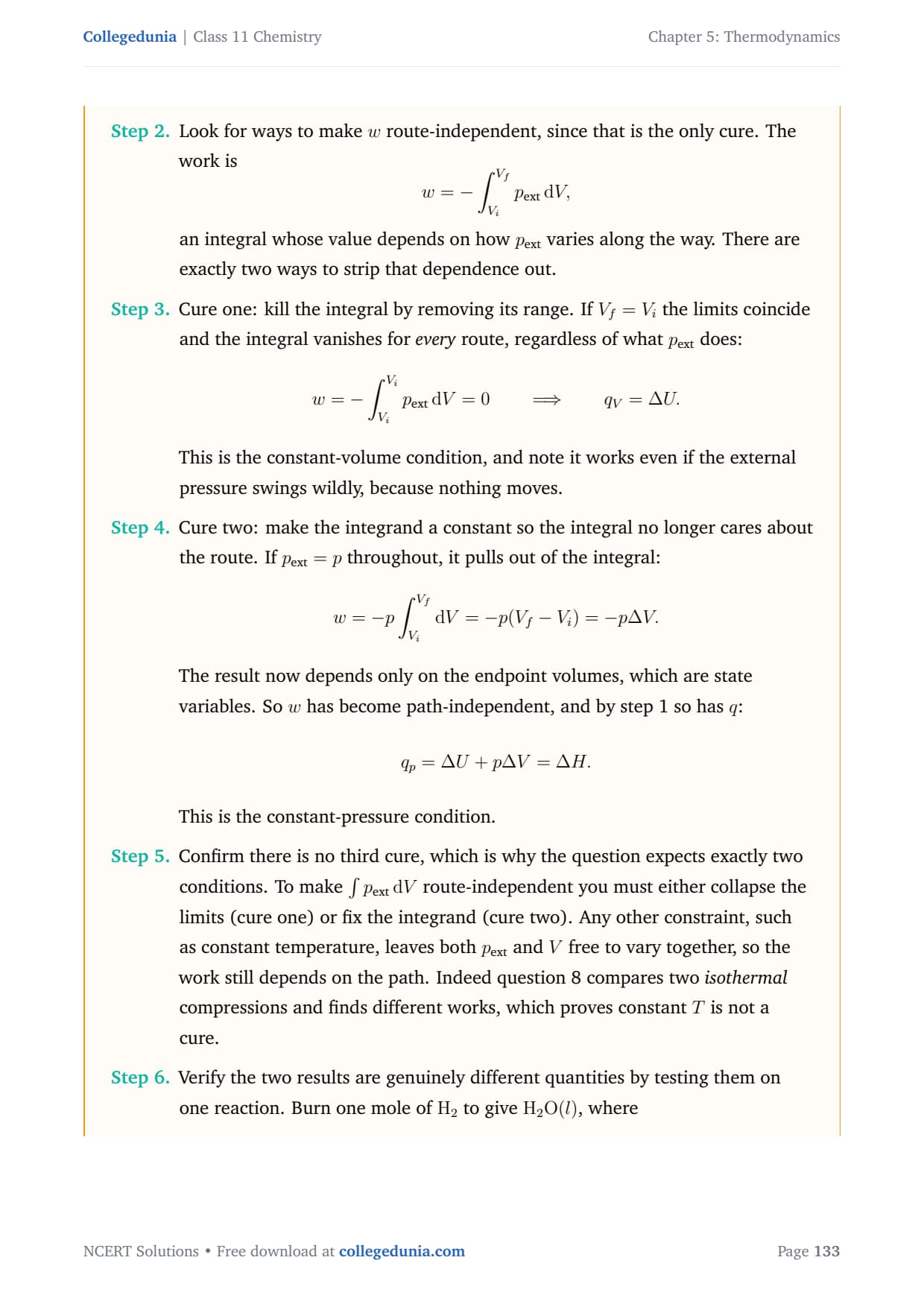
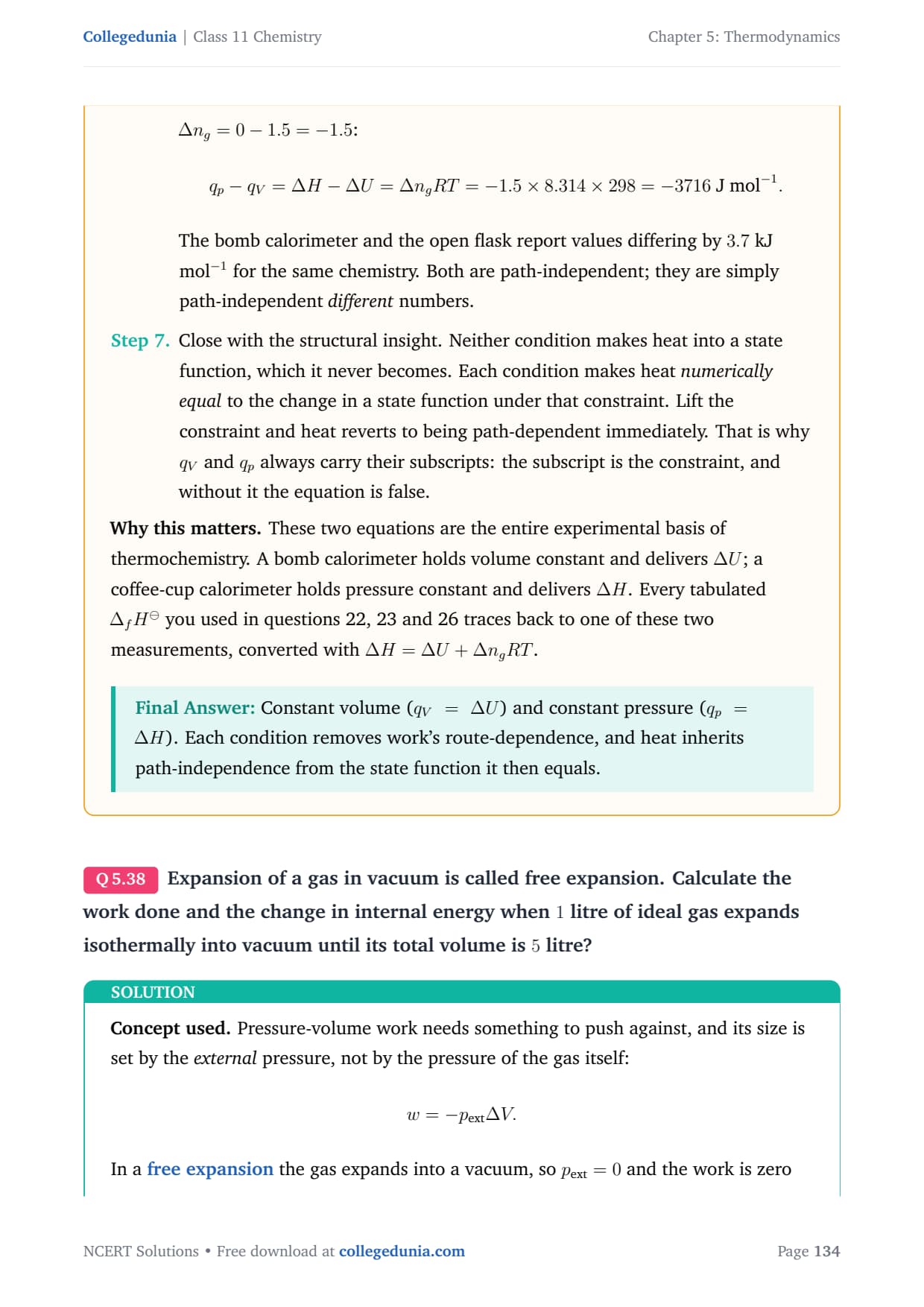
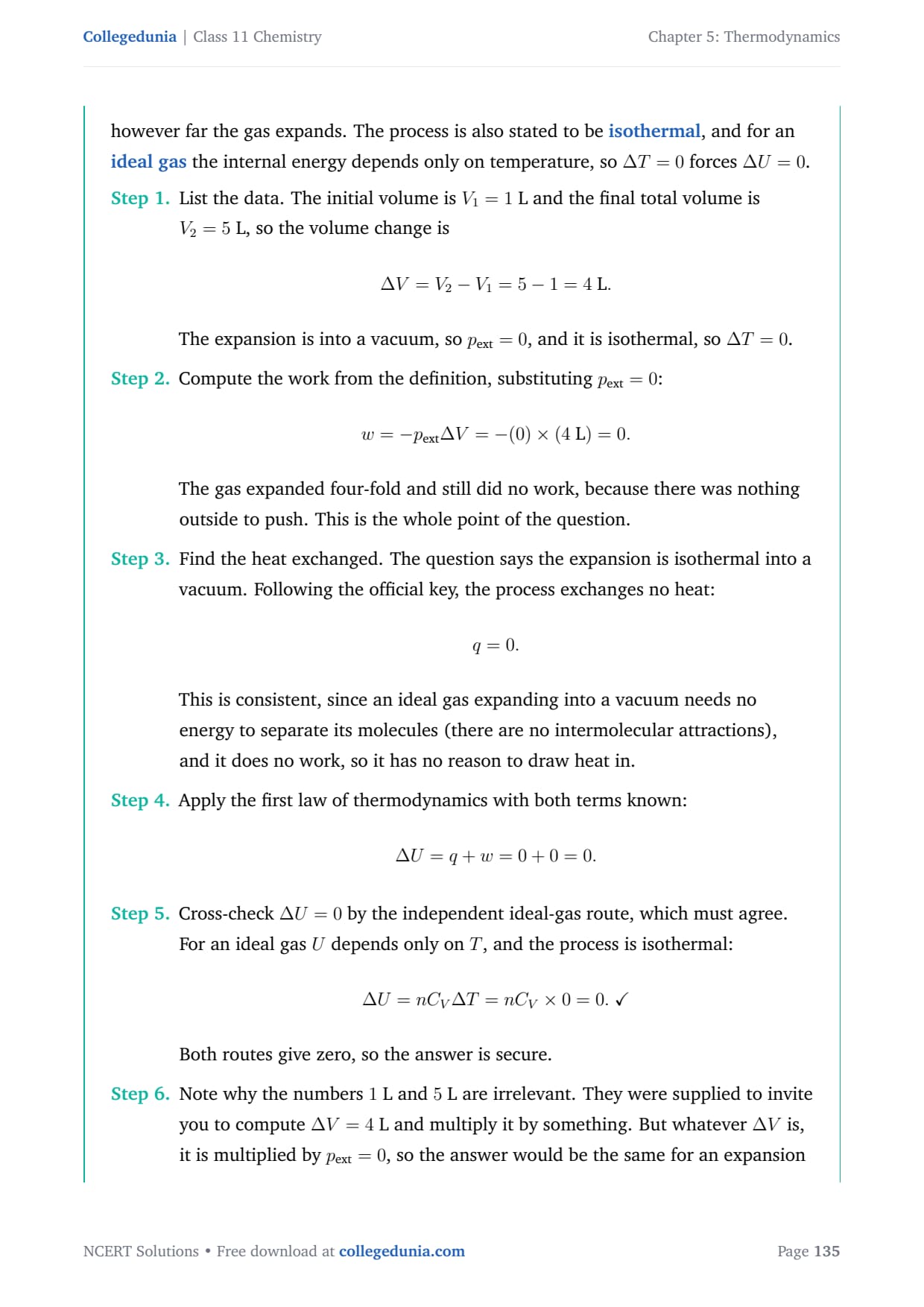
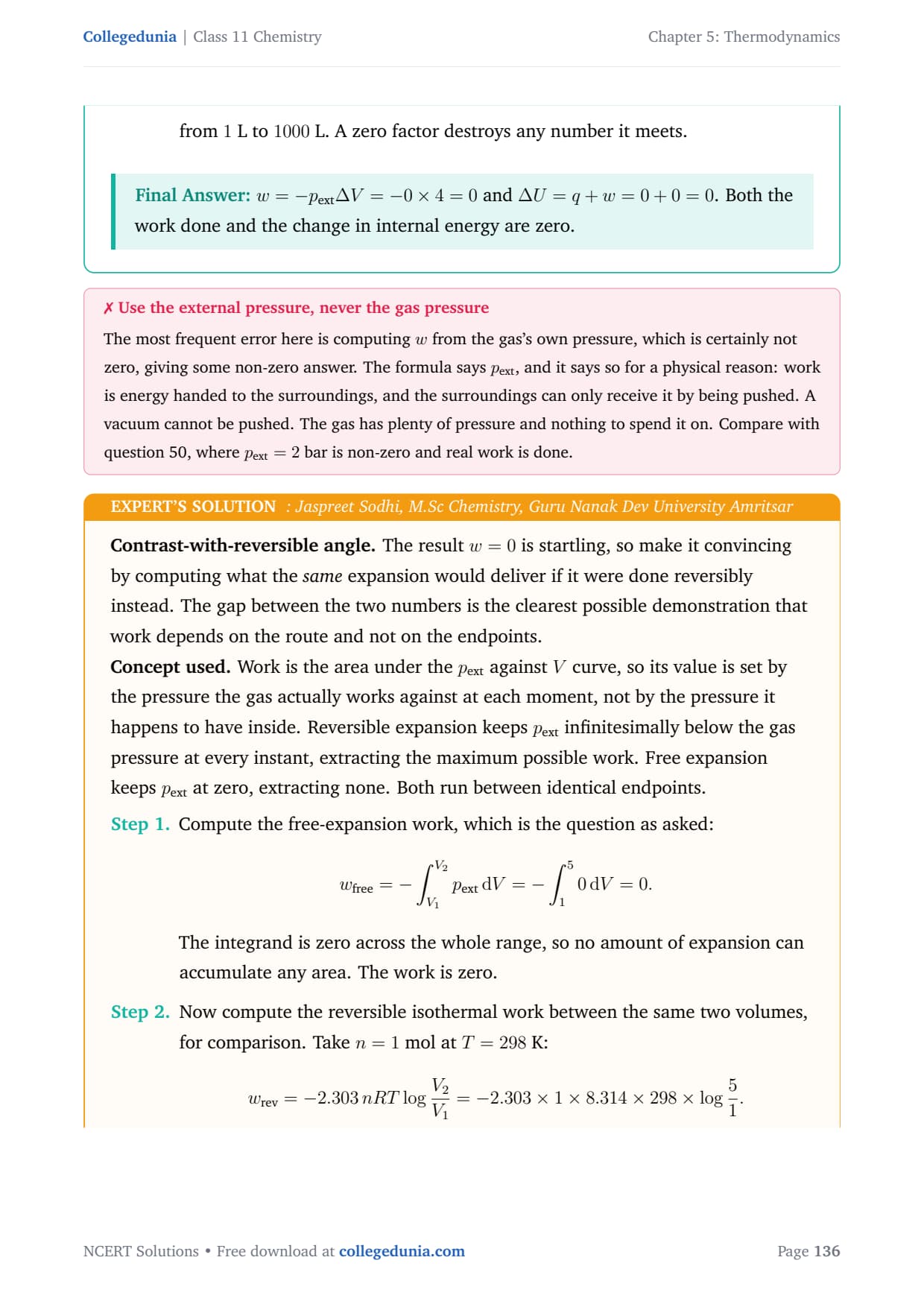
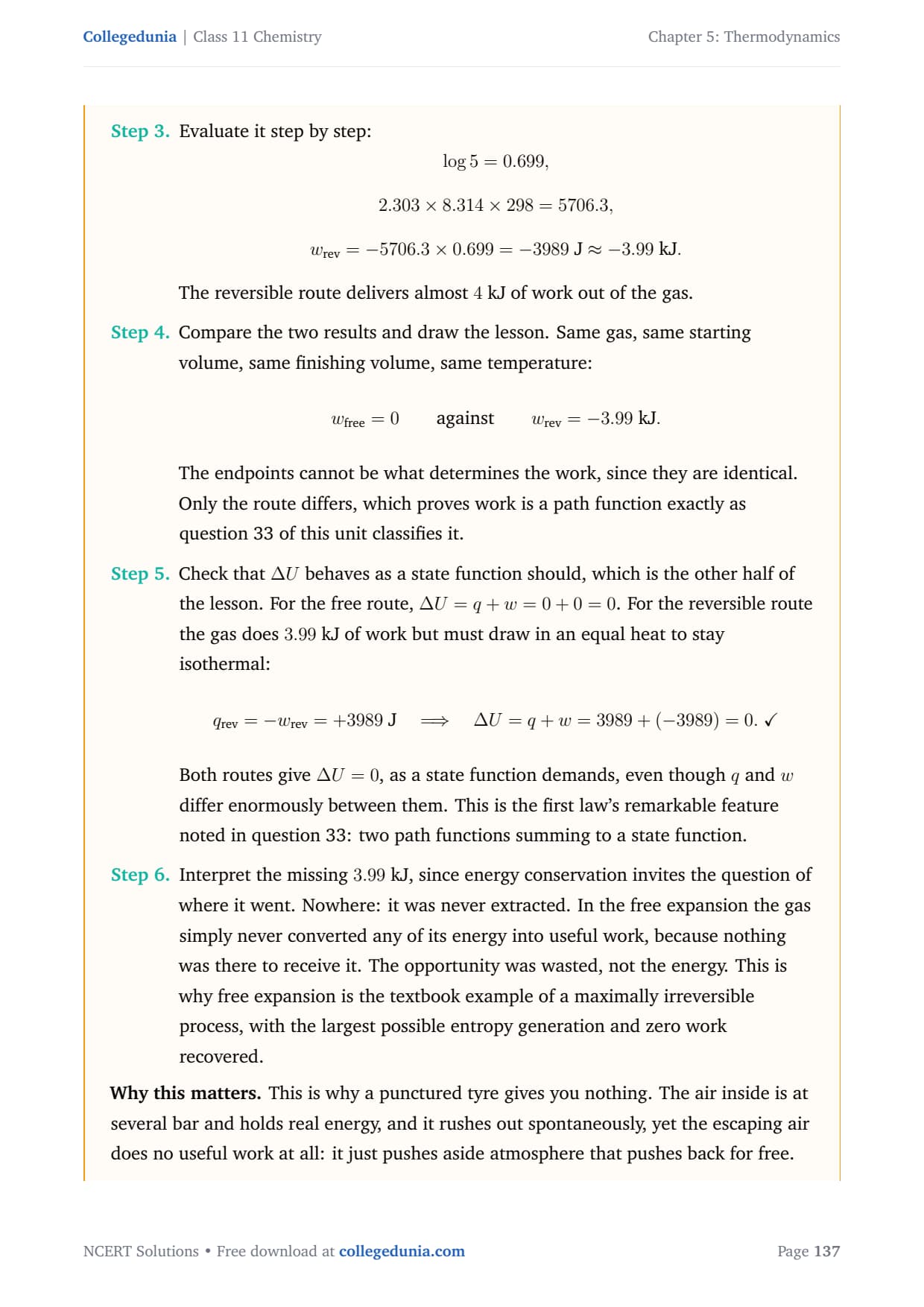
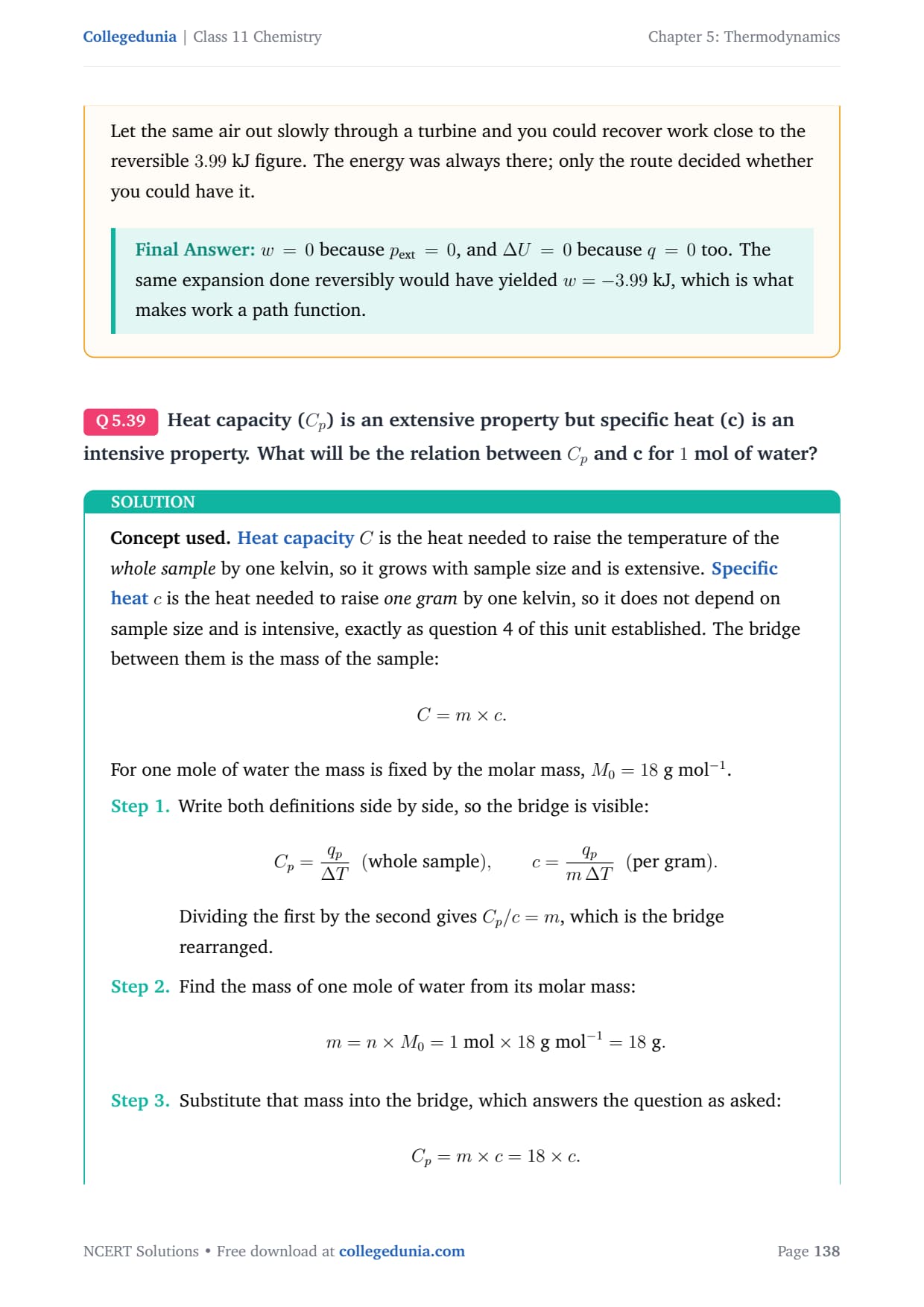
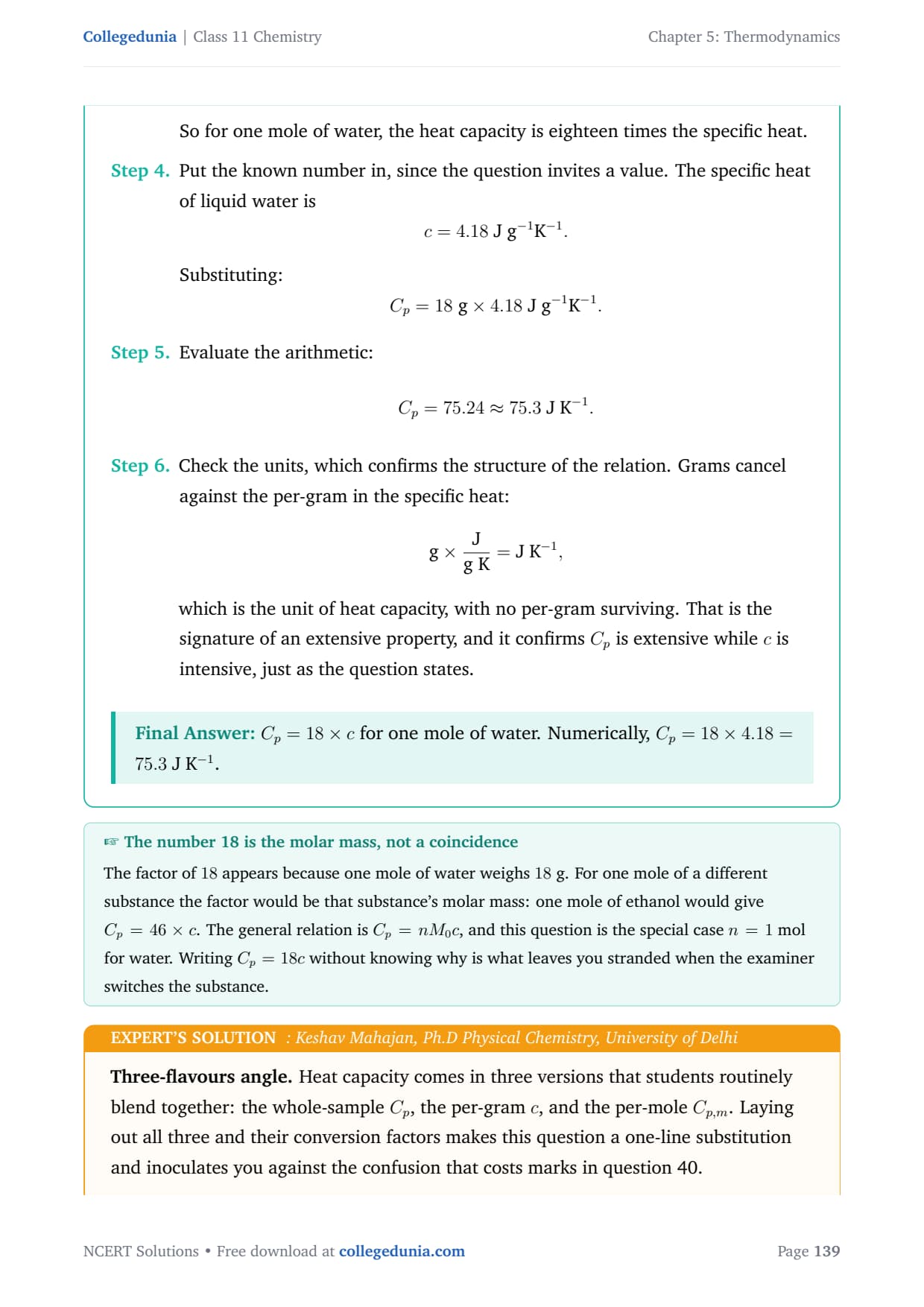
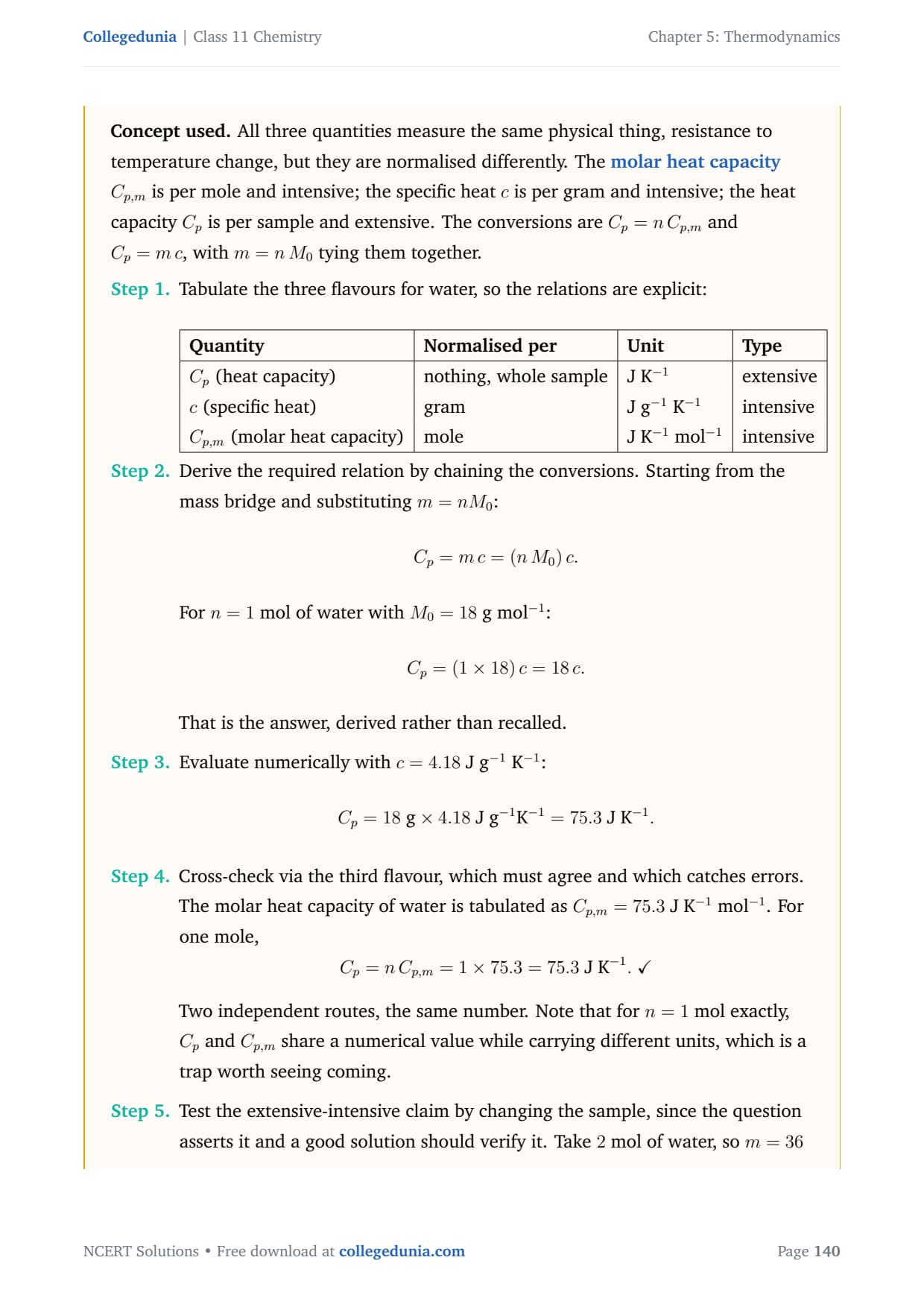
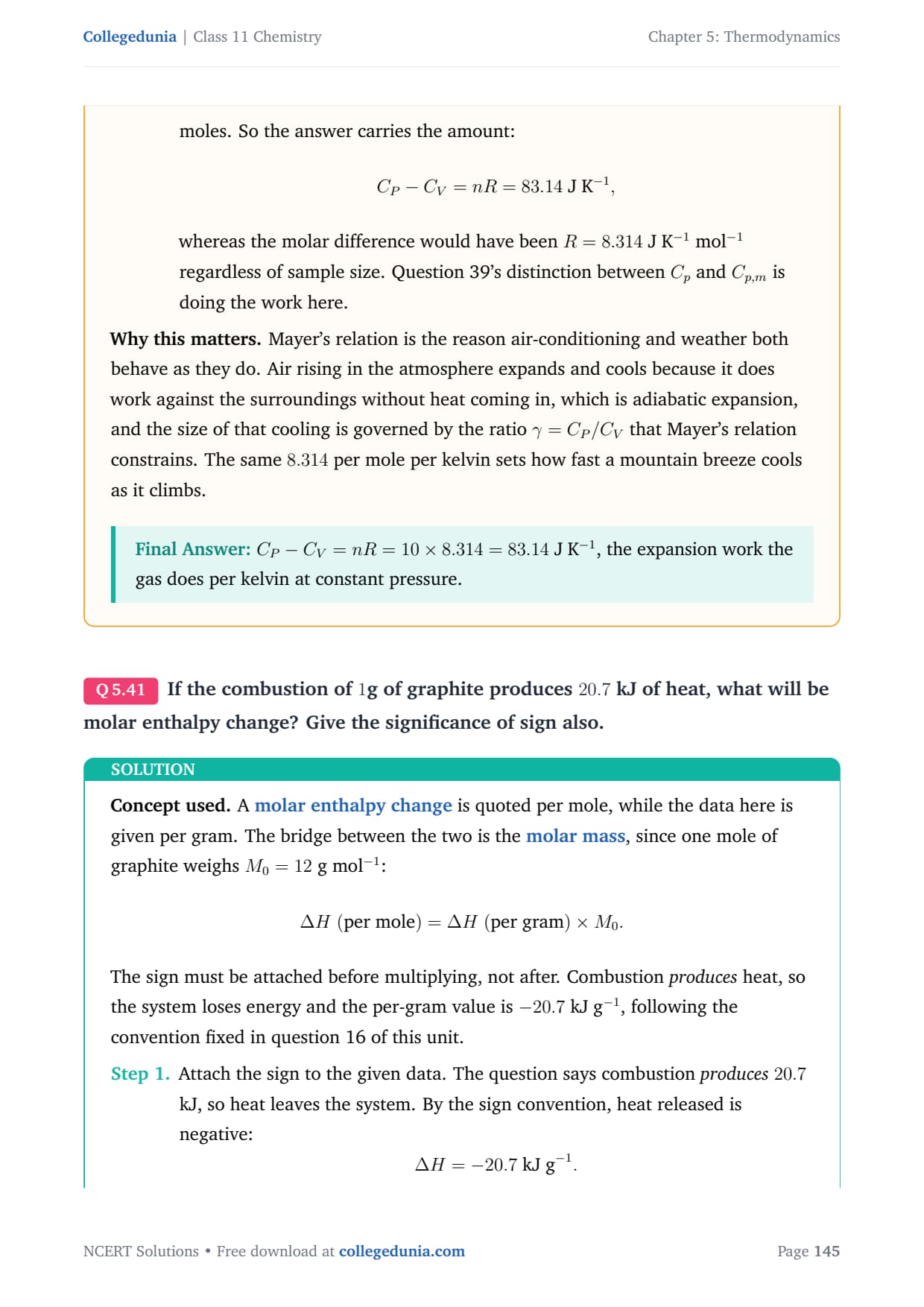
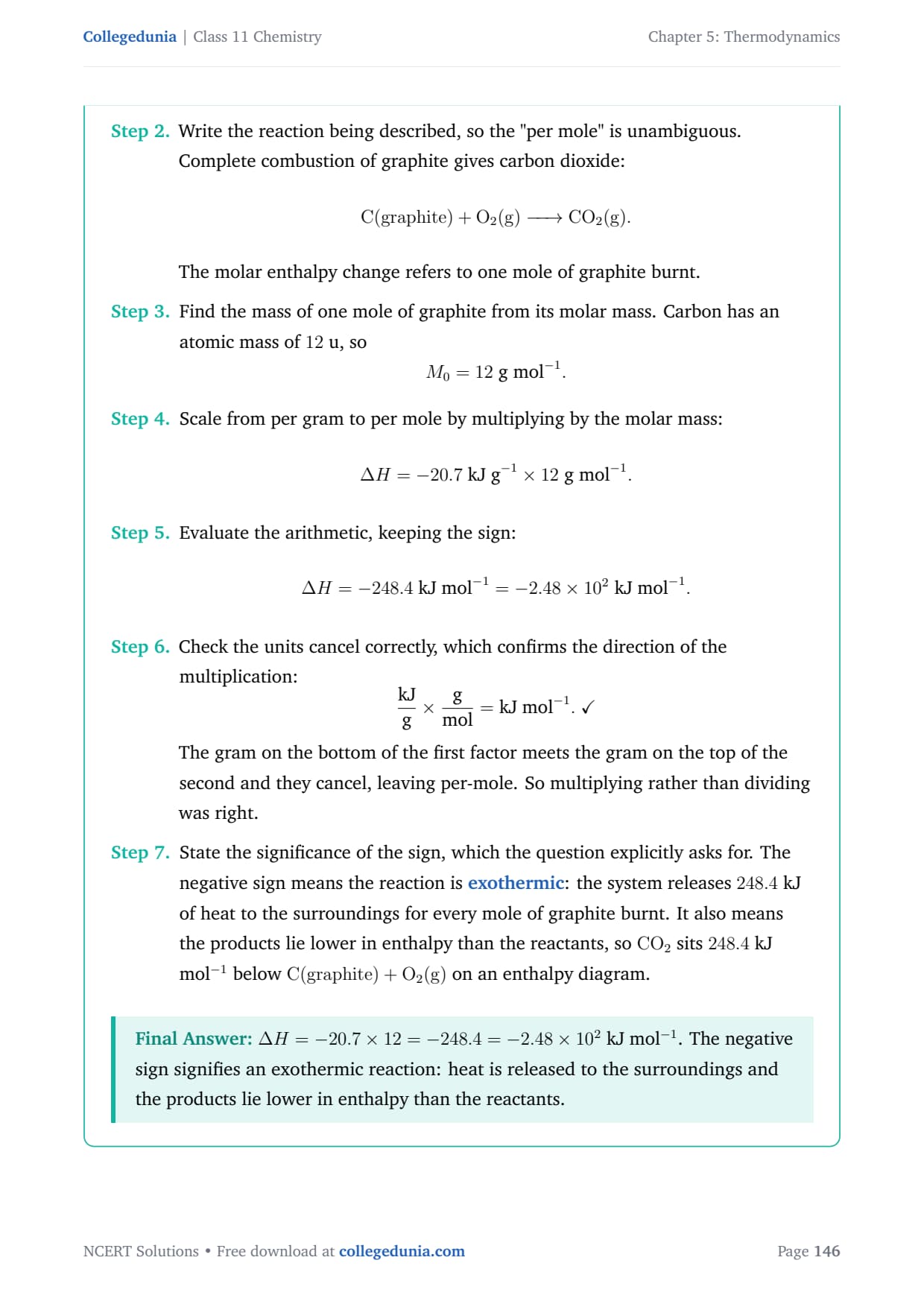
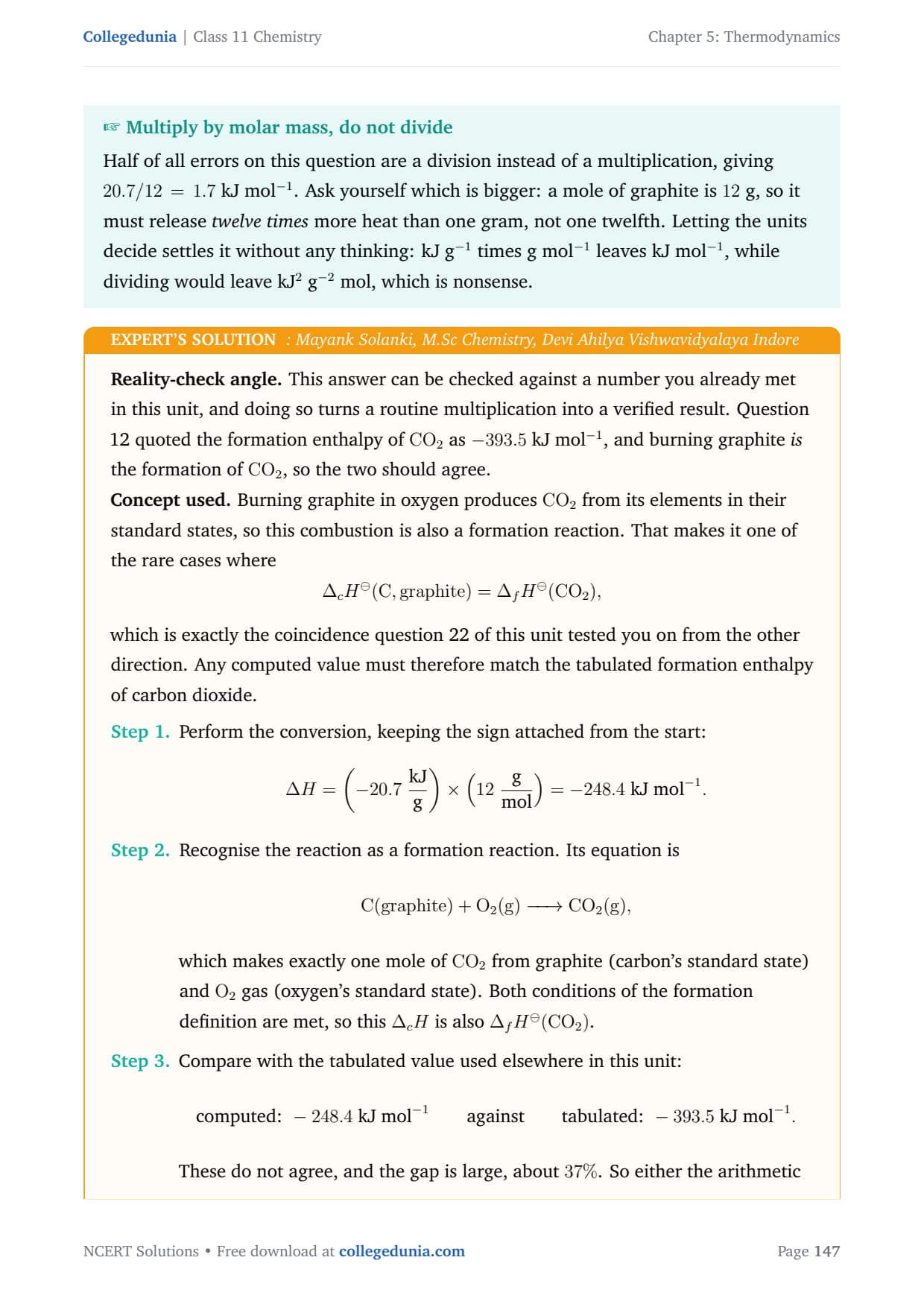
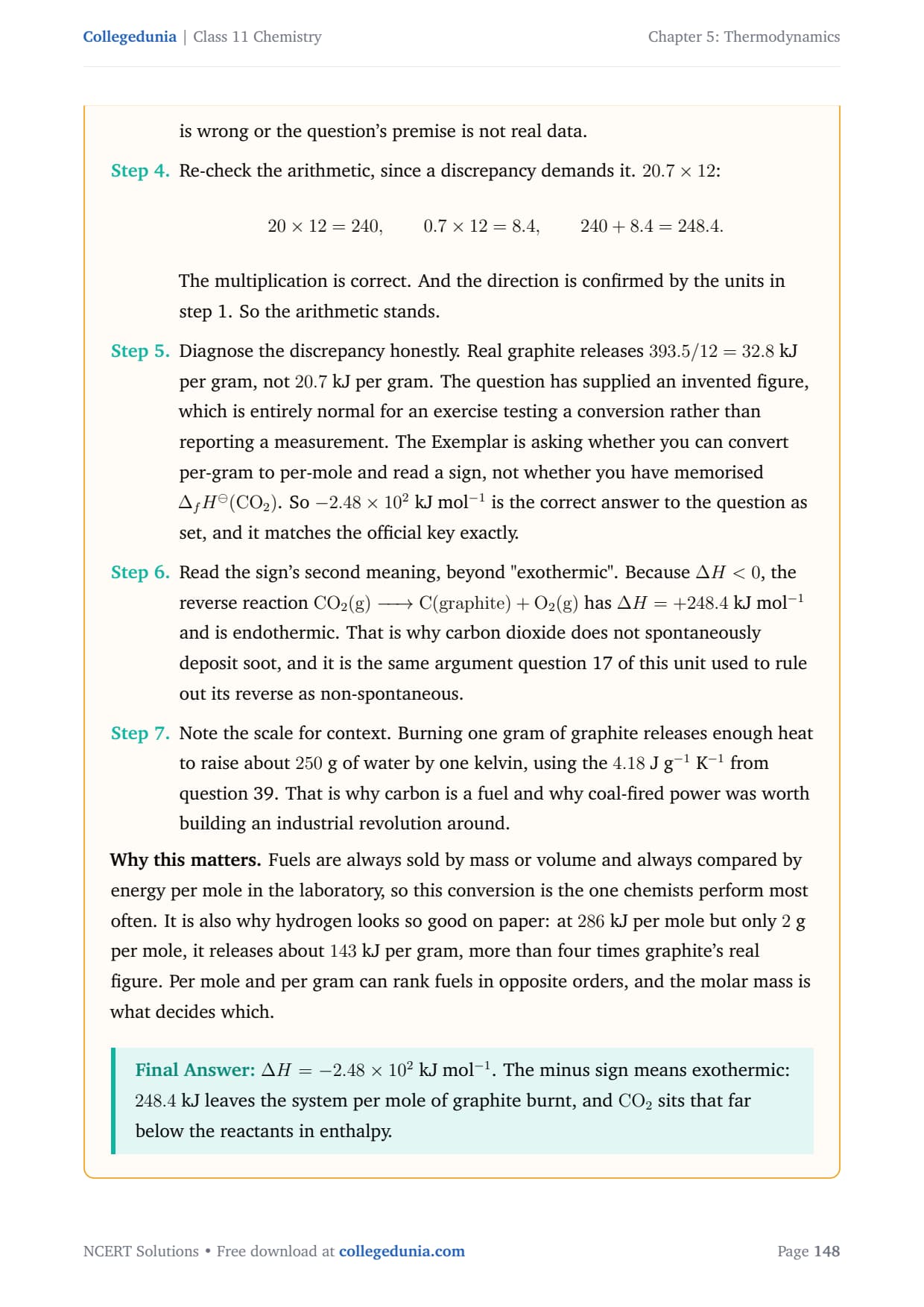
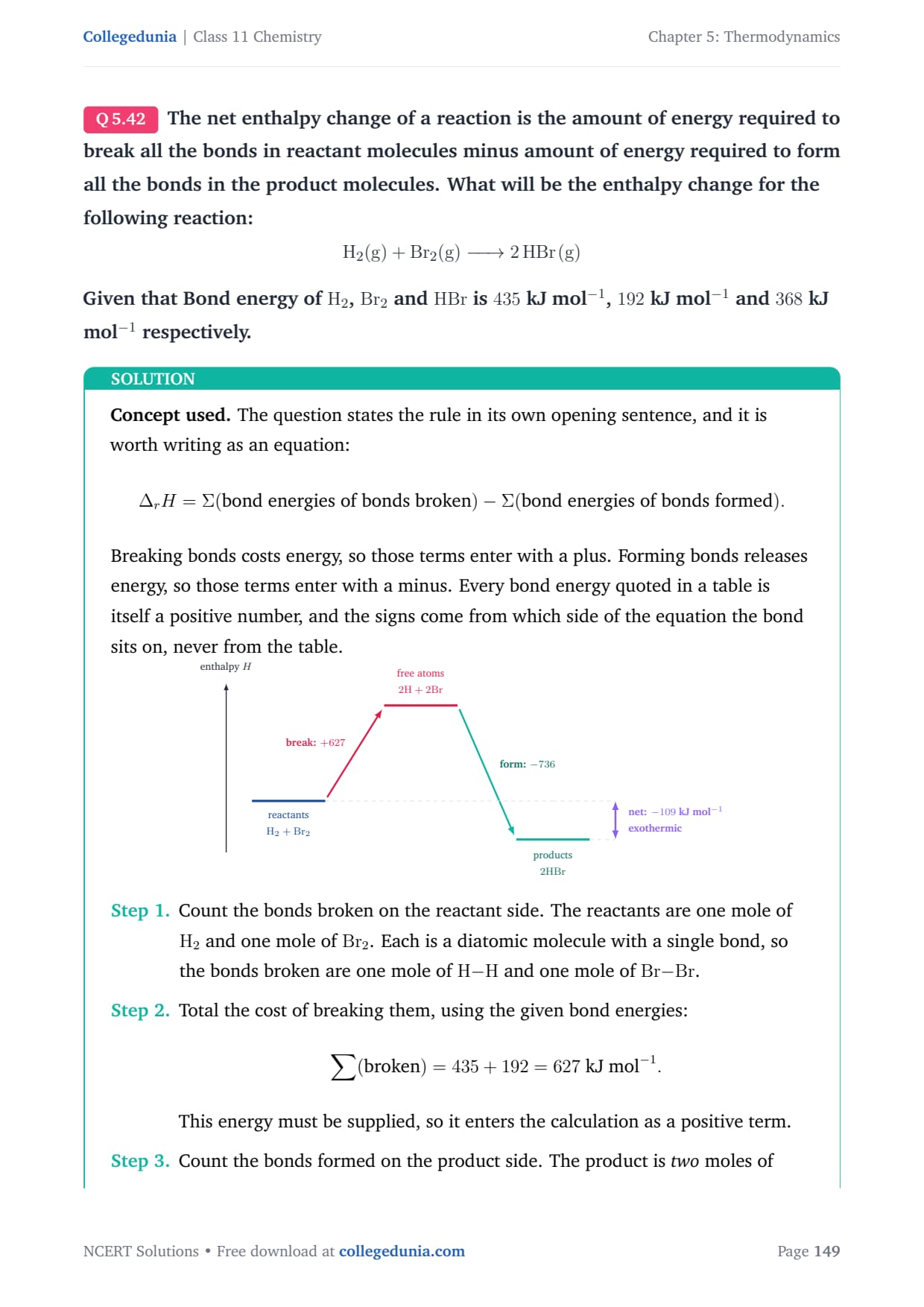
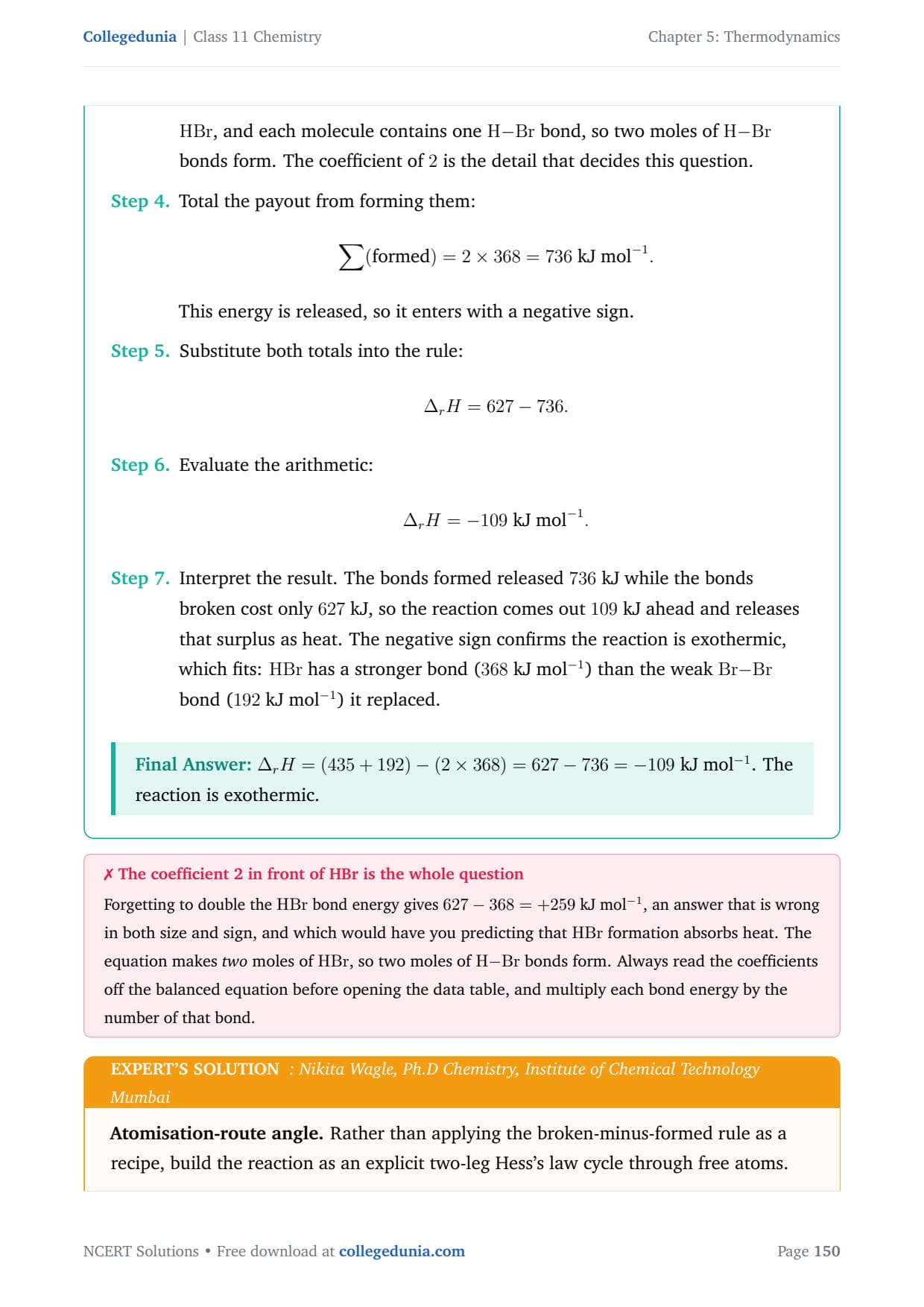
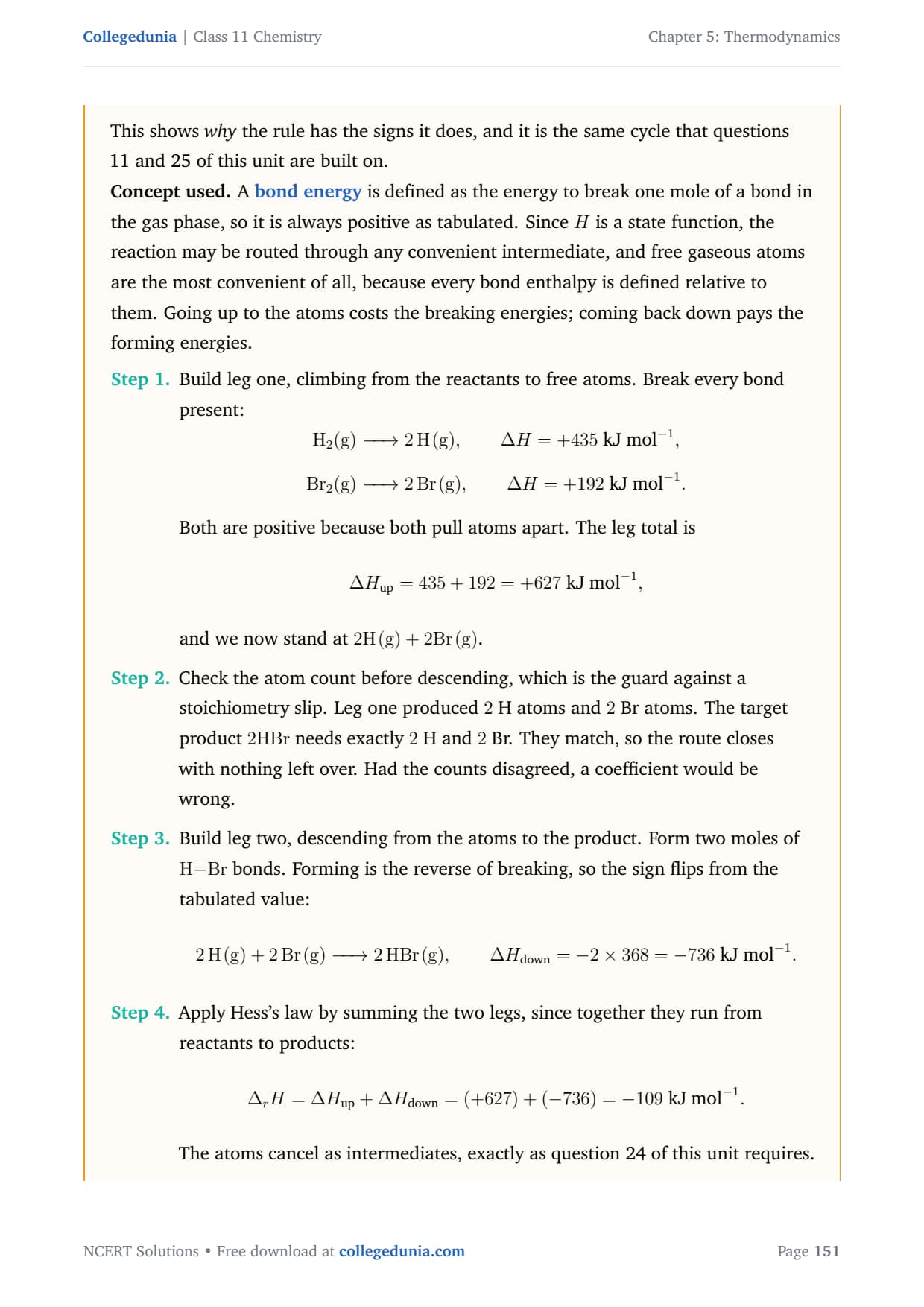
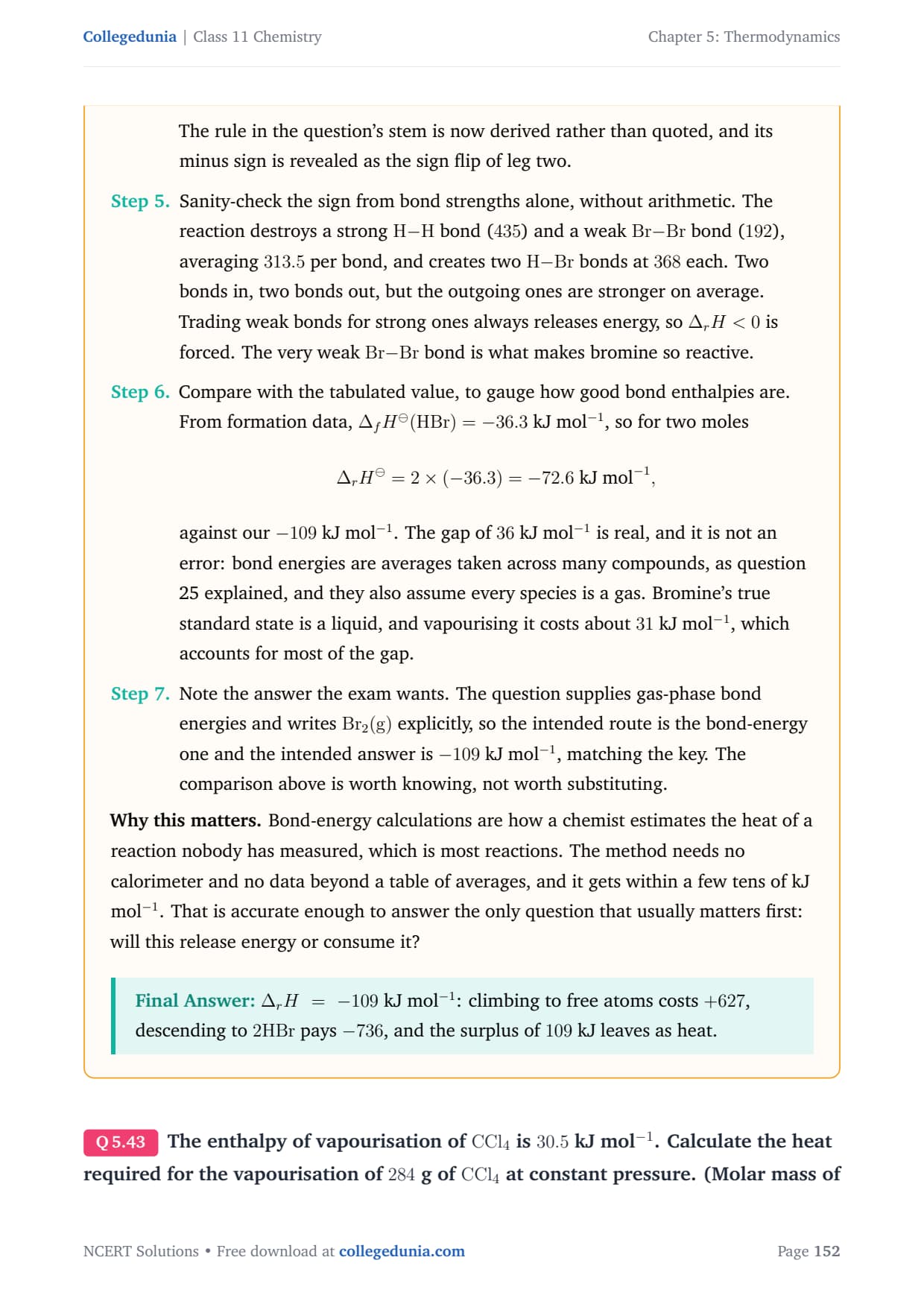
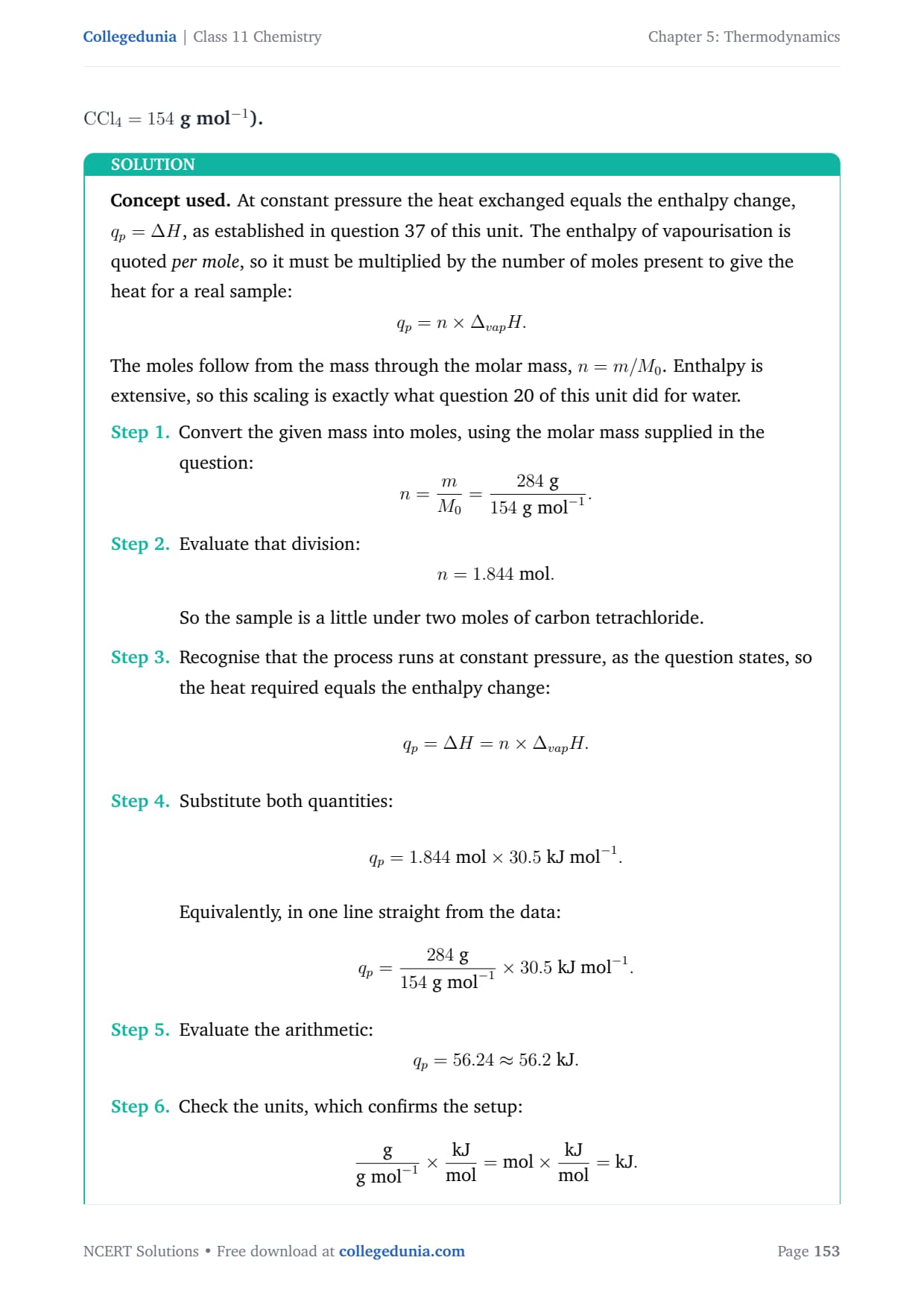
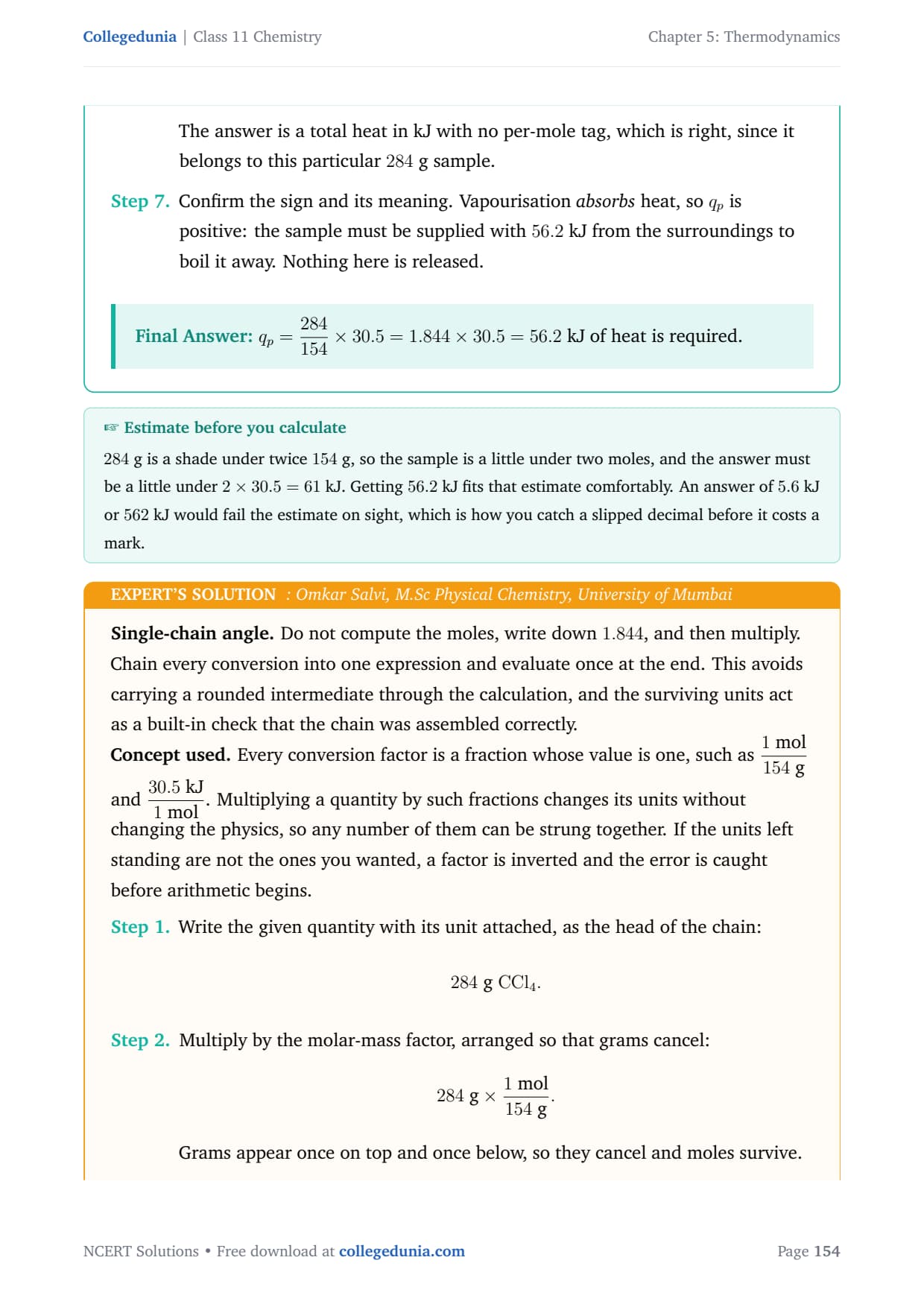
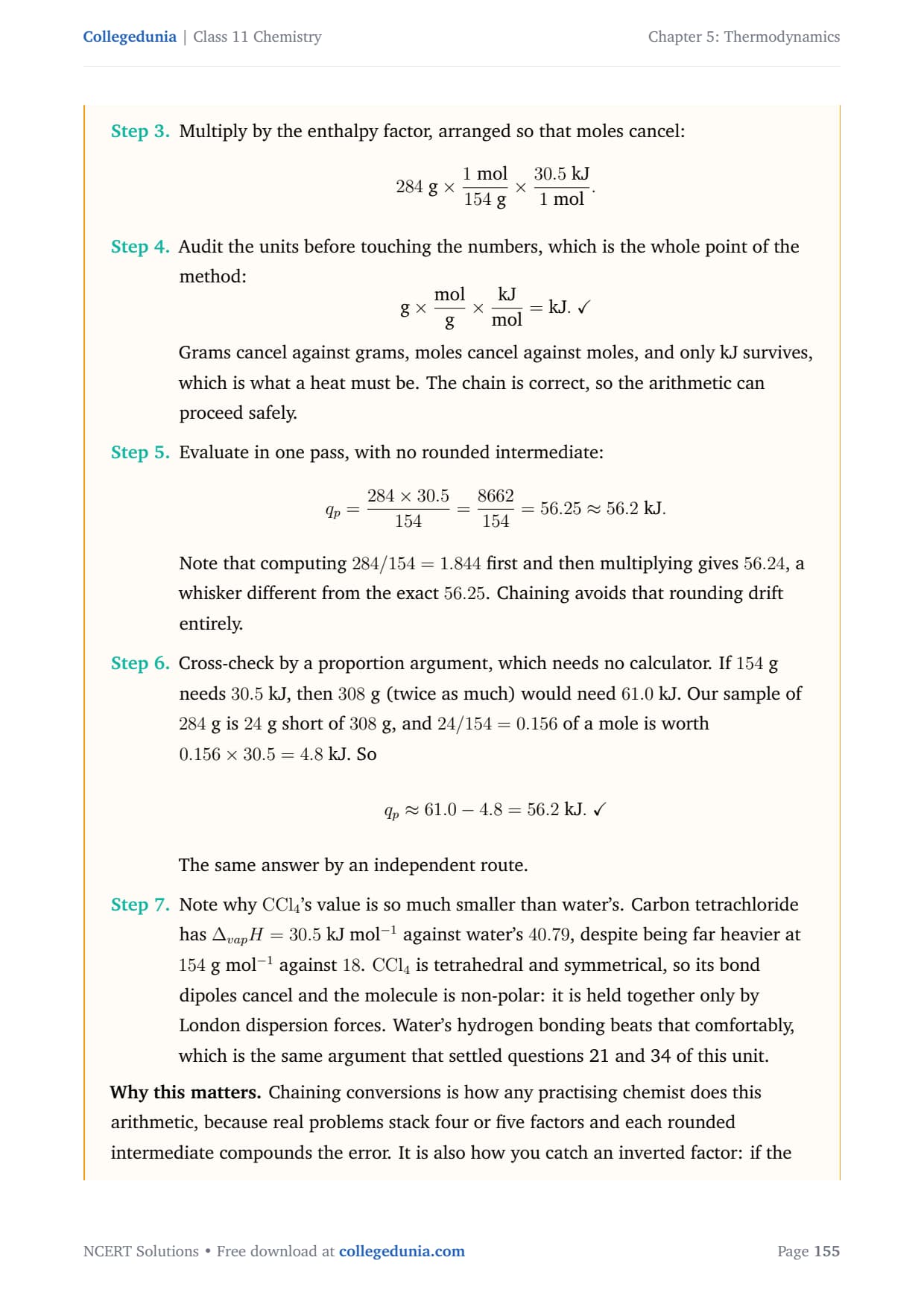
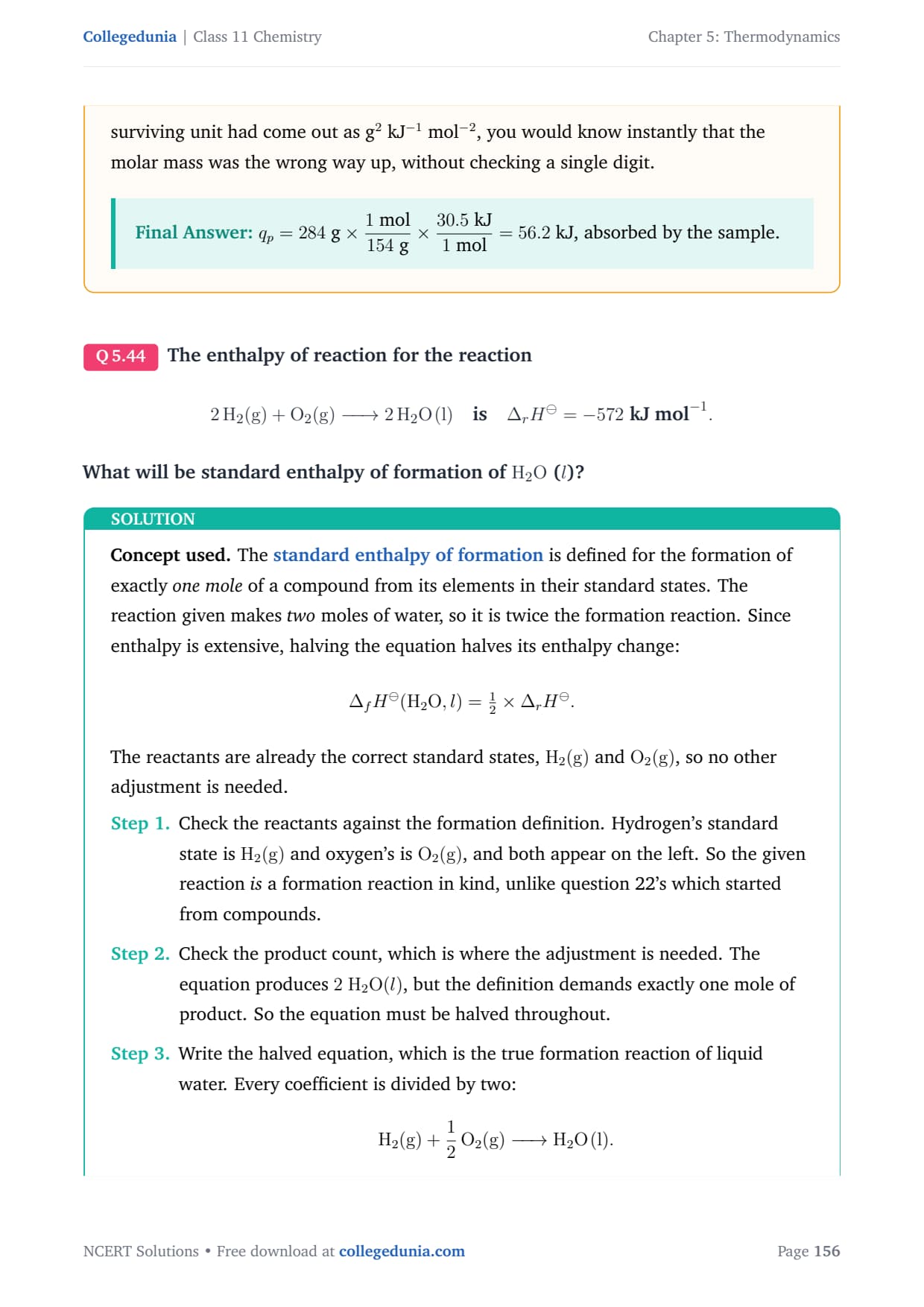
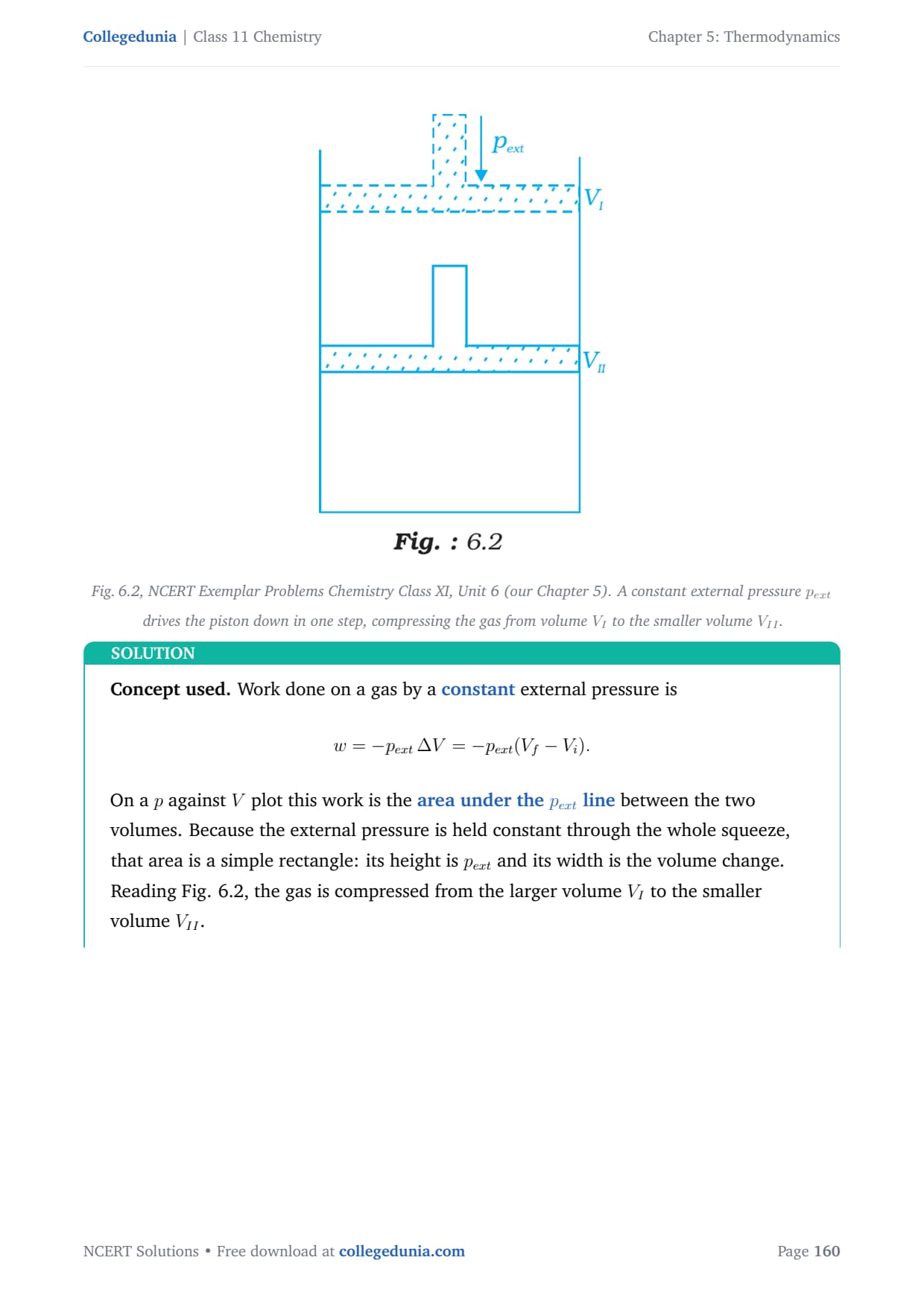
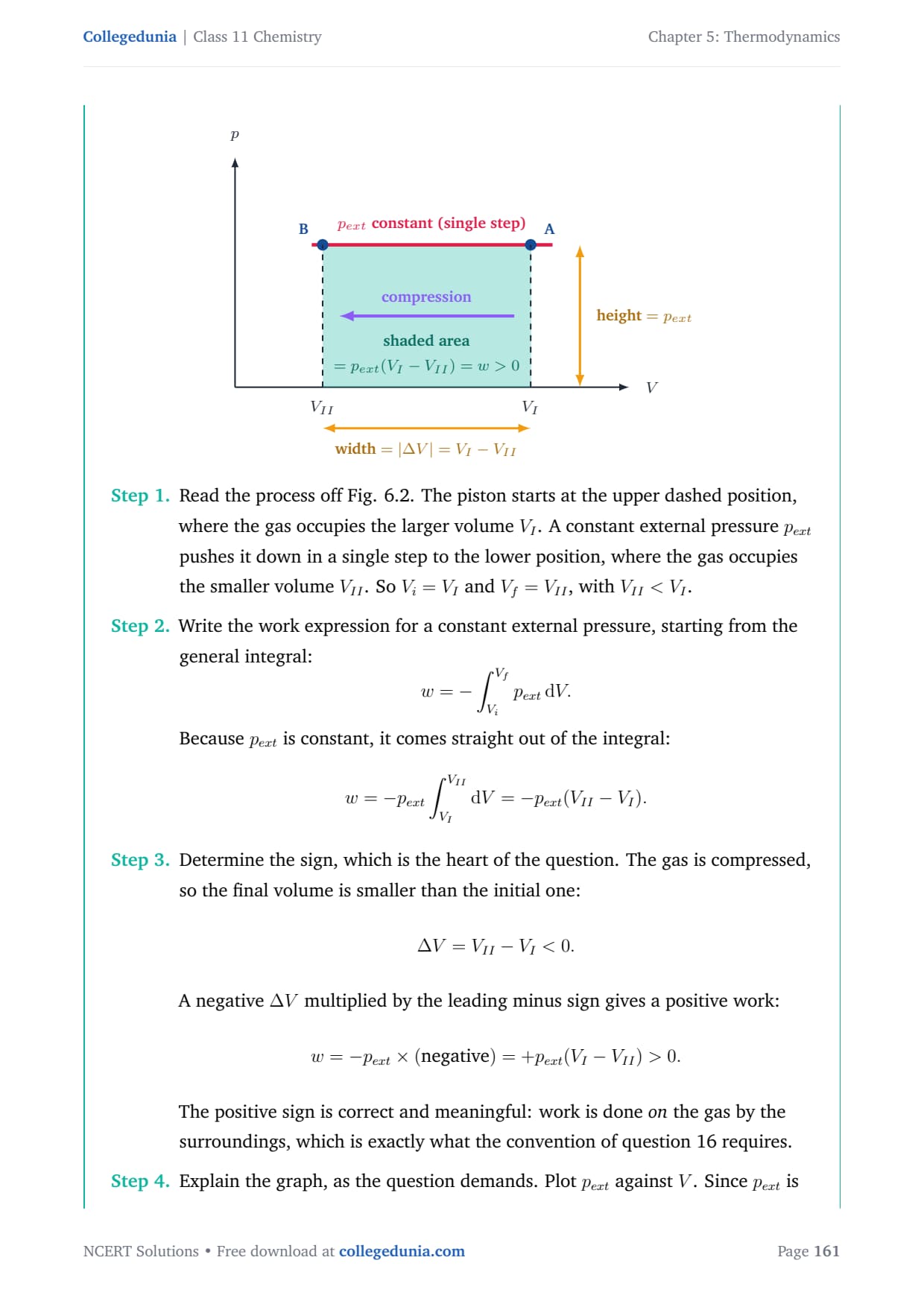
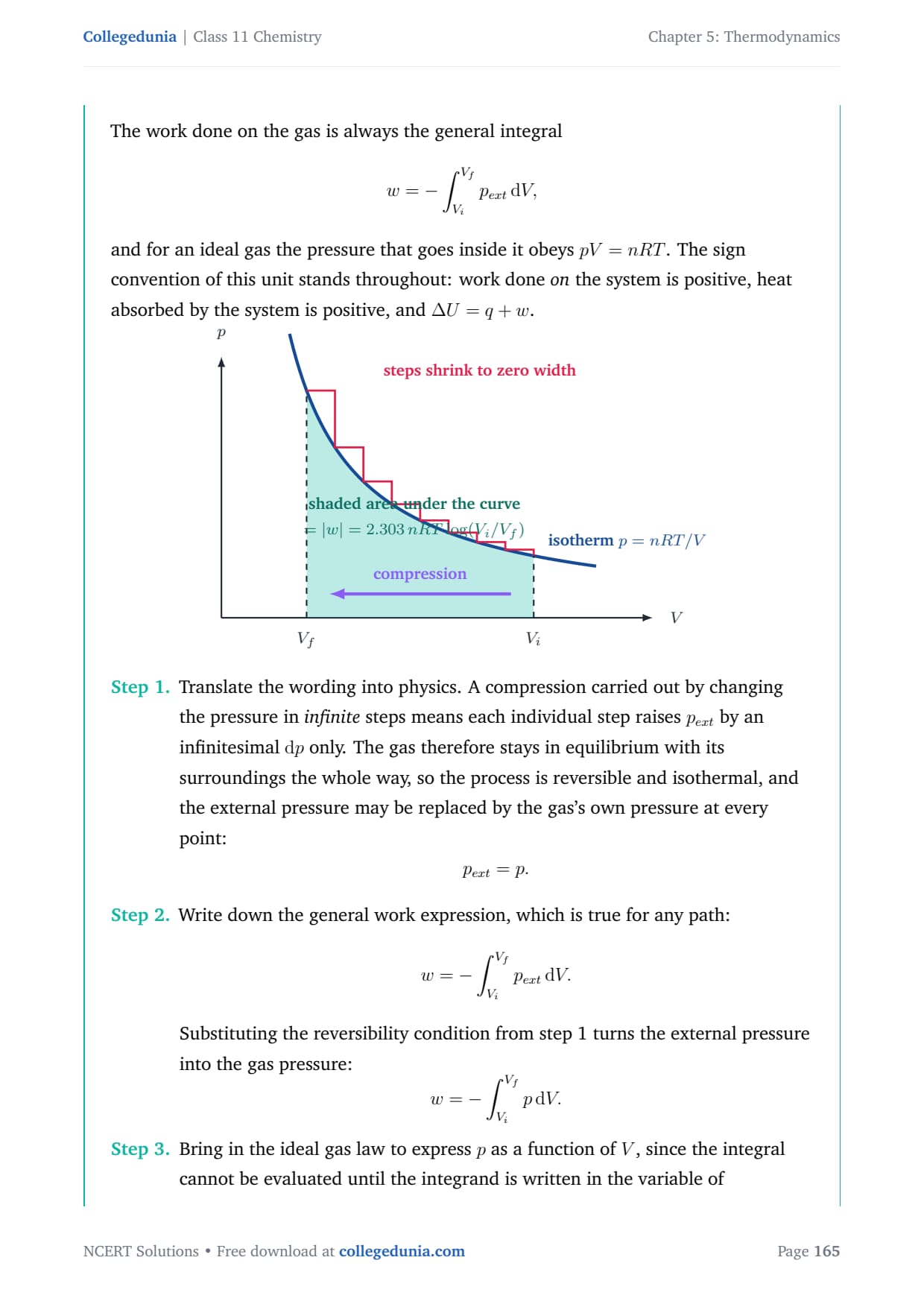
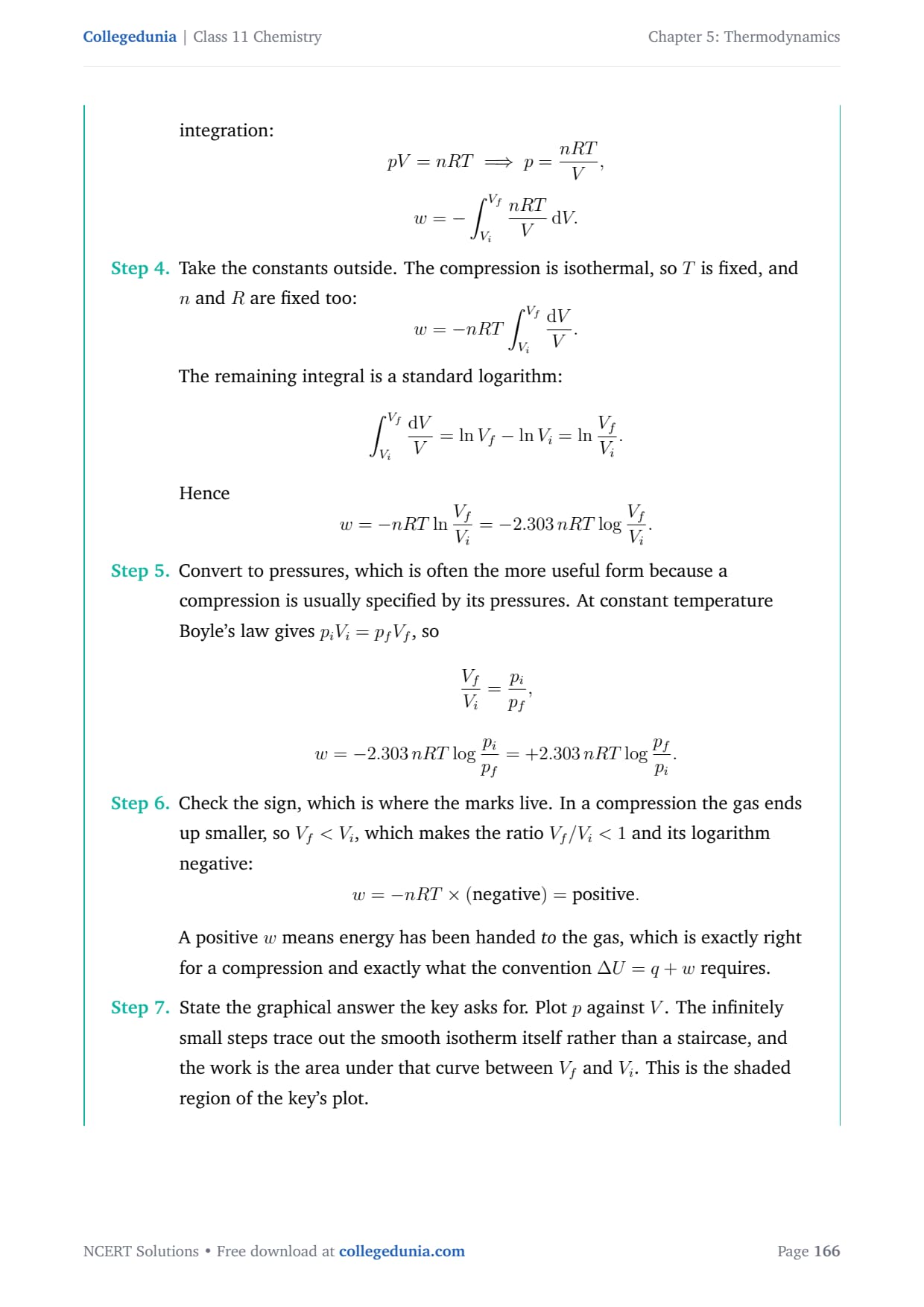
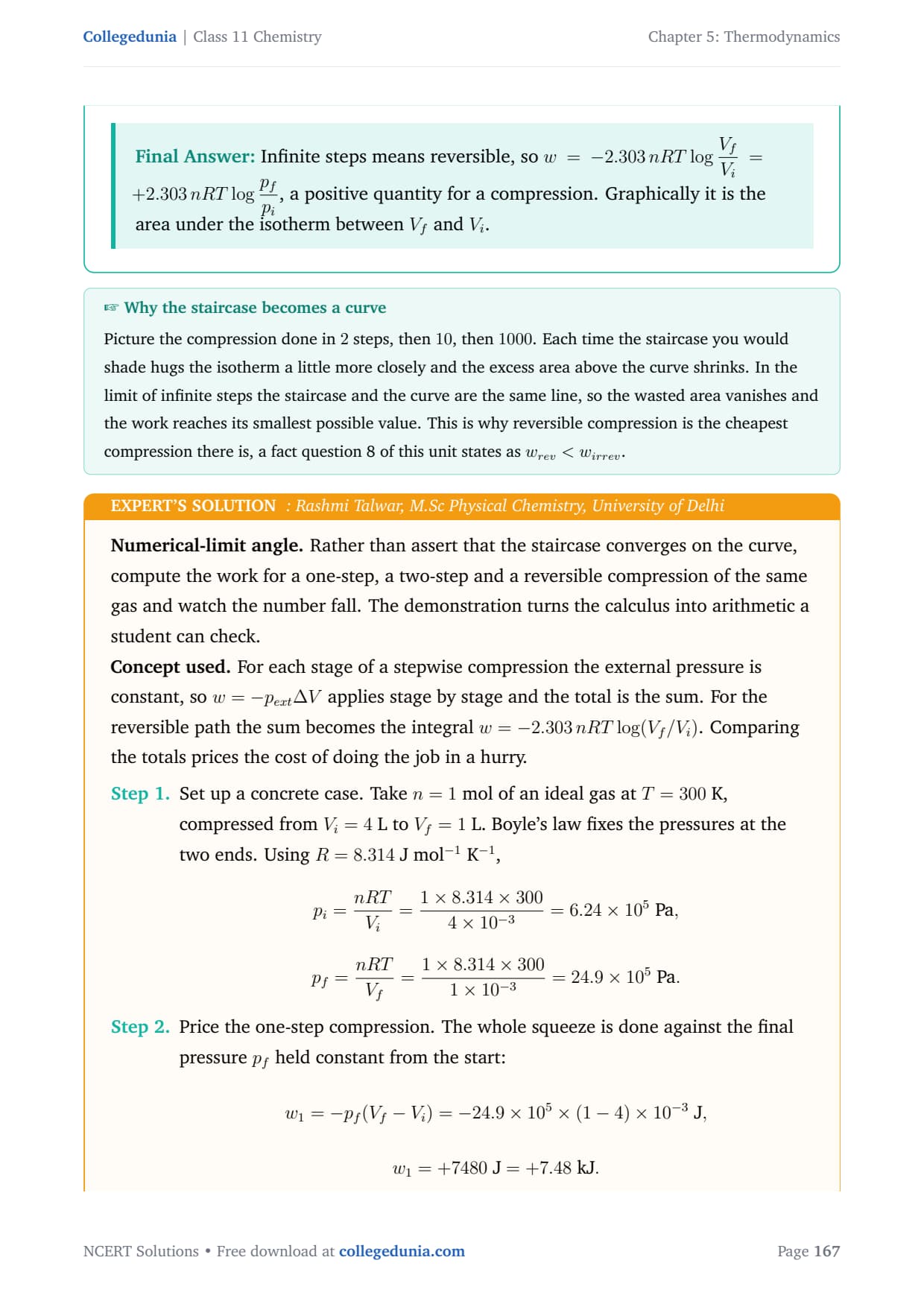
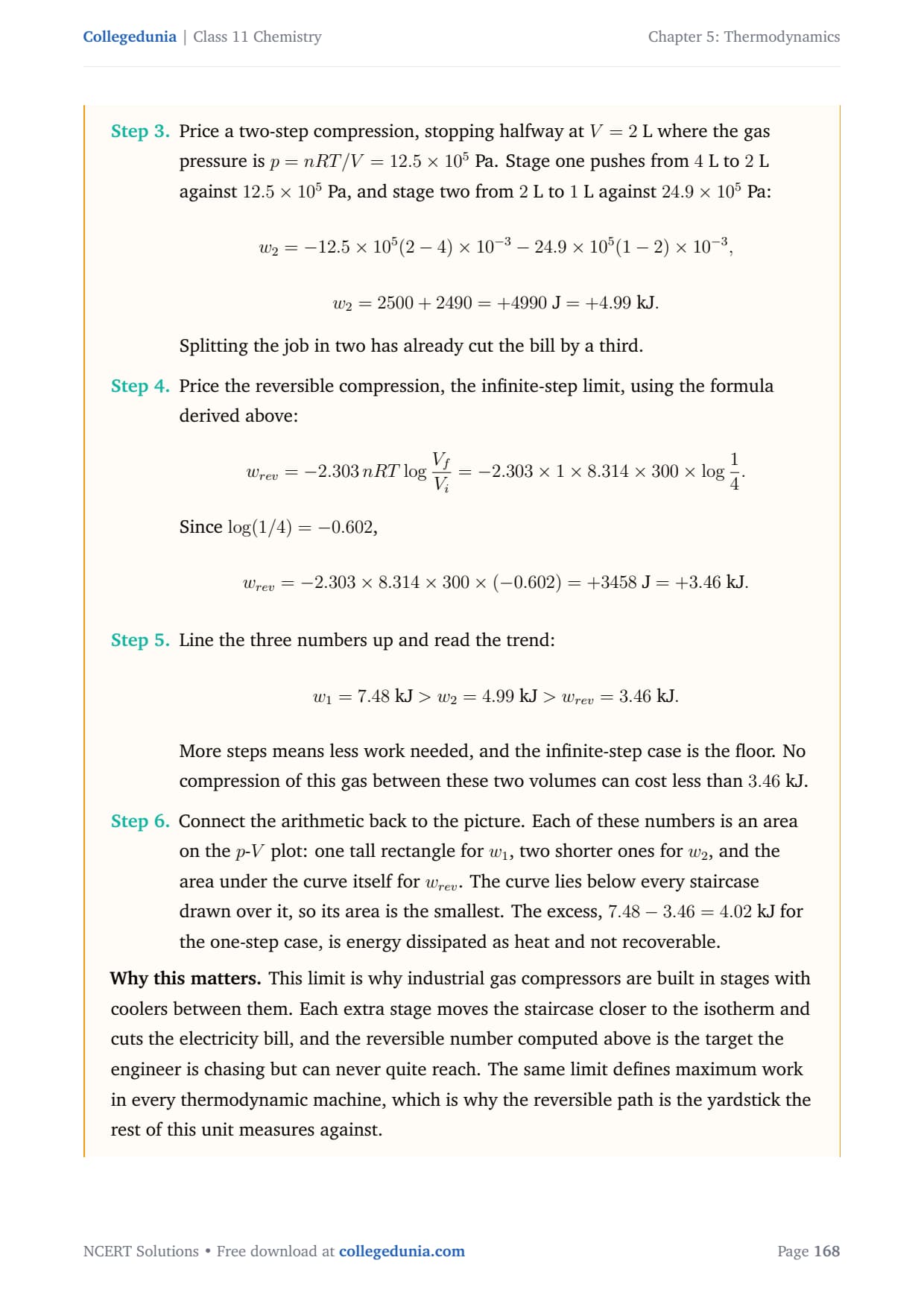
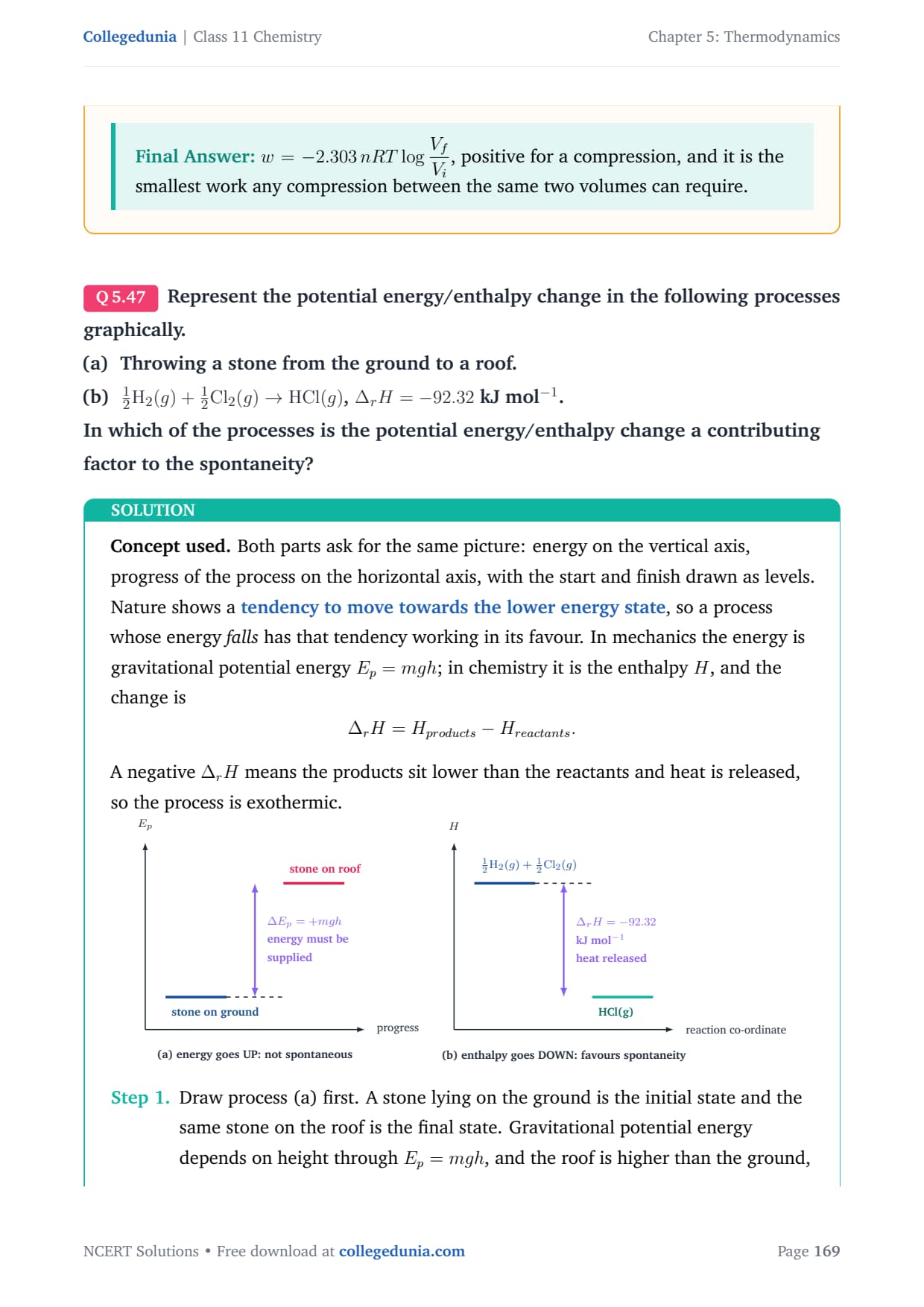
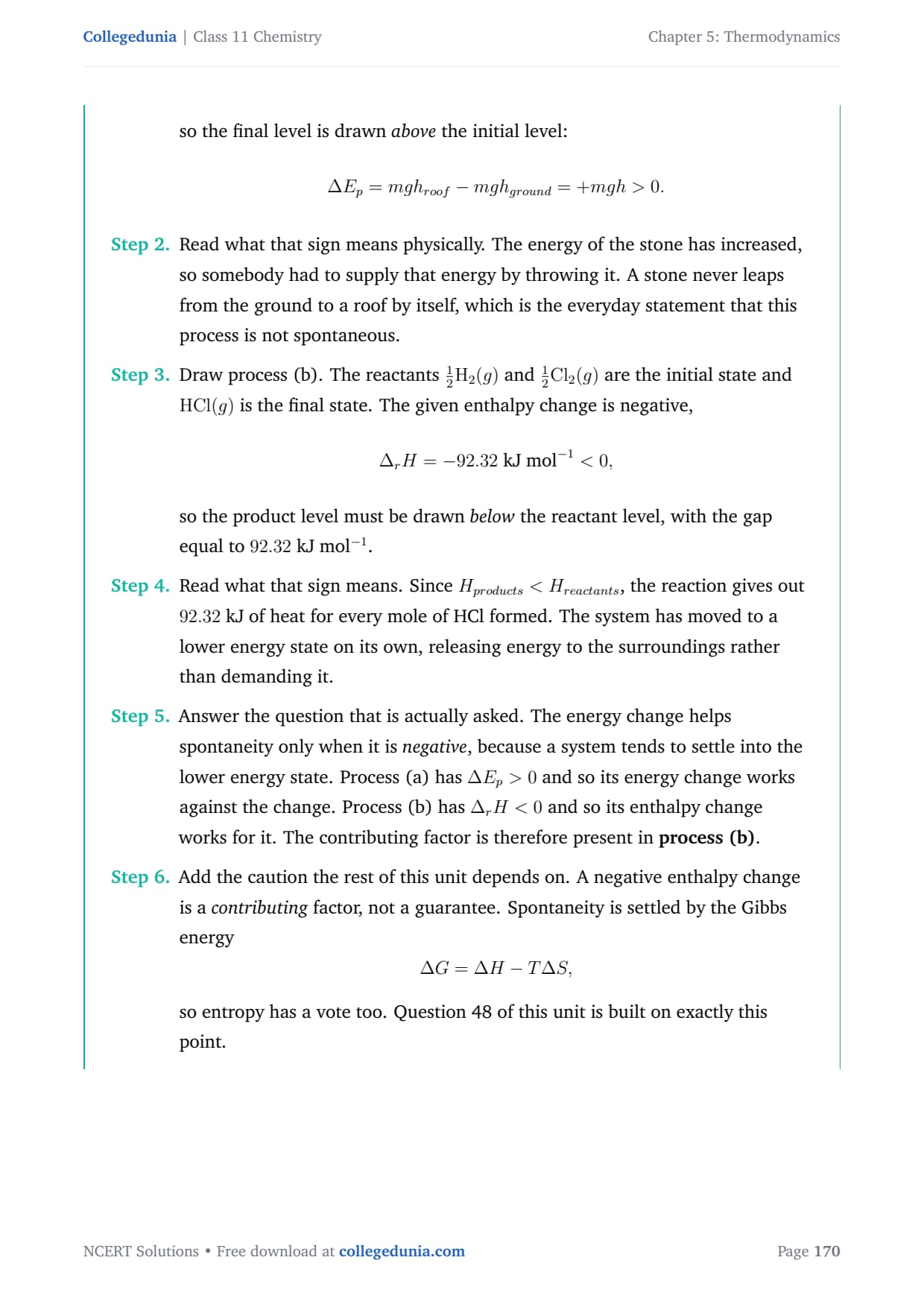
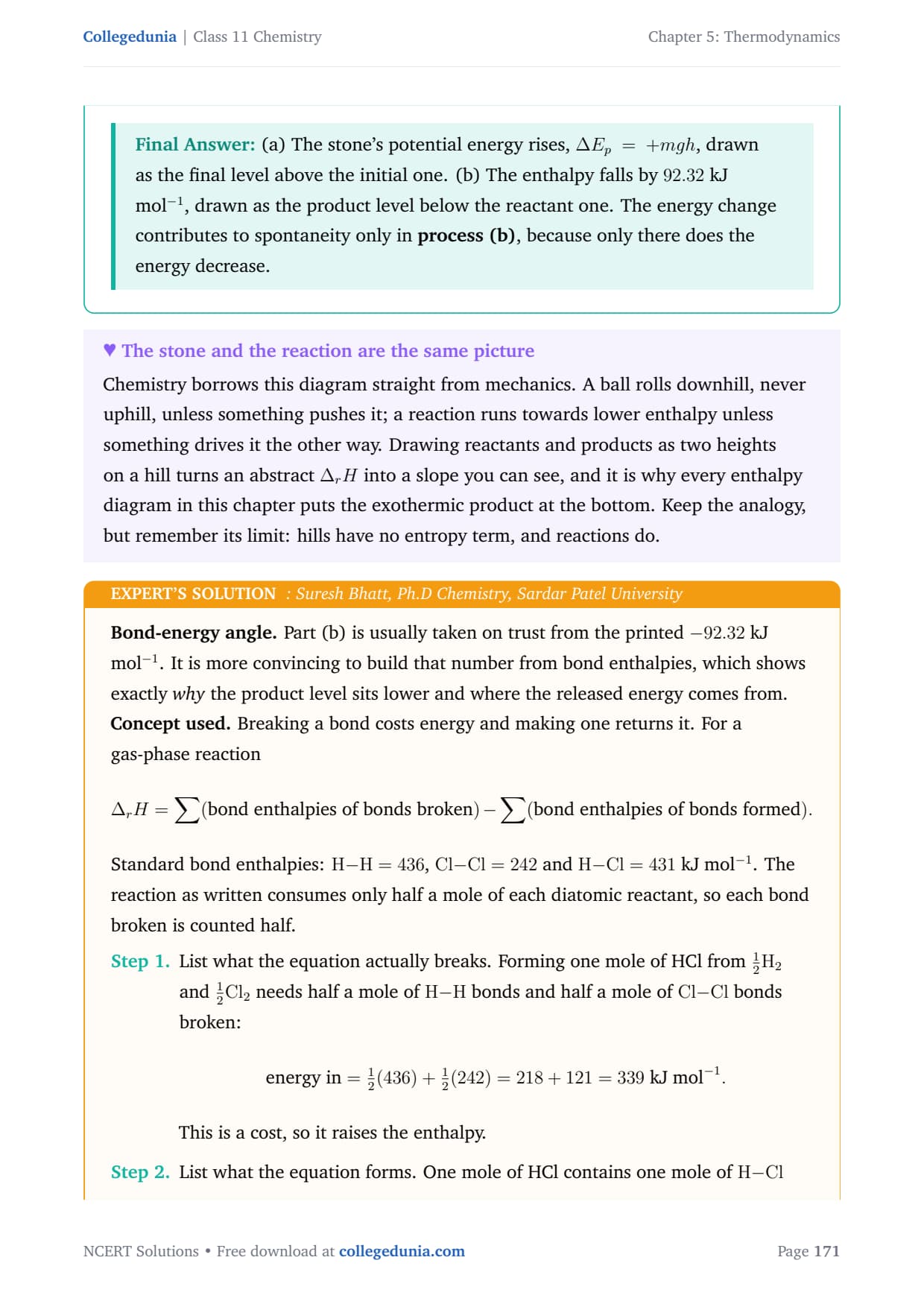
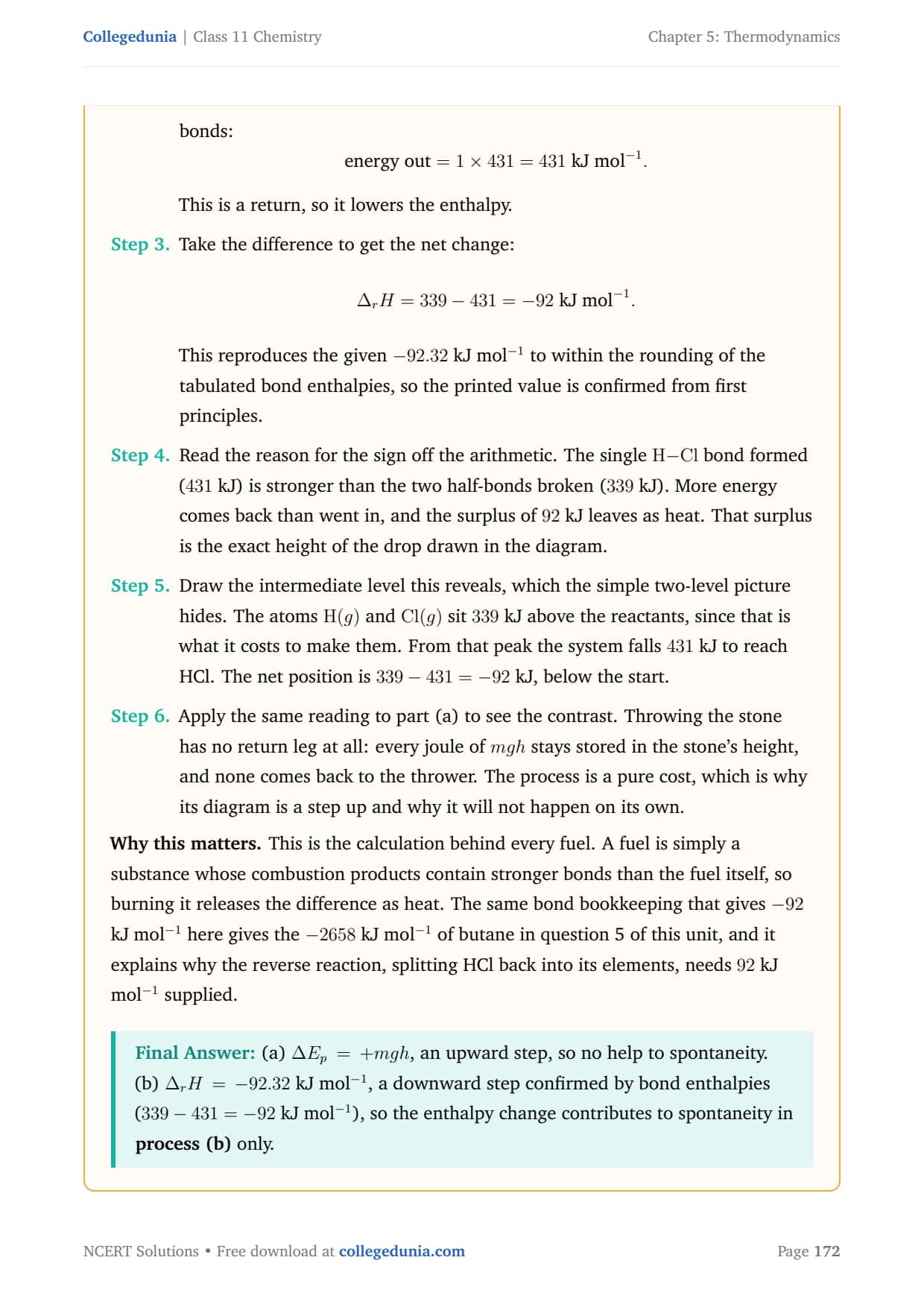
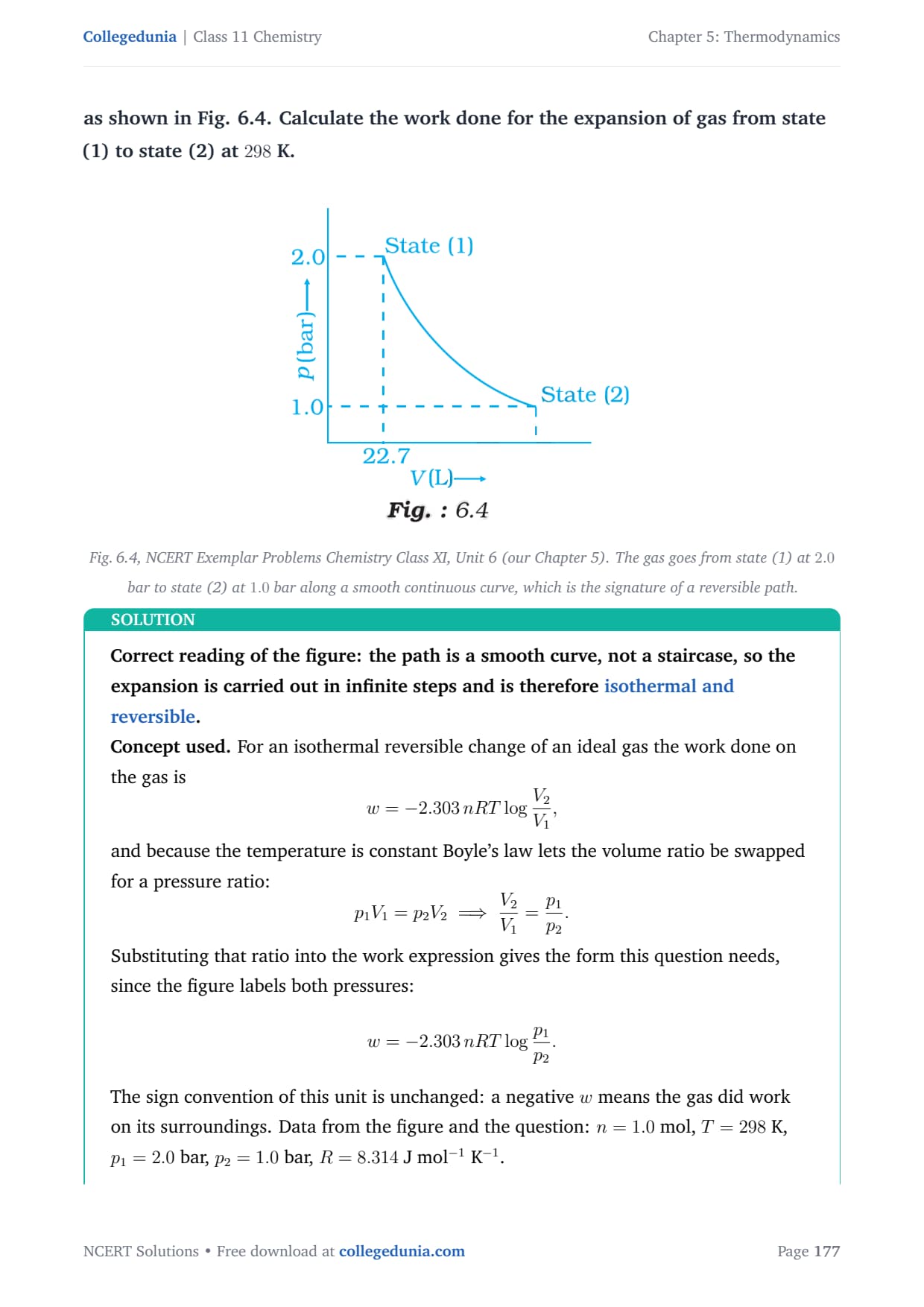
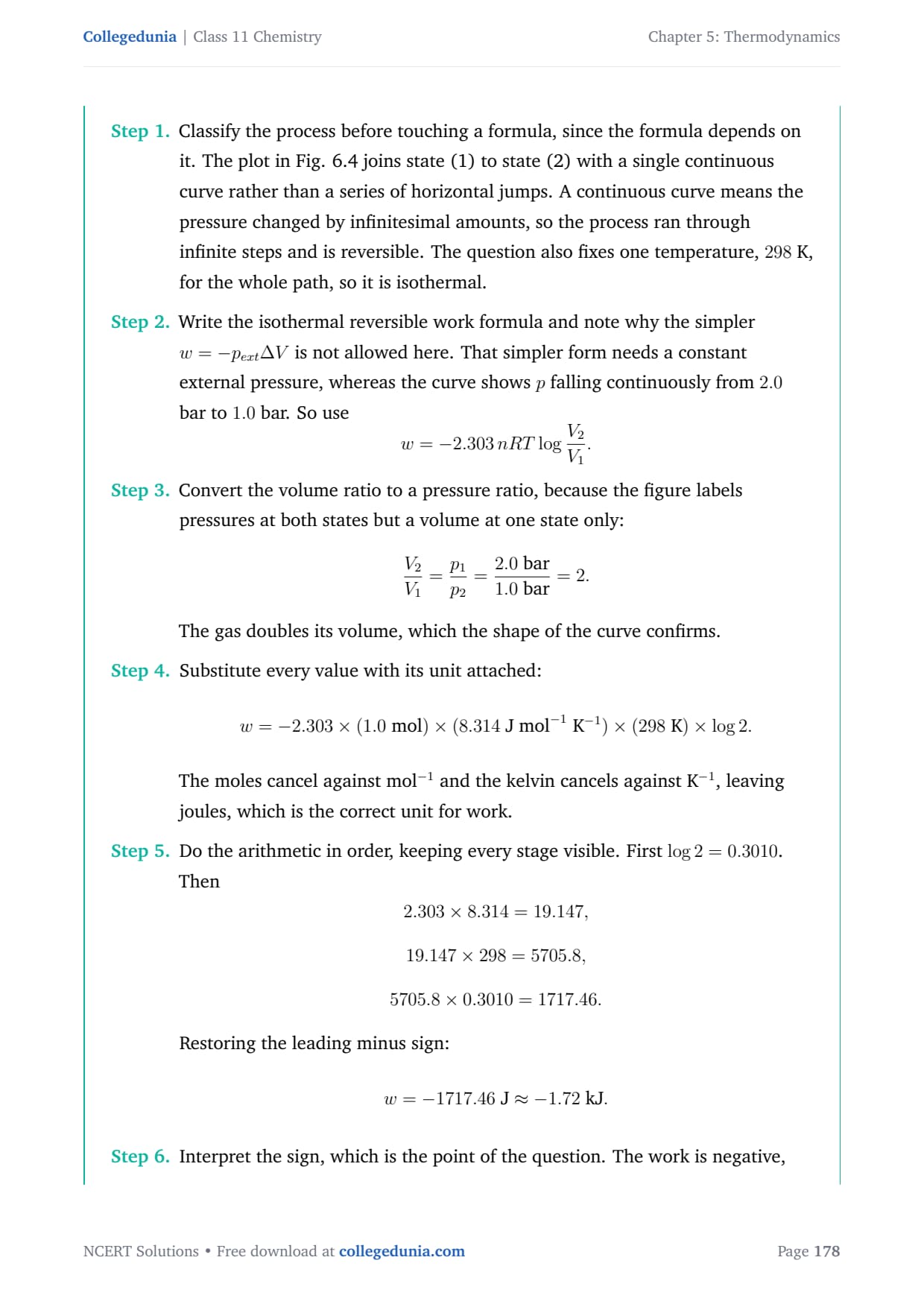
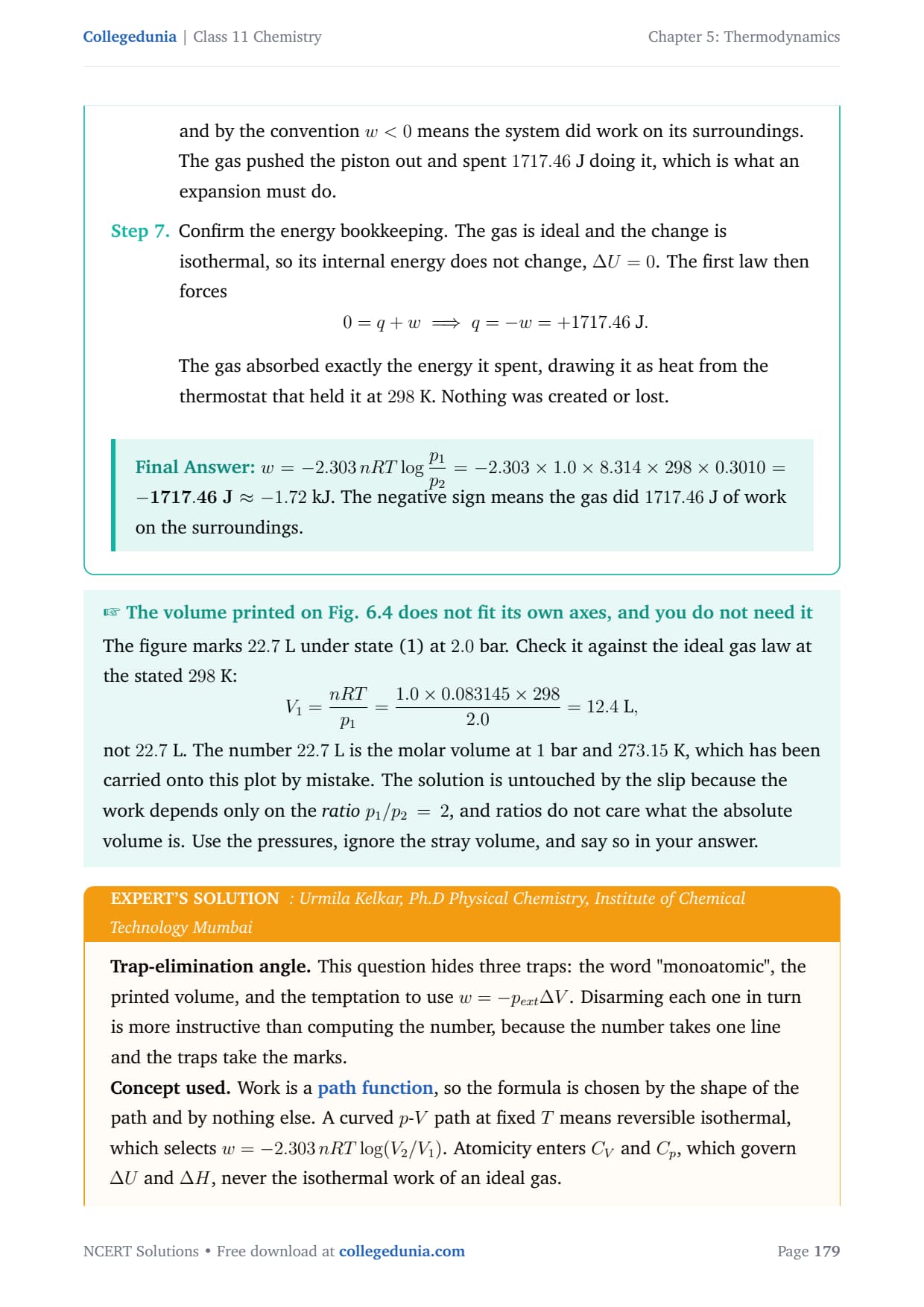
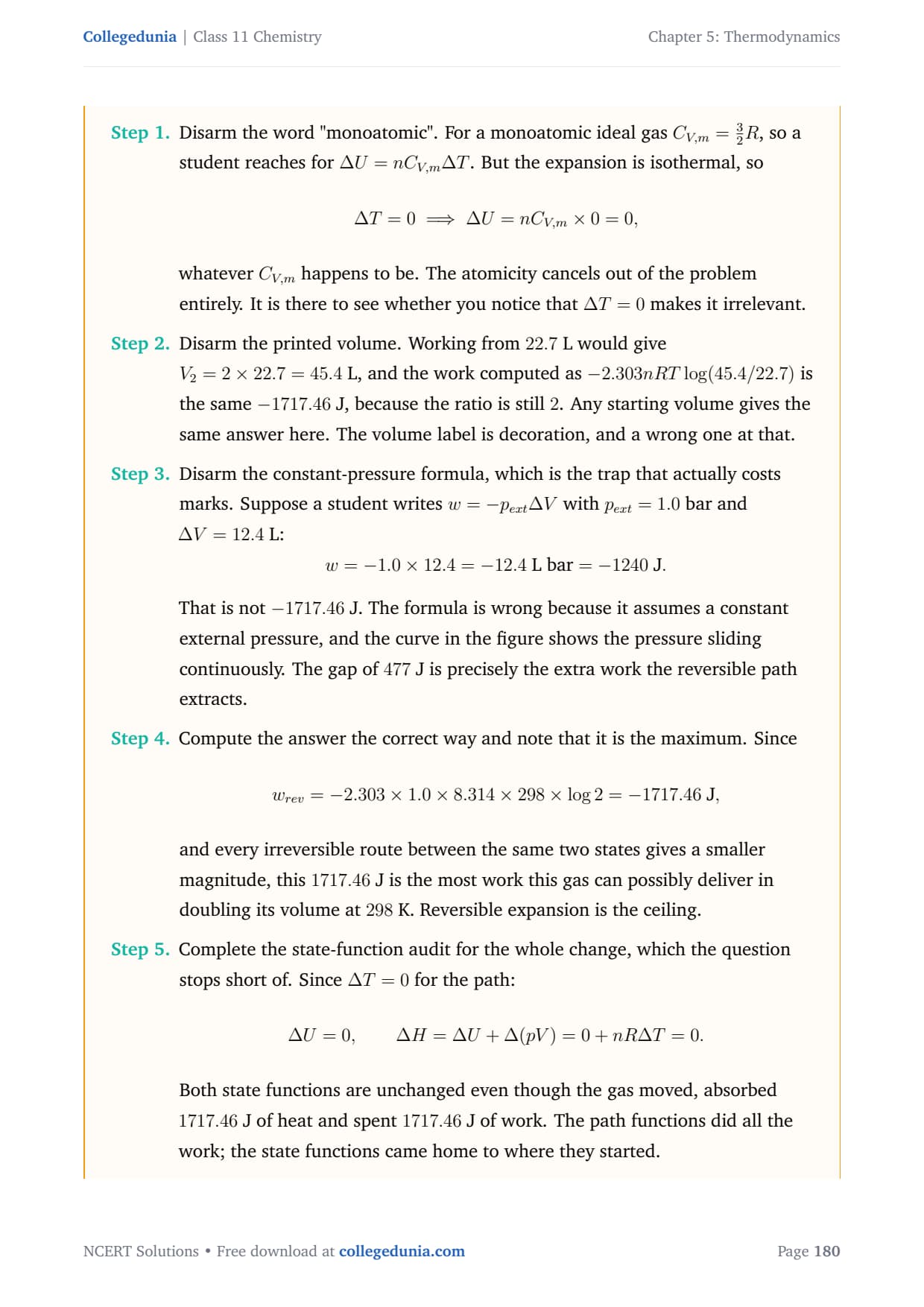
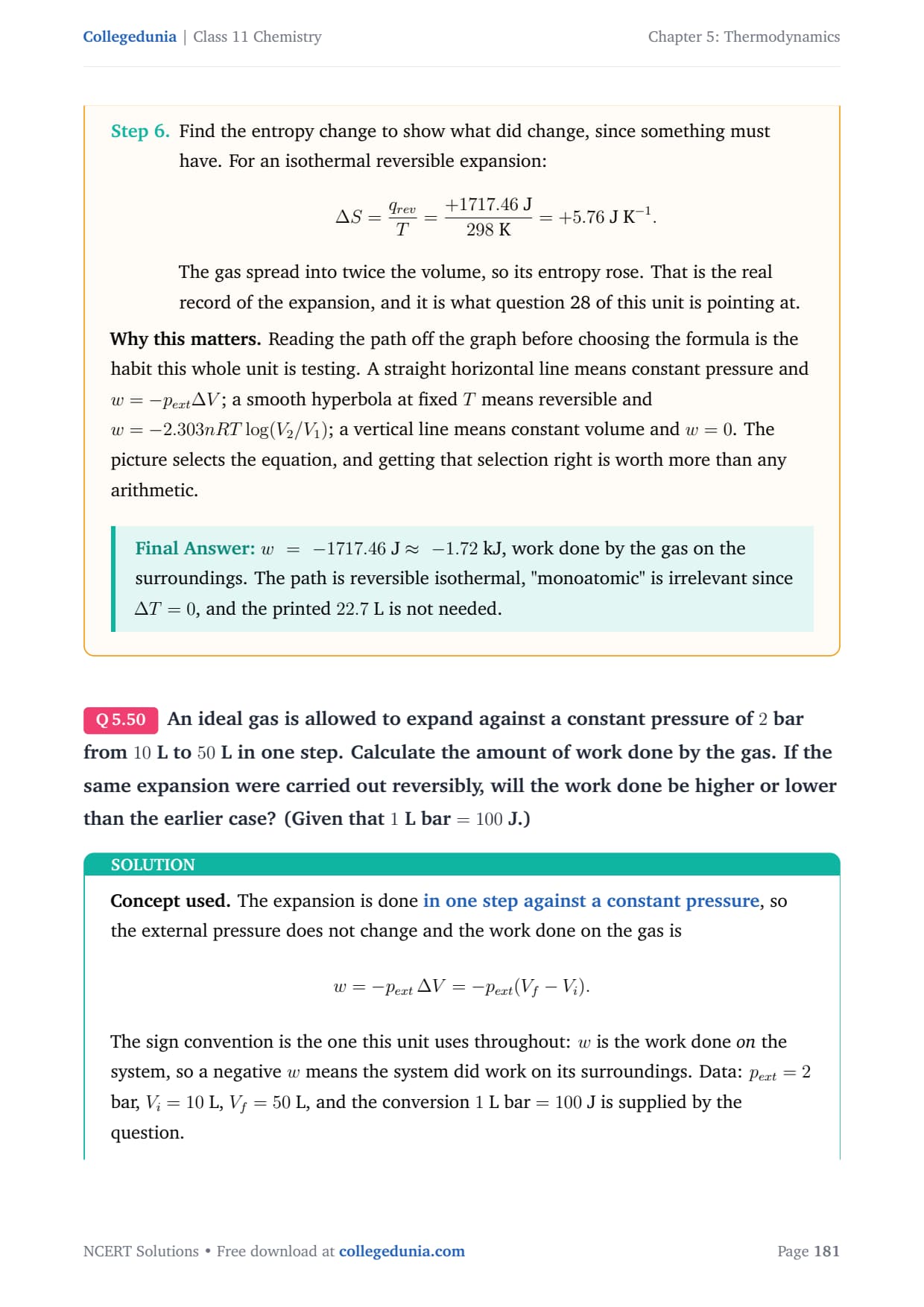
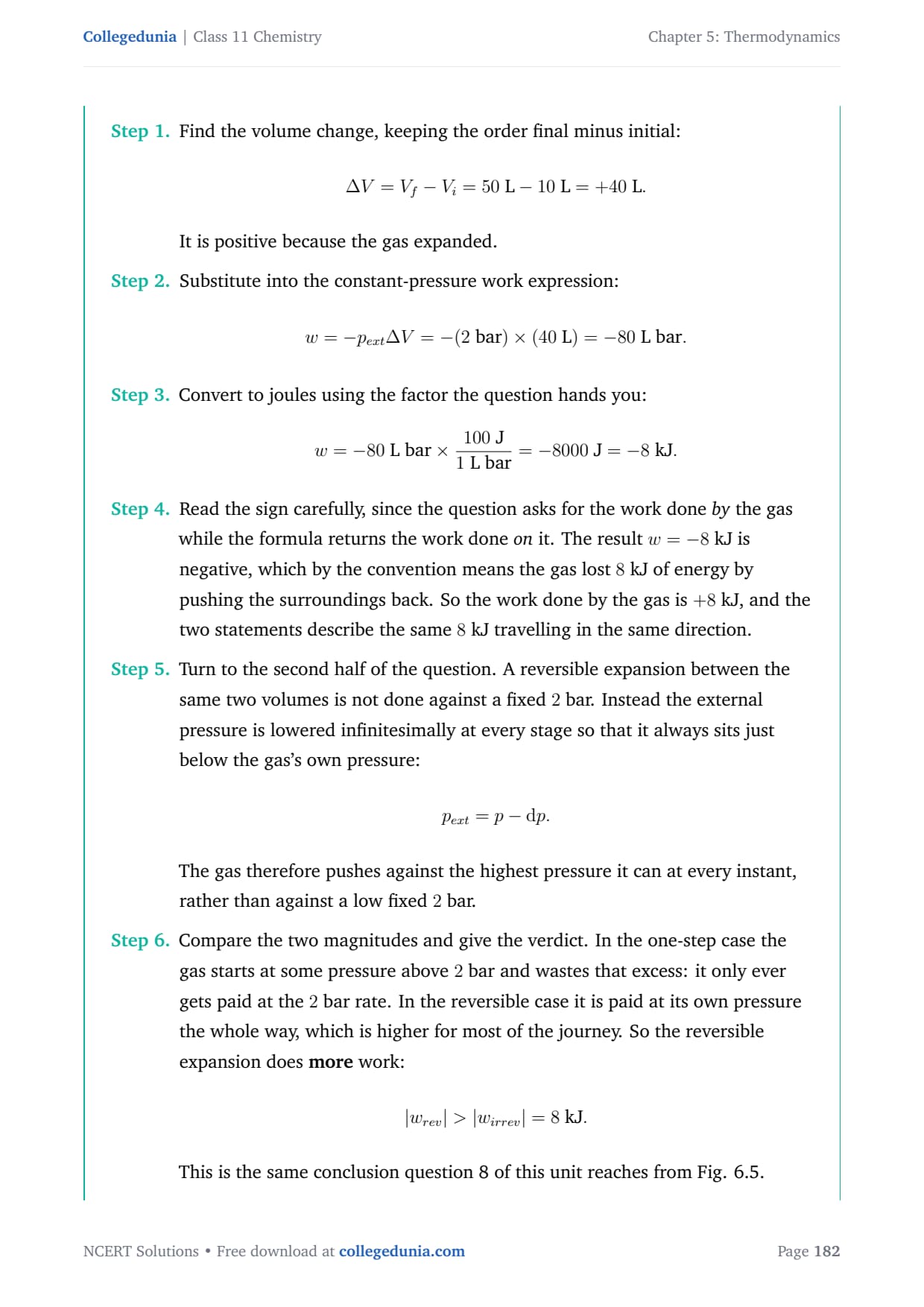
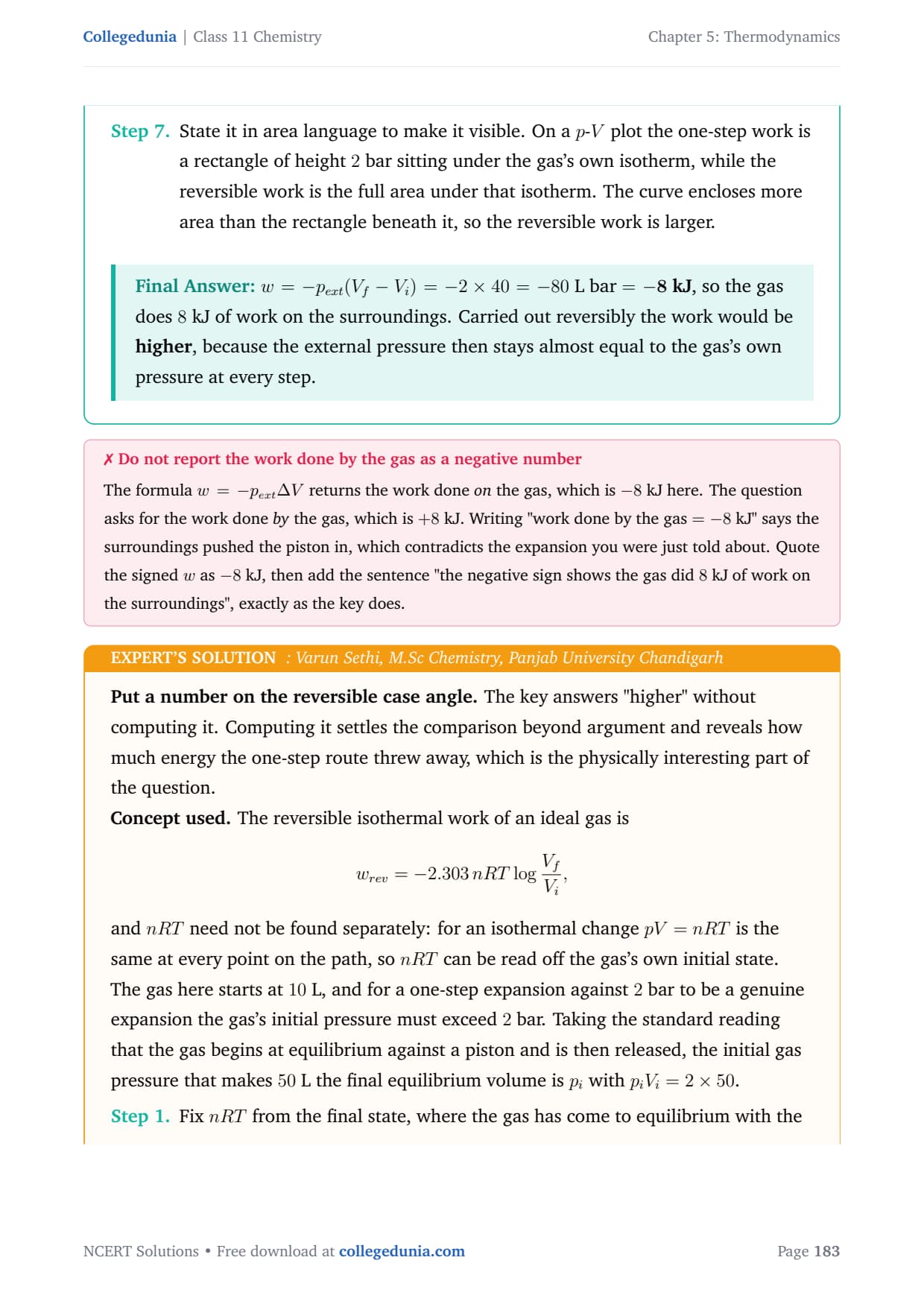
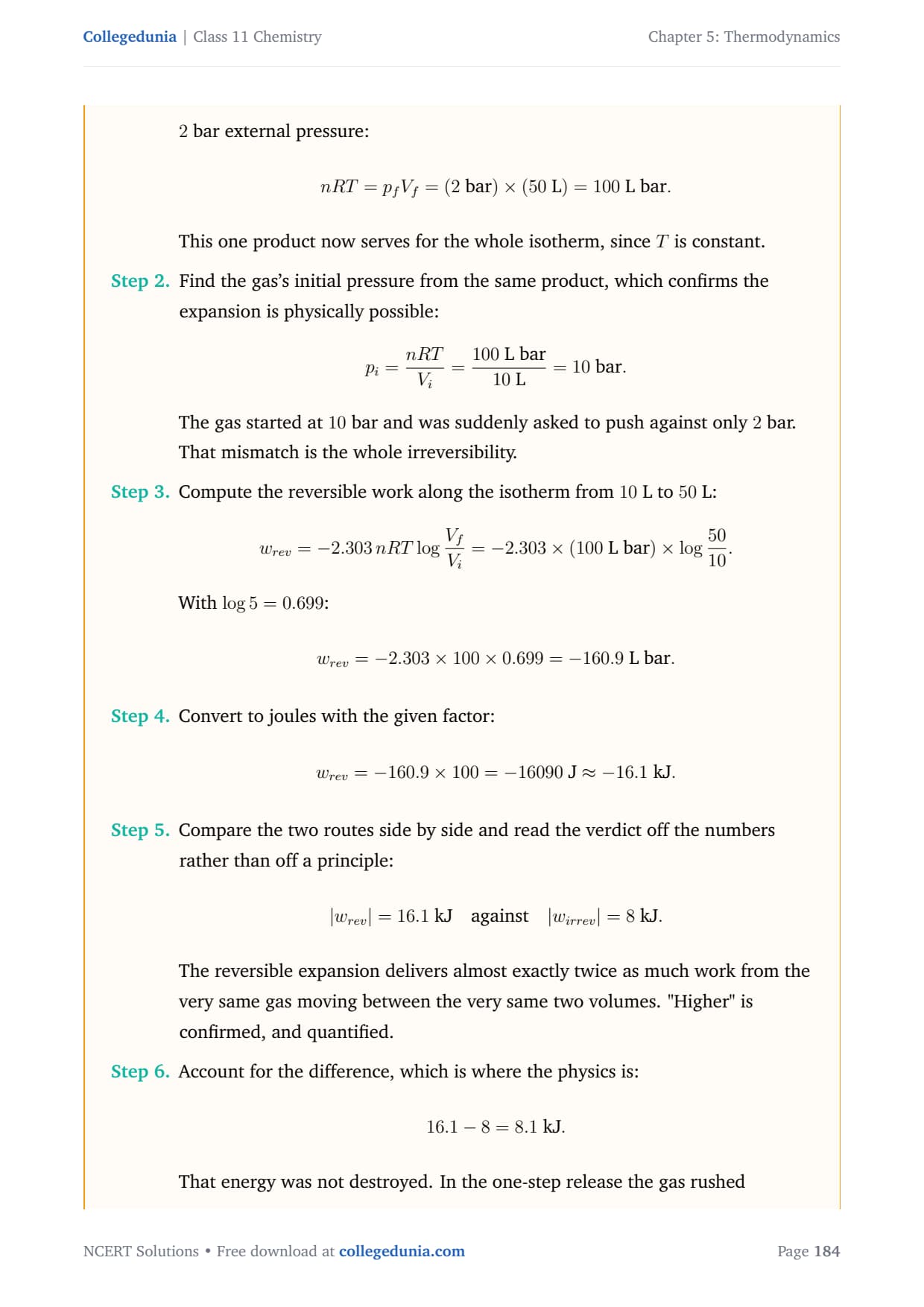
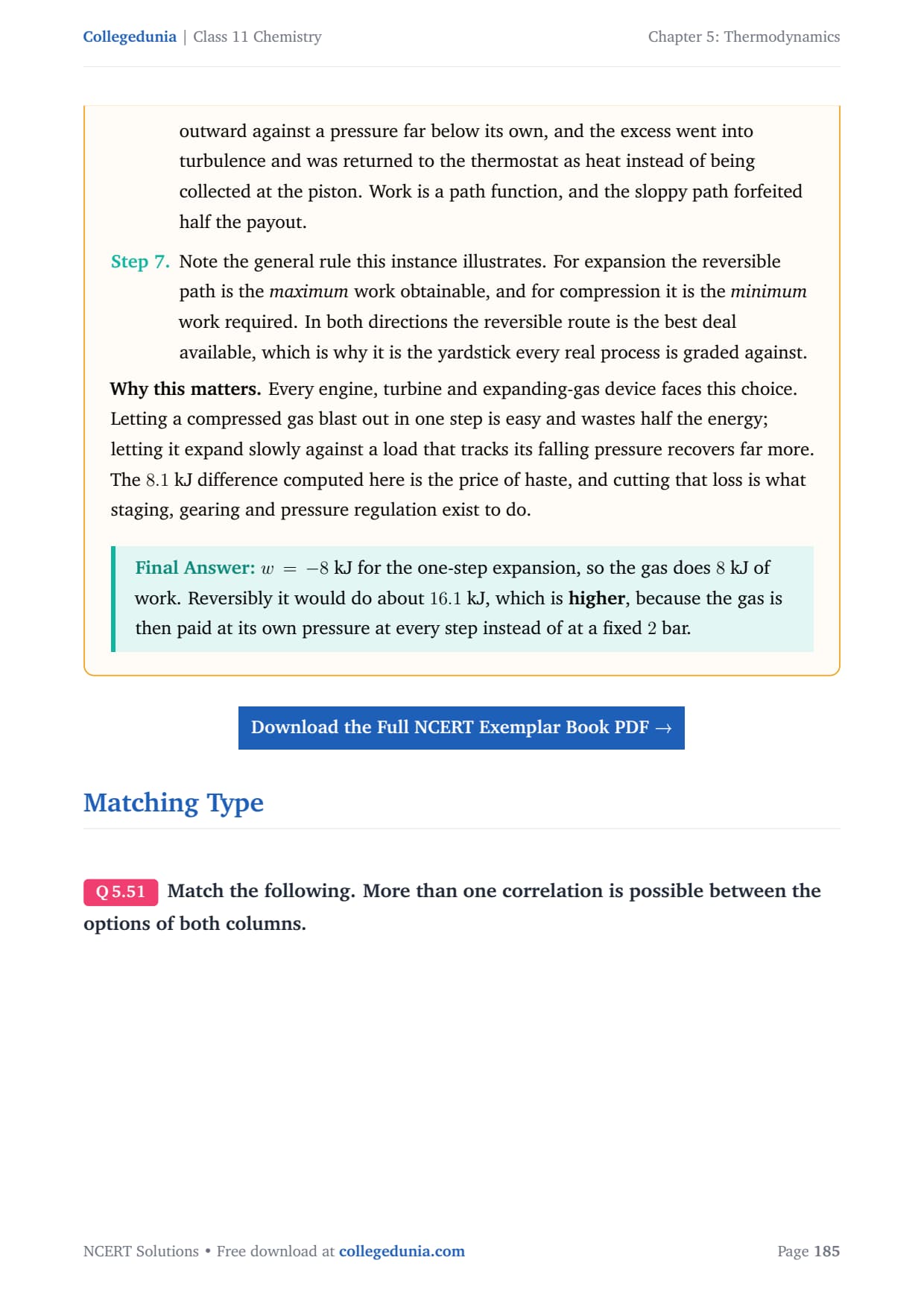
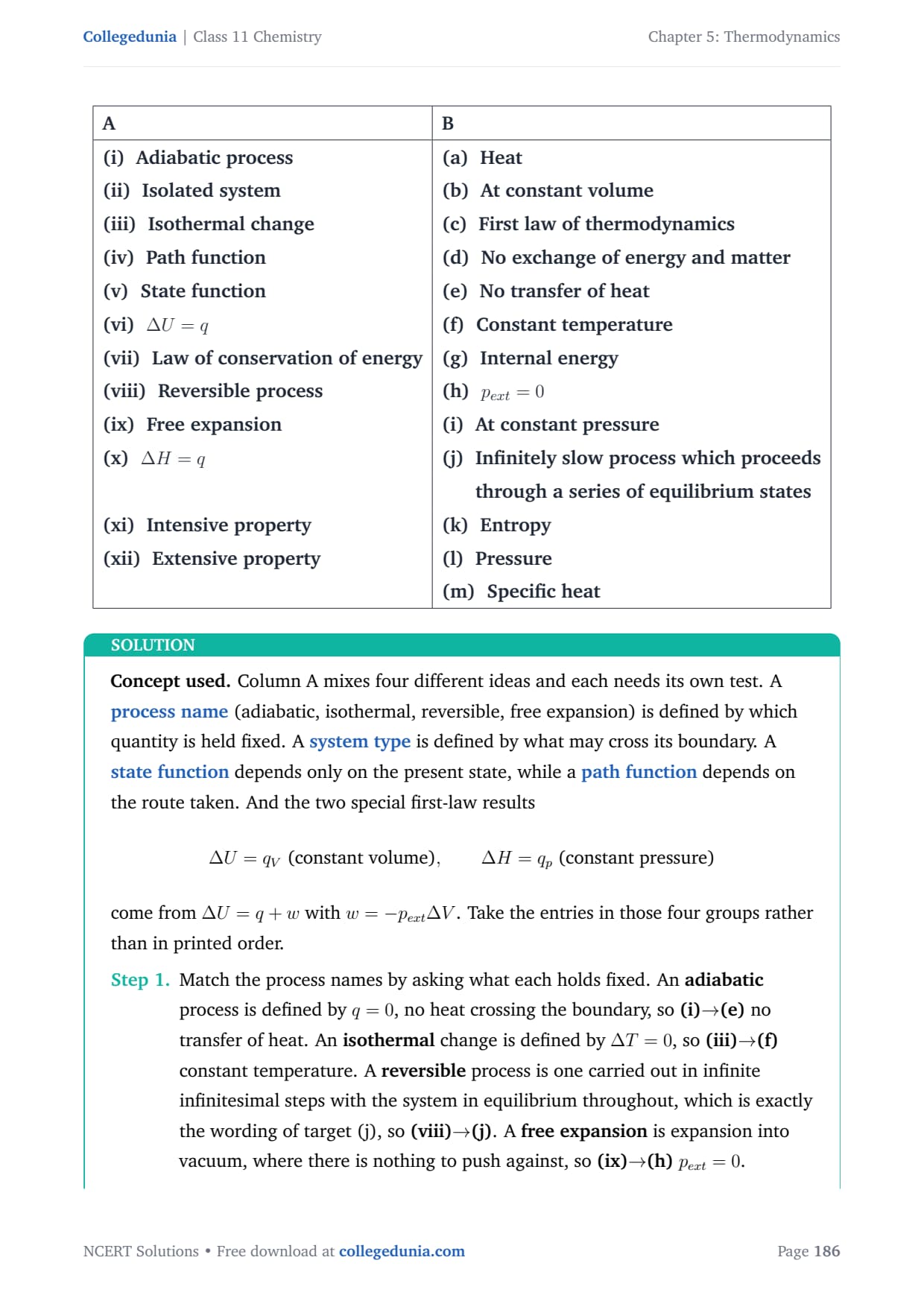
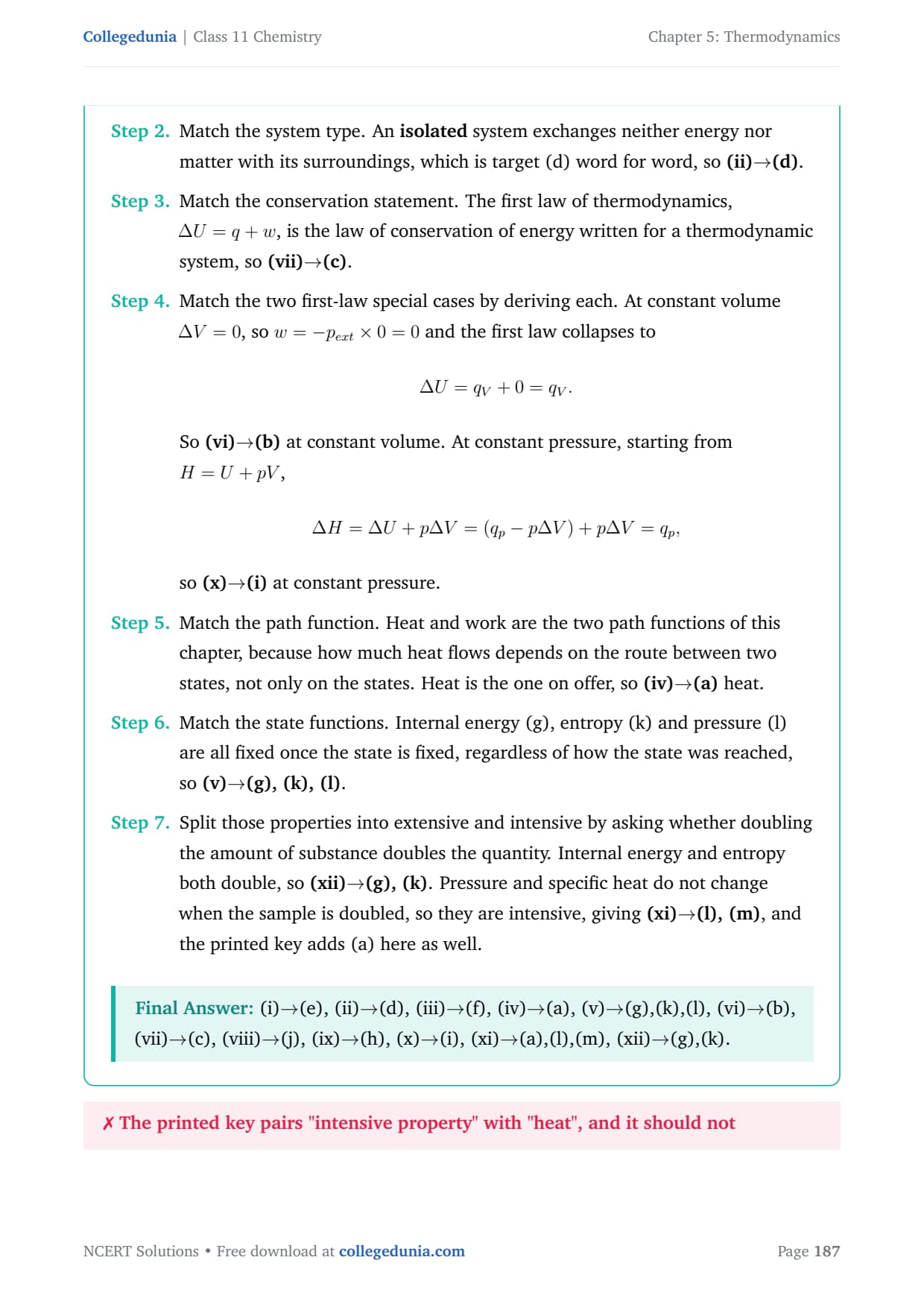
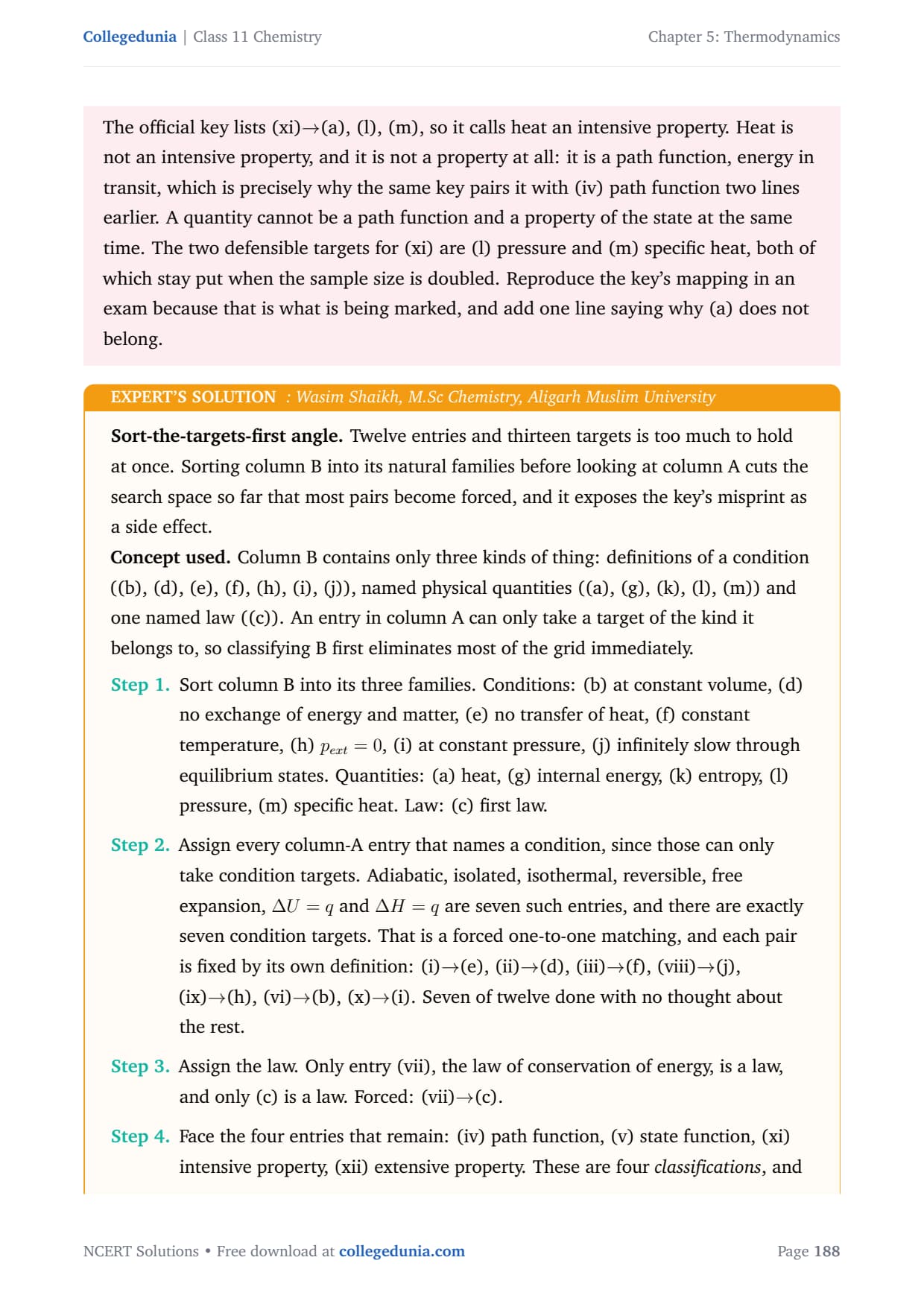
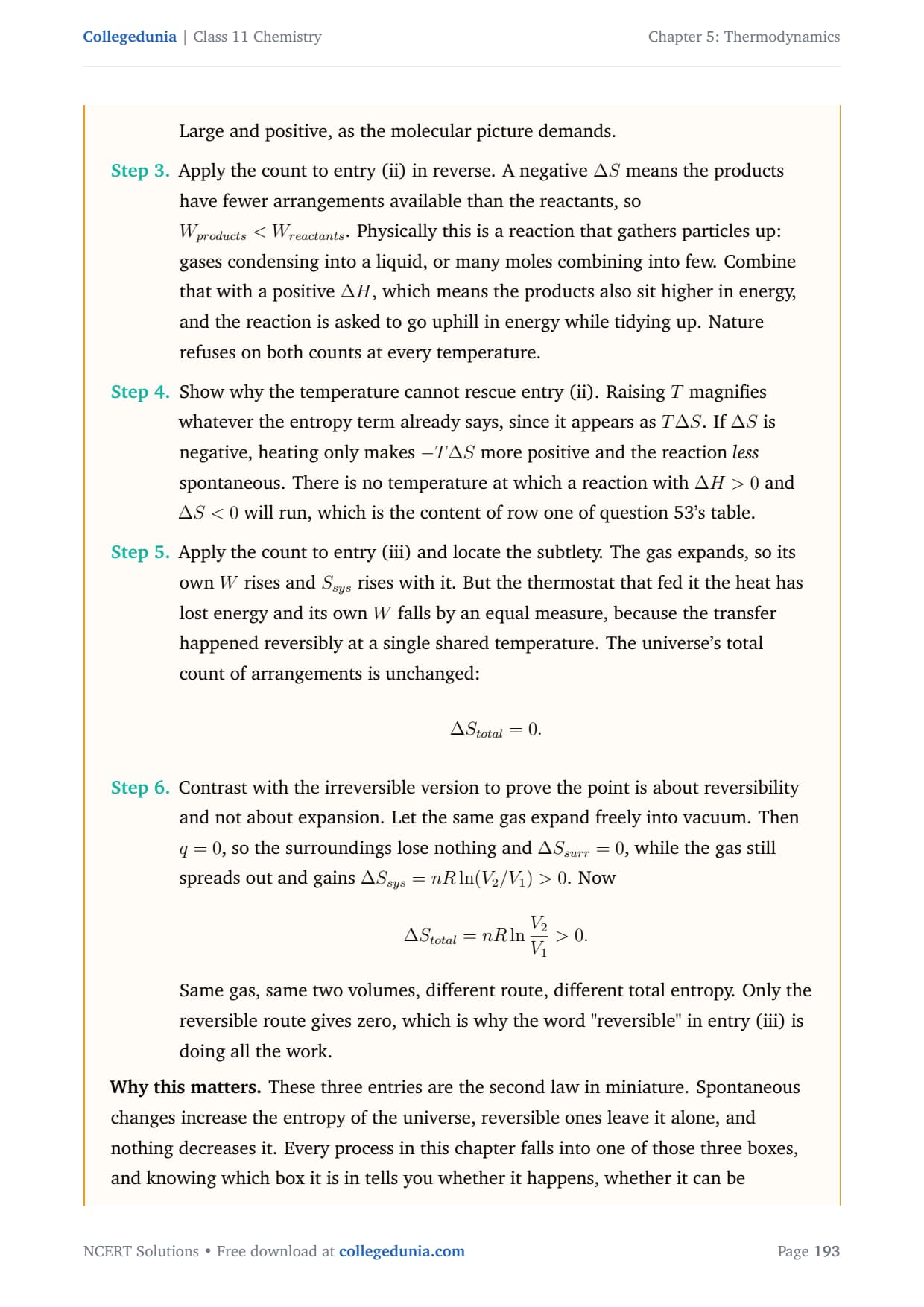
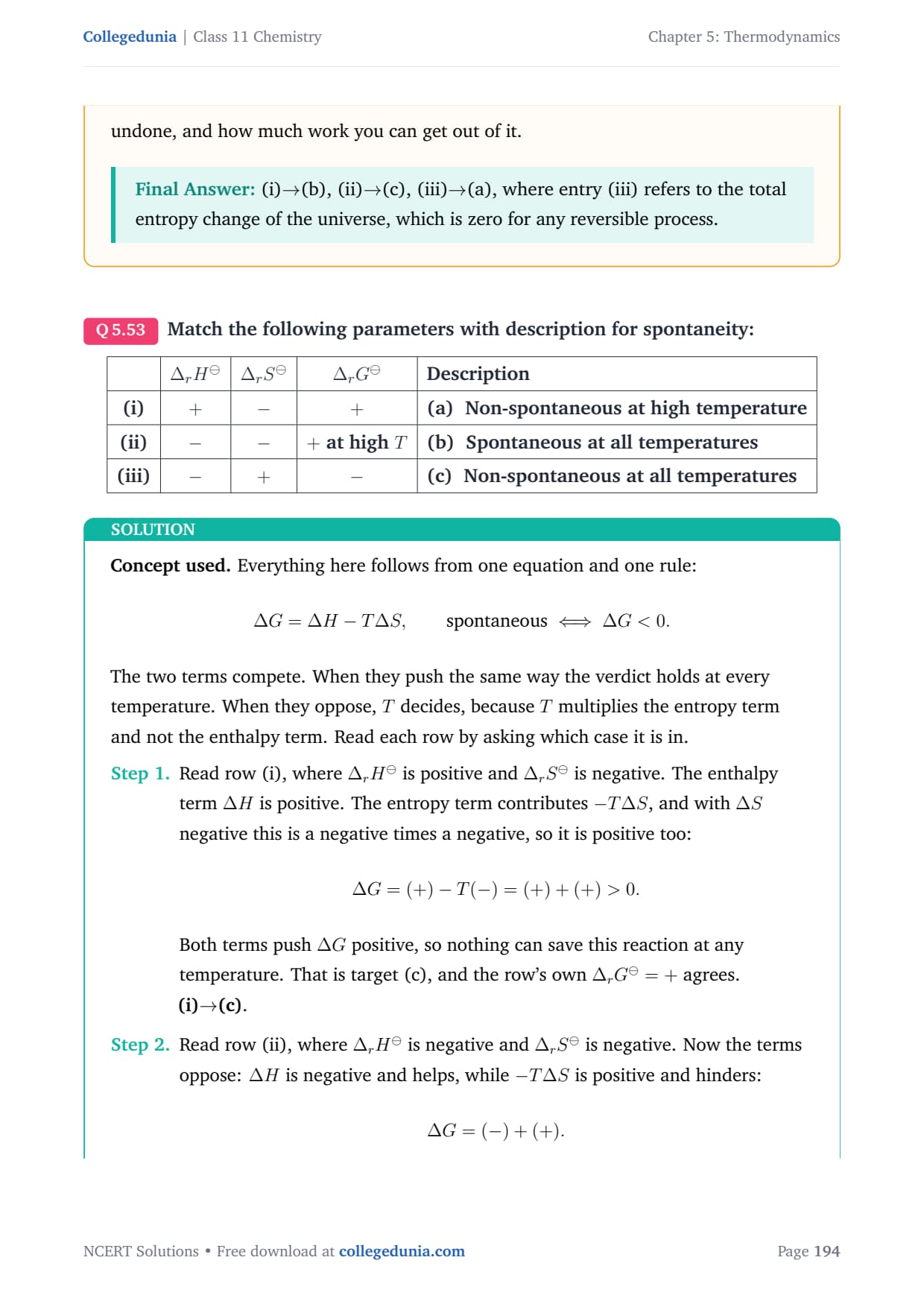
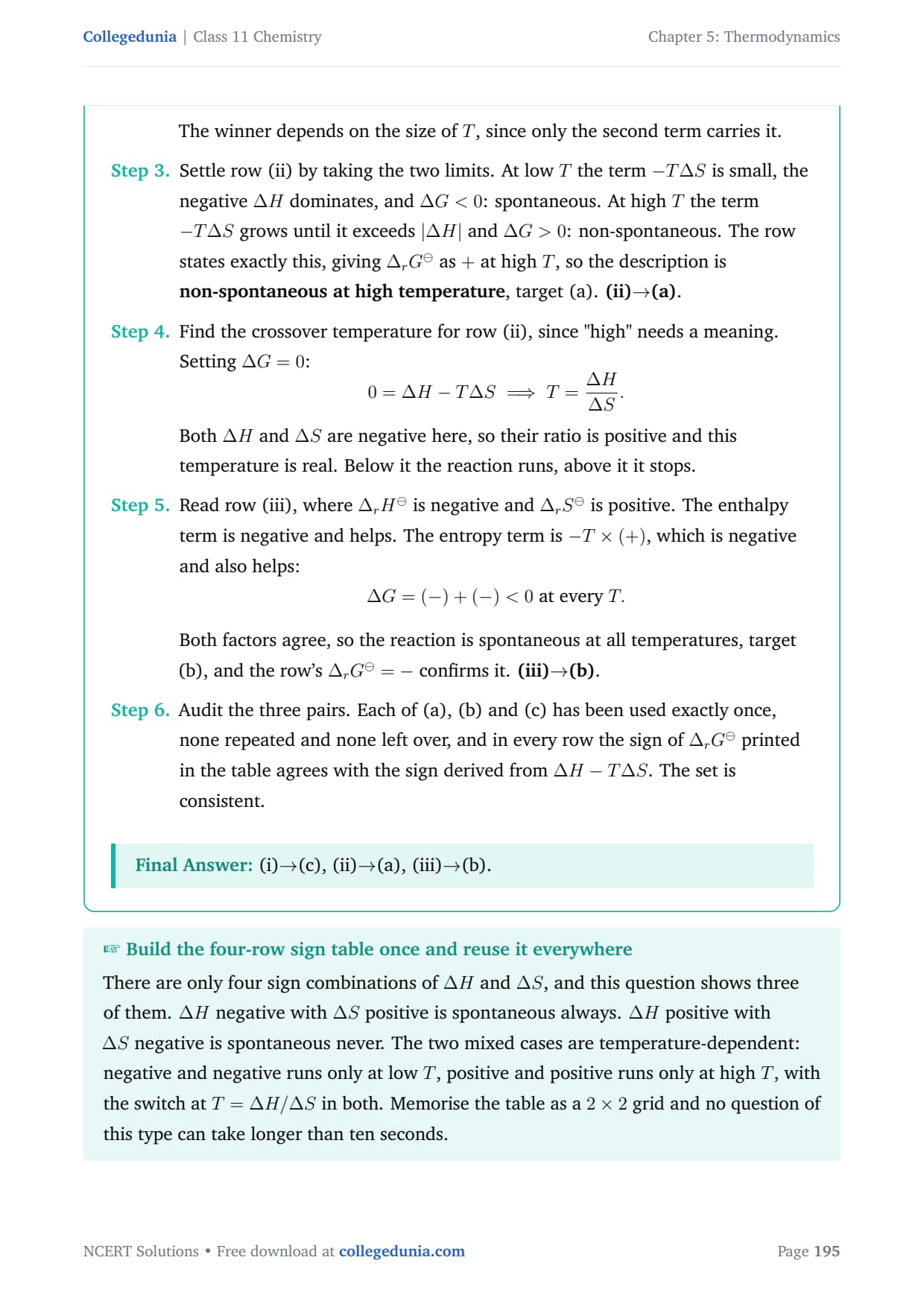
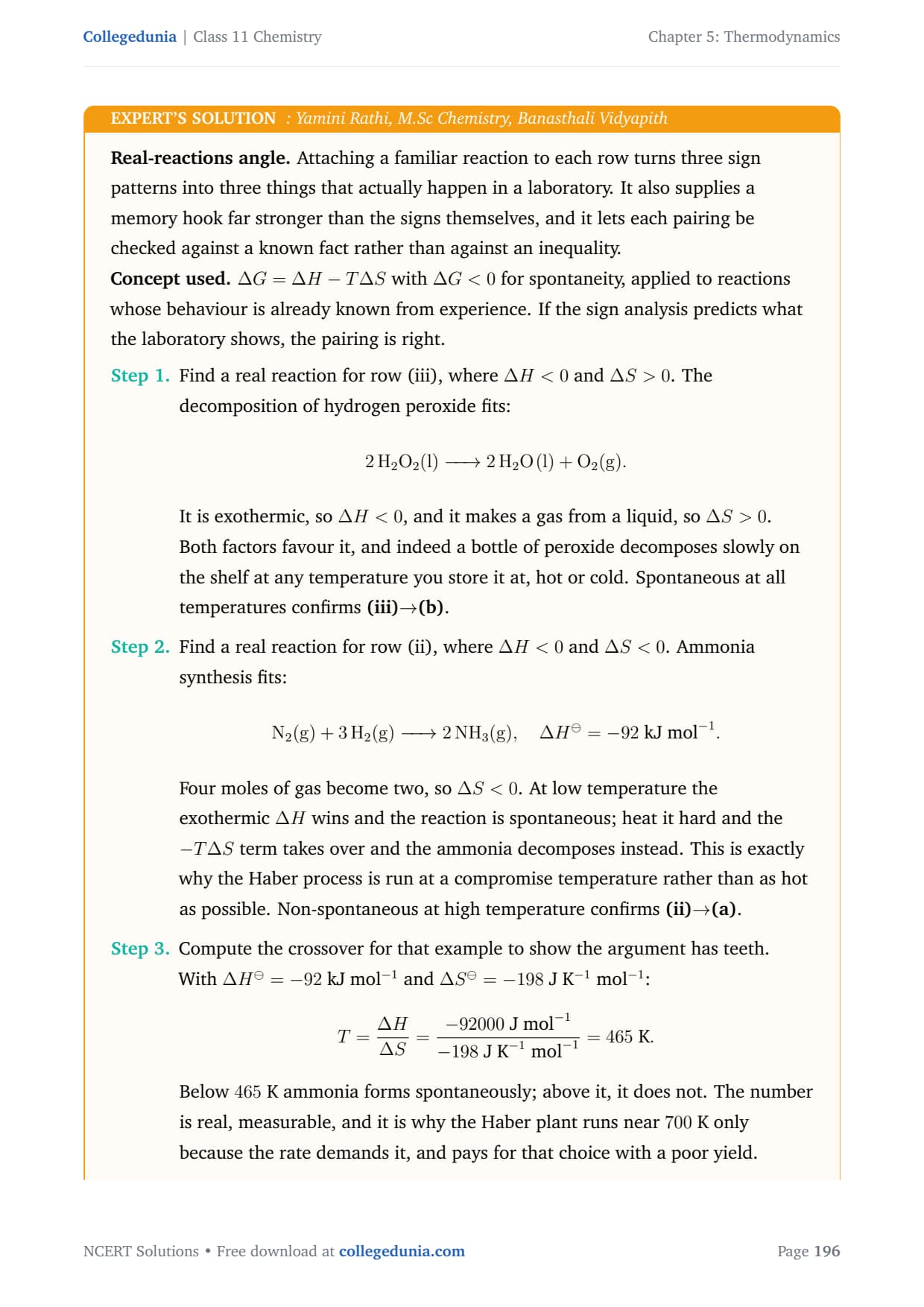
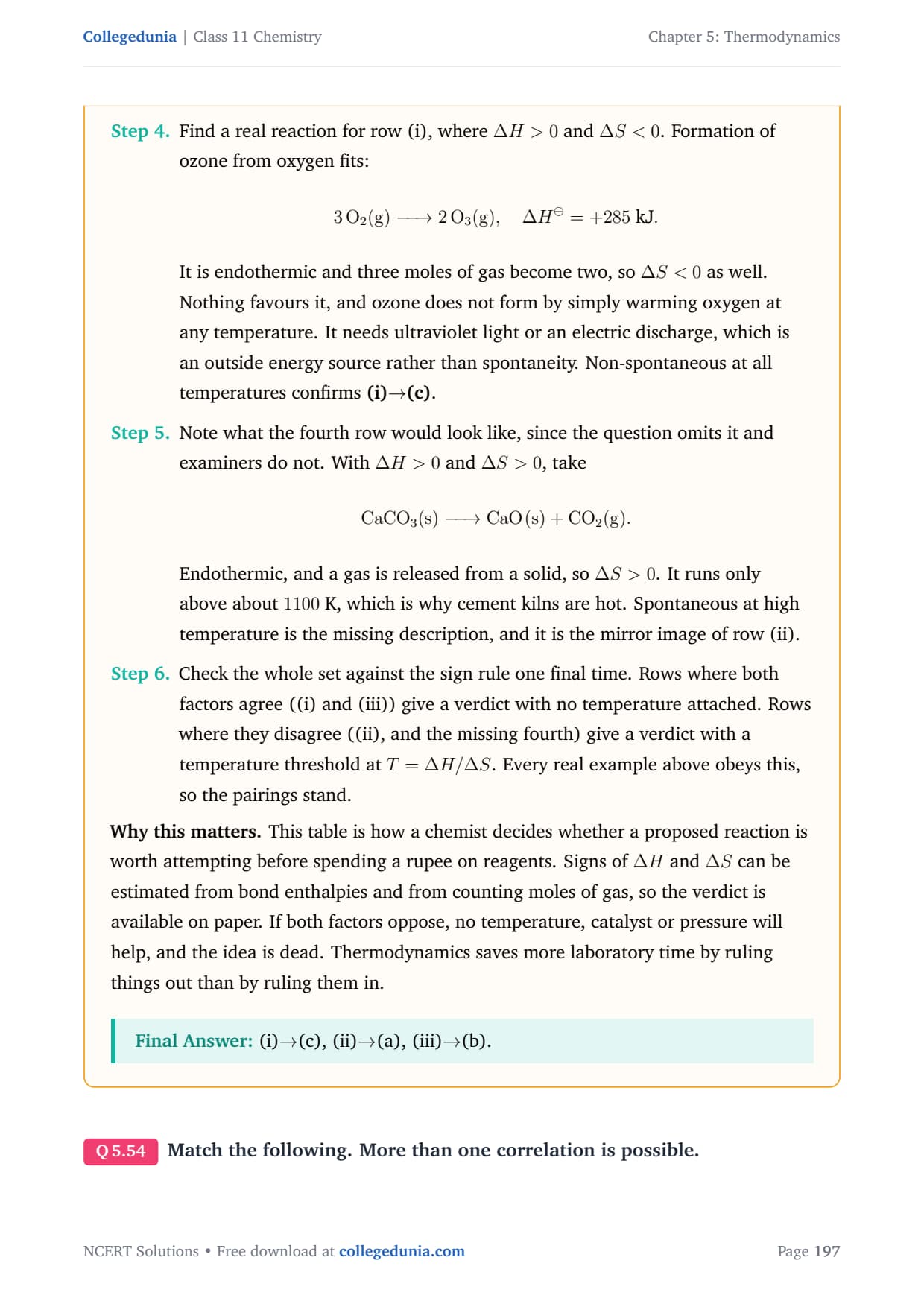
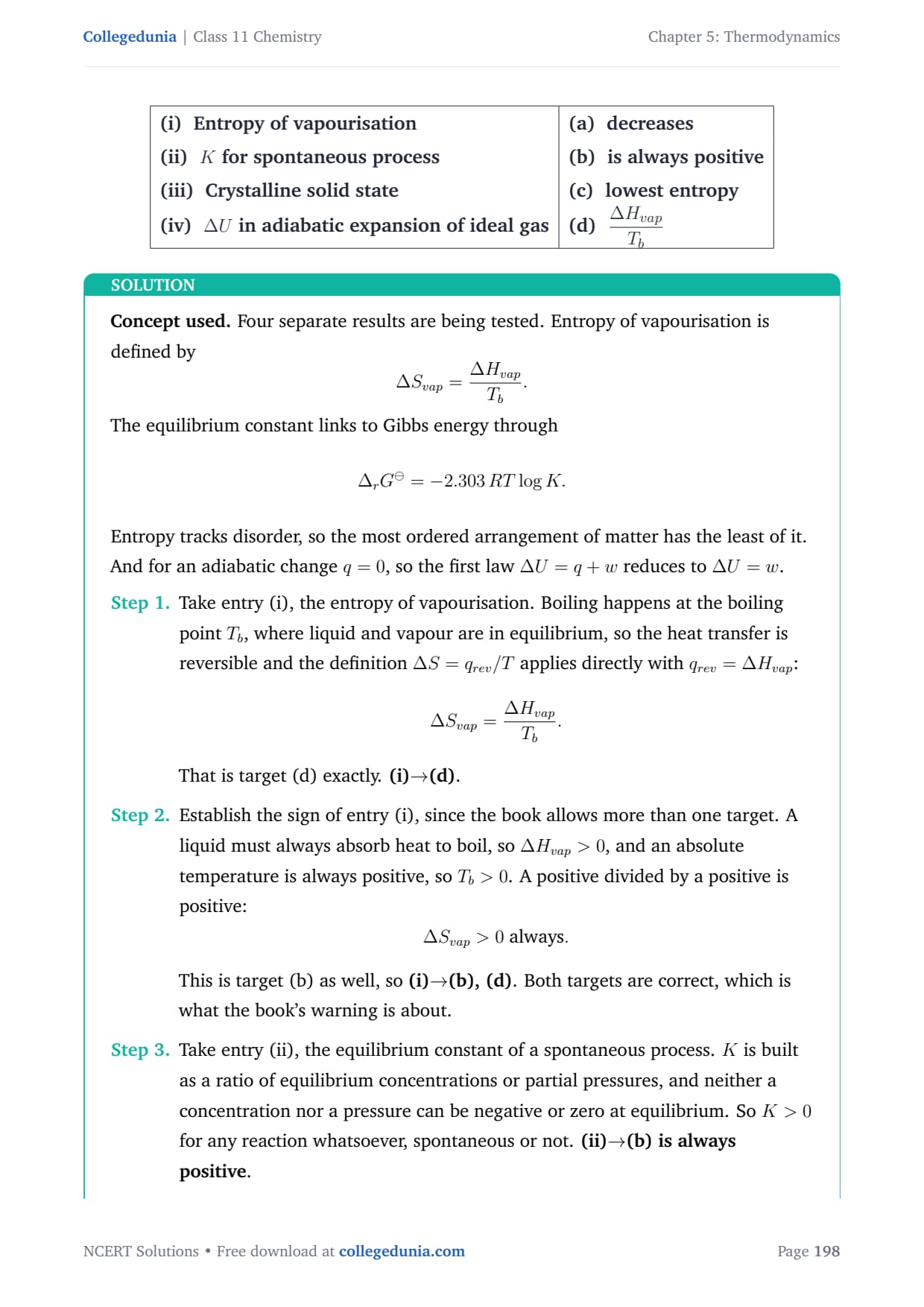
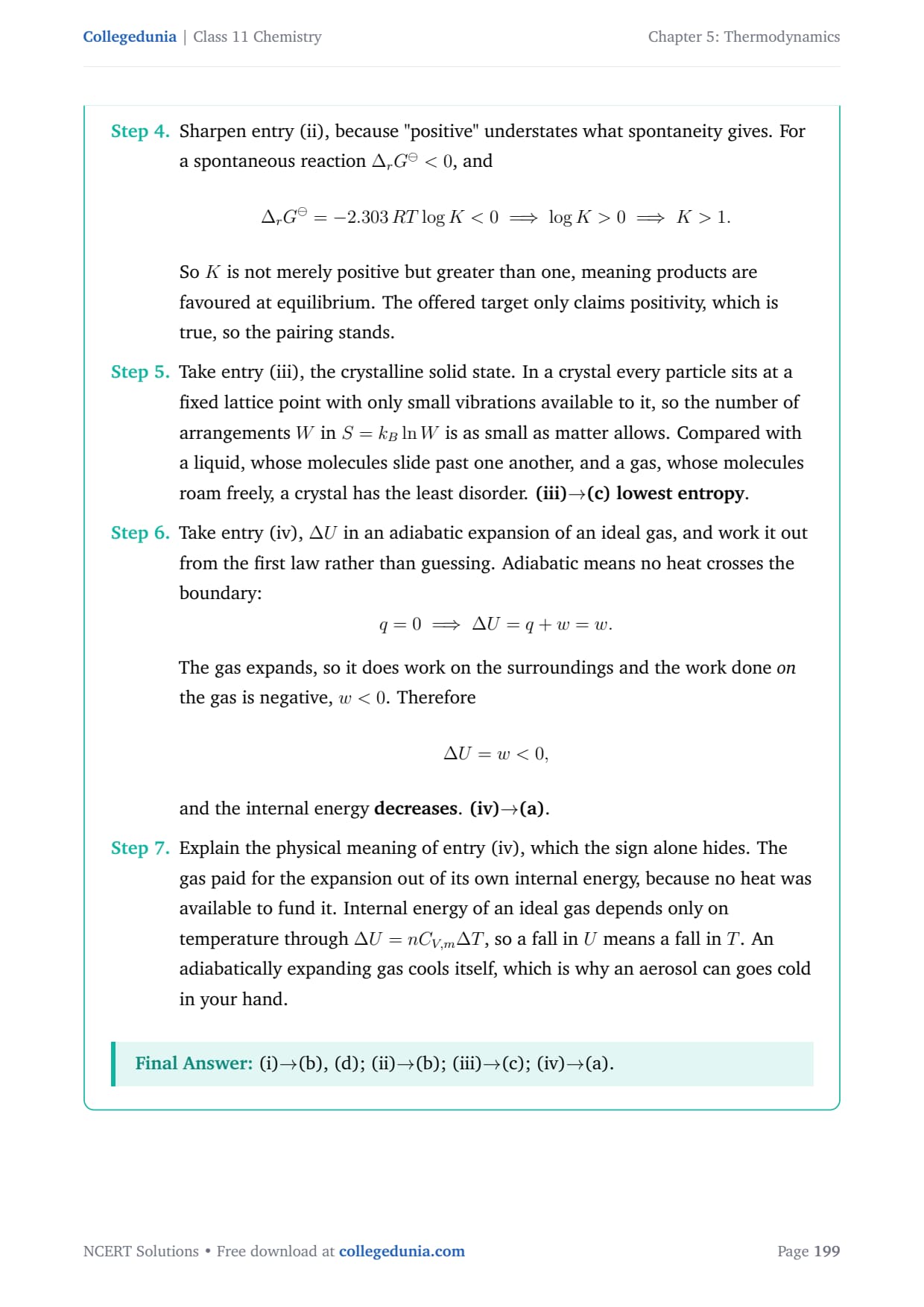
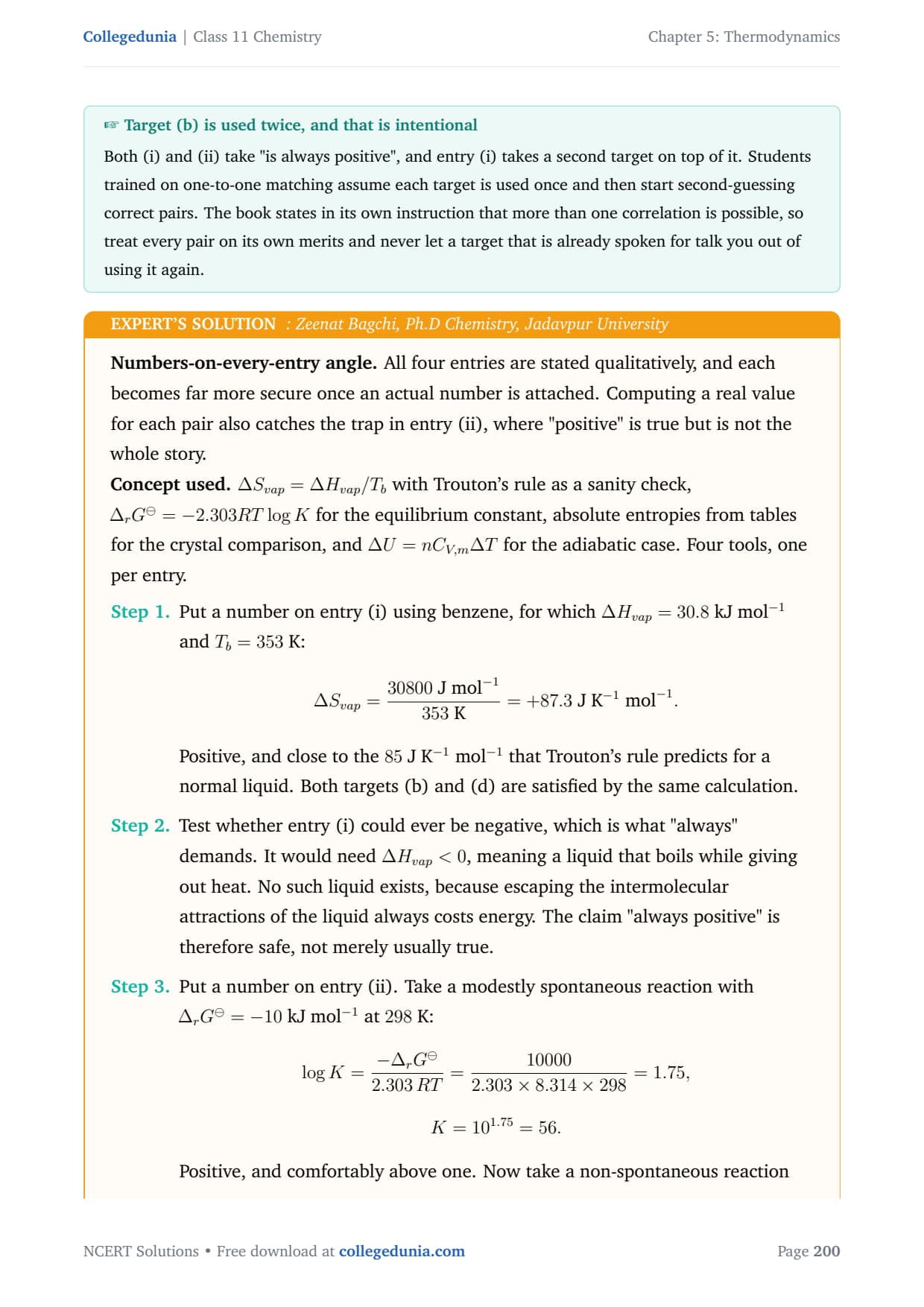
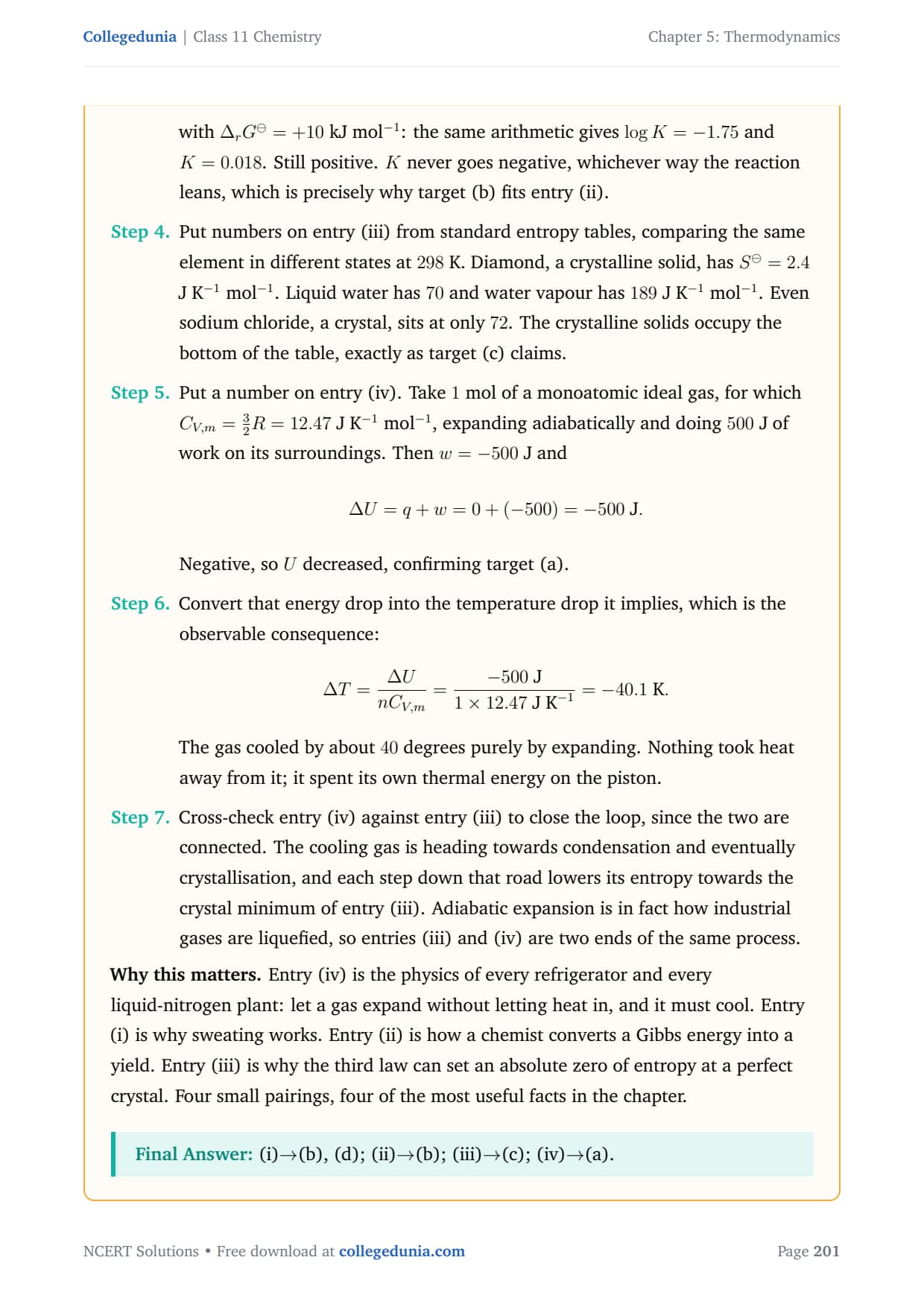
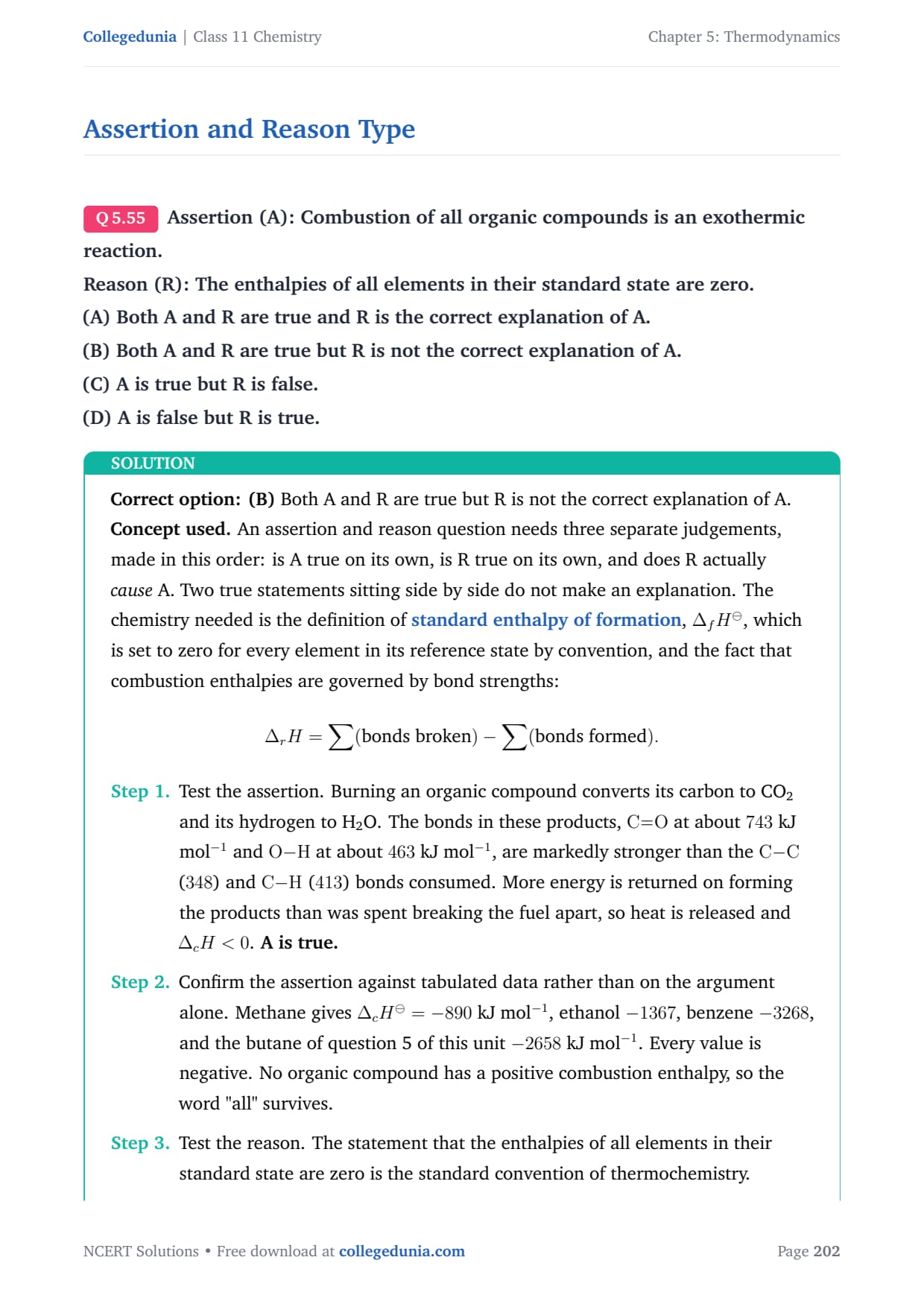
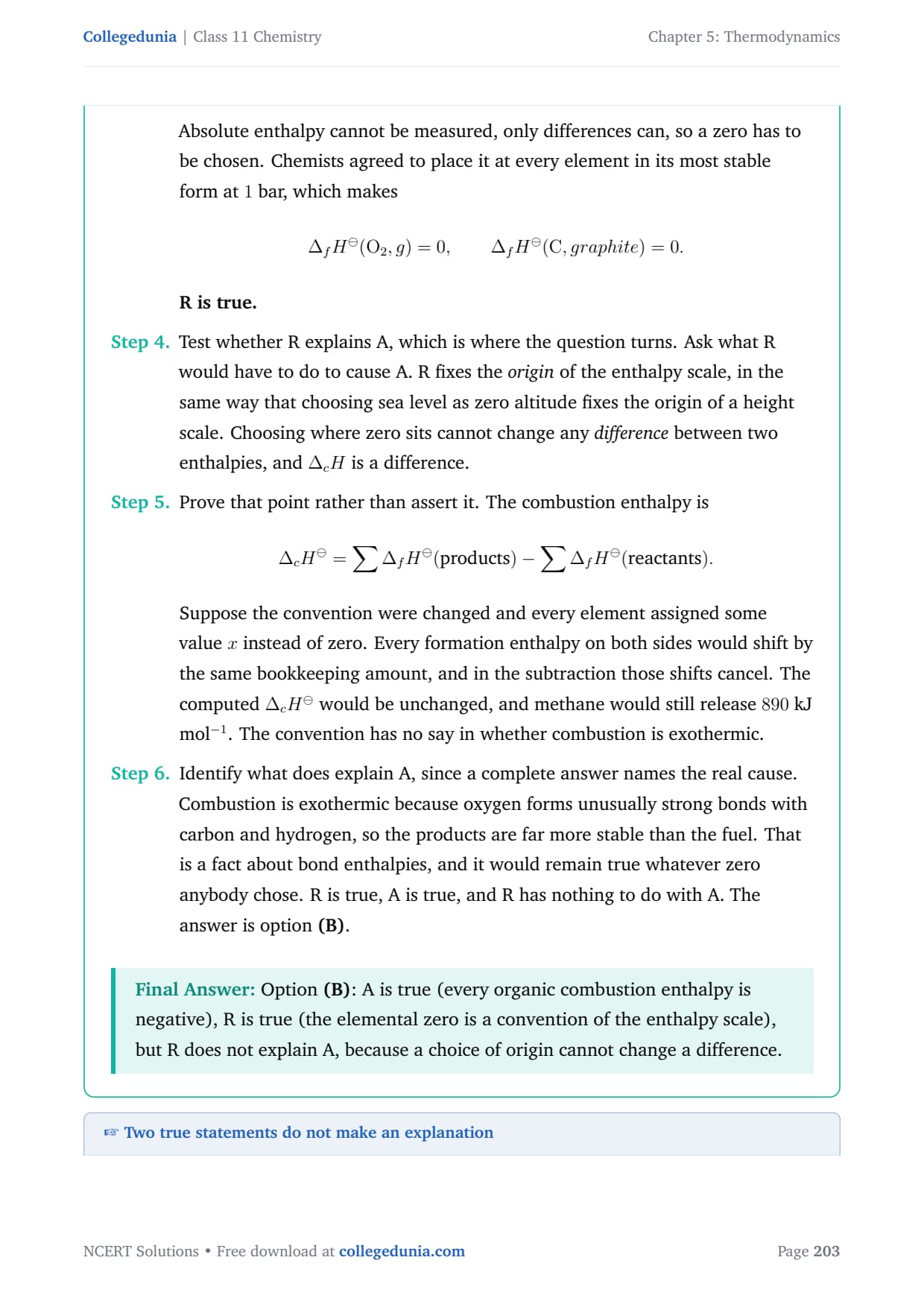
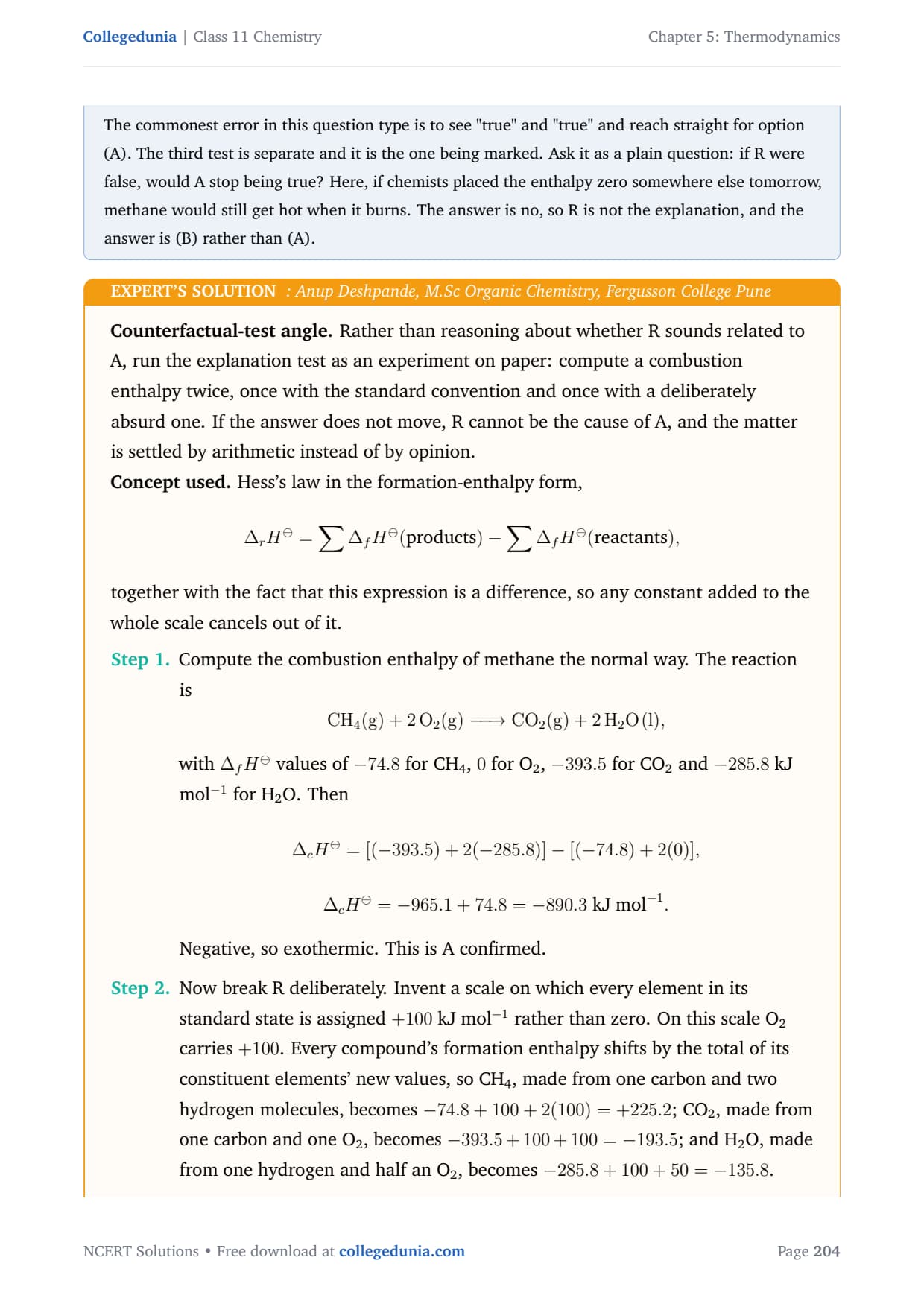
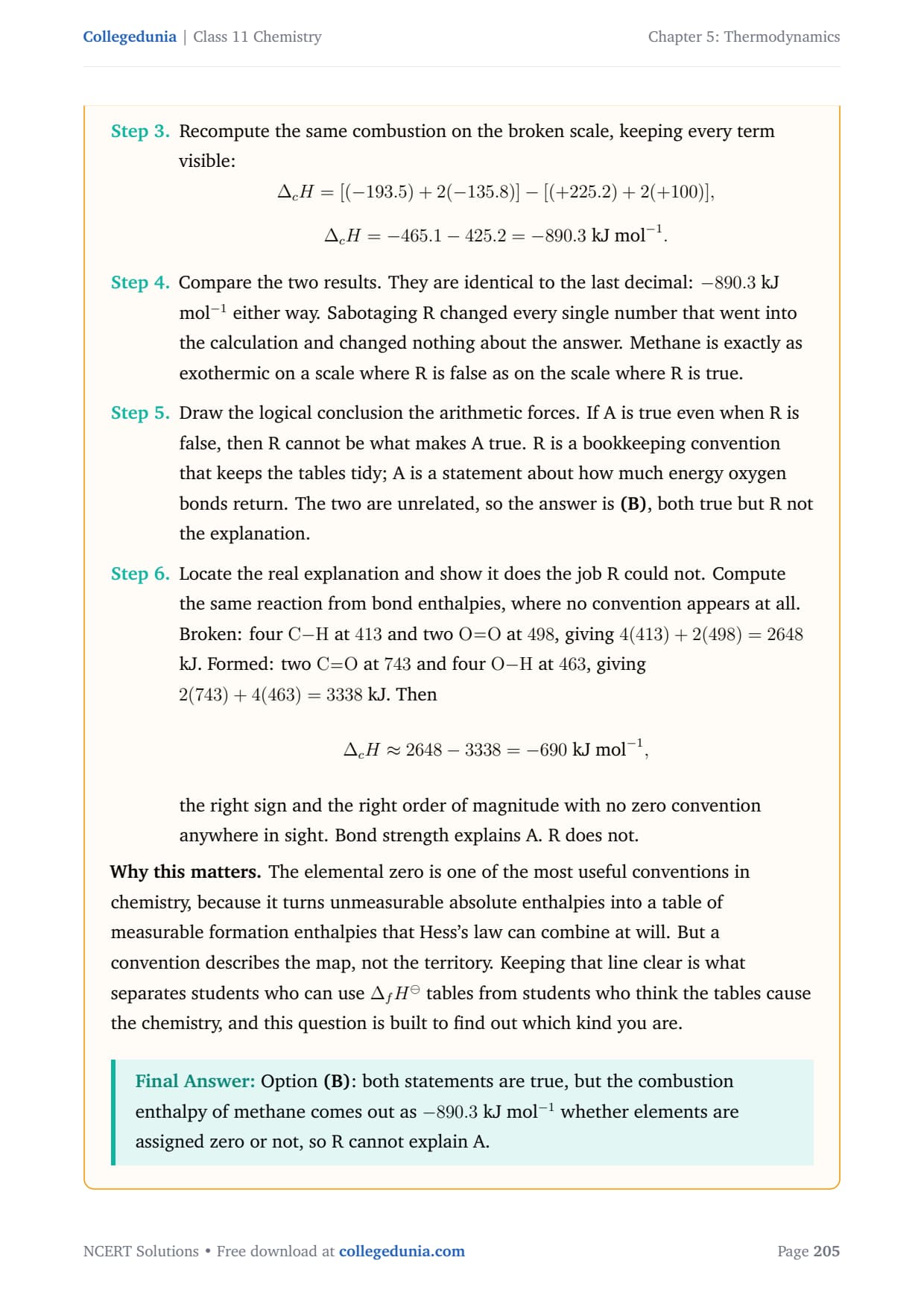
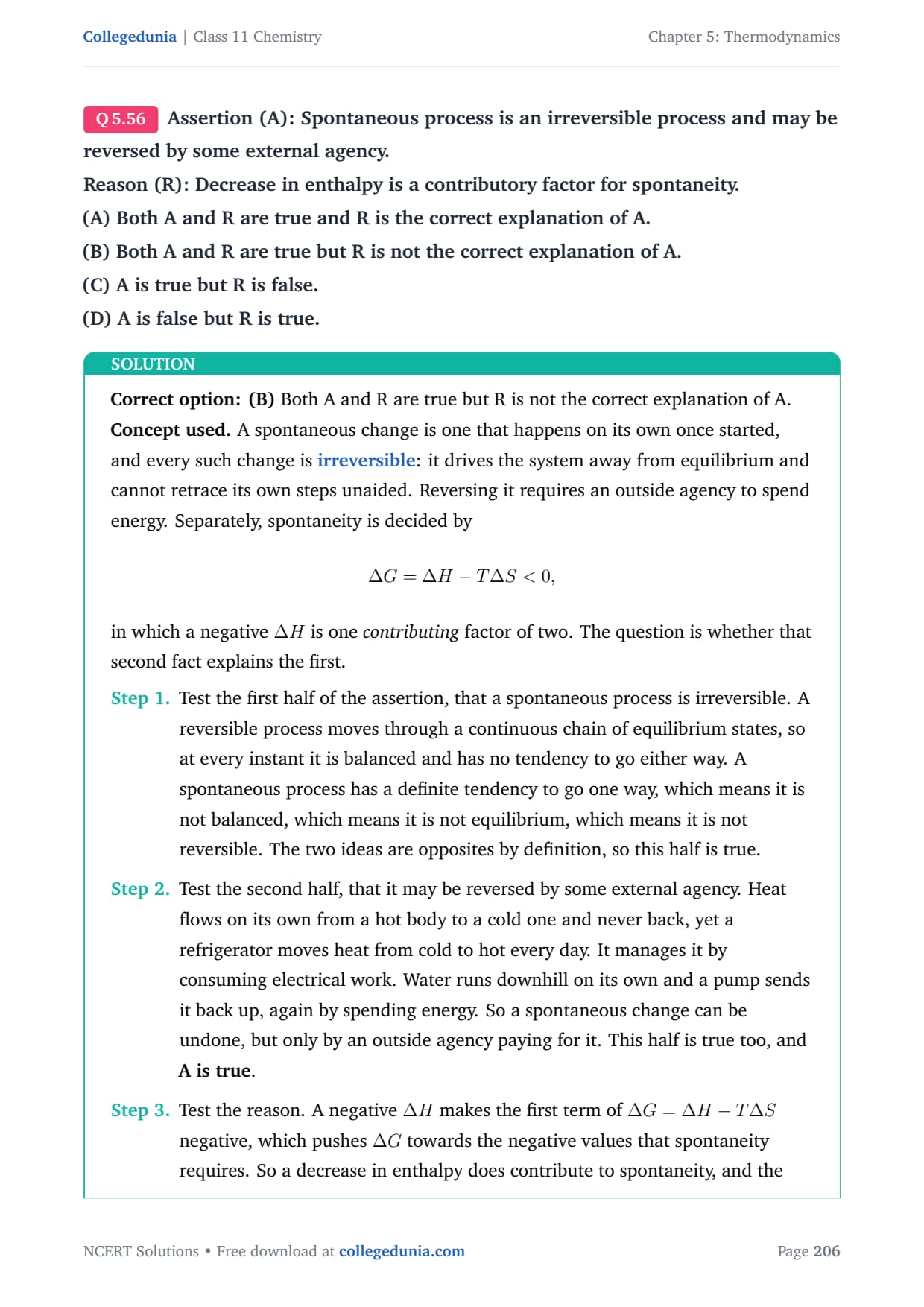
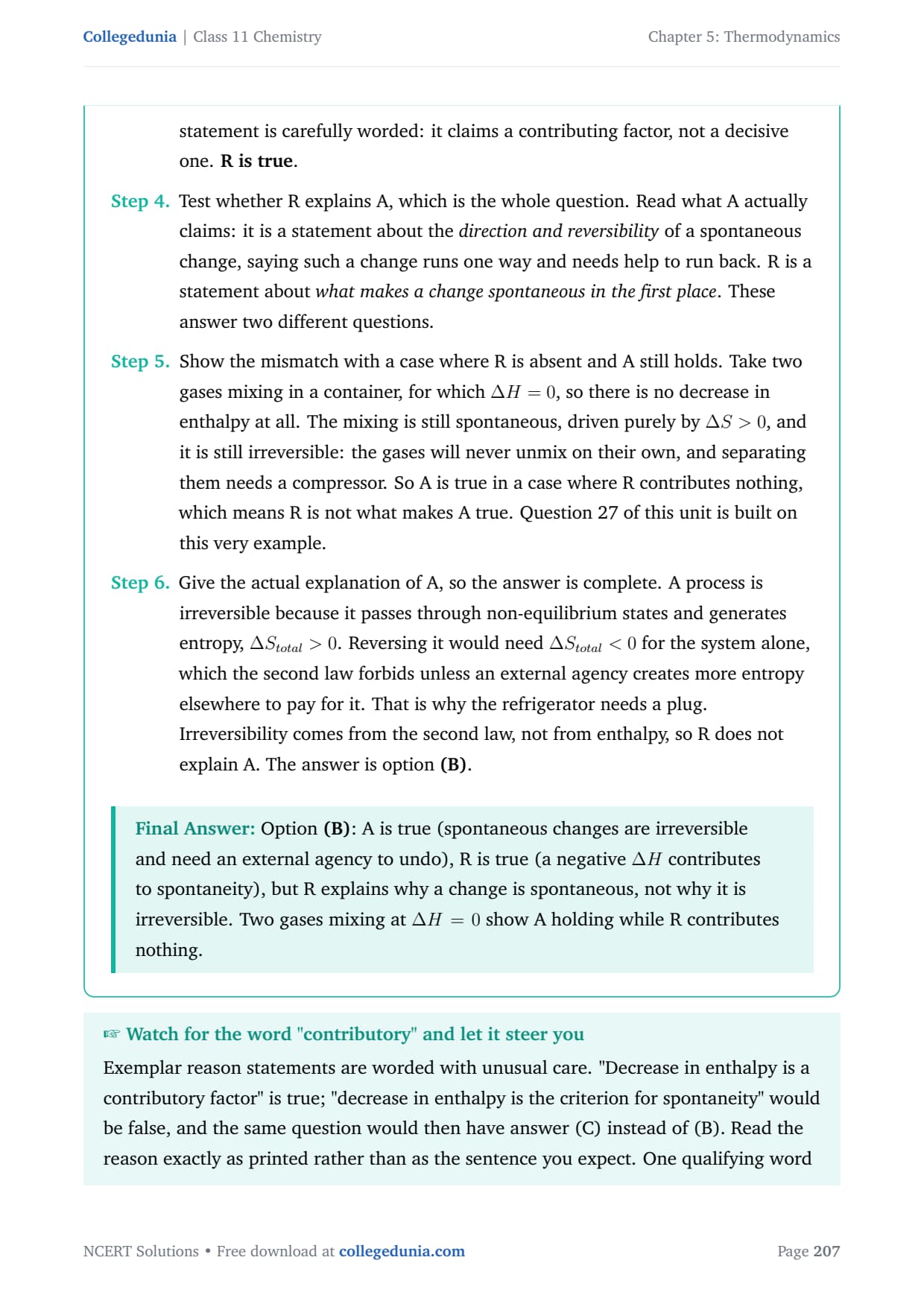
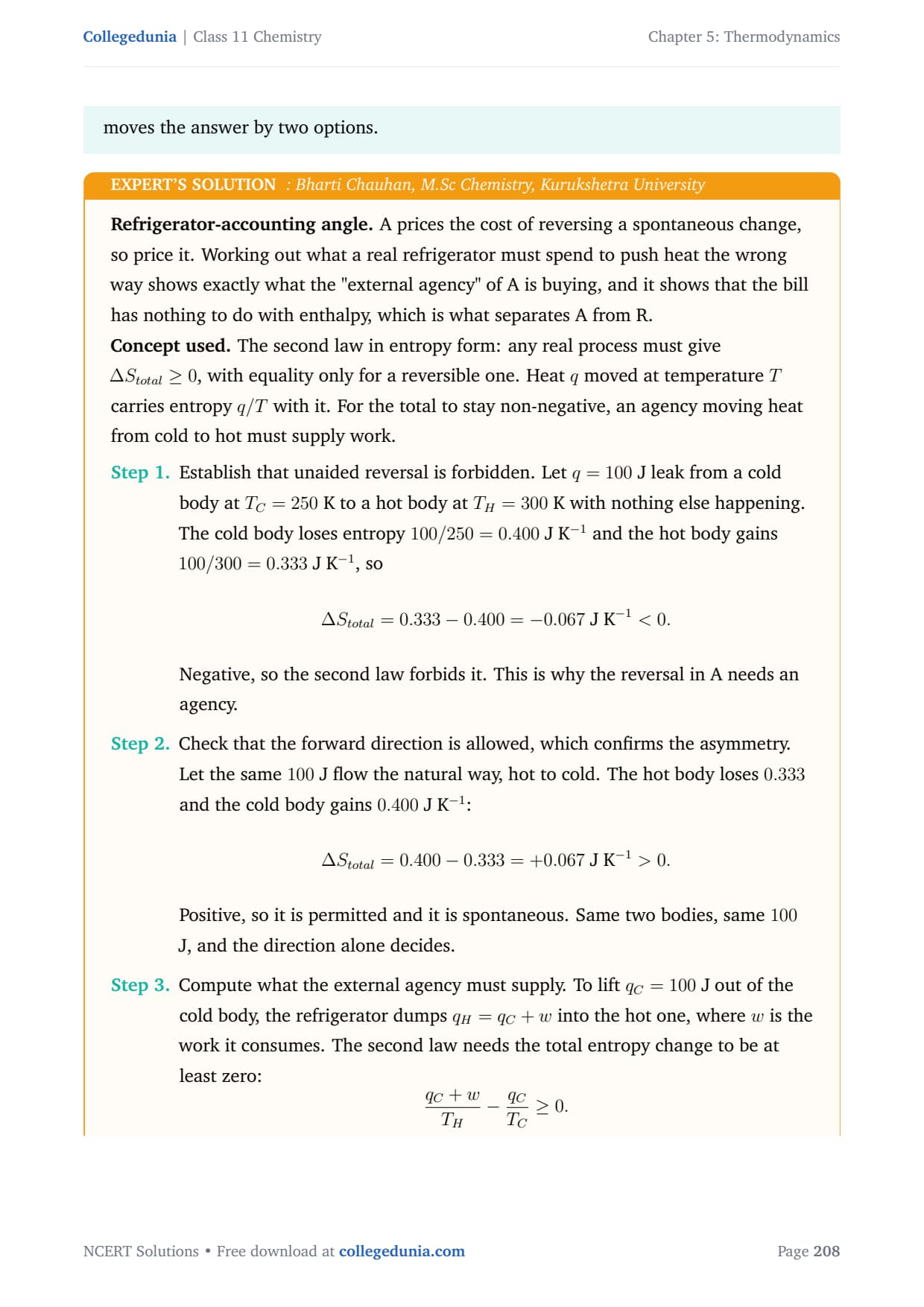
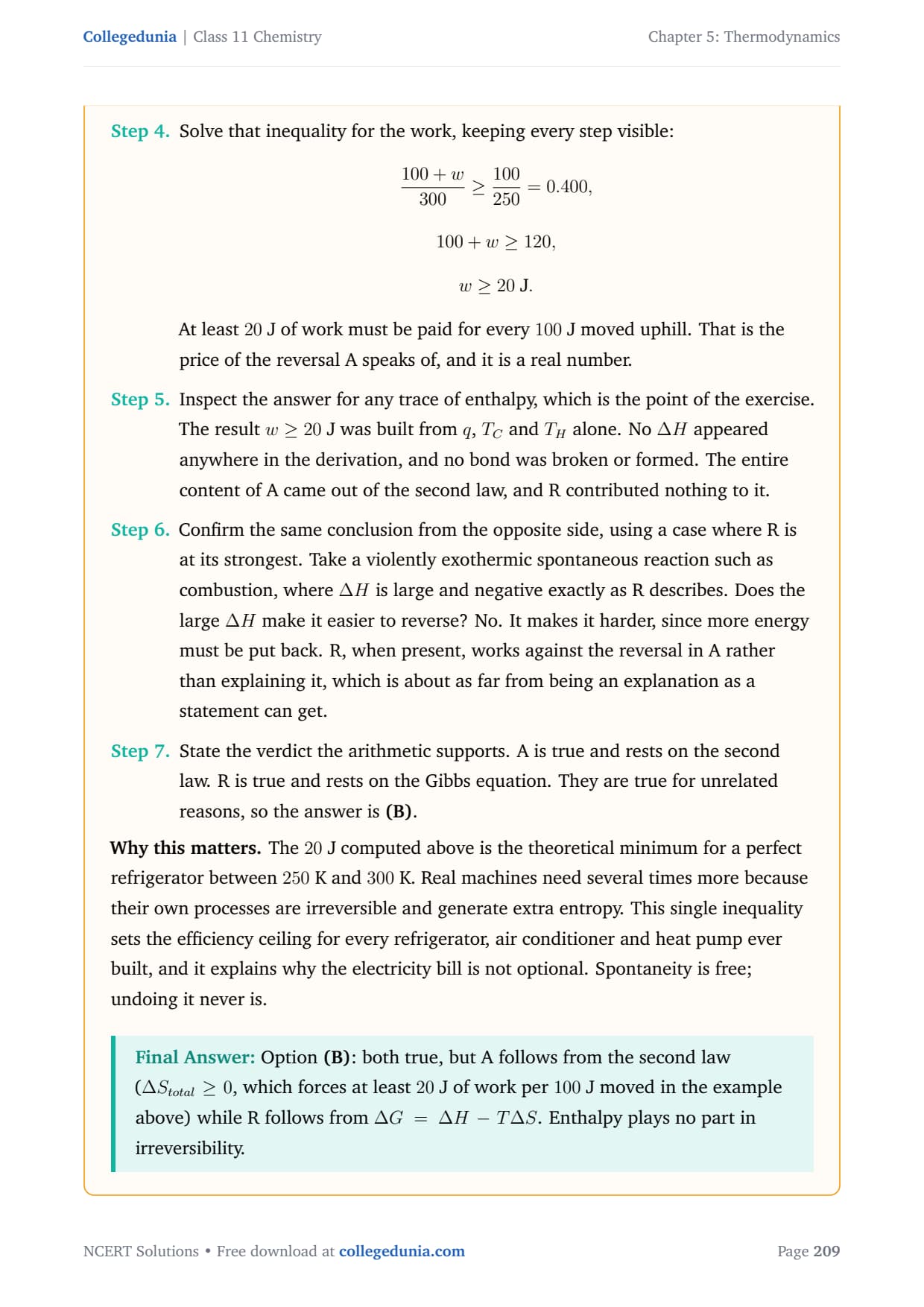
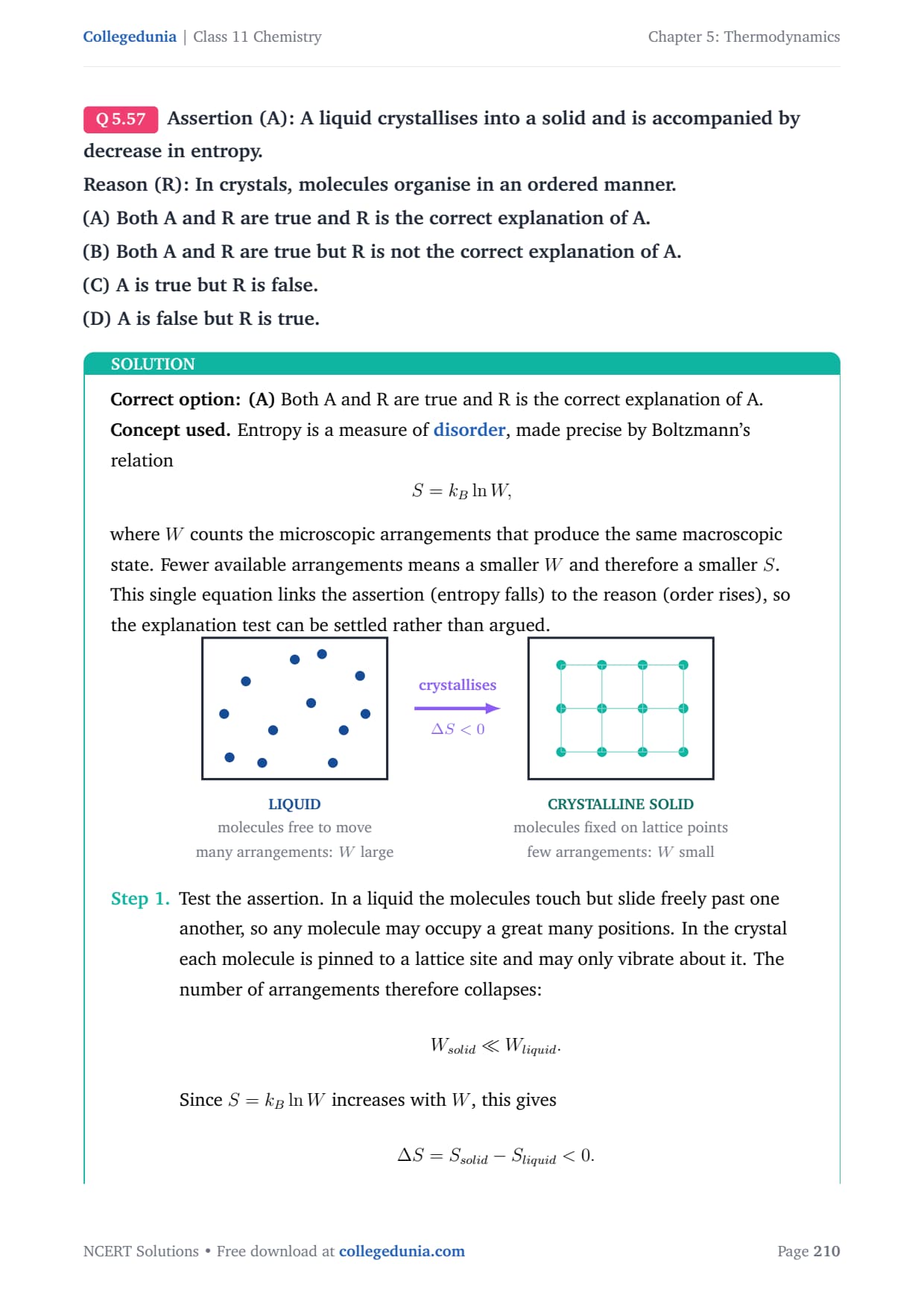
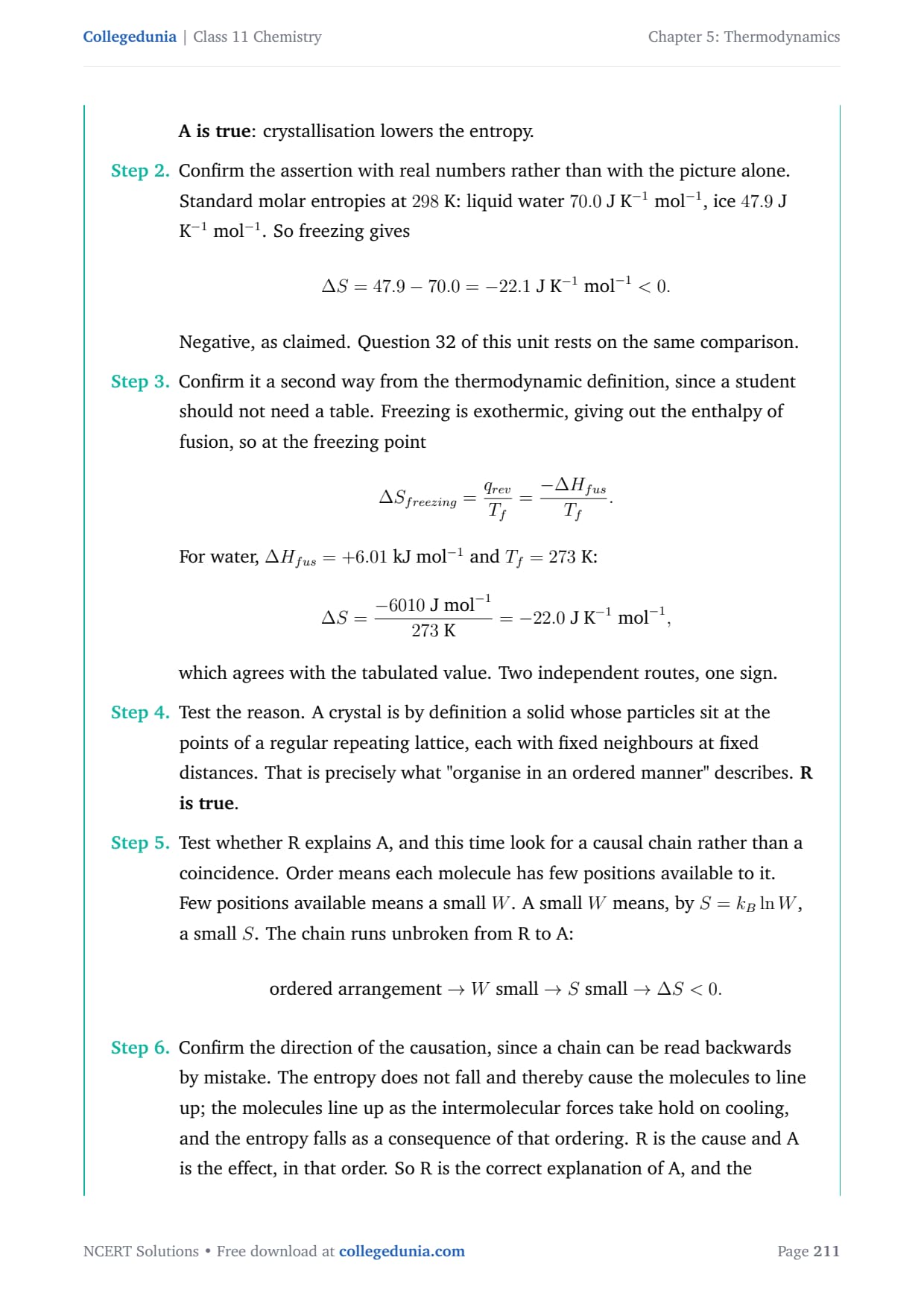
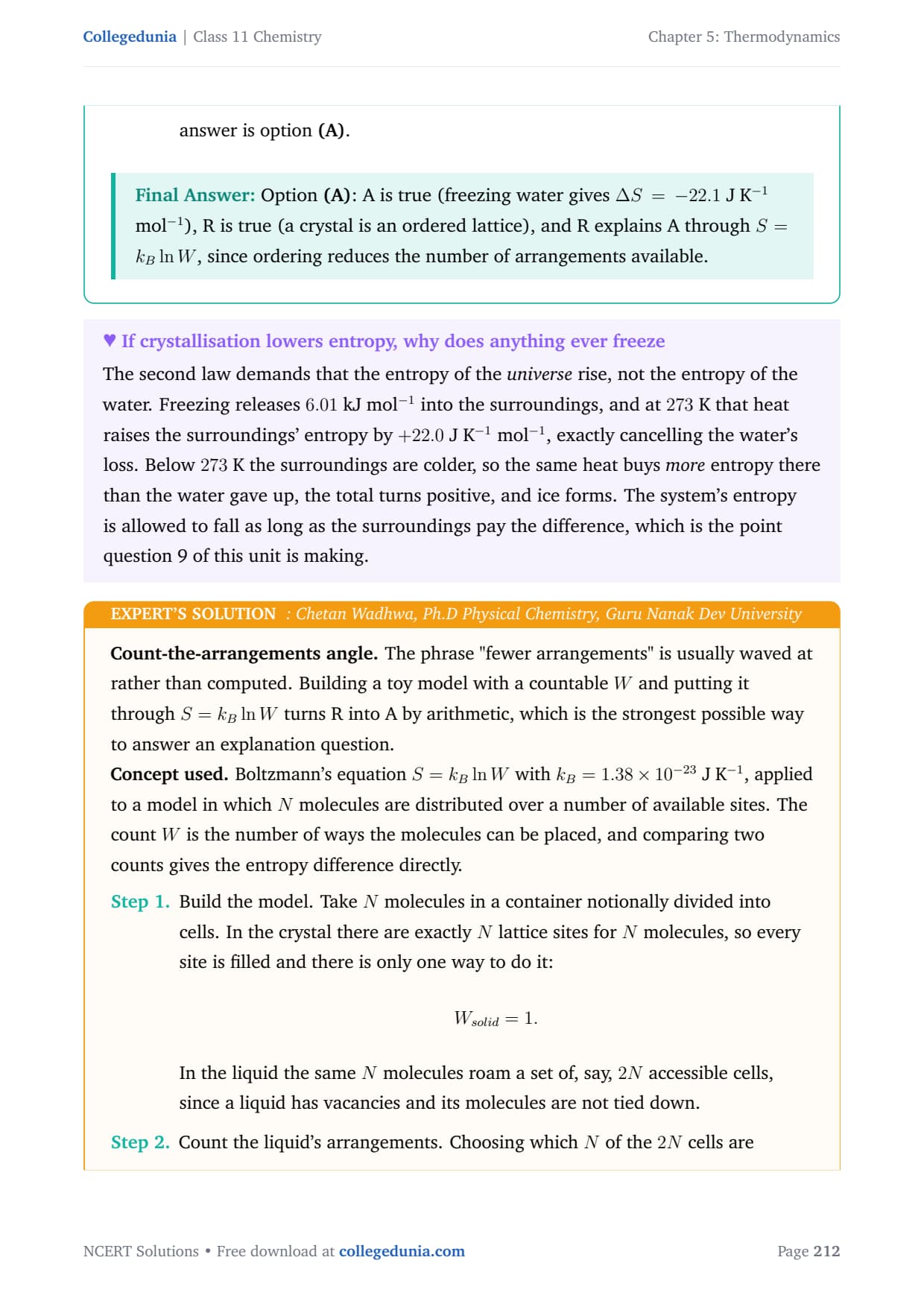
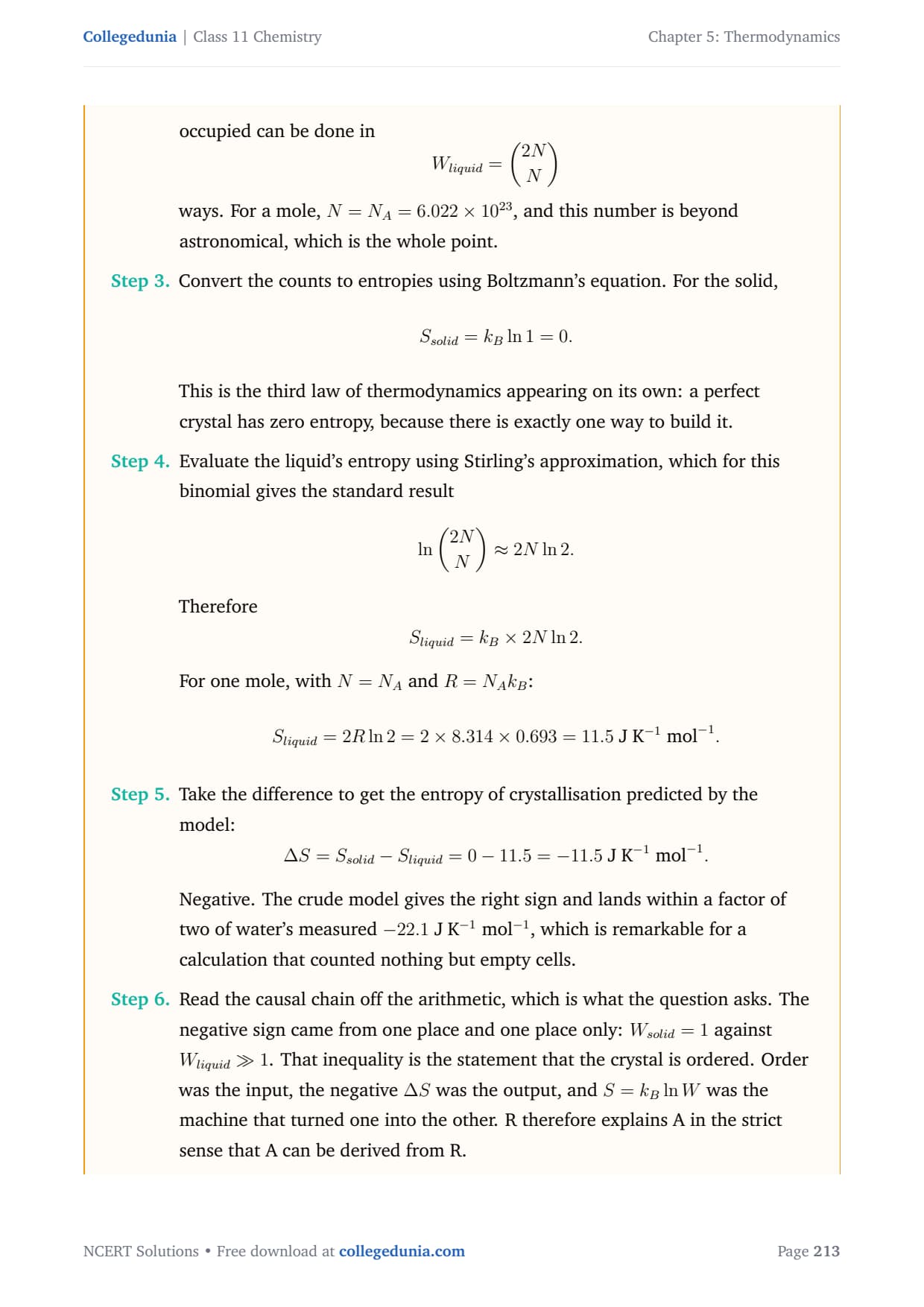
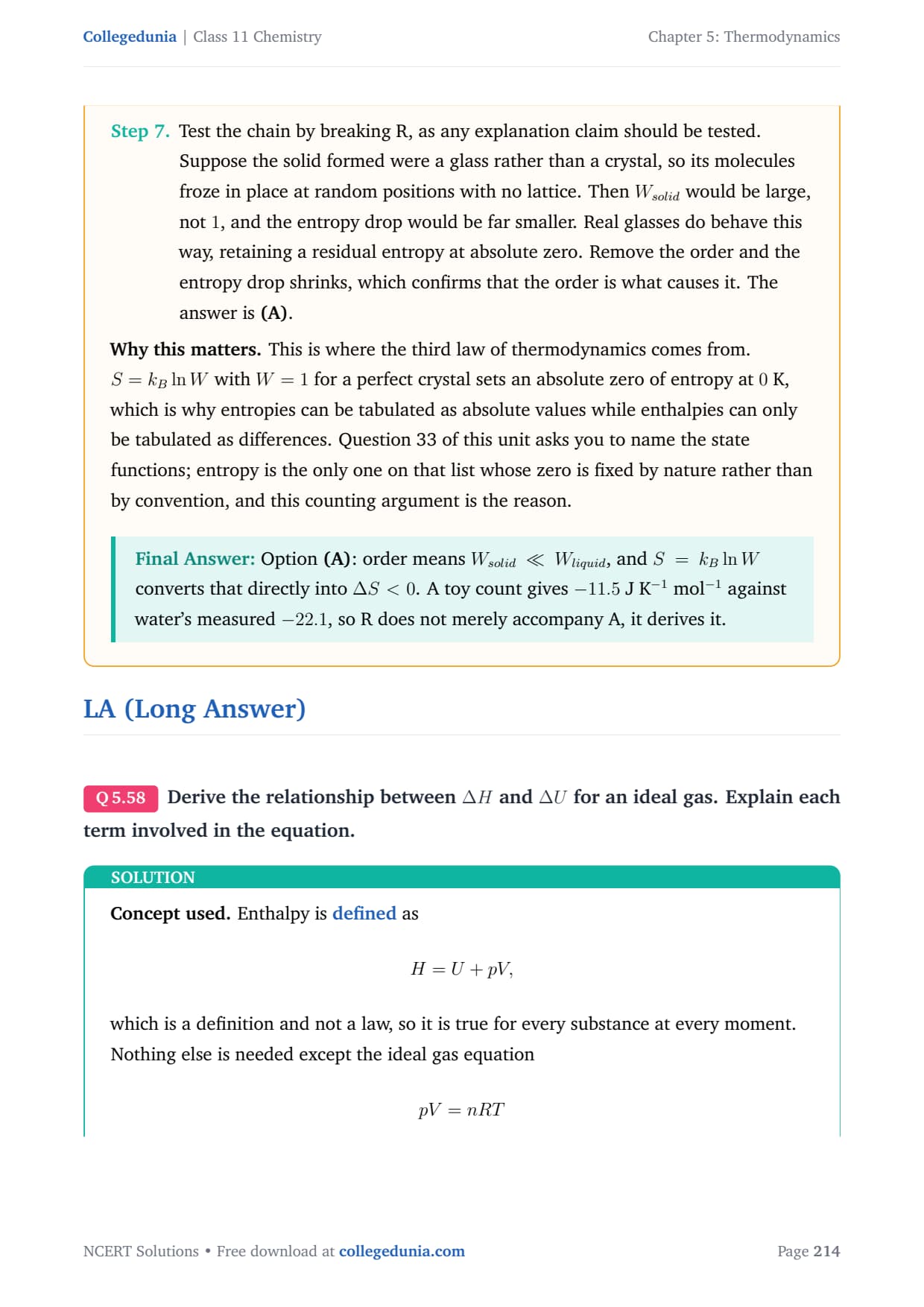
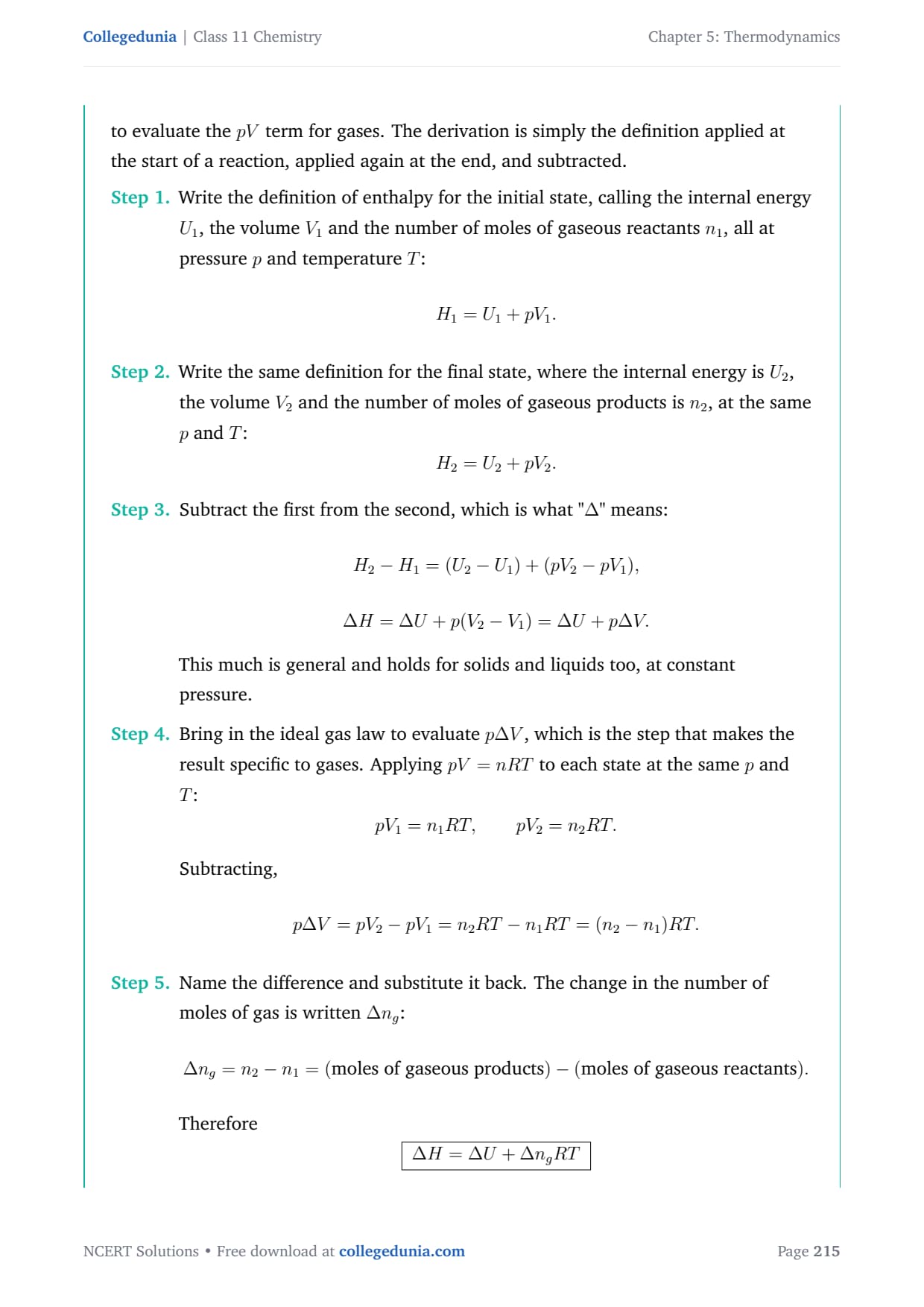
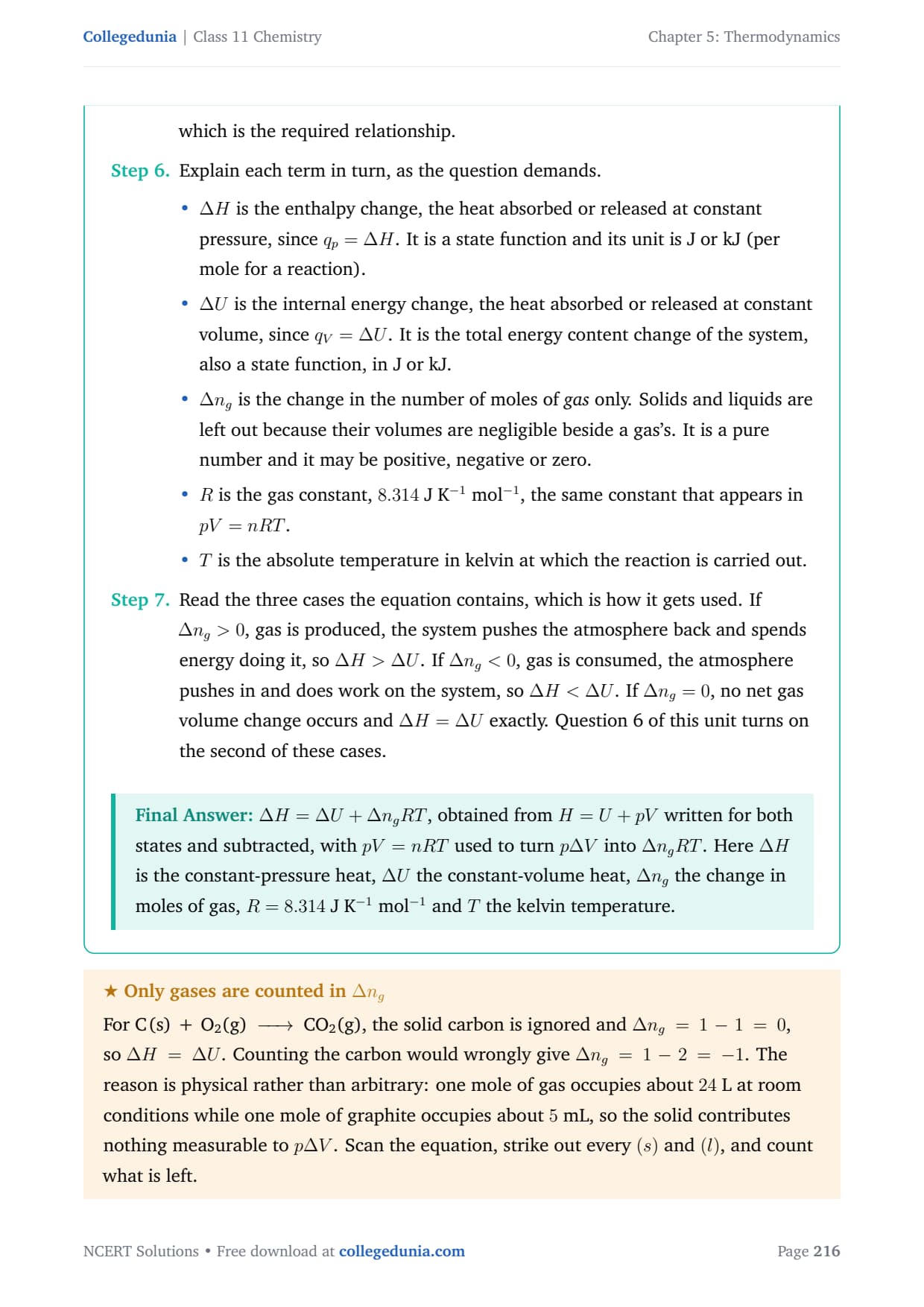
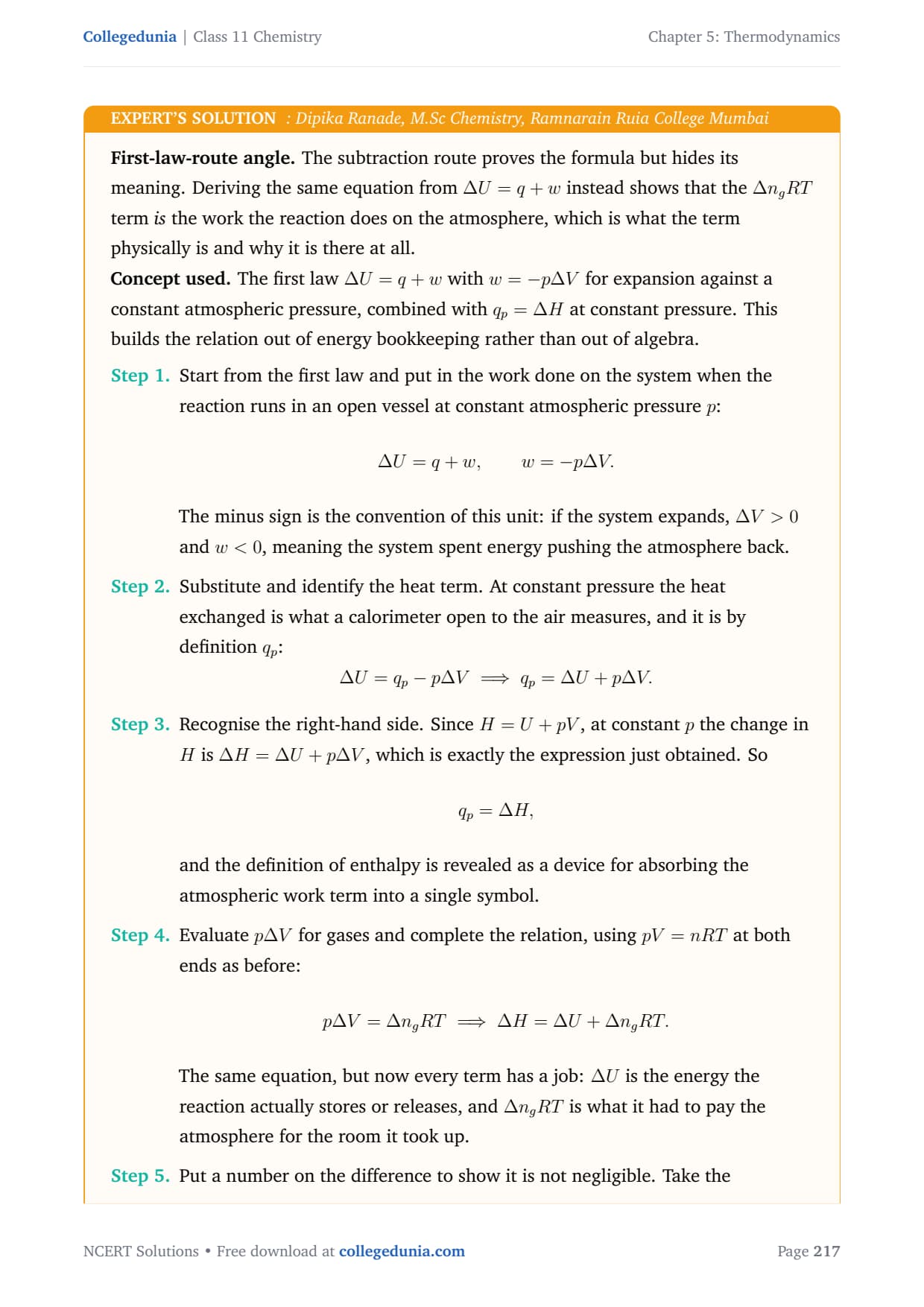
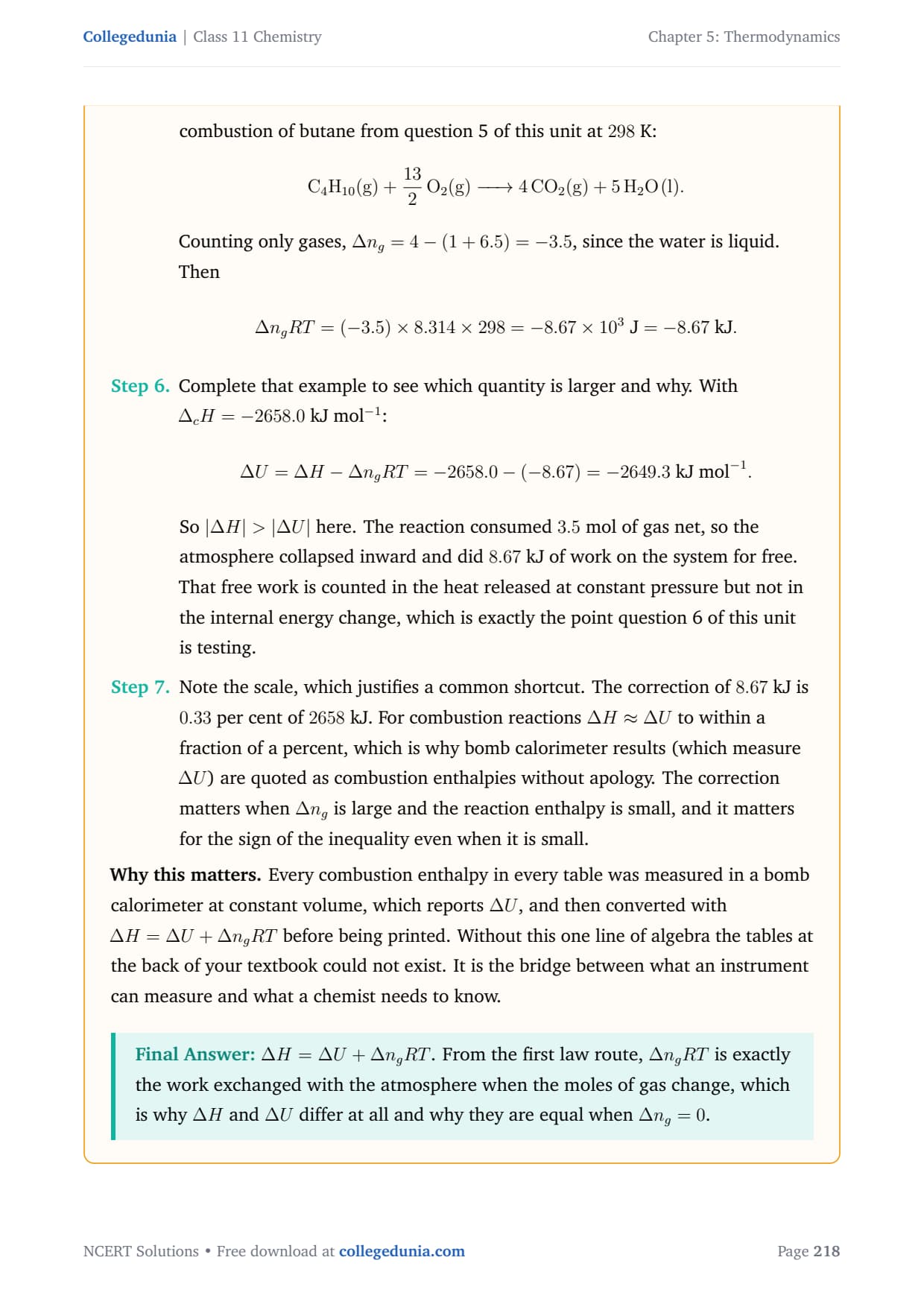
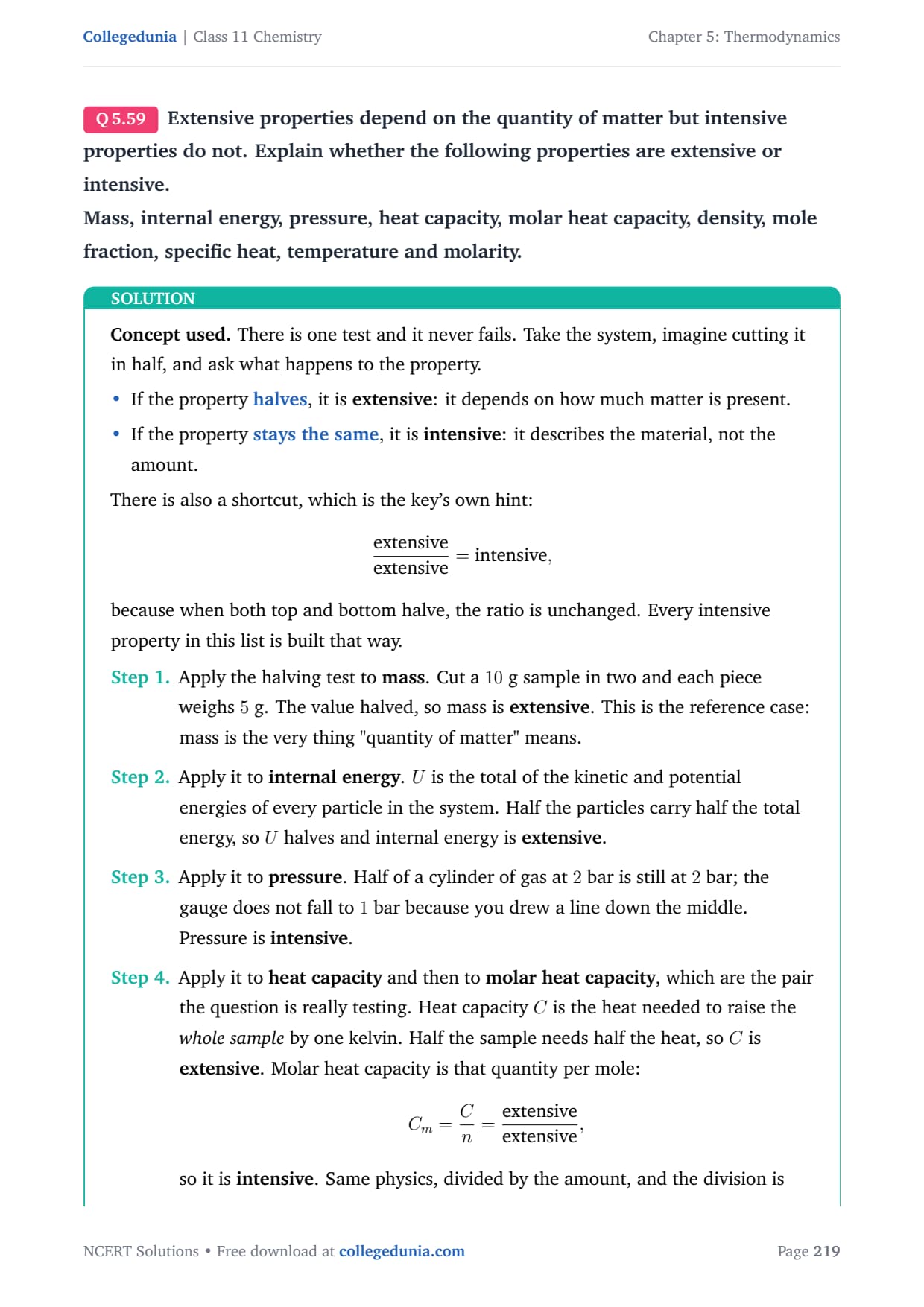
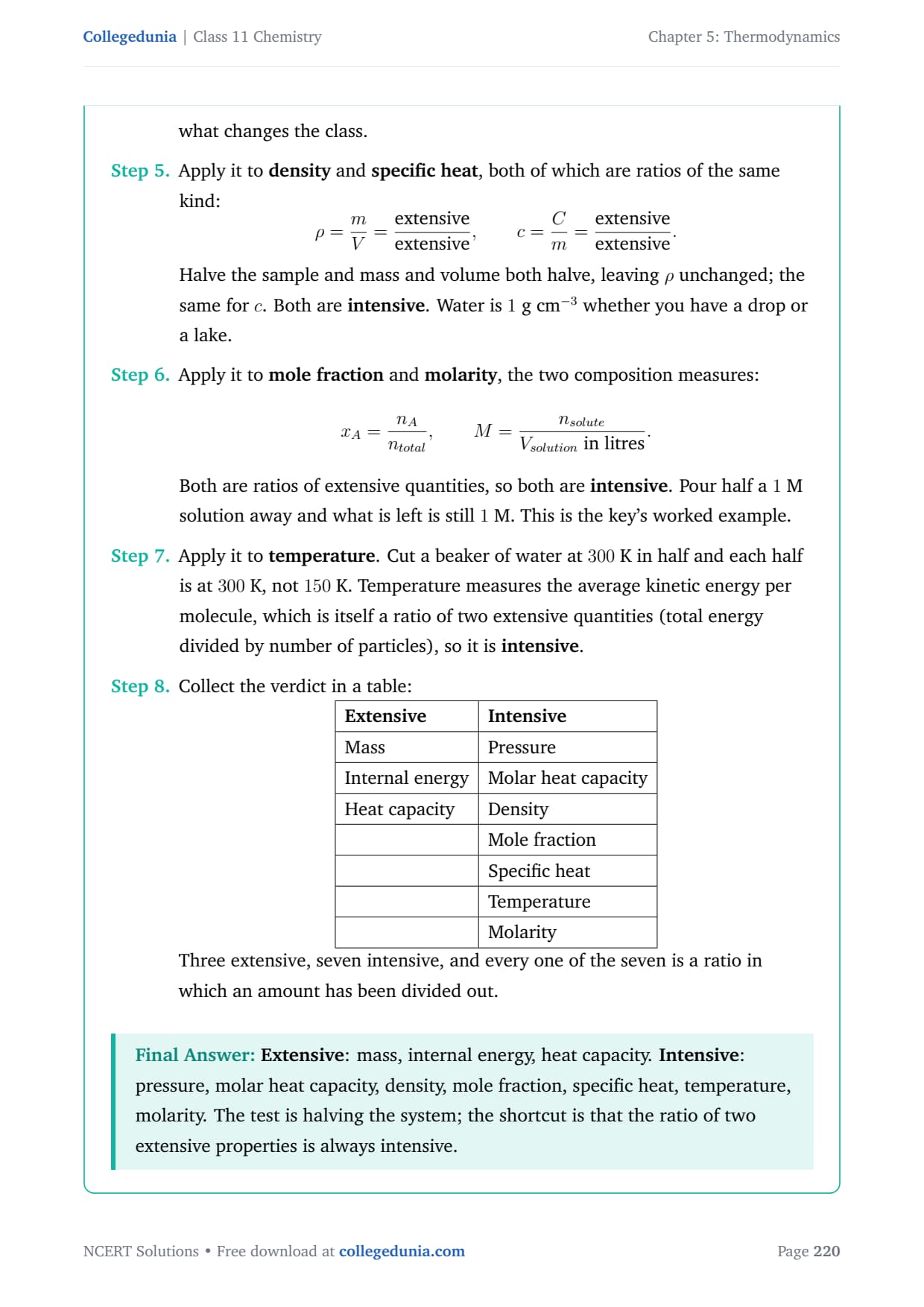
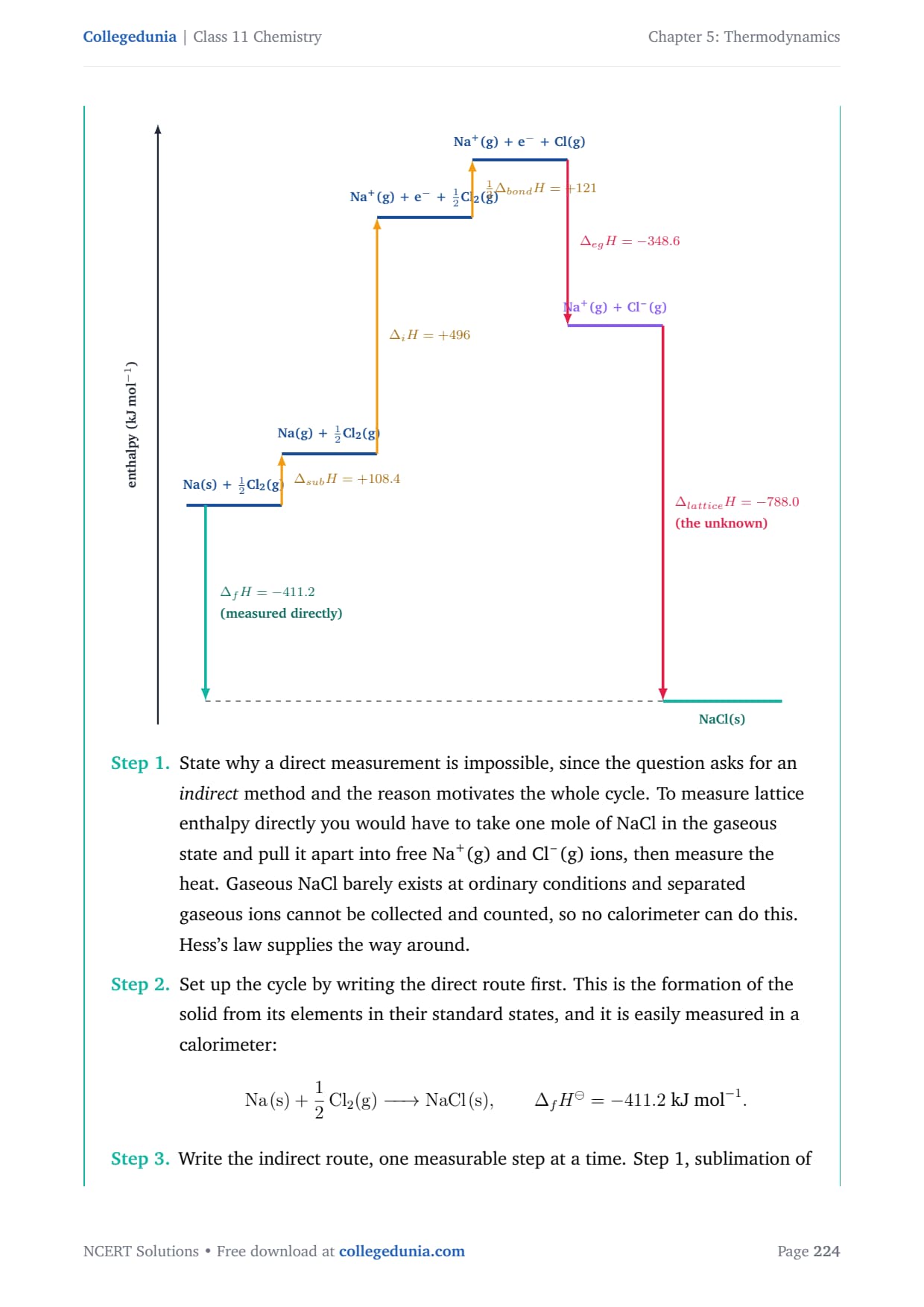
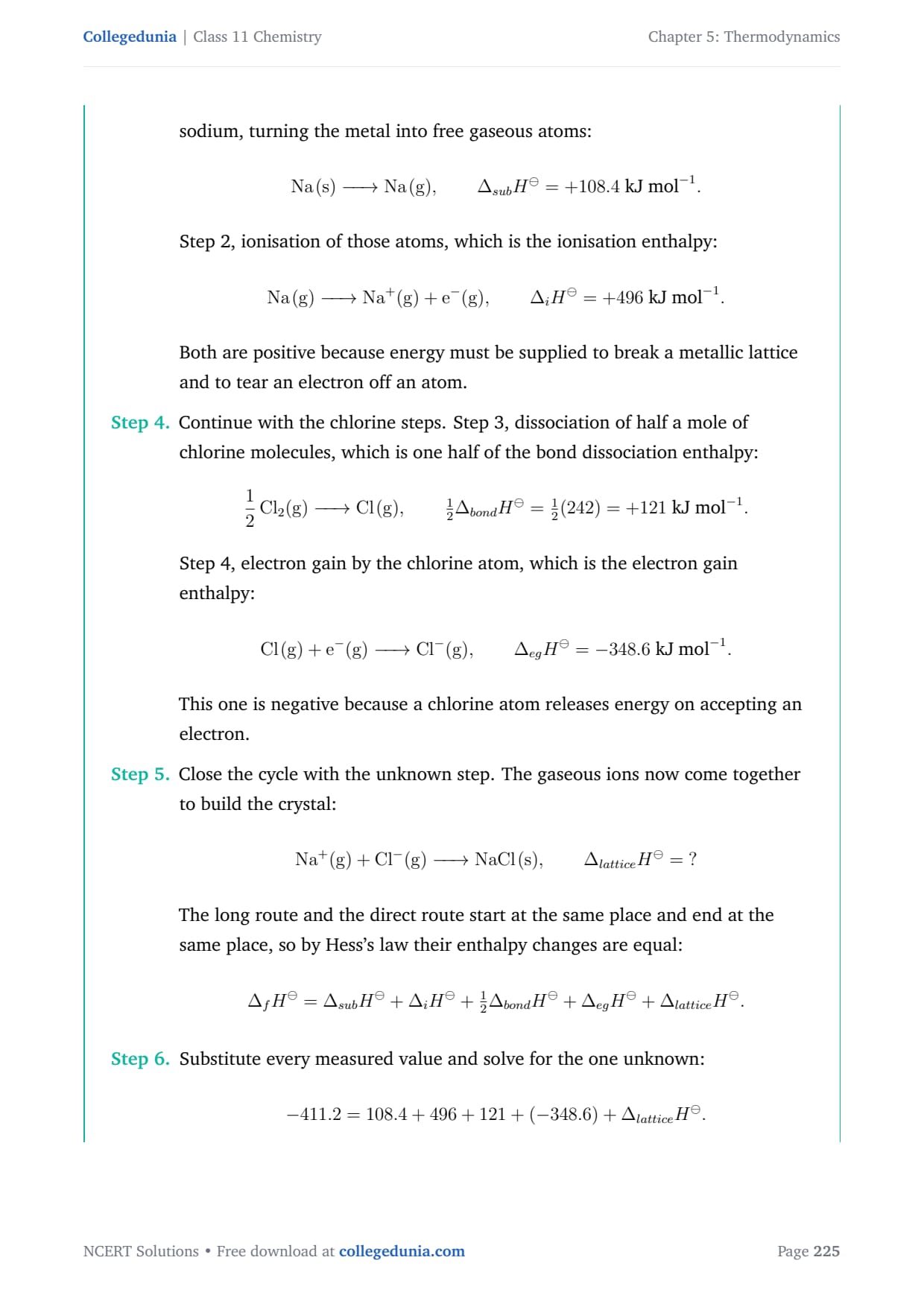
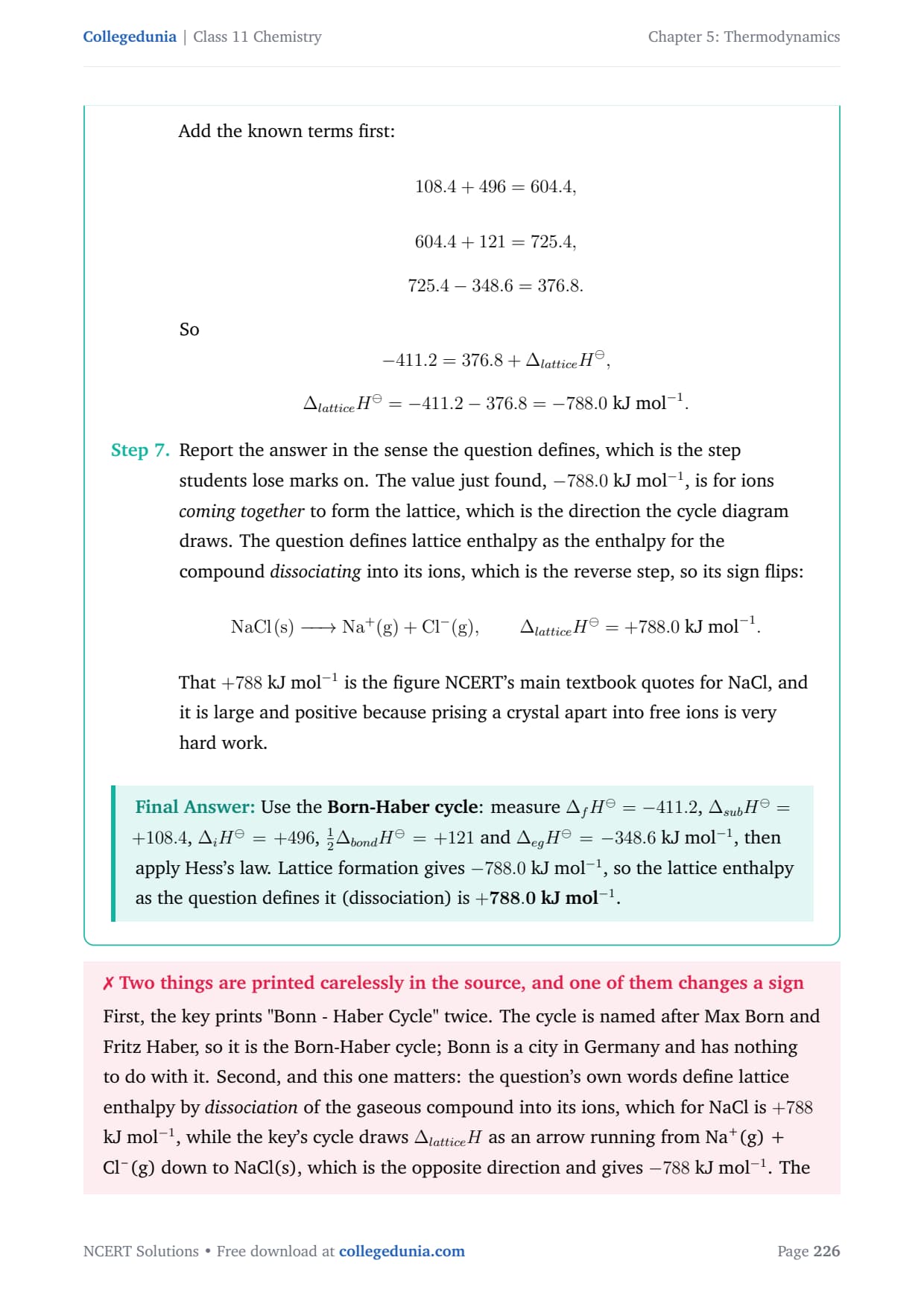
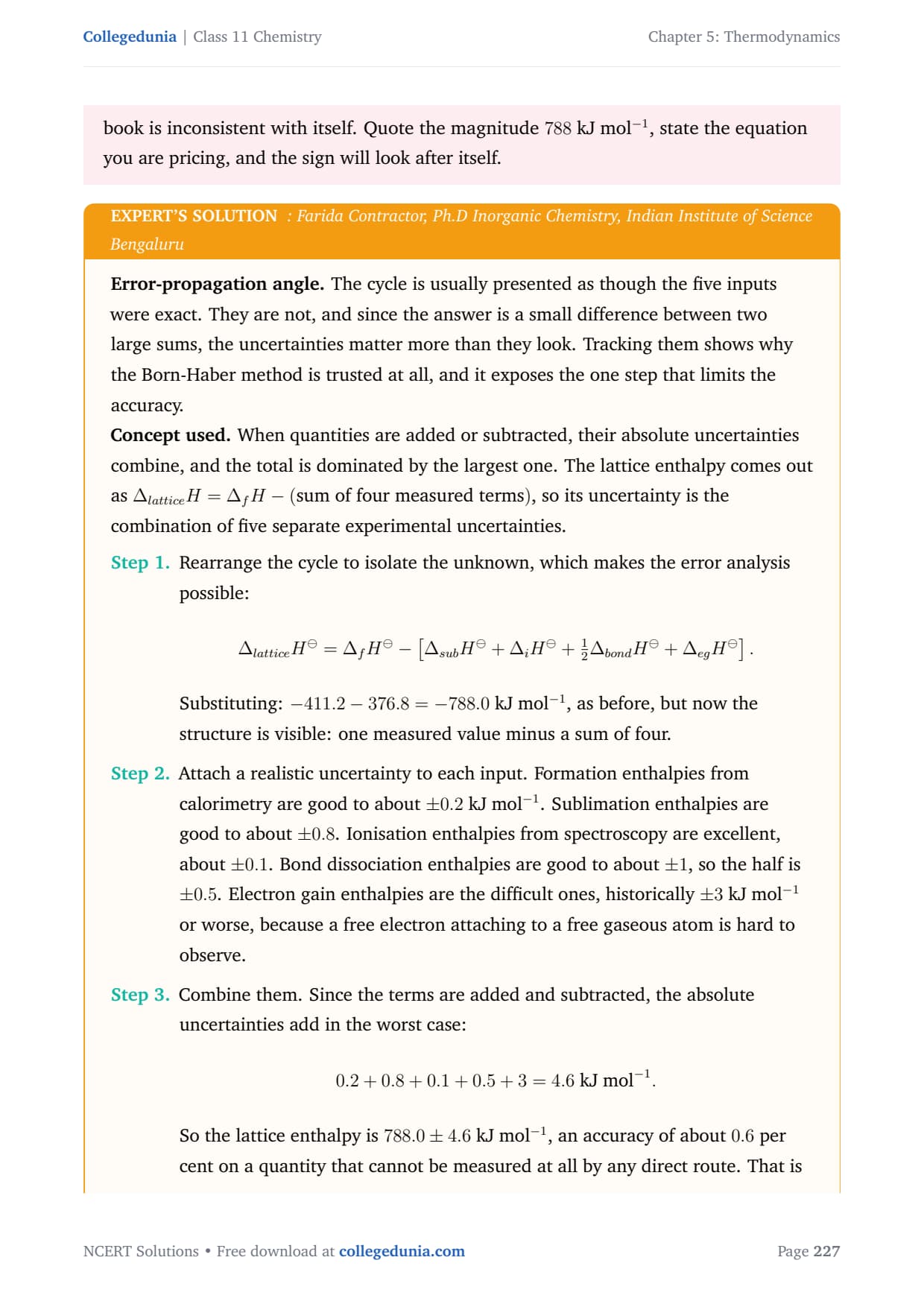
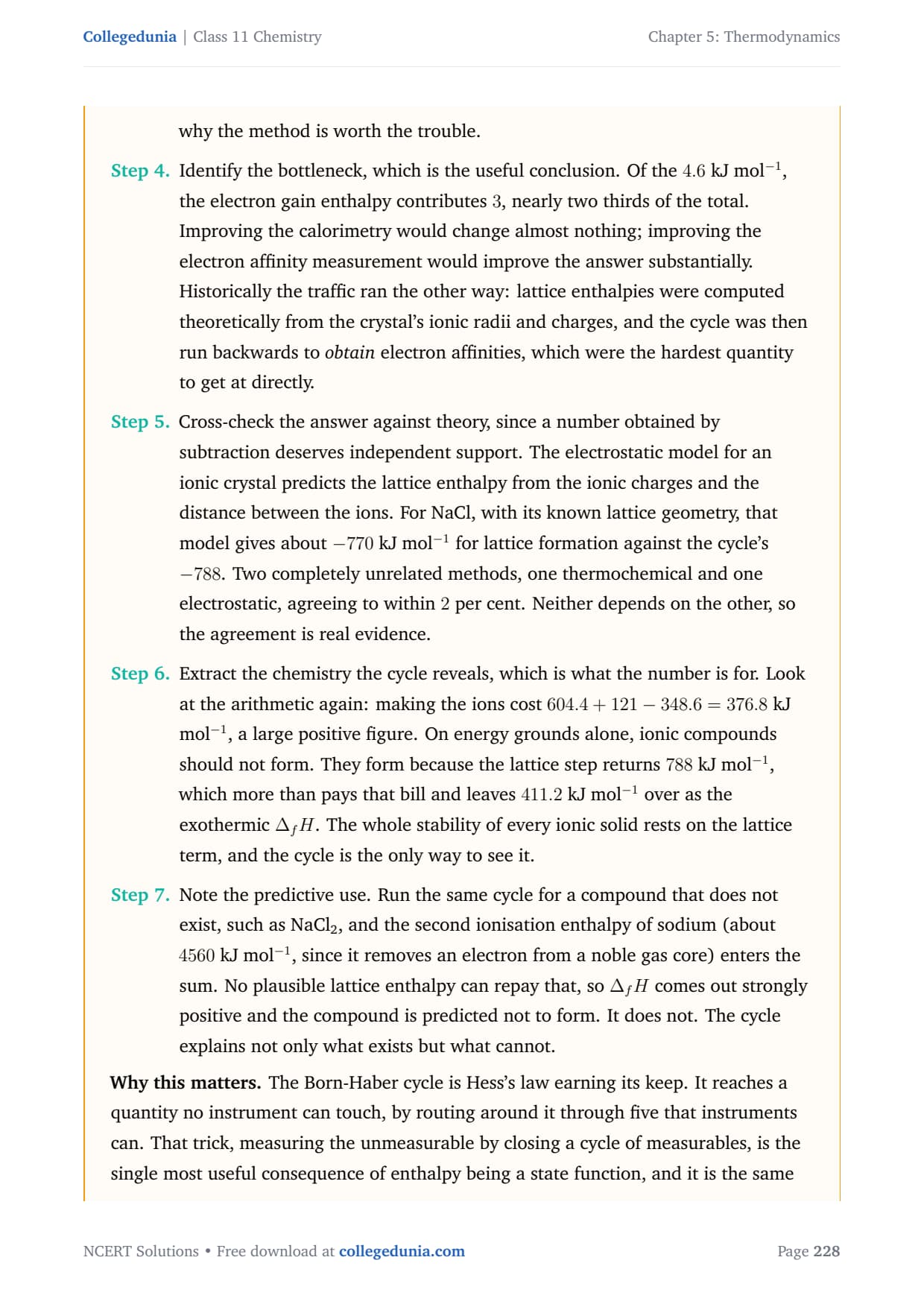
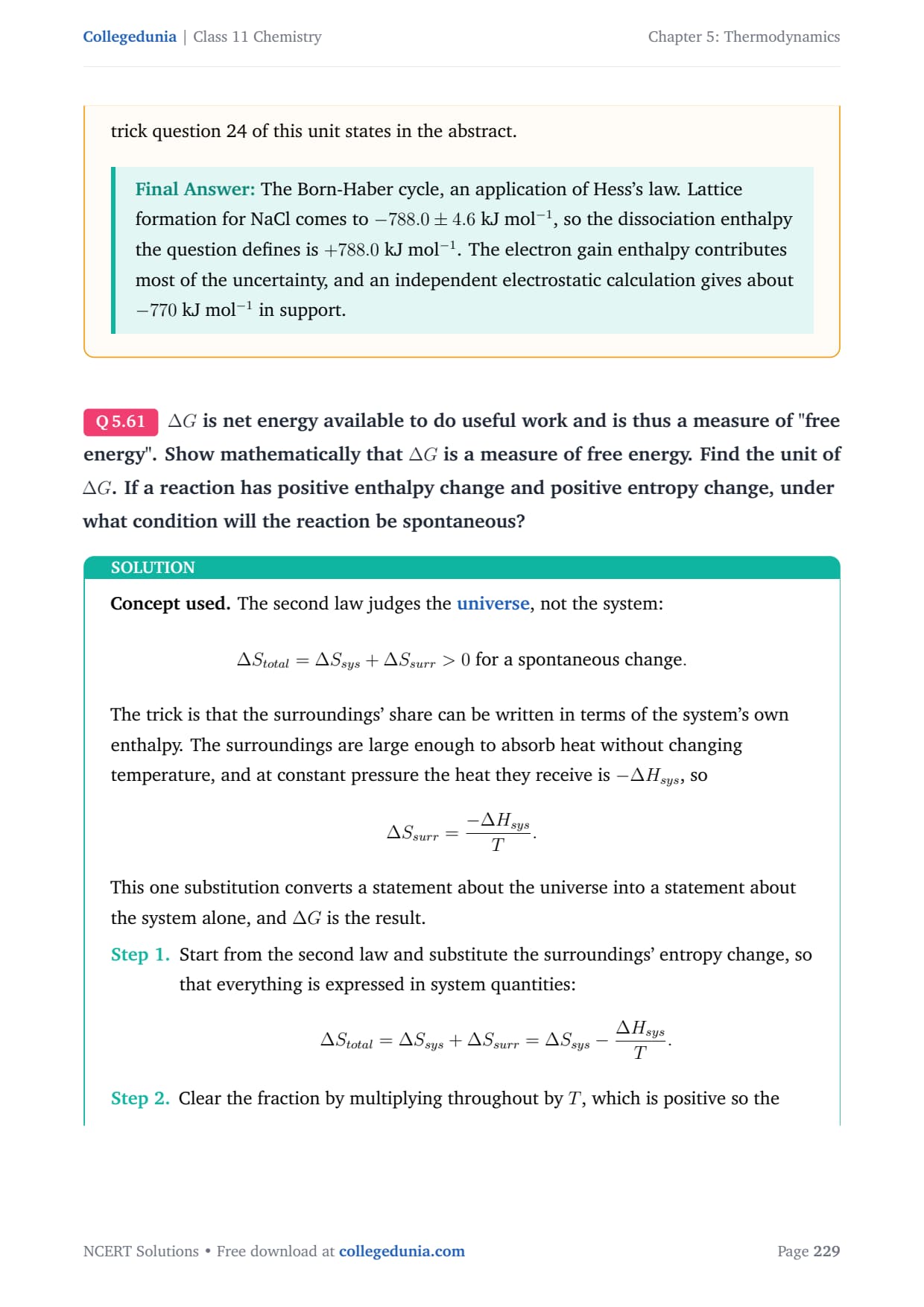
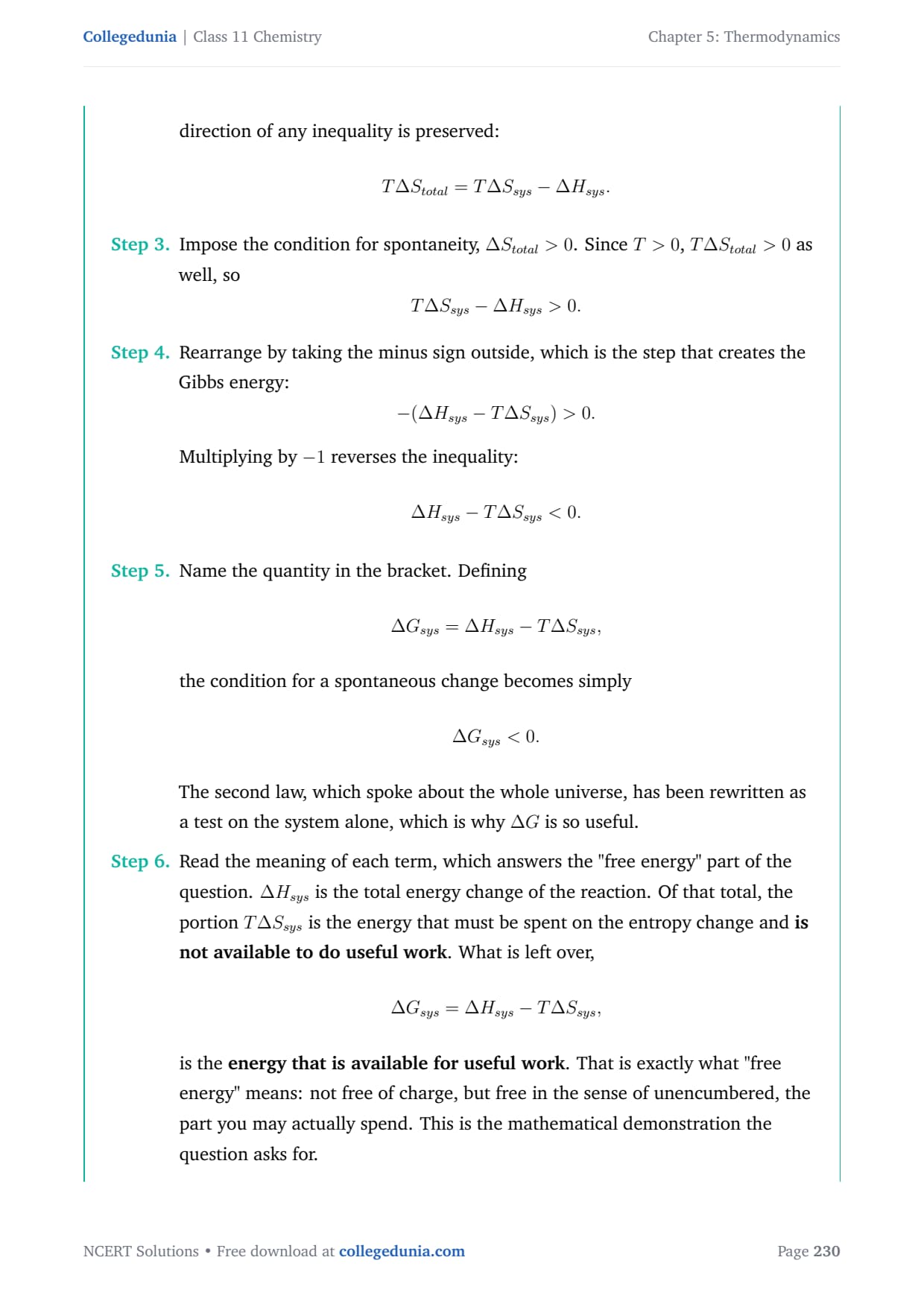
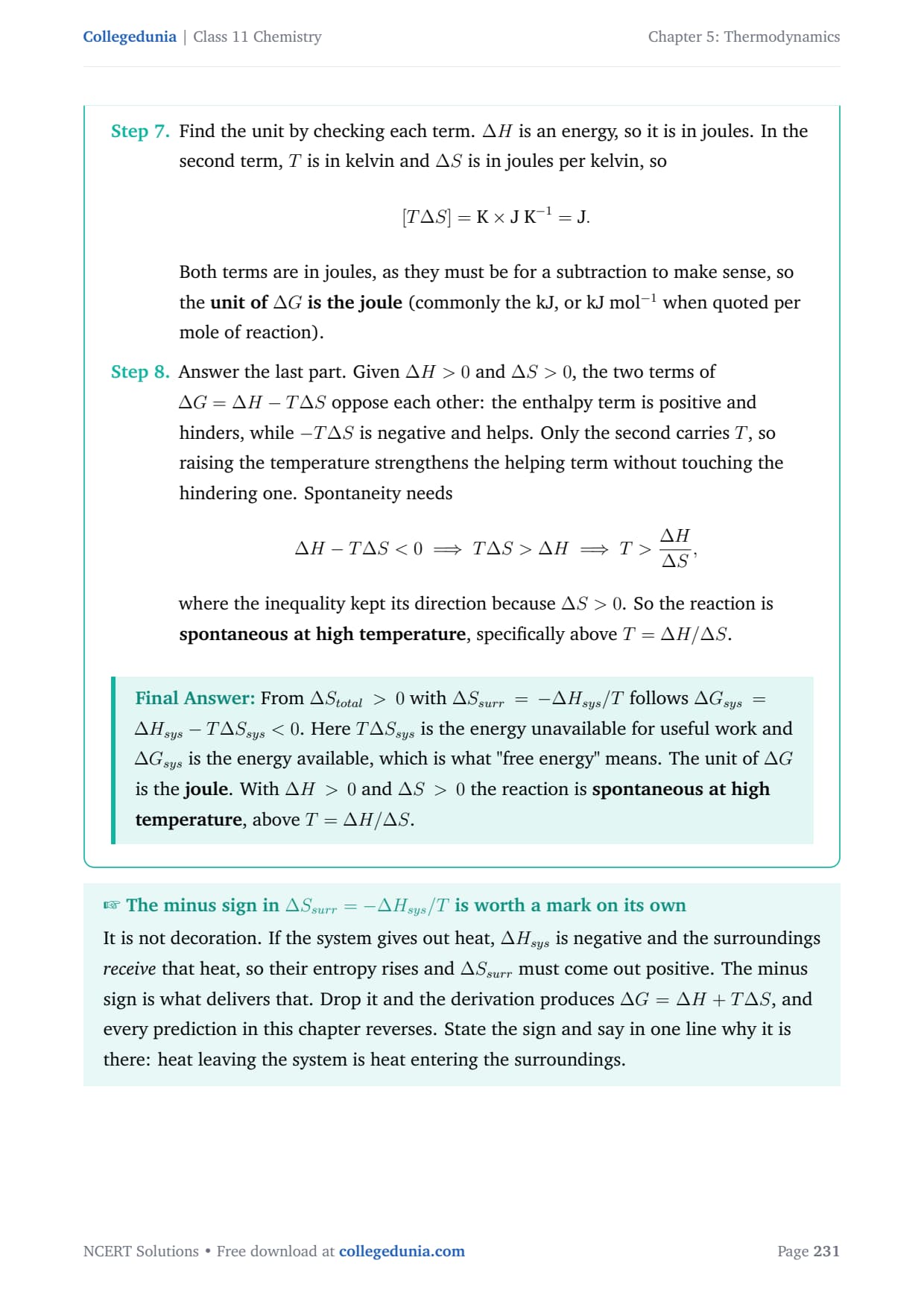
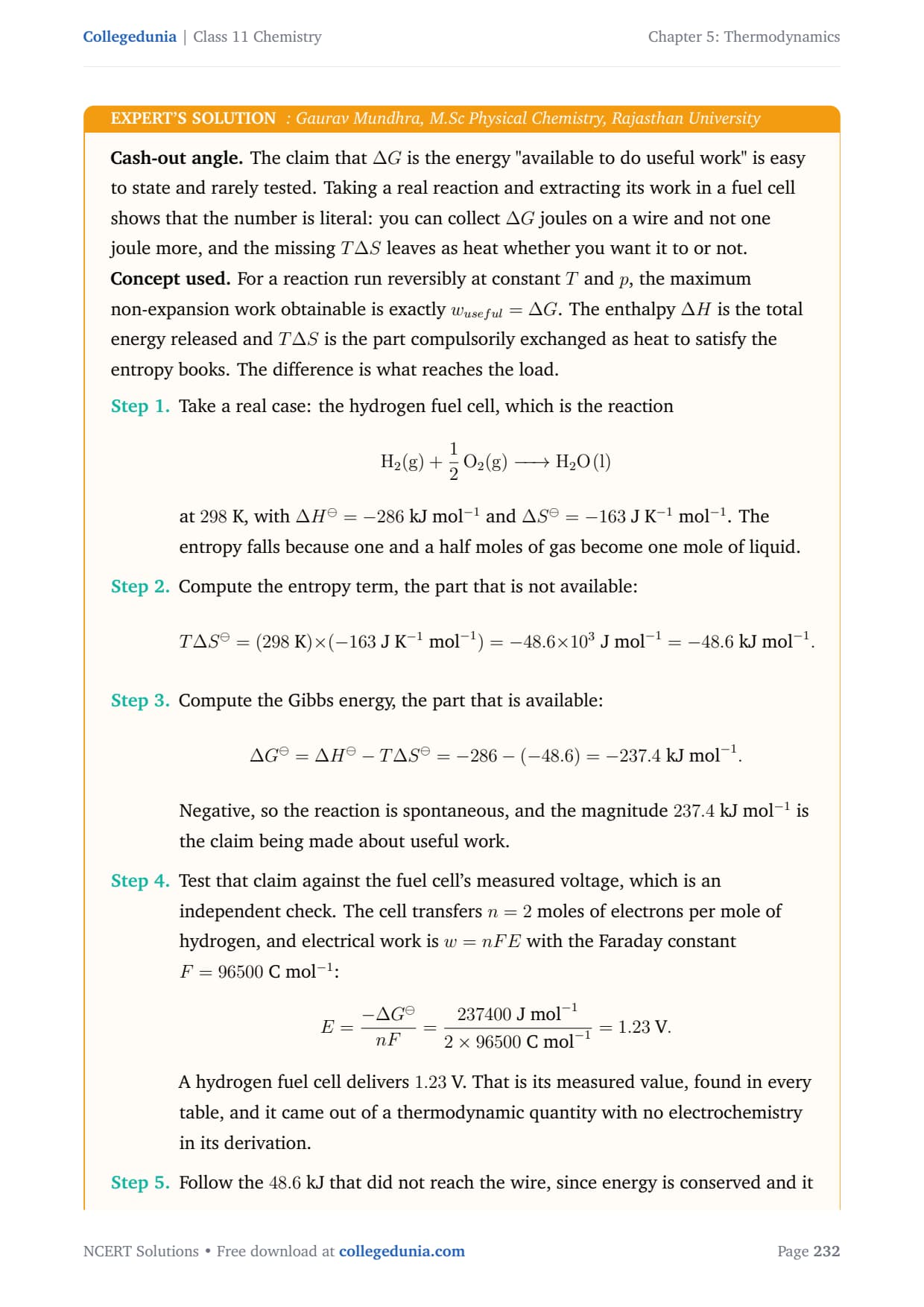
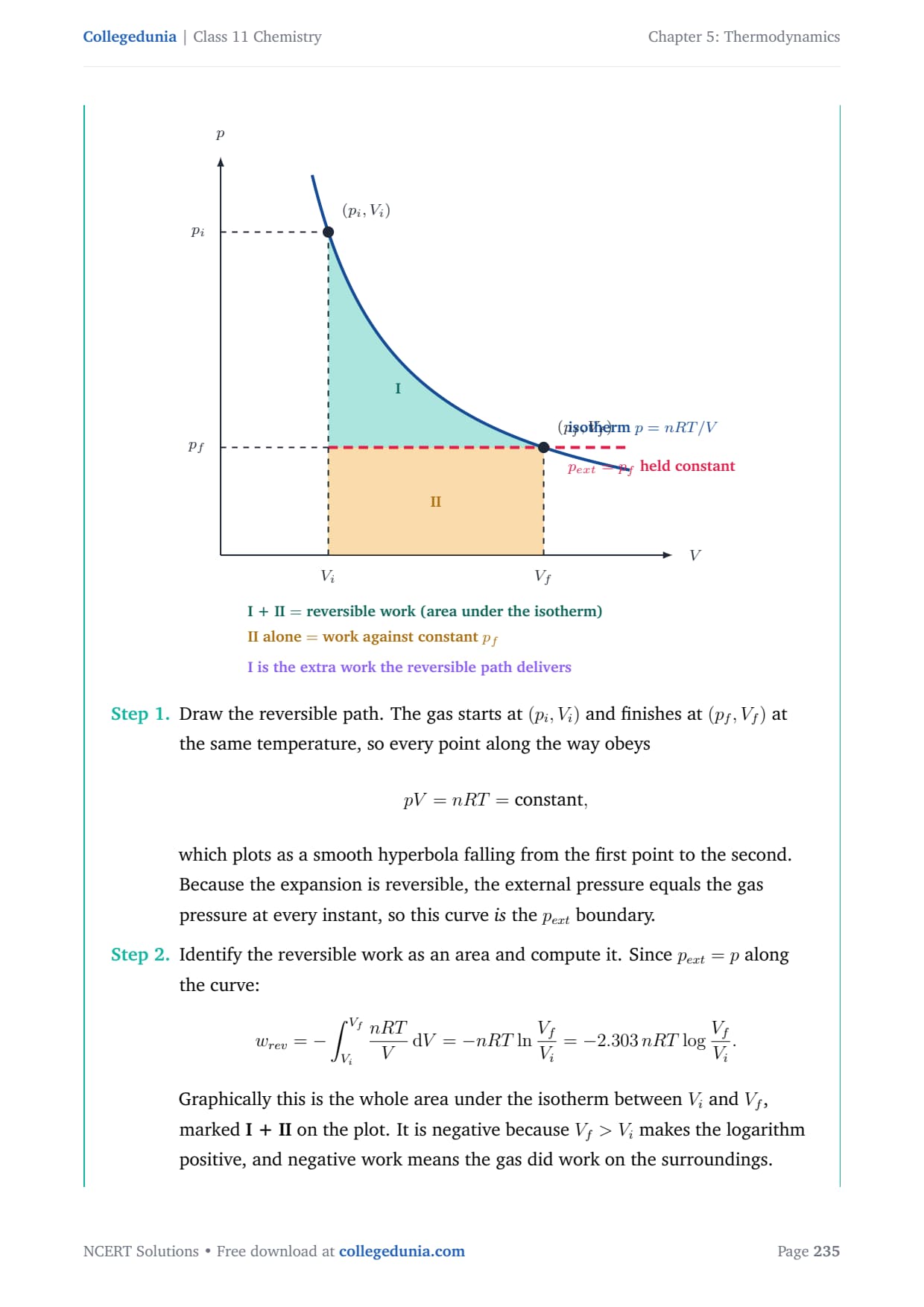
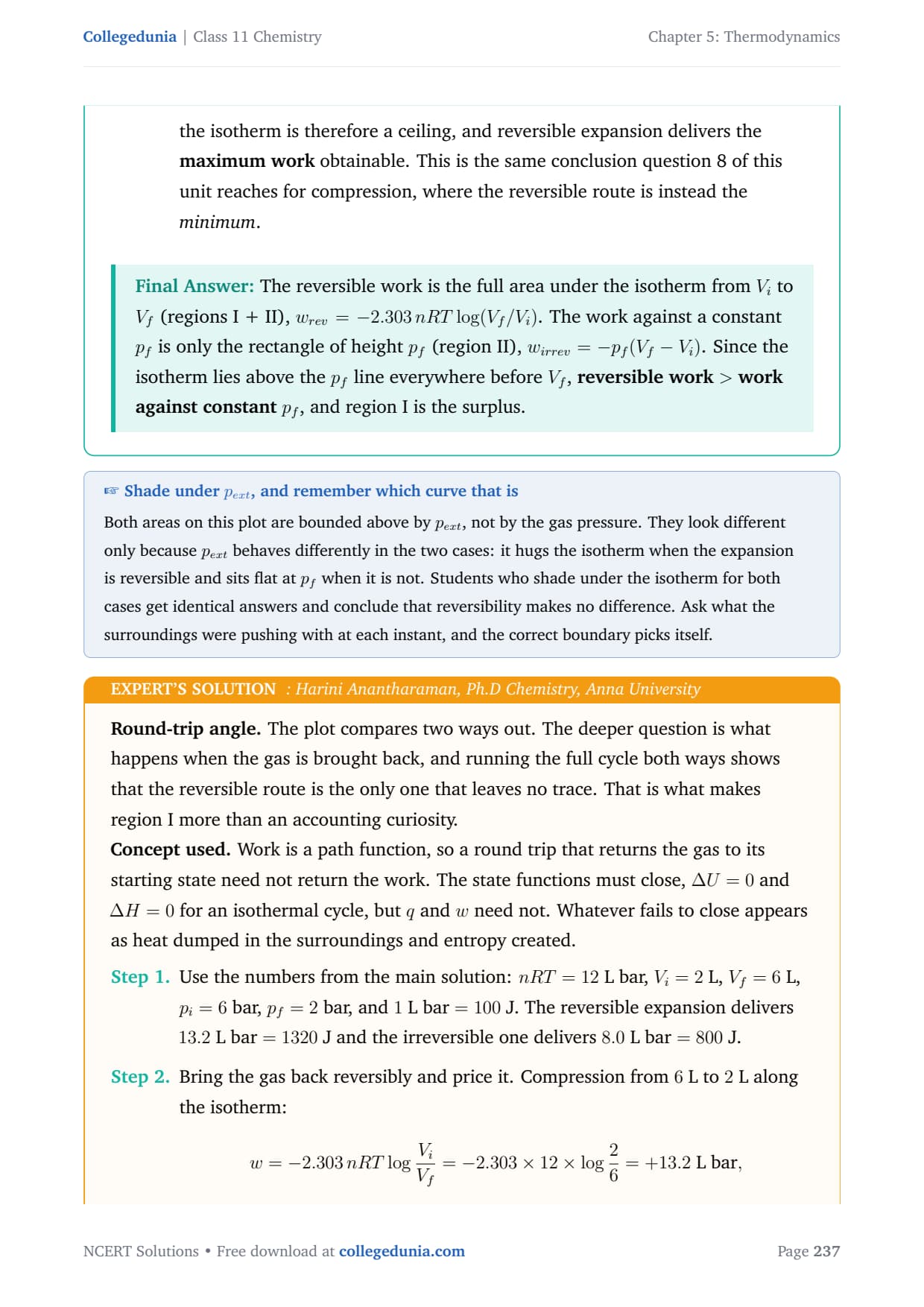
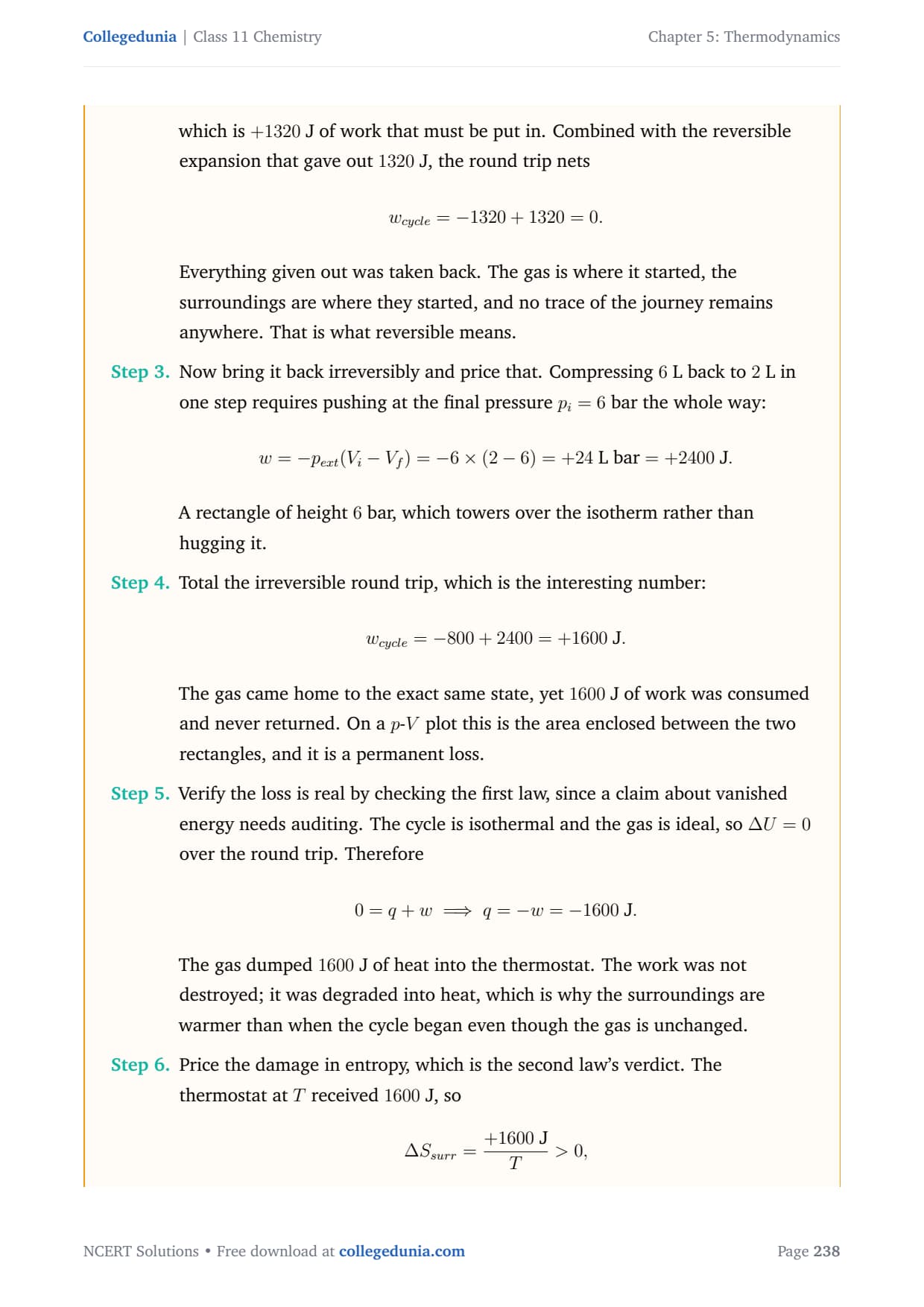
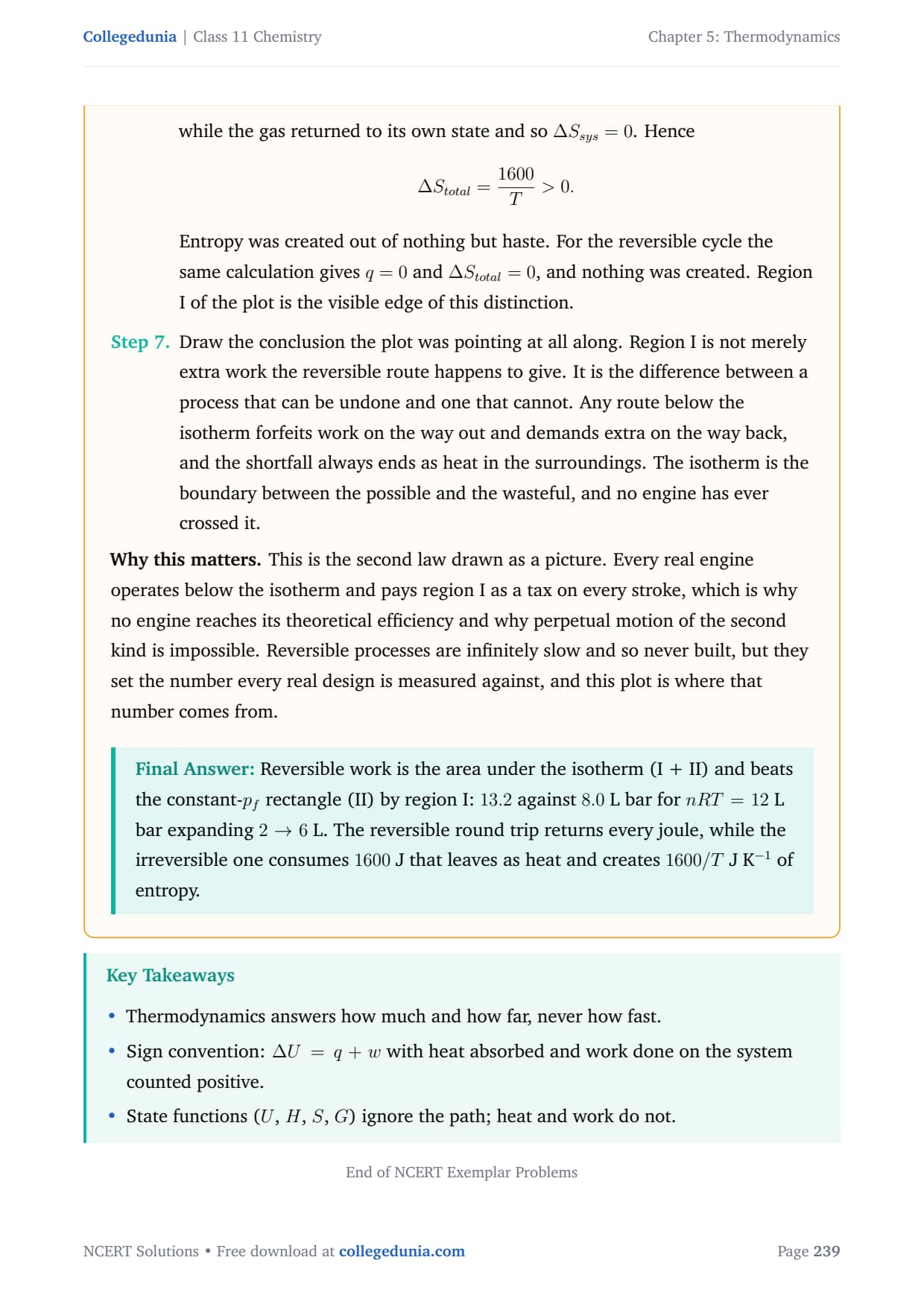
One detail confuses students before they even start. This chapter is Unit 6 in the printed Exemplar, not Unit 5, because the new edition dropped States of Matter. So the figures inside are labelled Fig. 6.1 onward. With 62 questions, this is the biggest chapter in the book.
- CBSE Weightage: 6 to 8 marks, usually one Hess's law numerical and one spontaneity reasoning question
- JEE Main Weightage: 2 to 3 questions per year, mostly first law, work and Gibbs energy
- NEET Weightage: 1 to 2 questions per year from enthalpy and entropy change
Every solution is checked against the official NCERT Exemplar key, and the three answer-key errors in this chapter are worked out in full.
Topics Covered in the Class 11 Chemistry Thermodynamics Exemplar
The 62 questions rest on four ideas that build in order. Each one feeds Equilibrium and the electrochemistry you meet in Class 12, so nothing here is spent effort.
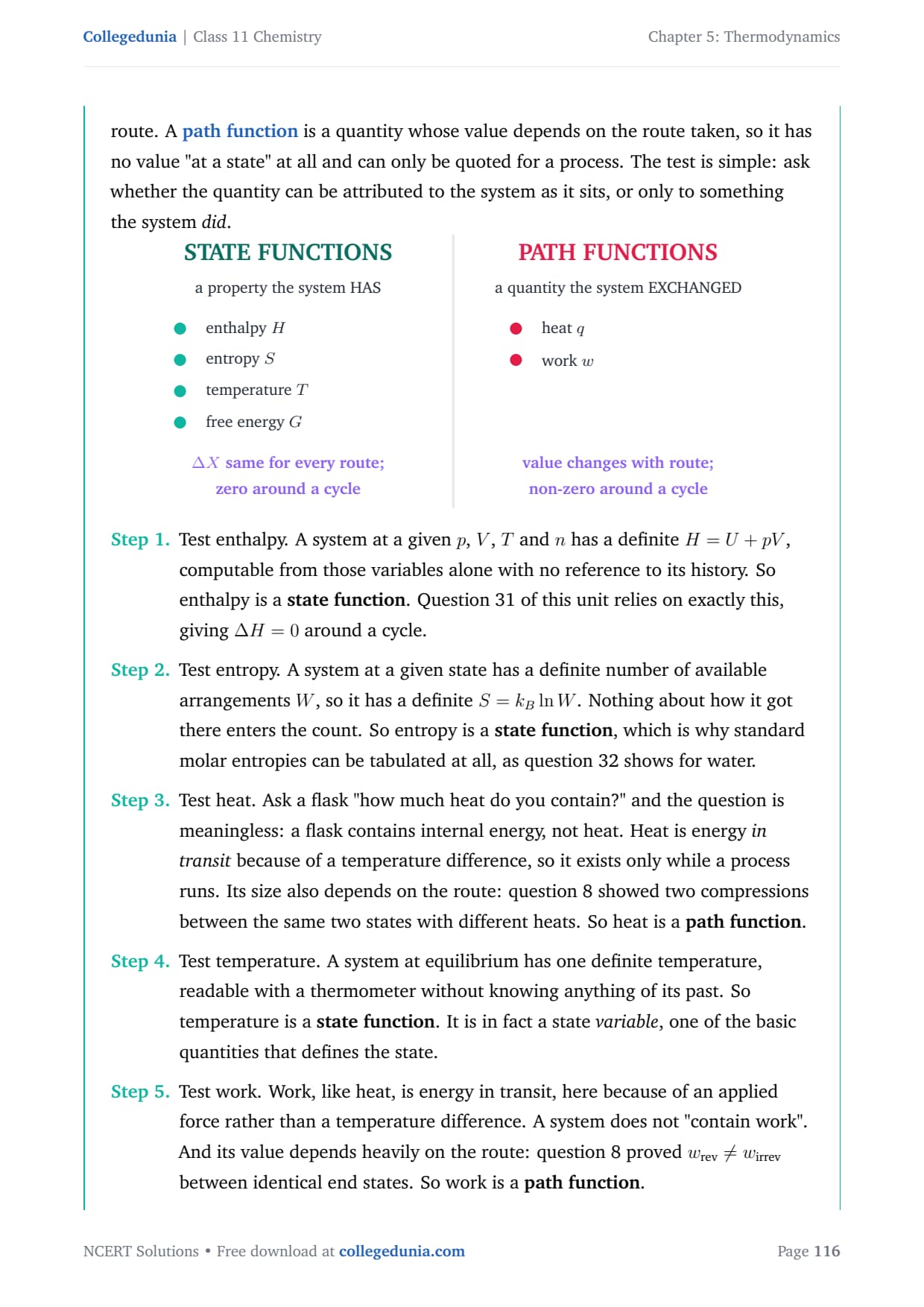
- Systems and state functions: open, closed and isolated systems, and why enthalpy is a state function while heat is not
- The first law: ΔU = q + w, pressure-volume work, and reversible against irreversible paths
- Thermochemistry: enthalpy, heat capacity, Hess's law, bond and lattice enthalpy, and the Born-Haber cycle
- Spontaneity: entropy, Gibbs energy, and the link between ΔG and the equilibrium constant
Question Types in the Thermodynamics NCERT Exemplar
Six question types appear in this chapter. The Short Answer set alone holds 31 questions, which is half the chapter, and that is where the reasoning marks live.
| Question Type | Count | What It Tests |
|---|---|---|
| MCQ I (single correct) | 14 | Sign conventions and definitions applied under time pressure |
| MCQ II (one or more correct) | 5 | Whether you can reject every wrong option, not just spot one right one |
| Short Answer | 31 | Reasoning on enthalpy, entropy and spontaneity |
| Matching Type | 4 | Pairing thermodynamic terms with conditions and quantities |
| Assertion and Reason | 3 | Whether the reason actually explains the assertion |
| Long Answer | 5 | Multi-step Hess's law and Born-Haber problems worth 5 marks |
Three Answer Key Errors in the Thermodynamics Exemplar
The printed key slips three times in this chapter. Each one is worked out in the PDF, so you are never asked to accept arithmetic that does not add up.
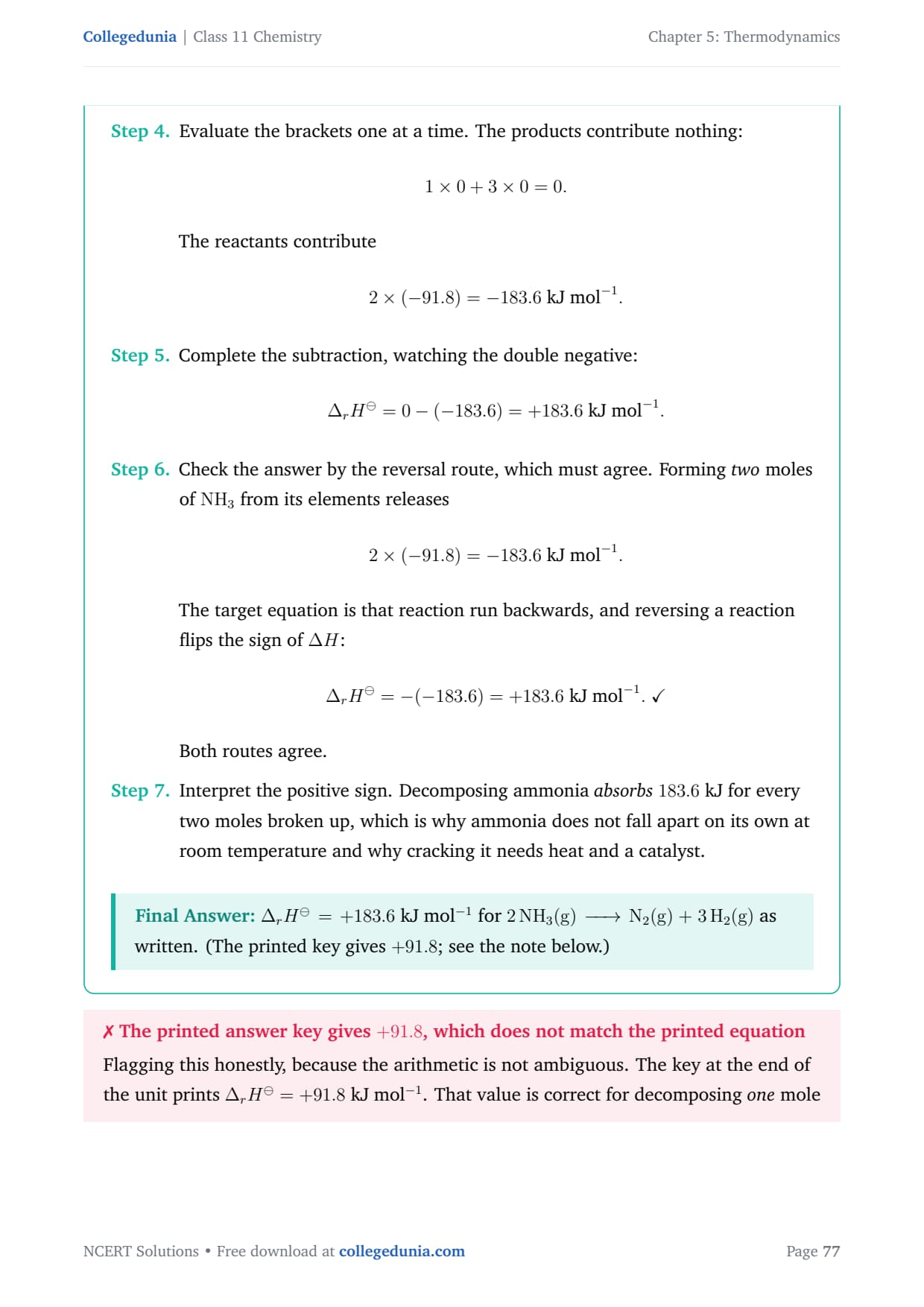
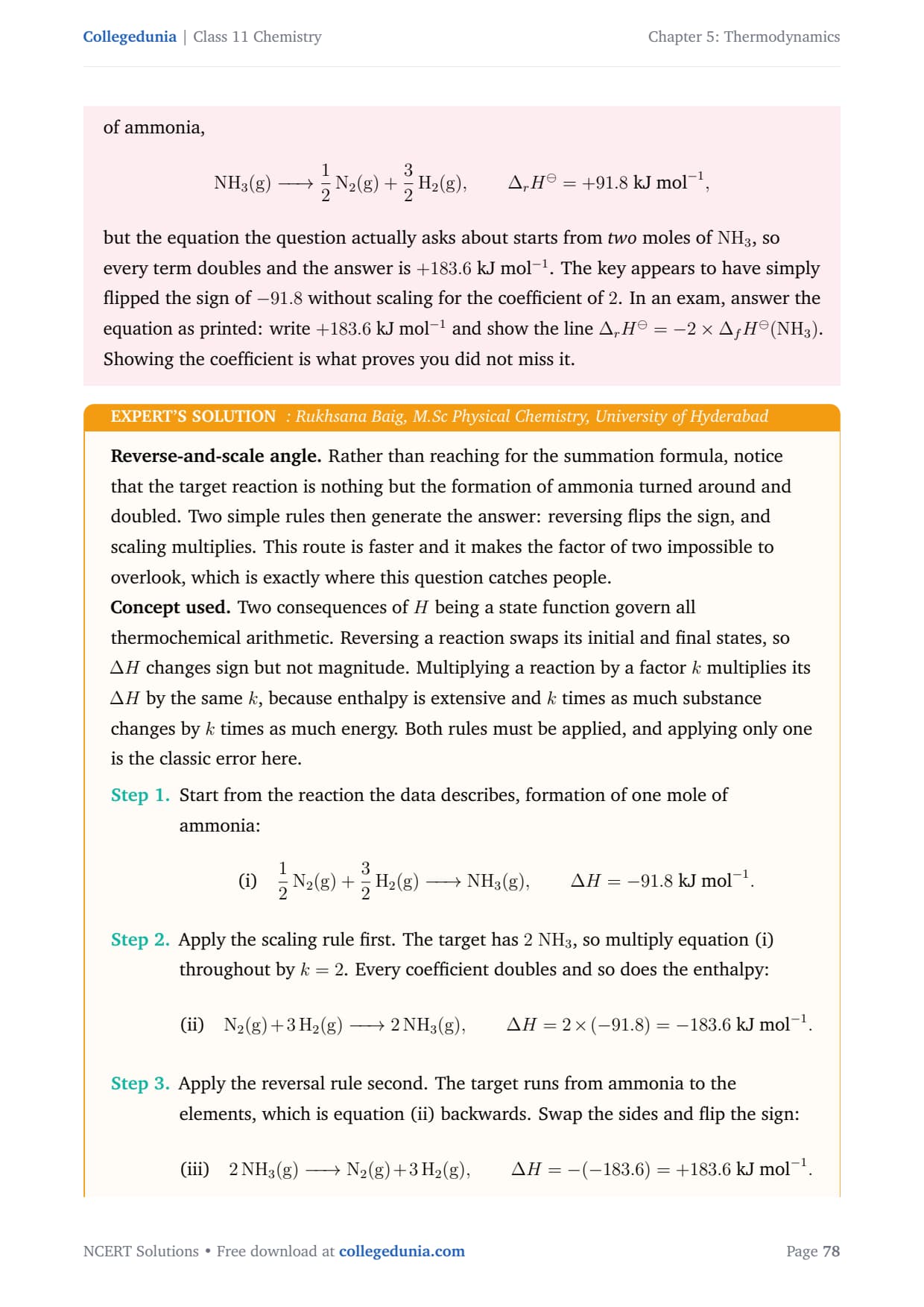
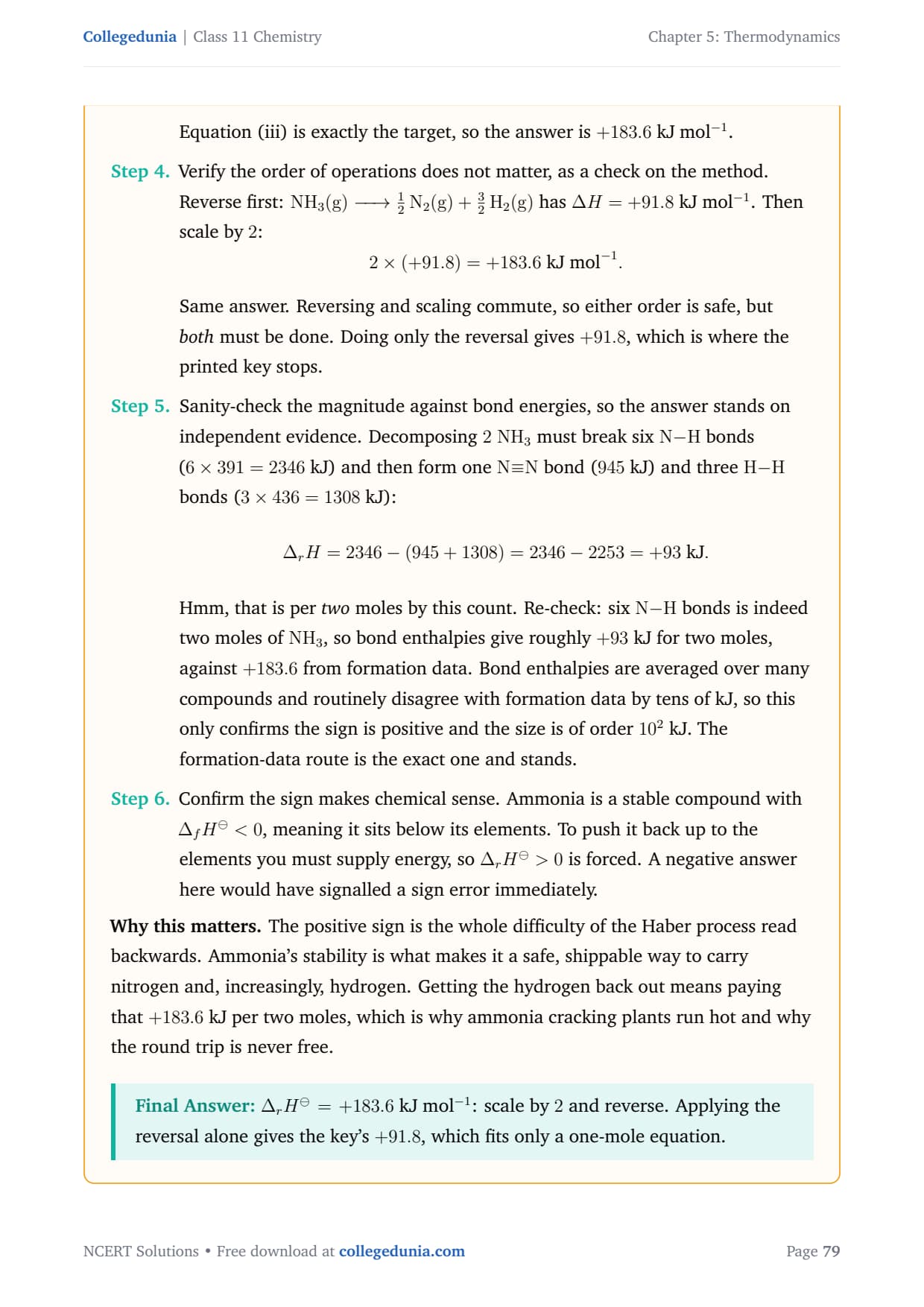
- Question 23: the key prints ΔrH = +91.8 kJ mol-1. That value fits decomposing one mole of ammonia, but the printed equation starts from 2NH3, so every term doubles. The correct answer is +183.6 kJ mol-1. The key flipped the sign without scaling for the coefficient.
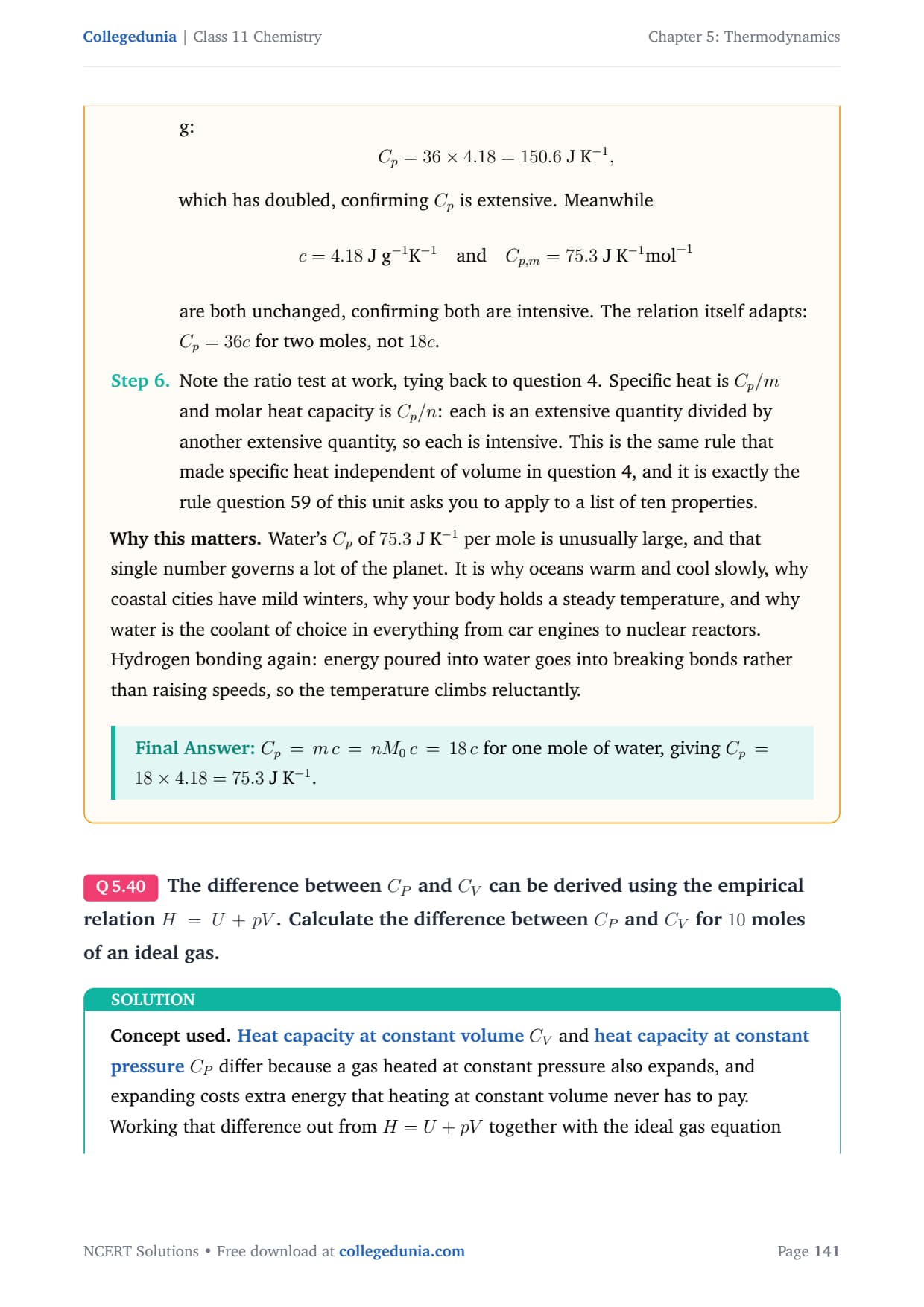
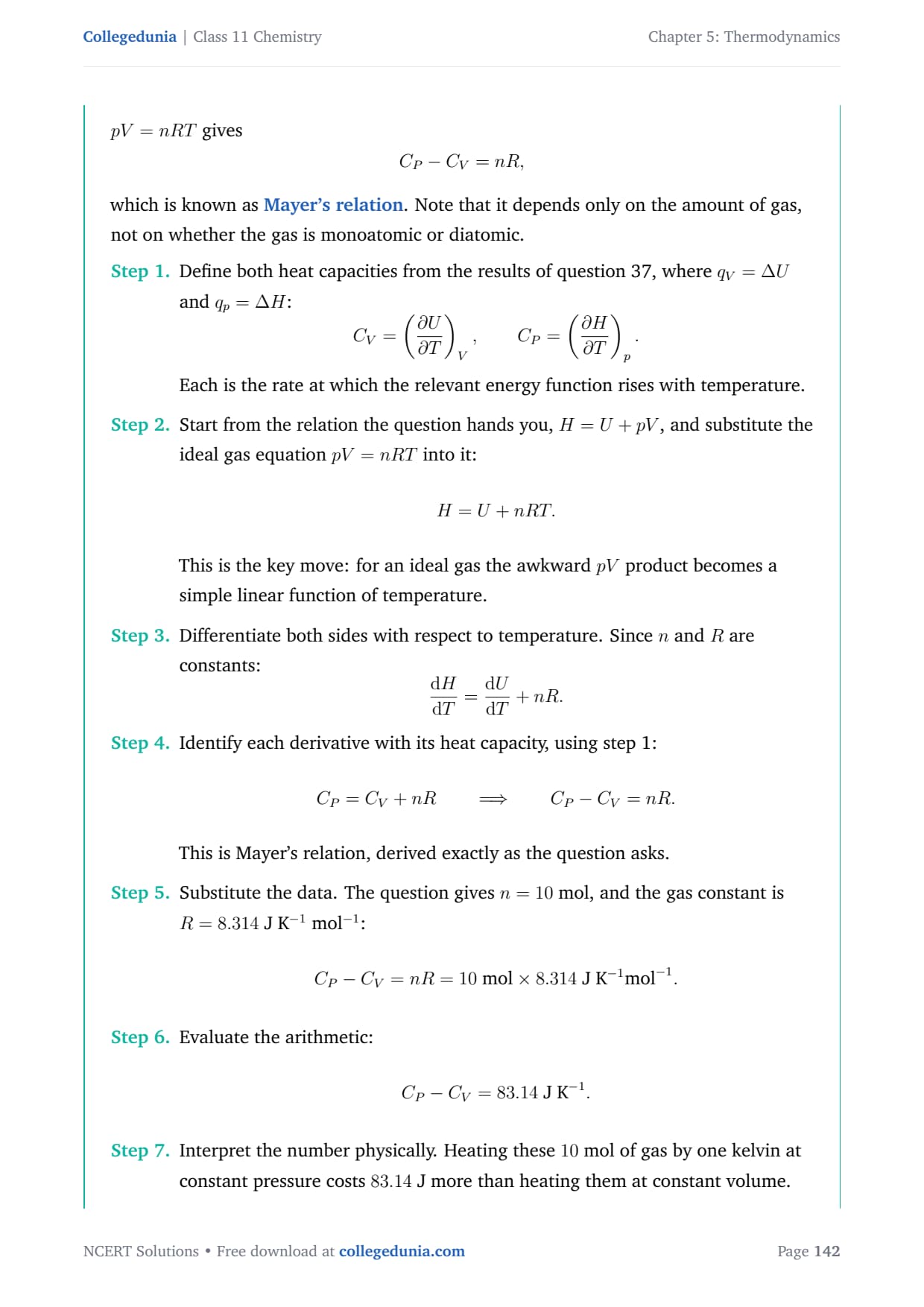
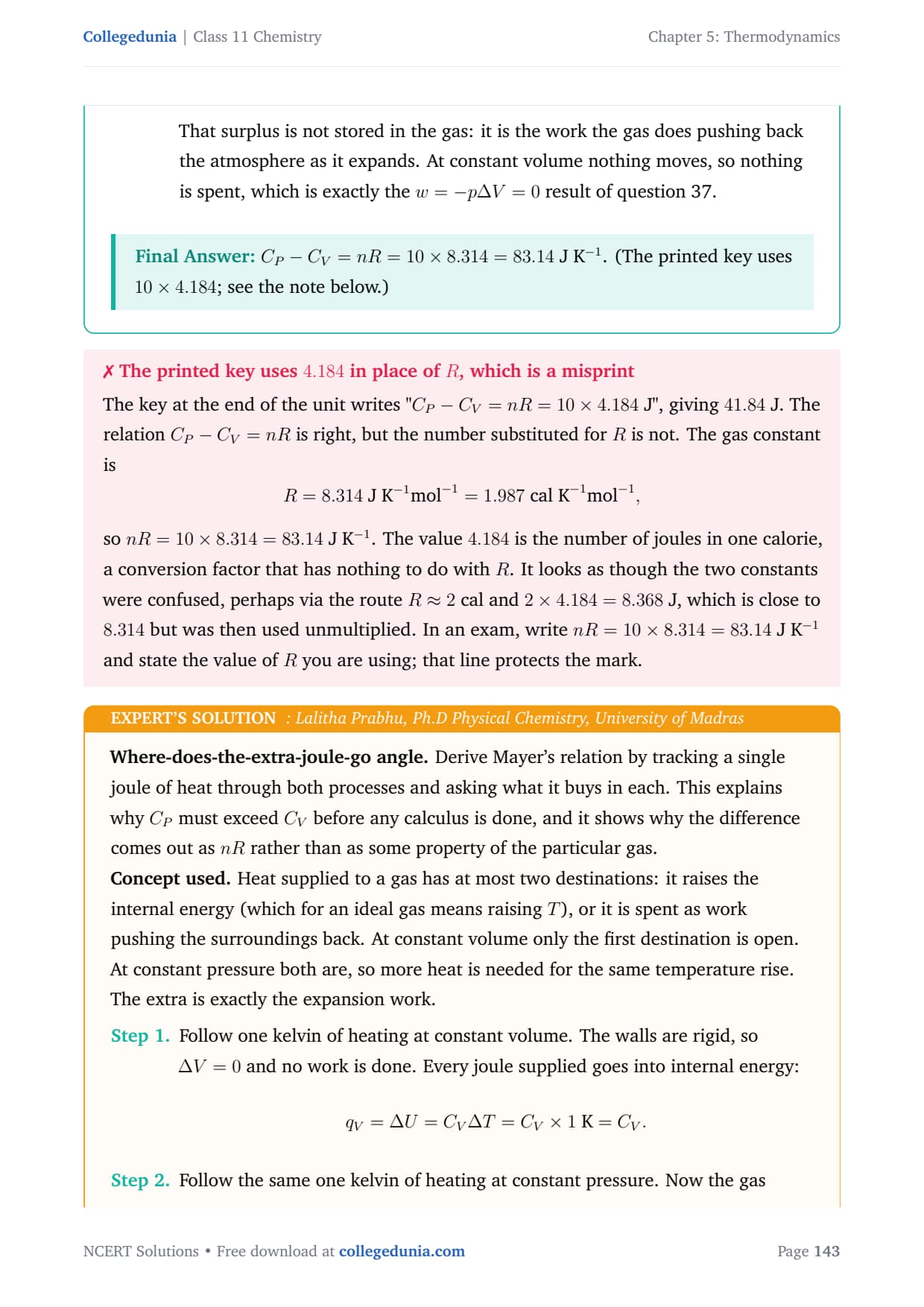
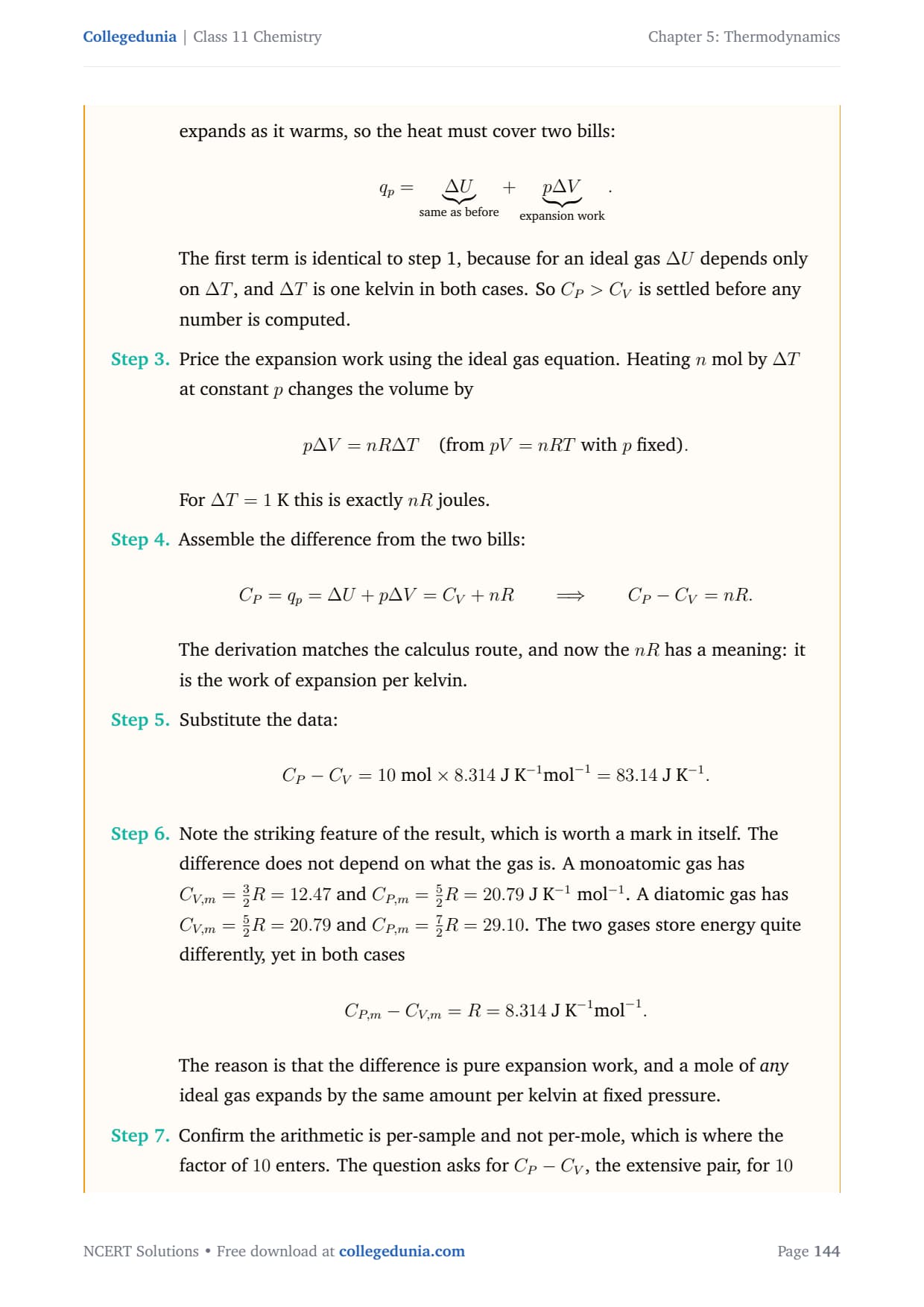
- Question 40: the key writes Cp − Cv = nR = 10 × 4.184 J. The relation is right, but 4.184 is the joules-per-calorie factor, not R. Since R = 8.314 J K-1 mol-1, the answer is 83.14 J K-1, not 41.84 J.
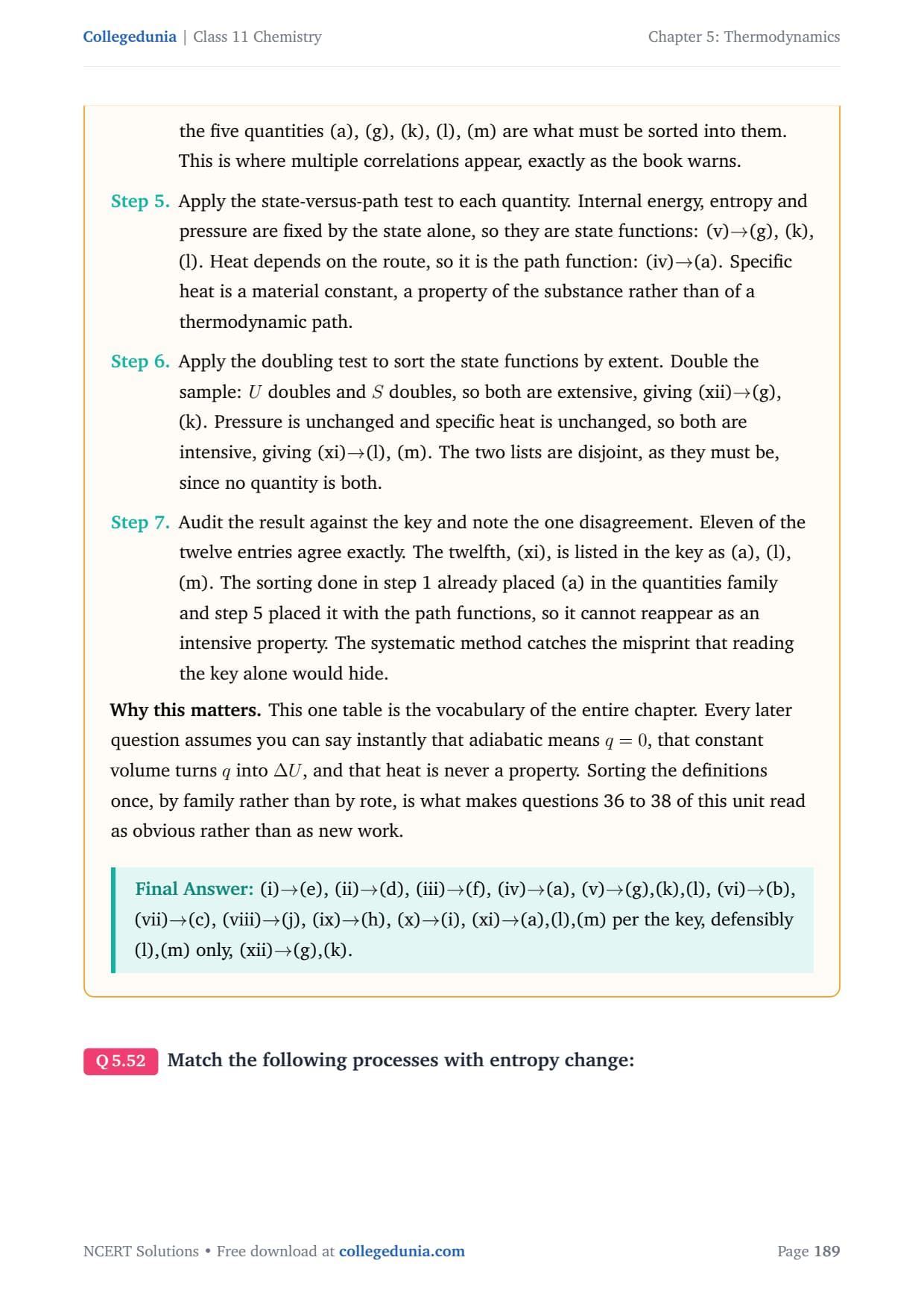
- Question 51: the key maps intensive property to heat. Heat is not an intensive property, and it is not a property at all. The same key calls it a path function two lines earlier, and nothing can be both.
Write the key's answer in the exam, then add one line explaining the slip. The marking scheme follows the printed key, so our solution gives the key's response first and then shows the correct physics.
Common Mistakes Students Make in Thermodynamics
The Exemplar plants wrong options on purpose here. These four catch most students, and each is flagged in the PDF at the question where it bites.
- Sign convention: in ΔU = q + w, work done on the system is positive. Reporting the work done by a gas as a negative number is the single most common slip in the Short Answer set.
- External pressure, never gas pressure: the work formula is w = −pextΔV. Question 7 turns on this. In free expansion pext = 0, so w = 0, which forces q = 0, ΔT = 0 and w = 0 together.
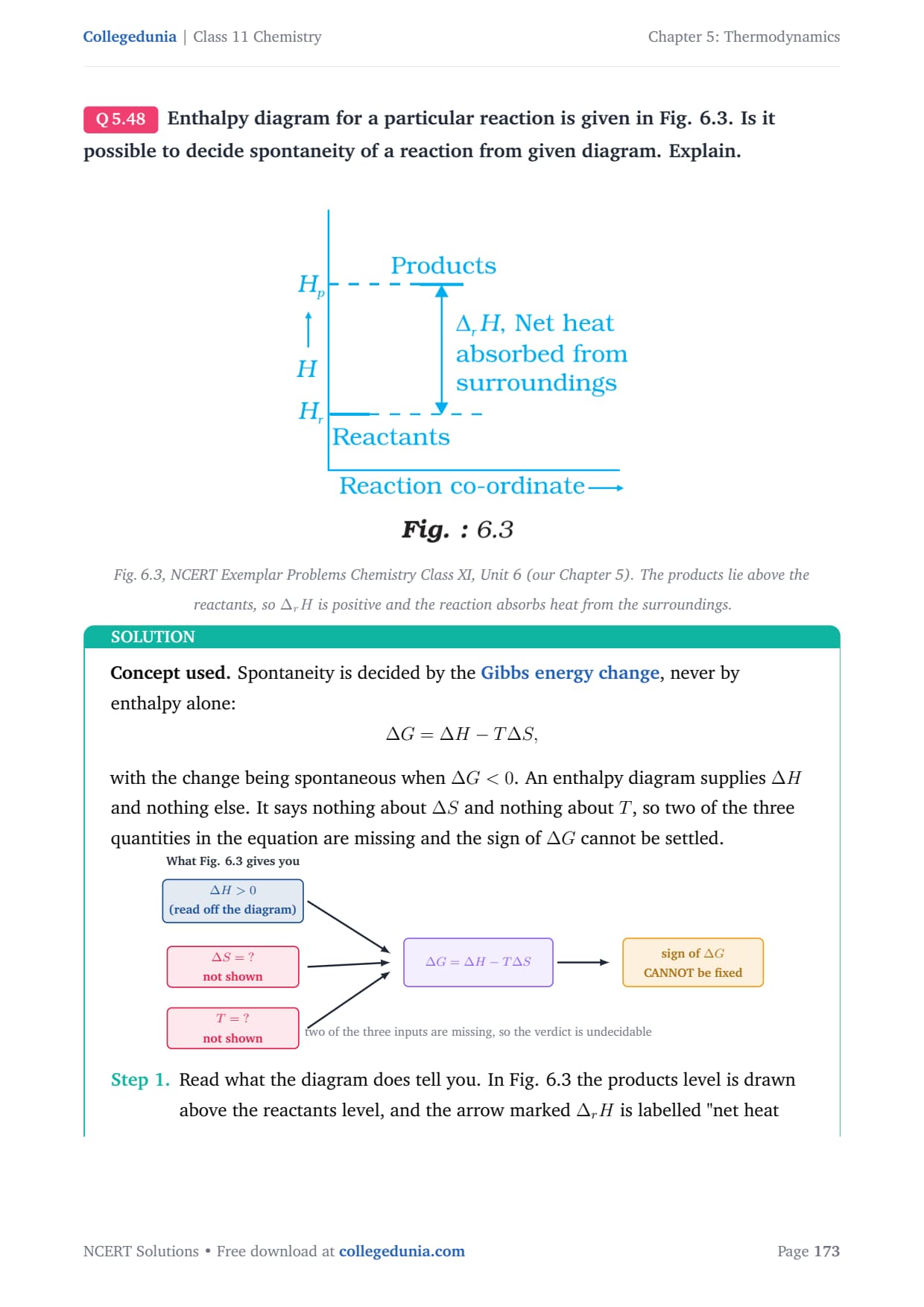
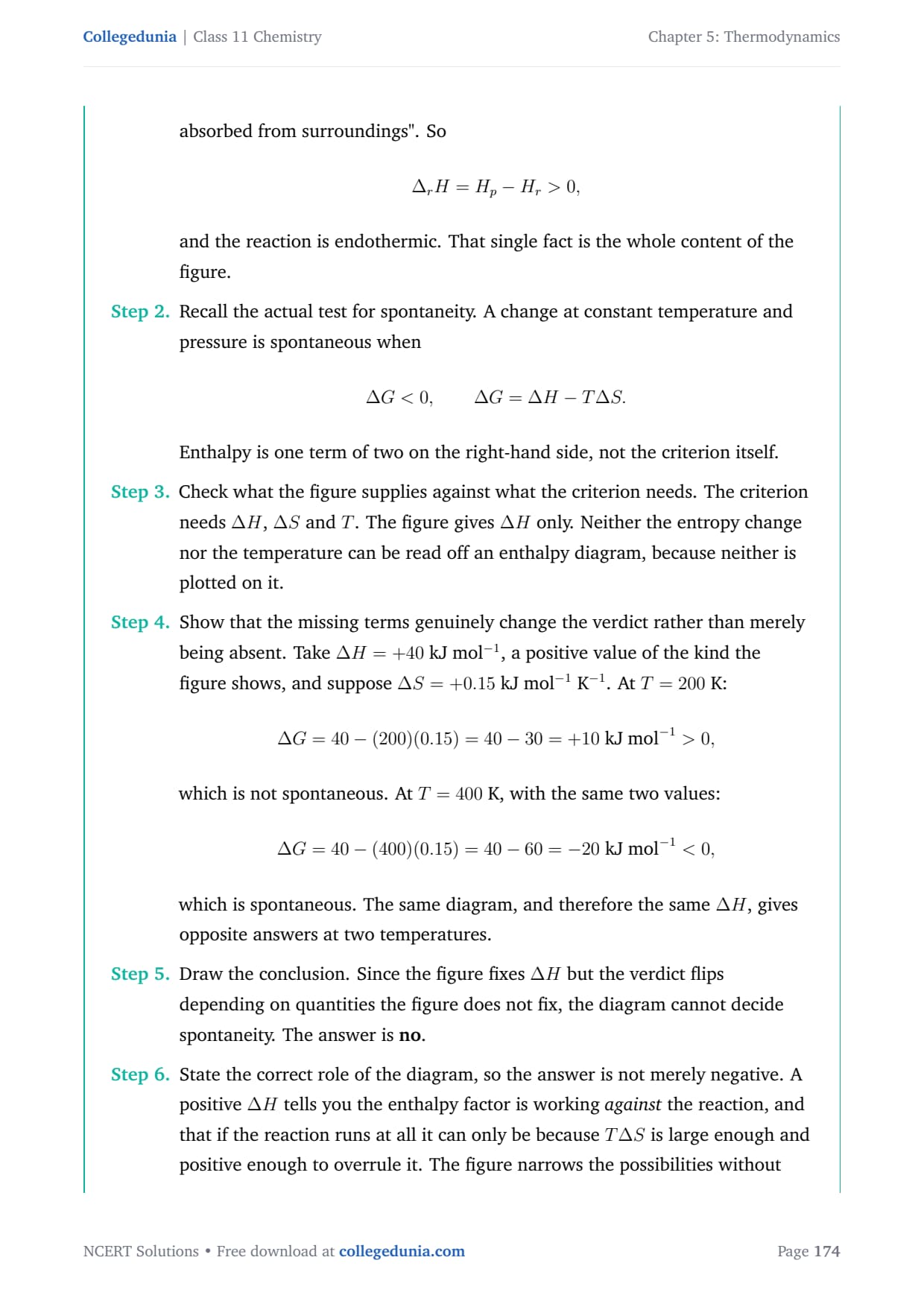
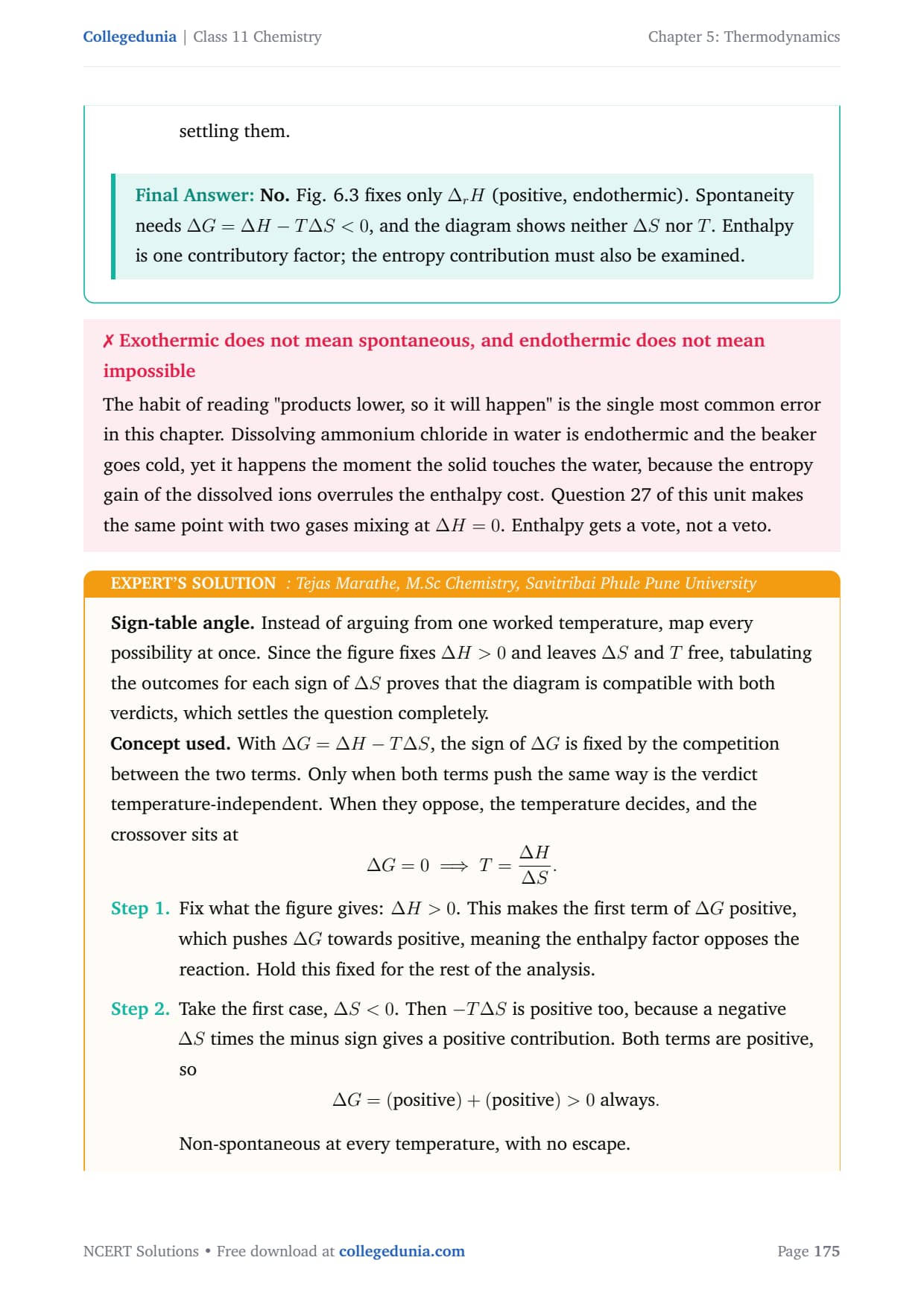
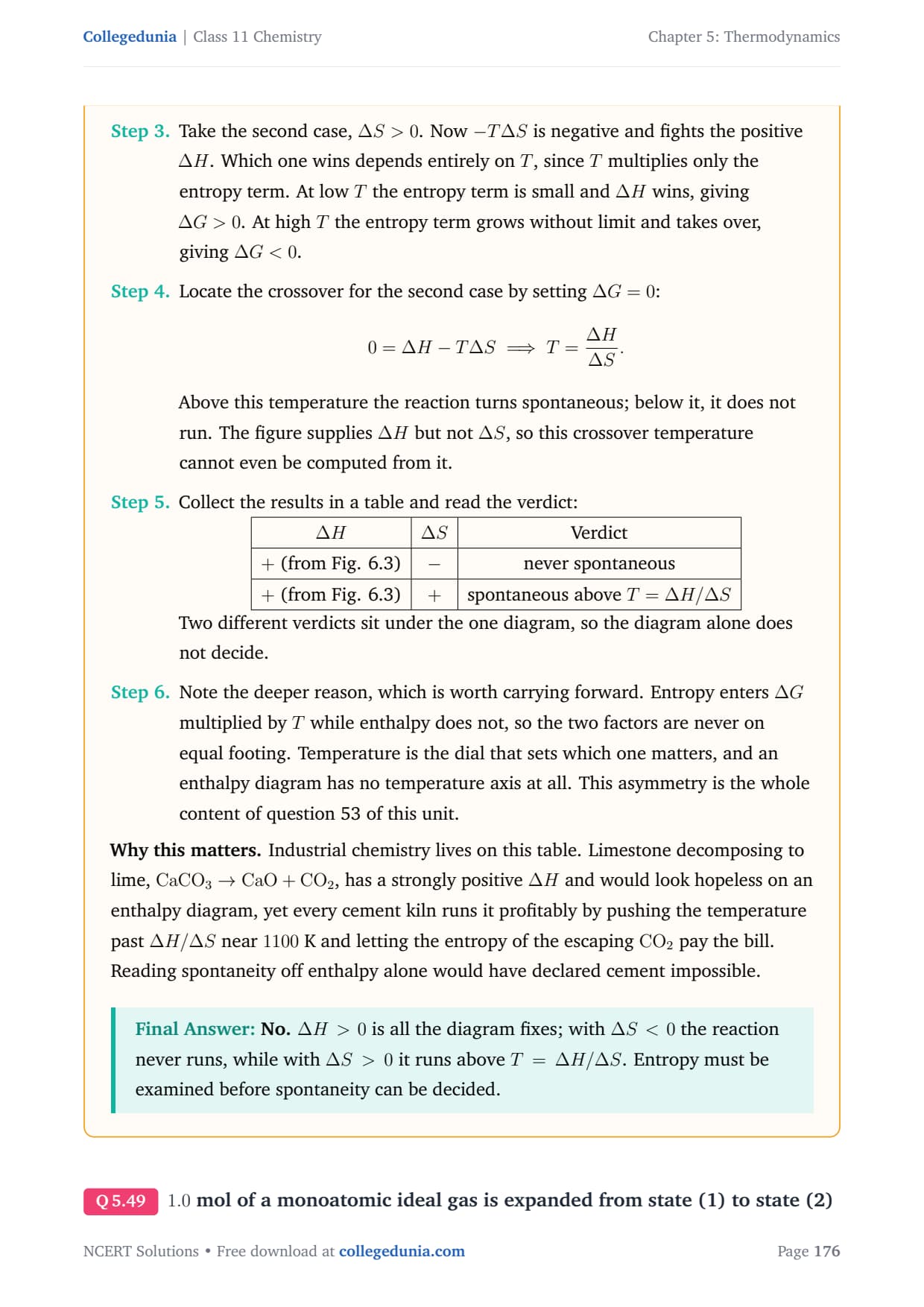
- Exothermic does not mean spontaneous: a negative ΔH helps, but only ΔG decides. An endothermic change with a large positive ΔS still runs on its own.
- Coefficients in thermochemical equations: doubling a reaction doubles its ΔH. Question 23 exists to catch students who reverse but forget to scale.
How the Exemplar Steps Up from the Class 11 Chemistry Textbook
The textbook gives you a formula and asks you to substitute. The Exemplar asks you to decide which formula applies, and often to explain why the obvious one does not.
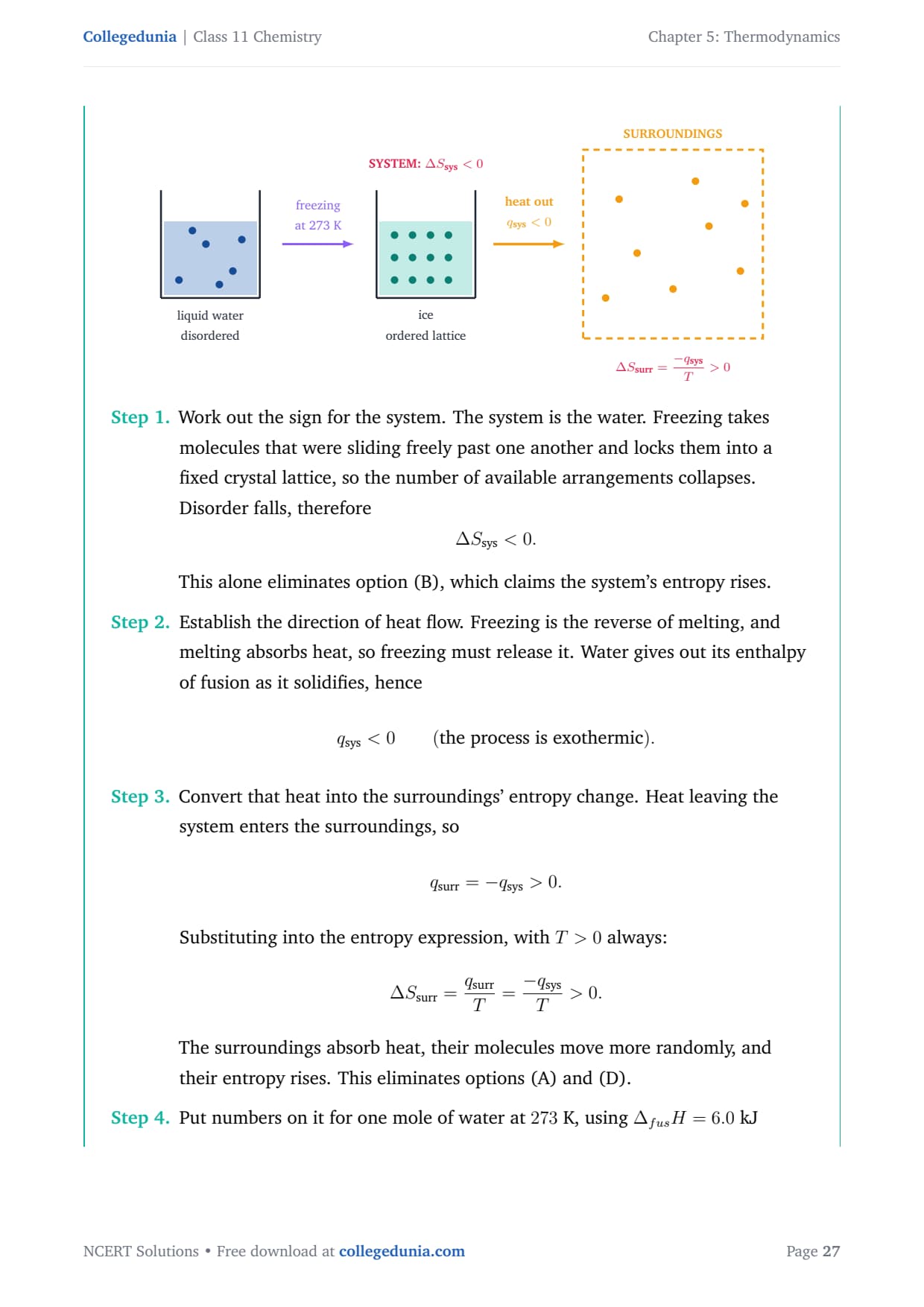
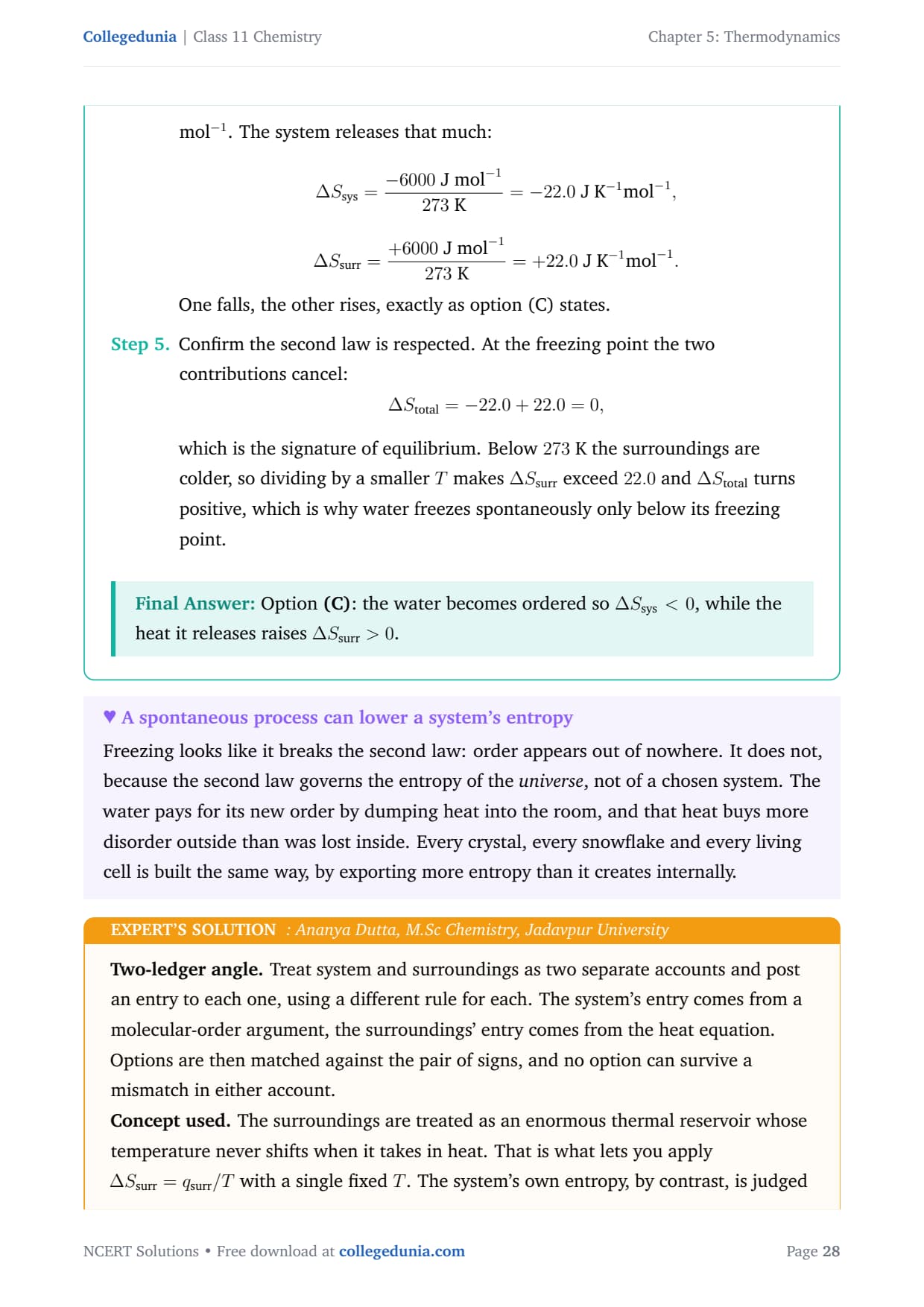
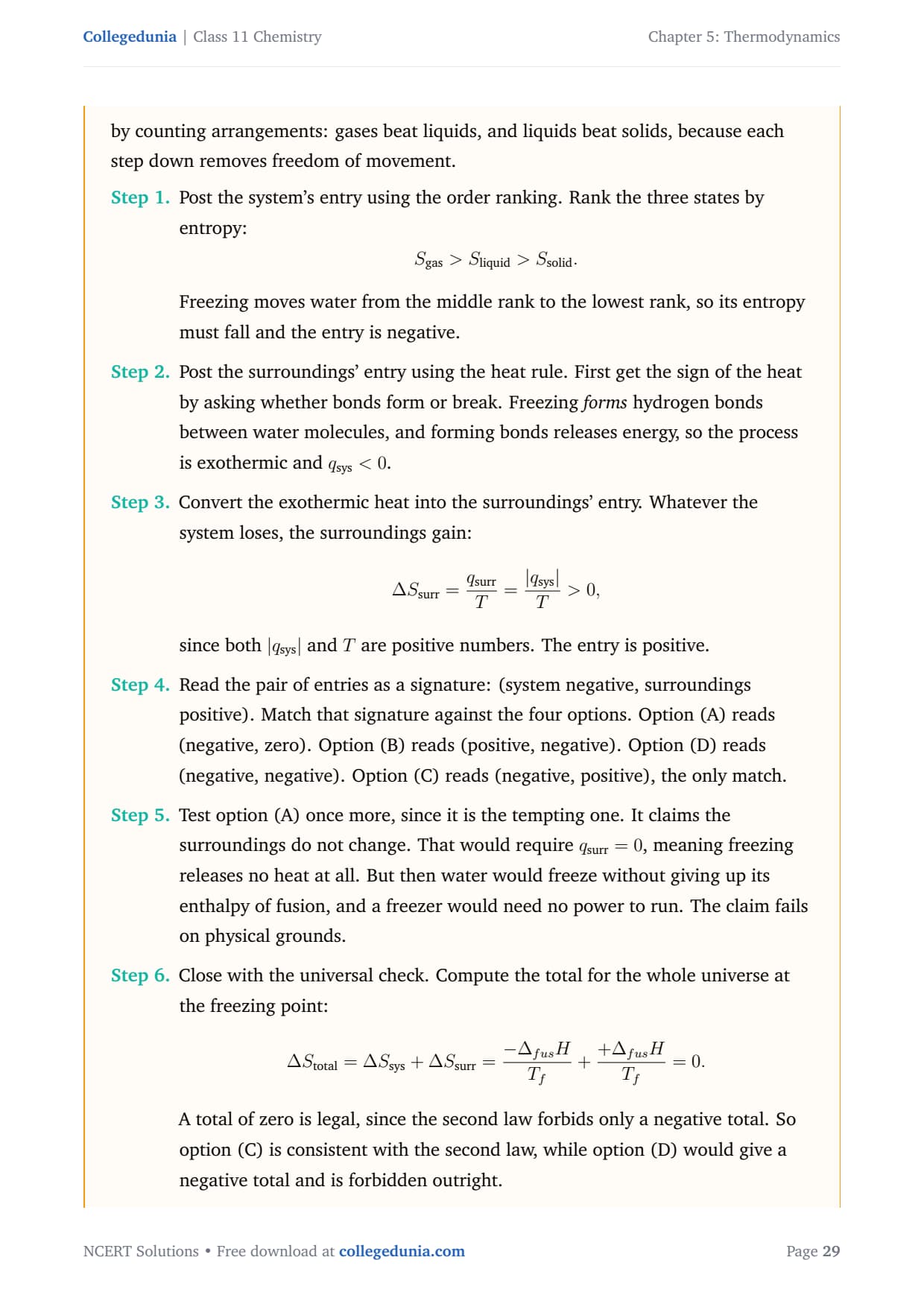
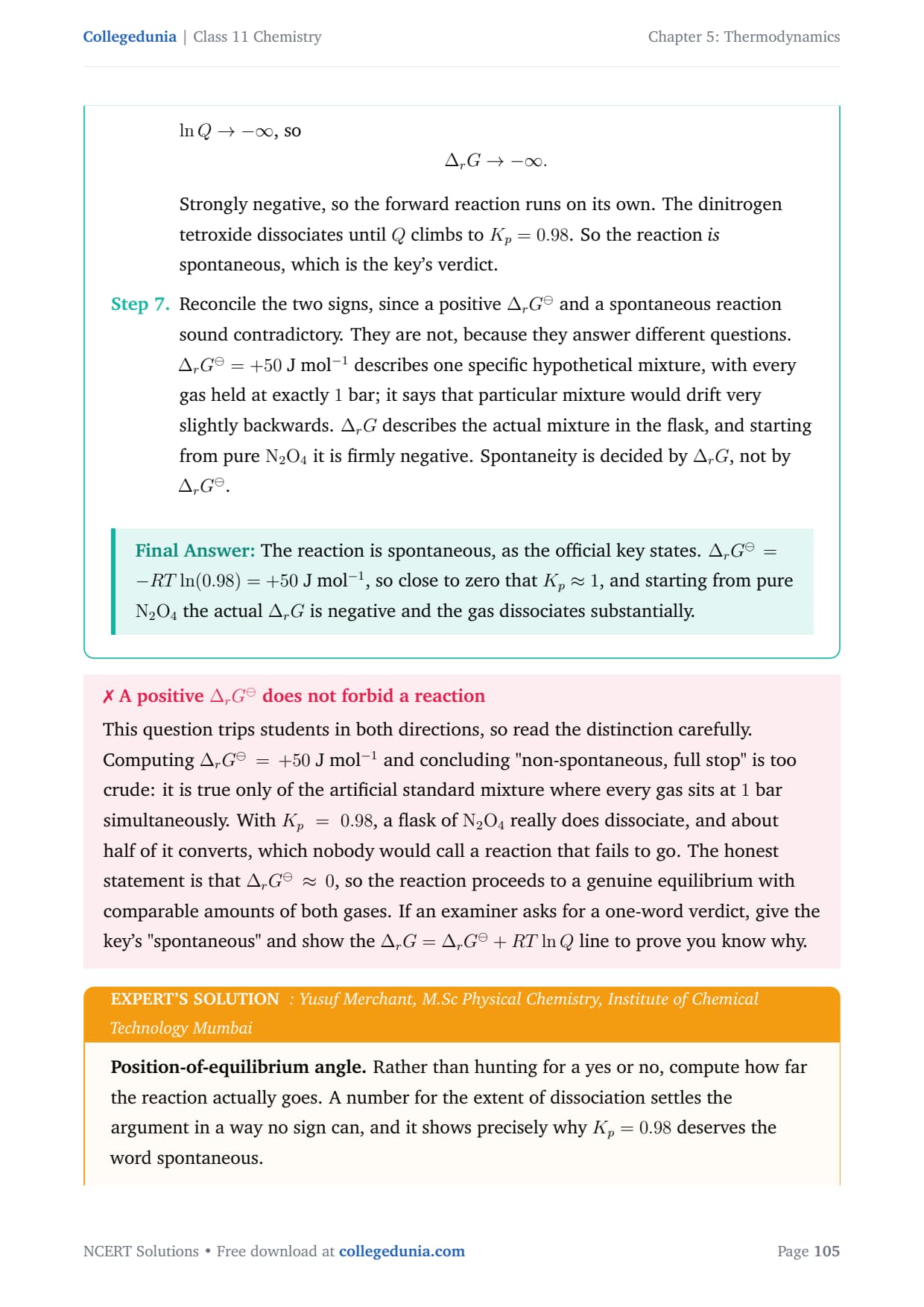
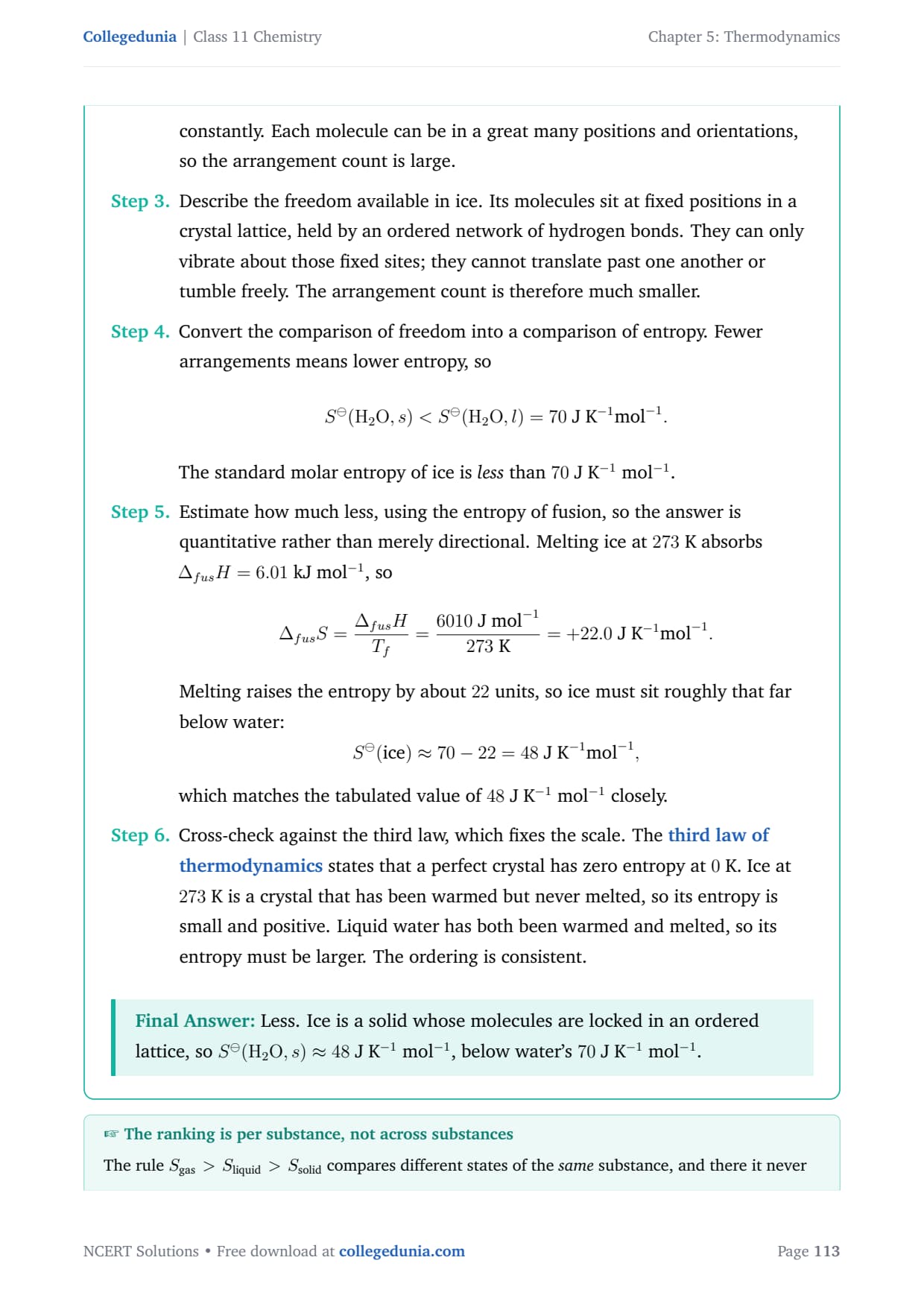
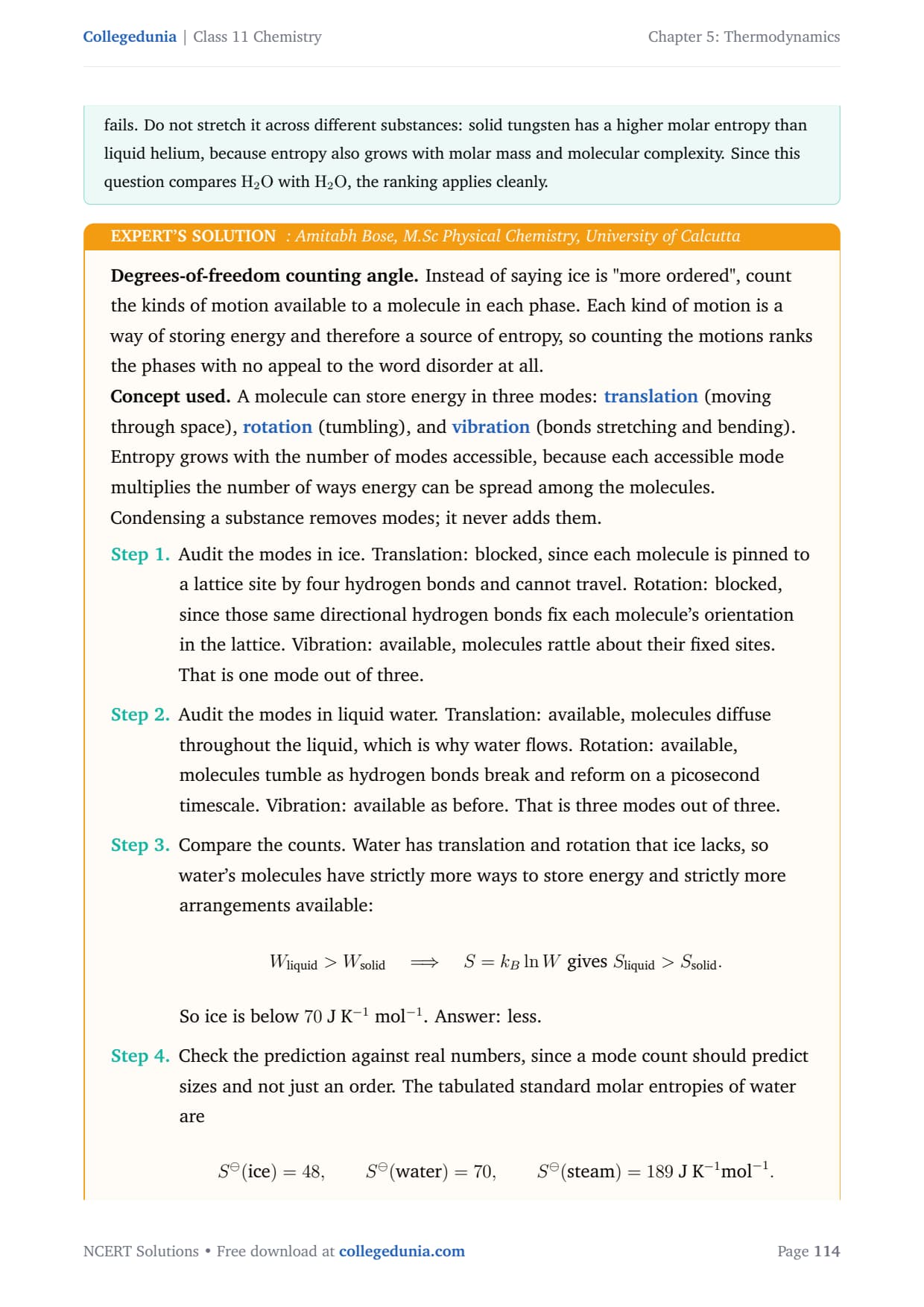
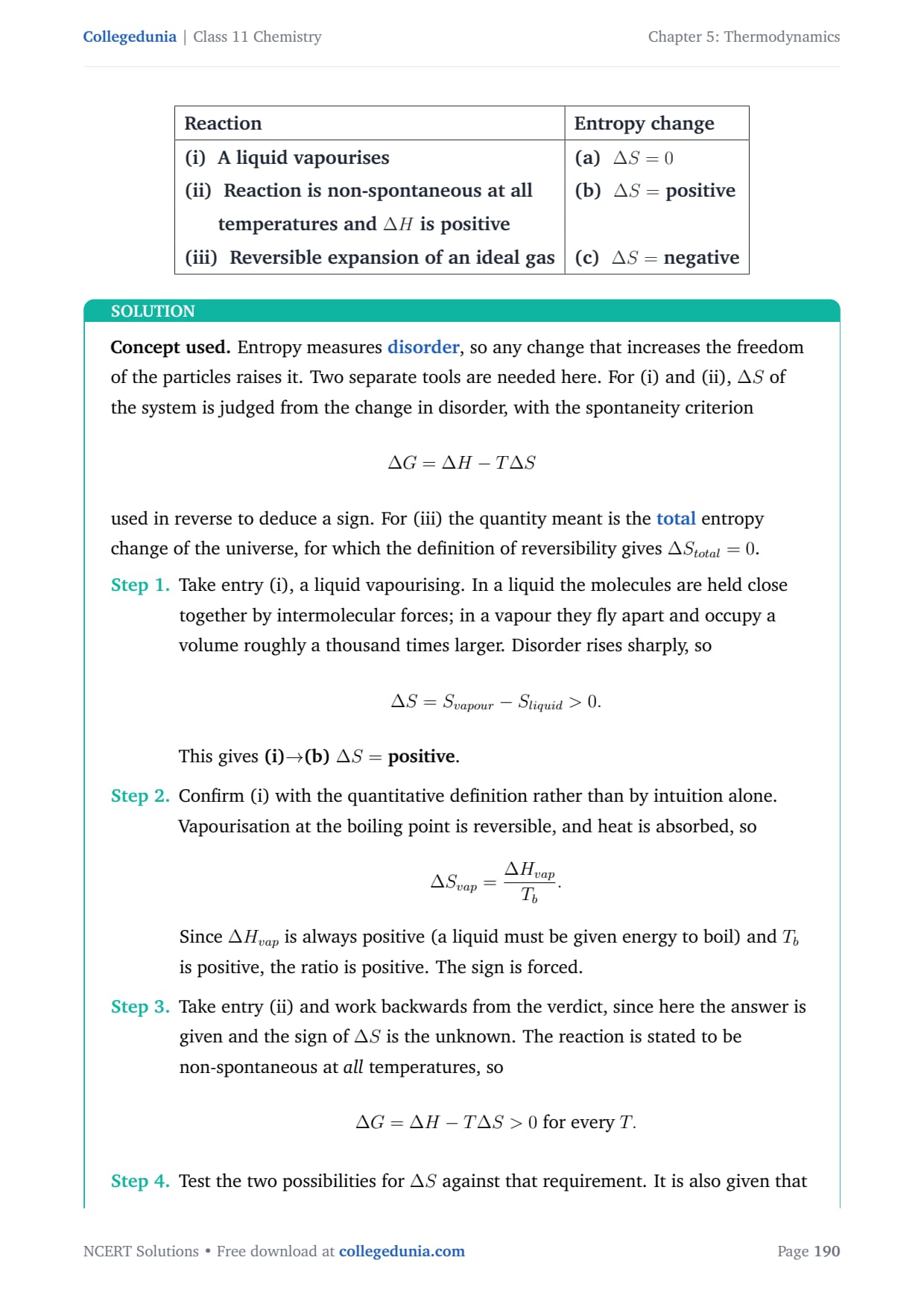
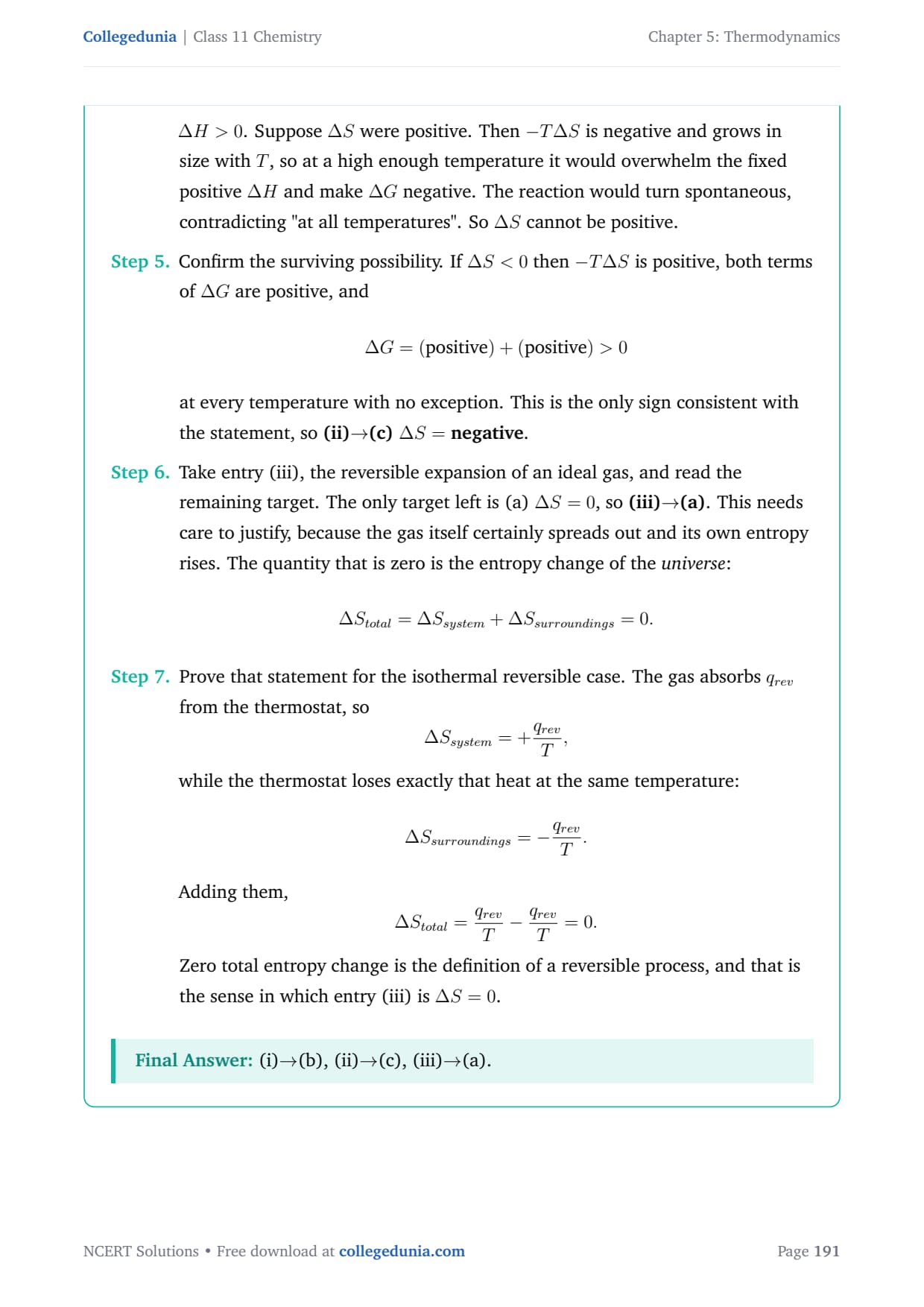
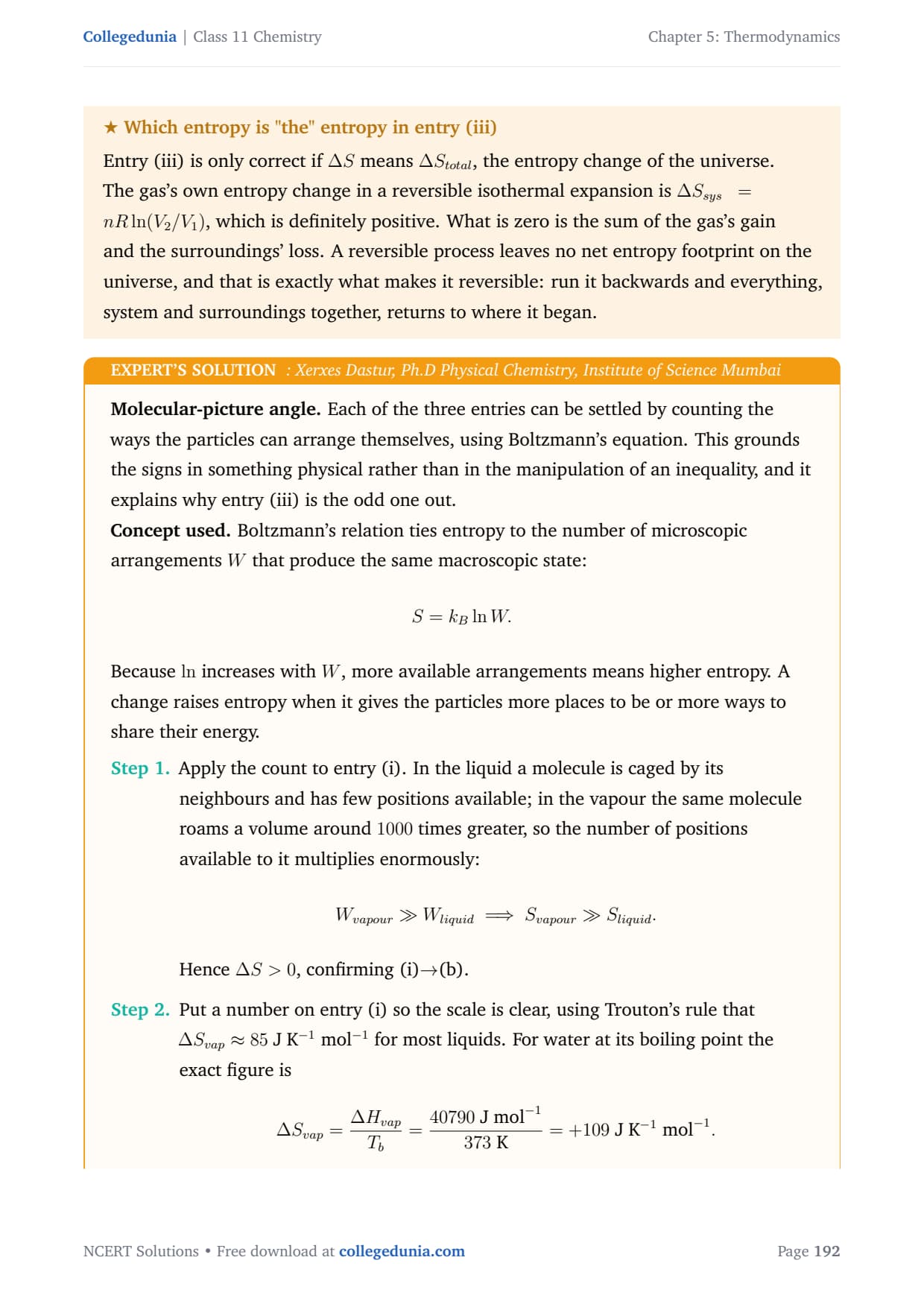
Question 9 shows this well. Water freezes in a beaker, and the entropy of the water clearly drops as a disordered liquid becomes an ordered crystal. Most students stop there and pick a wrong option. Freezing is exothermic, so the heat released raises the entropy of the surroundings. You have to run two entropy calculations, not one. No textbook question makes that split do real work.
How to Use These NCERT Exemplar Solutions for Boards, NEET and JEE
Attempt each question before you open the solution. The Exemplar repays the attempt far more than the reading.
- Boards: the 31 Short Answer questions match the 2 and 3 mark board pattern almost exactly
- NEET: work the 14 MCQ I questions first, since NEET repeats enthalpy and entropy at that level
- JEE Main: the MCQ II and Long Answer sets are the closest NCERT practice for multi-step Hess's law work
Student Feedback
Students using Collegedunia's Class 11 Chemistry Exemplar Solutions told us the sign conventions were the hardest part of this chapter. Around 7 in 10 said that seeing the three key errors explained, rather than glossed over, was what finally made them trust their own working.
Other Resources for Class 11 Chemistry Thermodynamics
Collegedunia has the full set of study material for this chapter. Use the Notes for a first read, then the Exemplar once the first law is steady.
Also Check:
- NCERT Solutions for Class 11 Chemistry Chapter 5
- Class 11 Chemistry Chapter 5 Notes
- Class 11 Chemistry Chapter 5 NCERT Book PDF
- Class 11 Chemistry Chapter 5 Exemplar Questions with Solutions
NCERT Exemplar Solutions for Other Class 11 Chemistry Chapters
Each chapter below has the same step-by-step treatment and a free PDF.
Thermodynamics Class 11 NCERT Exemplar Solutions FAQs
Ques. How many questions are there in the Class 11 Chemistry Thermodynamics Exemplar?
Ans. Chapter 5 has 62 questions, which makes it the biggest chapter in the book. They are split into 14 MCQ I, 5 MCQ II, 31 Short Answer, 4 Matching Type, 3 Assertion and Reason and 5 Long Answer questions. All 62 are solved in the free PDF on this page.
Ques. Why is Thermodynamics called Unit 6 in the printed Exemplar book?
Ans. The printed Exemplar follows the older 14-unit edition, where States of Matter sat at Unit 5. The new edition dropped that unit, so Thermodynamics became Chapter 5 in the textbook while the Exemplar still prints it as Unit 6. This is why its figures are labelled Fig. 6.1 and onward.
Ques. Is the printed NCERT Exemplar answer key for this chapter correct?
Ans. Mostly, but three answers are wrong. Question 23 prints +91.8 kJ mol-1 when the printed equation gives +183.6, Question 40 substitutes 4.184 for R instead of 8.314 J K-1 mol-1, and Question 51 calls heat an intensive property. All three are explained on this page.
Ques. Why is qp equal to ΔH but qv equal to ΔU?
Ans. At constant volume the gas cannot expand, so no work is done and all the heat raises the internal energy. At constant pressure the gas also pushes the surroundings back, so the heat covers both the internal energy rise and the expansion work. Enthalpy is defined as H = U + pV precisely to bundle those two together.
Ques. Can an endothermic reaction be spontaneous?
Ans. Yes, and the Exemplar tests it directly. Spontaneity is decided by ΔG, not ΔH. If ΔS is positive and the temperature is high enough, the TΔS term outweighs a positive ΔH and makes ΔG negative. Ice melting above 0 degrees C is the standard example.



Comments