




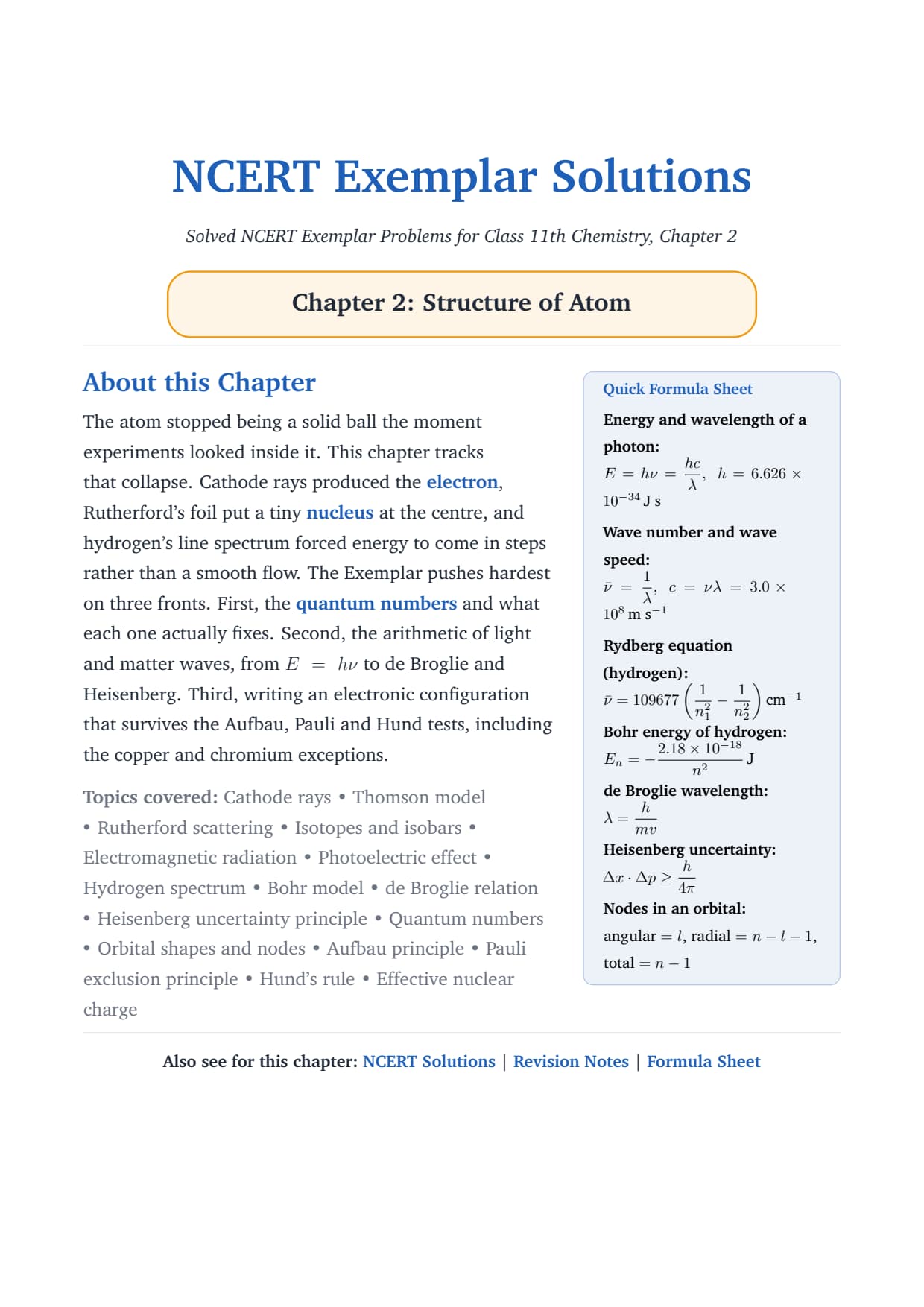
NCERT Exemplar Solutions for Class 11 Chemistry Chapter 2 Structure of Atom solve all 55 questions from the Exemplar book. Every MCQ, Short Answer, Matching, Assertion and Reason and Long Answer problem is solved step by step in the free 178-page PDF, updated for the 2026-27 syllabus.
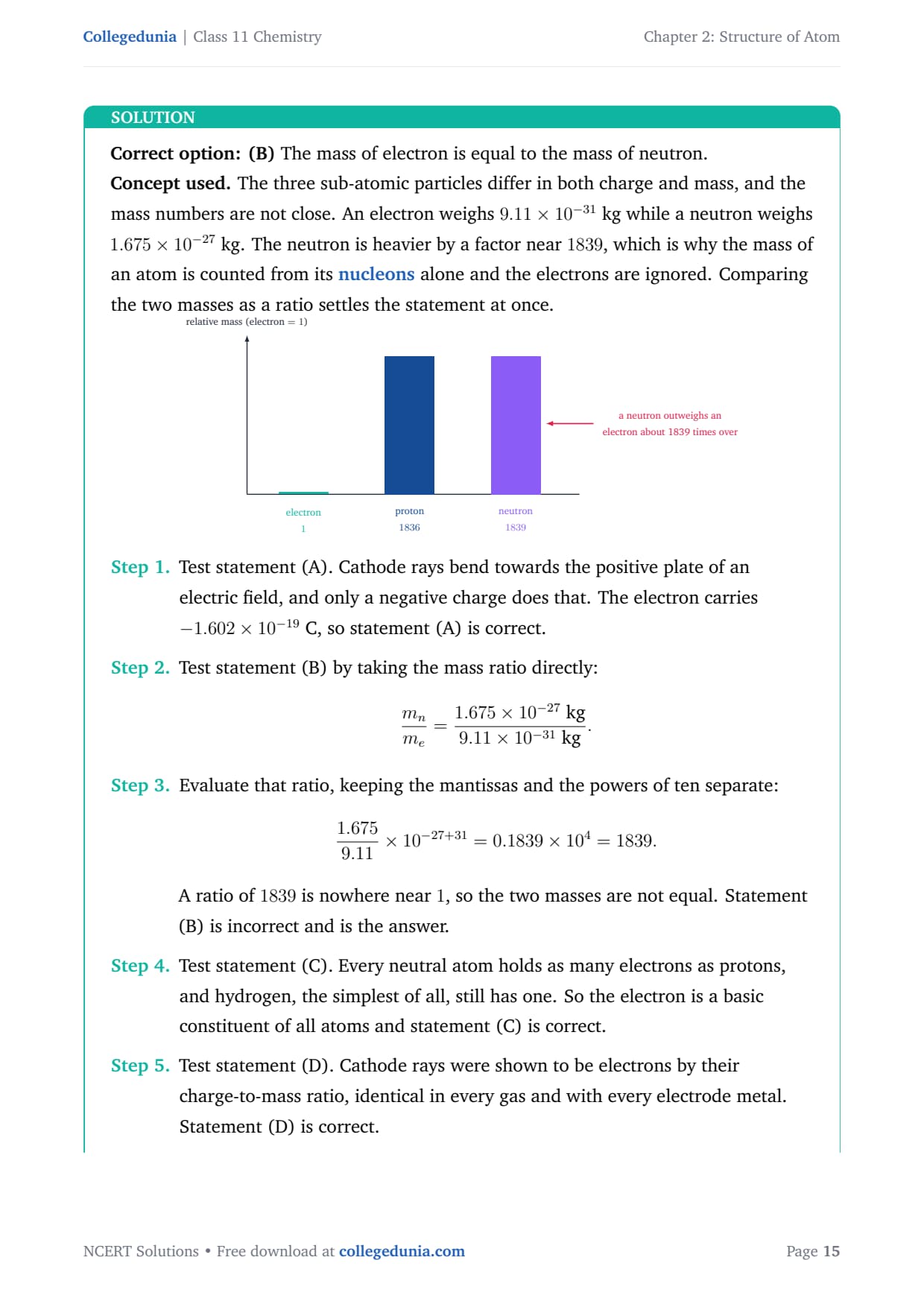
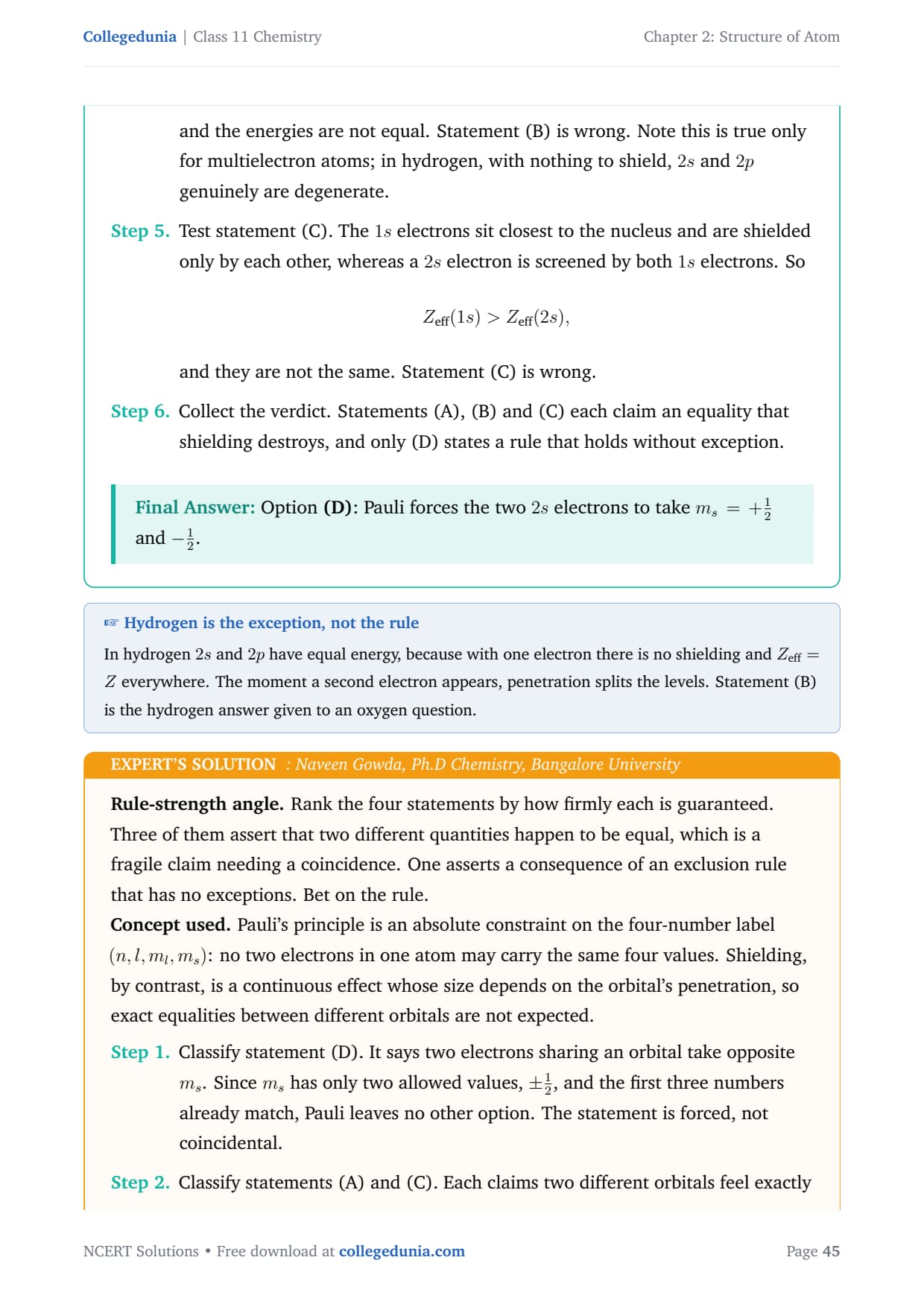
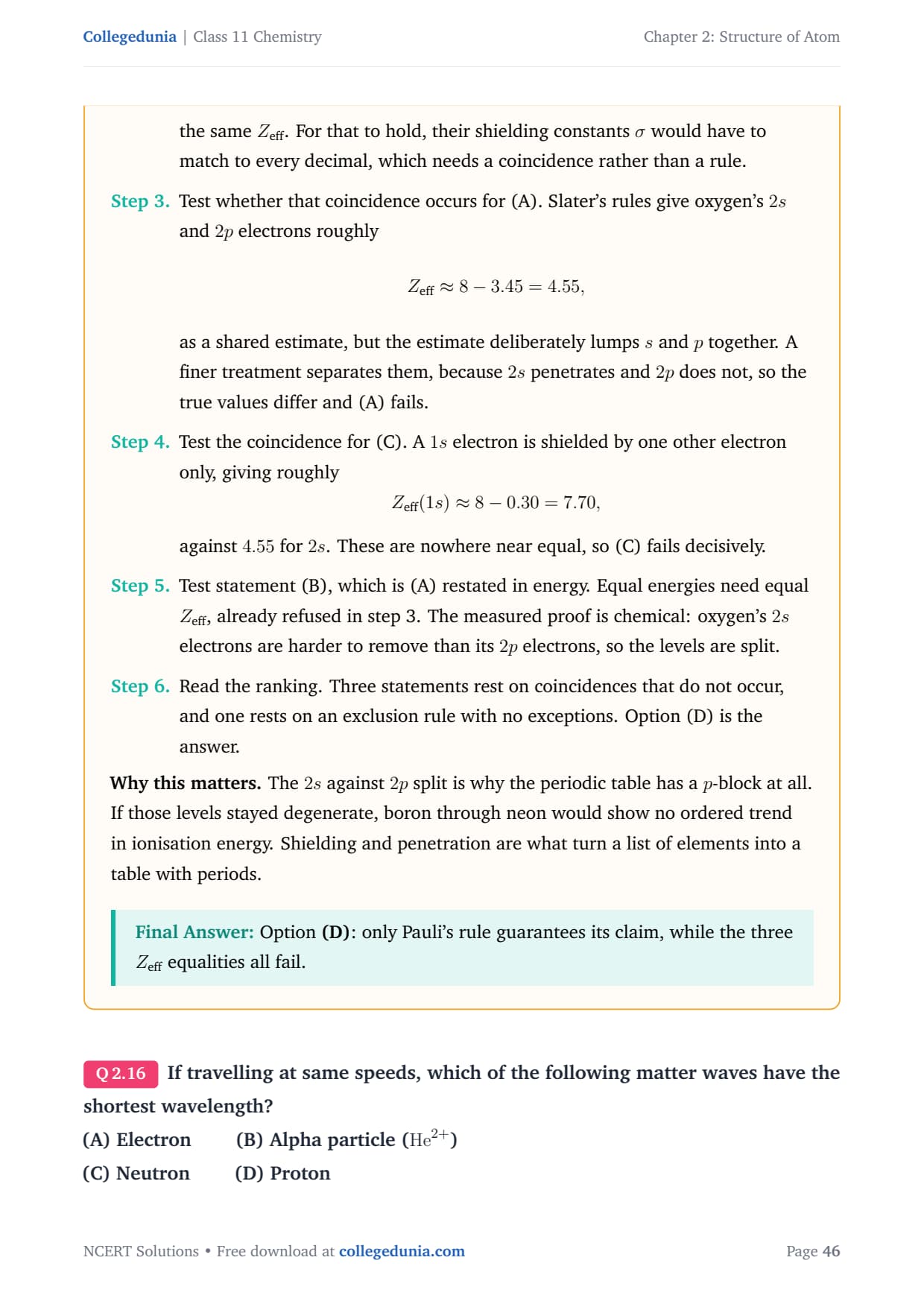
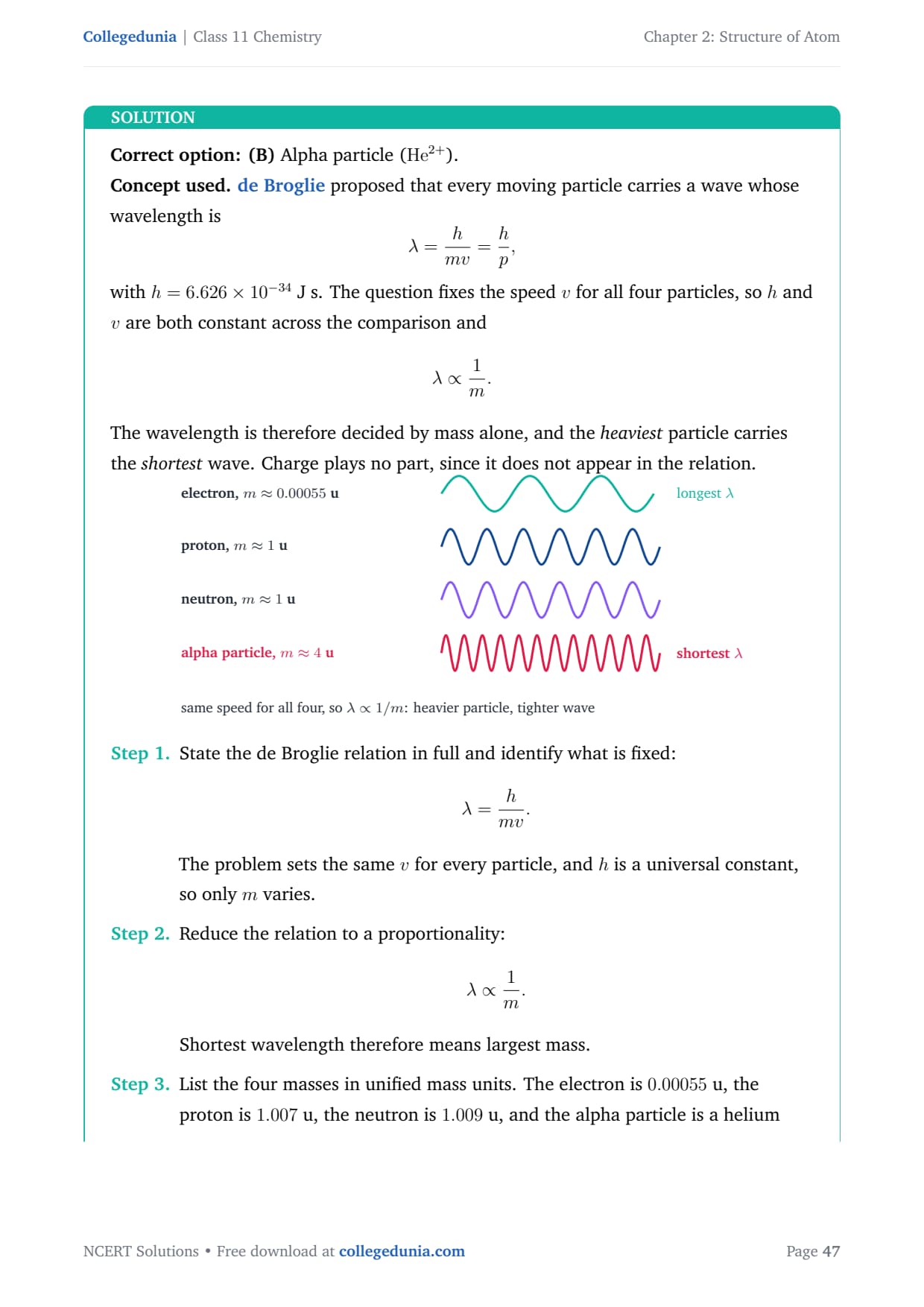
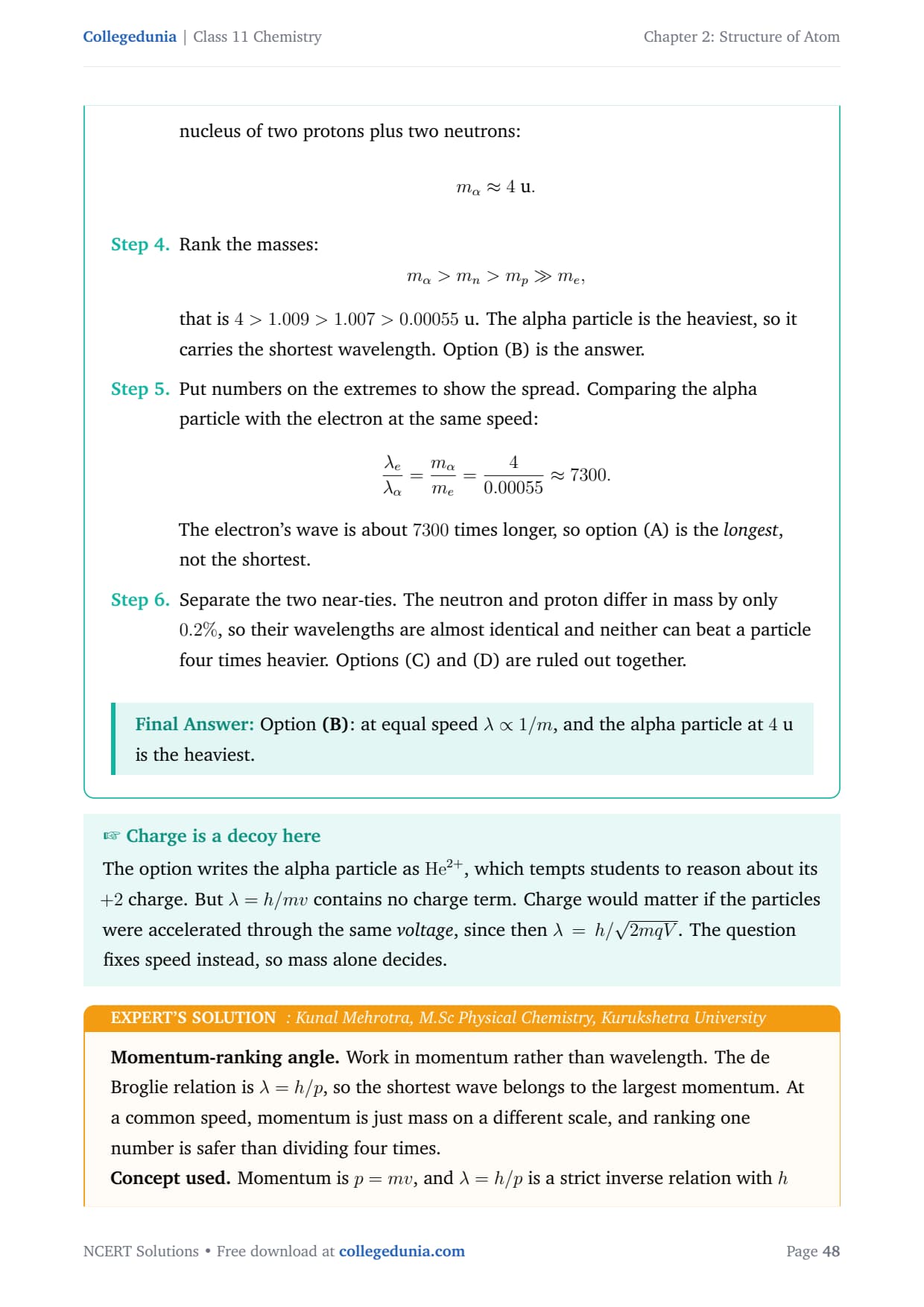
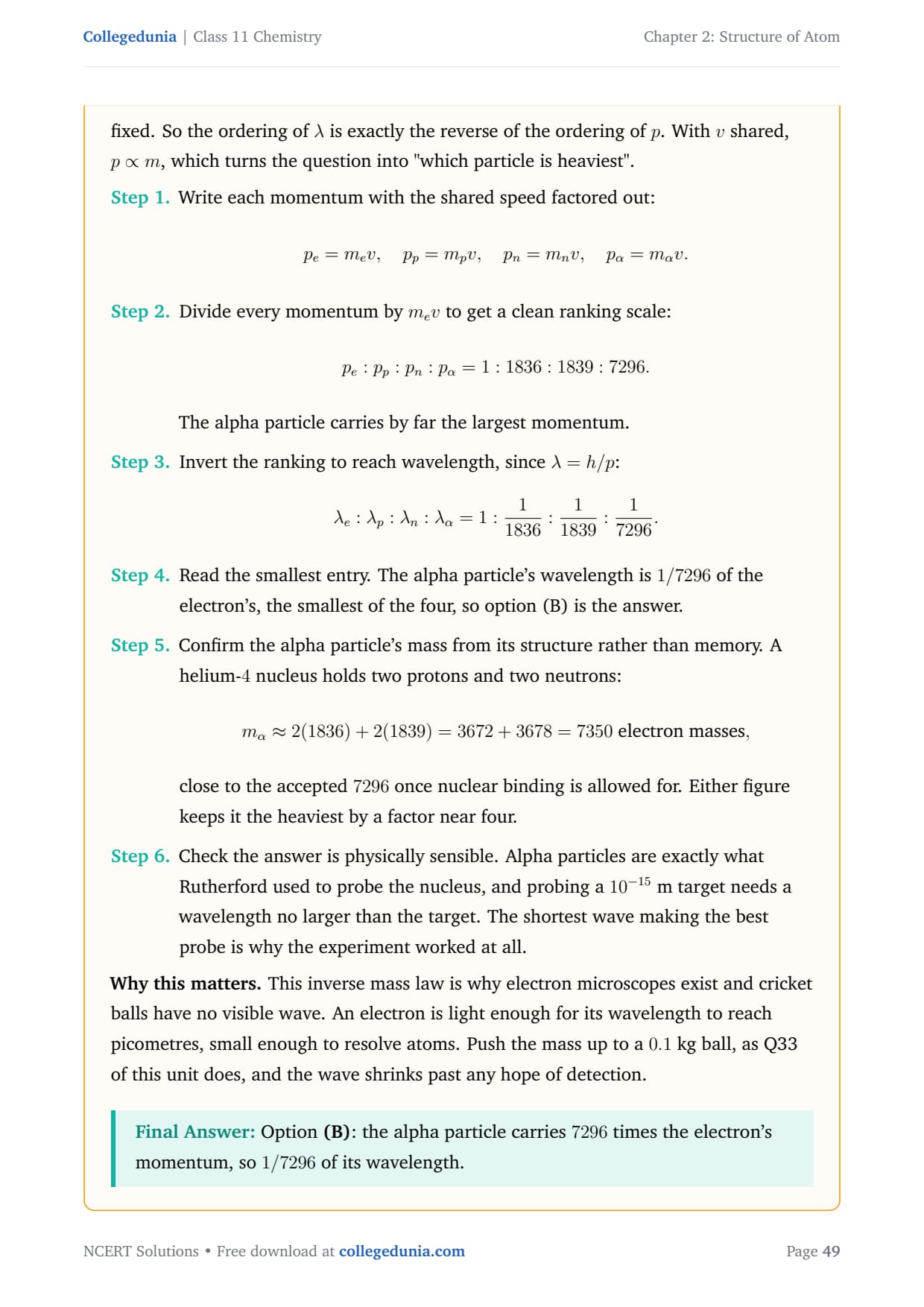
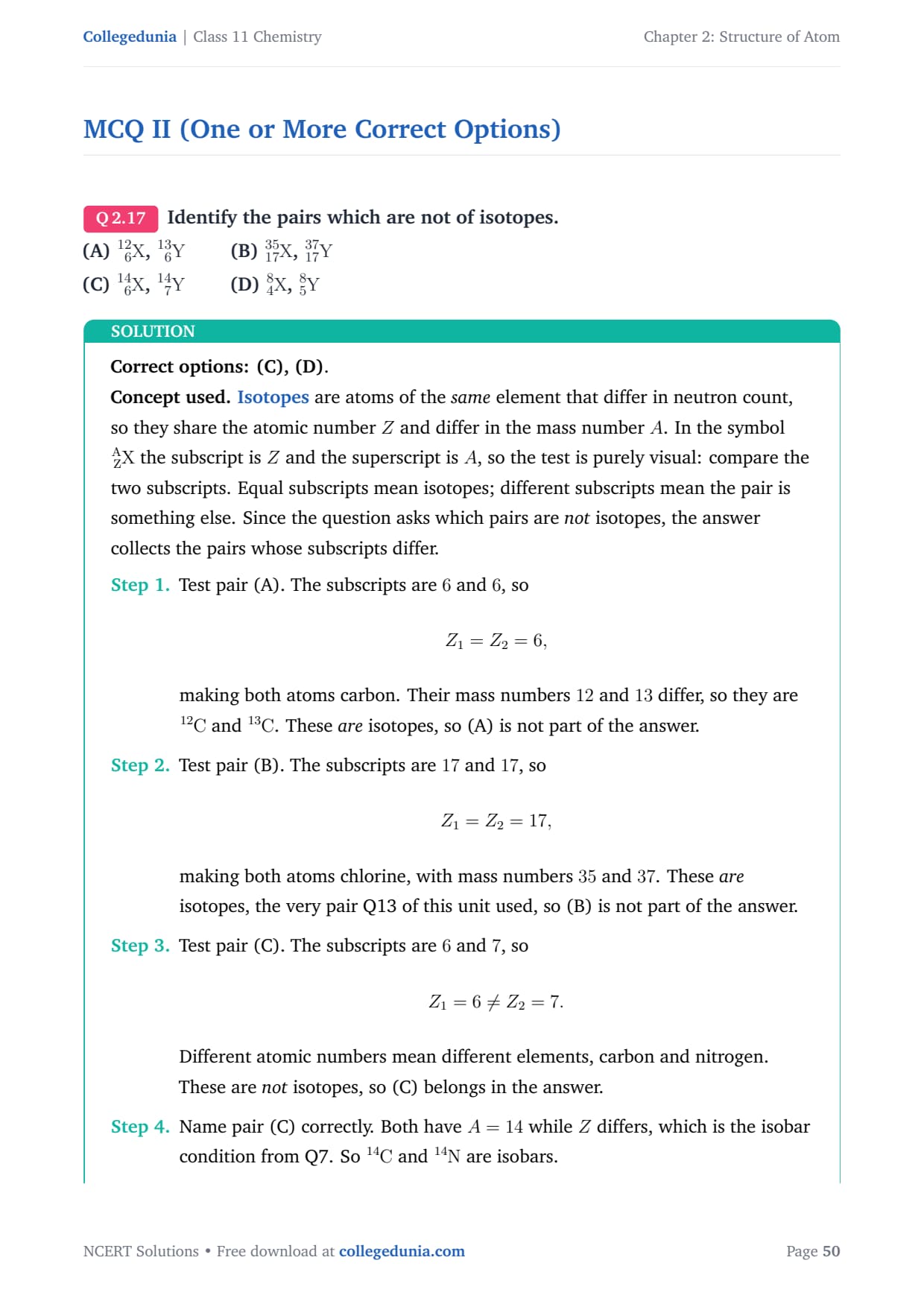
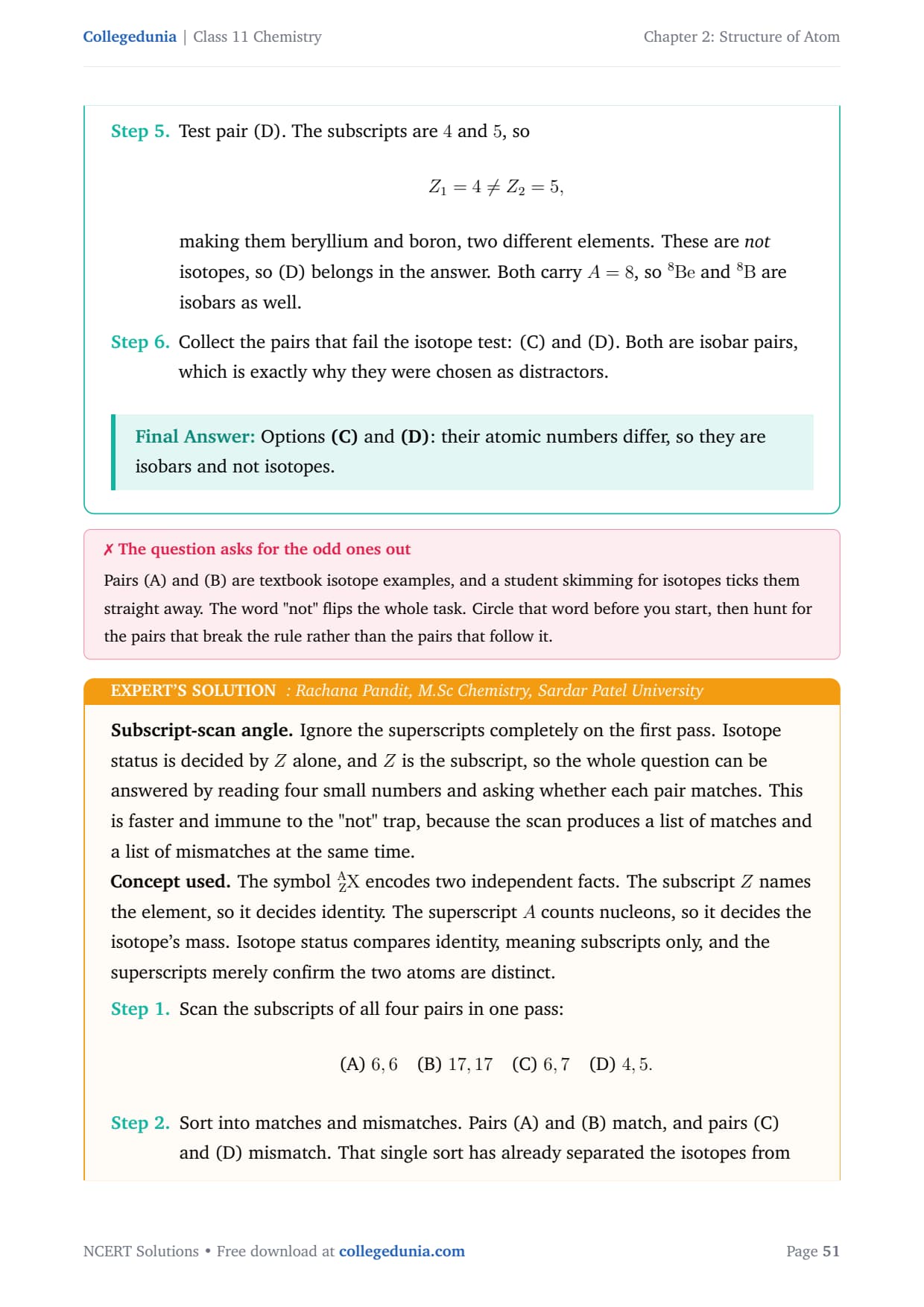
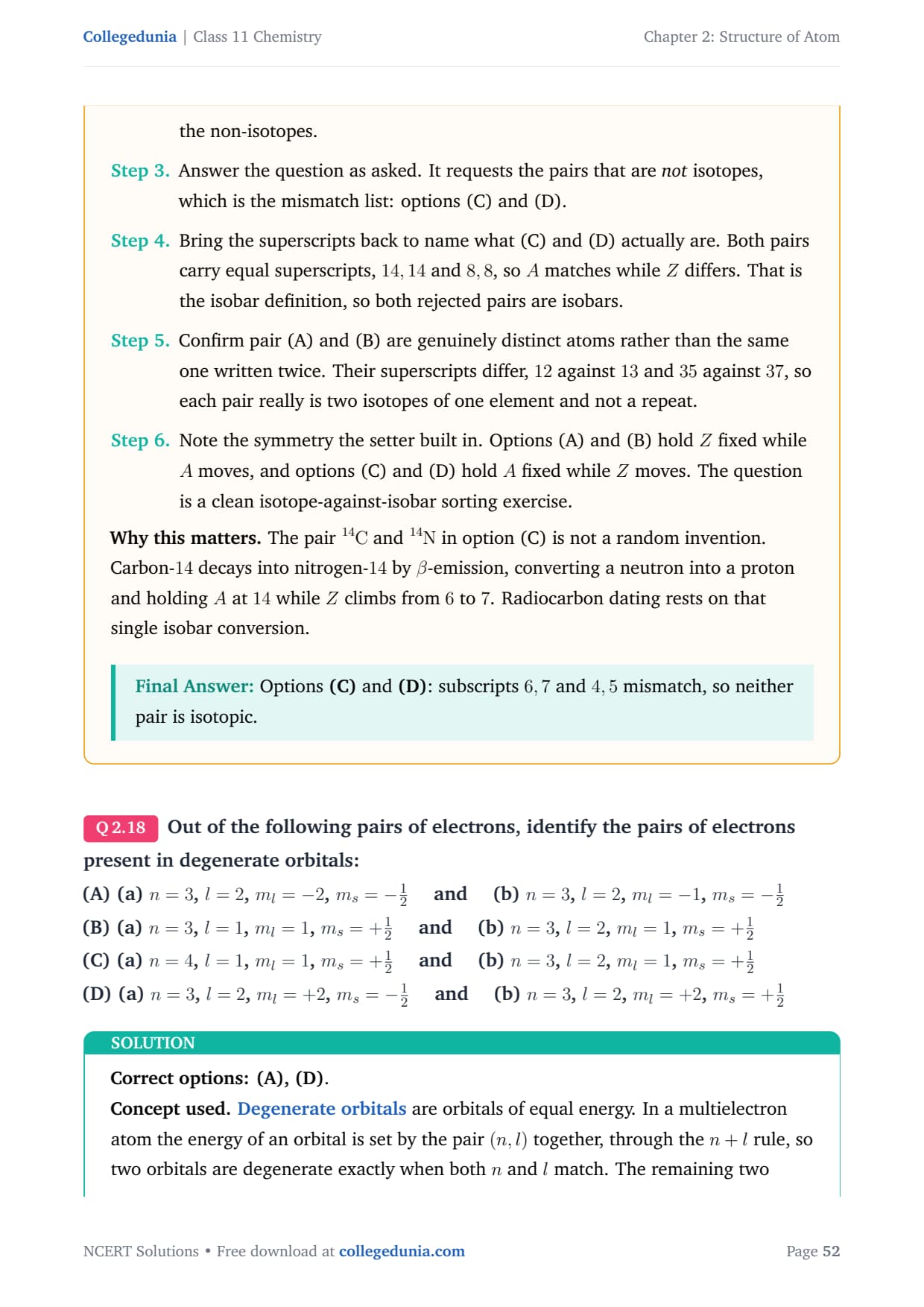
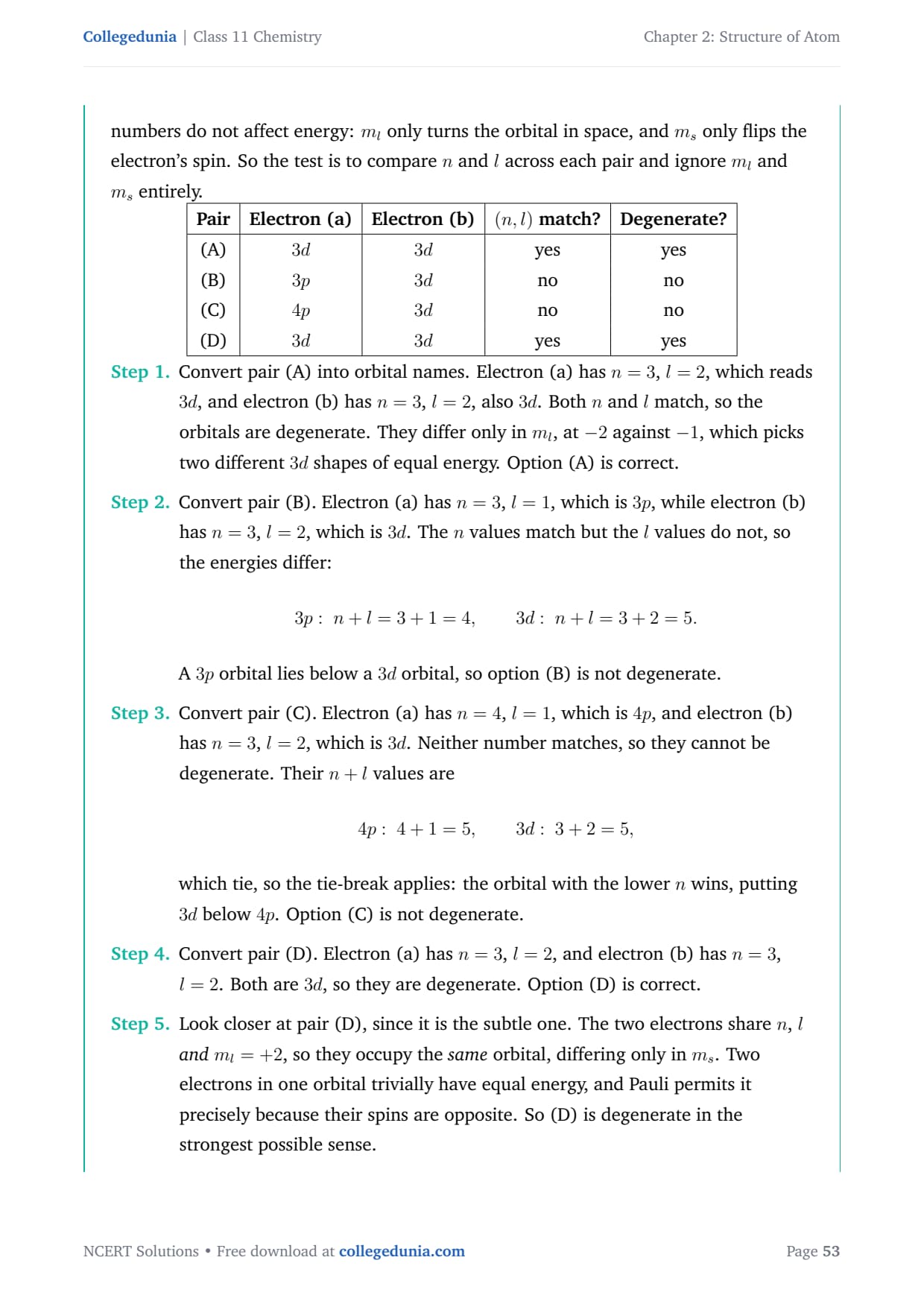
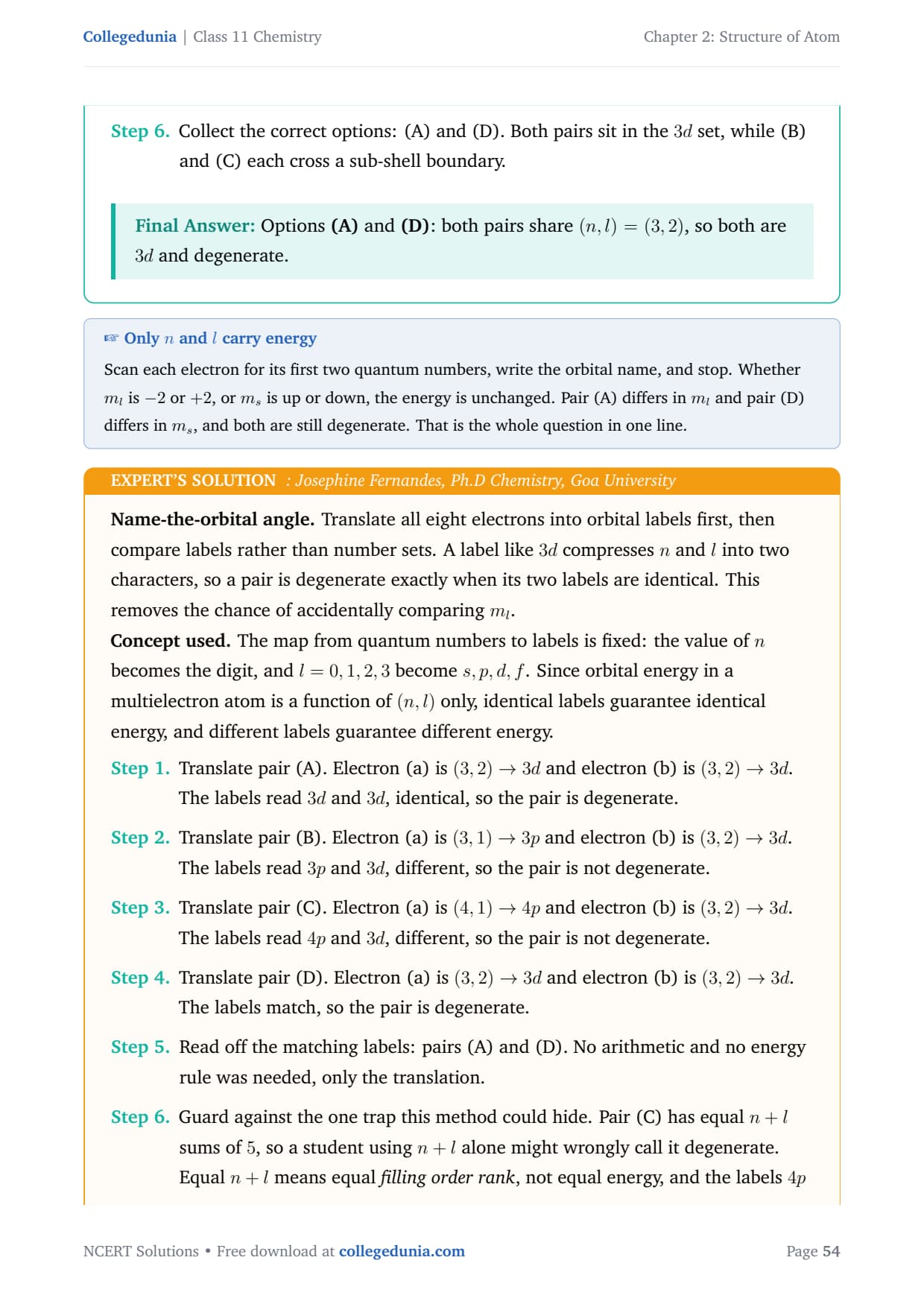
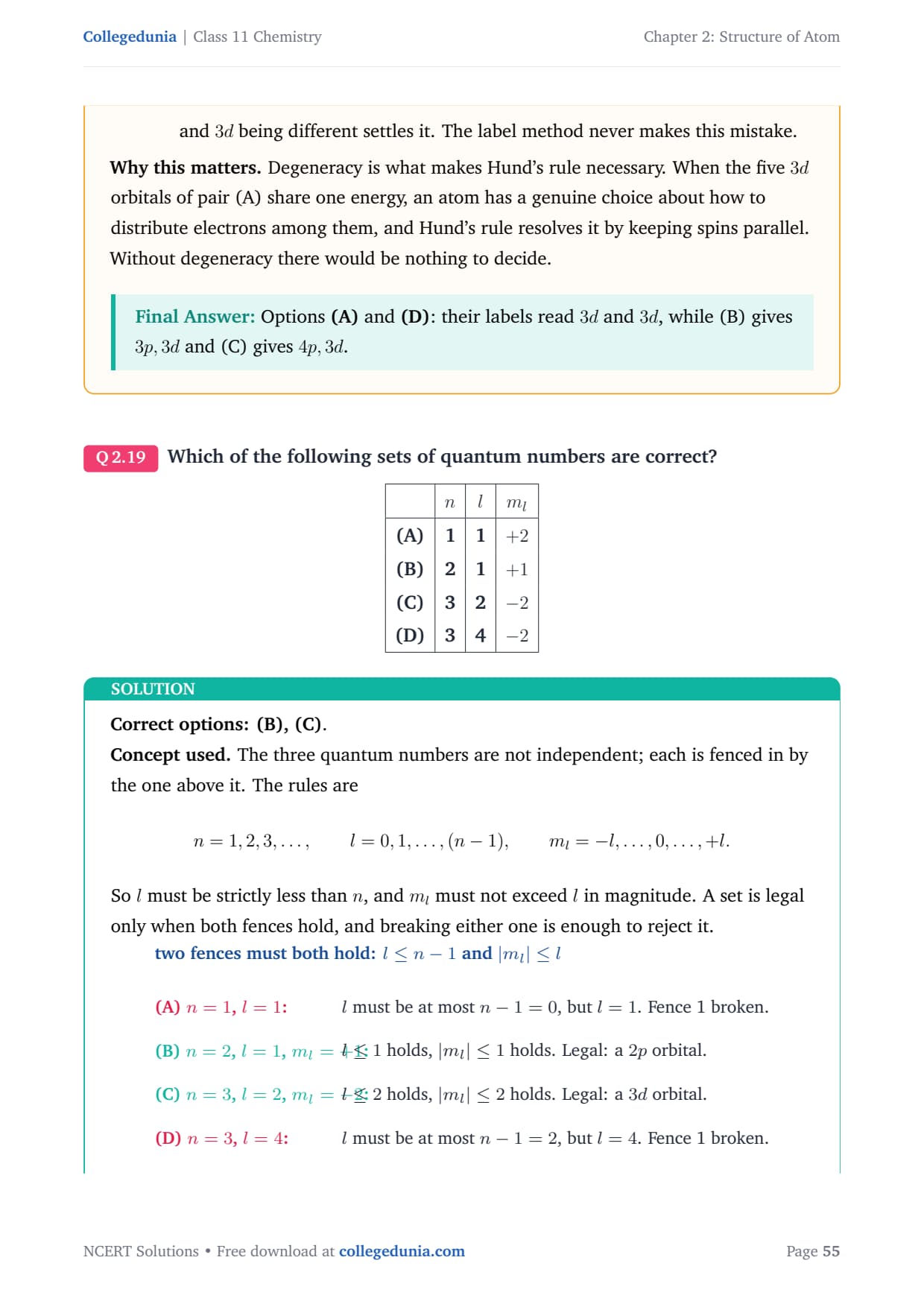
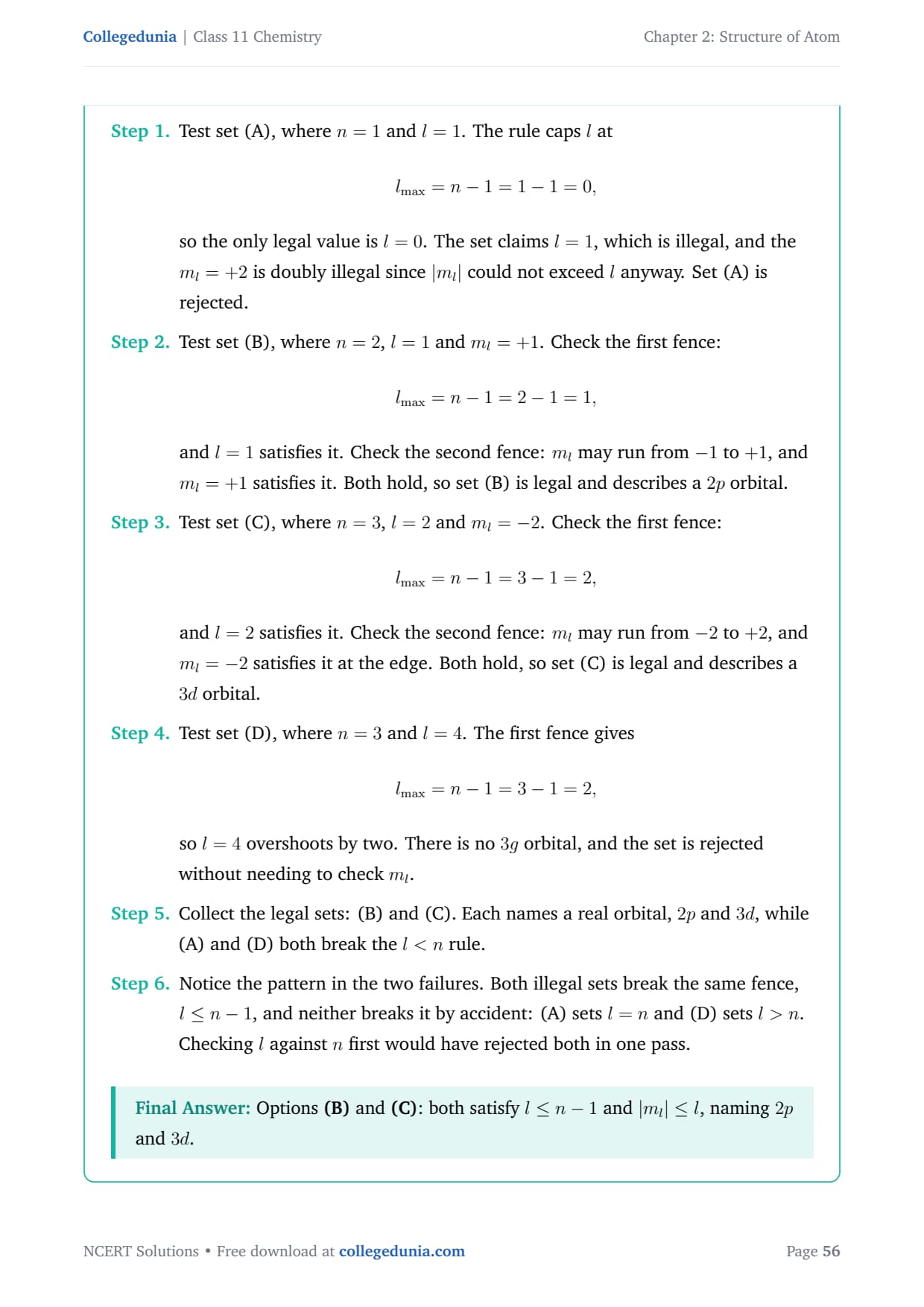
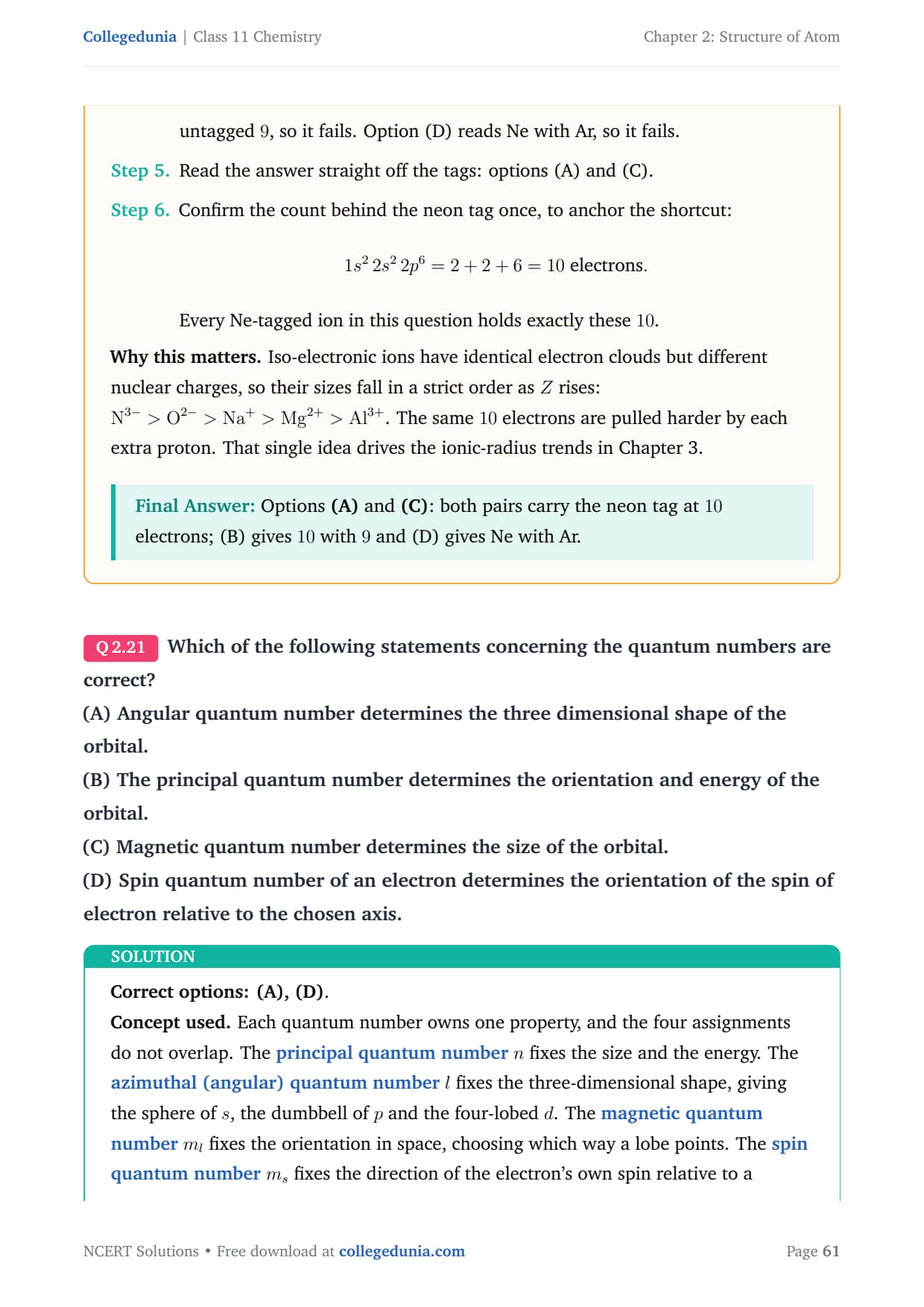
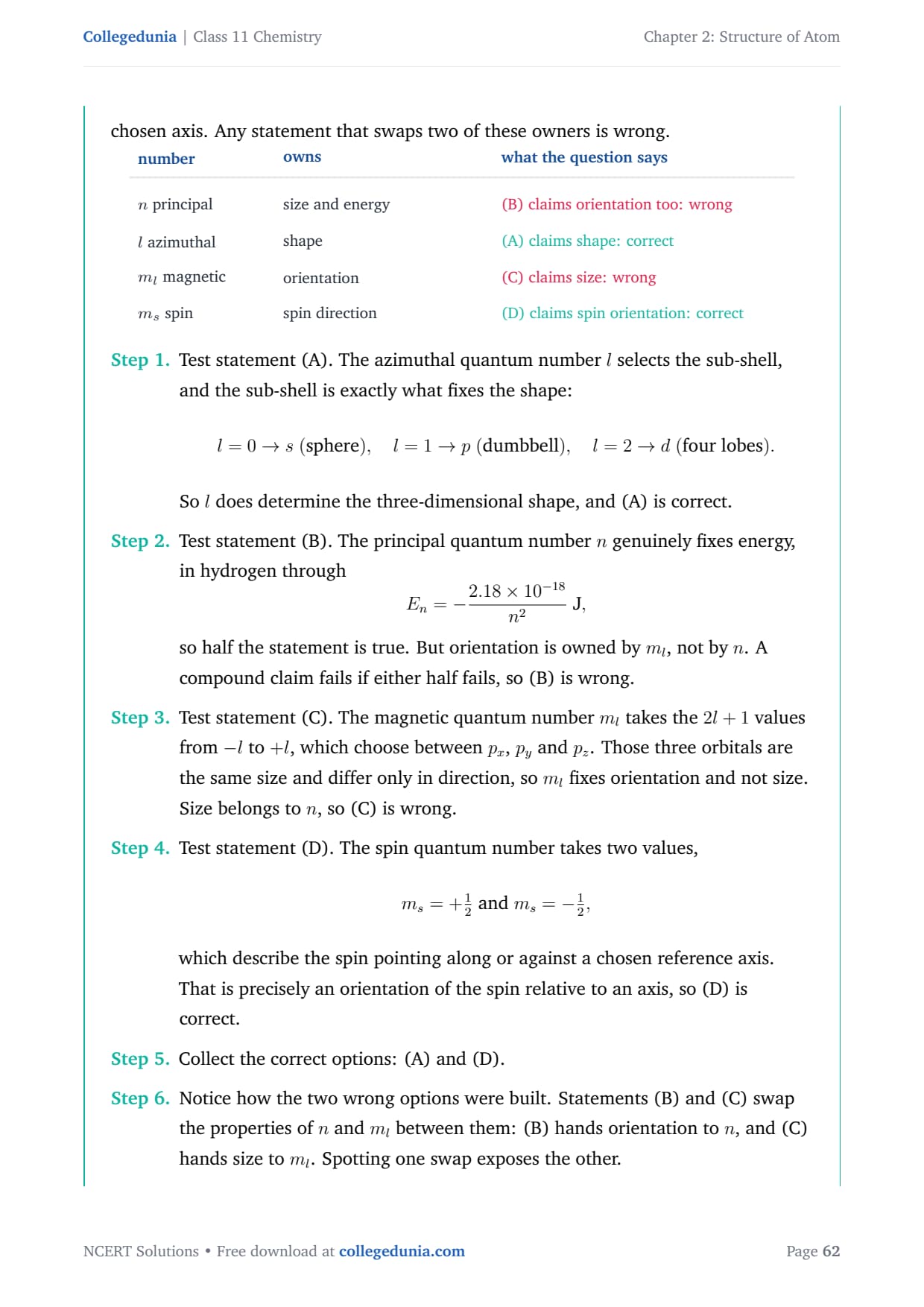
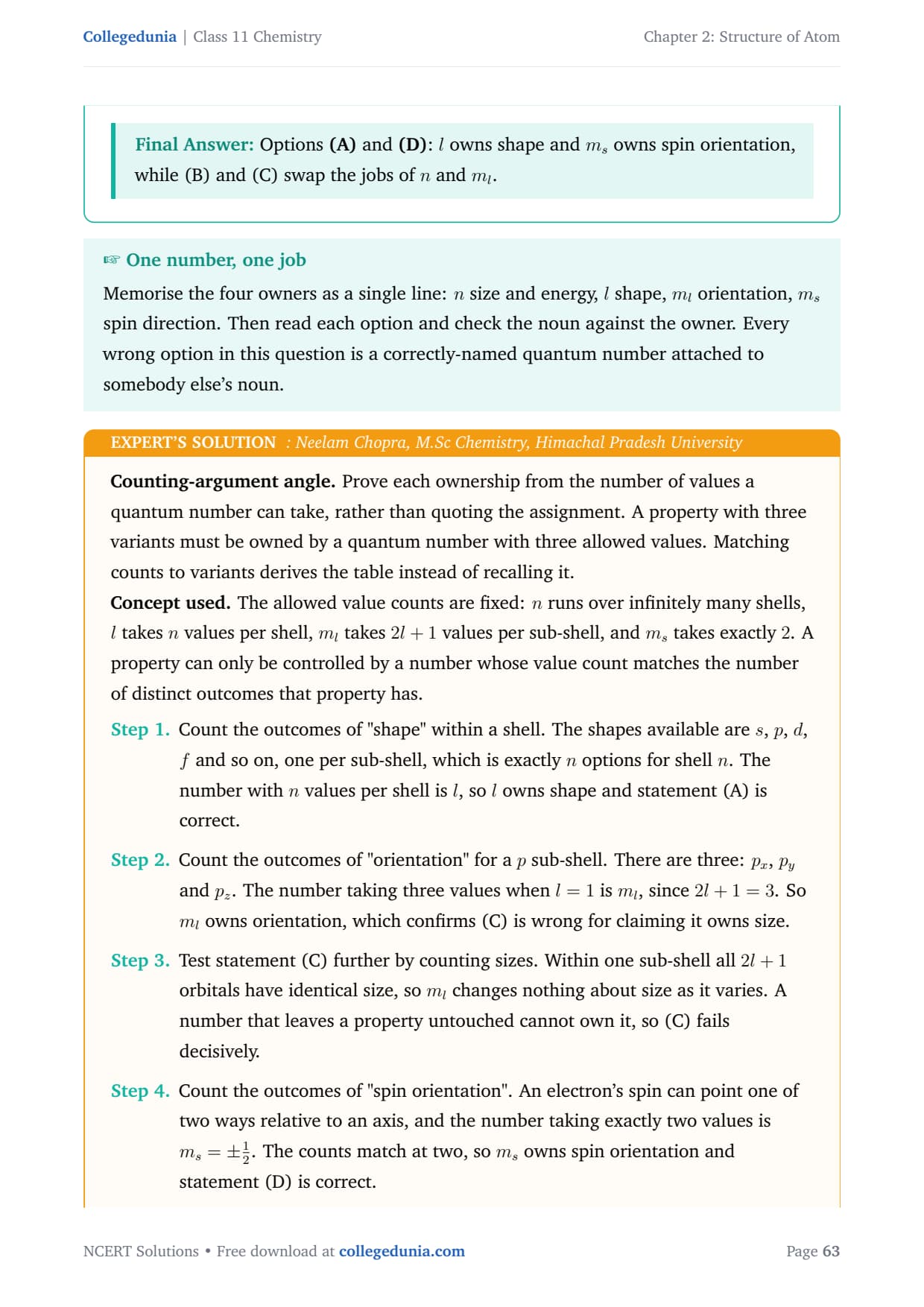
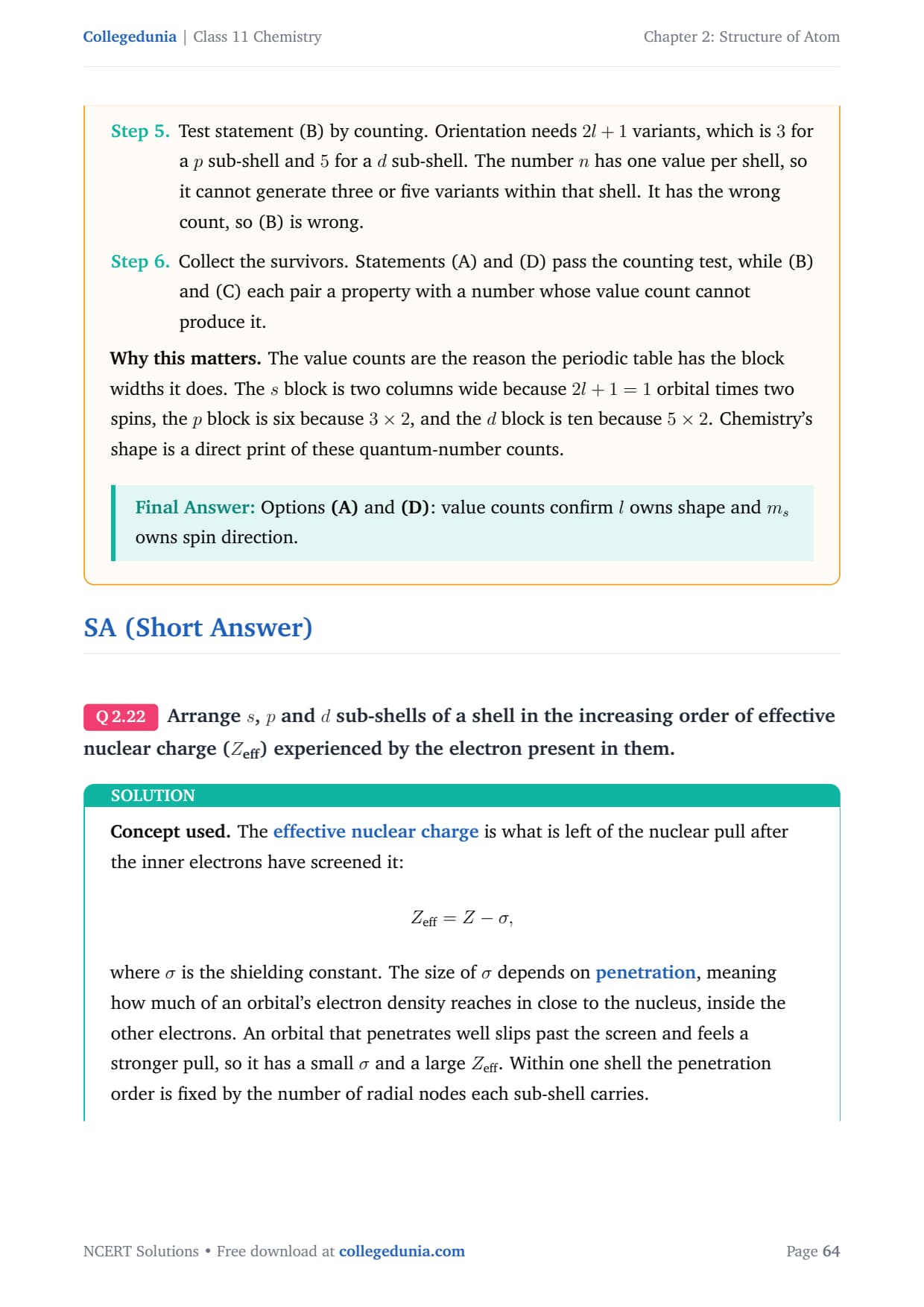
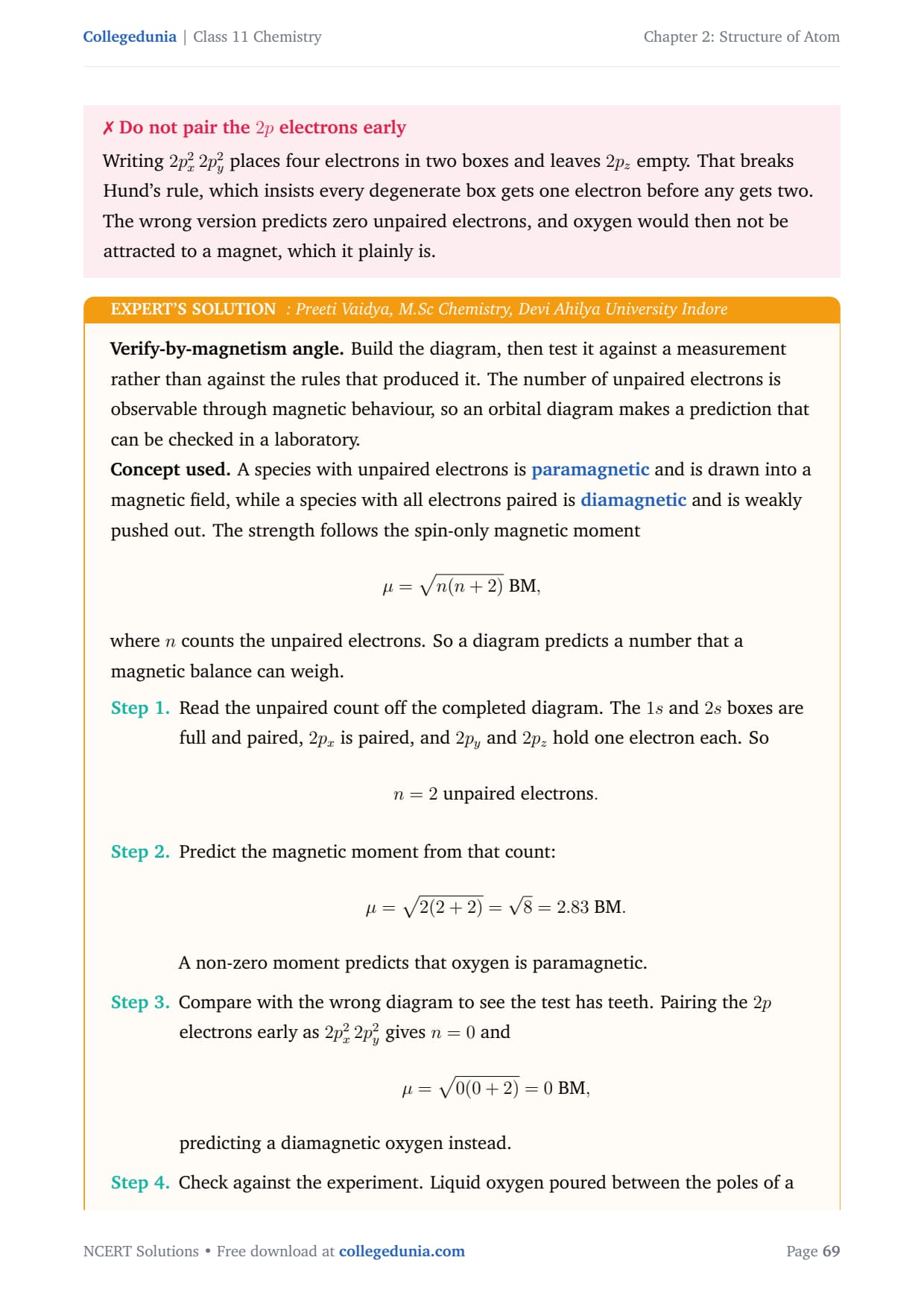
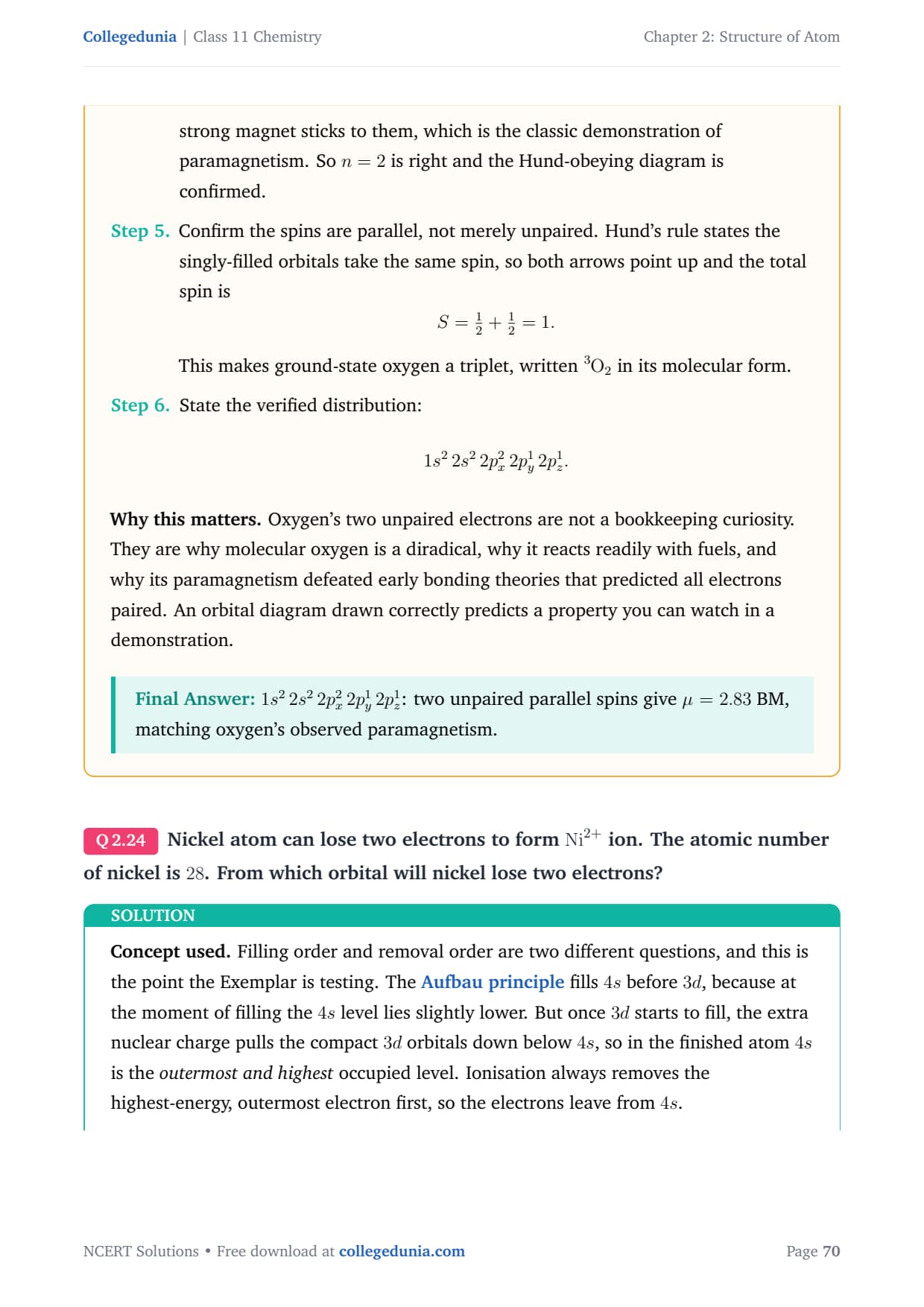
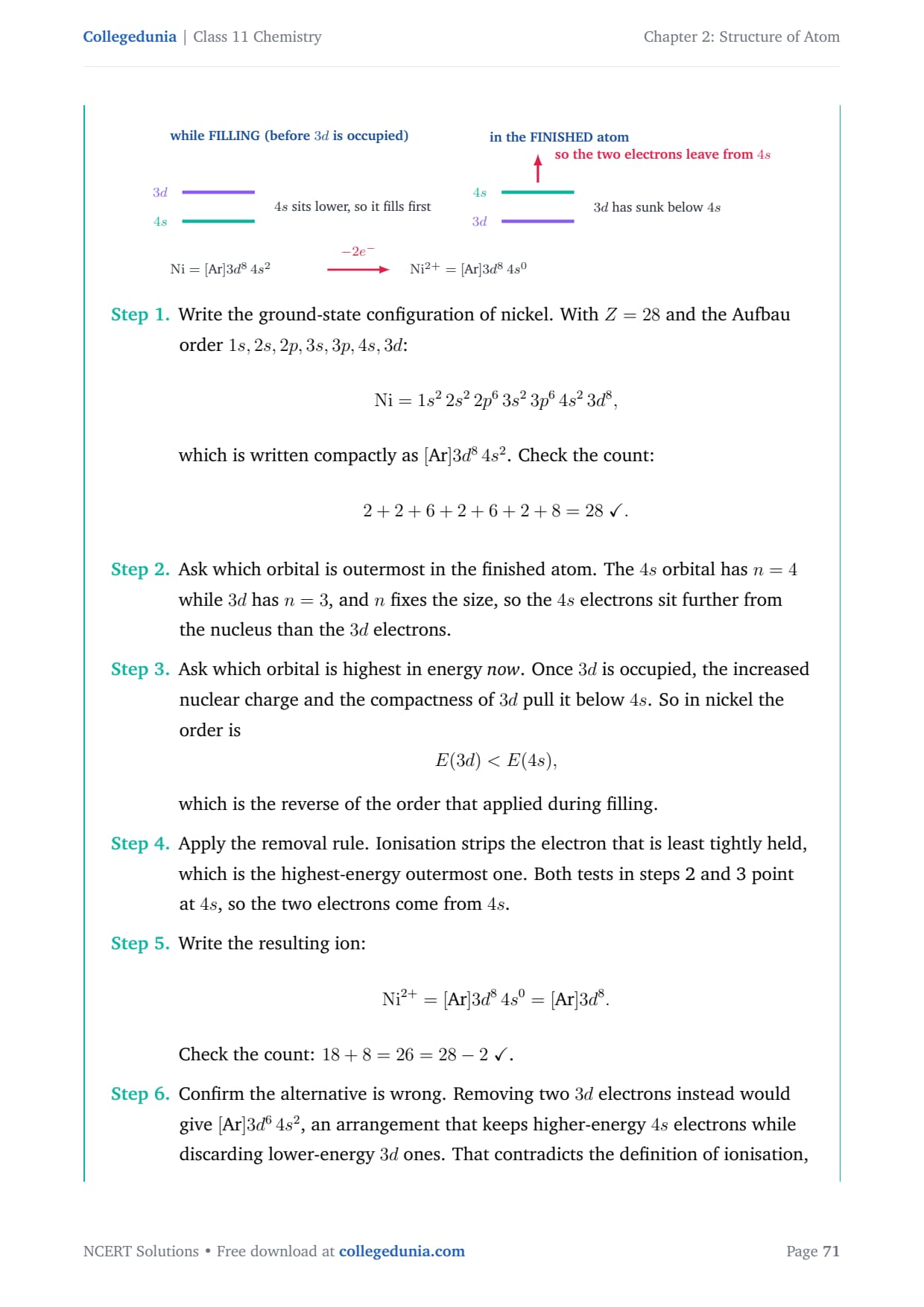
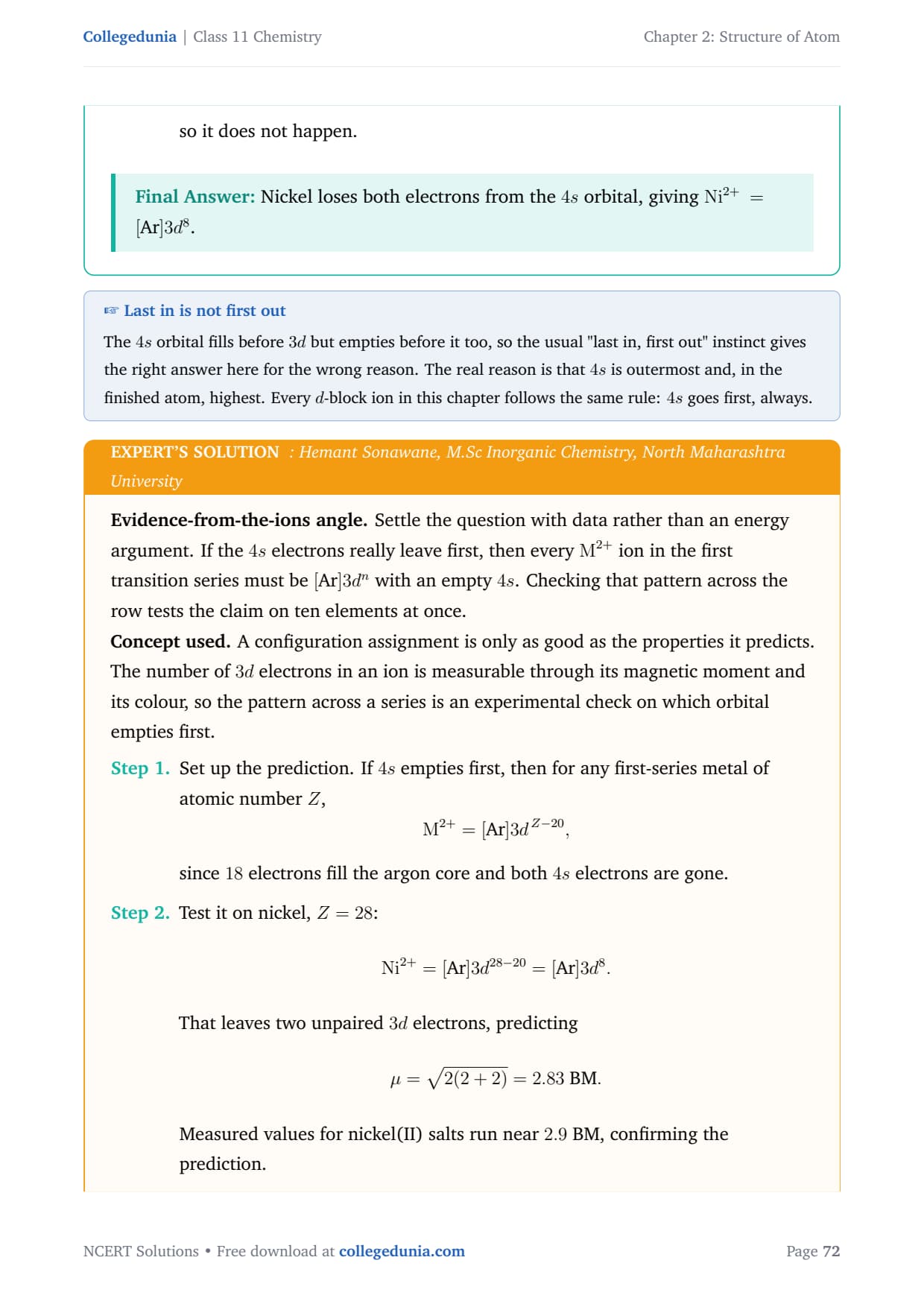
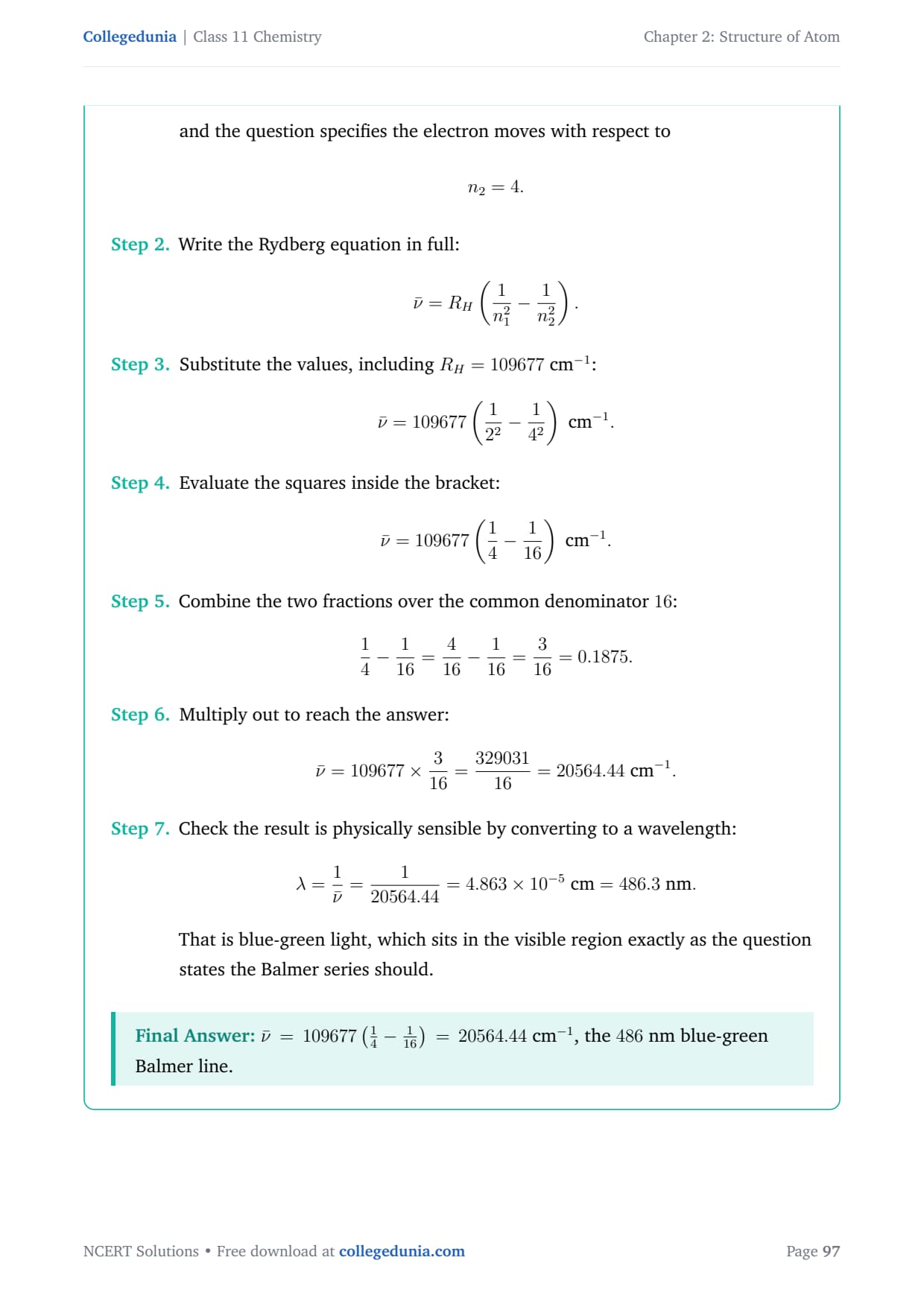
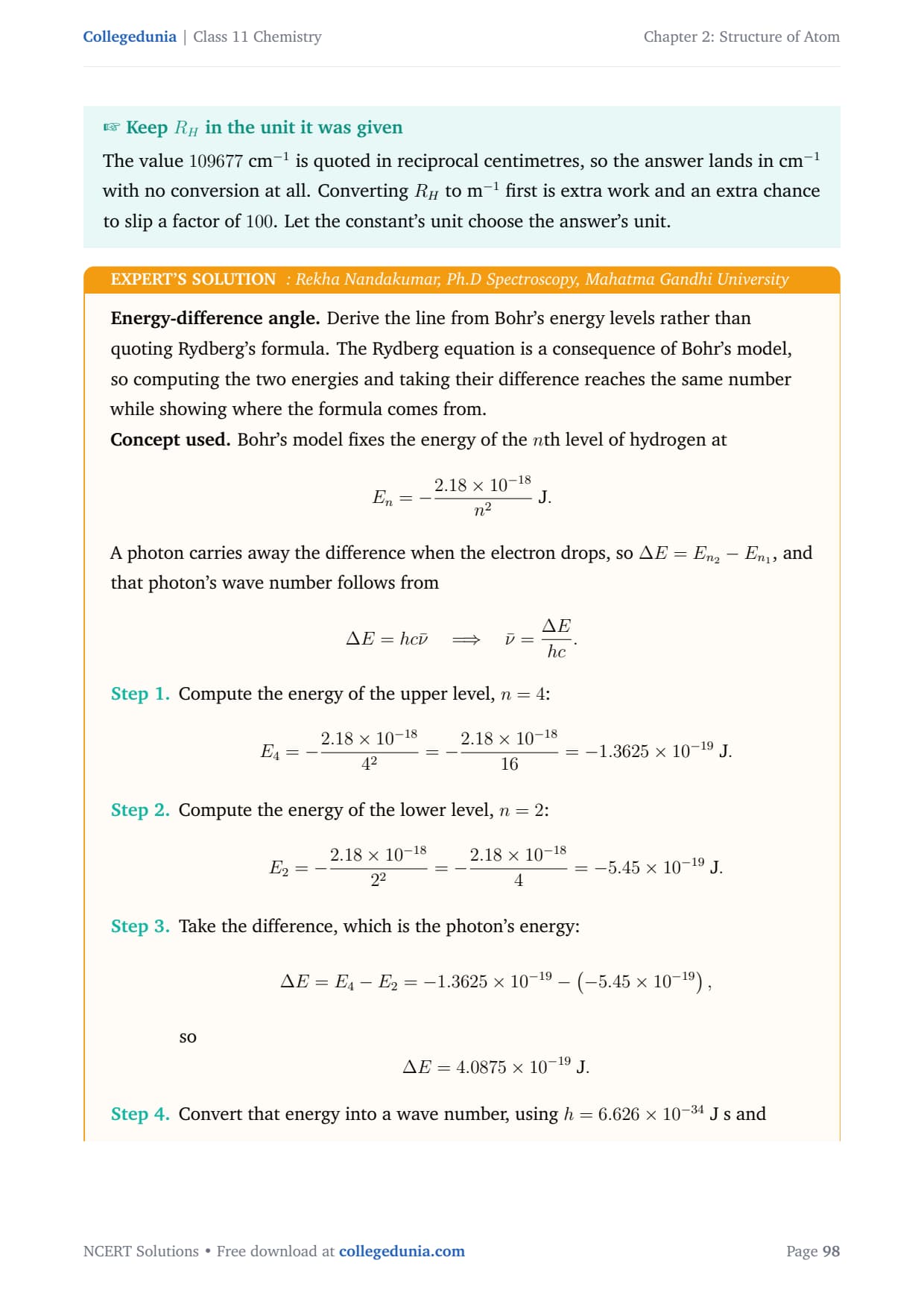
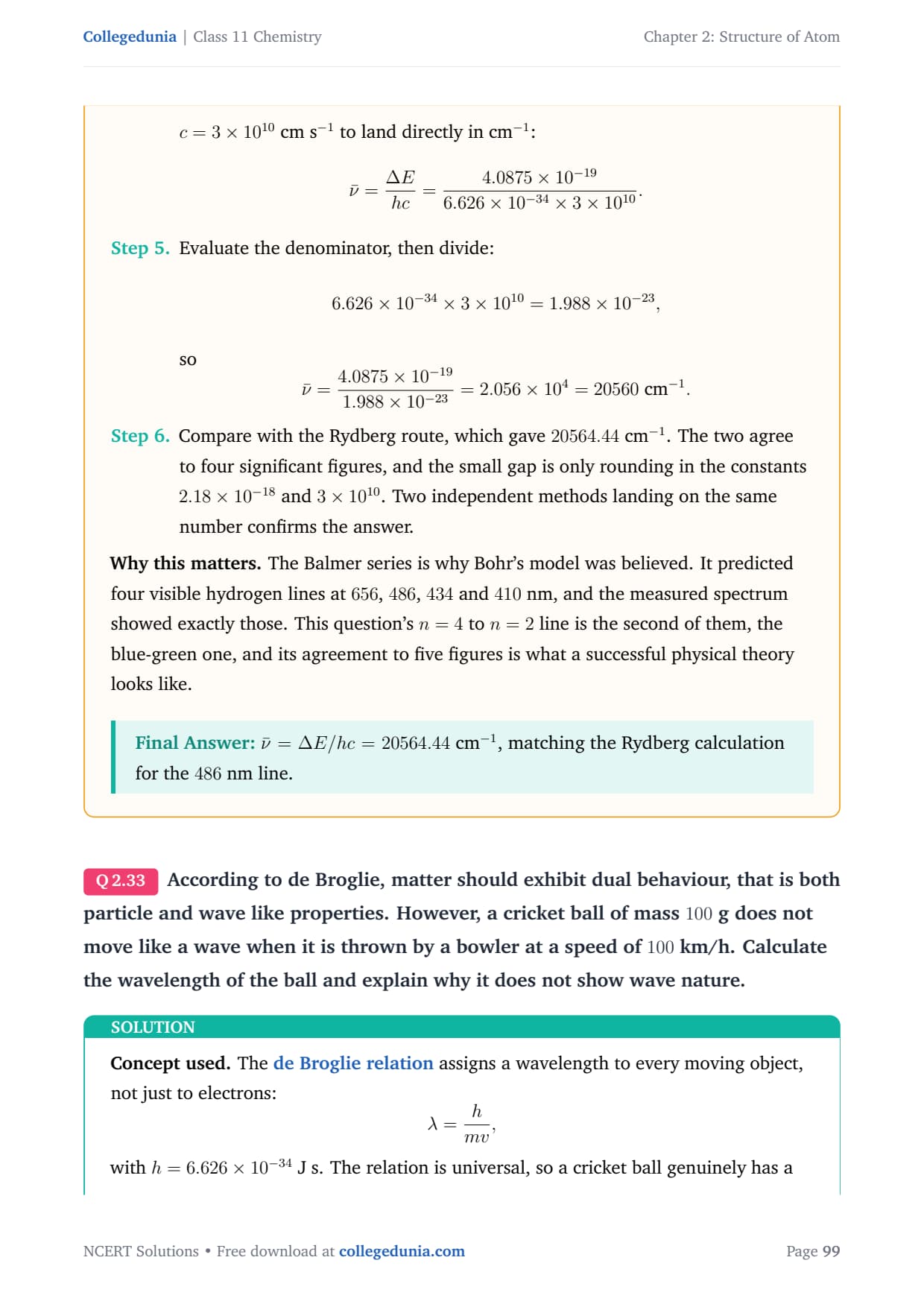
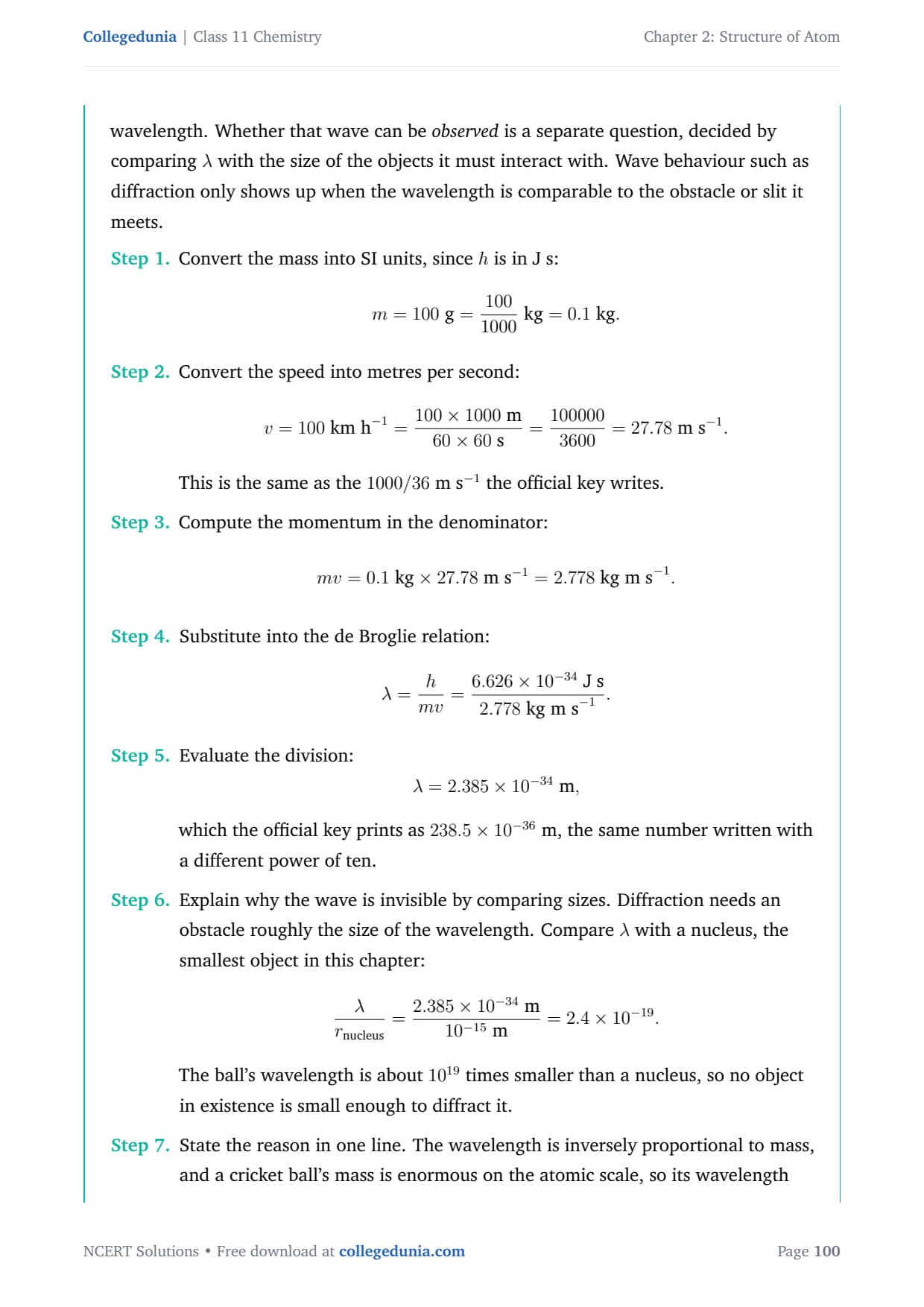
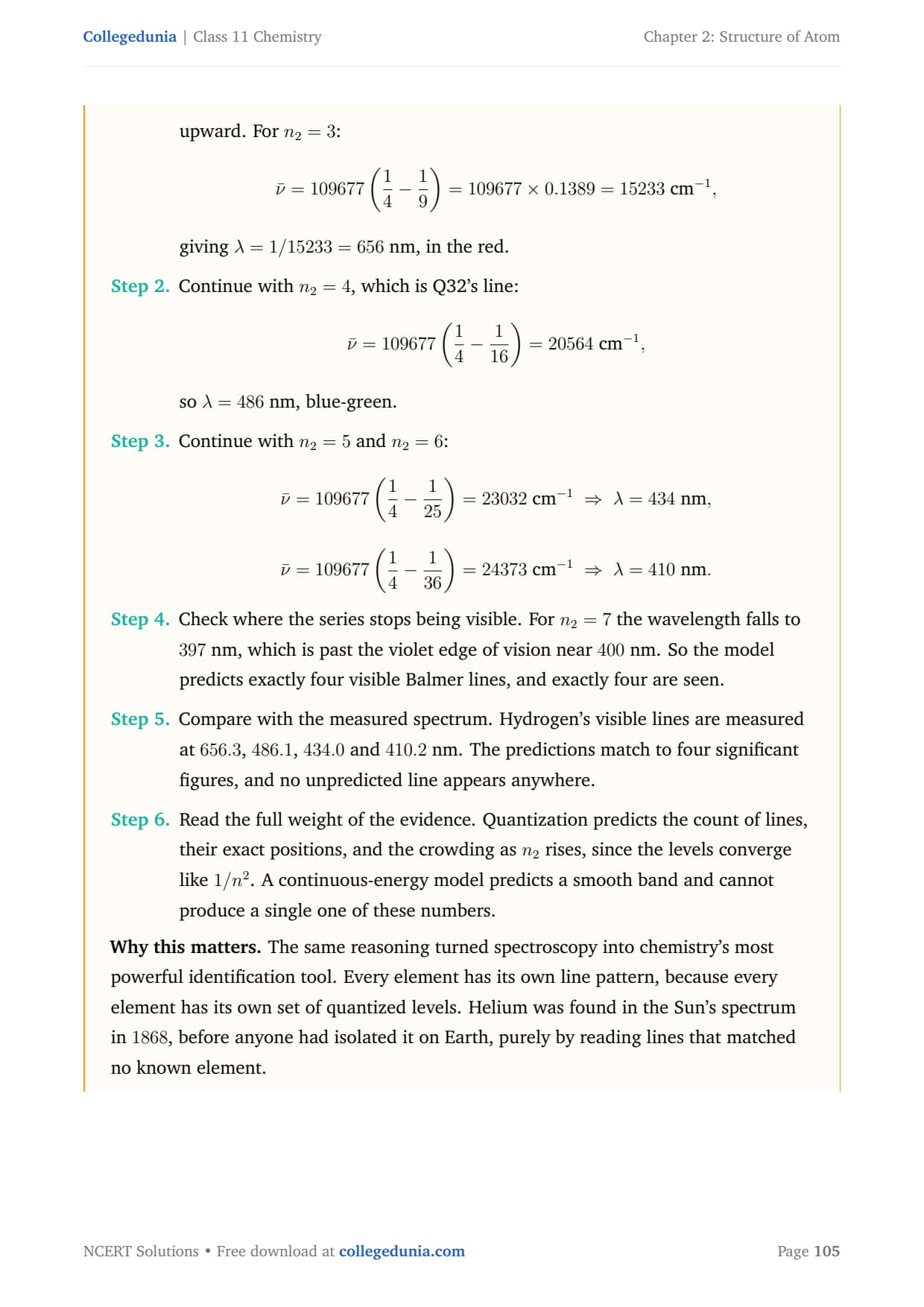
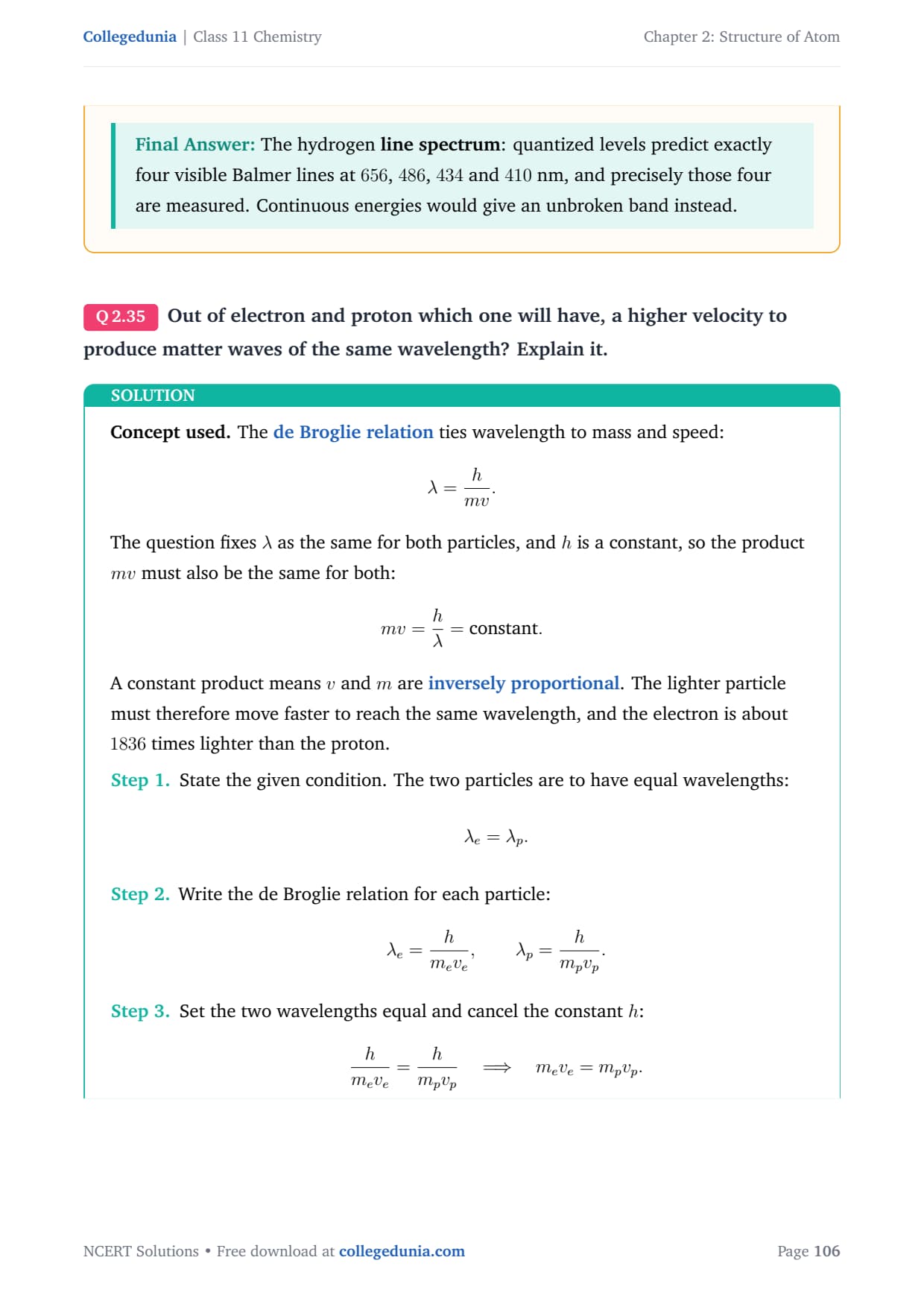
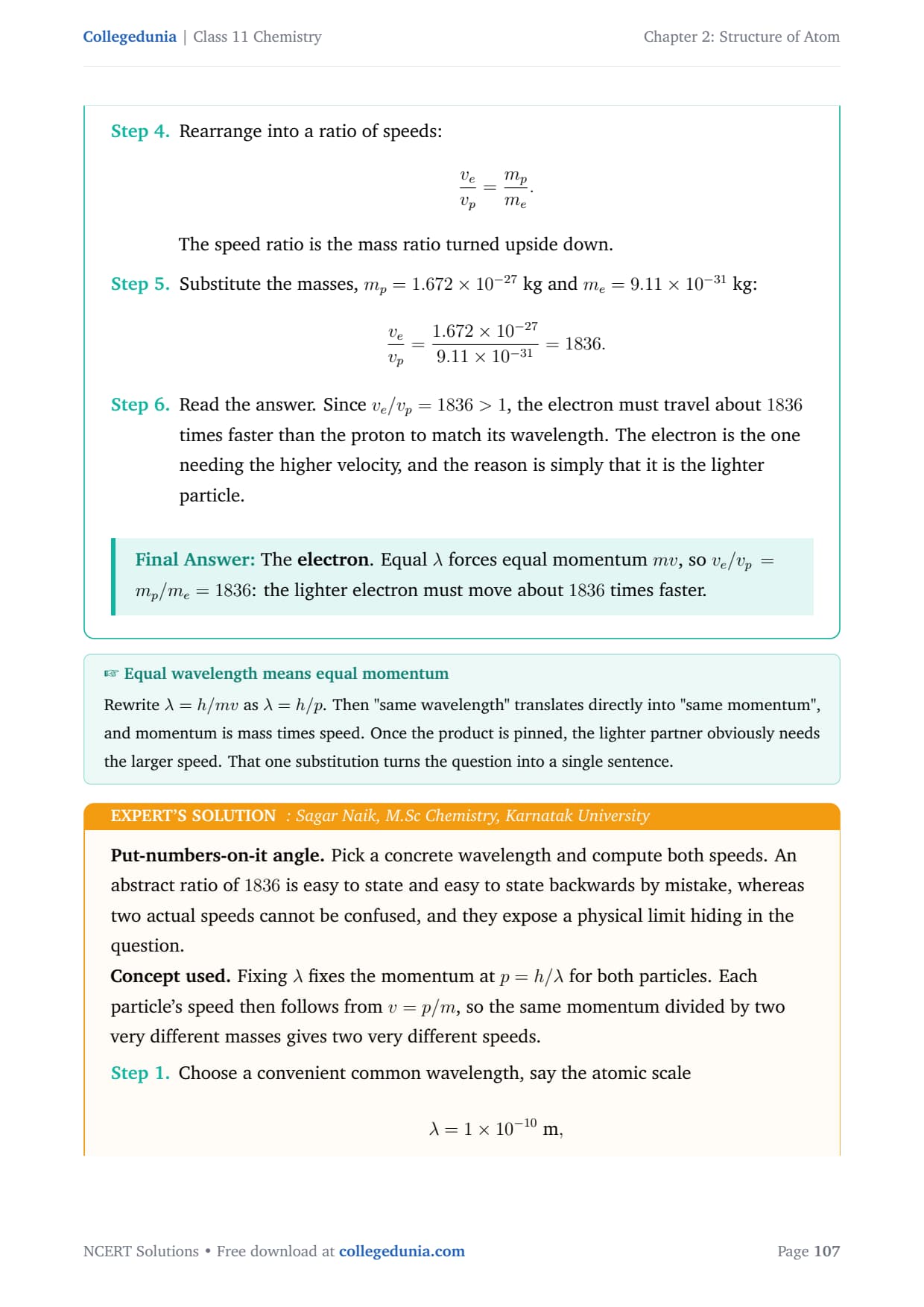
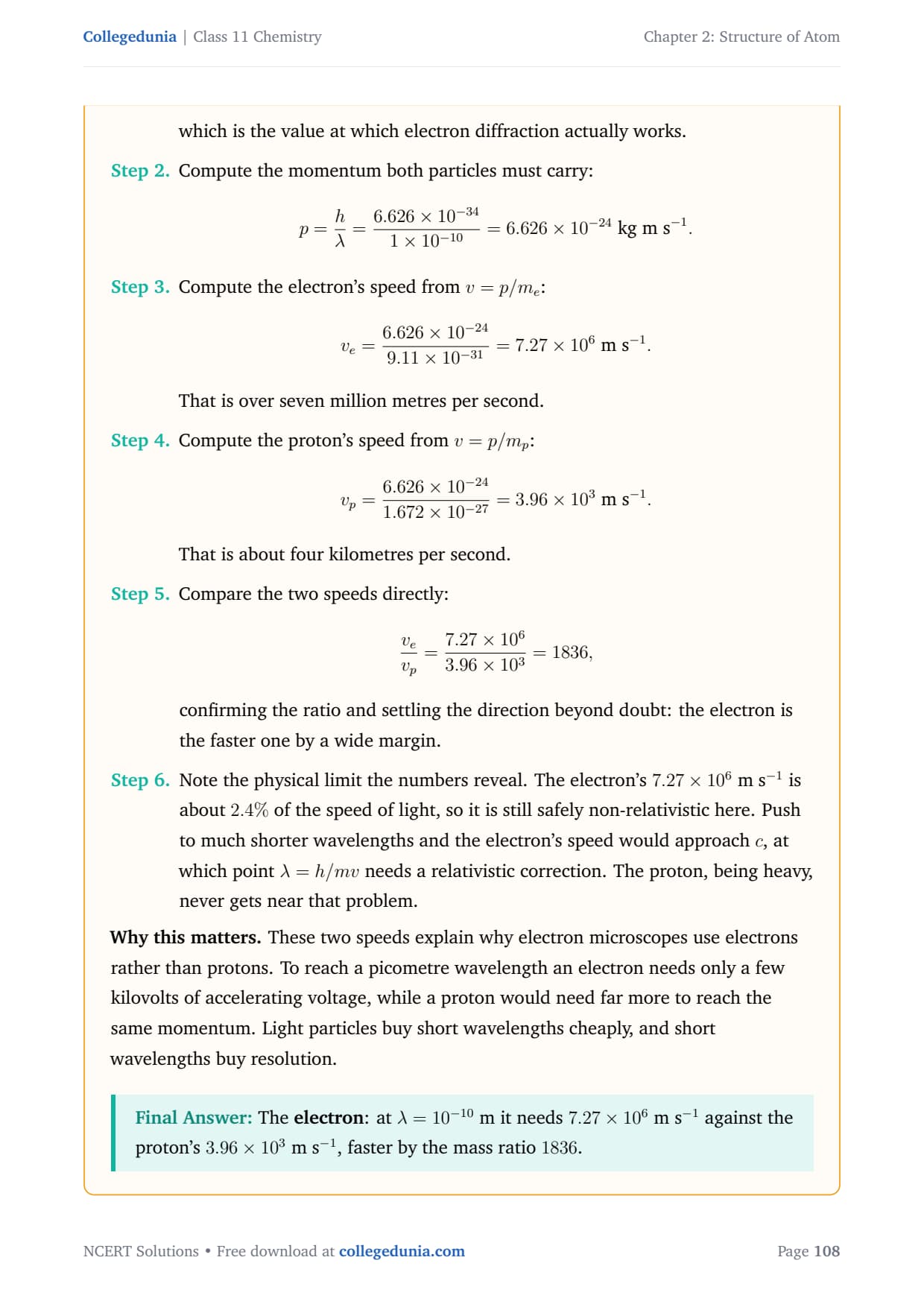
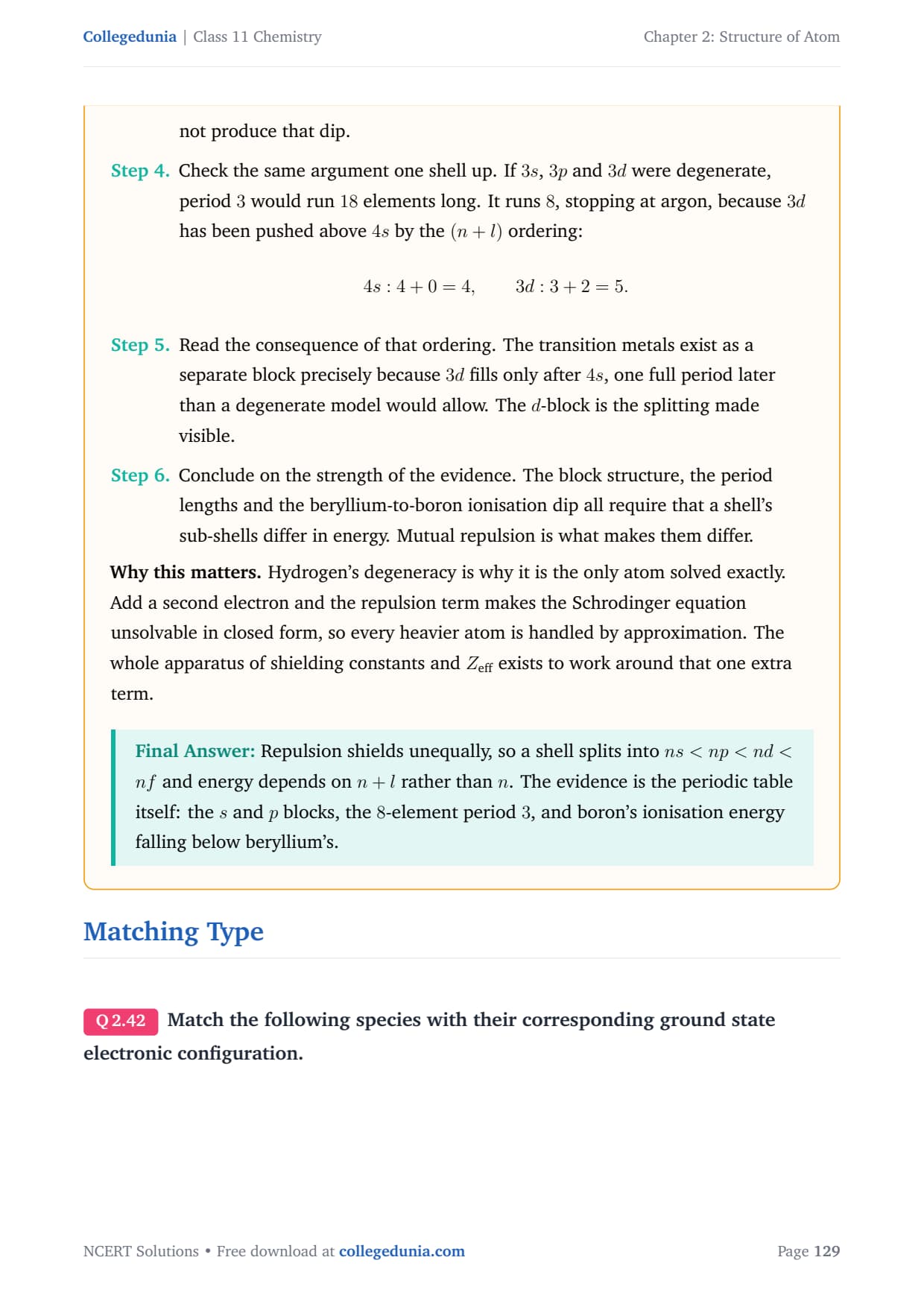
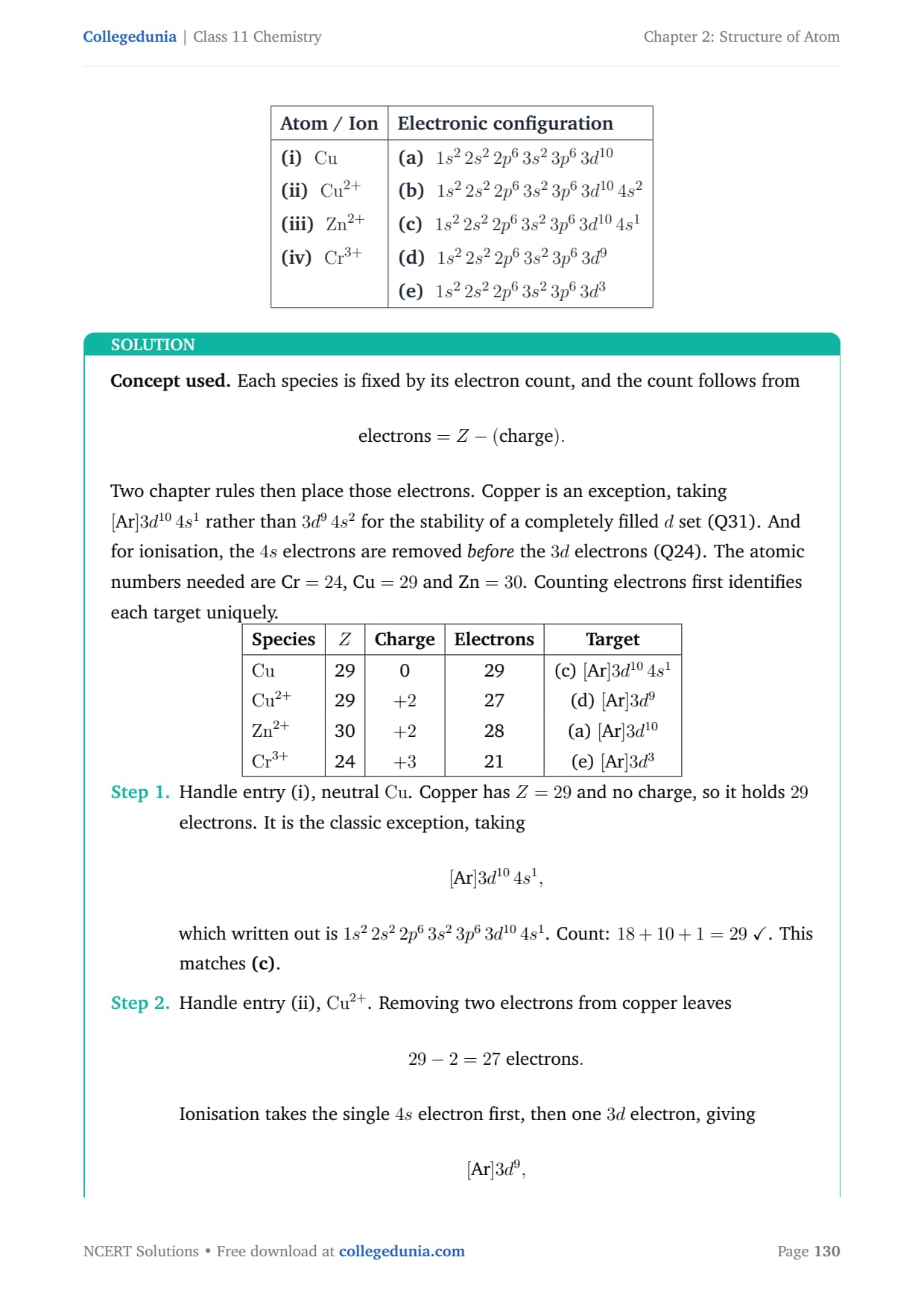
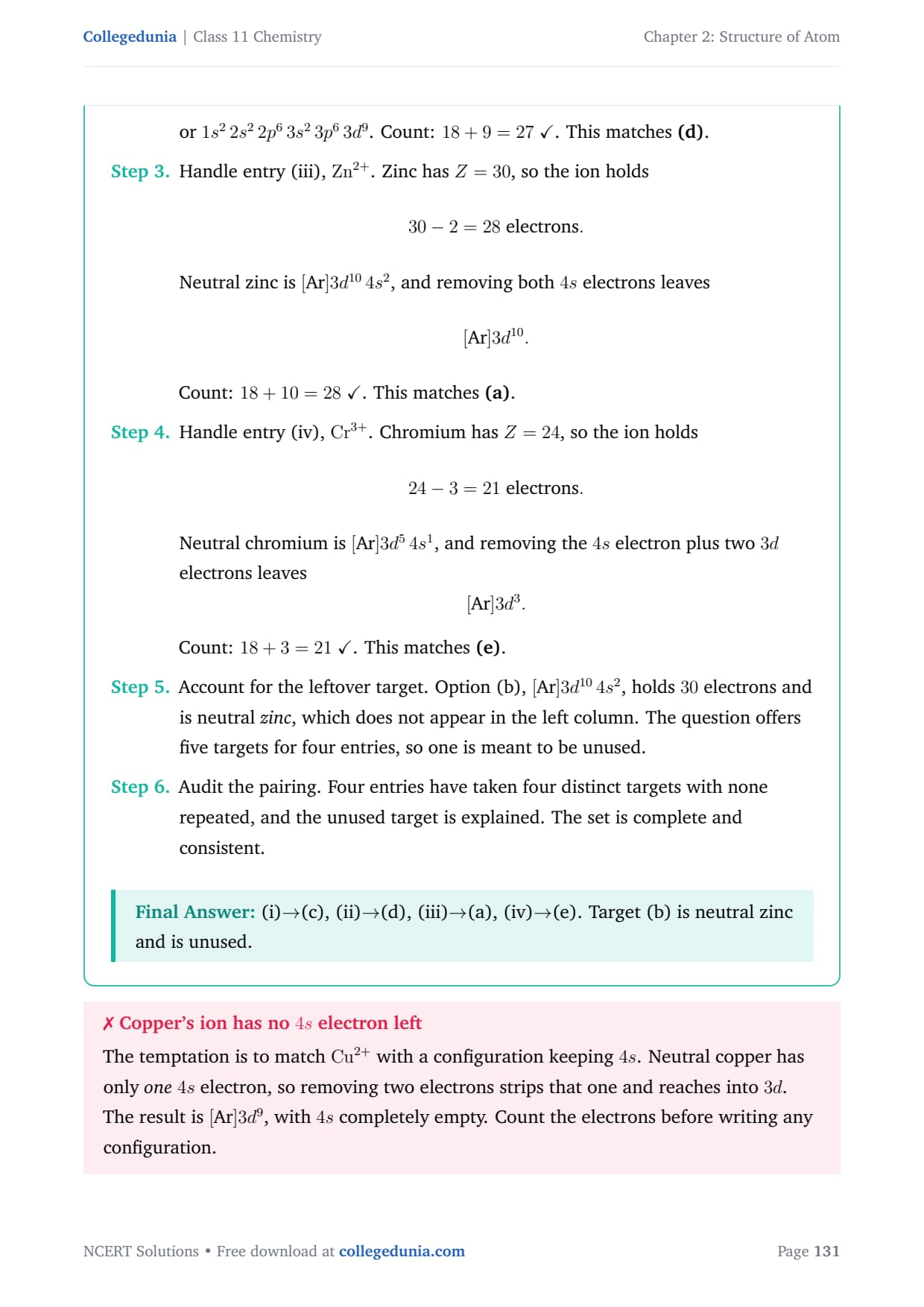
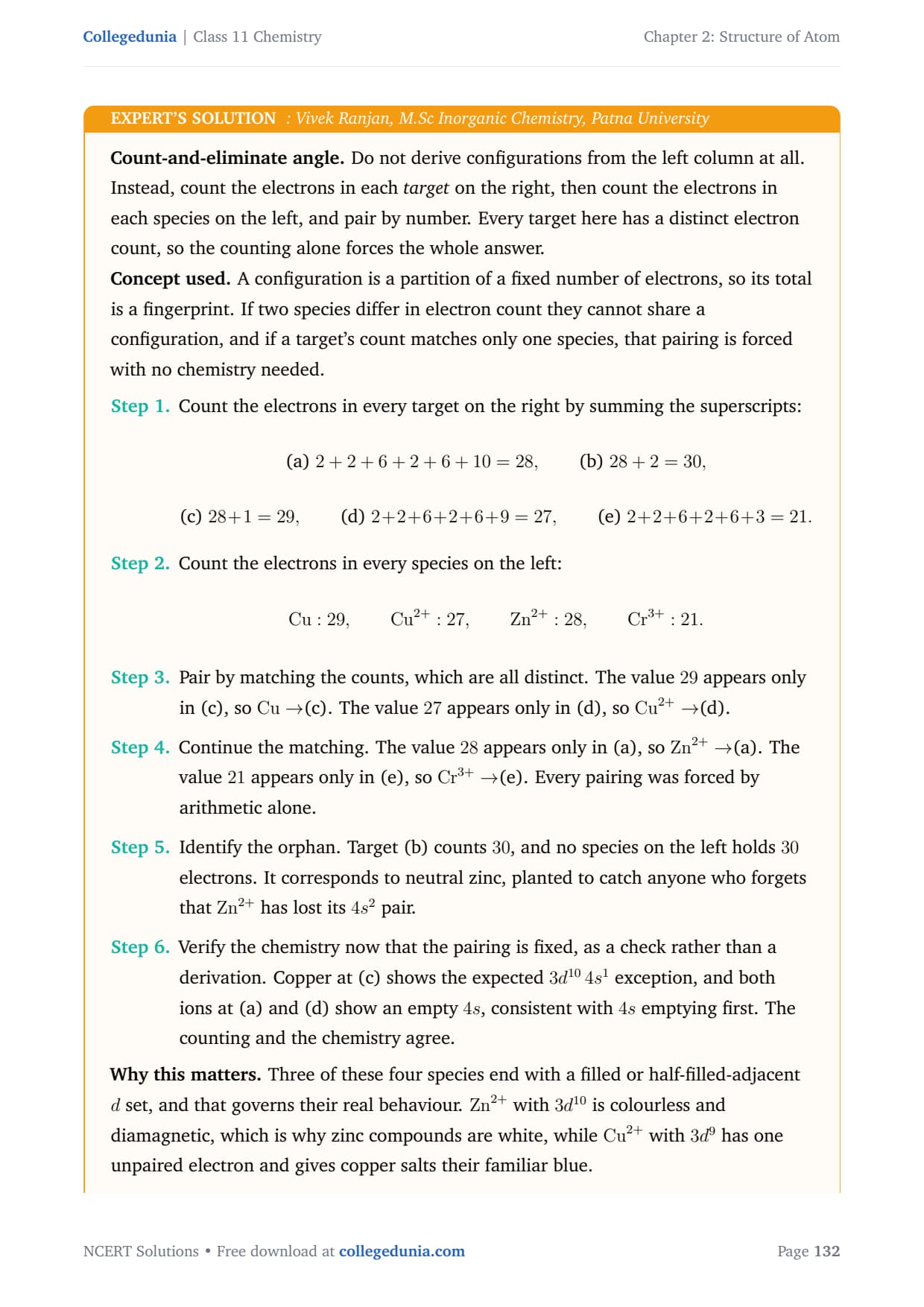
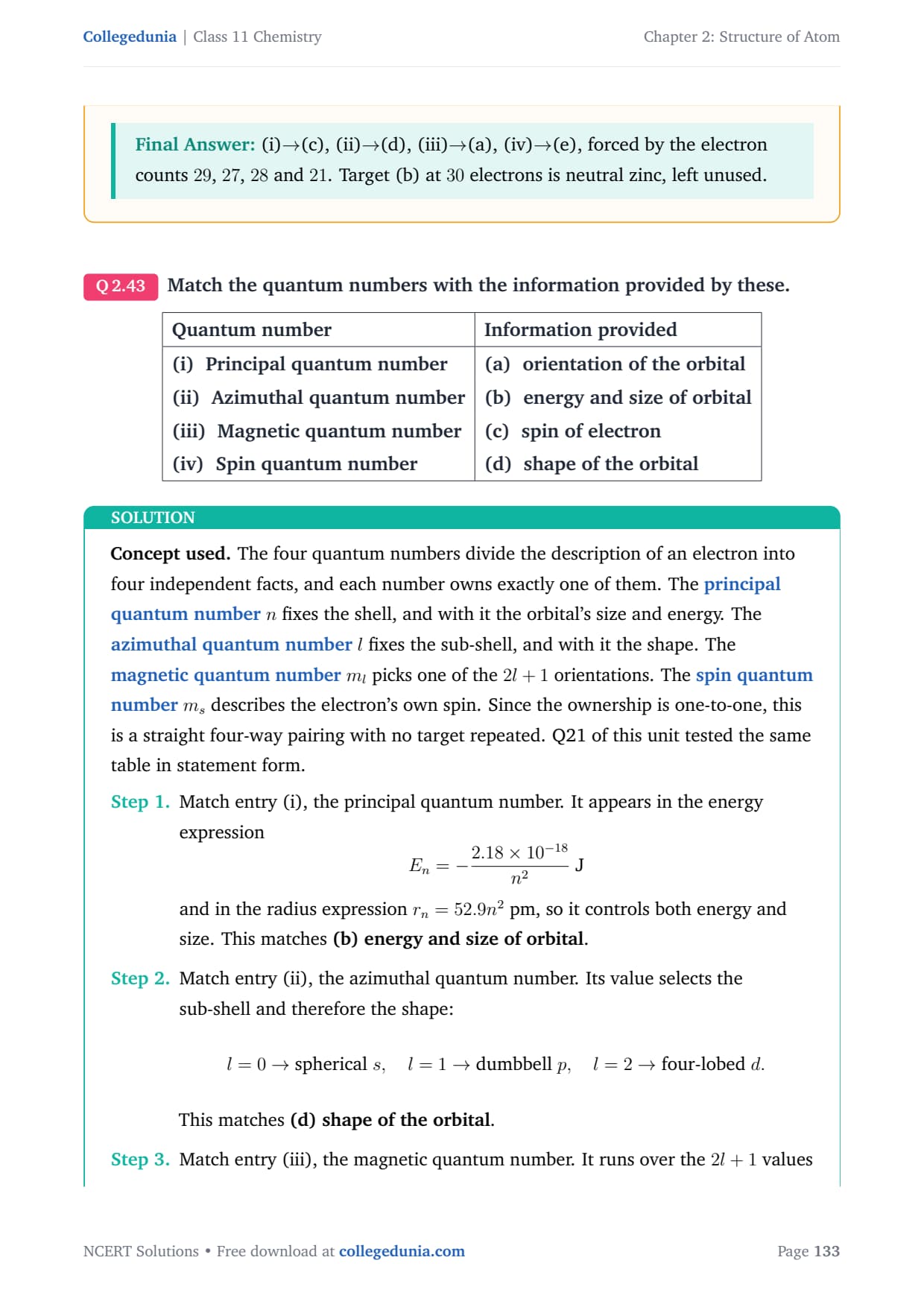
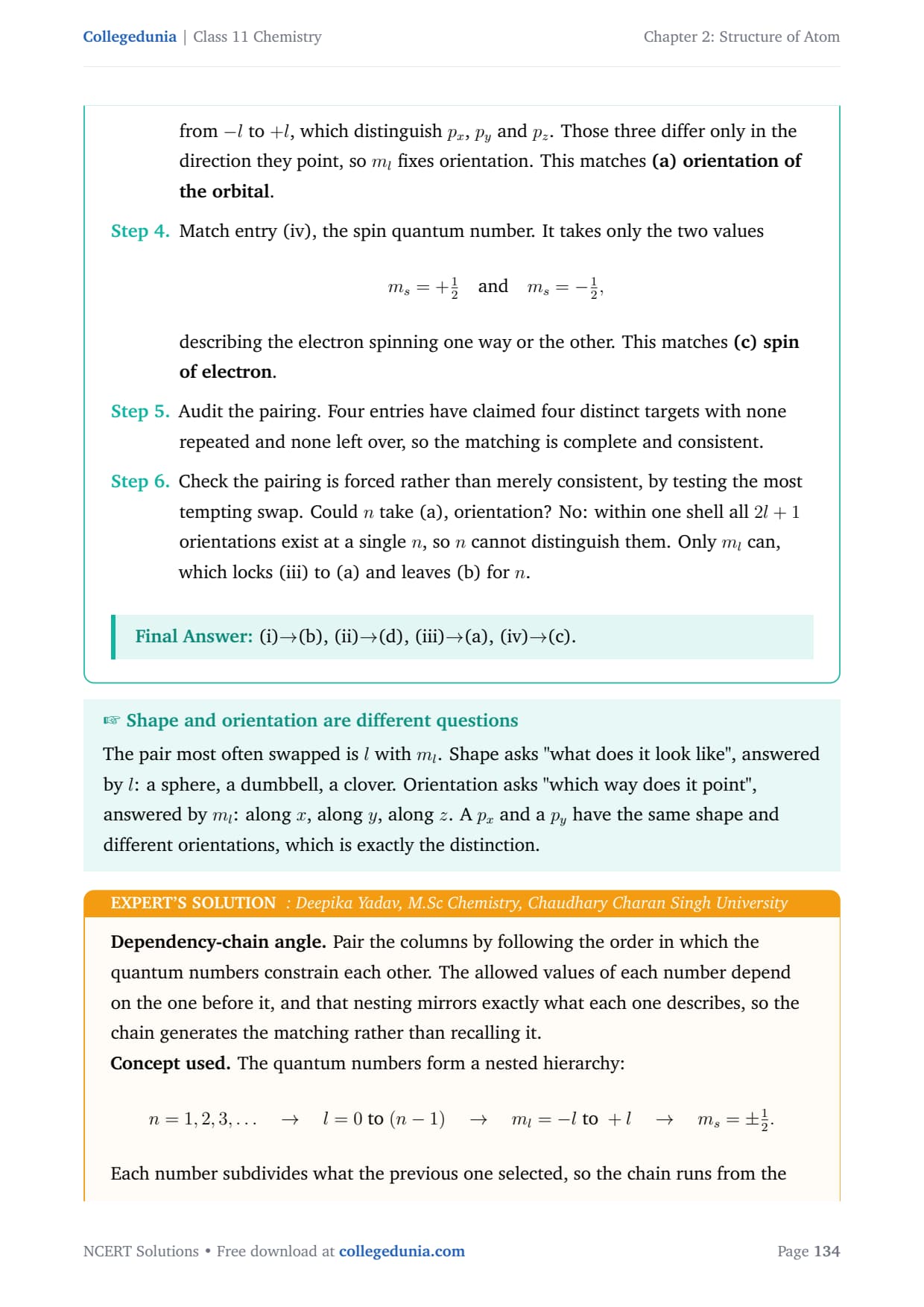
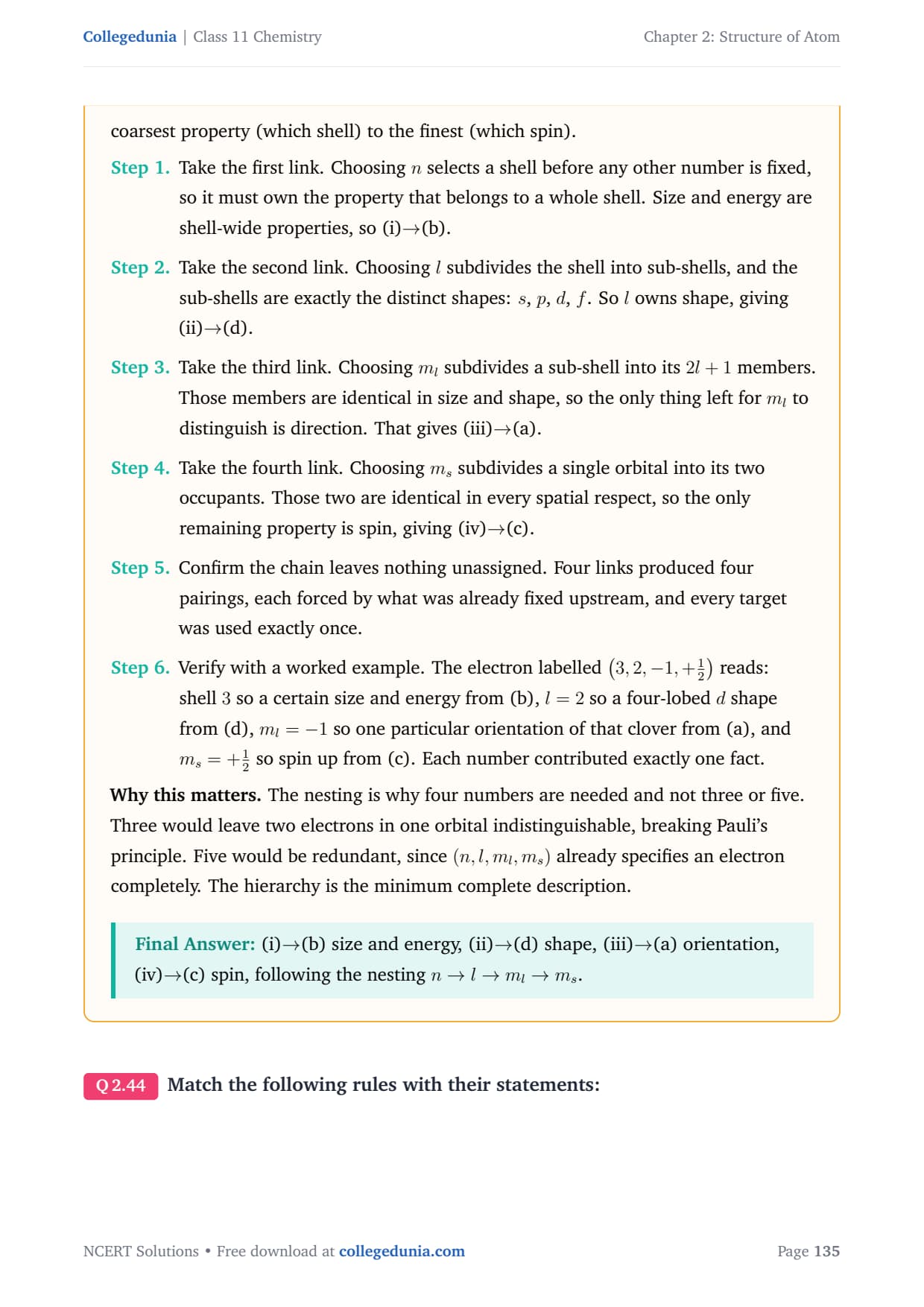
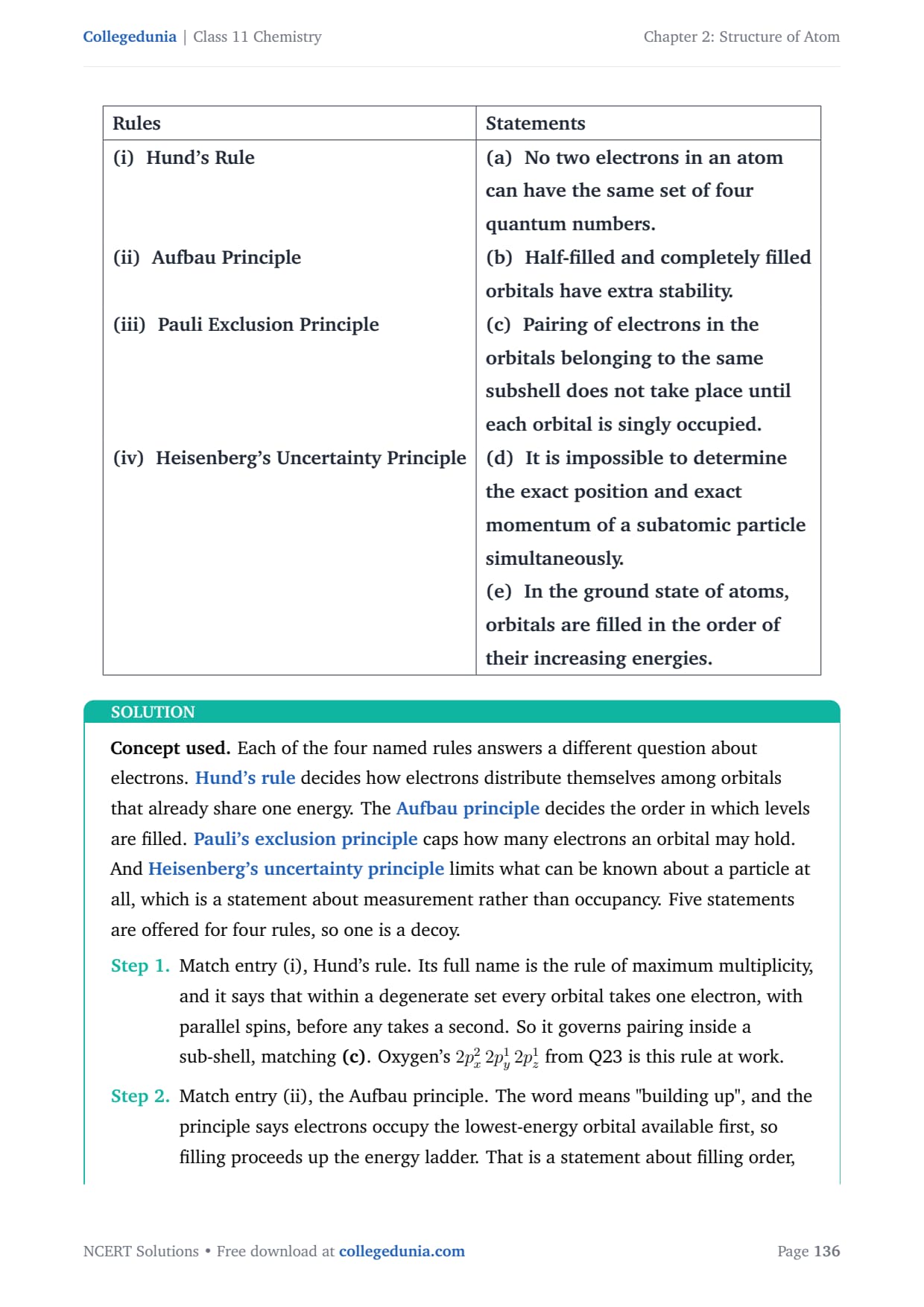
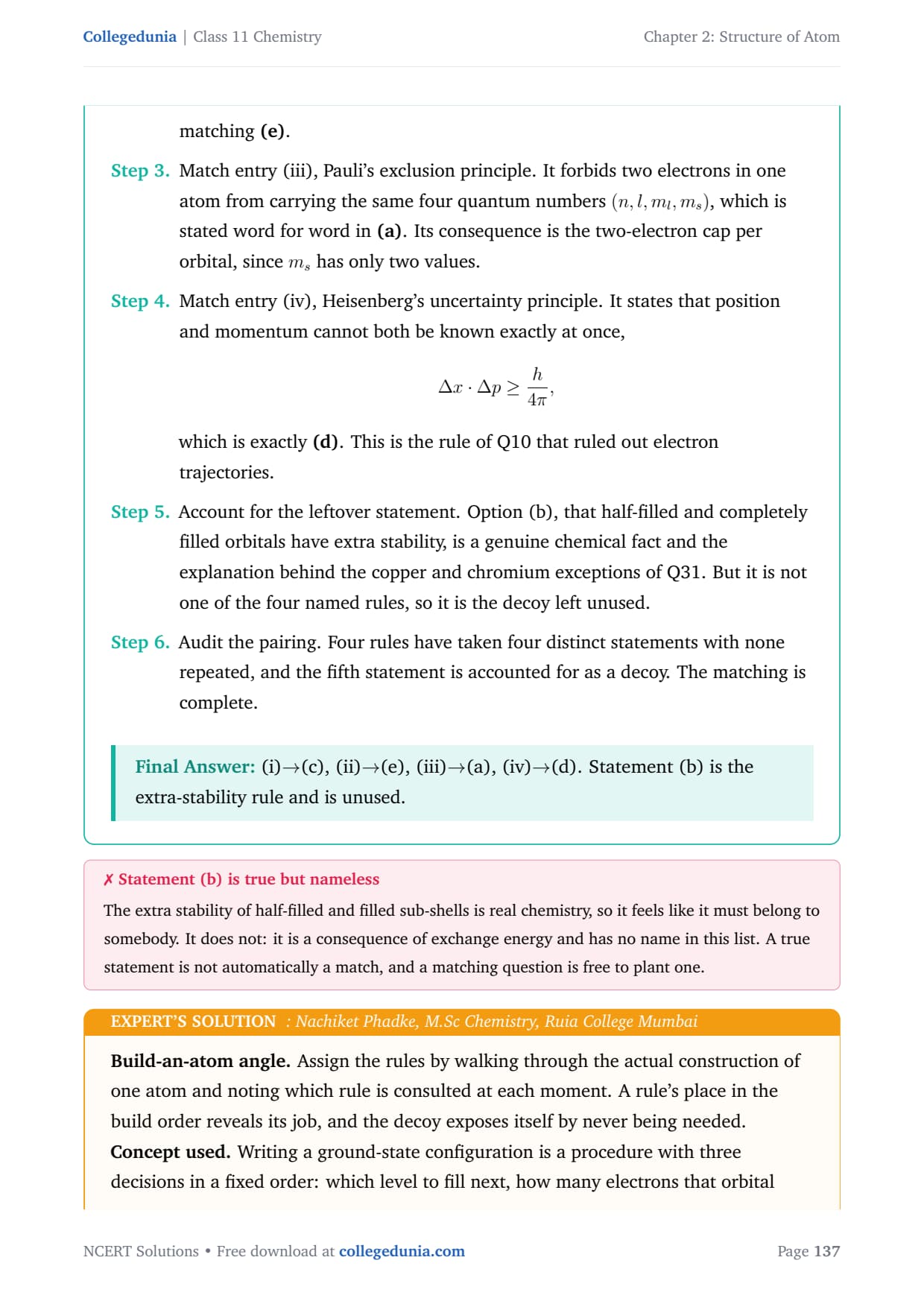
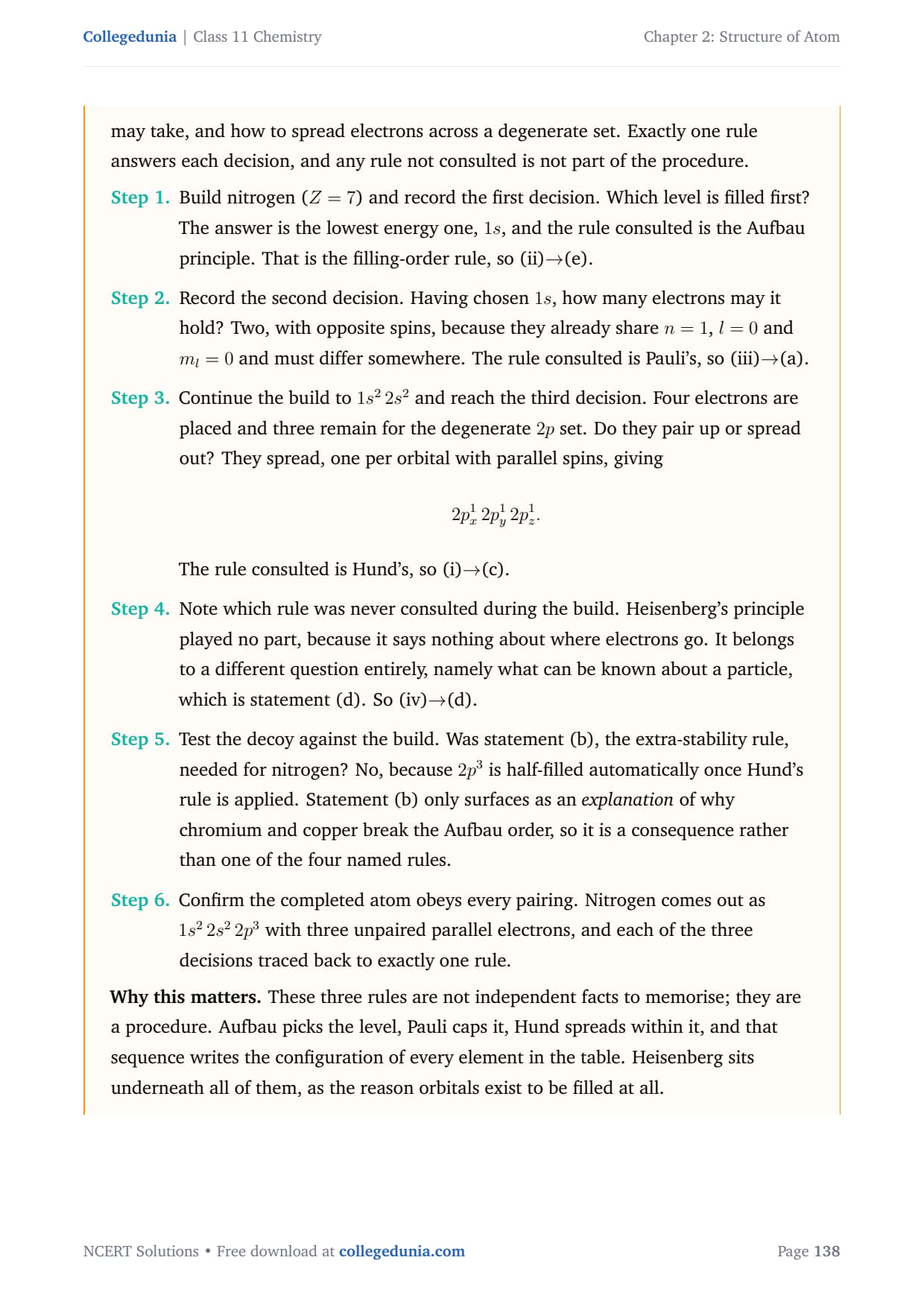
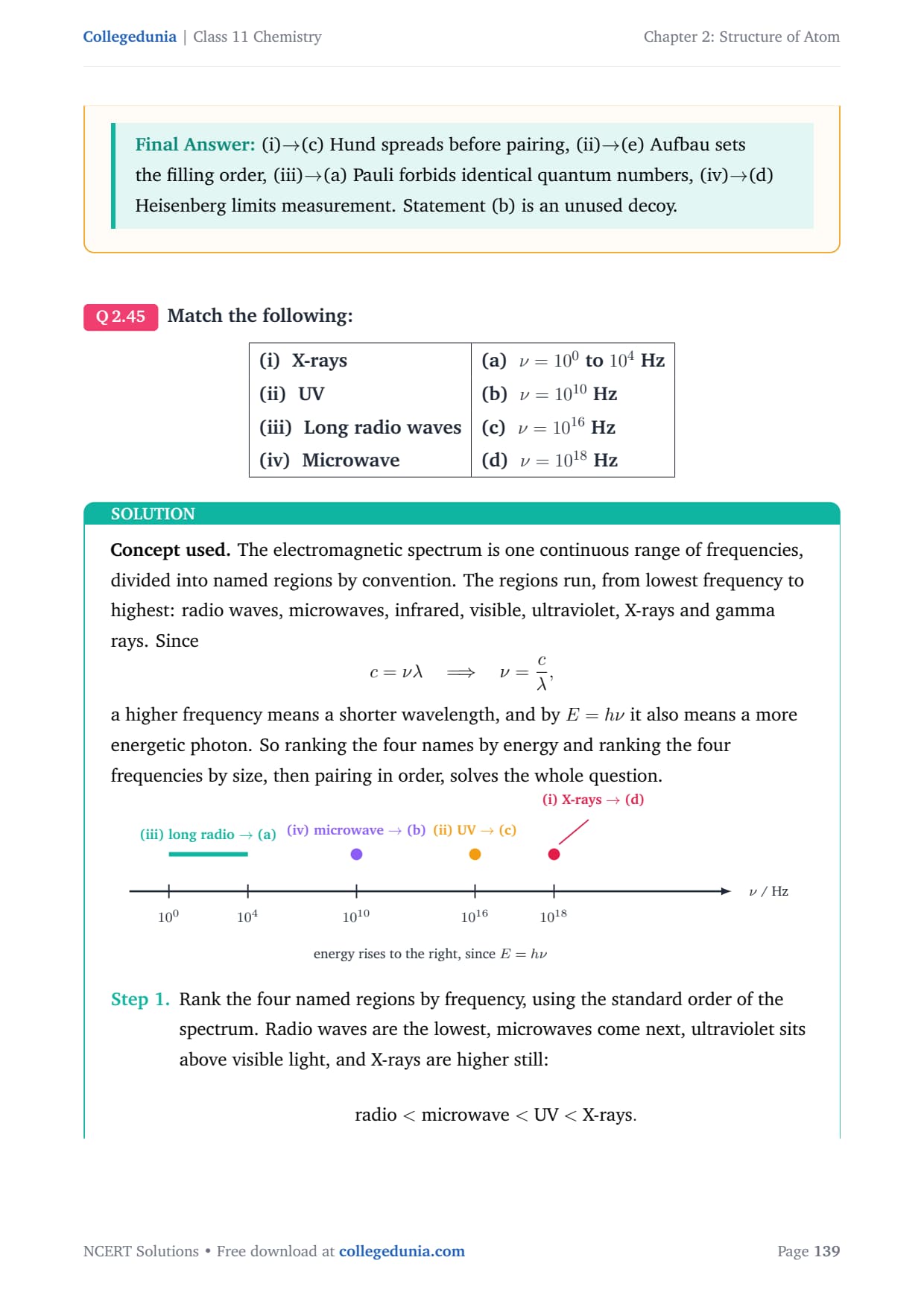
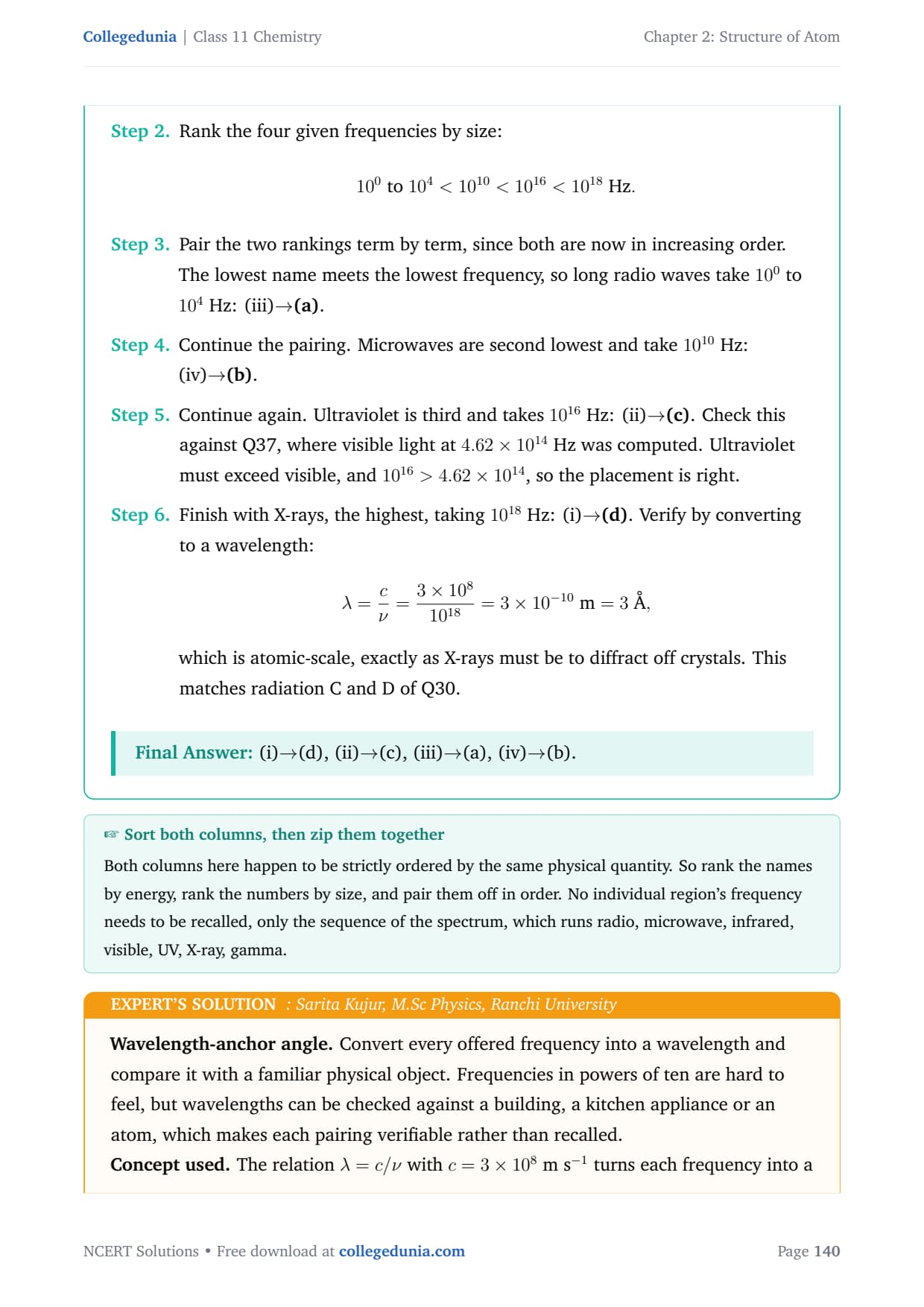
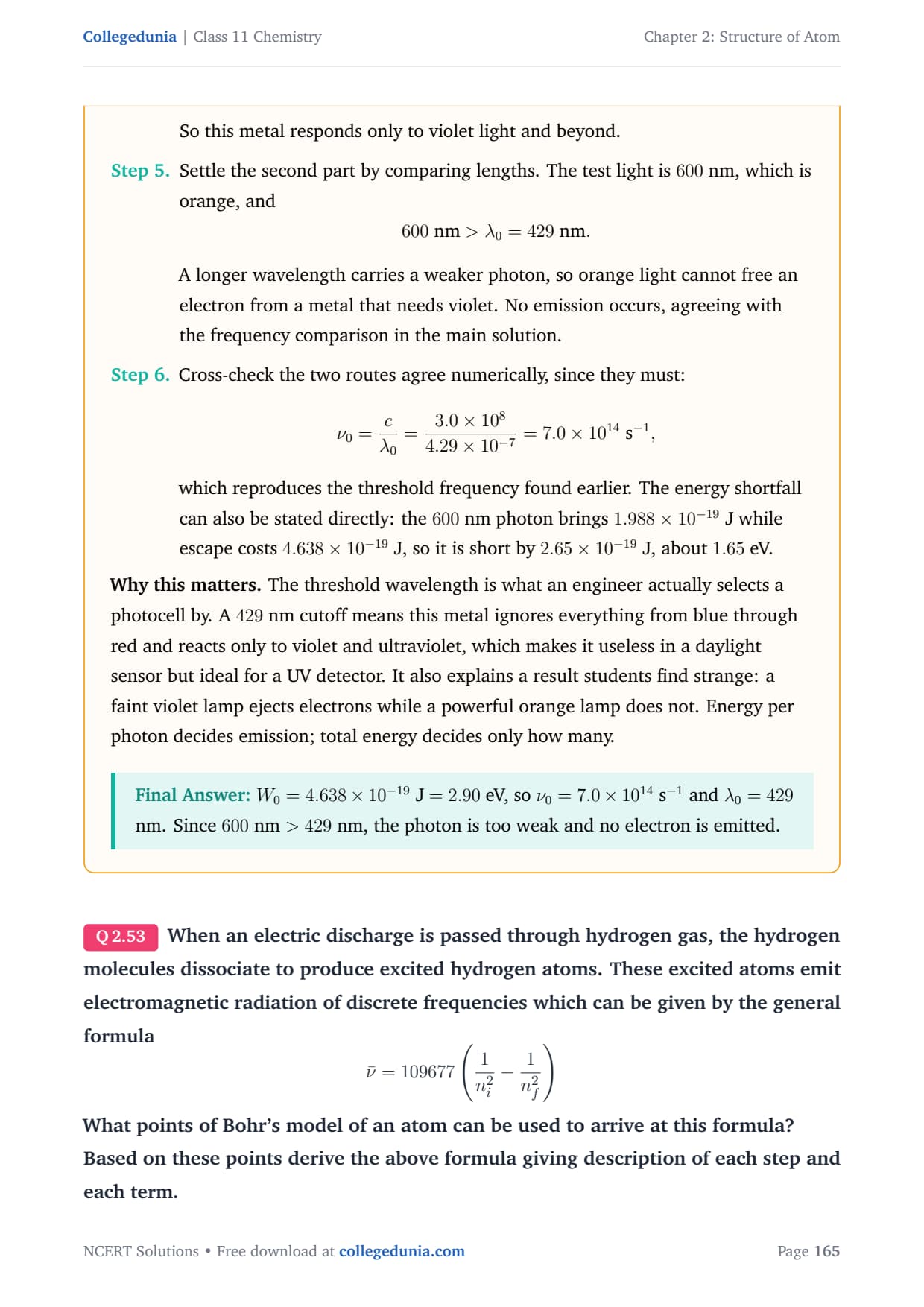
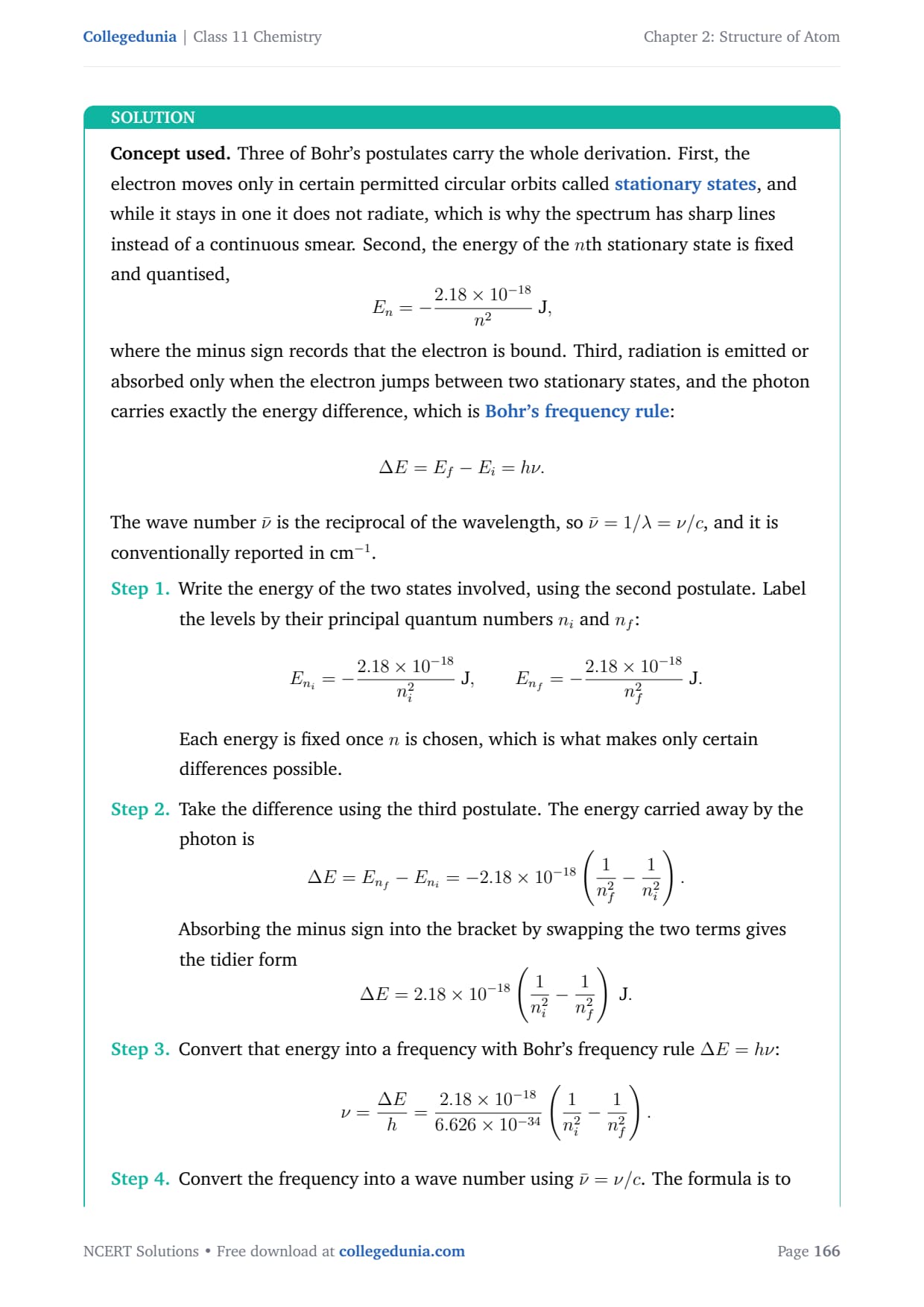
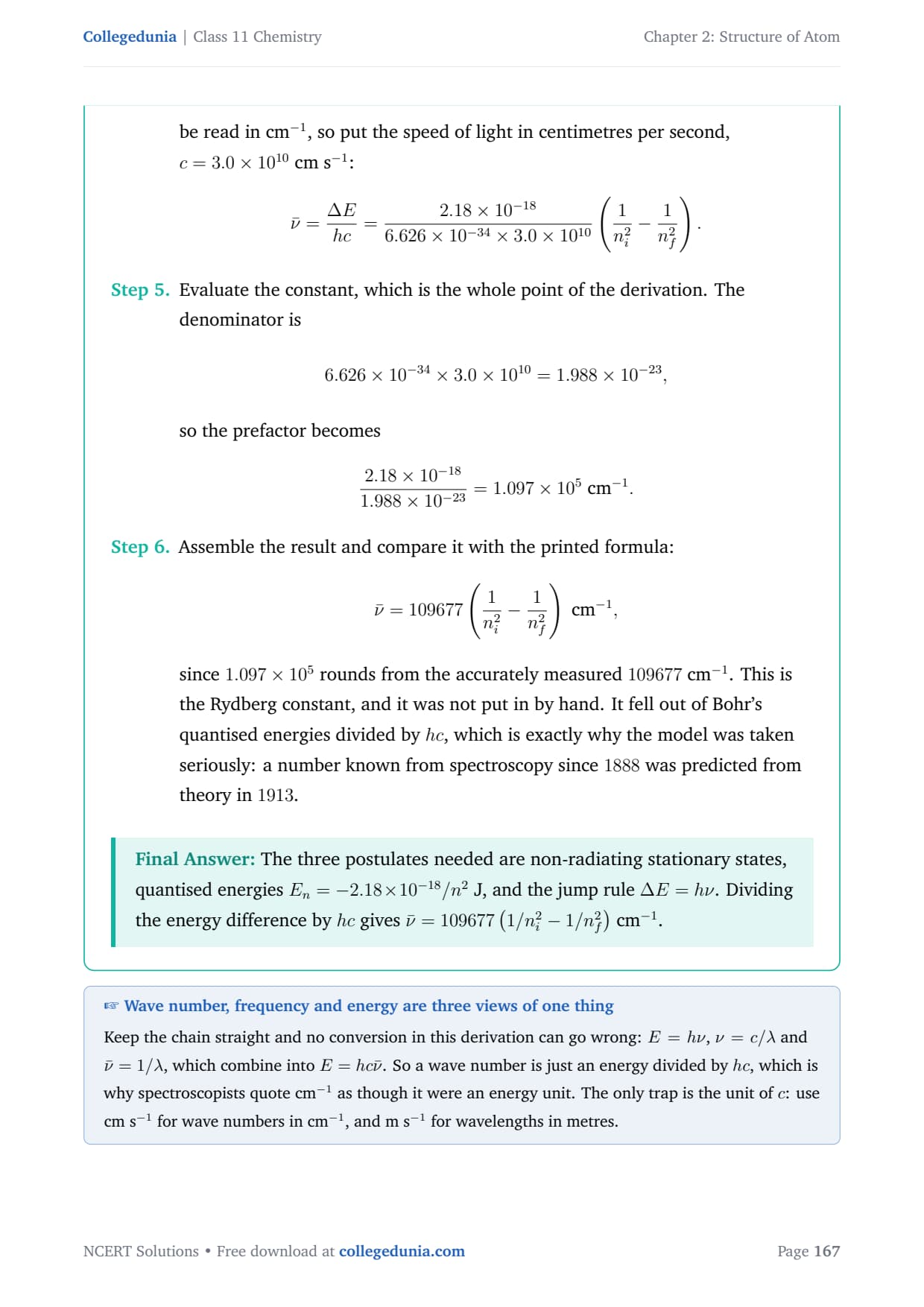
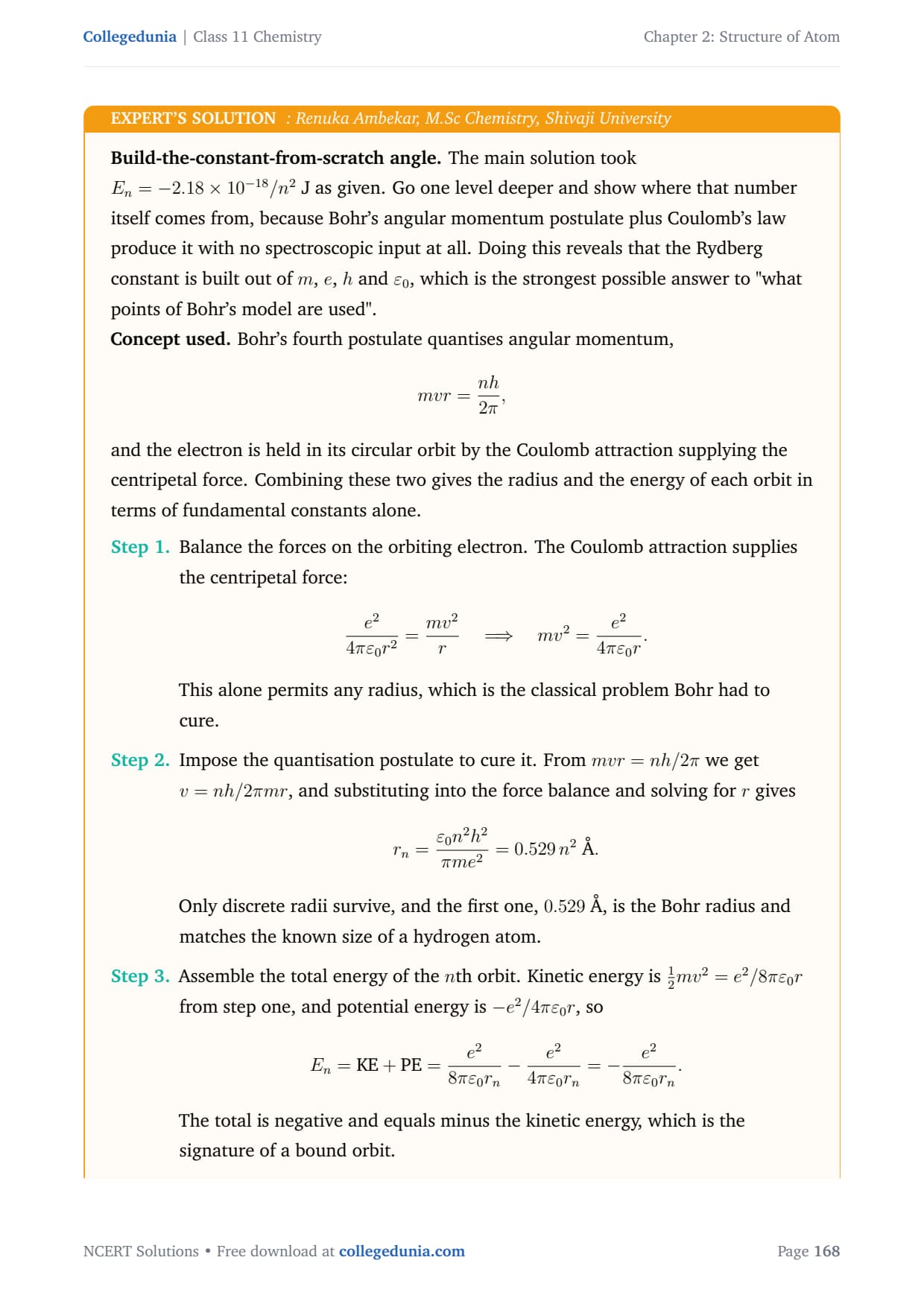
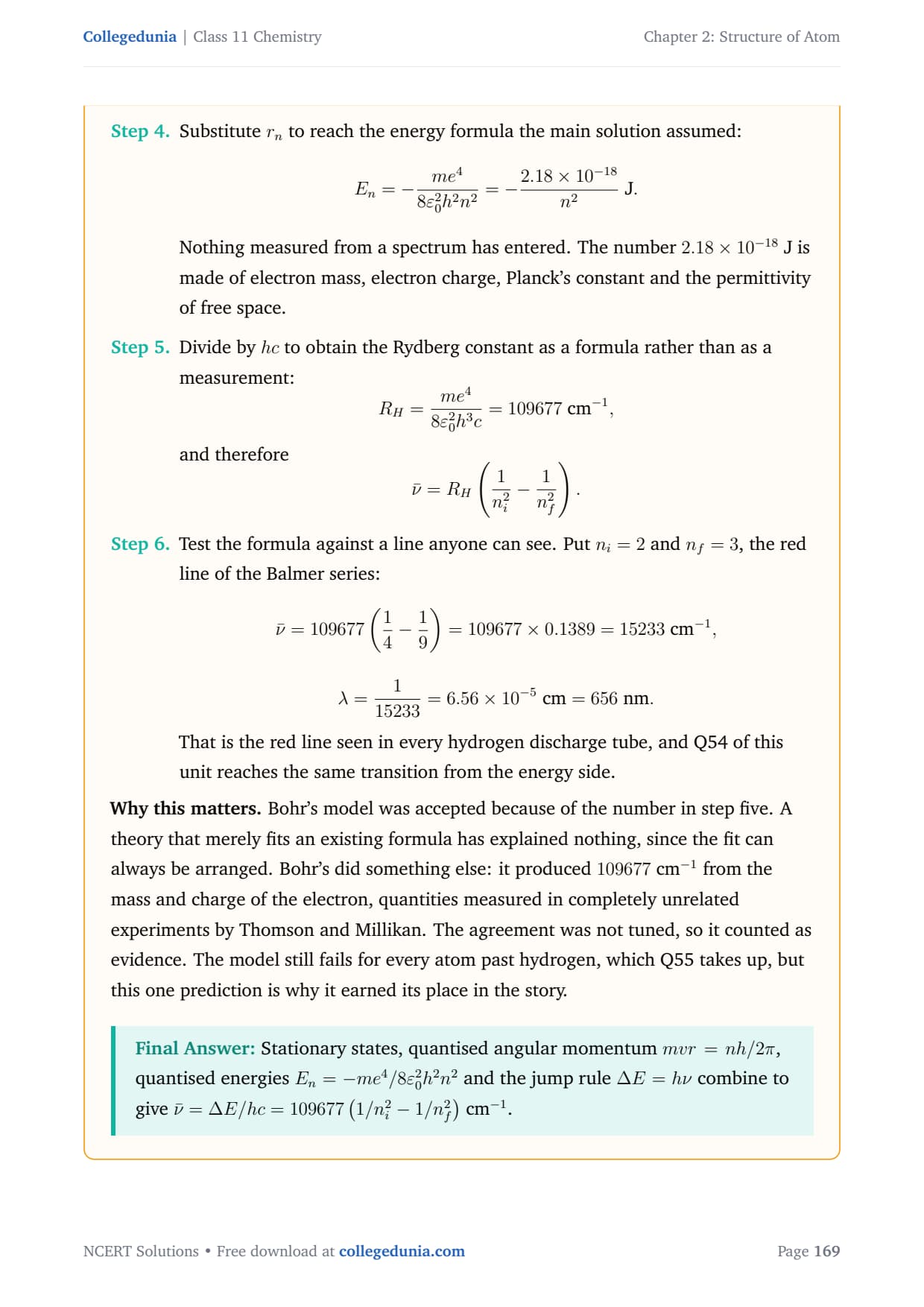
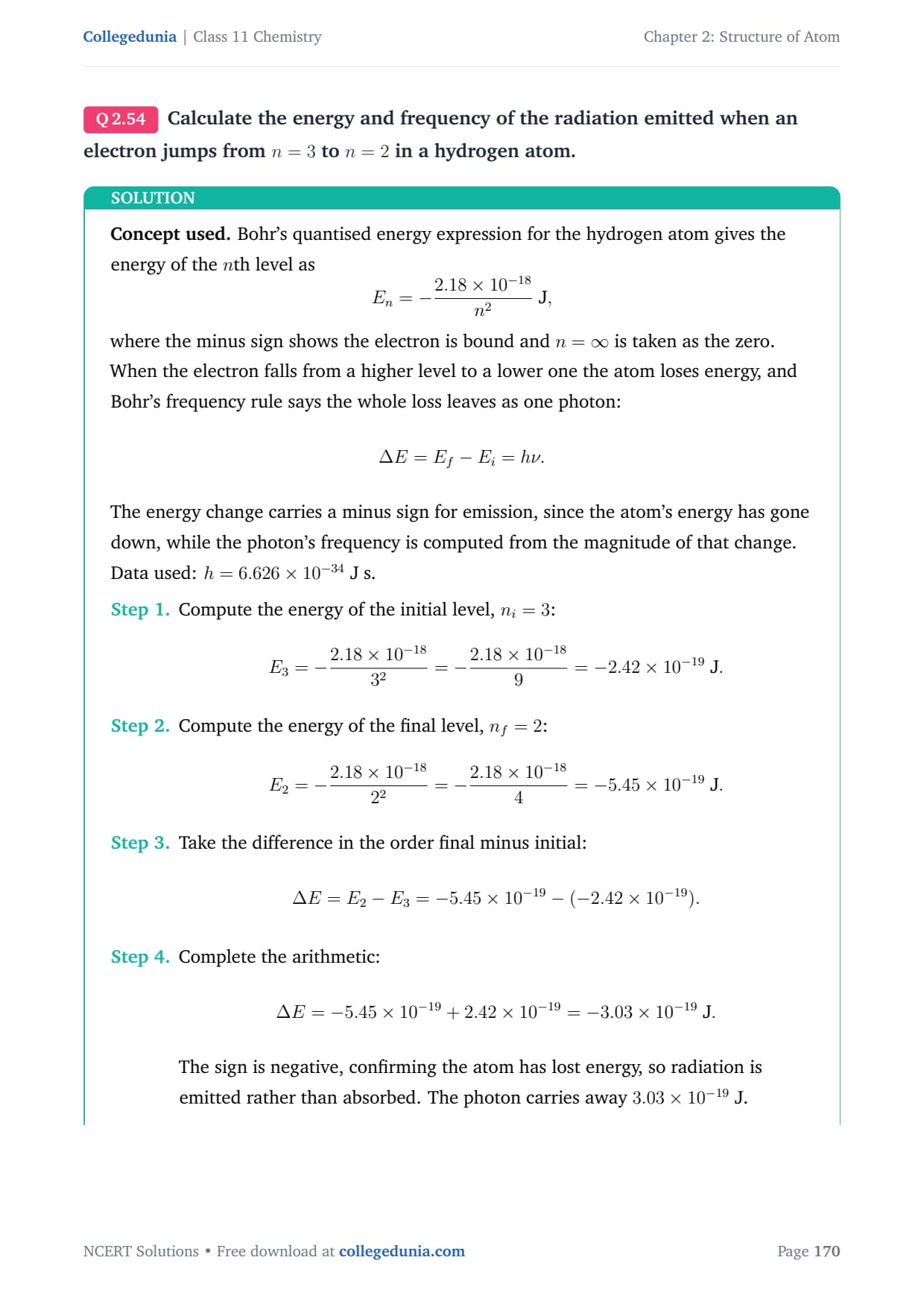
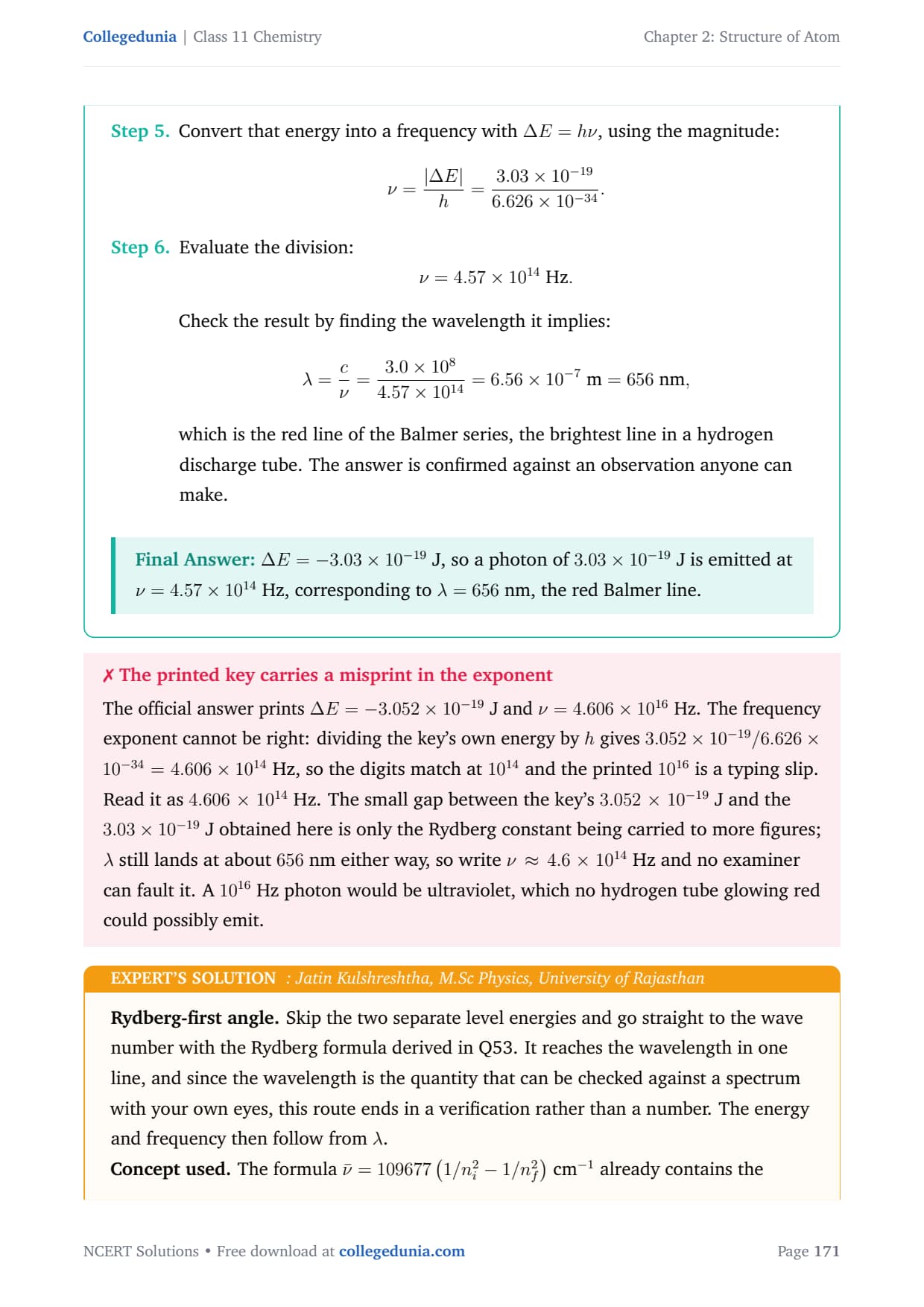
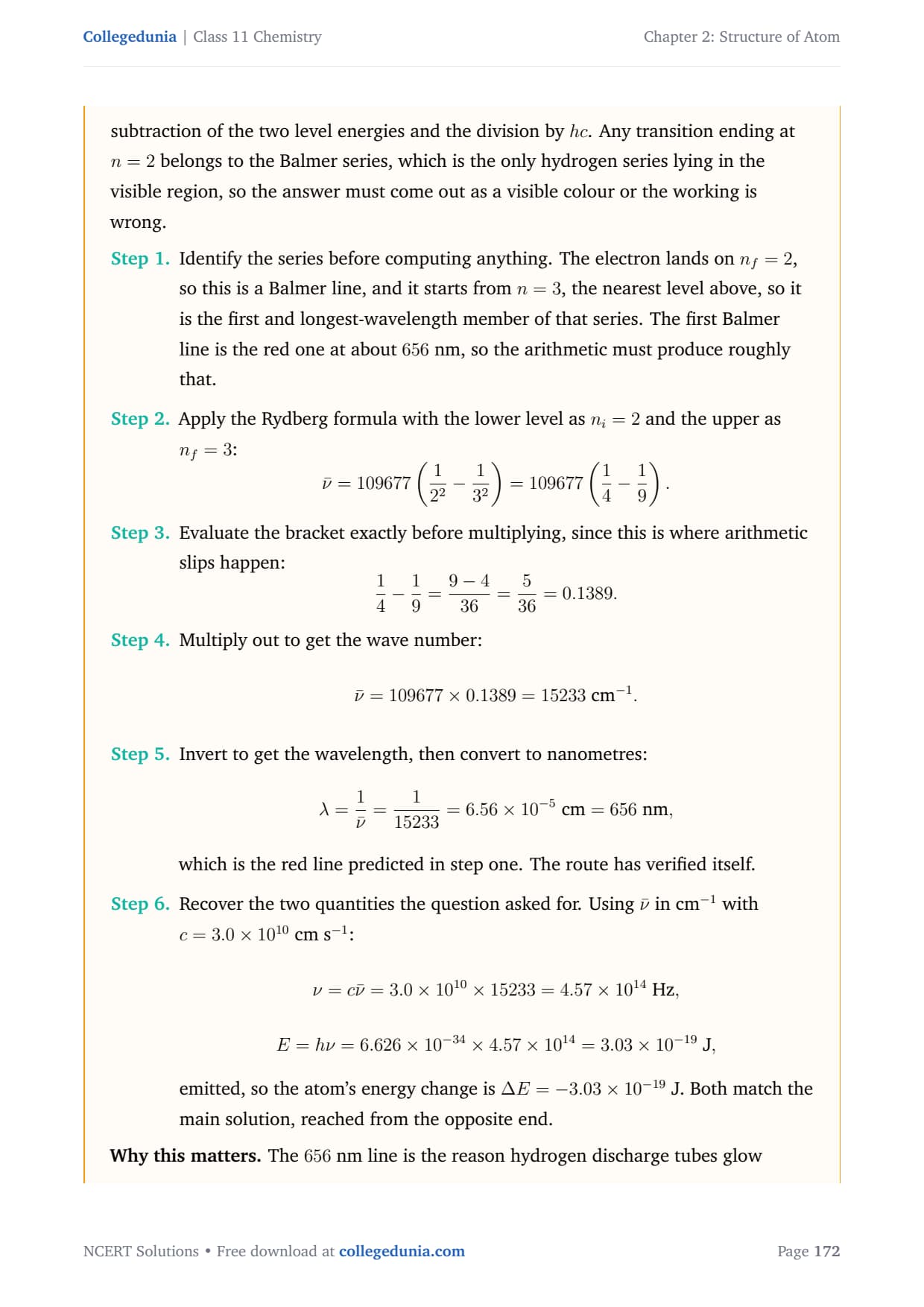
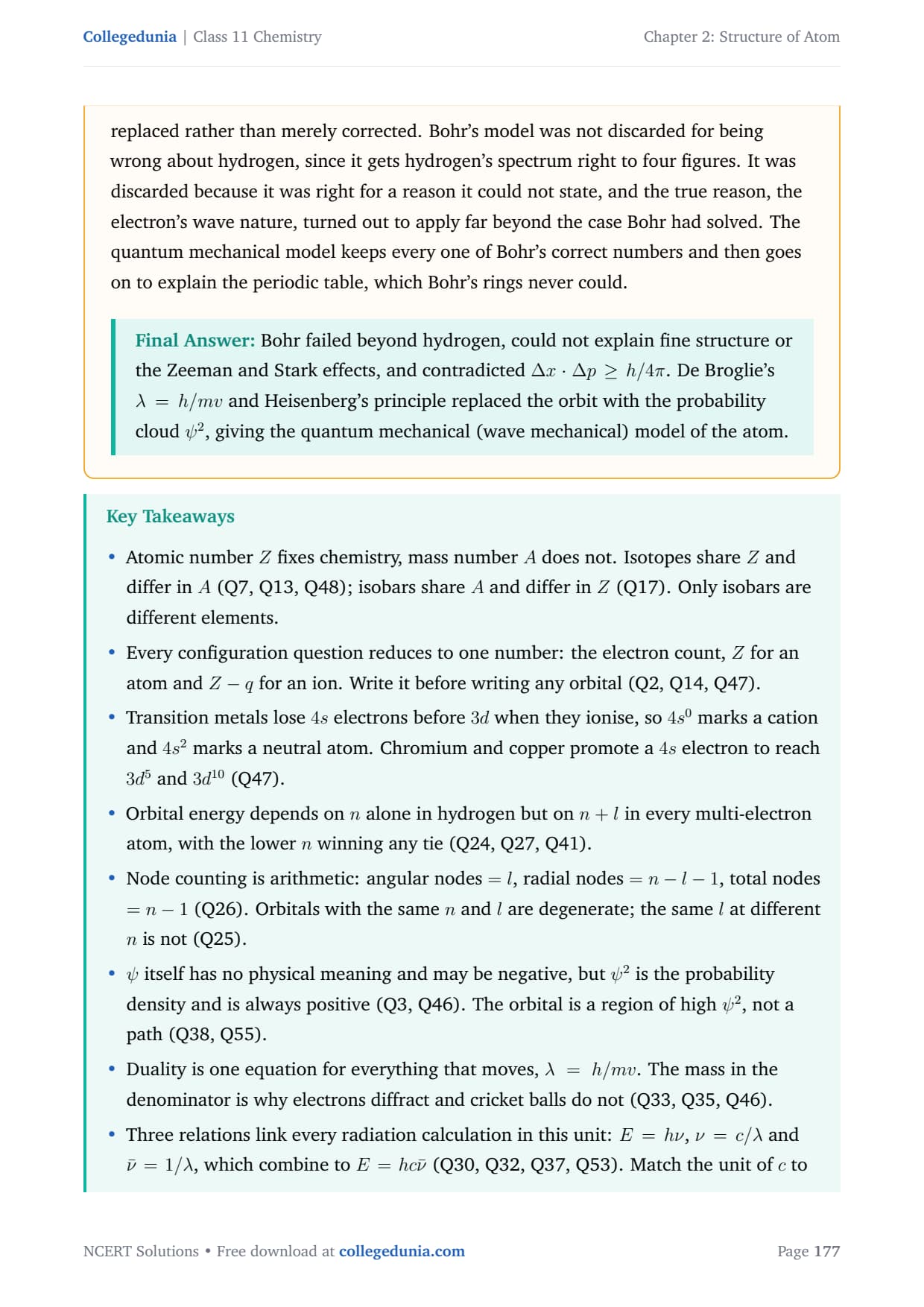
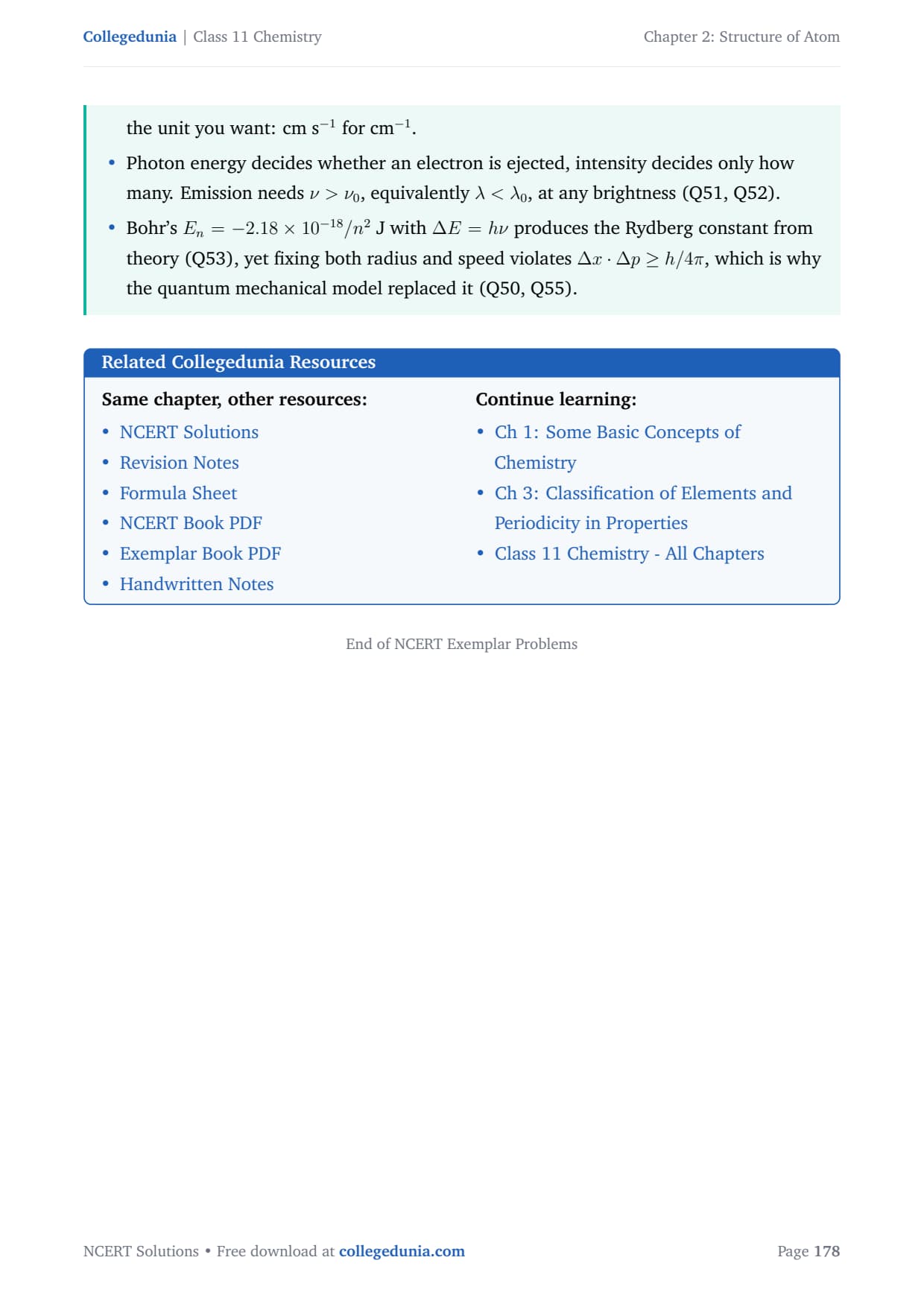
This is the longest question set in the Class 11 Chemistry Exemplar, and it decides how well you handle quantum numbers later. Atomic structure feeds into periodicity, bonding and coordination compounds. The Exemplar pushes these ideas well past the textbook exercise.
- CBSE Weightage: 6 to 8 marks, usually one numerical on Bohr energy or de Broglie wavelength plus a configuration question
- JEE Main Weightage: 2 to 3 questions per year on quantum numbers, nodes and photoelectric effect
- NEET Weightage: 1 to 2 questions per year, mostly electronic configuration and Bohr model calculations
Every solution is checked against the official NCERT Exemplar key, and the three printing errors in this chapter are worked out in full.
Topics Covered in the Class 11 Chemistry Structure of Atom Exemplar
The 55 questions in this chapter rest on five ideas. Each returns in later units, so nothing here is spent effort.
- Atomic models: Thomson, Rutherford and Bohr, and what each experiment could actually prove
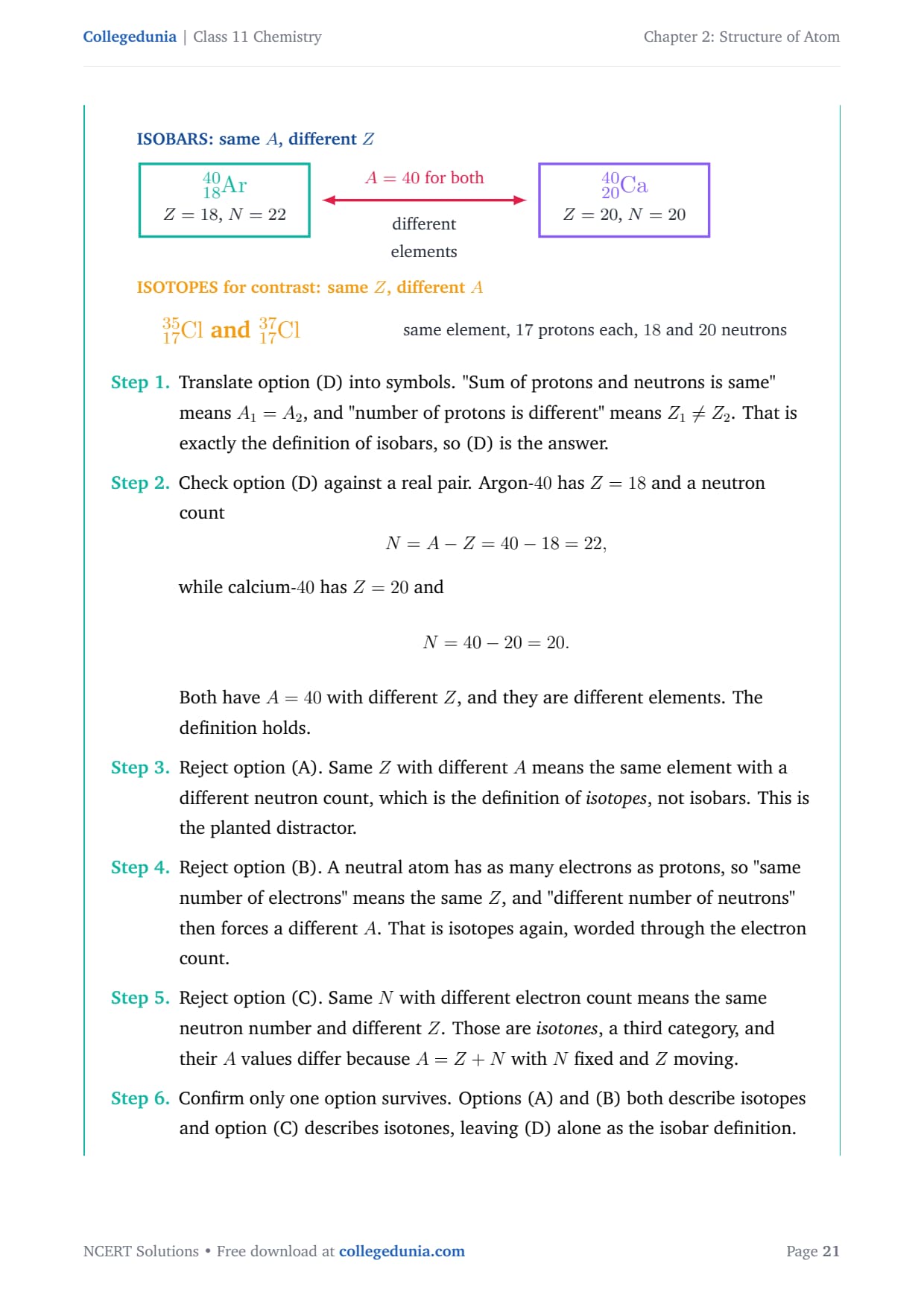
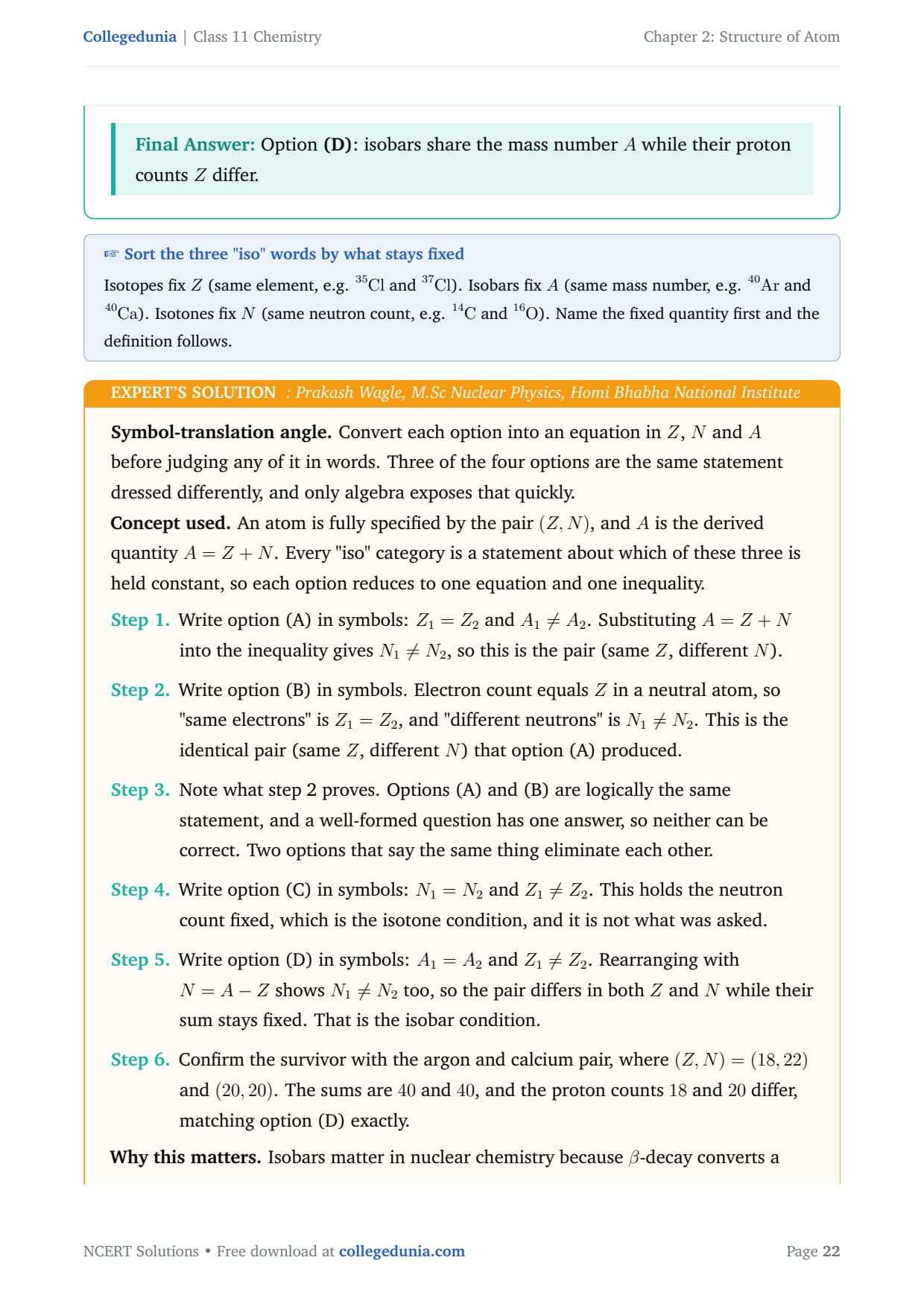
- Isotopes and isobars: counting protons, neutrons and electrons, including for ions
- Quantum numbers: the allowed values of n, l, m and s, and the orbitals they describe
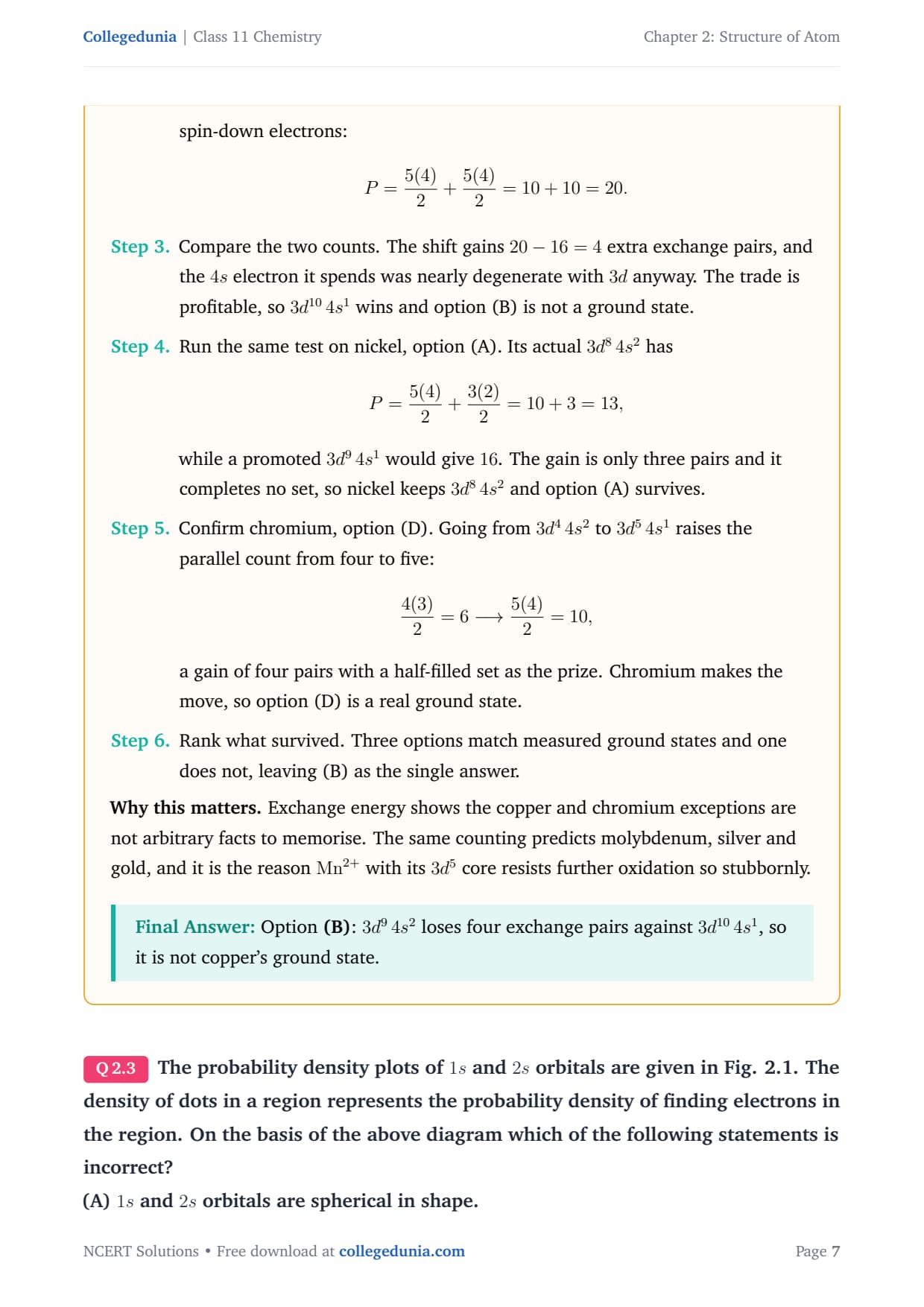
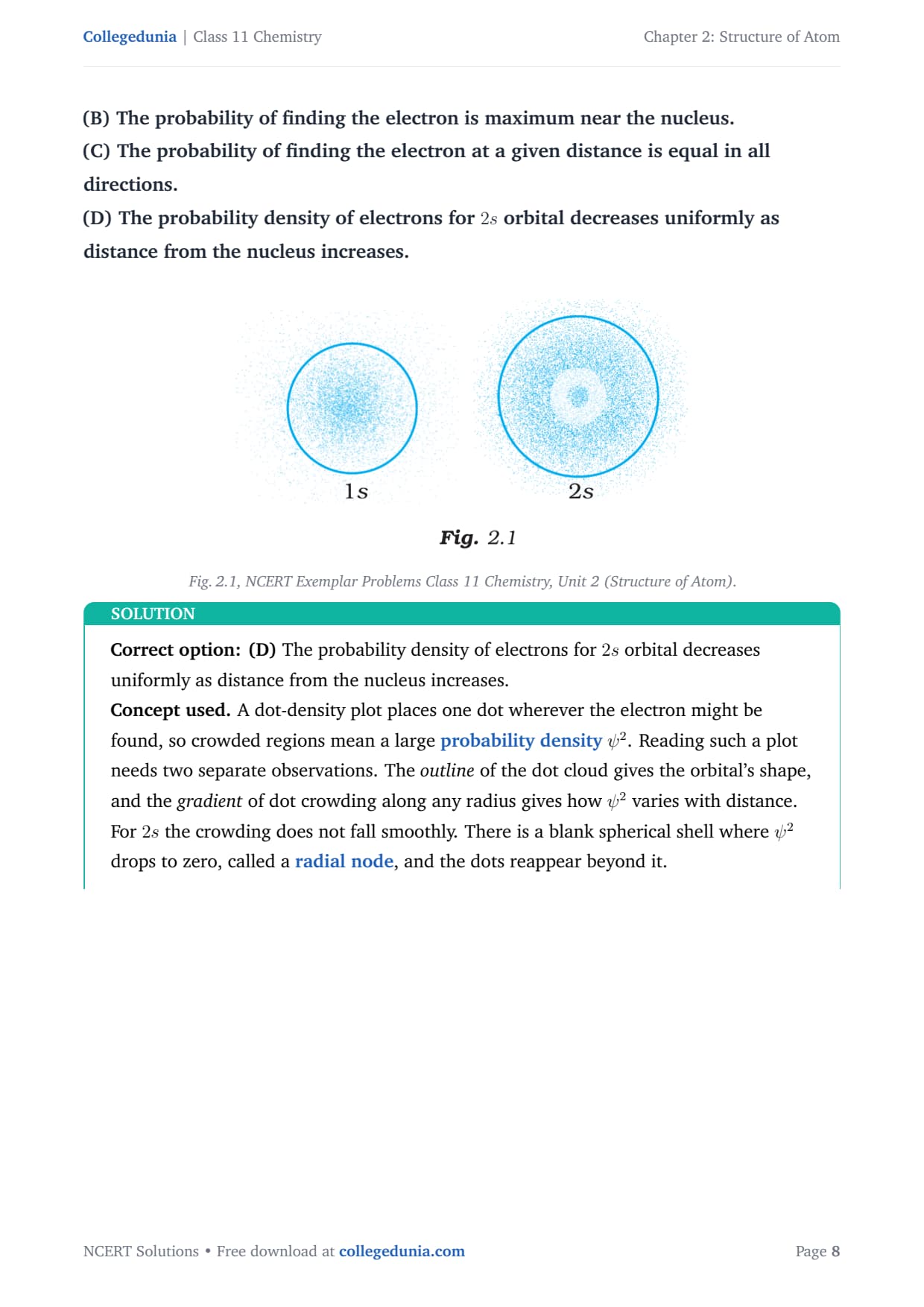
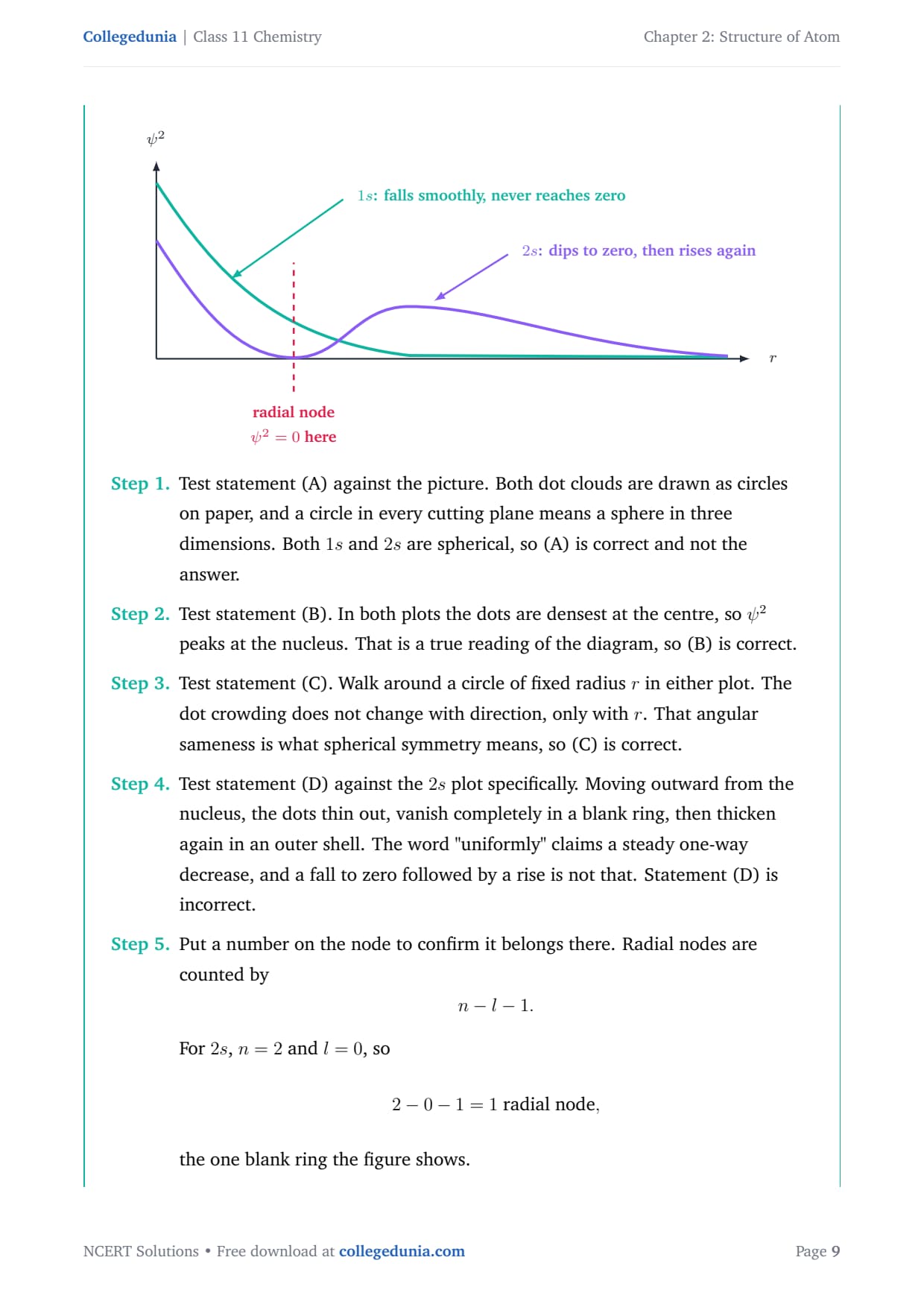
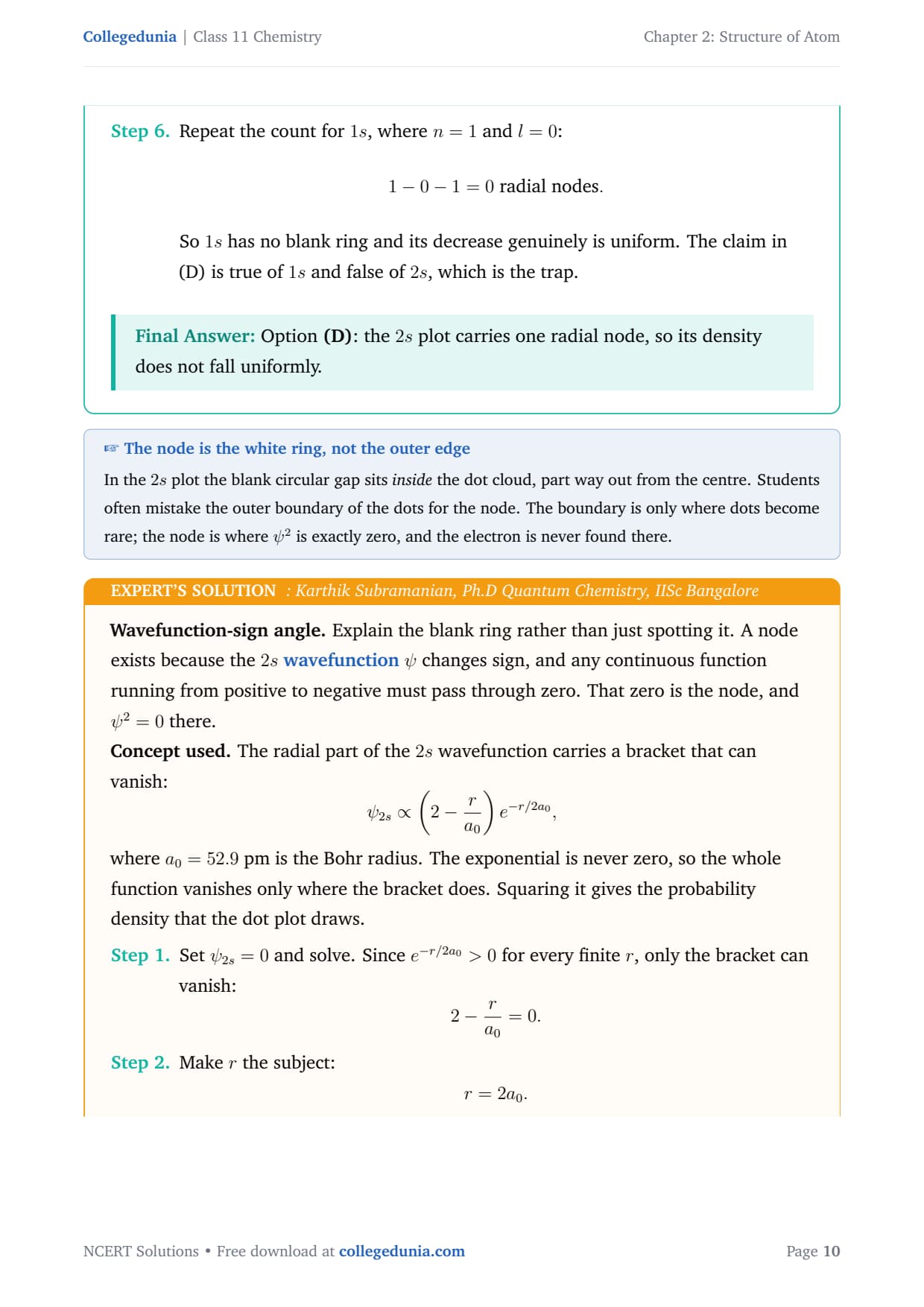
- Nodes and orbital shapes: radial nodes, angular nodes, and probability density plots
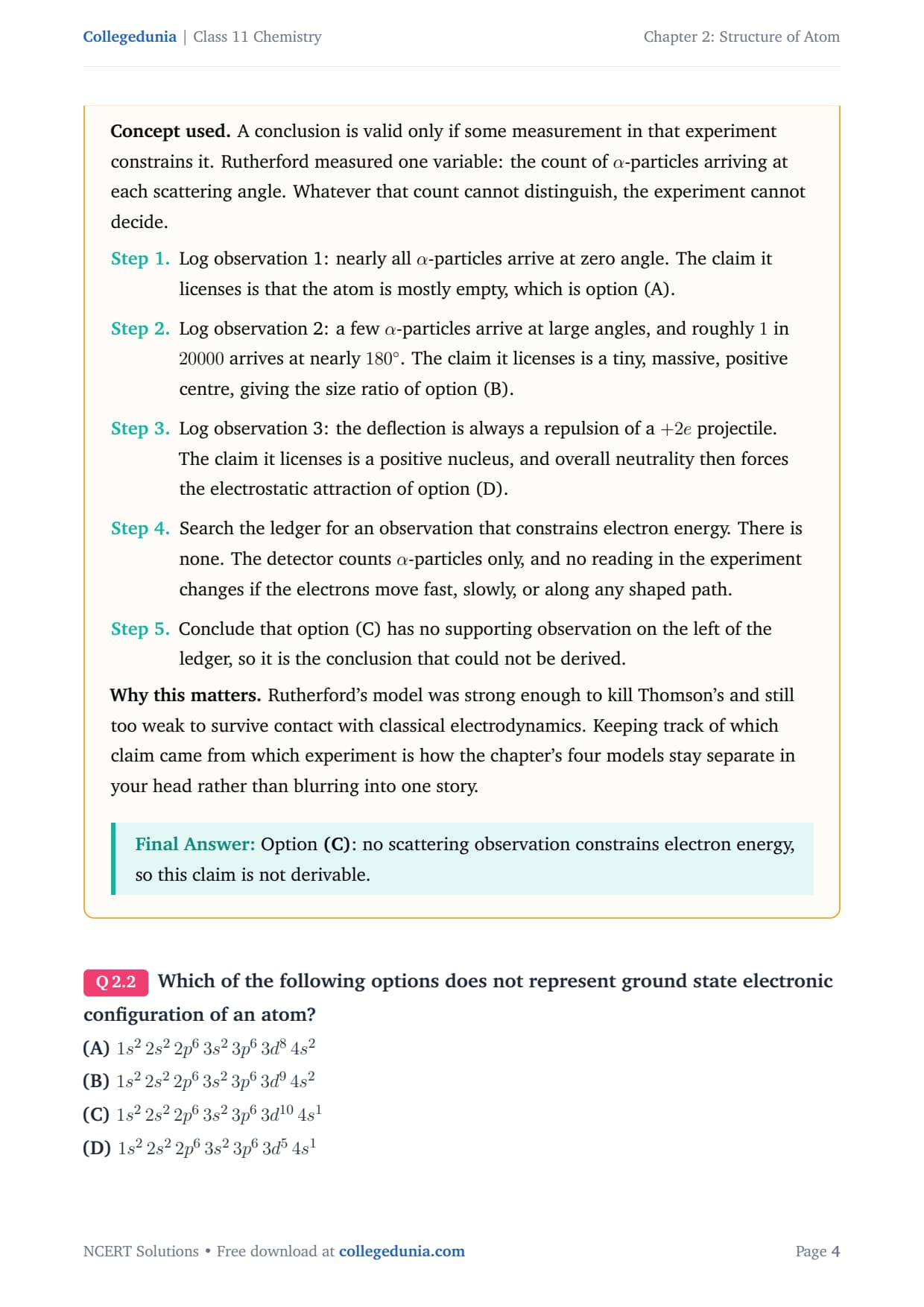
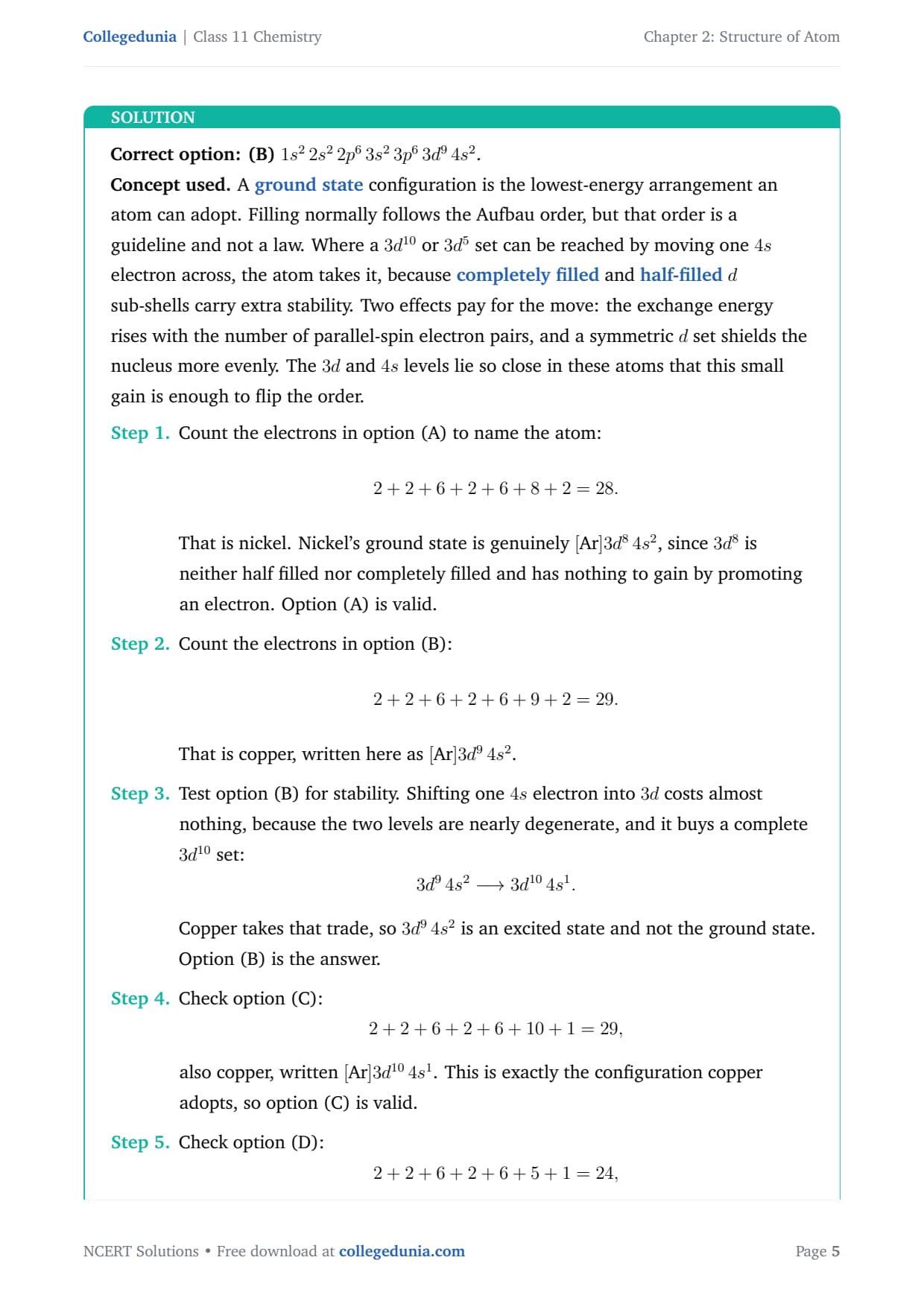
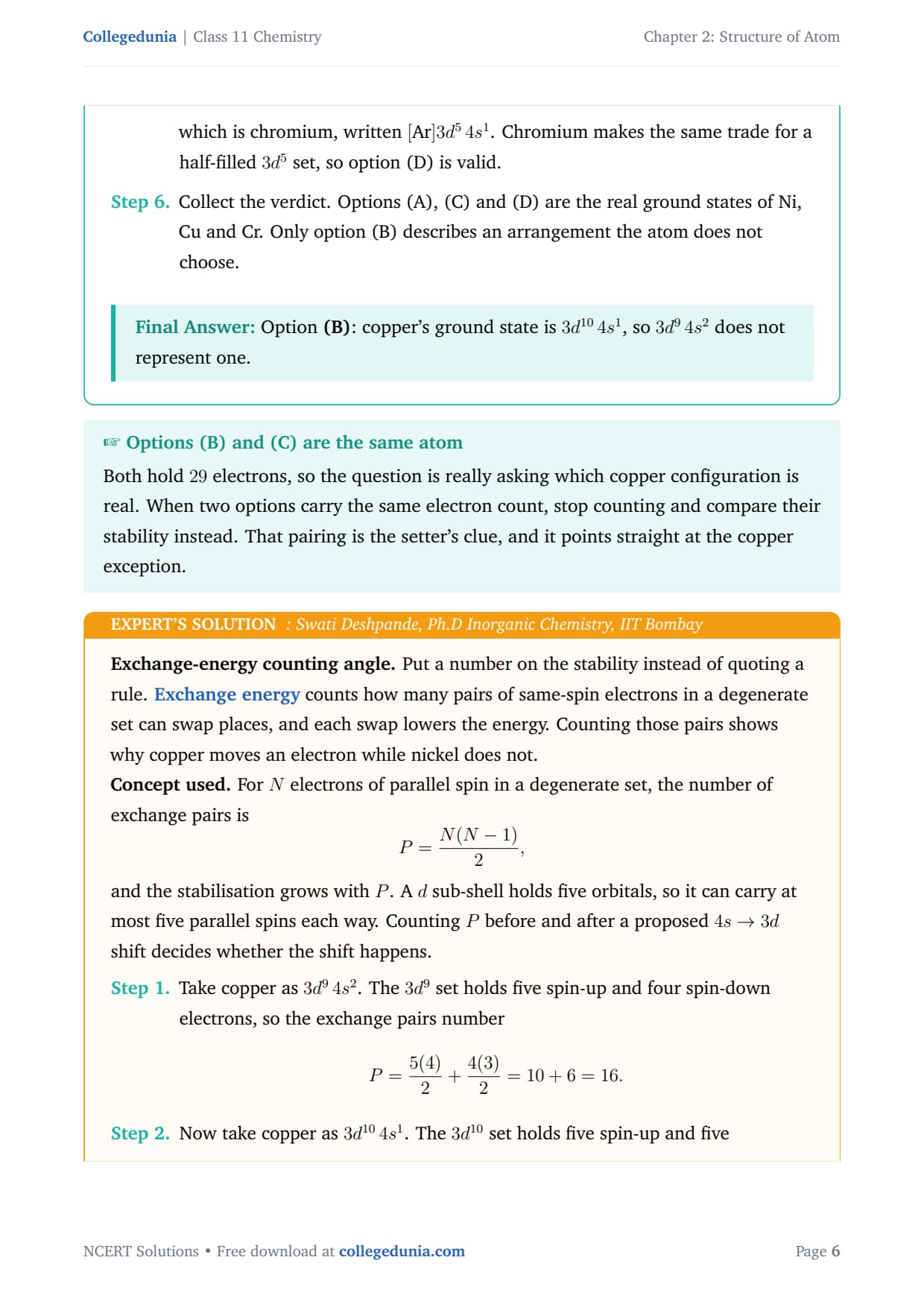
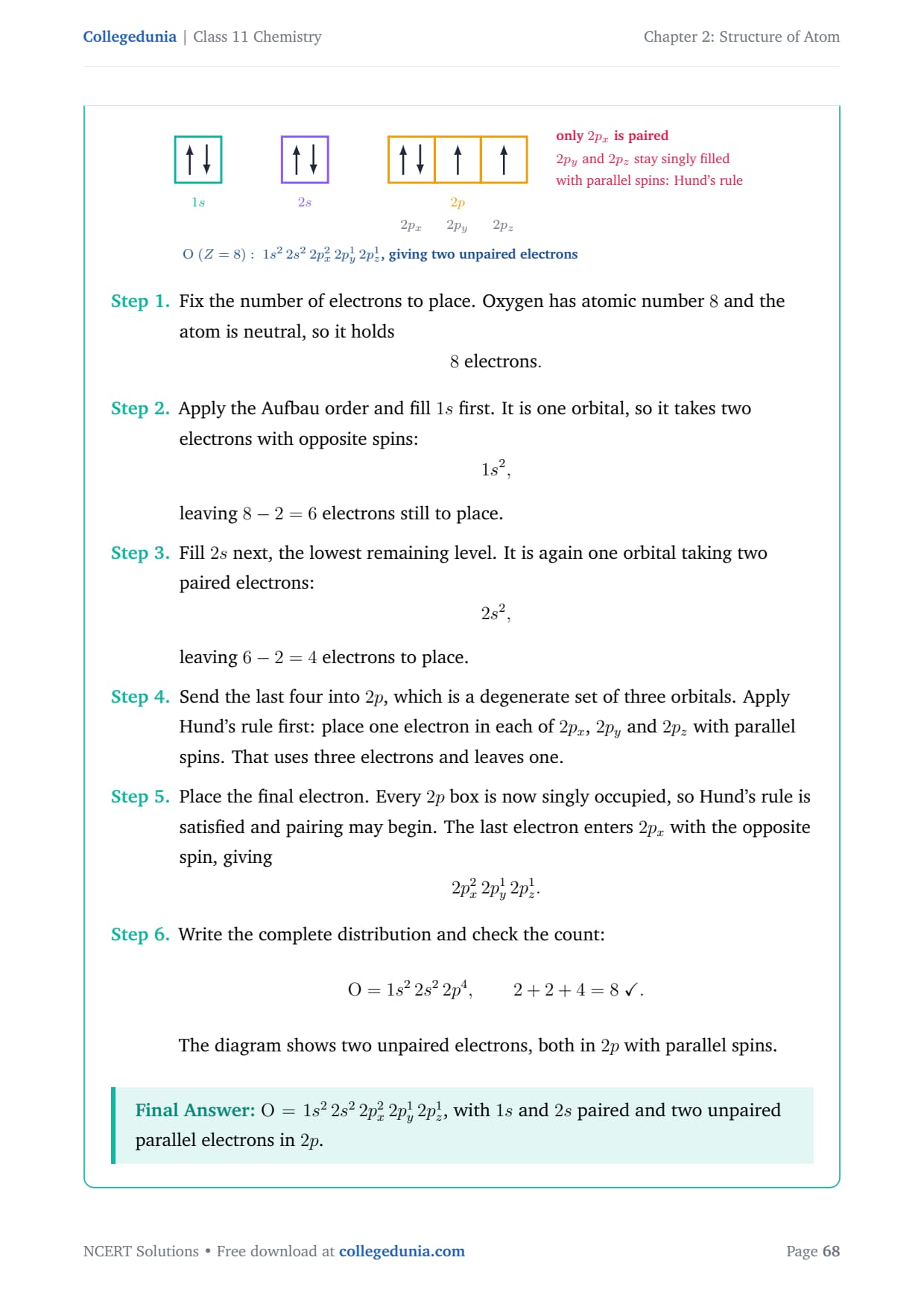
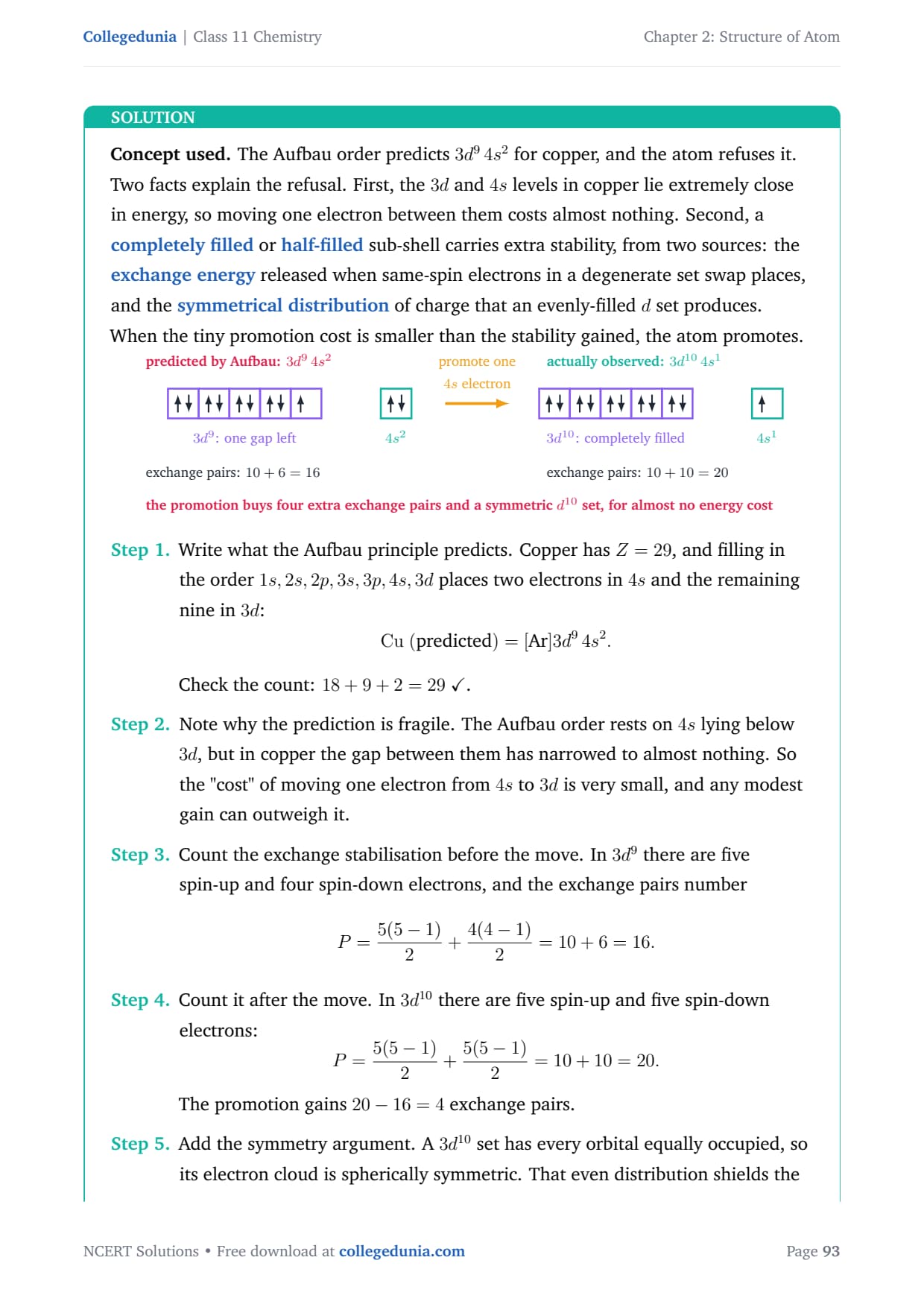
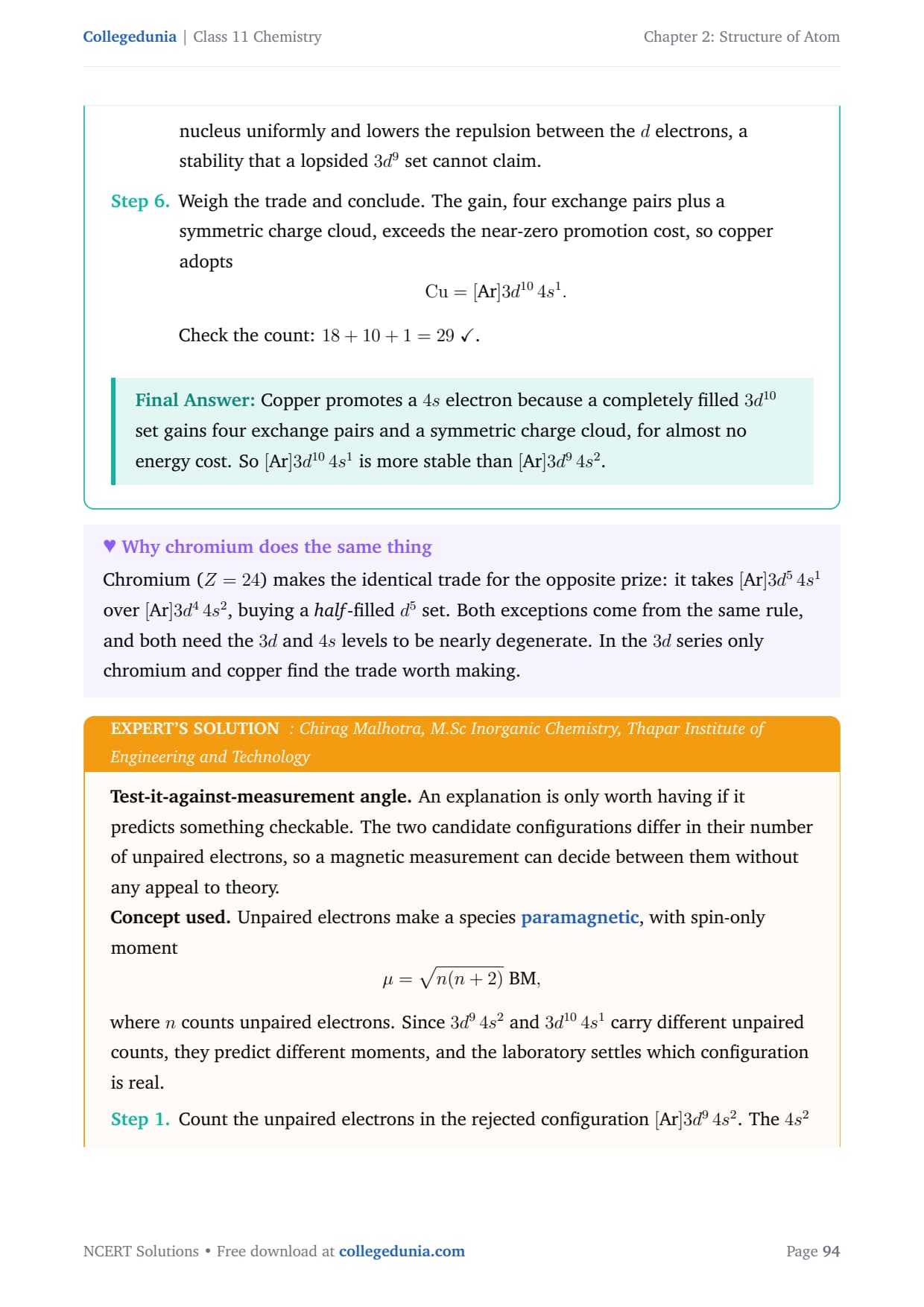
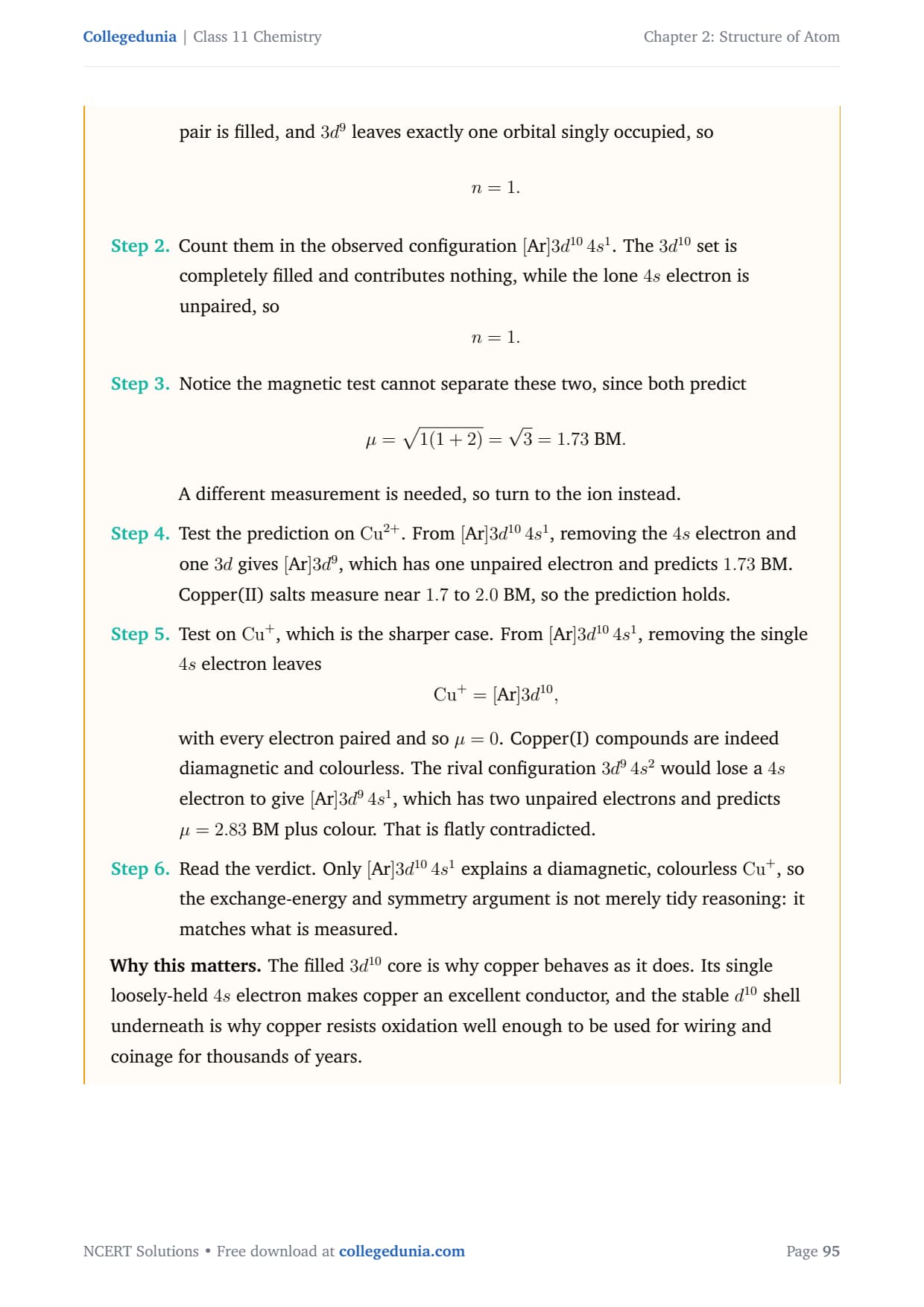
- Electronic configuration: Aufbau, Hund's rule, and the chromium and copper exceptions
Question Types in the Structure of Atom NCERT Exemplar
Six question types appear in this chapter. The Matching set is the largest in the book at six questions, and it hides the sharpest traps.
| Question Type | Count | What It Tests |
|---|---|---|
| MCQ I (single correct) | 16 | Quantum numbers, node counts and configuration recall |
| MCQ II (one or more correct) | 5 | Whether you can reject every wrong option, not just find one right one |
| Short Answer | 20 | Reasoning on orbitals, duality and the uncertainty principle |
| Matching Type | 6 | Pairing species, rules and quantum numbers with their meanings |
| Assertion and Reason | 3 | Whether the reason actually explains the assertion |
| Long Answer | 5 | Photoelectric effect and hydrogen spectrum numericals worth 5 marks |
The Frequency Misprint in Question 54
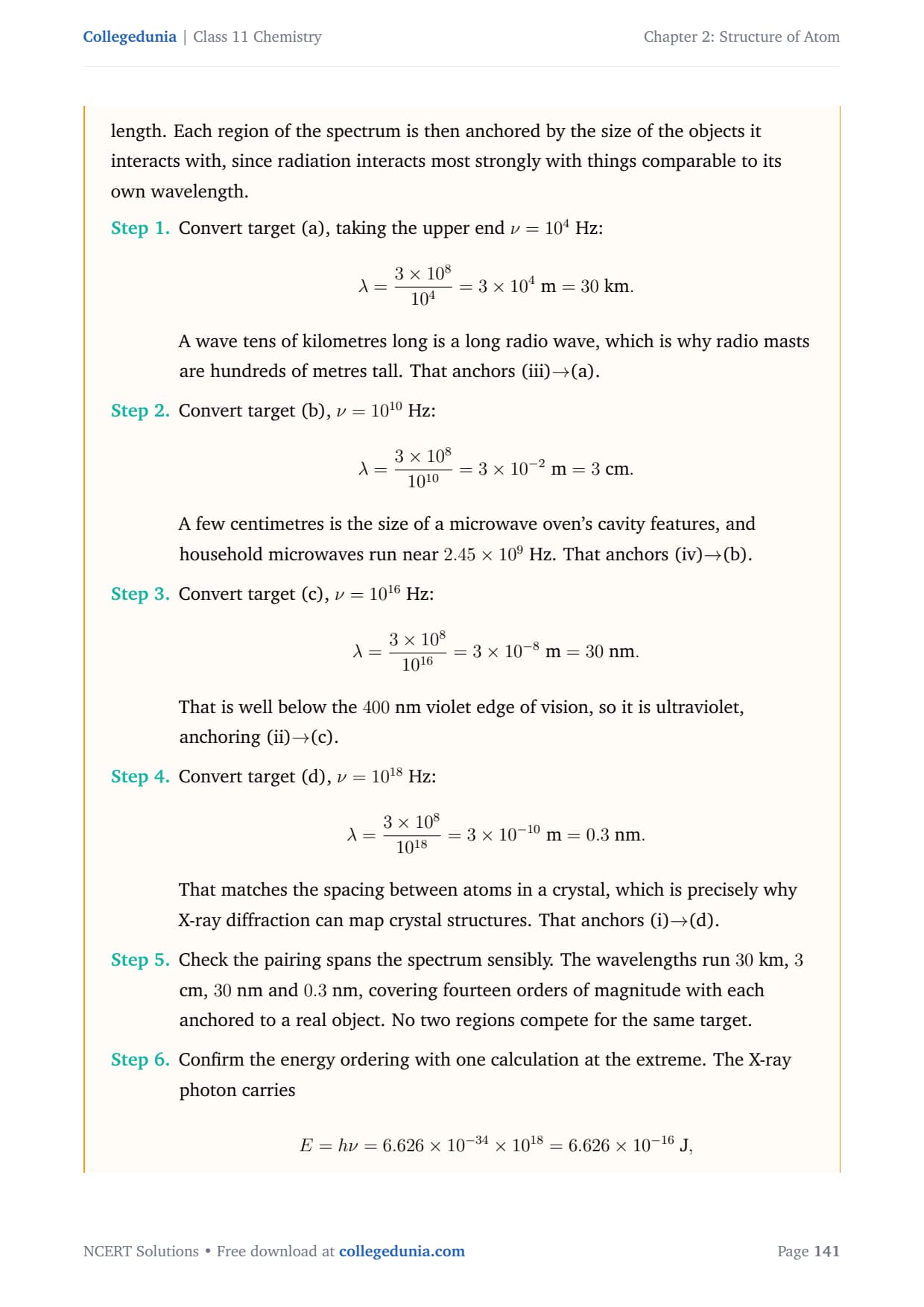
Question 54 asks for the energy and frequency emitted when an electron drops from n=3 to n=2 in hydrogen. The printed key gives the frequency as 4.606 × 10¹⁶ Hz. That exponent cannot be right.
The key's own working proves it. Divide its energy, 3.052 × 10⁻¹⁹ J, by Planck's constant, 6.626 × 10⁻³⁴ J s, and you get 4.606 × 10¹⁴ Hz. The digits are correct and only the power of ten slipped. Working the numbers independently from En = -2.18 × 10⁻¹⁸/n2 J gives ΔE = 3.03 × 10⁻¹⁹ J, so ν = 4.57 × 10¹⁴ Hz and λ = 656 nm.
That 656 nm line is the red glow you see in a hydrogen discharge tube. A frequency of 1016 Hz would sit in the ultraviolet, which no eye can see. The physical check settles the misprint on its own.
Two Matching Questions That Break the Pattern
Students learn to treat matching questions as one-to-one puzzles. Two questions here punish that habit, and both are flagged in the PDF.
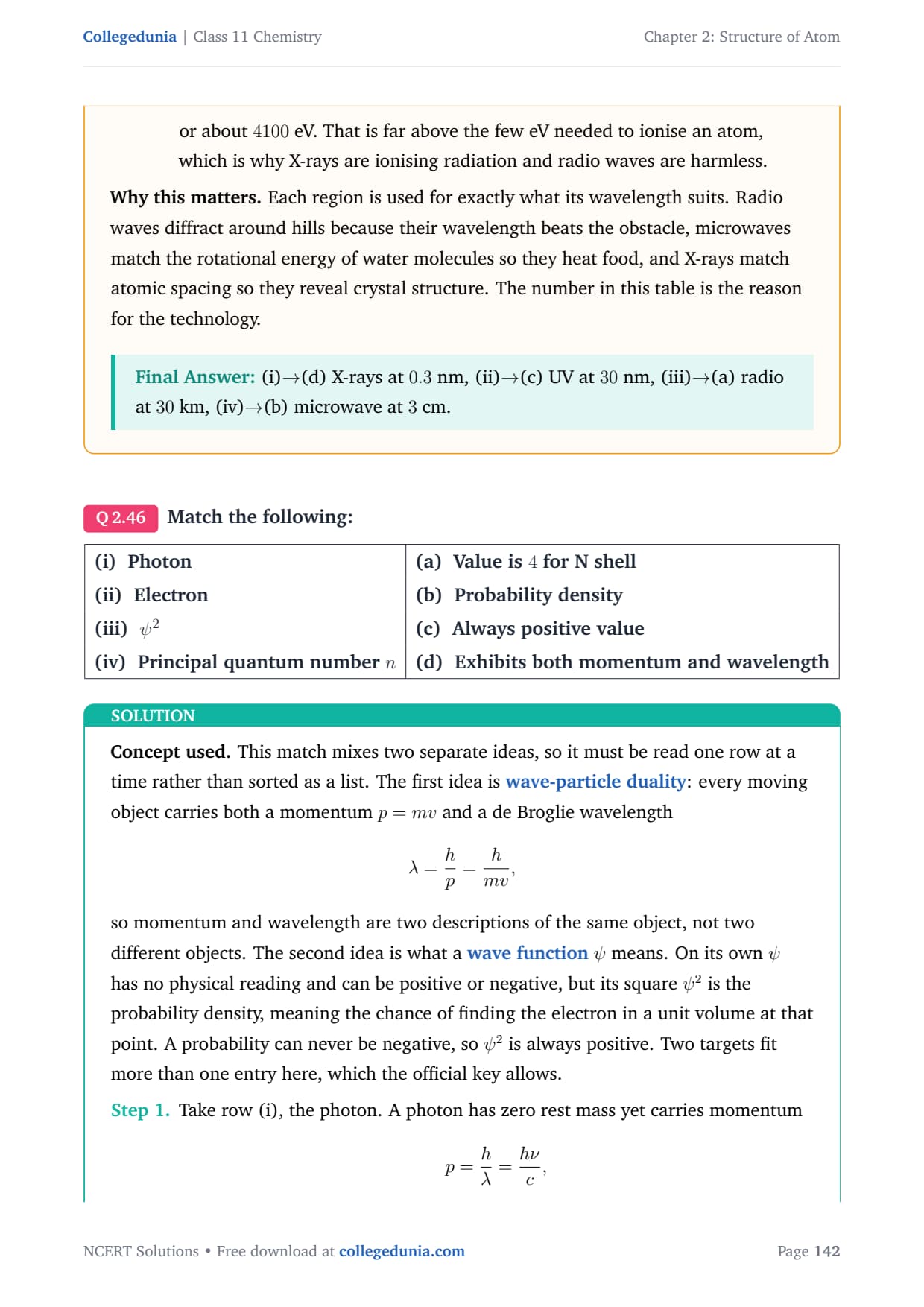
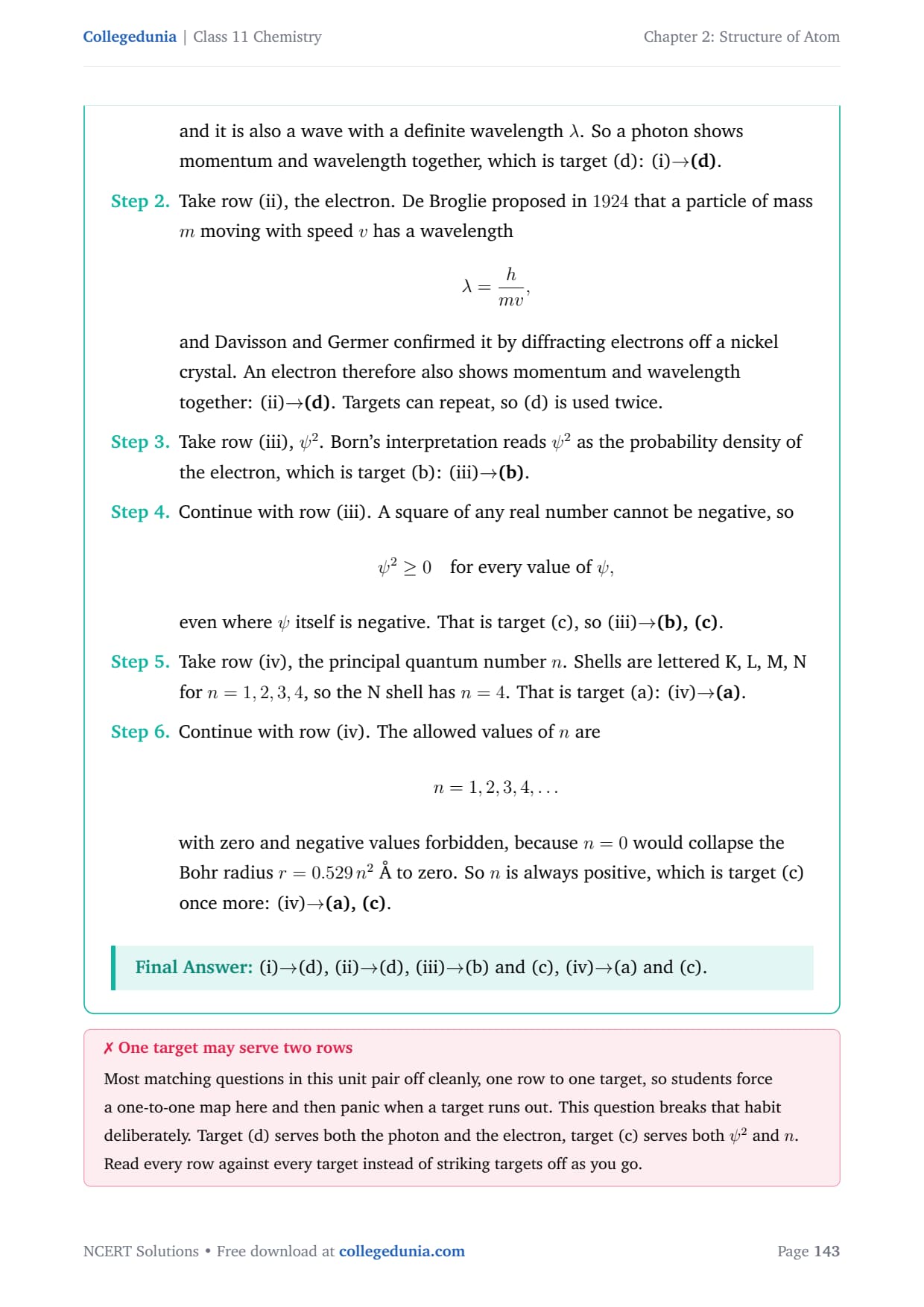
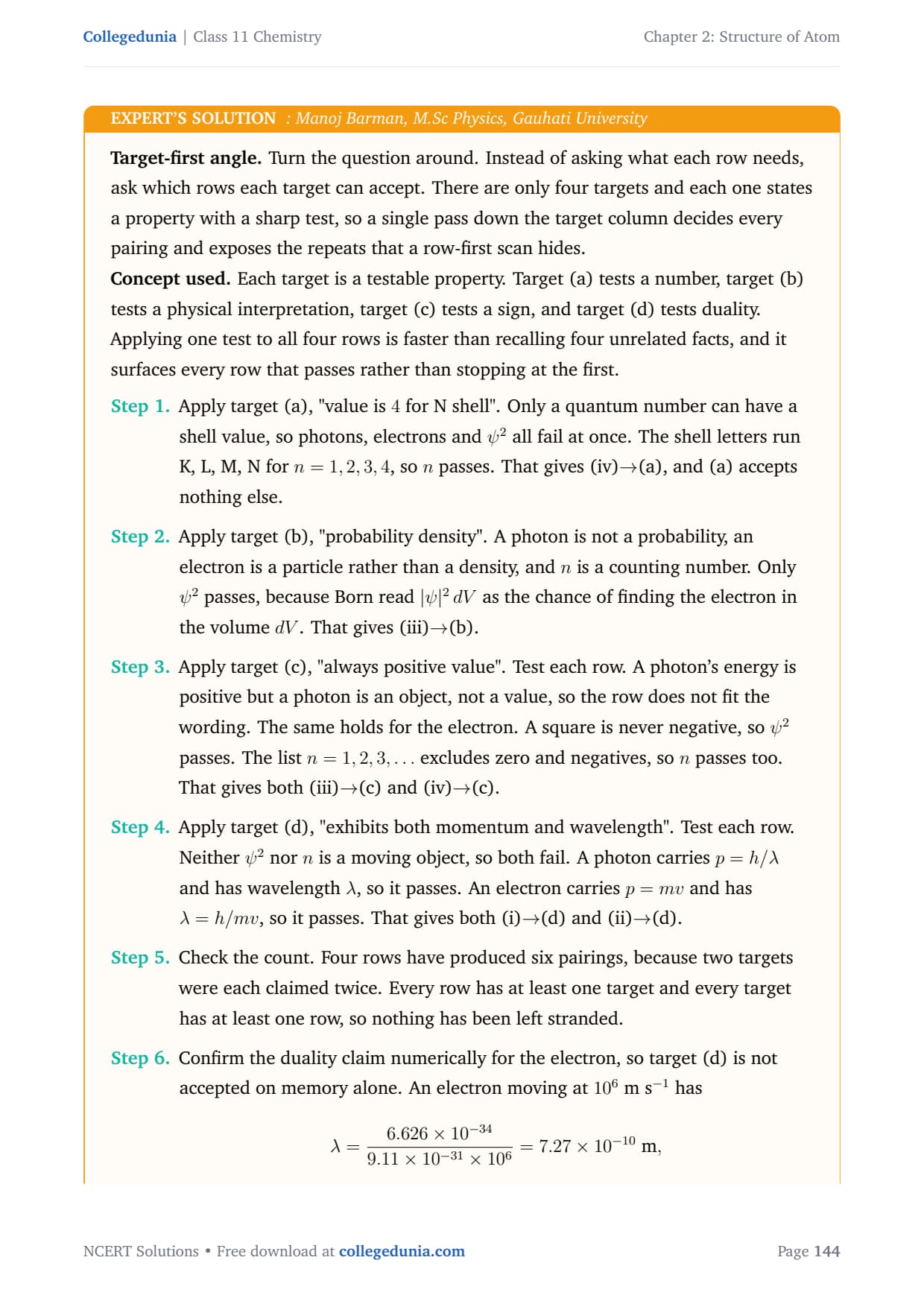
- Question 46: the map is deliberately not one-to-one. Target (d), "exhibits both momentum and wavelength", answers the photon in row (i) and the electron in row (ii). Read every row against every target instead of eliminating as you go.
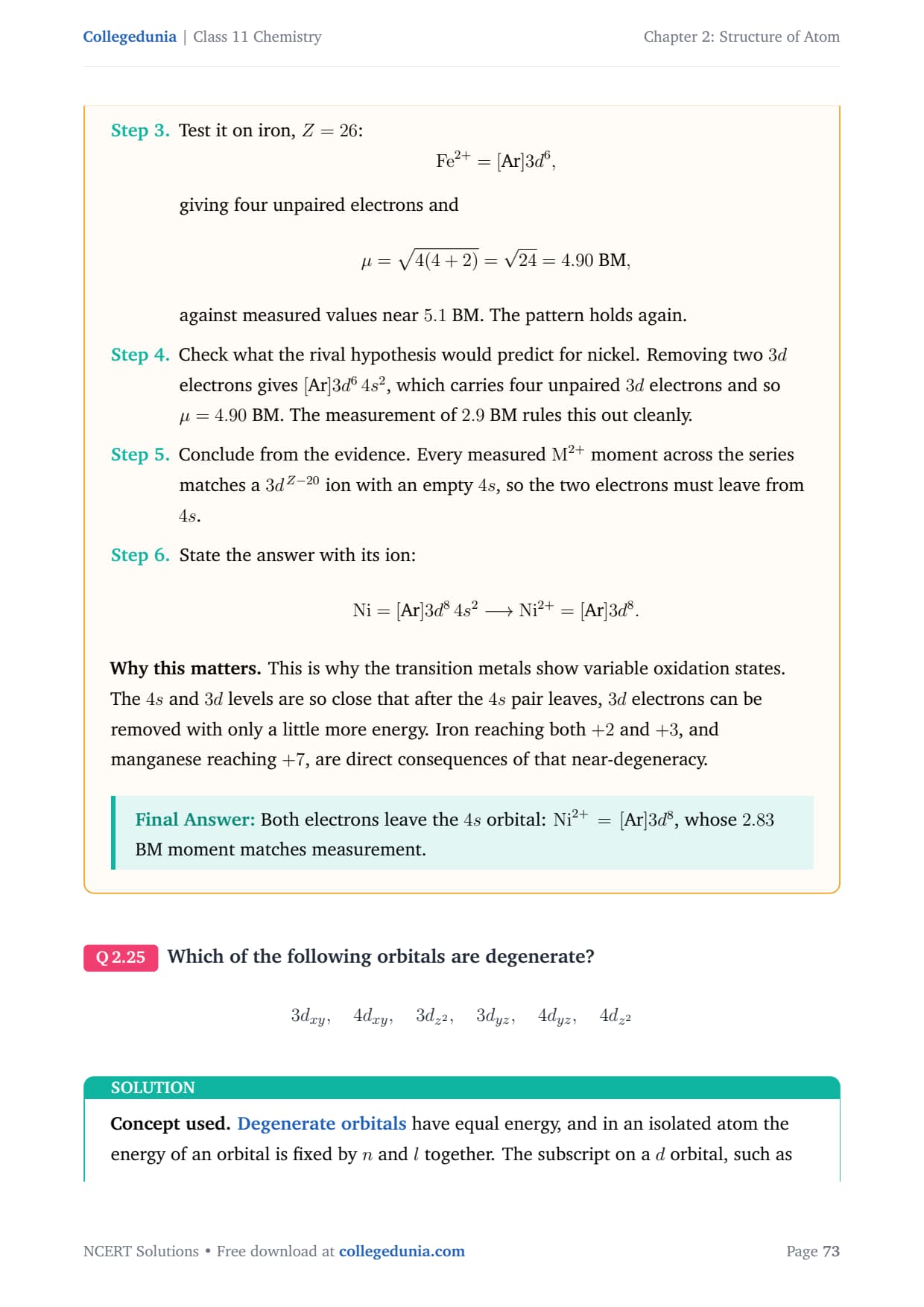
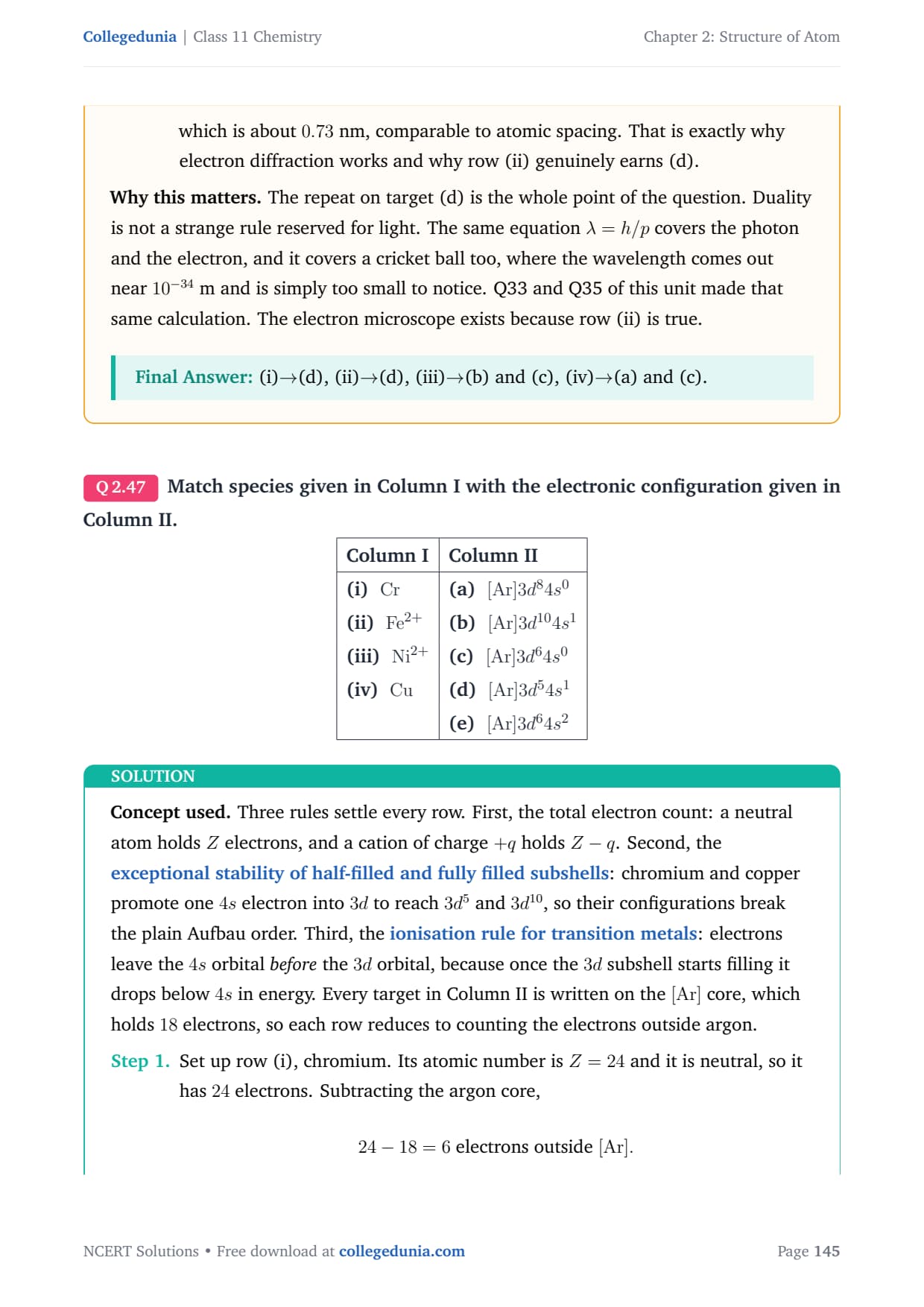
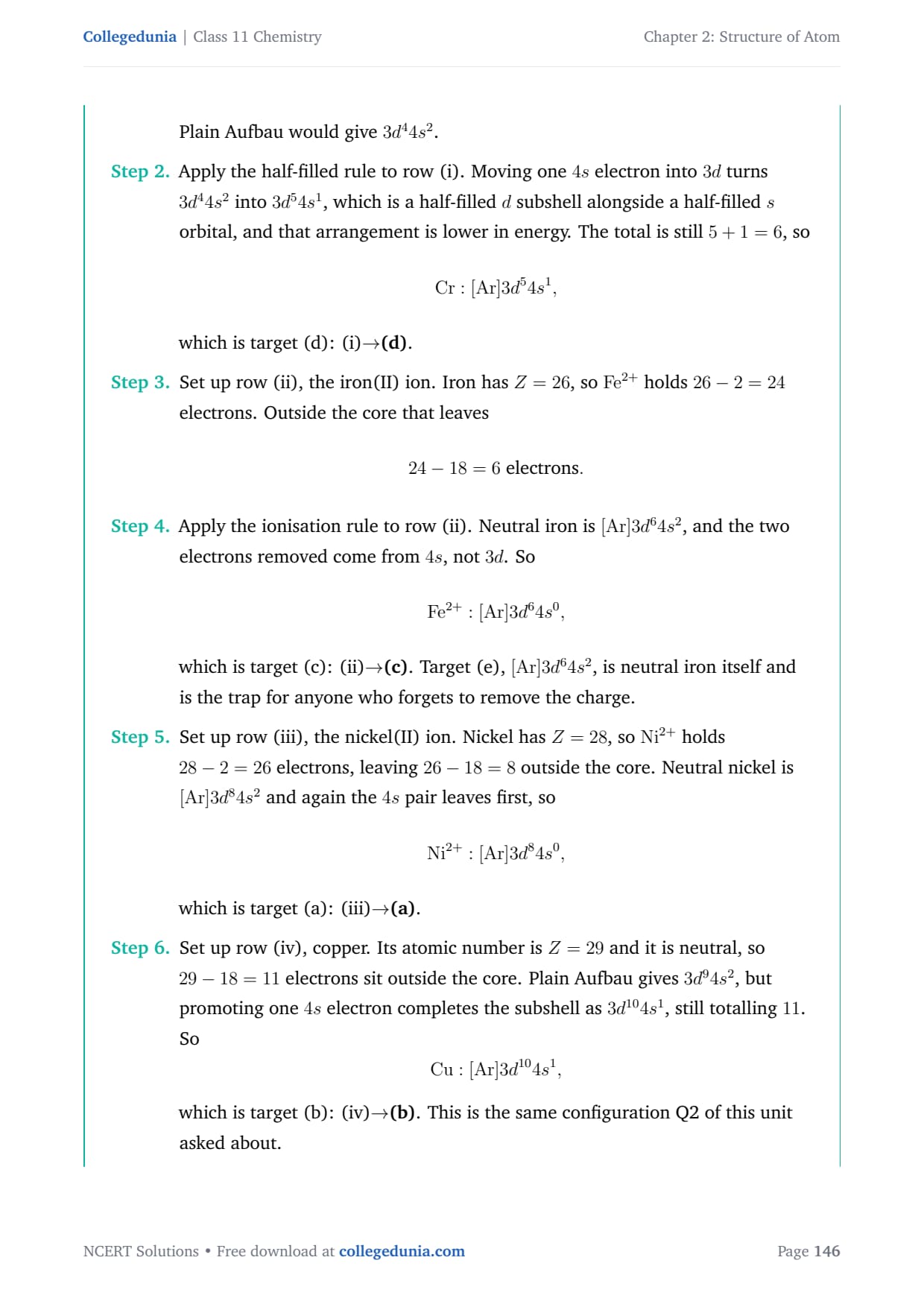
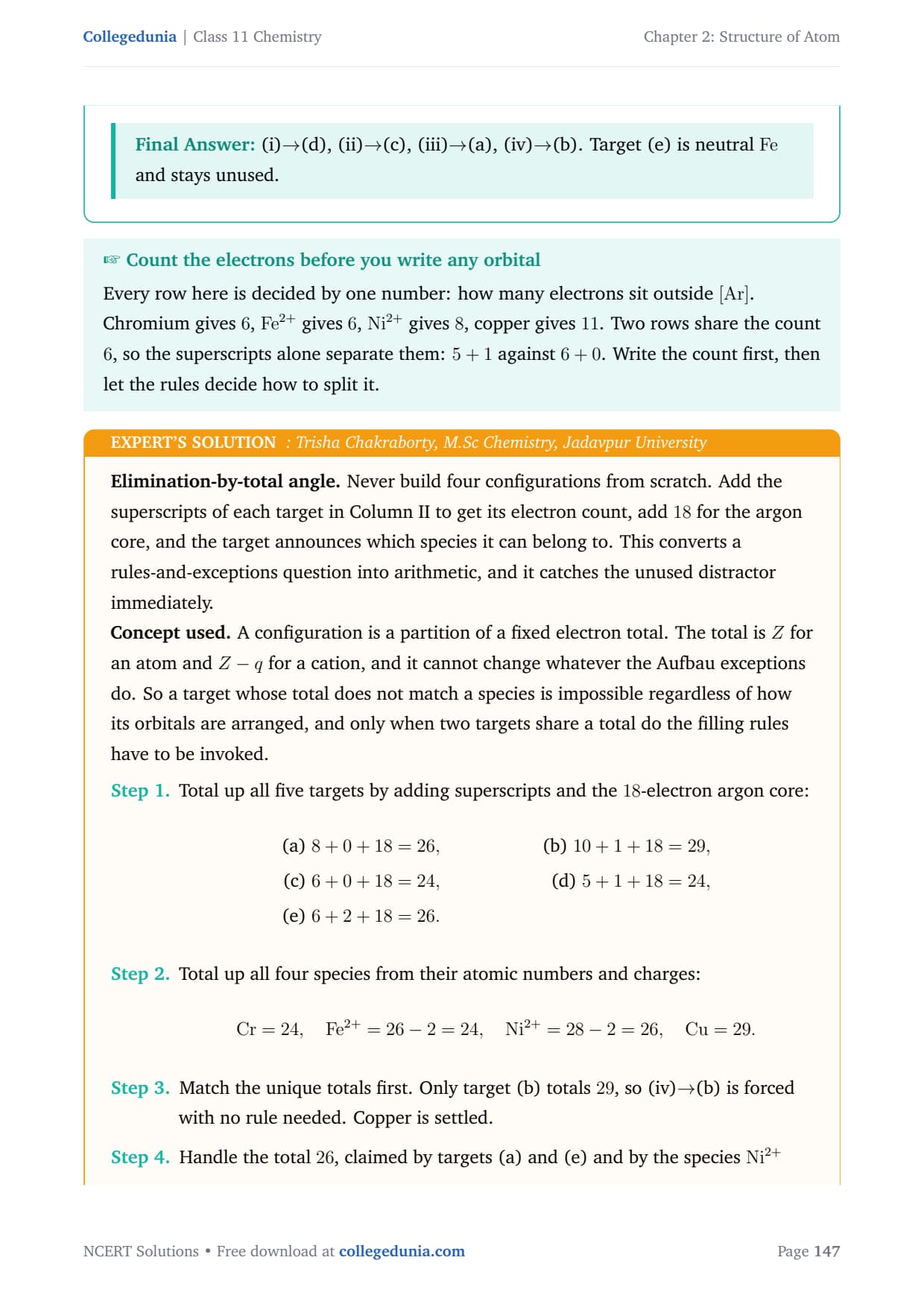
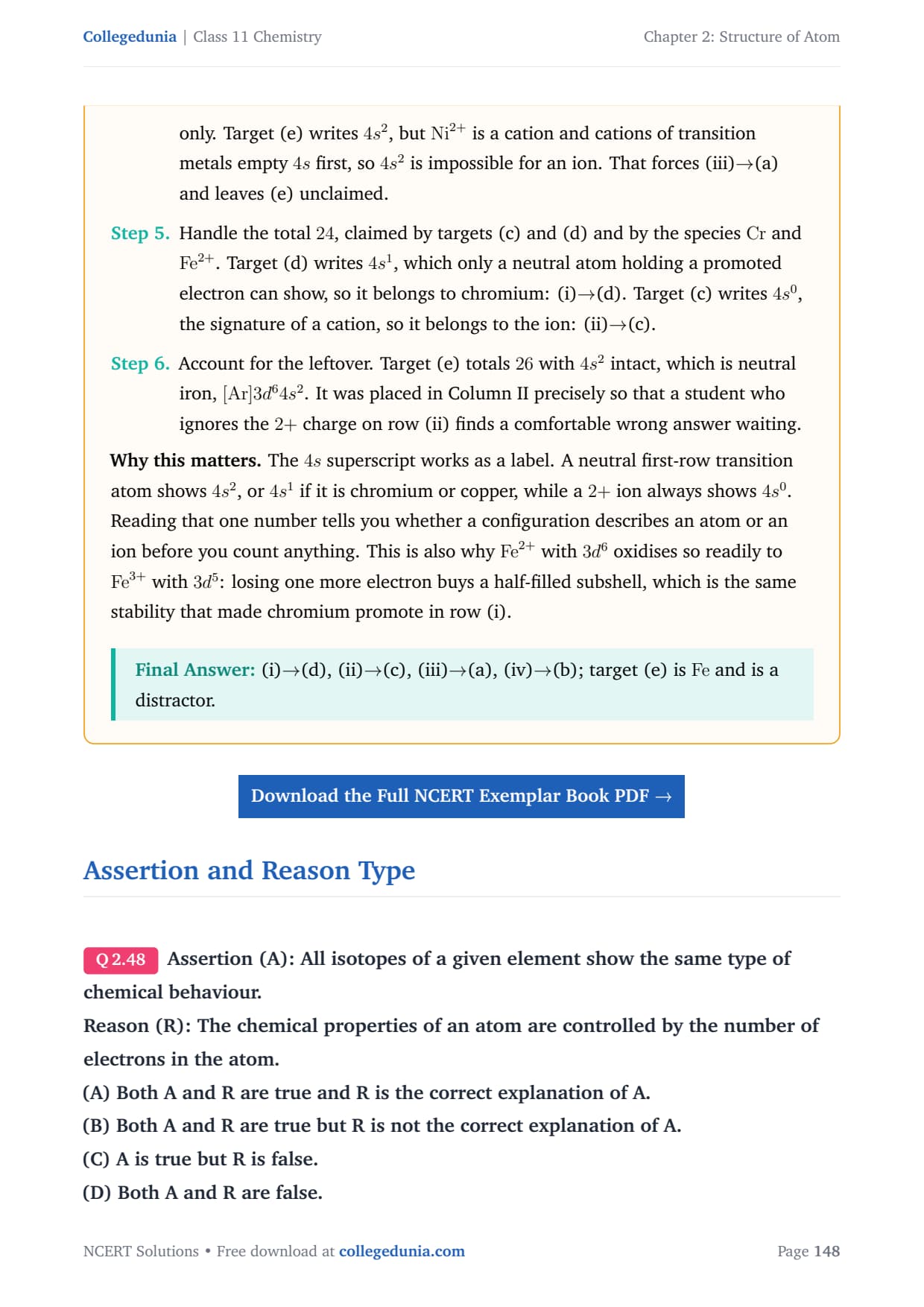
- Question 47: option (e), [Ar]3d64s2, is never used. It is neutral iron, planted to catch anyone who matches Fe2+ without removing the charge. The correct target is (c), [Ar]3d64s0, because 4s electrons leave before 3d electrons.
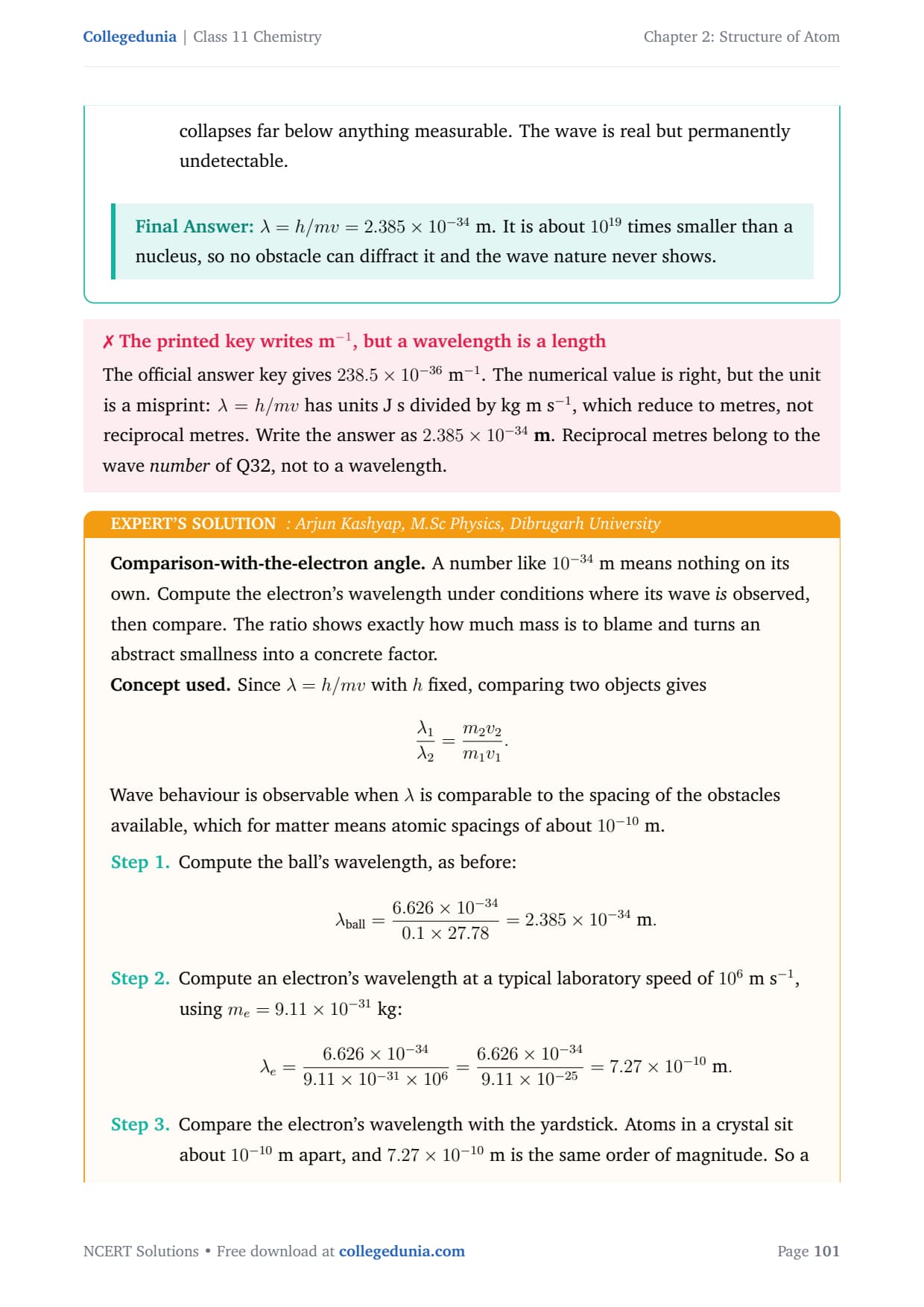
- Question 33: the key prints the de Broglie wavelength in m-1. The number is fine but the unit is a misprint. Since λ = h/mv, the units reduce to metres.
Common Mistakes Students Make in Structure of Atom
The Exemplar plants wrong options on purpose. These four catch most students, and each is flagged in the PDF where it appears.
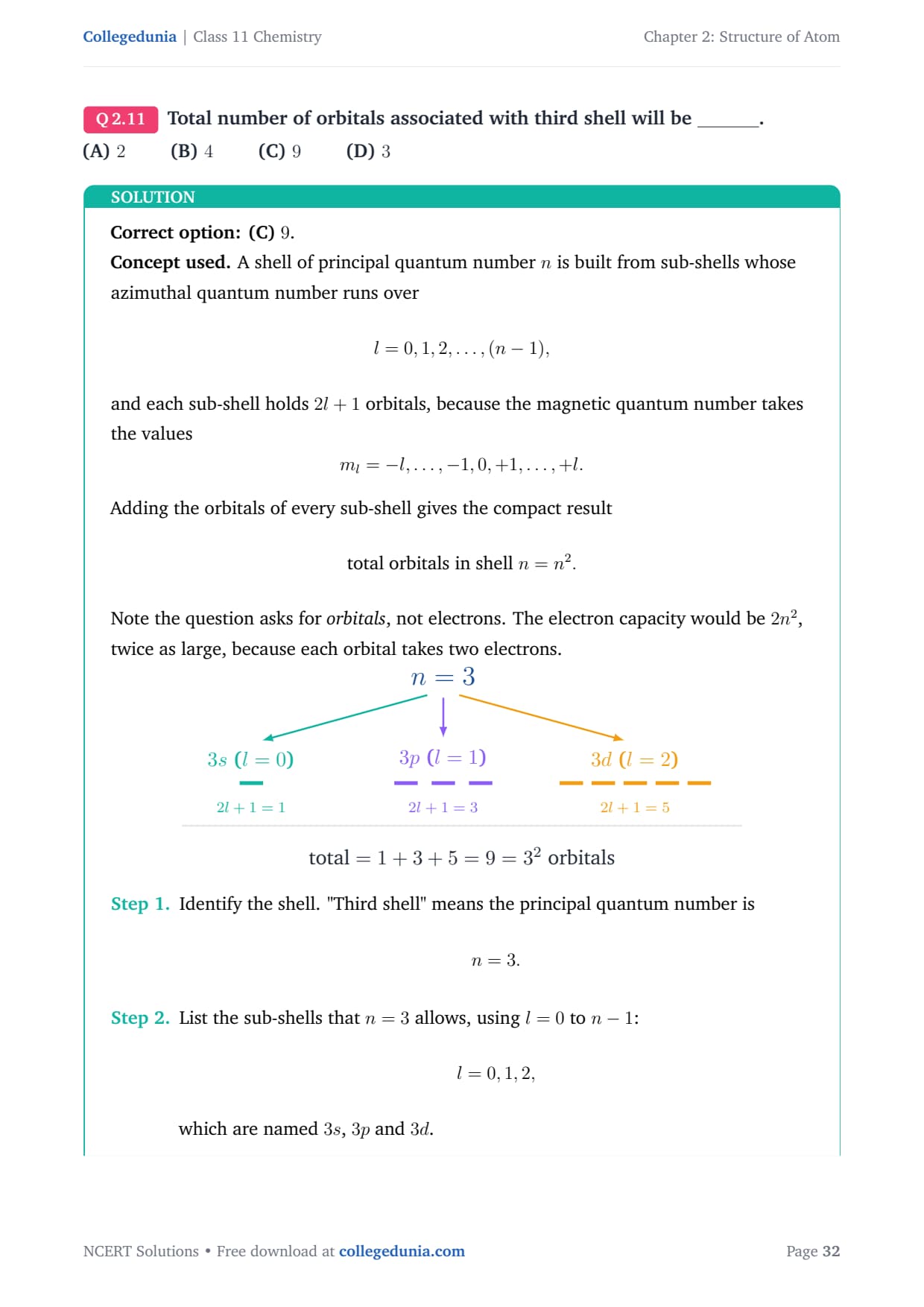
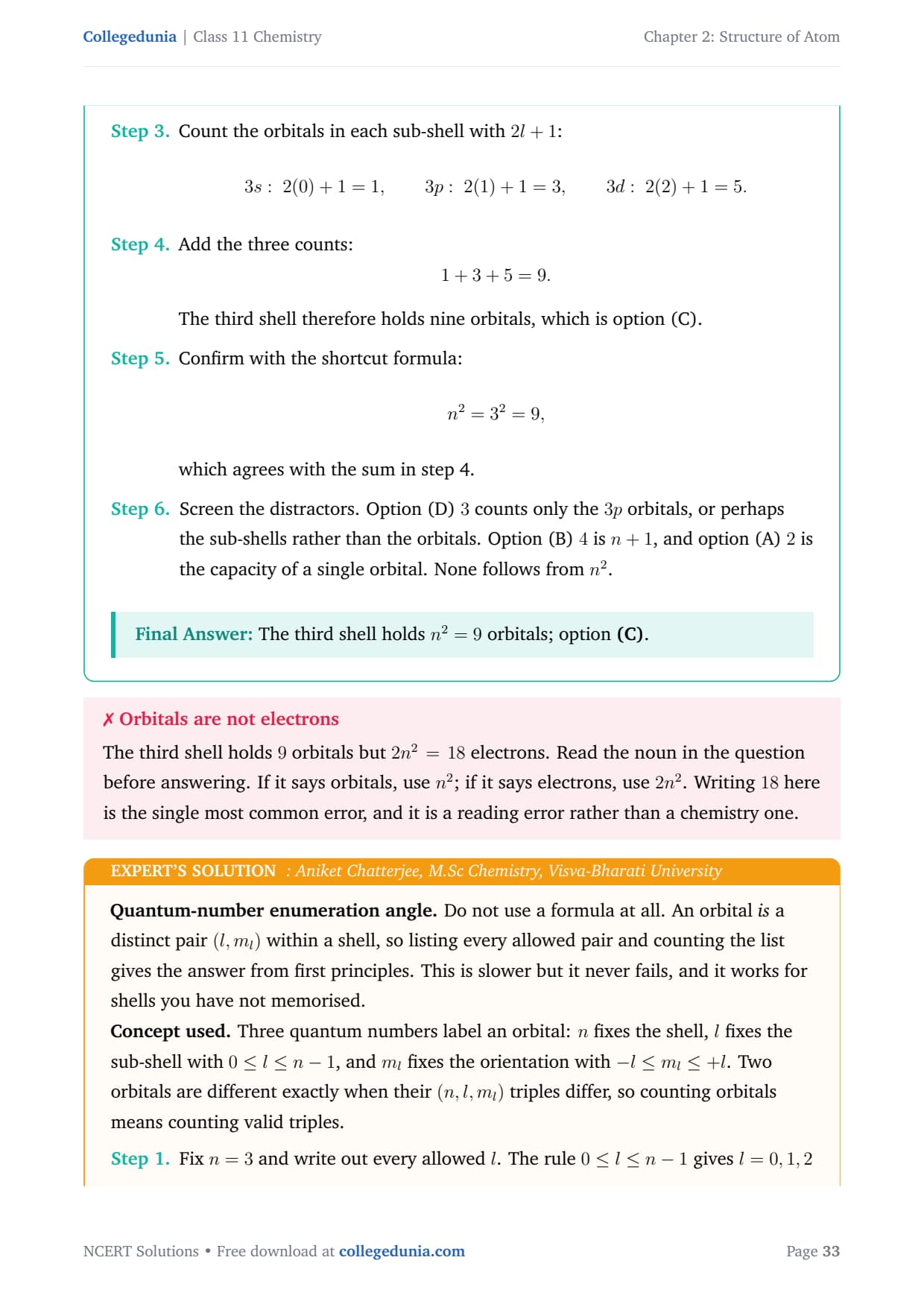
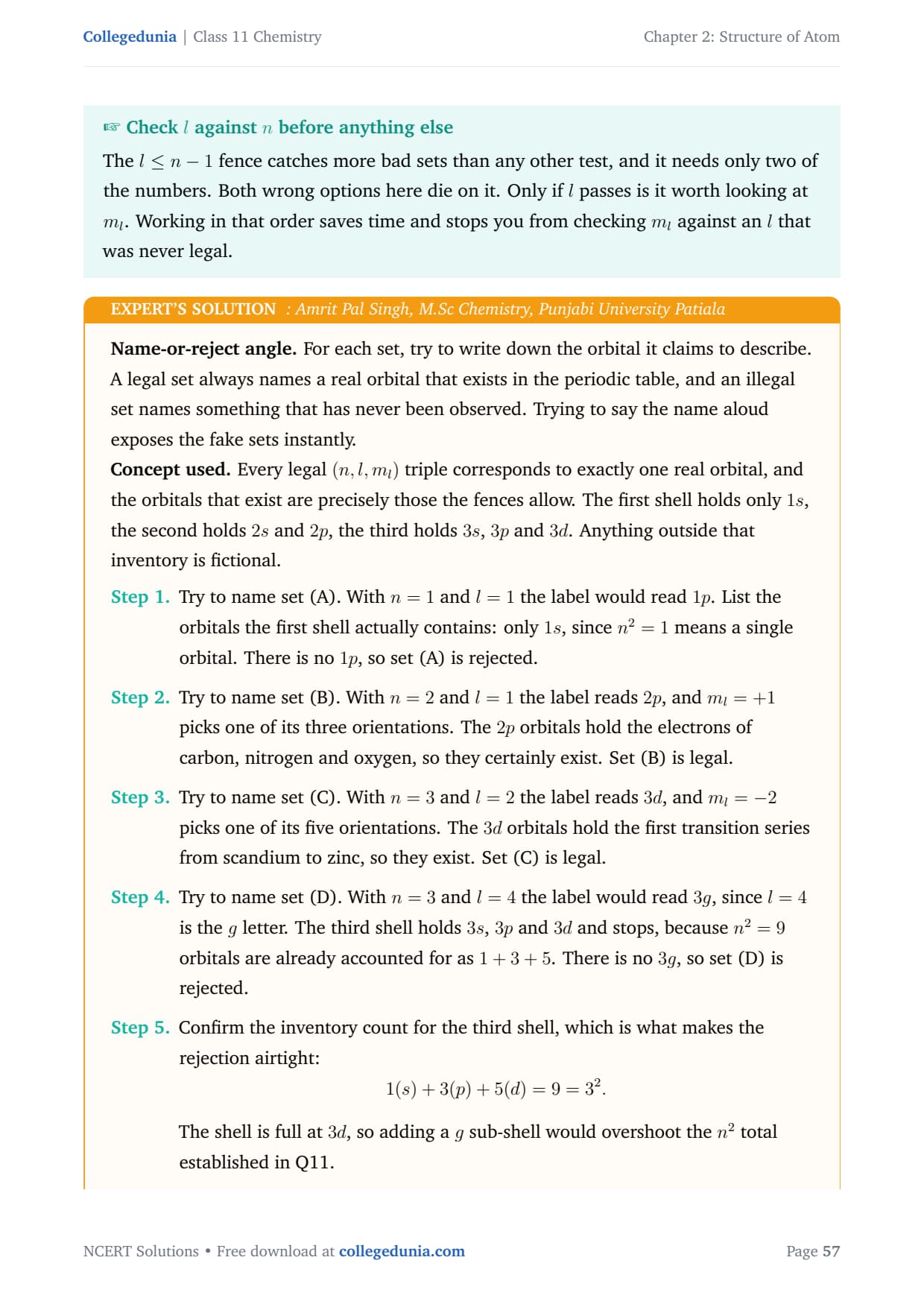
- Orbitals against electrons: the third shell holds n2 = 9 orbitals but 2n2 = 18 electrons. Question 11 asks for orbitals, so writing 18 is a reading error.
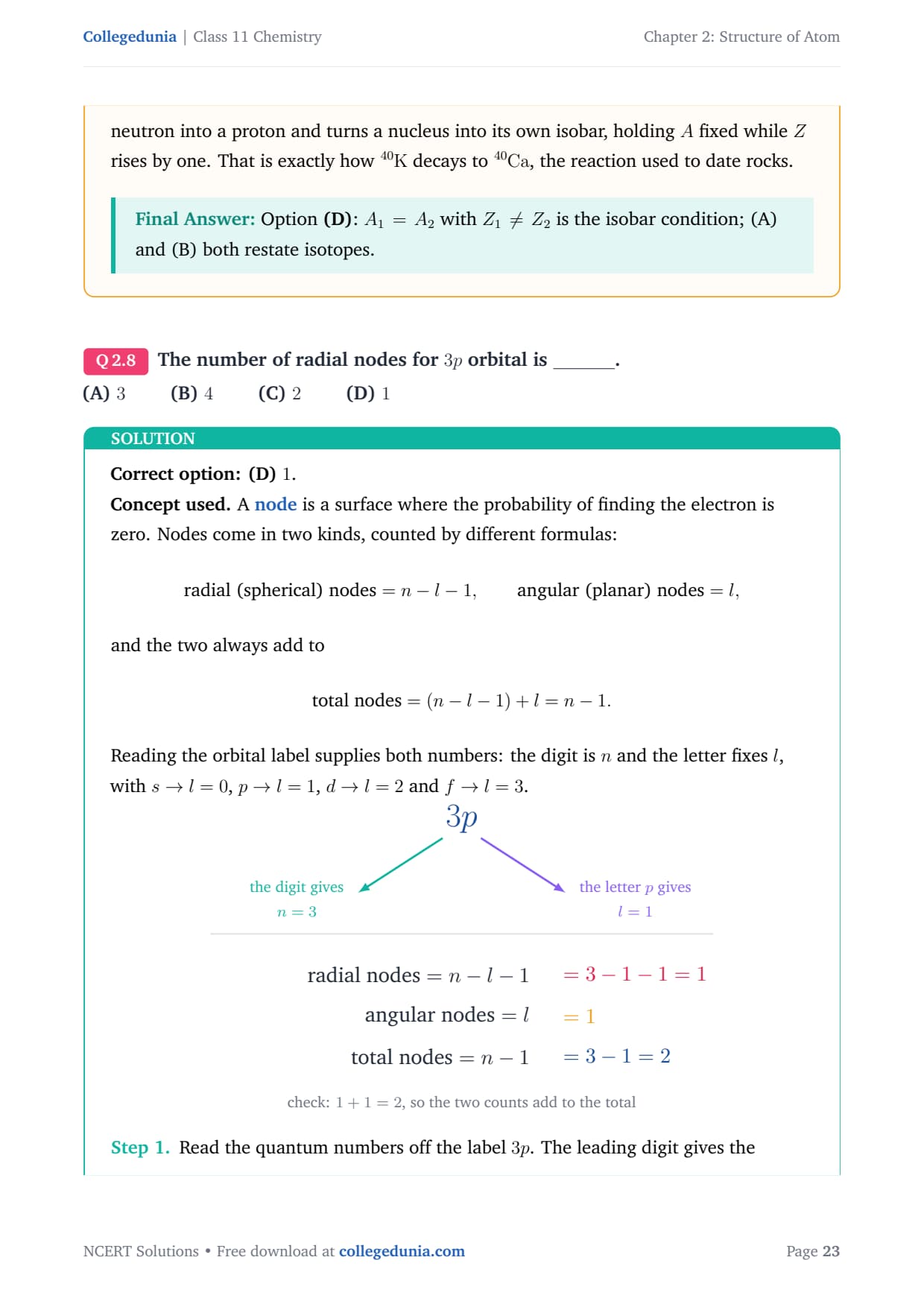
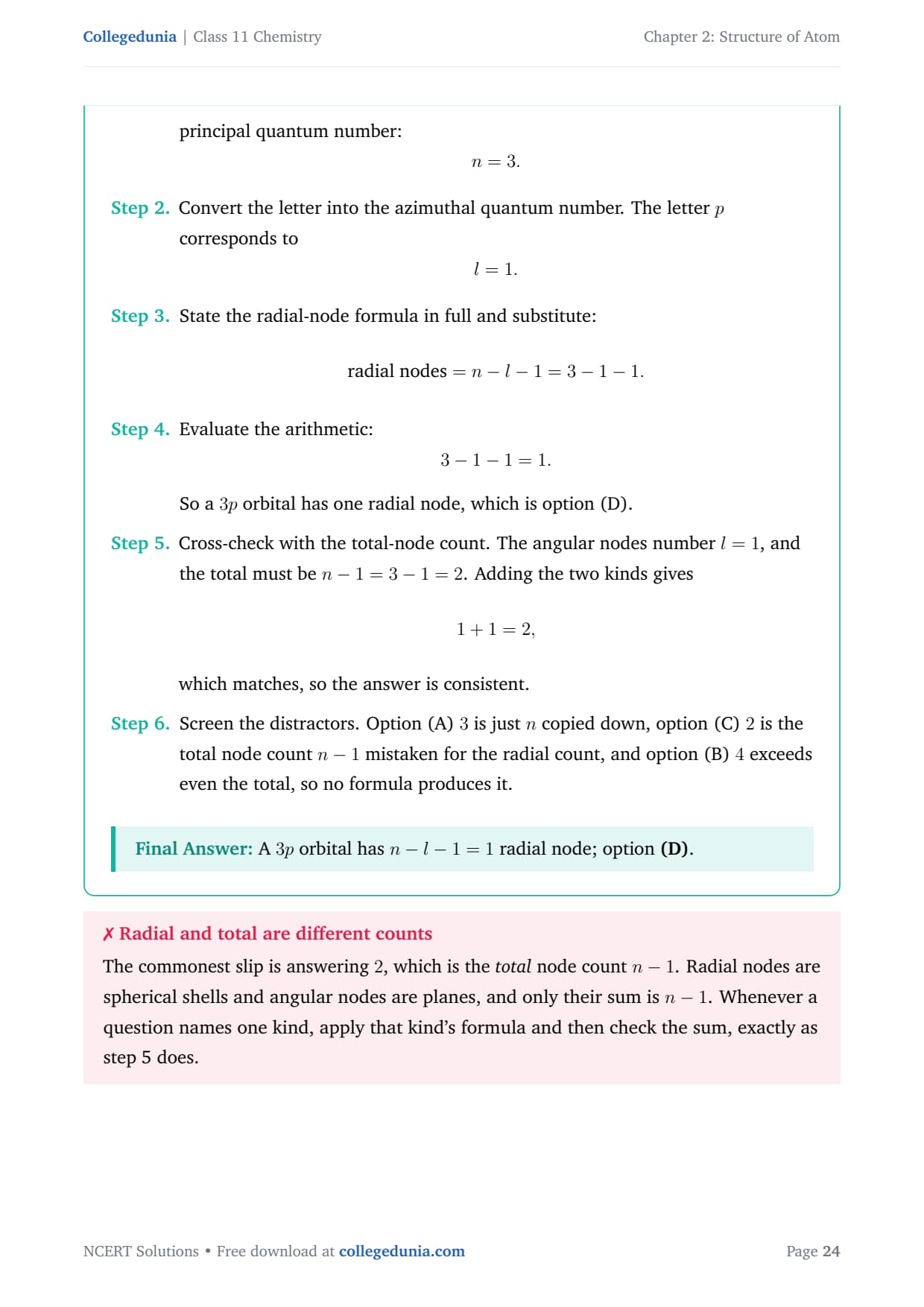
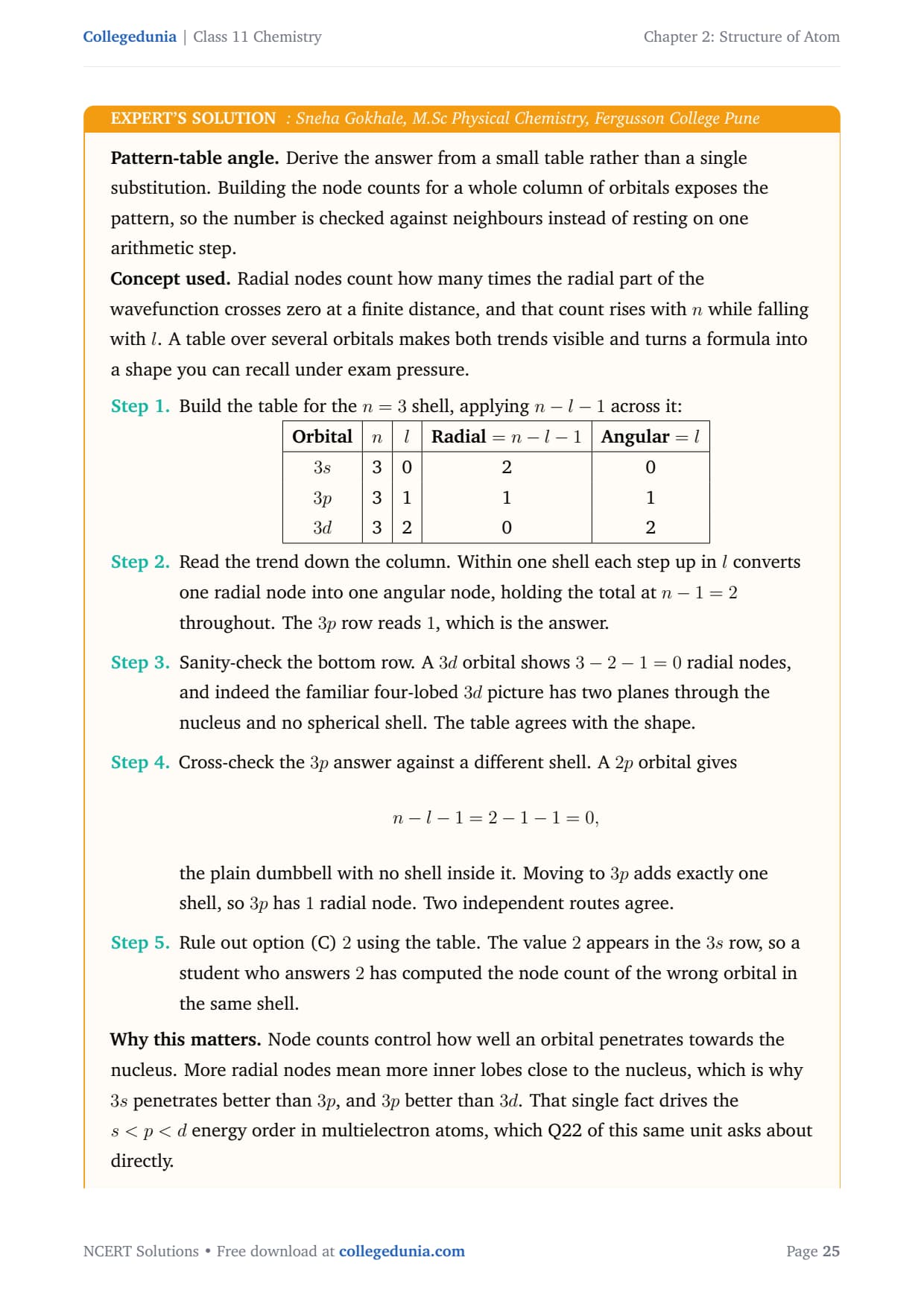
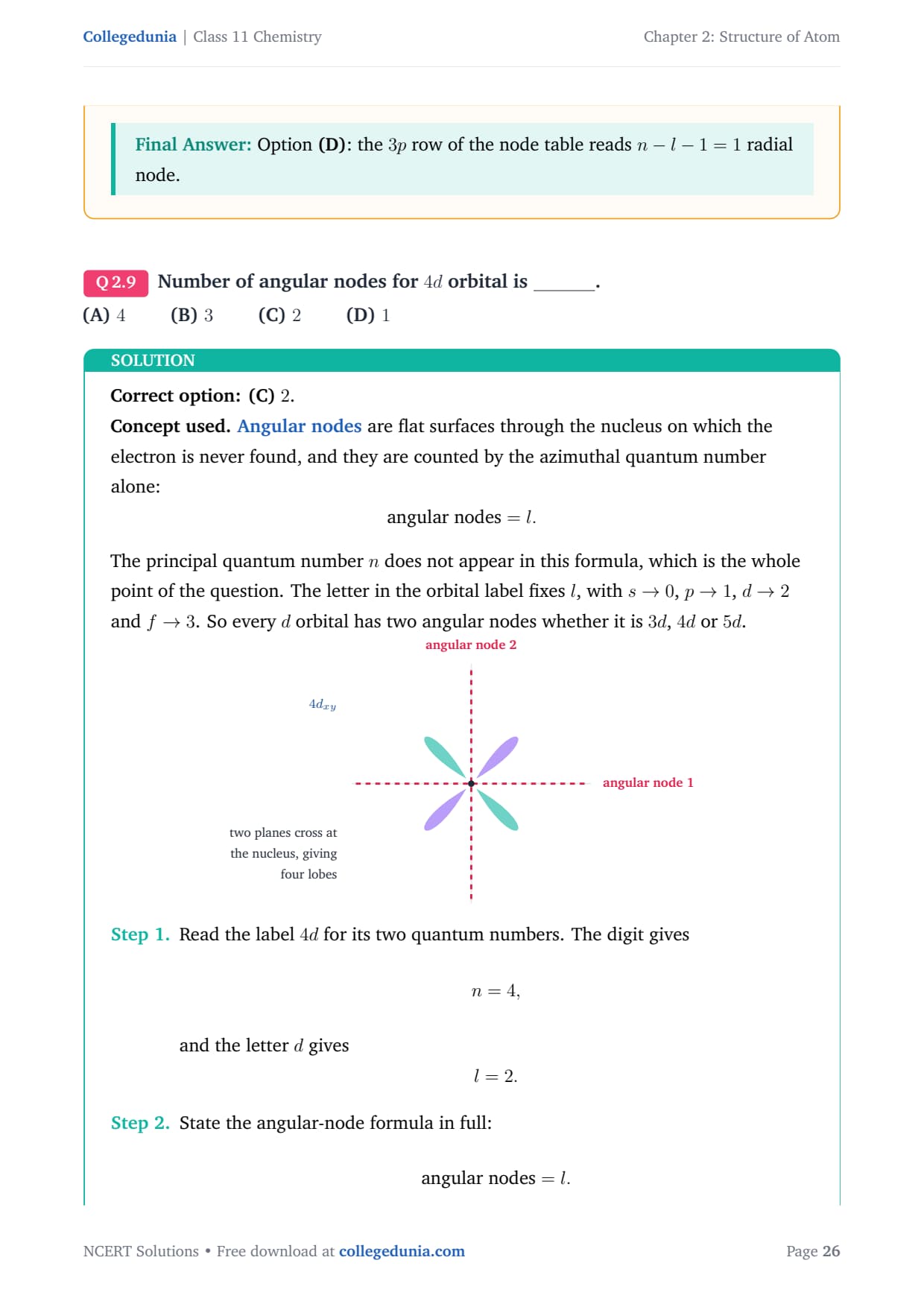
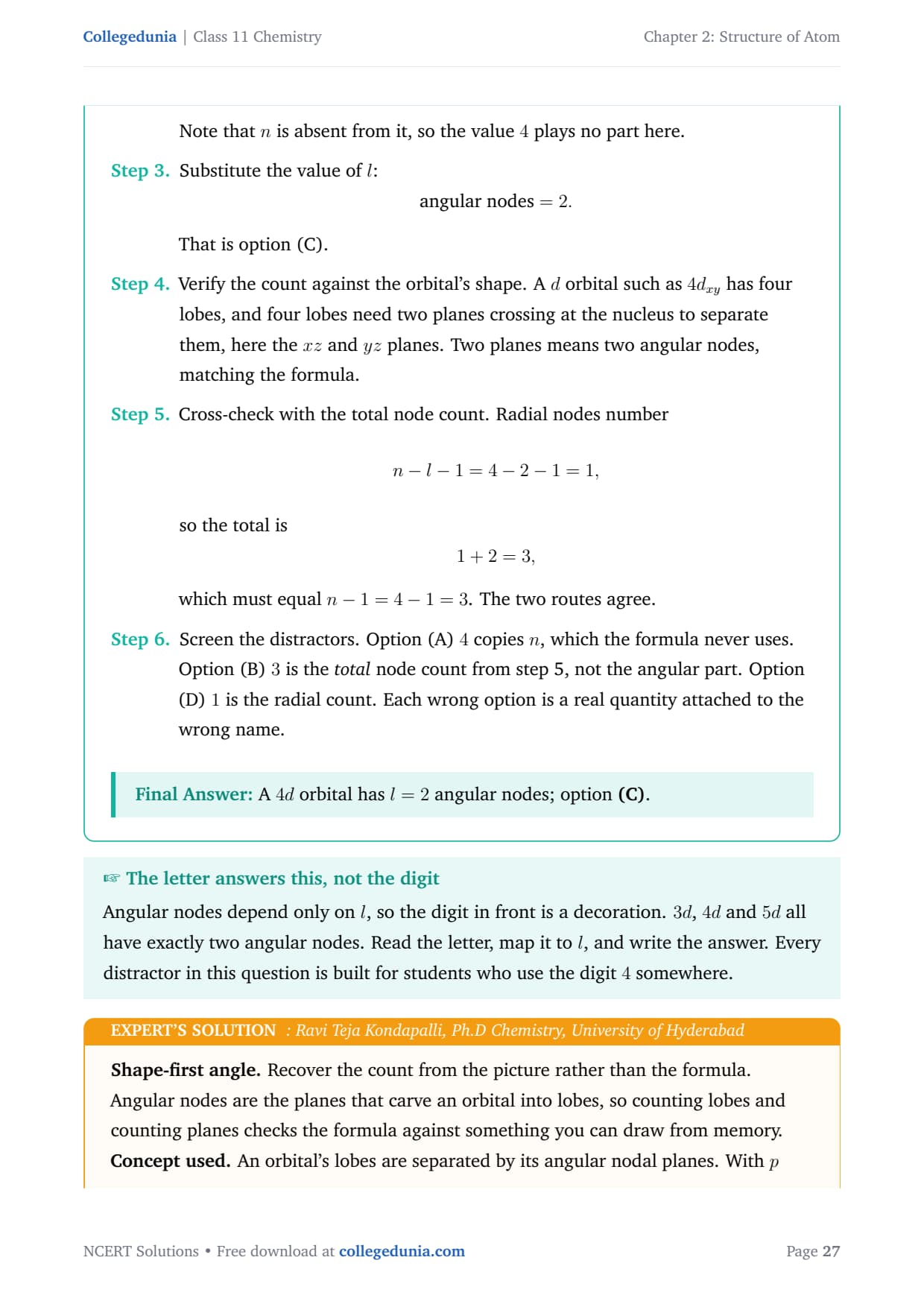
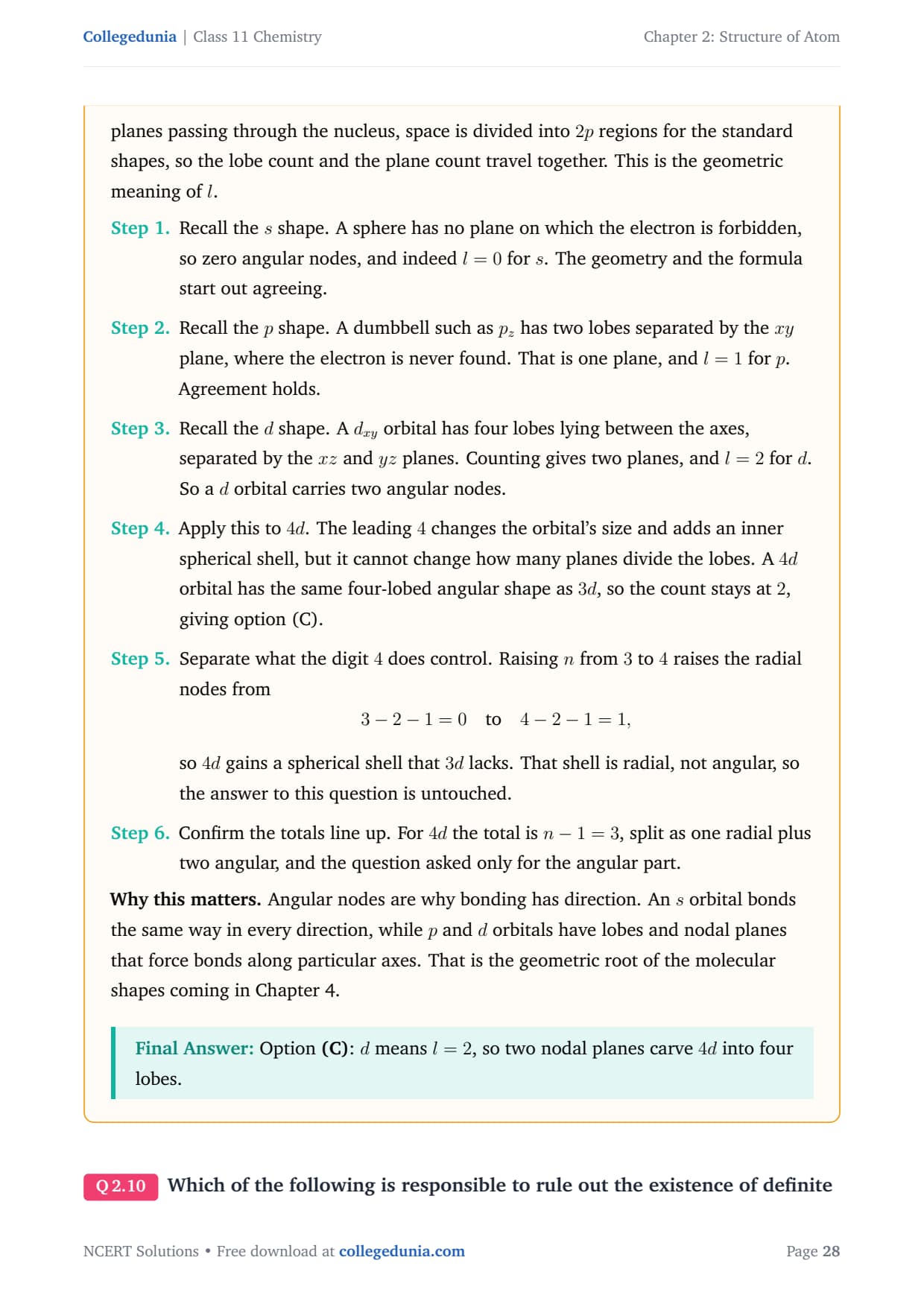
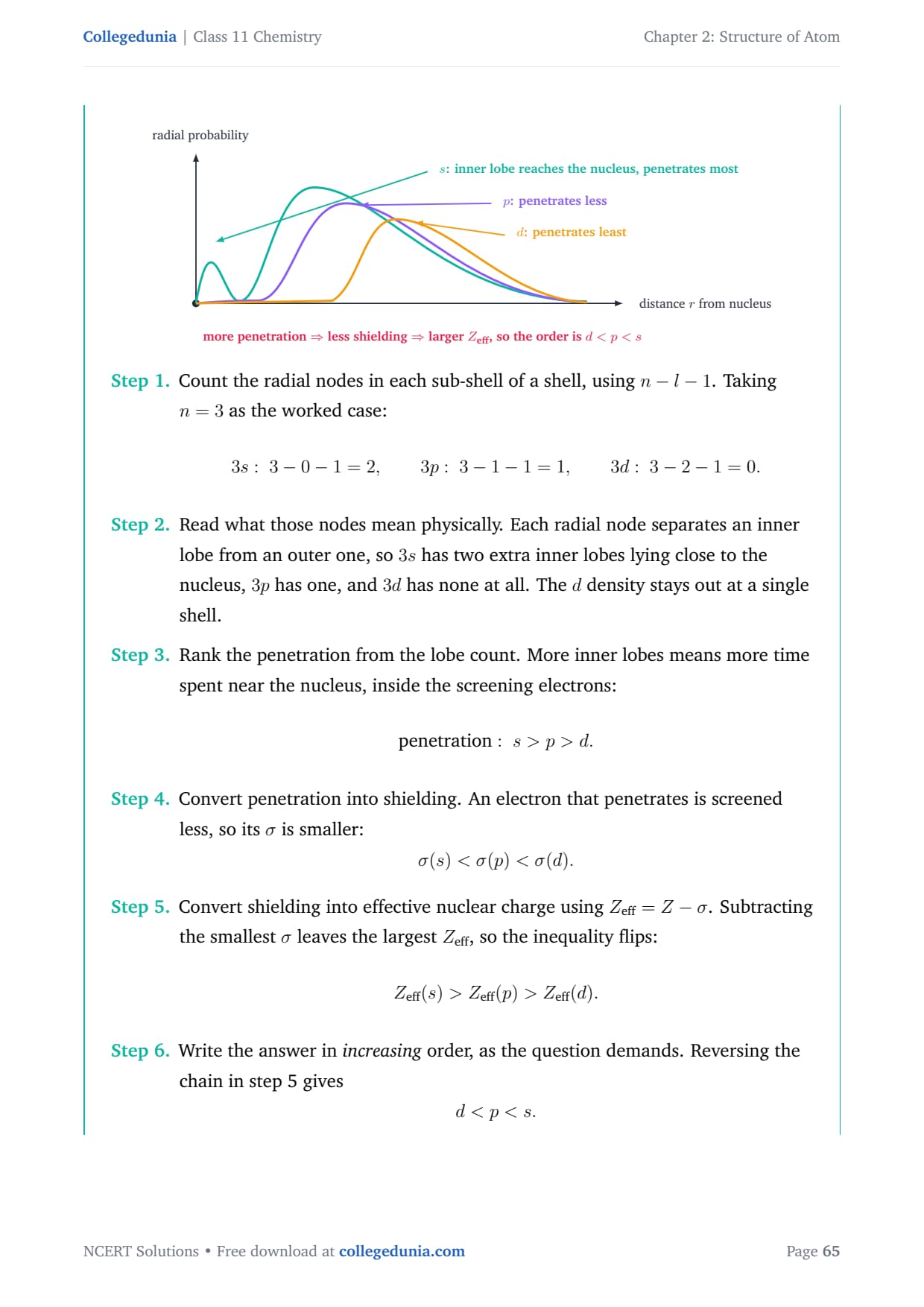
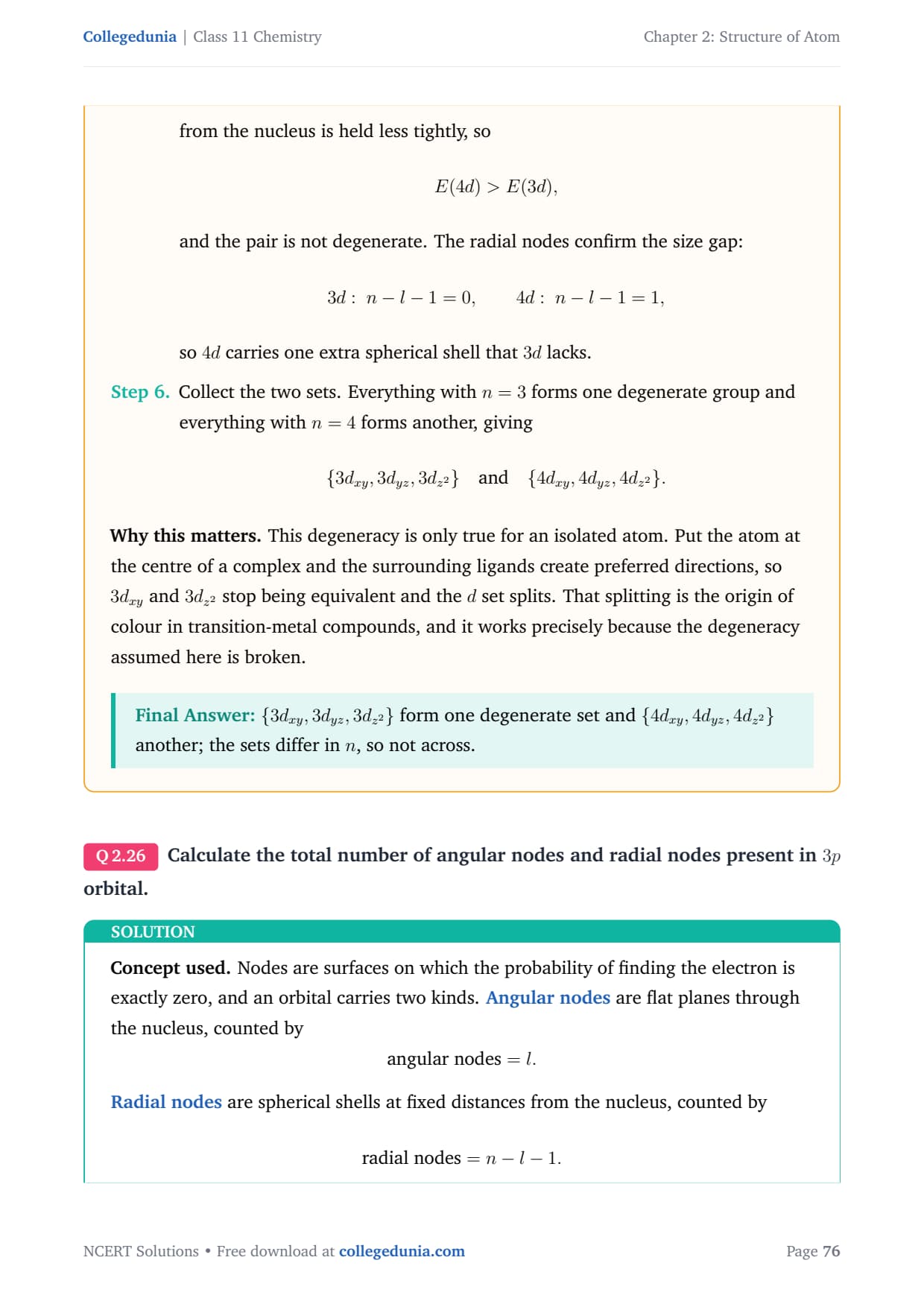
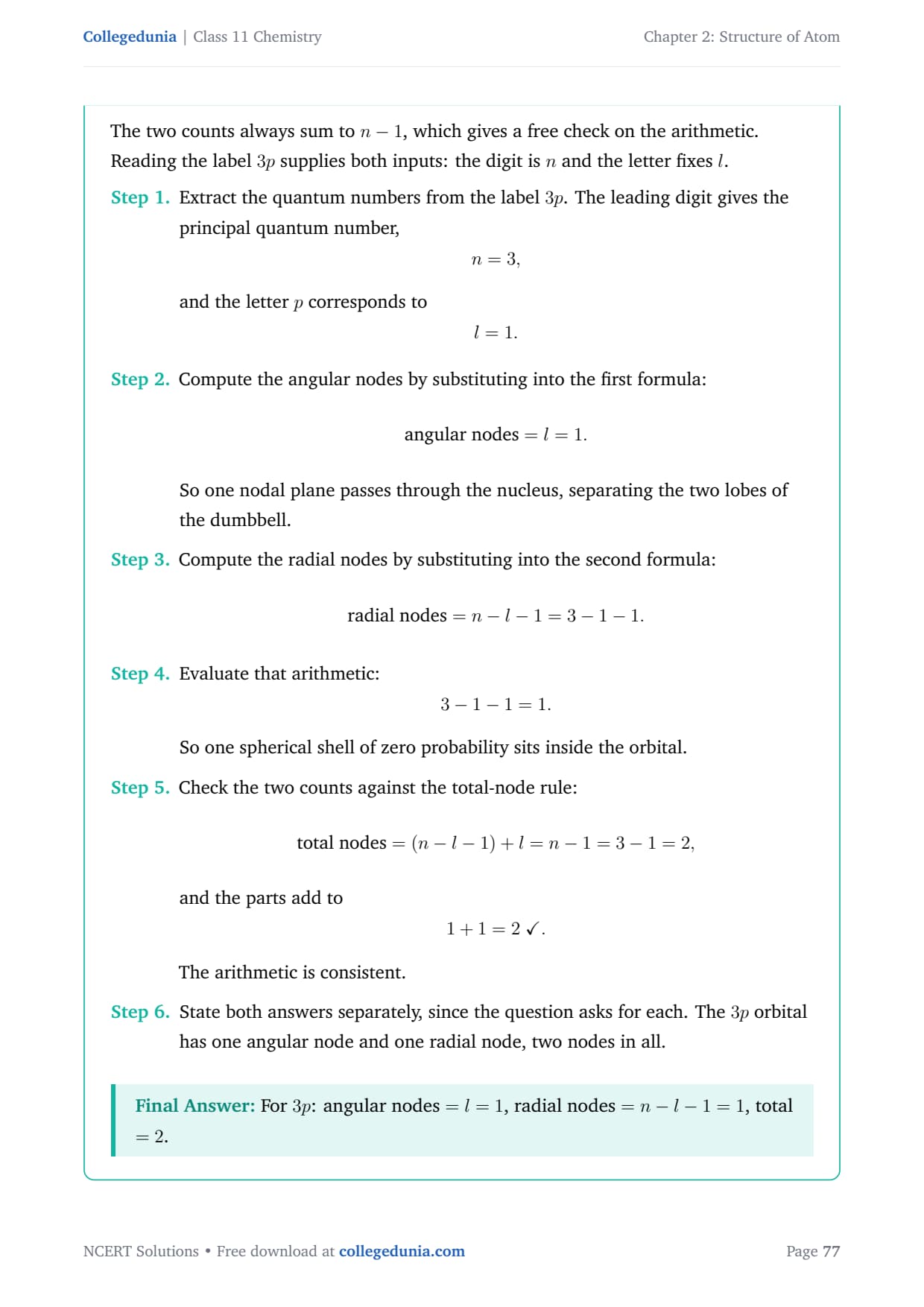
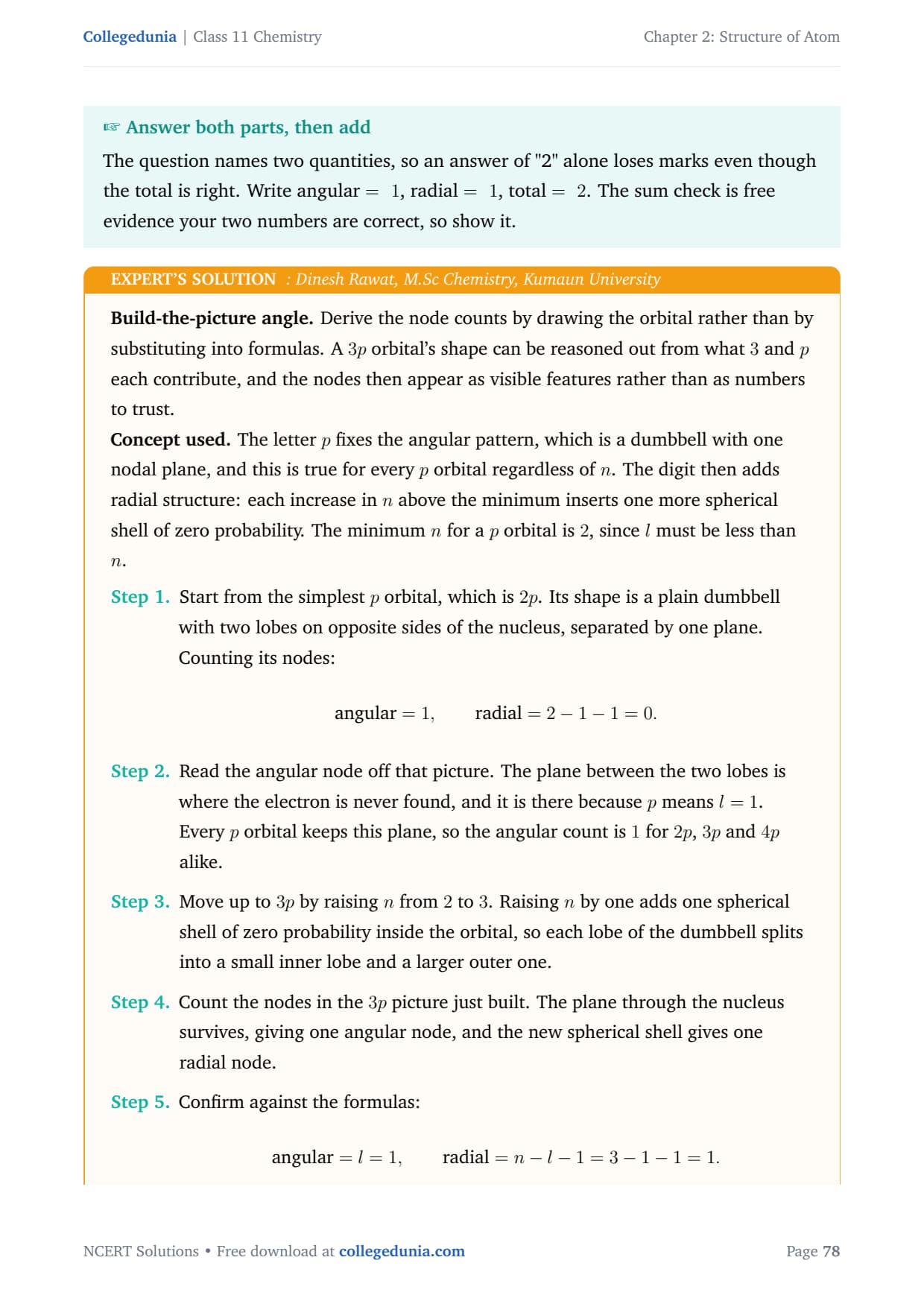
- Radial against total nodes: radial nodes are n - l - 1 and angular nodes are l. Only their sum is n - 1. Question 9 names one kind, so the total loses the mark.
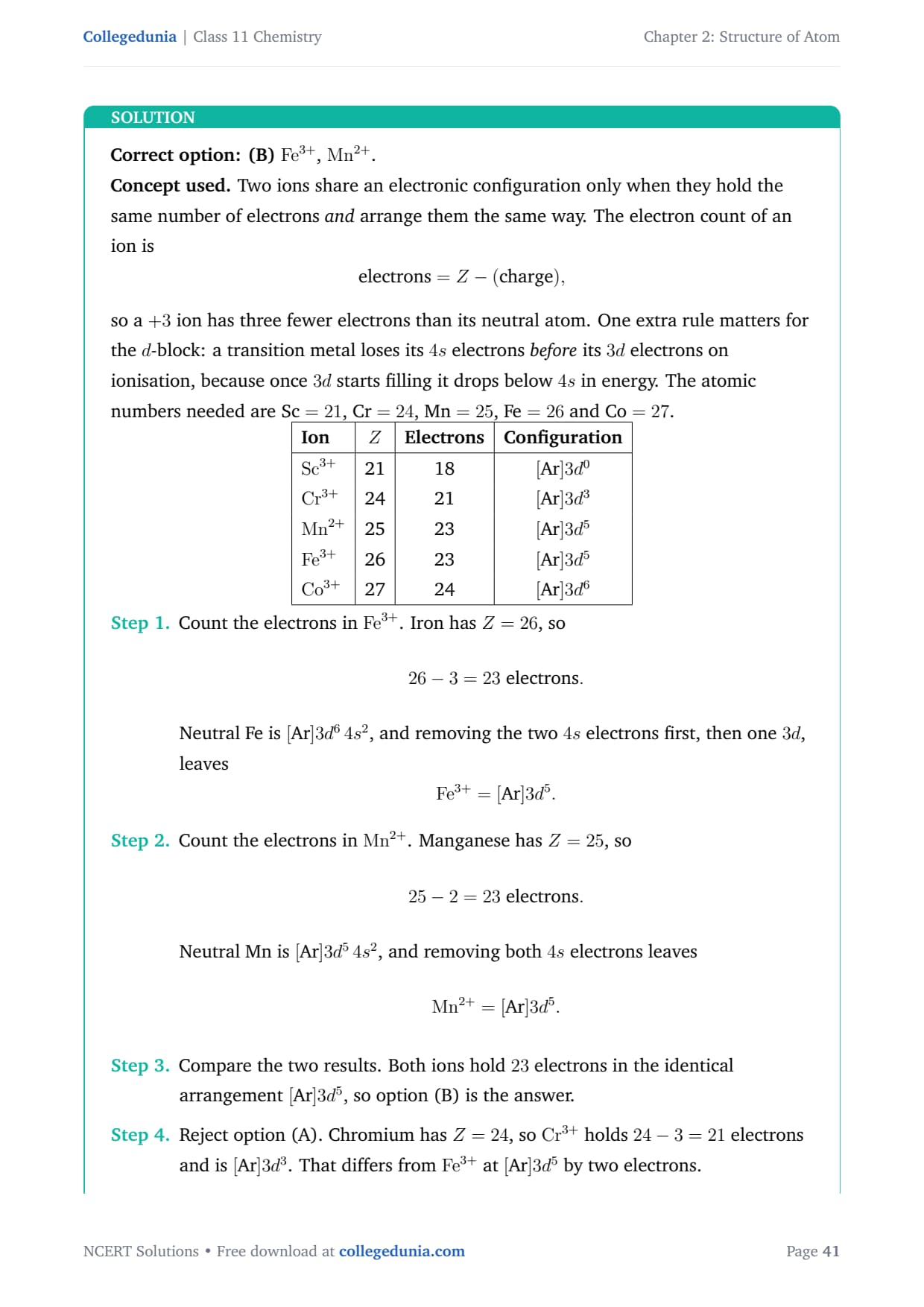
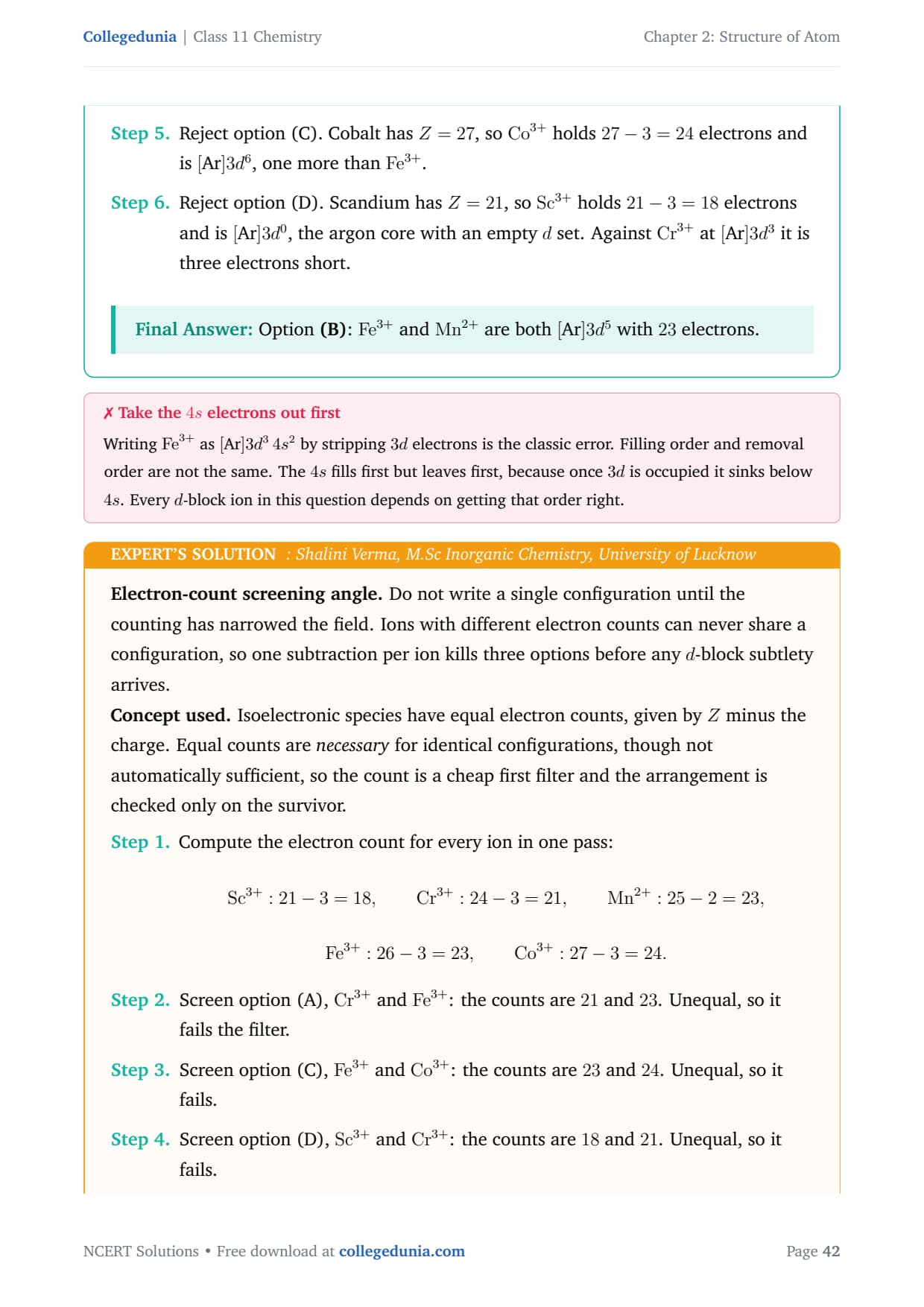
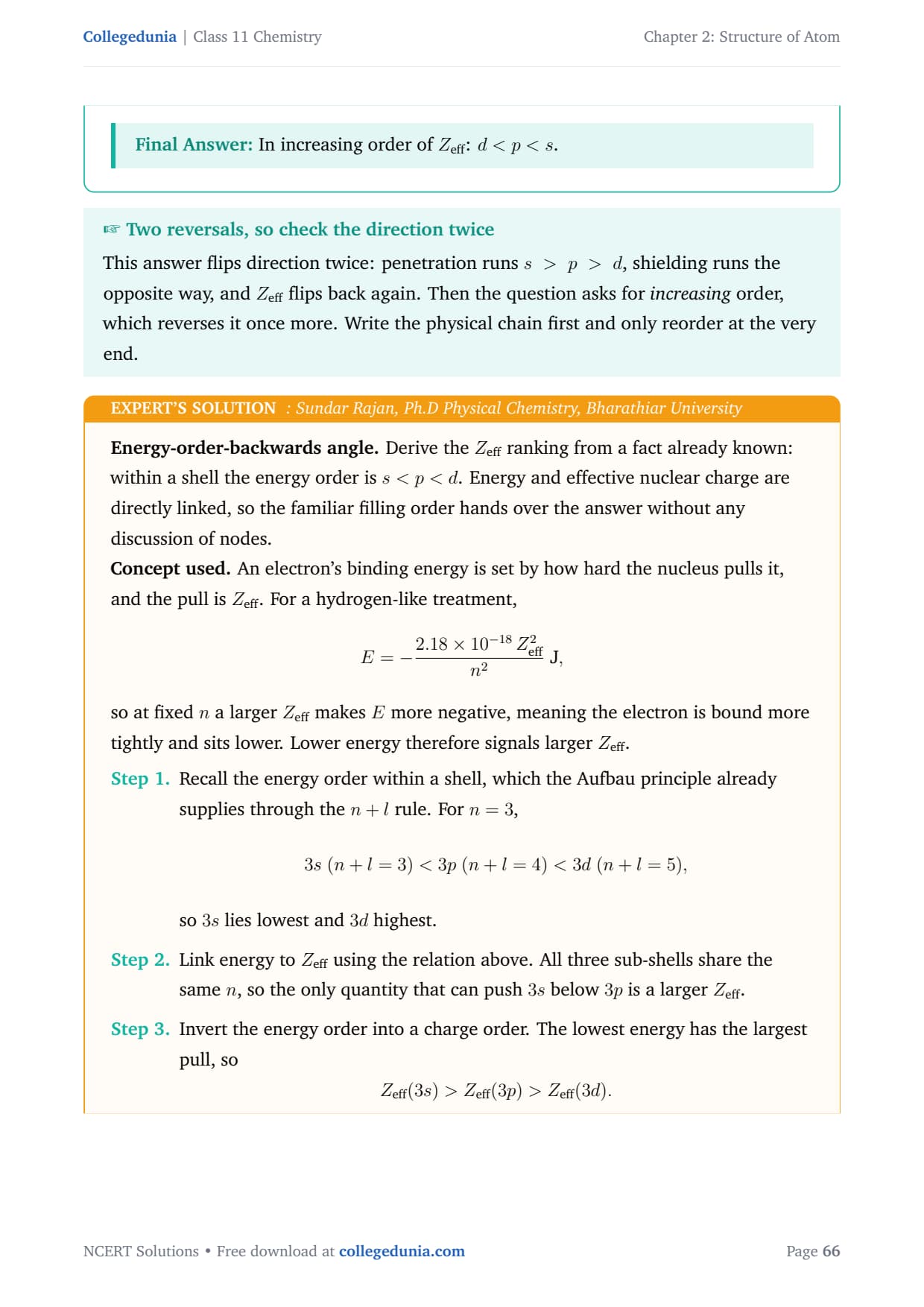
- Removal order for d-block ions: 4s fills first but leaves first. Writing Fe3+ as [Ar]3d34s2 is the classic slip in Question 14.
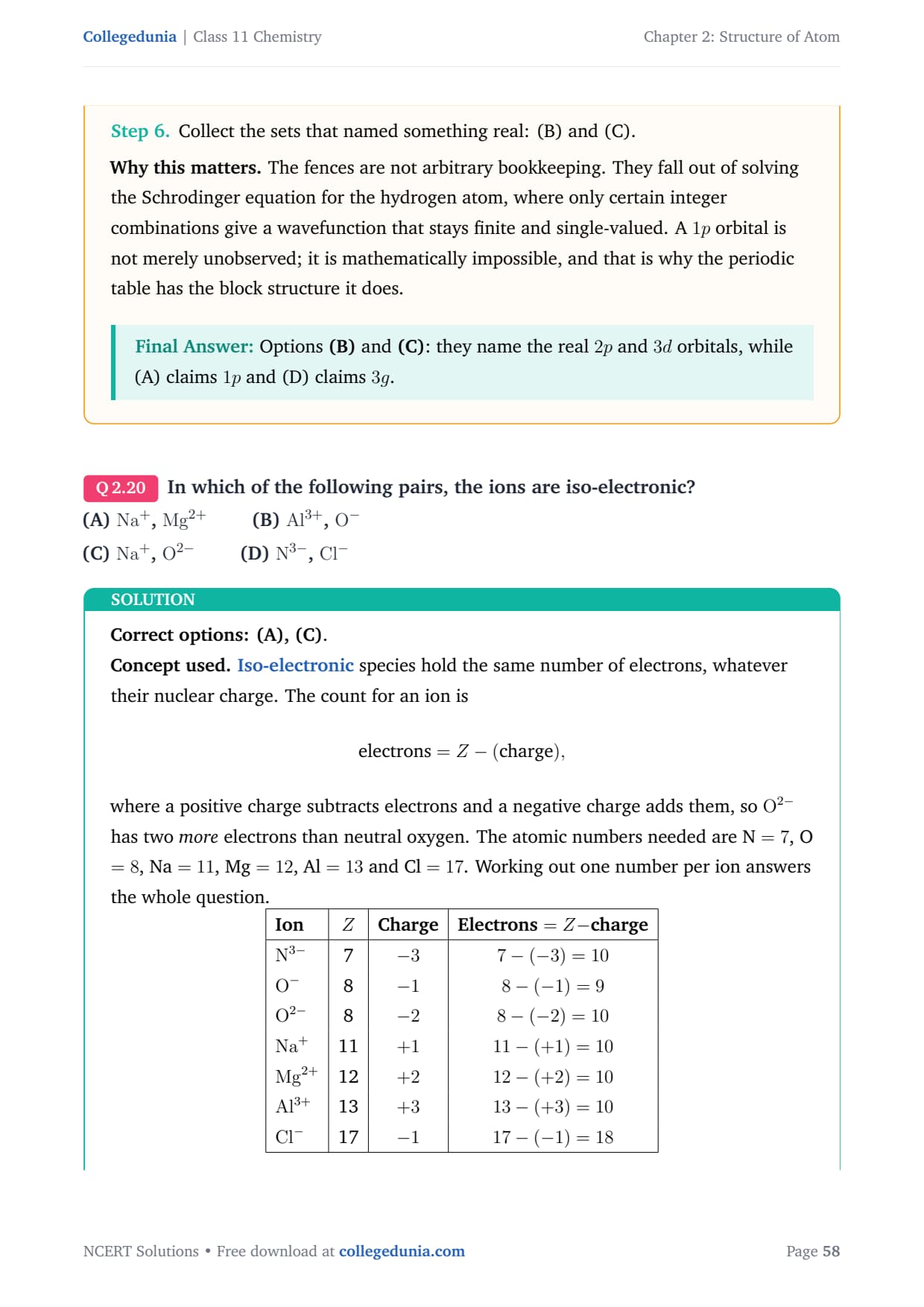
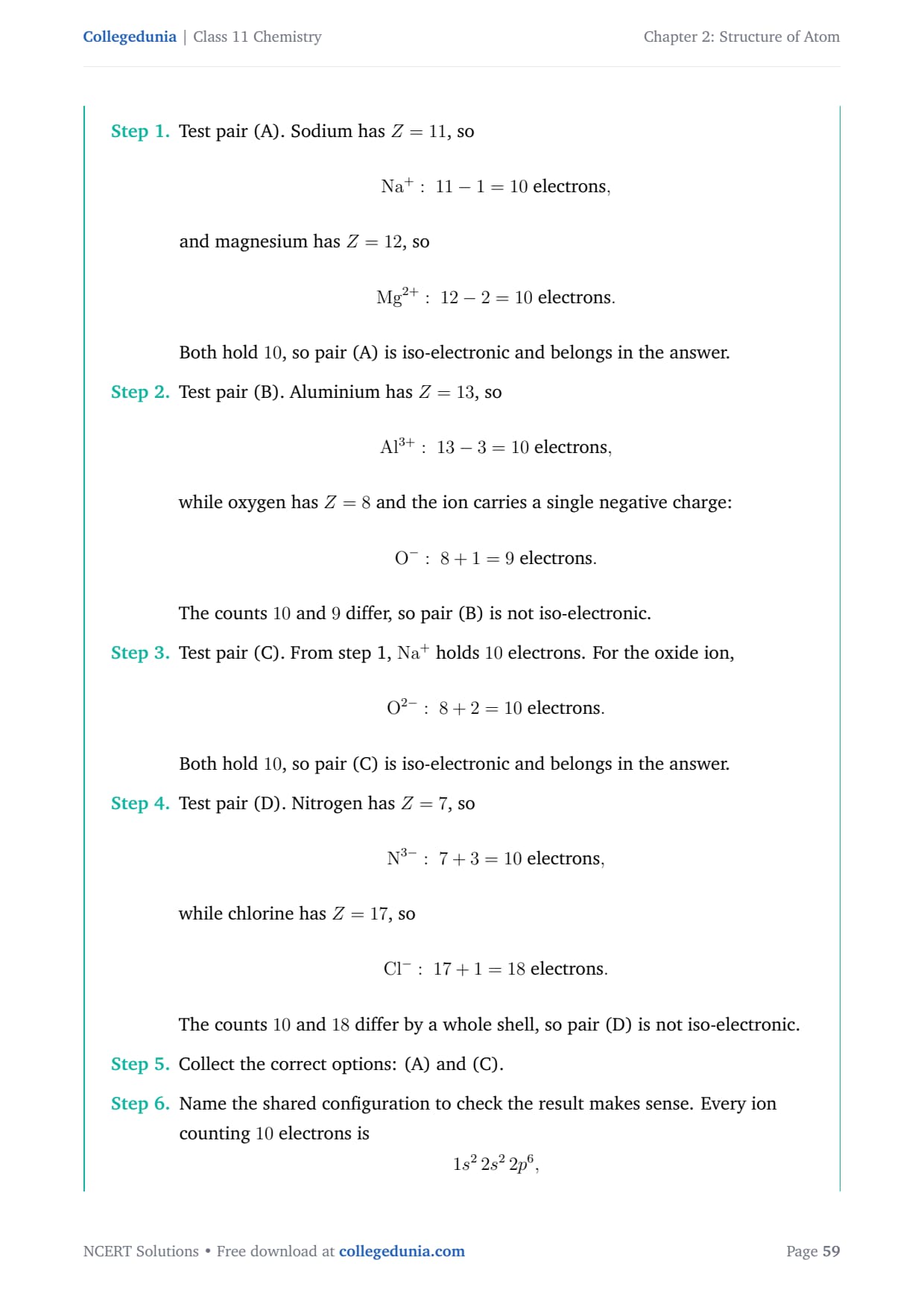
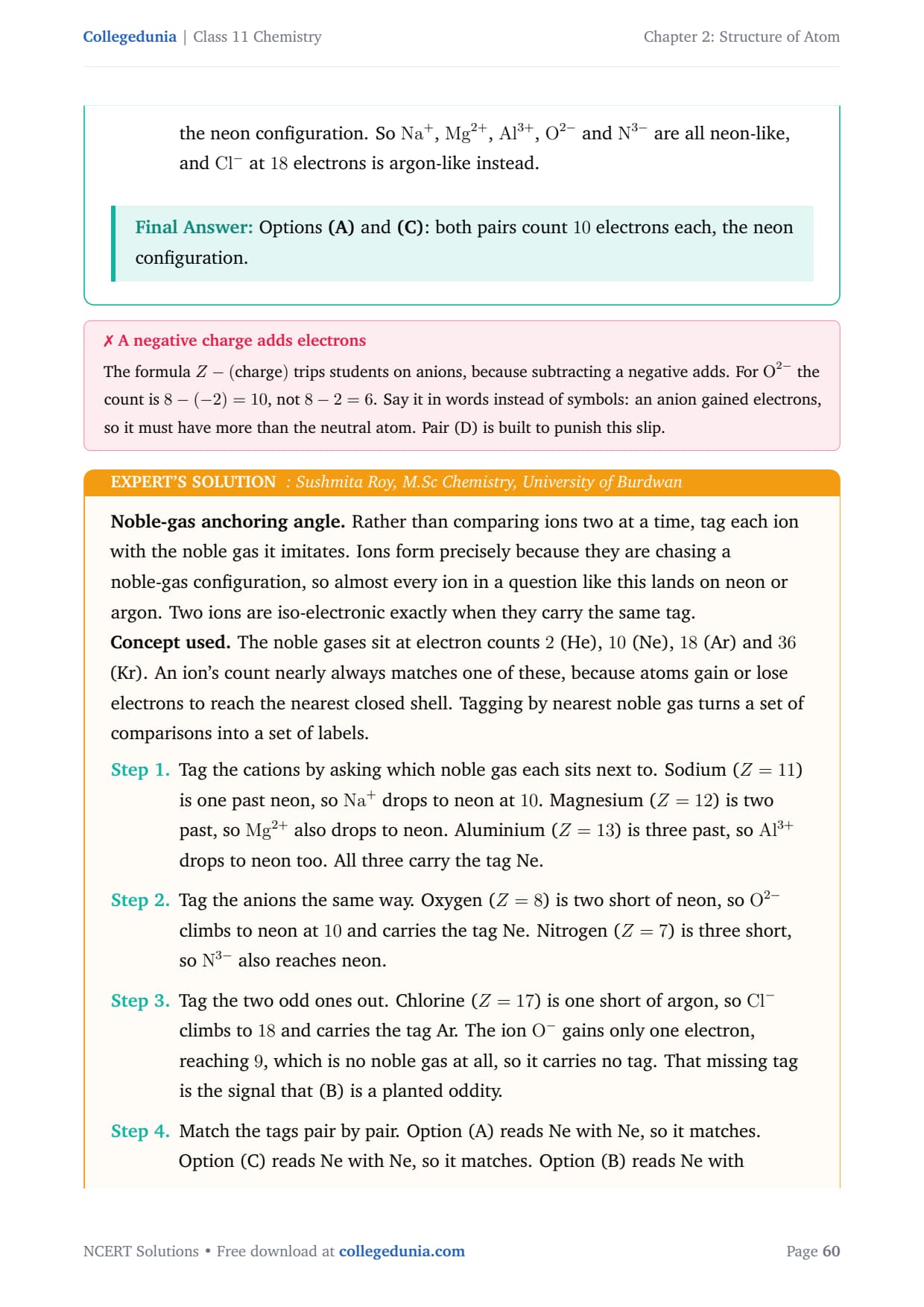
- Charge arithmetic on anions: for O2- the electron count is 8 - (-2) = 10, not 6. Question 20 builds an option around this.
How the Exemplar Steps Up from the Class 11 Chemistry Textbook
The textbook hands you a rule and asks you to apply it. The Exemplar asks you to pick the rule, and often to explain why the obvious one fails.
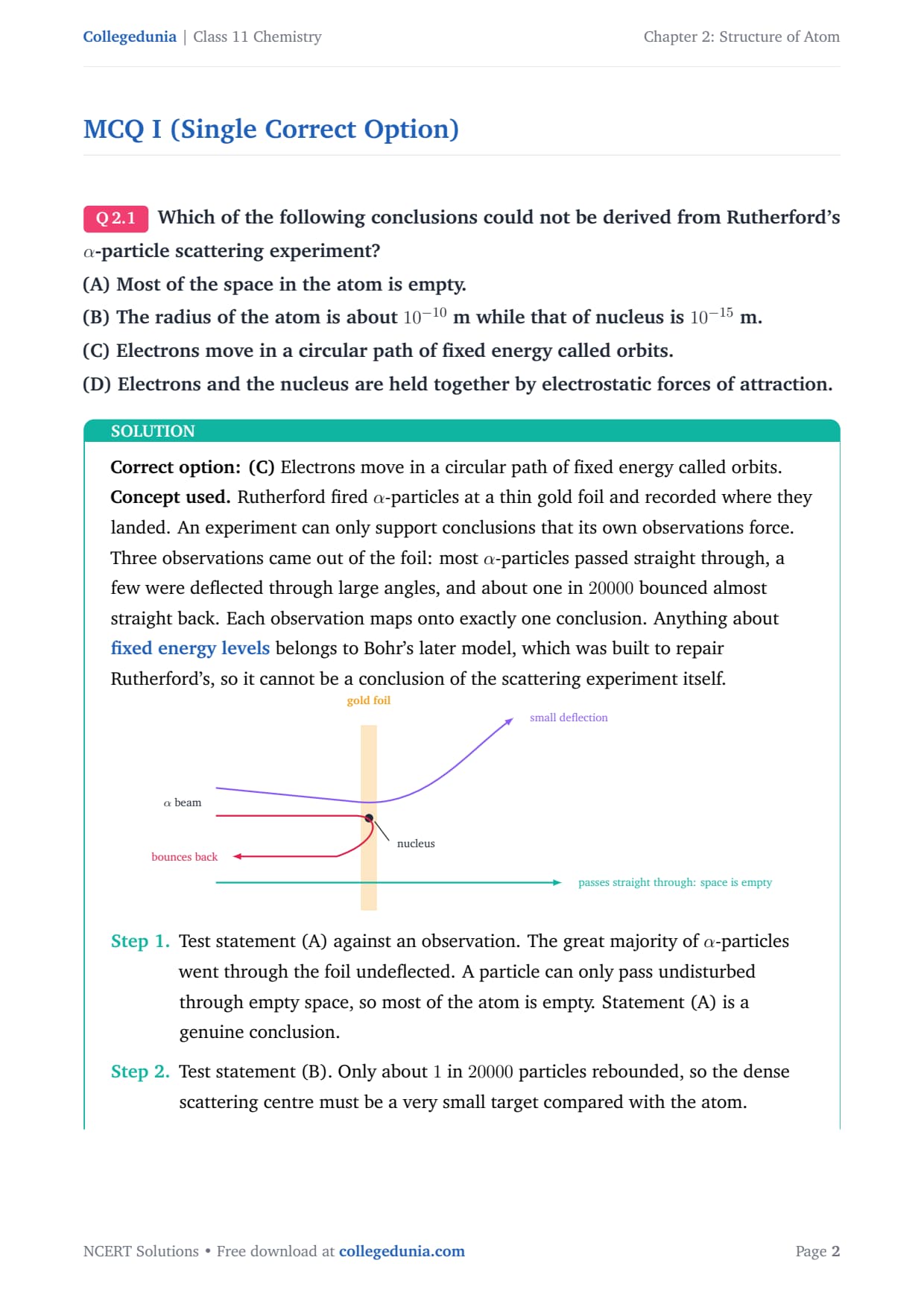
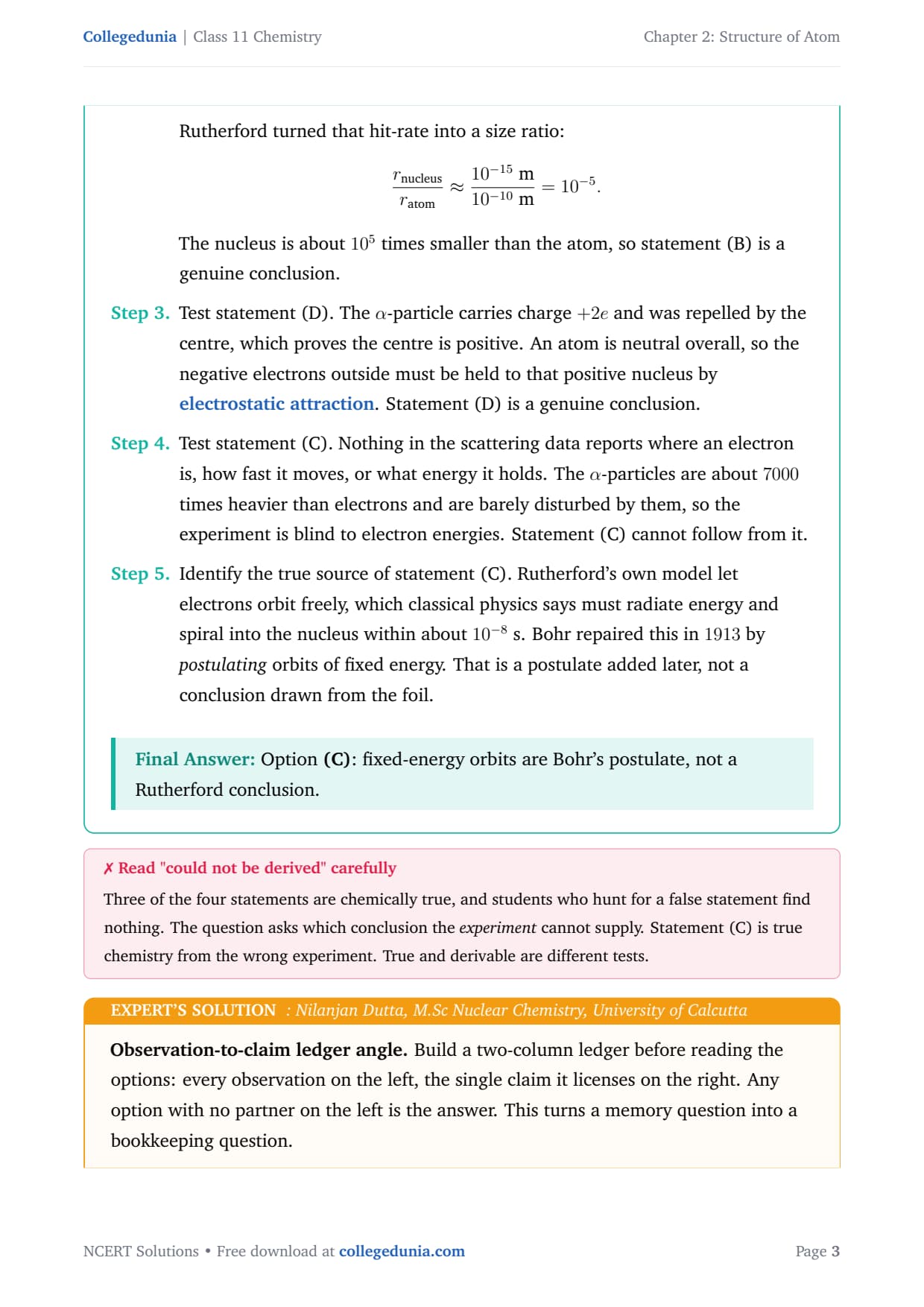
Question 1 shows this well. Three of its four statements are chemically true, so students hunting for a false one find nothing. It asks which conclusion the experiment cannot supply, not which statement is wrong. True and derivable are different tests, and no textbook question makes that distinction do real work.
How to Use These NCERT Exemplar Solutions for Boards, NEET and JEE
Attempt each question before you open the solution. The Exemplar rewards the attempt more than the reading.
- Boards: the 20 Short Answer questions match the 2 and 3 mark board pattern closely
- NEET: work the MCQ I set first, since NEET repeats configuration and Bohr questions at that level
- JEE Main: the Long Answer set on the photoelectric effect and hydrogen spectrum is the closest NCERT practice for multi-step numericals
Student Feedback
Students using Collegedunia's Class 11 Chemistry Exemplar Solutions told us the quantum number questions were the hardest part of this chapter. Around 7 in 10 said seeing the node formulas applied separately, rather than as one total, fixed a mistake they had repeated all year.
Other Resources for Class 11 Chemistry Structure of Atom
Collegedunia has the full set of study material for this chapter. Use the Notes for a first read, then the Exemplar once quantum numbers feel steady.
Also Check:
- NCERT Solutions for Class 11 Chemistry Chapter 2
- Class 11 Chemistry Chapter 2 Notes
- Class 11 Chemistry Chapter 2 NCERT Book PDF
- Class 11 Chemistry Chapter 2 Exemplar Questions with Solutions
NCERT Exemplar Solutions for Other Class 11 Chemistry Chapters
Each chapter below has the same step-by-step treatment and a free PDF.
Structure of Atom Class 11 NCERT Exemplar Solutions FAQs
Ques. How many questions are there in the Class 11 Chemistry Structure of Atom Exemplar?
Ans. Chapter 2 has 55 questions. They are split into 16 MCQ I, 5 MCQ II, 20 Short Answer, 6 Matching Type, 3 Assertion and Reason and 5 Long Answer questions. All 55 are solved in the free 178-page PDF on this page.
Ques. Is the printed NCERT Exemplar answer key for this chapter correct?
Ans. Almost. Three questions carry printing errors. Question 54 prints the frequency as 4.606 × 10¹⁶ Hz when the key's own energy divided by Planck's constant gives 4.606 × 10¹⁴ Hz, and Question 33 prints a wavelength in m-1 instead of metres. Question 47 also leaves one option unused, which is intended rather than an error. All are explained on this page.
Ques. What is the frequency of the n=3 to n=2 line in hydrogen?
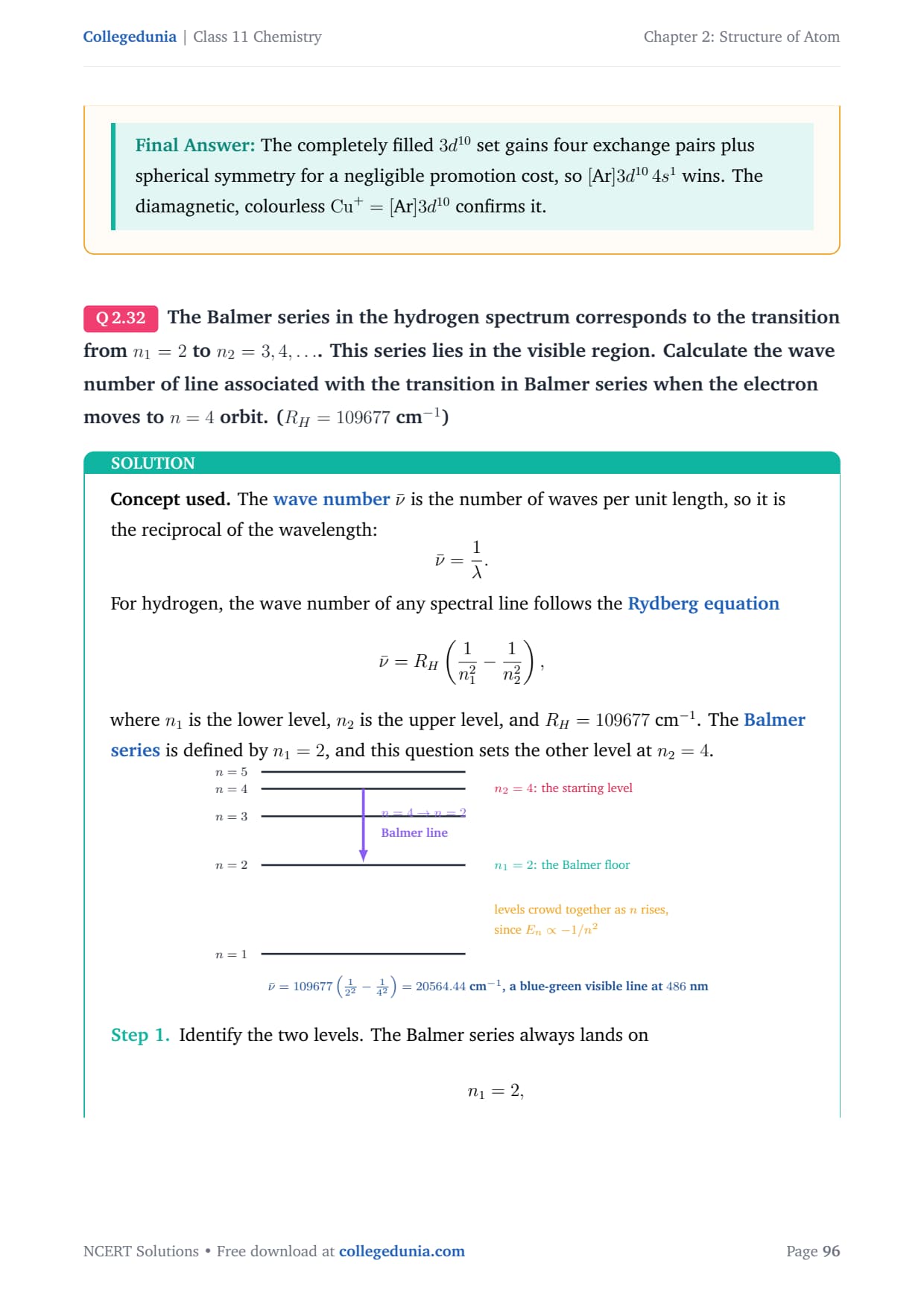
Ans. It is 4.57 × 10¹⁴ Hz. Using En = -2.18 × 10⁻¹⁸/n2 J, the energy gap is 3.03 × 10⁻¹⁹ J, and dividing by Planck's constant gives the frequency. The matching wavelength is 656 nm, the red line of the Balmer series seen in every hydrogen discharge tube.
Ques. How many radial and angular nodes does an orbital have?
Ans. Radial nodes are n - l - 1 and angular nodes are l, where n is the principal quantum number and l the azimuthal one. Their sum is always n - 1. A 3p orbital therefore has 1 radial node and 1 angular node. The Exemplar asks for one kind at a time, so applying the total formula loses the mark.
Ques. Why is the electronic configuration of chromium 3d54s1 and not 3d44s2?
Ans. Half-filled and fully filled subshells are extra stable because of exchange energy. Moving one 4s electron into 3d turns 3d44s2 into 3d54s1, giving a half-filled d subshell alongside a half-filled s orbital. Copper does the same to reach 3d104s1. Question 47 tests both exceptions.



Comments