




NCERT Exemplar Solutions for Class 11 Biology Chapter 9 Biomolecules solve all 31 questions from the Exemplar book. Every MCQ, Very Short Answer, Short Answer and Long Answer problem is answered step by step in the free 54-page PDF, updated for the 2026-27 syllabus.
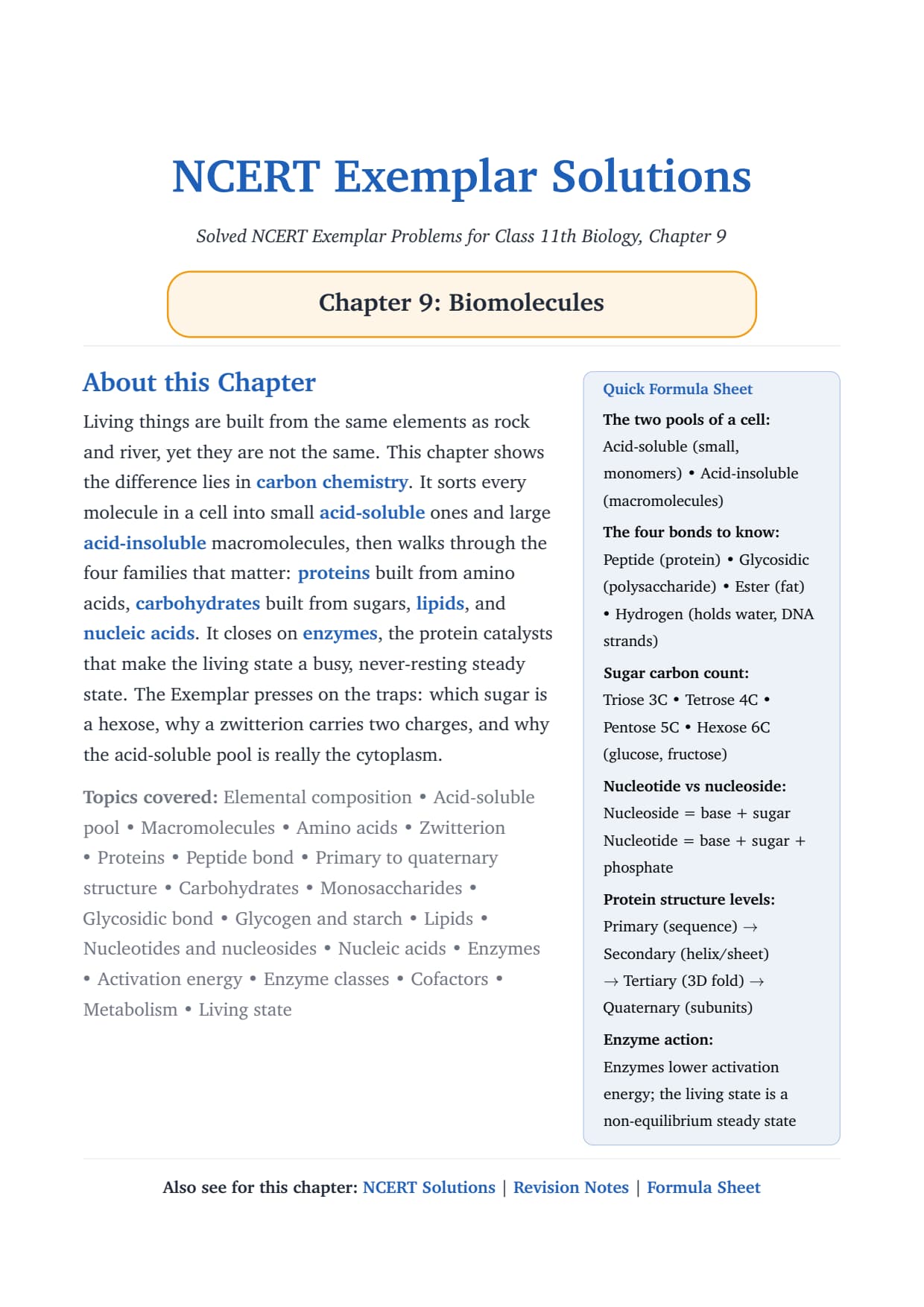
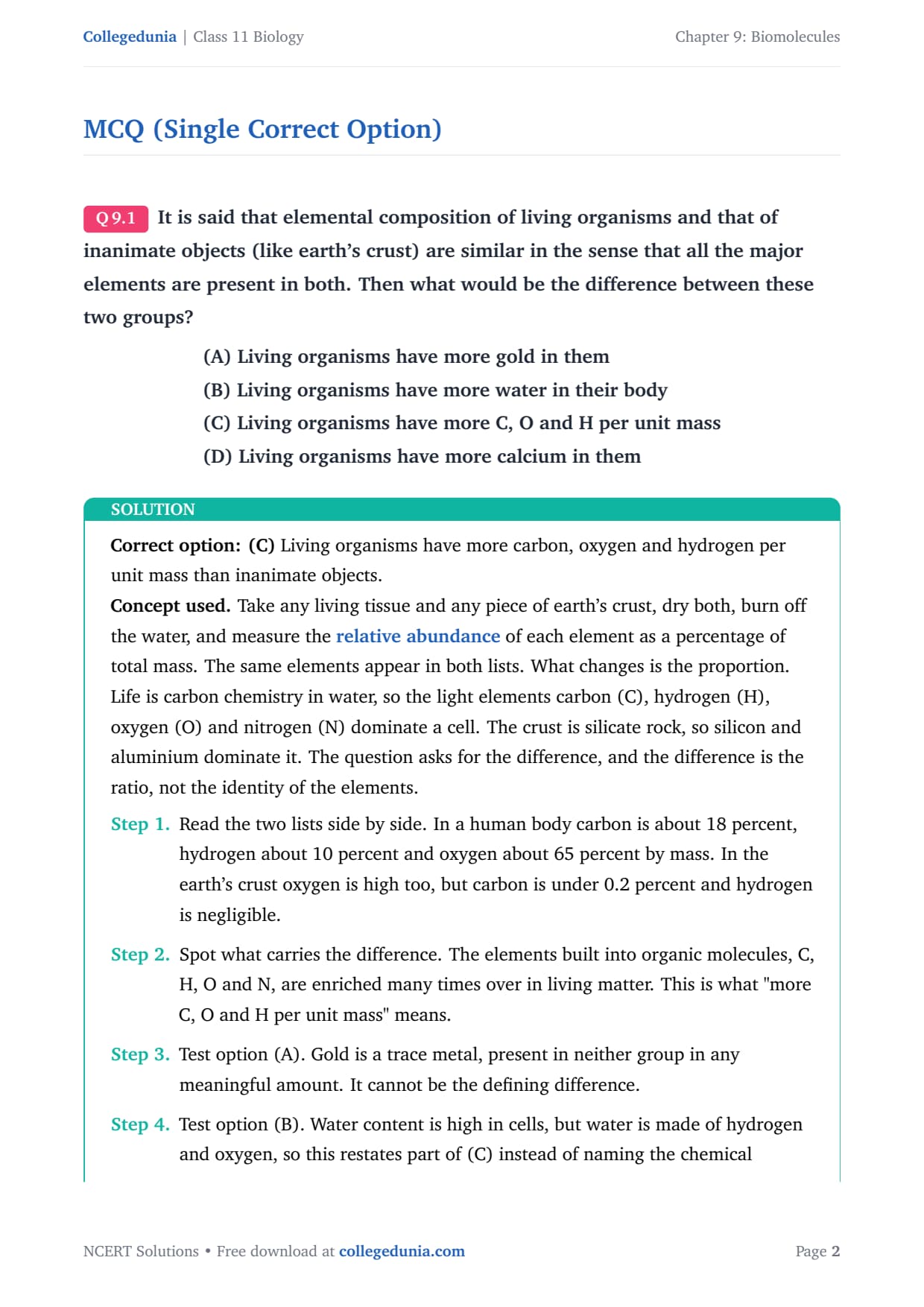
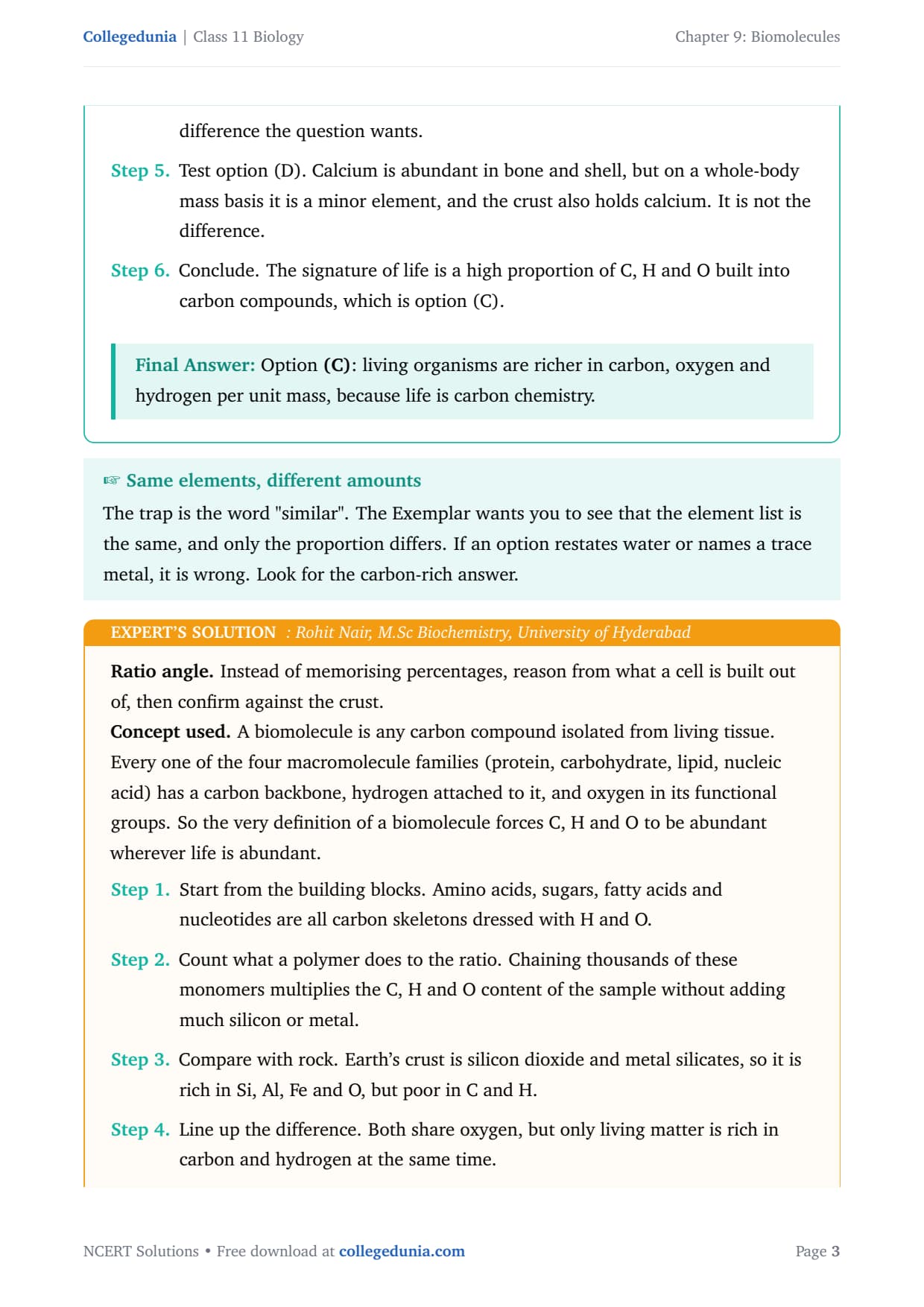
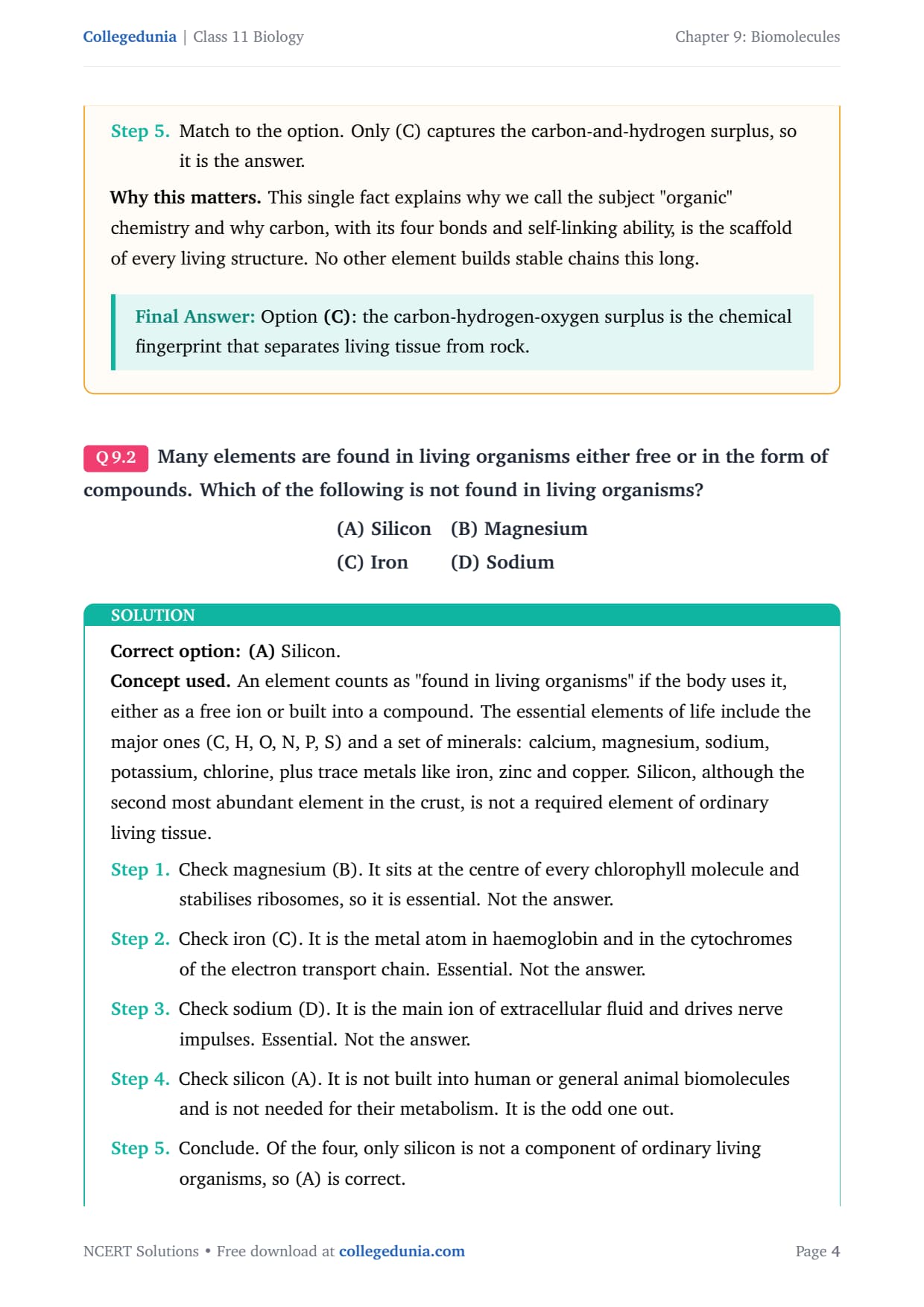
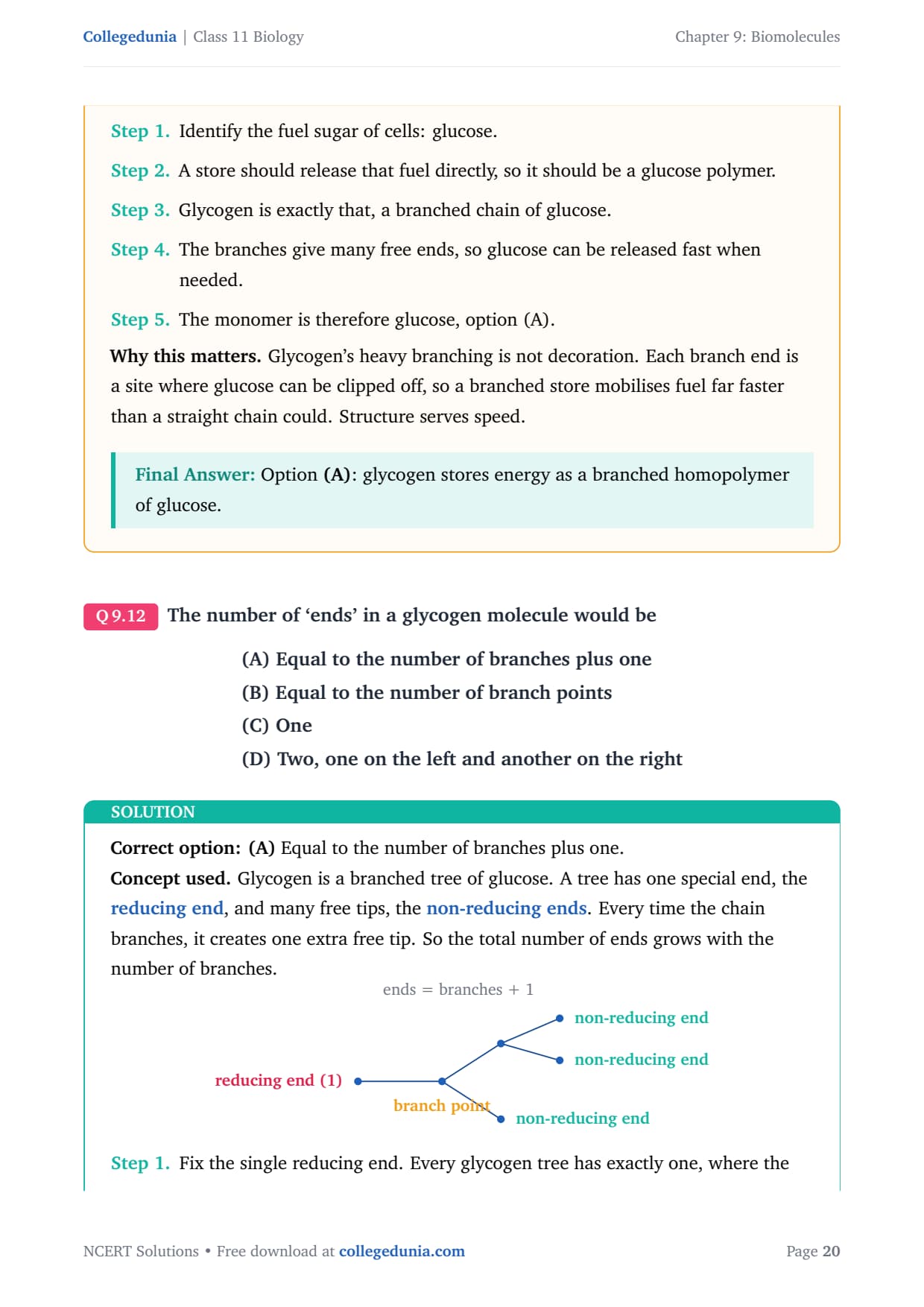
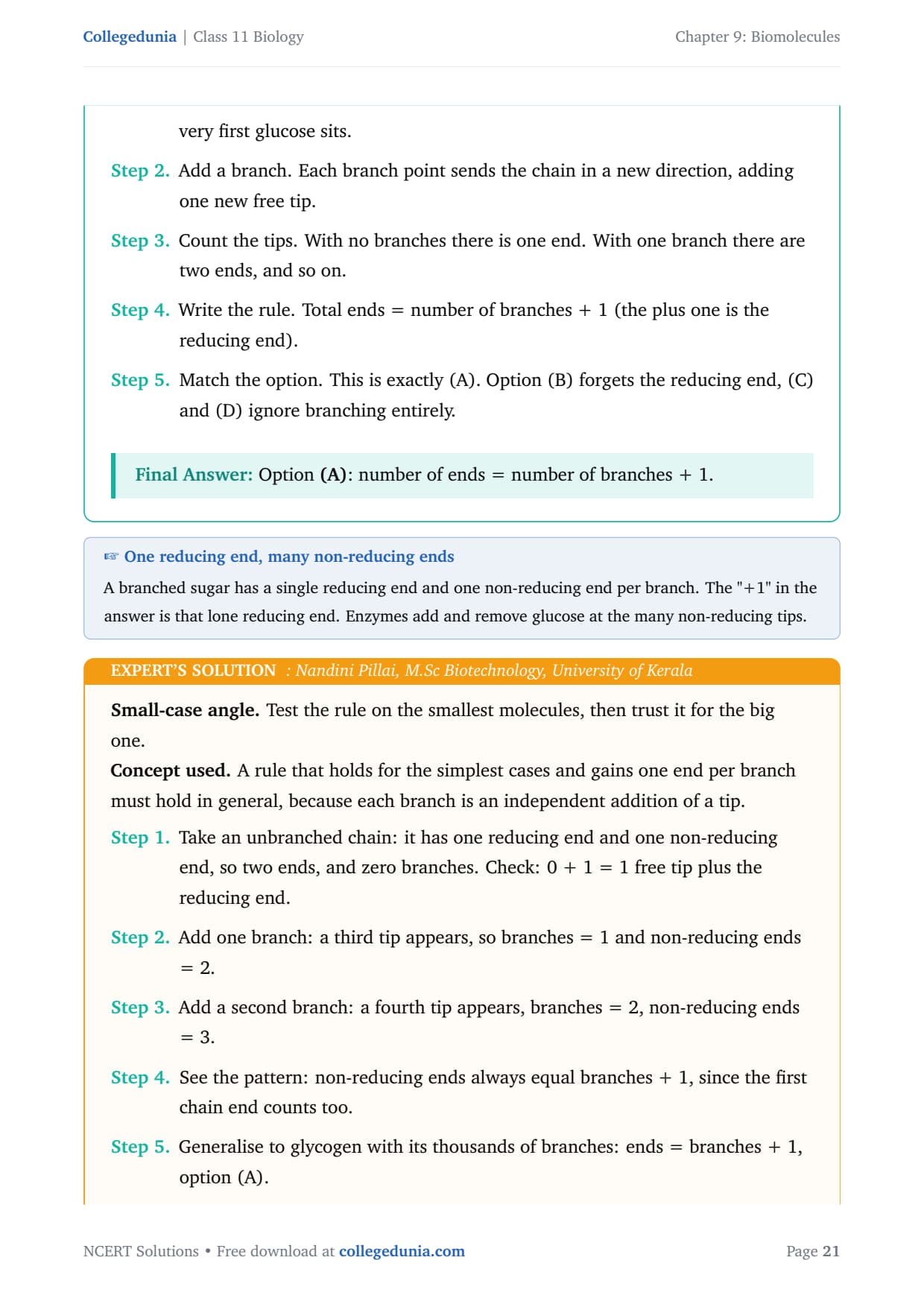
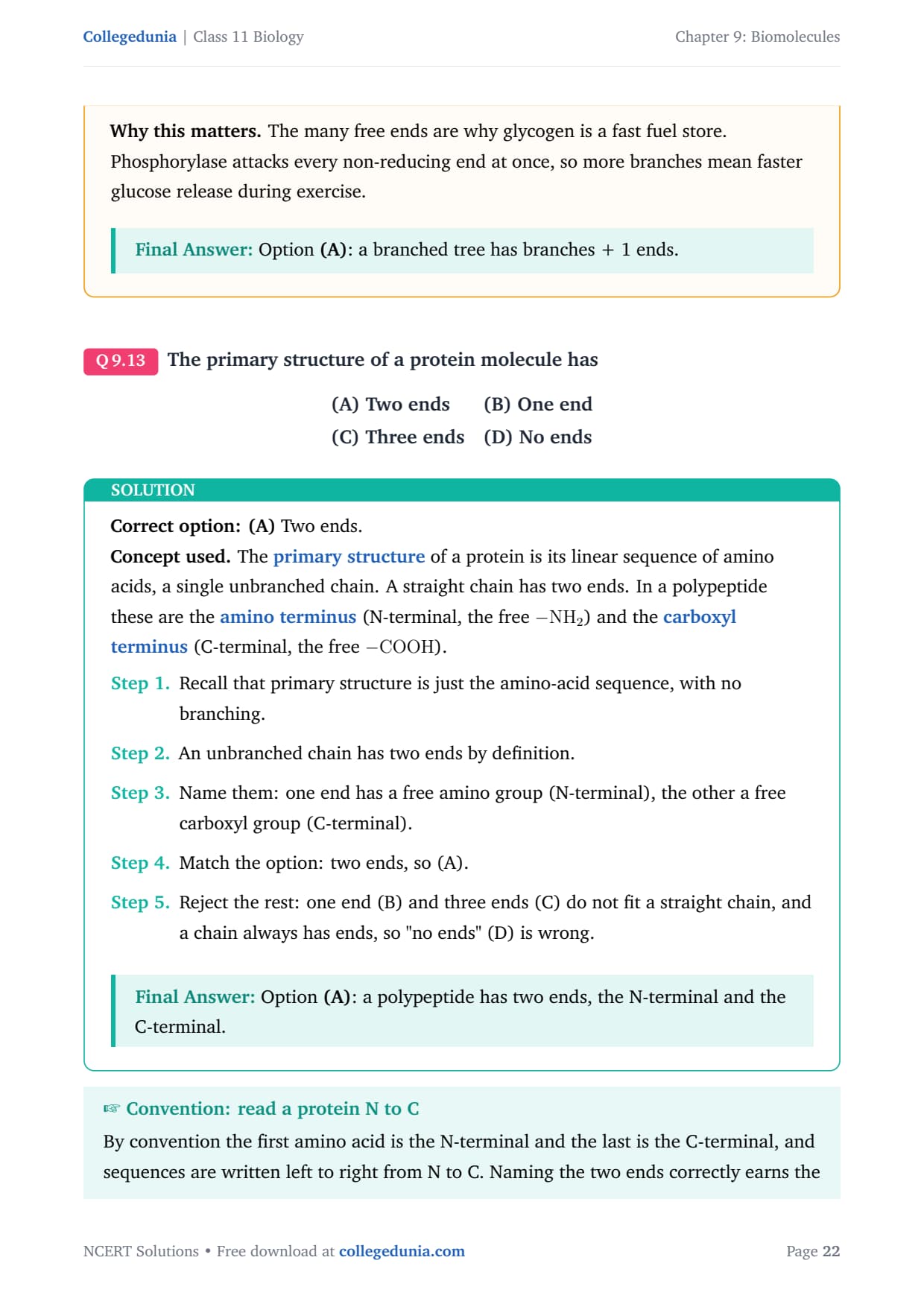
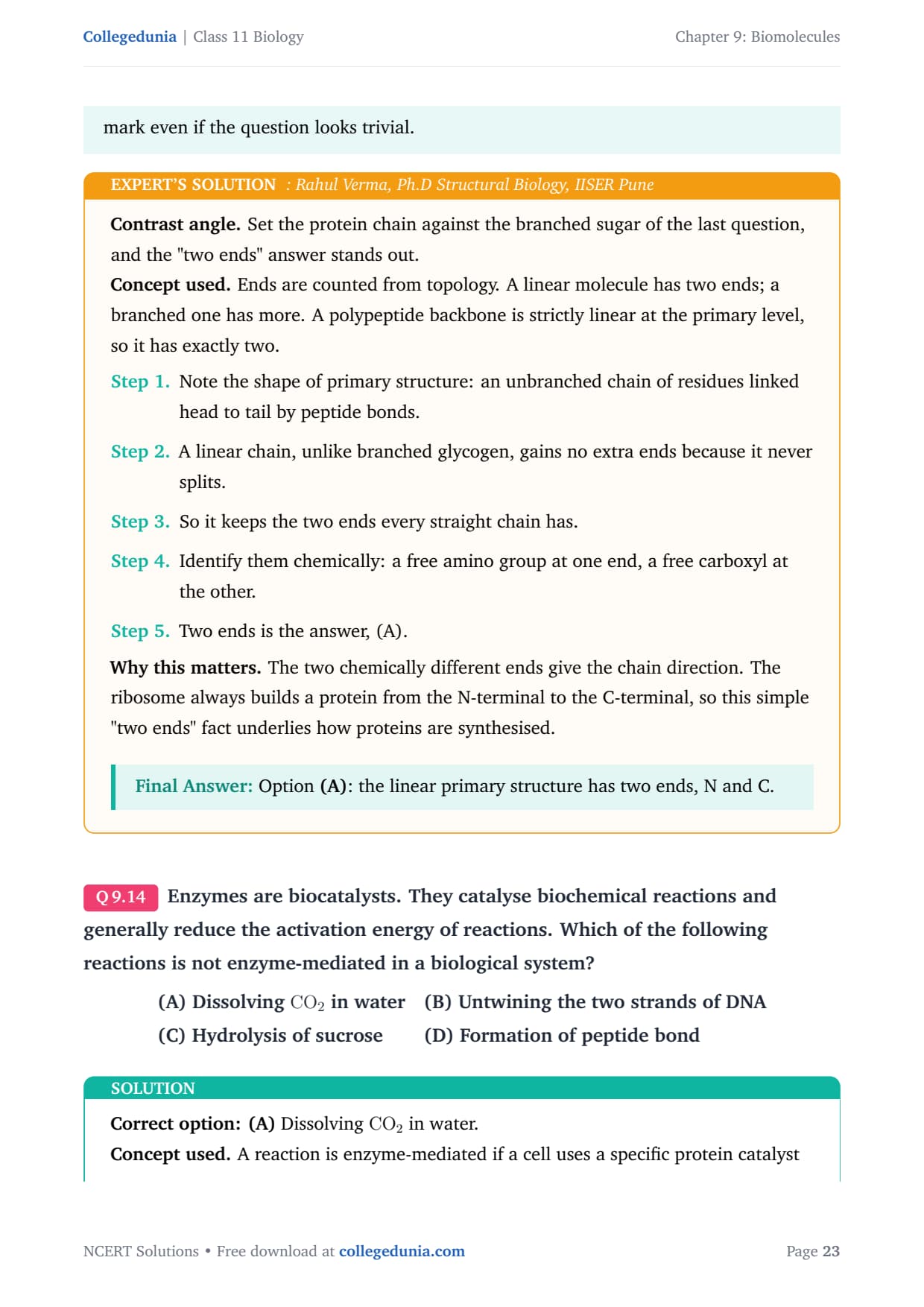
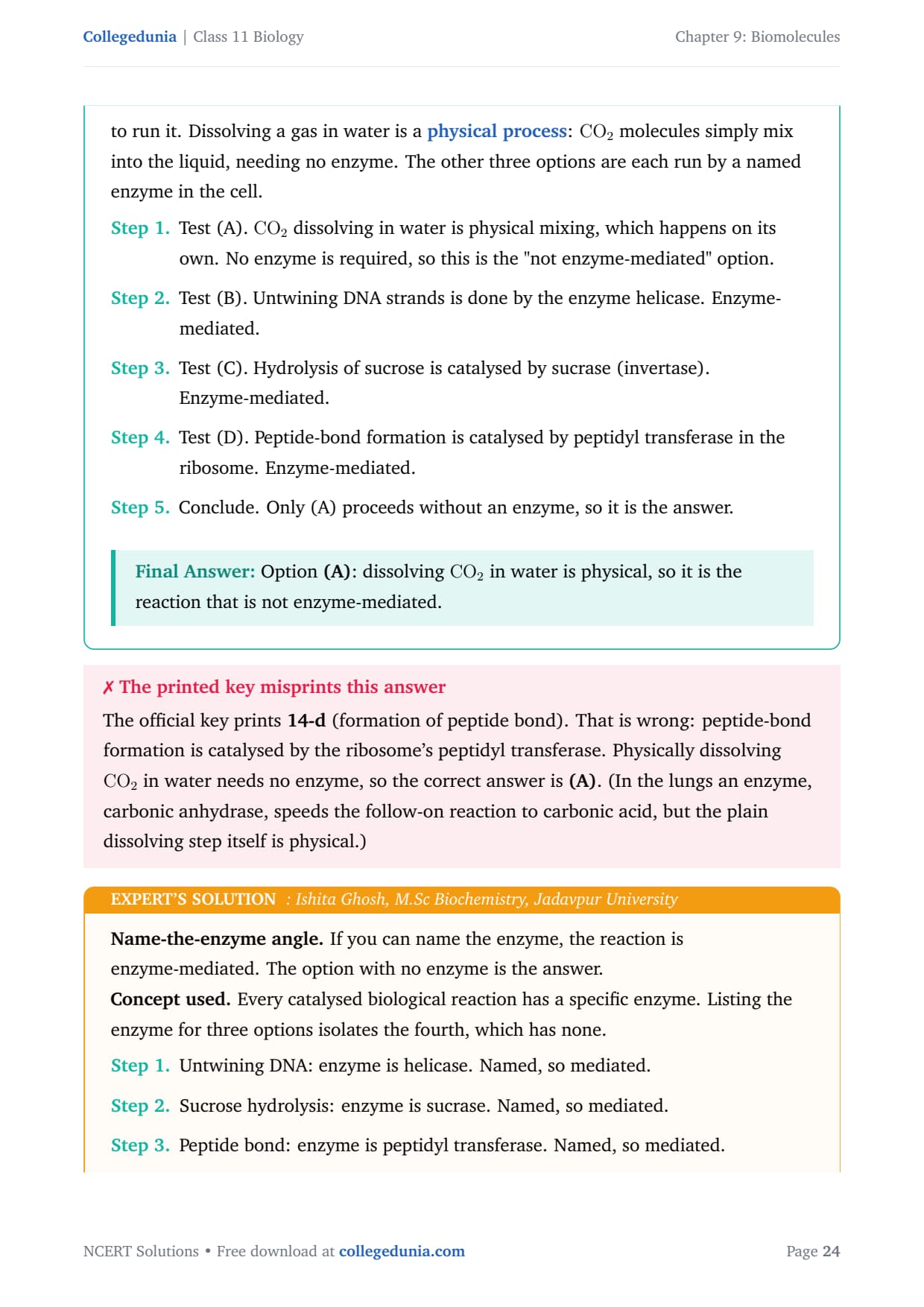
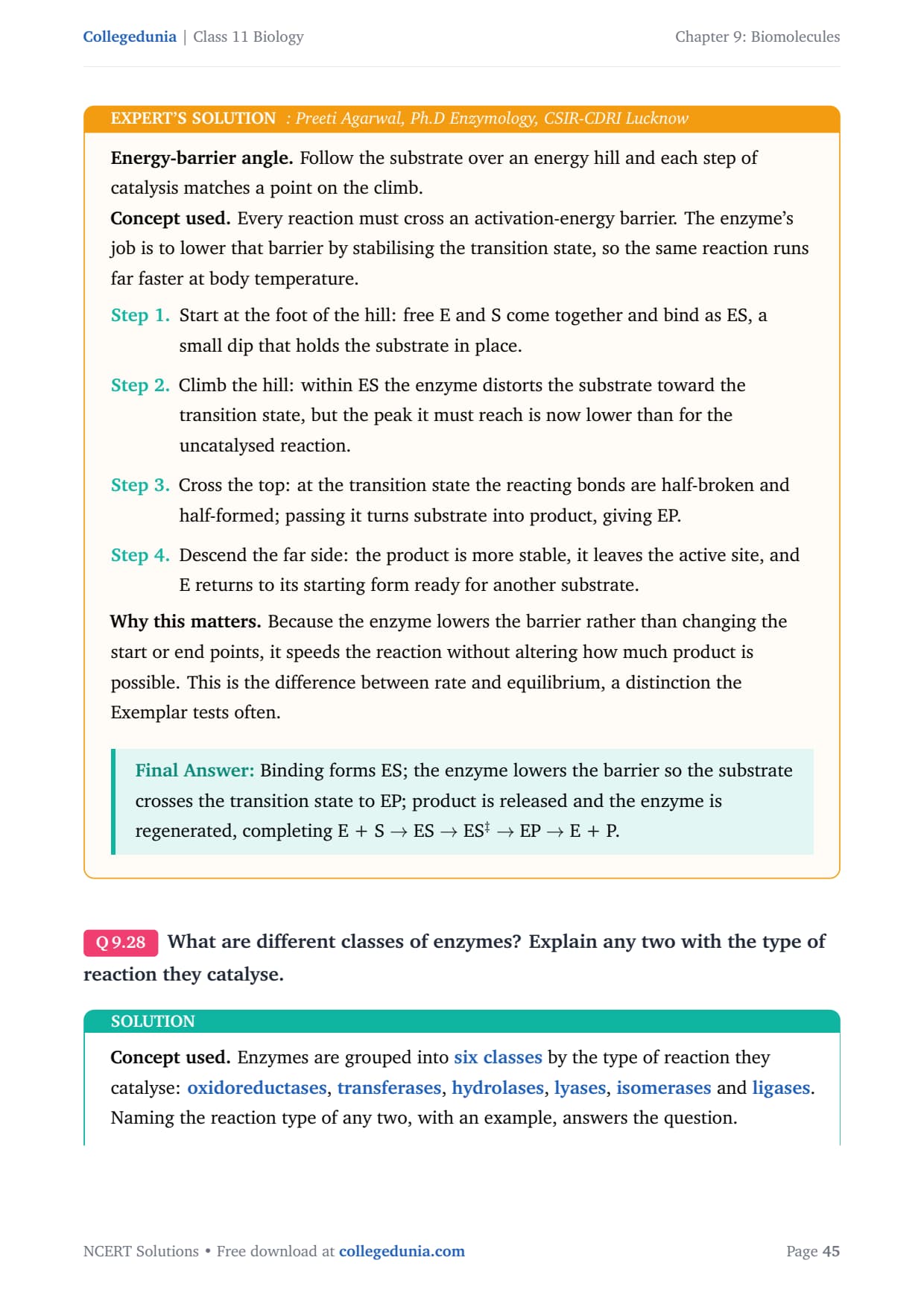
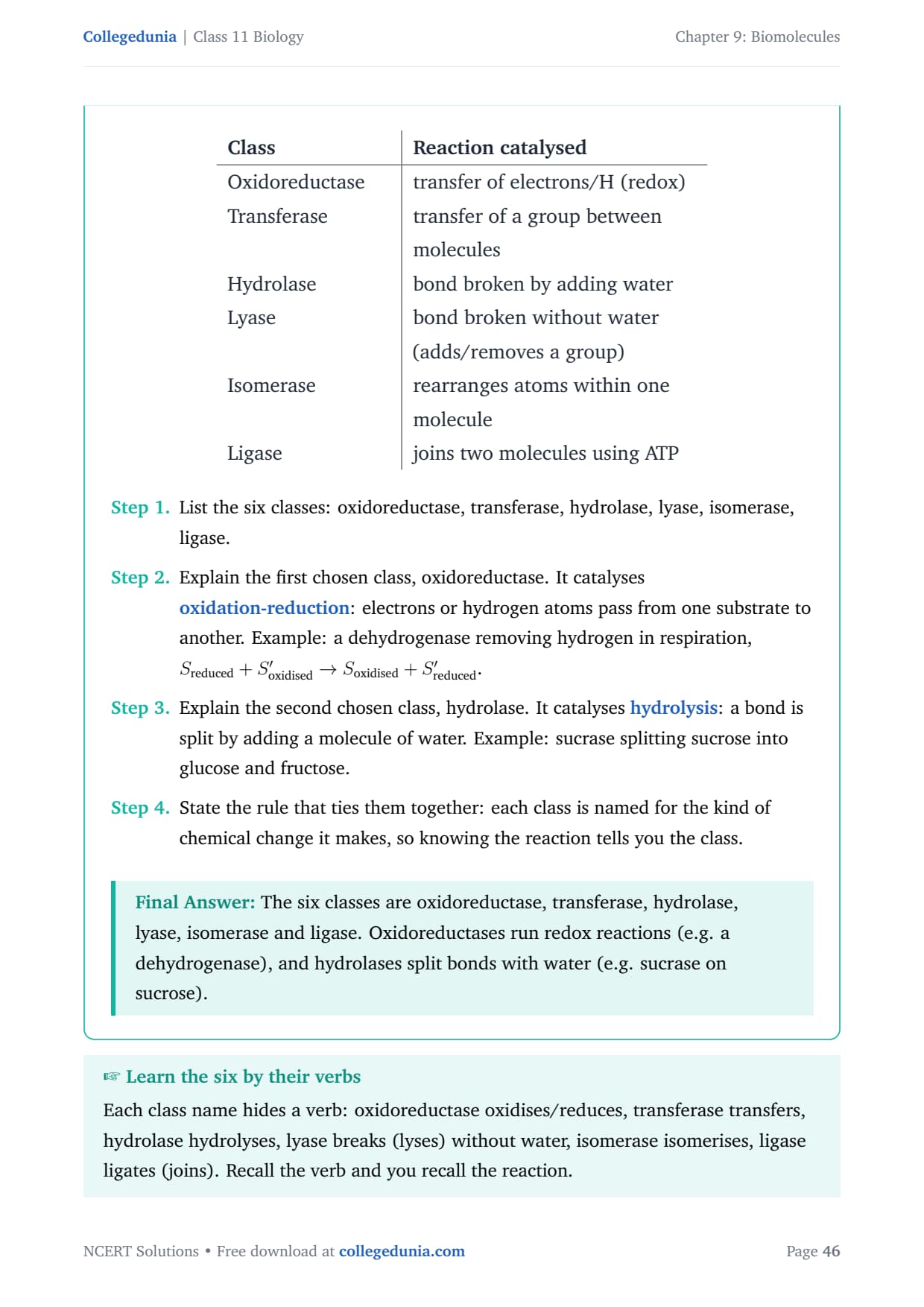
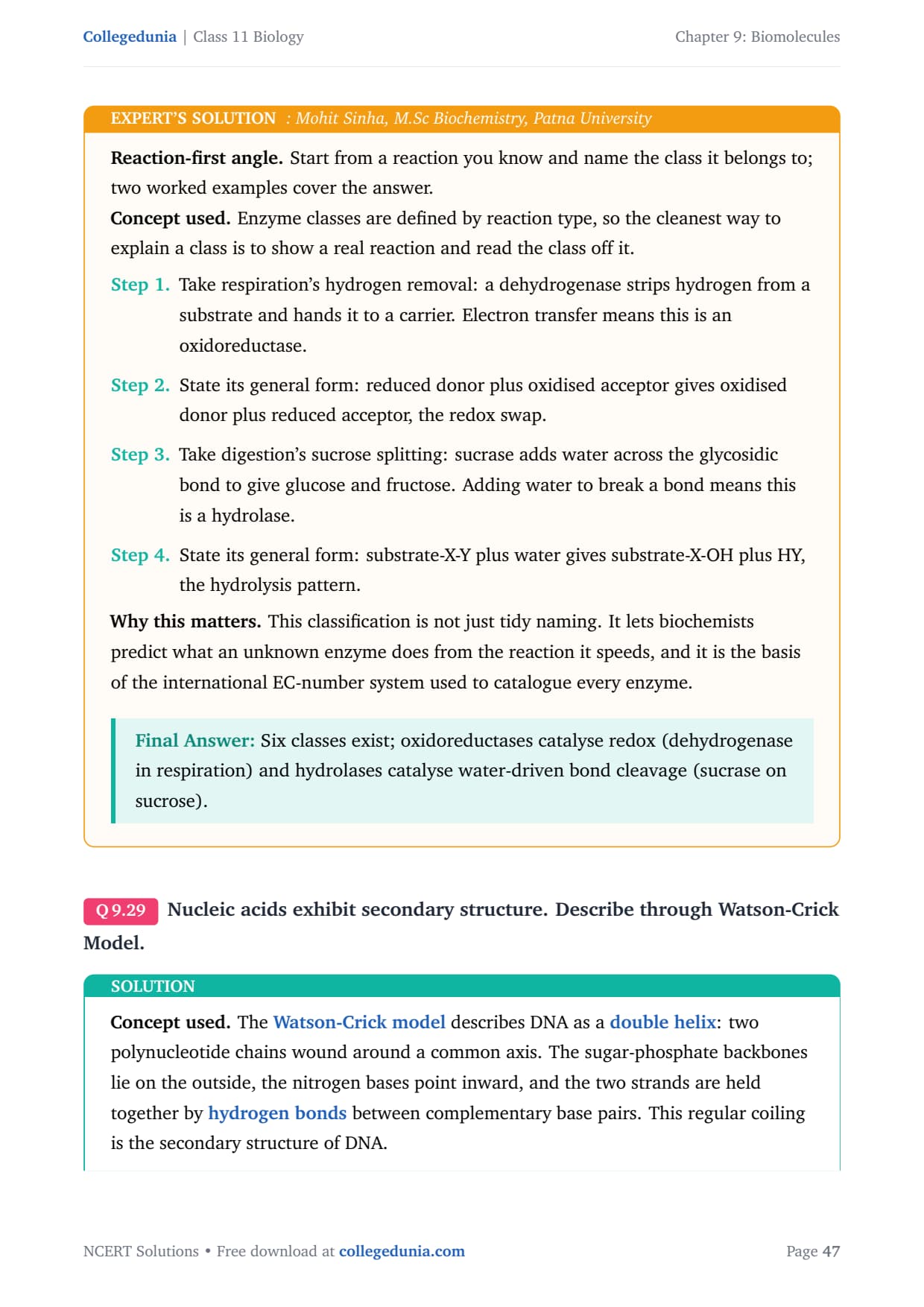
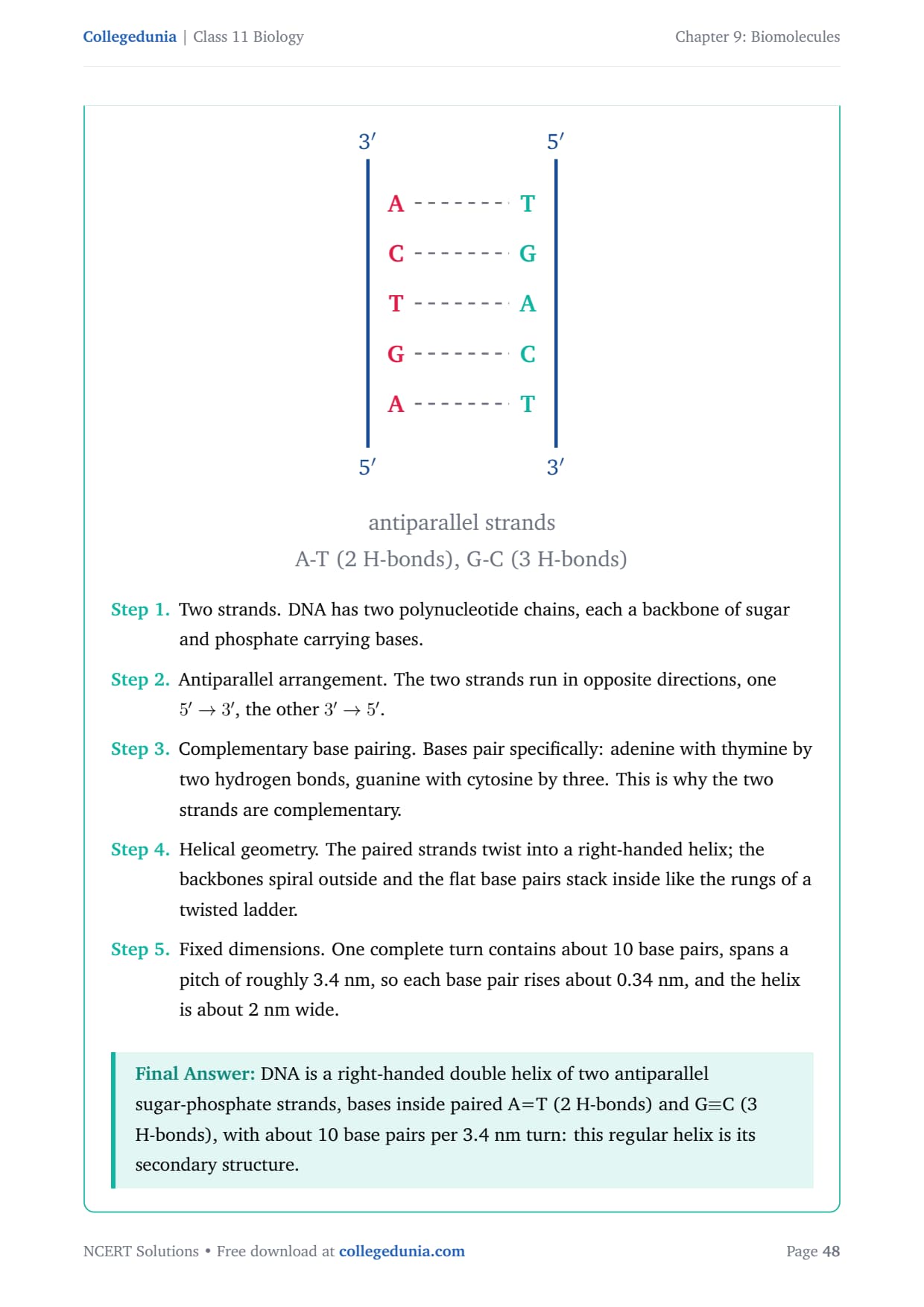
Living things are built from the same elements as rock and river, yet they are not the same, and this chapter shows the difference lies in carbon chemistry. It sorts every molecule in a cell into small acid-soluble ones and large acid-insoluble macromolecules, then walks through proteins, carbohydrates, lipids, nucleic acids and enzymes. The Exemplar pushes these ideas well past the textbook, because most questions ask you to reason from a structure rather than recall a name.
- CBSE Weightage: 3 to 4 marks, usually a question on protein structure, enzyme action or a bond type from the biomolecules unit
- NEET Weightage: 3 to 5 questions every year from amino acids, sugars, enzymes and the acid-soluble against acid-insoluble split
- CUET Weightage: 2 to 3 questions on bond types, enzyme classes and biomolecule composition in the Biology domain paper
Every answer is checked against the official NCERT Exemplar key, and this chapter has four printed answers that are misprints, each corrected here with the reason and the source that confirms the right choice.
Topics Covered in the Class 11 Biology Biomolecules Exemplar
The 31 questions in this chapter are built on four ideas, and each one feeds directly into respiration, photosynthesis and the whole of Class 12 genetics. Biomolecules is short in the textbook but demanding in the Exemplar, because almost every question asks you to count carbons, name a bond or judge a structure rather than repeat a line. Working through it fixes the chemical vocabulary you rely on for every metabolism chapter that follows.
- Elemental composition and the two pools: why living and non-living matter share elements, and the split between the small acid-soluble pool and the large acid-insoluble macromolecules
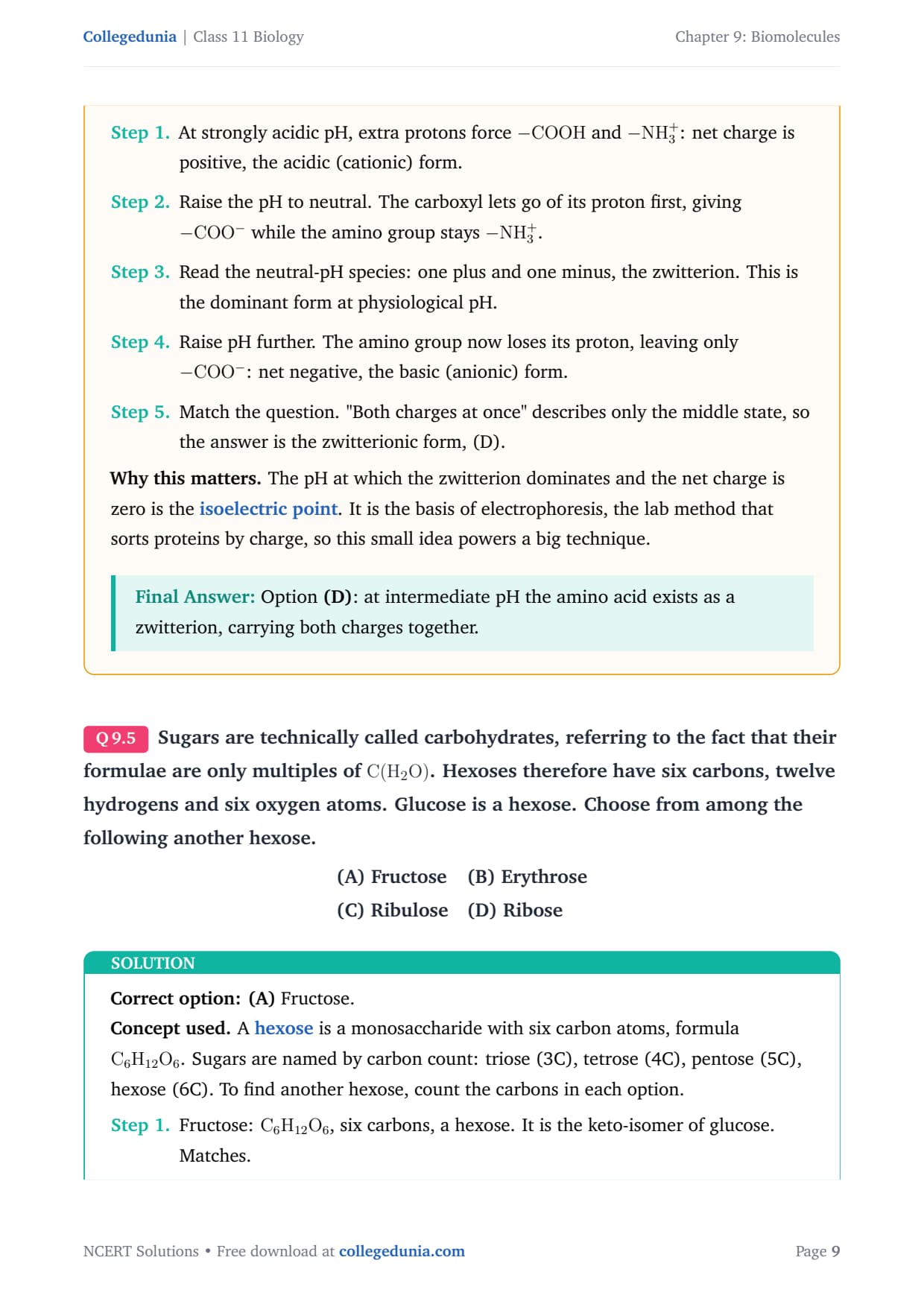
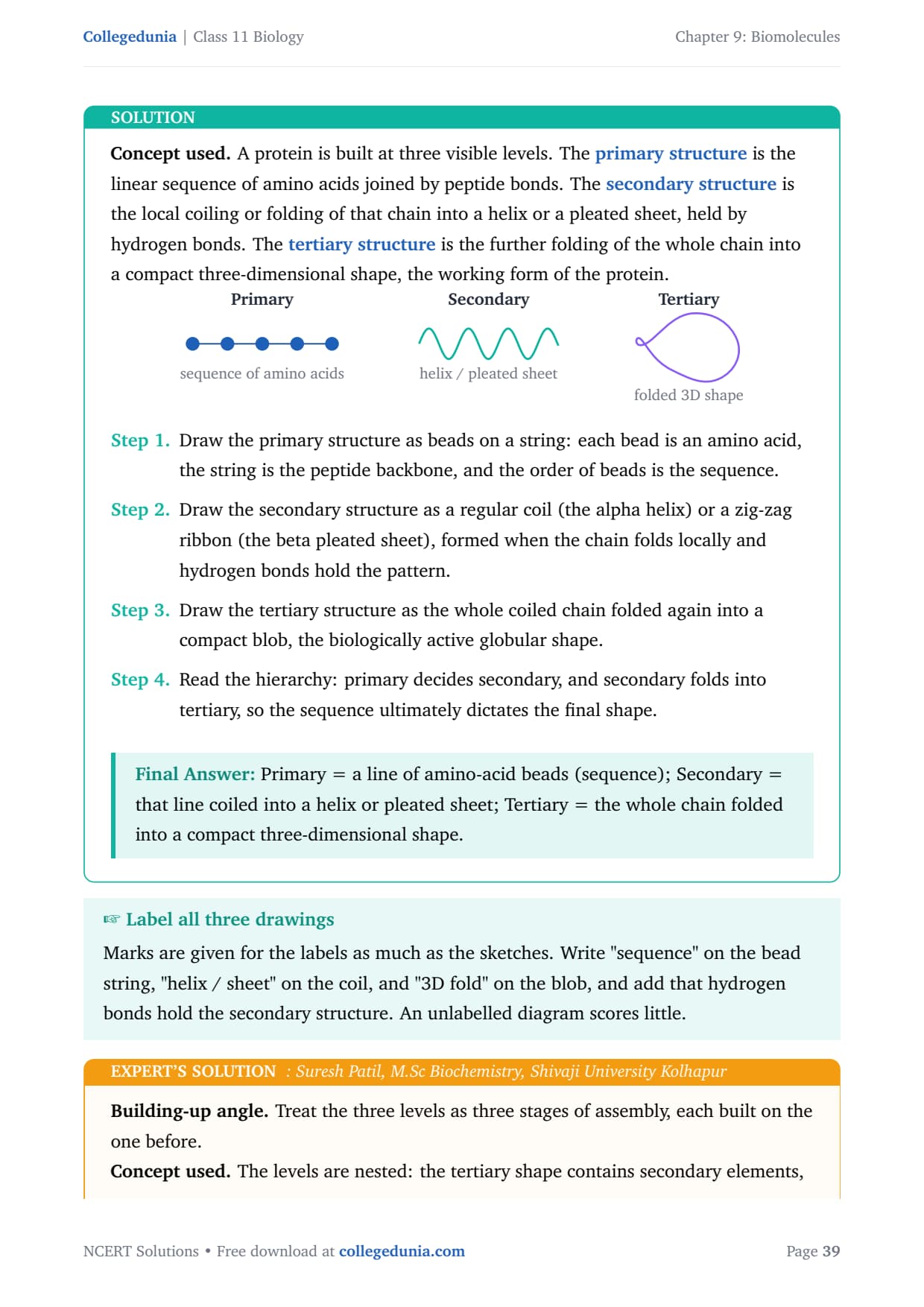
- Proteins and amino acids: the amino and carboxyl groups on one carbon, the zwitterion with two charges, the peptide bond, and primary to quaternary structure
- Carbohydrates and lipids: monosaccharides by carbon count, the glycosidic bond, homopolymers such as glycogen and starch, and the ester bond in fats
- Nucleic acids and enzymes: nucleotide against nucleoside, secondary structure of DNA, enzyme classes, activation energy and the living state as a steady state
Question Types in the Biomolecules NCERT Exemplar
Class 11 Biology Exemplar chapters use four question types, and each one carries a different demand. The MCQ set turns on single structural details, such as which sugar is a hexose or which molecule carries both an amino and a carboxyl group, while the Long Answer set asks you to draw protein structures or explain enzyme action. The Short Answer questions are where most marks are won or lost, because they reward a precise bond name and punish a vague one. The table below shows how the 31 questions split across the four types.
| Question Type | Count | What It Tests |
|---|---|---|
| MCQ (single correct) | 14 | Precise reading of sugar, amino acid, bond and enzyme facts |
| VSA (Very Short Answer) | 7 | One-line answers such as naming a bond or a metabolite type |
| SA (Short Answer) | 5 | Distinguishing look-alike ideas like nucleotide against nucleoside |
| LA (Long Answer) | 5 | Drawing protein structure and explaining enzyme classes and action |
Printing Errors in the Biomolecules Exemplar
This chapter carries four genuine misprints in the official MCQ answer key, more than any other chapter in the Class 11 Exemplar, so the PDF flags each one at the exact question and gives the correct choice with a reason. Knowing where the book itself is wrong protects your marks, because an examiner marks by the correct biology, not by the printed typo. Each correction below is confirmed against standard sources such as Learn CBSE and BYJU'S.
- The element not required by life (MCQ 2): the key prints Magnesium, but magnesium sits in chlorophyll and holds ribosomes together, so it is essential. The element not required by living organisms is silicon, so the correct answer is (a).
- The amino acid (MCQ 3): the key prints Glycerol, which is an alcohol with three OH groups and no nitrogen. Only glycine carries both an amino and a carboxyl group, so the answer is (d). The similar names likely caused the typo.
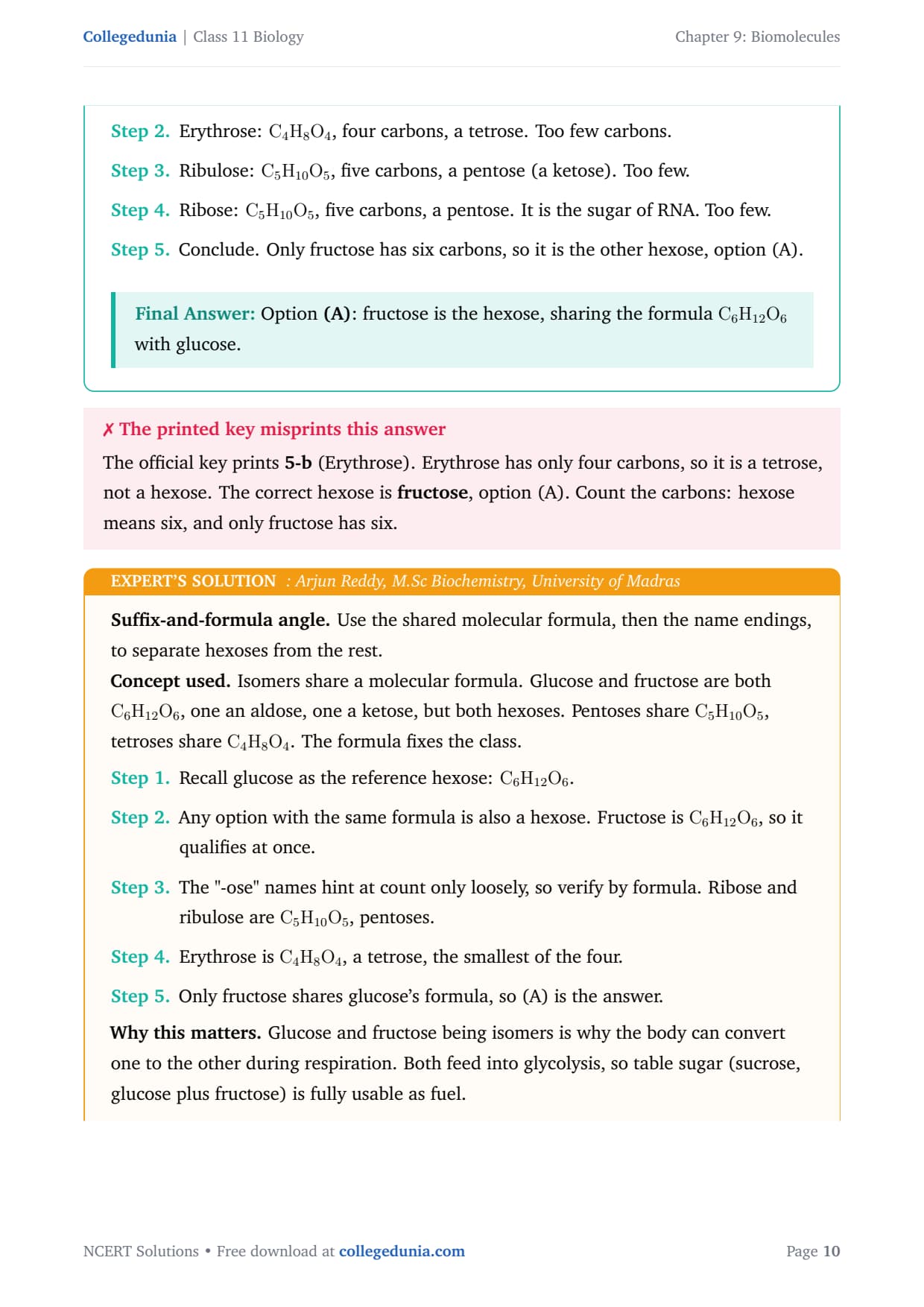
- The hexose (MCQ 5): the key prints Erythrose, which has only four carbons and is a tetrose. The correct hexose, with six carbons, is fructose, so the answer is (a).
- The non-enzymatic step (MCQ 14): the key prints peptide bond formation, but that is catalysed by peptidyl transferase. Simply dissolving carbon dioxide in water needs no enzyme, so the correct answer is (a).
Common Mistakes Students Make in Biomolecules
The Exemplar plants wrong options and half-right definitions on purpose, and four errors catch most students in this chapter. Each is flagged in the PDF at the exact question where it appears. Learning to spot them early saves marks across the whole biomolecules unit, because the same bond and structure distinctions return in Respiration in Plants and in the Class 12 chapters on DNA and metabolism.
- Glycerol against glycine: the names look alike, but glycerol is an alcohol and only glycine is an amino acid with both an amino and a carboxyl group. Read the structure, not the spelling.
- Counting carbons in a sugar: a hexose has six carbons, so fructose and glucose qualify while erythrose, a four-carbon tetrose, and ribose, a five-carbon pentose, do not. Count before you choose.
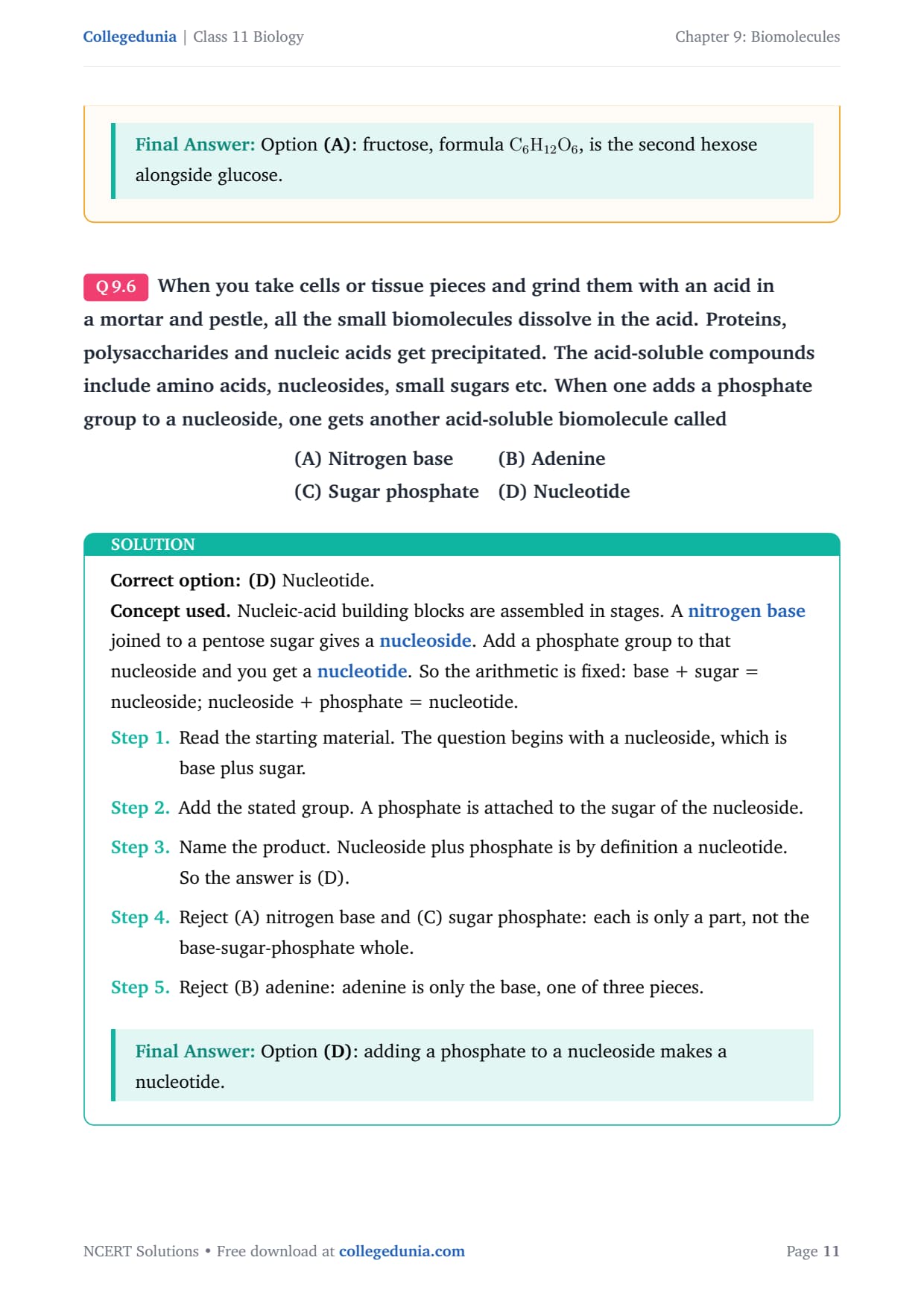
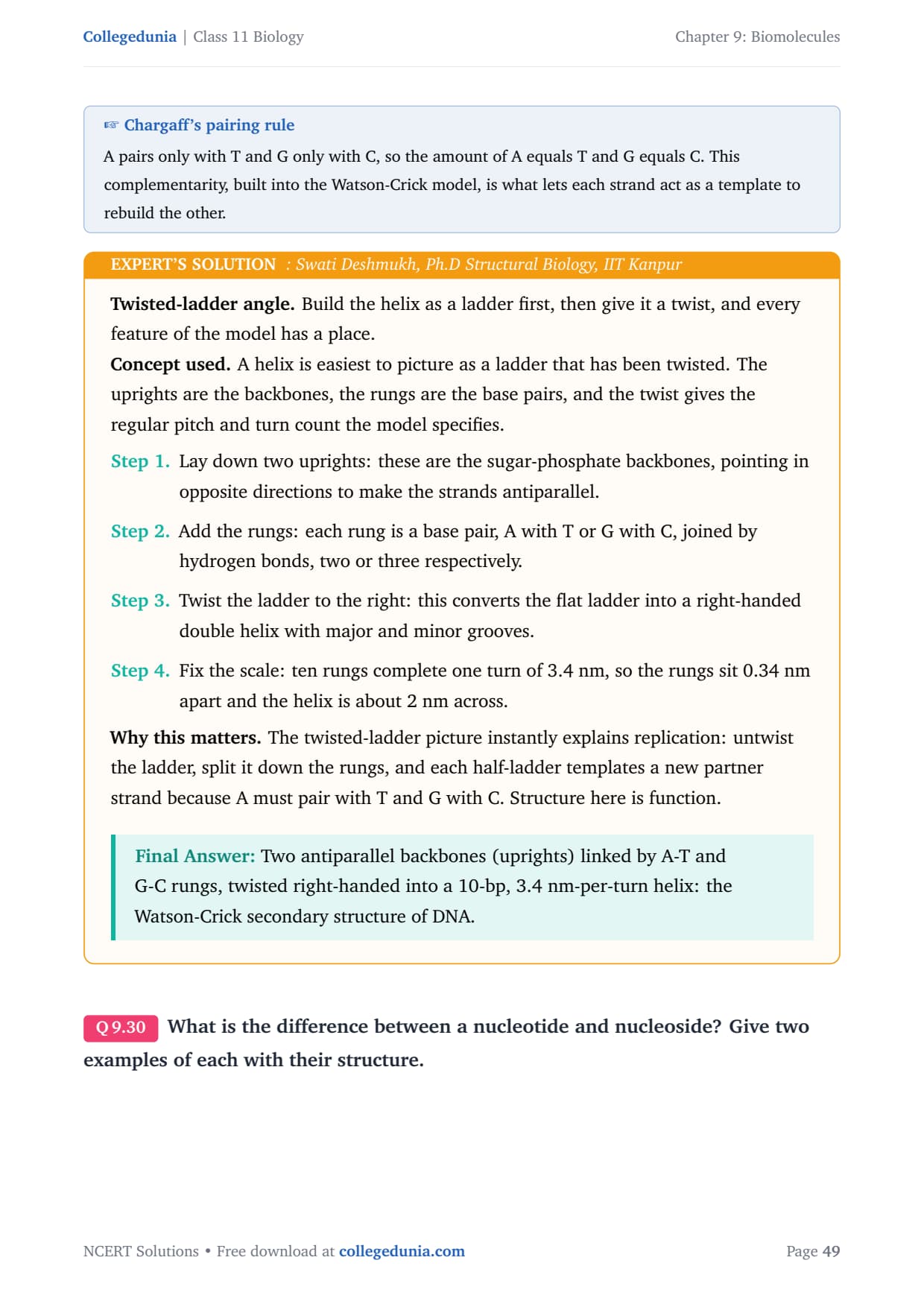
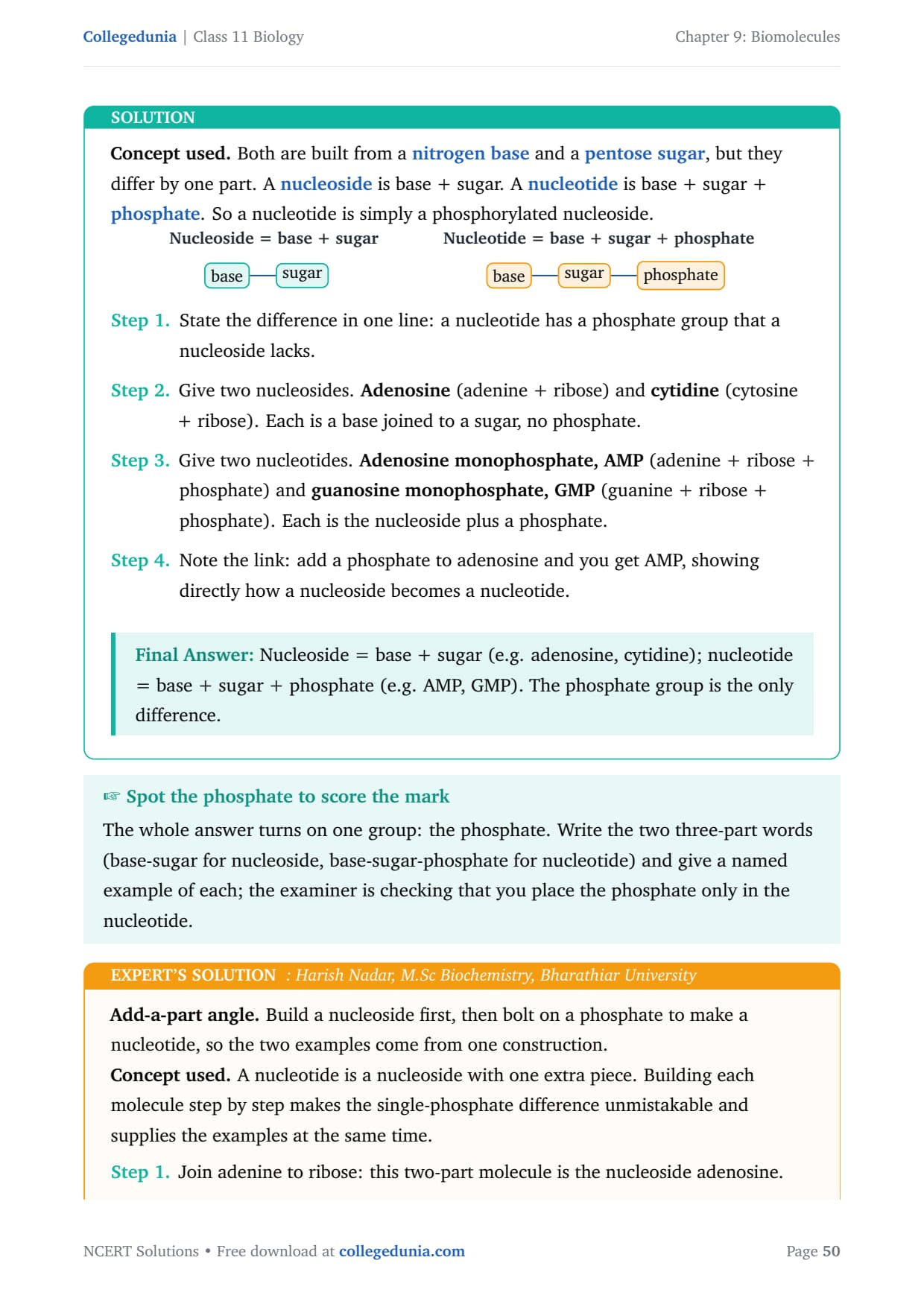
- Nucleotide against nucleoside: a nucleoside is base plus sugar, while a nucleotide adds a phosphate. Missing the phosphate turns one term into the other and loses the mark.
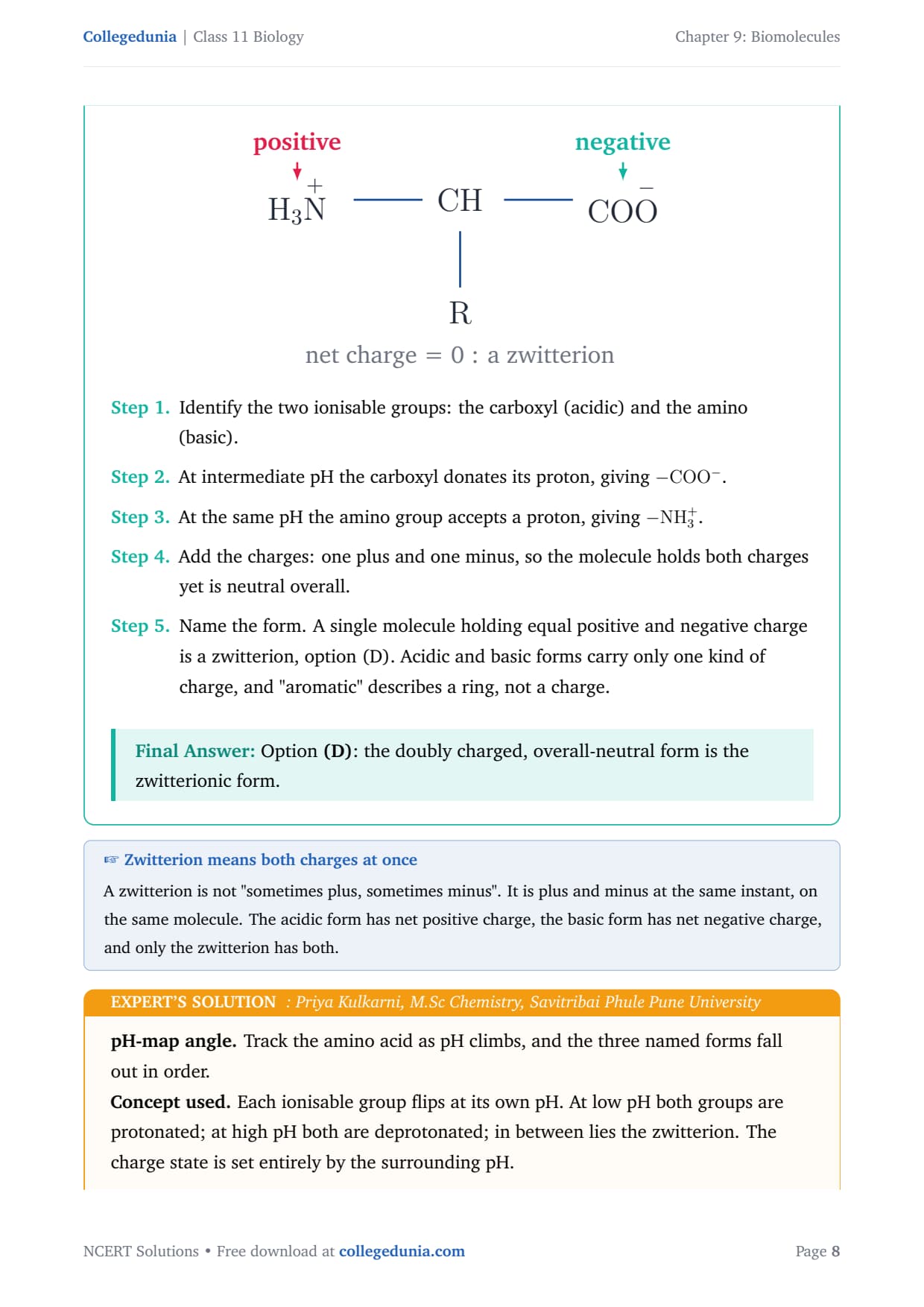
- The zwitterion carries two charges: at a certain pH an amino acid holds both a positive and a negative charge at the same time, so it is neutral overall but not uncharged. Students often mark it as having no charge.
How the Exemplar Steps Up from the Class 11 Biology Textbook
The textbook gives you a molecule and its features and asks you to state them back. The Exemplar gives you four molecules and asks which one fits a rule, which is a different skill and the one that boards and NEET actually test. This is why students who only read the chapter feel the Exemplar is unfair. It is not harder in content, it is harder in the way it asks.
The sugar question shows the gap clearly. The textbook tells you that a hexose has six carbons, so a quick reader ties the word to the number and moves on. The Exemplar instead lists erythrose, ribose and fructose together and asks which is the hexose, and now the definition has to be used, not just recalled. You count carbons and only fructose survives. The same happens with the amino acid question, where glycerol is slipped in beside glycine, and with the enzyme question, where a physical dissolving step is hidden among enzyme-catalysed ones. Working these builds judgement about structure, not recall of a list.
How to Use These NCERT Exemplar Solutions for Boards, NEET and CUET
Attempt each question before you open the solution. This chapter rewards the attempt more than the reading, because the answers look obvious until you have to count carbons or name a bond precisely. Read the question, commit to a structure or bond in your own words, and only then check it against the PDF. The gap between your line and the model answer is where the marks live.
- Boards: the Short Answer and Long Answer sets match the 3 and 5 mark pattern, especially the protein structure diagram and the enzyme classes question
- NEET: work the MCQ set first, since NEET repeats sugars, amino acids, bond types and enzyme action three to five times every year at exactly this level
- CUET: the definition-based MCQ and Very Short Answer sets are the closest practice for the domain paper, which favours precise single-term recall
Student Feedback
Students using Collegedunia's Class 11 Biology Exemplar Solutions told us that the four misprinted MCQ answers were the most confusing part of this chapter, because the printed key kept disagreeing with their working. Around 7 in 10 said that seeing each error flagged clearly, with the correct choice named and a one-line reason given, stopped them from second-guessing correct answers and finally made the bond and sugar rules stick.
Other Resources for Class 11 Biology Biomolecules
Collegedunia has the full set of study material for this chapter. Use the Notes for a first read, then the Exemplar once the bond and structure vocabulary is steady, keep the Formula Sheet handy for quick recall of bonds and carbon counts, and open the NCERT Solutions for the textbook exercise alongside.
Also Check:
- NCERT Solutions for Class 11 Biology Chapter 9
- Class 11 Biology Chapter 9 Notes
- Class 11 Biology Chapter 9 Formula Sheet
- Class 11 Biology Chapter 9 NCERT Book PDF
- Class 11 Biology Chapter 9 Exemplar Book PDF
NCERT Exemplar Solutions for Other Class 11 Biology Chapters
Each chapter below has the same step-by-step treatment and a free PDF. All 19 chapters have an NCERT Exemplar book chapter behind them, so the list covers every one.
Biomolecules Class 11 NCERT Exemplar Solutions FAQs
Ques. How many questions are there in the Class 11 Biology Biomolecules Exemplar?
Ans. Chapter 9 has 31 questions. They are split into 14 MCQ, 7 Very Short Answer, 5 Short Answer and 5 Long Answer questions. All 31 are solved step by step in the free PDF on this page.
Ques. Which MCQ answers are misprinted in the Biomolecules Exemplar key?
Ans. Four MCQ answers are misprinted. MCQ 2 should be silicon, not magnesium. MCQ 3 should be glycine, not glycerol. MCQ 5 should be fructose, not erythrose. MCQ 14 should be dissolving carbon dioxide in water, not peptide bond formation. Each correction is explained in the PDF with a reason.
Ques. What is the difference between a nucleotide and a nucleoside?
Ans. A nucleoside is a nitrogen base joined to a sugar. A nucleotide is a nucleoside plus a phosphate group, so it is base plus sugar plus phosphate. Adenosine is a nucleoside, while adenosine monophosphate is a nucleotide. Missing the phosphate is the most common slip in this chapter.
Ques. Why is fructose a hexose but erythrose is not?
Ans. A hexose is a sugar with six carbon atoms. Fructose has six carbons, so it is a hexose. Erythrose has only four carbons, which makes it a tetrose, and ribose has five, which makes it a pentose. Counting carbons is the quickest way to answer this Exemplar MCQ.
Ques. Is the NCERT Exemplar enough for NEET questions from Biomolecules?
Ans. For this chapter it covers the ground well. NEET asks three to five questions a year on sugars, amino acids, bond types and enzyme action, and they sit at the level of the Exemplar MCQ and Very Short Answer sets. Work all 14 MCQs and the 7 Very Short Answers before moving to a coaching module.



Comments