




NCERT Exemplar Solutions for Class 11 Biology Chapter 7 Structural Organisation in Animals solve all 47 questions from the Exemplar book. Every MCQ, Very Short Answer, Short Answer and Long Answer problem is answered step by step in the free 76-page PDF, updated for the 2026-27 syllabus.
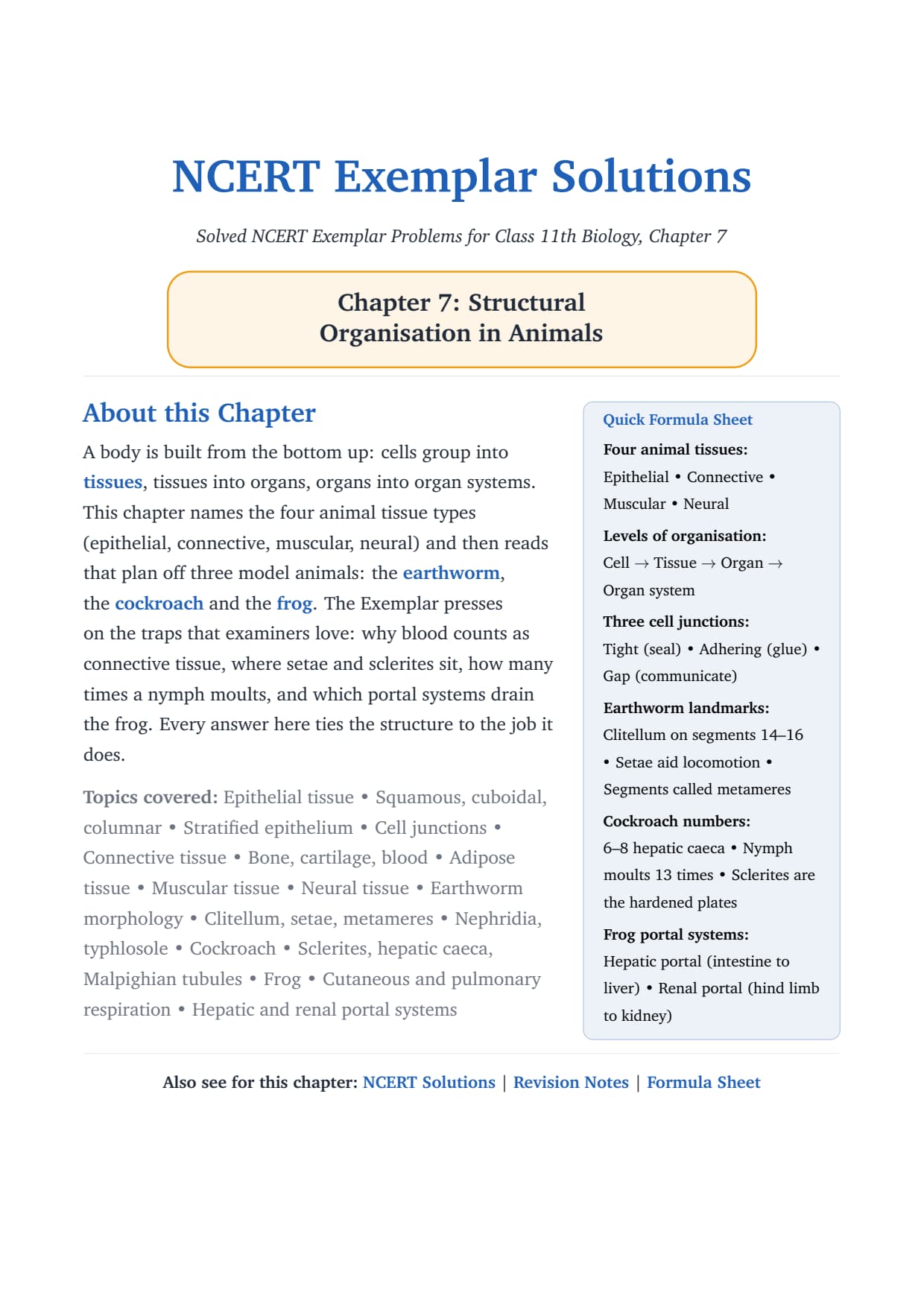
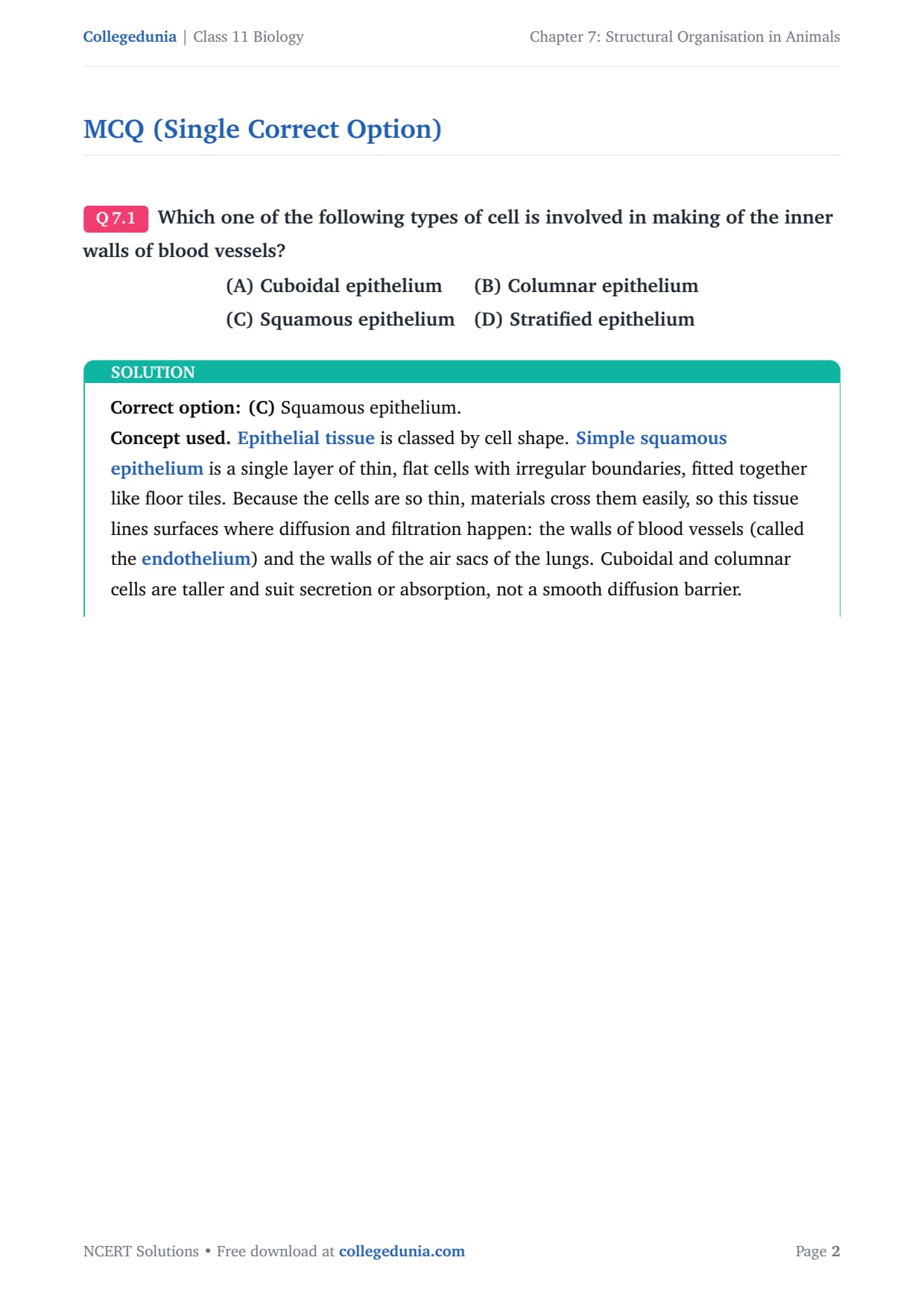
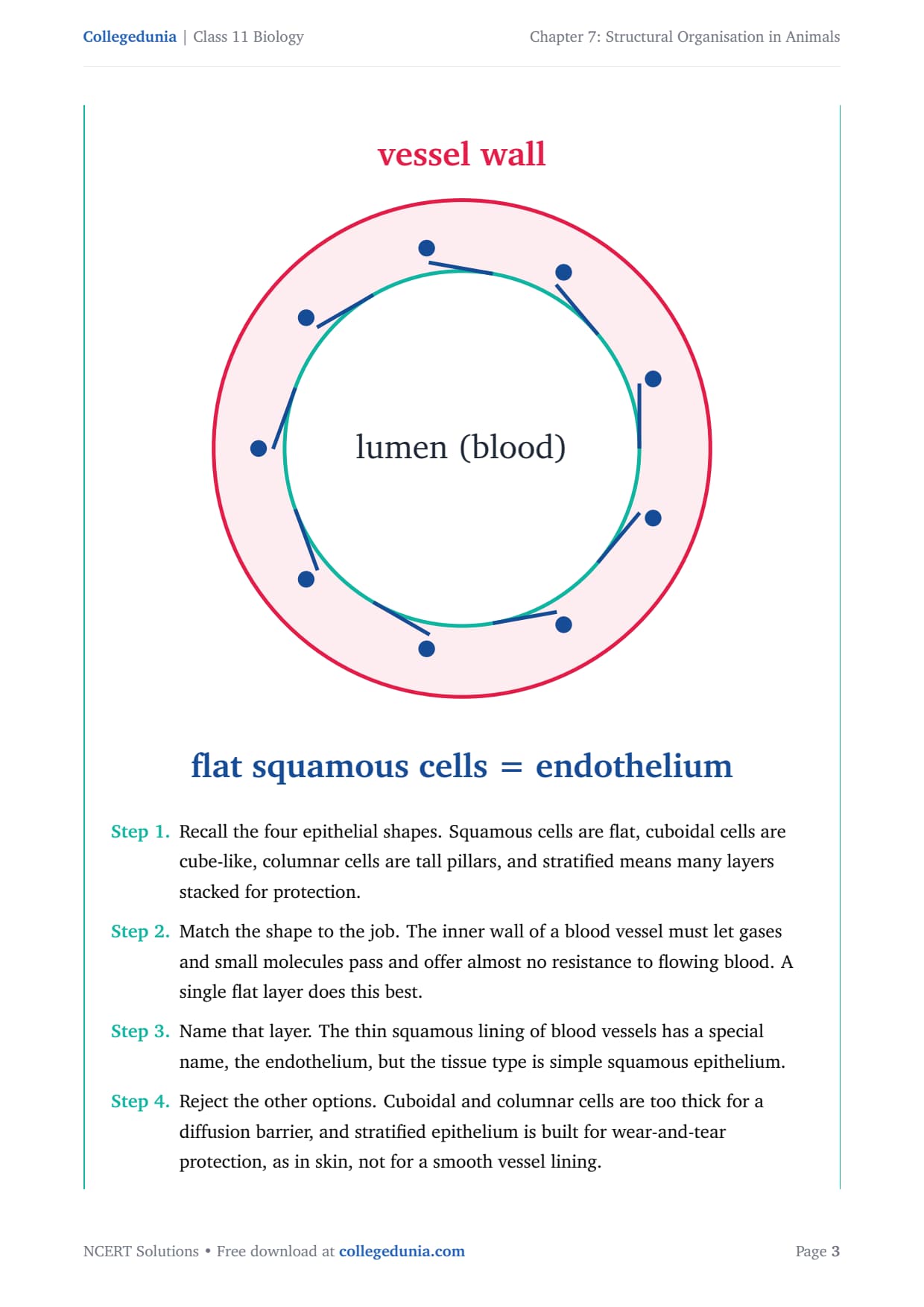
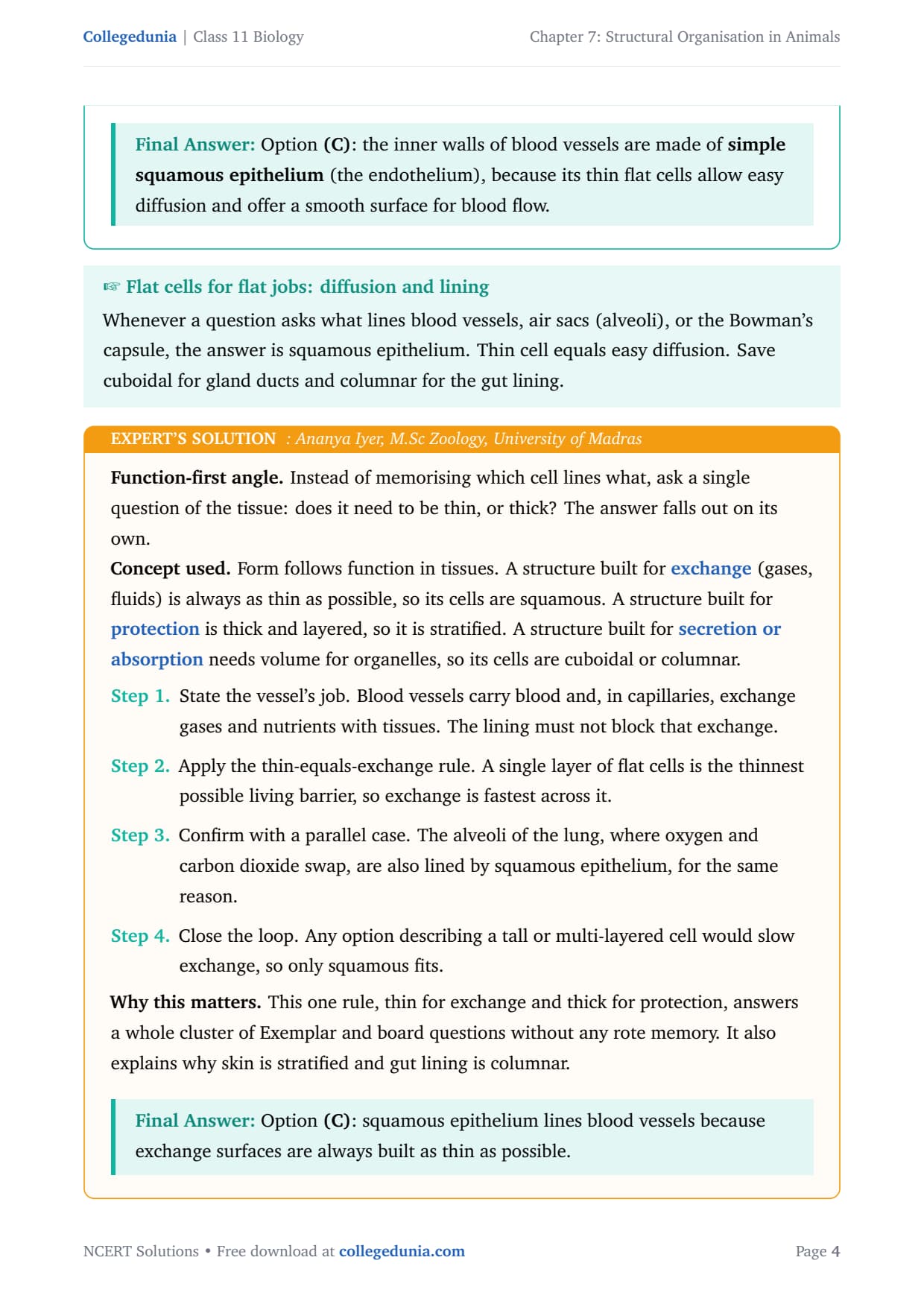
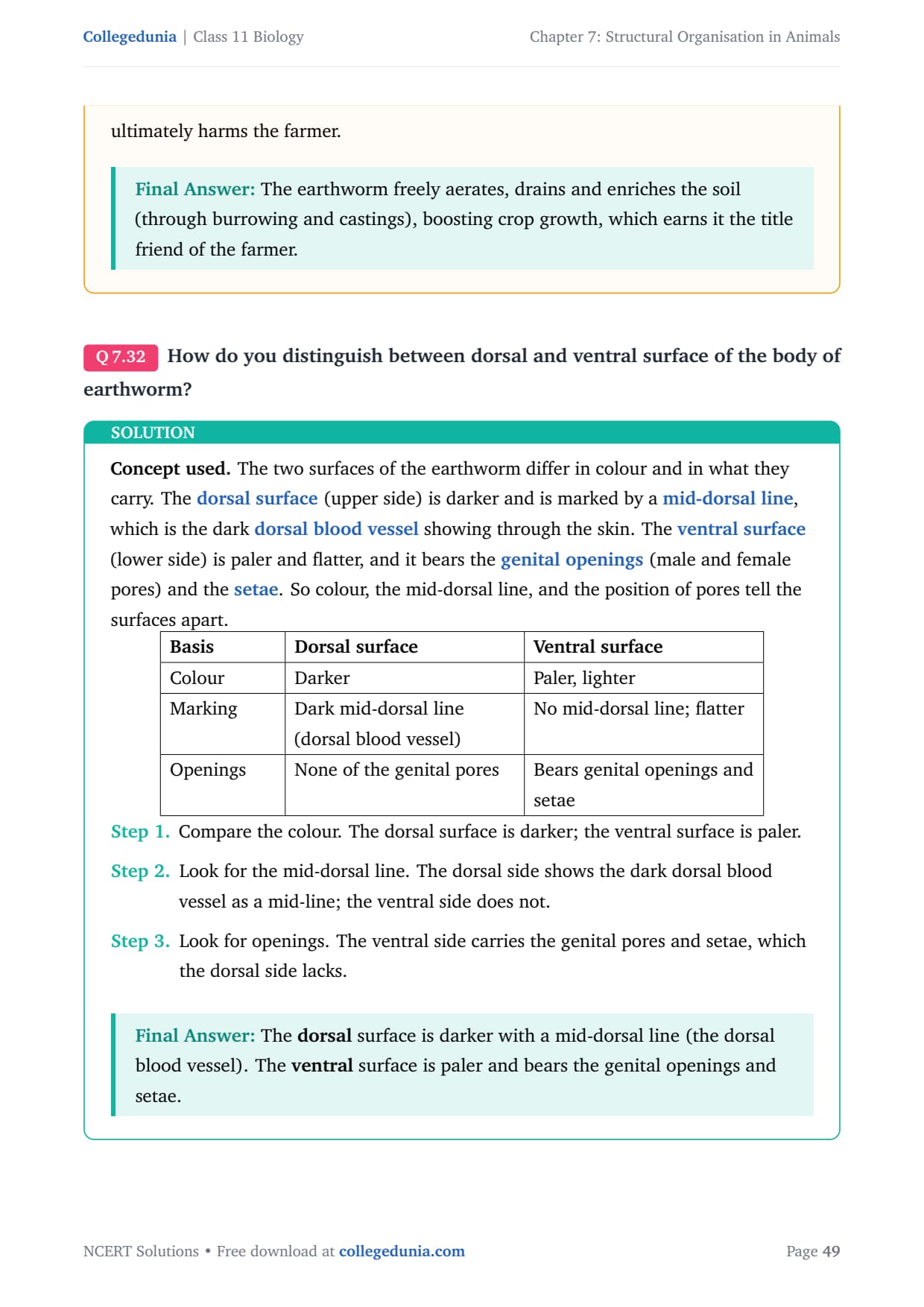
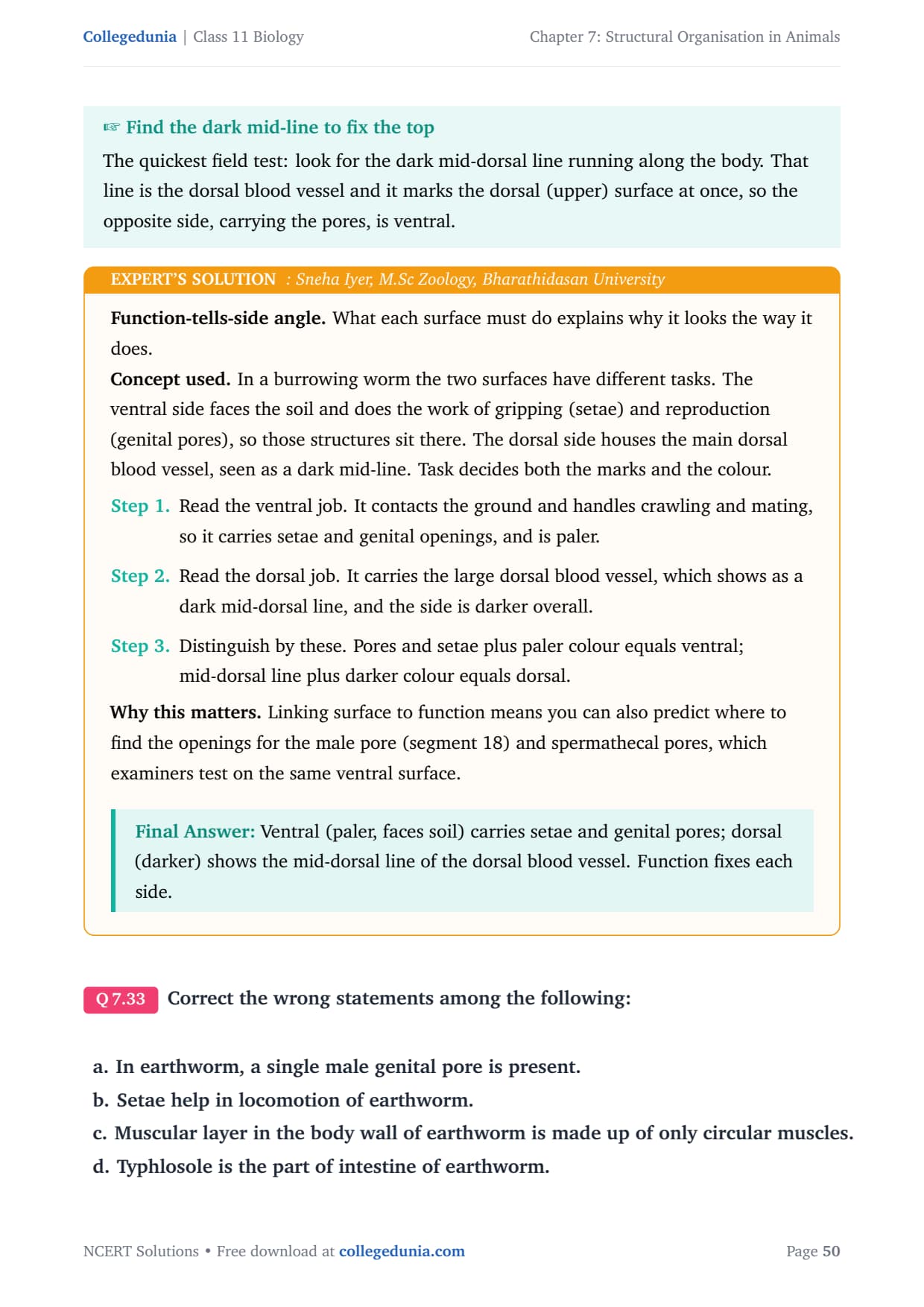
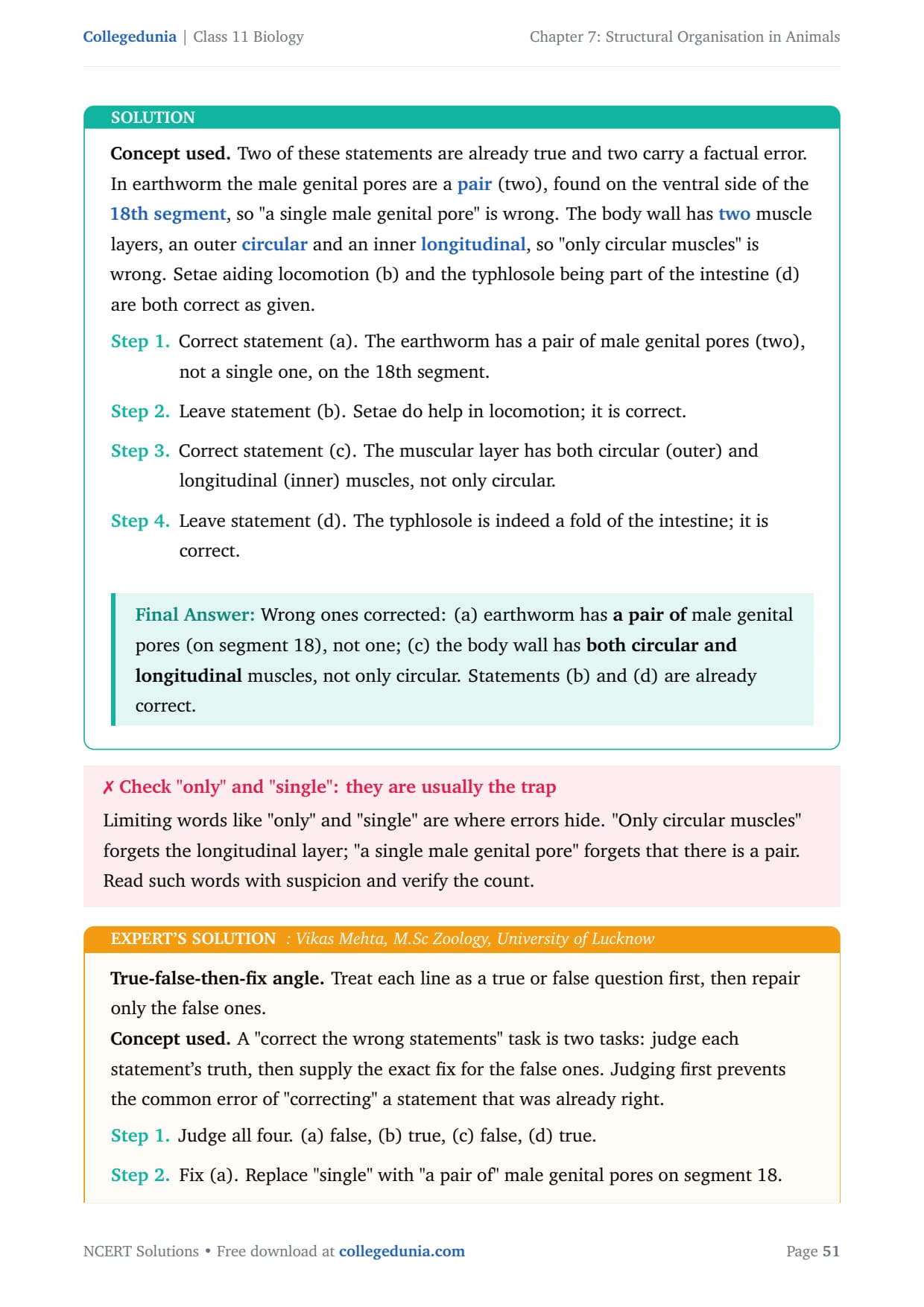
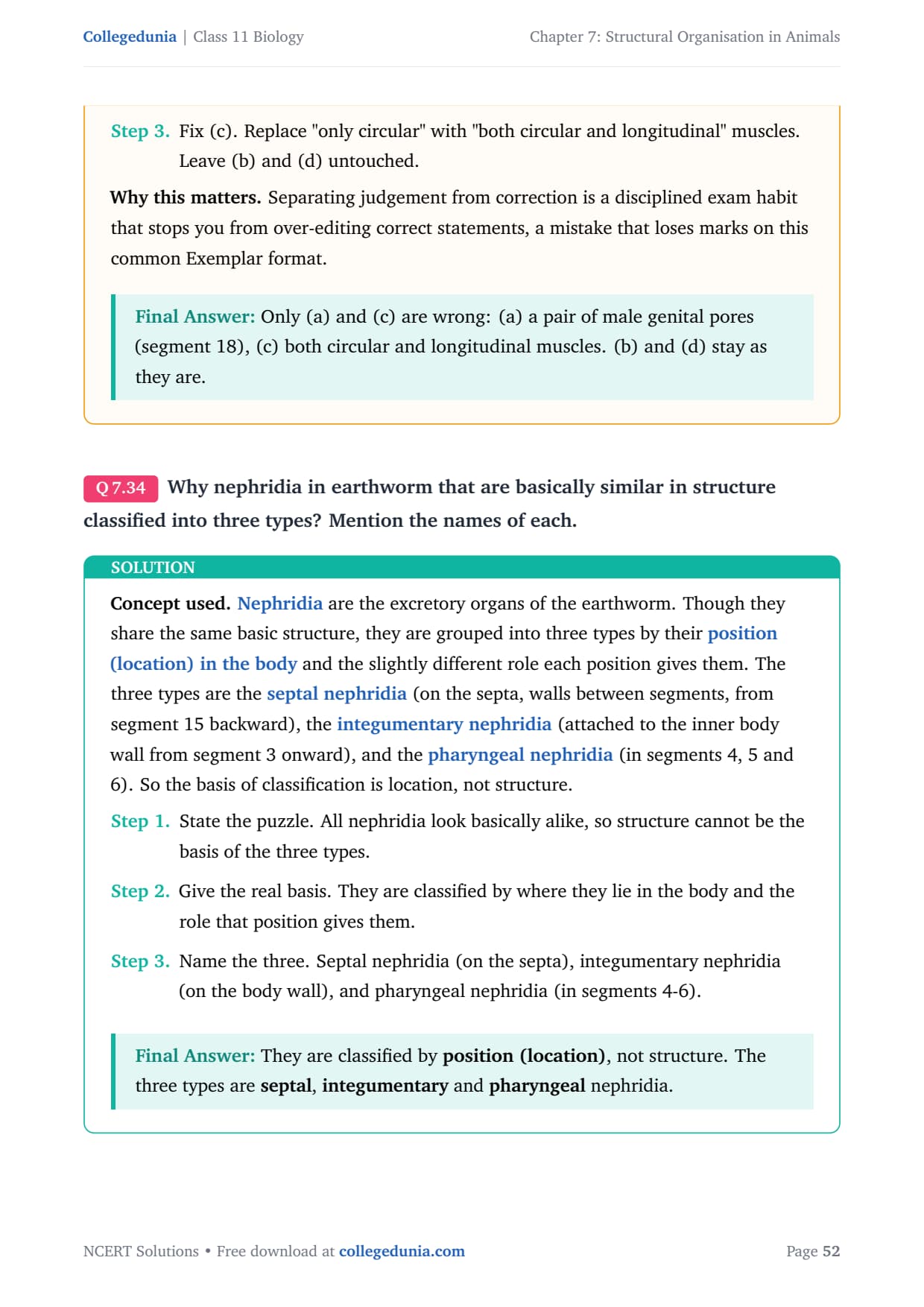
This chapter builds an animal body from the bottom up, from cells to tissues to organs to organ systems, and then reads that plan off three model animals. The four tissue types come first, and the earthworm, cockroach and frog put them to work. The Exemplar pushes far past the textbook here, because most questions ask you to tie a structure to the exact job it does rather than to recall a label from a diagram.
- CBSE Weightage: 3 to 5 marks, usually a tissue question plus one structural detail of the earthworm, cockroach or frog
- NEET Weightage: 2 to 4 questions per year on animal tissues and the morphology and anatomy of the three model animals
- CUET Weightage: 1 to 2 questions on tissue types and cockroach or frog structures in the Biology domain paper
Every answer is checked against the official NCERT Exemplar key, and the traps this chapter is famous for, such as why blood is a connective tissue and which segments of the earthworm lack setae, are pulled apart in full.
Topics Covered in the Class 11 Biology Structural Organisation in Animals Exemplar
The 47 questions in this chapter are built on four ideas, and they move from the general plan to specific animals. You start with the four animal tissues, then apply the whole body plan to the earthworm, the cockroach and the frog in turn. The Exemplar is dense here because the textbook describes each animal in plain prose, yet the reasoning behind each structure, such as why setae help locomotion or why blood is grouped with bone, is where the marks sit. Working through it fixes the detail you need for every organ-system chapter that follows.
- The four animal tissues: epithelial, connective, muscular and neural, with cell junctions and the matrix as the sorting clues
- Earthworm structure: clitellum, setae, metameres, nephridia and the typhlosole that increases absorptive surface
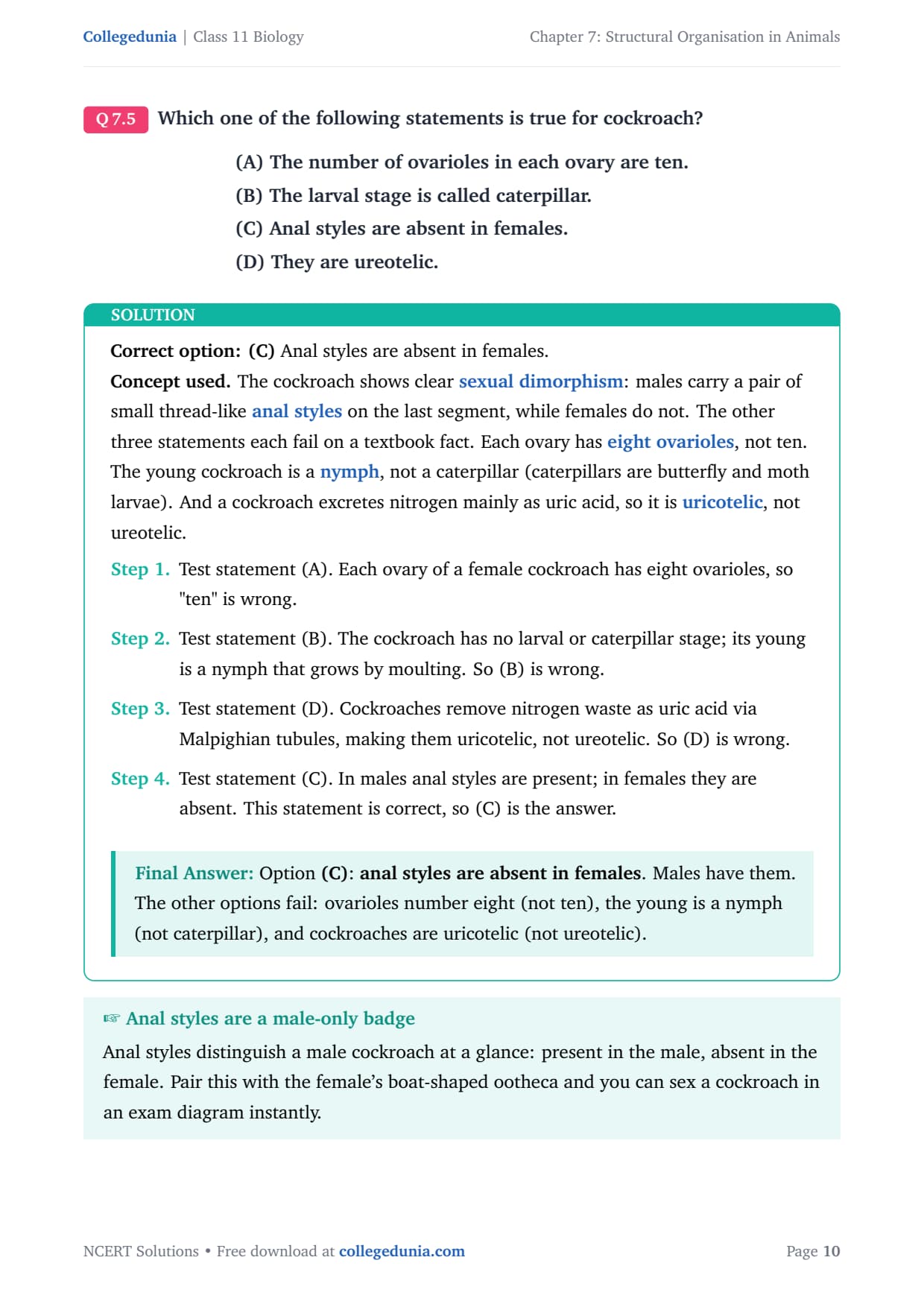
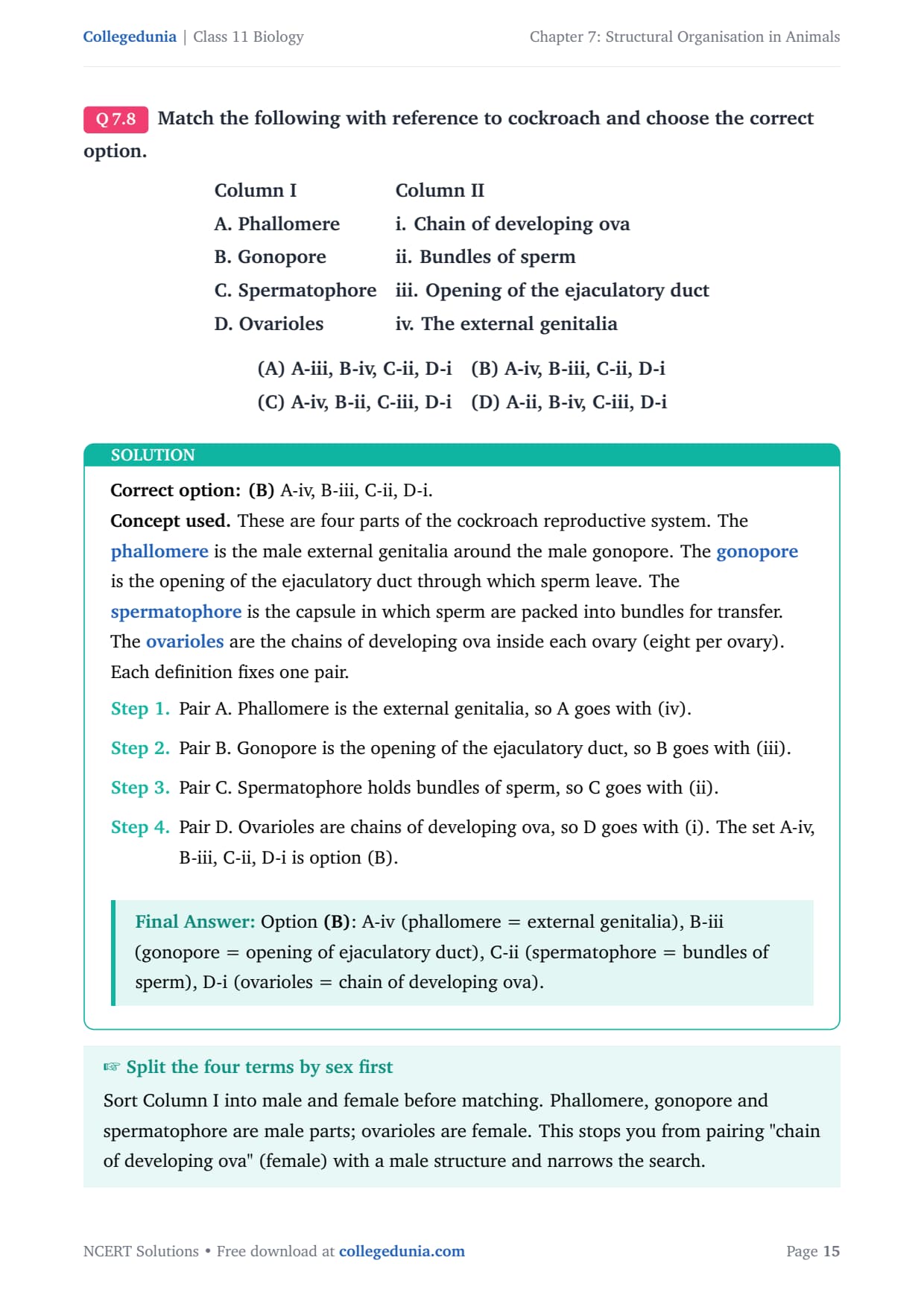
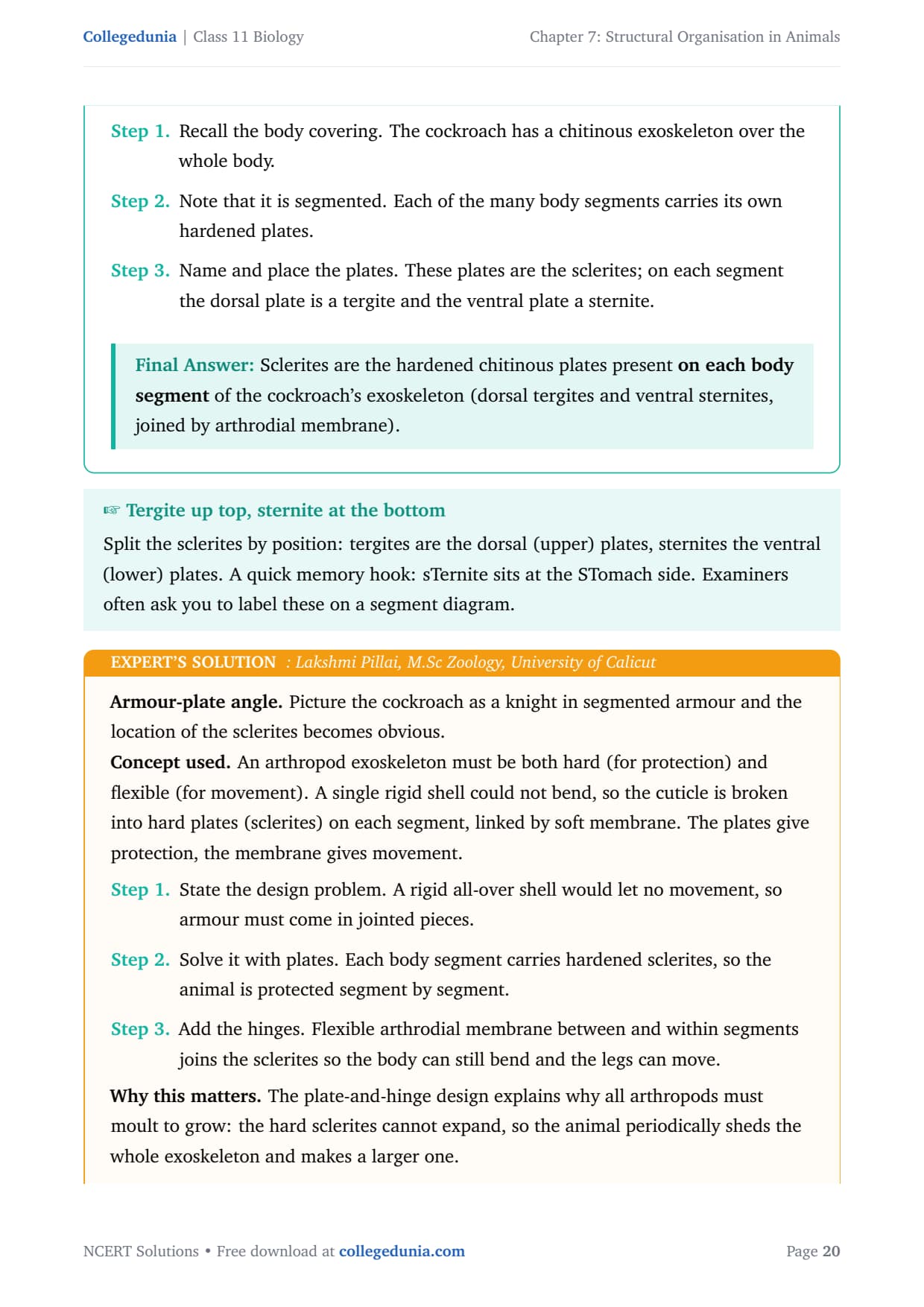
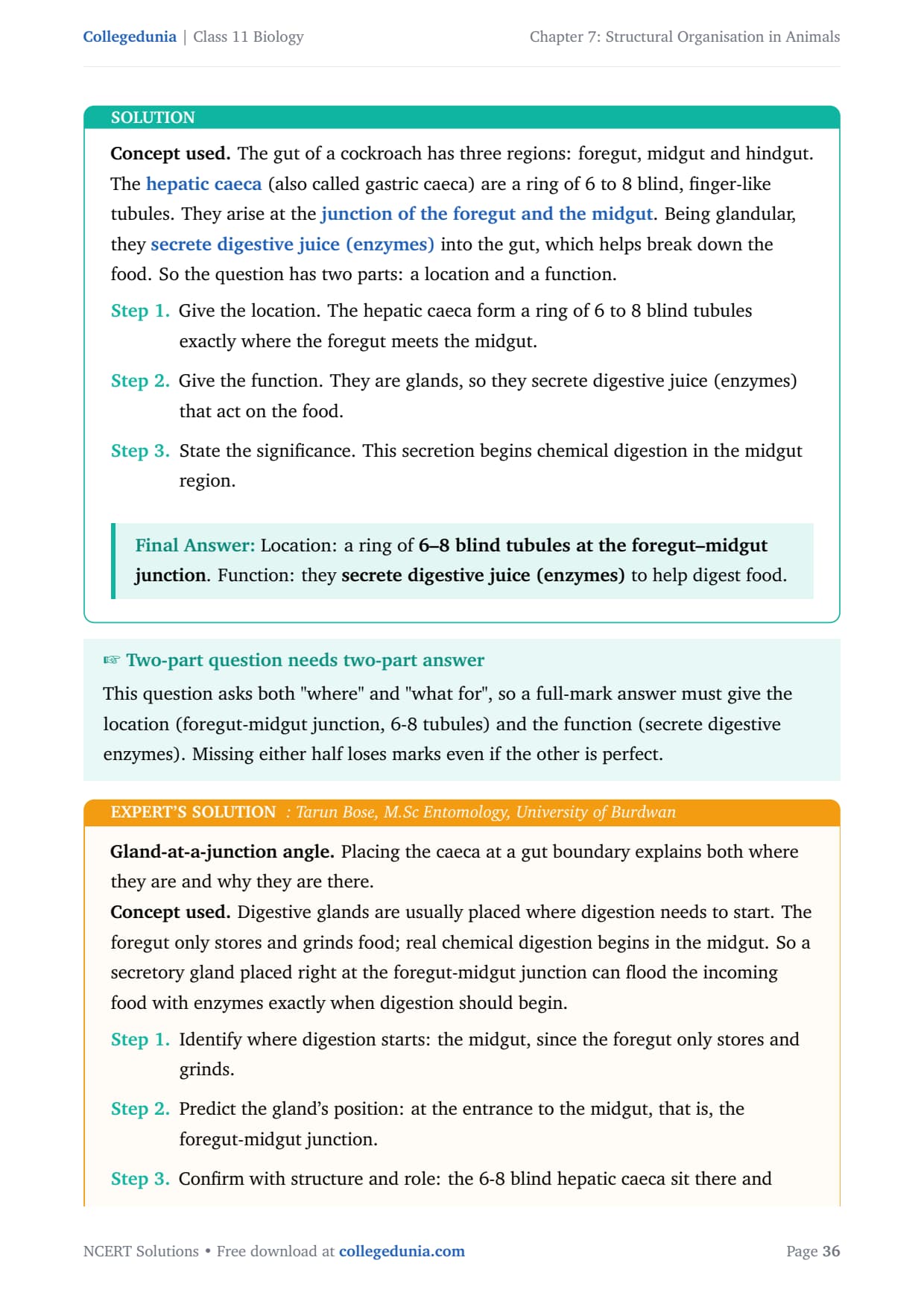
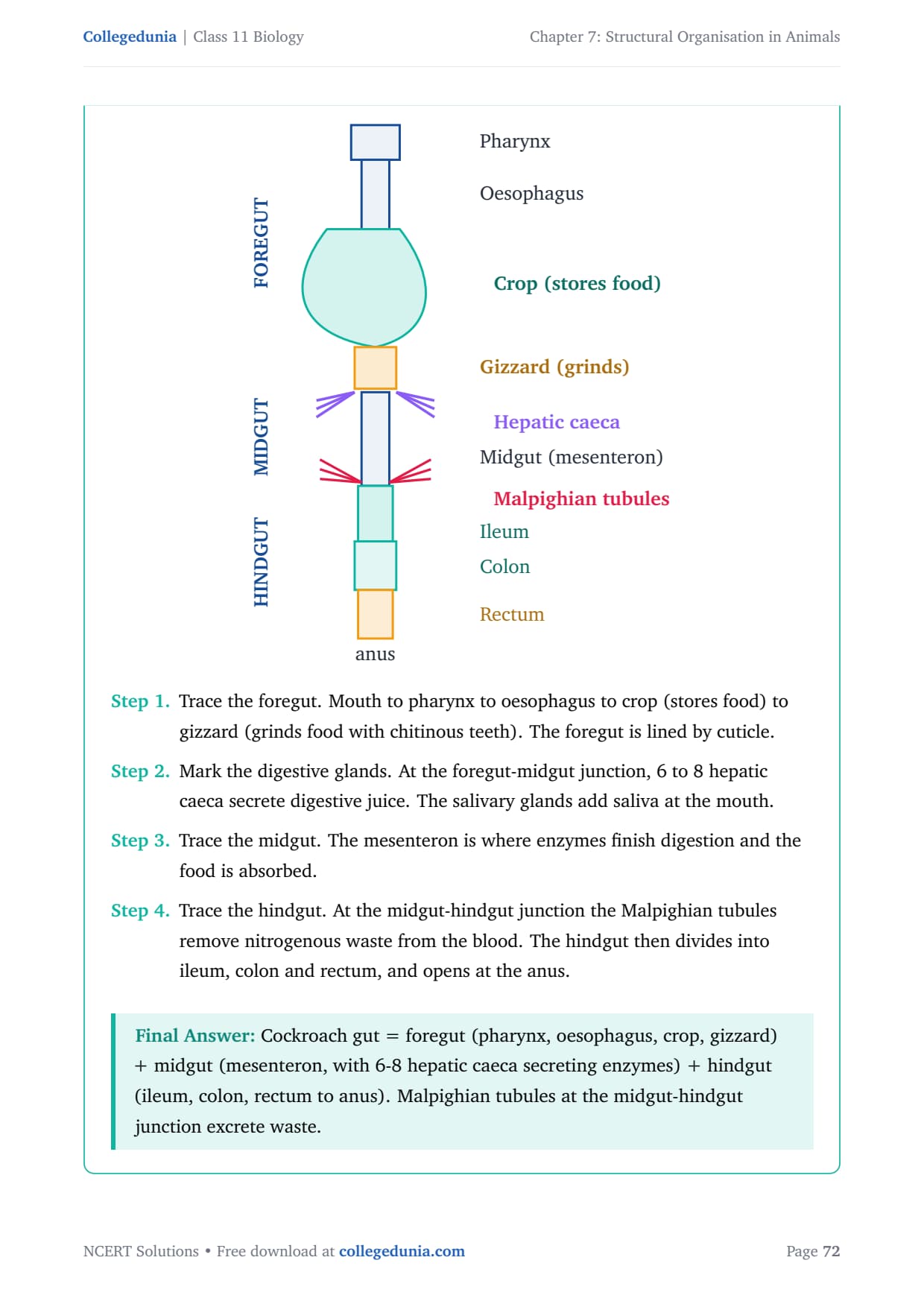
- Cockroach structure: sclerites, hepatic caeca, Malpighian tubules and the moulting of the nymph
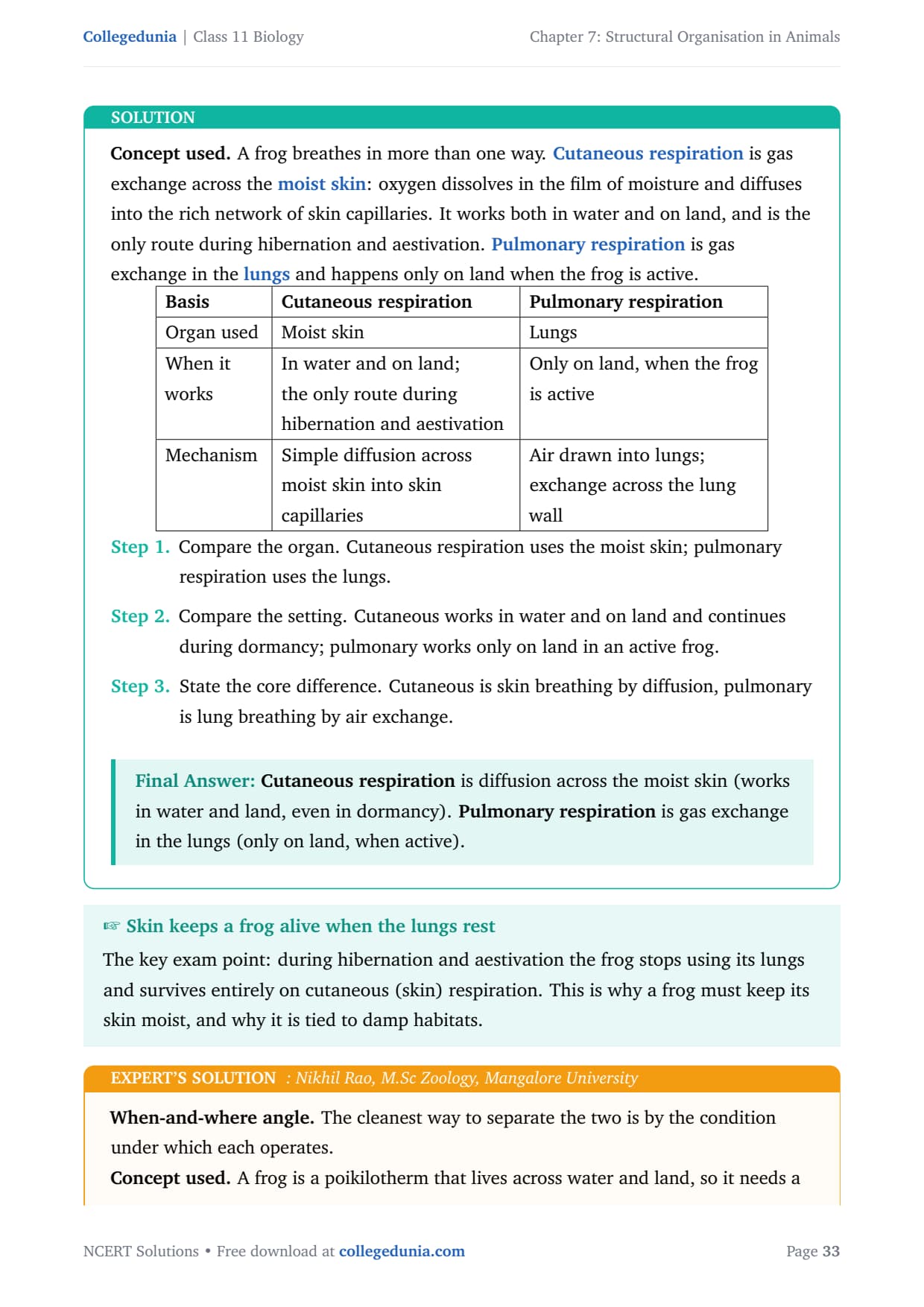
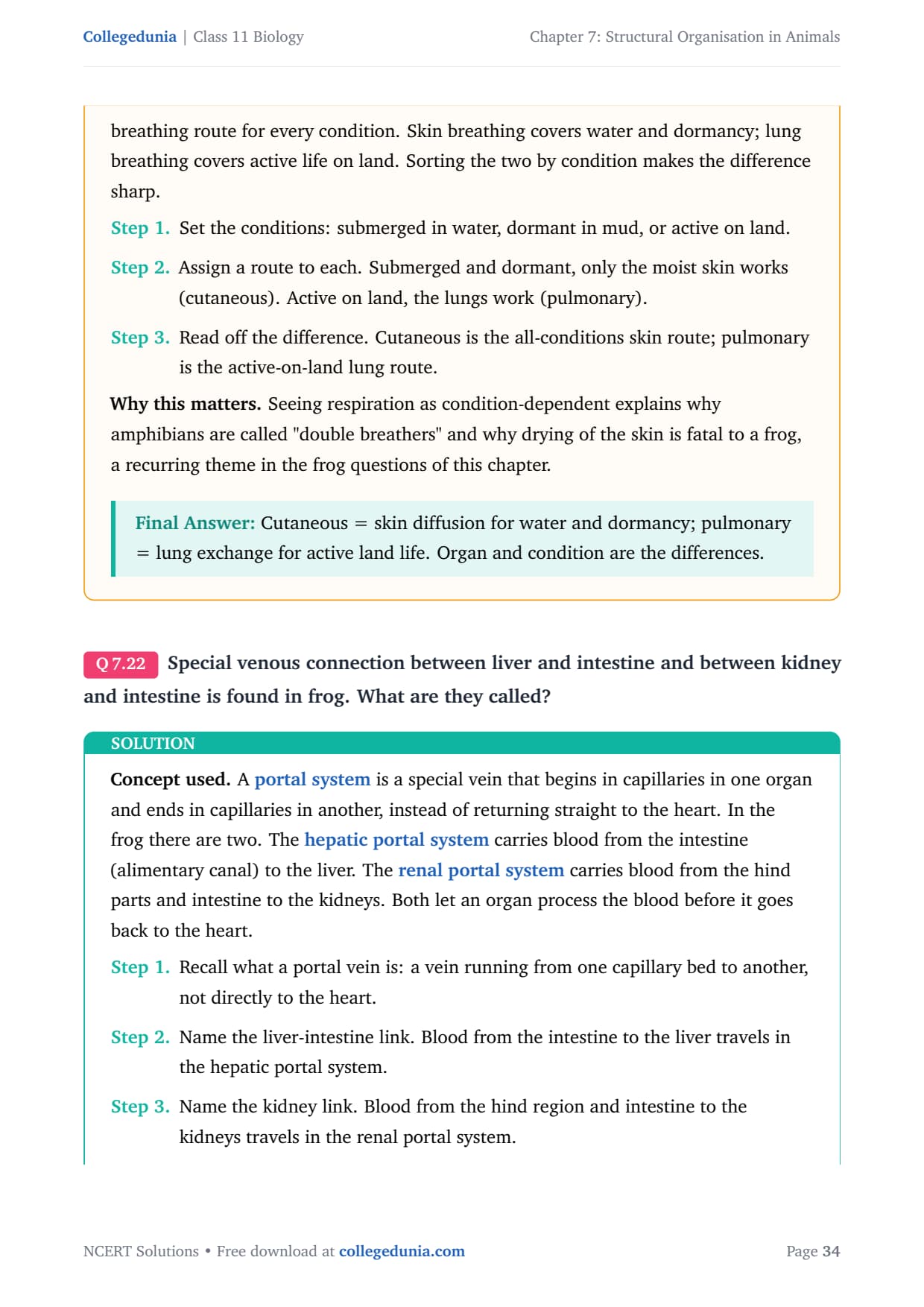
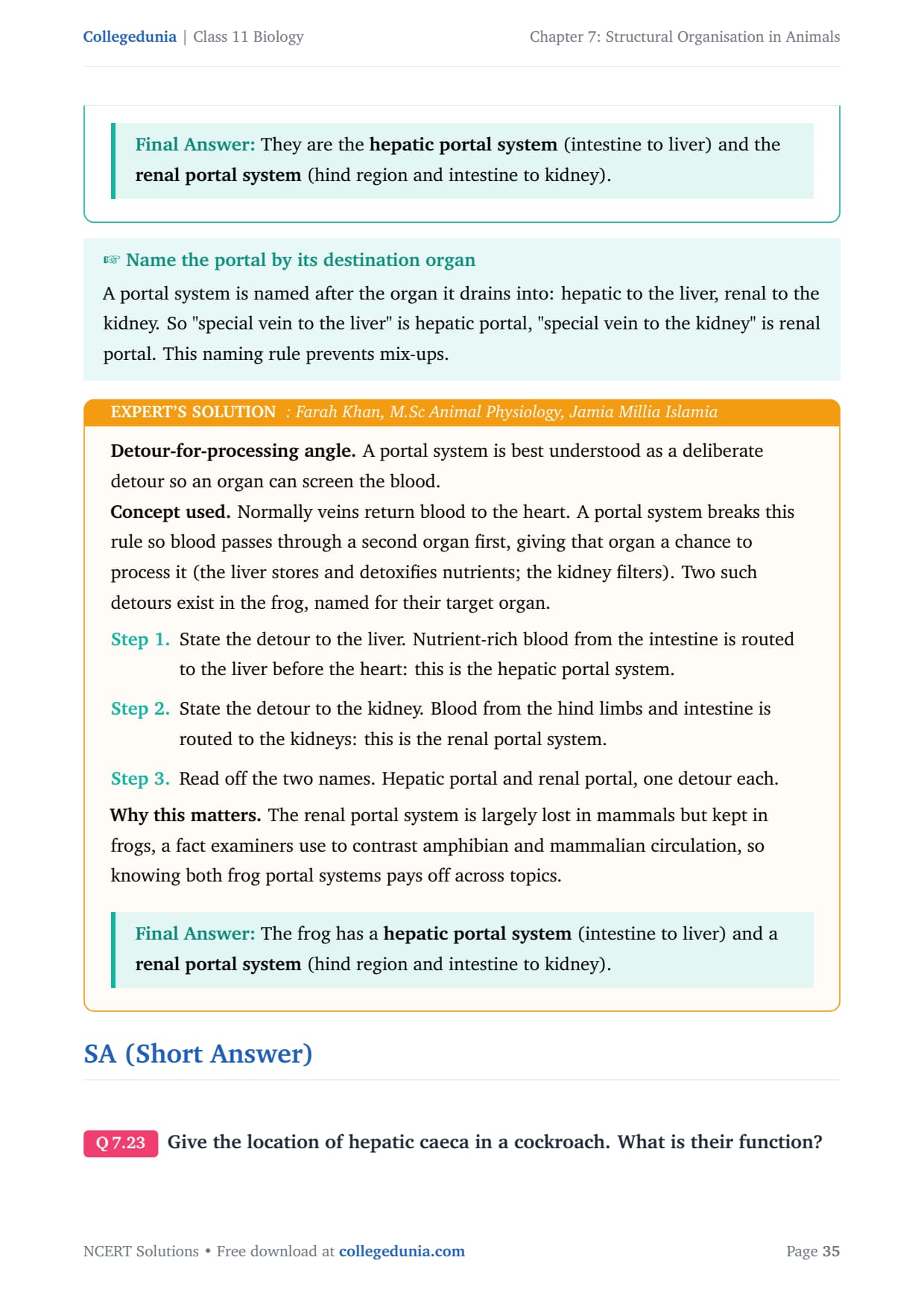
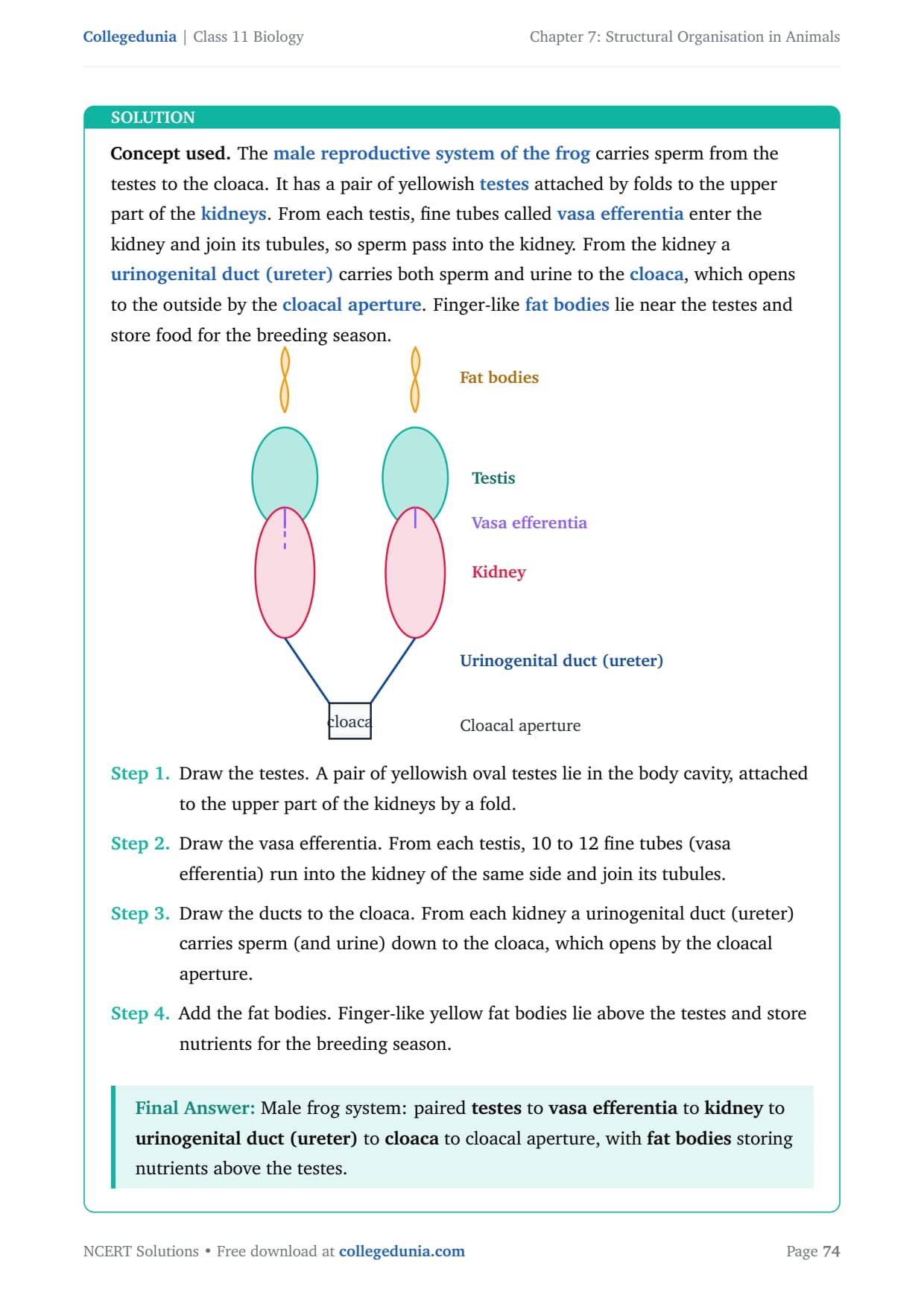
- Frog structure: cutaneous and pulmonary respiration, and the hepatic and renal portal systems
Question Types in the Structural Organisation in Animals NCERT Exemplar
Class 11 Biology Exemplar chapters use four question types, and each one carries a different demand. The MCQ set looks easy until an option turns on a limiting word such as only or single, while the Long Answer set asks you to describe a full structure such as the digestive system of the cockroach. The Short Answer questions are the largest block here by a wide margin, and they are where most marks are won or lost, because they reward a precise structural detail and punish a vague one. The table below shows how the 47 questions split.
| Question Type | Count | What It Tests |
|---|---|---|
| MCQ (single correct) | 9 | Precise reading of tissue types and limiting words like only |
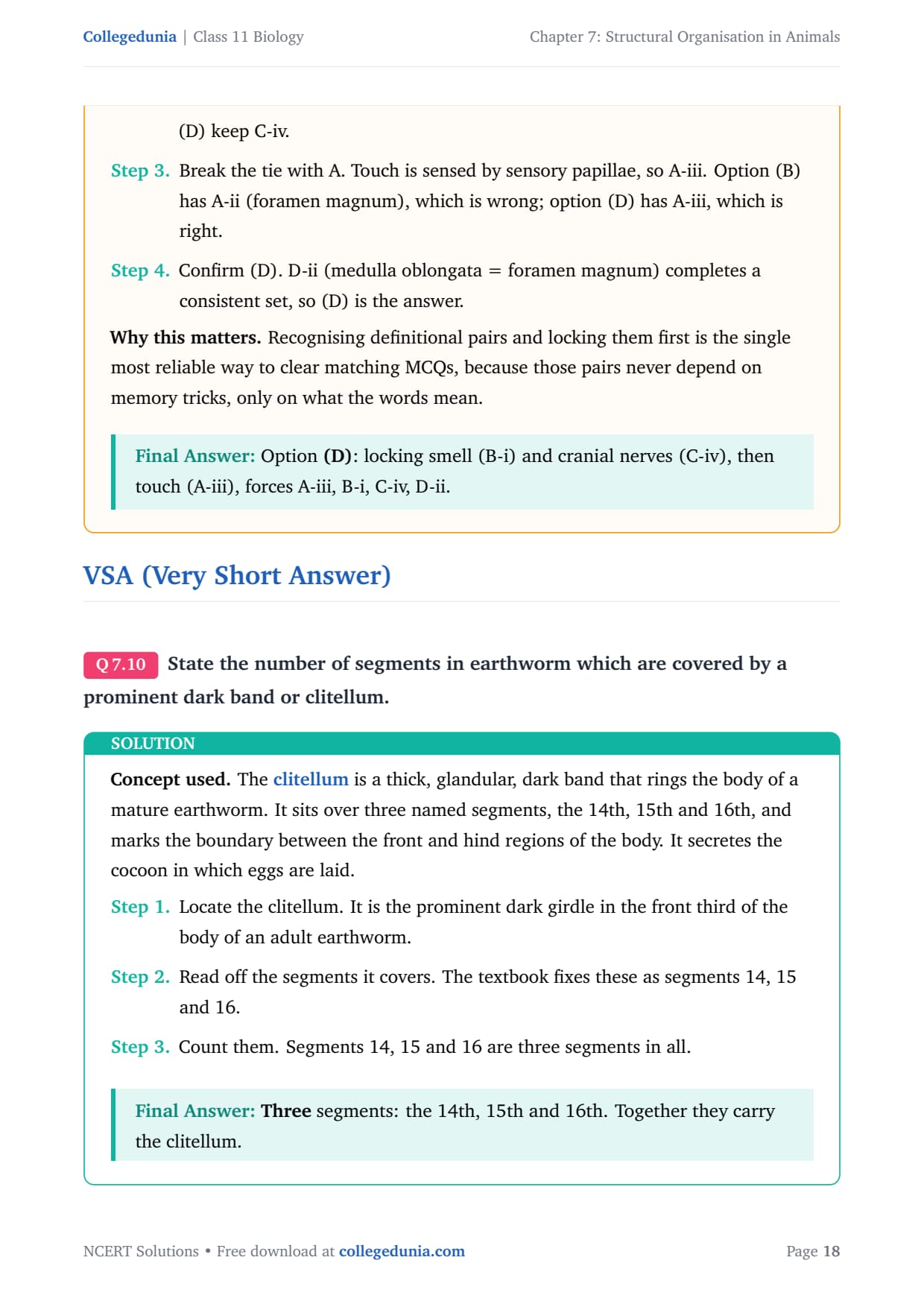
| VSA (Very Short Answer) | 13 | One-line facts such as clitellum segments and cell junctions |
| SA (Short Answer) | 20 | Tying an earthworm, cockroach or frog structure to its function |
| LA (Long Answer) | 5 | Describing a whole system such as cockroach digestion |
Why Blood Is a Connective Tissue and Other Structure to Function Traps
The hardest questions in this chapter are not about naming a structure at all. They ask you to decide which tissue or which job a structure belongs to, and the Exemplar builds several problems around the traps in that decision. The one that catches the most students is blood, which does not look like a tissue yet is grouped with bone and cartilage. Learn these as rules and a large share of the chapter answers itself.
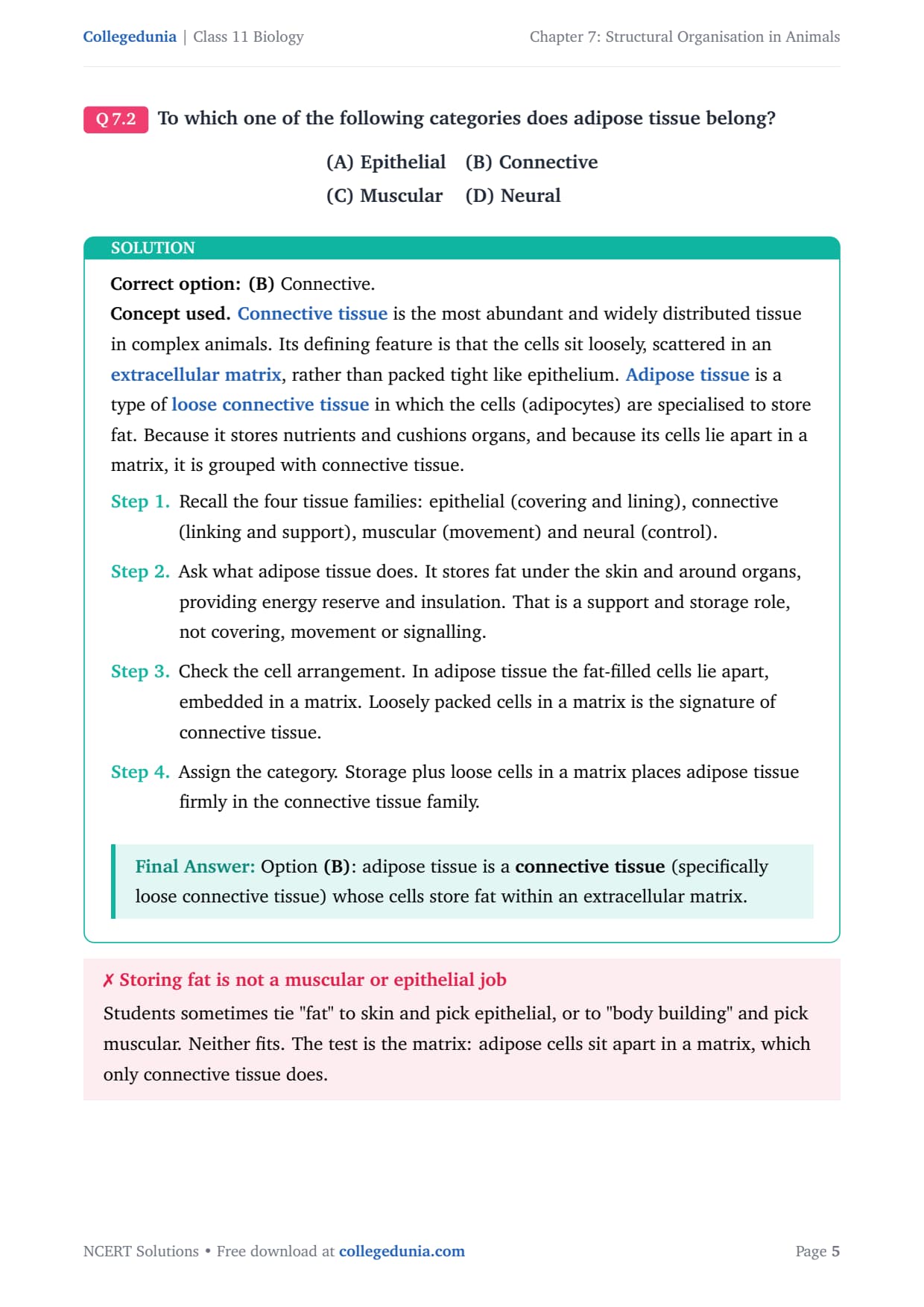
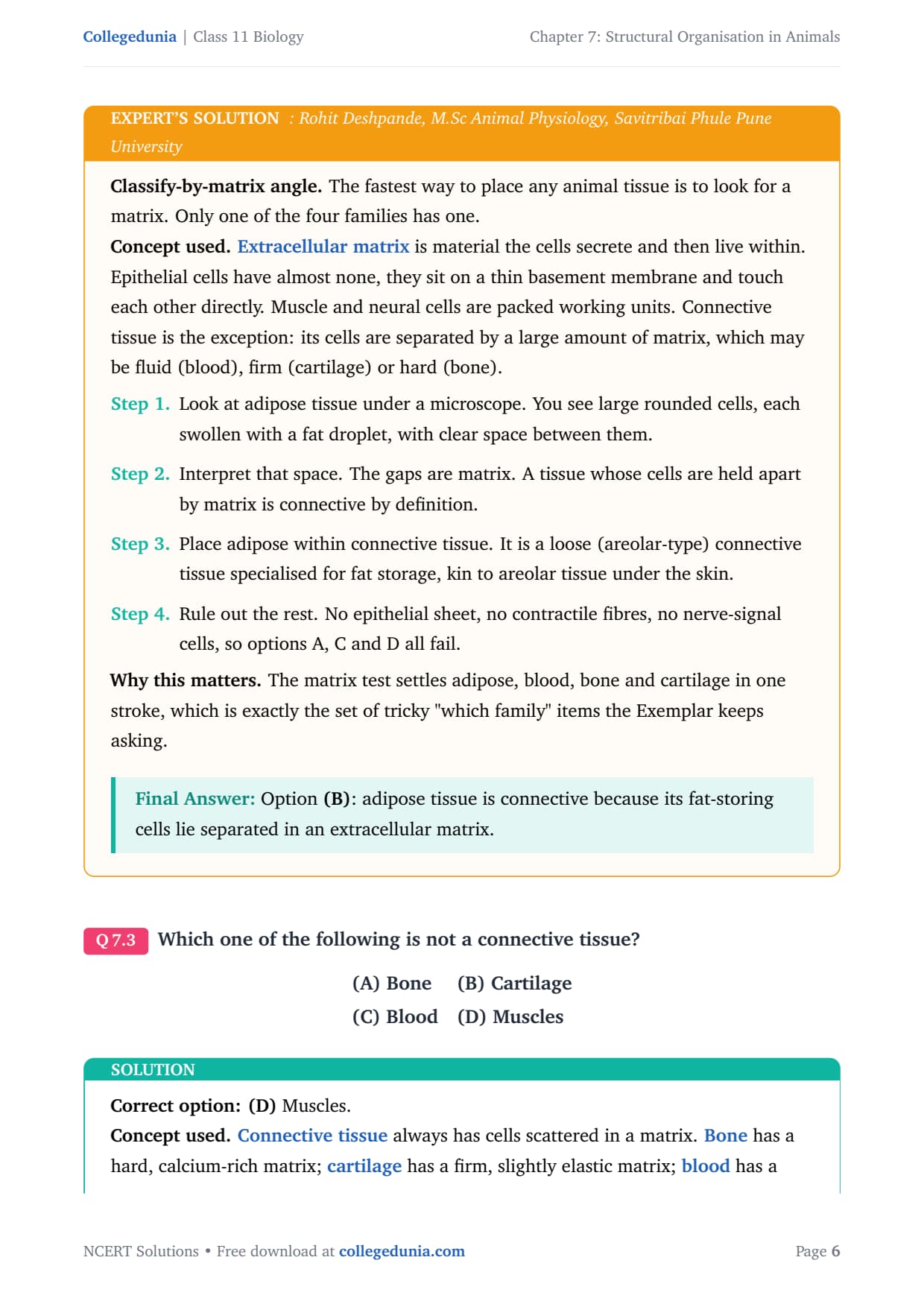
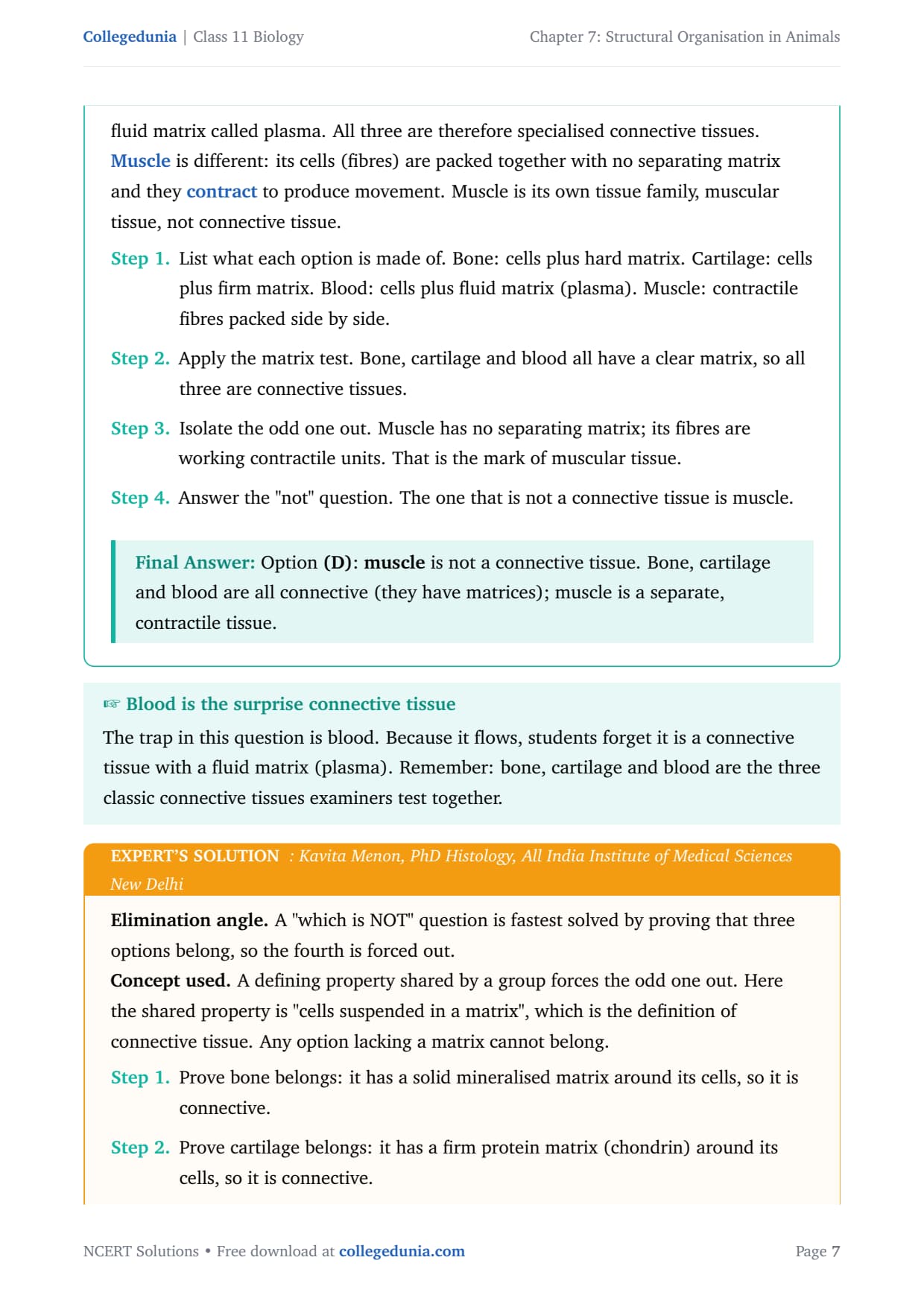
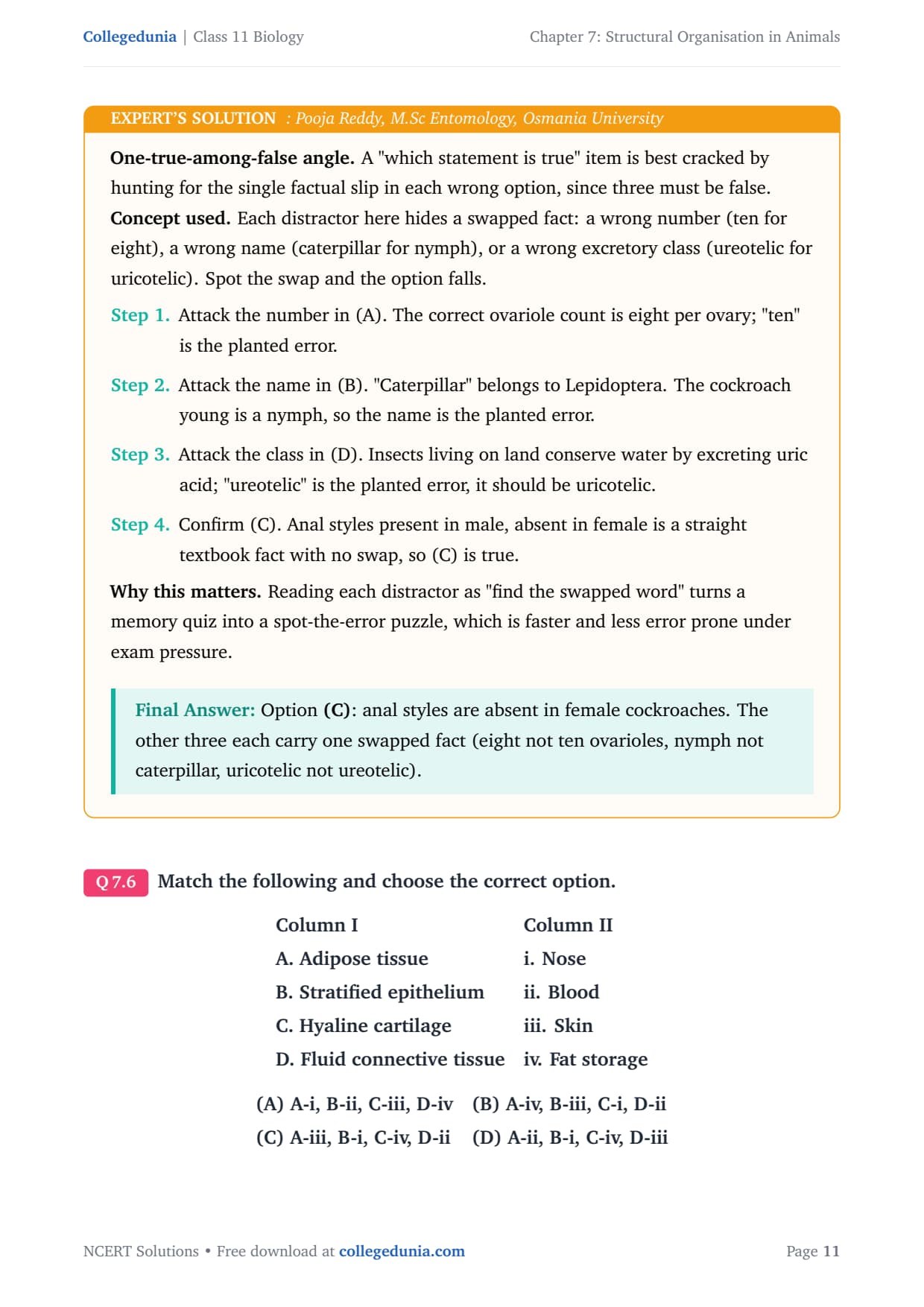
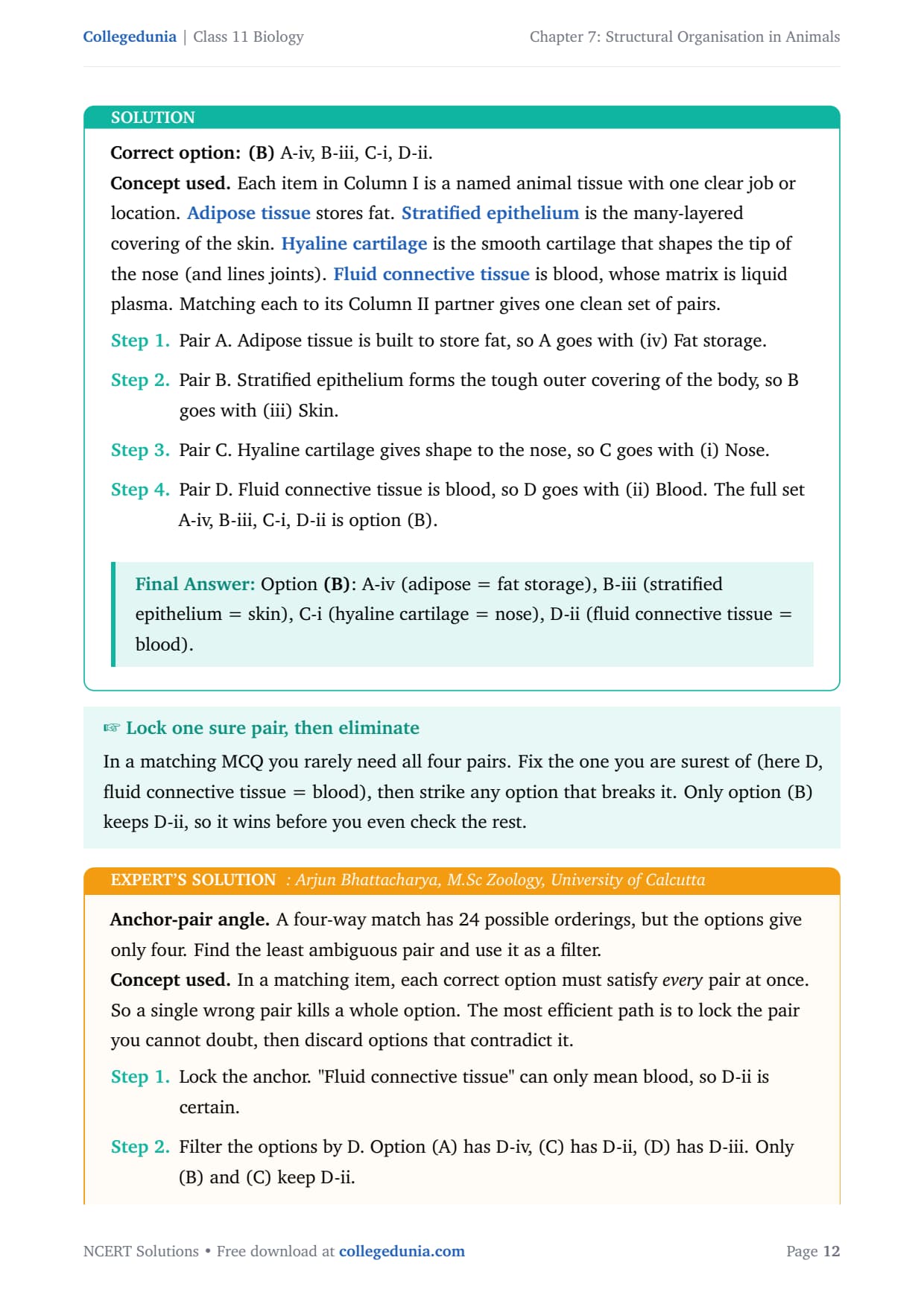
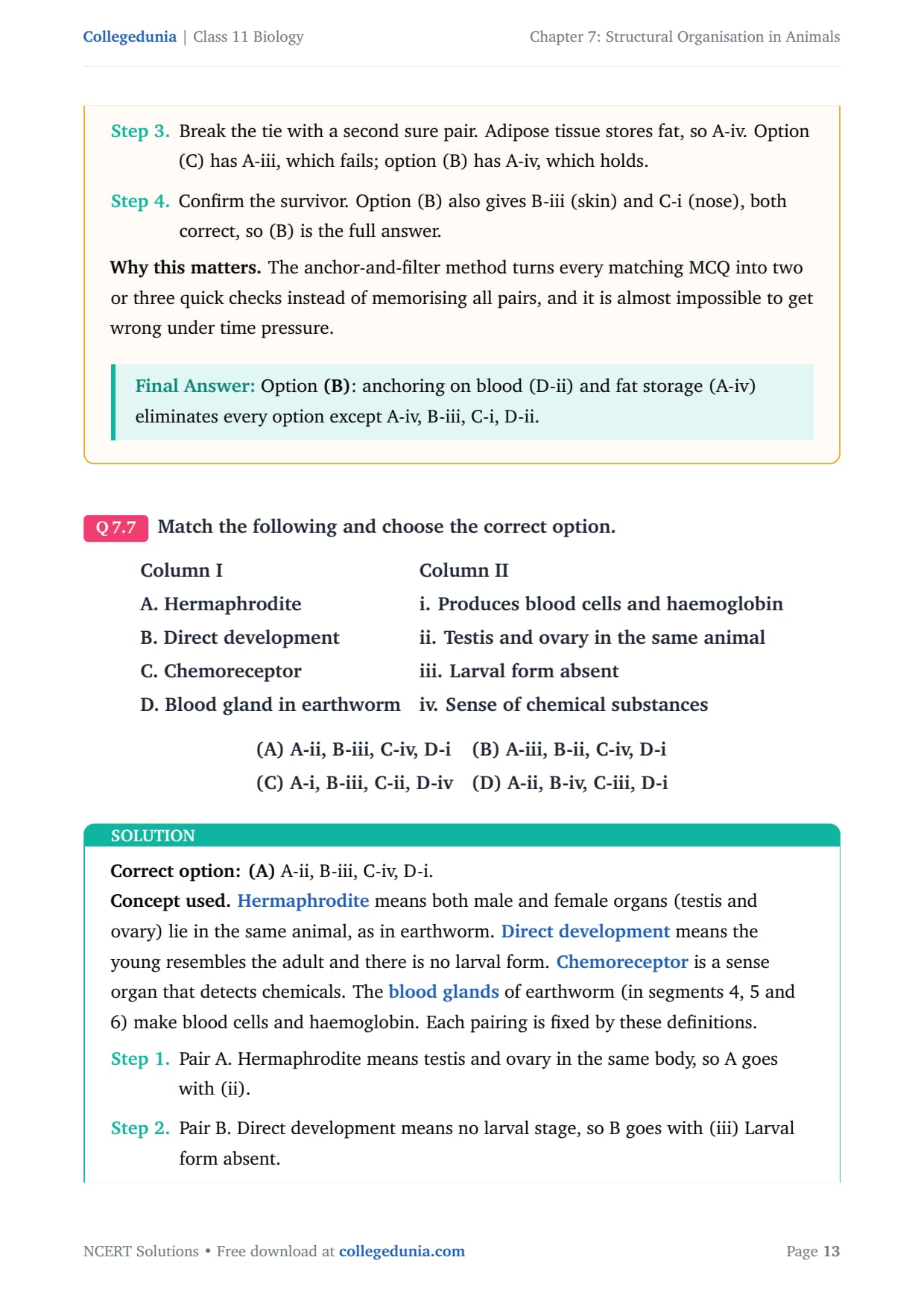
- Blood is connective tissue because of its matrix: its cells sit apart in a fluid matrix called plasma, and the matrix test, not the appearance, is what places any tissue as connective
- Adipose tissue stores fat and is still connective: fat is not an epithelial or muscular job, since the cells lie separated in a matrix, which only connective tissue does
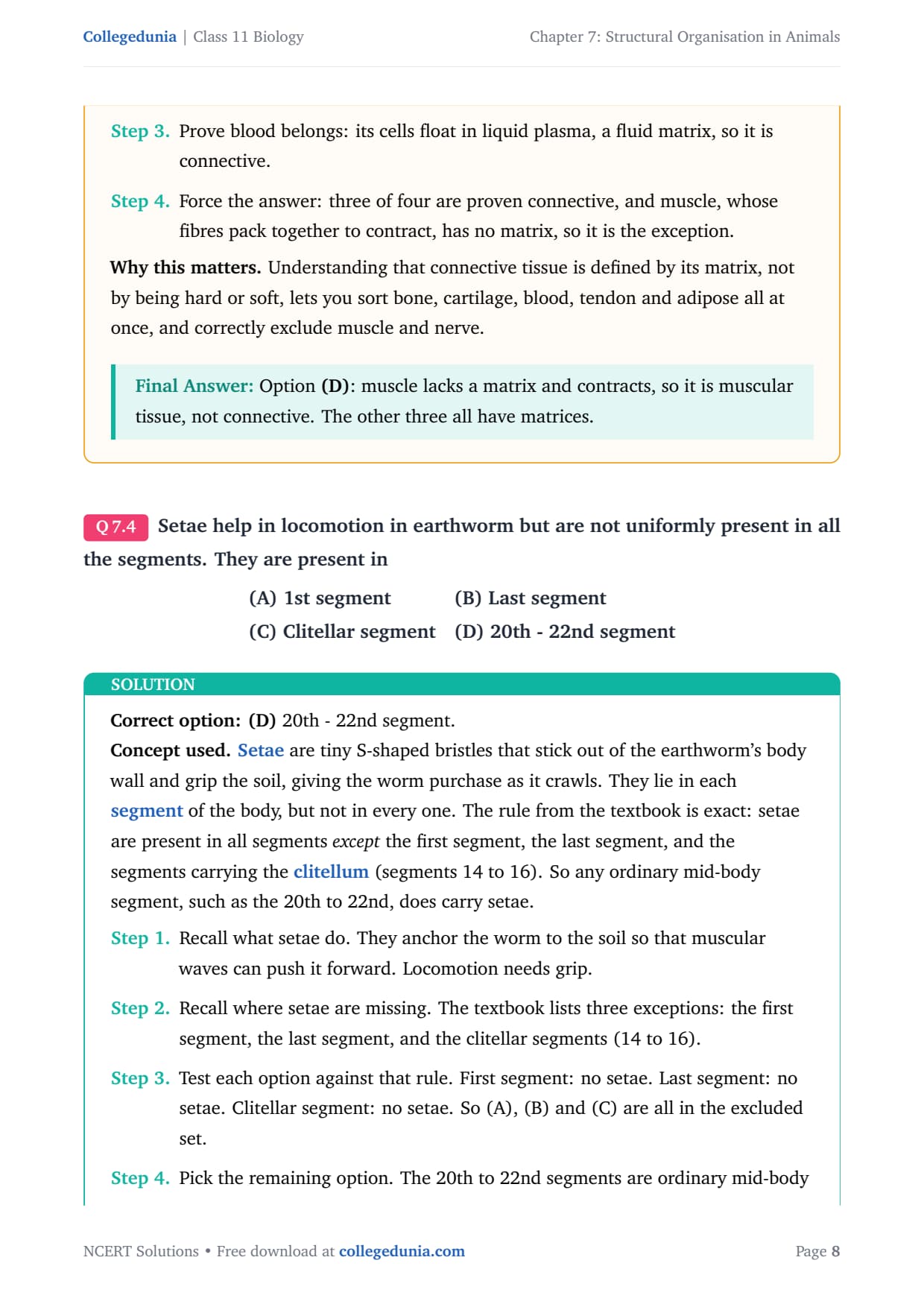
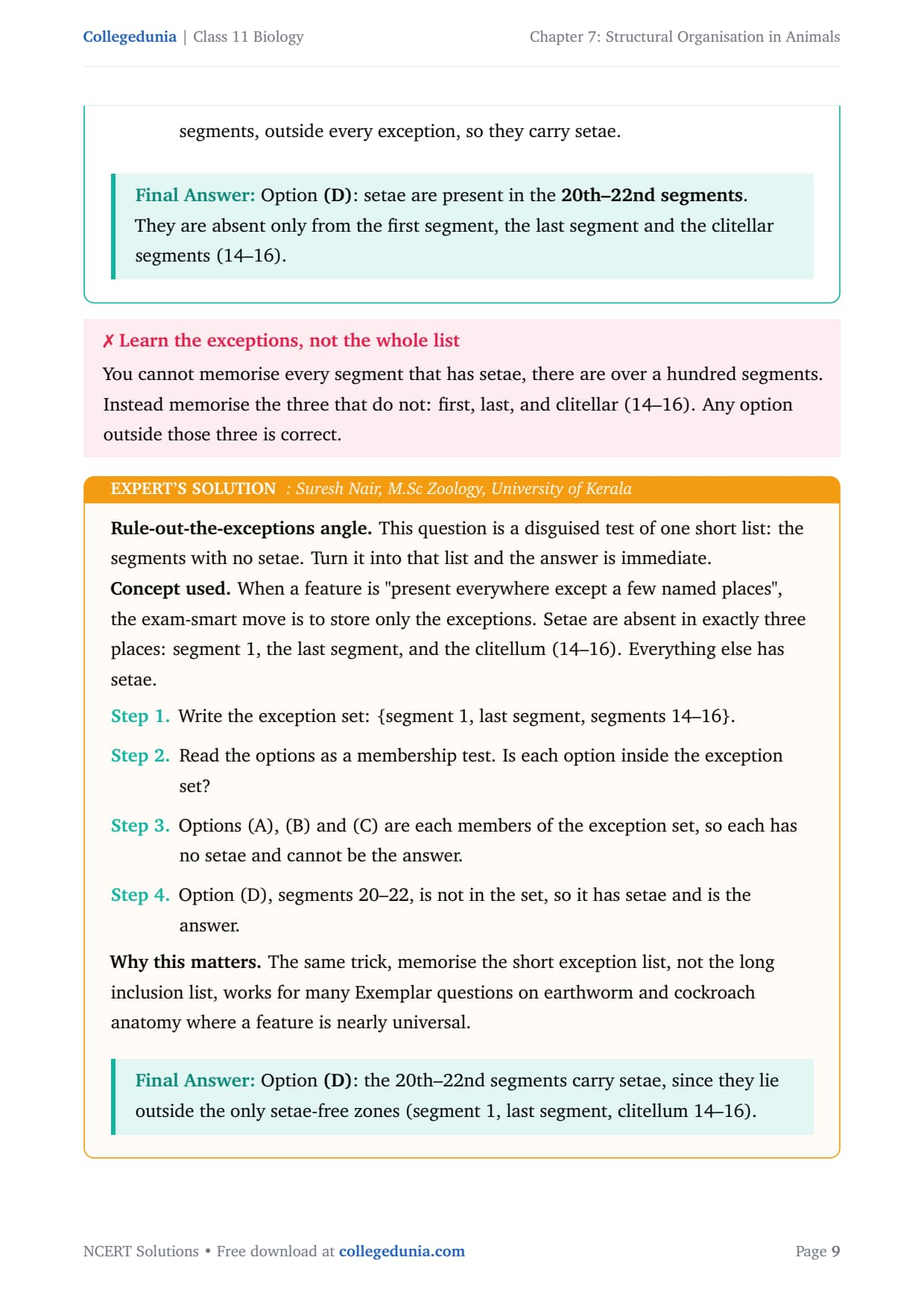
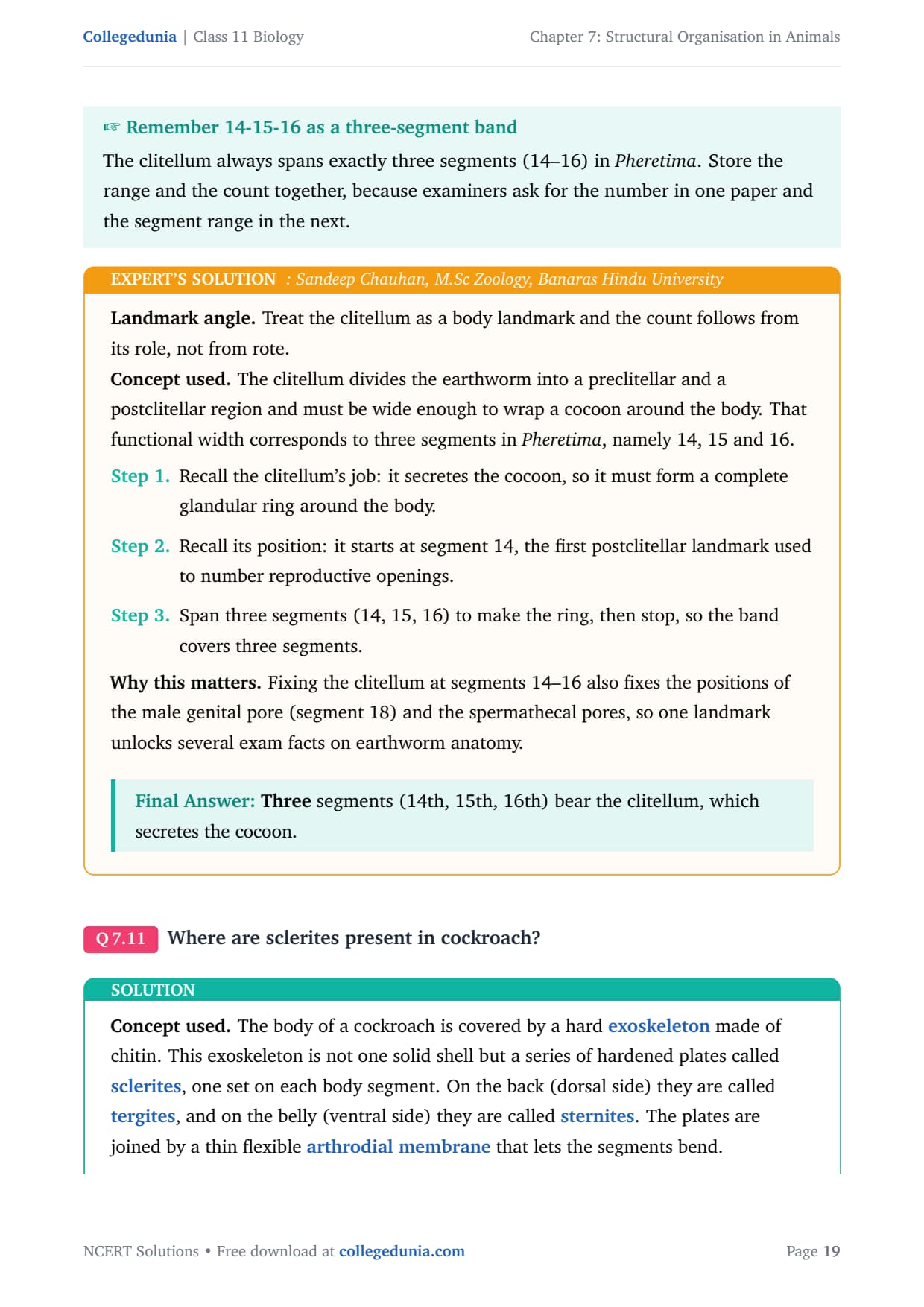
- Setae skip three segments: instead of learning every segment that has setae, learn the three that do not, the first, the last and the clitellar segments 14 to 16
- Many cells is not a tissue: tissue-level organisation needs coordination, not just number, so a sponge with thousands of cells still has no true tissues
In this chapter the matrix, not the look of a cell, decides which tissue it is. A student who calls blood a fluid rather than a tissue, or ties fat to the skin, has read the appearance and missed the rule. Each answer in the PDF states which feature is doing the work and why the tempting choice is not it.
Common Mistakes Students Make in Structural Organisation in Animals
The Exemplar plants wrong tissue groups and limiting words on purpose. Four errors catch most students in this chapter, and each is flagged in the PDF at the exact question where it appears. Learning to spot them early saves marks across the whole unit, because the same reasoning returns in every question that asks you to match a structure to its function.
- Fat and blood placed in the wrong tissue: both belong to connective tissue because their cells lie apart in a matrix, not to epithelial or muscular tissue as their appearance might suggest.
- Limiting words only and single: only circular muscles forgets the longitudinal layer, and a single genital pore forgets that there is a pair. Read such words with suspicion and verify the count.
- Number mistaken for tissue: thousands of cells do not make a tissue. Tissue needs coordinated cells, so sponge cells that work alone do not qualify.
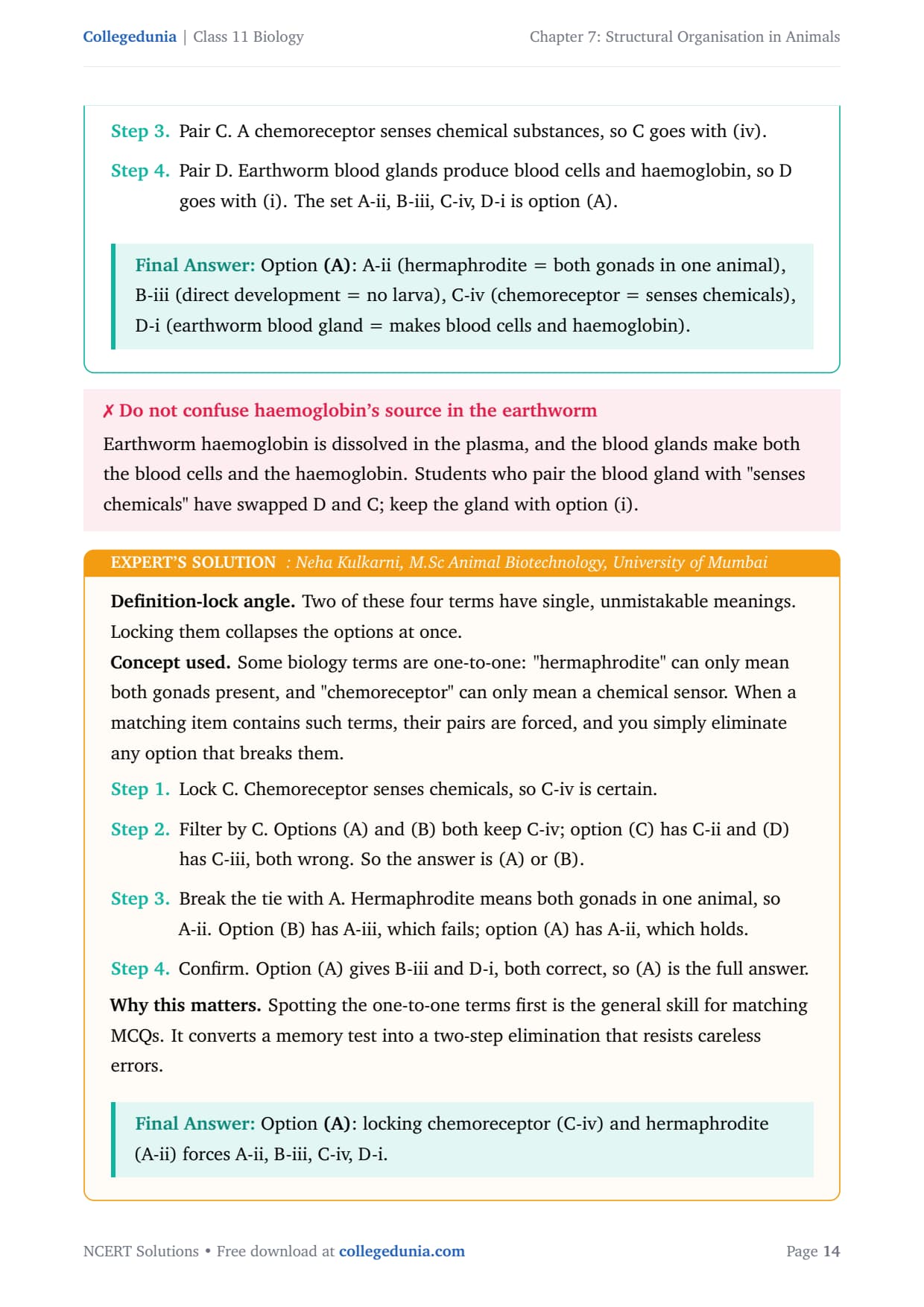
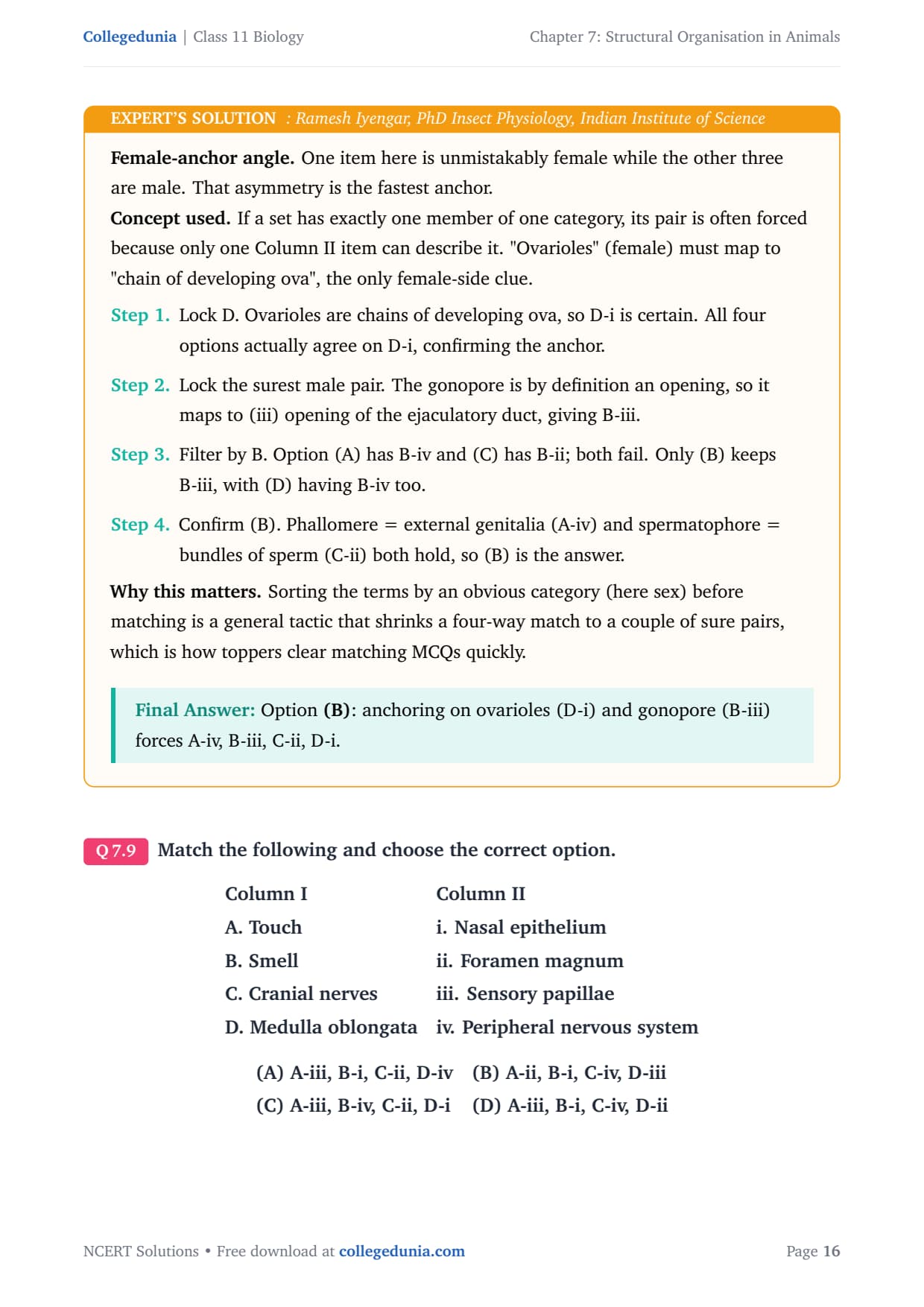
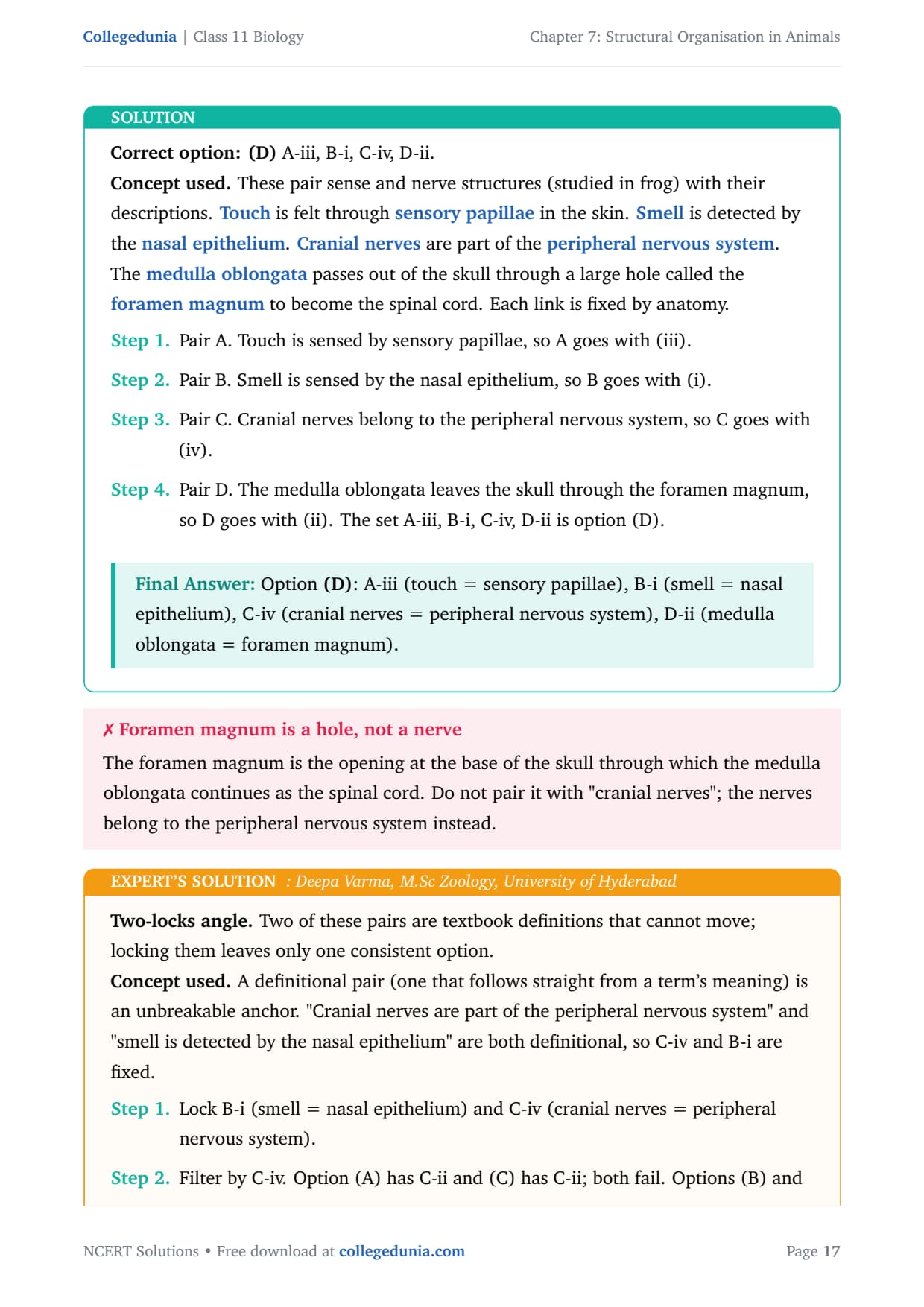
- Foramen magnum treated as a nerve: it is the opening at the base of the skull through which the spinal cord passes, not a cranial nerve.
How the Exemplar Steps Up from the Class 11 Biology Textbook
The textbook gives you a description and asks you to state it back. The Exemplar gives you a structure and asks you to explain the job it does, which is a different skill and the one that boards and NEET actually test. This is why students who only read the animal descriptions feel the Exemplar is unfair. It is not harder in content, it is harder in the way it asks.
The question that groups blood with bone shows the gap clearly. The textbook lists blood under connective tissue, so a quick reader memorises the line without seeing why. The Exemplar hands you blood, a flowing red fluid, and asks which tissue it is. To answer you have to apply the matrix rule, that connective tissue is defined by cells held apart in a matrix, and plasma is exactly that matrix. The same move happens with the setae question, where the exceptions rather than the list are the key, and with the earthworm against tapeworm comparison, where you must look at whether internal organs repeat with the rings. Working these builds judgement, not recall, which is exactly what Chapter 7 is meant to leave you with.
How to Use These NCERT Exemplar Solutions for Boards, NEET and CUET
Attempt each question with a rough labelled sketch of the animal or tissue beside you before you open the solution. This chapter rewards the sketch more than the paragraph, because the answer becomes clear once the structure is placed correctly. Read the question, mark the part on your own diagram, and only then check it against the PDF. The gap between your line and the model answer is where the marks live.
- Boards: the Short Answer and Long Answer sets match the 3 and 5 mark board pattern, especially the cockroach digestive system and the tissue comparison questions
- NEET: work the MCQ and Short Answer sets first, since NEET repeats animal tissues and the anatomy of the frog and cockroach at that level every year
- CUET: the fact-based MCQ and Very Short Answer sets are the closest practice for the domain paper, which favours precise single-term recall of structures
Student Feedback
Students using Collegedunia's Class 11 Biology Exemplar Solutions told us that the tissue-grouping questions and the fine earthworm and cockroach details were the hardest part of this chapter, well above the plain naming questions. Around 7 in 10 said that seeing the blood and adipose questions solved side by side, with the matrix rule named each time, finally made the four tissue types stick after weeks of mixing them up.
Other Resources for Class 11 Biology Structural Organisation in Animals
Collegedunia has the full set of study material for this chapter. Use the Notes for a first read, then the Formula Sheet to lock the tissue and animal landmarks, and keep the NCERT Solutions open for the textbook exercise alongside the Exemplar.
Also Check:
- NCERT Solutions for Class 11 Biology Chapter 7
- Class 11 Biology Chapter 7 Notes
- Class 11 Biology Chapter 7 Formula Sheet
- Class 11 Biology Chapter 7 NCERT Book PDF
- Class 11 Biology Chapter 7 Exemplar Book PDF
NCERT Exemplar Solutions for Other Class 11 Biology Chapters
Each chapter below has the same step-by-step treatment and a free PDF. All 19 chapters have an NCERT Exemplar book chapter behind them, so the list covers every one.
Structural Organisation in Animals Class 11 NCERT Exemplar Solutions FAQs
Ques. How many questions are there in the Class 11 Biology Structural Organisation in Animals Exemplar?
Ans. Chapter 7 has 47 questions. They are split into 9 MCQ, 13 Very Short Answer, 20 Short Answer and 5 Long Answer questions. All 47 are solved in the free PDF on this page.
Ques. Why is blood classified as a connective tissue?
Ans. Connective tissue is defined by cells held apart in an extracellular matrix. In blood the cells, the red and white cells and platelets, are suspended in a fluid matrix called plasma, which fits that definition exactly. So despite being a flowing liquid, blood is grouped with bone and cartilage as connective tissue, and the Exemplar tests this rule rather than the appearance.
Ques. Which segments of the earthworm lack setae?
Ans. Setae are present on most segments but are absent from the first segment, the last segment and the clitellar segments, which are segments 14 to 16. Rather than memorise every segment that has setae, learn these three exceptions, because any option outside them is a segment that does carry setae.
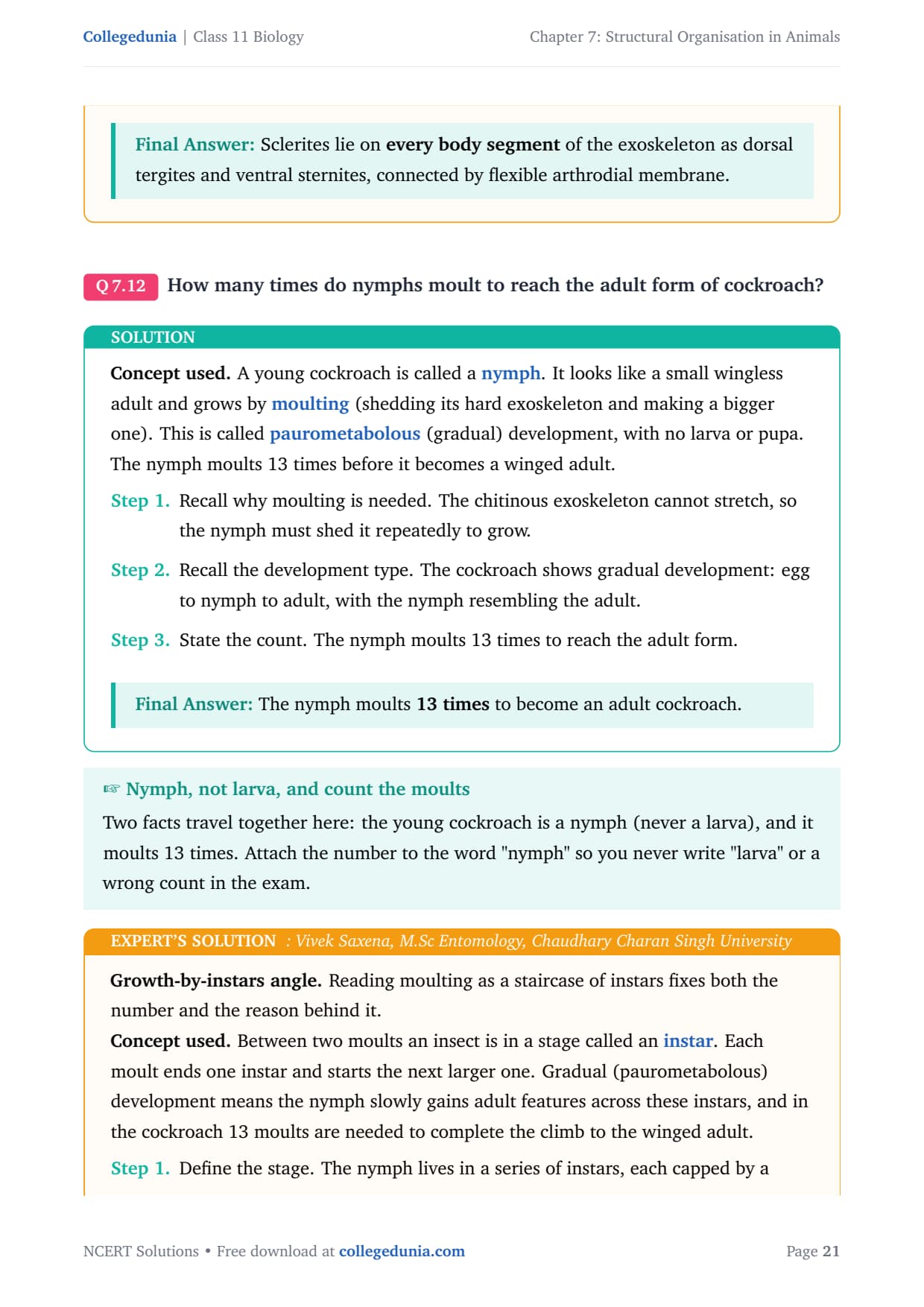
Ques. How many times does a cockroach nymph moult before becoming an adult?
Ans. The cockroach nymph moults about 13 times before it reaches the adult stage. With each moult the wing pads grow larger, and the last moult produces the winged adult. The Exemplar uses this fixed number as a short factual question, so the exact count is worth remembering.
Ques. Is the NCERT Exemplar enough for NEET questions from Structural Organisation in Animals?
Ans. For this chapter it covers the ground well. NEET asks two to four questions a year on animal tissues and the anatomy of the earthworm, cockroach and frog, and they sit at the level of the Exemplar MCQ and Short Answer sets. Work all 9 MCQs and the 20 Short Answers before moving to a coaching module.



Comments