




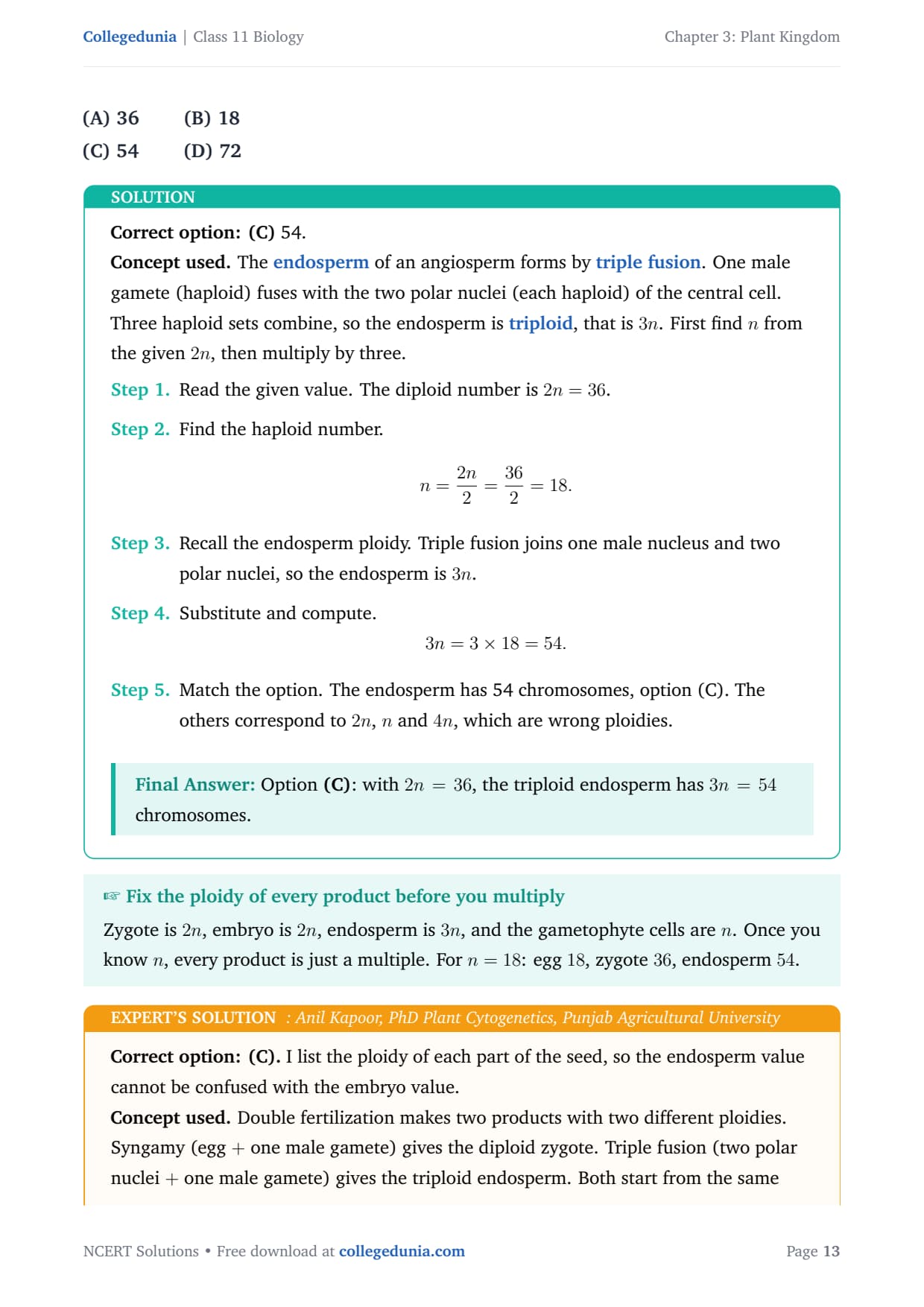
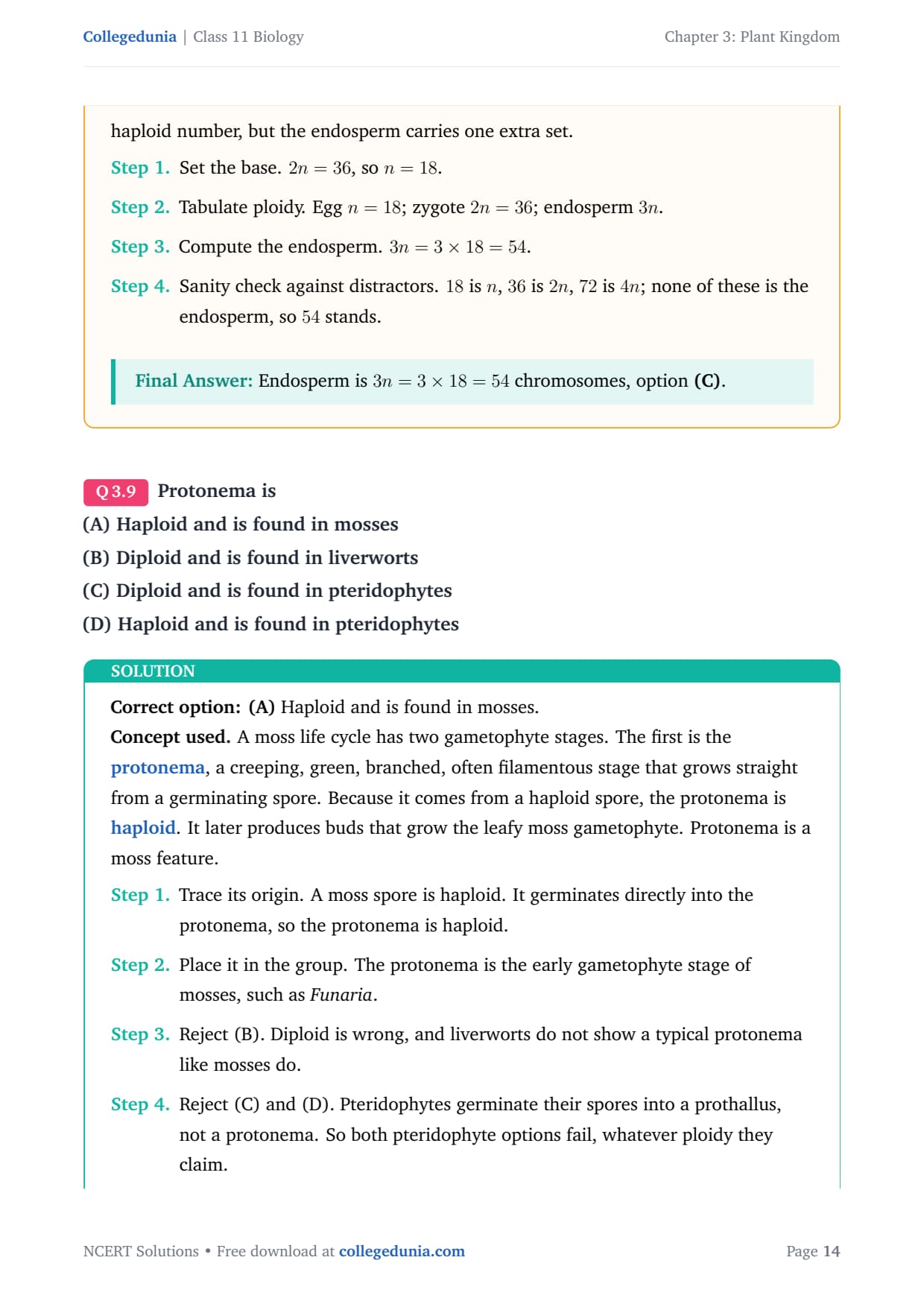
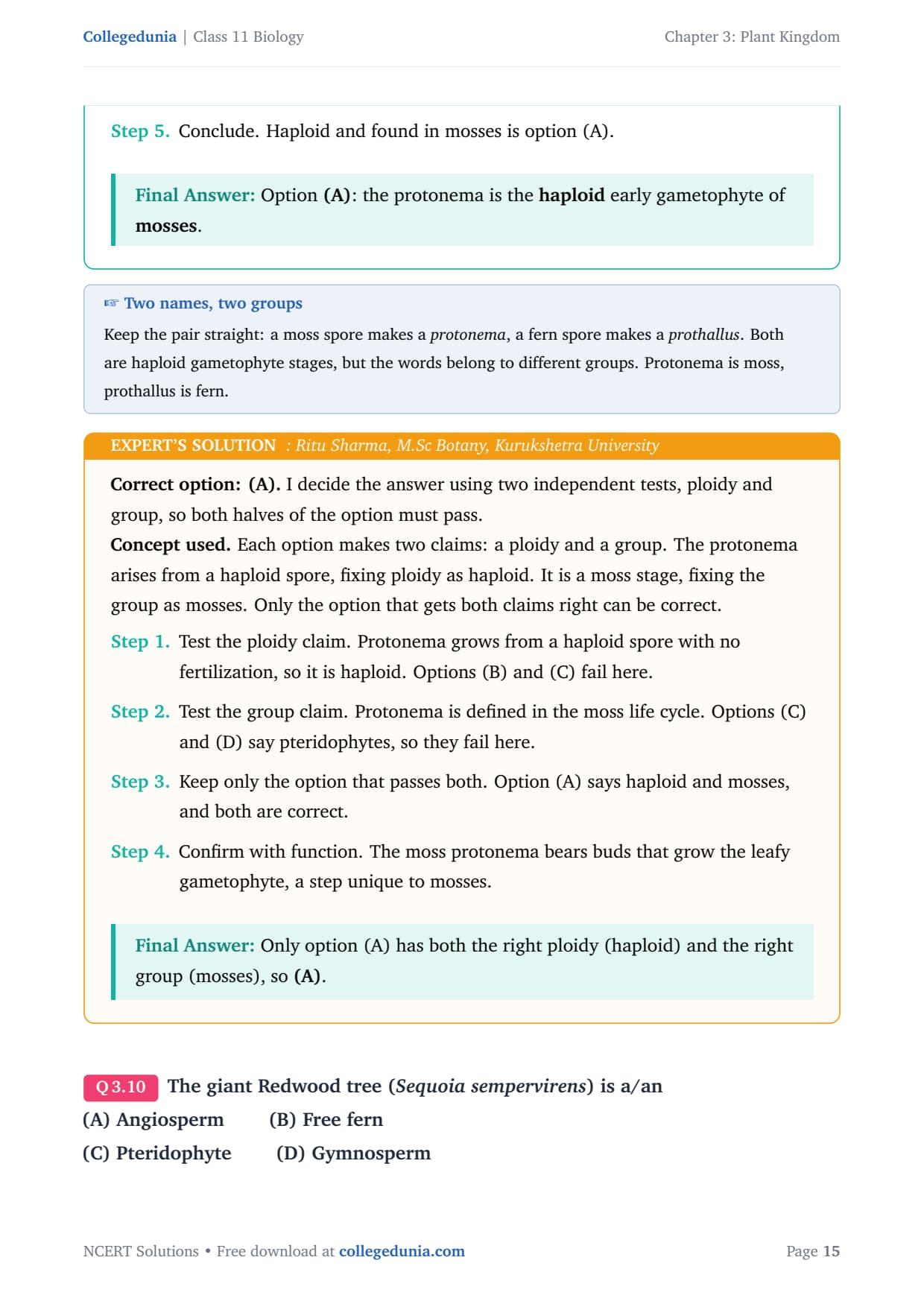
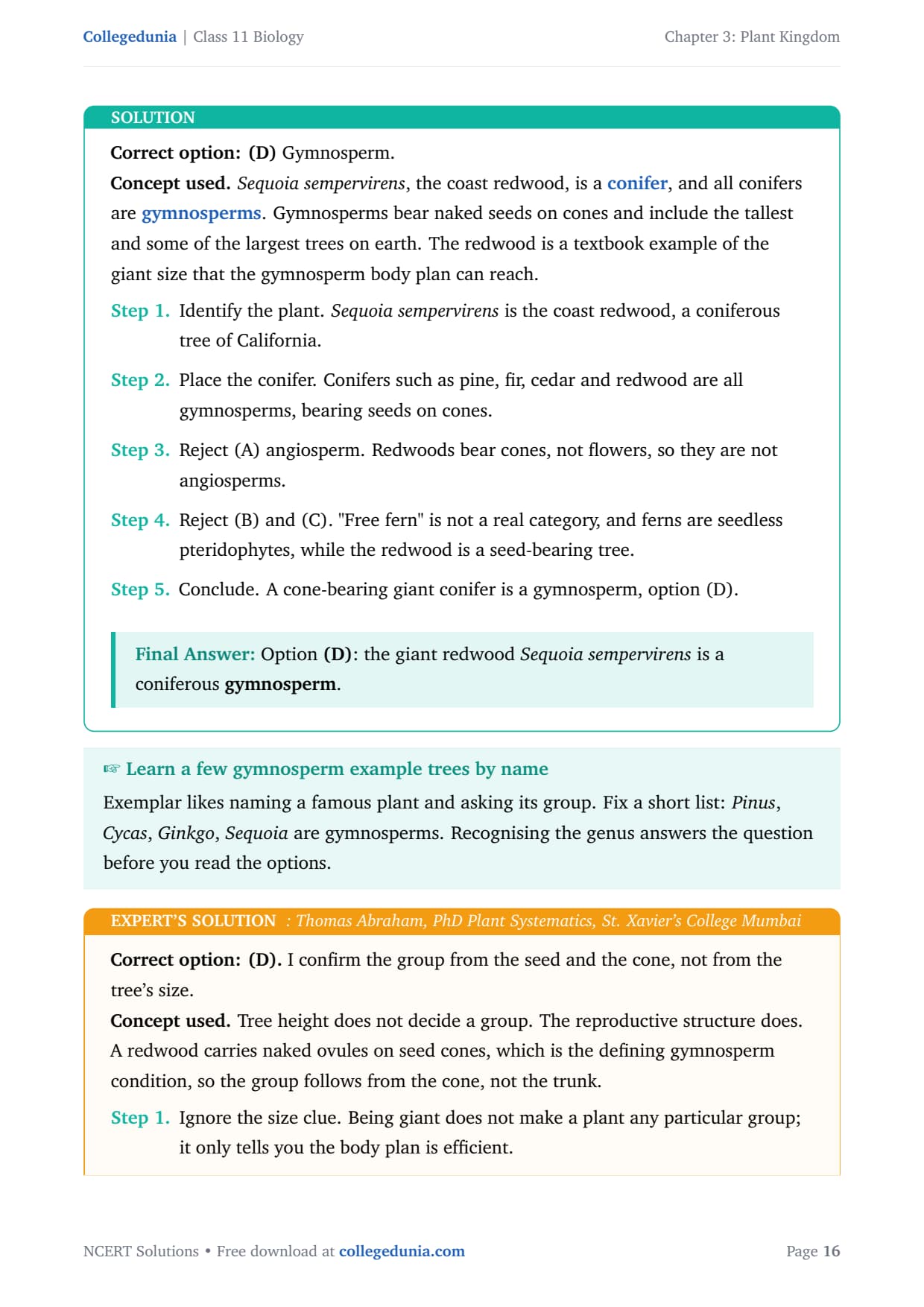
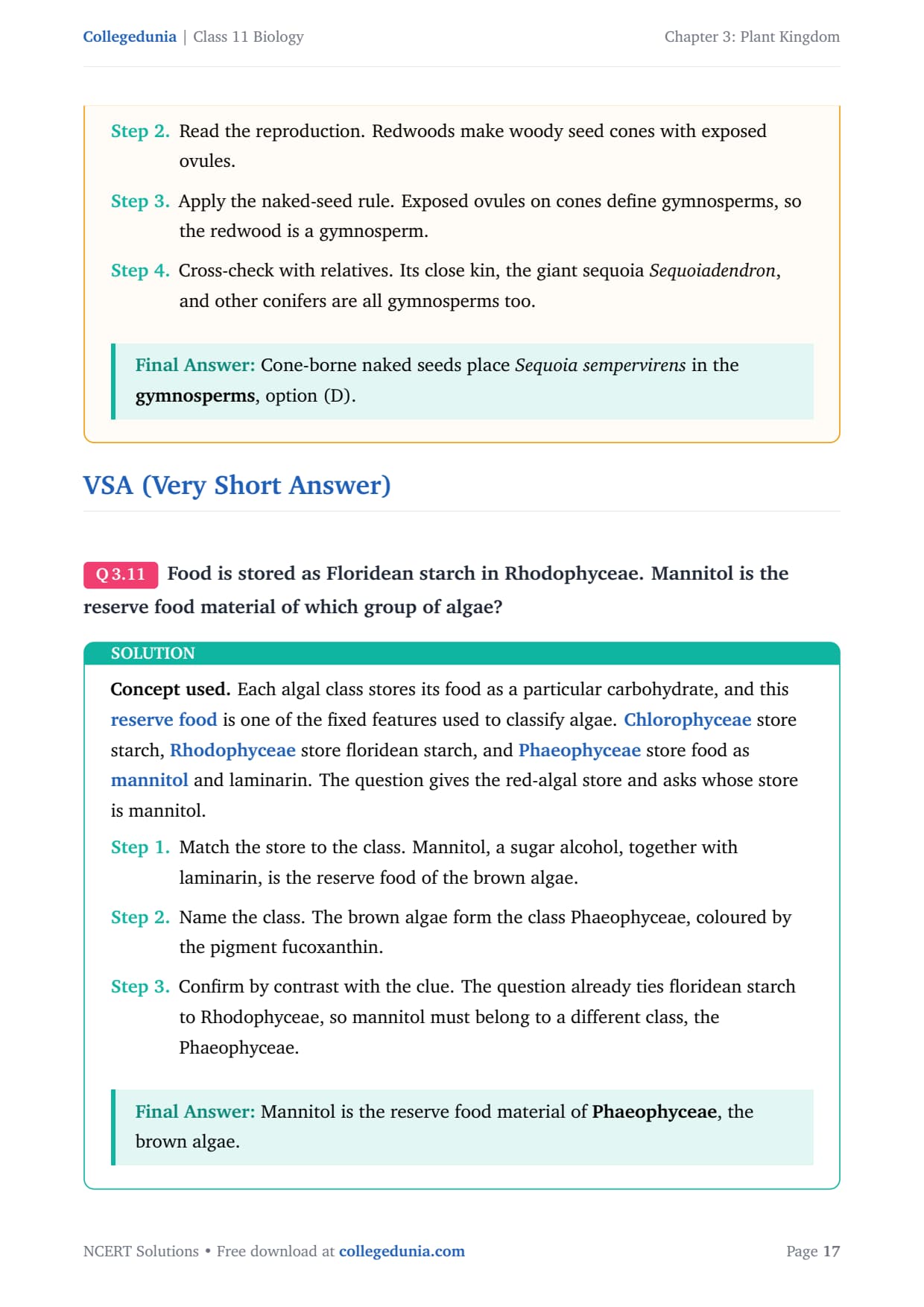
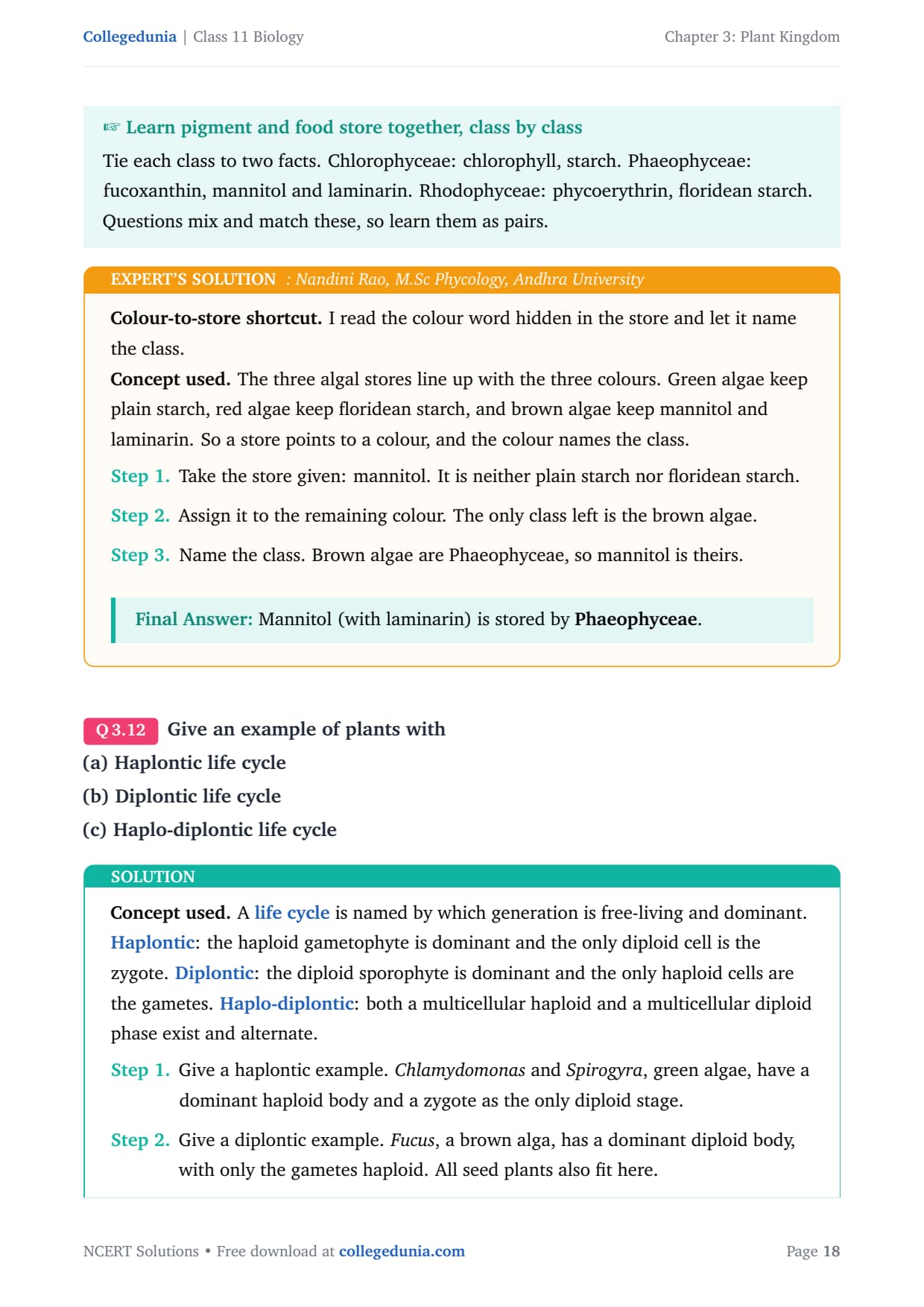
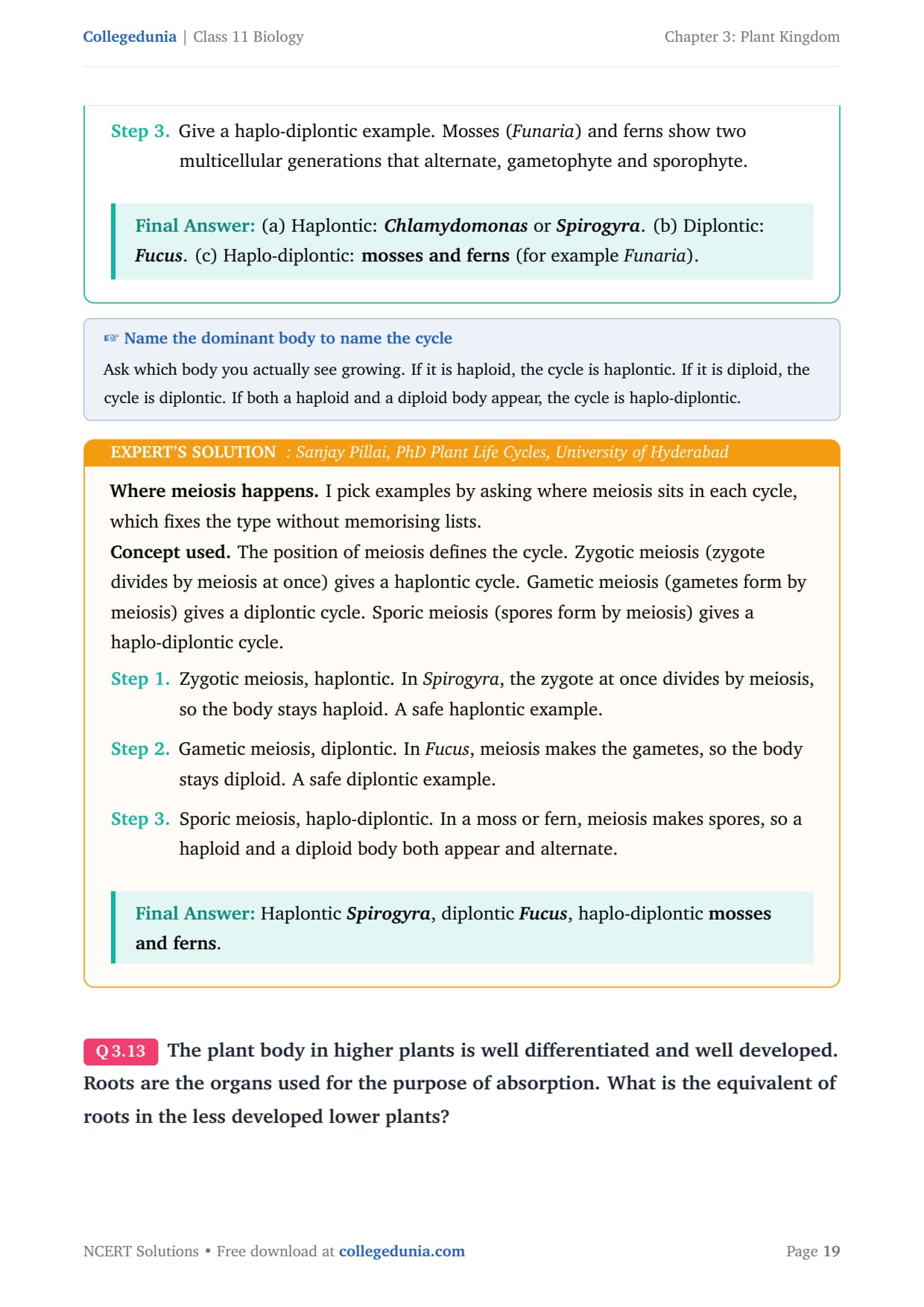
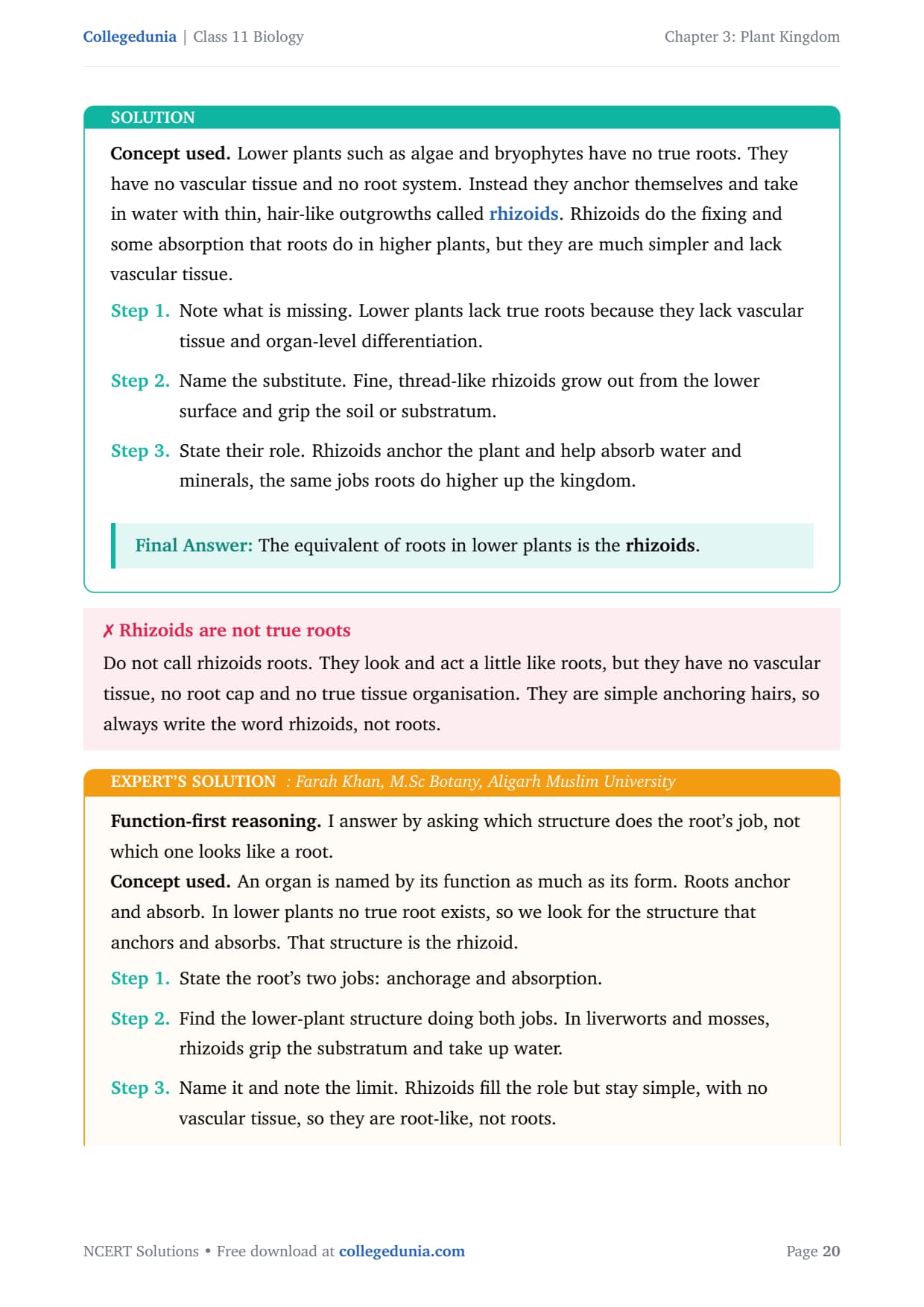
NCERT Exemplar Solutions for Class 11 Biology Chapter 3 Plant Kingdom solve all 29 questions from the Exemplar book. Every MCQ, Very Short Answer, Short Answer and Long Answer problem is answered step by step in the free 49-page PDF, updated for the 2026-27 syllabus.
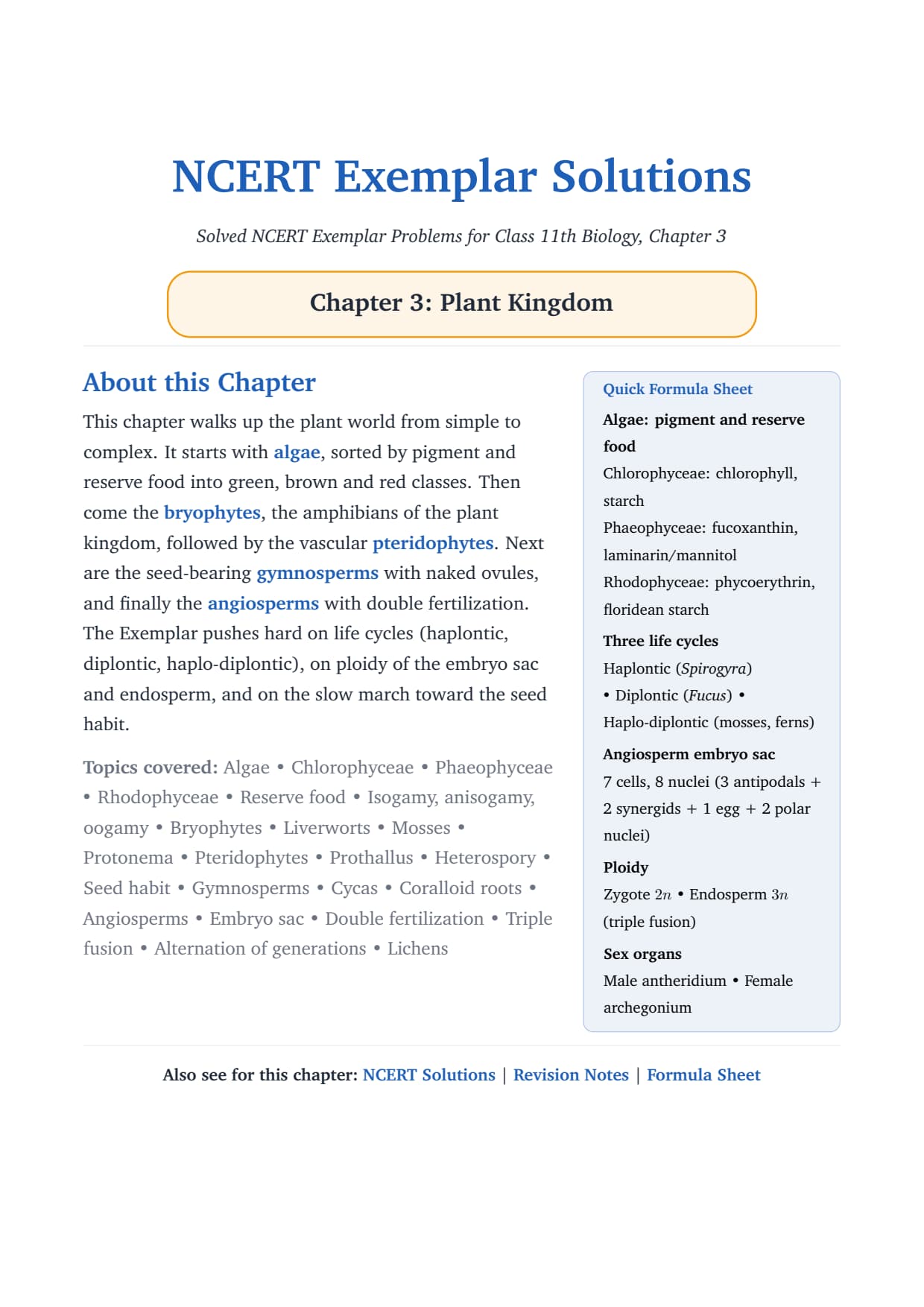
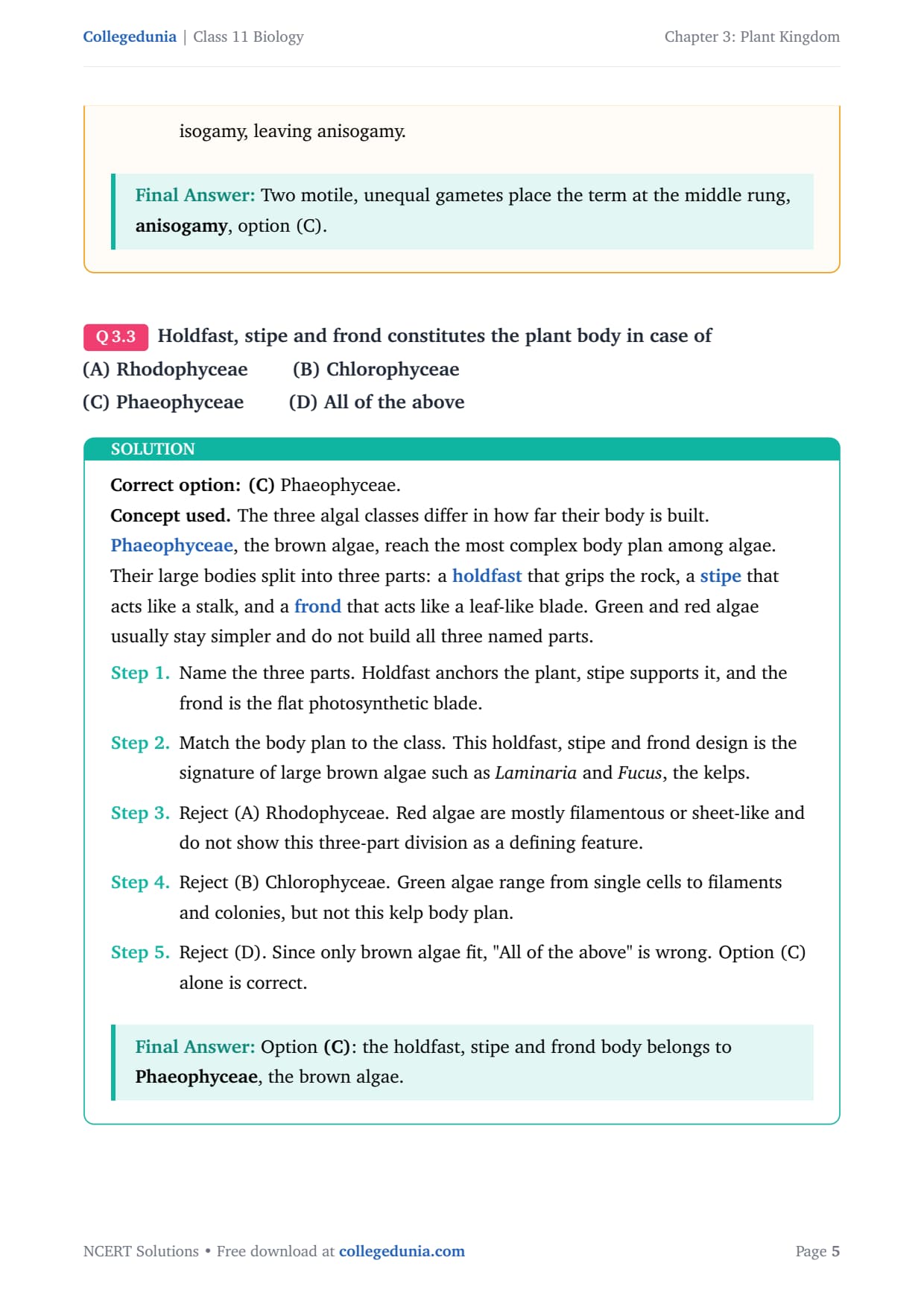
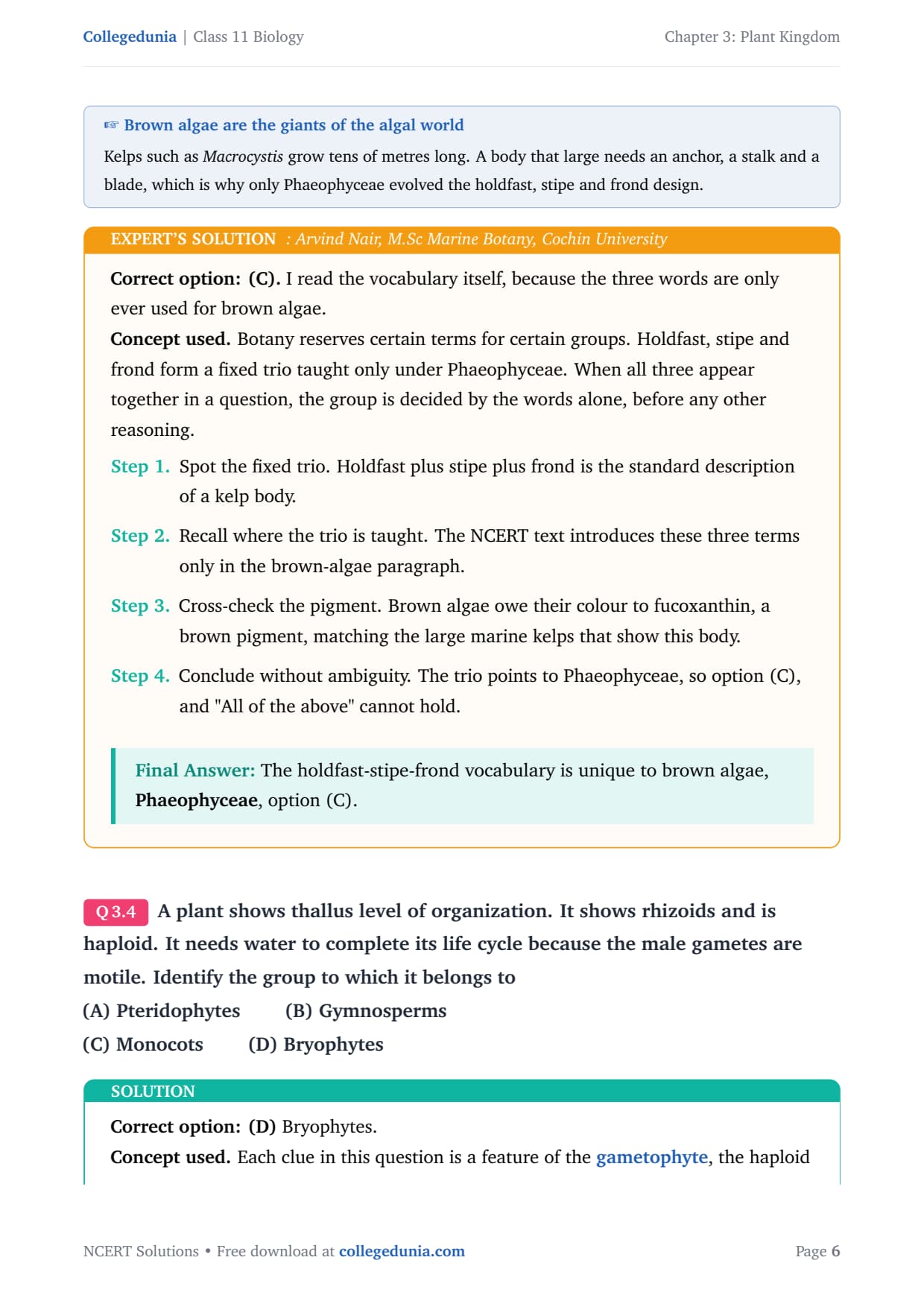
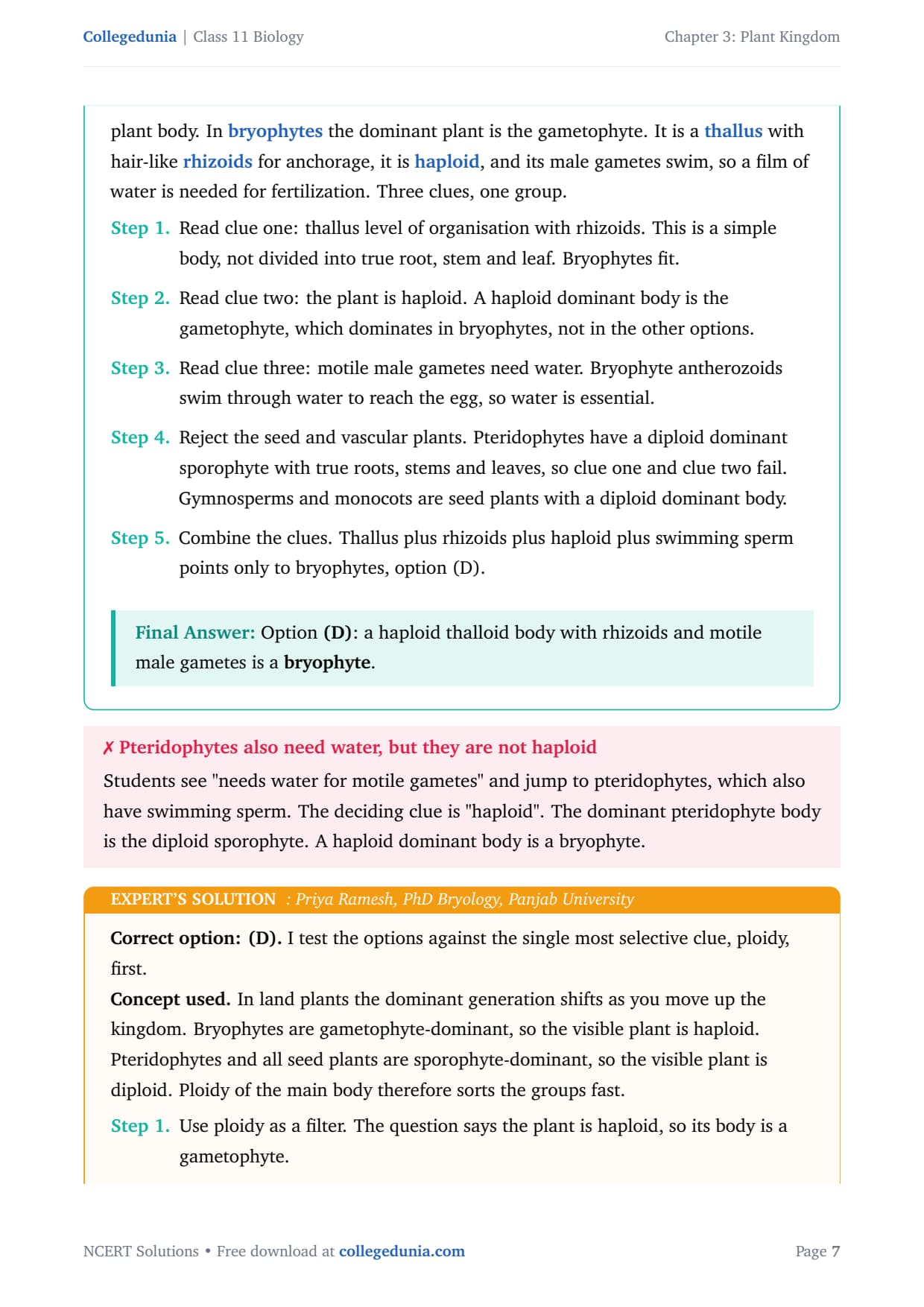
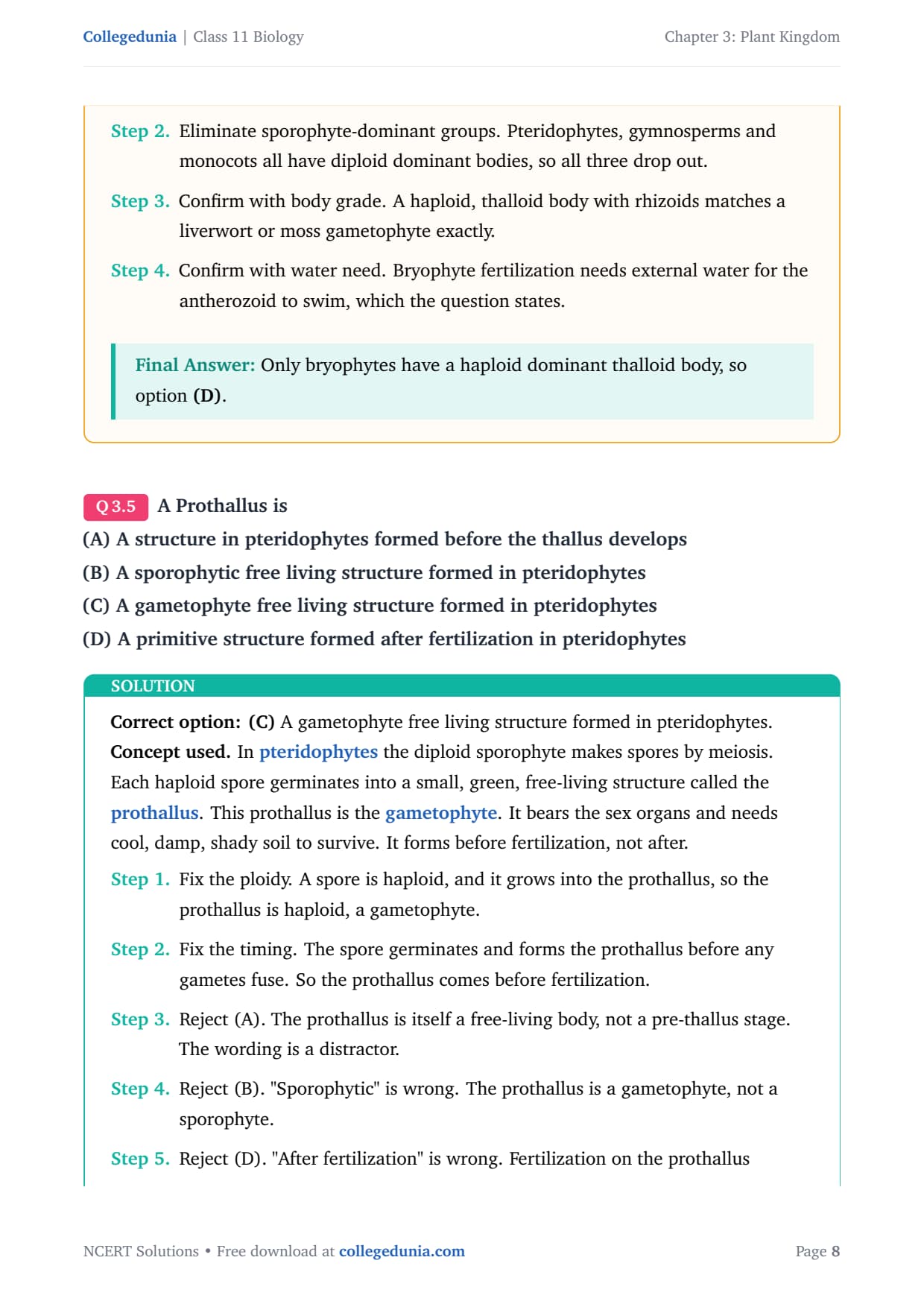
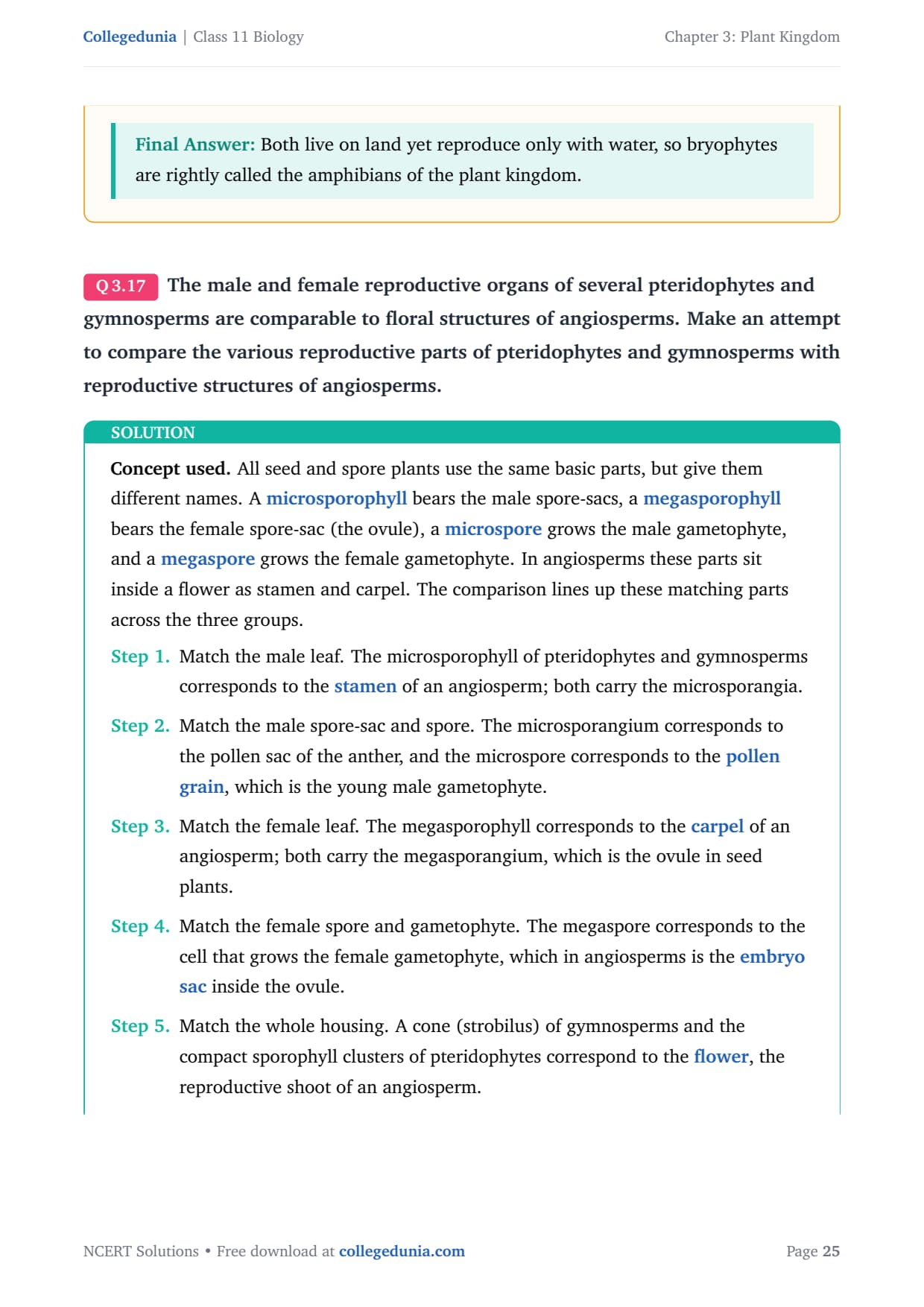
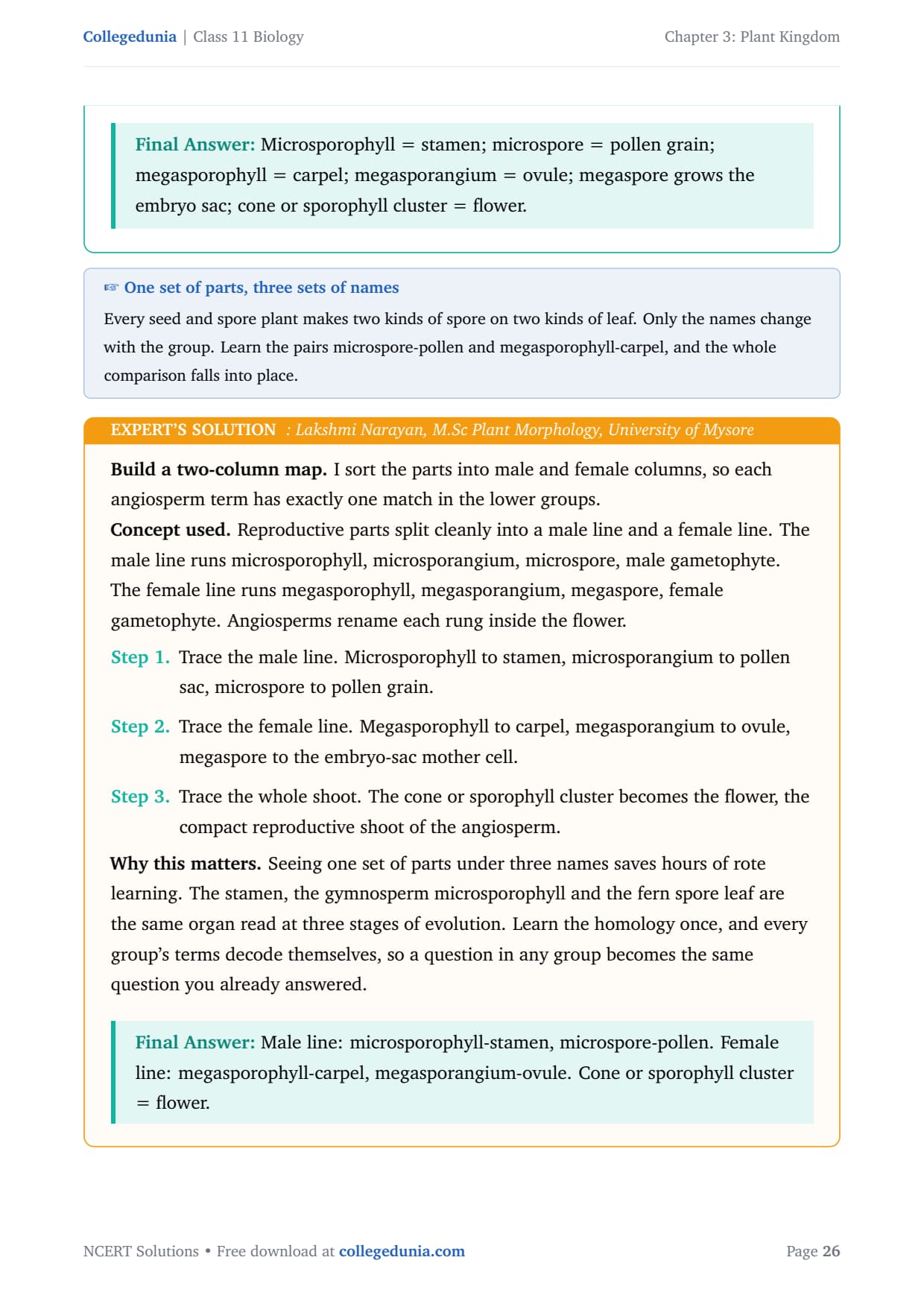
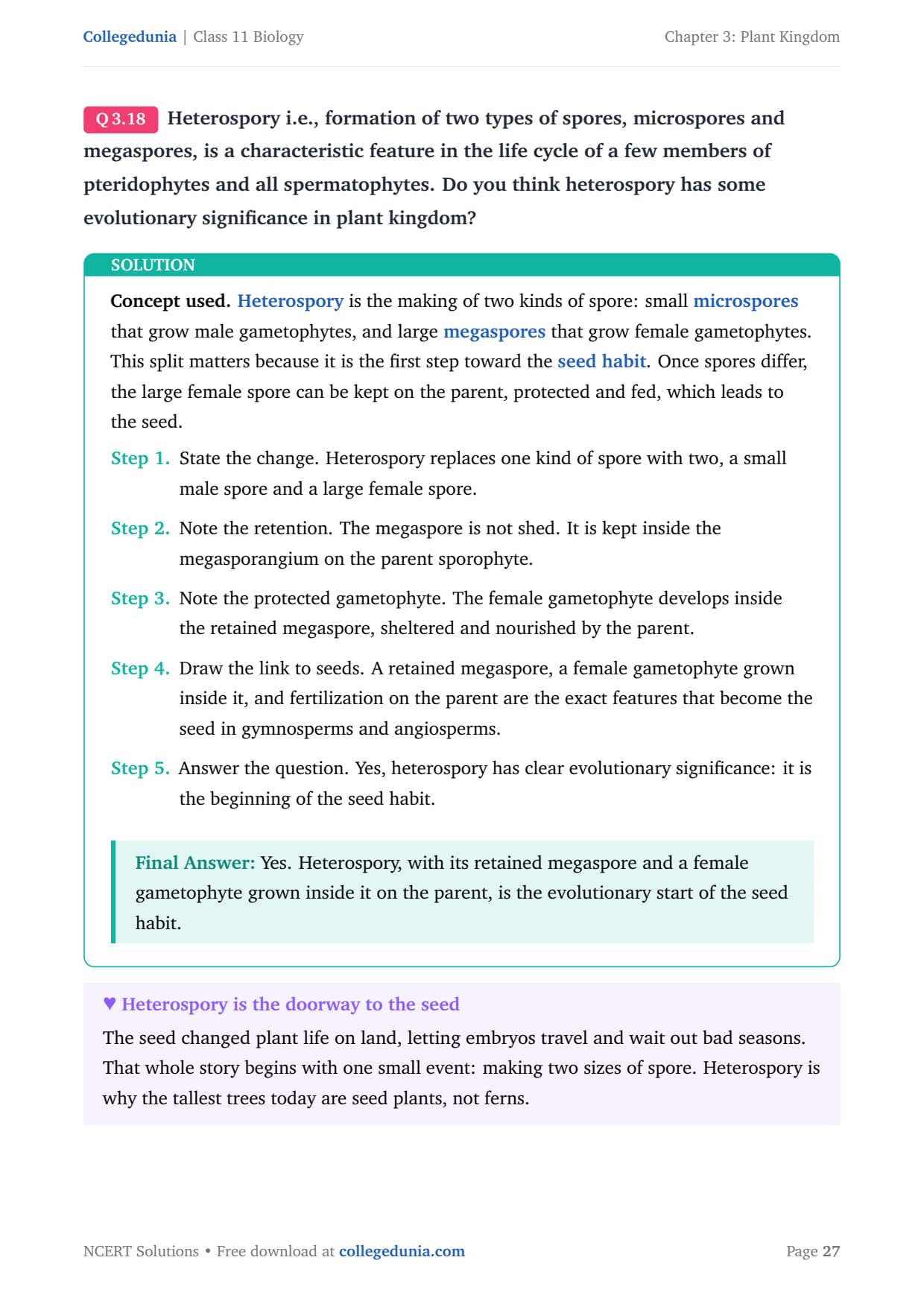
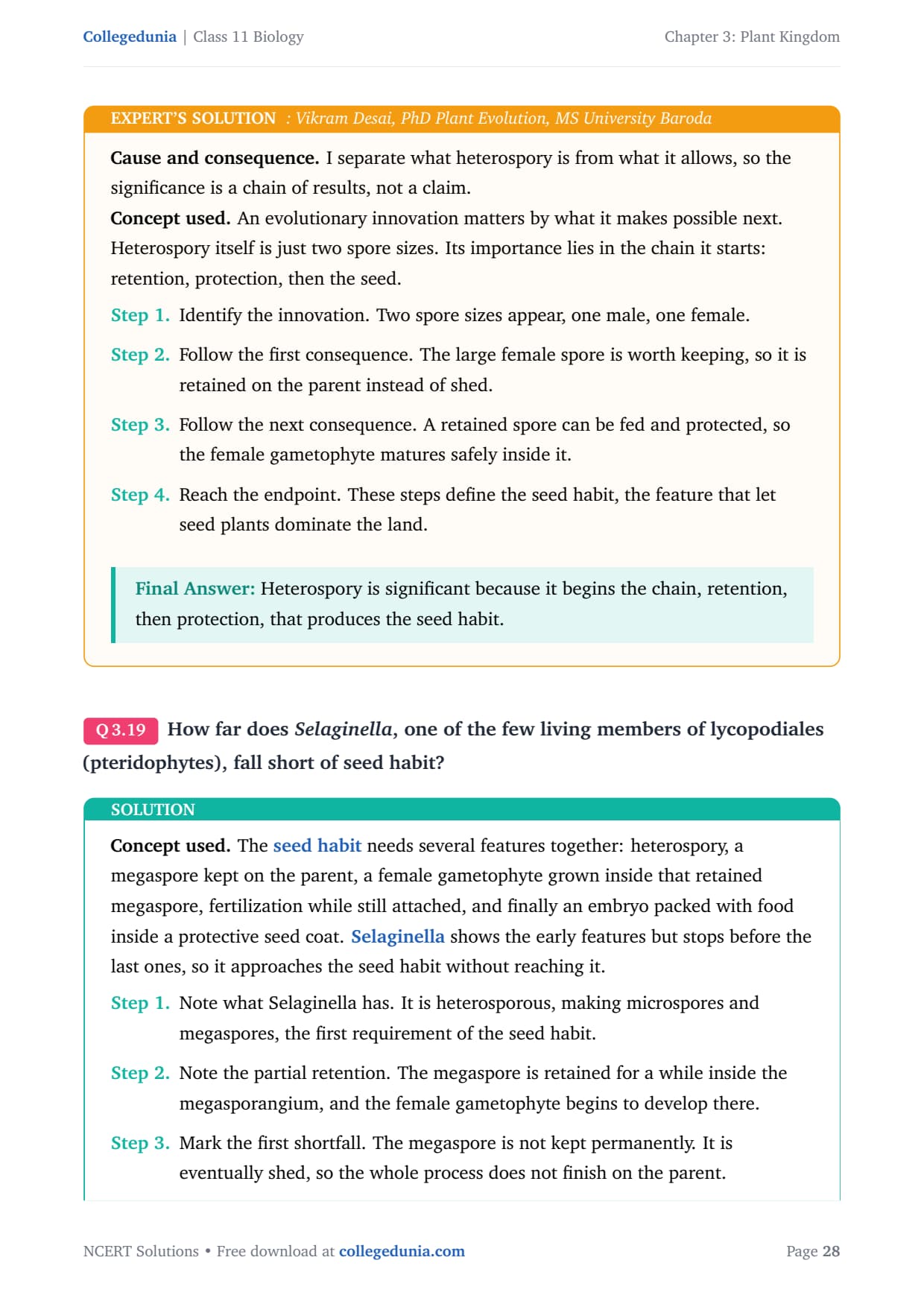
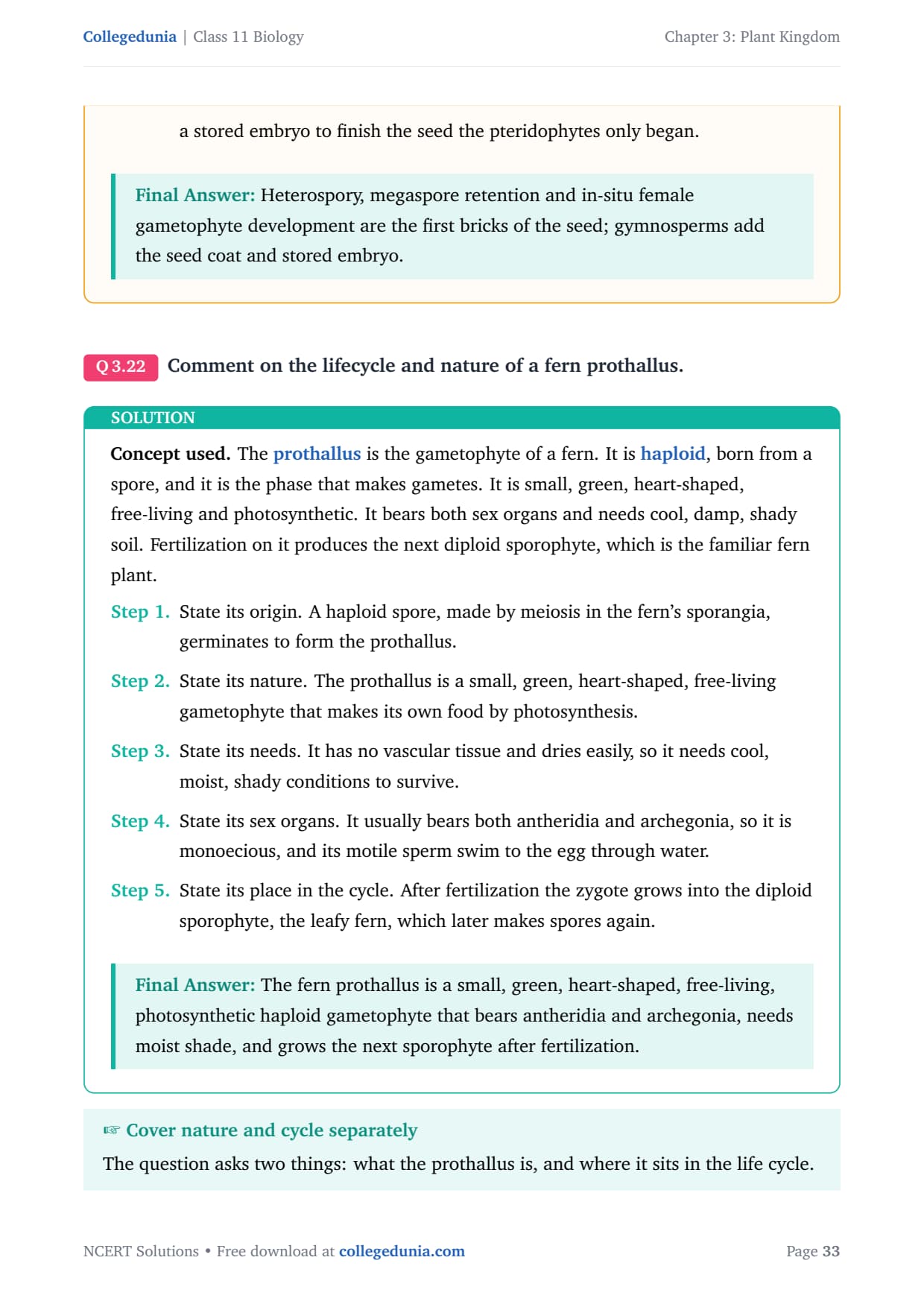
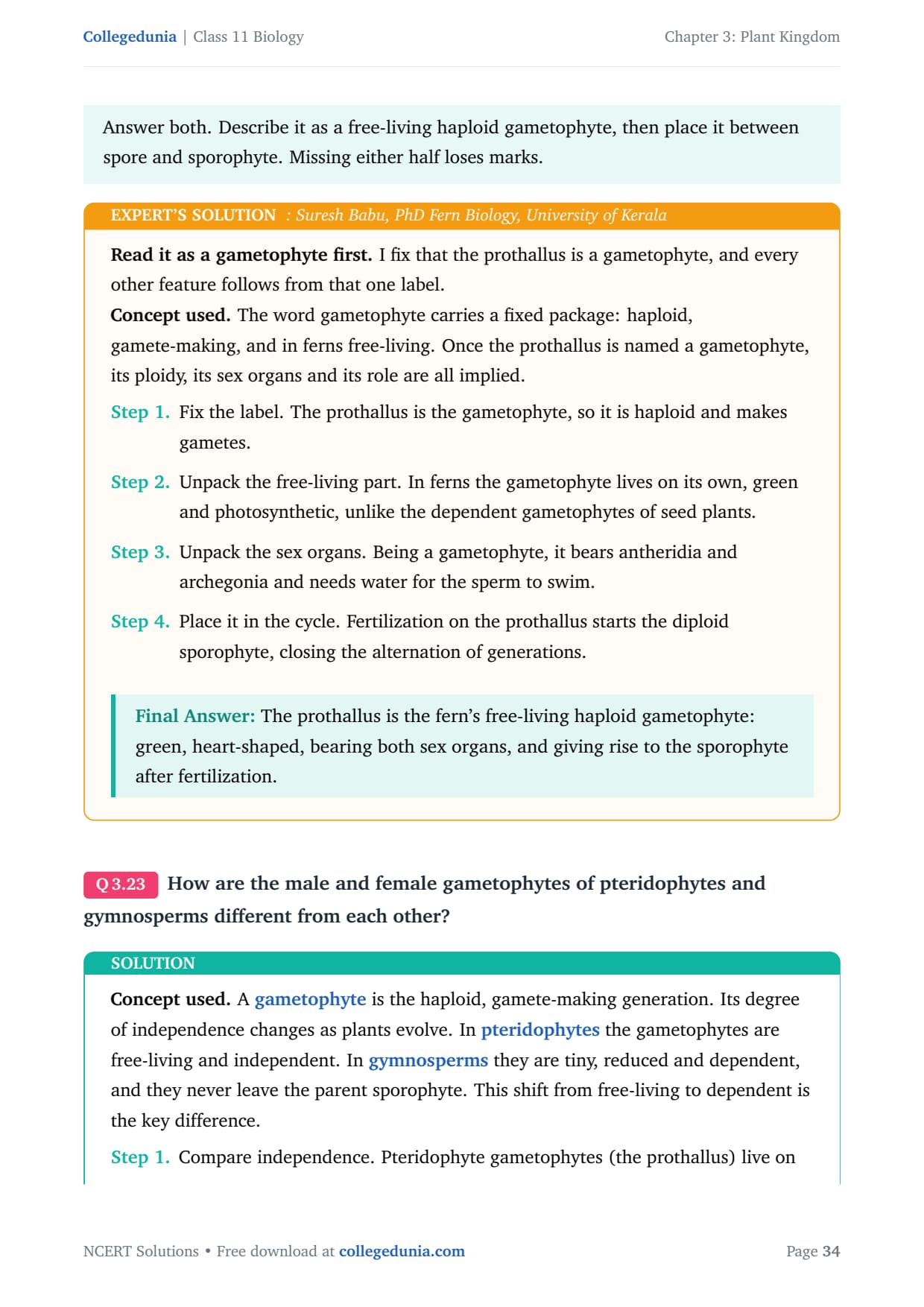
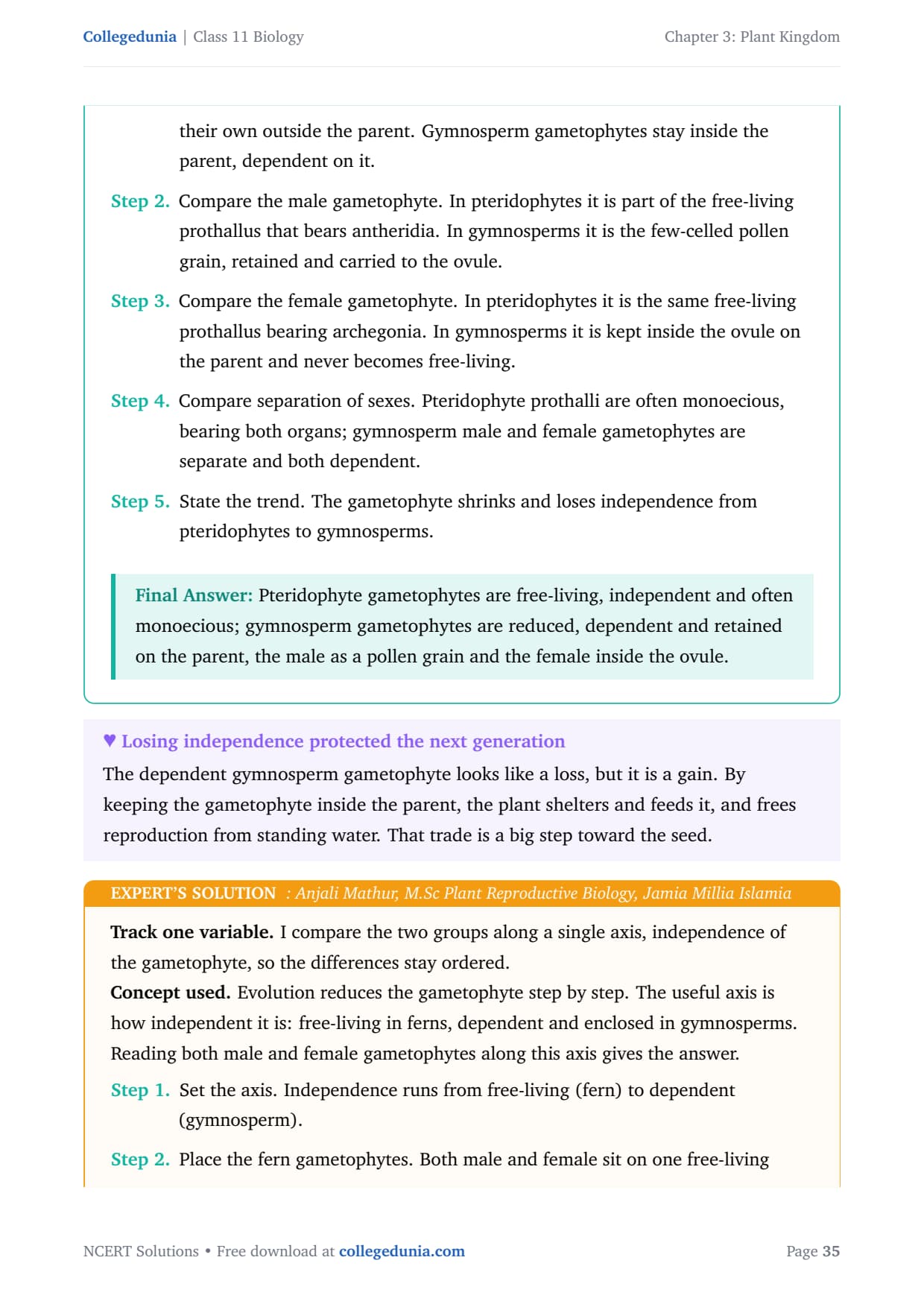
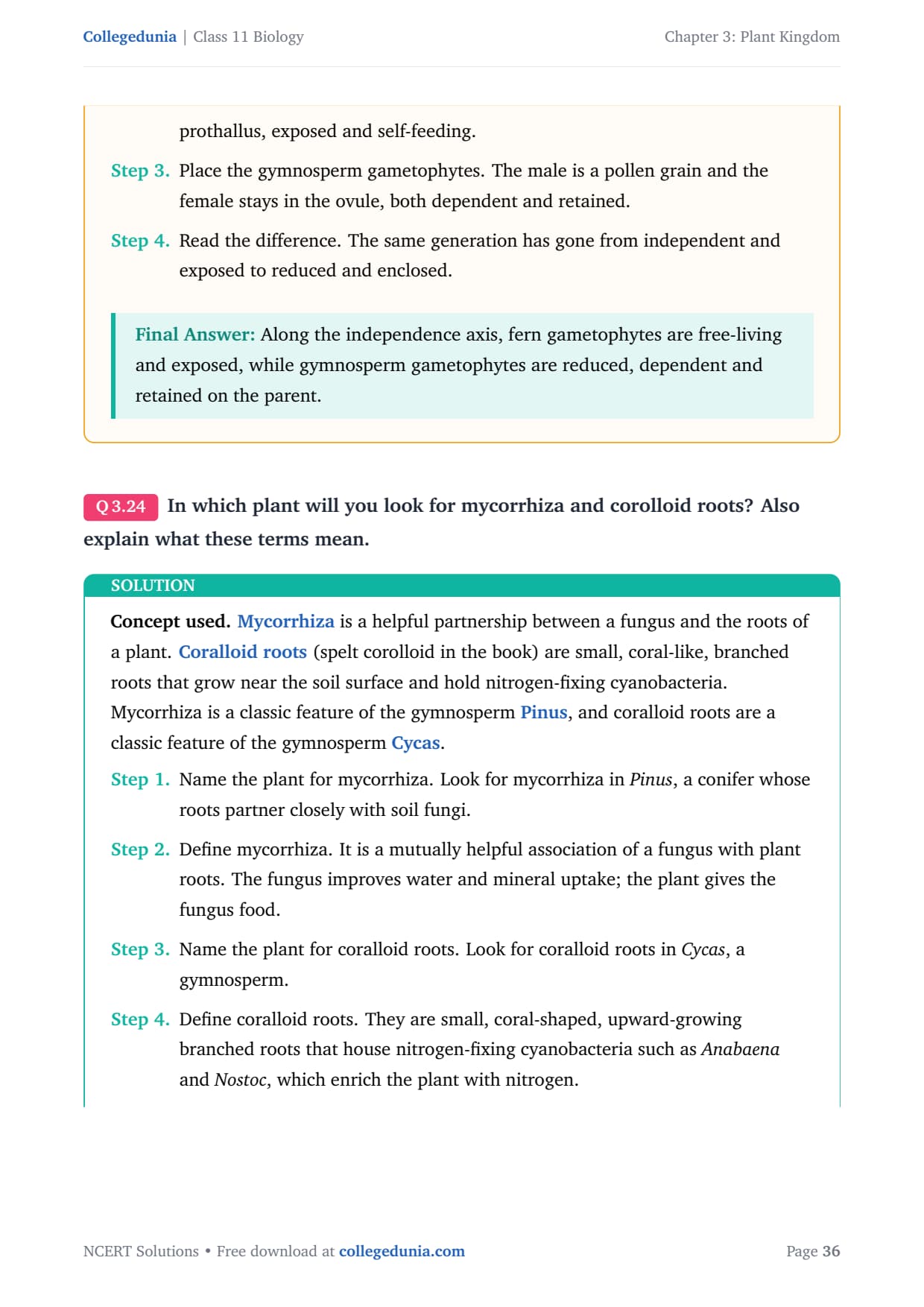
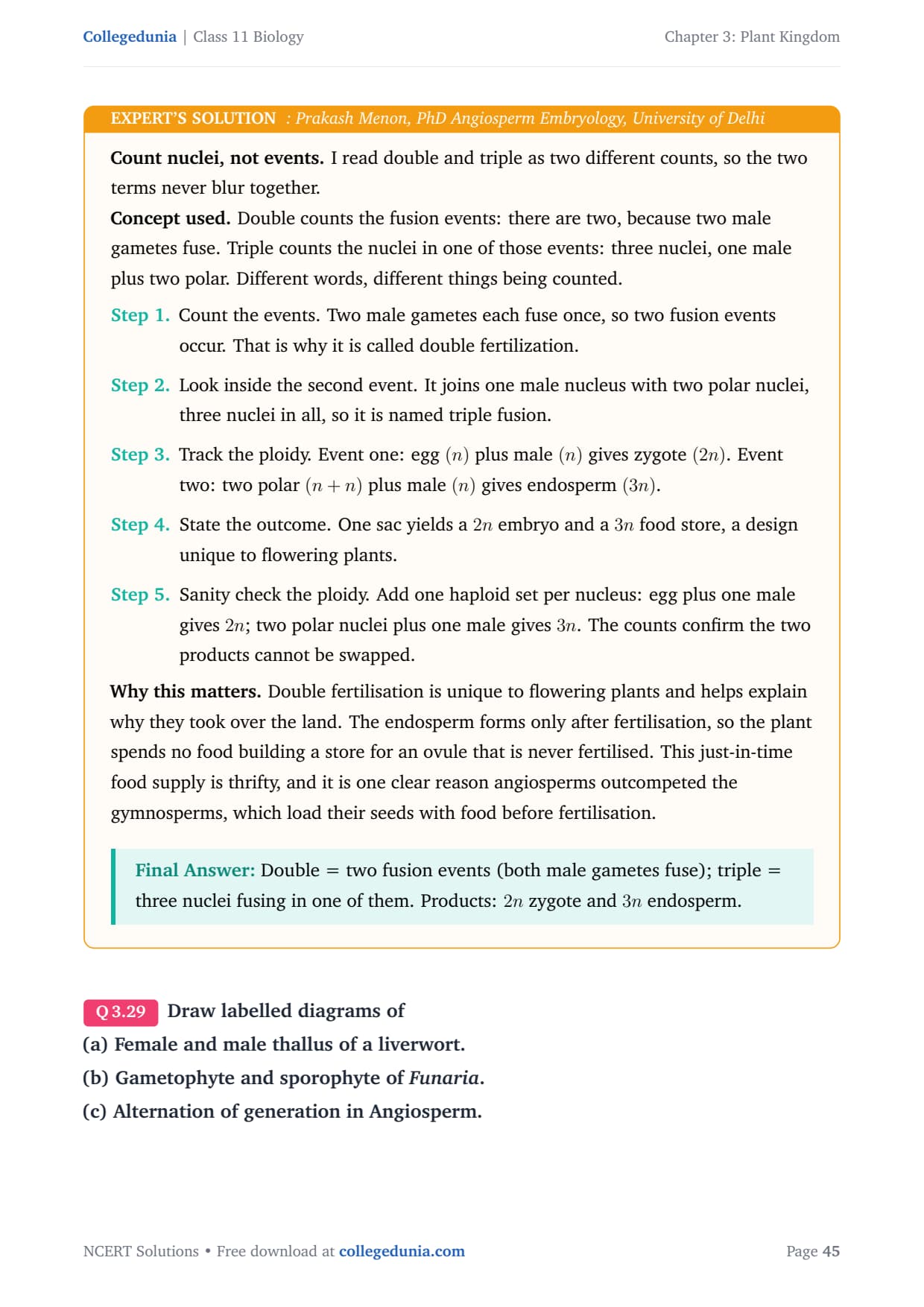
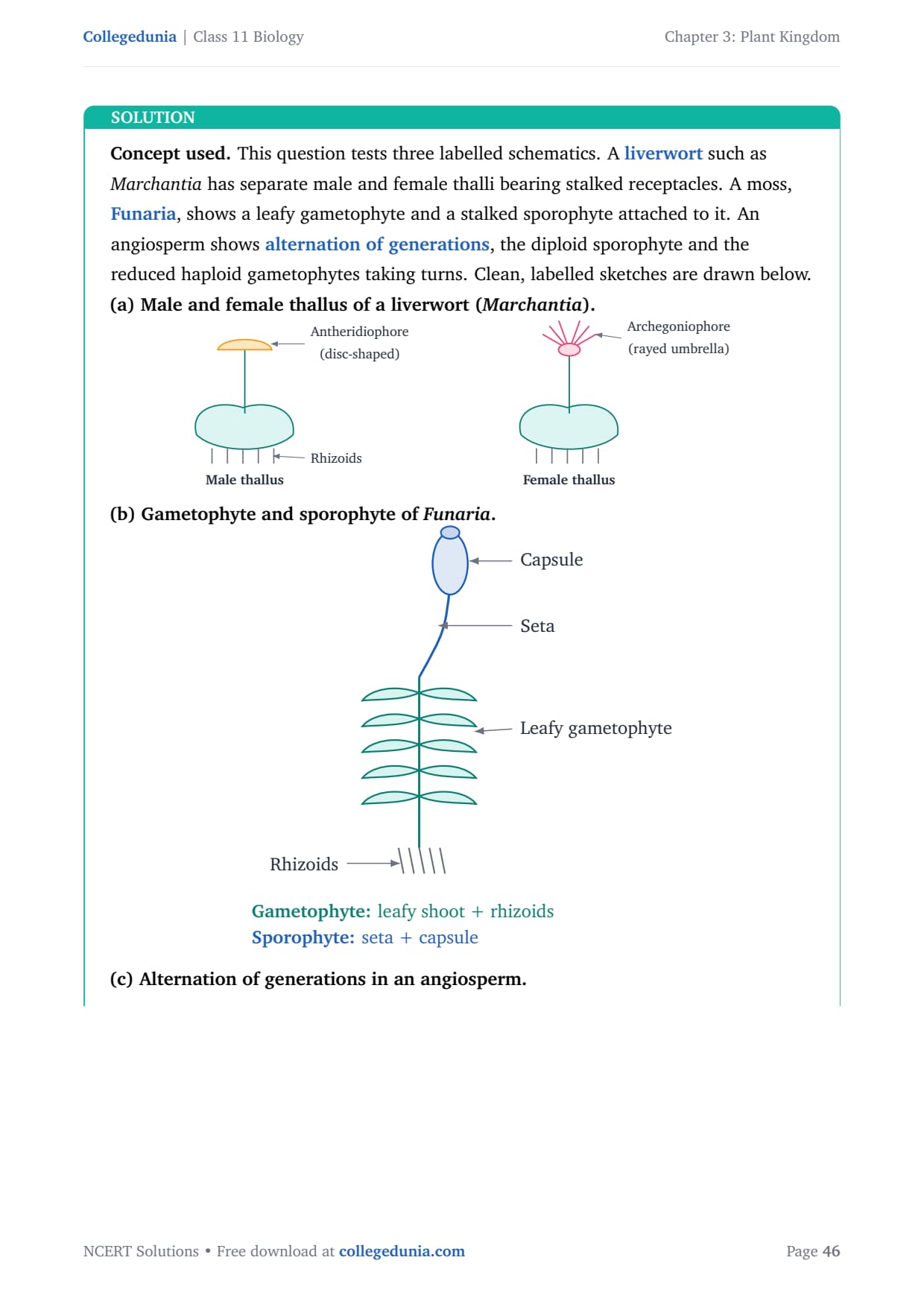
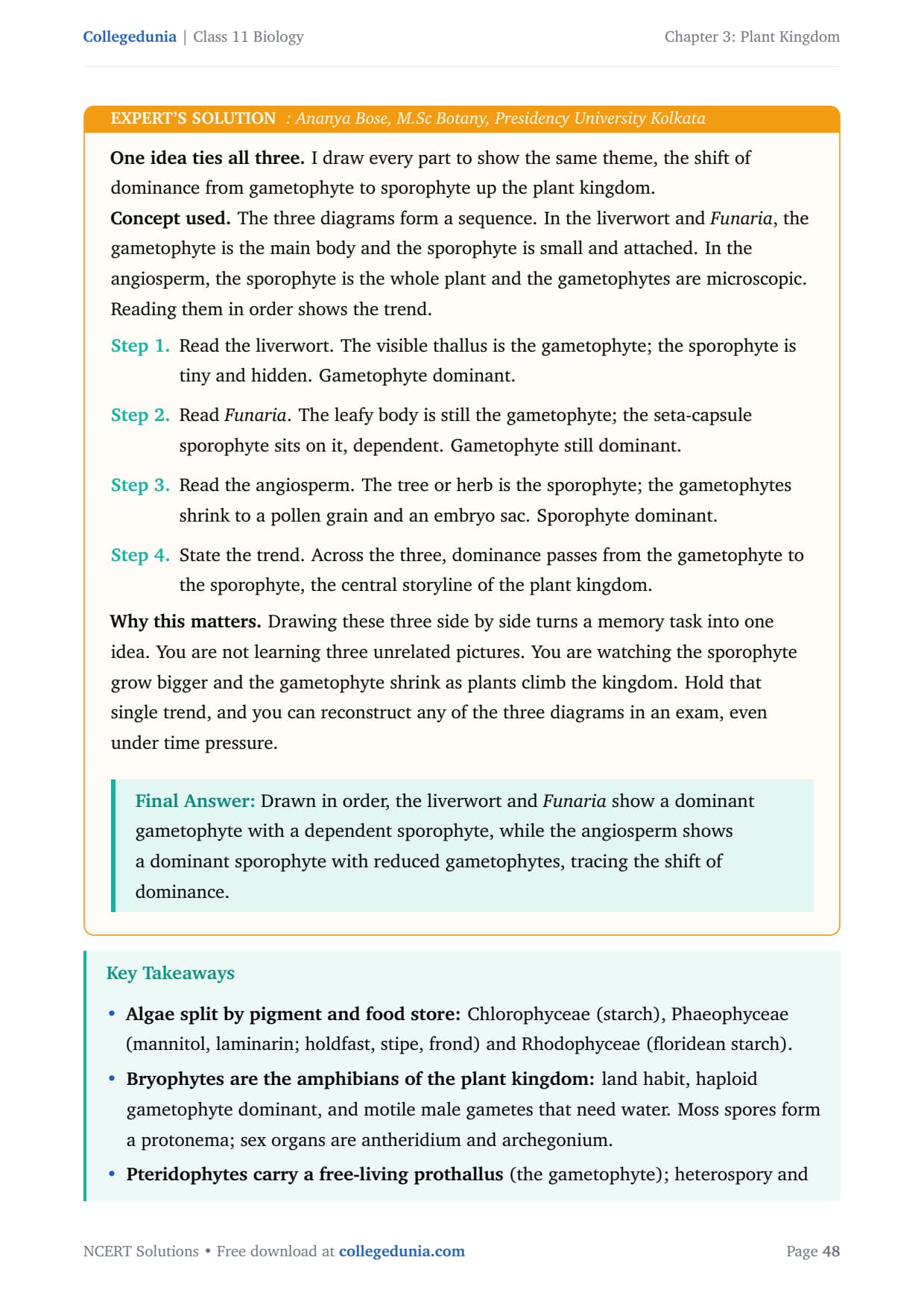
Plant Kingdom is the third chapter of Class 11 Biology and the point where classification becomes a walk up the plant groups, from algae to angiosperms. Bryophytes, pteridophytes, gymnosperms and the flowering plants each have a signature life cycle, and the chapter ties them together through alternation of generations. The Exemplar leans hard on that thread, so the questions test whether you can read a life cycle rather than only name a plant.
- CBSE Weightage: 3 to 4 marks, usually a life-cycle diagram or a question on alternation of generations
- NEET Weightage: 2 to 3 questions per year on the plant groups, their life cycles and their diagnostic features
- CUET Weightage: 1 to 2 questions on plant group characters and reproductive terms in the Biology domain paper
Every answer is checked against the official NCERT Exemplar key, and the ideas this chapter is famous for confusing, such as the haploid against the diploid dominant phase, and the eight nuclei against the seven cells of the embryo sac, are pulled apart in full.
Topics Covered in the Class 11 Biology Plant Kingdom Exemplar
The 29 questions in this chapter climb the plant groups in order, and the Exemplar keeps checking the feature that separates each group from the one before it. Plant Kingdom is light on formulae but dense in life-cycle detail, because most questions turn on which generation is dominant and how the sex organs and spores are arranged. Working through it fixes the reproductive logic you need before the reproduction unit later in the year. The four clusters below cover every question in the set.
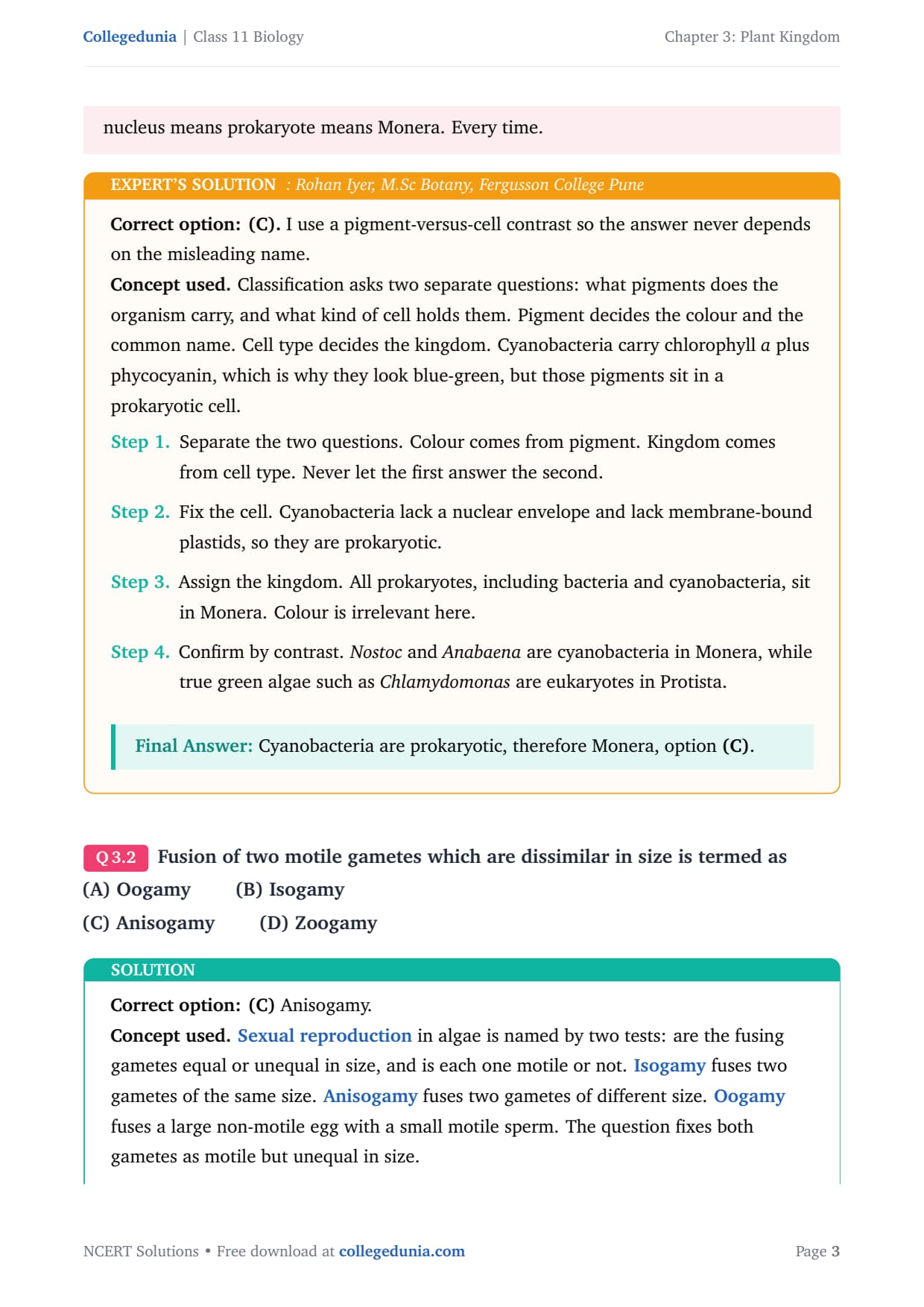
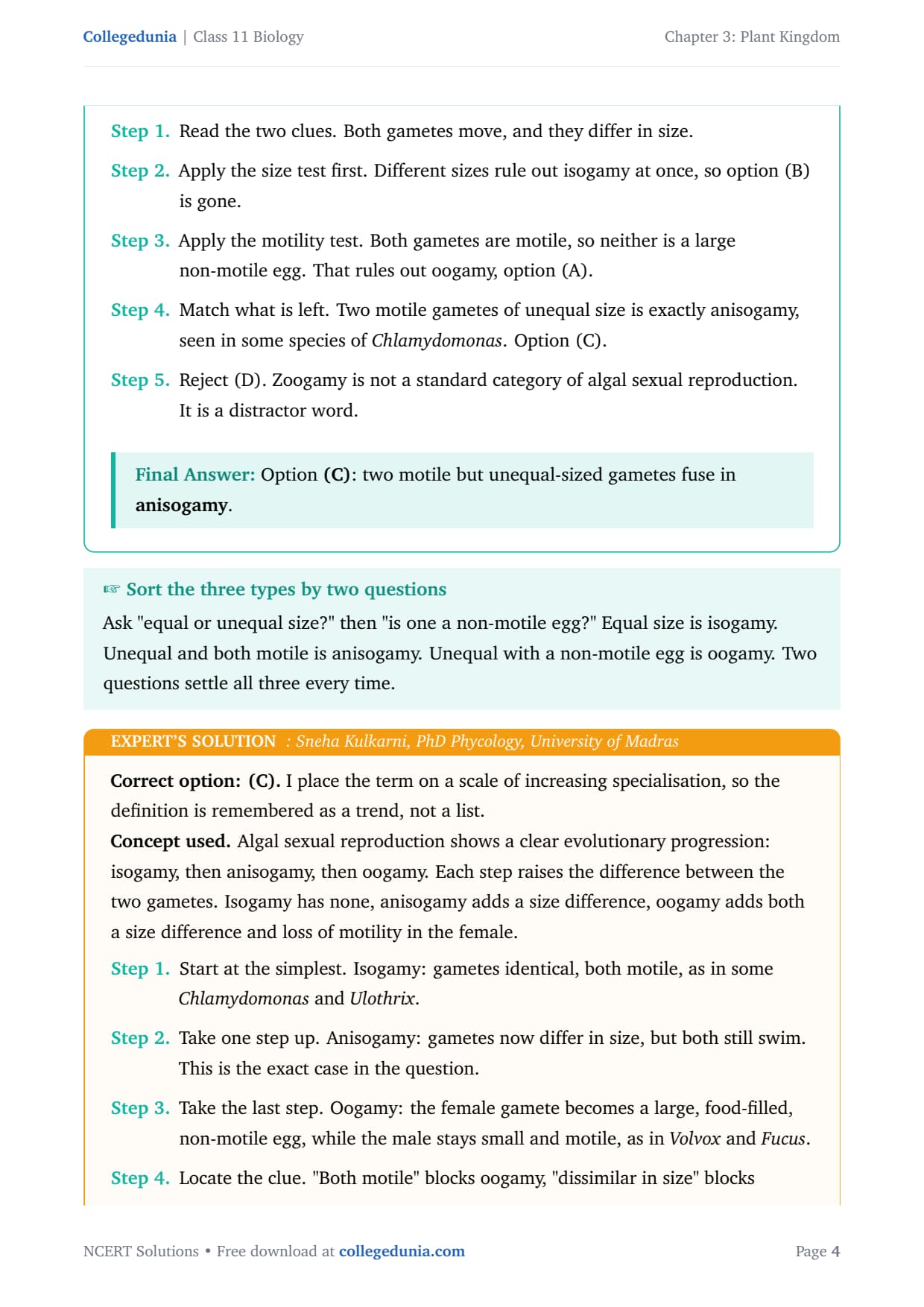
- Algae: Chlorophyceae, Phaeophyceae and Rhodophyceae, their pigments and stored food such as Floridean starch and mannitol, and the isogamy, anisogamy and oogamy modes of reproduction
- Bryophytes and pteridophytes: the dominant gametophyte or sporophyte, rhizoids, protonema, the prothallus, heterospory and the antheridium and archegonium
- Gymnosperms and angiosperms: the seed habit, Cycas coralloid roots and Pinus mycorrhiza, the embryo sac and double fertilisation
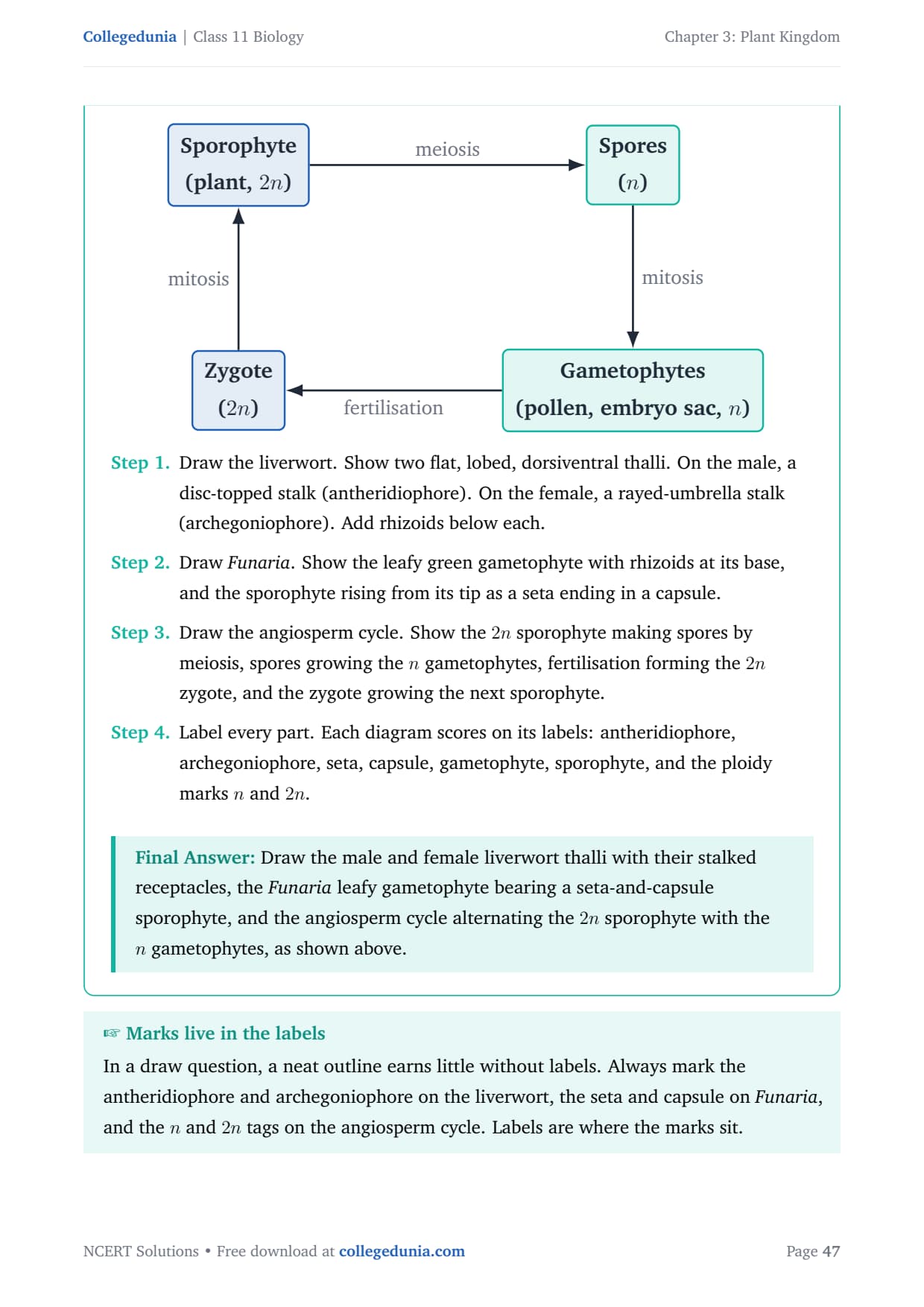
- Alternation of generations: the haplontic, diplontic and haplo-diplontic life cycles and their schematic diagrams
Question Types in the Plant Kingdom NCERT Exemplar
Class 11 Biology Exemplar chapters use four question types, and each one carries a different demand. The MCQ set looks routine until an option turns on one reproductive detail, while the Long Answer set asks you to draw and label a whole life cycle. The Short Answer questions are the busiest group in this chapter, because they reward a precise feature such as why bryophytes are amphibians and punish a vague description. The table below shows how the 29 questions split across the four types.
| Question Type | Count | What It Tests |
|---|---|---|
| MCQ (single correct) | 10 | Placing a plant in its group from one diagnostic feature |
| VSA (Very Short Answer) | 5 | One-line terms such as the names of the male and female sex organs |
| SA (Short Answer) | 9 | Explaining features like heterospory, the prothallus and why bryophytes are amphibians |
| LA (Long Answer) | 5 | Drawing labelled life cycles and the haplo-diplontic diagram |
Alternation of Generations and the Haploid-Diploid Life Cycles
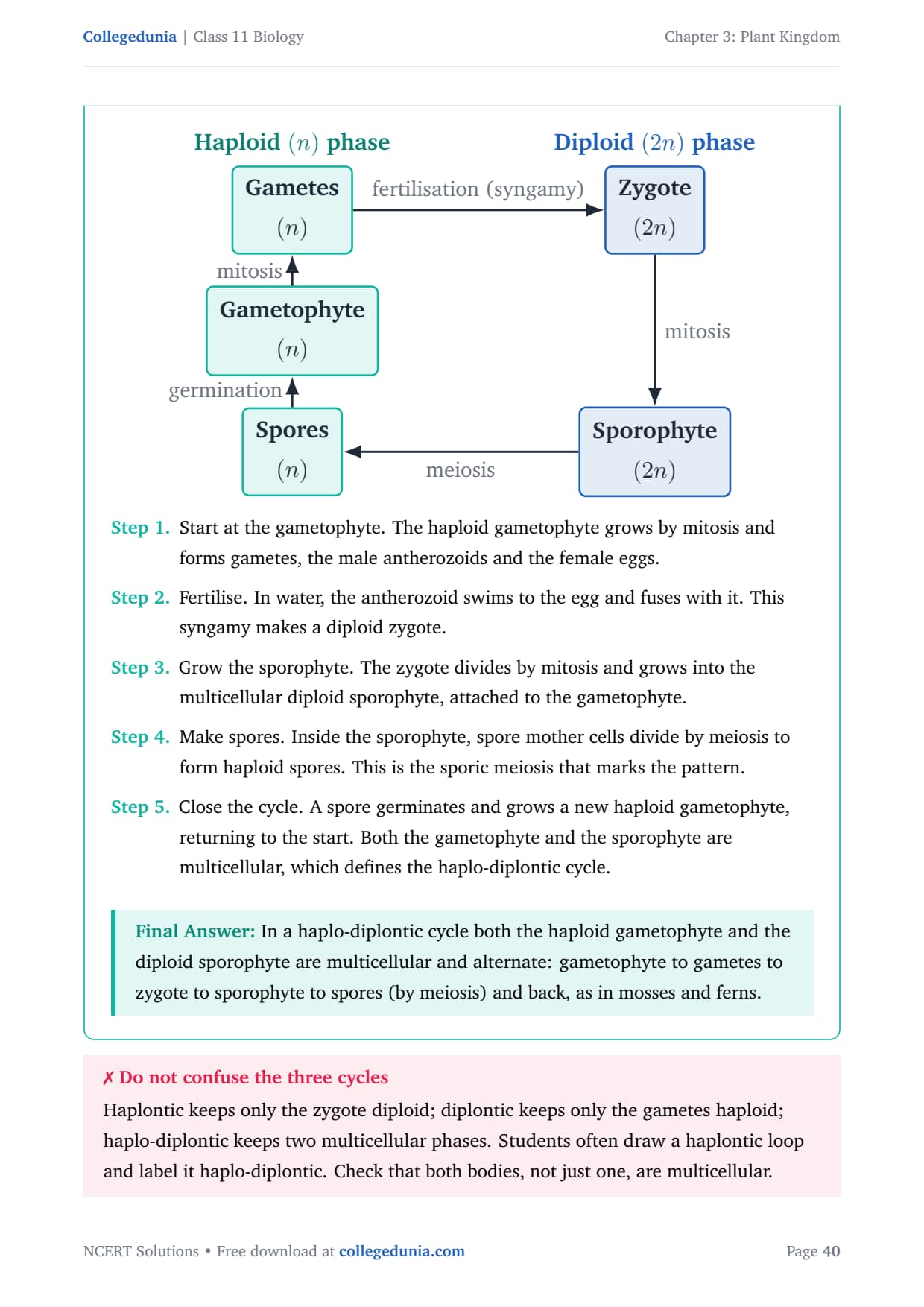
The questions that decide this chapter are not about naming a plant, they are about reading its life cycle. The Exemplar builds several problems around the three patterns of alternation of generations, and telling them apart is the skill it tests most. In a haplontic cycle only the zygote is diploid, in a diplontic cycle only the gametes are haploid, and in a haplo-diplontic cycle two multicellular bodies alternate, one haploid gametophyte and one diploid sporophyte. Reading which body is dominant is what places a plant in the correct group.
- Haplontic: the dominant body is the haploid gametophyte, and only the single-celled zygote is diploid, as in many algae
- Diplontic: the dominant body is the diploid sporophyte, and only the gametes are haploid, as in seed plants
- Haplo-diplontic: two multicellular phases alternate, seen in bryophytes with a dominant gametophyte and in pteridophytes with a dominant sporophyte
- Reading dominance: a haploid dominant body signals a bryophyte, while a diploid dominant body signals a pteridophyte or a seed plant
The group of a plant is settled by which generation is dominant, and the Exemplar makes you prove it from the diagram. A common slip is to draw a haplontic loop and label it haplo-diplontic, so each answer in the PDF checks that both bodies, not just one, are multicellular before naming the cycle.
Common Mistakes Students Make in Plant Kingdom
The Exemplar plants tempting wrong options and half-right answers on purpose. Four errors catch most students in this chapter, and each is flagged in the PDF at the exact question where it appears. Learning to spot them early protects marks across the botany papers, because these life-cycle and reproductive distinctions return in Morphology and in the reproduction chapters later in the course.
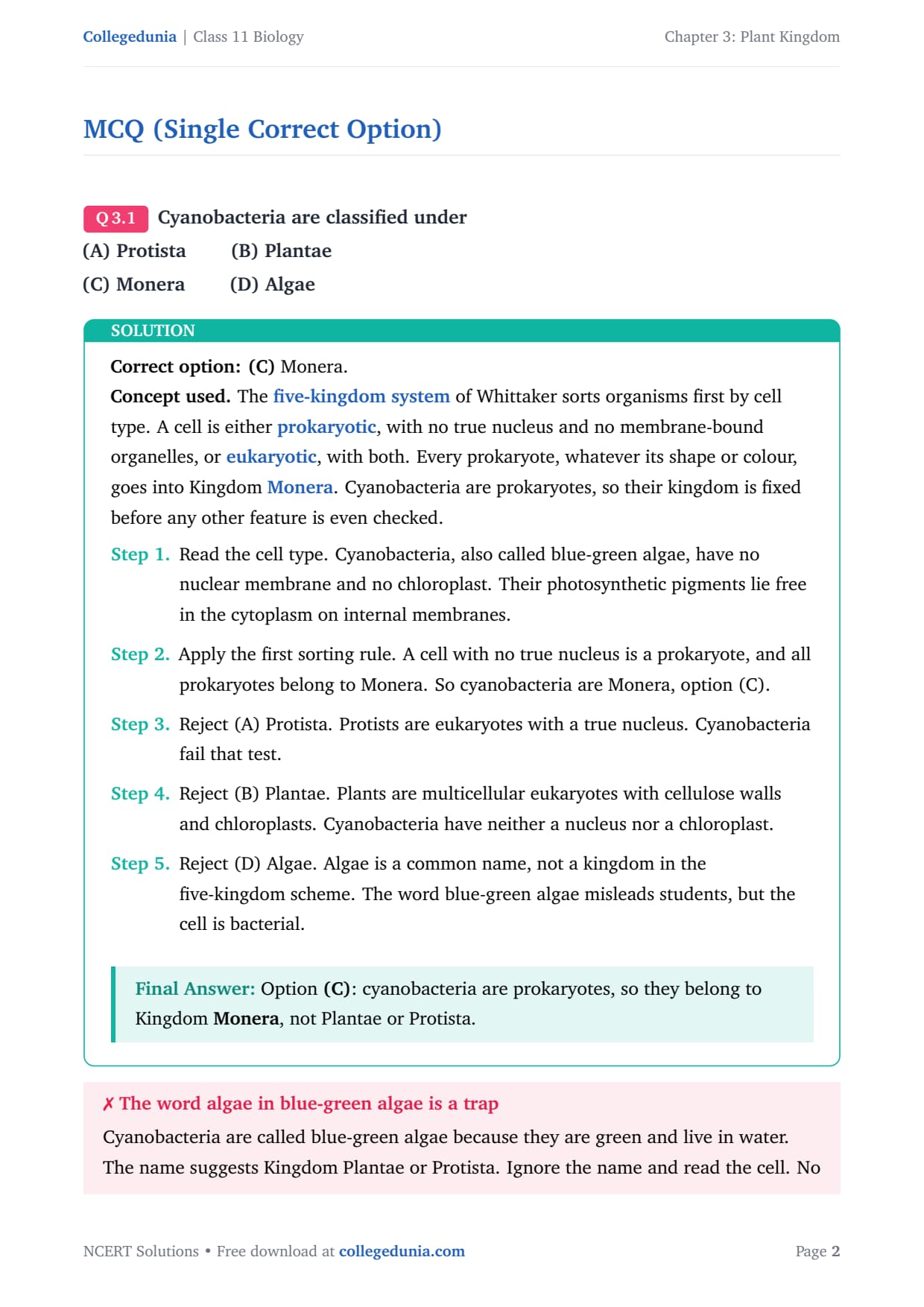
- Being fooled by the word algae in blue-green algae: cyanobacteria are prokaryotic and belong in Monera, so read the cell rather than the name when a stem calls them algae.
- Jumping to pteridophytes for water-dependent gametes: both bryophytes and pteridophytes need water for motile gametes, so the deciding clue is which body is dominant. A haploid dominant body is a bryophyte, not a pteridophyte.
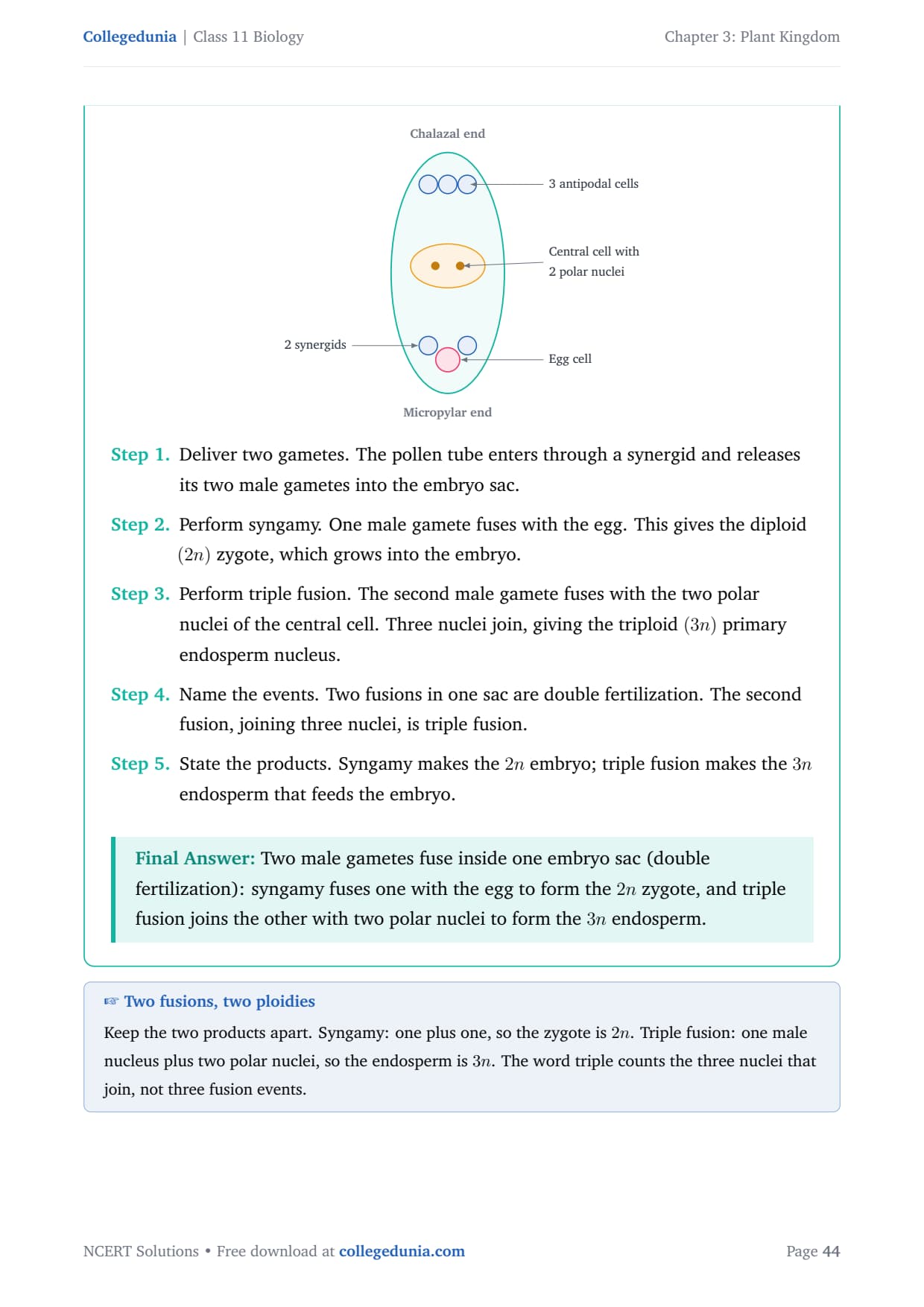
- Reading eight nuclei as eight cells: the angiosperm embryo sac has eight nuclei but only seven cells, because the two polar nuclei share one central cell instead of being walled off separately.
- Confusing the three life cycles: haplontic keeps only the zygote diploid, diplontic keeps only the gametes haploid, and haplo-diplontic has two multicellular phases. Check both bodies before you label the loop.
How the Exemplar Steps Up from the Class 11 Biology Textbook
The textbook describes each plant group and asks you to recall its features. The Exemplar hands you a single number or a single clue and asks you to reason to the structure behind it, which is a sharper skill and the one that NEET actually tests. This is why students who only read the chapter feel the Exemplar counts against them. It is not harder in content, it is harder in the way it forces you to work from a detail back to the whole.
The embryo sac question shows the gap clearly. The textbook states that the mature embryo sac has eight nuclei, so a quick reader writes eight cells to match. The Exemplar waits for the student who remembers that the two polar nuclei sit together in one central cell, giving eight nuclei but only seven cells. The same demand appears in the pteridophyte and bryophyte question, where water dependence is a shared red herring and dominance is the real key, and in the life-cycle diagrams, where a mislabelled loop loses the mark even when the plant is named correctly. Working these builds reasoning, not recall, which is what Chapter 3 is meant to train.
How to Use These NCERT Exemplar Solutions for Boards, NEET and CUET
Attempt each question before you open the solution. This chapter rewards the attempt, because the life cycles look simple until you try to draw and label one from memory. Read the stem, sketch the cycle or commit to the dominant generation, and only then check it against the PDF. The gap between your diagram and the model answer is where the marks live in a botany paper.
- Boards: the Short Answer and Long Answer sets match the 3 and 4 mark board pattern, especially the labelled life-cycle diagrams and the amphibians of the plant kingdom question
- NEET: work the MCQ and Very Short Answer sets first, since NEET repeats plant groups, pigments and life cycles at exactly this level every year
- CUET: the feature-based MCQ set is the closest practice for the domain paper, which favours a single diagnostic feature per question
Student Feedback
Students using Collegedunia's Class 11 Biology Exemplar Solutions told us that the life-cycle and alternation of generations questions were the hardest part of this chapter, well above the algae pigment and food-reserve questions. Around 7 in 10 said that seeing the three life cycles drawn side by side, with the dominant generation marked each time, finally made the haplontic, diplontic and haplo-diplontic patterns stop blurring together before the NEET revision season.
Other Resources for Class 11 Biology Plant Kingdom
Collegedunia has the full set of study material for this chapter. Use the Notes for a first read, keep the Formula Sheet handy for the plant group features at a glance, then work the Exemplar once the life cycles are steady, with the NCERT Solutions open for the textbook exercise alongside.
Also Check:
- NCERT Solutions for Class 11 Biology Chapter 3
- Class 11 Biology Chapter 3 Notes
- Class 11 Biology Chapter 3 Formula Sheet
- Class 11 Biology Chapter 3 NCERT Book PDF
- Class 11 Biology Chapter 3 Exemplar Questions with Solutions
NCERT Exemplar Solutions for Other Class 11 Biology Chapters
Each chapter below has the same step-by-step treatment and a free PDF. All 19 chapters have an NCERT Exemplar book chapter behind them, so the list covers every one.
Plant Kingdom Class 11 NCERT Exemplar Solutions FAQs
Ques. How many questions are there in the Class 11 Biology Plant Kingdom Exemplar?
Ans. Chapter 3 has 29 questions. They are split into 10 MCQ, 5 Very Short Answer, 9 Short Answer and 5 Long Answer questions. All 29 are solved in the free PDF on this page.
Ques. Why are bryophytes called the amphibians of the plant kingdom?
Ans. Bryophytes can live on land but still need water to complete their life cycle, because their motile male gametes must swim through a film of water to reach the female sex organ. Living on land yet depending on water for reproduction is exactly what an amphibian does, which is why a Short Answer question in this chapter uses the comparison.
Ques. How many cells and nuclei are there in an angiosperm embryo sac?
Ans. A mature angiosperm embryo sac has eight nuclei but only seven cells. The seven cells are one egg, two synergids, three antipodal cells and one large central cell, and the central cell holds two polar nuclei together, which is why the nucleus count is eight while the cell count is seven.
Ques. What is the difference between haplontic, diplontic and haplo-diplontic life cycles?
Ans. In a haplontic cycle the dominant body is haploid and only the zygote is diploid. In a diplontic cycle the dominant body is diploid and only the gametes are haploid. In a haplo-diplontic cycle two multicellular bodies alternate, a haploid gametophyte and a diploid sporophyte, as seen in bryophytes and pteridophytes.
Ques. Is the NCERT Exemplar enough for NEET questions from Plant Kingdom?
Ans. For this chapter it covers the ground well. NEET asks two to three questions a year on the plant groups, their pigments and their life cycles, and they sit at the level of the Exemplar MCQ and Short Answer sets. Work all 10 MCQs and the life-cycle Short Answers before moving to a coaching module.



Comments