




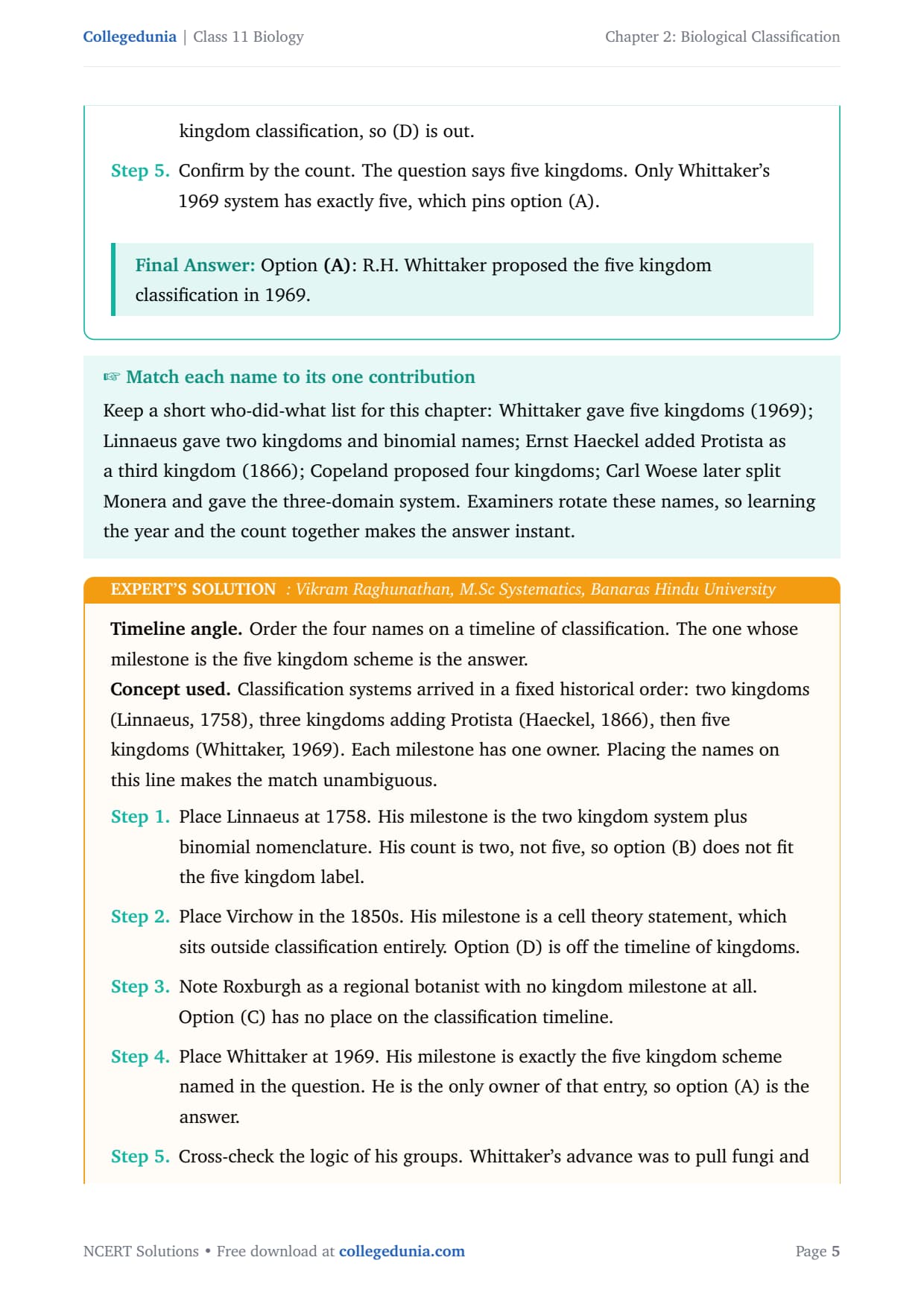
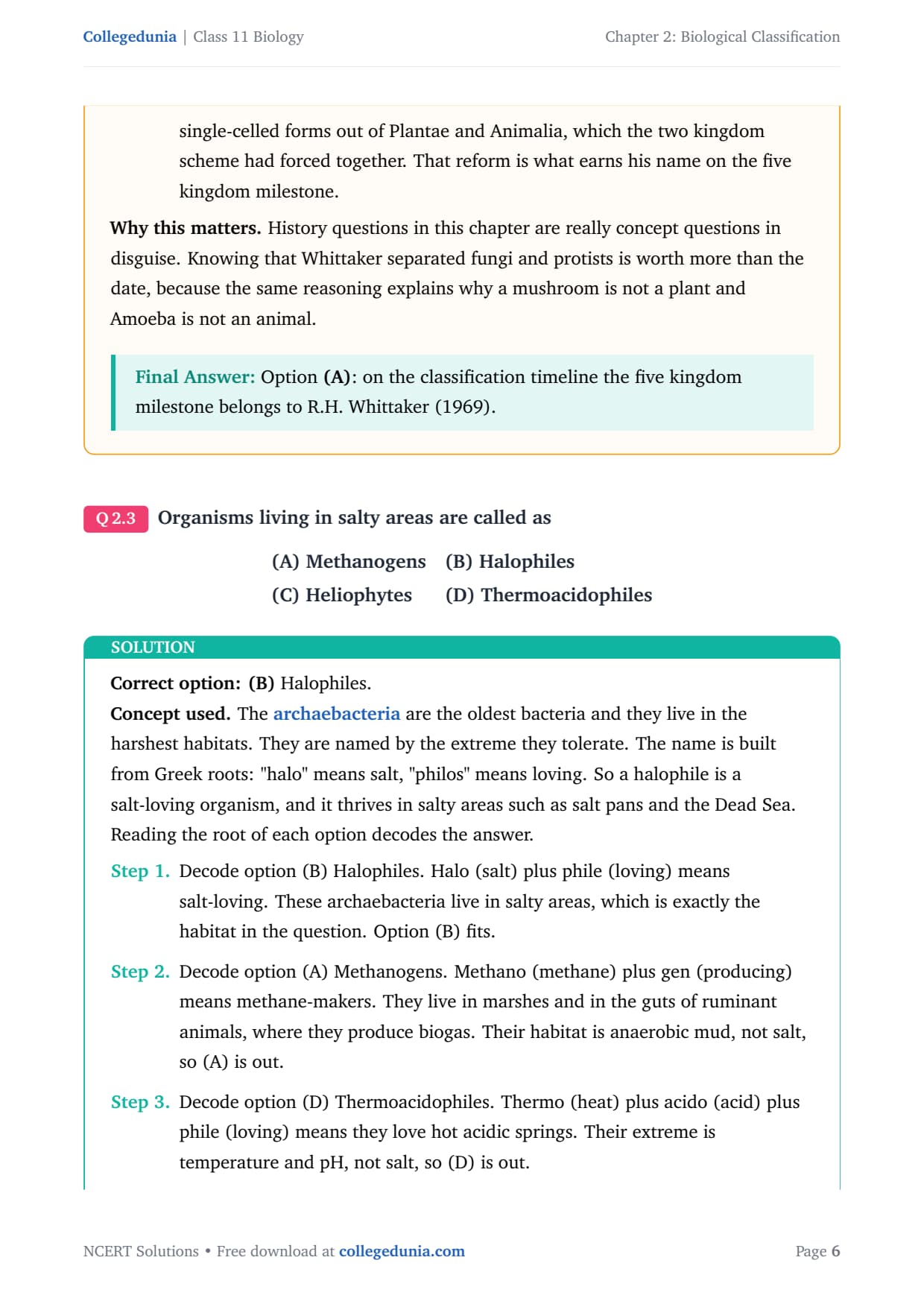
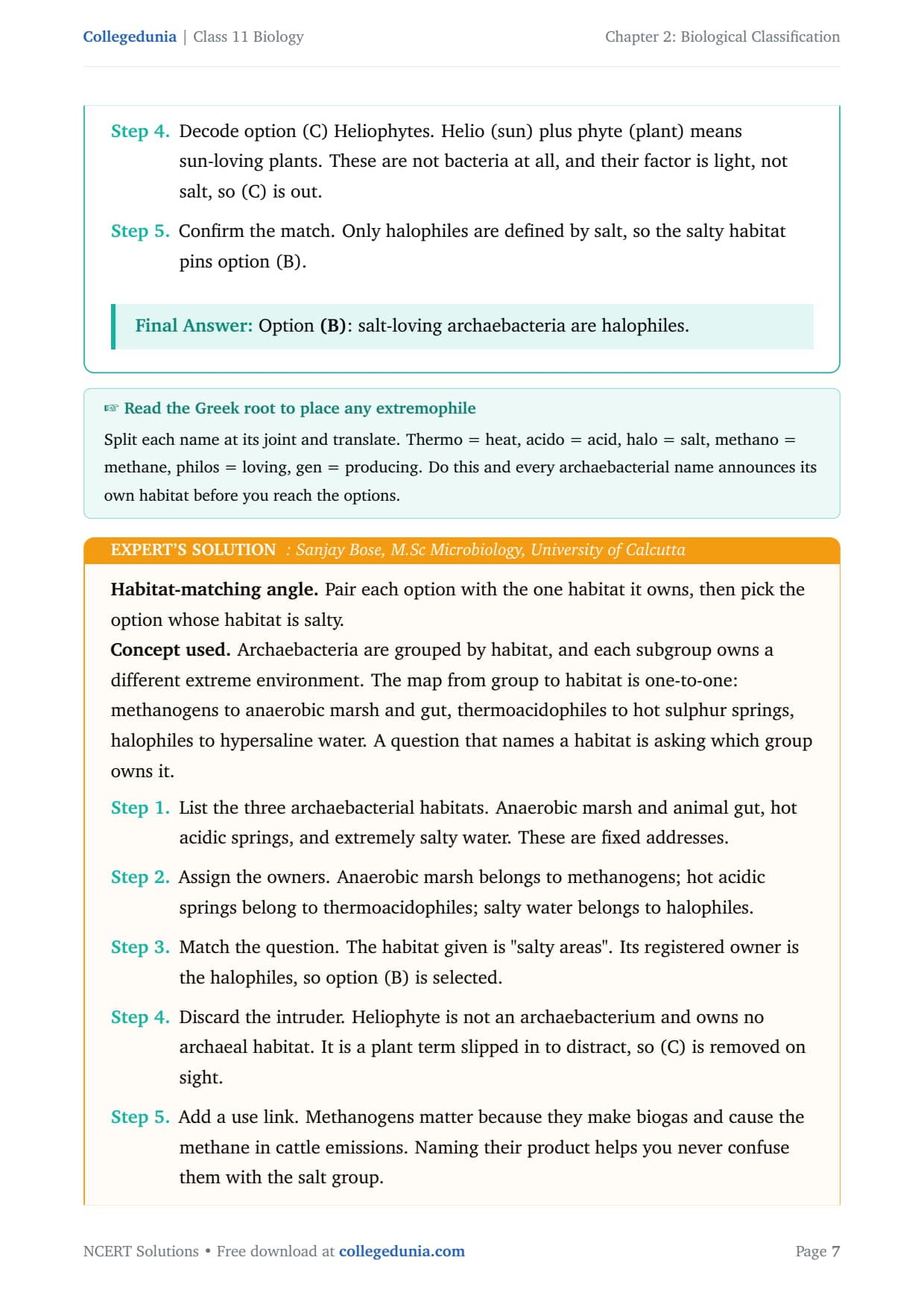
NCERT Exemplar Solutions for Class 11 Biology Chapter 2 Biological Classification solve all 32 questions from the Exemplar book. Every MCQ, Very Short Answer, Short Answer and Long Answer problem is answered step by step in the free 63-page PDF, updated for the 2026-27 syllabus.
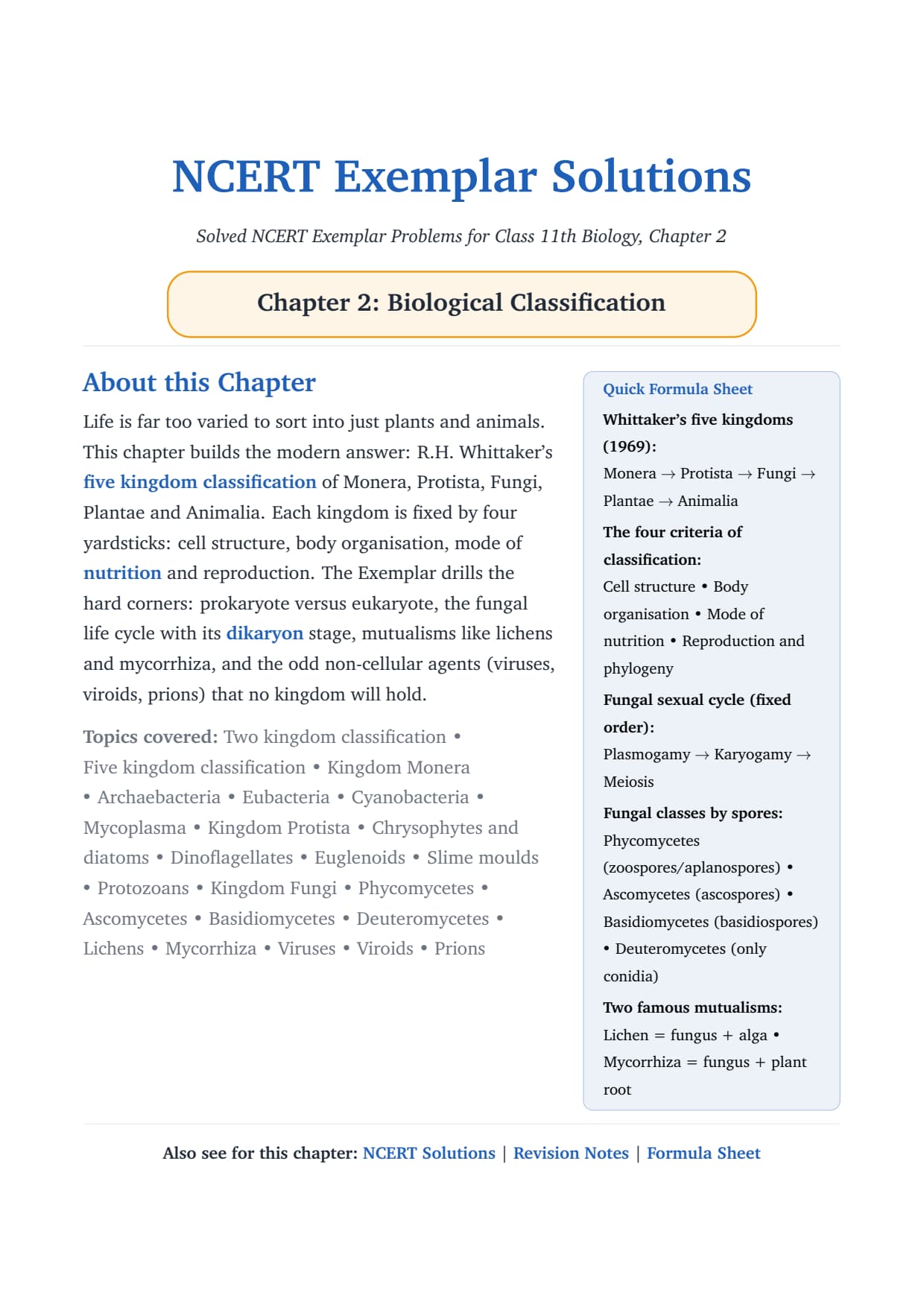
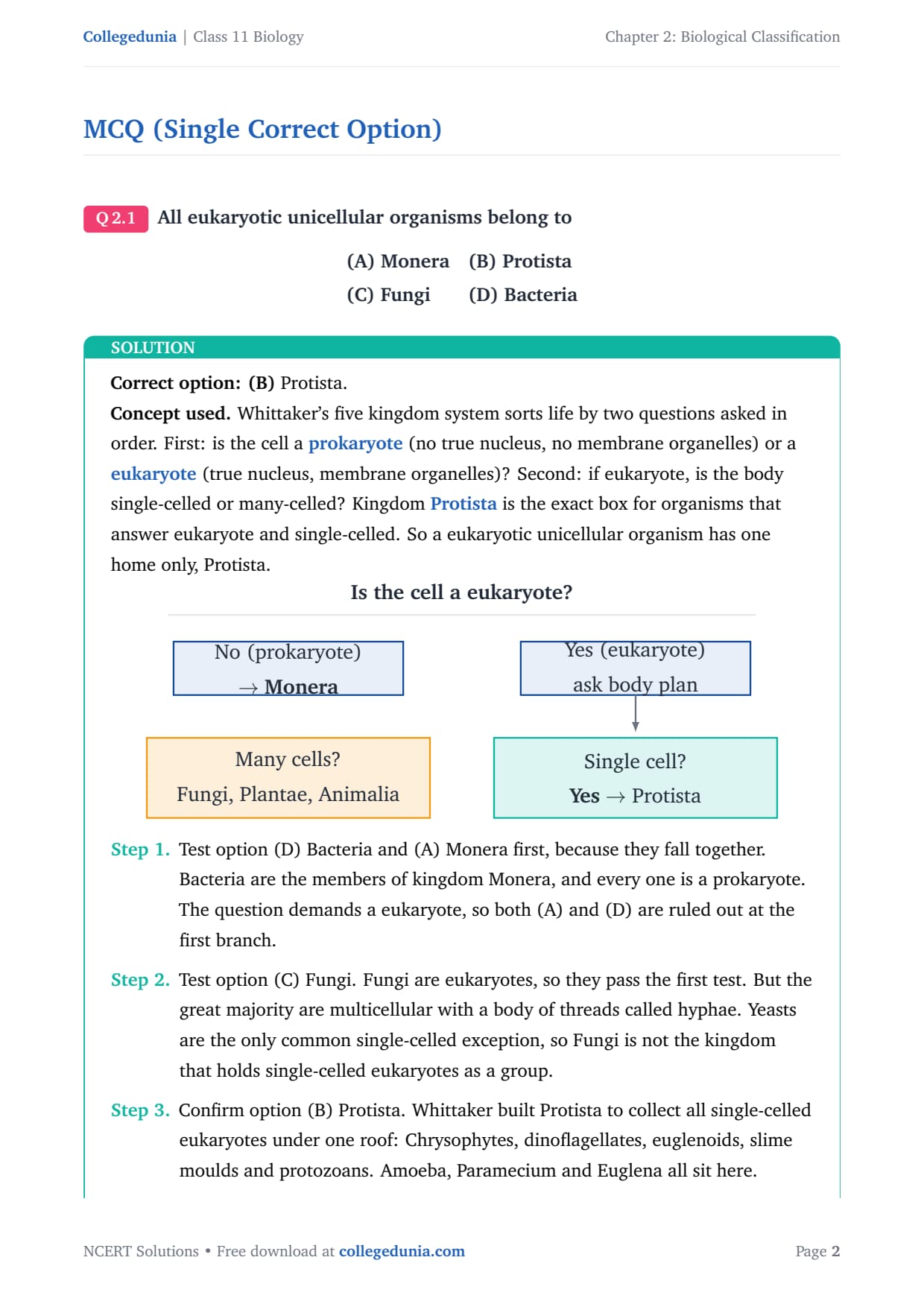
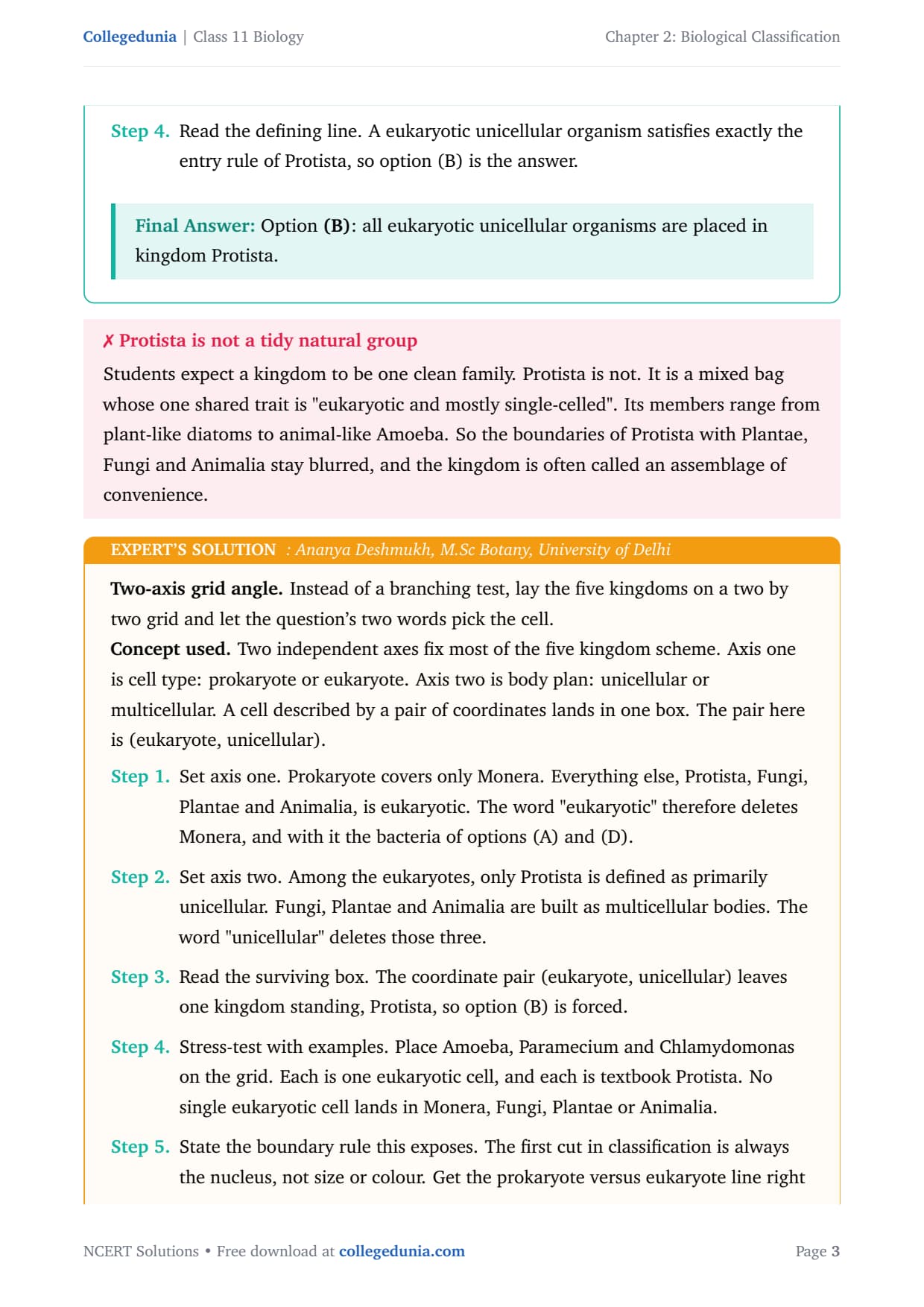
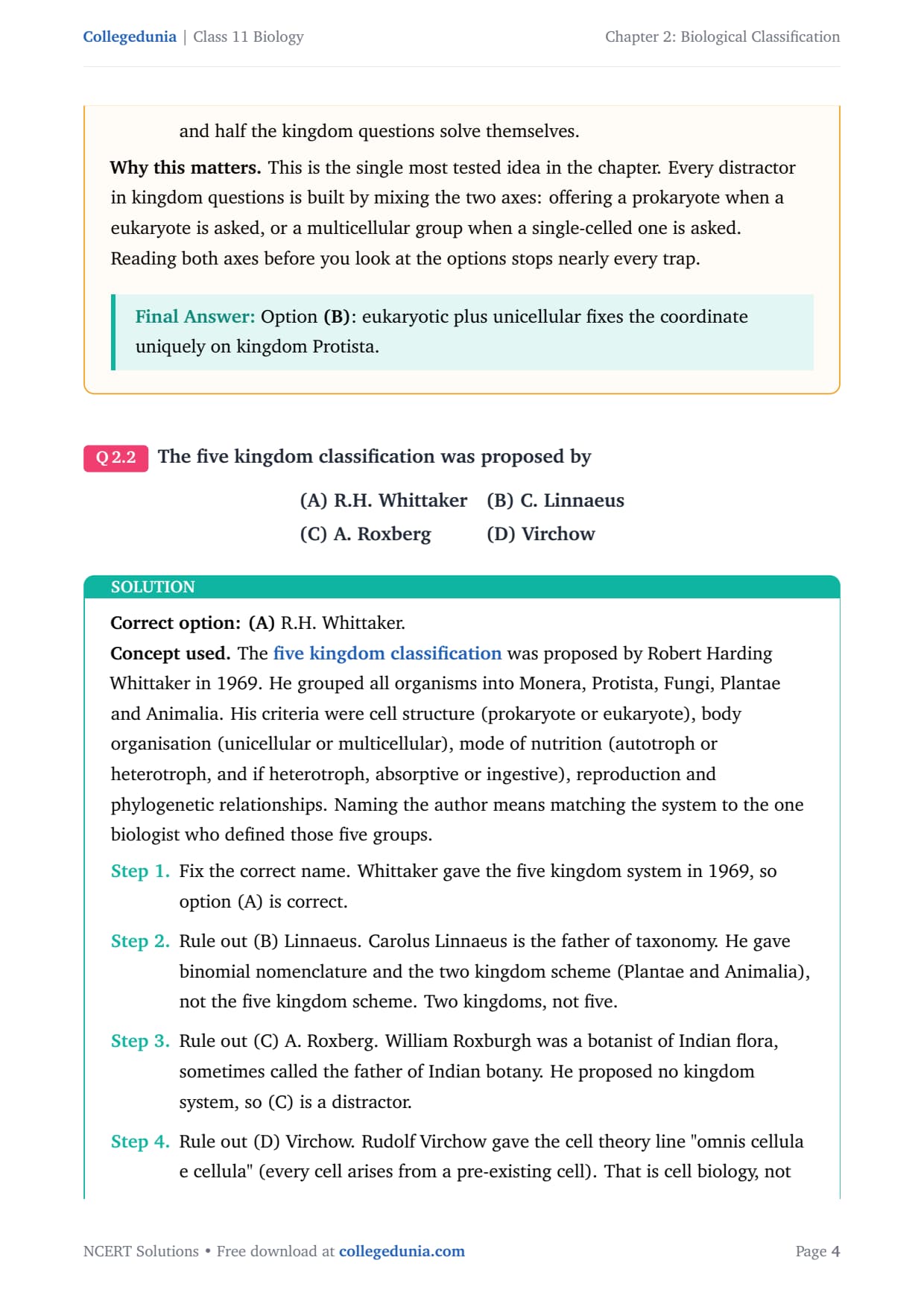
Biological Classification is the second chapter of Class 11 Biology and the first place where the taxonomy vocabulary from Chapter 1 is put to real work. Whittaker's five kingdoms, the fungal classes, the lichen and mycorrhiza partnerships, and the acellular viruses and viroids all sit here, and almost every one of them returns in NEET. The Exemplar treats these as reasoning problems rather than lists, so a memorised kingdom chart is rarely enough to reach the answer.
- CBSE Weightage: 3 to 4 marks, usually one question on the five-kingdom system or the classes of fungi
- NEET Weightage: 2 to 3 questions per year from kingdoms Monera, Protista and Fungi, along with viruses and viroids
- CUET Weightage: 1 to 2 questions on kingdom features and diagnostic characters in the Biology domain paper
Every answer is checked against the official NCERT Exemplar key, and the pairs this chapter is famous for confusing, such as virus against viroid and lichen against mycorrhiza, are pulled apart in full.
Topics Covered in the Class 11 Biology Biological Classification Exemplar
The 32 questions in this chapter are built on four groups of organisms, and the Exemplar keeps returning to the boundary between them. Biological Classification is short on formulae but heavy on diagnostic detail, because most questions turn on a single feature that decides which kingdom or class an organism belongs to. Working through it fixes the criteria you actually classify with, which is exactly what the boards and NEET reward. The four clusters below account for every question in the set.
- Kingdoms Monera and Protista: archaebacteria and eubacteria, cyanobacteria, chemosynthetic autotrophs, diatoms, dinoflagellates, protozoa and slime moulds
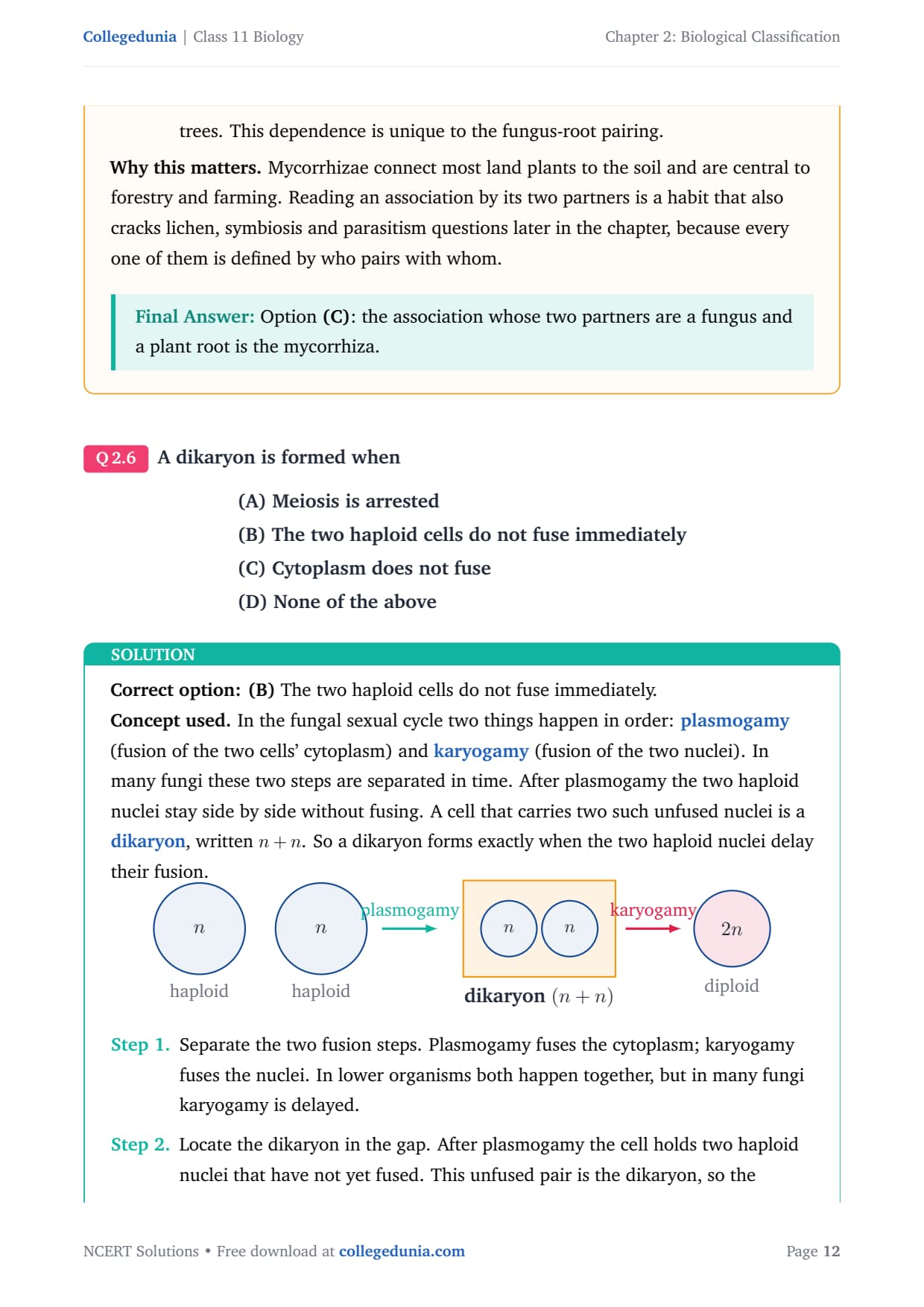
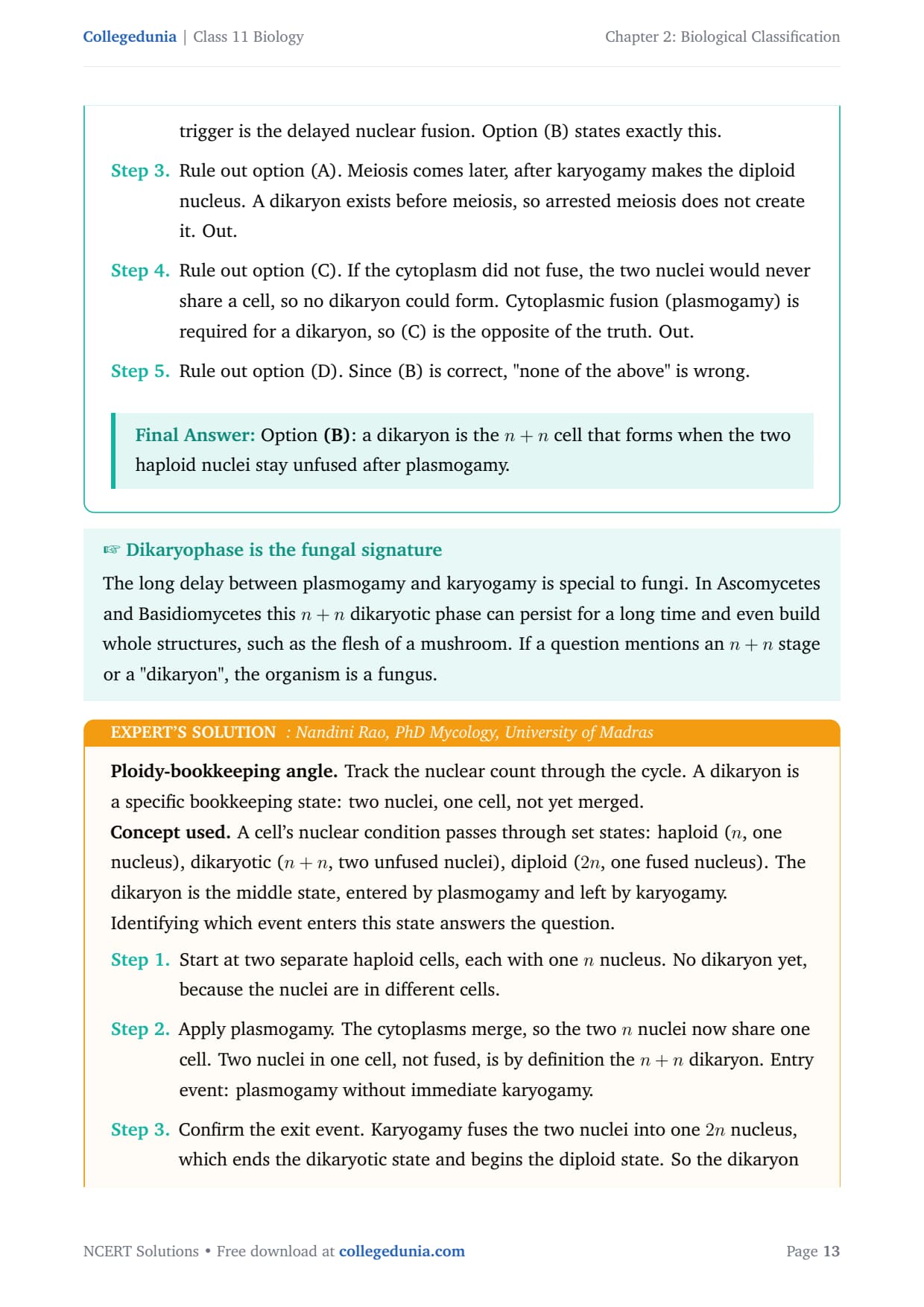
- Kingdom Fungi: Phycomycetes, Ascomycetes, Basidiomycetes and Deuteromycetes, the dikaryon stage and the fungal sexual cycle
- Symbiotic associations: lichens formed by a mycobiont and a phycobiont, and mycorrhiza between higher plant roots and fungi
- Viruses, viroids and prions: acellular structure, the protein coat and nucleic acid, and the living versus non-living debate
Question Types in the Biological Classification NCERT Exemplar
Class 11 Biology Exemplar chapters use four question types, and each one carries a different demand. The MCQ set looks routine until an option turns on one diagnostic word, while the Long Answer set asks you to justify a whole classification decision. The Short Answer questions are where most marks are won or lost in this chapter, because they reward a precise distinguishing feature and punish a general description. The table below shows how the 32 questions split across the four types.
| Question Type | Count | What It Tests |
|---|---|---|
| MCQ (single correct) | 12 | Choosing the exact kingdom or class from one diagnostic clue |
| VSA (Very Short Answer) | 8 | One-line features such as why diatoms are called pearls of the ocean |
| SA (Short Answer) | 7 | Distinguishing look-alike pairs like virus and viroid, or lichen and mycorrhiza |
| LA (Long Answer) | 5 | Justifying the five-kingdom system and the role of fungi in daily life |
Viruses, Viroids and What Counts as Living
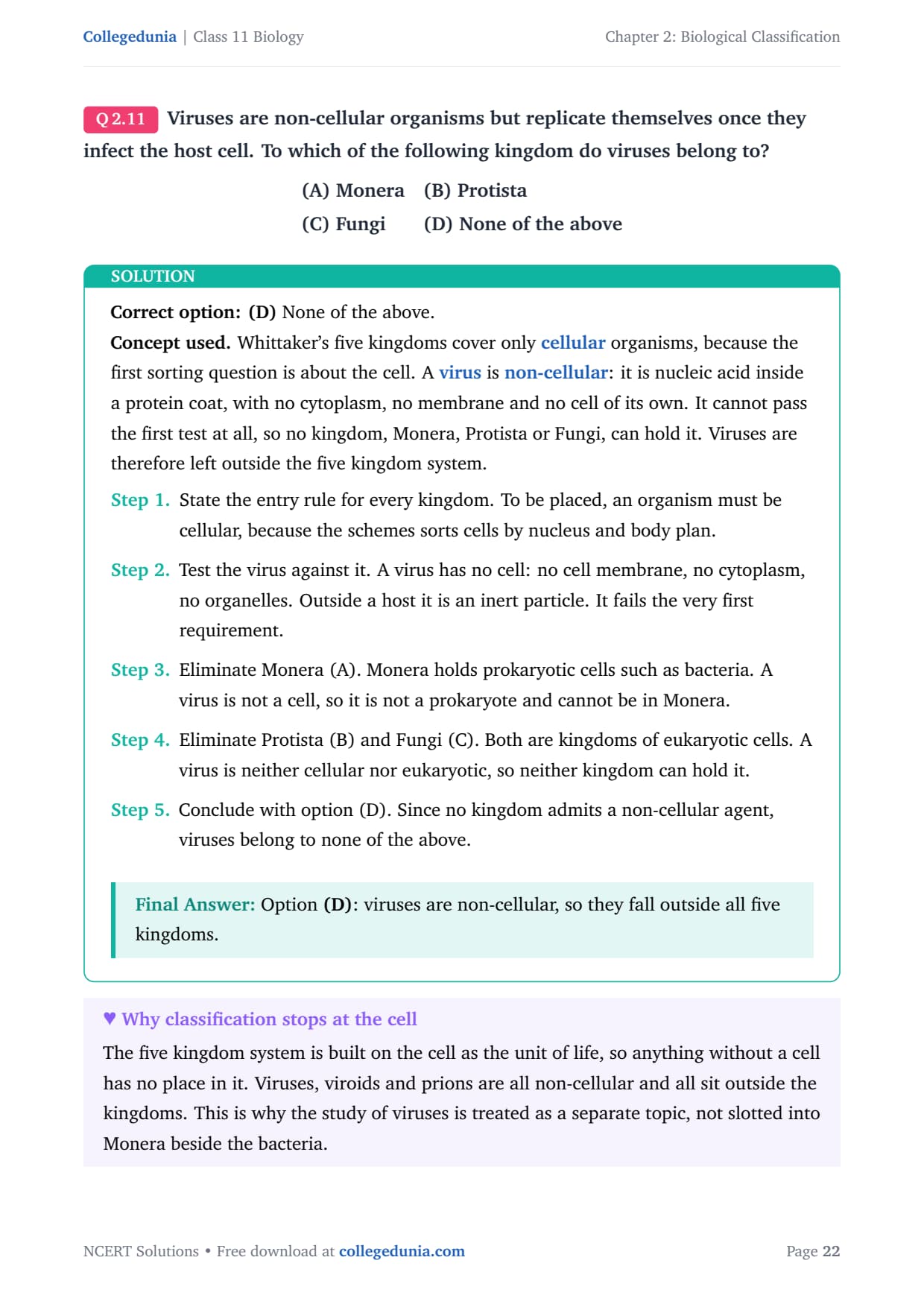
The trickiest questions in this chapter are not about naming a kingdom at all. They ask you to decide whether viruses and viroids are living, and the Exemplar builds several problems around that judgement. A virus can be crystallised like a chemical, has no cell, and shows no metabolism outside a host, yet the moment it enters a living cell it replicates and mutates. A viroid pushes the idea further, being free infectious RNA with no protein coat at all. This is why the answer is that a virus sits on the borderline rather than firmly in either camp.
- Non-living characters: a virus can be crystallised, is inert outside the host, has no cell structure and carries out no independent metabolism
- Living characters: inside a host cell it replicates using the host machinery, mutates, and passes on its nucleic acid
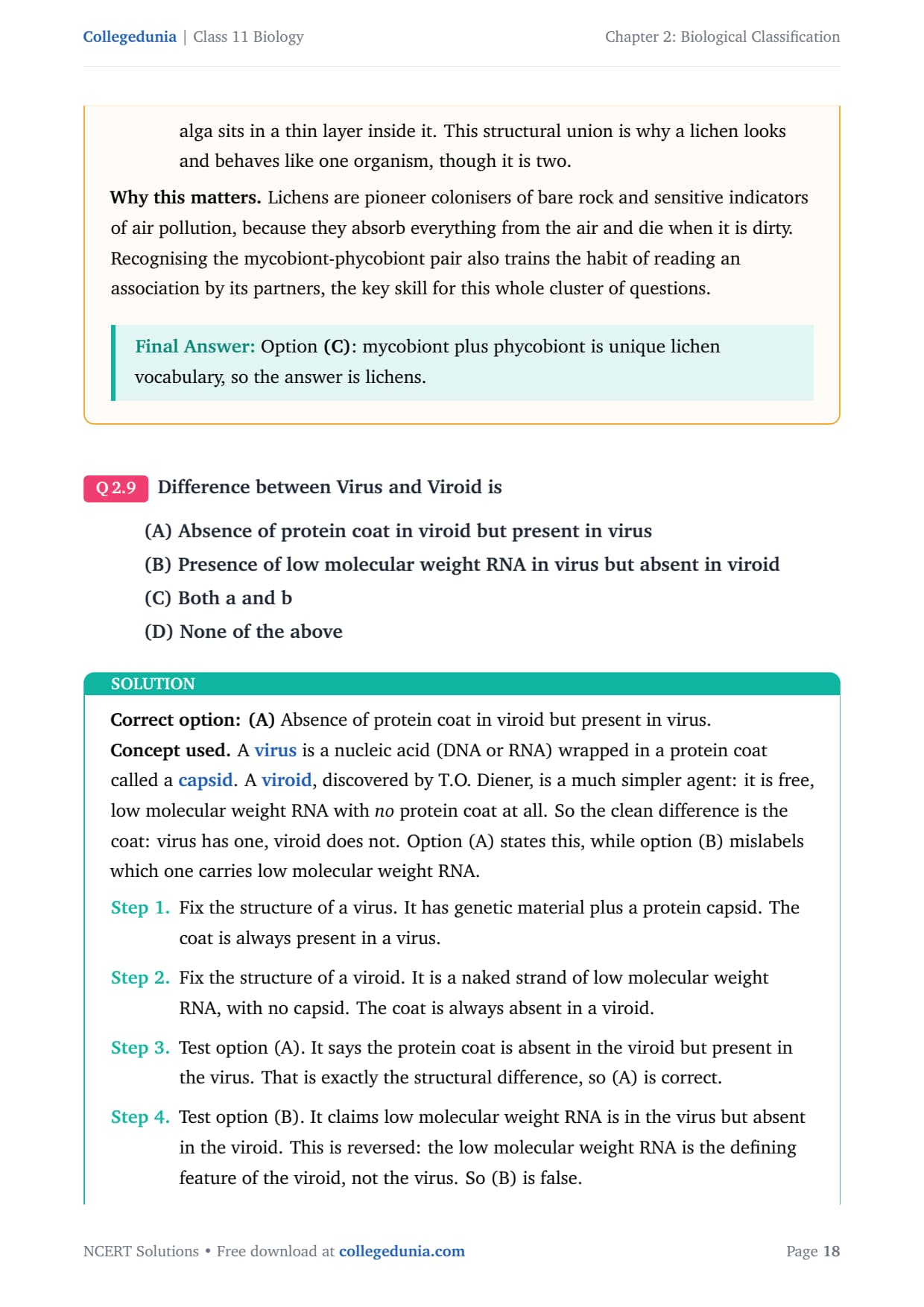
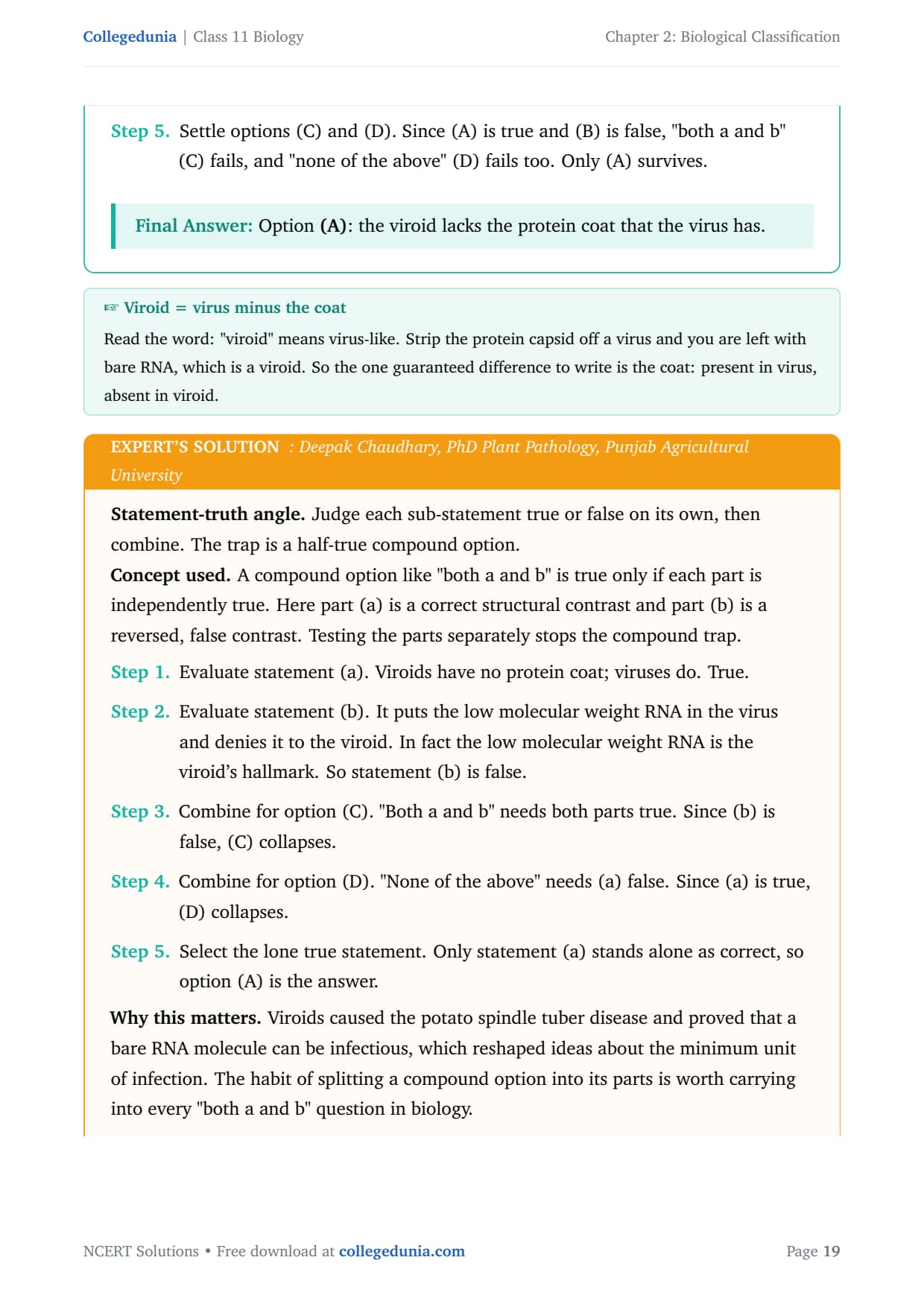
- Viroid against virus: a viroid is a naked, free RNA without the protein coat that a virus always carries, which the Short Answer set asks you to state exactly
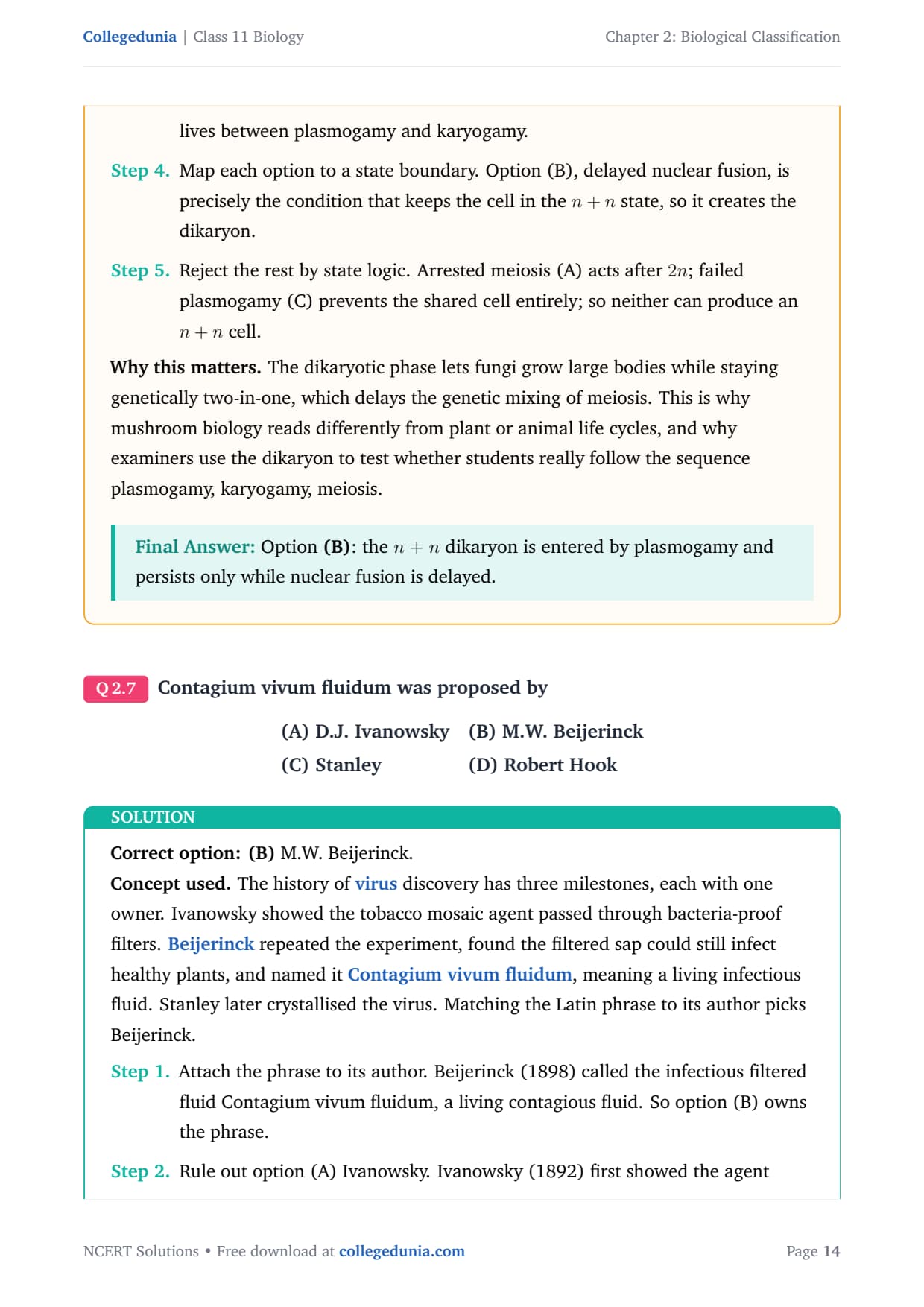
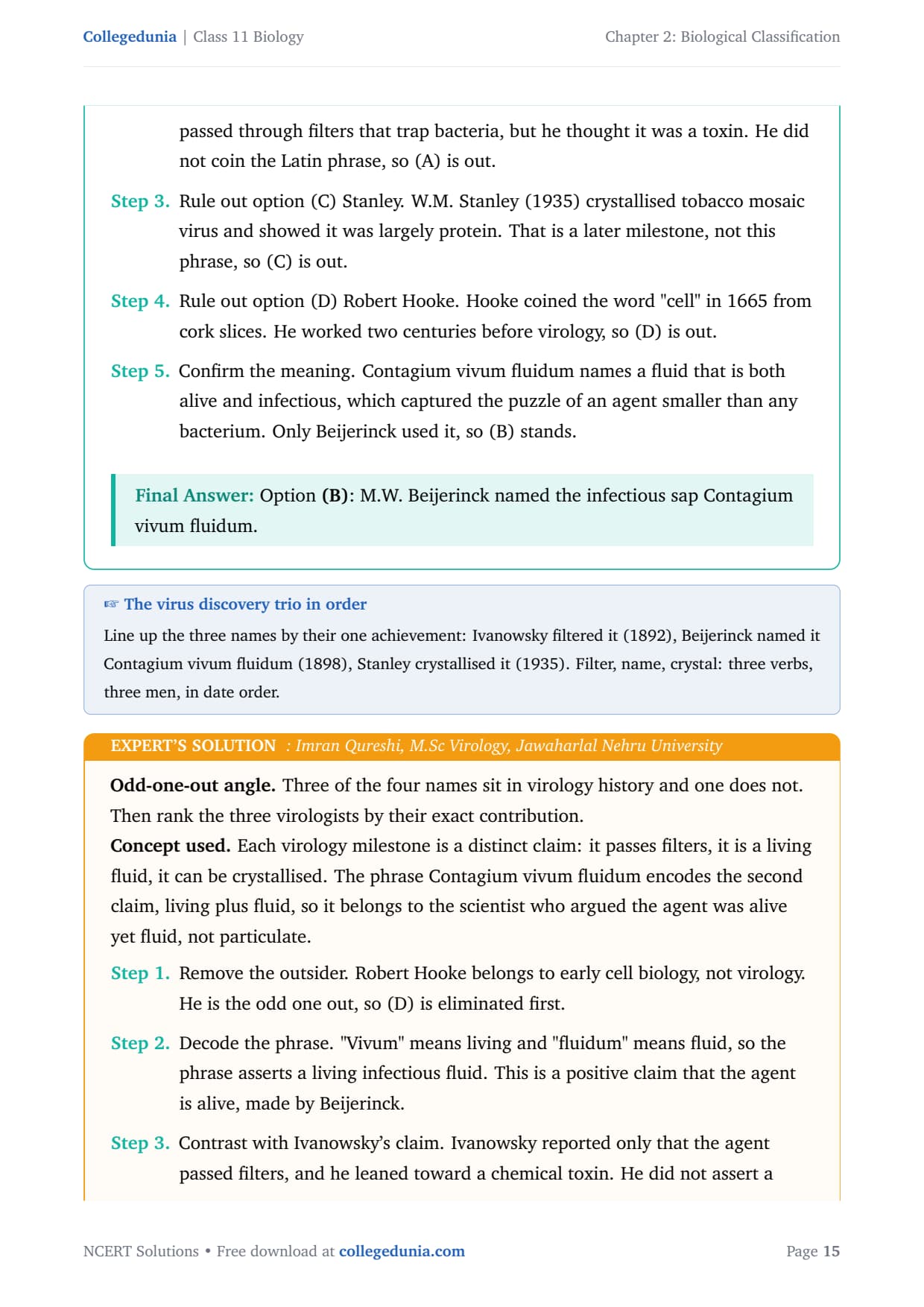
- Contagium vivum fluidum: the phrase, coined by Beijerinck for the infectious living fluid, is the historical clue the MCQ set uses to test this idea
No single trait settles whether a virus is alive, and the Exemplar makes you argue both sides. When a question asks for the non-living characters only, listing reproduction or mutation loses focus and marks. Each answer in the PDF names which characters belong on which side, so the borderline status becomes a reasoned position rather than a memorised line.
Common Mistakes Students Make in Biological Classification
The Exemplar plants tempting wrong options and half-right definitions on purpose. Four errors catch most students in this chapter, and each is flagged in the PDF at the exact question where it appears. Learning to spot them early protects marks across the whole diversity unit, because the same diagnostic distinctions return in Plant Kingdom and Animal Kingdom straight after.
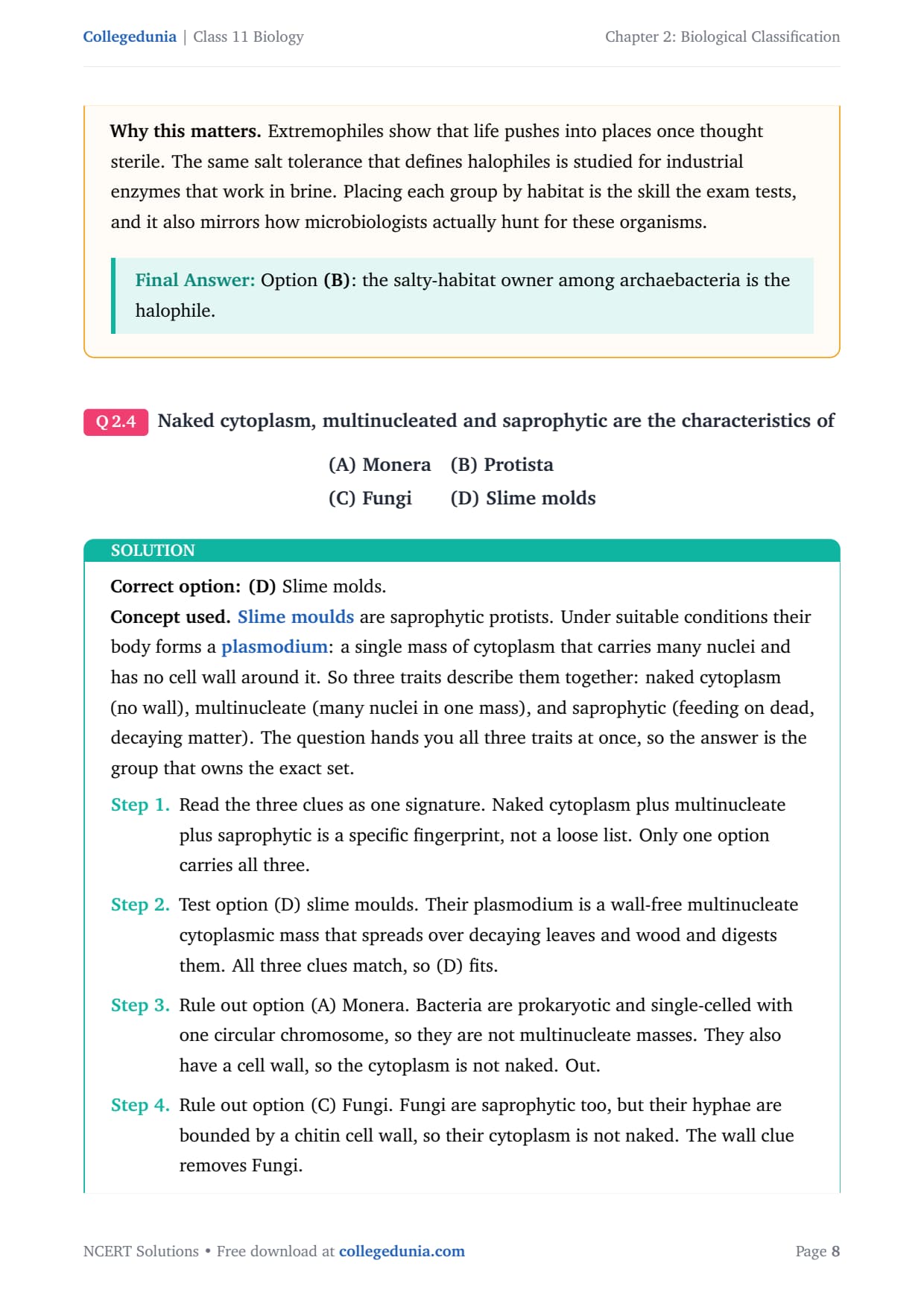
- Choosing the general group over the specific one: naked cytoplasm, multinucleate and saprophytic point to slime moulds, not the whole Kingdom Protista. When a stem lists an exact signature, pick the narrowest group that fits every clue.
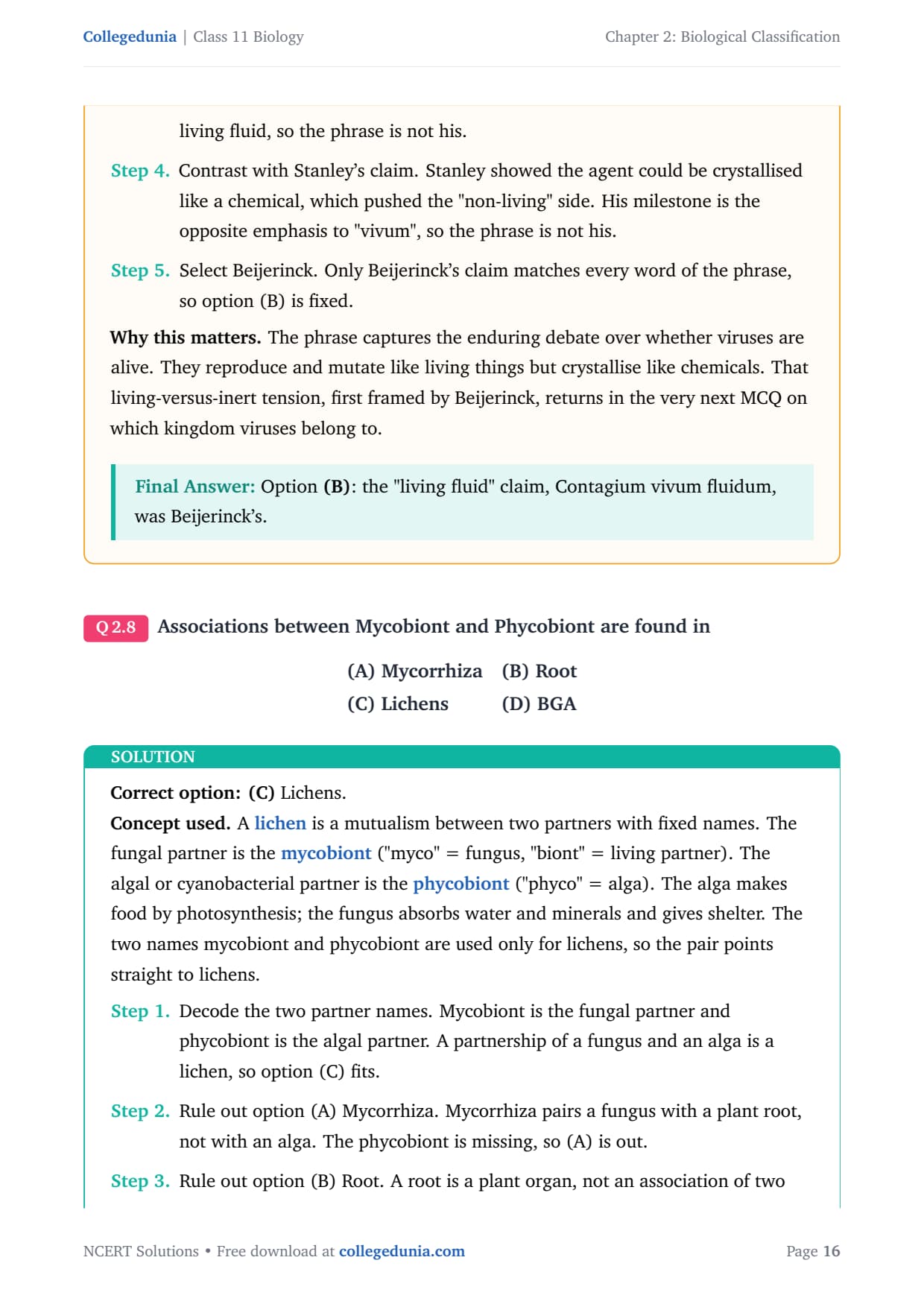
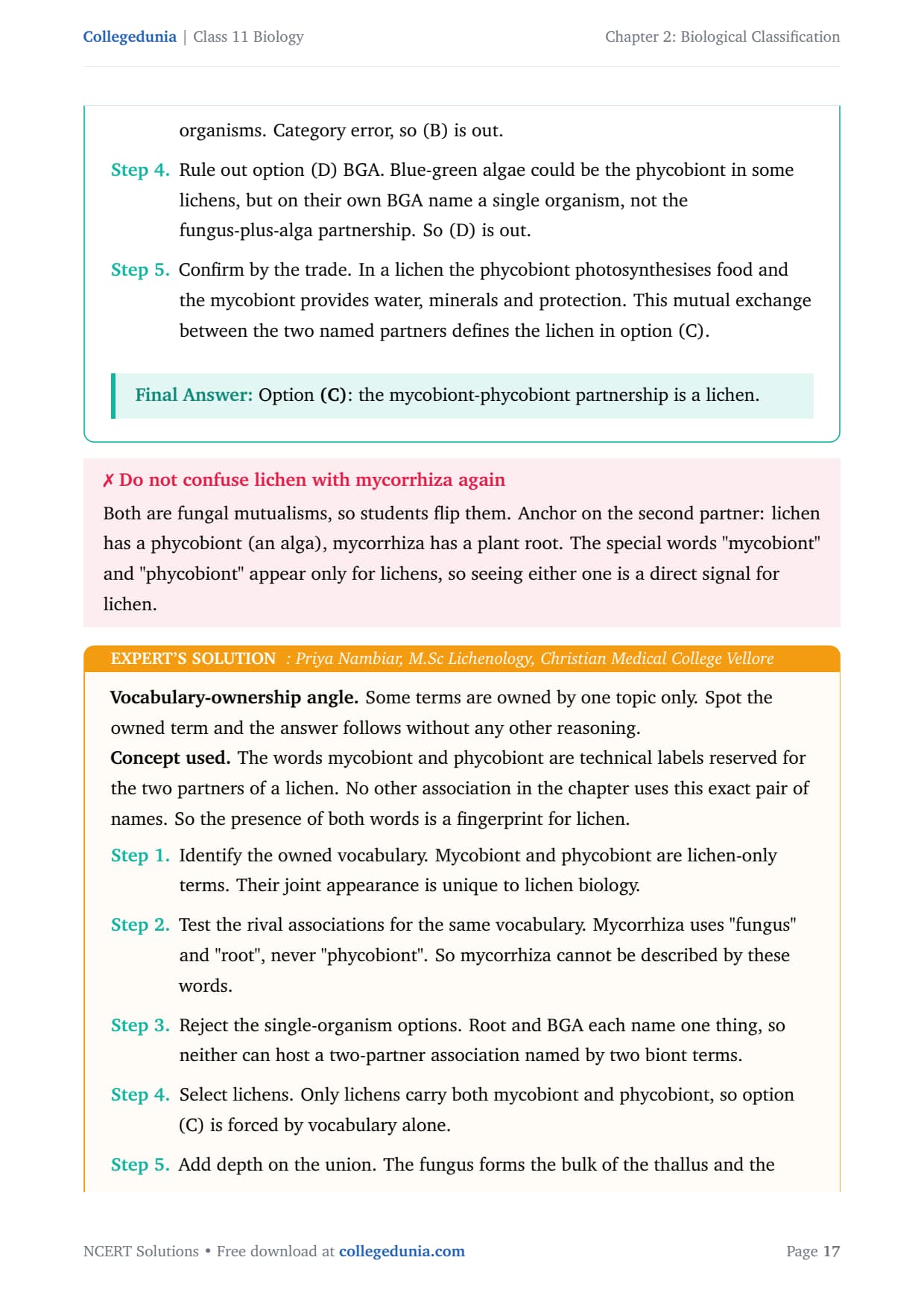
- Lichen against mycorrhiza: both are fungal partnerships, so anchor on the second partner. A lichen pairs a fungus with an alga, the phycobiont, while a mycorrhiza pairs a fungus with a plant root.
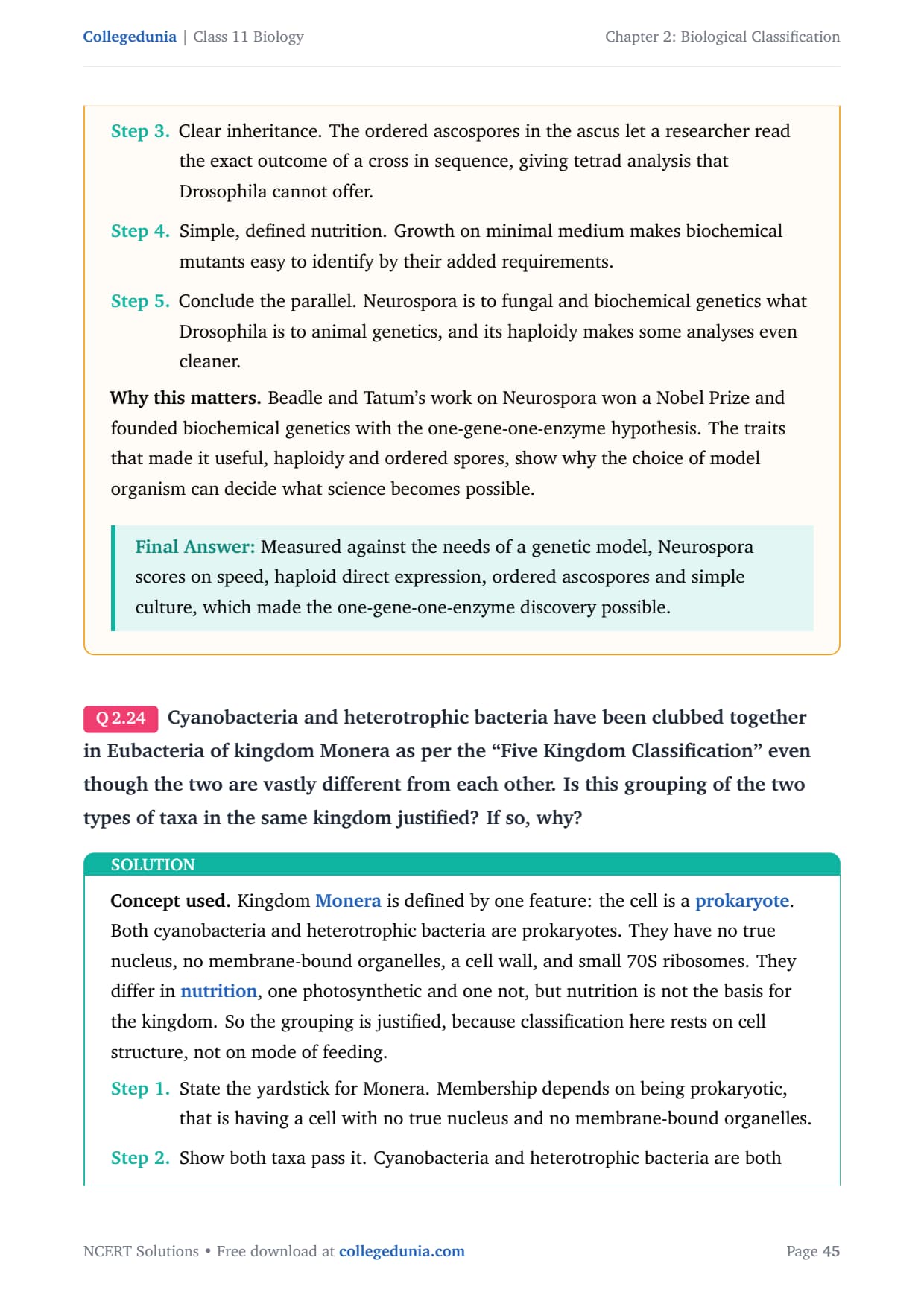
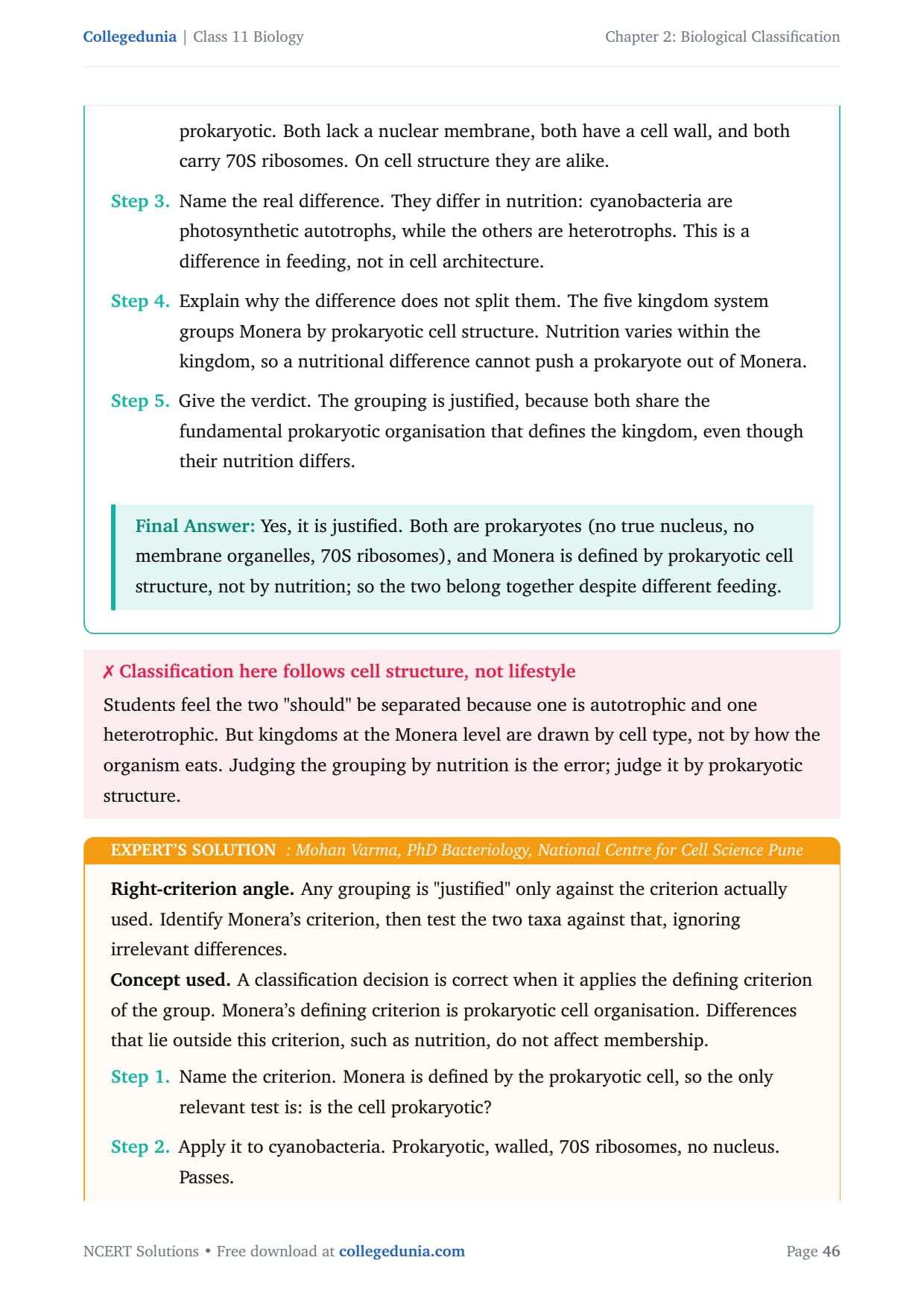
- Grouping Monera by nutrition instead of cell type: cyanobacteria and heterotrophic bacteria share a kingdom because both are prokaryotic, not because of how they feed. Judging the grouping by nutrition is the trap.
- Mixing living traits into a non-living answer: for the virus question, stick to crystallisation, inertness and the absence of a cell, and leave reproduction and mutation out when the stem asks only for non-living characters.
How the Exemplar Steps Up from the Class 11 Biology Textbook
The textbook gives you a table of kingdoms and asks you to place an organism in it. The Exemplar gives you a set of features and asks you to choose the most precise group those features allow, which is a sharper skill and the one that NEET actually tests. This is why students who only read the chapter feel the MCQs are unfair. They are not harder in content, they are harder in how narrowly they ask you to answer.
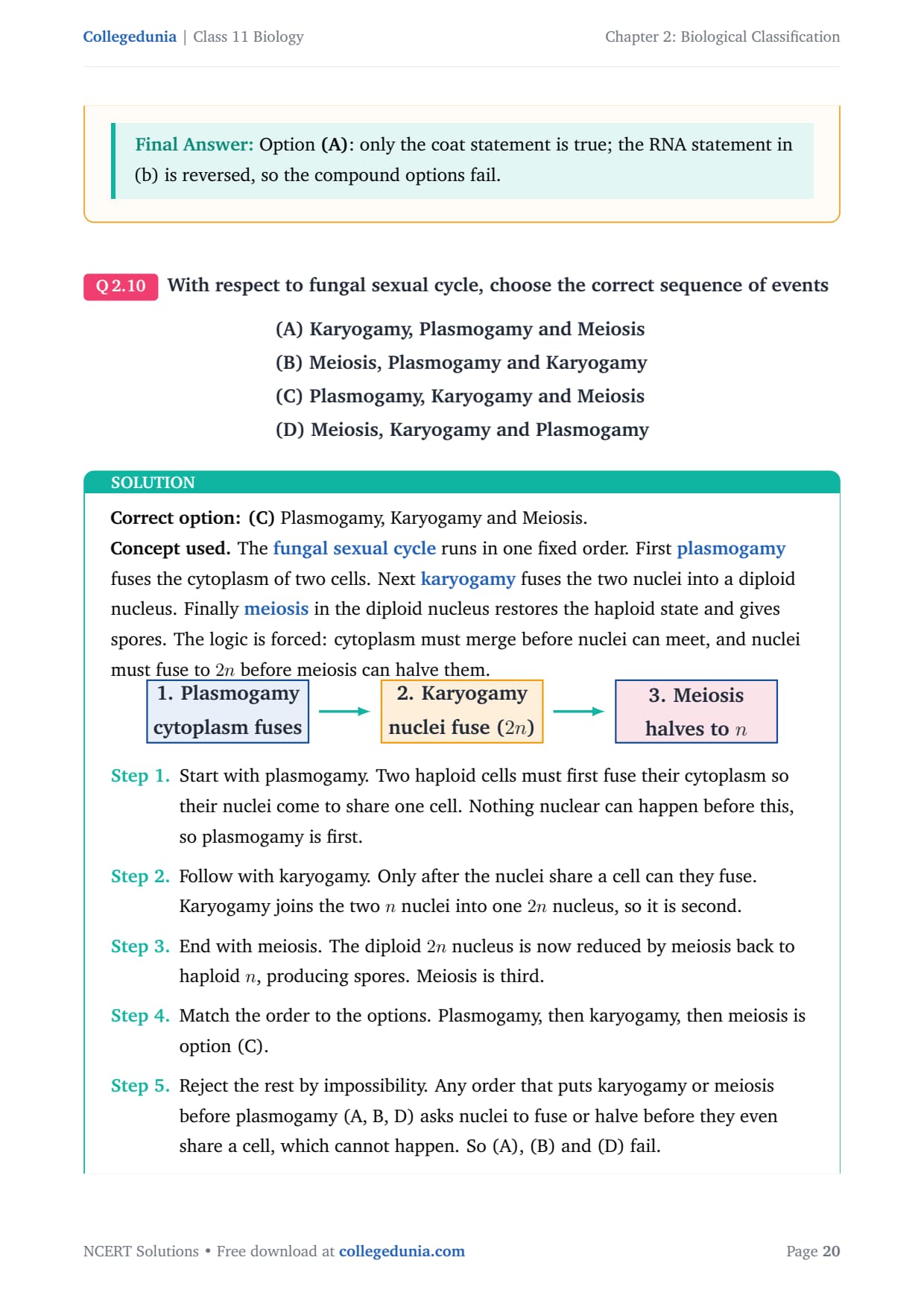
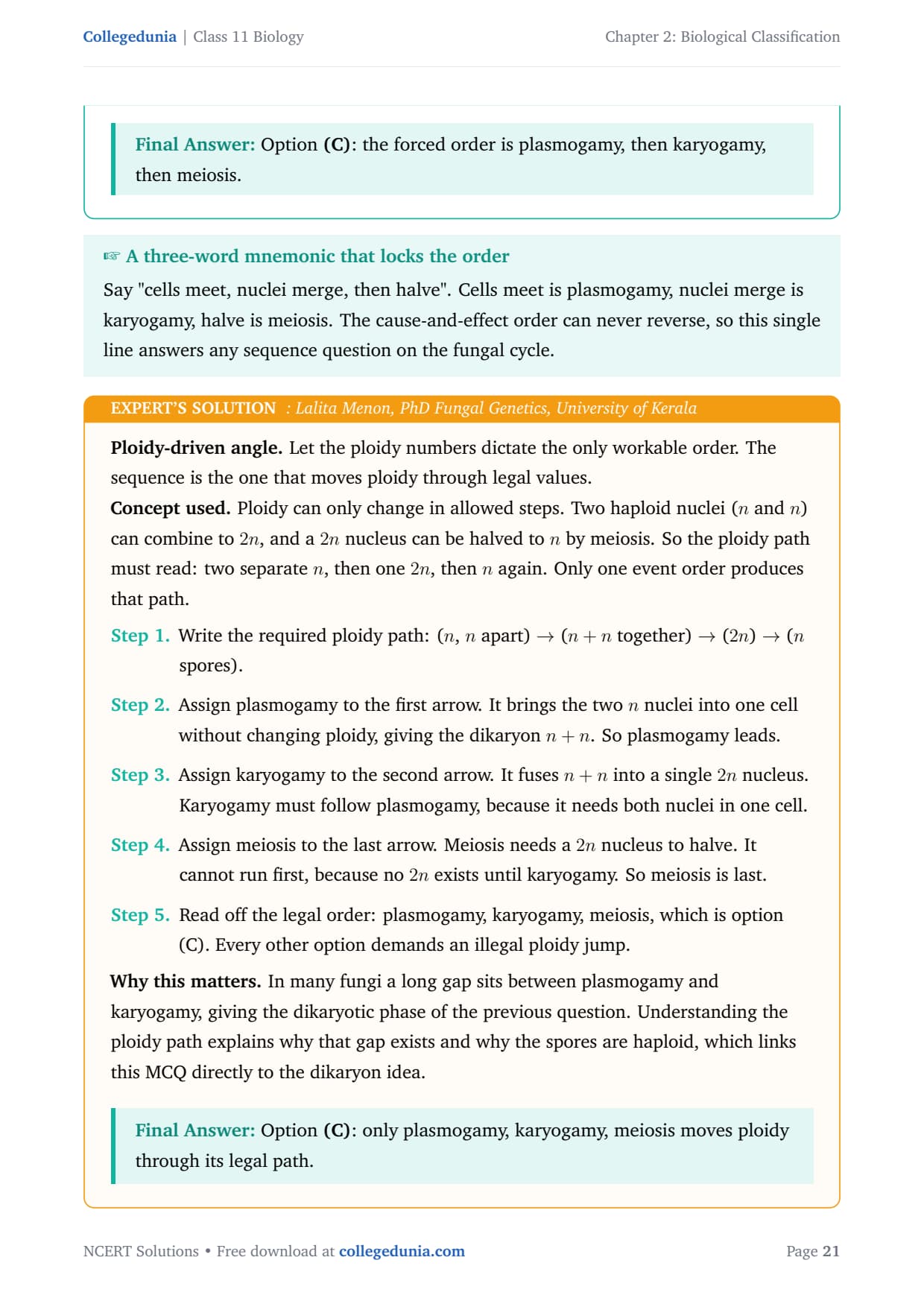
The question that lists naked cytoplasm, multinucleate and saprophytic shows the gap clearly. Kingdom Protista is not wrong biology, since slime moulds are protists, so a quick reader ticks it and moves on. The Exemplar rewards the student who names slime moulds instead, because it is the exact group every clue points to. The same demand appears in the fungal sexual cycle question, where the plasmogamy, karyogamy and meiosis sequence must be ordered rather than merely recognised, and in the lichen question, where the two special words mycobiont and phycobiont settle the answer. Working these builds precision, not recall, which is what Chapter 2 is meant to train.
How to Use These NCERT Exemplar Solutions for Boards, NEET and CUET
Attempt each question before you open the solution. This chapter rewards the attempt, because the options look obvious until you try to defend one against a close rival. Read the stem, commit to the narrowest group or the exact distinguishing feature, and only then check it against the PDF. The gap between your choice and the model answer is where the marks live in a classification paper.
- Boards: the Short Answer and Long Answer sets match the 3 and 4 mark board pattern, especially the five-kingdom justification and the role of fungi
- NEET: work the MCQ and Very Short Answer sets first, since NEET repeats kingdoms, fungal classes and viruses at exactly this level every year
- CUET: the feature-based MCQ set is the closest practice for the domain paper, which favours a single diagnostic character per question
Student Feedback
Students using Collegedunia's Class 11 Biology Exemplar Solutions told us that the fungi and virus questions were the hardest part of this chapter, well above the bacteria and protista questions. Around 7 in 10 said that seeing the virus and viroid difference and the lichen and mycorrhiza difference solved side by side, with the deciding feature named each time, finally made the two pairs stop blurring together before the NEET revision season.
Other Resources for Class 11 Biology Biological Classification
Collegedunia has the full set of study material for this chapter. Use the Notes for a first read, keep the Formula Sheet handy for the kingdom features at a glance, then work the Exemplar once the vocabulary is steady, with the NCERT Solutions open for the textbook exercise alongside.
Also Check:
- NCERT Solutions for Class 11 Biology Chapter 2
- Class 11 Biology Chapter 2 Notes
- Class 11 Biology Chapter 2 Formula Sheet
- Class 11 Biology Chapter 2 NCERT Book PDF
- Class 11 Biology Chapter 2 Exemplar Questions with Solutions
NCERT Exemplar Solutions for Other Class 11 Biology Chapters
Each chapter below has the same step-by-step treatment and a free PDF. All 19 chapters have an NCERT Exemplar book chapter behind them, so the list covers every one.
Biological Classification Class 11 NCERT Exemplar Solutions FAQs
Ques. How many questions are there in the Class 11 Biology Biological Classification Exemplar?
Ans. Chapter 2 has 32 questions. They are split into 12 MCQ, 8 Very Short Answer, 7 Short Answer and 5 Long Answer questions. All 32 are solved in the free PDF on this page.
Ques. What is the difference between a virus and a viroid?
Ans. A virus has a nucleic acid core, either DNA or RNA, wrapped in a protein coat. A viroid is smaller and simpler, being free infectious RNA with no protein coat at all. A Short Answer question in this chapter asks for this difference, and forgetting the missing protein coat of the viroid is the common way students lose the mark.
Ques. How is a lichen different from a mycorrhiza?
Ans. Both are partnerships involving a fungus, so the difference lies in the second partner. A lichen is an association between a fungus, the mycobiont, and an alga, the phycobiont. A mycorrhiza is an association between a fungus and the roots of a higher plant. The special words mycobiont and phycobiont appear only for lichens, so seeing either one signals a lichen.
Ques. Why are cyanobacteria placed in Monera and not with the algae?
Ans. Cyanobacteria are called blue-green algae because they are green and live in water, but the name is misleading. They have no true nucleus and no membrane-bound organelles, so they are prokaryotic and belong in Kingdom Monera. Kingdoms at this level are drawn by cell type, not by colour or nutrition, so the cell structure decides the placement.
Ques. Is the NCERT Exemplar enough for NEET questions from Biological Classification?
Ans. For this chapter it covers the ground well. NEET asks two to three questions a year on the five kingdoms, the fungal classes and viruses, and they sit at the level of the Exemplar MCQ and Very Short Answer sets. Work all 12 MCQs and the 8 Very Short Answers before moving to a coaching module.



Comments