




NEET has pulled at least one Biomolecules Class 12 Chemistry NCERT Exemplar question every year for six years. This page hosts the official PDF, the question-type split, and a short study plan.
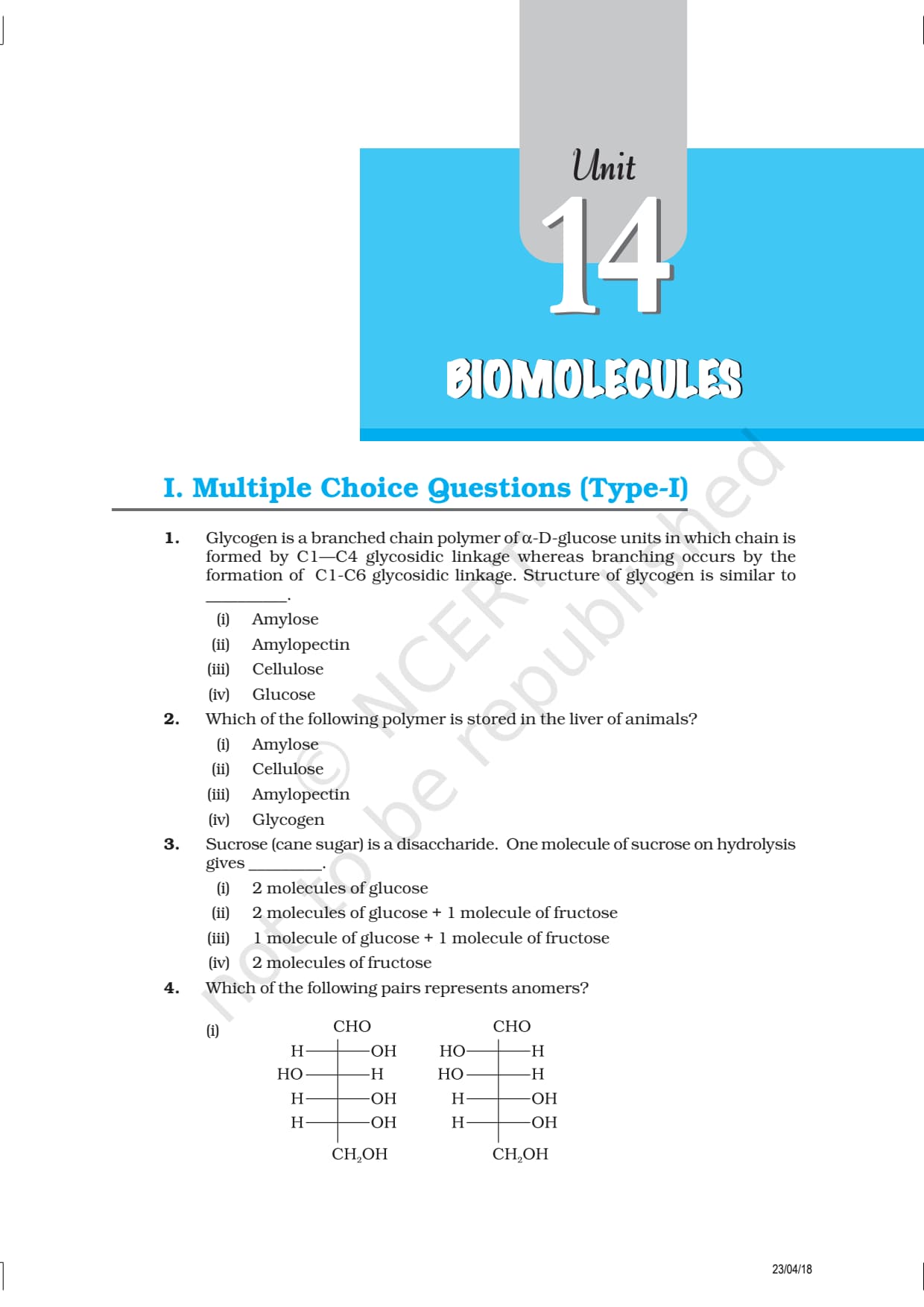
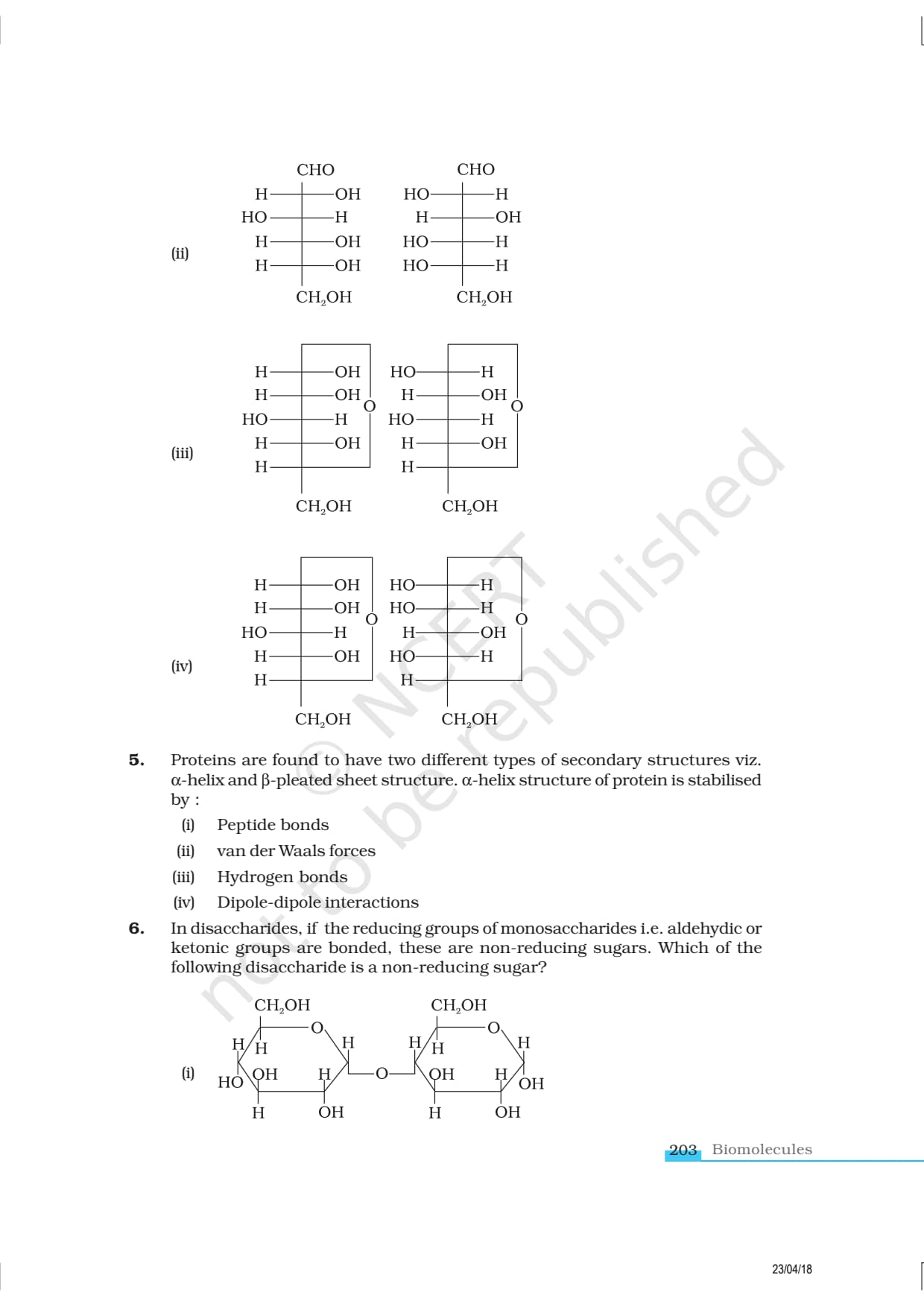
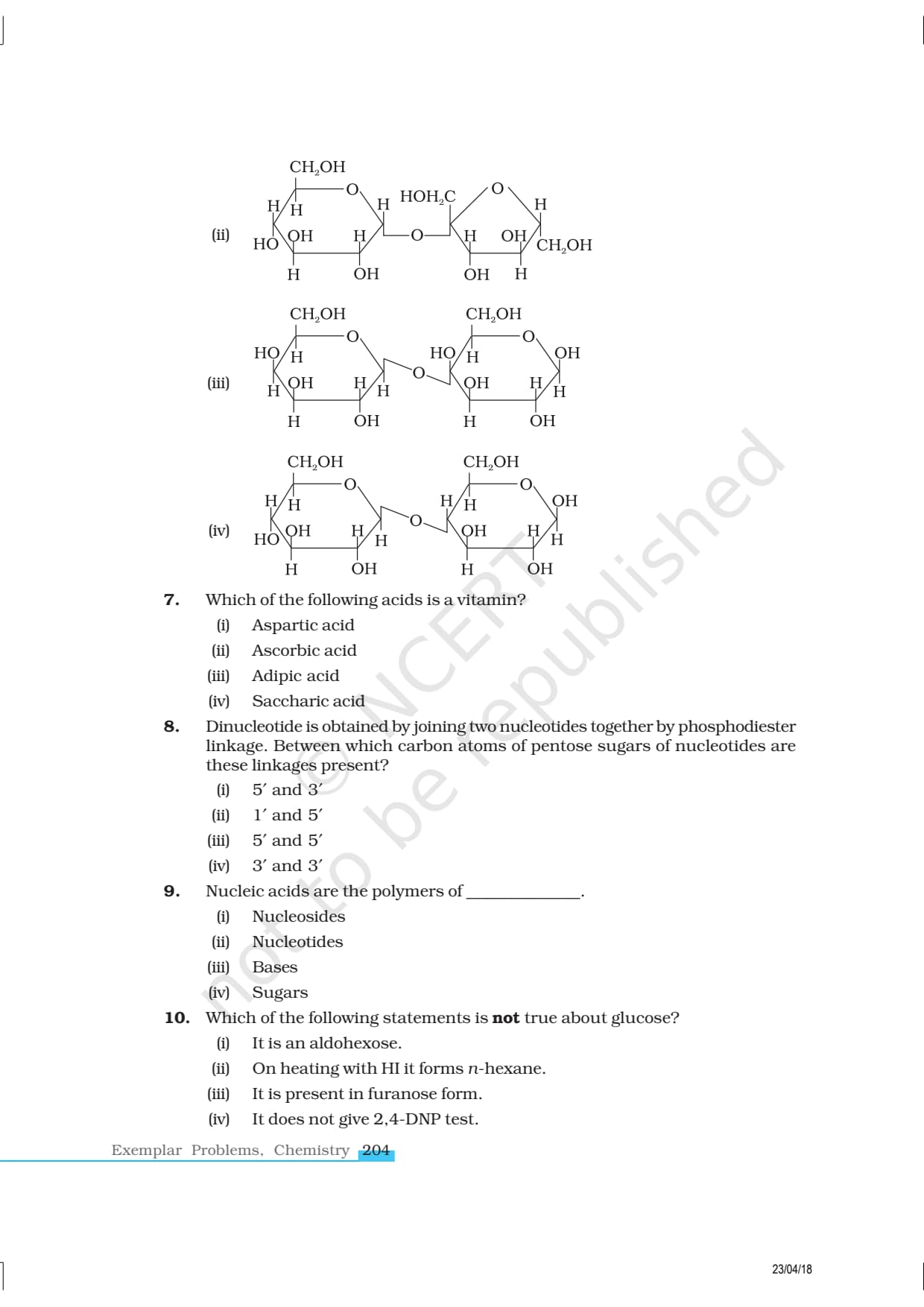
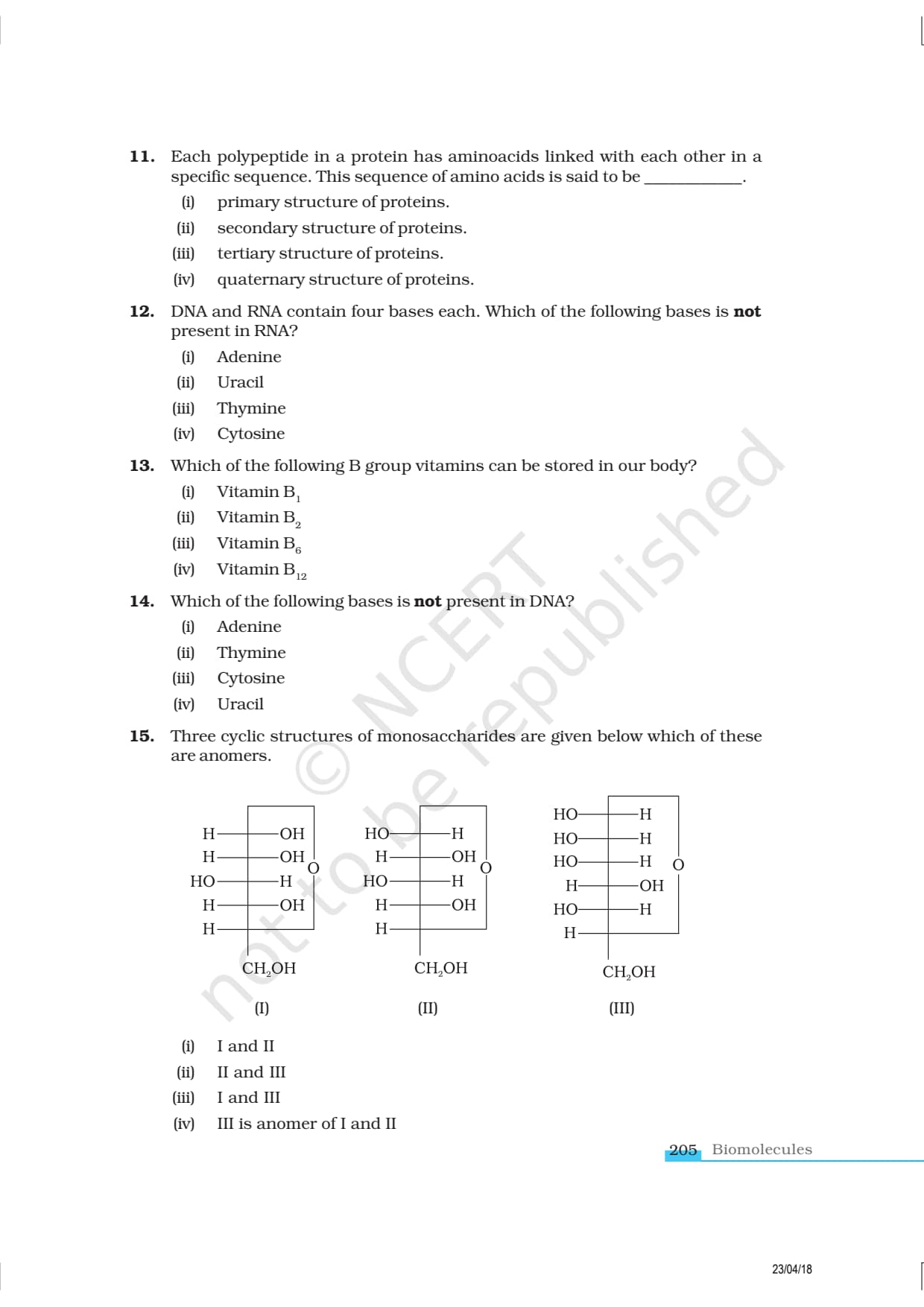
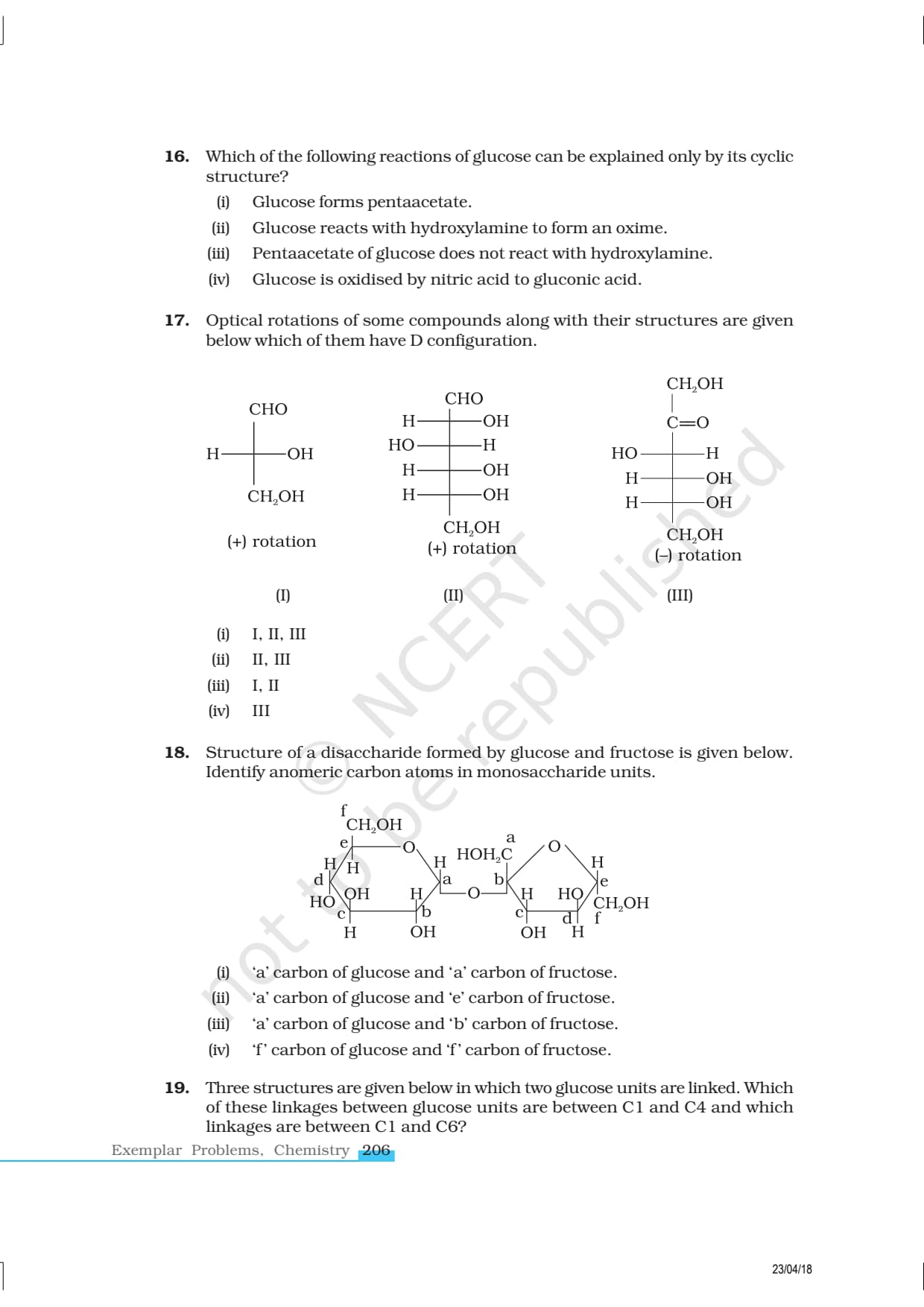
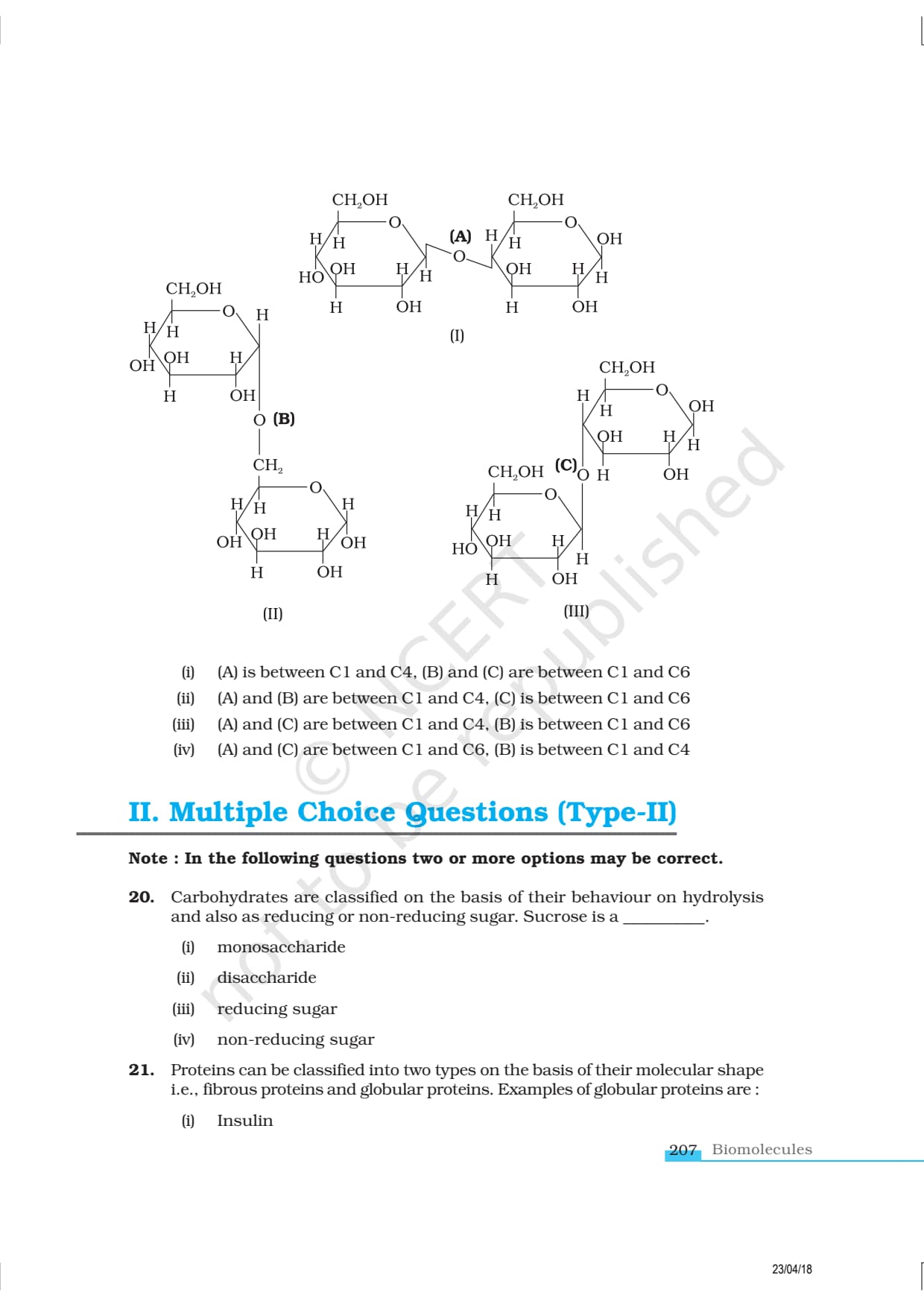
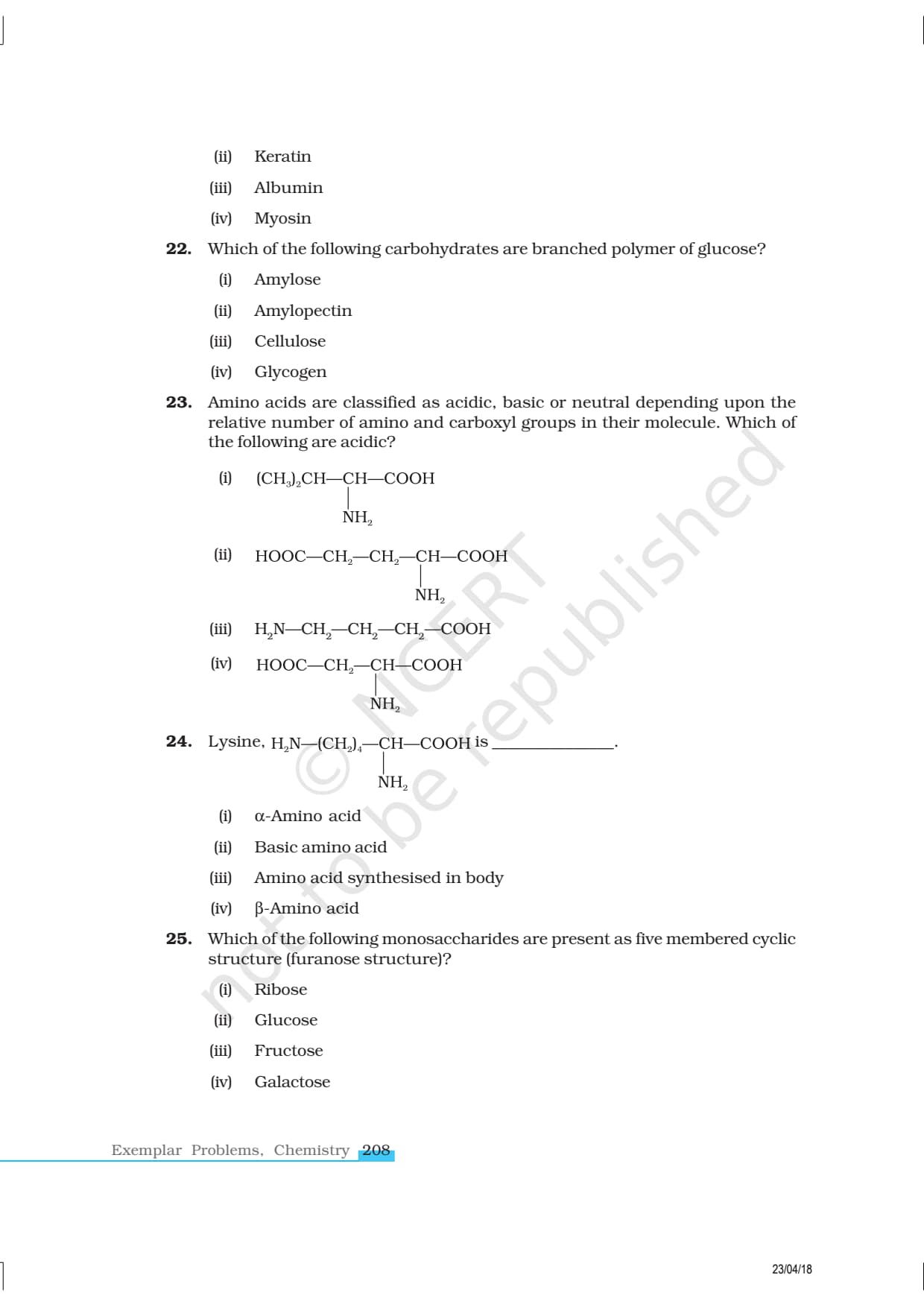
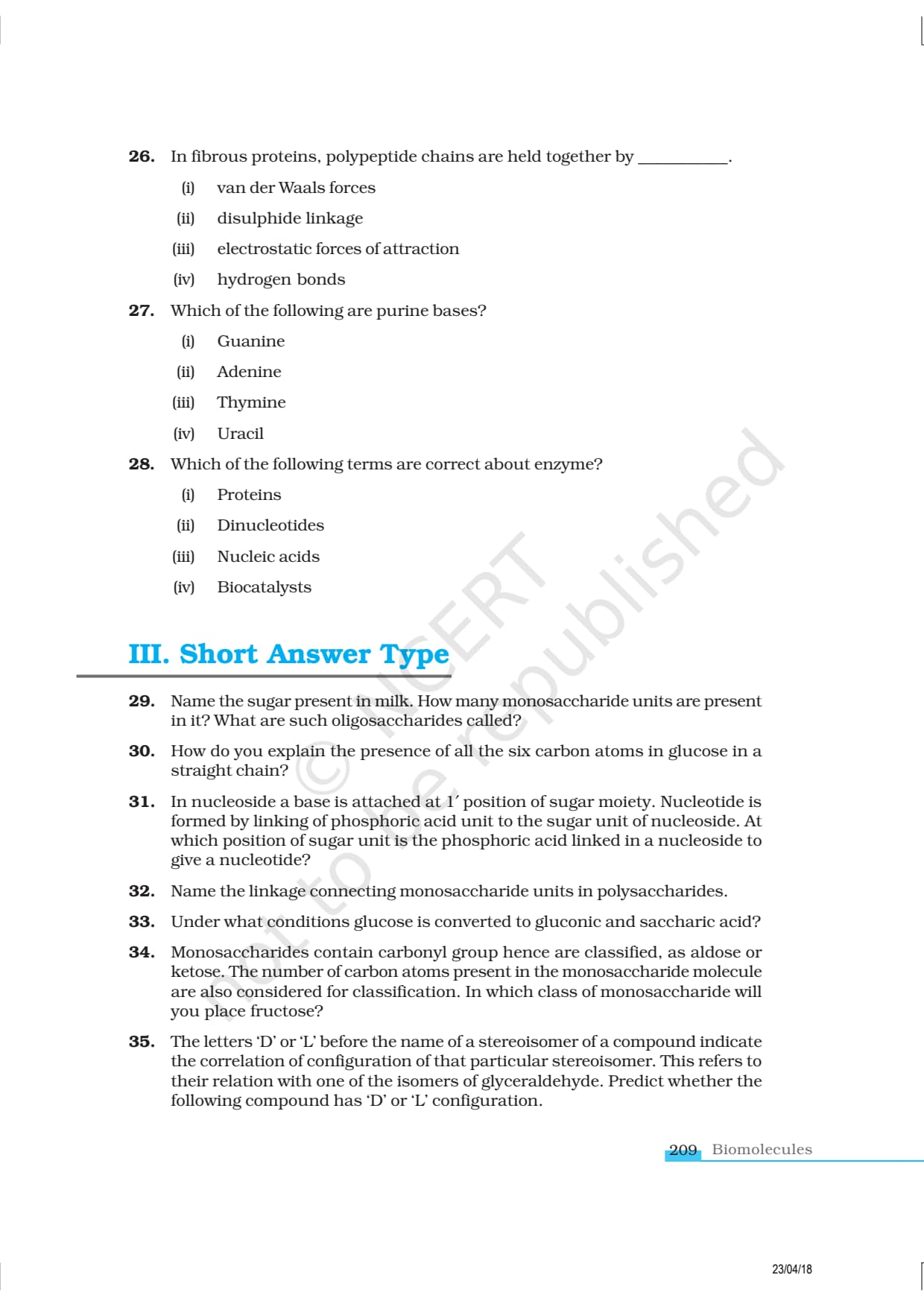
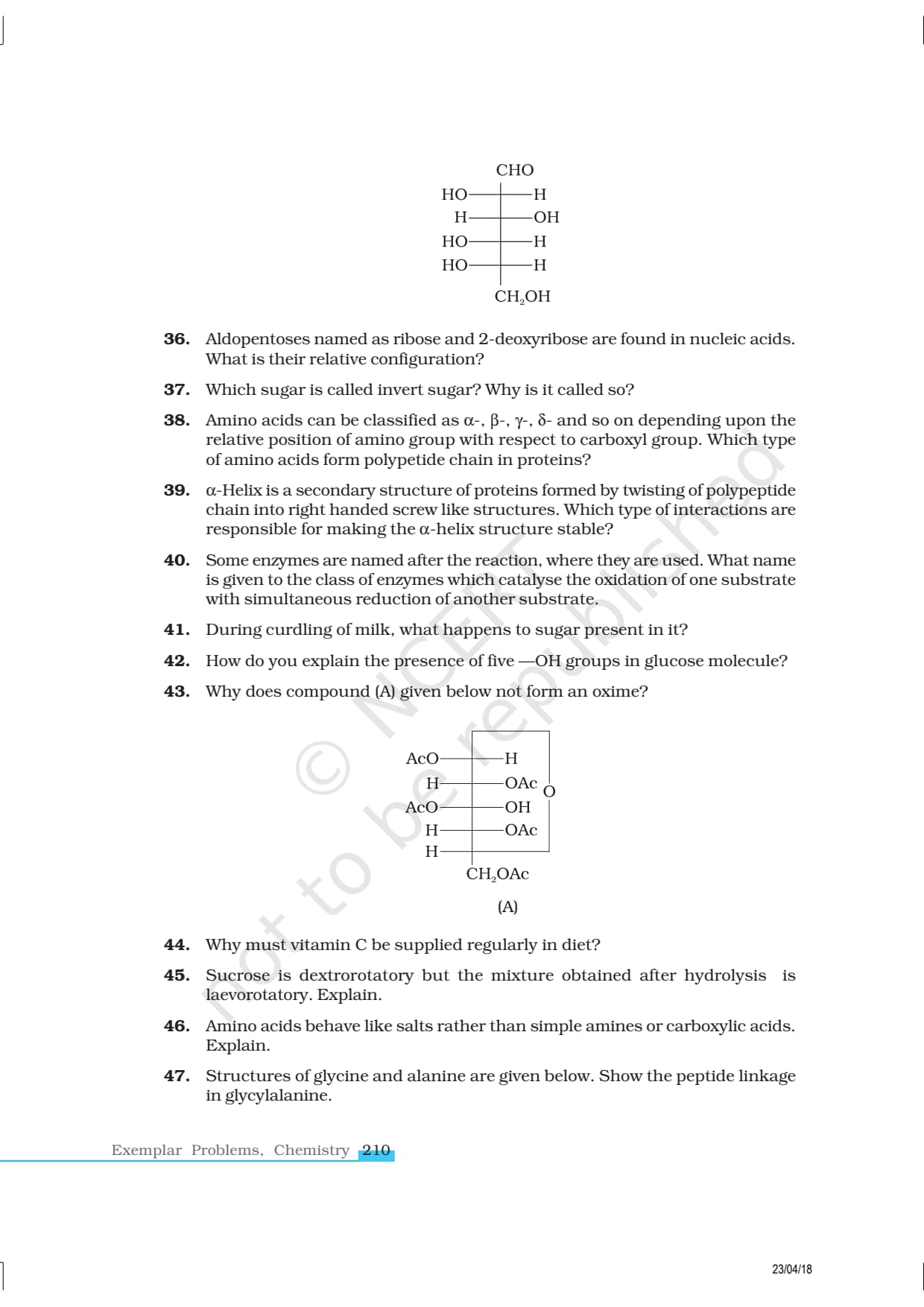
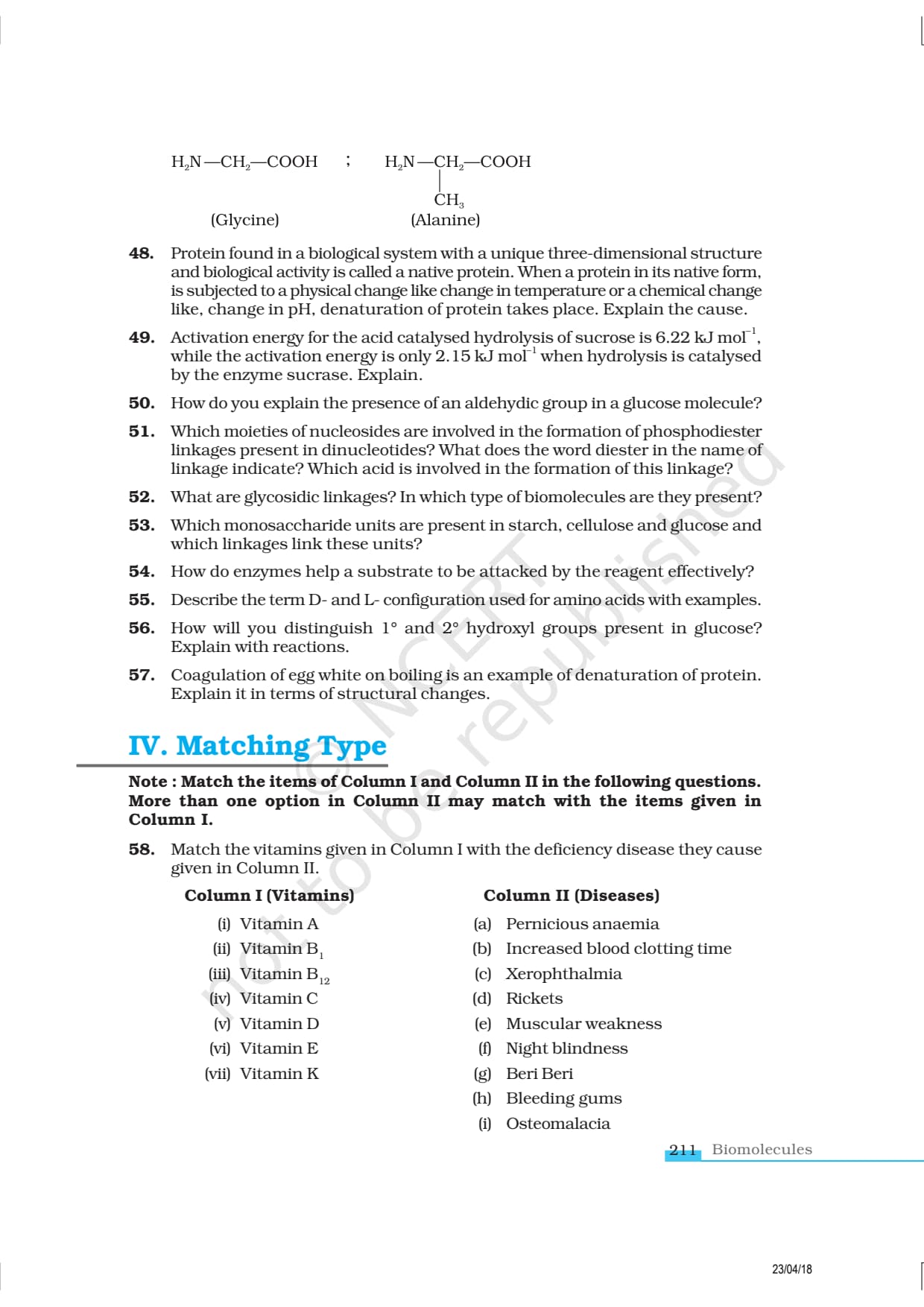
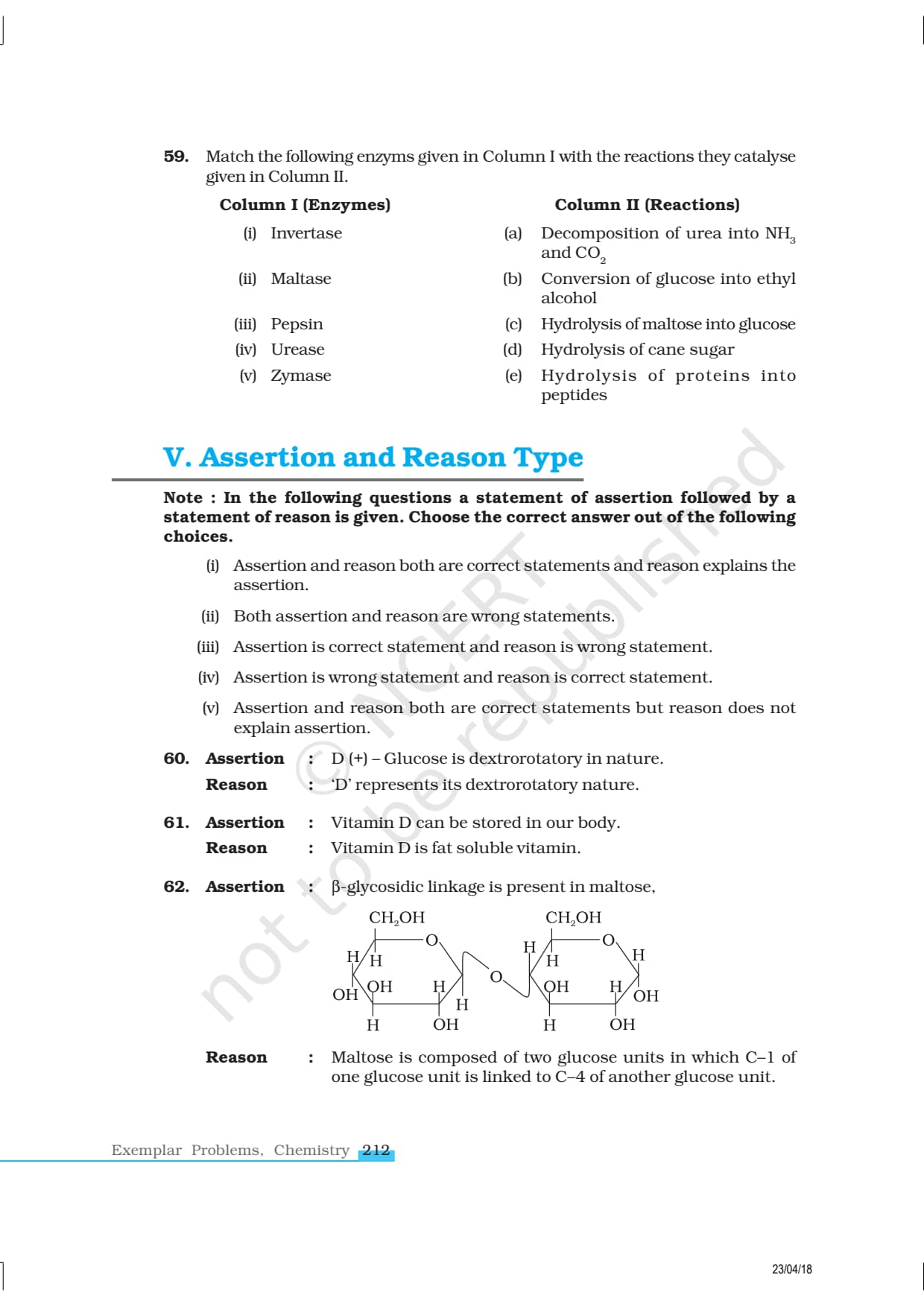
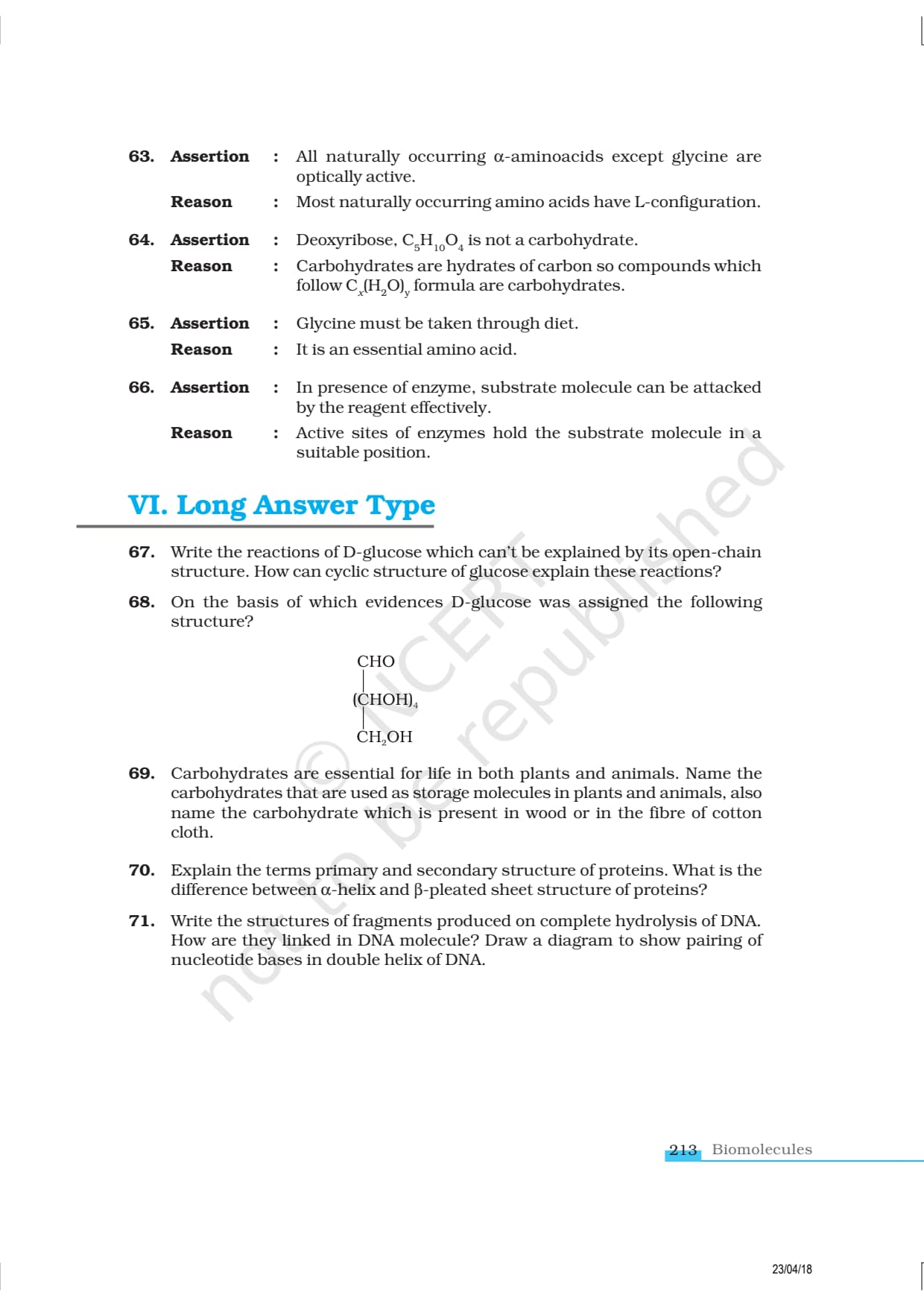
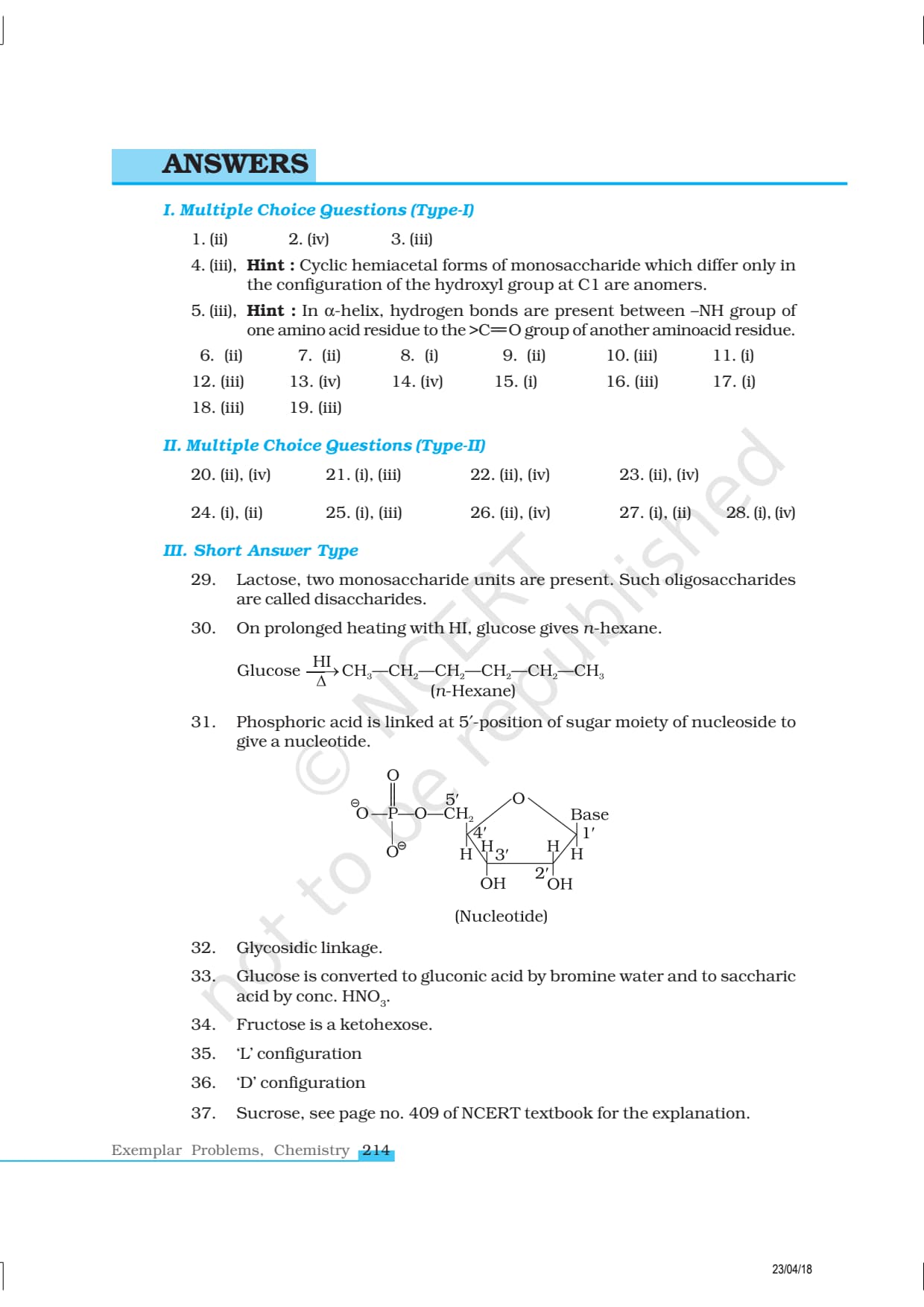
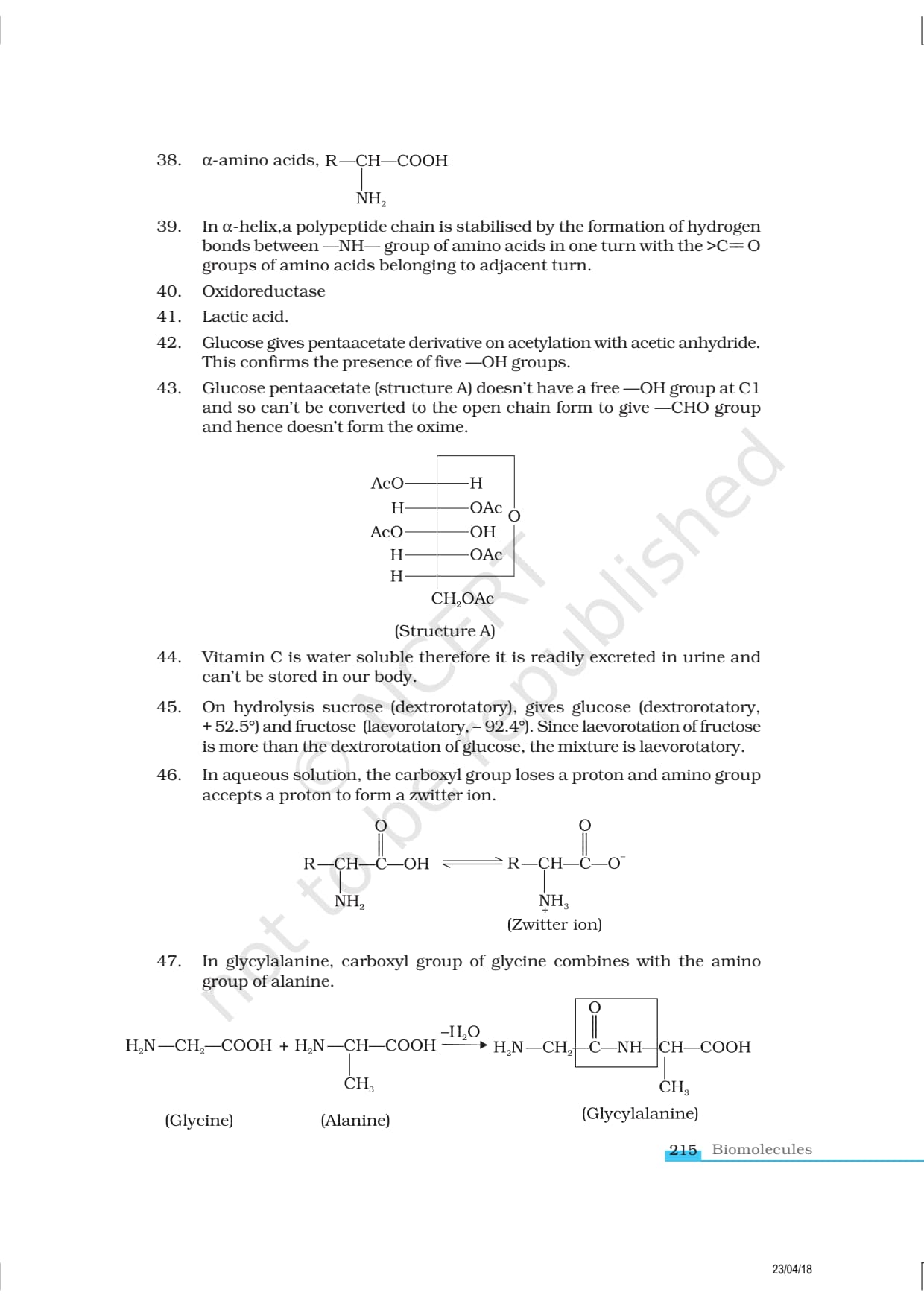
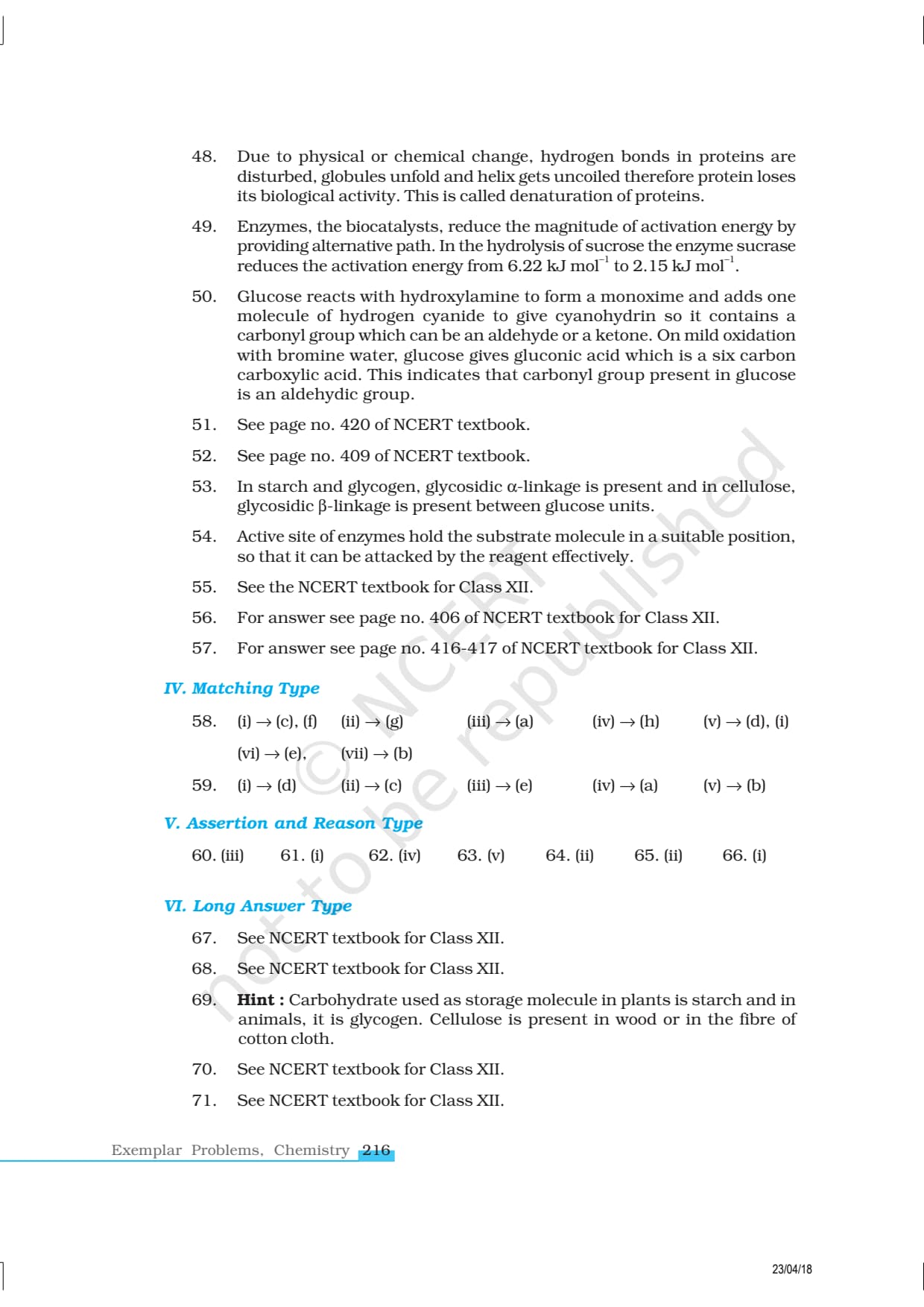
- CBSE Weightage: 4 to 5 marks (Class 12 Chemistry Boards)
- JEE Main Weightage: 1 to 2% (typically 1 to 2 questions per shift drawn from this chapter)
- NEET Weightage: 2 to 3 question(s) per year (highest among Class 12 Chemistry chapters for NEET)
Curated by Collegedunia subject experts, mapped to the 2026-27 NCERT print.
Also Check:
- Biomolecules Class 12 Chemistry NCERT Exemplar Solutions
- Biomolecules Class 12 Chemistry NCERT Book PDF
- Biomolecules Class 12 Chemistry NCERT Solutions
Why the NCERT Exemplar Matters for NEET and JEE Main Biomolecules Prep
Paper-setters reference the Exemplar when designing HOTS problems for CBSE, JEE Main, and NEET. Three reasons it earns a slot:
- Same author body: trains you on the exact classification and reasoning phrasing CBSE and NEET setters use for sugars and protein structure.
- Six question types: MCQ-I, MCQ-II, SA, Matching, Assertion-Reason, and LA, matching today's CBSE and NEET style.
- Free and offline: works on a phone, no reader app needed.
Biomolecules Class 12 Chemistry Exemplar Explained
Source: JEE Wallah on YouTube
How will Collegedunia's NCERT Exemplar Book PDF Help You with Biomolecules?
This page hosts the official 2026-27 print and adds the practice layer a raw PDF lacks.
- 2026-27 Alignment: every problem mapped to a sub-topic of Chapter 10.
- Question-Type Inventory: counts of each type so you can pace each sitting.
- Self-Test Format: attempt cold, flag wrong ones, revisit in revision week.
- NEET and JEE Crossover: recent NEET papers reuse Exemplar carbohydrate-classification setups almost verbatim.
Biomolecules NCERT Exemplar Question-Type Breakdown
The Exemplar splits Chapter 10 (legacy Chapter 14) across six question types. The table shows how many of each and the indicative marks.
| Question Type | Number of Problems | Indicative Marks Each |
|---|---|---|
| MCQ-I (single correct) | 15 | 1 |
| MCQ-II (one or more correct) | 5 | 2 |
| Short Answer (SA) | 28 | 2 to 3 |
| Matching Type | 4 | 3 |
| Assertion and Reason | 8 | 1 |
| Long Answer (LA) | 3 | 5 |
| Total | 63 | - |
MCQ-II is the most-failed type here: the trap is spotting which disaccharide is reducing, or picking more than one correct protein-structure level.
What's Inside the Biomolecules Class 12 Chemistry Exemplar PDF
The Exemplar runs about 12 pages across six question-type sections. The topic map shows where each sub-topic sits.
| Sub-Topic Concentration | Where in the Exemplar |
|---|---|
| Classification of carbohydrates (mono/di/poly, aldose/ketose) | Q 1, 2, 3, 21, 22, 23, 41, 42 |
| Glucose and fructose - open-chain and cyclic structures, anomers, mutarotation | Q 4, 5, 24, 25, 43, 44, 60 |
| Disaccharides and polysaccharides - sucrose, maltose, lactose, starch, cellulose, glycogen | Q 6, 26, 27, 28, 45, 46, 47 |
| Amino acids - classification, zwitterion, isoelectric pH | Q 7, 8, 9, 29, 30, 48, 49, 61 |
| Proteins - peptide bond and 1° to 4° structure, denaturation | Q 10, 11, 31, 32, 50, 51 |
| Enzymes as biocatalysts | Q 12, 33, 52 |
| Vitamins - fat-soluble vs water-soluble, deficiency diseases | Q 13, 14, 34, 35, 53, 54 |
| Nucleic acids - DNA, RNA, double helix, base pairing | Q 15, 16, 17, 36, 37, 55, 56, 57, 62, 63 |
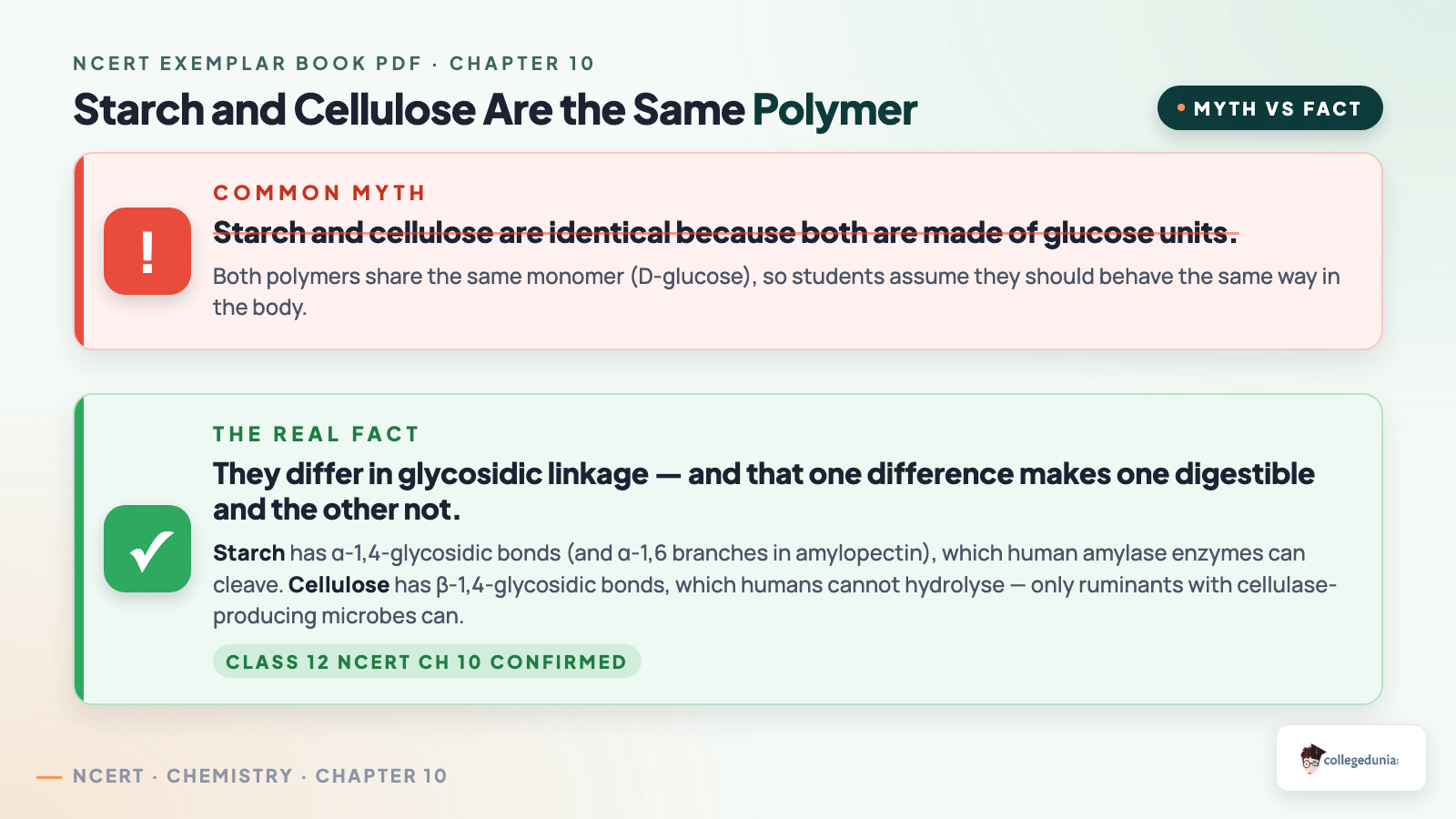
Biomolecules Exemplar vs NCERT Textbook: Difficulty Comparison
The Exemplar twists setups you met in the textbook, in three ways.
| Setup | NCERT Textbook | Exemplar Twist |
|---|---|---|
| Reducing vs non-reducing sugar | State that sucrose is non-reducing but maltose is reducing | Explain why sucrose lacks free anomeric -OH using glycosidic linkage between C-1 of glucose and C-2 of fructose |
| Anomers of glucose | Show α and β cyclic forms | Justify equilibrium ratio of α:β (36:64) using anomeric and steric effects |
| Protein structure levels | Define 1°, 2°, 3°, 4° structure | Identify which level breaks first on heating (4° first, then 3°, then 2°) and why 1° needs strong acid hydrolysis |
| DNA vs RNA | List sugar and base differences | Predict the complementary strand of a 5'-end-given DNA strand, count H-bonds, and explain why DNA double helix is more stable than RNA |
NEET and JEE Main Biomolecules Questions Inspired by the Exemplar
Recent NEET and JEE Main papers reused setups from this chapter.
Full year-wise PYQ map: Biomolecules Class 12 Chemistry NCERT Solutions
2026-27 Syllabus Status of Biomolecules Exemplar Problems
The Exemplar was not refreshed when the textbook was trimmed. It still labels the chapter "Unit 14", but almost every problem maps to Chapter 10. A few items touch trimmed enzyme-mechanism and full nucleobase structures; skip those for boards, keep them for NEET.
Detailed kept-trimmed-removed table: see the breakdown on the Biomolecules Class 12 Chemistry NCERT Book PDF page.
Time-per-Question Budget for the Biomolecules Exemplar
This time map assumes you have already finished the NCERT chapter.
| Question Type | Problems | Avg. Minutes Each | Total Time |
|---|---|---|---|
| MCQ-I and MCQ-II | 20 | 2 to 4 | ~ 60 min |
| SA, Matching, Assertion-Reason | 40 | 4 to 6 | ~ 200 min |
| LA | 3 | 15 to 20 | ~ 55 min |
| Whole chapter | 63 | - | ~ 5 to 6 hours |
Spread it across four to five sittings; one of the lighter chapters by total time.
Biomolecules Top Structures to Memorise Before Attempting the Exemplar
Most problems hinge on a few recurring structures. Lock these five in before opening the PDF.
| Concept | Structure / fact |
|---|---|
| Cyclic glucose anomers | α-D-glucopyranose (OH at C-1 axial / down); β-D-glucopyranose (OH at C-1 equatorial / up); interconvert via open chain (mutarotation) |
| Sucrose glycosidic linkage | C-1 of α-D-glucose linked to C-2 of β-D-fructose; both anomeric carbons locked; non-reducing |
| Zwitterion of amino acid | H3N+-CHR-COO- at isoelectric pH; net neutral; dipolar |
| Peptide bond and 4 levels of protein structure | -CO-NH- bond; 1° (sequence), 2° (α-helix / β-pleated sheet, H-bonds), 3° (3D fold), 4° (multi-subunit, e.g. haemoglobin) |
| DNA double helix and base pairing | Two anti-parallel strands; A=T (2 H-bonds), G≡C (3 H-bonds); 2-deoxyribose sugar; bases A, G, C, T |
Full master table: Biomolecules Class 12 Chemistry Formula Sheet
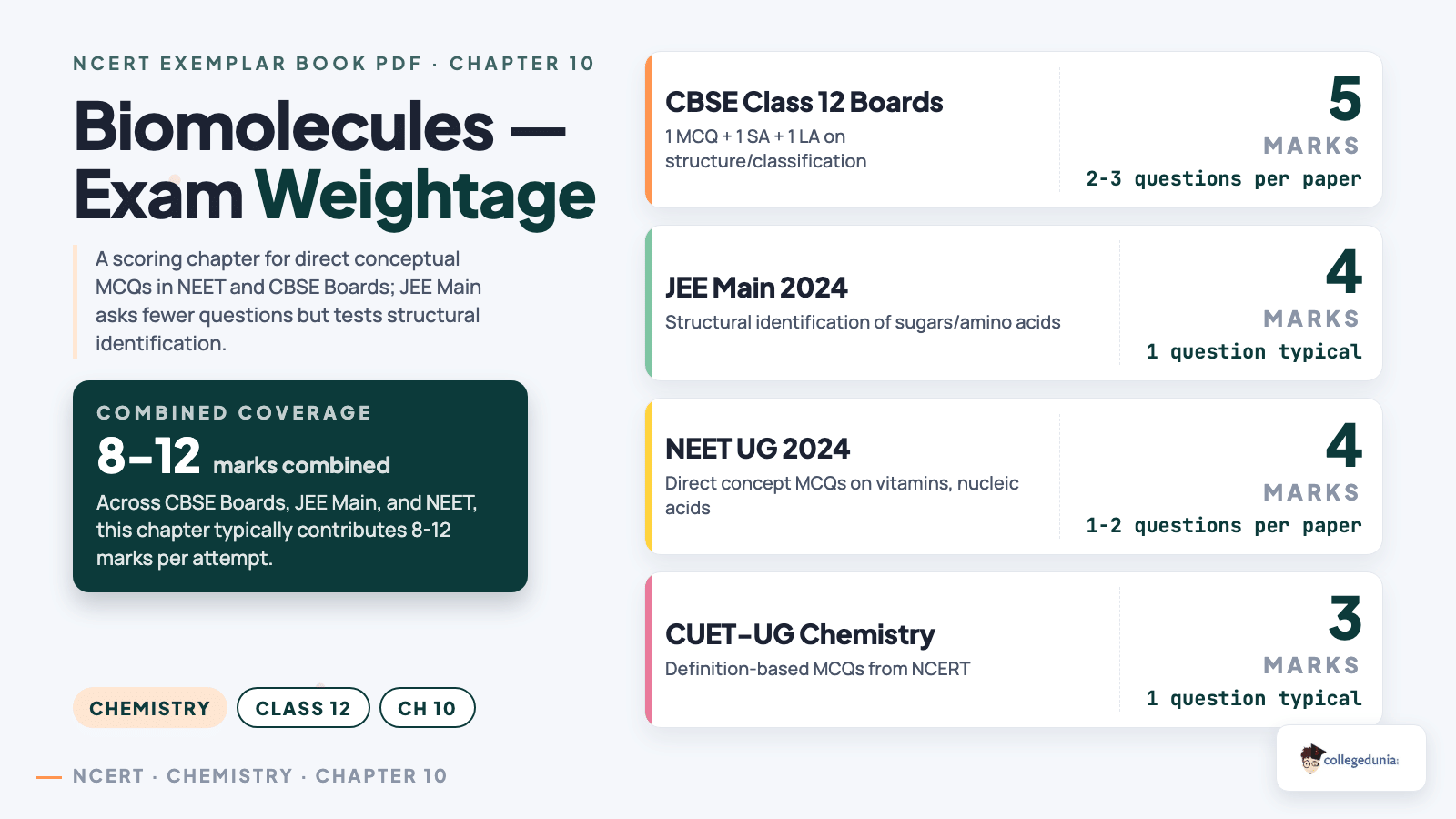
Biomolecules CBSE Marks Weightage Compared Across Class 12 Chemistry Chapters
The chart maps typical CBSE marks across all 10 chapters, averaged over five board papers.
Student Feedback
In a Collegedunia poll of 900 Class 12 students, 78% said the Biomolecules Exemplar MCQ-II and Assertion-Reason items were the single best drill for NEET reducing-sugar traps.
Other Resources for Biomolecules Class 12 Chemistry
- Biomolecules Class 12 Chemistry NCERT Exemplar Book PDF
- Biomolecules Class 12 Chemistry NCERT Solutions
- Biomolecules Class 12 Chemistry Notes
- Biomolecules Class 12 Chemistry Formula Sheet
- Biomolecules Class 12 Chemistry NCERT Book PDF
- Biomolecules Class 12 Chemistry NCERT Exemplar Solutions
- Biomolecules Class 12 Chemistry Handwritten Notes
NCERT Exemplar Book PDF for Class 12 Chemistry: All Chapters
Bookmark this for chapterwise access to every 2026-27 Exemplar PDF.
| Chapter | Resource |
|---|---|
| Chapter 1 | Solutions NCERT Exemplar Book PDF |
| Chapter 2 | Electrochemistry NCERT Exemplar Book PDF |
| Chapter 3 | Chemical Kinetics NCERT Exemplar Book PDF |
| Chapter 4 | The d- and f-Block Elements NCERT Exemplar Book PDF |
| Chapter 5 | Coordination Compounds NCERT Exemplar Book PDF |
| Chapter 6 | Haloalkanes and Haloarenes NCERT Exemplar Book PDF |
| Chapter 7 | Alcohols, Phenols and Ethers NCERT Exemplar Book PDF |
| Chapter 8 | Aldehydes, Ketones and Carboxylic Acids NCERT Exemplar Book PDF |
| Chapter 9 | Amines NCERT Exemplar Book PDF |
Biomolecules Class 12 Chemistry NCERT Exemplar Book PDF FAQs
Ques. Where can I download the Biomolecules Class 12 Chemistry NCERT Exemplar Book PDF?
Ans. You can download the Biomolecules Class 12 Chemistry NCERT Exemplar Book PDF directly from this page. Both the Normal and HD versions are available, and both are free.
Ques. Is the Exemplar Book PDF aligned with the 2026-27 NCERT?
Ans. The NCERT Exemplar publication was not refreshed when the textbook was trimmed and renumbered. The Exemplar still labels the chapter as "Unit 14 Biomolecules", but the content maps directly to the new Chapter 10 in the 2026-27 textbook. A small minority of problems touch the trimmed enzyme-mechanism content and the full structural formulae of nucleobases; these can be skipped during board preparation but kept for NEET.
Ques. Why does the Exemplar call it Chapter 14 while the new textbook says Chapter 10?
Ans. The Exemplar publication still follows the legacy pre-rationalisation chapter numbering. The 2026-27 textbook collapsed 16 chapters into 10, so what used to be Chapter 14 Biomolecules is now Chapter 10. The chapter content is the same; only the chapter number differs between the two books.
Ques. How many pages is the Class 12th Chemistry Chapter 10 Biomolecules Exemplar Book PDF?
Ans. The Biomolecules Exemplar PDF runs approximately 12 pages and packs 63 HOTS problems across MCQ-I, MCQ-II, SA, Matching, Assertion-Reason, and LA types.
Ques. How many problems does the Biomolecules chapter of the Exemplar contain?
Ans. The chapter holds 63 problems in total, split as MCQ-I (15), MCQ-II (5), SA (28), Matching (4), Assertion-Reason (8), and LA (3).
Ques. Are Biomolecules Exemplar problems compulsory for the CBSE Class 12 board exam?
Ans. Exemplar problems are not part of the prescribed NCERT textbook chapter, but CBSE has used Exemplar-style HOTS items from this chapter in 4 of the last 5 board papers (usually a 3-mark anomer or zwitterion question). For NEET, the Exemplar for this chapter is practically required - 2 to 3 NEET questions every year are lifted from setups in this PDF.
Ques. Where can I find the solutions to the Biomolecules Exemplar problems?
Ans. Worked answers for every problem in this chapter are on the Biomolecules Class 12 Chemistry NCERT Exemplar Solutions page.
Ques. How long does it take to finish the Biomolecules chapter of the Exemplar Book?
Ans. Plan for around 5 to 6 hours spread across four to five sittings: roughly 1 hour for the MCQ-I and MCQ-II types, around 3 to 3.5 hours for the SA, Matching, and Assertion-Reason set, and the rest for the LA section. Revisit any wrong attempts the same day to lock in the correction. This is one of the lighter Exemplar chapters in Class 12 Chemistry by total time.
Ques. Can I use the Exemplar Book for NEET and JEE Main Biomolecules preparation?
Ans. Yes, this is the single highest-yield NCERT publication for the chapter in NEET. NEET 2024 and 2025 each carried at least two Biomolecules questions whose setups mirrored Exemplar problems (reducing-vs-non-reducing sugar classification, base pairing in DNA, vitamin deficiency disease pairings). JEE Main has also reused the carbohydrate-hydrolysis chain from the Exemplar SA section.



Comments