




Download the Class 11 Physics Chapter 14 Waves NCERT Book PDF, the official 2026-27 NCERT textbook chapter. It extends oscillations to travelling and standing waves, sound and beats, and it is the source of many numericals in the Boards, JEE Main, JEE Advanced and NEET.
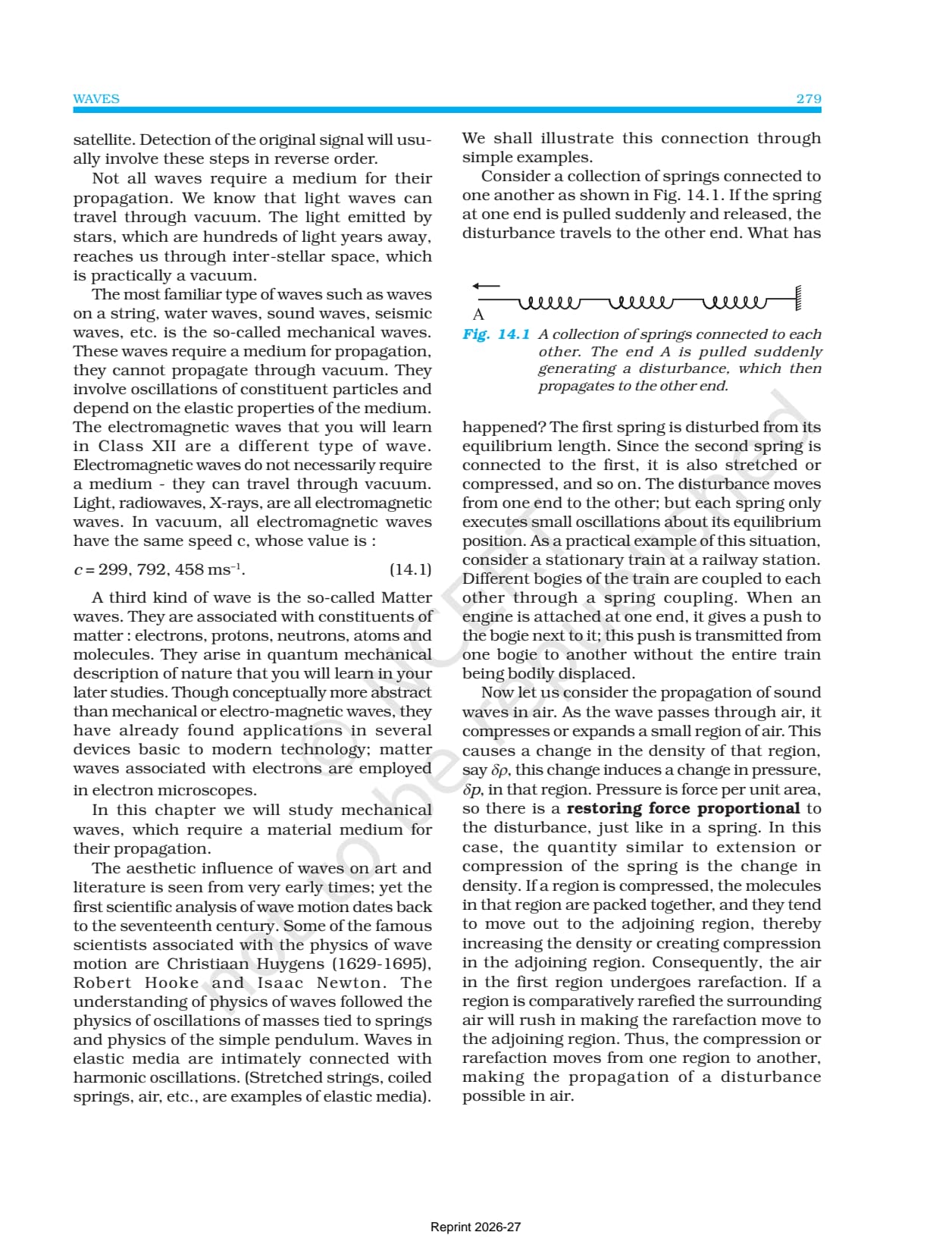
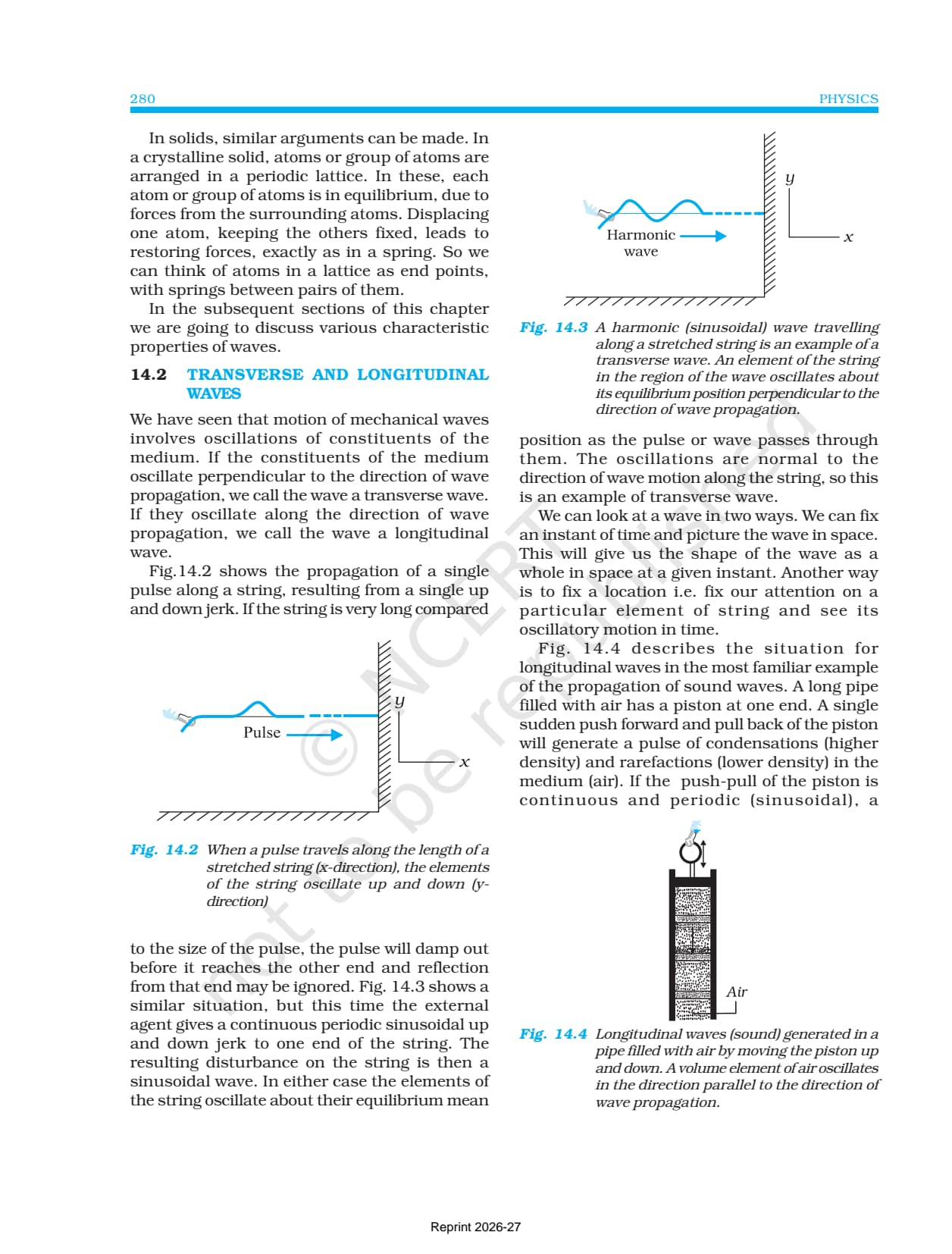
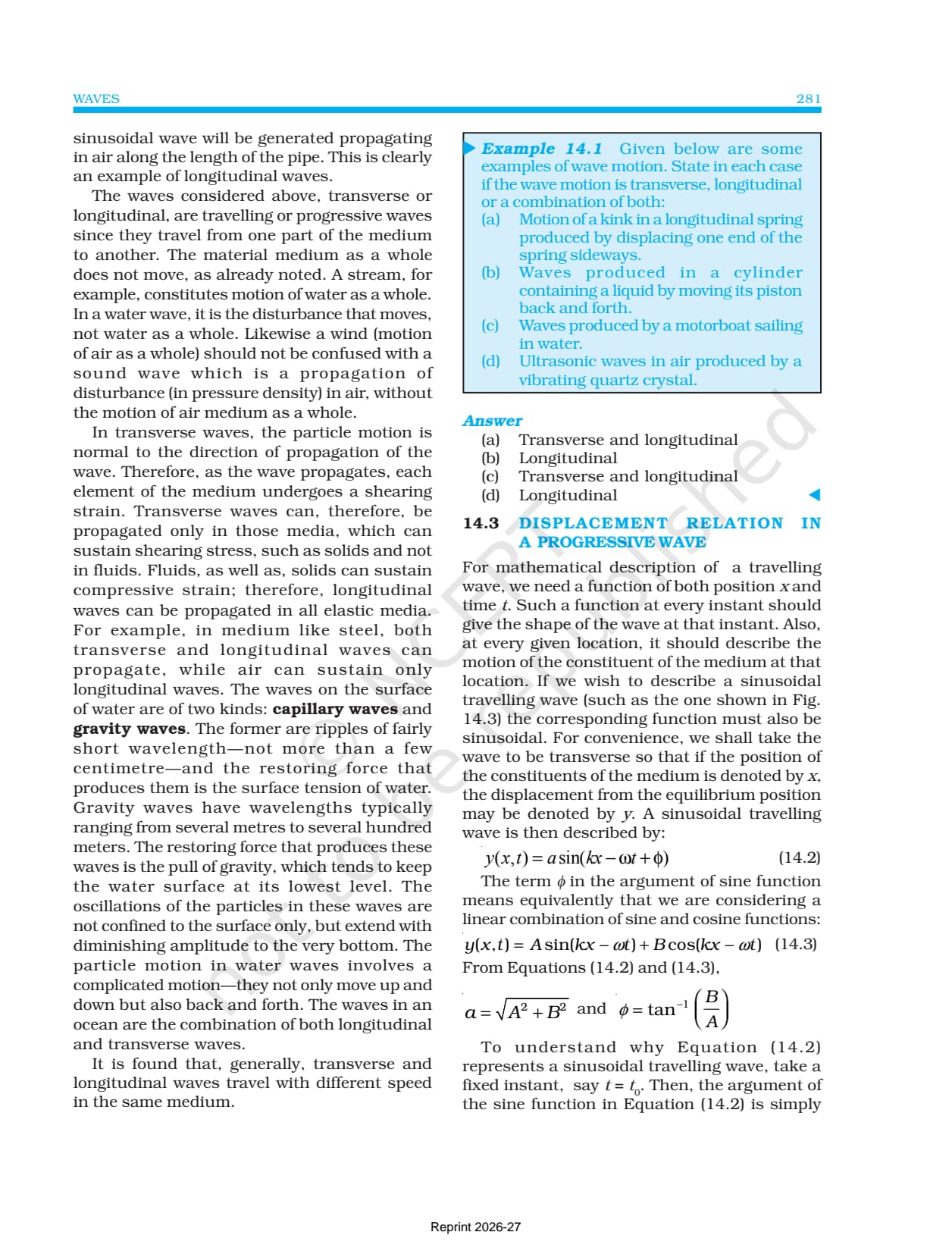
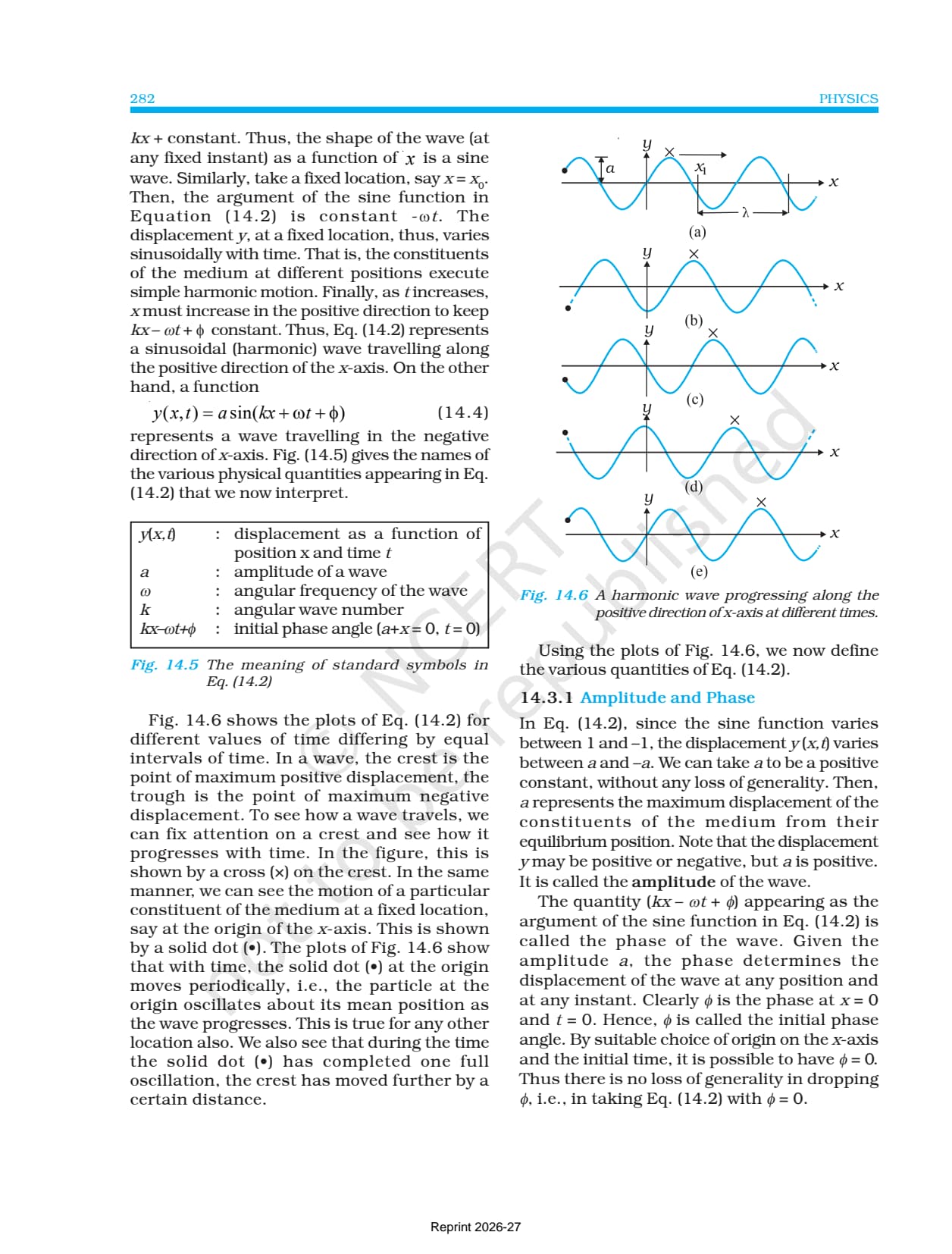
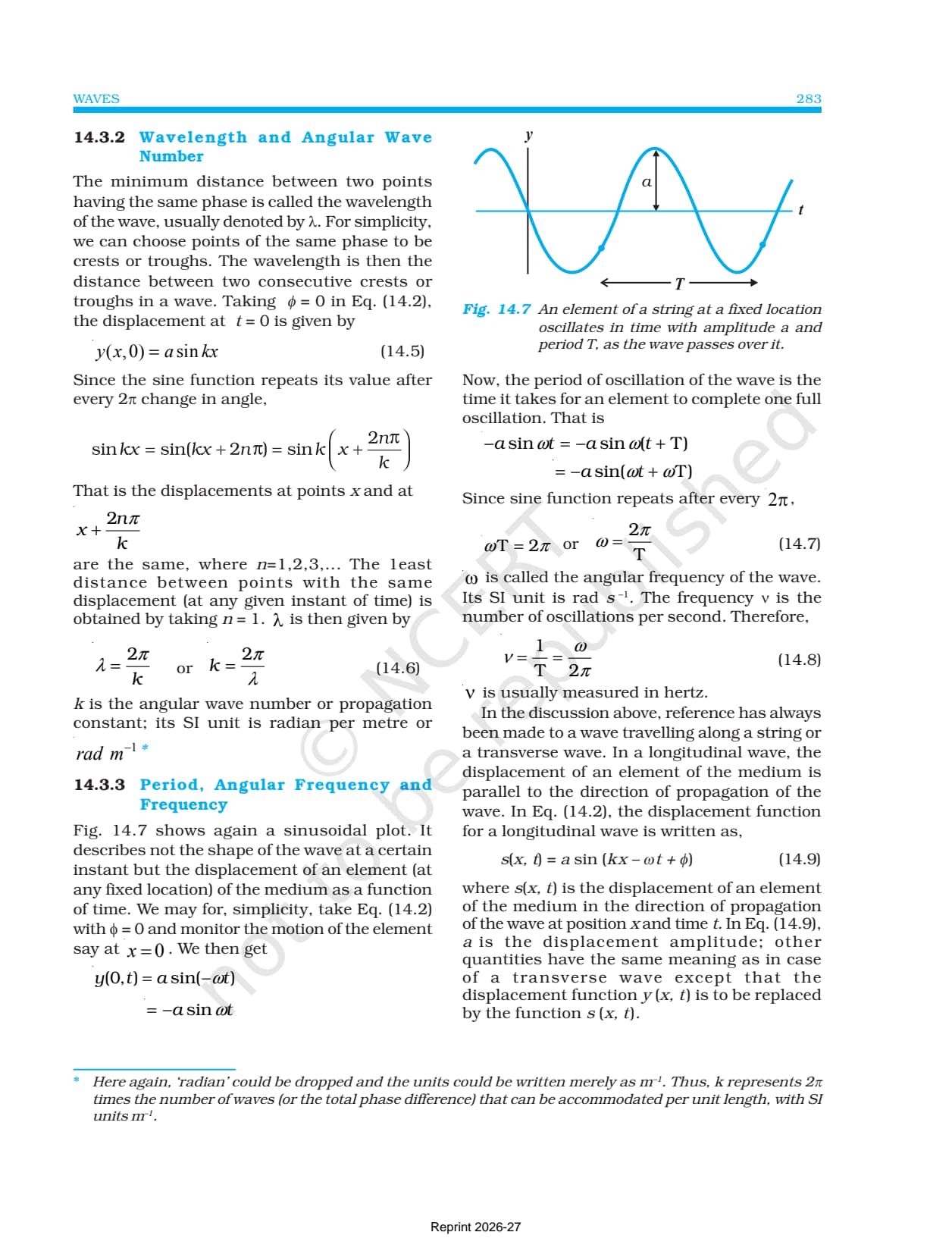
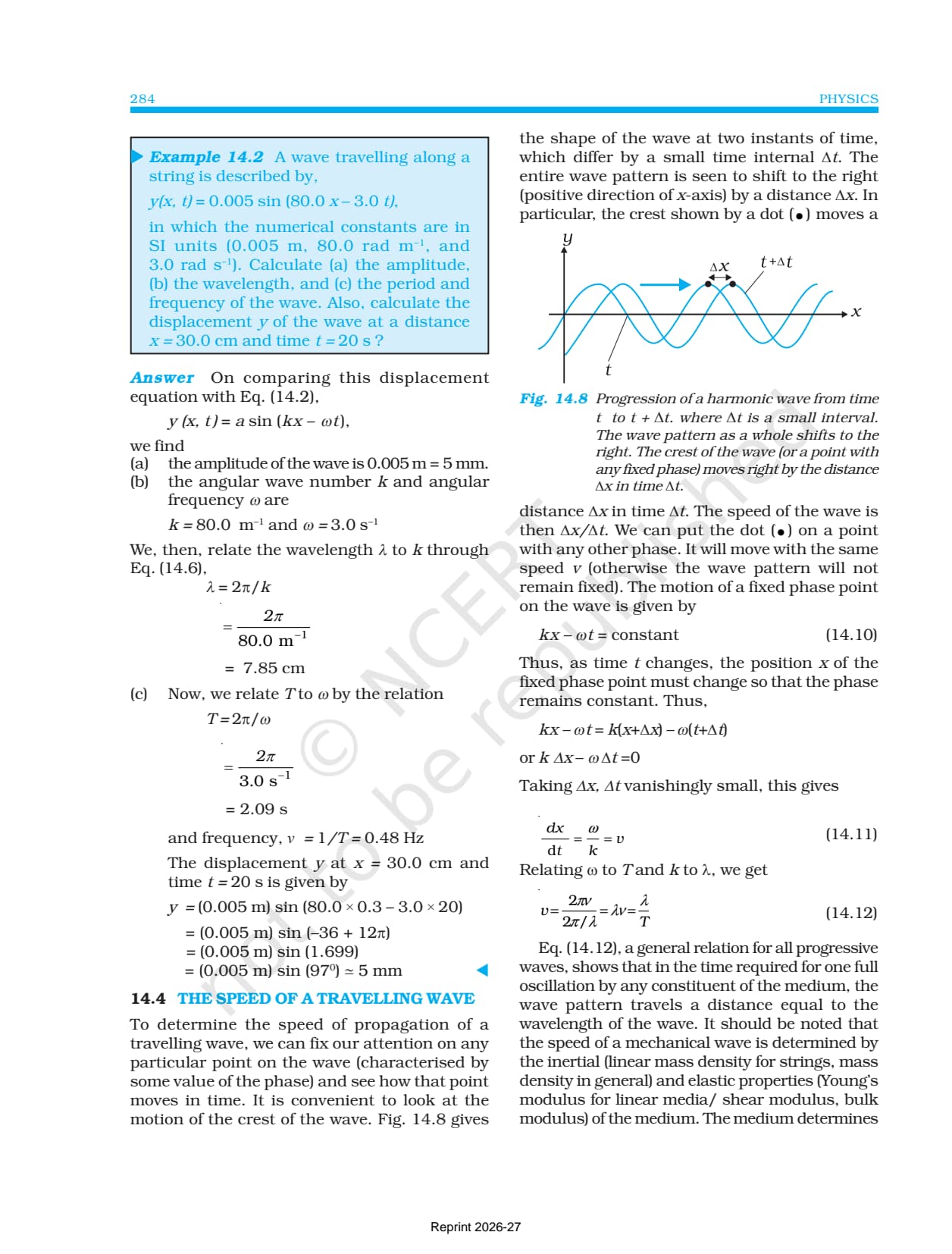
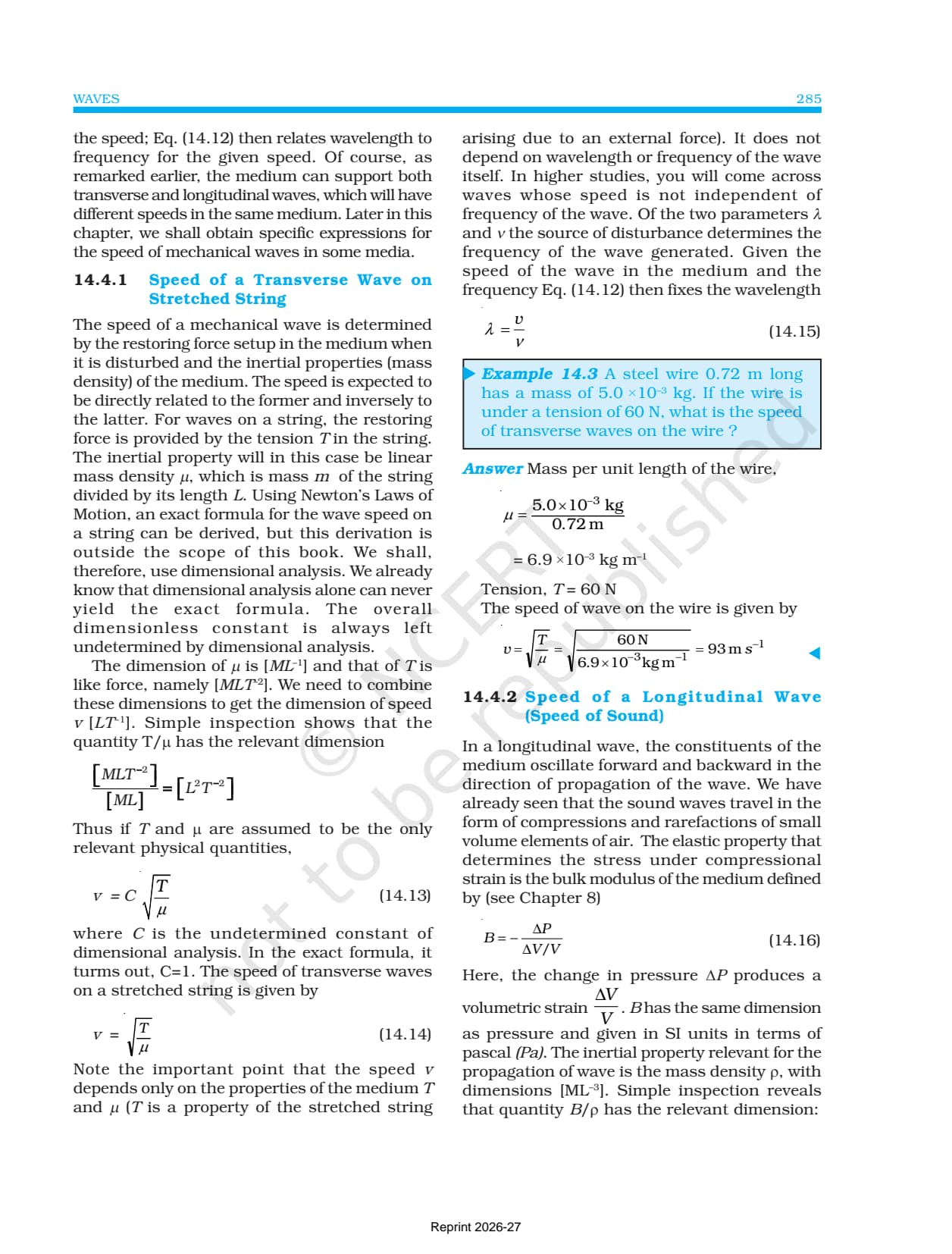
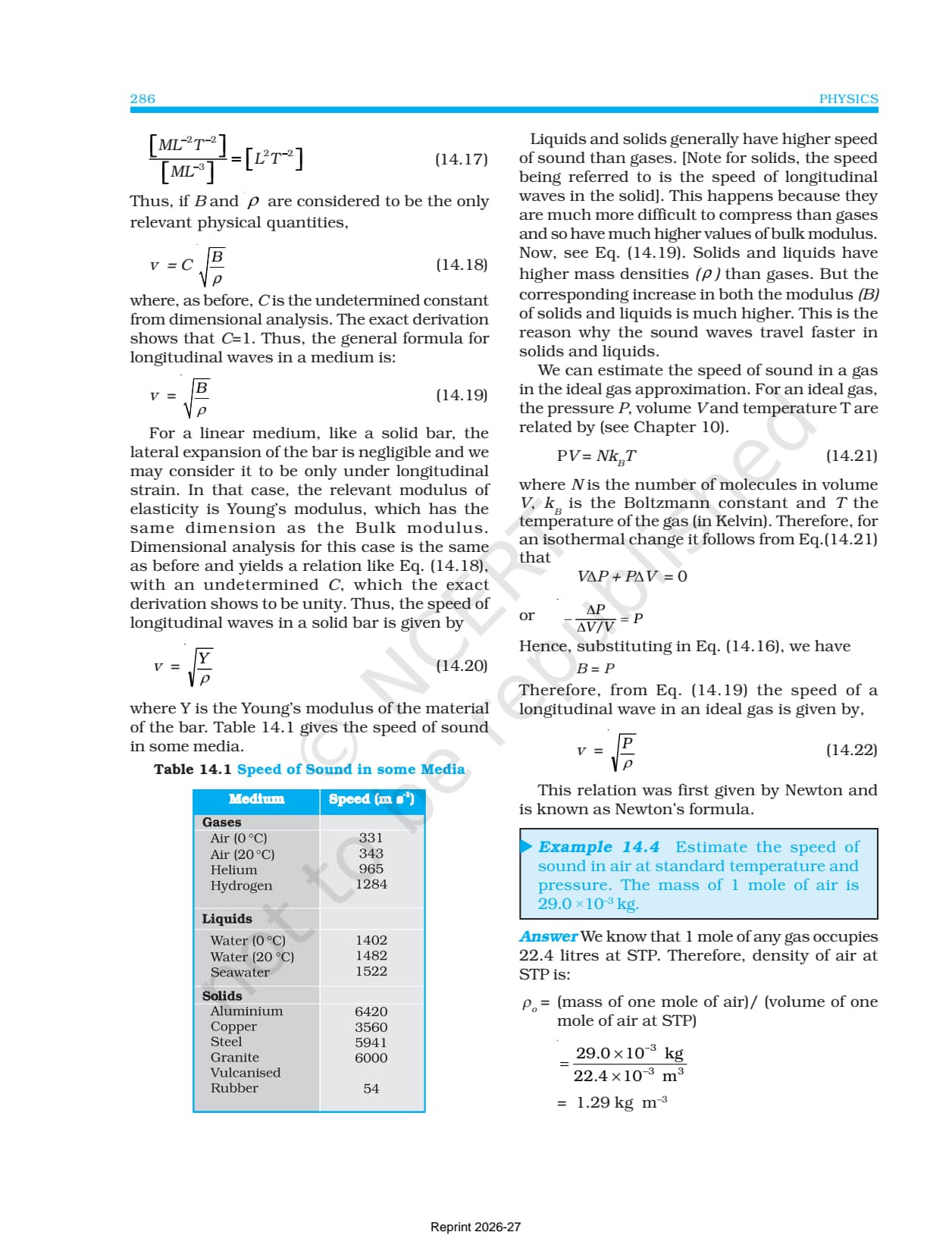
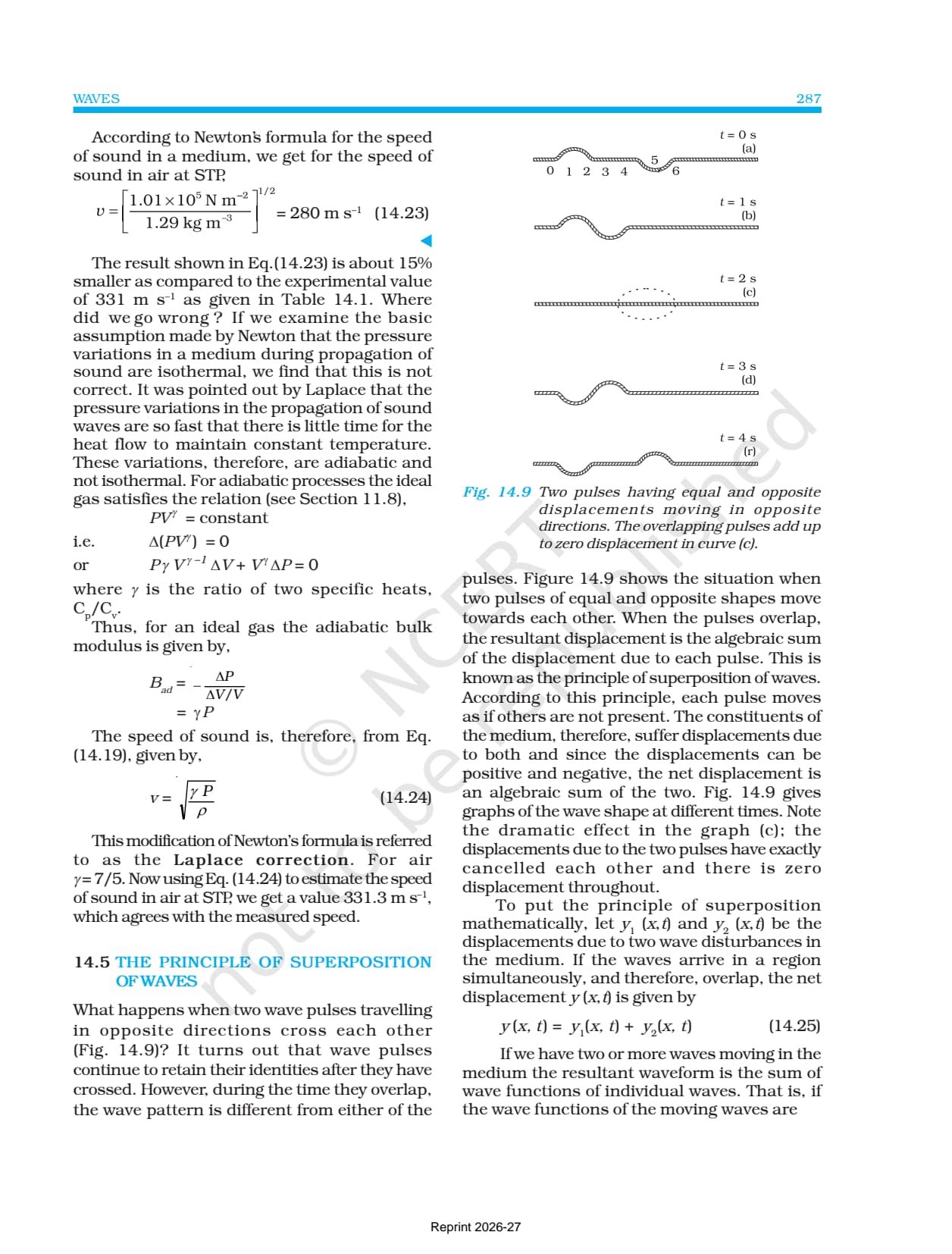
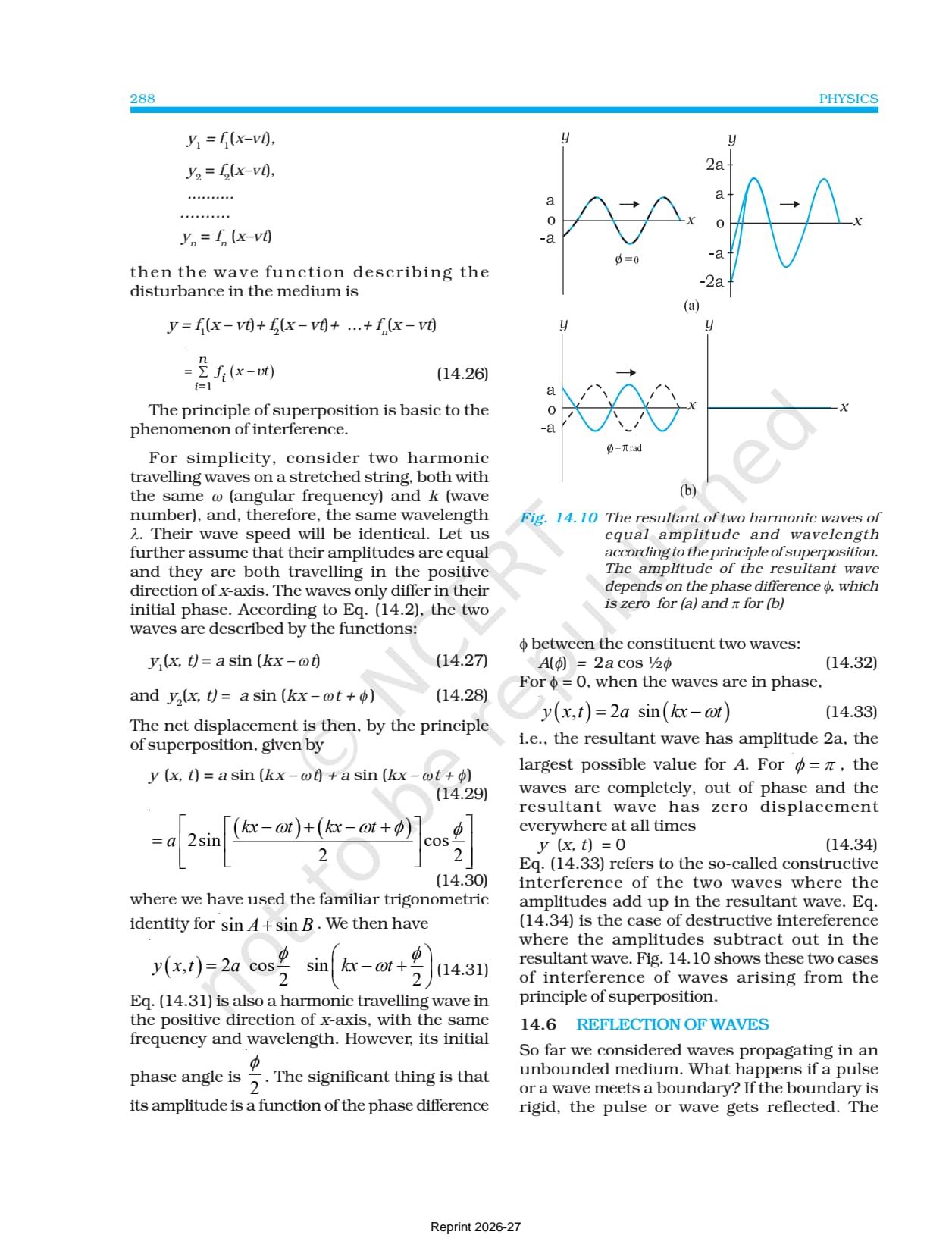
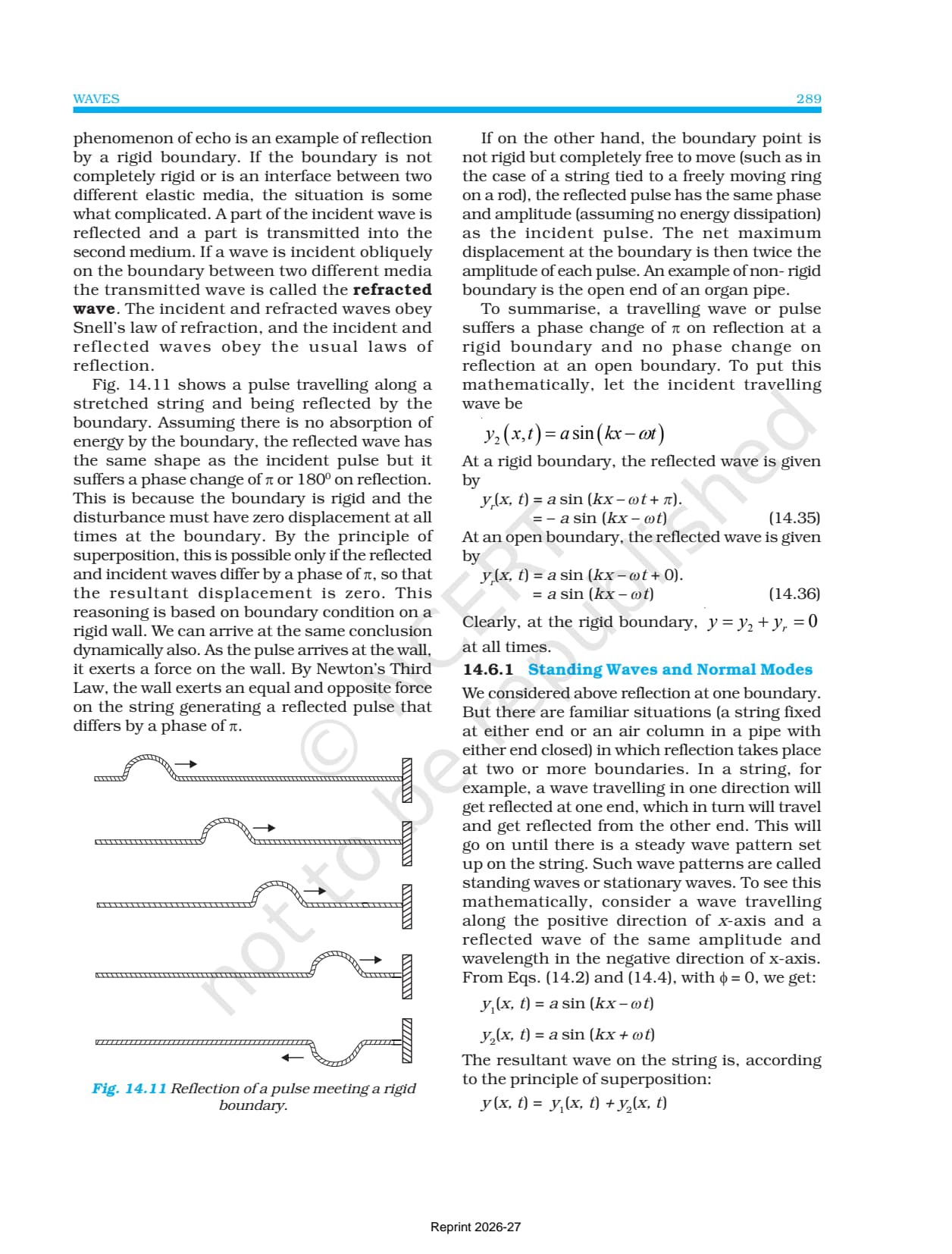
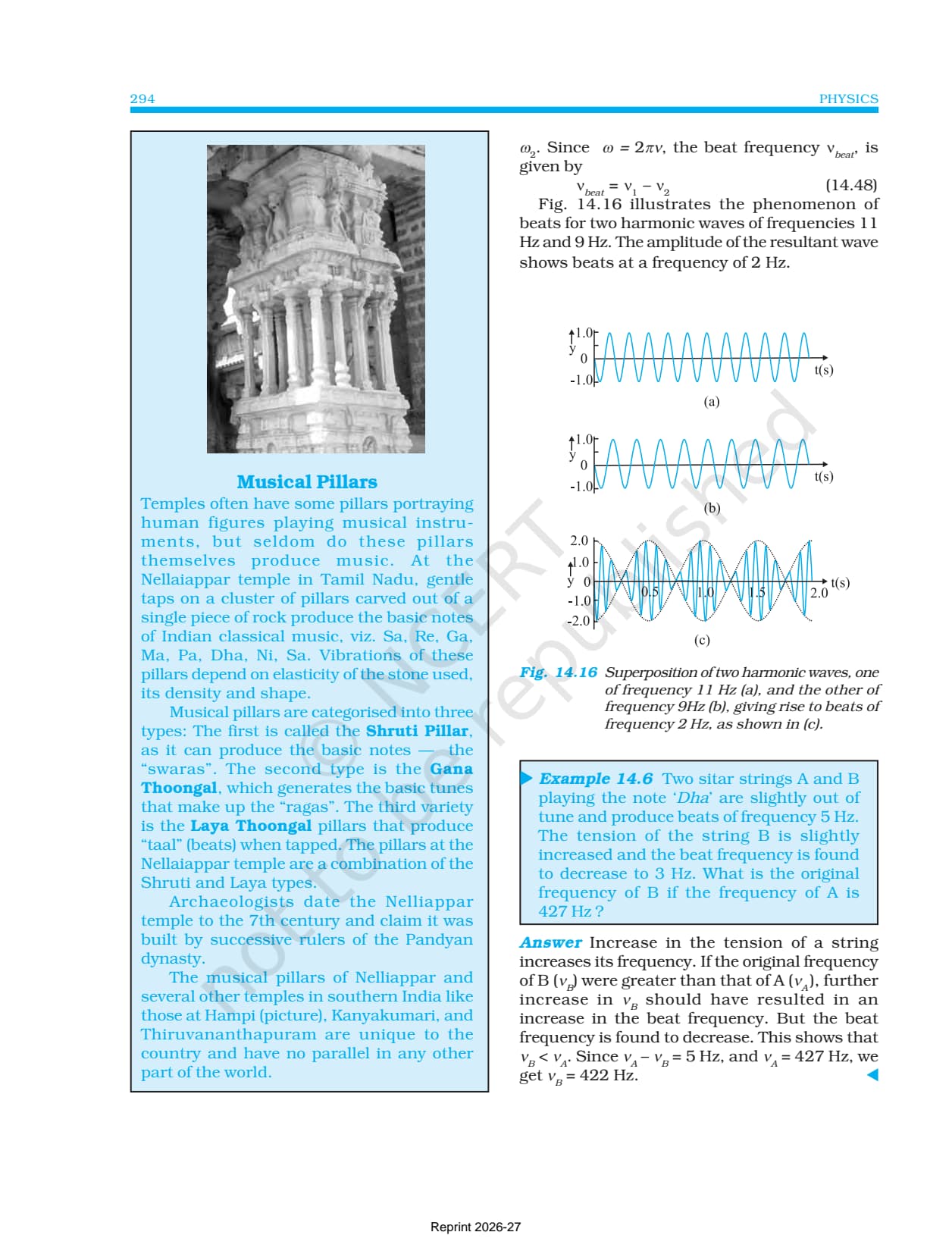
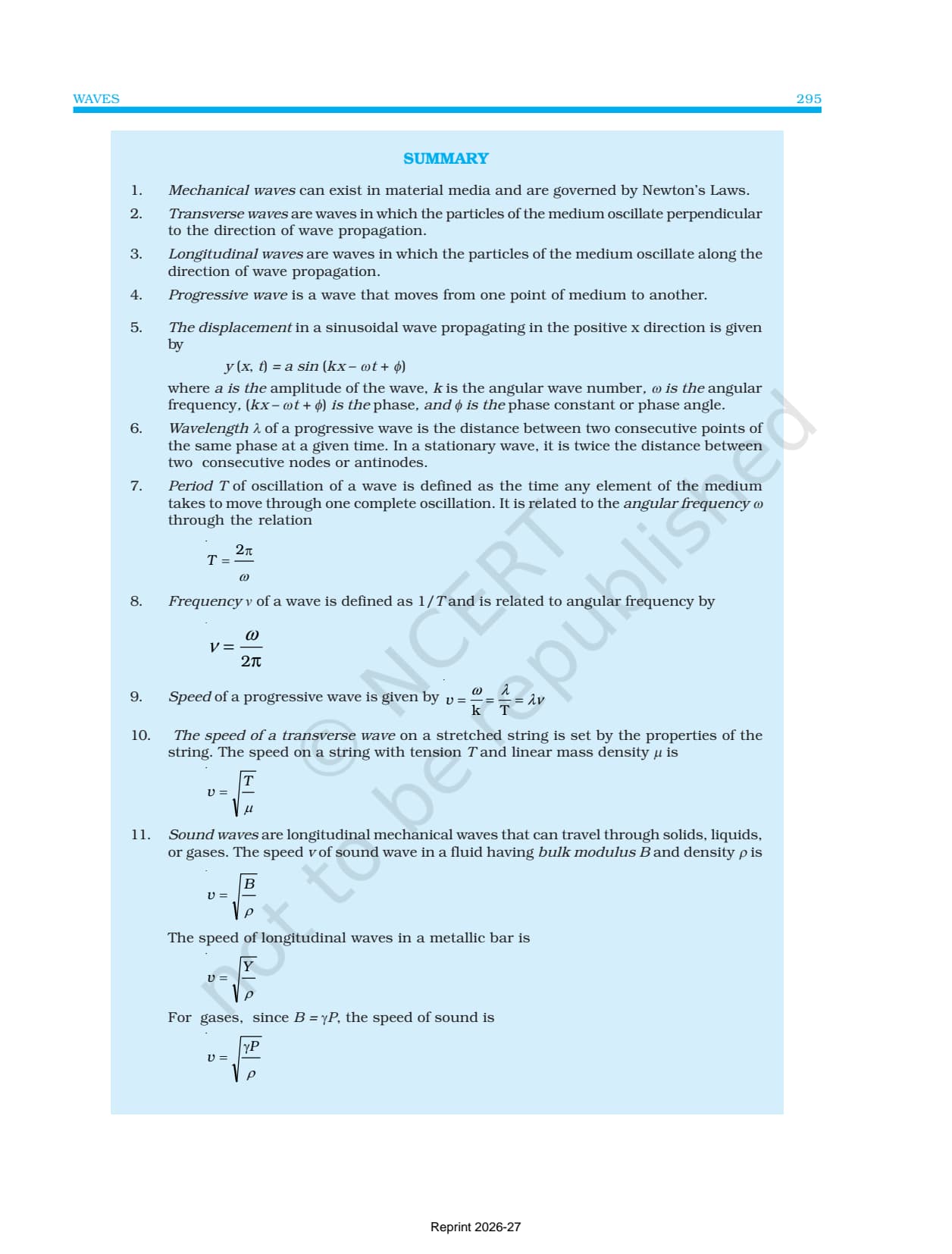
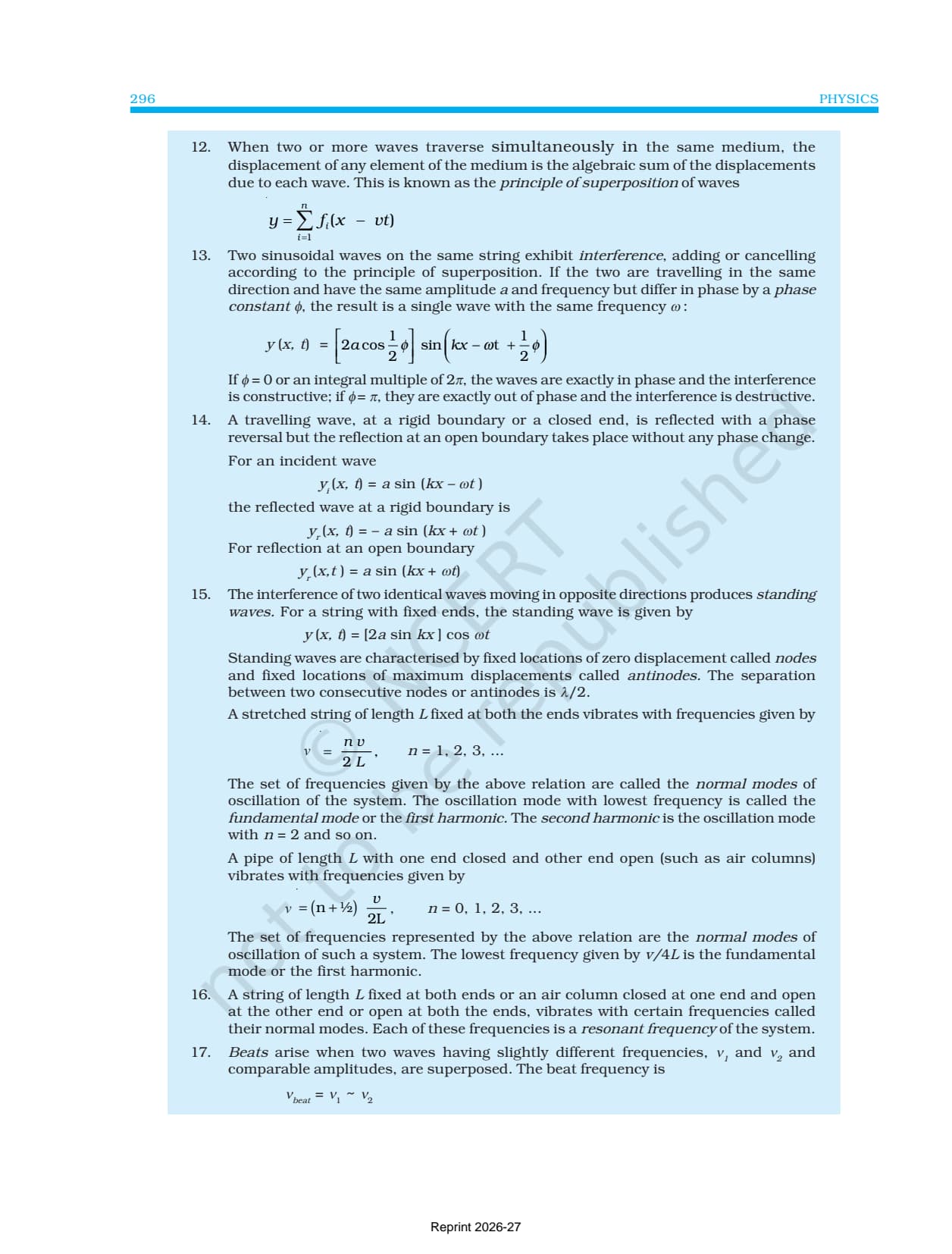
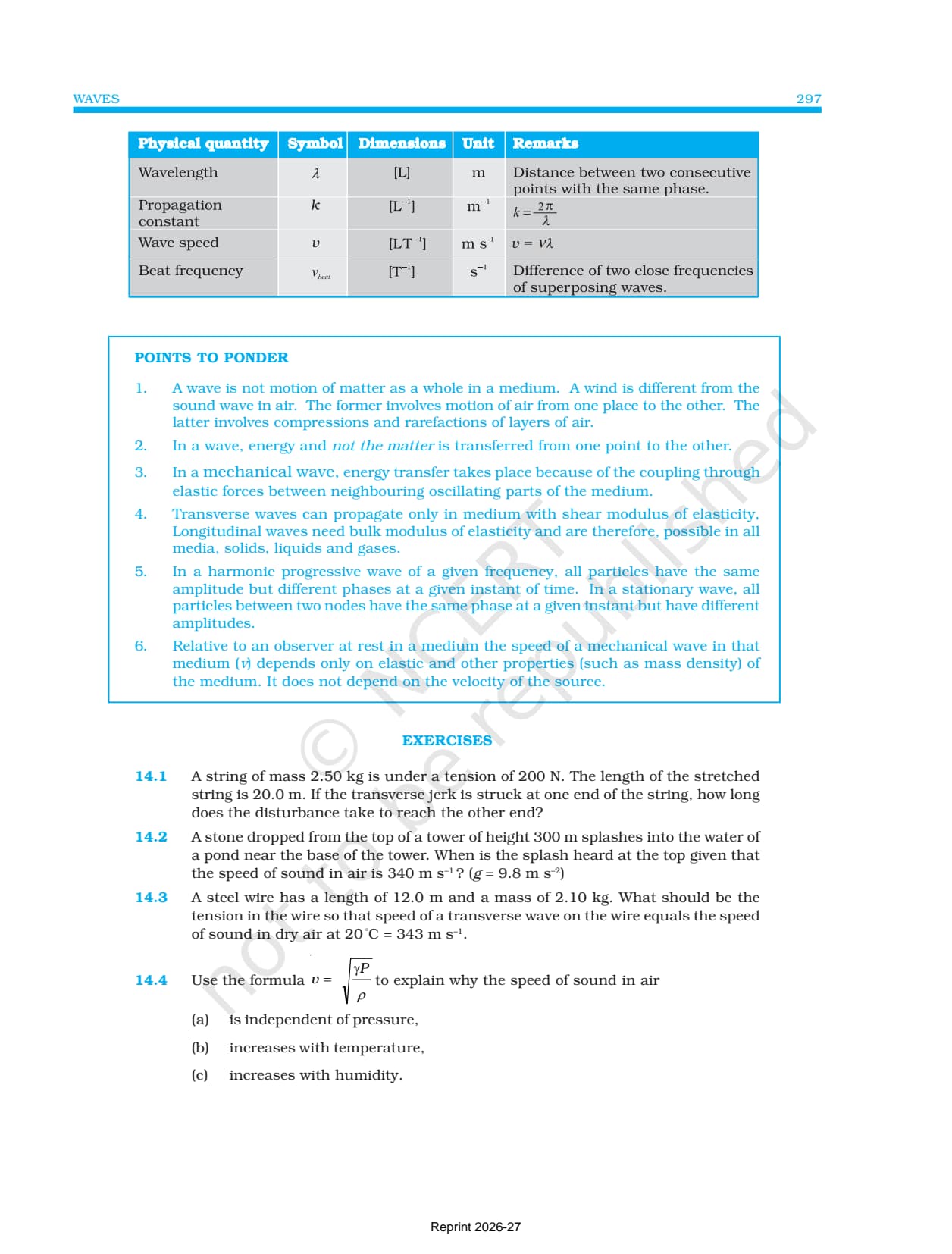
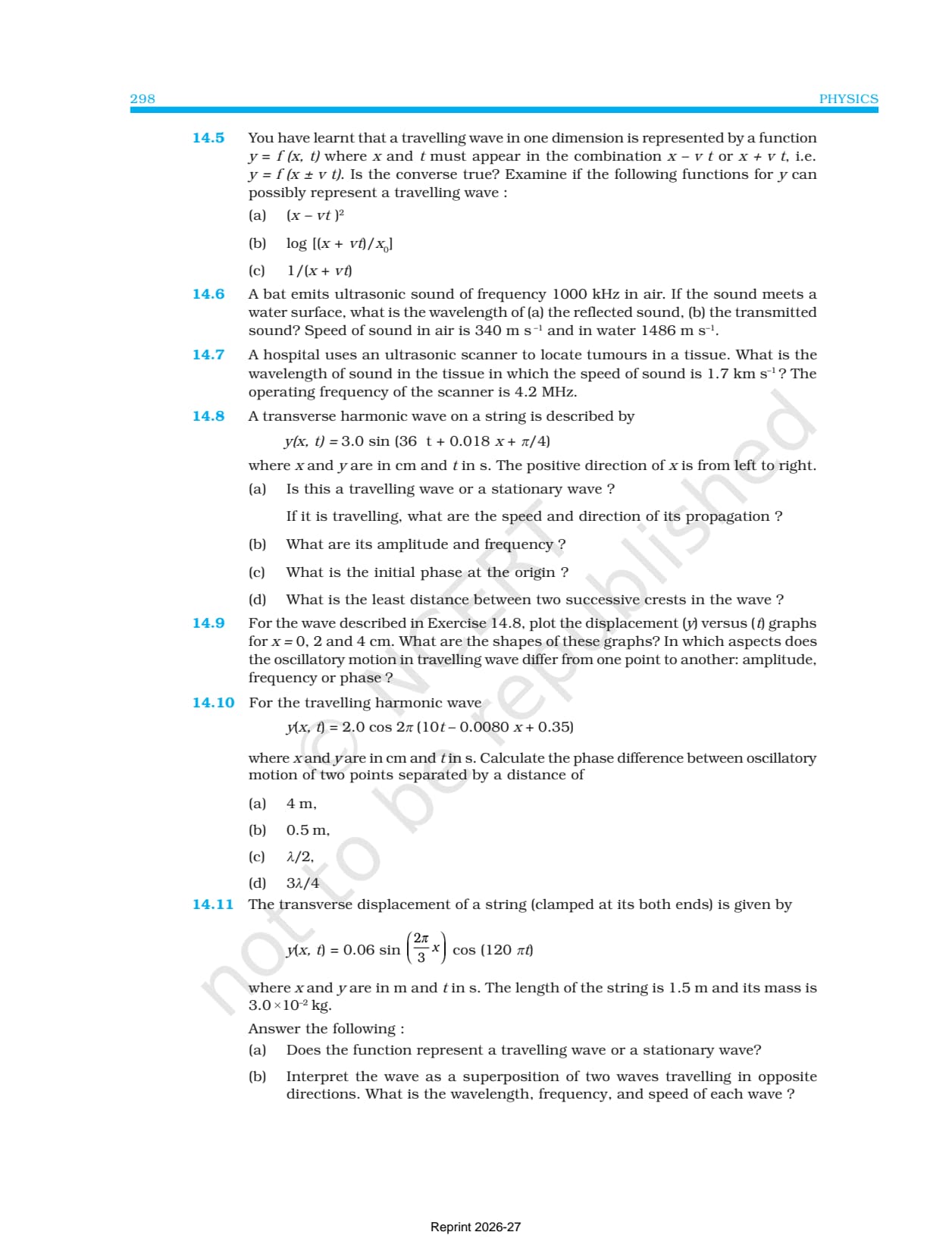
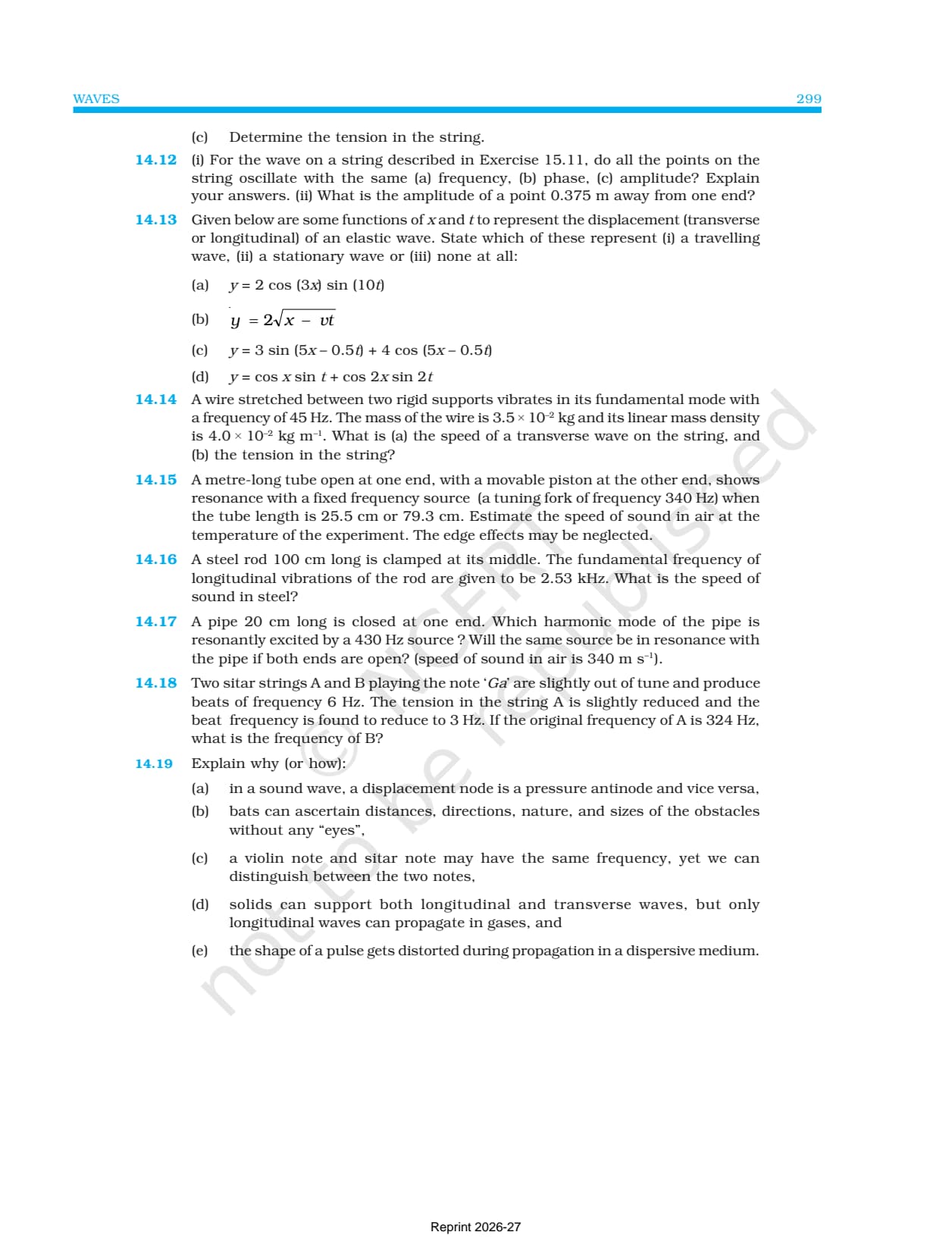
- Official NCERT 2026-27 chapter, clean and print-ready.
- Covers transverse and longitudinal waves, wave speed, superposition, reflection and beats.
- Read it alongside the solved exercises and the formula sheet linked below.
This Class 11 Physics Chapter 14 Waves NCERT Book PDF is the official 2026-27 NCERT text, checked page by page against the latest edition.
What Class 11 Physics Chapter 14 Waves Covers
The chapter builds the physics of waves from a single pulse to standing waves. It moves from wave types and the progressive-wave equation to wave speed, superposition, reflection and beats. The official NCERT sections are listed below.
| Section | Topic |
|---|---|
| 14.1 | Introduction to waves |
| 14.2 | Transverse and longitudinal waves |
| 14.3 | Displacement relation in a progressive wave |
| 14.4 | The speed of a travelling wave |
| 14.5 | The principle of superposition of waves |
| 14.6 | Reflection of waves and standing waves |
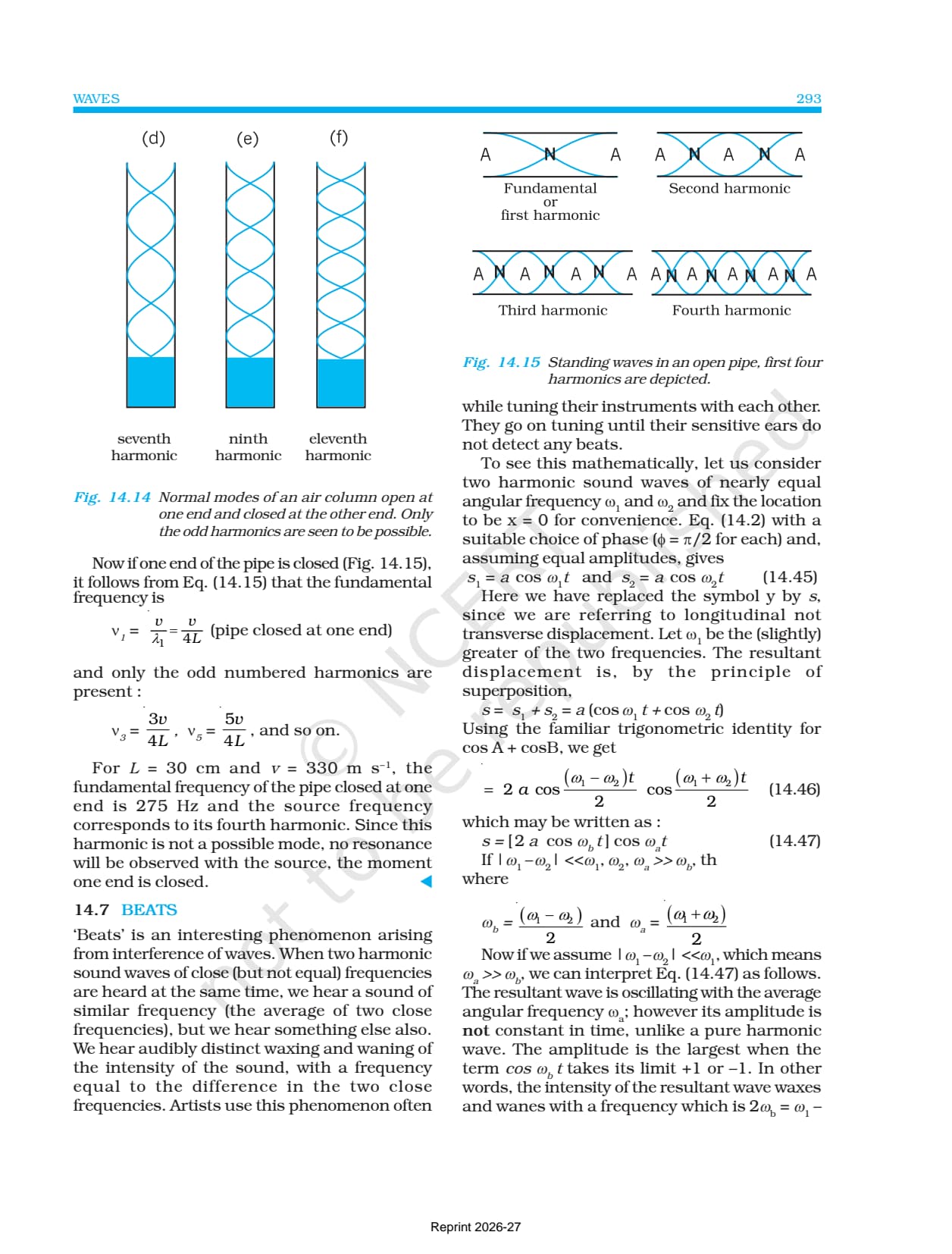
| 14.7 | Beats |
Key Concepts You Will Study
Students should read the chapter with a pen and note each relation as it appears. The ideas build on oscillations and set up sound and standing waves.
- The difference between transverse and longitudinal waves with everyday examples.
- The progressive-wave equation and the meaning of wavelength, frequency and phase.
- The speed of a wave on a string and of sound in a medium.
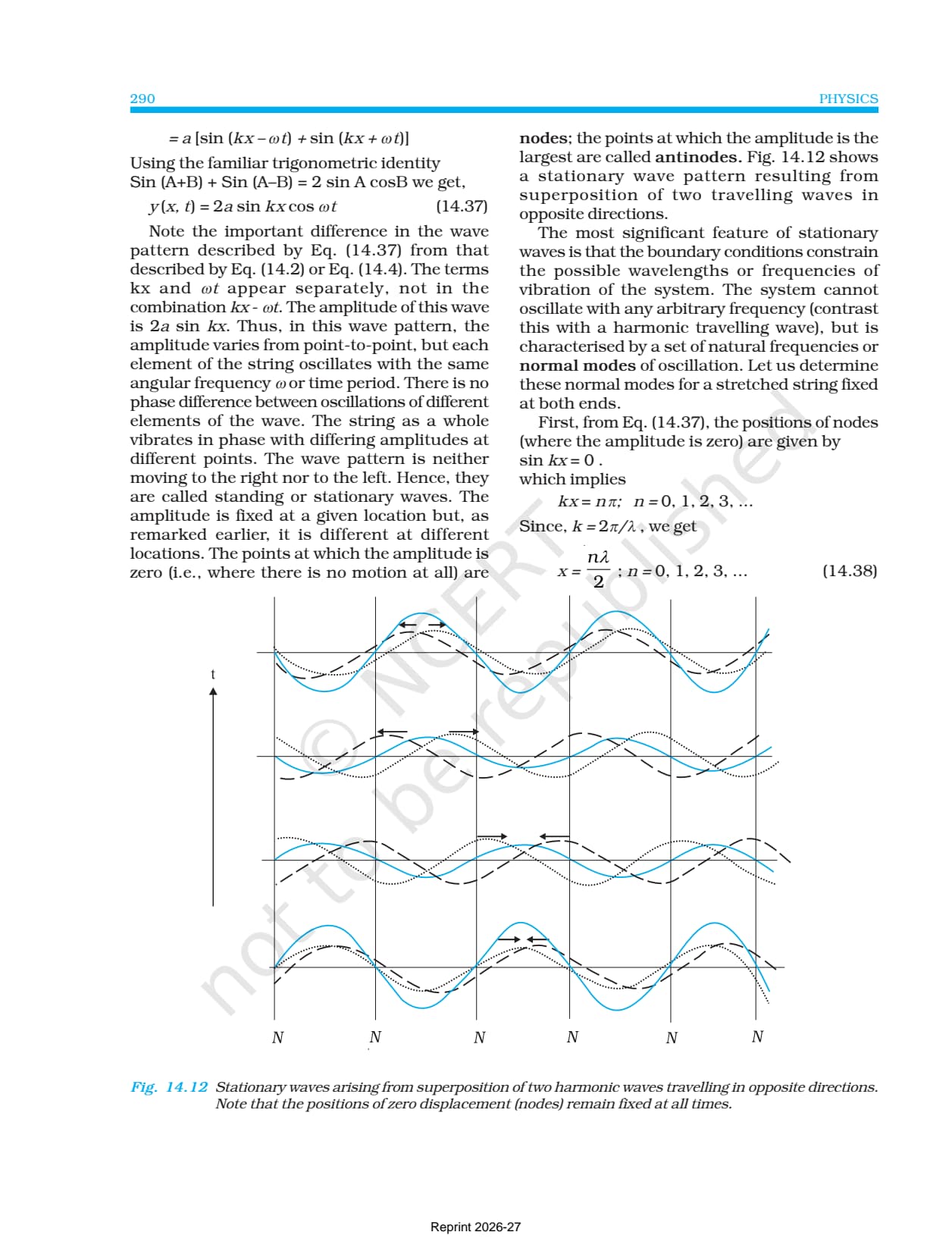
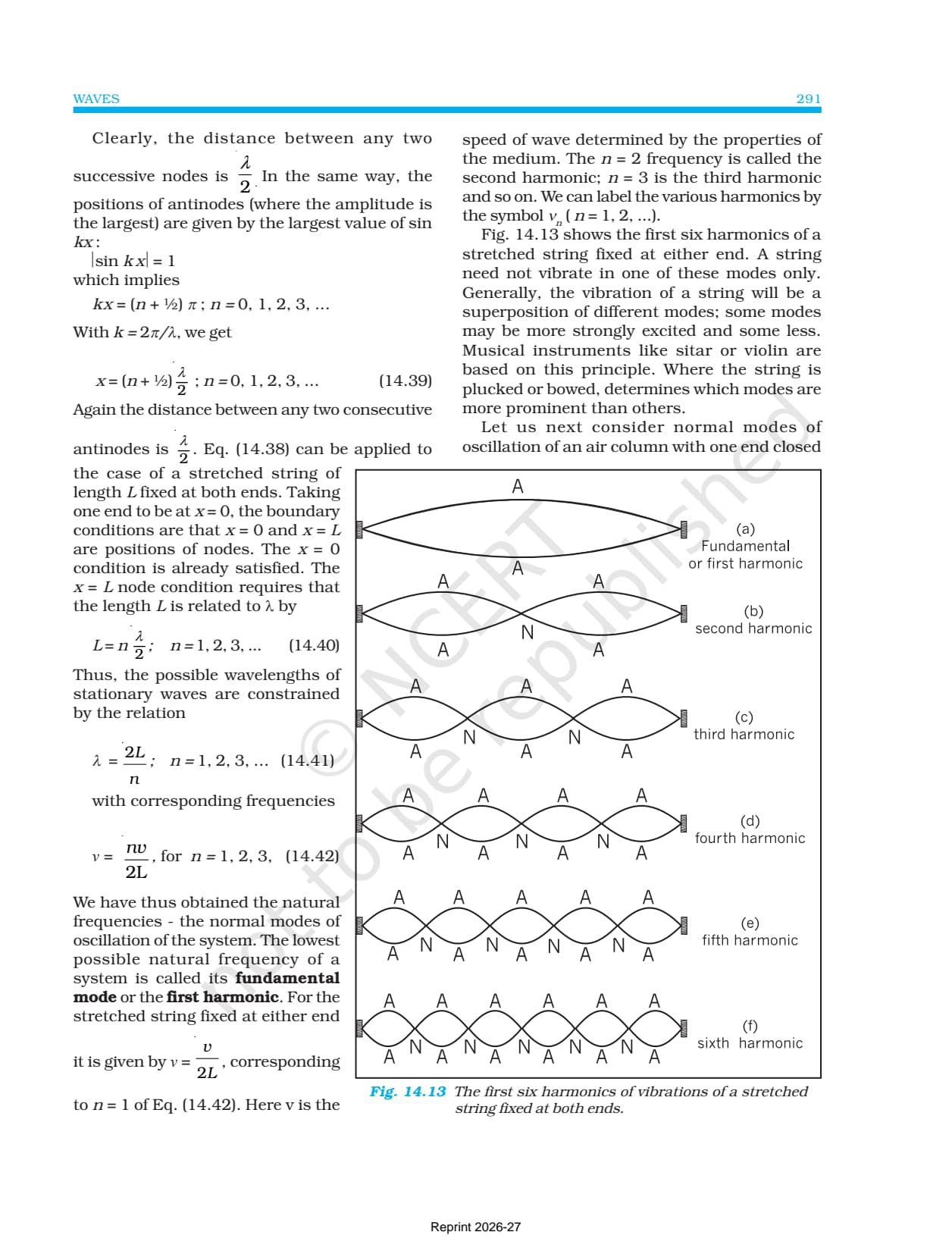
- The principle of superposition and the formation of standing waves and normal modes.
- The reflection of waves at fixed and free ends, and the origin of beats.
Why Download the NCERT Book PDF for This Chapter
The NCERT textbook is the single most important source for the CBSE exam, and most JEE and NEET questions from this chapter are built directly on its examples.
- Every Board question on wave speed, standing waves and beats comes from this text.
- The worked examples show the correct way to read a wave equation.
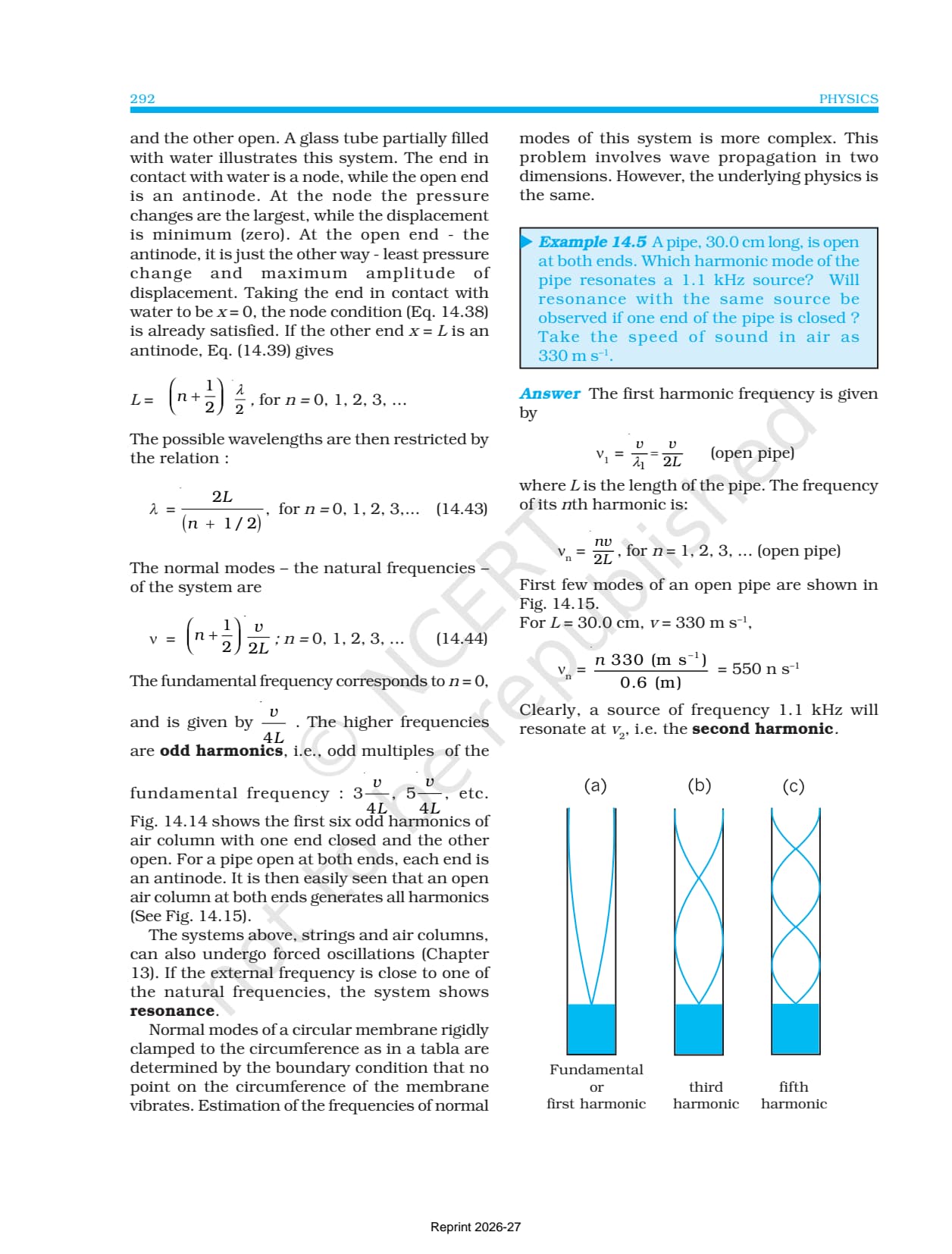
- Reading offline from the PDF avoids missing any graph or normal-mode figure.
How to Use the NCERT Book PDF for Waves
Read the chapter once fully, then work through it a second time with the exercises open. A short, ordered plan keeps the many wave forms and modes clear.
- Read each section, then write its key formula in your own words in a single line.
- Draw the standing-wave patterns for a string and a pipe before checking the figures.
- Solve the in-text examples before looking at the given solution.
- Attempt the back exercises, then check them against the NCERT Solutions below.
Other Class 11 Physics Waves Resources
Pair the textbook PDF with the solved answers, revision notes and formula sheet for the same chapter.
| Resource | Link |
|---|---|
| NCERT Solutions | Waves NCERT Solutions |
| Revision Notes | Waves Notes |
| Formula Sheet | Waves Formula Sheet |
| Exemplar Book PDF | Waves Exemplar Book PDF |
FAQs on Class 11 Physics Chapter 14 NCERT Book PDF
Waves NCERT PDF - Frequently Asked Questions
Ques. Is this the latest 2026-27 NCERT Book for Class 11 Physics Chapter 14?
Ans. Yes. This is the official NCERT 2026-27 textbook chapter for Class 11 Physics Chapter 14 Waves, matched page by page against the latest edition.
Ques. What topics are in Class 11 Physics Chapter 14?
Ans. The chapter covers transverse and longitudinal waves, the displacement relation in a progressive wave, the speed of a travelling wave, the principle of superposition, reflection and standing waves, and beats.
Ques. Is the NCERT Book enough for this chapter in JEE and NEET?
Ans. The NCERT Book is the base for this chapter, and most JEE and NEET questions on waves and sound are built on its examples. Pair it with the Exemplar for extra higher-order practice.
Ques. Where can I download the Class 11 Physics Chapter 14 NCERT Book PDF?
Ans. You can download the Class 11 Physics Chapter 14 Waves NCERT Book PDF free from the download card at the top of this page, in both standard and HD quality.



Comments