




Download the Class 11 Biology Chapter 2 Biological Classification NCERT Book PDF, the official 2026-27 NCERT textbook chapter. It opens the diversity unit by asking how biologists sort millions of organisms into groups, and it builds the five kingdom system proposed by R.H. Whittaker, a scheme that NEET and the Boards return to every year.
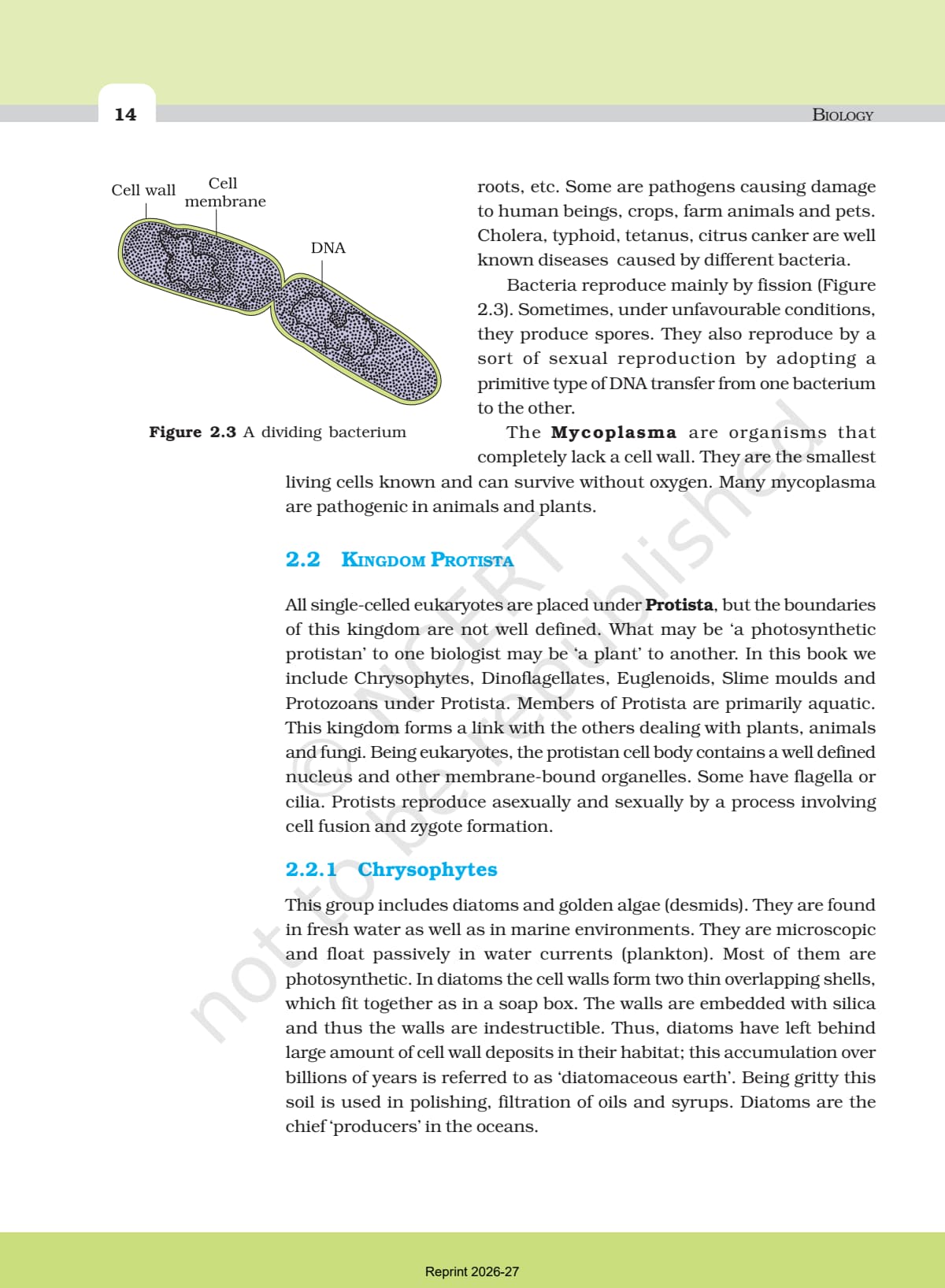
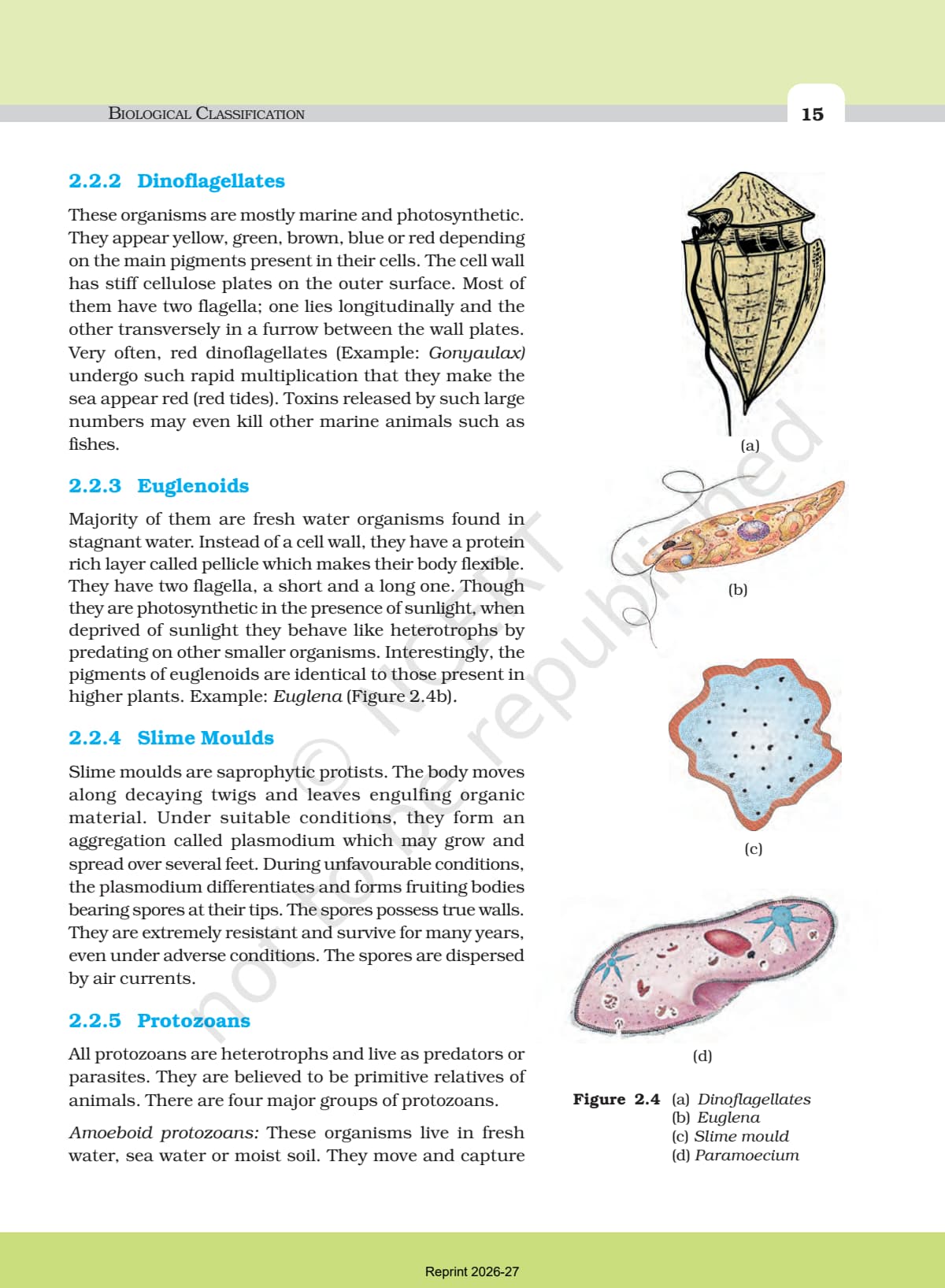
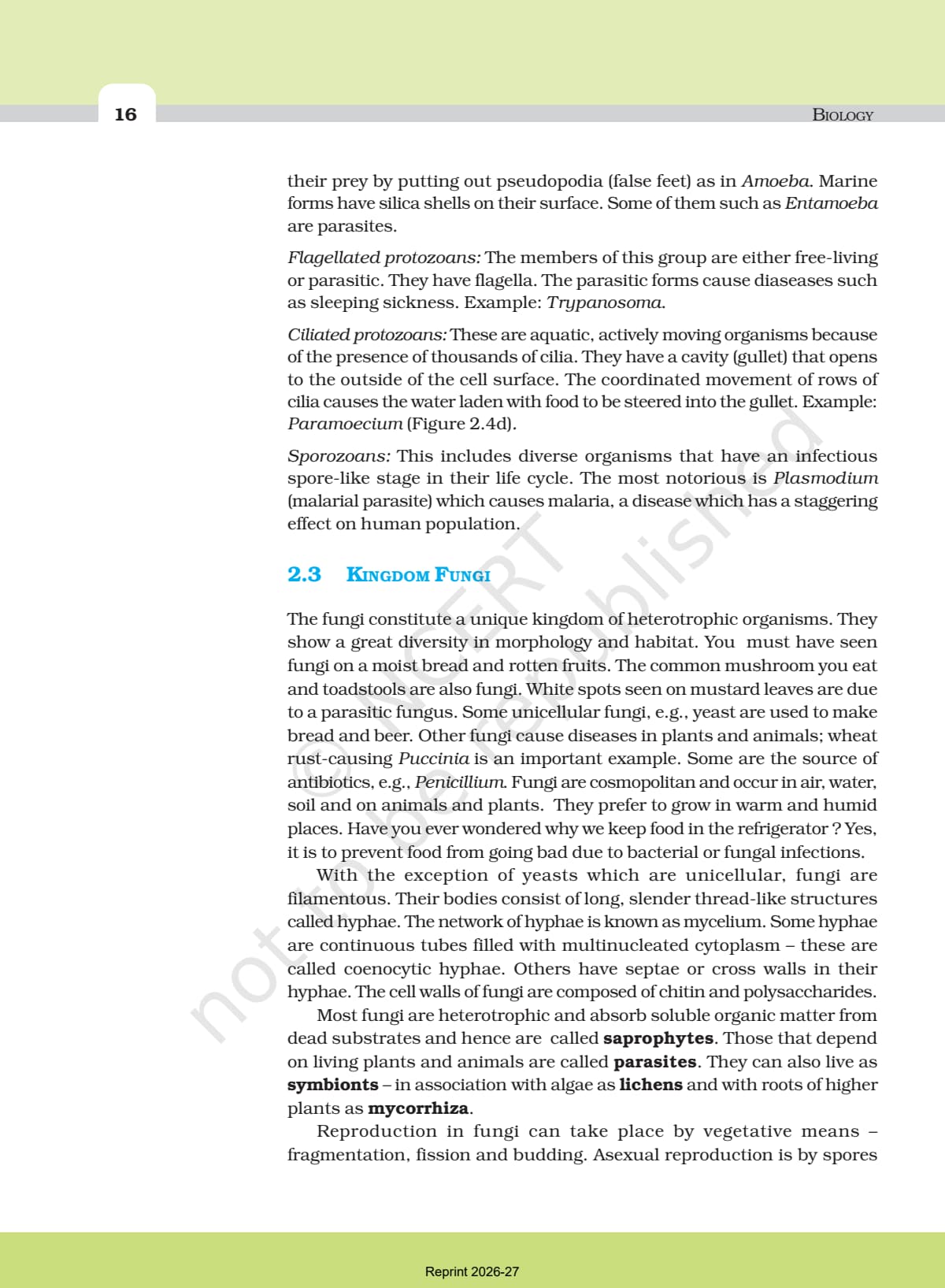
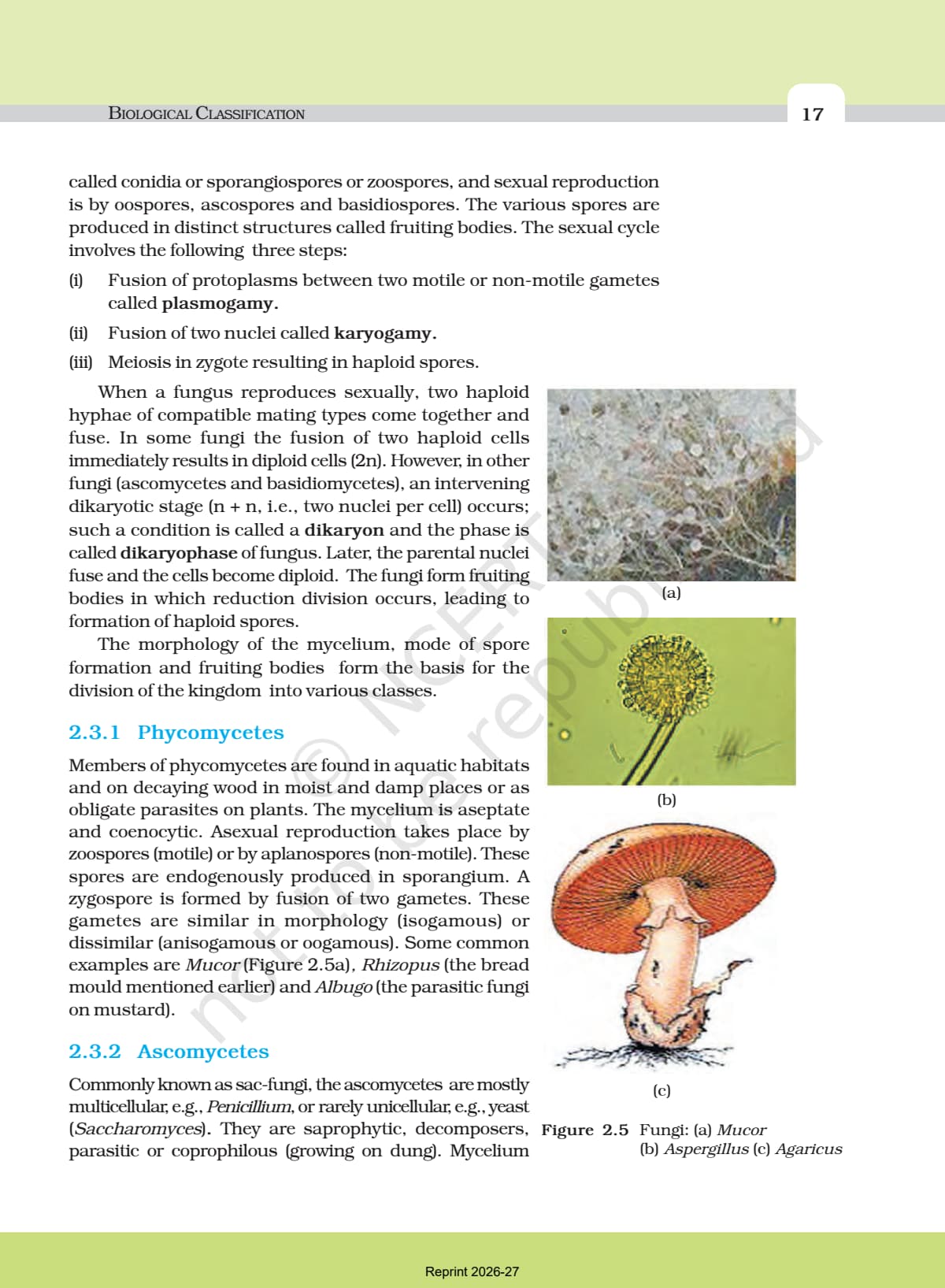
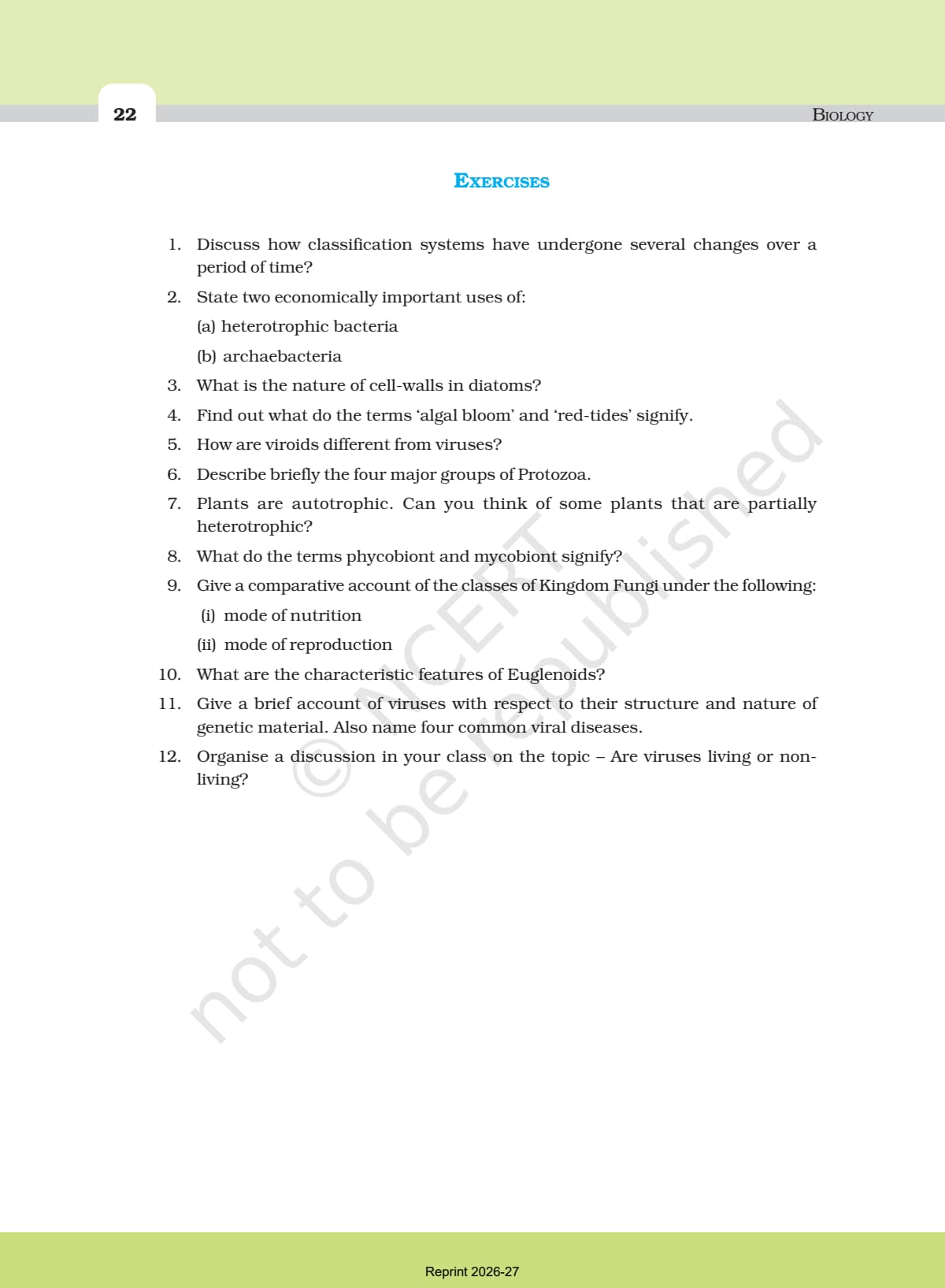
- Official NCERT 2026-27 chapter, clean and print-ready.
- Covers the five kingdom classification, Monera, Protista, Fungi, Plantae, Animalia, and viruses, viroids, prions and lichens.
- Read it alongside the solved exercises and the revision notes linked below.
This Class 11 Biology Chapter 2 Biological Classification NCERT Book PDF is the official 2026-27 NCERT text, checked page by page against the latest edition.
What Class 11 Biology Chapter 2 Biological Classification Covers
The chapter explains why earlier two kingdom systems broke down and how Whittaker used cell structure, body organisation, mode of nutrition and reproduction to build five kingdoms. It then walks through each kingdom in turn and closes with the acellular agents that sit outside the scheme altogether. The official NCERT sections are listed below so students can see exactly what the chapter contains before they start.
| Section | Topic |
|---|---|
| 2.1 | Kingdom Monera |
| 2.1.1 | Archaebacteria |
| 2.1.2 | Eubacteria |
| 2.2 | Kingdom Protista |
| 2.2.1 | Chrysophytes |
| 2.2.2 | Dinoflagellates |
| 2.2.3 | Euglenoids |
| 2.3 | Kingdom Fungi |
| 2.4 | Kingdom Plantae |
| 2.5 | Kingdom Animalia |
| 2.6 | Viruses, Viroids, Prions and Lichens |
Key Concepts You Will Study
This chapter is almost entirely descriptive, so students should read it with a comparison table open rather than trying to memorise paragraphs. The groups introduced here reappear in ecology and biotechnology, and NEET leans on the exact NCERT wording.
- The basis of the five kingdom classification and how it improved on the two kingdom system.
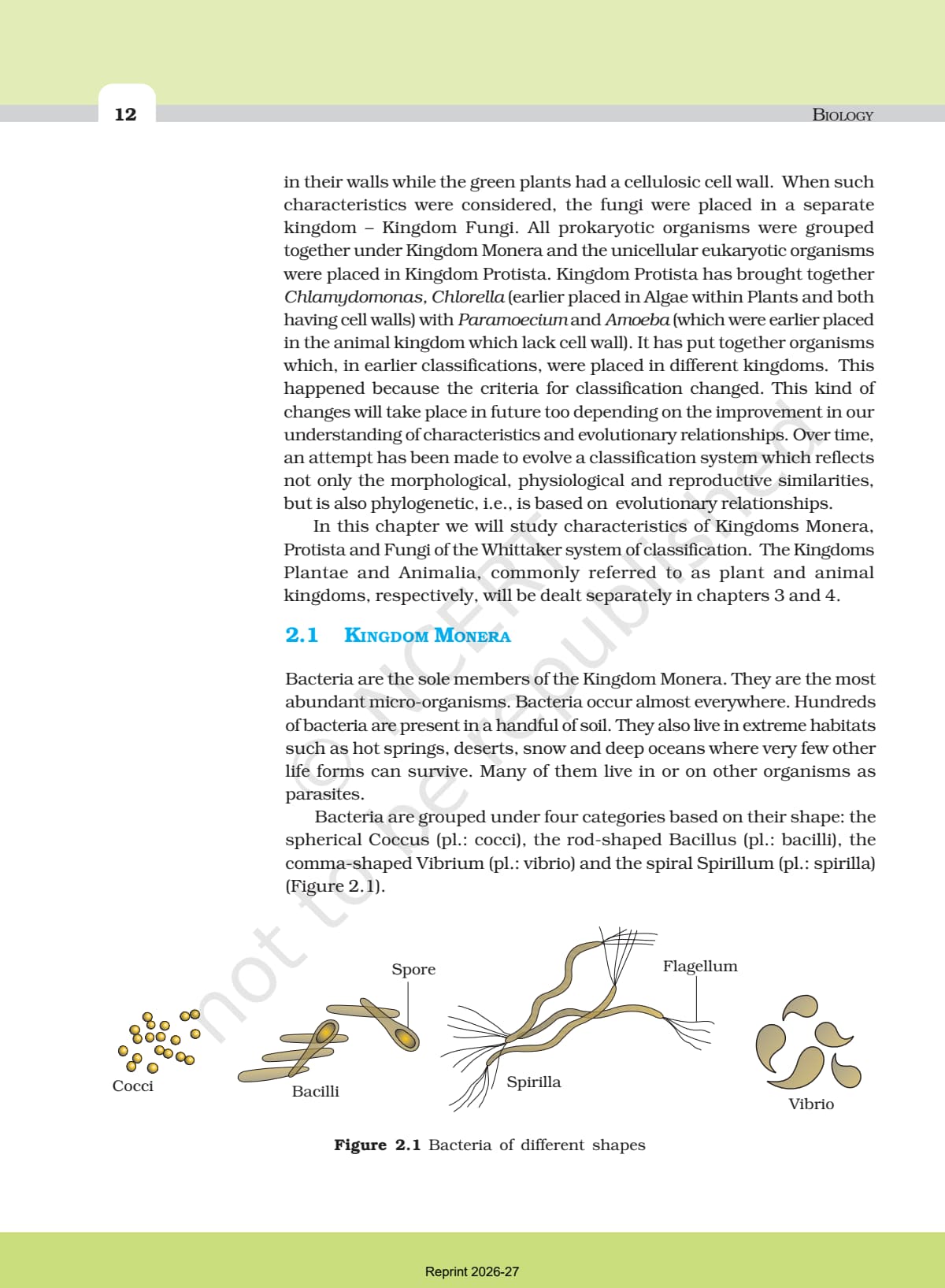
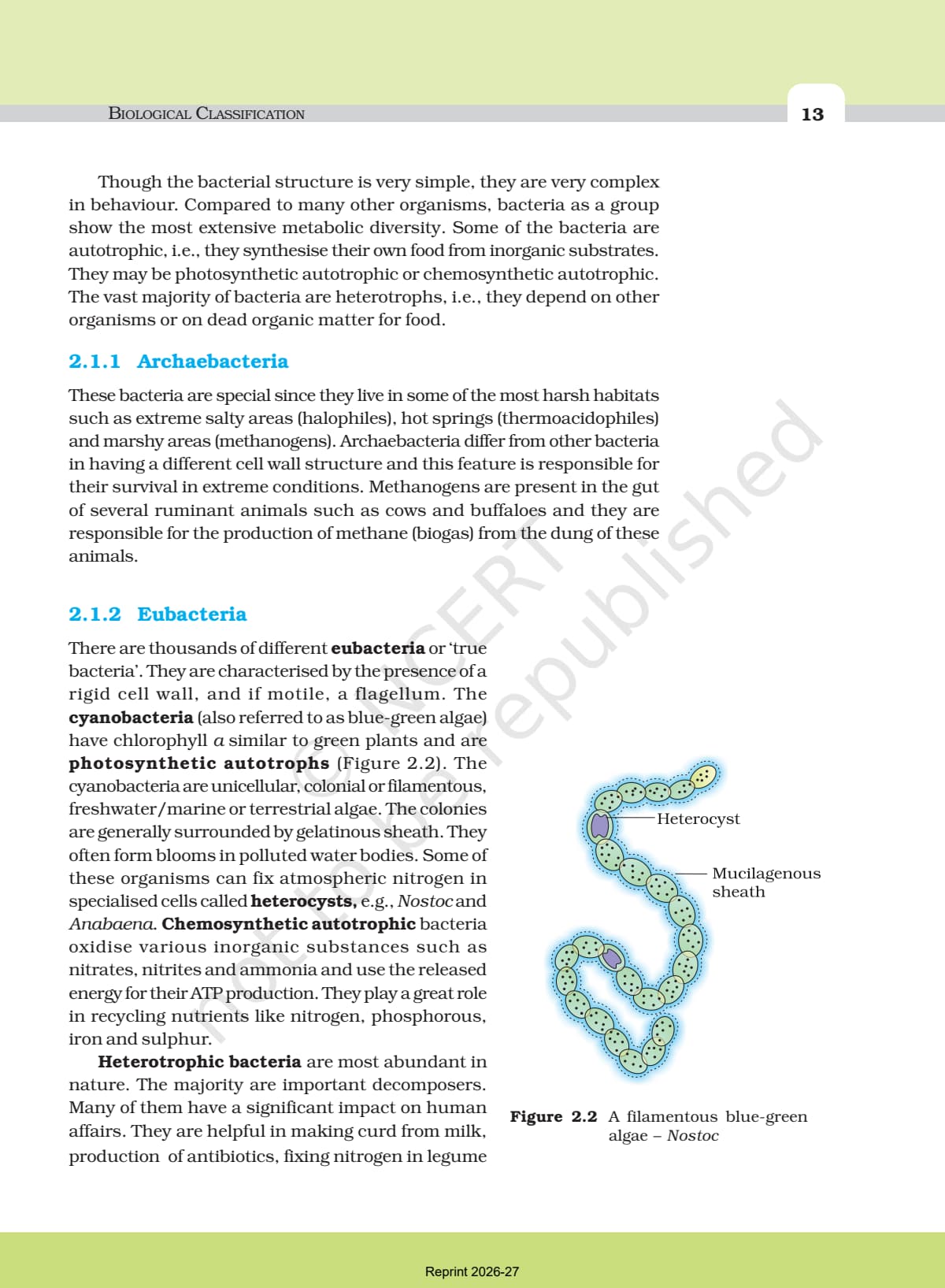
- Archaebacteria and eubacteria, including cyanobacteria, mycoplasma and the shapes of bacteria.
- The protist groups: chrysophytes, dinoflagellates, euglenoids, slime moulds and protozoans.
- The four fungal classes Phycomycetes, Ascomycetes, Basidiomycetes and Deuteromycetes and their spores.
- Viruses, viroids, prions and lichens, including the work of Ivanowsky, Beijerinck and Stanley.
Why Download the NCERT Book PDF for This Chapter
Biological classification is a high-yield, low-effort scoring chapter for NEET because nearly every question is factual and traceable to a line in the NCERT text. The comparison tables and the exact definitions are what examiners quote.
- Most NEET questions on this chapter are lifted directly from the NCERT tables and definitions.
- The characteristics of the five kingdoms are asked as direct matching and assertion questions.
- Terms such as viroid, prion and lichen are examined using the precise NCERT phrasing.
How to Use the NCERT Book PDF for Biological Classification
Read the chapter once for the overall logic of the five kingdoms, then build your own tables for each group so the details do not blur. Because the chapter is dense with names, spacing the reading over two sittings works better than one long pass.
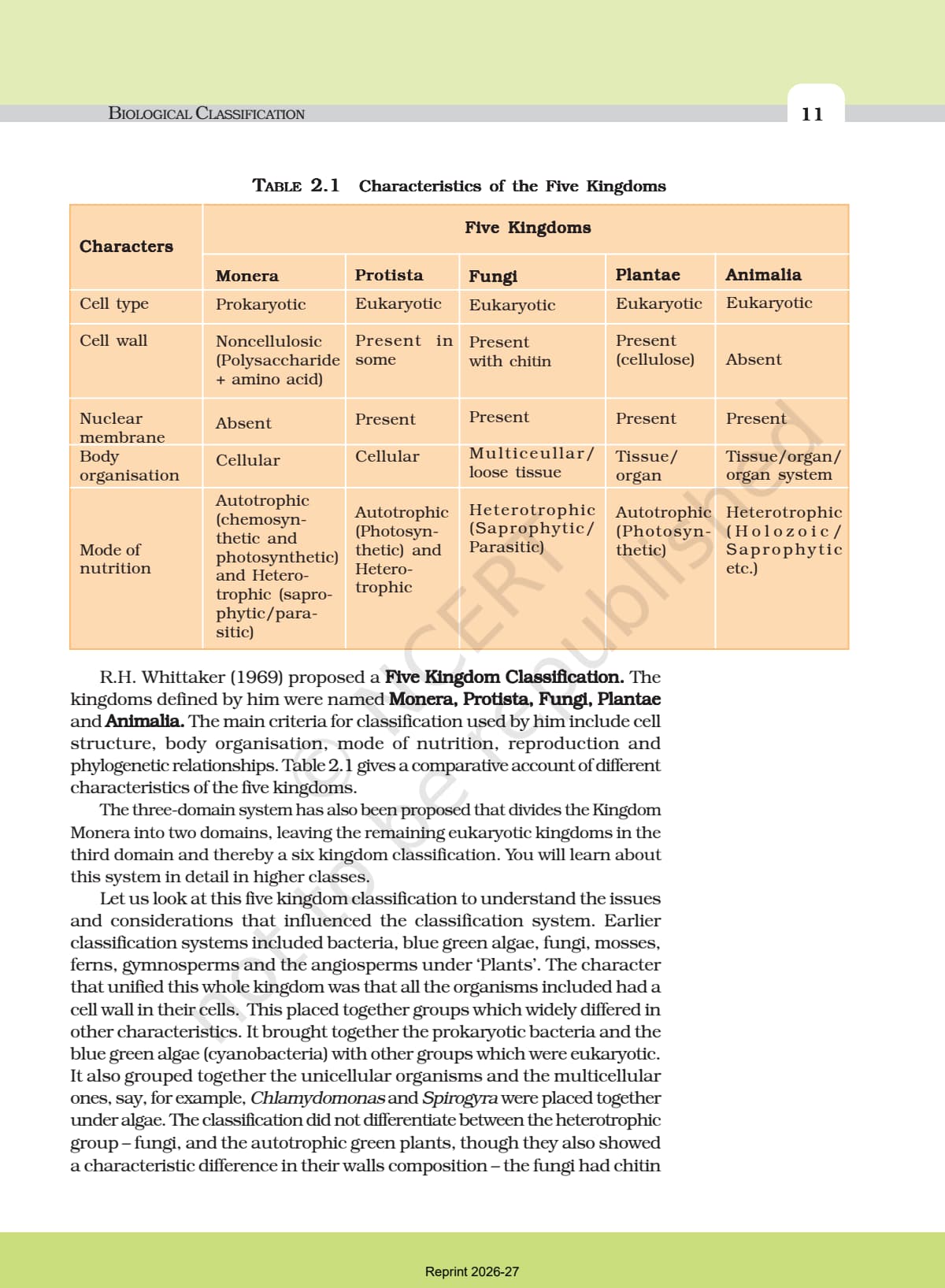
- Make a five kingdom table with cell type, body organisation, nutrition and reproduction.
- Build a separate comparison of the four fungal classes and their spore types.
- Learn the virus, viroid, prion and lichen definitions in the exact NCERT words.
- Attempt the back exercises, then check them against the NCERT Solutions linked below.
Other Class 11 Biology Biological Classification Resources
Pair the textbook PDF with the solved answers, revision notes, formula sheet and exemplar material for the same chapter so that reading, practice and revision all stay aligned to the same NCERT sections. The linked resources below cover Biological Classification in full and are matched to the 2026-27 syllabus.
| Resource | Link |
|---|---|
| NCERT Solutions | Biological Classification NCERT Solutions |
| Revision Notes | Biological Classification Notes |
| Formula Sheet | Biological Classification Formula Sheet |
| Exemplar Solutions | Biological Classification Exemplar Solutions |
| Exemplar Book PDF | Biological Classification Exemplar Book PDF |
Class 11 Biology Chapter 2 Student Feedback
Biological Classification is one of the chapters students revise early for the Boards and NEET, and their feedback helps new students plan their reading. Across more than 10,000 students who used these Collegedunia resources for the 2026 boards, the response to the NCERT book PDF for this chapter has been strong, as the summary below shows.
- Over 9 in 10 students called the five kingdom table the fastest way to revise this chapter.
- Students rated the four fungal classes as the most commonly confused part of the chapter.
- Most reported that learning the virus and viroid definitions verbatim paid off directly in NEET.
Class 11 Biology NCERT Book PDF All Chapters
The full Class 11 Biology NCERT Book PDF is split chapter by chapter so students can download only what they need. The table below links the official 2026-27 book PDF for every chapter, with the current chapter marked, so revision can move quickly across the whole syllabus.
| Chapter | NCERT Book PDF |
|---|---|
| Chapter 1 | Chapter 1 The Living World |
| Chapter 2 | Chapter 2 Biological Classification |
| Chapter 3 | Chapter 3 Plant Kingdom |
| Chapter 4 | Chapter 4 Animal Kingdom |
| Chapter 5 | Chapter 5 Morphology of Flowering Plants |
| Chapter 6 | Chapter 6 Anatomy of Flowering Plants |
| Chapter 7 | Chapter 7 Structural Organisation in Animals |
| Chapter 8 | Chapter 8 Cell: The Unit of Life |
| Chapter 9 | Chapter 9 Biomolecules |
| Chapter 10 | Chapter 10 Cell Cycle and Cell Division |
| Chapter 11 | Chapter 11 Photosynthesis in Higher Plants |
| Chapter 12 | Chapter 12 Respiration in Plants |
| Chapter 13 | Chapter 13 Plant Growth and Development |
| Chapter 14 | Chapter 14 Breathing and Exchange of Gases |
| Chapter 15 | Chapter 15 Body Fluids and Circulation |
| Chapter 16 | Chapter 16 Excretory Products and their Elimination |
| Chapter 17 | Chapter 17 Locomotion and Movement |
| Chapter 18 | Chapter 18 Neural Control and Coordination |
| Chapter 19 | Chapter 19 Chemical Coordination and Integration |
FAQs on Class 11 Biology Chapter 2 NCERT Book PDF
Biological Classification NCERT PDF - Frequently Asked Questions
Ques. Is this the latest 2026-27 NCERT Book for Class 11 Biology Chapter 2?
Ans. Yes. This is the official NCERT 2026-27 textbook chapter for Class 11 Biology Chapter 2 Biological Classification, matched page by page against the latest rationalised edition.
Ques. What topics are in Class 11 Biology Chapter 2?
Ans. The chapter covers the basis of the five kingdom classification, Kingdom Monera including archaebacteria and eubacteria, Kingdom Protista with chrysophytes, dinoflagellates, euglenoids, slime moulds and protozoans, Kingdom Fungi and its classes, Kingdom Plantae, Kingdom Animalia, and finally viruses, viroids, prions and lichens.
Ques. Is the NCERT Book enough for this chapter in NEET and CUET?
Ans. The NCERT Book is the base for this chapter, and most NEET and CUET questions on Biological Classification are drawn straight from its text and diagrams. Pair it with the Exemplar for extra higher-order practice.
Ques. Where can I download the Class 11 Biology Chapter 2 NCERT Book PDF?
Ans. You can download the Class 11 Biology Chapter 2 Biological Classification NCERT Book PDF free from the download card at the top of this page, in both standard and HD quality.



Comments