




Inverse Trigonometric Functions is a short chapter that punches above its weight in the CBSE paper.
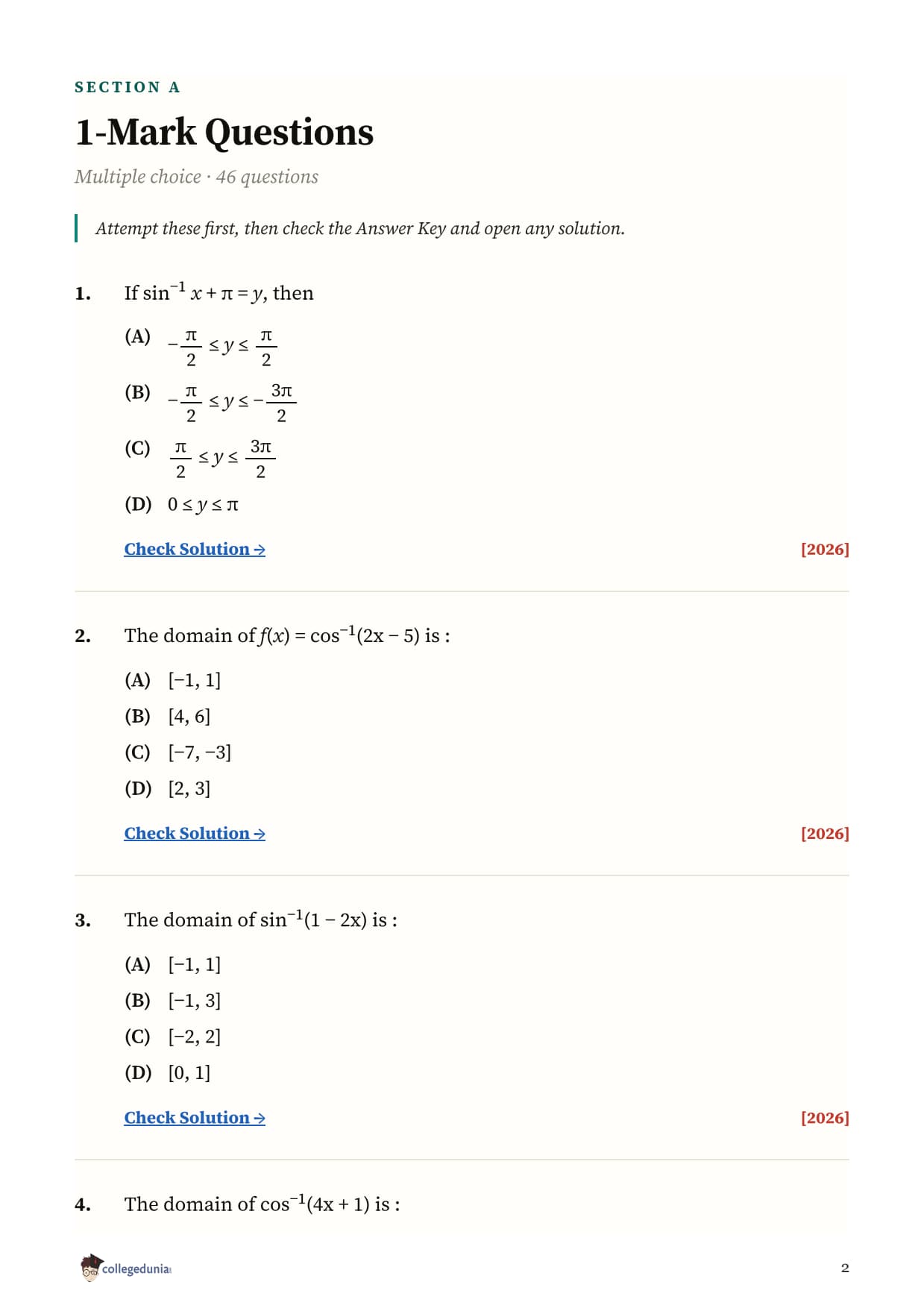
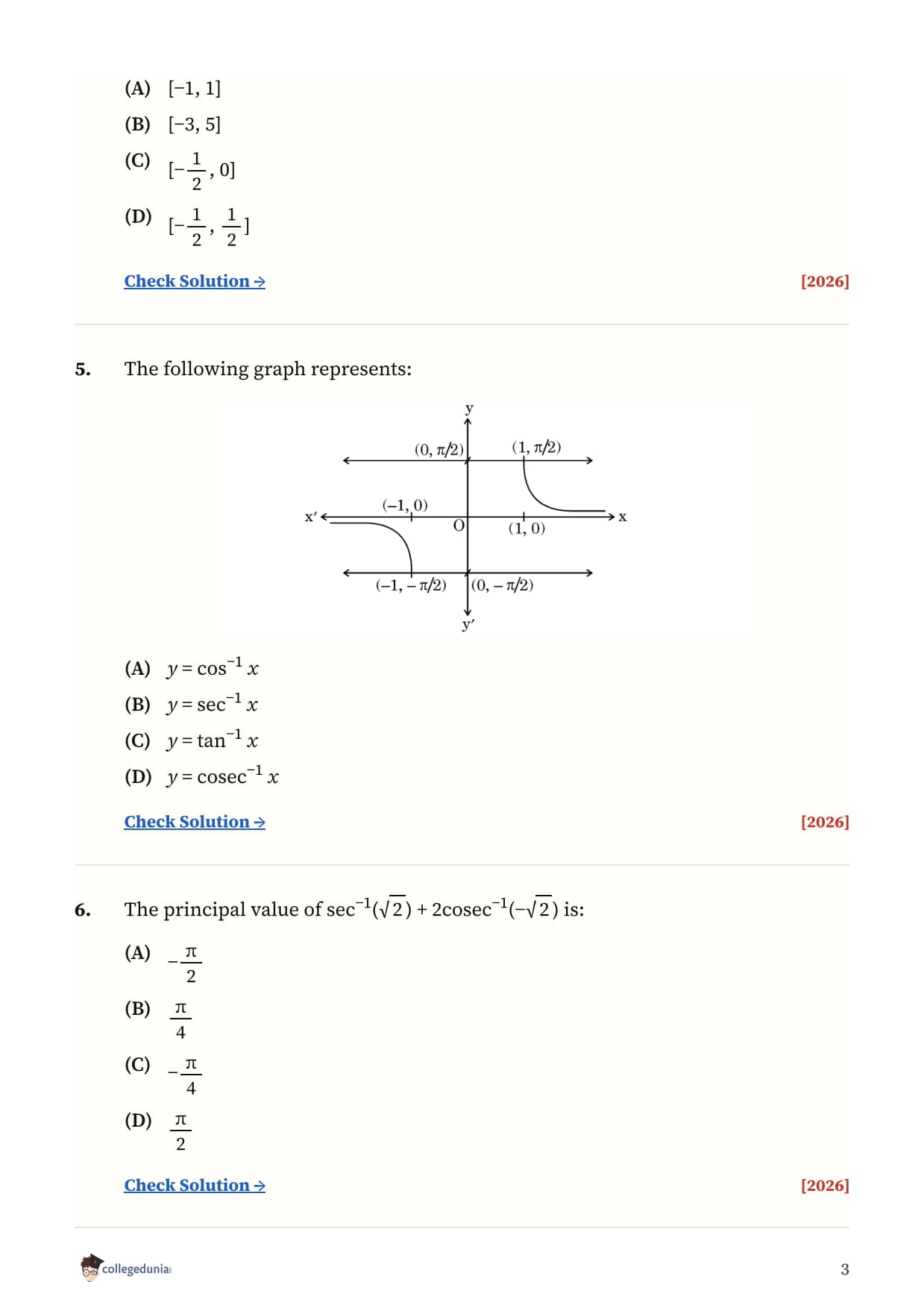
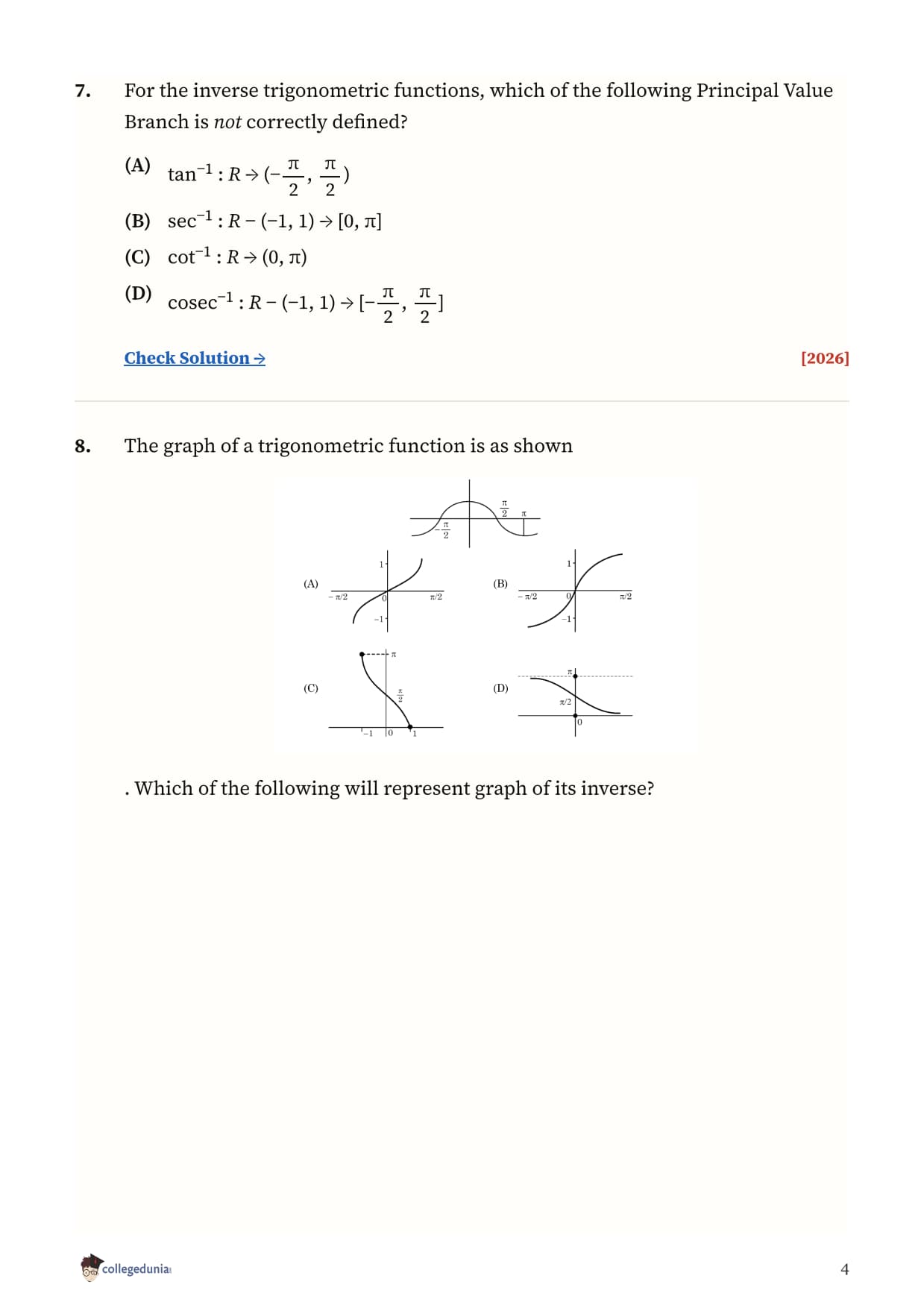
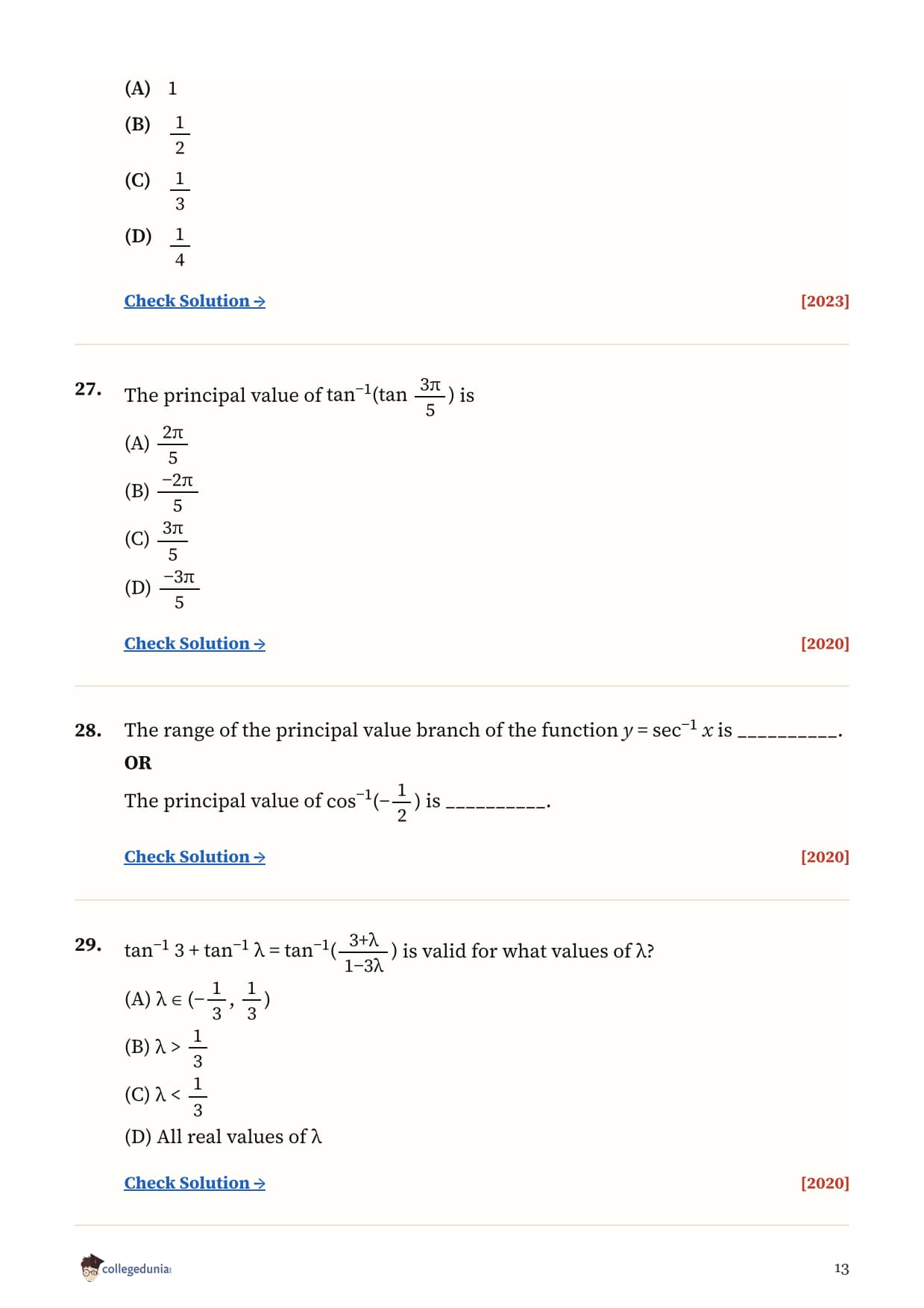
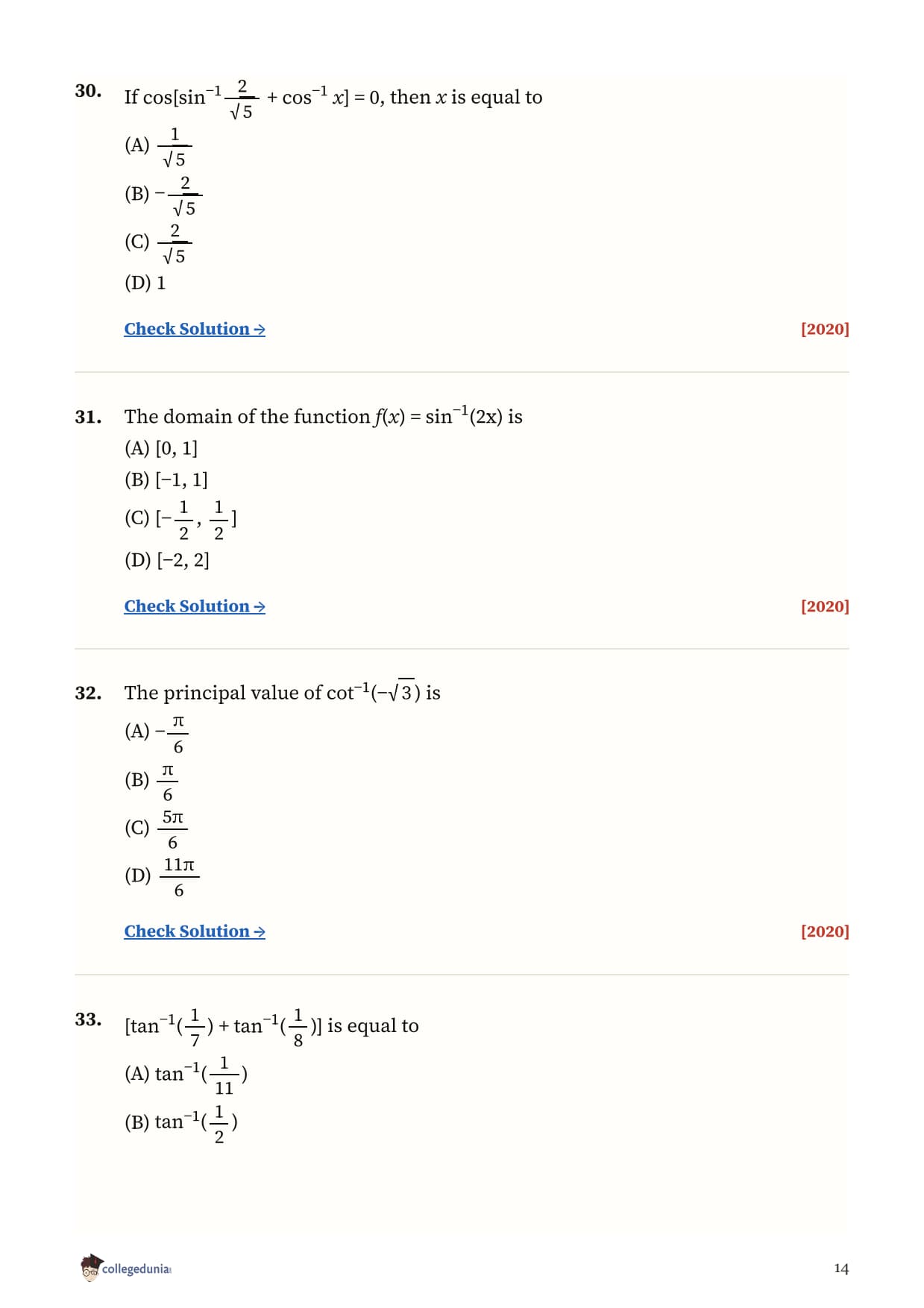
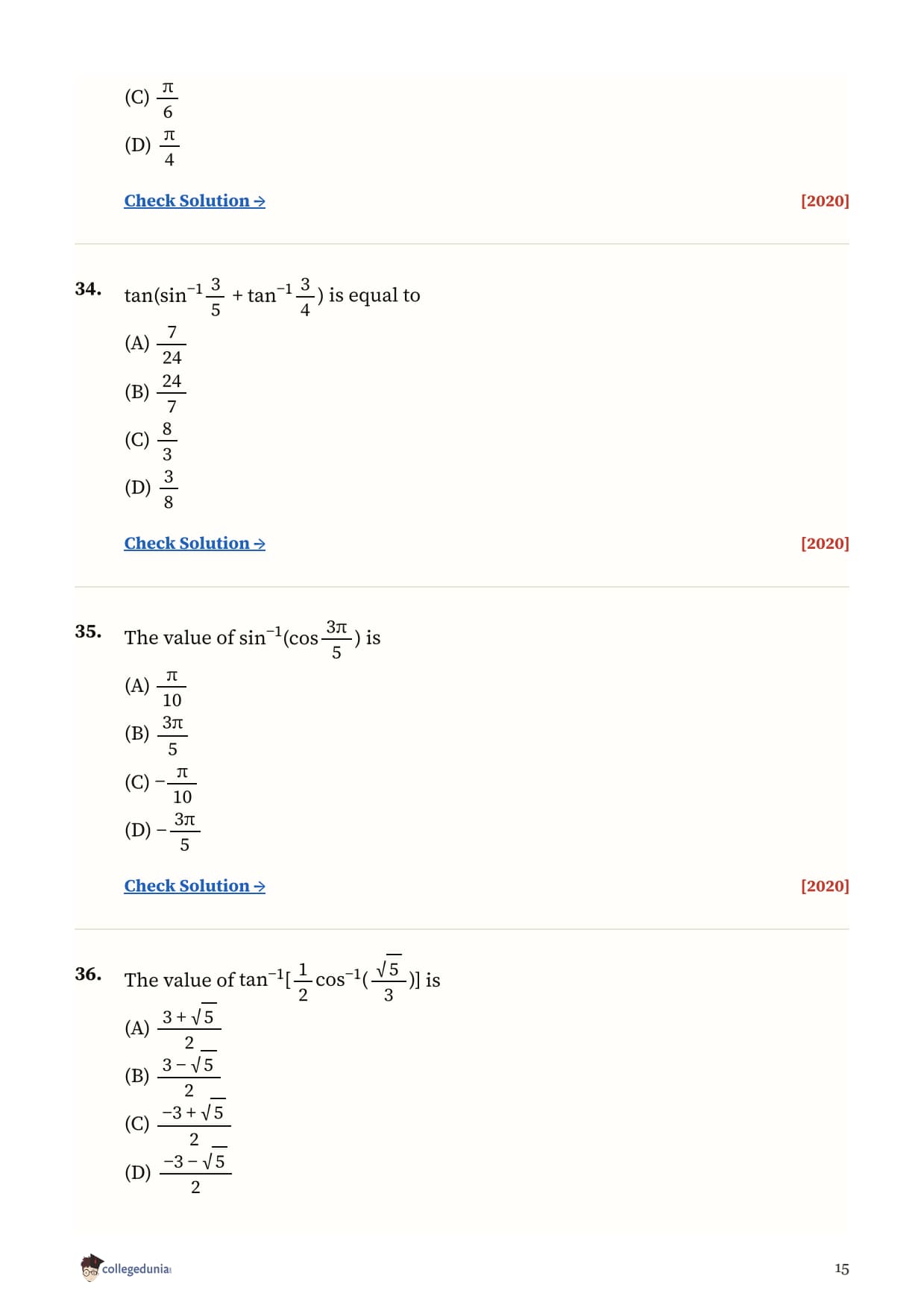
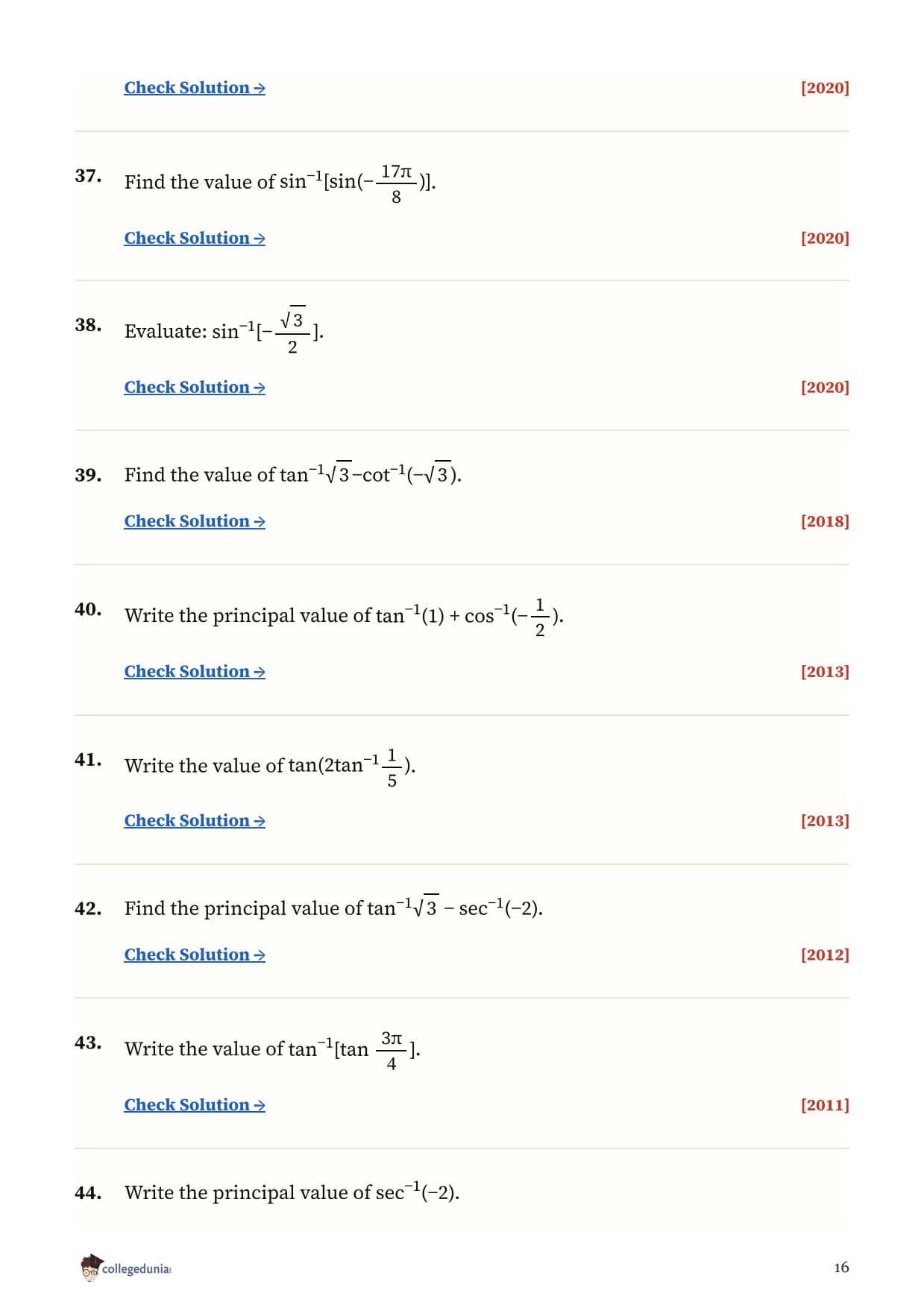
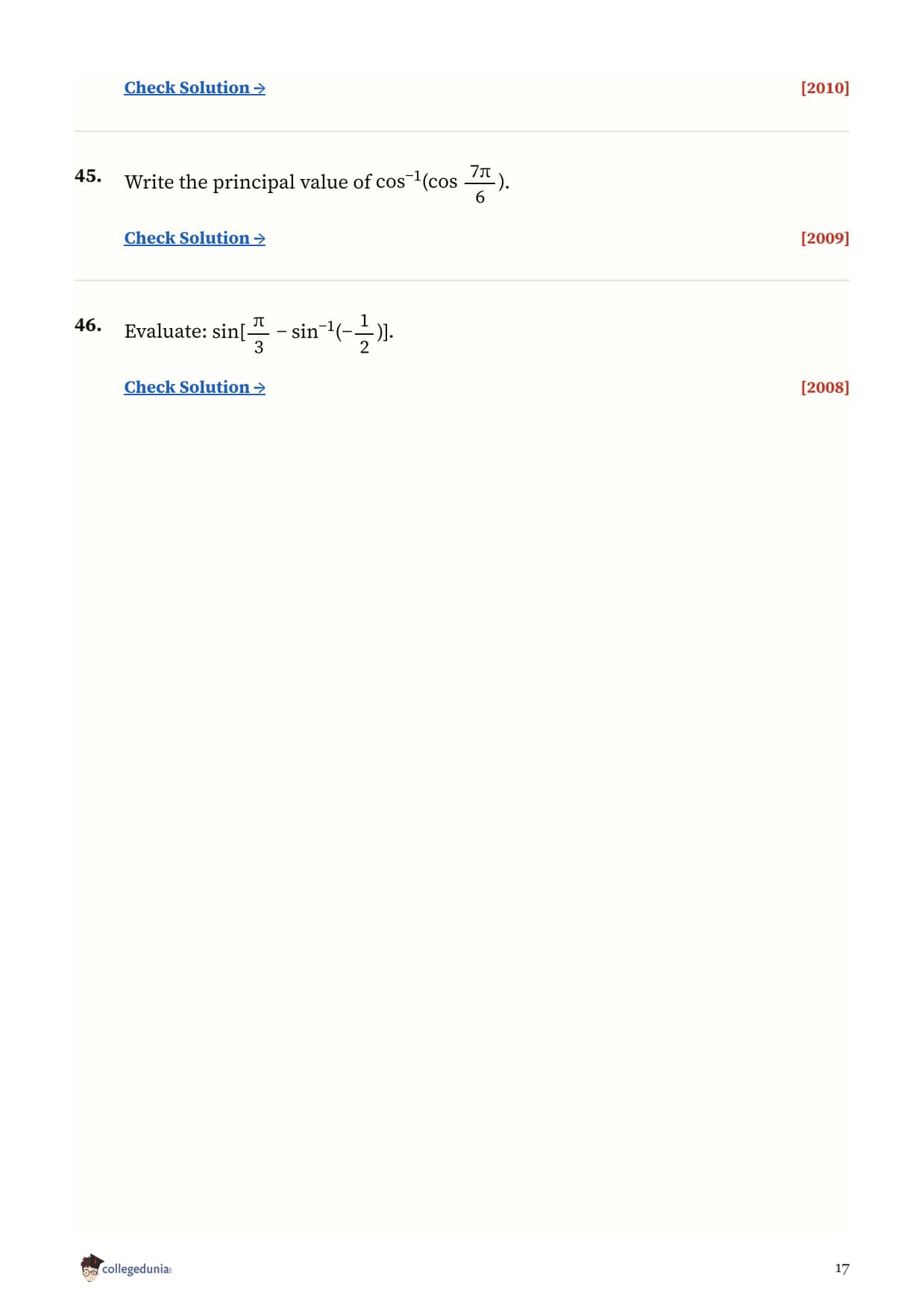
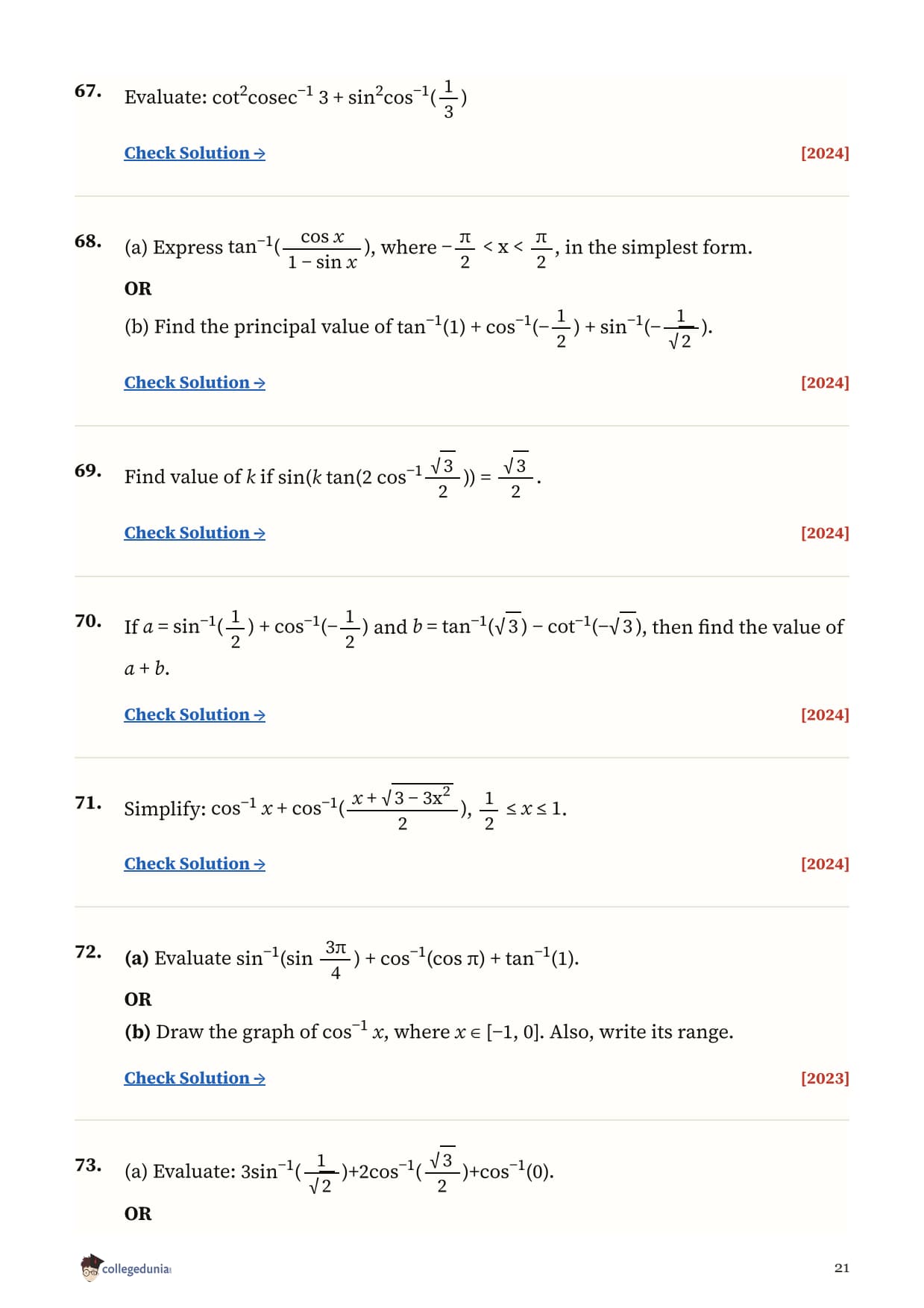
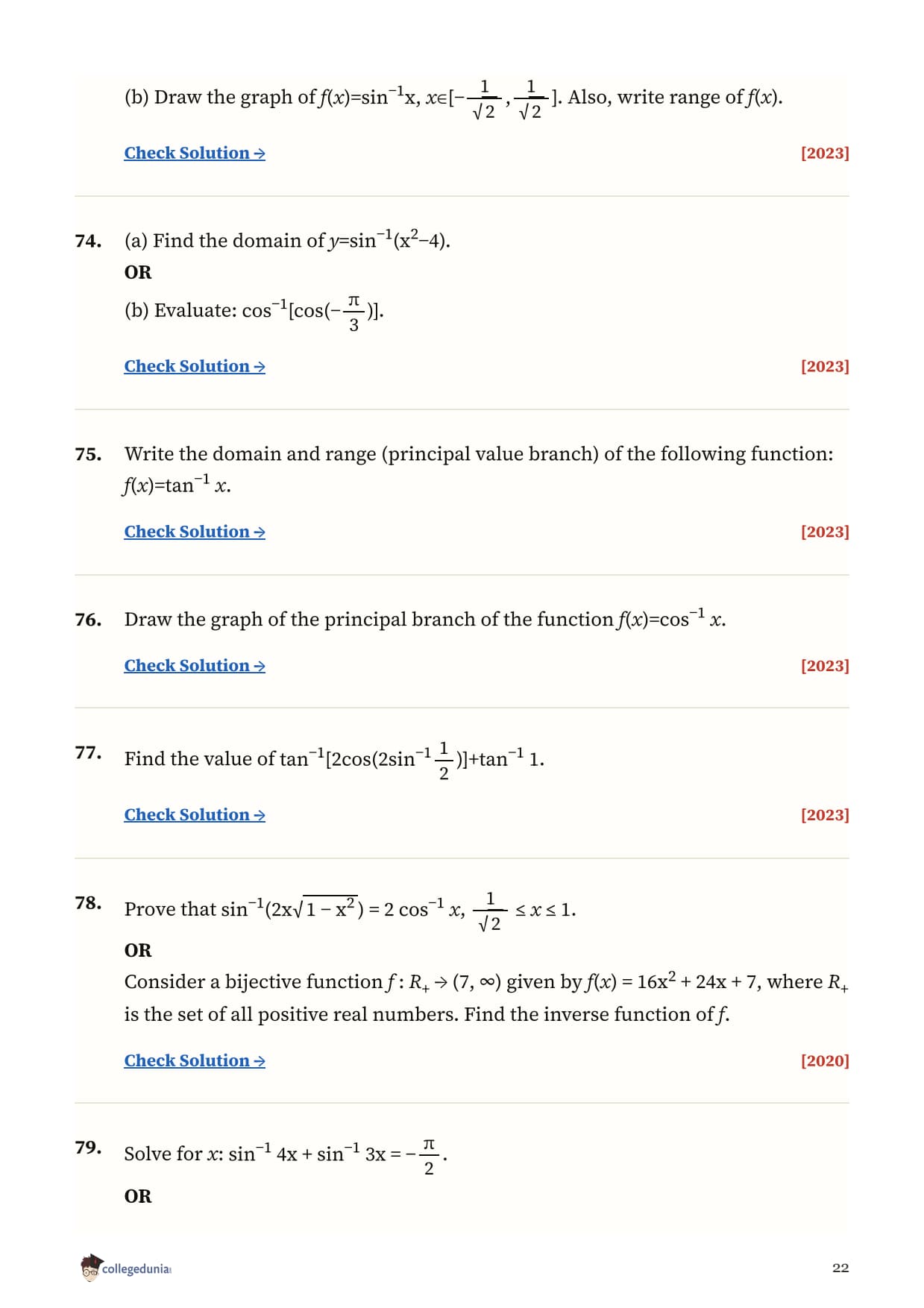
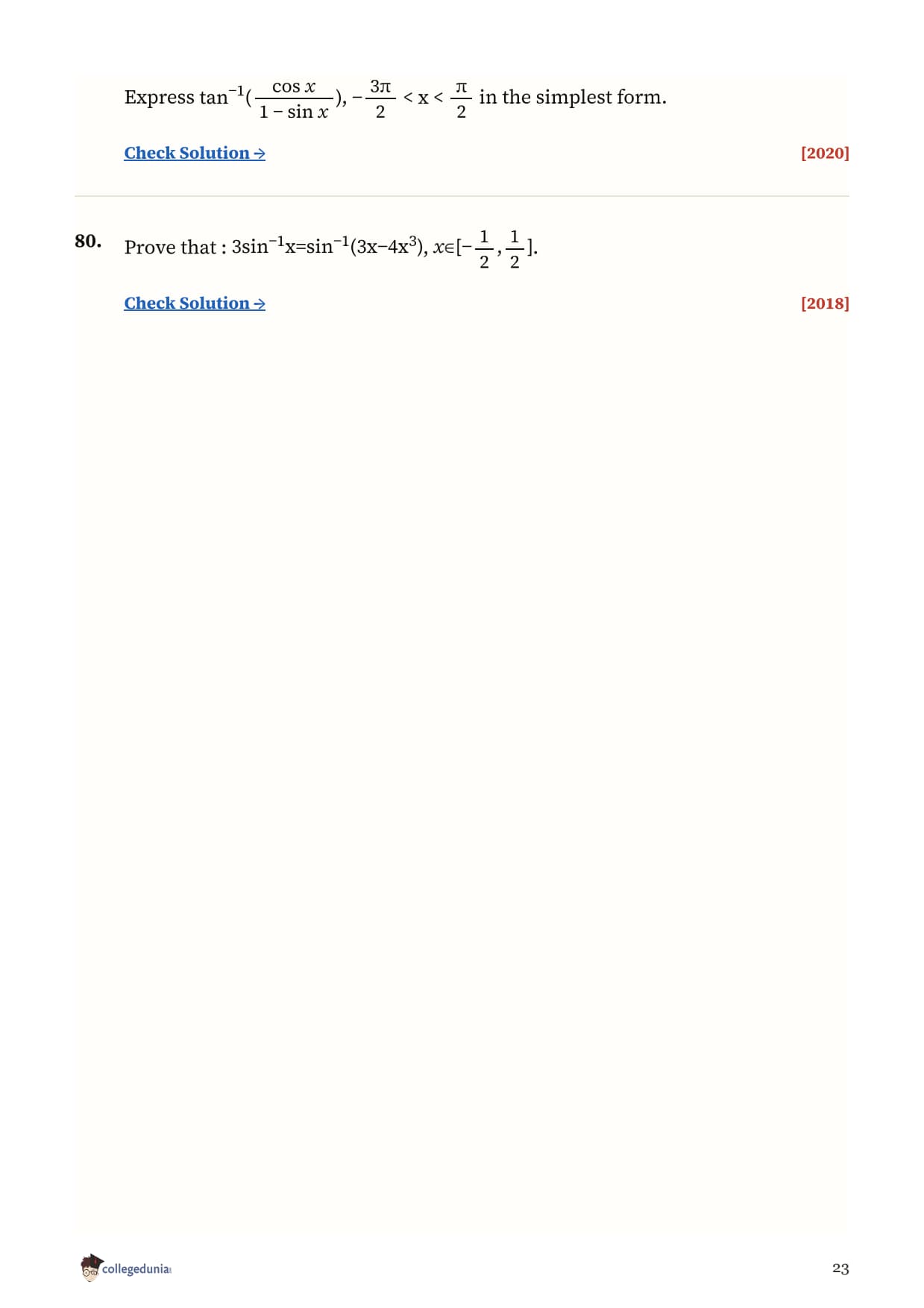
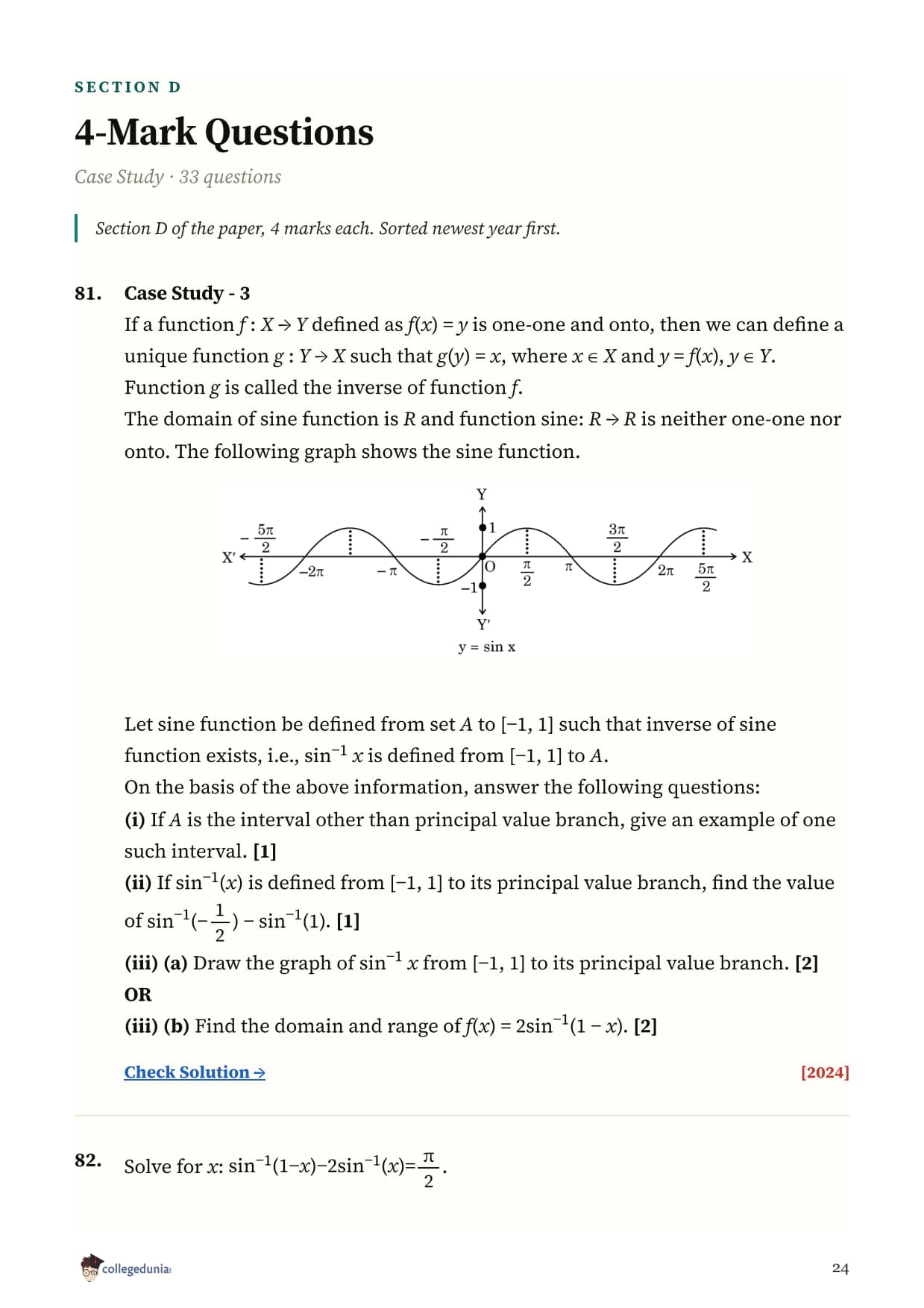
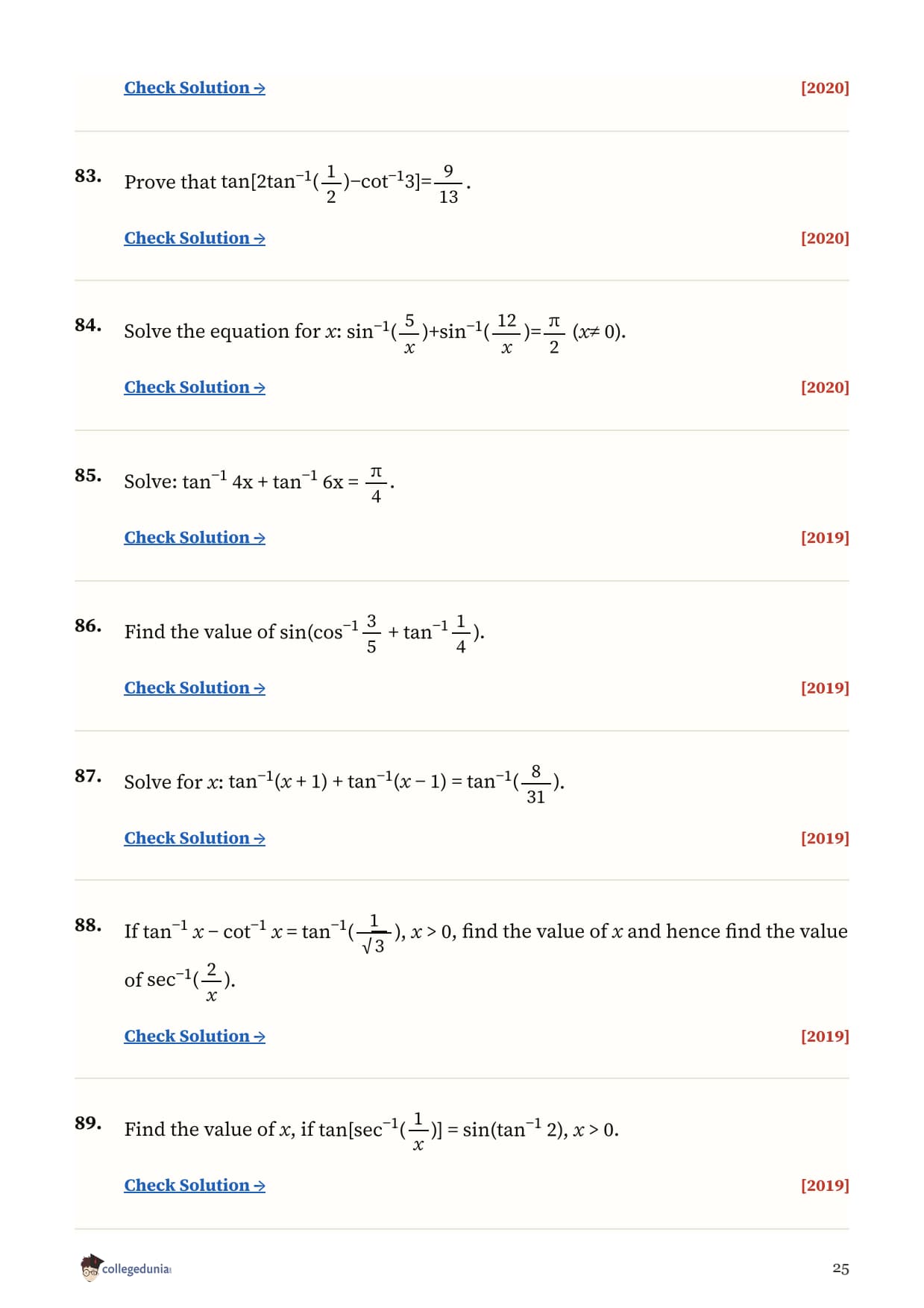
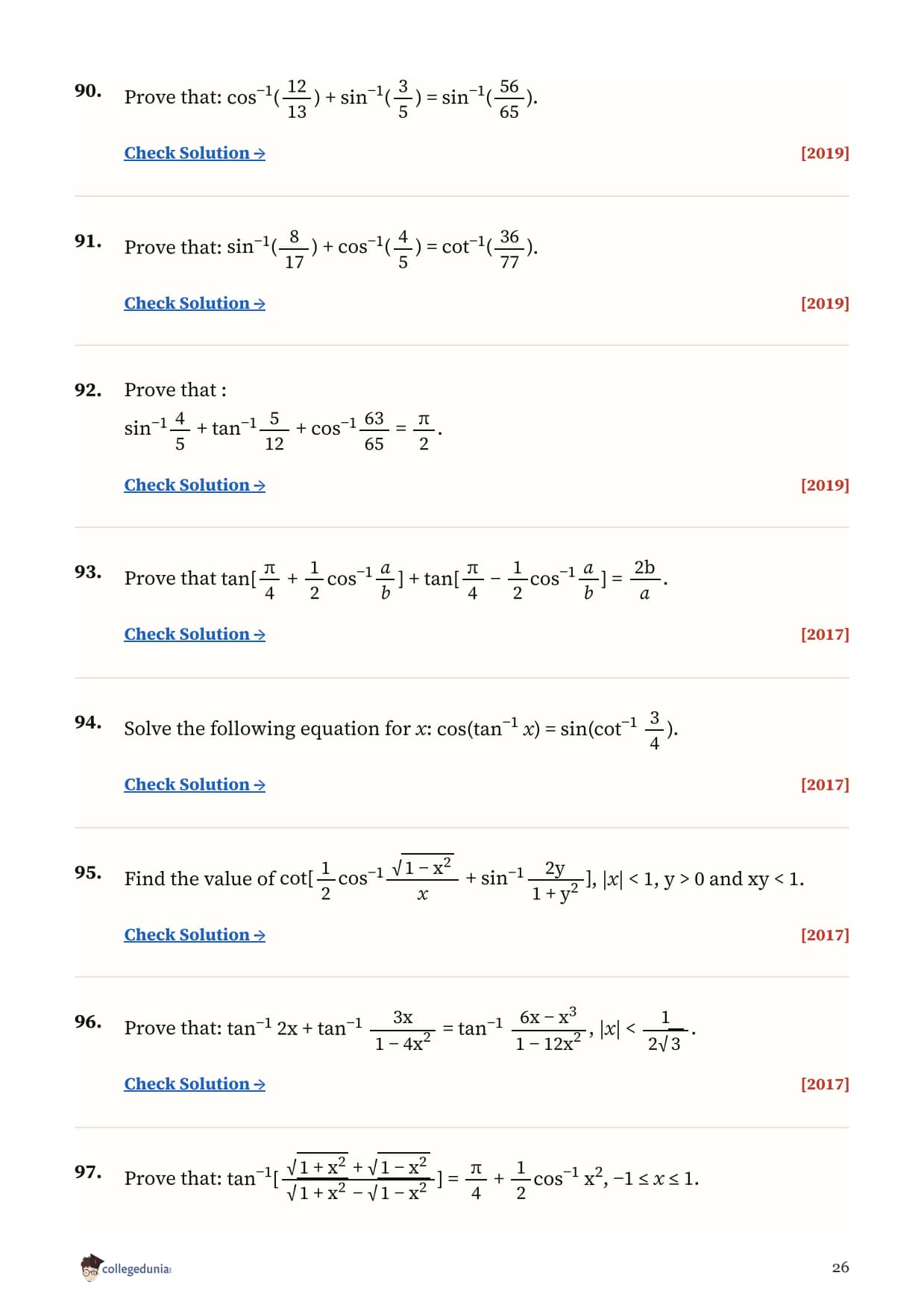
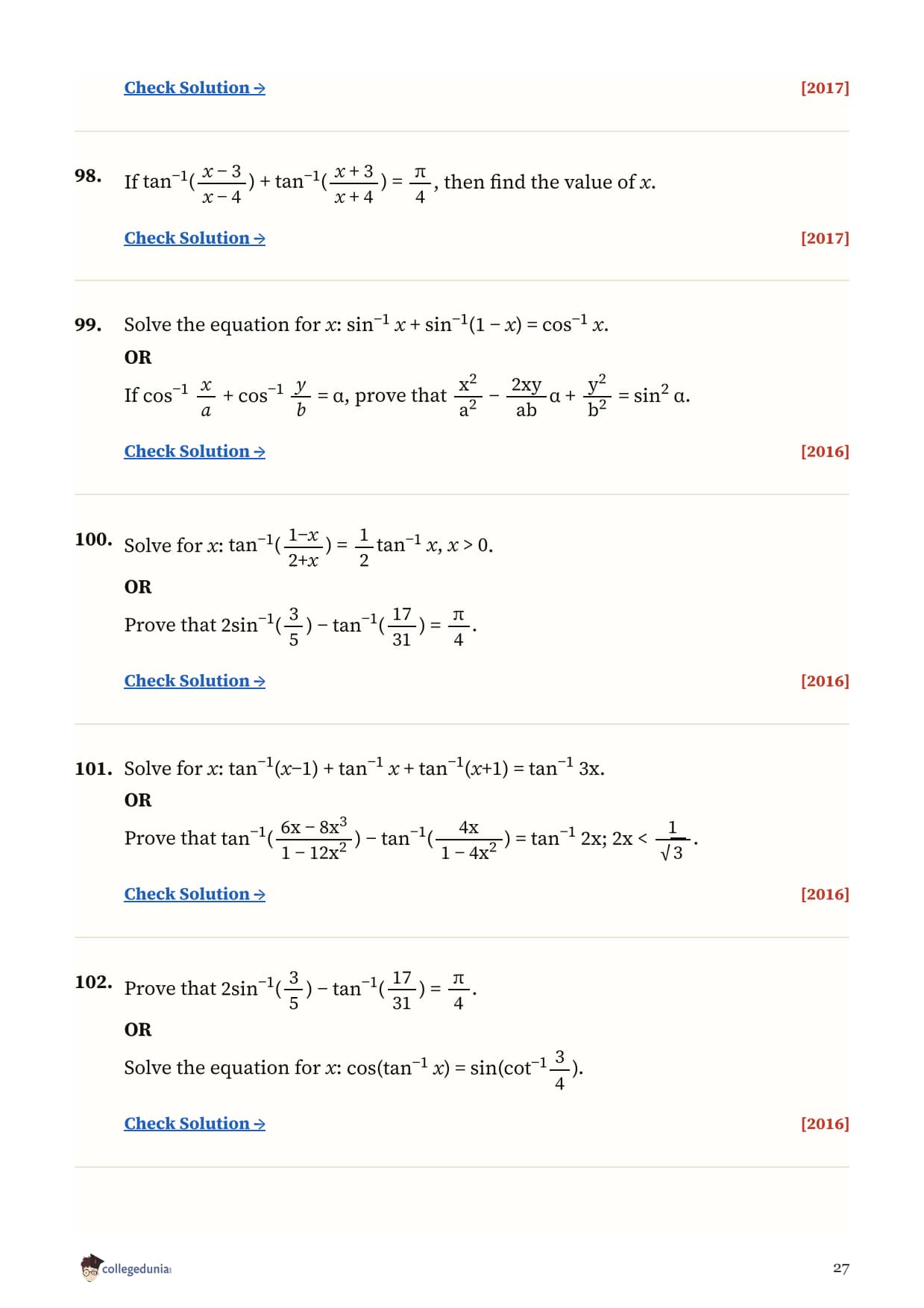
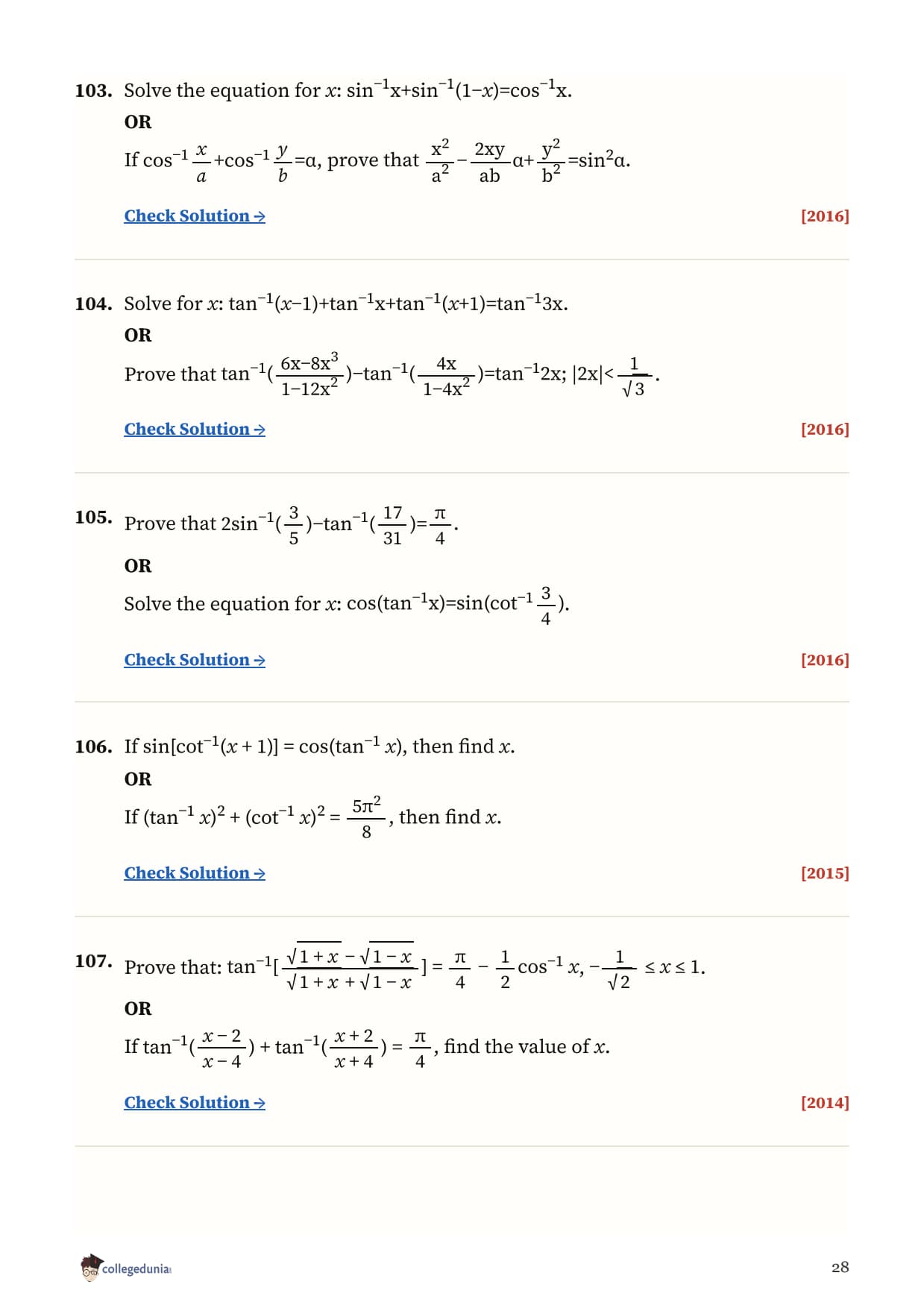
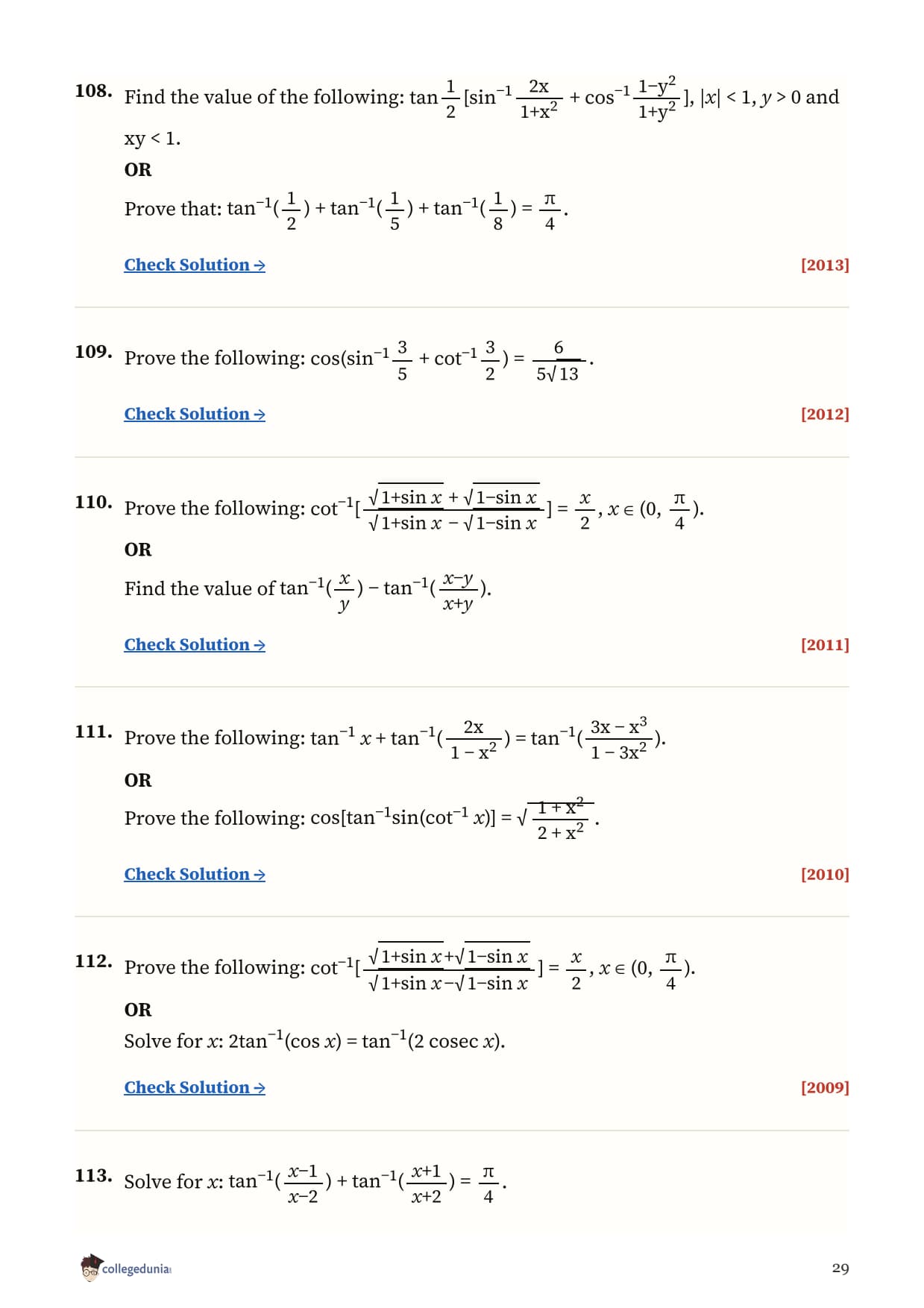

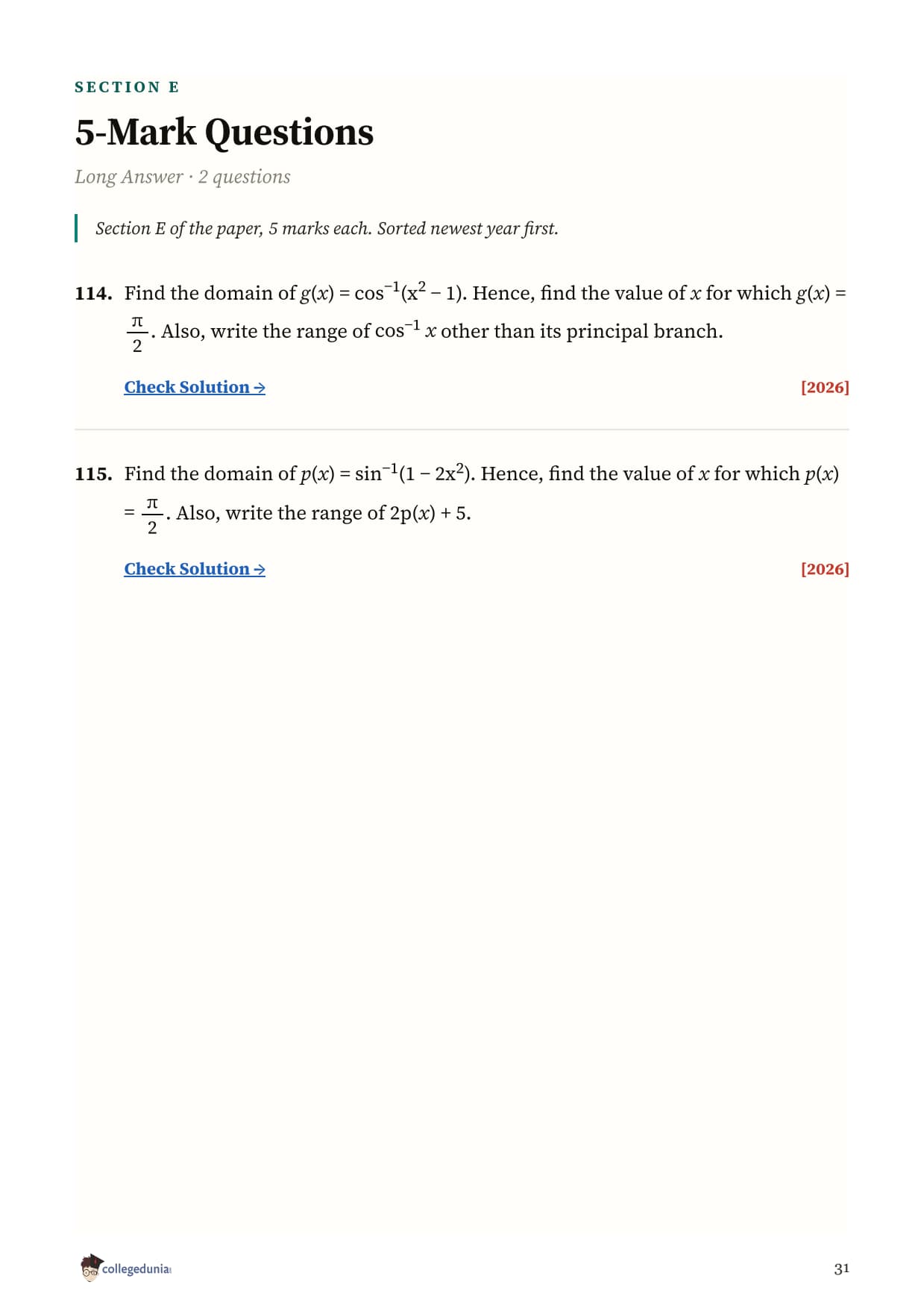
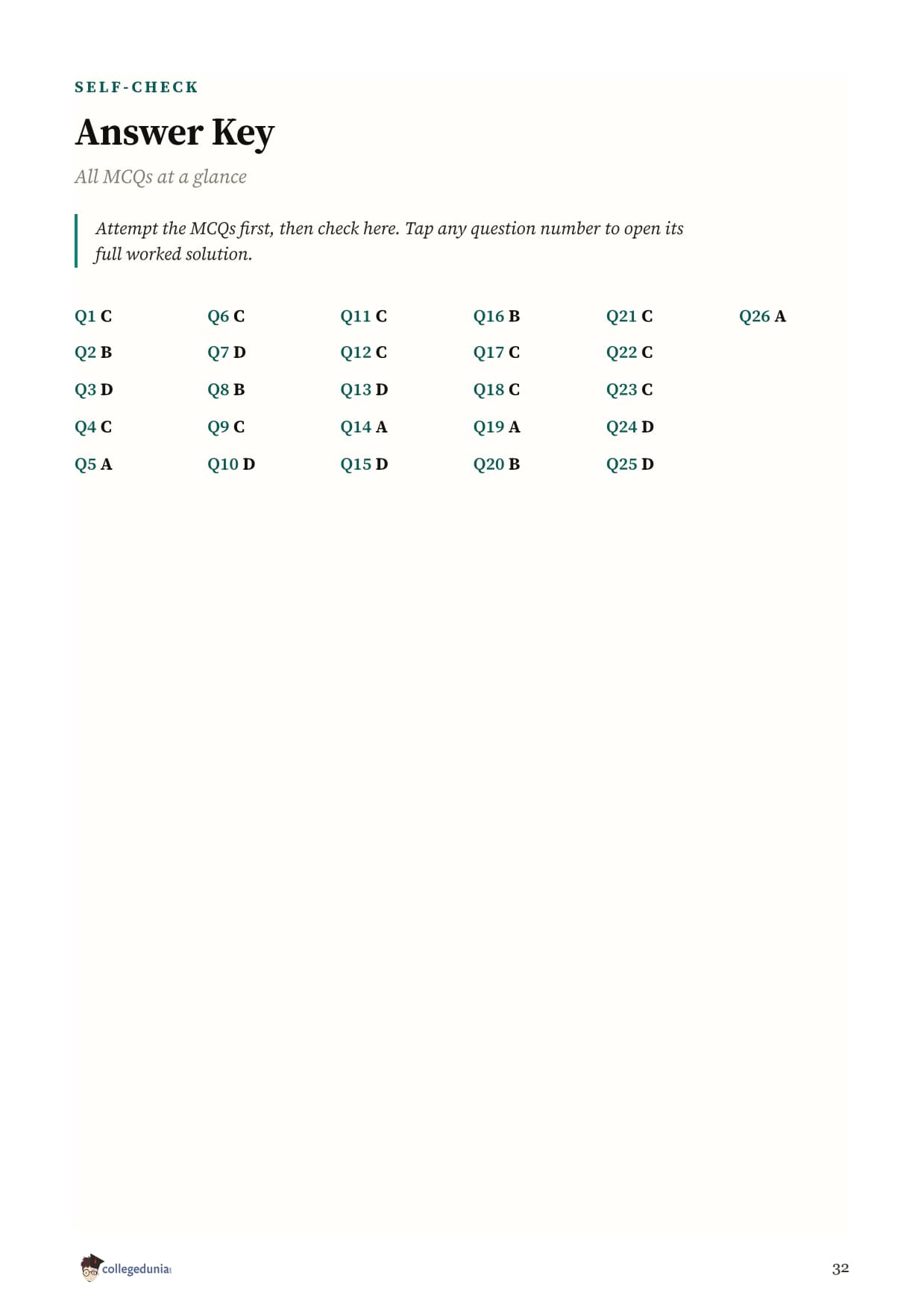
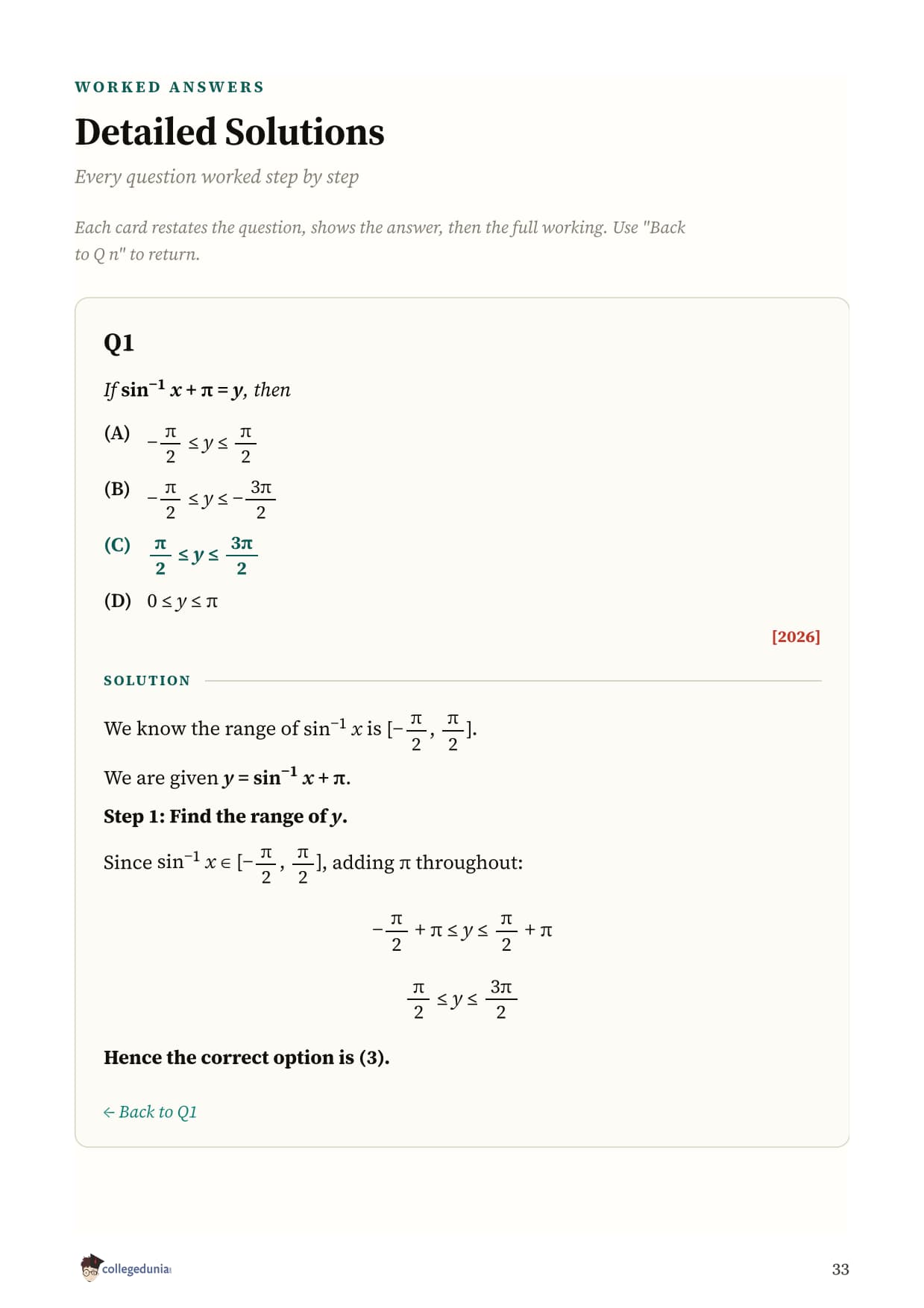
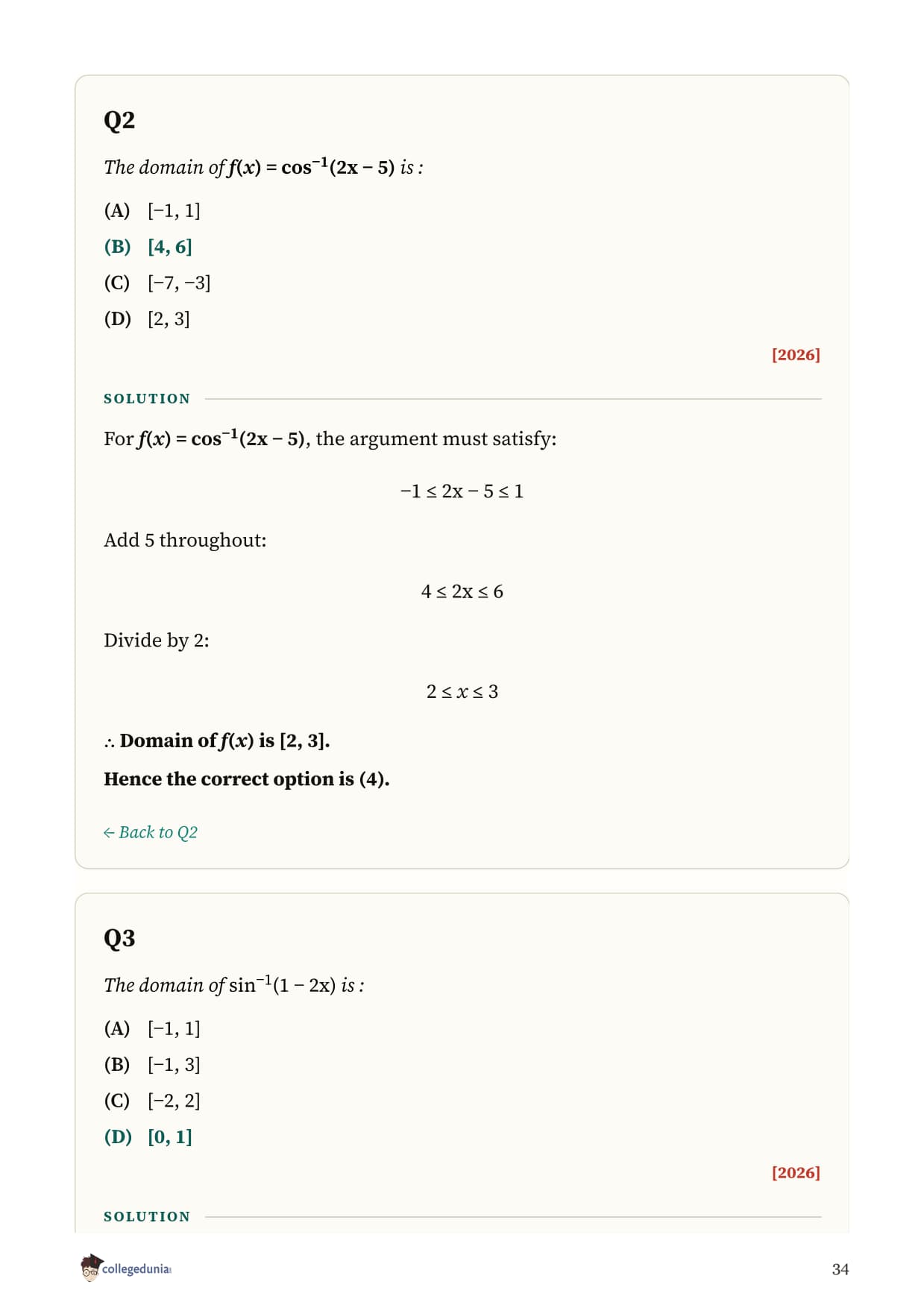
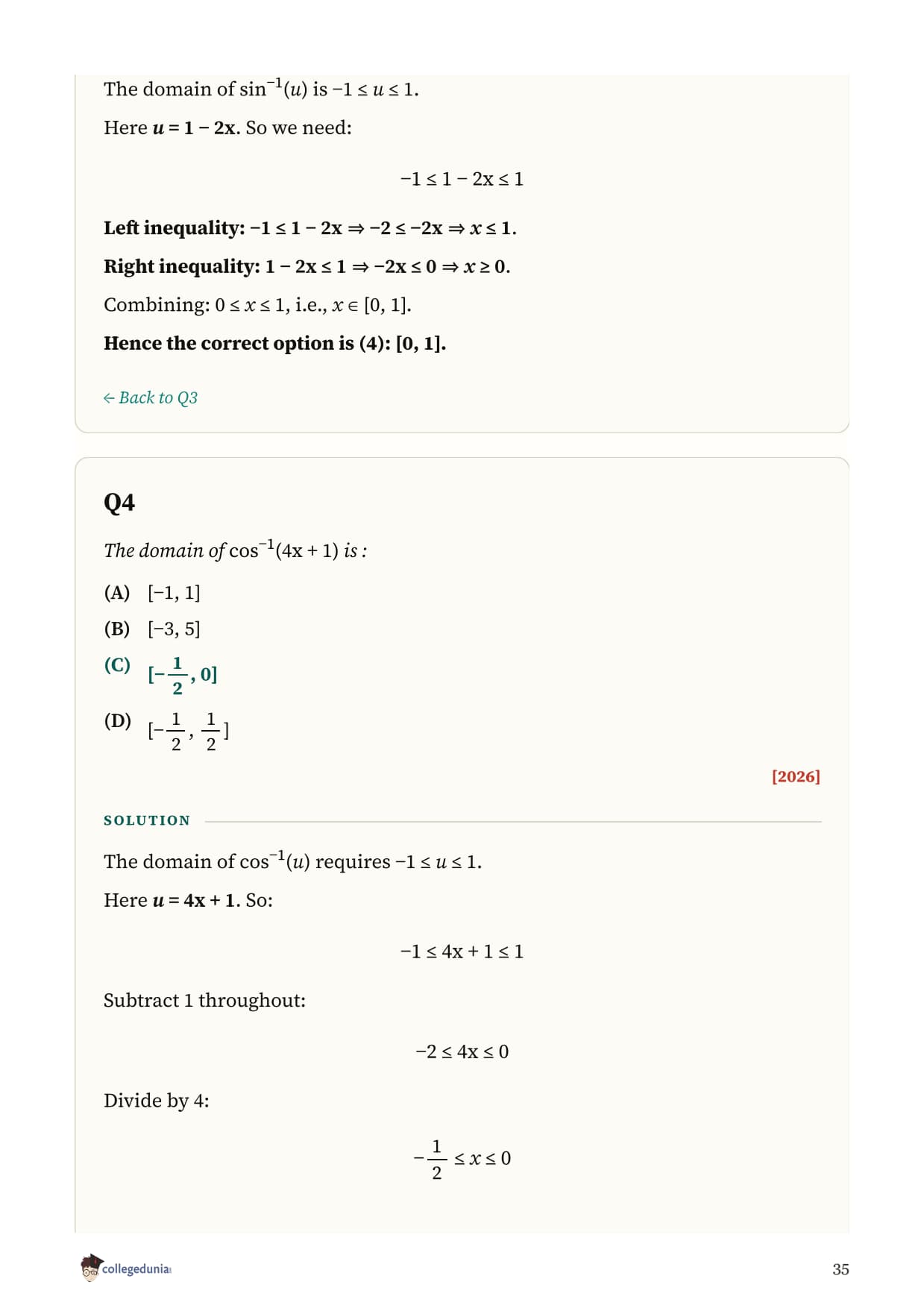
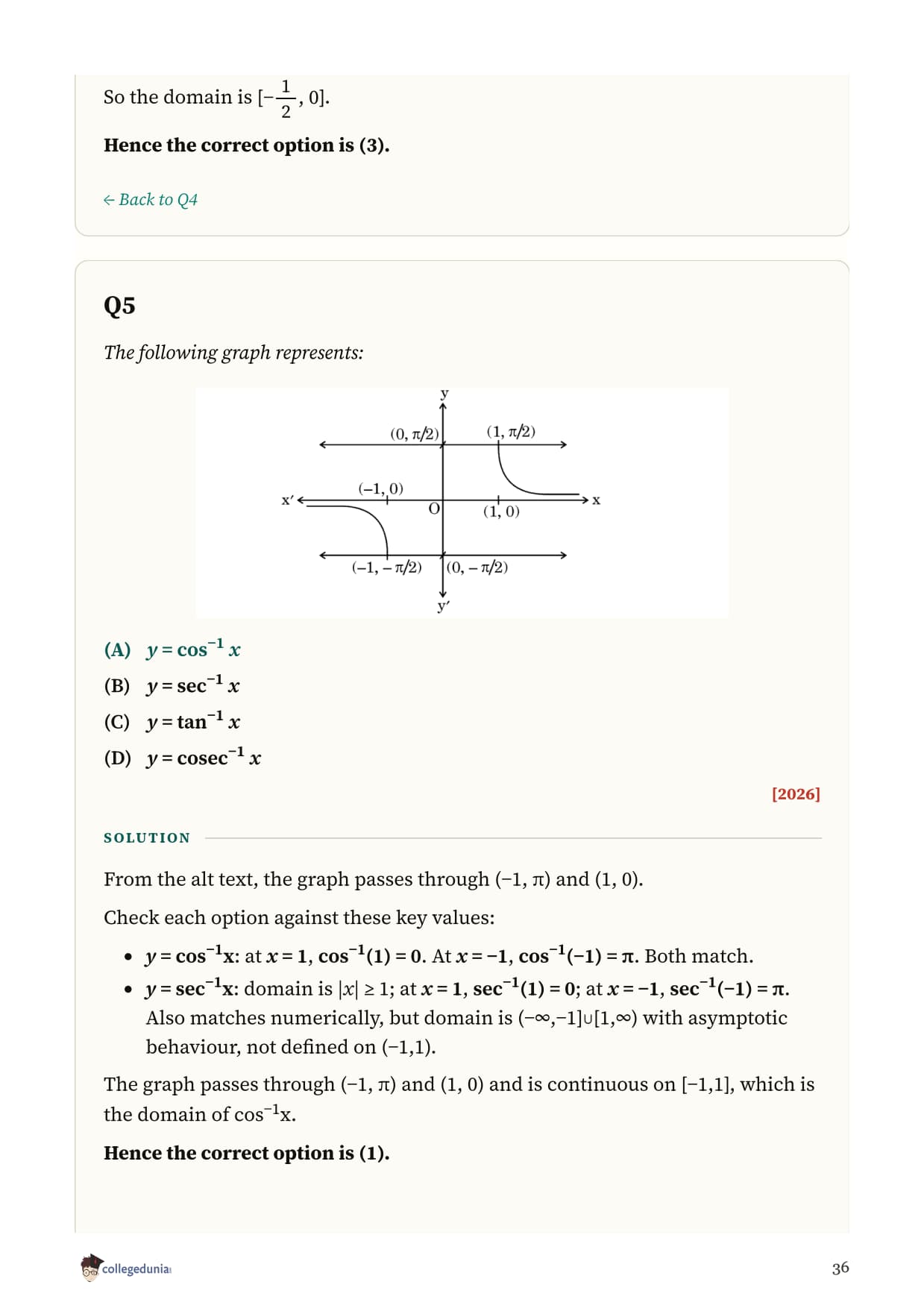
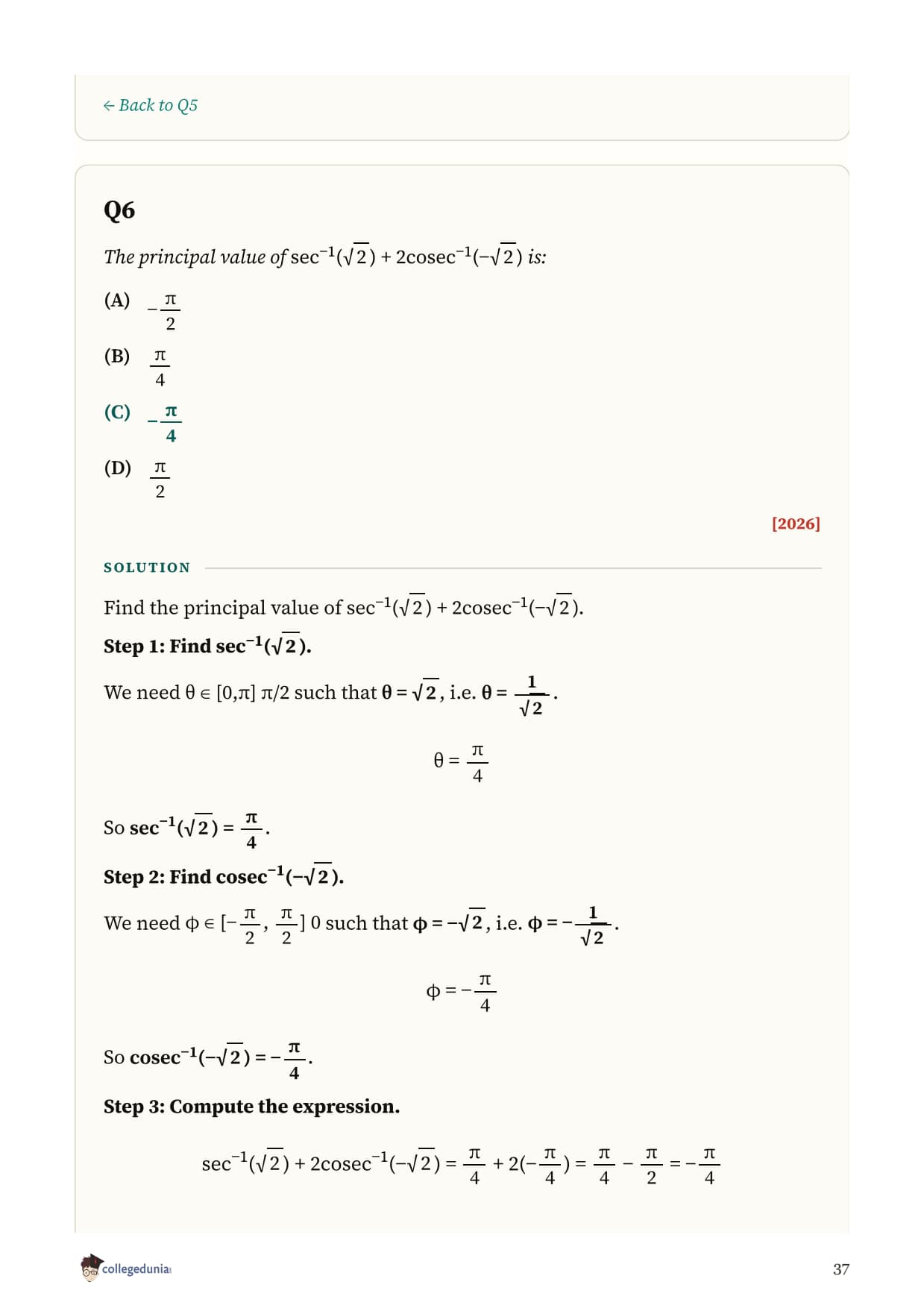
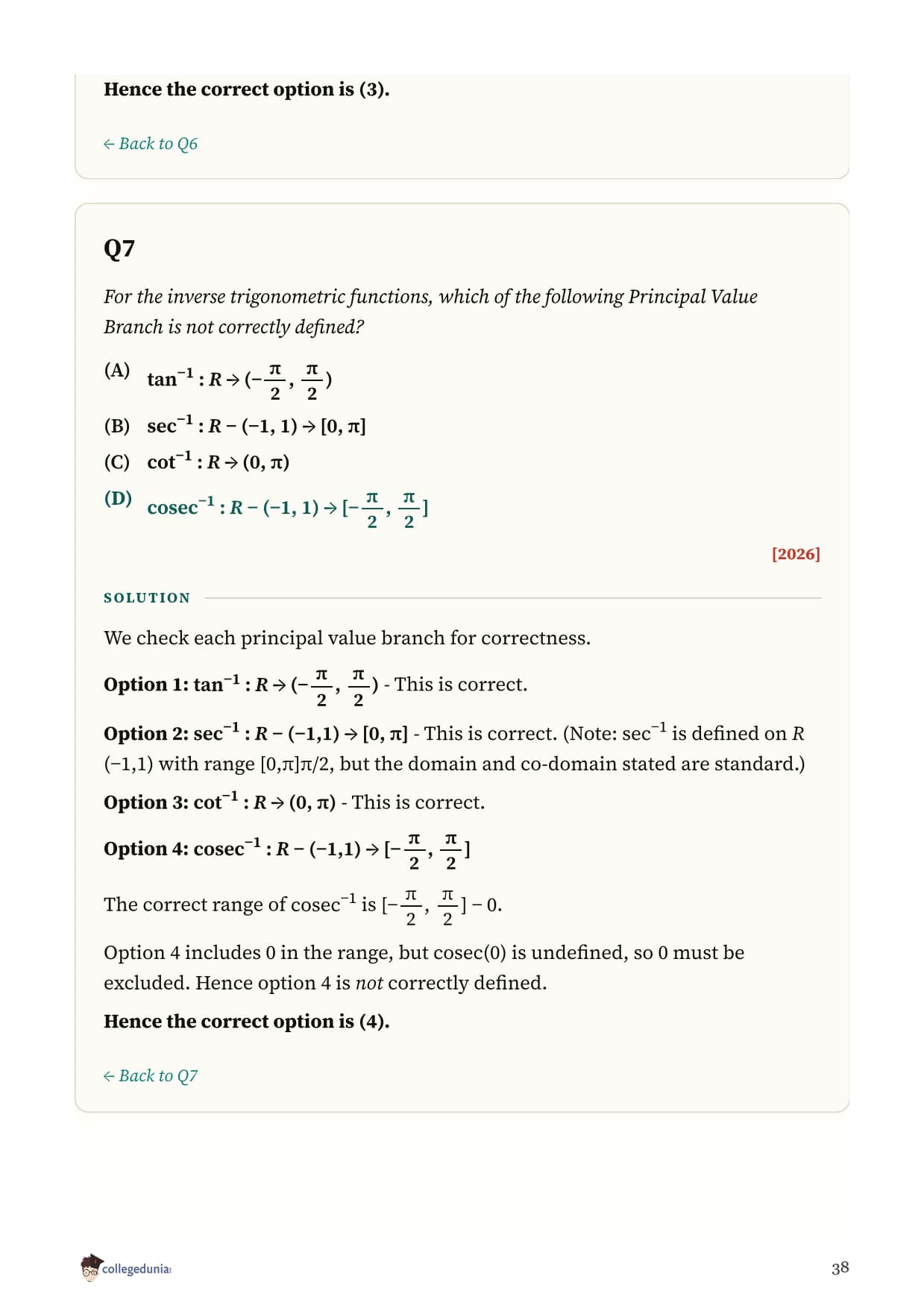
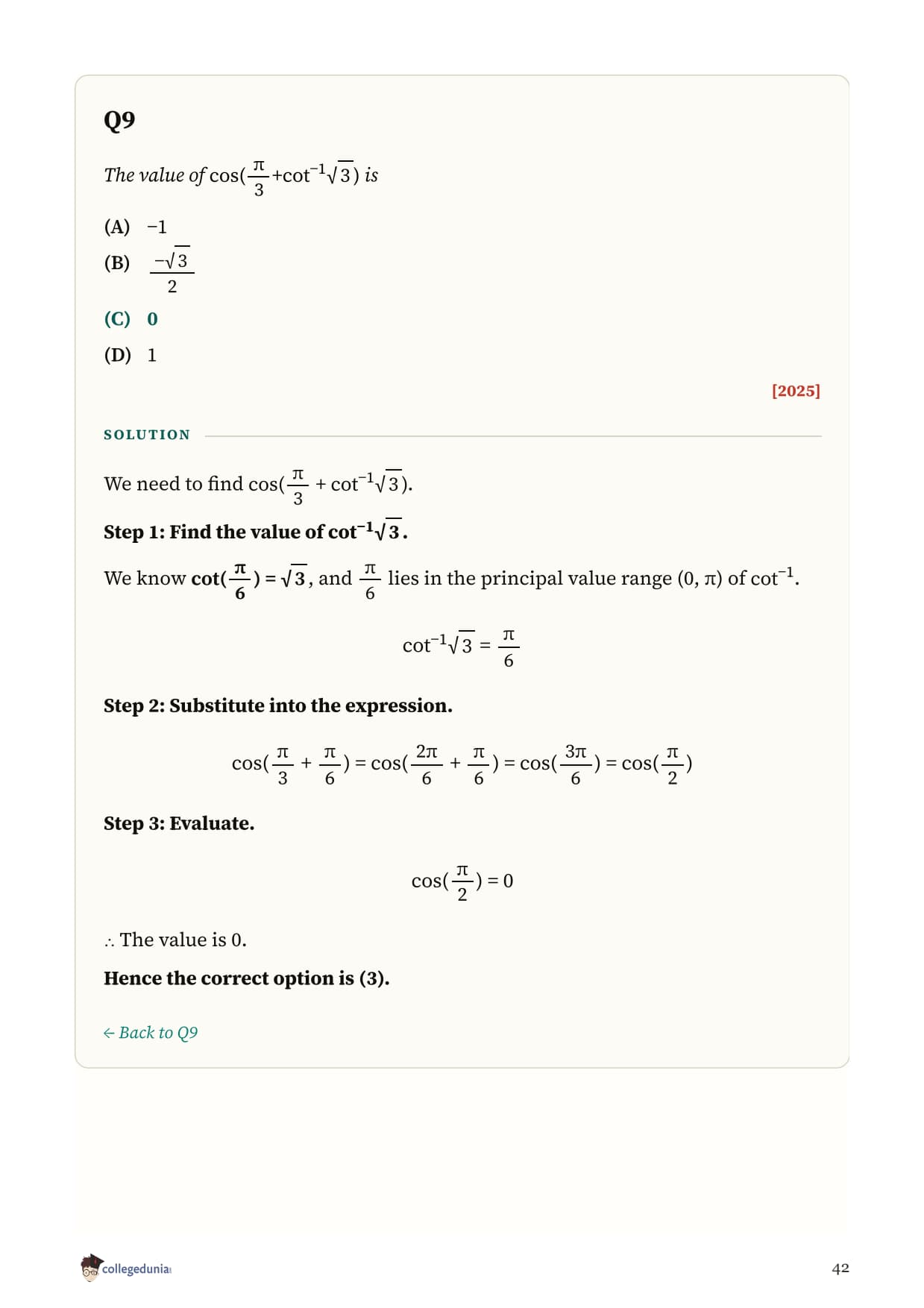
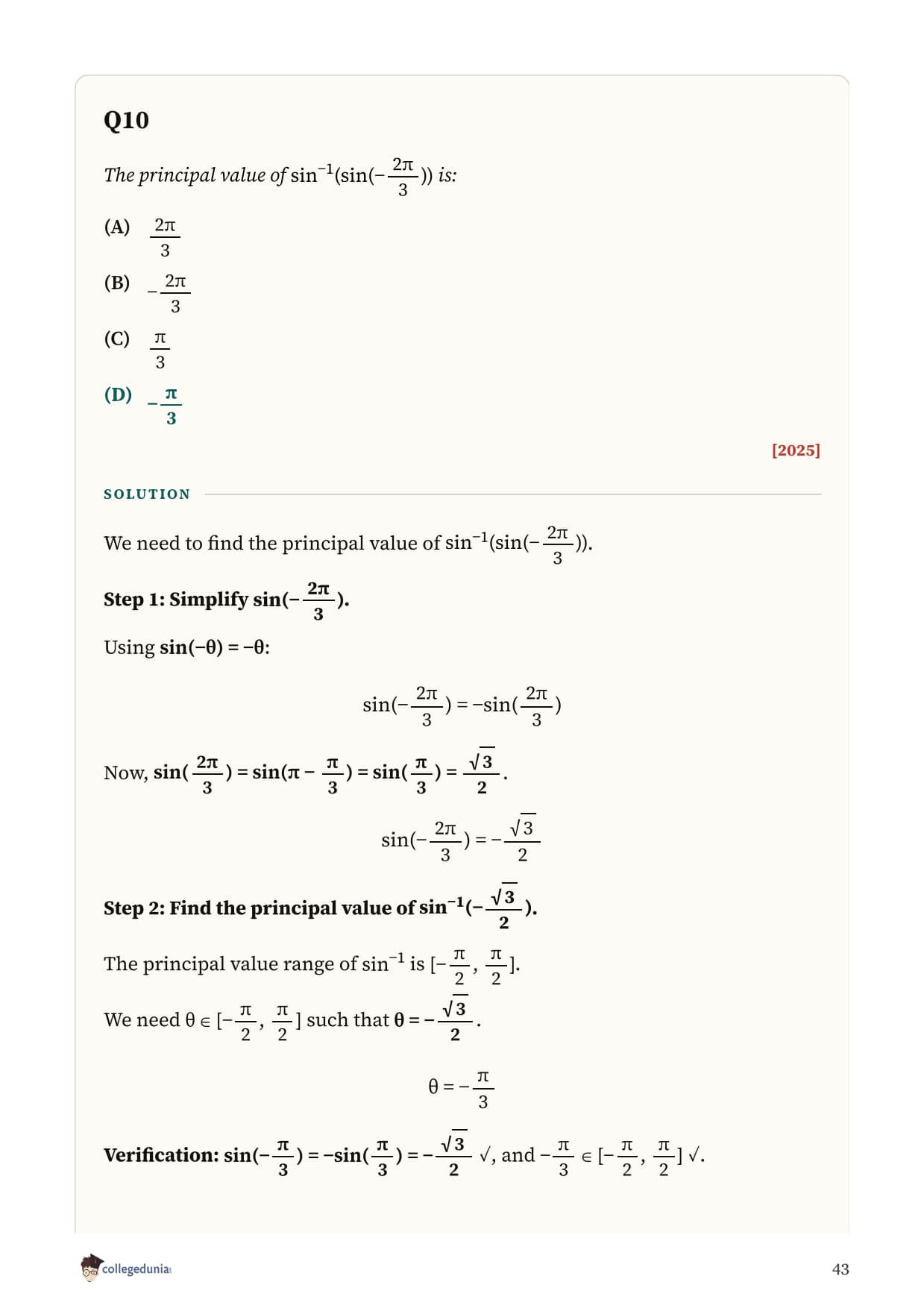
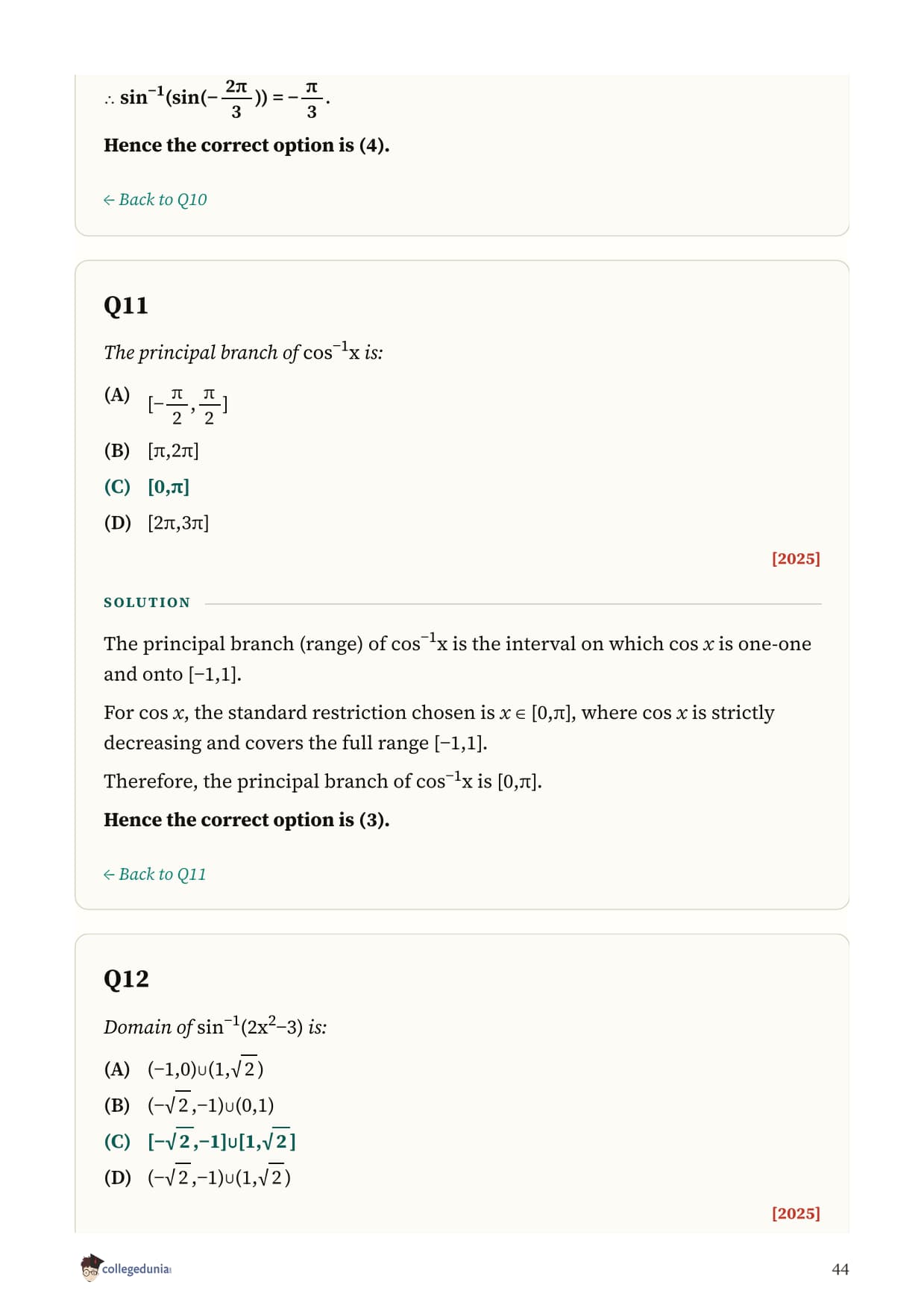
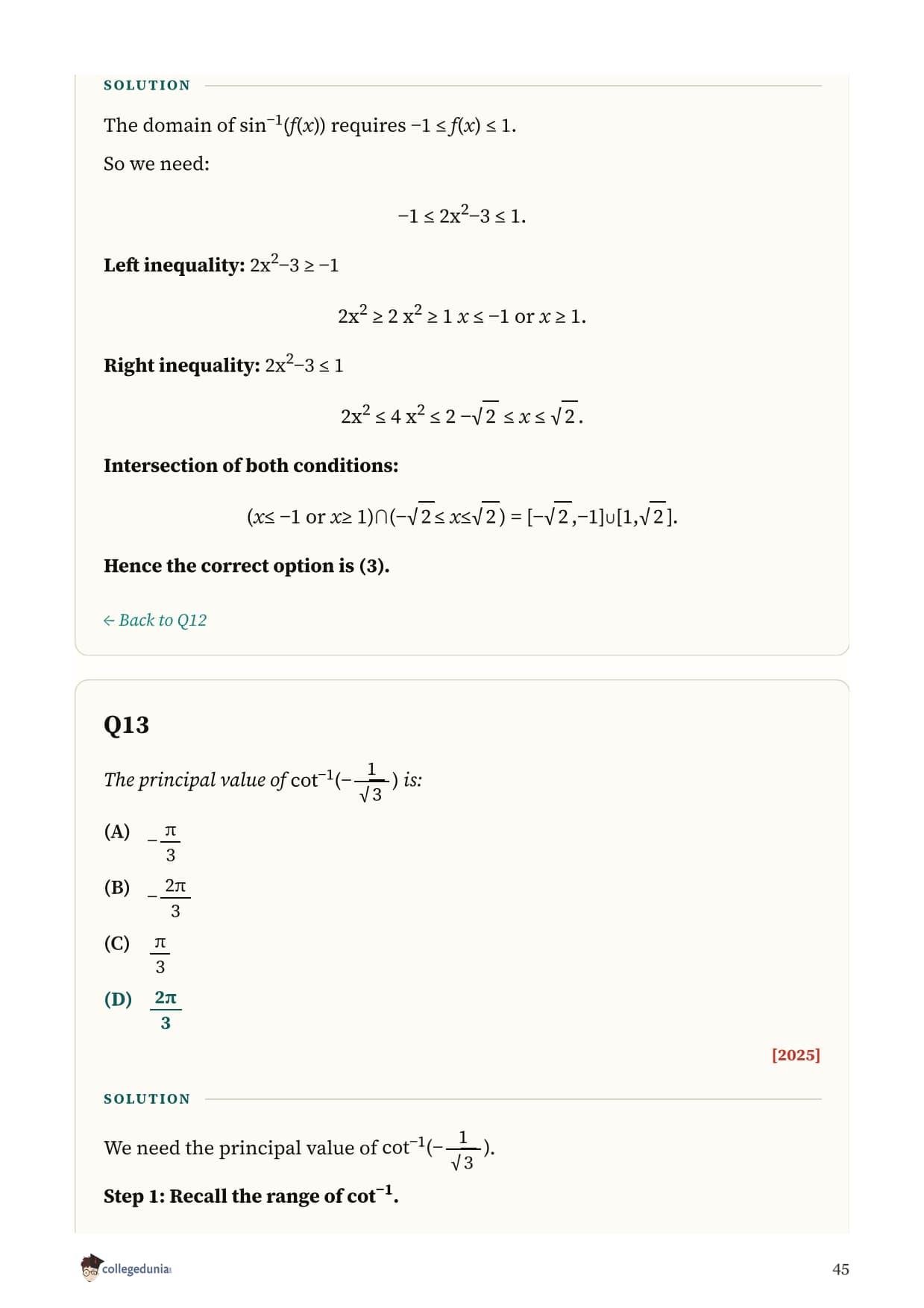
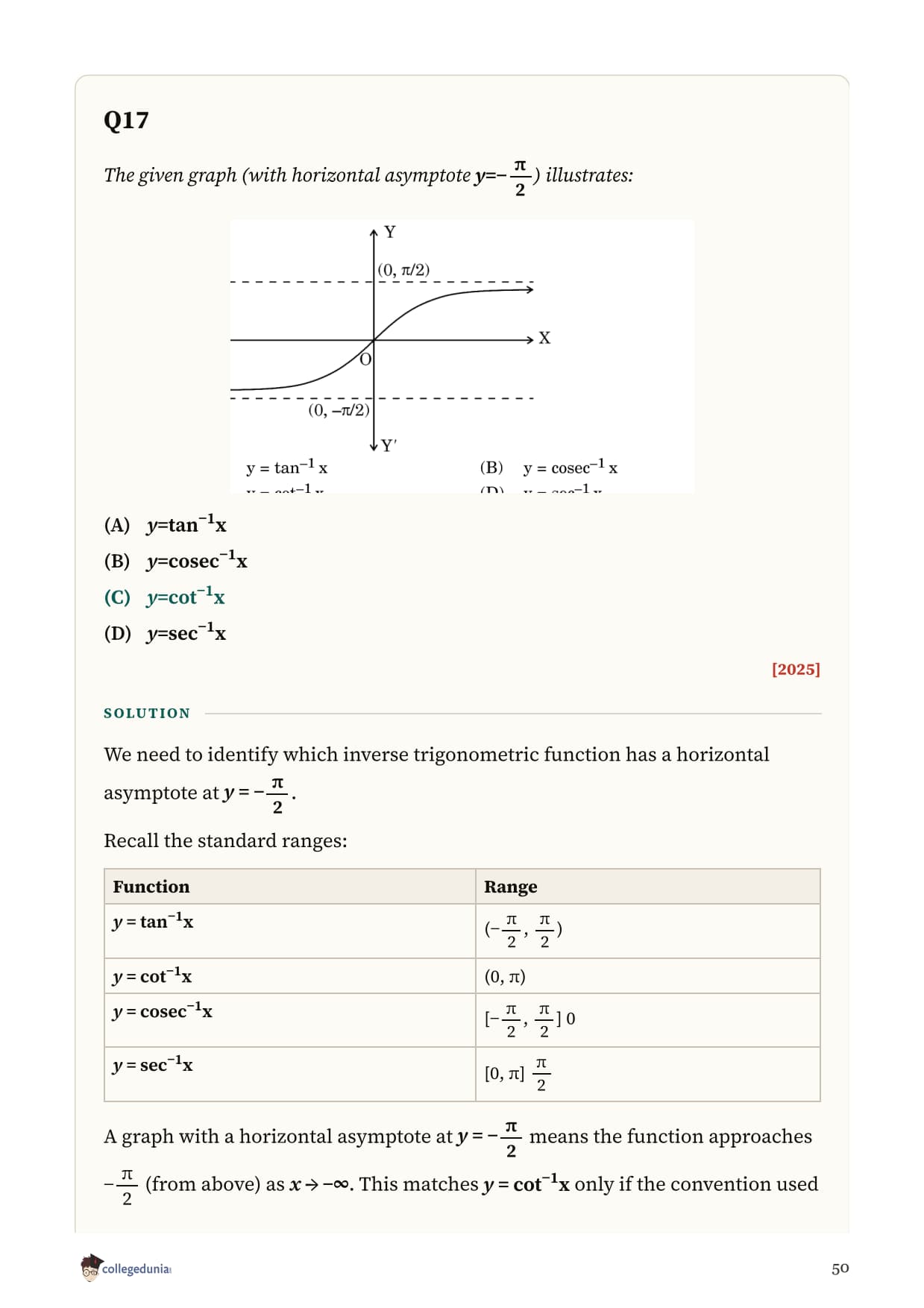
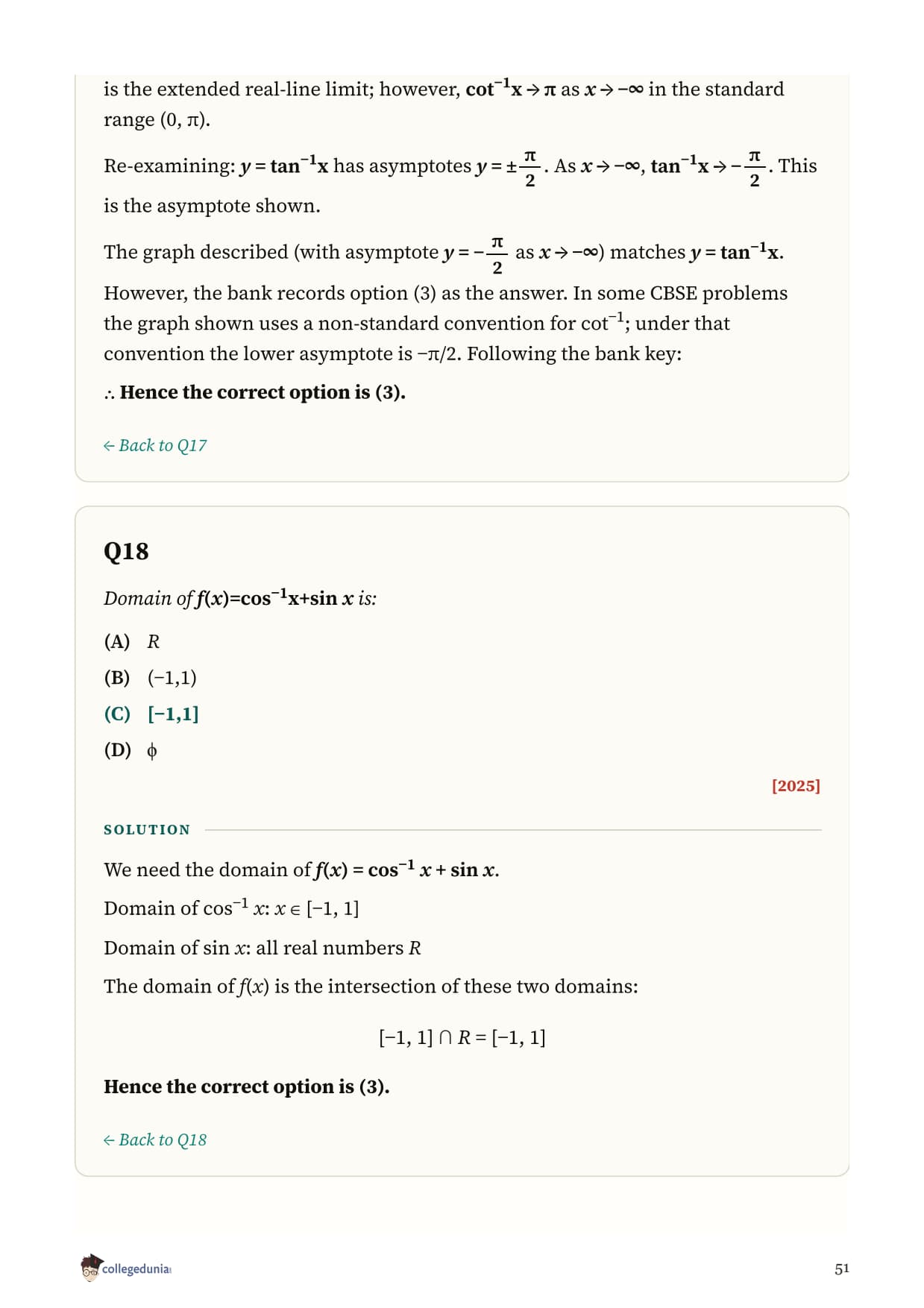
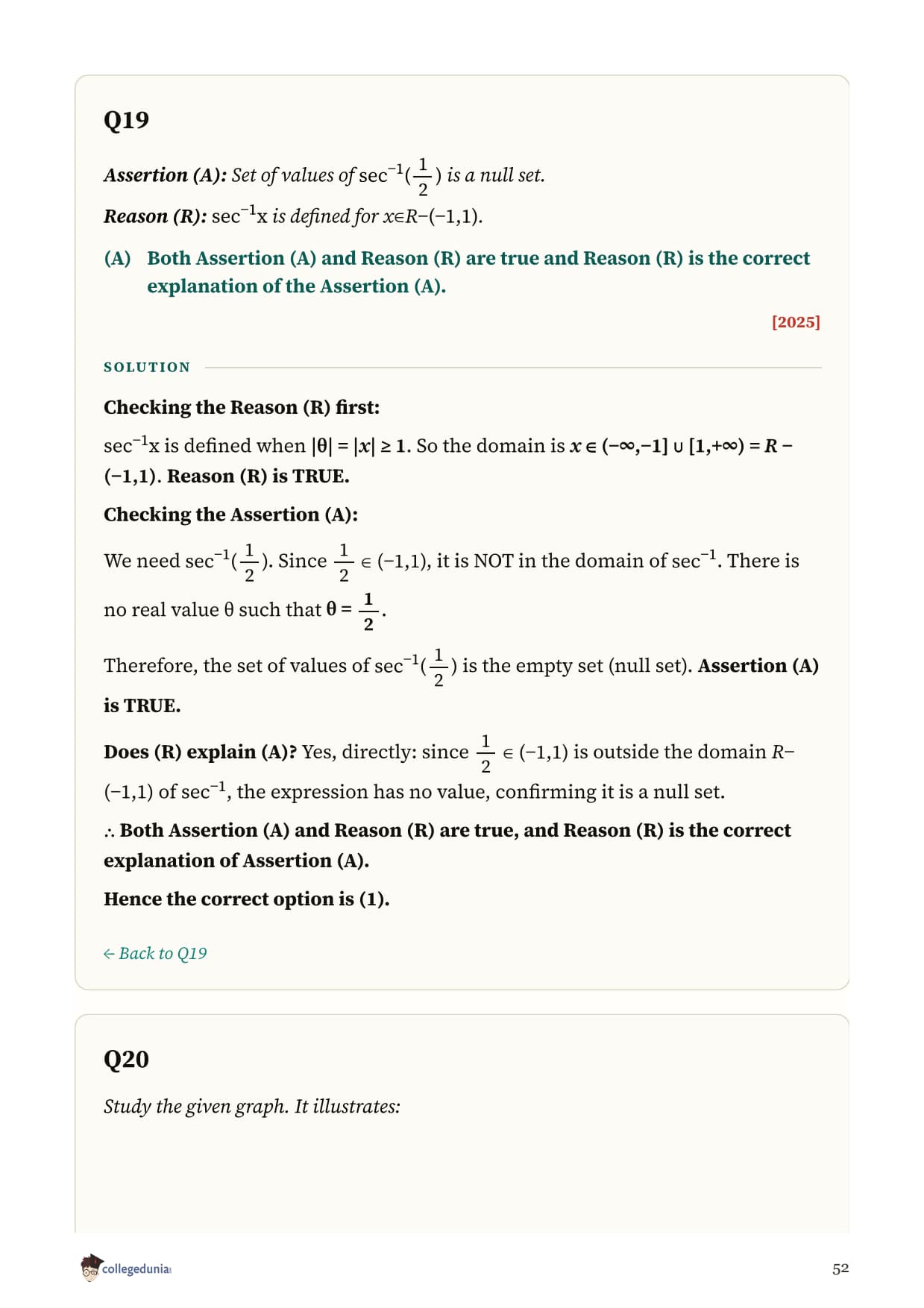
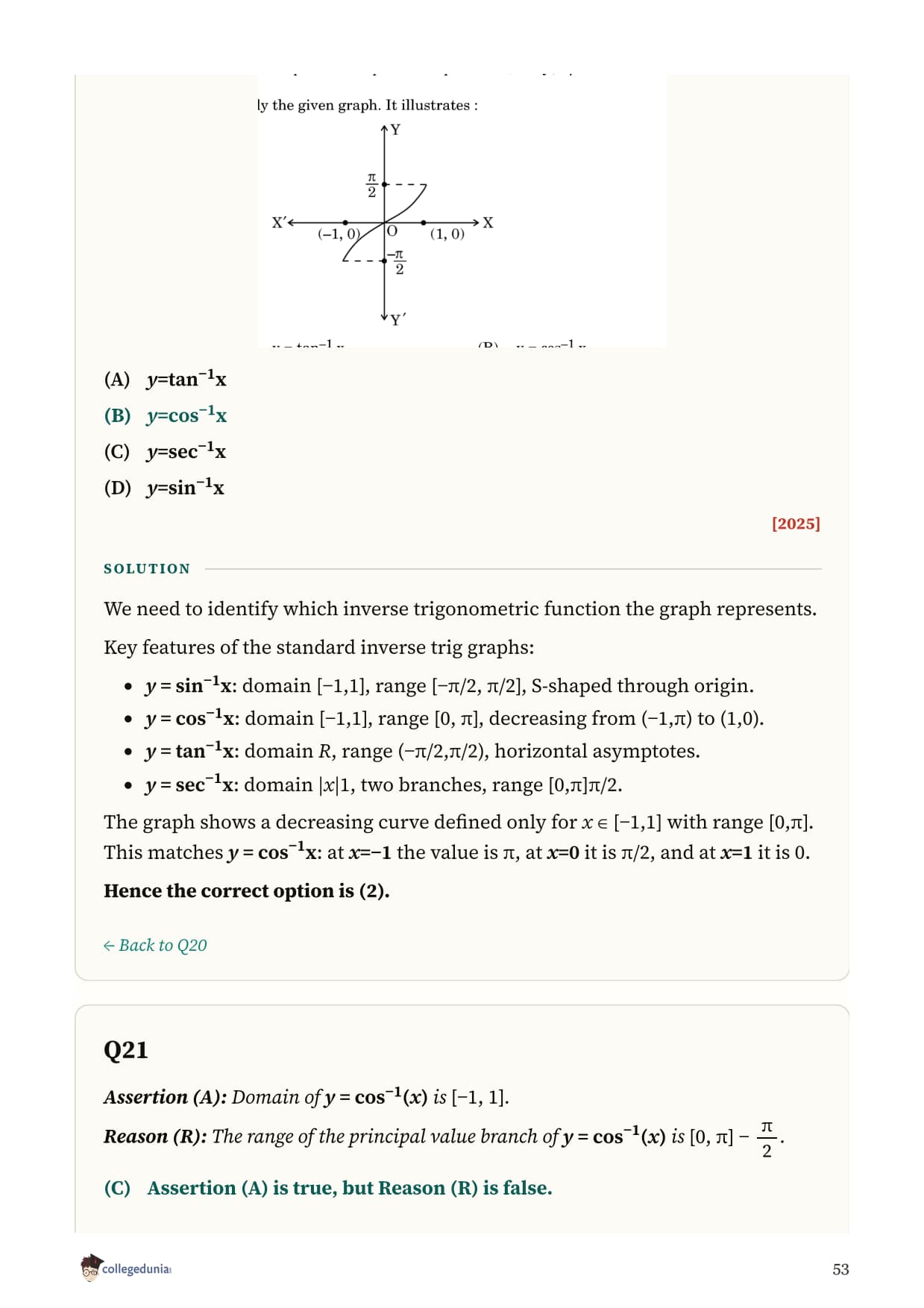
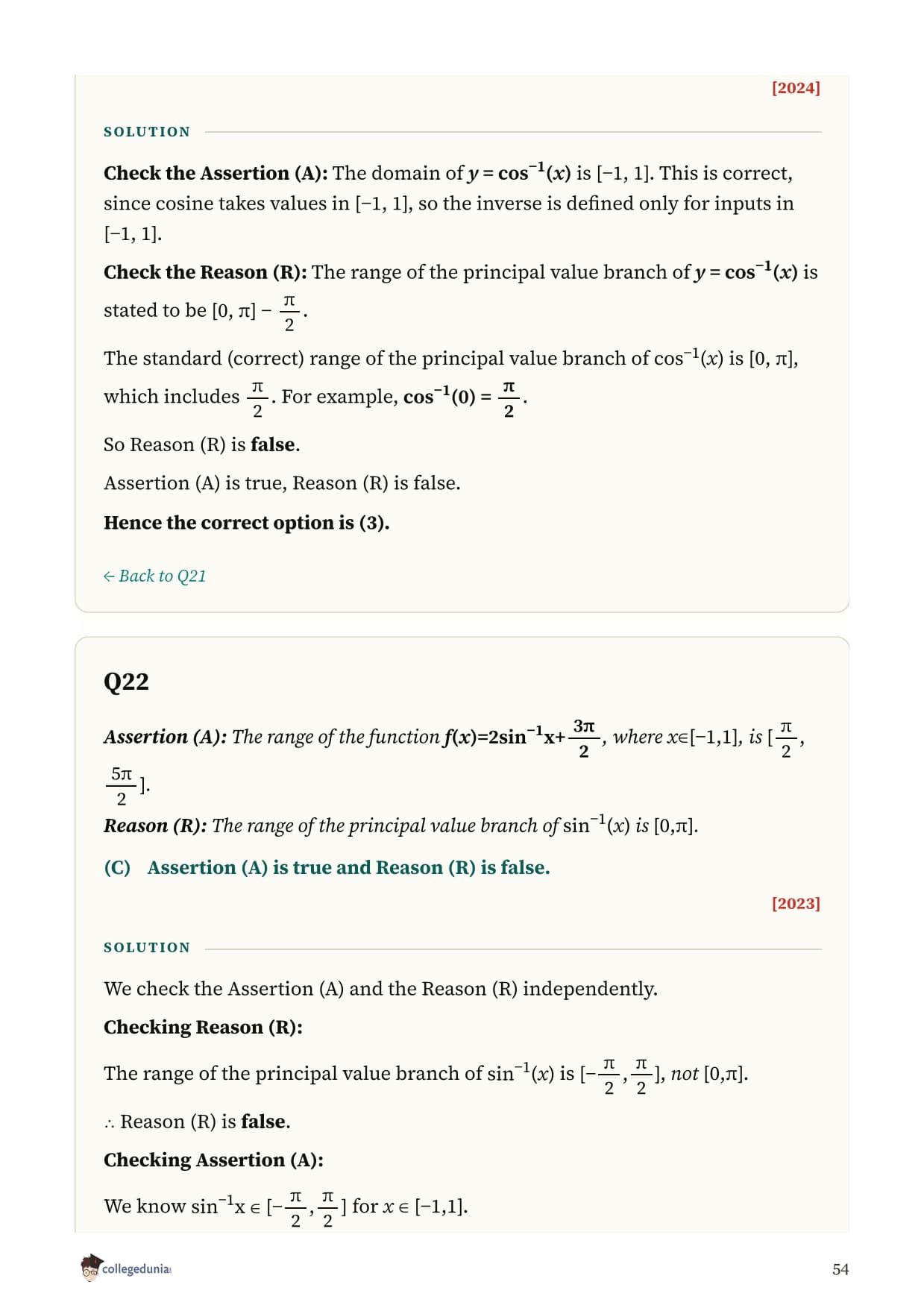
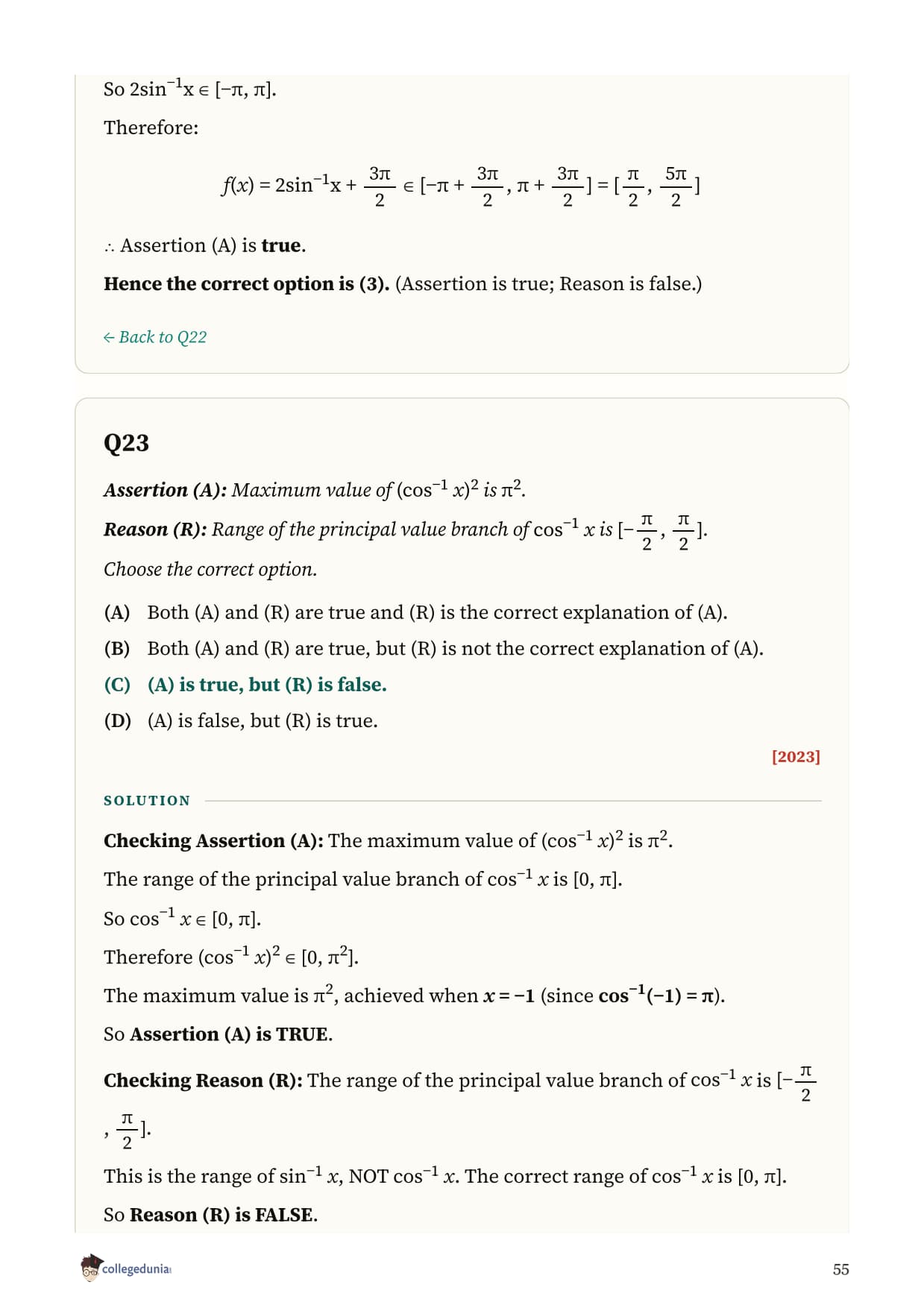
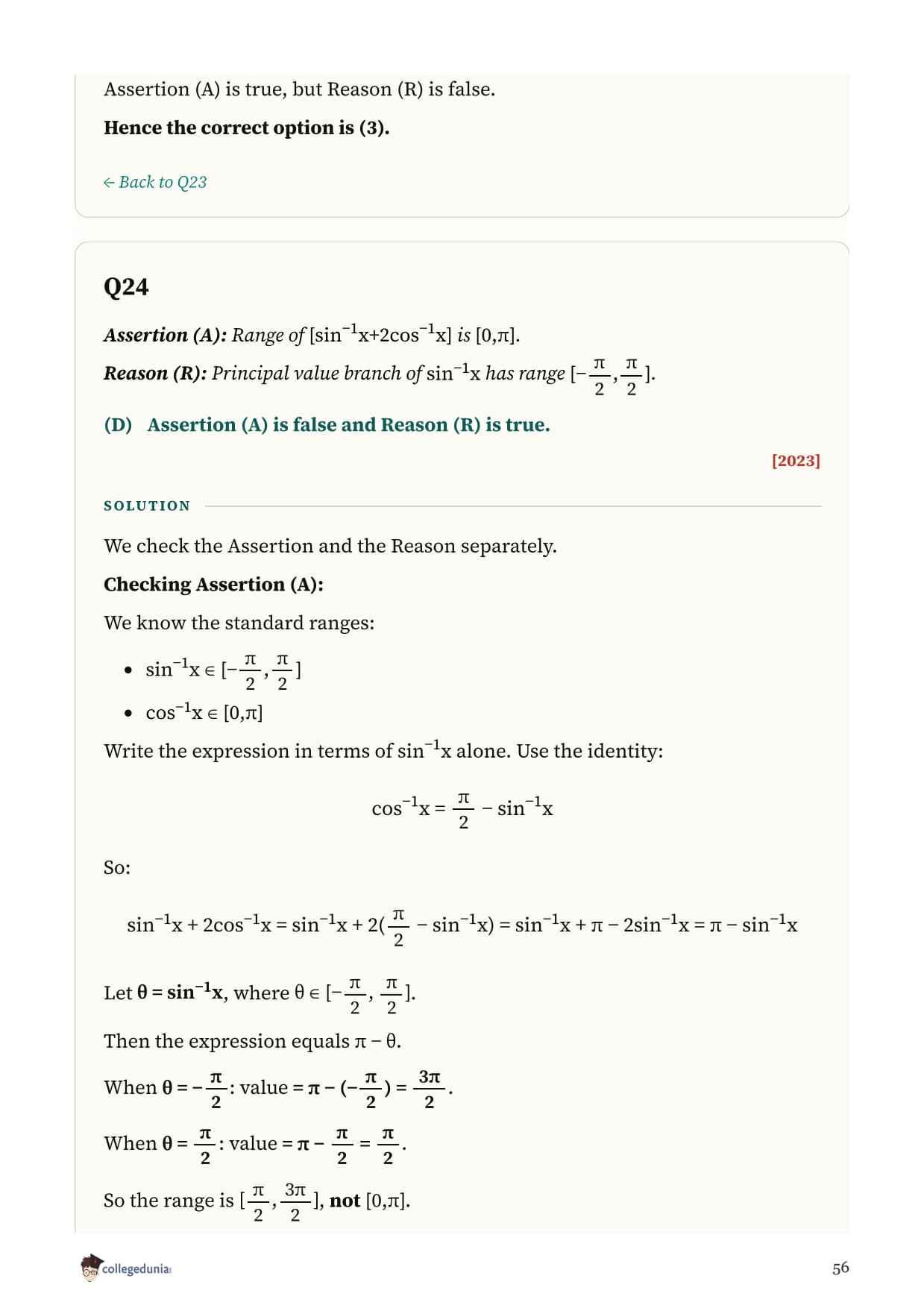
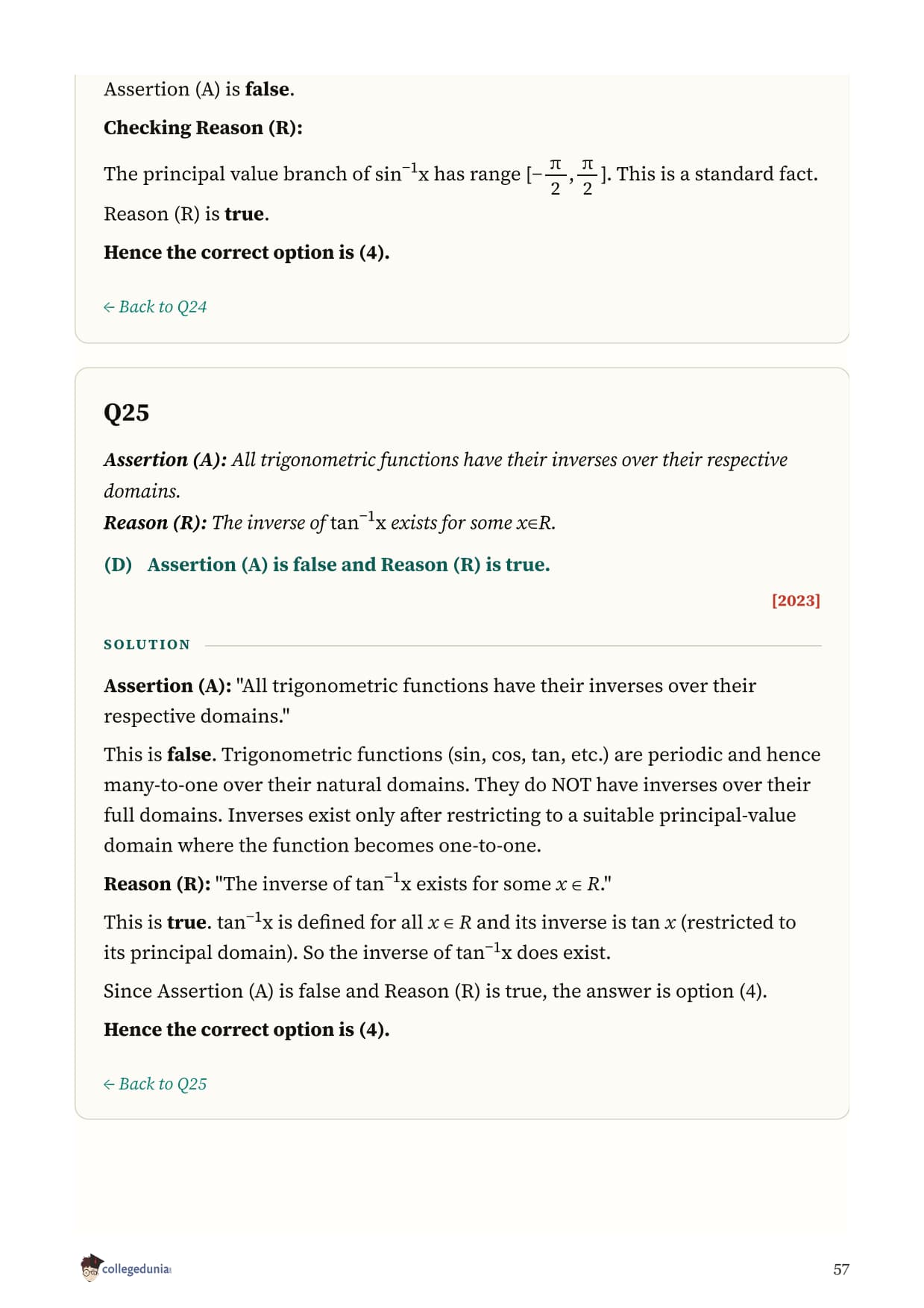
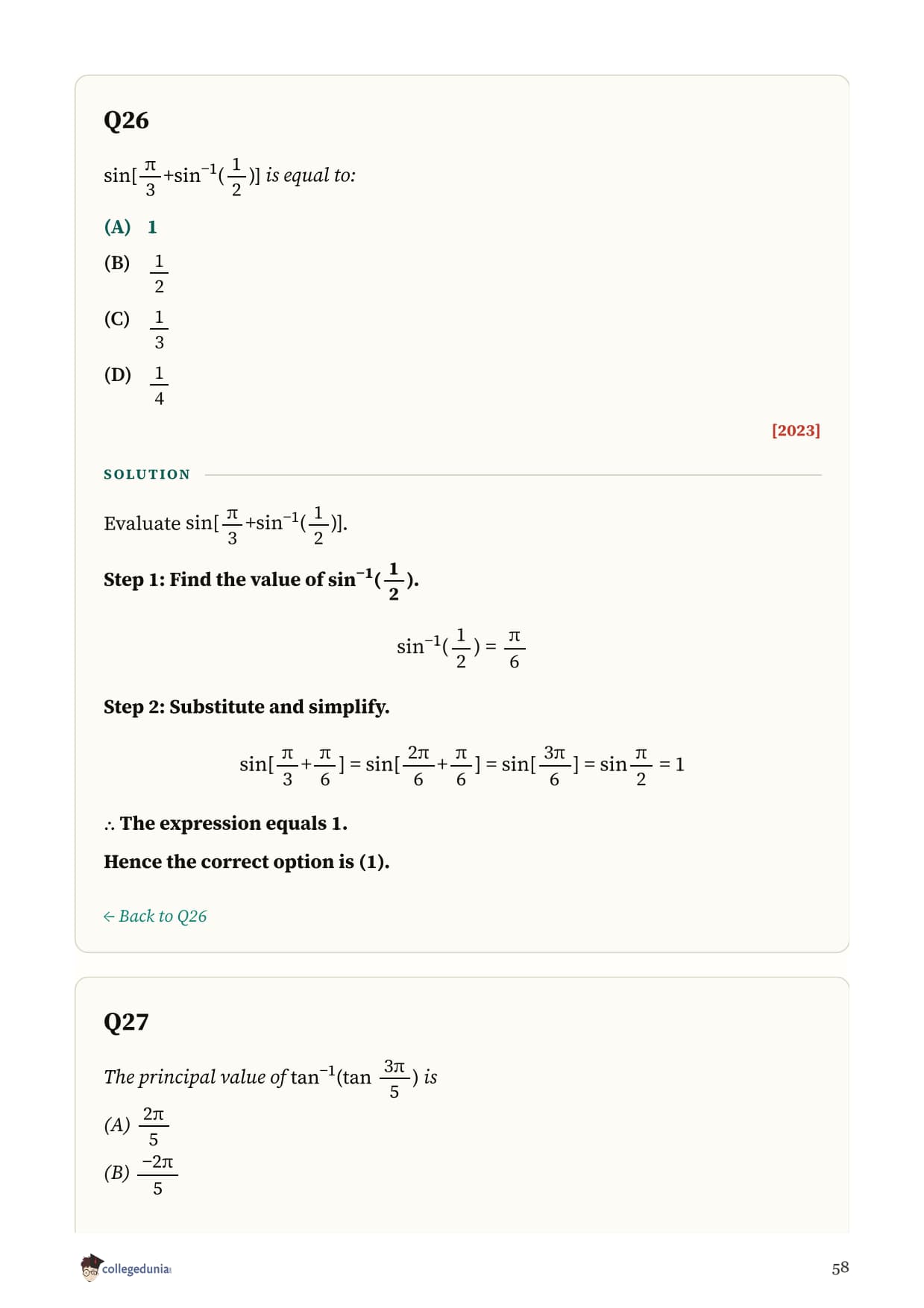
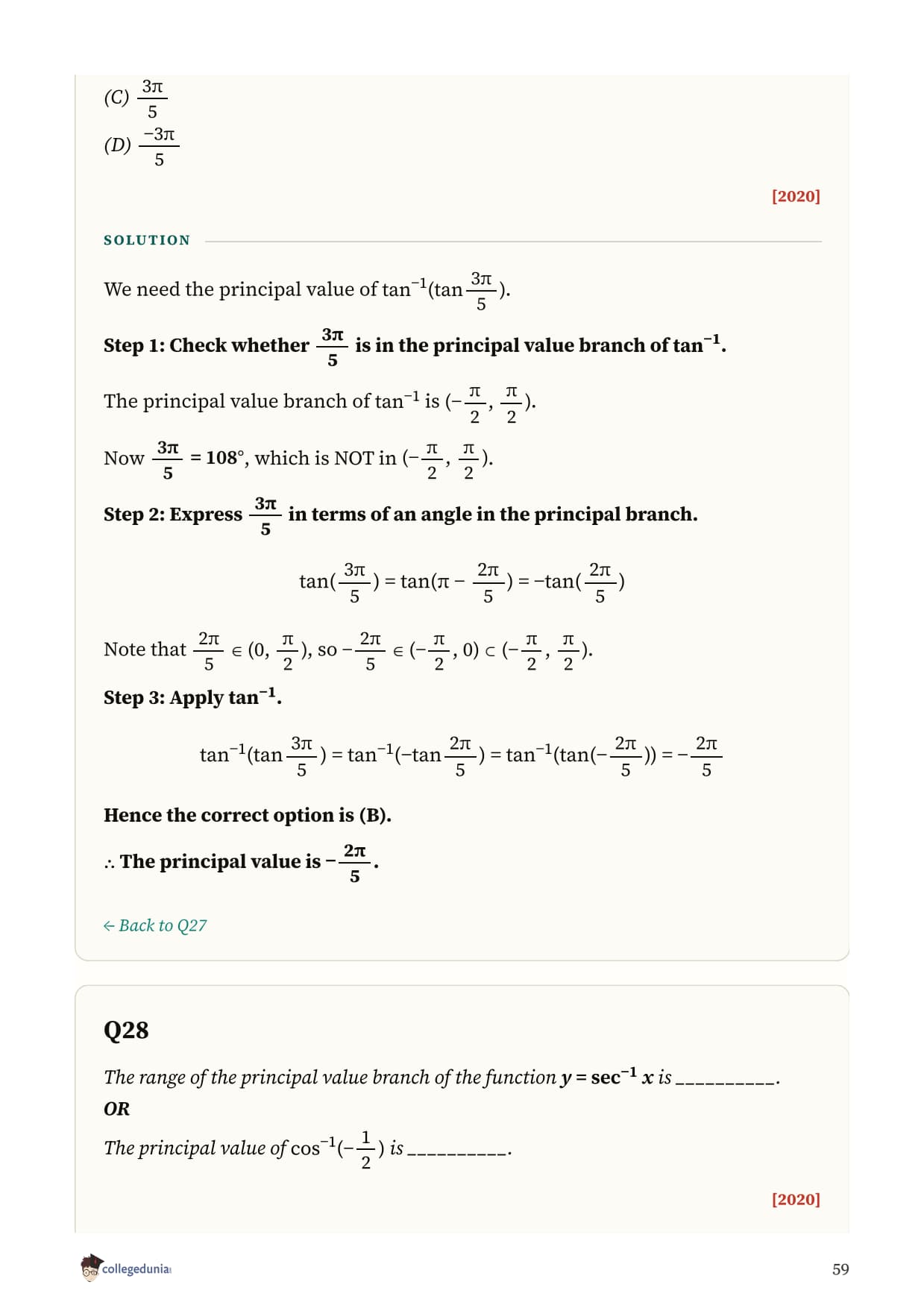
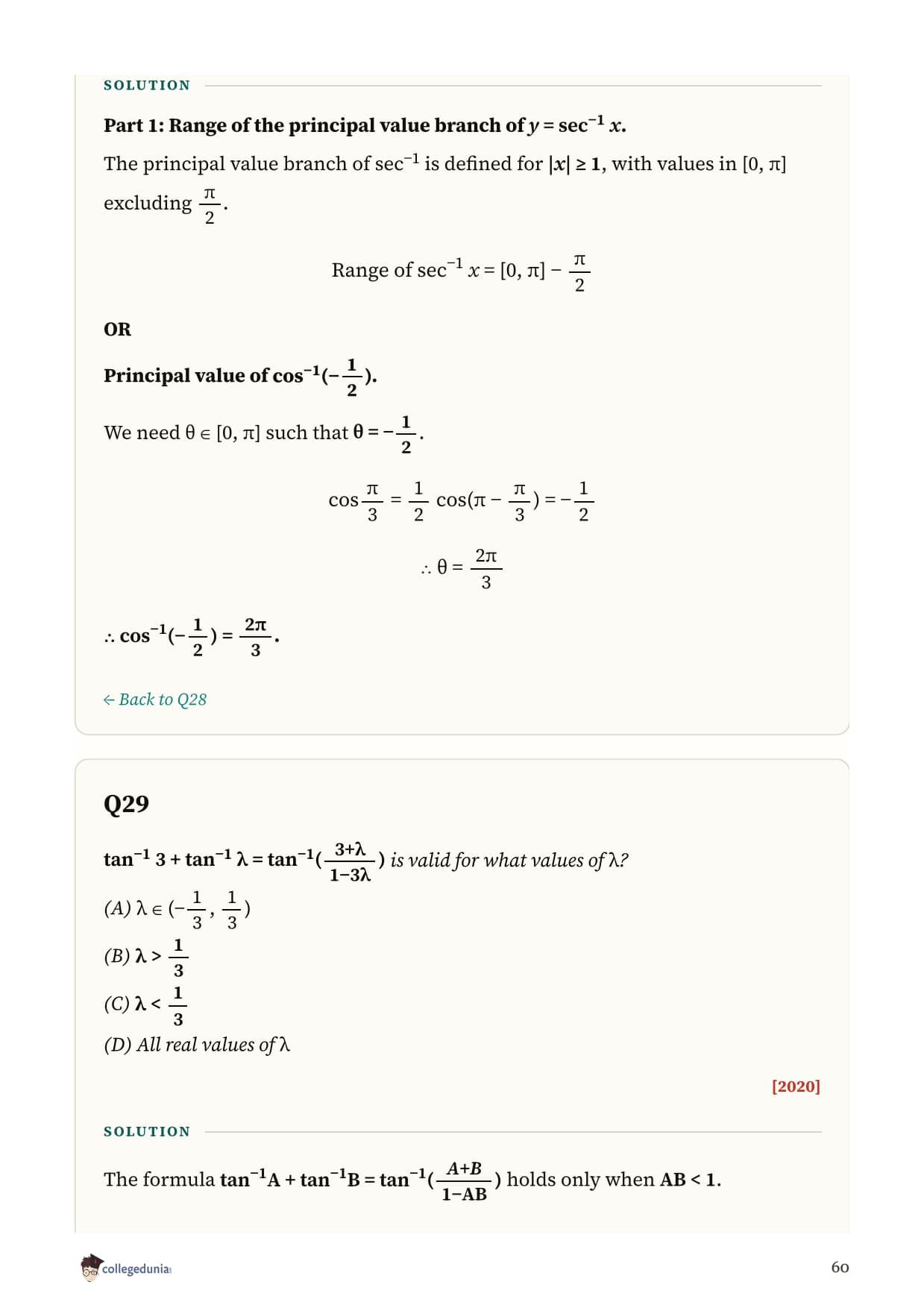
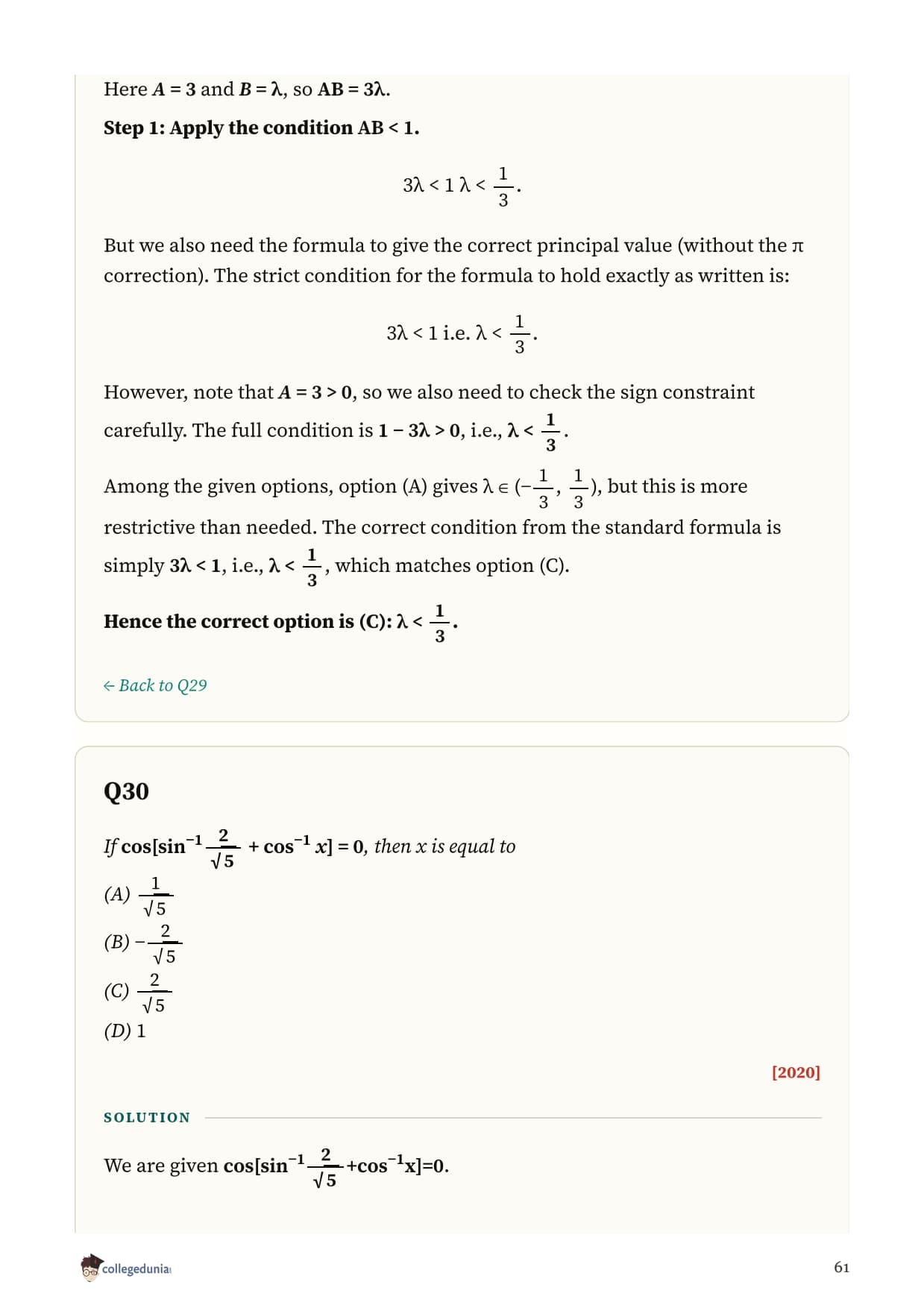
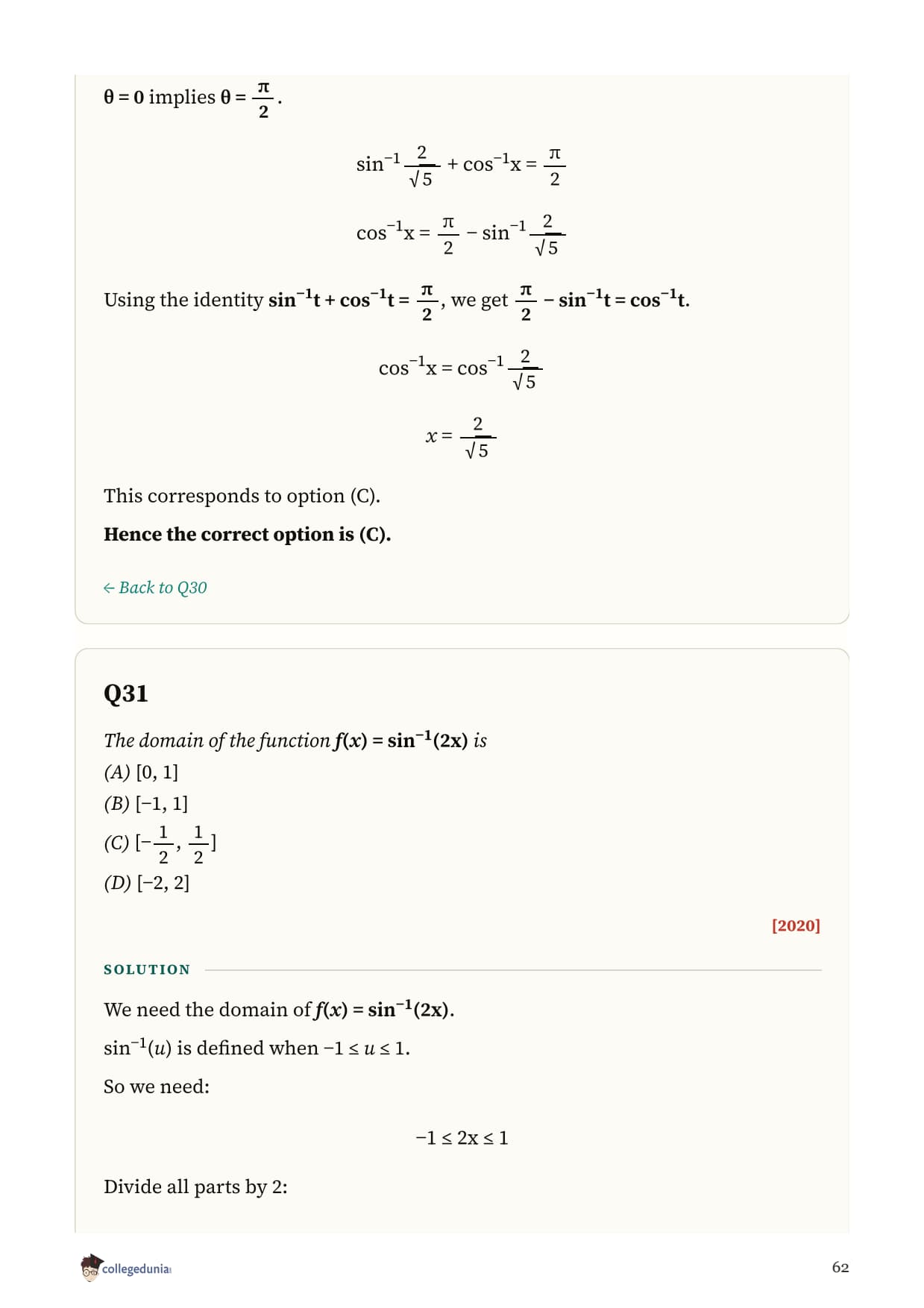
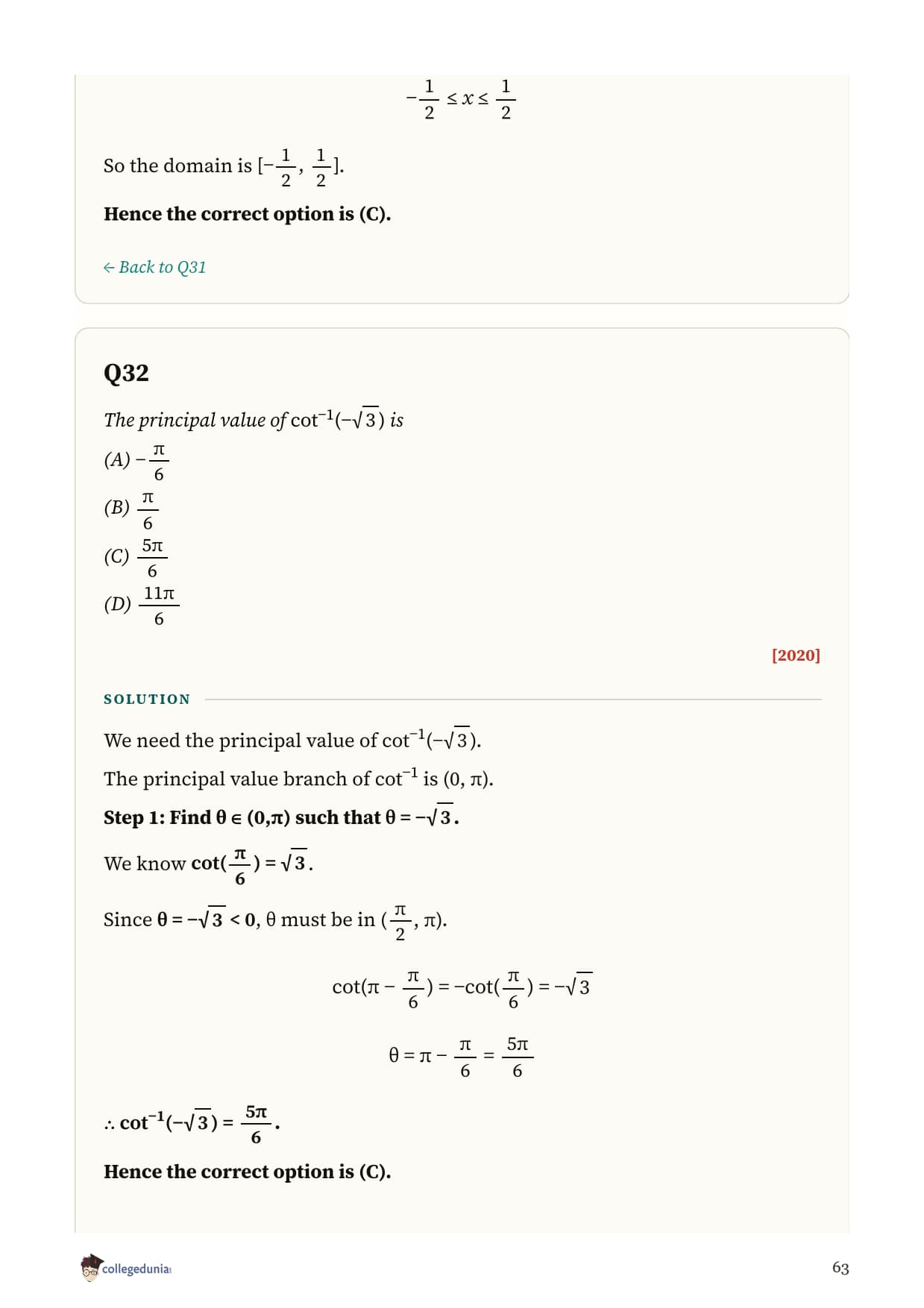
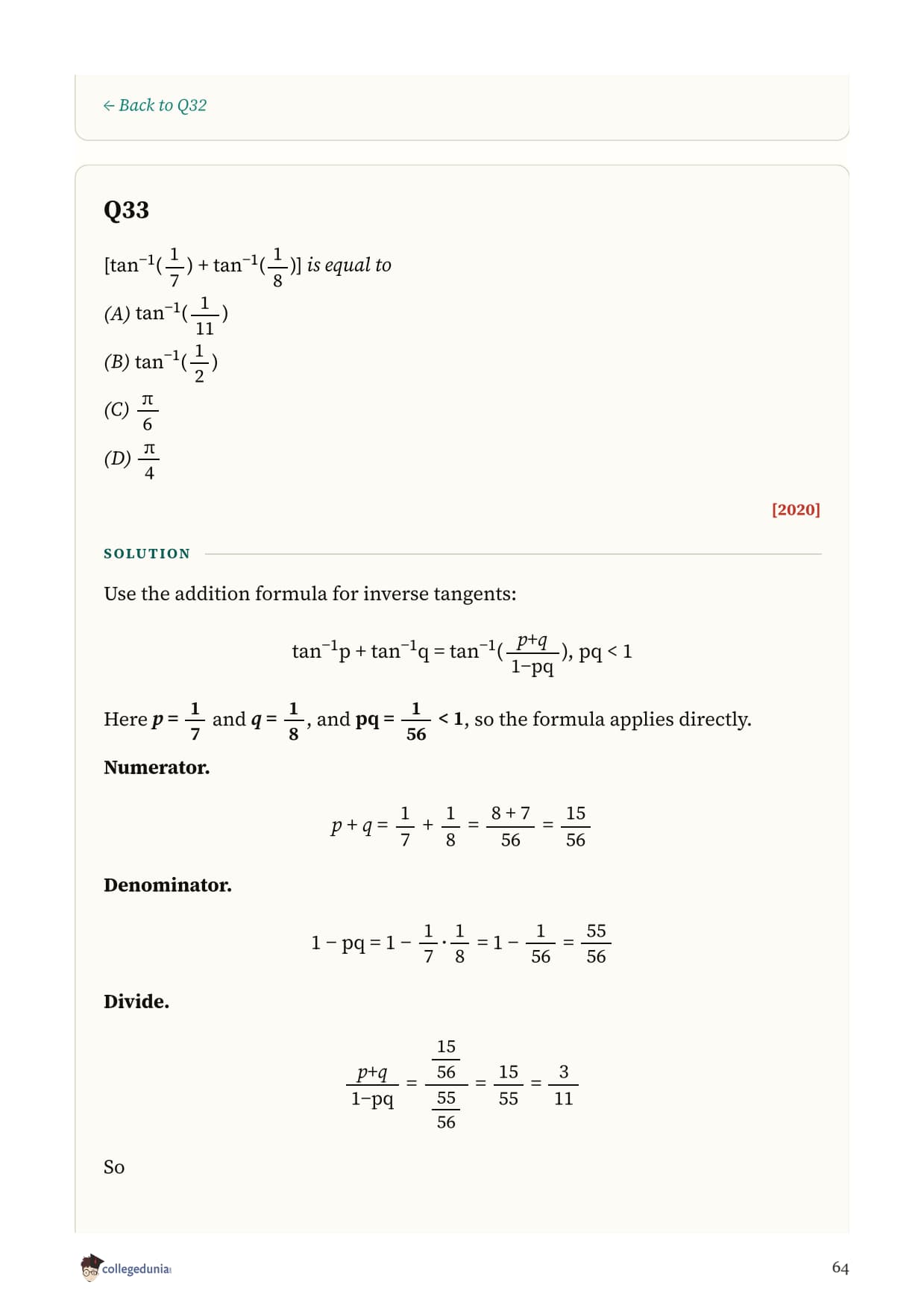
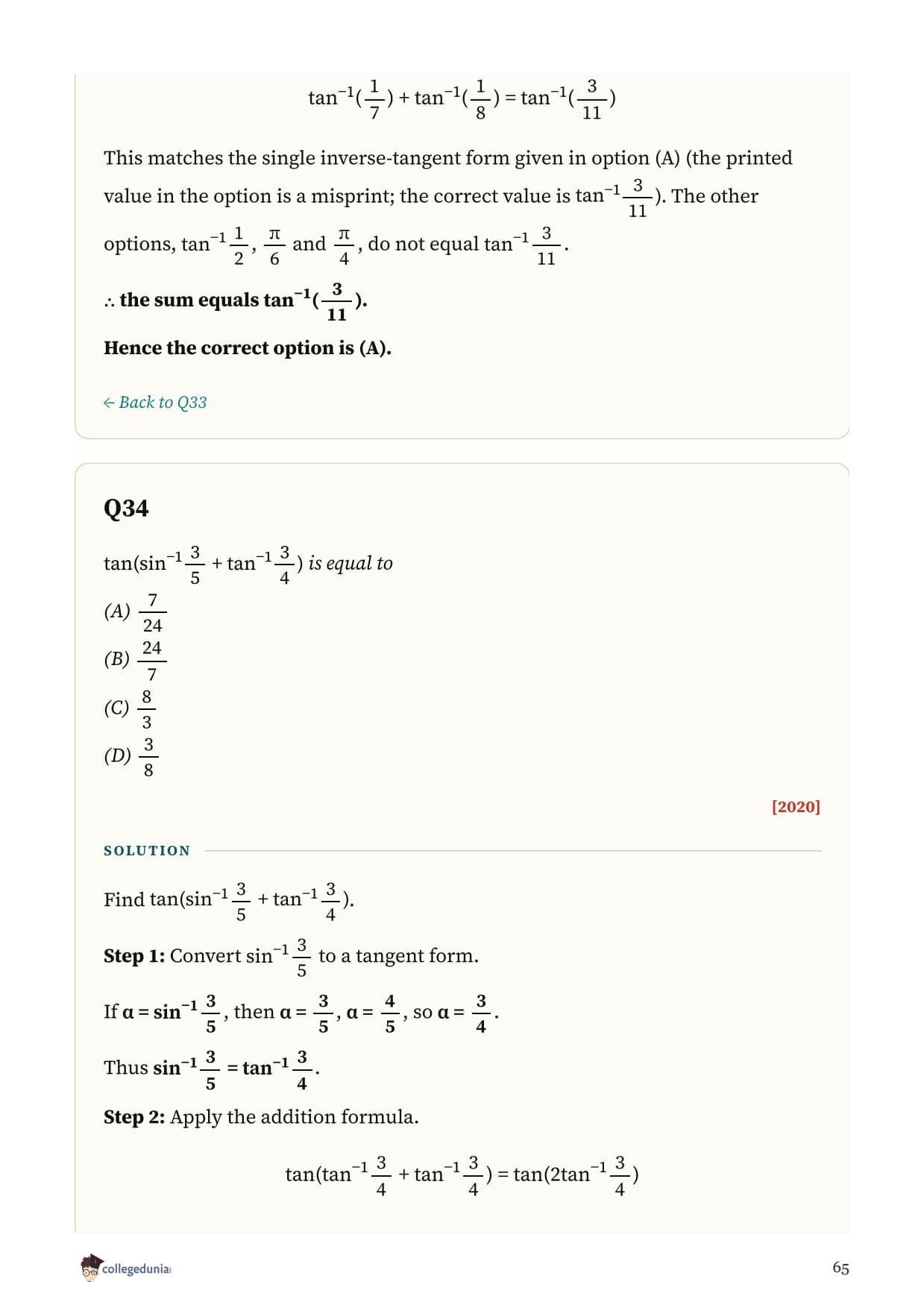
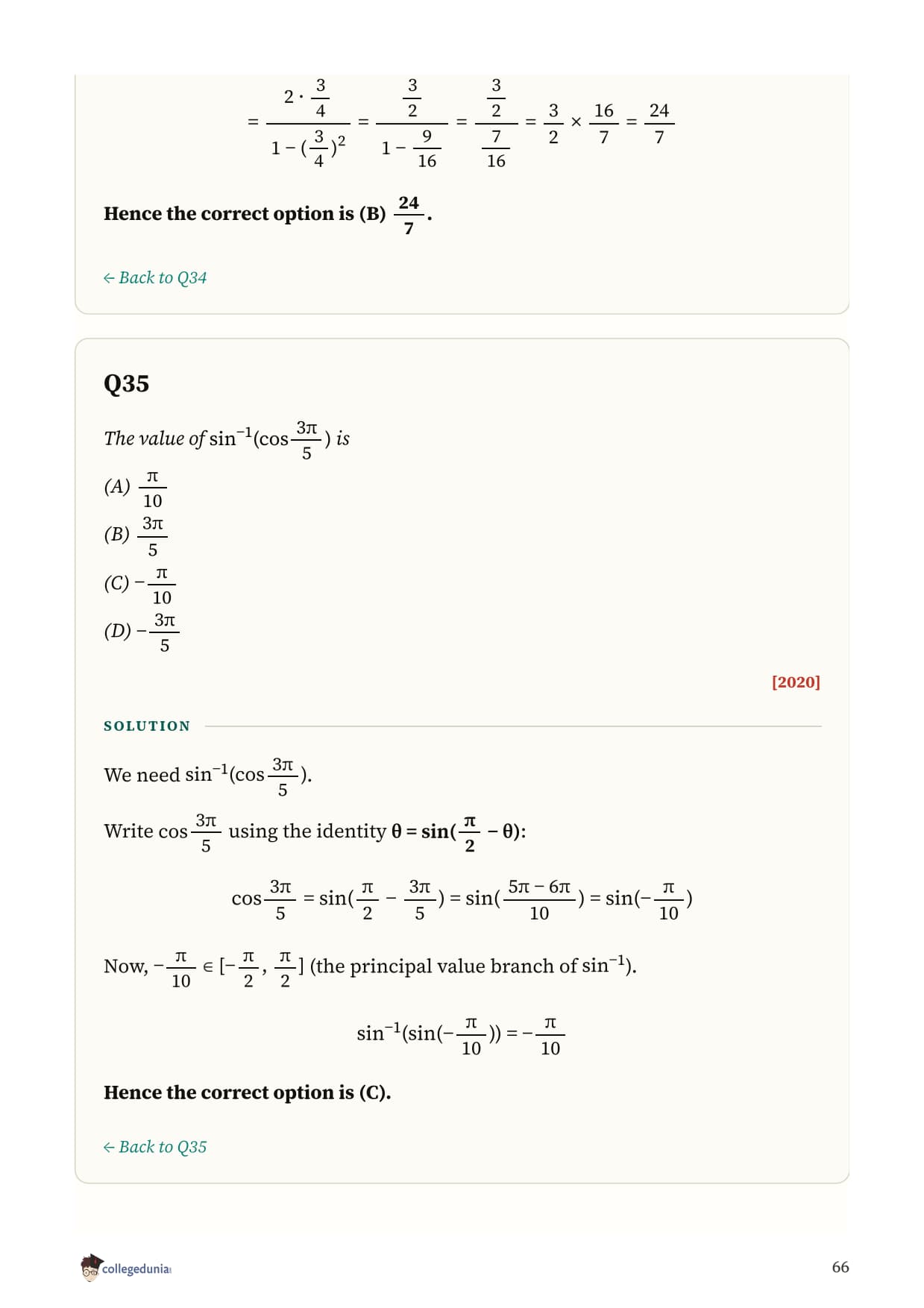
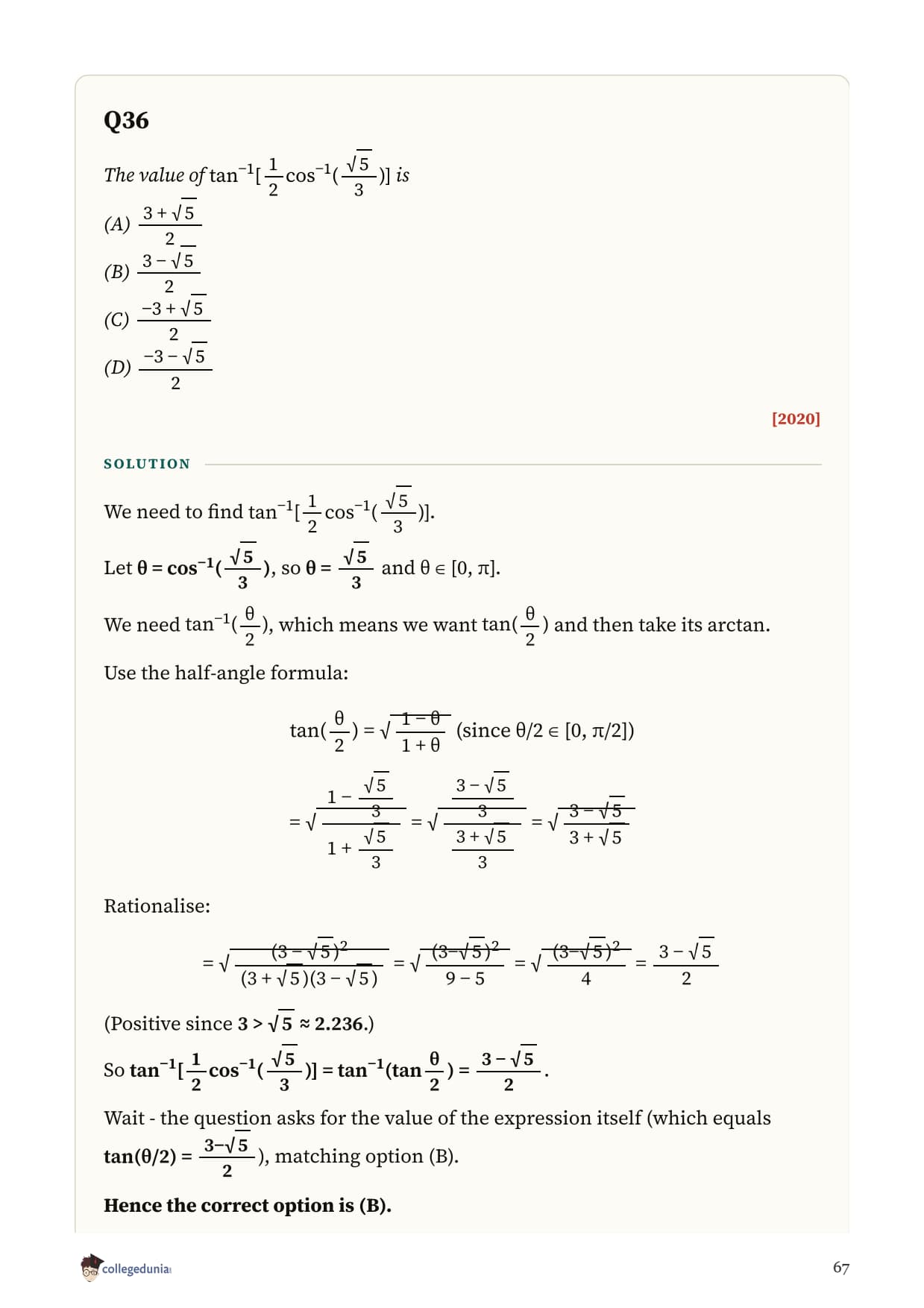
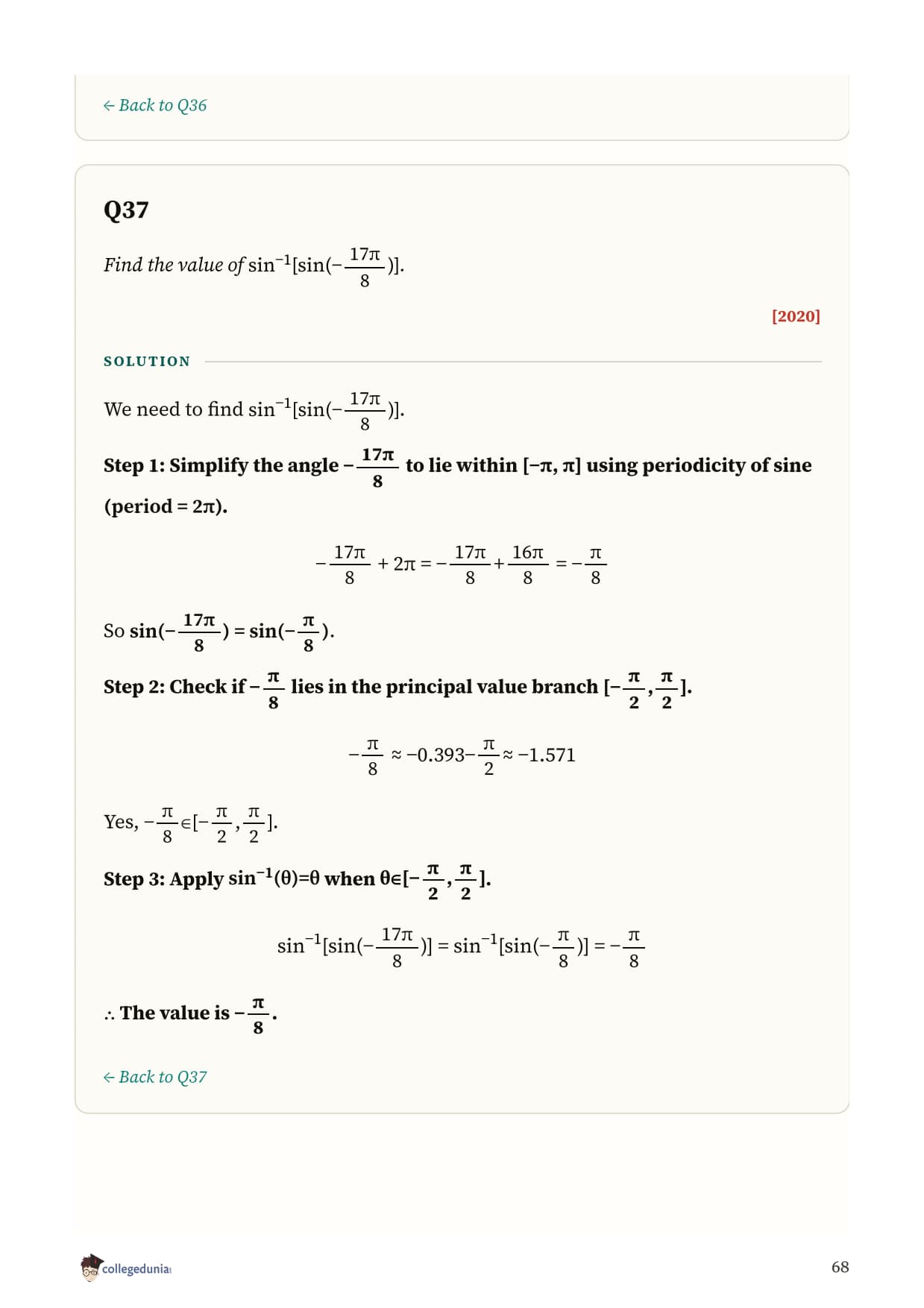
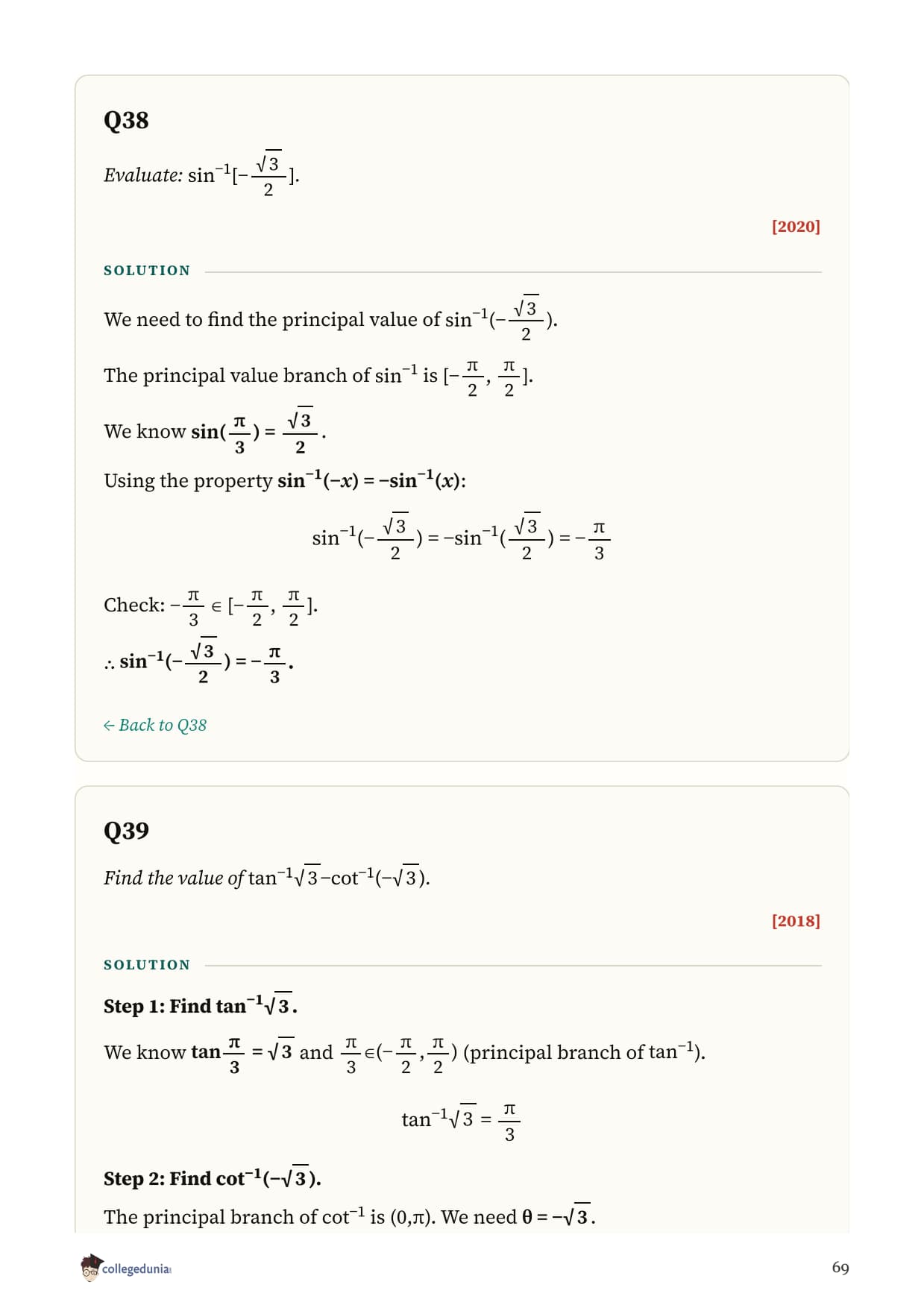
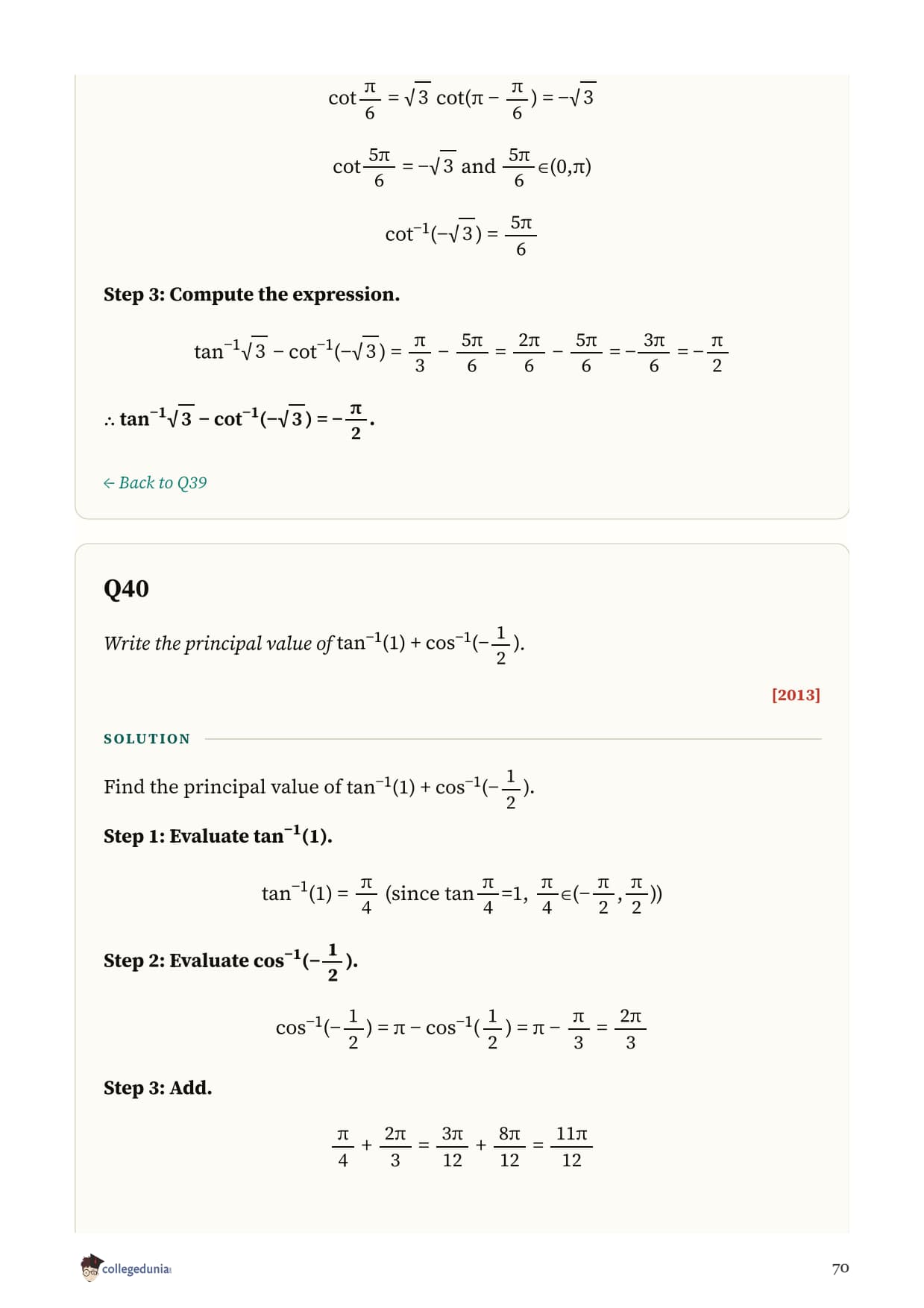
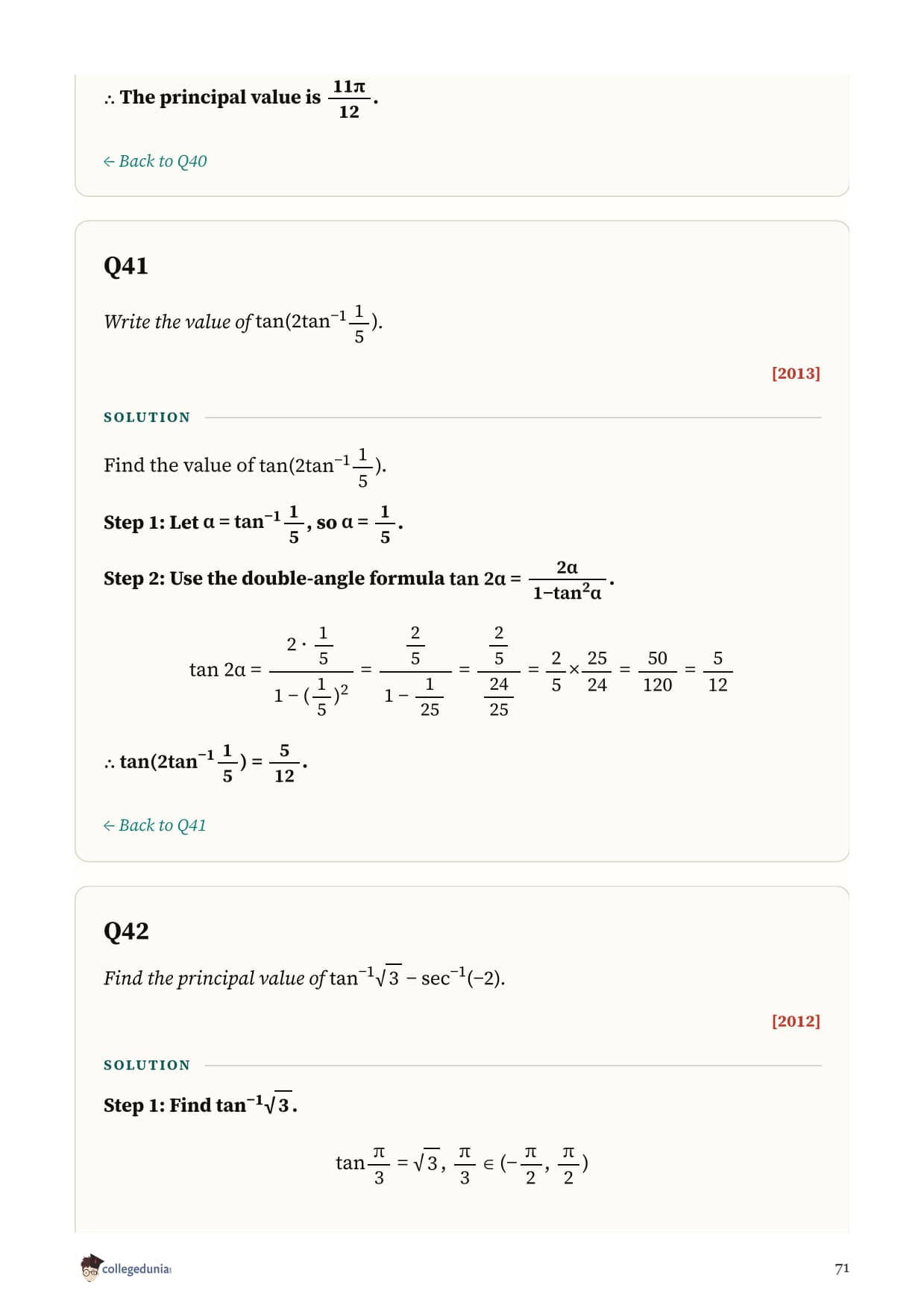
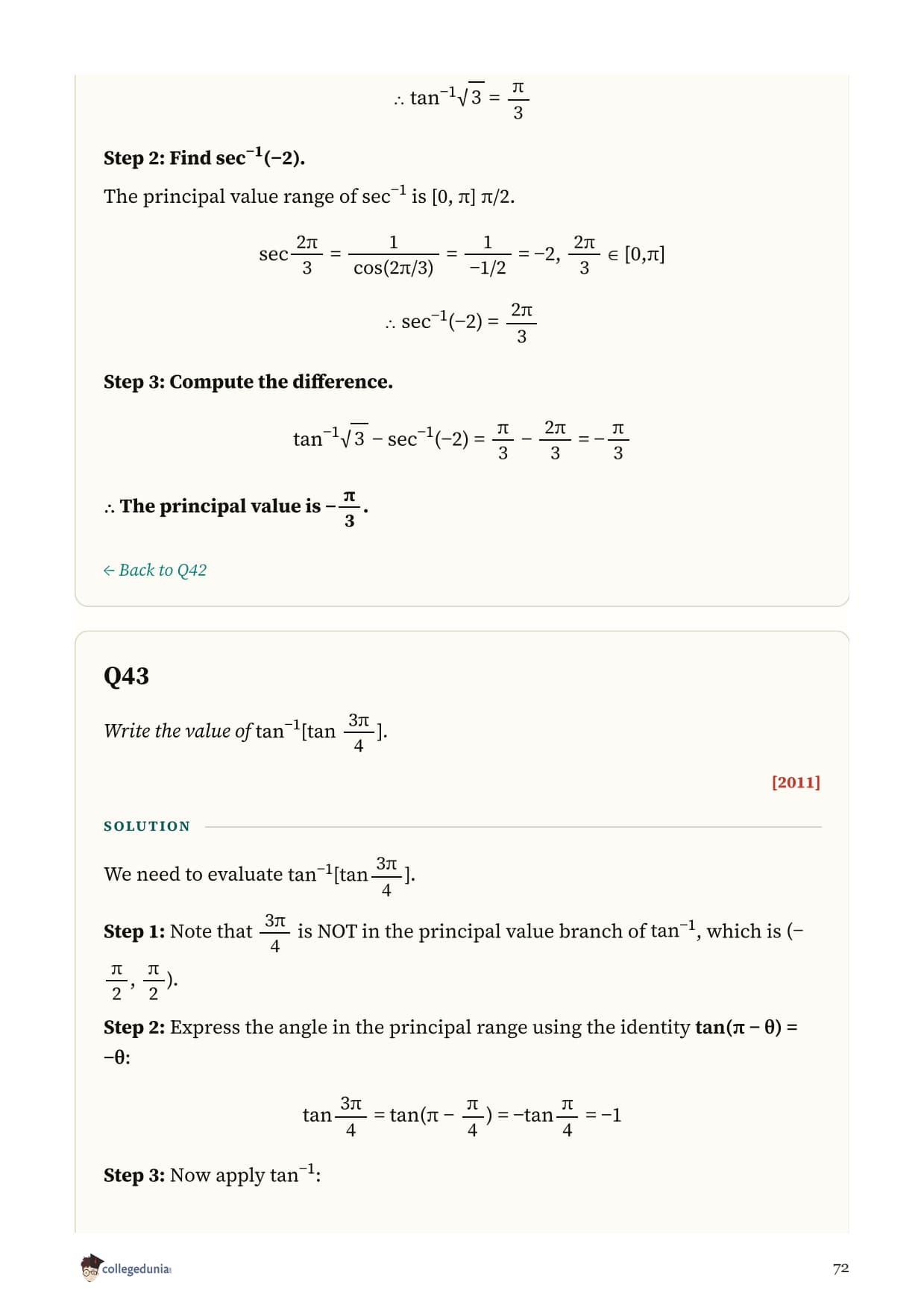
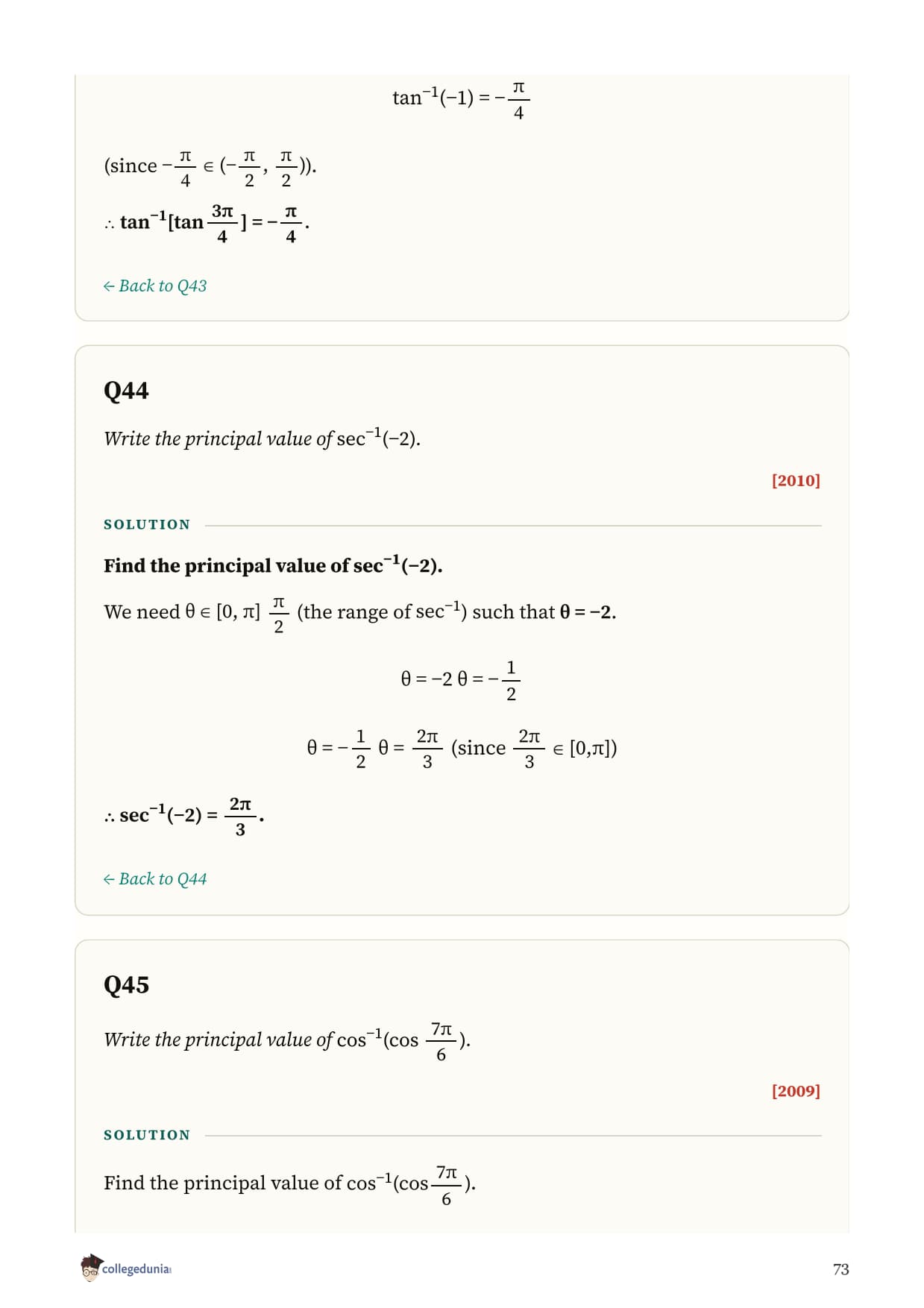
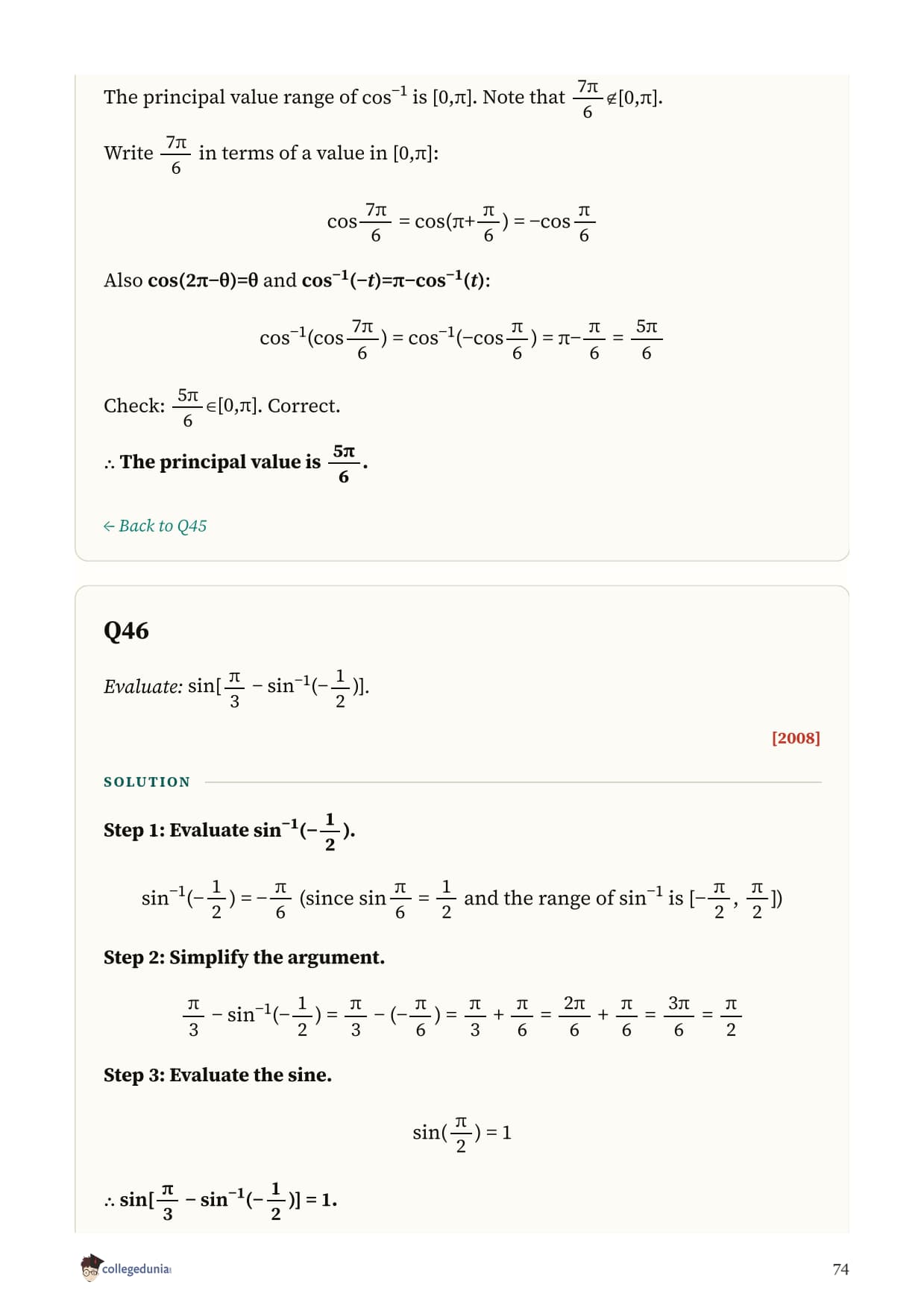
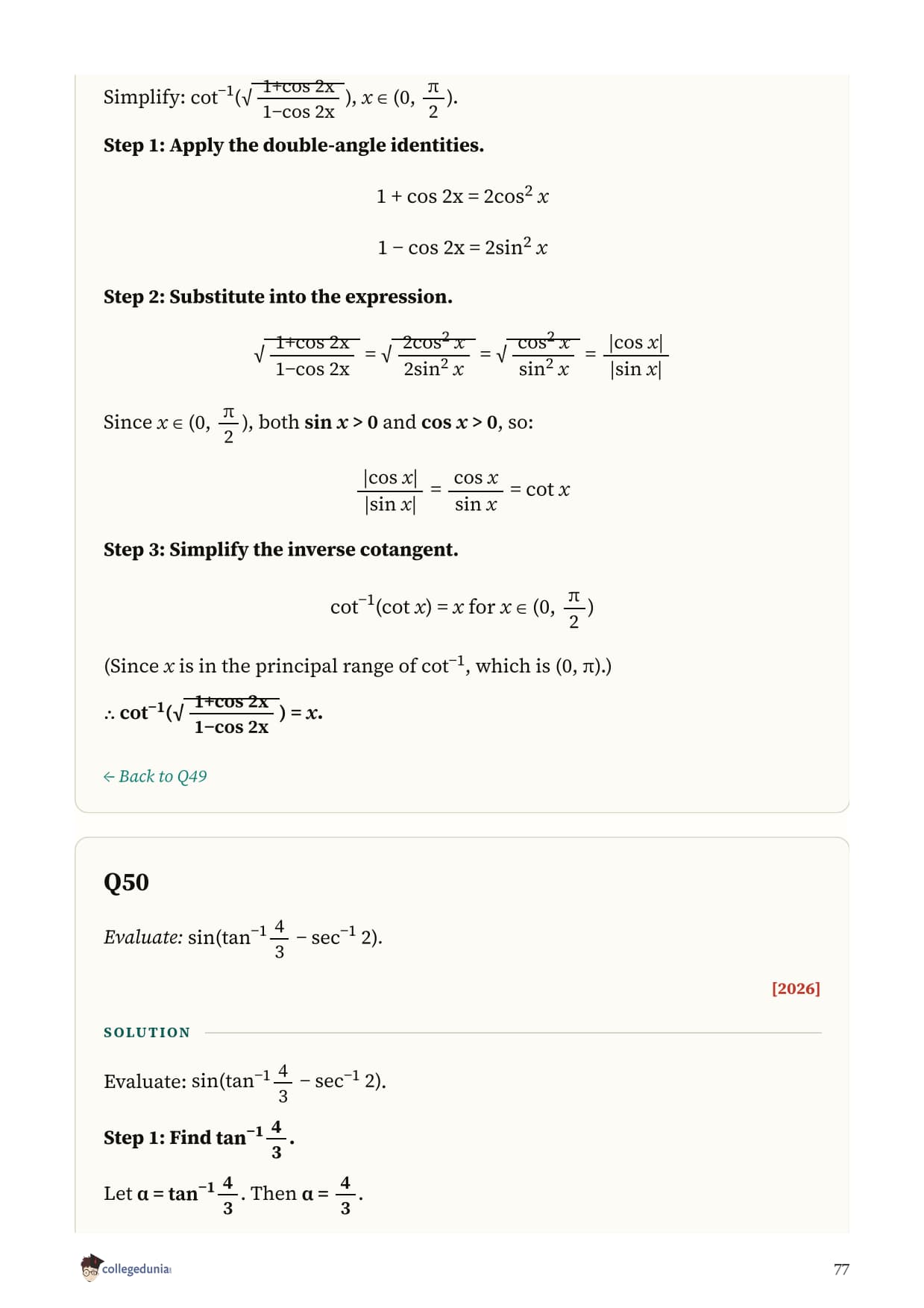
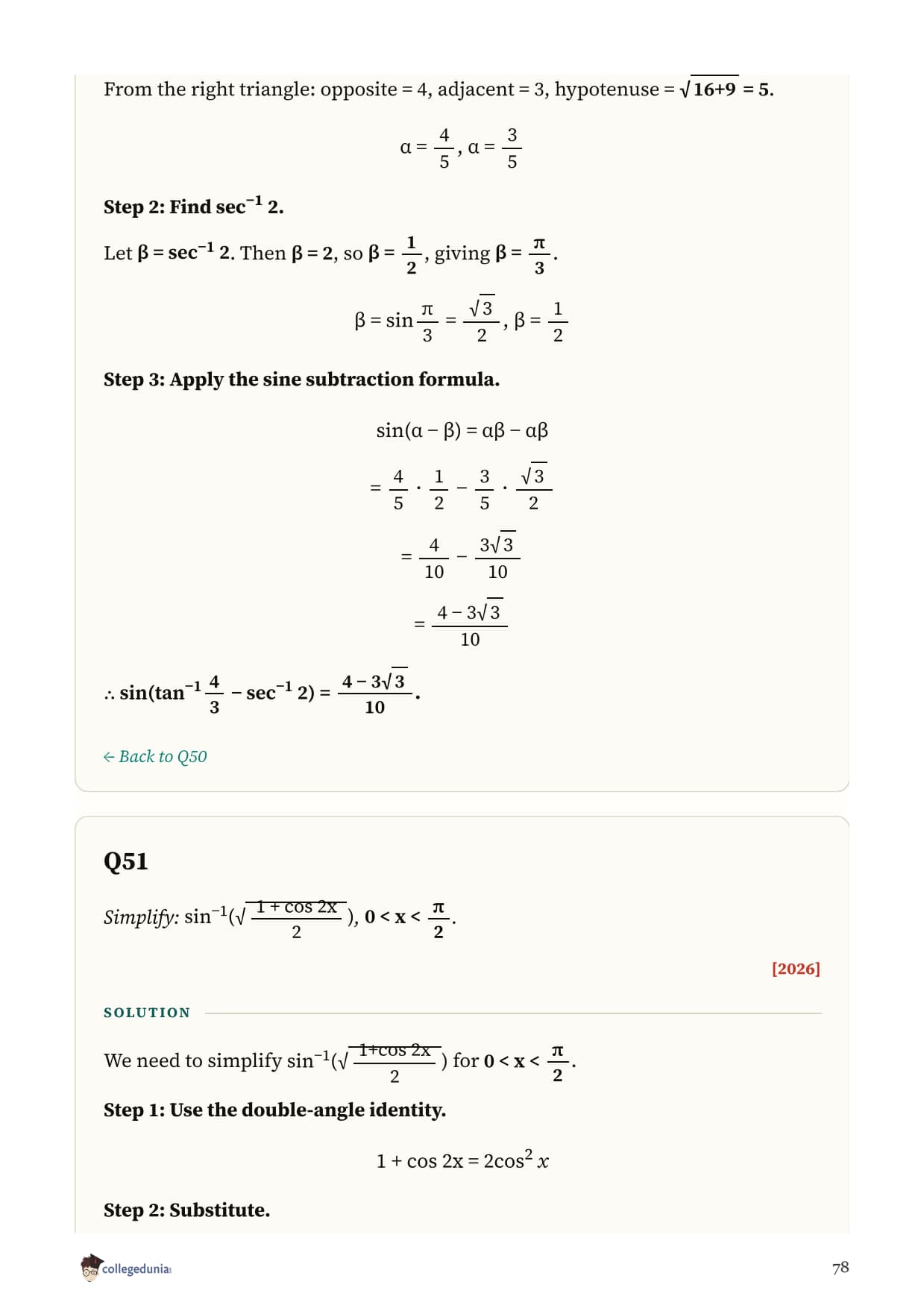
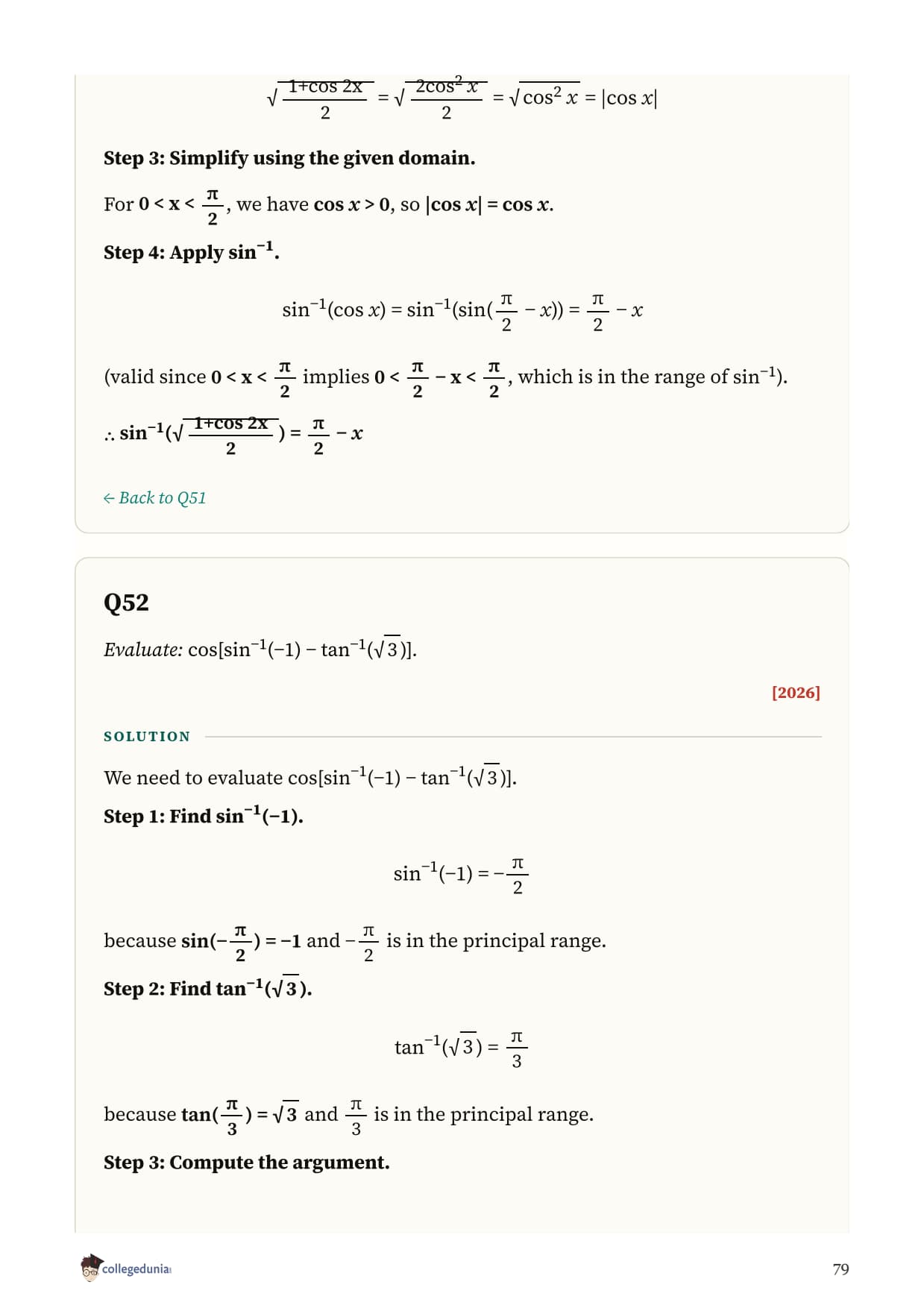
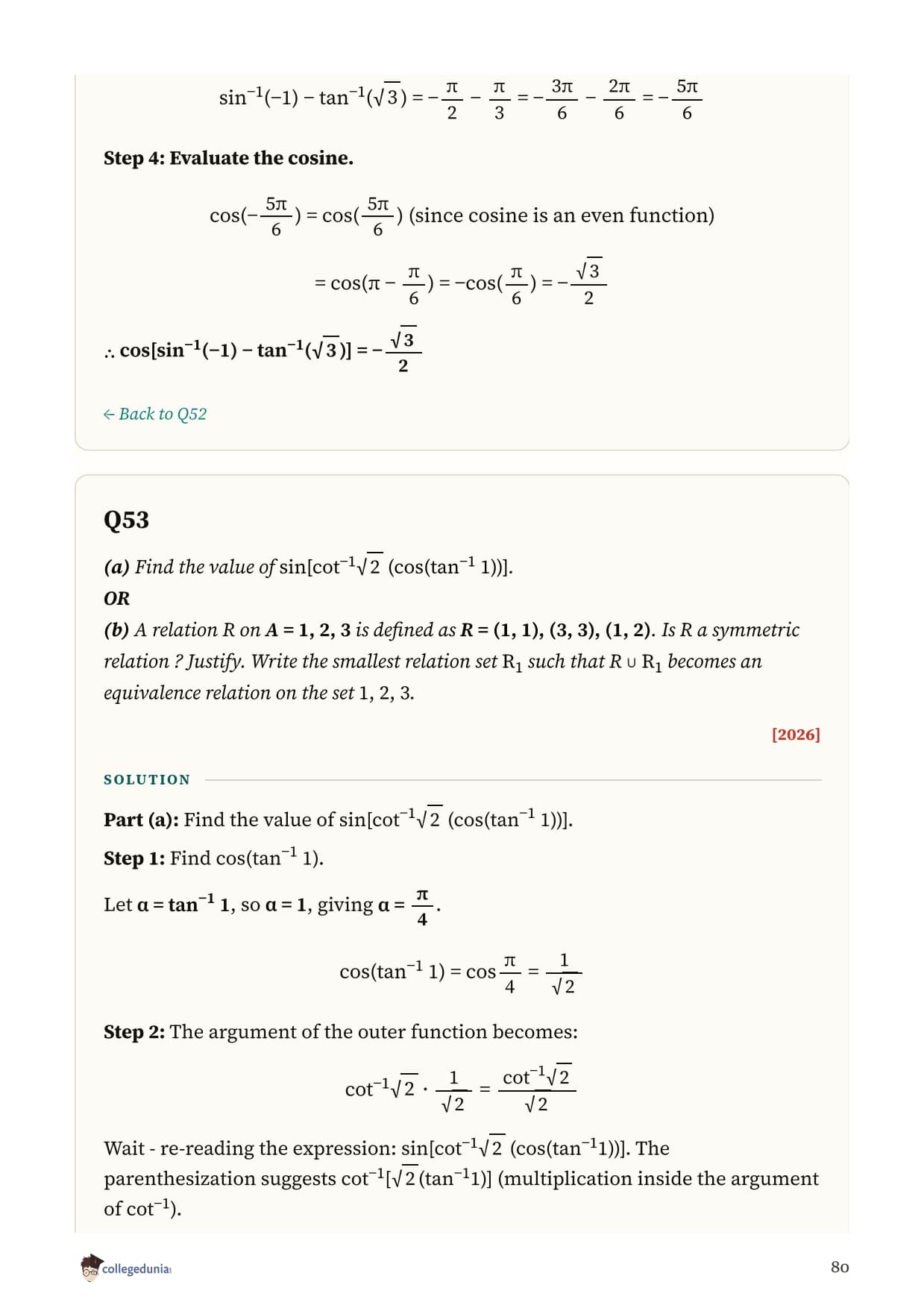
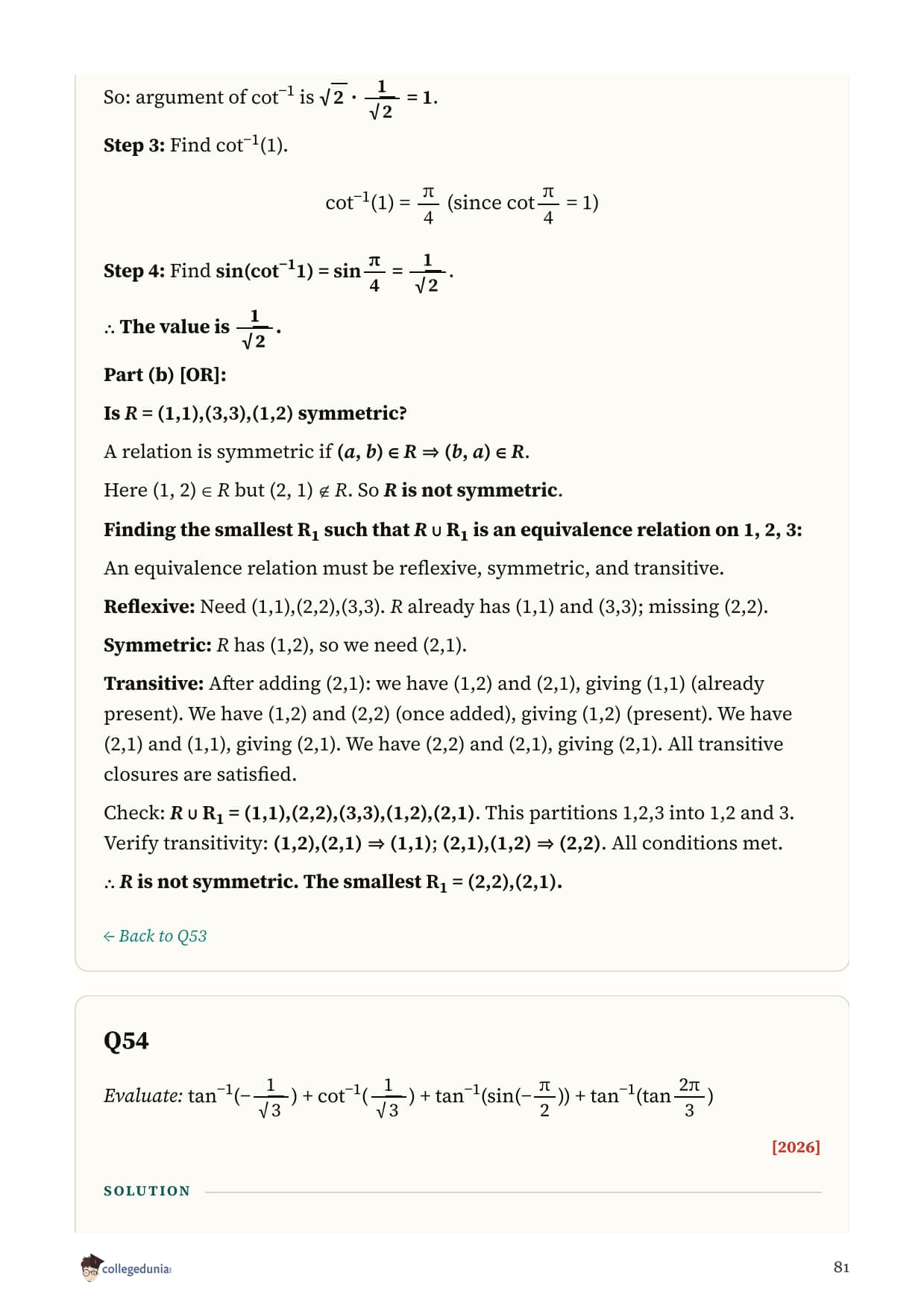
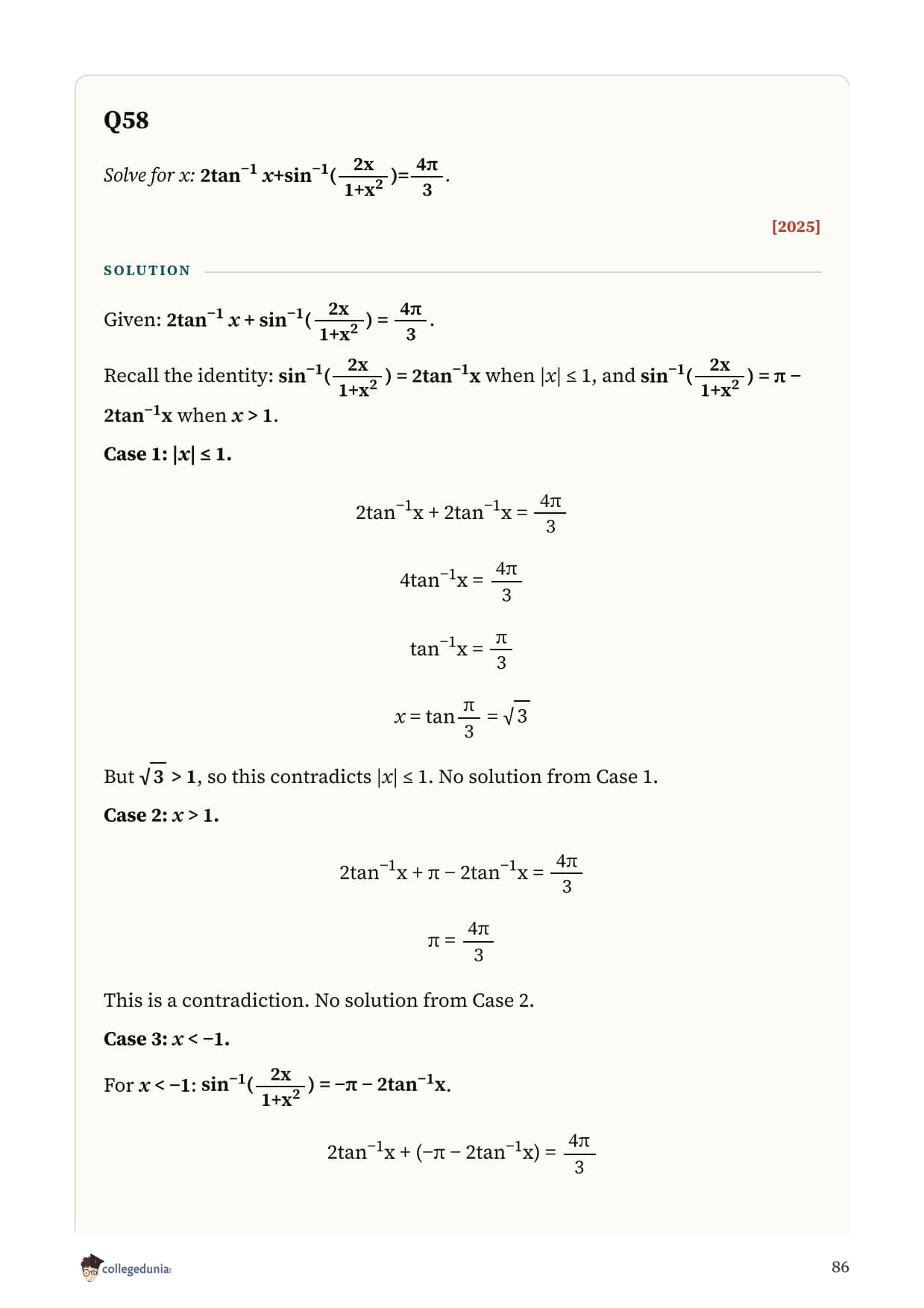
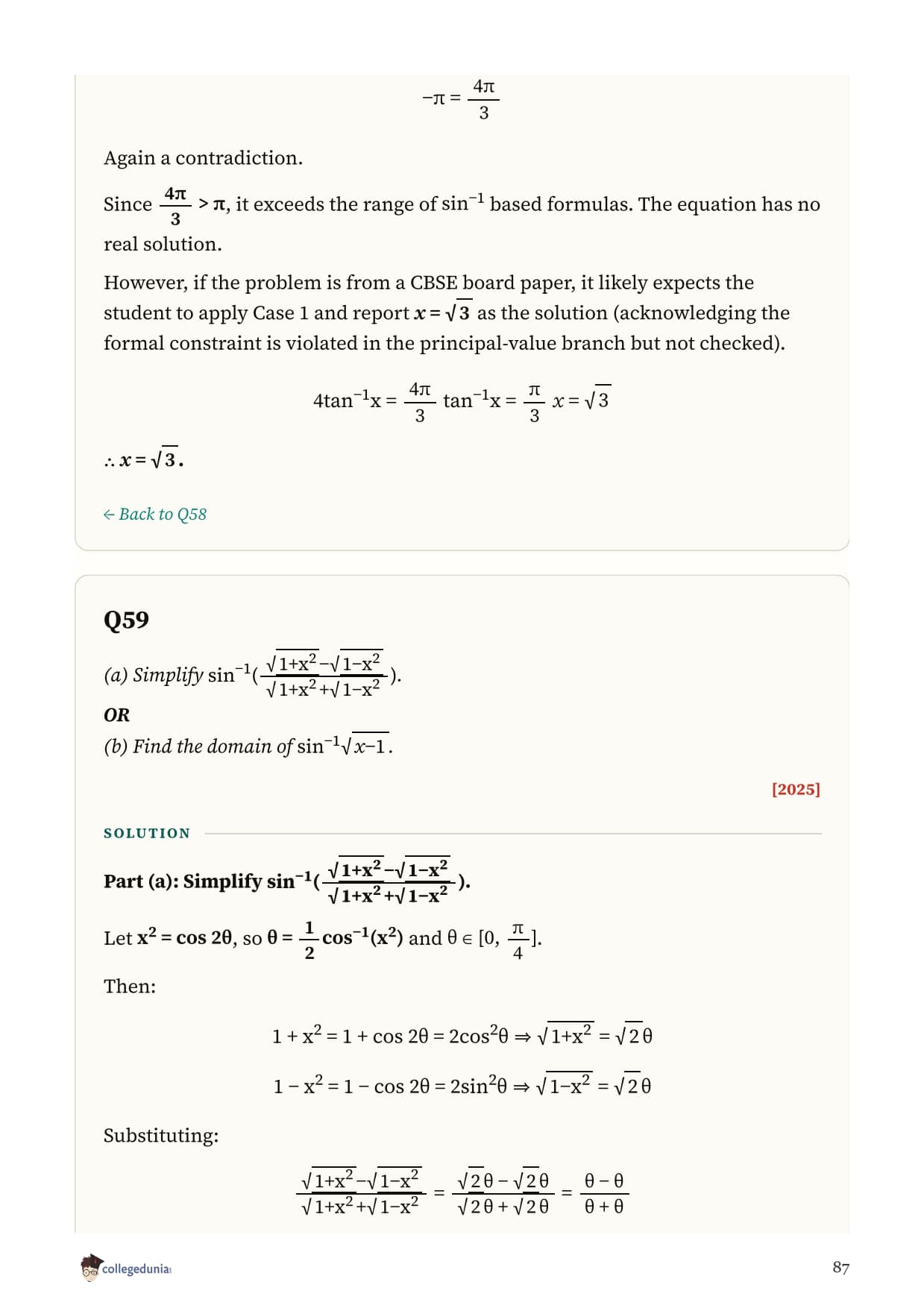
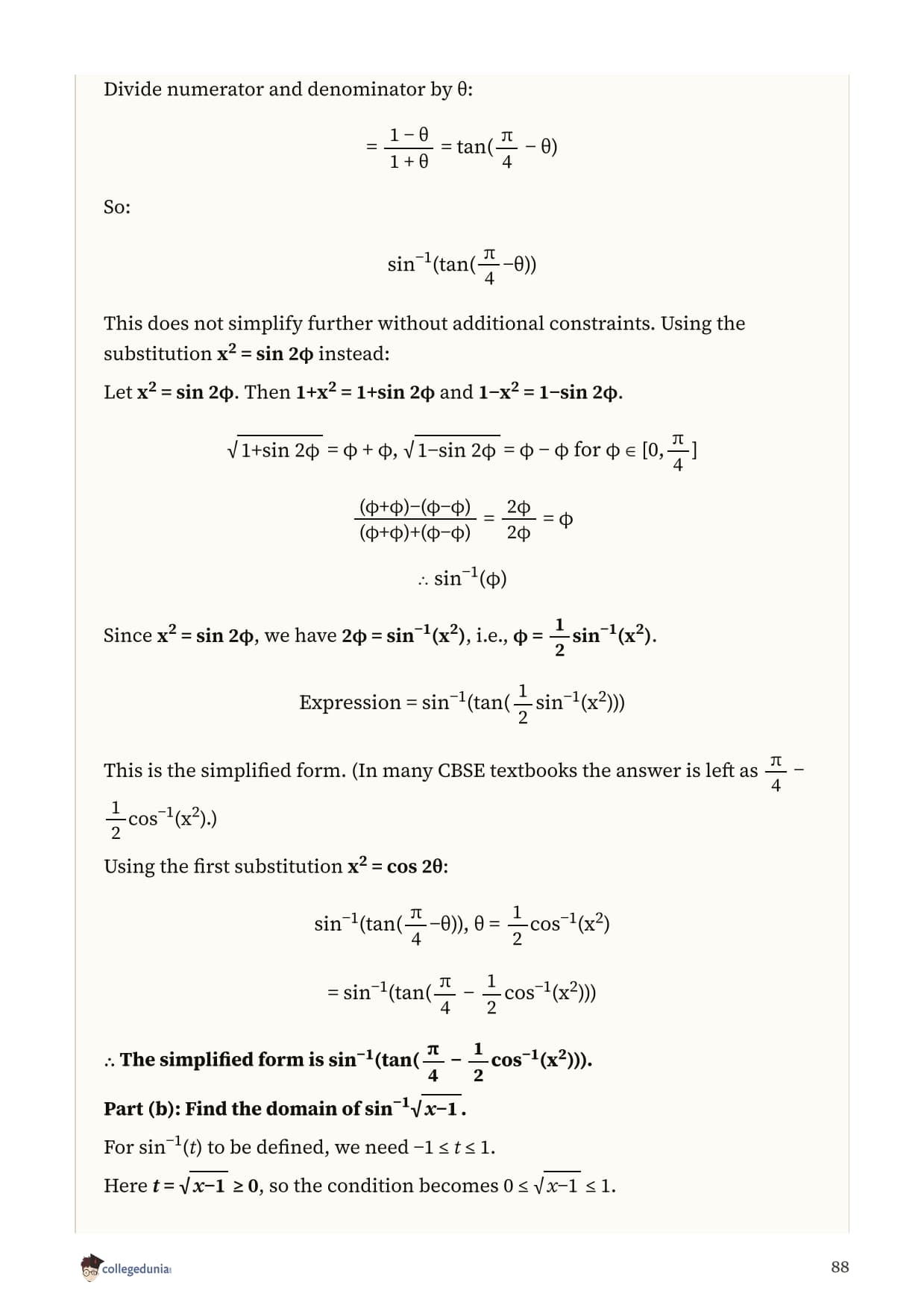
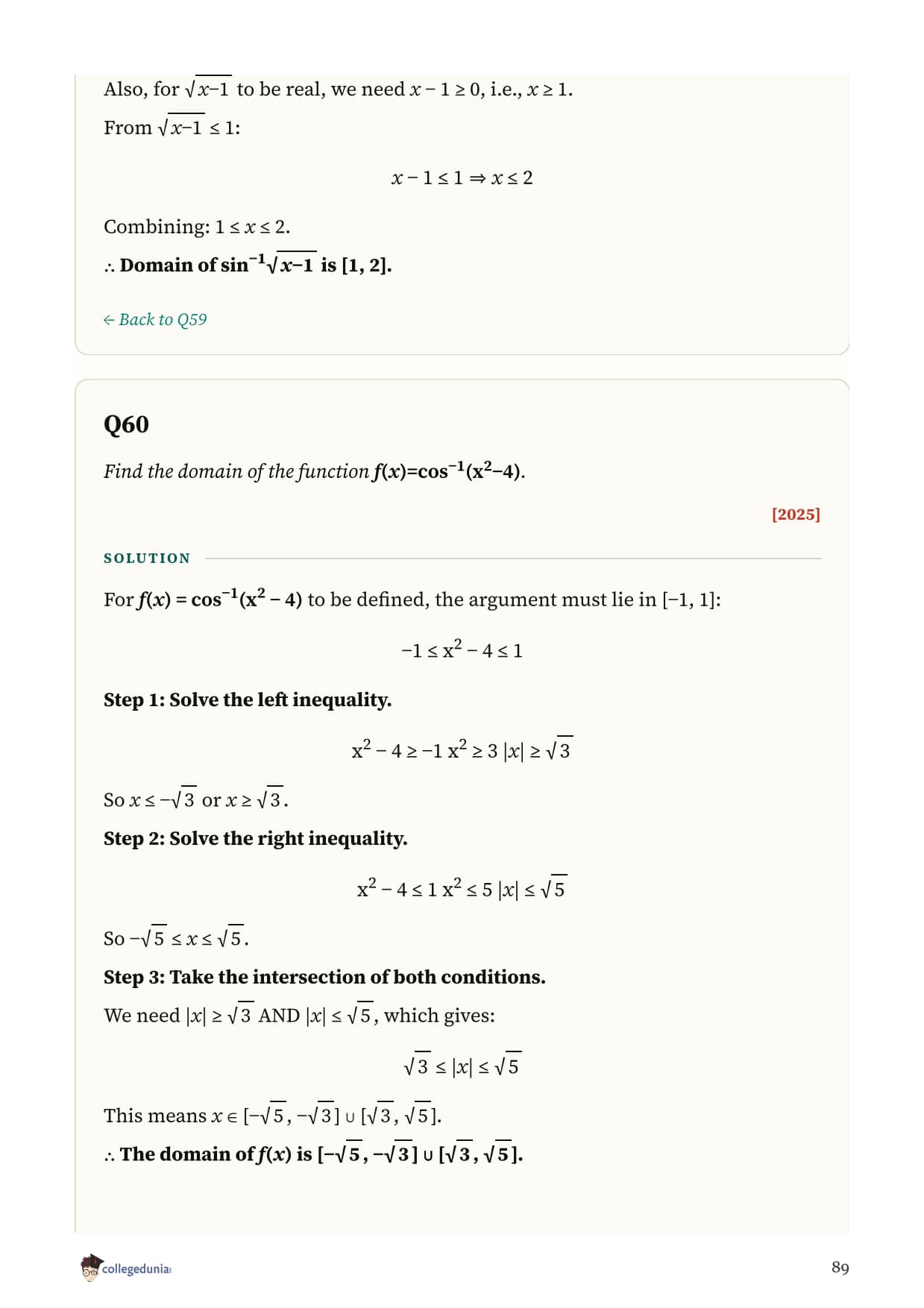
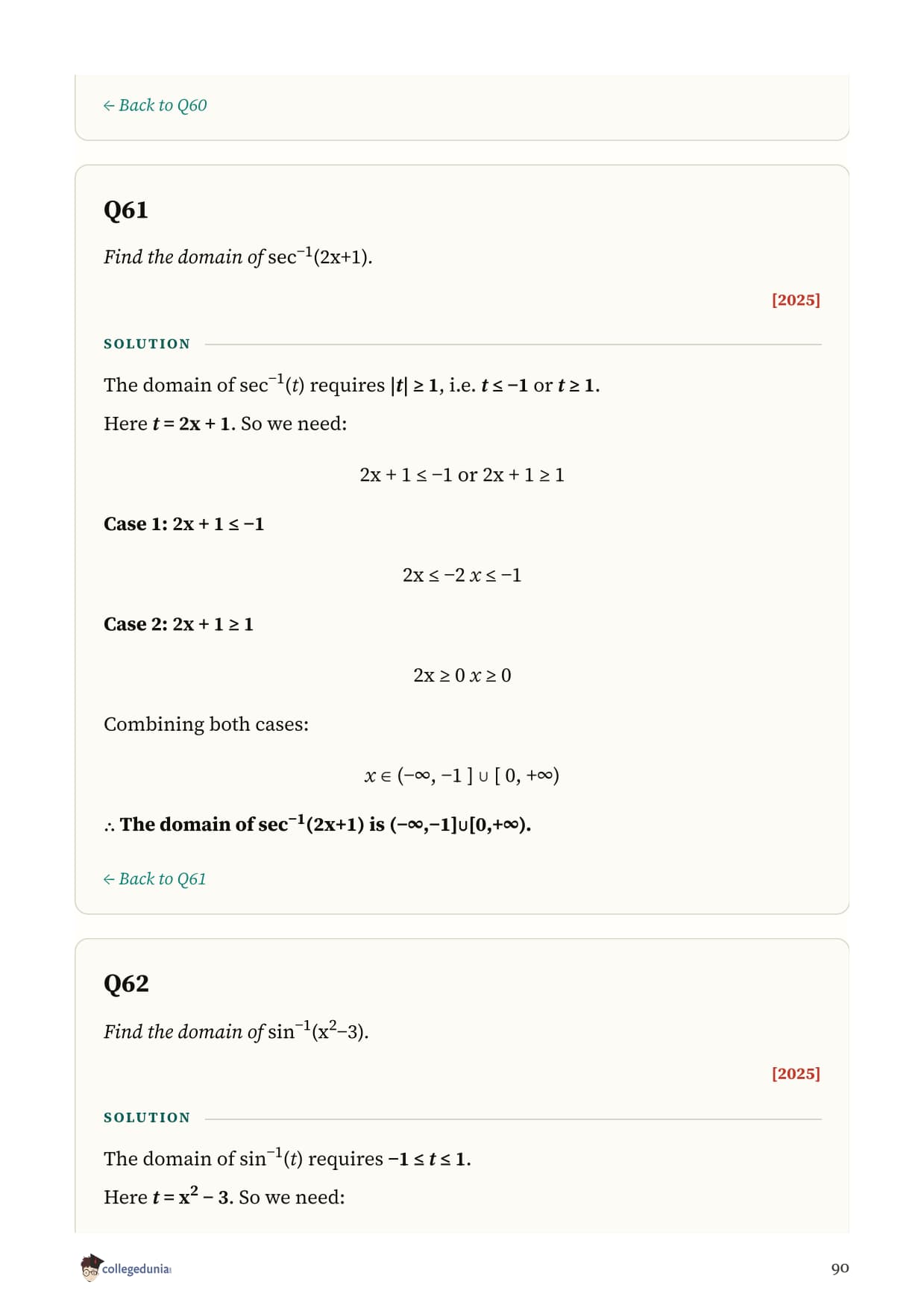
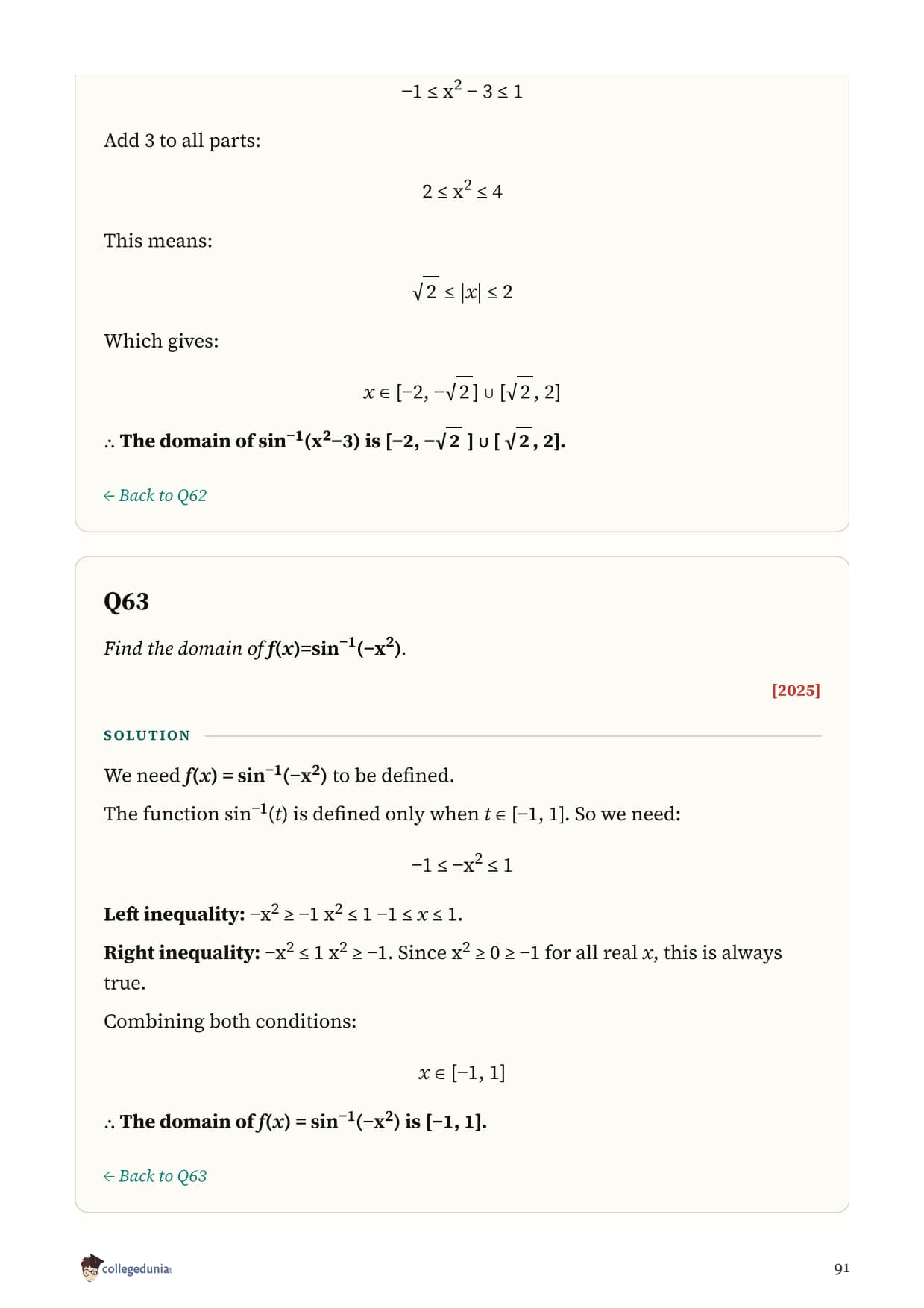
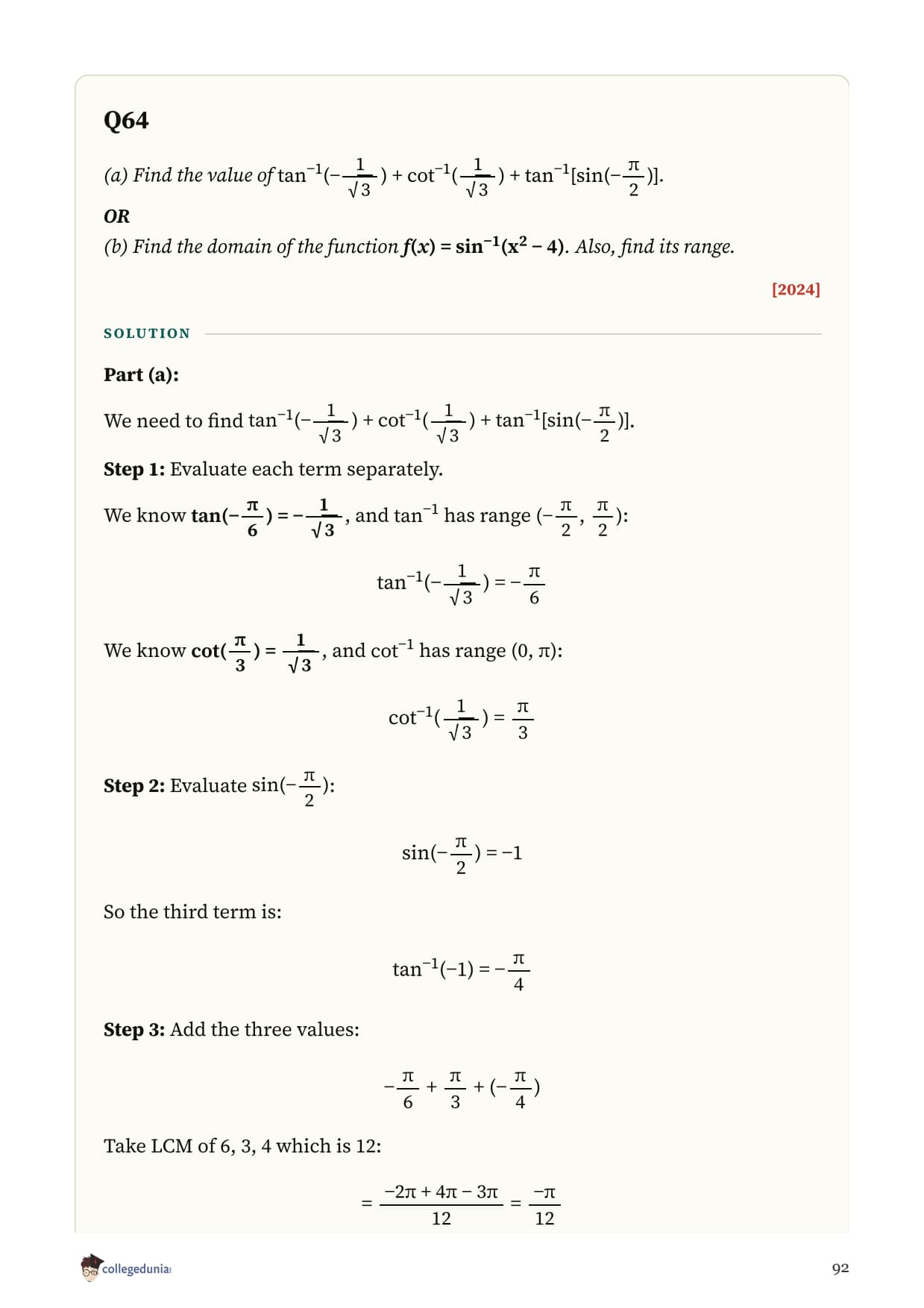
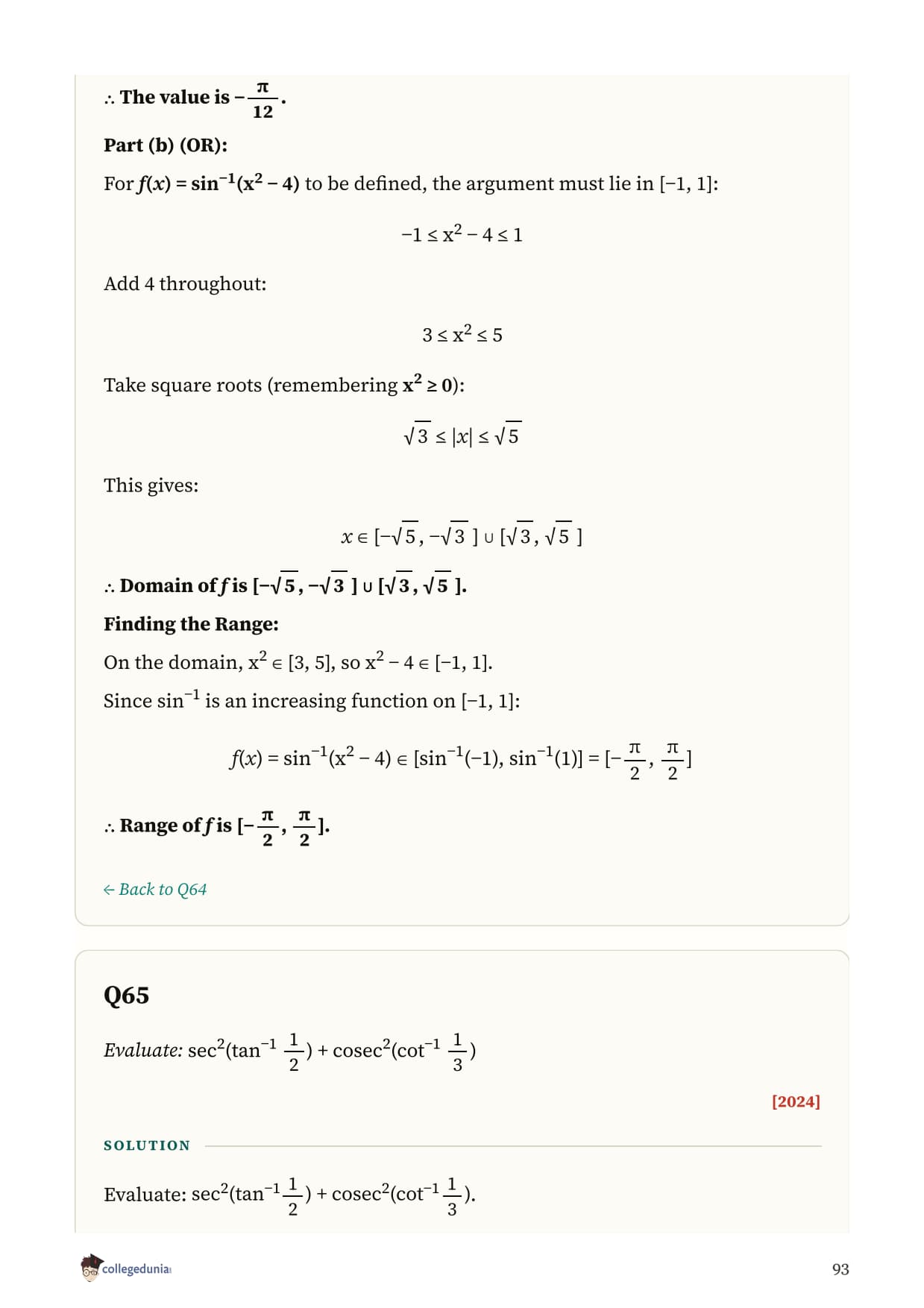
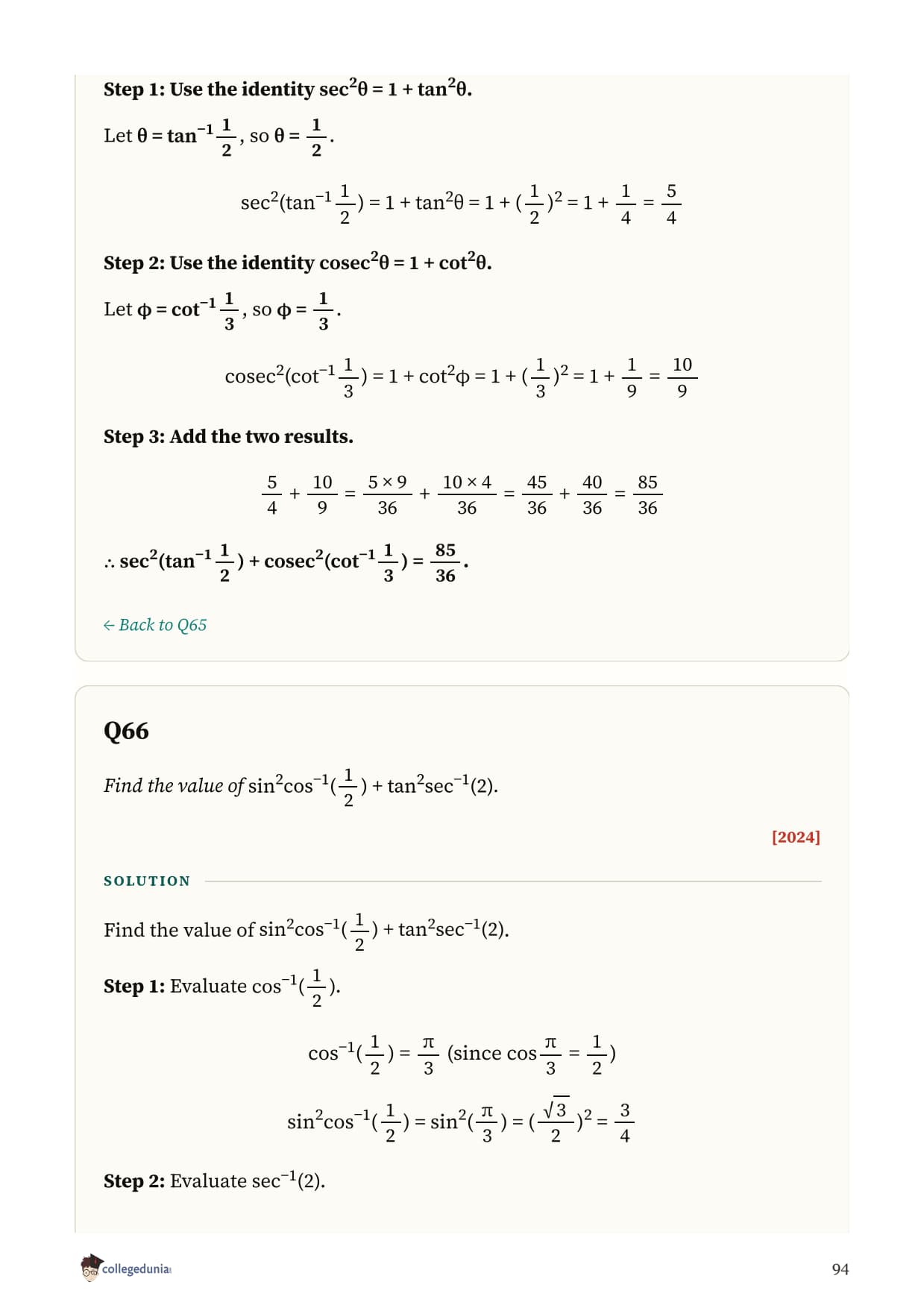
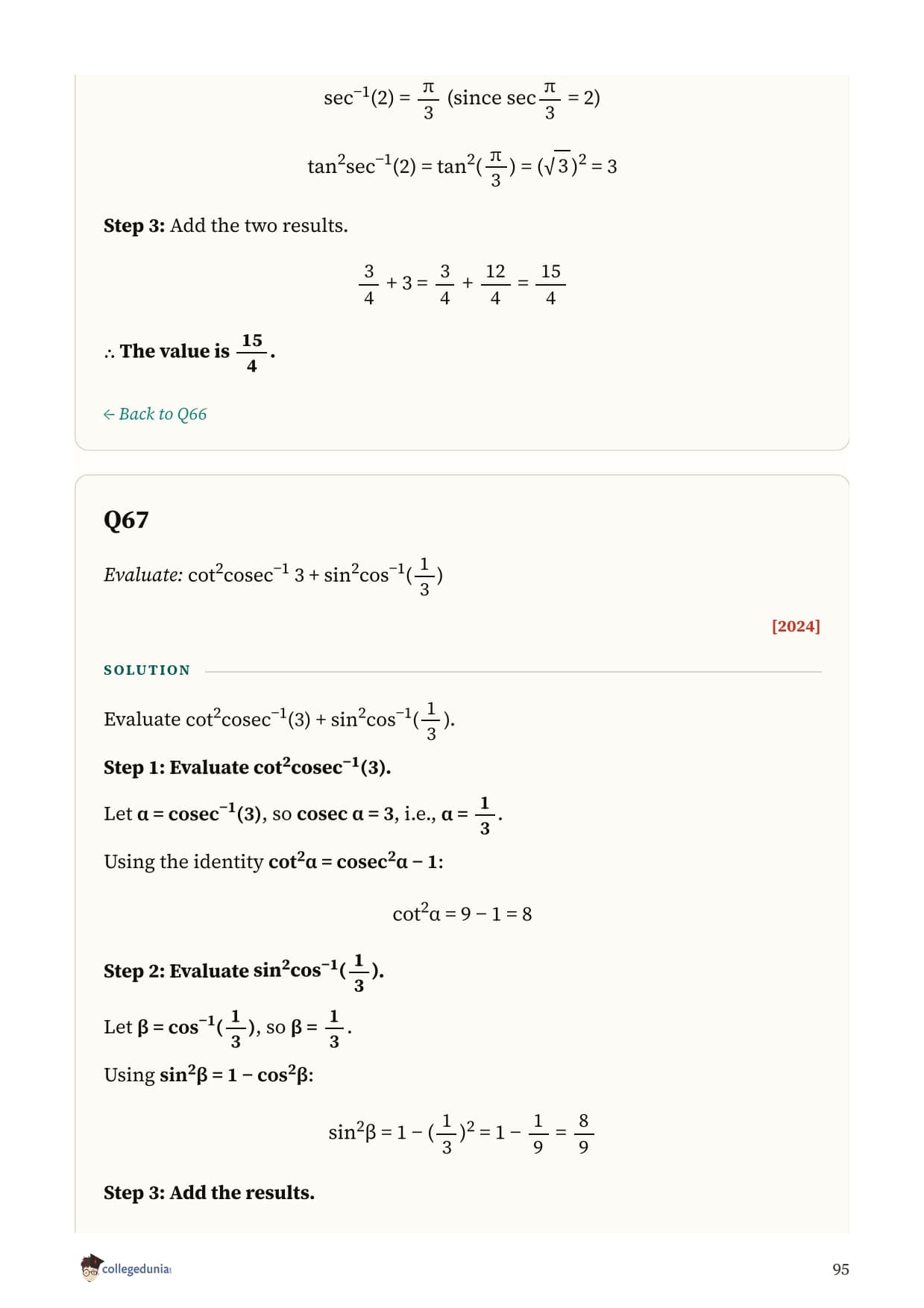
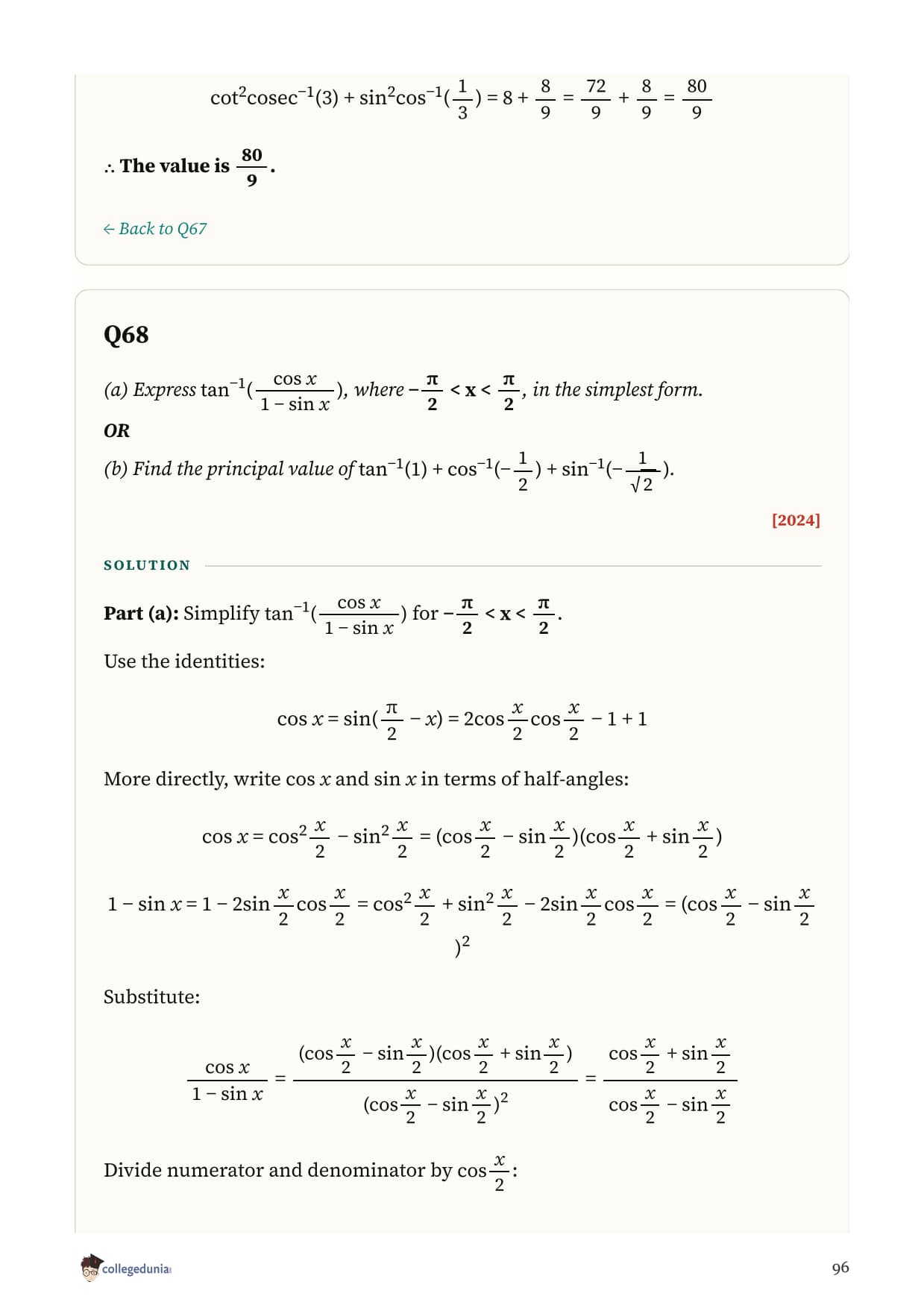
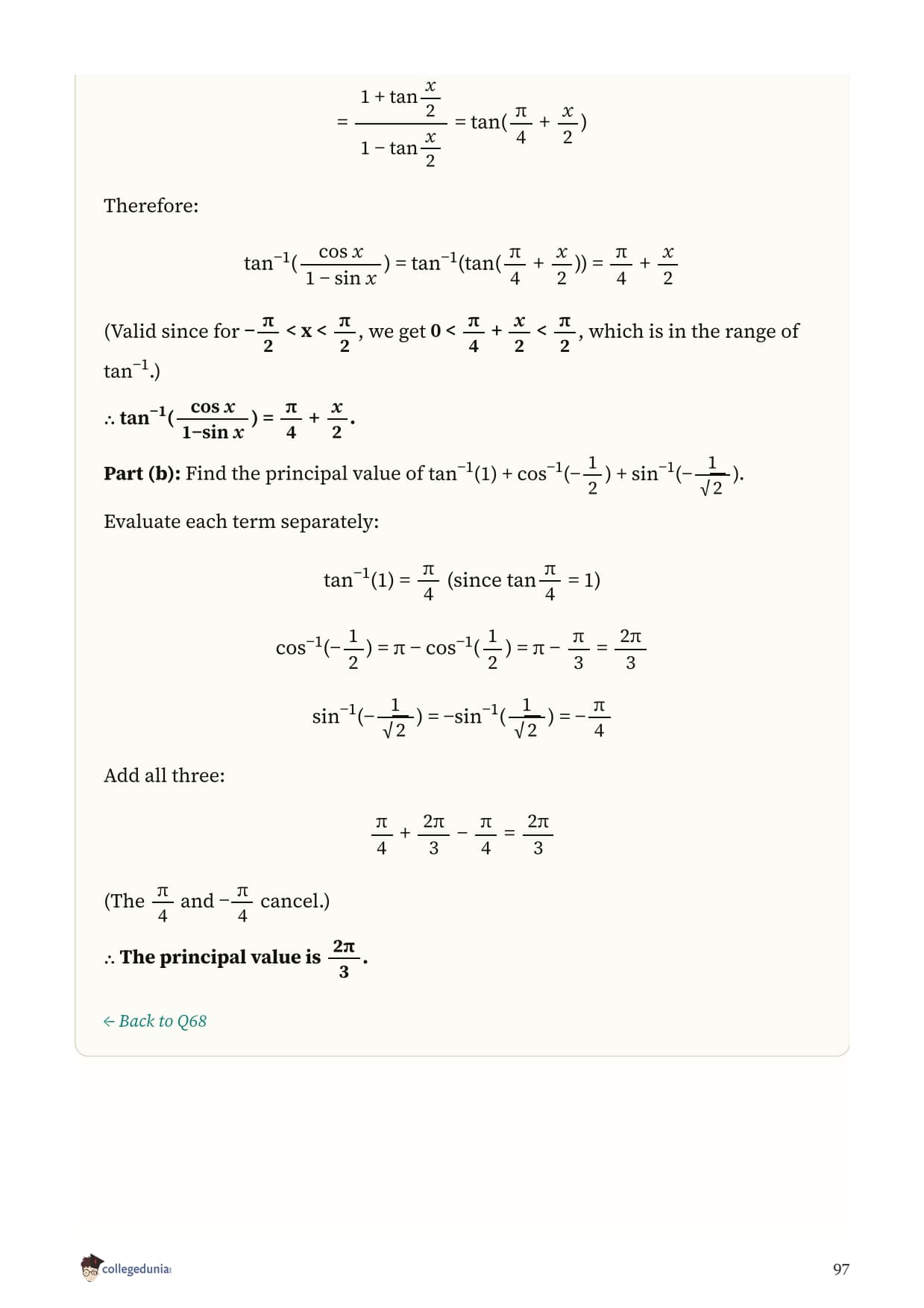
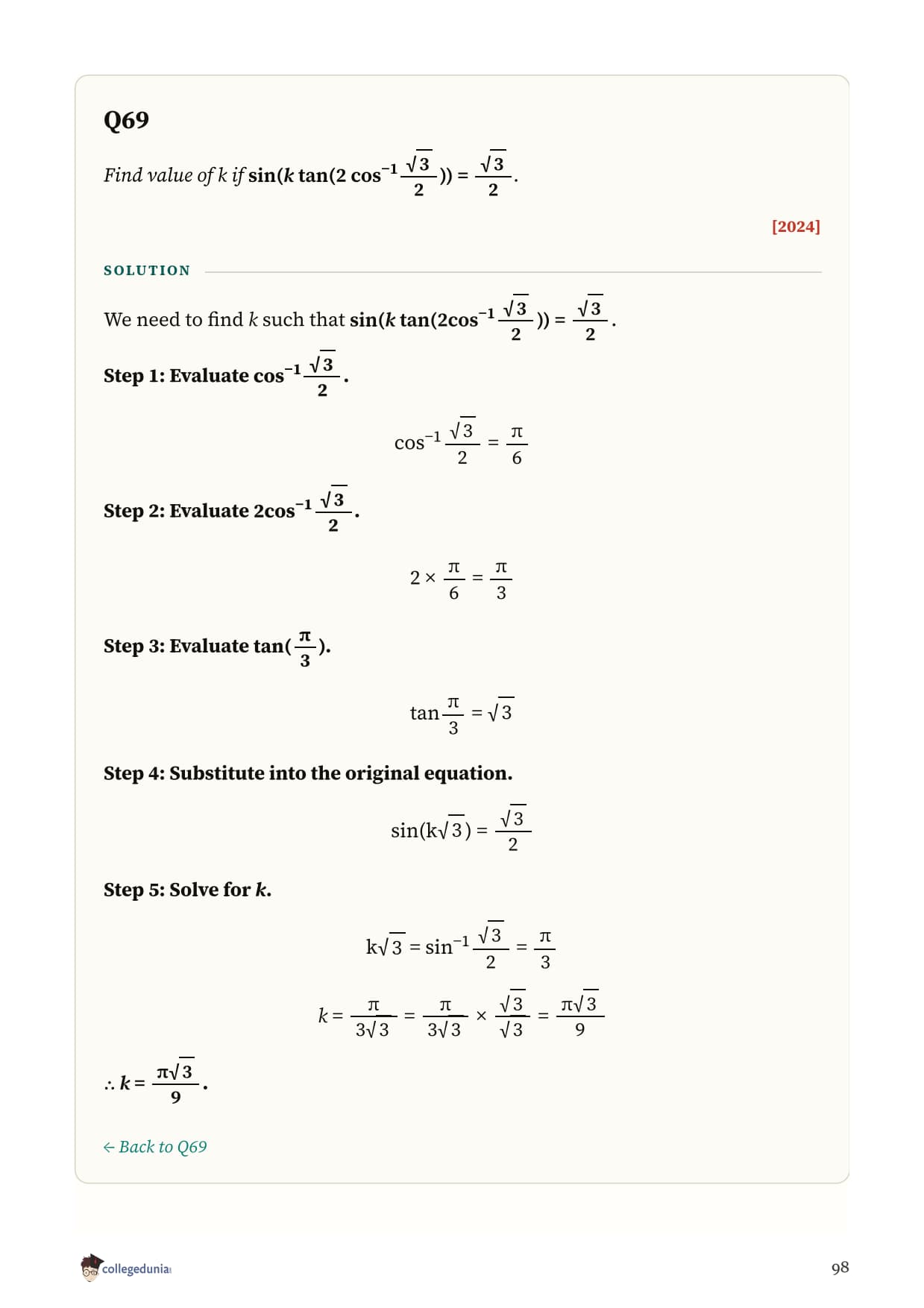
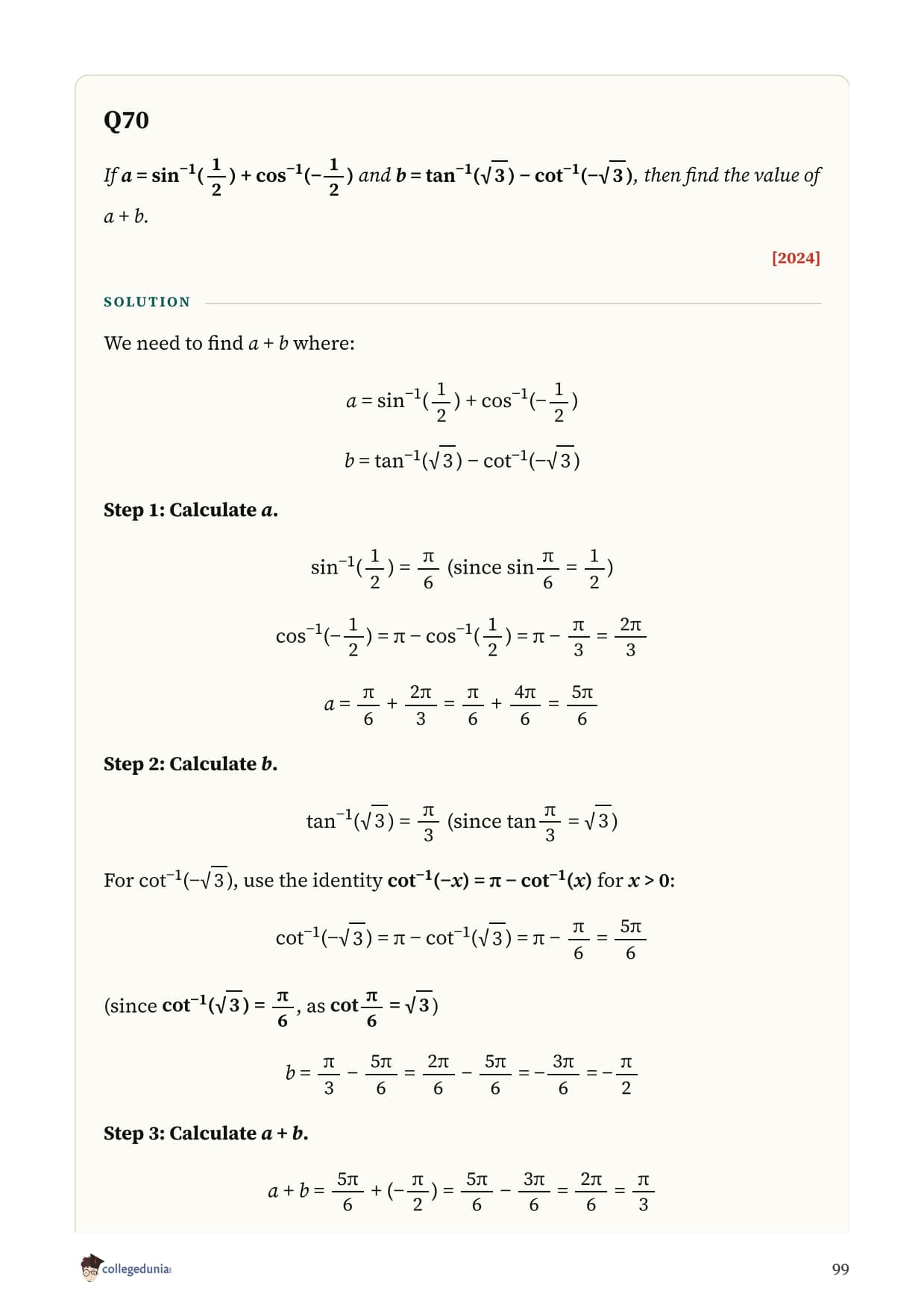
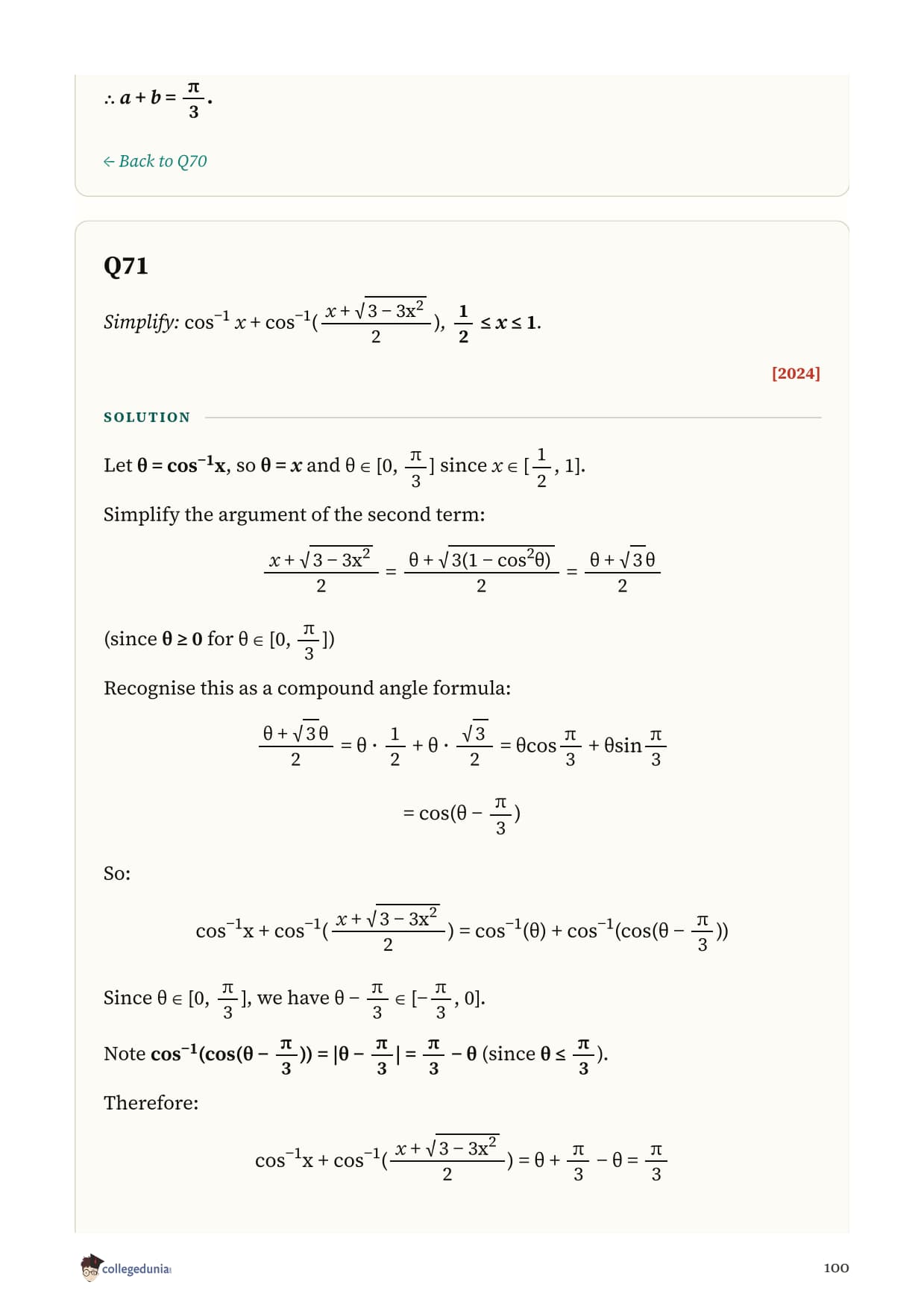
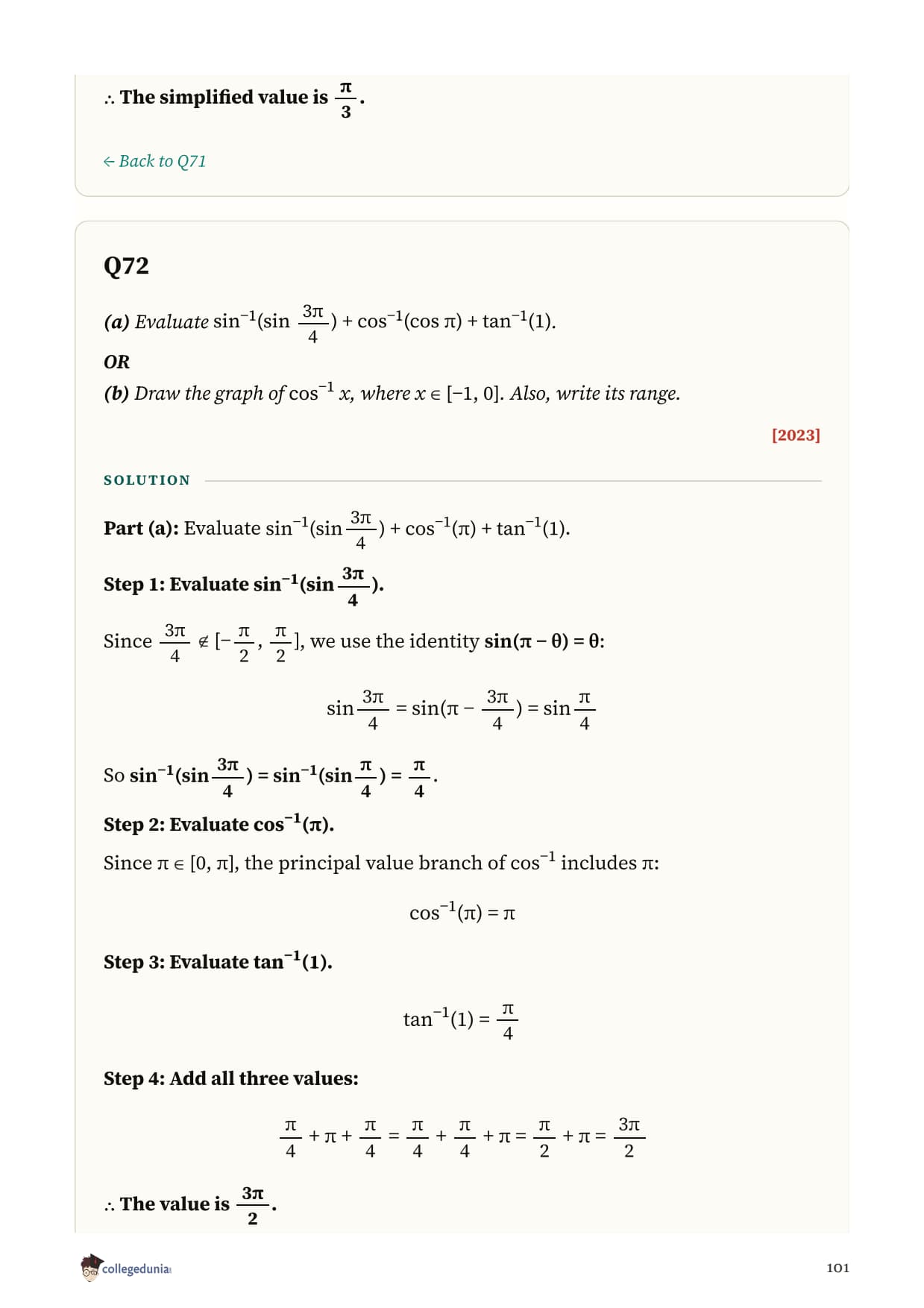
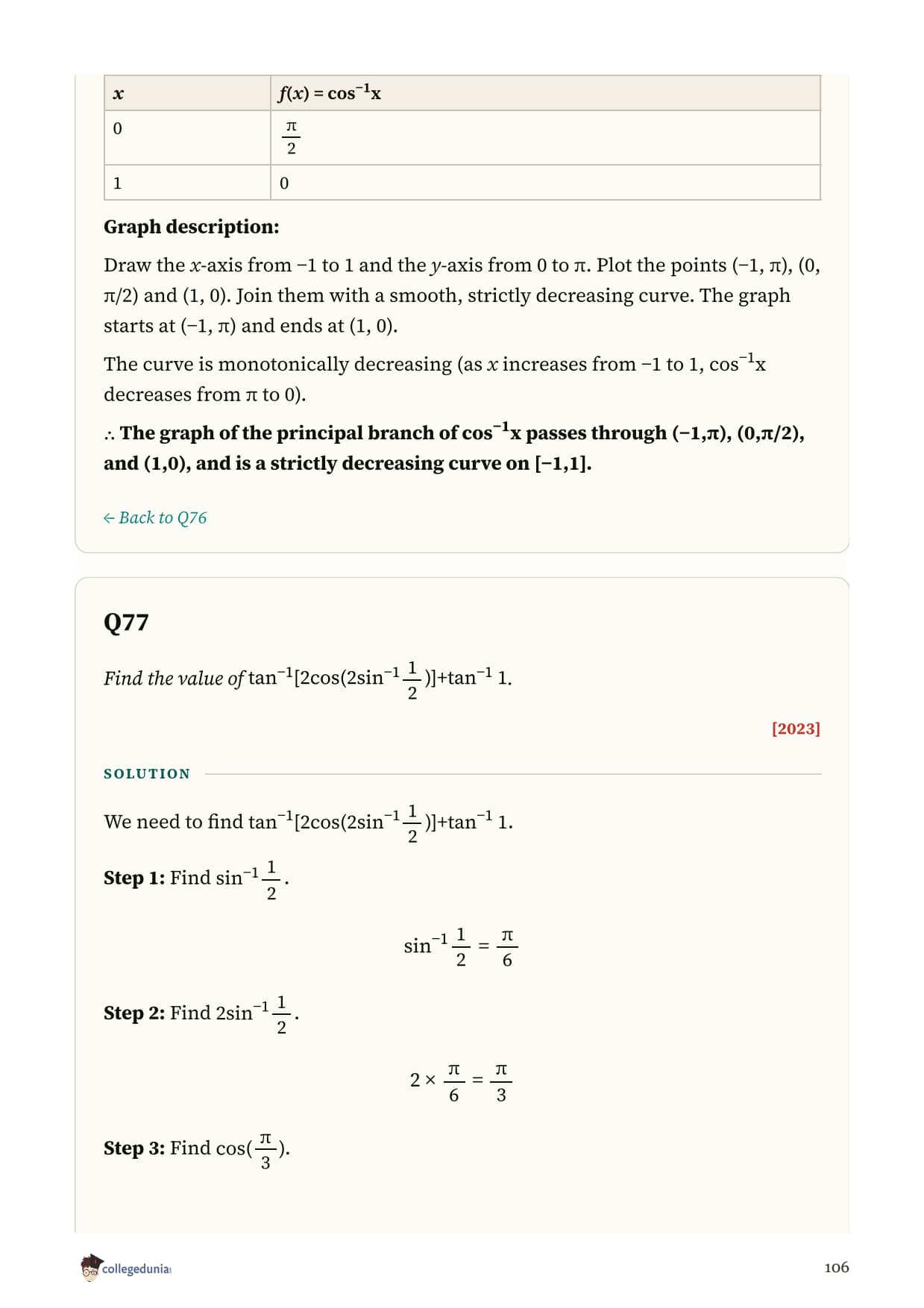
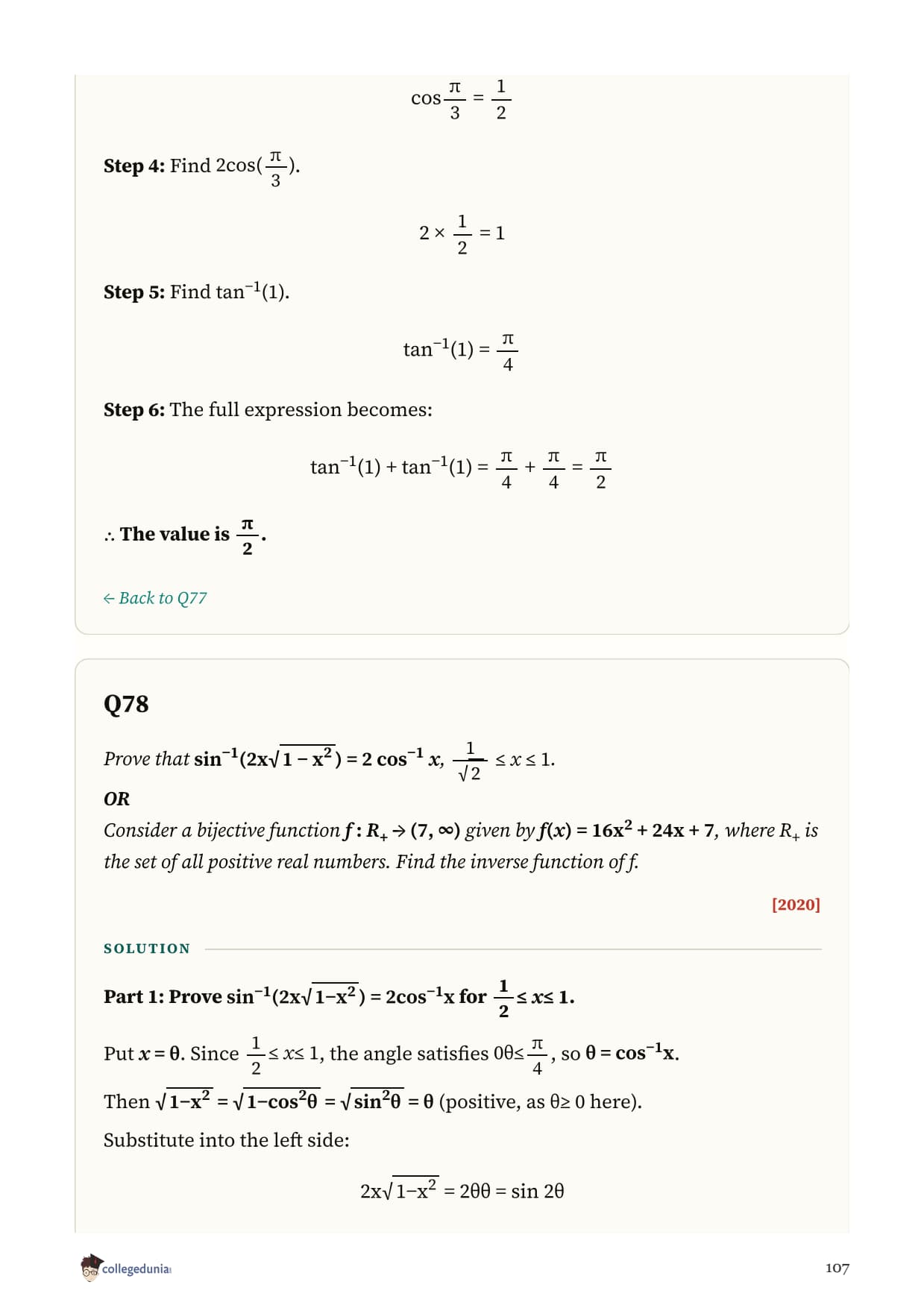
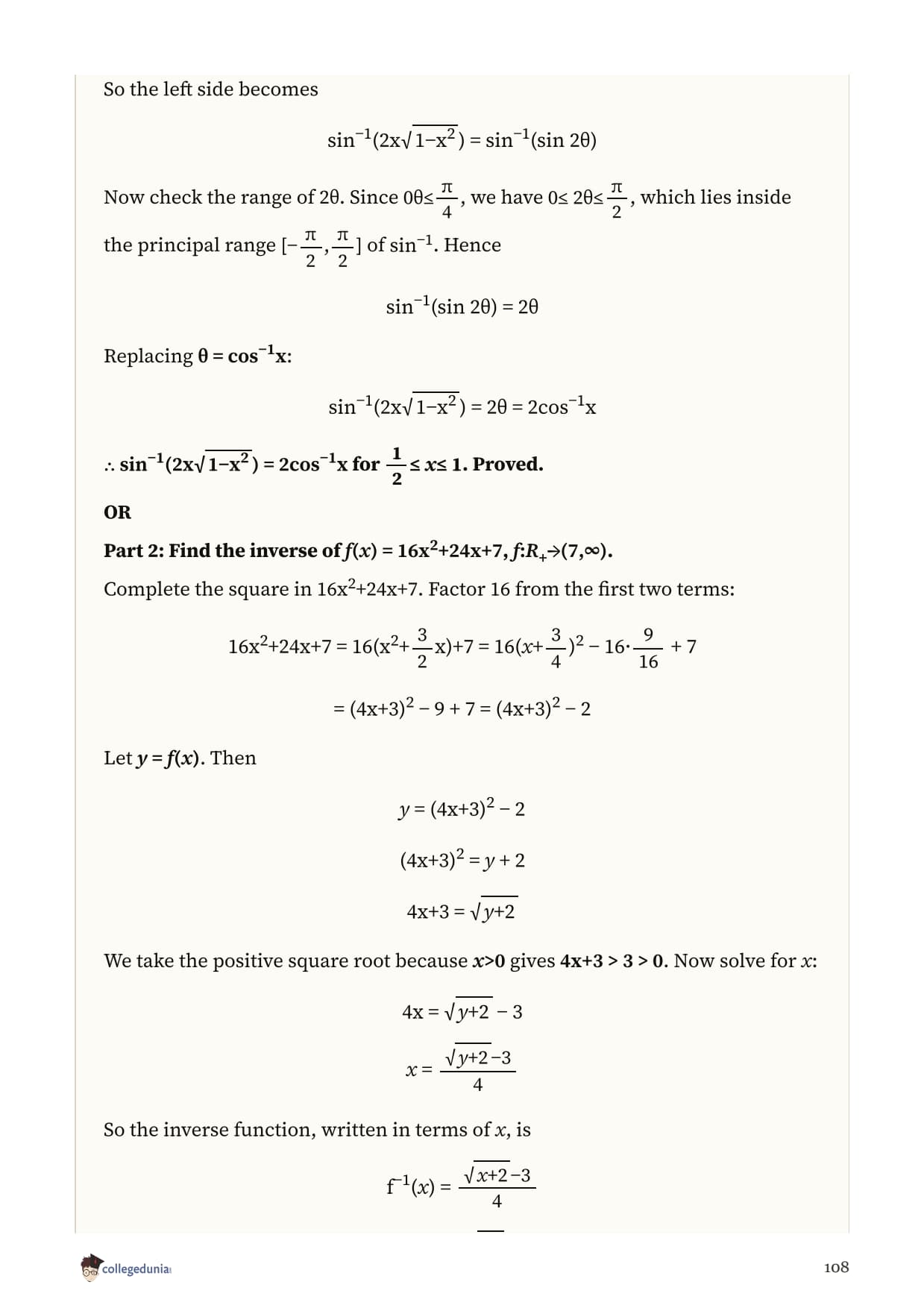
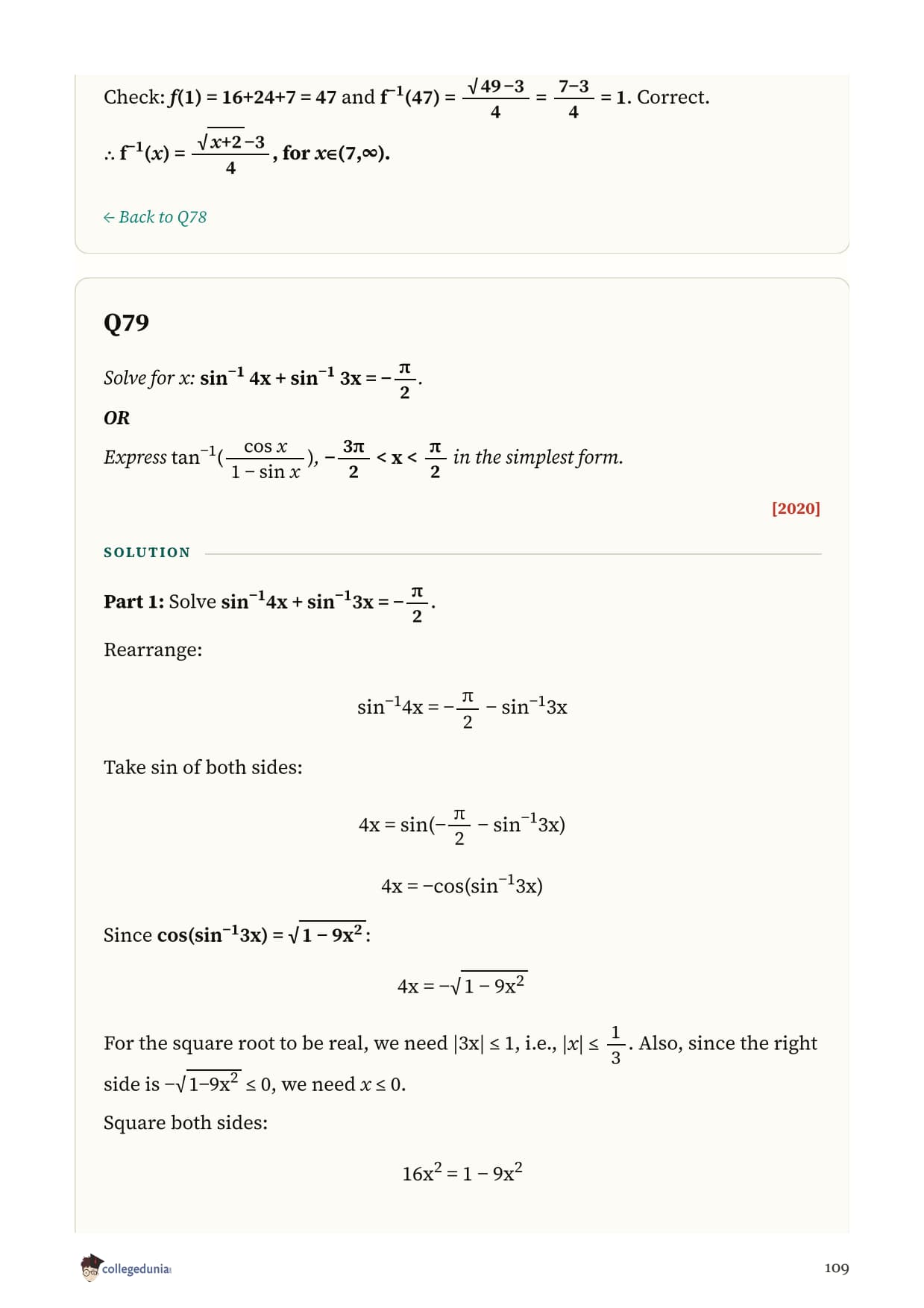
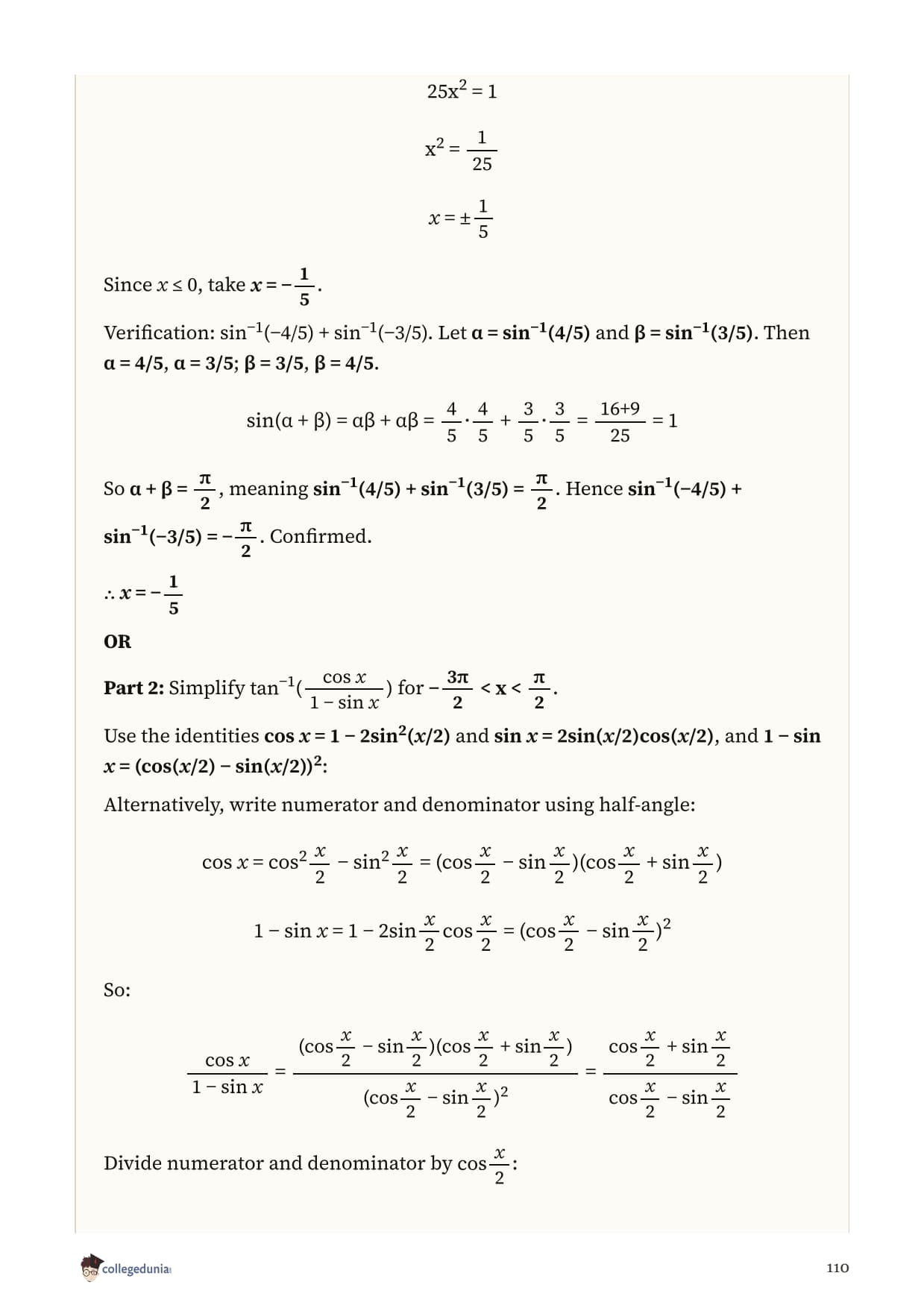
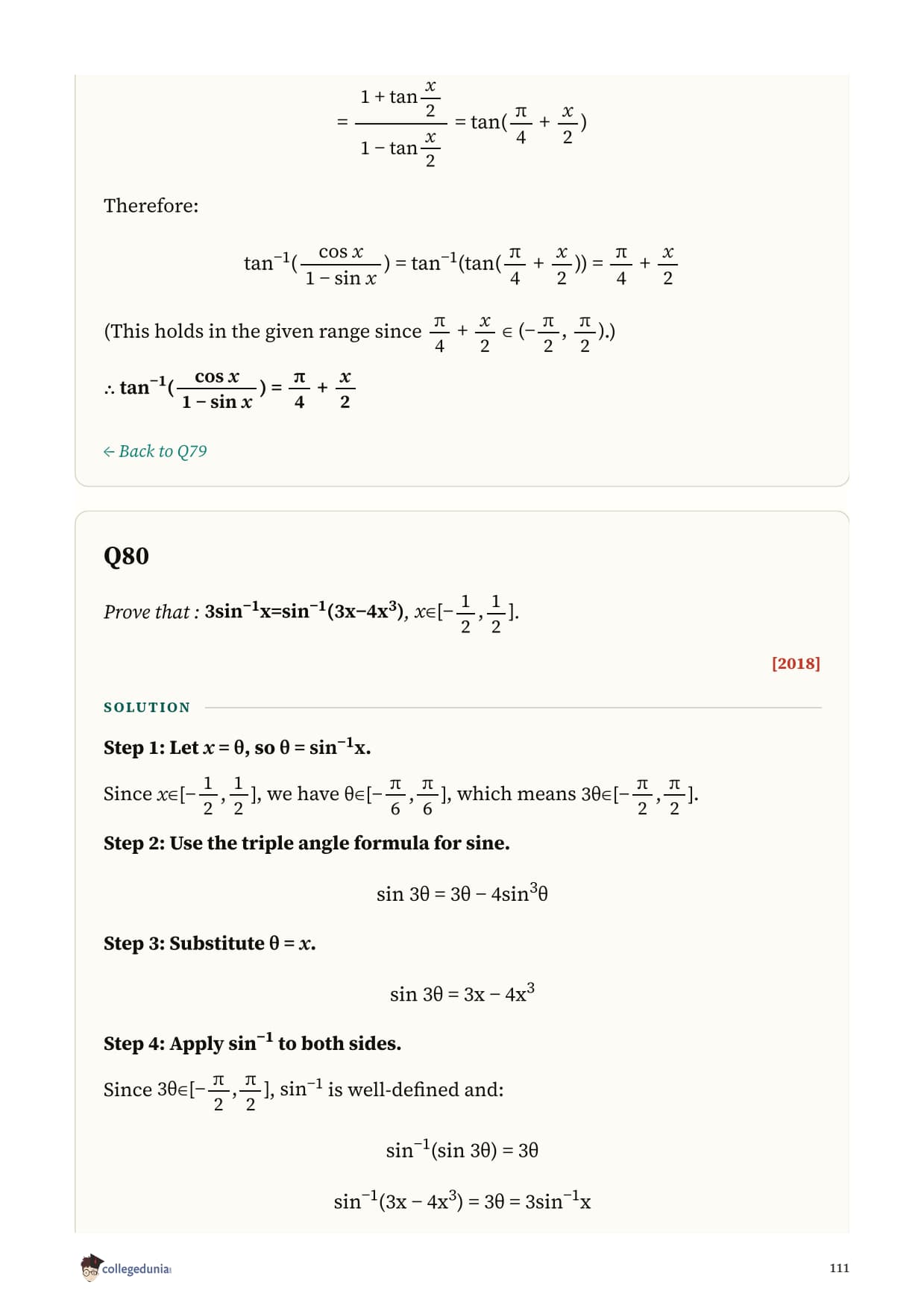
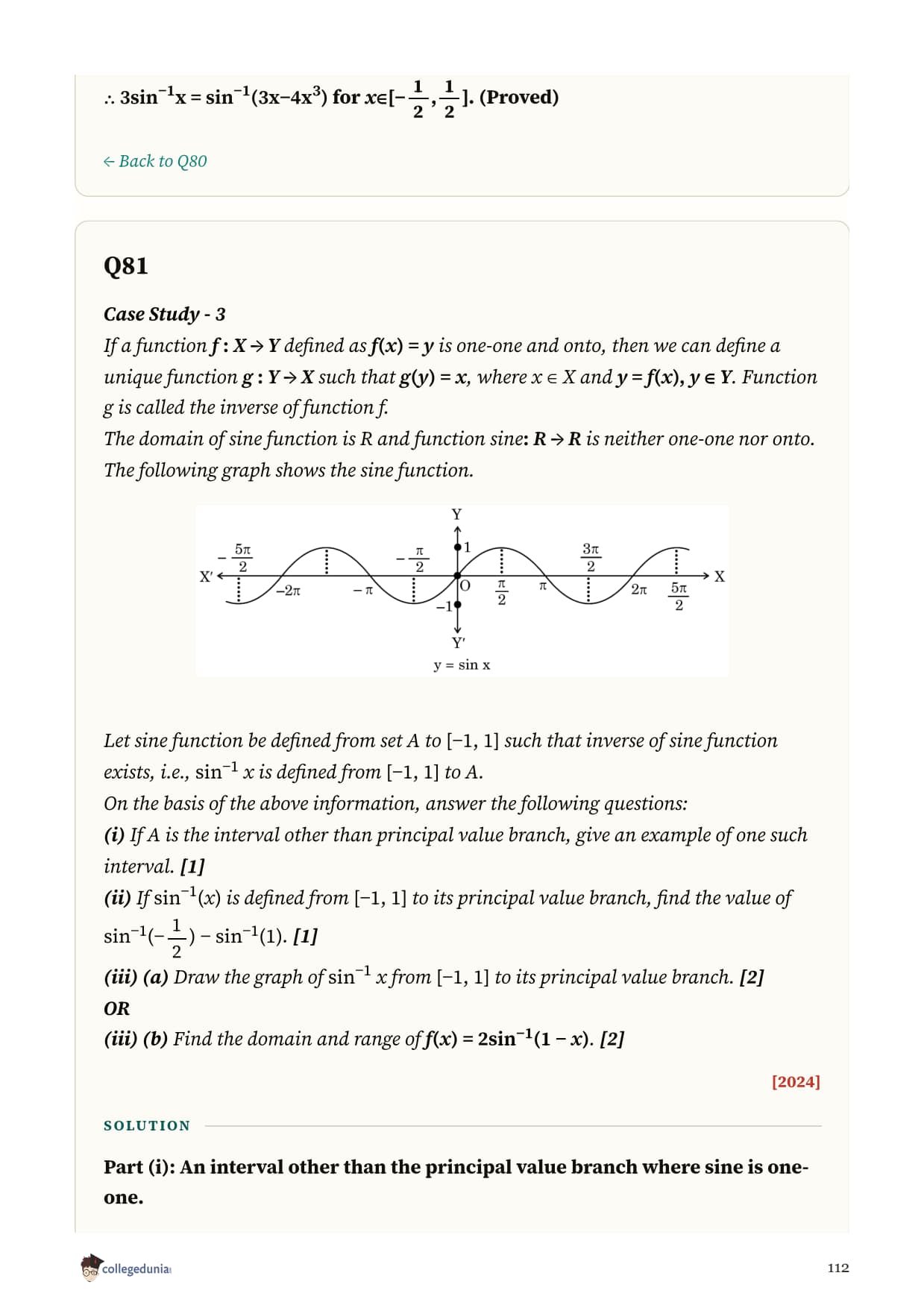
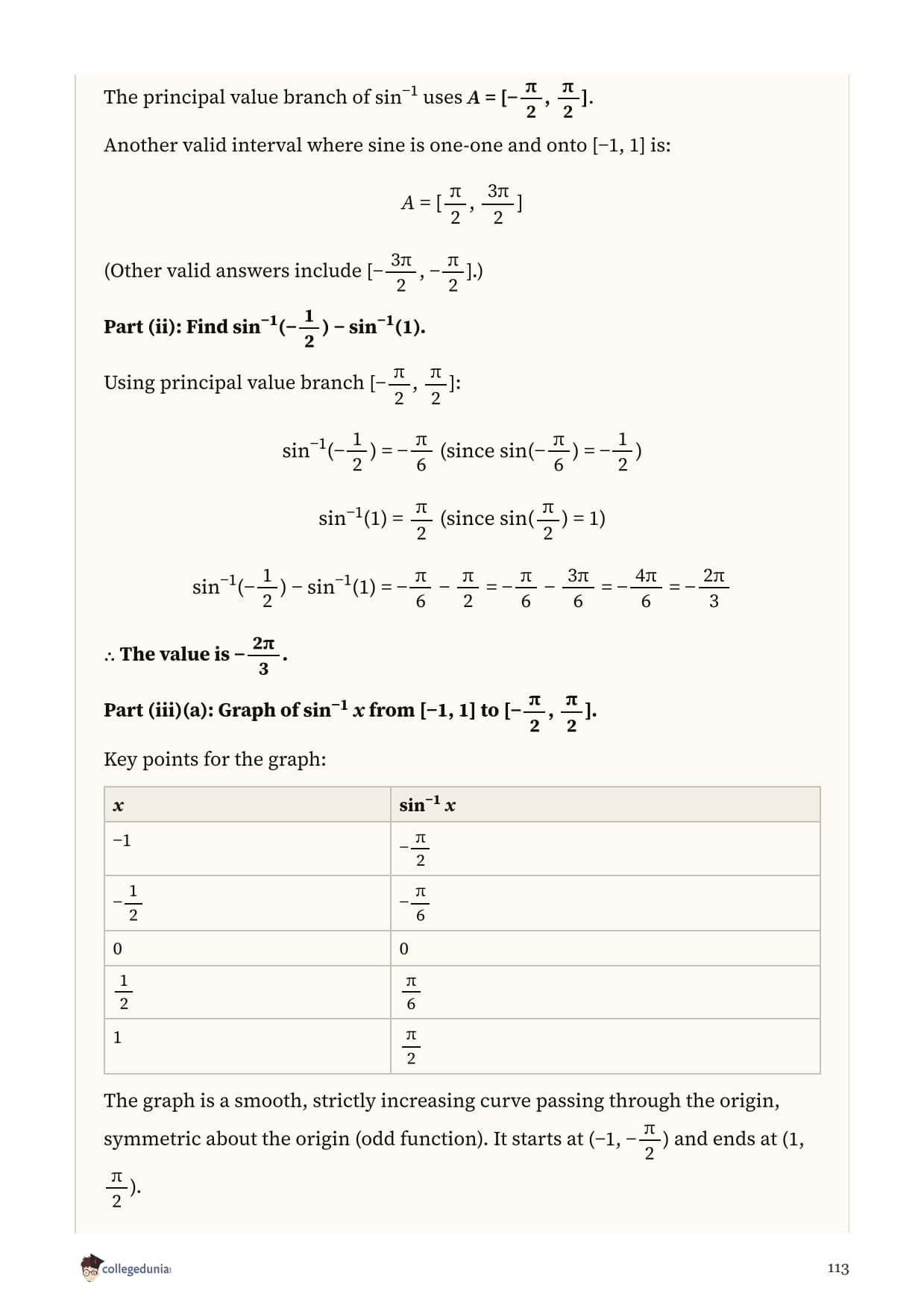
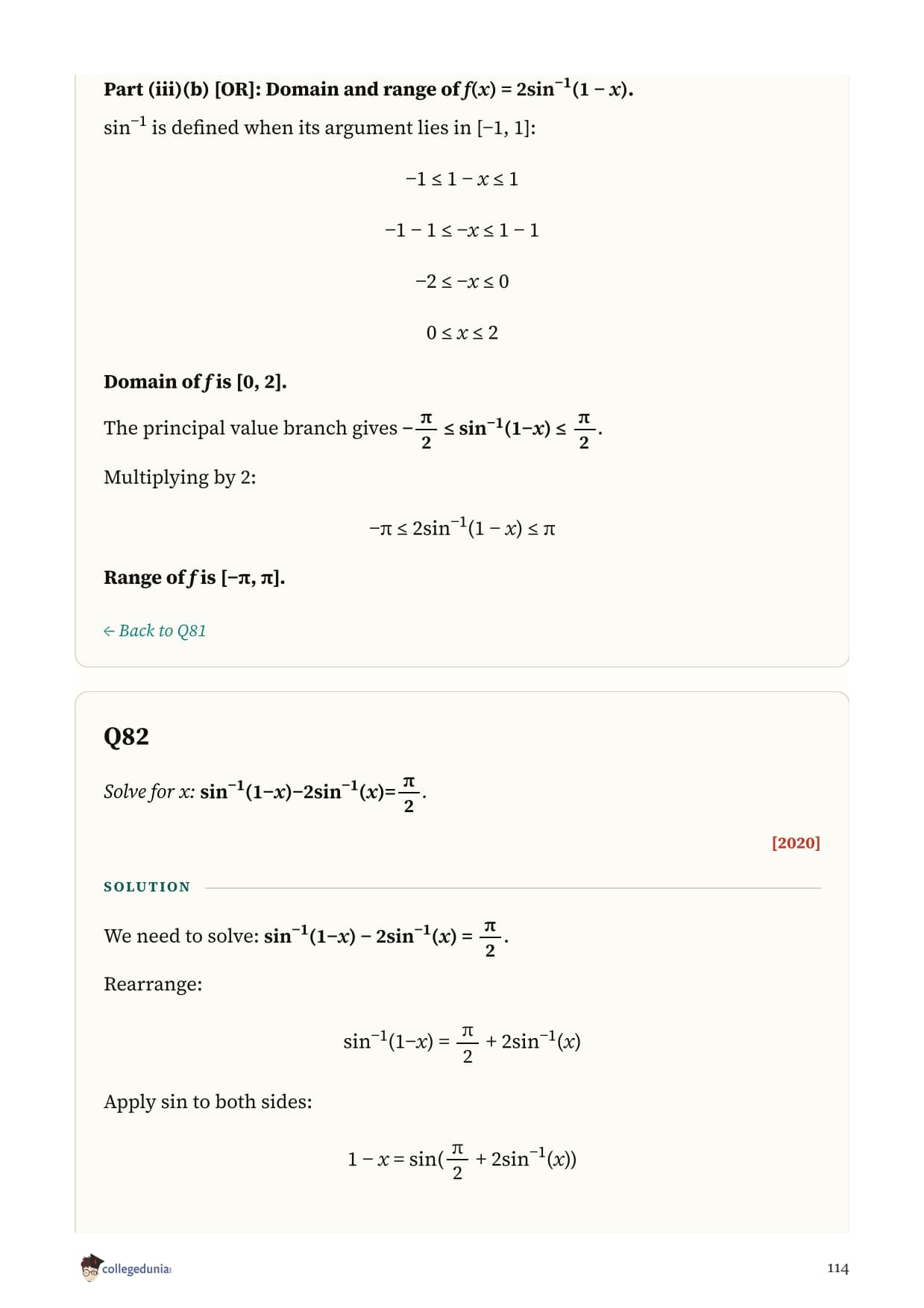
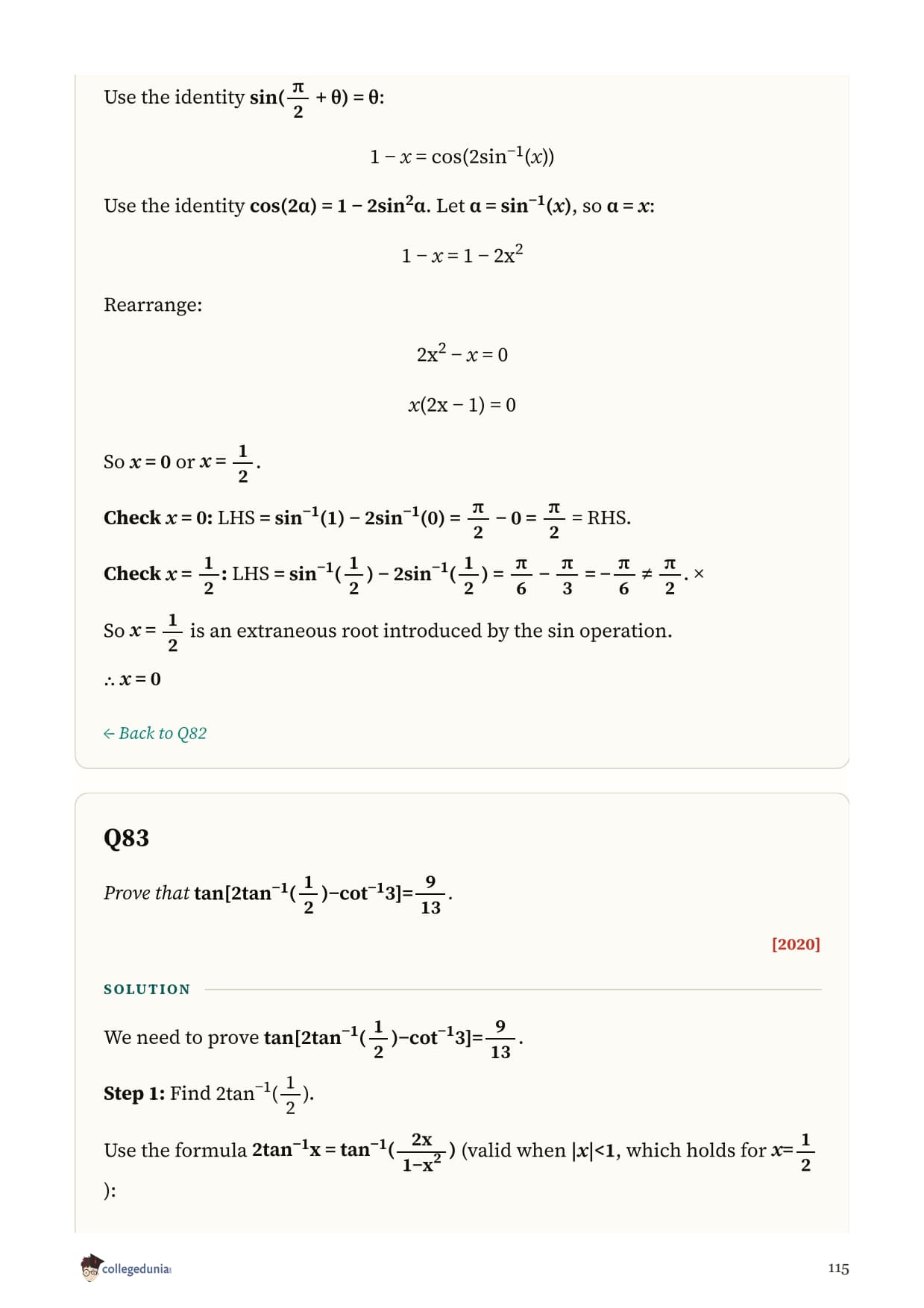
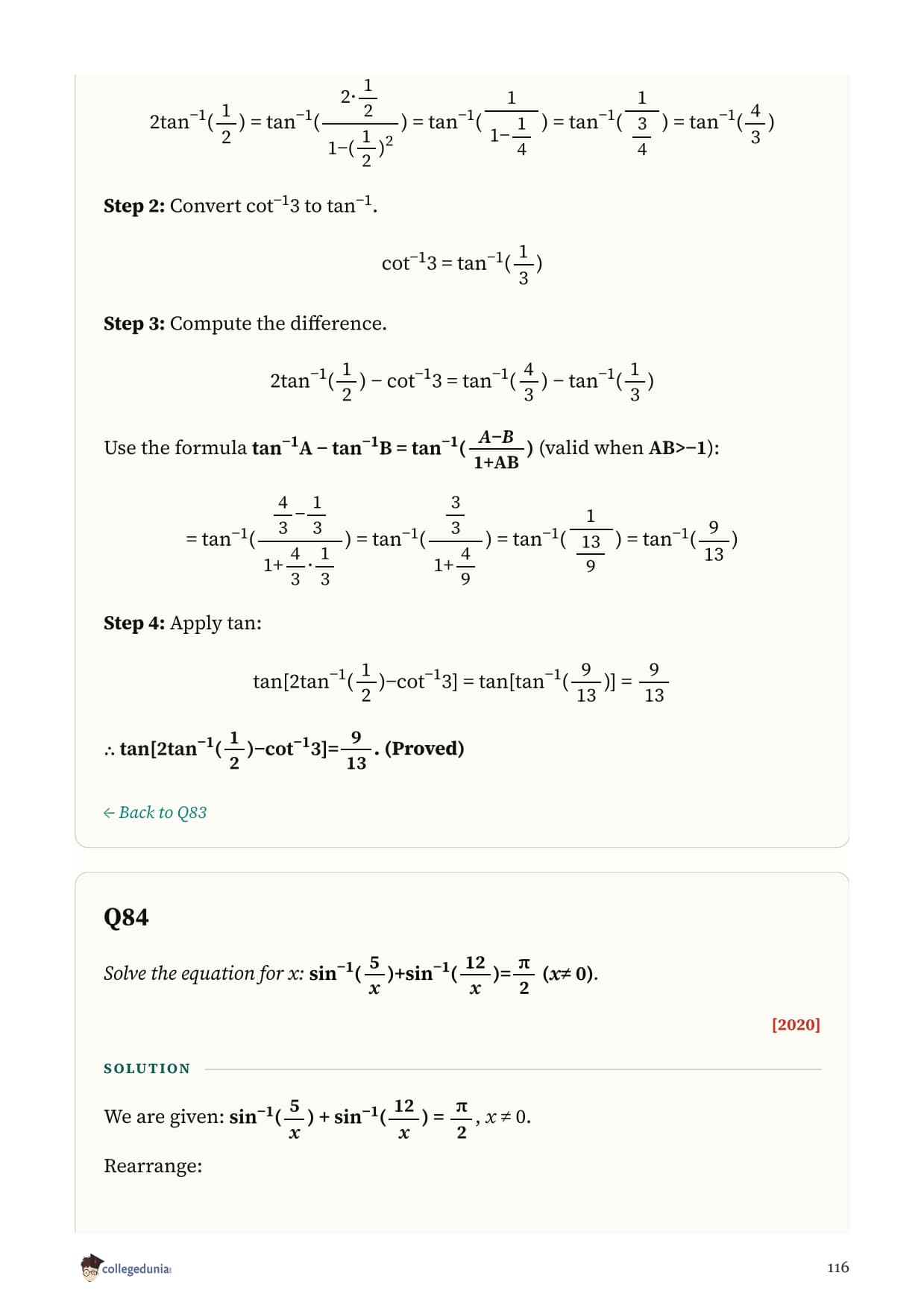
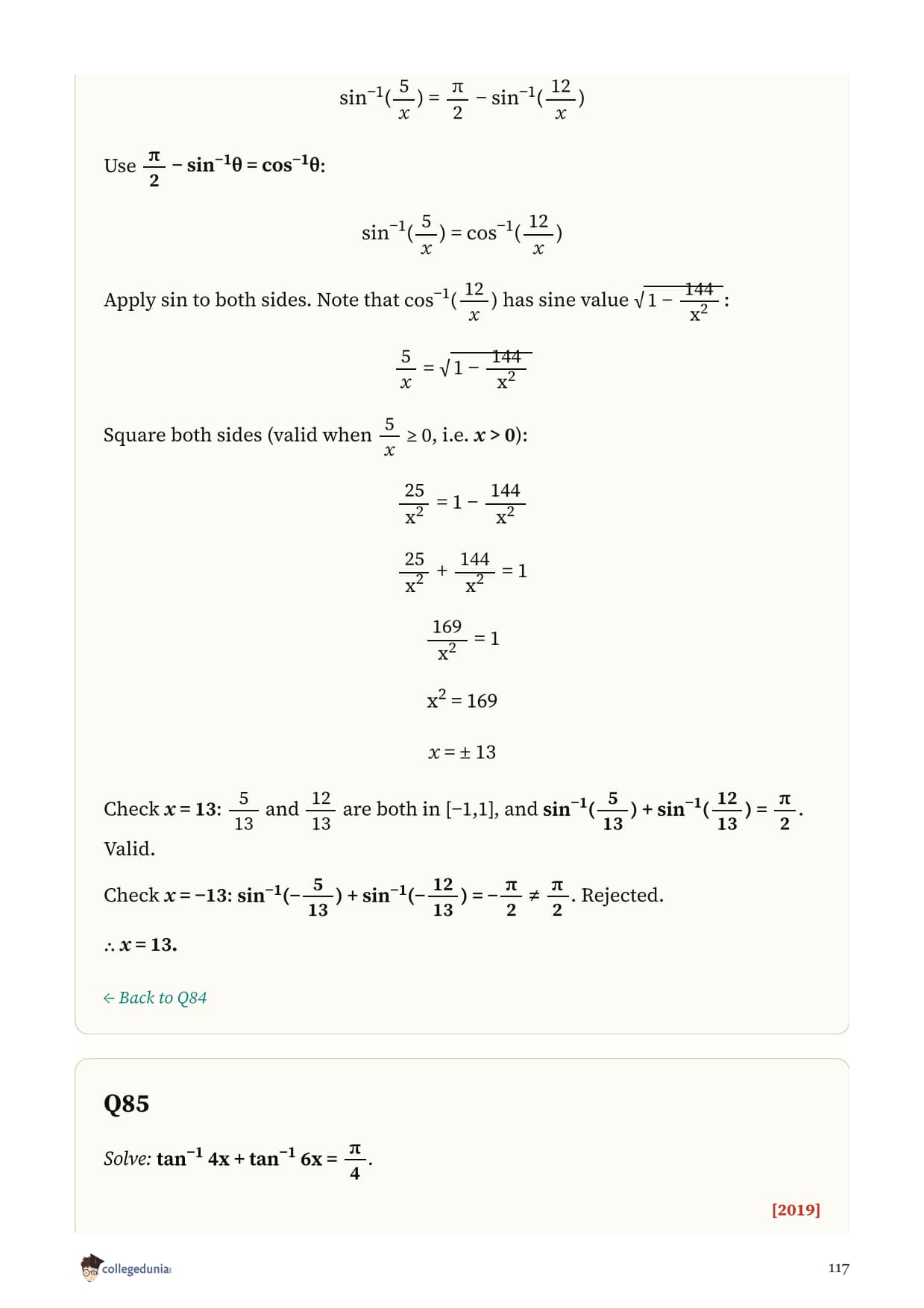
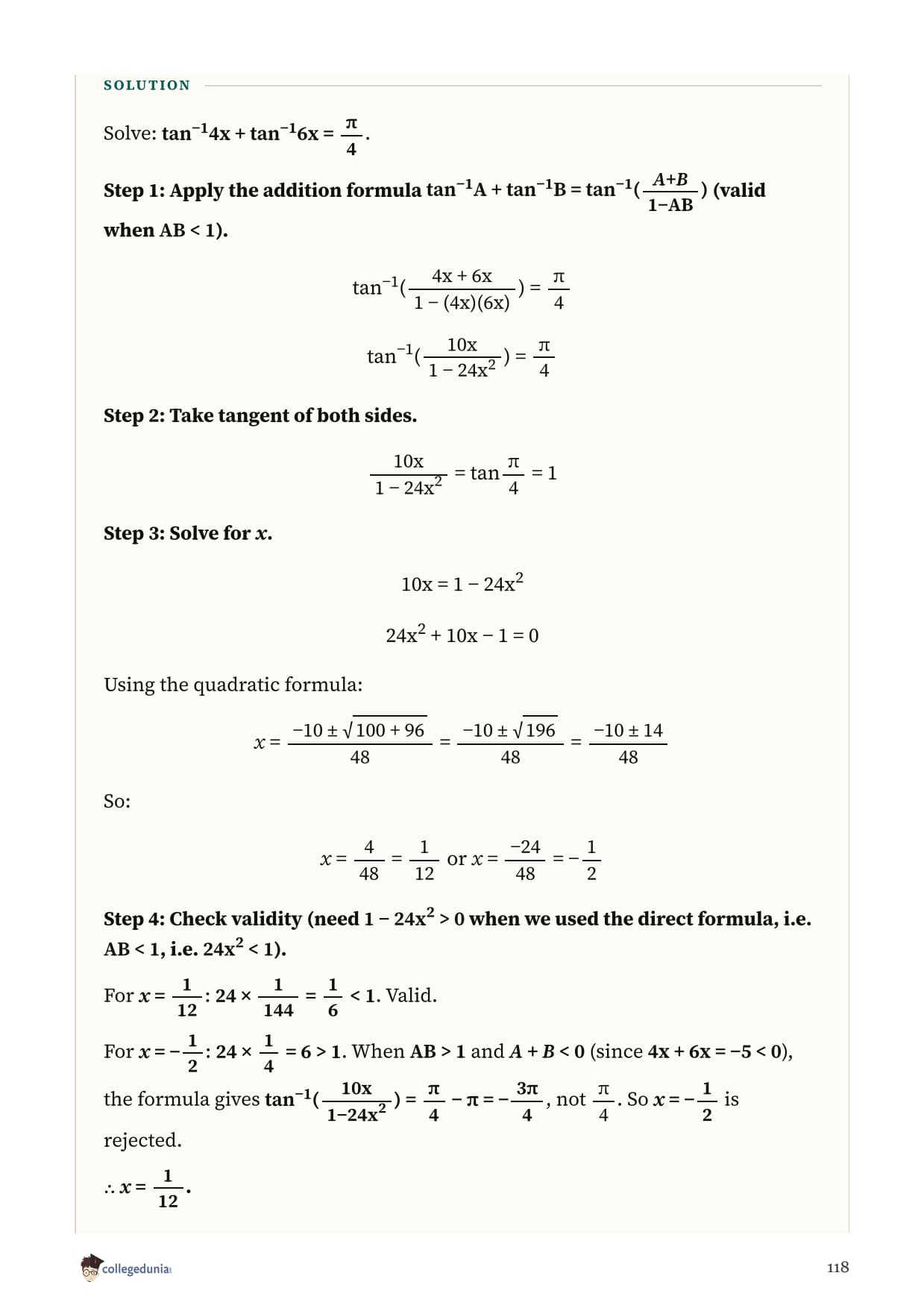
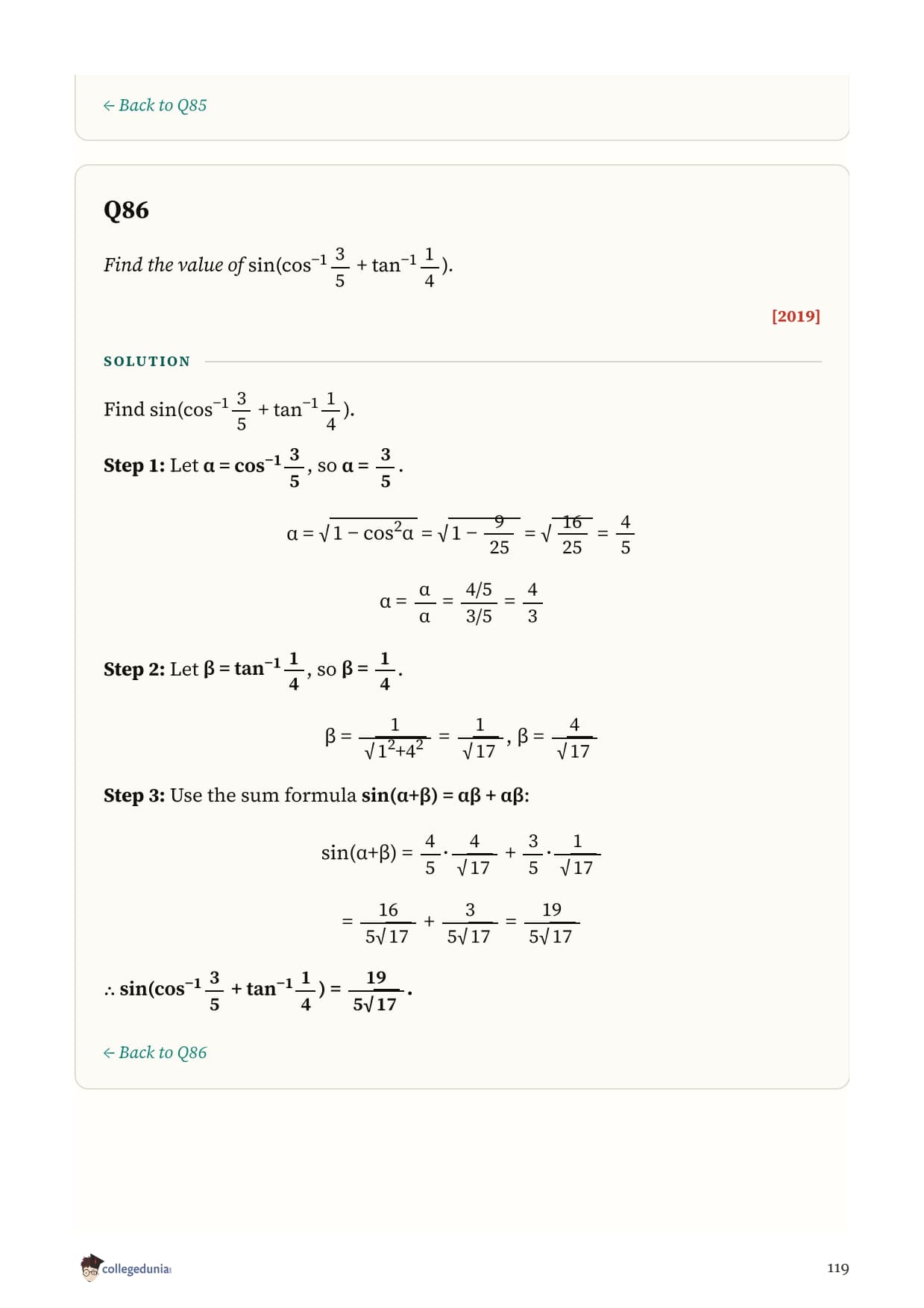
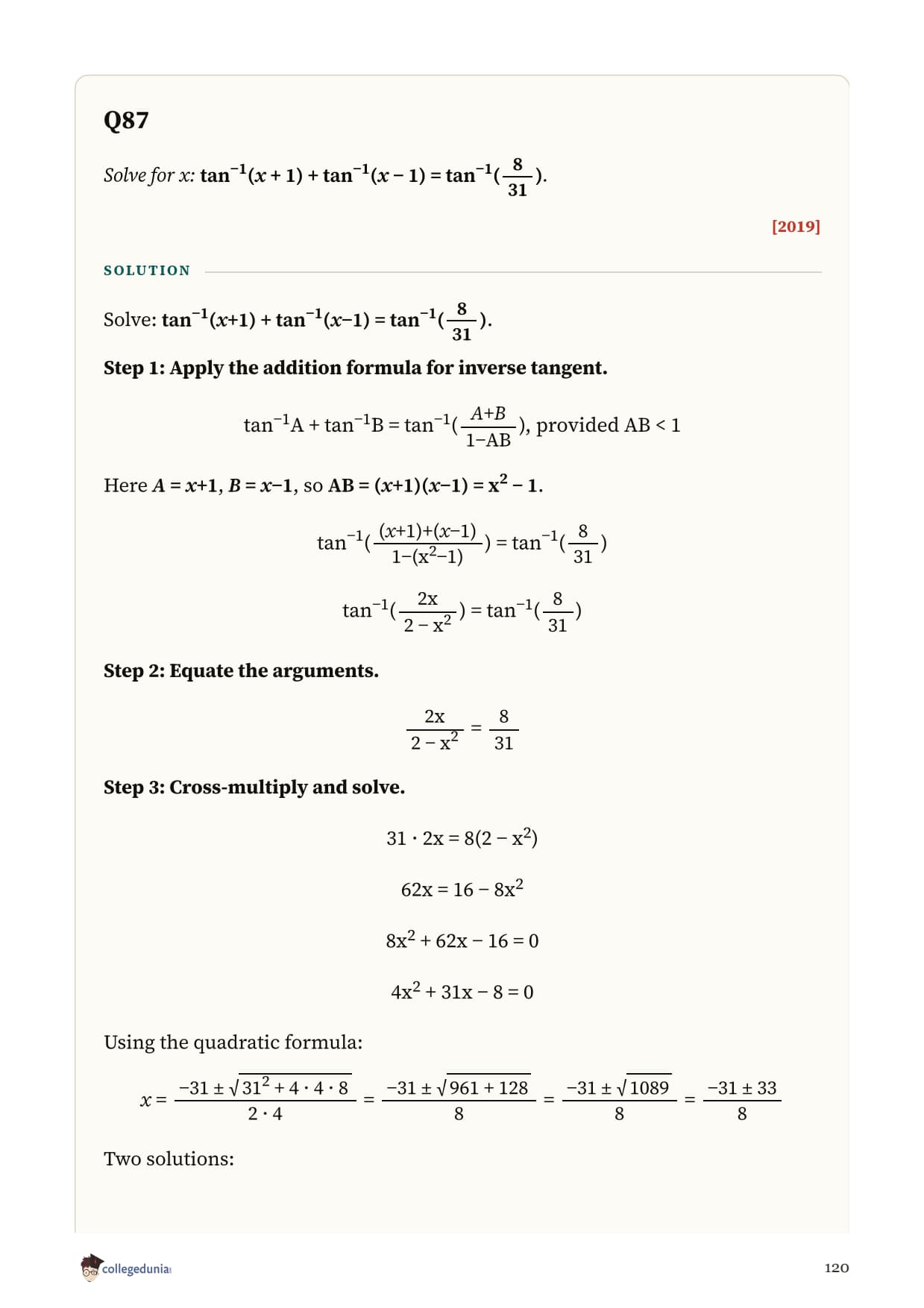
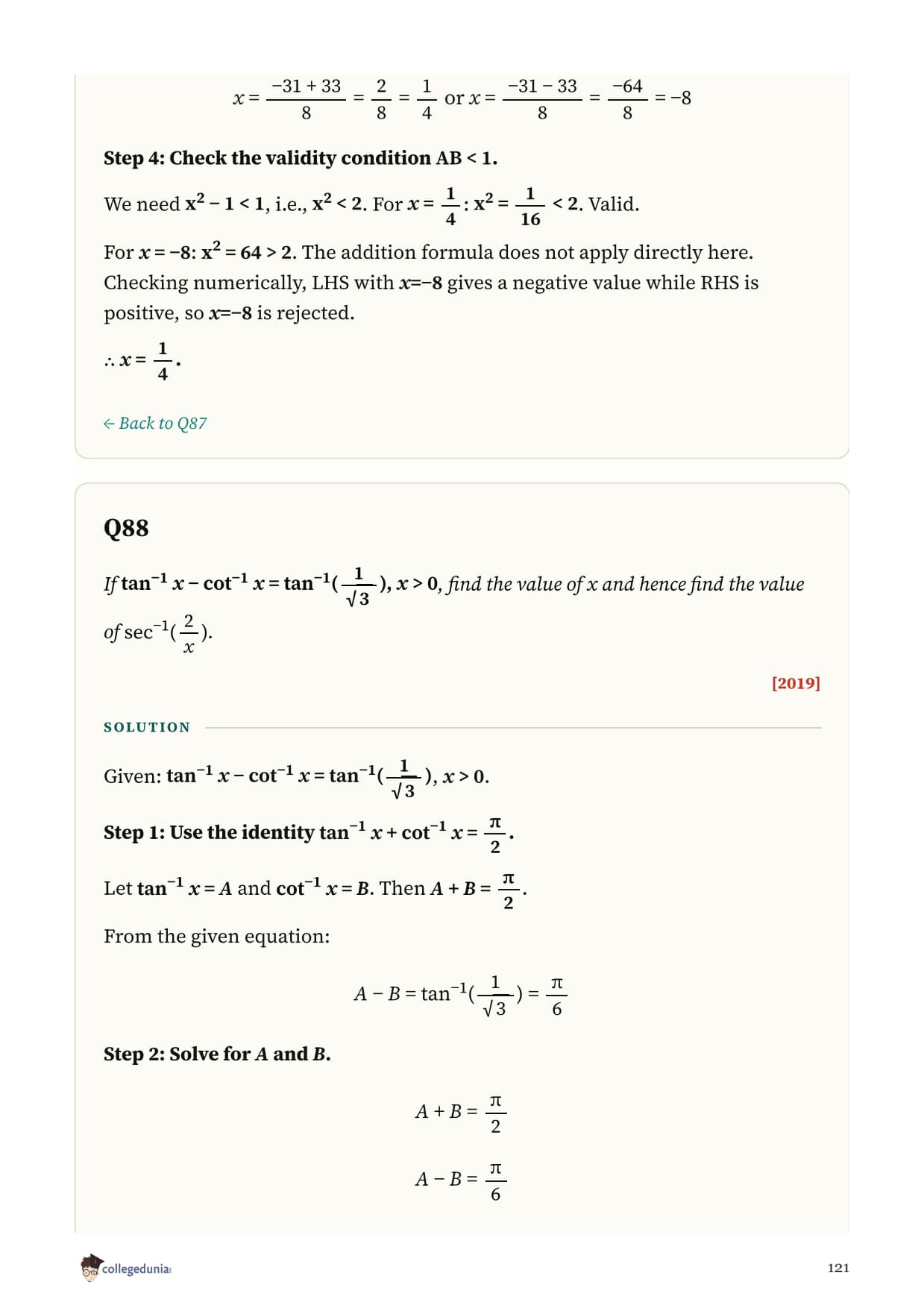
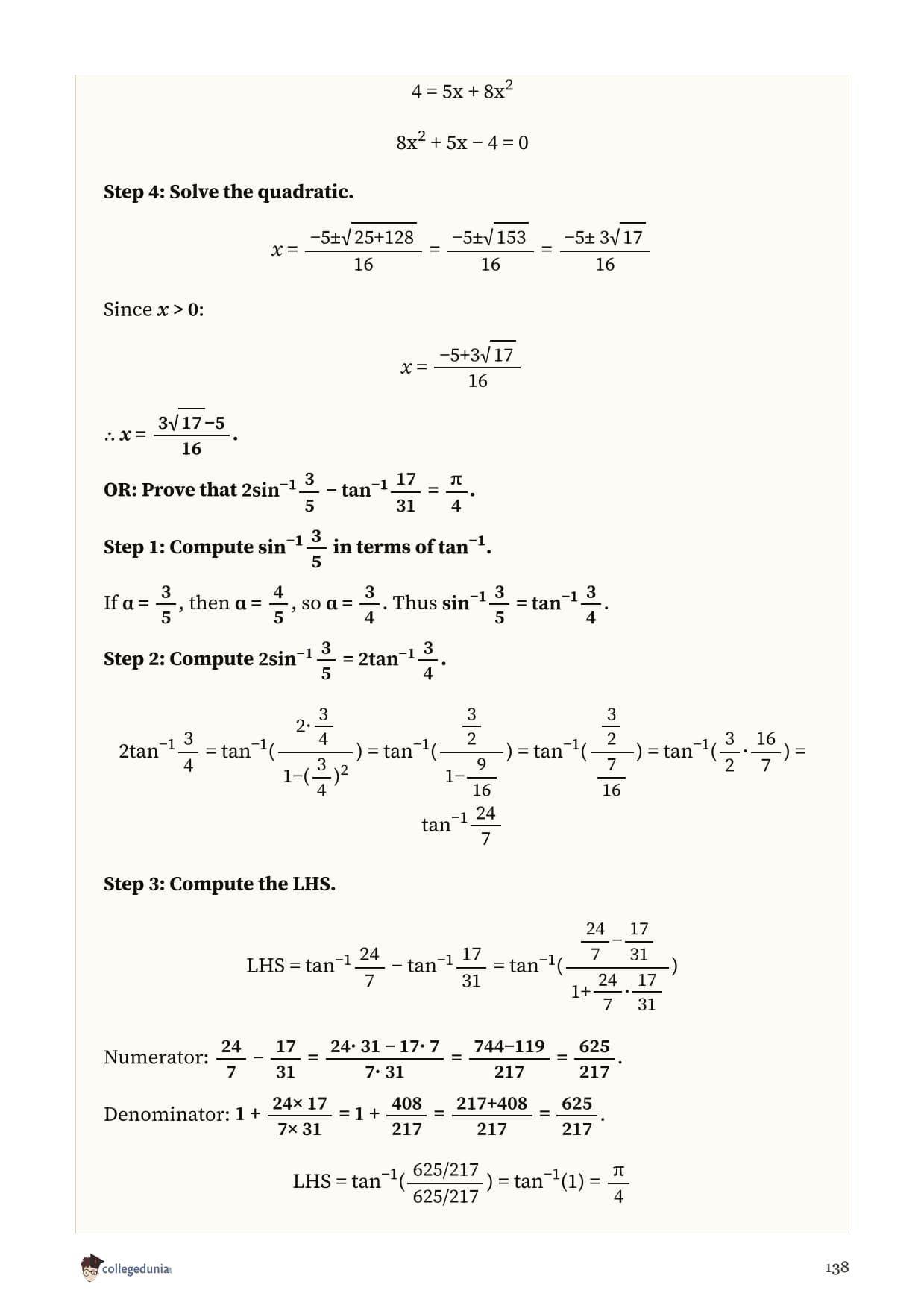
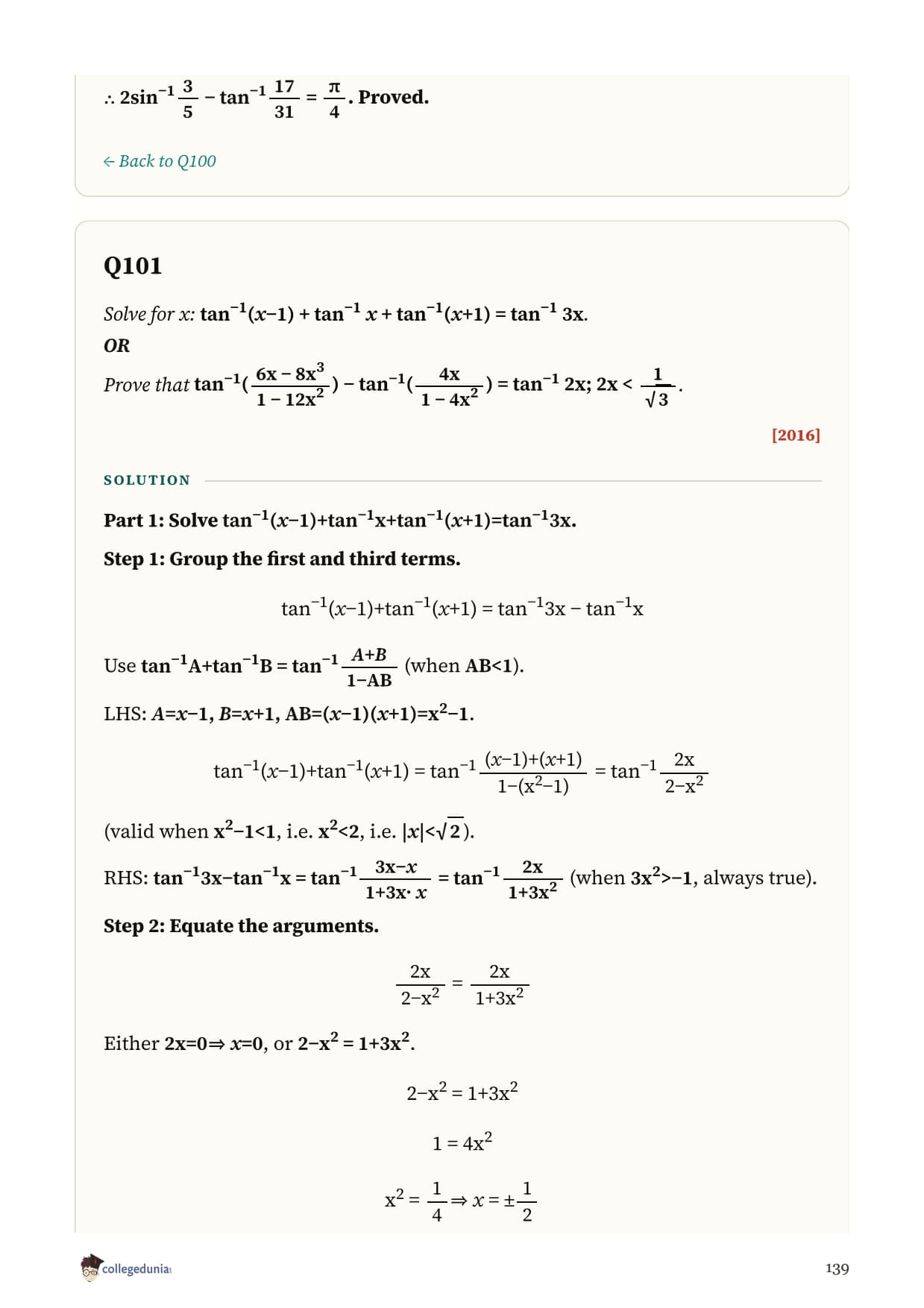
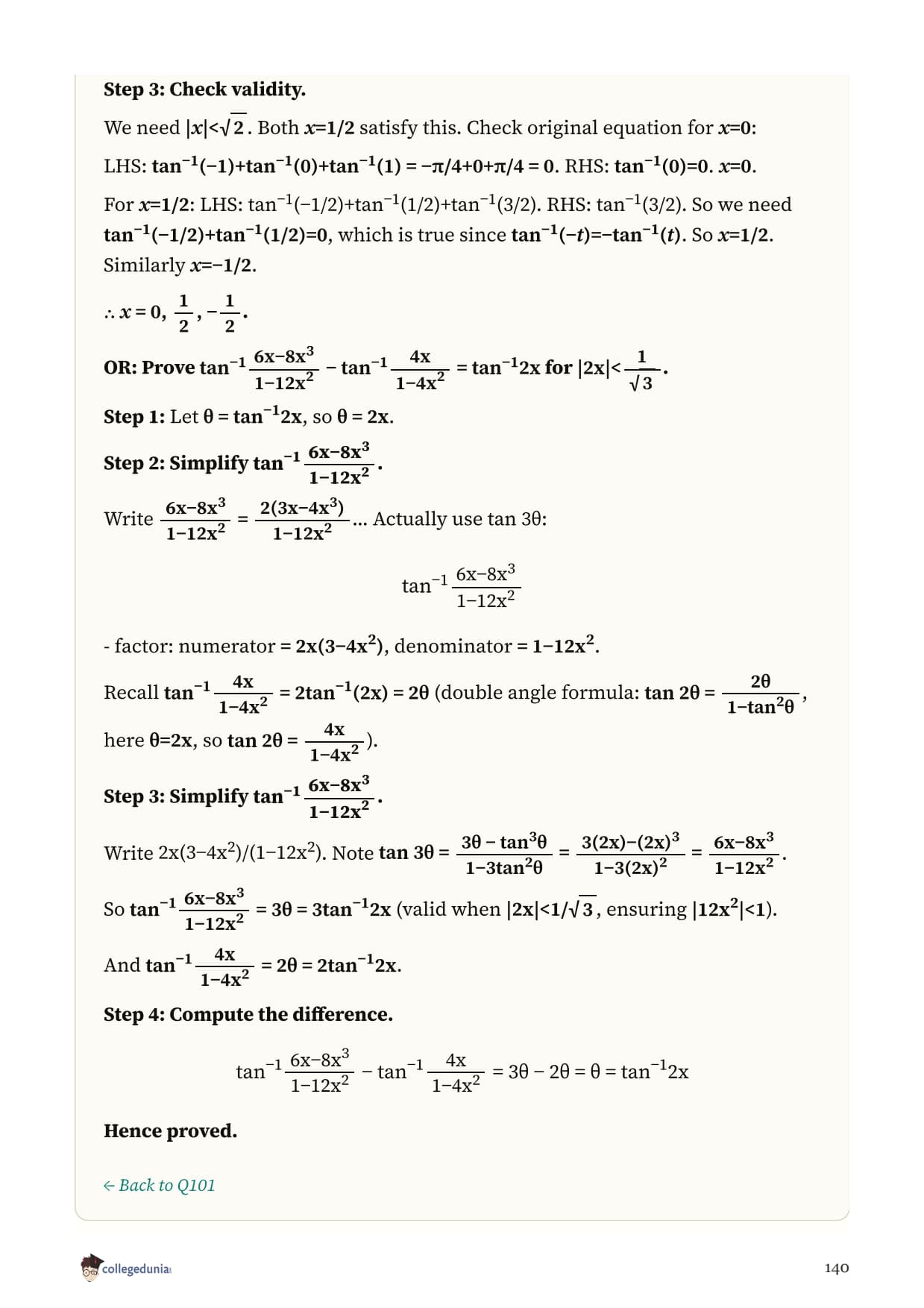
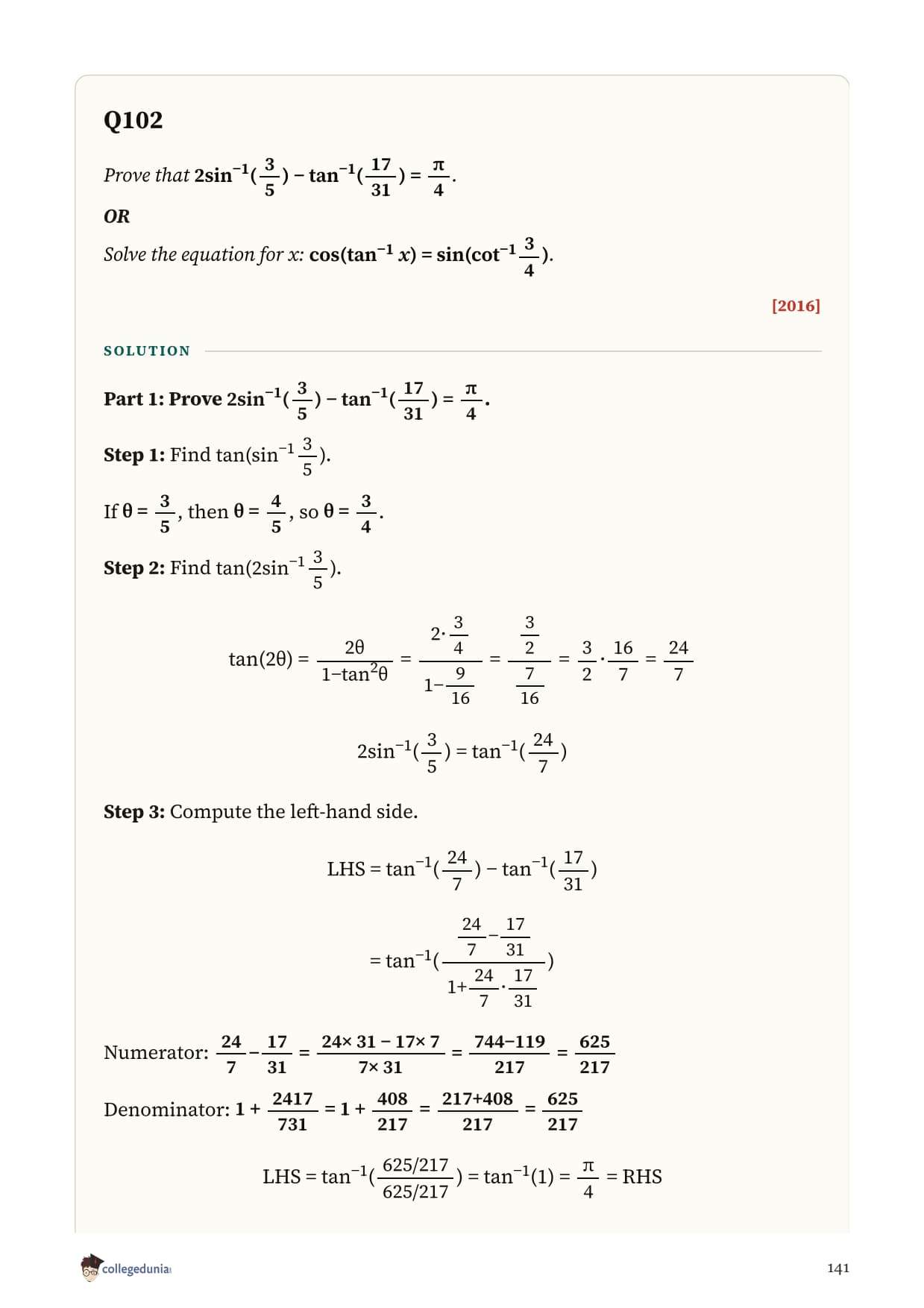
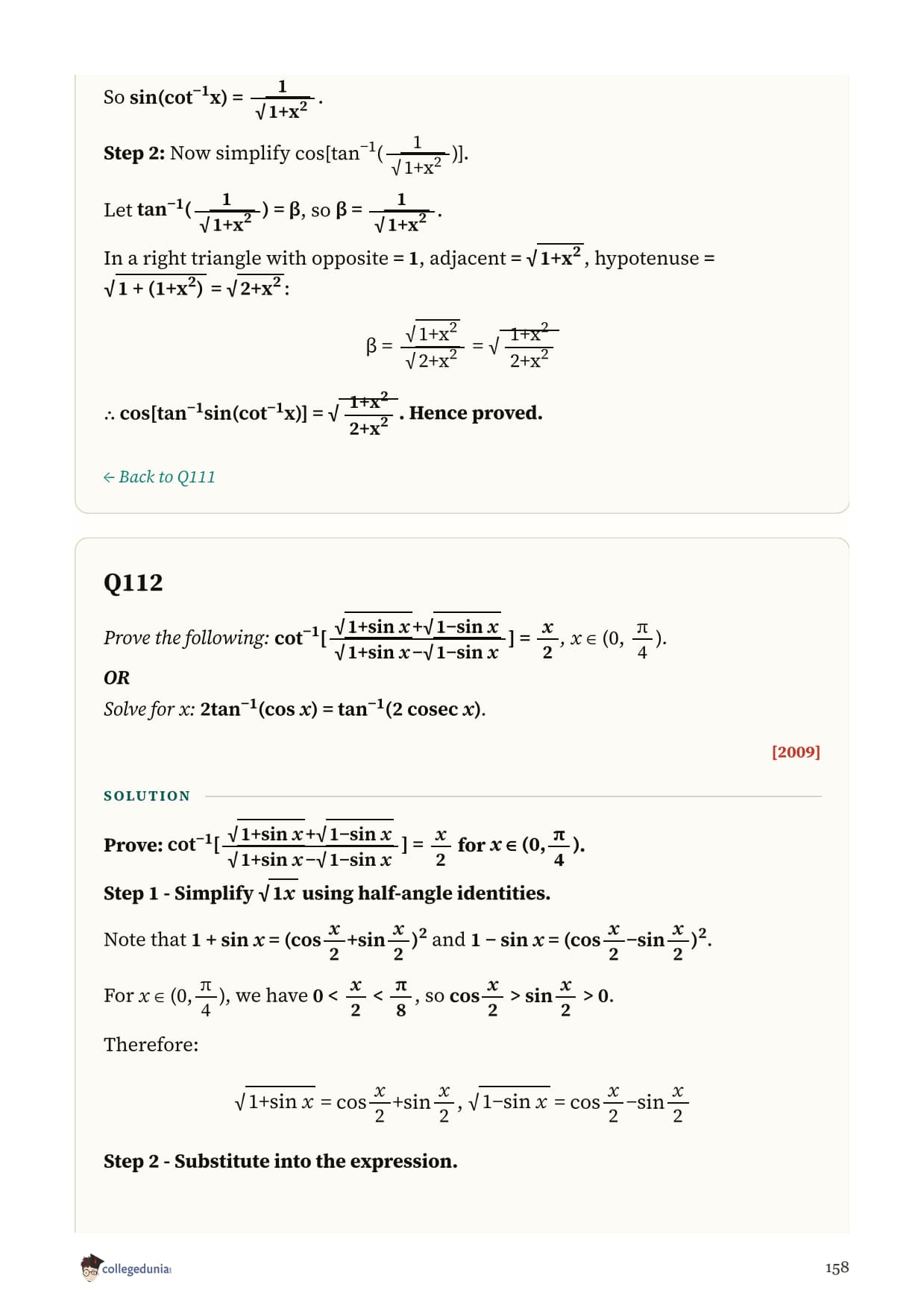
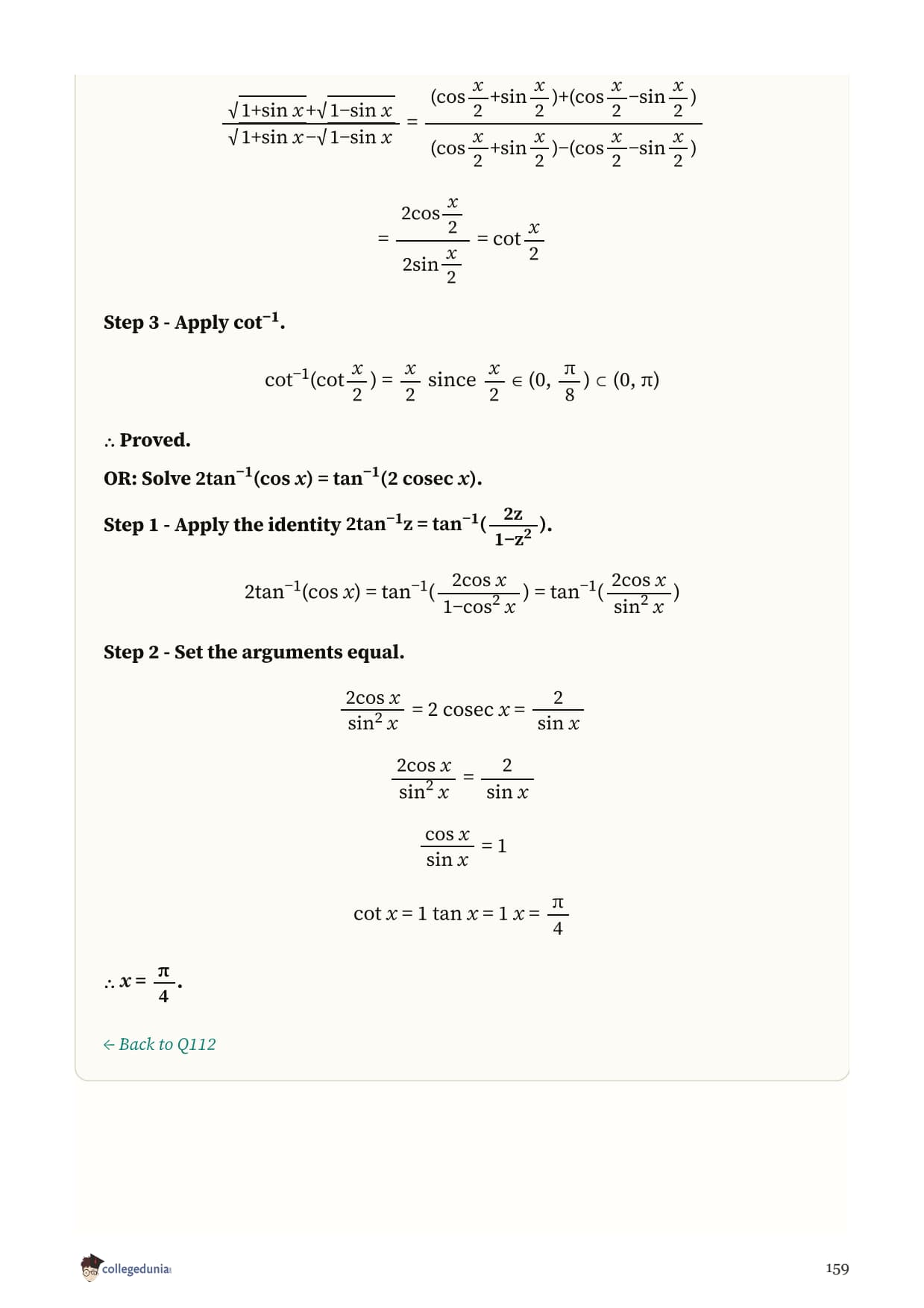
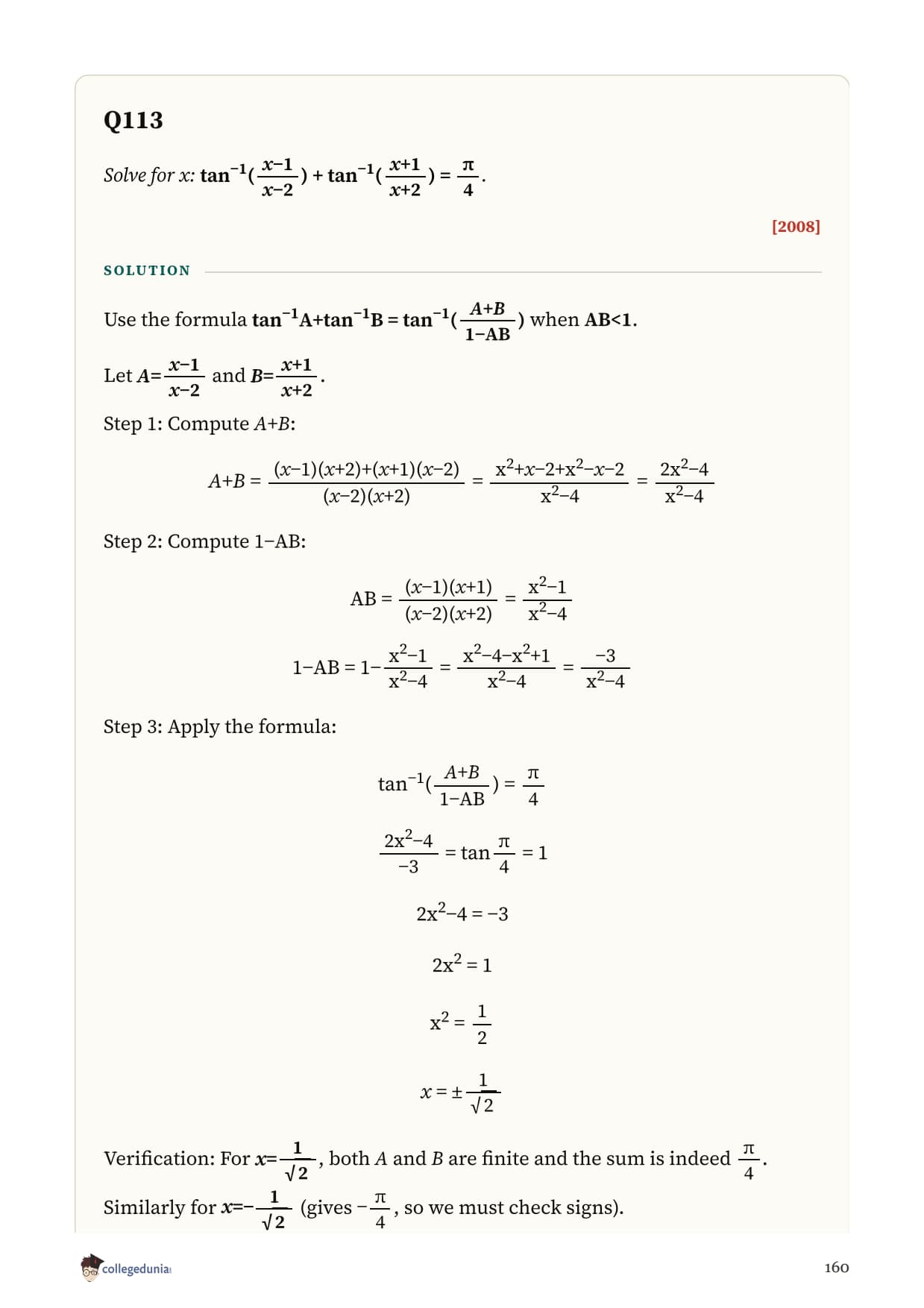
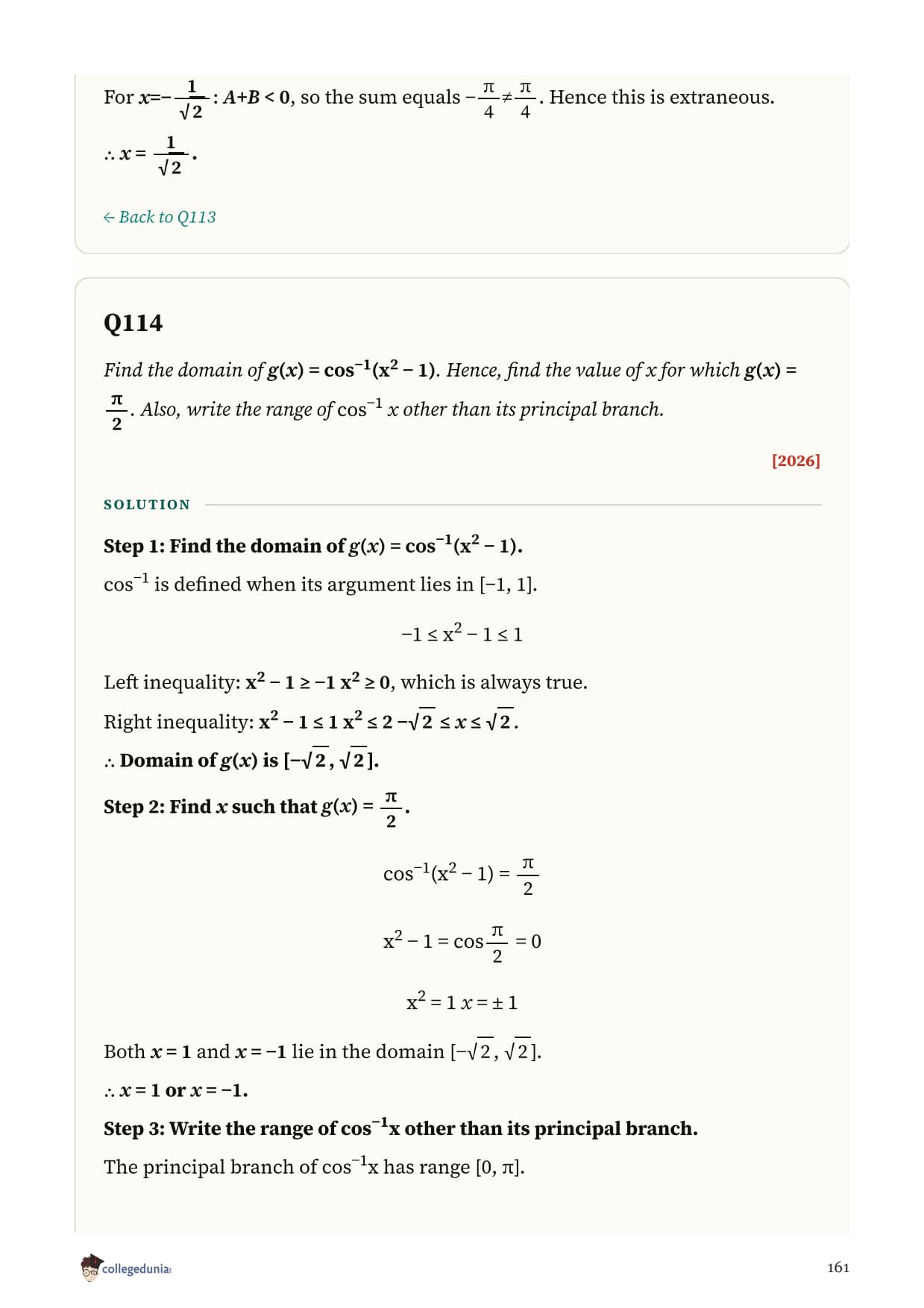
- 1-mark questions: 46 questions, mostly MCQ on principal values and the domain of inverse trig functions.
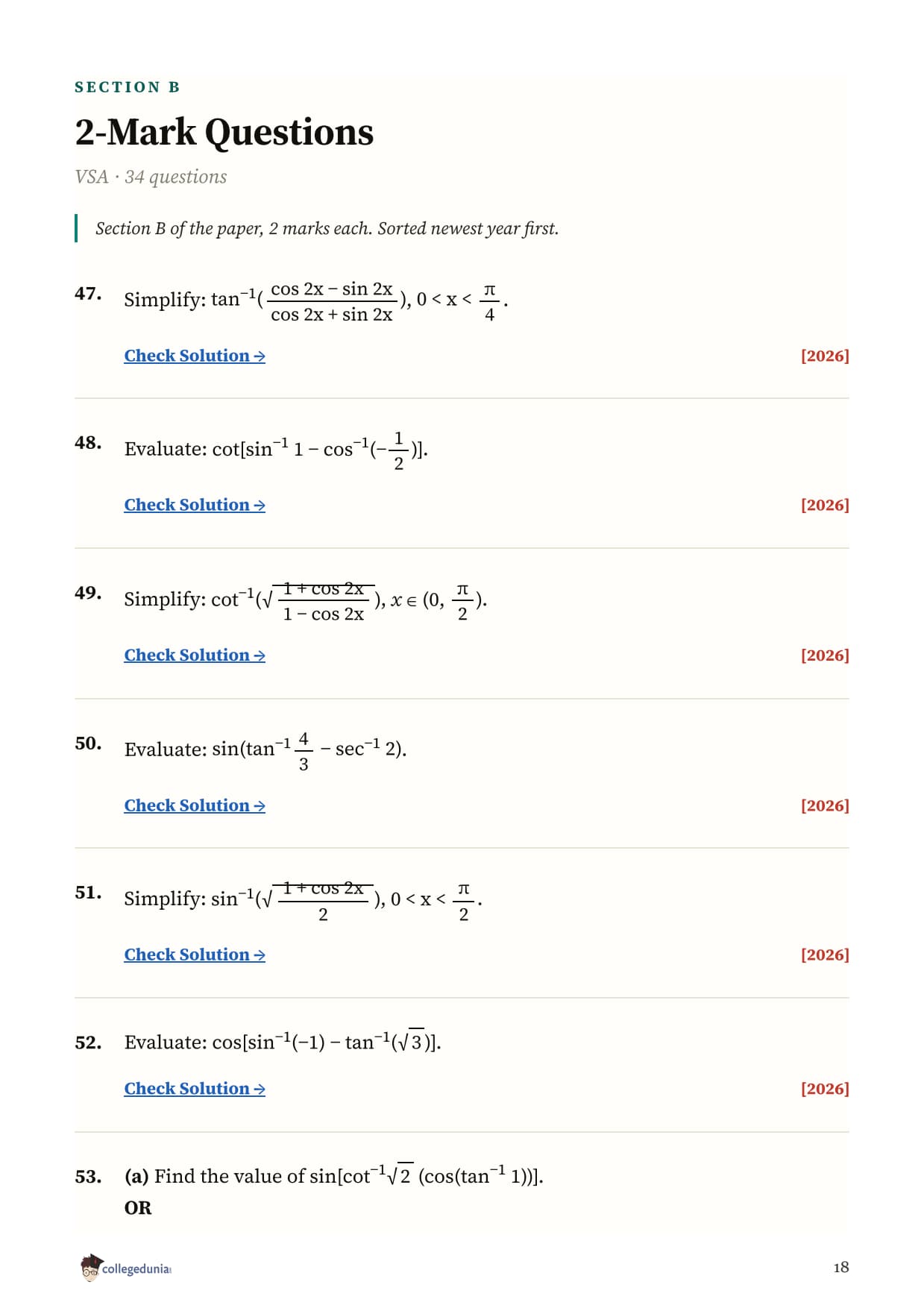
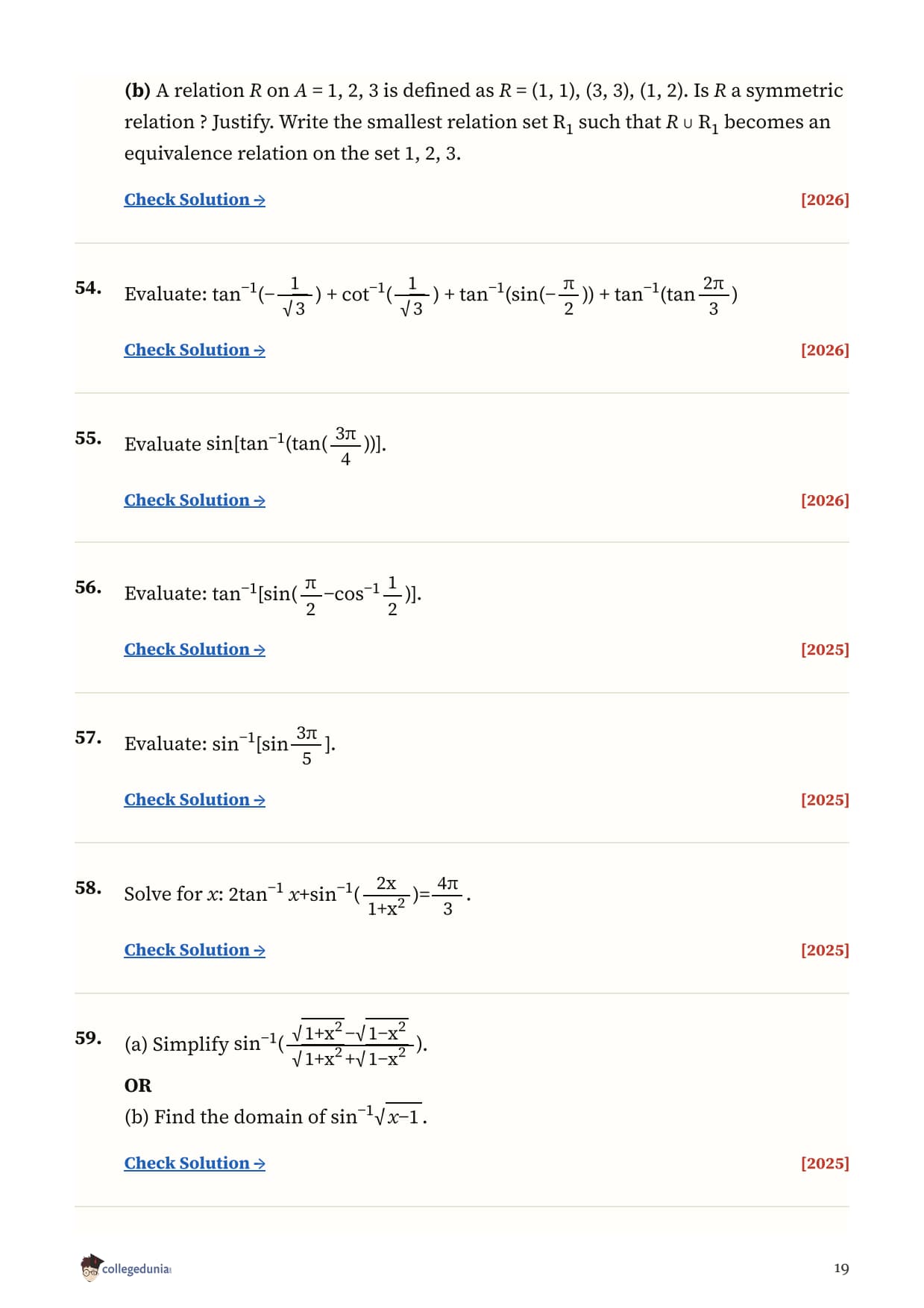
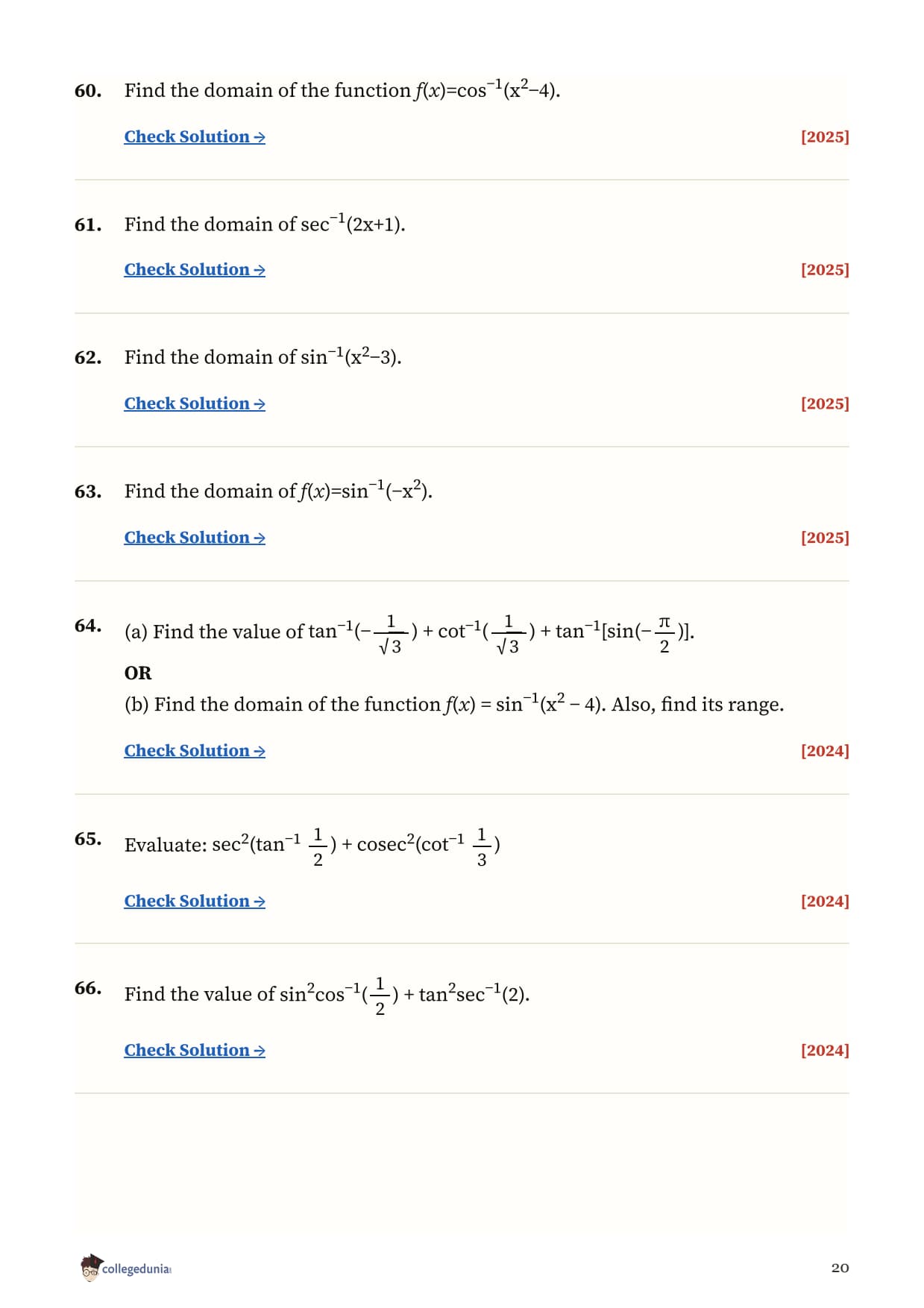
- 2-mark questions: 34 questions, built around simplifying or evaluating an inverse trig expression.
- 4 and 5-mark questions: 30 and 2 questions, where you prove an identity or solve an equation in inverse trig functions.
The Class 12 Maths Inverse Trigonometric Functions PYQ set collects 112 board-paper questions across 2008 to 2026, sorted by marks and by year. Most of the weight sits in the 1 and 2-mark band, so a little practice here protects easy marks.
Every question in this Class 12 Maths Inverse Trigonometric Functions PYQ compilation is sourced from CBSE board papers (Delhi, Outside Delhi, Foreign and Compartment) and cross-checked against the official mark scheme, with near-duplicate questions removed.
What the Inverse Trigonometric Functions Previous Year Questions Cover
The 112-question set maps every idea the NCERT chapter teaches. Principal value branch and principal values drive most of the 1-mark MCQs. Domain and range of the six inverse functions appear as quick objective questions. Proving inverse trig identities and solving inverse trig equations carry the 2 and 4-mark band, often combining two functions in one expression.
Marks-wise Distribution of the Inverse Trigonometric Functions PYQs
The table below shows how the 112 questions split across the CBSE marks bands. Use it to decide how much revision time each band deserves.
| Marks | Questions | Total Marks | CBSE Section | Type |
|---|---|---|---|---|
| 1 mark | 46 | 46 | Section A | MCQ / Assertion-Reason |
| 2 mark | 34 | 68 | Section B | VSA (Very Short Answer) |
| 4 mark | 30 | 120 | Section D | Case Study |
| 5 mark | 2 | 10 | Section E | Long Answer |
Year-wise Spread of Class 12 Maths Inverse Trigonometric Functions PYQs
The compilation draws from more than 15 CBSE board years. About 54% of the questions come from 2023 onwards, because the MCQ-heavy pattern pushed up the 1-mark count.
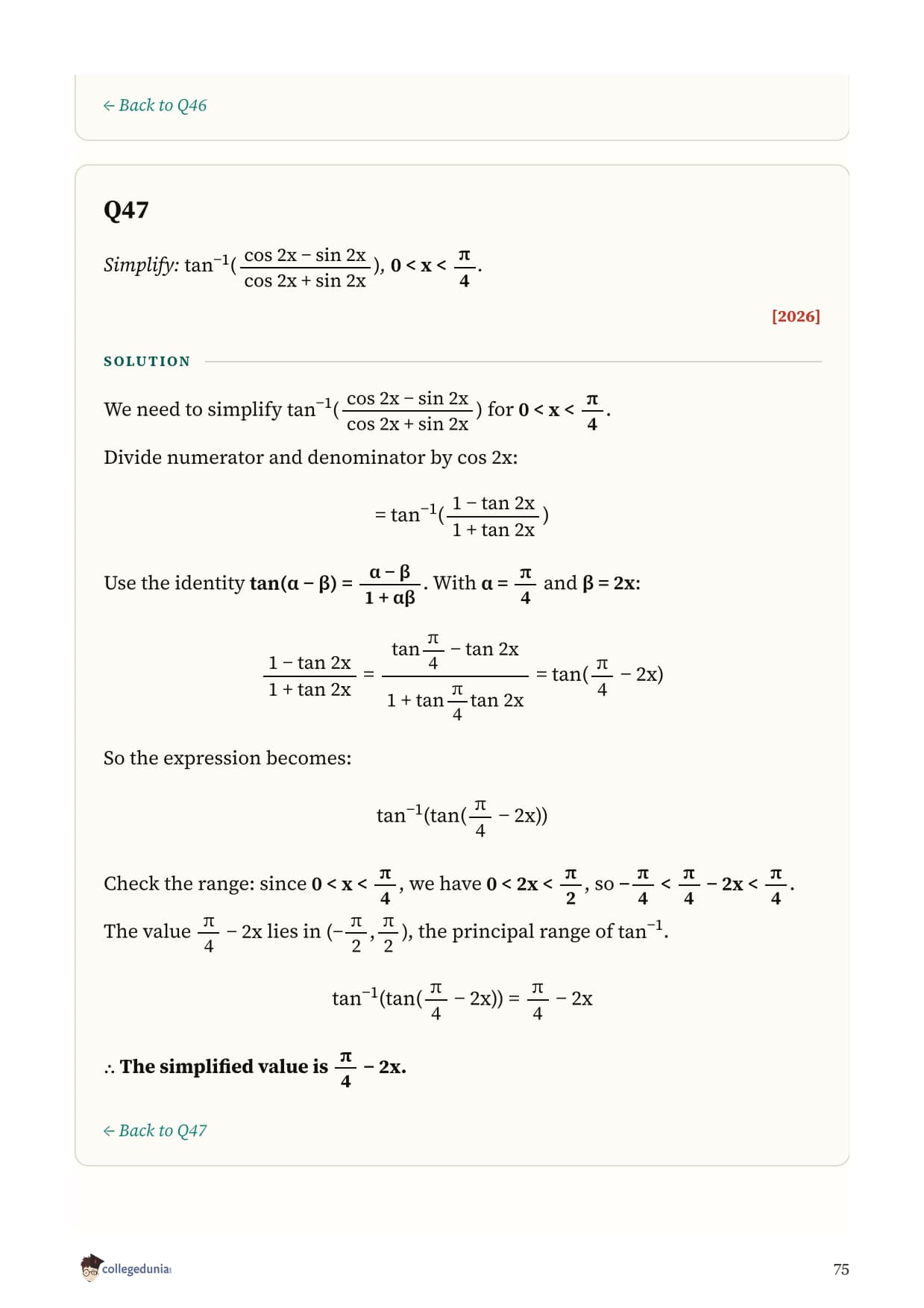
- 2026: A 2-mark simplification of tan inverse of (cos 2x minus sin 2x) over (cos 2x plus sin 2x), and a 5-mark domain question on cos inverse of (x squared minus 1).
- 2024 to 2025: The heaviest contribution years, with MCQ banks on principal values and the domain of inverse trig functions.
- 2019 to 2023: Reduced-syllabus papers, but principal-value evaluations and short identity proofs still appear.
- 2008 to 2018: Older long answers proving identities and solving equations, all still in the current syllabus.
Topic Frequency in the Inverse Trigonometric Functions Board Paper Questions
The 112 questions cluster into the six topic buckets below, ranked by how often CBSE has set them between 2008 and 2026.
| Rank | Topic Cluster | Frequency | Typical Marks Band |
|---|---|---|---|
| 1 | Principal value branch (finding the principal value of an inverse function) | ~26 per cent | 1 and 2 mark |
| 2 | Evaluation of inverse trig expressions (mixed sin, cos, tan inverse) | ~22 per cent | 1 and 2 mark |
| 3 | Proving inverse trig identities (sum and difference formulas) | ~18 per cent | 2 and 4 mark |
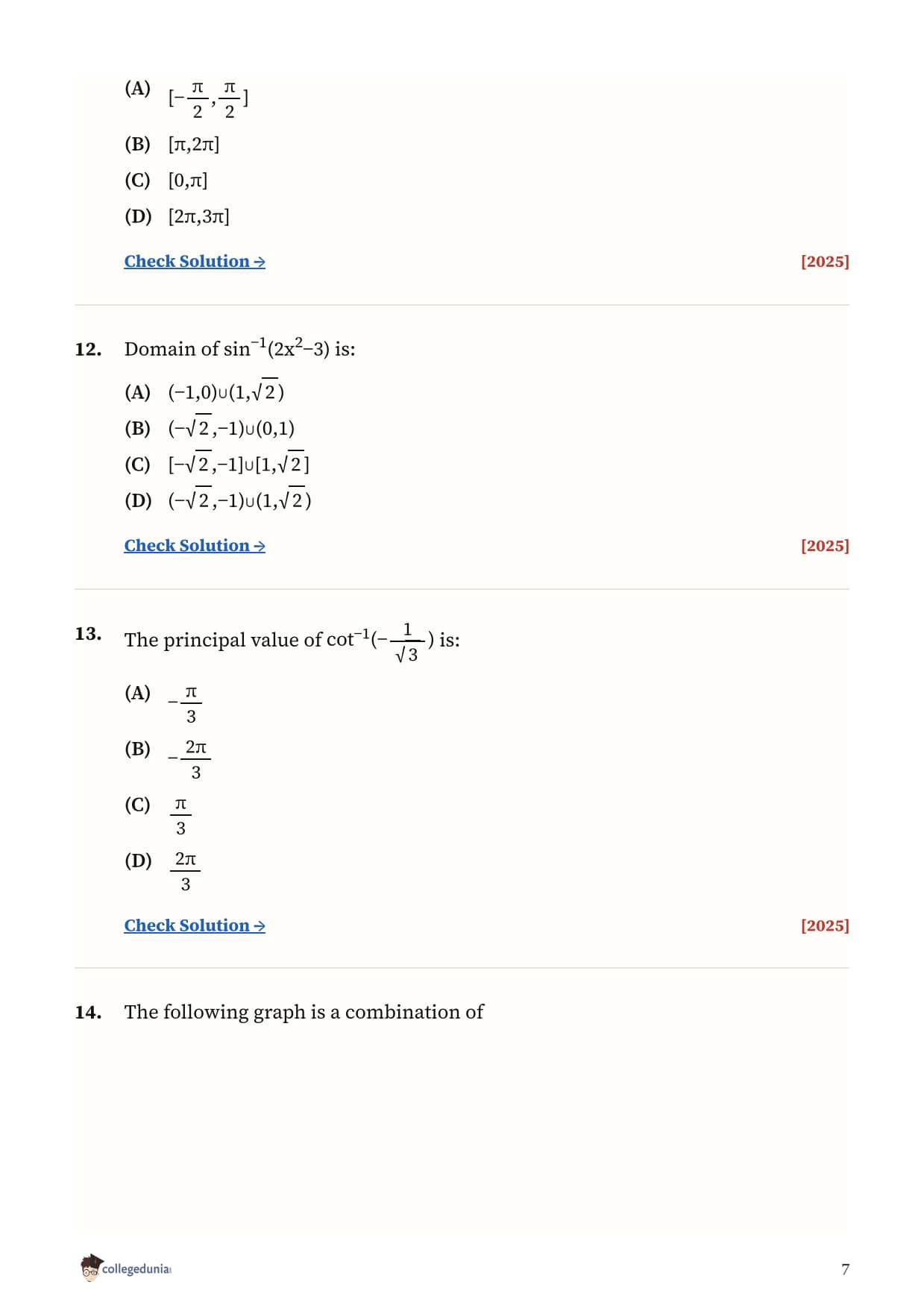
| 4 | Domain and range (valid inputs for each inverse function) | ~15 per cent | 1 and 5 mark |
| 5 | Equations in inverse trig functions (solving for x) | ~12 per cent | 2 and 4 mark |
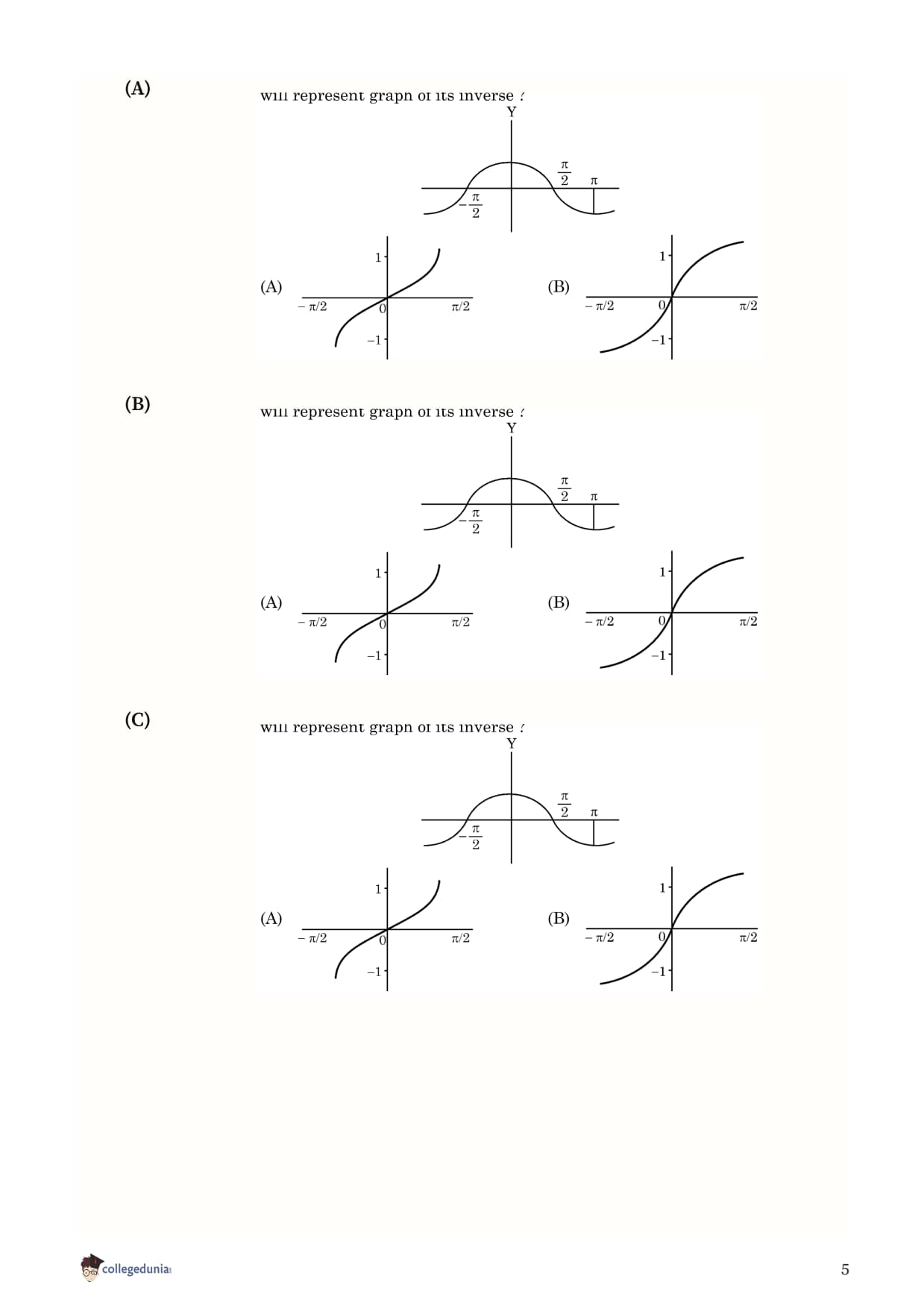
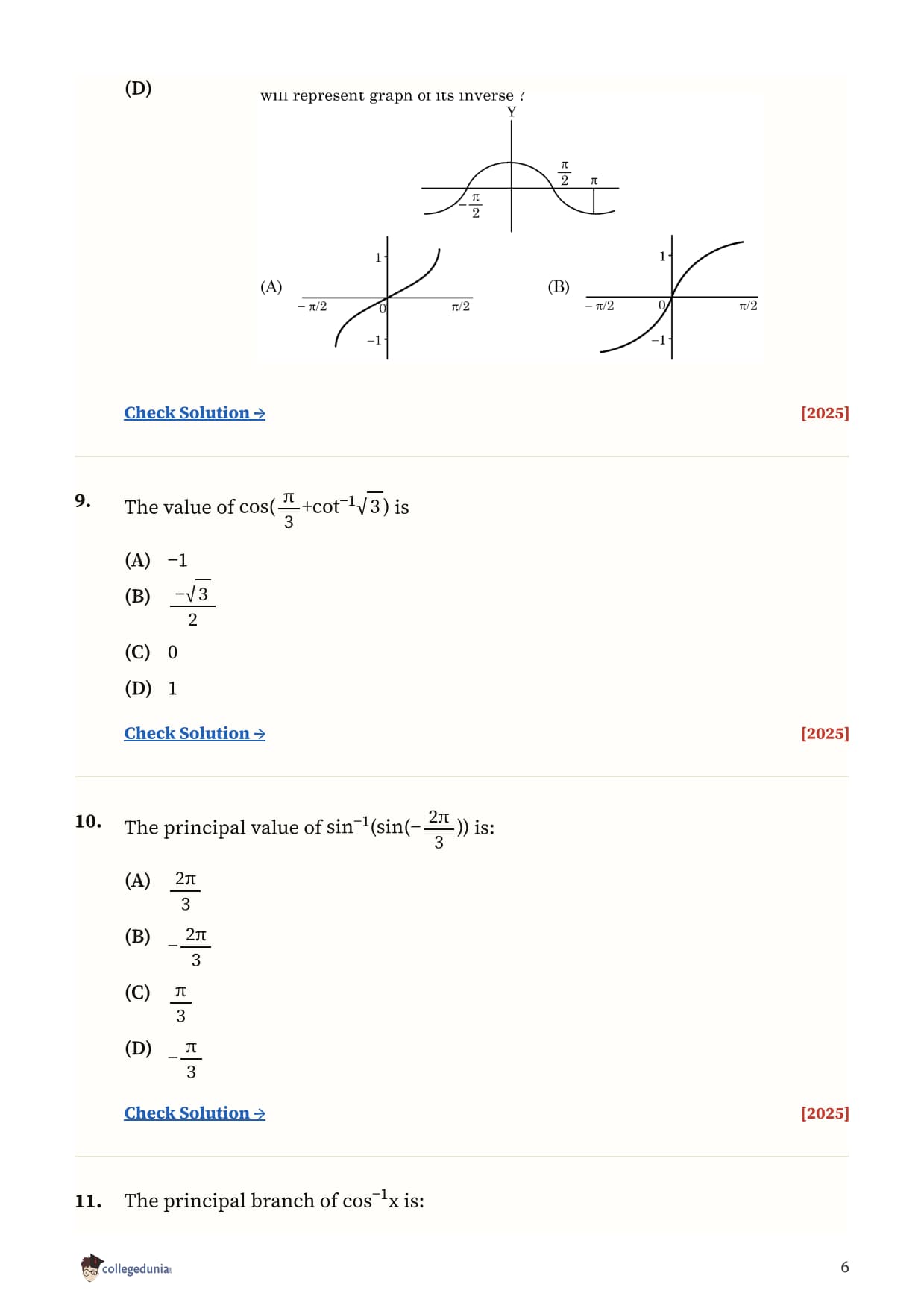
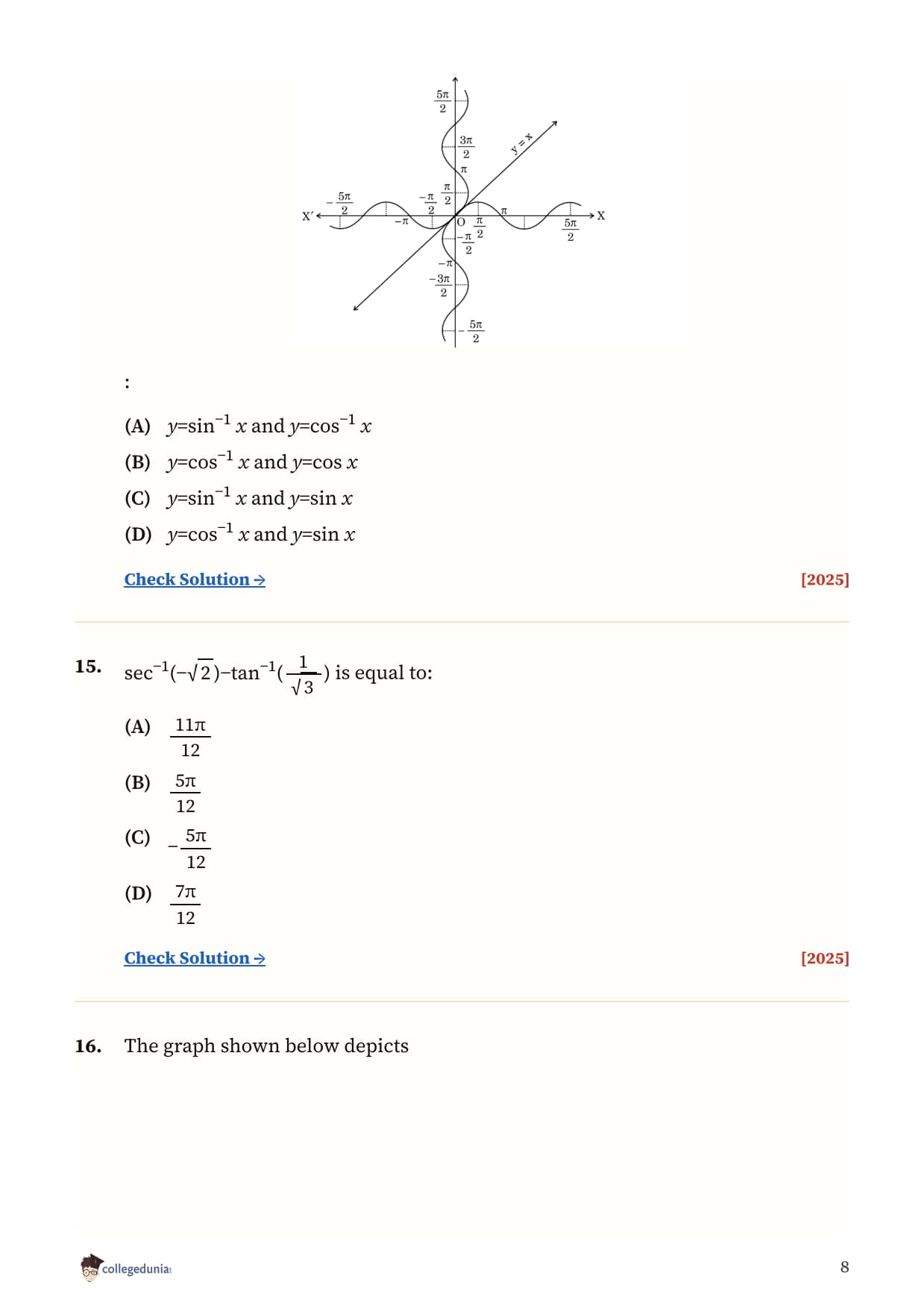
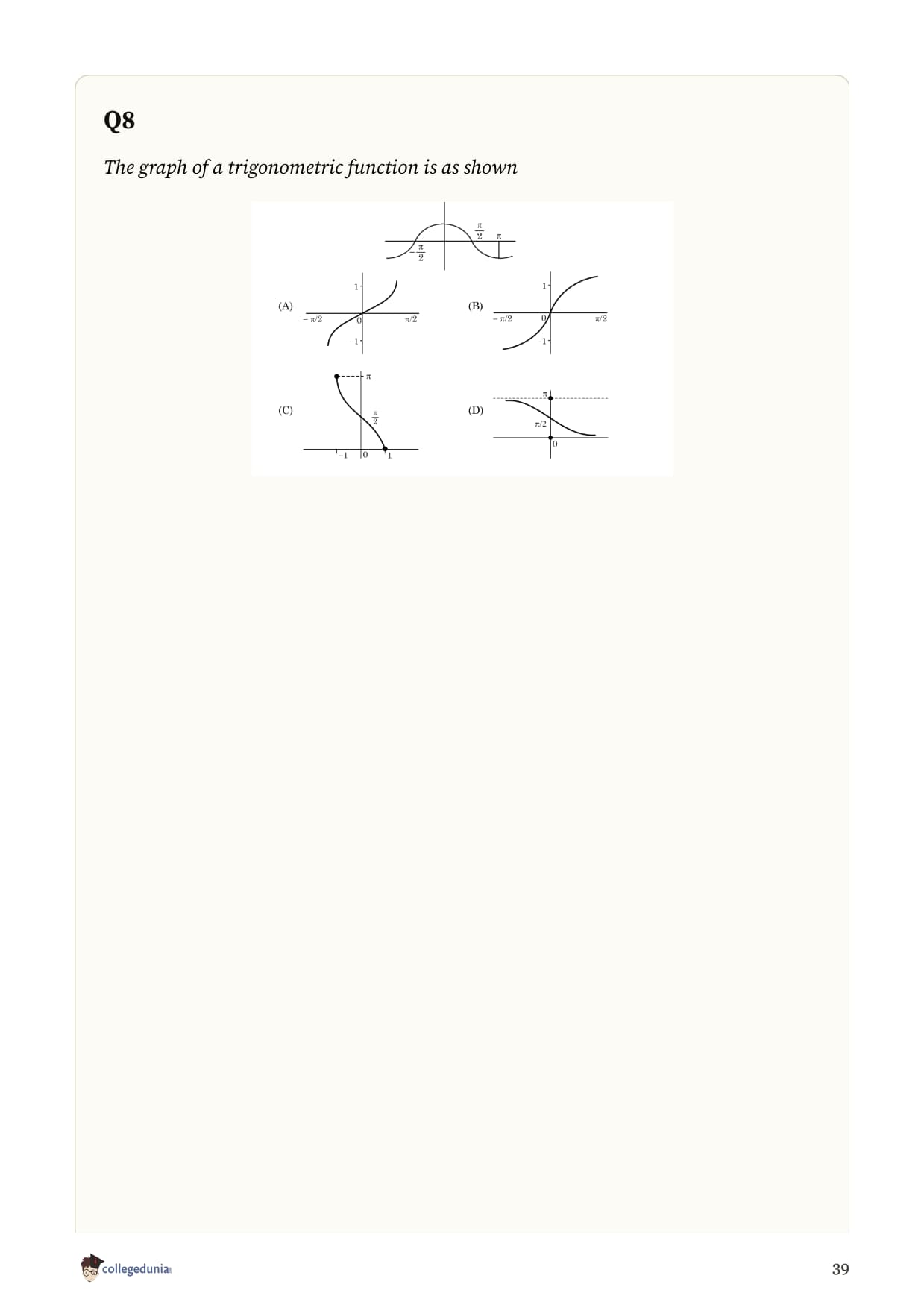
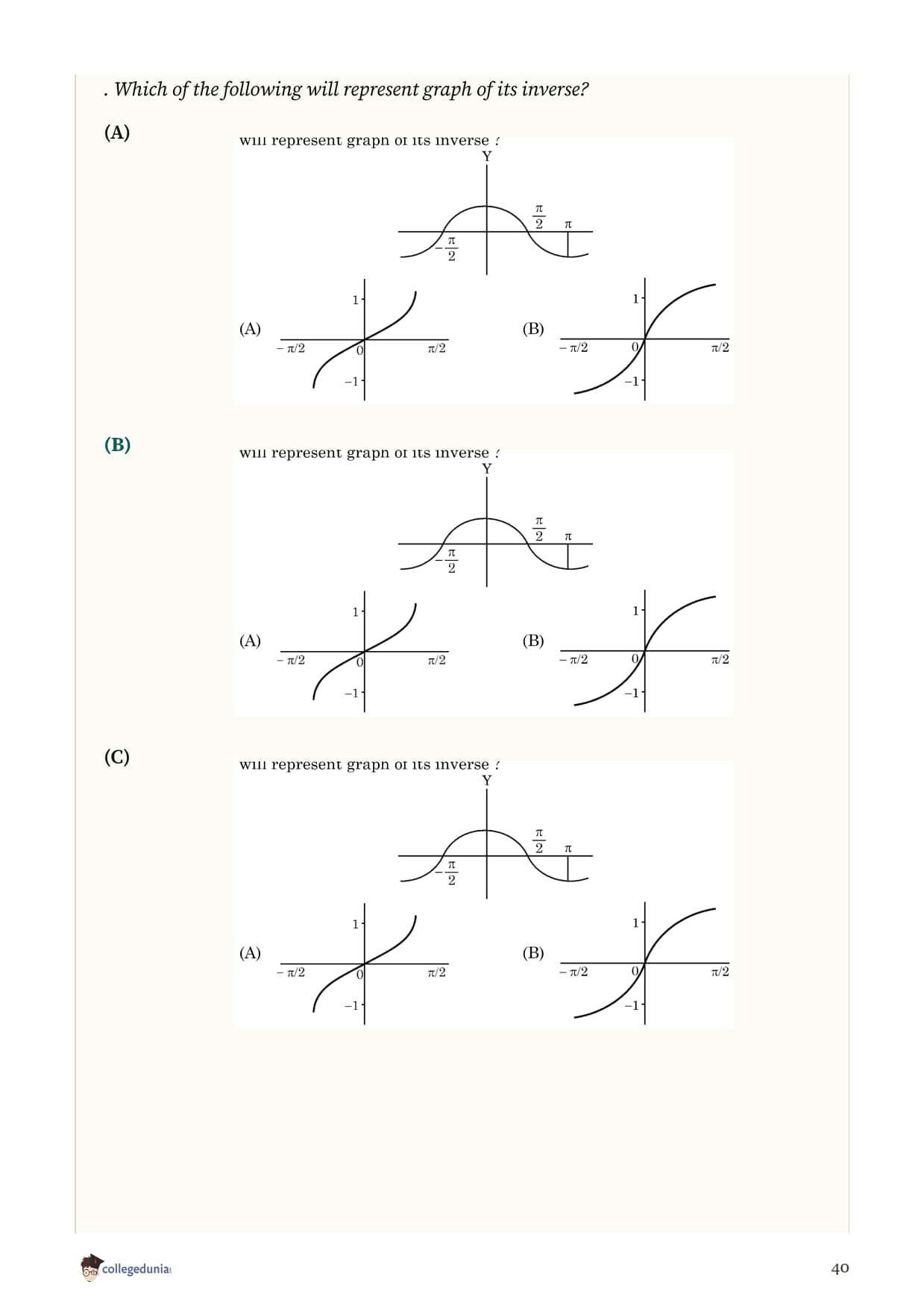
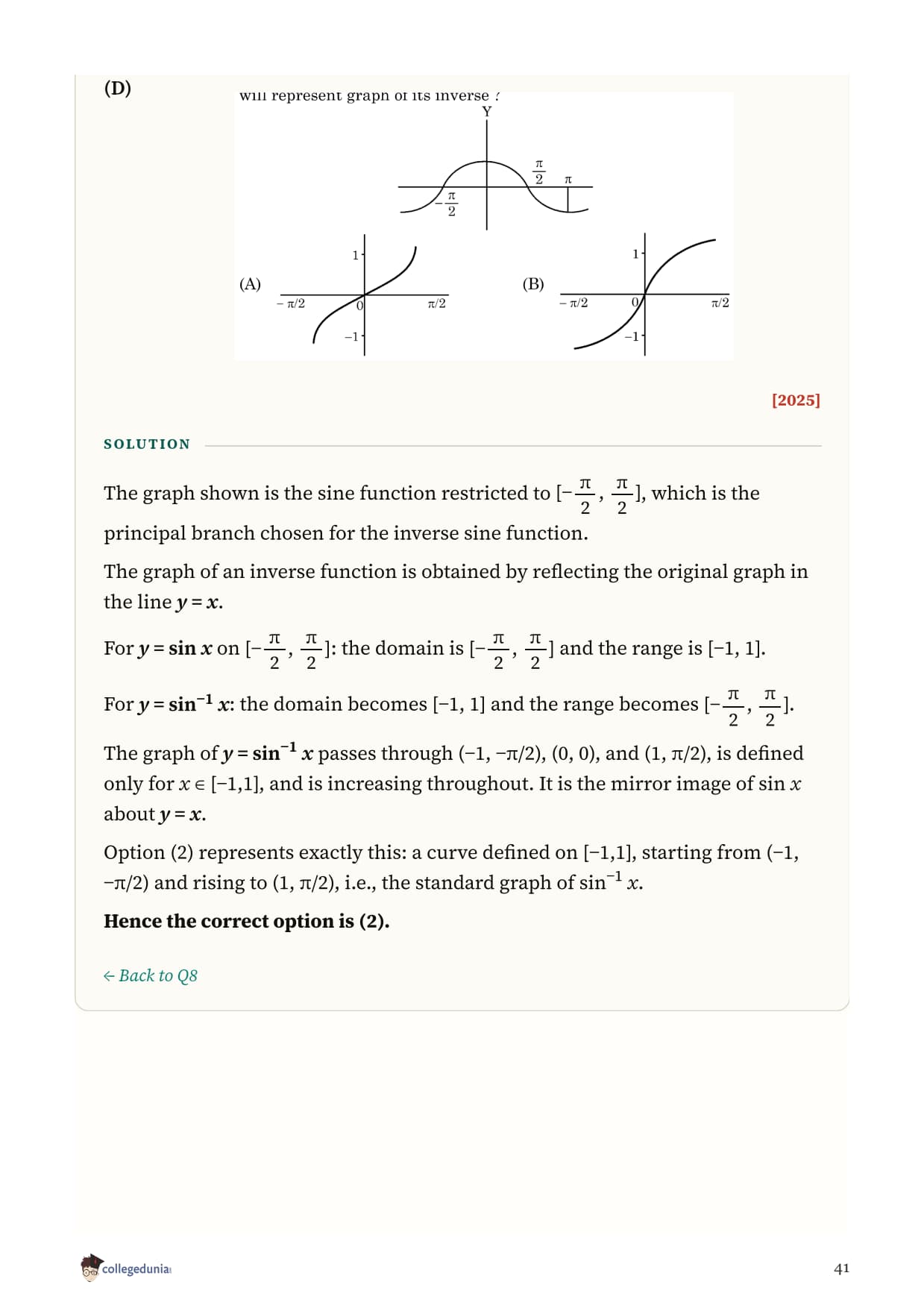
| 6 | Graphs of inverse functions (identifying the correct curve) | ~7 per cent | 1 mark |
Marks-Band Attempt Strategy for the Inverse Trigonometric Functions PYQs
The 112 PYQs are arranged marks-ascending inside the PDF so you attempt them in the same order the CBSE paper presents them.
- 1-mark MCQs: Spend no more than 45 seconds each. Most ask for a principal value or the domain of an inverse function.
- 2-mark questions: A single simplification using a sum or difference identity. Always check the angle lies in the principal branch.
- 4-mark questions: A full identity proof or an equation in two inverse functions. Aim for 6 minutes each.
- 5-mark questions: A domain and range question with a value to find. Allocate 8 to 10 minutes and state the range clearly.
Recent CBSE Trend: 2024 to 2026 Pattern Shift in Inverse Trigonometric Functions
Three things have changed in the recent CBSE cycles that the Inverse Trigonometric Functions previous year questions now reflect:
- Section A now carries a fixed block of 1-mark questions. The compilation includes 46 such questions, most on principal values, from 2023 onwards.
- Simplification questions now mix sine and cosine in a single ratio, as in the 2026 tan inverse simplification, so the PDF keeps full working for each.
- Domain questions ask for the range of an inverse function other than its principal branch, which raises the difficulty of the 5-mark band.
Sample Previous Year Questions from Inverse Trigonometric Functions
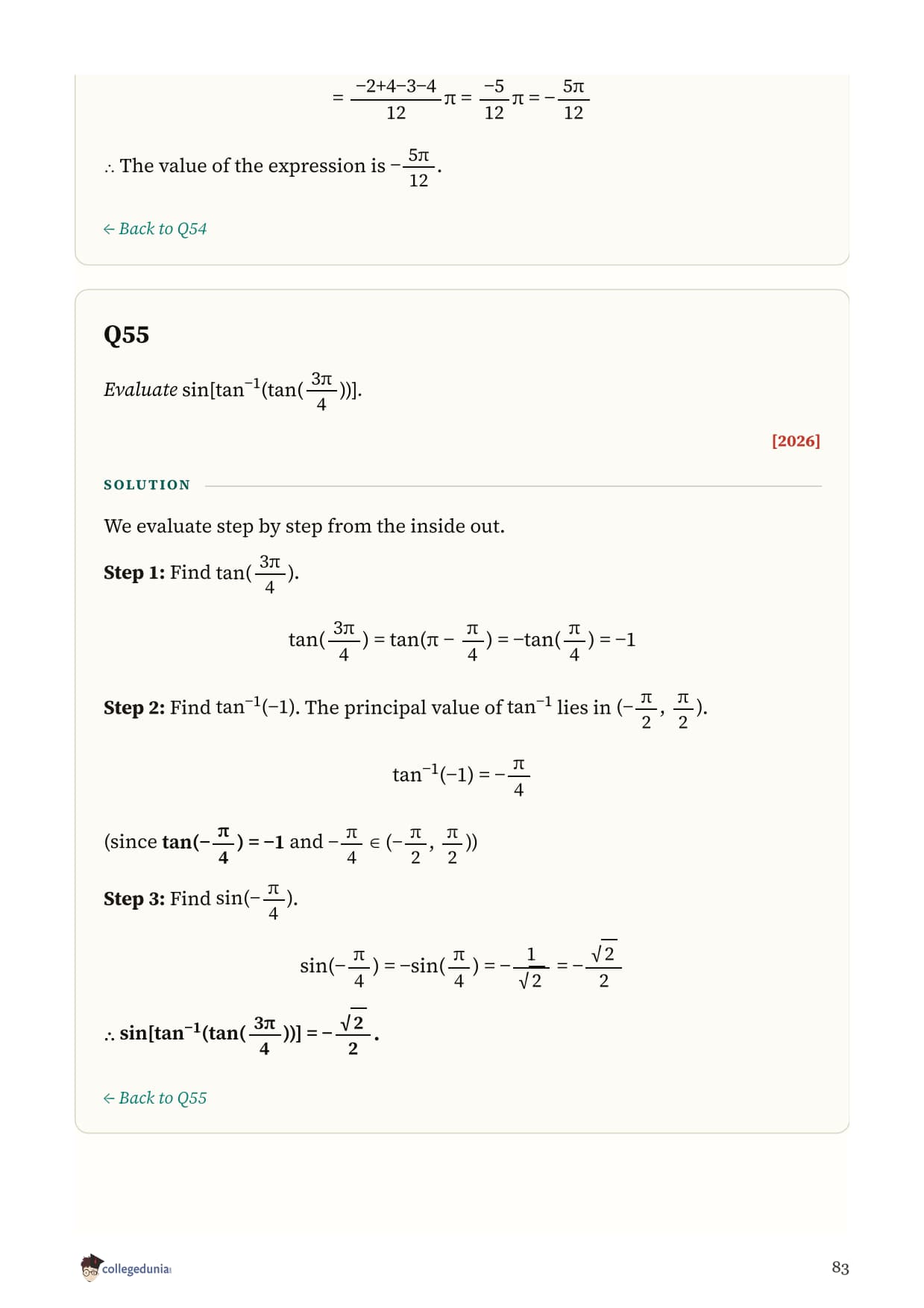
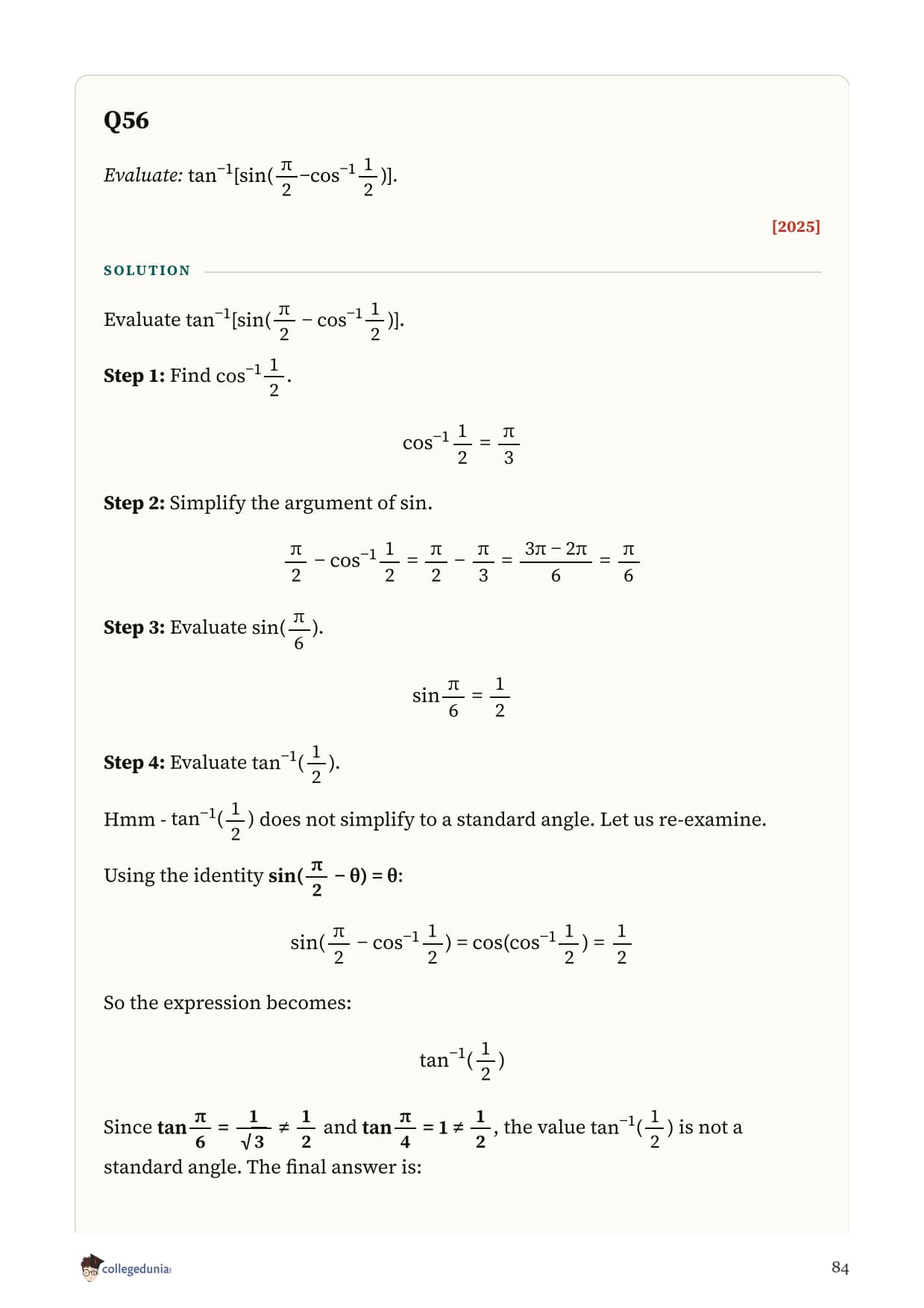
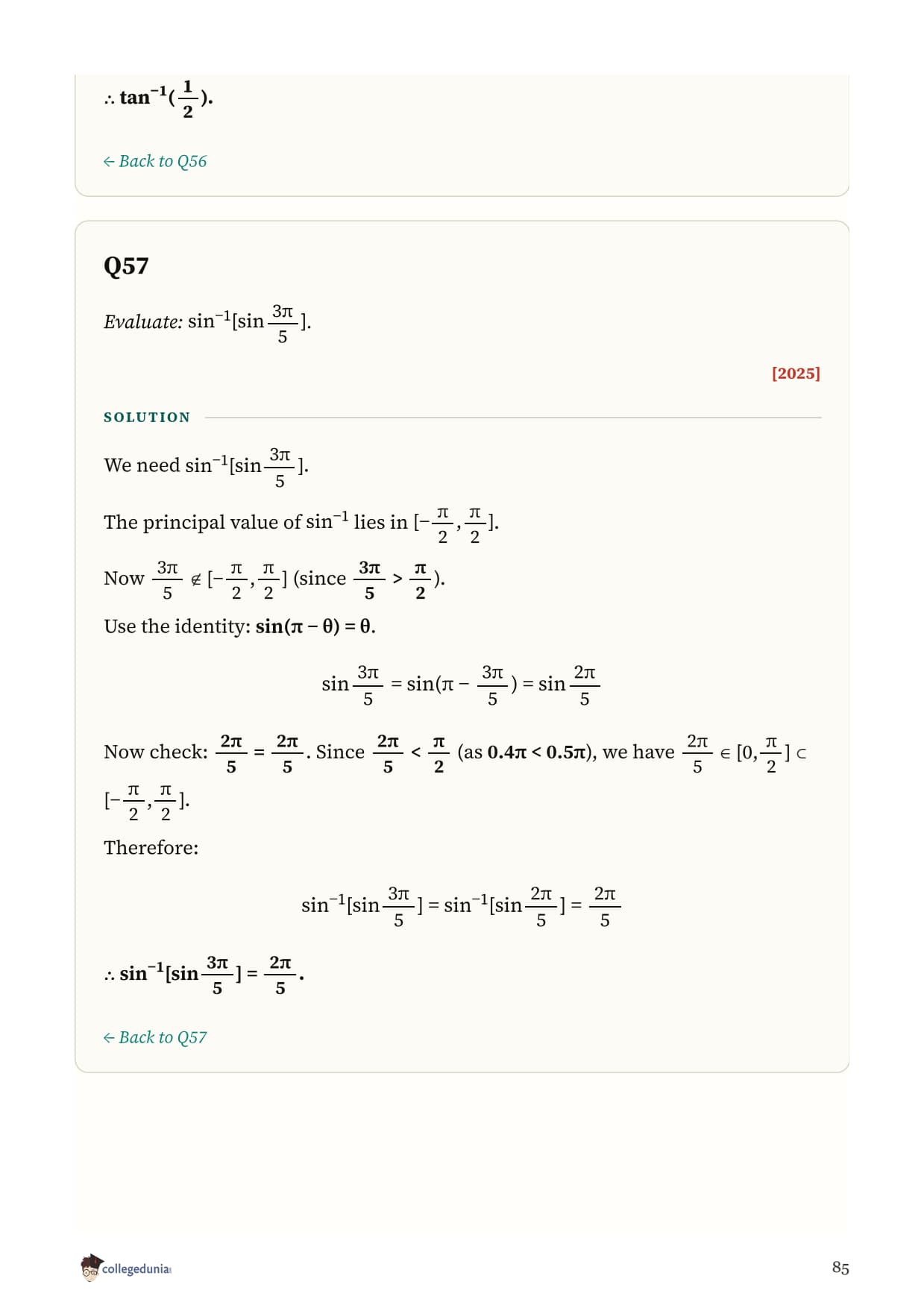
Here are a few real previous year questions from the Inverse Trigonometric Functions board papers, taken straight from the compilation. The full set is in the downloadable PDF.
Simplify: ^-1 ( 2x - 2x 2x + 2x ), 0 < x < π4.
[2026 • 2 mark]
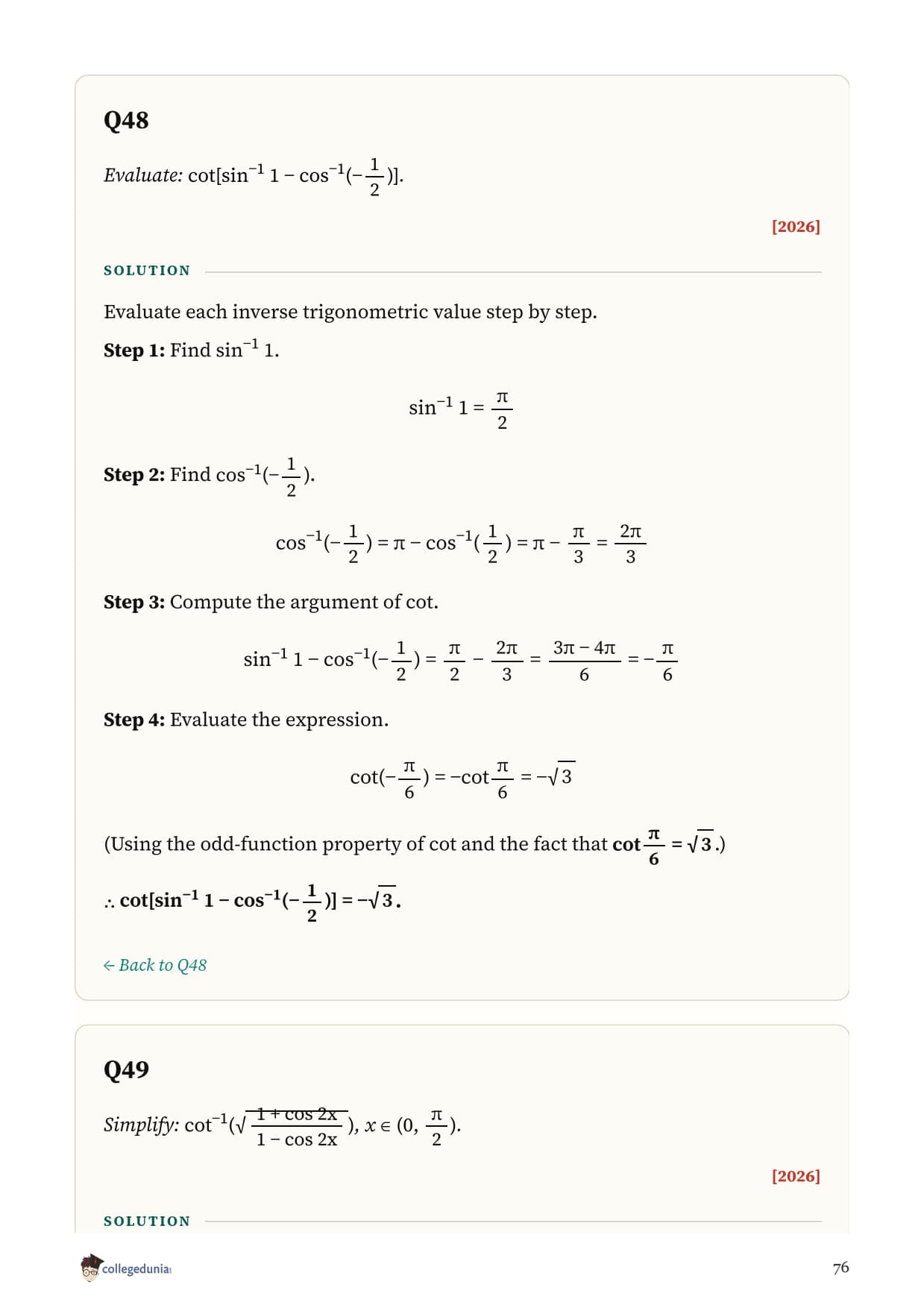
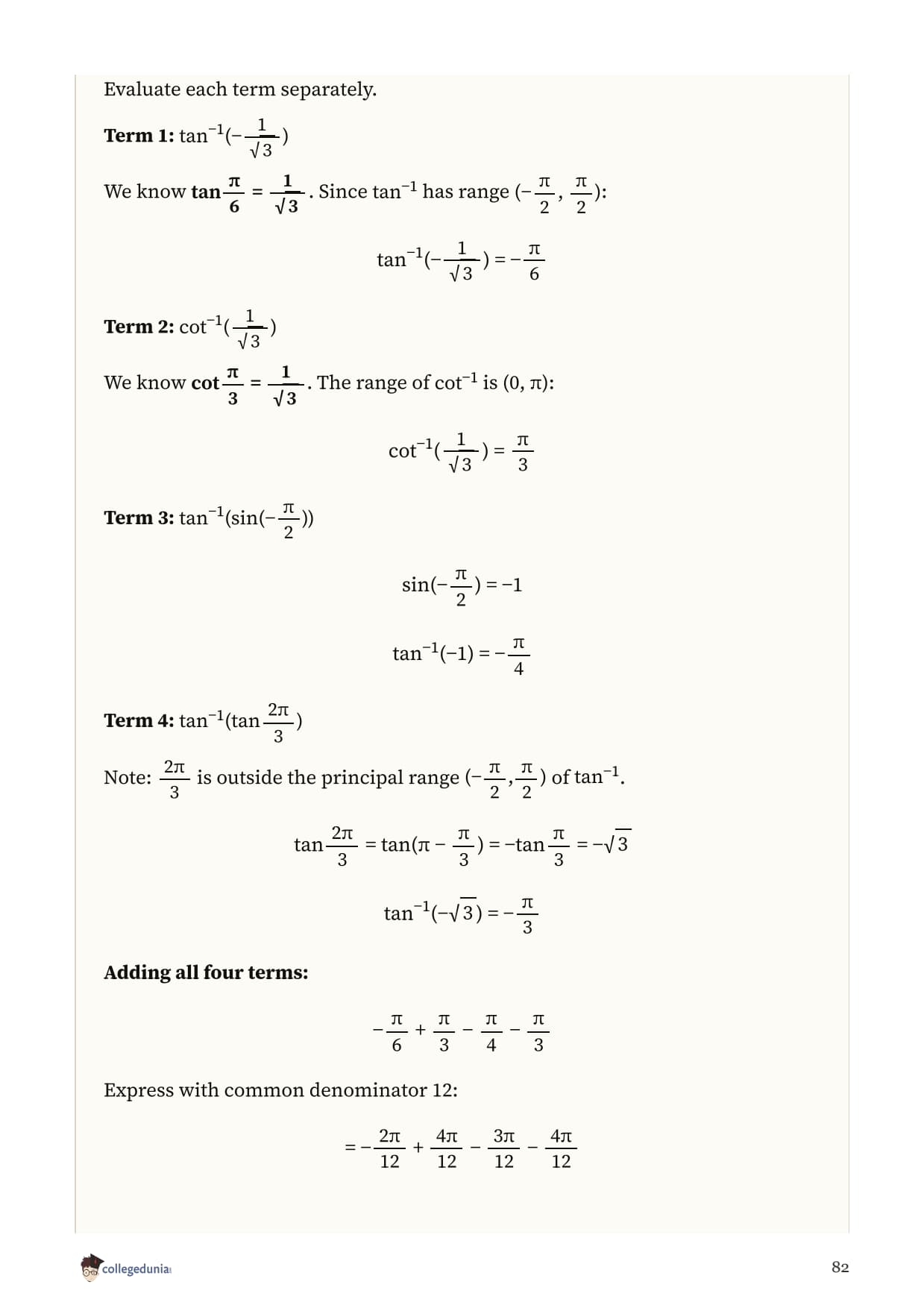
Evaluate: [^-1 1 - ^-1 (-12 ) ].
[2026 • 2 mark]
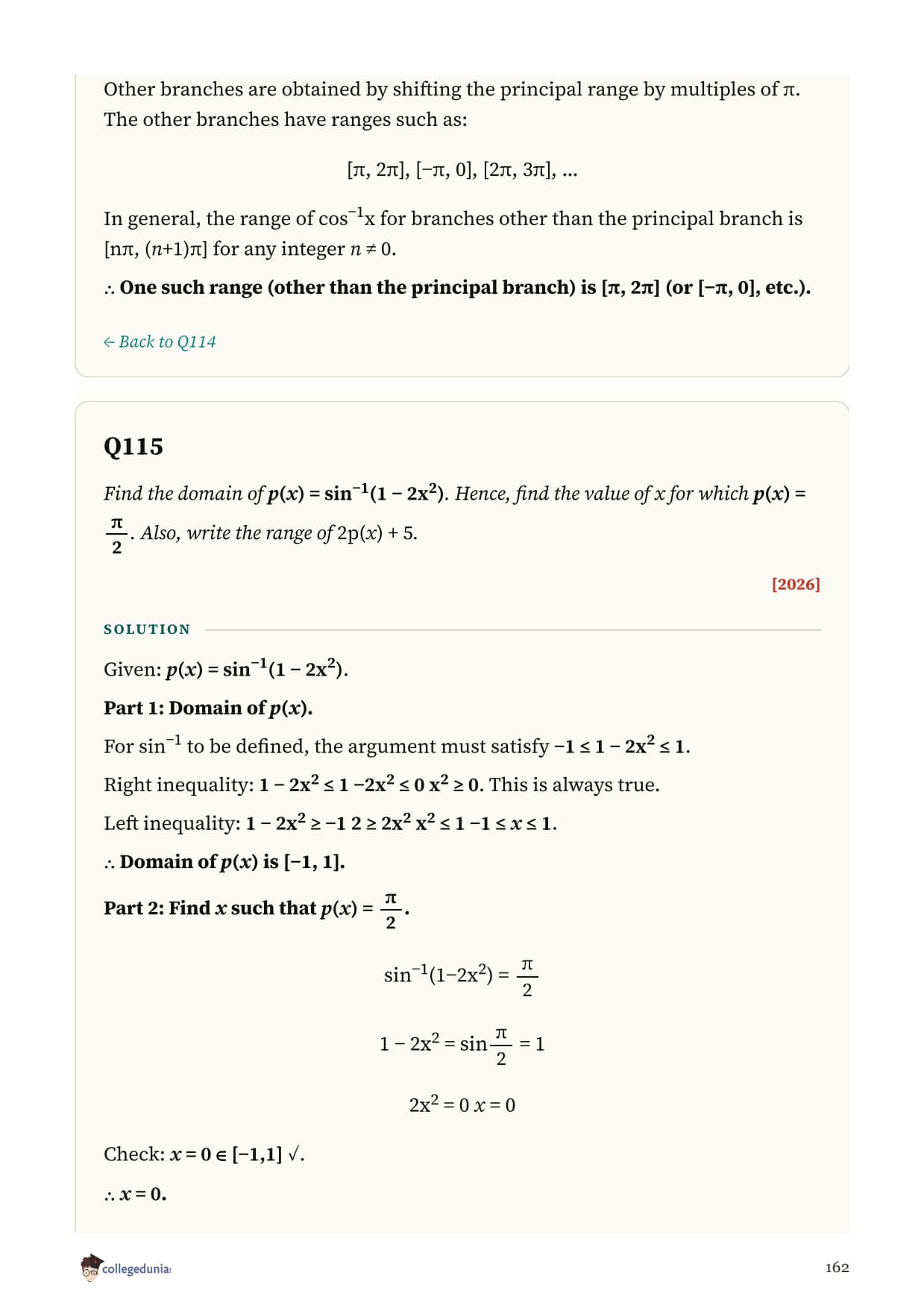
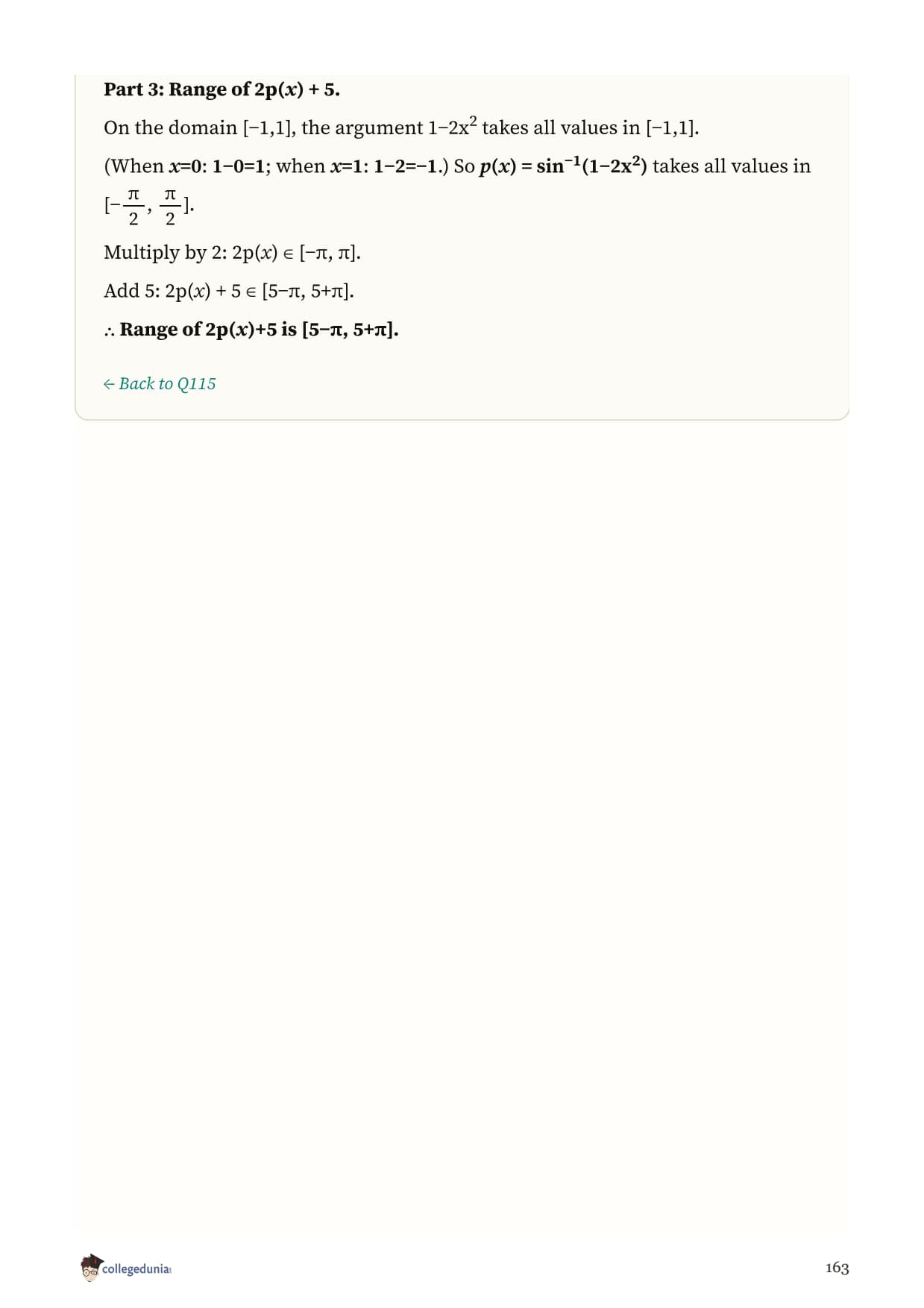
Find the domain of g(x) = ^-1(x^2 - 1). Hence, find the value of x for which g(x) = π2. Also, write the range of ^-1 x other than its principal branch.
[2026 • 5 mark]
Common Mistakes in the Inverse Trigonometric Functions Board Questions
- Giving an answer outside the principal value branch, the single most common 1-mark slip.
- Forgetting that cos inverse and tan inverse have different ranges, which flips the sign of the answer.
- Applying a sum identity without checking that the combined angle stays in the valid range.
- Writing the wrong domain for an inverse function, for example allowing x outside the closed interval for sin inverse.
- Dropping the negative-angle convention, so a value like cos inverse of a negative number gets the wrong quadrant.
Student Feedback on Inverse Trigonometric Functions PYQ Practice
- 61 per cent said keeping every answer inside the principal value branch was the trickiest part.
- 55 per cent reported gaining 2 to 4 marks after solving all 46 one-mark PYQs from this PDF before the boards.
- 38 per cent said a principal-value MCQ appeared almost word-for-word in their actual 2026 paper.
- Average time to finish all 112 PYQs: about 9 hours across 4 study sessions.
How These PYQs Pair with the Other Inverse Trigonometric Functions Resources
Solving previous year questions alone gives you only half the prep. Pair the PYQ PDF with the matching concept, formula and solution resources for Inverse Trigonometric Functions.
| Resource | What It Gives You | Open |
|---|---|---|
| NCERT Solutions | Step-by-step worked answers to every NCERT back-exercise question of Inverse Trigonometric Functions | NCERT Solutions for Inverse Trigonometric Functions |
| Notes | Concept revision notes covering every topic in the Inverse Trigonometric Functions chapter | Inverse Trigonometric Functions Class 12 Notes |
| Formula Sheet | All key formulas and results of Inverse Trigonometric Functions on one page for last-day revision | Inverse Trigonometric Functions Formula Sheet |
| Handwritten Notes | Scanned handwritten notes of Inverse Trigonometric Functions for quick one-shot revision | Inverse Trigonometric Functions Handwritten Notes |
| Exemplar Solutions | NCERT Exemplar problems of Inverse Trigonometric Functions solved in full for extra practice | NCERT Exemplar Solutions for Inverse Trigonometric Functions |
| NCERT Book | Official NCERT Inverse Trigonometric Functions chapter PDF for free download | Inverse Trigonometric Functions NCERT Book PDF |
| Exemplar Book | NCERT Exemplar Inverse Trigonometric Functions problem book PDF for free download | Inverse Trigonometric Functions Exemplar Book PDF |
How to Use the Inverse Trigonometric Functions PYQ PDF Most Effectively
The 112 questions are sequenced for a three-pass revision plan:
- Pass 1 (Day 1): Attempt all 46 one-mark MCQs on principal values and domains. Mark every wrong answer and re-check the branch.
- Pass 2 (Day 2): Solve the 34 two-mark simplifications, timing yourself at 3 minutes each.
- Pass 3 (Day 3 to 4): Work through the 30 four-mark and 2 five-mark questions, writing each identity proof and equation solution in full.
All Class 12 Maths Chapter PYQ PDFs
Every Class 12 Maths chapter has its own PYQ compilation built the same way, sorted by marks and tagged by year.
| Chapter | Topic | Previous Year Questions |
|---|---|---|
| Chapter 1 | Relations and Functions | PYQ PDF |
| Chapter 2 | Inverse Trigonometric Functions | PYQ PDF |
| Chapter 3 | Matrices | PYQ PDF |
| Chapter 4 | Determinants | PYQ PDF |
| Chapter 5 | Continuity and Differentiability | PYQ PDF |
| Chapter 6 | Application of Derivatives | PYQ PDF |
| Chapter 7 | Integrals | PYQ PDF |
| Chapter 8 | Application of Integrals | PYQ PDF |
| Chapter 9 | Differential Equations | PYQ PDF |
| Chapter 10 | Vector Algebra | PYQ PDF |
| Chapter 11 | Three Dimensional Geometry | PYQ PDF |
| Chapter 12 | Linear Programming | PYQ PDF |
| Chapter 13 | Probability | PYQ PDF |
Also Check: NCERT Solutions for Class 12 Maths
Class 12 Maths Inverse Trigonometric Functions PYQ FAQs
Ques. How many previous year questions are in the Class 12 Maths Inverse Trigonometric Functions PYQ PDF?
Ans. The PDF has 112 previous year questions from CBSE board papers between 2008 and 2026, sorted by marks (1 to 5) and then by year, latest first. Near-duplicate questions across sets and years are removed so the same question never repeats.
Ques. Are the Inverse Trigonometric Functions PYQs based on the 2026-27 CBSE syllabus?
Ans. Yes. Every question follows the 2026-27 CBSE Class 12 Maths syllabus. Older identity proofs are kept because the core ideas (principal value branch, domain and range, inverse trig identities) are unchanged in the current syllabus.
Ques. Which topics of Inverse Trigonometric Functions appear most often in CBSE board papers?
Ans. From the 112-question set: principal value branch (about 26 per cent), evaluation of inverse trig expressions (about 22 per cent), proving inverse trig identities (about 18 per cent), domain and range (about 15 per cent), and equations in inverse trig functions (about 12 per cent).
Ques. How is this PYQ PDF different from a CBSE sample paper?
Ans. A sample paper gives you one paper. This PDF stitches together more than 15 years of questions across every set and region (Delhi, Outside Delhi, Foreign and Compartment) for Inverse Trigonometric Functions alone, so you can see which topics CBSE repeats and how each idea is usually phrased.
Ques. Does the Inverse Trigonometric Functions PYQ PDF include MCQs?
Ans. Yes. 46 of the 112 questions are 1-mark questions, mostly MCQ on principal values, from 2023 onwards when CBSE introduced the Section A objective block.
Ques. Where can I download the Inverse Trigonometric Functions Class 12 PYQ PDF for free?
Ans. The full Inverse Trigonometric Functions PYQ PDF is free to download from the PDF button at the top of this page. No sign-up is needed.
Ques. How should I use these PYQs to revise Inverse Trigonometric Functions in the last few days?
Ans. Use the three-pass plan: Day 1 attempt all 46 MCQs, Day 2 solve the 34 two-mark simplifications, Day 3 to 4 attempt the 32 long-answer identity proofs and equations under a 6-minute timer. Always confirm the principal branch first.
Ques. Does the PDF give answers or only the questions?
Ans. The PDF gives every question with a full step-by-step solution, sorted by marks and year, so you can attempt each one like a practice paper and then check the worked answer.
Ques. Is the principal value branch important for the CBSE Inverse Trigonometric Functions questions?
Ans. Very. The principal value branch decides about a quarter of all the questions in the compilation, especially the 1 and 2-mark band. Getting the branch right is the single fastest way to secure marks in this chapter.
Ques. What is an inverse trigonometric function?
Ans. An inverse trigonometric function reverses a trig function. For example, sin inverse takes a value and returns the angle whose sine is that value. Because trig functions repeat, each inverse is defined only on a restricted principal branch so it gives a single output.
Ques. How is the principal value branch defined?
Ans. The principal value branch is the chosen interval on which an inverse trig function returns one value. For sin inverse it is the closed interval from minus pi by 2 to pi by 2, and for cos inverse it is the closed interval from 0 to pi.
Ques. What is the domain of cos inverse x?
Ans. The domain of cos inverse x is the closed interval from minus 1 to 1. Its range, the principal value branch, is the closed interval from 0 to pi. Any input outside minus 1 to 1 has no real inverse cosine.



Comments