




Alcohols, Phenols and Ethers is one of the heaviest scoring chapters in the Class 12 Chemistry organic block.
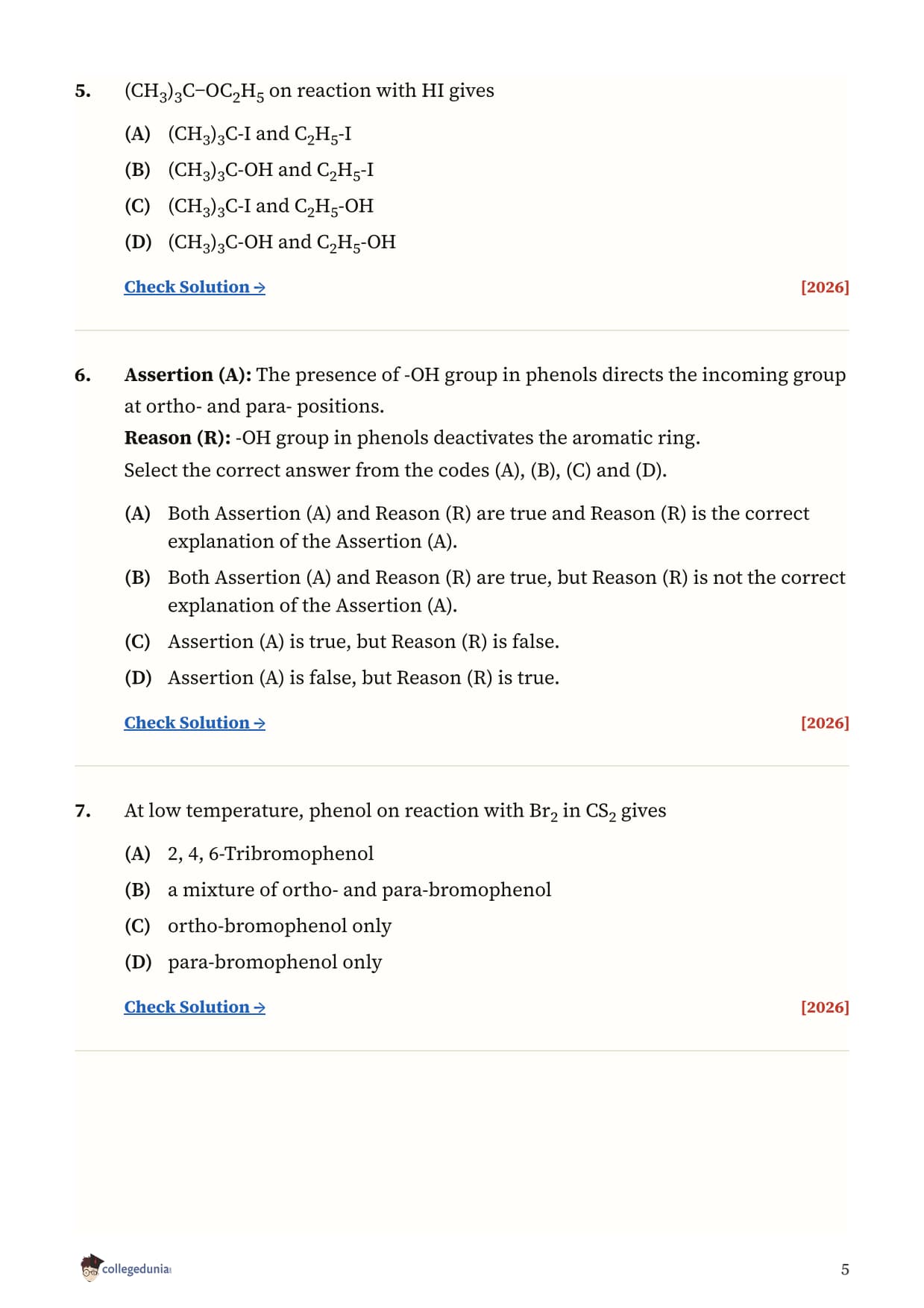
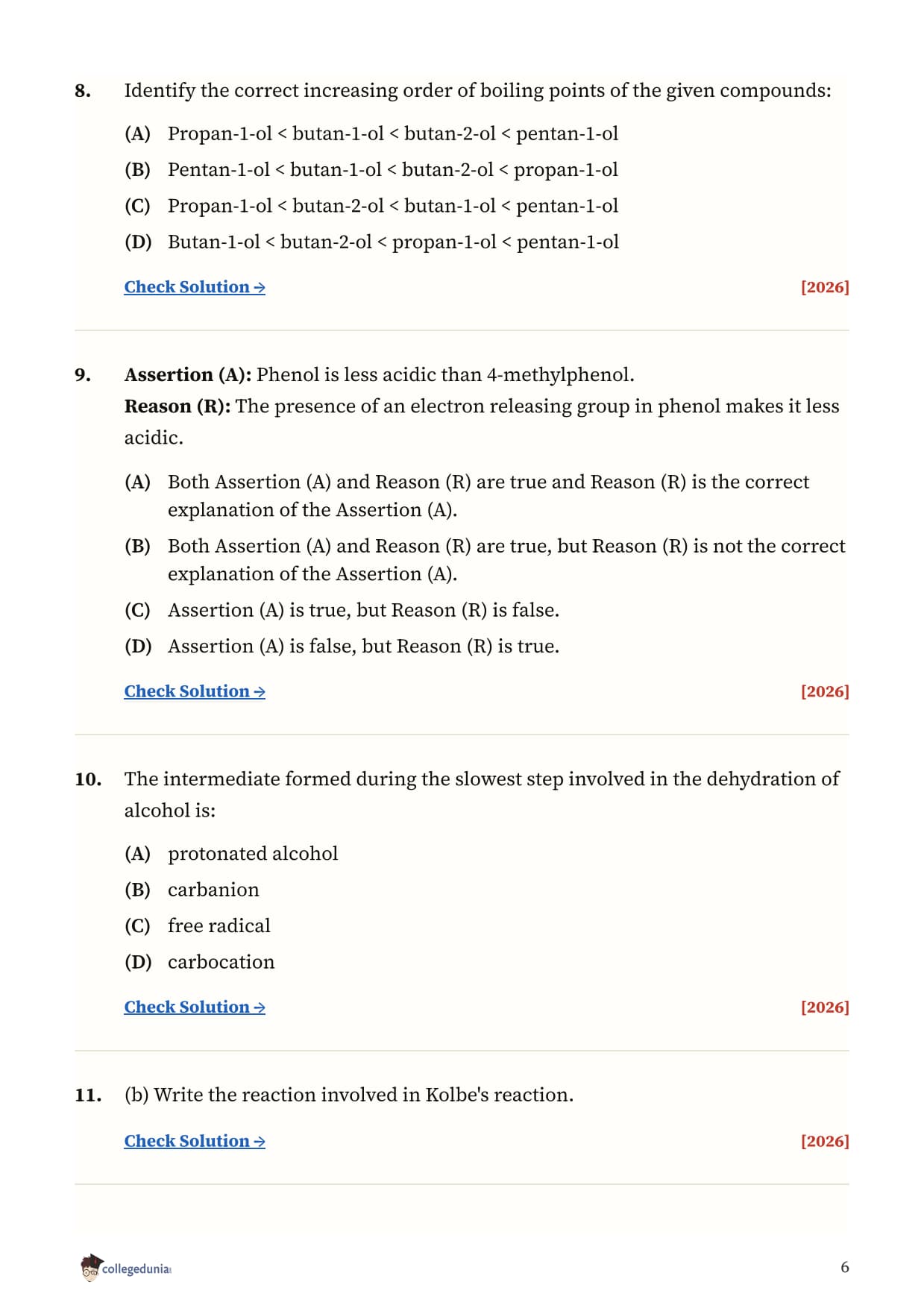
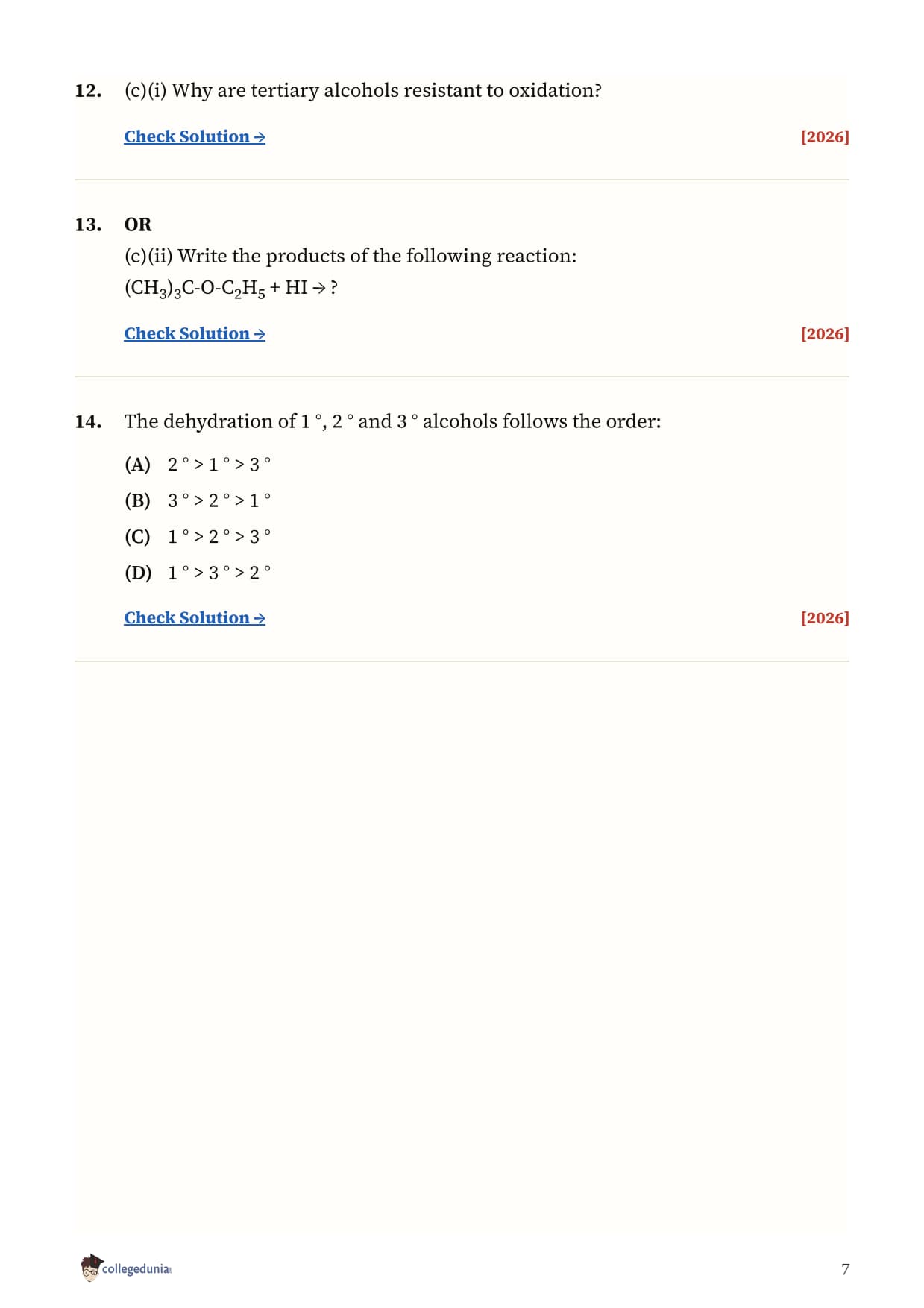
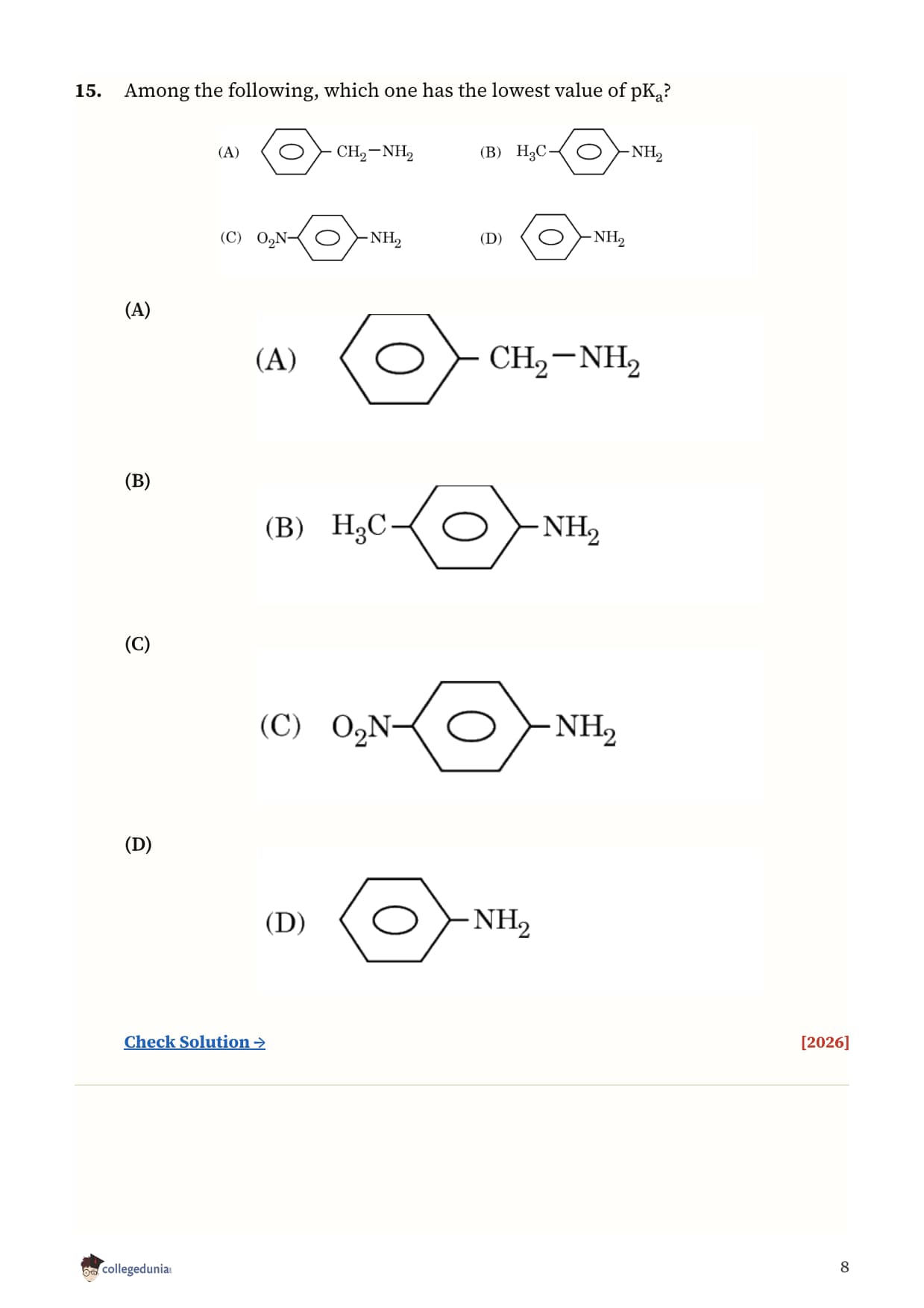
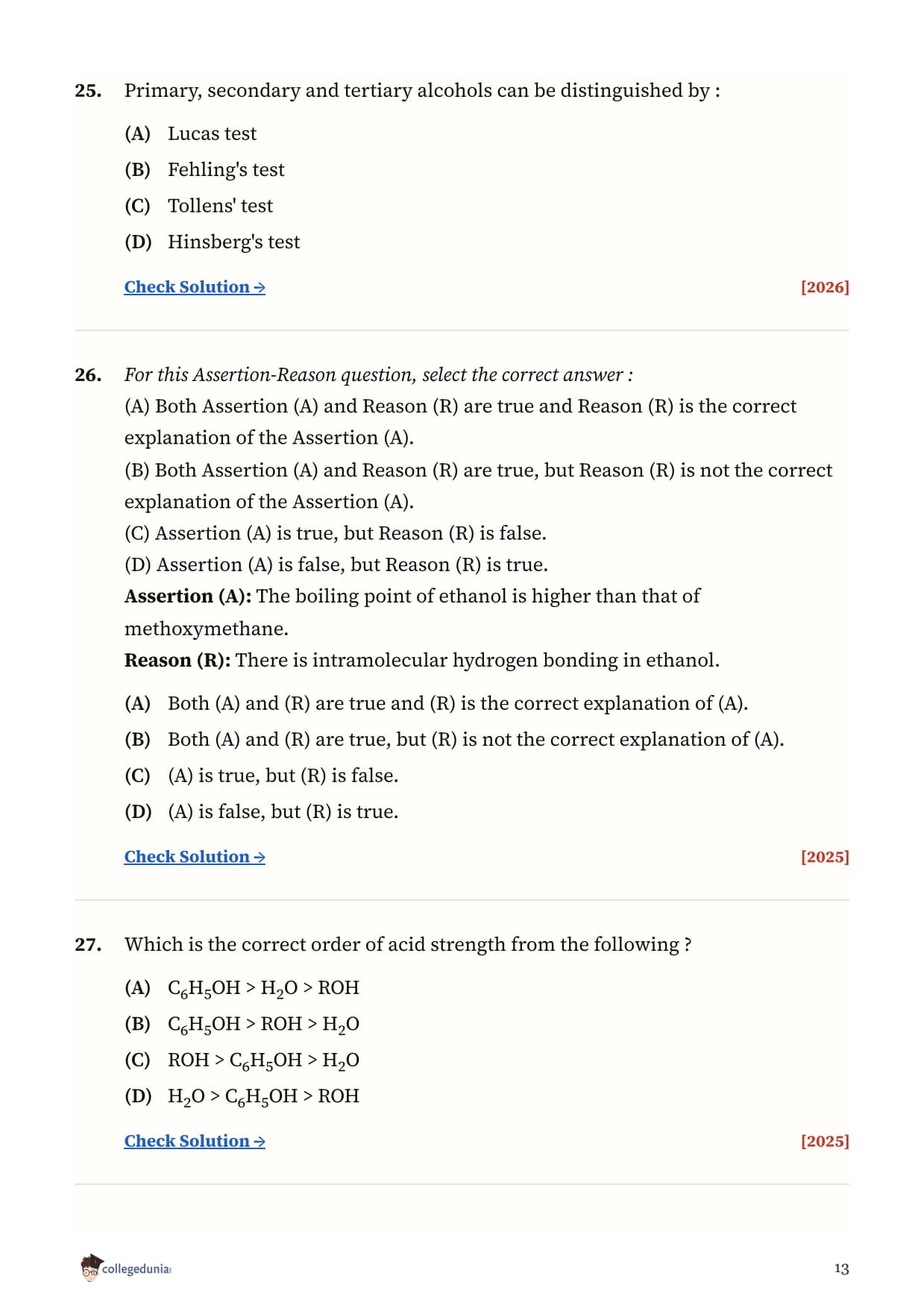
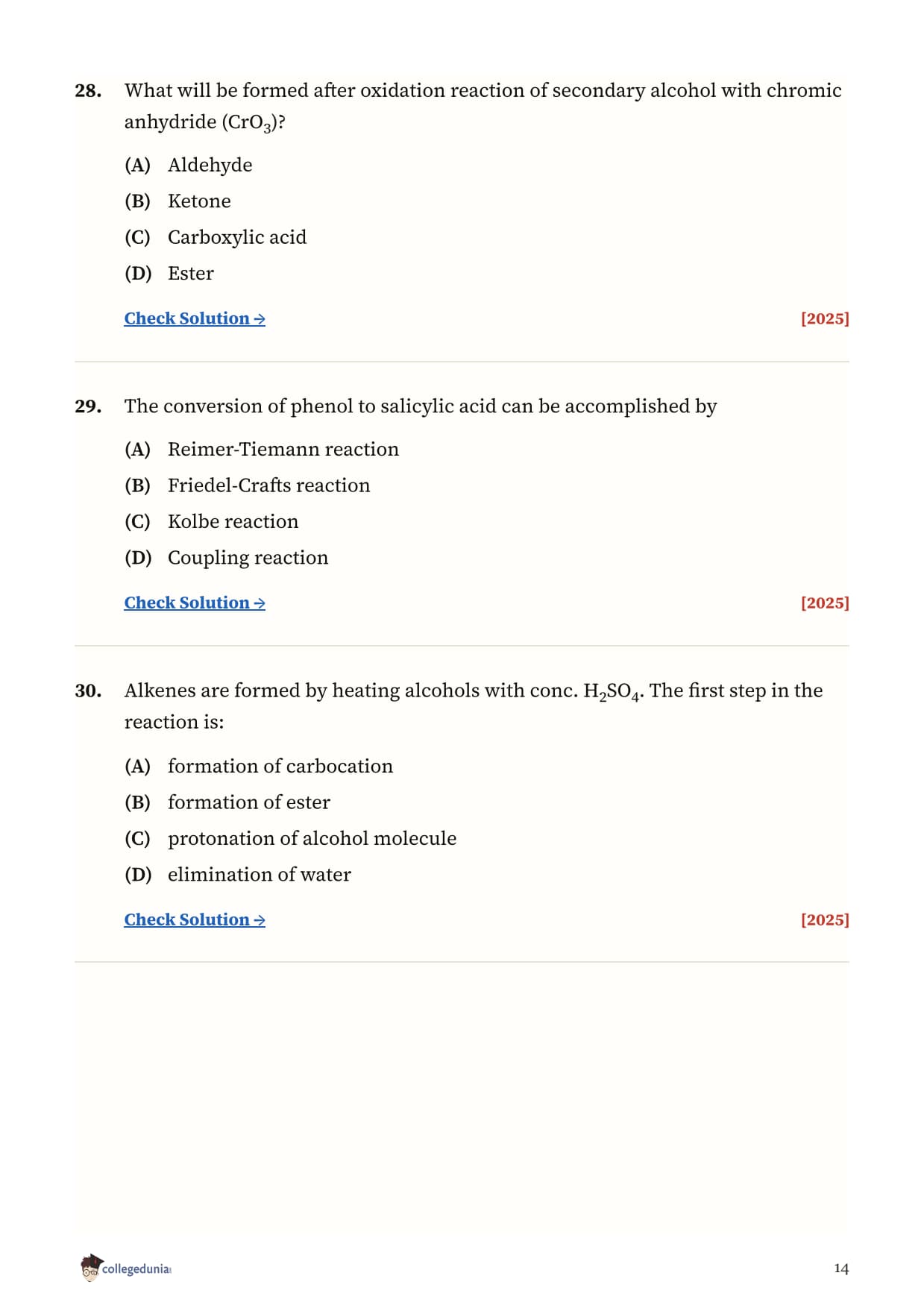
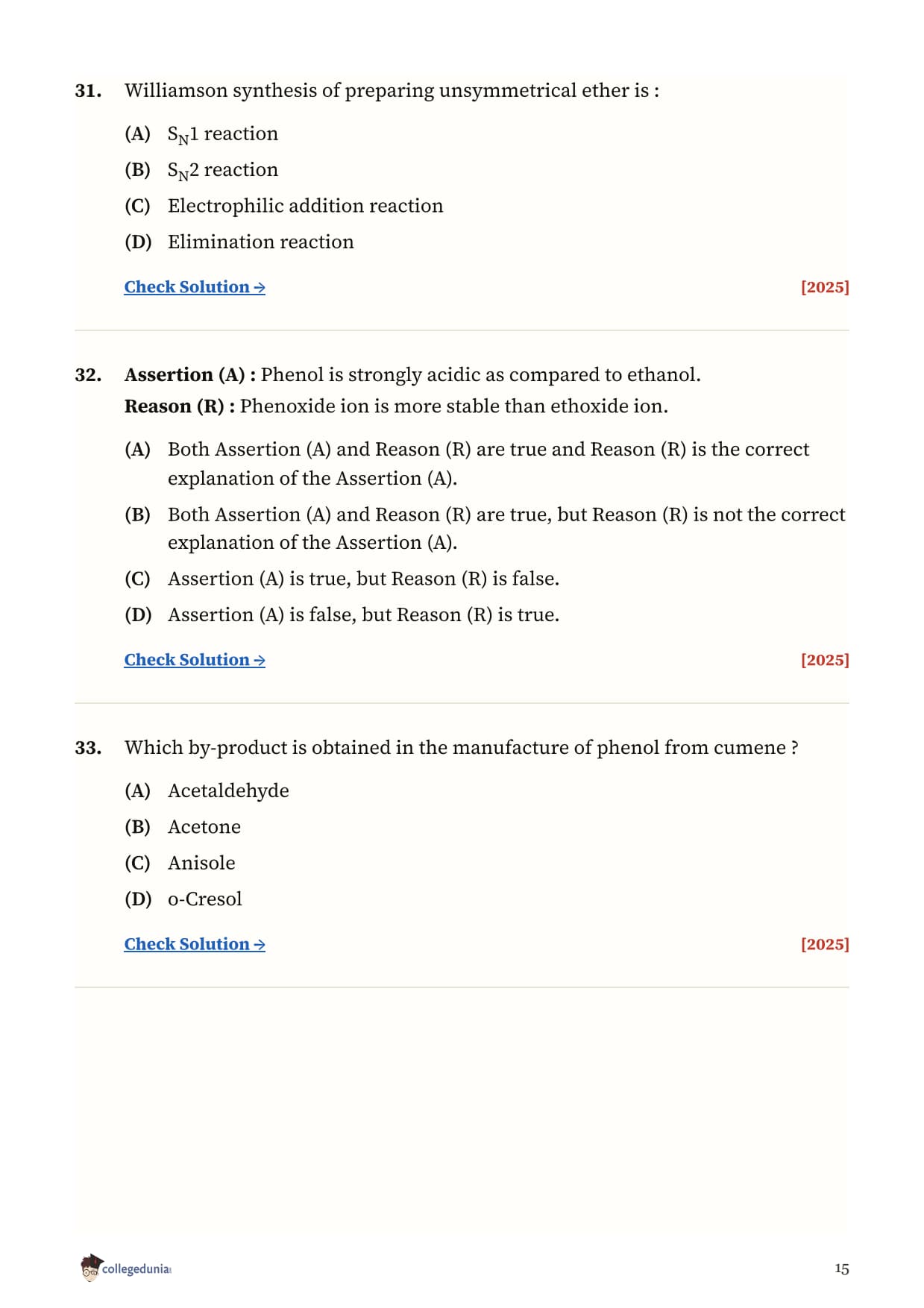
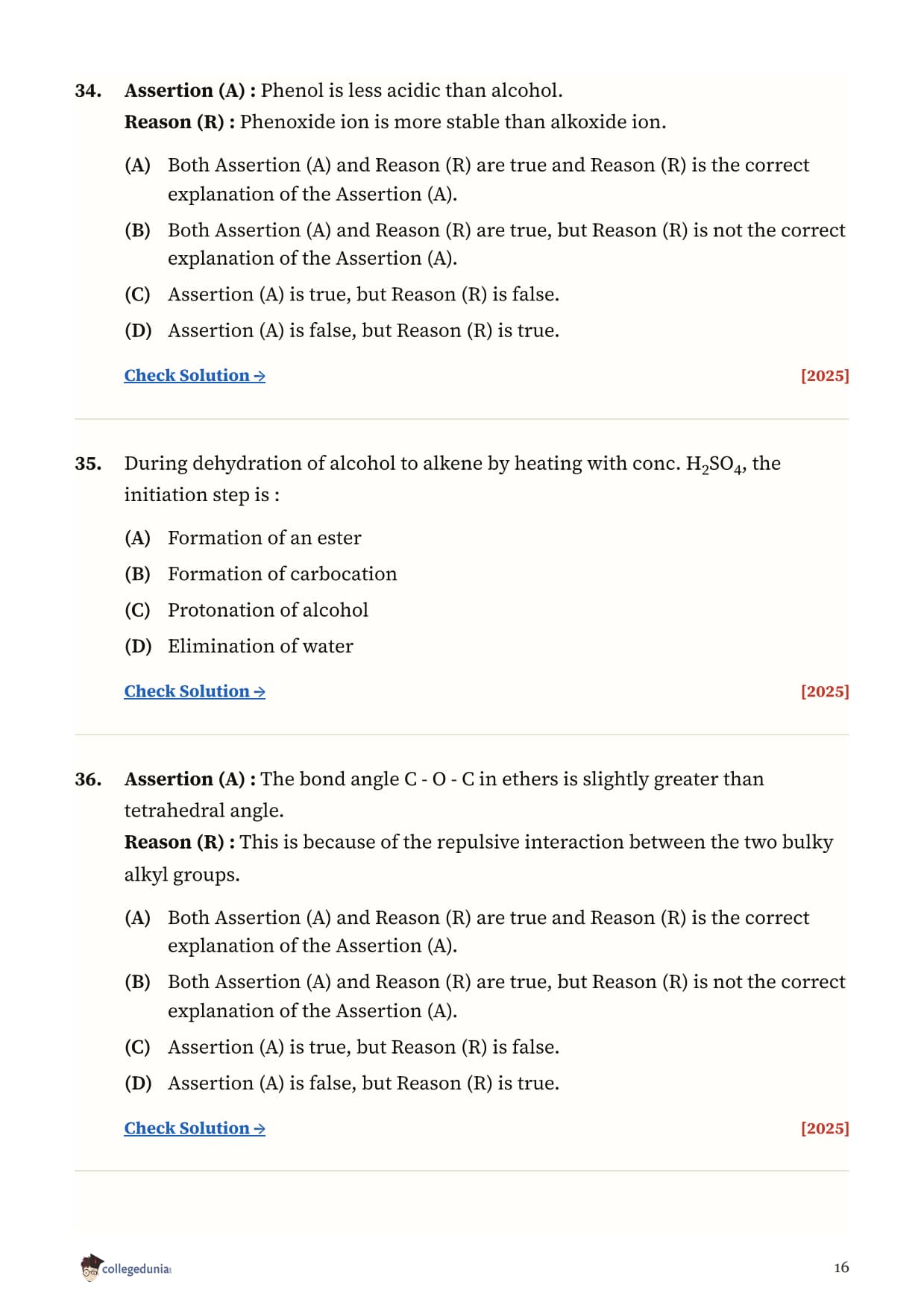
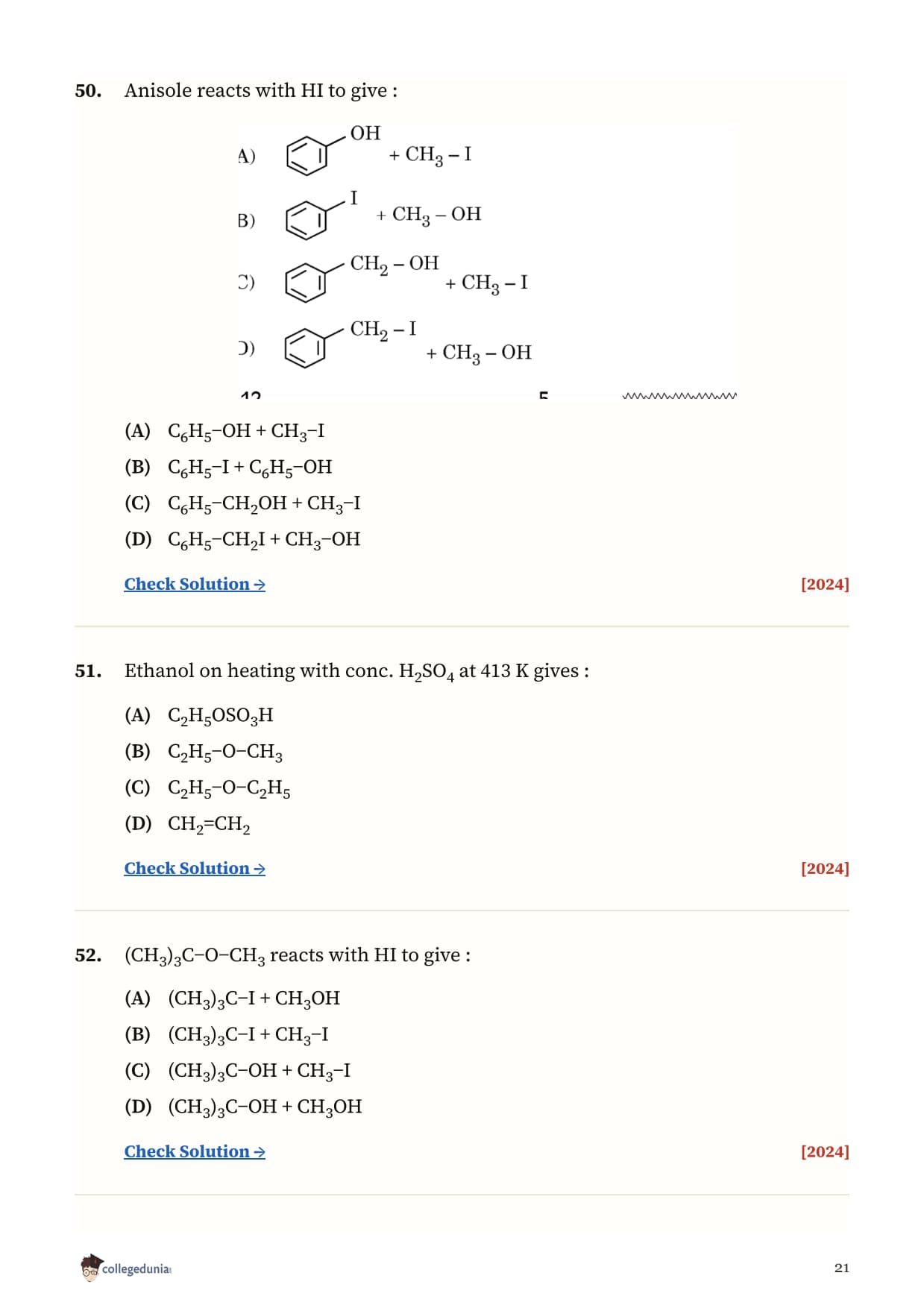
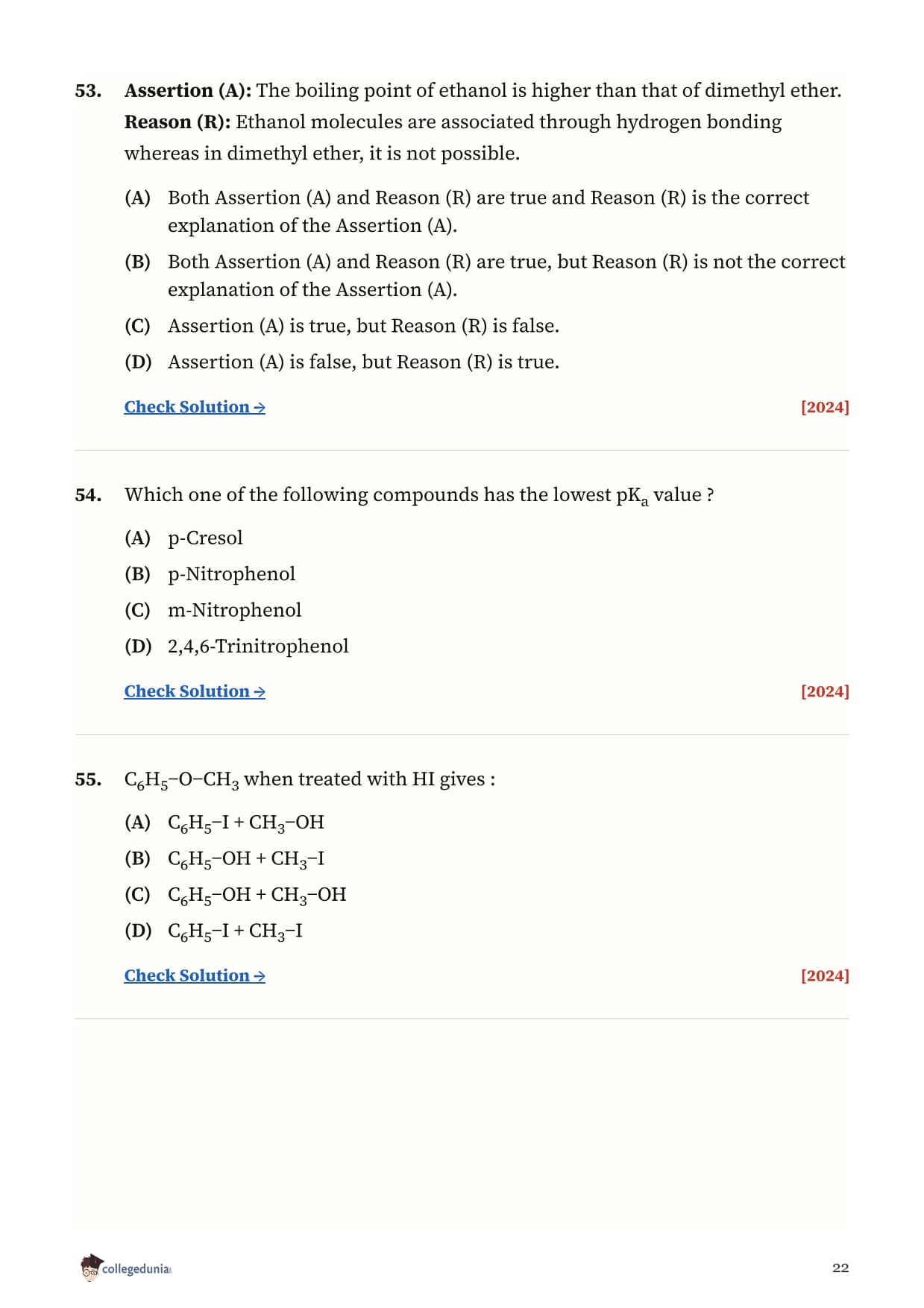
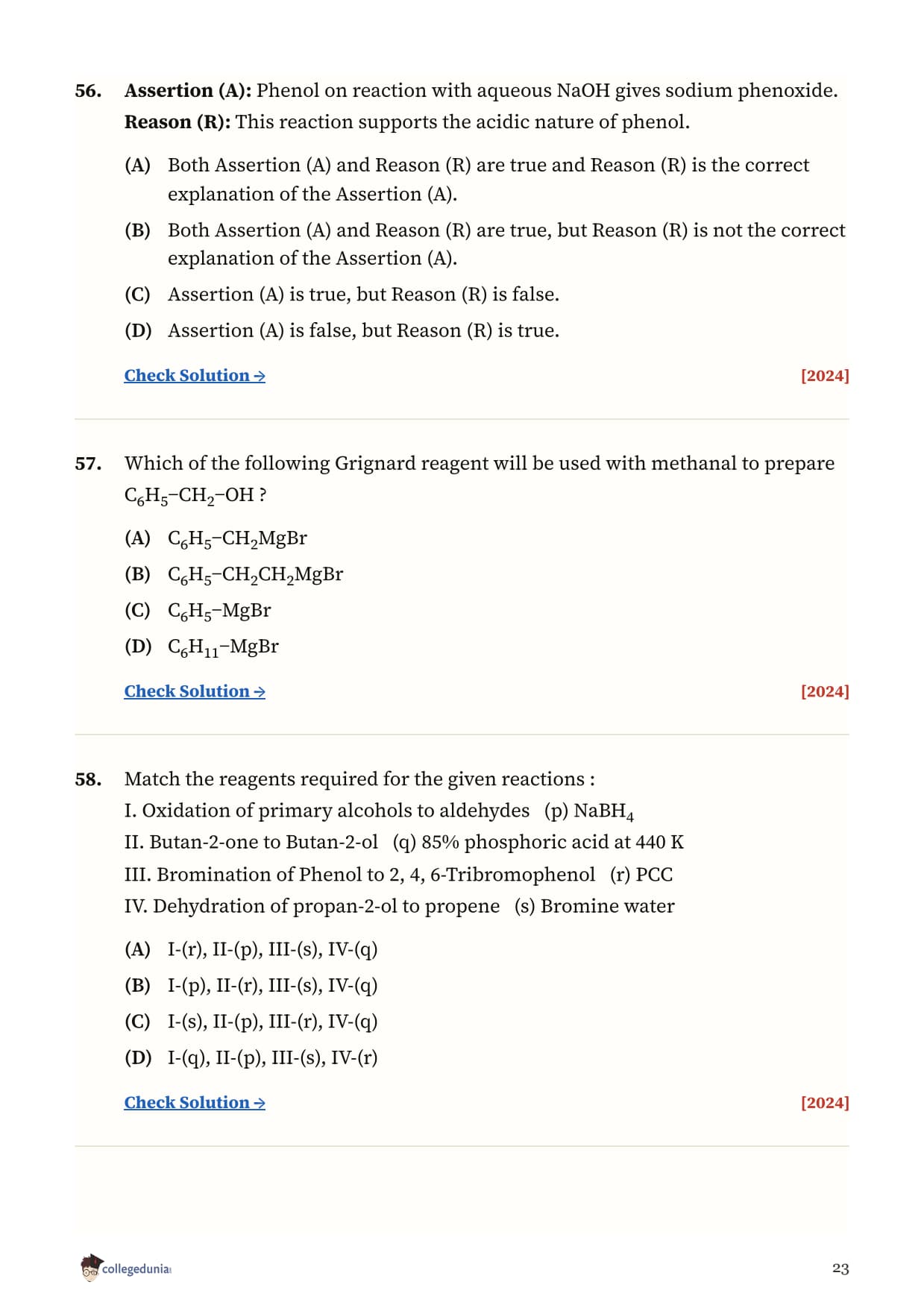
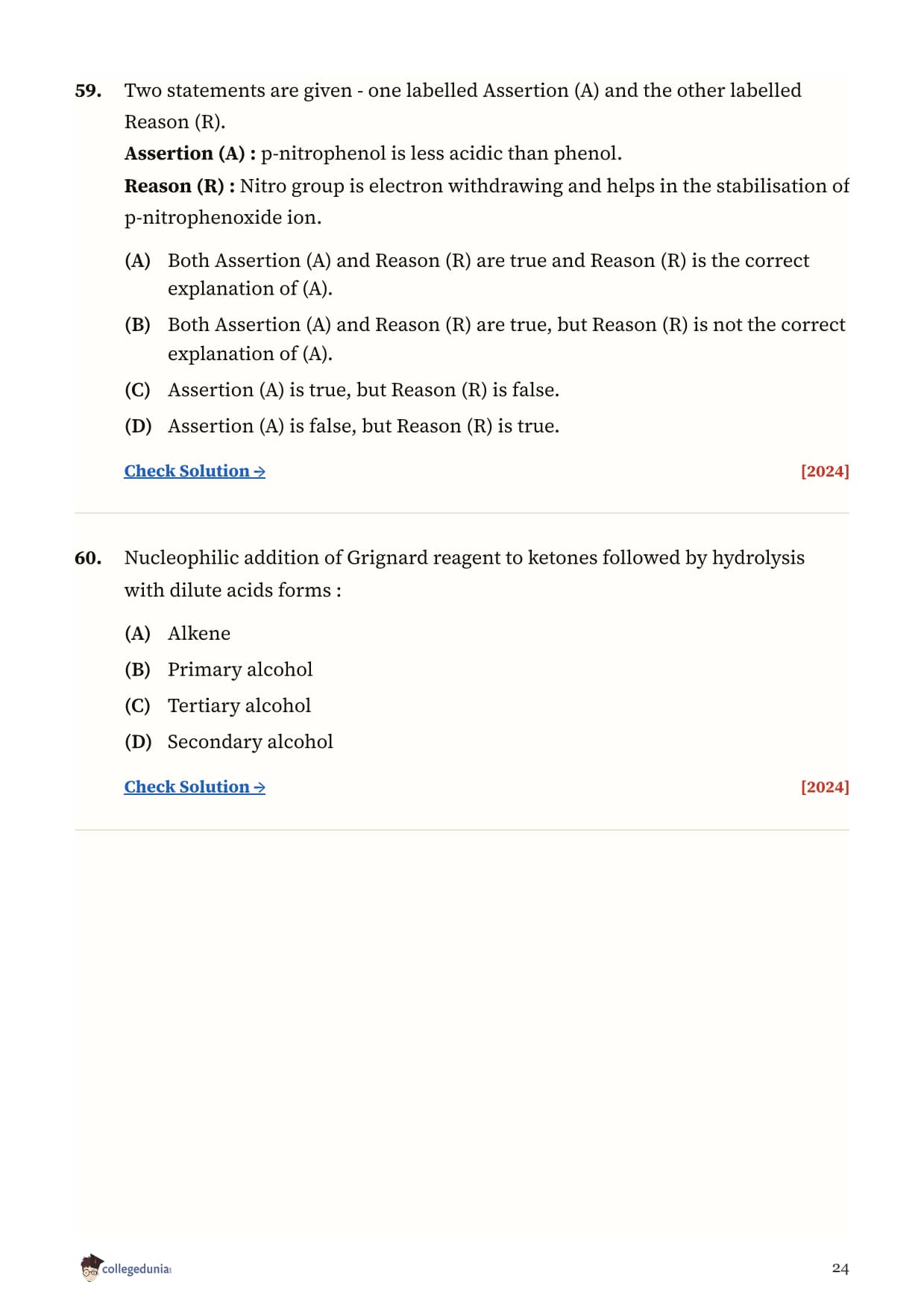
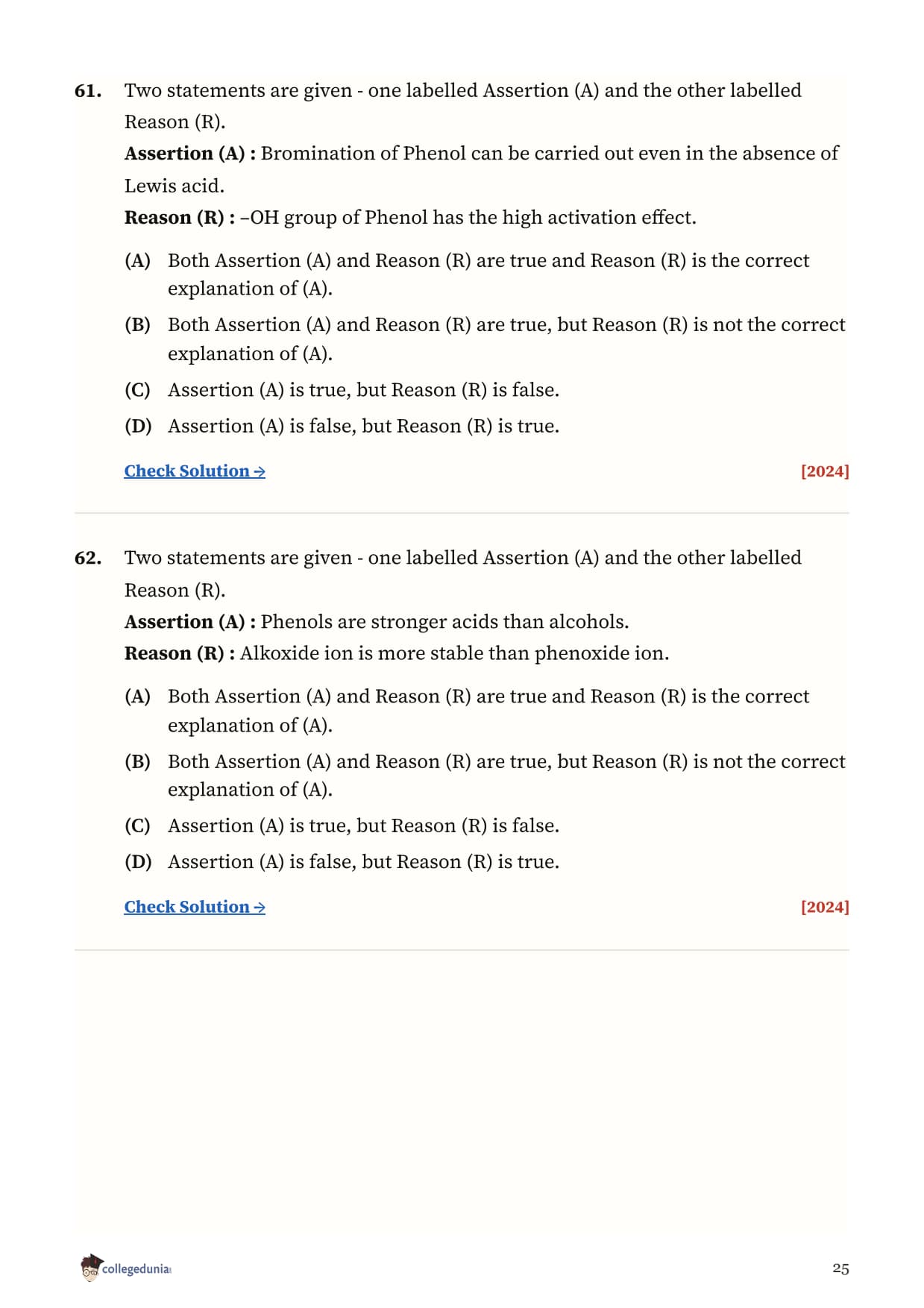
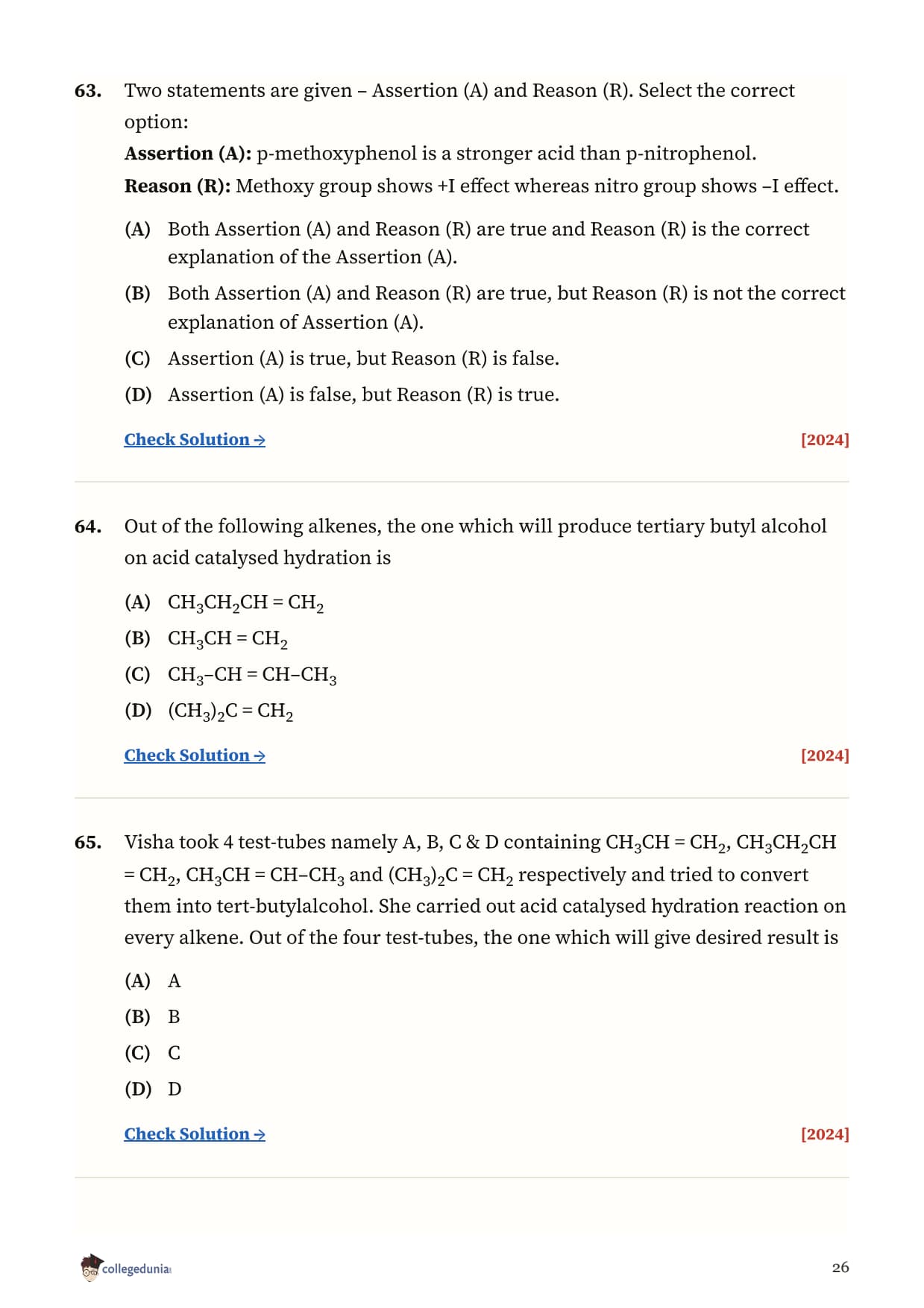
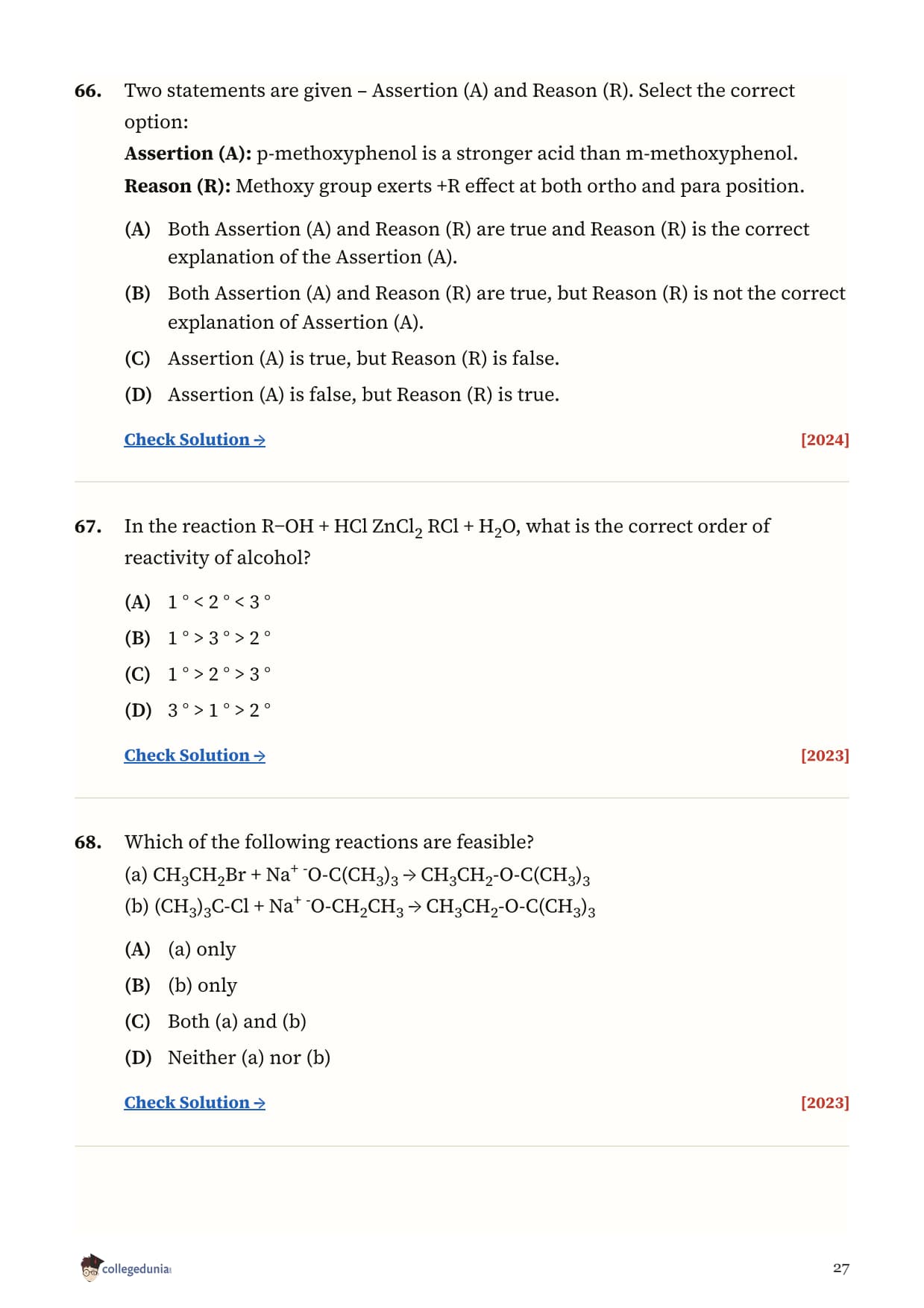
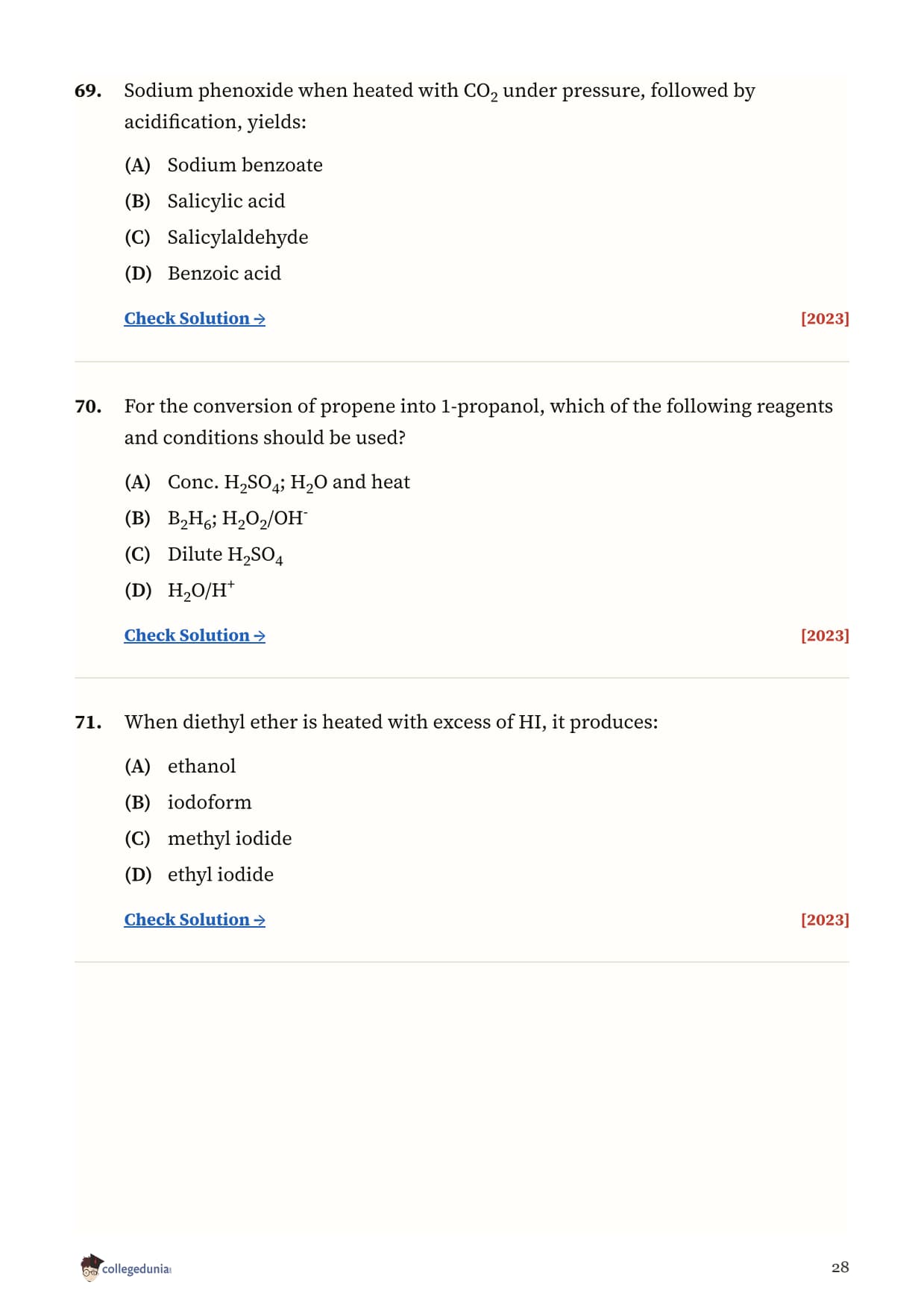
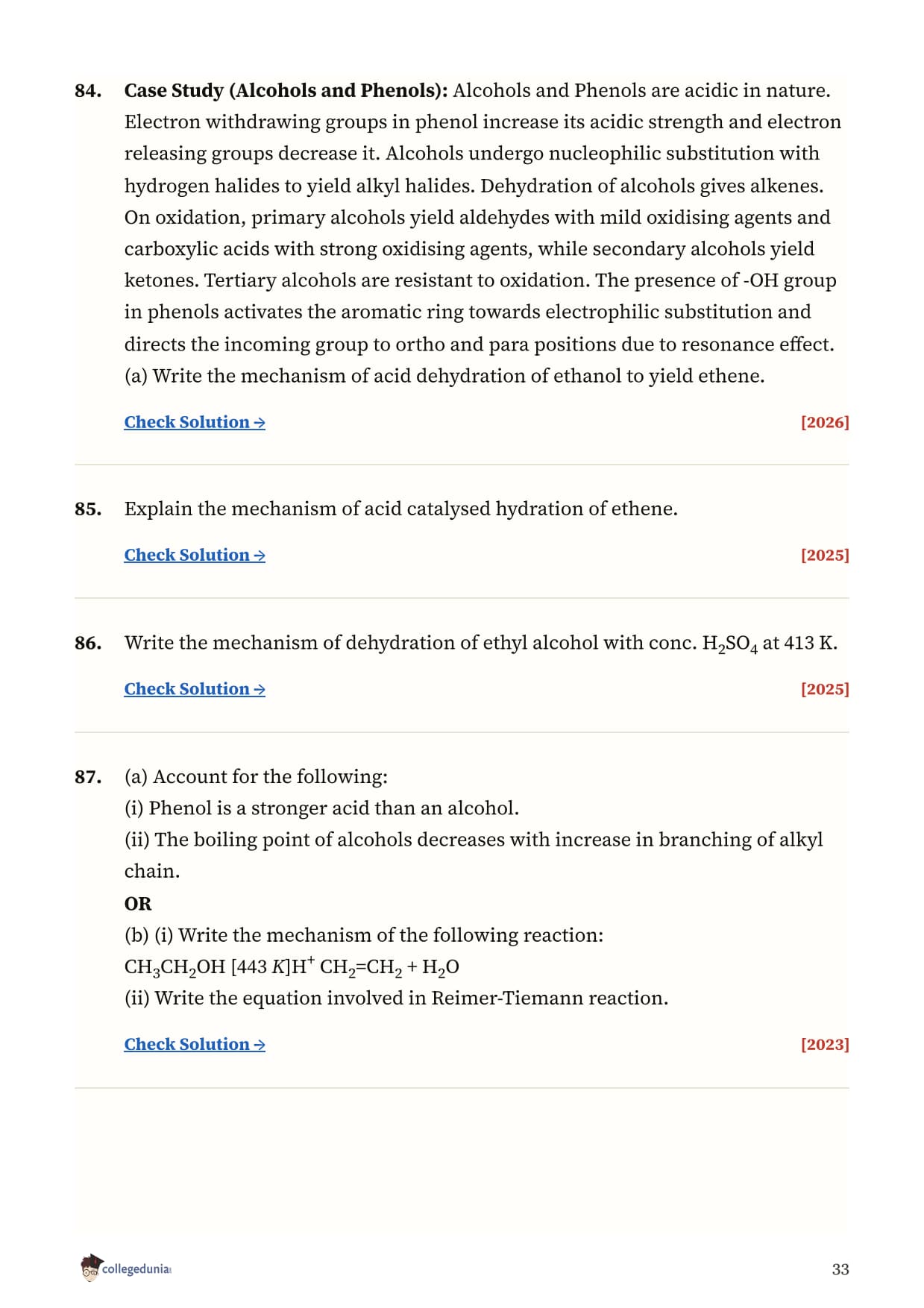
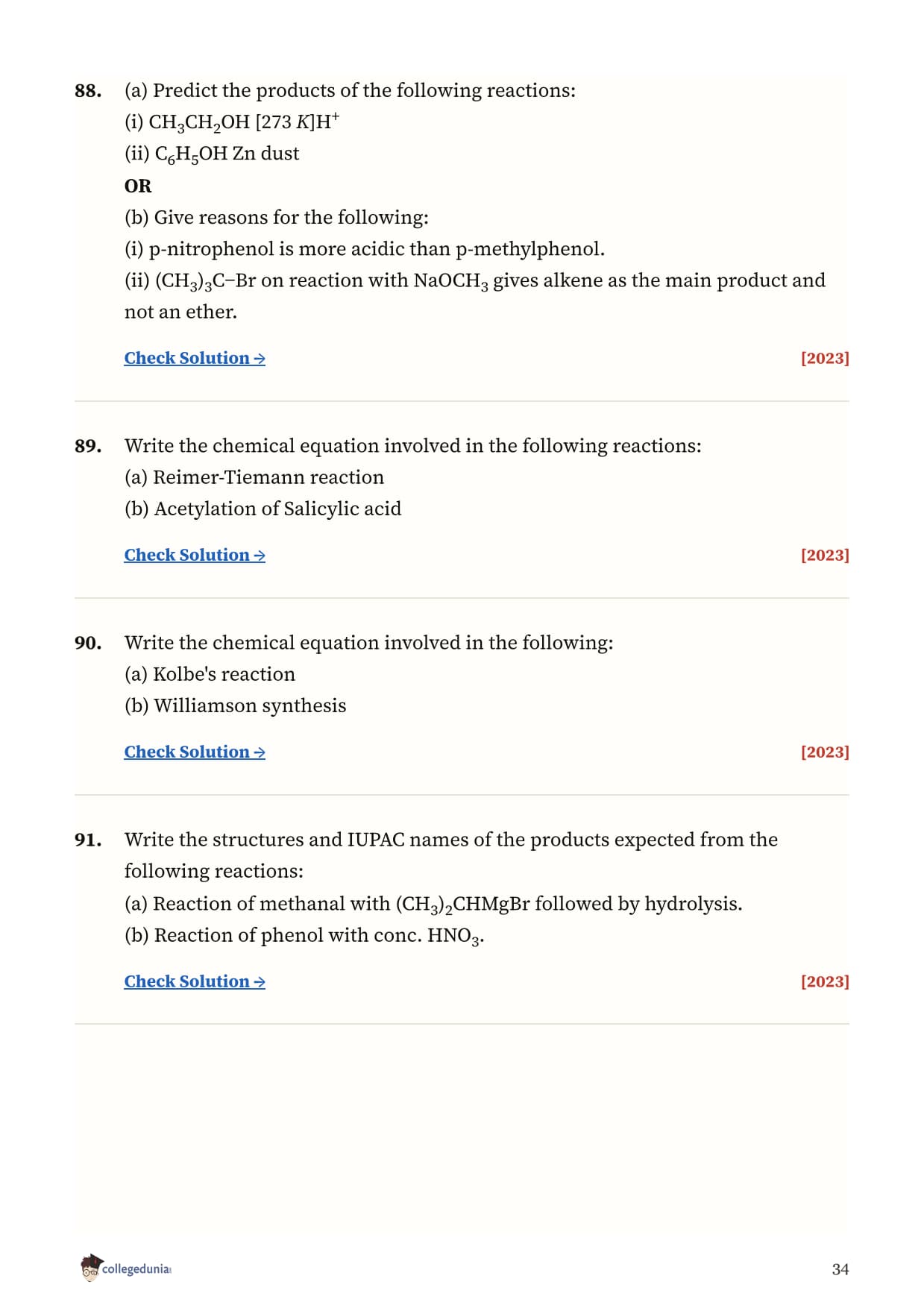
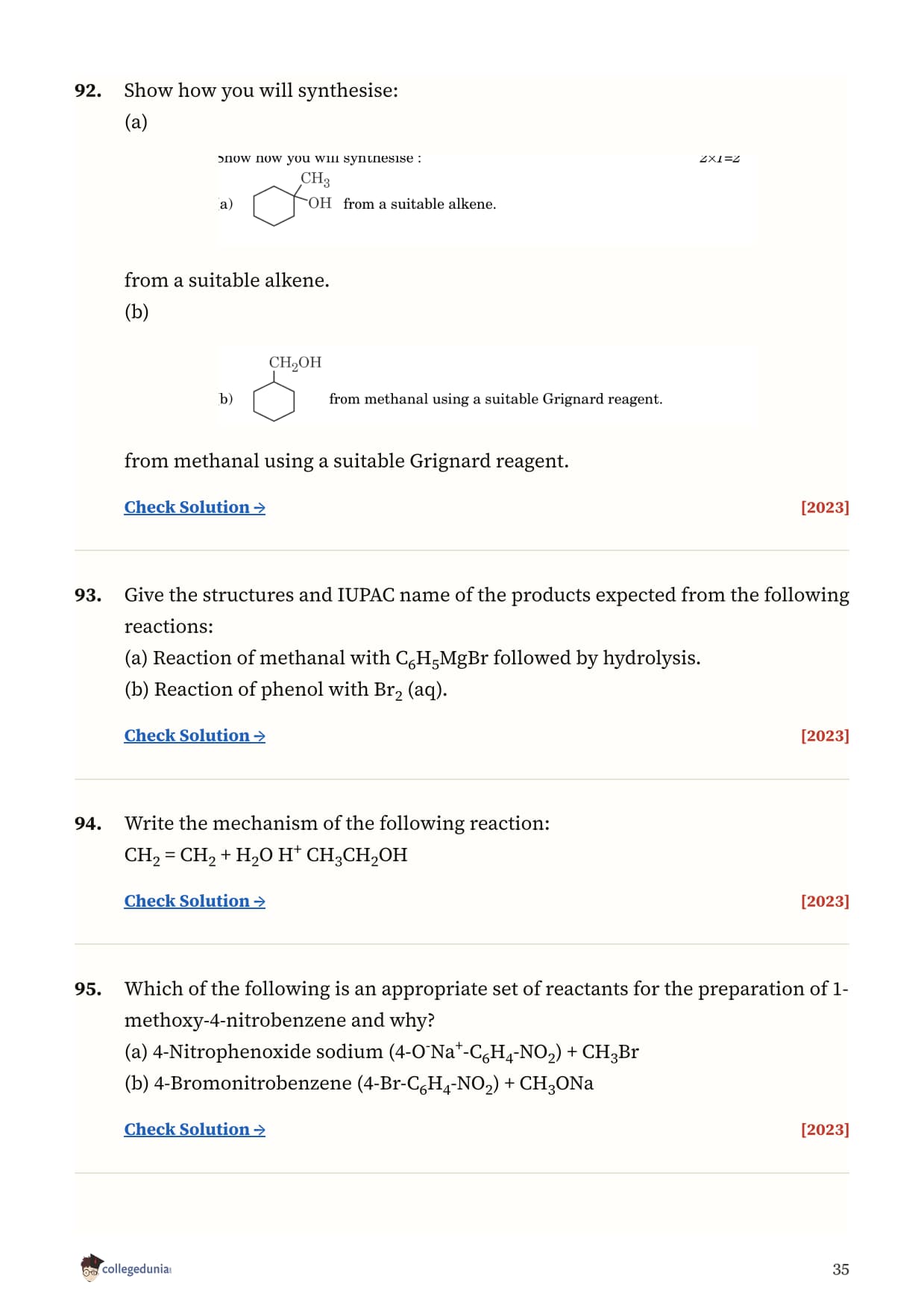
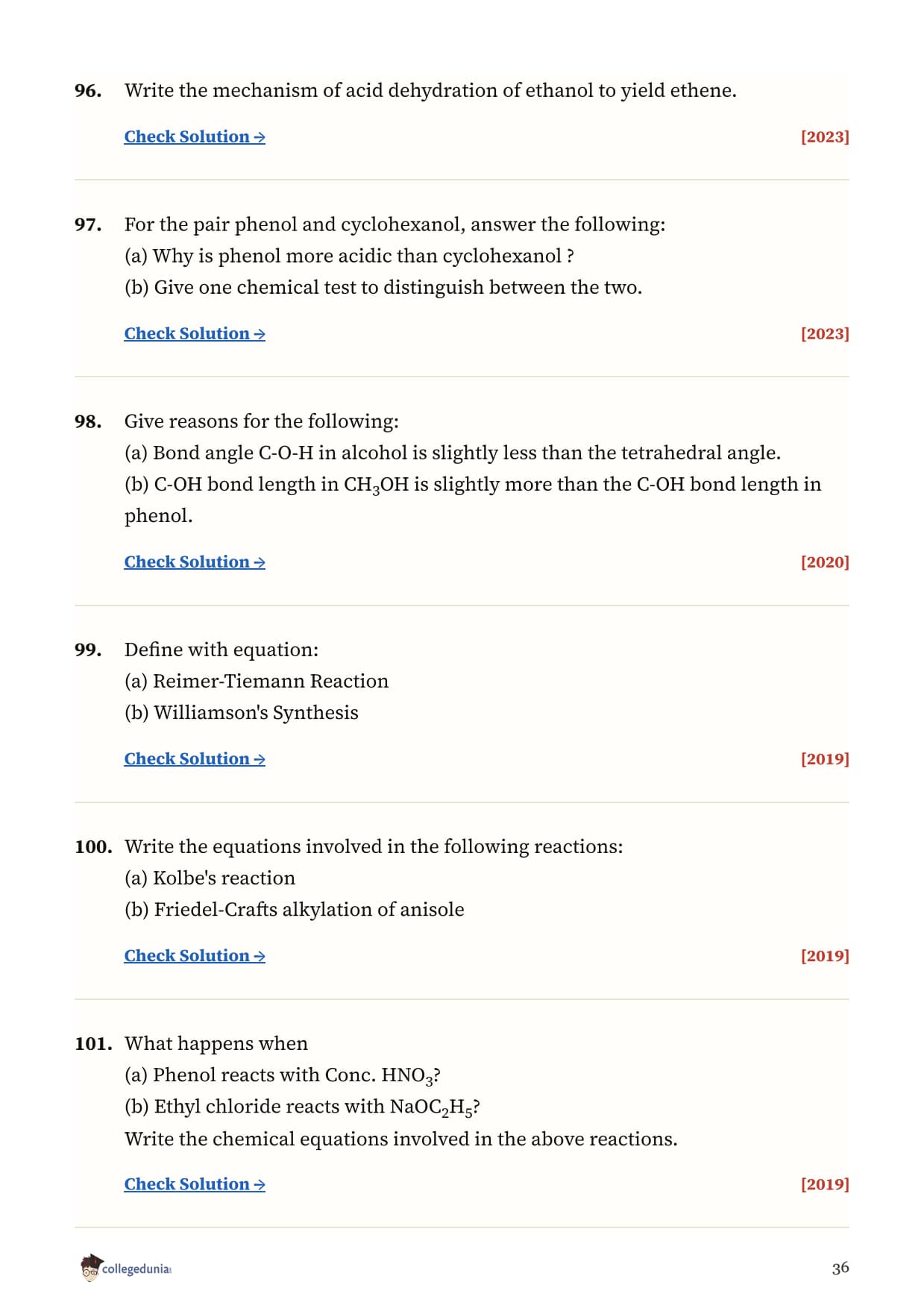
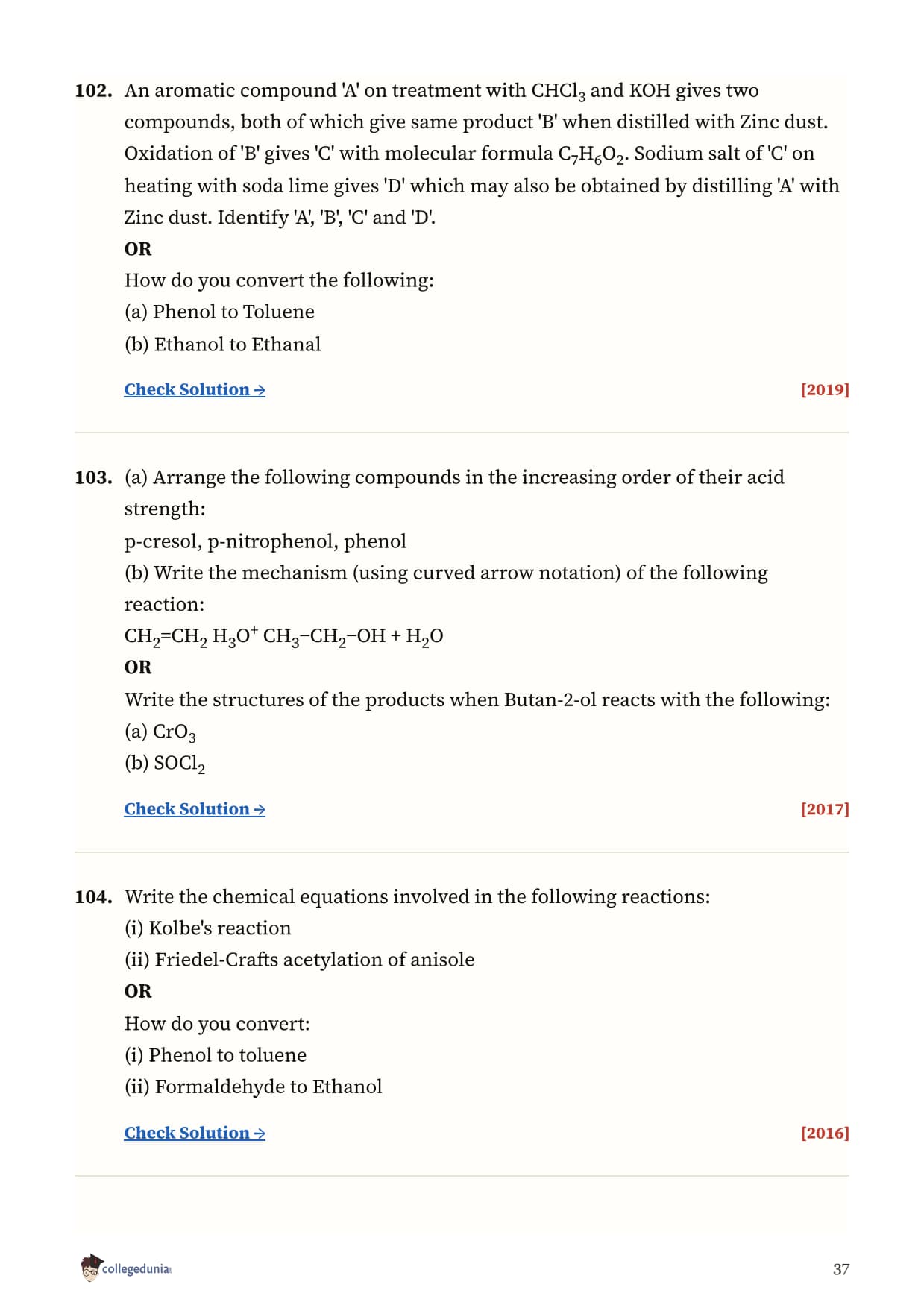
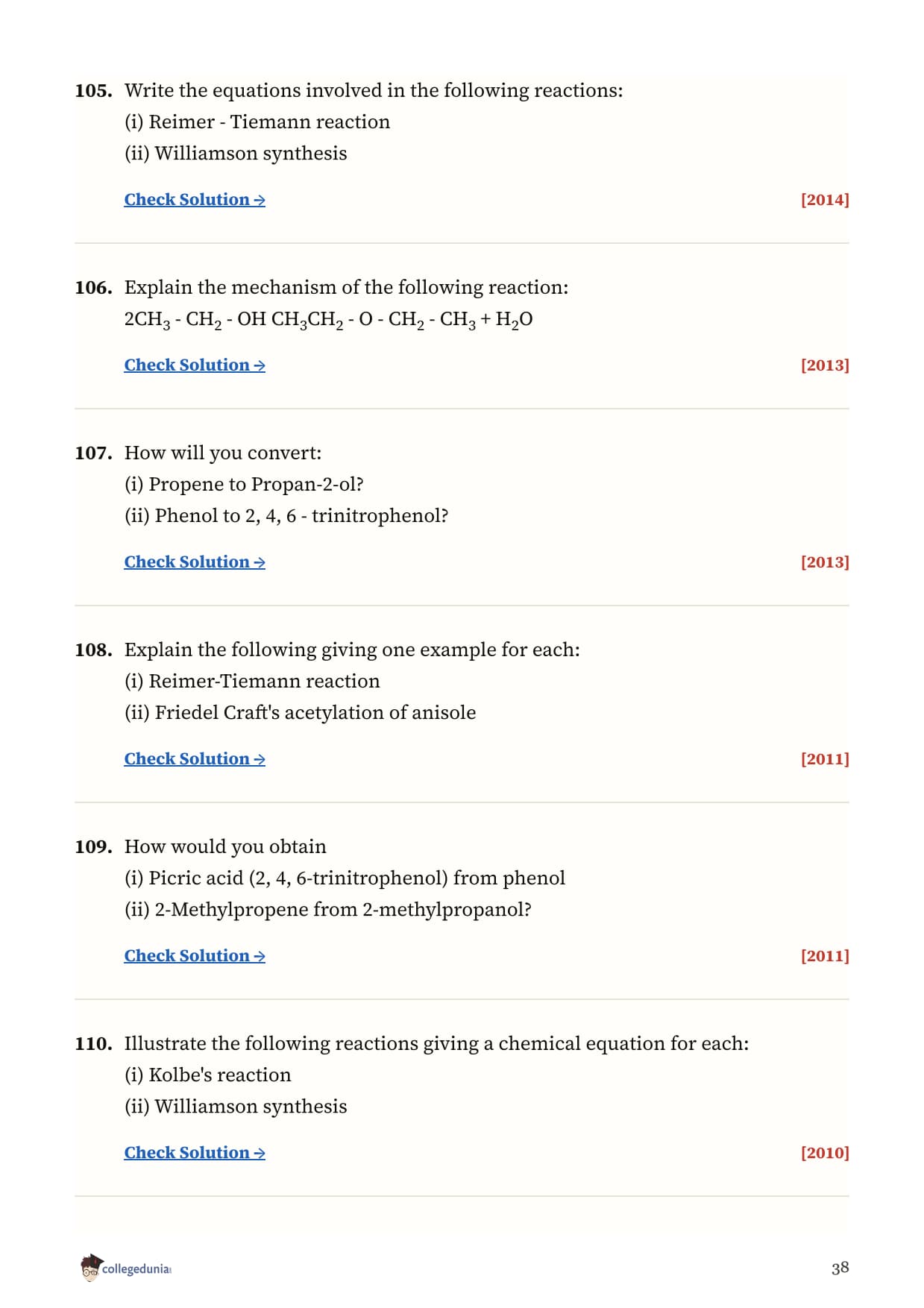
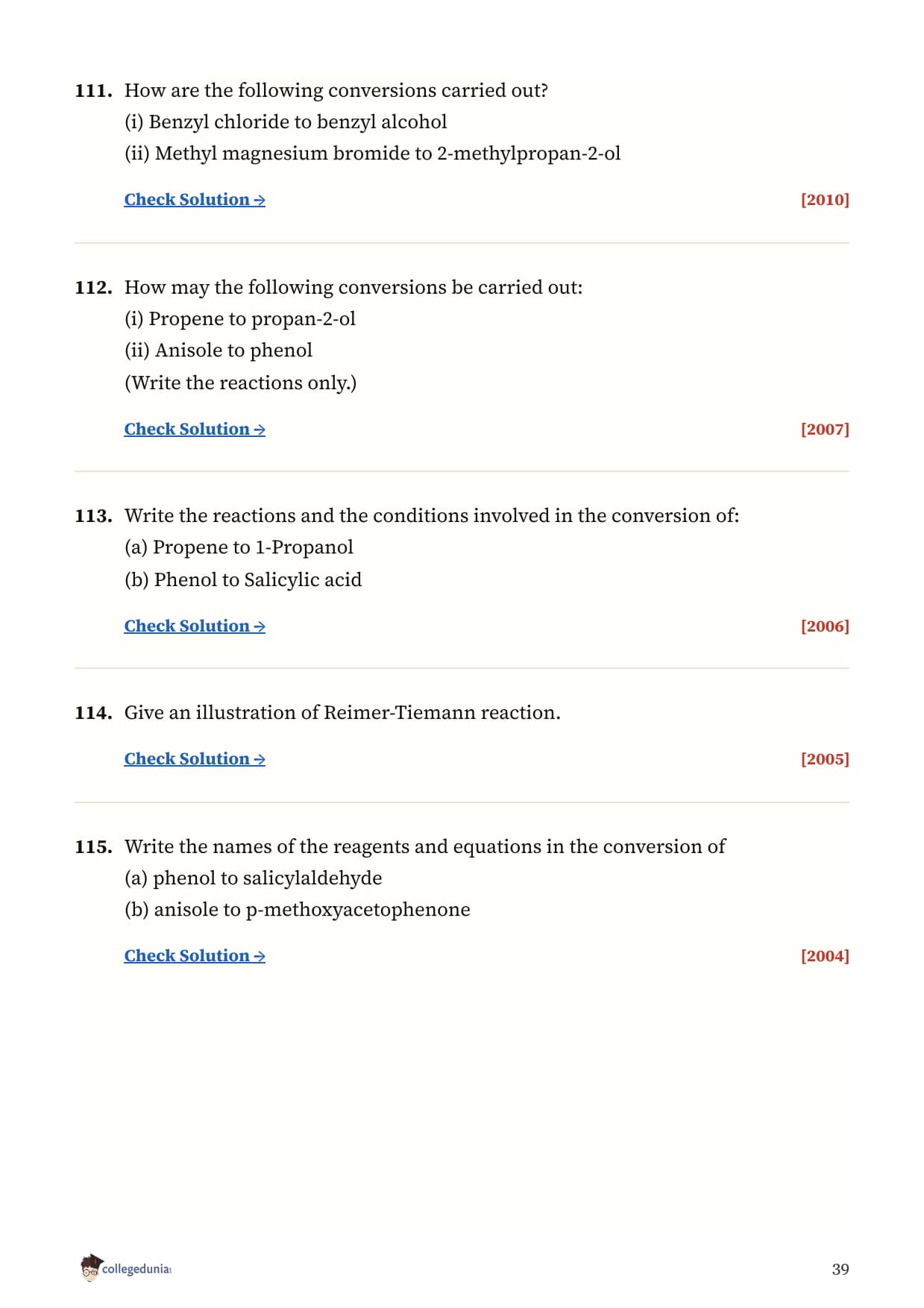
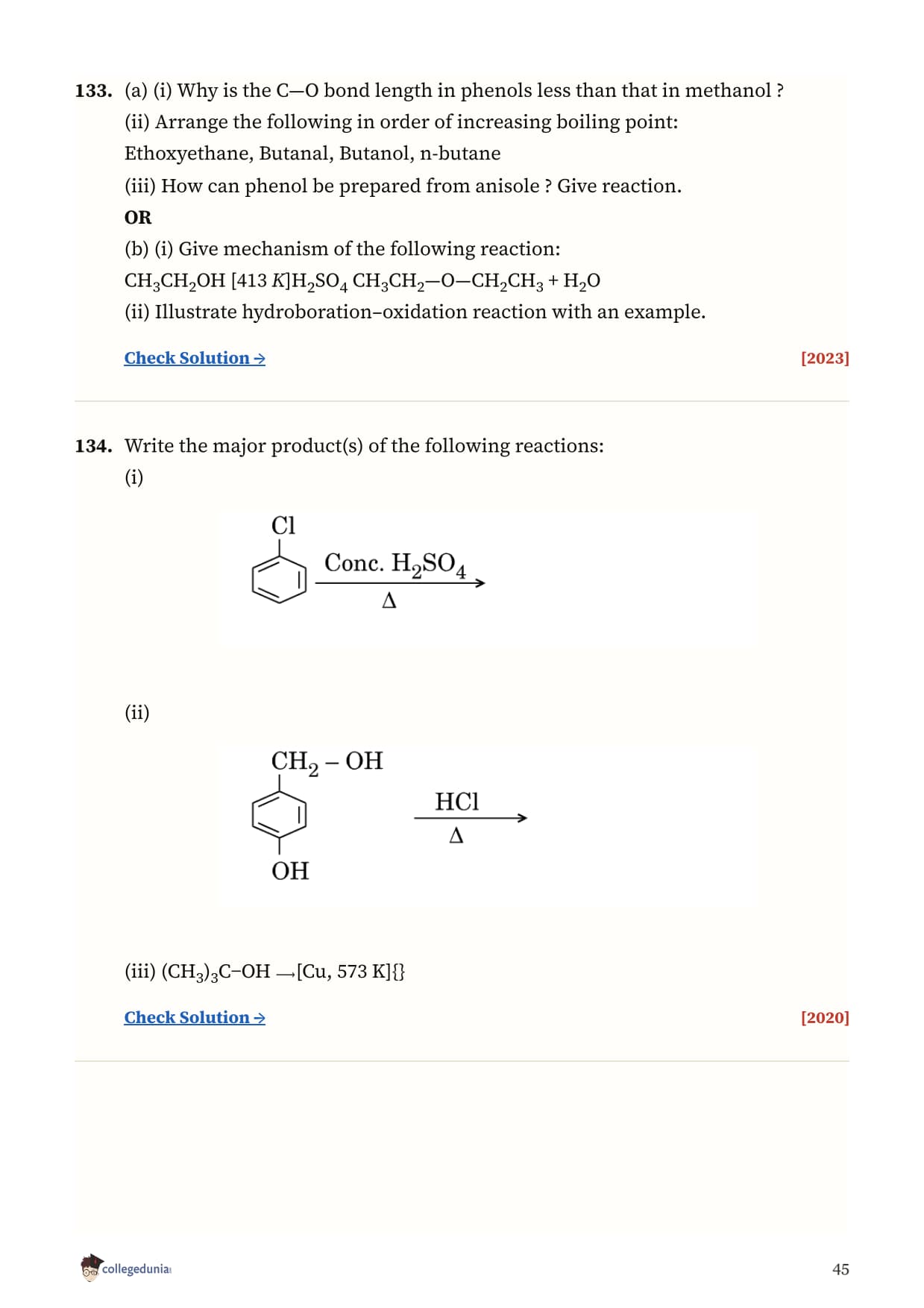
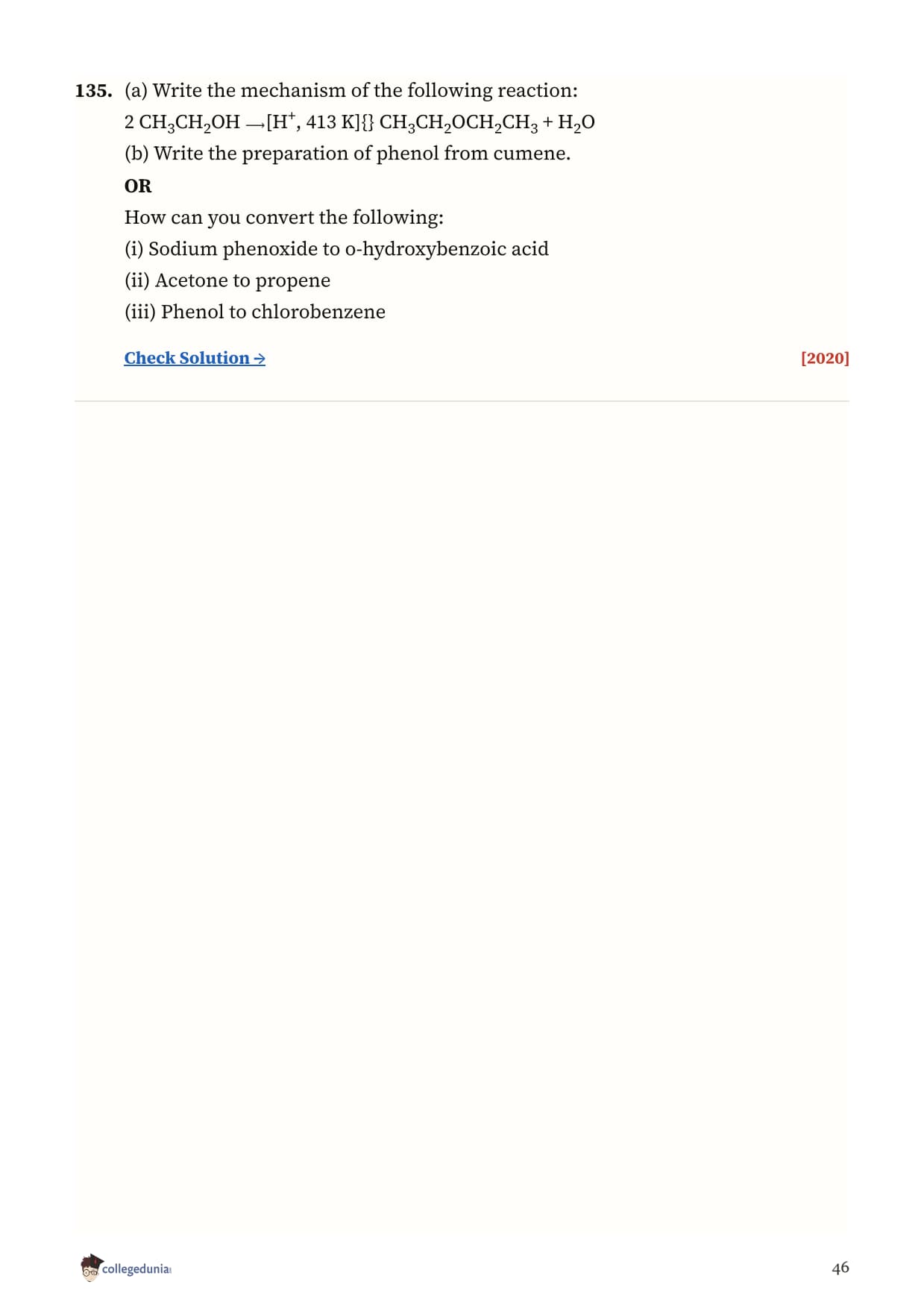
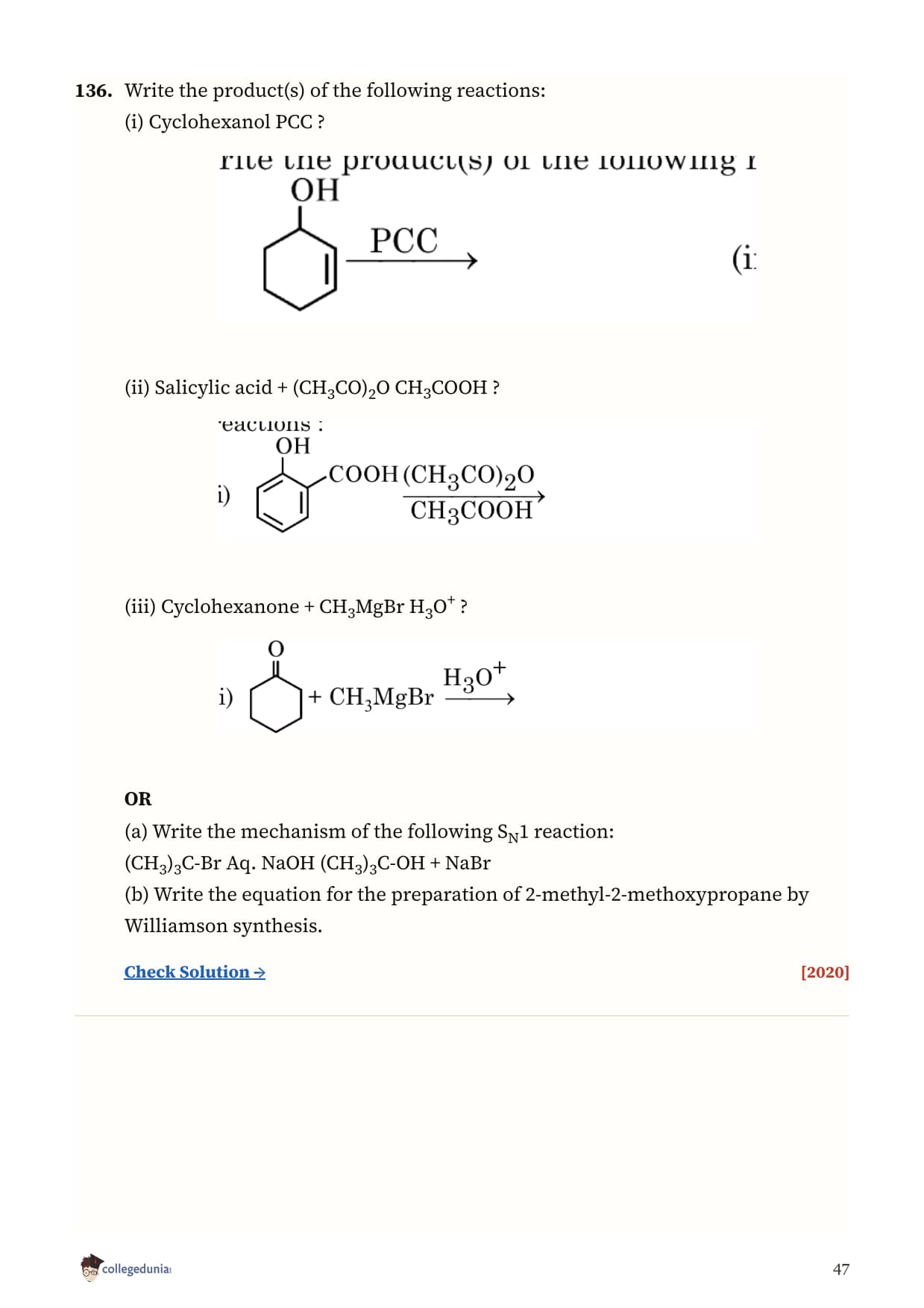
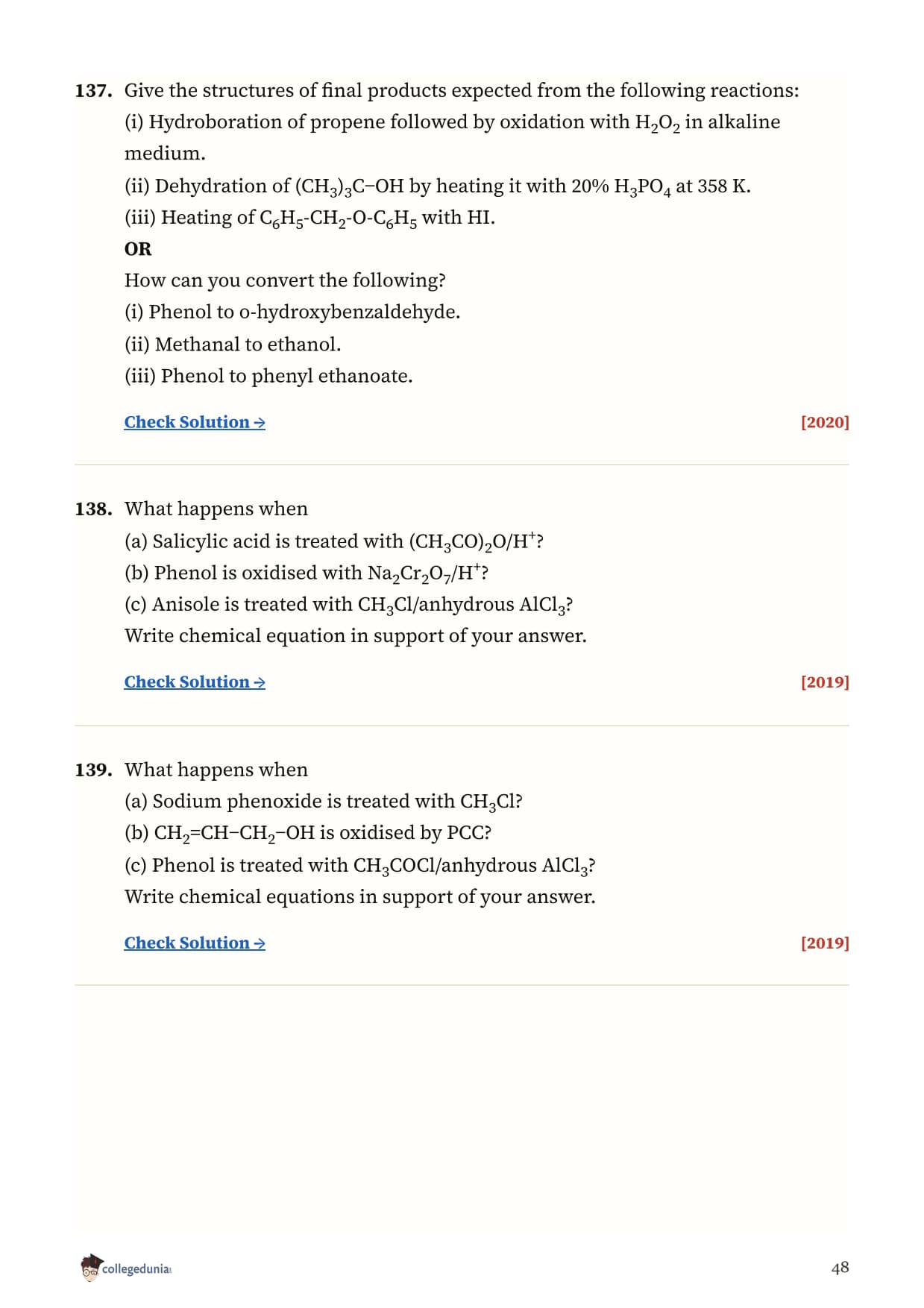
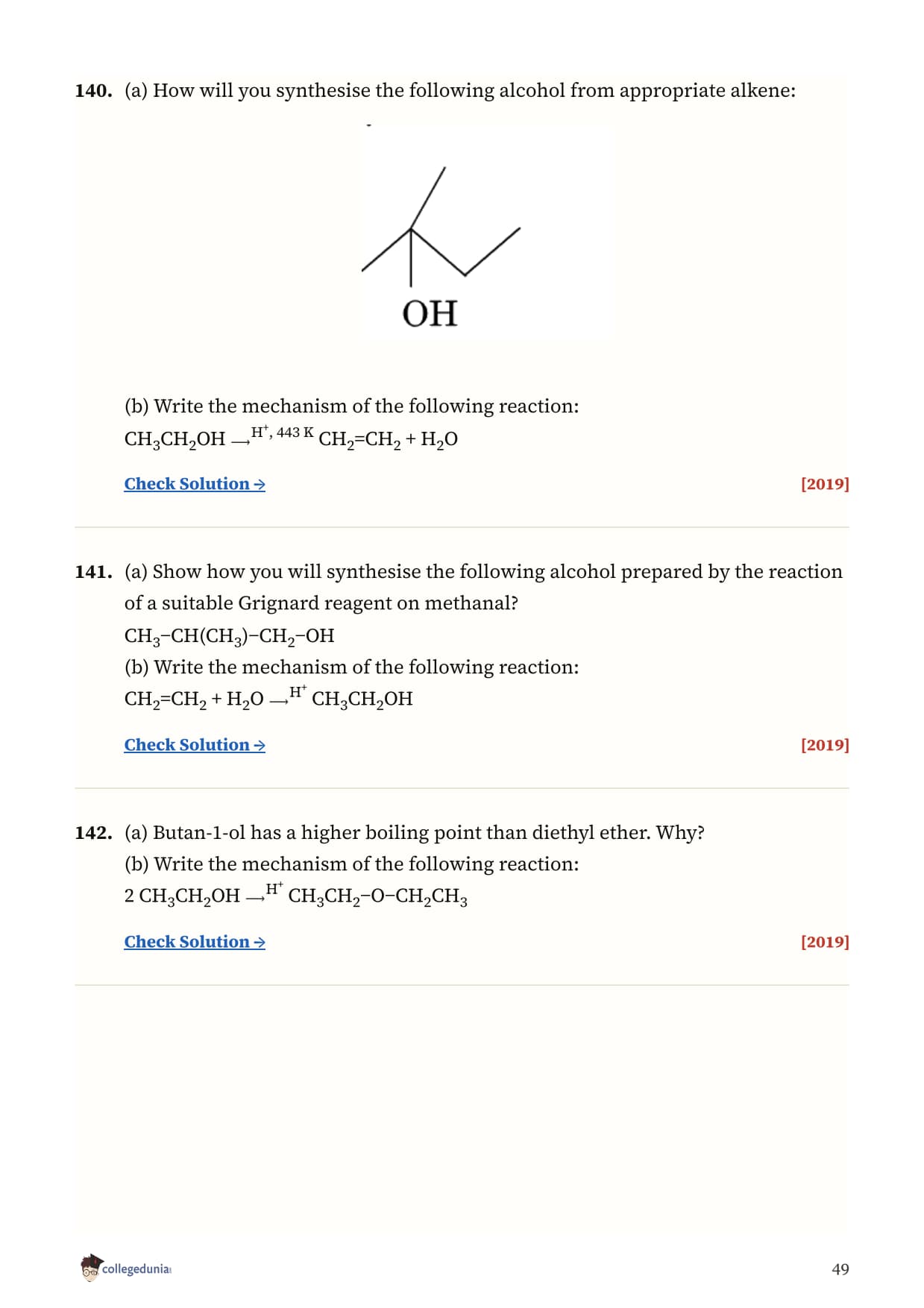
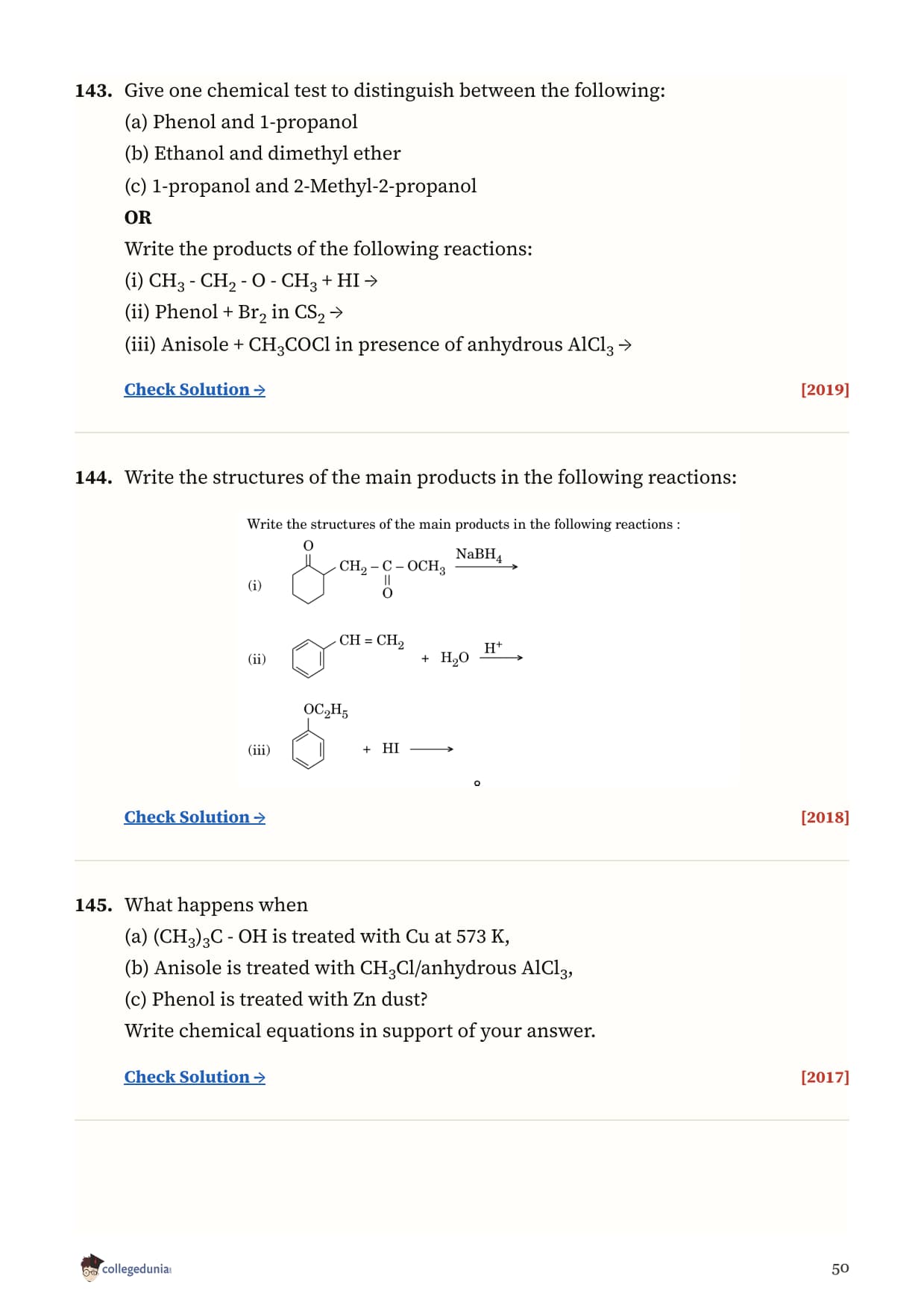
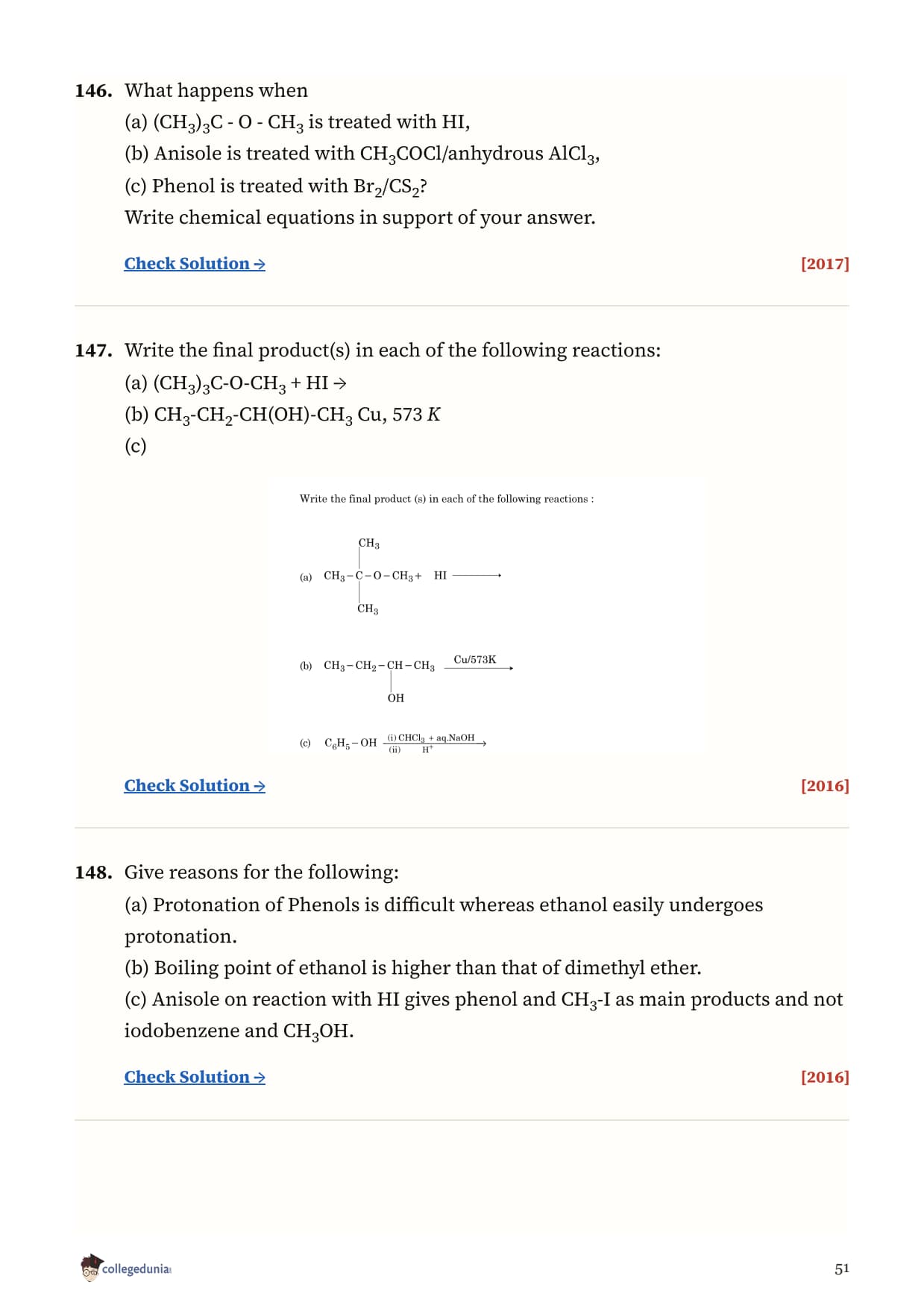
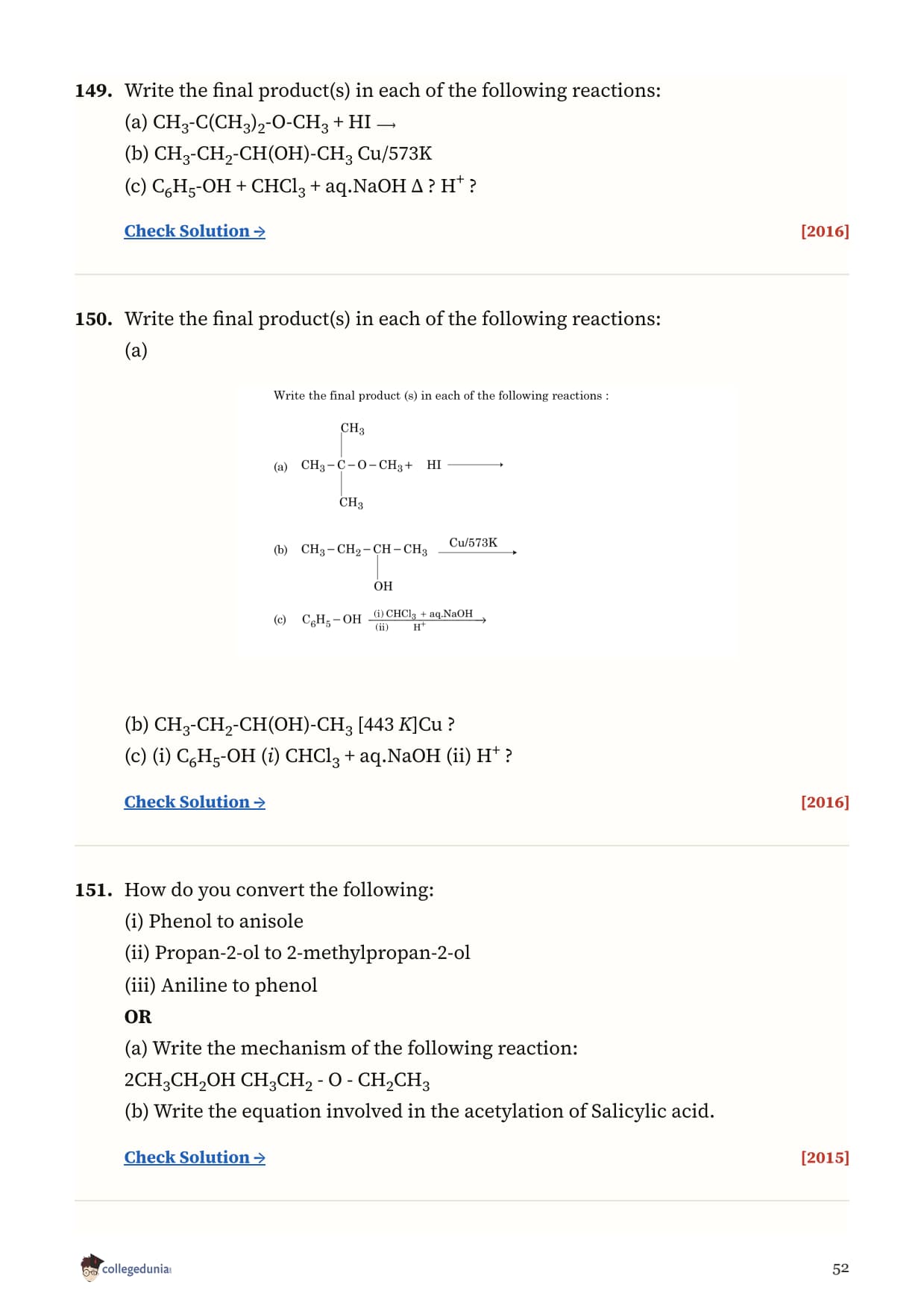
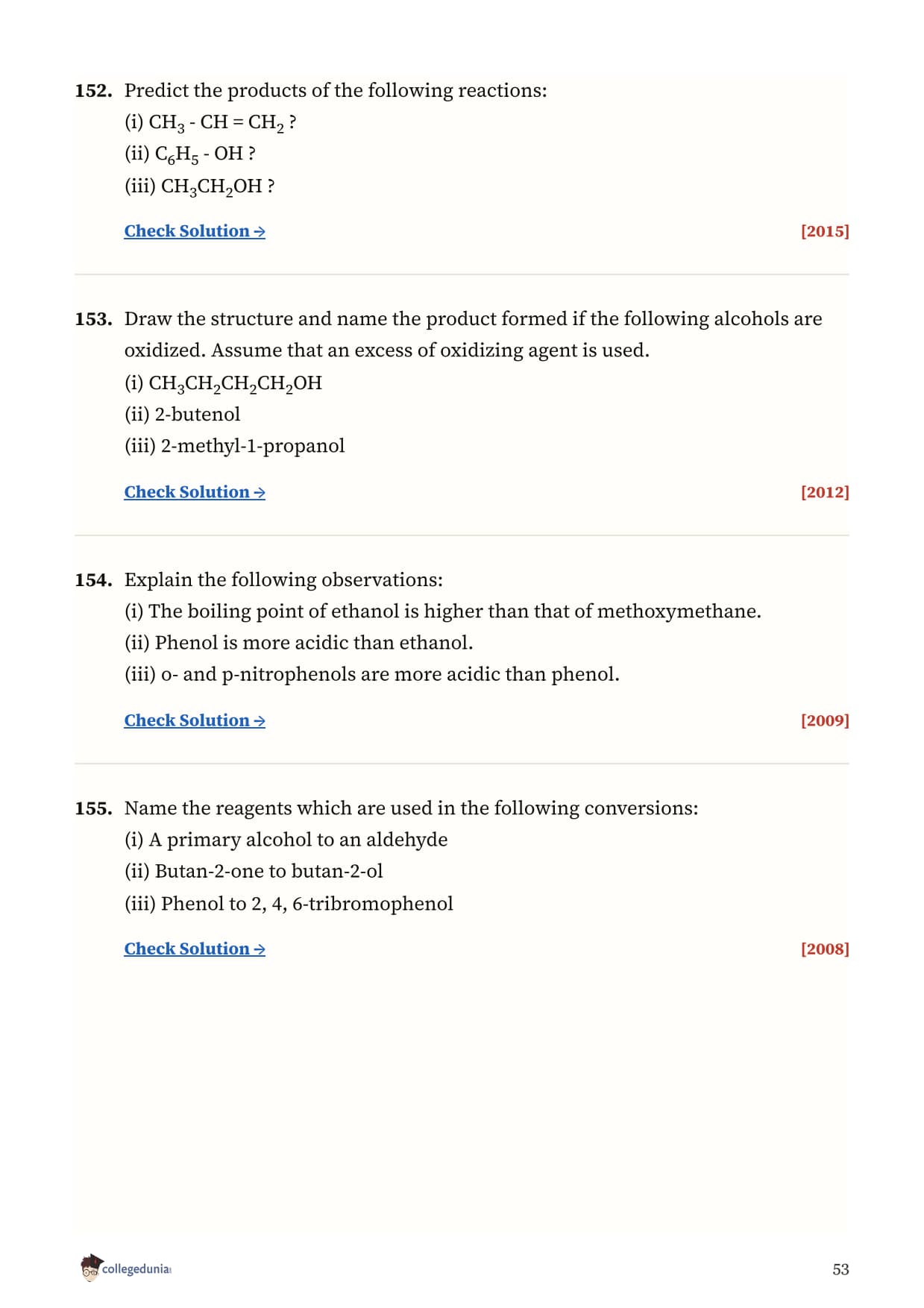
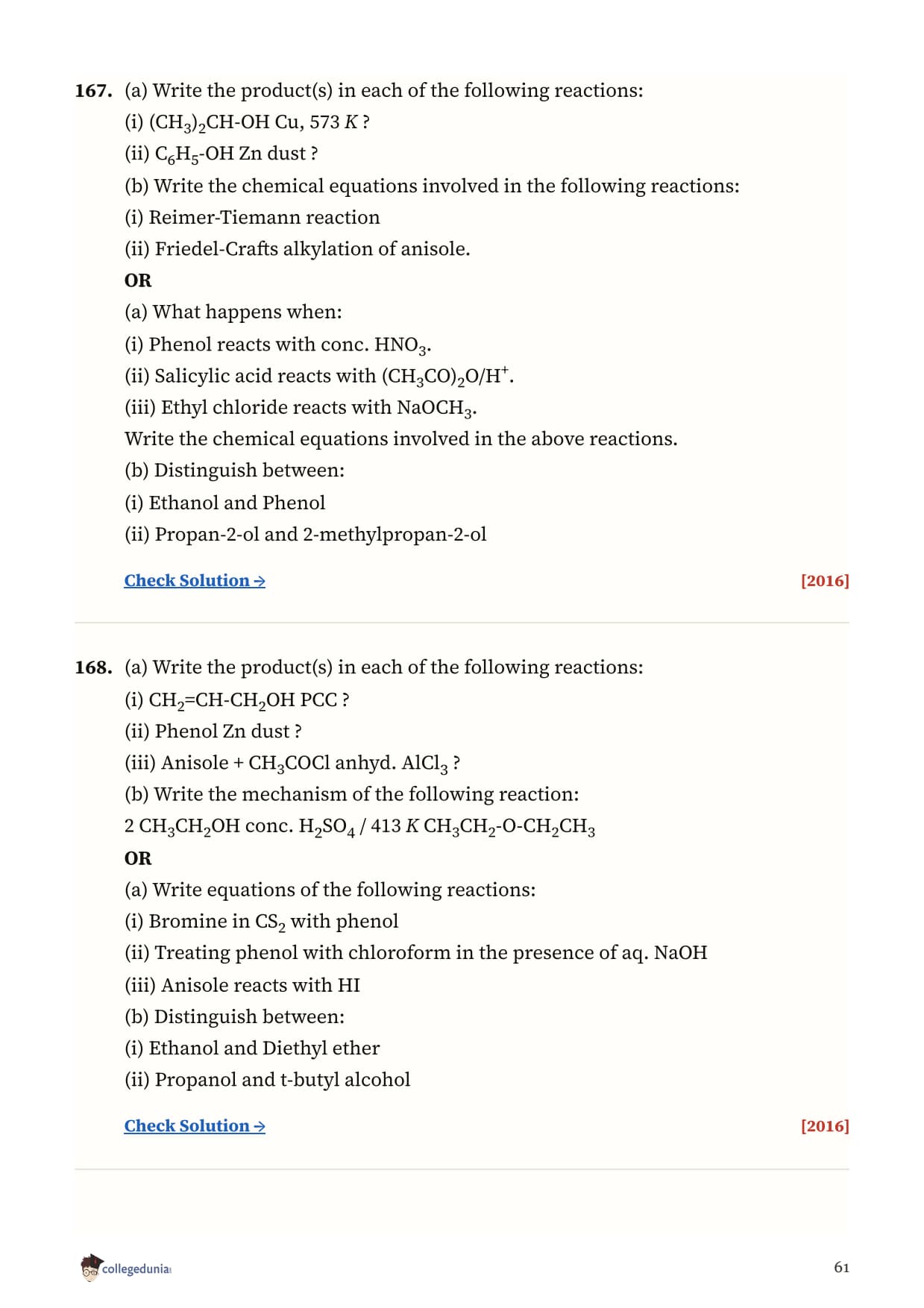
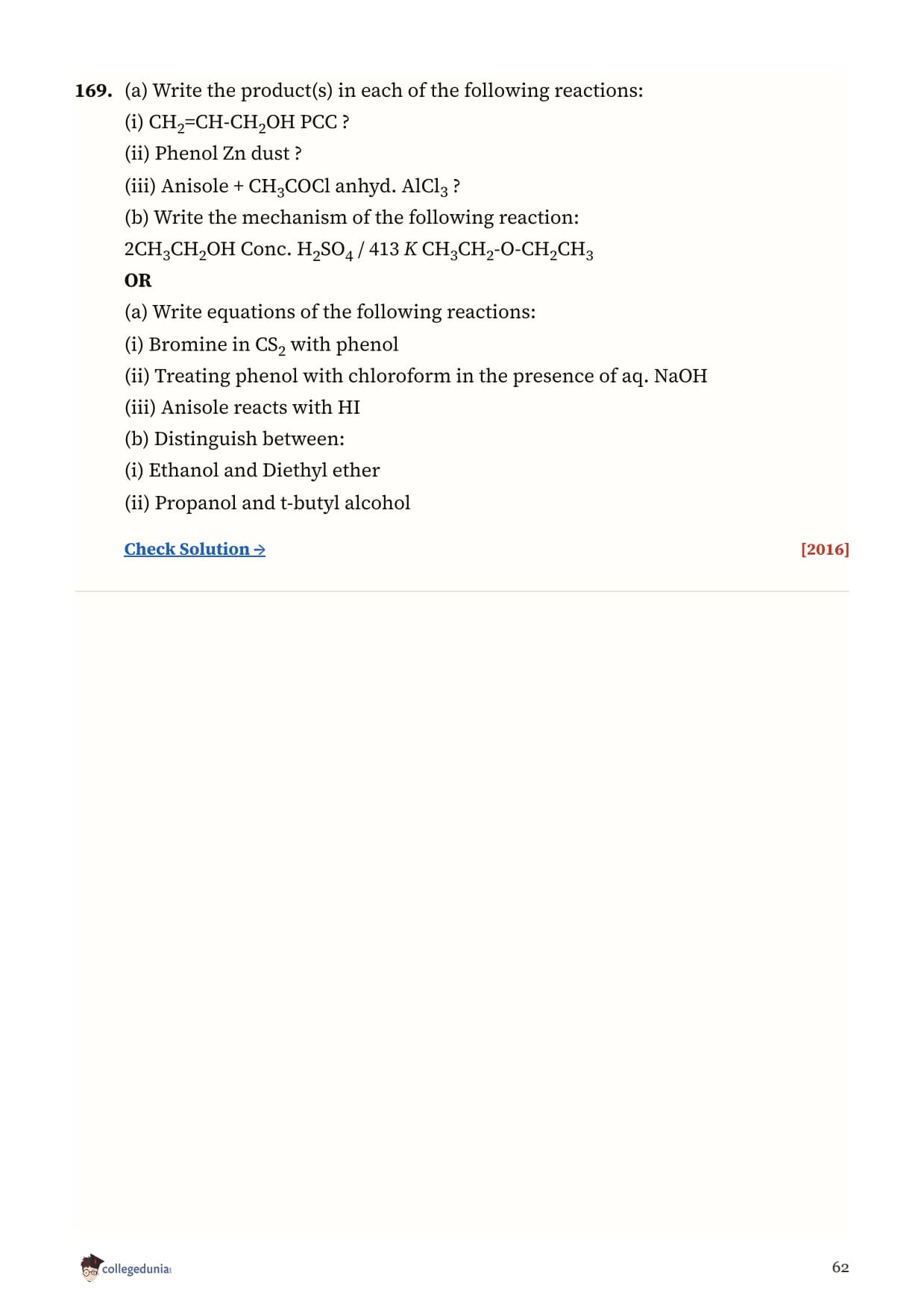
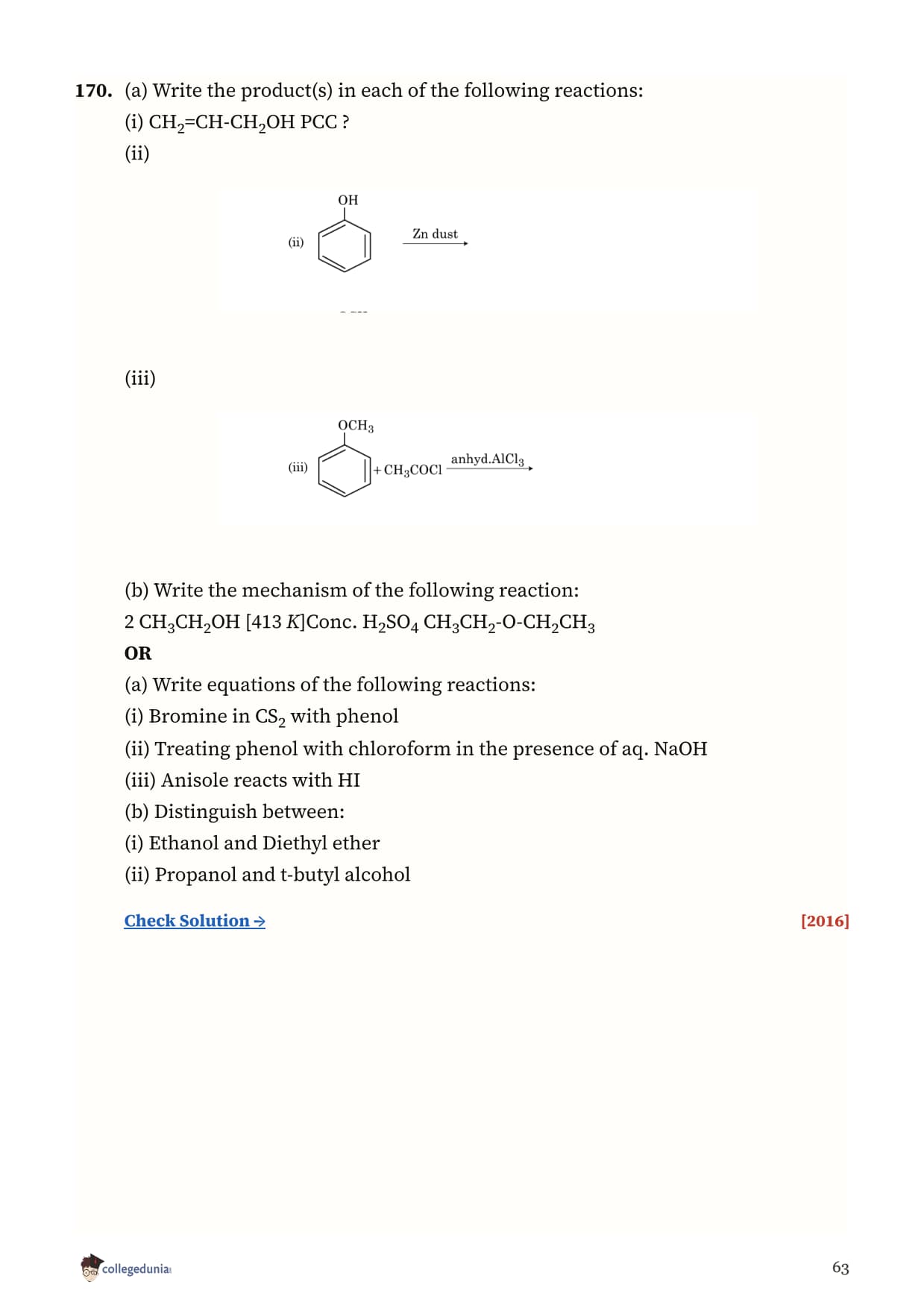
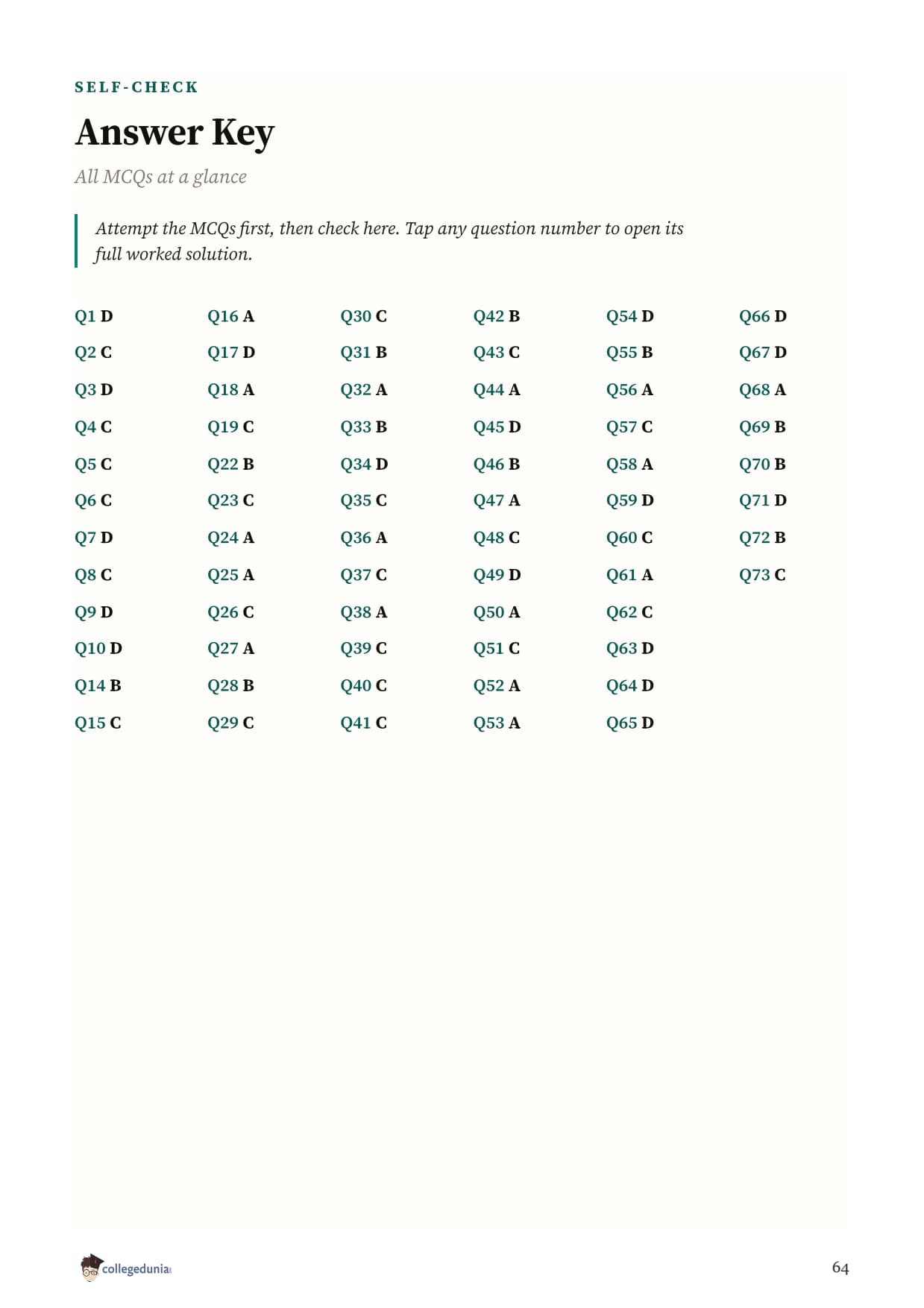
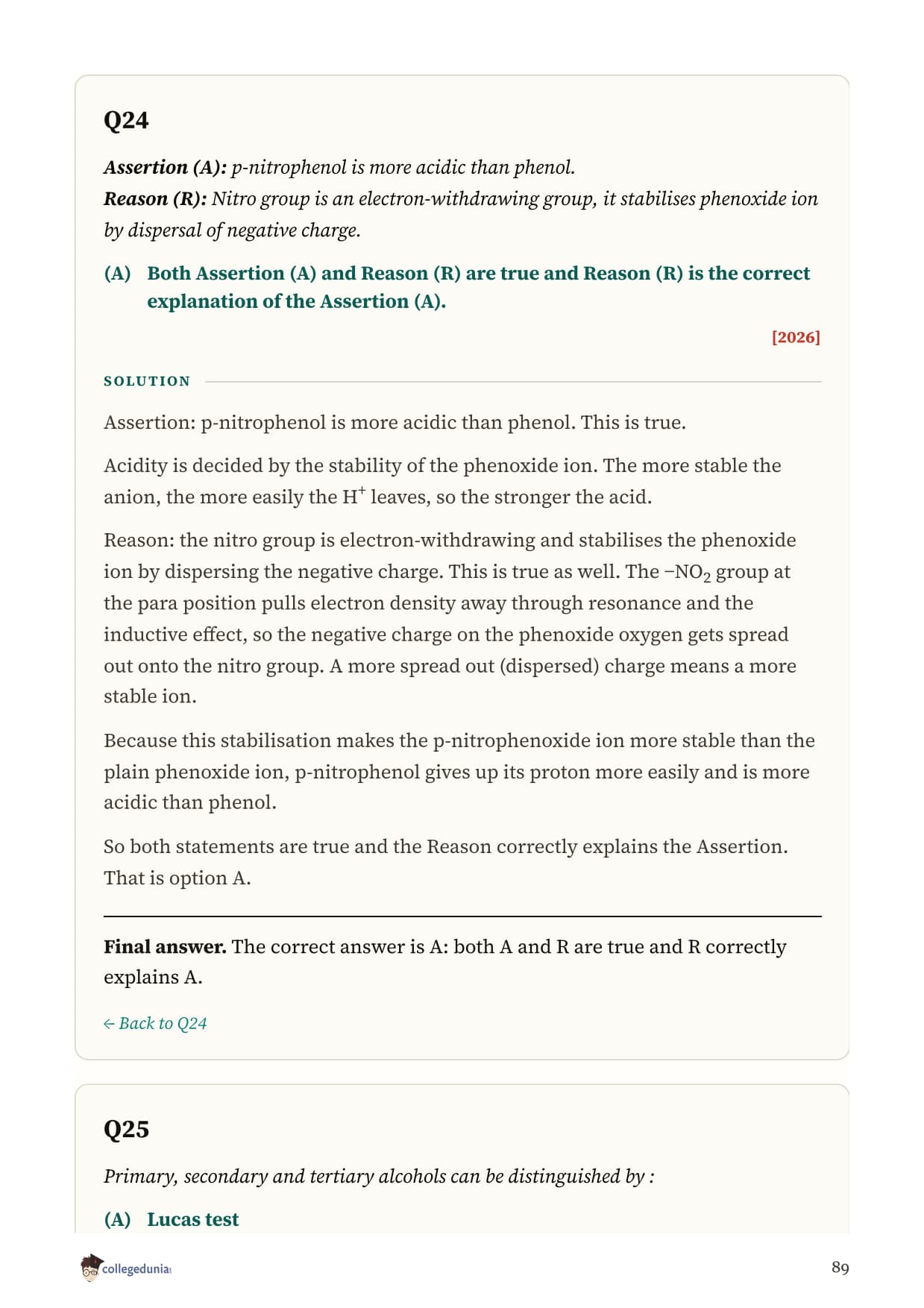
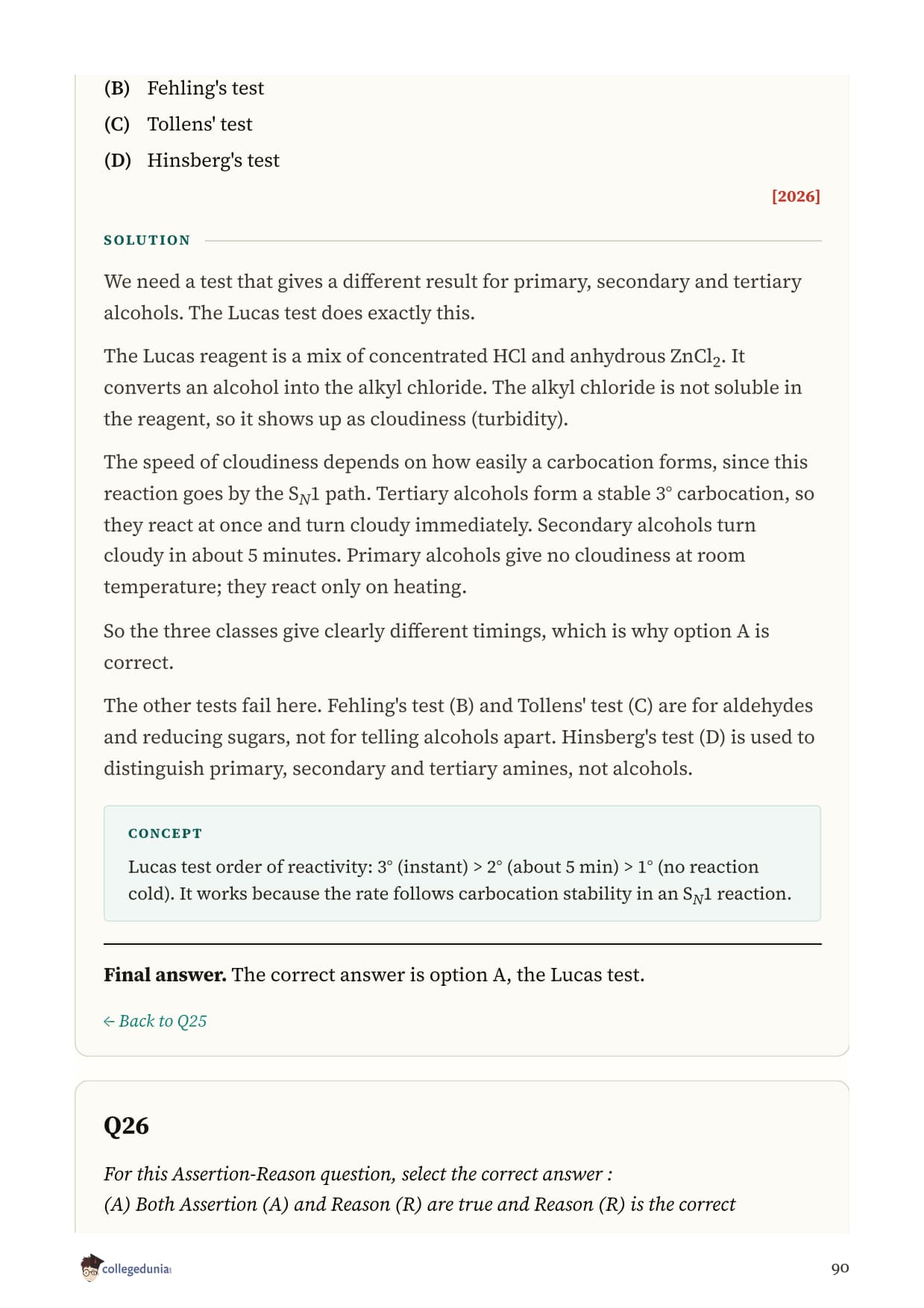
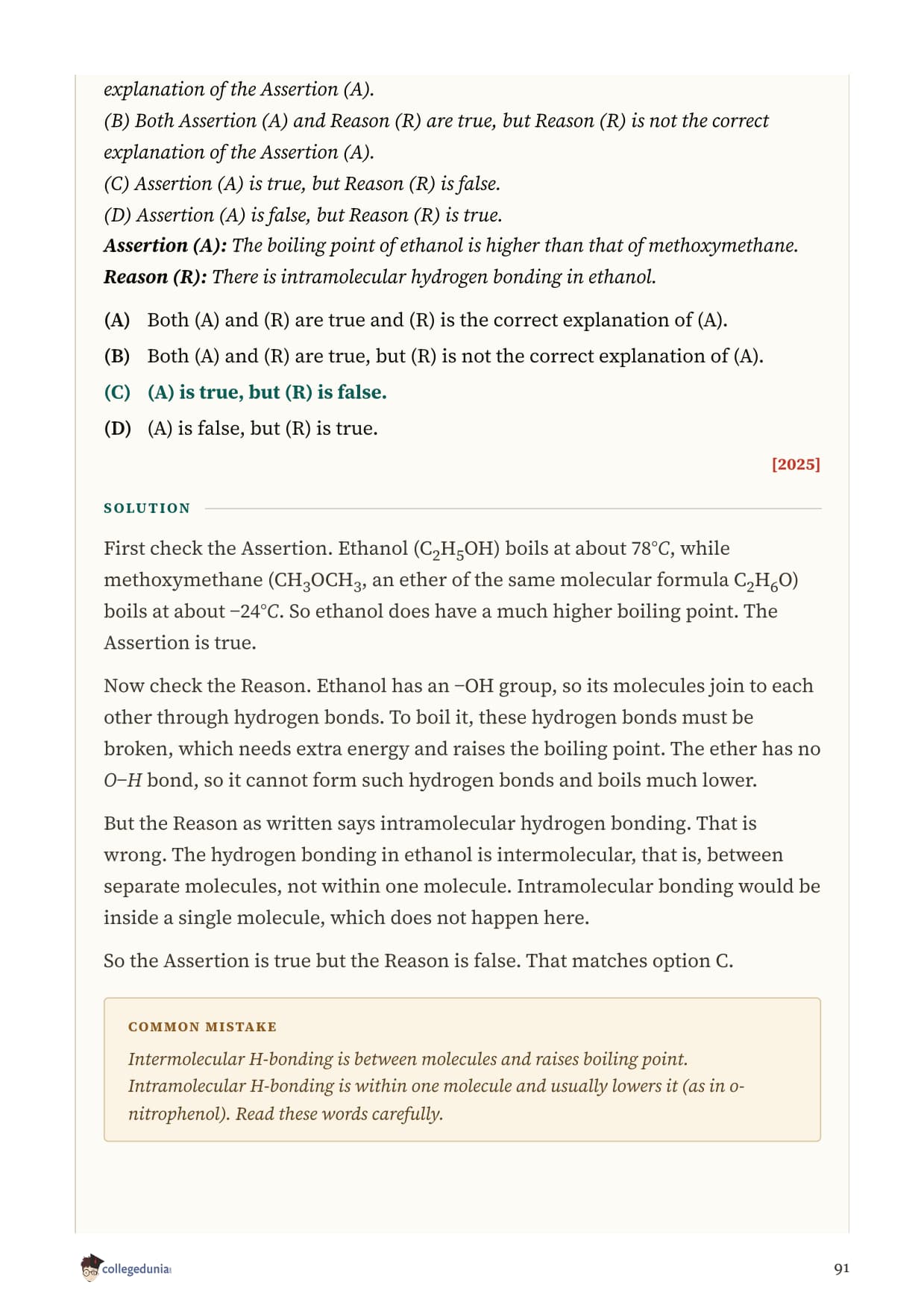
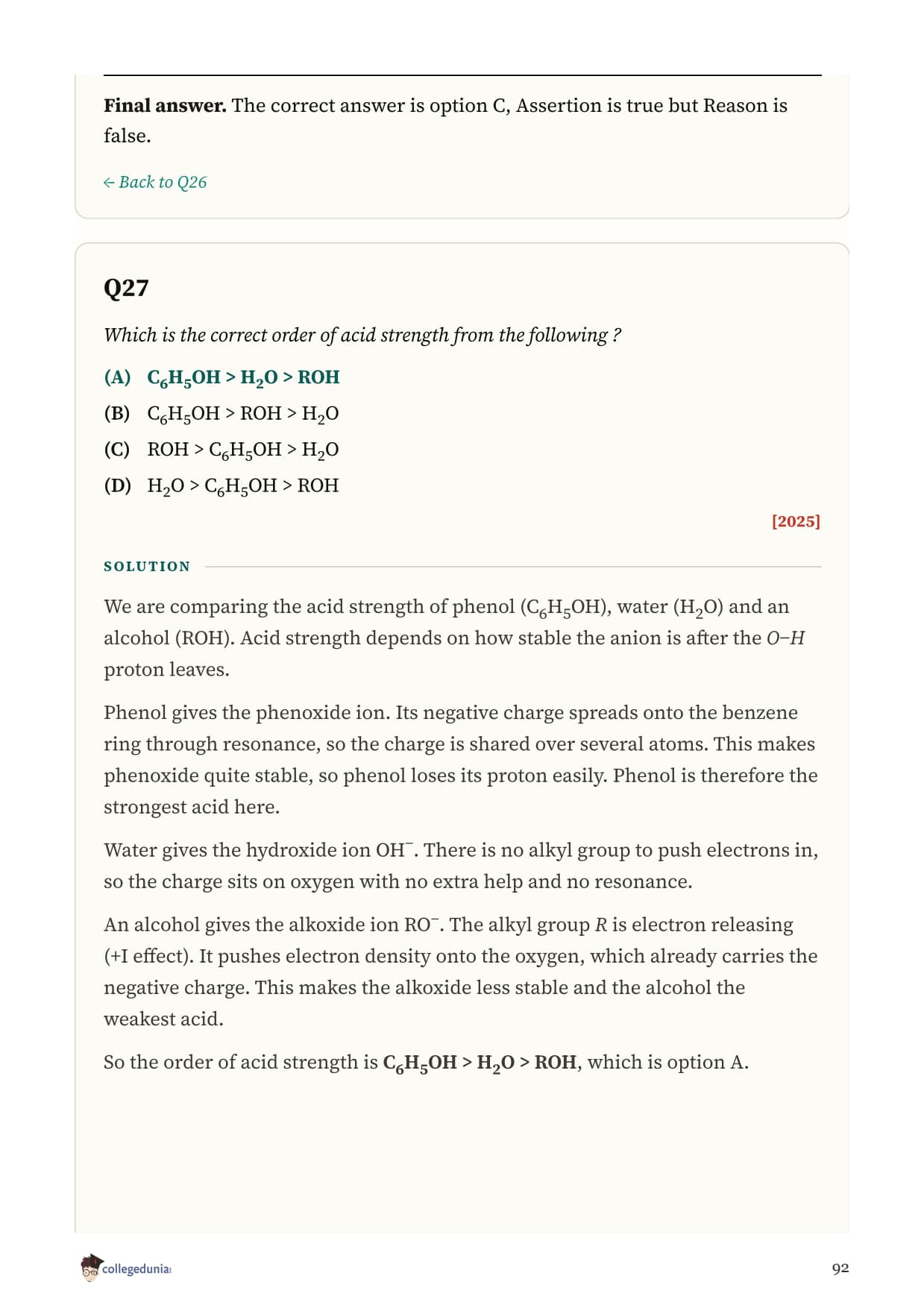
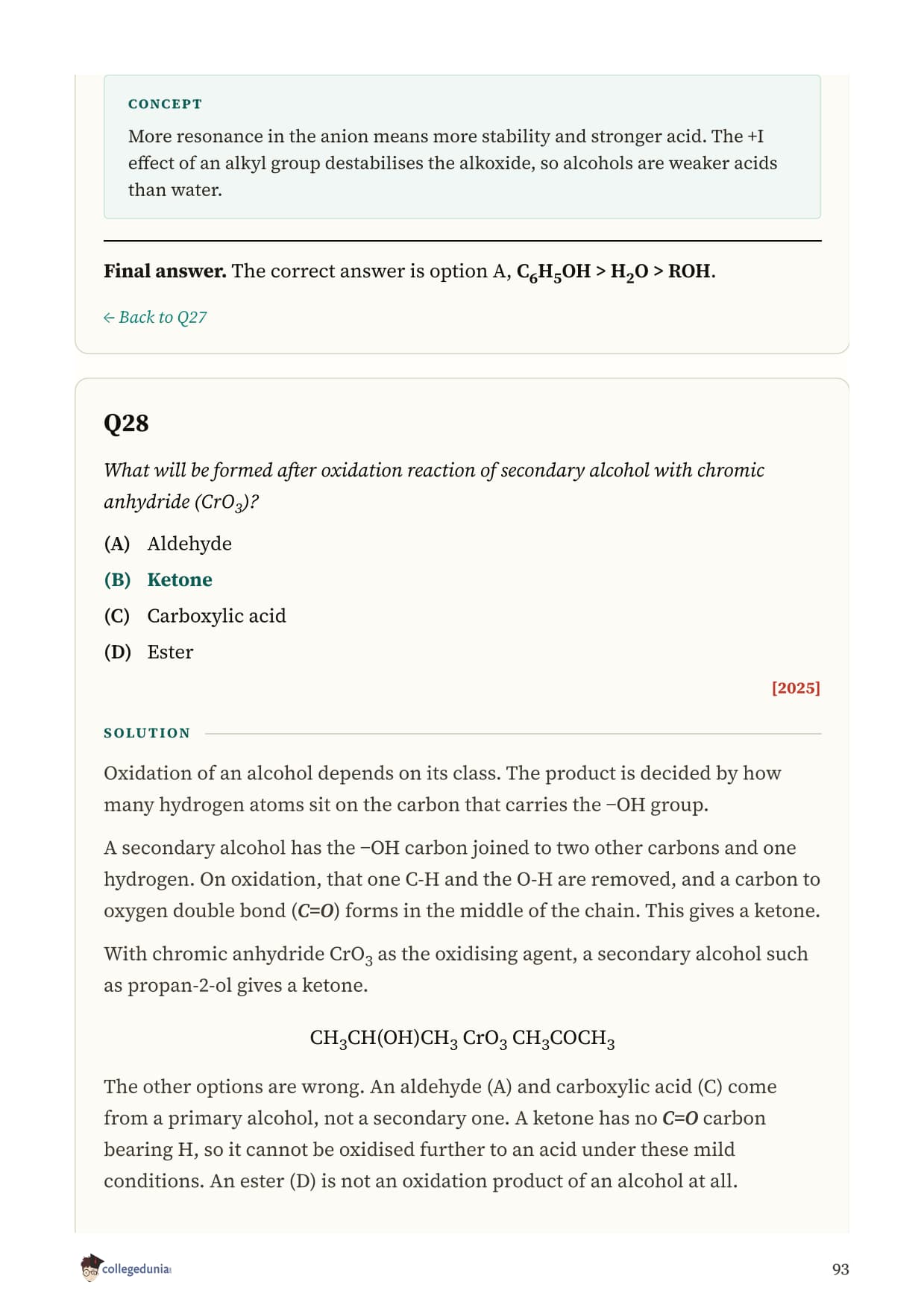
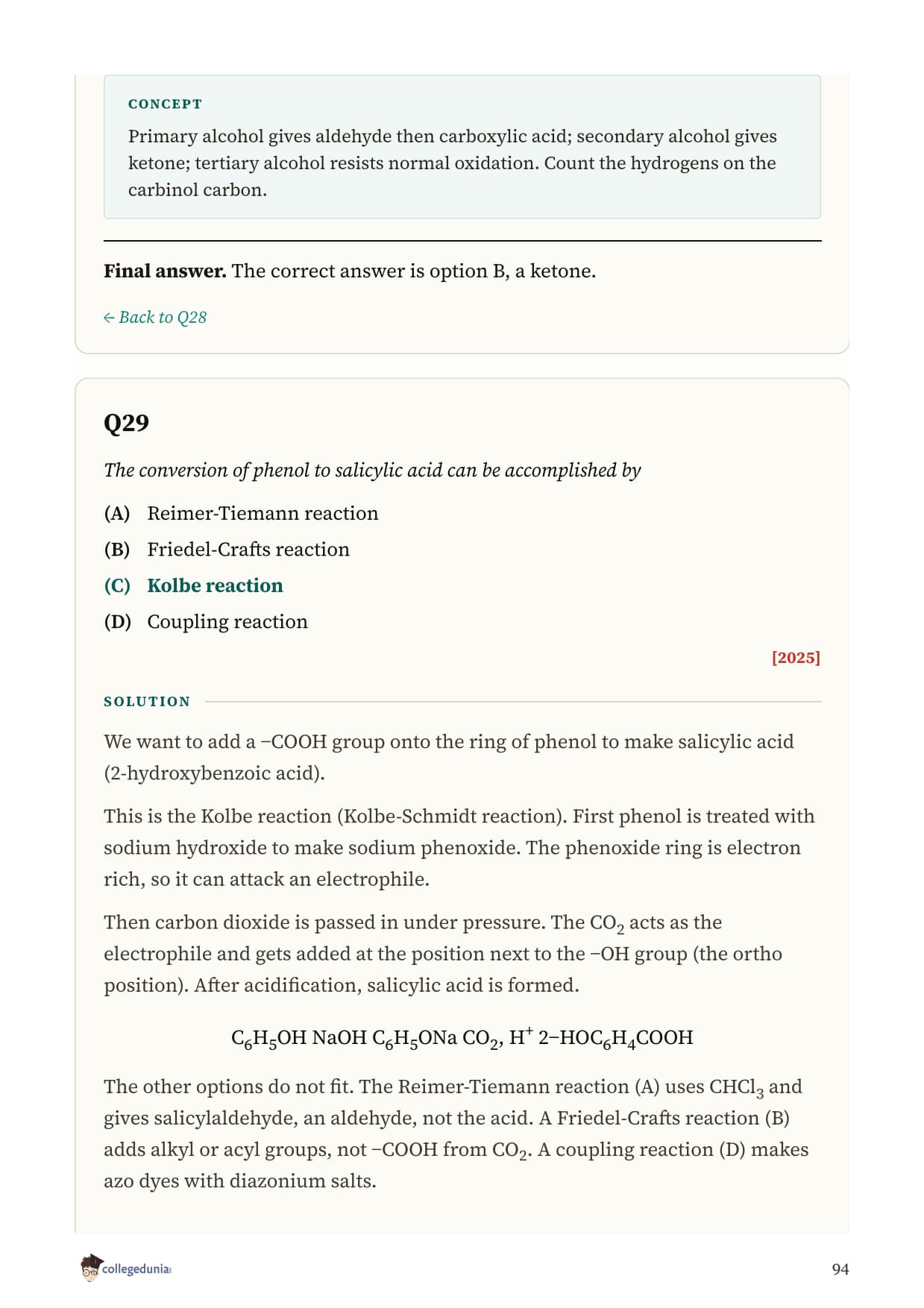
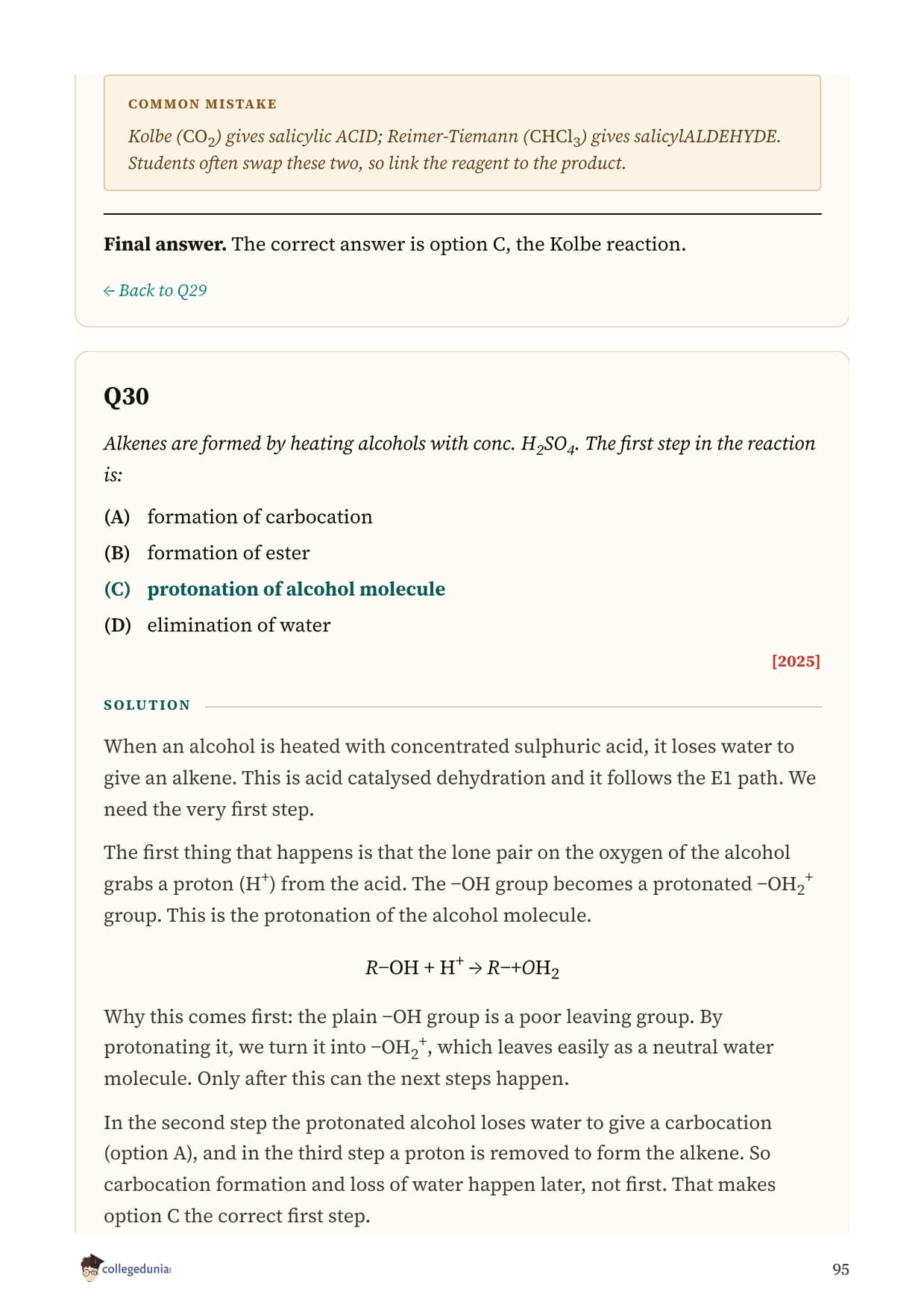
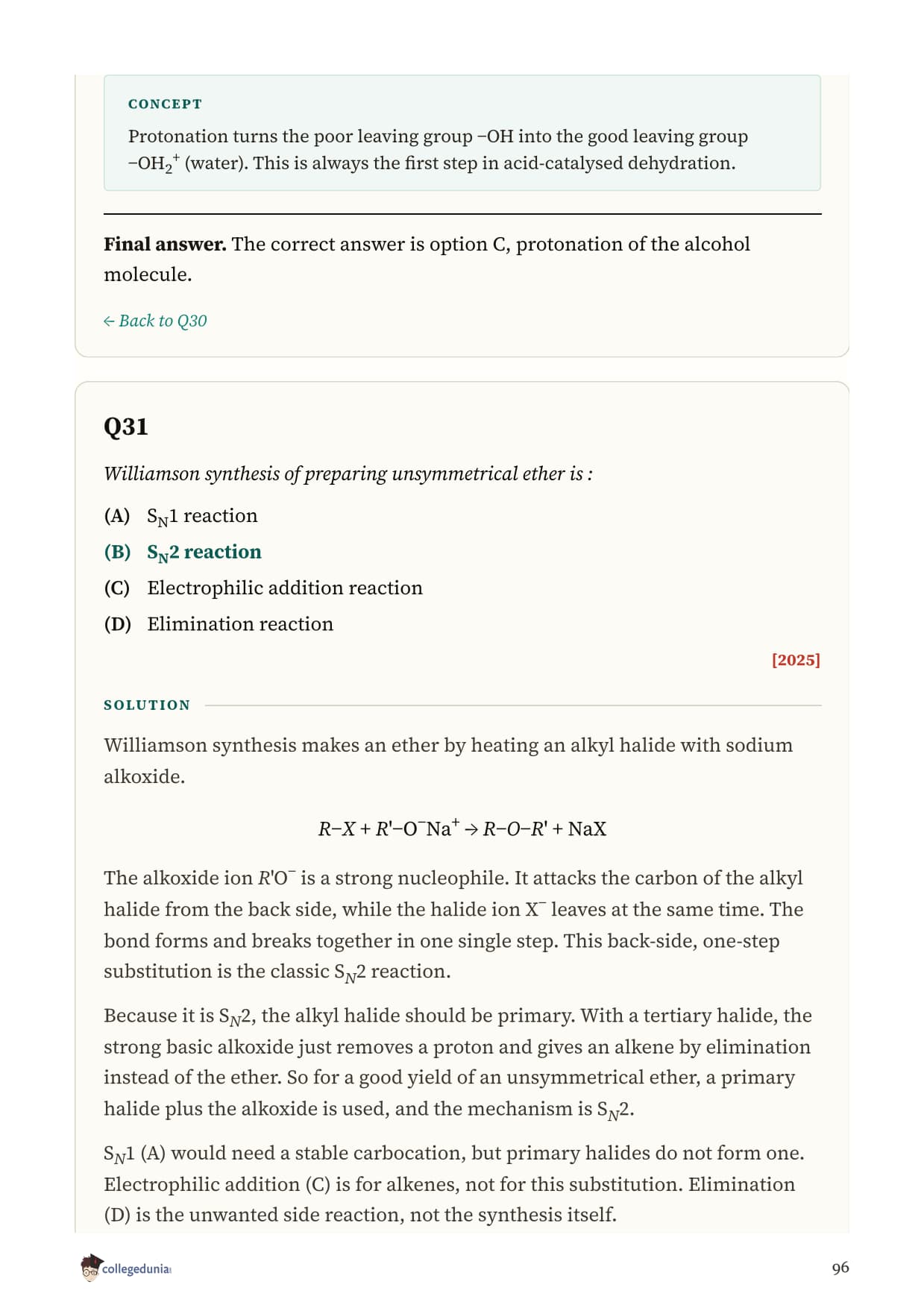
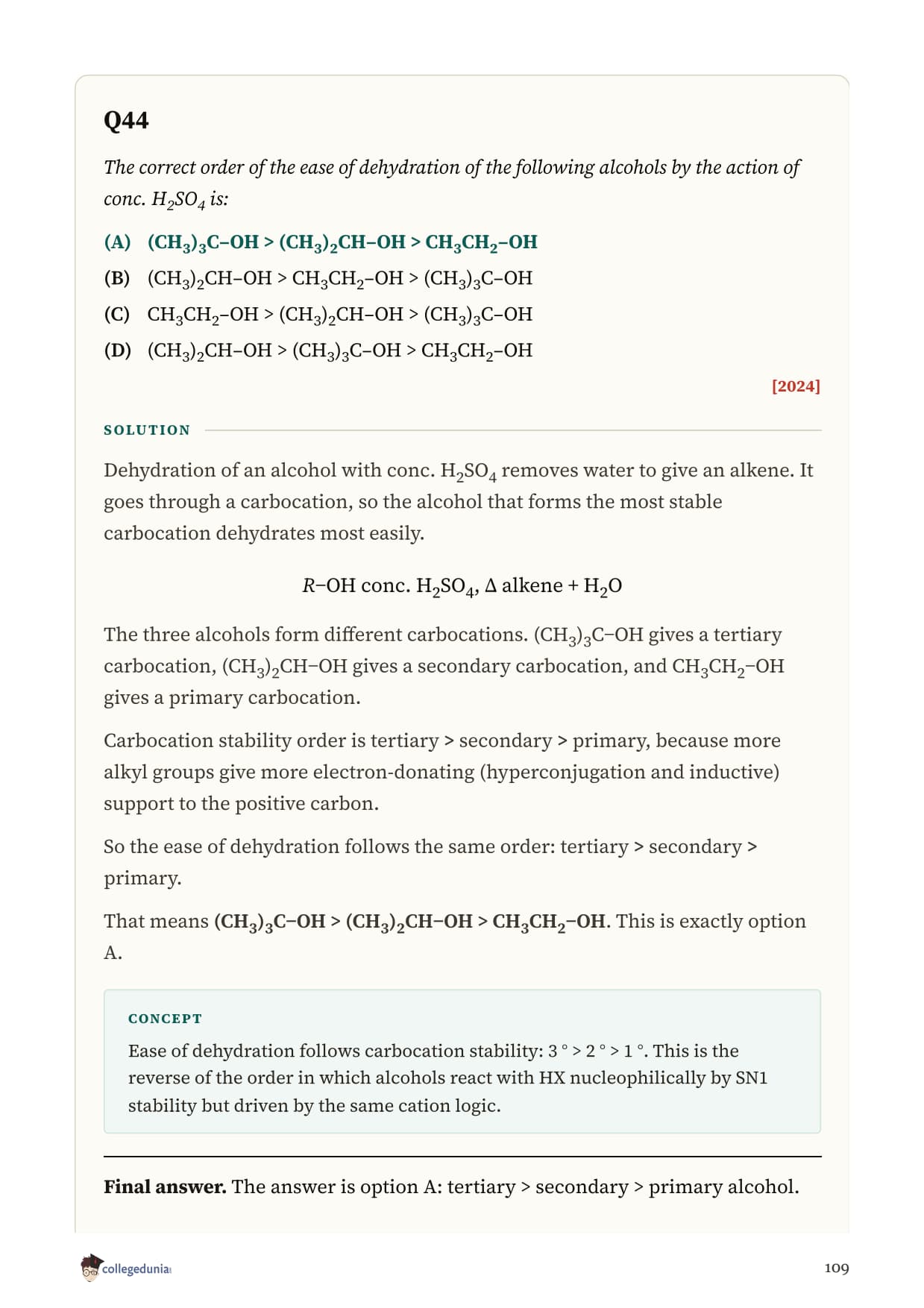
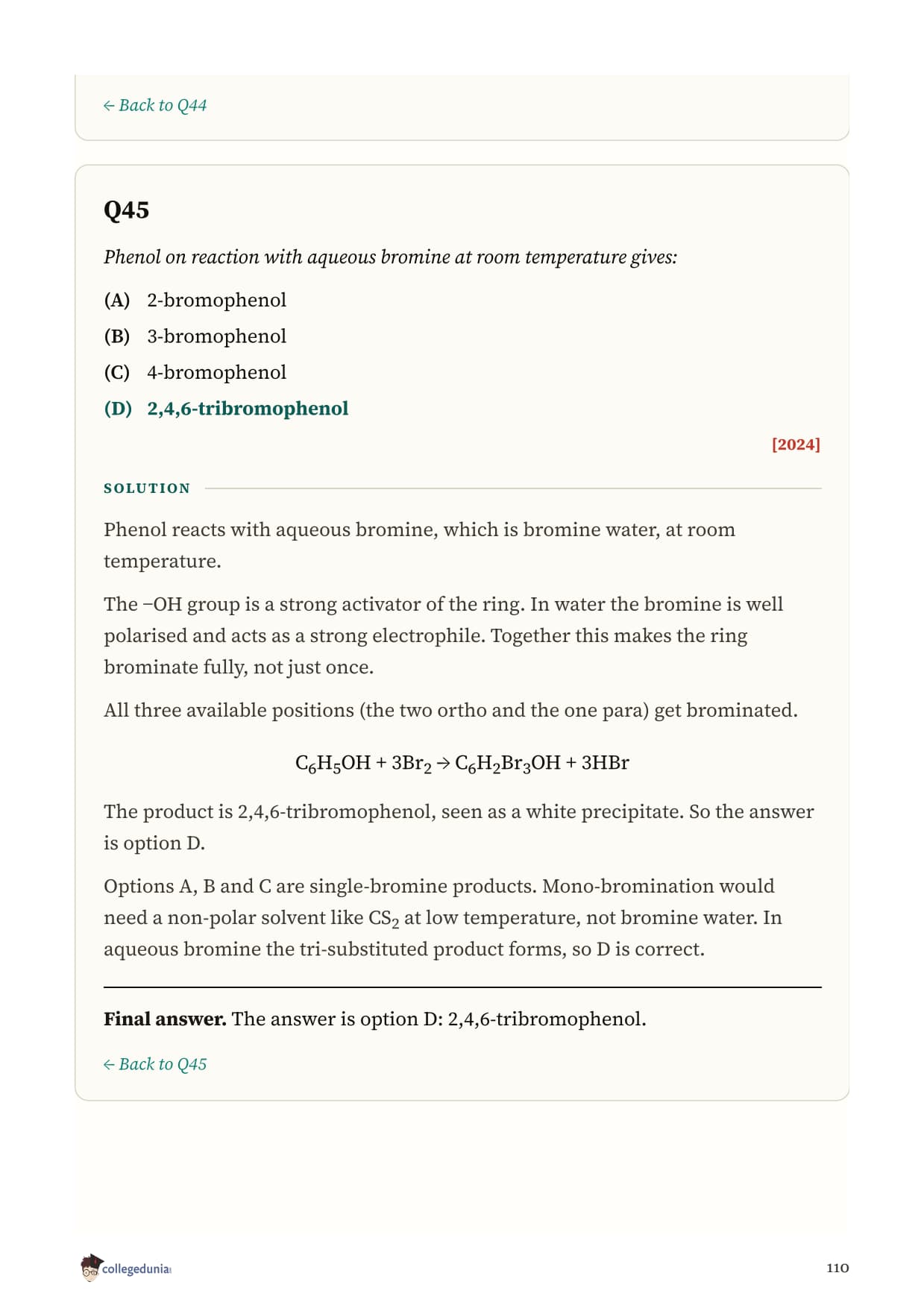
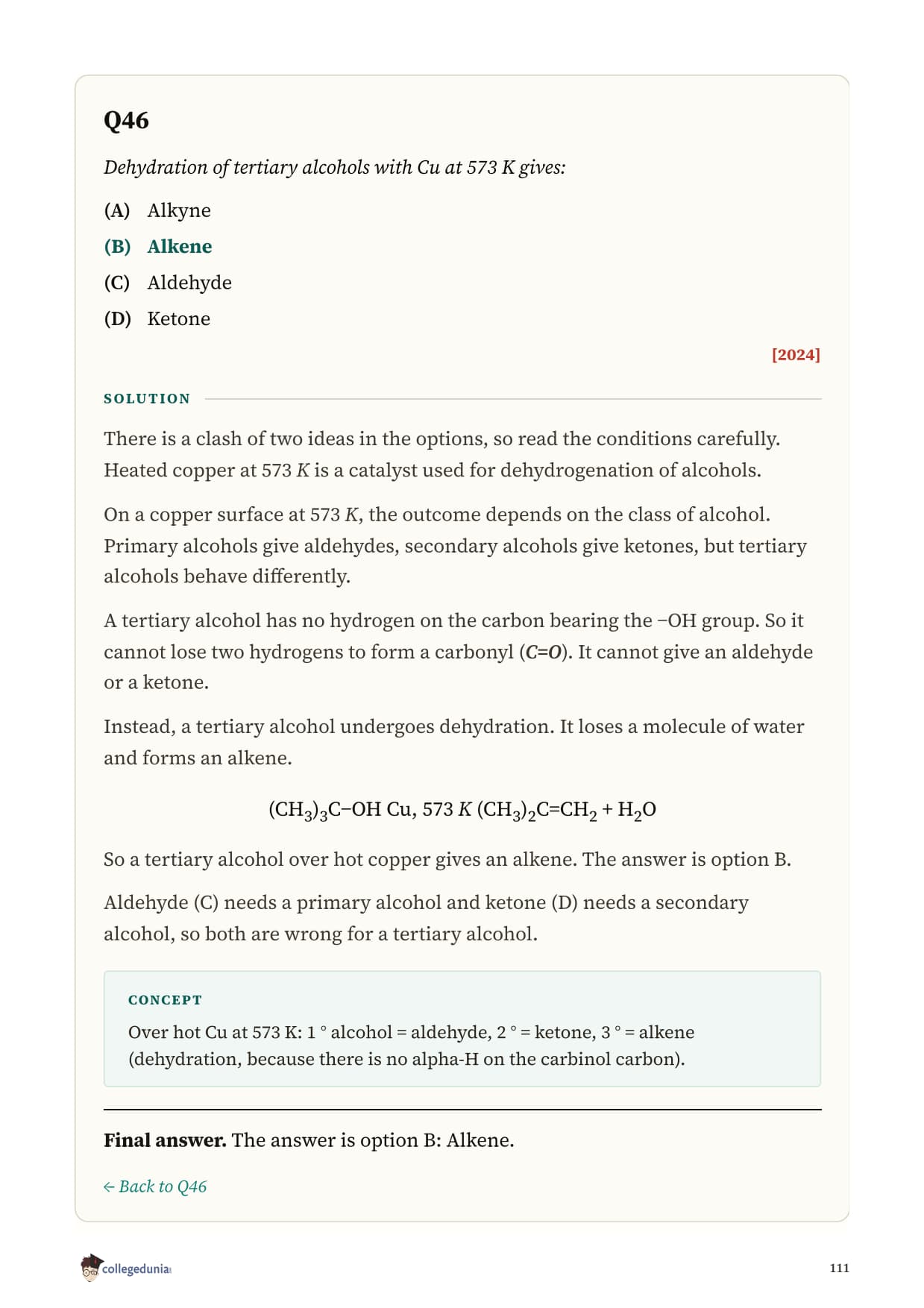
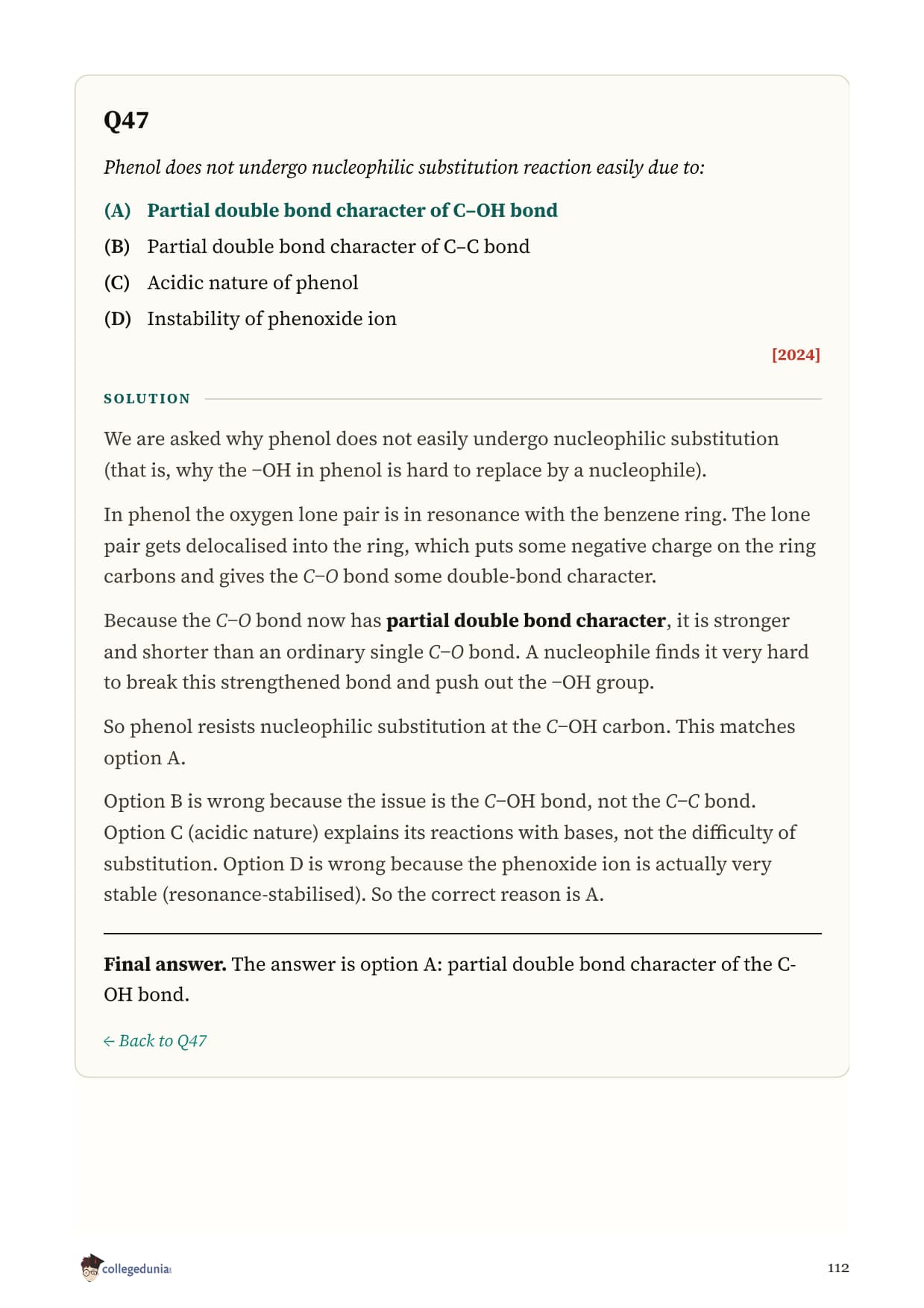
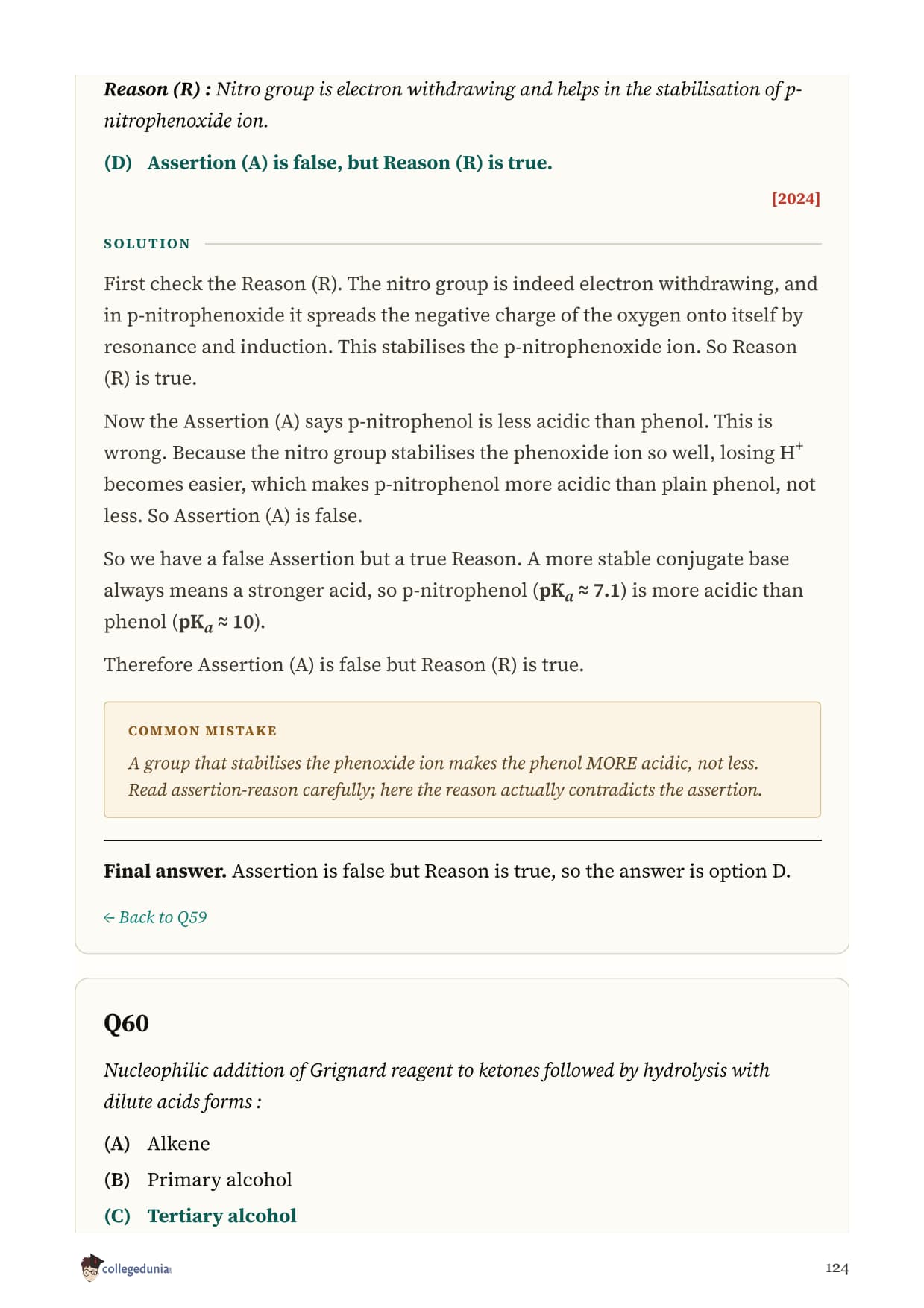
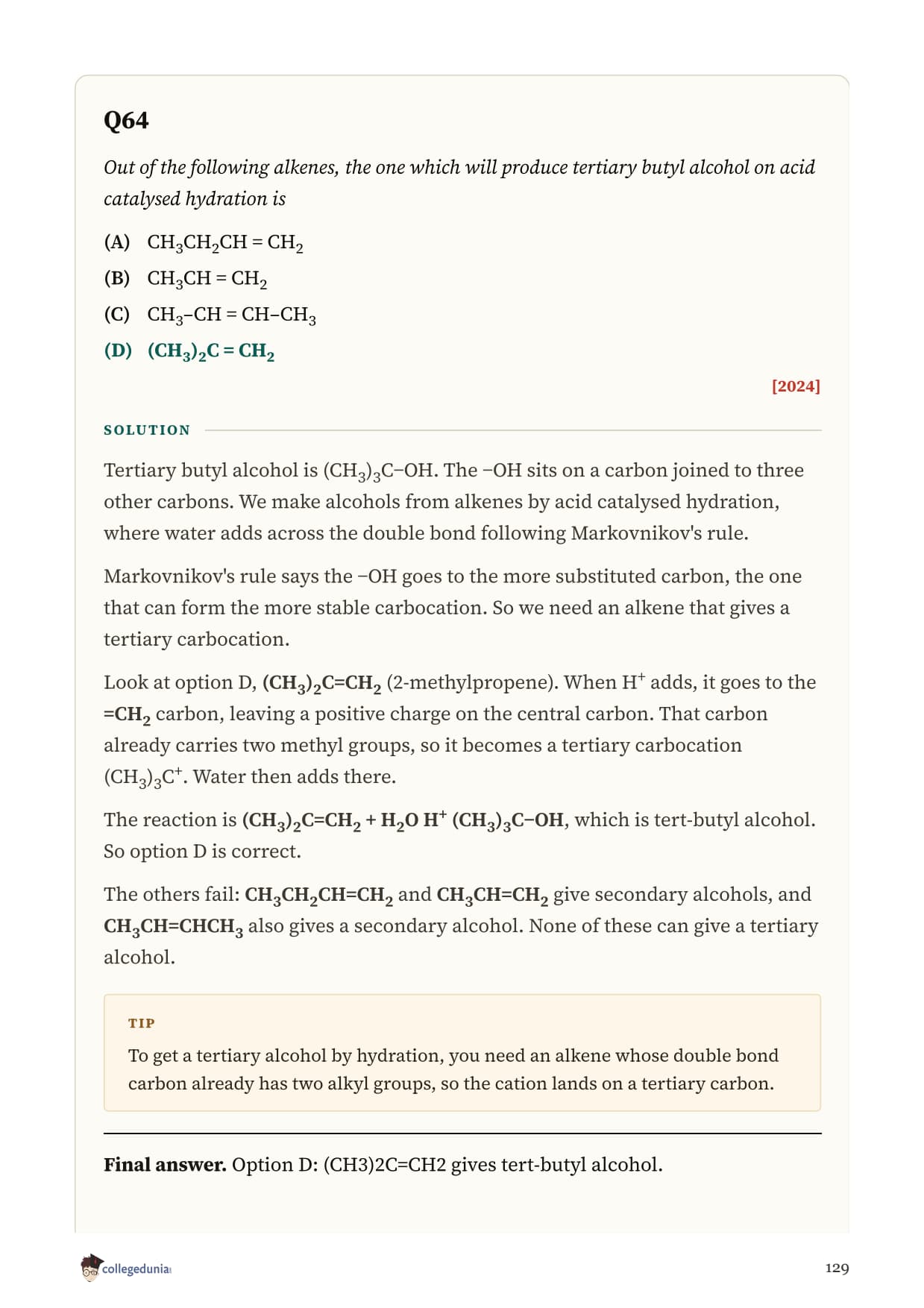
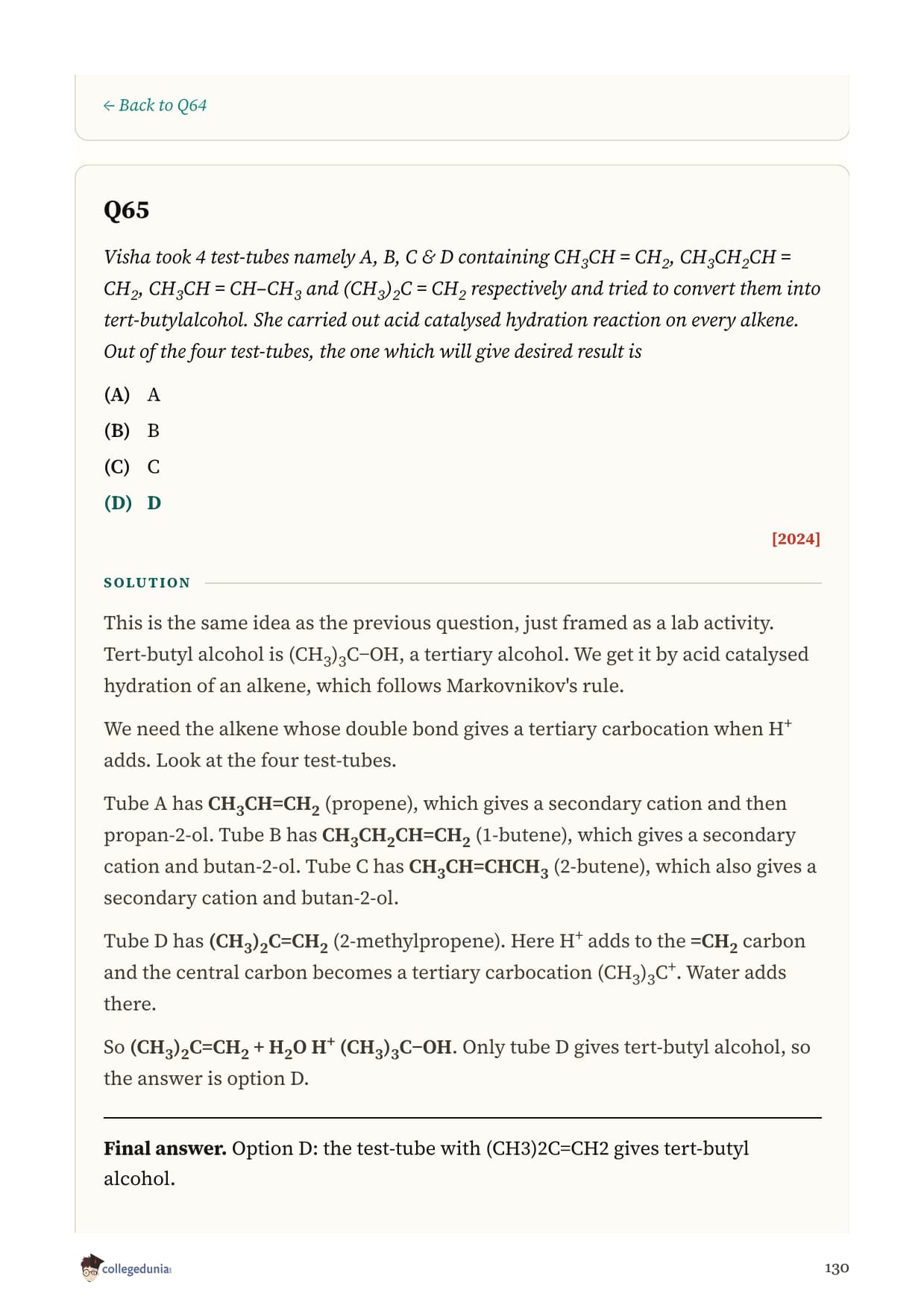
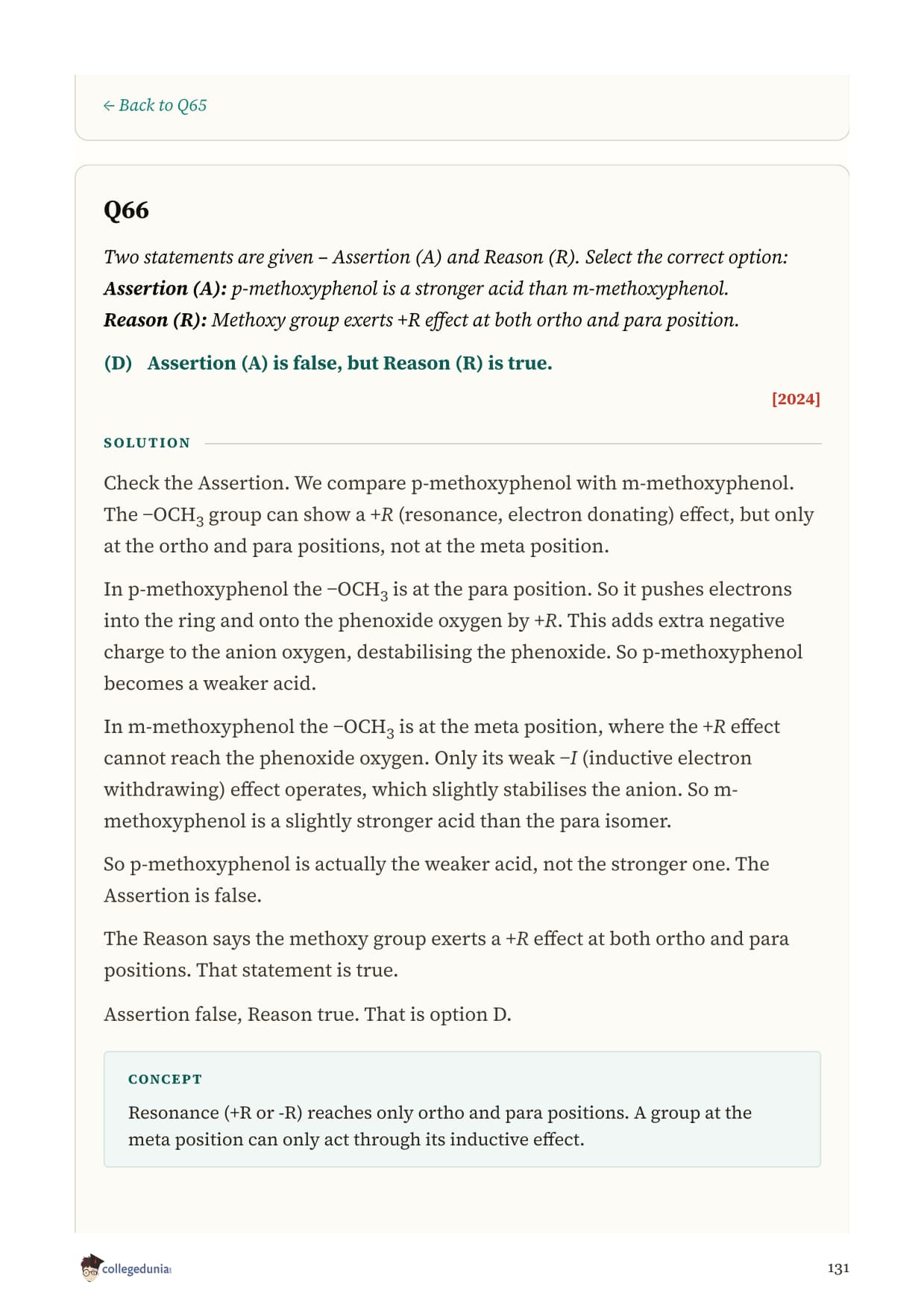
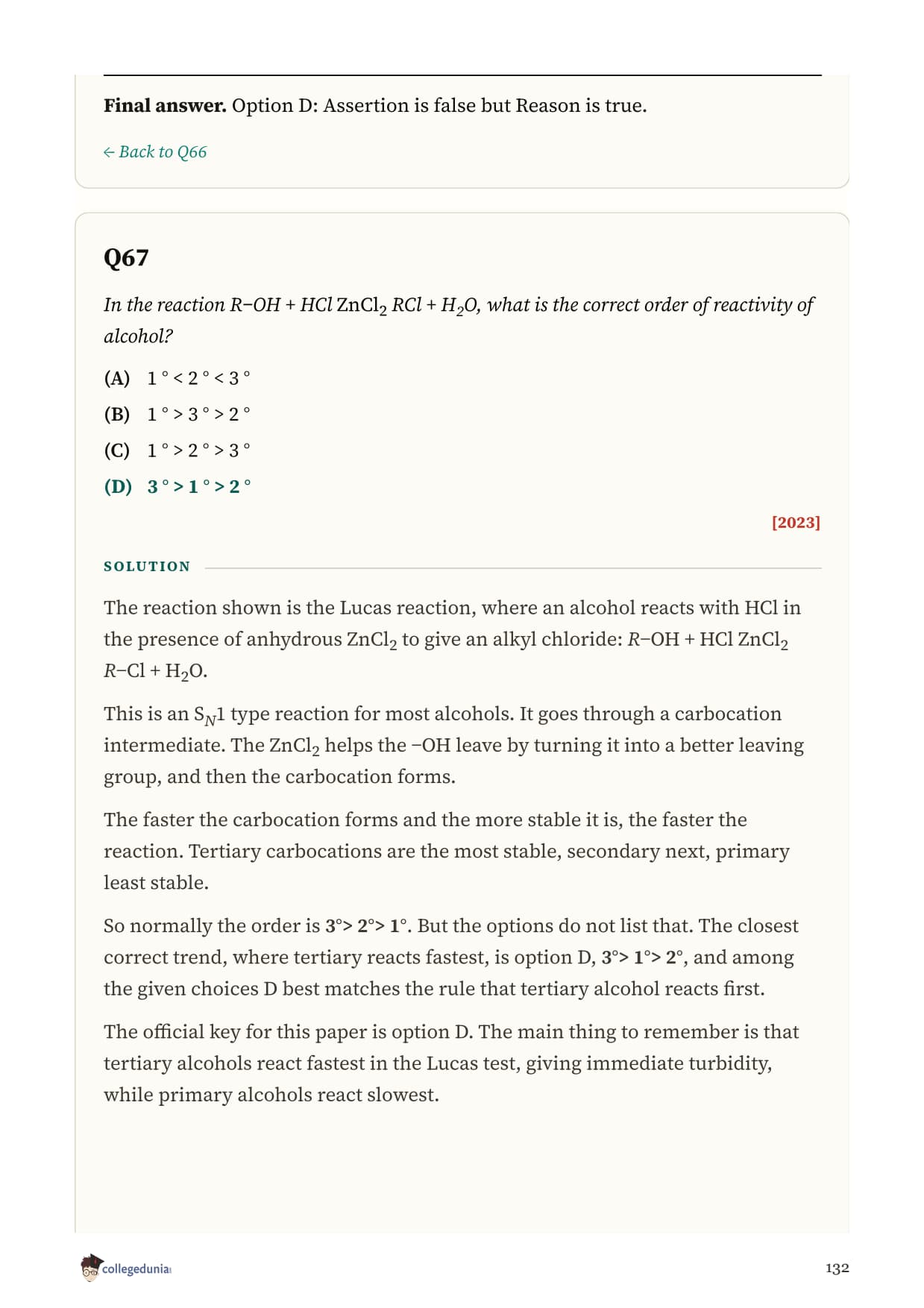
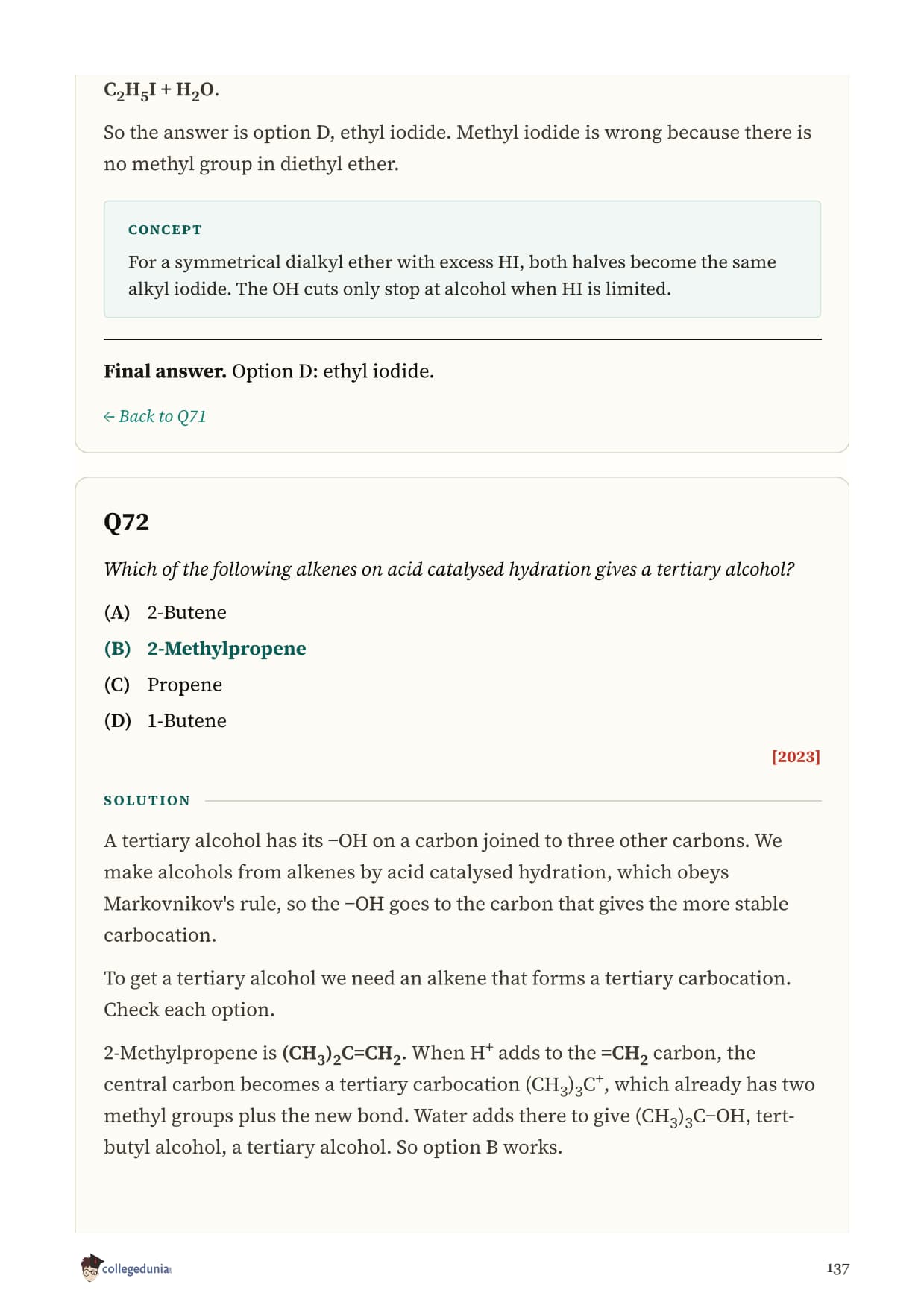
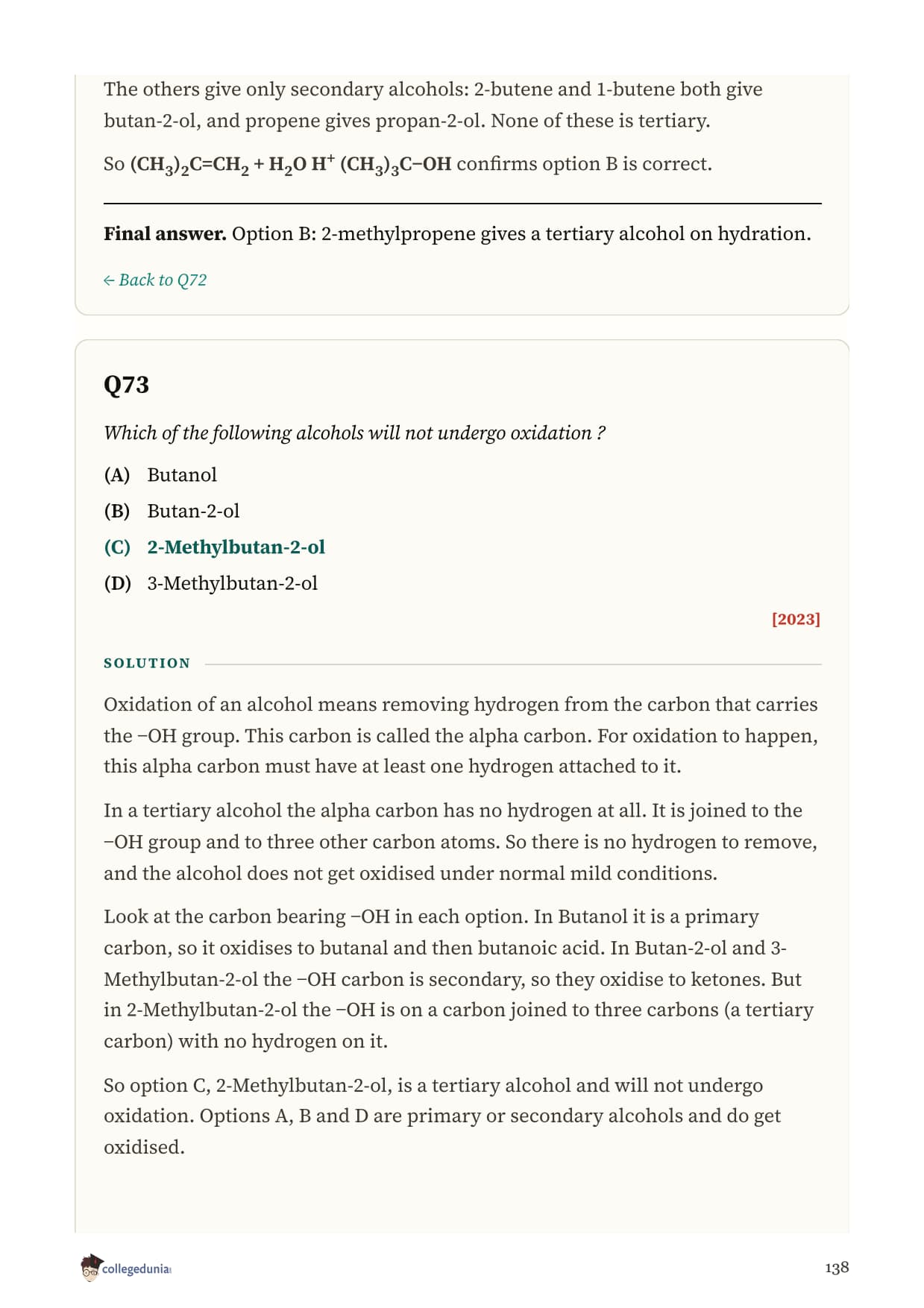
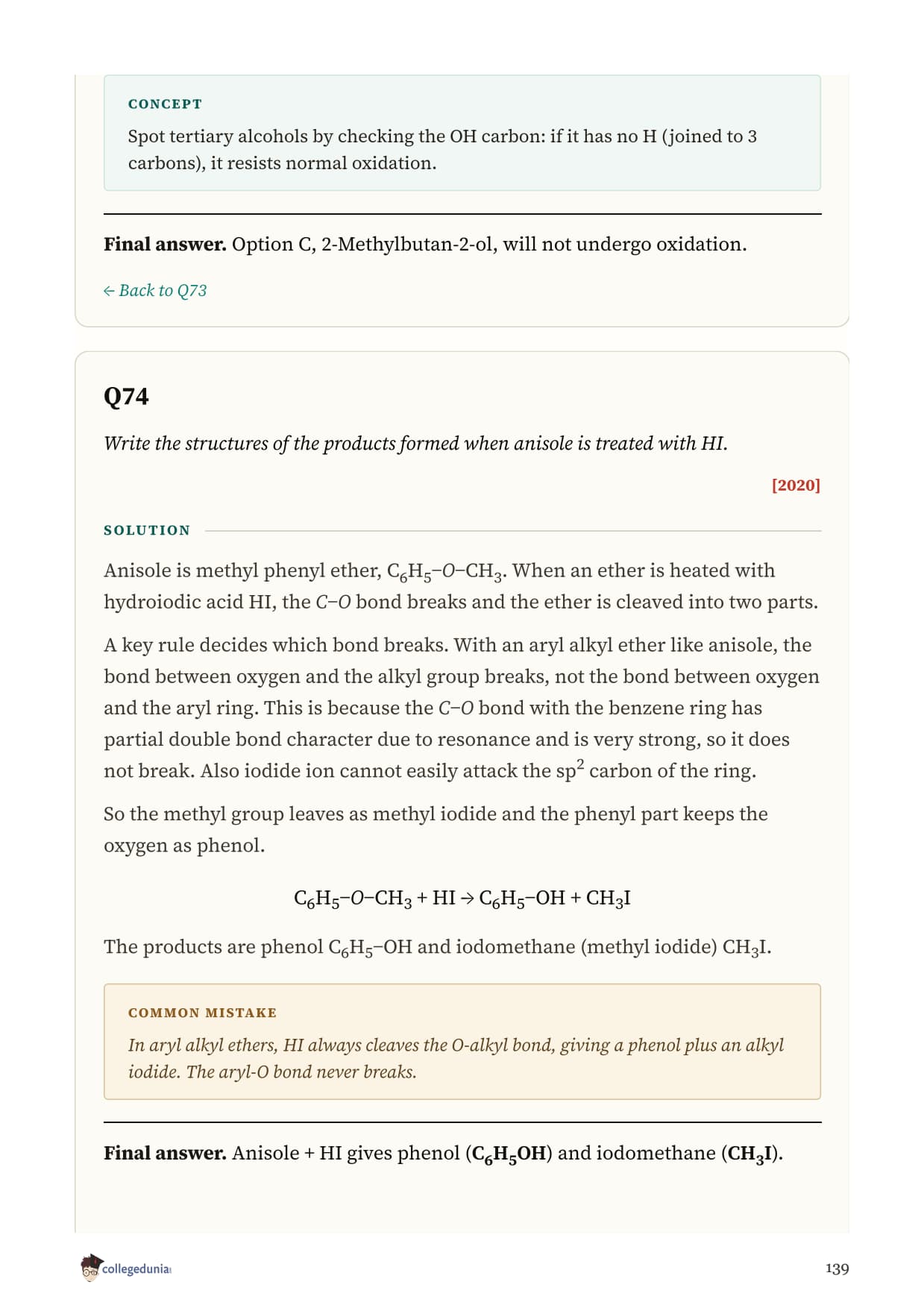
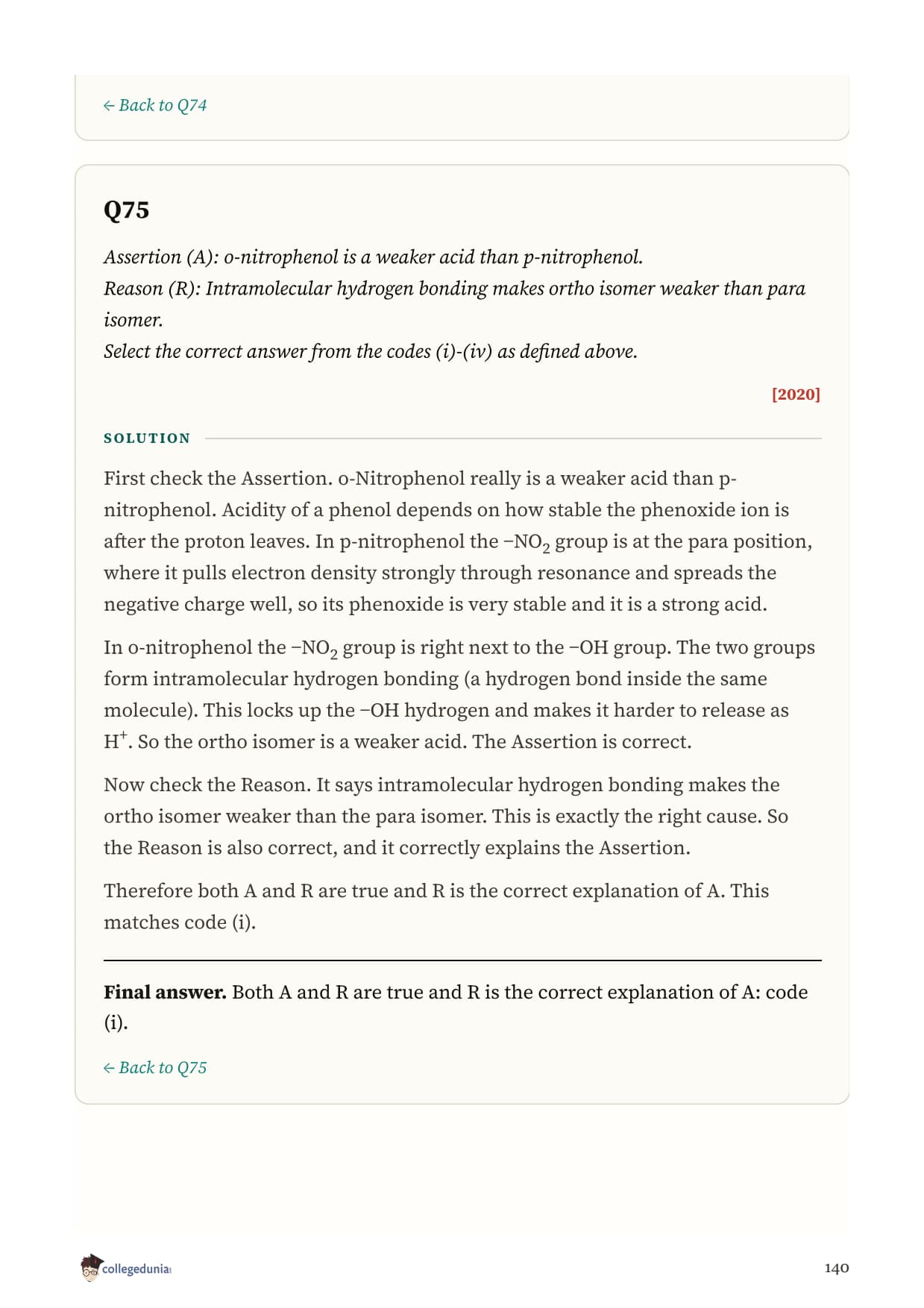
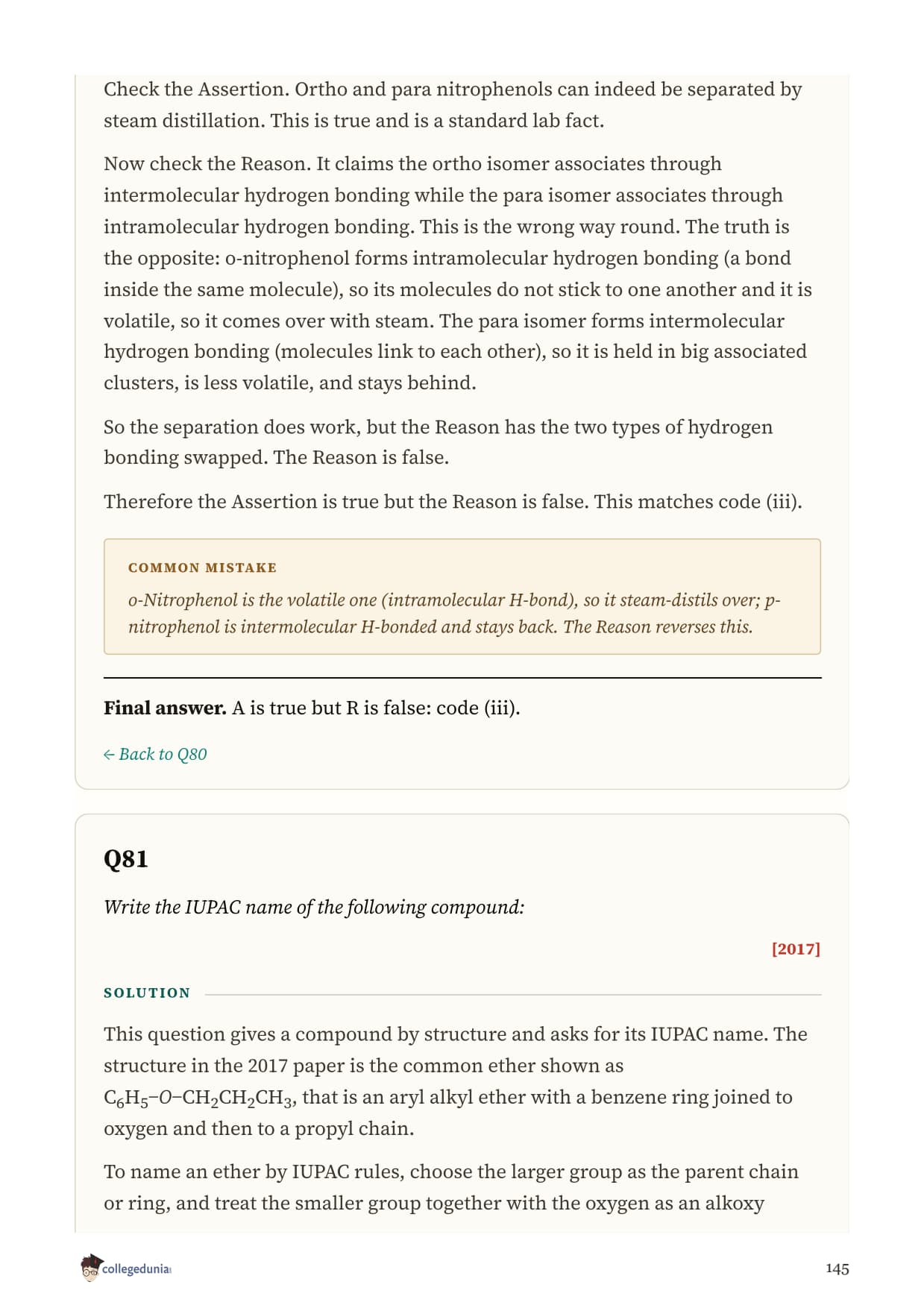
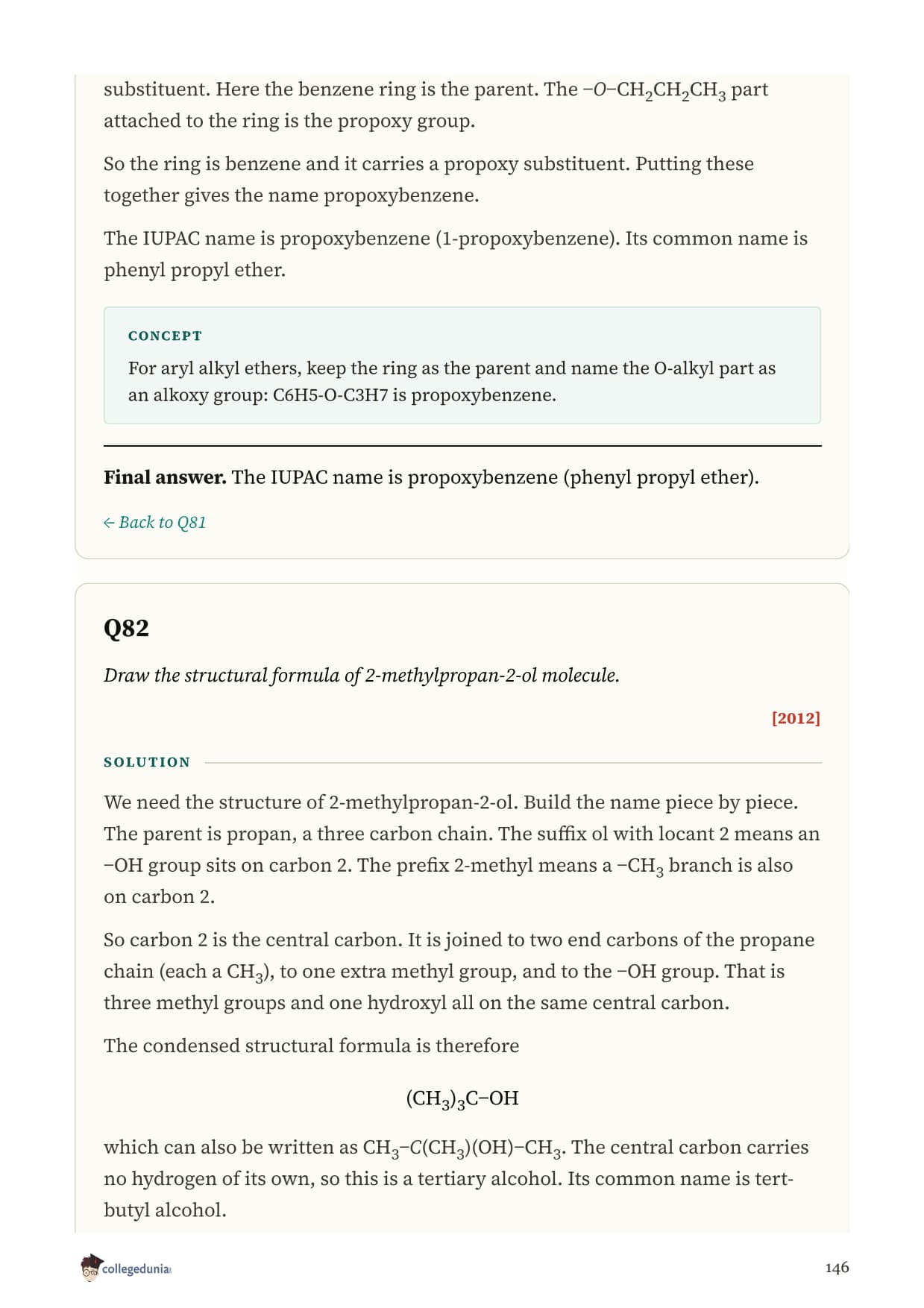
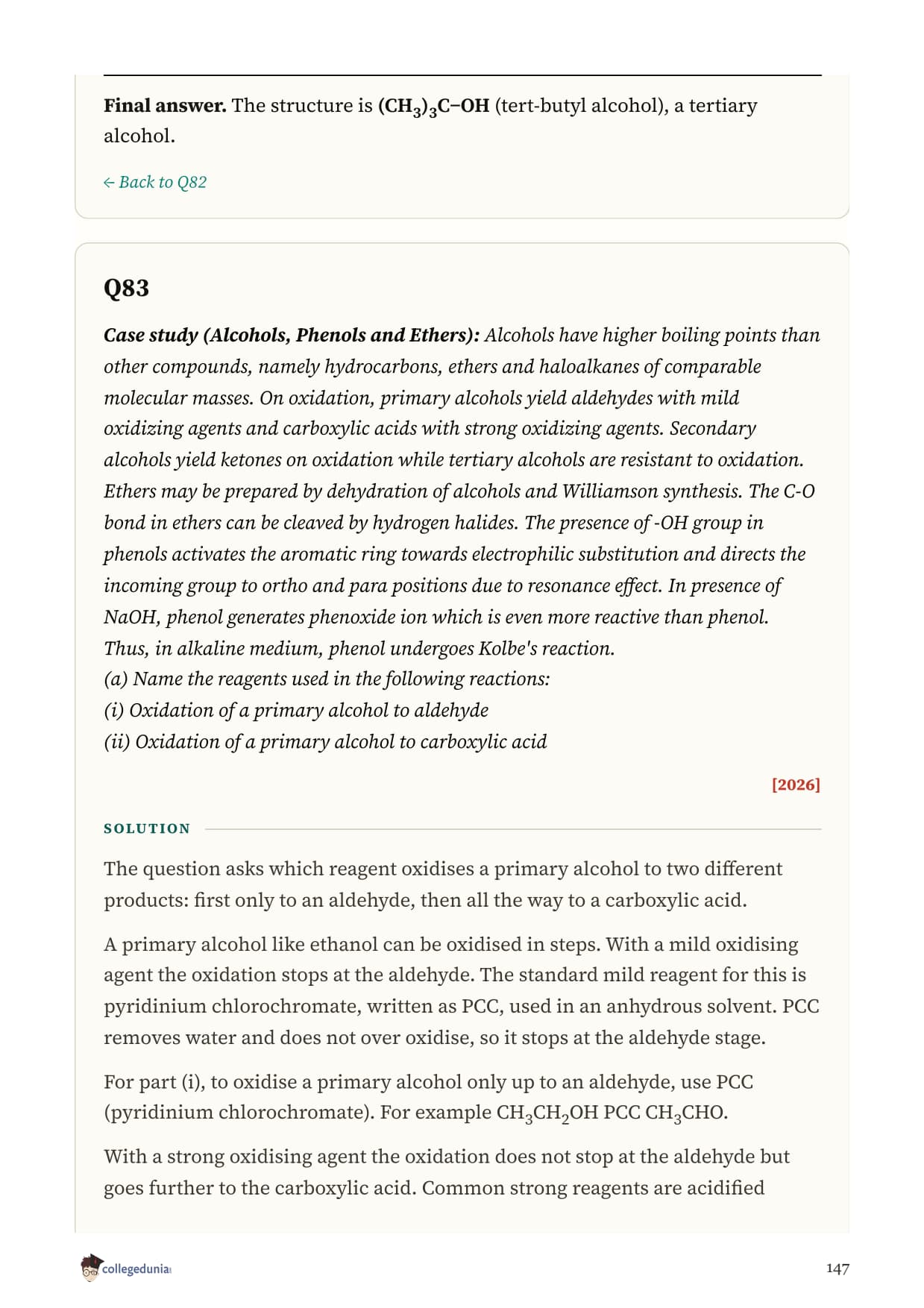
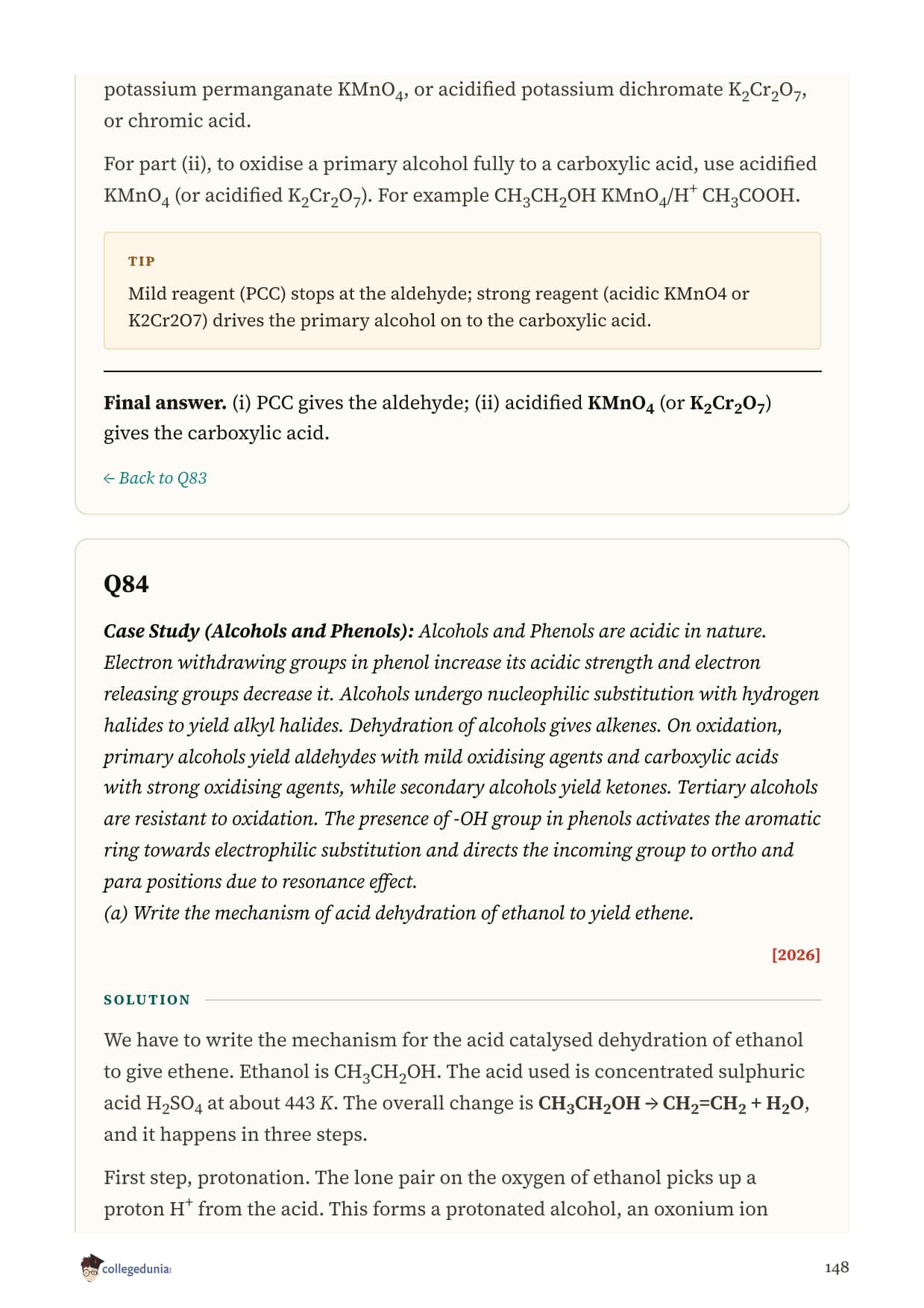
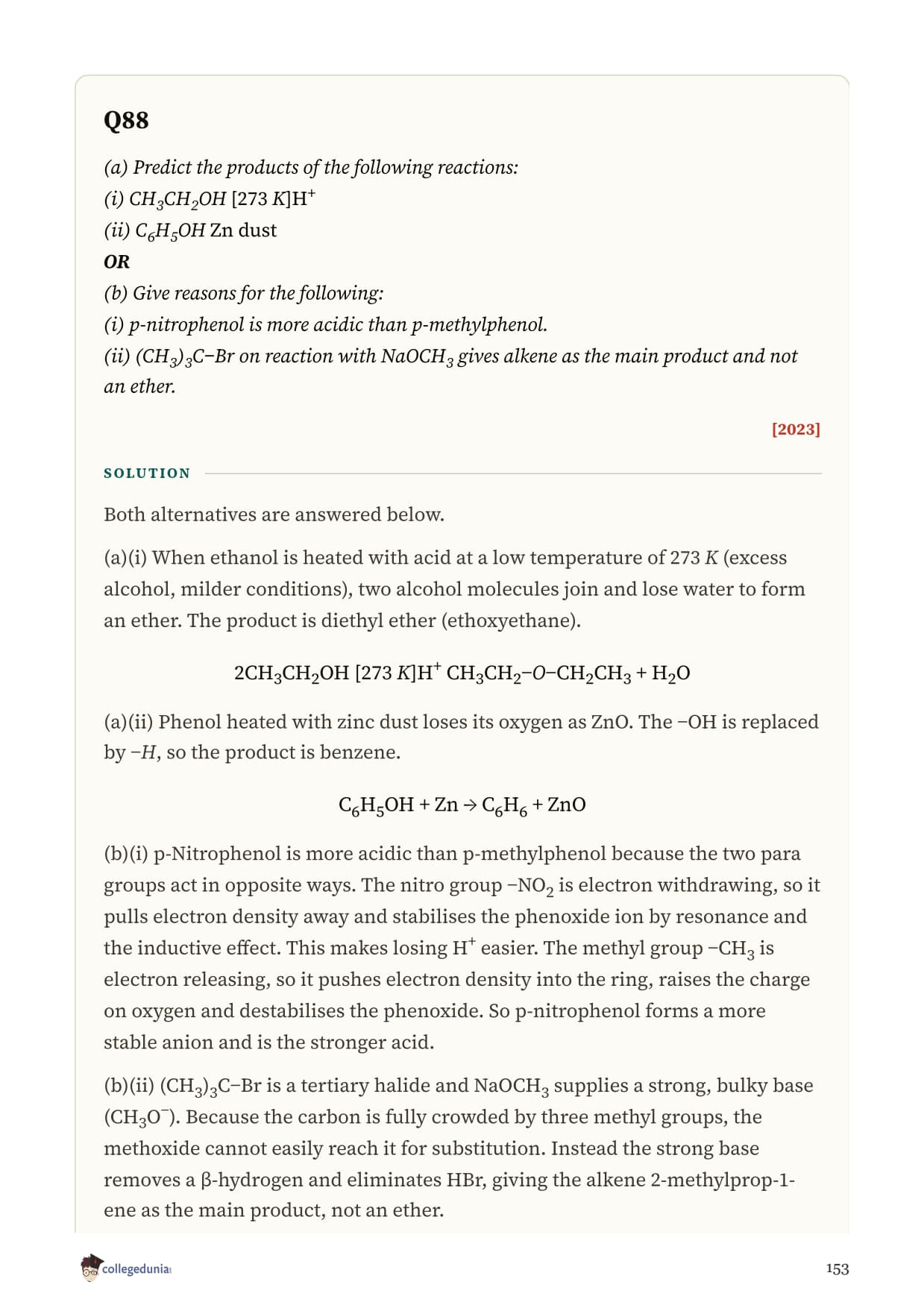
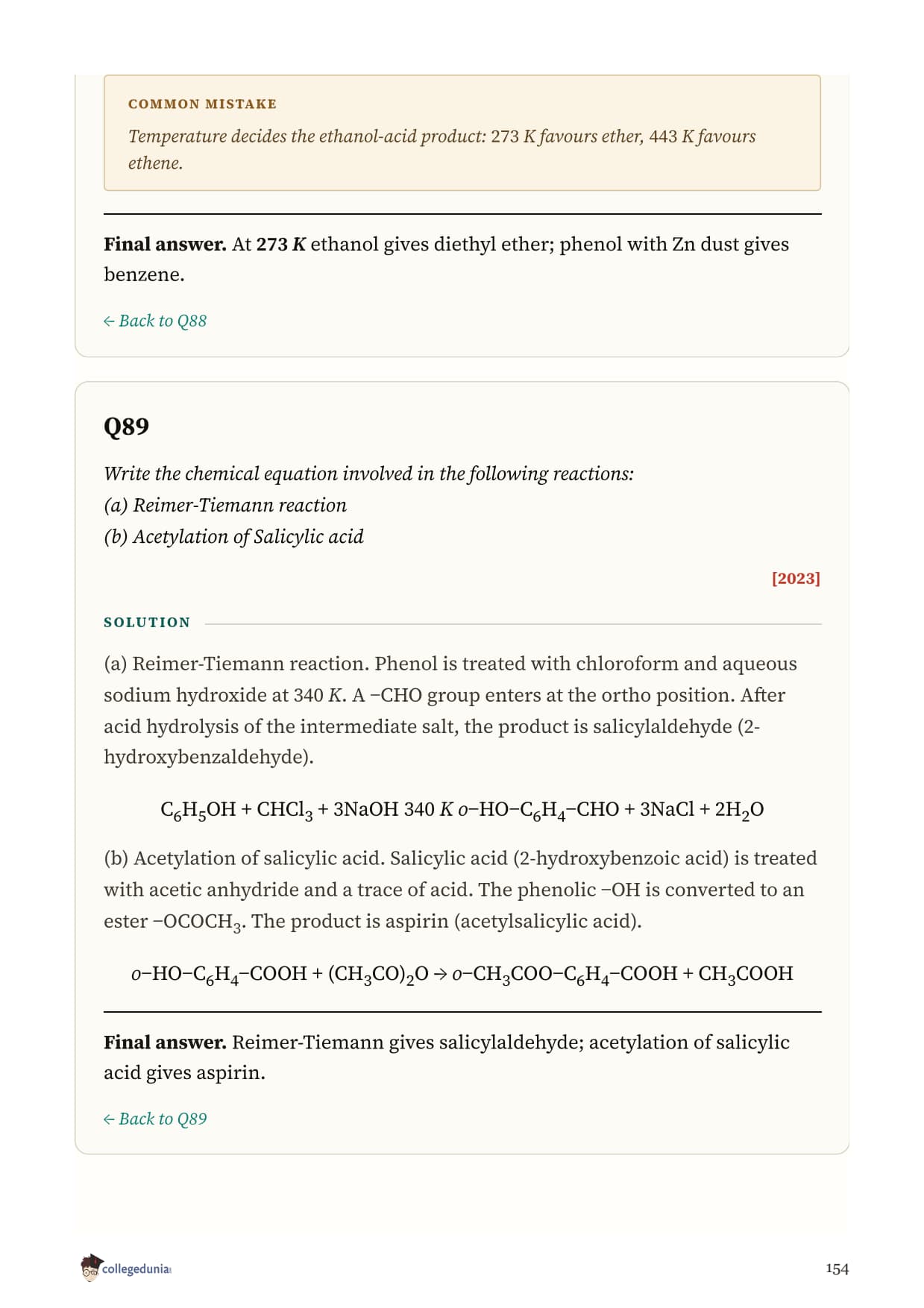
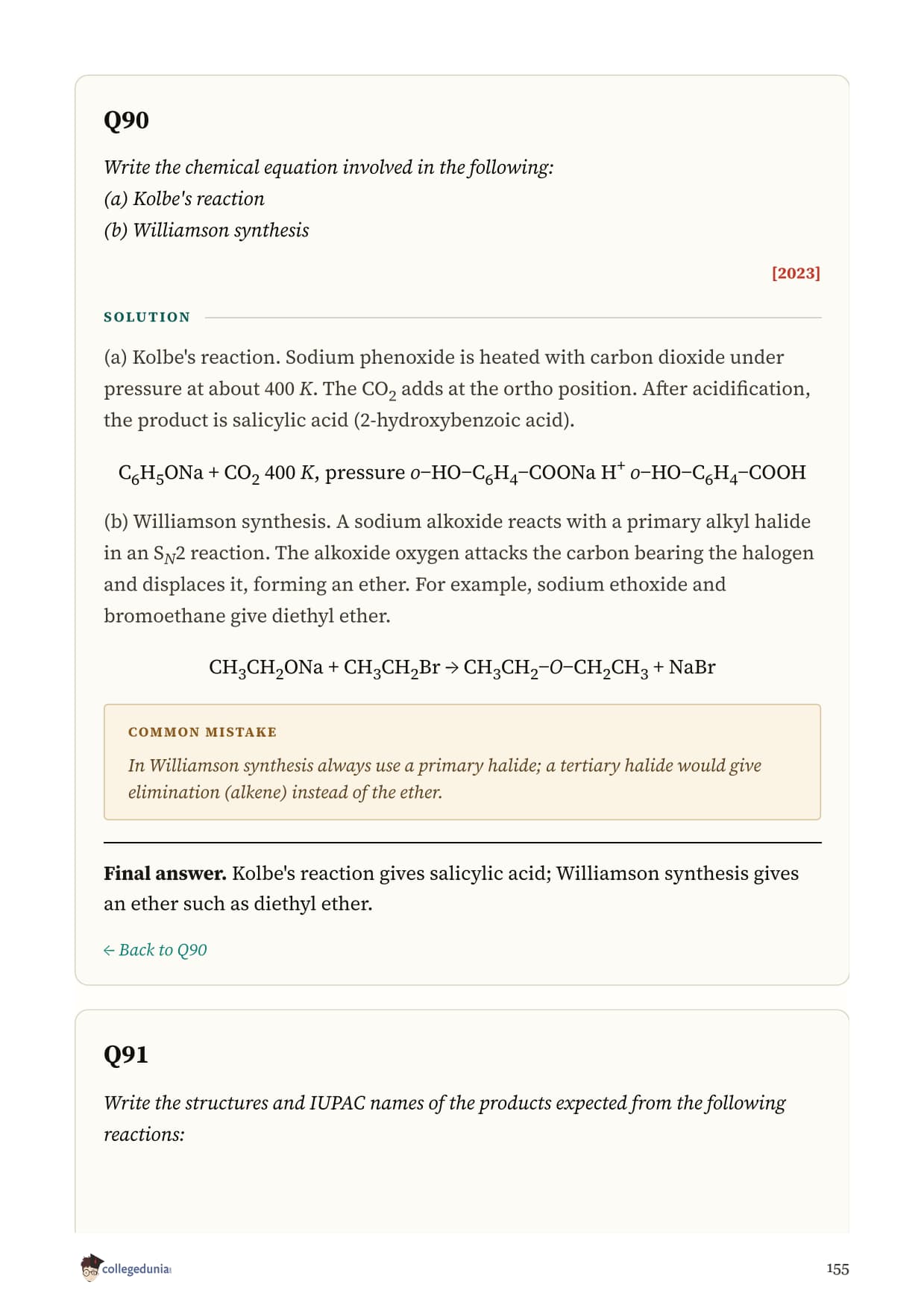
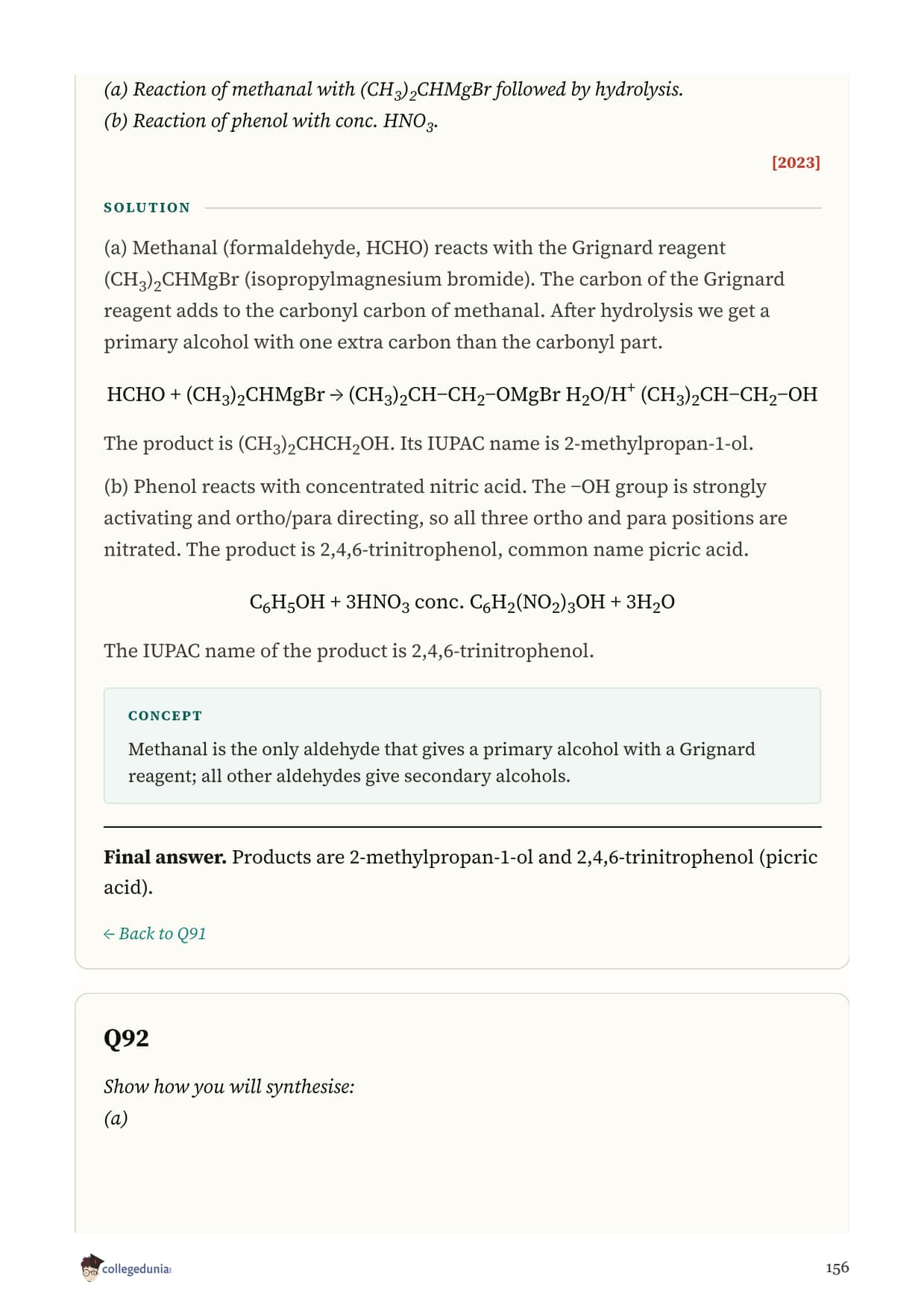
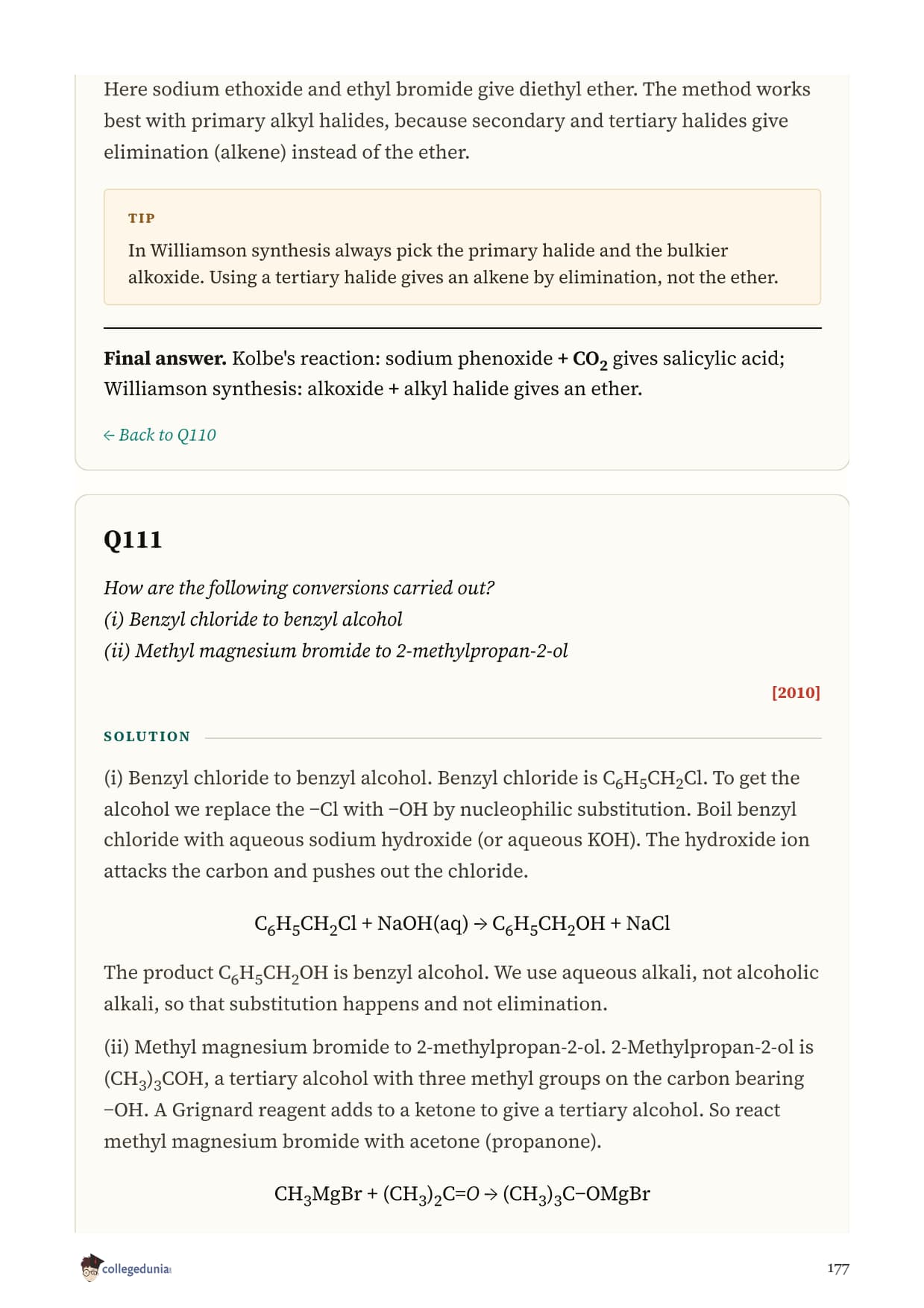
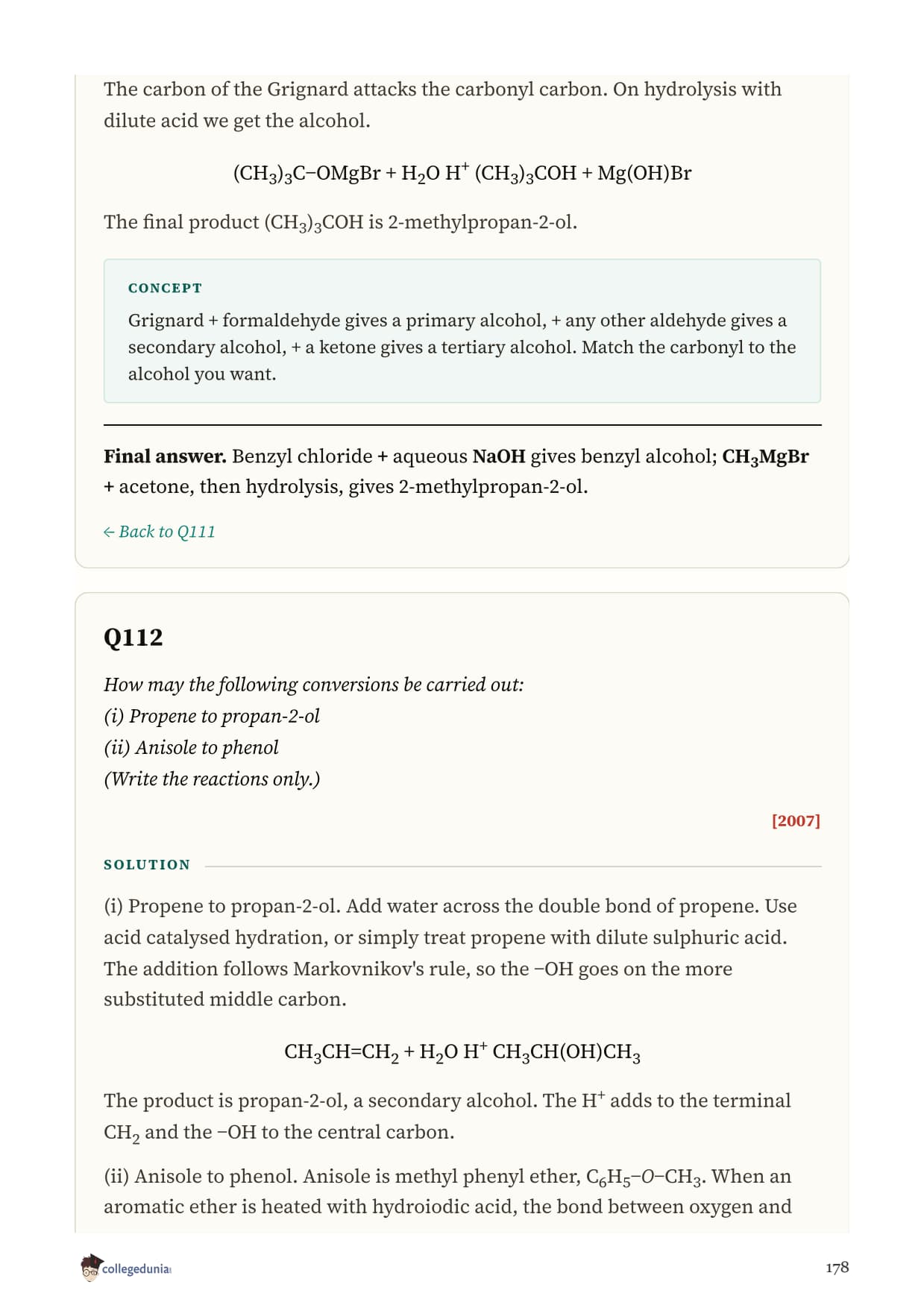
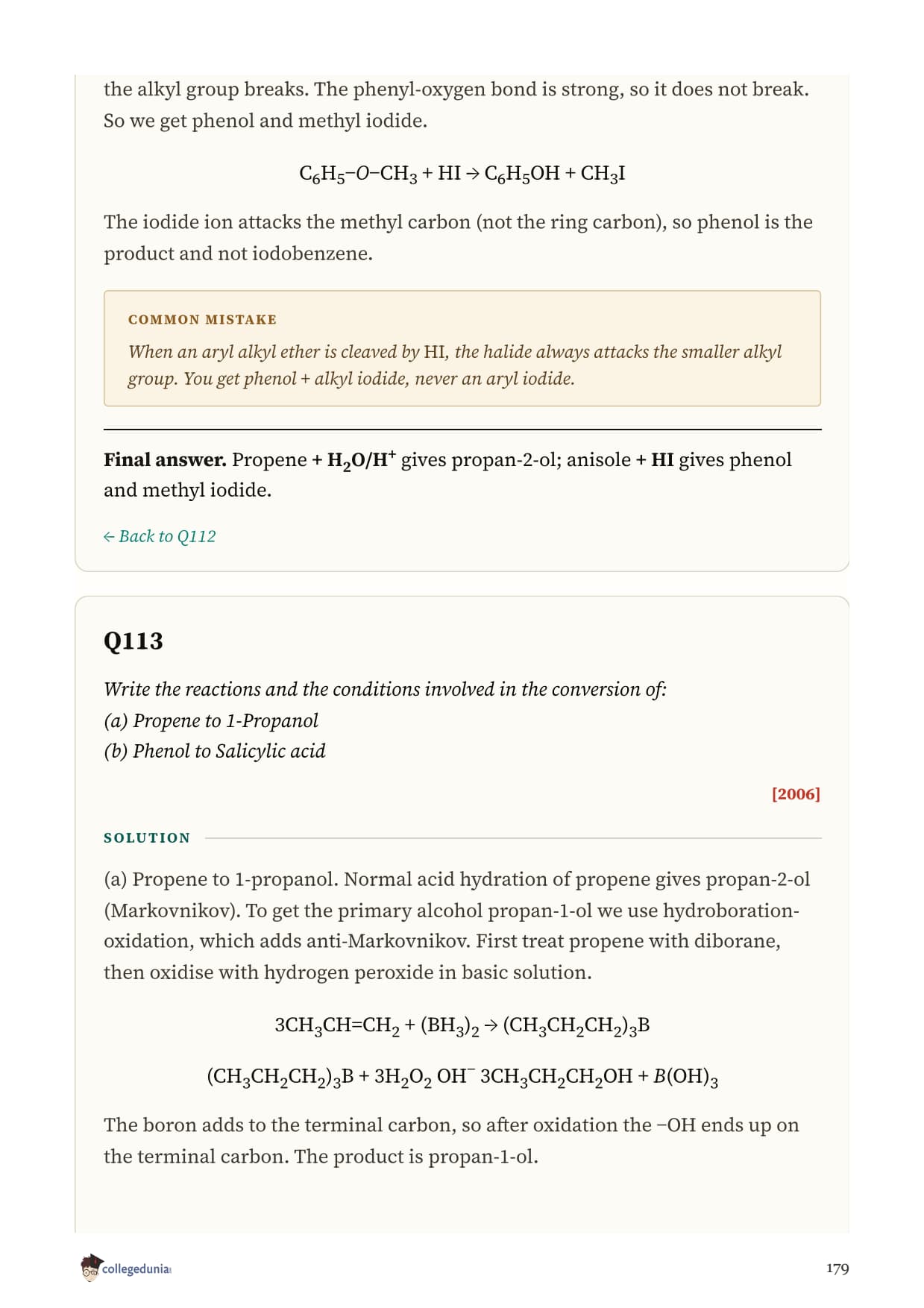
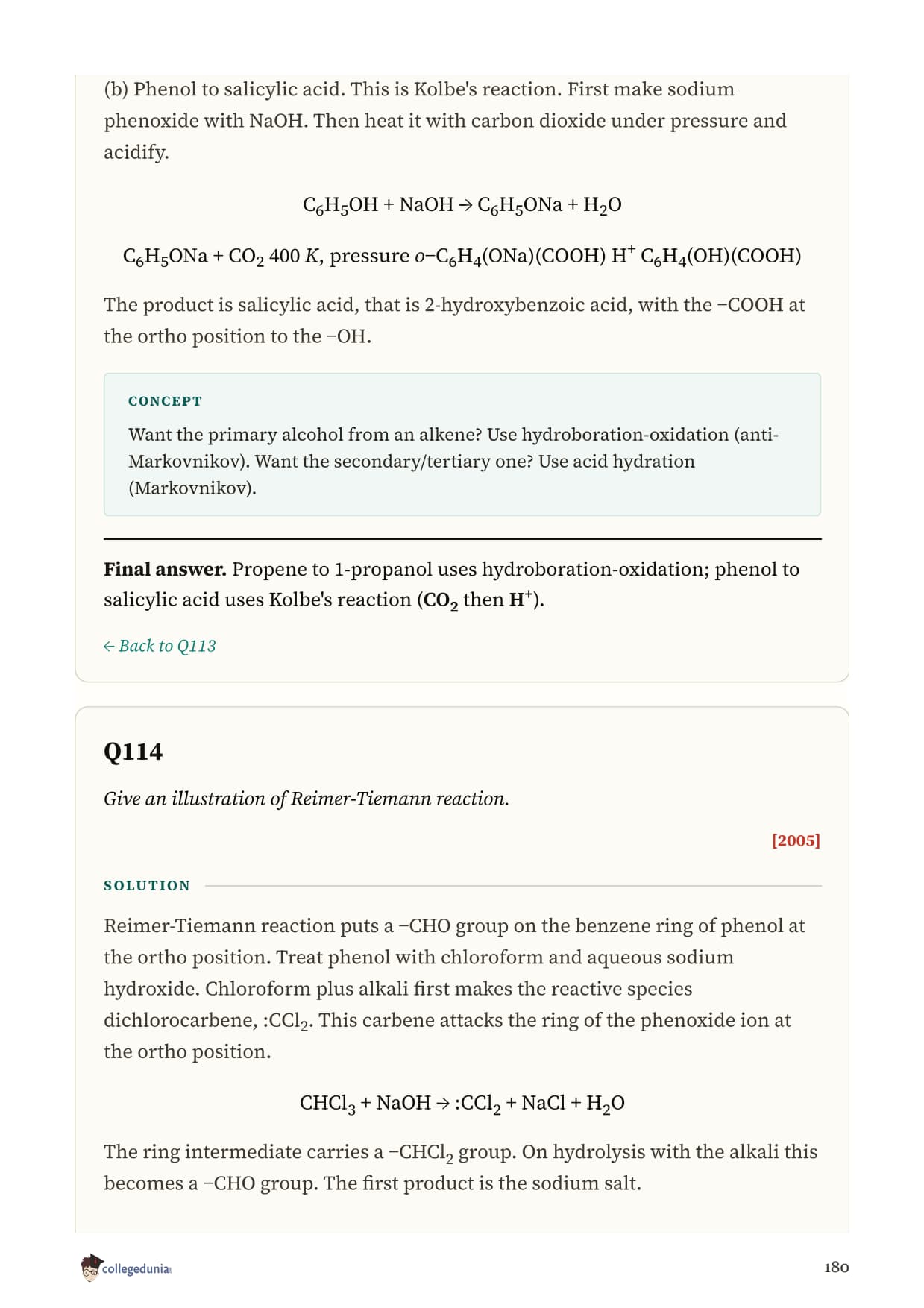
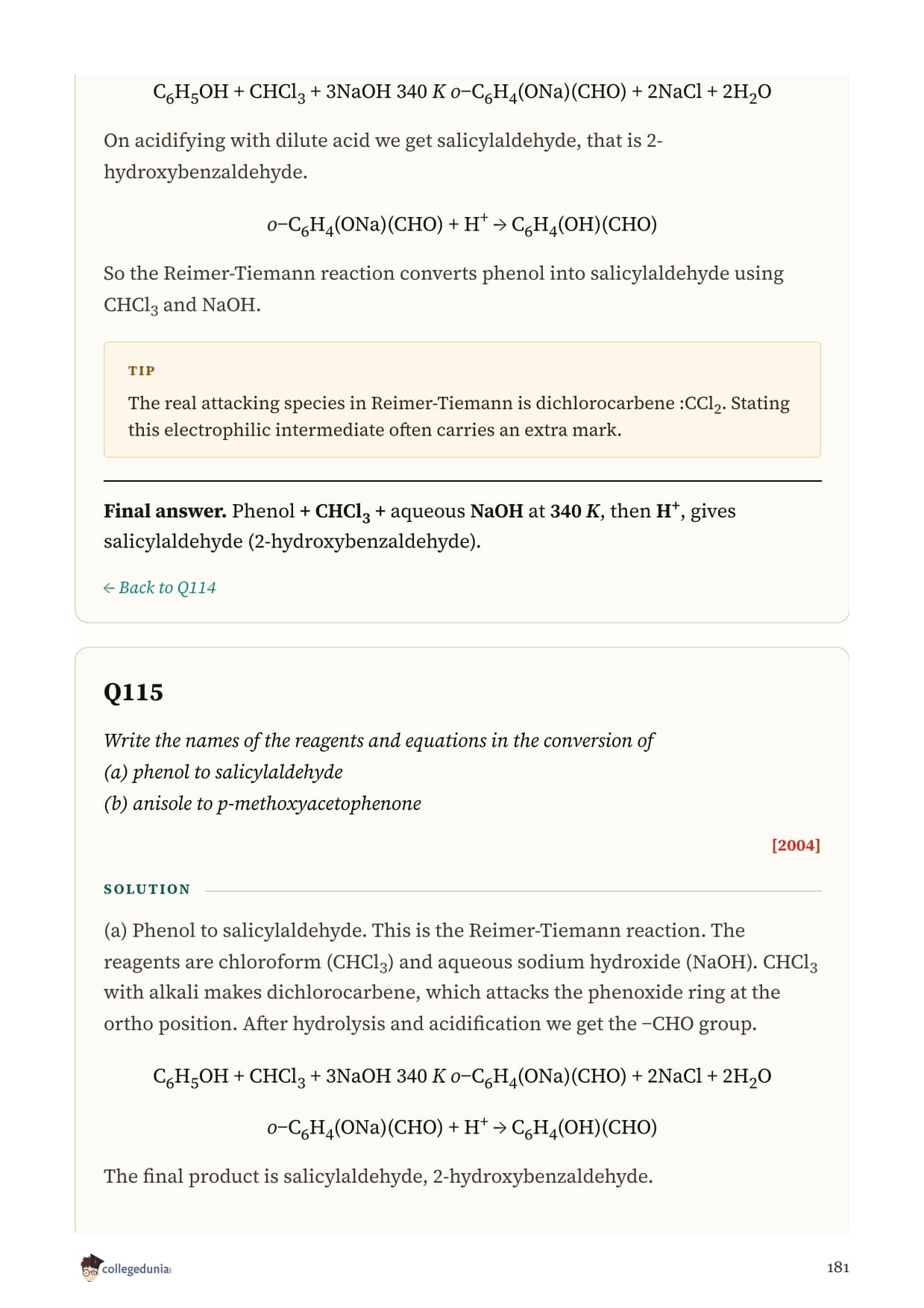
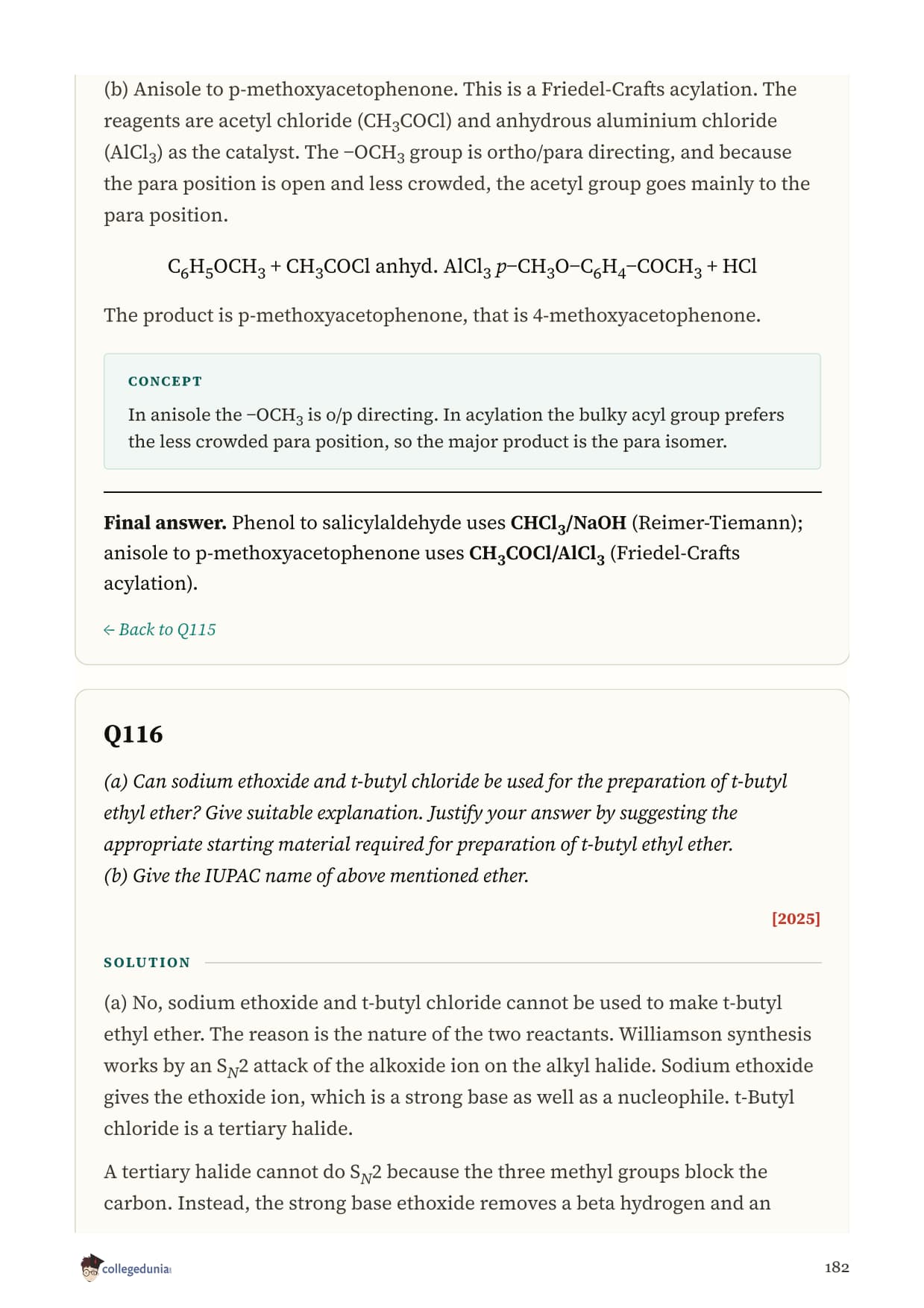
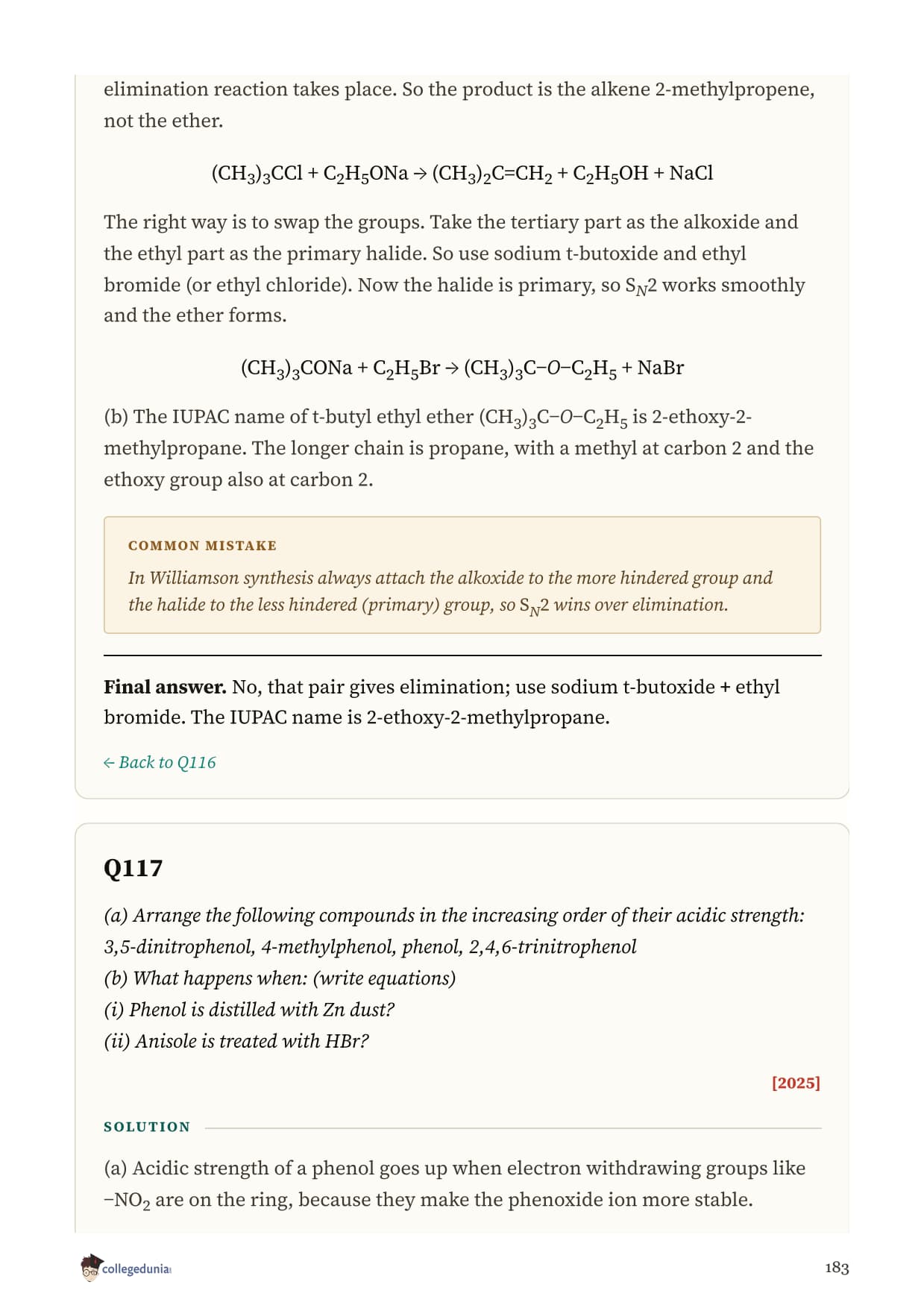
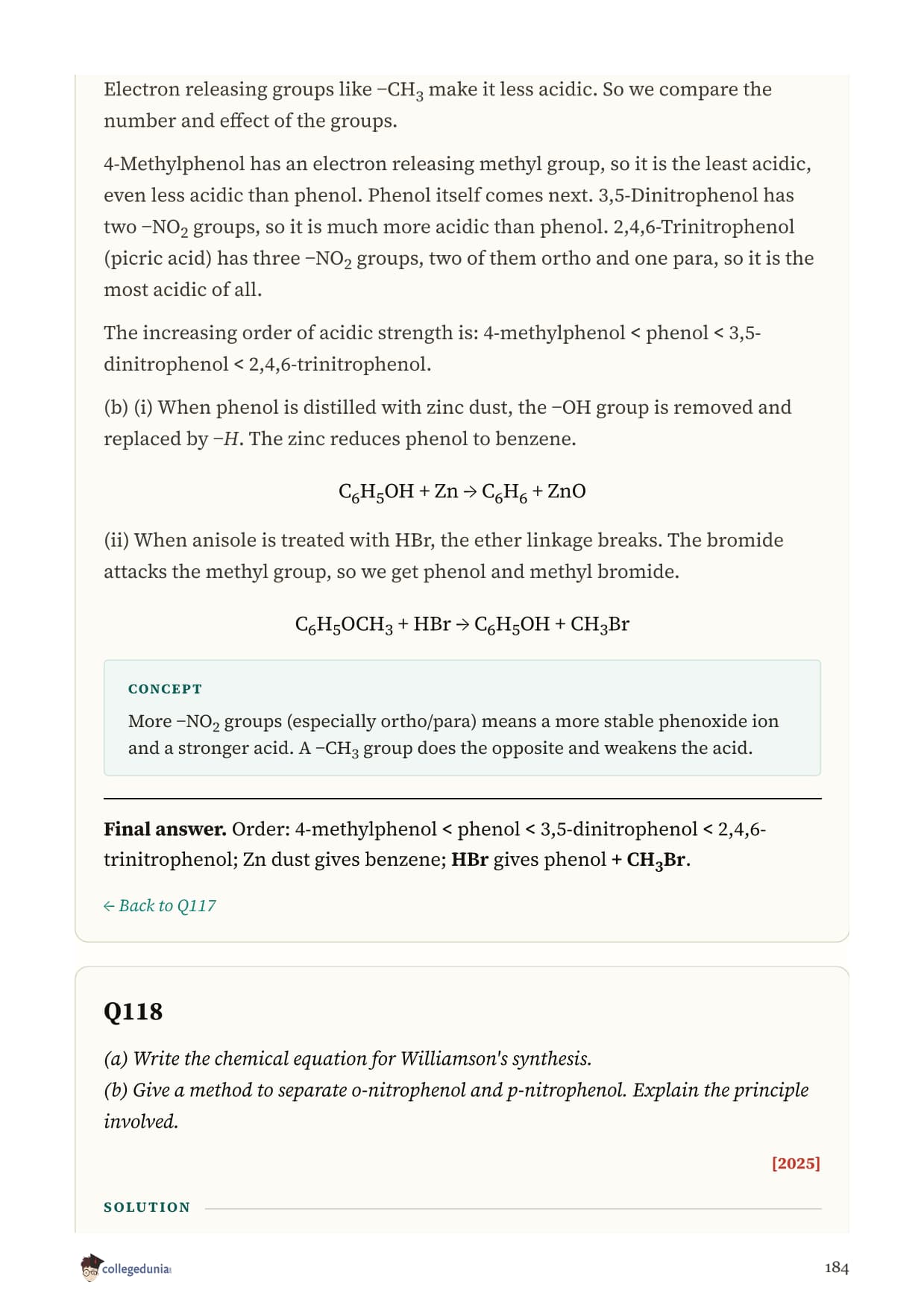
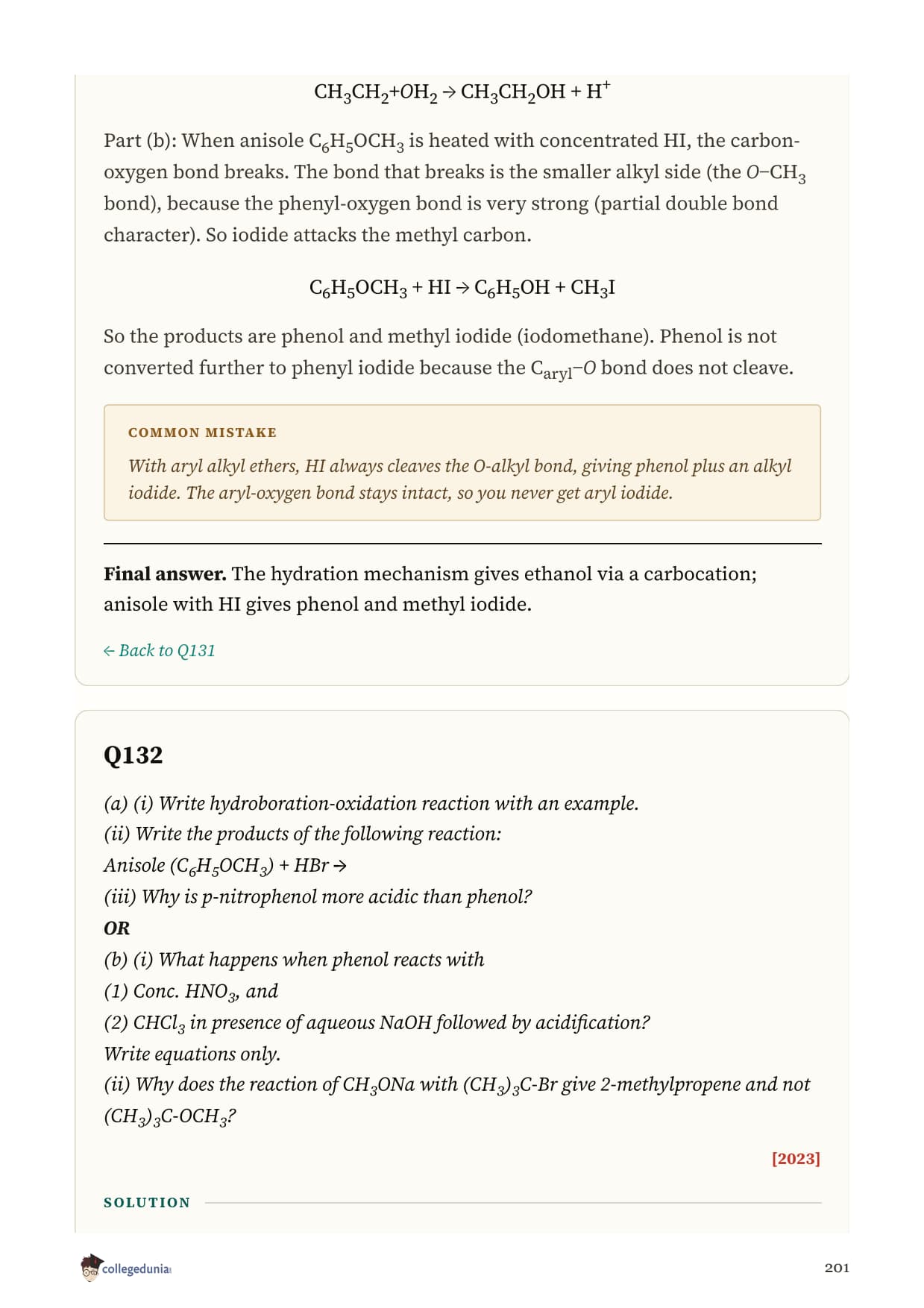
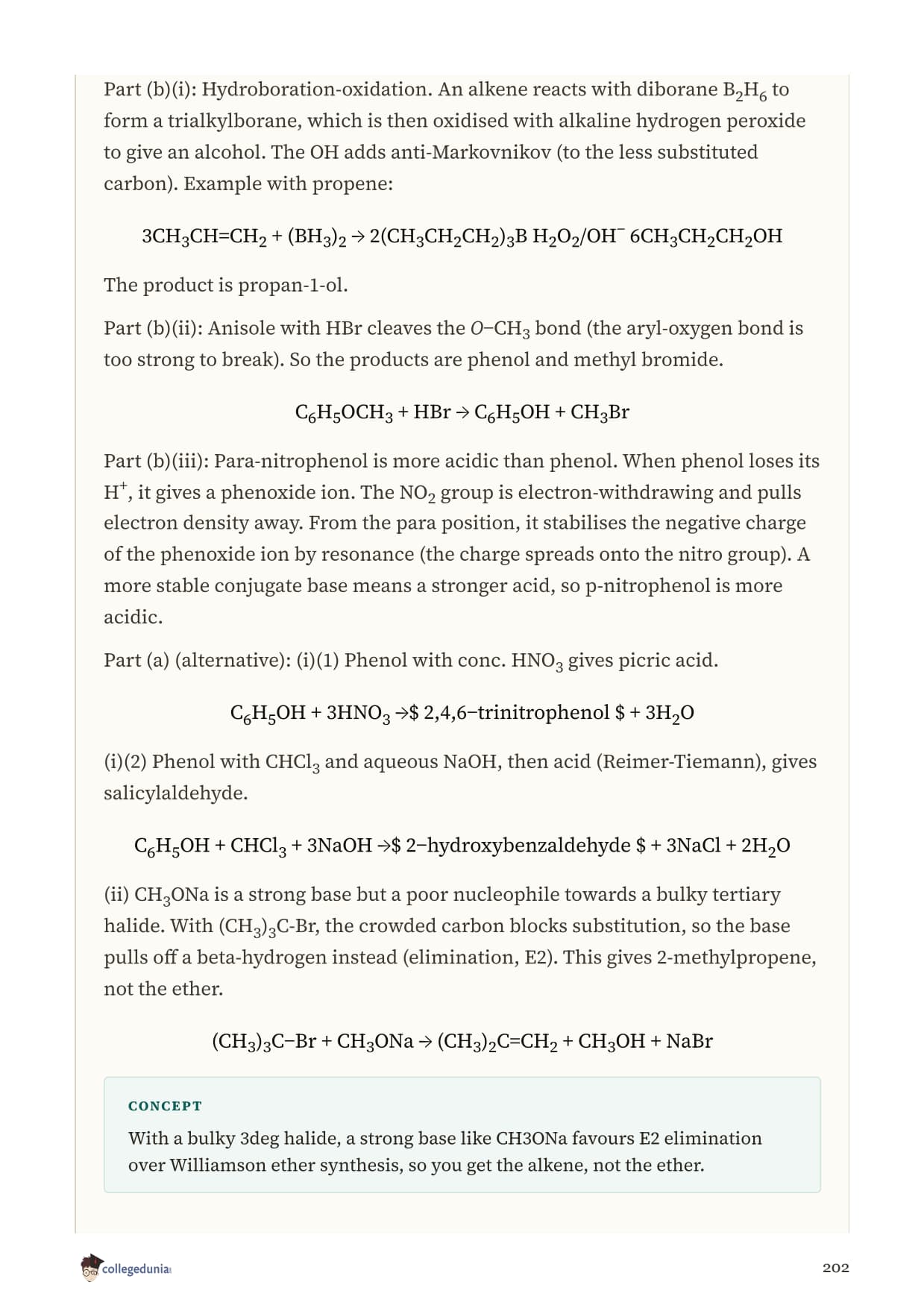
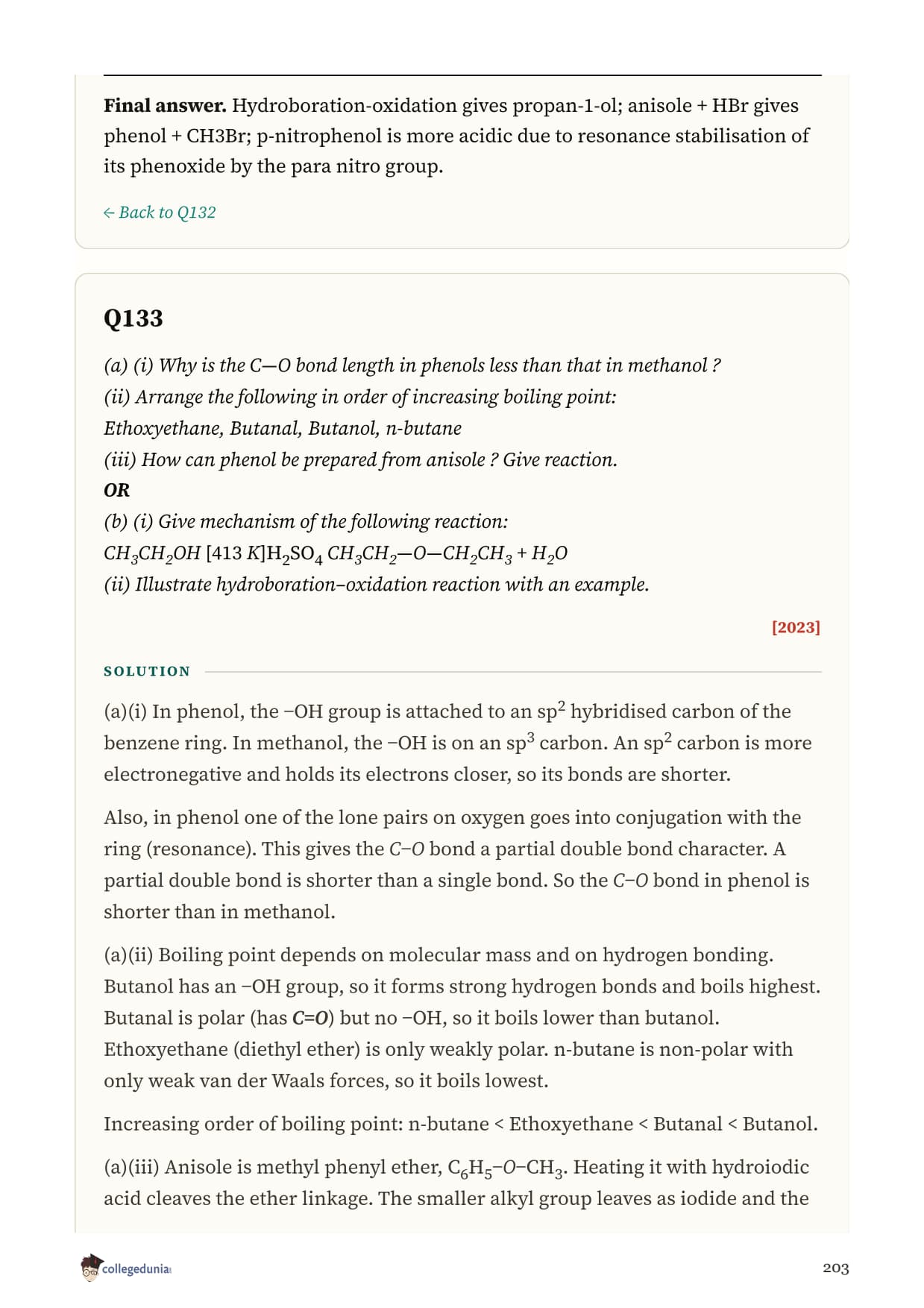
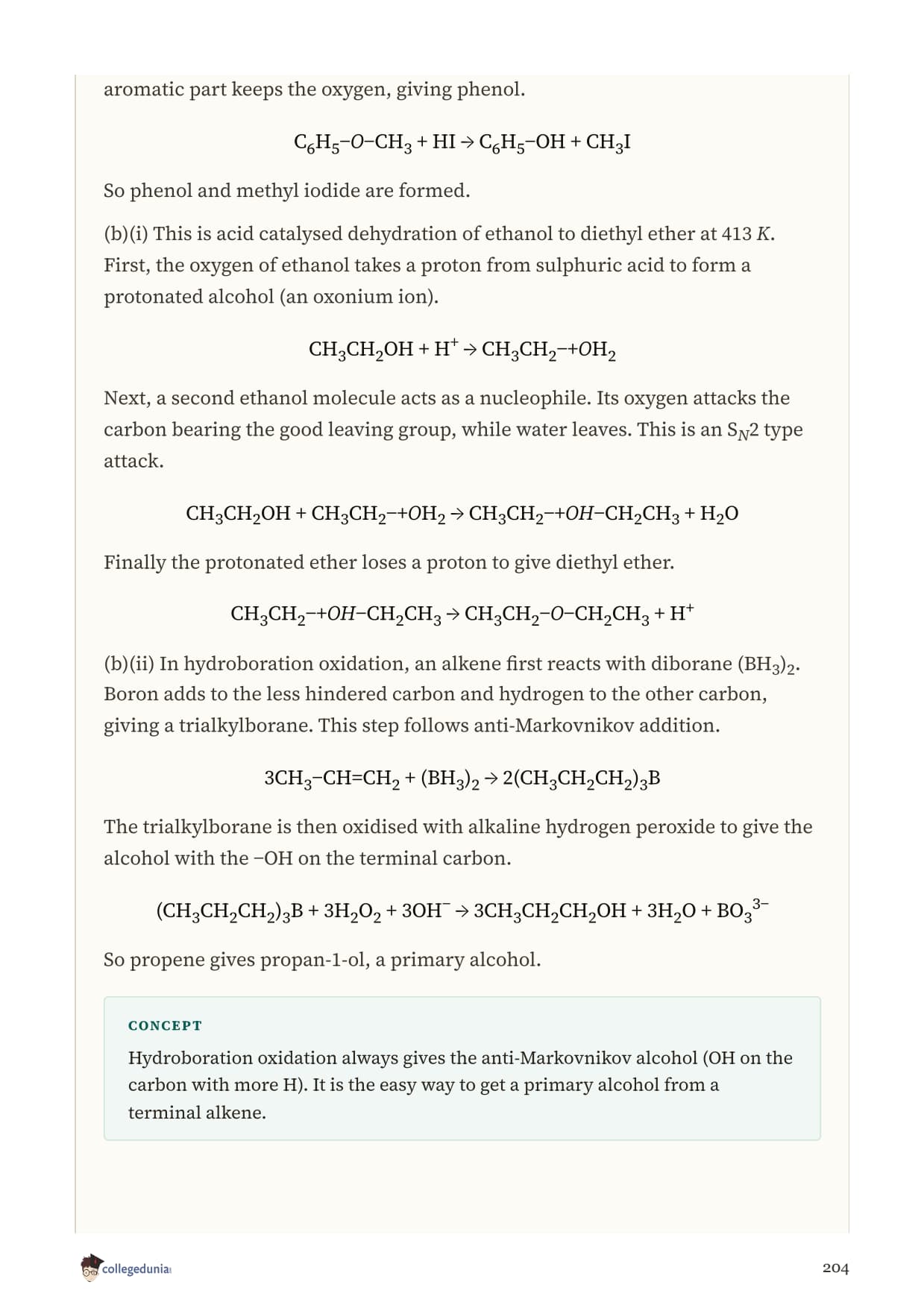
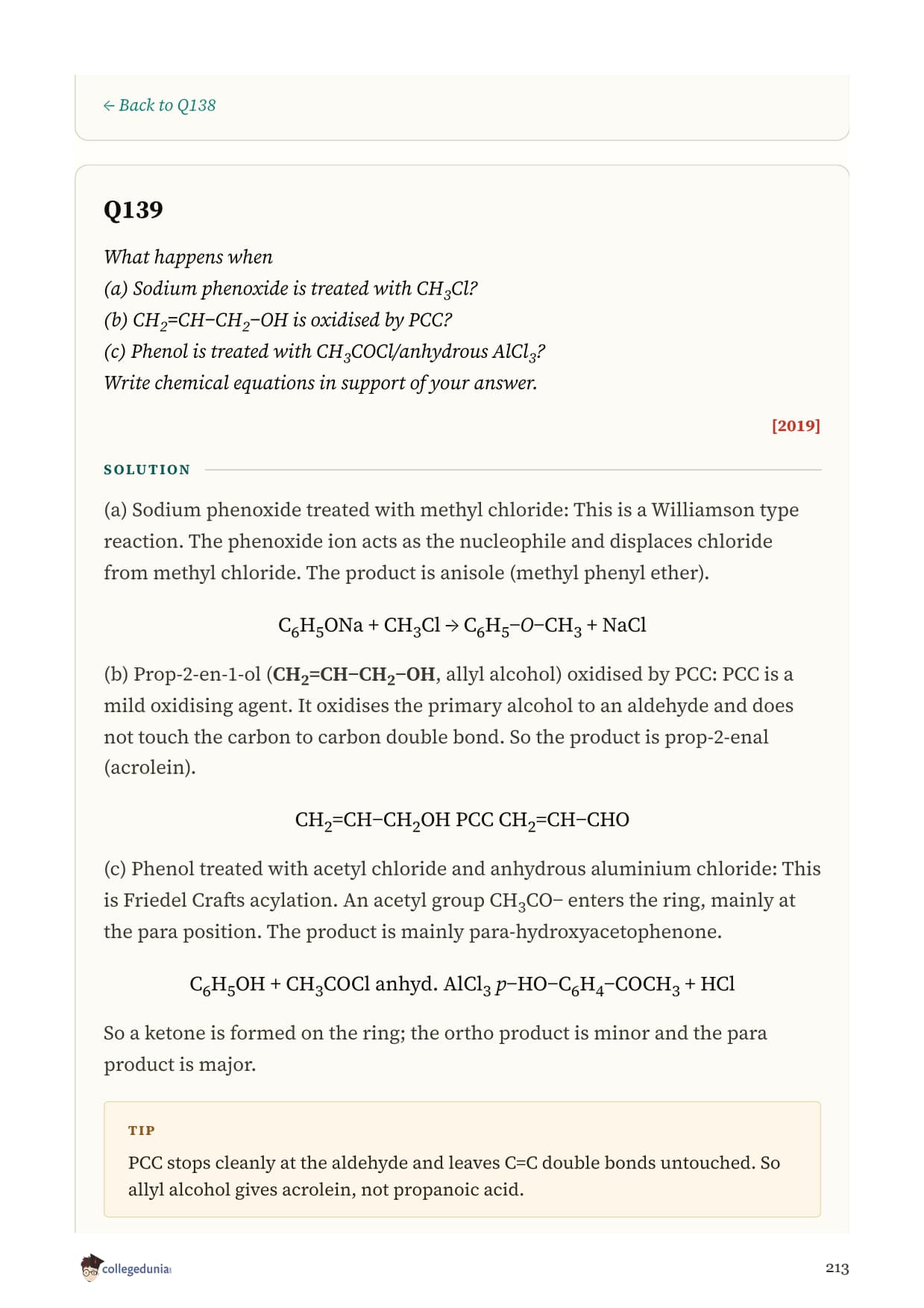
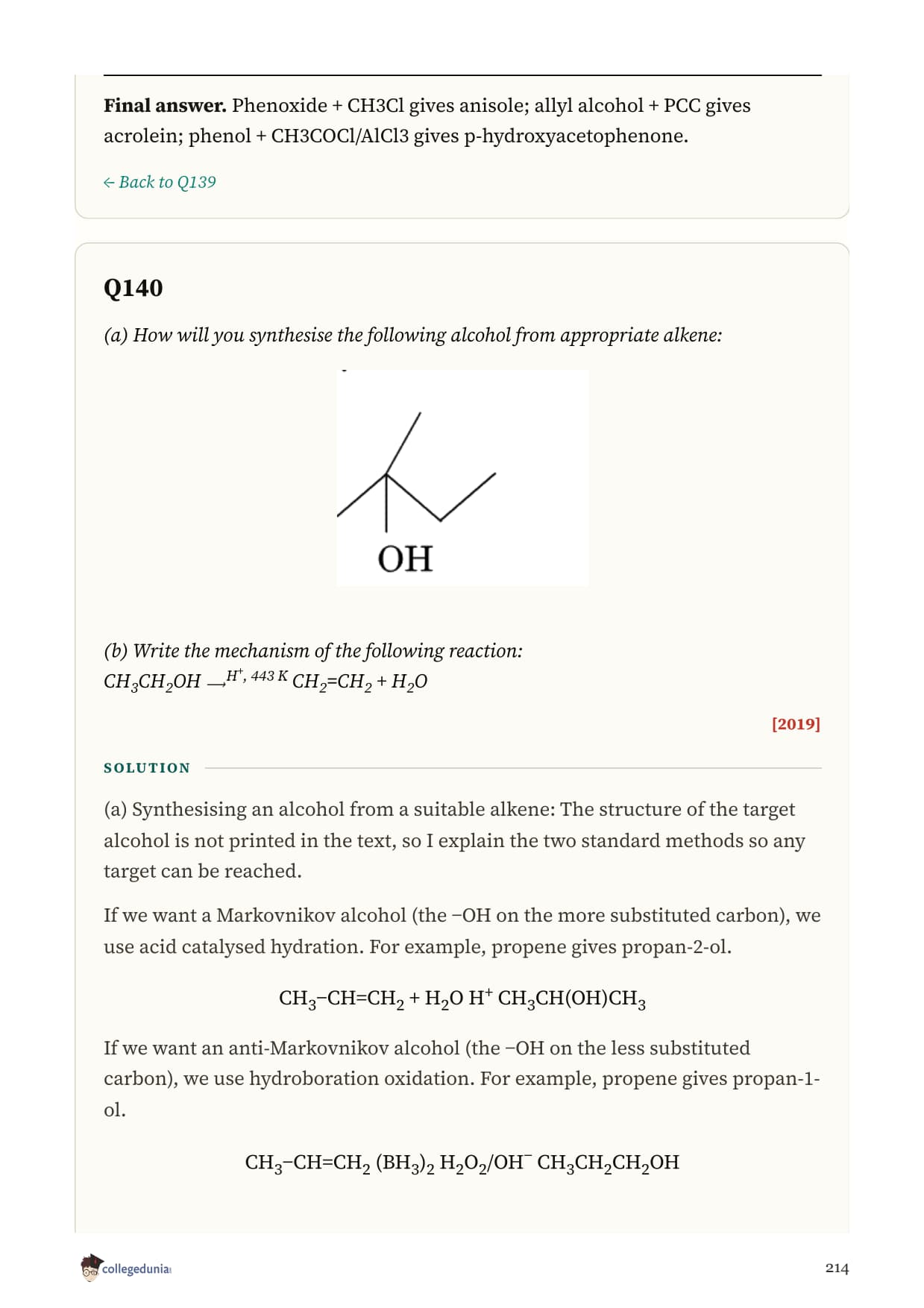
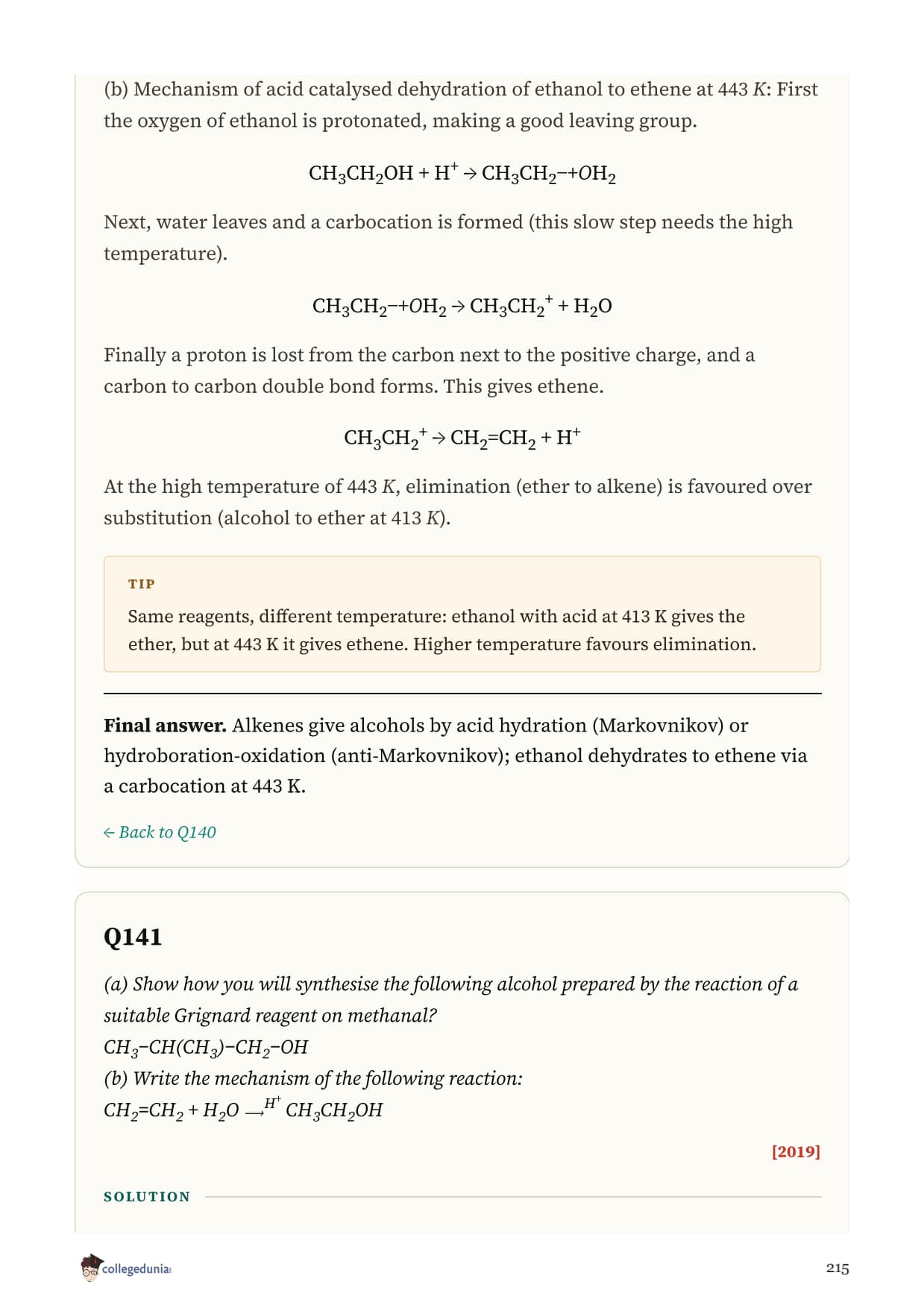
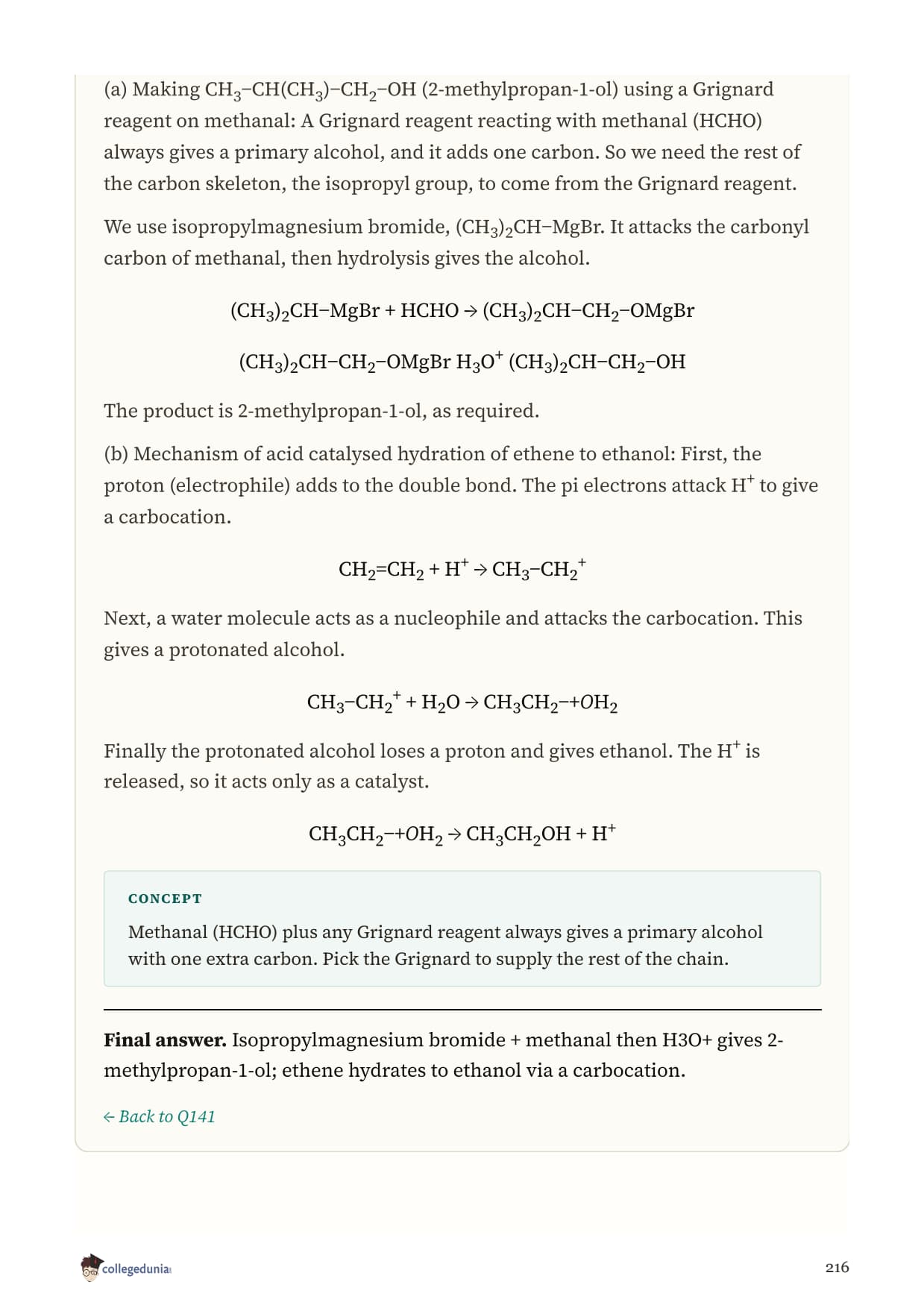
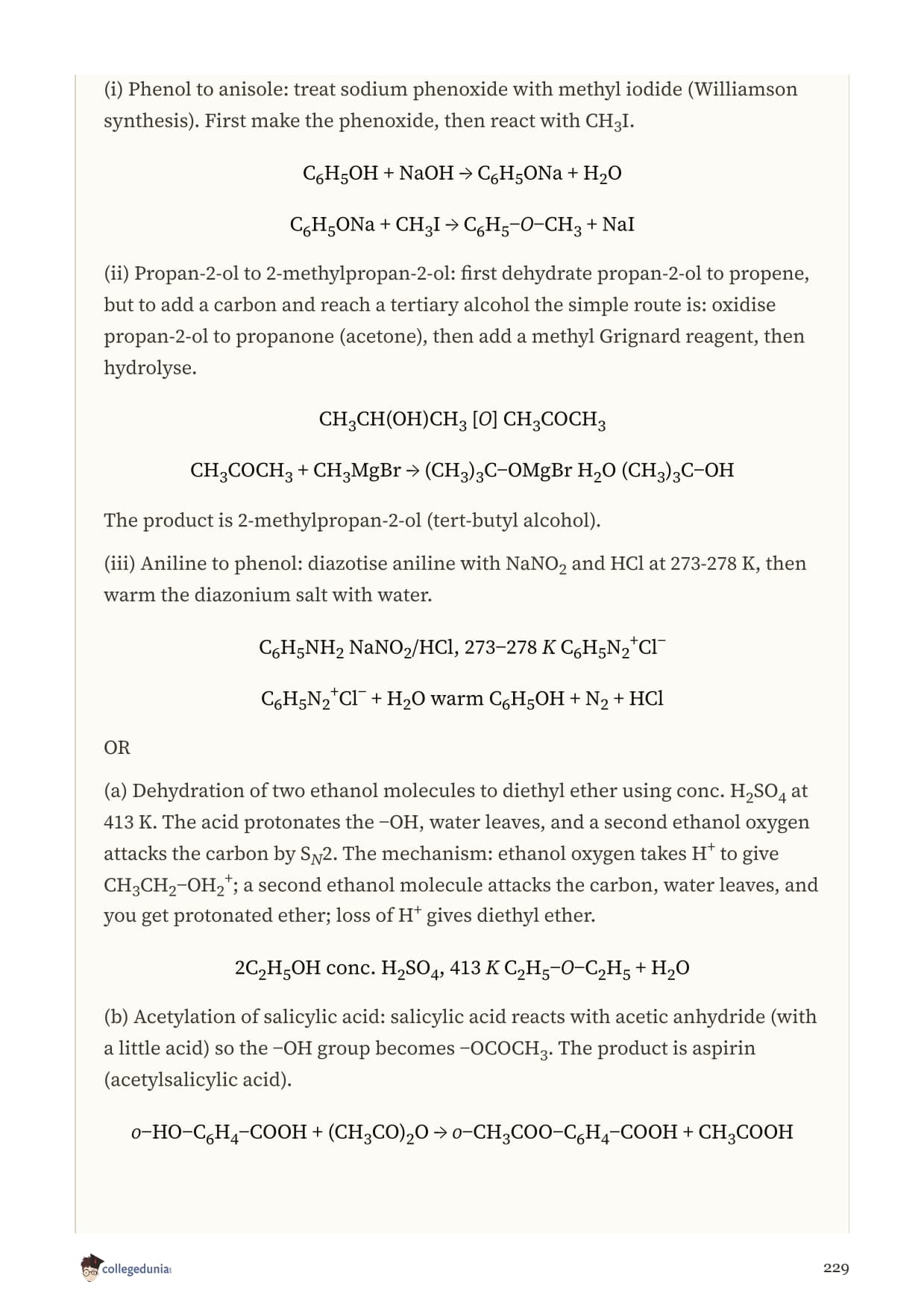
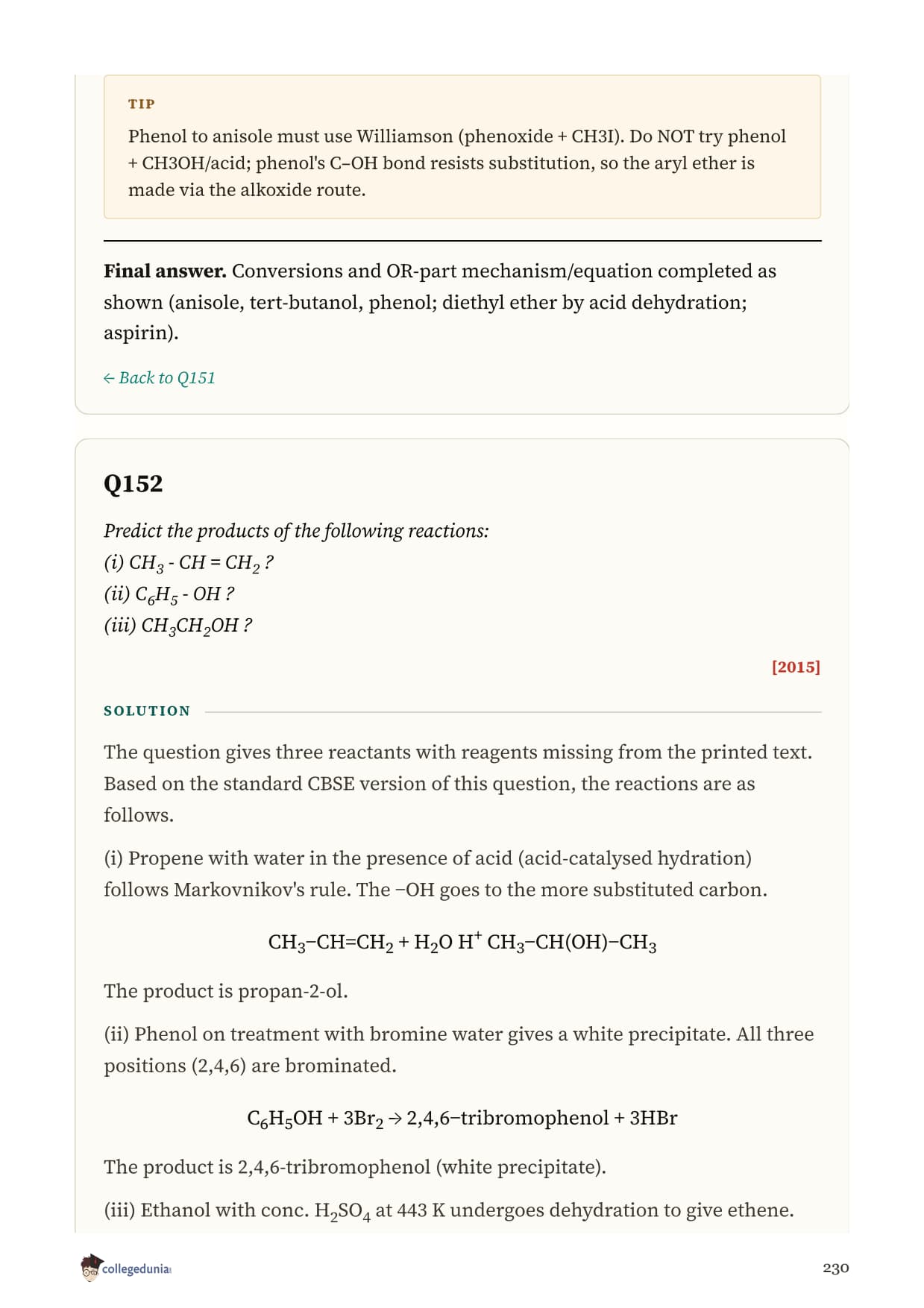
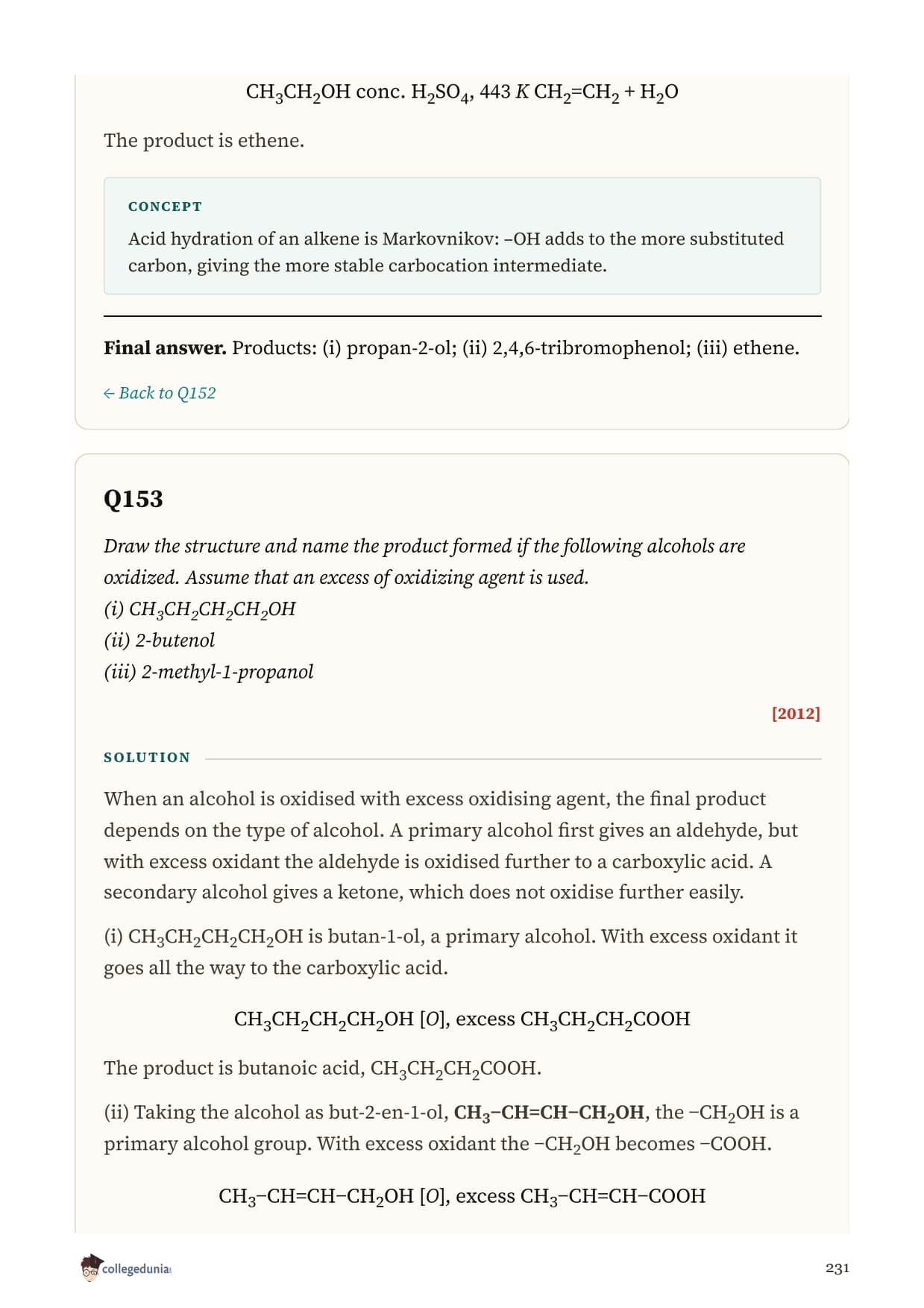
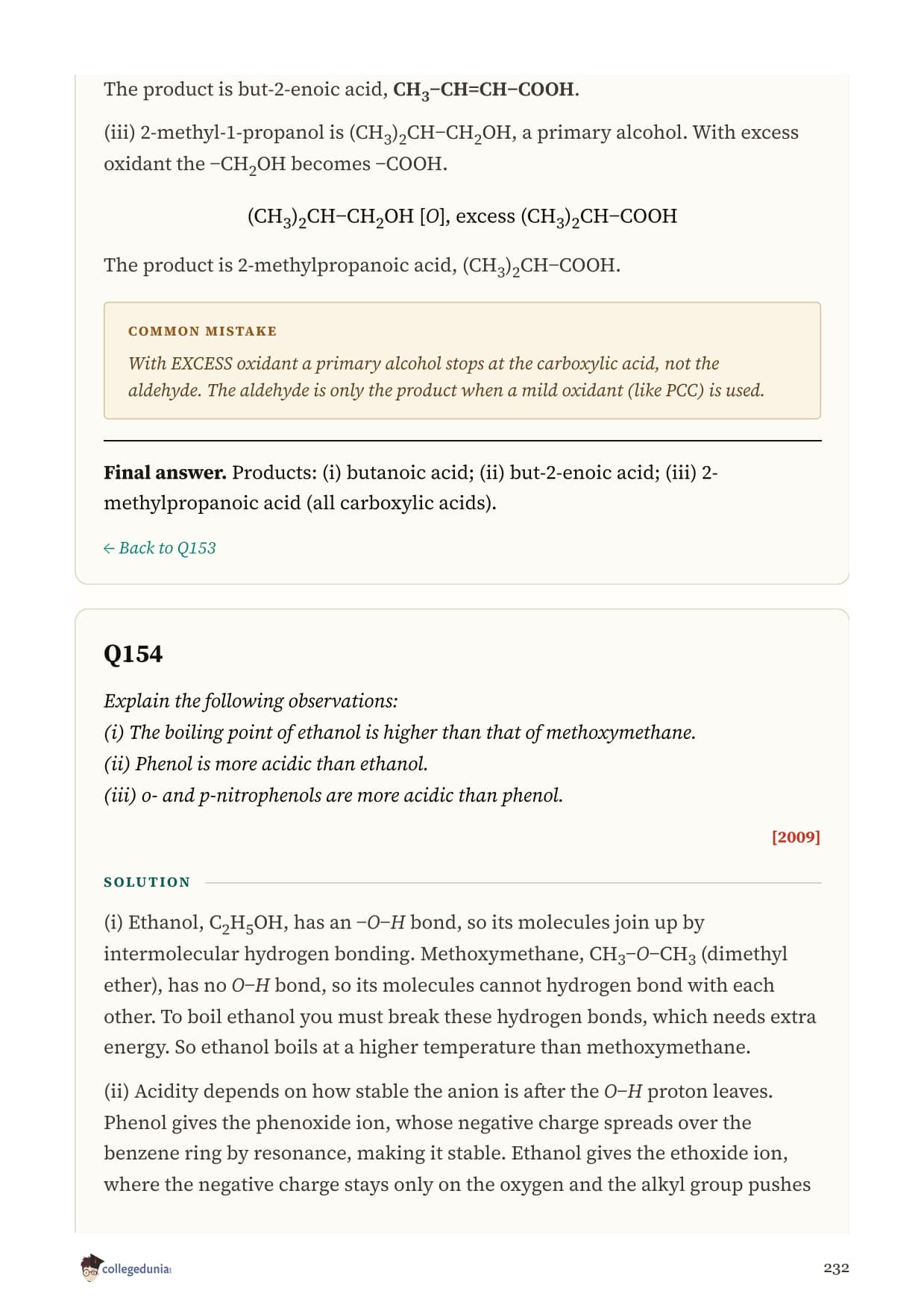
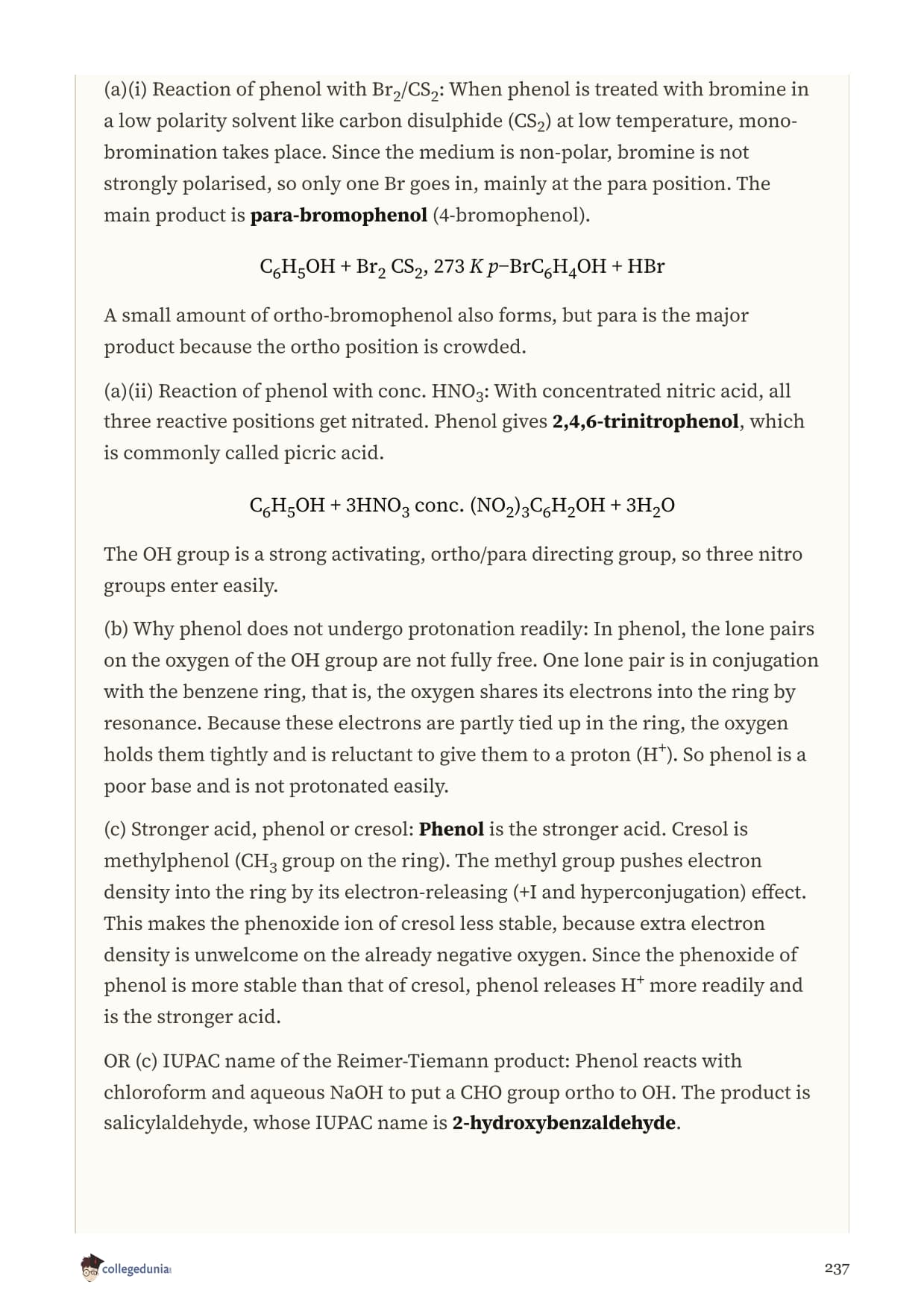
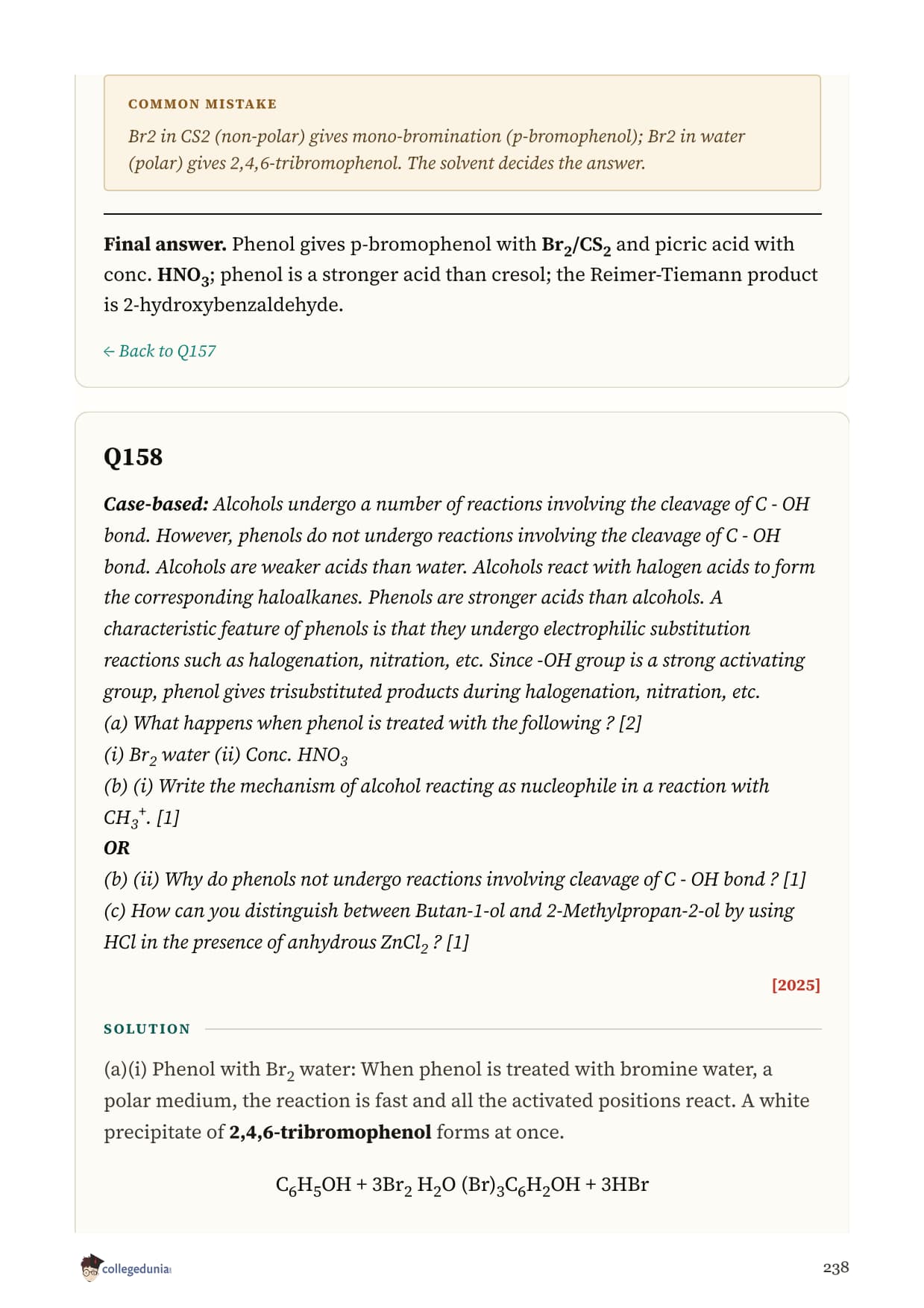
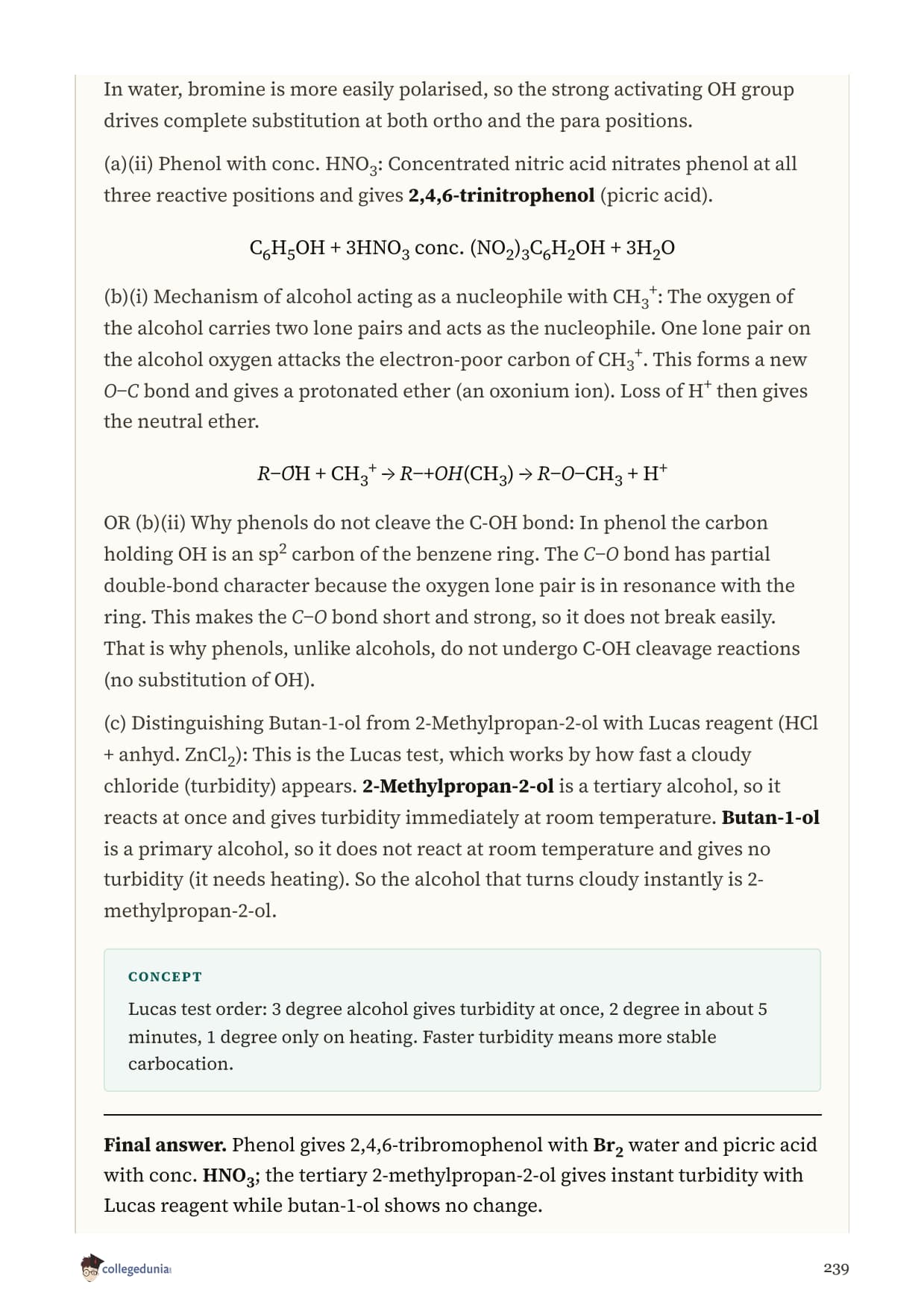
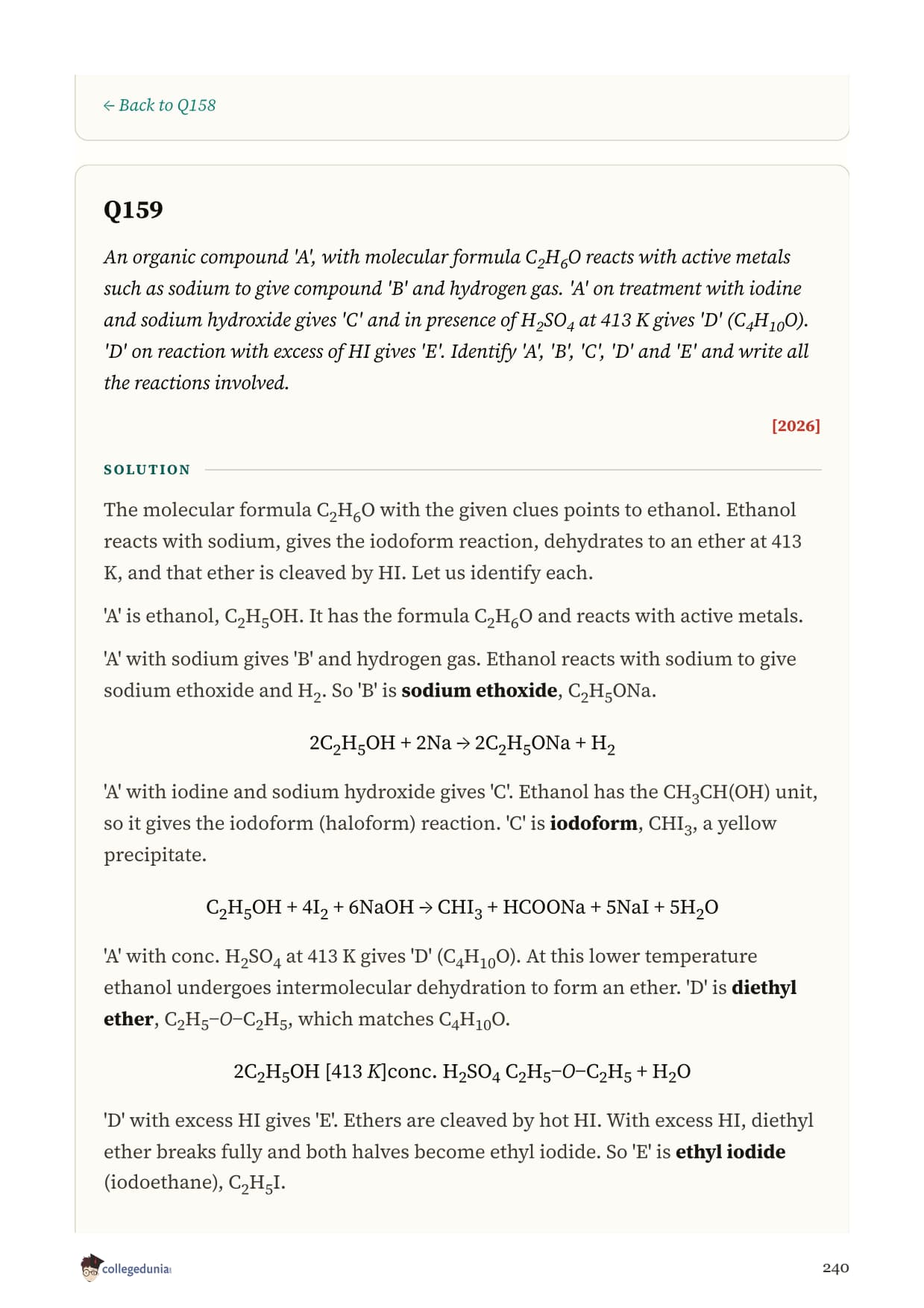
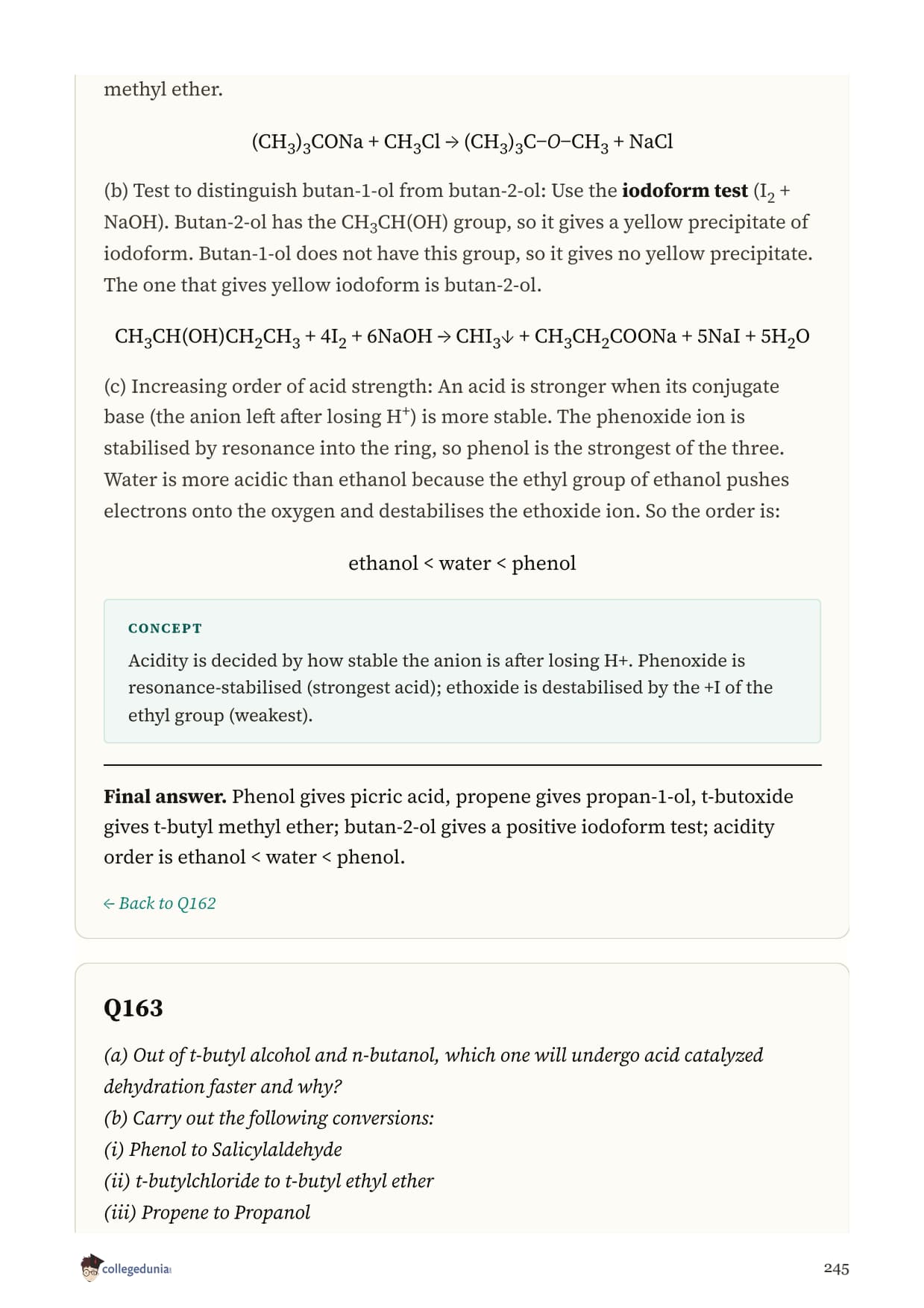
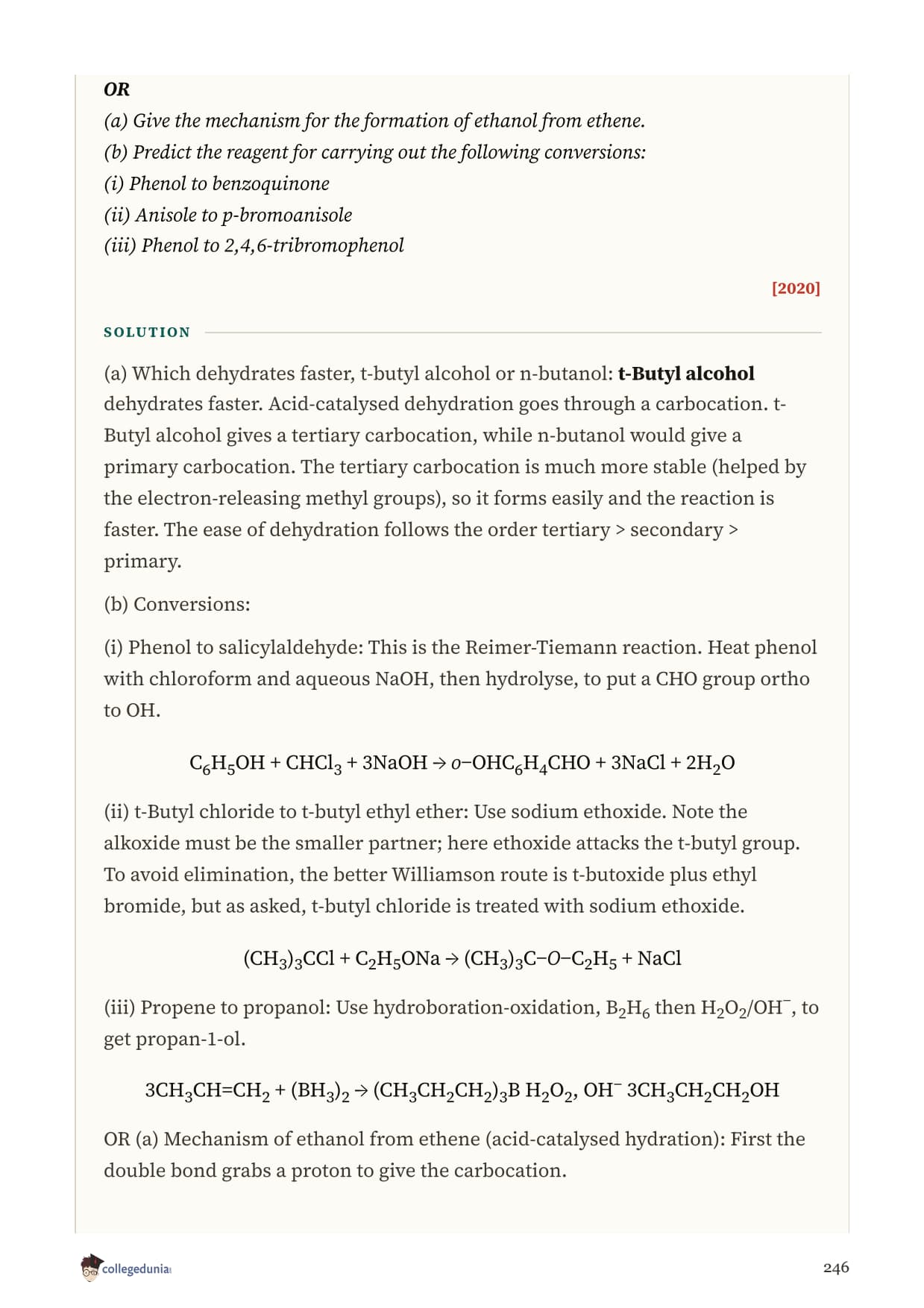
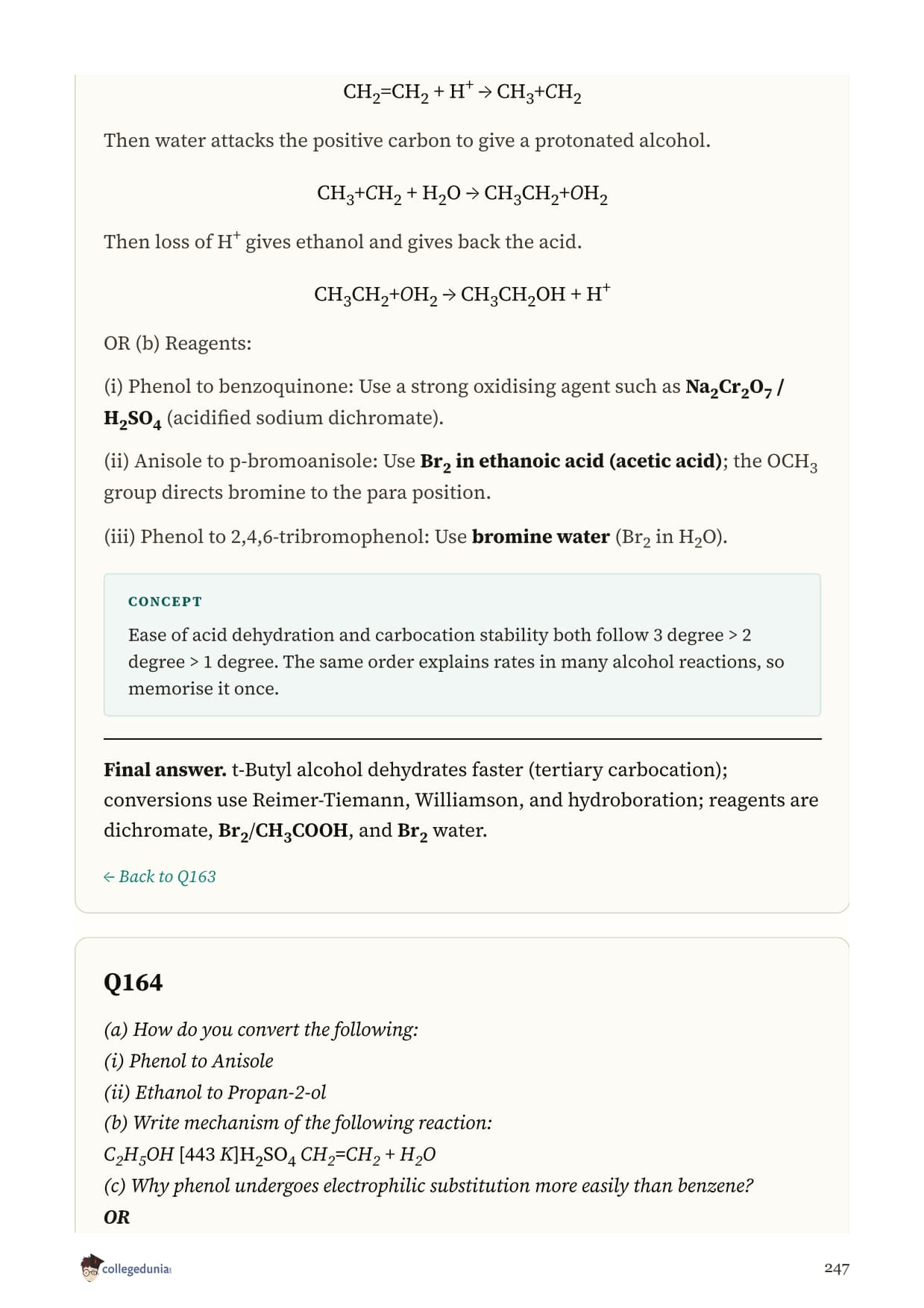
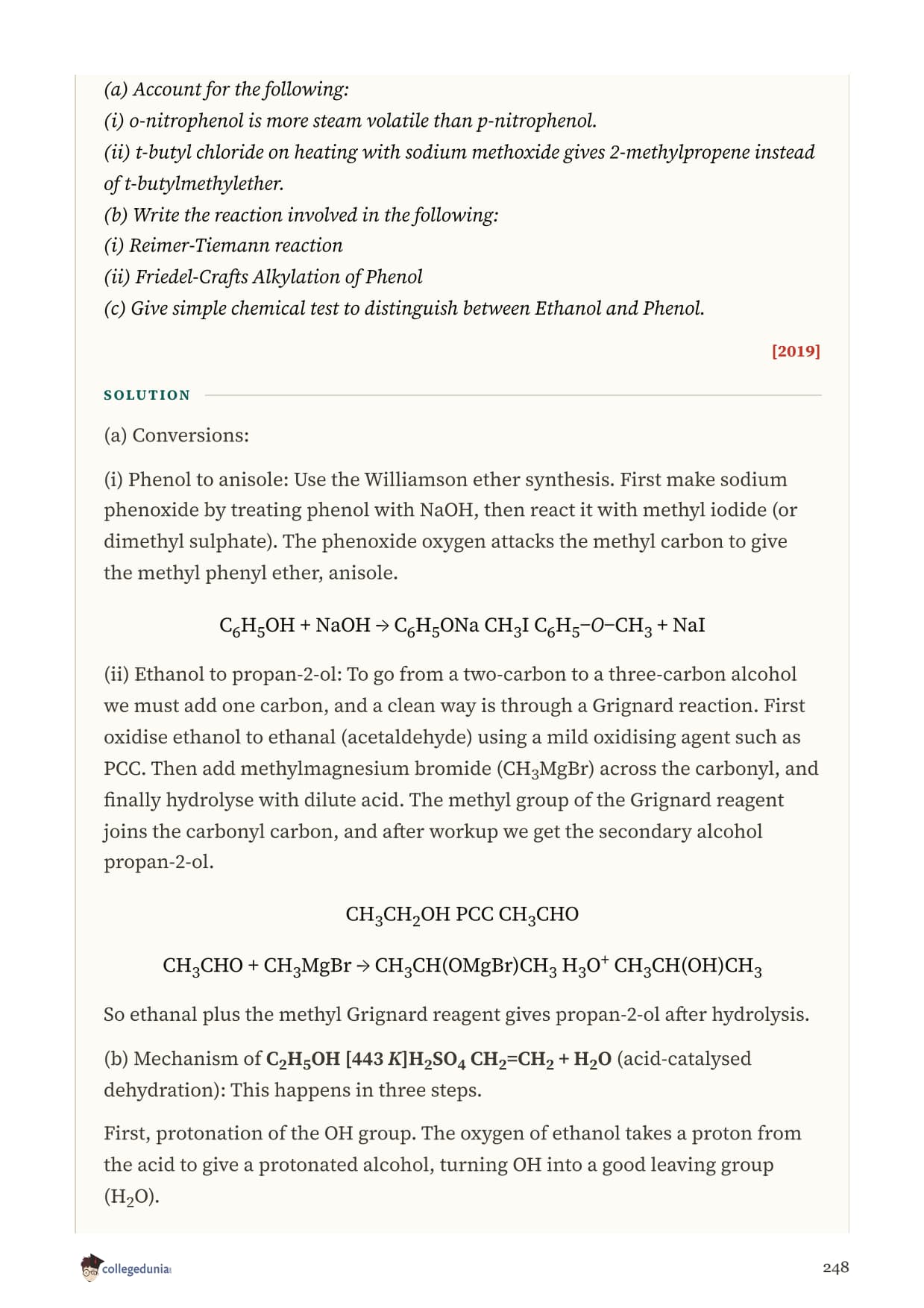
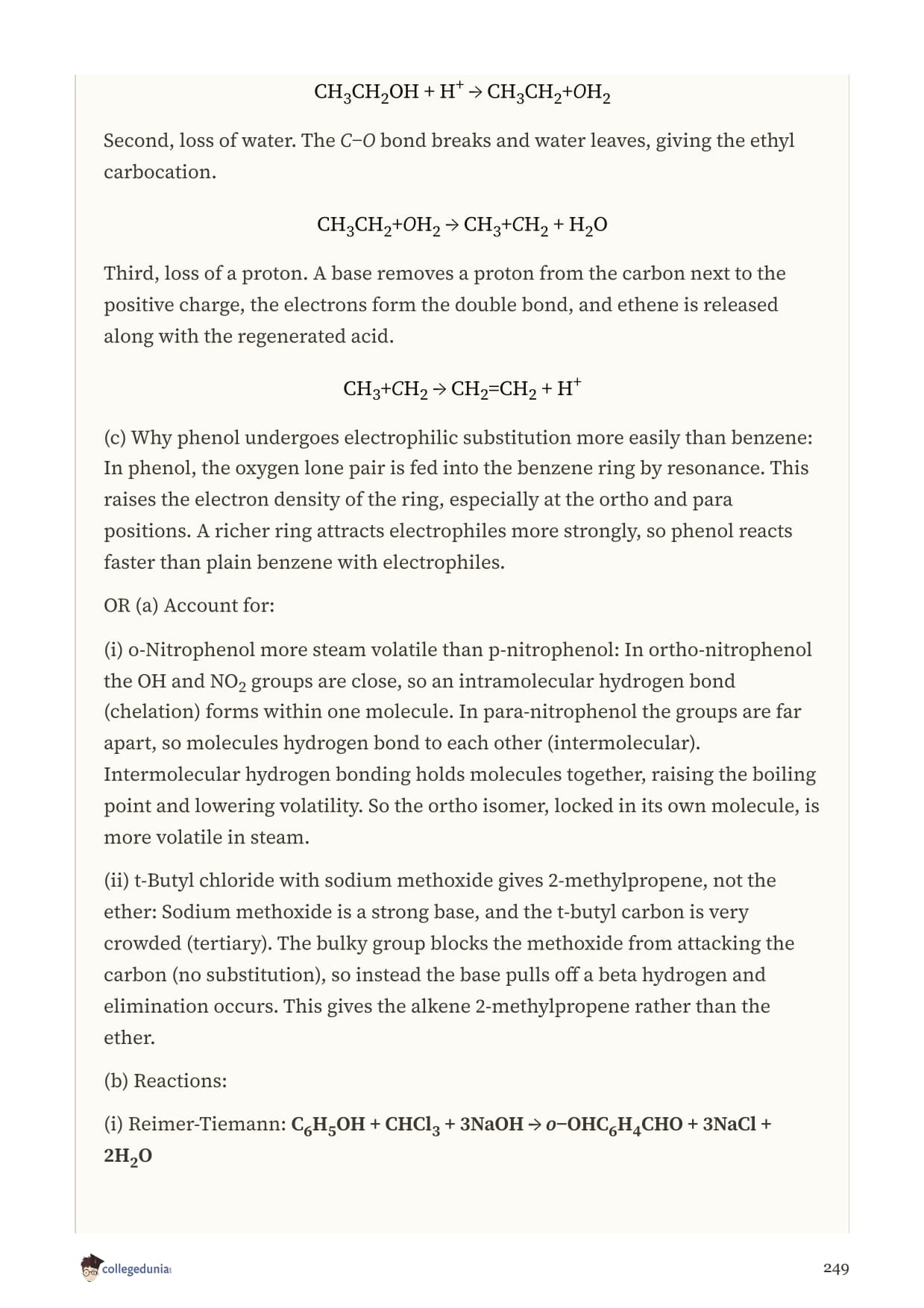
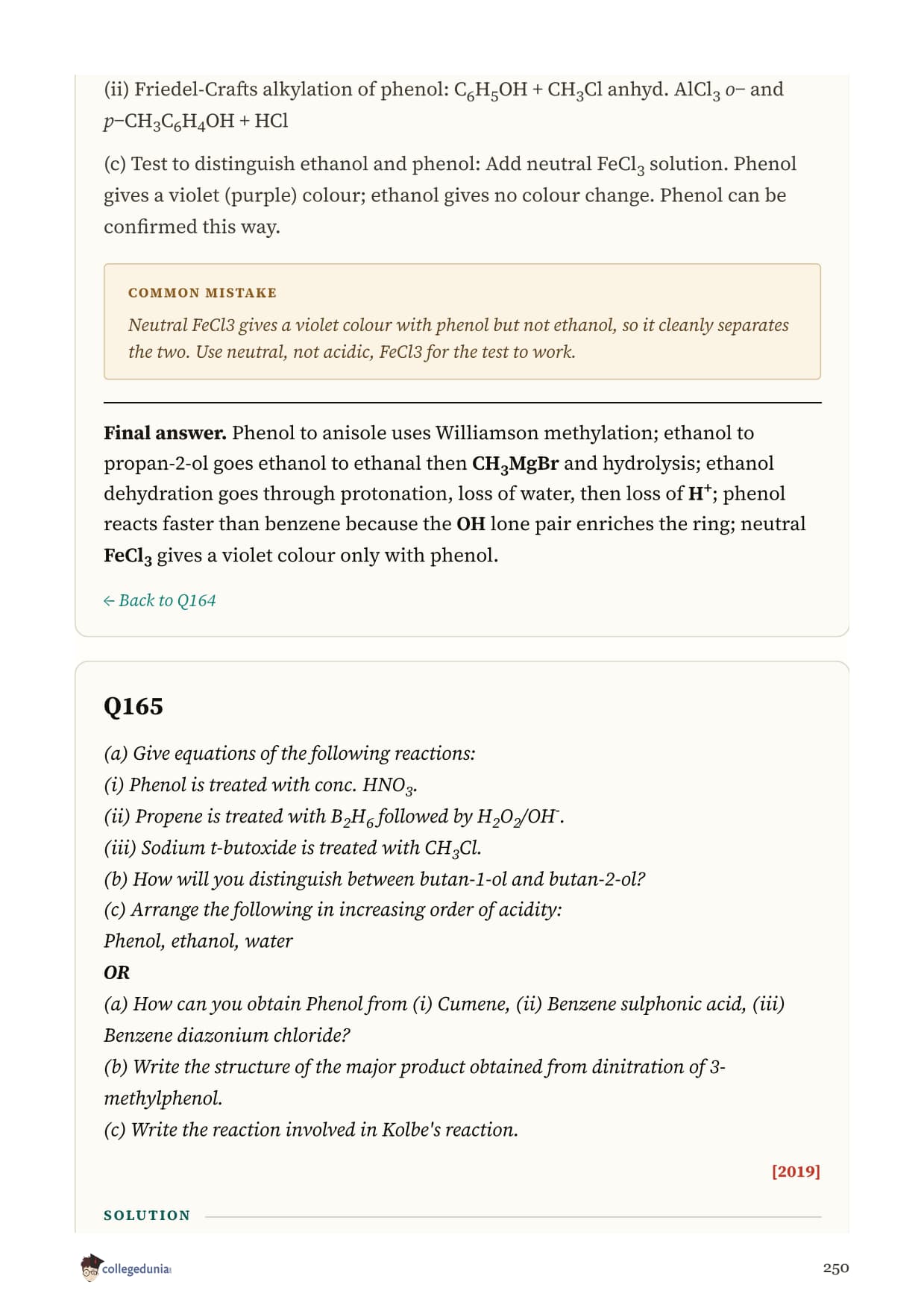
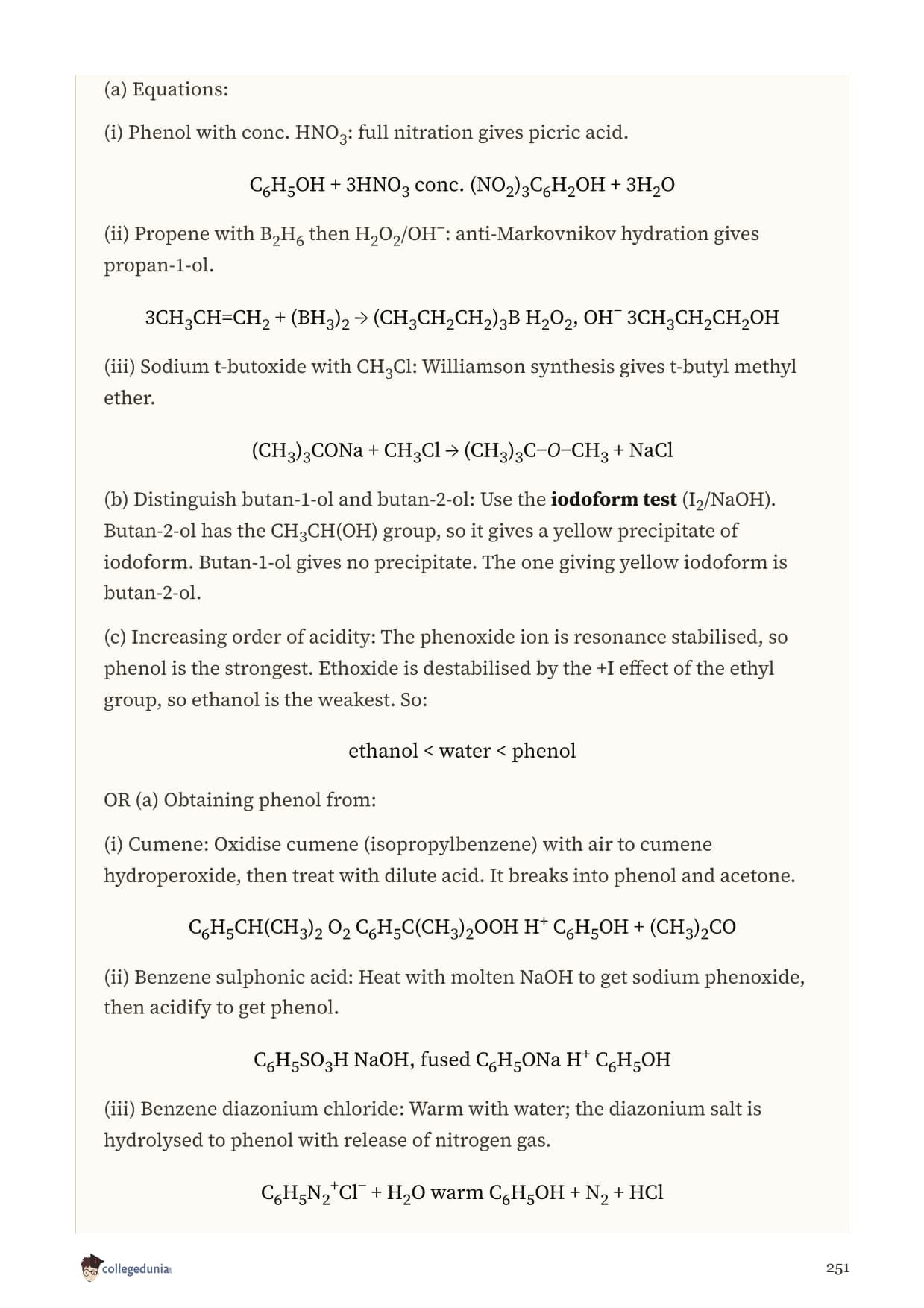
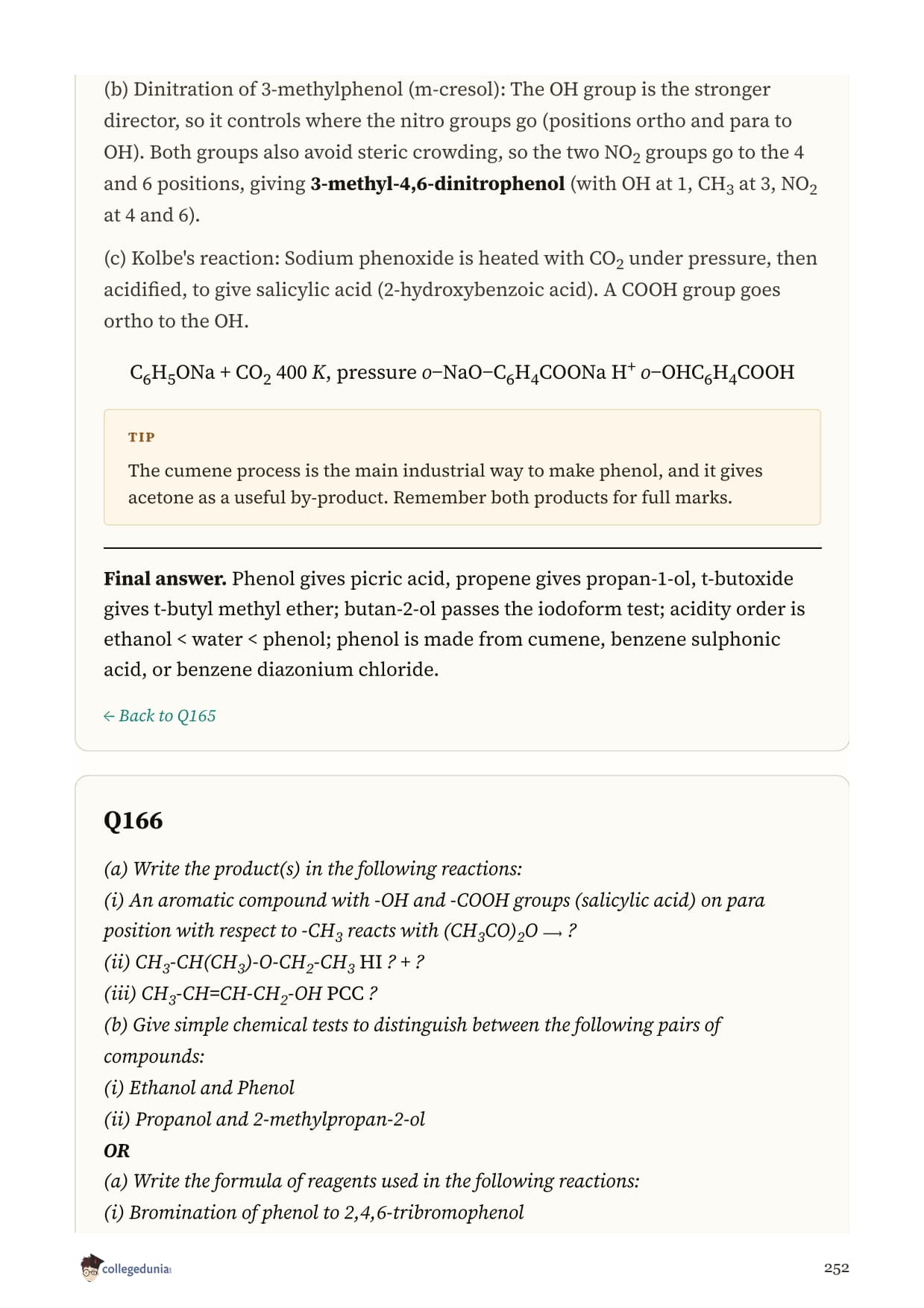
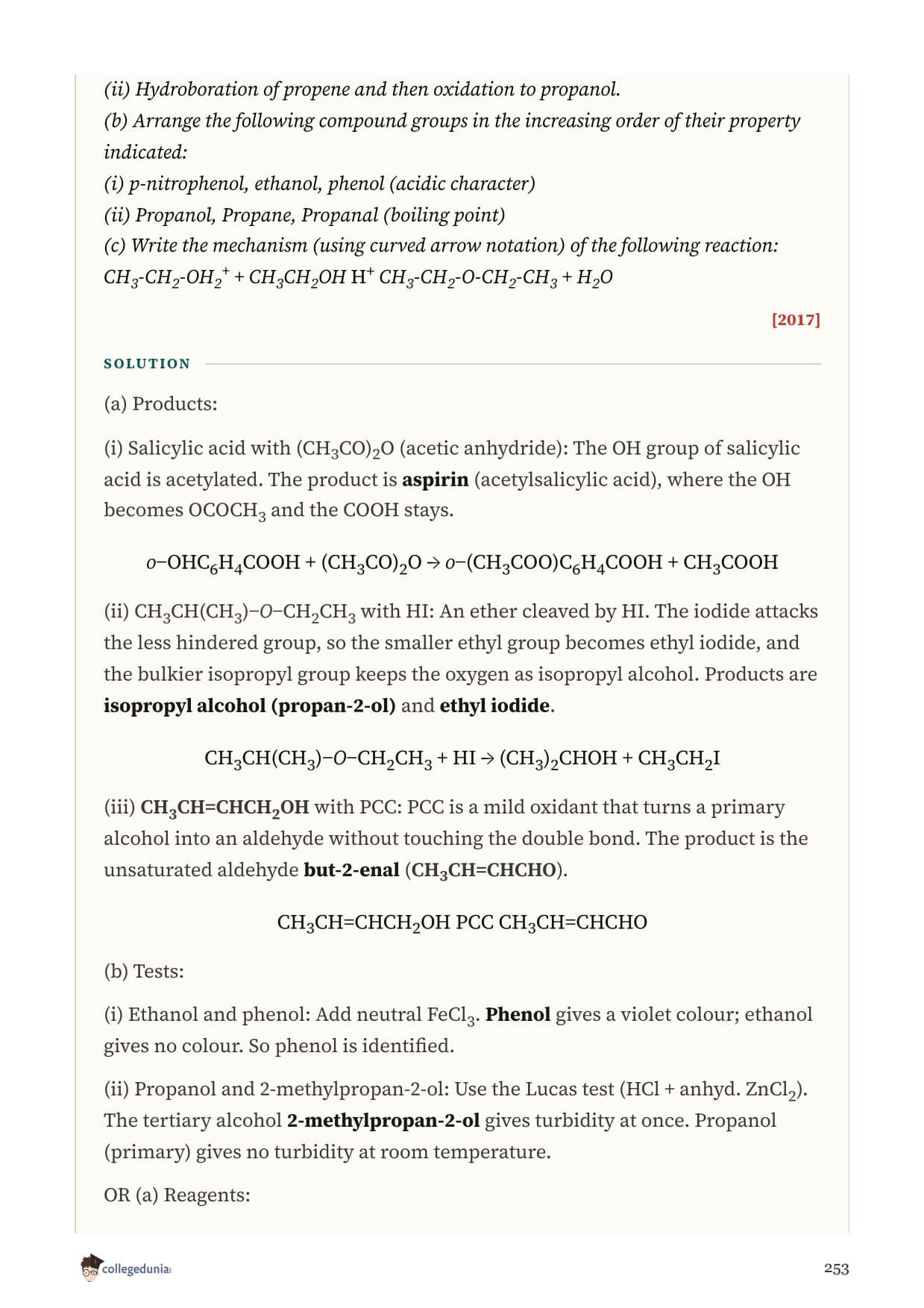
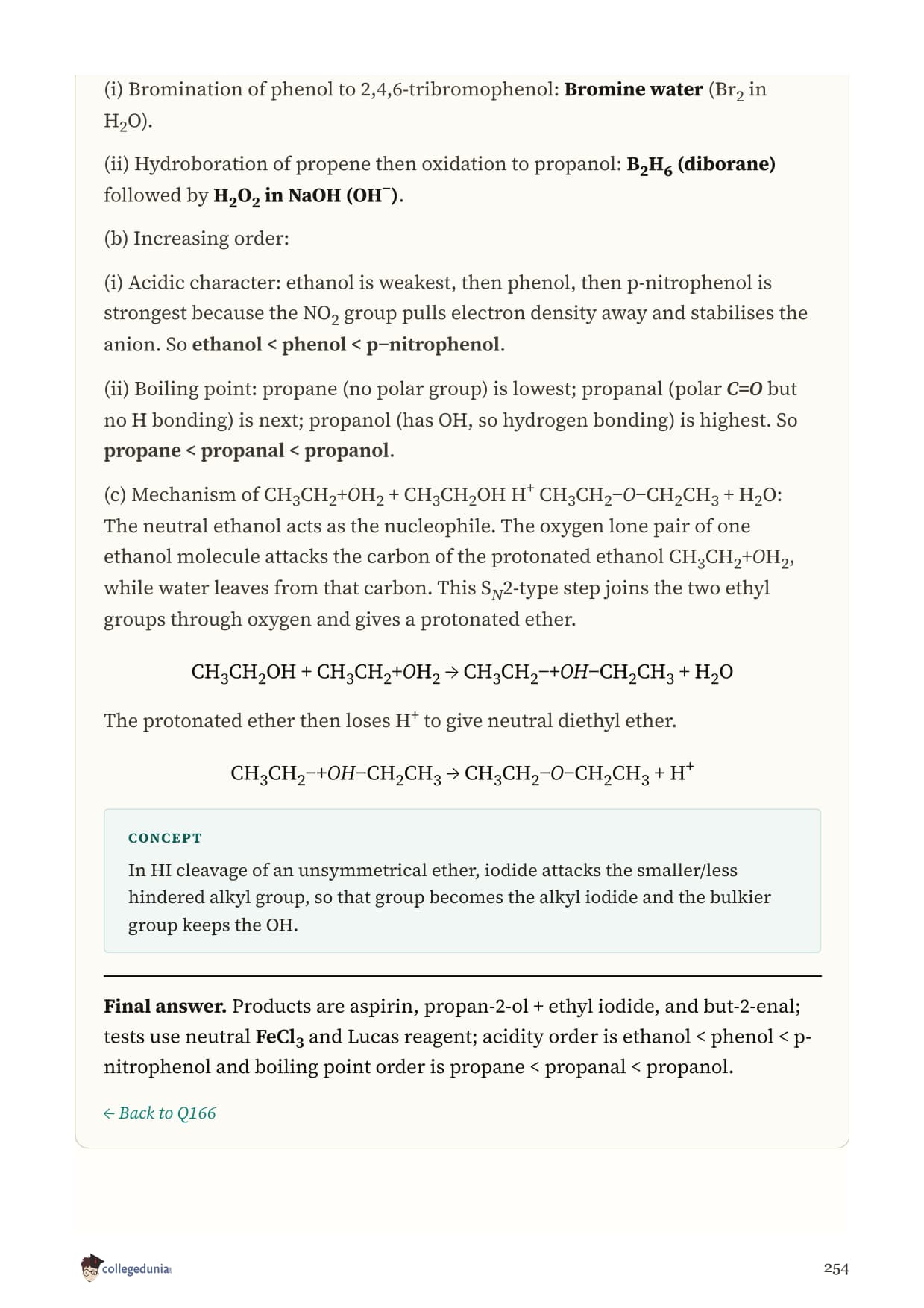
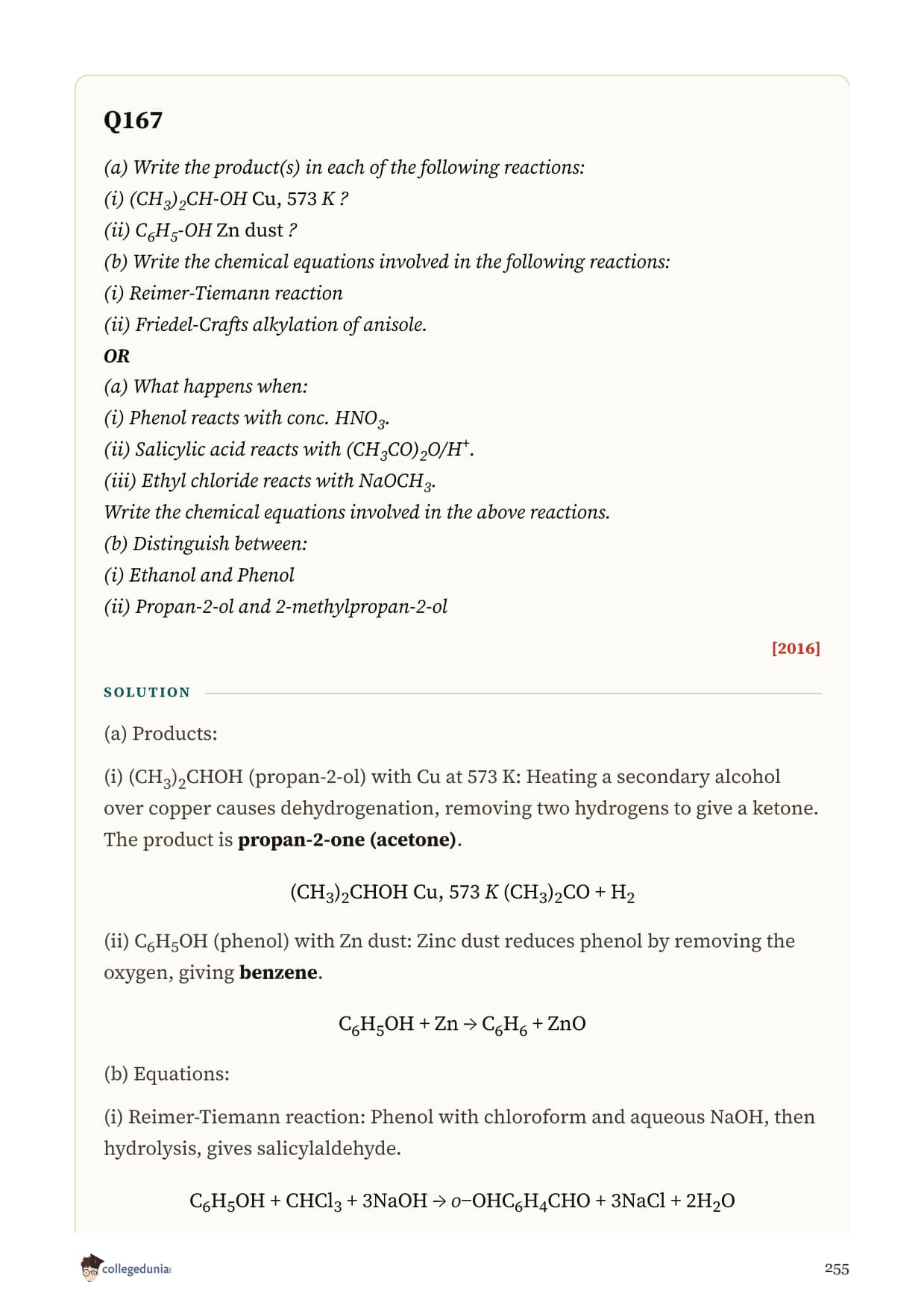
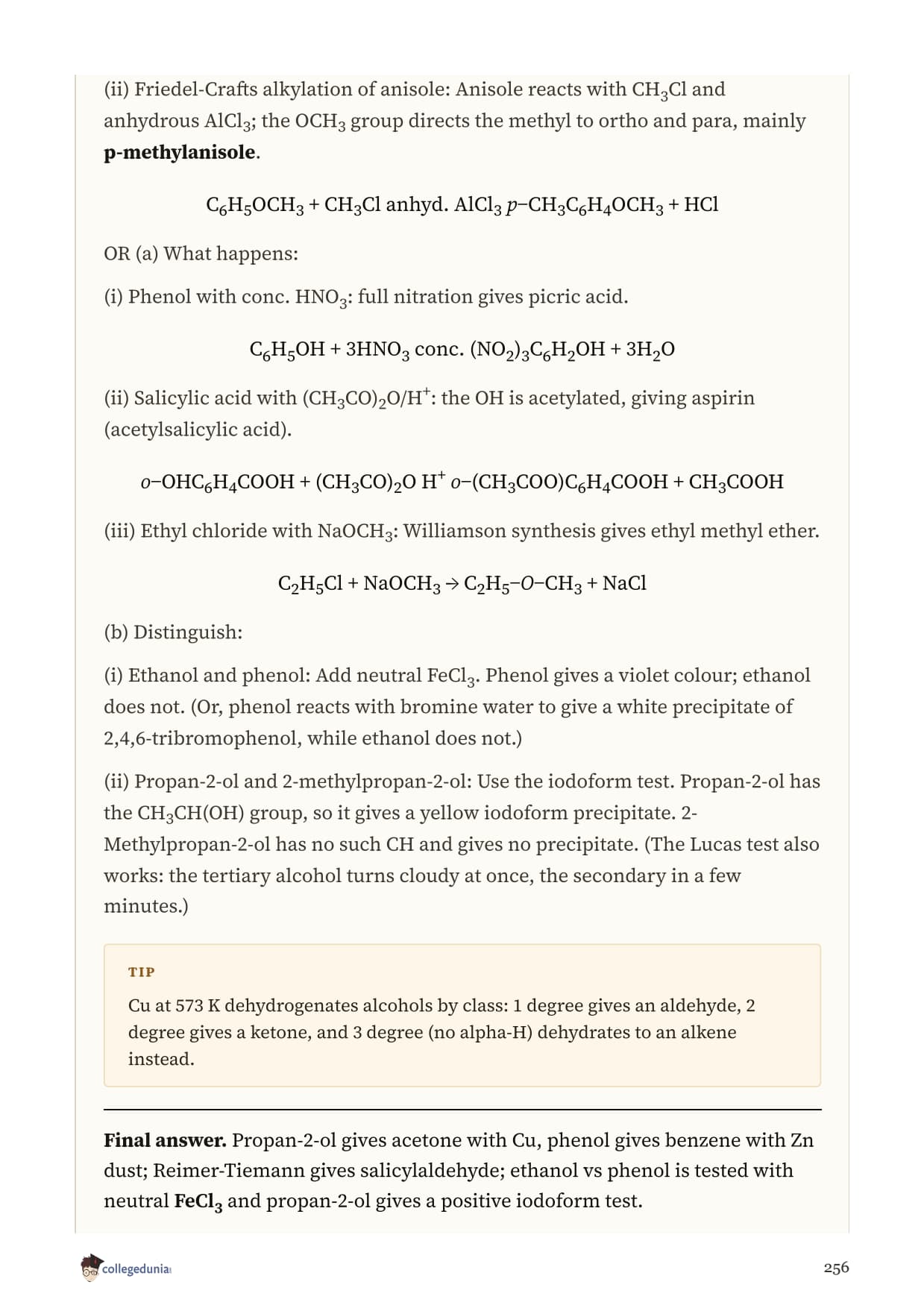
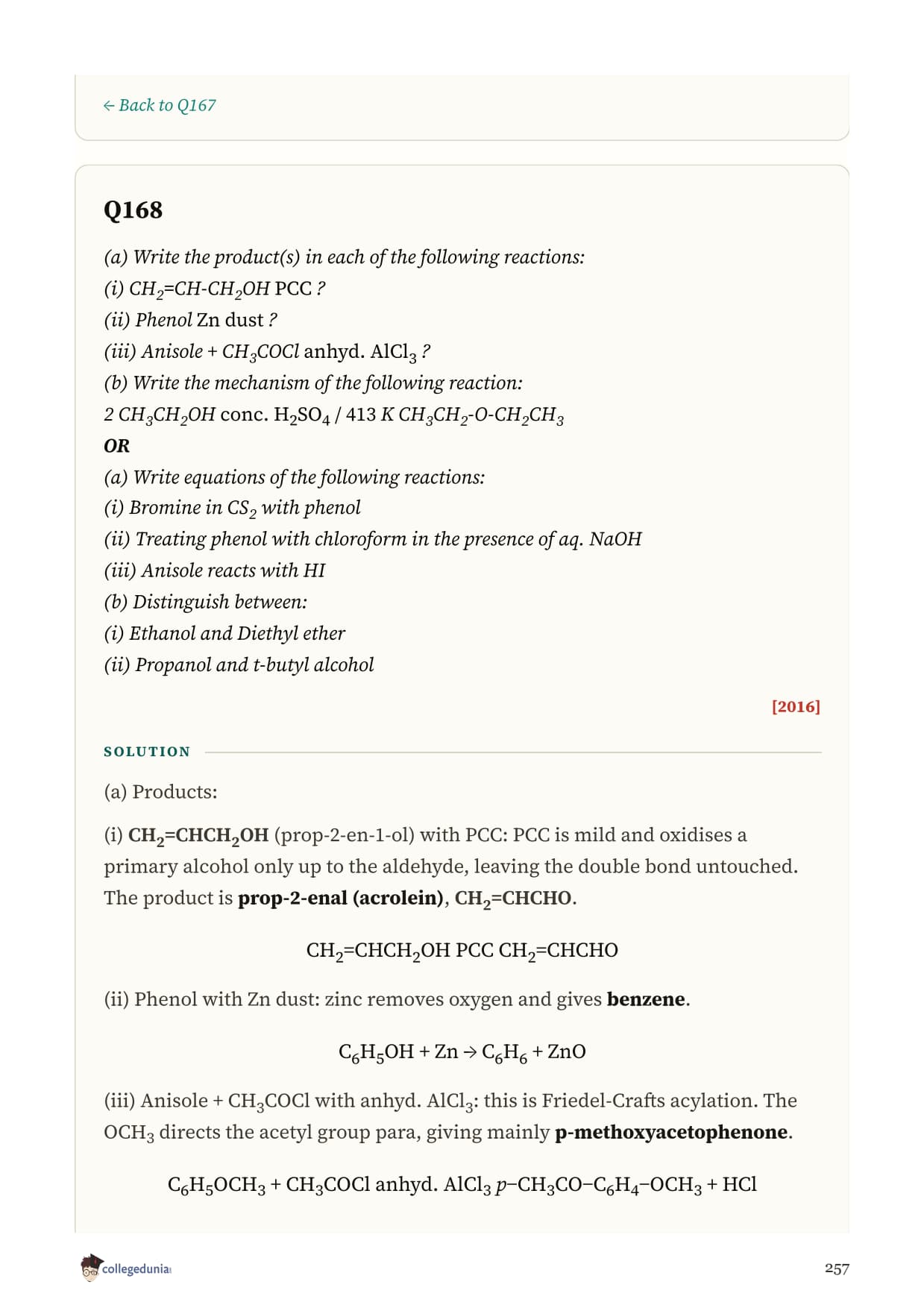
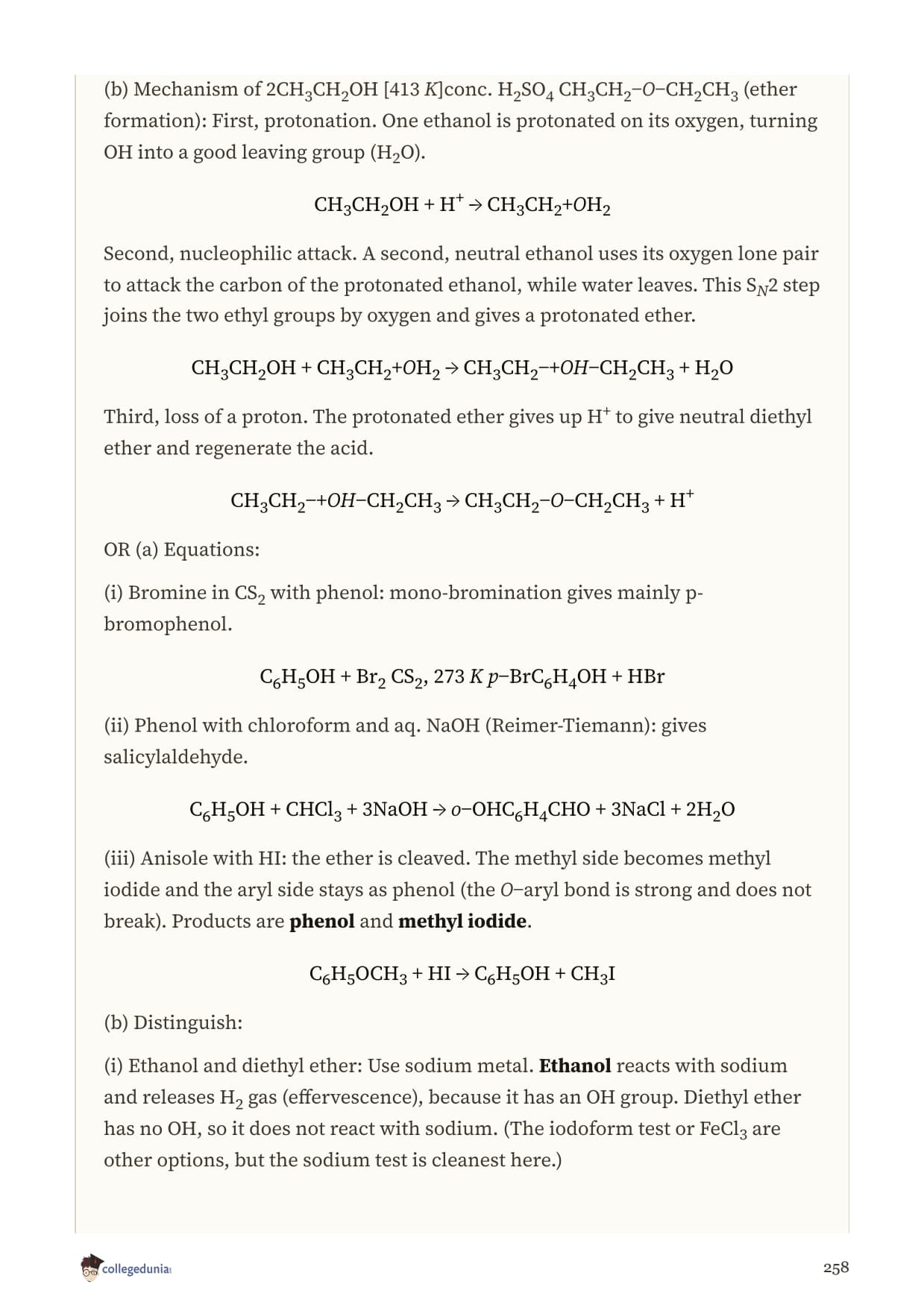
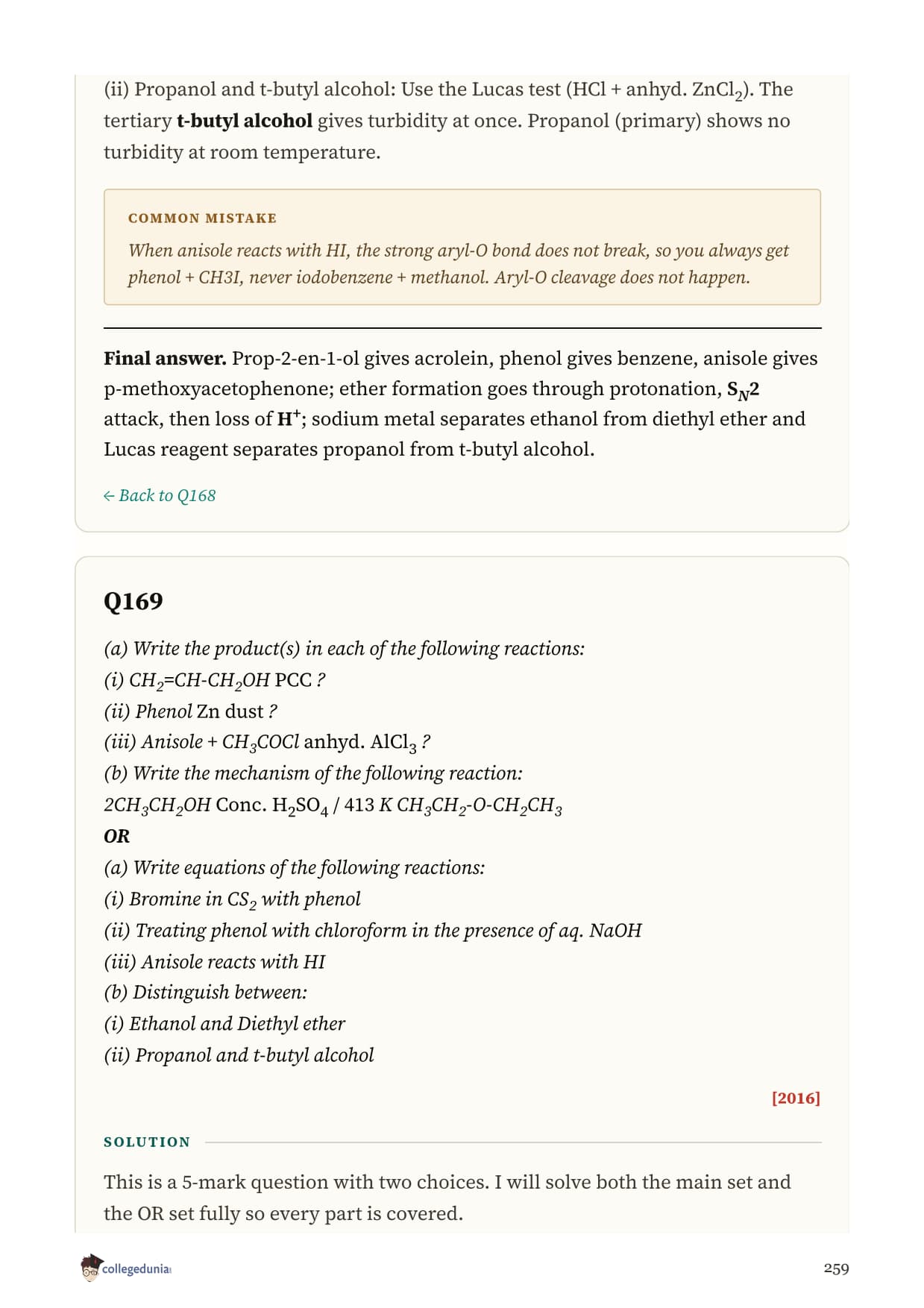
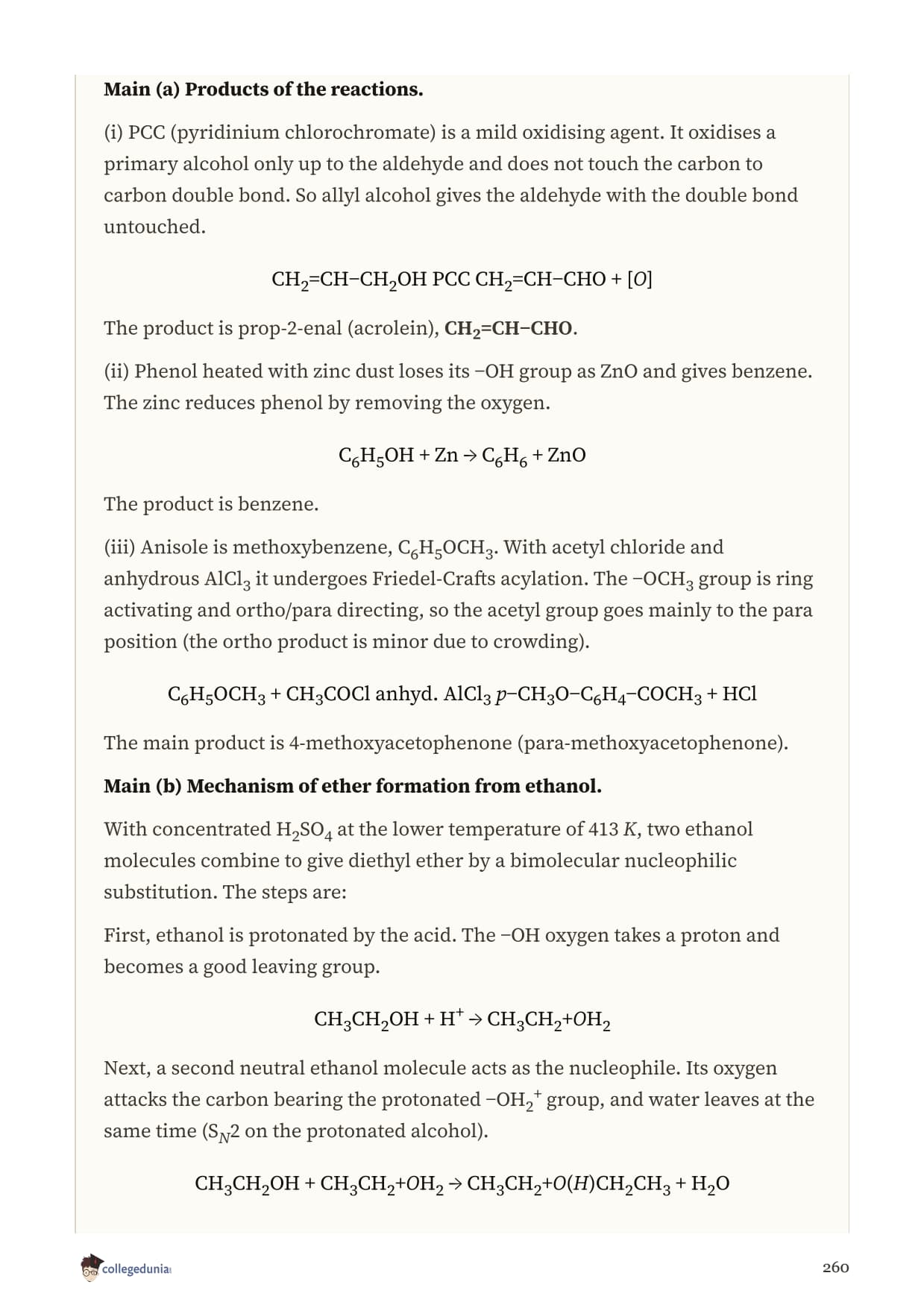
- 1-mark questions: 81 questions, mostly MCQ and assertion-reason on reagents, nitration and acidity, drawn from the post-2023 papers.
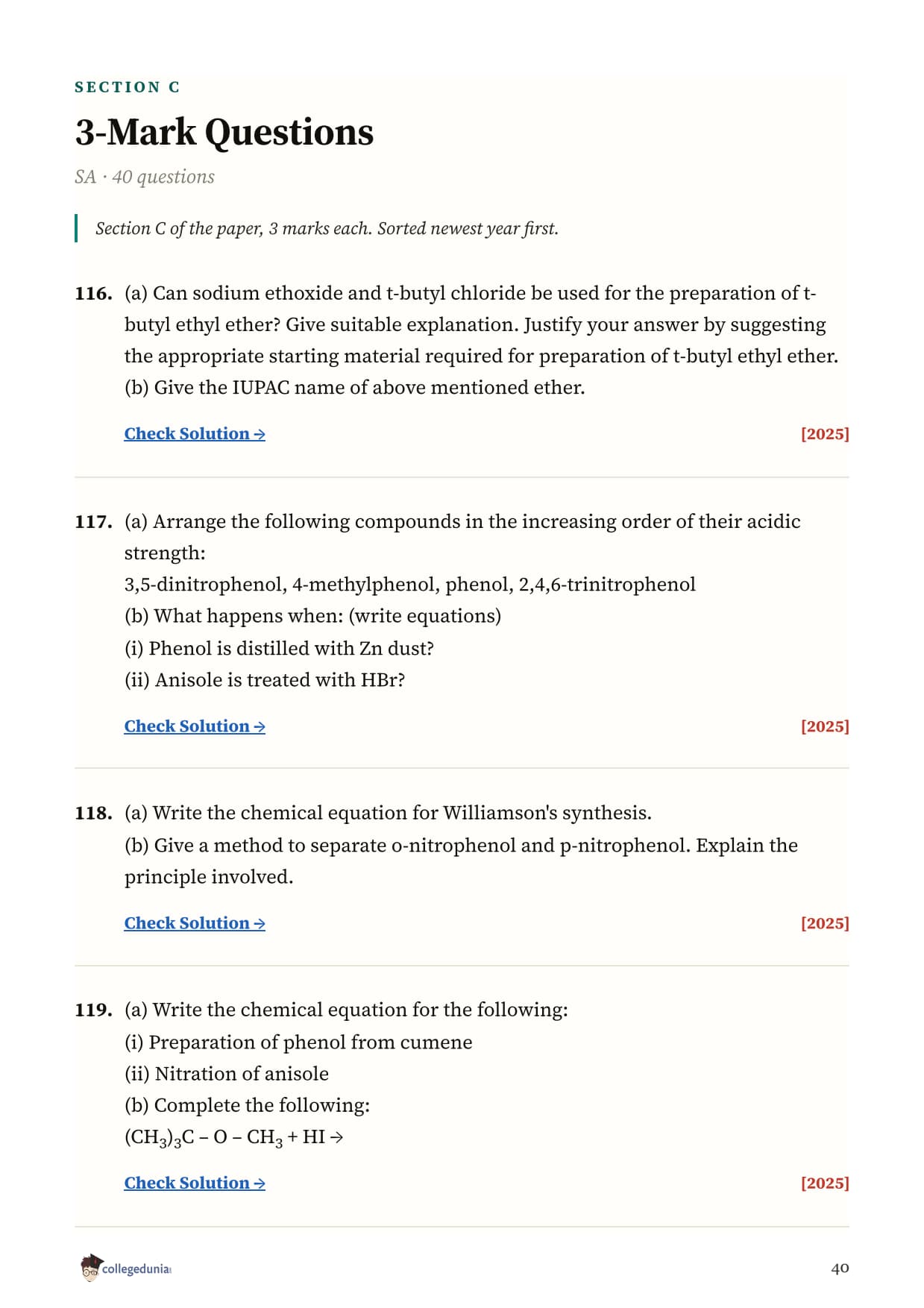
- 2 and 3-mark questions: 32 and 39 questions, built around conversions, named reactions and reasoning on boiling points and acidity.
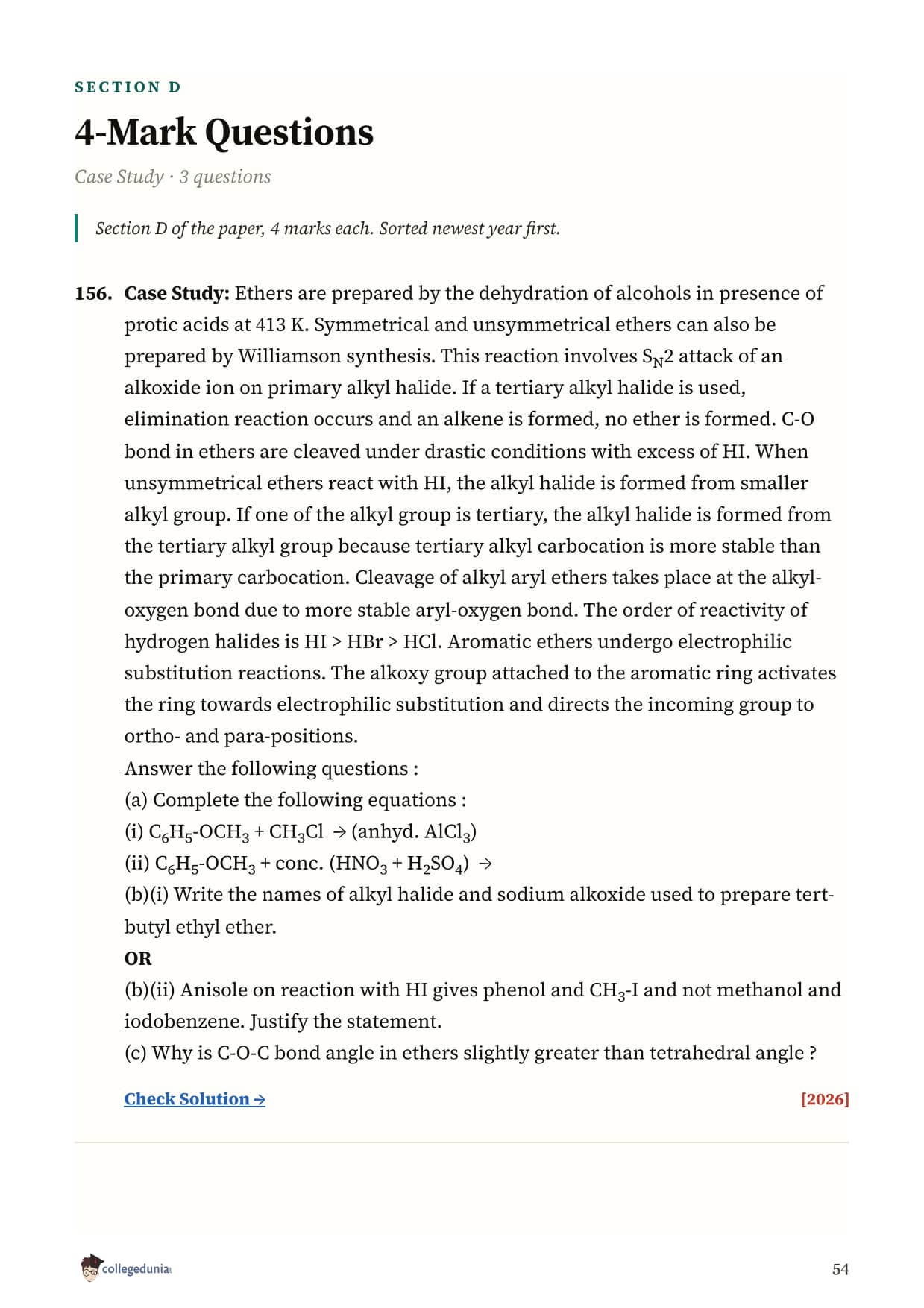
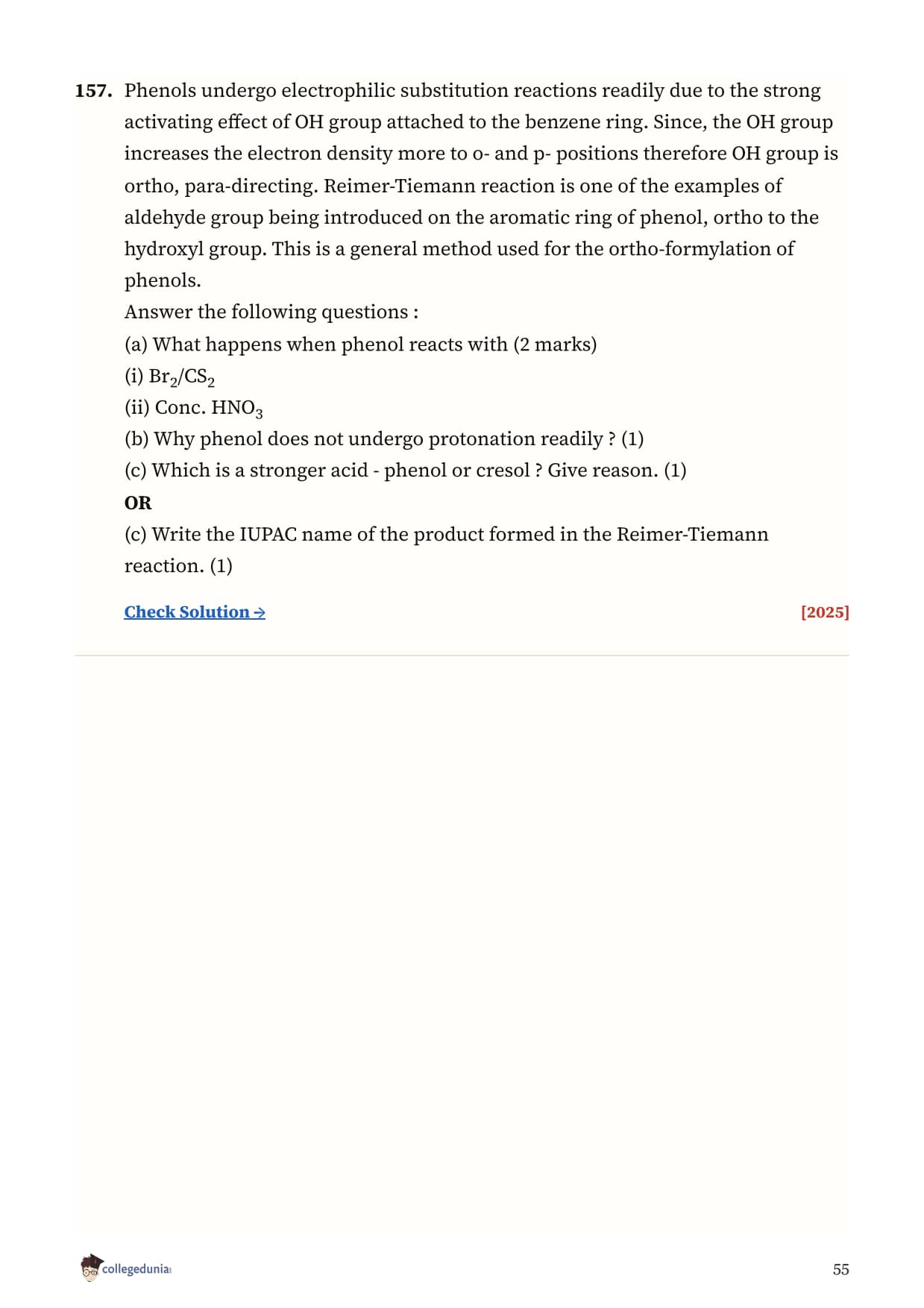
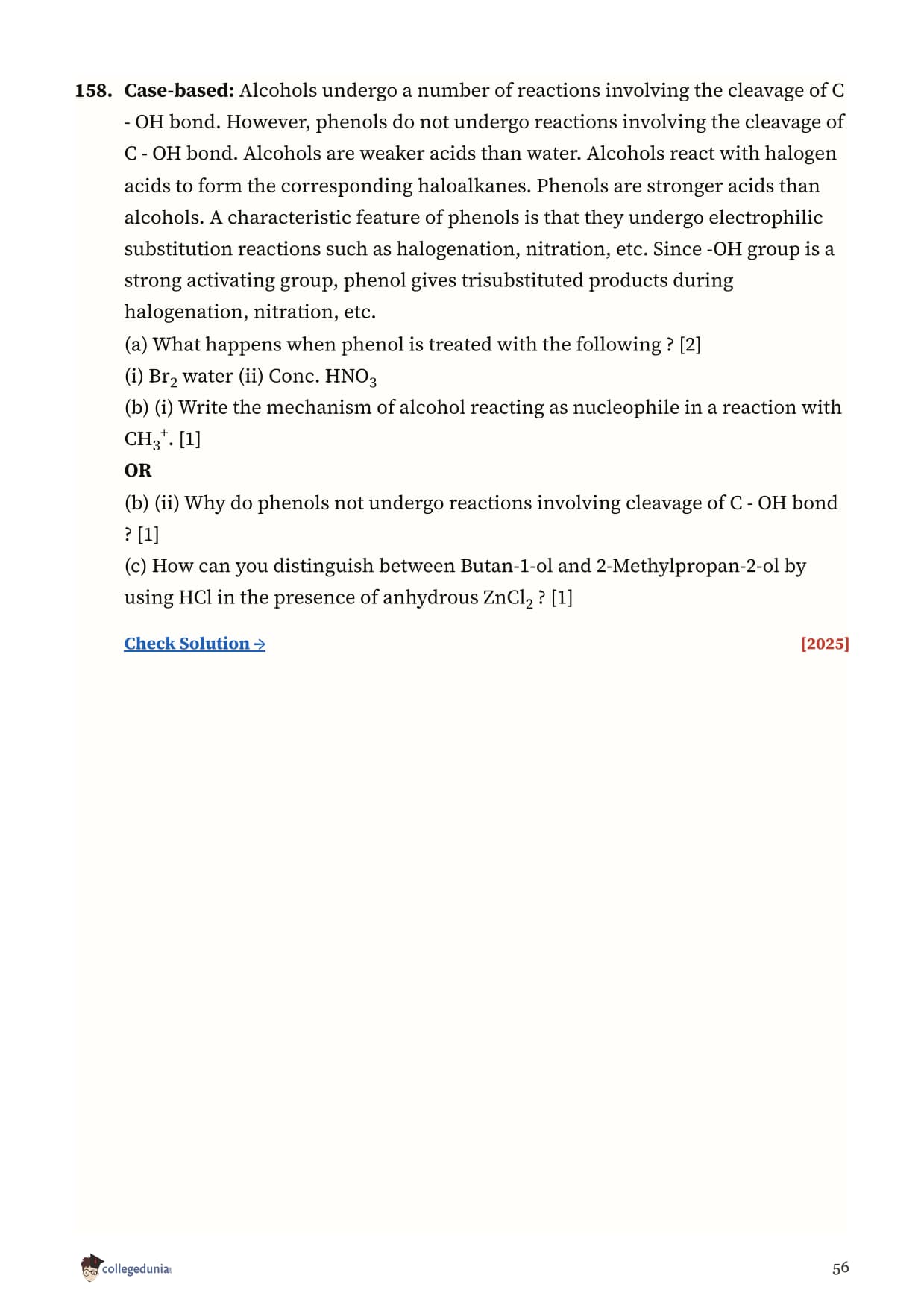
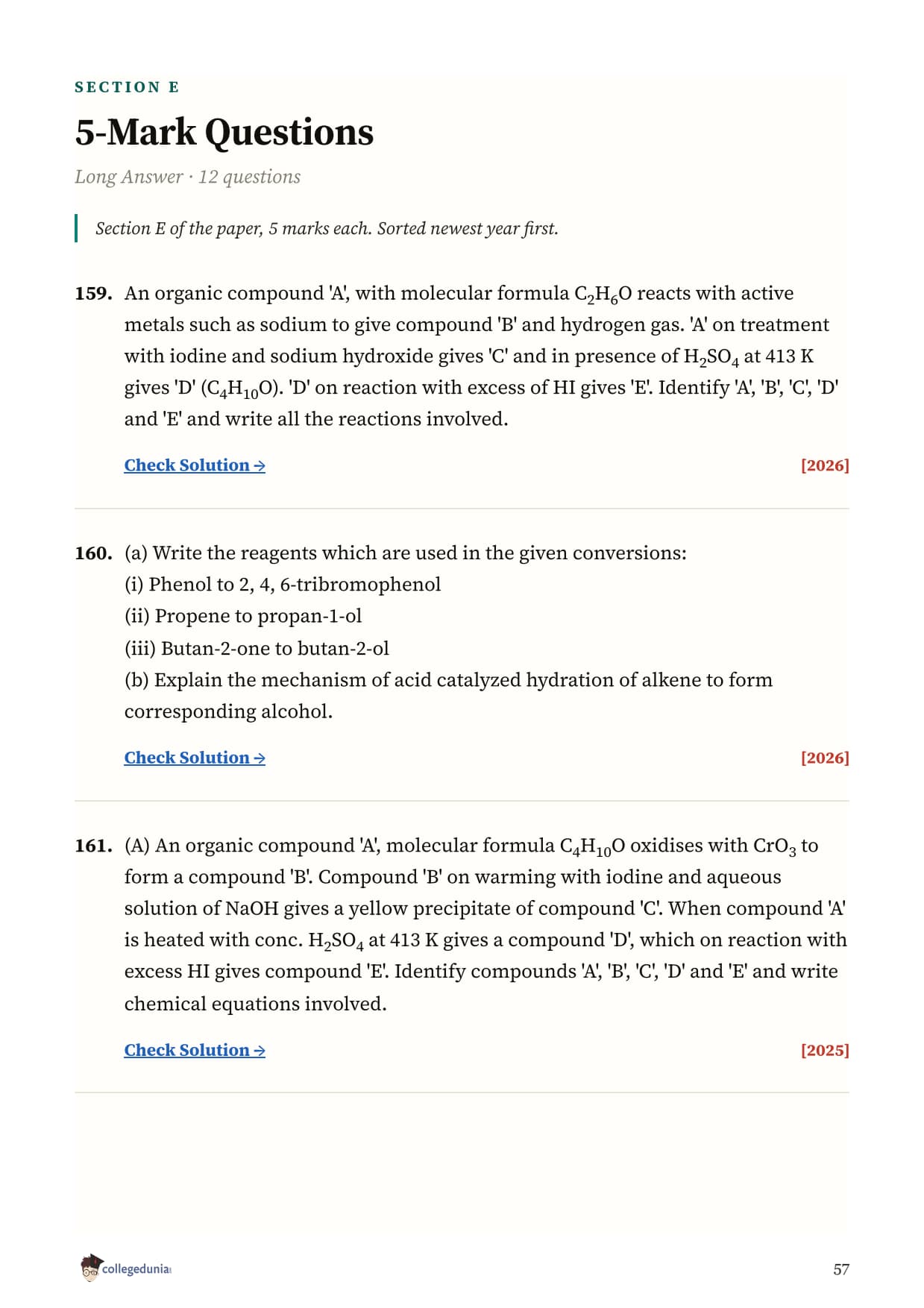
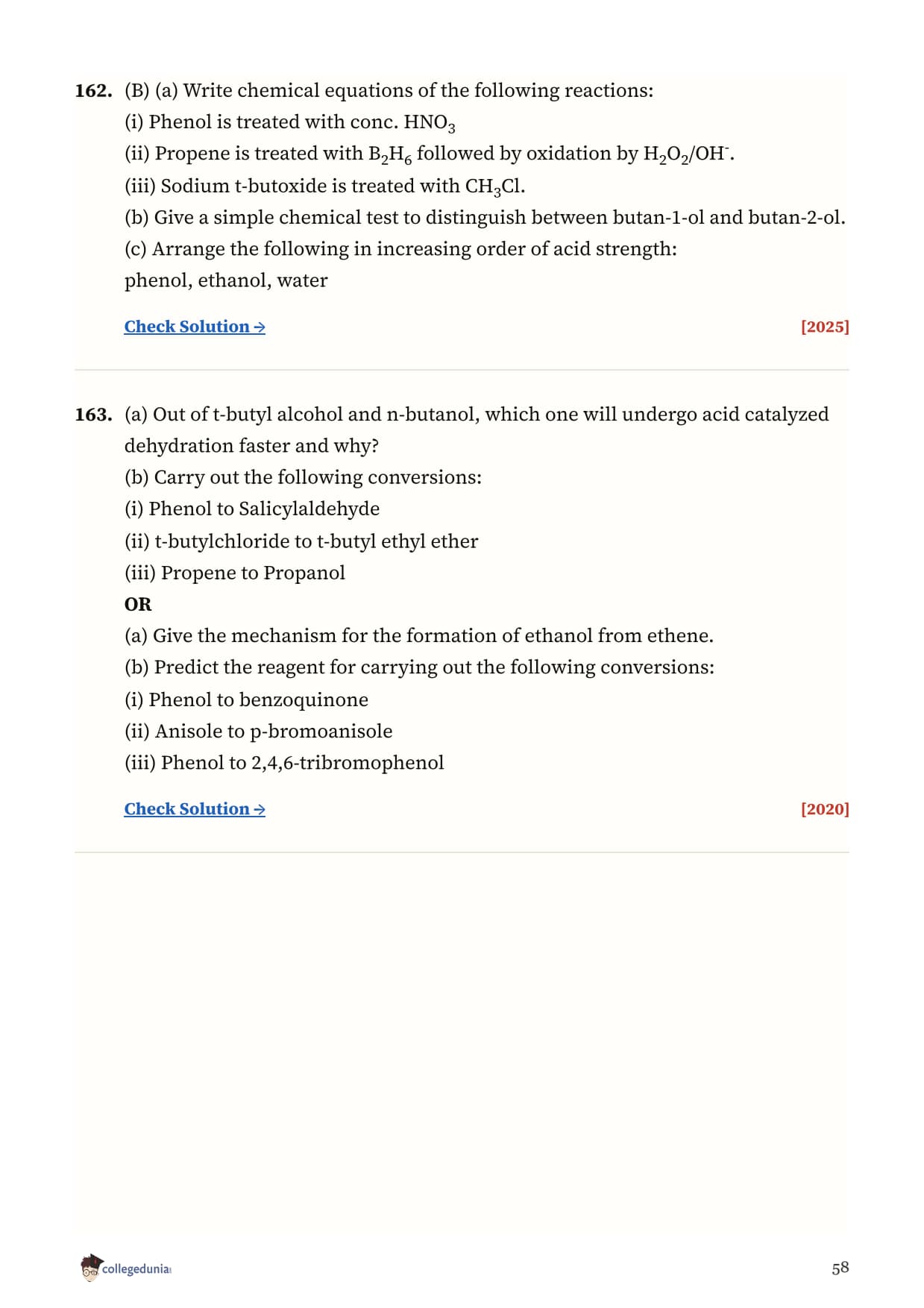
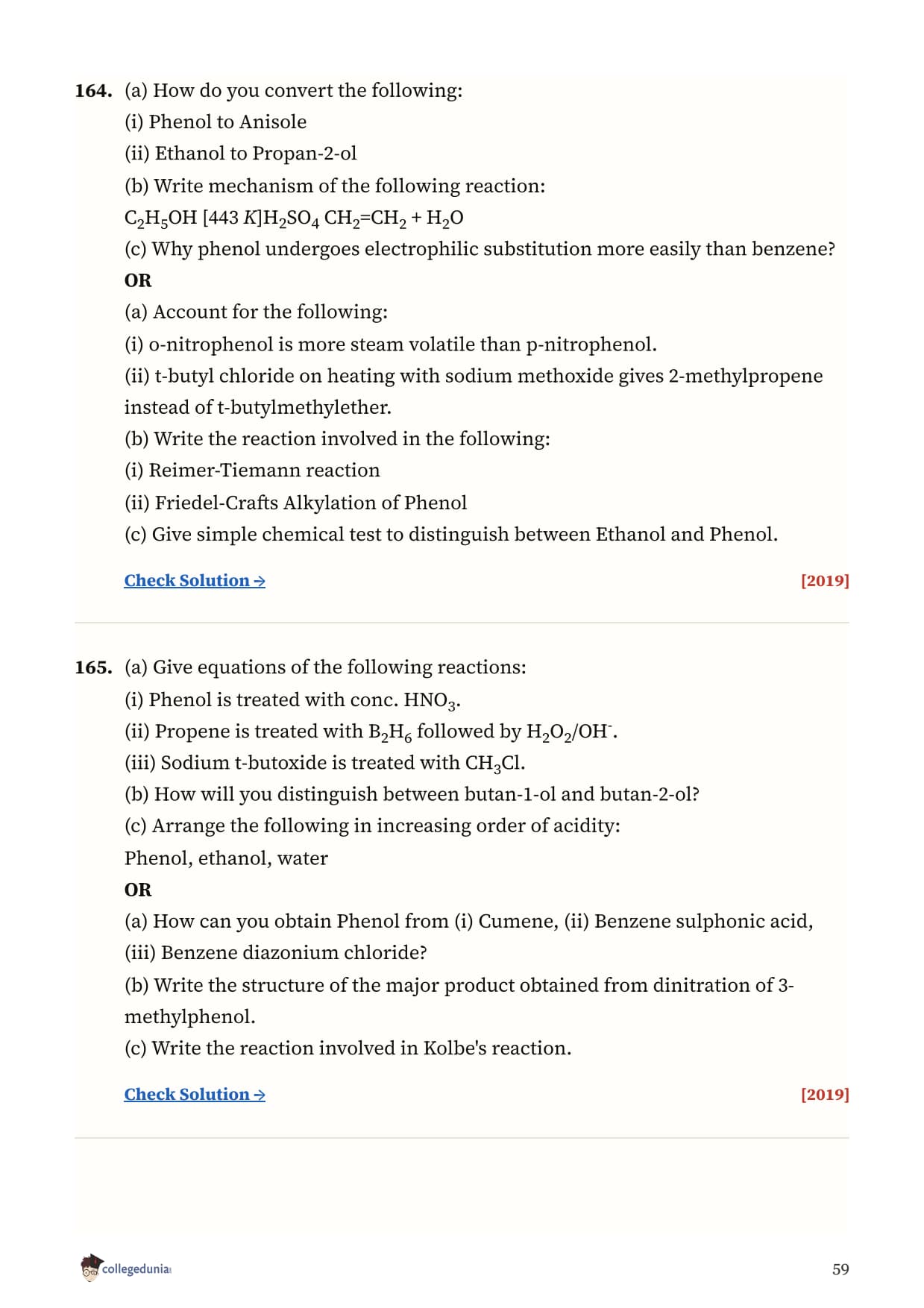
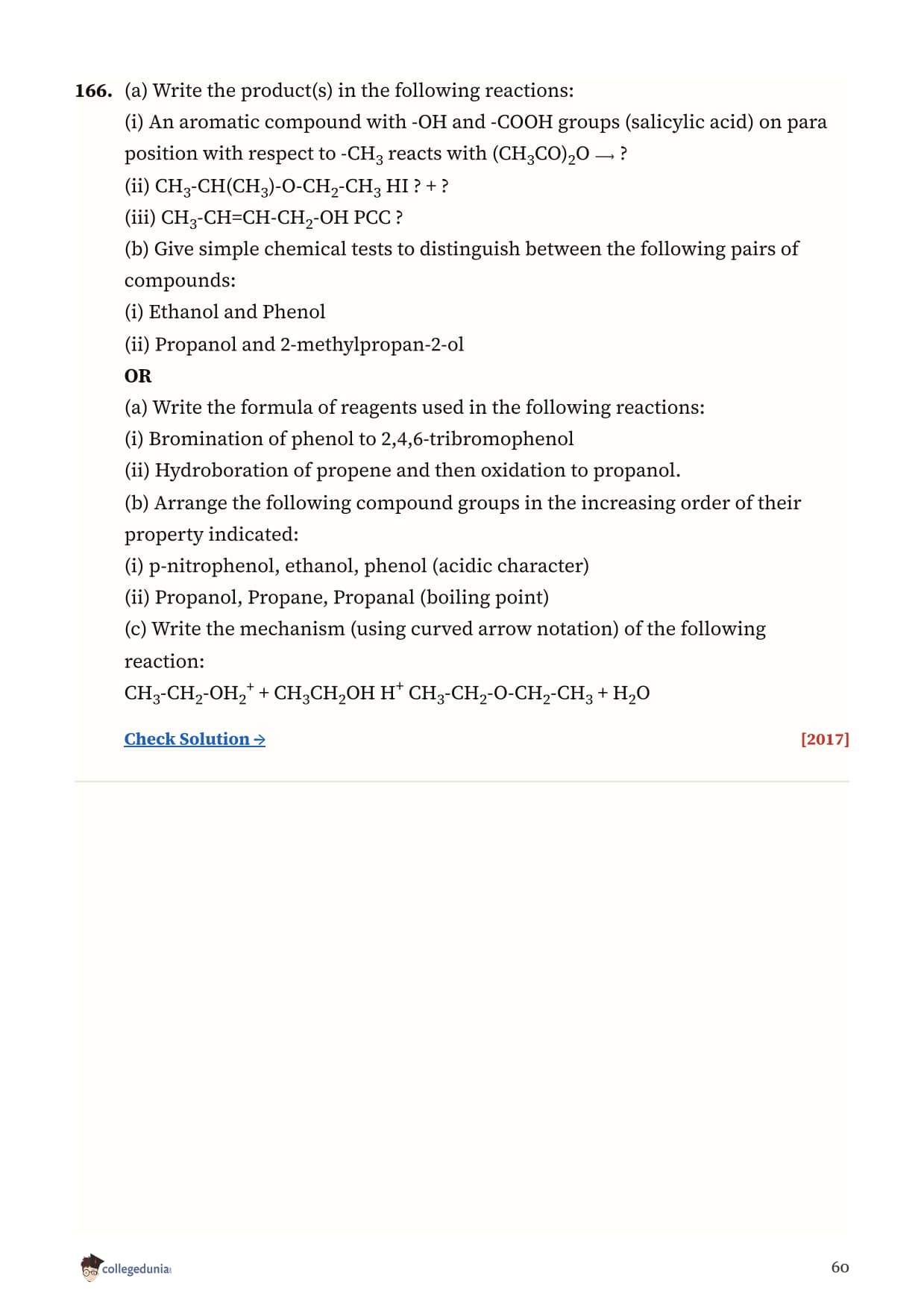
- 4 and 5-mark answers: 3 and 11 questions, where a long conversion set is usually paired with a mechanism or a distinguishing-test part.
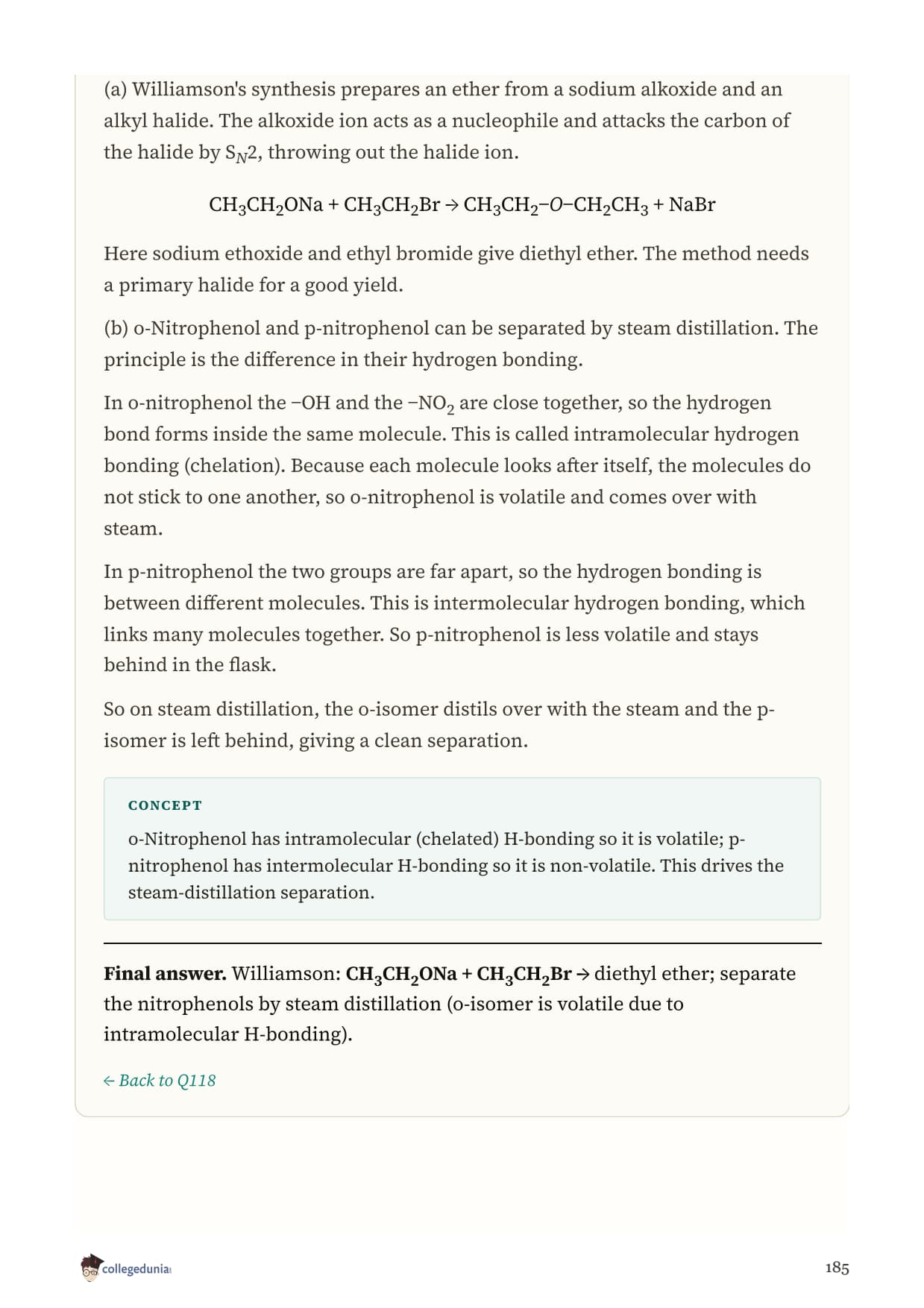
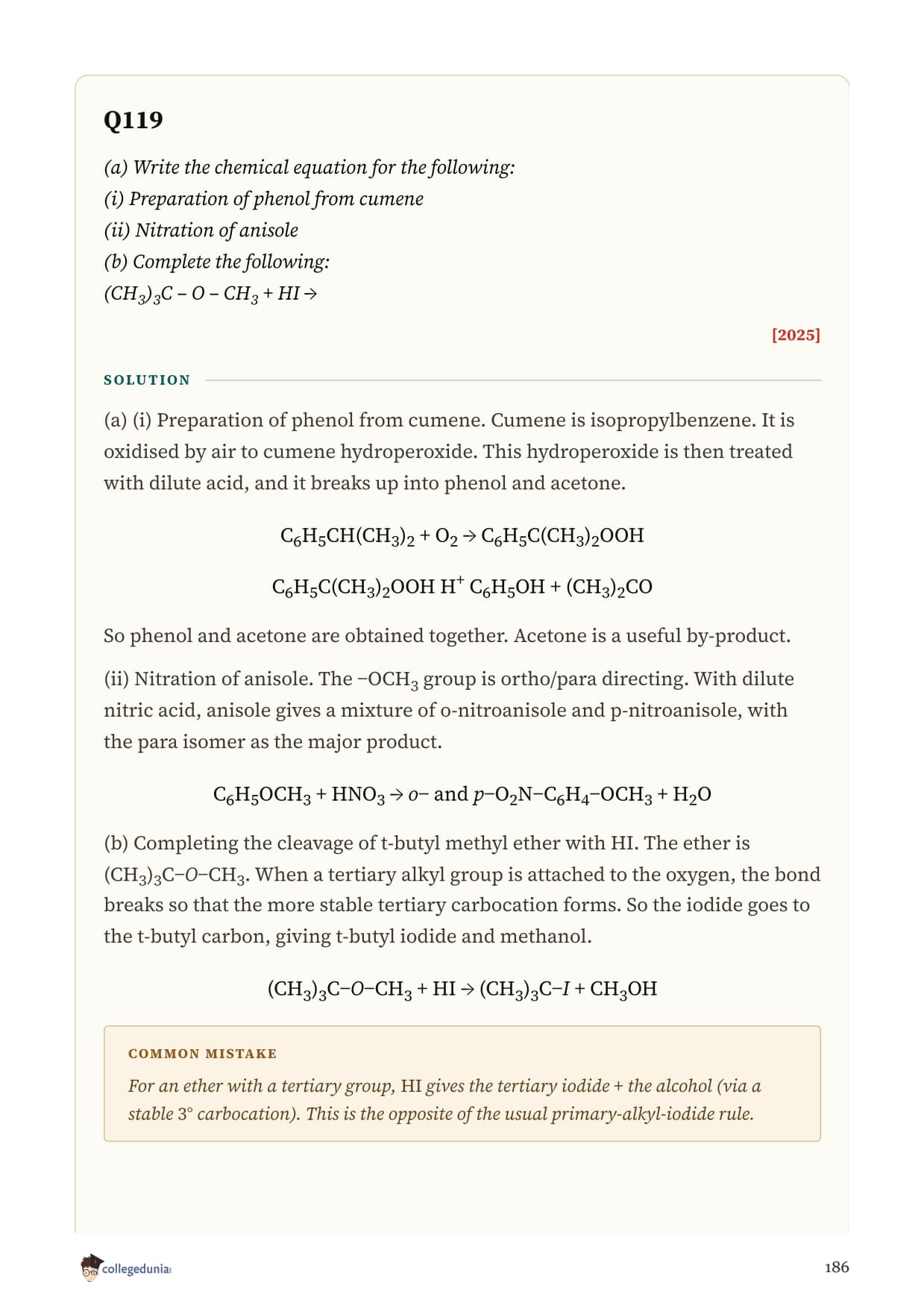
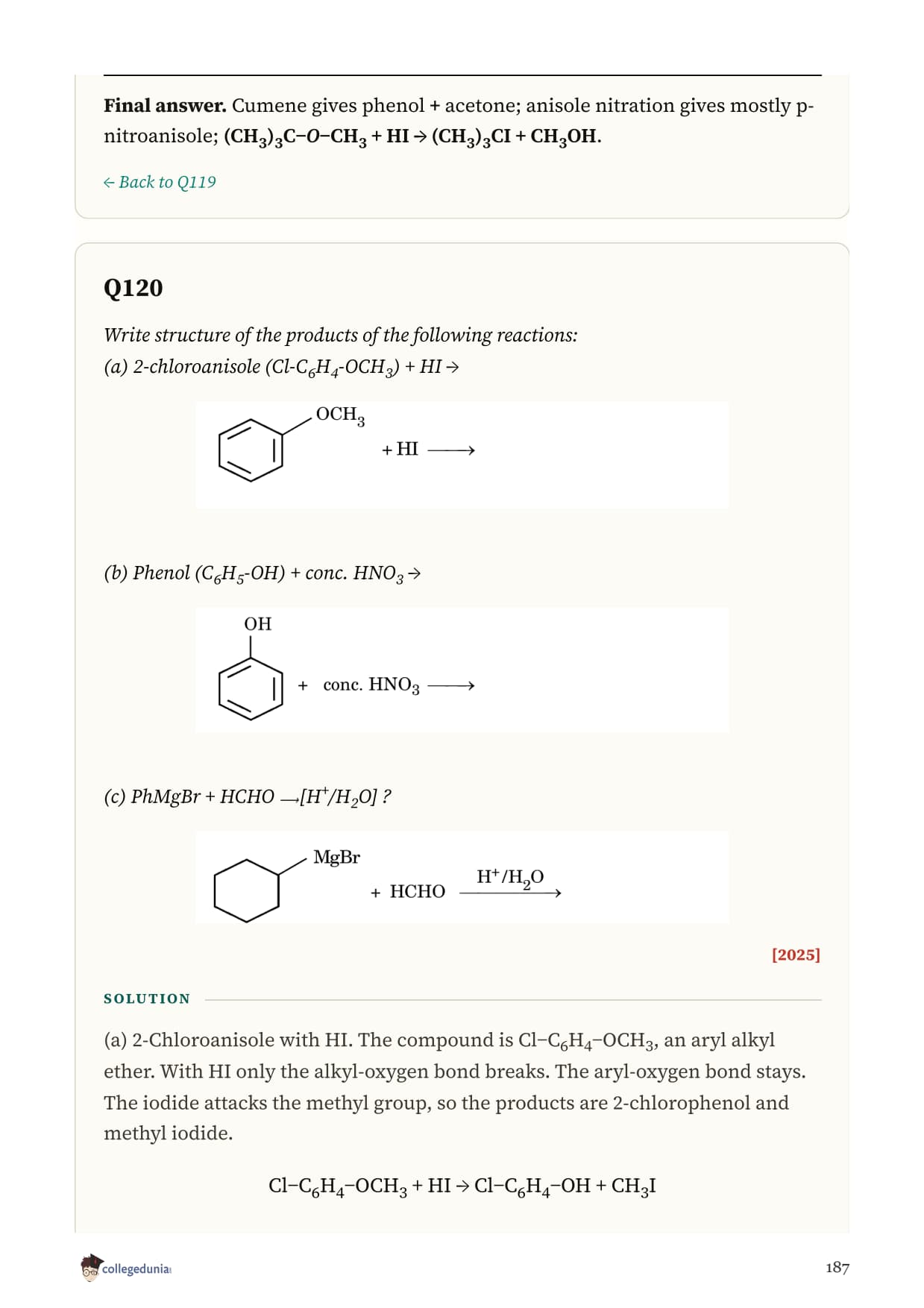
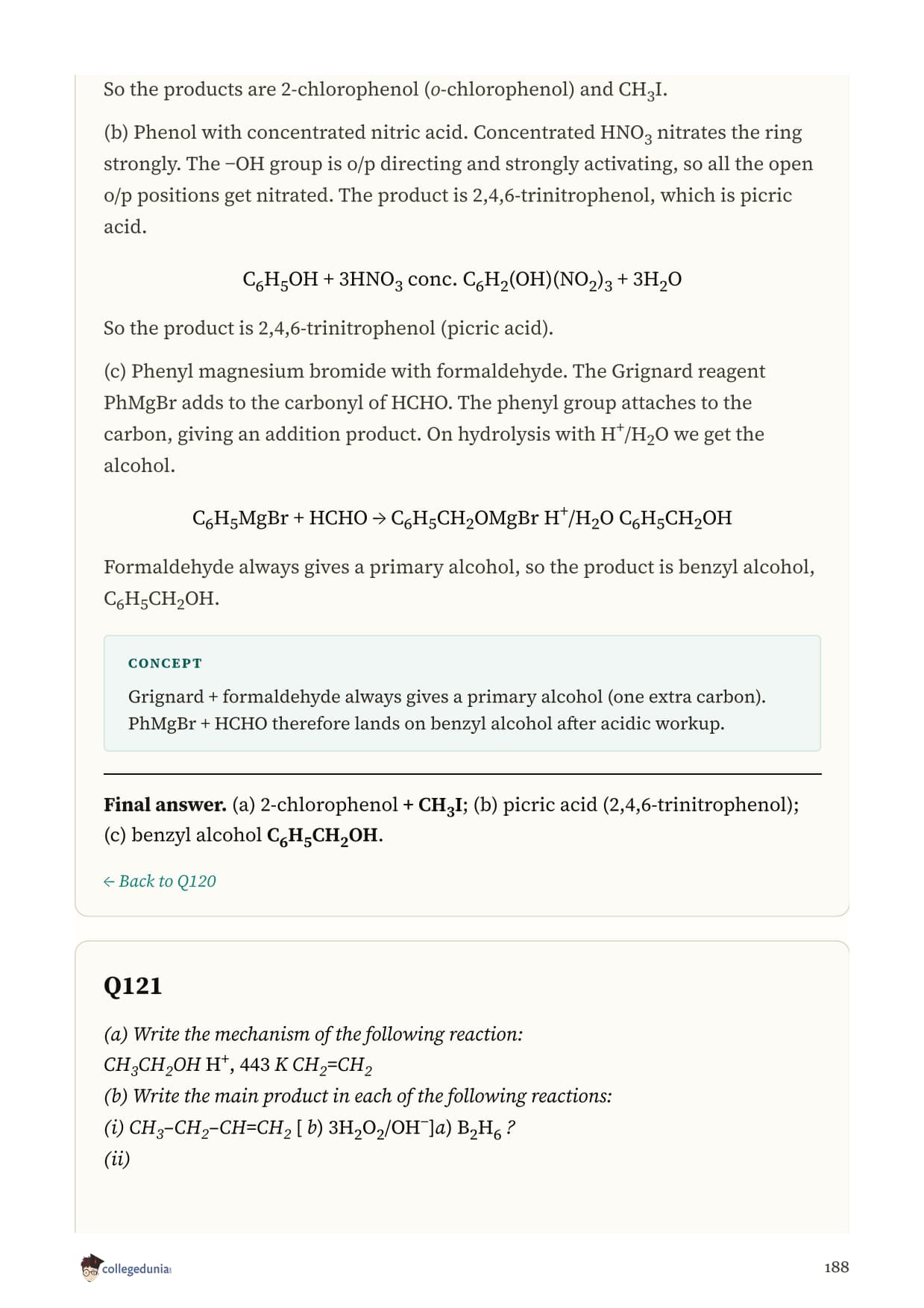
This Alcohols, Phenols and Ethers PYQ compilation gathers 166 board-paper questions across 2004 to 2026, sorted by marks and then by year so you practice conversions and reagent questions in the exact CBSE order. Most of the marks here come from short objective questions and conversion problems.
Every question in this Class 12 Chemistry Alcohols, Phenols and Ethers PYQ compilation is sourced from CBSE board papers (Delhi, Outside Delhi, Foreign and Compartment) and cross-checked against the official mark scheme, with near-duplicate questions removed.
What the Alcohols, Phenols and Ethers Previous Year Questions Cover
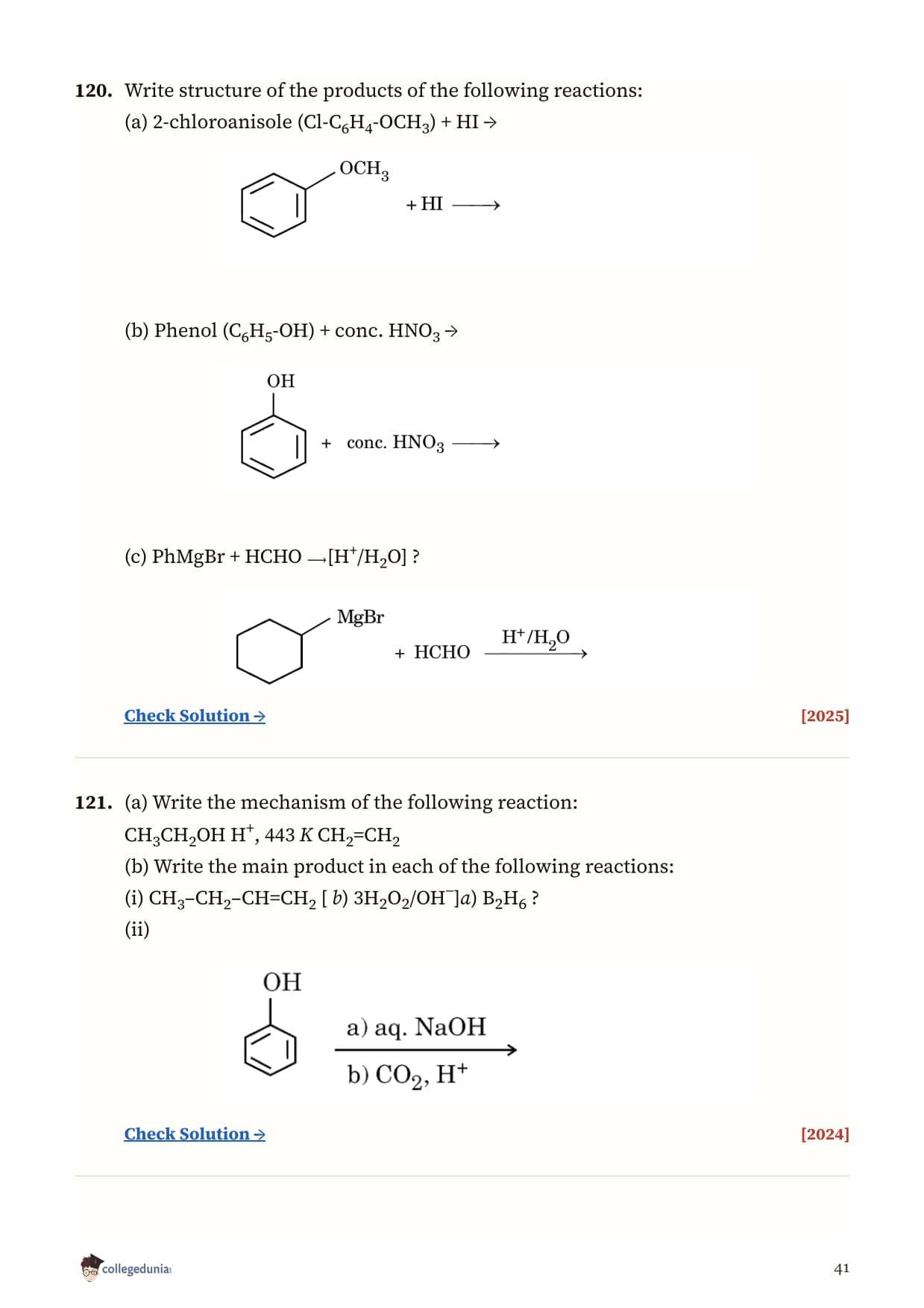
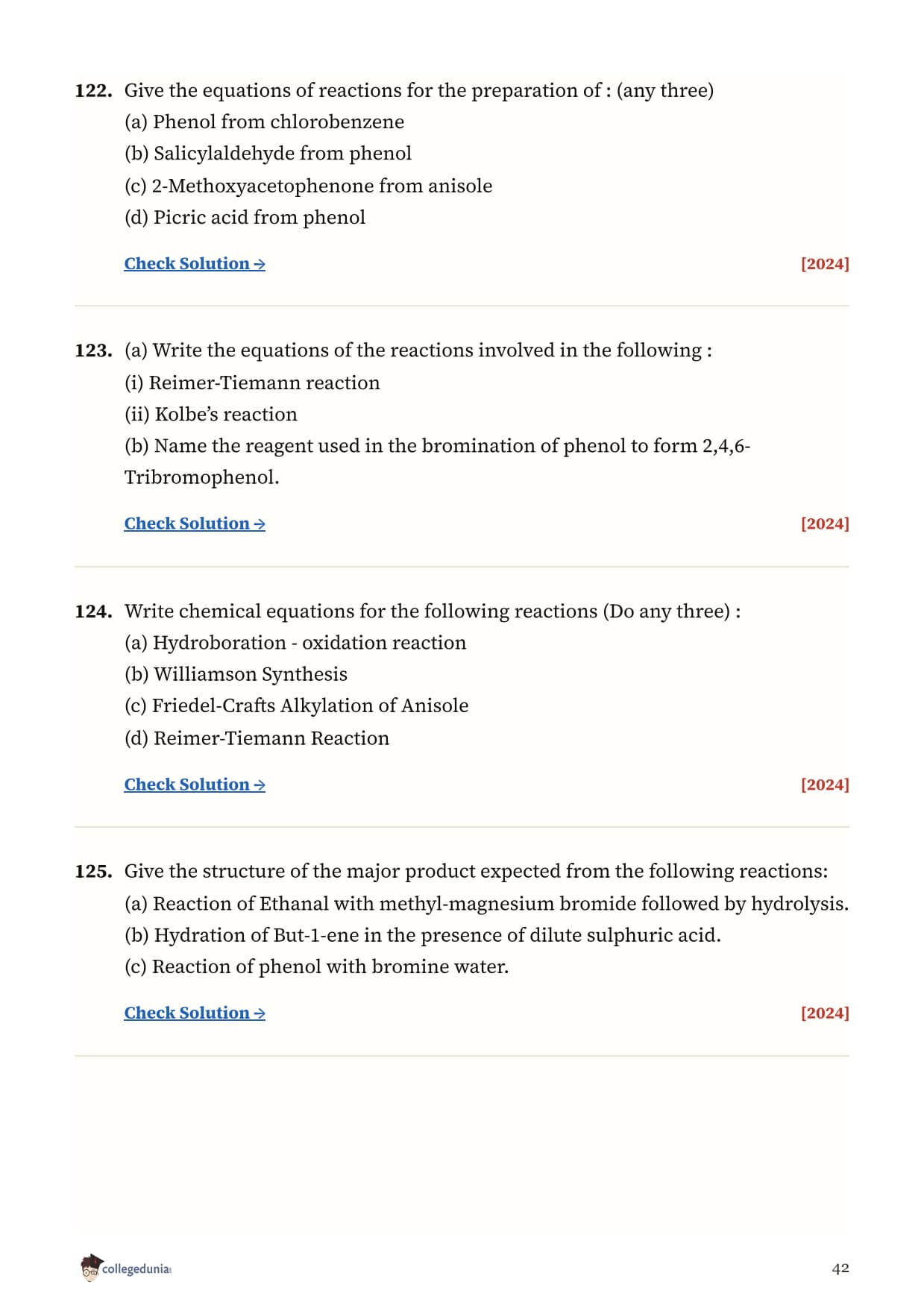
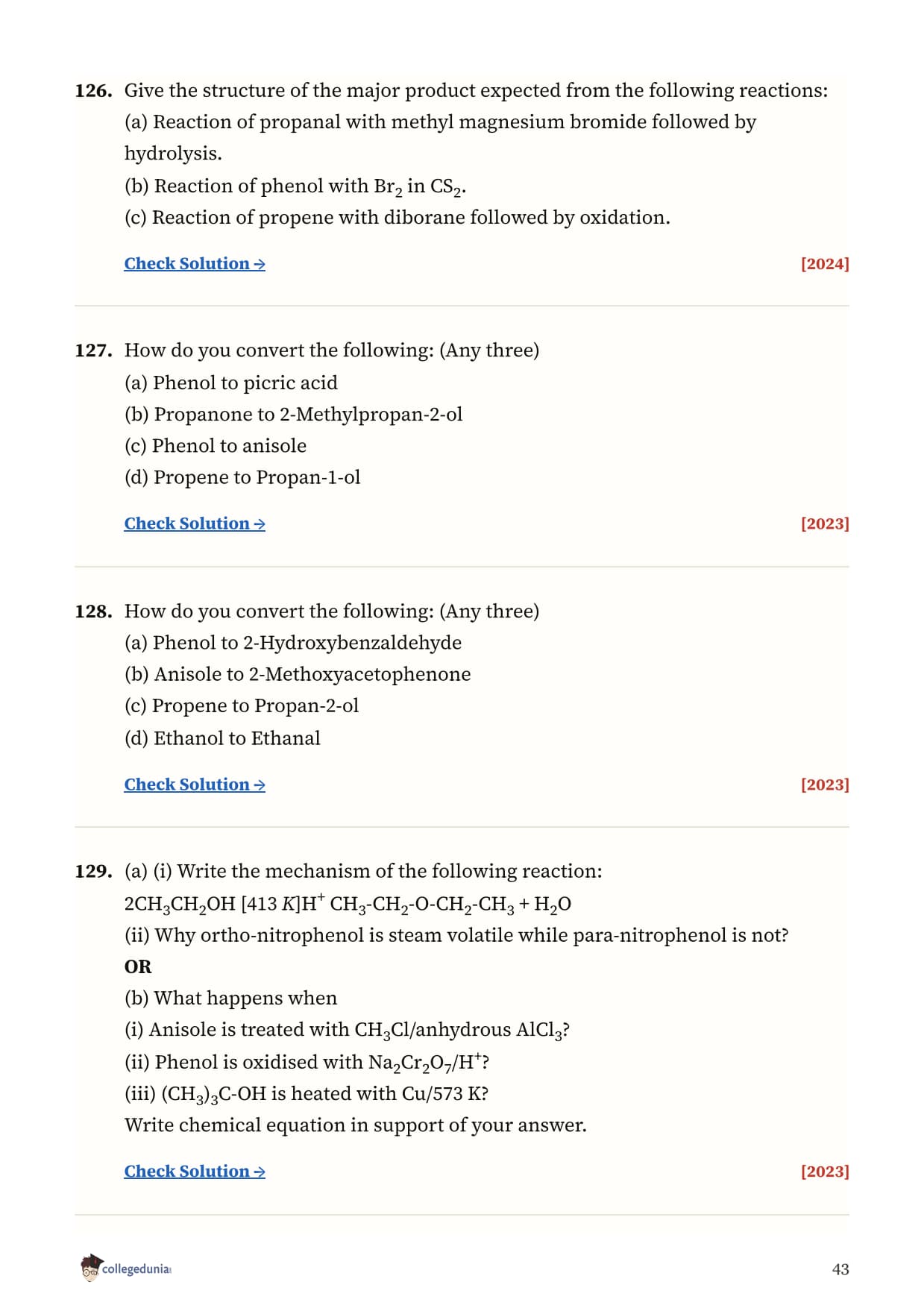
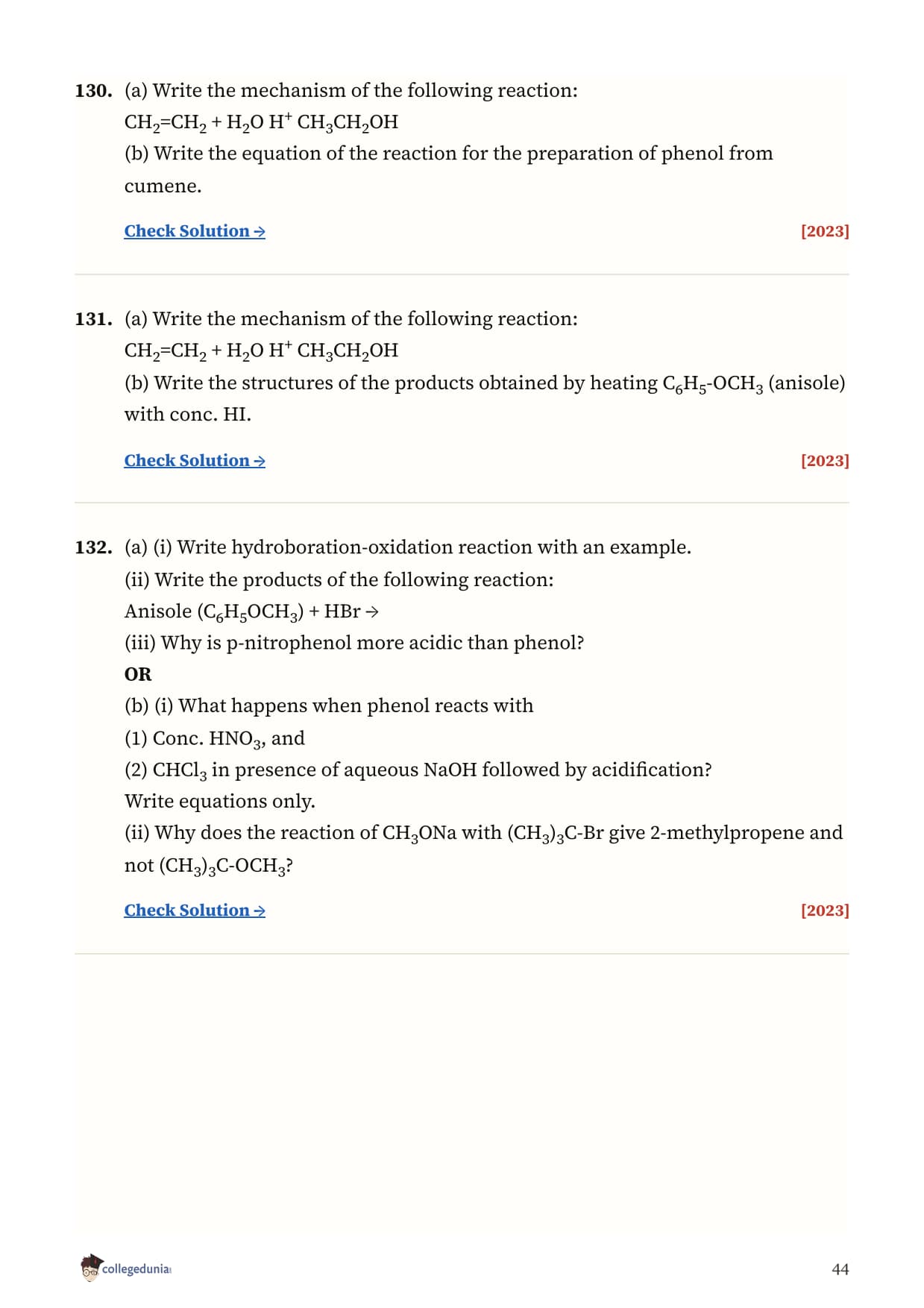
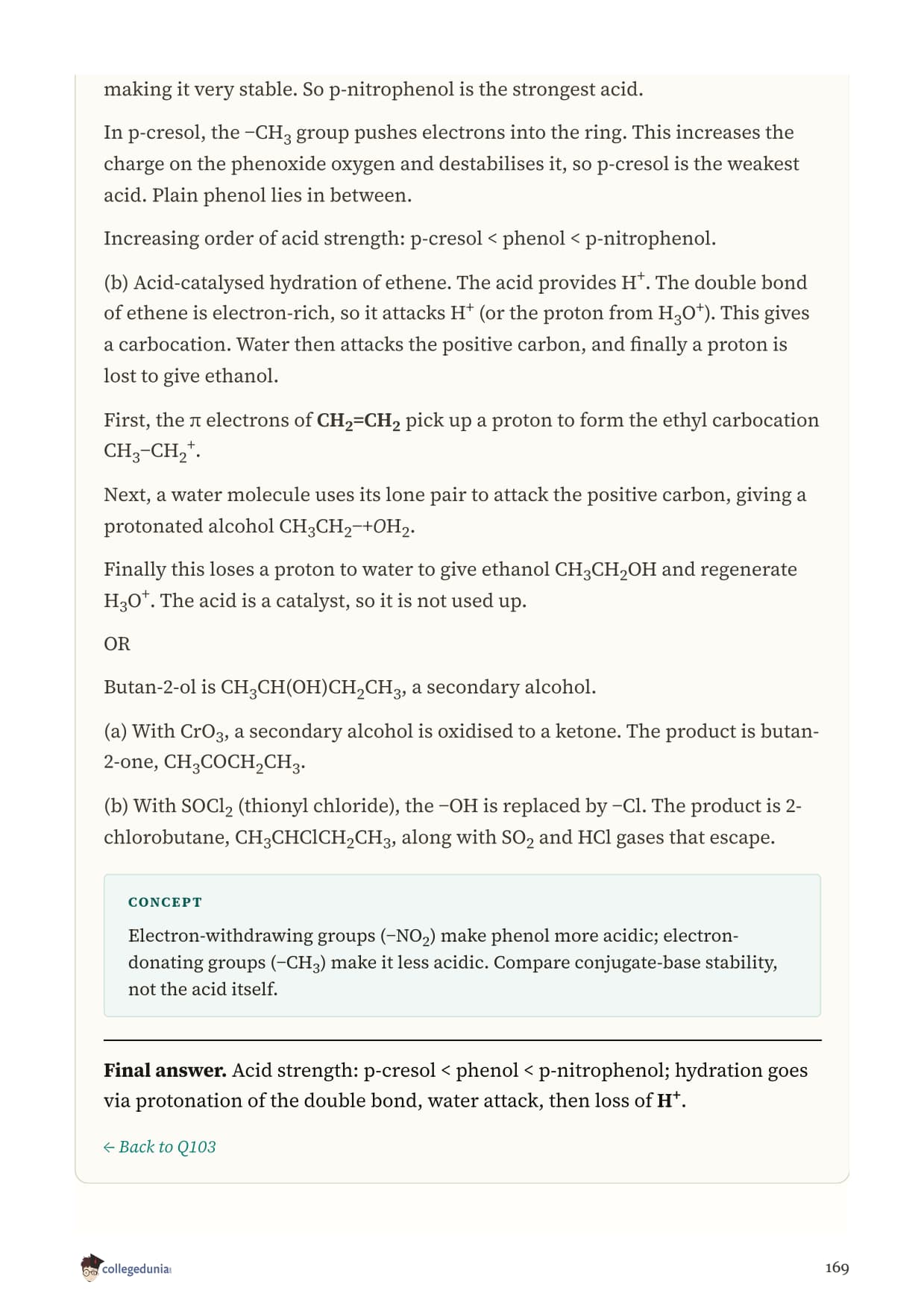
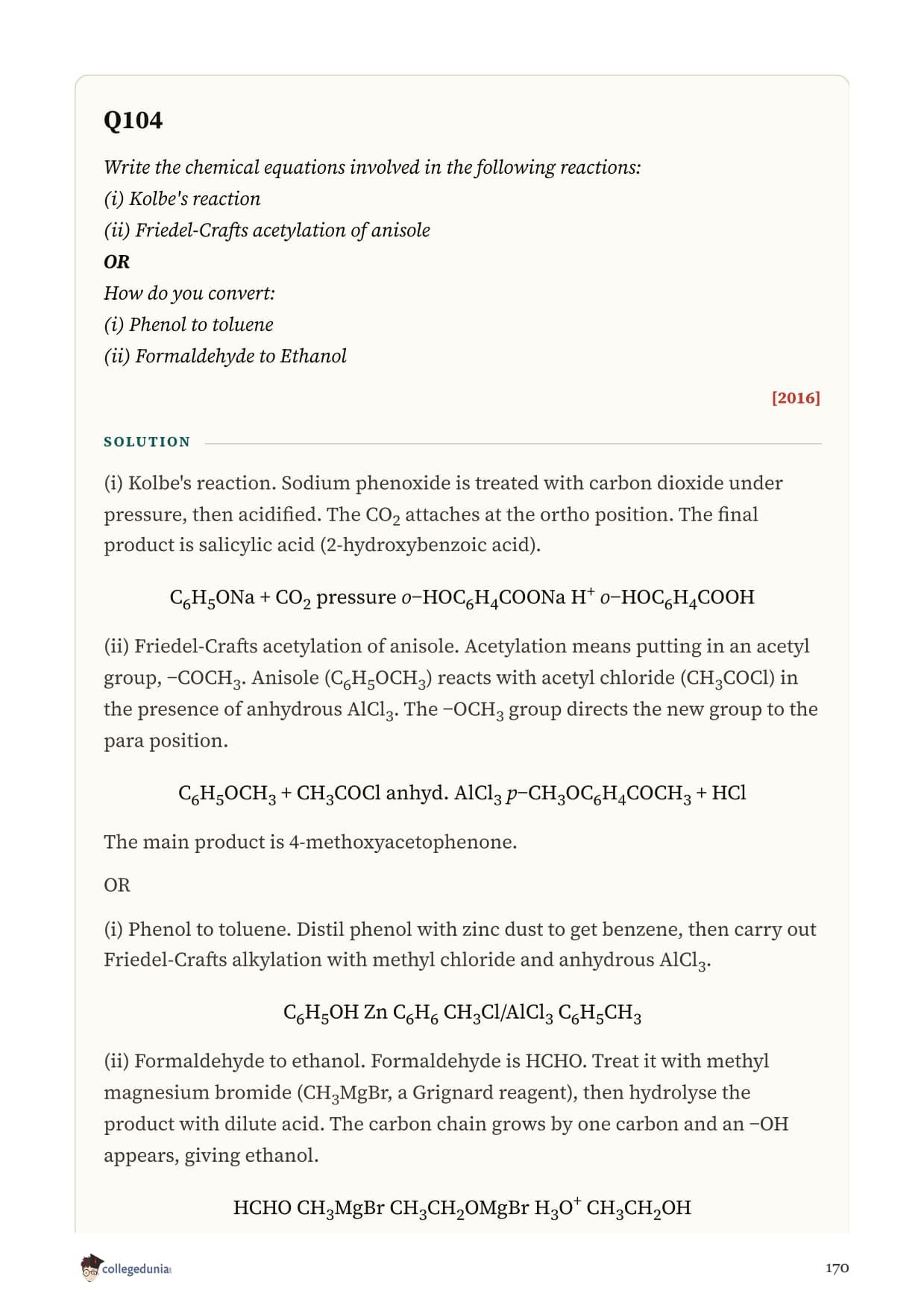
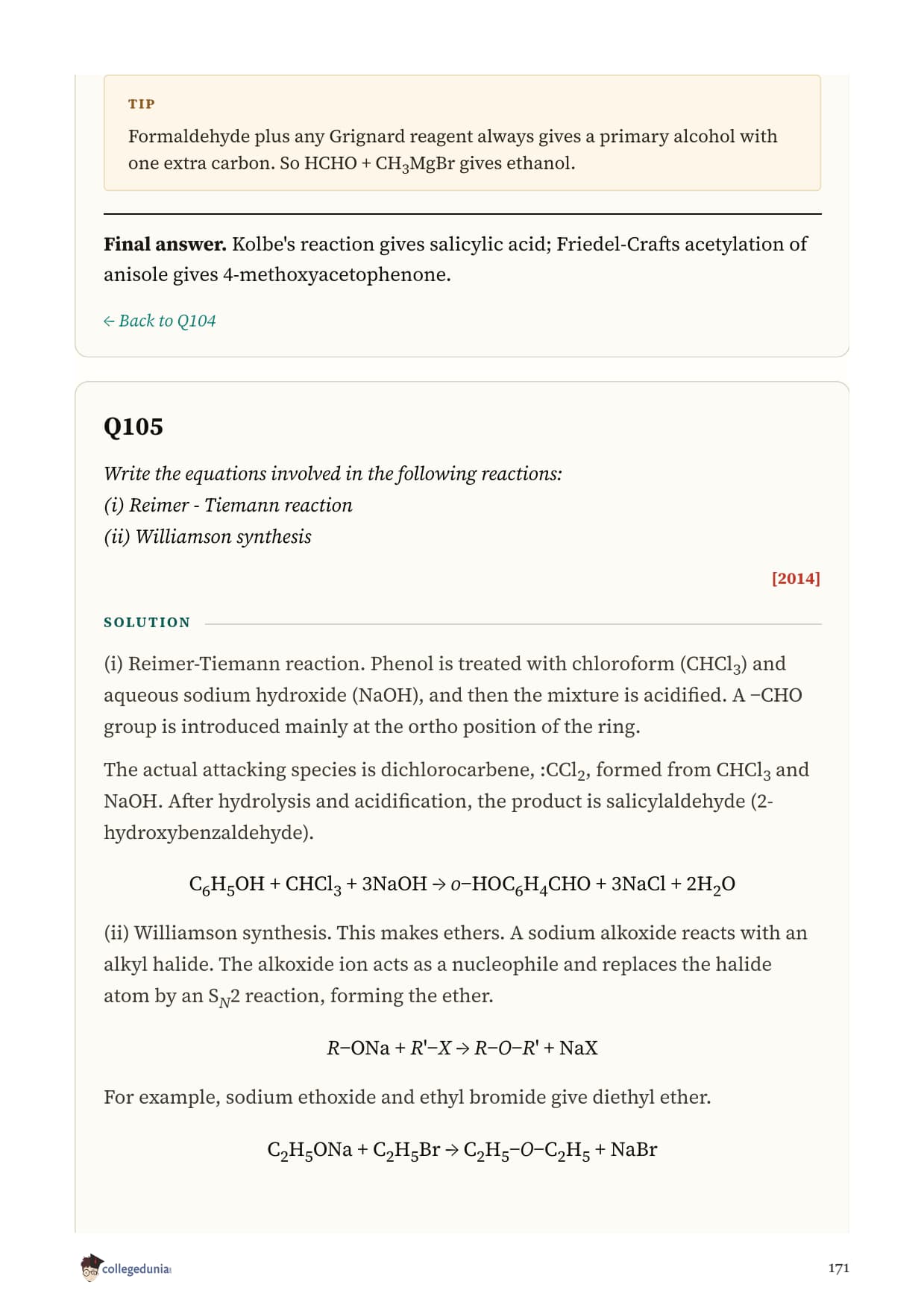
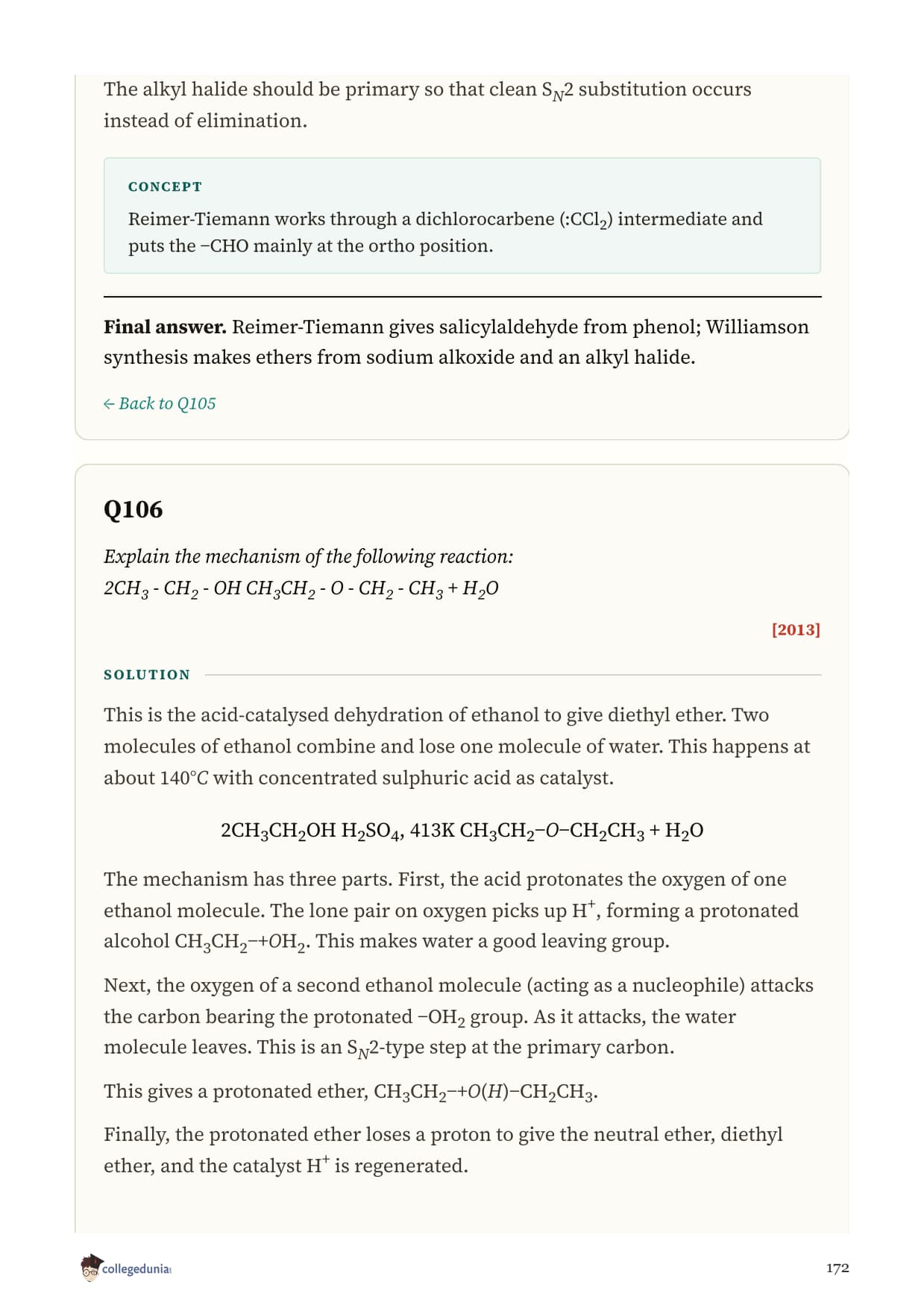
The 166-question set covers every reaction the NCERT chapter introduces. Conversions and reagent identification drive most of the 3 and 5-mark answers. Named reactions like Reimer-Tiemann, Kolbe's reaction and Williamson synthesis appear in both the 2 and 3-mark bands. Short reasoning on acidity of phenols, boiling points and cleavage of ethers with HI fills the 1-mark MCQs, while oxidation of alcohols and mechanism parts show up in the long answers.
Marks-wise Distribution of the Alcohols, Phenols and Ethers PYQs
The table below shows how the 166 questions split across the CBSE marks bands. Use it to decide how much revision time each band deserves.
| Marks | Questions | Total Marks | CBSE Section | Type |
|---|---|---|---|---|
| 1 mark | 81 | 81 | Section A | MCQ / Assertion-Reason |
| 2 mark | 32 | 64 | Section B | VSA (Very Short Answer) |
| 3 mark | 39 | 117 | Section C | SA (Short Answer) |
| 4 mark | 3 | 12 | Section D | Case Study |
| 5 mark | 11 | 55 | Section E | Long Answer |
Year-wise Spread of Class 12 Chemistry Alcohols, Phenols and Ethers PYQs
The compilation spans more than 20 CBSE board years. About 67% of the questions come from 2023 onwards, because the MCQ-heavy Section A pushed the 1-mark count up to 81.
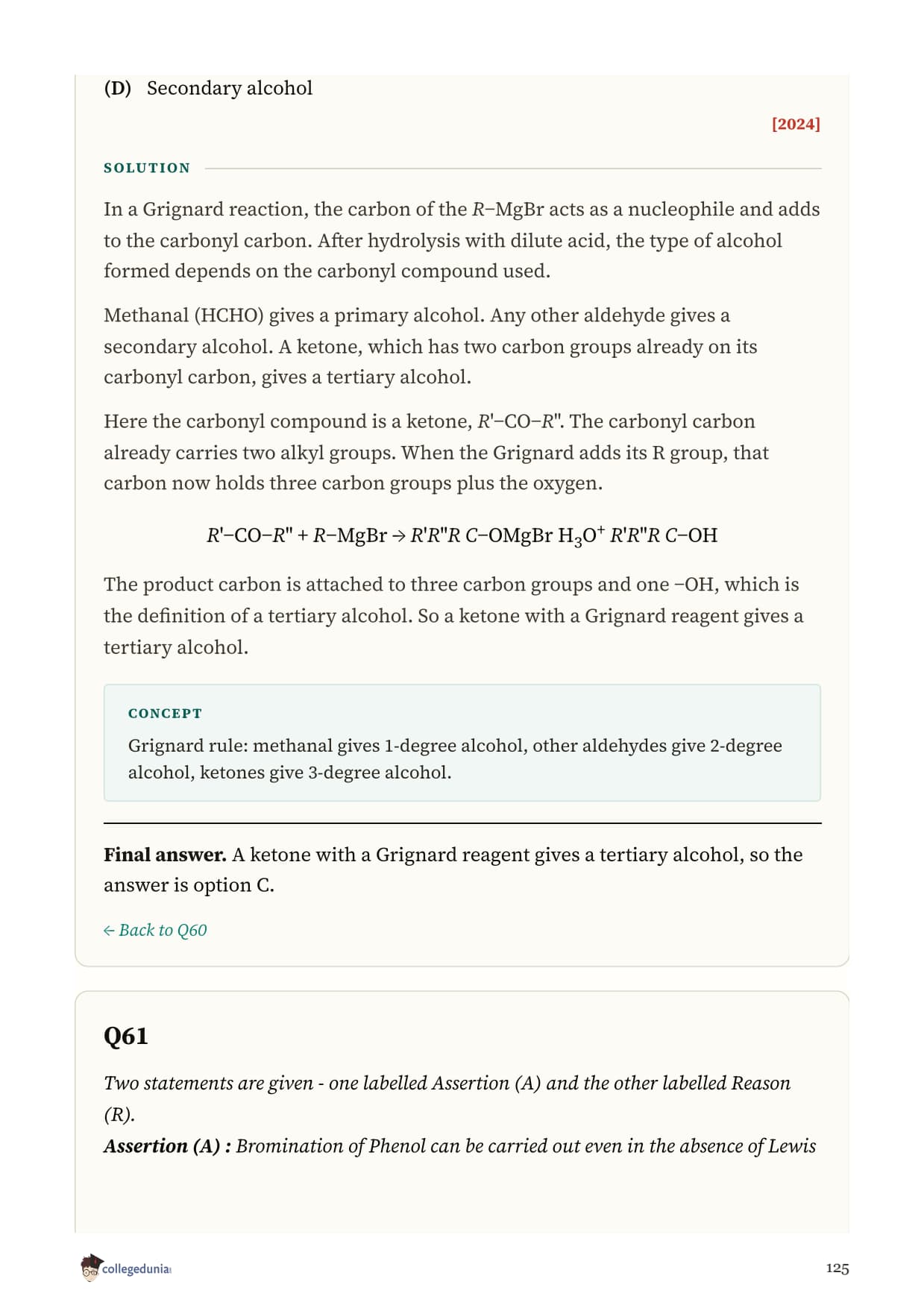
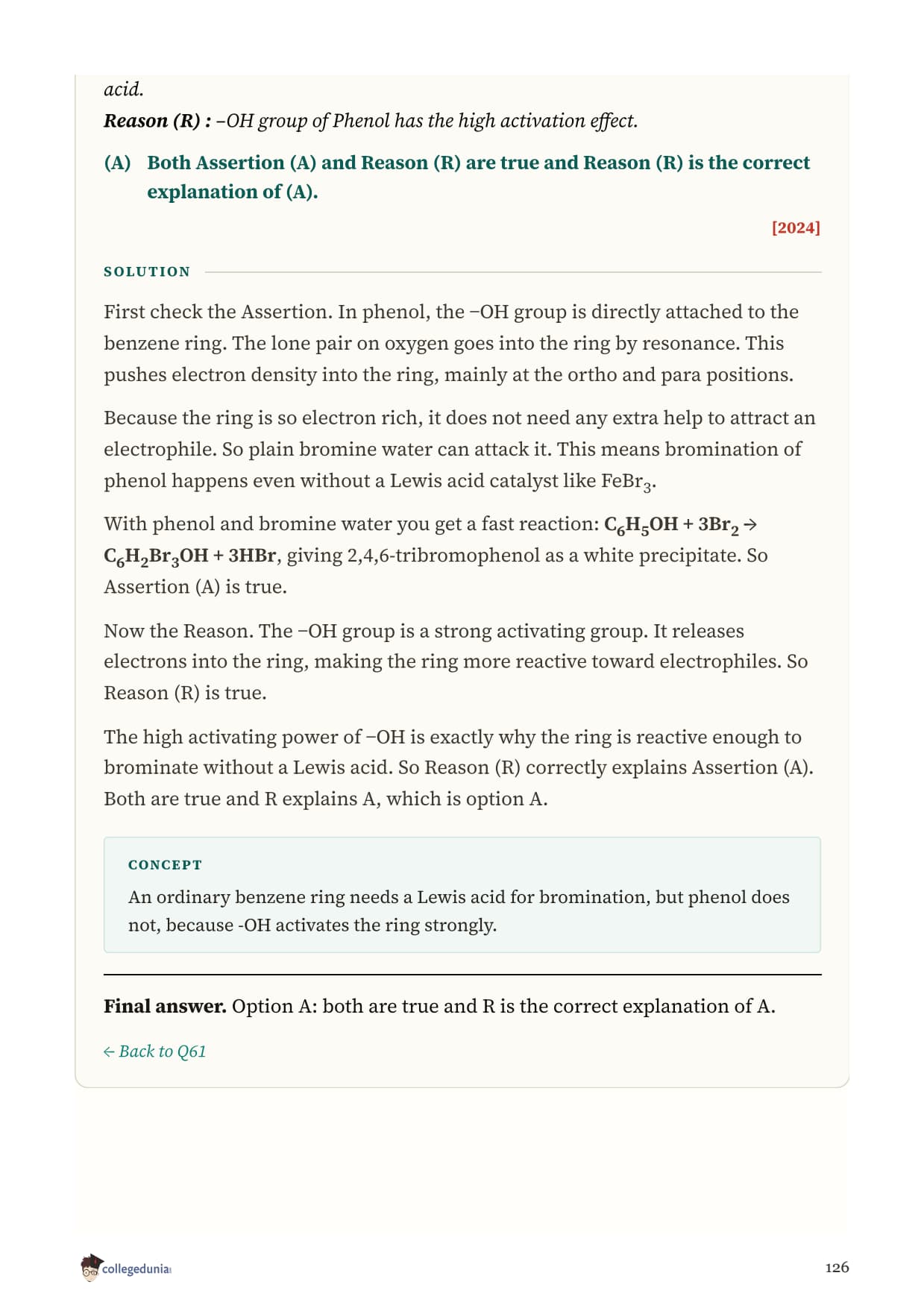
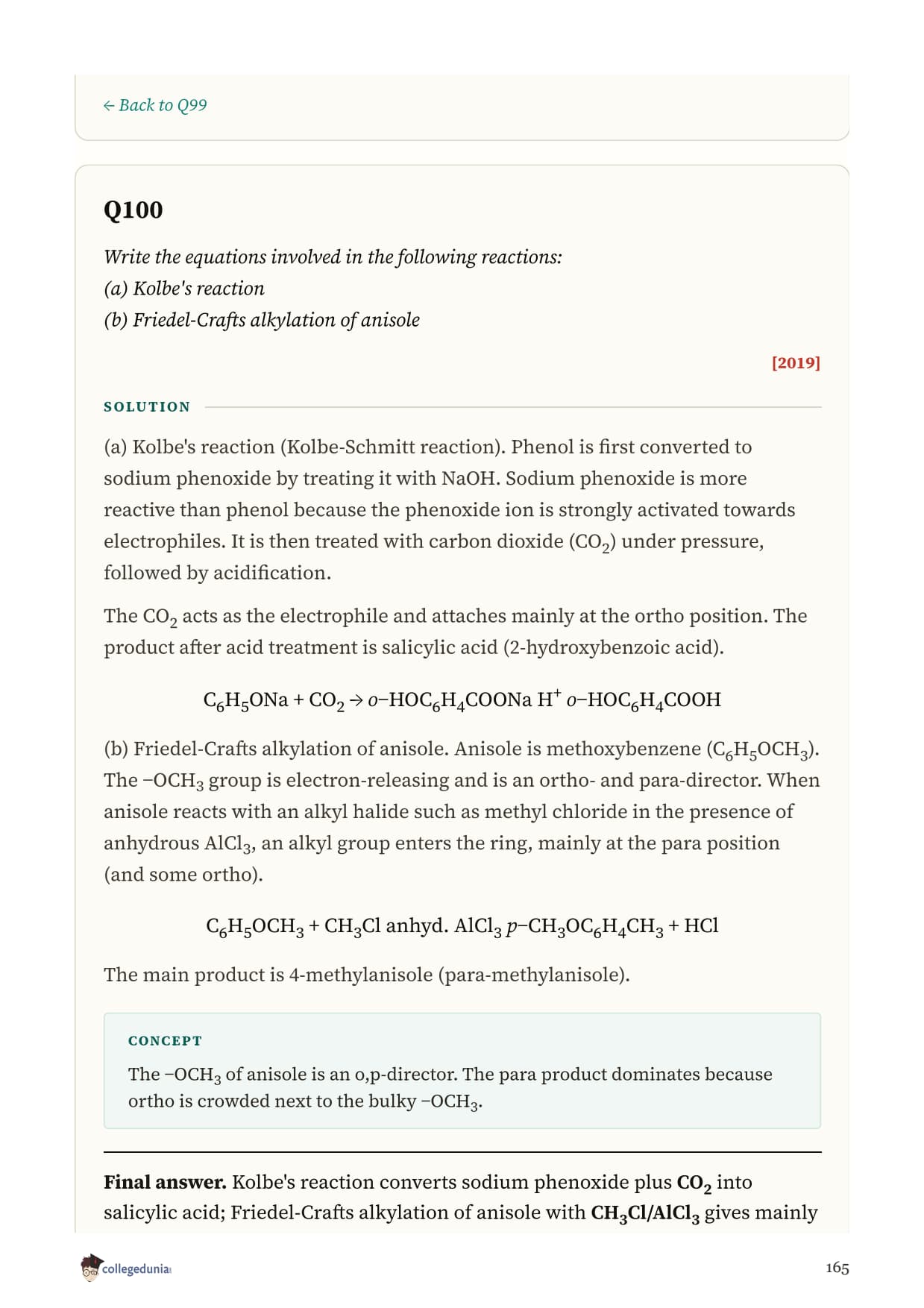
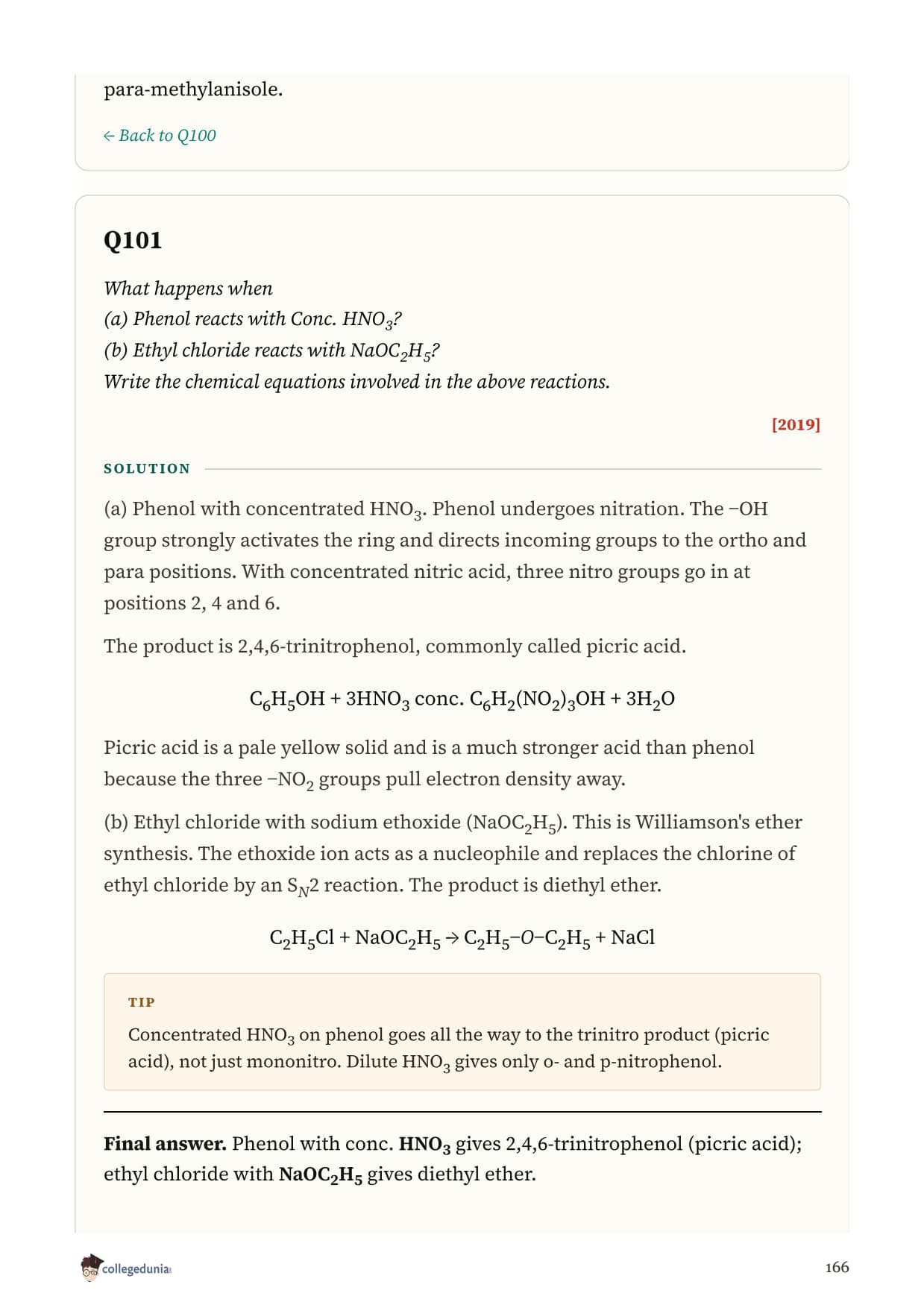
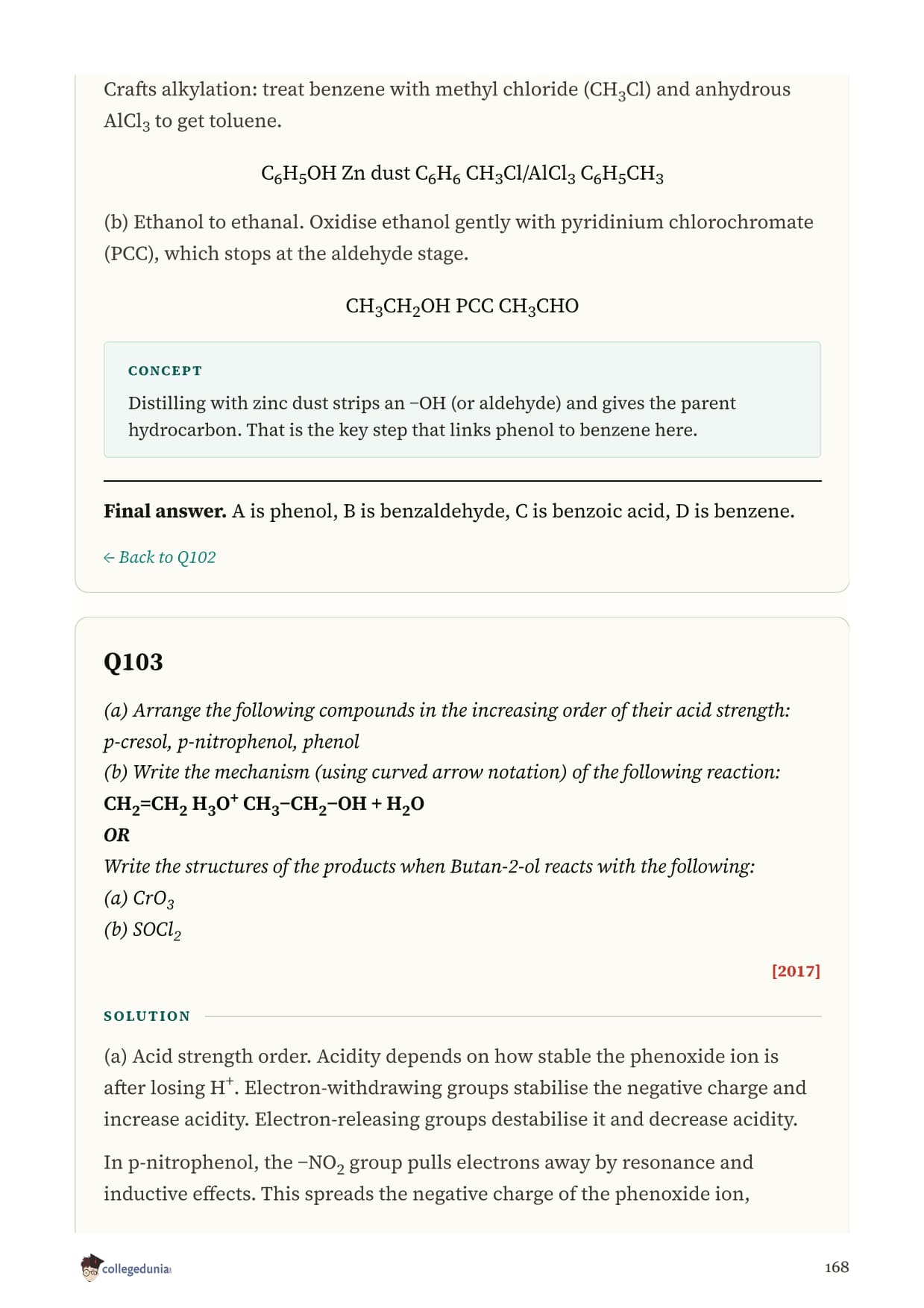
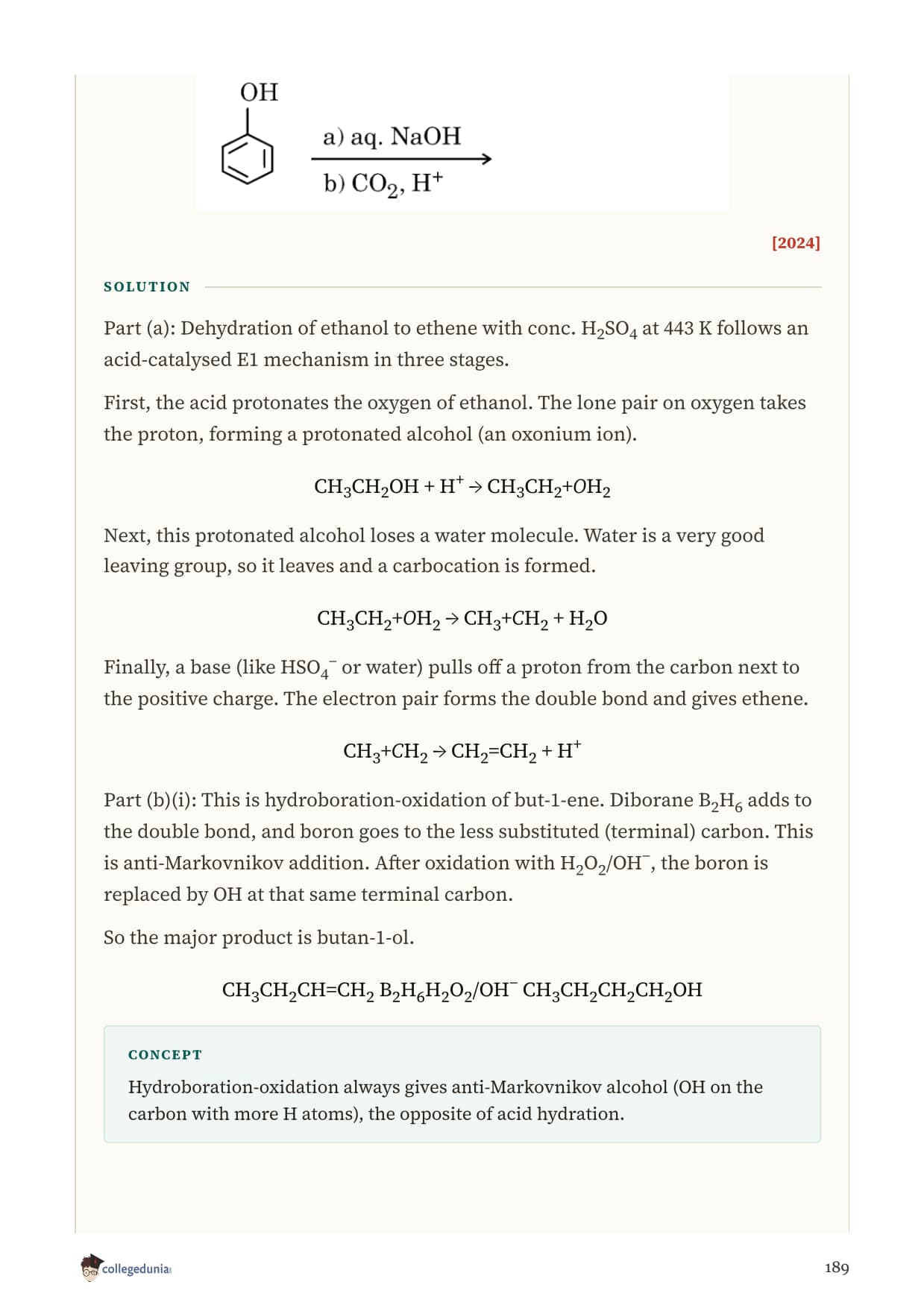
- 2026: Phenol with dilute nitric acid at low temperature, a Grignard reagent MCQ with methanal, and a 5-mark reagent-conversion set with the acid-catalysed hydration mechanism.
- 2024 to 2025: The largest contribution years, with MCQ banks on reagents, acidity order and Williamson ether synthesis.
- 2020 to 2023: Reduced-syllabus papers, but conversions, Reimer-Tiemann and Kolbe's reaction still appear.
- 2004 to 2019: Heritage long answers on cleavage of ethers with HI, picric acid preparation and oxidation of alcohols, all still relevant today.
Topic Frequency in the Alcohols, Phenols and Ethers Board Paper Questions
The 166 questions cluster into the six topic buckets below, ranked by how often CBSE has set them between 2004 and 2026.
| Rank | Topic Cluster | Frequency | Typical Marks Band |
|---|---|---|---|
| 1 | Conversions and reagent identification (multistep alcohol, phenol and ether routes) | ~26 per cent | 3 and 5 mark |
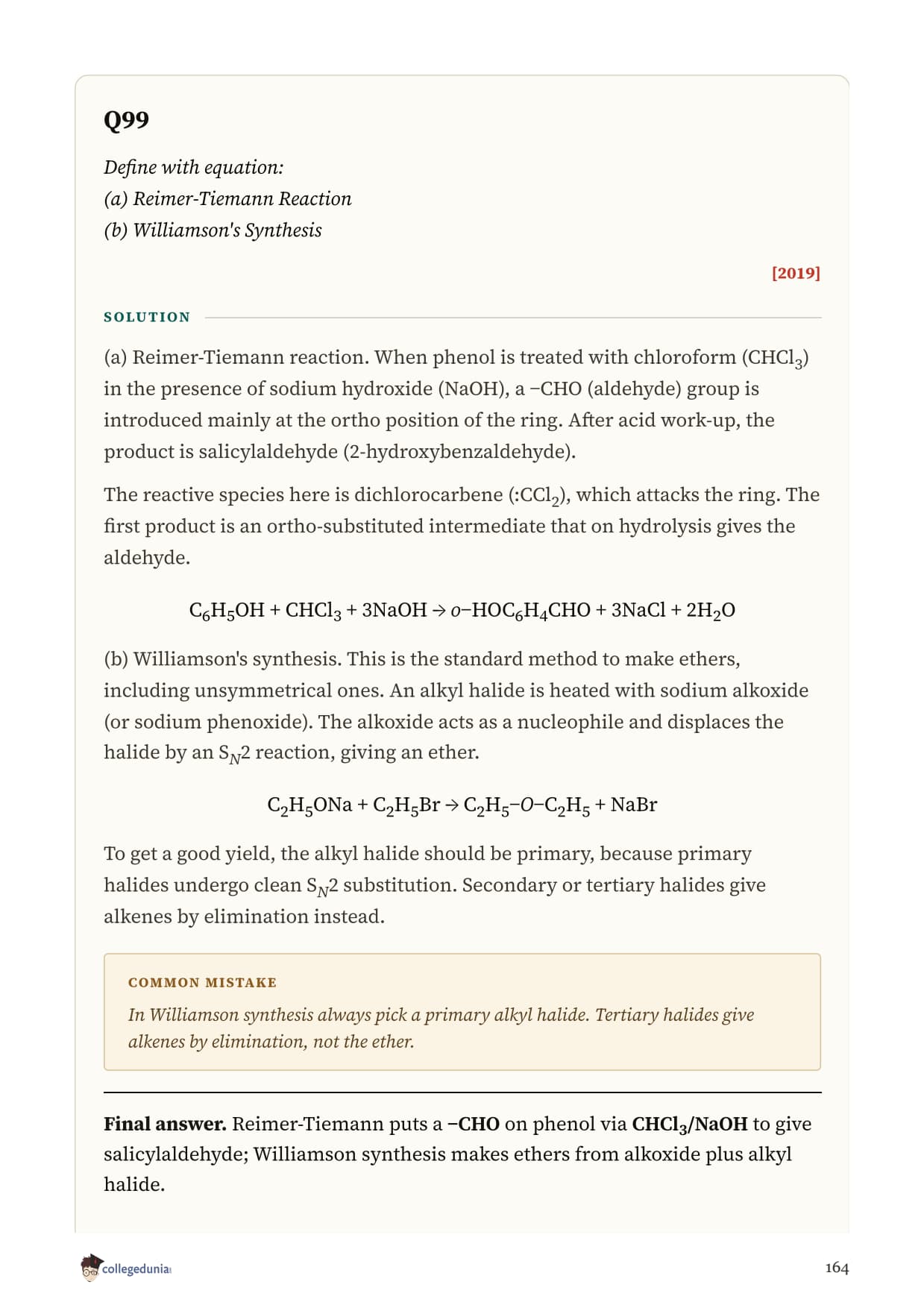
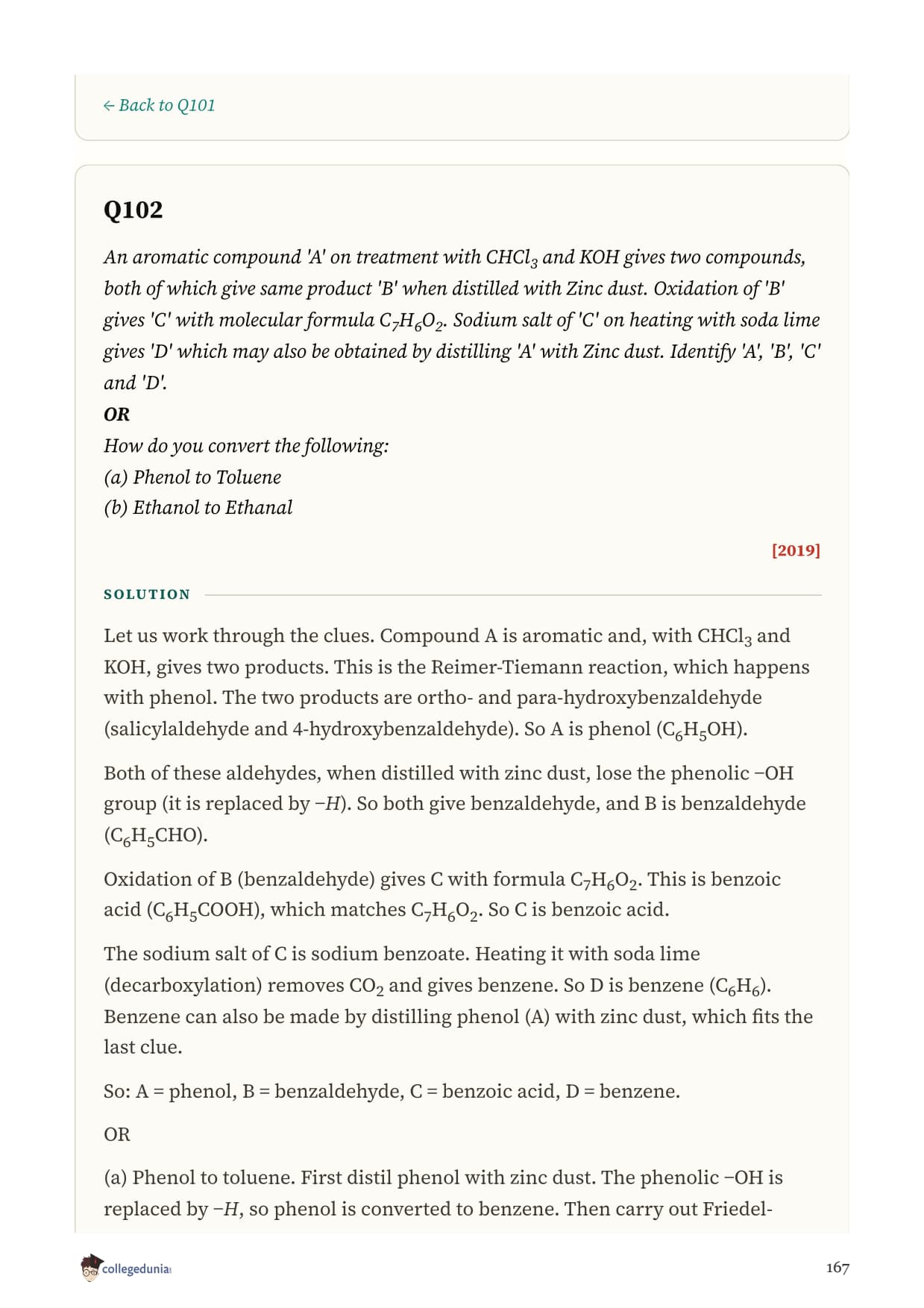
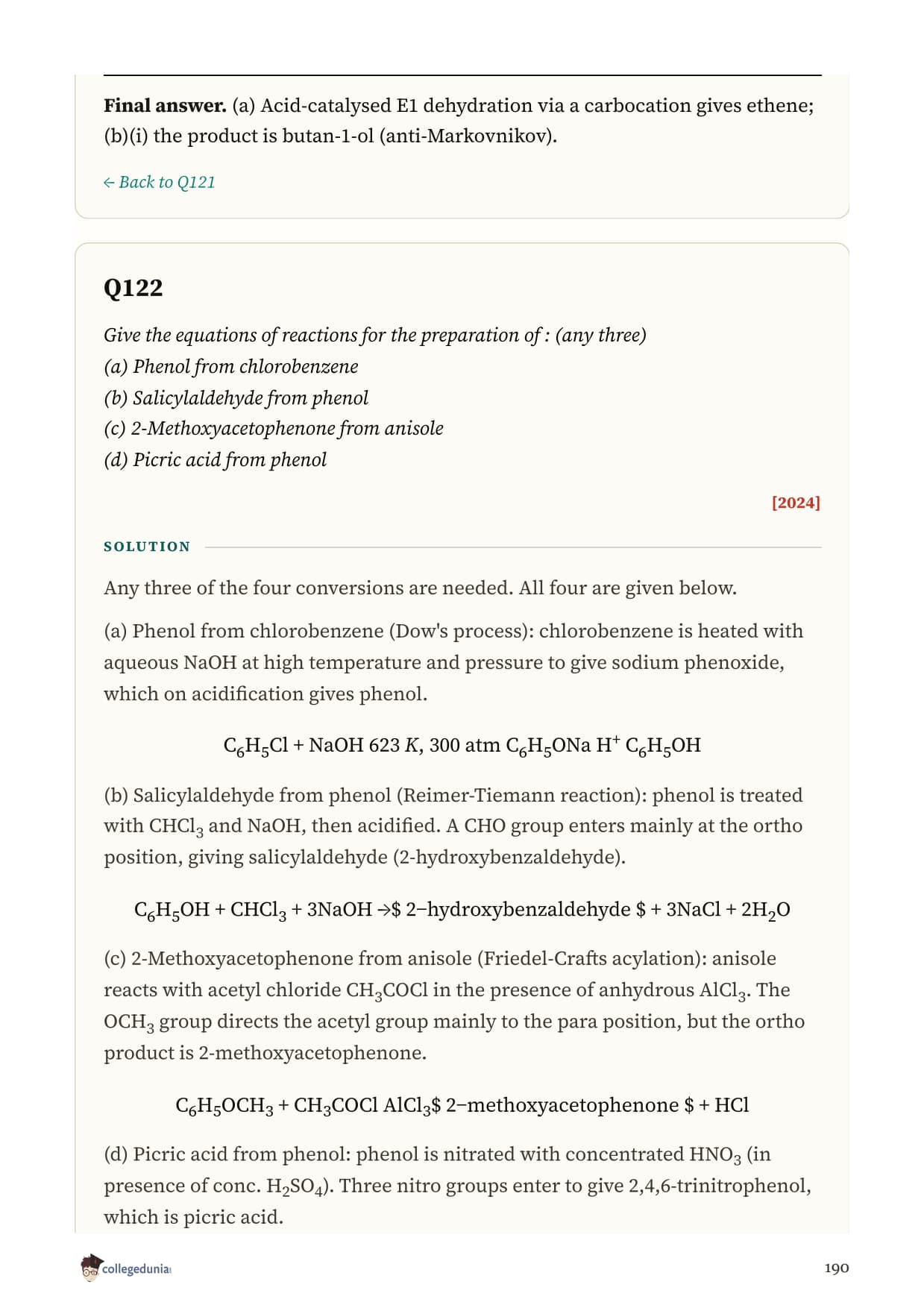
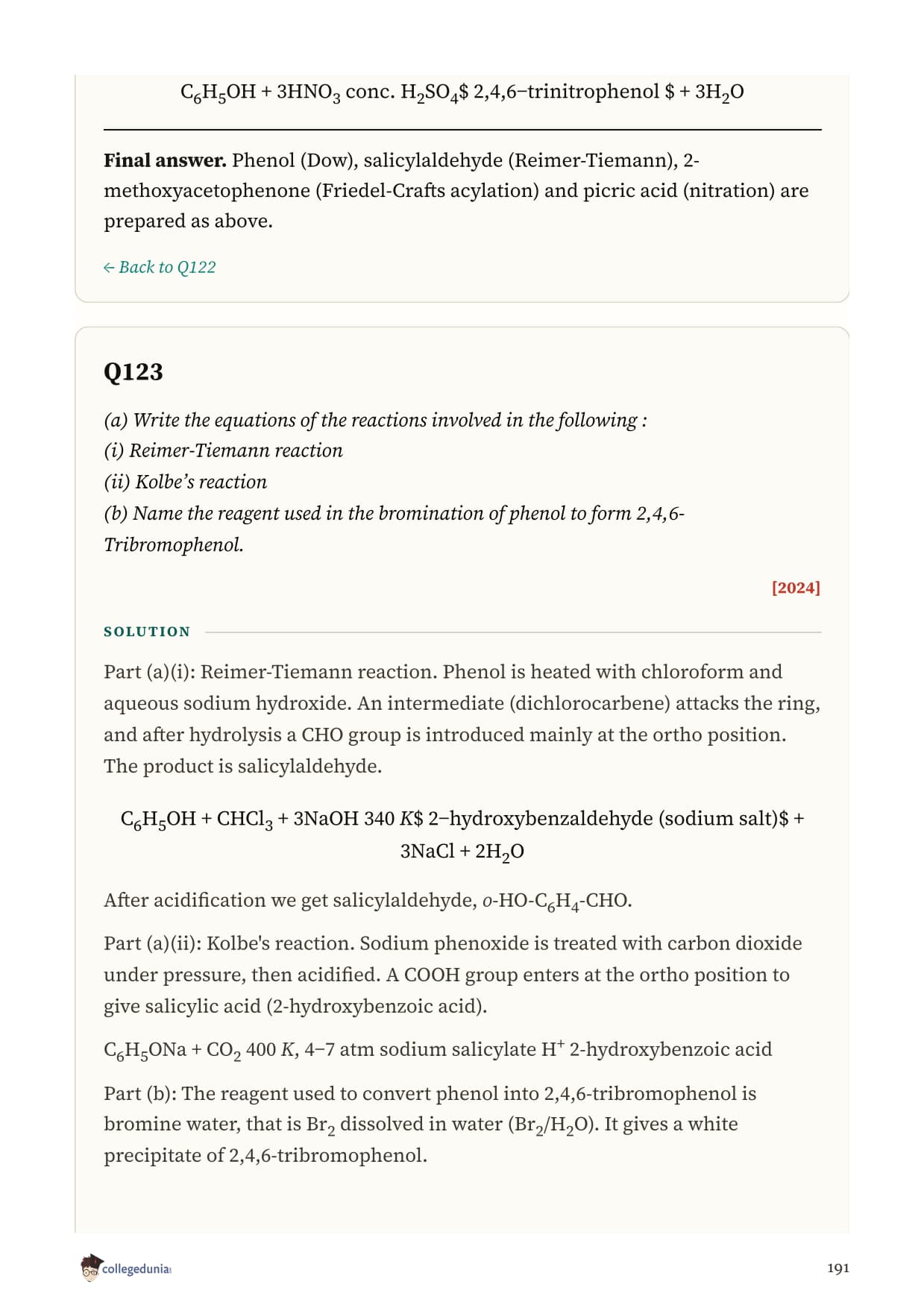
| 2 | Named reactions of phenols (Reimer-Tiemann, Kolbe's reaction, Friedel-Crafts) | ~19 per cent | 2 and 3 mark |
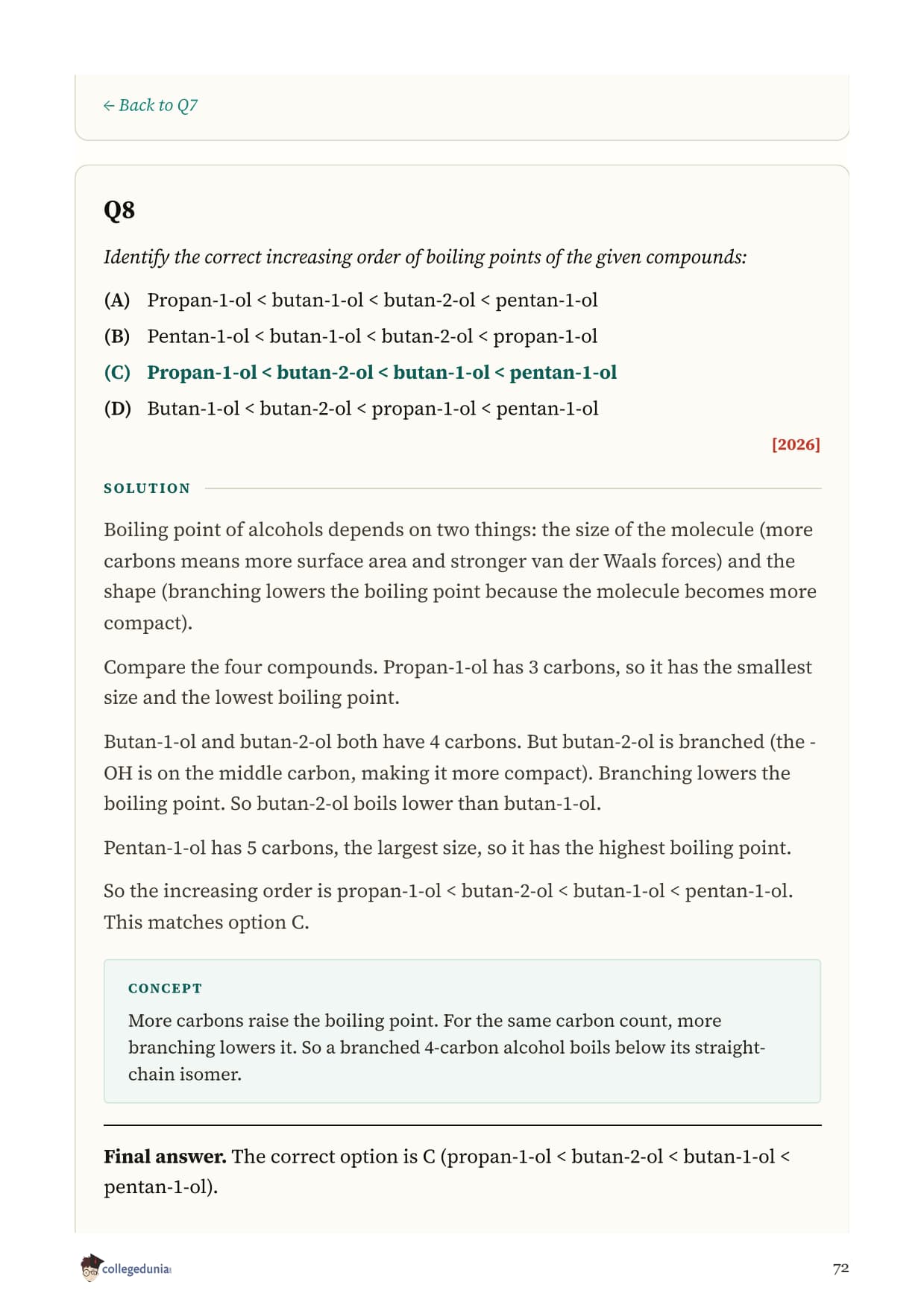
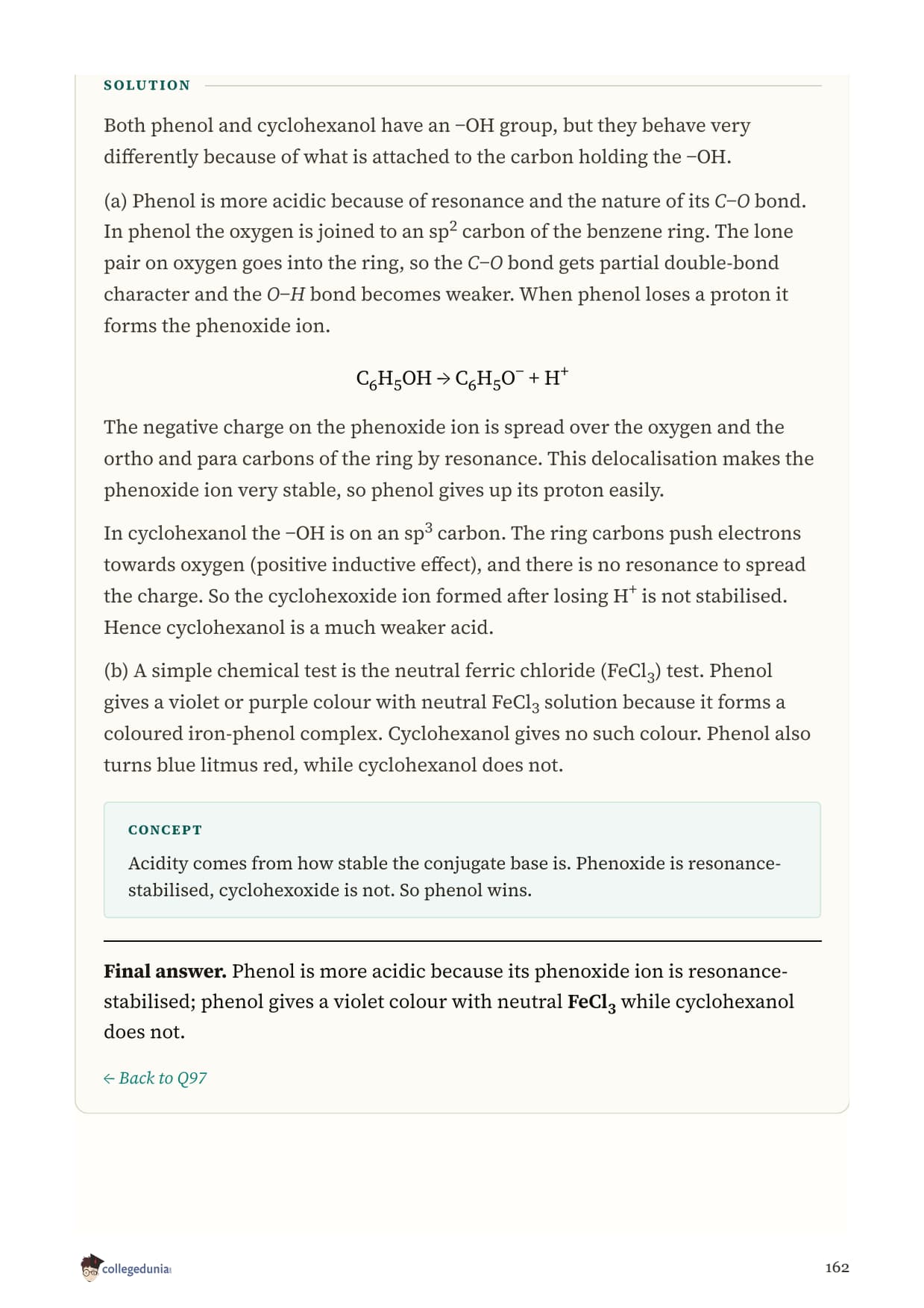
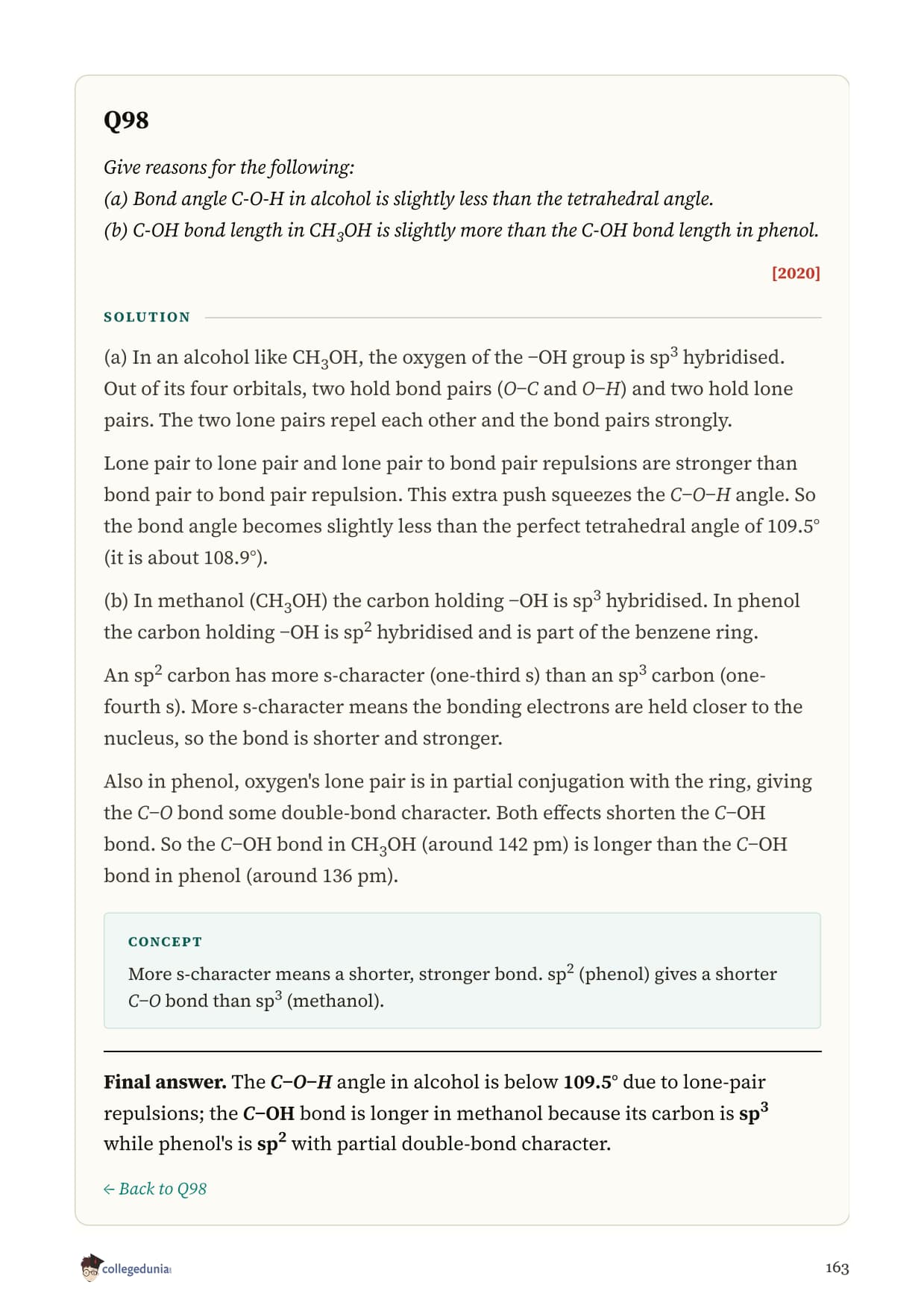
| 3 | Acidity and reactivity reasoning (acidity order, boiling points, comparative MCQs) | ~18 per cent | 1, 2, 3 mark |
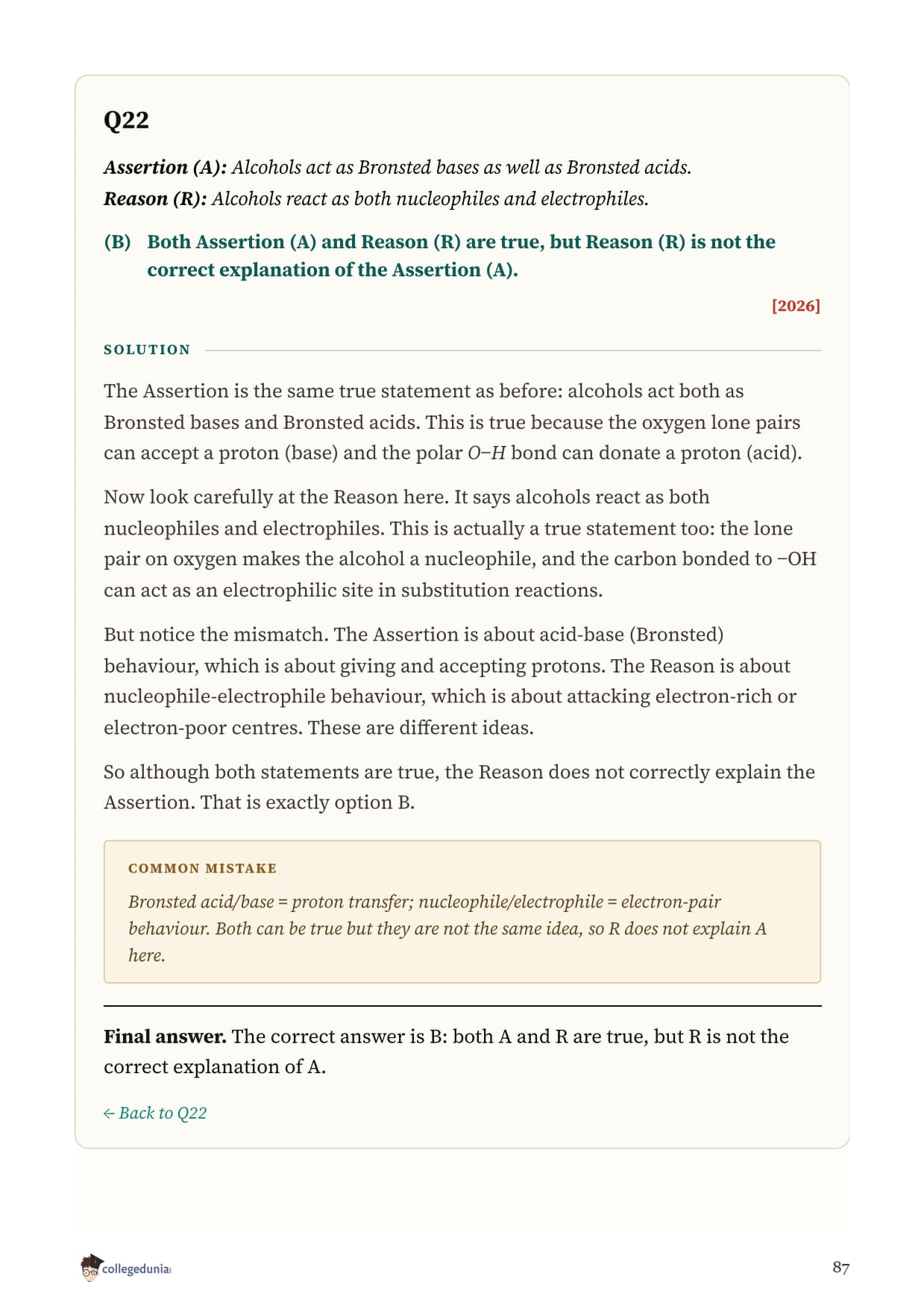
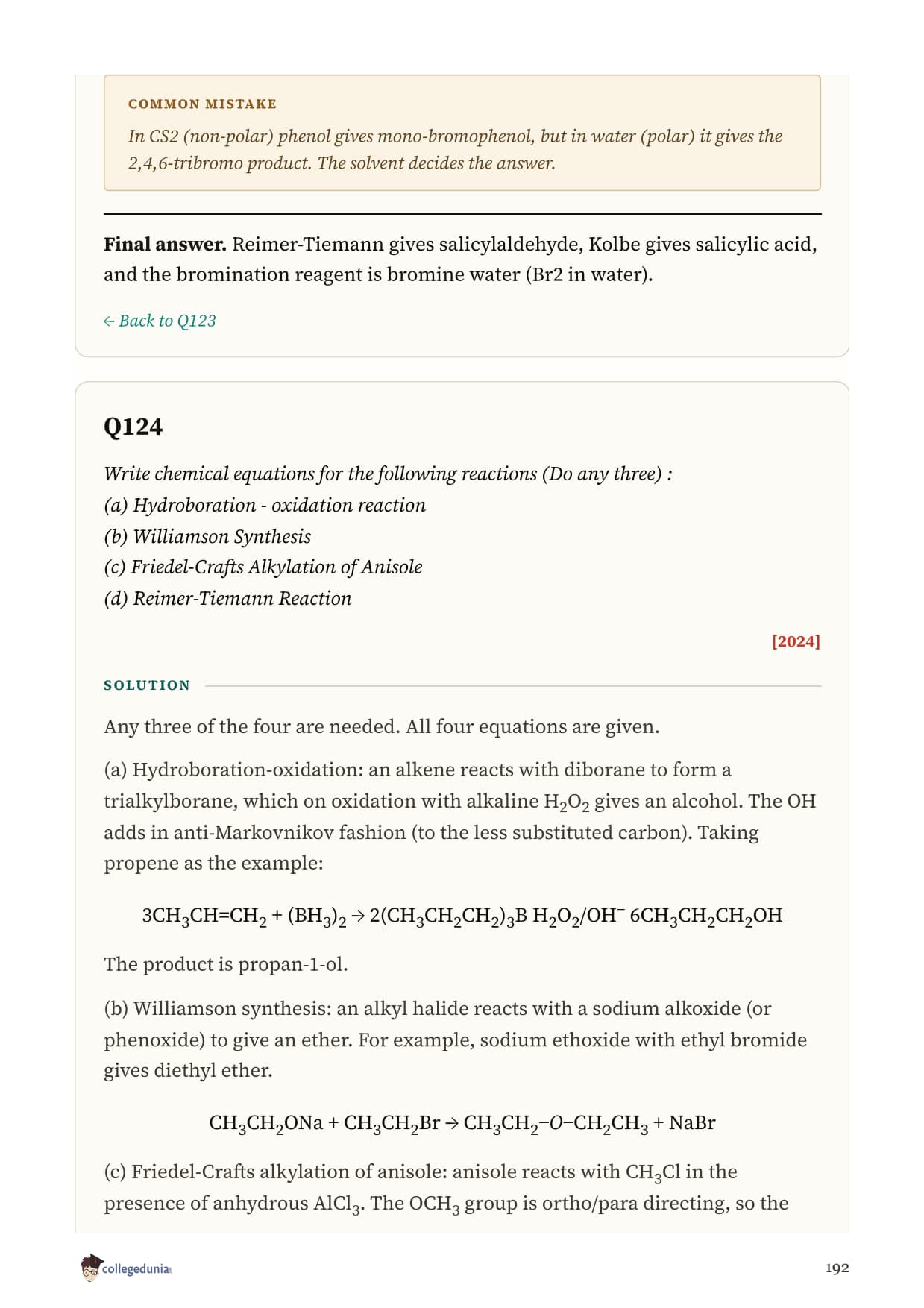
| 4 | Ether reactions and Williamson synthesis (cleavage with HI, preparation) | ~15 per cent | 1, 2, 3 mark |
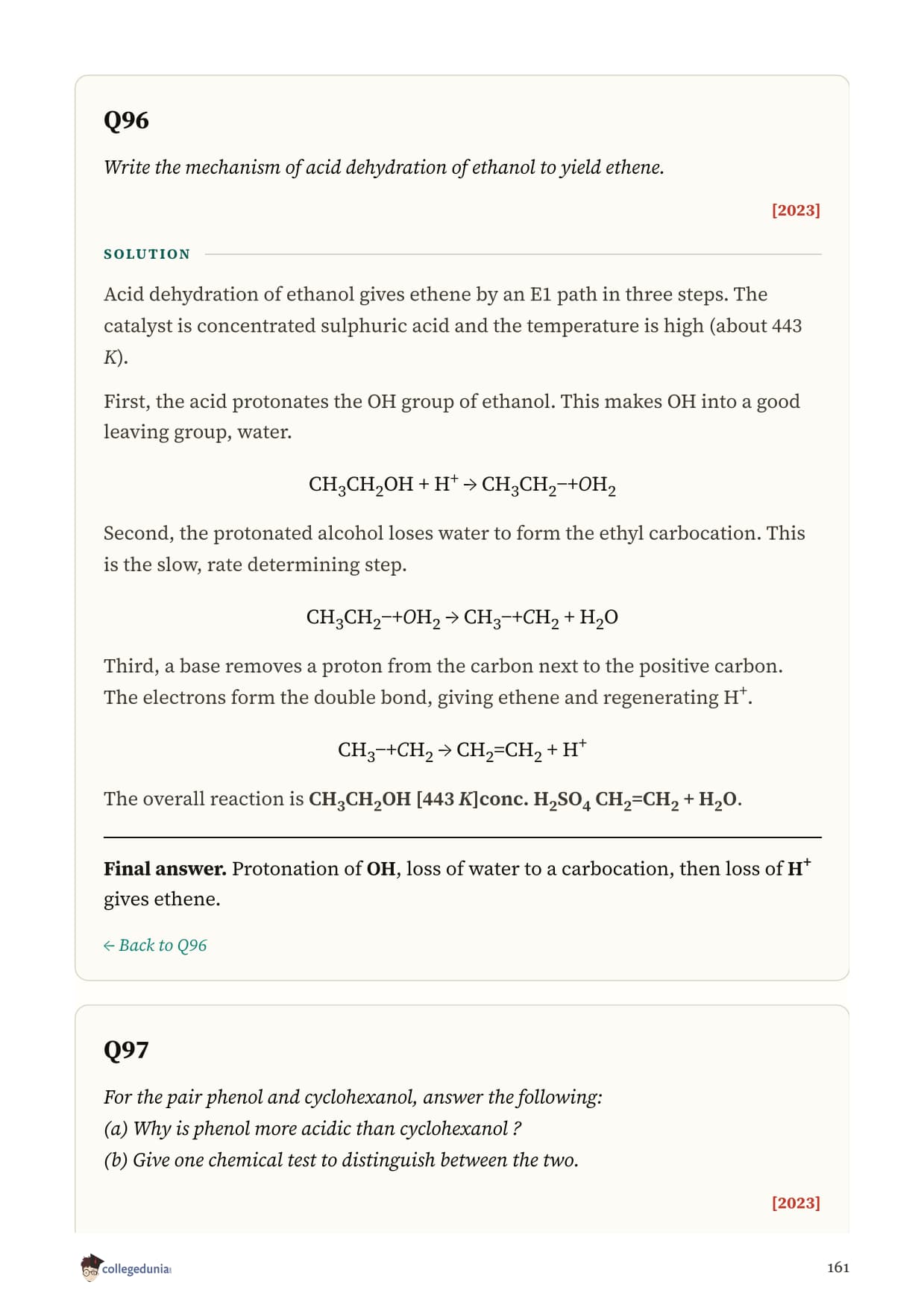
| 5 | Oxidation and dehydration of alcohols (products, mechanisms) | ~12 per cent | 3 and 5 mark |
| 6 | Nitration and special preparations (picric acid, 2,4,6-trinitrophenol, anisole) | ~10 per cent | 1 and 5 mark |
Marks-Band Attempt Strategy for the Alcohols, Phenols and Ethers PYQs
The 166 PYQs are arranged marks-ascending inside the PDF so you can attempt them in the same order the CBSE paper presents them.
- 1-mark MCQs: Spend no more than 45 seconds each. Many test a reagent name or the acidity order of phenol versus alcohol.
- 2-mark questions: One named reaction with its product, or a short conversion. Aim for 3 minutes.
- 3-mark questions: Usually a three-step conversion or a reagent set. Always write the reagent above the arrow, not just the product.
- 5-mark long answers: A conversion set plus a mechanism part such as acid-catalysed hydration. Allocate 12 to 15 minutes.
Recent CBSE Trend: 2024 to 2026 Pattern Shift in Alcohols, Phenols and Ethers
Three things have changed in the recent CBSE cycles that the Alcohols, Phenols and Ethers previous year questions now reflect:
- Section A (MCQ and assertion-reason) now carries a fixed block of 1-mark questions. The compilation includes 81 such questions, most from 2023 onwards.
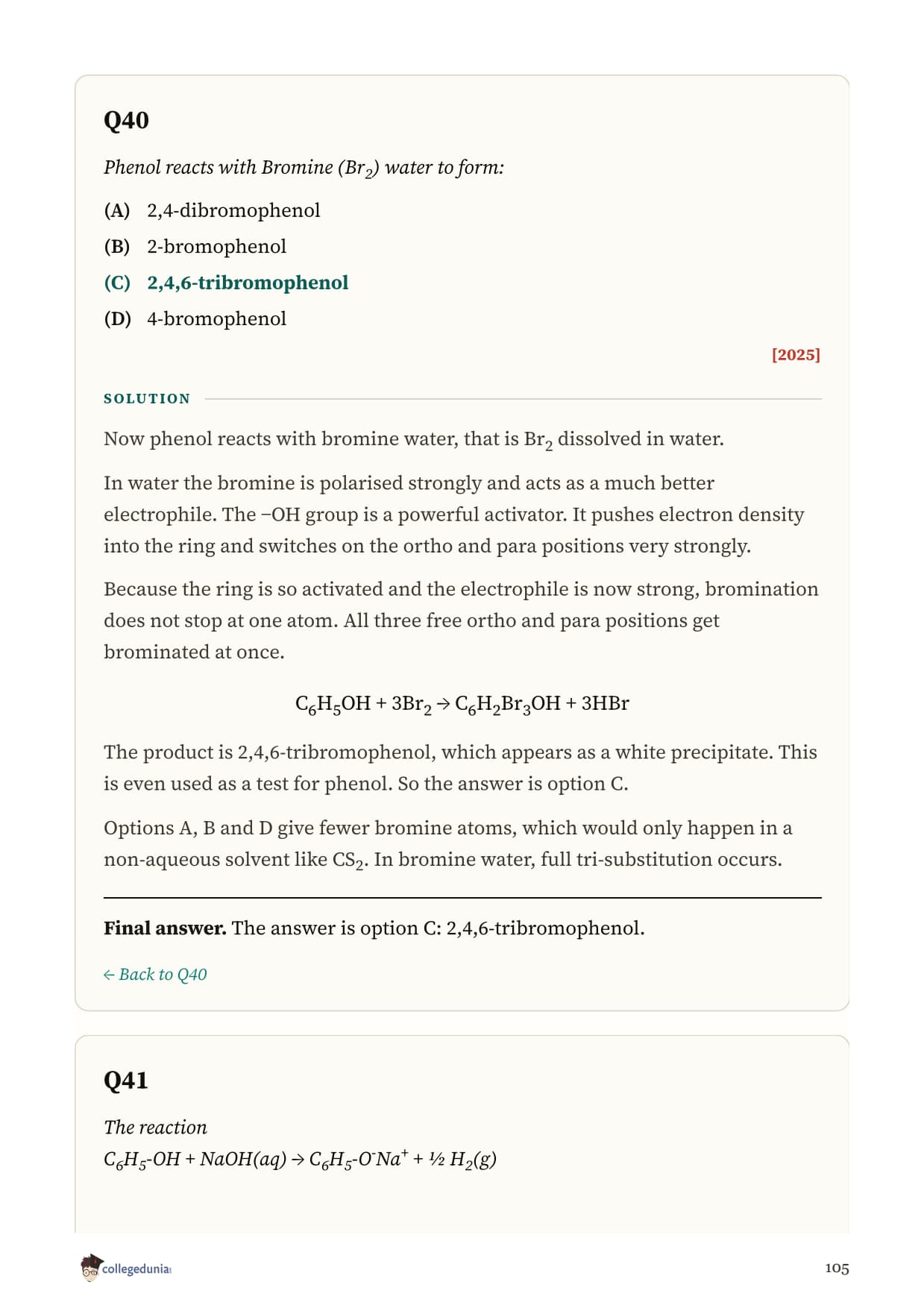
- Conversion questions increasingly ask only for the reagents, as in the 2026 phenol to 2,4,6-tribromophenol part, so you must know the exact reagent rather than the full equation.
- 5-mark questions almost always carry an OR alternative and often add a mechanism, so the PDF keeps both branches for revision.
Sample Previous Year Questions from Alcohols, Phenols and Ethers
Here are a few real previous year questions from the Alcohols, Phenols and Ethers board papers, taken straight from the compilation. The full set is in the downloadable PDF.
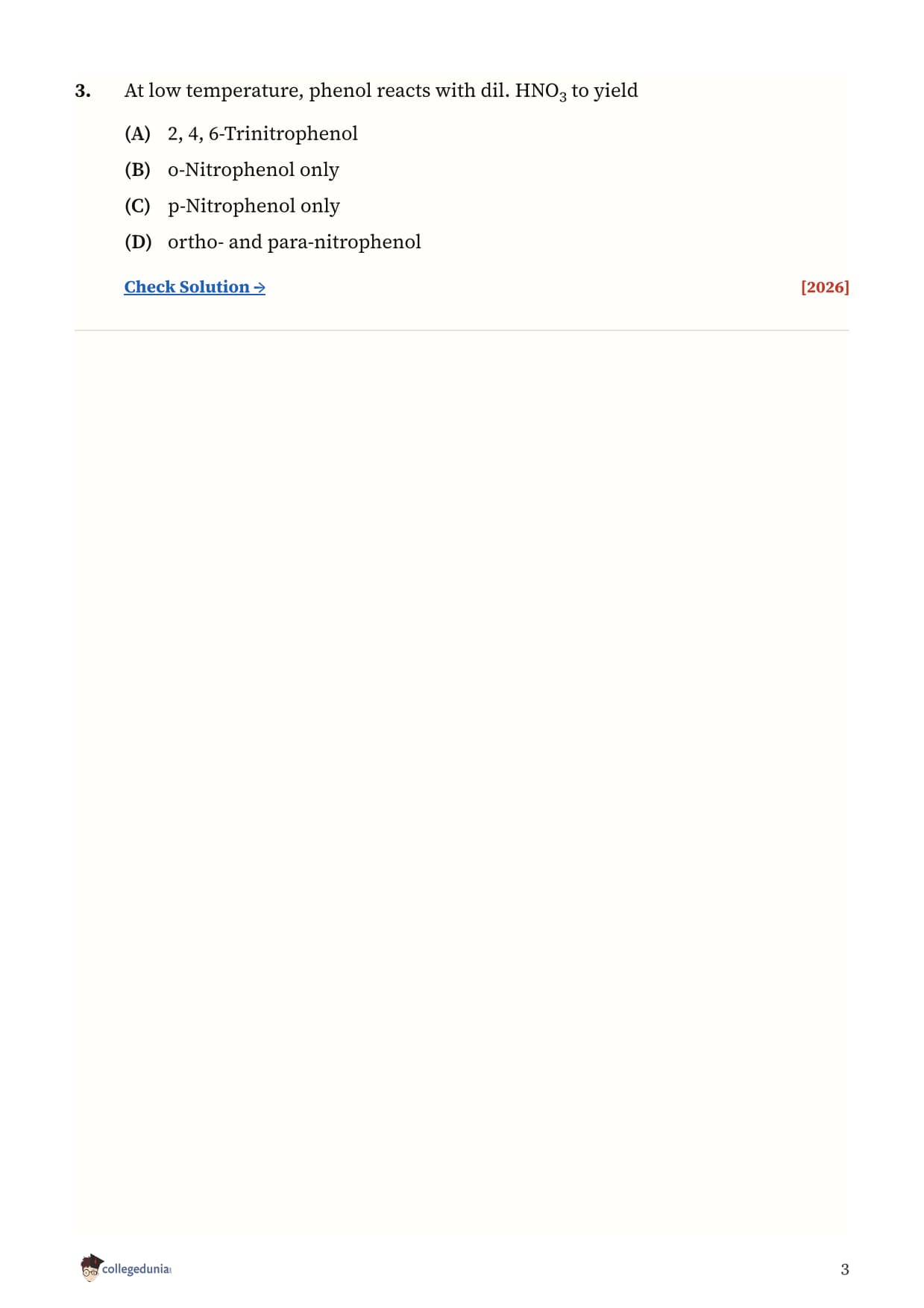
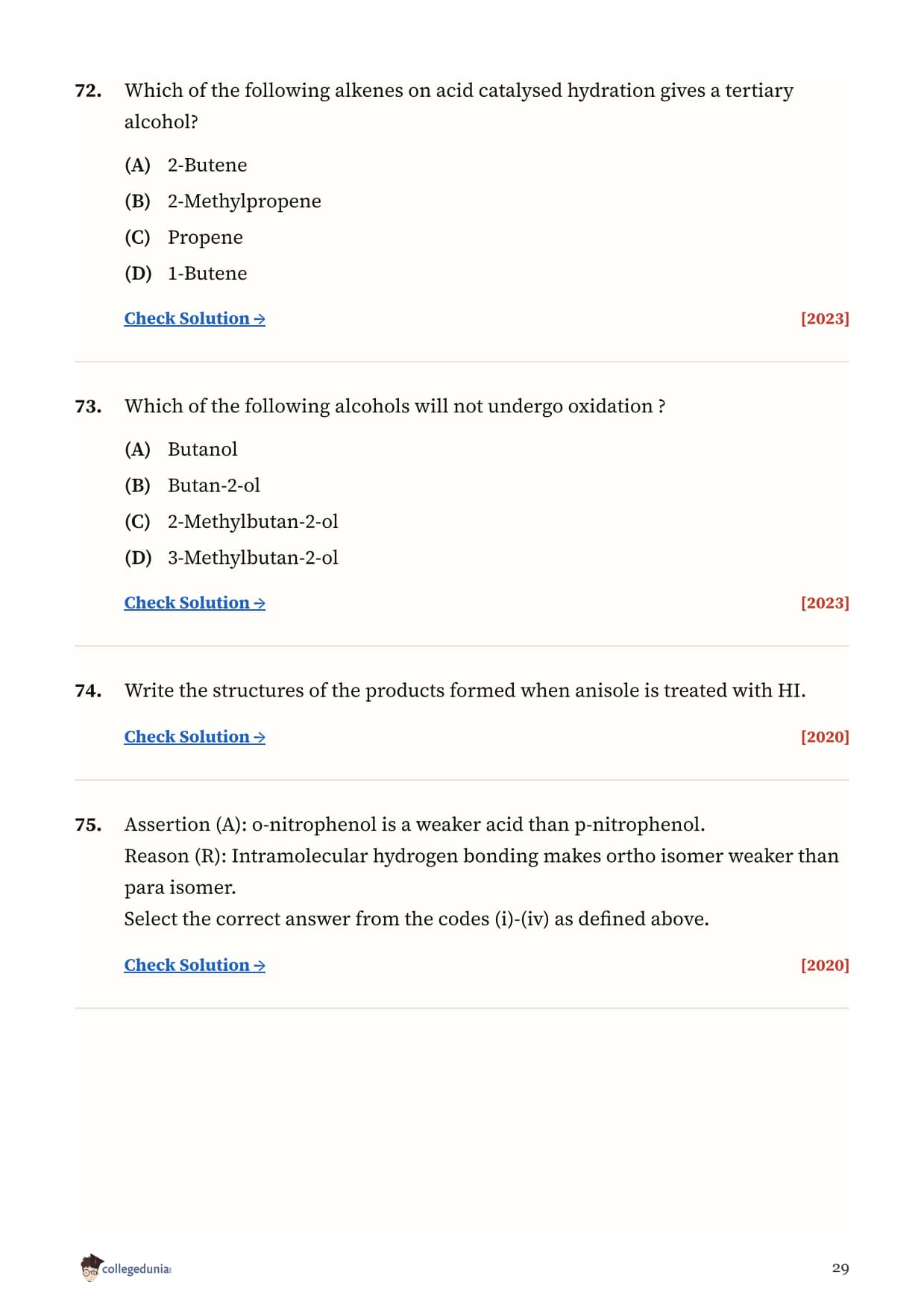
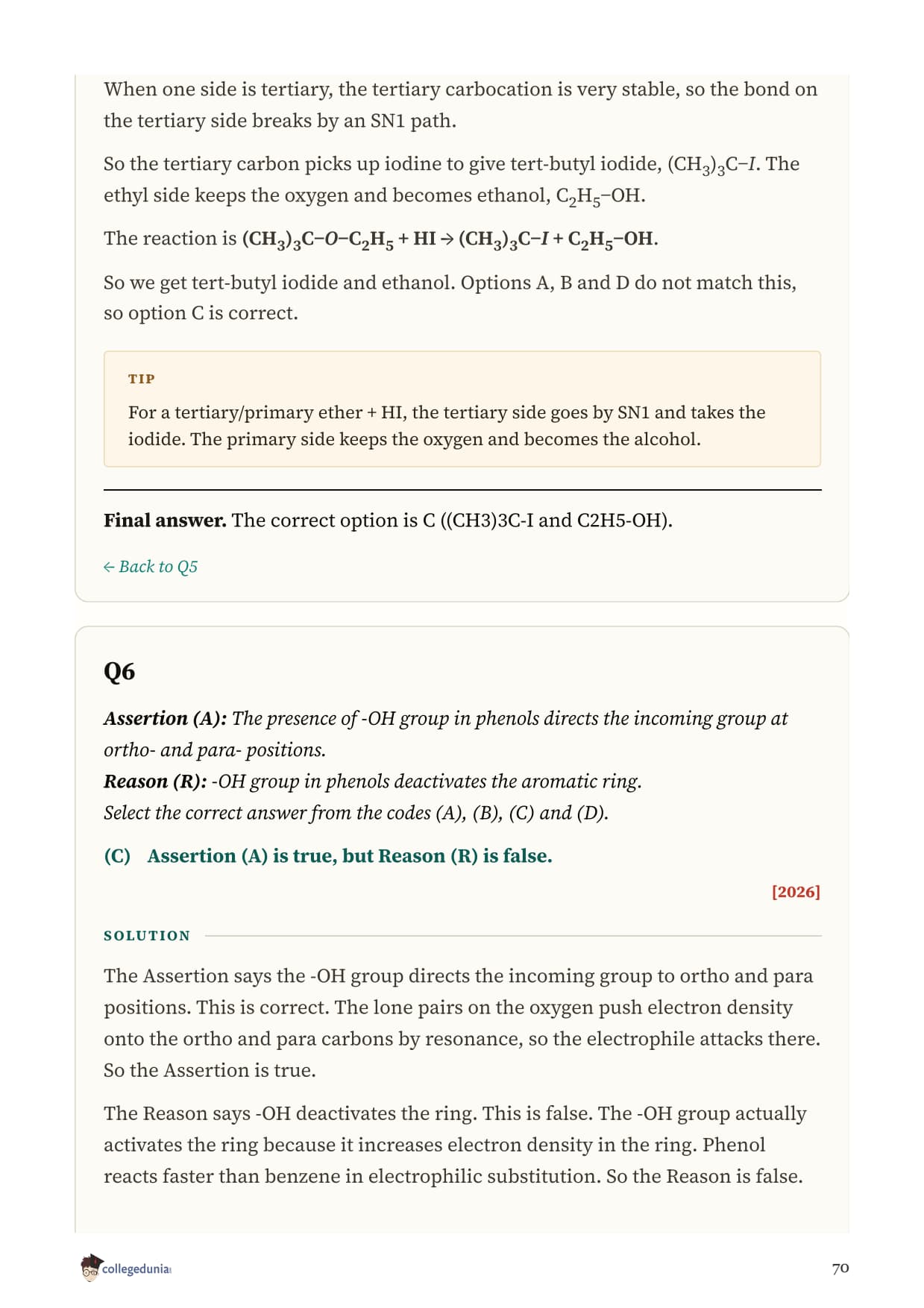
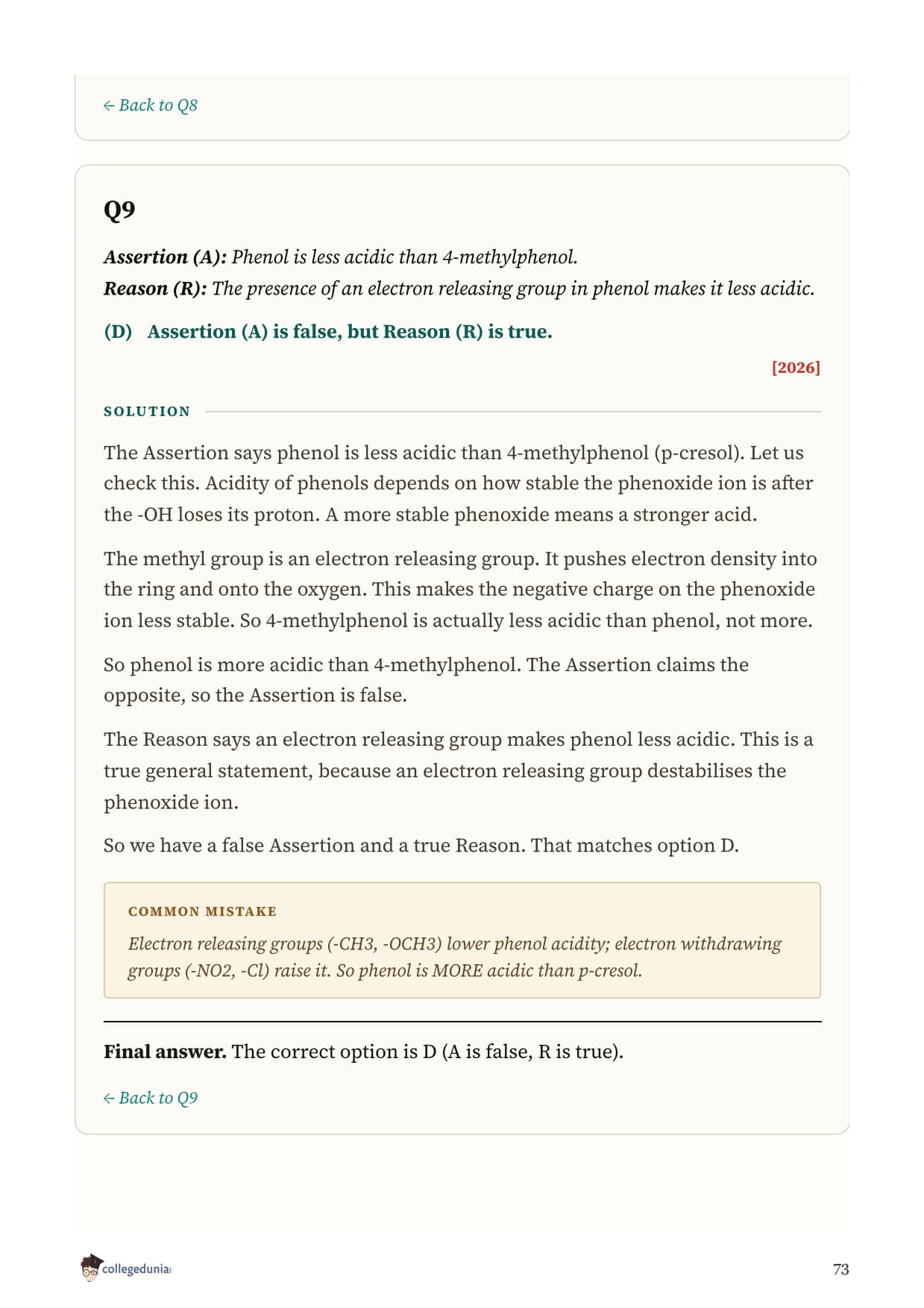
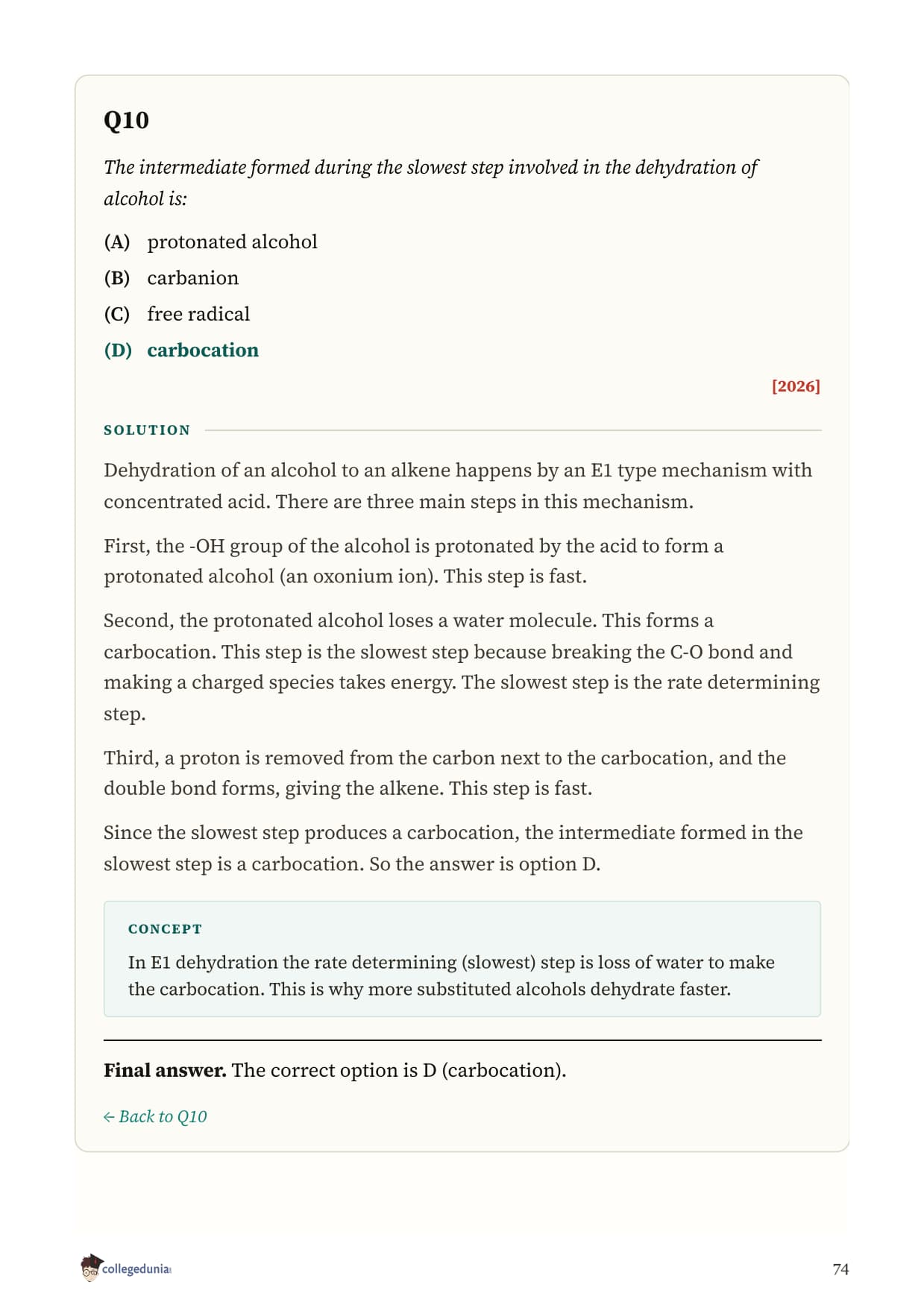
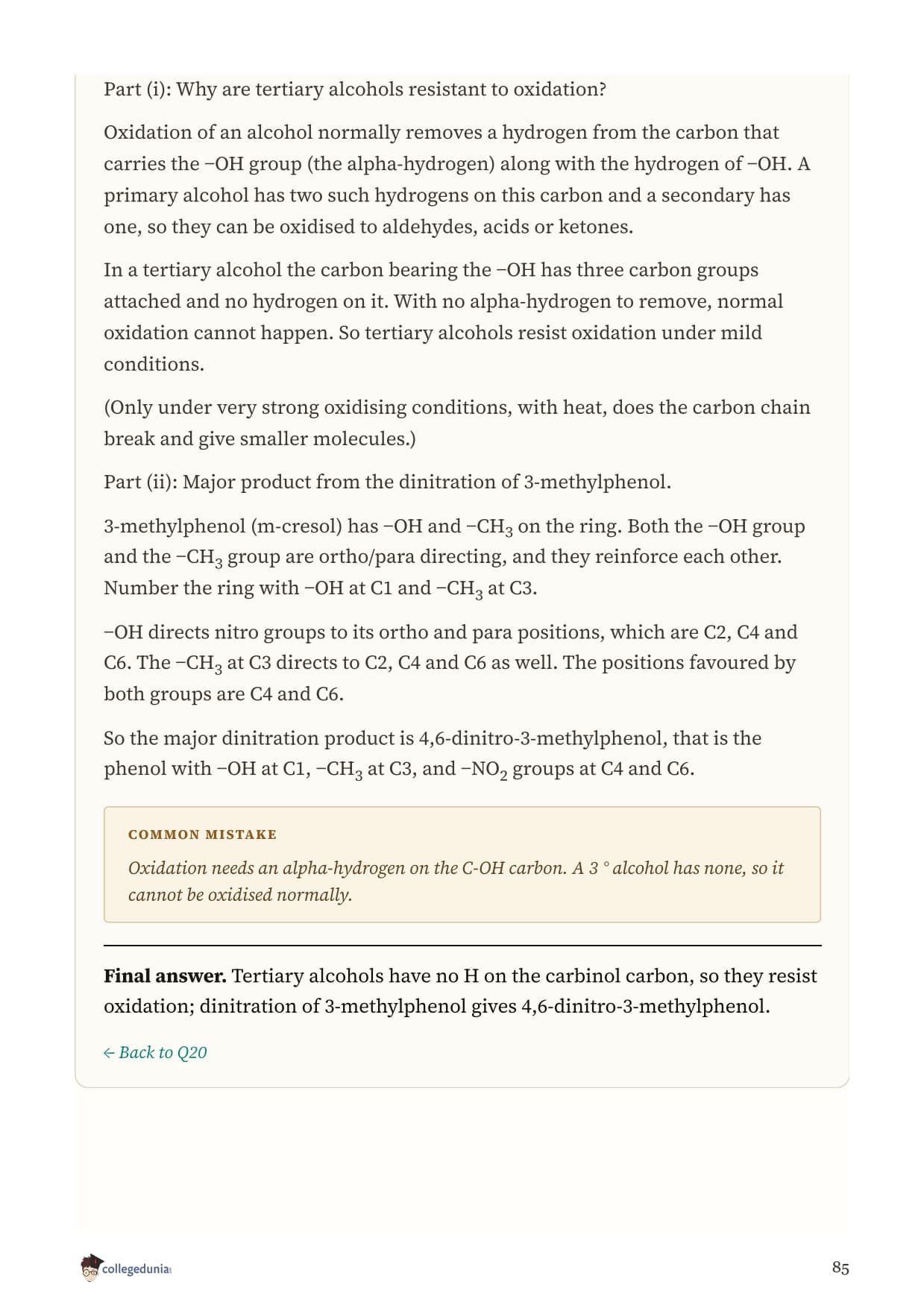
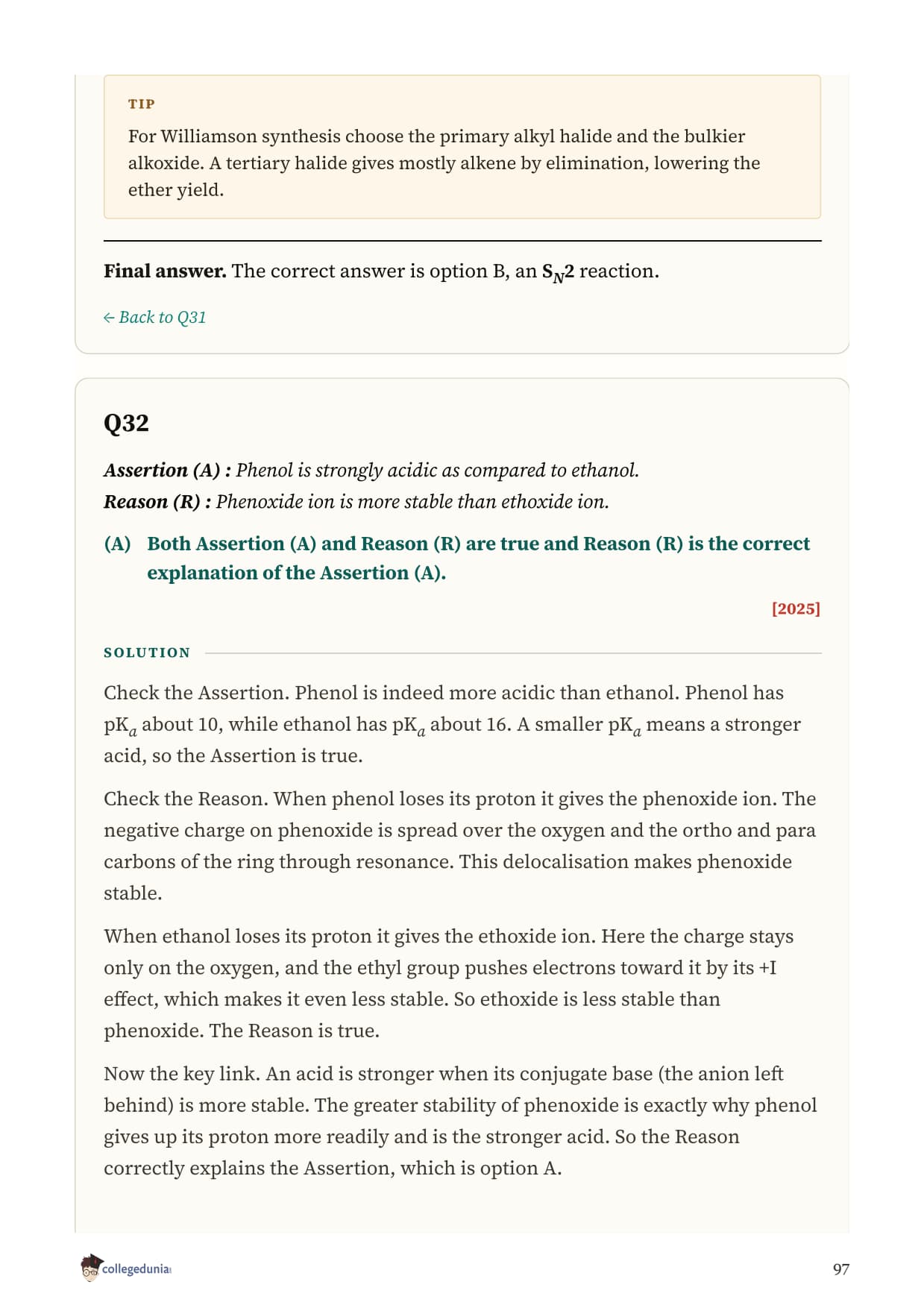
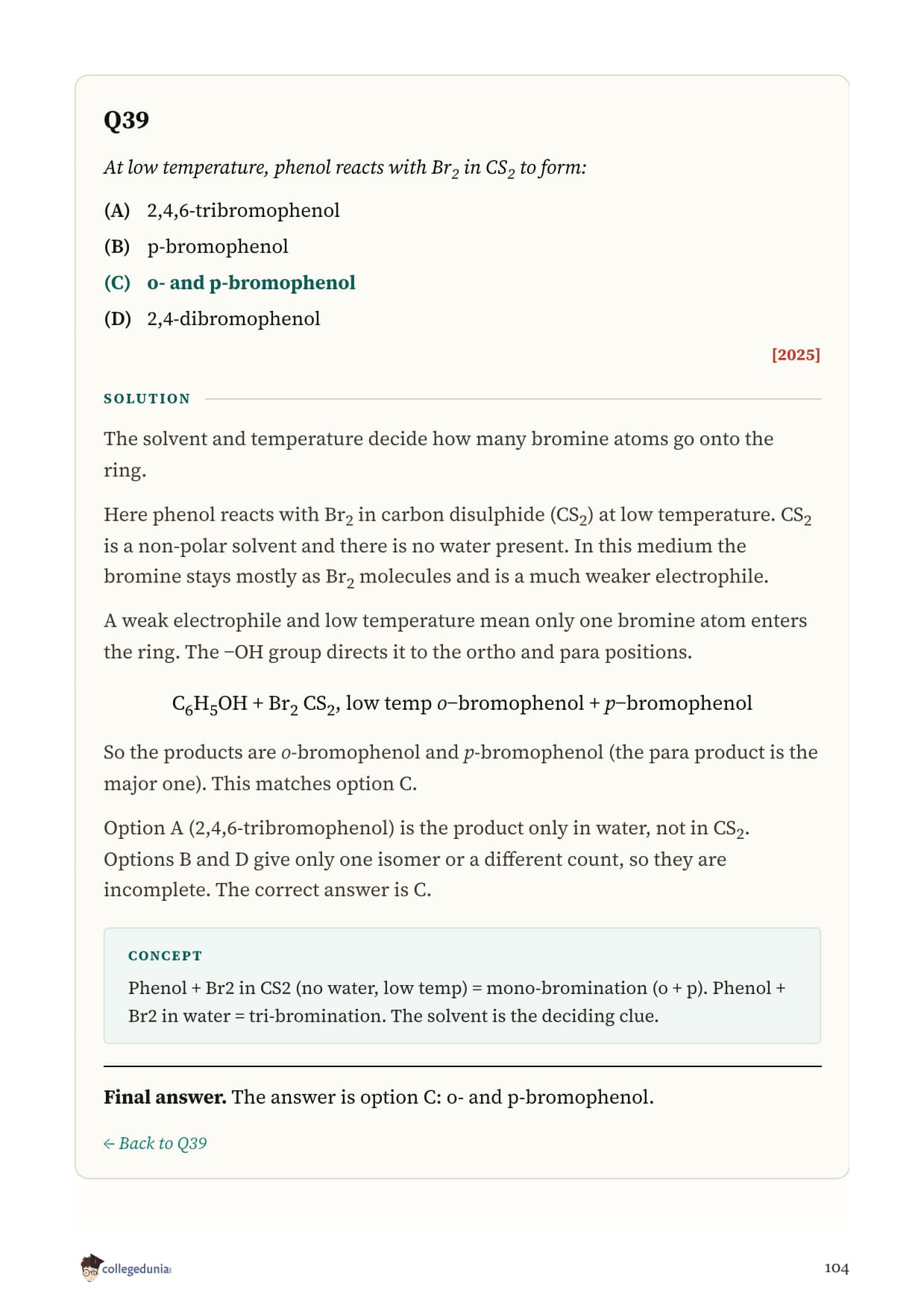
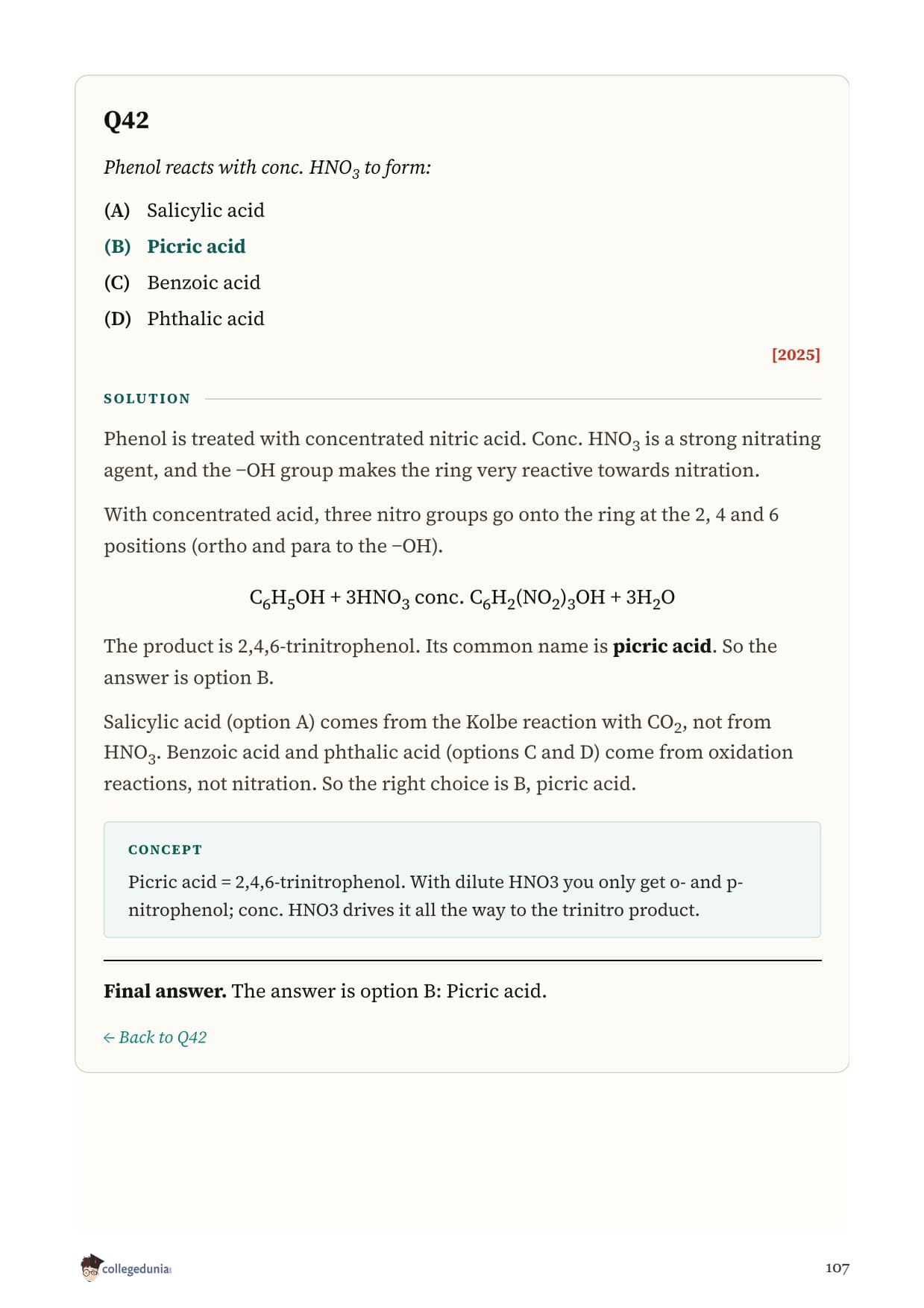
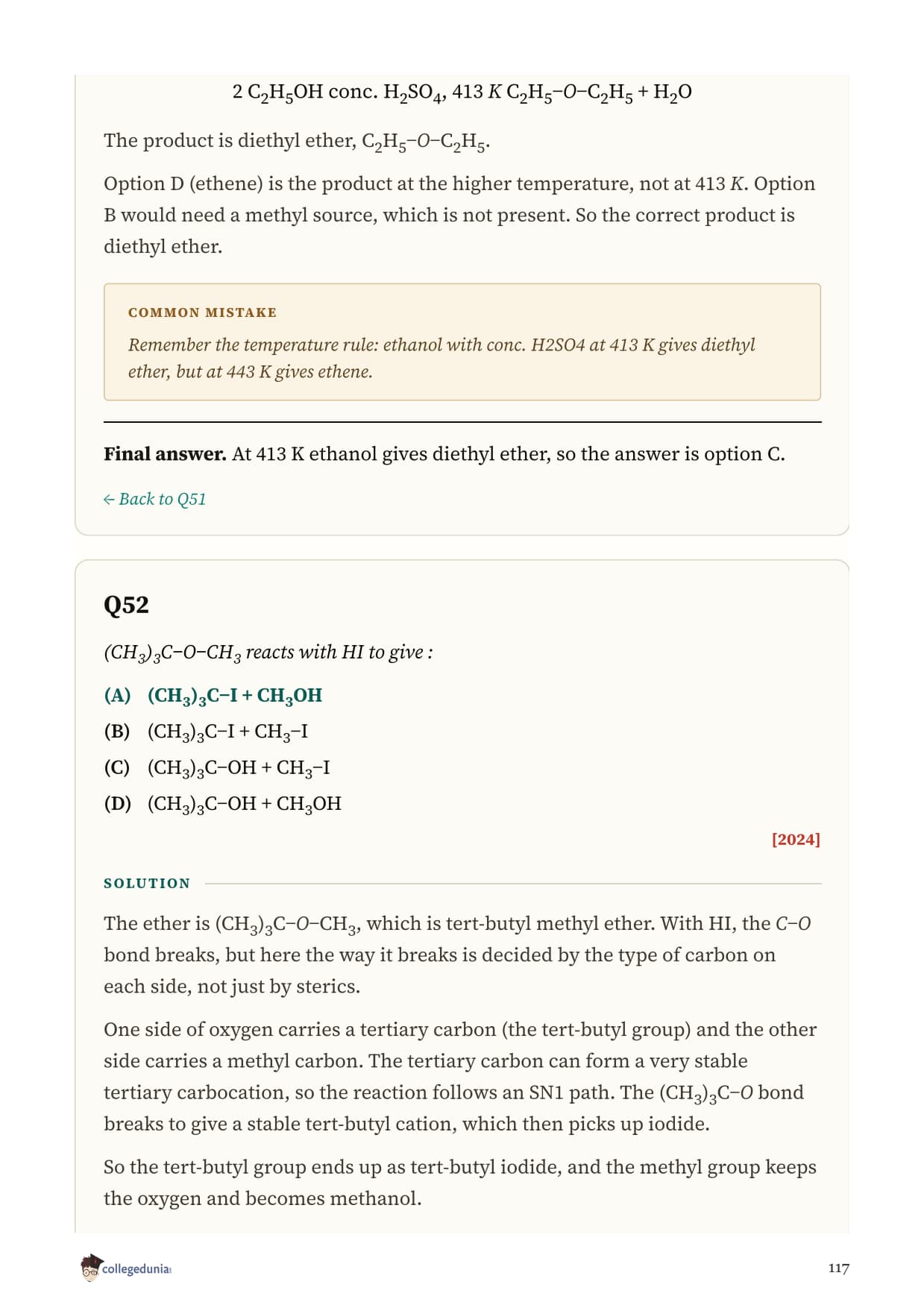
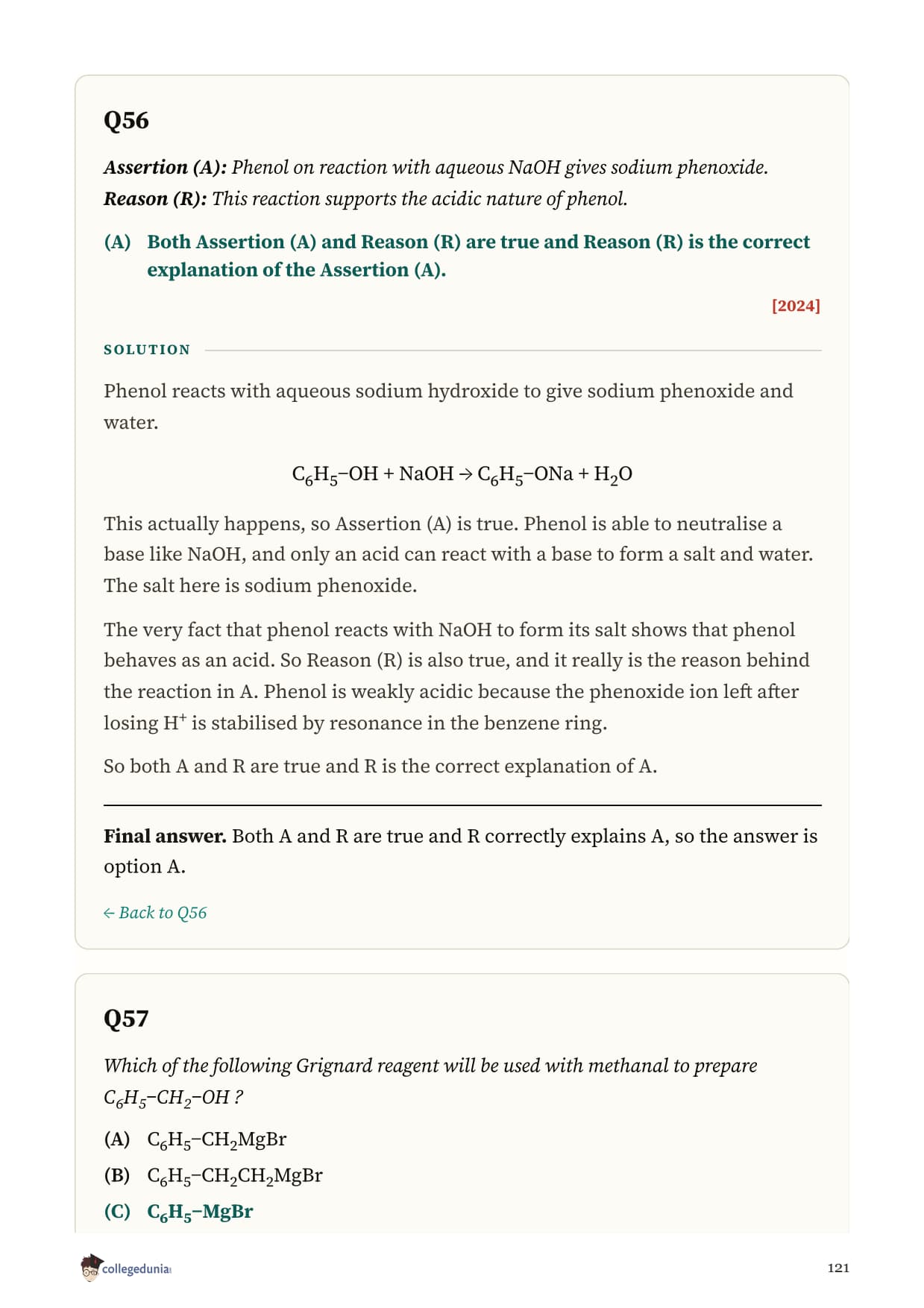
At low temperature, phenol reacts with dil. HNO 3 to yield
- 2, 4, 6-Trinitrophenol
- o-Nitrophenol only
- p-Nitrophenol only
- ortho- and para-nitrophenol
[2026 • 1 mark]
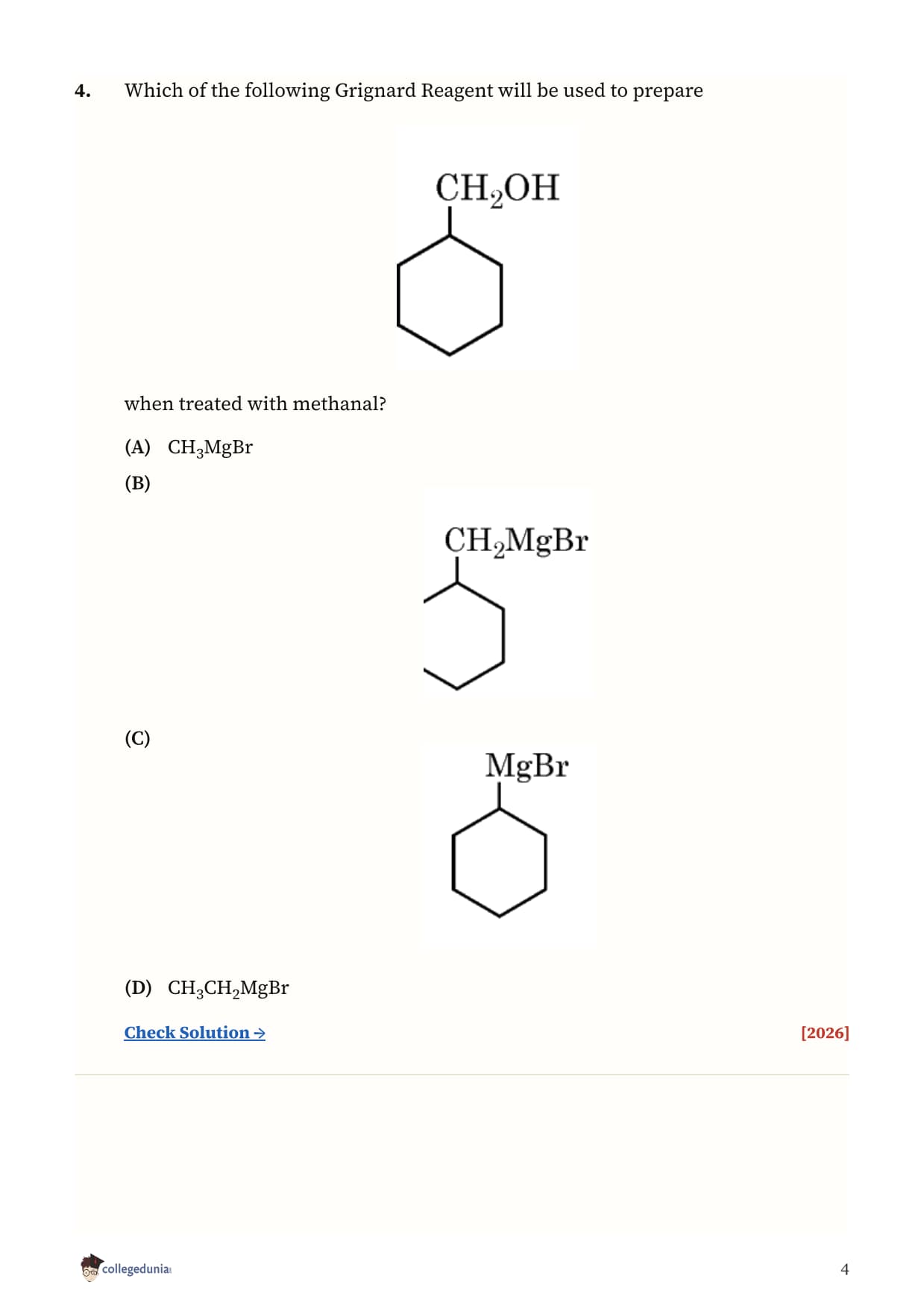
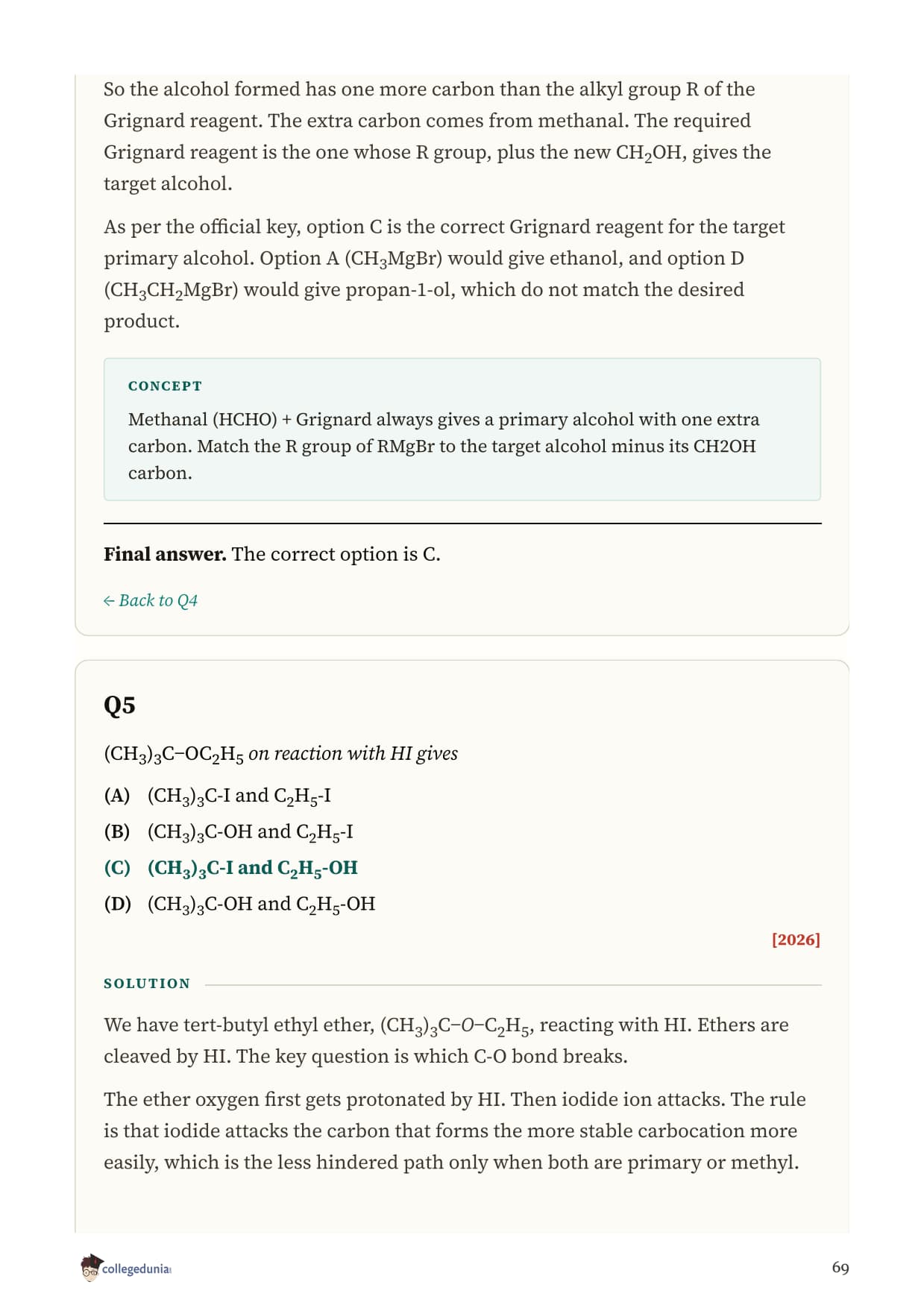
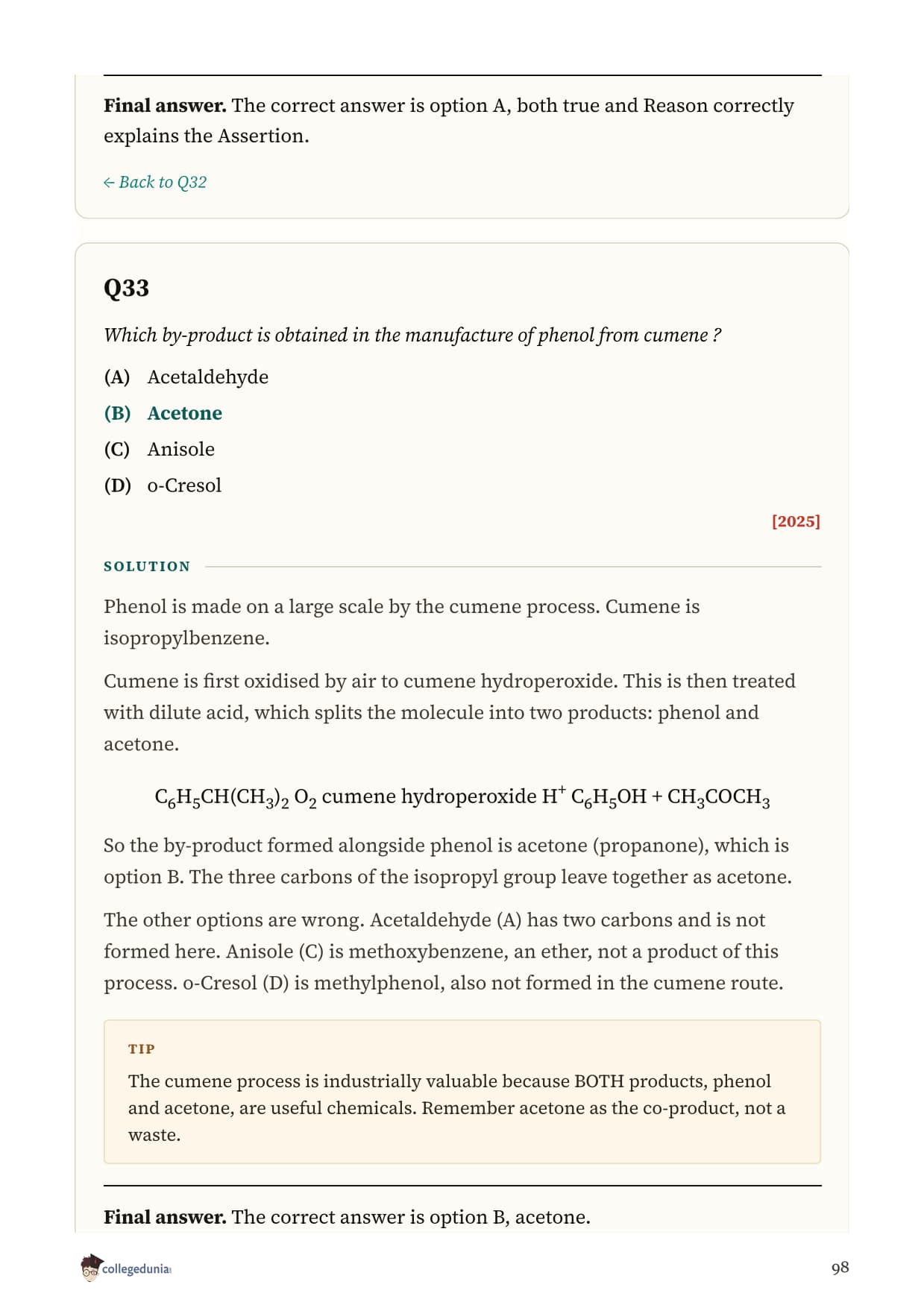
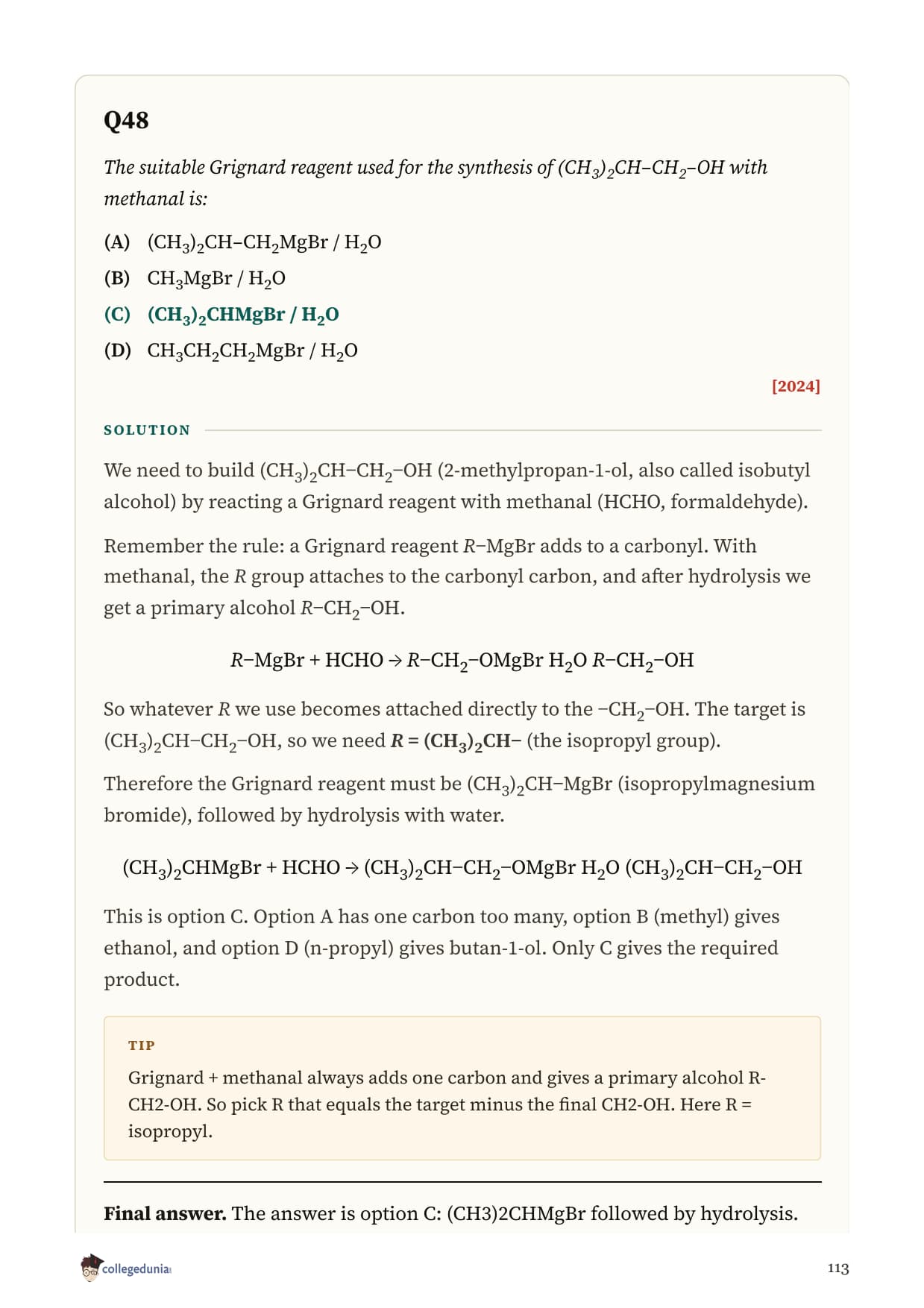
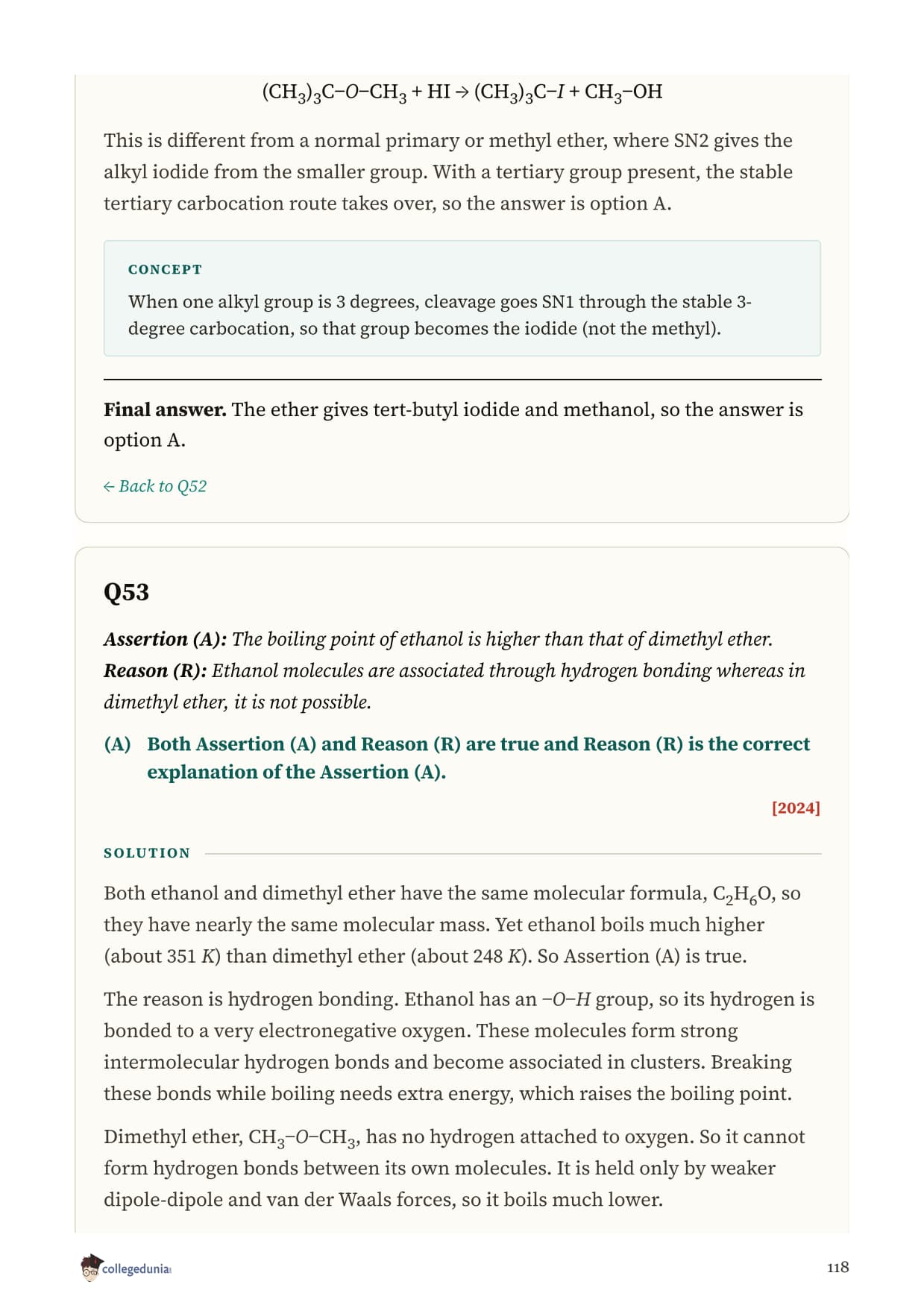
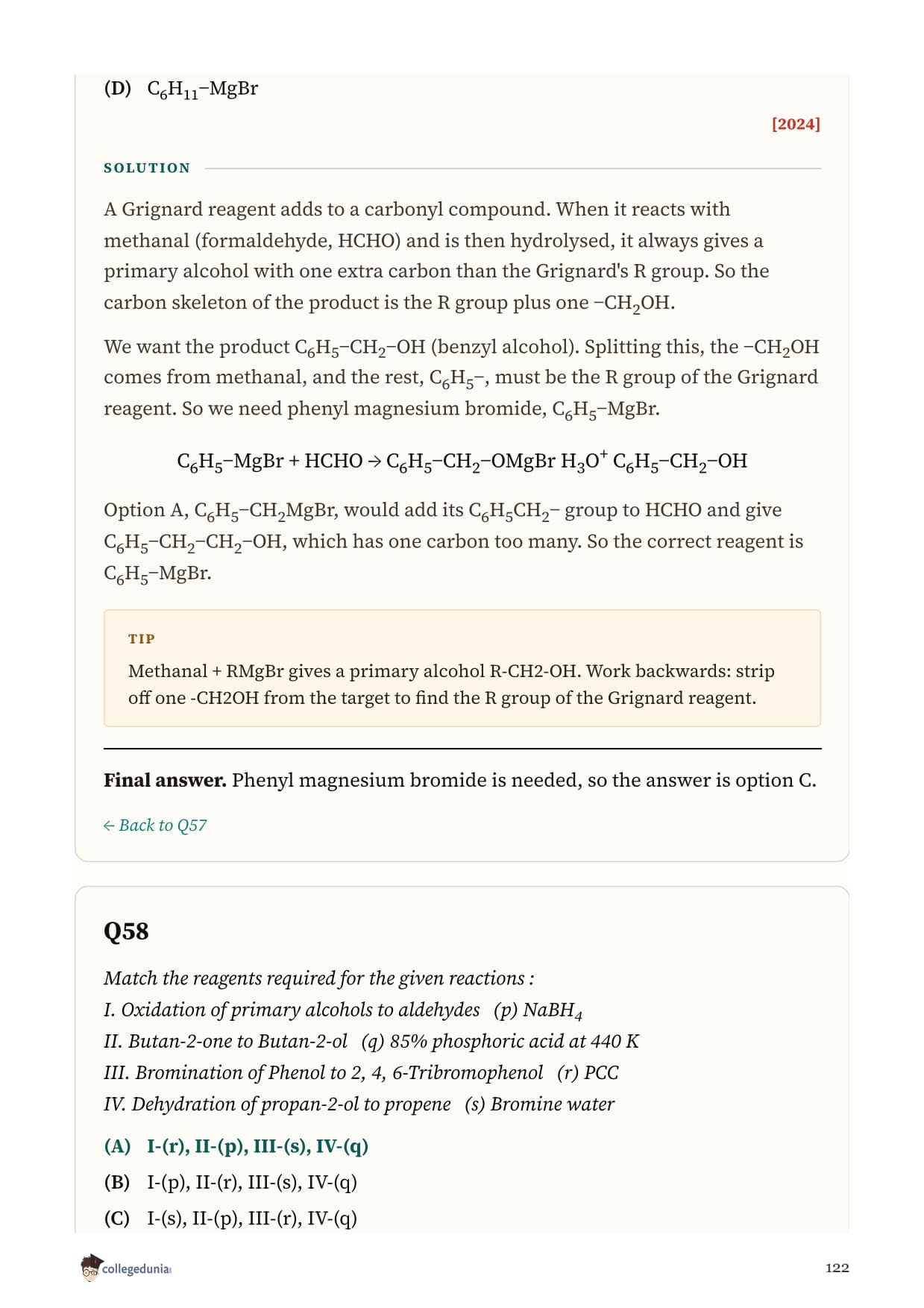
Which of the following Grignard Reagent will be used to prepare when treated with methanal?
- CH 3 MgBr
- CH 3 CH 2 MgBr
[2026 • 1 mark]
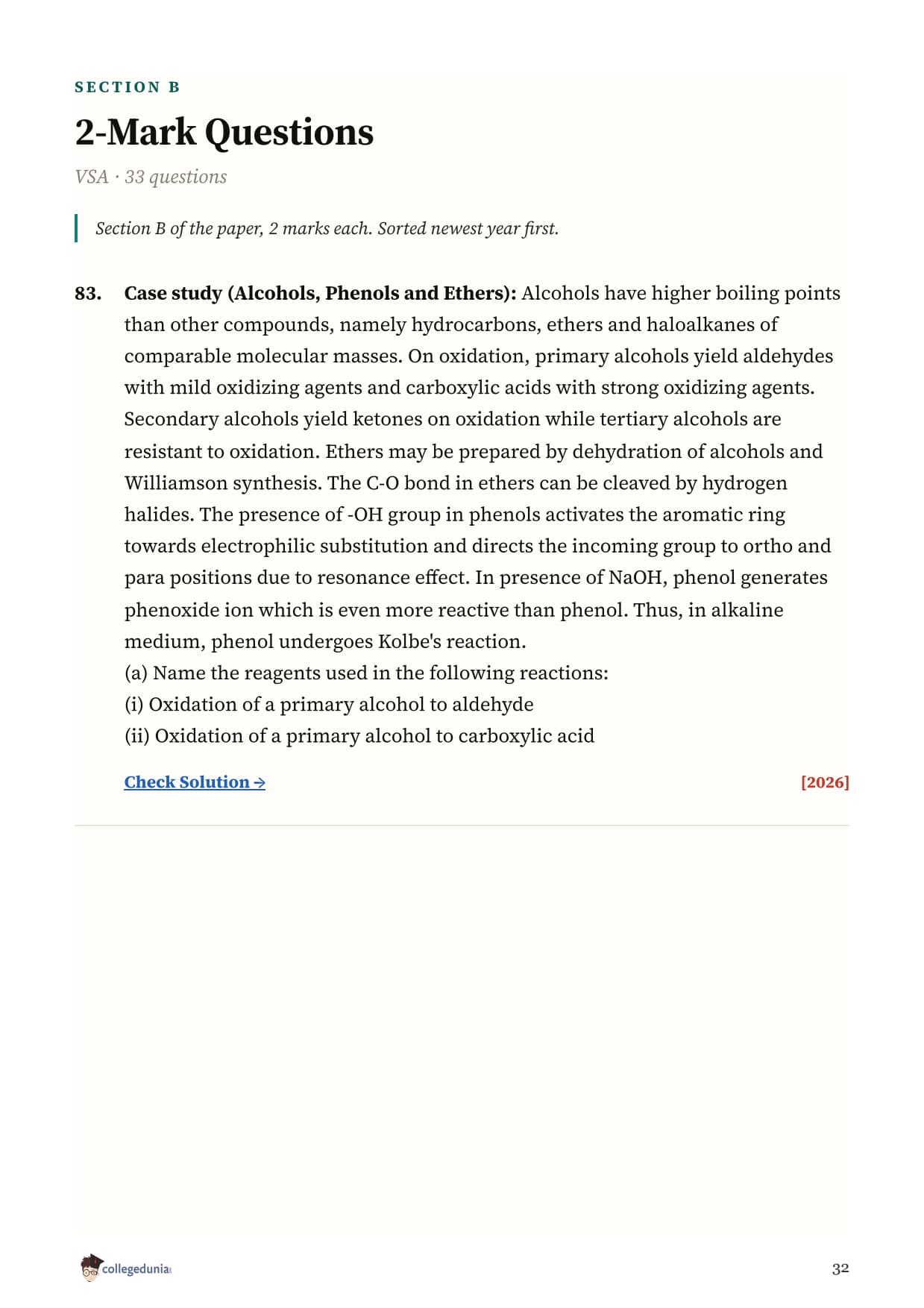
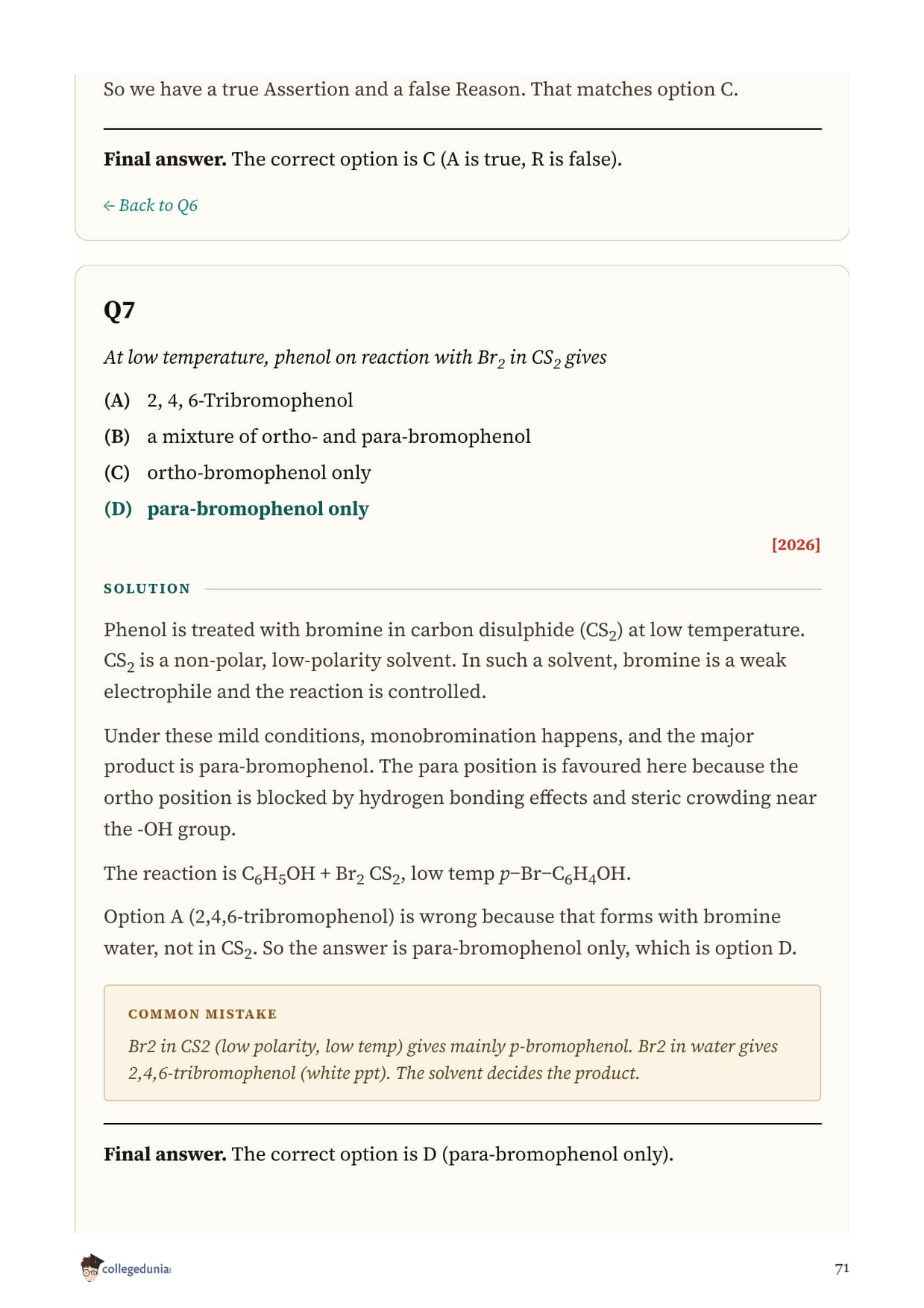
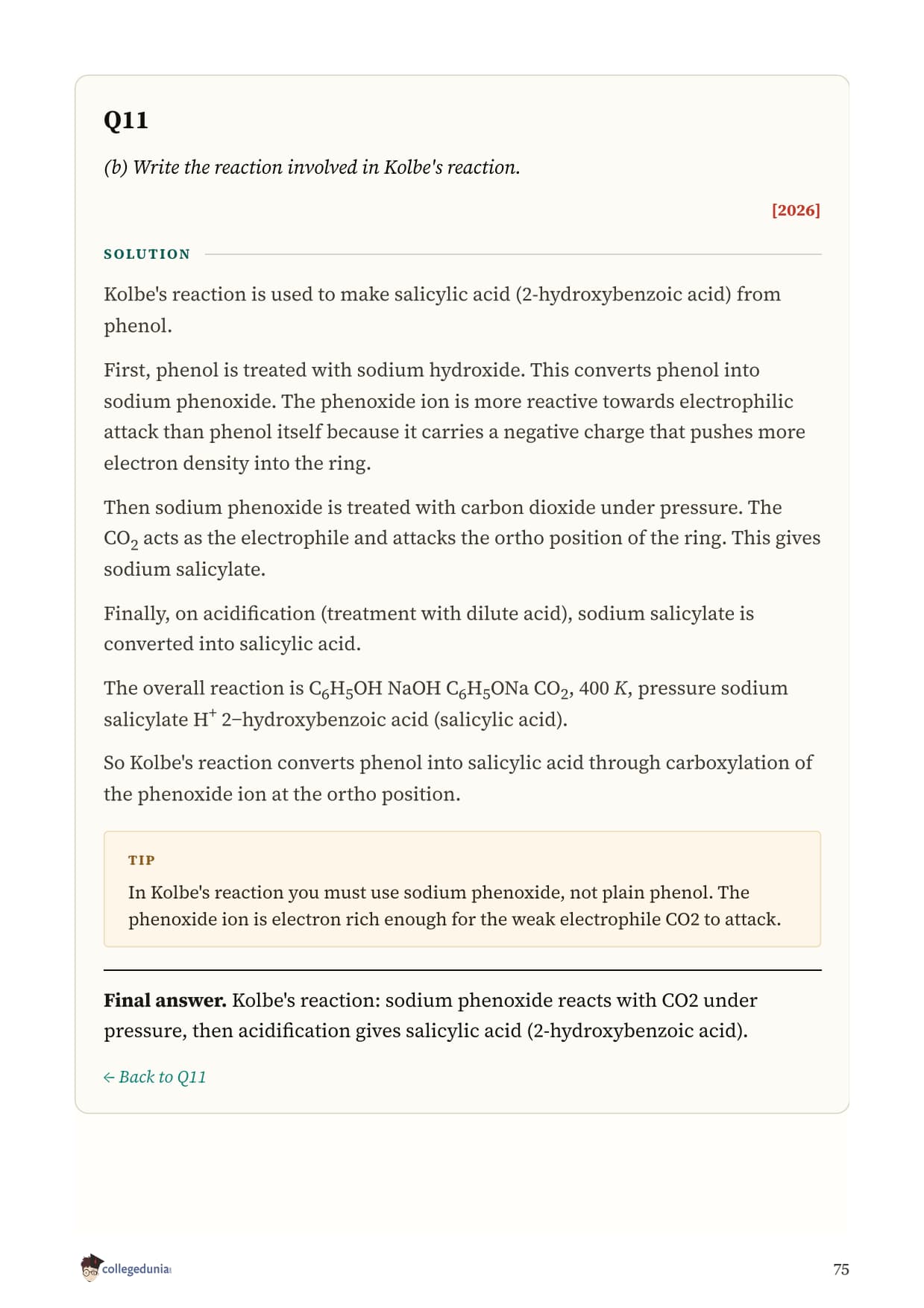
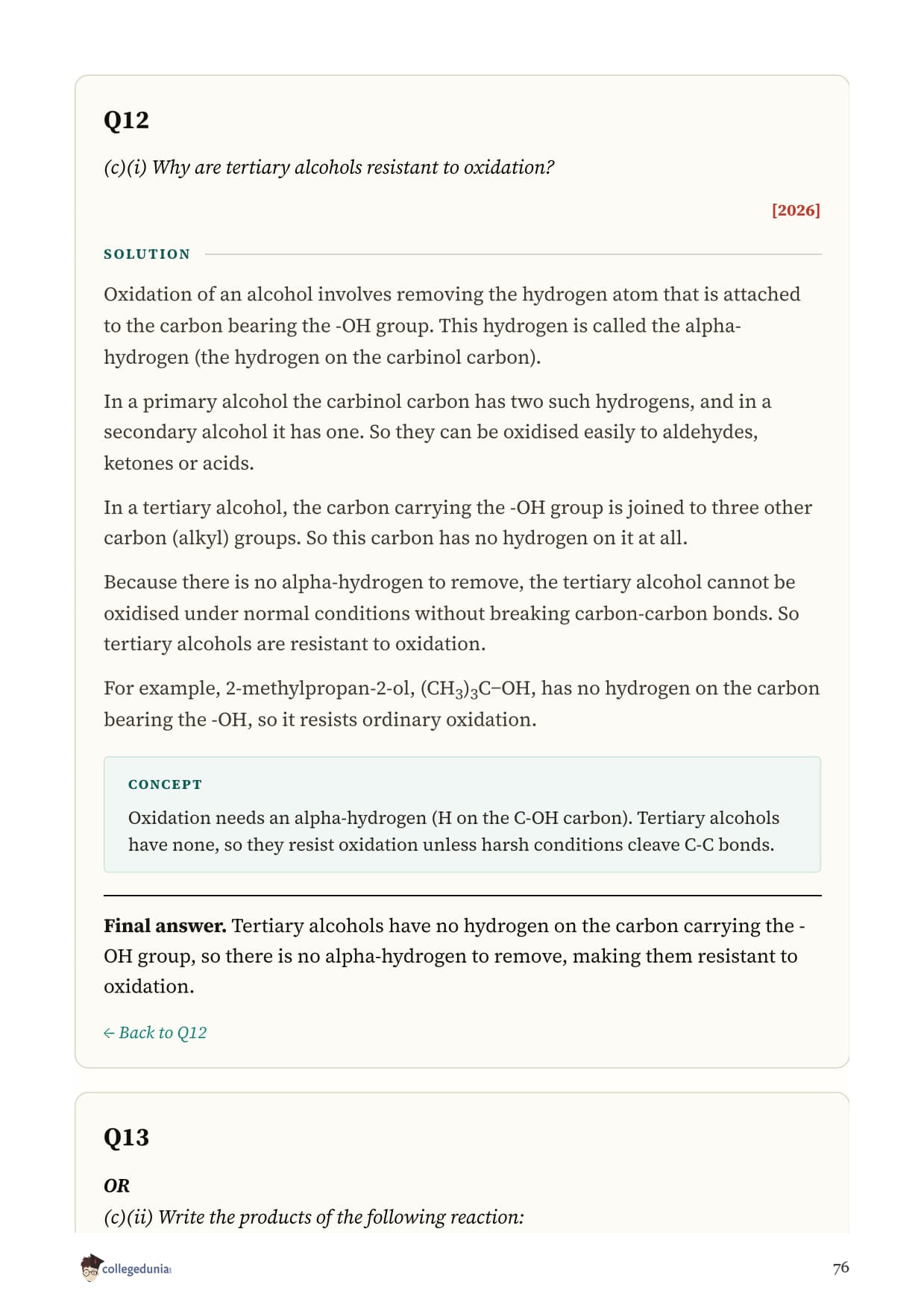
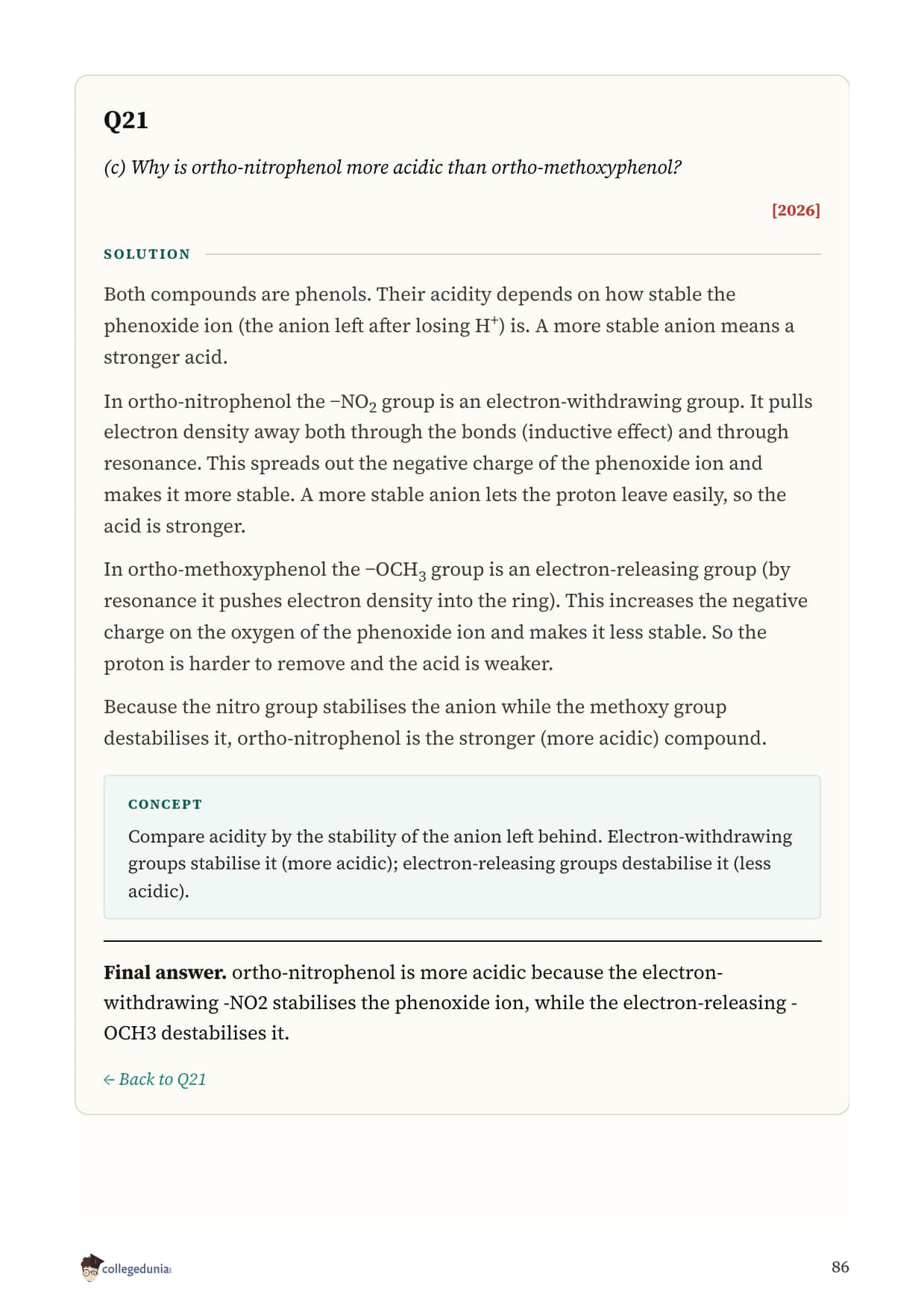
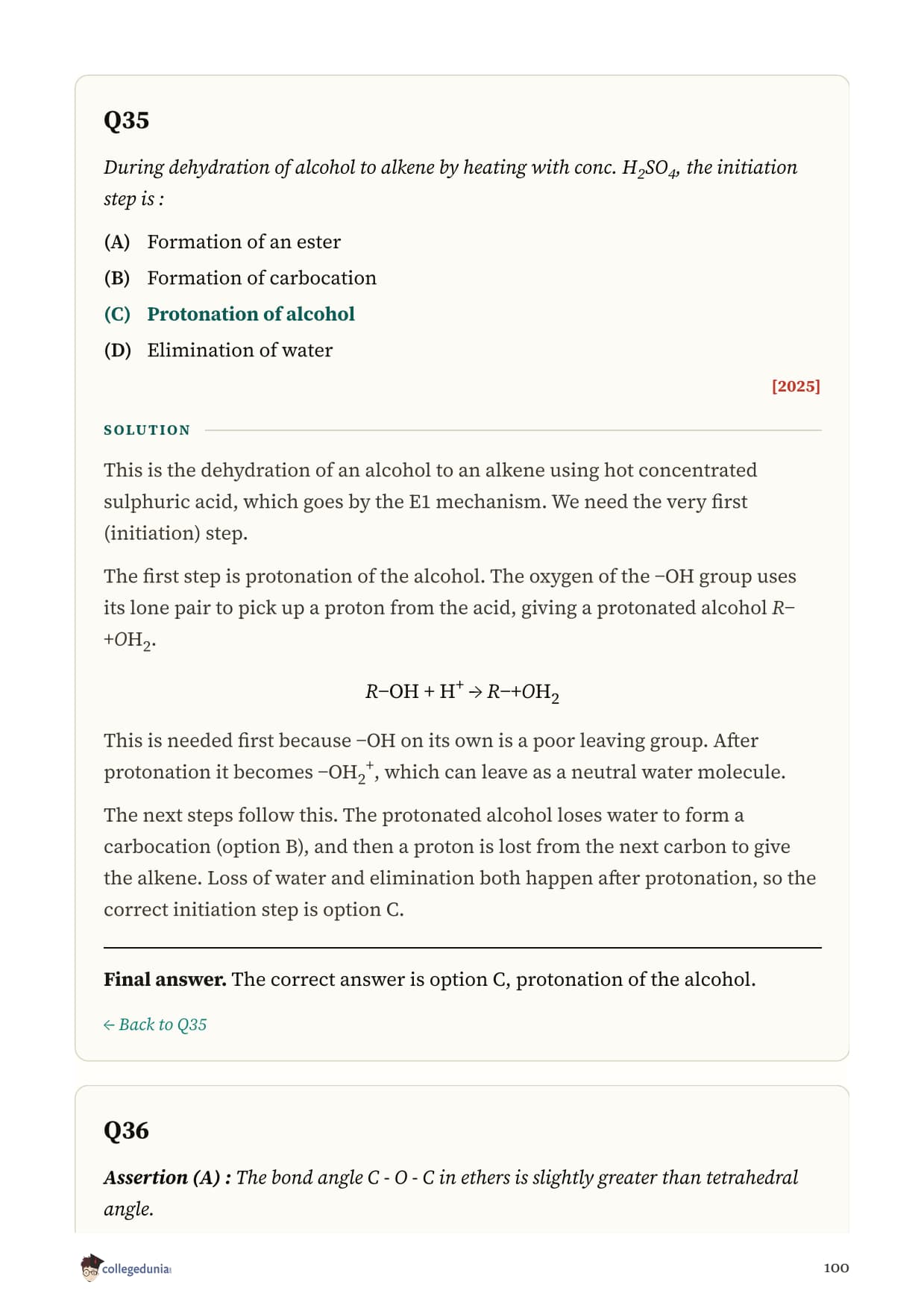
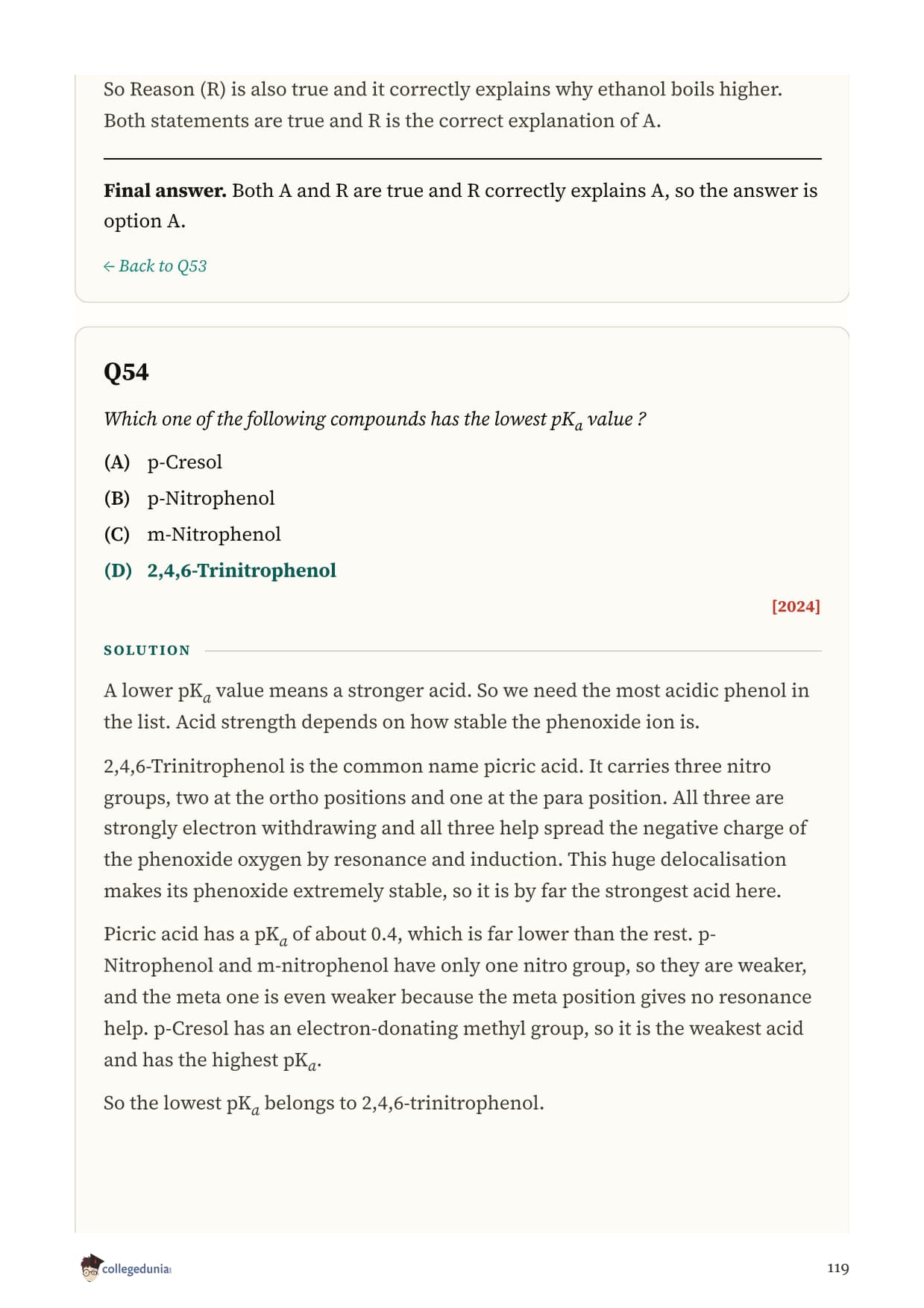
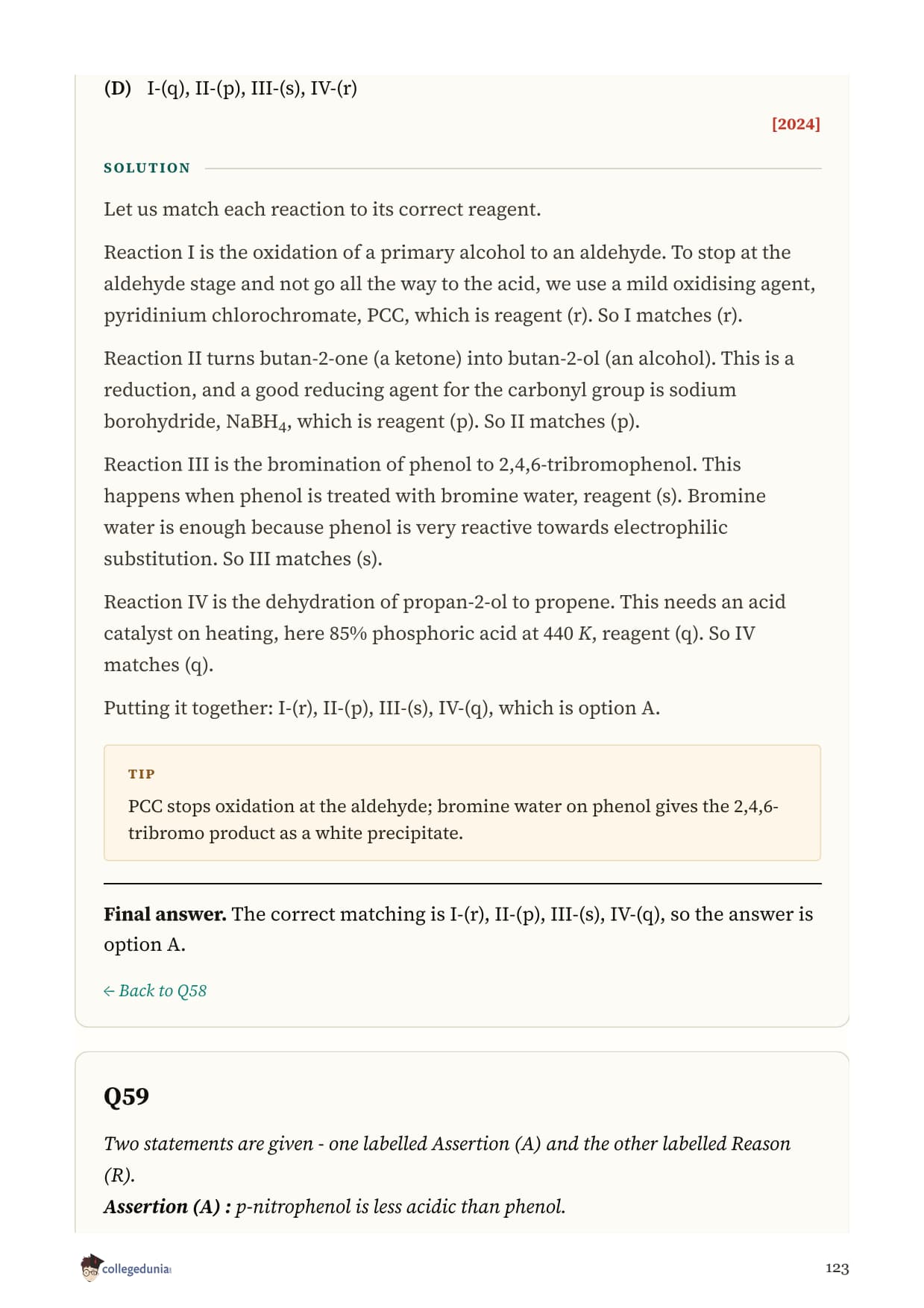
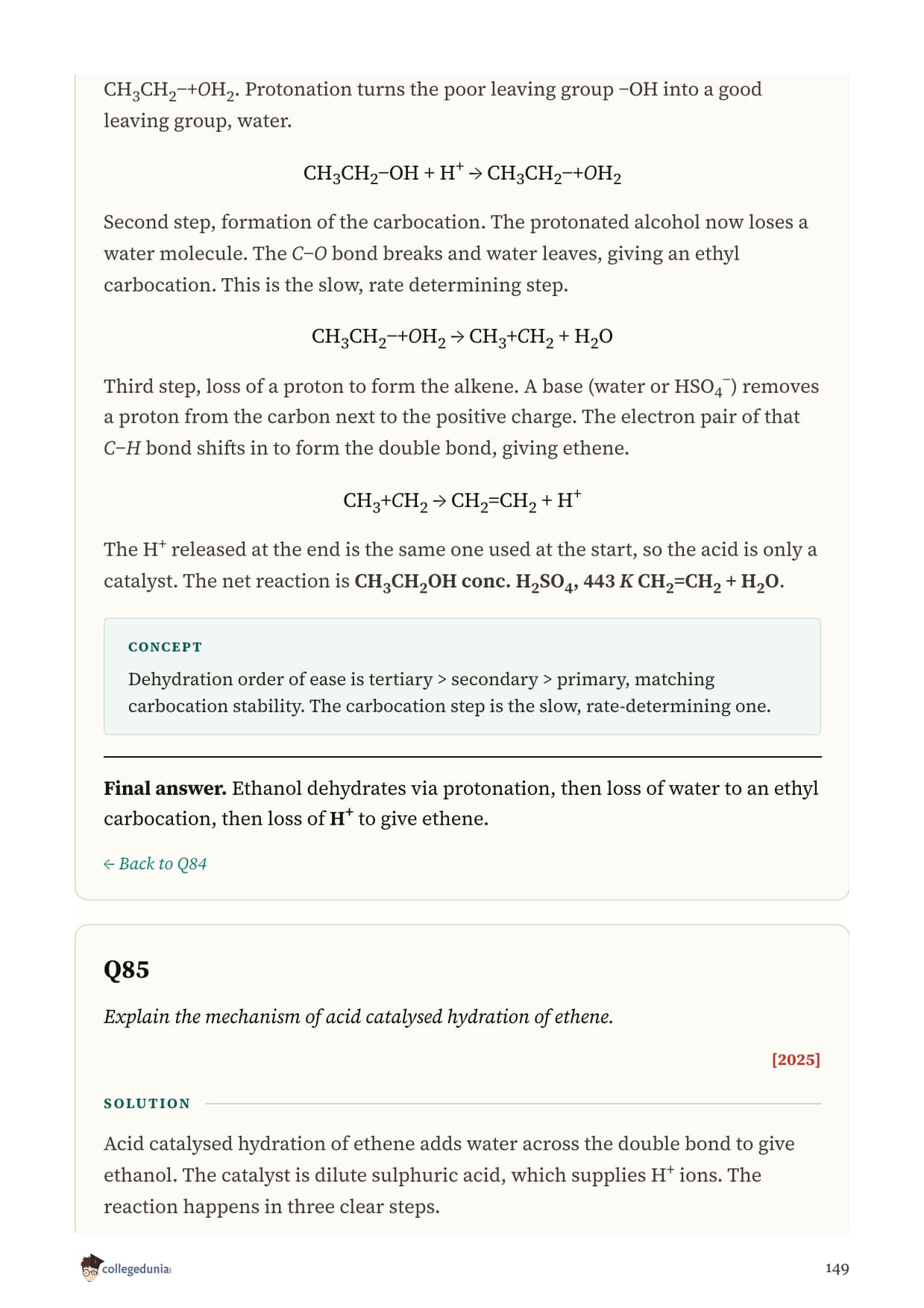
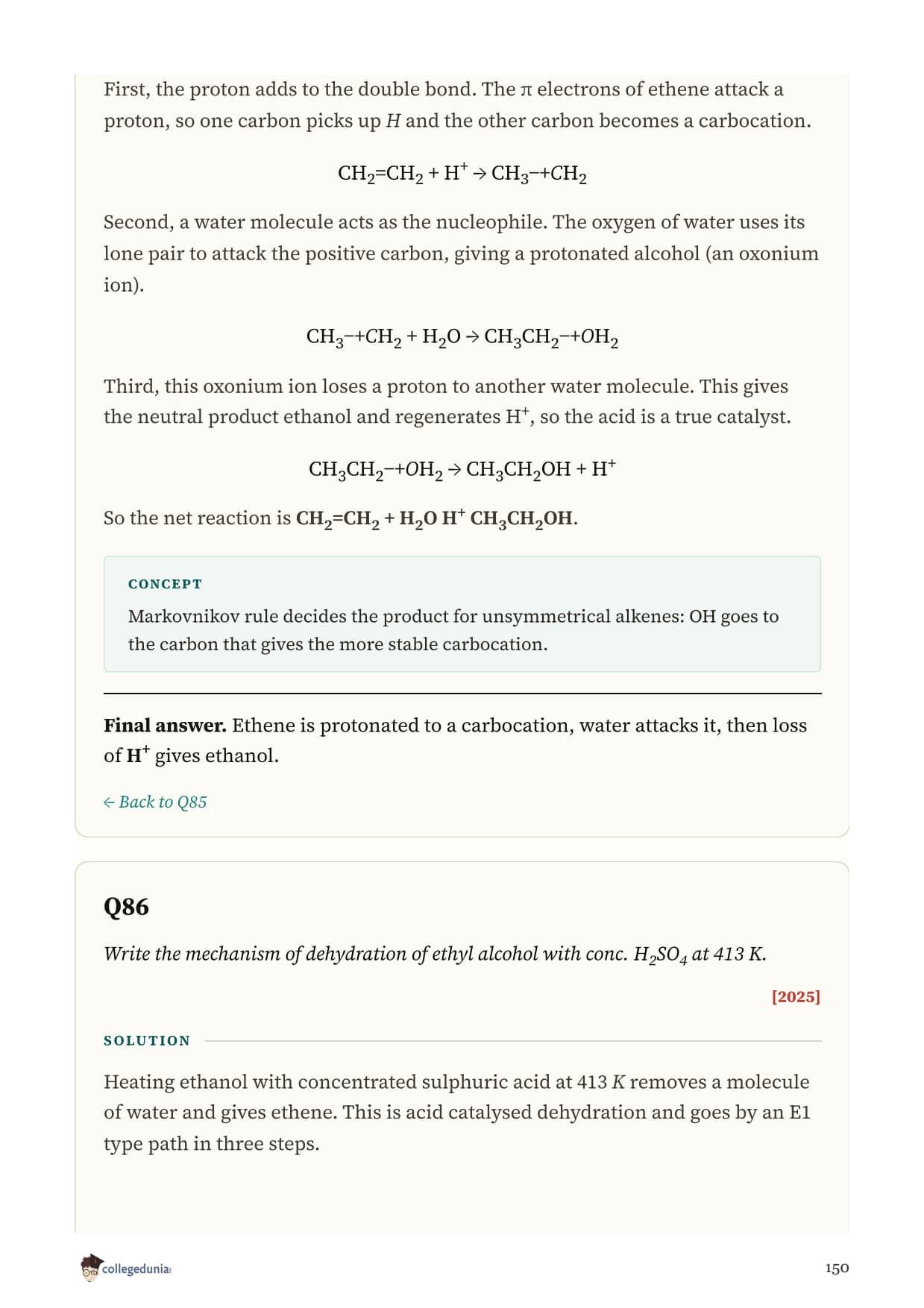
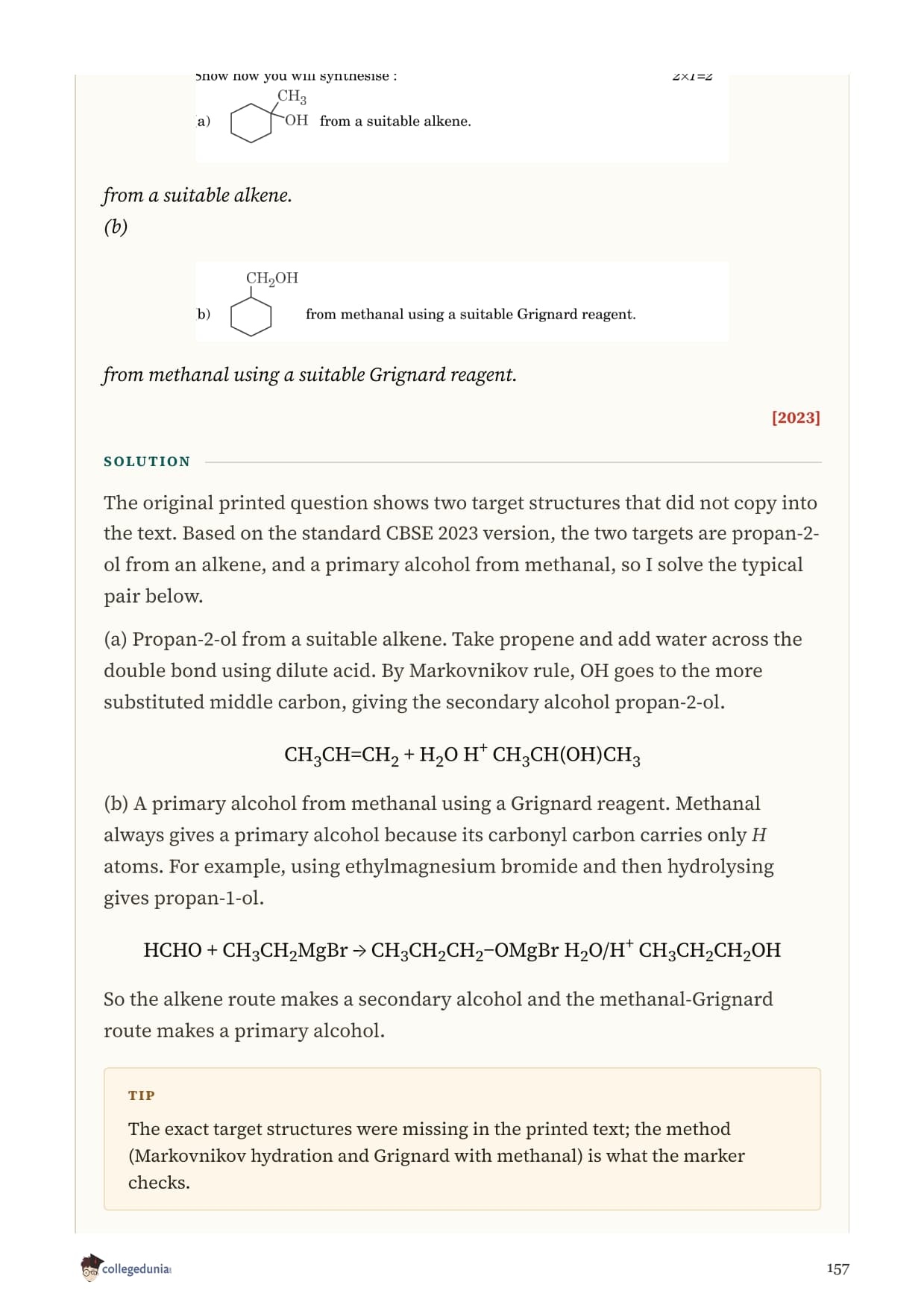
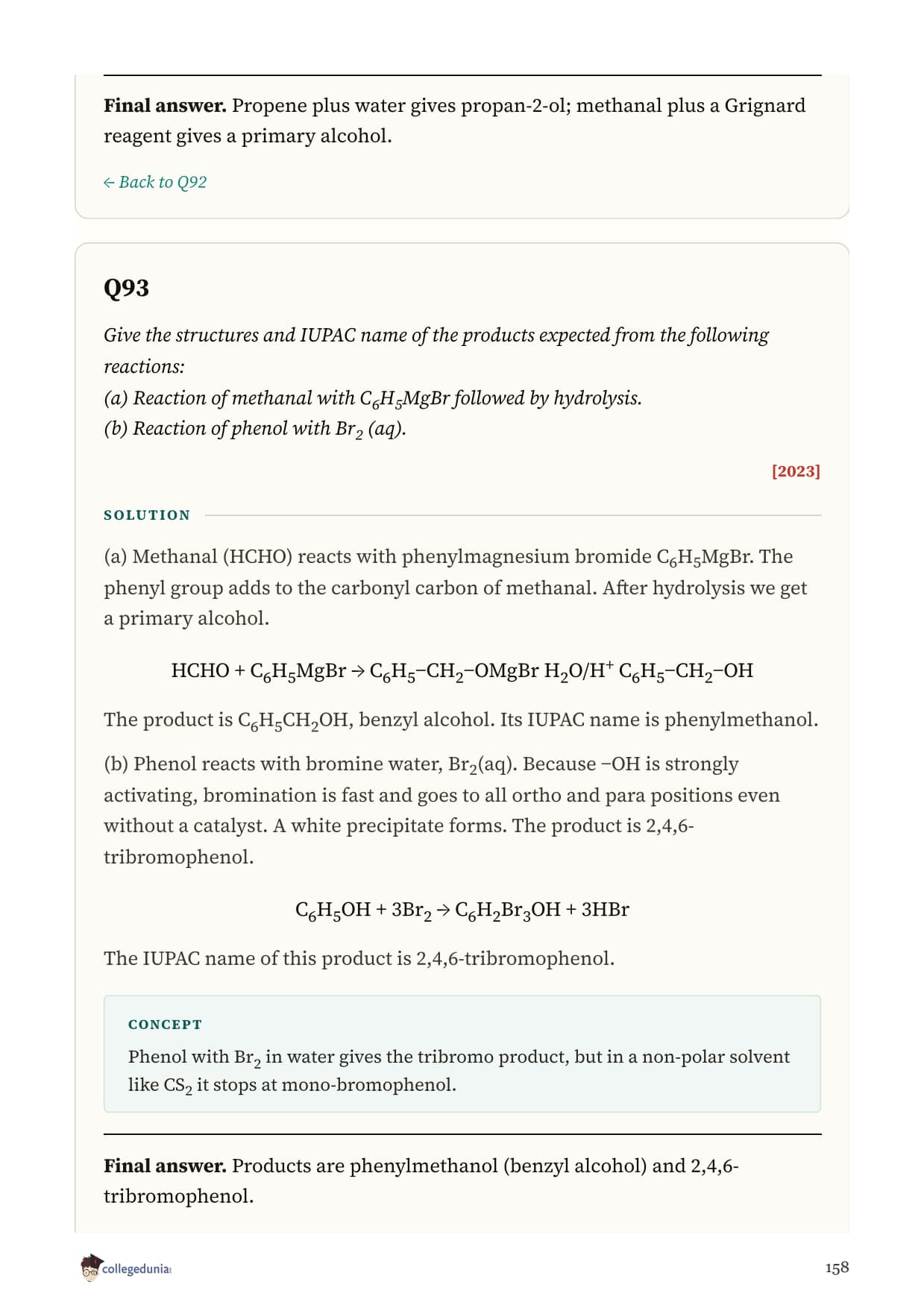
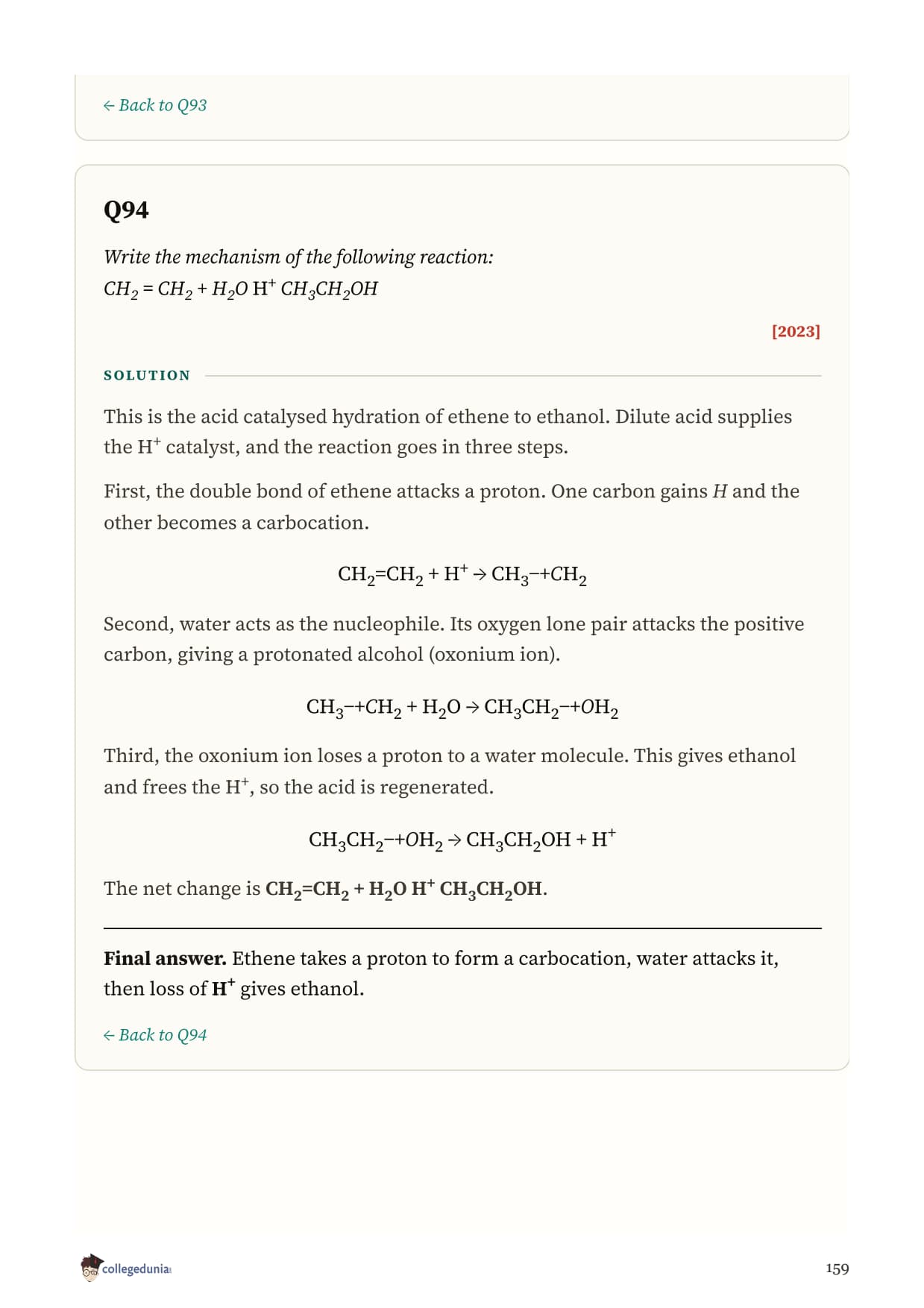
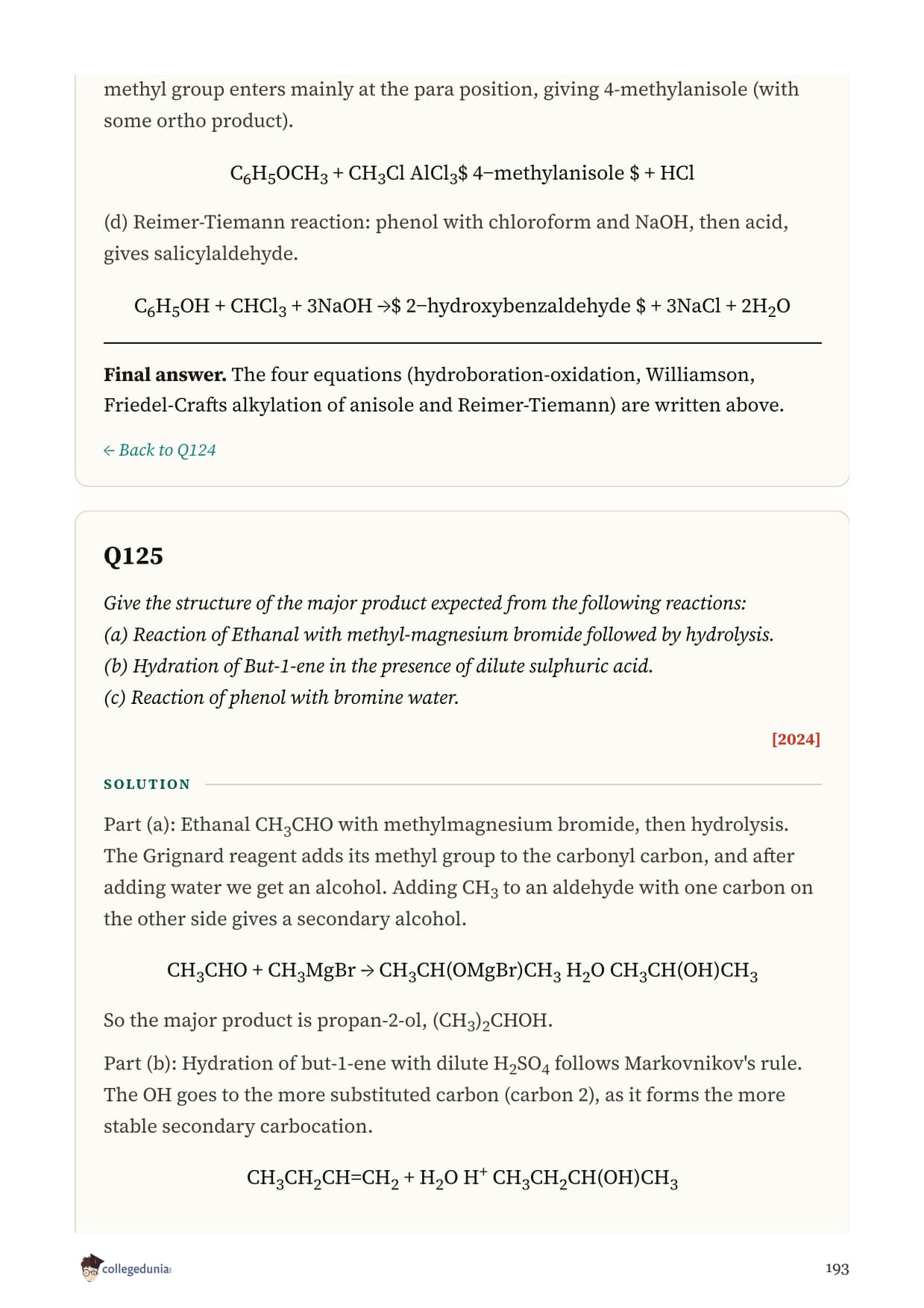
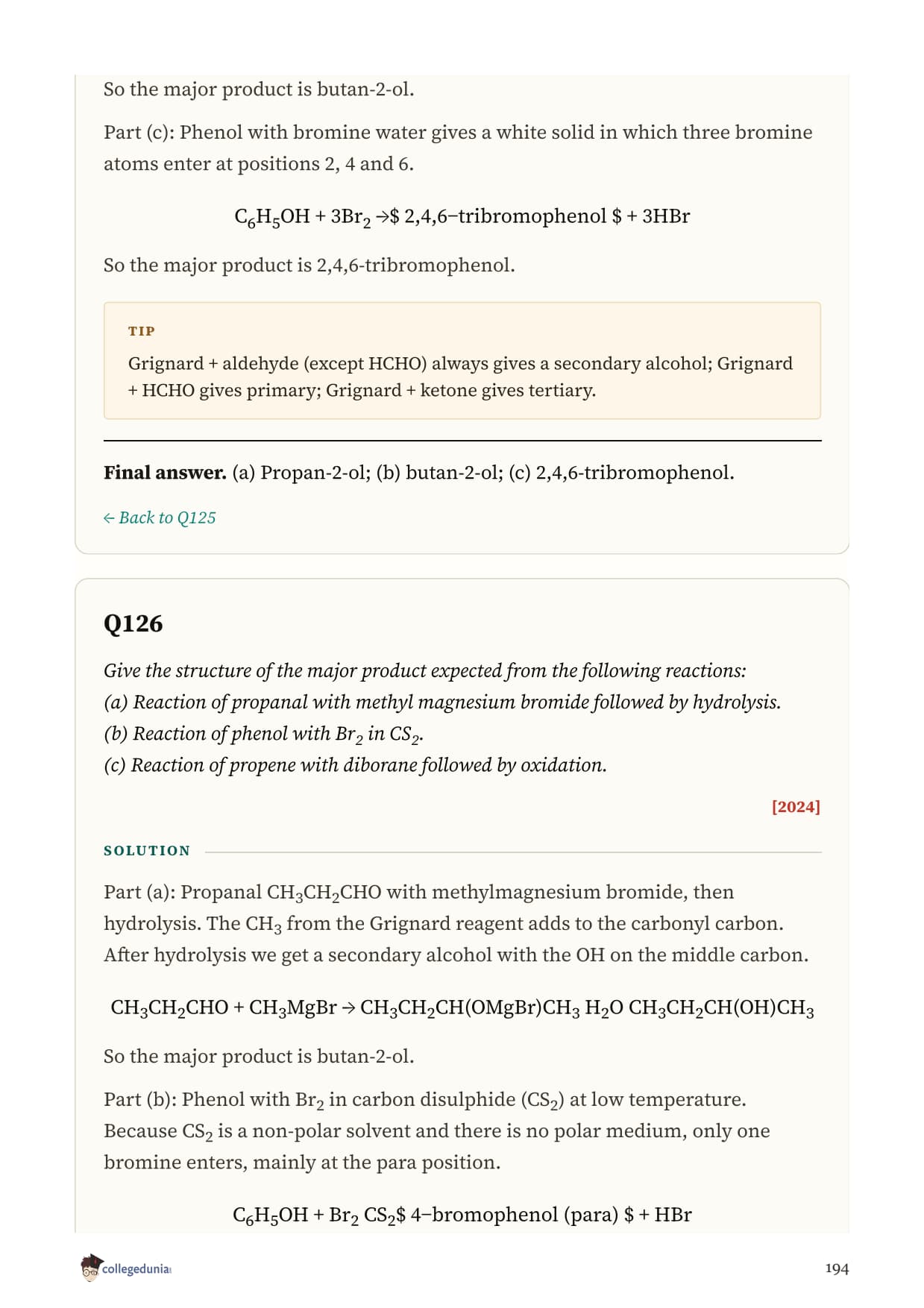
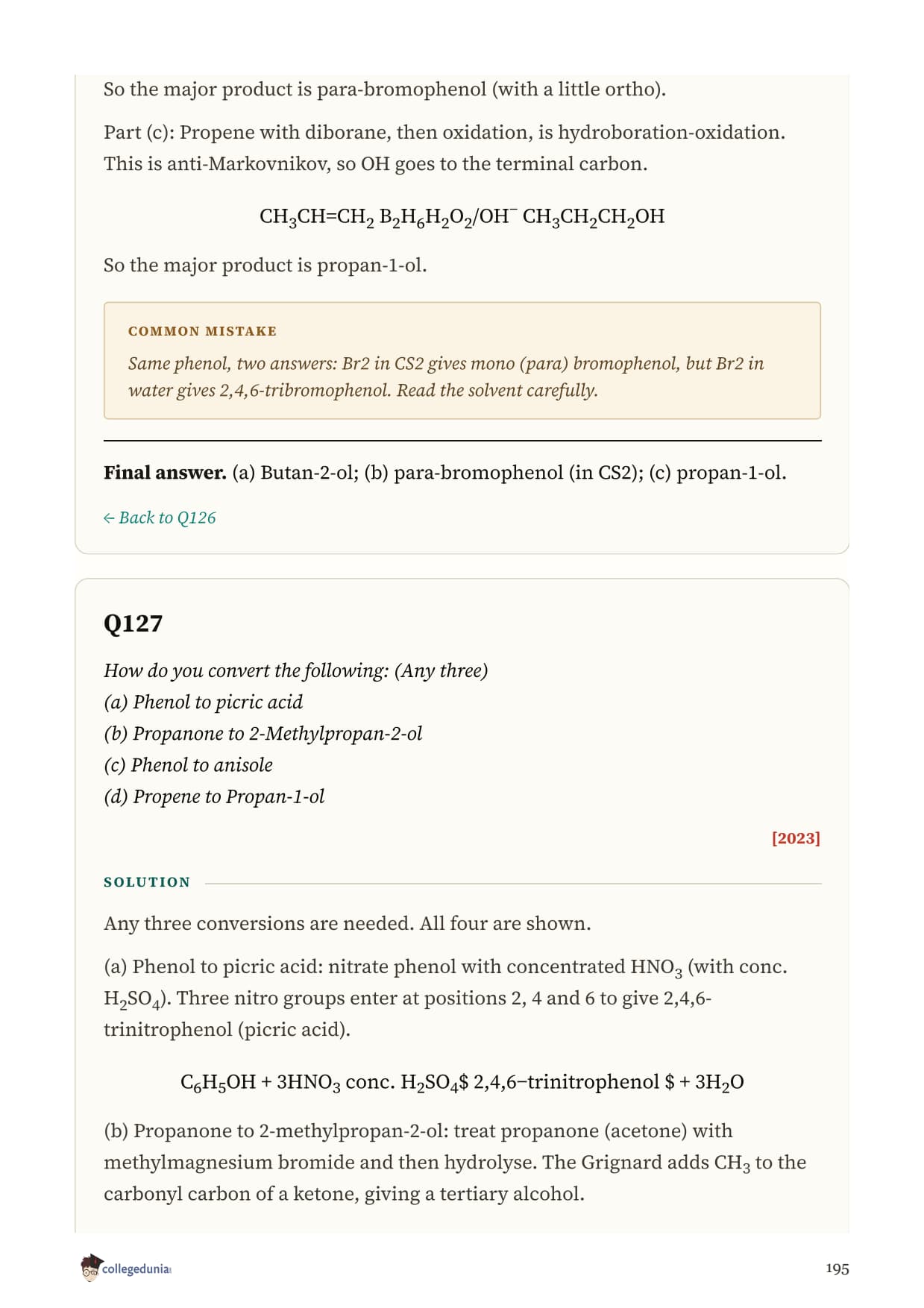
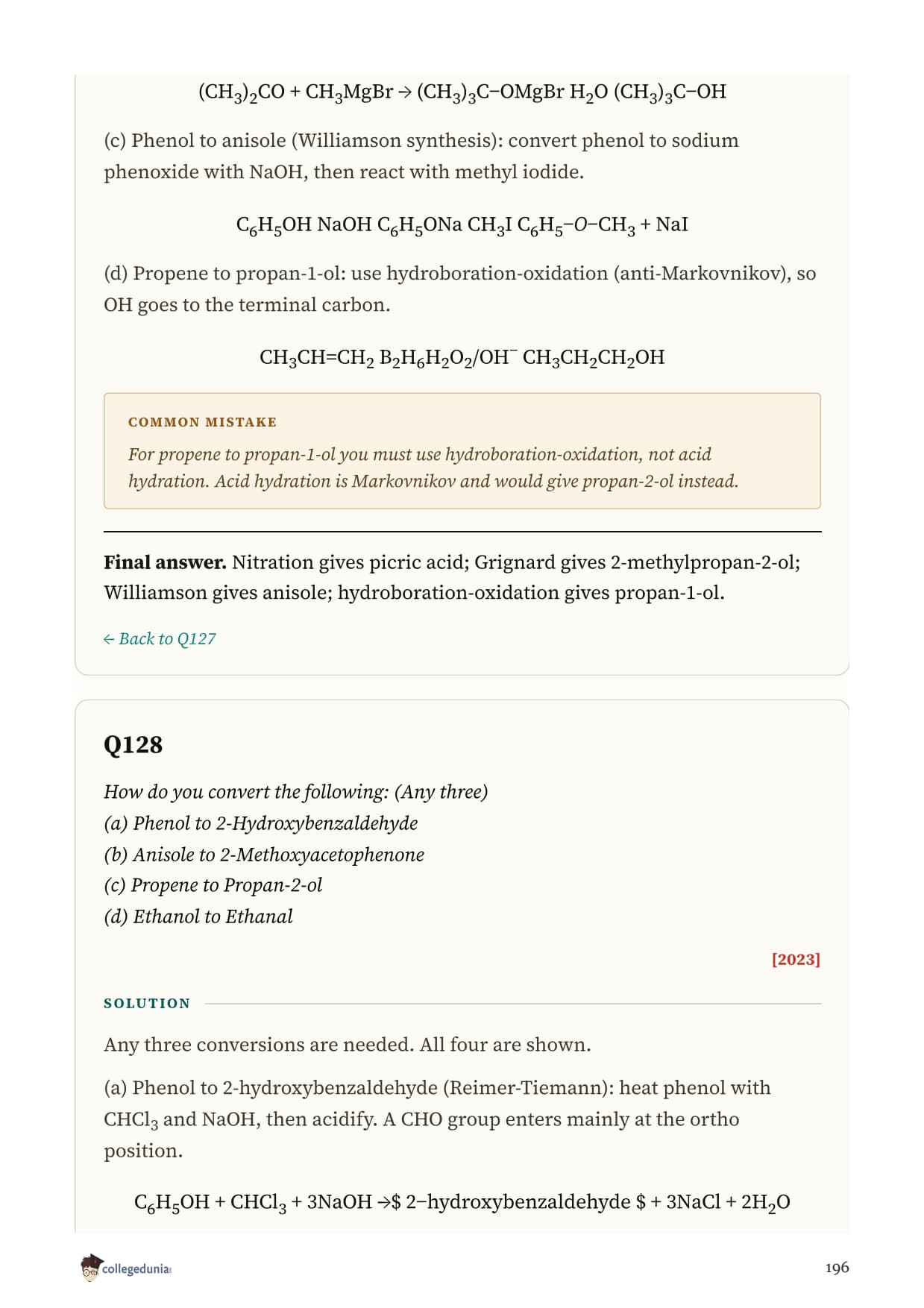
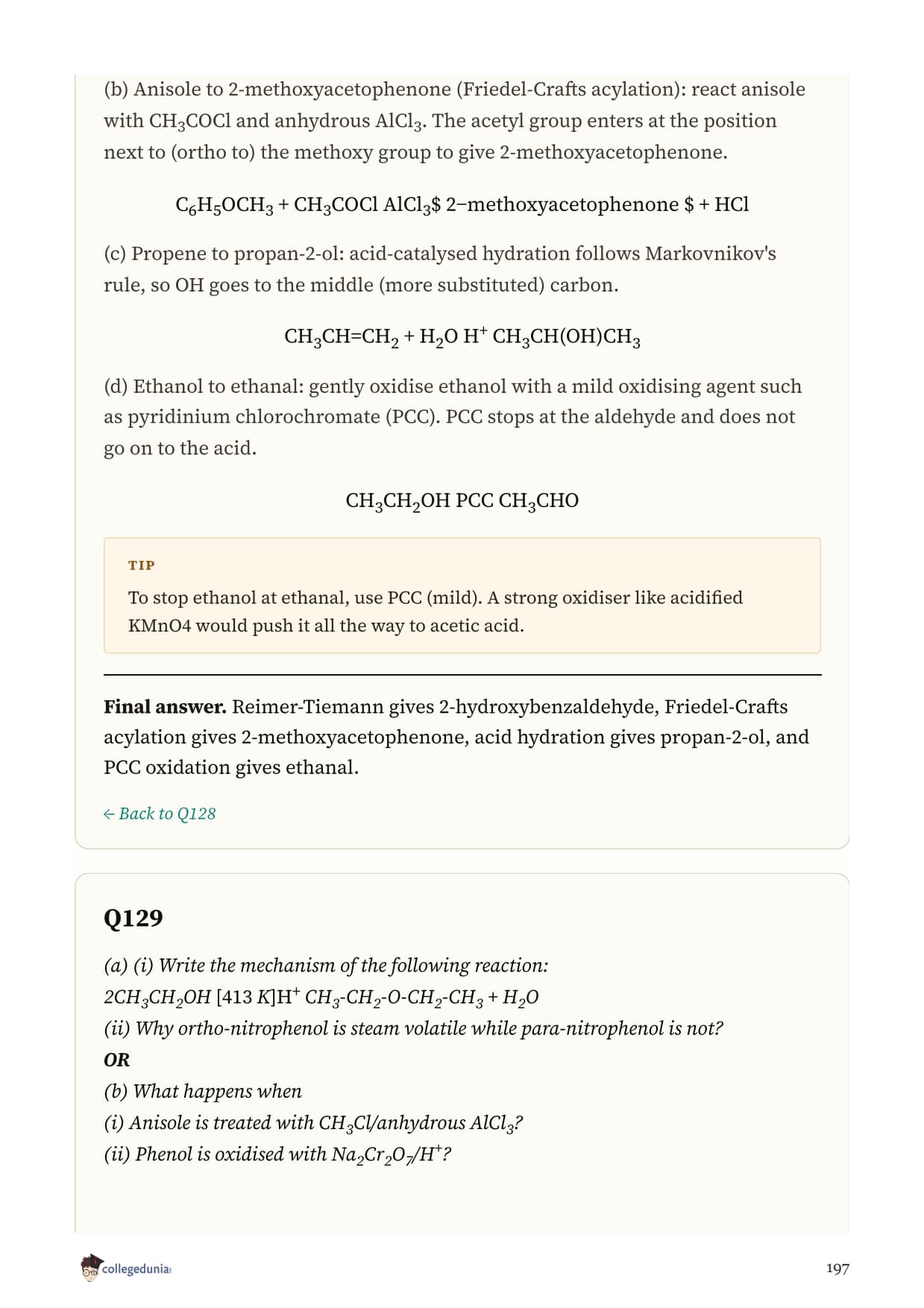
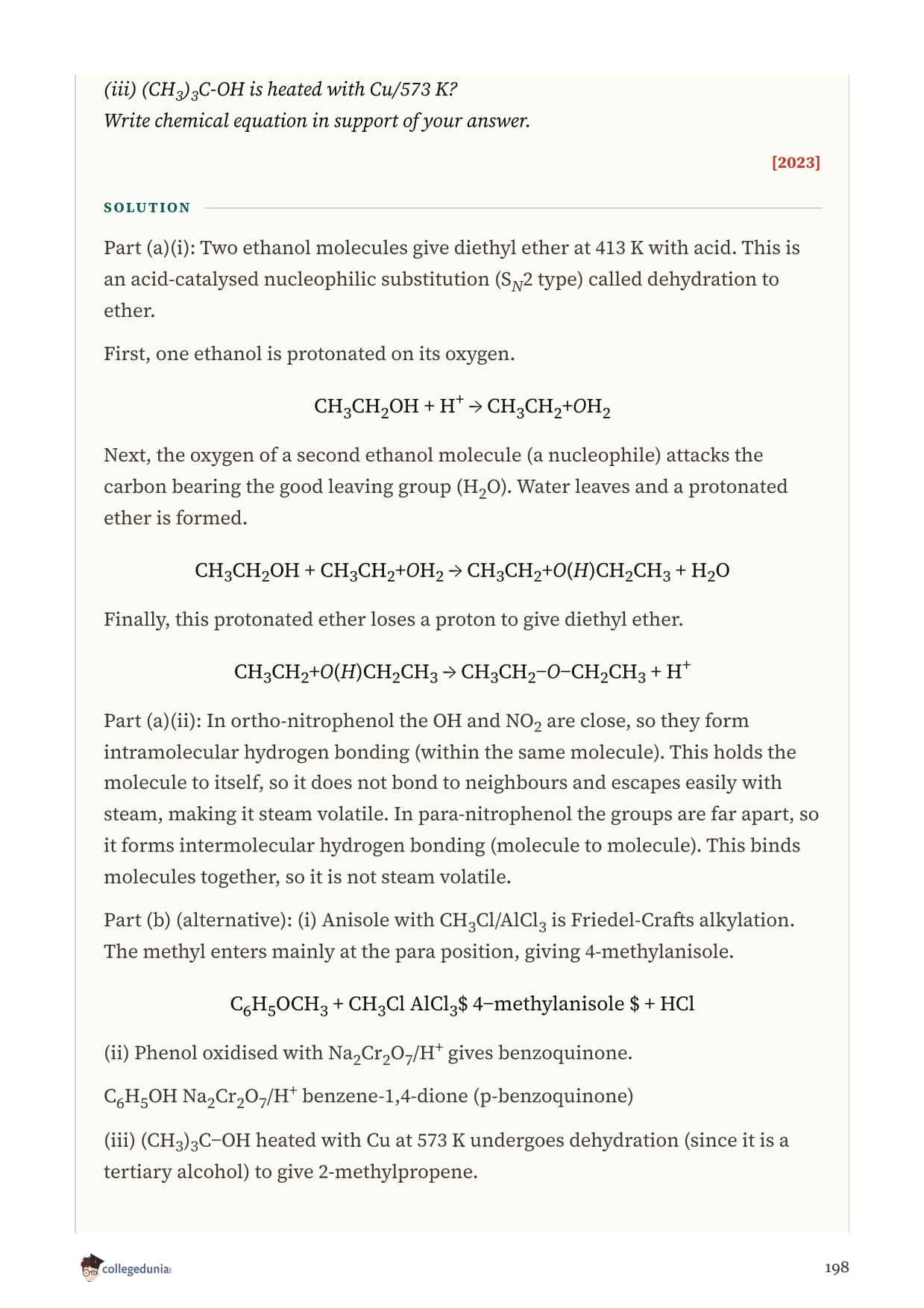
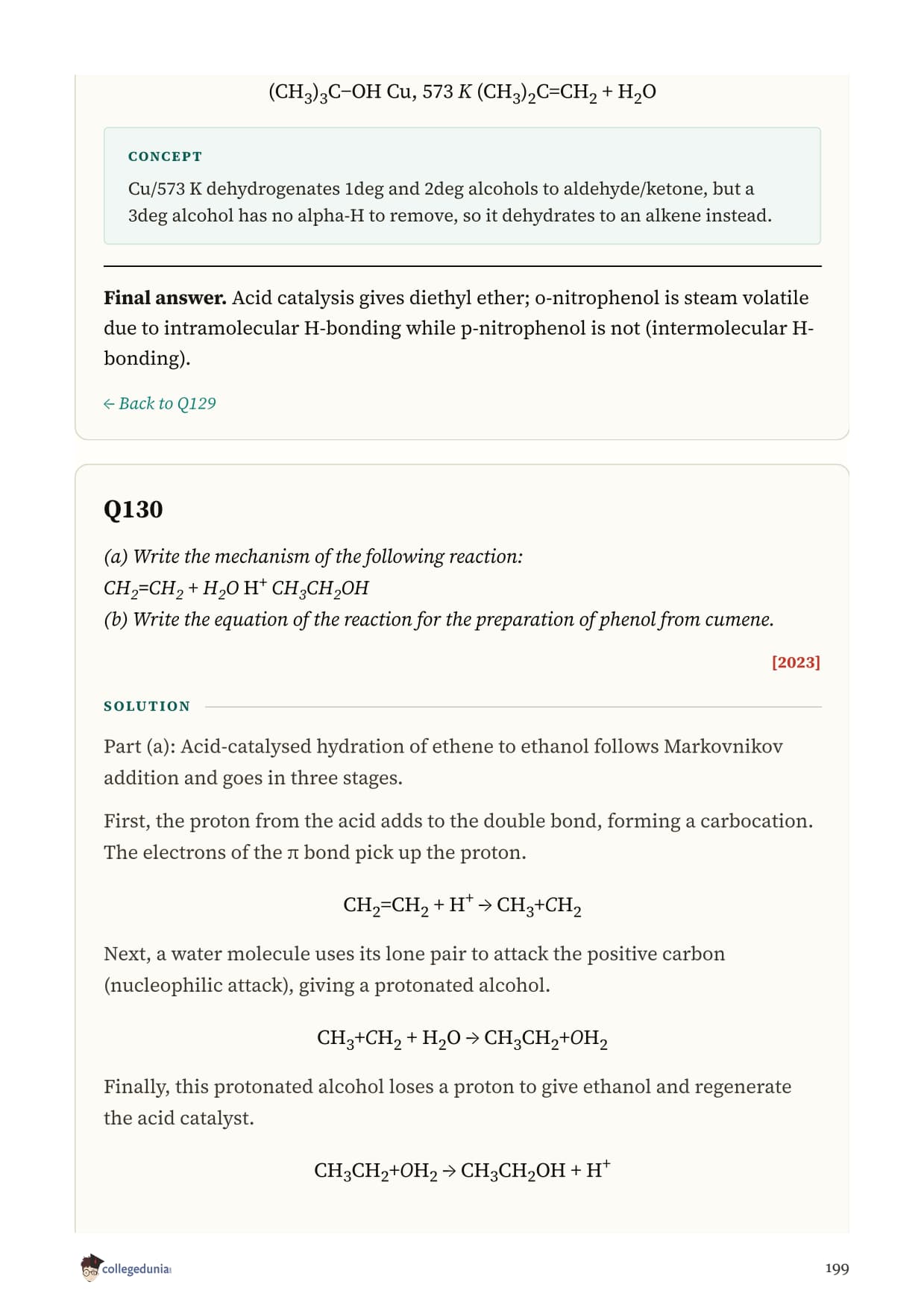
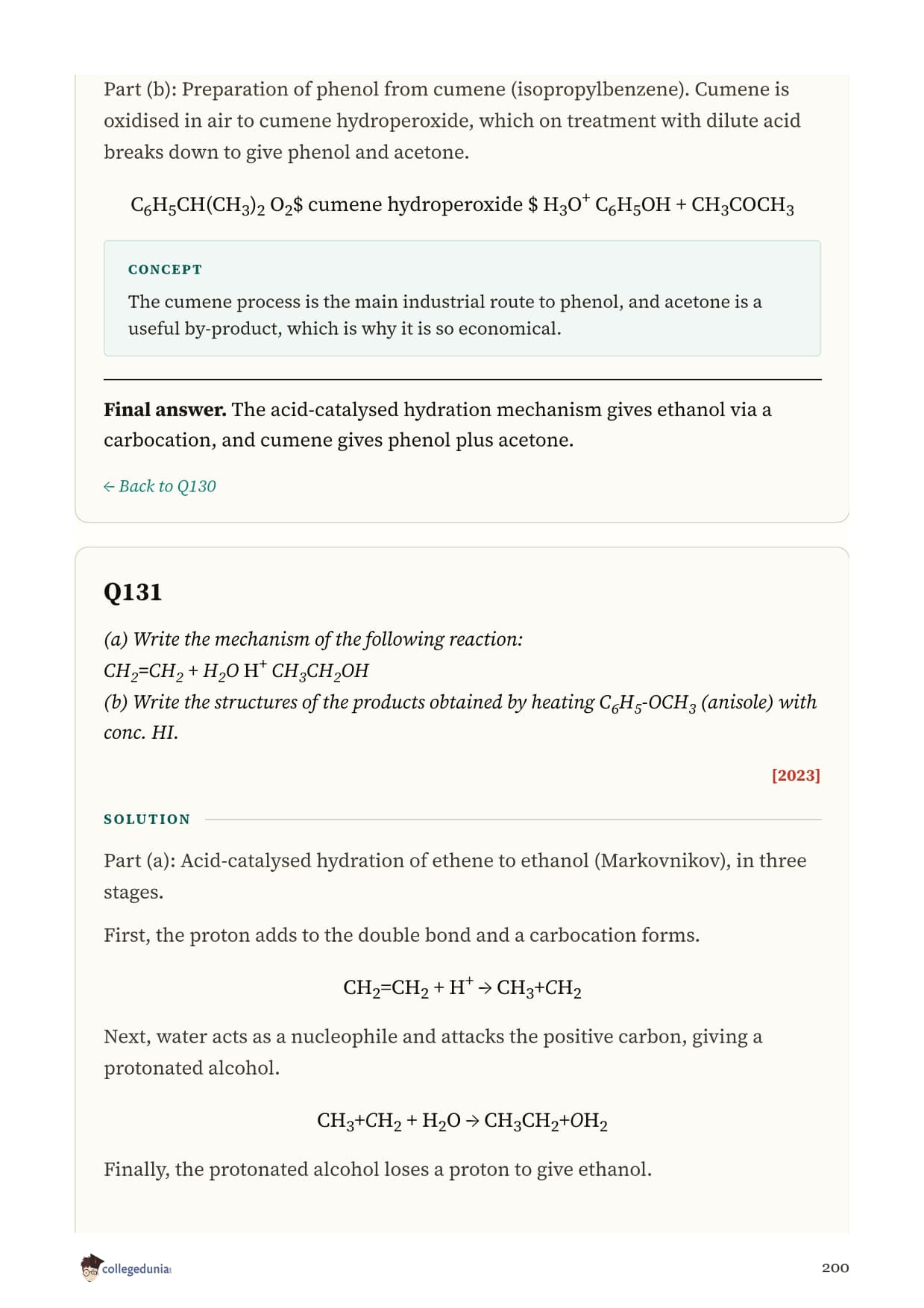
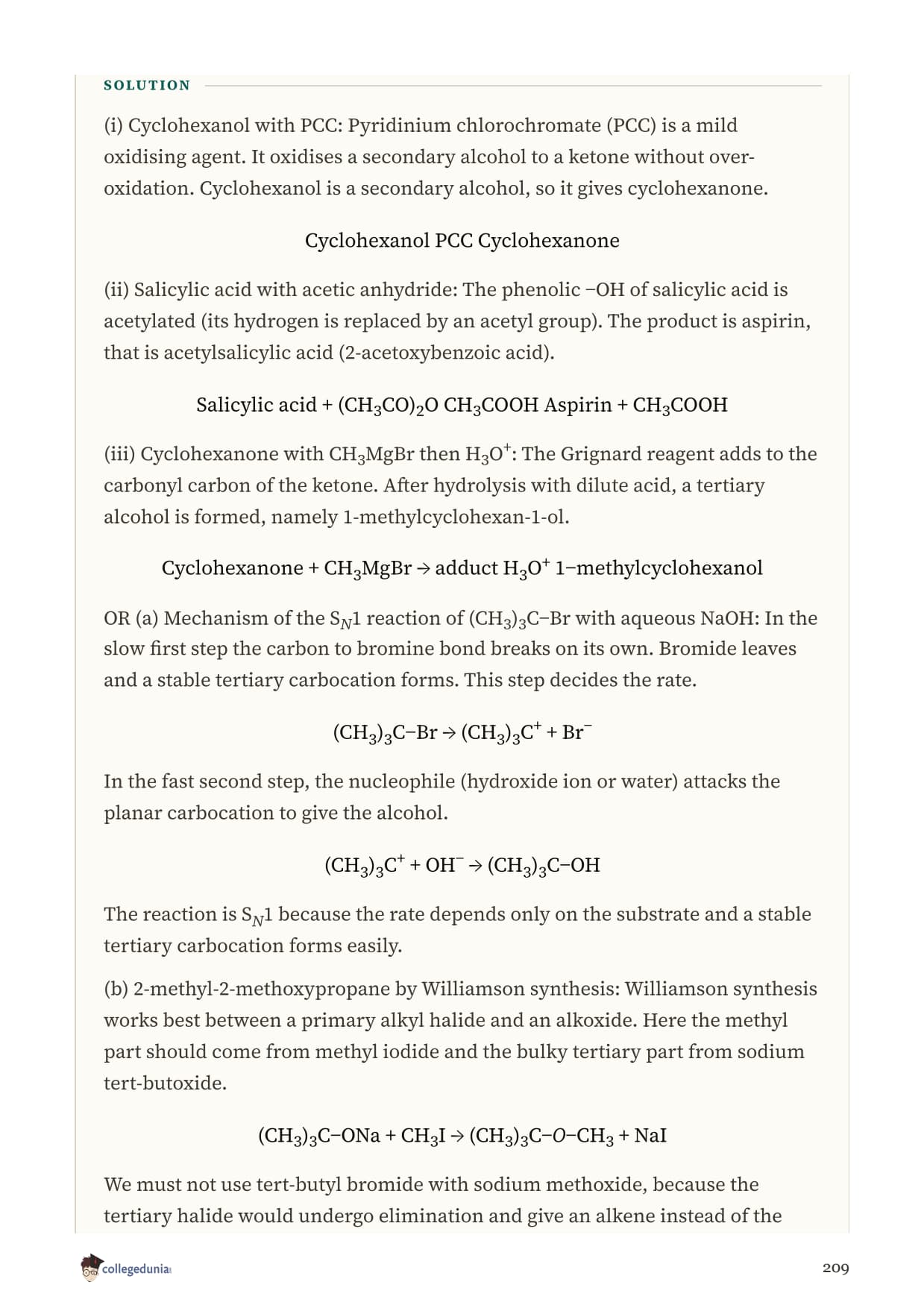
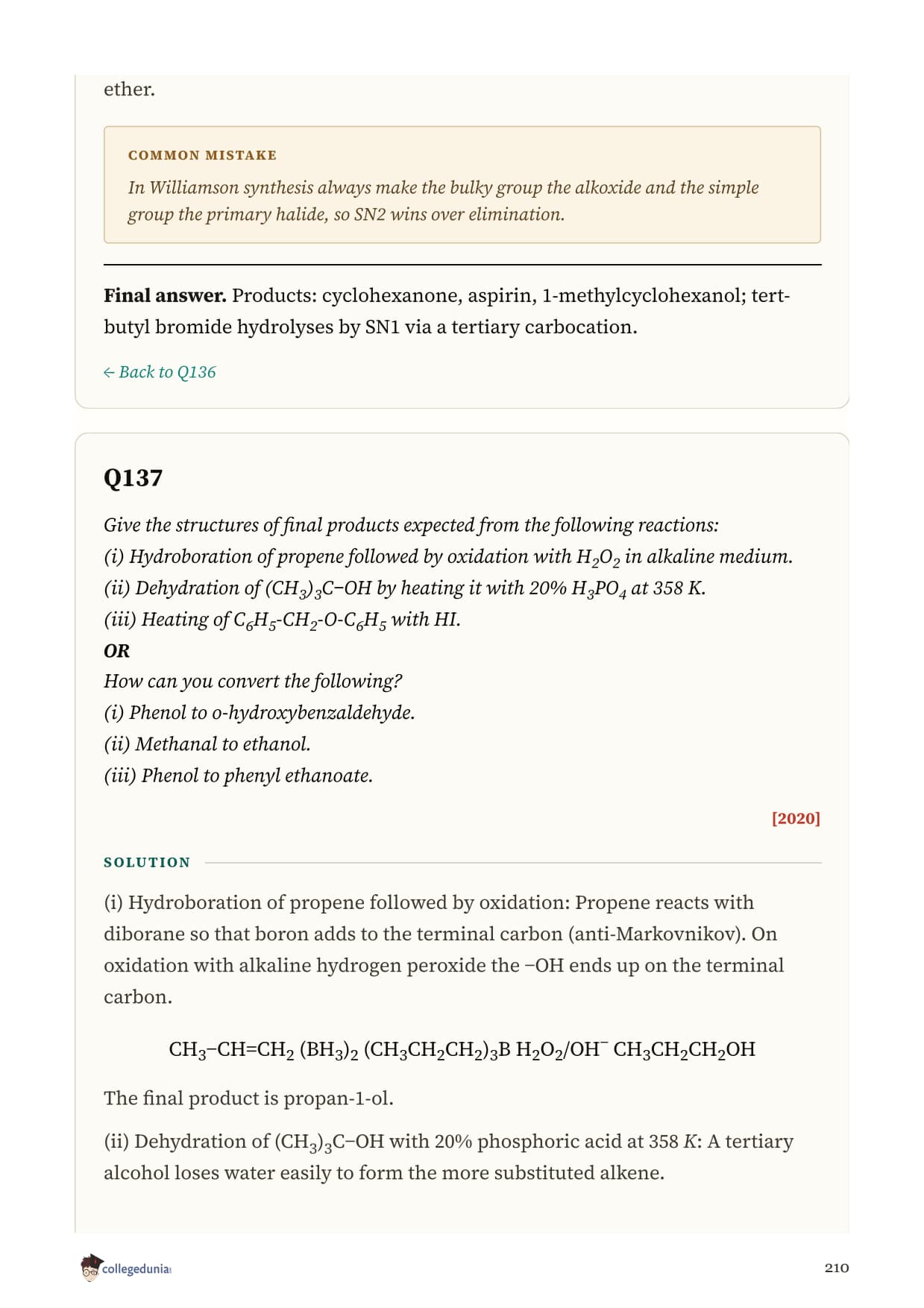
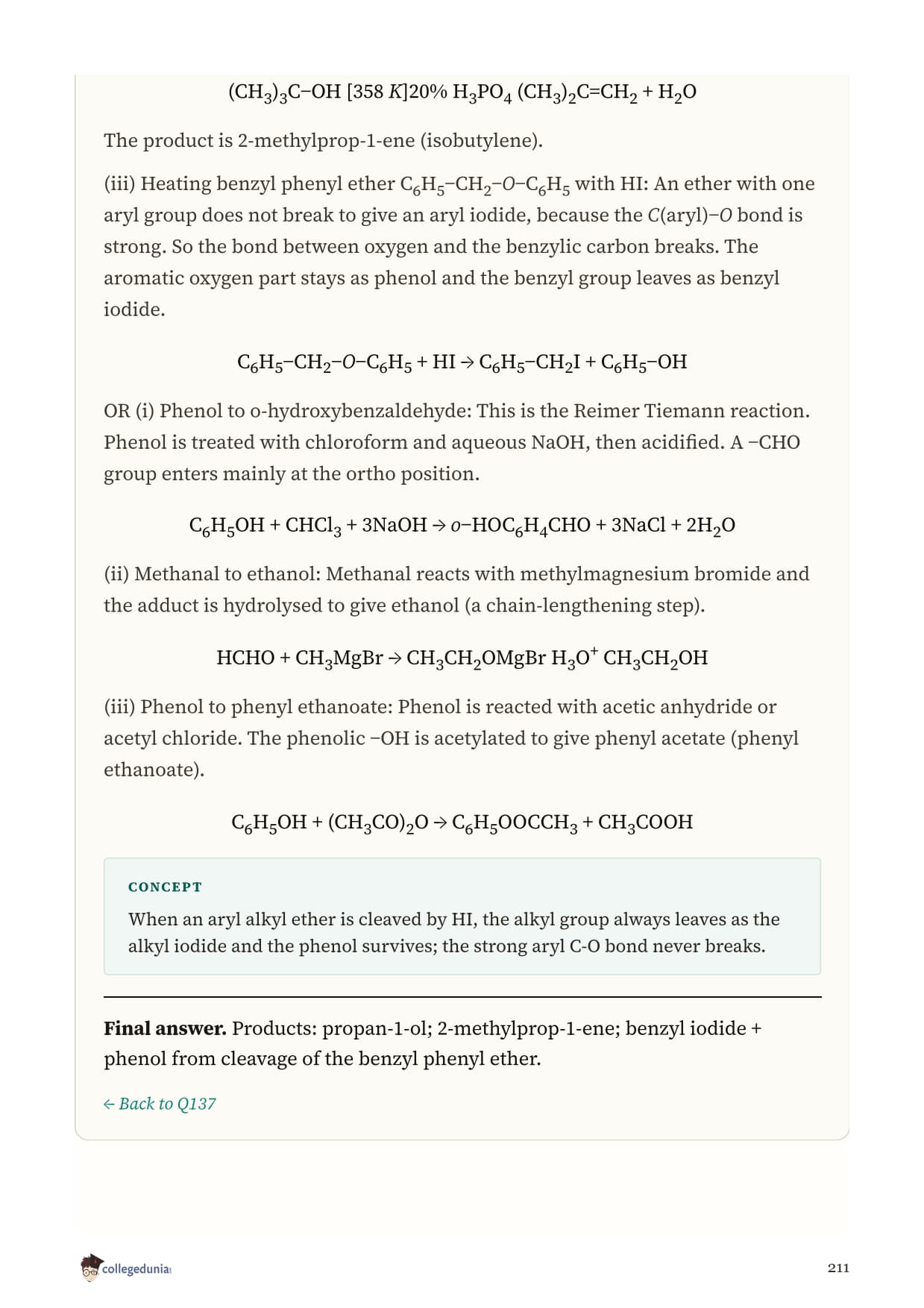
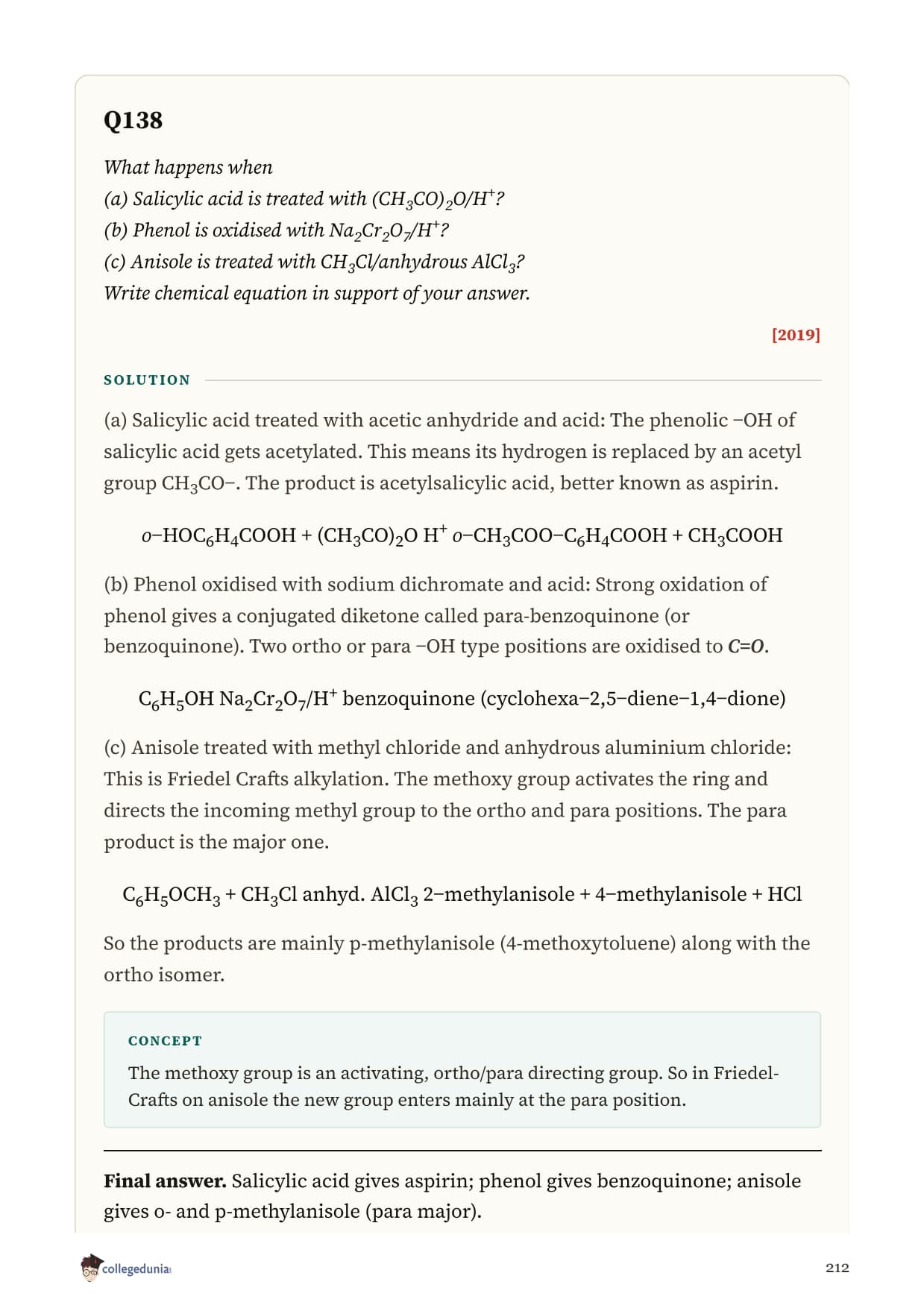
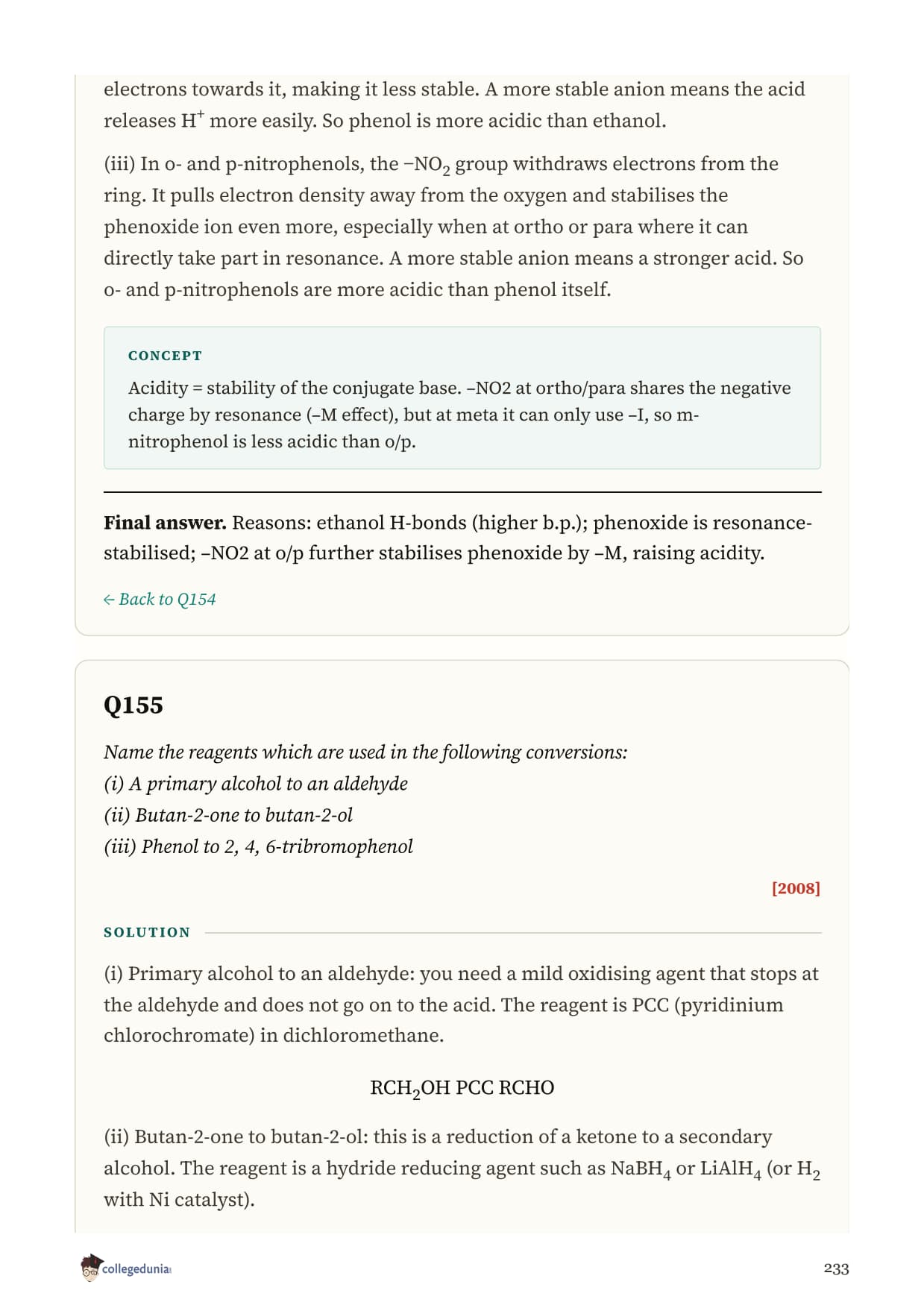
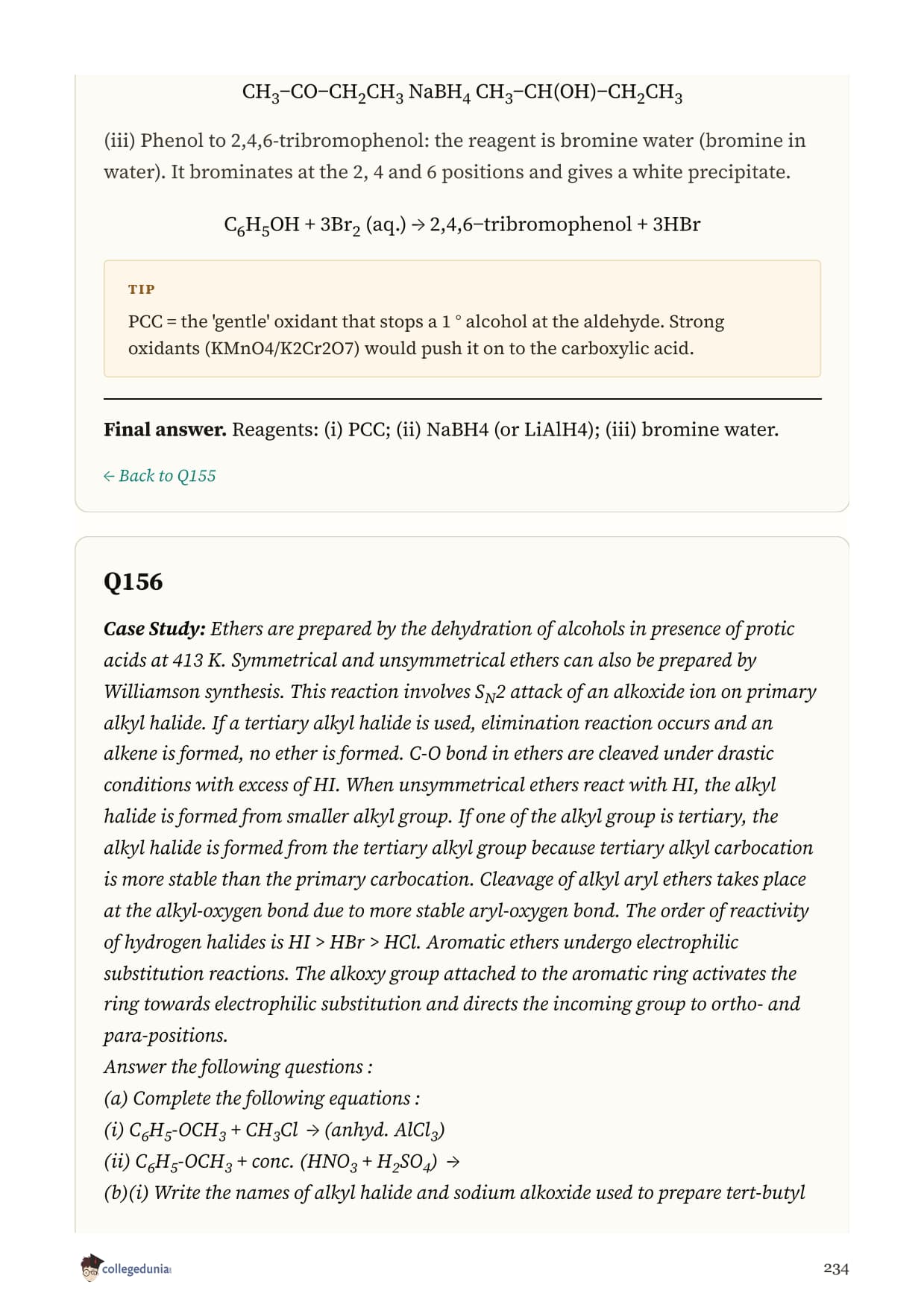
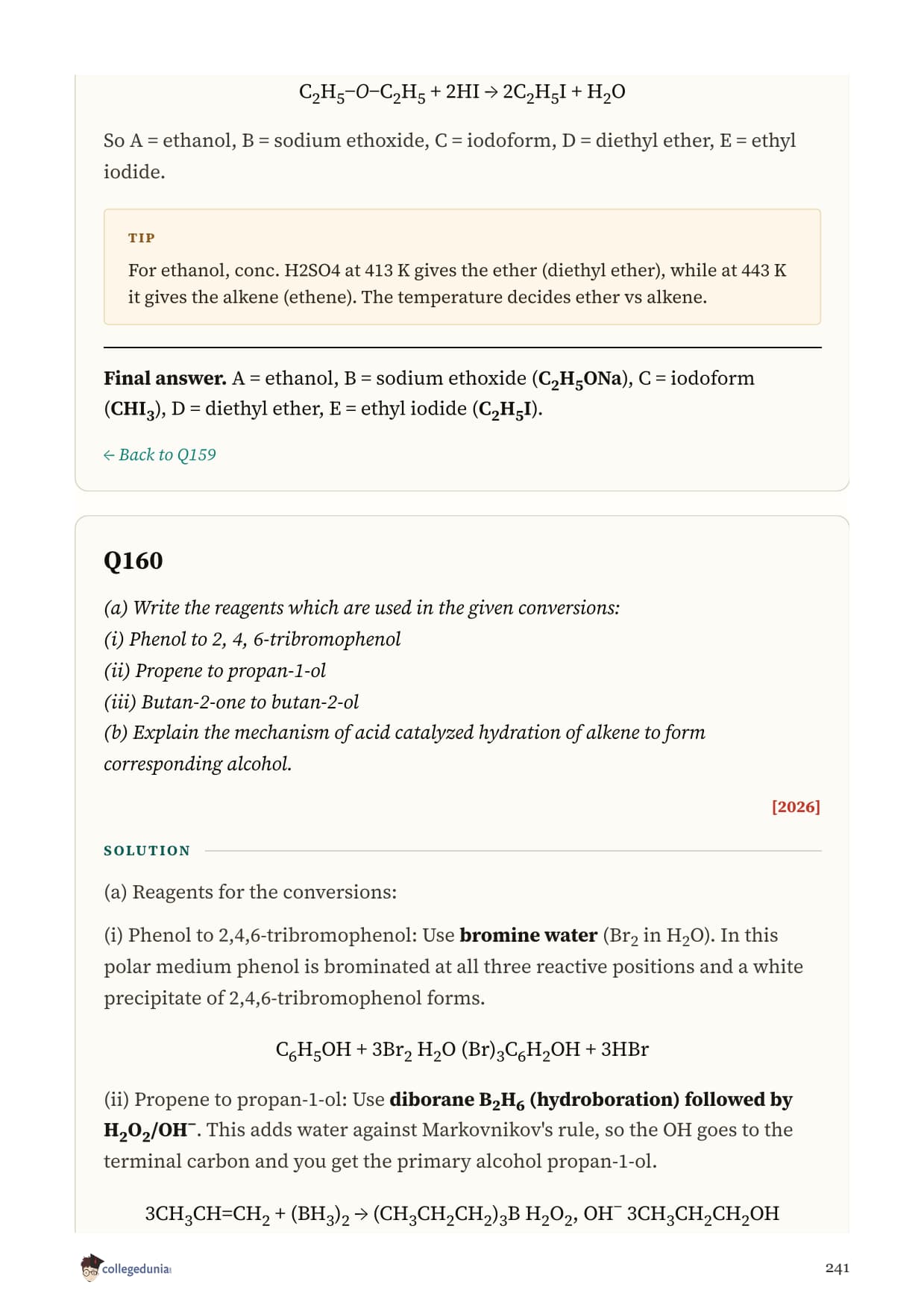
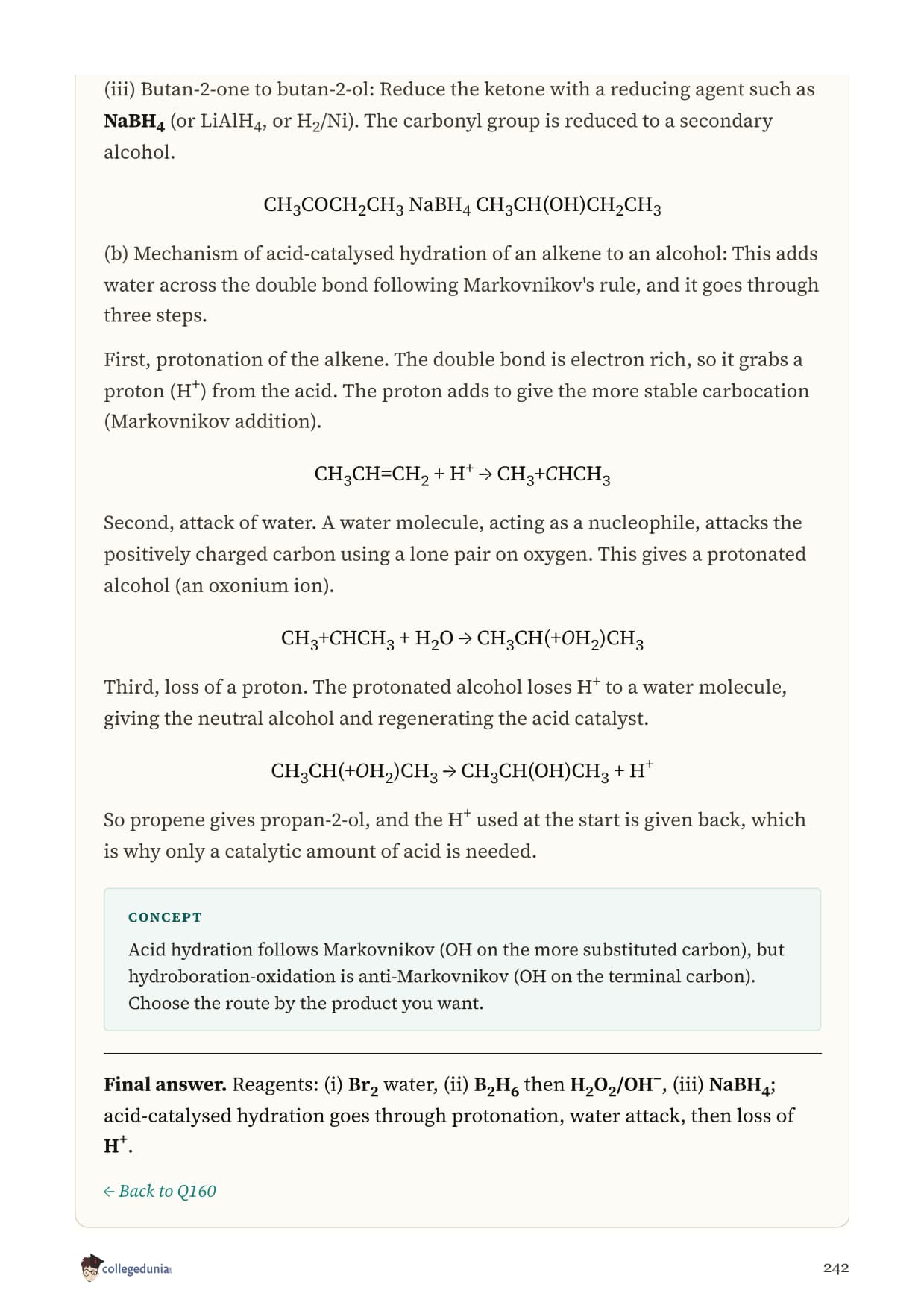
(a) Write the reagents which are used in the given conversions: (i) Phenol to 2, 4, 6-tribromophenol (ii) Propene to propan-1-ol (iii) Butan-2-one to butan-2-ol (b) Explain the mechanism of acid catalyzed hydration of alkene to form corresponding alcohol.
[2026 • 5 mark]
Common Mistakes in the Alcohols, Phenols and Ethers Board Questions
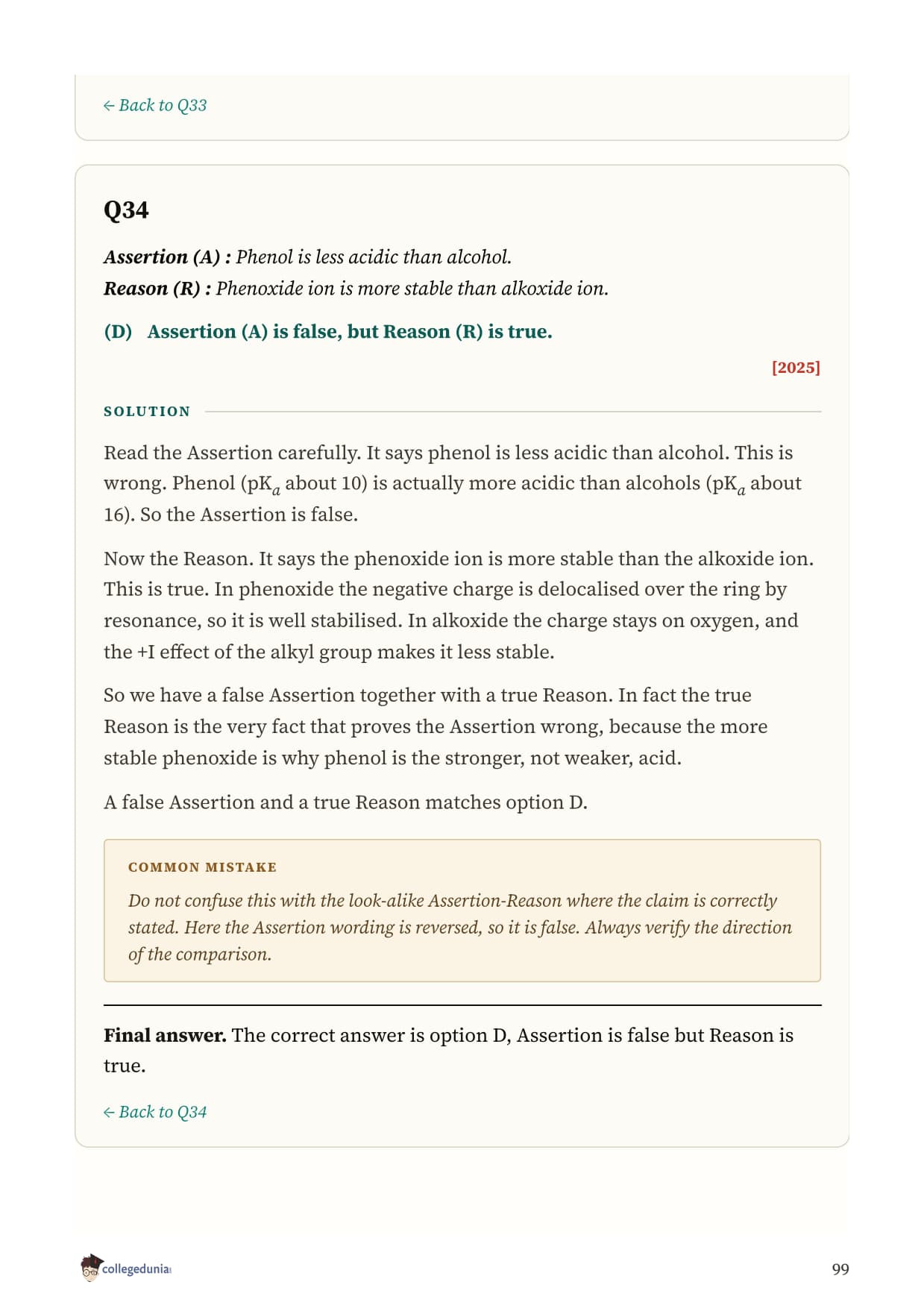
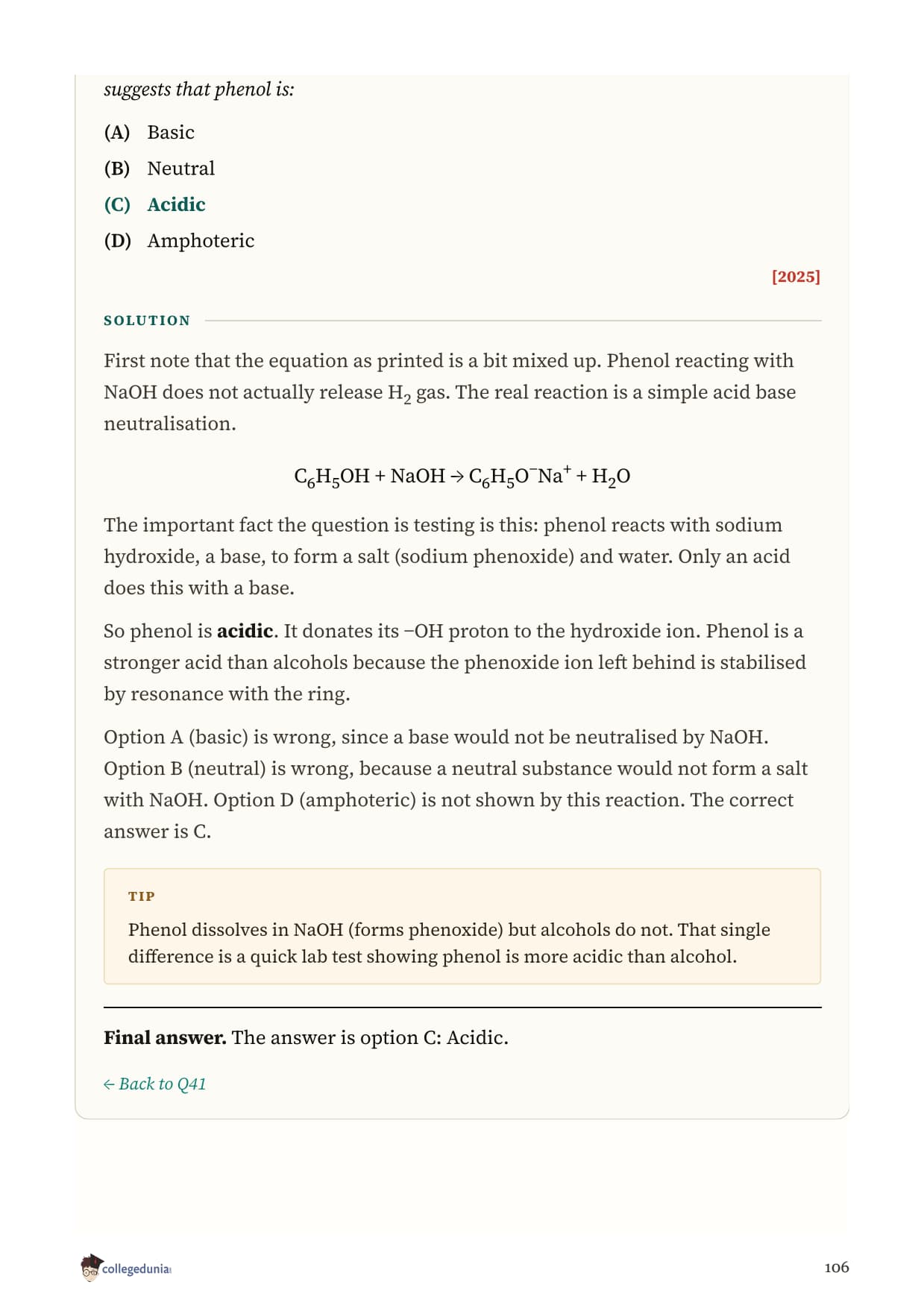
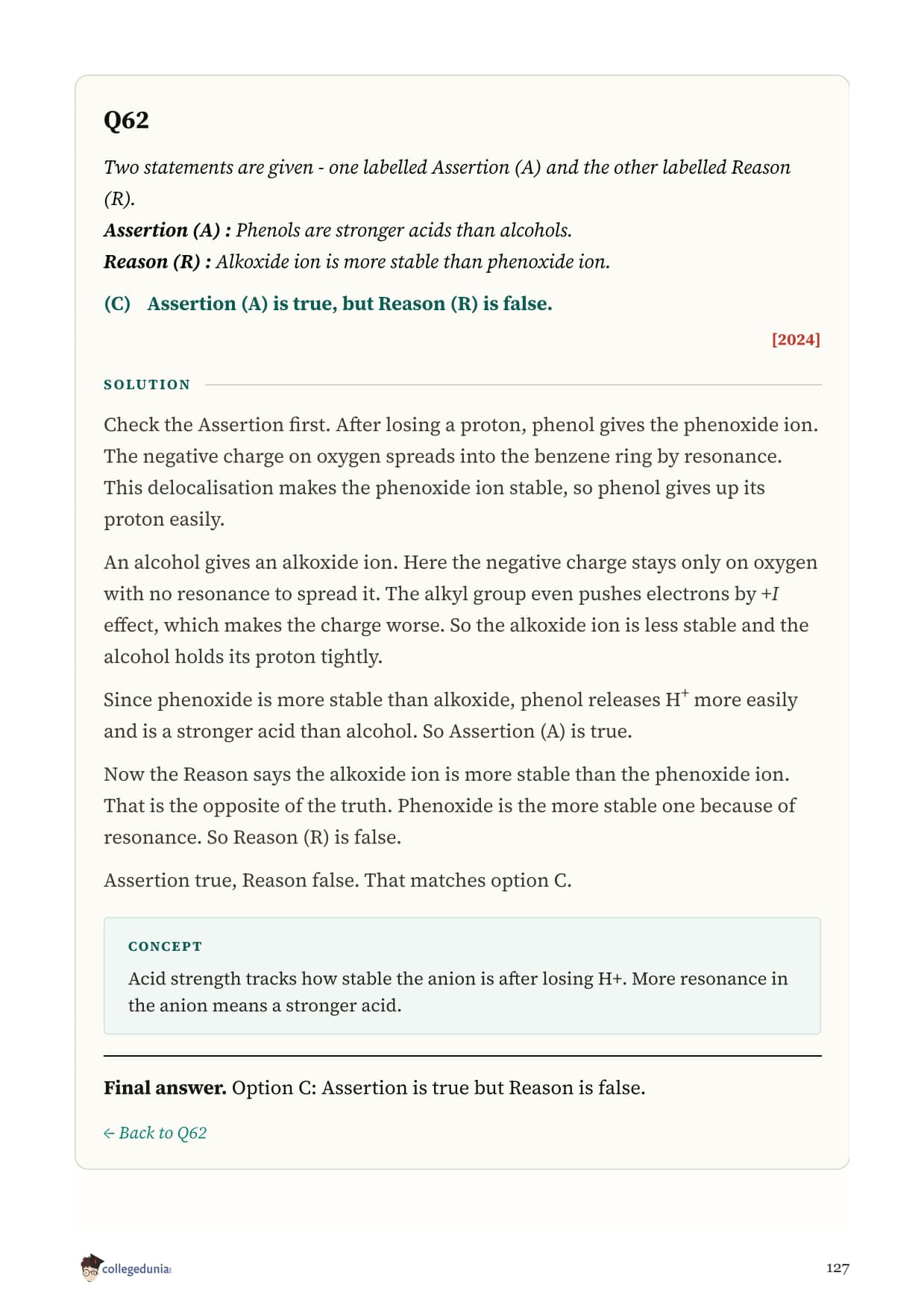
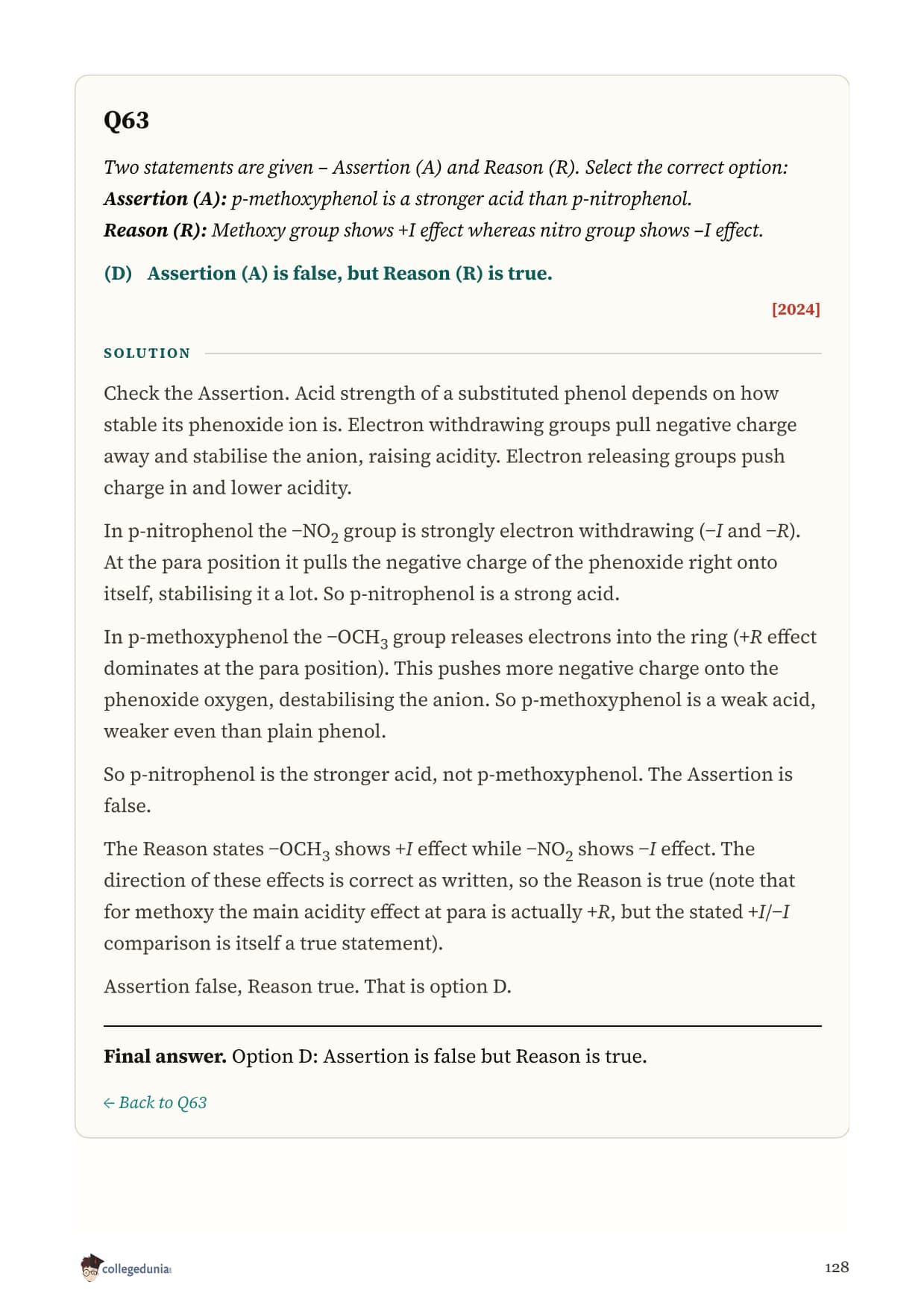
- Writing the wrong acidity order by forgetting that phenol is more acidic than alcohol but less acidic than carboxylic acid.
- Missing the correct reagent in conversions, for example using the wrong oxidising agent for primary alcohol to aldehyde versus to acid.
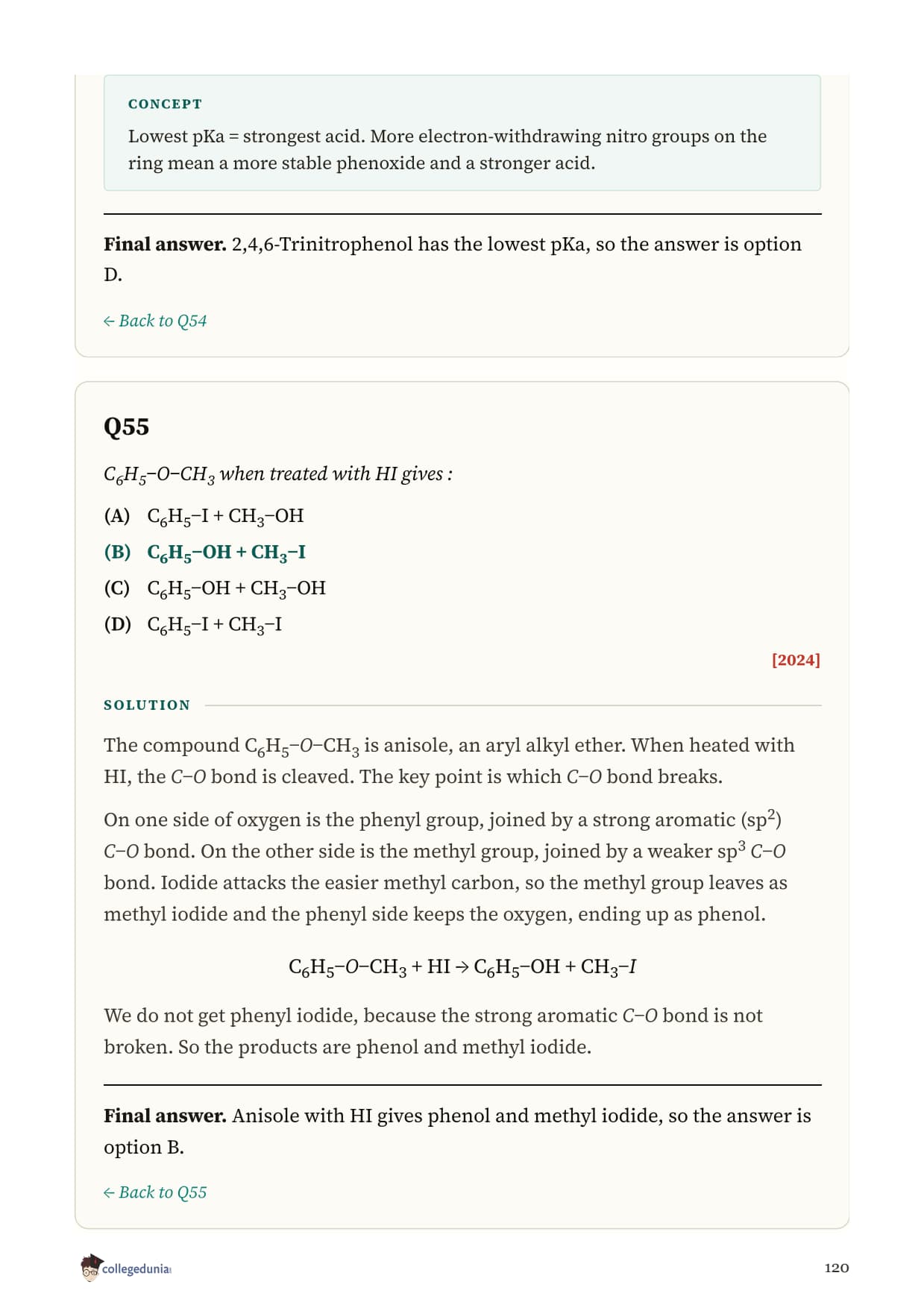
- Giving only the major product in ether cleavage with HI and skipping the alkyl iodide and alcohol split rule.
- Confusing Reimer-Tiemann with Kolbe's reaction when asked for the ortho-hydroxy product.
- Forgetting the low-temperature condition in phenol nitration, which decides ortho and para versus picric acid.
Student Feedback on Alcohols, Phenols and Ethers PYQ Practice
- 69 per cent said multistep conversion questions were the hardest part of the 3 and 5-mark bands.
- 61 per cent reported gaining 3 to 5 marks after solving every named-reaction PYQ in this PDF before the boards.
- 47 per cent said a reagent-identification or acidity-order MCQ appeared in their actual 2026 paper.
- Average time to finish all 166 PYQs: about 12 hours across 6 study sessions.
How These PYQs Pair with the Other Alcohols, Phenols and Ethers Resources
Solving previous year questions alone gives you only half the prep. Pair the PYQ PDF with the matching concept, formula and solution resources for Alcohols, Phenols and Ethers.
| Resource | What It Gives You | Open |
|---|---|---|
| NCERT Solutions | Step-by-step worked answers to every NCERT back-exercise question of Alcohols, Phenols and Ethers | NCERT Solutions for Alcohols, Phenols and Ethers |
| Notes | Concept revision notes covering every topic in the Alcohols, Phenols and Ethers chapter | Alcohols, Phenols and Ethers Class 12 Notes |
| Formula Sheet | All key formulas and results of Alcohols, Phenols and Ethers on one page for last-day revision | Alcohols, Phenols and Ethers Formula Sheet |
| Handwritten Notes | Scanned handwritten notes of Alcohols, Phenols and Ethers for quick one-shot revision | Alcohols, Phenols and Ethers Handwritten Notes |
| Exemplar Solutions | NCERT Exemplar problems of Alcohols, Phenols and Ethers solved in full for extra practice | NCERT Exemplar Solutions for Alcohols, Phenols and Ethers |
| NCERT Book | Official NCERT Alcohols, Phenols and Ethers chapter PDF for free download | Alcohols, Phenols and Ethers NCERT Book PDF |
| Exemplar Book | NCERT Exemplar Alcohols, Phenols and Ethers problem book PDF for free download | Alcohols, Phenols and Ethers Exemplar Book PDF |
How to Use the Alcohols, Phenols and Ethers PYQ PDF Most Effectively
The 166 questions are sequenced for a three-pass revision plan:
- Pass 1 (Day 1 to 2): Attempt all 81 one-mark MCQs. Mark every wrong answer and re-read the relevant NCERT reaction.
- Pass 2 (Day 3 to 5): Solve the 32 two-mark and 39 three-mark questions. Time yourself: 3 minutes per 2-mark, 5 minutes per 3-mark.
- Pass 3 (Day 6 to 10): Work through the 3 four-mark and 11 five-mark answers, writing the full conversion set with reagents and any mechanism part.
All Class 12 Chemistry Chapter PYQ PDFs
Every Class 12 Chemistry chapter has its own PYQ compilation built the same way, sorted by marks and tagged by year.
| Chapter | Topic | Previous Year Questions |
|---|---|---|
| Chapter 1 | Solutions | PYQ PDF |
| Chapter 2 | Electrochemistry | PYQ PDF |
| Chapter 3 | Chemical Kinetics | PYQ PDF |
| Chapter 4 | The d- and f-Block Elements | PYQ PDF |
| Chapter 5 | Coordination Compounds | PYQ PDF |
| Chapter 6 | Haloalkanes and Haloarenes | PYQ PDF |
| Chapter 7 | Alcohols, Phenols and Ethers | PYQ PDF |
| Chapter 8 | Aldehydes, Ketones and Carboxylic Acids | PYQ PDF |
| Chapter 9 | Amines | PYQ PDF |
| Chapter 10 | Biomolecules | PYQ PDF |
Also Check: NCERT Solutions for Class 12 Chemistry
Class 12 Chemistry Alcohols, Phenols and Ethers PYQ FAQs
Ques. How many previous year questions are in the Class 12 Chemistry Alcohols, Phenols and Ethers PYQ PDF?
Ans. The PDF has 166 previous year questions from CBSE board papers between 2004 and 2026, sorted by marks (1 to 5) and then by year, latest first. Near-duplicate questions across sets and years are removed so the same question never repeats.
Ques. Are the Alcohols, Phenols and Ethers PYQs based on the 2026-27 CBSE syllabus?
Ans. Yes. Every question follows the 2026-27 CBSE Class 12 Chemistry syllabus. Older long-form questions are kept because the core reactions (conversions, Reimer-Tiemann, Williamson synthesis, ether cleavage) are unchanged in the current syllabus.
Ques. Which topics of Alcohols, Phenols and Ethers appear most often in CBSE board papers?
Ans. From the 166-question set: conversions and reagent identification (about 26 per cent), named reactions of phenols (about 19 per cent), acidity and reactivity reasoning (about 18 per cent), ether reactions and Williamson synthesis (about 15 per cent), and oxidation of alcohols (about 12 per cent).
Ques. How is this PYQ PDF different from a CBSE sample paper?
Ans. A sample paper gives you one paper. This PDF stitches together more than 20 years of questions across every set and region (Delhi, Outside Delhi, Foreign and Compartment) for Alcohols, Phenols and Ethers alone, so you can see which conversions CBSE repeats and how each reaction is usually phrased.
Ques. Does the Alcohols, Phenols and Ethers PYQ PDF include MCQs?
Ans. Yes. 81 of the 166 questions are 1-mark questions, mostly MCQ and assertion-reason from 2023 onwards, when CBSE introduced the Section A objective block.
Ques. Where can I download the Alcohols, Phenols and Ethers Class 12 PYQ PDF for free?
Ans. The full Alcohols, Phenols and Ethers PYQ PDF is free to download from the PDF button at the top of this page. No sign-up is needed.
Ques. How should I use these PYQs to revise Alcohols, Phenols and Ethers in the last 10 days?
Ans. Use the three-pass plan: Day 1 to 2 attempt all 81 MCQs, Day 3 to 5 solve the 2 and 3-mark questions, Day 6 to 10 attempt all the 4 and 5-mark answers under a 12-minute timer. Always write the reagent above the arrow in every conversion.
Ques. Does the PDF give answers or only the questions?
Ans. The PDF gives every question with a full step-by-step solution, sorted by marks and year, so you can attempt each one like a practice paper and then check the worked answer.
Ques. Are conversion questions important for the CBSE Alcohols, Phenols and Ethers exam?
Ans. Very. Conversions and reagent identification make up about a quarter of all the questions in the compilation, across the 3 and 5-mark band. Practising every conversion in the PDF is the single best use of your time for this chapter.
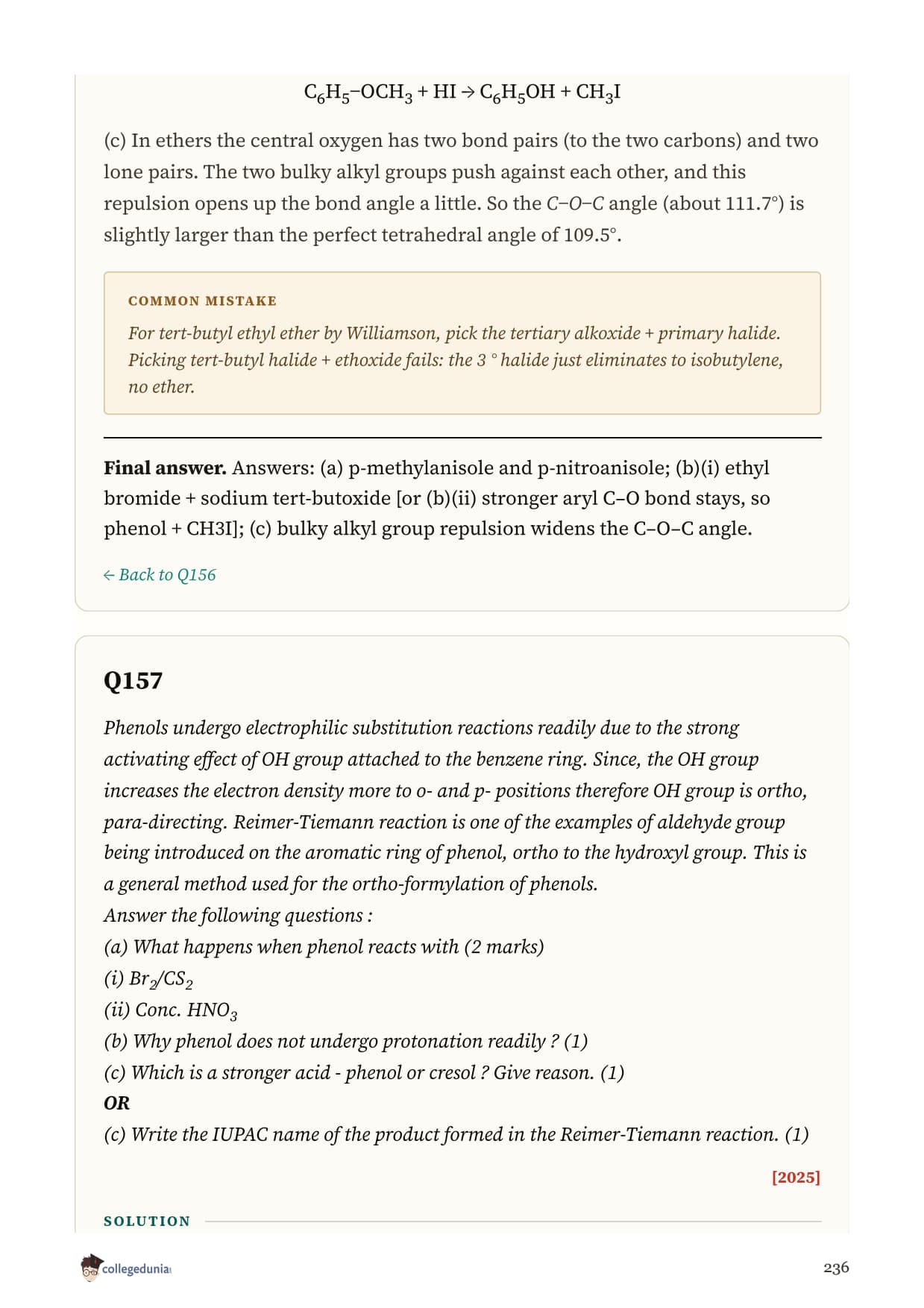
Ques. What is the Reimer-Tiemann reaction?
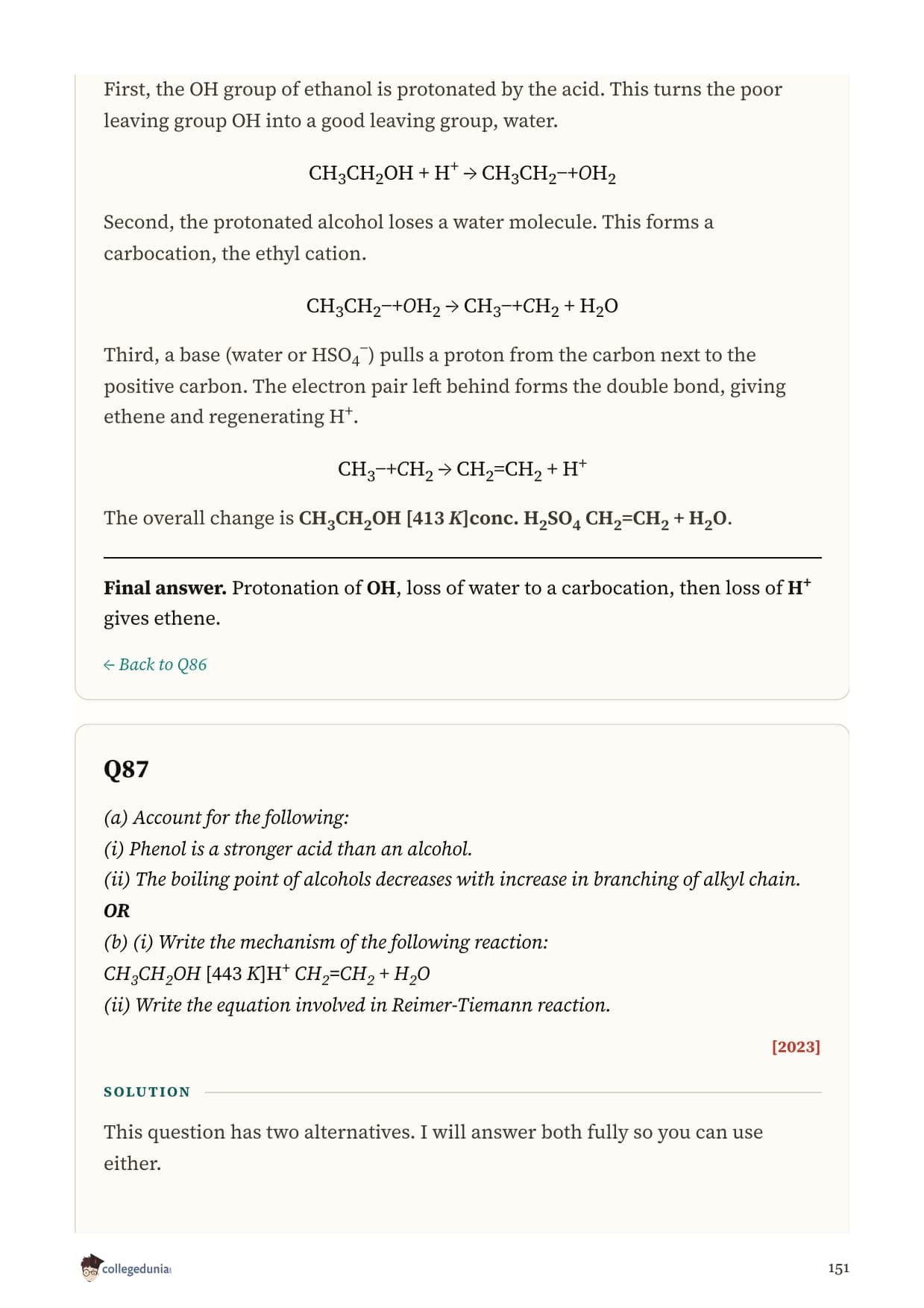
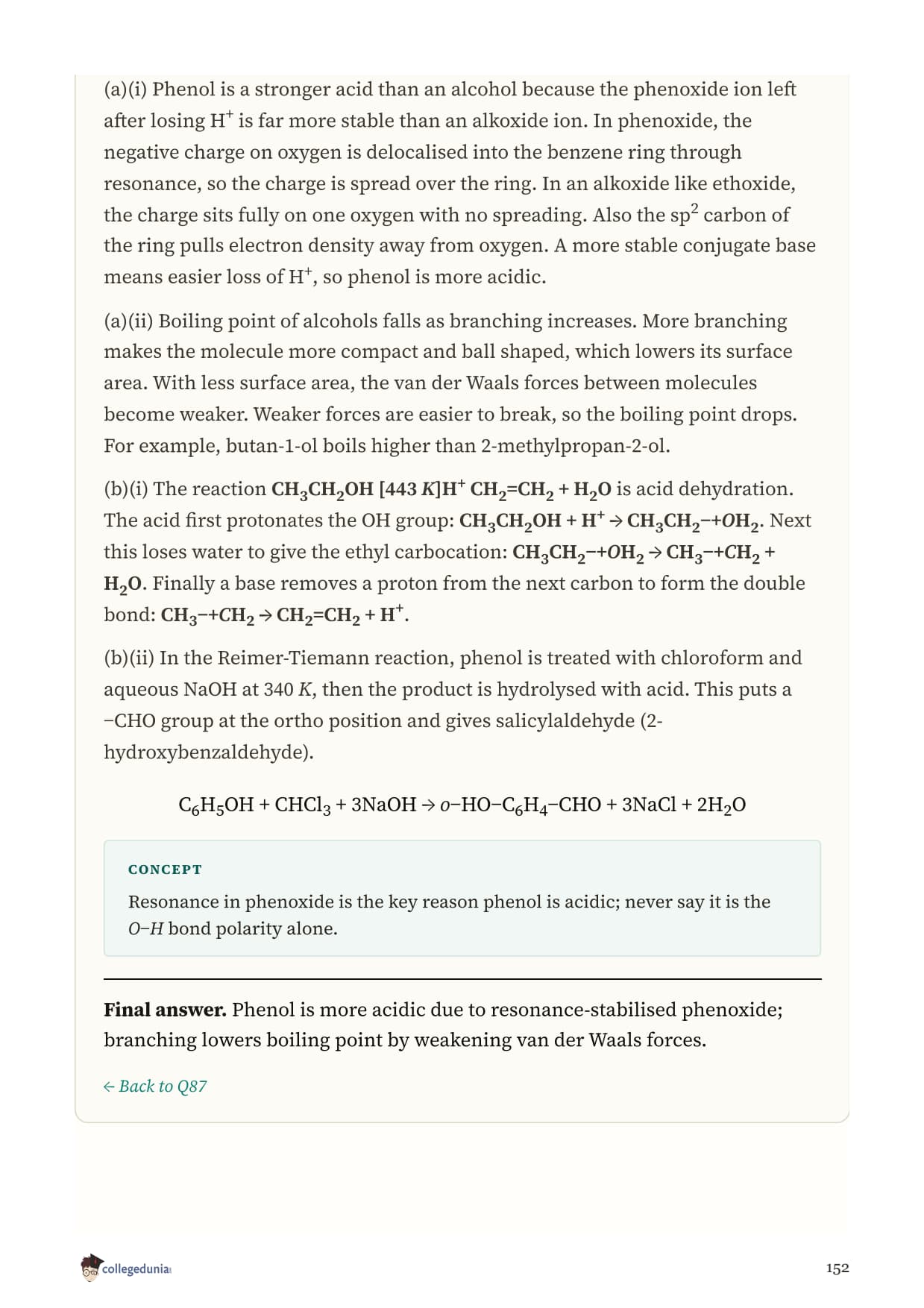
Ans. The Reimer-Tiemann reaction turns phenol into salicylaldehyde. Phenol is treated with chloroform and aqueous sodium hydroxide, and on acid work-up the ortho-hydroxy aldehyde forms. It introduces a -CHO group at the ortho position of the phenol ring.
Ques. How is a phenol defined?
Ans. A phenol is a compound in which a hydroxyl (-OH) group is attached directly to a carbon of a benzene ring. The simplest member is carbolic acid, phenol itself. Phenols are more acidic than alcohols because the phenoxide ion is stabilised by resonance.
Ques. What is Williamson ether synthesis?
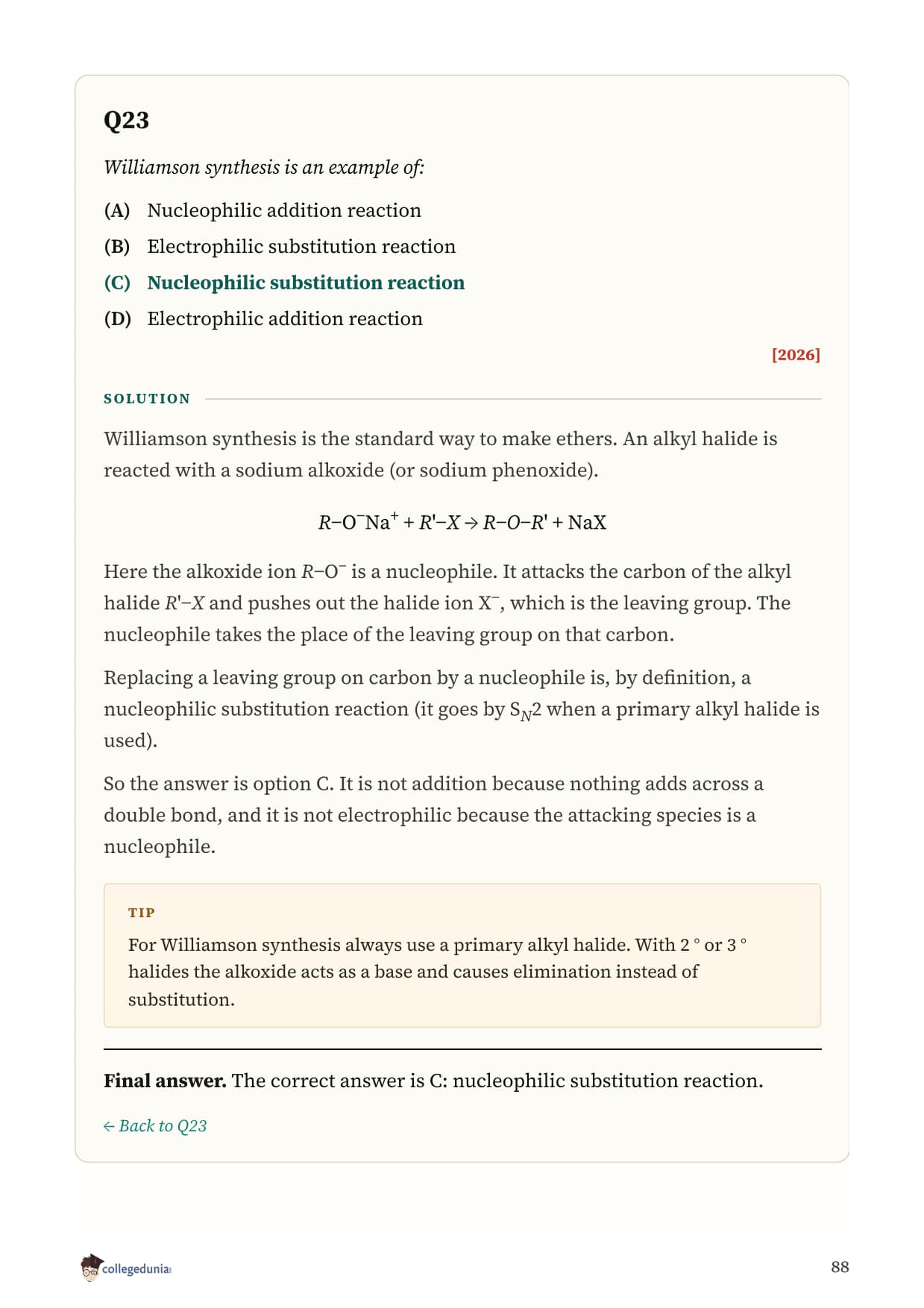
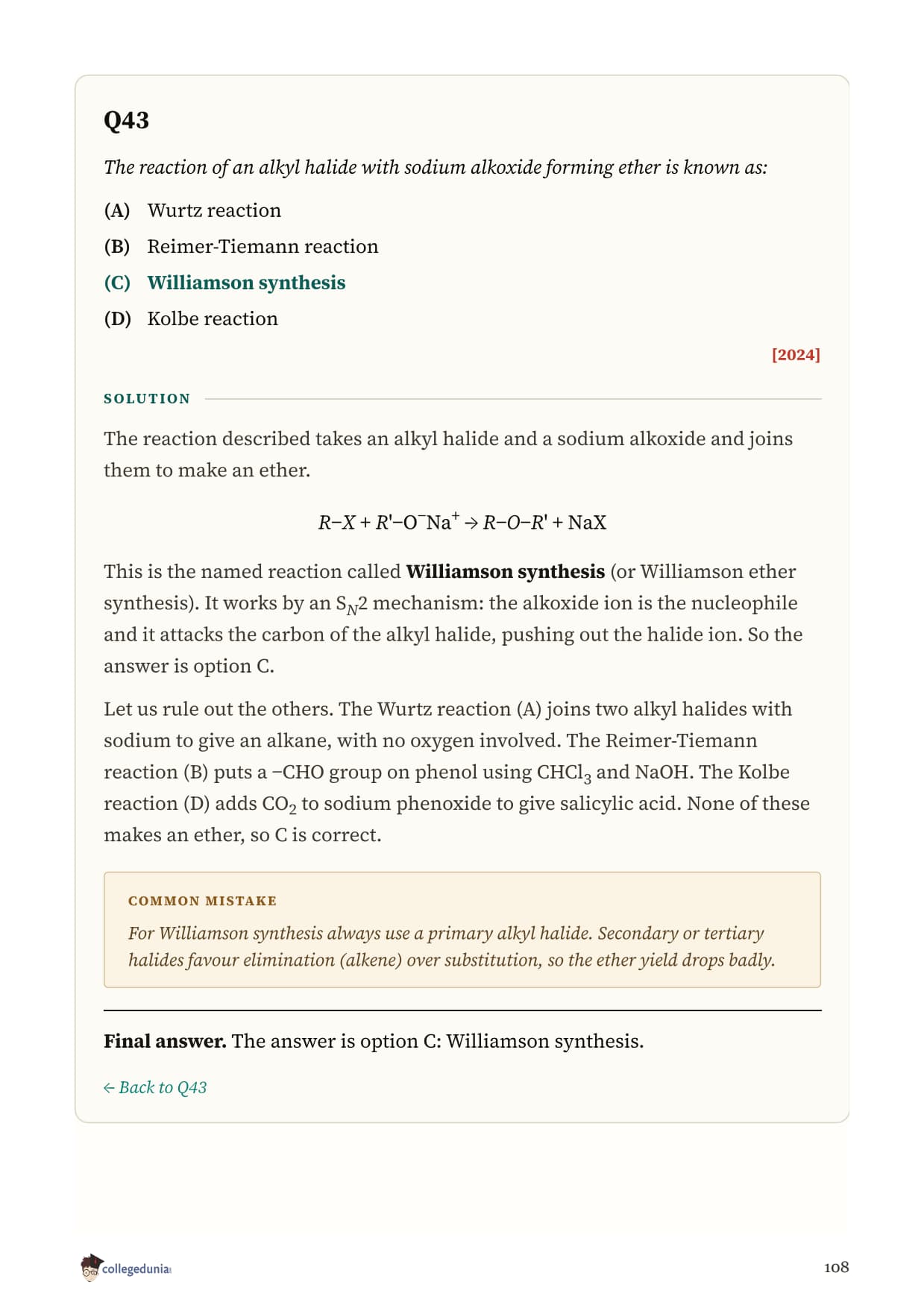
Ans. Williamson ether synthesis is the standard method to prepare ethers. An alkyl halide reacts with a sodium alkoxide to give an ether by an SN2 reaction. It works best with primary alkyl halides, since bulky halides favour elimination instead.



Comments