




If you want to lock in full marks on IUPAC naming and VBT questions, this is the page to practise from.
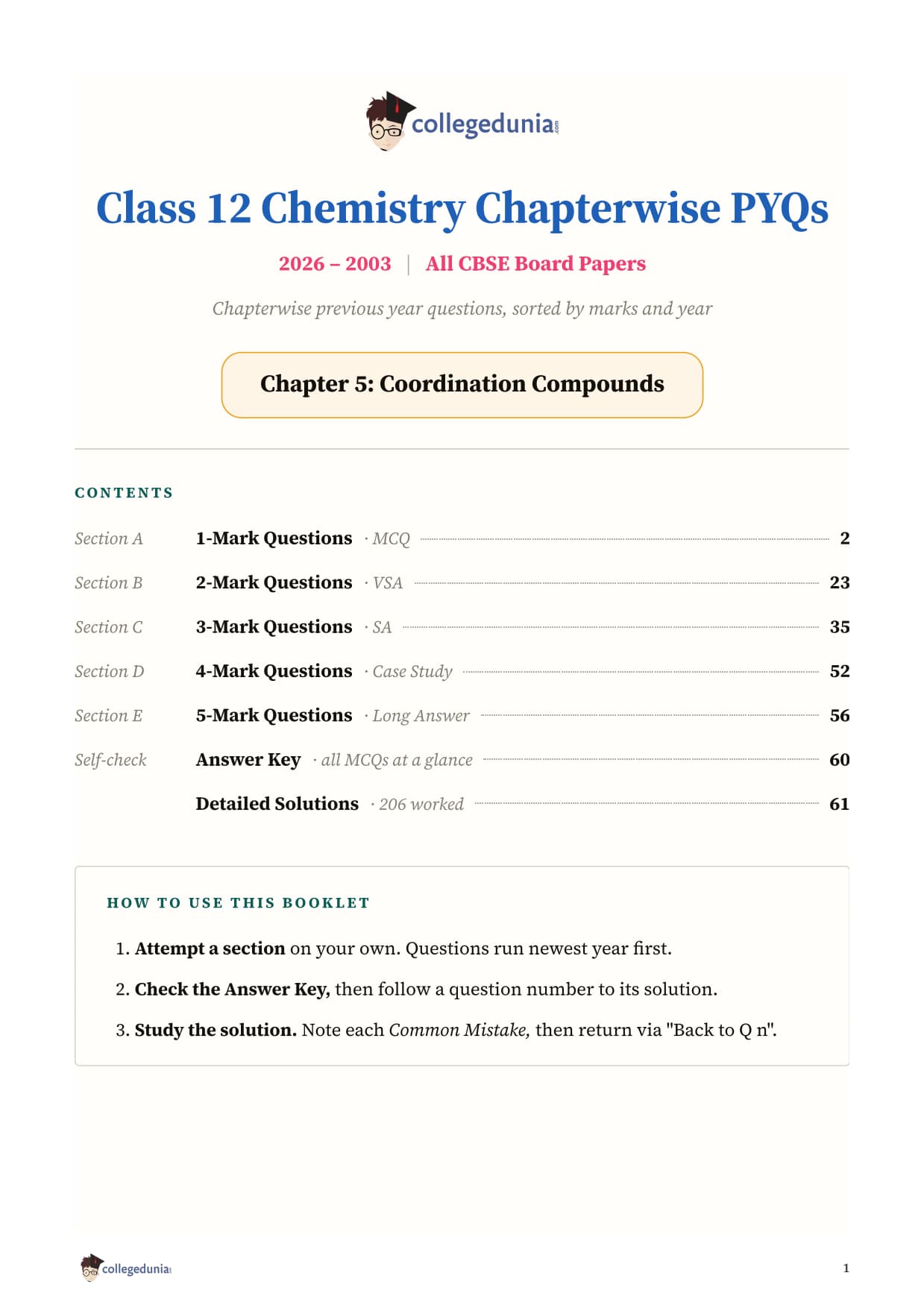
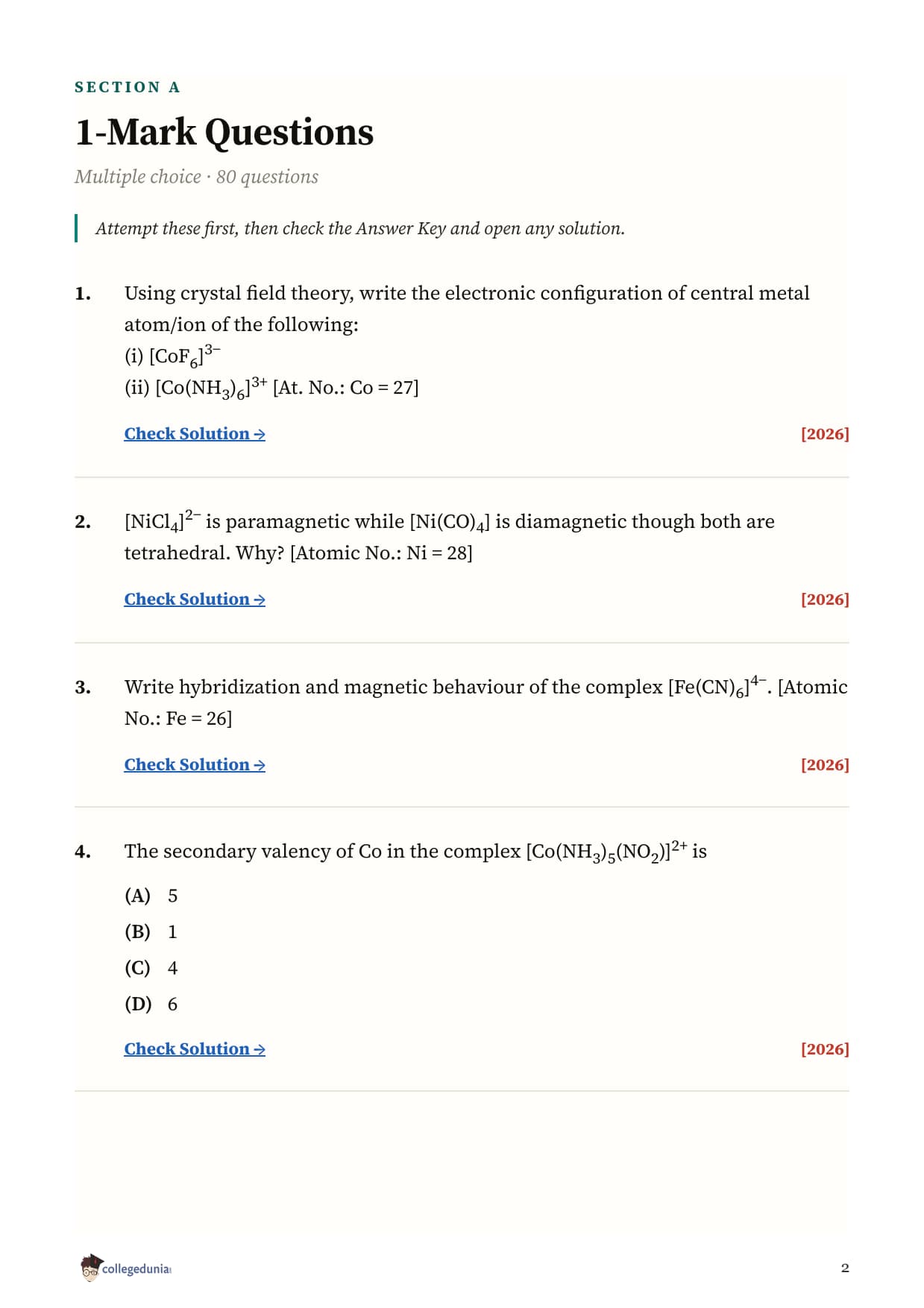
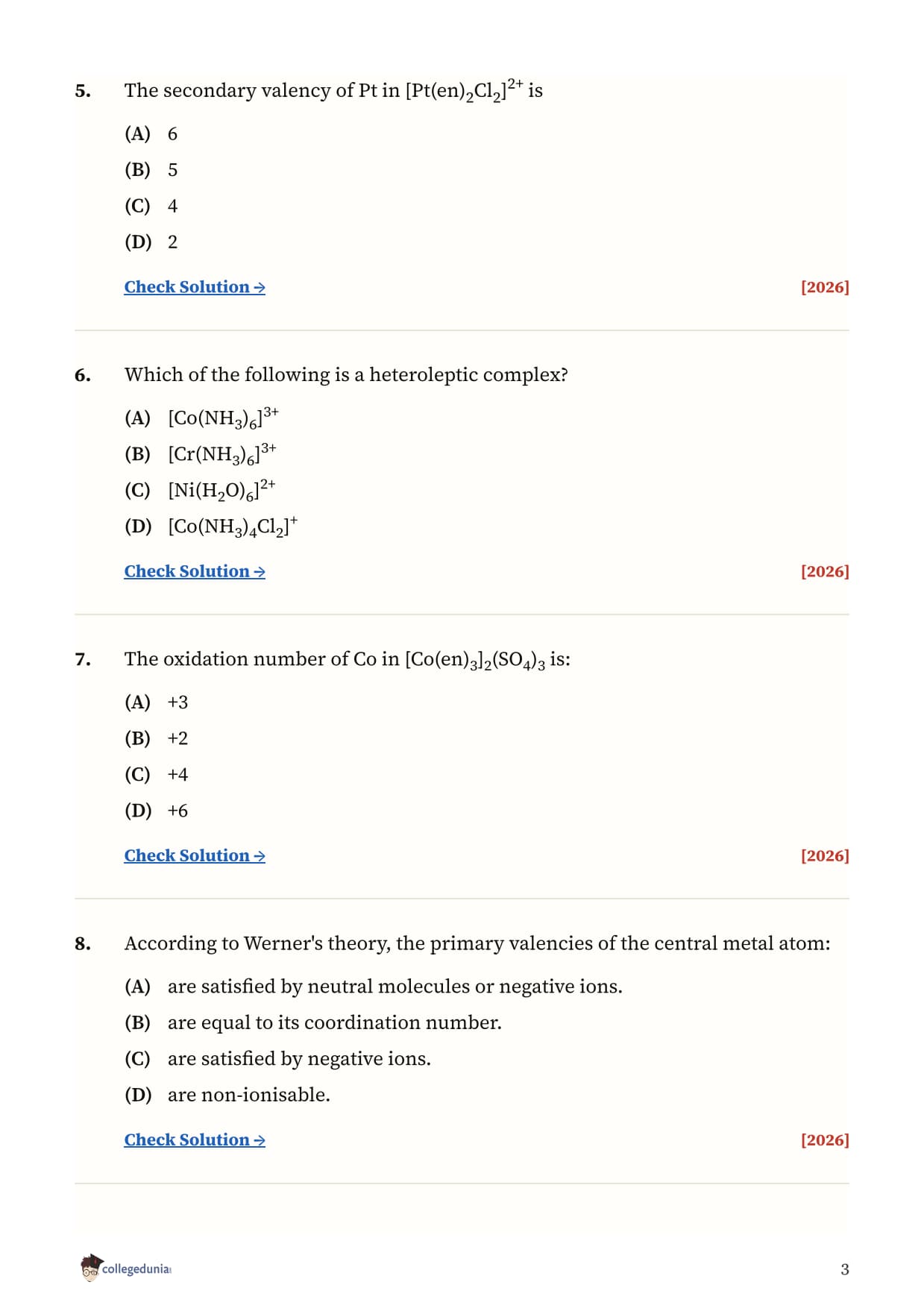
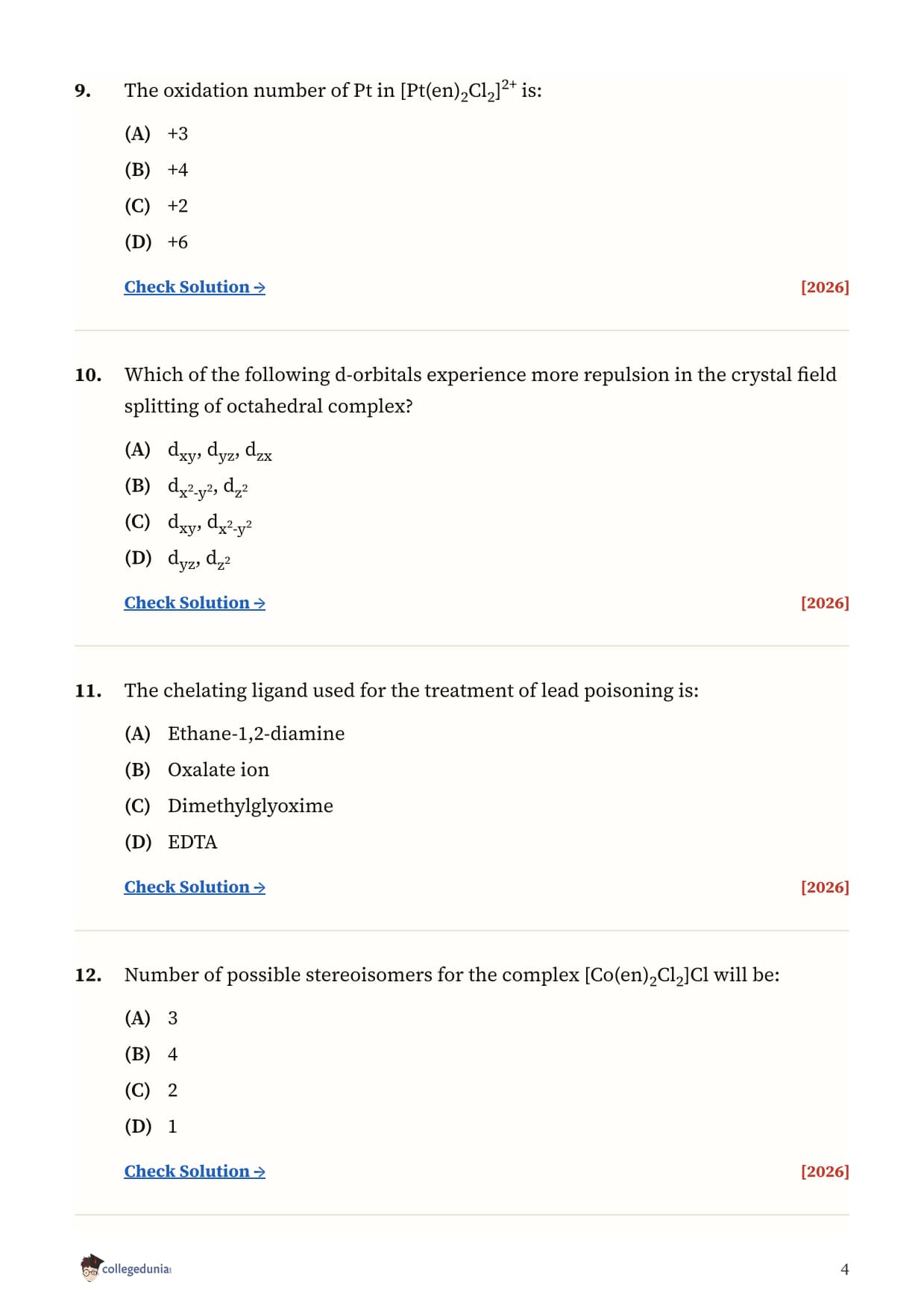
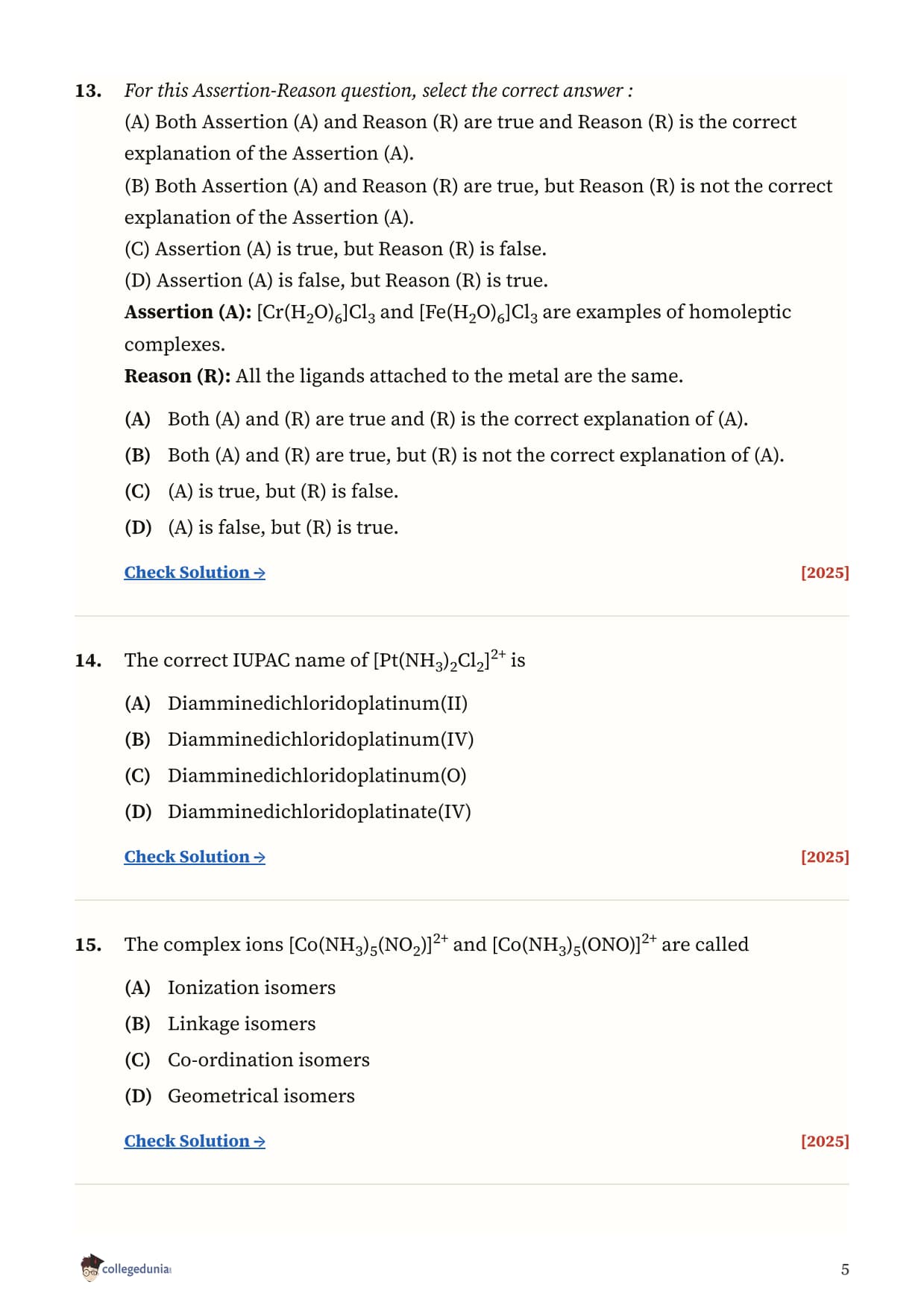
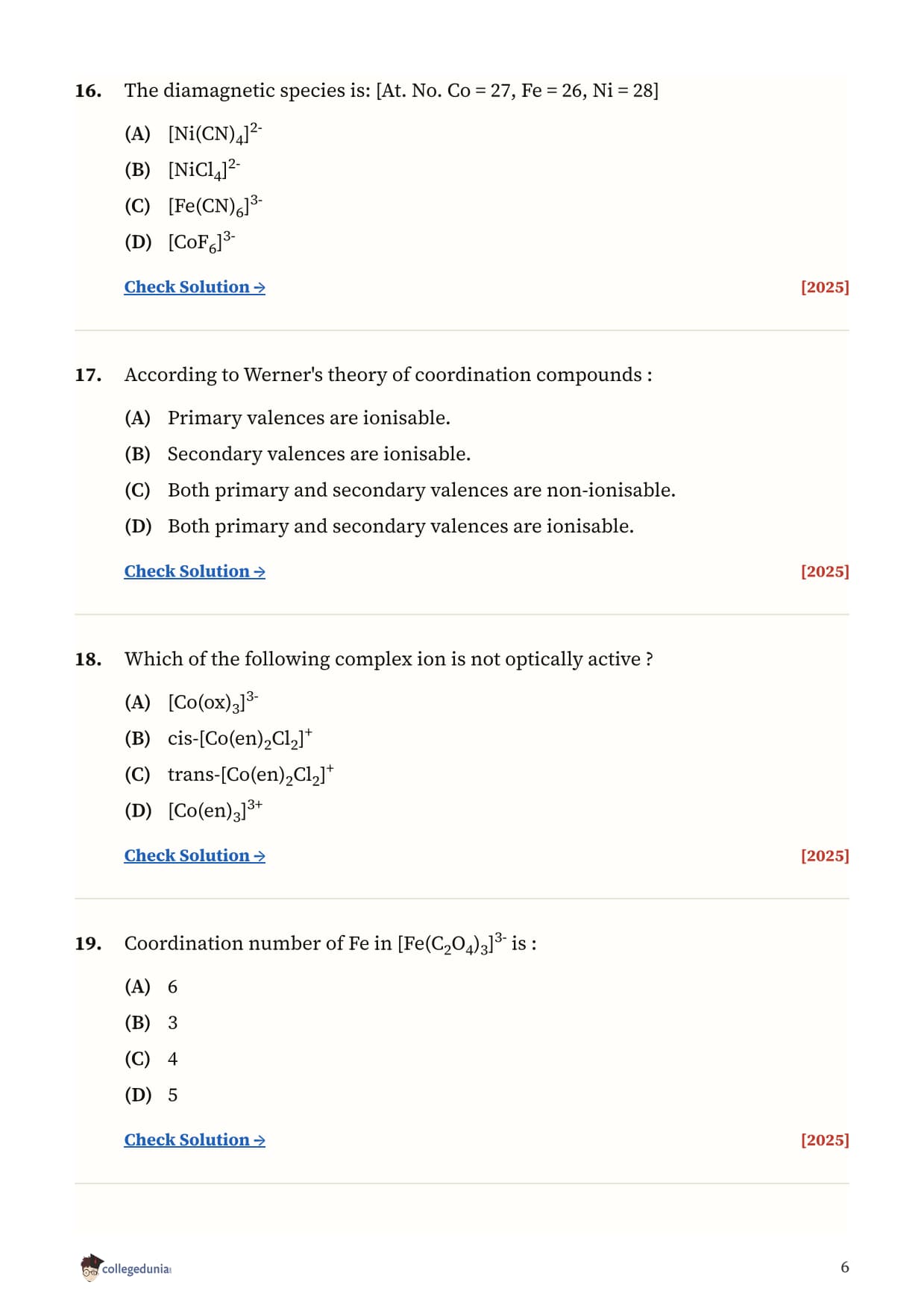
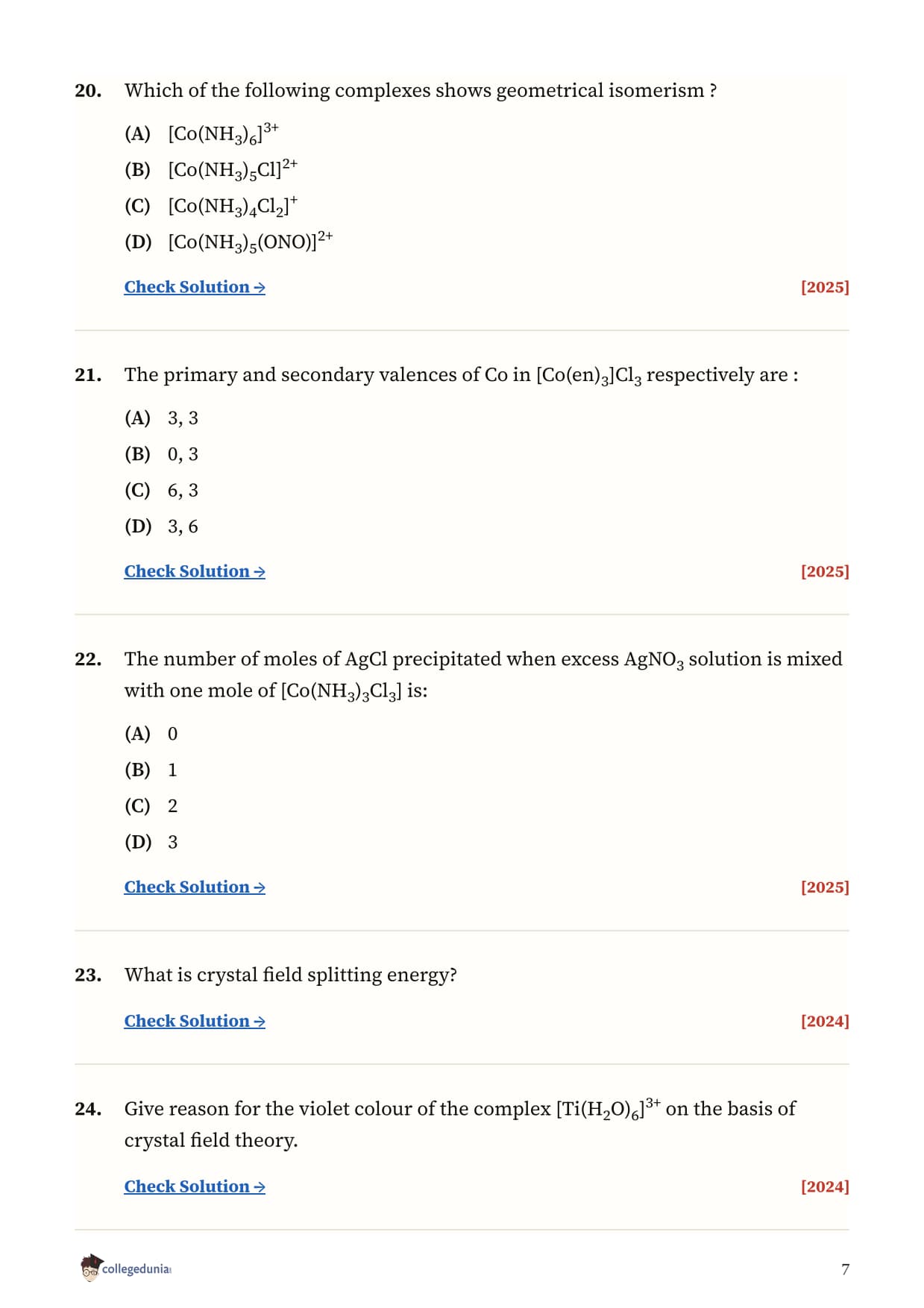
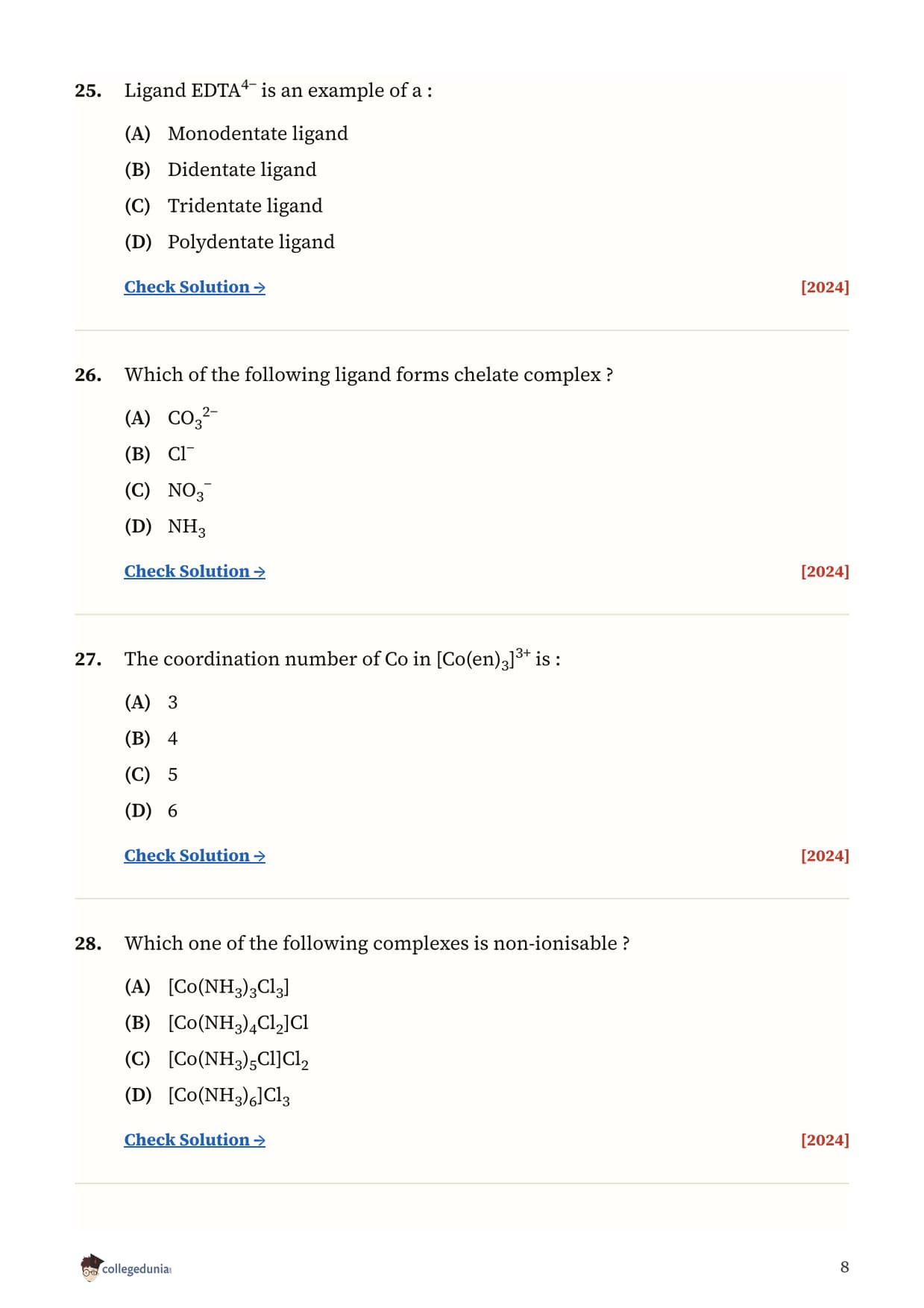
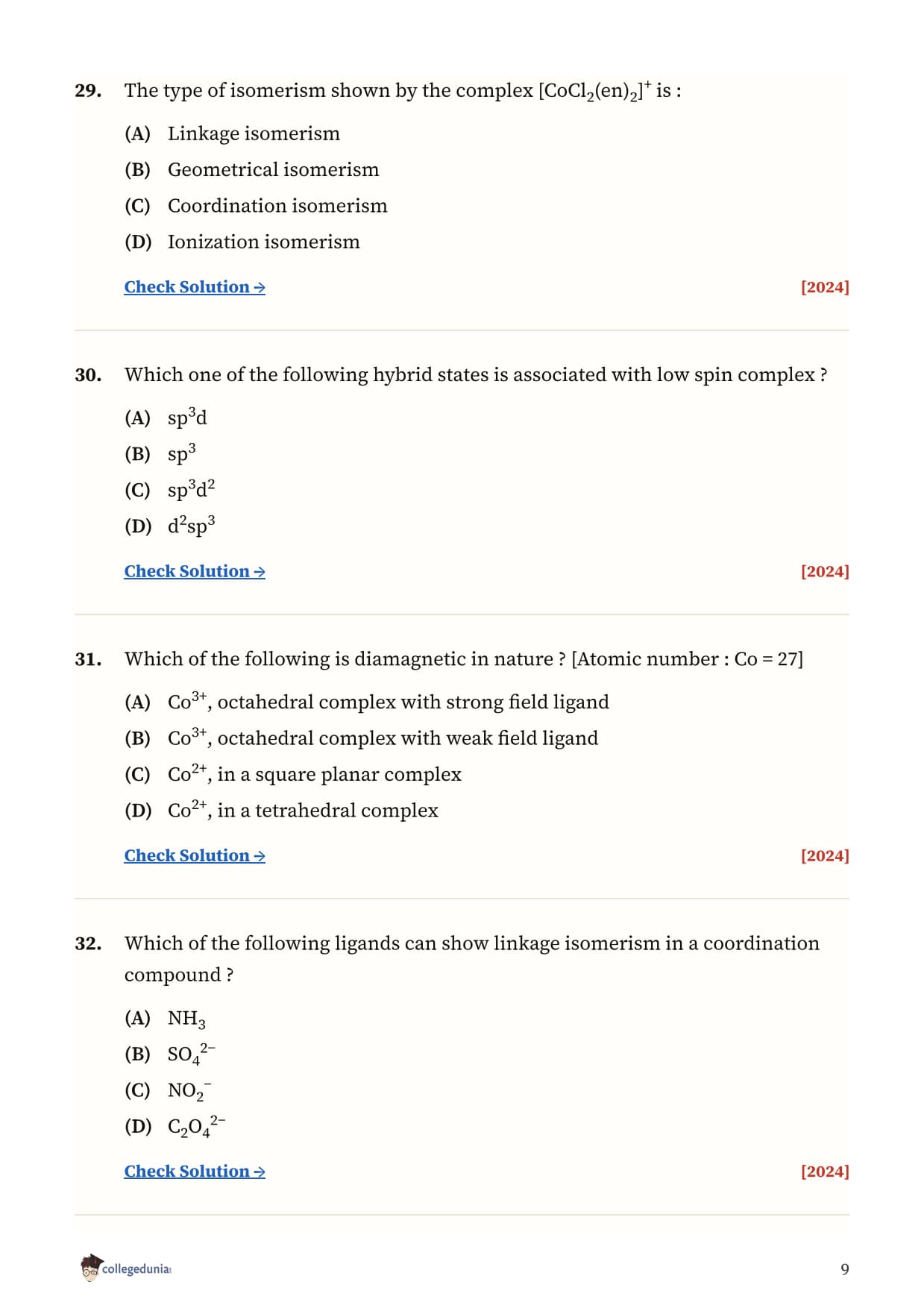
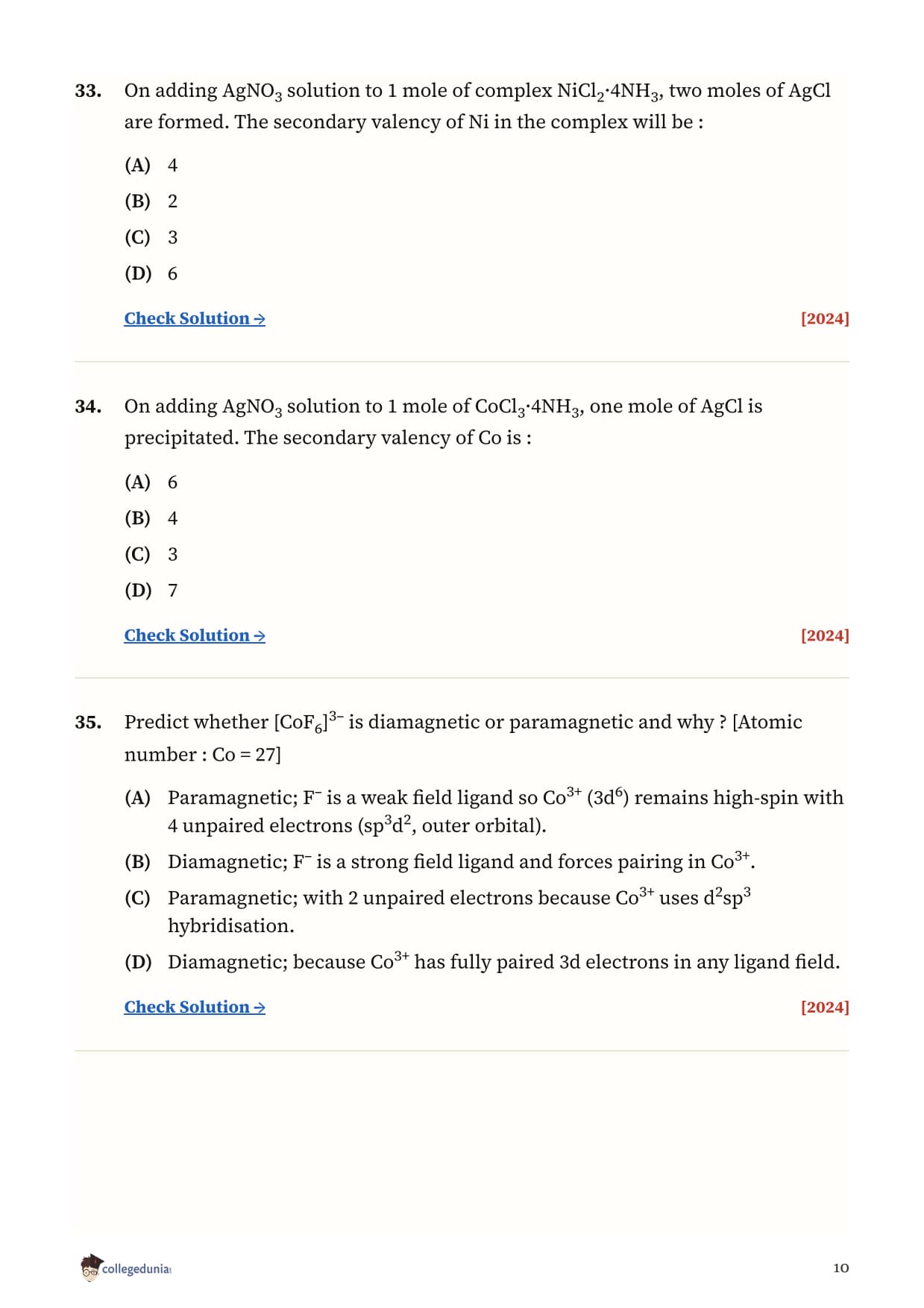
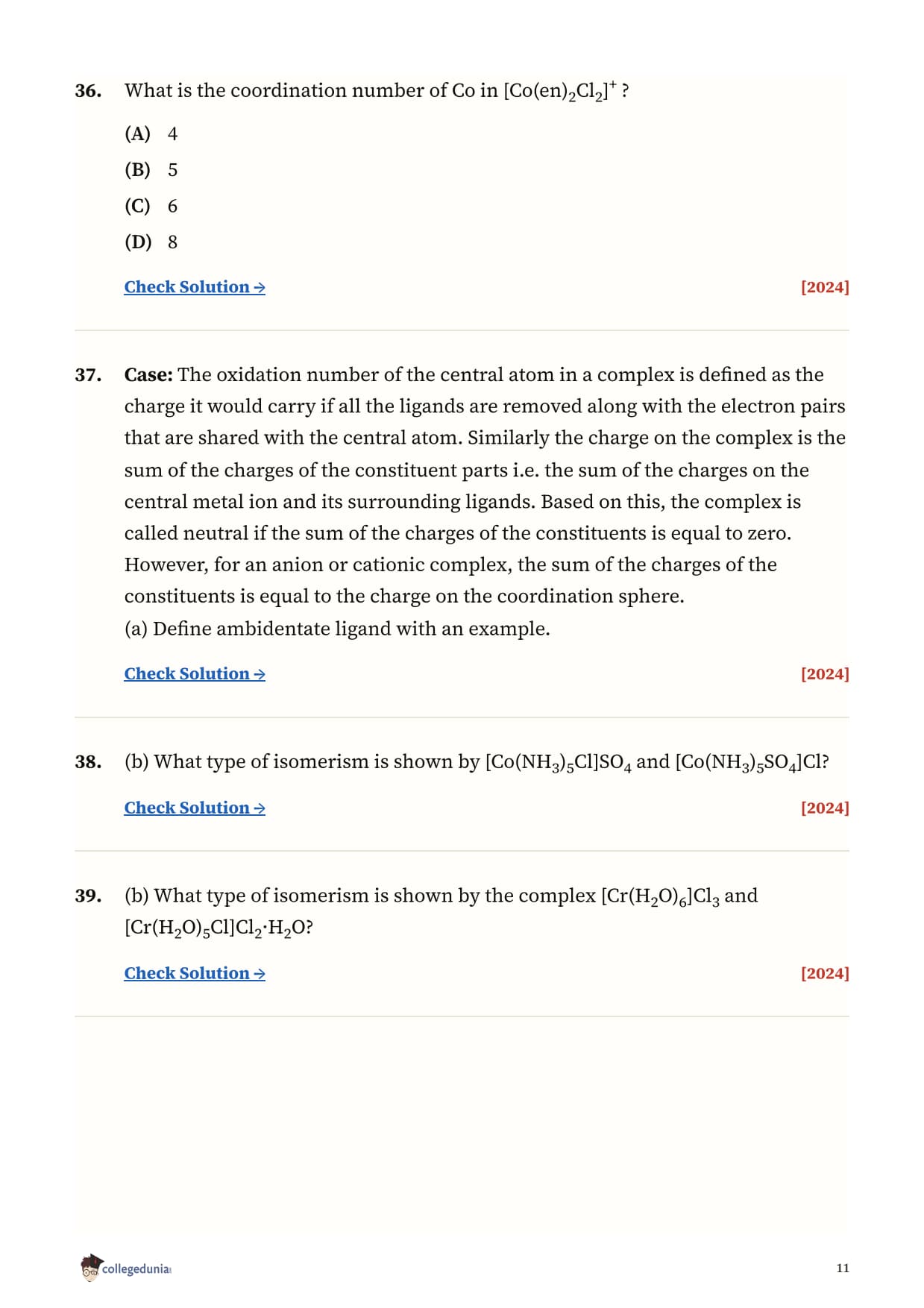
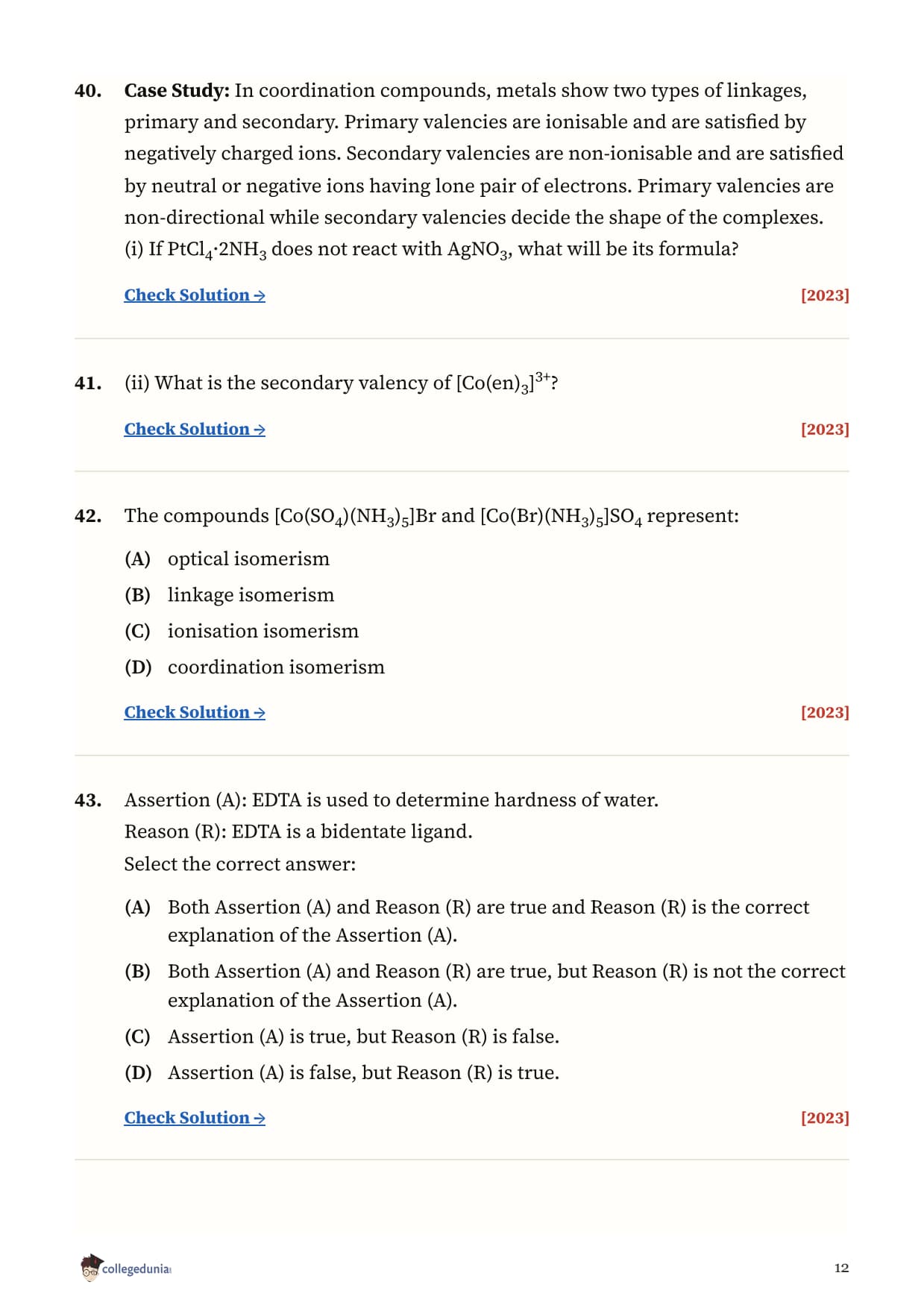
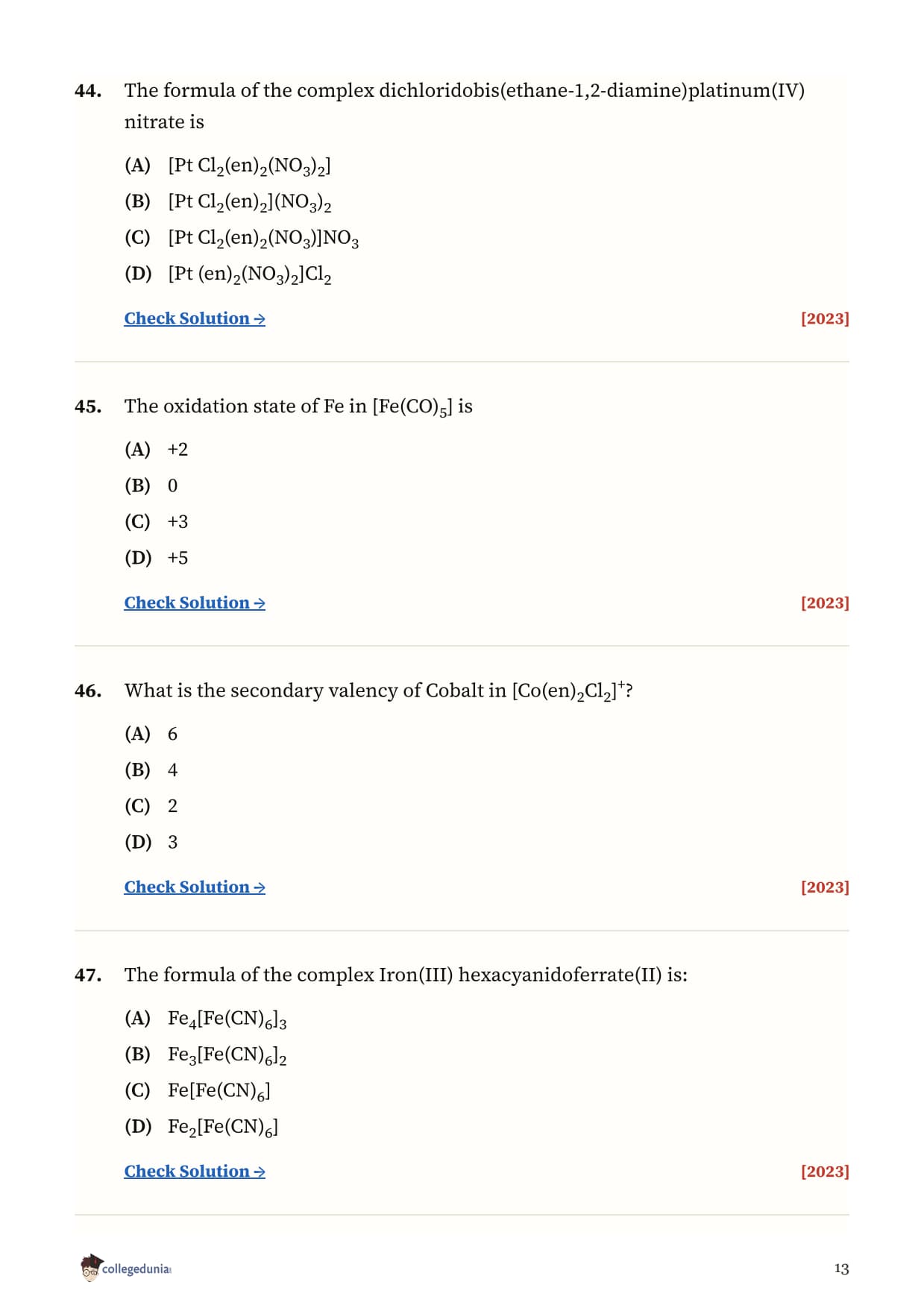
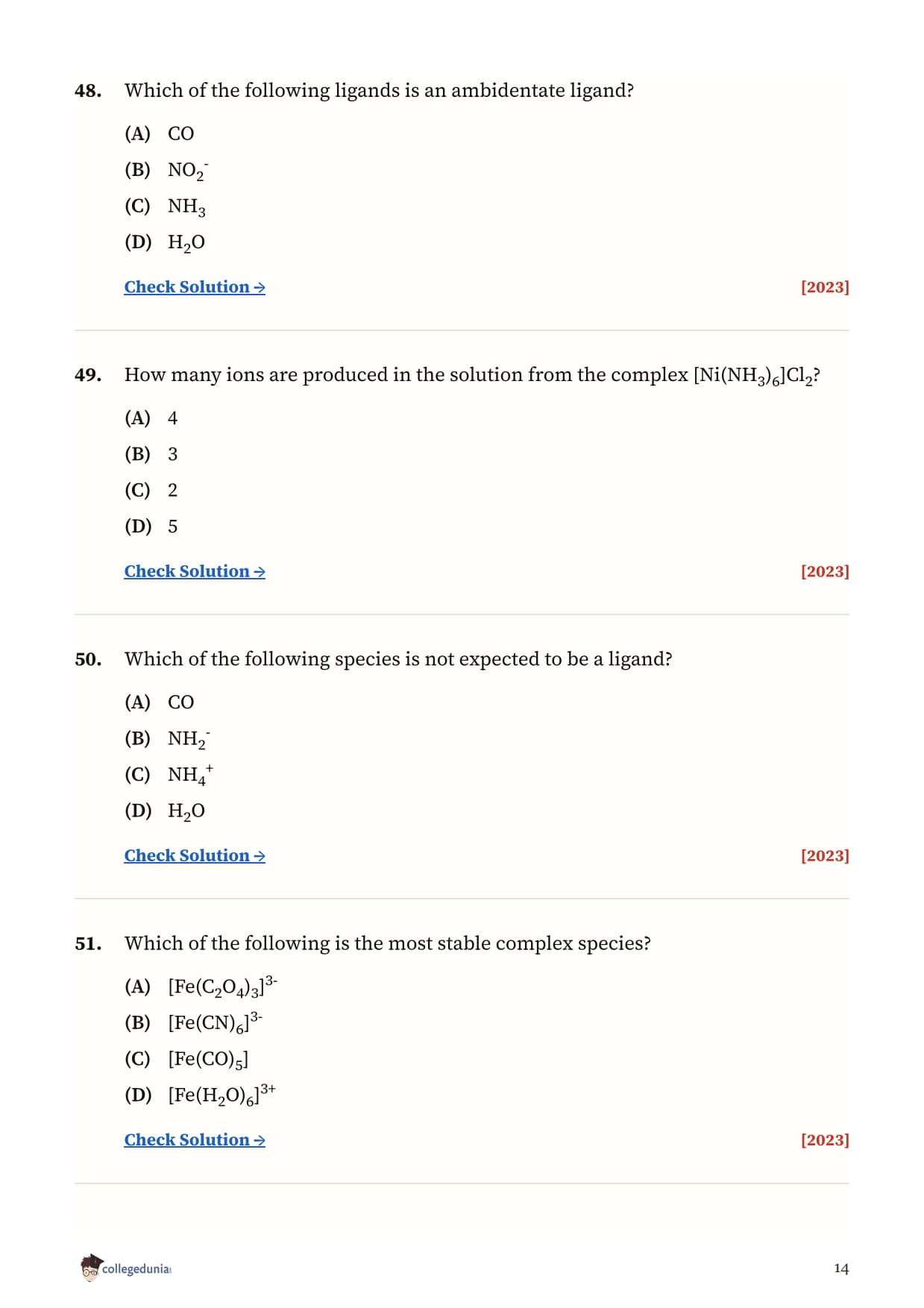
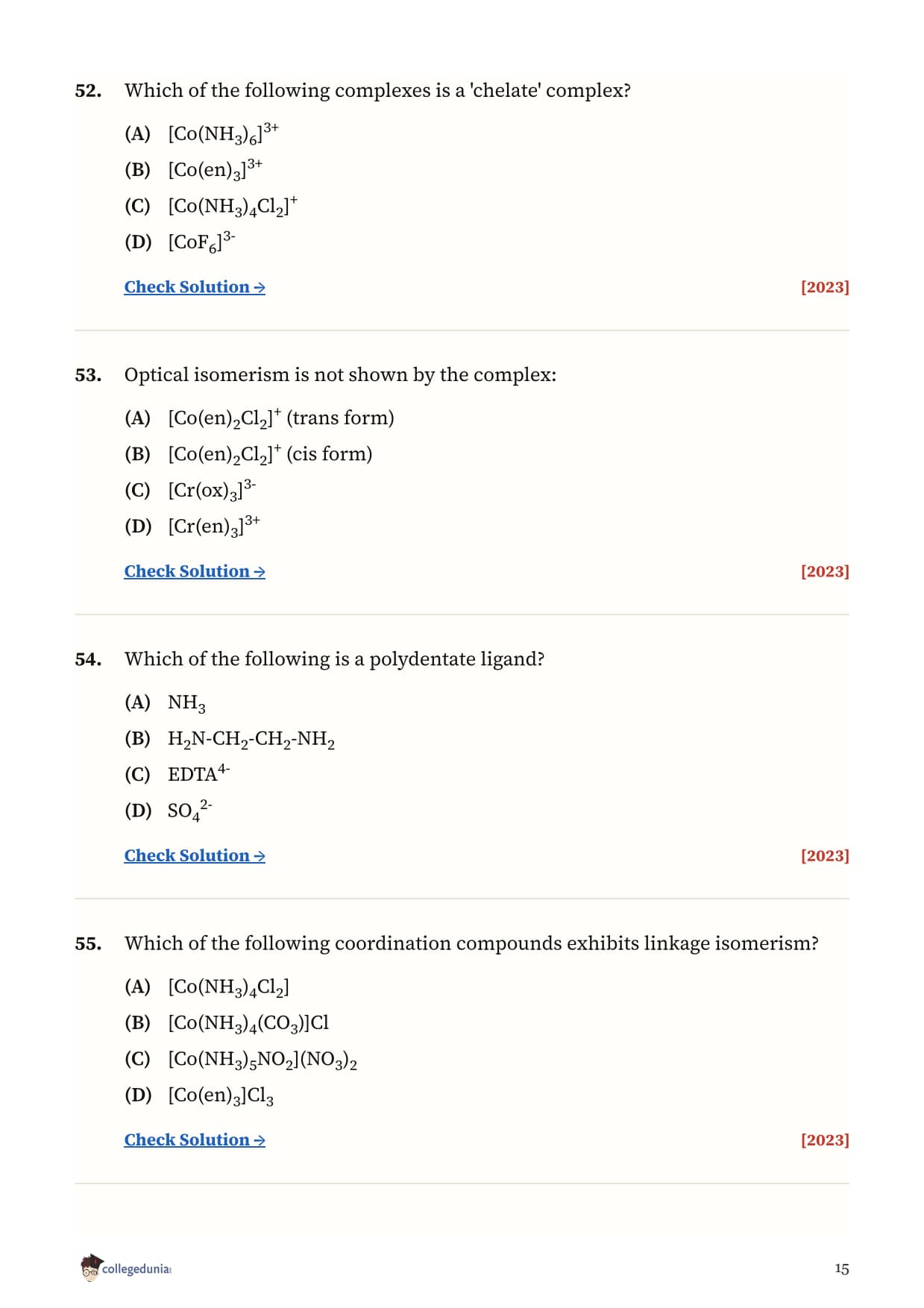
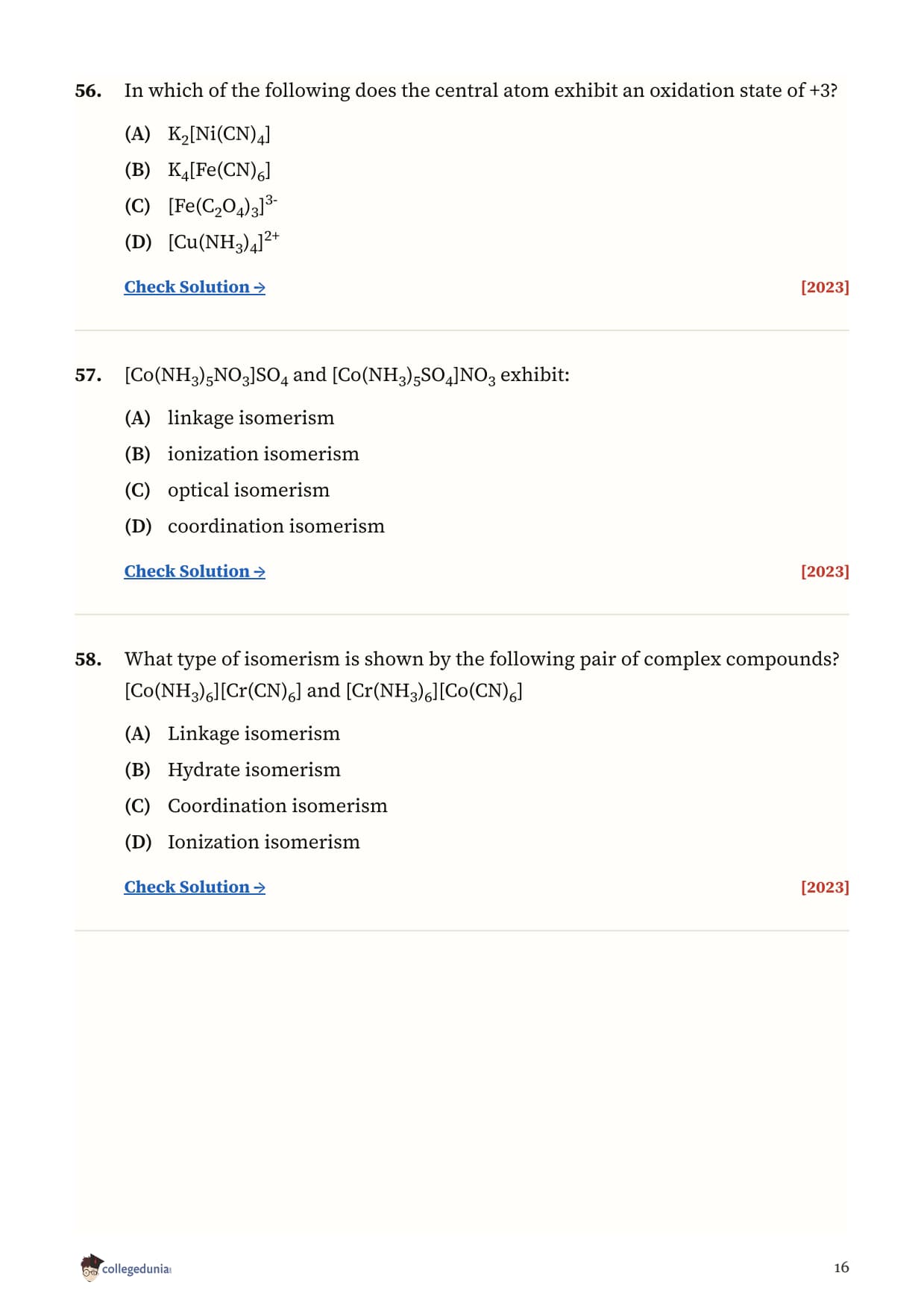
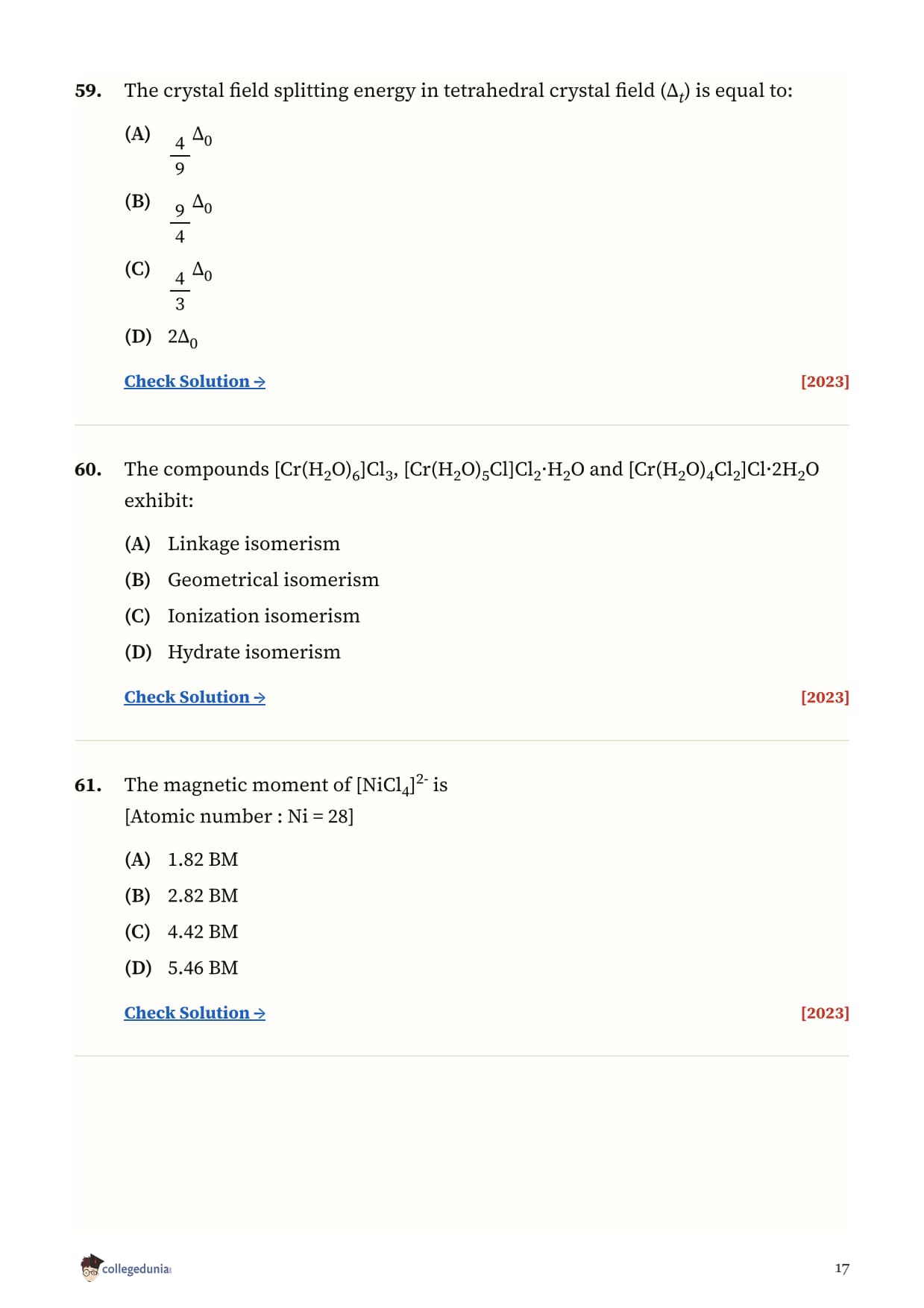
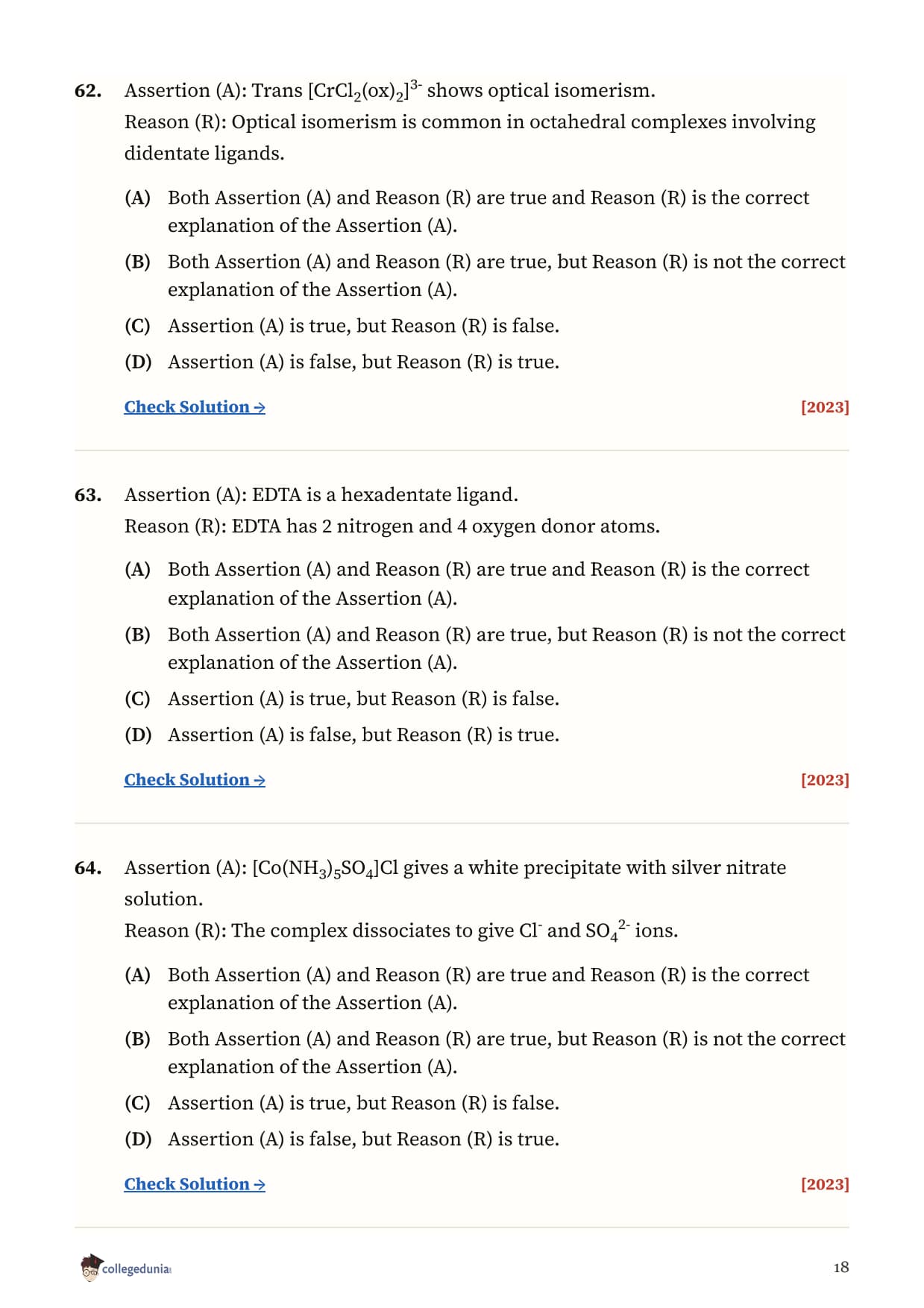
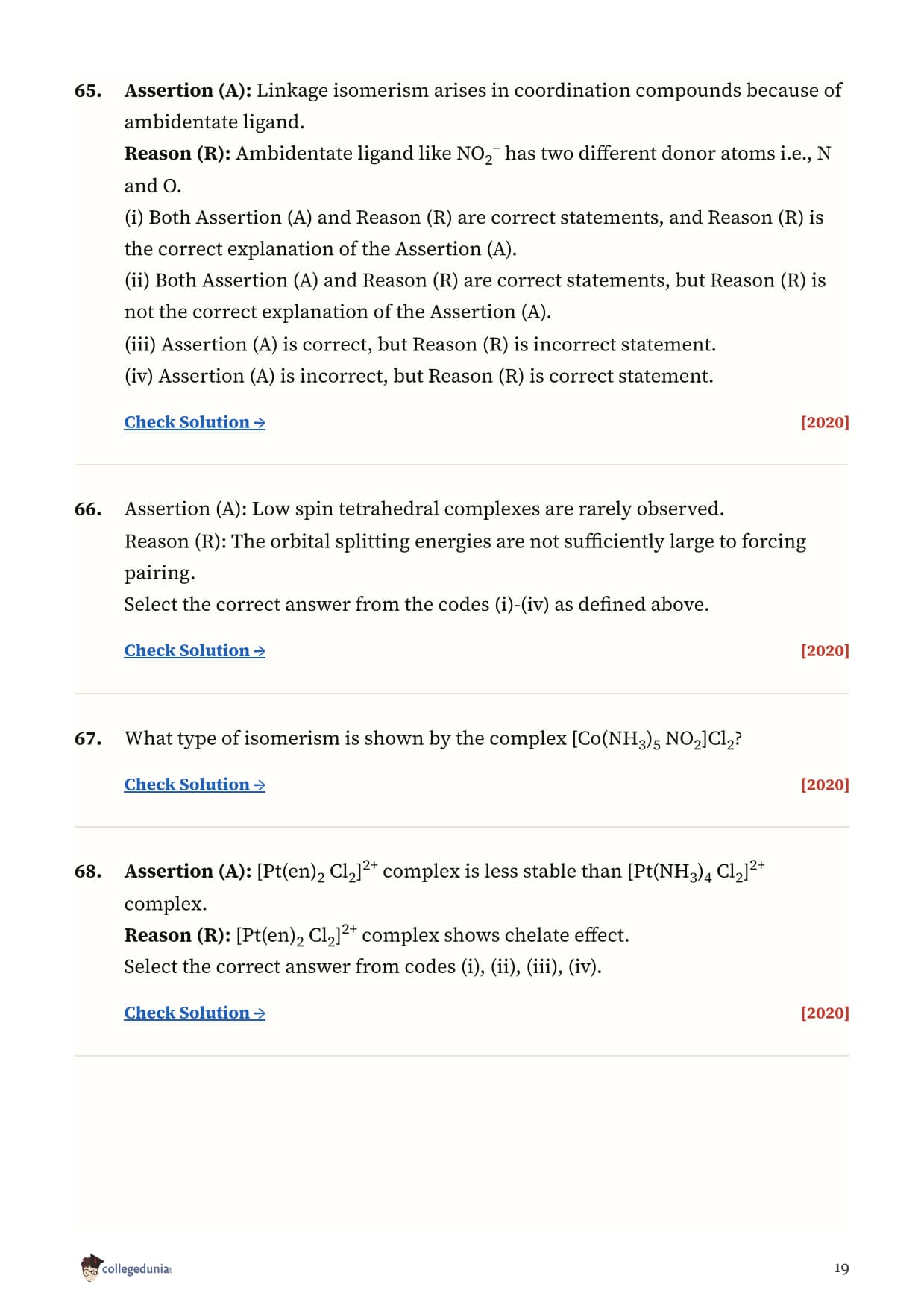
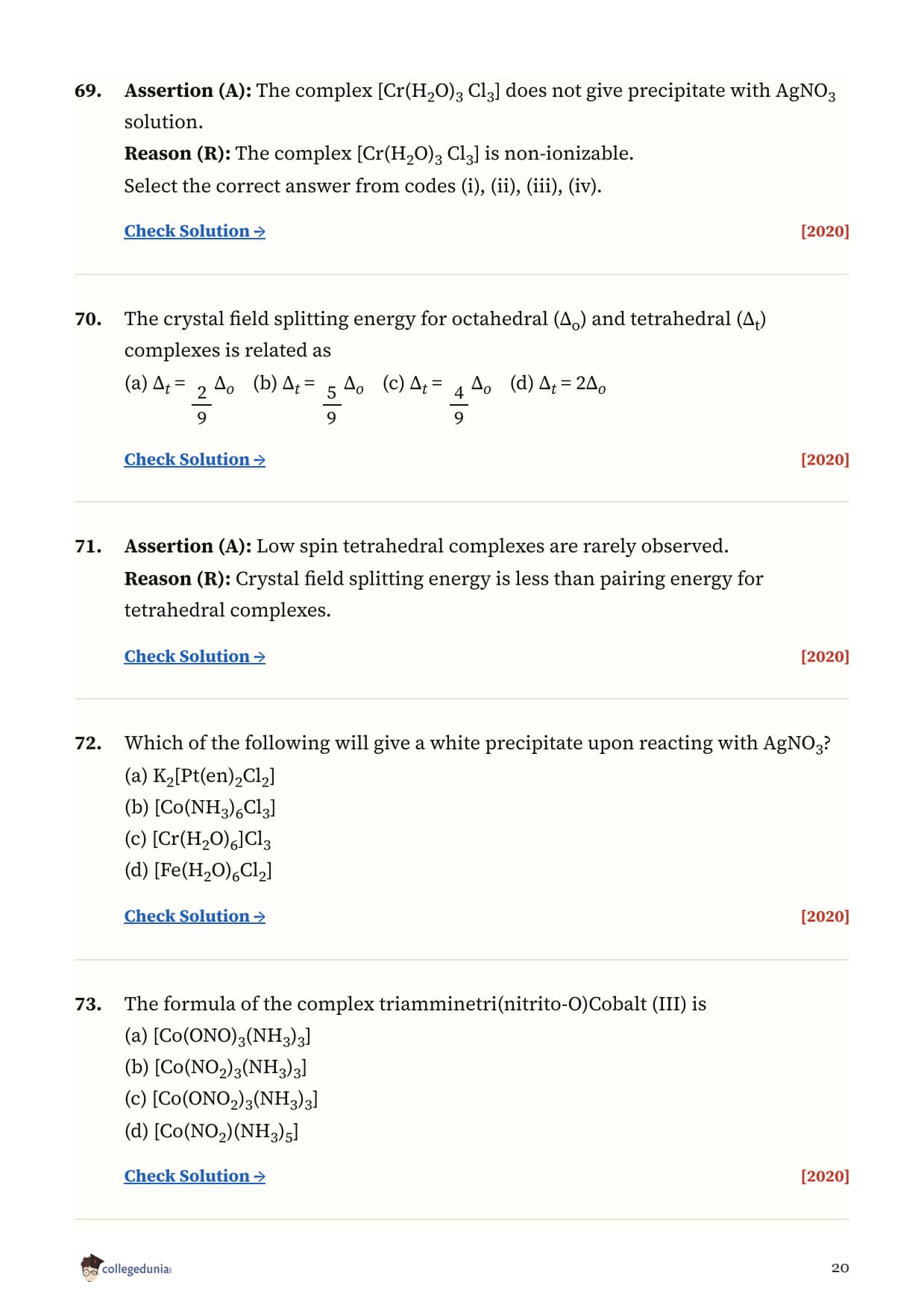
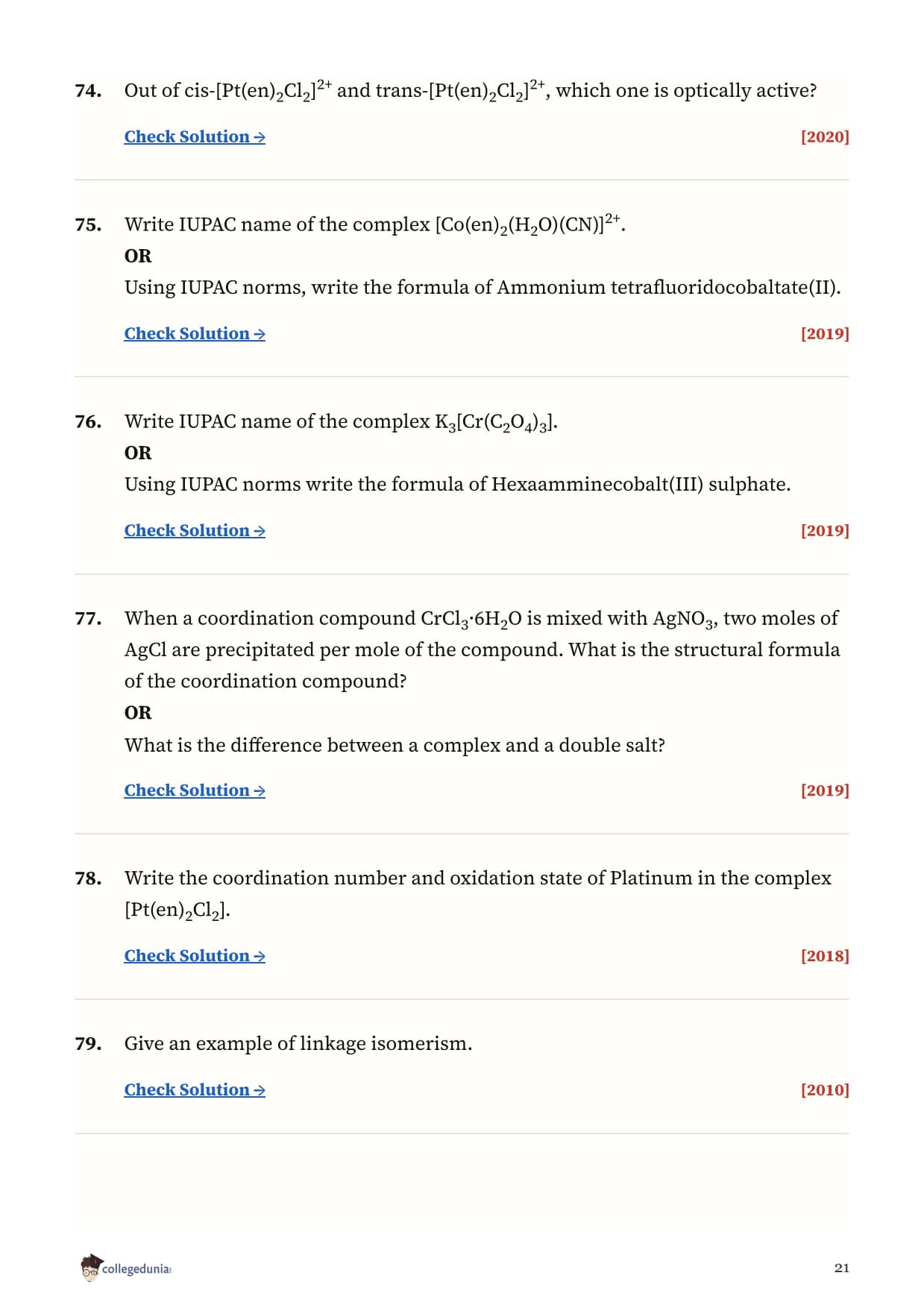
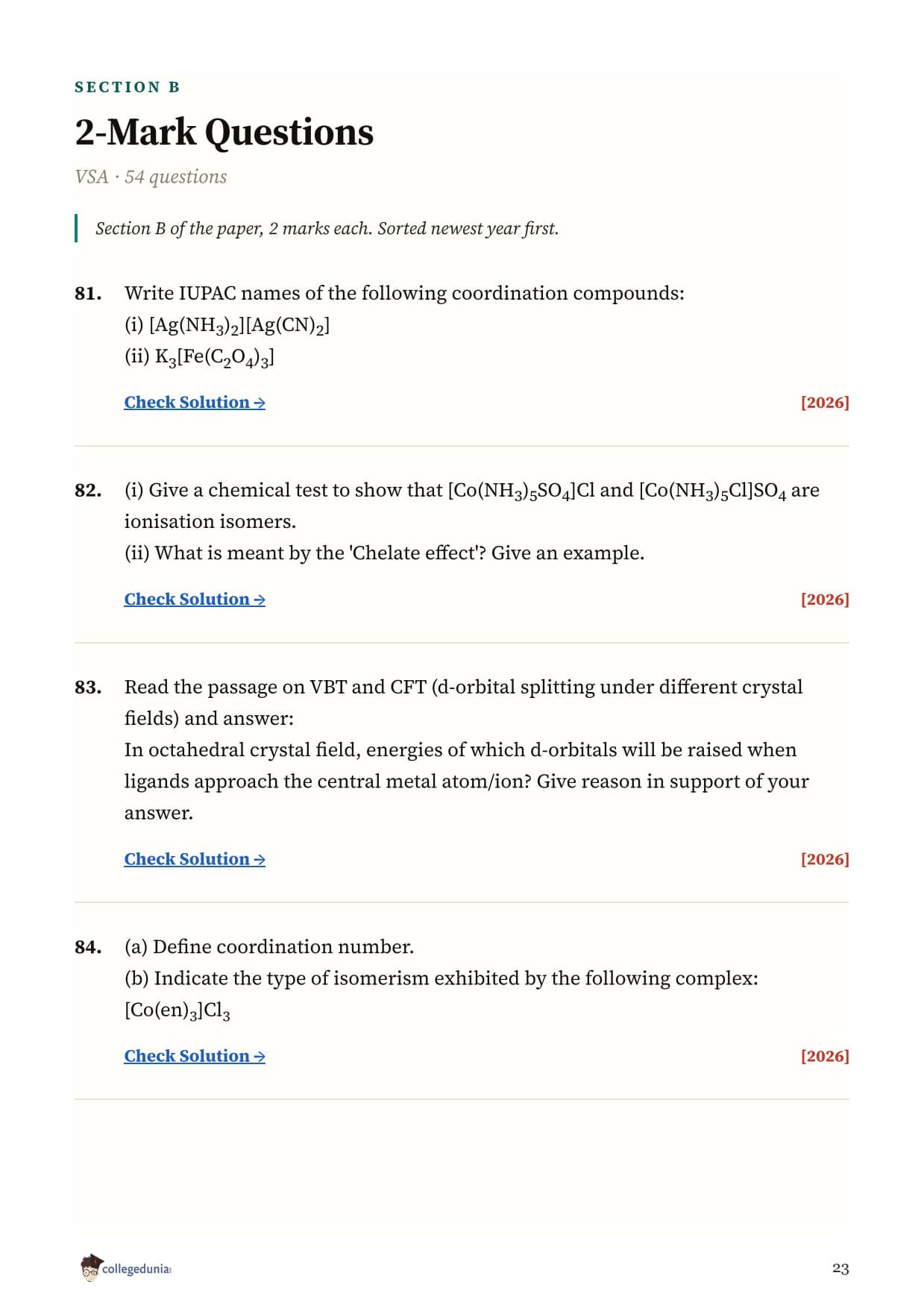
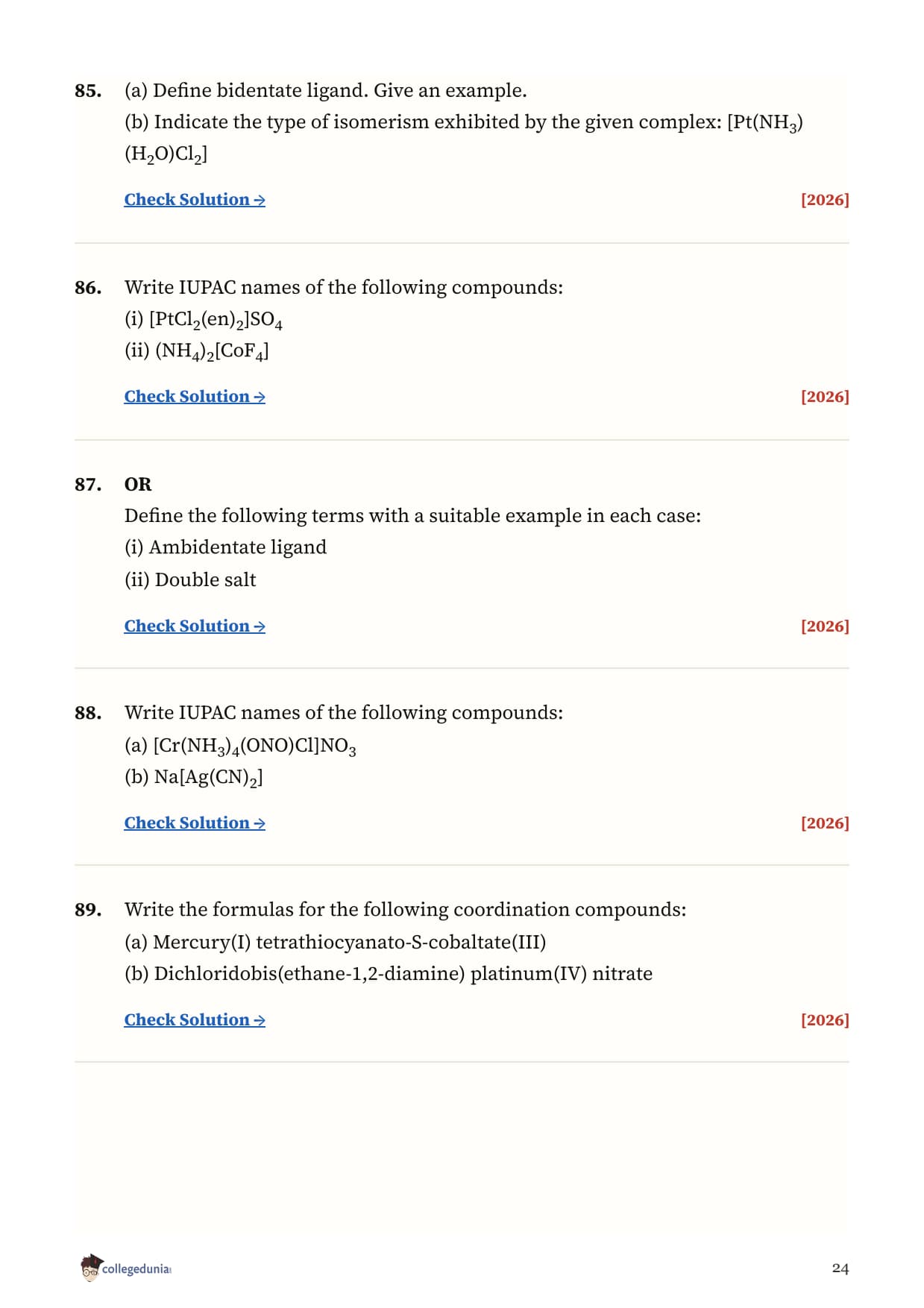
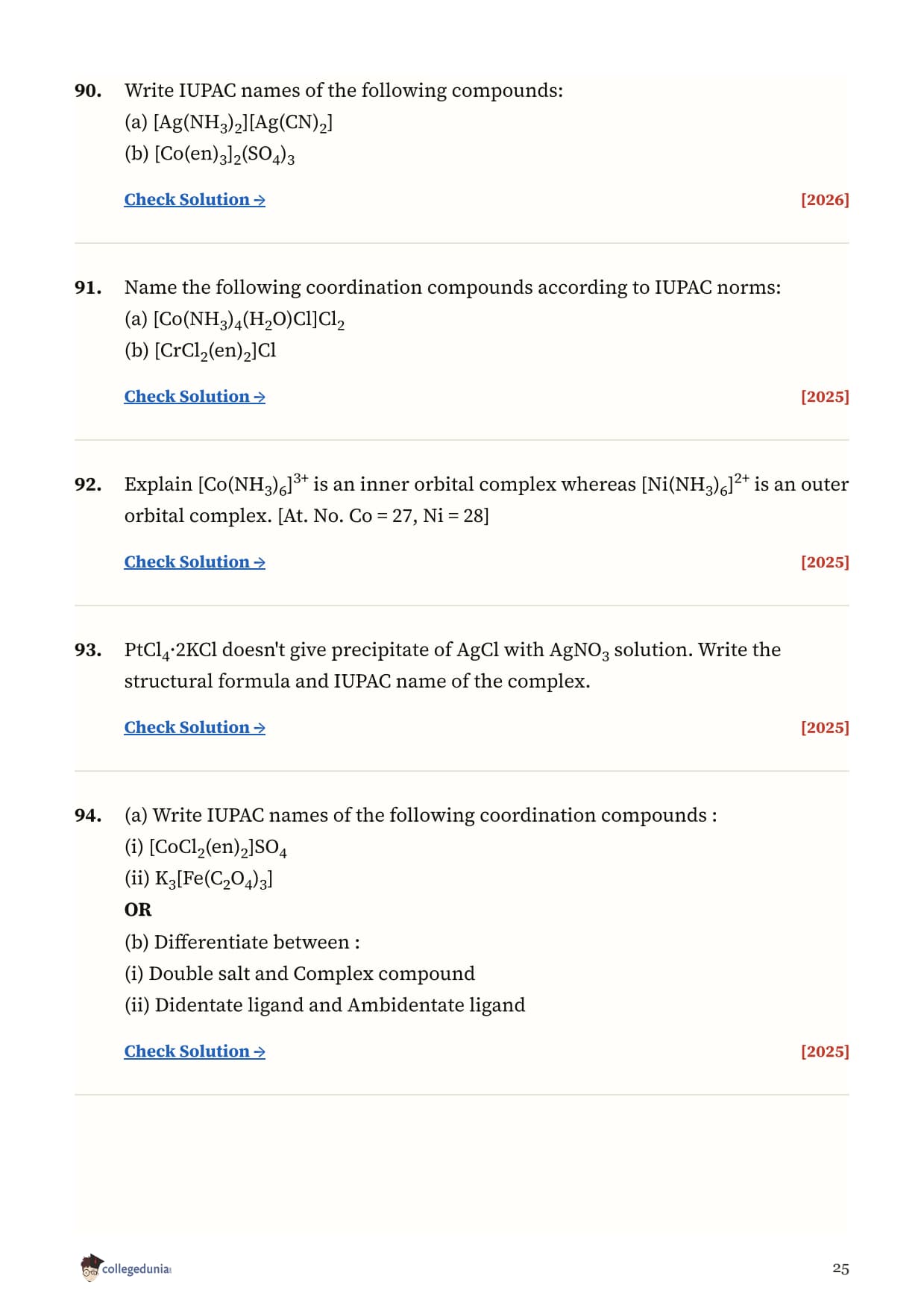
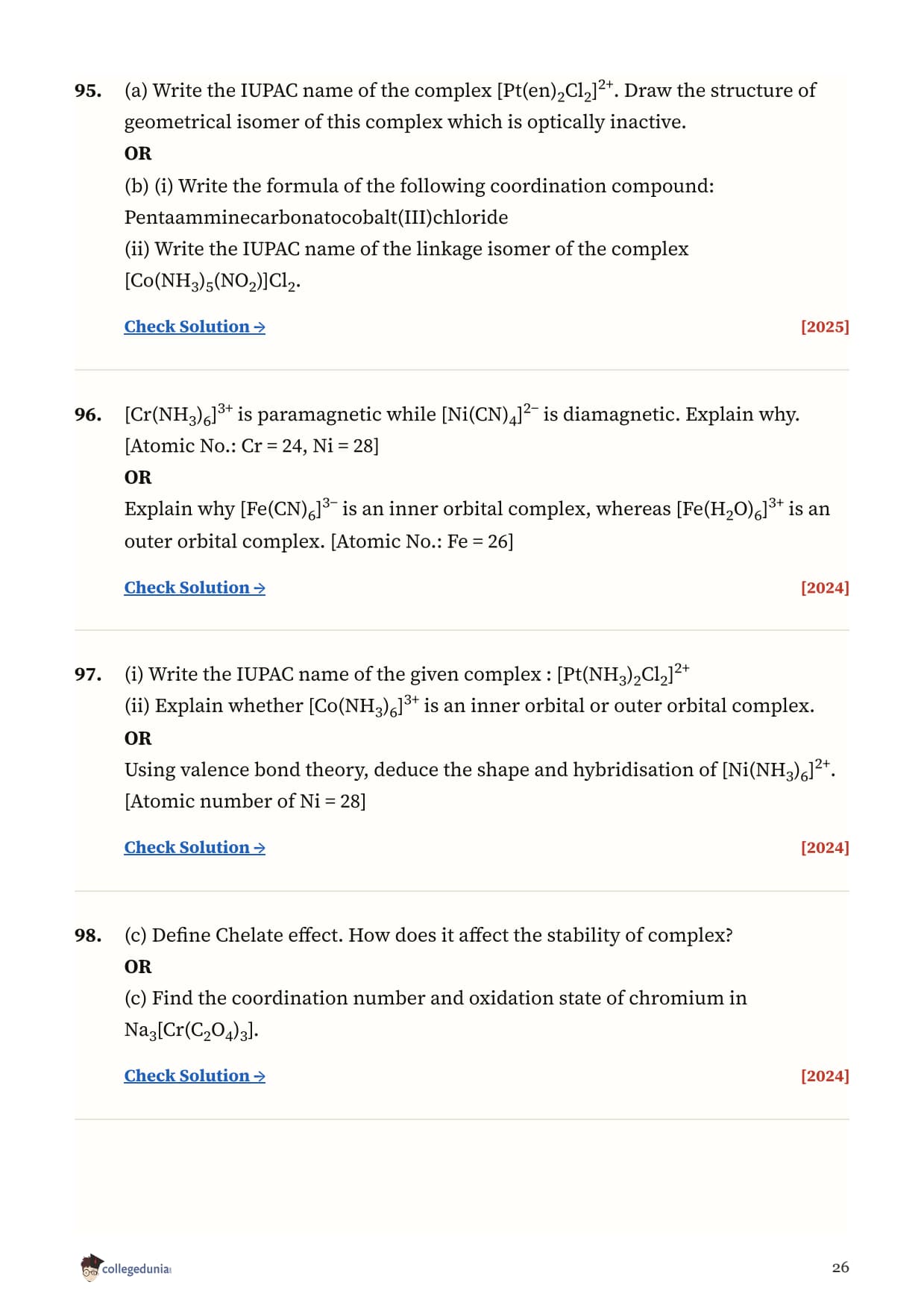
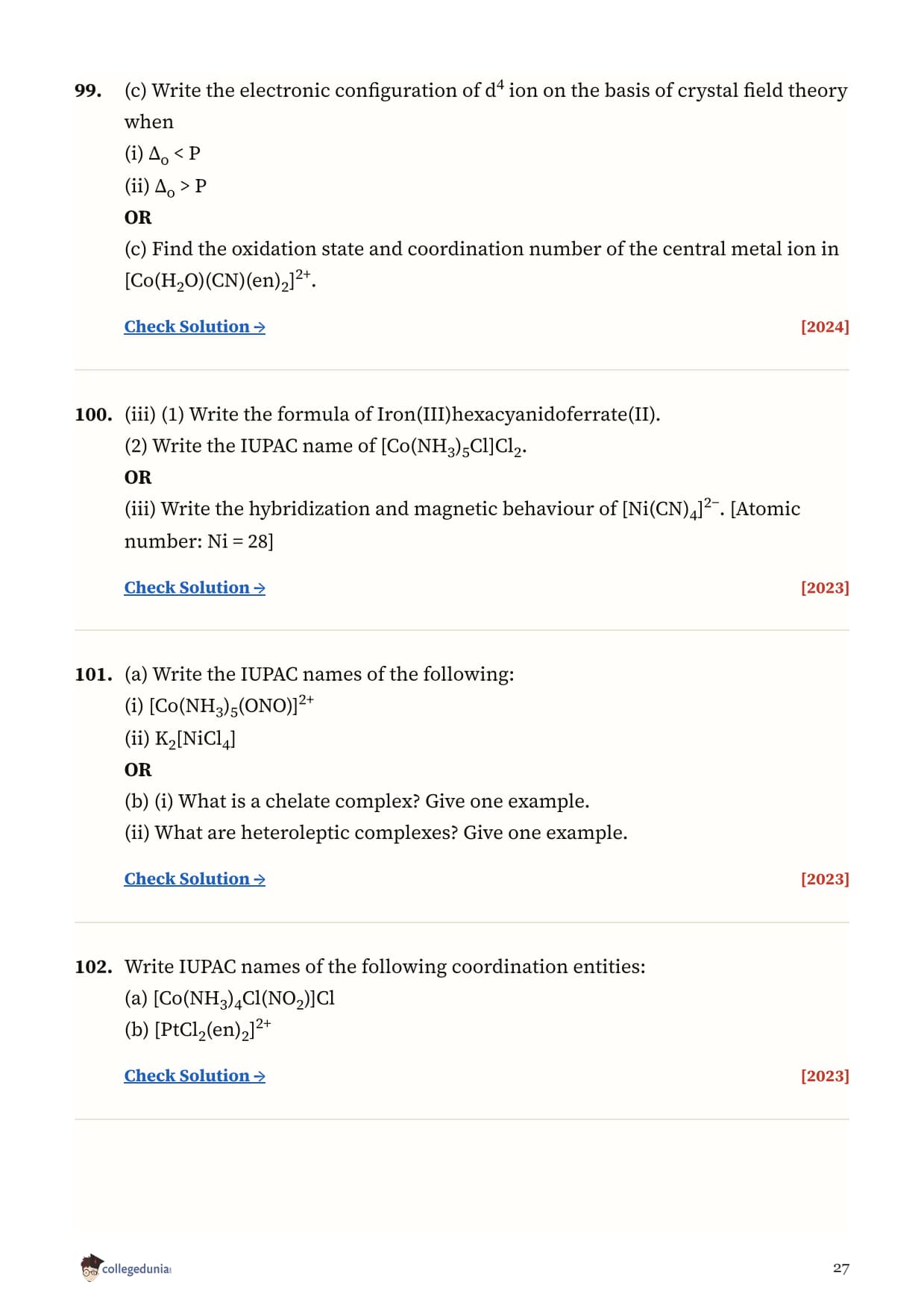
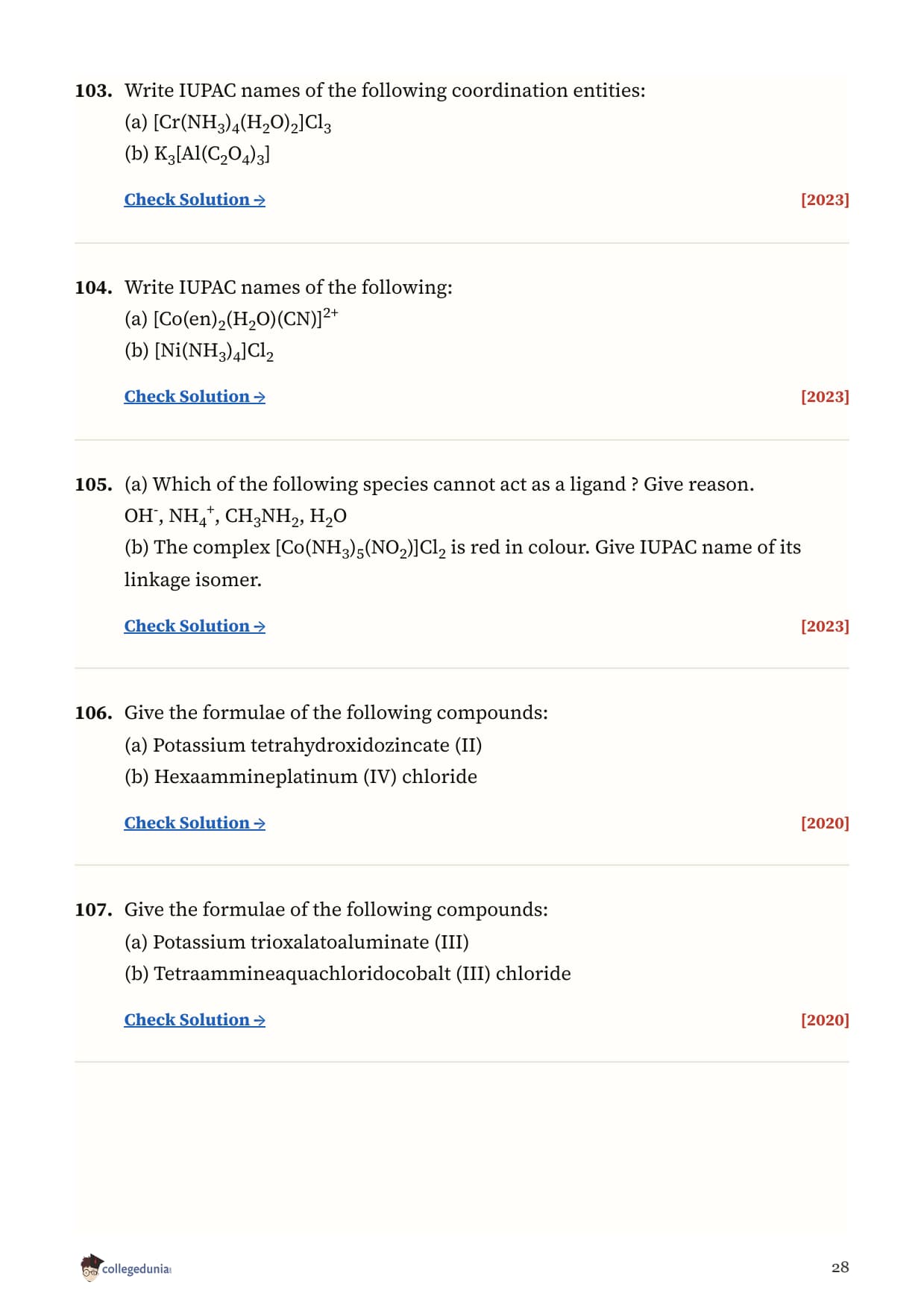
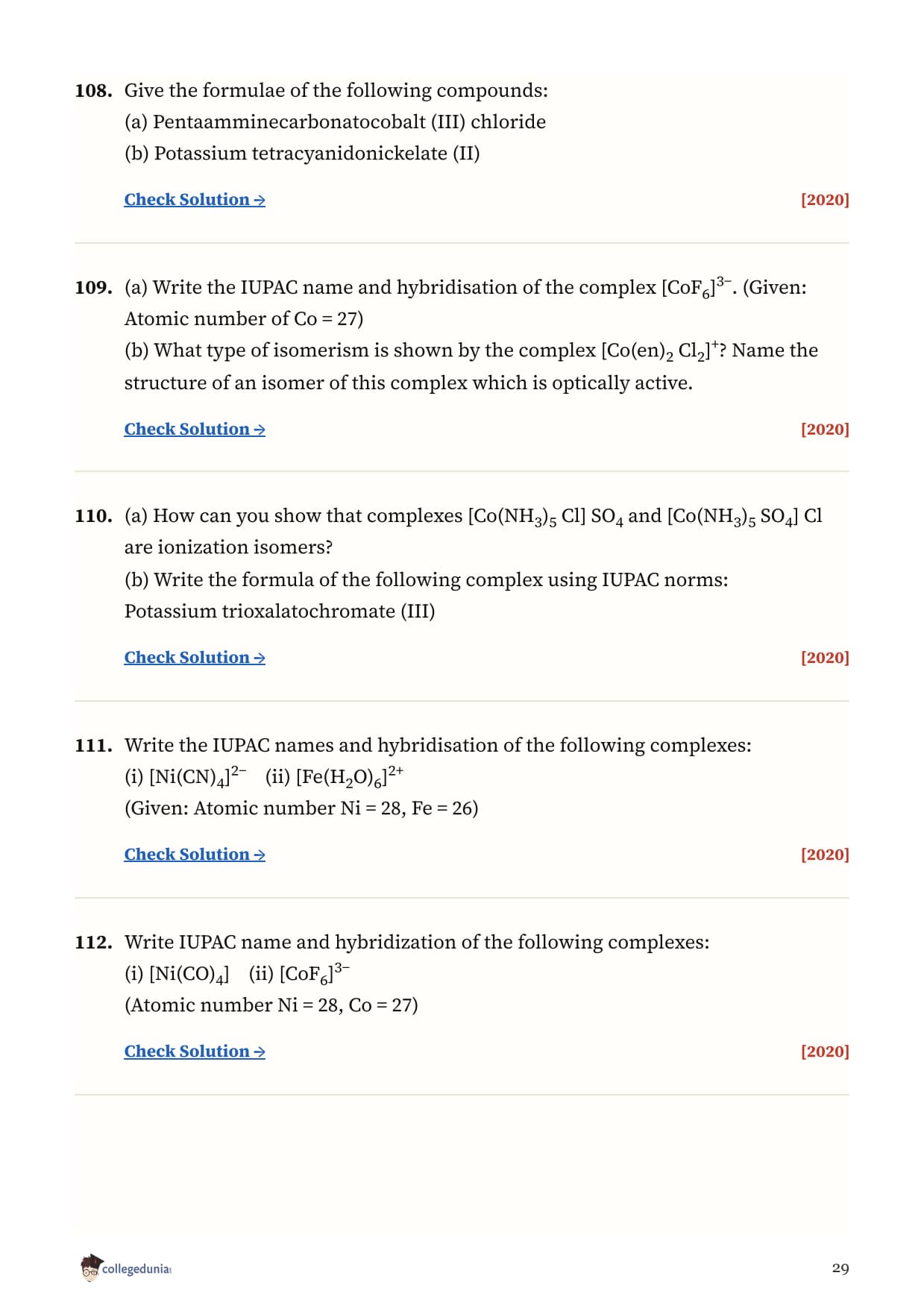
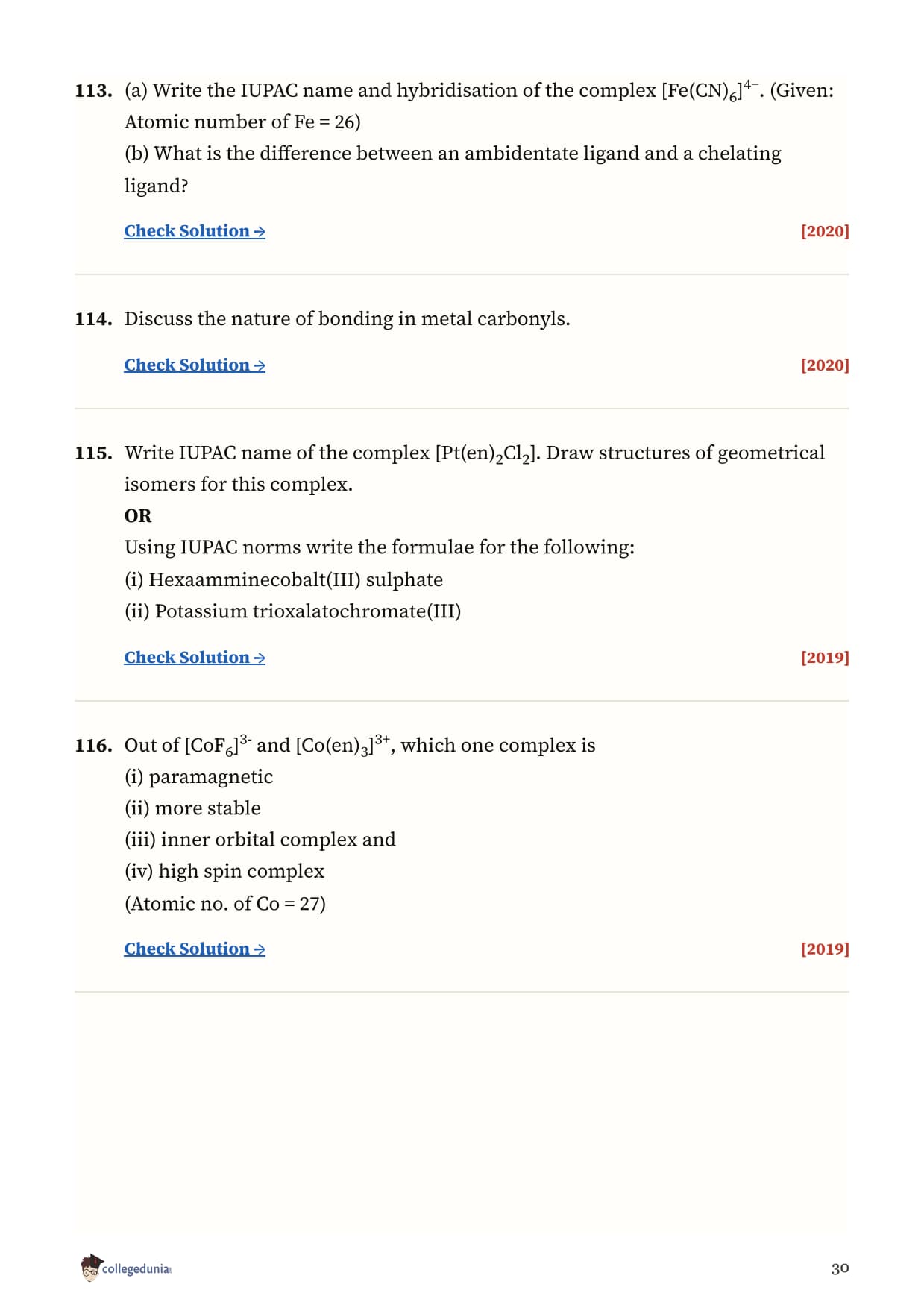
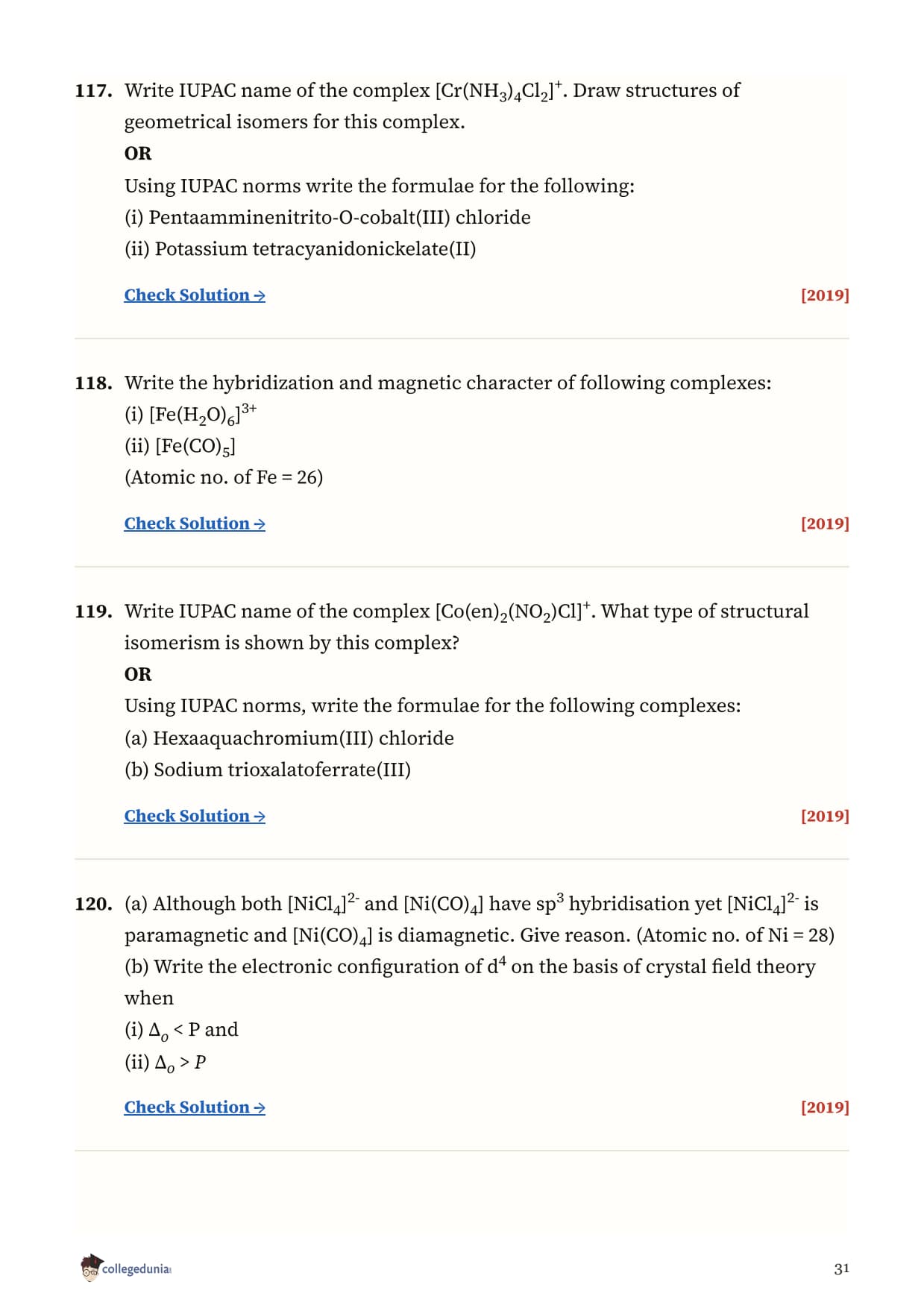
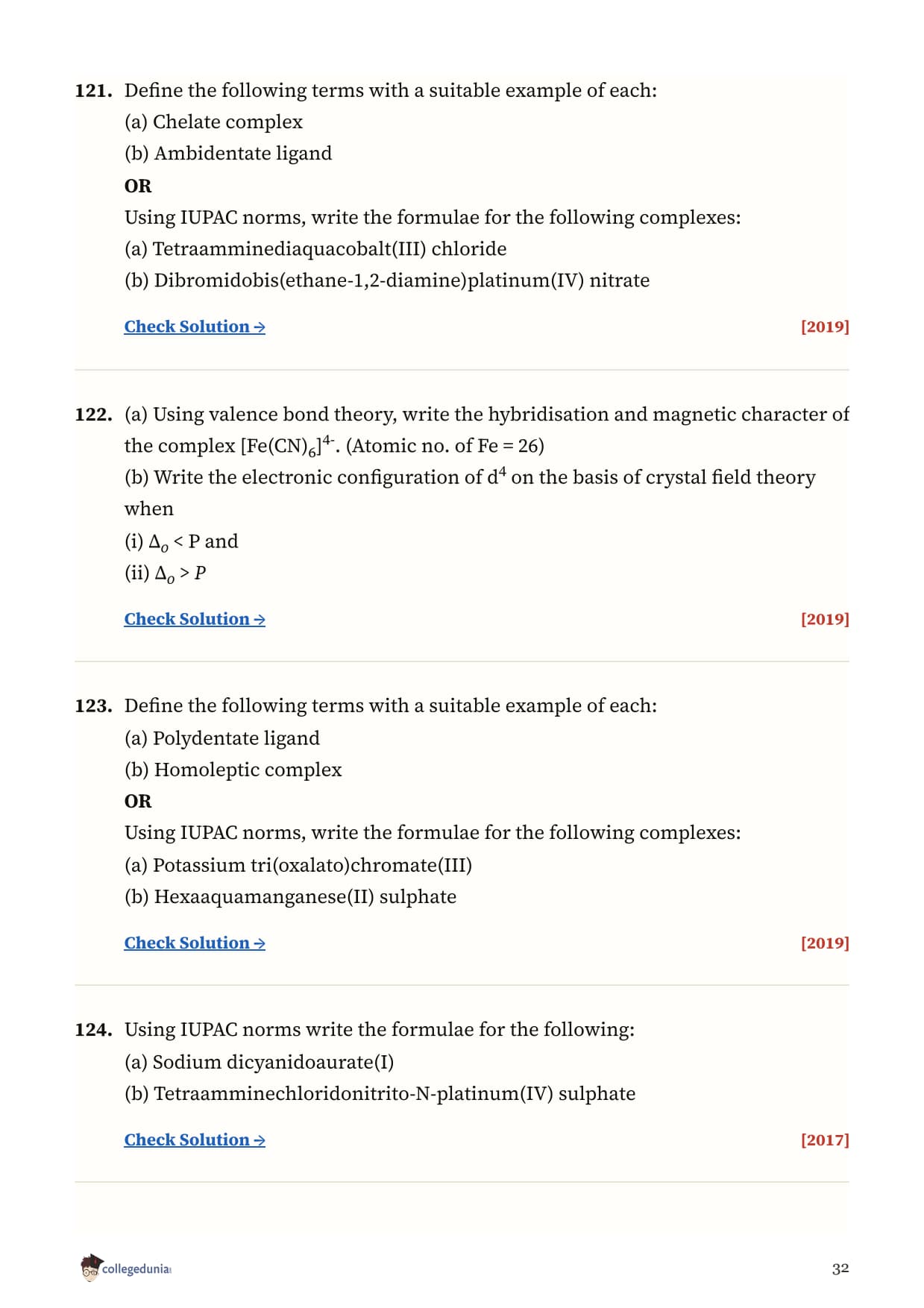
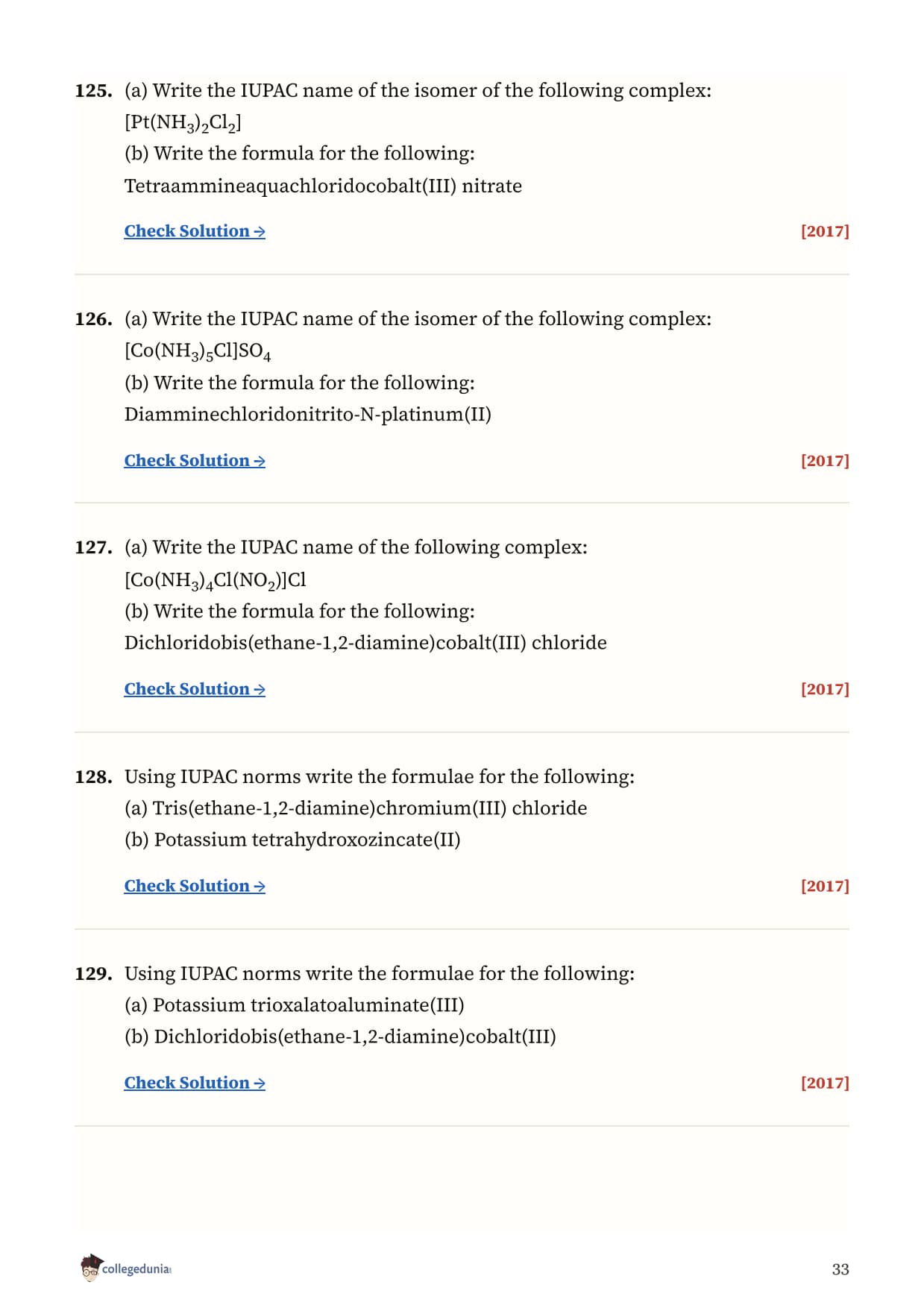
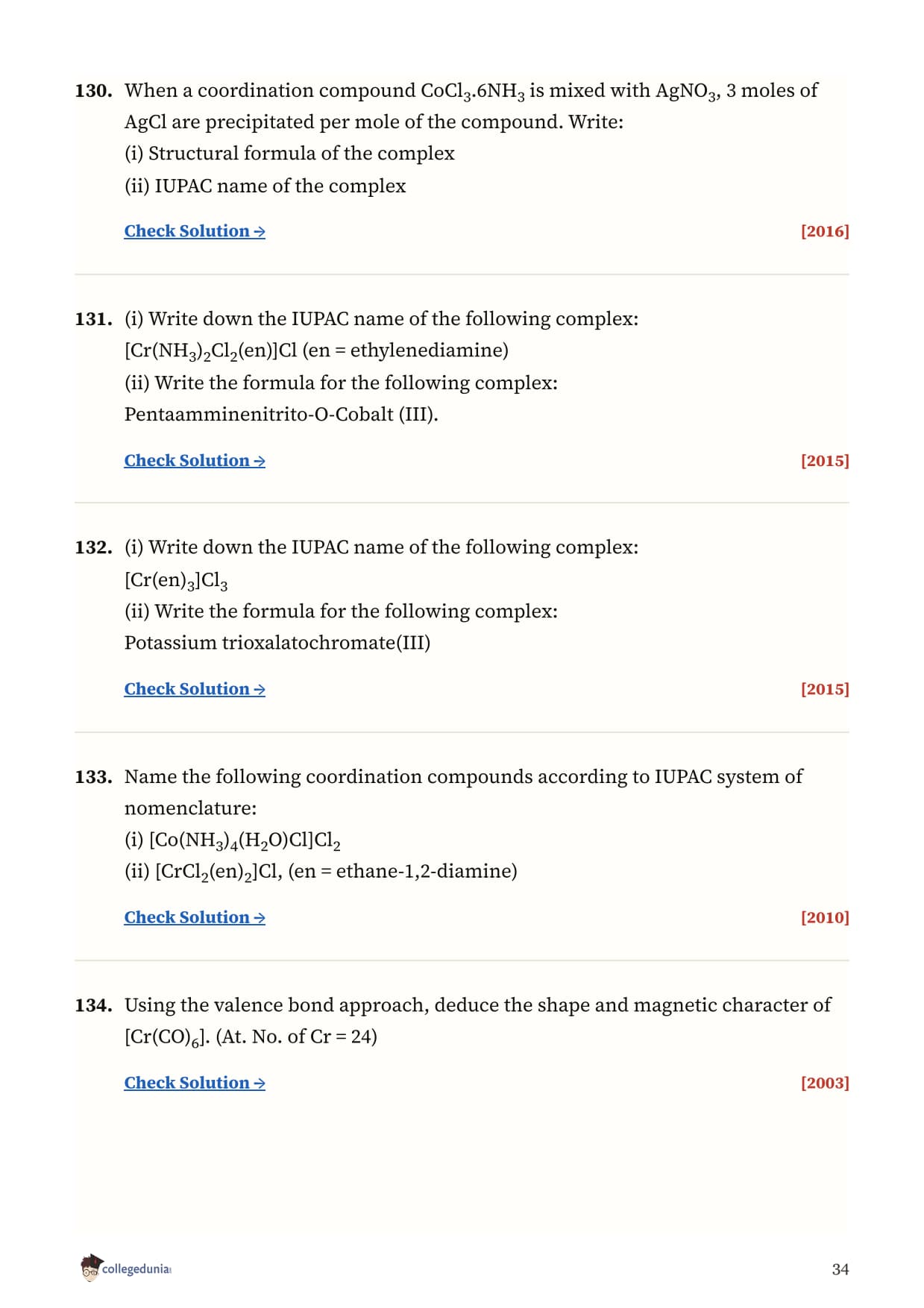
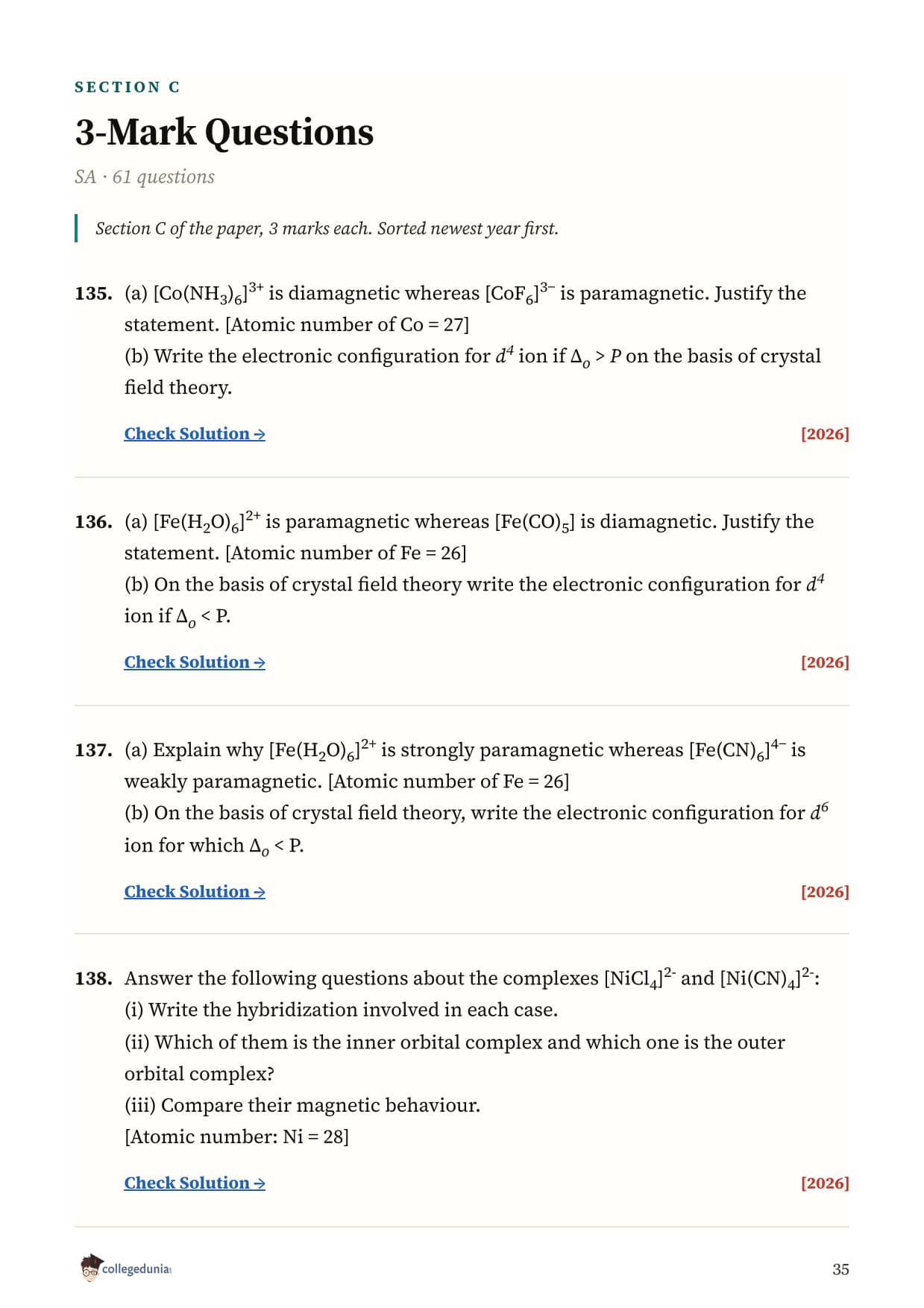
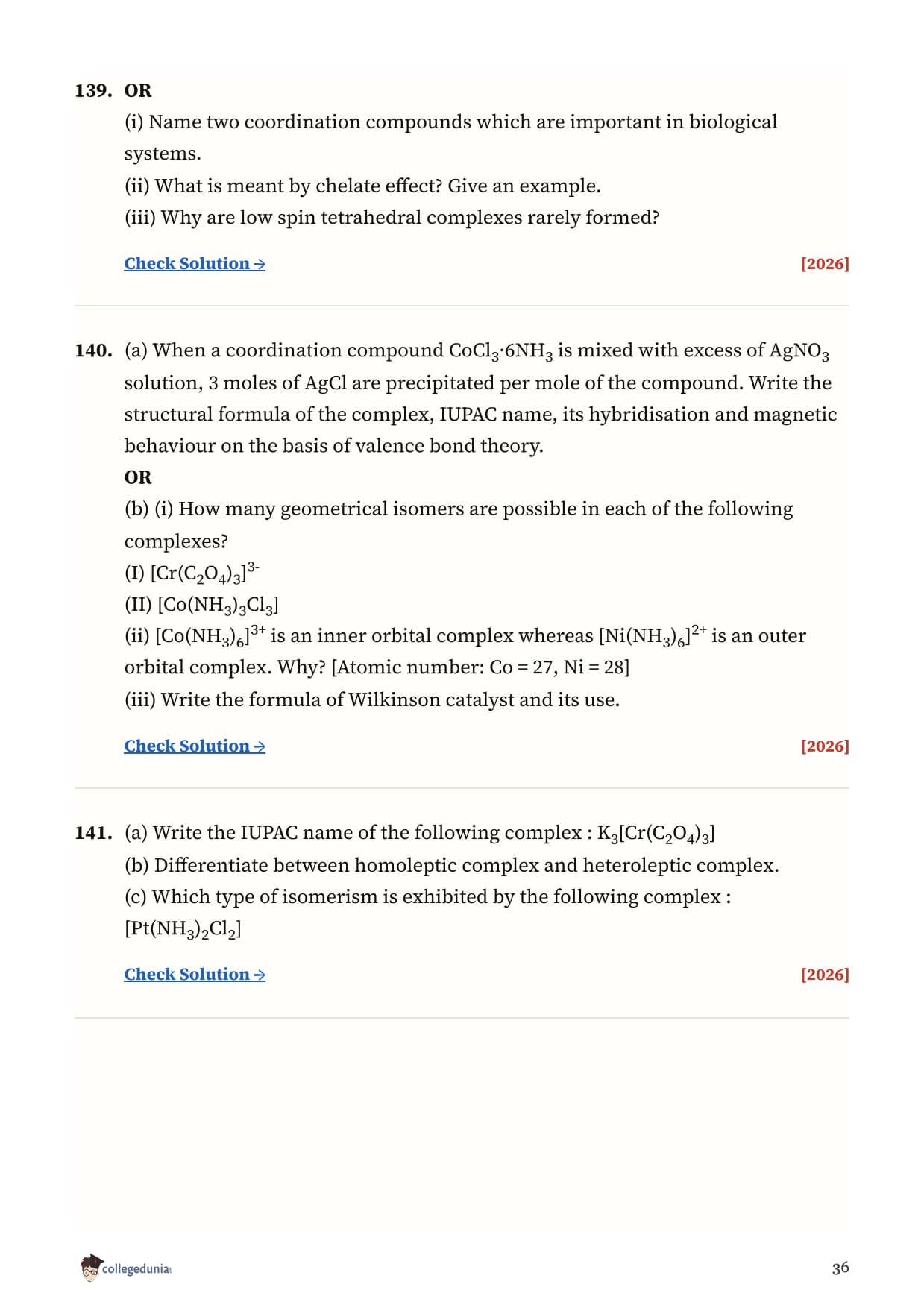
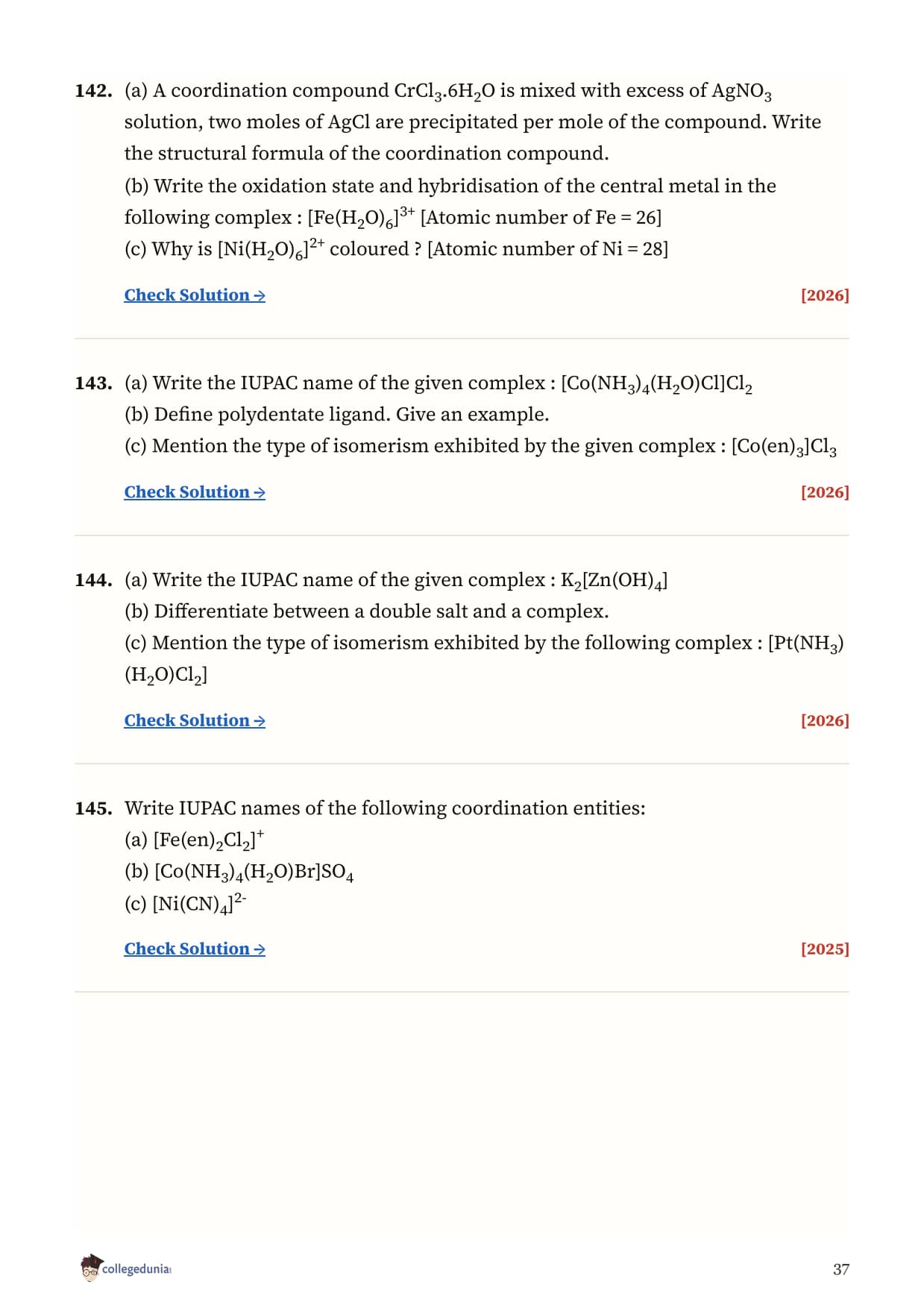
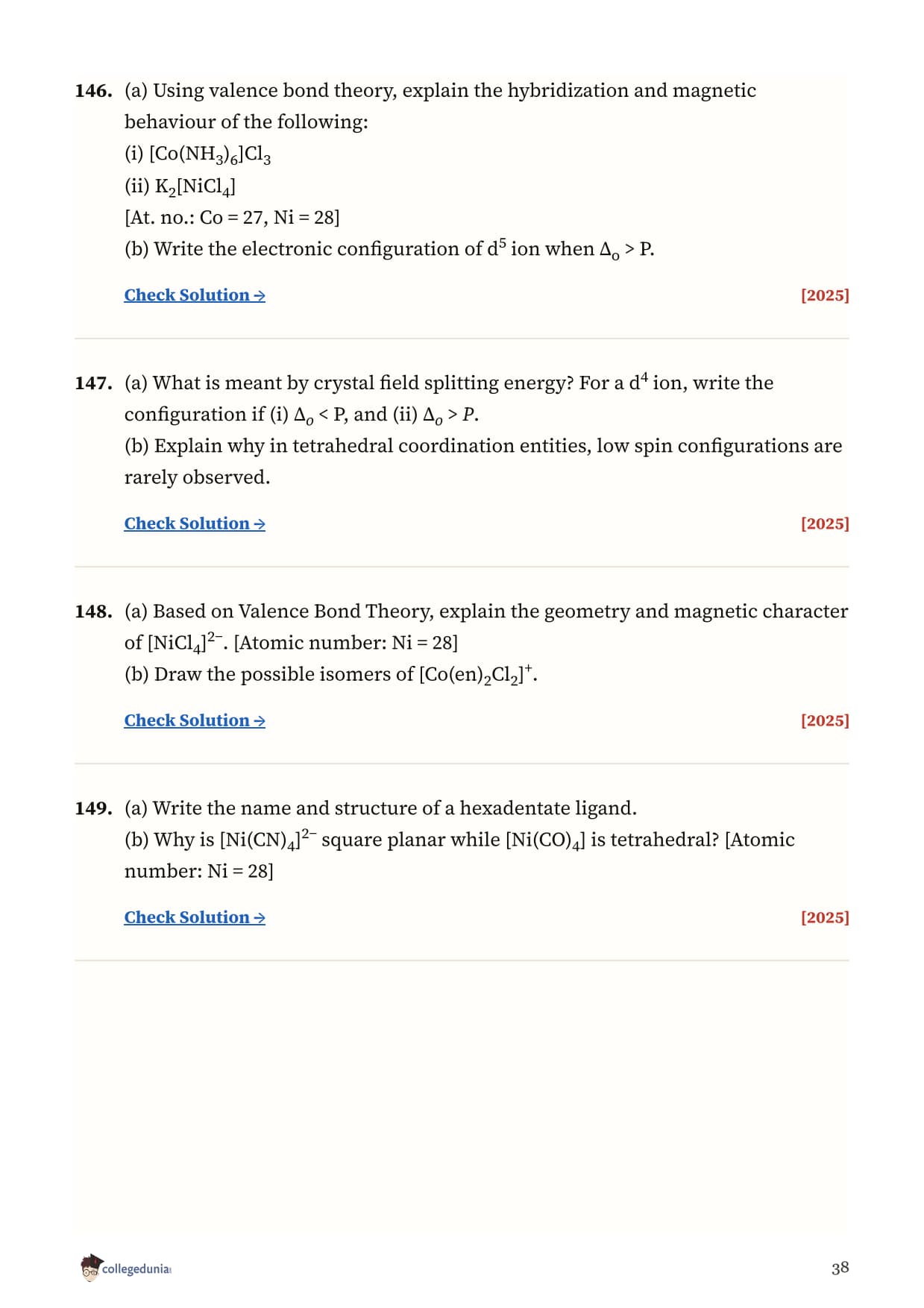
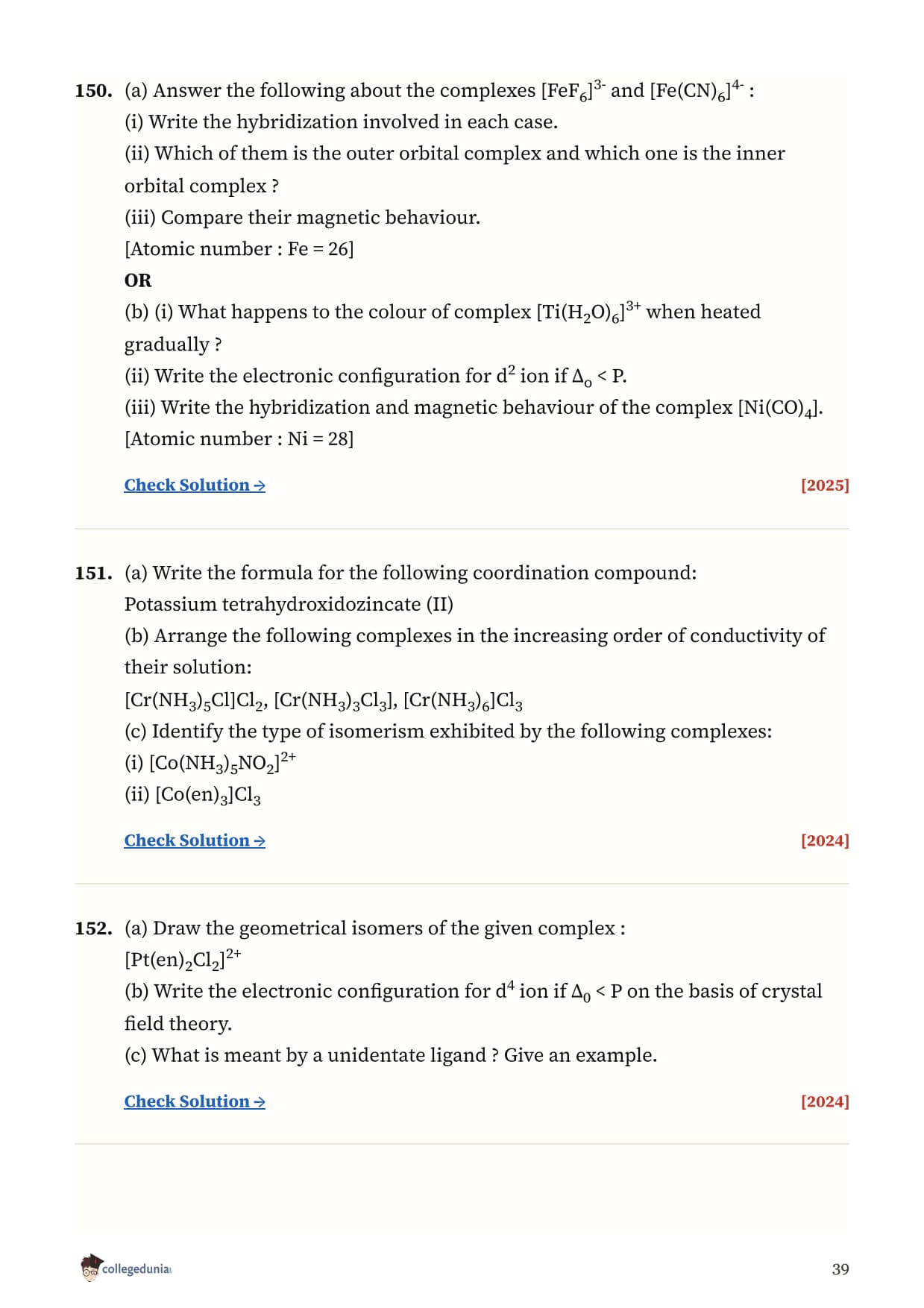
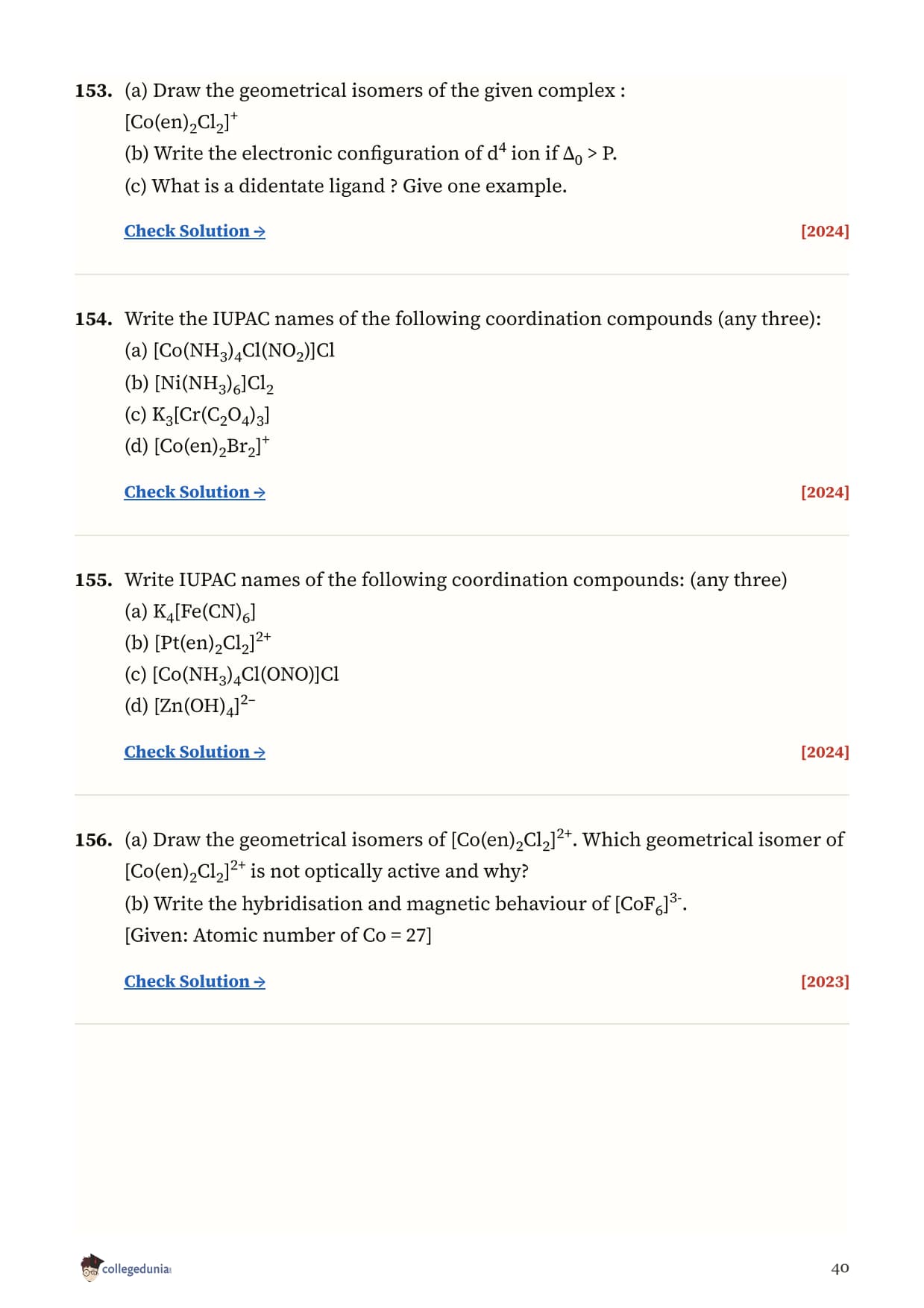
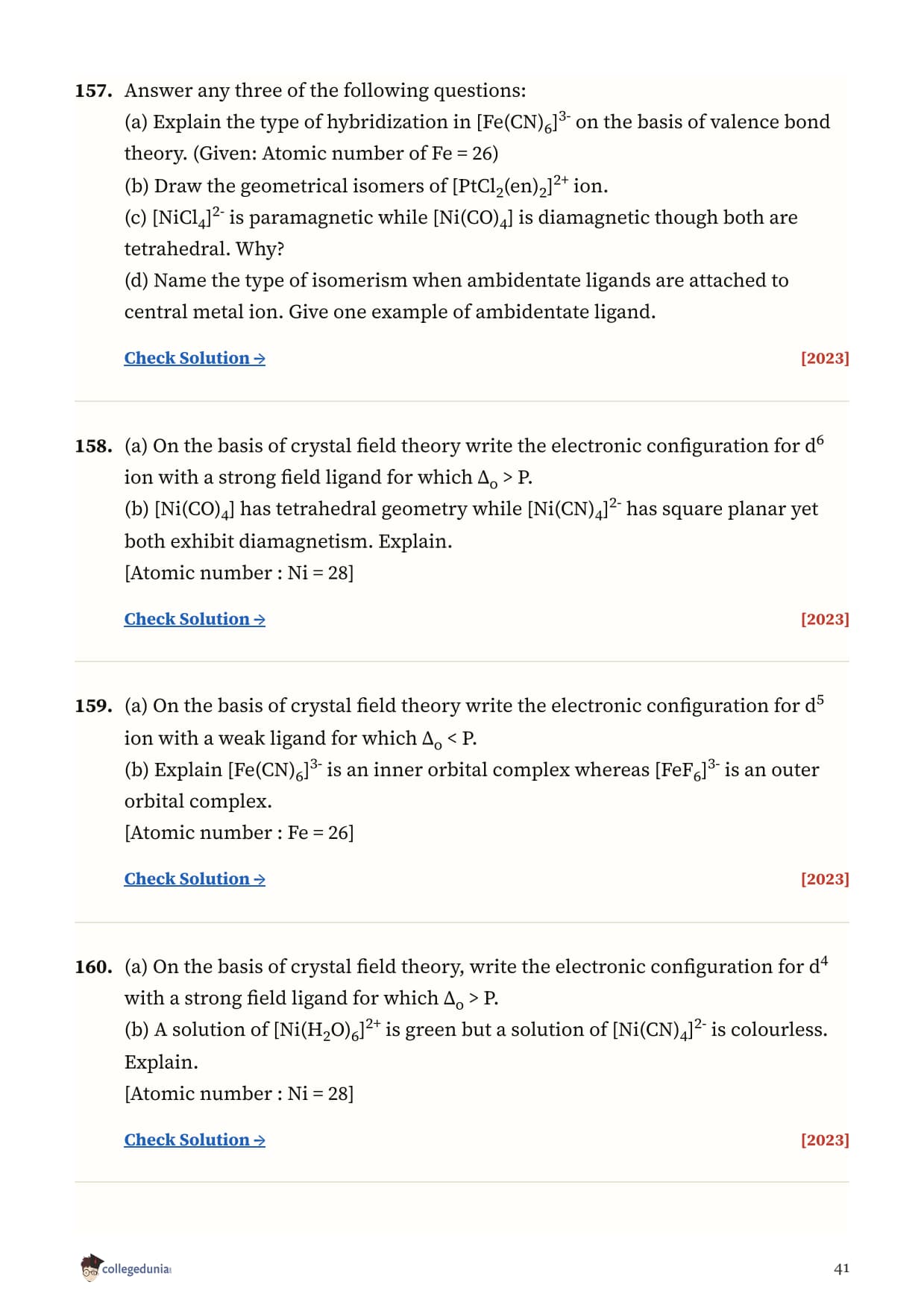
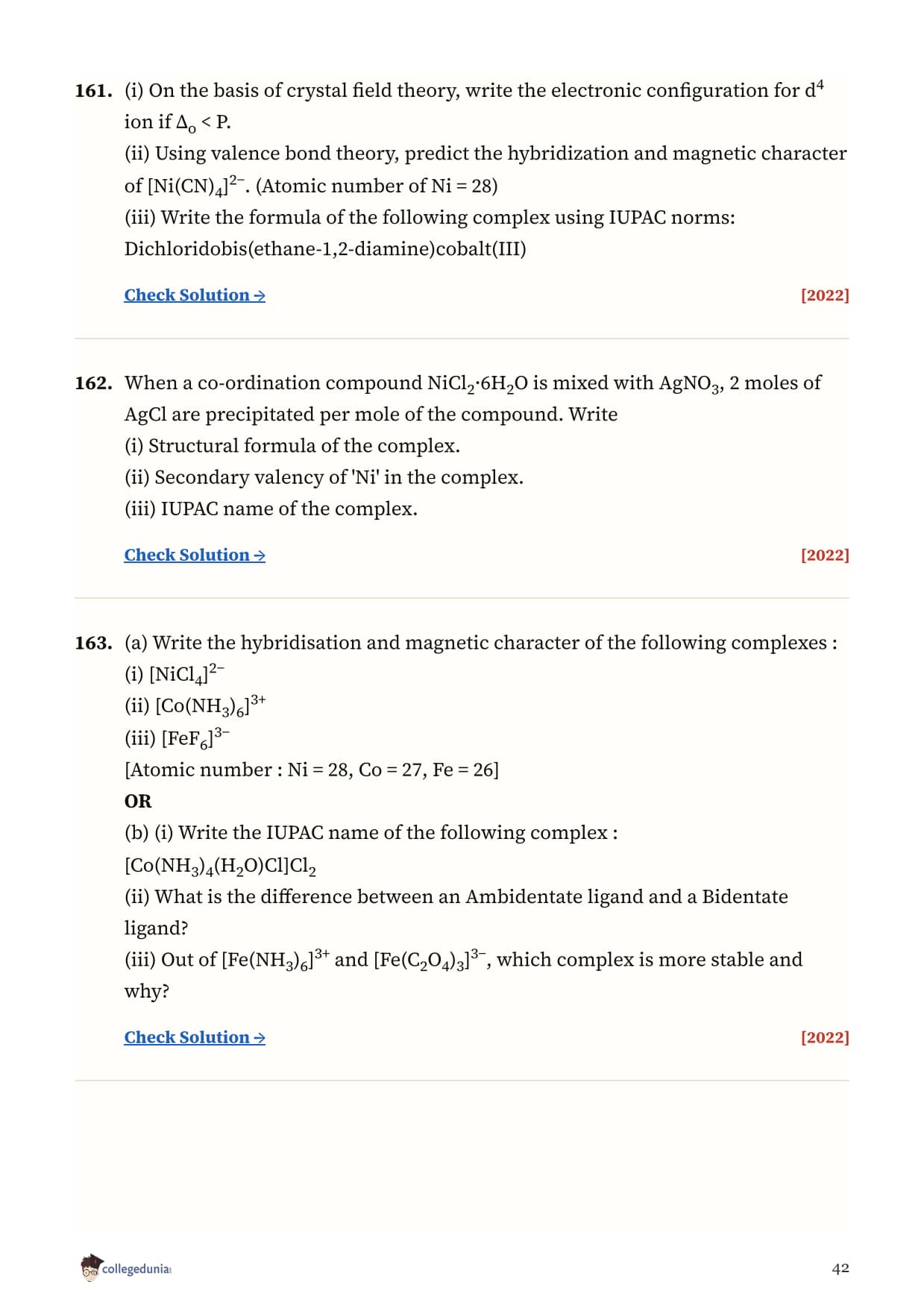
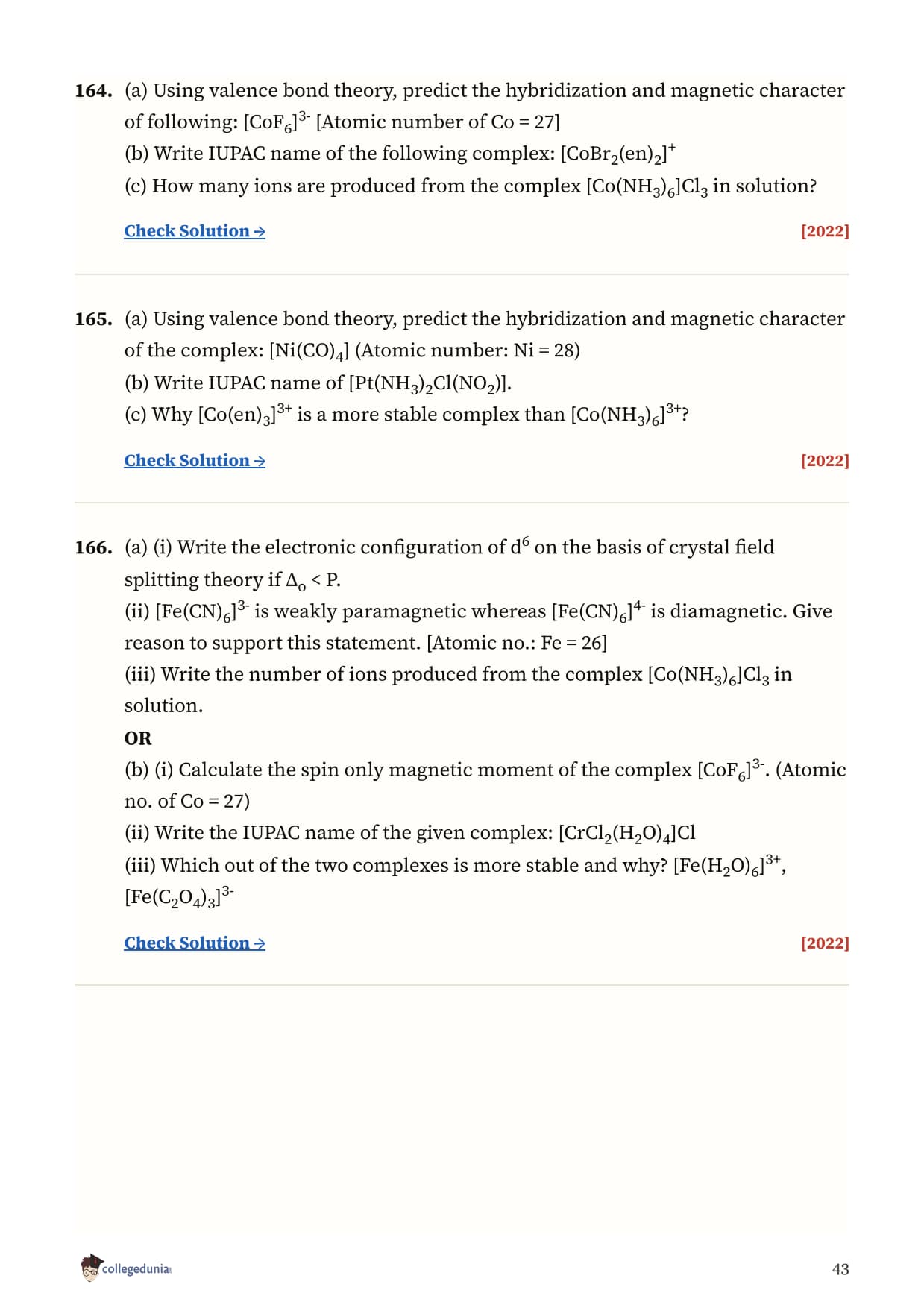
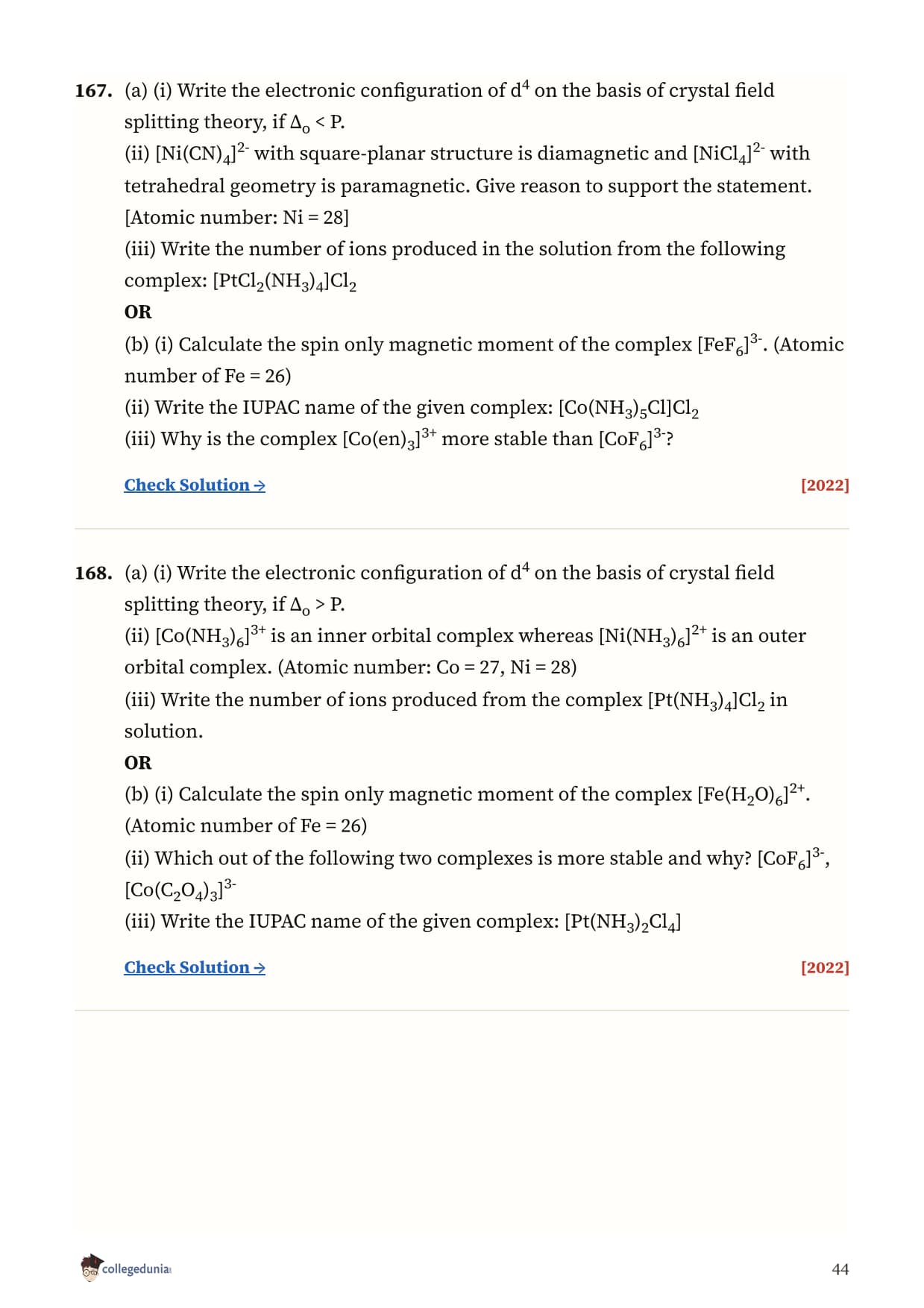
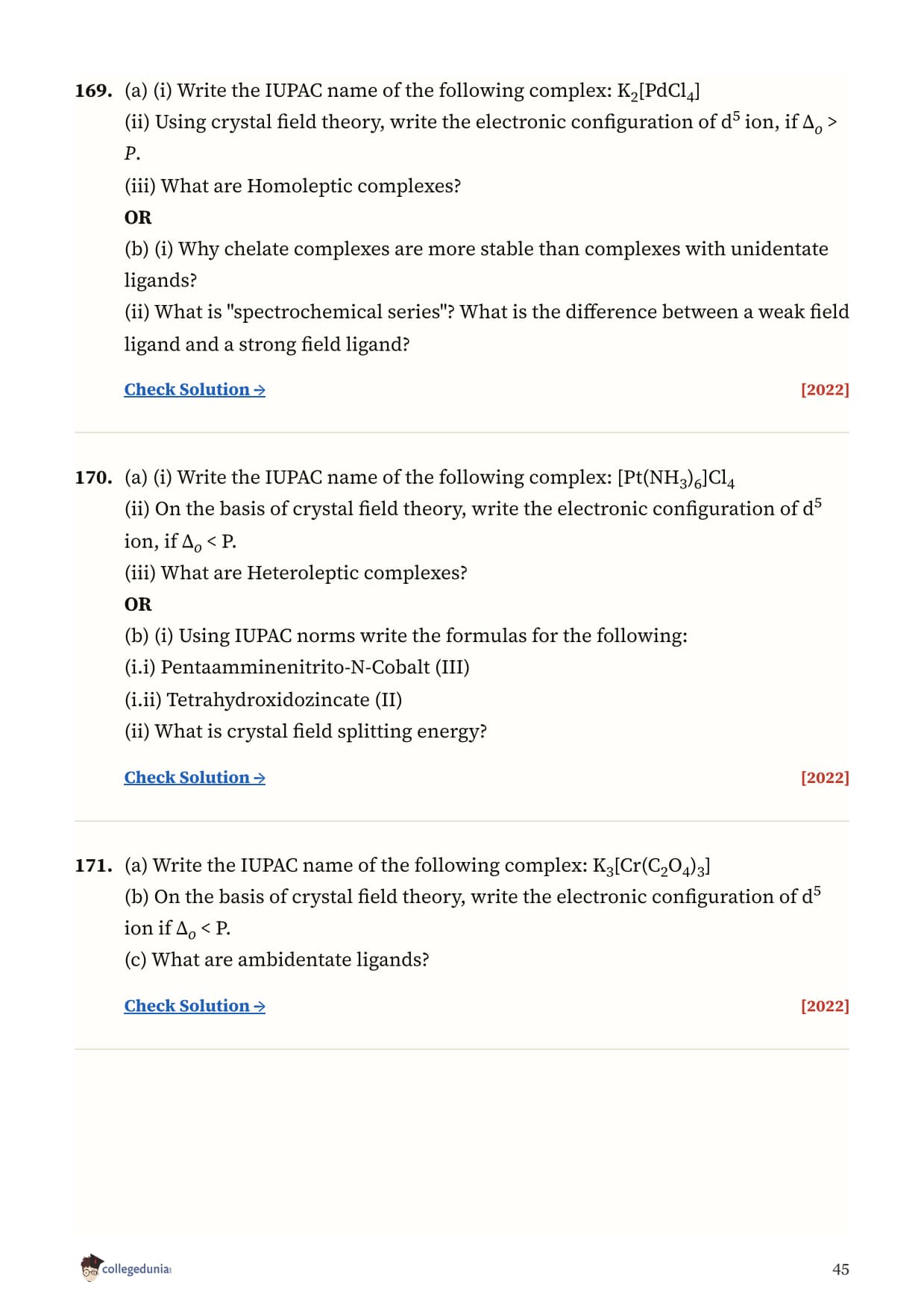
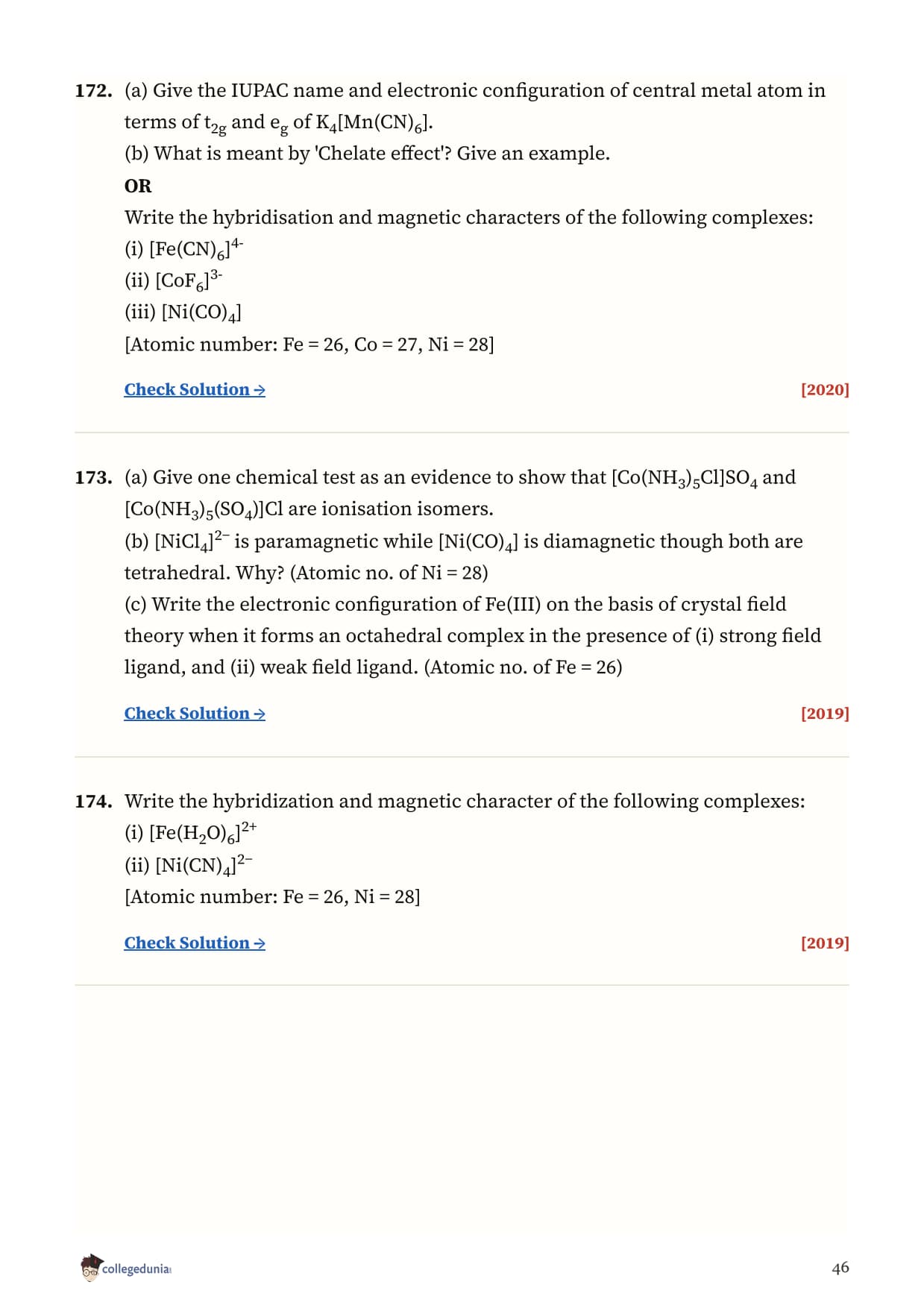
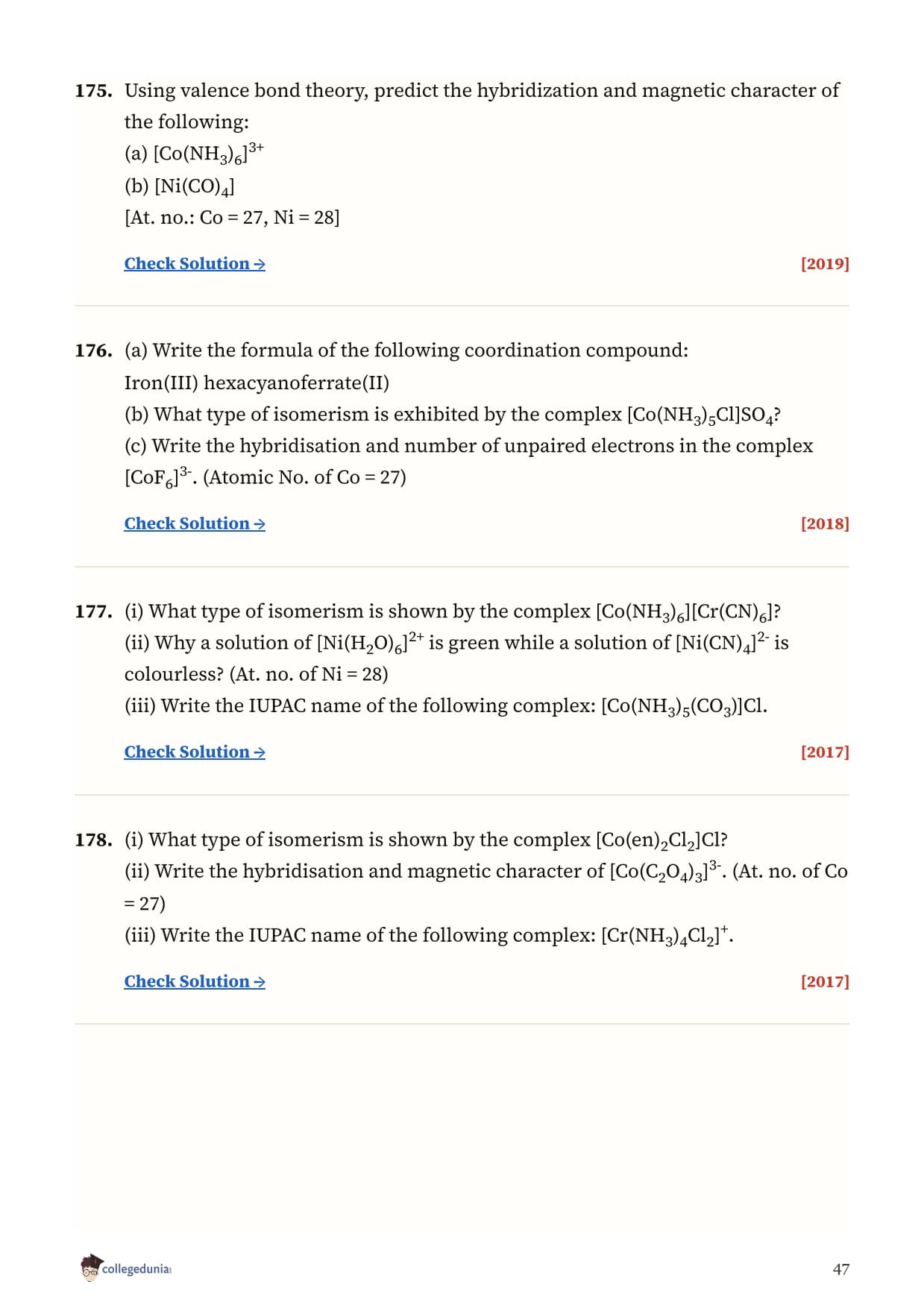
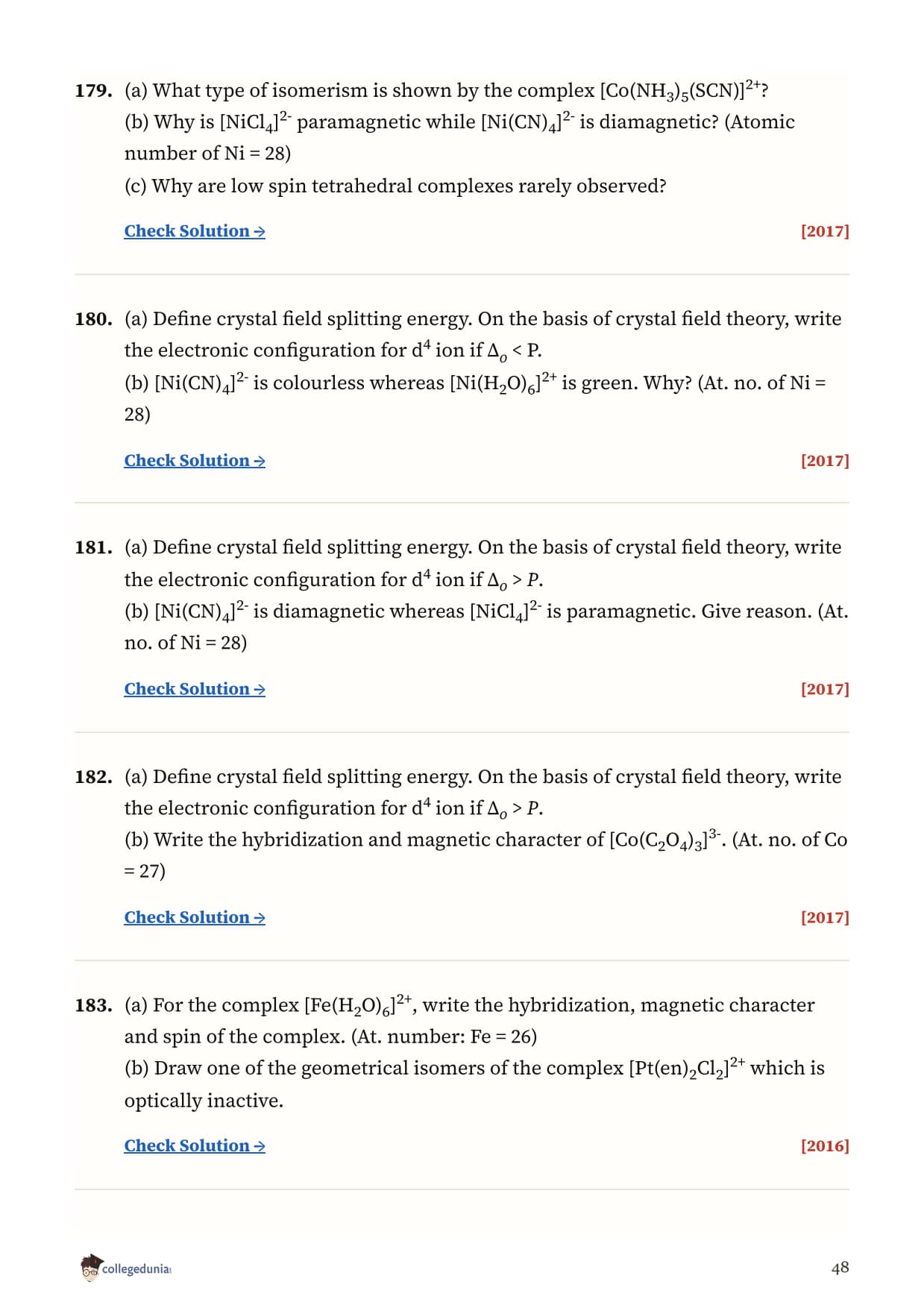
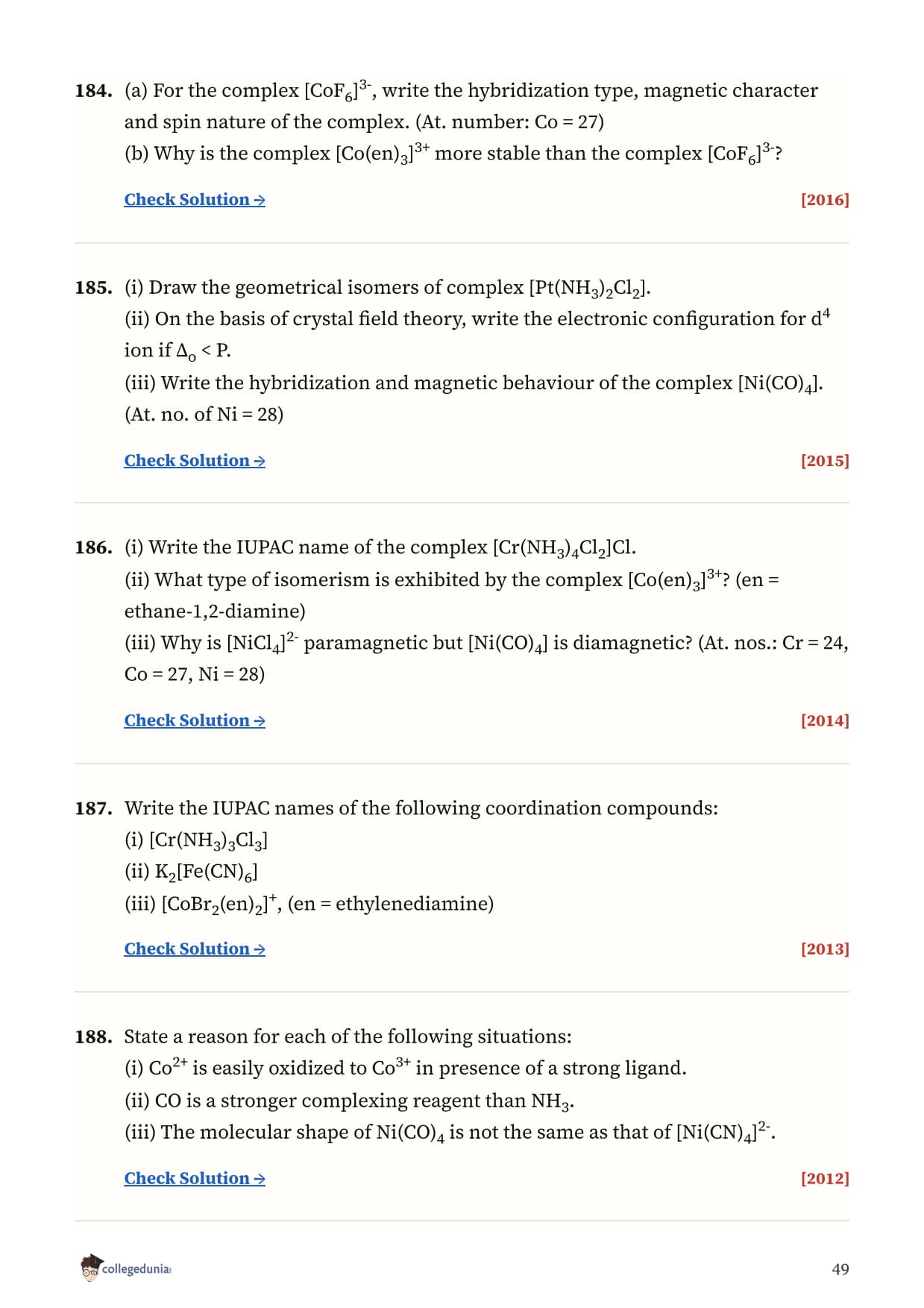
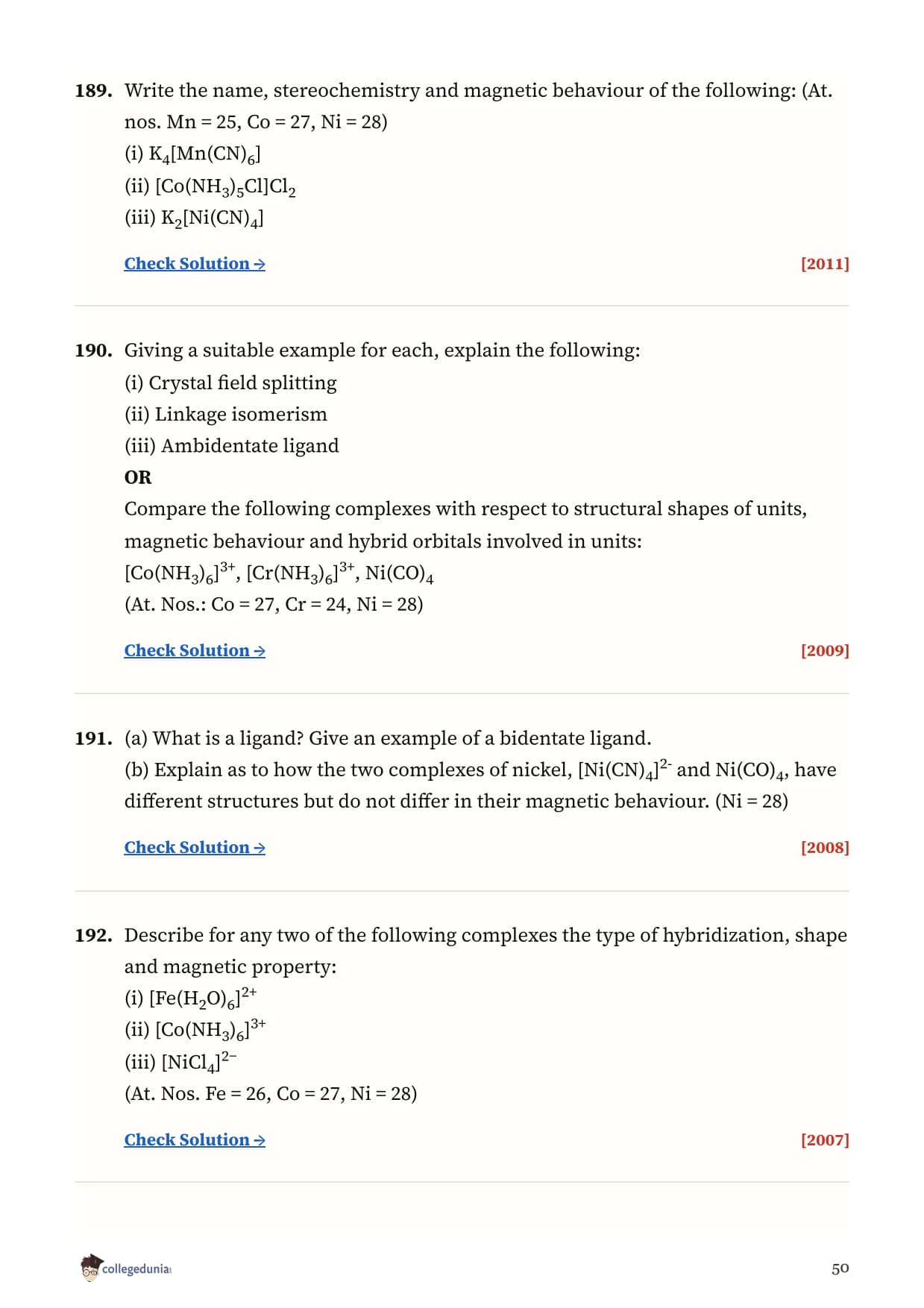
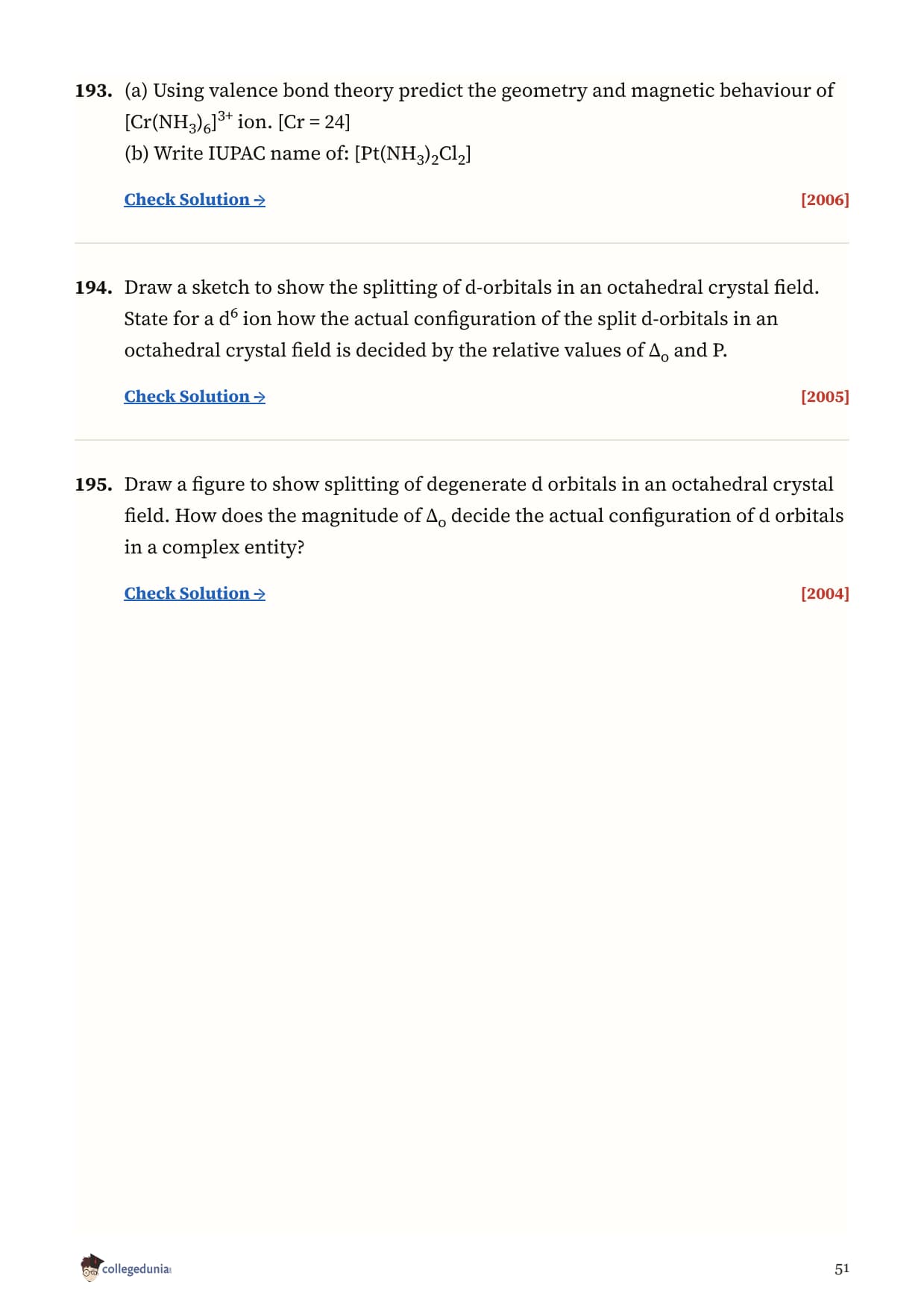
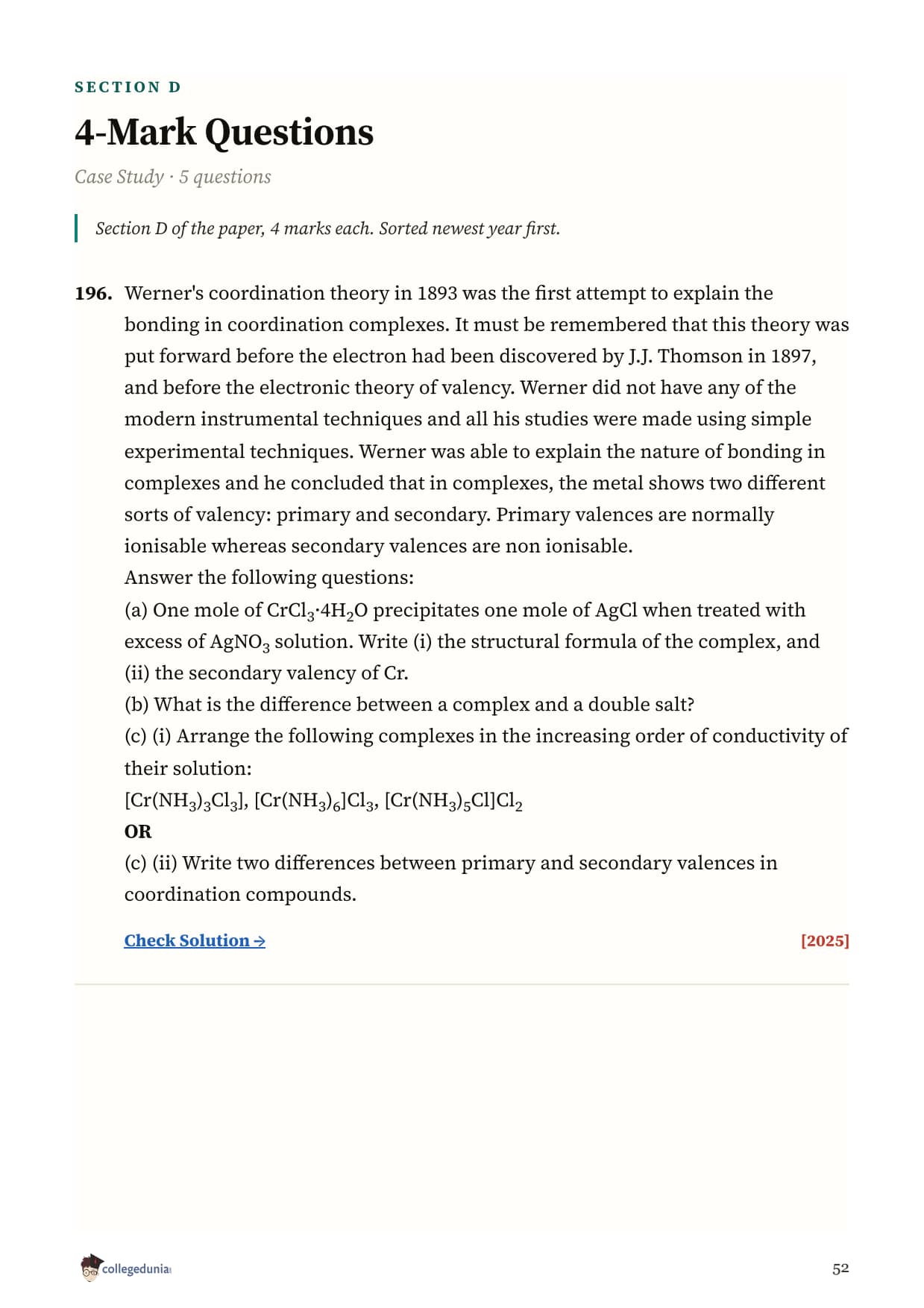
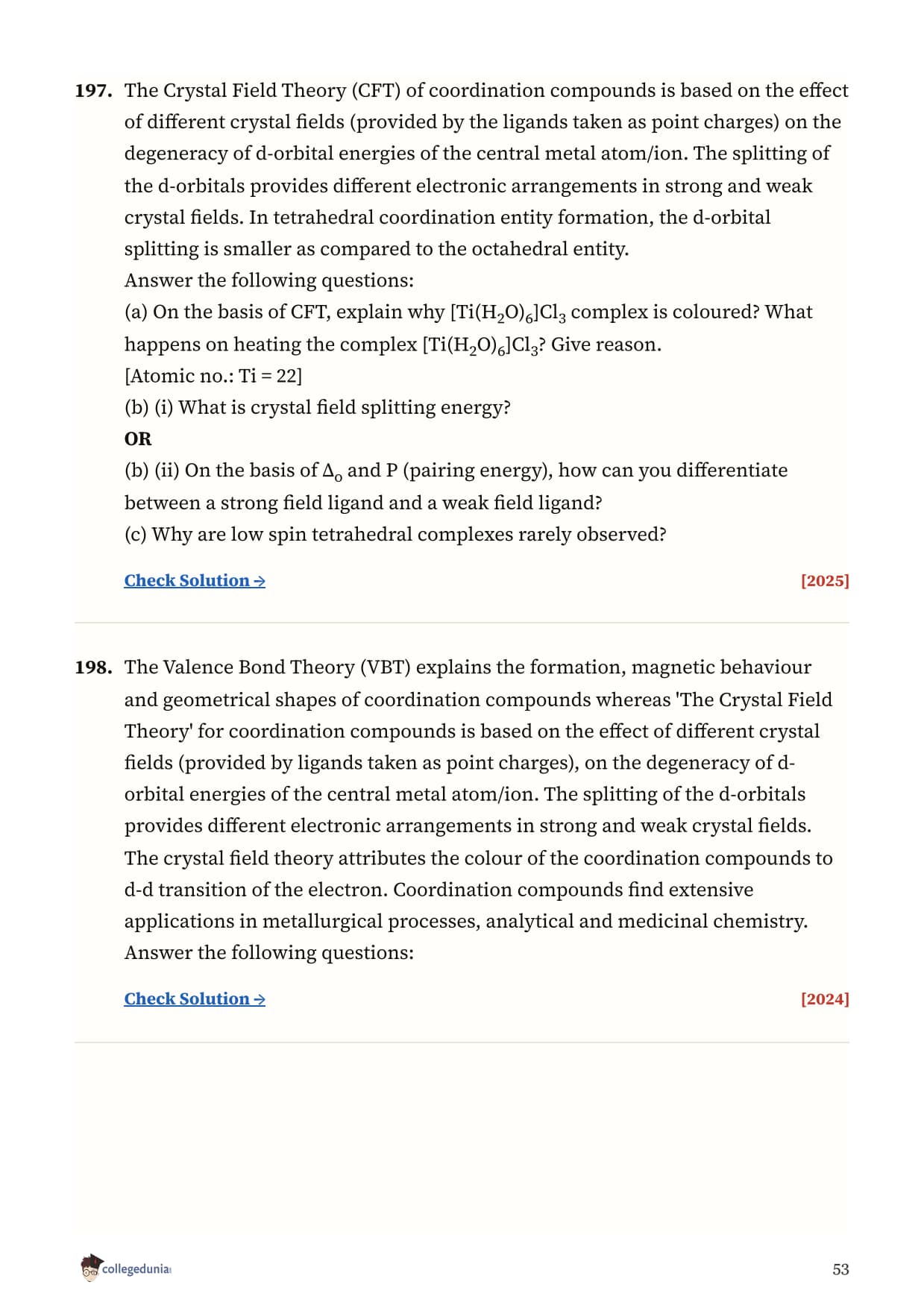
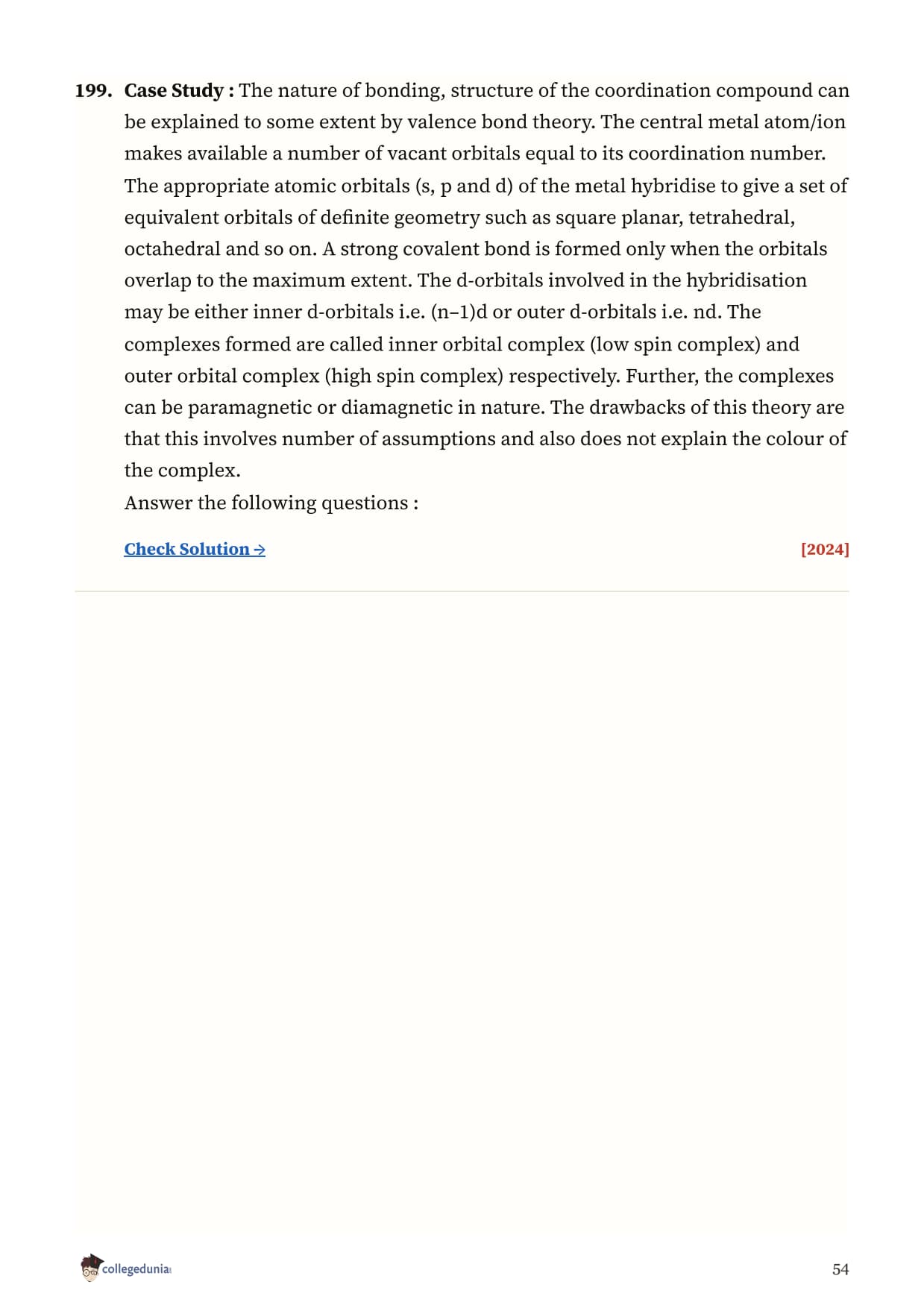
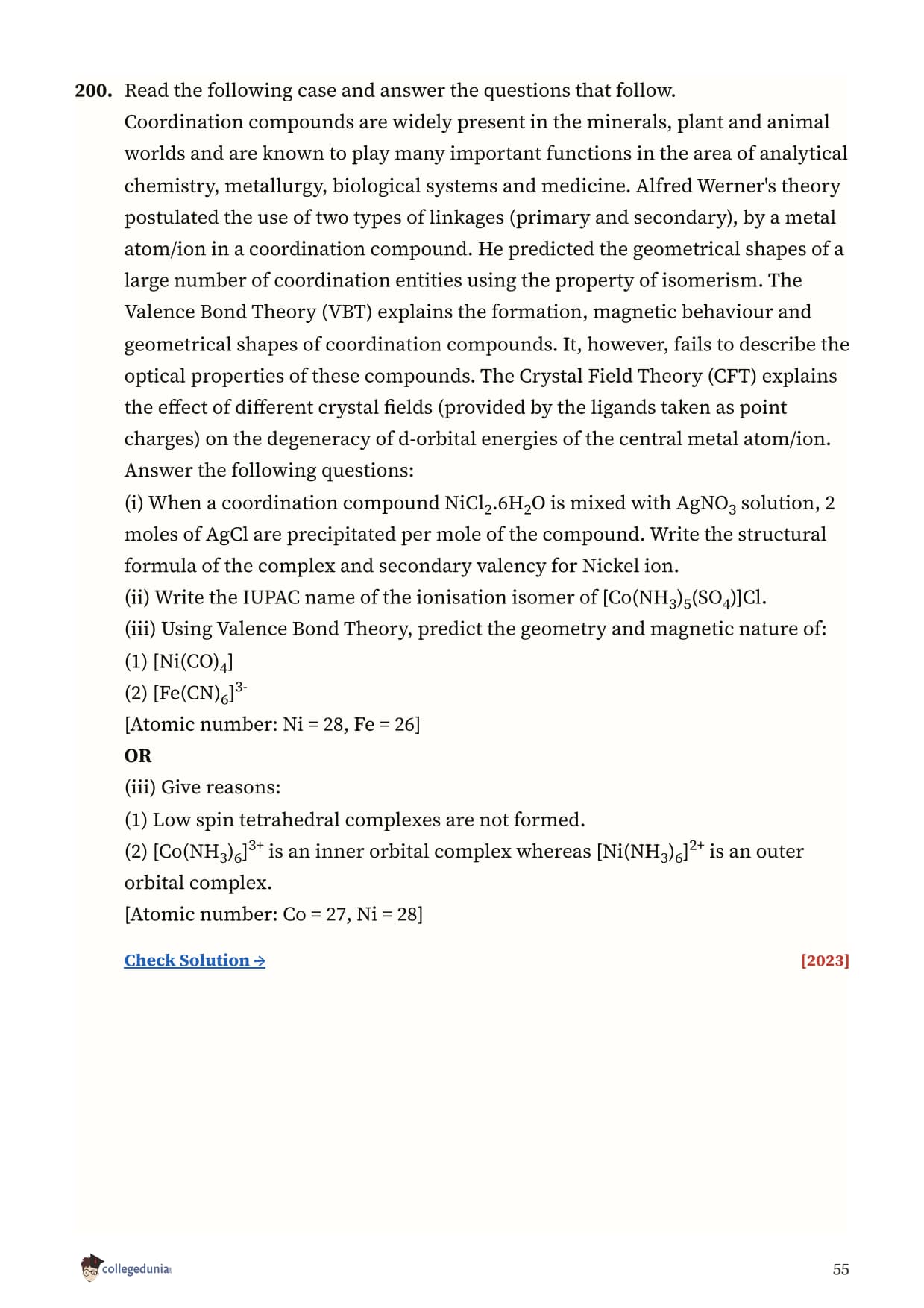
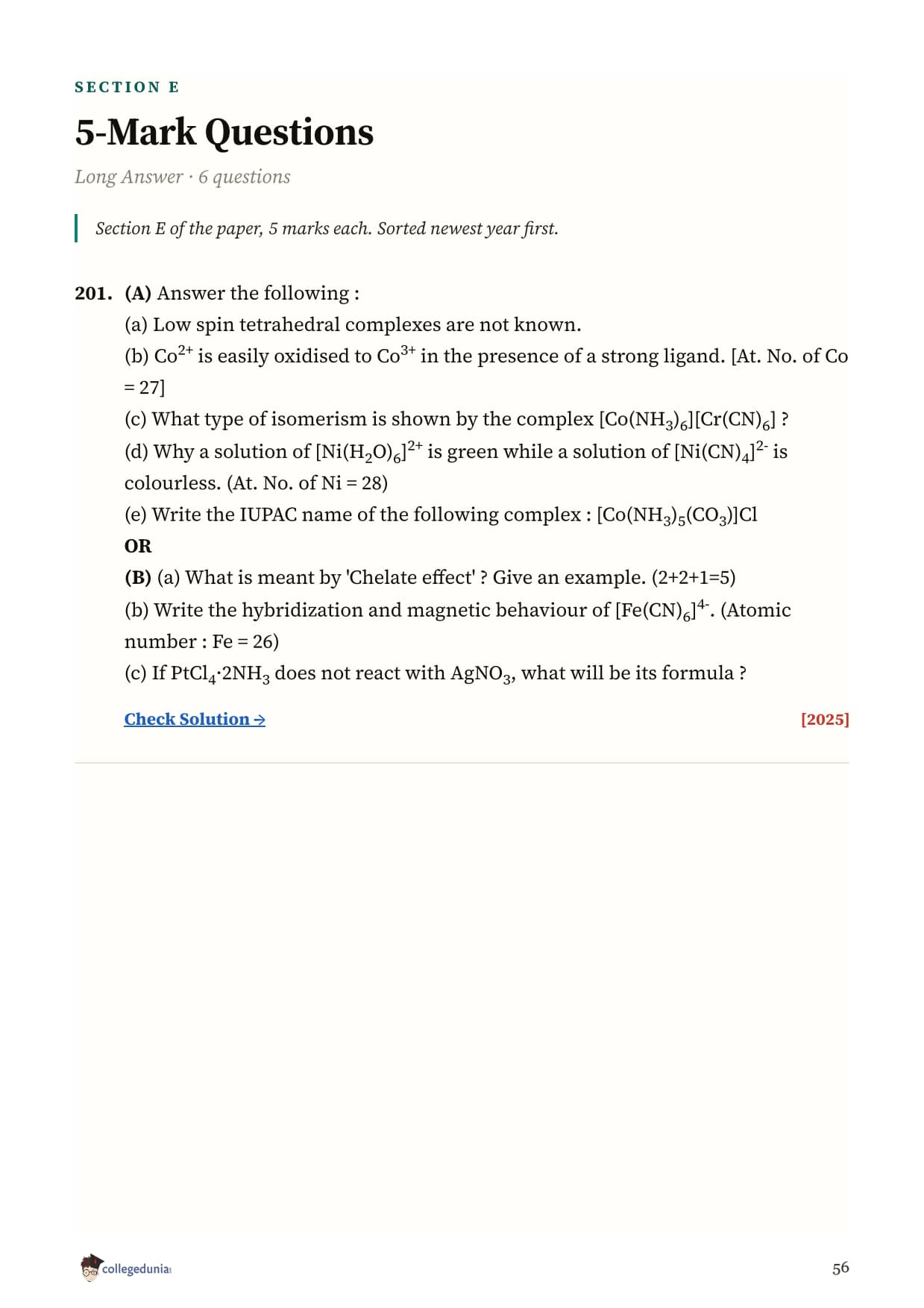
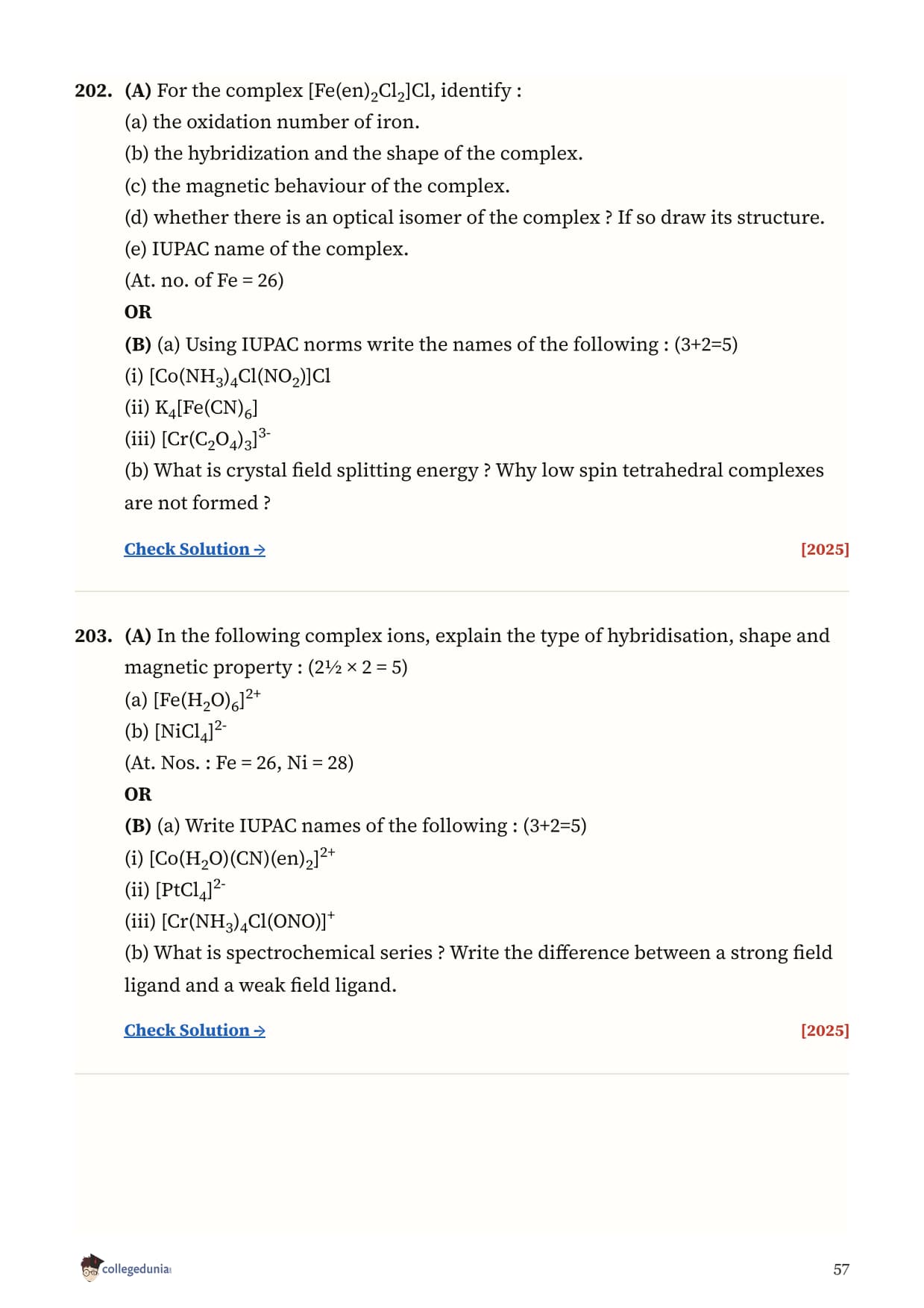
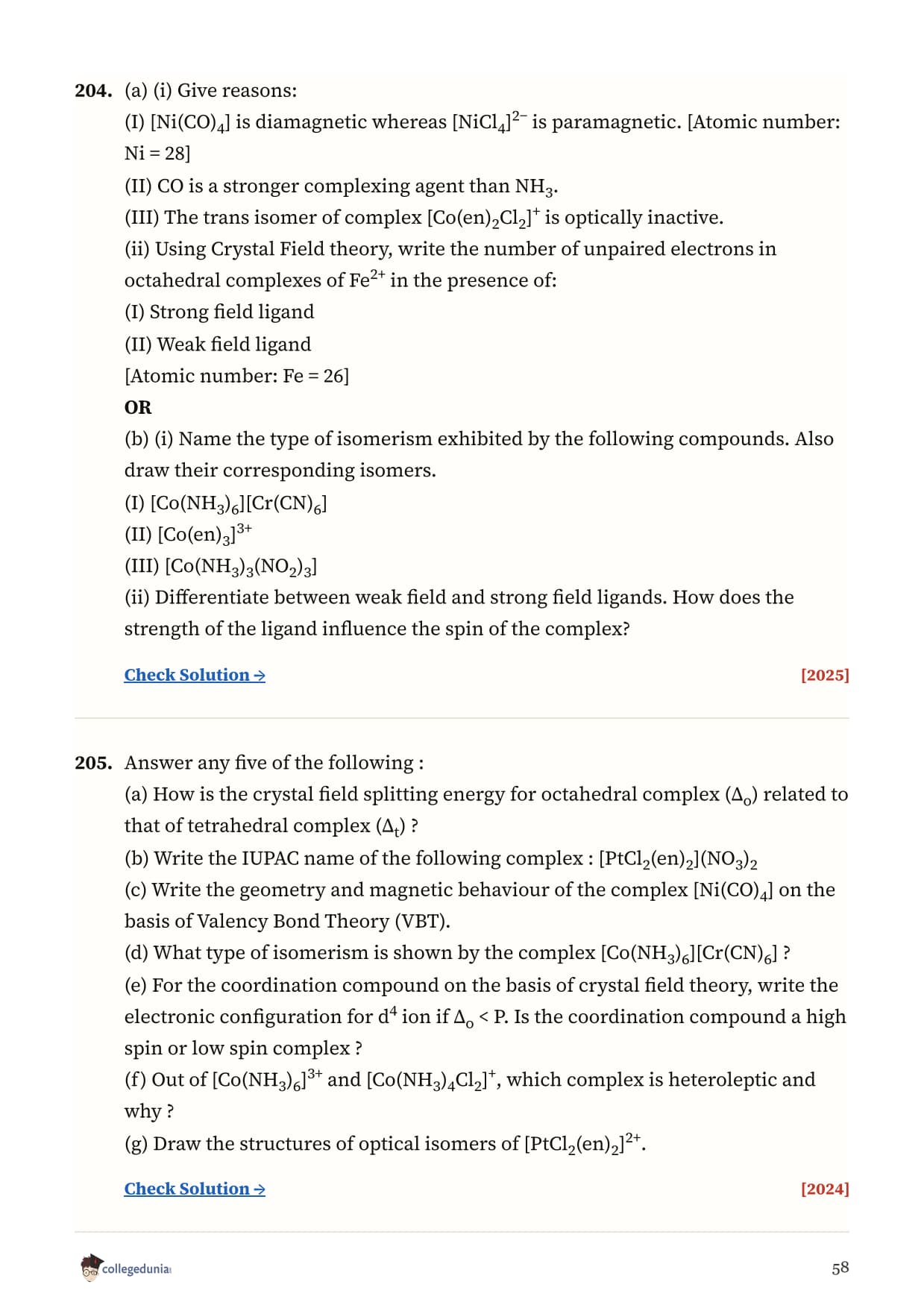
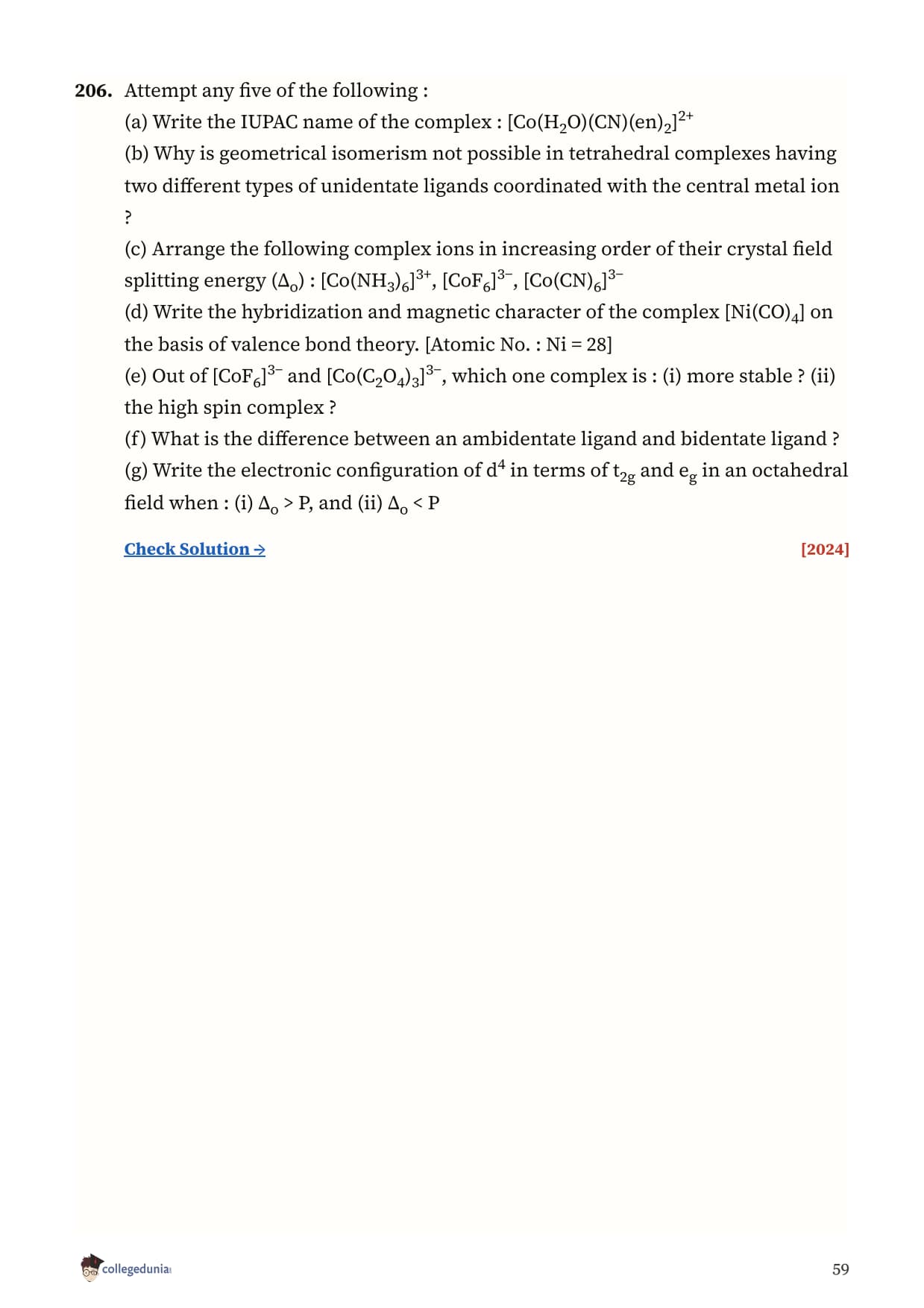
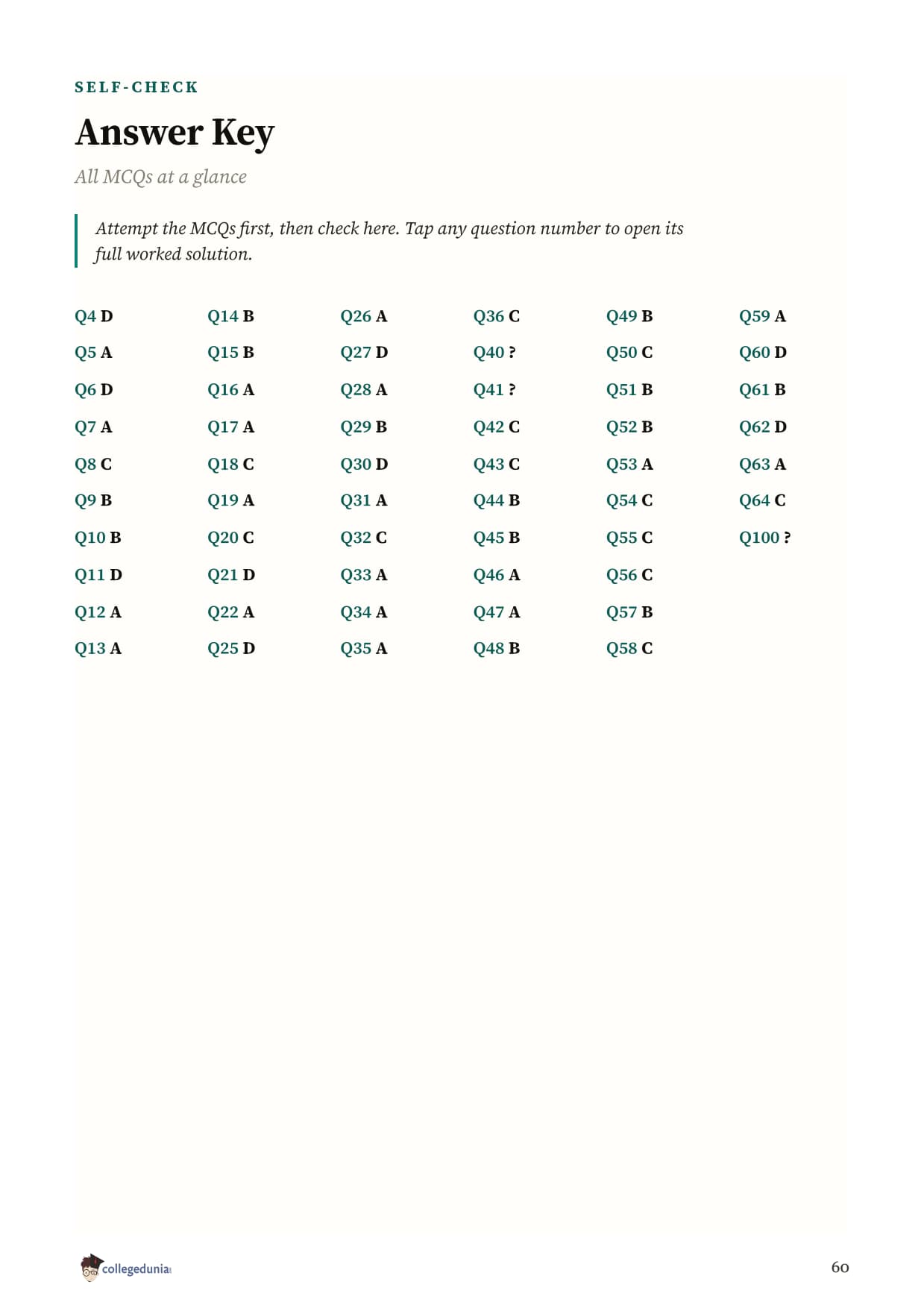
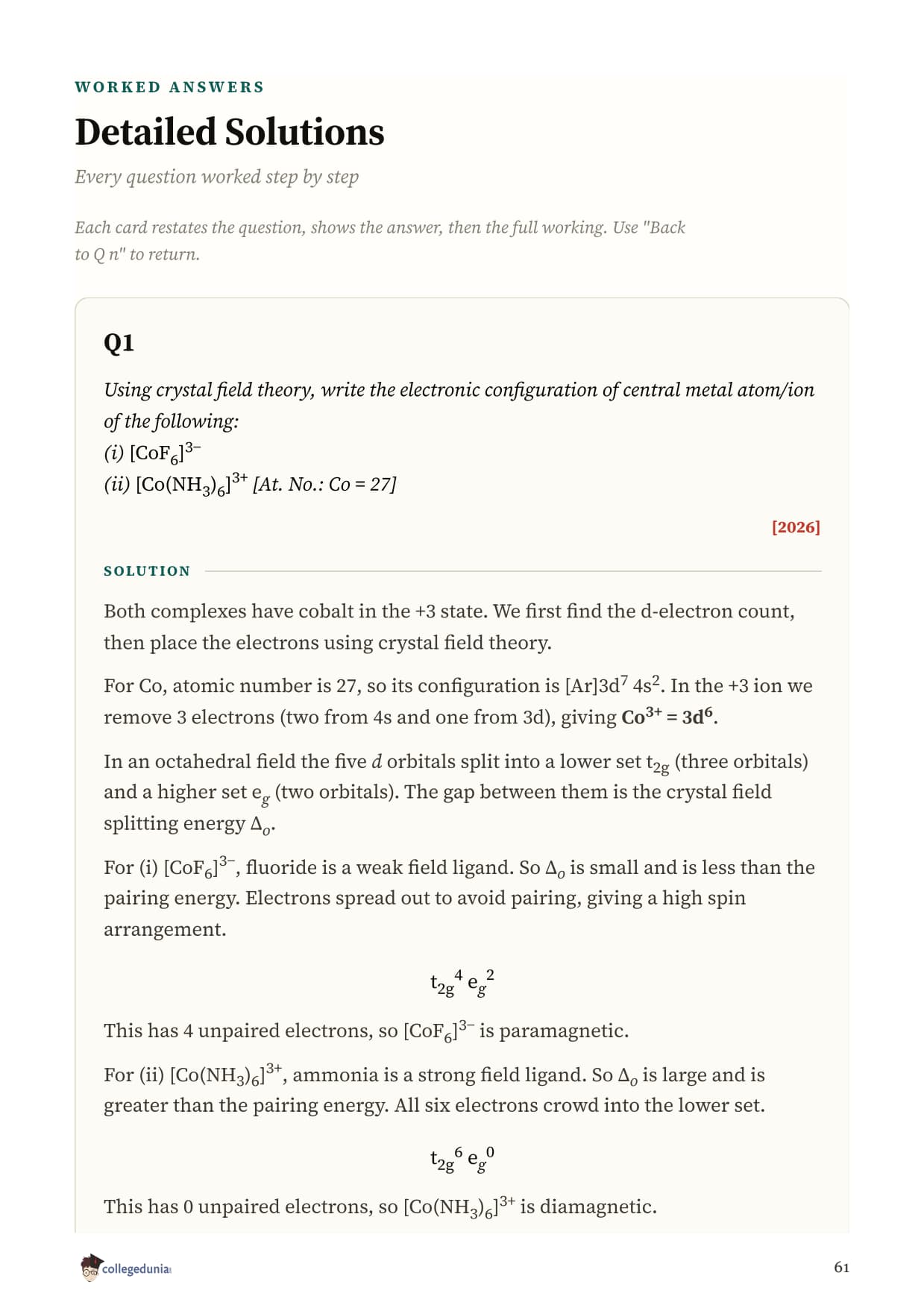
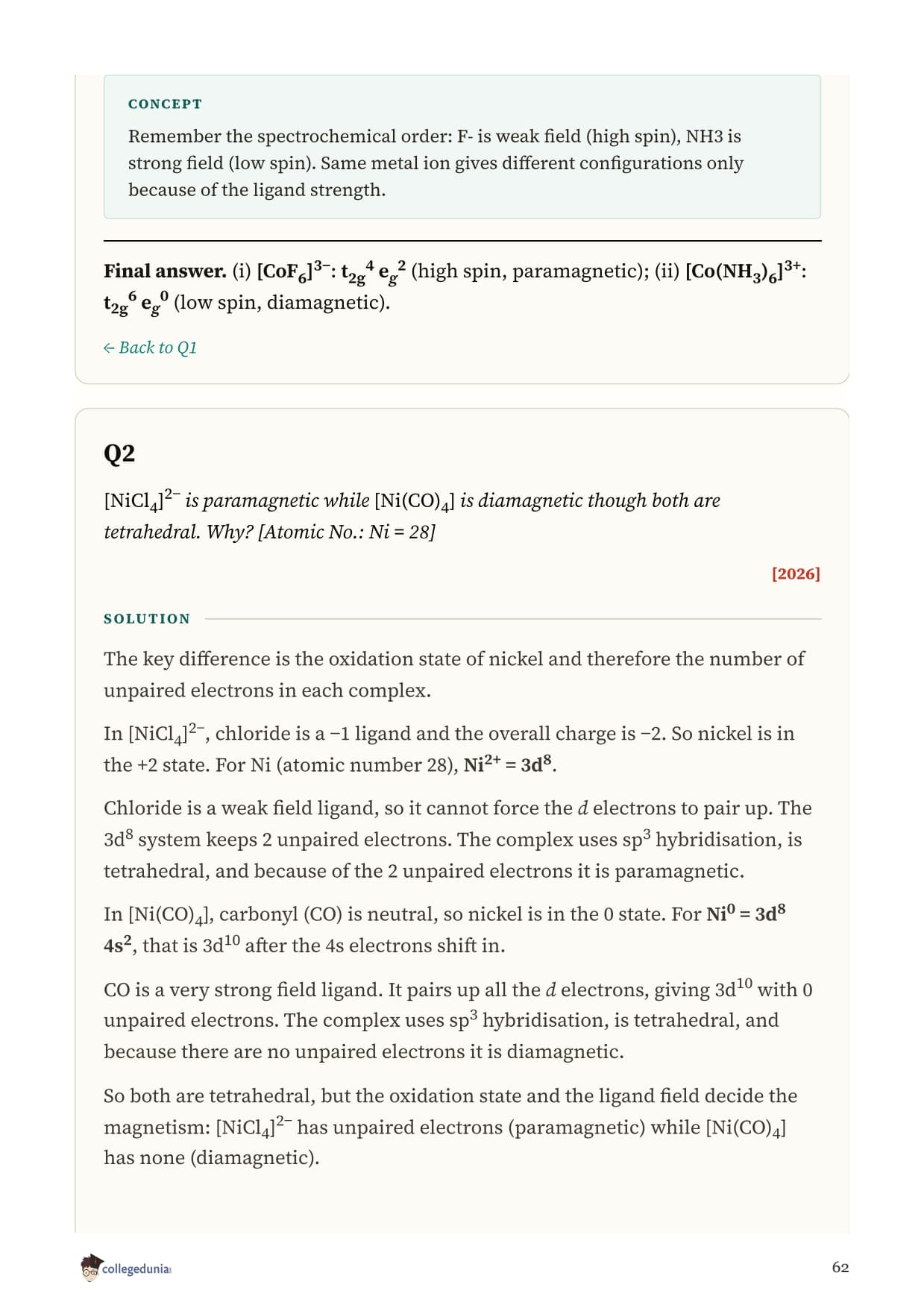
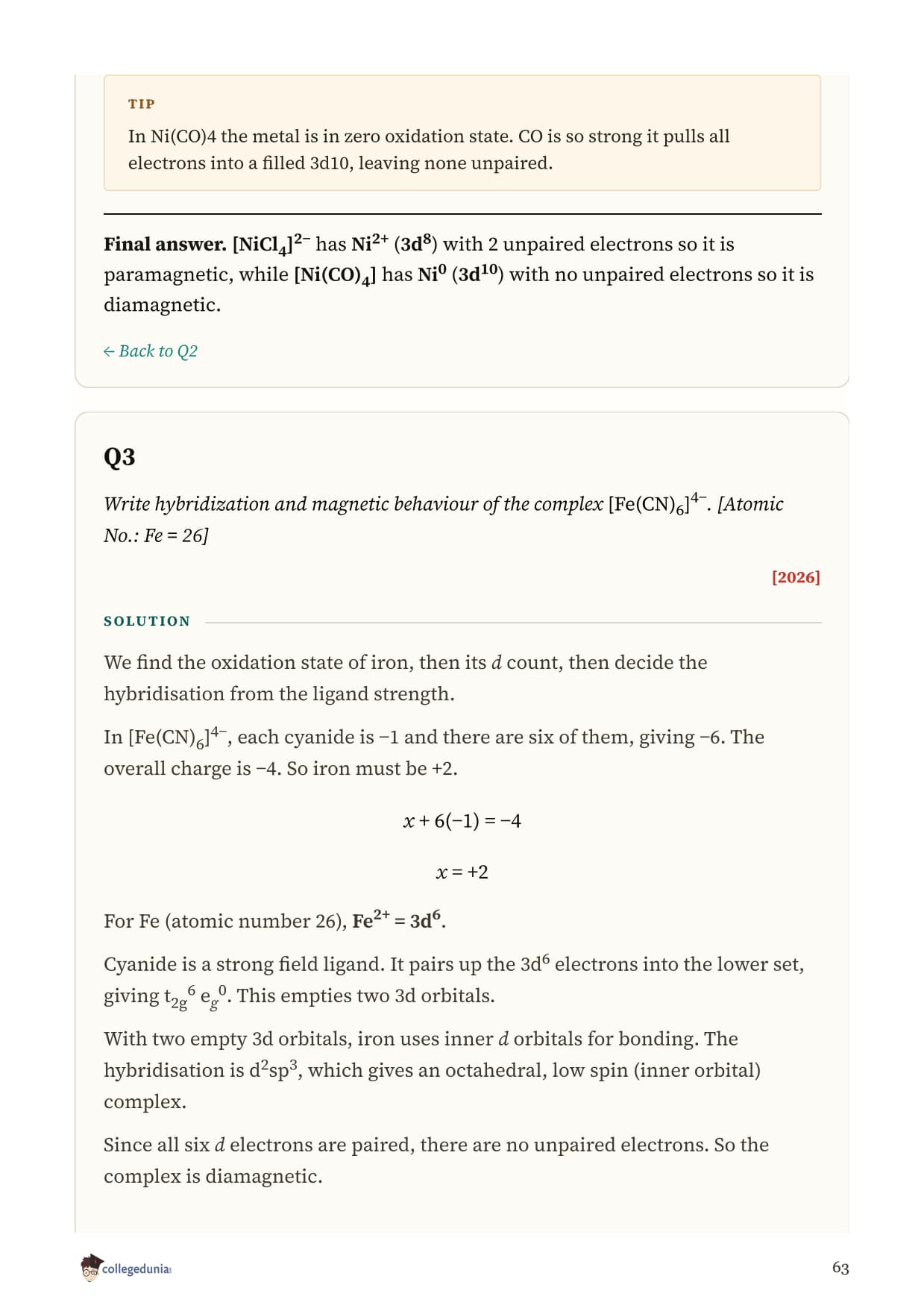
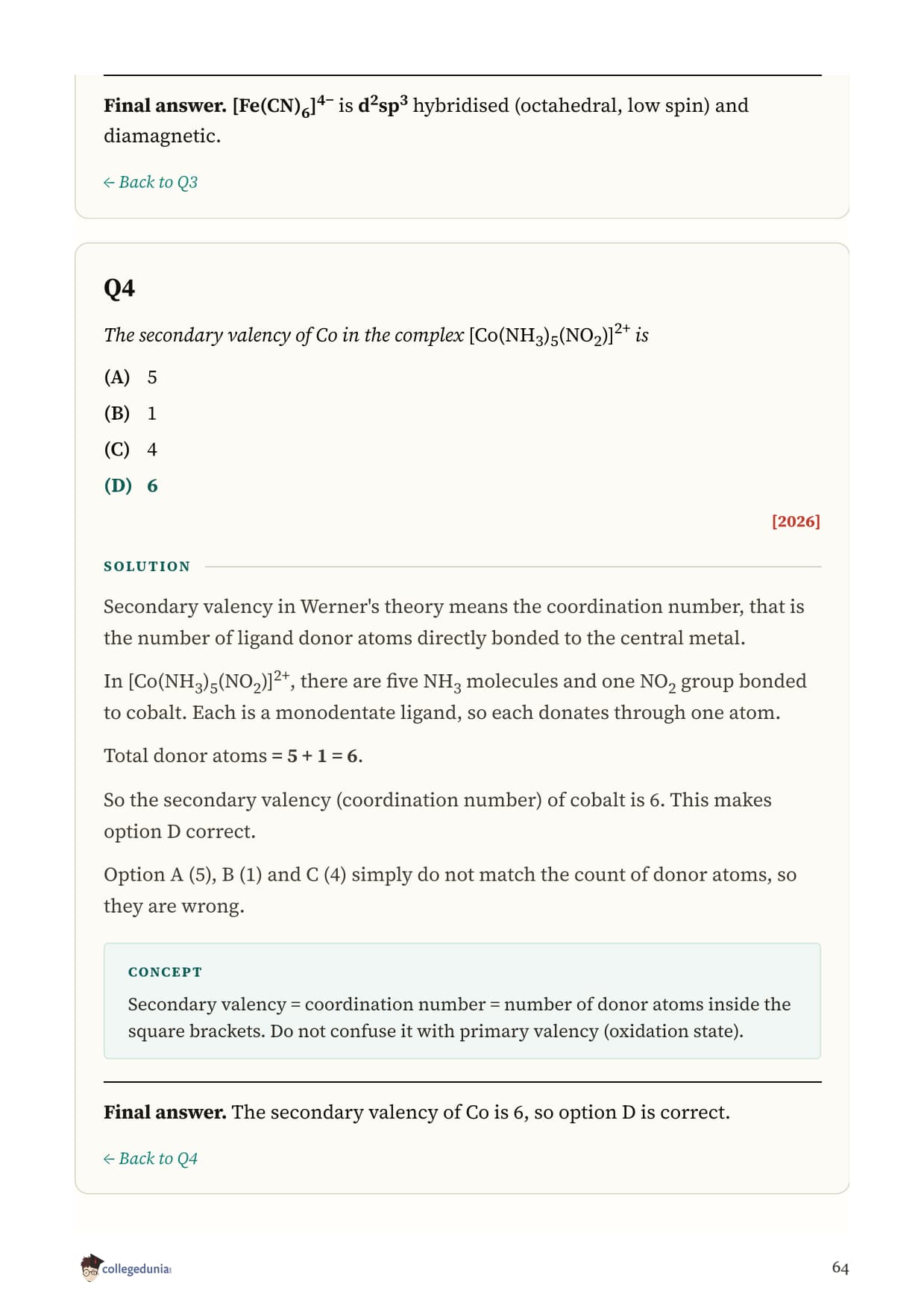
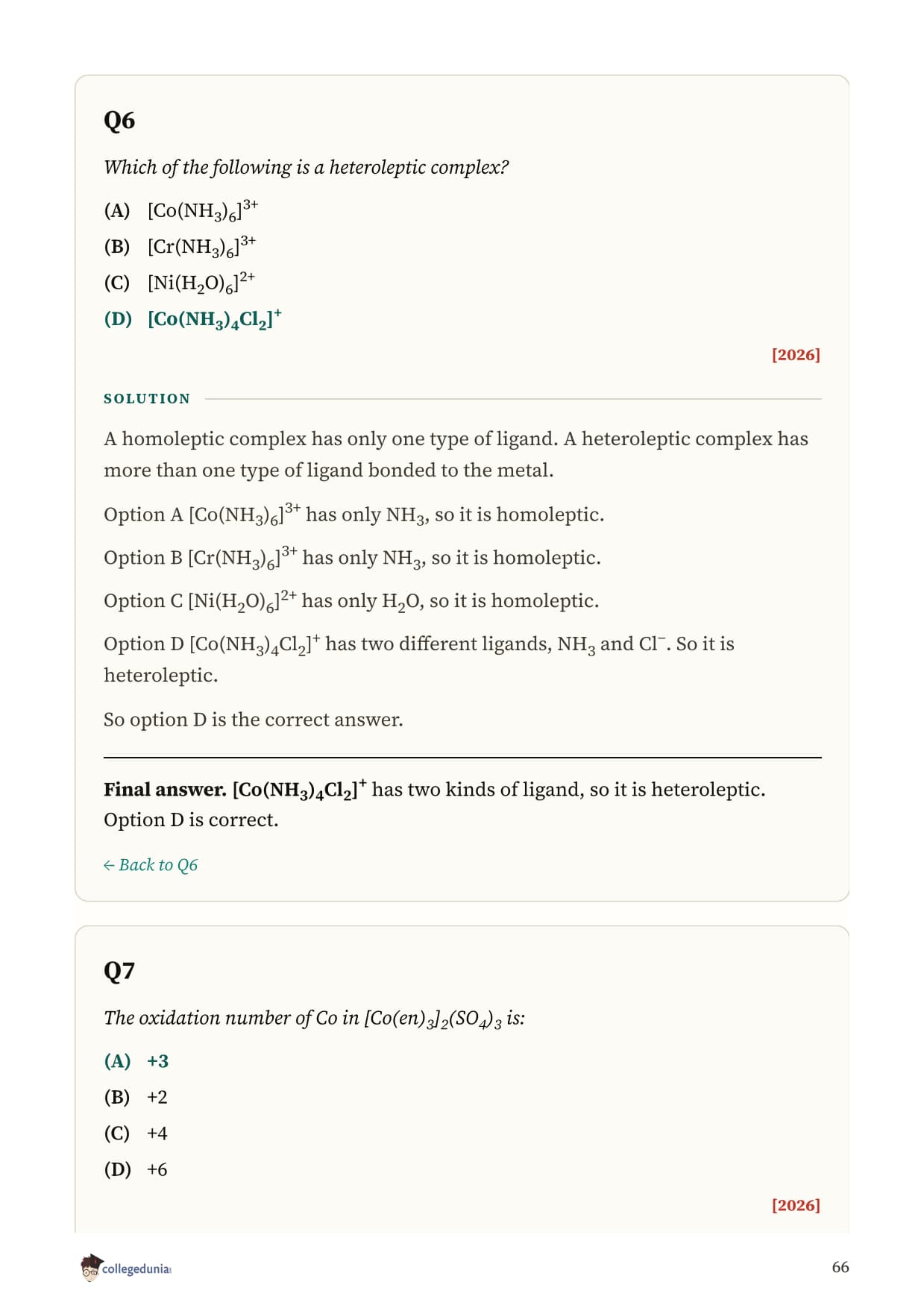
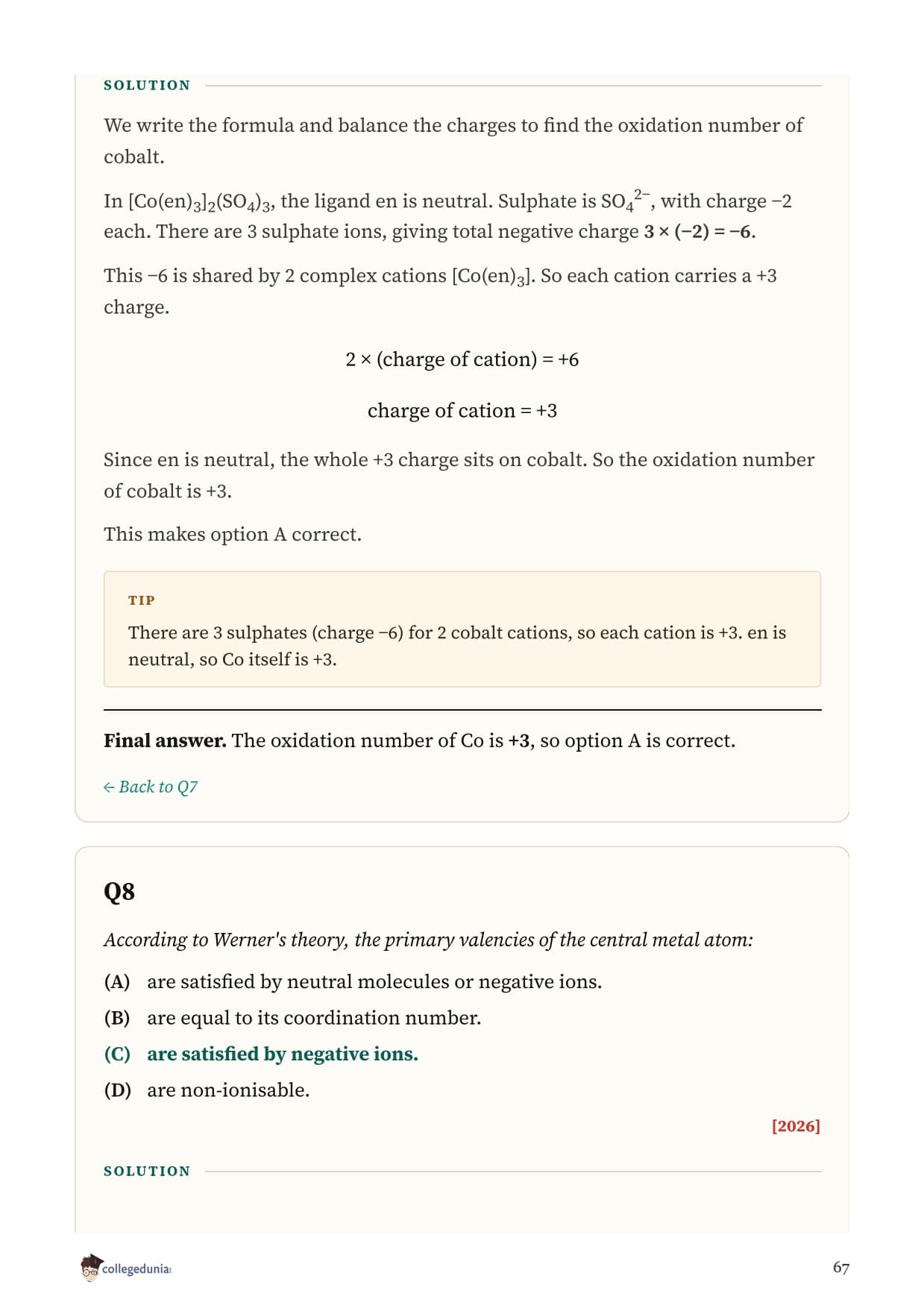
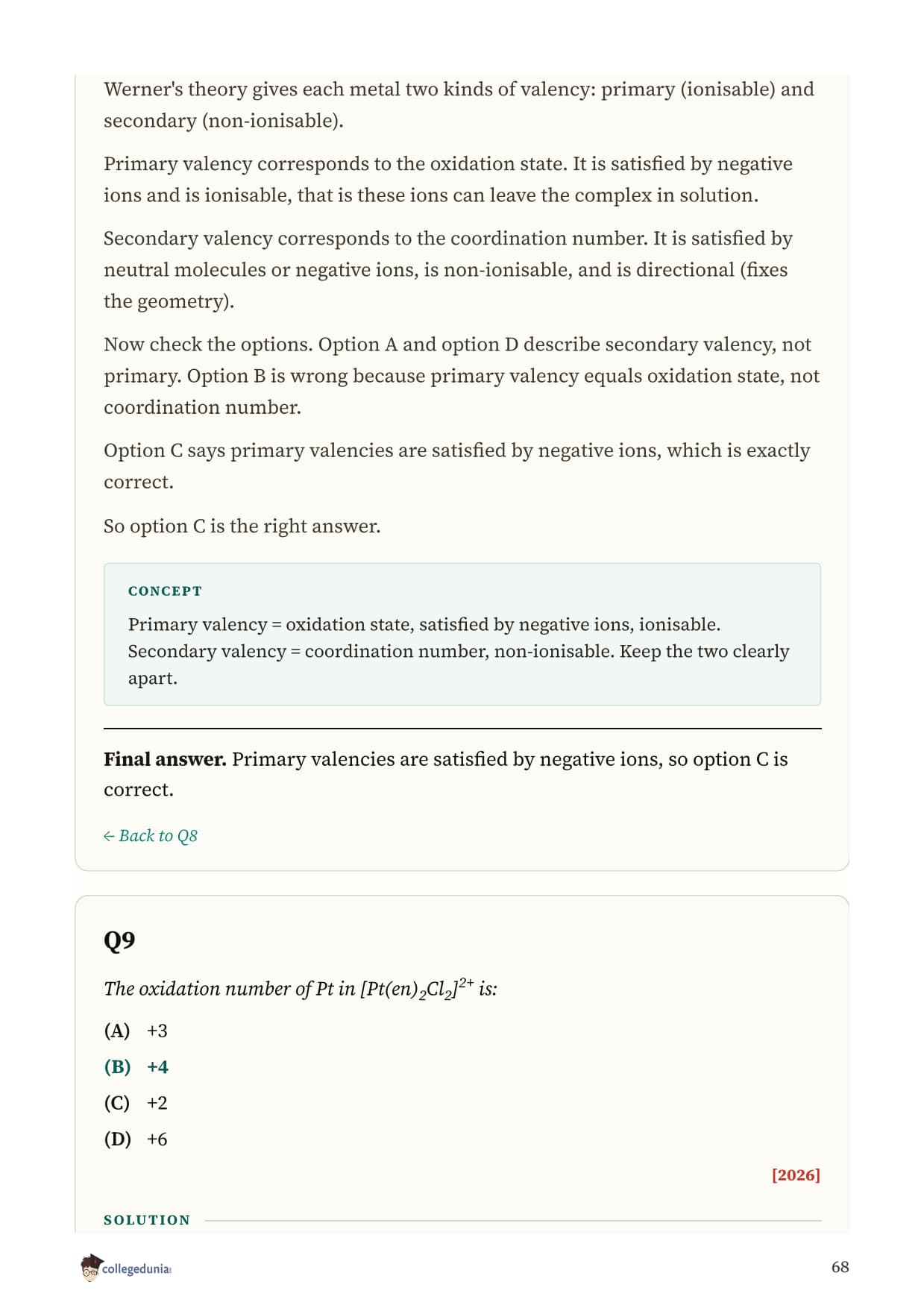
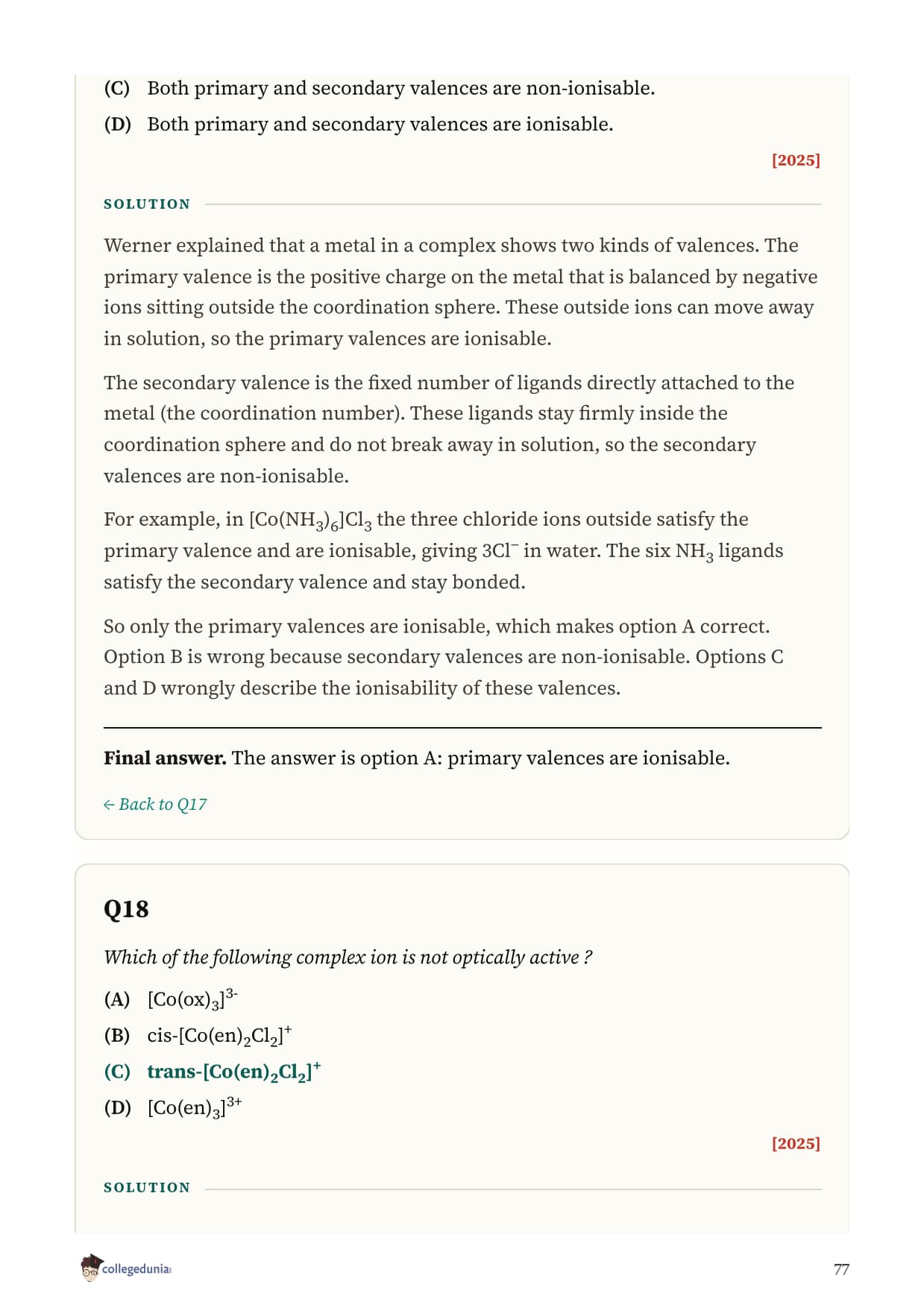
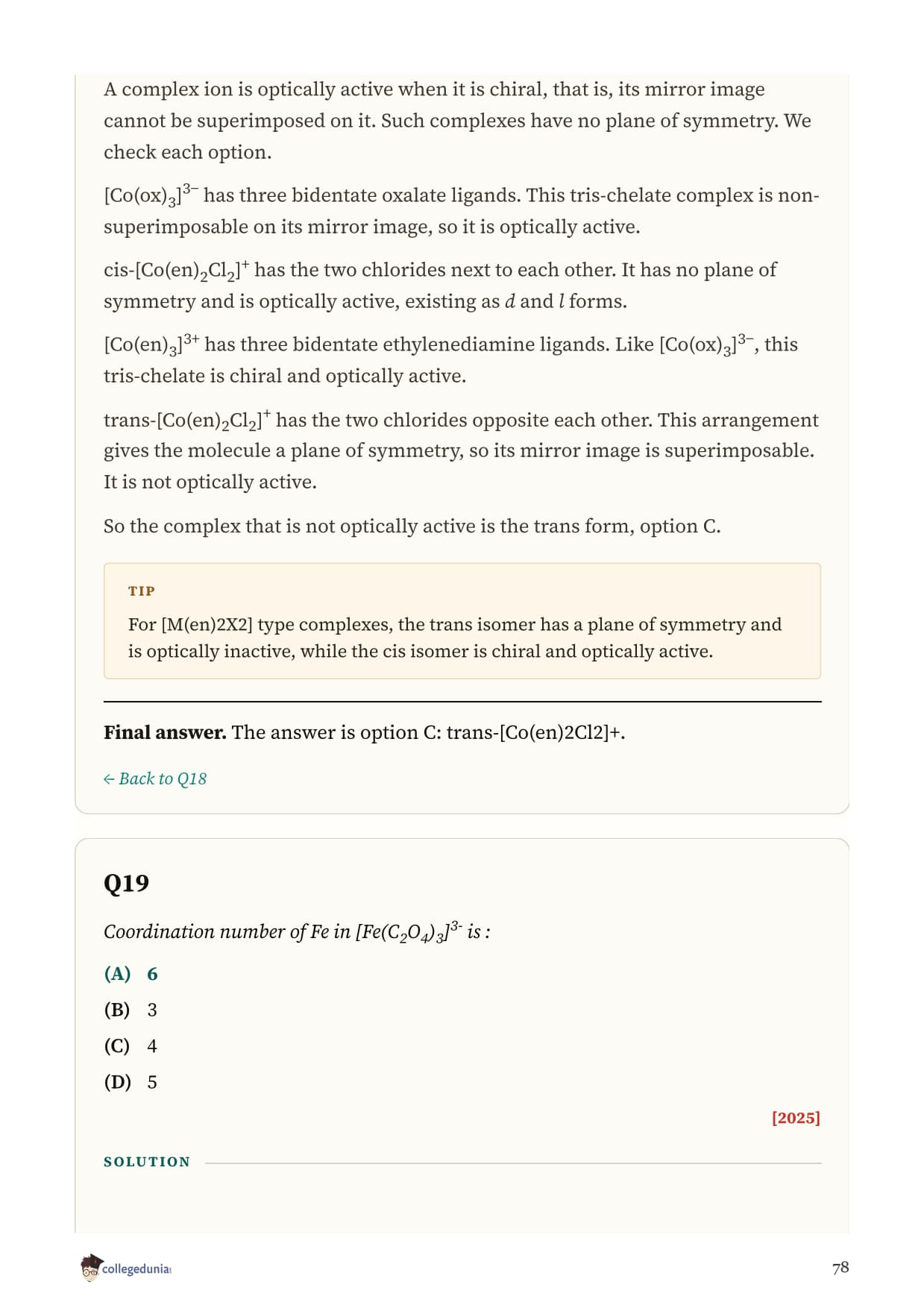
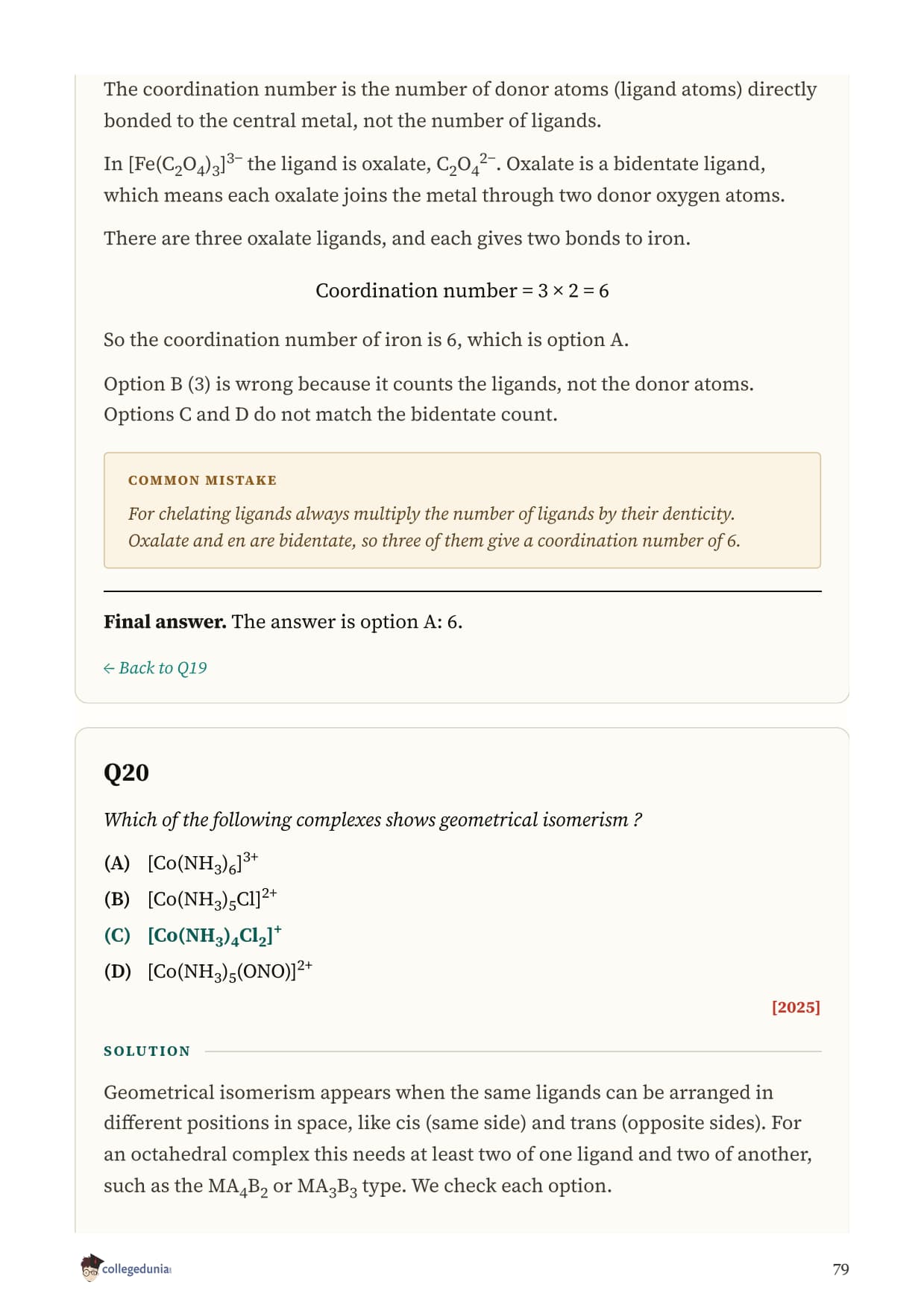
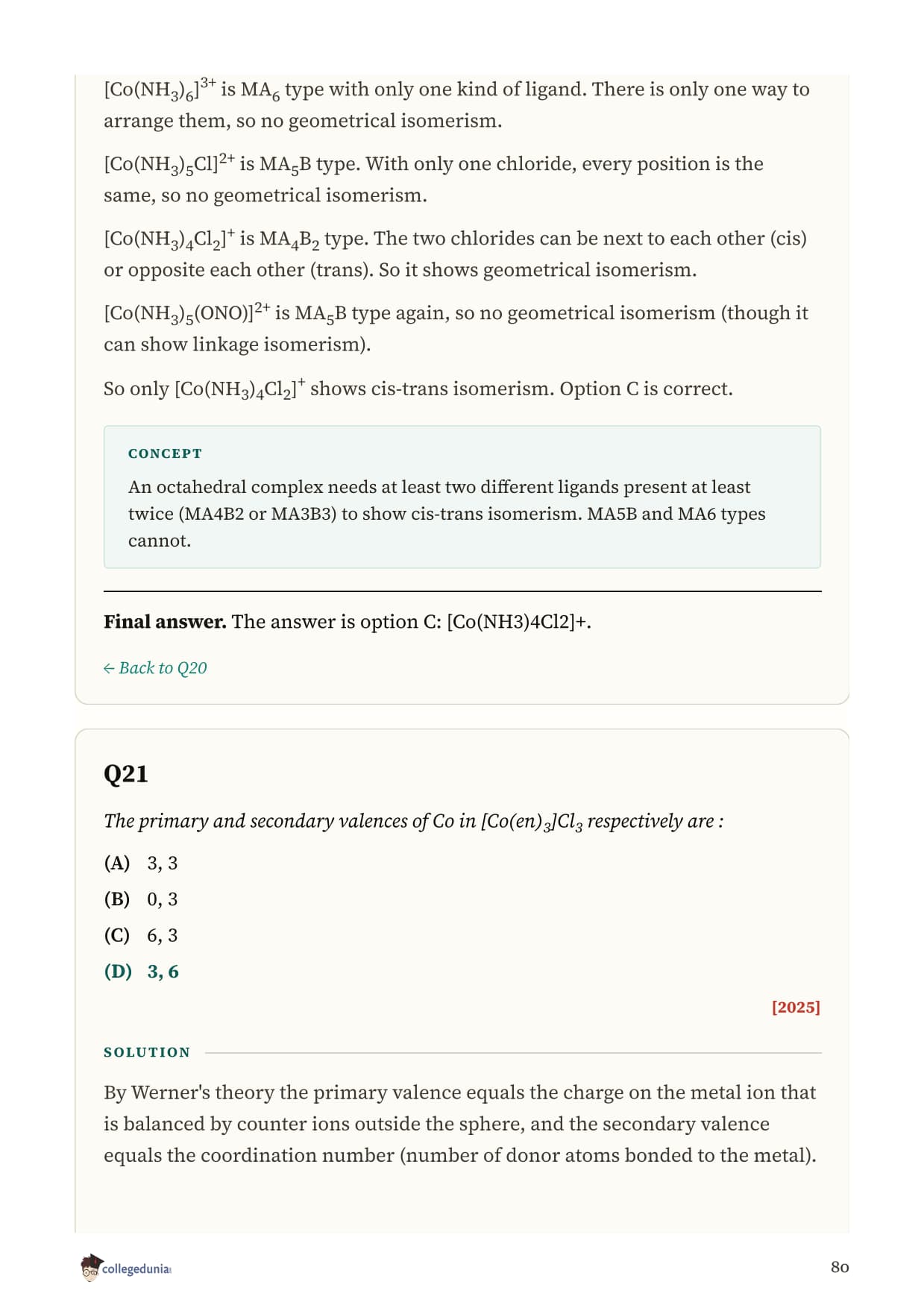
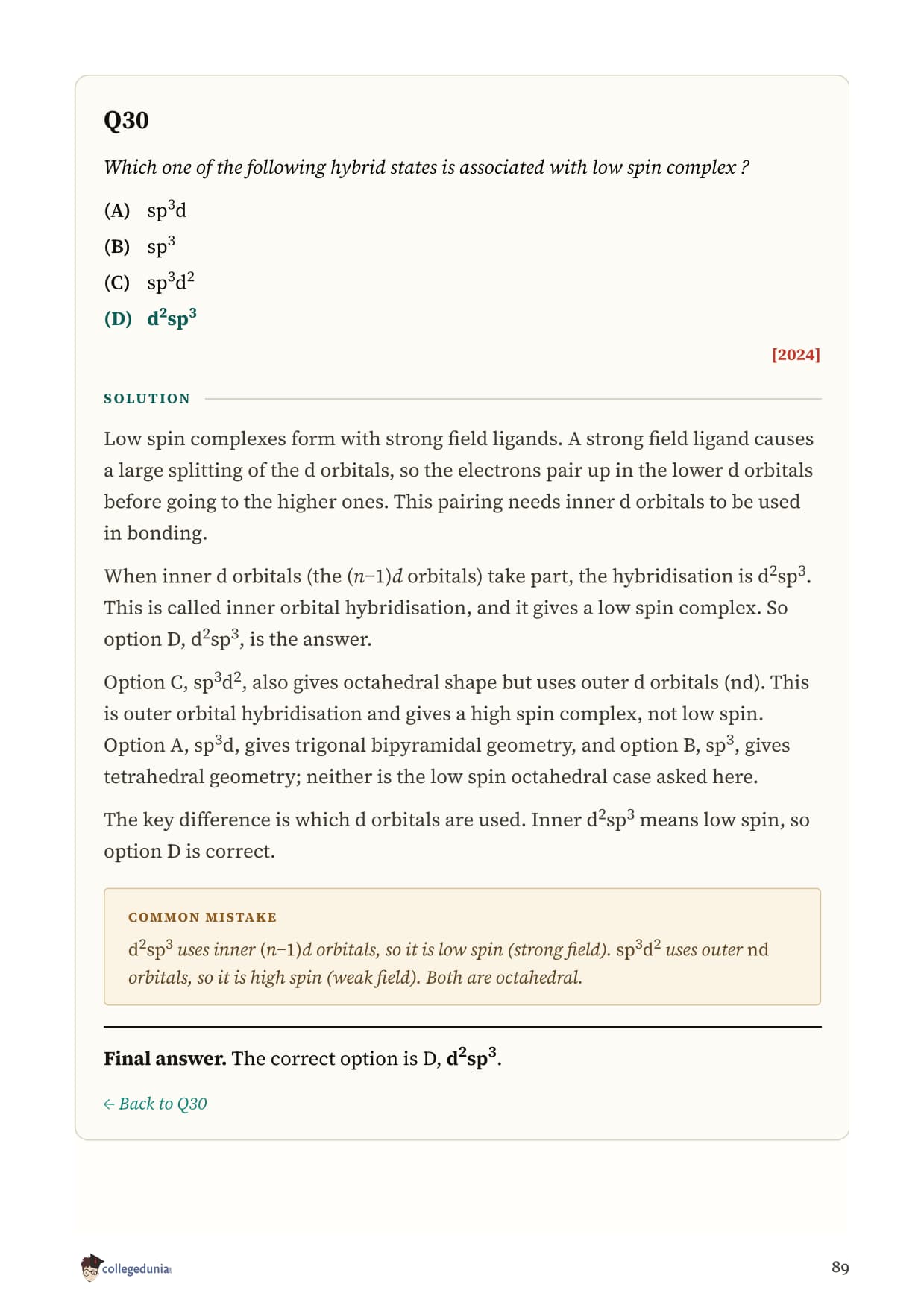
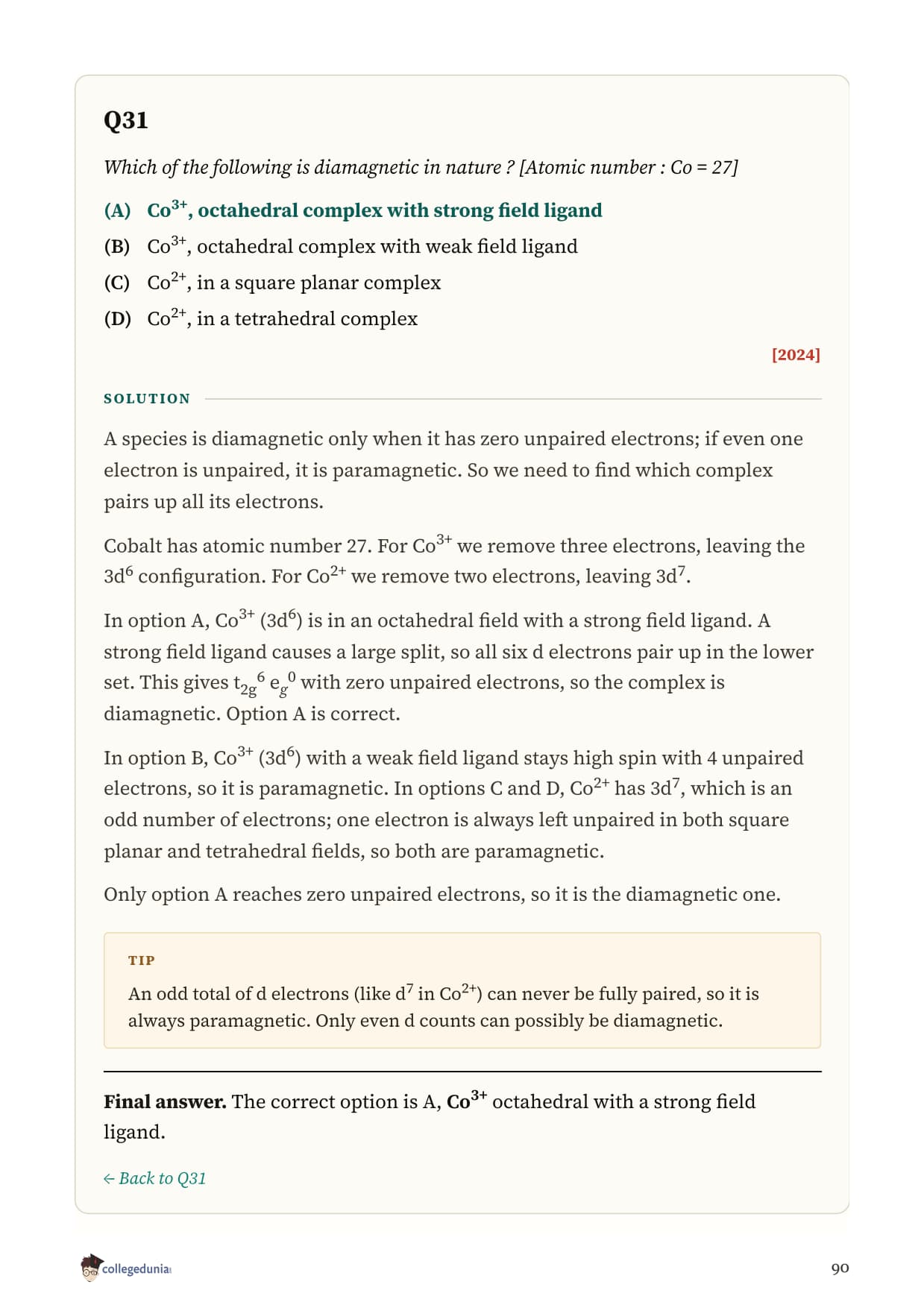
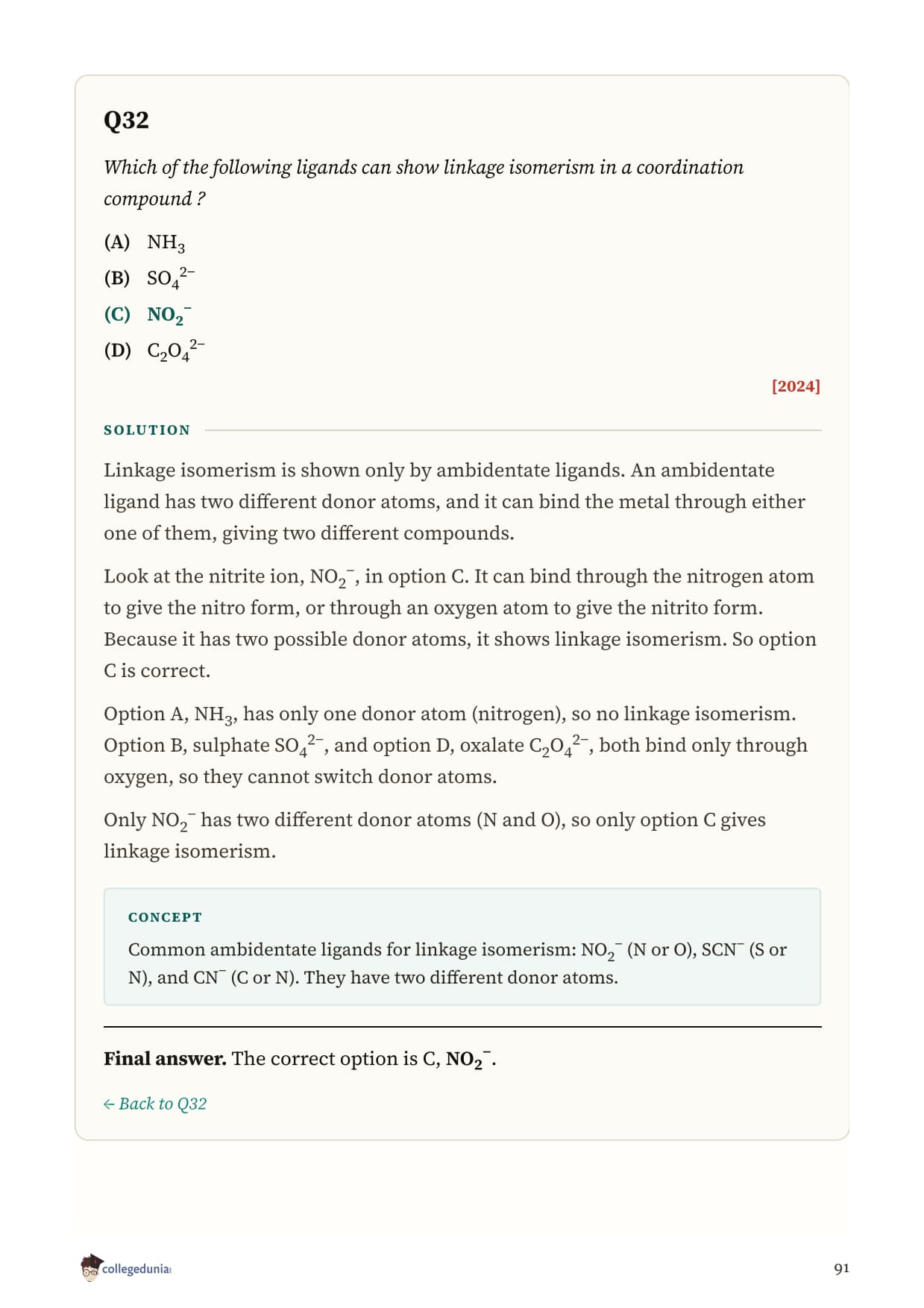
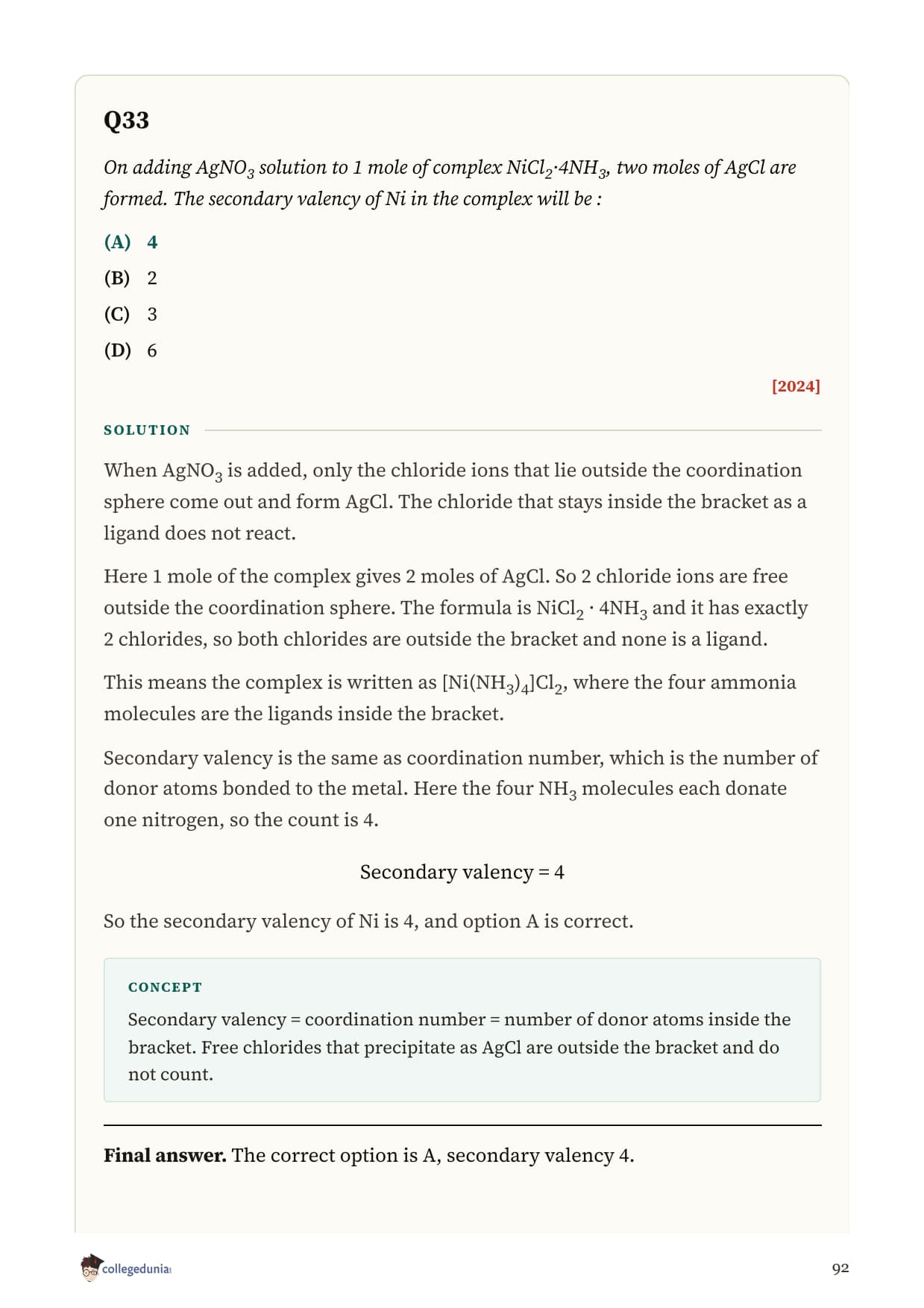
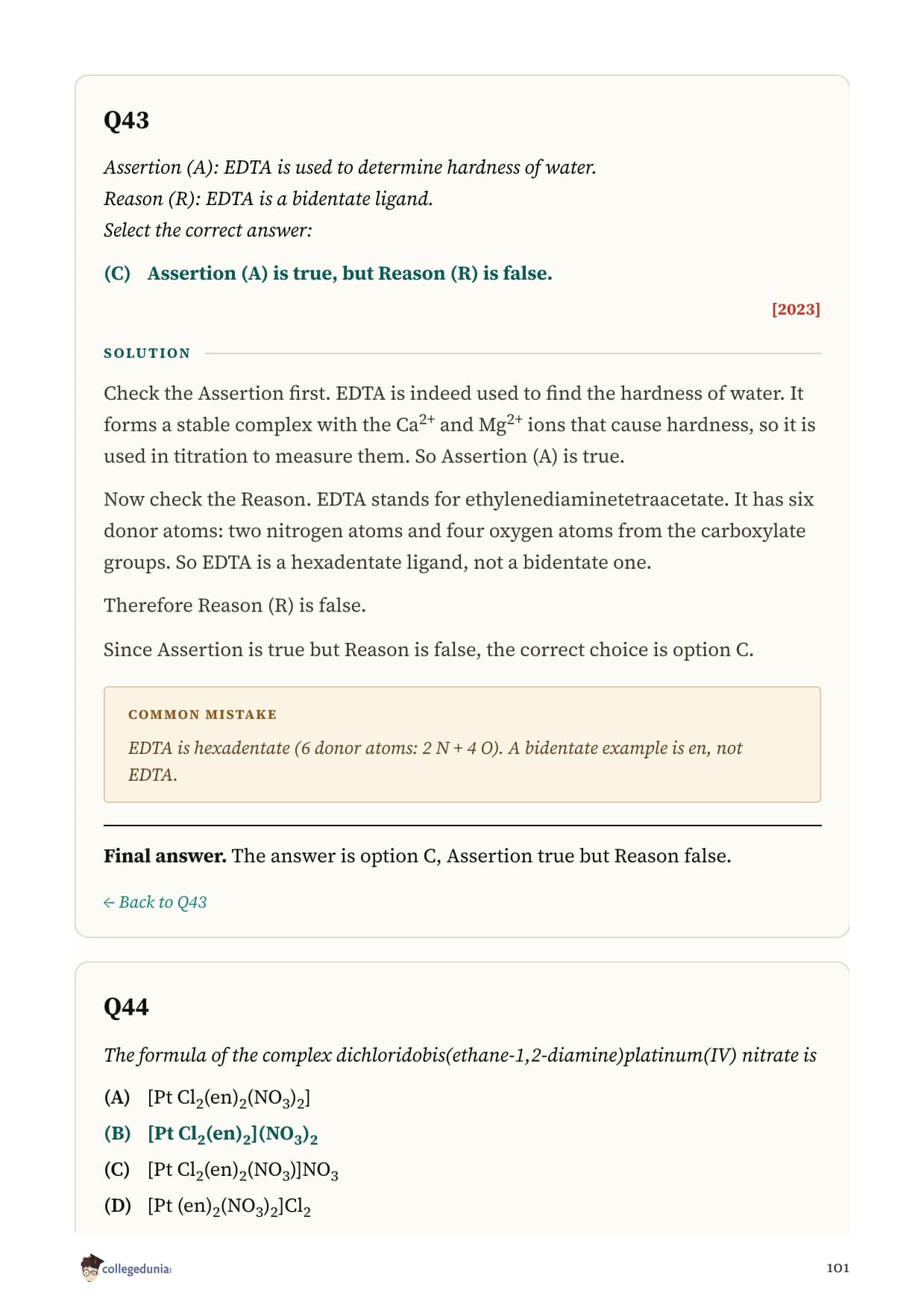
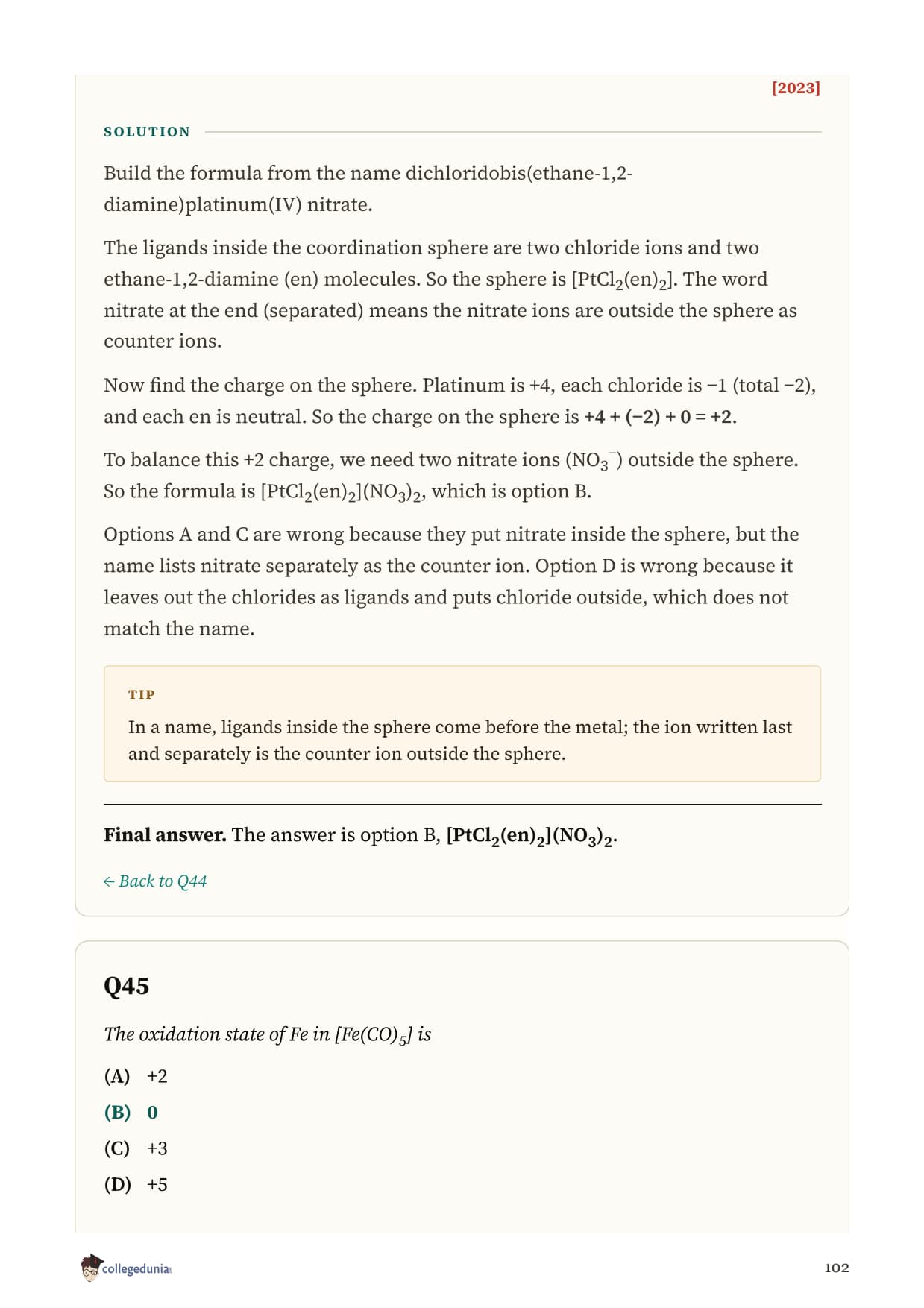
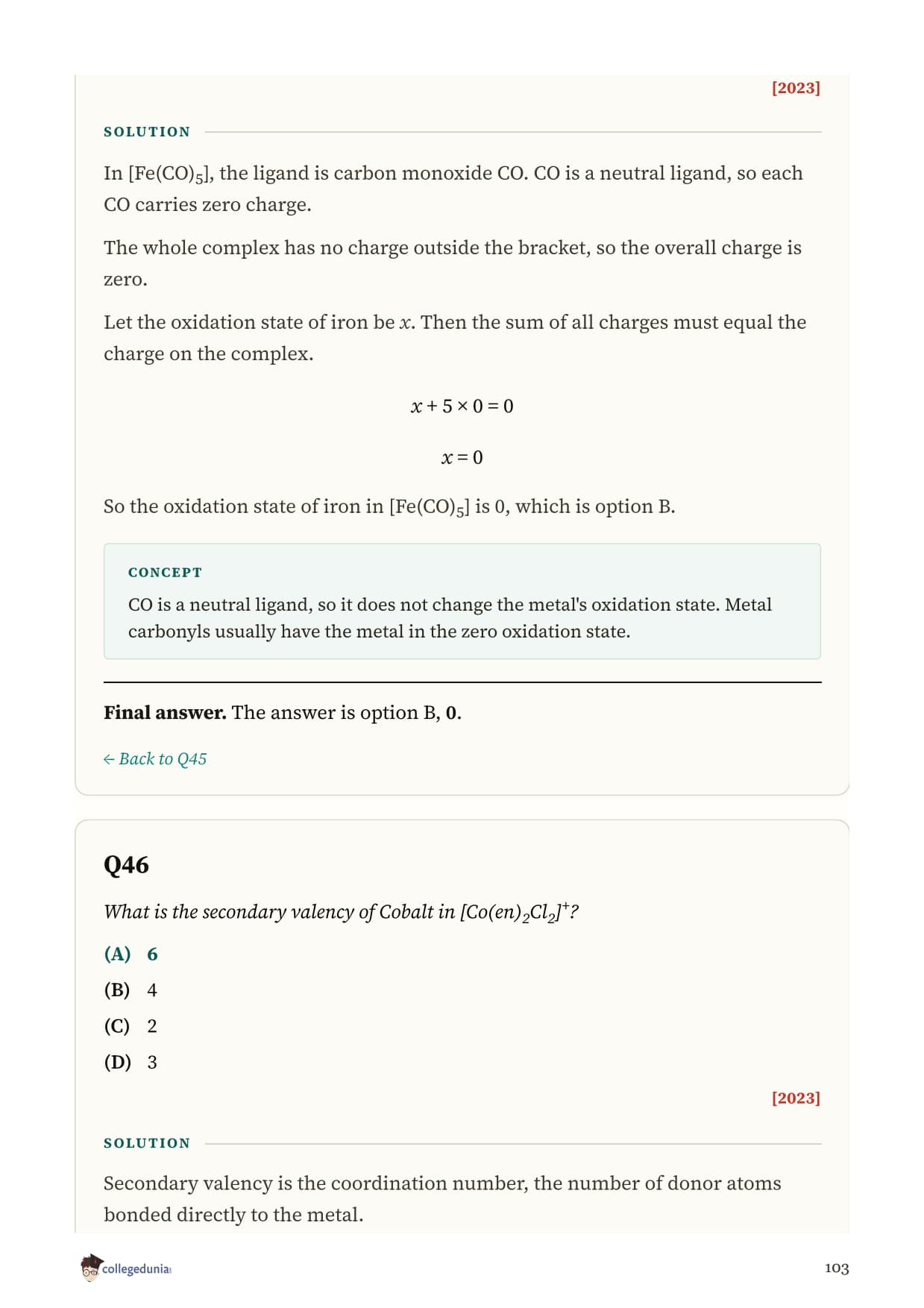
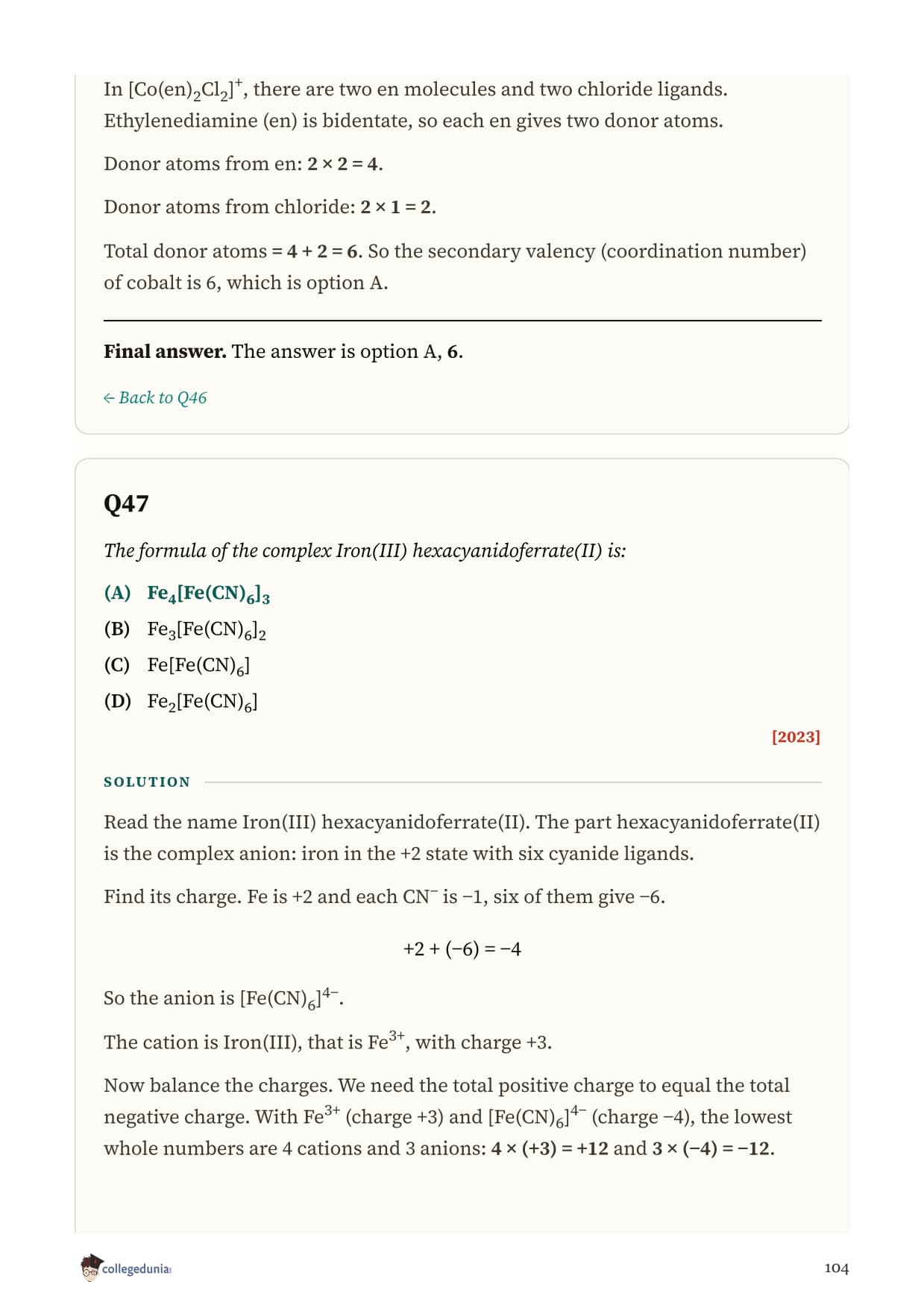
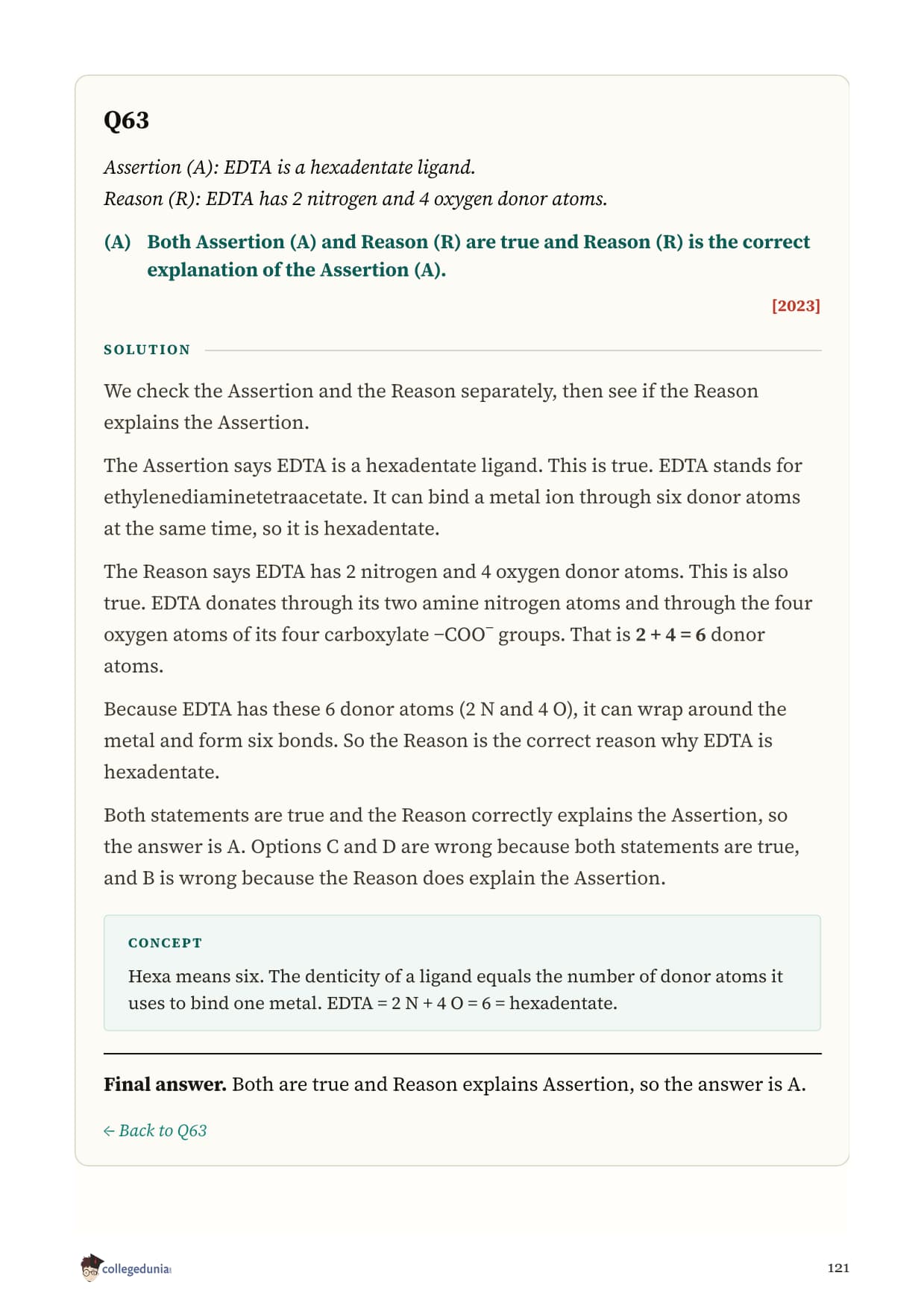
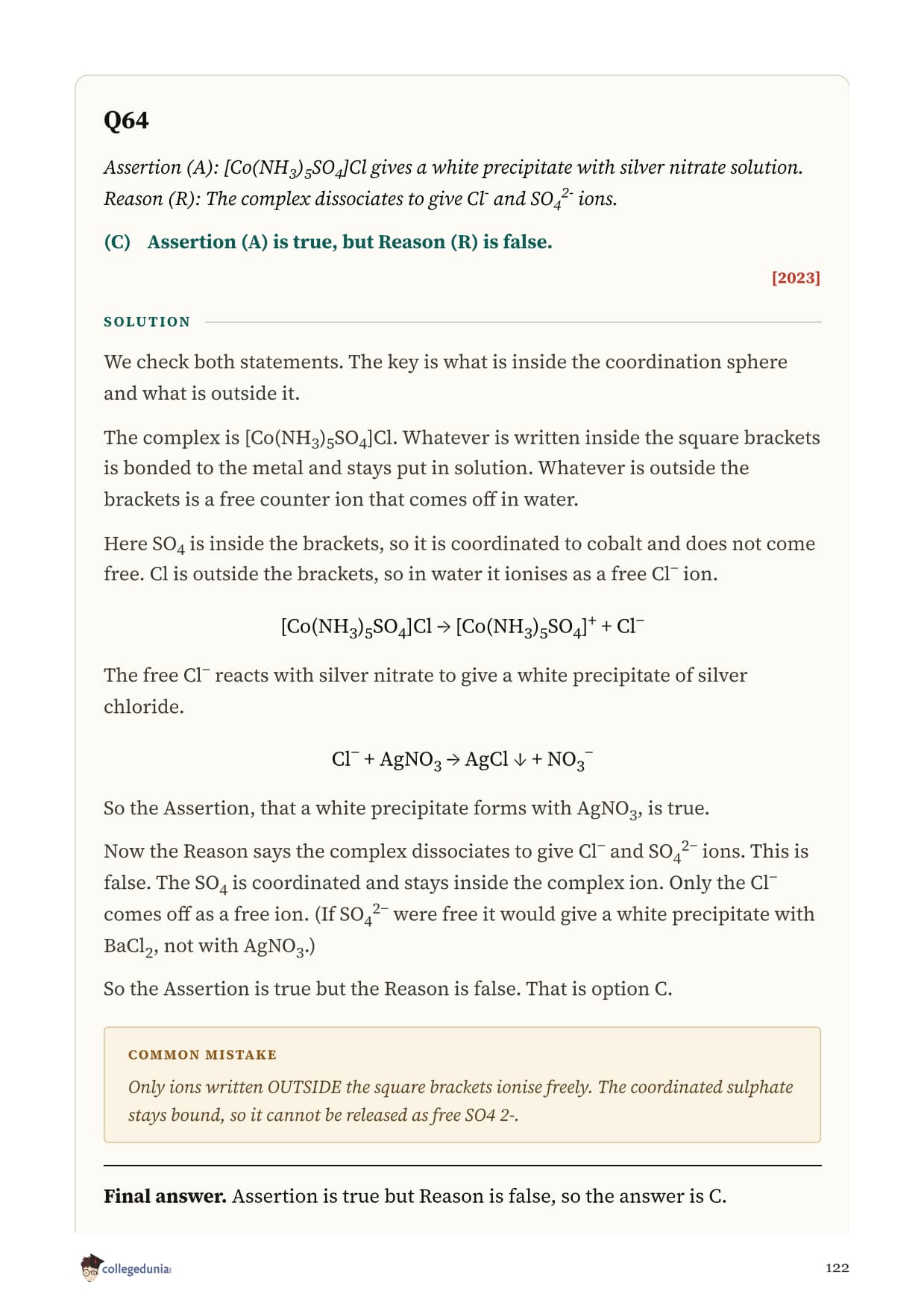
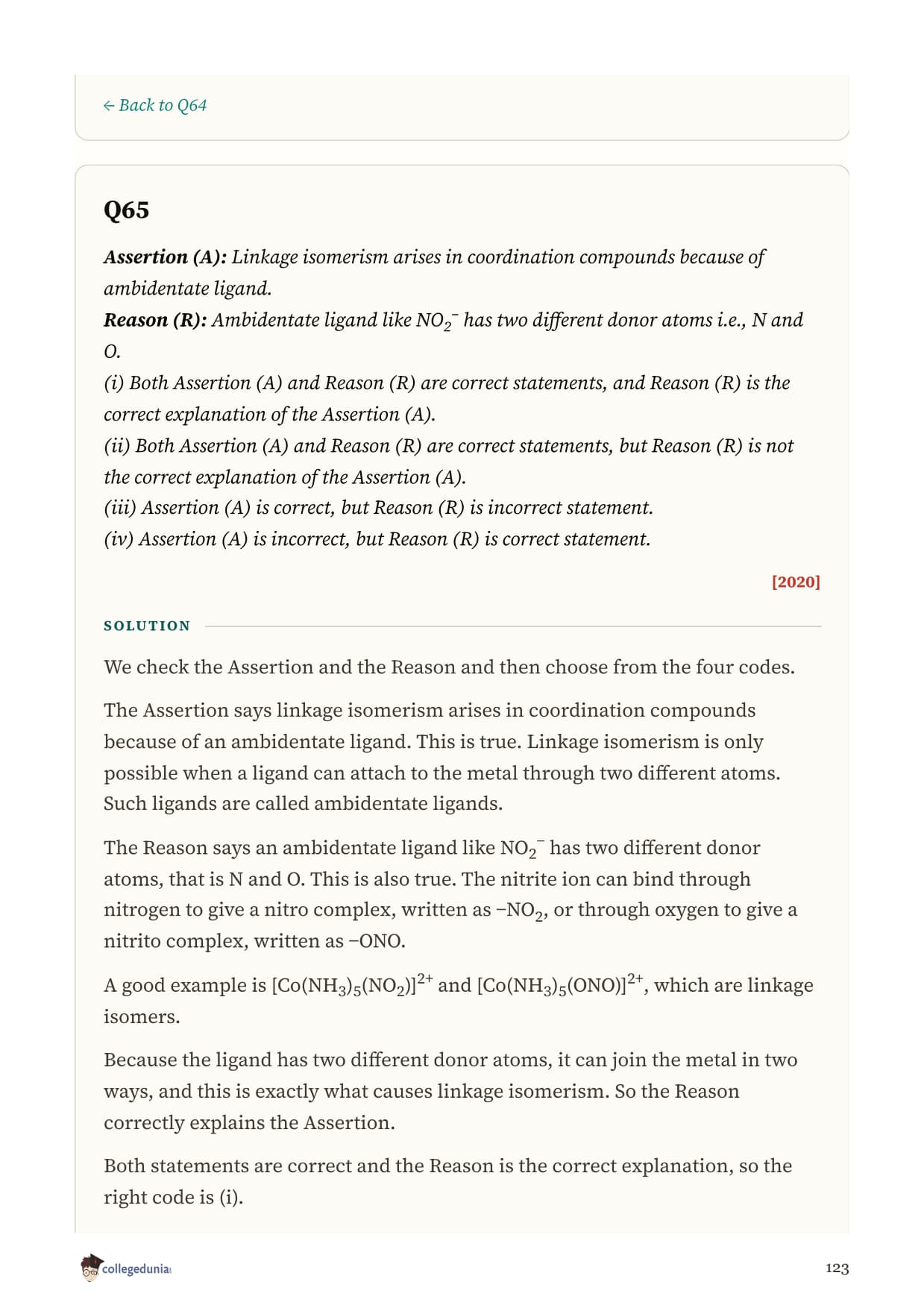
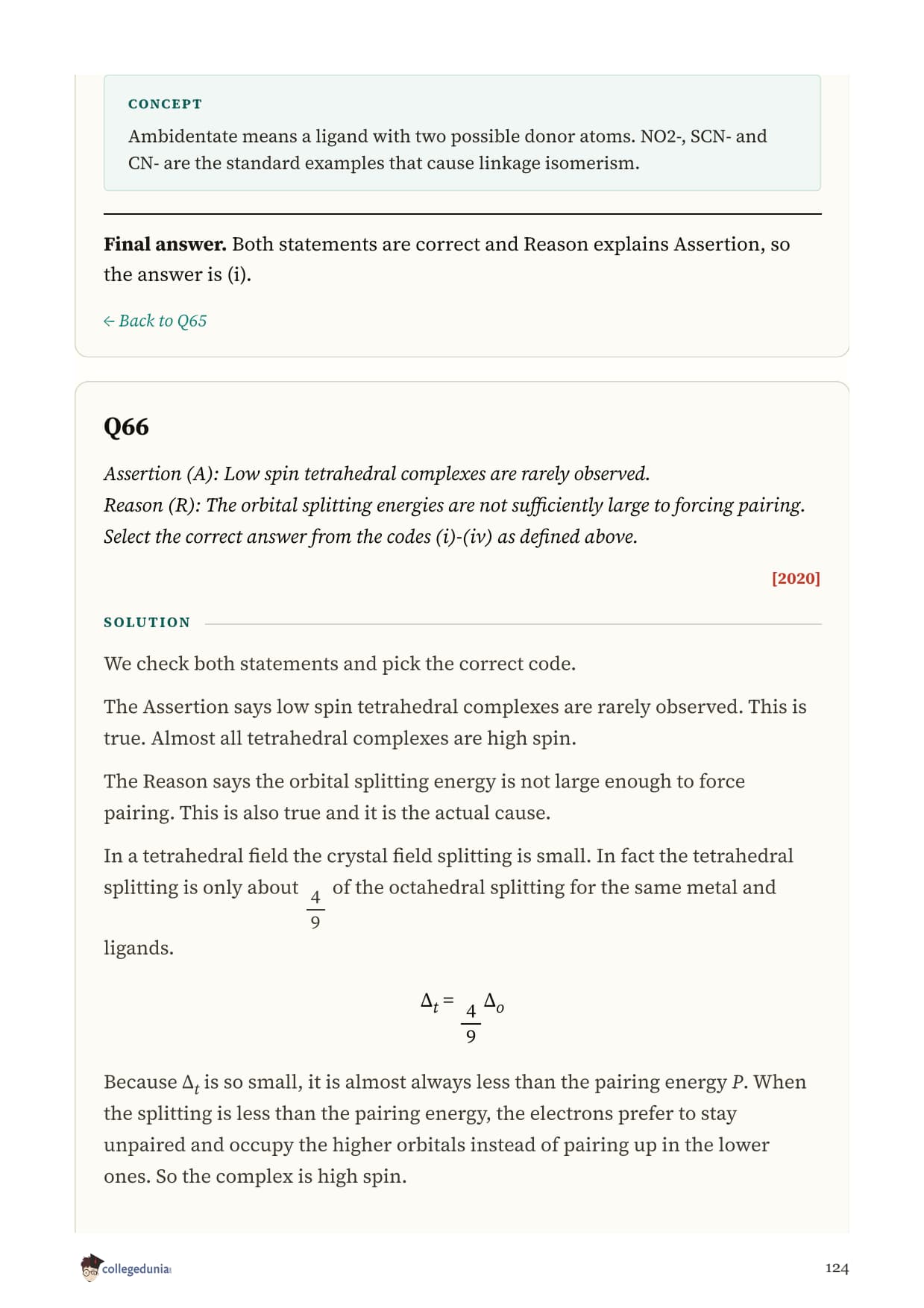
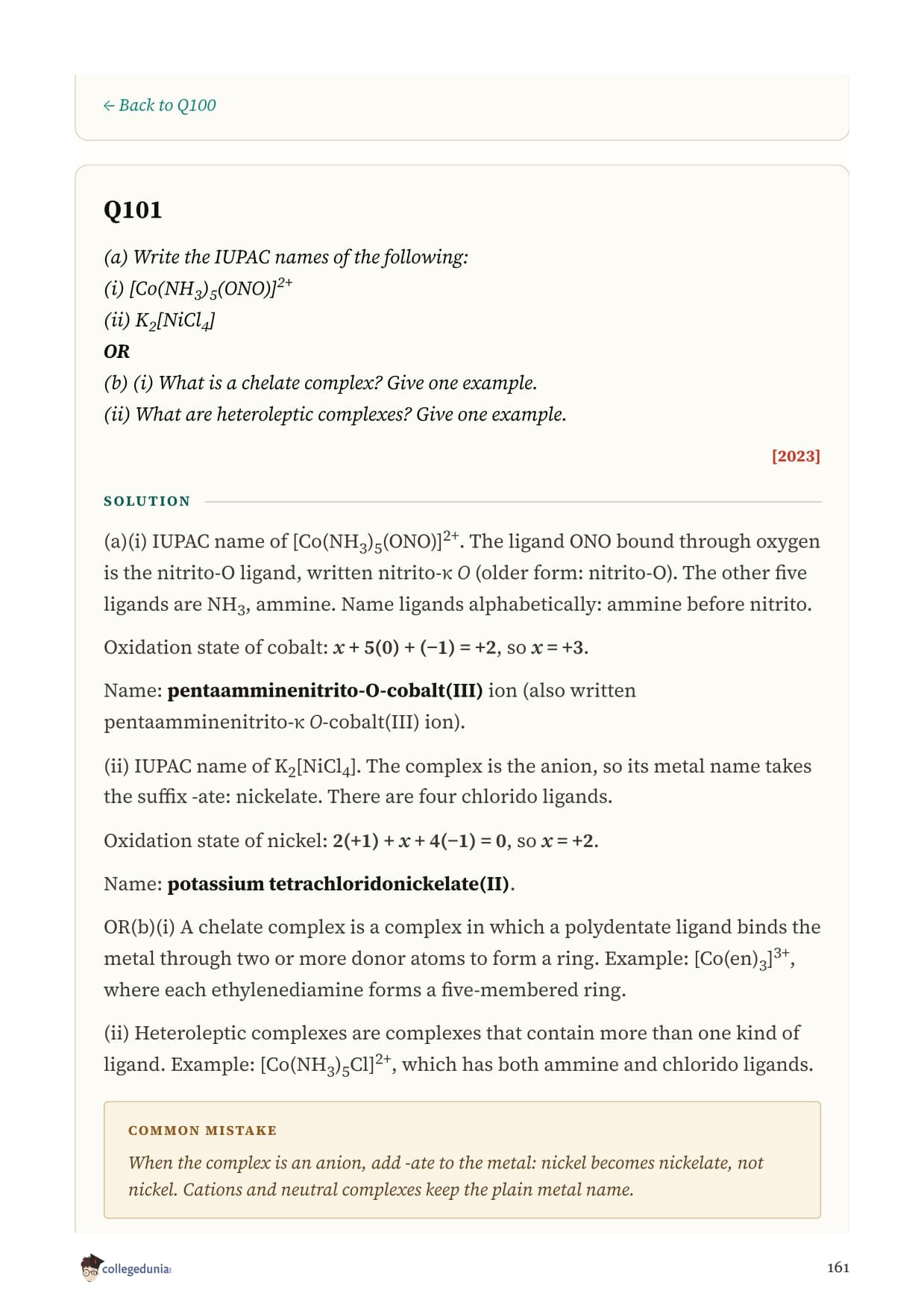
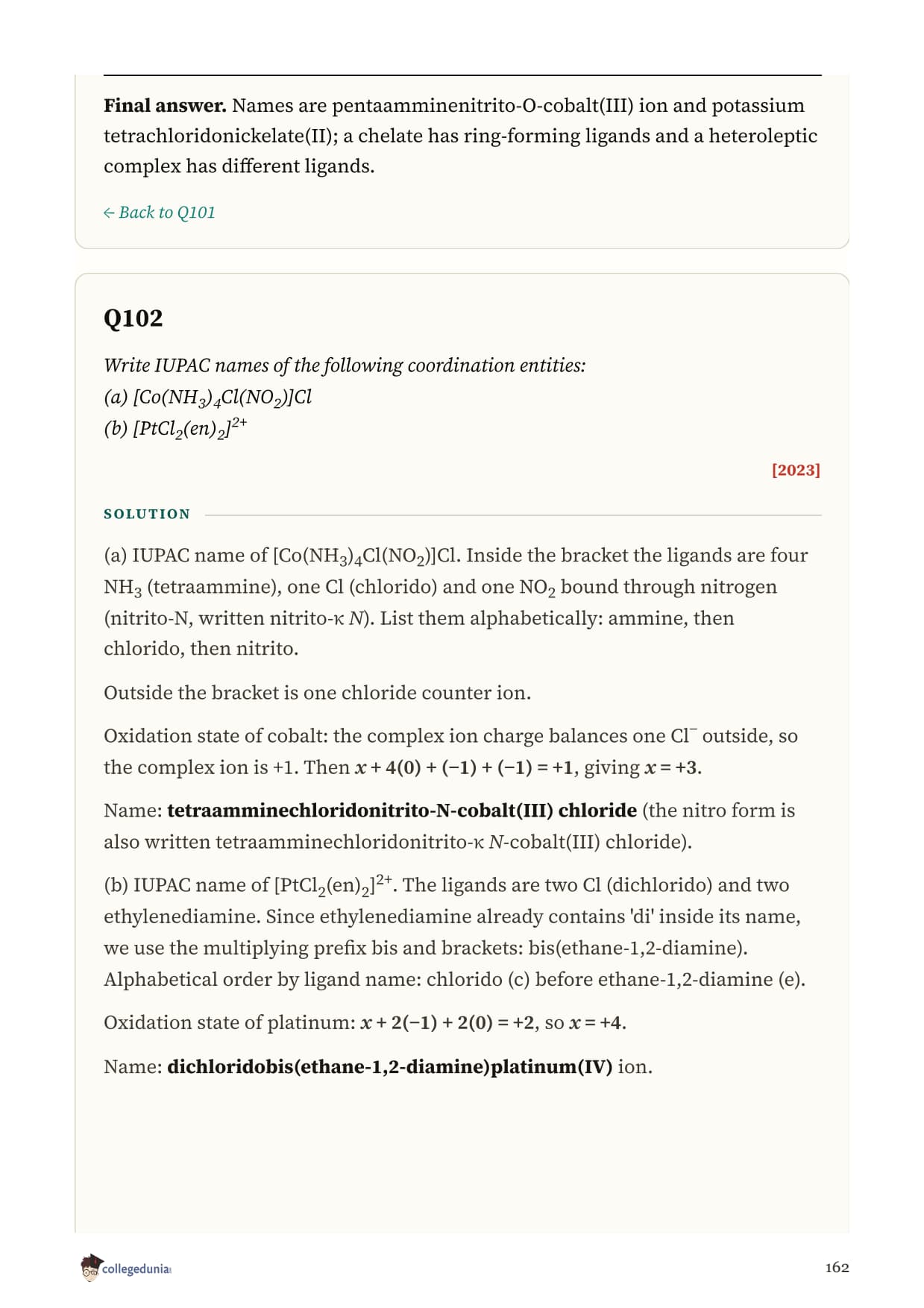
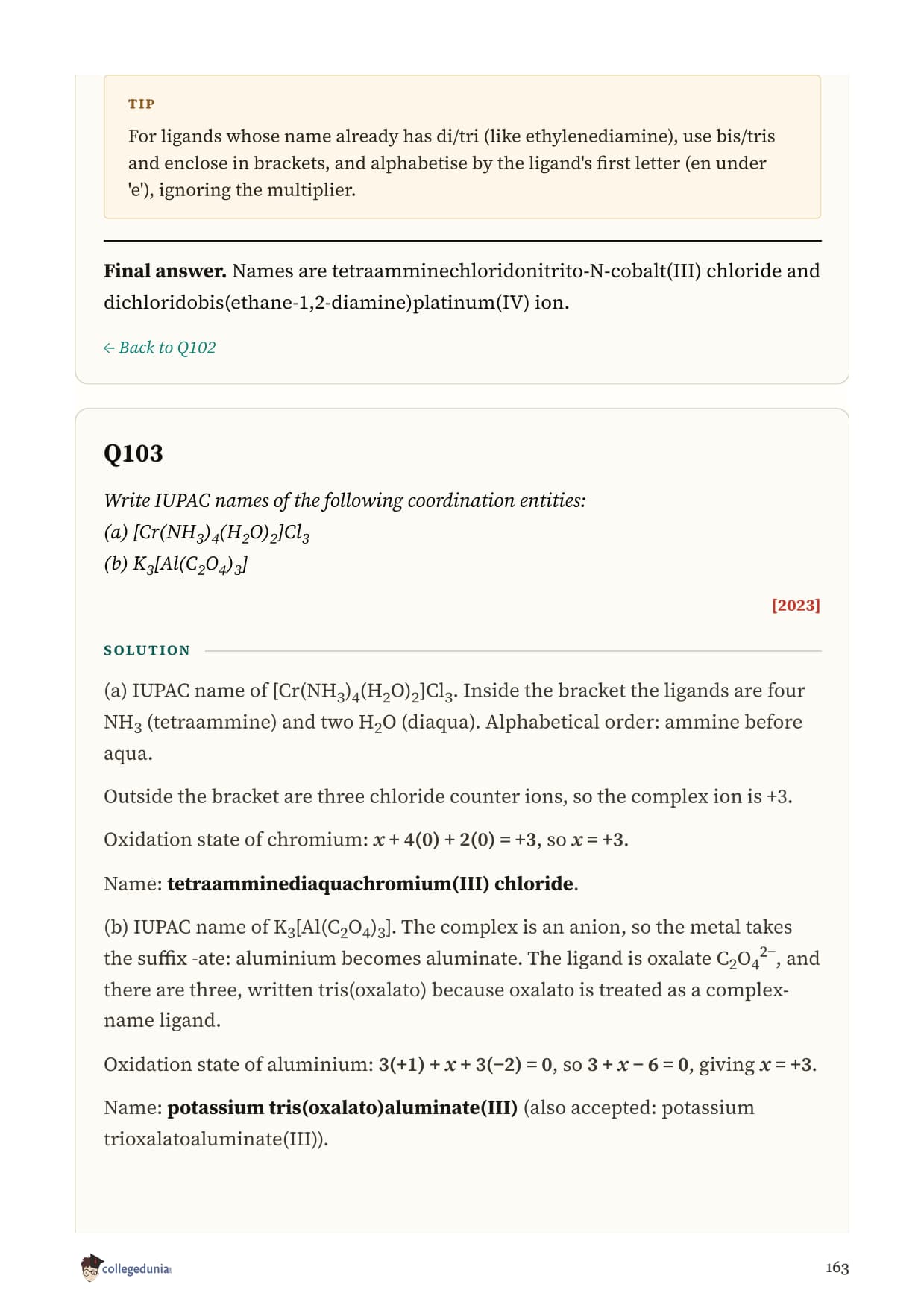
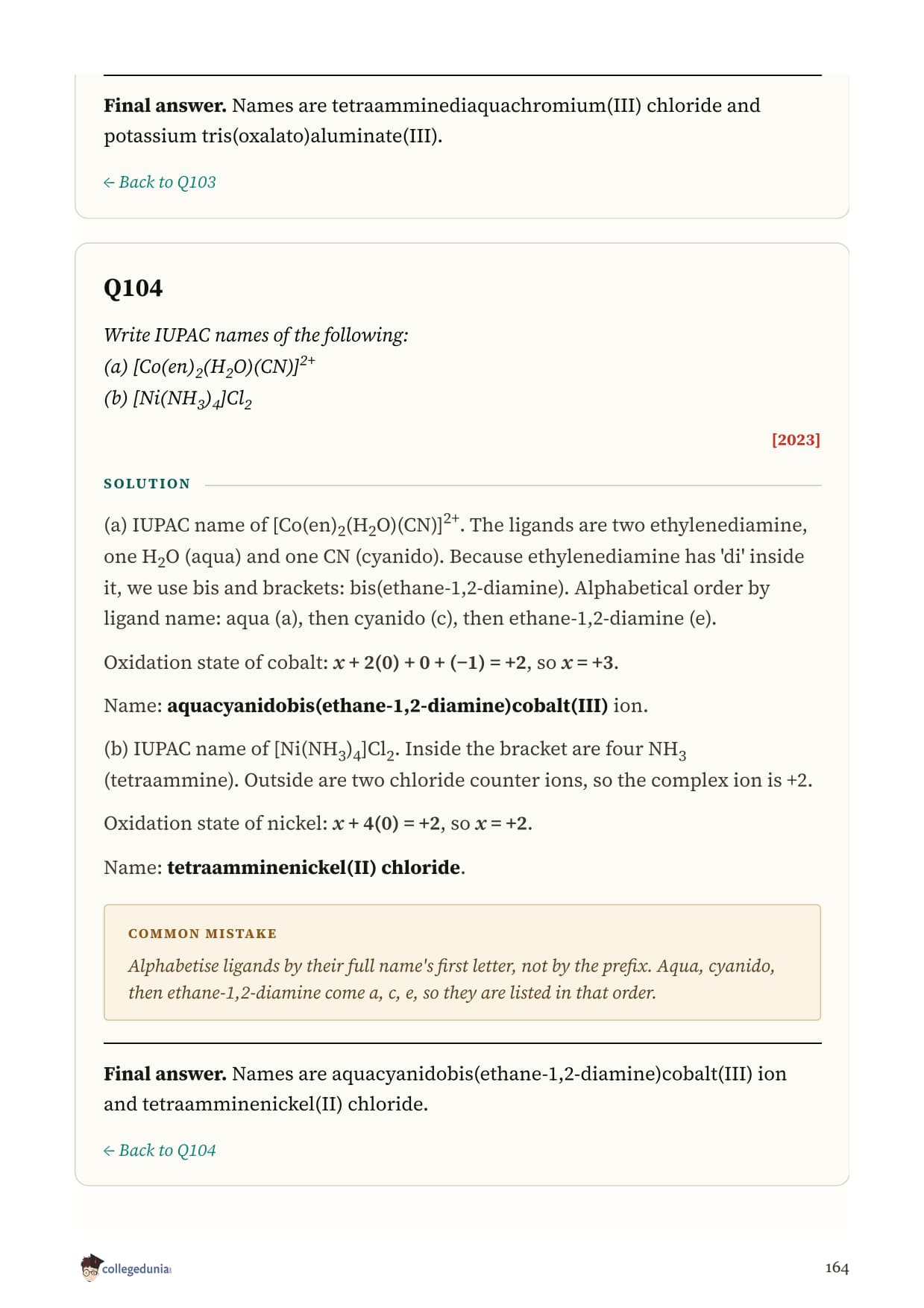
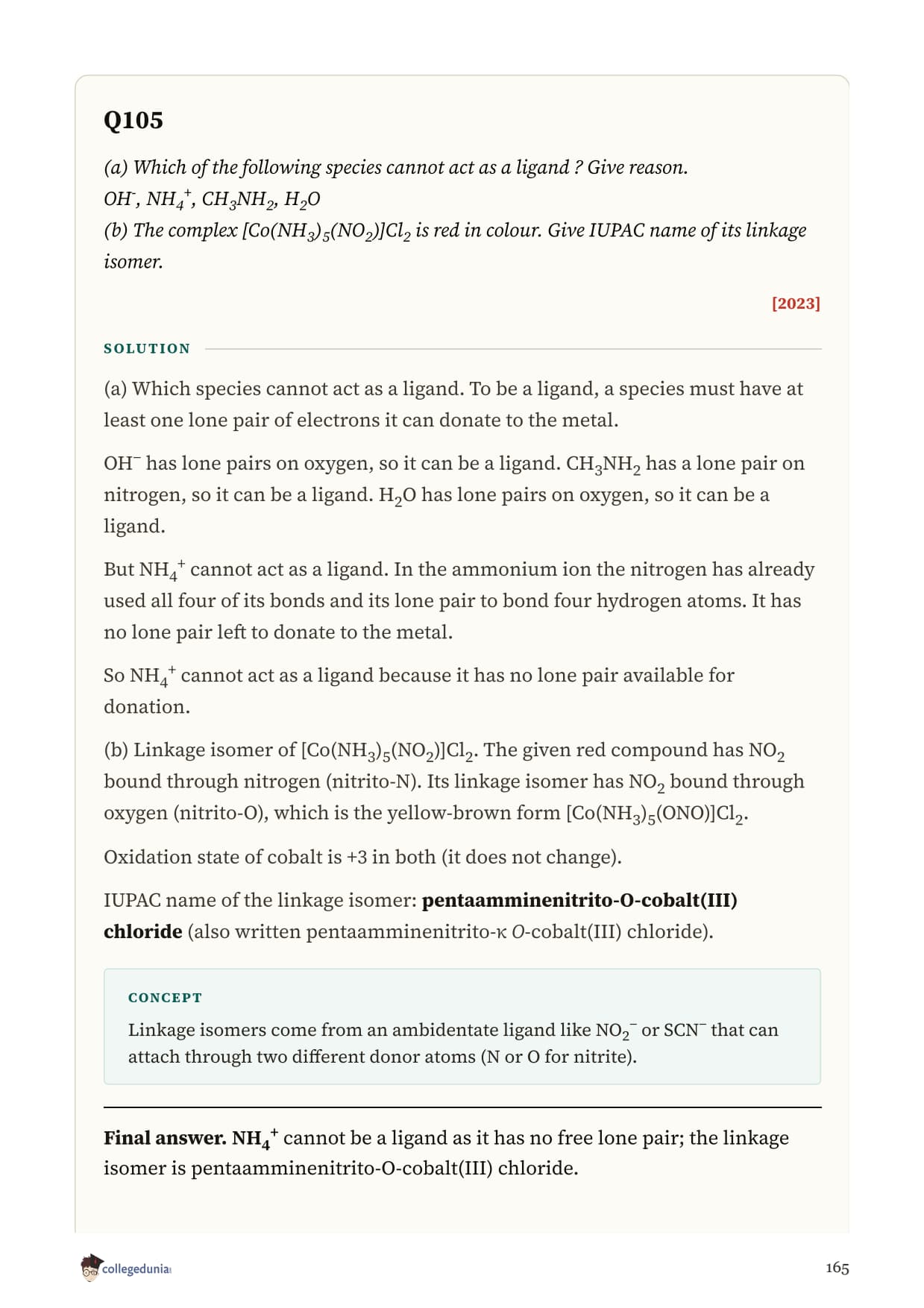
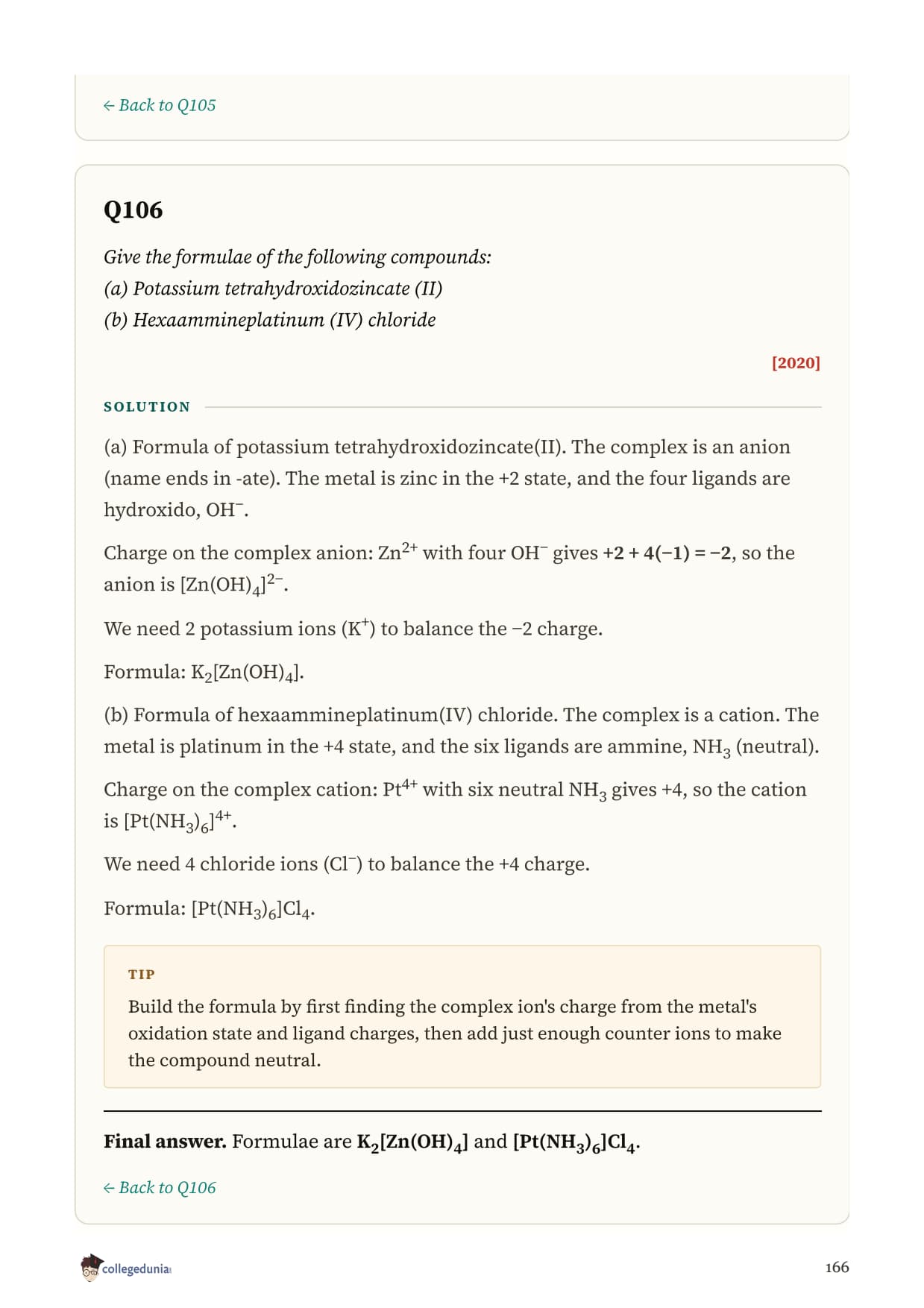
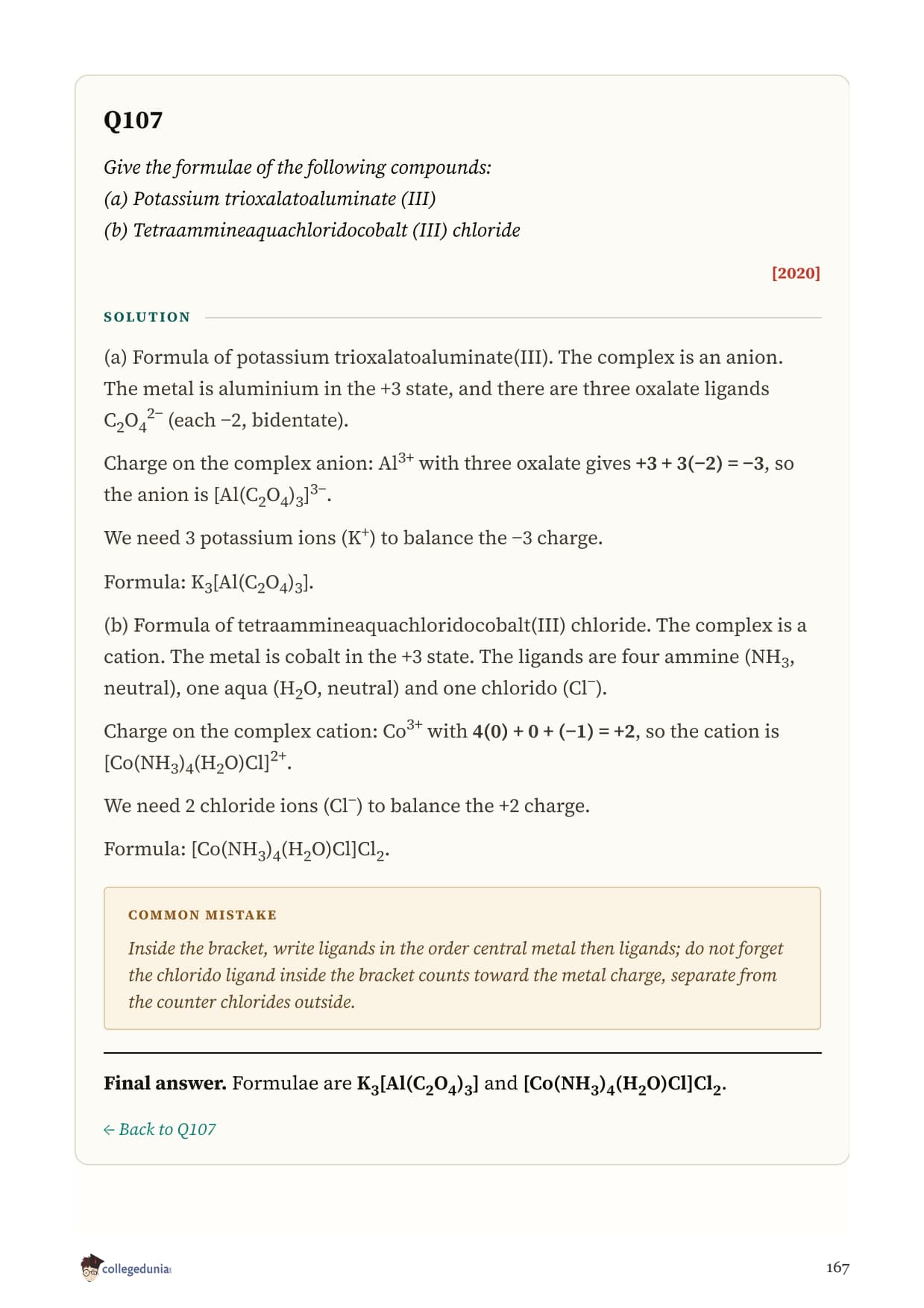
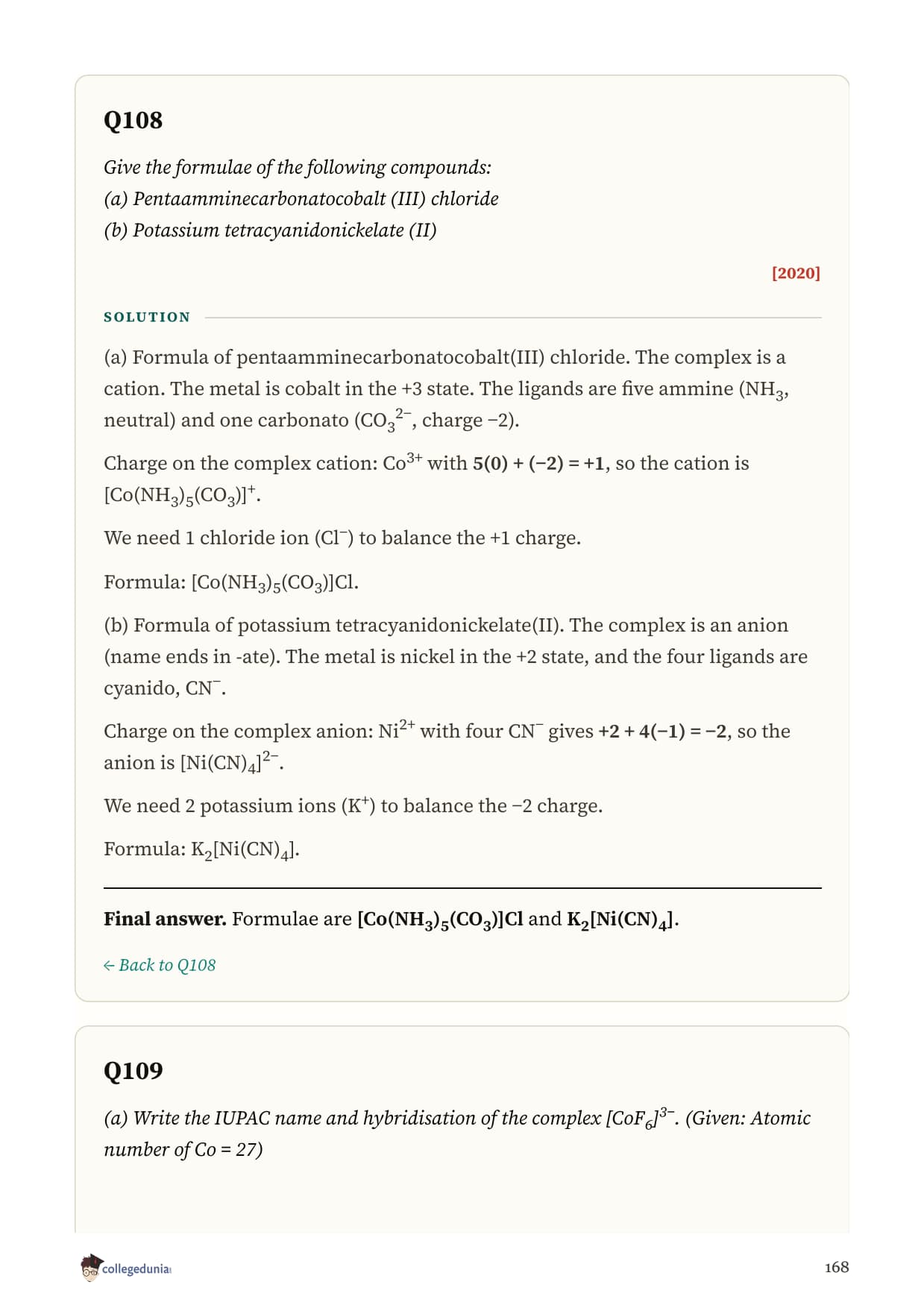
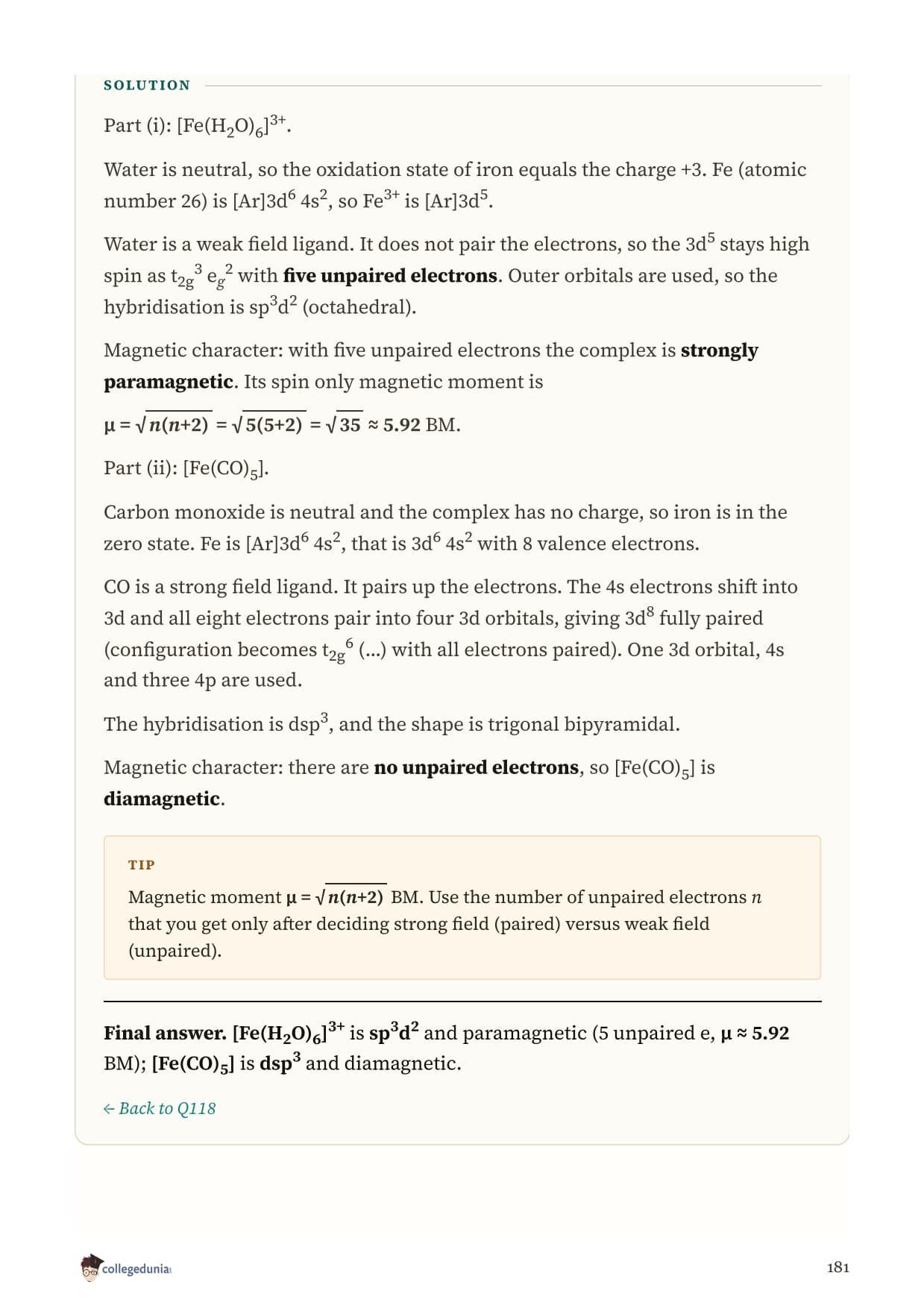
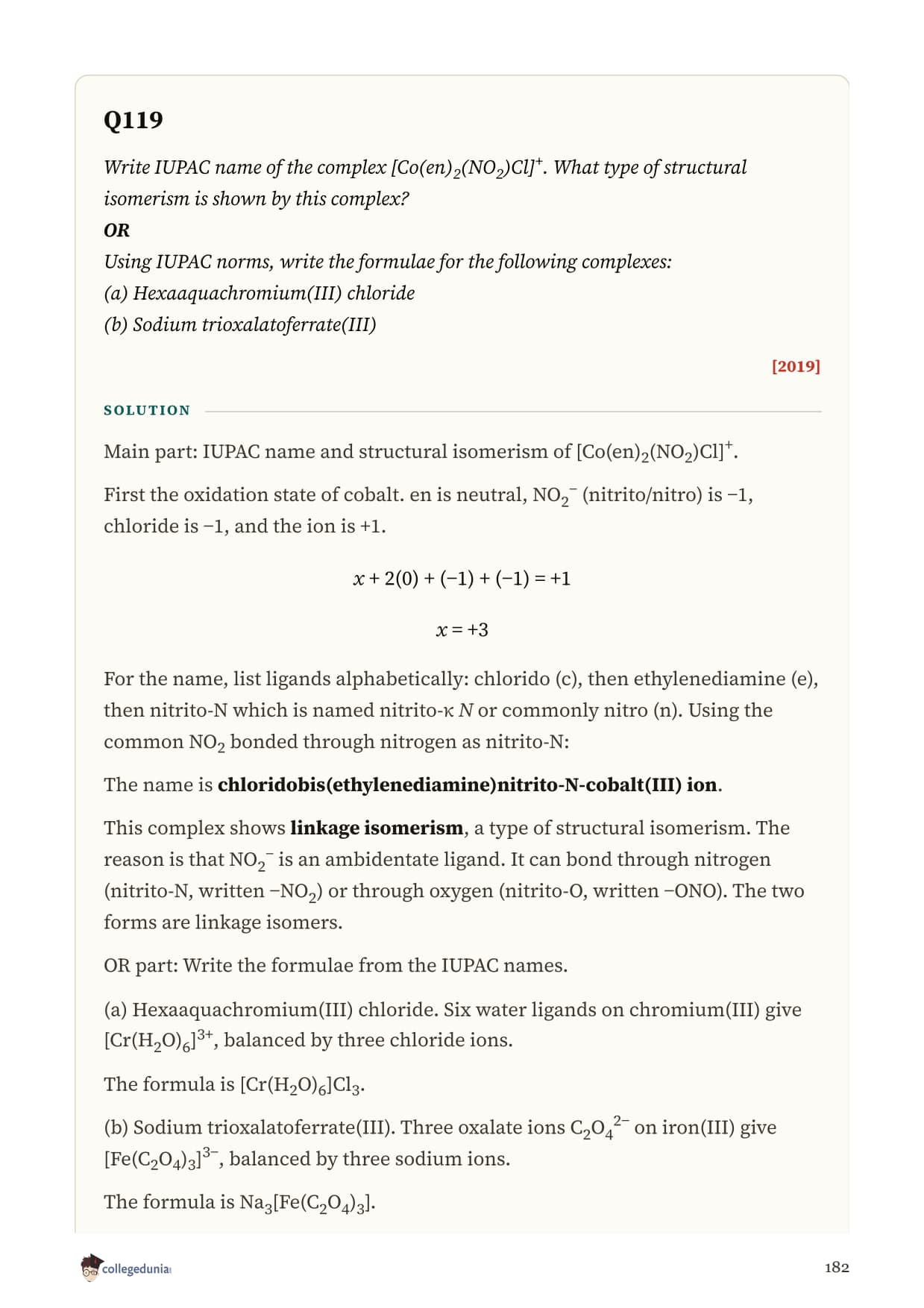
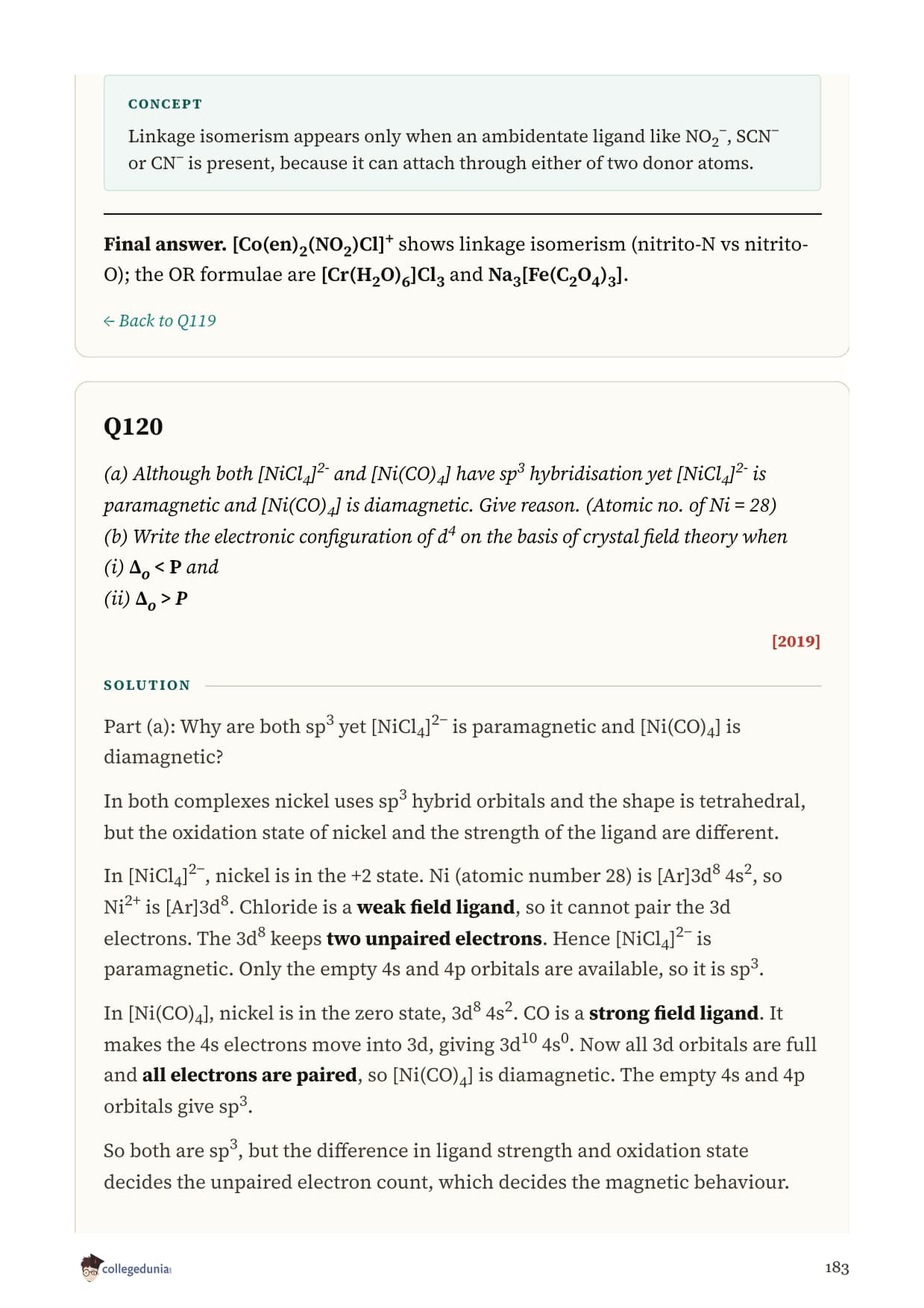
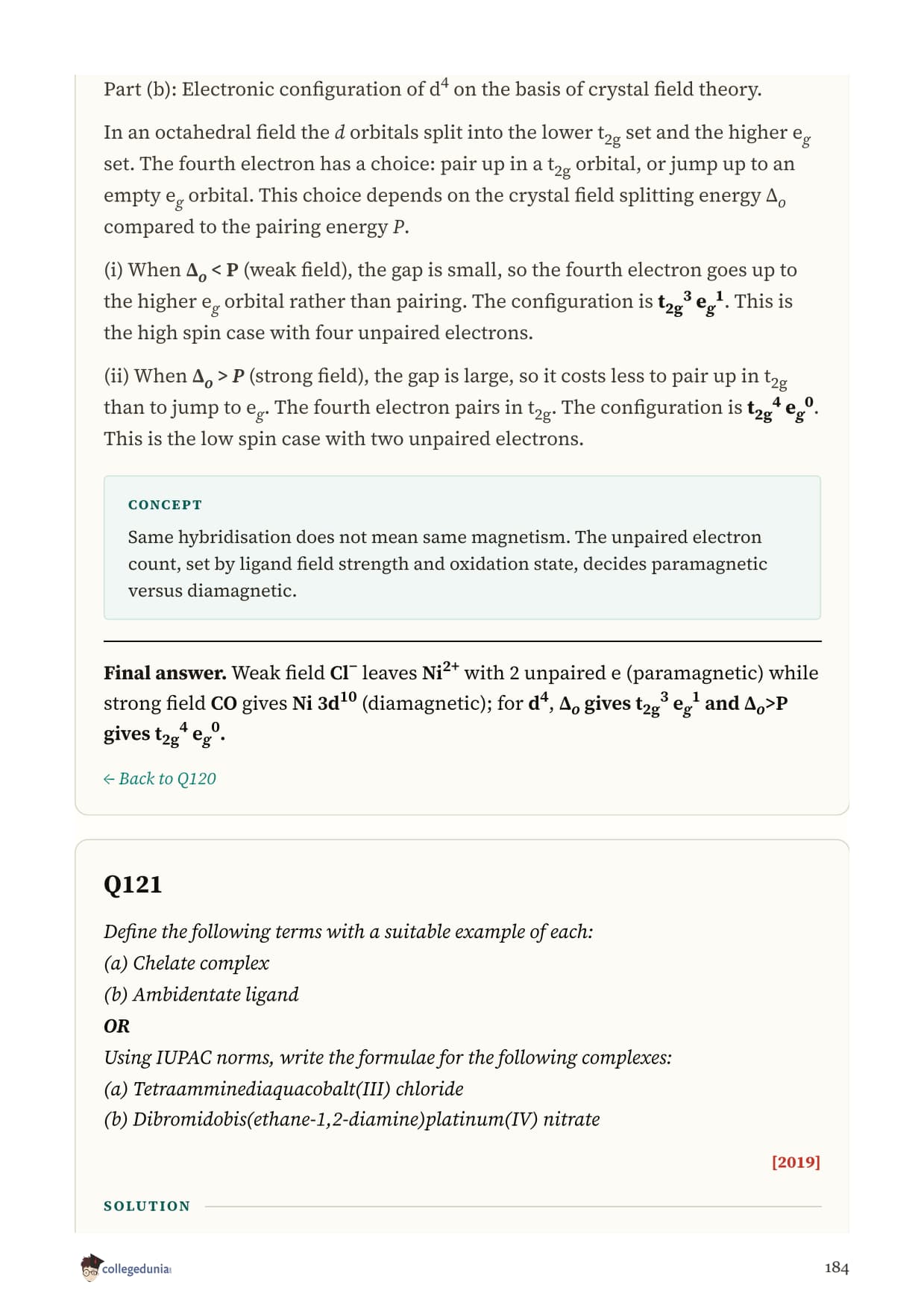
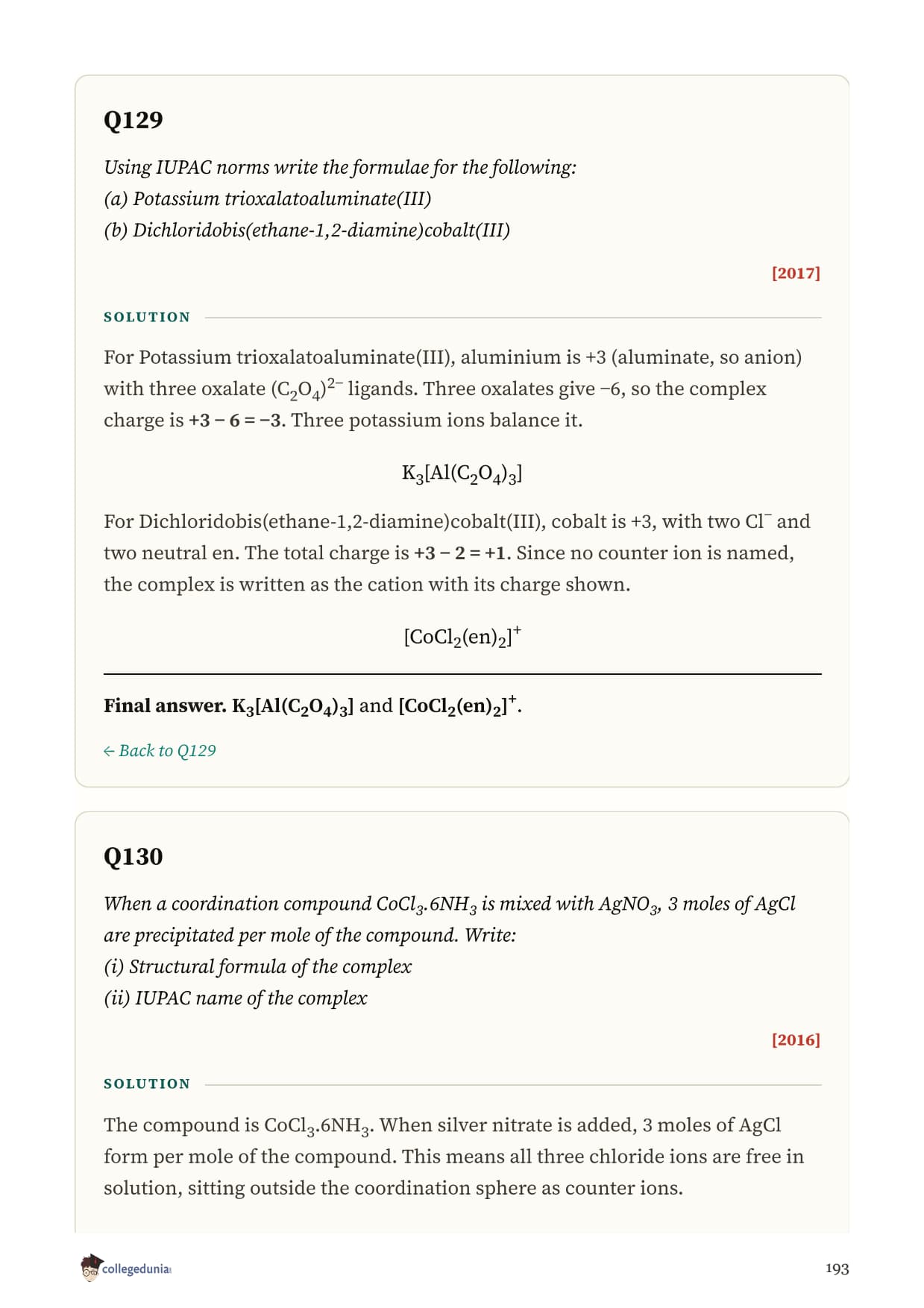
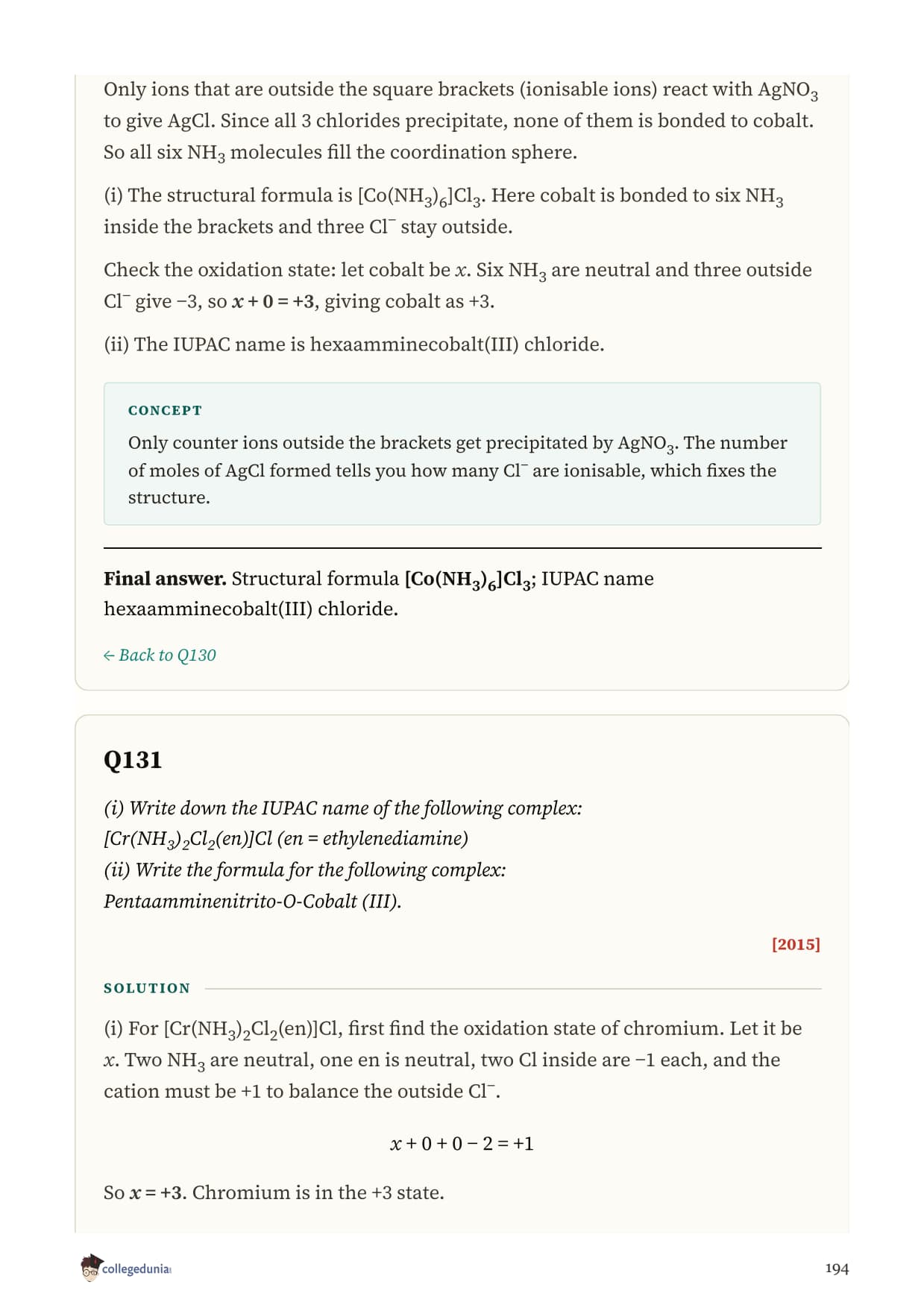
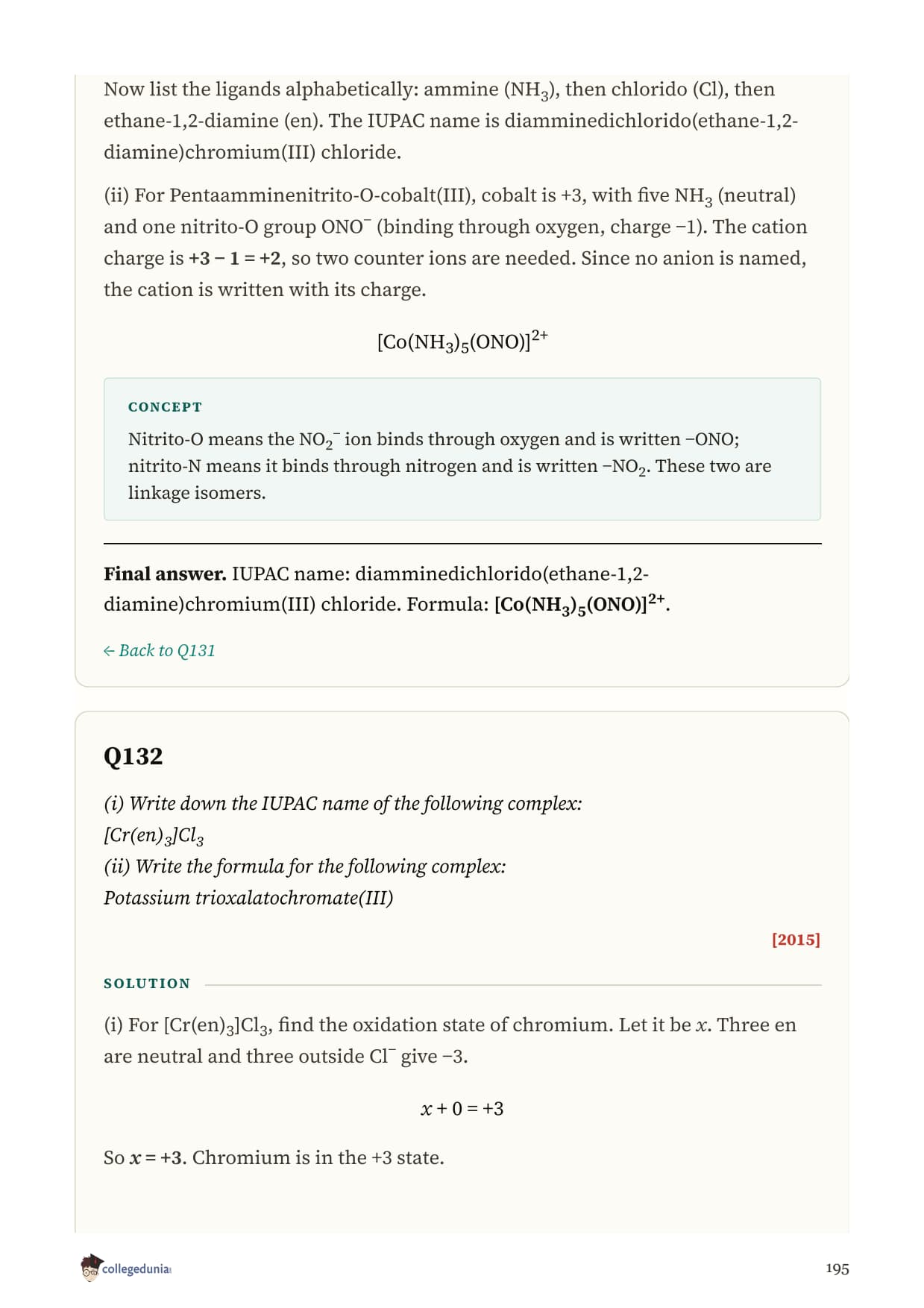
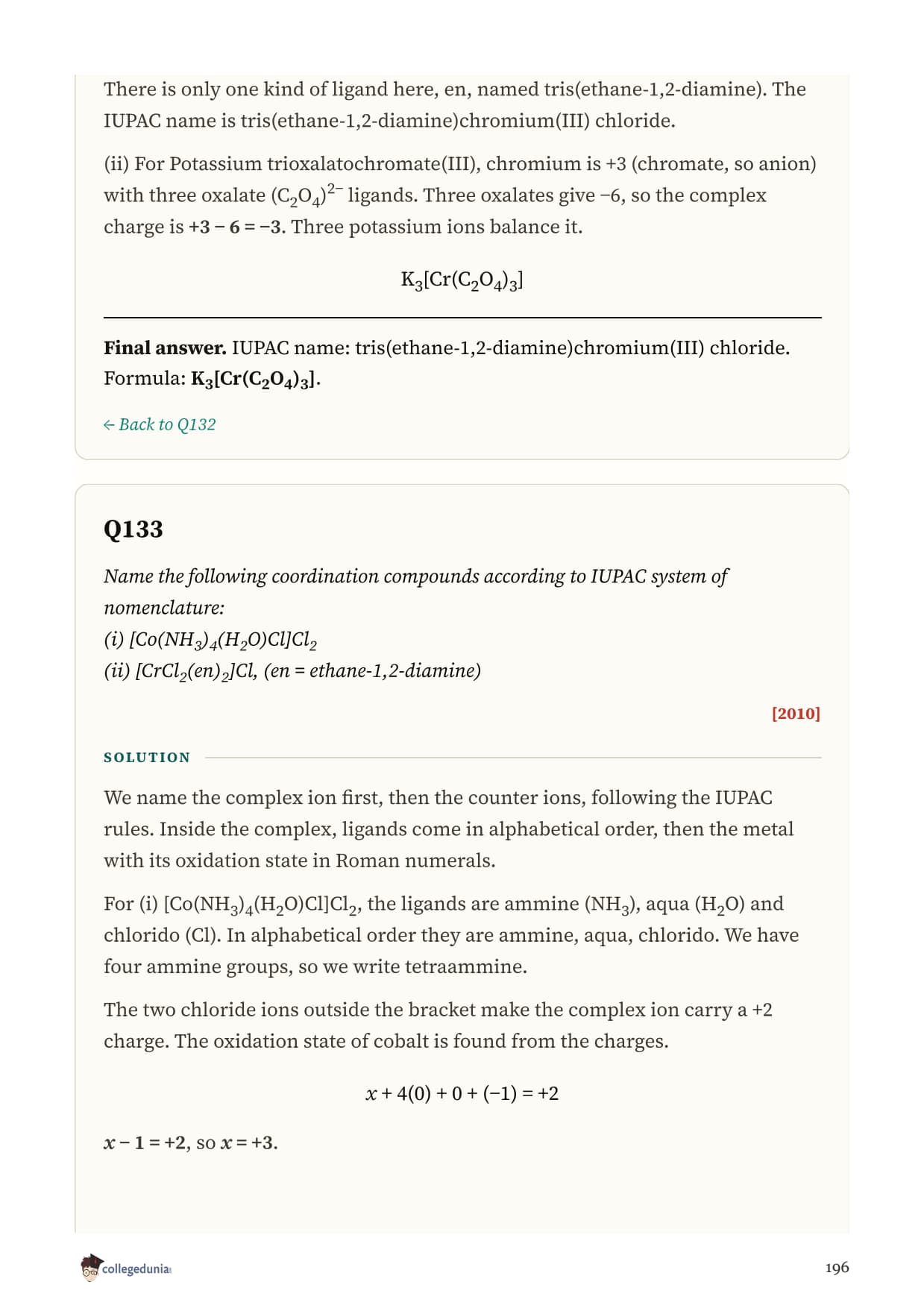
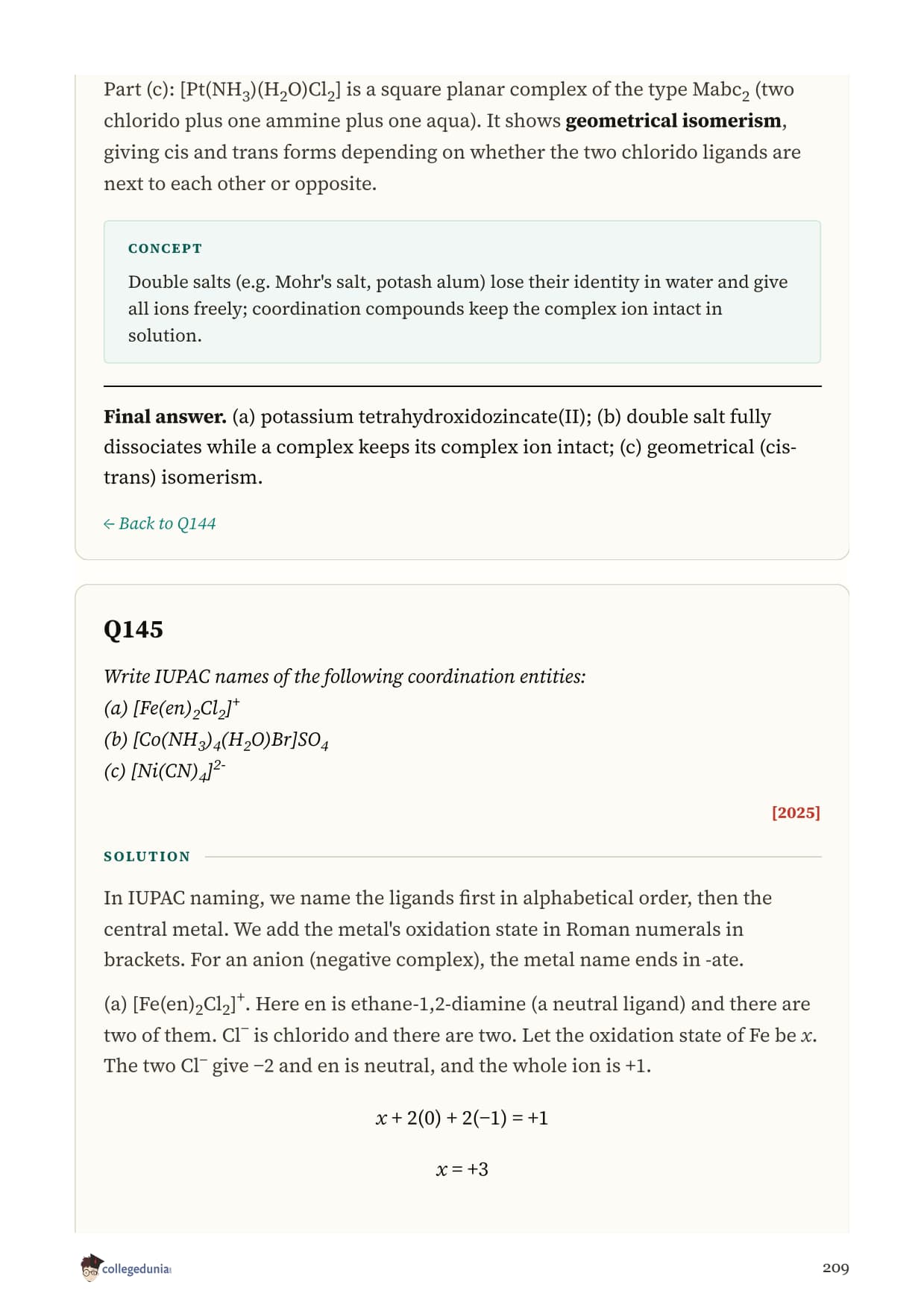
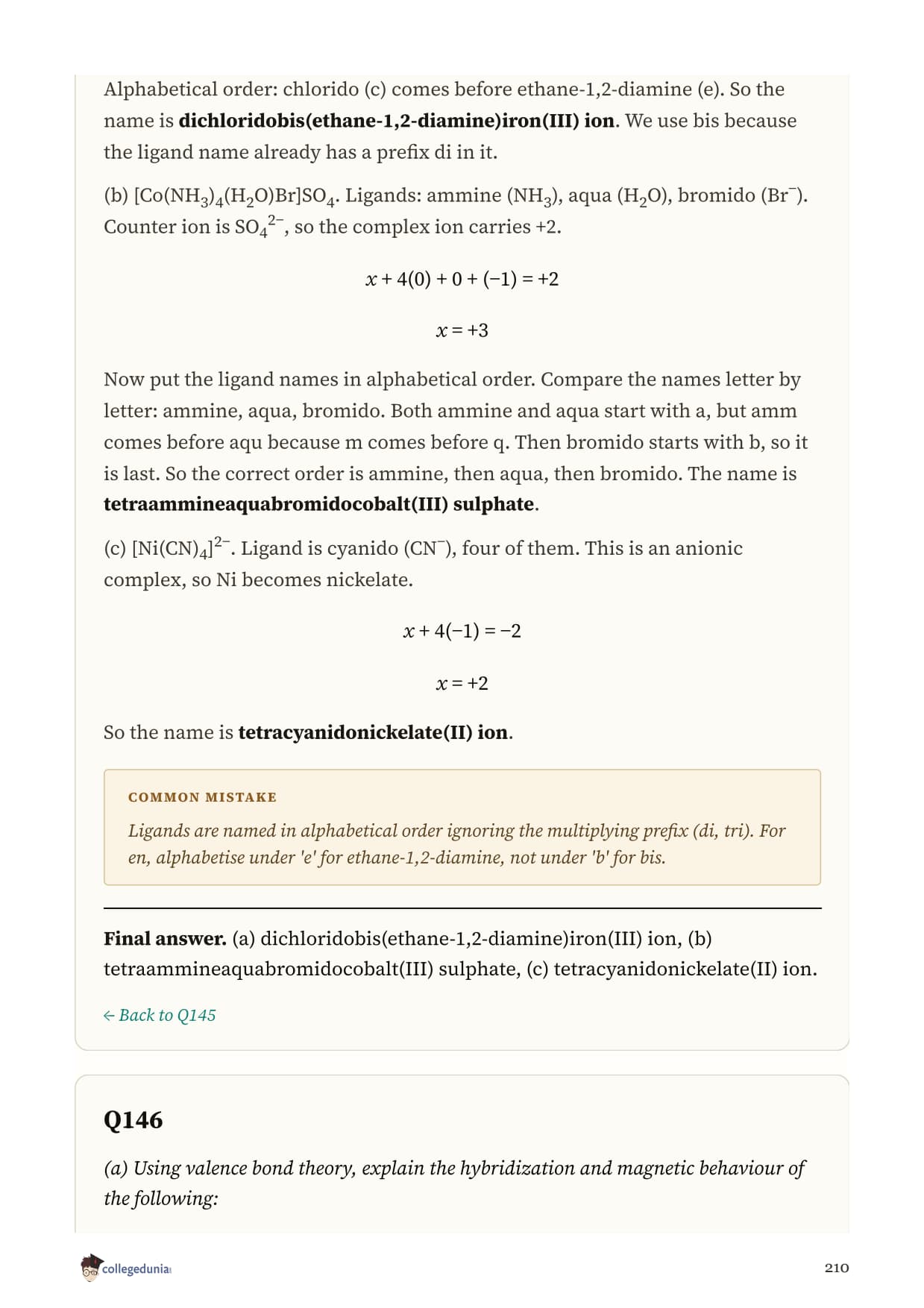
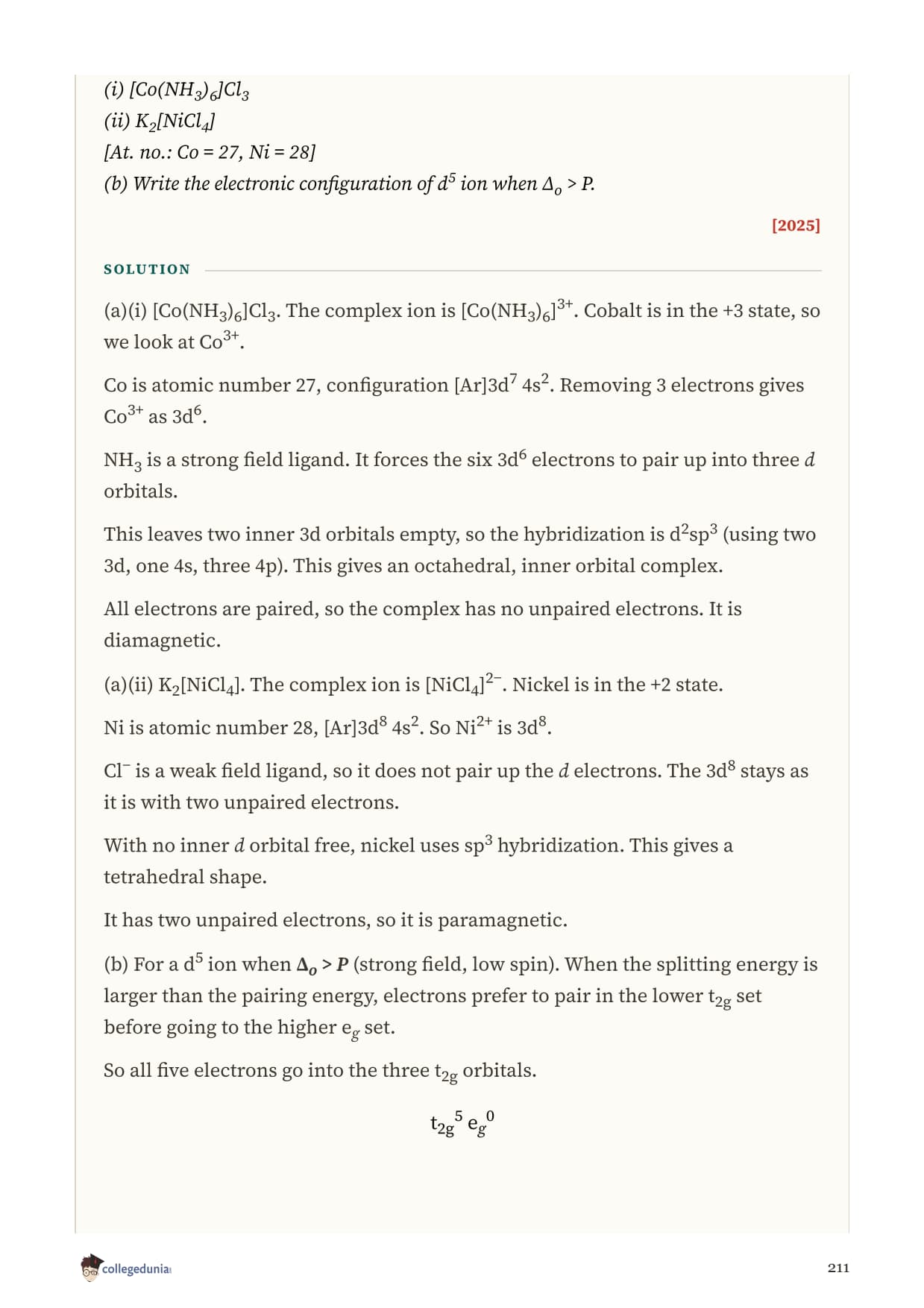
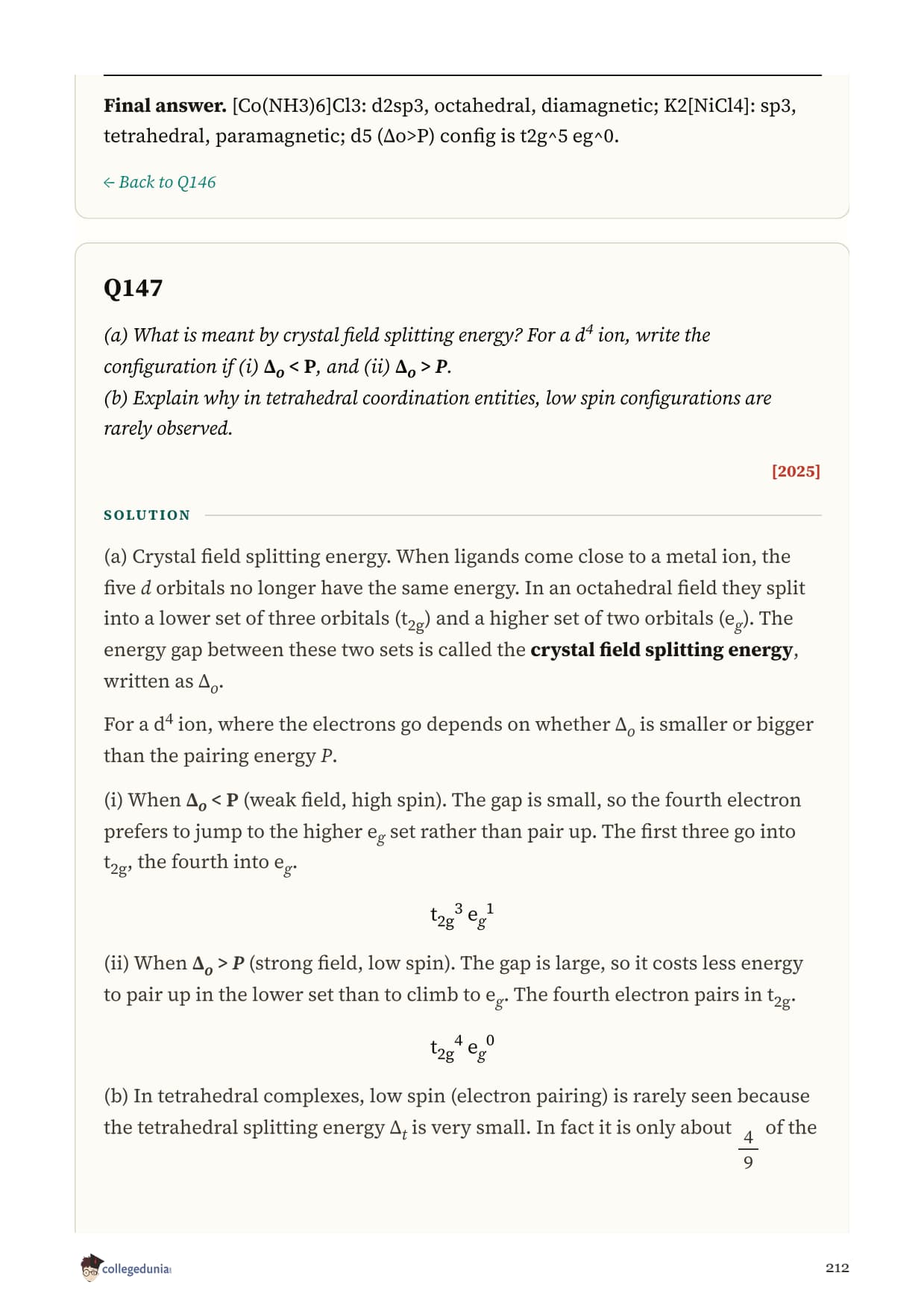
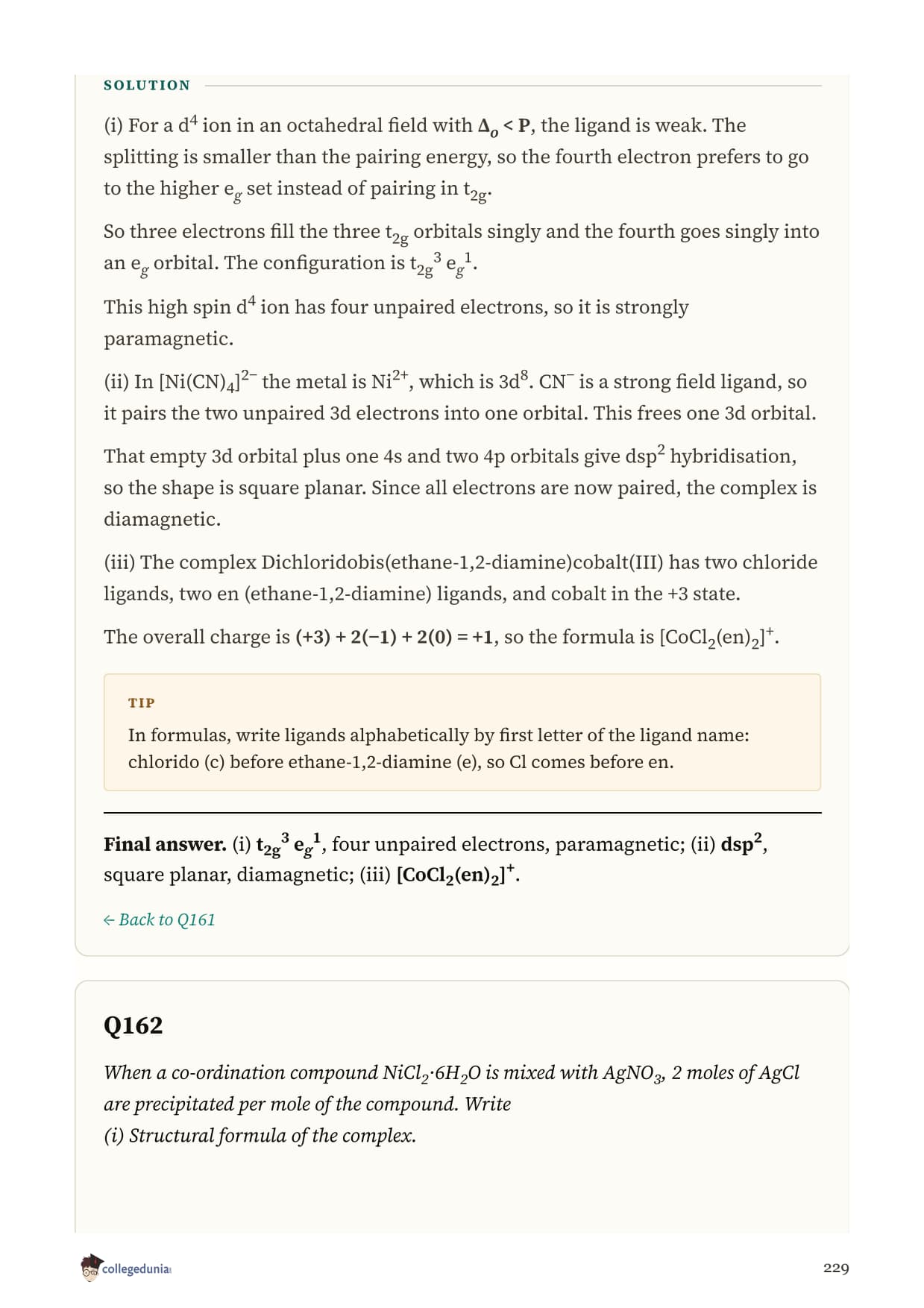
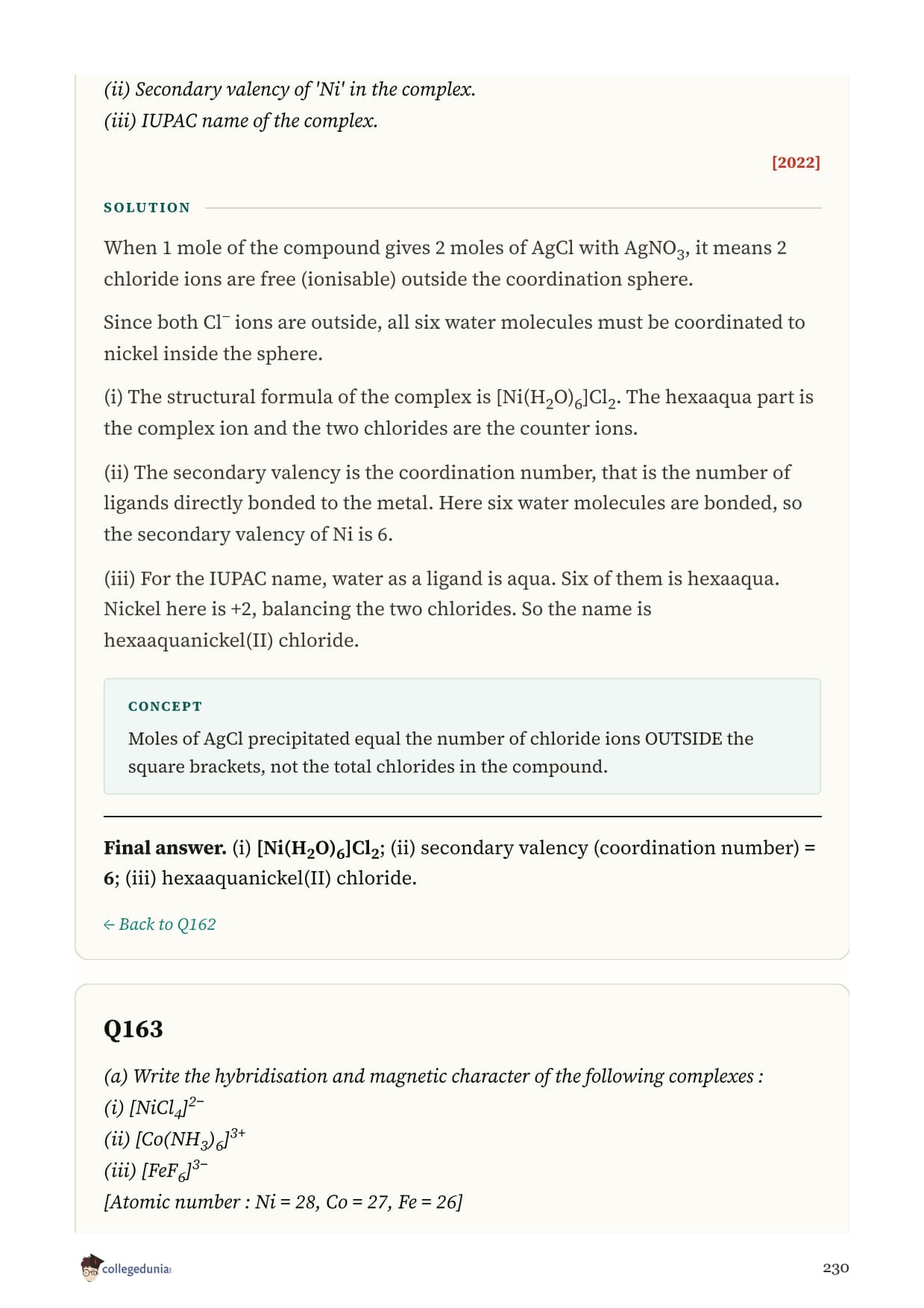
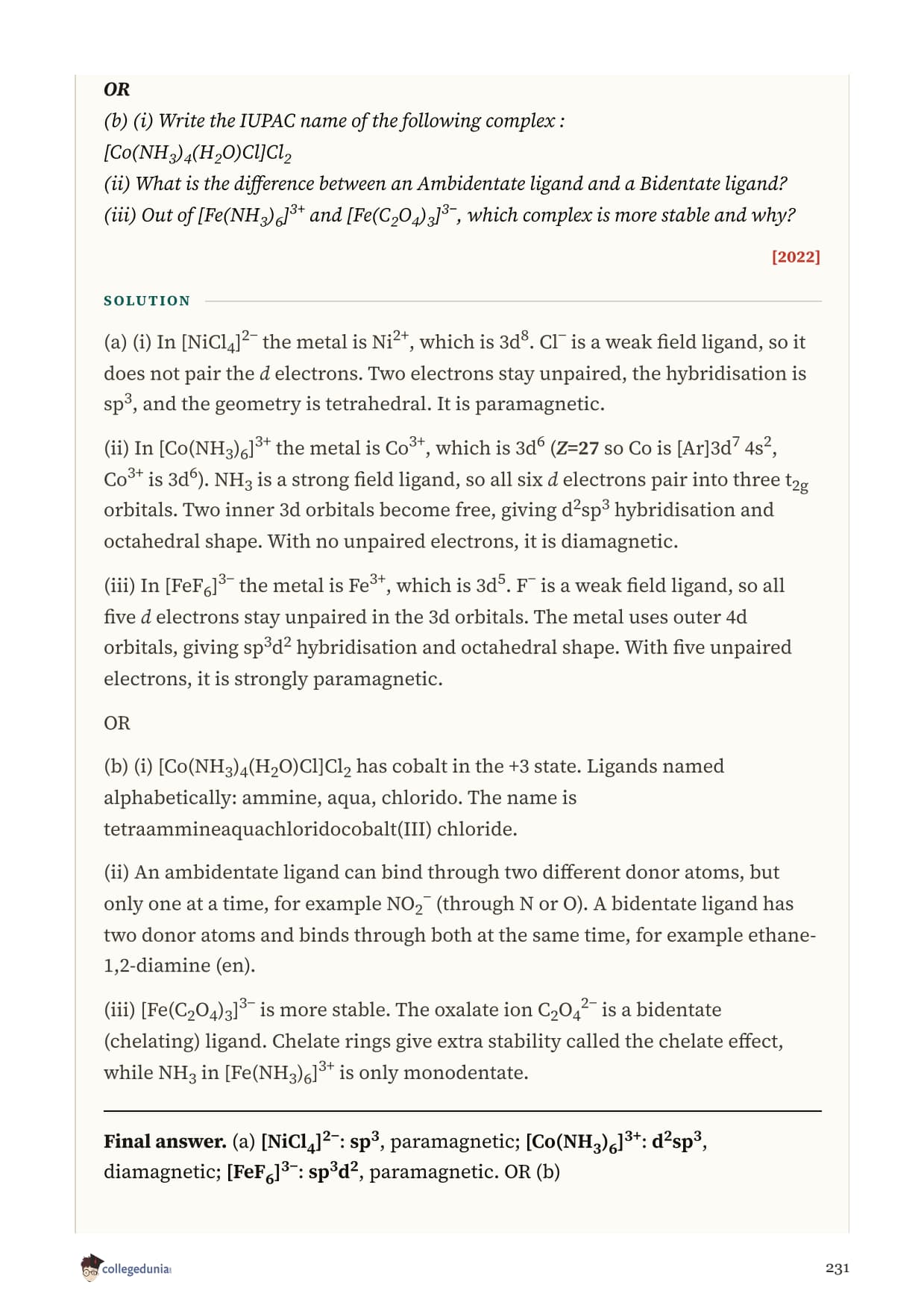
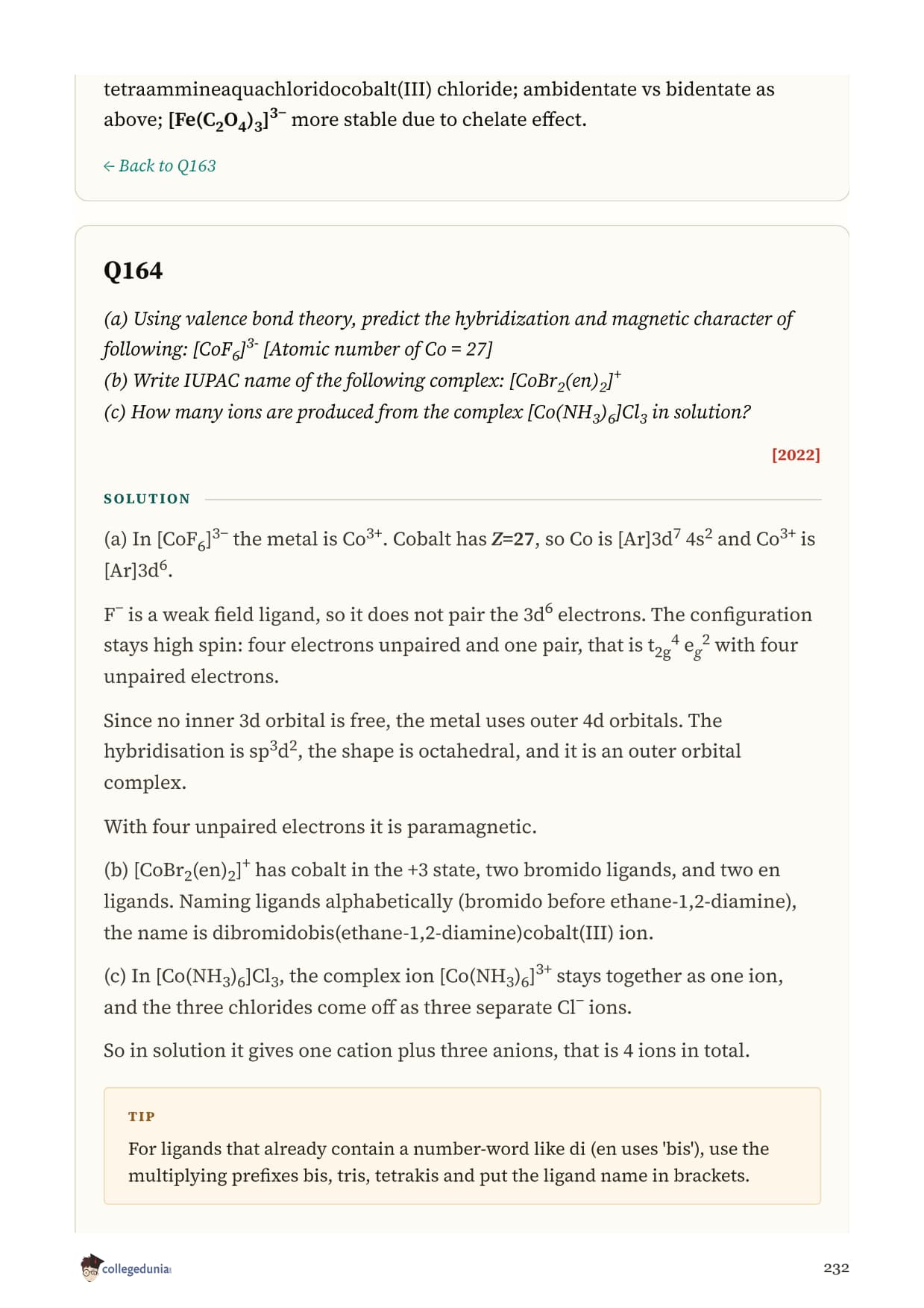
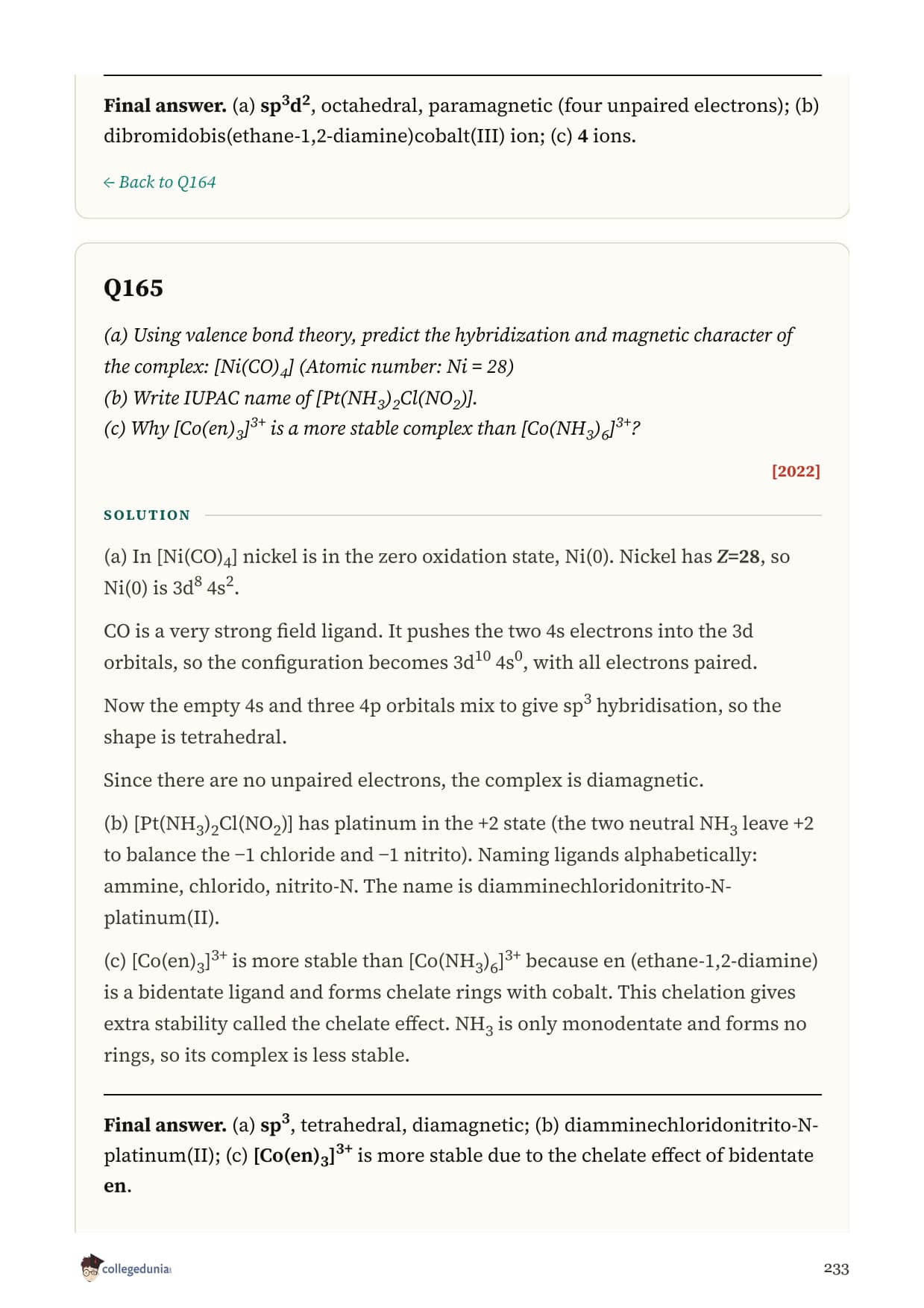
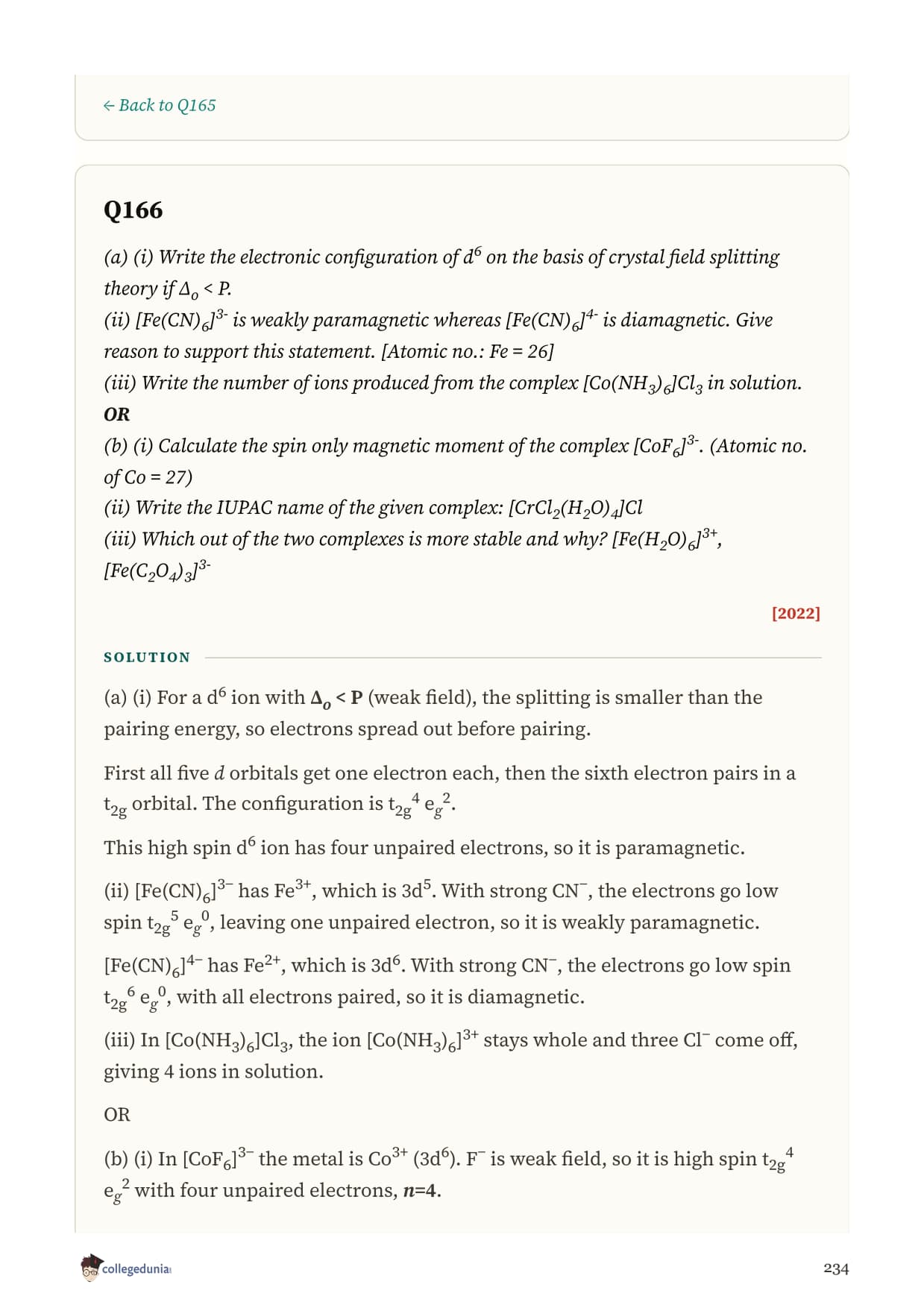
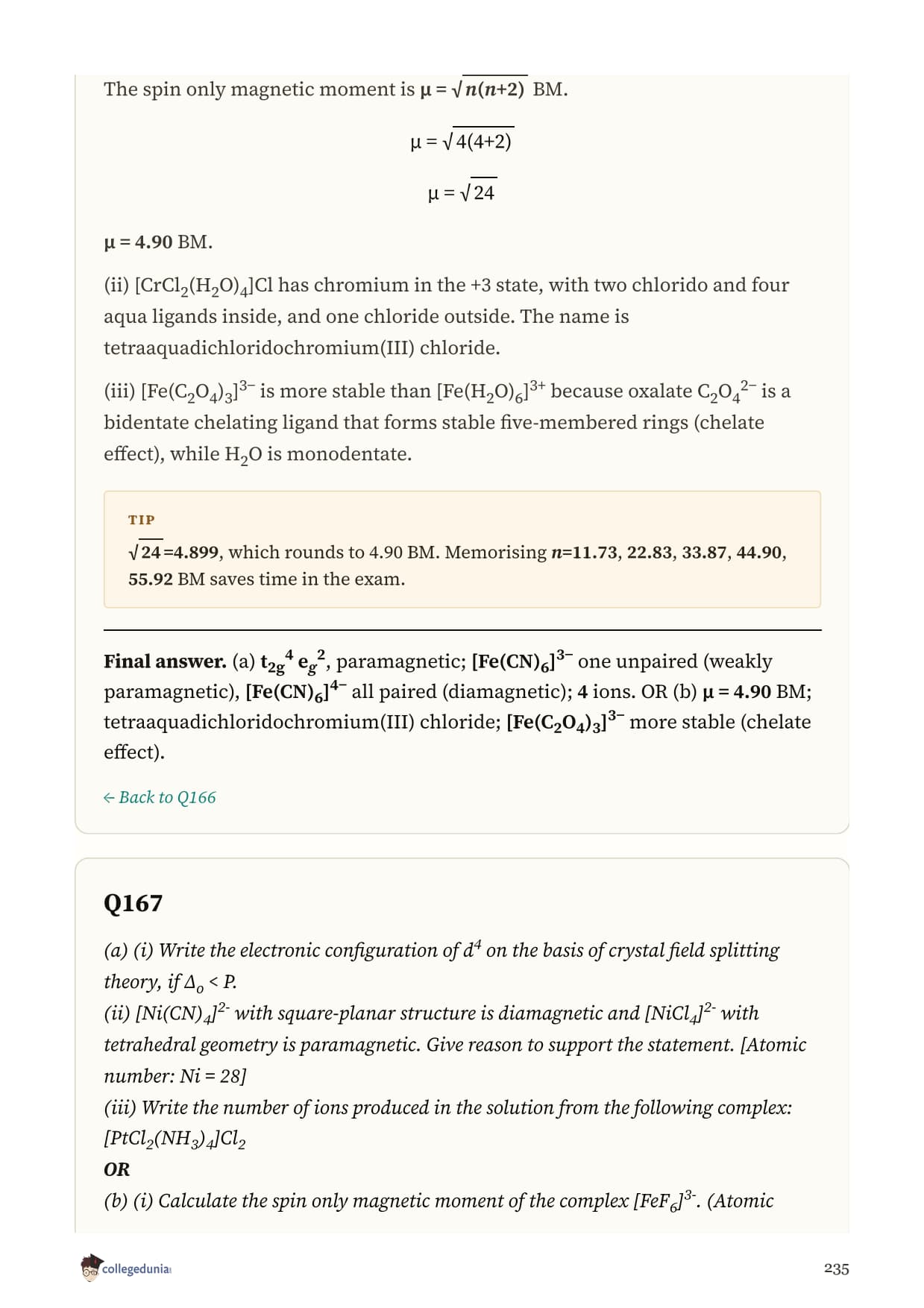
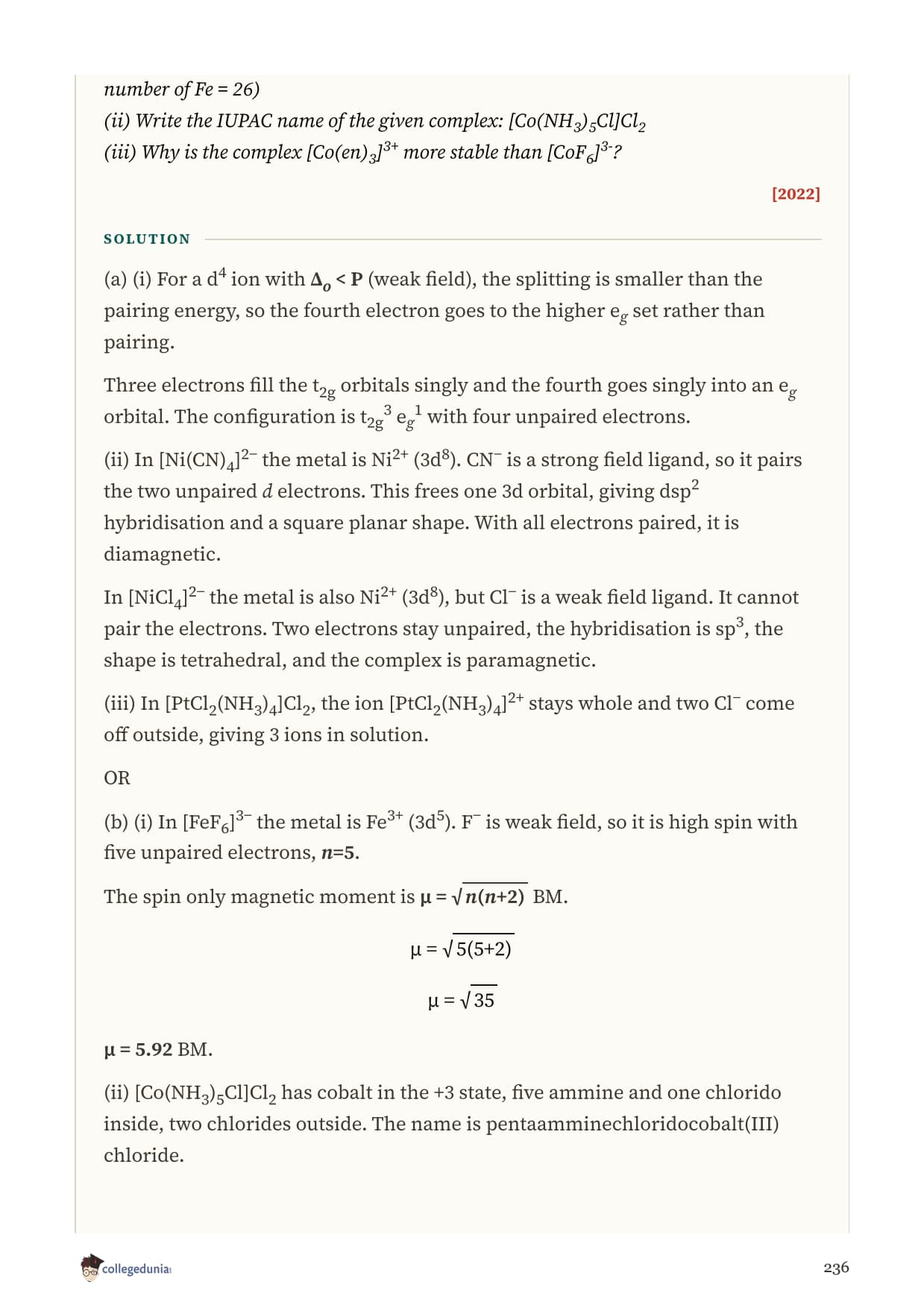
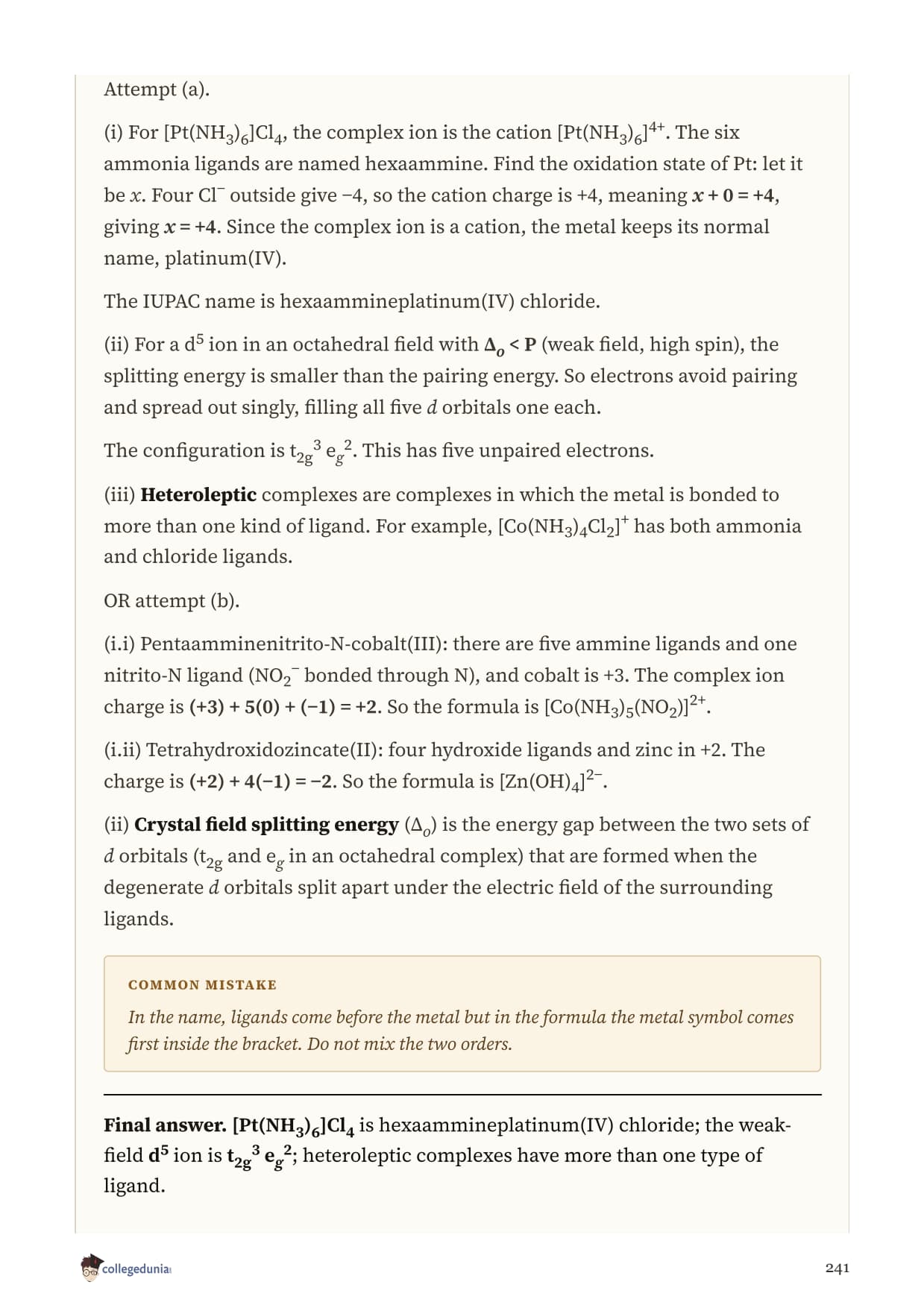
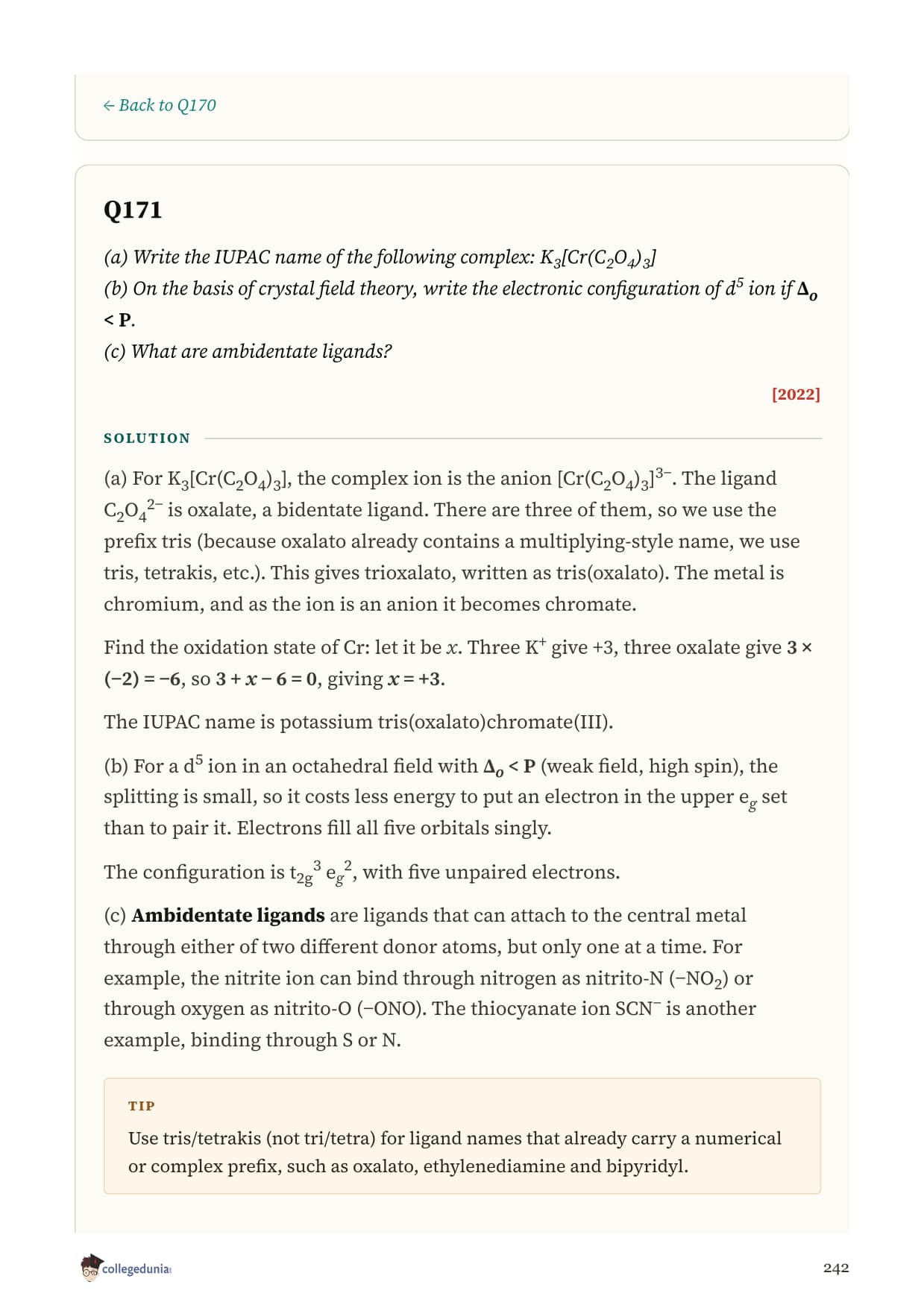
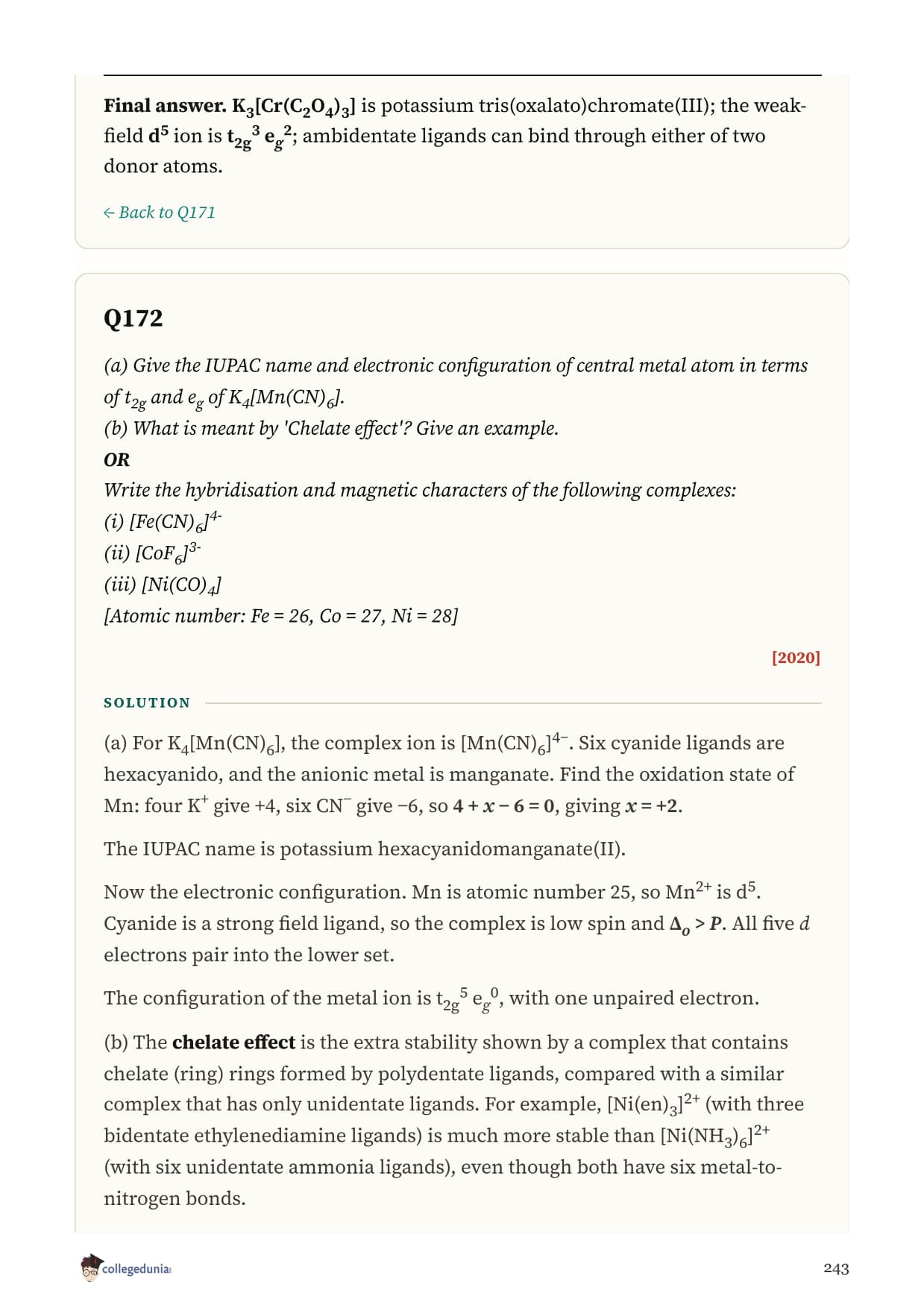
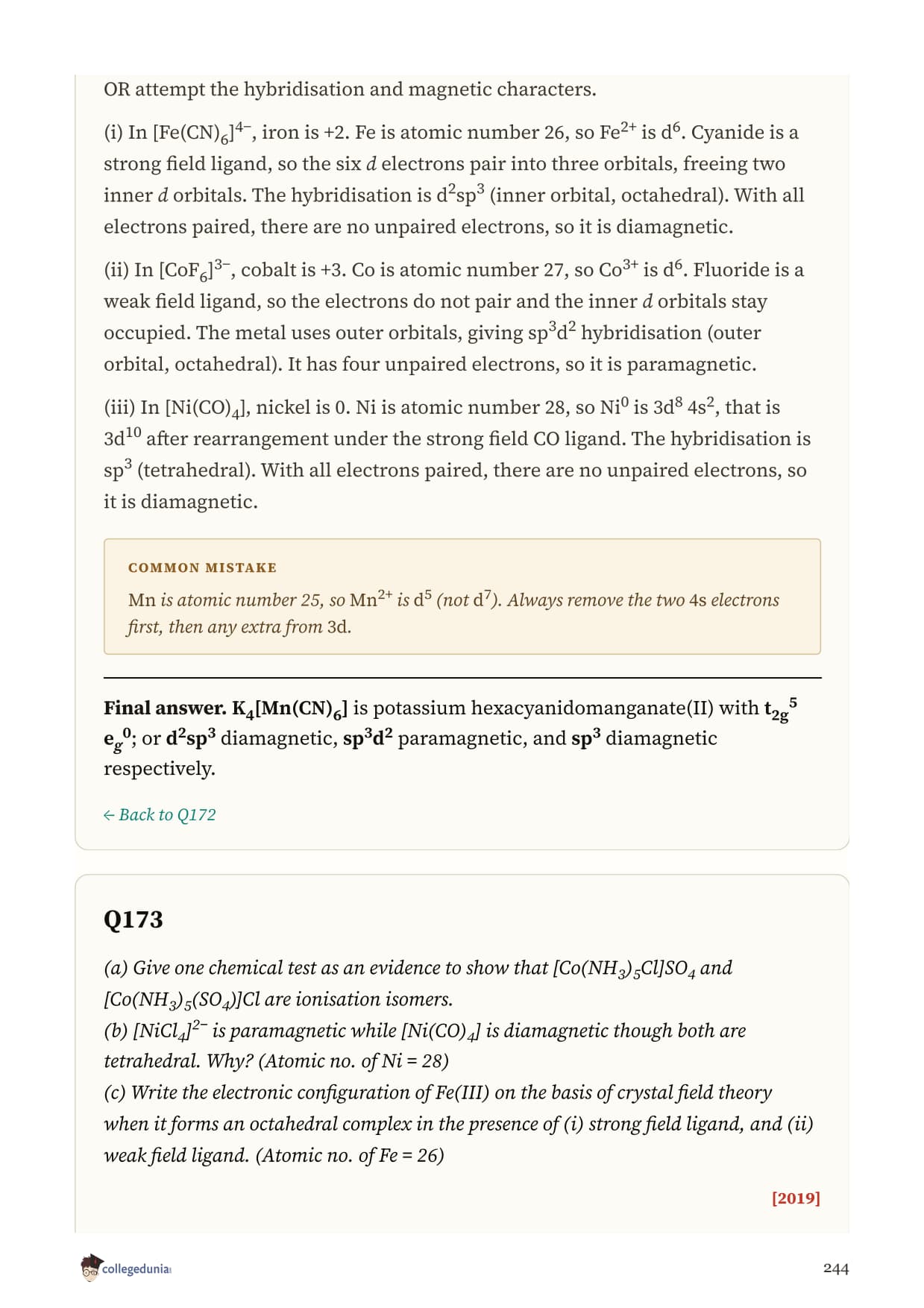
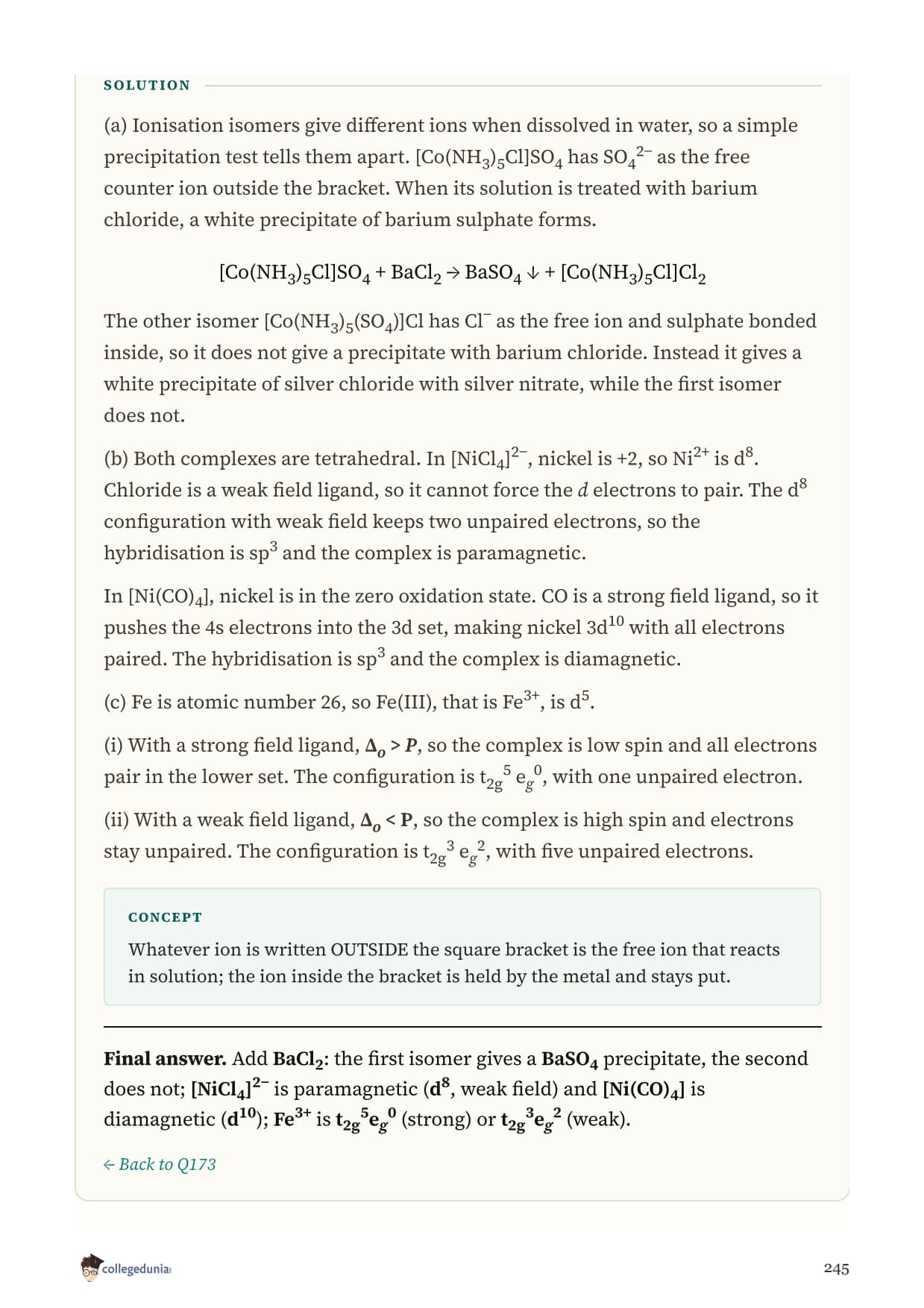
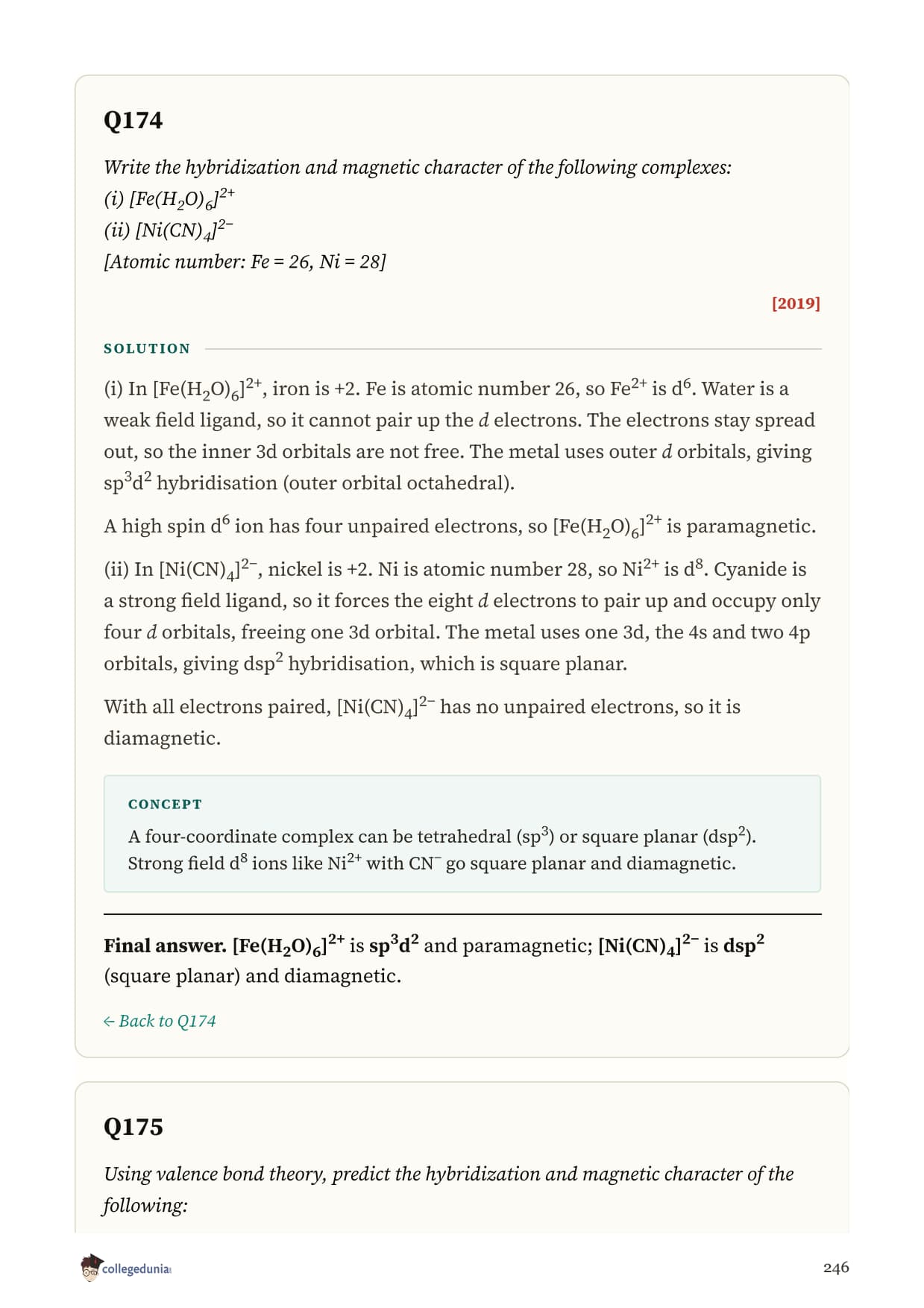
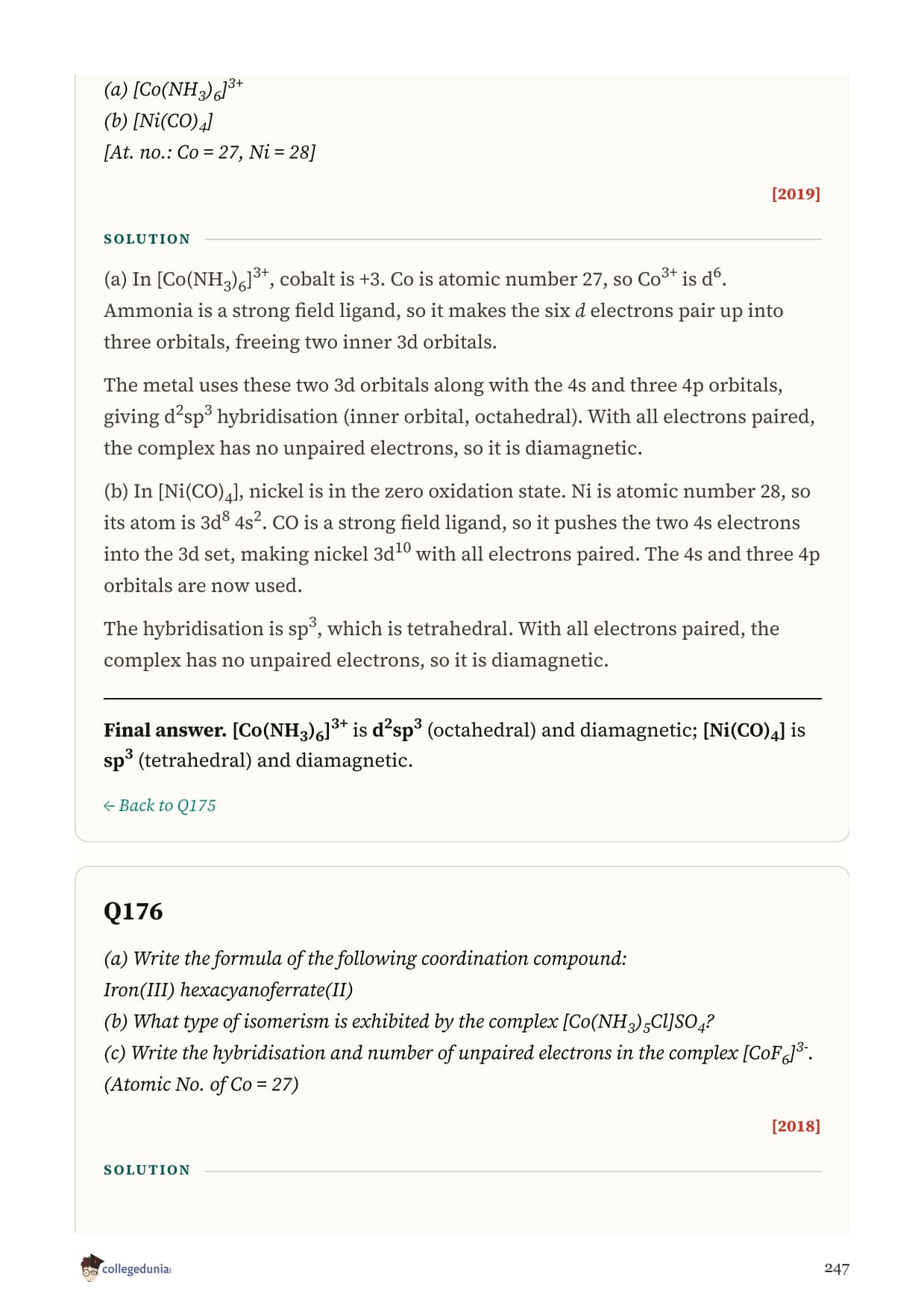
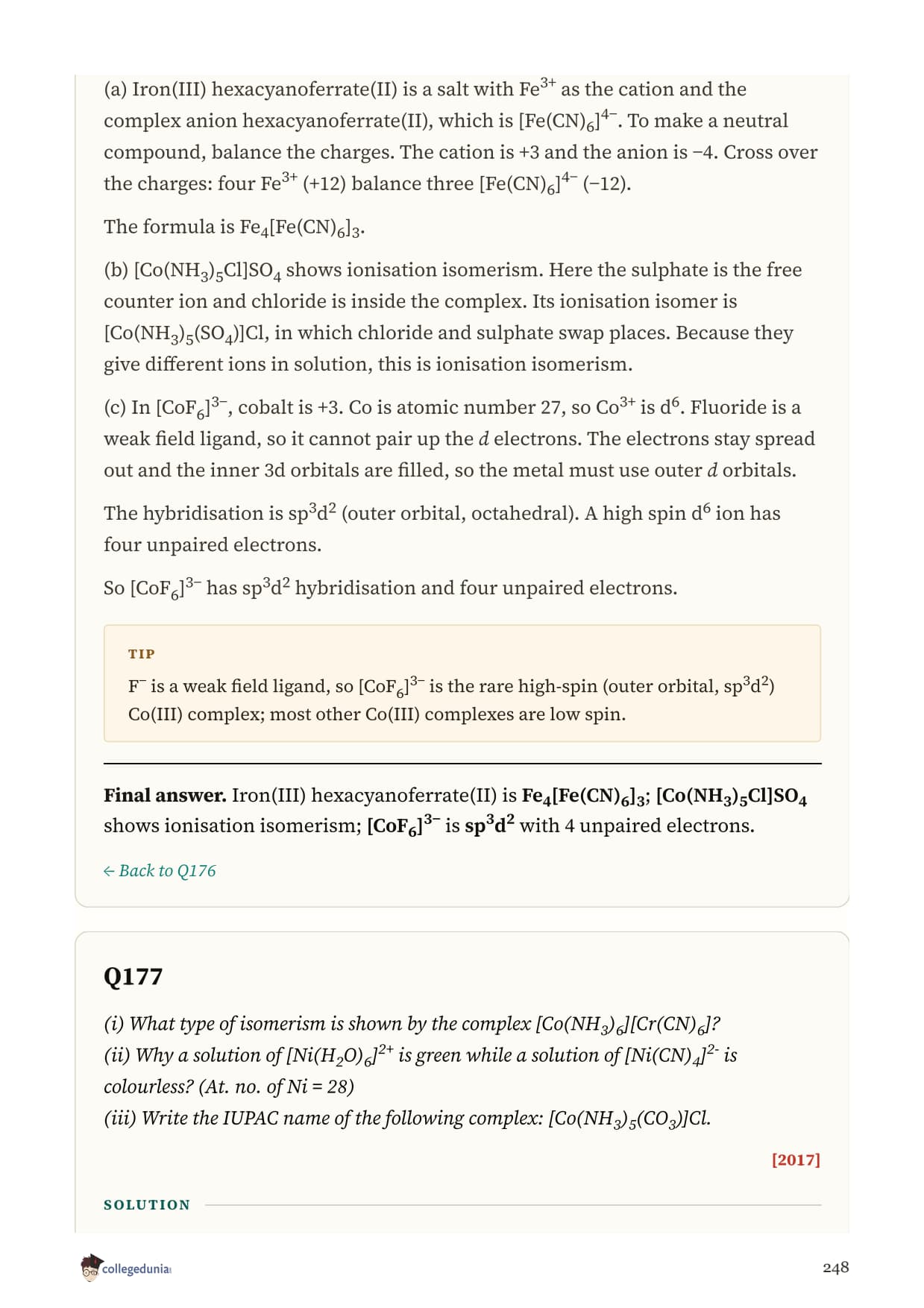
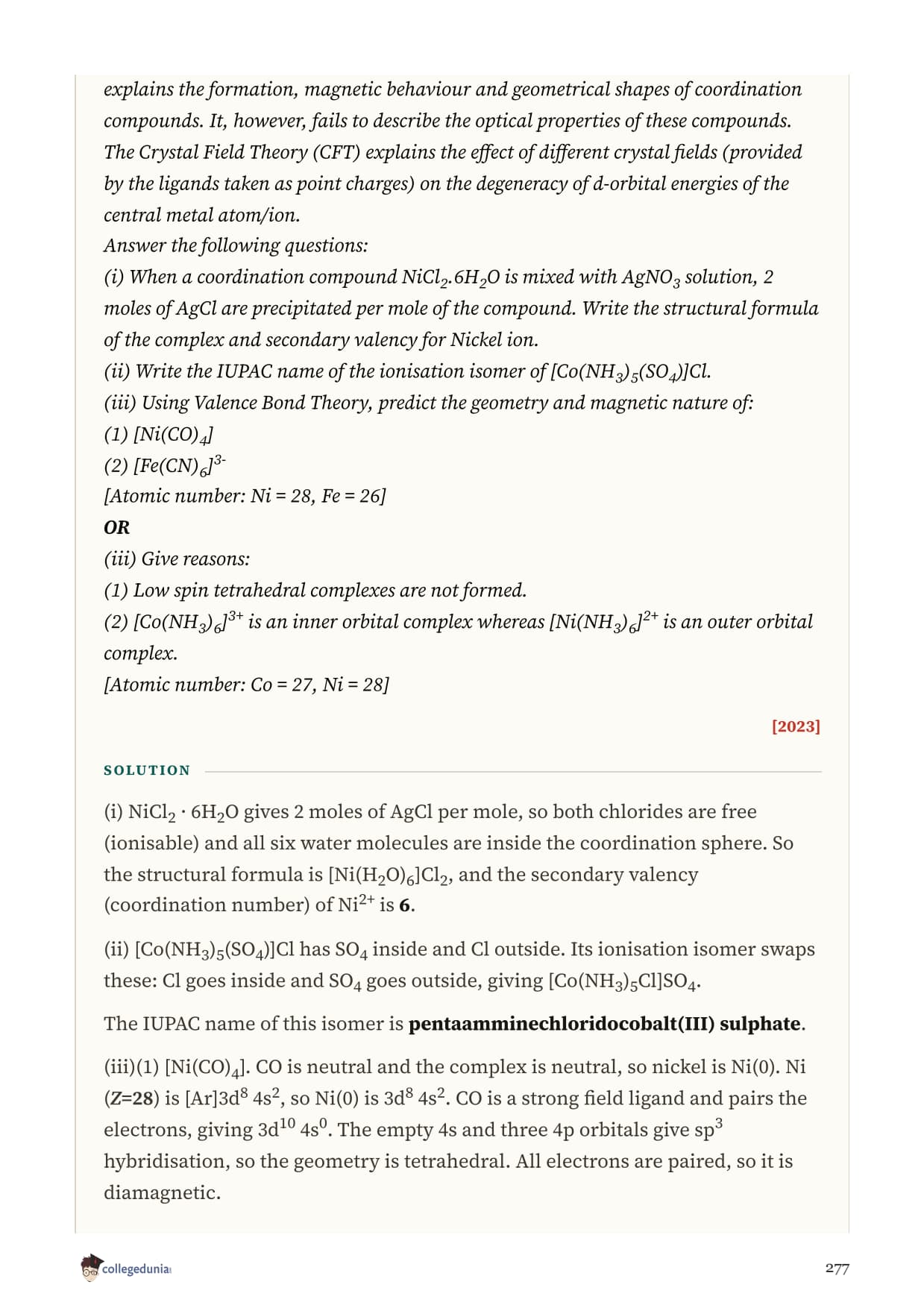
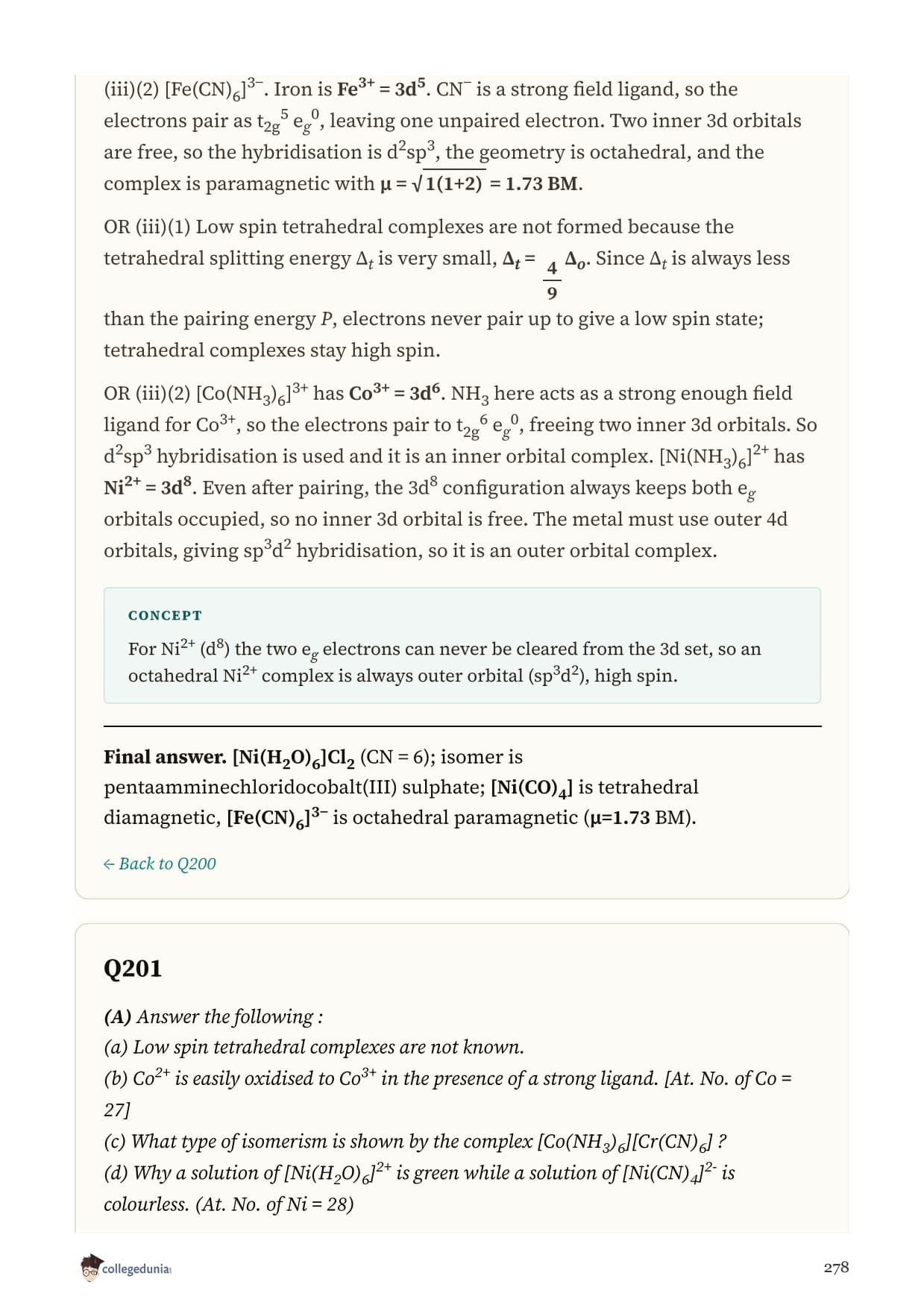
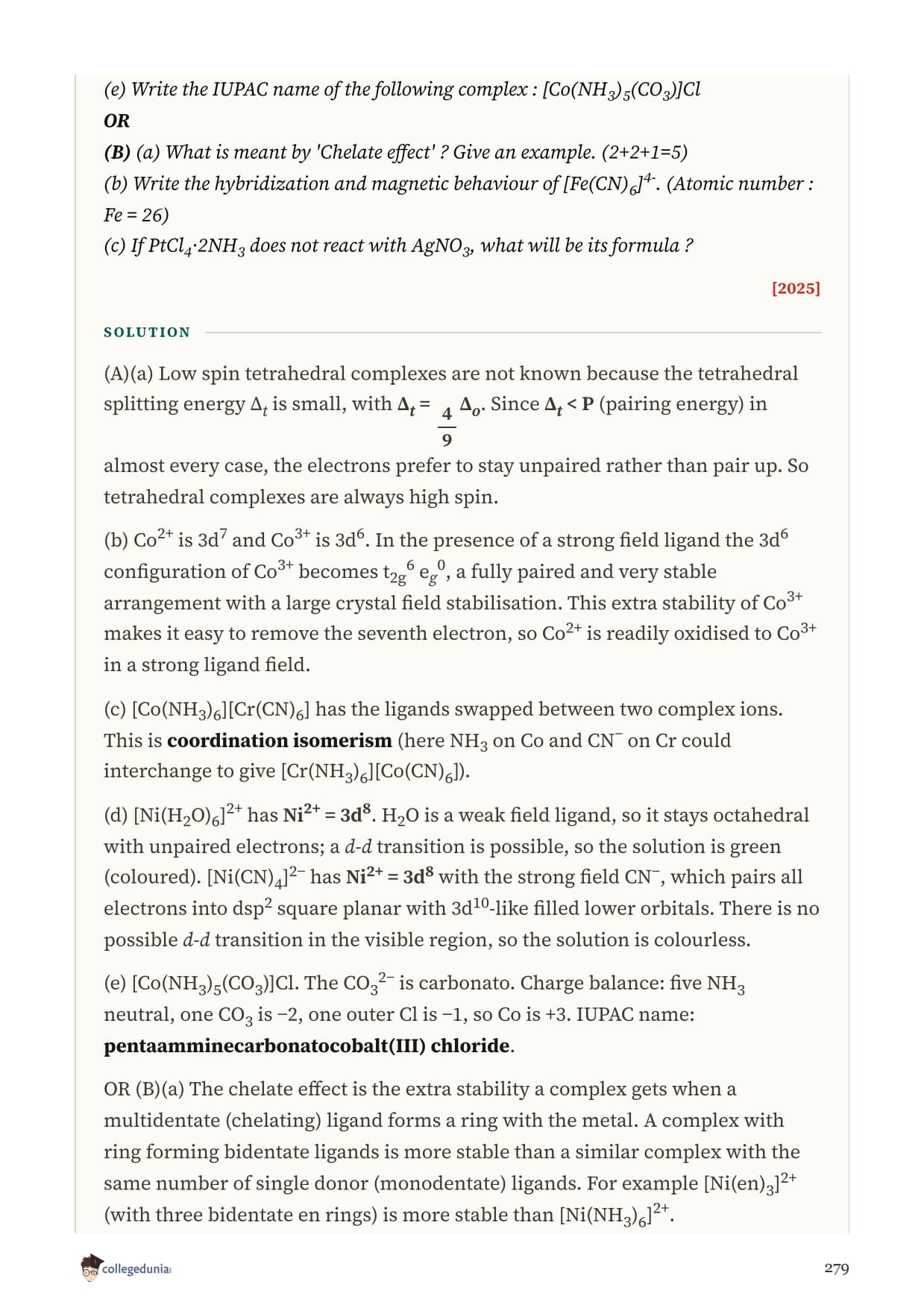
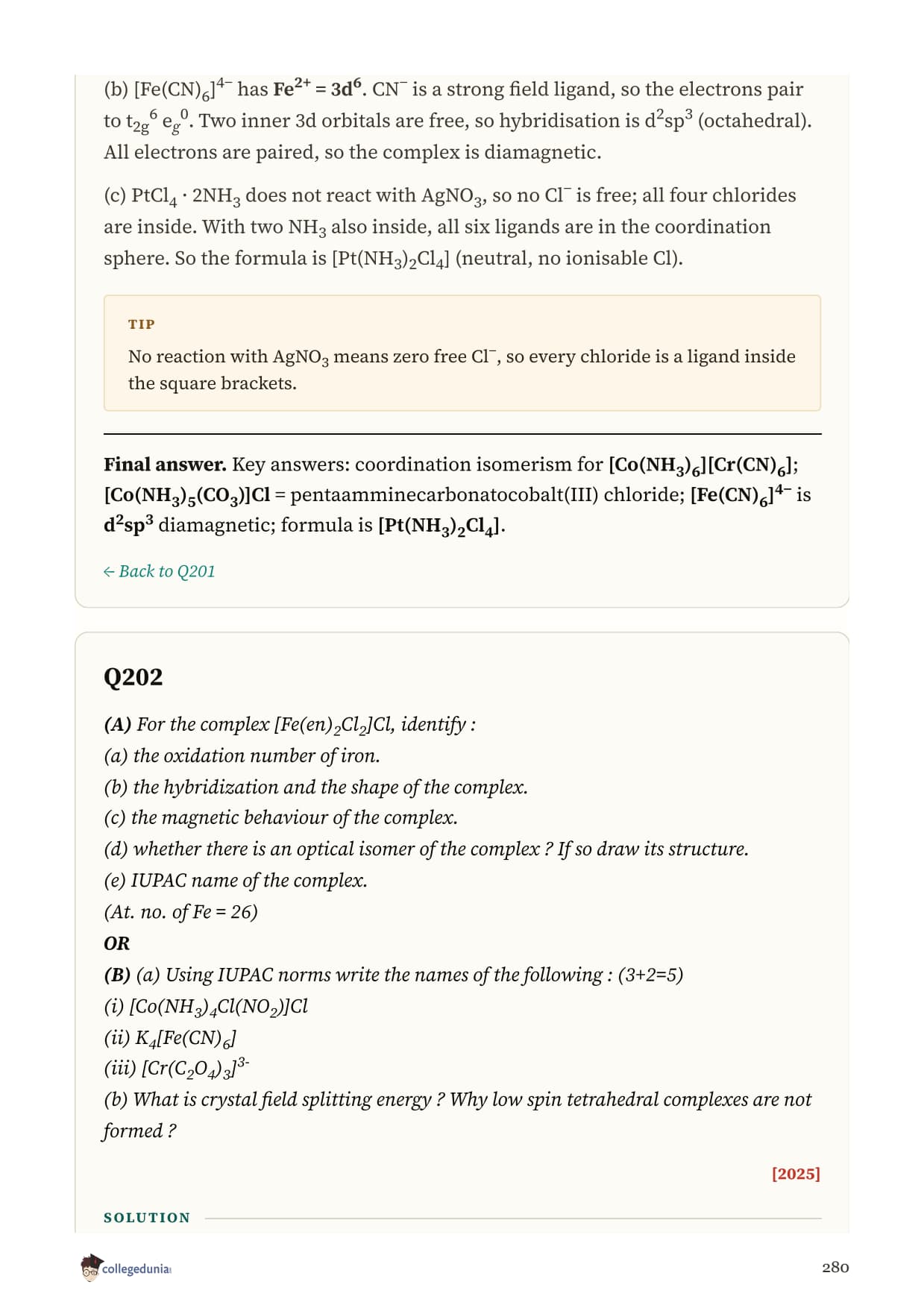
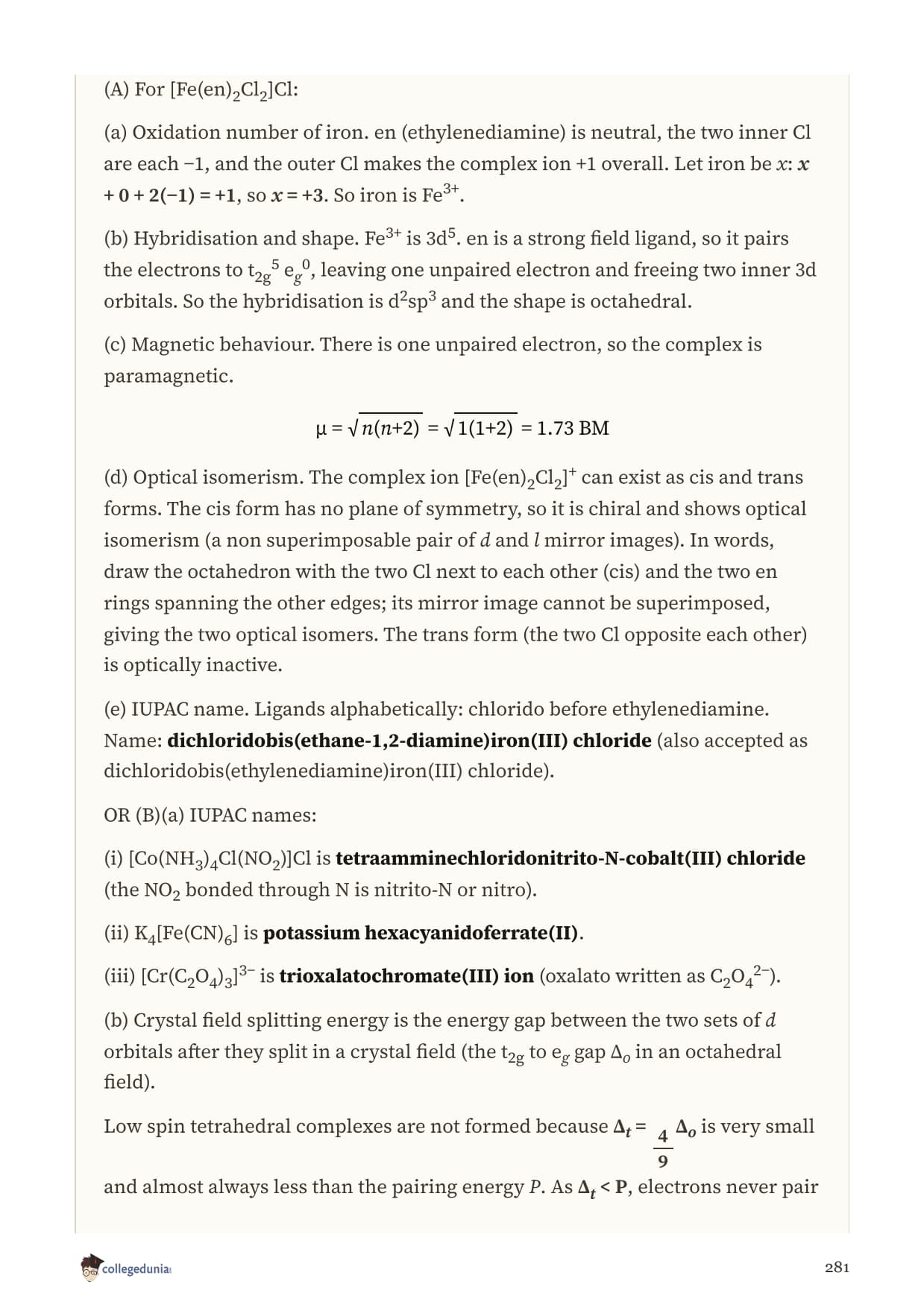
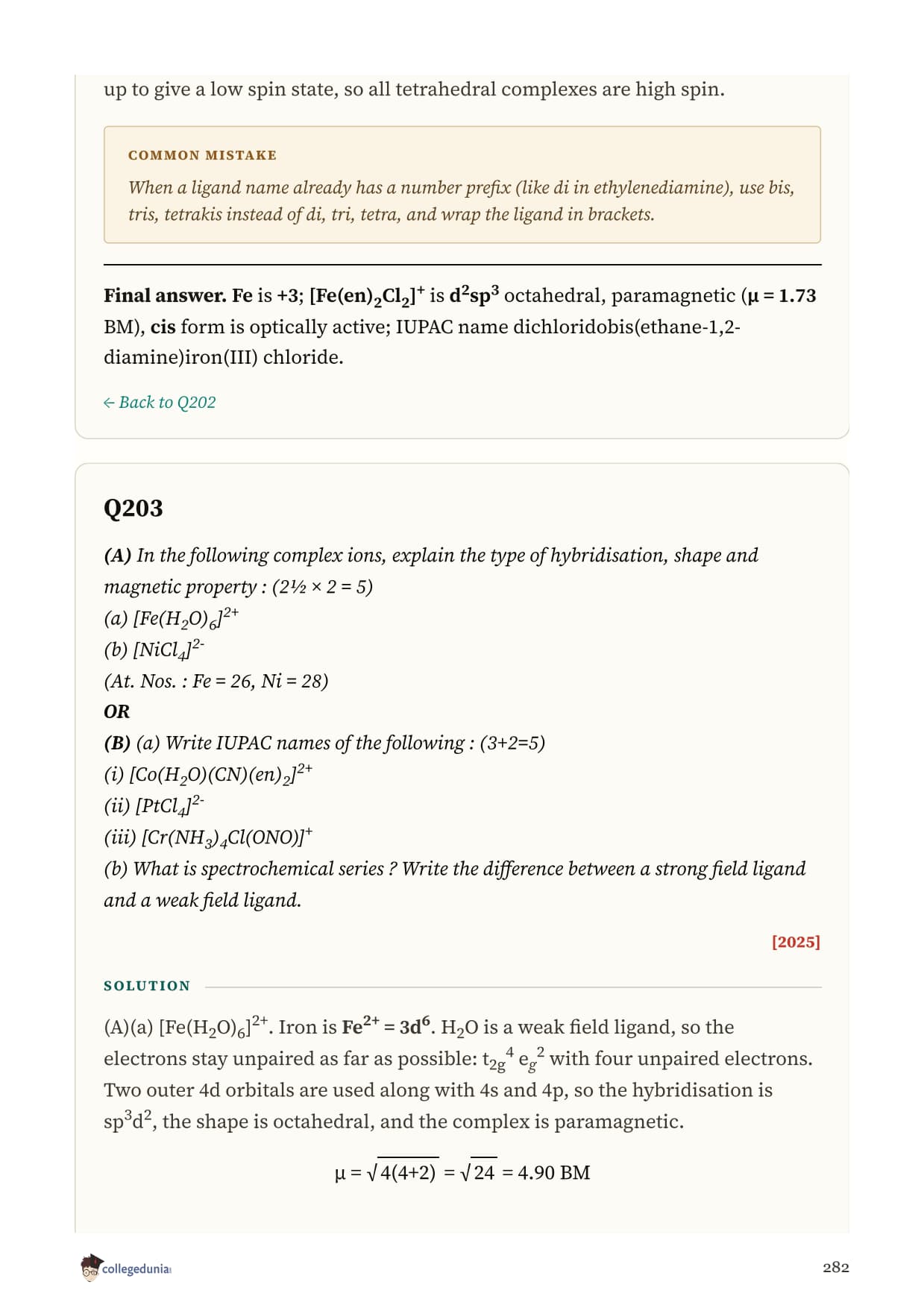
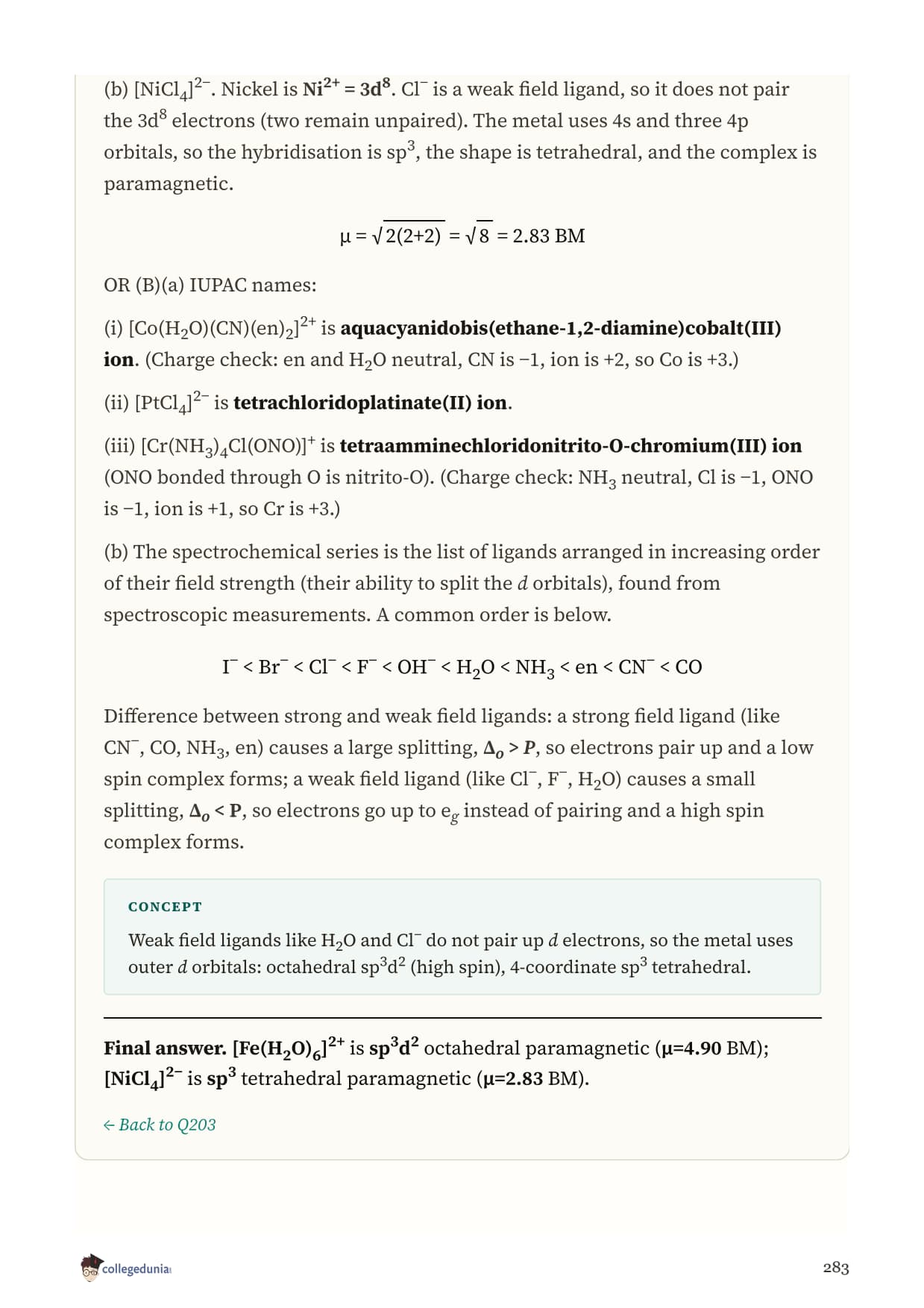
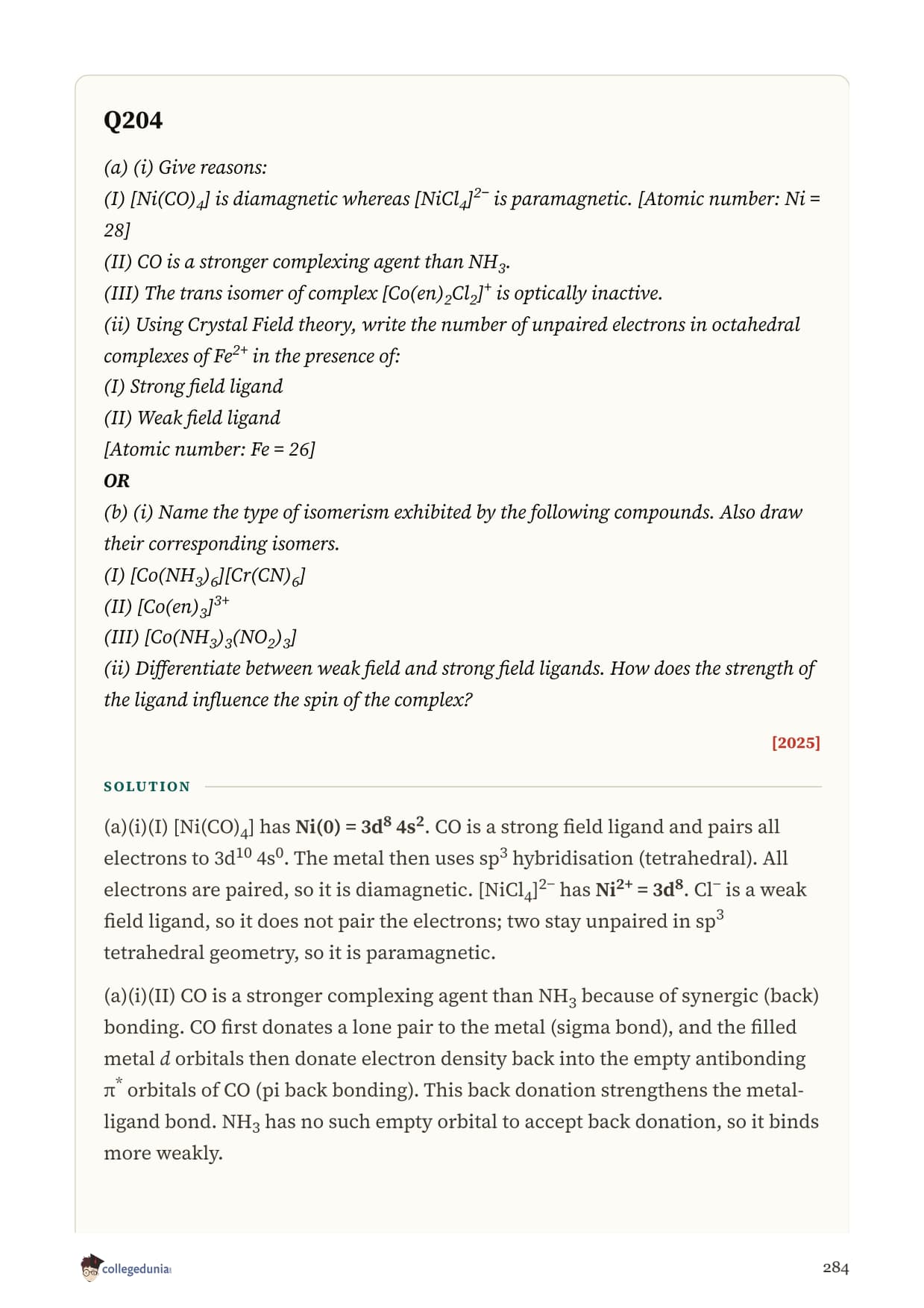
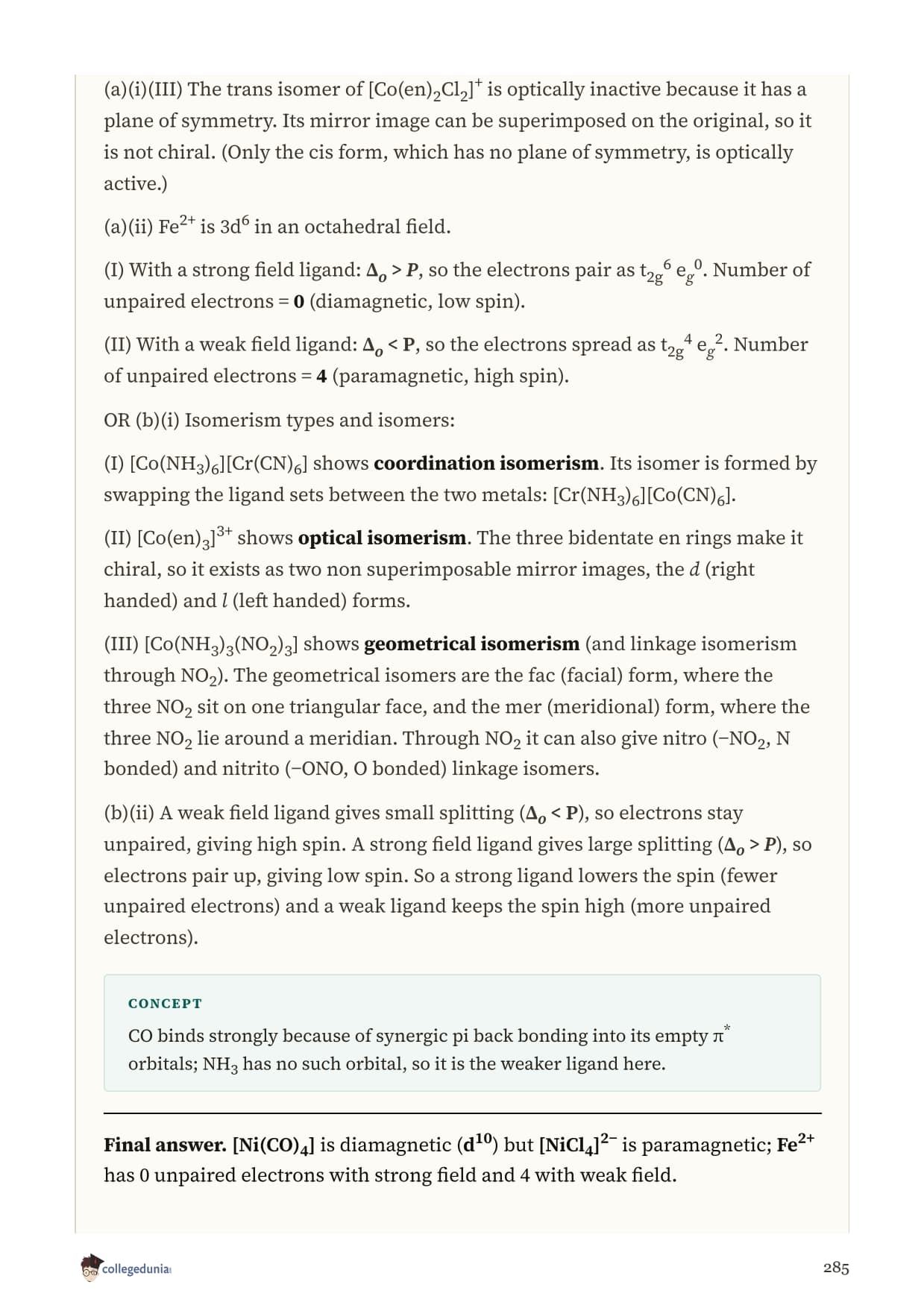
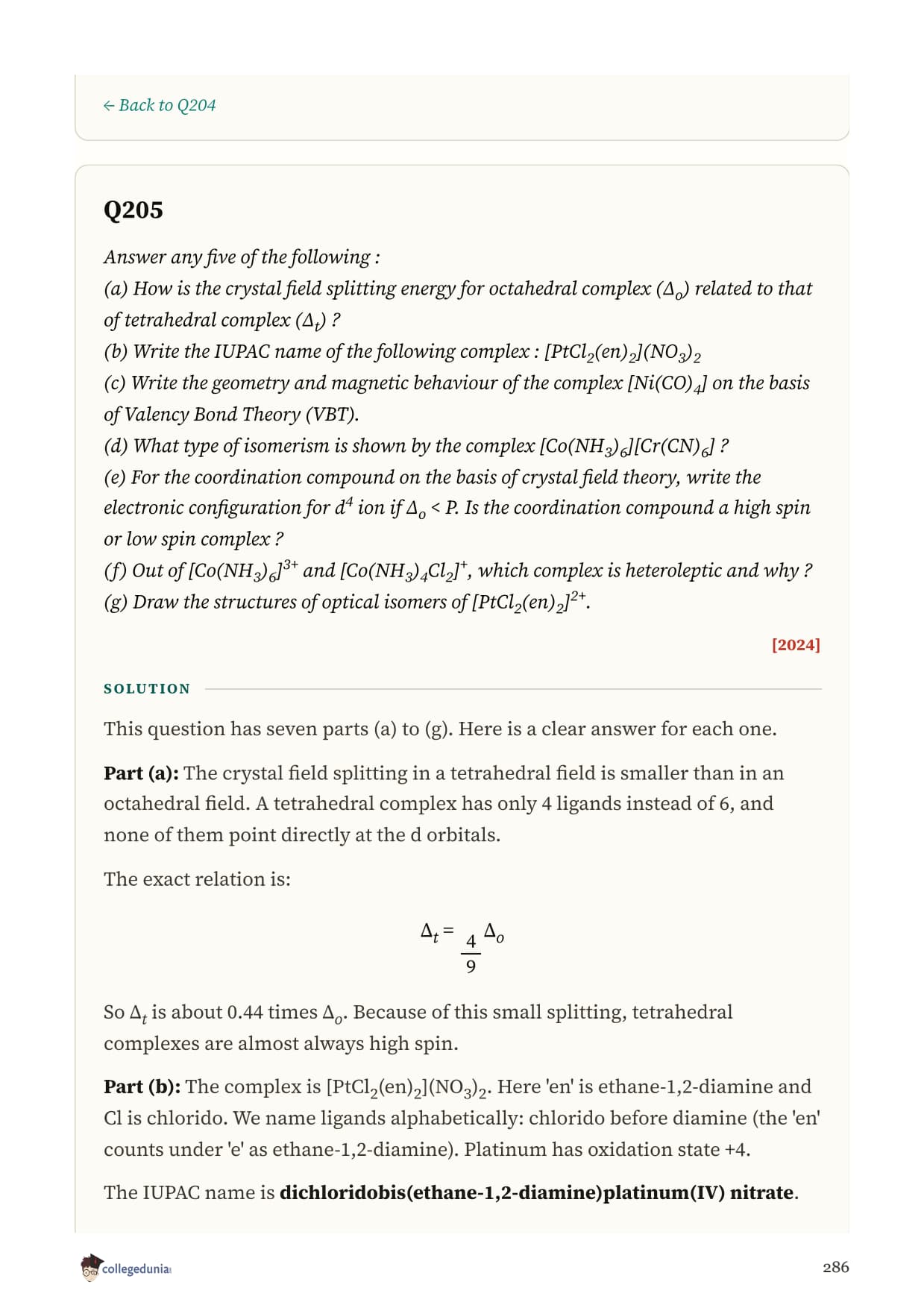
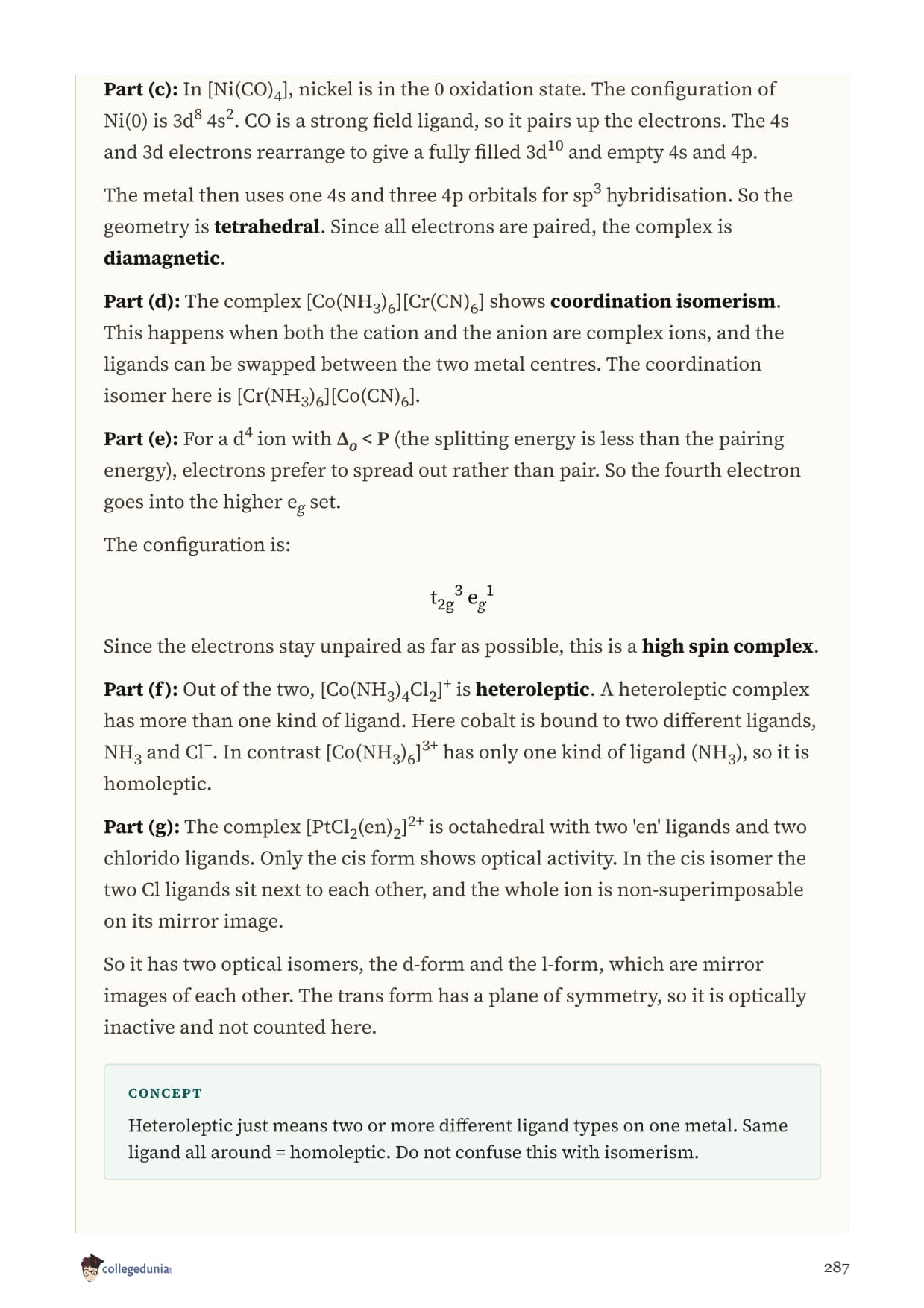
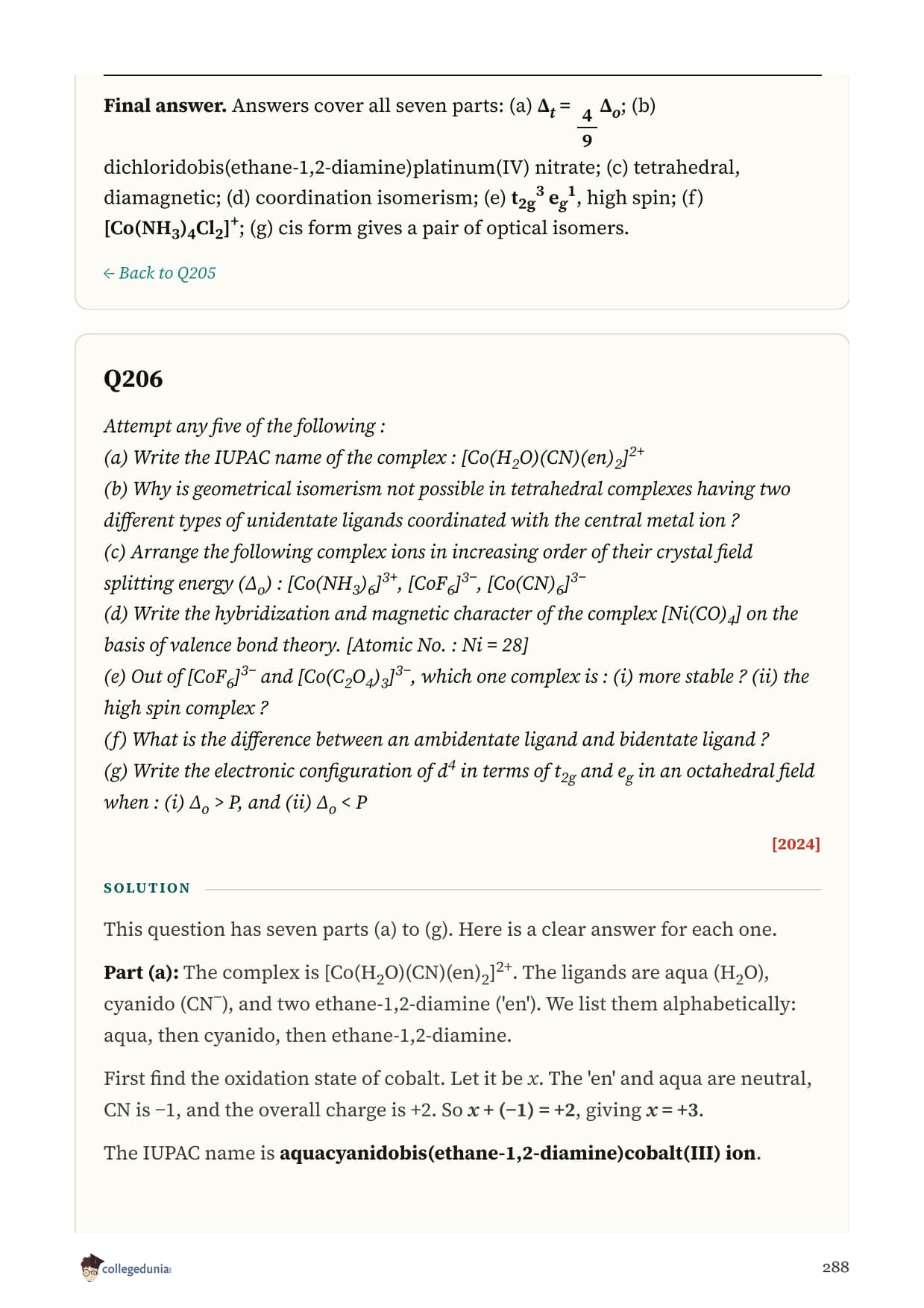
- 1-mark questions: 80 questions, mostly MCQ and assertion-reason on coordination number, ligands and secondary valency.
- 2 and 3-mark questions: 53 and 60 questions, built around IUPAC names, isomerism and hybridisation or magnetic behaviour.
- 5-mark long answers: 6 questions, usually a VBT or crystal-field block paired with nomenclature and isomerism parts.
The Coordination Compounds PYQ set gathers 204 board-paper questions across 2003 to 2026, sorted by marks and then by year, so you attempt them in the exact CBSE order. The 1, 2 and 3-mark bands carry the bulk of this chapter's weightage.
Every question in this Class 12 Chemistry Coordination Compounds PYQ compilation is sourced from CBSE board papers (Delhi, Outside Delhi, Foreign and Compartment) and cross-checked against the official mark scheme, with near-duplicate questions removed.
What the Coordination Compounds Previous Year Questions Cover
The 204-question set maps every concept the NCERT chapter introduces. IUPAC nomenclature drives the largest share of the 2 and 3-mark answers, including naming from formula and formula from name. Isomerism, especially linkage and geometrical isomerism appears across the 2 and 3-mark band. Valence bond theory and crystal field theory carry the 3 and 5-mark band through shape, hybridisation and magnetic-behaviour questions. Short reasoning on coordination number, ligands and Werner's theory fills the 1-mark MCQs.
Marks-wise Distribution of the Coordination Compounds PYQs
The table below shows how the 204 questions split across the CBSE marks bands. Use it to decide how much revision time each band deserves.
| Marks | Questions | Total Marks | CBSE Section | Type |
|---|---|---|---|---|
| 1 mark | 80 | 80 | Section A | MCQ / Assertion-Reason |
| 2 mark | 53 | 106 | Section B | VSA (Very Short Answer) |
| 3 mark | 60 | 180 | Section C | SA (Short Answer) |
| 4 mark | 5 | 20 | Section D | Case Study |
| 5 mark | 6 | 30 | Section E | Long Answer |
Year-wise Spread of Class 12 Chemistry Coordination Compounds PYQs
The compilation draws from 23 CBSE board years. About 62 per cent of the questions come from 2023 onwards, because the MCQ-heavy pattern raised the 1-mark count.
- 2026: A secondary-valency MCQ, an IUPAC-naming pair for two complex salts, and a CFT diamagnetic-versus-paramagnetic justification with a d4 configuration part.
- 2024 to 2025: The largest contribution years, with MCQ banks on coordination number, ligands and isomerism.
- 2020 to 2023: Reduced-syllabus papers, but IUPAC nomenclature and VBT shape-and-magnetism questions still appear.
- 2003 to 2019: Older long answers on Werner's theory, isomerism and crystal field splitting, all still relevant today.
Topic Frequency in the Coordination Compounds Board Paper Questions
The 204 questions cluster into the six topic buckets below, ranked by how often CBSE has set them between 2003 and 2026.
| Rank | Topic Cluster | Frequency | Typical Marks Band |
|---|---|---|---|
| 1 | IUPAC nomenclature (name from formula, formula from name) | ~25 per cent | 1, 2, 3 mark |
| 2 | Isomerism (linkage, ionisation, geometrical, optical) | ~20 per cent | 2 and 3 mark |
| 3 | Valence bond theory (hybridisation, shape, magnetic behaviour) | ~18 per cent | 3 and 5 mark |
| 4 | Crystal field theory (octahedral splitting, high-spin and low-spin, colour) | ~16 per cent | 3 and 5 mark |
| 5 | Werner's theory and bonding terms (primary and secondary valency, ligands) | ~12 per cent | 1 and 2 mark |
| 6 | Stability and applications (chelate effect, importance of complexes) | ~9 per cent | 1, 2, 3 mark |
Marks-Band Attempt Strategy for the Coordination Compounds PYQs
The 204 PYQs are arranged marks-ascending inside the PDF so you can attempt them in the same order the CBSE paper presents them.
- 1-mark MCQs: Spend no more than 45 seconds each. Many test coordination number, secondary valency or the type of a ligand.
- 2-mark questions: Usually two IUPAC names or one isomerism case. Aim for 3 minutes and follow the naming rules in order.
- 3-mark questions: Often hybridisation, shape and magnetic behaviour together. Always draw the orbital diagram before stating the geometry.
- 5-mark long answers: A VBT or CFT block plus nomenclature and isomerism parts. Allocate 12 to 15 minutes.
Recent CBSE Trend: 2024 to 2026 Pattern Shift in Coordination Compounds
Three things have changed in the recent CBSE cycles that the Coordination Compounds previous year questions now reflect:
- Section A now carries a fixed block of 1-mark MCQ and assertion-reason items. The compilation includes 80 such questions, most from 2023 onwards.
- CFT questions increasingly ask you to justify magnetic behaviour and write the d-electron configuration, as in the 2026 question comparing [Co(NH3)6]3+ and [CoF6]3-.
- Nomenclature is now tested both ways, naming from formula and writing formula from name, so the PDF keeps both styles.
Sample Previous Year Questions from Coordination Compounds
Here are a few real previous year questions from the Coordination Compounds board papers, taken straight from the compilation. The full set is in the downloadable PDF.
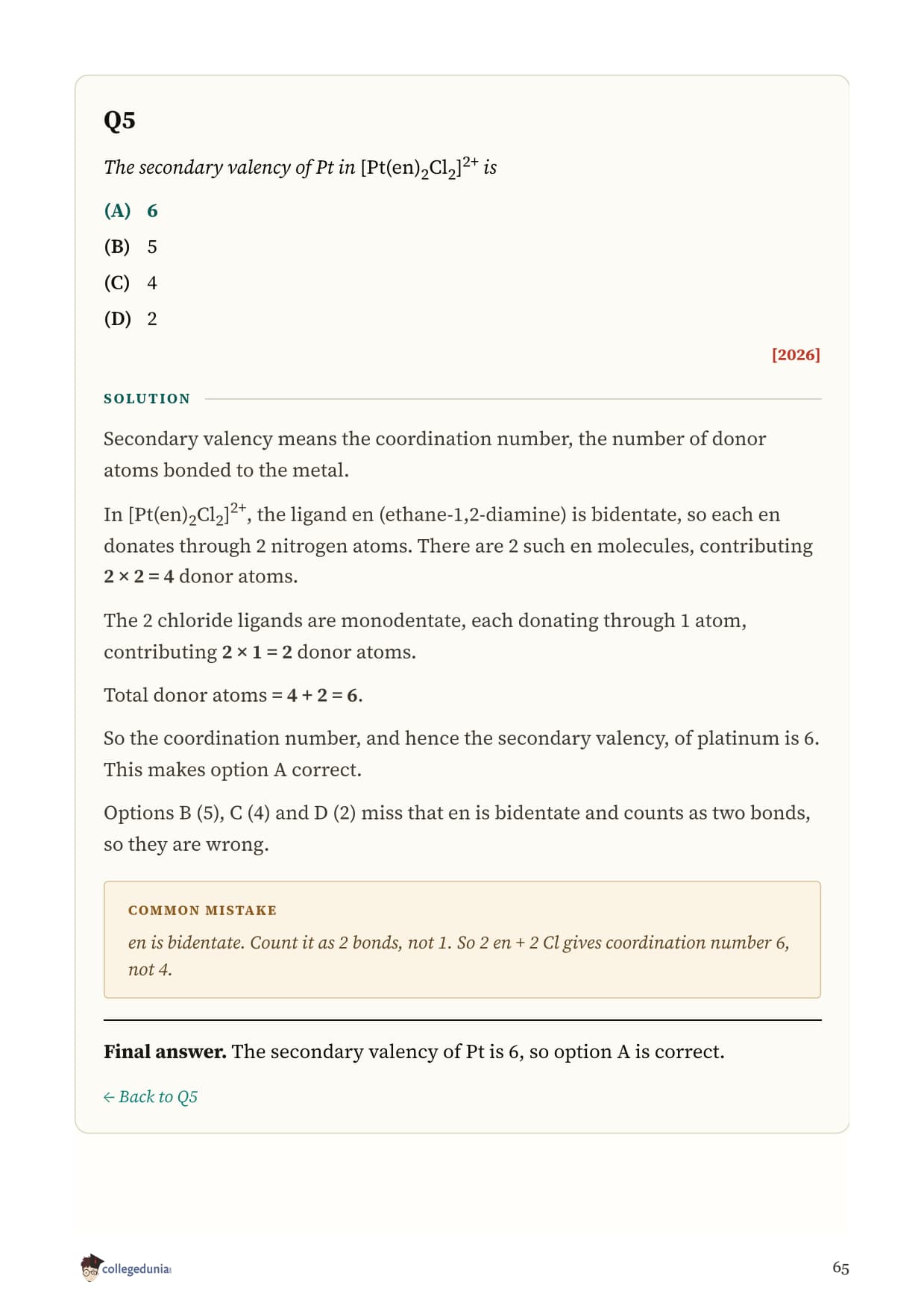
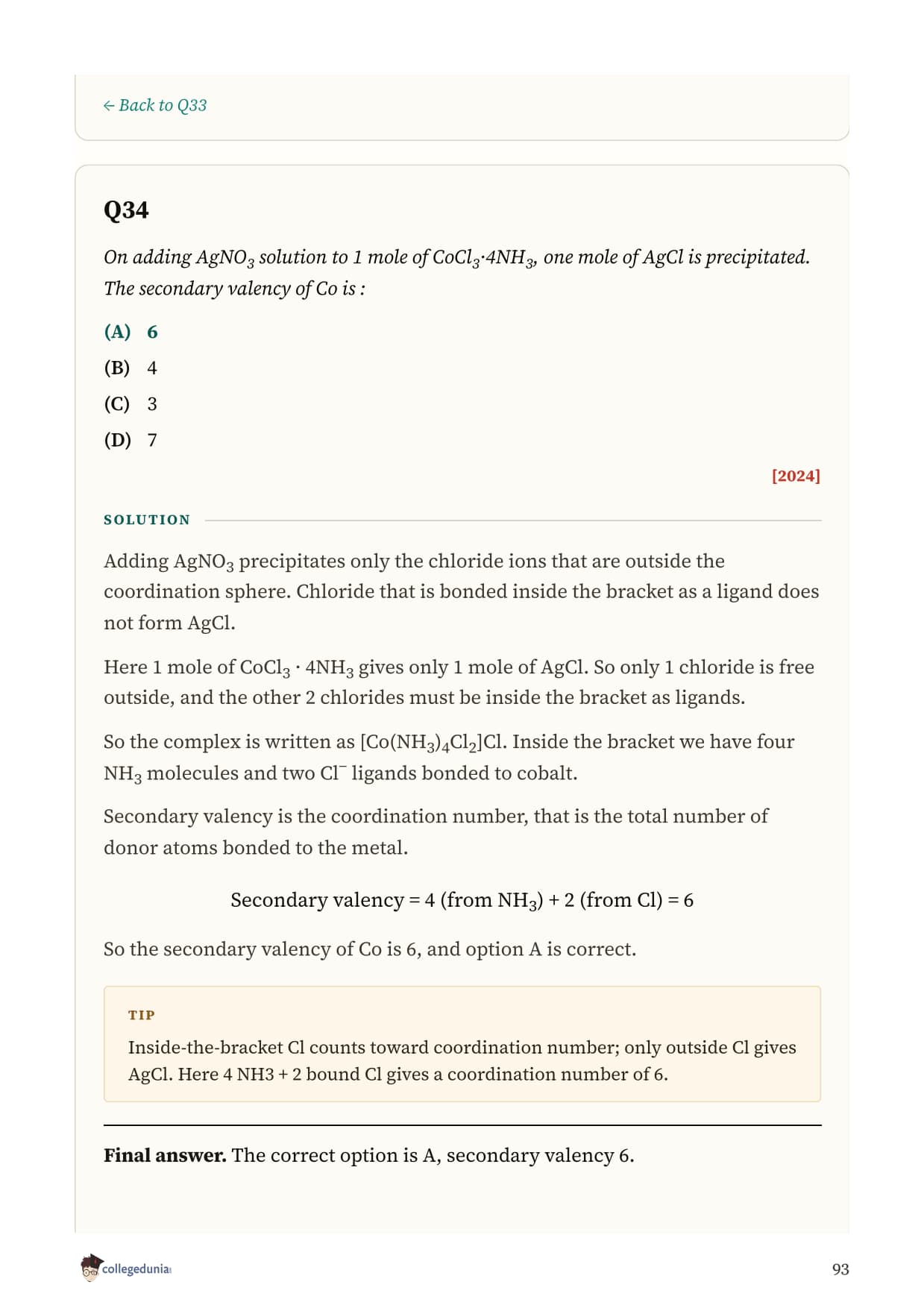
The secondary valency of Co in the complex [Co(NH_3)_5(NO_2)]^2+ is
- 5
- 1
- 4
- 6
[2026 • 1 mark]
Write IUPAC names of the following coordination compounds: (i) [Ag(NH_3)_2][Ag(CN)_2] (ii) K_3[Fe(C_2O_4)_3]
[2026 • 2 mark]
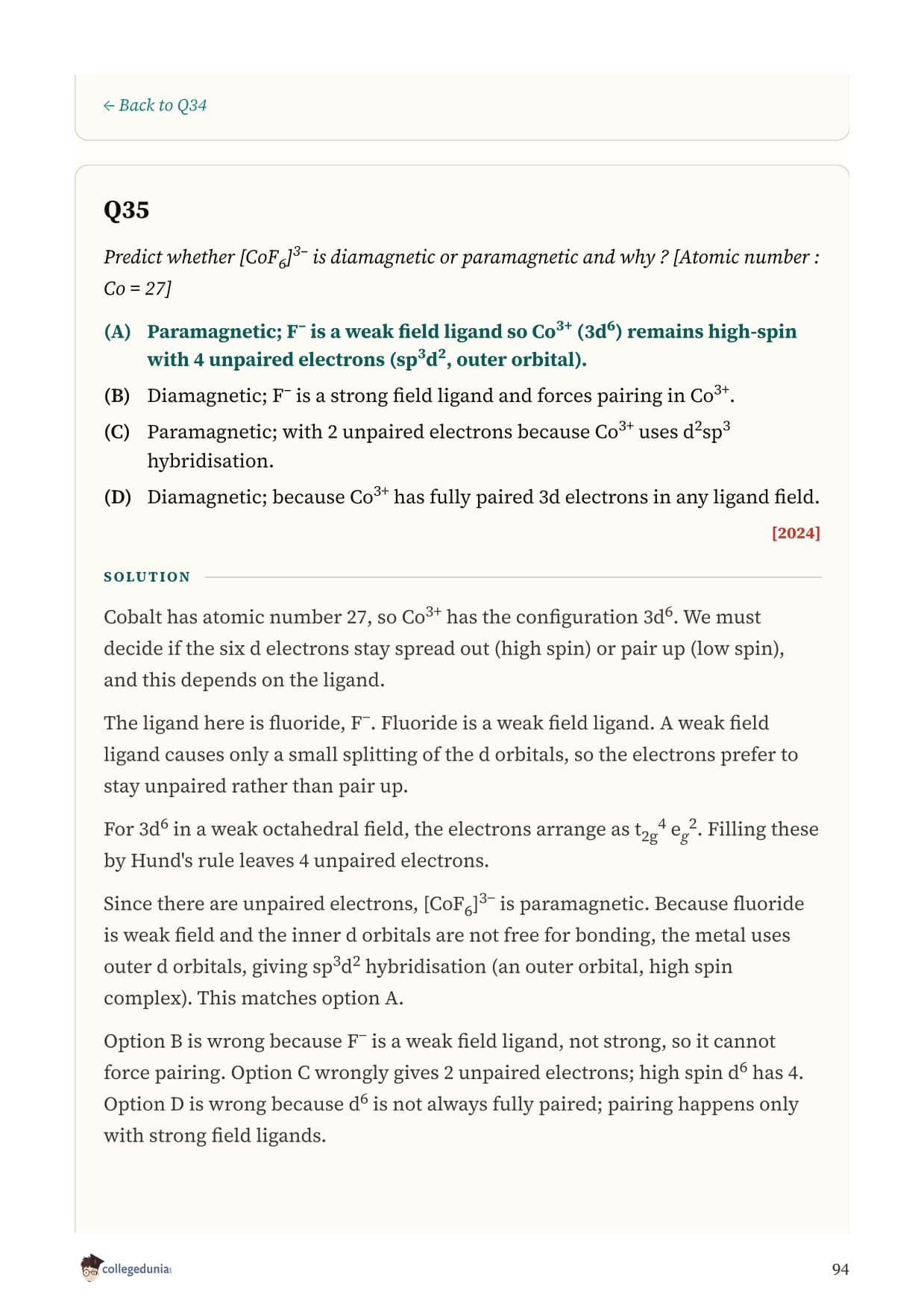
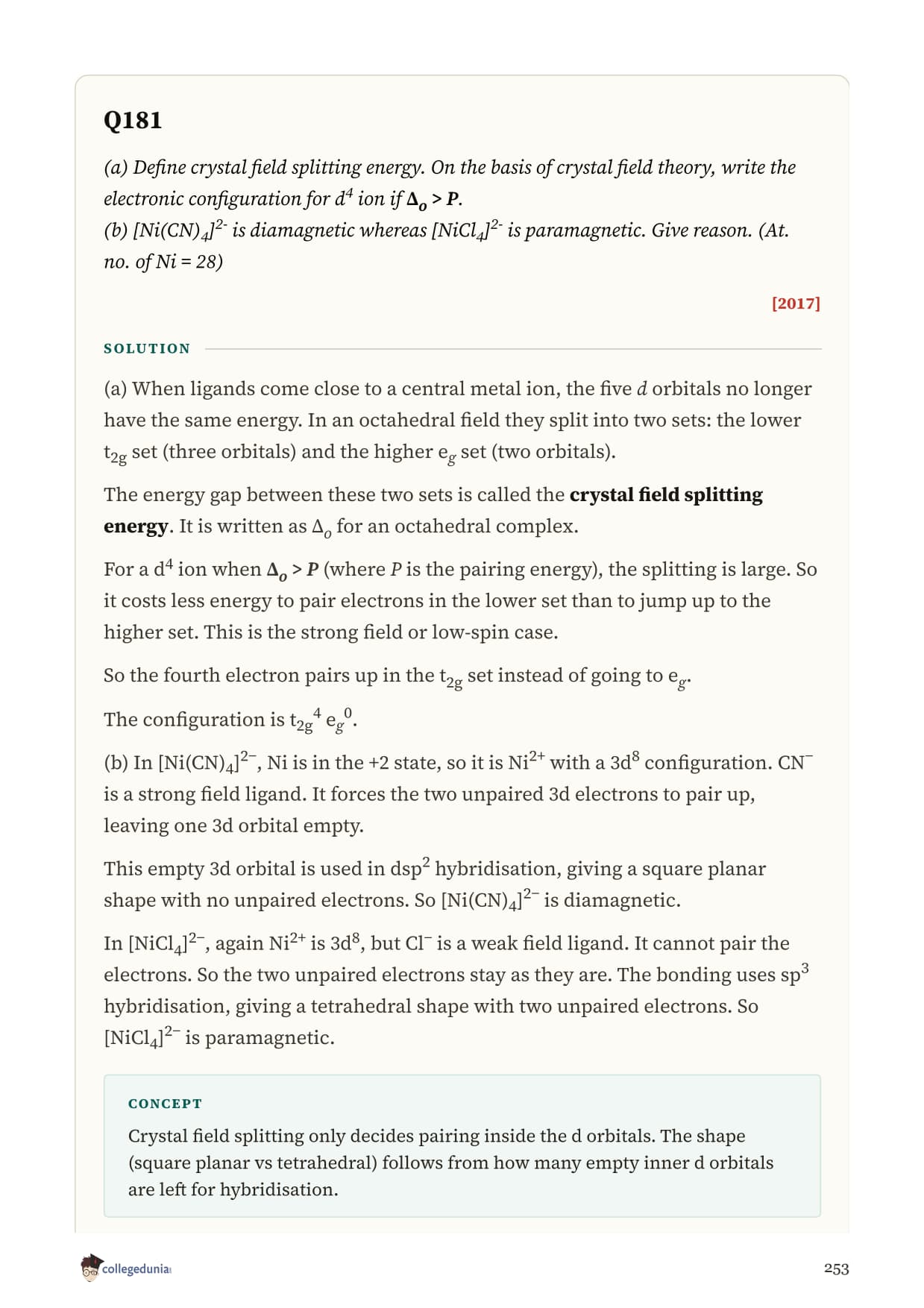
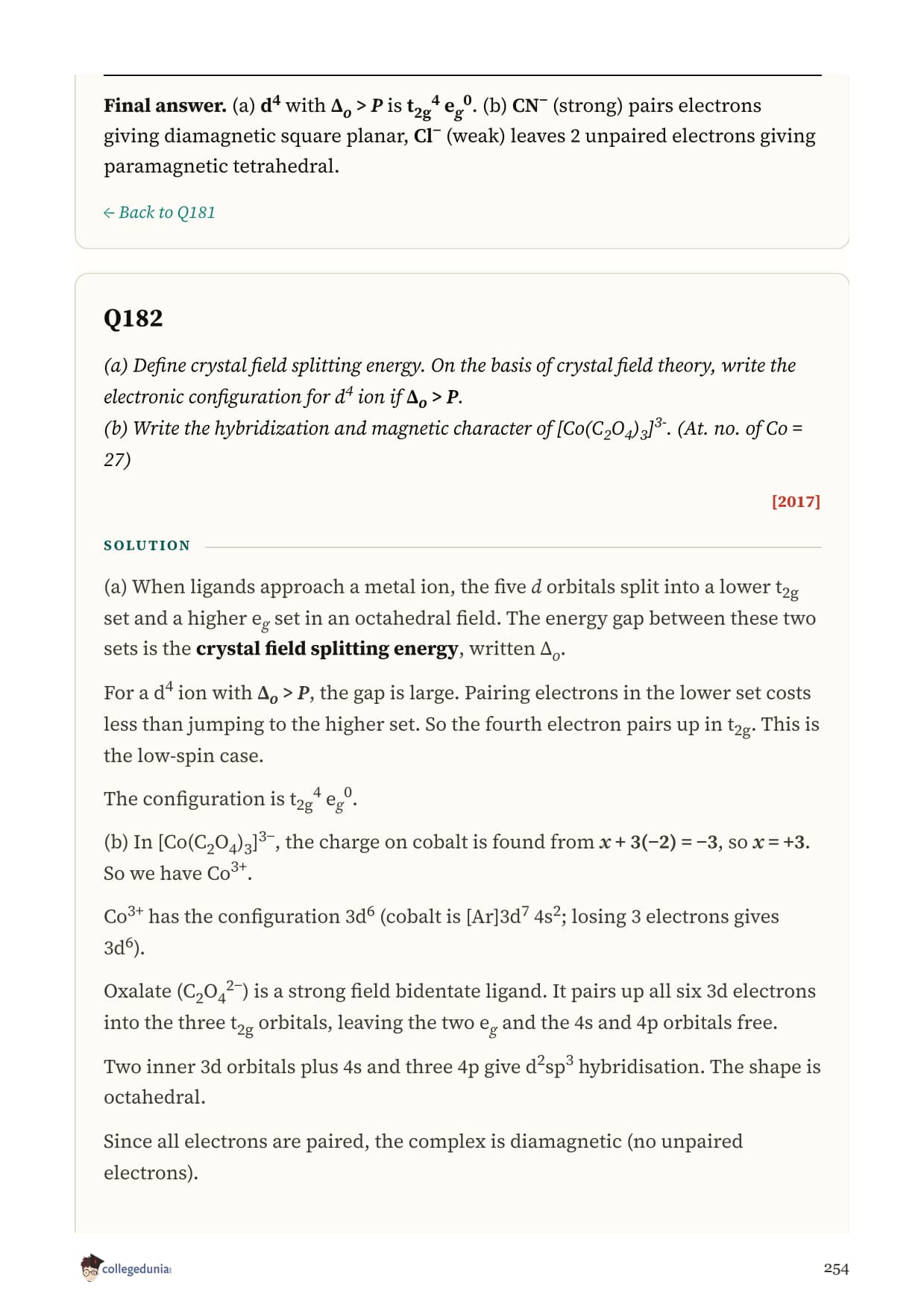
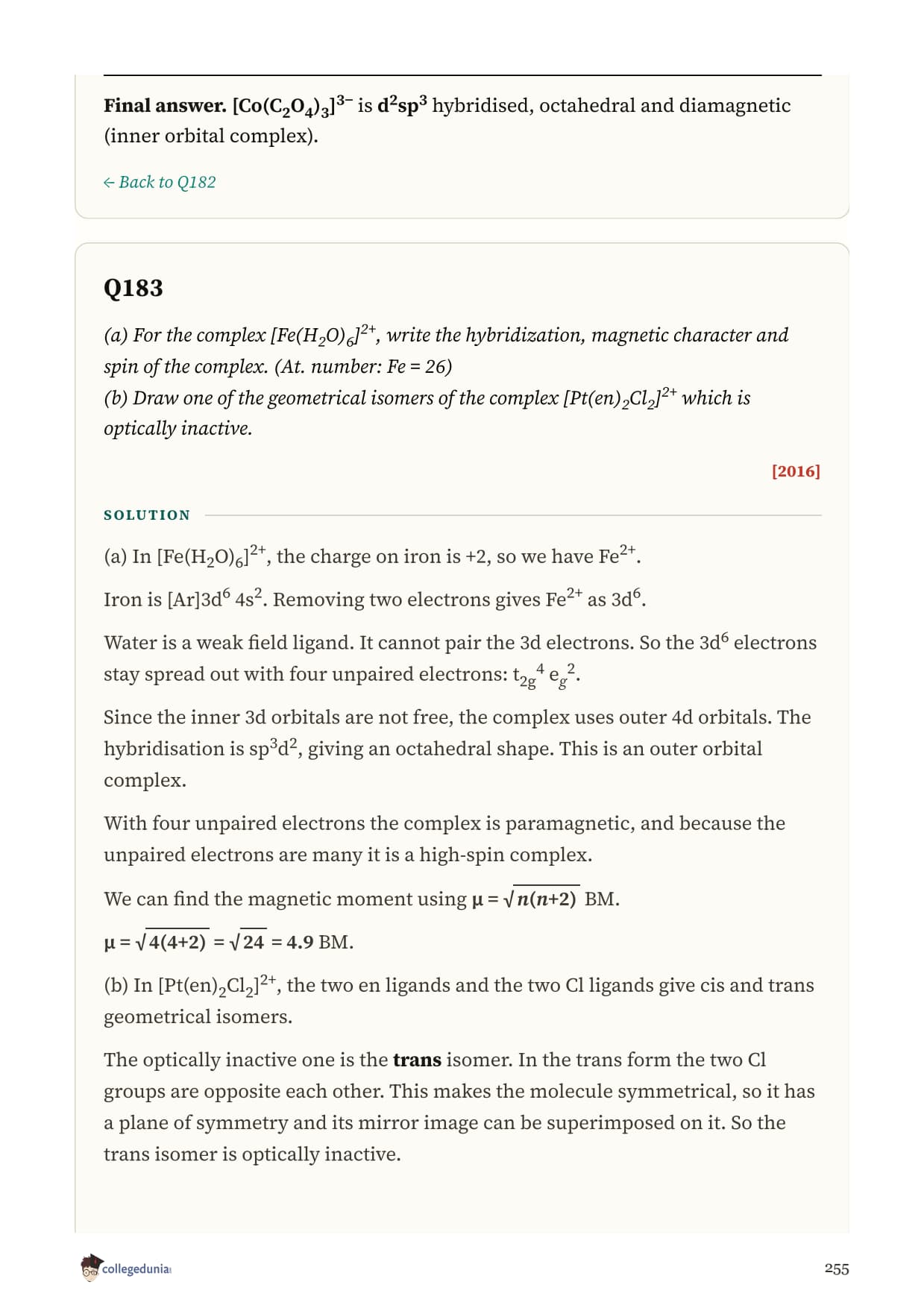
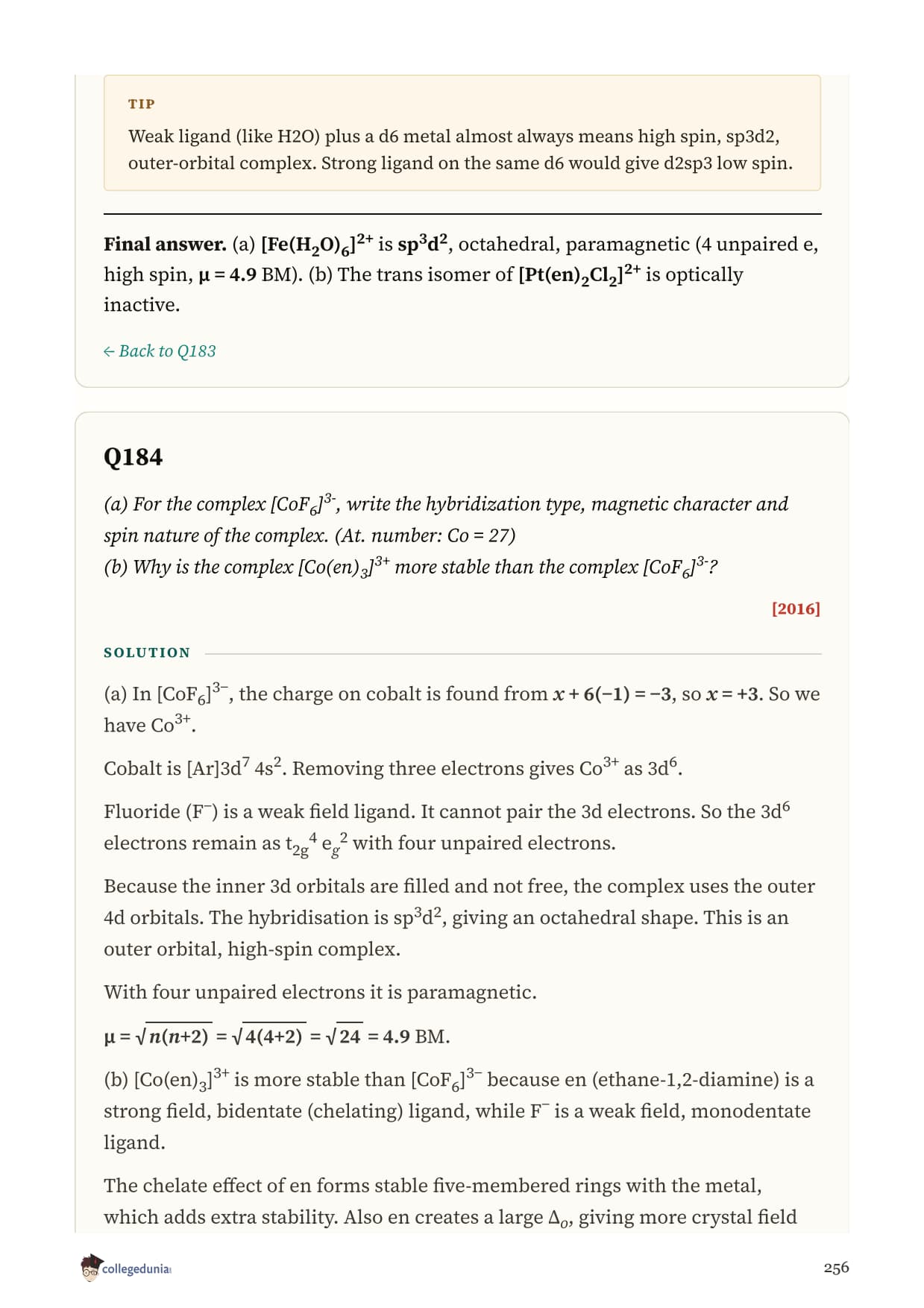
(a) [Co(NH 3 ) 6 ] 3+ is diamagnetic whereas [CoF 6 ] 3− is paramagnetic. Justify the statement. [Atomic number of Co = 27] (b) Write the electronic configuration for d 4 ion if Δ_o > P on the basis of crystal field theory.
[2026 • 3 mark]
Common Mistakes in the Coordination Compounds Board Questions
- Naming ligands in the wrong alphabetical order or missing the prefix for the number of ligands.
- Getting the oxidation state of the central metal wrong, which throws off the whole IUPAC name.
- Confusing high-spin and low-spin complexes when the splitting energy is compared with the pairing energy.
- Drawing the wrong hybridisation for the metal and then stating an impossible geometry.
- Mixing up linkage isomerism with ionisation or coordination isomerism.
Student Feedback on Coordination Compounds PYQ Practice
- 68 per cent said the VBT and CFT questions were the hardest part of the 3 and 5-mark bands.
- 60 per cent reported gaining 3 to 5 marks after solving all 60 three-mark PYQs from this PDF before the boards.
- 47 per cent said an IUPAC nomenclature question appeared in their actual 2026 paper.
- Average time to finish all 204 PYQs: about 15 hours across 7 study sessions.
How These PYQs Pair with the Other Coordination Compounds Resources
Solving previous year questions alone gives you only half the prep. Pair the PYQ PDF with the matching concept, formula and solution resources for Coordination Compounds.
| Resource | What It Gives You | Open |
|---|---|---|
| NCERT Solutions | Step-by-step worked answers to every NCERT back-exercise question of Coordination Compounds | NCERT Solutions for Coordination Compounds |
| Notes | Concept revision notes covering every topic in the Coordination Compounds chapter | Coordination Compounds Class 12 Notes |
| Formula Sheet | All key formulas and results of Coordination Compounds on one page for last-day revision | Coordination Compounds Formula Sheet |
| Handwritten Notes | Scanned handwritten notes of Coordination Compounds for quick one-shot revision | Coordination Compounds Handwritten Notes |
| Exemplar Solutions | NCERT Exemplar problems of Coordination Compounds solved in full for extra practice | NCERT Exemplar Solutions for Coordination Compounds |
| NCERT Book | Official NCERT Coordination Compounds chapter PDF for free download | Coordination Compounds NCERT Book PDF |
| Exemplar Book | NCERT Exemplar Coordination Compounds problem book PDF for free download | Coordination Compounds Exemplar Book PDF |
How to Use the Coordination Compounds PYQ PDF Most Effectively
The 204 questions are sequenced for a three-pass revision plan:
- Pass 1 (Day 1 to 2): Attempt all 80 one-mark MCQs. Mark every wrong answer and re-read the relevant NCERT paragraph.
- Pass 2 (Day 3 to 5): Solve the 53 two-mark and 60 three-mark questions. Time yourself: 3 minutes per 2-mark, 5 minutes per 3-mark.
- Pass 3 (Day 6 to 10): Work through the 6 five-mark long answers, drawing every orbital diagram and writing the full IUPAC name and isomerism parts.
All Class 12 Chemistry Chapter PYQ PDFs
Every Class 12 Chemistry chapter has its own PYQ compilation built the same way, sorted by marks and tagged by year.
| Chapter | Topic | Previous Year Questions |
|---|---|---|
| Chapter 1 | Solutions | PYQ PDF |
| Chapter 2 | Electrochemistry | PYQ PDF |
| Chapter 3 | Chemical Kinetics | PYQ PDF |
| Chapter 4 | The d- and f-Block Elements | PYQ PDF |
| Chapter 5 | Coordination Compounds | PYQ PDF |
| Chapter 6 | Haloalkanes and Haloarenes | PYQ PDF |
| Chapter 7 | Alcohols, Phenols and Ethers | PYQ PDF |
| Chapter 8 | Aldehydes, Ketones and Carboxylic Acids | PYQ PDF |
| Chapter 9 | Amines | PYQ PDF |
| Chapter 10 | Biomolecules | PYQ PDF |
Also Check: NCERT Solutions for Class 12 Chemistry
Class 12 Chemistry Coordination Compounds PYQ FAQs
Ques. How many previous year questions are in the Class 12 Chemistry Coordination Compounds PYQ PDF?
Ans. The PDF has 204 previous year questions from CBSE board papers between 2003 and 2026, sorted by marks (1 to 5) and then by year, latest first. Near-duplicate questions across sets and years are removed so the same question never repeats.
Ques. Are the Coordination Compounds PYQs based on the 2026-27 CBSE syllabus?
Ans. Yes. Every question is based on the 2026-27 CBSE Class 12 Chemistry syllabus. Older long-form questions are kept because the core ideas (IUPAC nomenclature, isomerism, VBT and CFT) are unchanged in the current syllabus.
Ques. Which topics of Coordination Compounds appear most often in CBSE board papers?
Ans. From the 204-question set: IUPAC nomenclature (about 25 per cent), isomerism (about 20 per cent), valence bond theory (about 18 per cent), crystal field theory (about 16 per cent), and reasoning on Werner's theory, ligands and stability.
Ques. How is this PYQ PDF different from a CBSE sample paper?
Ans. A sample paper gives you one paper. This PDF stitches together 23 years of questions across every set and region (Delhi, Outside Delhi, Foreign and Compartment) for Coordination Compounds alone, so you can see which topics CBSE repeats and how each idea is usually phrased.
Ques. Does the Coordination Compounds PYQ PDF include MCQs?
Ans. Yes. 80 of the 204 questions are 1-mark questions, mostly MCQ and assertion-reason from 2023 onwards, when CBSE introduced the Section A objective block.
Ques. Where can I download the Coordination Compounds Class 12 PYQ PDF for free?
Ans. The full Coordination Compounds PYQ PDF is free to download from the PDF button at the top of this page. No sign-up is needed.
Ques. How should I use these PYQs to revise Coordination Compounds in the last 10 days?
Ans. Use the three-pass plan: Day 1 to 2 attempt all 80 MCQs, Day 3 to 5 solve the 2 and 3-mark questions, Day 6 to 10 attempt all 6 long answers under a 12-minute timer. Always draw the orbital diagram before stating shape and magnetism.
Ques. Does the PDF give answers or only the questions?
Ans. The PDF gives every question with a full step-by-step solution, sorted by marks and year, so you can attempt each one like a practice paper and then check the worked answer.
Ques. Is IUPAC nomenclature important for the CBSE Coordination Compounds questions?
Ans. Very. IUPAC nomenclature drives about a quarter of all the questions in the compilation, across the 1, 2 and 3-mark bands. Practising naming both ways, formula to name and name to formula, is the single best use of your time for this chapter.
Ques. What is a coordination compound?
Ans. A coordination compound is a compound in which a central metal atom or ion is bonded to a fixed number of ions or molecules called ligands by coordinate bonds. The metal and its ligands form the coordination sphere, written inside square brackets. [Cu(NH3)4]SO4 is a common example.
Ques. How is a ligand defined?
Ans. A ligand is an ion or molecule that donates a lone pair of electrons to the central metal atom or ion to form a coordinate bond. Ligands may be monodentate, bidentate or polydentate depending on the number of donor atoms. Water, ammonia and chloride ion are common ligands.
Ques. What is crystal field splitting?
Ans. Crystal field splitting is the separation of the five d orbitals of the central metal into groups of different energy when ligands approach the metal ion. In an octahedral field the d orbitals split into a lower set and a higher set, and the energy gap is called the crystal field splitting energy. Its size decides colour and magnetic behaviour.



Comments