
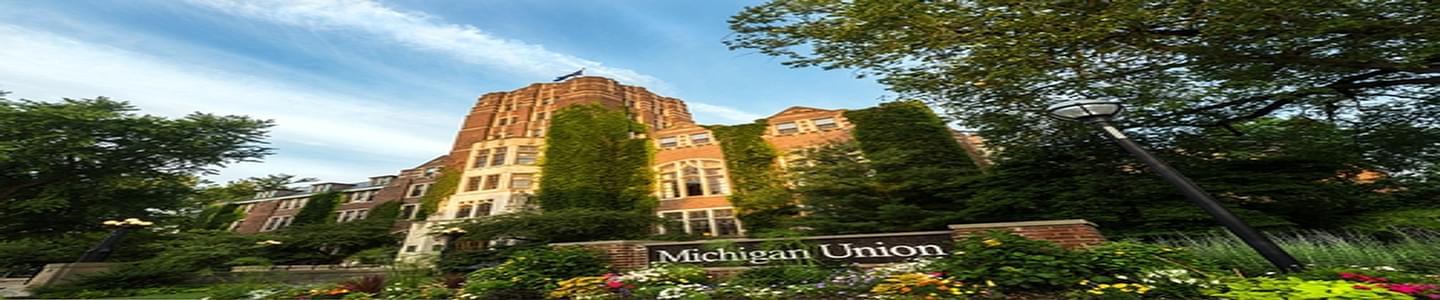
University of Michigan, Ann Arbor Courses and Fees 2026

Bachelor of Science [B.S] [Biomolecular Science] From University of Michigan

Ann Arbor, MichiganLocation
UniversitySchool type
Estd1817established year
52855enrollment
Public
Ann Arborcampus
8.5/10

Bachelor of Science [B.S] (Biomolecular Science)

4 years
Full Time
On Campus

Field of Study

$60,946 /Yr

Study Abroad Team's profile photo

Study Abroad Team

Updated on - Jul 22, 2026

University of Michigan Bachelor of Science [B.S] Biomolecular Science is a 4-year full-time undergraduate programme conducted on-campus in Ann Arbor, Michigan. Open to international students with a strong high school record, this degree trains students in the molecular basis of life processes, combining biology, chemistry, and biochemistry. Total tuition ranges from US$ 220,000 to US$ 240,000 (INR 2.11 Crore to INR 2.30 Crore) over four years; additional living costs run US$ 64,320 to US$ 96,960 annually. Intakes occur in Fall (September) and Spring (January).

Biomolecular Science at Michigan is designed for students pursuing careers in pharmaceutical research, biotechnology, medicine, and biochemistry. The programme emphasises experimental work alongside theory, with internship and research opportunities embedded across all four years. Ideal applicants are analytically rigorous, comfortable with advanced chemistry and organic synthesis, and interested in understanding disease mechanisms and drug development. Michigan’s proximity to major pharmaceutical hubs and industry partnerships makes this degree distinctive for those targeting post-grad research roles or professional graduate programmes in medicine or pharmacy.

  • Research-intensive curriculum with access to leading biochemistry labs and collaborative facilities.
  • Strong placement into MD, DDS, and pharmaceutical graduate programmes with competitive pre-requisite completion rates.
  • STEM OPT eligible; graduates secure 12-month post-study work permits with visa sponsorship options.

Current Admission Status

Applications for the Fall 2027 intake are Open. International student deadline: 15 January 2027.

Indian applicants are advised to begin WES transcript evaluations immediately; processing takes 4-6 weeks. Submit standardised test scores (SAT or ACT) at least 2 weeks prior to the deadline to ensure processing.

Also Check: University of Michigan Biomolecular Science Admission

University of Michigan Bachelor of Science [B.S] Biomolecular Science Fees and Living Costs 2027

Tuition and ancillary fees for international undergraduates at Michigan vary slightly by college. Below is the cost breakdown for the College of Literature, Science, and the Arts (LSA), which houses Biomolecular Science.

Cost Component Amount (US$) Amount (INR)
Annual Tuition (International) US$ 55,000–60,000 INR 52.68 Lakhs–57.46 Lakhs
Mandatory University Fees (annual) US$ 1,500–2,000 INR 1.44 Lakhs–1.92 Lakhs
Lab Fees (per year, included in major) US$ 400–600 INR 38,308–57,462
Health Insurance (annual, optional but recommended) US$ 3,000–4,000 INR 2.87 Lakhs–3.83 Lakhs
Annual Total (excluding personal expenses) US$ 59,900–66,600 INR 5.74 Lakhs–6.38 Lakhs
Total 4-Year Tuition Only US$ 220,000–240,000 INR 2.11 Crore–2.30 Crore

All INR conversions in the article use a conversion rate of US$ 1 = INR 95.77 as of June 2026. Rates fluctuate daily; verify before applying.

  • Michigan charges a single international tuition rate across all undergrad programmes in LSA; room, board, and personal costs are additional.
  • Lab fees are embedded in programme charges for science majors; no separate lab supplies cost.
  • Health insurance is not mandatory but strongly recommended for visa and emergency medical coverage.
  • Semester-based financial aid eligibility (loans, scholarships) applies to international undergraduates; verify current terms with the financial aid office.

Cost of Living in Ann Arbor for Biomolecular Science Students

Expense Category Monthly (US$) Annual (US$) Annual (INR)
On-Campus Housing US$ 600–900 US$ 7,200–10,800 INR 6.90 Lakhs–10.34 Lakhs
Off-Campus Shared Housing US$ 400–700 US$ 4,800–8,400 INR 4.60 Lakhs–8.04 Lakhs
Meals (on-campus plan, semester-based) US$ 250–400 US$ 3,000–4,800 INR 2.87 Lakhs–4.60 Lakhs
Personal Care & Toiletries US$ 80–120 US$ 960–1,440 INR 92,000–1.38 Lakhs
Transport (Campus Connector, limited car use) US$ 40–80 US$ 480–960 INR 46,000–92,000
Books & Course Materials (per semester) US$ 300–500 US$ 600–1,000 (amortised) INR 57,000–95,770
Total Monthly (Mid-Range Estimate) US$ 1,340–2,020 US$ 16,080–24,240 INR 1.54 Lakhs–2.32 Lakhs
Cost Reality for Indian Students: Ann Arbor is a mid-cost US college town; living expenses are significantly lower than coastal cities like Boston or San Francisco. Year 1 typically runs higher due to orientation, furnishings, and initial setup. Plan for a total 4-year cost of approximately US$ 310,000–350,000 (INR 2.97 Crore–3.35 Crore) including tuition, fees, and living expenses.

University of Michigan Biomolecular Science Admission 2027

Admission to the Biomolecular Science B.S. is holistic and competitive. Michigan reviews applicants on academic strength, standardised test performance, essays, and extracurricular engagement. The university does not grant direct entry to a major at admission; students declare Biomolecular Science after completing foundational chemistry and biology requirements (typically at the end of first year).

Admission Criterion Requirement Notes for International / Indian Applicants
High School GPA 3.8–4.0 (middle 50%) Indian Board applicants: CBSE/ICSE 85%+ in Science stream. WES evaluation required for GPA conversion.
SAT Score (Preferred) or ACT SAT 1490–1570 (middle 50%), or ACT 33–35 SAT strongly preferred. Science reasoning (Evidence-Based Reading + Math) is prioritised. Indian students compete from a global pool; median scores of admitted international students are often at the upper range.
Advanced Science Coursework AP/IB/Honours Chemistry & Biology expected Indian curriculum: CBSE Class 12 Chemistry & Biology at 90%+ expected. Pre-calculus or Calculus highly advantageous.
Application Fee US$ 75 Non-refundable. Waived for demonstrated financial hardship (request required).
Letters of Recommendation 3 required (2 from teachers, 1 optional) Request from teachers who can speak to scientific reasoning and lab work, not just grades. Timing: submit 2–3 weeks before deadline.
Essays Michigan Supplement: 3 short-answer essays Prompts are released in July each year. Expect "Why Michigan?" essay to focus on research facilities, faculty mentorship, or a specific lab alignment.
Acceptance Rate (Undergraduate, All Majors) ~18–22% (highly selective) STEM majors (including Biomolecular Science) are more competitive; international student acceptance typically 1–3% lower than domestic.

English Language Proficiency (ELP) Requirement

All international applicants must demonstrate English proficiency via a standardised test. TOEFL is most common; IELTS and Duolingo are also accepted.

  • TOEFL iBT: 100+ overall (no section below 24). Indian students typically take the test 2–3 times to reach this threshold.
  • IELTS: 7.0+ overall (6.5+ in each band). Less common for US applications but accepted; requires IELTS Life Skills A1 for visa purposes (separate test).
  • Duolingo English Test: 120+ (emerging option; check current acceptance status on Michigan’s admissions portal).
  • Waived if applicant has studied in an English-medium school for 4+ years in the US, UK, Canada, Ireland, Australia, or New Zealand.
Indian Applicant Reality: TOEFL scores are the primary ELP gate for Indian students. Expect 3–4 months of prep if English is not your strong background. TOEFL test dates book out 2–3 weeks in advance in India; register early (by September for January deadline, by July for Fall deadline).

University of Michigan is ranked #45 globally by QS World University Rankings 2026, reflecting its strength across all disciplines. The Biomolecular Science programme itself is not separately ranked, but is housed in the College of Literature, Science, and the Arts, which is recognised for research quality and student outcomes in life sciences.

University of Michigan Biomolecular Science Application 2027

Michigan uses the Common Application for all undergraduate admissions. Submission opens in August each year; the university’s supplement includes three additional short-answer essays on fit and academic interests.

Deadline (Intake) Submission Deadline Status Decision Release Window
Fall 2027 (September 2027) 15 January 2027 Open By 31 March 2027
Spring 2028 (January 2028) 15 September 2027 Open By 30 November 2027
Summer Bridge Option (May 2027 start) Not available for Biomolecular Science majors; direct Fall/Spring entry only N/A N/A
  • International applicants: submit transcripts via WES or Official Credential Evaluator (OCE) concurrent with Common Application. Processing is 4–6 weeks; submit by early December for January deadline.
  • SAT/ACT scores report directly from the testing body (College Board / ACT Inc.) to Michigan using institutional code 1839. Request 2–3 weeks before deadline.
  • Financial aid forms (CSS PROFILE and FAFSA International section) are optional for merit scholarship consideration but required for need-based aid assessment (separate pool for international students).
  • Rolling admissions: Early submissions (October–November) receive decisions faster, though there is no explicit Early Decision / Early Action option for international students.
Application Tip for Indian Students: Winter holidays (December 15–January 3) often delay email responses from the admissions office. Clarify any urgent issues by early December. Submit your application by January 10 to ensure all materials arrive before the deadline; USCIS processing for visa petitions adds 2–4 weeks once admitted.

University of Michigan Biomolecular Science Scholarships 2027

Michigan offers limited need-based aid to international students (approximately 10–15% of accepted international undergraduates receive aid packages). Merit scholarships for international students are rare but available in exceptional cases.

Scholarship / Funding Type Eligibility Award Range (Annual) Notes
Need-Based Financial Aid (International) All admitted international students with demonstrated financial need US$ 2,000–15,000 (varies by aid eligibility assessment) Limited funding pool. Must file CSS PROFILE to be considered. Aid is grants + work-study + loan options (Stafford loans not available to international students without a US co-signer).
University of Michigan Scholarship for International Students (UMSIS) Outstanding academic and extracurricular credentials; limited to 5–10 awards per year Up to US$ 25,000–30,000 Highly competitive. Automatically considered at admission; no separate application required.
External Scholarships (India-based) Government / NGO schemes (MOMA, Inlaks Foundation, Reliance Foundation) US$ 500–5,000 per year Separate application process. Verify eligibility on each foundation’s website; deadlines typically April–June.
On-Campus Work-Study (Optional Practical Training related) All students (no separate eligibility); F-1 visa allows 20 hrs/week on-campus during academic term US$ 15,000–20,000 (annual if working full 20 hrs/week) Not technically a scholarship but a funding alternative. Common on-campus roles: research assistant, teaching lab assistant, library staff.
  • Merit scholarship awards are merit-only; they do not factor in demonstrated need and are not contingent on financial hardship documentation.
  • International students are not eligible for federal Pell Grants or Stafford Loans without a US citizen co-signer (rare and not encouraged).
  • Work-study wages are US$ 15.50–18.50/hour; most undergraduate science assistants earn US$ 15,000–18,000 annually (maximum 20 hours/week during term).
  • Biomolecular Science majors often secure paid internships (summer, semester-based) at pharmaceutical and biotech companies; internship stipends range US$ 1,500–3,000/month and are not formally listed as scholarships but function as scholarships-in-kind.
Scholarship Reality: Do not assume full-ride scholarships at US universities. Out-of-pocket cost for most Indian families is 60–80% of the sticker price. Plan financing: mix of family savings, education loans from banks (ICICI, HDFC, Axis), and on-campus work-study.

University of Michigan Biomolecular Science Salary 2027

Biomolecular Science graduates pursue varied career paths: pre-professional education (medicine, pharmacy, dentistry), doctoral research (PhD in Biochemistry or related fields), and industry roles in pharmaceutical, biotech, and diagnostics sectors.

Career Path / Role Typical Employer Entry-Level Gross Salary (Annual) Entry-Level Gross Salary (INR) 6-Month Placement Rate
Pharmaceutical Research Associate Pfizer, Eli Lilly, Janssen, Boehringer Ingelheim US$ 65,000–75,000 INR 62.24 Lakhs–71.83 Lakhs ~85%
Biotech Quality Assurance Analyst Genentech, Moderna, BioMarin, local CROs US$ 62,000–72,000 INR 59.37 Lakhs–69.00 Lakhs ~80%
Clinical Research Coordinator University Hospitals, Clinical Trial Sites US$ 50,000–60,000 INR 47.89 Lakhs–57.46 Lakhs ~75%
Graduate / Professional School (MD, PhD, PharmD) Medical Schools, Graduate Programmes (US, international) N/A (Continued Education) N/A ~55% enroll in grad programme within 6 months
Overall Cohort: Median First-Year Gross US$ 58,000–68,000 INR 55.55 Lakhs–65.13 Lakhs ~92% placement in career or grad school

Gross figures above are pre-tax. After US federal income tax (10–12% federal bracket), state tax (4.25% in Michigan), Social Security, and Medicare, take-home is typically 75–80% of gross. Use a tax calculator (Tax Calculator at irs.gov) to estimate your exact deduction.

Source: University of Michigan Career Services employment outcome surveys (2023–2024 cohort), Glassdoor, Payscale, and company recruiting data.

ROI Reality for Indian Graduates: Many Biomolecular Science graduates from Michigan proceed to MD or PhD programmes, delaying direct employment. Of those entering industry immediately, pharmaceutical research roles are most common and offer stable career progression. H-1B sponsorship is routine for this major if the employer is visa-ready; plan for visa processing (I-140, I-485) to add 6–18 months before full-time work begins.

United States Visa Biomolecular Science

International students studying in the US are sponsored on an F-1 Student Visa, valid for the duration of the academic programme plus a grace period. After graduation, Biomolecular Science graduates are eligible for Optional Practical Training (OPT), a post-study work authorisation.

  • F-1 Visa: Valid for the entire 4-year programme (I-20 validity period). Processing time is 2–4 weeks; consulate interview may be waived (eVisa) or in-person depending on consulate location.
  • OPT (Optional Practical Training): 12 months of work authorisation post-graduation, extendable to 36 months if your employer certifies STEM designation (Biomolecular Science qualifies). OPT begins after the grace period (60 days post-graduation).
  • H-1B Visa: Typically filed in the second half of OPT (months 10–12). Lottery-based visa cap with ~350,000 applications annually for 65,000 visas. Plan for visa processing (approval decision + consular processing): 6–18 months.
  • Spouse & Dependents: Eligible on F-2 visa if you are the F-1 principal. F-2 dependents cannot work but can study part-time (≤12 hours/week during term).
Visa Reality: OPT is automatic upon graduation; you do not require employer sponsorship to begin this phase. The H-1B is where sponsorship matters. Pharmaceutical and biotech companies are known OPT/H-1B sponsors, but visa-readiness varies. Confirm H-1B sponsorship eligibility at offer stage, not after.

University of Michigan Bachelor of Science Biomolecular Science Ranking 2027

The Biomolecular Science major itself is not separately ranked by QS, THE, FT, ARWU, or US News. However, the College of Literature, Science, and the Arts (LSA) at Michigan is recognised for research intensity and student outcomes in the life sciences.

Ranking Body Ranking / Rating Category / Metric Year
QS World University Rankings #45 overall Global university rank. Life Sciences sub-rank: Top 50 globally. 2026
US News & World Report #3 public university (US) National university ranking. Biological Sciences: Top 20 programmes. 2025
THE (Times Higher Education) #45 overall Global ranking. Biological Sciences: Top 100 globally. 2026
Carnegie Classification R1: Doctoral Research University (Highest Research Activity) Highest tier; demonstrates research output in all disciplines including molecular biology and biochemistry. 2021 (latest)
NSF (National Science Foundation) Research Funding Top 20 public universities in biological sciences funding Indicates lab availability and student research opportunities in Biomolecular Science areas. 2024
Honest Take on Rankings: Major public universities rarely have life-sciences majors ranked separately. Michigan’s overall rank (#3 public, #45 global) is the credible signal. In biomolecular research, placement, and pre-professional outcomes, Michigan undergraduates perform at par with or better than top private universities with lower sticker prices.

Bachelor of Science Biomolecular Science FAQs

Ques. Is it easy to switch out of Biomolecular Science after first year?

Ans. Yes. Biomolecular Science is declared at the end of first year; you do not apply to the major as a freshman. If after fall or winter semester you find the coursework misaligned with your goals, you can switch to Biology, Chemistry, or a related major with no penalty. Most advisors encourage students to explore during first year before committing.

Ques. Are there research opportunities for undergraduates?

Ans. Strongly yes. Michigan’s research ethos is exceptional; approximately 70-80% of undergraduates in life sciences engage in lab research by sophomore year. Many students are paid research assistants in faculty labs; others participate through UROP (Undergraduate Research Opportunity Program). Biomolecular Science students have access to biochemistry, molecular biology, and pharmacology labs aligned with their interests.

Ques. What are the prerequisite courses before declaring Biomolecular Science?

Ans. Required prerequisites (completed by end of first year): CHEM 130 (General Chemistry), CHEM 230 (Organic Chemistry I & II), BIO 172 (Evolution, Ecology & Diversity), BIO 173 (Cell & Molecular Biology), MATH 115 (Calculus I). Most students complete these by winter semester of first year, allowing a spring major declaration. Strong performance (B+ or higher) is expected for progression into upper-level Biomolecular courses.

Ques. Can I pursue medicine after Biomolecular Science?

Ans. Absolutely. Biomolecular Science covers all pre-medical prerequisites (organic chemistry, biochemistry, cell biology, physiology). Many Michigan undergraduates use this major as their pre-med path; the programme is actually designed with pre-professional students in mind. Medical school acceptance rates for LSA students are competitive (approximately 55-65% of applicants accepted to MD programmes, vs 35-40% national average), though this reflects the strength of Michigan’s student body overall.

Ques. What is the average class size for Biomolecular Science courses?

Ans. First-year prerequisites (organic chemistry, cell biology) enroll 200-400 students in lecture; you are grouped into discussion sections of 20-30 for interaction. Upper-level Biomolecular courses (junior/senior) are typically 40-100 students in lecture with smaller lab sections of 15-20. The student-to-faculty ratio across LSA is 15:1, but for major-specific advising, you have dedicated academic advisors.

The Bachelor of Science in Biomolecular Science at the University of Michigan is a rigorous, research-intensive programme suited for students committed to rigorous problem-solving and experimental design. Graduates secure positions in pharmaceutical research, biotech, clinical pathways, and advanced study—making it a solid investment despite the upfront cost. Admission is highly selective; preparation and a clear motivation for the field are essential for success.


Tuition Fees

Year1st Year Fees
Tuition Fees$60946

Other Expenses

HeadAvg Cost Per Year
Room and Board$16502
Books and supply$1158

Previous Year Tuition Fees

Year1st Year Fees
2023$59212
2022$27663
2021$49350

Scores Required

6.5 / 9

Avg. Score in

IELTS

88 / 120

Avg. Score in

TOEFL

54 / 90

Avg. Score in

PTE

105 / 160

Avg. Score in

Duolingo


Ranking

2025202420232022202120202019

QS World University logo
Biology 37 out of 700 in Global Ranking
( #19 out of 121 in USA 2025)

Do you think the Rankings are wrong ?  Report Here


Comments


No Comments To Show

Scholarship Grants & Financial Aids

NameScholarship Per StudentLevel of StudyType
Ritchie-Jennings Memorial Scholarship ProgramScholarship per student$ 10,000/Yr$10,000Level Of StudyBachelorTypeMerit-Based
Axol Science ScholarshipScholarship per student$ 2,000/Yr$2,000Level Of StudyBachelorTypeCompany-Sponsored
VueVille Future Technology ScholarshipScholarship per student$ 1,000/Yr$1,000Level Of StudyBachelorTypeMerit-Based
R&D Systems ScholarshipScholarship per student$ 1,500/Yr$1,500Level Of StudyBachelorTypeMerit-Based
BL Mandhana ScholarshipsScholarship per student$ 10,000/Yr$10,000Level Of StudyBachelorTypeMerit-Based
Go Clean ScholarshipScholarship per student$ 3,500/Yr$3,500Level Of StudyBachelorTypeMerit-Based

Similar Programs

ProgramImportant DateTotal FeesMedian Exams ScoreAction
--
USD 60,946 /Yr
  • IELTS: 6.5
  • TOEFL: 88
  • PTE: 54
  • Duolingo: 105
Early Decision Application Deadline for 2027 Intake (1st Nov 2026)
Regular Decision Application Deadline 2027 Intake (2nd Jan 2027)
USD 71,266 /Yr
  • TOEFL: 5.5
  • IELTS: 7.5
  • Duolingo: 130

Do you think the Dates are wrong ?  Report Here

Videos

interested in this College ?

Get free counselling