


%20-%20Nandan%20Sensarma%20(1).jpeg)
What Students Say
Likes
- The campus is enormous. It is about 8000 acres, with its own golf course and a commercial airport. I love the greenery on campus and how there's a spot for everyone. It shares a boundary with downtown State College as well, so there's enough places to hang out off campus too- that's if the ones on campus aren't enough. Food options on campus are plenty, covering pretty much all cuisines in different halls- including Indian cuisine at "Choolah" too.
- With such a big campus, there is an individual building for basically everything. Be it mental health counseling or just an office for inclusivity, they've got you covered! I believe there is a separate building just for yoga and meditation. There is all the types of counseling you'll ever need for every subject, classes or career resources. In fact, it is sometimes overwhelming navigating through so many different places and websites. The Pattee and Paterno Library (a top 10 research library in North America) is humongous, and it is so well equipped for all your study needs that I come to this place just to hang out sometimes (I am writing this review from the library).
- Penn State has the largest living alumni network, closing in on around 800,000 this year. This is definitely an advantage to find commonalities between you and the employers, as I have already found so many people willing to help their fellow Penn State alumnus.
Dislikes
- Being a Mumbaiker, where the minimum temperature rarely touches 18°C at nights in peak winter, sending me to a place where the maximum temperature in summer is 20°C wasn't perhaps the best idea. Currently, I am locked indoors with temperatures touching -12°C. Remember folks, it's not the temperature that kills, it's always the wind. They say next week the temperatures are gonna touch -22°C for a day or two. Good luck to me.
- Okay, I get it, I had just praised how good and big and beautiful the campus is. But sometimes, it's just a pain to walk this much. They do have buses for free which cover the majority of the campus, but there are parts which aren't covered and even if they do, the buses are often overcrowded OR you have a problem with the timings. I was forced into buying an electric standing scooter to save time, set me back around $400.
- Considering how good the courses and professors are, and how good the alumni is doing, it always confuses me why the ranking isn't better. It is very good on a global standard, but I just feel that it deserves to be better. It isn't exactly something to do with the college, but perhaps the people who set the rankings.
Course Curriculum
-
The course is a good mix of practical as well as theoretical. The classes are never boring and always leave you with something to ponder about. Positive aspects are the accessibility and resources available for help, where you can personally approach the teachers or their assistants for help. The negative is the class size, with some touching up to 400 people. It gets tough feeling included in such classes.
Admission Experience
-
I had applied to 7 colleges.
1. Michigan State University- Accepted
2. University of Wisconsin Madison- Waitlisted then Accepted
3. Purdue University—Waitlisted then Accepted
4. Harvard University—Waitlisted then Rejected (It's an Ivy League; the chances were always grim. Wanted to apply so that I didn't regret not applying later.)
5. Stanford University—Rejected (Same reason as Harvard; it has a single-digit acceptance rate.)
6. Massachusetts Institute of Technology—Rejected (Again, a very competitive school)
7. The Pennsylvania State University—Accepted and attending
-
Since I was waitlisted in most of the other colleges better than Penn State, my only real option was this. Moreover, by the time I received acceptance from Purdue and UW Madison, I had already created a great network amongst Penn State students planning to attend with me and I had started to like the campus and opportunities available here. I really liked their offerings and connections in the industry and figured that it could help me later on in my career. A master's degree from an Ivy is next, maybe?
-
The admission process was simple. I applied through Common App, where you can apply to almost all universities. Penn State did not require an individual essay, so I was good with the common essay, which you have to write for all universities. Then I was given a Penn State account where I had to self-report my transcripts and grades. I think you can also apply via "Coalition," but the Common App is the most popular choice. I submitted my SAT and IELTS scores, though I'm pretty sure they also accept ACT and TOEFL as well. There were no set minimum scores, though the average was around 1350 for the SAT. I was comfortably above that with a 1510 score.
-
The overall process was fairly easy. I liked how they didn't require any university-specific essays, as it saved me quite some time. No particular challenges, though; everything was very smooth and relatively fast.
-
I applied for the Fall 2024 intake as I wanted to start college right after I finished my high school in May 2024.
- I had applied for the early round of applications.
- August Beginning—Early Applications Opened
- Mid September—I applied
- October End—Applications Closed
- November End—Decisions Released
- I ended up accepting the offer in March as I was waiting on the regular round for other colleges.
Class Schedule
-
The scheduling is completely up to how you schedule your classes before each semester. Classes run throughout the day from 8 am to 10:30 pm, and you can choose whichever ones suit you best. I usually prefer late morning/afternoon classes and have typically 2-3 classes per day. Each class is either 50 minutes long or 1 hr 20 mins long. Some lab classes are up to 4 hours long, though.
-
The number of students depends on the class. Usually the class size is big for the first few semesters, typically between 50-150. However, they drop down to 15-25 for higher-level courses.
-
There are a LOT of Indian students here—1900 in total, to be specific. We have the second highest number of international students after the Chinese, who have about 2050 students. As for computer science, for the first course, out of 700 total students, I believe at least 120 were Indians.
Faculty
-
This ratio on the website is 1:8, but it is actually a lot higher than that for introductory courses. It affects the quality of education, as individual attention does tend to drop down despite the efforts of the faculty.
-
I think it is too early for me to comment on the job readiness of these courses, as these are just introductory courses, but I do believe that they give us enough real-life examples to work on to help us adapt to the outside world.
-
I am not aware of such faculty members, but I know that they help students find research projects.
-
I admire Professor Dr Seunghoon Bang, my mathematics professor, a lot. He is a simple Korean guy and his explanation is too good. I love how interactive his classes are and how exam-ready he keeps us at all times.
Campus Life
-
My college has a total of 24 campuses, spread all over Pennsylvania. It is too much information to type for each campus, so here is the link for all of them:
https://www.psu.edu/academics/campuses -
I live in University Park, the main campus, based in State College, Pennsylvania. It has all the amenities I had mentioned earlier, including a stadium, hospital, libraries, intramural building, swimming pools, golf course, airport, lake, and multiple gymnasiums.
-
There are various concerts by musicians like Drake, Travis Scott, and Taylor Swift. There was a Donald Trump rally in November. There are football games almost every weekend in that big stadium.
-
There is an intramural building, where there is all the equipment you would need for all sports, including an indoor football turf and a 20,000 sq meter gym. There is also a Recreation Hall, where there is an indoor volleyball stadium. There are four swimming pools that I know of, all are olympic sized. All of these are free to use for students. There are career fairs, cultural fairs and inclusion fairs time to time. I have already described clubs and organisations earlier.
Part Time Jobs
- Since these positions are mostly reserved for graduate students, I do not have much information on them. I do know that we have the option for becoming Learning Assistants (LA), where we are either paid up to $13/hr for helping professors with their day-to-day classes and grading or we receive credits for higher-level courses in that particular subject. There is also an option for working in dining, where most Indians work. They are paid between $13 to $14.5 per hour depending on how much time they have been working for and are allowed to work a maximum of 20 hours per week. It is fairly easy to get such jobs. There are other jobs like lab assistants and proctors, with similar pay as well.
- Most Indians are either involved in teaching-based jobs or in dining. It is easy to secure such jobs on campus. Since we are on an F-1 visa, we are allowed to work only on campus. Pay is between $13 and $15 per hour. The process is fairly simple, as we have to go to a university-specified website, upload our CV, fill in some basic details and apply for the job. We are then guided through the process for obtaining an SSN, which is necessary to work in the US.
Placement
- I think about 75-90% secure a job immediately after graduating, while the rest pursue higher studies or take a break. The salary range is between $75,000 per annum to up to $120,000 from what I was told. Students can find employers at the career fairs or at the Nittany Lions Career website, a website specifically for Penn State graduates to find and apply for jobs. Being a freshman, none of my batchmates have graduated yet hence nobody works full time yet. One of the biggest employers at Penn State is Lockheed Martin and JP Morgan.
Accommodation
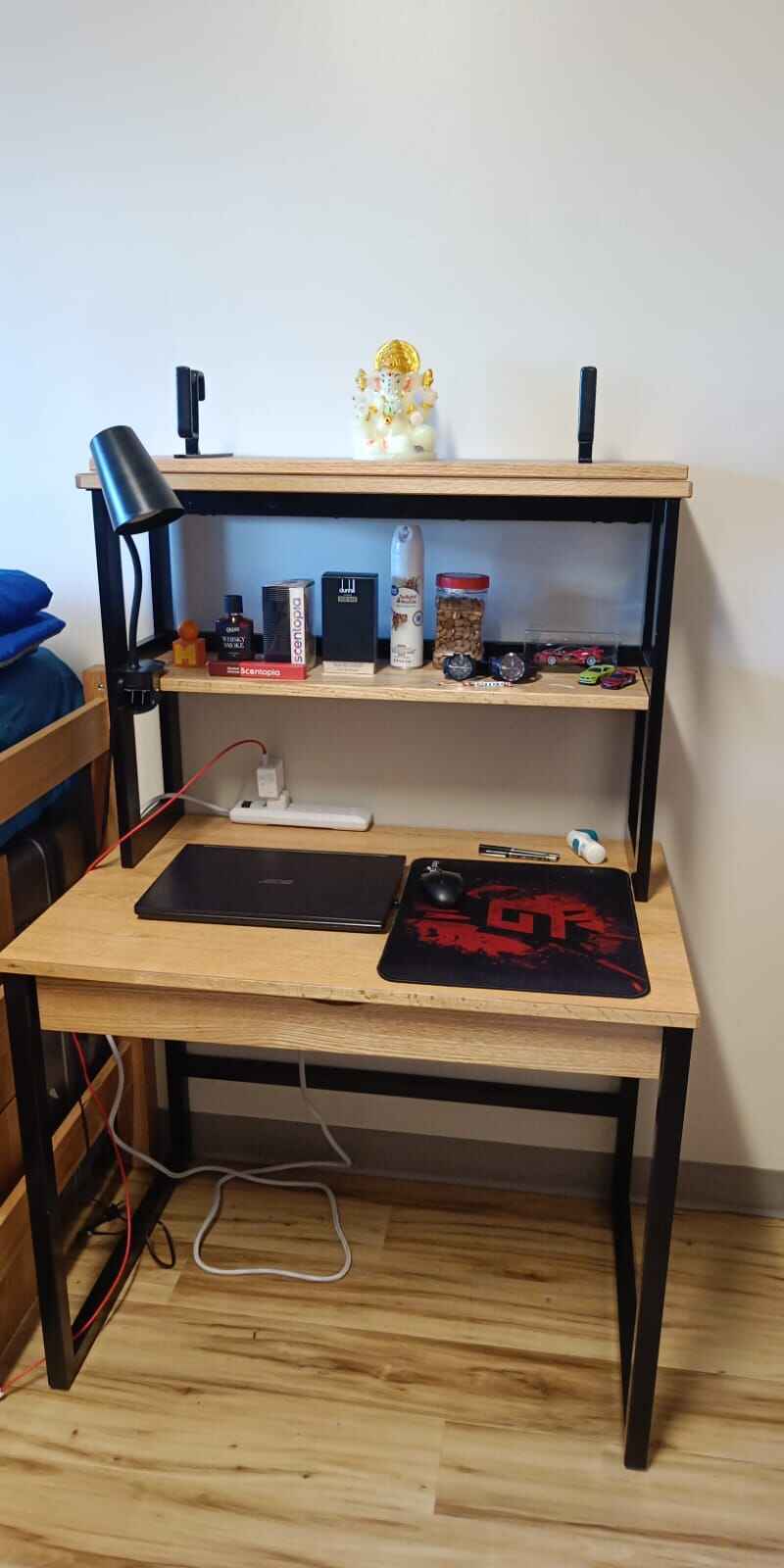
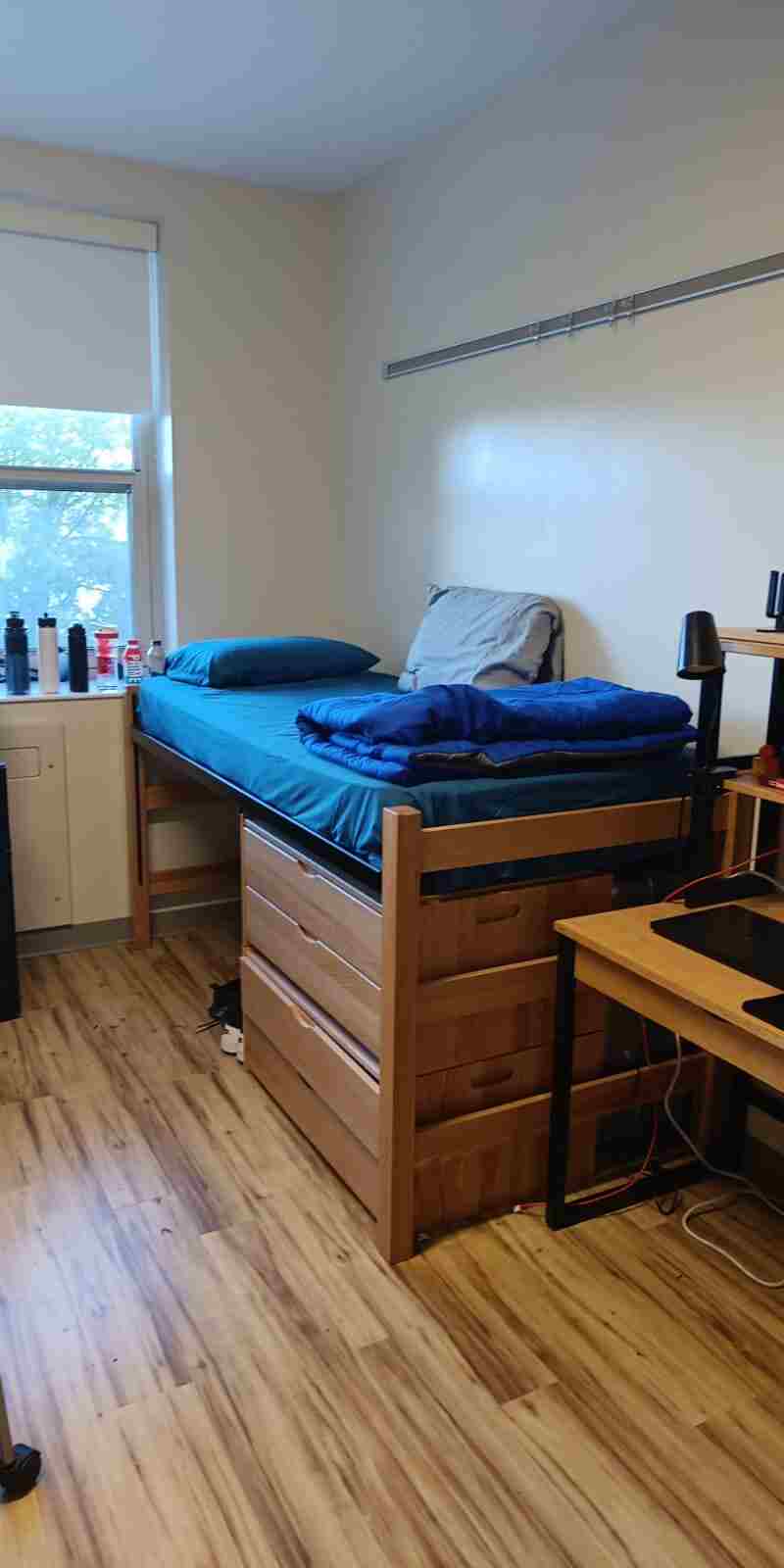
- I am staying in campus accommodation, hence finding it wasn't a problem. I am paying for accommodation on a semester-wise basis, hence $4,512 per semester. The only challenge was the small room size, as already mentioned.
- I would recommend all students live on campus for at least a year, as it's a really nice experience and you'll make good connections. Indian students are scattered all over the campus so there is no particular place with a lot of them. However, since East Halls are the biggest, my bet would be that's where most Indians stay. My dorm is fairly close to all my classes.
Exams
- Either the SAT or ACT and either the IELTS or TOEFL are required for applying for undergrad. However, since Penn State is test optional now, you can submit an application without submitting your SAT or ACT scores as well, though I would recommend submitting them.
- You need 2 LoRs and all your high school transcripts from 9th grade to 12th grade, along with a mandatory LoR from your school counsellor.
Fees
-
The fees is based on semester wise system.
-
Tution- $23, 762
-
Hostel- Between $2,714 to $4,508 depending on where you live on campus
-
Meal Plan- Between $2,688 and $3,011 depending on which level you choose (Level I, II or III. Higher meal plan= more dining dollars)
-
Since almost all my expenses are already paid for in the fees, my monthly expenses of groceries is barely $30-$50.
-
Scholarship
- No, there are no particular scholarship opportunities available for international students. Thus, none of my batchmates received any scholarship directly from the university. As for the US citizens, I don't really know much but I know that one of my friends got around $15,000 per semester. If you're an athlete, you don't need to pay any tuition, regardless of your nationality. In fact, top athletes are paid $1,500 per semester for personal expenses.


