

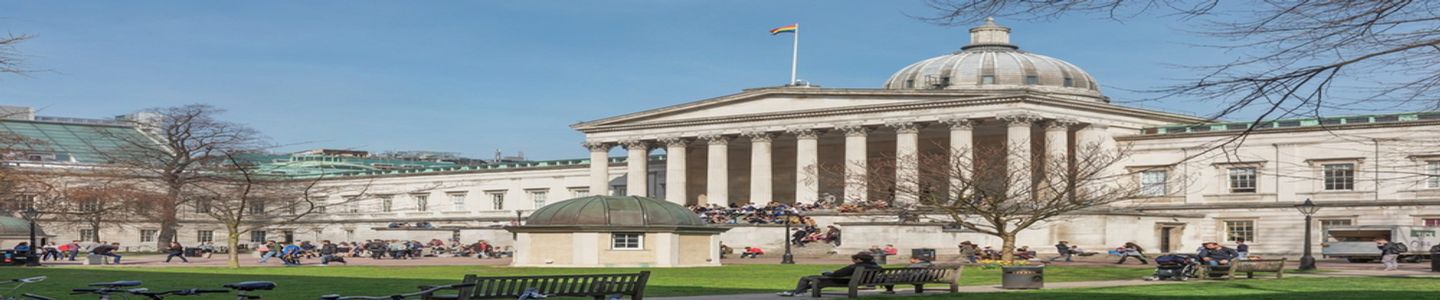


Bachelor of Engineering [B.Eng] (Electronic and Electrical Engineering)
$52,934 /Yr

University College London Electronic and Electrical Engineering BEng (Bachelor of Engineering) is a three-year, full-time undergraduate degree in Bloomsbury, London. Applicants from India’s two national boards need five subject marks of 95, 95, 95, 90 and 90, including 95 in Mathematics. For September 2027 entry, calculated three-year tuition is £133,200 (INR 1.68 Crore), before living costs.
The course connects electronics, mathematics and computing through laboratory work, design scenarios and a final-year individual project. It suits students who want to build and analyse hardware alongside software, with specialisation following two predominantly compulsory years. UCL (University College London) also includes an interdisciplinary engineering minor, allowing students to develop a second technical or enterprise interest.
- First-year and second-year tutorials support the transition from school mathematics and physics to university engineering.
- Prior electronics experience is unnecessary, so a thoughtful coding or robotics project can demonstrate interest without formal industry experience.
- A year in industry becomes an optional four-year pathway after enrolment, with departmental approval and a placement secured by the student.
Current Admission Status
Applications for the September 2027 intake are Open. International student deadline: 13 January 2027.
The equal-consideration cutoff is 18:00 GMT (Greenwich Mean Time), equivalent to 23:30 IST (Indian Standard Time) on 13 January 2027. Indian applicants must also arrange the required admissions test, whose January sitting has an earlier booking deadline.
Also Check: UCL Electronic and Electrical Engineering Admission
UCL Electronic & Electrical Eng BEng Fees and Living Costs 2027
UCL charges international students £44,400 per year (INR 56.17 Lakhs) for this BEng in 2027/28. The overseas cohort guarantee supports a three-year tuition calculation, subject to UCL’s exception for government-imposed levies, taxes or similar charges.
September 2027 entry: tuition below applies to the standard three-year route, while the application and test charges are separate.
| Fee item | Amount (GBP) | INR equivalent |
|---|---|---|
| International tuition per academic year | £44,400 | INR 56.17 Lakhs |
| Calculated tuition across three years | £133,200 | INR 1.68 Crore |
| 2027 undergraduate application, up to five choices | £34.50 | INR 4,364 |
| Required admissions test taken in India | £133 | INR 16,825 |
All INR conversions in the article use a conversion rate of GBP 1 = INR 126.50 as of 17 October 2026. Rates fluctuate daily, verify before applying.
Source: UCL’s 2027 course page, its admissions-test guidance and the official 2027 undergraduate application-fee schedule.
The calculated tuition total is annual tuition multiplied by three; it excludes accommodation, immigration charges and equipment. UCL’s current deposit policy exempts undergraduate courses, so do not transfer a postgraduate deposit requirement onto this BEng. Its current published September payment timetable divides annual tuition into thirds due on 31 October, 7 February and 2 May. Those recurring dates are not a separately announced 2027/28 invoice schedule; check the payment instructions accompanying enrolment.
Cost of Living in London for BEng Students
The following 2026/27 planning reference uses UCL’s published private-rent range and monthly essential-spending figures, reused from the verified college cache. The calculated totals use these monthly components, because UCL’s separately rounded monthly and annual totals do not reconcile exactly.
| Expense | Monthly (GBP) | Monthly (INR) |
|---|---|---|
| Shared private rent, household bills excluded | £650 to £1,300 | INR 82,225 to INR 1.64 Lakhs |
| Food | £229 | INR 28,969 |
| Course materials | £26 | INR 3,289 |
| Mobile phone | £26 | INR 3,289 |
| Health and wellbeing | £26 | INR 3,289 |
| Student travelcard, zones 1 and 2 | £119.90 | INR 15,167 |
| Calculated monthly total | £1,076.90 to £1,726.90 | INR 1.36 Lakhs to INR 2.18 Lakhs |
| Calculated annual total, monthly total multiplied by 12 | £12,922.80 to £20,722.80 | INR 16.35 Lakhs to INR 26.21 Lakhs |
This prior-cycle planning illustration combines 2027 tuition with 36 months of the older living-cost reference, plus the application and India test fees. The calculation produces £172,135.90 (INR 2.18 Crore) to £195,535.90 (INR 2.47 Crore), assuming unchanged living costs and no scholarship. Household bills, flights, visa charges, the healthcare surcharge and a laptop remain additional because the calculation does not price them.
For the course laptop, UCL accepts a reasonably recent standard Windows machine or a Mac, while a Chromebook does not meet its computing requirements. Check your existing device before buying a replacement, then obtain a housing quote that specifies bills and contract length. A nine-month housing contract and a twelve-month tenancy create different cash requirements even when their advertised monthly rents appear similar.
Read More: Cost of Living in London for International Students
Key insight: The three-year tuition commitment exceeds INR 1 Crore before housing, so obtain funding approval against the full programme rather than its first-year invoice.
UCL Electronic & Electrical Eng BEng Admission 2027
The BEng offers September 2027 entry in full-time mode at Bloomsbury; its current course page lists no January or summer intake. Selection requires strong school mathematics, the programme’s admissions test and evidence meeting UCL’s English requirement.
Academic requirements: UCL’s 2027 India equivalency is board-specific, so an overall percentage alone cannot establish eligibility.
| Applicant qualification | Published requirement and Indian interpretation |
|---|---|
| CBSE (Central Board of Secondary Education) or CISCE (Council for the Indian School Certificate Examinations) | Five subjects at 95, 95, 95, 90 and 90, with 95 in Mathematics for this course’s required Mathematics grade. |
| Approved Indian state boards | Five subjects at 95, 95, 95, 90 and 90, including three core subjects, from Karnataka, Maharashtra, Tamil Nadu or West Bengal; departmental discretion applies. |
| A levels, for Indian students taking this qualification | A*AA with A* in Mathematics; UCL’s national-board equivalent is the five-subject pattern above, including 95 in Mathematics. |
| Subject preparation | Physics or Further Mathematics is preferred alongside Mathematics; without Physics, Biology, Chemistry, Design and Technology or Electronics is preferred as the third subject. |
| Resits | The course does not accept a second or subsequent attempt to improve an already awarded qualification. |
The national-board pattern is a subject-by-subject requirement rather than a licence to compensate for a lower Mathematics result with another high mark. UCL makes the official equivalency decision, while approved state-board applicants remain subject to departmental assessment. Ask your school referee to report the board, subject marks and predicted results clearly, especially where your qualification uses a different subject structure.
Applicants must take the ESAT (Engineering and Science Admissions Test) for 2027 entry. The test adds mathematics and science evidence to the school record, personal statement and reference. UCL requires Maths 1 plus two modules chosen from Maths 2, Physics, Chemistry and Biology, with three 40-minute papers taken together. The checked 2027 pages give no numerical admission cutoff or entering-cohort score benchmark, so there is no verified competitive score to recommend.
English Language Requirements
This BEng requires Level 2 English, and UCL publishes requirements for September 2027 applicants. The routes below are alternatives, but each test route requires both the overall result and every specified component score.
| Accepted route | Overall requirement | Component requirement or condition |
|---|---|---|
| IELTS (International English Language Testing System) Academic | 7.0 | At least 6.5 in every component. |
| TOEFL (Test of English as a Foreign Language), internet-based test taken from 21 January 2026 | 5.0 | 4.5 in reading, writing, speaking and listening. |
| TOEFL taken before 21 January 2026, previous 120-point scale | 96 | 24 in reading and writing; 22 in speaking and listening, subject to test validity. |
| PTE (Pearson Test of English) Academic | 76 | At least 70 in each communicative skill. |
| Indian school-English qualification | 85 | CBSE English Core or CISCE compulsory English, meeting UCL’s qualification recency and documentary requirements. |
For revised TOEFL tests, UCL’s exact Level 2 wording is: “Overall score of 5.0 and 4.5 in reading, writing, speaking and listening”. Tests taken for September 2027 entry must fall on or after 1 September 2025, and UCL rejects TOEFL MyBestScore and IELTS One Skill Retake. Accepted Cambridge English qualifications and UCL preparatory English routes provide further alternatives where their Level 2 conditions are met.
- Submit the final national-board English certificate and transcript if using the 85-mark route, rather than assuming English-medium schooling alone establishes eligibility.
- Check every component before submitting IELTS or PTE evidence, because a qualifying overall score cannot offset a component below UCL’s threshold.
- Schedule any required test early enough to meet offer conditions by 1 September 2027 at 17:00 BST (British Summer Time), or 21:30 IST.
The academic commitment includes 18 to 21 contact hours in a typical week and a similar amount of independent study. Most modules involve summer examinations alongside laboratory or coursework assessment, so applicants should be comfortable with both timed mathematics and sustained practical work. Predominantly compulsory early modules also mean that a software-only interest must extend to circuits, devices and physics before specialisation becomes wider.
Tip for Indian students: Verify your five-subject pattern and Mathematics mark before booking the admissions test, because a test result does not replace the academic requirements.
UCL Electronic & Electrical Eng BEng Application 2027
Apply through UCAS (Universities and Colleges Admissions Service) using course code H600 for the standard BEng. This central application covers academic qualifications, the personal statement and school reference, while admissions-test booking is a separate task.
September 2027 application sequence: the following dates are future milestones checked against the programme and its linked admissions-test guidance.
| Stage | Published date and UK cutoff | Indian timing or action |
|---|---|---|
| January test access-arrangement request | 7 December 2026, 18:00 GMT | 7 December 2026, 23:30 IST. |
| January admissions-test booking closes | 21 December 2026, 18:00 GMT | 21 December 2026, 23:30 IST. |
| January admissions-test sitting | 4 January to 8 January 2027 | Attend the centre and local appointment time on your booking confirmation. |
| BEng equal-consideration application deadline | 13 January 2027, 18:00 GMT | 13 January 2027, 23:30 IST. |
| January test results released to candidates | 8 February 2027 | The published release date does not specify an hourly cutoff. |
| Offer conditions, including English evidence | 1 September 2027, 17:00 BST | 1 September 2027, 21:30 IST; check the individual offer and applicant portal. |
| Course begins | September 2027 | Arrange travel around the joining instructions. |
The university’s UK timezone controls each portal cutoff, even when your school submits from India. UCL permits the January test sitting and receives the results automatically, so the February release does not move the January application deadline. The programme publishes no separate fixed offer-decision date on the checked 2027 application surfaces; follow messages in UCAS and UCL’s Portico applicant portal.
For an applicant who has not taken the test, the January sitting is the remaining published opportunity within this admissions cycle. Book through the official admissions-test booking timetable, then complete H600’s application without waiting for the result. Request access arrangements through the test organiser before booking when required, because approval and appointment availability affect the booking process.
- Choose Maths 1 and two permitted science or mathematics modules, checking any other universities’ subject choices before confirming the single test sitting.
- Ask your referee to support predicted or achieved marks with evidence of mathematical preparation and readiness for UCL’s laboratory and examination workload.
- Use a coding, electronics or robotics example to explain a design choice and what you learned, connecting it to the course’s applied engineering focus.
- Upload additional documents through Portico when UCL requests them, and monitor the email address used in your application.
UCL states that this programme does not hold further interviews, so the written application and test evidence need to explain readiness without an interview opportunity. An offer-holder event is an opportunity to examine the department after selection, rather than another admission stage. The industry-year option is selected after enrolment, so applicants enter through H600 instead of assuming they must secure an industry placement before applying.
Read More: UCAS Application Process for Indian Students
Application tip: Complete test booking by 21 December 2026 and the degree application by 13 January 2027; neither submission completes the other.
UCL Electronic & Electrical Eng BEng Scholarships 2027
The UCL Global Undergraduate Scholarship is the relevant need-based entry scheme, but its checked award page still publishes 2026/27 terms. Its September 2027 allocation and deadline are not confirmed there, so the published earlier awards cannot reduce a confirmed 2027 budget.
Prior-cycle reference, 2026/27: the scheme offered up to 33 awards. These comprised 10 with full tuition and maintenance, 20 with full tuition only and three India-specific full-tuition awards. Eligibility required overseas fee status, a low-income background and a submitted full-time undergraduate application. The tuition-plus-maintenance awards also included an additional-cost allowance, whose exact amount was not fixed in the published description.
For that 2026/27 reference, UCL used household income of £42,875 (INR 54.24 Lakhs) as a guide rather than an absolute eligibility ceiling. Financial circumstances remained central, including the ability to provide supporting evidence if shortlisted. Applicants did not need an admission offer to apply, but UCL had to confirm overseas fee status before the funding form became accessible.
The 2026/27 application route was Portico’s Funding area, accessed through an active degree application. Verify the next award call and its deadline on the official Global Undergraduate Scholarship page before relying on the same route for September 2027. A full-tuition-only award would still leave the London living budget unfunded, making the distinction between the two award types material.
Funding Available After Enrolment
The following two schemes have current published, cycleless terms and eligibility that can include overseas BEng students after enrolment. They support later study or summer activity, rather than providing confirmed funding for a September 2027 applicant’s initial fee commitment.
| Named scheme | Published value (GBP) | INR equivalent | Eligibility and route |
|---|---|---|---|
| UCL Faculty Undergraduate Scholarships for Excellence | £3,000 for one year, paid in the following academic year | INR 3.80 Lakhs | Current first-year or second-year undergraduates; academic merit; department and faculty nomination, with no student application. |
| Laidlaw Leadership and Research Programme | £3,000 per year for two summer projects, plus £100 per core training day up to £600 | INR 3.80 Lakhs per project year, plus INR 12,650 per training day up to INR 75,900 | Current first-year students on degrees lasting at least three years, including overseas students; apply for the research and leadership programme. |
The Excellence scheme currently lists 17 October for departmental nominations and 31 October for faculty nominations, without naming a future award year. These are internal nomination dates, so applicants cannot secure the award by sending an entry scholarship application. Laidlaw’s published funding supports its six-week summer research or leadership periods, when participants cannot work alongside the programme.
- Keep the full-tuition and maintenance distinction in your funding worksheet, because only one earlier Global award category addressed both major costs.
- Retain household-income and funding evidence for the Global scheme, while waiting for its own 2027 instructions rather than applying an old deadline.
- Treat Excellence and Laidlaw as later opportunities, because both require enrolled-student eligibility before they can contribute to your finances.
Also Check: UCL Scholarships for International Students
Scholarship reality: The three India-specific Global awards belong to the published 2026/27 call; secure a viable unfunded budget until a 2027 award is confirmed.
UCL Electronic & Electrical Eng BEng Salary 2027
Course-cohort outcome: Discover Uni reports that 100% of responding BEng graduates from 2021 to 2023 were working or studying 15 months later. The result covers 15 respondents, representing 60% of those asked; it measures work or further study rather than job offers.
University subject-group earnings: these figures combine UCL’s full-time electrical and electronic engineering courses, rather than isolating this BEng.
| Measure and graduating cohort | Annual median earnings (GBP) | INR equivalent | Sample |
|---|---|---|---|
| 15 months after graduation, 2021 to 2023 | £37,500 | INR 47.44 Lakhs | 15 people |
| Three years after graduation, 2015 to 2017 | £40,000 | INR 50.60 Lakhs | 30 people |
| Five years after graduation, 2015 to 2017 | £49,500 | INR 62.62 Lakhs | 35 people |
Source: Discover Uni, Graduate Outcomes survey and Longitudinal Education Outcomes dataset; UCL electrical and electronic engineering subject group.
The different cohorts prevent reading these rows as one class’s salary progression. Check the scope and samples in the official BEng employment and subject-earnings dataset before using the median in a loan scenario. Salary is gross; take-home pay depends on tax, National Insurance and pension deductions, so use the official take-home pay calculator for a specific offer.
Course-cohort occupation evidence, 2021 to 2023: the smaller employed sample contains 10 respondents. Reported shares include 35% information technology professionals and 25% engineering professionals, while 90% were in highly skilled work. These categories describe occupations rather than industry-sector shares.
UCL’s programme page names Cisco Systems, IBM, Unilever, Deloitte and Apple among reported graduate employers, citing its 2017 to 2023 survey evidence. Those names demonstrate recorded destinations without identifying sponsorship availability, hiring volumes or a route open to every international student. The occupational spread suggests that technical projects should demonstrate the role you want, whether that means embedded hardware, engineering design or computing.
Accreditation and Career Preparation
The BEng holds accreditation from the IET (Institution of Engineering and Technology) on behalf of the Engineering Council. This recognises partial fulfilment of the academic requirements for Chartered Engineer registration, with UCL specifying a further year of accredited master’s-level study for full academic fulfilment. Applicants seeking that professional route should therefore reserve both time and funding for the additional qualification or investigate an eligible integrated master’s transfer.
The final individual project can involve research or the creation of software, systems or devices, giving students a concrete piece of technical evidence. Third-year options include power electronics, control systems, digital signal processing and robotics, alongside a compulsory sustainable-energy module. Because optional modules are indicative, confirm availability before building a narrow career plan around one specialist title.
Return on Investment for Indian Applicants
The calculated planning budget of INR 2.18 Crore to INR 2.47 Crore combines confirmed 2027 tuition with older living-cost assumptions and excludes the additional charges identified earlier. Return on investment therefore depends on financing and the role secured, while the historical subject-group median cannot establish a repayment forecast for a 2027 entrant.
- The standard BEng’s three-year structure limits the tuition calculation to three annual charges; obtain a separate budget before extending into an industry year or master’s route.
- The published 2021 to 2023 subject median is gross UK earnings, so model actual post-tax disposable income before accepting a loan repayment schedule.
- The Global scholarship page still describes 2026/27 awards, leaving 2027 funding uncertain; obtain a financing decision that remains viable without an unconfirmed award.
- The current 18-month Graduate visa window limits the period for an unsponsored UK job search; begin role-specific applications while building the final-year project.
- The India-return case lacks a published BEng India salary series; obtain Indian role and salary evidence before treating converted UK earnings as expected repayment capacity.
ROI reality: UCL publishes useful employment evidence, but its salary series combines related courses and older cohorts; secure financing without assuming that median becomes your offer.
UK Visa for UCL Electronic & Electrical Eng BEng Students 2027
UCL’s international BEng students use the Student visa route, with possible Graduate visa eligibility after successful completion. Under rules checked on 17 October 2026, the application costs £558 (INR 70,587), plus the student healthcare surcharge of £776 (INR 98,164) per visa year. Longer-term work through the Skilled Worker route requires an approved employer sponsor, so immigration eligibility must feature in the course’s UK employment decision.
- The Graduate visa lasts 18 months for applications from 1 January 2027 under current rules, which must be rechecked for this BEng’s graduation year.
- The standard Skilled Worker threshold is £41,700 (INR 52.75 Lakhs) or the occupation’s going rate, whichever is higher, with eligible lower-salary exceptions.
- Skilled Worker settlement currently requires five qualifying years and other conditions, so completing the three-year BEng does not itself provide permanent residence.
- Self-funded BEng students normally cannot sponsor dependants, while qualifying government-sponsored students on courses longer than six months may use the published exception.
Read More: UK Student Visa Costs for Indian Students
Visa reality: The current Graduate route offers a limited work window after the BEng; test prospective employers’ sponsorship eligibility before making a long-term UK repayment assumption.
UCL Electronic & Electrical Eng BEng Ranking 2027
ShanghaiRanking’s Global Ranking of Academic Subjects 2026 places UCL 29th worldwide in Electrical and Electronic Engineering. This is a university subject-research ranking, rather than a ranking of the three-year BEng’s teaching or employment outcomes.
For this programme, the ranking is most relevant to applicants interested in the research option within the final individual project. Ask the department how supervision and project allocation work in your intended area, such as devices, photonics or control. The available project and optional-module choices matter more directly to your study plan than the subject position alone.
Check Out: UCL Subject Rankings
Honest take: UCL’s 2026 subject position supports investigating its research environment; verify the BEng project model before assuming access to a particular research topic.
UCL’s Electronic and Electrical Engineering BEng fits mathematically prepared applicants who want to connect physical devices, computing and engineering design. Its compulsory foundations and later project allow specialisation to develop after broad technical preparation. The material tradeoff is a substantial international fee commitment alongside scholarship terms that still reference an earlier intake. Check the Indian subject requirements and secure the January admissions-test booking before completing the September 2027 application.
UCL Electronic and Electrical Engineering BEng FAQs
Ques. Is UCL’s Electronic and Electrical Engineering BEng suitable for a power-engineering career?
Ans. It includes relevant power content, with compulsory sustainable-energy study and a power-electronics option in the indicative third-year curriculum. However, the first two years cover broad foundations, so a narrow power-systems goal also depends on later module choices and project supervision. Ask the department about power-focused projects before selecting the course principally for that specialism.
Ques. Does meeting UCL’s Indian board requirement make an Electronic and Electrical Engineering offer likely?
Ans. Meeting the published marks establishes the academic threshold, but it does not provide an offer probability. UCL also considers the ESAT, personal statement and reference, while its checked 2027 pages publish no numerical competitive test benchmark. Build the application around mathematical preparation and evidence from a technical project rather than an invented target score.
Ques. Is UCL’s BEng financially suitable for an Indian applicant using an education loan?
Ans. It requires financing that can withstand a three-year commitment and the additional costs excluded from the calculated budget. The available salary median covers UCL’s broader subject group, while the course employment figure combines work and further study. Obtain a loan repayment schedule and test it against a realistic post-tax job scenario, including an India-return scenario without converted UK earnings.
Ques. Can I apply for UCL’s BEng before receiving the January ESAT result?
Ans. Yes, the published sequence allows the January test and a degree application before February results are released. Test booking and UCAS submission remain separate obligations, and UCL receives matched test results automatically. Complete both processes by their respective deadlines rather than waiting for the result before submitting H600.
Ques. Can an Indian applicant rely on a UCL scholarship to cover the BEng’s full cost?
Ans. The checked Global Undergraduate Scholarship call covers 2026/27, so its India-specific awards do not confirm funding for September 2027. Even the earlier tuition-only award category left living expenses unfunded, while Excellence and Laidlaw require eligibility after enrolment. Wait for the relevant award terms and secure written funding before reducing the amount you need to finance.
Gzo0q4
- UCAS Application Deadline For Equal Consideration 2027 Intake - Jan 13, 2027
8EJTse
| Year | 1st Year Fees |
|---|---|
| Tuition Fees | $52934 (GBP 39800) |
uPlTcS
| rhEkXj | Znqz7Q |
|---|---|
| UCL Halls | $23376 (GBP 17576) |
| Privately Rented Accommodation | $15848 (GBP 11916) |
Fee Per Credit :-110.56
7N6V25
| 0pC/y6 | 7d7ba6 |
|---|---|
| UCAS Application Deadline For Equal Consideration 2027 Intake | Jan 13, 2027 |


Do you think the Rankings are wrong ? Report Here
uJXHGo
| GkV5N/ | k/jX7I | vvWrCI |
|---|---|---|
| Global Undergraduate Scholarship | Varies | Based on financial need |
| UPC Progression Scholarships | £5,000 per year | Based on academic merit |


3o6p3A
| 6YtxFj | a+VJO9 | sFGV92 | +zy2Nq | |
|---|---|---|---|---|
| Axol Science Scholarship | NDHjH0$ 2,660/Yr$2,000 | 70v4DRBachelor | +zy2NqCompany-Sponsored | |
| Business Administration Scholarships | NDHjH0Variable Amount | 70v4DRBachelor | +zy2NqMerit-Based | |
| VueVille Future Technology Scholarship | NDHjH0$ 1,330/Yr$1,000 | 70v4DRBachelor | +zy2NqMerit-Based | |
| Forktip Women’s- Innovation Scholarship | NDHjH0Variable Amount | 70v4DRBachelor | +zy2NqCollege-Specific |
FfUuzJ
| 8MIU1T | S2h7Mt | BxsfMK | uN65io | bwRvnp |
|---|---|---|---|---|
| USD 51,737 /Yr GBP 38,900 /Yr | ||||
| USD 60,515 /Yr GBP 45,500 /Yr |
| |||
UCAS Application Deadline For Equal Consideration 2027 Intake (13th Jan 2027) | USD 52,934 /Yr GBP 39,800 /Yr |


Do you think the Dates are wrong ? Report Here

rd7VuE
qd/VKU



Comments
Found 1 Comment