


What Students Say
Likes
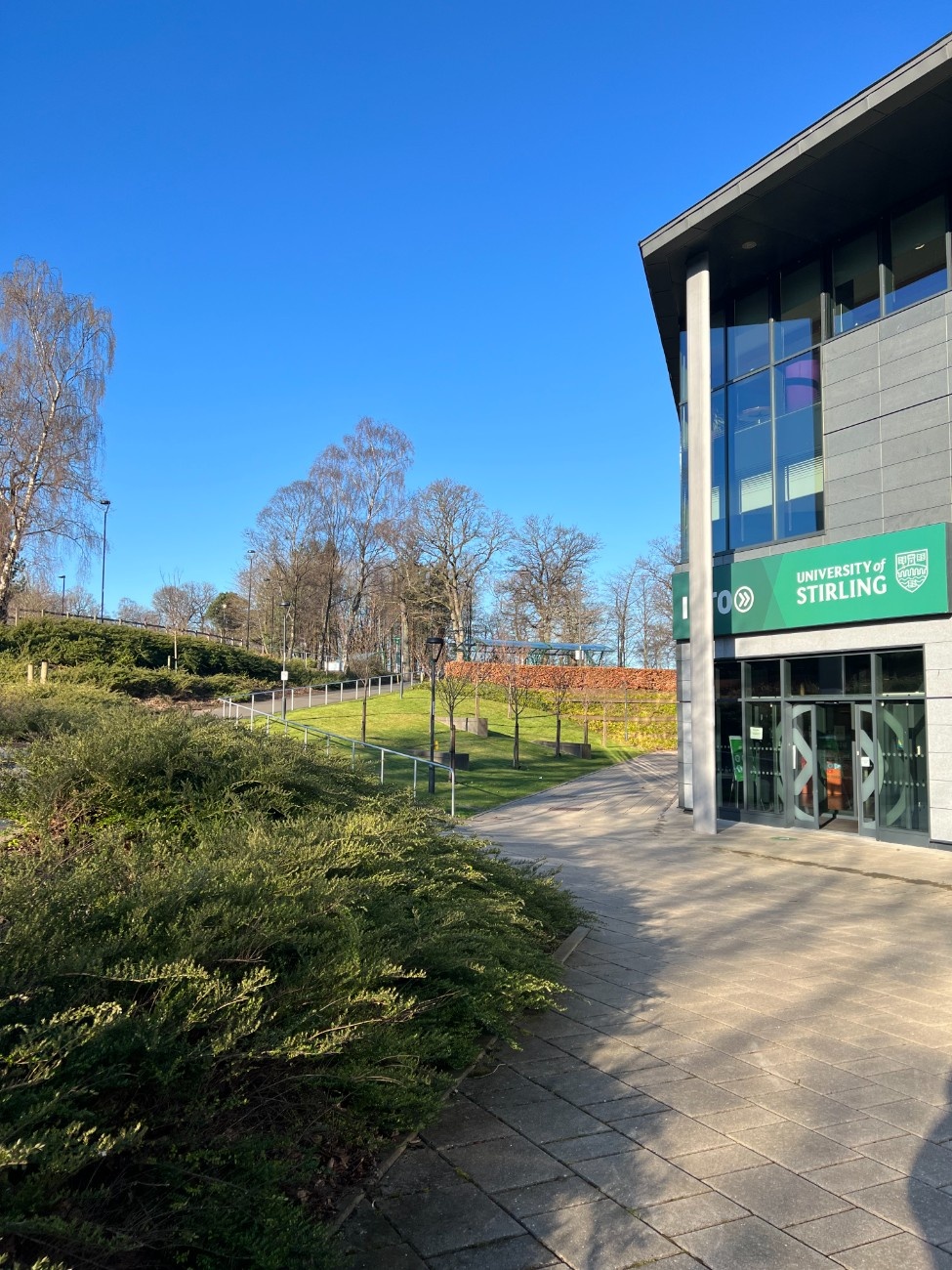
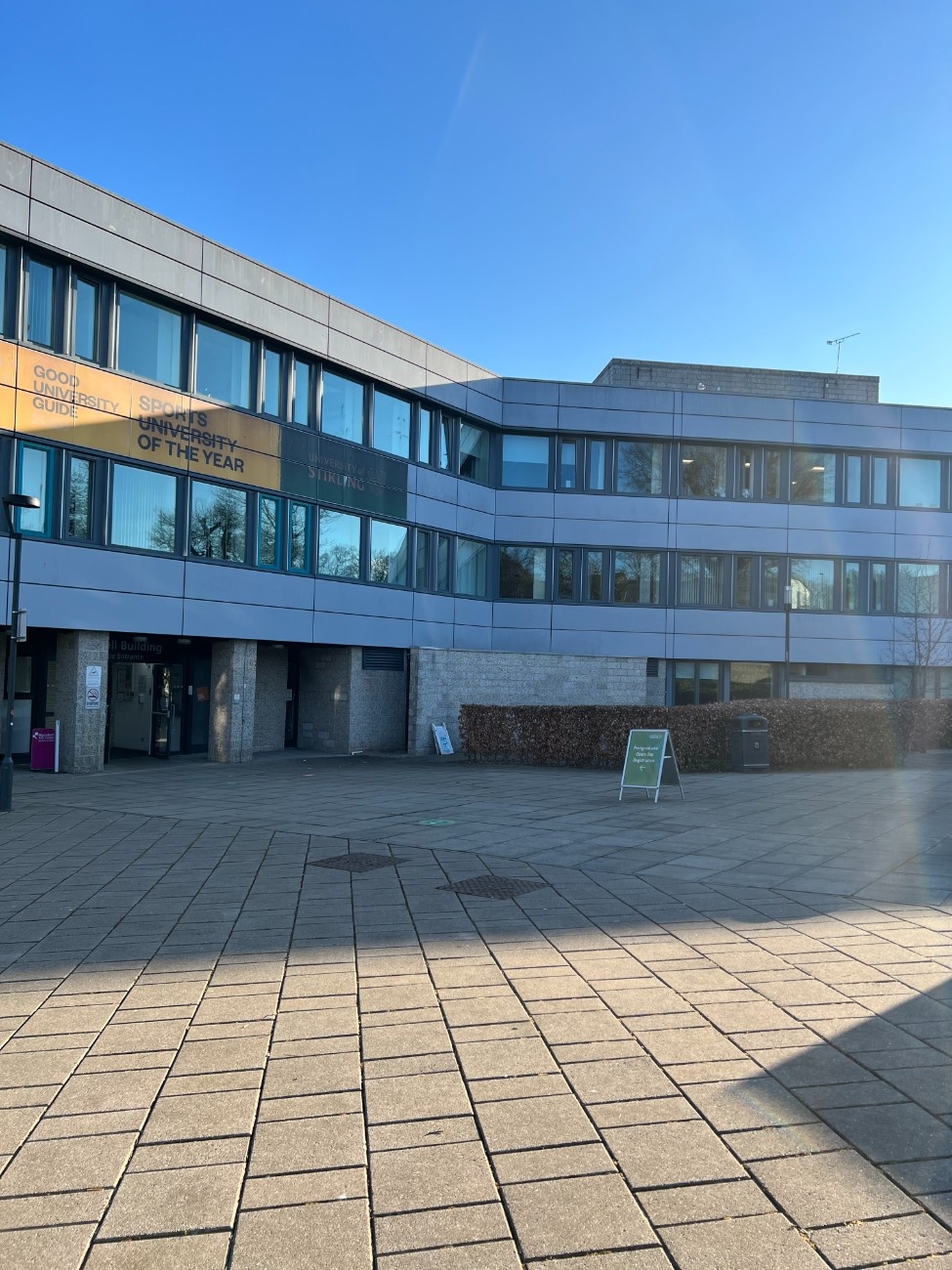
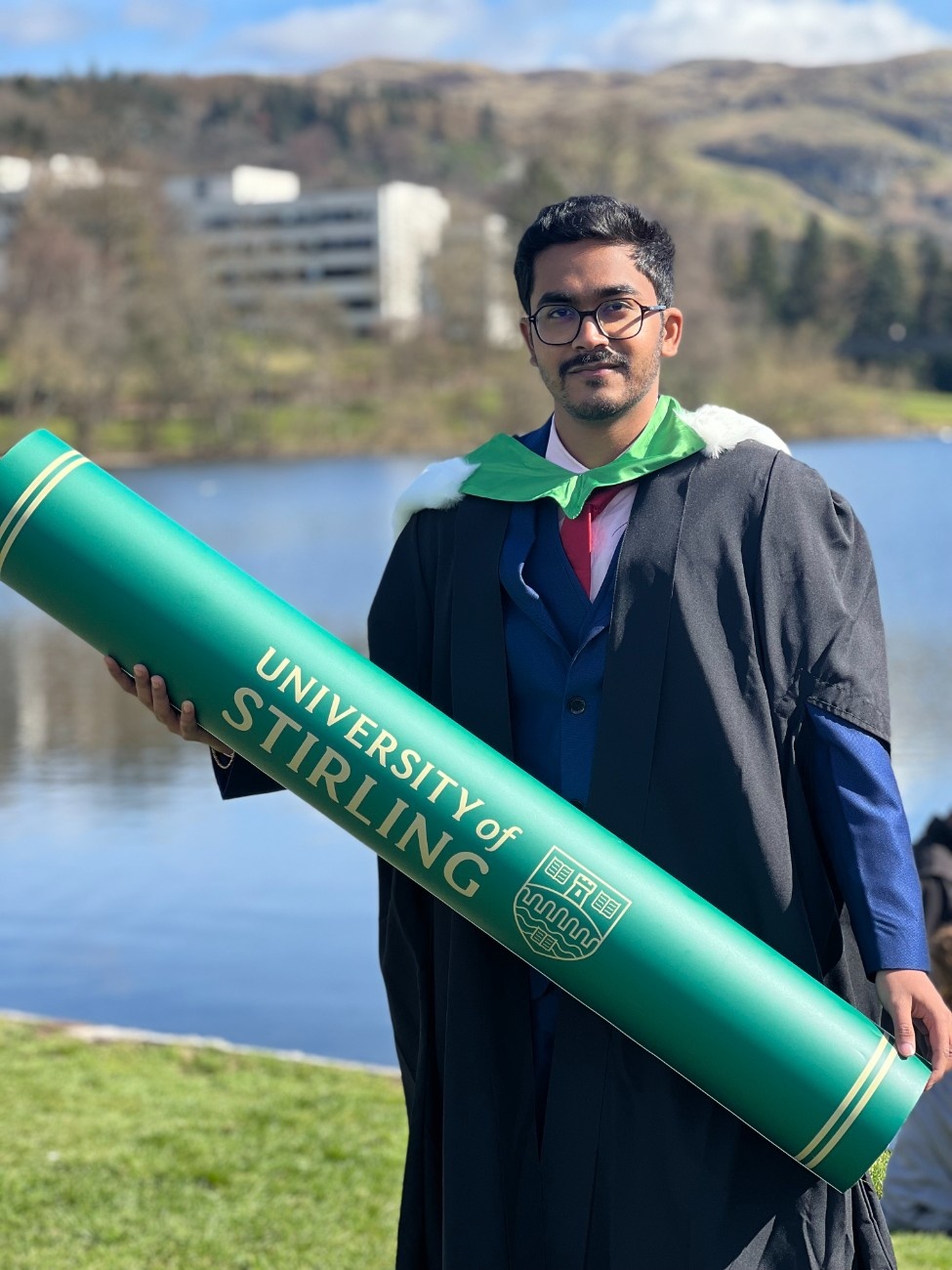
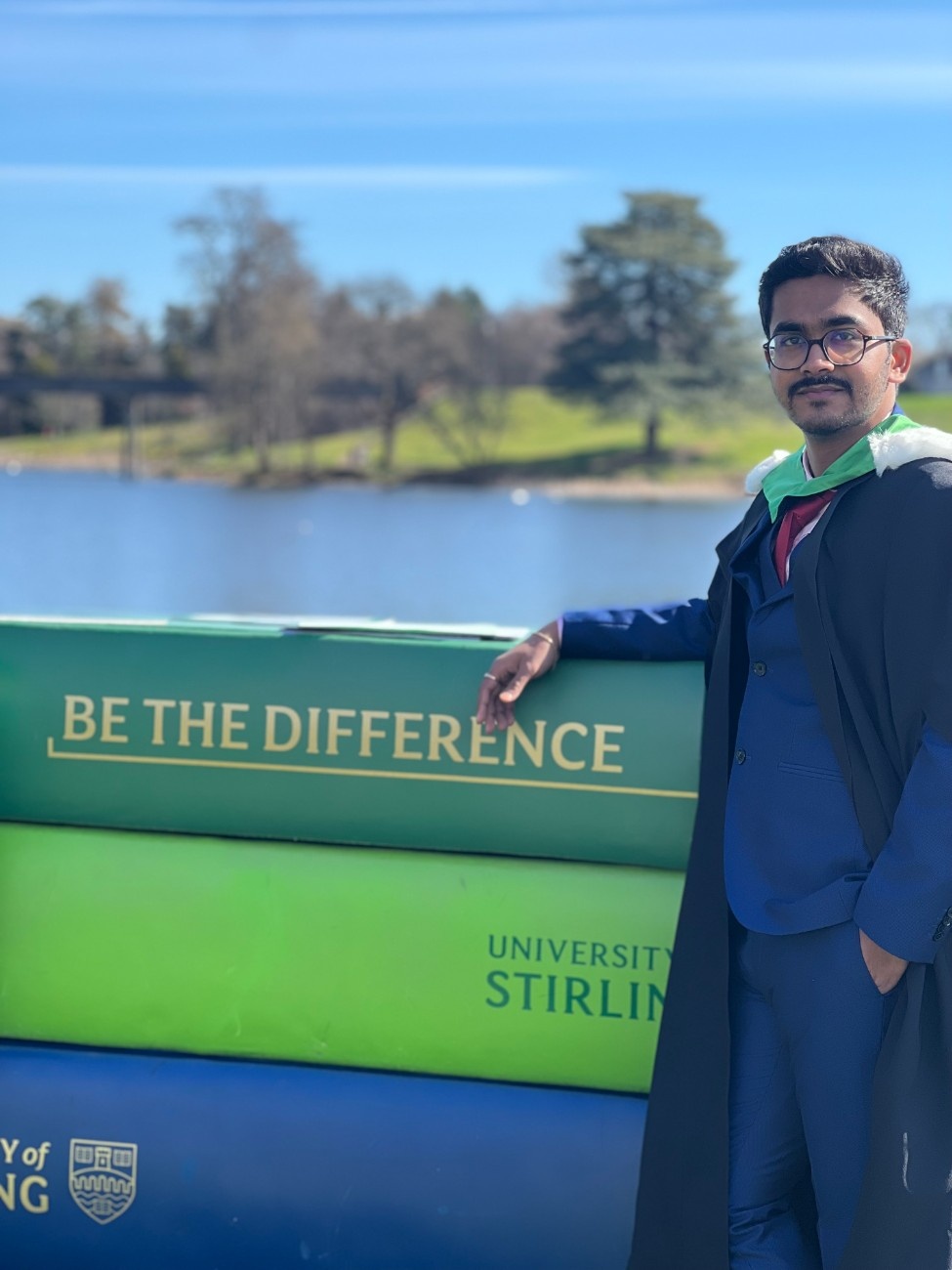
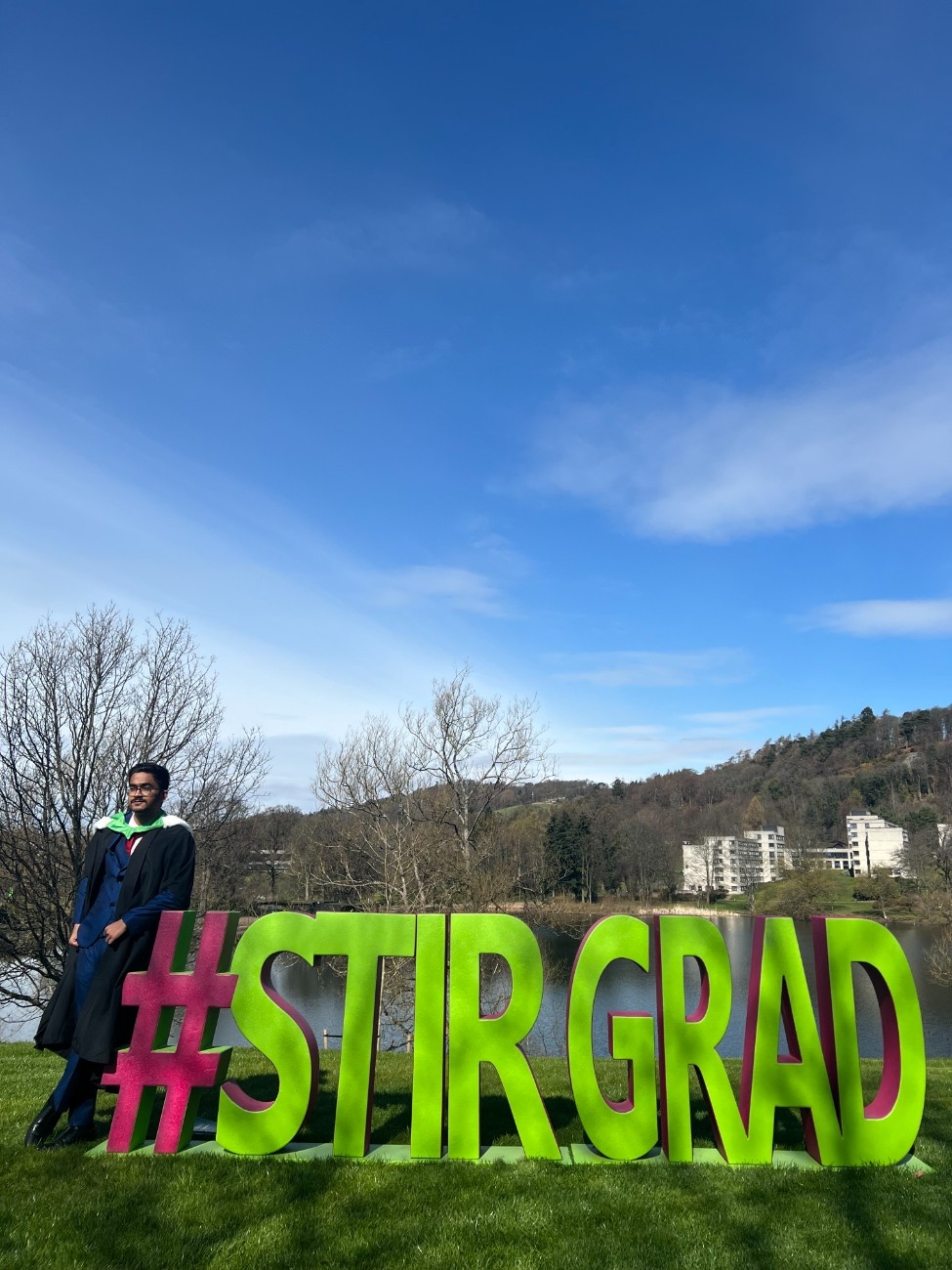
- The picturesque Campus
- Excellent Academic Support
- Strategic Professional Support from Alumni Relation, Careers and Work Based Learning Team
Dislikes
- It’s really hard for me to find out negatives about the University of Stirling as I call the experience as a Paradigm Shift in my life.
- The distance from City Centre and all popular shops like Tesco, Waitrose, Aldi, LiDL is more
Course Curriculum
10
- It was a mix of both. There were enough practical elements like Site Visit, Work Based Learning etc which impressed me thoroughly.
- The course was not easy at all. It demanded serious commitment, regular study and research ability.
- The practical elements were the most positive aspects of my course, as they made me more industry-ready.
- There were a few too many assignments within a very short period, which seemed slightly negative to me initially.
- We had classes 4 days a week from 10:45. So 3-4 classes each day and they were an hour long usually.
- We had 35-40 students. We had 4-5 Indian students in my course.
Admission Experience
-
I applied for the following universities:
- Oxford Brookes University (Shortlisted)
- Anglia Ruskin University (Shortlisted)
- University of Stirling (Admitted)
- I received offer letters from all 3 universities mentioned above but I decided to go for the University of Stirling.
- I haven’t received rejection from any University
- Although I haven’t personally faced any rejection, as a Career Coach and Study Abroad Consultant I have seen some of my students face the same.
- The primary reason I found was the lack of honesty and authenticity in their application forms. Some of them created their cover letters through AI and simply pasted those in the application – without making any change.
- Some of my students didn’t properly go through the entry requirements before submitting their applications, which caused rejections too.
- Factors that influenced my decision:
- The other 2 Universities were from England, whereas the University of Stirling was from Scotland. I learnt and heard firsthand that Scotland provided better education than England, which influenced my decision.
- While researching, I realised that Living Cost is far less in Scotland (especially in Stirling) than in England. This piece of information was key in my decision-making.
- The picturesque campus and its ranking, both for the course I was pursuing and for the student support, were excellent, which motivated my decision.
- The quality of life and safety were far better in Scotland than in England. It heavily influenced my parents while decision-making.
- I read many positive testimonials from International Students which made me confident about my choice.
- I knew that I might need to travel to bigger cities in search of a job. The location of Stirling and its close distance from Bigger Cities like Dundee, Glasgow and Edinburgh was another reason to choose Stirling, which is cheaper yet better placed.
- Admission Process:
- I applied at the University of Stirling with my CV, academic transcripts and the motivational letter.
- After submission it went to the review team and I received regular updates from the team.
- The team asked for some more documents like my Passport, Reference Letters etc.
- Then they were satisfied and provided me with a conditional offer letter, which I fulfilled by proving the financial and language requirements they asked for. I also paid the CAS fee, which led to receiving the Unconditional offer letter and the CAS. It was necessary for submitting my student visa.
- Language Requirements:
- The University of Stirling asked for IELTS 6.5 or certificates from my previous University on my language proficiency.
- As my previous study and the assessments were all in English, I easily submitted a certificate from my previous University in India.
- They were satisfied and didn’t ask for IELTS.
- Experience:
- My admission experience was just top-notch. The only issue I faced was the lack of knowledge of the consultant here in India about life and work in the UK.
- The knowledge they shared pre-departure was mostly vague, on a surface level and not so accurate.
- 1: I went for the 2019 september intake.
- I decided to go to the UK during January 2019, and the closest intake was the September Intake and this was the main reason behind choosing september intake.
- I also wanted to avoid the January intake, as it would be very cold in January.
- The Admission process took around 3 to 4 weeks. But it is always advised to have more time in hand.
Faculty
10
- We had 5 faculty members in the course. So it was 1:7 which was pretty decent.
- Having a good number of faculty helped them carefully look after individual students. There was special support for international students as well, which made me feel looked after.
- The teaching was slightly different from what I had in India. It was not very thorough or deep. They introduced us to the concepts and directed us towards further independent reading.
- They provided enough materials to broaden our understanding of the topics.
- The purpose was to make us independent and capable of doing research work. Studying at University is never enough to secure jobs. You need to have either part-time or internship experience to support your degree.
- Faculty members generally refer students to the Careers office, which supports students with finding part-time jobs or internships.
- They helped me bag a paid internship with a Scottish Government funded charity.
- Mona Moufahim was one of my best faculty. Her way of teaching really resonated with me. Moreover, she was really easy to work with.
Campus Life
10
- The University of Stirling has 1 campus and it is called the Stirling Campus.
- Library, GO, Swimming Pool, Gym, Study Zone, Cafe, Theatre, Food Court, Co Op for grocery, Playground, Student Union, Indoor Sport etc.
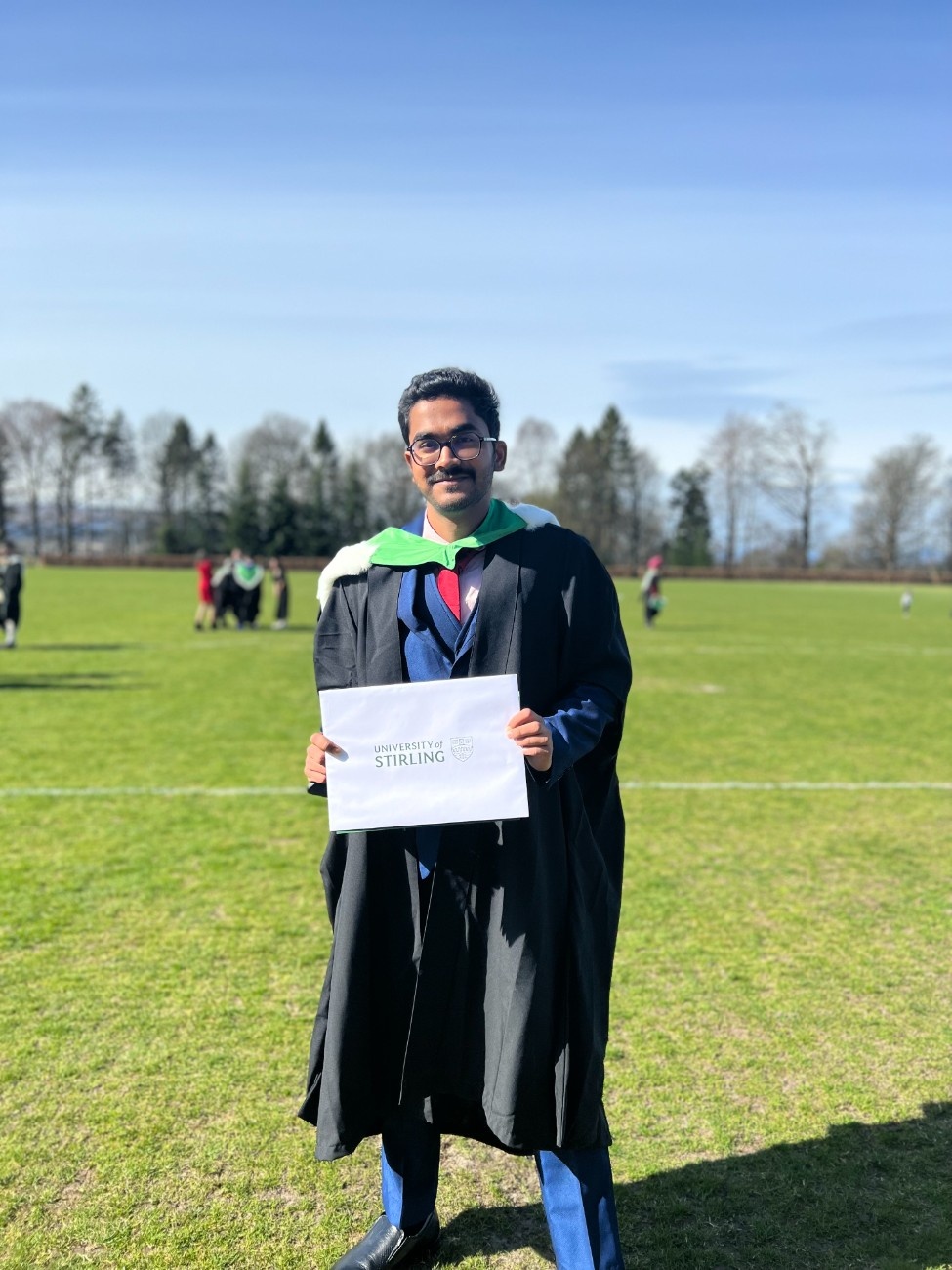
- Graduation Ceremony and Welcome Week are the main campus ceremonies. You can also enjoy Christmas and Holi on campus.
- There are multiple sport clubs and you can find all about them from the Student Union.
- University of Stirling is the best sports University in the UK and therefore there are many sports activities taking place throughout out the year like Basket Ball, Football, Swimming, Running etc.
- There are movie nights, book reading evenings, etc.
Part Time Jobs
- Qualifying for TA, RA or DA is quite competitive. You need solid motivation to convince faculty. Usually 1-3 students might secure that.
- Depends on the job. But usually between £11 and £15 per hour.
- Working at Cafe, food court or working in the Library. Working as Student Ambassador is another really great option. Pay ranges are usually £10 - £12 per hour.
- 20 hours a week during term time. Full-time during holidays.
- On-campus jobs are slightly more difficult as compared to off-campus jobs. It’s because of the availability of those on-campus jobs.
- £10-£12 per hour. If you are proactive and have excellent communication skills, you can easily manage part-time jobs while studying. If you are looking for an aligned job or internship, then it is slightly competitive. Search for jobs, match the job description to your CV, drop your CV and Cover Letter, wait for the outcome, attend the interview, and send the required documents and references.
Placement
10
- More than 50%, definitely. Depends on each cohort and their capabilities.
- £24000-£30000 per annum at the start.
- Internships, Career Fair, University Networking Event, searches on LinkedIn, and Indeed.
- I personally had a placement opportunity which was very smooth and supportive. I started working at the University of Dundee. My friends joined: Amazon, Restaurants, Donner Kebab, HSBC, Oxford Publishing, Penguin Random house etc. Their roles were Customer Service Reps, copywriters, Editor, Book Designer etc.
- Universities, Penguin Random house, Oxford Publishing house, Simon and Schuster
Accommodation
Off Campus
8
- We took a huge risk by not booking any prior accommodation. After reaching Stirling, we started collecting information from locals and eventually we found an Indian restaurant – where the owner offered us the shared living I previously mentioned.
- But it is highly suggested to book accommodation beforehand through trusted online platforms. The university does support finding accommodations too.
- £265 for shared living – one bedroom, shared kitchen and dining and shared bathroom. It included electricity and wifi.
- Accommodations in the UK are in high demand. You can find many articles on accommodation shortages across the UK. Therefore, you might struggle if you don’t book early. The issue I faced was that I was not getting a decent value-for-money place. Places were either not decent or too high-priced.
- Try and search Rent A Home or Gumtree. Speak to current students. Speak with the University, search for facebook groups.
- My accommodation was in the city centre, which was a 10 min bus ride.
- Most Indians stay in the city centre as opposed to the University campus. City centres provide more job opportunities, which influence the decision heavily.
Exams
- IELTS
- CV, Statement of Purpose, Passport, Previous Academic Transcripts, LOR
- They didn’t take any interview from me. They decided my outcome based on the written documents I submitted and my previous academic performance.
- Therefore, I won’t be able to share any personal story here. But if you apply for research degrees like MRES or PhD, then an interview is a must.
Fees
- My tuition fee was £12000 approx. I took private accommodation in a shared flat and it cost me £265 a month, including electricity and wifi. I also received a £3000 scholarship, which brought my course fee down to £9000.
- There were multiple payment options and the University was really flexible. I could’ve paid it semester-wise or monthly too but I opted for a one-off payment of the whole tuition fee.
- My rent was £265 including electricity and wifi.
- My food and grocery cost was approx £150-£200.
- I bought a bus card for my travel between the City Centre and the University and it cost me around £36 for a month – for unlimited travel on the route mentioned. For entertainment, I used to spend £100 monthly during my initial days, which included occasional visits to movies and dining out at MacD, KFC, Greggs or Costa. Restaurants were quite costly as compared to India. A decent three-course meal would easily cost £20-£30.
Scholarship
- I received a country-specific scholarship which was £3000. The eligibility criteria were:
- I had to be an Indian which I was and I think they wanted me to have 55%+ in my previous education which I had too.
- £3000. Yes, some of my peers who were from India, Pakistan or Bangladesh received the same scholarship.
- Almost all International students receive some kind of scholarship depending on their eligibility. Typical award amount is between £2000 and £3000. There was another scholarship called the Saltire Scholarship, which was approx. £8000. Although I applied, I was not selected.


