





Getting into the University of Cambridge has always been a dream for Indian students. And in 2026, that dream just got a little more real. Cambridge has officially updated its entry requirements for Indian students in March 2026, now accepting CBSE Class XII qualifications for a range of undergraduate courses at select Colleges.
This is a big deal. Earlier, most Indian students had to rely on A Levels, IB, or AP tests to even be considered. Now, with the right CBSE grades and the right course, you can apply directly. Cambridge is ranked in the top 10 universities in the world (QS World University Rankings 2026), and on average, it receives about 6 applications per place. So yes, it is competitive but not impossible.
(Conversion rate used in this article: 1 GBP = approximately ₹107 as of April 2026)
- What Does Cambridge Actually Look for in Indian Students?
- Cambridge Admission Requirements for Indian Students (2026)
2.1 CBSE Class XII: What Score Do You Need?
2.2 What If You Are Applying for Science or Tech Courses?
- English Language Requirements at Cambridge
- Admission Tests: What You Need to Take
- Key Dates and Deadlines for Cambridge 2026 Application
- How the Cambridge Application Process Works: Step by Step
- The Cambridge Interview: What to Expect
- Cambridge Tuition Fees for International Students (2026 Entry)
- Living Costs at Cambridge: What You Should Budget
- Financial Support Available for Indian Students
- Cambridge's College System: What Indian Students Should Know
- FAQs: Cambridge University Admission for Indian Students
What Does Cambridge Actually Look for in Indian Students?
University of Cambridge does not just want toppers. It wants students who can think, question, and go beyond what is taught in class.
Here is what the university looks at when reviewing your application:
- Academic grades in your qualifying exam (CBSE Class XII or equivalent)
- Admission test scores relevant to your chosen course
- Personal statement on your UCAS application
- School reference submitted by your teacher or counsellor
- Interview performance if you are shortlisted
Note: Your grades are the starting point, but the interview and admission test carry serious weight.
Cambridge Admission Requirements for Indian Students (2026)
CBSE Class XII: What Score Do You Need?
Cambridge updated its India-specific guidance in March 2026. Here is what you need to know.
CBSE Class XII is accepted by select Colleges for the following courses:
- Anglo-Saxon, Norse, and Celtic
- Archaeology
- Architecture
- Asian and Middle Eastern Studies
- Classics
- Design
- Education
- English
- Environment, Law, and Economics
- Geography
- History and Modern Languages
- History and Politics
- History of Art
- History
- Human, Social, and Political Sciences
- Law
- Linguistics and Modern Languages
- Modern and Medieval Languages
- Music
- Philosophy
- Theology, Religion, and Philosophy of Religion
- Veterinary Medicine
Note: CBSE Class XII is not accepted for science-heavy courses like Engineering, Natural Sciences, Computer Science, Economics, or Medicine. For those, you will need A Levels, IB, or 5+ AP Tests at Score 5.
Minimum grade requirement: A1 A1 A1 A1 A1 in subjects relevant to your chosen course.
That means you need the highest possible grade in every subject. There is no room for anything less.
Colleges that accept CBSE Class XII include: Clare, Downing, Fitzwilliam, Girton, Gonville & Caius, Hughes Hall, Homerton, Jesus, Lucy Cavendish, Murray Edwards, Pembroke, Peterhouse, Queens', Robinson, Selwyn, Sidney Sussex, St Catharine's, St Edmund's, Trinity Hall, and Wolfson.
Note: Not all 31 Cambridge Colleges accept CBSE. If you want to apply to a College not on this list, you will need additional qualifications like A Levels or IB.
What If You Are Applying for Science or Tech Courses?
If your dream is Engineering, Natural Sciences, Computer Science, Economics, or Medicine, CBSE alone will not work.
You will need one of these:
- A Levels (most preferred)
- International Baccalaureate (IB)
- 5 or more AP Tests at Score 5, along with CBSE A1 A1 A1 A1 A1 grades
Cambridge strongly recommends contacting your shortlisted College directly if you plan to apply with APs plus CBSE.
English Language Requirements at Cambridge
Since India is not on the UK Home Office's list of majority English-speaking countries, you will need to prove your English skills.
Here are the accepted tests and minimum scores:
| Test | Minimum Score |
|---|---|
| IELTS Academic | 7.5 overall, with 7.0 or above in each section |
| Cambridge C2 Proficiency | 200 overall, no element below 185 |
| Cambridge C1 Advanced | 193 overall, no element below 185 |
| TOEFL IBT (taken before 21 Jan 2026) | 110 overall, 25 in each section |
Important Note: TOEFL IBT taken after 21 January 2026 is no longer accepted at Cambridge. If you are planning to take TOEFL, check with your College before registering.
Cambridge may also assess your English through your interview performance, personal statement, and school background. The English language requirement for interview is currently under review and will be updated in May 2026.
Admission Tests: What You Need to Take
Almost every course at Cambridge requires a separate admission test. Some tests need advance registration, while others are arranged by the College after you are shortlisted for interview.
Here is a quick breakdown:
| Course | Test Required | Registration Needed |
|---|---|---|
| Engineering, Natural Sciences, Veterinary Medicine, Chemical Engineering | ESAT (Engineering and Science Admissions Test) | Yes |
| Mathematics, Computer Science, Economics | TMUA (Test of Mathematics for University Admission) | Yes |
| Medicine | UCAT (University Clinical Aptitude Test) | Yes |
| Law | LNAT (National Admissions Test for Law) | Yes |
| History, Geography, Philosophy, HSPS, Linguistics, etc. | College Admission Assessment | No (arranged by College) |
| Archaeology, Education, History of Art, Environment Law & Economics | No test required | — |
Note on ESAT: This is a new test introduced by Cambridge for science and engineering applicants. It replaced the older NSAA and ENGAA tests. It covers Mathematics and science subjects relevant to your course.
Note on TMUA: This test checks your mathematical thinking and reasoning, not just calculation. It is used for Maths, Computer Science, and Economics applicants.
Key Dates and Deadlines for Cambridge 2026 Application
Getting the dates right is just as important as getting the grades right. Missing a deadline means your application will not be considered.
| Date | What Happens |
|---|---|
| 28 April 2026 | 2027 entry courses go live on UCAS |
| 12 May 2026 | You can start filling your UCAS application |
| 1 June 2026 | ESAT and TMUA bursary/access arrangement applications open |
| 23 June 2026 | UCAT booking opens (for Medicine applicants) |
| 20 July 2026 | ESAT and TMUA booking opens |
| 1 September 2026 | UCAS applications can be submitted from this date |
| 15 October 2026 | UCAS application deadline (6pm UK time) |
| 22 October 2026 | My Cambridge Application deadline (6pm UK time) + Transcript submission deadline |
| 12–16 October 2026 | ESAT and TMUA test window |
| November 2026 | Interview invitations sent to shortlisted candidates |
| 7–18 December 2026 | Main interview period |
| 27 January 2027 | Results announced for October applicants |
Note on "My Cambridge Application": This is a separate form that Cambridge requires in addition to your UCAS application. It is specific to Cambridge and must be submitted by 22 October 2026. Most international applicants also need to submit a transcript by this date. Getting a transcript can take several weeks, so start early.
How the Cambridge Application Process Works: Step by Step
Here is the full journey from start to finish:
Step 1: Choose your course and College. Check the course page carefully. Confirm that your qualifications are accepted and that the College you want accepts CBSE (if that is your qualification).
Step 2: Register for admission tests. If your course requires ESAT, TMUA, UCAT, or LNAT, register before the deadlines. Missing registration means you cannot sit the test.
Step 3: Submit your UCAS application by 15 October 2026. Include your personal statement and school reference. You can only apply to Cambridge or Oxford, not both, in the same year.
Step 4: Submit My Cambridge Application by 22 October 2026. This is the extra Cambridge-specific form. Also, submit your academic transcript by this date.
Step 5: Take your admission test (October 2026) ESAT and TMUA are taken between 12–16 October 2026.
Step 6: Wait for interview invitation (November 2026). If shortlisted, you will be called for an interview. Most invitations go out in November.
Step 7: Attend your interview (December 2026). Interviews run from 7 to 18 December 2026. They can be online or in person, depending on your College.
Step 8: Receive your decision (January 2027). Results for October applicants are announced on 27 January 2027.
For admissions criteria and deadlines, visit University of Cambridge Admission
The Cambridge Interview: What to Expect
The Cambridge interview is not a regular HR-style interview. It is an academic conversation.
You will typically have 1 to 2 interviews lasting a total of 35 minutes to 1 hour. Some applicants may have up to 3 or 4 interviews depending on the subject and College.
What they test in the interview:
- Your understanding of the subject you applied for
- How you think through new problems you have never seen before
- Your ability to reason, question, and engage with ideas
- Your curiosity and enthusiasm for the subject
You may be given material to read before the interview and then asked to discuss it. For science and maths courses, you may be asked to solve problems and show your working.
Interviews can be online or in person. The format depends on which College is assessing your application. You cannot usually request a specific format.
Important: Cambridge does not endorse any paid interview coaching services. All official guidance is available free on their website.
Cambridge Tuition Fees for International Students (2026 Entry)
As an Indian student, you will be classified as an international student and will pay international tuition fees. These fees are fixed for the entire duration of your course once you enrol.
| Course Group | Courses | Annual Tuition Fee (GBP) | Annual Tuition Fee (INR) |
|---|---|---|---|
| Group 1 | Arts, Humanities, Law, Economics, History, etc. | £29,052 | ~₹31.1 lakh |
| Group 2 | Mathematics | £32,406 | ~₹34.7 lakh |
| Group 3 | Architecture, Design, Geography, Music | £38,010 | ~₹40.7 lakh |
| Group 4 | Engineering, Computer Science, Natural Sciences, etc. | £44,214 | ~₹47.3 lakh |
| Group 5 | Medicine and Veterinary Medicine | £70,554 | ~₹75.5 lakh |
On top of tuition, international students also pay a College fee every year. This covers educational, domestic, and pastoral services provided by your College. College fees vary between Colleges and are published in the official fee document each year.
For fees, funding, and hidden costs, see University of Cambridge
Living Costs at Cambridge: What You Should Budget
Cambridge has shared estimated monthly living costs for 2026–27, worked out in partnership with the Cambridge Students' Union.
| Expense | Monthly Cost (GBP) | Monthly Cost (INR) |
|---|---|---|
| Accommodation | £865 | ~₹92,555 |
| Food | £195 | ~₹20,865 |
| Personal items | £80 | ~₹8,560 |
| Social activities | £95 | ~₹10,165 |
| Study costs | £20 | ~₹2,140 |
| Miscellaneous | £50 | ~₹5,350 |
| Total | £1,305/month | ~₹1,39,635/month |
For a 9-month academic year, you should budget around £11,745 (~₹12.6 lakh) for living costs alone.
For a full 12-month stay, the estimated cost is £15,660 (~₹16.8 lakh).
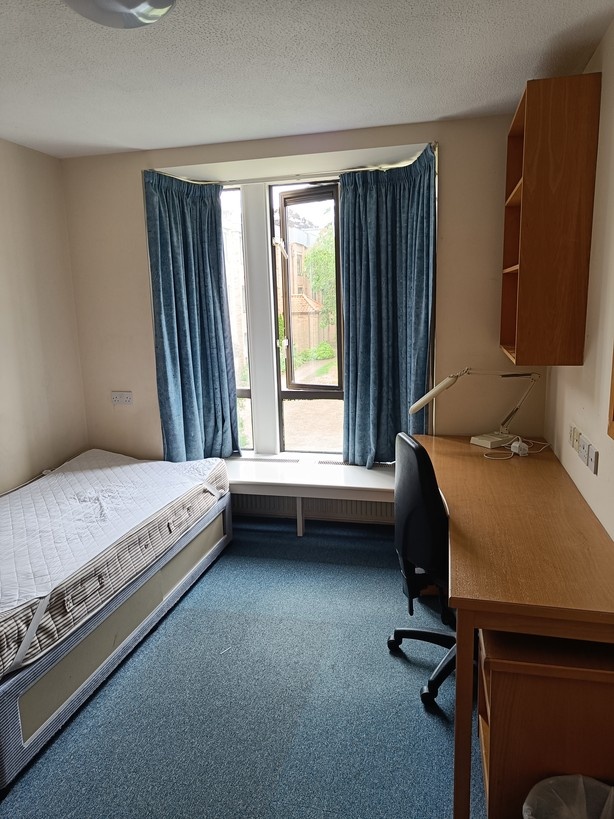
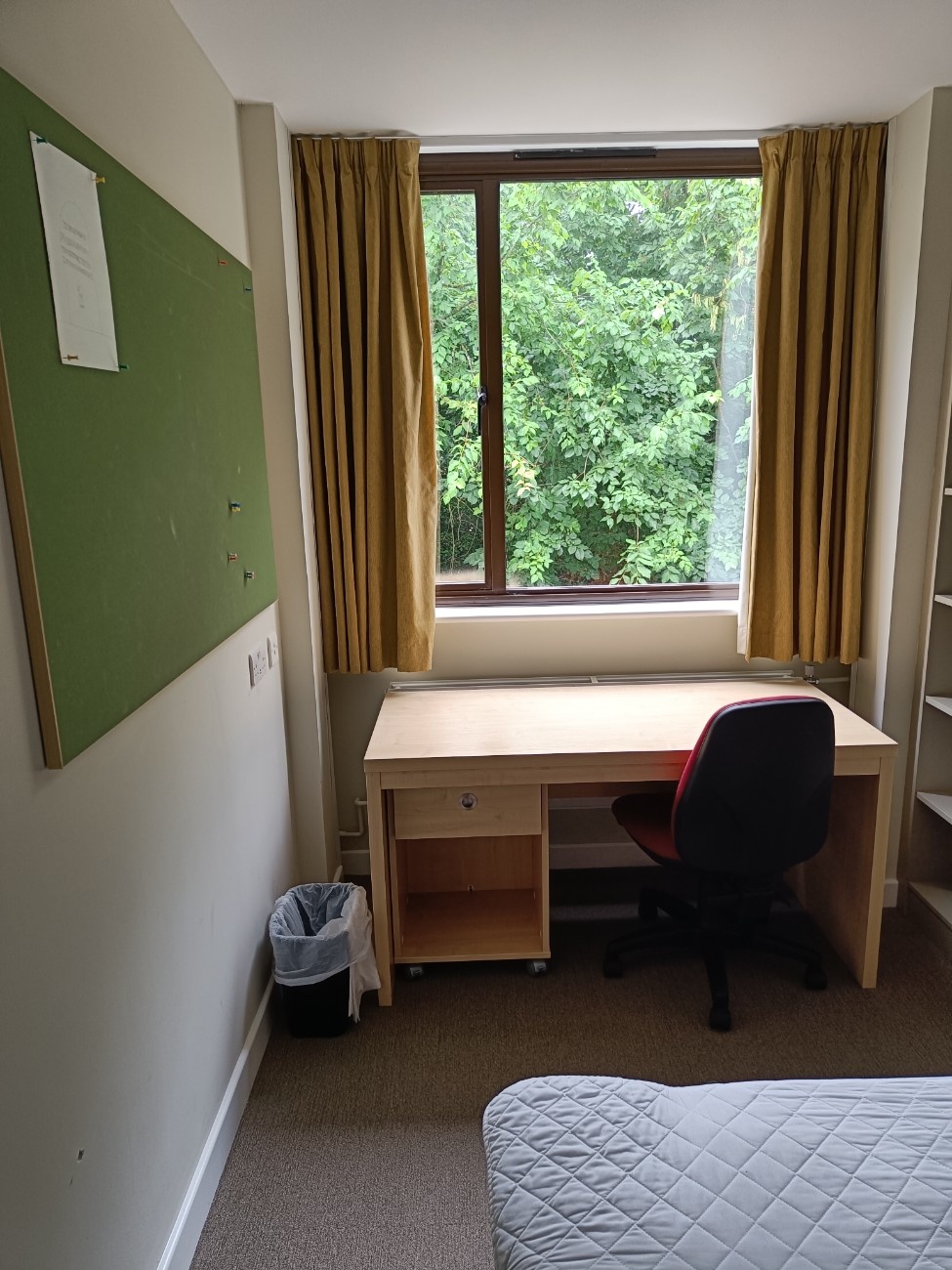
Most students live in College accommodation, which means you do not pay rent for a full year. Contract lengths range from 27 to 39 weeks depending on the College.
Financial Support Available for Indian Students
Full scholarships at Cambridge are rare. Most support is partial and means-tested.
Here is what is available:
- Cambridge Trust Awards: Offered to international students who have already received a College offer. You cannot apply before getting an offer. All awards are means-tested. Check the Cambridge Trust website for country-specific options.
- College Awards: Some Colleges offer partial financial support for international students. Contact your College's admissions office directly for details.
- International Disabled Students' Fund: Available for international students with disabilities who need academic support.
Note: There is no dedicated scholarship for Indian students at the undergraduate level from Cambridge itself. However, Indian students can explore external scholarships like the Inlaks Shivdasani Foundation or government schemes like the National Overseas Scholarship alongside Cambridge Trust awards.
For scholarships and financial aid options, explore University of Cambridge Scholarships
Cambridge's College System: What Indian Students Should Know
Cambridge is not one single university building. It is made up of 31 Colleges, and each College is a separate community with its own accommodation, dining hall, and support system.
When you apply, you apply to a specific College, not just to Cambridge. Each College sets its own offer levels and may have slightly different requirements.
A few things to keep in mind:
- You can only apply to one College per application
- If you do not want to choose, you can make an open application and Cambridge will assign you to a College
- Entry requirements and interview formats can differ between Colleges
- You cannot apply to both Cambridge and Oxford in the same year
Note on "Open Application": This means you do not pick a specific College. Cambridge assigns you to one that has fewer applications for your course. The risk is that you may be placed in a College with higher offer requirements or a different interview format than you prefer.
FAQs
Ques. Can I get into Cambridge with just my CBSE Class XII marks?
Ans. Yes, but only for select courses and only at specific Colleges. You need A1 in all relevant subjects. For science and tech courses, CBSE alone is not enough.
Ques. Is CBSE Class XII accepted for Engineering or Computer Science at Cambridge?
Ans. No. For these courses, you need A Levels, IB, or 5+ AP Tests at Score 5 along with CBSE grades.
Ques. Do I need to give IELTS even though I studied in an English-medium school in India?
Ans. Yes. India is not on the UK Home Office's majority English-speaking country list, so an English test is required. The minimum is IELTS 7.5 overall with 7.0 in each section.
Ques. What is the UCAS application deadline for Cambridge 2026?
Ans. 15 October 2026 at 6pm UK time. This is a hard deadline with no exceptions for most applicants.
Ques. What is "My Cambridge Application", and is it different from UCAS?
Ans. Yes, it is a separate form that Cambridge requires in addition to UCAS. The deadline is 22 October 2026. Most international applicants also need to submit a transcript by this date.
Ques. Can I apply to both Cambridge and Oxford in the same year?
Ans. No. You can only apply to one of the two in any given application cycle.
Ques. How long is the Cambridge interview and what does it involve?
Ans. Most applicants have 1 to 2 interviews lasting 35 minutes to 1 hour in total. It is an academic discussion, not a personality test. You may be given problems to solve or material to read and discuss.
Ques. Are there scholarships for Indian students at Cambridge?
Ans. Full scholarships are rare. The Cambridge Trust offers partial, means-tested awards to students who already have a College offer. There are no India-specific undergraduate scholarships from Cambridge directly.
Ques. When will I find out if I got into Cambridge?
Ans. If you applied in October, results are announced on 27 January 2027.
Ques. What is the total cost of studying at Cambridge for an Indian student?
Ans. Tuition fees range from £29,052 to £70,554 per year (₹31 lakh to ₹75.5 lakh), plus living costs of around £11,745 per year (₹12.6 lakh) for 9 months. Total annual cost can range from roughly ₹44 lakh to ₹88 lakh depending on your course.



interested in this College ?
Follow & Share this college to get information about admission.



Comments