

MasterClass: Redefining Online Learning Through Celebrity Expertise

Education has changed more in the last two decades than in the previous two centuries. Traditional classrooms, rigid schedules, and geographical limitations no longer define how people learn. The rise of the internet, streaming technology, and digital platforms has transformed education into an accessible, flexible, and personalized experience. Amid this transformation, one platform captured global attention by combining entertainment, inspiration, and education into a single premium learning experience: MasterClass.
MasterClass is not just another online learning platform. It represents a new category of education where world-renowned experts teach skills, philosophies, and life lessons directly to learners across the globe. Instead of learning filmmaking from an anonymous instructor, students can learn from Martin Scorsese. Instead of reading about leadership theories, they can hear directly from former leaders, CEOs, athletes, or cultural icons. This celebrity-led educational approach created a unique identity that separated MasterClass from traditional e-learning competitors.
The platform became especially popular during periods when remote learning and self-improvement surged worldwide. People began searching for meaningful hobbies, professional development opportunities, creative inspiration, and practical skills from the comfort of their homes. MasterClass offered all of these in a polished, cinematic format that felt closer to a Netflix documentary than a conventional online course.
However, MasterClass is more than just glamorous production and celebrity instructors. The platform represents a broader shift in how modern audiences perceive education. Today’s learners value storytelling, inspiration, flexibility, and emotional connection alongside technical knowledge. MasterClass taps into this psychological and cultural evolution by making learning aspirational and engaging.
This blog explores the origins, business model, teaching philosophy, production quality, strengths, weaknesses, industry impact, and future of MasterClass. It also examines whether the platform truly delivers educational value or primarily functions as premium infotainment. By understanding MasterClass in depth, learners and educators alike can better appreciate how digital education continues to evolve in the modern world.
The Origin and Rise of MasterClass
MasterClass was founded in 2015 by David Rogier and Aaron Rasmussen with the goal of democratizing access to world-class knowledge. The founders recognized an important reality: millions of people admire highly accomplished individuals but rarely get the opportunity to learn directly from them.
Historically, mentorship from elite performers, artists, athletes, entrepreneurs, or innovators was accessible only to a privileged few. Aspiring filmmakers might study famous directors through interviews or books, but they could not attend private workshops with them. MasterClass aimed to bridge that gap through technology.
The platform launched with a simple but powerful concept: invite globally recognized experts to teach online classes in their fields of expertise. Early instructors included celebrities and respected professionals who already possessed strong public credibility. The idea immediately attracted attention because it merged entertainment culture with education.
Unlike many online learning startups that focused primarily on affordability or technical certification, MasterClass focused on aspiration. The courses were not marketed merely as educational tools; they were presented as opportunities to learn from legends.
This positioning helped MasterClass stand out in a crowded online education market. Platforms such as Udemy, Coursera, Skillshare, and LinkedIn Learning offered practical courses taught by academics or industry professionals. MasterClass, however, introduced cinematic storytelling, emotional inspiration, and celebrity appeal.
The timing was also ideal. Digital streaming habits were rapidly increasing, and consumers had become comfortable subscribing to premium content services. Netflix transformed entertainment consumption, Spotify reshaped music access, and MasterClass applied a similar subscription logic to education.
As the platform expanded, it added instructors from diverse categories including:
- Writing
- Cooking
- Acting
- Business
- Sports
- Music
- Science
- Wellness
- Photography
- Leadership
- Politics
- Design
- Gaming
- Fashion
- Negotiation
- Entrepreneurship
The company’s rapid growth attracted substantial investor interest. Over time, MasterClass secured major funding rounds and achieved significant valuation milestones. The platform also expanded internationally and increased its content library aggressively.
The COVID-19 pandemic accelerated the growth of online education platforms worldwide, and MasterClass benefited from this trend. During lockdowns, millions of people sought productive ways to spend time, acquire skills, or pursue creative interests. MasterClass offered an appealing blend of education and entertainment during a period of social isolation.
Today, MasterClass is recognized as one of the most influential premium learning platforms in the world.
What Makes MasterClass Different?
The online education industry is highly competitive. Thousands of platforms provide video lessons, certifications, tutorials, and educational resources. Despite this crowded market, MasterClass maintains a distinctive identity because of several unique characteristics.
1. Celebrity Instructors
The biggest differentiator is the instructors themselves.
MasterClass features globally recognized experts who have achieved extraordinary success in their fields. Learners are not simply consuming generic educational content; they are gaining insights from individuals who have shaped industries and culture.
Examples include:
- Gordon Ramsay teaching cooking
- Serena Williams teaching tennis
- Hans Zimmer teaching film scoring
- Neil Gaiman teaching storytelling
- Chris Voss teaching negotiation
- Margaret Atwood teaching creative writing
- Daniel Negreanu teaching poker
- Annie Leibovitz teaching photography
This celebrity factor creates emotional engagement and curiosity. Students often enroll not only to learn a skill but also to understand how elite performers think.
2. Cinematic Production Quality
Most online courses are recorded in simple classroom environments or home studios. MasterClass courses, however, are produced with exceptional visual and audio quality.
The lessons resemble documentary films more than educational lectures. High-end cinematography, professional editing, dramatic lighting, cinematic music, and carefully designed sets contribute to a premium viewing experience.
This production quality significantly affects learner engagement. Visually appealing content feels more immersive and emotionally compelling.
3. Storytelling-Driven Education
MasterClass emphasizes storytelling rather than textbook-style instruction.
Instructors often share:
- Personal experiences
- Career struggles
- Failures and setbacks
- Creative processes
- Philosophical perspectives
- Behind-the-scenes stories
This narrative style humanizes the instructors and makes lessons memorable.
4. Inspiration as a Core Product
Traditional education platforms focus heavily on measurable skills and outcomes. MasterClass also values inspiration.
Many learners join the platform because they want motivation, creative stimulation, or exposure to elite mindsets.
A filmmaking class may not turn someone into a professional director overnight, but it can inspire them to begin creating.
5. Broad Lifestyle Learning
MasterClass covers more than career-focused subjects.
Users can explore:
- Gardening
- Cooking
- Chess
- Interior design
- Comedy
- Parenting
- Sleep science
- Wellness
- Relationships
- Adventure
This lifestyle-oriented approach broadens the platform’s appeal.
The Learning Experience on MasterClass
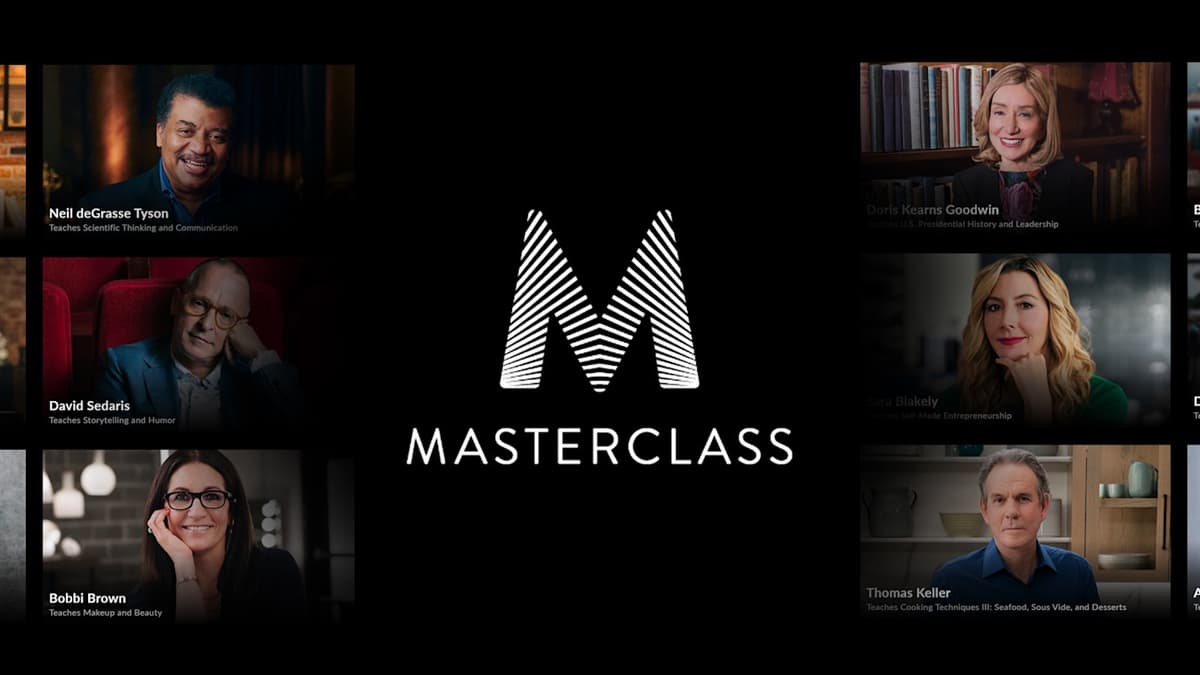
The user experience on MasterClass is carefully designed to feel smooth, elegant, and enjoyable.
Course Structure
Most MasterClass courses consist of:
- 10 to 30 video lessons
- Average lesson length of 10–20 minutes
- Downloadable workbooks
- Assignments or exercises
- Community discussions
The modular structure allows learners to progress at their own pace.
User Interface
The platform interface is sleek and modern.
Users can browse categories easily and access content across multiple devices including:
- Smartphones
- Tablets
- Laptops
- Smart TVs
The Netflix-like interface encourages exploration and binge-watching.
Workbooks and Exercises
Each course includes supplemental materials designed to reinforce learning.
These may include:
- Practice exercises
- Reading recommendations
- Templates
- Recipes
- Creative prompts
- Reflection questions
While the video content often emphasizes inspiration, the workbooks provide practical structure.
Accessibility and Flexibility
One of the platform’s greatest advantages is flexibility.
Learners can:
- Watch lessons anytime
- Learn at their own pace
- Rewatch classes repeatedly
- Access courses globally
- Explore multiple subjects simultaneously
This accessibility reflects the broader democratization of knowledge in the digital era.
The Psychology Behind MasterClass’s Success
MasterClass succeeds not only because of educational quality but also because it aligns with human psychology.
Aspirational Learning
People admire successful individuals.
When learners see world-famous experts teaching directly, they feel emotionally connected to excellence.
This aspirational effect increases motivation.
Parasocial Relationships
Modern audiences often develop one-sided emotional connections with celebrities.
MasterClass leverages these dynamics by creating intimate learning experiences where instructors speak directly to viewers.
The result feels personal and engaging.
Entertainment-Education Hybrid
Many online courses struggle with low completion rates because they feel boring.
MasterClass addresses this challenge by making lessons entertaining.
The platform understands that attention is one of the most valuable resources in the digital economy.
Advantages of MasterClass
Despite criticism from some educational purists, MasterClass offers several meaningful advantages.
Access to Elite Perspectives
One of the platform’s greatest strengths is exposure to world-class thinking.
Even if learners never reach celebrity-level success, they gain valuable insights into:
- Discipline
- Creativity
- Work ethic
- Problem-solving
- Resilience
High Engagement
The cinematic format improves learner engagement.
People are more likely to continue watching professionally produced content than low-quality lectures.
Inspiration and Motivation
Many learners report feeling energized after taking MasterClass courses.
The platform excels at reigniting curiosity and creative ambition.
Flexible Learning
The platform supports self-paced learning and works well for busy professionals or hobbyists.
Criticisms and Limitations of MasterClass
While MasterClass has many strengths, it also faces valid criticisms.
Limited Depth in Some Courses
One of the most common criticisms is that some classes prioritize inspiration over technical depth.
Advanced learners seeking detailed mastery may feel dissatisfied.
Celebrity Over Substance
Critics argue that MasterClass occasionally relies too heavily on celebrity appeal.
Not every successful performer is necessarily an effective teacher.
Lack of Accreditation
Unlike universities or certification platforms, MasterClass generally does not provide formal academic credentials.
Passive Learning Risk
Because the platform resembles streaming entertainment, some learners consume content passively.
Watching videos alone does not guarantee skill development.
Real progress requires:
- Practice
- Repetition
- Feedback
- Discipline
MasterClass vs Traditional Education
Traditional education and MasterClass serve different purposes.
Universities typically provide:
- Structured progression
- Academic rigor
- Standardized assessment
- Credentials
MasterClass emphasizes:
- Inspiration
- Exploration
- Flexibility
- Creativity
- Storytelling
Traditional education remains essential for professions requiring formal qualifications, while MasterClass is especially valuable for personal enrichment, creativity, and lifelong learning.
The Creator Economy and MasterClass
The rise of MasterClass is closely connected to the creator economy.
Platforms such as YouTube, Patreon, and TikTok transformed how creators connect with audiences.
MasterClass applies creator-economy principles to education.
Educational content now competes directly with entertainment content, meaning:
- Presentation quality matters
- Personality matters
- Storytelling matters
- Branding matters
MasterClass excels in all these areas.
The Business Model of MasterClass
MasterClass operates primarily through a subscription-based business model.
Users pay for annual access to the platform’s library of courses.
Subscription Economy
The subscription model offers:
- Predictable revenue
- Long-term customer relationships
- Scalability
- Encouragement for content exploration
High Production Investment
MasterClass invests heavily in:
- Film production
- Marketing
- Instructor partnerships
- Platform design
The company positions itself as a premium educational brand.
How MasterClass Changed Consumer Expectations
Before platforms like MasterClass, many online courses were basic and purely functional.
MasterClass proved that educational content could be:
- Cinematic
- Inspirational
- Beautifully designed
- Emotionally engaging
This influenced the broader online learning industry significantly.
Today, learners increasingly expect:
- Better visuals
- Better audio
- Strong storytelling
- Professional editing
- Engaging interfaces
Even independent educators now invest more heavily in content quality because consumer expectations evolved.
The Role of Technology in MasterClass’s Growth
Technology is central to the platform’s success.
Streaming Infrastructure
Smooth streaming allows learners to access courses instantly across multiple devices.
Mobile Learning
Short lesson formats align well with modern mobile consumption habits.
People increasingly learn in short sessions throughout the day rather than in long classroom environments.
Recommendation Systems
Like streaming entertainment platforms, MasterClass can recommend courses based on viewing behavior and interests.
This increases engagement and content discovery.
Why Storytelling Matters in Education
Storytelling is one of the most powerful educational tools.
Human beings remember narratives more effectively than isolated facts.
For example:
- A chef discussing childhood memories connected to food feels emotionally memorable.
- A filmmaker discussing failure creates empathy.
- An athlete sharing moments of defeat builds authenticity.
MasterClass uses storytelling to create emotional resonance and stronger learner engagement.
Knowledge vs Wisdom
A unique aspect of MasterClass is its emphasis on wisdom rather than raw technical information alone.
Knowledge Includes:
- Facts
- Definitions
- Processes
- Instructions
Wisdom Includes:
- Judgment
- Perspective
- Philosophy
- Experience
- Emotional understanding
MasterClass often excels at delivering wisdom-oriented learning through personal experiences and life lessons.
Creative Confidence and Motivation
Many people hesitate to pursue creative interests because they fear failure or criticism.
MasterClass helps normalize struggle by showing that even highly successful people experienced:
- Rejection
- Self-doubt
- Creative blocks
- Failure
This emotional transparency encourages learners to continue pursuing creative goals.
Branding and Premium Positioning
MasterClass uses branding extremely effectively.
The platform positions itself as:
- Premium
- Sophisticated
- Inspirational
- Artistic
This branding appears consistently across:
- Course trailers
- Website design
- Typography
- Advertising campaigns
- Cinematic visuals
The premium identity strongly influences audience perception.
The Importance of Curiosity
One of MasterClass’s greatest contributions is encouraging curiosity.
Modern education systems sometimes focus too heavily on standardized outcomes.
MasterClass encourages exploration simply because learning can be enjoyable and meaningful.
Curious individuals are more likely to:
- Adapt to change
- Build diverse skills
- Think creatively
- Continue learning throughout life
Celebrity Teachers vs Traditional Teachers
Celebrity instructors cannot fully replace traditional educators.
Traditional teachers provide:
- Personalized feedback
- Accountability
- Interactive discussion
- Structured progression
MasterClass instructors primarily provide inspiration, perspective, and insight.
Both forms of education serve valuable but different purposes.
The Future of Learning
The future of education will likely combine multiple models.
Emerging technologies may include:
- Artificial intelligence tutors
- Virtual reality simulations
- Personalized learning systems
- Community-centered learning platforms
Future educational experiences may become increasingly interactive and adaptive.
MasterClass represents an important step toward this evolving future.
Lessons Businesses Can Learn from MasterClass
The platform also offers important business lessons.
Presentation Matters
High-quality presentation dramatically affects perceived value.
Emotional Connection Matters
Consumers often connect emotionally before making logical decisions.
Differentiate Clearly
MasterClass succeeded because it built a distinct identity rather than competing solely on price.
Understand Psychology
The platform understands aspiration, curiosity, self-improvement, and celebrity influence.
Final Thoughts
MasterClass is more than a digital learning platform.
It is a reflection of how education, entertainment, technology, branding, and culture are becoming increasingly interconnected.
The platform demonstrates that people want more than raw information.
They want:
- Inspiration
- Human stories
- Emotional connection
- Beautiful experiences
- Flexible learning
- Meaningful self-improvement
While MasterClass is not a replacement for universities or professional certification systems, its impact on online learning is undeniable.
It changed how people perceive digital education.
It elevated production standards.
It made learning aspirational.
And perhaps most importantly, it reminded millions of people that curiosity, creativity, and self-improvement can remain lifelong pursuits

.png)
.png)

SUBSCRIBE TO OUR NEWS LETTER


