

How Hubstaff Helps Companies Manage Graduate Trainee Programs: A Complete Guide for Modern Workforce Development

Introduction
Graduate trainee programs have become a vital strategy for organizations looking to build a strong pipeline of future leaders and skilled professionals. Companies across industries invest heavily in recruiting talented graduates, providing structured training, and helping them transition from academic environments into productive workplace roles.
However, managing a graduate trainee program effectively is not always simple. Organizations must balance training schedules, project assignments, performance tracking, mentorship initiatives, attendance monitoring, productivity measurement, and workforce planning. As programs grow larger and become increasingly remote or hybrid, the challenges multiply.
This is where Hubstaff plays a transformative role.
Hubstaff is a workforce management and productivity platform that helps businesses track time, manage teams, monitor projects, and gain valuable insights into employee performance. While many companies initially adopt Hubstaff for remote workforce management, its features are equally valuable for organizations running graduate trainee programs.
From tracking trainee progress to monitoring project involvement and improving accountability, Hubstaff provides tools that enable HR teams, managers, and mentors to manage graduate programs more efficiently.
In this comprehensive guide, we'll explore how Hubstaff supports graduate trainee programs, its key features, benefits, best practices, and why many organizations are integrating workforce management technology into their talent development strategies.
Understanding Graduate Trainee Programs
Graduate trainee programs are structured development initiatives designed to help recent graduates gain practical experience while learning the skills required for long-term success within an organization.
Typically, these programs include:
- Rotational assignments
- Technical training
- Leadership development
- Mentorship programs
- Performance evaluations
- Departmental exposure
- Project-based learning
The ultimate goal is to prepare graduates for permanent roles within the company.
Organizations often use graduate programs to identify future managers, specialists, and executives.
Challenges in Managing Graduate Trainee Programs
While graduate trainee programs offer significant advantages, they also present management challenges.
Tracking Multiple Trainees
Organizations may onboard dozens or even hundreds of trainees simultaneously.
Monitoring each participant manually becomes difficult.
Measuring Productivity
Managers often struggle to assess how effectively trainees utilize their time.
Questions frequently arise:
- Are trainees actively engaged?
- How much time are they spending on assigned tasks?
- Which trainees need additional support?
Managing Hybrid and Remote Programs
Many graduate programs now operate partially or fully remotely.
This creates challenges related to:
- Attendance
- Communication
- Accountability
- Progress monitoring
Performance Evaluation
Accurately evaluating trainee performance requires reliable data rather than subjective observations.
Organizations need measurable metrics to assess development.
Resource Allocation
Ensuring trainees are assigned meaningful projects without overwhelming them requires careful planning.
Managers need visibility into workloads and capacity.
What Is Hubstaff?
Hubstaff is a workforce management platform designed to help organizations improve productivity, time tracking, project management, and team accountability.
The software offers tools such as:
- Time tracking
- Productivity monitoring
- Project tracking
- Employee scheduling
- Workforce analytics
- Reporting dashboards
- Payroll integrations
Companies of all sizes use Hubstaff to manage distributed teams and improve operational efficiency.
For graduate trainee programs, Hubstaff serves as a centralized platform for monitoring participation, engagement, and progress.
Why Hubstaff Is Valuable for Graduate Trainee Programs
Graduate trainees are often new to professional work environments.
They require structure, guidance, and clear performance expectations.
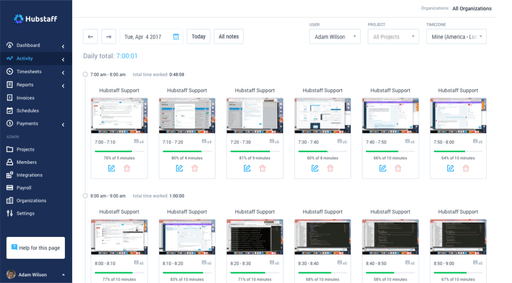
Hubstaff provides visibility into daily activities while helping trainees develop strong work habits.
The platform enables organizations to:
- Monitor trainee participation
- Track project contributions
- Measure learning engagement
- Improve accountability
- Support remote work environments
These capabilities create a more organized and data-driven trainee experience.
Time Tracking for Graduate Trainees
One of Hubstaff's core features is time tracking.
Graduate trainees often work across multiple projects and departments.
Time tracking helps organizations understand:
- Where trainees spend their time
- Which projects receive the most attention
- Training participation levels
- Productivity trends
Managers can gain valuable insights into how trainees allocate their working hours.
Building Professional Time Management Skills
Time management is one of the most important workplace skills.
Many graduates enter the workforce without extensive experience managing professional schedules.
Hubstaff encourages trainees to:
- Track work hours accurately
- Stay organized
- Prioritize tasks
- Develop accountability
These habits contribute to long-term career success.
Monitoring Project Participation
Graduate trainee programs frequently include project-based learning.
Trainees may work on:
- Marketing campaigns
- Software development projects
- Business analysis initiatives
- Research assignments
- Customer support activities
Hubstaff enables organizations to track project involvement and understand how trainees contribute to team objectives.
Managers can evaluate participation levels and identify opportunities for additional development.

Supporting Rotational Programs
Many graduate programs involve departmental rotations.
Trainees may spend time in:
- Finance
- Marketing
- Operations
- Human Resources
- Technology
- Customer Service
Hubstaff helps organizations track progress across multiple rotations.
Managers can review:
- Hours spent in each department
- Project contributions
- Productivity patterns
- Learning engagement
This creates a comprehensive record of the trainee's journey.
Enhancing Accountability
Accountability is essential for professional growth.
Graduate trainees benefit from understanding how their performance impacts team success.
Hubstaff encourages accountability through:
- Transparent time tracking
- Activity monitoring
- Task management
- Performance reporting
These features help trainees develop ownership of their responsibilities.
Managing Remote Graduate Programs
Remote graduate trainee programs have become increasingly common.
Organizations now recruit talent from different cities, regions, and countries.
While remote programs offer flexibility, they can also create visibility challenges.
Hubstaff helps address these concerns through:
- Online time tracking
- Activity monitoring
- Workforce analytics
- Attendance tracking
Managers can maintain oversight without excessive supervision.
Attendance and Work Hour Monitoring
Attendance remains an important aspect of graduate programs.
Hubstaff provides accurate records of:
- Clock-in times
- Clock-out times
- Total hours worked
- Break durations
This information helps HR teams ensure compliance and participation.
Productivity Insights
One of Hubstaff's most valuable features is productivity analytics.
Managers can identify:
- High-performing trainees
- Engagement trends
- Work patterns
- Areas requiring support
These insights help organizations make informed development decisions.
Instead of relying solely on manager observations, decisions can be supported by data.
Improving Mentor-Trainee Relationships
Mentorship is a critical component of successful graduate programs.
Mentors need visibility into trainee progress.
Hubstaff supports mentorship initiatives by providing data on:
- Work activity
- Project involvement
- Task completion
- Productivity trends
This allows mentors to provide more targeted guidance.
Goal Setting and Performance Management
Graduate trainee programs typically include performance objectives.
Examples may include:
- Completing training modules
- Participating in projects
- Meeting productivity targets
- Developing specific skills
Hubstaff helps managers track progress toward these goals.
Performance discussions become more meaningful when supported by measurable data.
Reporting and Analytics
Data-driven decision-making has become essential in modern HR management.
Hubstaff offers detailed reports covering:
- Time utilization
- Project participation
- Team performance
- Productivity metrics
These reports help organizations evaluate program effectiveness.
HR leaders can identify trends and continuously improve graduate development strategies.
Workforce Planning Benefits
Graduate trainee programs often serve as talent pipelines for future hiring.
Organizations need to determine:
- Which trainees are ready for full-time roles
- Where skill gaps exist
- Which departments need additional support
Hubstaff provides workforce insights that aid long-term planning.
Supporting Hybrid Work Models
Many organizations now operate hybrid workplaces.
Graduate trainees may split their time between:
- Home offices
- Corporate offices
- Client locations
Hubstaff helps maintain consistency regardless of location.
Managers gain visibility while trainees enjoy flexibility.
Encouraging Independent Learning
Successful trainees take ownership of their professional development.
Hubstaff supports independent learning by helping trainees monitor:
- Time spent on learning activities
- Project contributions
- Productivity improvements
This promotes self-awareness and continuous improvement.
Improving Program Transparency
Transparency benefits both trainees and managers.
Trainees gain clarity regarding:
- Expectations
- Performance standards
- Project assignments
Managers gain visibility into:
- Participation
- Engagement
- Development progress
This creates a healthier learning environment.
Reducing Administrative Work
Managing trainee programs manually often requires significant administrative effort.
HR teams may spend hours:
- Collecting timesheets
- Preparing reports
- Tracking attendance
- Monitoring progress
Hubstaff automates many of these processes.
This allows HR professionals to focus on coaching and development rather than paperwork.
Integration with Business Tools
Hubstaff integrates with many popular business platforms.
Examples include:
- Trello
- Asana
- Jira
- ClickUp
- Slack
- PayPal
- QuickBooks
These integrations streamline workflows and improve data consistency.
Organizations can connect trainee activities directly to project management systems.
Data-Driven Performance Reviews
Traditional performance reviews often rely heavily on subjective opinions.
Hubstaff introduces objective metrics such as:
- Hours worked
- Project contributions
- Productivity levels
- Task completion rates
These metrics support fairer evaluations.
Trainees receive more actionable feedback.
Building a Culture of Accountability
A successful graduate program prepares participants for long-term workplace success.
Hubstaff helps foster professional habits such as:
- Responsibility
- Time management
- Organization
- Productivity awareness
These qualities contribute to stronger future employees.
Supporting Large-Scale Graduate Programs
Large organizations often manage hundreds of trainees simultaneously.
Without proper systems, oversight becomes difficult.
Hubstaff provides scalability by enabling organizations to:
- Monitor multiple cohorts
- Generate automated reports
- Track departmental rotations
- Manage workforce data centrally
This improves consistency across programs.
Measuring Return on Investment (ROI)
Graduate trainee programs require significant investment.
Organizations spend resources on:
- Recruitment
- Training
- Mentorship
- Salaries
- Learning platforms
Hubstaff helps measure program effectiveness by providing data on engagement and productivity.
This supports better ROI analysis.
Best Practices for Using Hubstaff in Graduate Programs
Define Clear Expectations
Trainees should understand how time tracking and productivity tools will be used.
Transparency builds trust.
Focus on Development
Hubstaff should support learning and growth rather than micromanagement.
The goal is improvement, not surveillance.
Use Data Constructively
Reports should be used to identify coaching opportunities rather than simply evaluating performance.
Combine Metrics with Human Feedback
Quantitative data works best when combined with mentor observations and performance discussions.
Encourage Self-Assessment
Allow trainees to review their own productivity data and reflect on improvement opportunities.
Common Industries Using Graduate Trainee Programs
Hubstaff can support trainee programs across many industries.
Examples include:
Technology
- Software development
- IT support
- Data analytics
Finance
- Banking
- Accounting
- Financial analysis
Marketing
- Digital marketing
- Content creation
- Advertising
Healthcare
- Administration
- Operations
- Research
Engineering
- Design
- Manufacturing
- Project management
Consulting
- Business analysis
- Client support
- Research
The Future of Graduate Trainee Management
As workforce development evolves, technology will play an increasingly important role.
Future trends may include:
- AI-driven performance insights
- Personalized learning recommendations
- Advanced workforce analytics
- Predictive talent development
- Automated mentoring support
Platforms like Hubstaff are already laying the foundation for these innovations.
Organizations that embrace data-driven workforce management will be better positioned to develop future leaders.
Why Companies Choose Hubstaff
Organizations choose Hubstaff because it offers:
- User-friendly interfaces
- Accurate time tracking
- Detailed reporting
- Productivity insights
- Project visibility
- Workforce analytics
- Scalability
These features make it particularly valuable for graduate trainee management.
Conclusion
Graduate trainee programs are essential for developing future talent, strengthening workforce pipelines, and preparing the next generation of professionals. However, managing these programs effectively requires structure, visibility, accountability, and data-driven decision-making.
Hubstaff provides organizations with powerful tools to track time, monitor project participation, evaluate productivity, support remote work, and improve trainee development outcomes. By centralizing workforce data and automating administrative processes, the platform helps HR teams, managers, and mentors focus on what matters most: developing talented graduates into successful professionals.
As workplaces become increasingly digital and hybrid, solutions like Hubstaff are becoming indispensable for organizations seeking to maximize the effectiveness of their graduate trainee programs. Through better visibility, stronger accountability, and meaningful performance insights, Hubstaff empowers companies to build more successful, scalable, and impactful talent development initiatives.
For organizations committed to nurturing future leaders, Hubstaff is far more than a time-tracking tool-it is a strategic workforce management solution that supports every stage of the graduate trainee journey.
.png)

.jpeg)


.png)


SUBSCRIBE TO OUR NEWS LETTER


