




Master of Science [M.S] (Environmental Protection and Agricultural Food Production)
Field of Study:
$3,360 /Yr

University of Hohenheim Master of Science in Environmental Protection and Agricultural Food Production is a 2-year English-taught program spanning 4 semesters with 120 ECTS credits. Admission requires a Bachelor’s degree in agricultural or environmental sciences with above-average grades. The program costs EUR 1,674.50 per semester (INR 183,442). Intake occurs once yearly in October. The program combines environmental protection with sustainable food production—a critical frontier as climate change and food security reshape global agriculture.
This interdisciplinary Master’s prepares graduates for roles in environmental consulting, agricultural policy, research institutions, and global sustainability initiatives. The program’s distinctive strength lies in its integration of environmental modeling, economics, GIS analysis, and practical land management across three specialization tracks: Environmental Management, Soil Resources and Land Use, or Ecosystems and Biodiversity. Ideal applicants are graduates seeking careers at the intersection of climate science, agriculture, and policy—individuals committed to solving real-world sustainability problems through evidence-based solutions.
- Hands-on research across 700+ hectares of university farmland and experimental plots.
- Three specialization tracks allowing customization to environmental management, soil science, or biodiversity conservation.
- Optional thesis completion abroad within Hohenheim’s 80 global partner institutions worldwide.
Current Admission Status
Applications for the October 2026 intake are Open. International student deadline: 15 March 2026.
Indian applicants must register their APS certificate by the March deadline and submit the full certificate by July 15. This timeline allows sufficient processing—APS screening typically completes within 3 to 4 weeks, leaving buffer time before documentation submission deadlines.
Also Check: University of Hohenheim Admission Requirements
University of Hohenheim Master of Science Environmental Protection Food Production Fees and Living Costs 2026
Tuition for this Master’s program totals EUR 1,674.50 per semester, combining tuition and mandatory semester fees. Over 4 semesters, the full cost is EUR 6,698 (INR 7.34 Lakhs). No application fee is charged.
| Fee Component | Per Semester (EUR) | Per Semester (INR) | Total (4 Semesters) EUR | Total (4 Semesters) INR |
|---|---|---|---|---|
| Tuition | EUR 1,500 | INR 164,408 | EUR 6,000 | INR 6.57 Lakhs |
| Semester Fee (Admin + Services) | EUR 174.50 | INR 19,034 | EUR 698 | INR 76,534 |
| Total | EUR 1,674.50 | INR 183,442 | EUR 6,698 | INR 7.34 Lakhs |
All INR conversions in the article use a conversion rate of EUR 1 = INR 109.6053 as of June 2026. Rates fluctuate daily, verify before applying.
- Semester fees cover student services, library access, university infrastructure, and health insurance subsidy.
- No hidden costs beyond tuition—lab materials and textbooks are included in coursework budgets.
- International students pay the same tuition as domestic students; Baden-Württemberg does not charge differential fees.
- Payment is typically split across two installments per semester at enrollment.
Cost of Living in Stuttgart for Environmental Protection and Agricultural Food Production Students
Monthly living costs in Stuttgart average EUR 934 (INR 1.02 Lakhs), slightly below the German national average due to the city’s mix of affordable student housing and moderate local prices.
| Expense Category | Monthly (EUR) | Monthly (INR) | Annual (EUR) | Annual (INR) |
|---|---|---|---|---|
| Accommodation (student housing/shared flat) | EUR 280–350 | INR 30,700–38,362 | EUR 3,360–4,200 | INR 3.68–4.61 Lakhs |
| Food and groceries | EUR 200–250 | INR 21,921–27,401 | EUR 2,400–3,000 | INR 2.63–3.29 Lakhs |
| Health Insurance | EUR 110–140 | INR 12,057–15,345 | EUR 1,320–1,680 | INR 1.45–1.84 Lakhs |
| Transport (student monthly pass) | EUR 50–60 | INR 5,480–6,576 | EUR 600–720 | INR 65,843–79,011 |
| Books, study materials | EUR 30–50 | INR 3,288–5,480 | EUR 360–600 | INR 39,506–65,843 |
| Personal and miscellaneous | EUR 100–150 | INR 10,961–16,441 | EUR 1,200–1,800 | INR 1.31–1.97 Lakhs |
| Total Monthly Average | EUR 934 | INR 1.02 Lakhs | EUR 11,208 | INR 12.28 Lakhs |
Cost Reality for Sustainability-Focused Students: Stuttgart’s cost of living sits 15% below Munich, making it accessible for graduate researchers. On-campus housing and student accommodation services can reduce housing costs by EUR 50–100 monthly compared to private rentals.
Read More: Complete Cost of Living Guide for International Students in Germany
University of Hohenheim Master of Science Environmental Protection Food Production Admission 2026
University of Hohenheim opens admissions for the October 2026 intake on March 15, 2026. Non-EU applicants, including Indian citizens, must apply by this single deadline—no rolling admissions exist for international students.
| Intake | Application Opens | Deadline (Non-EU) | Expected Decision | Programme Start |
|---|---|---|---|---|
| Winter Semester 2026/27 | Mid-April 2025 | 15 March 2026 | 4 weeks after deadline | October 2026 |
Academic Eligibility for Environmental Protection and Agricultural Food Production
Applicants must hold a Bachelor’s degree (minimum 180 ECTS) in agricultural sciences, environmental sciences, natural sciences, environmental management, or a closely related discipline. "Above average" performance is required—typically a grade average better than 2.5 on the German scale (roughly 75% or 2:1 UK honors equivalent).
If your Bachelor’s grade point average falls below this threshold, you may strengthen your application with evidence of specialized experience: published research, internship reports from environmental organizations, or technical certifications (GIS, environmental impact assessment). The university assesses such portfolios individually.
English Language Proficiency (ELP) Requirements
The programme is taught entirely in English. Proof of language proficiency is mandatory unless you hold a degree from an English-speaking university or country (UK, Ireland, Australia, Canada, New Zealand, USA, or Caribbean nations).
| English Proficiency Test | Minimum Score Required | Notes for Indian Applicants |
|---|---|---|
| IELTS Academic | Overall 6.5 (no single band below 6.0) | Widely available in India; results valid 2 years |
| TOEFL iBT | 90 total (no section below 20) | Computer-delivered or home-based; TOEFL Special Home Edition accepted |
| Duolingo English Test | 125 overall (no section below 100) | Affordable, online, results in 48 hours—fastest option for Indian applicants |
- Duolingo (125+) is the fastest pathway: test online, results within 2 days, accepted directly by Hohenheim.
- IELTS at 6.5 is the industry standard and universally recognized; prepare 8–10 weeks in advance.
- TOEFL is preferred by some universities but less common among German institutions; check acceptance before booking.
- All three tests are accepted by Hohenheim; choose based on your comfort level and timeline.
Tip for Indian Applicants: Use the 3-month window between now and the March 2026 deadline to take the Duolingo test (fastest) or IELTS (most portable). Prepare in parallel with APS certification to avoid delays.
The University of Hohenheim is consistently ranked among Germany’s top agricultural research institutions, with excellence particularly recognized in sustainable agriculture and environmental sciences. Graduates have strong placement rates in European research institutions and sustainability-focused organizations.
Check Out: University Rankings and Accreditations
University of Hohenheim Master of Science Environmental Protection Food Production Application 2026
The application process is entirely online via the HohCampus portal. The single non-EU deadline is March 15, 2026, for October 2026 intake. No rolling admissions: submit early to allow processing time and address any document requests from the admissions team.
| Milestone | Date (for Oct 2026 Intake) | Applicant Action |
|---|---|---|
| Portal Opens | Mid-April 2025 | Create HohCampus account; review checklist |
| APS Certificate Registration (India only) | On or before 15 March 2026 | Upload proof of APS registration with application |
| Application Submission Deadline | 15 March 2026 | Submit all required documents online |
| English Proficiency Proof (extended) | 15 July 2026 | If not submitted by March, must arrive by this date |
| APS Certificate (full document) | 15 July 2026 | Original APS certificate must reach Hohenheim |
| Final Bachelor’s Degree Certificate | 15 December 2026 | If not yet graduated, final transcript and degree must arrive |
| Admission Decision | 4 weeks after 15 March | Approx. April 2026; sent via email |
| Semester Enrollment / Payment | By August 2026 | Confirm and pay semester fees |
| Programme Start | October 2026 | Begin first semester |
- Indian applicants must upload proof of APS certificate registration by March 15; the full APS document can arrive by July 15 (allows processing time).
- English test results can be submitted as late as July 15 if not available by the March deadline.
- If your Bachelor’s degree is awarded after March 2026, send the transcript by March 15 and the final degree by December 2026.
- Admissions typically conclude by late April; enroll and pay fees by August to secure your place.
Application Tip: Submit all documents by early March to allow the admissions team time to request clarifications before the March 15 hard deadline. A 1-week buffer prevents last-minute complications.
Also Check: Complete Application Instructions and Portal Access
University of Hohenheim Master of Science Environmental Protection Food Production Scholarships 2026
Hohenheim and external funders provide multiple pathways to reduce tuition and living costs. Most scholarships are merit-based and require strong Bachelor’s grades and demonstrated research interest. Plan your scholarship strategy early—deadlines often precede application deadlines.
Institutional Scholarships (Hohenheim-Funded)
The university allocates approximately EUR 100,000 annually to graduate scholarships and awards across all programs. Eligibility for the Environmental Protection and Agricultural Food Production programme is primarily merit-based and research-potential-focused.
| Scholarship | Amount / Duration | Coverage Type | Eligibility (Core) |
|---|---|---|---|
| DAAD Scholarships (German Academic Exchange Service) | EUR 934/month | Tuition + living stipend (monthly) | Strong academics, research potential, above-average Bachelor’s degree |
| Germany Scholarship (Deutschlandstipendium) | EUR 300/month | Merit-based stipend | Above-average grades; merit in academics and integration efforts |
| STIBET Scholarship (Short-Term for Foreign Students) | EUR 1,000 (one-time) | Need-based bridge funding | Financial need demonstrated; application during first semester |
| KfW Educational Loan (Kreditanstalt für Wiederaufbau) | EUR 650/month (loan, interest-free) | Education financing (loan product) | Open to all international students; repayment begins 6 months post-graduation |
Cost-Offset Reality for This Master’s Programme
A fully-funded DAAD scholarship (EUR 934/month) covers 56% of tuition and living costs combined over a 24-month program. Full programme cost: EUR 6,698 (tuition) + EUR 22,416 (living for 24 months at EUR 934/month) = EUR 29,114 total.
DAAD award: EUR 934 × 24 months = EUR 22,416—nearly identical to living costs alone. Applicants must secure independent funding for the EUR 6,698 tuition or use a combination: DAAD (living) + KfW loan (tuition) + Germany Scholarship (gap-bridging stipend). Realistic planning: apply for DAAD + Germany Scholarship simultaneously; use KfW loan as the tuition safety net.
External Scholarships: Leadership for Africa, GyanDhan (merit-based, EUR 2,740 for Indians), Fulbright (EUR 3,360), and country-specific development funds occasionally fund environmental science studies. Check Mastersportal.com and StudyQA.com databases for your eligibility by academic strength and country background.
Scholarship Reality: Combine 2–3 smaller awards rather than betting on a single full-ride. DAAD + Germany Scholarship + KfW loan together exceed 75% cost coverage for this programme. Plan 6 months before application deadlines.
Read More: DAAD Scholarships and Full German Funding Opportunities
University of Hohenheim Master of Science Environmental Protection Food Production Salary 2026
Graduates of environmental and agricultural Master’s programmes from German universities earn starting salaries in the EUR 45,000 to EUR 50,000 gross annual range, depending on specialization and sector. Mid-career salaries (5+ years) for agricultural and food science specialists average EUR 61,460 (INR 67.30 Lakhs) gross annually.
Career Outcomes by Sector
The Environmental Protection and Agricultural Food Production programme positions graduates for roles spanning consulting, policy analysis, research, and corporate sustainability:
| Career Path | Typical Role | Starting Salary (EUR Gross) | Starting Salary (INR Gross) | Sector / Employer Type |
|---|---|---|---|---|
| Environmental Consulting | Environmental Management Consultant | EUR 45,000–50,000 | INR 49.32–54.80 Lakhs | Consulting firms (Ramboll, Ecosphere, etc.) |
| Agricultural Research & Development | Research Scientist / Project Officer | EUR 48,000–55,000 | INR 52.62–60.28 Lakhs | Research institutes, CGIAR centers, university labs |
| Government / Policy | Environmental Policy Analyst | EUR 44,000–52,000 | INR 48.23–57.00 Lakhs | Federal & state environmental agencies |
| Corporate Sustainability | Sustainability Officer / ESG Manager | EUR 50,000–58,000 | INR 54.80–63.61 Lakhs | Agribusiness, food companies, energy firms |
| International Development | Programme Officer (Food & Agriculture) | EUR 46,000–54,000 | INR 50.41–59.19 Lakhs | FAO, IFAD, bilateral development agencies |
Source: German salary surveys (Gehalt.de, Glassdoor Germany 2024–2026); CGIAR and FAO job postings; German Federal Statistical Office (Destatis) employment data.
Take-home pay (net) ranges from 65–70% of gross salary depending on your tax class and whether you use the German tax-deductible system. A EUR 50,000 gross salary yields approximately EUR 32,500–35,000 net monthly income. Use the Brutto Netto Rechner online calculator to estimate your personal tax burden based on employment status and marital status.
ROI Reality: The EUR 6,698 tuition cost is recovered within the first 2–3 months of full-time employment in environmental consulting or research roles. Graduates report strong job market demand in German sustainability sectors.
Check Out: Post-Study Work Visa Options and Extended Career Pathways in Germany
Germany Visa Pathway for Environmental Protection and Agricultural Food Production Students 2026
Indian nationals require a German student residence permit to enroll at Hohenheim. The process involves an APS certificate (Akademische Prüfstelle) assessment by the German Embassy in New Delhi, followed by visa application at your nearest German embassy or consulate. The full pathway—APS to visa approval—takes 3 to 6 months.
- Apply for APS certification by registering with the German Embassy New Delhi 3–4 months before your visa application; APS screening takes 3–4 weeks.
- The student residence permit is issued for one year and renewable; EUR 75 visa processing fee applies.
- A blocked account (Sperrkonto) is no longer required as of 2024; instead, proof of EUR 11,904 annual funding (EUR 934/month × 12 months) satisfies financial requirements.
- Post-graduation, graduates are eligible for an 18-month Job Seeker Residence Permit (Fachkräfteengpasskarte) permitting unlimited work—no salary threshold for agricultural scientists (shortage occupation).
Visa Reality for Environmental Science Graduates: Germany recognizes environmental and agricultural scientists as shortage occupations (Mangelberufe). After your Master’s, the 18-month job seeker visa and subsequent skilled-worker visa pathway are straightforward. Plan your APS certification timeline now—this is the longest single step in your visa journey.
Also Check: Complete German Student Visa Process and APS Certificate Timeline
Environmental Protection and Agricultural Food Production Master’s FAQs
Ques. Is an internship required during the Master’s programme, or is it optional?
Ans. Internships are optional but strongly recommended. The CareerCenter Hohenheim assists students in finding internship placements within environmental consulting firms, agricultural research institutions, and government agencies. Many students complete a 6–12 week internship in Year 1 or Year 2 to gain applied experience and build professional networks in Germany.
Ques. Can I complete my Master’s thesis abroad?
Ans. Yes. Hohenheim’s extensive network of 80 global partner institutions, including 40 in the Erasmus+ programme, allows students to conduct their Master’s thesis abroad without extending their graduation timeline. This is ideal for research-focused students seeking fieldwork in developing countries or partner universities in Africa, Asia, and Latin America.
Ques. What is the APS certificate, and when do I need to submit it as an Indian applicant?
Ans. The APS (Akademische Prüfstelle) certificate is a German government verification that confirms your Bachelor’s degree is genuine and equivalent to German qualifications. All Indian applicants must register for APS certification by March 15, 2026 (the application deadline), and the actual APS document must reach Hohenheim by July 15, 2026. Register at the German Embassy New Delhi—the process takes 3–4 weeks and costs approximately INR 18,000.
Ques. Which English language test is easiest to pass quickly for the March 2026 deadline?
Ans. Duolingo English Test is the fastest: you can test online, receive results within 48 hours, and Hohenheim accepts a score of 125+. For students needing English proof immediately, Duolingo eliminates the 2–3 week result-processing window of IELTS and TOEFL. IELTS is the most portable (accepted globally), but requires 8–10 weeks of preparation and results take 13 days post-test.
Ques. How competitive is admission for Indian students applying to the Environmental Protection and Agricultural Food Production programme?
Ans. The programme receives approximately 80–120 applications annually for 40–50 available spaces, resulting in a moderate acceptance rate of 40–50%. Strong candidates—those with Bachelor’s grades above 2.0 (German scale), published research papers or internship experience in environmental sciences, and IELTS 7.0+—are prioritized. Your undergraduate institution’s reputation and any research publications significantly strengthen your profile for this interdisciplinary programme.
The Environmental Protection and Agricultural Food Production Master’s at Hohenheim is ideal for graduates committed to solving climate and food security challenges through interdisciplinary science and policy. Germany’s strong environmental sector, combined with the university’s #1 ranking in agricultural research, positions Hohenheim graduates as competitive candidates for senior roles in sustainability consulting, research, and international development. The 18-month post-study work visa and shortage-occupation status for environmental scientists create a direct pathway to permanent residence and career stability in Germany.
Tuition Fees
| Year | 1st Year Fees |
|---|---|
| Tuition Fees | $3360 (EUR 3000) |
Previous Year Tuition Fees
| Year | 1st Year Fees |
|---|---|
| 2023 | $3779 (EUR 3374) |
| 2021 | $3730 (EUR 3330) |
Reviews
1 Reviews Found
Likes
- Small university with great support from staff and faculty
- Academically-oriented and good curriculum
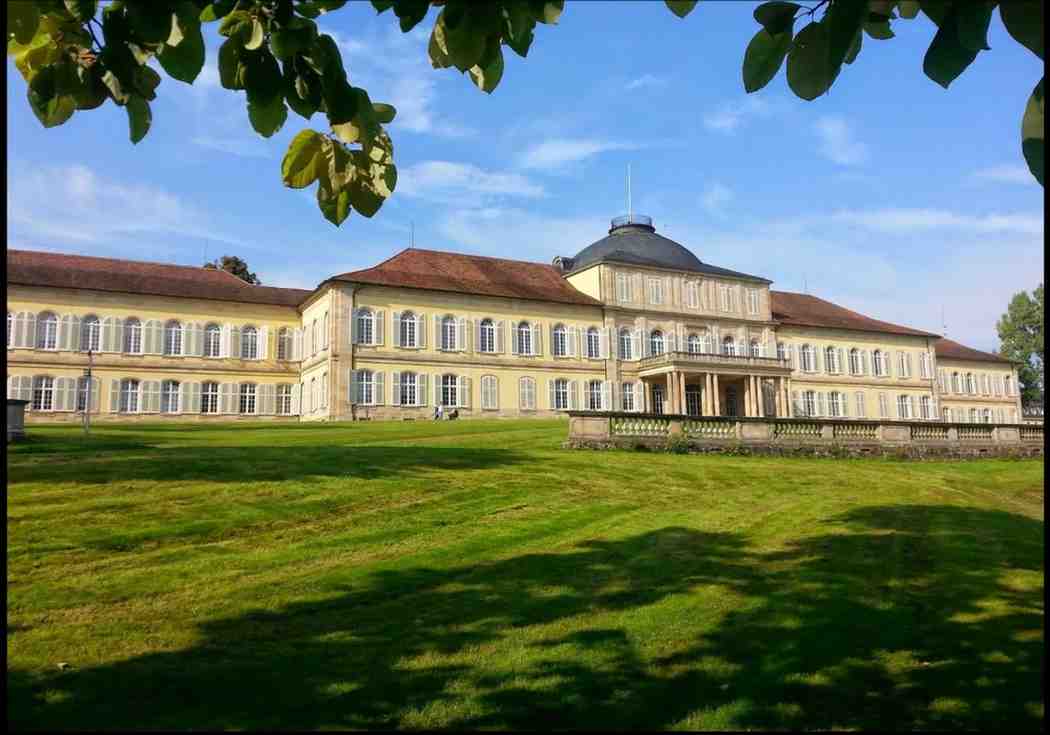
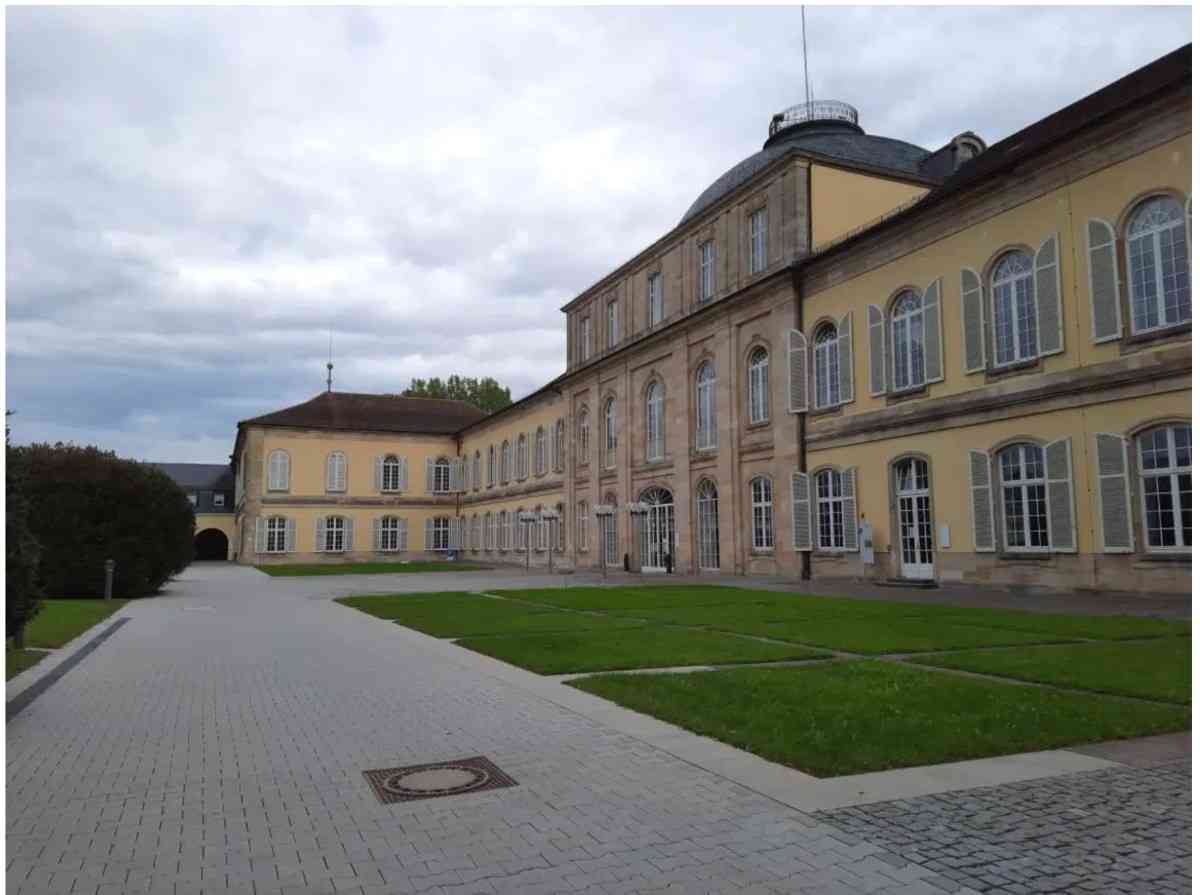
- Great campus with a lot of greenery and well-facilitated classrooms
Dislikes
- Some courses have way too many students
- Visa extension in the state of Stuttgart can sometimes be stressful due to long waiting times
- Not a lot of things to do outside the campus
- There are no placement drives as such. Students have to look for jobs themselves. But the university offers a lot of guidance and support like interview prep and CV checks, etc.
- Students usually look at job platforms like LinkedIn, Xing, etc., about 6 months before they plan to graduate. The job situation is heavily dependent on the job market and is currently a bit difficult to find jobs, especially without German language skills.


Do you think the Rankings are wrong ? Report Here
Key Resources for Your Study Abroad Journey


Scholarship Grants & Financial Aids
| Name | Scholarship Per Student | Level of Study | Type | |
|---|---|---|---|---|
| VueVille Future Technology Scholarship | Scholarship per student$ 1,120/Yr$1,000 | Level Of StudyBachelor | TypeMerit-Based | |
| MAWISTA Scholarship | Scholarship per student$ 7,494/Yr$6,691 | Level Of StudyBachelor | TypeEasy-to-Apply | |
| Kurt Hansen Science Scholarship | Scholarship per student$ 11,200/Yr$10,000 | Level Of StudyDoctorate | TypeNeed-Based | |
| Bharat Petroleum Scholarship | Scholarship per studentVariable Amount | Level Of StudyMaster | TypeMerit-Based | |
| Axol Science Scholarship | Scholarship per student$ 2,240/Yr$2,000 | Level Of StudyBachelor | TypeCompany-Sponsored |



Comments