


Education Journalist | Study Abroad Strategy Lead | KdTvCV - Dec 29, 2025
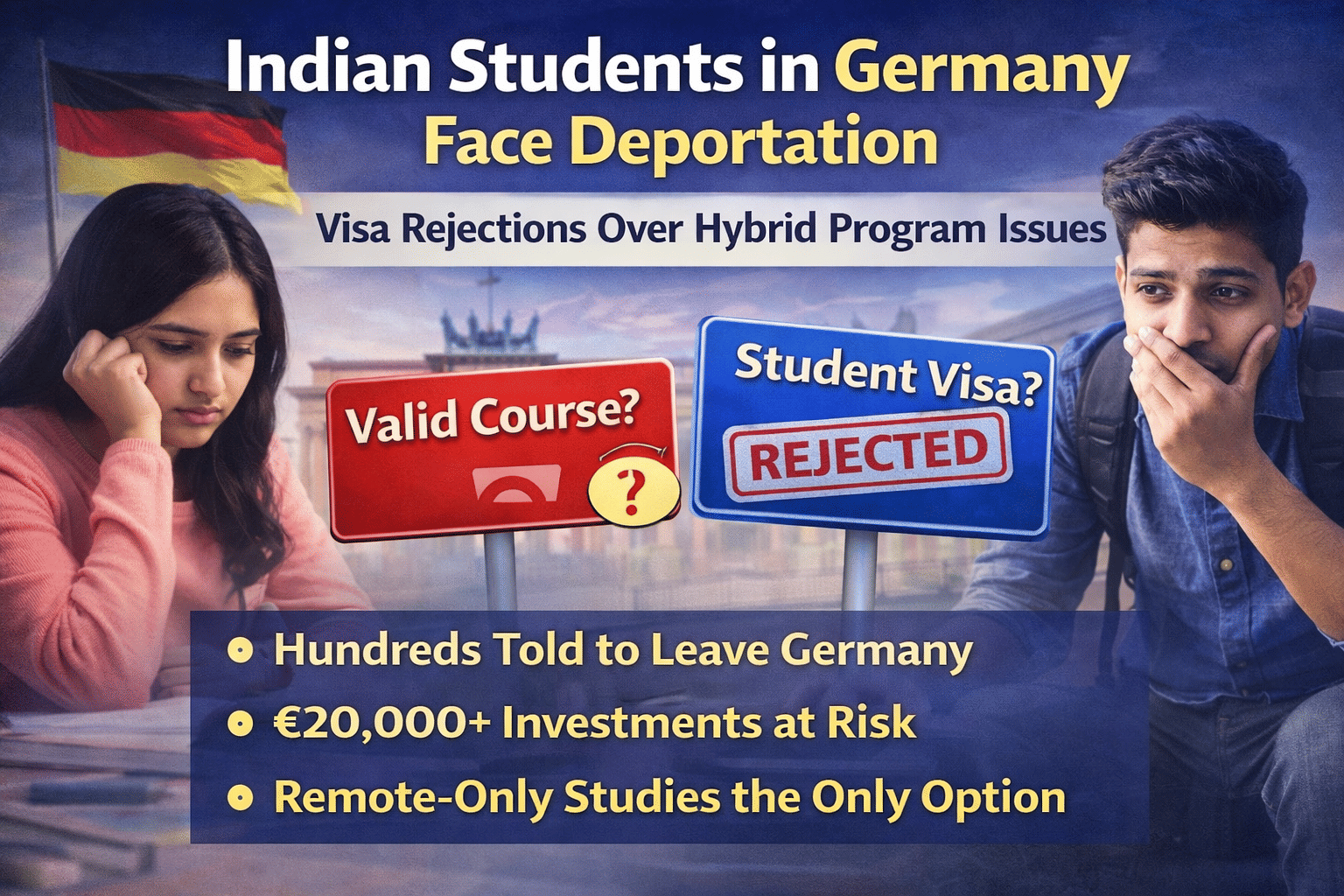
Hundreds of Indian students enrolled at a Berlin-based private university are facing visa cancellations, forced exits, or compulsory remote study, after German immigration authorities tightened their interpretation of student visa rules for hybrid and partially online programmes.
The crisis centres around IU International University of Applied Sciences (Berlin campus), where Indian students who entered Germany legally on student visas are now being told their courses do not meet full-time, in-person study requirements under revised visa enforcement in 2025.
Instead of preparing for graduation, many students are now dealing with deportation notices, legal appeals, and financial distress.
What Triggered the Germany Visa Crisis?
According to multiple reports, Berlin’s immigration office (Landesamt für Einwanderung – LEA) has ruled that:
Hybrid programmes with substantial online components do not qualify as “full-time, in-person study” under Section 16b of Germany’s Residence Act, which governs German student visas.
This stricter interpretation began in early 2025, despite:
- Students receiving visas earlier
- Programmes being marketed as valid on-campus degrees
As a result, visas issued earlier are now being rejected, revoked, or not renewed.
Who Is Affected?
- 500+ international students, the majority from India
- Most are enrolled in business, management, and tech-related master’s programmes
- Students invested €20,000–€30,000 in tuition, living costs, and education loans
- Many relocated families, housing, and finances based on approved visas
- Several students have reportedly received emails asking them to leave Germany within weeks.
Why Indian Students Are Hit Hardest?
Germany has become a popular destination for Indian students due to:
- Lower tuition costs
- English-taught programmes
- Strong job prospects in Europe
However, German private universities offering flexible or hybrid formats have become a grey area under immigration rules.
Indian students are disproportionately affected because:
- They make up a large share of international enrolments at such institutions
- Many rely on education loans and family savings
Mid-course disruption leaves no easy transfer or refund options
What IU University Has Said?
IU International University has reportedly stated that:
- It holds a valid national accreditation
- The issue arose due to a sudden shift in visa interpretation by immigration authorities
In response, the university has:
- Suspended new international admissions at its Berlin campus
- Announced a move to fully in-person teaching from October 2025
- Offered limited support and alternative campus options
However, current students remain in limbo, with no blanket relief announced.
What German Authorities Are Saying?
Immigration officials maintain that:
- Student visas require verifiable physical attendance
- Hybrid or predominantly online study models can be misused
- Stricter enforcement is necessary to protect visa integrity
- Courts have reportedly upheld this interpretation, further weakening student appeals.
A Bigger Problem: Education Models vs Visa Rules
This episode highlights a growing global issue:
- Universities are adopting hybrid and flexible teaching models
- Immigration frameworks still rely on traditional, classroom-based definitions
- Students are caught between marketing promises and regulatory enforcement
When rules change mid-course, students—who acted in good faith—carry the highest risk.
Why This Is a Wake-Up Call for Indian Families?
Germany has long been seen as a safe, transparent, and affordable study destination. This episode challenges that perception. Before choosing any overseas programme, Indian students must now verify:
- Mode of instruction (fully in-person vs hybrid)
- Visa eligibility for that specific delivery format
- Attendance requirements under local immigration law
- Official confirmation from embassies or immigration offices
Relying only on university brochures or agents is no longer enough.
What Students Should Do Now?
If you’re planning to study in Germany:
- Avoid hybrid or online-heavy programmes unless explicitly visa-approved
- Prefer German public universities or fully in-person private courses
Cross-check course eligibility with:
- German embassy
- University admissions + immigration guidance
- Keep Plan B destinations ready (Ireland, France, Netherlands, etc.)
If already affected:
- Seek legal counsel immediately
- Contact the Indian embassy/consulate
- Document all communications with the university and authorities
The Bigger Picture
For now, many Indian students in Berlin remain:
- Legally uncertain
- Academically enrolled
- Financially exposed
The situation raises serious questions about trust, predictability, and student protection in international education. As global mobility grows more complex, clarity—not flexibility alone—will define safe study-abroad choices.









Comments