



Content Curator
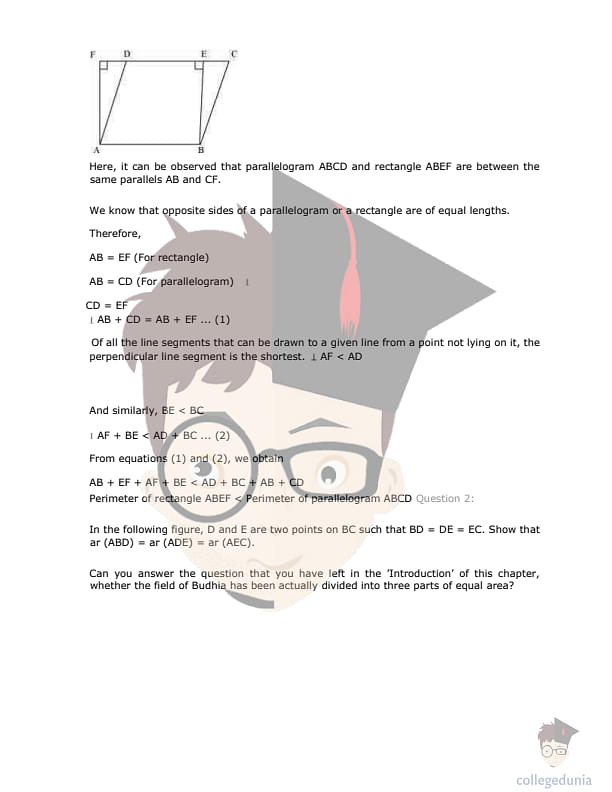
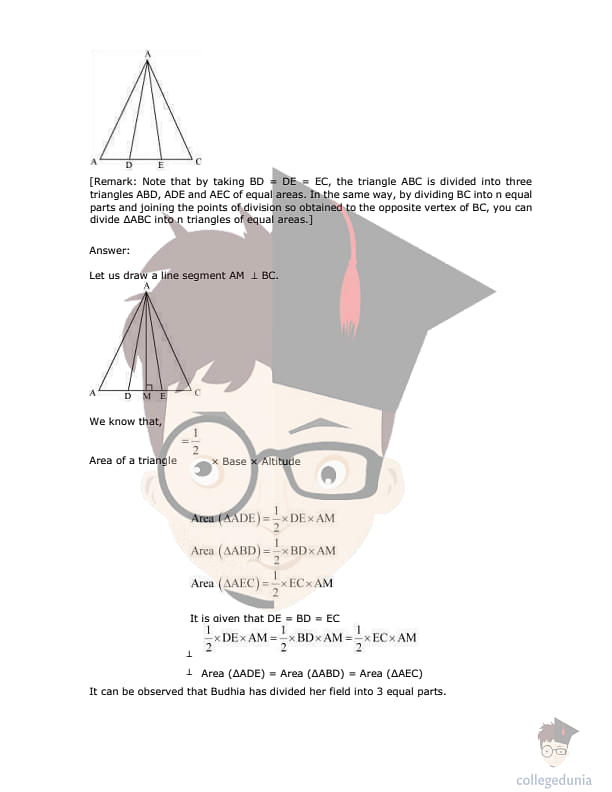
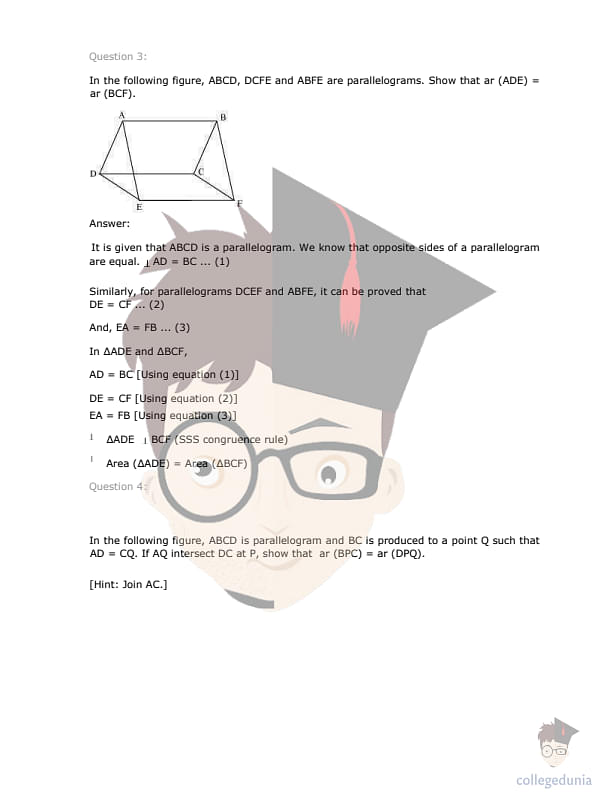
NCERT Solutions for Class 9 Maths Chapter 9 Areas of Parallelograms and Triangles Exercise 9.4 Solutions are based on parallelograms and triangles that have the same base and same parallel lines. It also covers the median of a triangle that divides into two triangles of equal areas.
Download PDF: NCERT Solutions for Class 9 Maths Chapter 9 Exercise 9.4 Solutions
Check out NCERT Solutions for Class 9 Maths Chapter 9 Exercise 9.4 Solutions



Read More: NCERT Solutions For Class 9 Maths Chapter 9 Areas Of Parallelograms And Triangles
Exercise Solutions of Class 9 Maths Chapter 9 Areas Of Parallelograms And Triangles
Also check other Exercise Solutions of Class 9 Maths Chapter 9 Areas Of Parallelograms And Triangles
- NCERT Solutions for Class 9 Maths Chapter 9 Areas Of Parallelograms And Triangles Exercise 9.1 Solutions.
- NCERT Solutions for Class 9 Maths Chapter 9 Areas Of Parallelograms And Triangles Exercise 9.2 Solutions.
- NCERT Solutions for Class 9 Maths Chapter 9 Areas Of Parallelograms And Triangles Exercise 9.3 Solutions.
Also Check:
| Important Chapter Related Topics | |
|---|---|
| Area of Triangle | Perimeter of a Parallelogram |
| Area of a Trapezoid Formula | Trapezoids |
Also check:



Comments