

.jpg?h=35&w=35&mode=stretch)
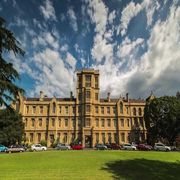

Australian National University is one of the top public universities based in Canberra, in the Australian Capital Territory. It is a mid-sized university with around 13,000 undergraduate students. It is very competitive to be admitted, with ANU acceptance rate being about 35%. The most popular subjects are Data Analytics, Computing, Mechatronics, Finance, and Communication. The six-year graduation rate is around 86%, and ANU graduates have a median starting salary of around INR 30,90,000 (converted from AUD 59,000 ten-year median earnings).
University of Melbourne is a high-ranked public university in Melbourne, Victoria, in the Melbourne metropolitan region. It is a high-enrollment university with more than 49,000 undergraduate students. It has moderately selective admissions, with a rate of acceptance of around 70%. Business Administration, Computer Science, Medicine, Architecture, and Biotechnology are common majors. The six-year graduation rate is 67%, and median starting salary of University of Melbourne graduates is around INR 41,00,000 (equivalent to AUD 79,000 median income ten years after graduation).
| University of Melbourne | Australian National University | |
|---|---|---|
| Collegedunia Score | 6.7 Out of 10 | 6.9 Out of 10 |
| ranking (overall) | # 22 QS World University 2027 # 34 Times Higher Education 2027 # 19 QS World University 2026 | # 29 QS World University 2027 # 77 Times Higher Education 2027 # 32 QS World University 2026 |
| Subject Strength | # 40 for Engineering by Collegedunia Study Abroad 2026 # 33 for Data Science and Analytics by QS World University 2025 # 20 for Medicine by QS World University 2026 | # 58 for Engineering by Collegedunia Study Abroad 2026 # 51 for Data Science and Analytics by QS World University 2025 # 92 for Medicine by Collegedunia Study Abroad 2026 |
| Programs | UG Programs -39 PG Programs -121 Doctorate Programs -8 | UG Programs -50 PG Programs -97 Doctorate Programs -31 |
| Acceptance Rate | 70.0 % | 35.0 % |
| Cost to Study | Average Tuition Fees 17124 [For UG Program] Average Tuition Fees 30539 [For PG Program] | Average Tuition Fees 31000 [For UG Program] Average Tuition Fees 32341 [For PG Program] |
| placement (average package) | Graduate employability ranking QS- #8. The University of Melbourne is one of the top public universities in Parkville, Australia. It is ranked #33 in QS World University Rankings 2023.
| Graduate Employability: #66, |
| application requirements | Overseas Secondary School Qualifications, | Accepting DET (Duolingo English Test) for 2021 entry, score required: 115, Interviews required |
| Campuses and B-Schools | Melbourne Business School | College of Business and Economics, Australian National University |
| CollegeDunia Reviews | 7.2/10 Read 59 reviews | 8.4/10 Read 12 reviews |
Other Popular Comparisons





| General Facts | University of Melbourne | Australian National University |
|---|---|---|
| Type of University | University | University |
| Established | 1853 | 1946 |
| Student:Faculty Ratio | :1 | 17:1:1 |
| Male:Female | 0% Male, 0% Female | 46% Male, 0% Female |
| Location Facts | Located in the suburb of Parkville, other campuses spread across Victoria. | Located in the capital city an inland surrounded by mountains, bushes, and hills. The campus is rather smaller and calmer. |
| Library | Subject Specific libraries- Brownless Biomedical Library and Law Library. | Collection of theses from over 60 years, Brissenden collection: 1450 volume, newspapers from over 120 countries and in 60 languages, and much more |
| Campus Life | Number of museums and art galleries located across the campus | Around 130 clubs, on-campus cafe, shops, & bars, and designated Queer, women, ethnocultural, environmental departments |
| Famous Alumni | Julia Gillard (Former Australian Prime Minister), Randeep Hooda (Actor), Germaine Greer (Author), Nicole Kidman (Actor), Rony Chieng (Comedian), Stephanie Alexander (food writer/restaurateur), Tahir Bhasin (Actor) | Kevin Rudd (Former PM), Bob Hawke (former PM), Peter Garrett (member of Australian house of representatives), Nich Minchin (Australian Senator), Jennifer Robinson (Australian human rights lawyer). |
| City Life | Cheap student shopping, | Considered most liveable city in Australia, Canberra has parliament house (old and the current one), National museum and gallery of Australia, National zoo and botanical park, CSIRO discovery center, variety of cultural events, multi-cuisine dining, etc. The unemployment rate is as low as 3.9% |
| Weather |
Australian National University versus University of Melbourne
Subject Strength & Global Rankings (2025/2026)
ANU and the University of Melbourne both regularly figure in the list of top universities in Australia and worldwide. The University of Melbourne is ranked at about 19th worldwide in the QS World University Rankings 2026, while ANU figures at about 32nd. Melbourne is ranked at 39th by Times Higher Education, while ANU is ranked at 73rd.
In discipline-specific rankings, University of Melbourne consistently performs well in Life Sciences & Medicine, Engineering & Technology, and Social Sciences, which usually rank in the top 20 internationally. ANU's strengths are Natural Sciences, Philosophy, Anthropology, and Development Studies, where it usually ranks in the world's top 10. Both universities have high standing in Arts & Humanities, though Melbourne's is more spread out across the board.
General Information
The University of Melbourne is the larger and older university, dating from 1853, with over 47,000 students, including a large international student body. It has several campuses and a robust presence in professional studies through its business, law, and medical schools.
ANU, founded in 1946, is smaller and research-oriented with some 18,000 students. Situated in Canberra, it was established by the Australian Parliament and enjoys a reputation for having a close-knit learning community and focus on scientific inquiry, international relations, and public policy.
Acceptance Rate & Admissions
Admissions in both universities are competitive, although ANU is more discriminating with an acceptance rate of about 35%, as opposed to Melbourne's wider base at about 70%. Melbourne has a larger number of undergraduate and graduate programs, while ANU specializes in highly stringent entry requirements and specialized graduate programs.
Research Impact & Facilities
University of Melbourne has a huge research infrastructure comprising more than 3,500 academic staff, 3.6 million volumes in its libraries, and various affiliated institutes and hospitals. It takes the lead in biomedical research, engineering, and cross-disciplinary innovation.
ANU, though smaller, boasts a larger endowment per student and an excellent reputation for policy-oriented research, especially in the sciences and humanities. It is home to a number of national research centers and has close ties with government agencies because it is located in the capital.
Cost & Financial Aid
Both are public universities, but international students pay quite a lot. ANU charges an average undergraduate tuition of about AUD 31,000, and Melbourne a little less at AUD 30,500. Both provide financial assistance and scholarships, though Melbourne being larger might offer more varied funding sources. Canberra living expenses are usually less than Melbourne, which is Australia's most expensive student city.
Career Outcomes & Alumni Success
In graduate employability, ANU leads Australia, with University of Melbourne coming in a close second. ANU has customized career services and extensive government and policy sector links. Melbourne has a large and powerful alumni network, with graduates excelling in business, law, medicine, and academe. Both universities generate leaders, Nobel winners, and international professionals, although Melbourne's size provides it with a wider international presence.


