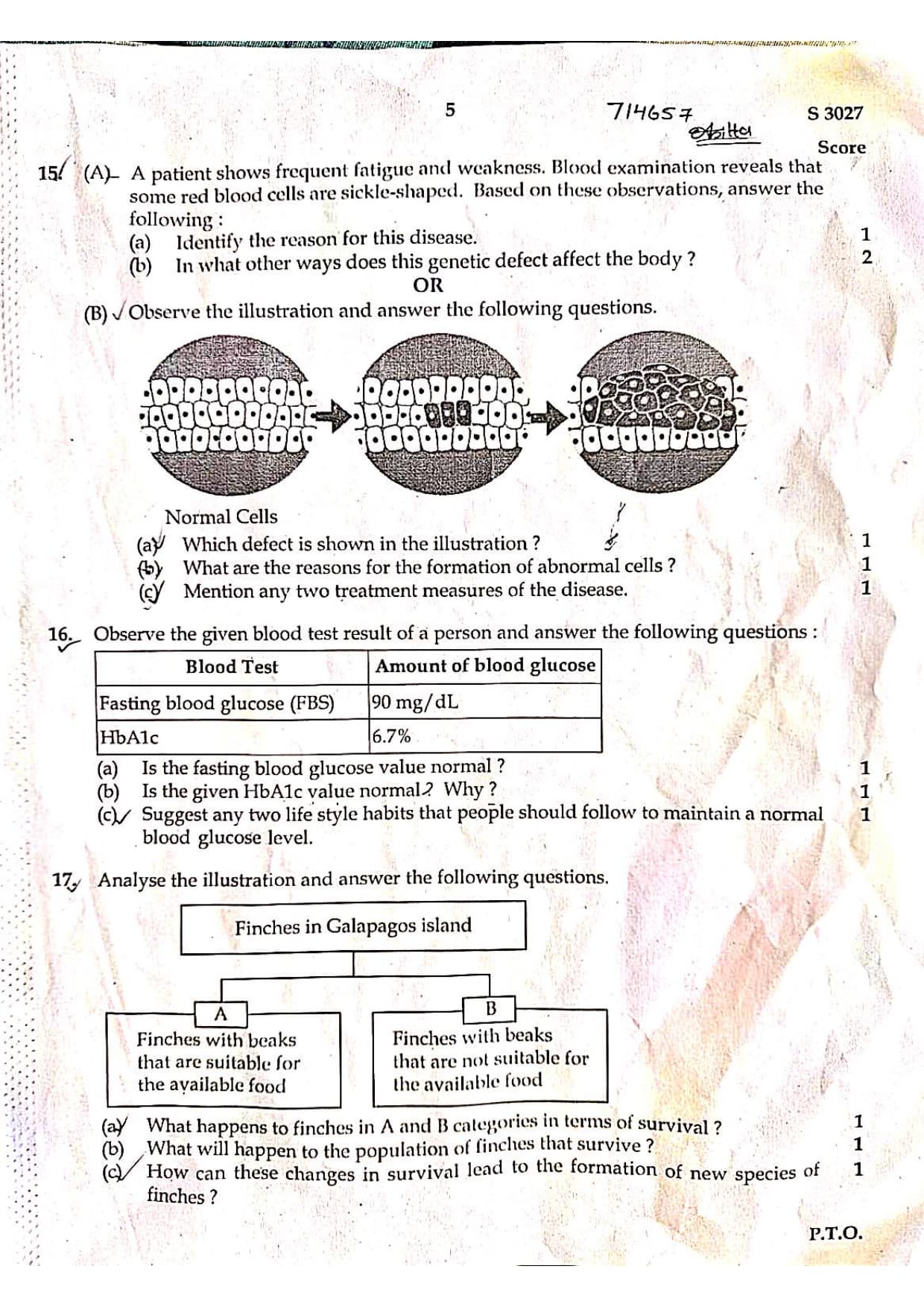
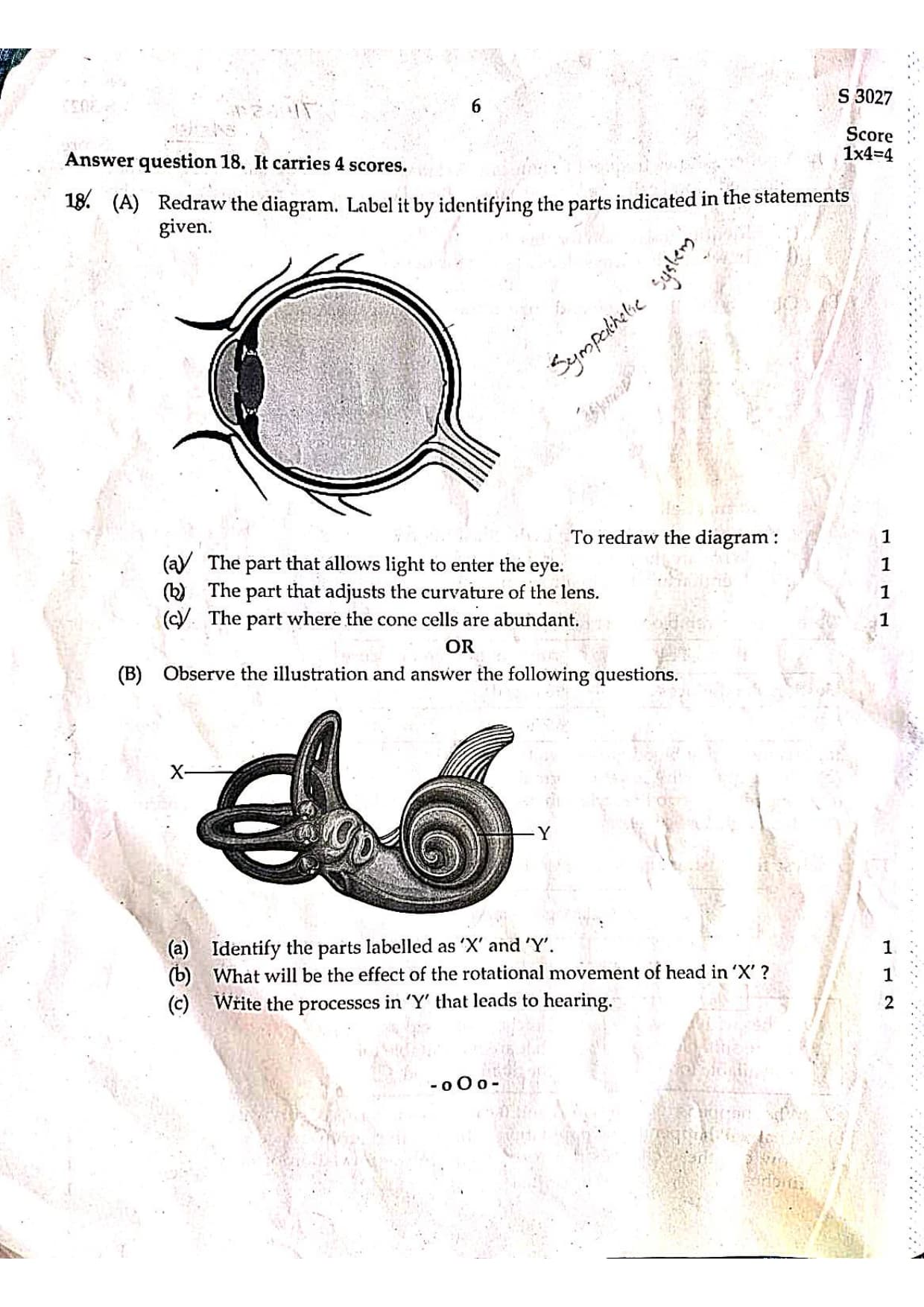
The Kerala Board of Public Examinations (KBPE) successfully conducted the Class 10 Biology Exam on March 30, 2026. The Kerala Board SSLC Class 10 Biology Question Paper with Solution PDF is now available for download.

The Kerala Board Class 10 Biology paper includes important topics such as life processes, cell structure and functions, heredity and evolution, human body systems, environmental management, and biotechnology. Students should focus on understanding biological concepts, diagrams, scientific explanations, and application-based questions. The exam is typically conducted as part of the SSLC board examinations and plays a significant role in evaluating students' understanding of fundamental biological principles.

Kerala Board Class 10 2026 Biology Question Paper with Solution PDF

Kerala Board Class 10 Biology Question Paper 2026 Download PDF Check Solution


Question 1:

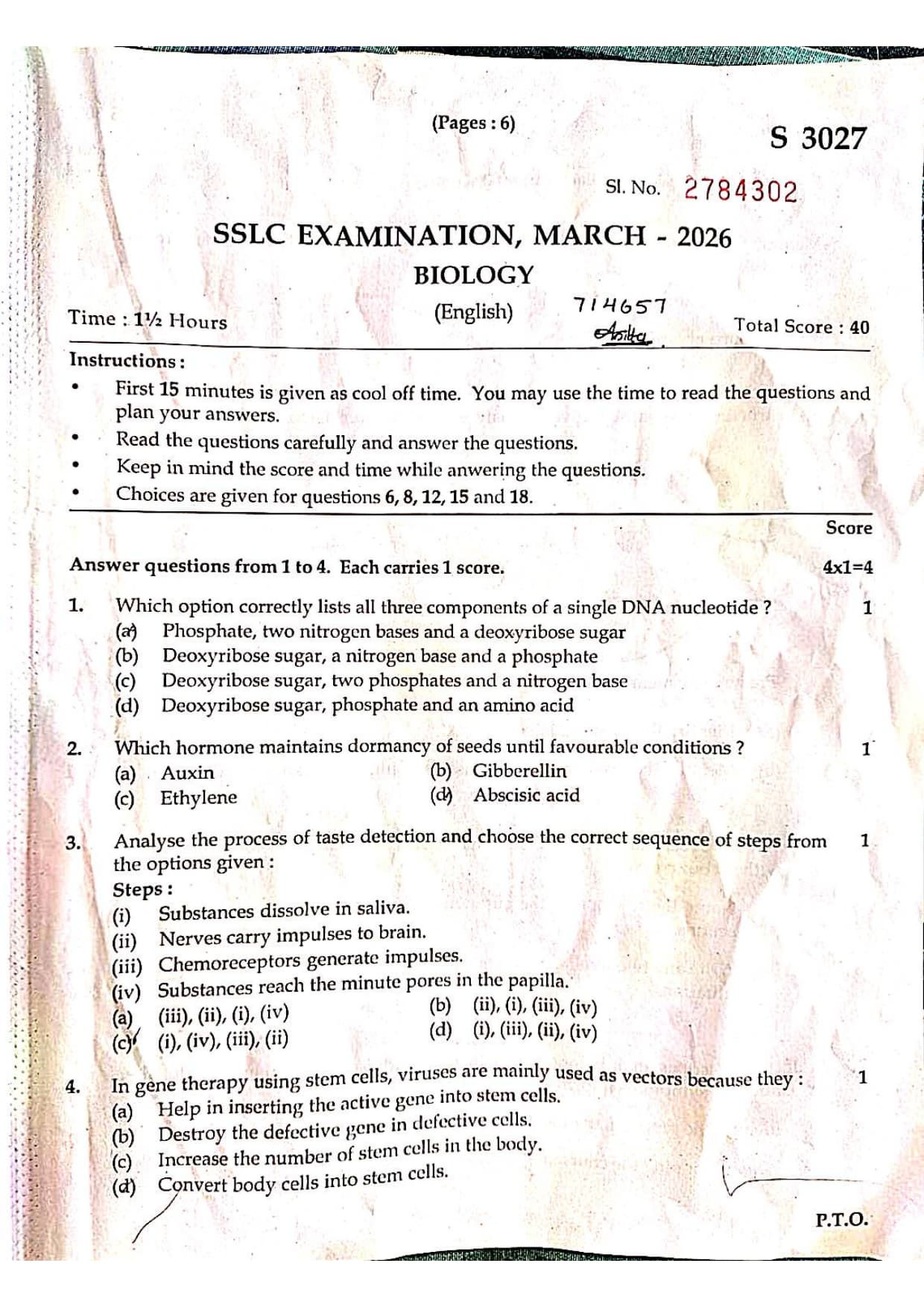
Which option correctly lists all three components of a single DNA nucleotide?

  • (A) Phosphate, two nitrogen bases and a deoxyribose sugar
  • (B) Deoxyribose sugar, a nitrogen base and a phosphate
  • (C) Deoxyribose sugar, two phosphates and a nitrogen base
  • (D) Deoxyribose sugar, phosphate and an amino acid
Correct Answer: (B) Deoxyribose sugar, a nitrogen base and a phosphate
View Solution

Step 1: Understand the structure of a nucleotide.


A nucleotide is the basic structural unit of DNA. Each nucleotide is composed of three essential components which together form the building block of the DNA molecule.


Step 2: Identify the three components.


A DNA nucleotide consists of:


A deoxyribose sugar
A nitrogenous base (such as adenine, thymine, cytosine, or guanine)
A phosphate group


Step 3: Analyze the options.


(A) Incorrect. A nucleotide contains only one nitrogen base, not two.
(B) Correct. It correctly lists sugar, base, and phosphate.
(C) Incorrect. A nucleotide has only one phosphate group in its basic unit.
(D) Incorrect. Amino acids are components of proteins, not nucleotides.


Step 4: Conclusion.


Thus, the correct components of a DNA nucleotide are deoxyribose sugar, nitrogen base, and phosphate group.


Final Answer: Deoxyribose sugar, a nitrogen base and a phosphate. Quick Tip: Remember: Nucleotide = Sugar + Base + Phosphate. Nucleoside = Sugar + Base (no phosphate).


Question 2:

Which hormone maintains dormancy of seeds until favourable conditions?

  • (A) Auxin
  • (B) Gibberellin
  • (C) Ethylene
  • (D) Abscisic acid
Correct Answer: (D) Abscisic acid
View Solution

Step 1: Understand seed dormancy.


Seed dormancy is a condition in which seeds do not germinate even under favourable conditions. It is an important mechanism that helps plants survive adverse environmental conditions.


Step 2: Identify the hormone responsible.


Abscisic acid (ABA) is known as a growth-inhibiting hormone. It plays a major role in inducing and maintaining seed dormancy by inhibiting germination.


Step 3: Analyze other hormones.


(A) Auxin: Promotes cell elongation and growth.
(B) Gibberellin: Promotes seed germination and growth.
(C) Ethylene: Involved in fruit ripening.
(D) Abscisic acid: Correct. It inhibits growth and maintains dormancy.


Step 4: Conclusion.


Therefore, the hormone responsible for maintaining seed dormancy is abscisic acid.


Final Answer: Abscisic acid. Quick Tip: ABA (Abscisic acid) = Dormancy hormone. Gibberellin = Germination hormone.


Question 3:

Analyse the process of taste detection and choose the correct sequence of steps from the options given:
Steps:
(i) Substances dissolve in saliva.
(ii) Nerves carry impulses to brain.
(iii) Chemoreceptors generate impulses.
(iv) Substances reach the minute pores in the papilla.

  • (a) (iii), (ii), (i), (iv)
  • (b) (ii), (i), (iii), (iv)
  • (c) (i), (iv), (iii), (ii)
  • (d) (i), (iii), (ii), (iv)
Correct Answer: (c) (i), (iv), (iii), (ii)
View Solution

Step 1: Understanding initial process.

Taste detection starts when food substances dissolve in saliva. This is necessary because taste receptors can only detect chemicals in dissolved form.


Step 2: Movement towards receptors.

After dissolving, the substances reach the minute pores present in the papilla (taste buds) on the tongue. These pores allow the dissolved chemicals to interact with sensory cells.


Step 3: Generation of impulses.

The chemoreceptors present in the taste buds get stimulated by these dissolved substances and generate nerve impulses.


Step 4: Transmission to brain.

Finally, the nerves carry these impulses to the brain, where the sensation of taste is perceived.


Step 5: Conclusion.

Thus, the correct sequence is (i) → (iv) → (iii) → (ii).
Quick Tip: Taste perception always begins with dissolution in saliva and ends with nerve impulses reaching the brain.


Question 4:

In gene therapy using stem cells, viruses are mainly used as vectors because they:

  • (a) Help in inserting the active gene into stem cells.
  • (b) Destroy the defective gene in defective cells.
  • (c) Increase the number of stem cells in the body.
  • (d) Convert body cells into stem cells.
Correct Answer: (a) Help in inserting the active gene into stem cells.
View Solution

Step 1: Understanding gene therapy.

Gene therapy involves introducing a functional gene into cells to replace or repair a defective gene responsible for a disease.


Step 2: Role of vectors.

Vectors are carriers that help transfer the desired gene into target cells. Viruses are commonly used as vectors because of their natural ability to enter cells and deliver genetic material.


Step 3: Function of viruses in gene therapy.

Modified viruses are engineered so that they are harmless but can still carry and insert the required gene into the host cell's DNA. This helps in correcting genetic defects.


Step 4: Analysis of options.

(a) Correct — Viruses insert the desired gene into stem cells.

(b) Incorrect — Viruses do not directly destroy defective genes.

(c) Incorrect — They do not increase stem cell numbers.

(d) Incorrect — They do not convert body cells into stem cells.


Step 5: Conclusion.

Thus, viruses are used because they help in inserting the active gene into stem cells.
Quick Tip: Viruses are used in gene therapy because they naturally deliver DNA into host cells.


Question 5:

Mention the advantages of the following technological possibilities in environmental conservation:
(a) Bioremediation
(b) Cryopreservation

Correct Answer:
View Solution

Step 1: Understanding Bioremediation.

Bioremediation is a process that uses microorganisms such as bacteria and fungi to degrade or detoxify environmental pollutants into less harmful substances.


Step 2: Advantages of Bioremediation.

It is an eco-friendly and cost-effective method of cleaning polluted environments. It helps in the removal of toxic substances like oil spills, heavy metals, and pesticides without causing further damage to the ecosystem. It also maintains natural balance as it utilizes biological agents.


Step 3: Understanding Cryopreservation.

Cryopreservation is the technique of preserving cells, tissues, seeds, or genetic material at very low temperatures (usually in liquid nitrogen at \(-196^\circ\)C).


Step 4: Advantages of Cryopreservation.

It helps in the conservation of endangered species by preserving their genetic material for long periods. It maintains biodiversity and allows future restoration of species. It is also useful in preserving rare plant seeds and germplasm without genetic changes.


Step 5: Conclusion.

Both bioremediation and cryopreservation are important technological tools that help in protecting the environment by reducing pollution and conserving biodiversity.
Quick Tip: Bioremediation cleans pollution naturally using microorganisms, while cryopreservation preserves life forms for future use at extremely low temperatures.


Question 6:

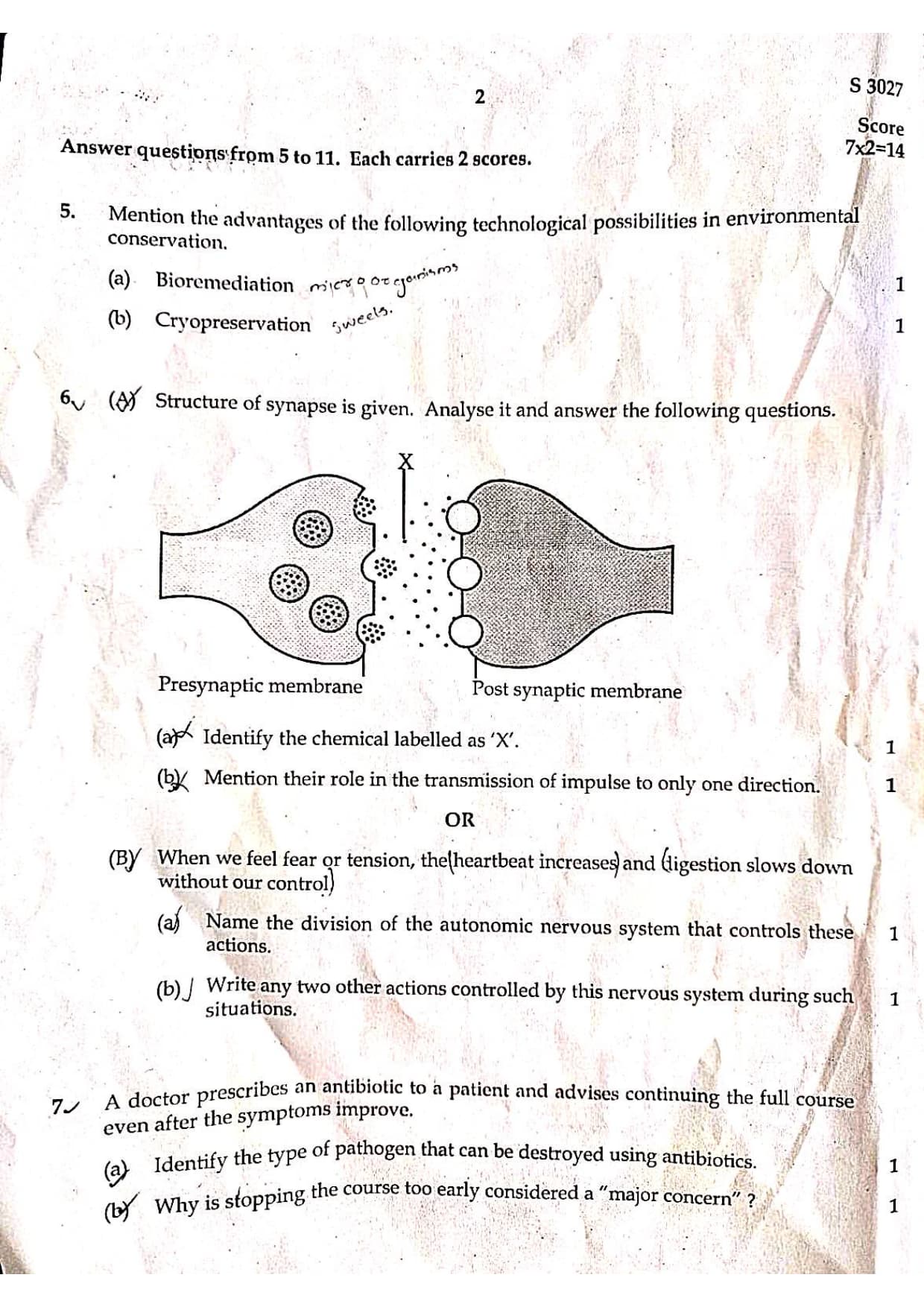
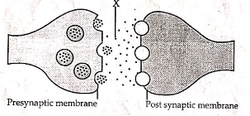
Structure of synapse is given. Analyse it and answer the following questions.
(a) Identify the chemical labelled as `X'.
(b) Mention their role in the transmission of impulse to only one direction.

Correct Answer:
View Solution


Step 1: Identify the labelled part `X'.

In the given synapse diagram, the label `X' indicates the chemical substances present in the synaptic cleft. These chemicals are called neurotransmitters.


Step 2: Explain what neurotransmitters do.

Neurotransmitters are released from the synaptic vesicles of the presynaptic membrane when a nerve impulse reaches the end of the axon. These chemicals diffuse across the synaptic cleft and carry the signal to the postsynaptic membrane.


Step 3: State the answer for part (a).

Therefore, the chemical labelled as `X' is neurotransmitter (for example, acetylcholine in many synapses).


Step 4: Explain transmission in one direction.

Transmission of nerve impulse across a synapse takes place only in one direction because neurotransmitters are released only from the presynaptic terminal. The receptors for these neurotransmitters are present only on the postsynaptic membrane.


Step 5: Conclude the role in one-way conduction.

As a result, the impulse passes from the presynaptic neuron to the postsynaptic neuron only, and not in the reverse direction. This ensures unidirectional transmission of nerve impulses.
Quick Tip: Remember: In a synapse, neurotransmitters are released only by the presynaptic end, while receptors are present only on the postsynaptic membrane. That is why nerve impulse travels in one direction only.


Question 7:

When we feel fear or tension, the heartbeat increases and digestion slows down without our control.
(a) Name the division of the autonomic nervous system that controls these actions.
(b) Write any two other actions controlled by this nervous system during such situations.

Correct Answer:
View Solution


Step 1: Understand the situation described.

The condition of fear or tension represents a stress or emergency situation in the body. During such situations, certain involuntary actions like increased heartbeat and reduced digestion occur automatically.


Step 2: Identify the responsible division.

These responses are controlled by the sympathetic division of the autonomic nervous system, which prepares the body for fight or flight response.


Step 3: Answer part (a).

Therefore, the division responsible is the sympathetic nervous system.


Step 4: Identify other actions during stress.

During such situations, the sympathetic nervous system also:

- Dilates the pupils to allow more light into the eyes

- Increases the rate of breathing to supply more oxygen

- Diverts blood flow from digestive organs to muscles

- Causes sweating


Step 5: Answer part (b).

Any two actions are: pupil dilation and increase in breathing rate.
Quick Tip: Remember: Sympathetic nervous system = "fight or flight" response (increases heart rate, breathing, pupil size and decreases digestion).


Question 8:

A doctor prescribes an antibiotic to a patient and advises continuing the full course even after the symptoms improve.
(a) Identify the type of pathogen that can be destroyed using antibiotics.
(b) Why is stopping the course too early considered a “major concern”?

Correct Answer:
View Solution


Step 1: Identify the target of antibiotics.

Antibiotics are medicines that specifically act against bacterial infections. They either kill bacteria or inhibit their growth by targeting bacterial cell structures or metabolic pathways.


Step 2: Answer part (a).

The type of pathogen that can be destroyed using antibiotics is bacteria. Antibiotics are not effective against viruses or other non-bacterial pathogens.


Step 3: Understanding incomplete treatment.

When a patient starts taking antibiotics, the weaker bacteria are killed first, leading to improvement in symptoms. However, some stronger bacteria may still survive in the body.


Step 4: Explain the major concern.

If the antibiotic course is stopped too early, the remaining bacteria can multiply again. These surviving bacteria may develop resistance to the antibiotic, making future infections harder to treat.


Step 5: Conclusion.

Therefore, completing the full course of antibiotics is essential to completely eliminate the infection and prevent antibiotic resistance.
Quick Tip: Always complete the full course of antibiotics to prevent the development of antibiotic-resistant bacteria.


Question 9:

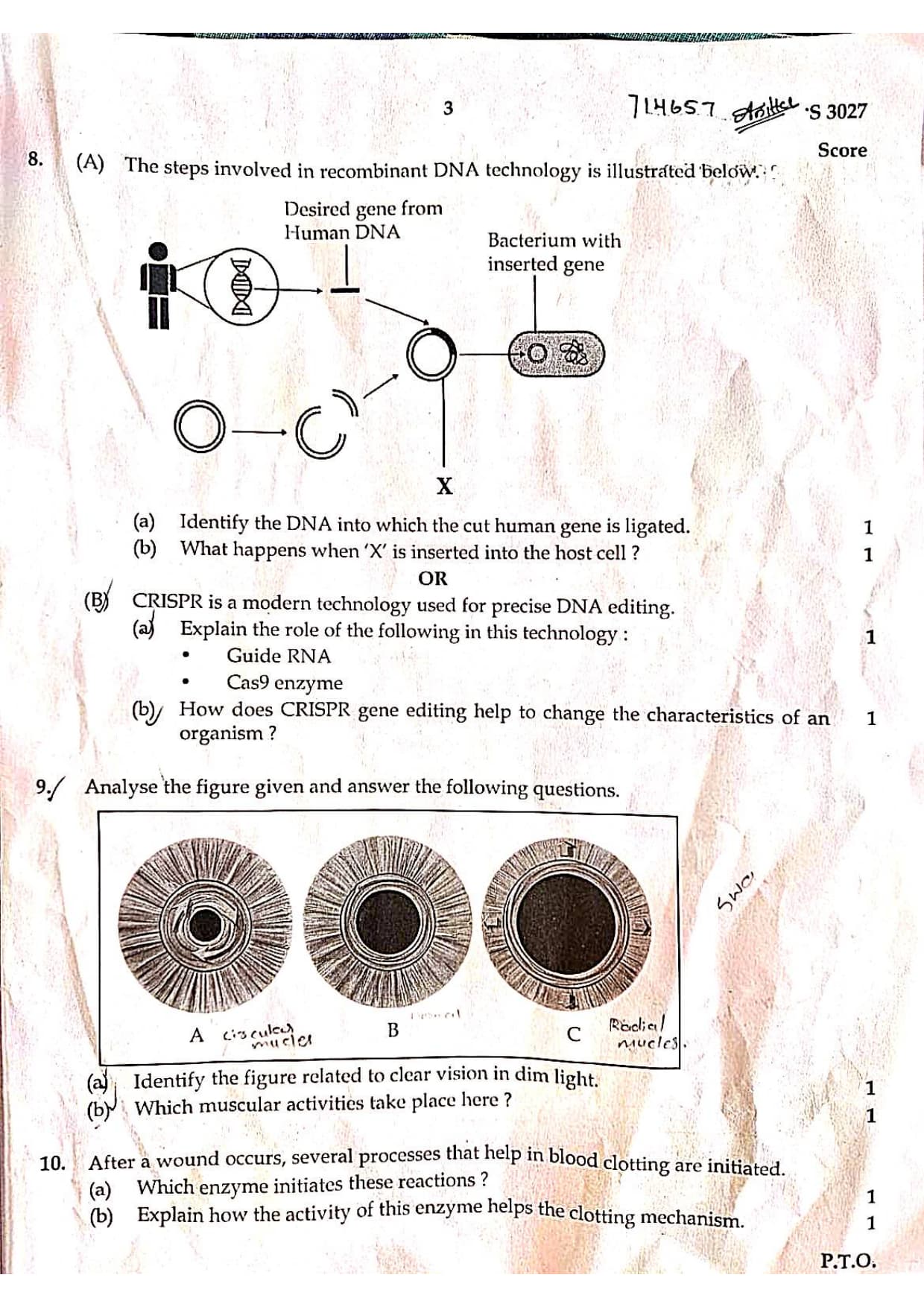
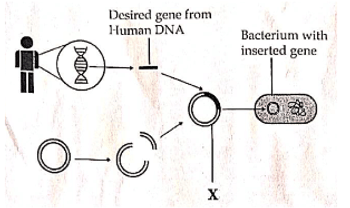
(A) The steps involved in recombinant DNA technology is illustrated below:
(a) Identify the DNA into which the cut human gene is ligated.
(b) What happens when ‘X’ is inserted into the host cell?

Correct Answer:
View Solution

Step 1: Understanding recombinant DNA technology.

Recombinant DNA technology involves combining a desired gene (from human DNA) with a vector DNA and then introducing it into a host cell for replication and expression.


Step 2: Identify the DNA used for ligation.

The cut human gene is ligated into a plasmid DNA. Plasmids are circular DNA molecules present in bacteria and are commonly used as vectors in genetic engineering.


Step 3: Identify ‘X’.

‘X’ represents the recombinant DNA (recombinant plasmid) formed after the insertion of the human gene into the plasmid.


Step 4: Explain what happens after insertion into host cell.

When ‘X’ (recombinant plasmid) is inserted into the host bacterial cell, it begins to replicate along with the host DNA. The inserted gene is also expressed, leading to the production of the desired protein.


Step 5: Conclusion.

Thus, plasmid acts as the vector for gene insertion, and introduction of recombinant DNA into the host results in cloning and expression of the desired gene.
Quick Tip: Plasmids are commonly used vectors in recombinant DNA technology because they can replicate independently inside bacterial cells.


Question 10:

CRISPR is a modern technology used for precise DNA editing.
(a) Explain the role of the following in this technology:
• Guide RNA
• Cas9 enzyme

Correct Answer:
View Solution

Step 1: Understand CRISPR technology.

CRISPR-Cas9 is a gene-editing tool that allows scientists to cut and modify DNA at specific locations. It works like molecular scissors guided to a target sequence.


Step 2: Role of Guide RNA (gRNA).

Guide RNA is responsible for identifying and binding to the specific DNA sequence that needs to be edited. It has a sequence complementary to the target DNA, ensuring high precision in locating the correct site.


Step 3: Function of Guide RNA.

Once bound, the guide RNA directs the Cas9 enzyme exactly to the target site on the DNA, acting like a navigator.


Step 4: Role of Cas9 enzyme.

Cas9 is an endonuclease enzyme that acts as molecular scissors. It cuts the DNA strands at the specific location identified by the guide RNA.


Step 5: Final outcome of the process.

After the DNA is cut, the cell's natural repair mechanisms allow scientists to insert, delete, or modify genes, enabling precise genetic editing.
Quick Tip: Remember: Guide RNA = GPS (finds the location), Cas9 = scissors (cuts the DNA). Together they enable precise gene editing.


Question 11:

How does CRISPR gene editing help to change the characteristics of an organism?

Correct Answer:
View Solution

Step 1: Understanding CRISPR technology.

CRISPR (Clustered Regularly Interspaced Short Palindromic Repeats) is a modern gene-editing tool that allows scientists to precisely modify DNA sequences in an organism.


Step 2: Mechanism of action.

It uses a guide RNA (gRNA) to locate a specific DNA sequence and an enzyme called Cas9 to cut the DNA at that exact location.


Step 3: Modification of genes.

After the DNA is cut, scientists can add, remove, or replace specific genetic material. This leads to changes in the genetic code of the organism.


Step 4: Effect on characteristics.

Since genes control traits (such as color, size, disease resistance), modifying genes results in changes in the organism’s characteristics or phenotype.


Step 5: Conclusion.

Thus, CRISPR enables precise and targeted changes in DNA, allowing scientists to alter the characteristics of organisms efficiently.
Quick Tip: CRISPR works like molecular scissors that can cut and edit DNA at specific locations, enabling precise genetic modifications.


Question 12:

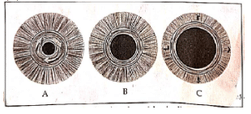
Analyse the figure given and answer the following questions.
(a) Identify the figure related to clear vision in dim light.
(b) Which muscular activities take place here?


Correct Answer:
View Solution

Step 1: Understanding the figures.

The given figures (A, B, and C) represent different conditions of the pupil of the human eye under varying light intensities. The size of the pupil changes depending on the amount of light entering the eye.


Step 2: Identifying dim light condition.

In dim light, the pupil becomes large (dilated) to allow more light to enter the eye for better vision. Among the given figures, Figure C shows the largest pupil.


Step 3: Answer for part (a).

Therefore, the figure related to clear vision in dim light is Figure C.


Step 4: Muscular activities involved.

The change in pupil size is controlled by the muscles of the iris:

- Radial muscles contract to dilate the pupil (in dim light).

- Circular muscles relax during this process.


Step 5: Conclusion.

Thus, in dim light, radial muscles contract and circular muscles relax, causing pupil dilation to allow more light inside the eye.
Quick Tip: Dim light → pupil dilates → radial muscles contract. Bright light → pupil constricts → circular muscles contract.


Question 13:

After a wound occurs, several processes that help in blood clotting are initiated.
(a) Which enzyme initiates these reactions?
(b) Explain how the activity of this enzyme helps the clotting mechanism.

Correct Answer:
View Solution


Step 1: Identify the initiating enzyme.

When a wound occurs, the clotting process begins with the activation of an enzyme called thrombin.


Step 2: Understand the precursor activation.

Thrombin is formed from its inactive precursor prothrombin in the presence of clotting factors such as calcium ions and thromboplastin released from damaged tissues.


Step 3: Role of thrombin in clotting.

Thrombin plays a crucial role by converting the soluble plasma protein fibrinogen into insoluble fibrin threads.


Step 4: Formation of clot.

These fibrin threads form a mesh-like network that traps blood cells such as red blood cells and platelets, leading to the formation of a blood clot.


Step 5: Final outcome.

The clot seals the wound, preventing further blood loss and protecting the body from infection.
Quick Tip: Remember: Prothrombin → Thrombin → Fibrinogen → Fibrin → Clot formation.


Question 14:

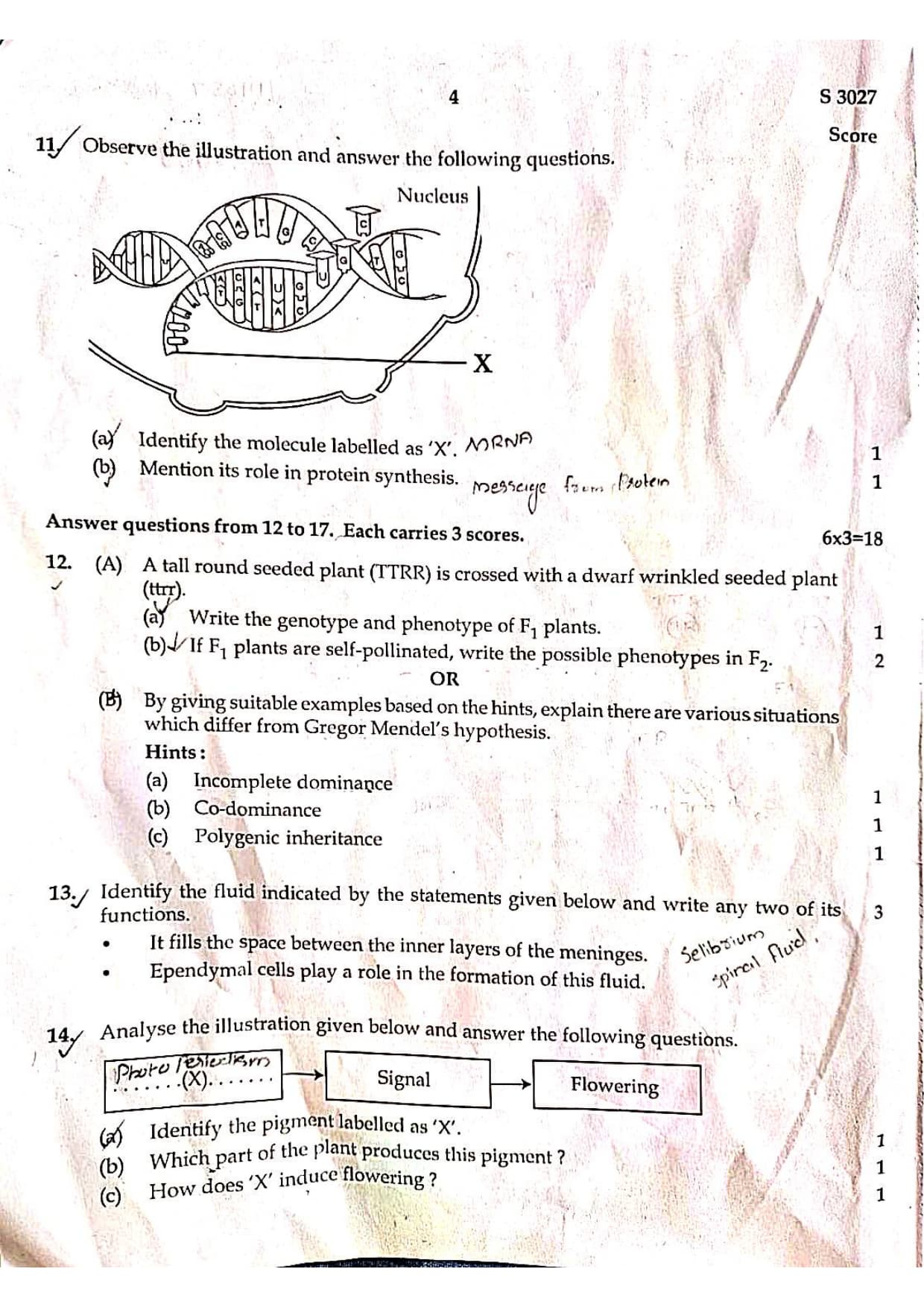
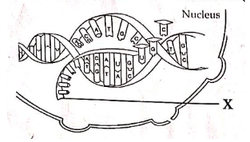
Observe the illustration and answer the following questions.
(a) Identify the molecule labelled as ‘X’.
(b) Mention its role in protein synthesis.

Correct Answer:
View Solution


Step 1: Understanding the diagram.

The diagram shows the process of transcription inside the nucleus, where a DNA strand is used as a template to form a complementary RNA strand. The labelled part ‘X’ represents the RNA molecule leaving the nucleus.


Step 2: Identification of molecule ‘X’.

The molecule labelled ‘X’ is messenger RNA (mRNA). It is synthesized from DNA during transcription.


Step 3: Role of mRNA in protein synthesis.

mRNA carries the genetic information (in the form of codons) from DNA in the nucleus to the ribosomes in the cytoplasm.


Step 4: Function during translation.

At the ribosome, mRNA serves as a template for assembling amino acids in the correct sequence to form a protein. Each codon on mRNA corresponds to a specific amino acid.


Step 5: Conclusion.

Thus, mRNA acts as a messenger that transfers genetic information from DNA to ribosomes, enabling protein synthesis.
Quick Tip: mRNA = messenger RNA → carries genetic code from DNA to ribosome for protein formation.


Question 15:

A tall round seeded plant (TTRR) is crossed with a dwarf wrinkled seeded plant (ttrr).
(a) Write the genotype and phenotype of F\(_1\) plants.
(b) If F\(_1\) plants are self-pollinated, write the possible phenotypes in F\(_2\).

Correct Answer:
View Solution


Step 1: Identify the dominant and recessive traits.

In this question, T represents the dominant trait for tallness and t represents the recessive trait for dwarfness. Similarly, R represents the dominant trait for round seeds and r represents the recessive trait for wrinkled seeds.


Step 2: Write the parental cross.

The given parental cross is:
\[ TTRR \times ttrr \]
The first parent can produce only one type of gamete, that is TR, and the second parent can also produce only one type of gamete, that is tr.


Step 3: Determine the F\(_1\) genotype and phenotype.

When gametes TR and tr combine, all F\(_1\) offspring will have the genotype:
\[ TtRr \]
Since both T and R are dominant, all F\(_1\) plants will show the phenotype tall round seeded.


Step 4: Self-pollination of F\(_1\) plants.

Now the F\(_1\) plants are self-pollinated:
\[ TtRr \times TtRr \]
This is a typical dihybrid cross. In the F\(_2\) generation, the characters for height and seed shape assort independently, producing different phenotypic combinations.


Step 5: Write the possible phenotypes in F\(_2\).

The possible phenotypes obtained in the F\(_2\) generation are:


Tall round seeded plants

Tall wrinkled seeded plants

Dwarf round seeded plants

Dwarf wrinkled seeded plants


Their phenotypic ratio is:
\[ 9 : 3 : 3 : 1 \]
Quick Tip: Remember: In a dihybrid cross of the type TtRr \(\times\) TtRr, the F\(_2\) phenotypic ratio is always 9:3:3:1 if the traits assort independently.


Question 16:

By giving suitable examples based on the hints, explain there are various situations which differ from Gregor Mendel’s hypothesis.
Hints:
(a) Incomplete dominance
(b) Co-dominance
(c) Polygenic inheritance

Correct Answer:
View Solution


Step 1: Understand Mendel’s hypothesis.

Gregor Mendel proposed that traits are controlled by pairs of factors (genes) where one allele is dominant over the other, leading to clear dominant and recessive phenotypes. However, some inheritance patterns do not follow this simple dominance rule.


Step 2: Incomplete dominance.

In incomplete dominance, neither allele is completely dominant over the other, resulting in an intermediate phenotype.

Example: When red flowered (RR) and white flowered (rr) plants are crossed, the F\(_1\) generation shows pink flowers (Rr), which is a blend of both traits.


Step 3: Co-dominance.

In co-dominance, both alleles express themselves equally in the heterozygous condition.

Example: In human blood group system, individuals with genotype AB have both A and B antigens expressed simultaneously.


Step 4: Polygenic inheritance.

In polygenic inheritance, a single trait is controlled by multiple genes, leading to continuous variation rather than distinct categories.

Example: Human skin colour is determined by multiple genes, resulting in a wide range of shades rather than just two types.


Step 5: Conclusion.

These patterns show that inheritance can be more complex than Mendel’s laws, as traits may show blending, equal expression, or continuous variation instead of simple dominant-recessive relationships.
Quick Tip: Remember: Mendel’s laws apply to simple traits, but real-life inheritance often involves incomplete dominance, co-dominance, and multiple genes.


Question 17:

Identify the fluid indicated by the statements given below and write any two of its functions.
• It fills the space between the inner layers of the meninges.
• Ependymal cells play a role in the formation of this fluid.

Correct Answer:
View Solution


Step 1: Understanding the given clues.

The fluid mentioned fills the space between the meninges (protective layers of the brain and spinal cord), and is formed with the help of ependymal cells.


Step 2: Identification of the fluid.

The fluid described is Cerebrospinal Fluid (CSF). It is present in the subarachnoid space between the meninges and is produced by specialized ependymal cells in the ventricles of the brain.


Step 3: Function 1 – Protection.

CSF acts as a shock absorber, protecting the brain and spinal cord from mechanical injuries by cushioning them.


Step 4: Function 2 – Transport and nourishment.

It helps in the transport of nutrients and removal of waste products from the central nervous system, maintaining a stable chemical environment.


Step 5: Conclusion.

Thus, cerebrospinal fluid is essential for protection, nourishment, and proper functioning of the brain and spinal cord.
Quick Tip: Cerebrospinal fluid (CSF) cushions the brain and helps in nutrient transport and waste removal in the central nervous system.


Question 18:

Analyse the illustration given below and answer the following questions.
(a) Identify the pigment labelled as ‘X’.
(b) Which part of the plant produces this pigment?
(c) How does ‘X’ induce flowering?

Correct Answer:
View Solution


Step 1: Understanding the diagram.

The diagram shows a pigment (X) converting into a signal which leads to flowering. This represents the concept of photoperiodism, where light-sensitive pigments control flowering in plants.


Step 2: Identification of pigment ‘X’.

The pigment labelled ‘X’ is Phytochrome. It is a light-sensitive pigment that detects changes in light duration.


Step 3: Site of production.

Phytochrome is produced in the leaves of the plant, which perceive light signals.


Step 4: Mechanism of inducing flowering.

Phytochrome exists in two forms (active and inactive) and responds to light and dark periods. Based on day length, it triggers the production of a flowering hormone (florigen), which acts as a signal.


Step 5: Final effect.

This signal (florigen) is transported to the shoot apex, where it induces flowering in the plant.
Quick Tip: Phytochrome in leaves detects light duration and helps produce florigen, the hormone responsible for flowering.


Question 19:

A patient shows frequent fatigue and weakness. Blood examination reveals that some red blood cells are sickle-shaped. Based on these observations, answer the following:
(a) Identify the reason for this disease.
(b) In what other ways does this genetic defect affect the body?

Correct Answer:
View Solution


Step 1: Identify the disease.

The presence of sickle-shaped red blood cells indicates that the patient is suffering from sickle cell anaemia, a genetic blood disorder.


Step 2: Cause of the disease.

This disease is caused by a mutation in the gene responsible for haemoglobin formation. The normal haemoglobin (HbA) is replaced by abnormal haemoglobin (HbS), which causes red blood cells to become rigid and sickle-shaped.


Step 3: Answer part (a).

Thus, the reason for this disease is a genetic mutation in haemoglobin leading to formation of abnormal HbS.


Step 4: Effects of this defect on the body.

Due to the abnormal shape, red blood cells lose their flexibility and may block blood vessels. This leads to:

- Reduced oxygen supply to tissues

- Pain and swelling due to blocked capillaries

- Damage to organs over time

- Shortened lifespan of red blood cells causing anaemia


Step 5: Answer part (b).

Therefore, this defect affects the body by causing poor oxygen transport, blockage of blood vessels, organ damage, and anaemia.
Quick Tip: Remember: Sickle cell anaemia is caused by a mutation in haemoglobin gene, leading to abnormal RBC shape and reduced oxygen-carrying capacity.


Question 20:

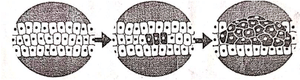
Observe the illustration and answer the following questions.
(a) Which defect is shown in the illustration?
(b) What are the reasons for the formation of abnormal cells?
(c) Mention any two treatment measures of the disease.

Correct Answer:
View Solution


Step 1: Understanding the illustration.

The diagram shows normal cells gradually changing into abnormal cells and then forming a mass of irregular, uncontrolled cells. This indicates uncontrolled cell division.


Step 2: Identification of the defect.

The defect shown is cancer. It is characterized by uncontrolled growth and division of cells leading to tumor formation.


Step 3: Reasons for abnormal cell formation.

Abnormal cells are formed due to mutations in genes that control cell division. These mutations may be caused by carcinogens such as tobacco, radiation, harmful chemicals, or viral infections.


Step 4: Treatment measures.

Two common treatment measures are:

- Chemotherapy: Use of drugs to destroy cancer cells.

- Radiotherapy: Use of high-energy radiation to kill cancer cells.


Step 5: Conclusion.

Thus, cancer arises due to uncontrolled cell division, and it can be treated using methods like chemotherapy and radiotherapy.
Quick Tip: Cancer is caused by uncontrolled cell division due to genetic mutations and can be treated using chemotherapy, radiotherapy, or surgery.


Question 21:

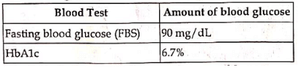
Observe the given blood test result of a person and answer the following questions:
(a) Is the fasting blood glucose value normal?
(b) Is the given HbA1c value normal? Why?
(c) Suggest any two lifestyle habits that people should follow to maintain a normal blood glucose level.
Correct Answer:
View Solution


Step 1: Analyse fasting blood glucose (FBS).

The normal fasting blood glucose level lies between 70–100 mg/dL. The given value is 90 mg/dL, which falls within the normal range.


Step 2: Answer part (a).

Yes, the fasting blood glucose value is normal.


Step 3: Analyse HbA1c value.

HbA1c represents the average blood glucose level over the past 2–3 months. A normal HbA1c value is usually below 5.7%. Values between 5.7%–6.4% indicate prediabetes, and values 6.5% or above indicate diabetes. The given value is 6.7%.


Step 4: Answer part (b).

No, the HbA1c value is not normal because it is above 6.5%, indicating diabetic condition.


Step 5: Suggest lifestyle habits.

To maintain normal blood glucose levels, the following habits should be followed:

- Regular physical exercise

- Balanced diet with low sugar and controlled carbohydrate intake


Step 6: Answer part (c).

Two lifestyle habits are regular exercise and healthy balanced diet.
Quick Tip: Remember: Normal FBS = 70–100 mg/dL, Normal HbA1c < 5.7%. Higher HbA1c indicates long-term high blood sugar levels.


Question 22:

Analyse the illustration and answer the following questions.
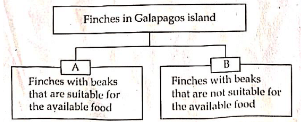
(a) What happens to finches in A and B categories in terms of survival ?
(b) What will happen to the population of finches that survive ?
(c) How can these changes in survival lead to the formation of new species of finches ?
Correct Answer:
View Solution


Step 1: Understanding the illustration.

The diagram shows finches of Galapagos Island divided into two groups. Group A has finches with beaks suitable for the available food, while Group B has finches with beaks not suitable for the available food. This represents natural selection.


Step 2: Survival of A and B categories.

Finches in A category will survive better because their beaks are adapted to the available food source. Finches in B category will have less chance of survival because their beaks are not suitable for obtaining food efficiently.


Step 3: Effect on the surviving population.

The finches that survive will reproduce and increase in number. As a result, the population will gradually contain more individuals with favourable beak characteristics.


Step 4: Role in formation of new species.

Over many generations, these favourable traits are inherited and become more common in the population. Continuous selection, variation, and adaptation to different food habits can make the group more and more distinct from the original population.


Step 5: Conclusion.

Thus, natural selection favors finches with suitable beaks, increases their population, and over a long period can lead to the evolution and formation of new species of finches.
Quick Tip: Natural selection means organisms with useful adaptations survive and reproduce more, gradually leading to evolutionary change and sometimes new species.


Question 23:

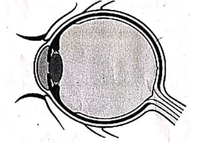
Redraw the diagram. Label it by identifying the parts indicated in the statements given.
(a) The part that allows light to enter the eye.
(b) The part that adjusts the curvature of the lens.
(c) The part where the cone cells are abundant.
Correct Answer:
View Solution

Step 1: Understanding the eye diagram.

The diagram represents the internal structure of the human eye, where different parts perform specific functions related to vision.


Step 2: Part allowing light to enter the eye.

The part that allows light to enter the eye is the pupil. It is an opening present in the center of the iris through which light passes into the eye.


Step 3: Part adjusting curvature of the lens.

The ciliary muscles are responsible for adjusting the curvature of the lens. They contract or relax to change the shape of the lens for proper focusing (accommodation).


Step 4: Part where cone cells are abundant.

Cone cells are abundant in the yellow spot (fovea) of the retina. This region is responsible for sharp and detailed vision in bright light.


Step 5: Conclusion.

Thus, pupil allows light entry, ciliary muscles adjust lens curvature, and fovea contains maximum cone cells for clear vision.
Quick Tip: Pupil → light entry, Ciliary muscles → focus adjustment, Fovea → sharp vision due to cone cells.


Question 24:

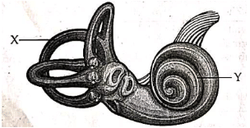
Observe the illustration and answer the following questions.
(a) Identify the parts labelled as `X' and `Y'.
(b) What will be the effect of the rotational movement of head in `X'?
(c) Write the processes in `Y' that leads to hearing.
Correct Answer:
View Solution

Step 1: Identify the labelled parts.

In the given figure of the inner ear, the part labelled `X' is the semicircular canals and the part labelled `Y' is the cochlea.


Step 2: Explain the function of `X'.

The semicircular canals are concerned with maintaining body balance, especially during rotational or angular movements of the head. They contain fluid and sensory hair cells that detect changes in the position and movement of the head.


Step 3: State the effect of rotational movement of head in `X'.

When the head rotates, the fluid inside the semicircular canals moves. This movement bends the sensory hair cells, generating nerve impulses which are sent to the brain. As a result, the brain gets information about the direction and speed of rotation, helping to maintain dynamic balance.


Step 4: Explain the role of `Y' in hearing.

The cochlea is the hearing part of the inner ear. Sound vibrations reaching the inner ear create waves in the fluid of the cochlea. These waves stimulate the sensory hair cells present in the organ of Corti.


Step 5: Describe the process leading to hearing.

The stimulated hair cells convert sound vibrations into electrical nerve impulses. These impulses are then carried by the auditory nerve to the brain, where they are interpreted as sound. Thus, the cochlea helps in the process of hearing.
Quick Tip: Remember: Semicircular canals help in balance during movement, while cochlea converts sound vibrations into nerve impulses for hearing.

Kerala Board 2026 Class 10 Preparation