


Bihar Board is conducting the Class 10 Home Science Board Exam 2026 on February 24, 2026. Class 10 Home Science Question Paper with Solution PDF is available here for download.
The official question paper of Bihar Board Class 10 Home Science Board Exam 2026 is provided below. Students can download the official paper in PDF format for reference.
Bihar Board Class 10, 2026 Home Science Question Paper with Solution PDF - Memory Based
| Bihar Board Class 10 Home Science Question Paper 2026 | Download PDF | Check Solutions |

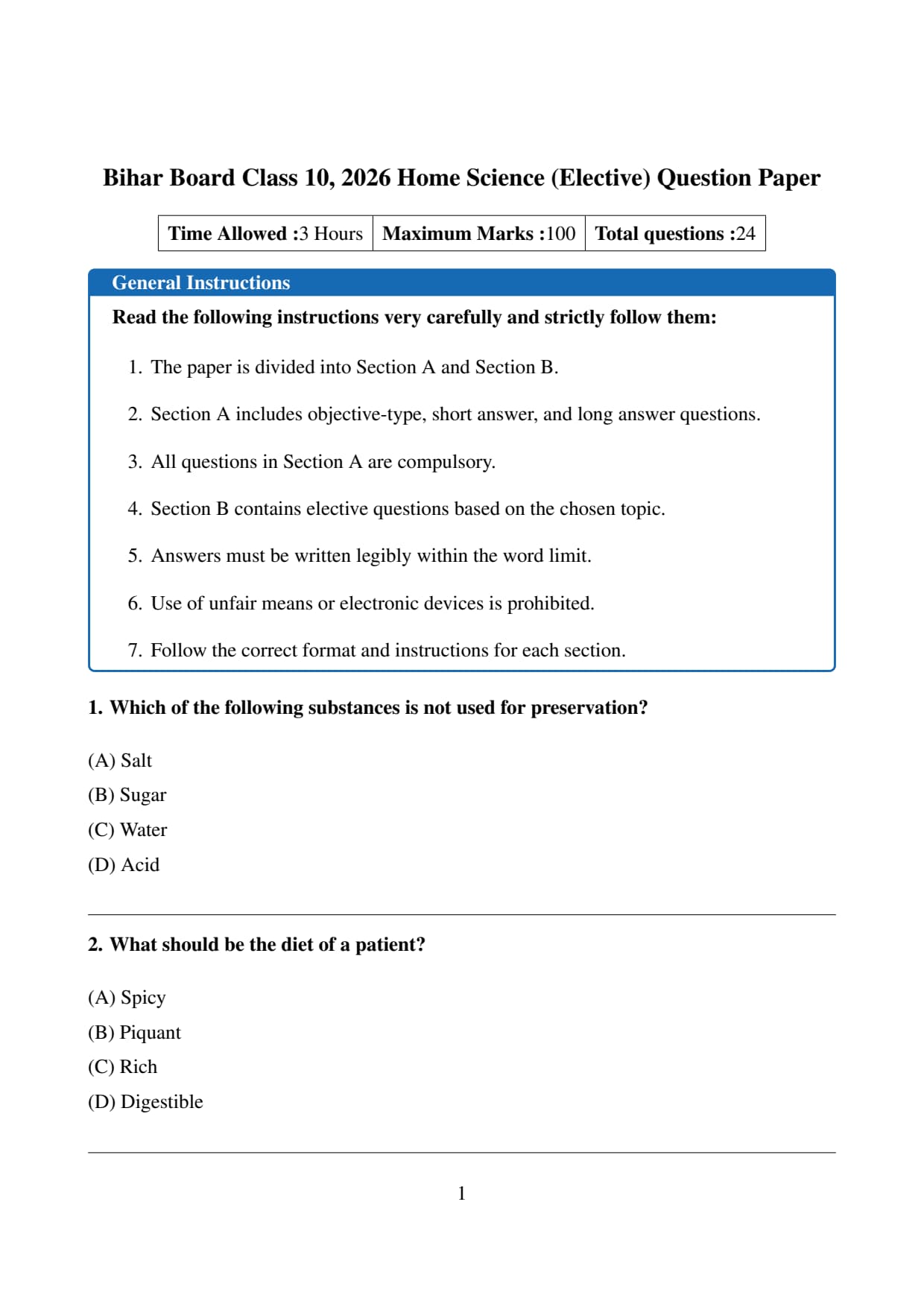
Which of the following substances is not used for preservation?
View Solution
\textcolor{red{Step 1: Understanding food preservation.
Food preservation involves processing and handling food to prevent or slow down spoilage, microbial growth, and quality deterioration. Various substances are used as preservatives to extend the shelf life of food products.
\textcolor{red{Step 2: Common preservatives and their mechanisms.
Salt: Used in pickling, curing meats, and preserving vegetables. It works through osmosis, drawing out water from food and microbial cells, thereby inhibiting bacterial growth.
Sugar: Used in jams, jellies, and fruit preserves. High sugar concentrations create a hypertonic environment that dehydrates microorganisms, preventing their growth.
Acid (e.g., vinegar, citric acid): Used in pickling and as food additives. Acidic conditions (low pH) inhibit the growth of many spoilage-causing bacteria and microorganisms.
Water: Water is essential for microbial growth and enzymatic reactions that cause food spoilage. It promotes rather than prevents spoilage.
\textcolor{red{Step 3: Analysis of each option.
(A) Salt: \textcolor{red{This IS used for preservation. Salt has been used for centuries to preserve meat, fish, and vegetables.
(B) Sugar: \textcolor{red{This IS used for preservation. Sugar preserves fruits in the form of jams, jellies, and candied fruits.
(C) Water: \textcolor{red{This is NOT used for preservation. Water actually promotes microbial growth and food spoilage. It is a medium for bacteria and fungi to thrive.
(D) Acid: \textcolor{red{This IS used for preservation. Acids like vinegar (acetic acid) and citric acid inhibit bacterial growth and are used in pickling.
\textcolor{red{Step 4: Conclusion.
While salt, sugar, and acid create environments unfavorable for microbial growth, water provides conditions that support the growth of spoilage-causing microorganisms. Therefore, water is not used as a preservative.
\textcolor{red{ Final Answer: (C) Water. Quick Tip: Preservation principles: Remove moisture (drying), add salt/sugar (osmosis), add acid (low pH), or add chemical preservatives. Water promotes spoilage, so it is removed or bound in preserved foods.
What should be the diet of a patient?
View Solution
\textcolor{red{Step 1: Understanding dietary requirements of patients.
When a person is ill or recovering from illness, their body is in a weakened state. The digestive system may also be compromised. Therefore, the diet needs to be carefully chosen to support recovery without causing additional stress to the body.
\textcolor{red{Step 2: Key principles of patient diet.
A proper patient diet should have the following characteristics:
Easy to digest and absorb
Nutritious and balanced
Gentle on the digestive system
Non-irritating to the stomach and intestines
Provides energy for recovery without causing discomfort
\textcolor{red{Step 3: Analysis of each option.
(A) Spicy: Incorrect. Spicy foods can irritate the stomach lining, cause acidity, and may worsen digestive issues. They are generally avoided during illness.
(B) Piquant: Incorrect. Piquant refers to food that is pleasantly sharp or appetizing, often with spicy or tangy flavors. Such stimulating foods may not be suitable for patients with sensitive digestive systems.
(C) Rich: Incorrect. Rich foods (high in fat, oil, or heavy ingredients) are difficult to digest and can put strain on the digestive system, which is not advisable for patients.
(D) Digestible: \textcolor{red{Correct. Digestible foods are easy for the body to break down and absorb. They provide necessary nutrition without causing digestive distress, making them ideal for patients.
\textcolor{red{Step 4: Conclusion.
A patient's diet should primarily consist of easily digestible foods that provide essential nutrients while being gentle on the digestive system. Foods like khichdi, soups, boiled vegetables, and fruits are examples of digestible diets recommended for patients.
\textcolor{red{ Final Answer: (D) Digestible. Quick Tip: Patient diet = Light + Nutritious + Digestible. Avoid spicy, oily, and heavy foods. Include easily digestible items like porridge, soup, boiled foods, and fruits.
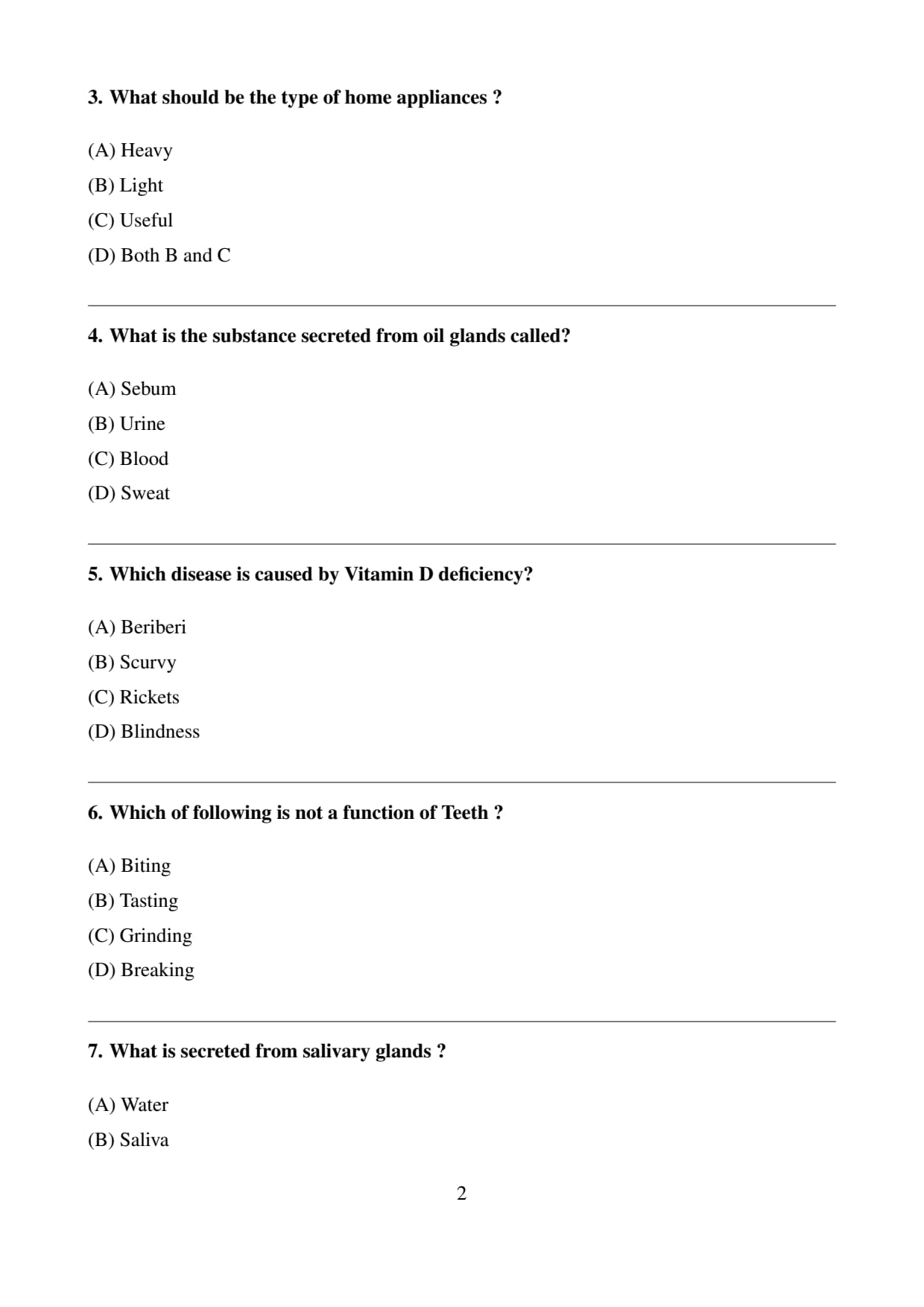
What should be the type of home appliances ?
View Solution
\textcolor{red{Step 1: Understanding home appliance selection criteria.
When selecting home appliances for domestic use, several factors need to be considered including practicality, functionality, and convenience. The ideal home appliances should meet the needs of the household while being user-friendly.
\textcolor{red{Step 2: Important characteristics of home appliances.
Weight considerations: Home appliances should ideally be lightweight for ease of movement, cleaning, and handling. Heavy appliances can be difficult to maneuver and may cause strain during use or cleaning.
Functionality: Appliances must serve a useful purpose and fulfill the needs of the household. Useless appliances waste space and resources.
Combined features: The best appliances combine both practicality (lightweight) and functionality (usefulness).
\textcolor{red{Step 3: Analysis of each option.
(A) Heavy: Incorrect. Heavy appliances are difficult to move, clean behind, and handle. They are generally not preferred for home use unless absolutely necessary.
(B) Light: \textcolor{red{This is a desirable characteristic. Lightweight appliances are easier to handle, clean, and reposition as needed.
(C) Useful: \textcolor{red{This is a desirable characteristic. Appliances should serve a practical purpose and meet household needs.
(D) Both B and C: \textcolor{red{Correct. The ideal home appliances should be both lightweight (for ease of use) and useful (for functionality).
\textcolor{red{Step 4: Conclusion.
Home appliances should combine practicality with functionality. They should be lightweight enough for easy handling and maintenance while being useful in serving their intended purpose. Therefore, both characteristics (light and useful) are desirable.
\textcolor{red{ Final Answer: (D) Both B and C. Quick Tip: When choosing home appliances, consider: weight (lighter is better for handling), utility (must serve a purpose), energy efficiency, durability, and ease of maintenance.
What is the substance secreted from oil glands called?
View Solution
\textcolor{red{Step 1: Understanding oil glands (sebaceous glands).
Oil glands, also known as sebaceous glands, are small glands in the skin that secrete an oily substance. They are found throughout the body except on the palms and soles, and are most abundant on the face and scalp.
\textcolor{red{Step 2: Function of sebaceous glands.
Sebaceous glands secrete an oily substance called sebum. Sebum serves multiple important functions:
Lubricates and moisturizes the skin and hair
Forms a protective layer to prevent excessive water loss
Has antibacterial properties that help protect against infections
Keeps skin flexible and prevents cracking
\textcolor{red{Step 3: Analysis of each option.
(A) Sebum: \textcolor{red{Correct. Sebum is the oily, waxy substance produced by the sebaceous glands.
(B) Urine: Incorrect. Urine is produced by the kidneys and excreted through the urinary system, not by oil glands.
(C) Blood: Incorrect. Blood is produced in the bone marrow and circulated through the cardiovascular system, not secreted by oil glands.
(D) Sweat: Incorrect. Sweat is produced by sweat glands (sudoriferous glands), which are different from oil glands. Sweat helps regulate body temperature.
\textcolor{red{Step 4: Distinction between skin glands.
The skin contains two main types of glands:
Sebaceous glands: Secrete sebum (oily substance)
Sudoriferous glands: Secrete sweat (watery substance)
\textcolor{red{ Final Answer: (A) Sebum. Quick Tip: Remember: Sebaceous glands → Sebum (oil); Sudoriferous glands → Sweat. Sebum keeps skin and hair moisturized and has antimicrobial properties.
Which disease is caused by Vitamin D deficiency?
View Solution
\textcolor{red{Step 1: Understanding Vitamin D and its functions.
Vitamin D is a fat-soluble vitamin that plays a crucial role in calcium and phosphorus absorption in the body. It is essential for:
Maintaining normal blood levels of calcium and phosphorus
Promoting bone mineralization and growth
Supporting immune function
\textcolor{red{Step 2: Sources of Vitamin D.
Vitamin D can be obtained from:
Sunlight exposure (UV rays trigger synthesis in skin)
Dietary sources: fatty fish, egg yolks, fortified milk, and supplements
\textcolor{red{Step 3: Diseases caused by vitamin deficiencies.
Vitamin D deficiency: Causes rickets in children and osteomalacia in adults. Both conditions involve softening and weakening of bones due to impaired mineralization.
Vitamin B1 (Thiamine) deficiency: Causes beriberi, affecting the nervous and cardiovascular systems.
Vitamin C deficiency: Causes scurvy, characterized by bleeding gums, joint pain, and poor wound healing.
Vitamin A deficiency: Can cause night blindness and, in severe cases, complete blindness.
\textcolor{red{Step 4: Analysis of each option.
(A) Beriberi: Incorrect. Beriberi is caused by vitamin B1 (thiamine) deficiency.
(B) Scurvy: Incorrect. Scurvy is caused by vitamin C deficiency.
(C) Rickets: \textcolor{red{Correct. Rickets is caused by vitamin D deficiency in children, leading to soft, weak bones, bowed legs, and skeletal deformities.
(D) Blindness: Incorrect. While vitamin A deficiency can cause night blindness and eventually complete blindness, vitamin D deficiency does not directly cause blindness.
\textcolor{red{ Final Answer: (C) Rickets. Quick Tip: Vitamin deficiency diseases to remember: Vitamin A → Night blindness Vitamin B1 → Beriberi Vitamin C → Scurvy Vitamin D → Rickets (children) / Osteomalacia (adults)
Which of following is not a function of Teeth ?
View Solution
\textcolor{red{Step 1: Understanding the functions of teeth.
Teeth are hard, calcified structures in the mouth that are primarily responsible for mechanical digestion through the breakdown of food. The main functions of teeth include:
Incisors: Cutting and biting food
Canines: Tearing and piercing food
Premolars and Molars: Grinding and crushing food
\textcolor{red{Step 2: Identifying the primary functions.
The mechanical functions of teeth include:
Biting (incisors)
Grinding (molars and premolars)
Breaking, tearing, and crushing food
\textcolor{red{Step 3: Analysis of each option.
(A) Biting: \textcolor{red{This IS a function of teeth. Incisors are specifically designed for biting food.
(B) Tasting: \textcolor{red{This is NOT a function of teeth. Taste is detected by taste buds located on the tongue, soft palate, and other parts of the mouth. Teeth have no role in taste perception.
(C) Grinding: \textcolor{red{This IS a function of teeth. Molars and premolars are designed for grinding and crushing food.
(D) Breaking: \textcolor{red{This IS a function of teeth. Teeth break down food into smaller pieces during mastication.
\textcolor{red{Step 4: Conclusion.
Since tasting is performed by taste buds on the tongue and not by teeth, it is not a function of teeth. All other options (biting, grinding, and breaking) are essential mechanical functions performed by different types of teeth.
\textcolor{red{ Final Answer: (B) Tasting. Quick Tip: Remember: Teeth are for mechanical breakdown (biting, cutting, tearing, grinding). Taste is a chemical sense detected by taste buds on the tongue, not by teeth!
What is secreted from salivary glands ?
View Solution
\textcolor{red{Step 1: Understanding salivary glands.
Salivary glands are exocrine glands located in and around the oral cavity. There are three major pairs of salivary glands:
Parotid glands (near the ears)
Submandibular glands (under the jaw)
Sublingual glands (under the tongue)
Numerous minor salivary glands are also present in the lips, cheeks, and palate.
\textcolor{red{Step 2: Function of salivary glands.
Salivary glands secrete saliva, a watery fluid that contains:
Water (about 99%)
Enzymes (salivary amylase for starch digestion)
Mucus (for lubrication)
Electrolytes (sodium, potassium, calcium, etc.)
Antibacterial compounds (lysozyme, immunoglobulins)
\textcolor{red{Step 3: Analysis of each option.
(A) Water: Incorrect. While saliva contains water, salivary glands do not secrete pure water. They secrete saliva which is a complex fluid containing water along with other components.
(B) Saliva: \textcolor{red{Correct. Salivary glands specifically secrete saliva into the oral cavity through ducts.
(C) Bile juice: Incorrect. Bile juice is secreted by the liver and stored in the gallbladder. It aids in fat digestion in the small intestine.
(D) Pancreatic Juice: Incorrect. Pancreatic juice is secreted by the pancreas into the small intestine. It contains enzymes for digesting carbohydrates, proteins, and fats.
\textcolor{red{Step 4: Comparison of digestive secretions.
Salivary glands: Secrete saliva (contains amylase)
Stomach glands: Secrete gastric juice (contains HCl and pepsin)
Liver: Secretes bile juice (stored in gallbladder)
Pancreas: Secretes pancreatic juice (contains multiple enzymes)
\textcolor{red{ Final Answer: (B) Saliva. Quick Tip: Remember the sources of digestive secretions: Mouth/Salivary glands → Saliva Stomach → Gastric juice Liver → Bile juice Pancreas → Pancreatic juice
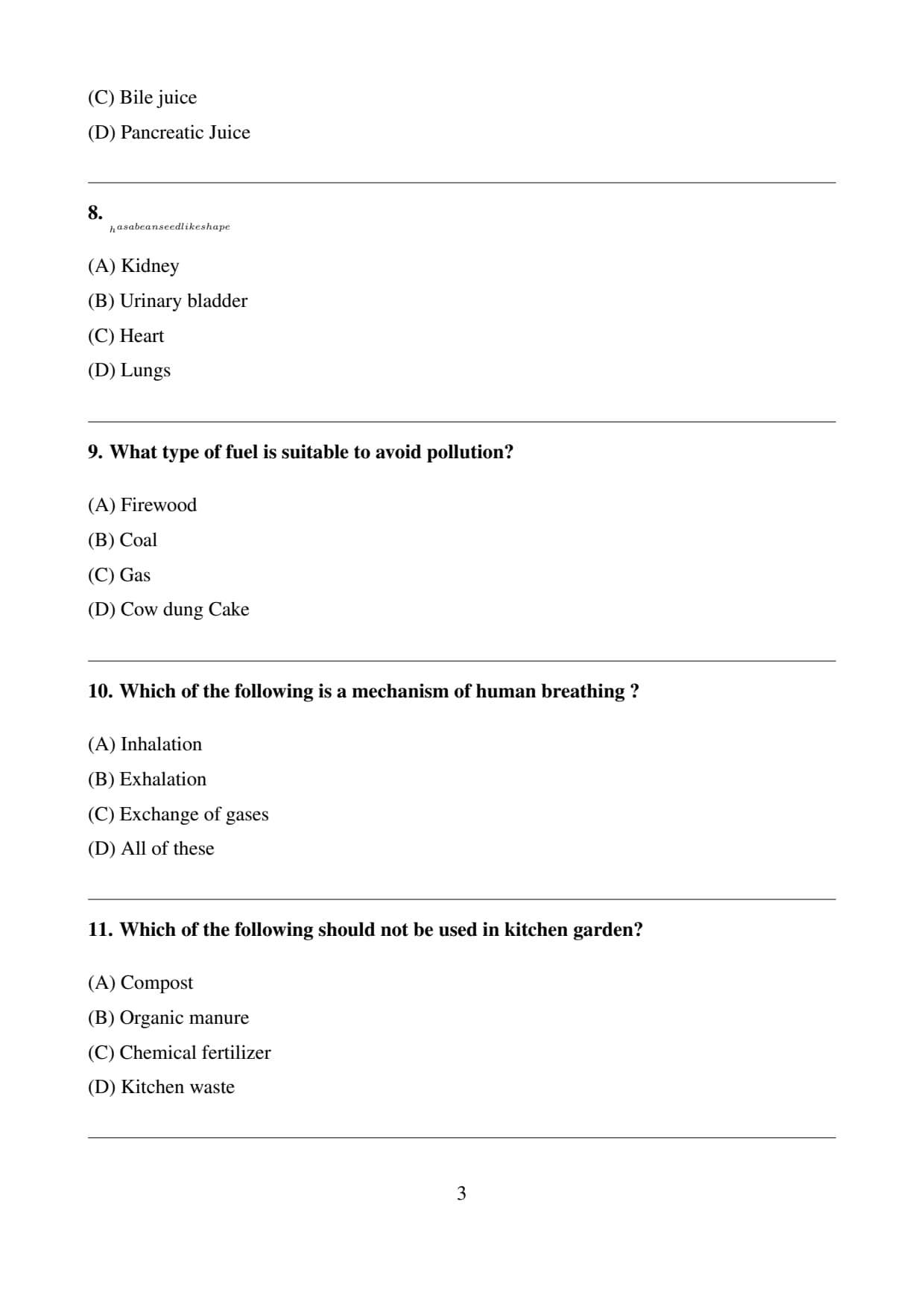
______ has a bean seed like shape
View Solution
\textcolor{red{Step 1: Understanding the shape of a bean seed.
A bean seed typically has an oval or elliptical shape with a concave indentation on one side (the hilum). This distinctive shape is often described as "reniform" (kidney-shaped).
\textcolor{red{Step 2: Analyzing the shape of each organ.
Kidney: The human kidney is bean-shaped (reniform) with a concave medial border and convex lateral surface. This shape is almost identical to that of a bean seed.
Urinary bladder: The urinary bladder is a hollow, muscular organ that is roughly spherical or pear-shaped when full and flattened when empty. It does not resemble a bean seed.
Heart: The heart is roughly cone-shaped or pyramid-shaped with a broad base and tapered apex. It does not have a bean-like shape.
Lungs: The lungs are roughly cone-shaped organs with a broad base and apex. They are not bean-shaped.
\textcolor{red{Step 3: Etymology and terminology.
The term "reniform" (from Latin \textit{ren = kidney) is used in biology to describe structures that are kidney-shaped or bean-shaped. This directly links the kidney to the bean seed shape.
\textcolor{red{Step 4: Conclusion.
Among the given options, the kidney is the organ that most closely resembles a bean seed in shape, with its characteristic reniform appearance.
\textcolor{red{ Final Answer: (A) Kidney. Quick Tip: Remember: "Reniform" means kidney-shaped or bean-shaped. The kidney's concave medial border and convex lateral surface give it this distinctive bean-like appearance.
What type of fuel is suitable to avoid pollution?
View Solution
\textcolor{red{Step 1: Understanding pollution from fuels.
Different fuels produce varying amounts of pollutants when burned. The combustion of fuels releases gases and particulate matter that contribute to air pollution, including carbon monoxide, sulfur dioxide, nitrogen oxides, and suspended particles.
\textcolor{red{Step 2: Classification of fuels based on pollution level.
Solid fuels: Firewood, coal, cow dung cake - These produce high levels of smoke, particulate matter, and harmful gases
Liquid fuels: Petrol, diesel - Produce moderate pollution
Gaseous fuels: Natural gas, LPG - Produce minimal pollution and burn more cleanly
\textcolor{red{Step 3: Analysis of each option.
(A) Firewood: Incorrect. Burning firewood releases smoke, particulate matter, carbon monoxide, and other pollutants. It causes significant indoor and outdoor air pollution.
(B) Coal: Incorrect. Coal is a major pollutant, releasing sulfur dioxide (causes acid rain), nitrogen oxides, particulate matter, and greenhouse gases.
(C) Gas: \textcolor{red{Correct. Gaseous fuels like LPG (liquefied petroleum gas) and natural gas burn more completely with minimal smoke and particulate matter. They produce mainly carbon dioxide and water vapor, making them the cleanest among the options.
(D) Cow dung Cake: Incorrect. Cow dung cakes produce heavy smoke, particulate matter, and harmful gases when burned, contributing significantly to air pollution.
\textcolor{red{Step 4: Comparison of emission levels.
\begin{tabular{|l|l|
\hline
Fuel Type & Pollution Level
\hline
Cow dung cake & Very High
Firewood & High
Coal & High to Very High
Gas (LPG/NG) & Low
\hline
\end{tabular
\textcolor{red{Step 5: Conclusion.
To minimize pollution, gaseous fuels like LPG and natural gas are the most suitable as they burn efficiently with minimal emissions. Solid fuels like firewood, coal, and cow dung cakes should be avoided due to high pollution levels.
\textcolor{red{ Final Answer: (C) Gas. Quick Tip: Cleanest to dirtiest fuels: Gas > Liquid fuels > Solid fuels. Gaseous fuels produce the least pollution due to complete combustion. For environmental protection, promote the use of clean fuels like LPG, natural gas, and renewable energy sources.
Which of the following is a mechanism of human breathing ?
View Solution
\textcolor{red{Step 1: Understanding the mechanism of breathing.
Breathing (pulmonary ventilation) is the process by which air moves into and out of the lungs. It involves multiple components working together to facilitate gas exchange.
\textcolor{red{Step 2: Components of the breathing mechanism.
Inhalation (Inspiration): The active process of drawing air into the lungs. This occurs when the diaphragm contracts and flattens, and the intercostal muscles contract, expanding the chest cavity and reducing pressure inside the lungs.
Exhalation (Expiration): The process of expelling air from the lungs. During normal breathing, this is a passive process where the diaphragm relaxes, reducing the chest cavity volume and increasing pressure, forcing air out.
Exchange of gases: This occurs in the alveoli of the lungs where oxygen diffuses into the bloodstream and carbon dioxide diffuses out of the bloodstream. This is an essential part of the overall breathing mechanism.
\textcolor{red{Step 3: Analysis of each option.
(A) Inhalation: \textcolor{red{This IS part of the breathing mechanism. It is the first phase of pulmonary ventilation.
(B) Exhalation: \textcolor{red{This IS part of the breathing mechanism. It is the second phase of pulmonary ventilation.
(C) Exchange of gases: \textcolor{red{This IS part of the breathing mechanism. Also known as external respiration, it is the primary purpose of breathing.
(D) All of these: \textcolor{red{This is the correct answer. Inhalation, exhalation, and gas exchange are all integral components of the complete breathing mechanism.
\textcolor{red{Step 4: Conclusion.
The mechanism of human breathing encompasses the entire process from air intake (inhalation) to air expulsion (exhalation), including the vital exchange of gases that occurs in between. Therefore, all three options are correct.
\textcolor{red{ Final Answer: (D) All of these. Quick Tip: Remember: Breathing mechanism = Inhalation + Exhalation + Gas exchange. Inhalation is active, exhalation is normally passive, and gas exchange occurs in the alveoli by diffusion.
Which of the following should not be used in kitchen garden?
View Solution
\textcolor{red{Step 1: Understanding kitchen garden practices.
A kitchen garden is a small-scale garden where vegetables, fruits, and herbs are grown for household consumption. The focus is on growing healthy, chemical-free food.
\textcolor{red{Step 2: Suitable vs. unsuitable materials for kitchen garden.
Compost: Decomposed organic matter that enriches soil naturally. It is ideal for kitchen gardens.
Organic manure: Natural fertilizers from plant or animal sources (cow dung, vermicompost, etc.). They improve soil health without harmful residues.
Chemical fertilizer: Synthetic fertilizers containing concentrated nutrients. They can leave harmful residues in food, degrade soil quality over time, and are not recommended for kitchen gardens where chemical-free produce is desired.
Kitchen waste: Vegetable peels, fruit scraps, etc., can be composted and used as organic fertilizer. They are excellent for kitchen gardens.
\textcolor{red{Step 3: Analysis of each option.
(A) Compost: \textcolor{red{This SHOULD be used. Compost is excellent natural fertilizer.
(B) Organic manure: \textcolor{red{This SHOULD be used. Organic manure enriches soil naturally.
(C) Chemical fertilizer: \textcolor{red{This should NOT be used. Chemical fertilizers can leave harmful residues in food and damage soil health.
(D) Kitchen waste: \textcolor{red{This SHOULD be used. Kitchen waste can be composted and used as organic fertilizer.
\textcolor{red{ Final Answer: (C) Chemical fertilizer. Quick Tip: Kitchen garden = Organic gardening. Use natural amendments like compost, organic manure, and recycled kitchen waste. Avoid chemical fertilizers and pesticides for healthy, safe home-grown food!
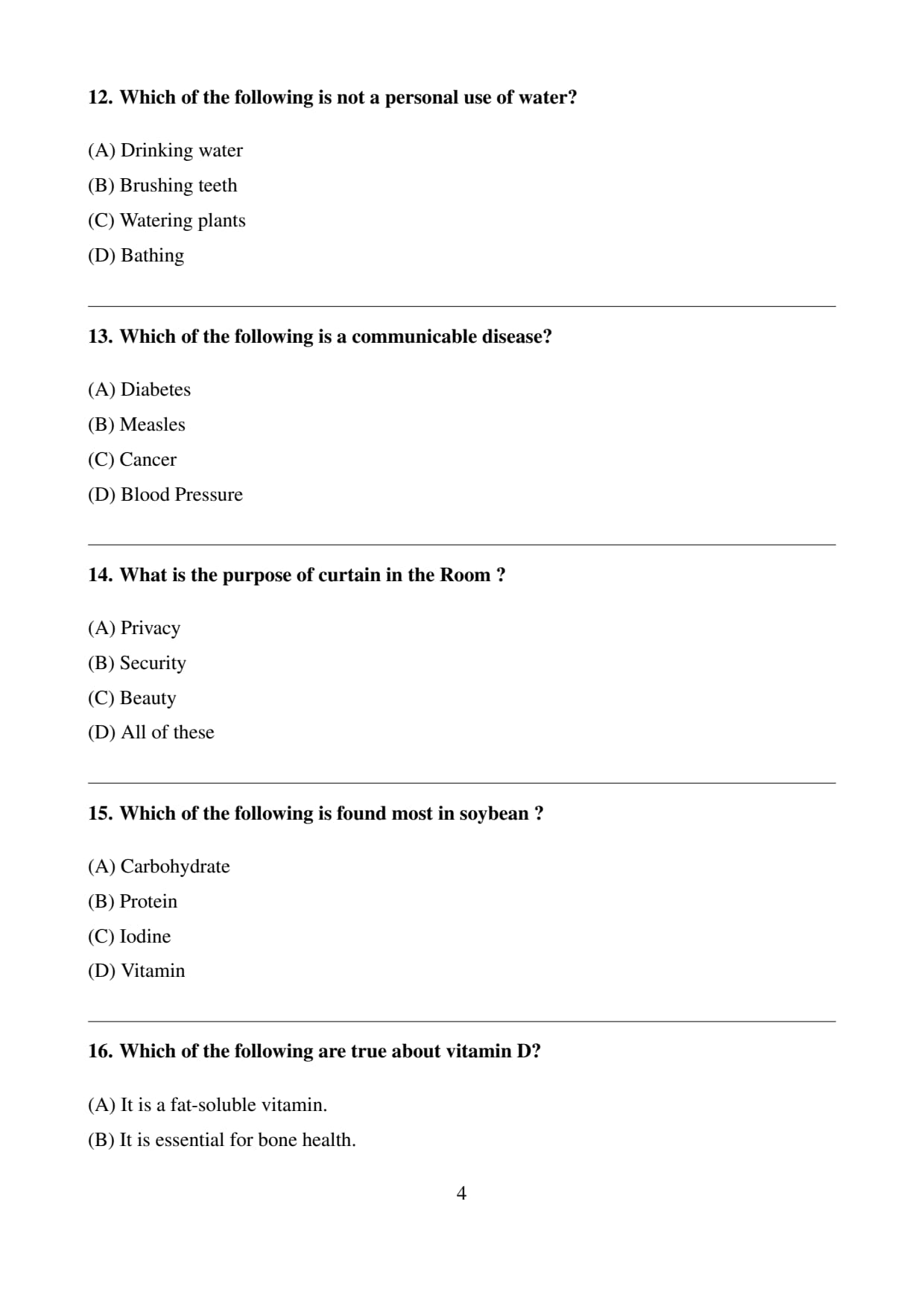
Which of the following is not a personal use of water?
View Solution
\textcolor{red{Step 1: Understanding personal use of water.
Personal use of water refers to water consumed or utilized directly by an individual for their own hygiene, health, and daily living needs. These activities are essential for personal care and well-being.
\textcolor{red{Step 2: Categories of water usage.
Water usage can be broadly classified into:
Personal/Domestic use: Water used by individuals for themselves within the household
Household use: Water used for maintaining the home and surroundings
Agricultural/Commercial use: Water used for farming, gardening, or business purposes
\textcolor{red{Step 3: Analysis of each option.
(A) Drinking water: \textcolor{red{This IS a personal use. Drinking water is essential for individual hydration and survival.
(B) Brushing teeth: \textcolor{red{This IS a personal use. Oral hygiene is a personal care activity performed by individuals.
(C) Watering plants: \textcolor{red{This is NOT a personal use. Watering plants is a household or gardening activity, not directly related to personal care of an individual. It falls under household maintenance or gardening use.
(D) Bathing: \textcolor{red{This IS a personal use. Bathing is a fundamental personal hygiene activity.
\textcolor{red{Step 4: Distinguishing personal vs. household water use.
\begin{tabular{|l|l|
\hline
Personal Water Uses & Household/Other Water Uses
\hline
Drinking & Watering plants
Bathing & Washing vehicles
Brushing teeth & Cleaning floors
Hand washing & Washing clothes
Shaving & Washing utensils
\hline
\end{tabular
\textcolor{red{Step 5: Conclusion.
While drinking, brushing teeth, and bathing are all direct personal uses of water for individual care, watering plants is a household/gardening activity and not a personal use of water.
\textcolor{red{ Final Answer: (C) Watering plants. Quick Tip: Personal water use = activities directly related to individual hygiene and consumption (drinking, bathing, brushing, etc.). Household water use = activities related to maintaining the home and surroundings (watering plants, cleaning, washing clothes/utensils).
Which of the following is a communicable disease?
View Solution
\textcolor{red{Step 1: Understanding communicable diseases.
Communicable diseases (also known as infectious or contagious diseases) are illnesses caused by pathogens such as bacteria, viruses, fungi, or parasites that can be transmitted from one person to another or from animals to humans.
\textcolor{red{Step 2: Characteristics of each disease.
Measles: A highly contagious viral disease caused by the measles virus (paramyxovirus). It spreads through respiratory droplets when an infected person coughs, sneezes, or talks. It is a classic example of a communicable disease.
Diabetes: A metabolic disorder characterized by high blood sugar levels over a prolonged period. It is a non-communicable disease caused by genetic and lifestyle factors, not by pathogens.
Cancer: A group of diseases involving abnormal cell growth with the potential to spread to other parts of the body. Cancer is generally non-communicable and cannot be transmitted from person to person.
Blood Pressure (Hypertension): A condition where the force of blood against artery walls is too high. It is a non-communicable, chronic condition influenced by genetics, diet, and lifestyle.
\textcolor{red{Step 3: Analysis of each option.
(A) Diabetes: Incorrect. This is a non-communicable metabolic disorder.
(B) Measles: \textcolor{red{Correct. Measles is a highly contagious viral disease that spreads easily from person to person.
(C) Cancer: Incorrect. Cancer is generally non-communicable, though some viruses (like HPV) can increase cancer risk.
(D) Blood Pressure: Incorrect. Hypertension is a non-communicable chronic condition.
\textcolor{red{Step 4: Conclusion.
Among the given options, only measles is caused by a pathogen (virus) and can be transmitted from an infected person to a healthy person, making it a communicable disease.
\textcolor{red{ Final Answer: (B) Measles. Quick Tip: Communicable diseases = caused by pathogens and can spread between people. Examples: measles, chickenpox, COVID-19, tuberculosis. Non-communicable diseases = not infectious. Examples: diabetes, cancer, hypertension, heart disease.
What is the purpose of curtain in the Room ?
View Solution
\textcolor{red{Step 1: Understanding the functions of curtains.
Curtains are versatile window treatments that serve multiple purposes in a room. They are not just decorative items but functional elements that contribute to comfort, safety, and aesthetics.
\textcolor{red{Step 2: Primary purposes of curtains.
Privacy: Curtains prevent outsiders from seeing into the room, creating a private space for occupants.
Security: By covering windows, curtains prevent potential intruders from seeing valuable items inside and provide an additional layer of protection.
Beauty/Aesthetics: Curtains enhance the interior décor, add color and texture, and contribute to the overall ambiance of the room.
Light control: Curtains regulate the amount of sunlight entering the room.
Insulation: Curtains help maintain room temperature by blocking heat and cold.
Noise reduction: Thick curtains can absorb sound and reduce outside noise.
\textcolor{red{Step 3: Analysis of each option.
(A) Privacy: \textcolor{red{This IS a purpose of curtains. Curtains shield the interior from outside view, ensuring privacy for occupants.
(B) Security: \textcolor{red{This IS a purpose of curtains. By concealing the interior and its contents, curtains enhance home security.
(C) Beauty: \textcolor{red{This IS a purpose of curtains. Curtains are essential decorative elements that enhance the aesthetic appeal of a room.
(D) All of these: \textcolor{red{Correct. Curtains serve multiple purposes simultaneously, including privacy, security, and beauty.
\textcolor{red{Step 4: Additional benefits of curtains.
Beyond the three mentioned options, curtains also provide:
Protection from UV rays (prevents furniture fading)
Temperature regulation (reduces energy costs)
Sound insulation (quieter environment)
Glare reduction (better viewing experience)
\textcolor{red{ Final Answer: (D) All of these. Quick Tip: Curtains are multifunctional: Privacy (block outside view), Security (hide valuables), Beauty (enhance décor), Light control, Insulation, and Noise reduction. Choose curtain fabric and thickness based on your primary needs!
Which of the following is found most in soybean ?
View Solution
\textcolor{red{Step 1: Understanding soybeans as a food source.
Soybeans (Glycine max) are legumes native to East Asia and are one of the most widely consumed and versatile food crops globally. They are renowned for their exceptional nutritional profile.
\textcolor{red{Step 2: Nutritional composition of soybeans.
Soybeans are uniquely rich in various nutrients. Their approximate composition per 100 grams is:
Protein: 36-40% (one of the highest among plant foods)
Carbohydrates: 30% (including dietary fiber)
Fats: 20% (healthy polyunsaturated fats)
Water: 8-10%
Minerals: Includes iron, calcium, phosphorus, magnesium
Vitamins: Contains B-vitamins, vitamin K, and folate
\textcolor{red{Step 3: Analysis of each option.
(A) Carbohydrate: Incorrect. While soybeans contain carbohydrates (about 30%), this is not their most abundant nutrient.
(B) Protein: \textcolor{red{Correct. Soybeans are exceptionally high in protein (36-40%), making them one of the richest plant-based protein sources. They contain all essential amino acids, making them a complete protein.
(C) Iodine: Incorrect. Soybeans contain only trace amounts of iodine. Iodine is primarily found in seafood, iodized salt, and dairy products.
(D) Vitamin: Incorrect. While soybeans contain various vitamins (especially B-vitamins), vitamins are not present in the highest quantity compared to protein.
\textcolor{red{Step 4: Significance of soybean protein.
Soybeans are unique among plant foods because:
They provide complete protein (all essential amino acids)
They contain 2-3 times more protein than other legumes
They are the primary ingredient in many protein-rich products (tofu, tempeh, soy milk, textured vegetable protein)
\textcolor{red{ Final Answer: (B) Protein. Quick Tip: Soybeans = "Meat of the fields" – they contain about 40% high-quality complete protein, making them the richest plant-based protein source. Excellent for vegetarians and vegans!
Which of the following are true about vitamin D?
View Solution
\textcolor{red{Step 1: Understanding Vitamin D characteristics.
Vitamin D is a secosteroid hormone that plays multiple crucial roles in the human body beyond just bone health.
\textcolor{red{Step 2: Key facts about Vitamin D.
Solubility: Vitamin D is a fat-soluble vitamin (along with A, E, and K). It is stored in fatty tissues and the liver.
Bone health: Vitamin D regulates calcium and phosphorus absorption in the intestines, which is essential for bone mineralization and preventing conditions like rickets and osteomalacia.
Muscle function: Vitamin D receptors are present in muscle tissue. It plays a role in muscle contraction, strength, and coordination. Deficiency can cause muscle weakness and pain.
\textcolor{red{Step 3: Analysis of each option.
(A) It is a fat-soluble vitamin: \textcolor{red{True. Vitamin D dissolves in fats and oils and is stored in the body.
(B) It is essential for bone health: \textcolor{red{True. Without Vitamin D, the body cannot absorb calcium properly, leading to soft, weak bones.
(C) It is necessary for muscle contraction: \textcolor{red{True. Vitamin D influences calcium availability for muscle contraction and helps maintain muscle strength.
(D) All of these: \textcolor{red{Correct. All three statements accurately describe properties and functions of Vitamin D.
\textcolor{red{Step 4: Additional functions of Vitamin D.
Beyond the options, Vitamin D also:
Supports immune system function
Reduces inflammation
May help regulate mood and reduce depression
Plays a role in cell growth and differentiation
\textcolor{red{ Final Answer: (D) All of these. Quick Tip: Vitamin D facts: Fat-soluble ✓, Bone health ✓, Muscle function ✓, Immune support ✓. Works with calcium - no Vitamin D means poor calcium absorption regardless of calcium intake!
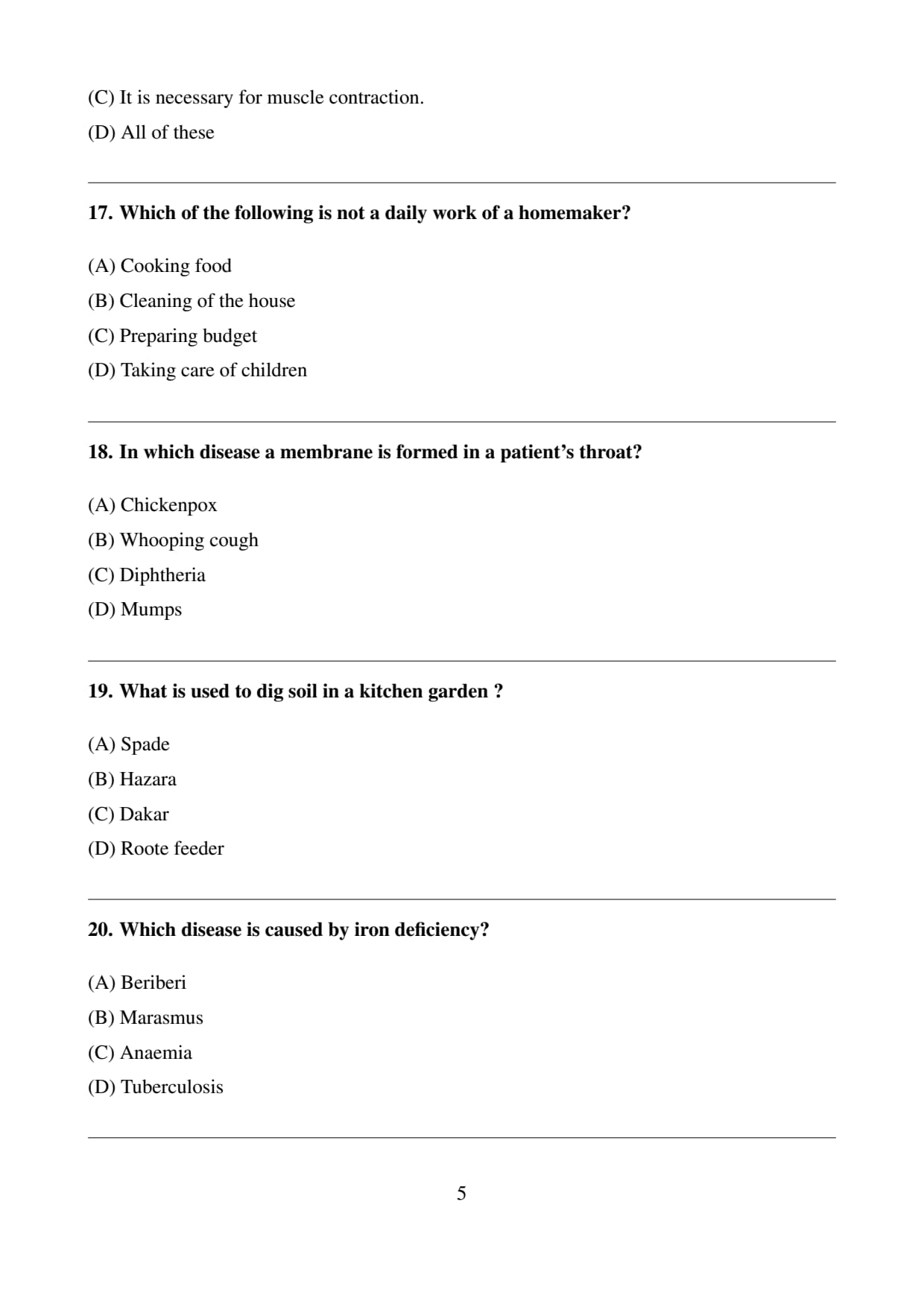
Which of the following is not a daily work of a homemaker?
View Solution
\textcolor{red{Step 1: Understanding daily vs. periodic tasks of a homemaker.
A homemaker performs various tasks related to managing a household. These tasks can be categorized into daily, weekly, monthly, or occasional activities based on their frequency.
\textcolor{red{Step 2: Analysis of each option.
(A) Cooking food: \textcolor{red{This IS a daily work. Cooking meals is typically done every day to feed the family.
(B) Cleaning of the house: \textcolor{red{This IS a daily work. Basic cleaning like sweeping, dusting, and tidying up is usually done on a daily basis.
(C) Preparing budget: \textcolor{red{This is NOT a daily work. Budget preparation is typically done monthly, weekly, or periodically, not every day.
(D) Taking care of children: \textcolor{red{This IS a daily work. Child care is a continuous, daily responsibility.
\textcolor{red{Step 3: Conclusion.
Among the given options, preparing budget is not a daily task but rather a periodic activity, while cooking, cleaning, and child care are everyday responsibilities of a homemaker.
\textcolor{red{ Final Answer: (C) Preparing budget. Quick Tip: Daily homemaker tasks: Cooking, cleaning, child care, laundry, dishwashing. Periodic tasks: Budget planning, grocery shopping, deep cleaning, bill payments.
In which disease a membrane is formed in a patient's throat?
View Solution
\textcolor{red{Step 1: Understanding the characteristic symptom.
The formation of a pseudomembrane (false membrane) in the throat is a distinctive clinical feature of a specific bacterial infection.
\textcolor{red{Step 2: Analysis of each disease.
(A) Chickenpox: Incorrect. Chickenpox is characterized by itchy, fluid-filled blisters all over the body. No membrane forms in the throat.
(B) Whooping cough: Incorrect. Whooping cough (pertussis) is characterized by severe coughing spells with a "whooping" sound. No membrane formation occurs.
(C) Diphtheria: \textcolor{red{Correct. Diphtheria is caused by \textit{Corynebacterium diphtheriae. It produces a toxin that causes the formation of a thick, grayish pseudomembrane in the throat, tonsils, or nose. This membrane can obstruct breathing and is a hallmark sign of the disease.
(D) Mumps: Incorrect. Mumps is characterized by swelling of the parotid salivary glands. No membrane forms in the throat.
\textcolor{red{Step 3: Additional information about diphtheria.
Diphtheria is a serious bacterial infection that affects the mucous membranes of the respiratory tract. The pseudomembrane is composed of dead tissue, bacteria, and inflammatory cells. It can make breathing and swallowing difficult and is a medical emergency.
\textcolor{red{ Final Answer: (C) Diphtheria. Quick Tip: Remember: Diphtheria → Pseudomembrane in throat; Chickenpox → Blisters on skin; Whooping cough → Severe coughing with "whoop" sound; Mumps → Swollen salivary glands.
What is used to dig soil in a kitchen garden ?
View Solution
\textcolor{red{Step 1: Understanding gardening tools.
Kitchen gardening requires various tools for soil preparation, planting, and maintenance. Digging soil is a fundamental task that requires appropriate tools.
\textcolor{red{Step 2: Analysis of each option.
(A) Spade: \textcolor{red{Correct. A spade is a common gardening tool with a flat, rectangular blade and a handle. It is specifically designed for digging, cutting through soil, edging, and transplanting. It is the most appropriate tool for digging soil in a kitchen garden.
(B) Hazara: Incorrect. This is not a standard gardening tool name. (Note: This may be a regional or unfamiliar term, but not a commonly recognized tool for digging.)
(C) Dakar: Incorrect. This is not a gardening tool. (Dakar is the capital city of Senegal.)
(D) Roote feeder: Incorrect. This appears to be a misspelling or unfamiliar term. A "root feeder" is a device for watering or fertilizing plants at the root level, not for digging soil.
\textcolor{red{Step 3: Common kitchen garden tools.
Basic kitchen garden tools include:
Spade - for digging and turning soil
Trowel - for small digging and planting
Garden fork - for loosening soil
Rake - for leveling soil
Hoe - for weeding and shaping soil
\textcolor{red{ Final Answer: (A) Spade. Quick Tip: Spade = flat blade for digging and edging; Shovel = curved blade for scooping and moving loose materials. For kitchen garden digging, a spade is the ideal tool!
Which disease is caused by iron deficiency?
View Solution
\textcolor{red{Step 1: Understanding iron deficiency.
Iron is an essential mineral required by the body for the production of hemoglobin, a protein in red blood cells that carries oxygen from the lungs to all parts of the body.
\textcolor{red{Step 2: Analysis of each option.
(A) Beriberi: Incorrect. Beriberi is caused by deficiency of Vitamin B1 (Thiamine). It affects the nervous and cardiovascular systems.
(B) Marasmus: Incorrect. Marasmus is a form of severe malnutrition caused by deficiency of calories and proteins, not specifically iron.
(C) Anaemia: \textcolor{red{Correct. Iron deficiency anaemia is the most common type of anaemia. It occurs when the body lacks sufficient iron to produce hemoglobin, resulting in reduced oxygen-carrying capacity of blood.
(D) Tuberculosis: Incorrect. Tuberculosis (TB) is an infectious disease caused by the bacterium \textit{Mycobacterium tuberculosis, not by nutritional deficiency.
\textcolor{red{Step 3: Symptoms of iron deficiency anaemia.
Common symptoms include:
Fatigue and weakness
Pale skin
Shortness of breath
Dizziness
Cold hands and feet
Brittle nails
\textcolor{red{ Final Answer: (C) Anaemia. Quick Tip: Iron deficiency → Anaemia (low hemoglobin). Good iron sources: Spinach, legumes, red meat, fortified cereals. Vitamin C helps iron absorption!
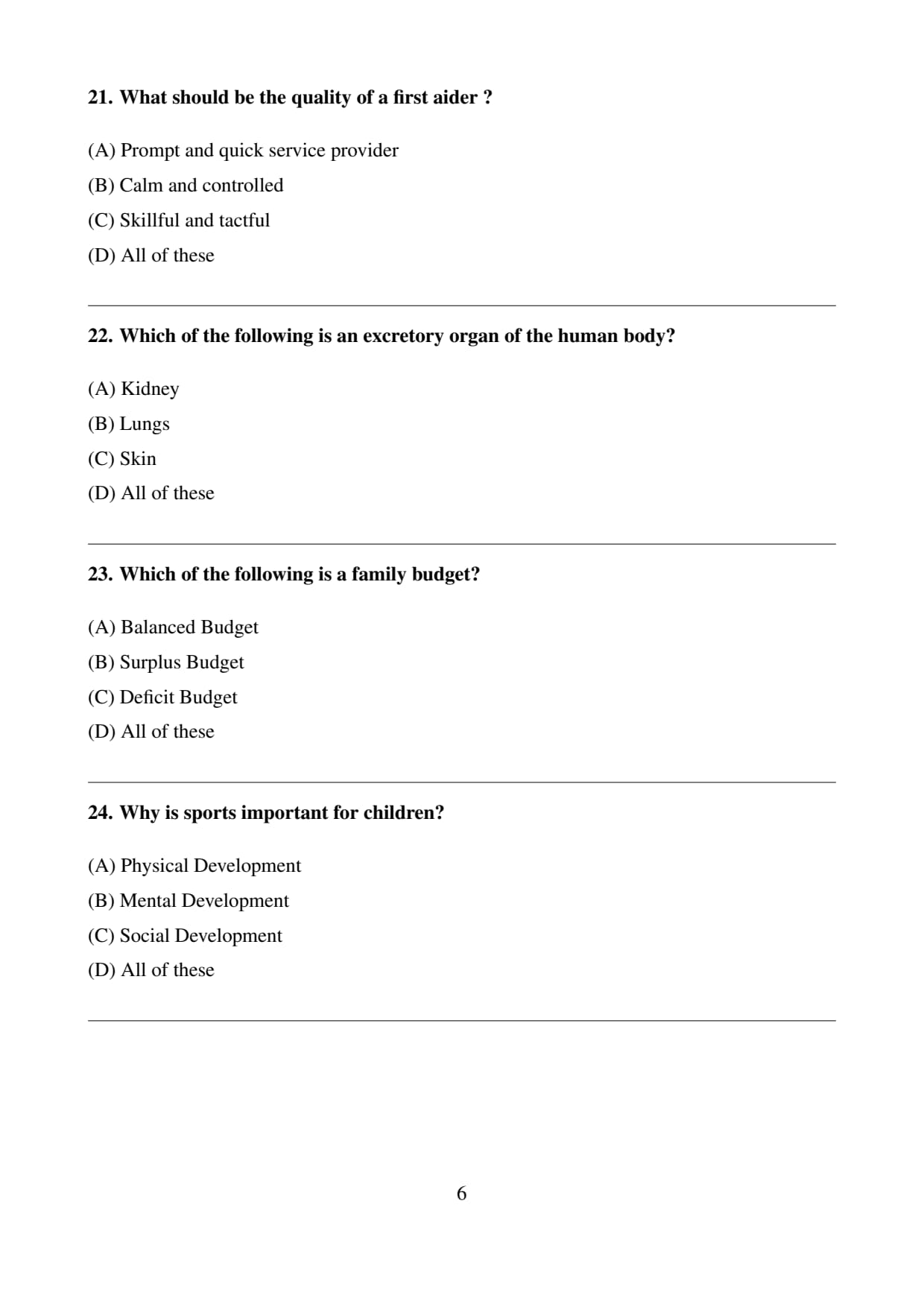
What should be the quality of a first aider ?
View Solution
\textcolor{red{Step 1: Understanding first aid and first aider.
A first aider is a person who provides immediate care to an injured or ill person before professional medical help arrives. Effective first aid requires a combination of personal qualities and skills.
\textcolor{red{Step 2: Essential qualities of a first aider.
Prompt and quick service: First aid must be given without delay as emergencies require immediate action. Quick response can prevent conditions from worsening.
Calm and controlled: A first aider must remain composed under pressure to think clearly, make correct decisions, and reassure the victim.
Skillful and tactful: Technical skills are needed to perform first aid procedures correctly. Tact and communication skills help in handling the victim and bystanders sensitively.
\textcolor{red{Step 3: Analysis of each option.
(A) Prompt and quick service provider: \textcolor{red{This IS a quality. Speed is crucial in emergencies.
(B) Calm and controlled: \textcolor{red{This IS a quality. Emotional stability is essential for effective response.
(C) Skillful and tactful: \textcolor{red{This IS a quality. Knowledge, practical skills, and good interpersonal skills are necessary.
(D) All of these: \textcolor{red{Correct. A good first aider must possess all these qualities.
\textcolor{red{Step 4: Additional qualities.
Other important qualities include:
Observant - to assess situations accurately
Resourceful - using available materials effectively
Empathetic - showing genuine concern for the victim
Confidential - maintaining privacy of victim's information
\textcolor{red{ Final Answer: (D) All of these. Quick Tip: Remember the 3 Cs of a first aider: Calm, Caring, Competent. Plus Quick action and Tactful communication. All these qualities together make an effective first aider!
Which of the following is an excretory organ of the human body?
View Solution
\textcolor{red{Step 1: Understanding excretion.
Excretion is the process of removing metabolic waste products and excess substances from the body. Several organs participate in this process.
\textcolor{red{Step 2: Major excretory organs and their waste products.
Kidney: Primary excretory organ. Removes nitrogenous wastes (urea, uric acid, creatinine), excess water, salts, and toxins through urine.
Lungs: Remove carbon dioxide and water vapor (as waste products of respiration) through exhalation.
Skin: Removes water, salts, and small amounts of urea through sweat (via sweat glands).
Liver: Removes bile pigments (bilirubin), cholesterol, and toxins through bile.
Large intestine: Removes solid waste (feces) containing undigested food, bacteria, and some metabolic wastes.
\textcolor{red{Step 3: Analysis of each option.
(A) Kidney: \textcolor{red{This IS an excretory organ. Kidneys are the main organs of excretion.
(B) Lungs: \textcolor{red{This IS an excretory organ. Lungs excrete carbon dioxide and water vapor.
(C) Skin: \textcolor{red{This IS an excretory organ. Skin excretes sweat containing water, salts, and urea.
(D) All of these: \textcolor{red{Correct. Kidneys, lungs, and skin are all excretory organs.
\textcolor{red{ Final Answer: (D) All of these. Quick Tip: Major excretory organs and their wastes: Kidneys → Urine (urea, excess water, salts) Lungs → Carbon dioxide, water vapor Skin → Sweat (water, salts, small amount of urea) Liver → Bile pigments Large intestine → Feces
Which of the following is a family budget?
View Solution
\textcolor{red{Step 1: Understanding family budget.
A family budget is a financial plan that estimates income and expenditures over a specific period. It helps in managing household finances effectively.
\textcolor{red{Step 2: Types of family budgets.
Based on the relationship between income and expenditure, family budgets can be of three types:
Balanced Budget: When total income equals total expenditure. The family spends exactly what it earns.
Surplus Budget: When total income is greater than total expenditure. The family saves money or invests the excess.
Deficit Budget: When total expenditure exceeds total income. The family may need to borrow money or use savings to cover the shortfall.
\textcolor{red{Step 3: Analysis of each option.
(A) Balanced Budget: \textcolor{red{This IS a type of family budget. Income = Expenditure.
(B) Surplus Budget: \textcolor{red{This IS a type of family budget. Income > Expenditure.
(C) Deficit Budget: \textcolor{red{This IS a type of family budget. Expenditure > Income.
(D) All of these: \textcolor{red{Correct. Balanced, surplus, and deficit are all types of family budgets.
\textcolor{red{Step 4: Importance of budget types.
Balanced budget indicates financial stability
Surplus budget allows for savings and investments
Deficit budget warns of financial stress and need for adjustment
\textcolor{red{ Final Answer: (D) All of these. Quick Tip: Family budget types: Balanced: Income = Expenditure Surplus: Income > Expenditure (ideal for savings) Deficit: Income < Expenditure (needs corrective action) Aim for surplus or balanced budget whenever possible!
Why is sports important for children?
View Solution
\textcolor{red{Step 1: Understanding the role of sports in child development.
Sports and physical activities play a crucial role in the holistic development of children, contributing to their physical, mental, and social well-being.
\textcolor{red{Step 2: Benefits of sports for children.
Physical Development: Sports improve overall fitness, strength, coordination, endurance, and motor skills. They help maintain healthy weight, strengthen bones and muscles, and promote cardiovascular health.
Mental Development: Sports enhance cognitive abilities including concentration, memory, decision-making, and problem-solving. They boost confidence, self-esteem, and emotional resilience. Sports also help reduce stress and anxiety.
Social Development: Sports teach teamwork, cooperation, communication, and leadership skills. Children learn to interact with peers, follow rules, respect opponents, and handle both success and failure gracefully.
\textcolor{red{Step 3: Analysis of each option.
(A) Physical Development: \textcolor{red{This IS a benefit. Sports directly contribute to physical growth and fitness.
(B) Mental Development: \textcolor{red{This IS a benefit. Sports enhance cognitive abilities and emotional well-being.
(C) Social Development: \textcolor{red{This IS a benefit. Sports foster social skills and relationships.
(D) All of these: \textcolor{red{Correct. Sports contribute to physical, mental, and social development simultaneously.
\textcolor{red{Step 4: Additional benefits.
Other benefits of sports for children include:
Discipline and time management
Character building and sportsmanship
Healthy lifestyle habits
Academic improvement (through better focus)
\textcolor{red{ Final Answer: (D) All of these. Quick Tip: Sports = Complete development package: Physical (fitness, strength), Mental (focus, confidence), Social (teamwork, communication). Encourage children to participate in sports for holistic growth!



Comments