




The Odisha CPET 2025 Botany question paper is now available with detailed solutions for free download. CPET 2025 was conducted by SAMS Odisha (Higher Education Department, Government of Odisha) between May 4 and 18, 2025, and the Botany paper carried 100 questions in 80 minutes.
| Odisha CPET 2025 Botany Question Paper with Solutions | Download PDF | Check Solutions |
Odisha CPET 2025 Botany Questions with Solutions
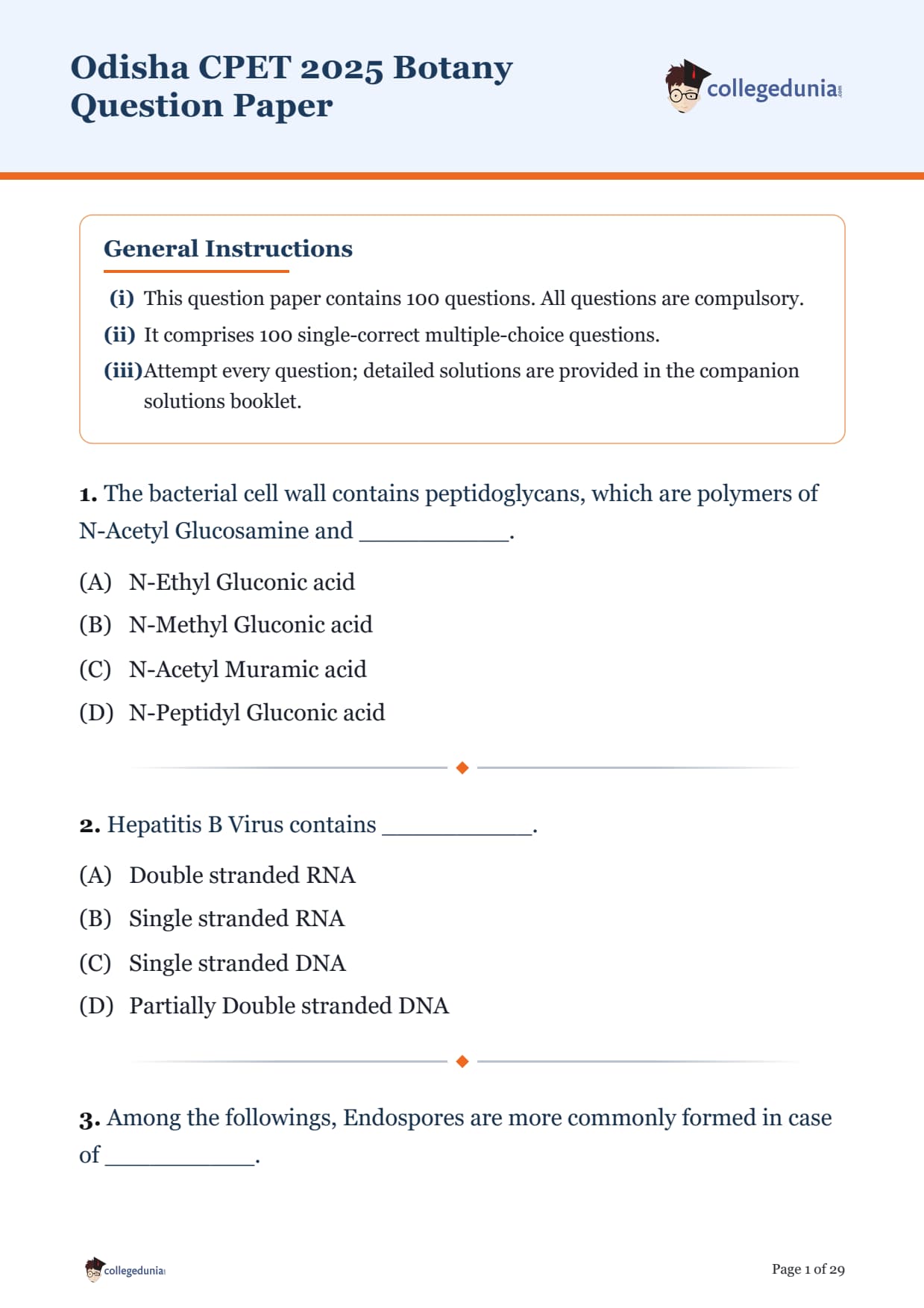
The bacterial cell wall contains peptidoglycans, which are polymers of N-Acetyl Glucosamine and __________.
Hepatitis B Virus contains __________.
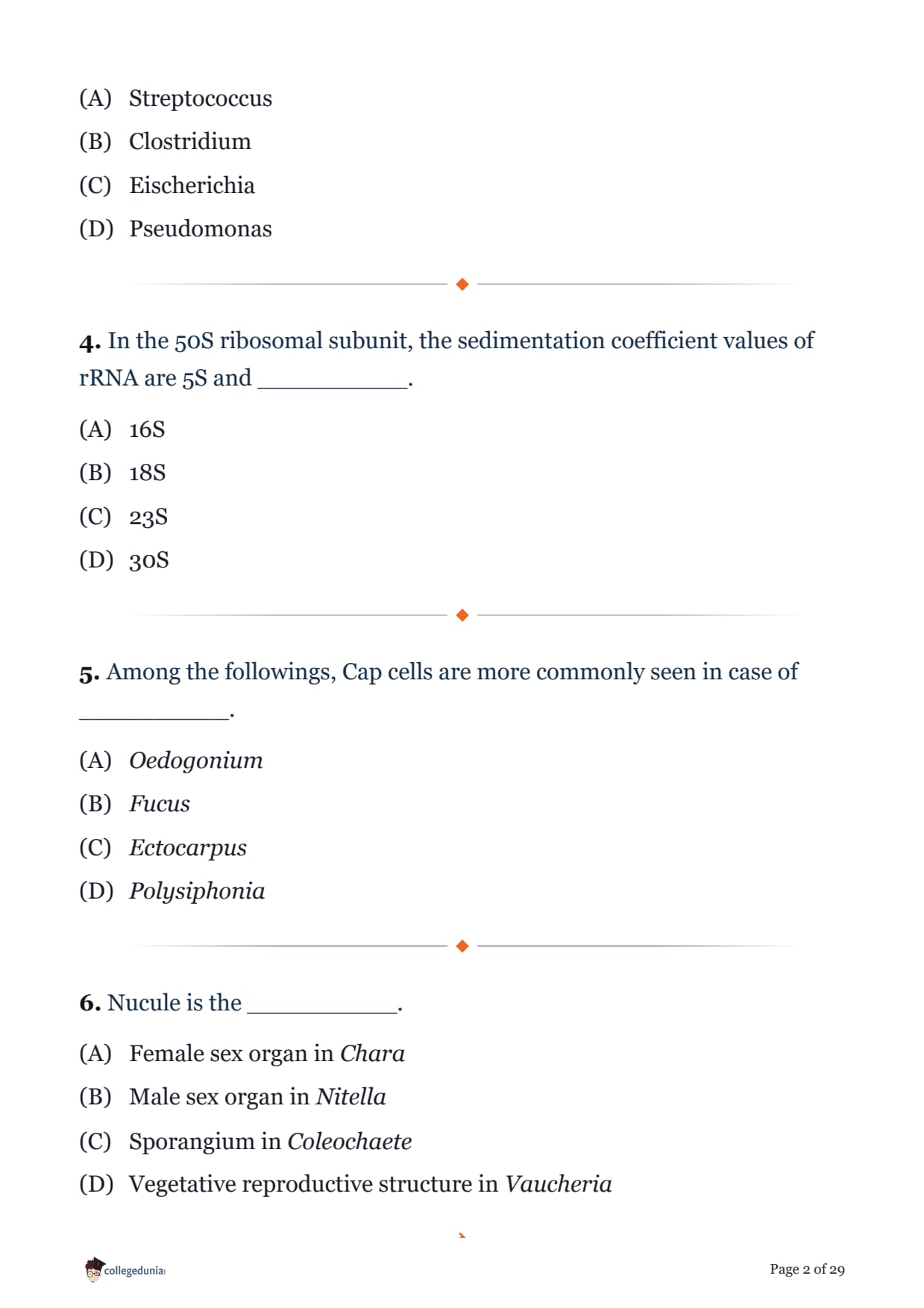
Among the followings, Endospores are more commonly formed in case of __________.
In the 50S ribosomal subunit, the sedimentation coefficient values of rRNA are 5S and __________.
Among the followings, Cap cells are more commonly seen in case of __________.
Nucule is the __________.
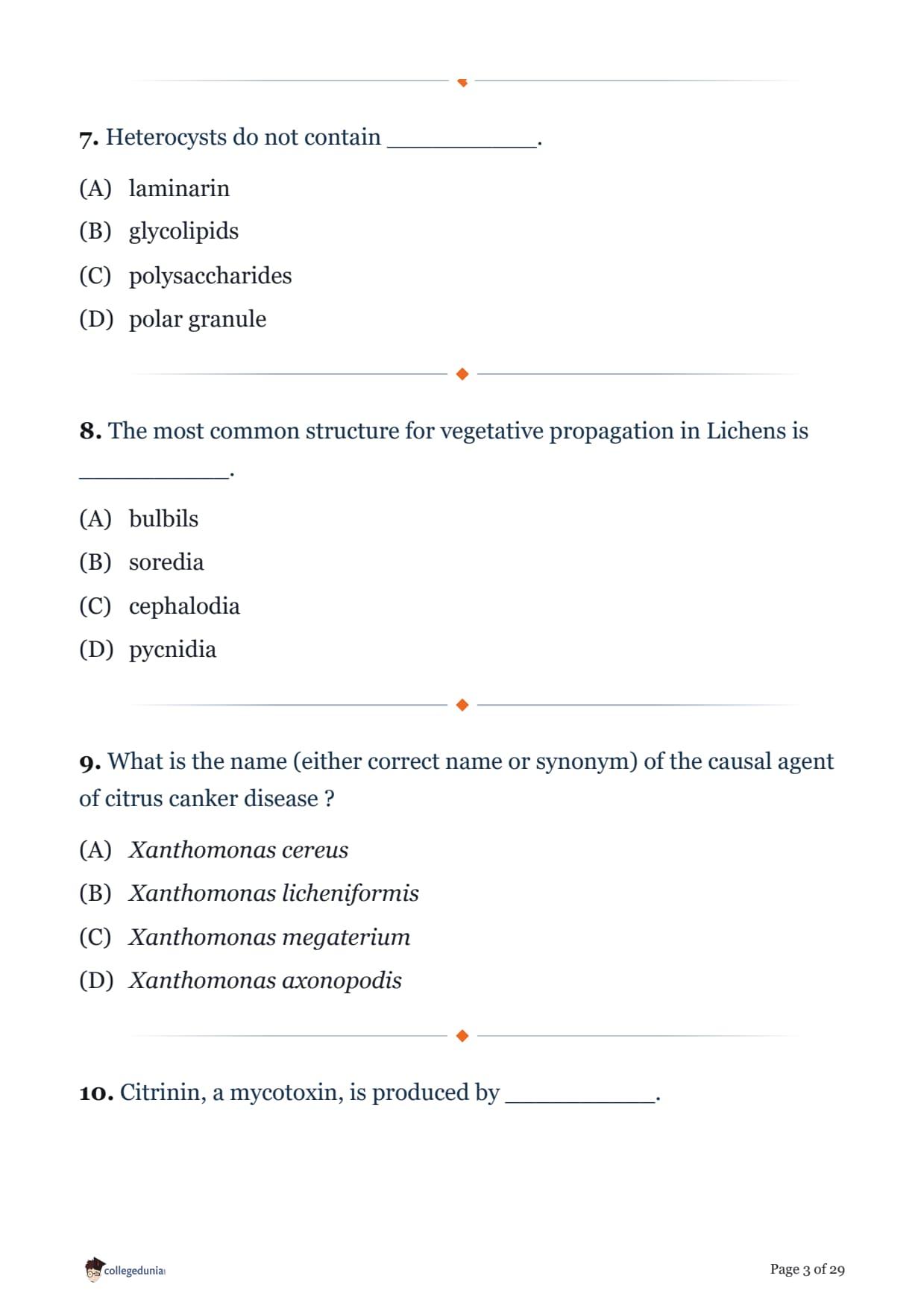
Heterocysts do not contain __________.
The most common structure for vegetative propagation in Lichens is __________.
What is the name (either correct name or synonym) of the causal agent of citrus canker disease ?
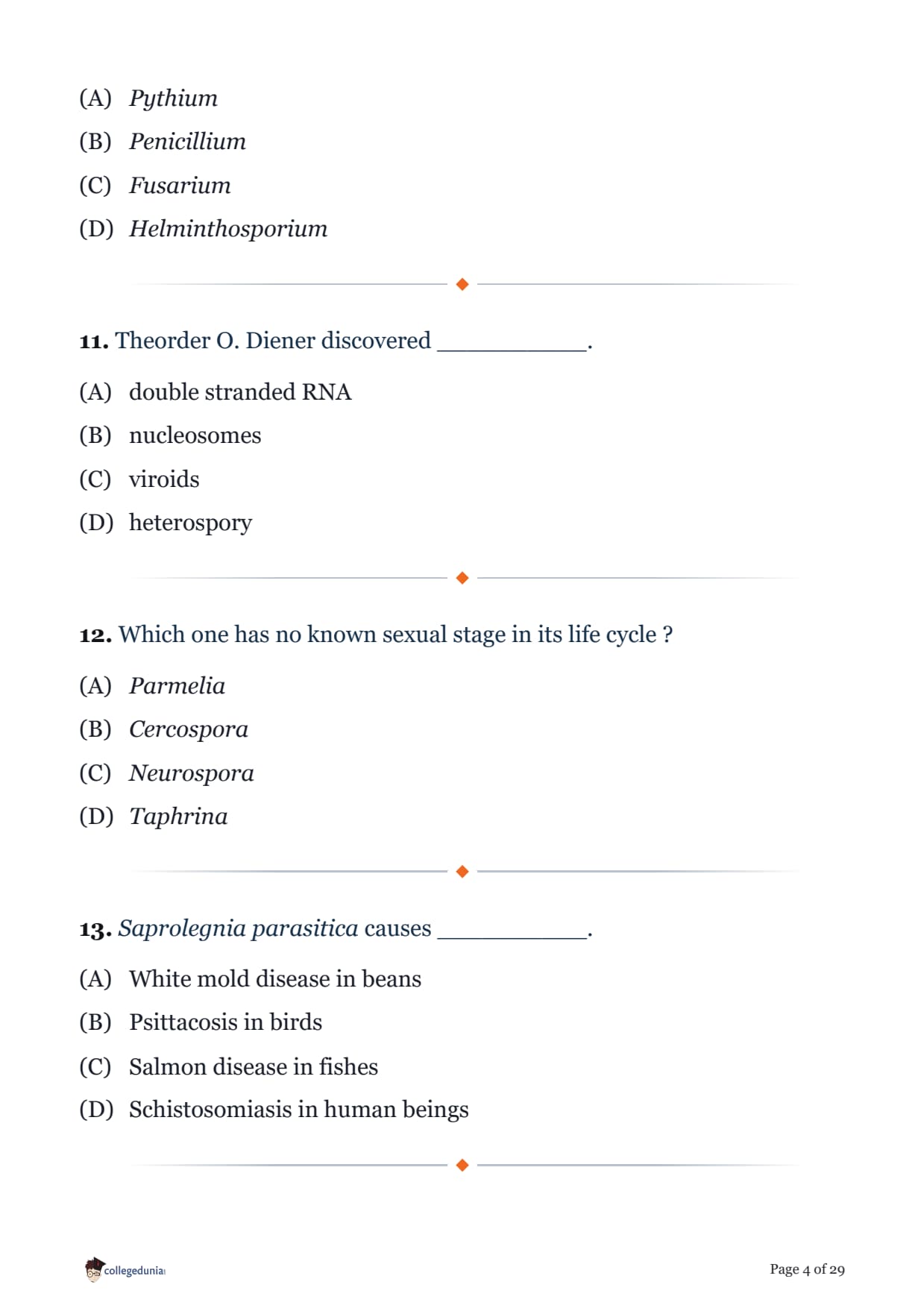
Citrinin, a mycotoxin, is produced by __________.
Theorder O. Diener discovered __________.
Which one has no known sexual stage in its life cycle ?
Saprolegnia parasitica causes __________.
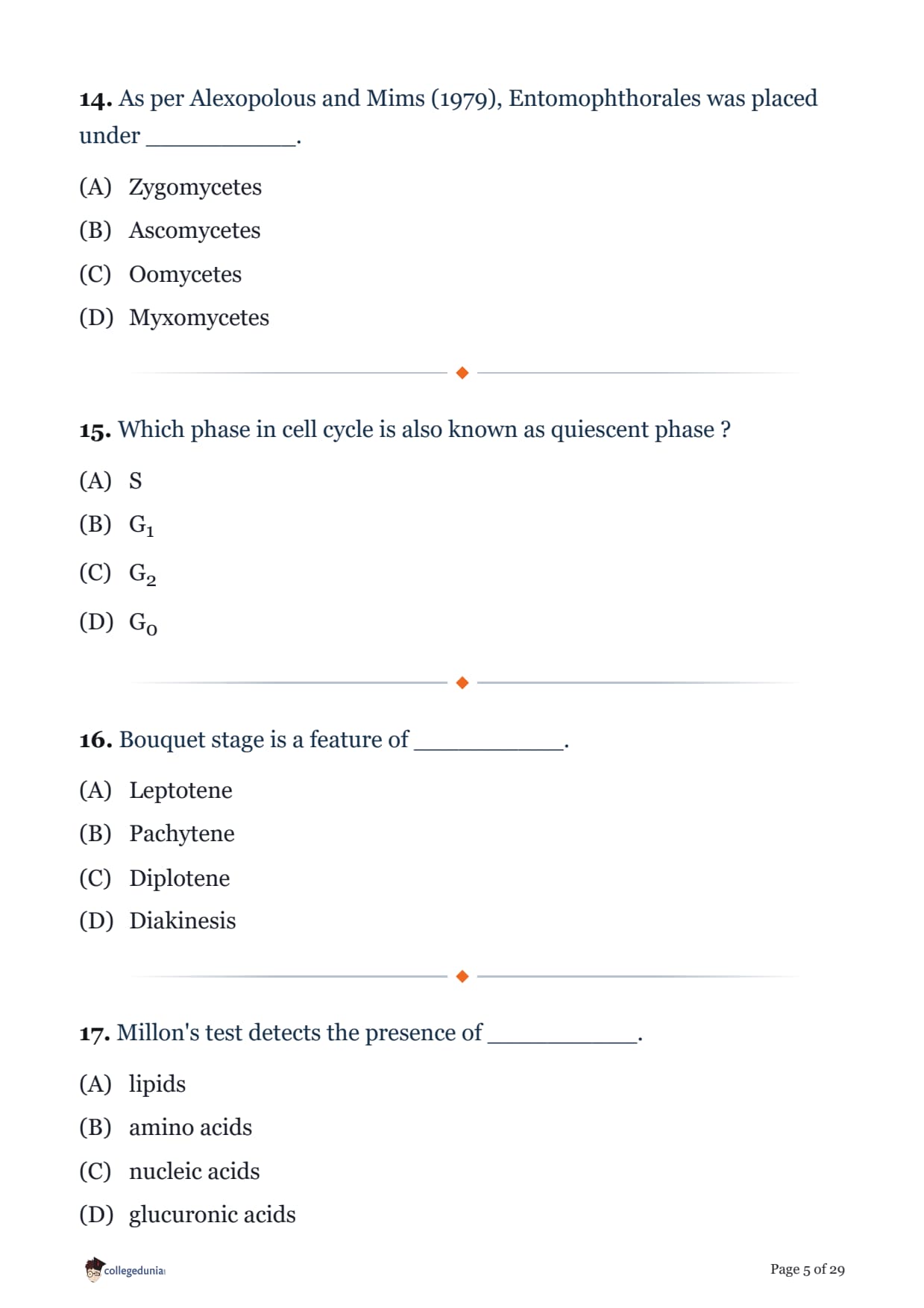
As per Alexopolous and Mims (1979), Entomophthorales was placed under __________.
Which phase in cell cycle is also known as quiescent phase ?
Bouquet stage is a feature of __________.
Millon's test detects the presence of __________.
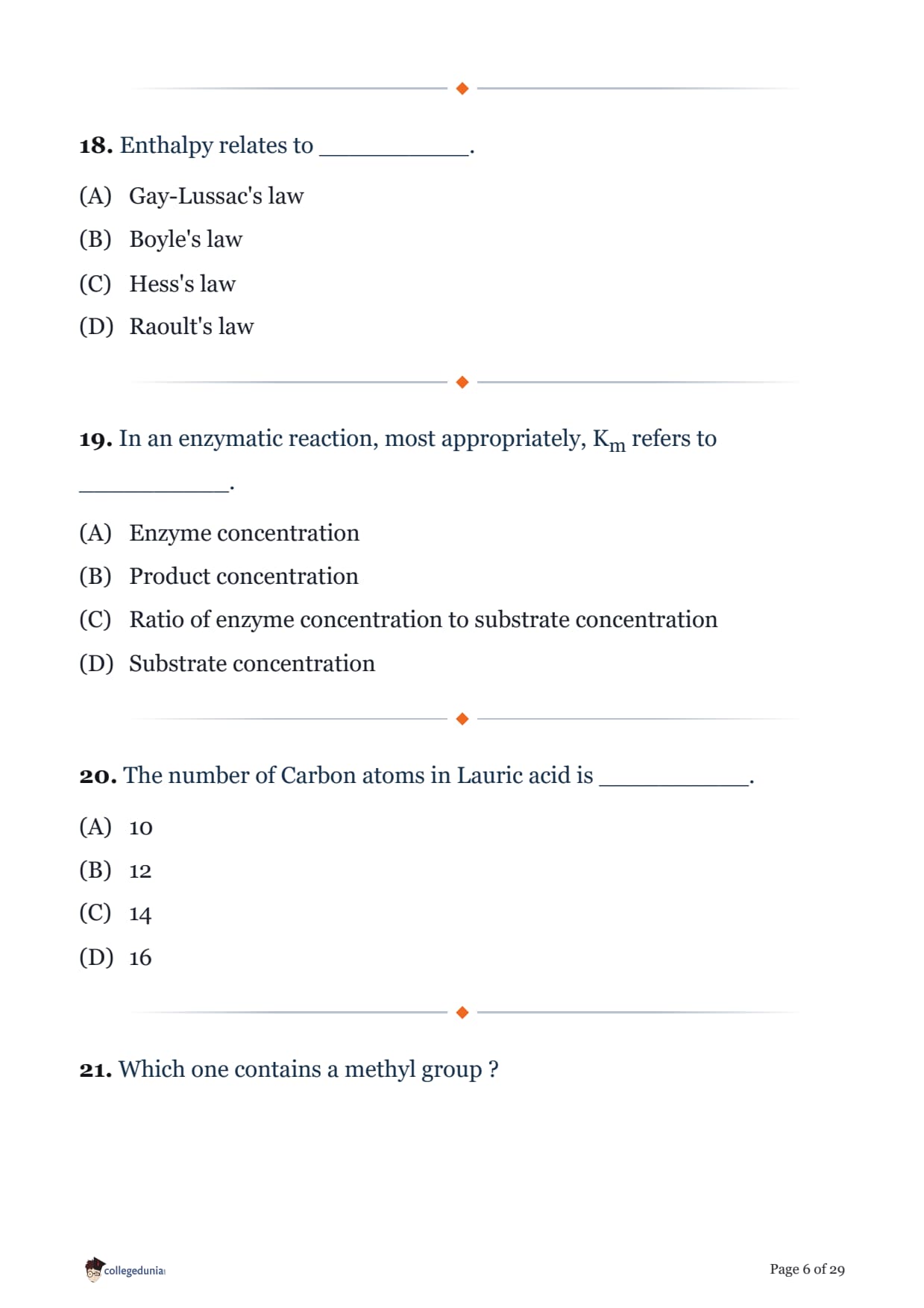
Enthalpy relates to __________.
In an enzymatic reaction, most appropriately, Km refers to __________.
The number of Carbon atoms in Lauric acid is __________.
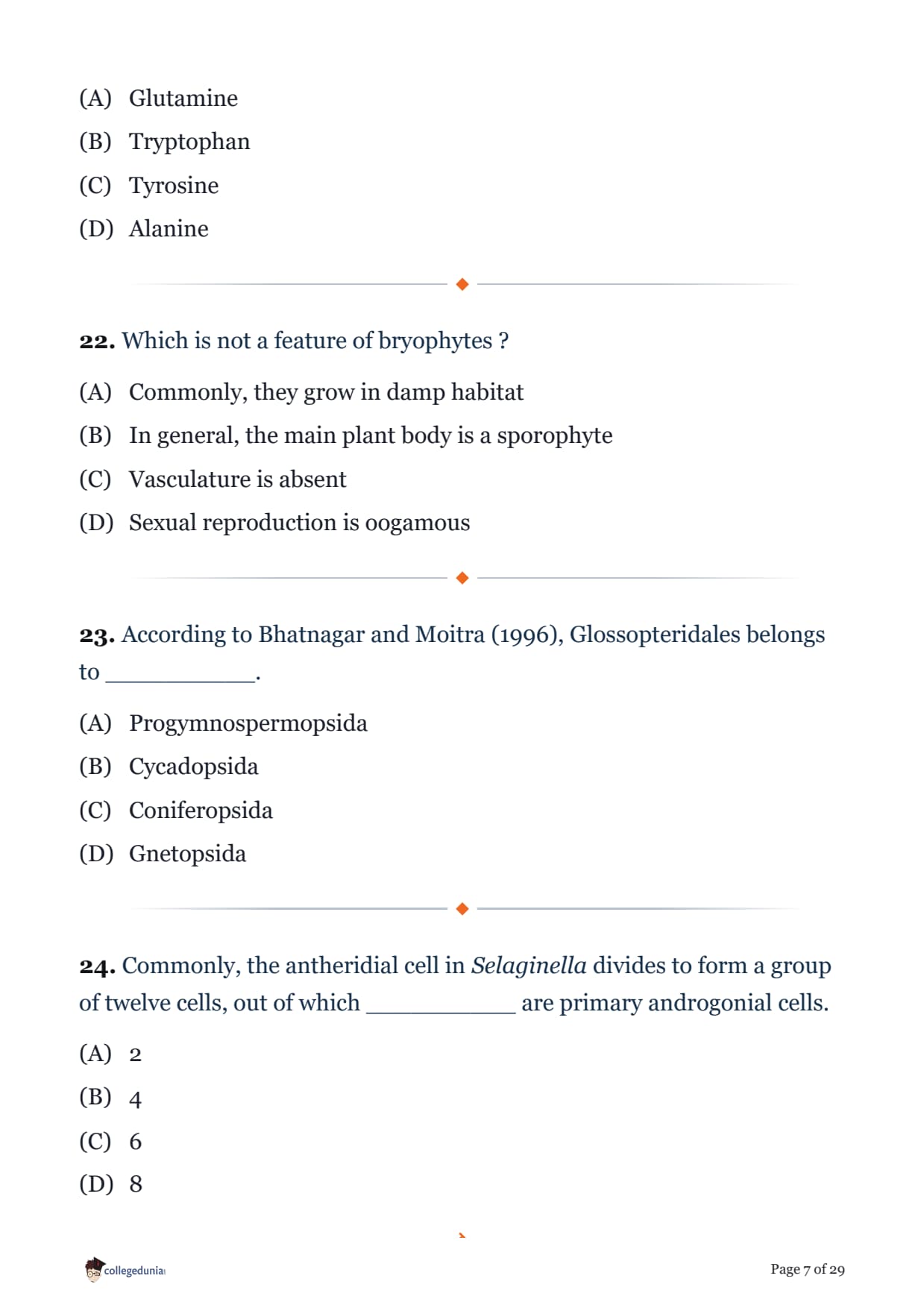
Which one contains a methyl group ?
Which is not a feature of bryophytes ?
According to Bhatnagar and Moitra (1996), Glossopteridales belongs to __________.
Commonly, the antheridial cell in Selaginella divides to form a group of twelve cells, out of which __________ are primary androgonial cells.
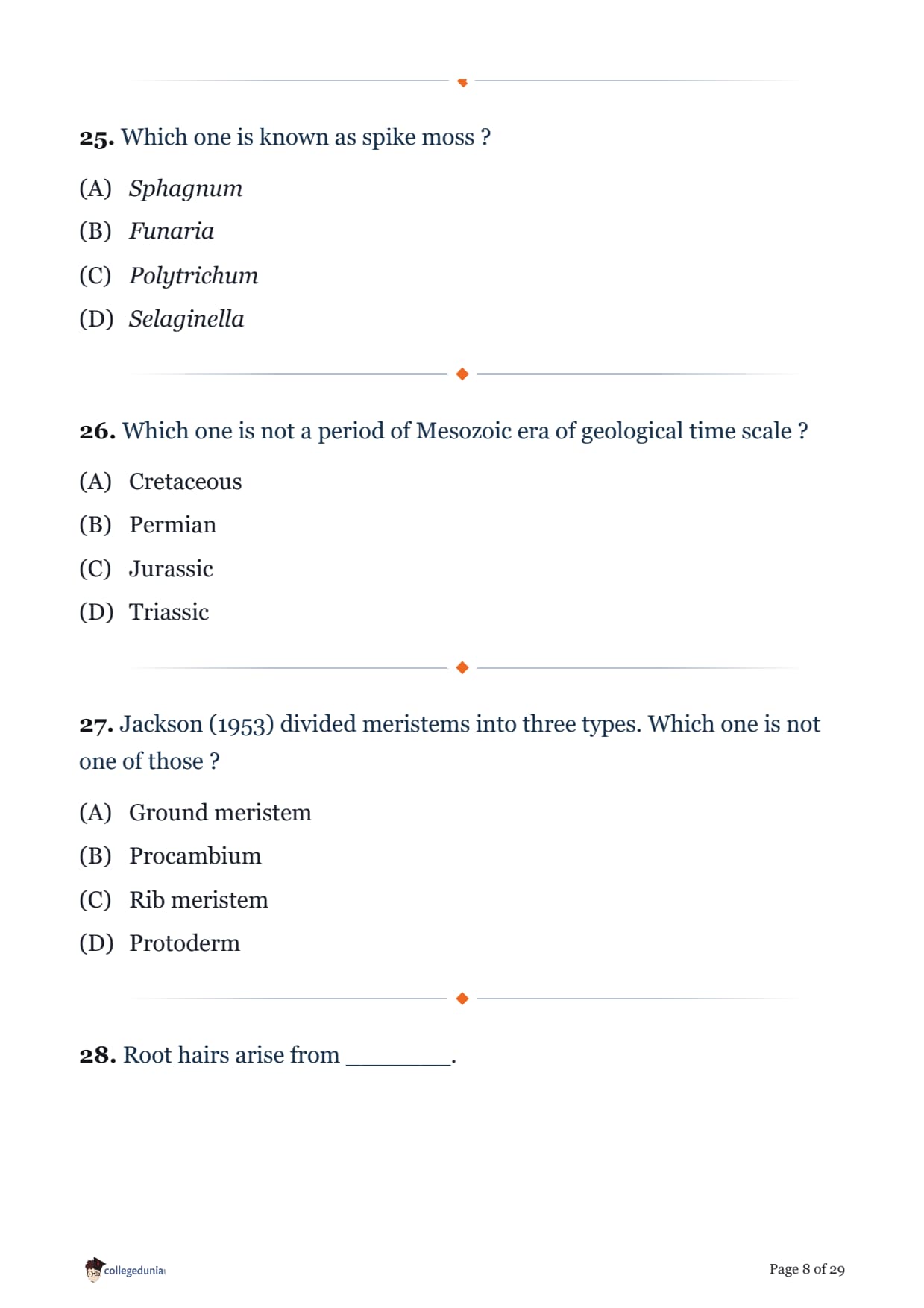
Which one is known as spike moss ?
Which one is not a period of Mesozoic era of geological time scale ?
Jackson (1953) divided meristems into three types. Which one is not one of those ?
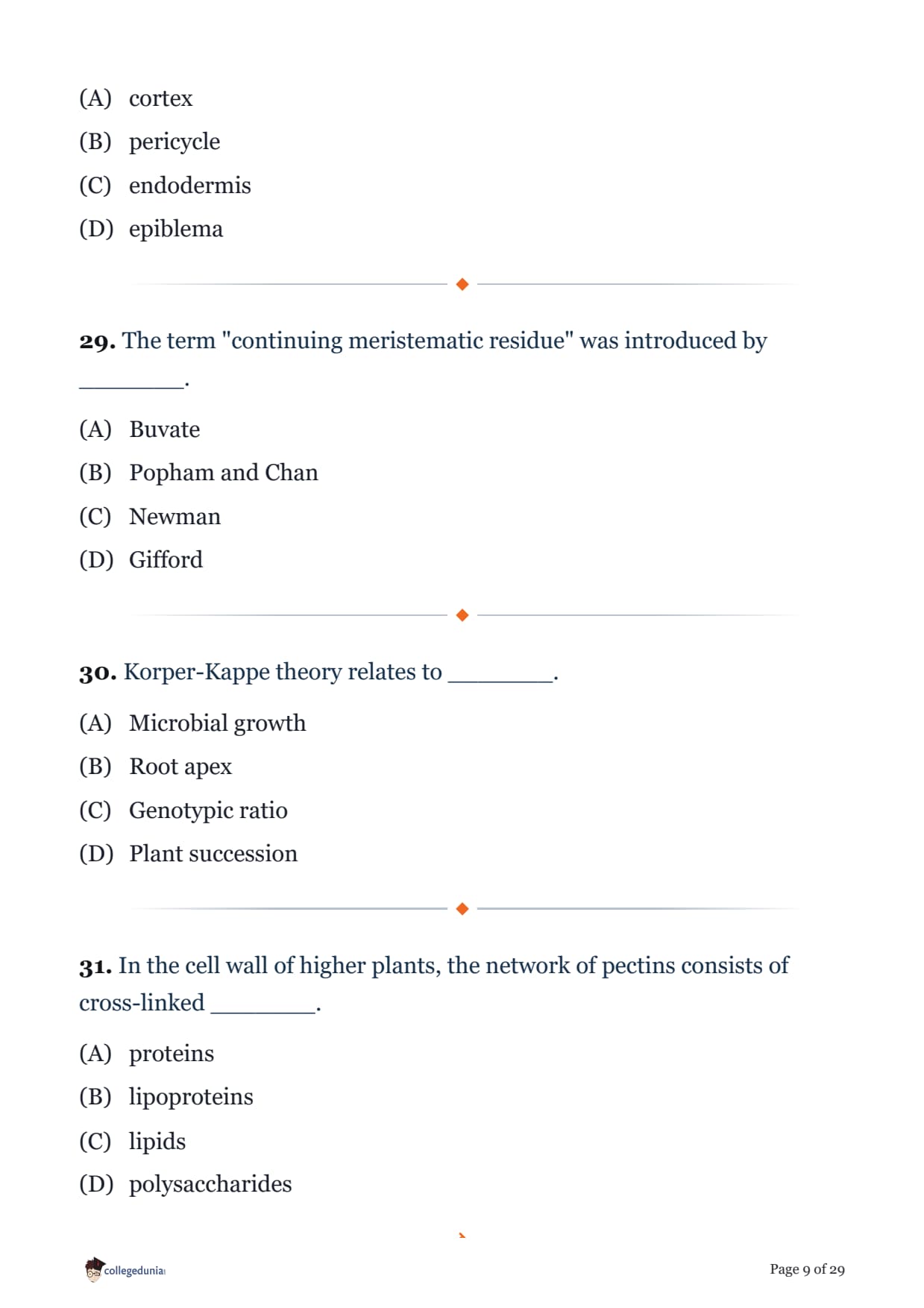
Root hairs arise from _______.
The term "continuing meristematic residue" was introduced by _______.
Korper-Kappe theory relates to _______.
In the cell wall of higher plants, the network of pectins consists of cross-linked _______.
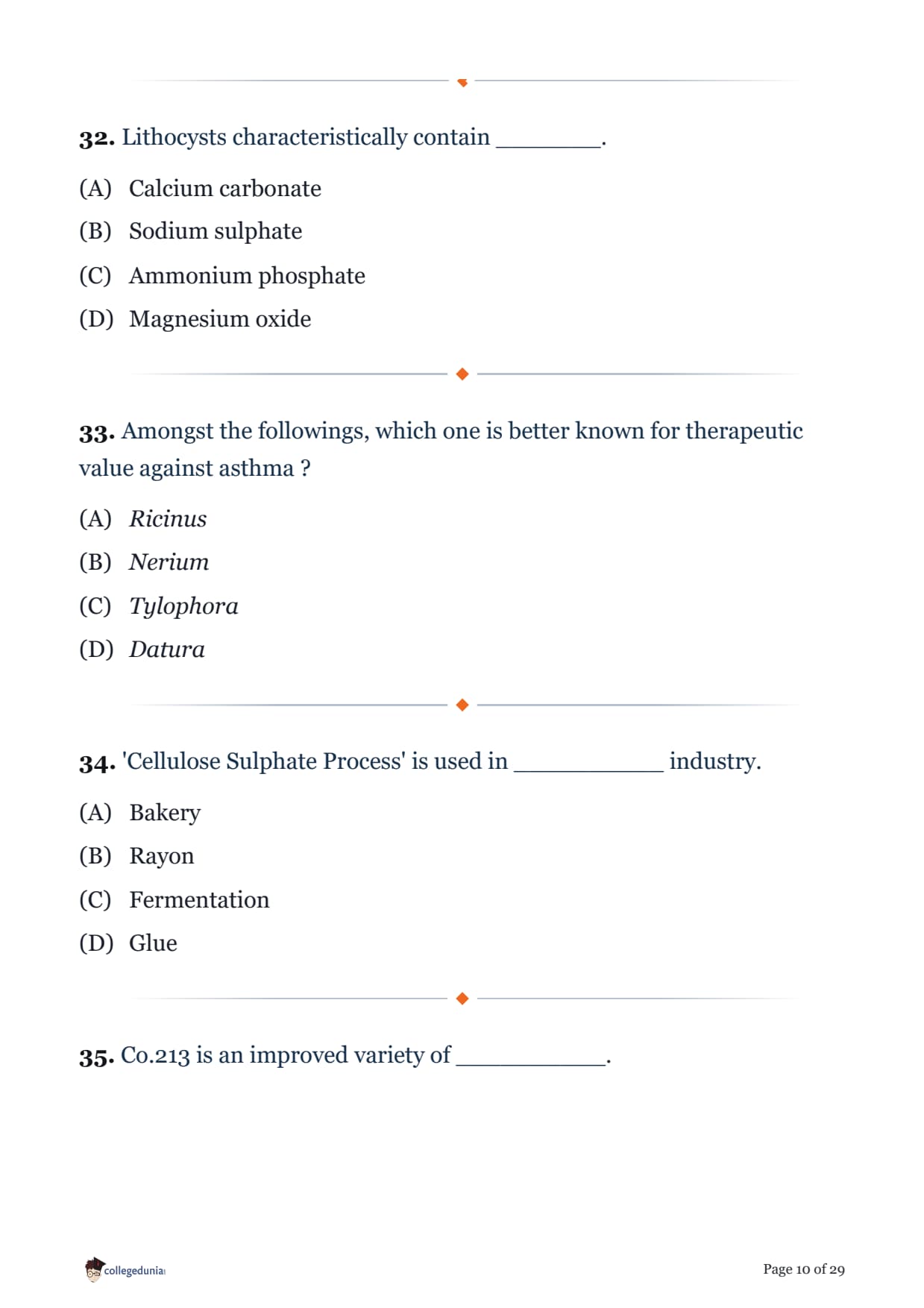
Lithocysts characteristically contain _______.
Amongst the followings, which one is better known for therapeutic value against asthma ?
'Cellulose Sulphate Process' is used in __________ industry.
Co.213 is an improved variety of __________.
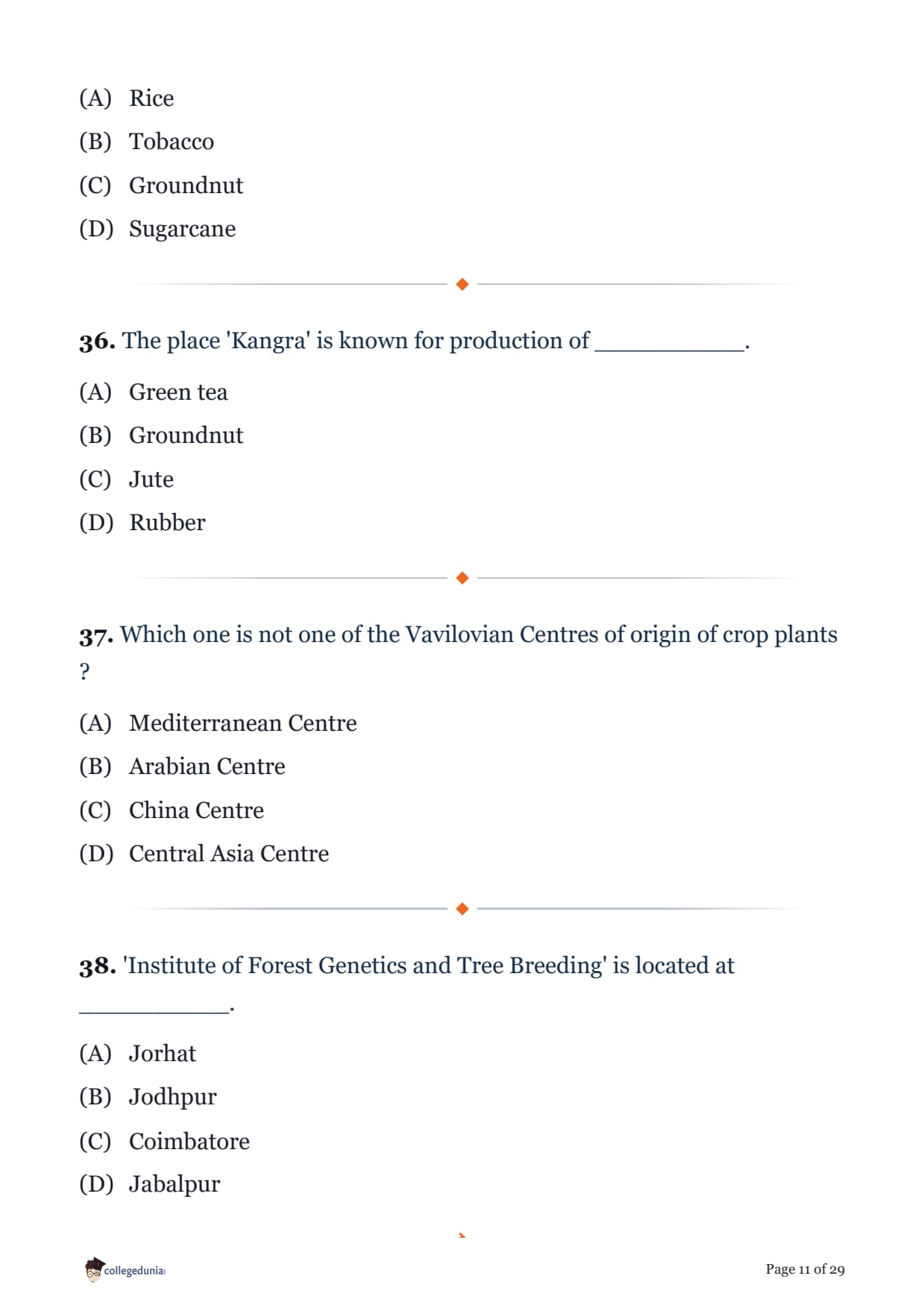
The place 'Kangra' is known for production of __________.
Which one is not one of the Vavilovian Centres of origin of crop plants ?
'Institute of Forest Genetics and Tree Breeding' is located at __________.
'Central Rice Research Institute' located at Cuttack was renamed as __________ in 2015.
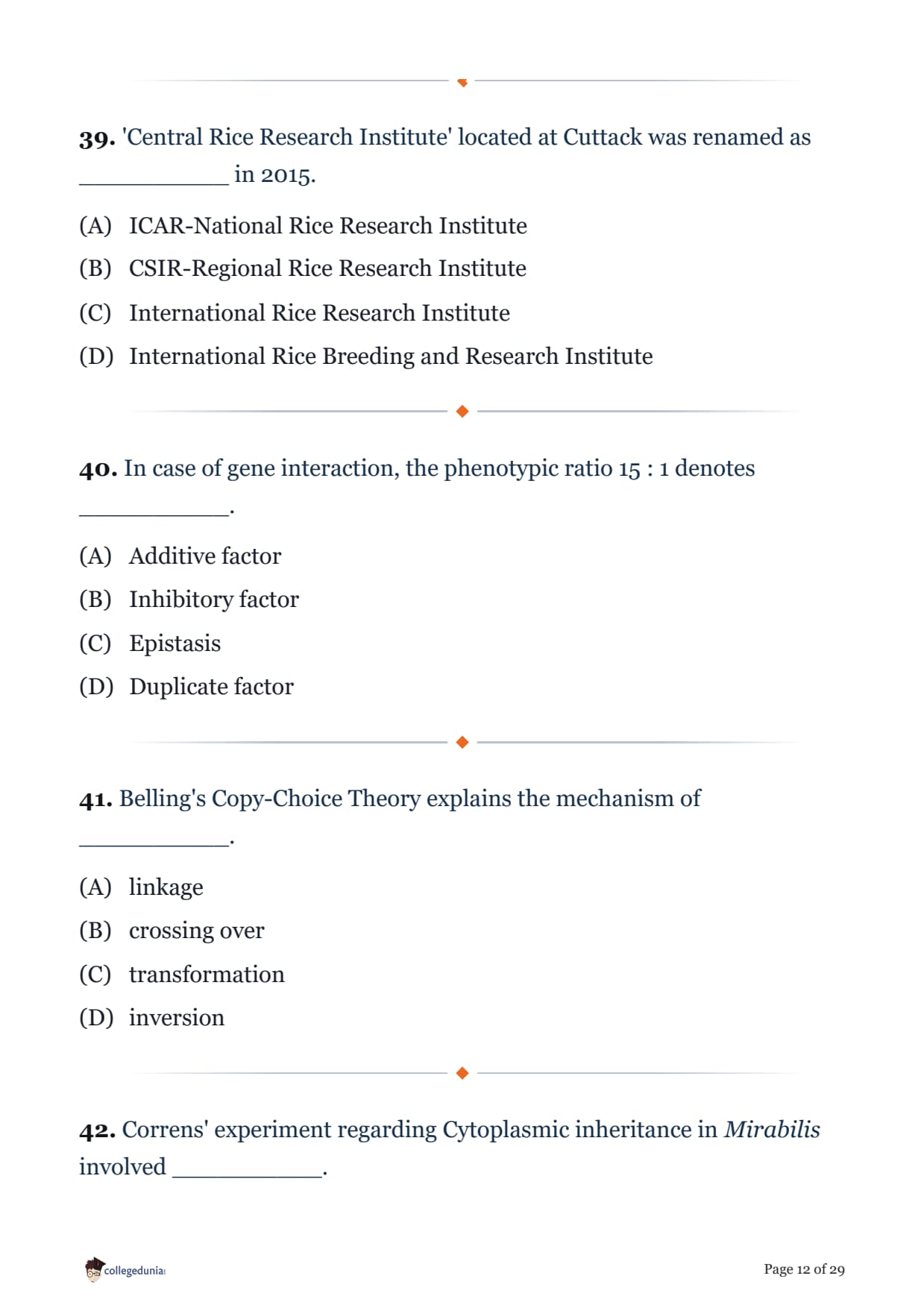
In case of gene interaction, the phenotypic ratio 15 : 1 denotes __________.
Belling's Copy-Choice Theory explains the mechanism of __________.
Correns' experiment regarding Cytoplasmic inheritance in Mirabilis involved __________.
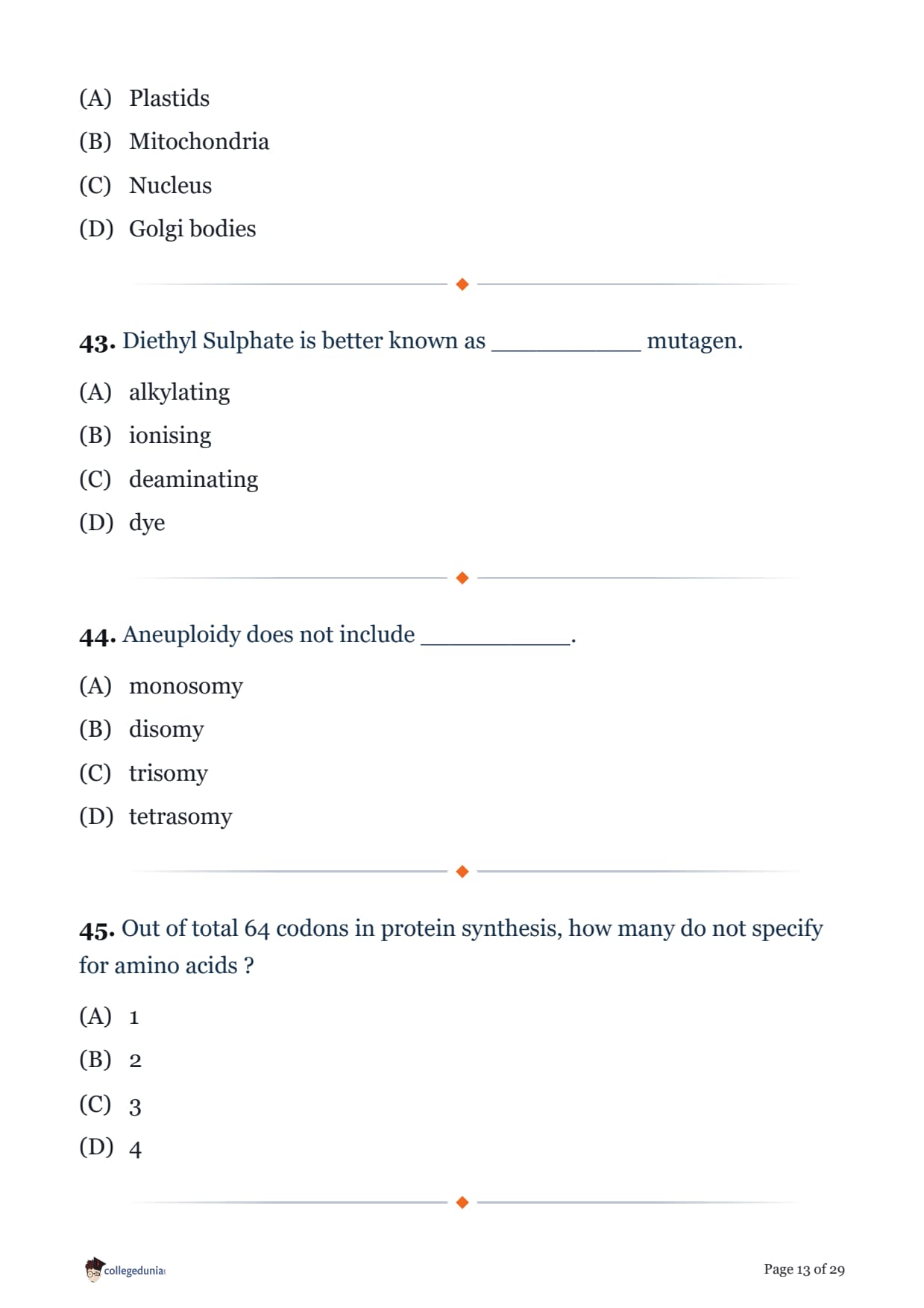
Diethyl Sulphate is better known as __________ mutagen.
Aneuploidy does not include __________.
Out of total 64 codons in protein synthesis, how many do not specify for amino acids ?
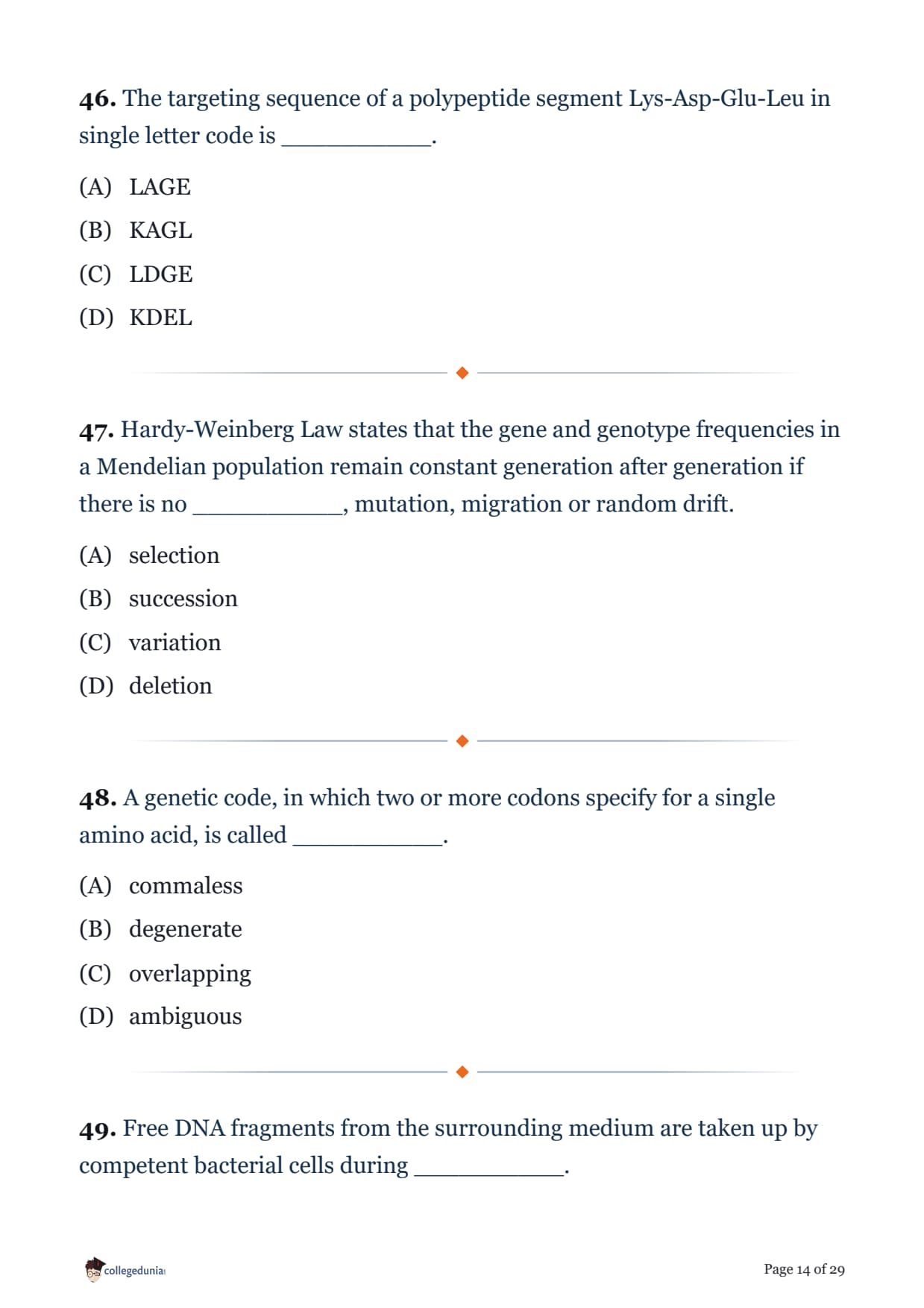
The targeting sequence of a polypeptide segment Lys-Asp-Glu-Leu in single letter code is __________.
Hardy-Weinberg Law states that the gene and genotype frequencies in a Mendelian population remain constant generation after generation if there is no __________, mutation, migration or random drift.
A genetic code, in which two or more codons specify for a single amino acid, is called __________.
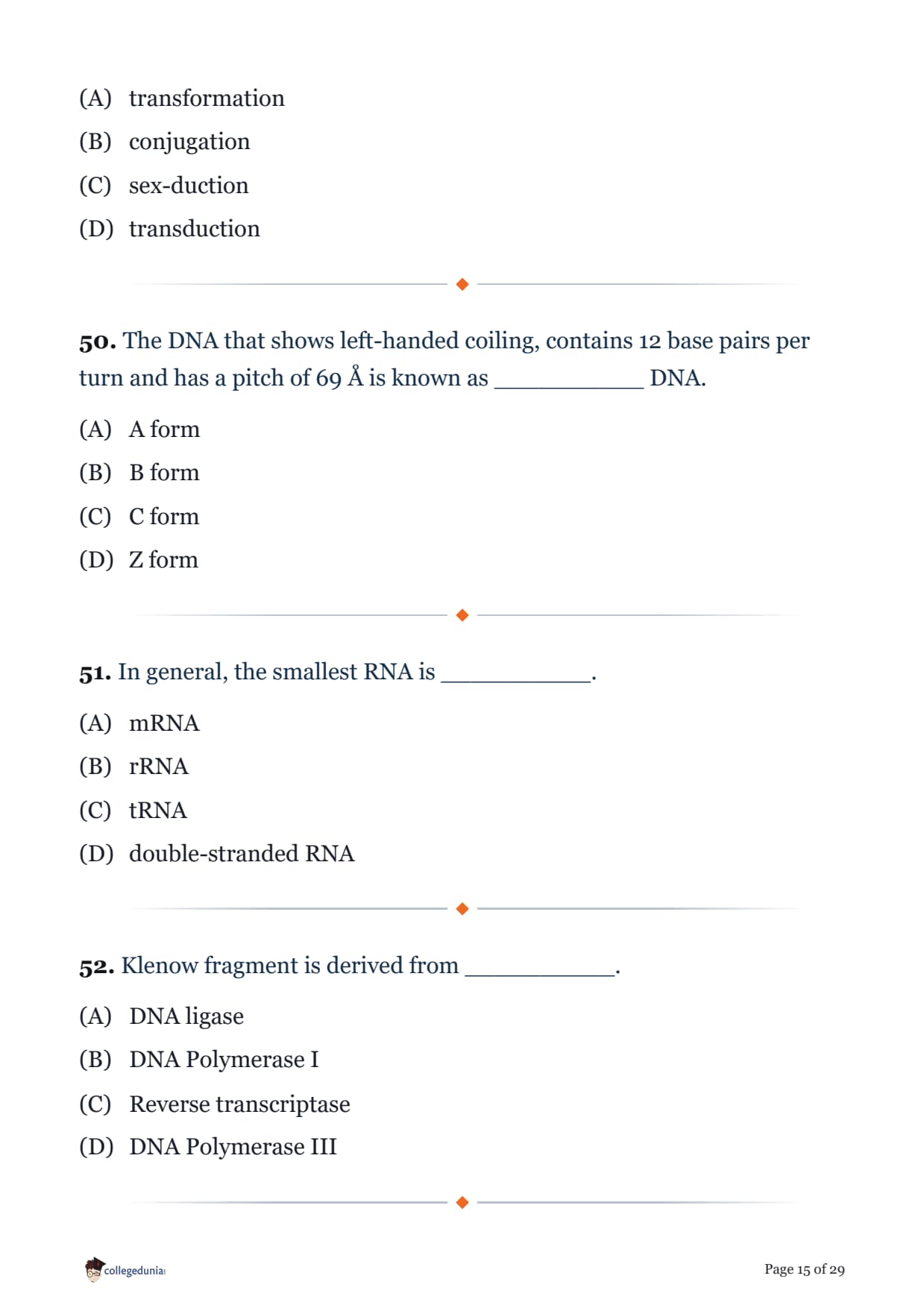
Free DNA fragments from the surrounding medium are taken up by competent bacterial cells during __________.
The DNA that shows left-handed coiling, contains 12 base pairs per turn and has a pitch of 69 Å is known as __________ DNA.
In general, the smallest RNA is __________.
Klenow fragment is derived from __________.
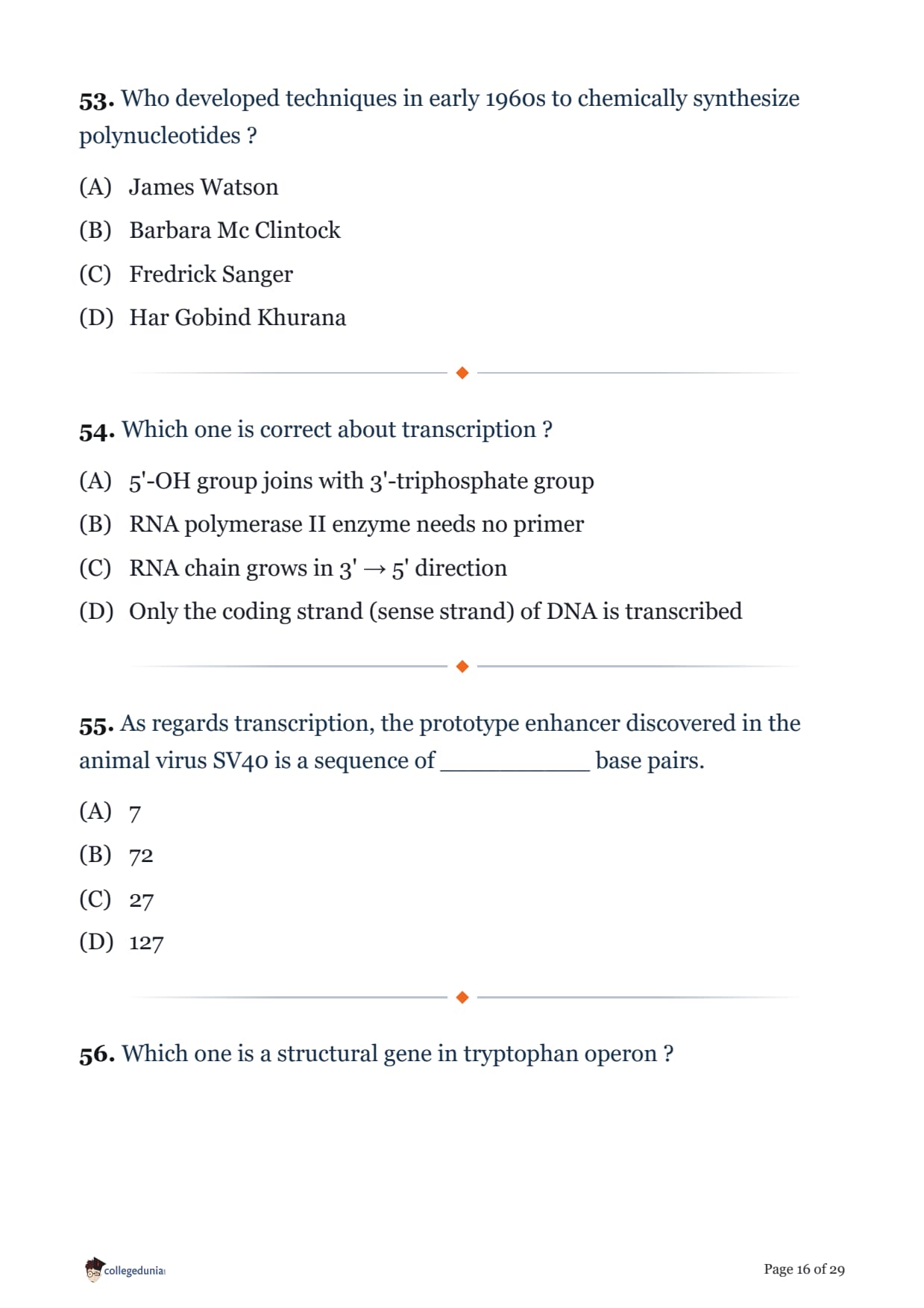
Who developed techniques in early 1960s to chemically synthesize polynucleotides ?
Which one is correct about transcription ?
As regards transcription, the prototype enhancer discovered in the animal virus SV40 is a sequence of __________ base pairs.
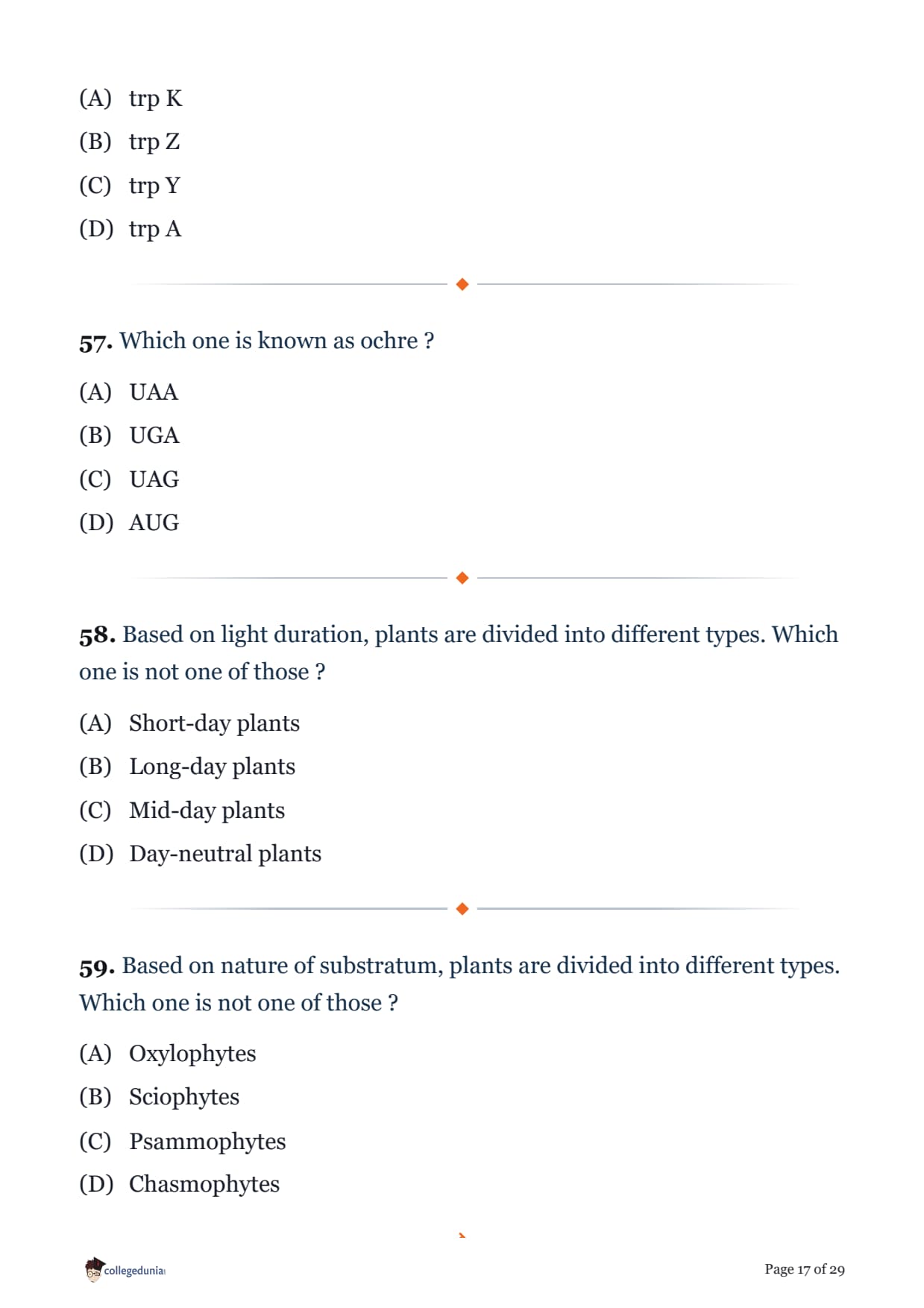
Which one is a structural gene in tryptophan operon ?
Which one is known as ochre ?
Based on light duration, plants are divided into different types. Which one is not one of those ?
Based on nature of substratum, plants are divided into different types. Which one is not one of those ?
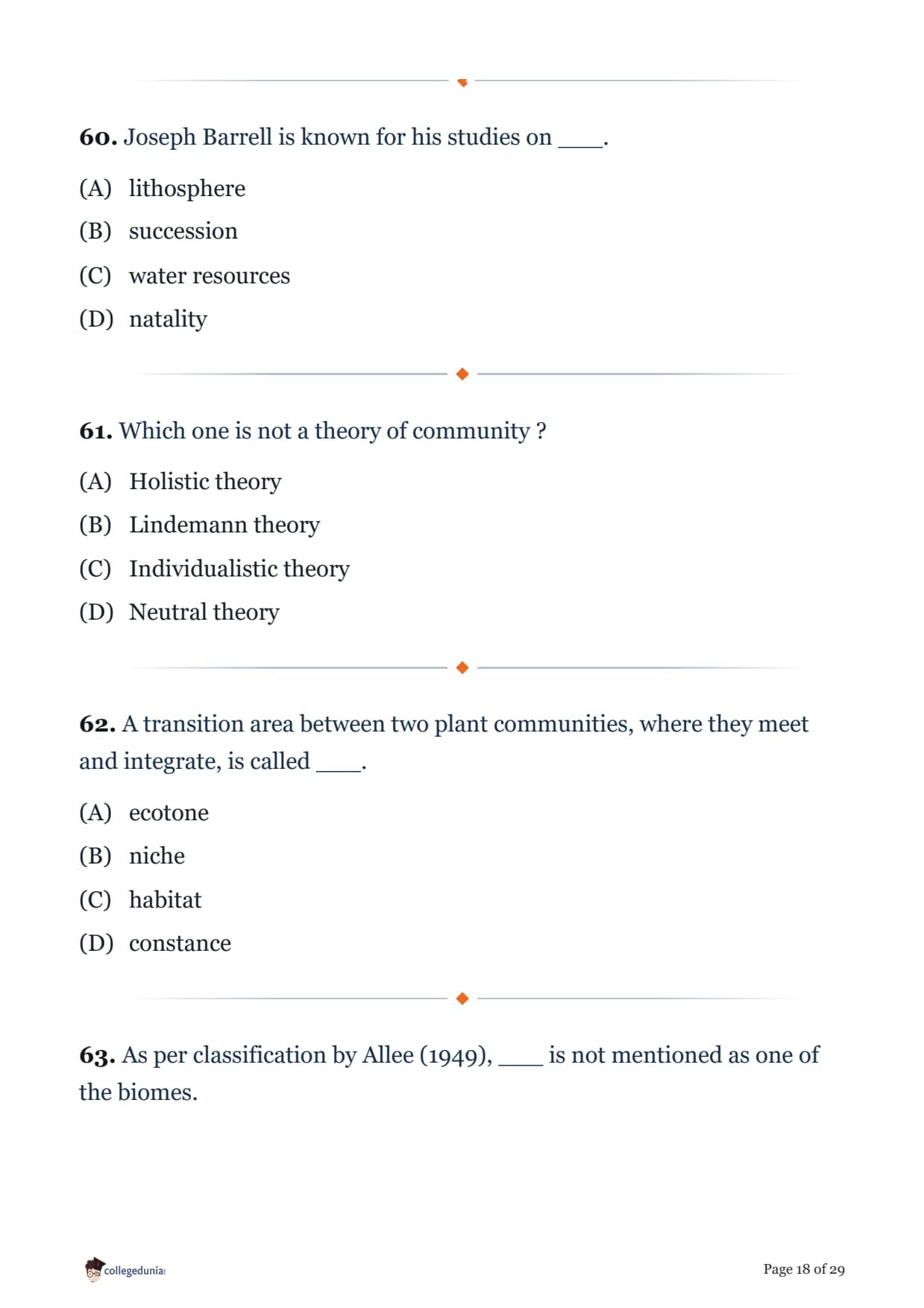
Joseph Barrell is known for his studies on ___.
Which one is not a theory of community ?
A transition area between two plant communities, where they meet and integrate, is called ___.
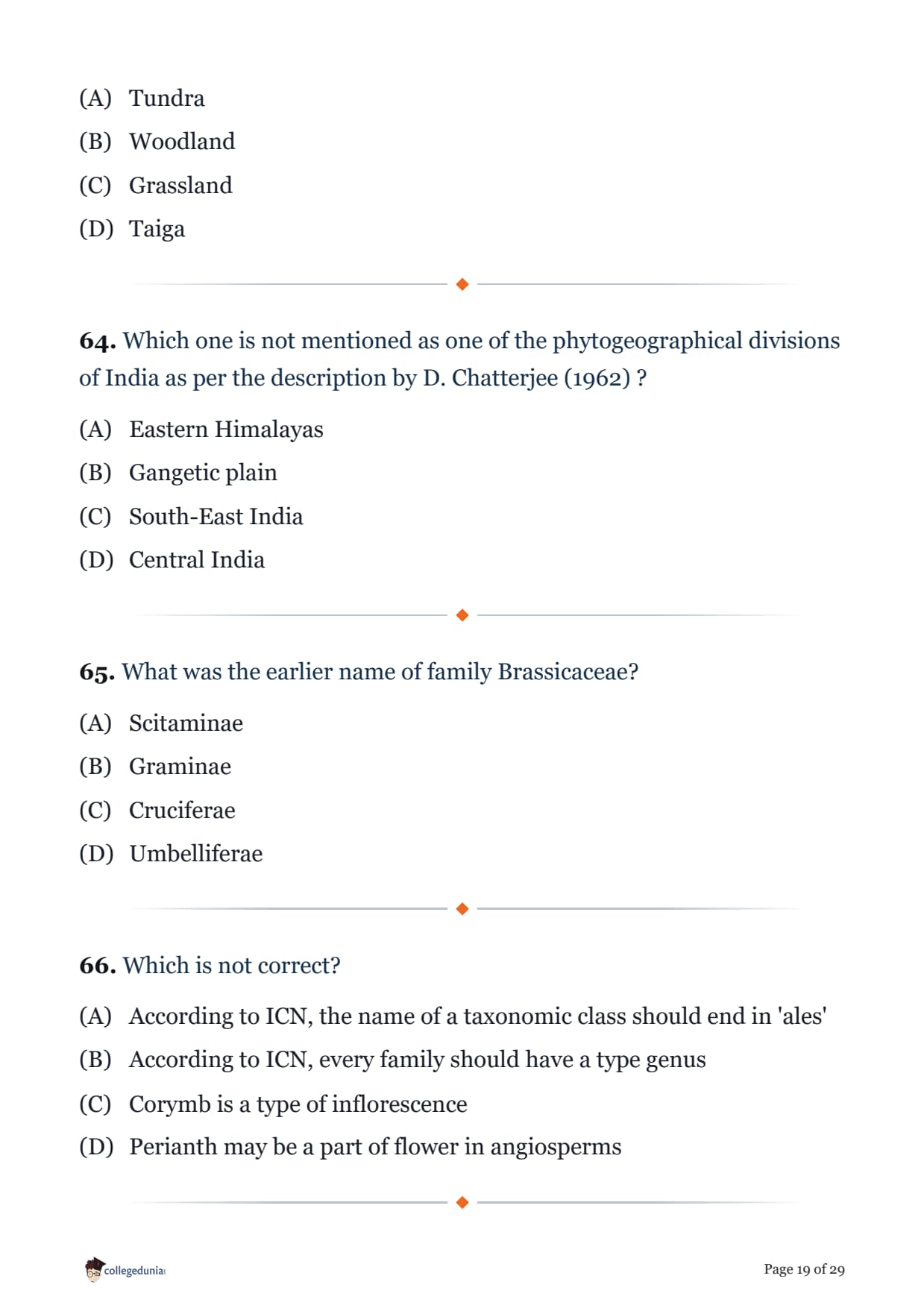
As per classification by Allee (1949), ___ is not mentioned as one of the biomes.
Which one is not mentioned as one of the phytogeographical divisions of India as per the description by D. Chatterjee (1962) ?
What was the earlier name of family Brassicaceae?
Which is not correct?
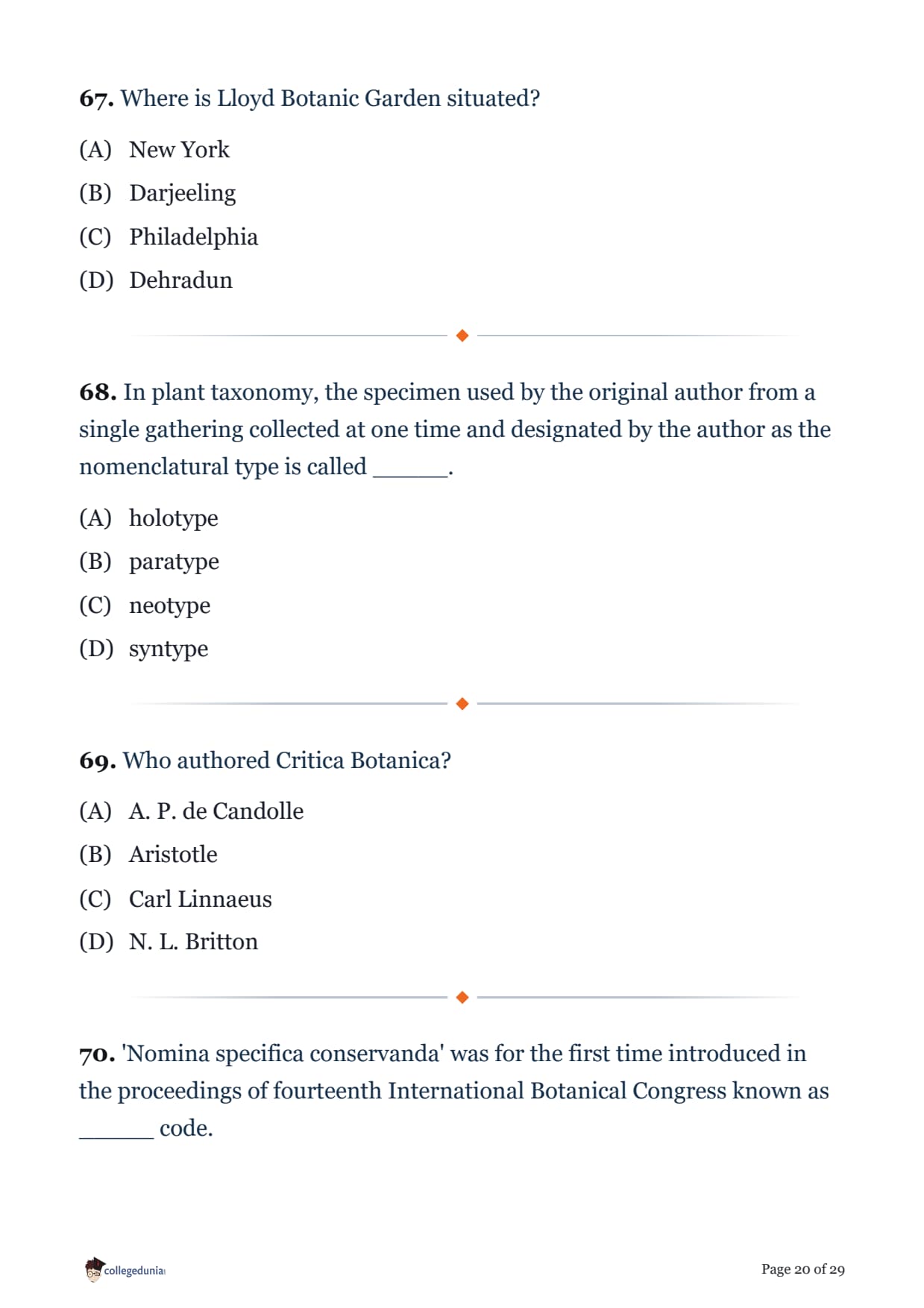
Where is Lloyd Botanic Garden situated?
In plant taxonomy, the specimen used by the original author from a single gathering collected at one time and designated by the author as the nomenclatural type is called _____.
Who authored Critica Botanica?
'Nomina specifica conservanda' was for the first time introduced in the proceedings of fourteenth International Botanical Congress known as _____ code.
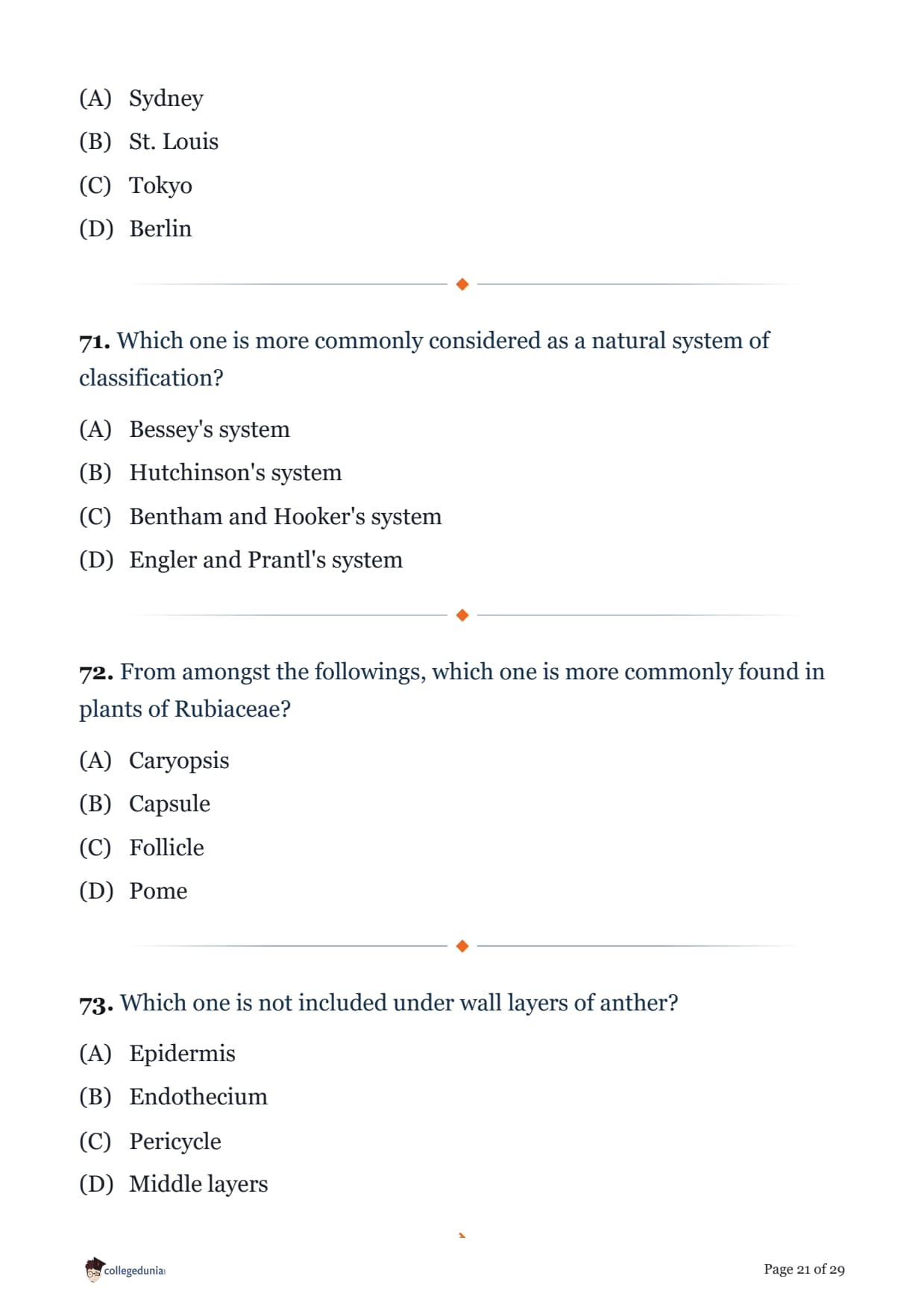
Which one is more commonly considered as a natural system of classification?
From amongst the followings, which one is more commonly found in plants of Rubiaceae?
Which one is not included under wall layers of anther?
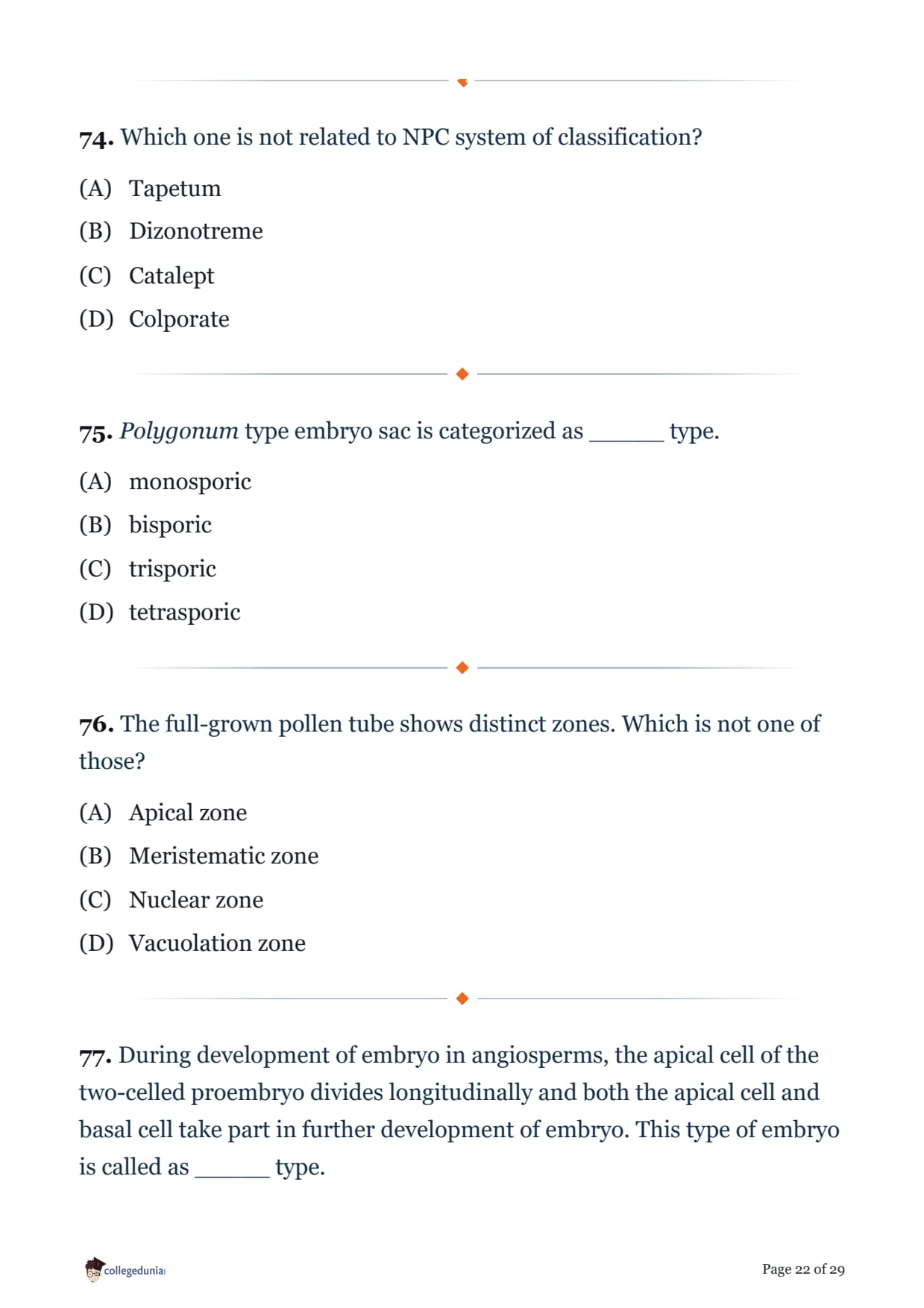
Which one is not related to NPC system of classification?
Polygonum type embryo sac is categorized as _____ type.
The full-grown pollen tube shows distinct zones. Which is not one of those?
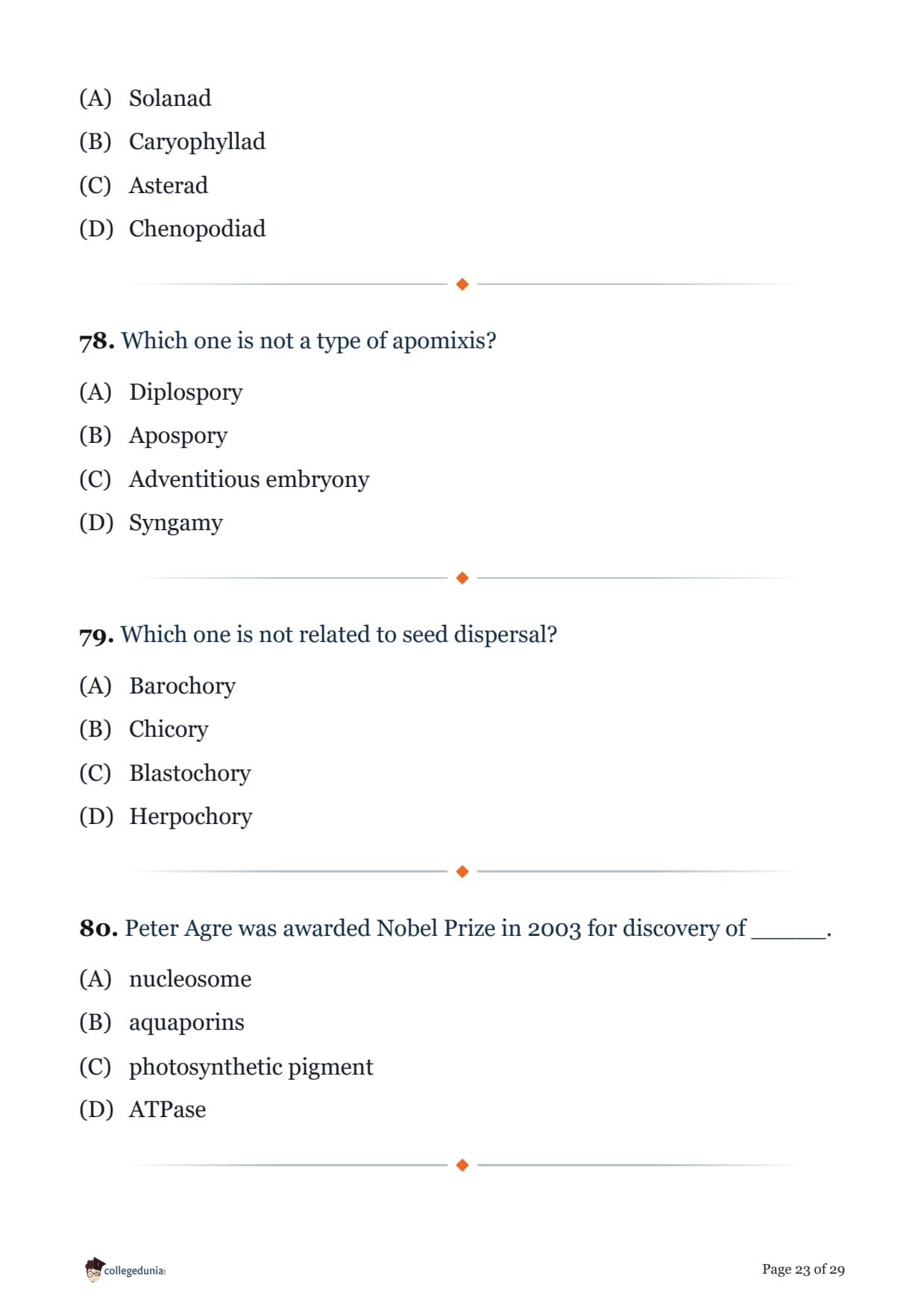
During development of embryo in angiosperms, the apical cell of the two-celled proembryo divides longitudinally and both the apical cell and basal cell take part in further development of embryo. This type of embryo is called as _____ type.
Which one is not a type of apomixis?
Which one is not related to seed dispersal?
Peter Agre was awarded Nobel Prize in 2003 for discovery of _____.
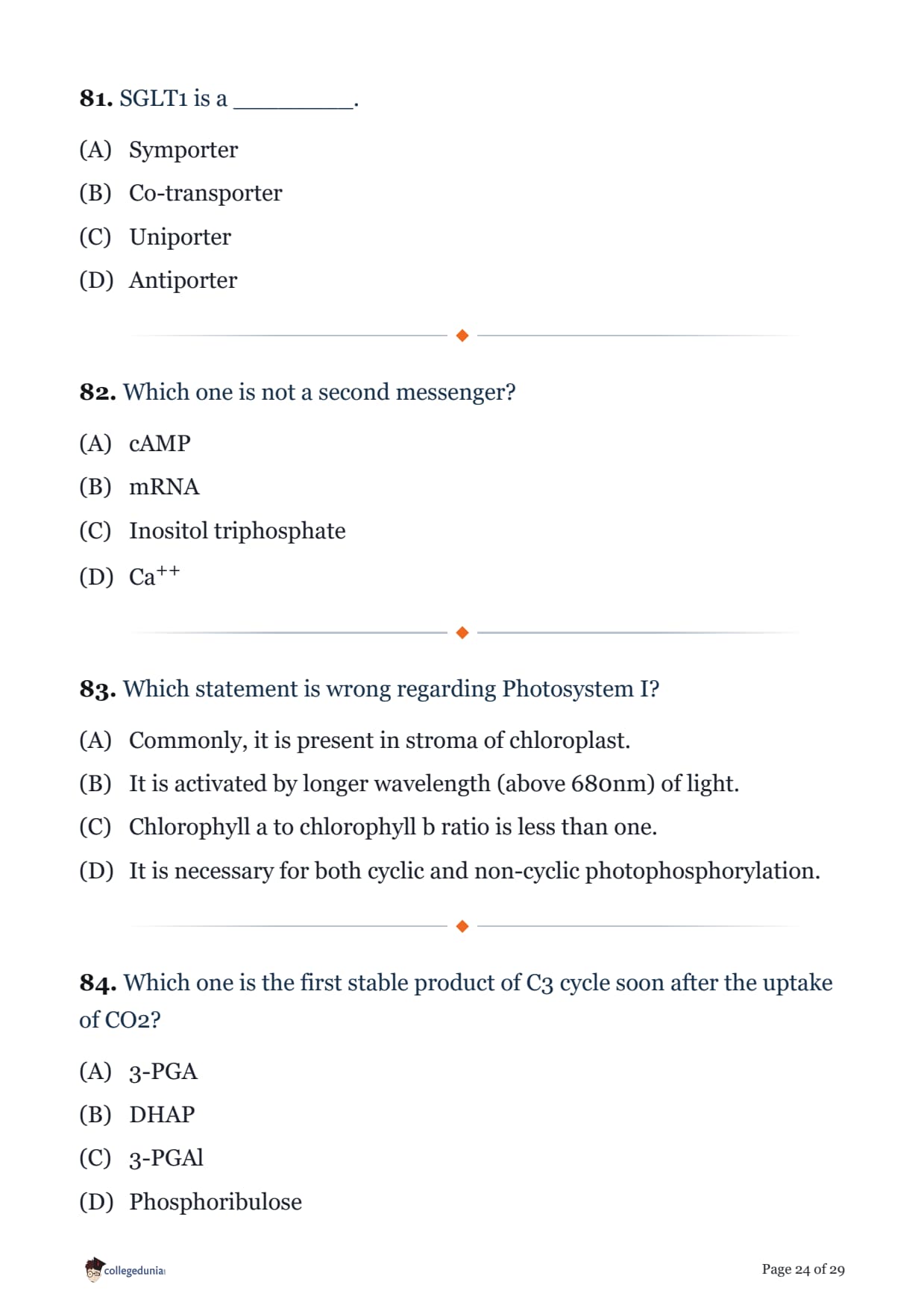
SGLT1 is a ________.
Which one is not a second messenger?
Which statement is wrong regarding Photosystem I?
Which one is the first stable product of C3 cycle soon after the uptake of CO2?
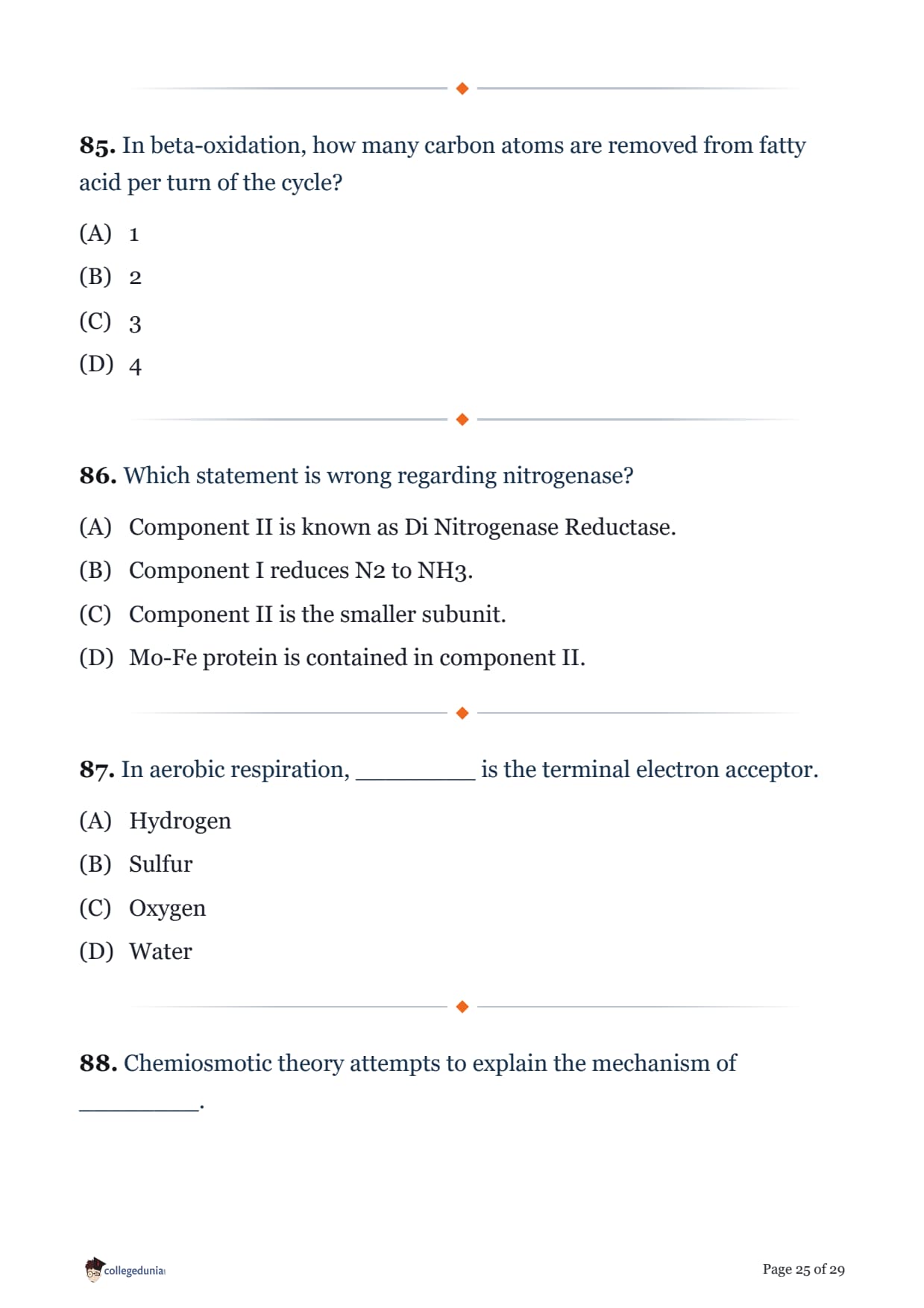
In beta-oxidation, how many carbon atoms are removed from fatty acid per turn of the cycle?
Which statement is wrong regarding nitrogenase?
In aerobic respiration, ________ is the terminal electron acceptor.
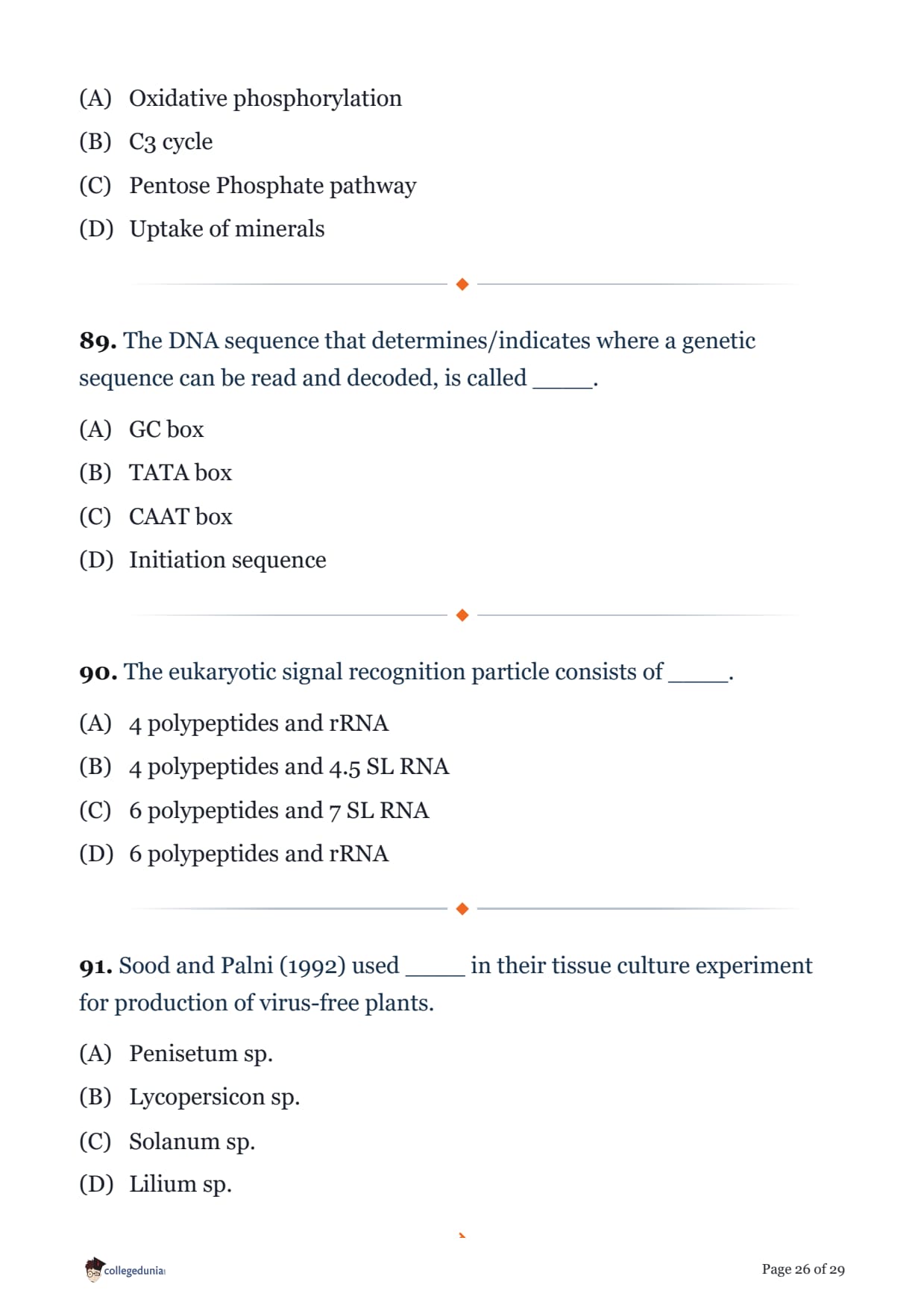
Chemiosmotic theory attempts to explain the mechanism of ________.
The DNA sequence that determines/indicates where a genetic sequence can be read and decoded, is called ____.
The eukaryotic signal recognition particle consists of ____.
Sood and Palni (1992) used ____ in their tissue culture experiment for production of virus-free plants.
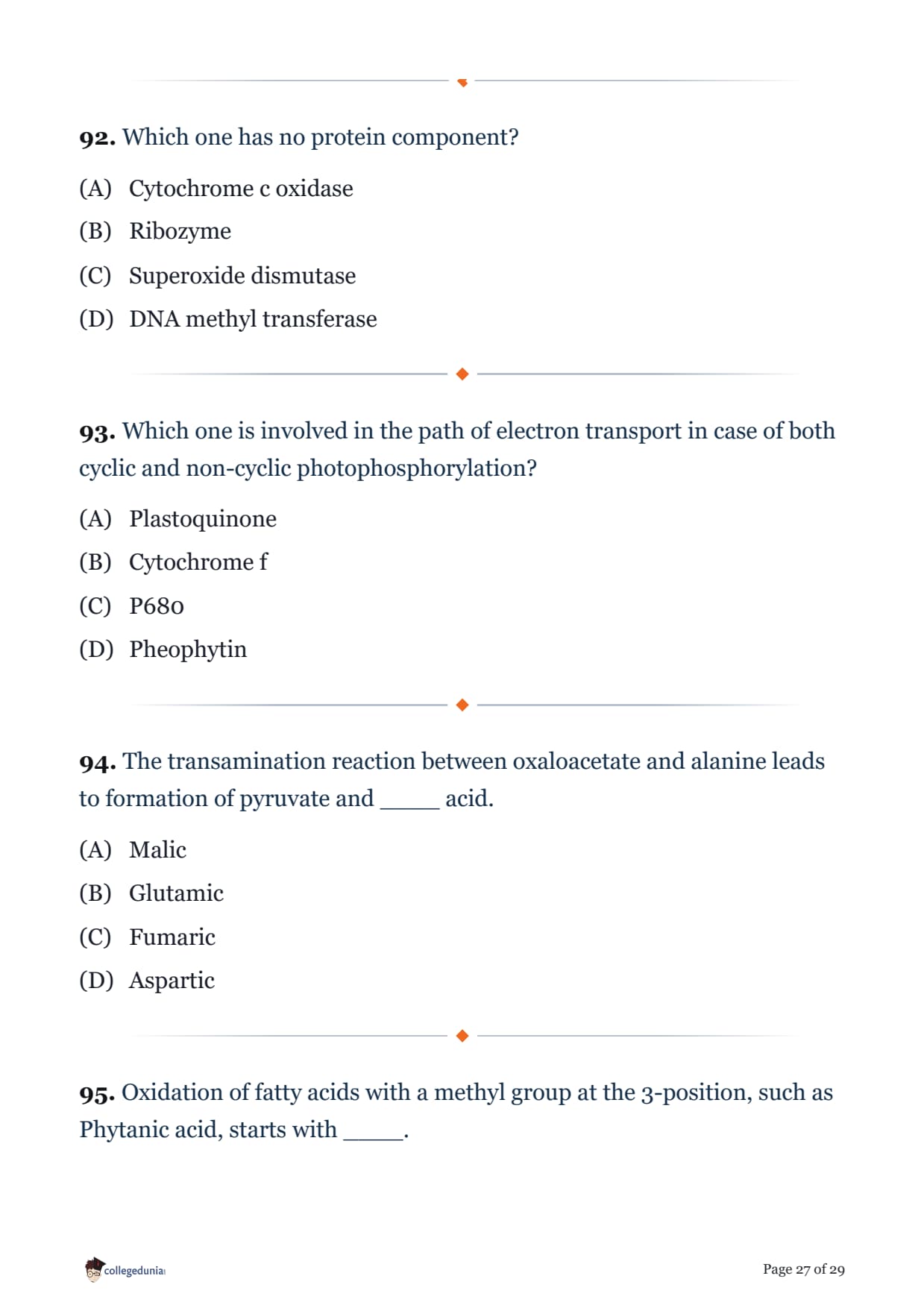
Which one has no protein component?
Which one is involved in the path of electron transport in case of both cyclic and non-cyclic photophosphorylation?
The transamination reaction between oxaloacetate and alanine leads to formation of pyruvate and ____ acid.
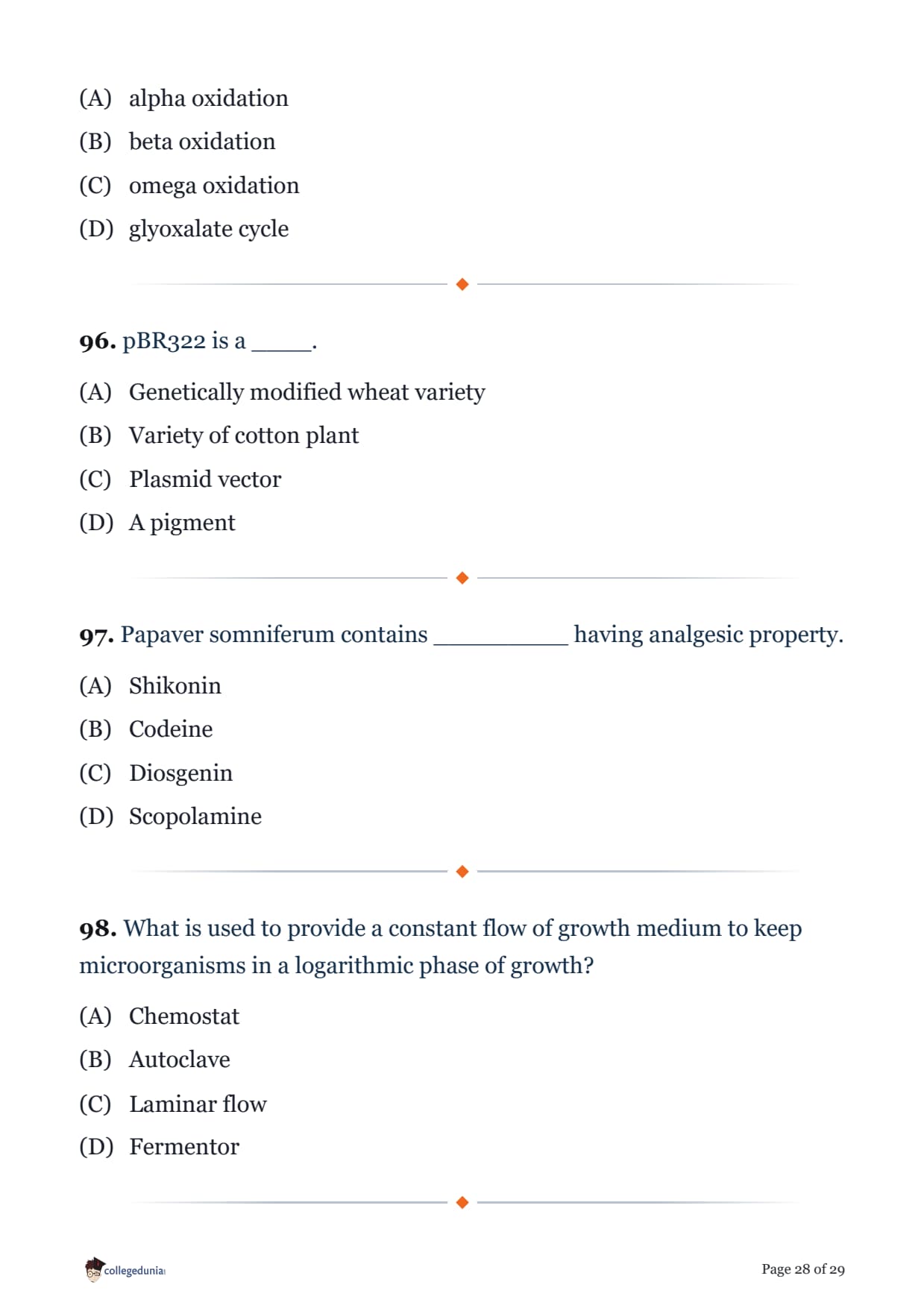
Oxidation of fatty acids with a methyl group at the 3-position, such as Phytanic acid, starts with ____.
pBR322 is a ____.
Papaver somniferum contains _________ having analgesic property.
What is used to provide a constant flow of growth medium to keep microorganisms in a logarithmic phase of growth?
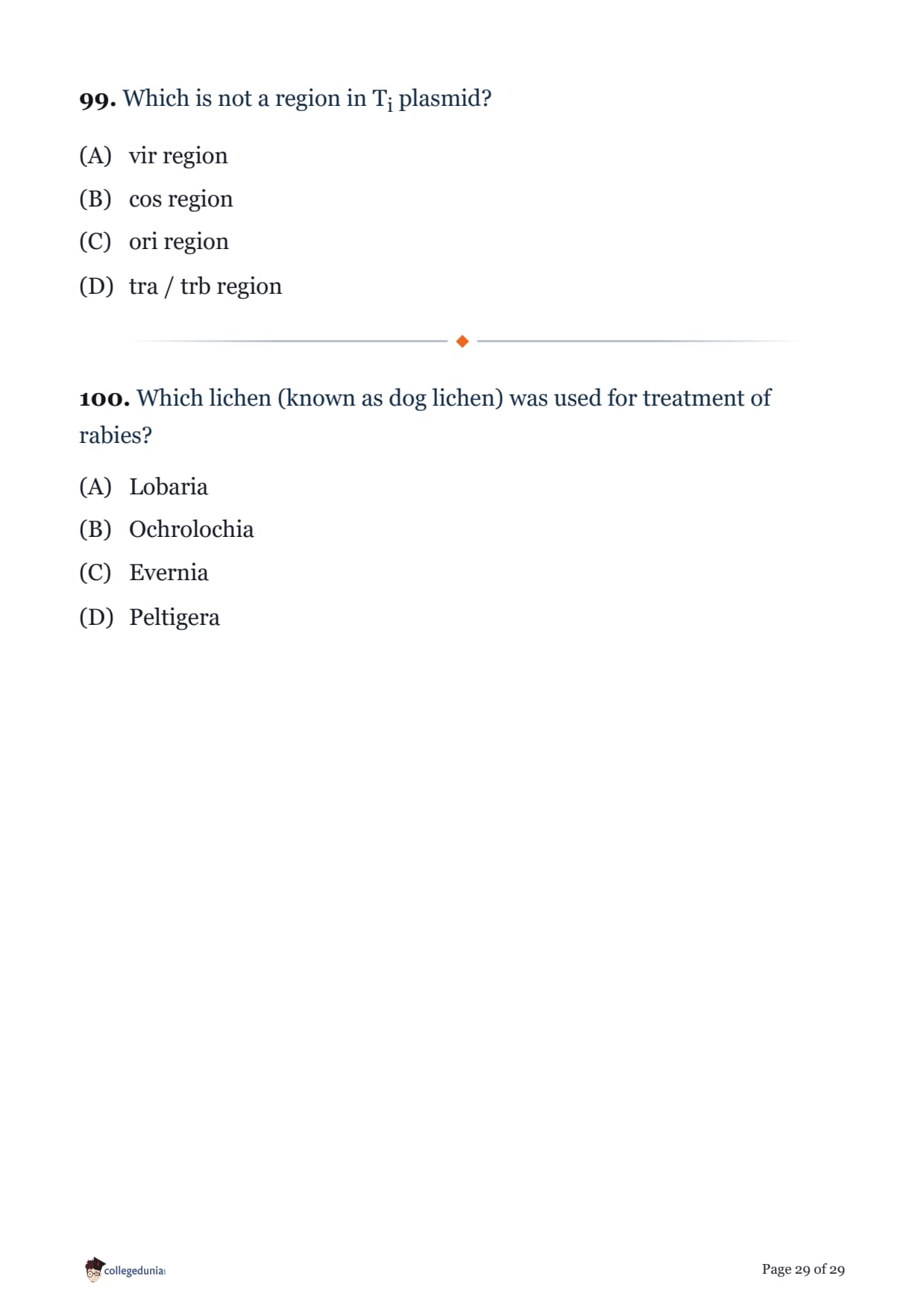
Which is not a region in Ti plasmid?
Which lichen (known as dog lichen) was used for treatment of rabies?
Odisha CPET 2025 Botany Exam Pattern and Marking Scheme Explained
As per the official notification on pg.samsodisha.gov.in, CPET is an offline, OMR-based test held subject-wise across Odisha's state universities.
- Total questions: 100 MCQs, all from Subject Code 04 - Botany
- Duration: 80 minutes
- Total marks: 100
- Marking scheme: +1 for a correct answer, -0.25 for a wrong one
- Question types: single-correct MCQs with four options (A-D), no negative marking on unattempted questions
High-Weightage Subjects in Odisha CPET 2025 Botany to Focus On First
Going question by question through this paper, molecular biology and cell physiology together made up close to a third of the marks.
- Molecular biology and the genetic code: around 12 of the 100 questions, covering DNA forms (A/B/Z-DNA), transcription, the trp operon, and promoter elements like the TATA box
- Cell physiology (photosynthesis, respiration, metabolism): about 16 questions, from the C3 cycle and photophosphorylation to beta-oxidation and the electron transport chain
- Genetics and cytogenetics: roughly 10 questions on gene interaction ratios, aneuploidy, mutagens, and Mendelian population genetics
- Plant taxonomy and nomenclature: about 8 questions on ICN rules, classification systems, and type specimens
- Plant ecology: 7 questions on biomes, community theories, and India's phytogeographical zones
- Economic botany and plant breeding: 7 questions on crop varieties, Vavilovian centres, and research institutes
Odisha CPET 2025 Botany Question Paper Analysis Video
Source: OCS by Ranjan
How to Use the Odisha CPET Botany Question Paper for Practice
Past-year analysis from CPET aggregator sites rates the Botany paper as easy to moderate overall, so speed and accuracy matter more here than getting stuck on any one question.
- Solve all 100 questions as a timed 80-minute mock before checking the solutions PDF
- Since -0.25 applies per wrong answer, skip a question outright if you cannot narrow it to two options
- Redo the molecular biology and cell physiology sections separately, since together they carry close to 30 of the 100 marks
- Cross-check every taxonomy and nomenclature answer against the ICN rules, since several questions here hinge on one-word distinctions (class vs order suffixes, for example)
Odisha CPET 2025 Botany Question Paper FAQs
Ques. How difficult was the Odisha CPET 2025 Botany paper?
Ans. CPET Botany papers, including 2025, are generally rated easy to moderate by students who have attempted past years, with straightforward single-correct MCQs rather than lengthy problem-solving questions.
Ques. How many questions were there in the Odisha CPET 2025 Botany paper, and is there negative marking?
Ans. The paper had 100 MCQs to be solved in 80 minutes, with +1 mark for every correct answer and -0.25 for every wrong one.
Ques. Which topics carry the highest weightage in Odisha CPET Botany?
Ans. In the 2025 paper, molecular biology and cell physiology (photosynthesis, respiration, metabolism) together accounted for close to 28 of the 100 questions, ahead of genetics, taxonomy, and ecology.
Ques. Where can I download the Odisha CPET 2025 Botany question paper with solutions PDF for free?
Ans. You can download it from the table above on Collegedunia. The official paper and answer key are also released on pg.samsodisha.gov.in, the SAMS Odisha portal.
Ques. Which universities accept the Odisha CPET score for M.Sc Botany admission?
Ans. CPET scores are accepted for PG admission across Odisha's state universities, including Utkal University, Sambalpur University, Berhampur University, Fakir Mohan University, North Orissa University, Ravenshaw University, Rama Devi Women's University, and Khallikote University, along with their affiliated colleges.
Ques. When was Odisha CPET 2025 conducted and when was the result declared?
Ans. Applications ran from March 10 to 28, 2025, the exams were held between May 4 and 18, 2025, and the result was declared on June 2, 2025.



Comments