




Master of Science [M.S] (Computational and Mathematical Engineering - Finance)
Field of Study:
$67,686 /Yr

Master of Science in Computational and Mathematical Engineering – Finance at Stanford University
Stanford University’s Master of Science in Computational and Mathematical Engineering (ICME), with specialization in Finance, is one of the world’s most prestigious interdisciplinary graduate programs. Located in Palo Alto, California, this 45-unit program blends rigorous mathematical theory with computational techniques and real-world financial applications. The ICME program sits at the convergence of mathematics, computer science, and engineering, equipping graduates with the quantitative and technical skills demanded by top-tier financial institutions, research organizations, and technology companies worldwide.
For Indian students, this program represents a gateway to lucrative careers in global finance and technology. The Finance specialization track is particularly suited for students with strong mathematical backgrounds seeking to work in quantitative finance, investment banking, or algorithmic trading. Stanford’s extensive alumni network, robust post-study work visa pathways, and world-class faculty create an ideal environment for international students to build both technical expertise and professional connections that lead to high-paying roles in the United States and beyond.
The program’s flexibility allows part-time study, making it accessible to working professionals, while its rigorous curriculum ensures that graduates emerge as sought-after candidates in competitive finance and technology sectors. With zero merit scholarships for international students but need-blind admission and full financial aid for admitted candidates, Stanford ensures that deserving Indian students can pursue this degree regardless of financial background.
Tuition and Cost Breakdown at Stanford University
Stanford University charges approximately US$63,000 per year in total cost of attendance for graduate students. This figure comprises tuition, room and board, fees, books, supplies, and personal expenses. The annual tuition alone is US$58,650, making it one of the most expensive graduate programs in the United States. However, this investment is offset by Stanford’s world-class education, strong alumni network, and the significantly higher earning potential of ICME graduates in finance and technology sectors.
The detailed cost breakdown for a full academic year at Stanford University is as follows:
| Cost Component | USD | INR (at ?95.18/USD) |
|---|---|---|
| Tuition | US$58,650 | ?55,82,497 |
| Room and Board | US$19,400 | ?18,47,472 |
| Fees | US$2,020 | ?1,92,263 |
| Books and Supplies | US$800 | ?76,144 |
| Personal Expenses | US$2,130 | ?2,03,033 |
| Total Annual Cost | US$63,000 | ?60,01,409 |
For the Master of Science program, students typically complete their degree in one year of full-time study, though some may extend to 18 months or pursue part-time options over a longer period. For planning purposes, Indian students should budget approximately US$63,000 to US$95,000 per year depending on living circumstances. Students living off-campus in shared housing can reduce costs; typical monthly rent for a one-bedroom apartment near Stanford ranges from US$2,200 to US$2,500, while groceries average US$350 monthly and utilities approximately US$120 monthly.
For Indian rupee equivalents, at the current exchange rate of ?95.18 per USD, the annual cost translates to roughly ?60 lakh to ?90 lakh per year. Many Indian families find this investment manageable through a combination of personal savings, education loans from Indian banks, and Stanford’s need-based financial aid.
Scholarships and Financial Aid at Stanford University
Stanford University does not offer merit-based scholarships to international graduate students, including those pursuing the Master of Science in Computational and Mathematical Engineering. However, the university maintains a need-blind admission policy for international applicants and meets 100 percent of demonstrated financial need for admitted students. This means that financial need does not impact admission decisions, and every admitted Indian student receives substantial financial support based on their family’s financial situation.
The amount of financial aid awarded varies based on family income and assets. Typical aid packages for international students are structured as follows:
| Family Annual Income (INR) | Typical Annual Aid (USD) | Coverage Level |
|---|---|---|
| Below ?50 lakhs | Full cost of attendance | 100% (US$63,000) |
| ?50–100 lakhs | US$40,000–US$50,000 | 63–79% of costs |
| ?100–150 lakhs | US$20,000–US$30,000 | 32–48% of costs |
| Above ?150 lakhs | Minimal to no aid | Self-funded |
Stanford’s financial aid is structured as a combination of grants (which do not require repayment), loans, and work-study opportunities. Unlike some universities that use loan-heavy packages, Stanford prioritizes grants for international students, reducing the debt burden post-graduation. Graduate students are permitted to work part-time on campus (up to 20 hours per week during academic terms), with typical wages ranging from US$15 to US$25 per hour, providing additional income for living expenses.
Indian students should note that Stanford also facilitates education loan partnerships with select Indian banks, making it easier to secure additional financing if needed. The Financial Aid Office provides clear documentation of costs and aid awards, which is invaluable when applying for loans from Indian institutions. Indian students admitted to Stanford with demonstrated financial need can expect to receive substantial aid packages, making the degree financially accessible to deserving candidates from middle-income and upper-middle-income families.
Admission Requirements at Stanford University
Stanford University maintains exceptionally selective admission standards, accepting only 3.4 percent of global applicants and 3.4 percent of international applicants. The Master of Science in Computational and Mathematical Engineering program is particularly competitive, with an even lower acceptance rate than the university average due to the program’s prestige and limited seats. Admission is holistic, meaning the university considers the entire application profile rather than relying on minimum cutoffs.
Key admission requirements for Indian applicants are as follows:
Academic Credentials: A strong undergraduate degree in mathematics, physics, computer science, engineering, or a closely related field is essential. Indian students should have a GPA equivalent of 3.7 or higher (on a 4.0 scale) from a reputable institution. Courses in linear algebra, multivariable calculus, differential equations, and programming are highly preferred.
GRE (Graduate Record Examination): While Stanford does not explicitly mandate the GRE, it is strongly recommended for admission to the ICME program. Competitive GRE scores typically fall in the 90th percentile or higher, with quantitative reasoning scores above 165 out of 170 being particularly important for this mathematics-heavy program. Many admitted students have GRE quantitative scores of 168-170.
English Language Proficiency: International students whose native language is not English must demonstrate English proficiency through standardized testing. Stanford requires one of the following:
- TOEFL iBT: Minimum 100 (Recommended 110 or higher)
- IELTS: Minimum 7.5 (Recommended 8.0 or higher)
- Duolingo English Test: Minimum 130
For Indian applicants, TOEFL and IELTS are the most commonly used assessments. Most competitive applicants from Indian institutions submit TOEFL scores above 110 or IELTS band scores of 8.0 or higher. Stanford notes that these scores are reviewed holistically; exceptional academics or professional experience may compensate for slightly lower English test scores.
Letters of Recommendation: Applicants must submit three letters of recommendation from professors or supervisors who can speak to academic ability, problem-solving skills, and potential for graduate-level work. For Indian applicants, recommenders should preferably have taught the student in rigorous quantitative courses (mathematics, physics, or computer science). Letters from industry professionals or research advisors are valuable if they demonstrate technical depth.
Statement of Purpose: A compelling statement of purpose (typically 500-750 words) explaining motivation for pursuing the ICME Finance specialization, career goals, and how Stanford fits those goals is critical. Indian applicants should highlight relevant academic projects, internships in quantitative finance, or data science roles that demonstrate commitment to the field.
Additional Considerations: Work experience in finance, data science, or software engineering strengthens applications. Indian applicants with 1-3 years of experience at reputable firms (banks, consulting companies, tech firms) or strong research publications in applied mathematics or computational finance are particularly competitive. Academic honors, relevant certifications (e.g., CFA Level I), and programming proficiency in Python, C++, or MATLAB are valuable assets.
Application Process and Deadlines at Stanford University
The Master of Science in Computational and Mathematical Engineering program at Stanford follows a structured application timeline that Indian applicants must understand to plan their submission effectively. The application process is entirely online through Stanford’s graduate admissions portal, making it accessible to students worldwide. Stanford operates on a single intake per year: Fall (starting in September). There is no Spring intake for this program.
Key application timeline and deadlines are as follows:
| Event | Date (Fall 2027) | Note |
|---|---|---|
| Application Portal Opens | August 1, 2026 | Approximately 8 weeks before deadline |
| Application Deadline | January 15, 2027 | 11:59 PM Pacific Time |
| Admission Decisions Released | March 30, 2027 | Via email to applicant portal |
| Deposit Deadline (US domestic) | April 15, 2027 | International students receive extensions |
| Term Begins | September 15, 2027 | Fall Quarter start date |
Application Components: The online application requires the following documents and information:
- Official undergraduate and graduate transcripts (if applicable) in English translation
- GRE score (quantitative, verbal, analytical writing)
- English language test score (TOEFL, IELTS, or Duolingo)
- Three letters of recommendation submitted directly by recommenders
- Statement of purpose (research interests, career goals, motivation)
- Resume or curriculum vitae
- Application fee (currently approximately US$125)
Timeline for Indian Applicants: Indian students should begin preparing approximately 6-8 months before the January 15 deadline (June-July 2026). This allows time for GRE and TOEFL preparation, obtaining transcripts and grade conversions, securing strong recommendation letters, and drafting a compelling statement of purpose. Students should take the GRE and TOEFL by October 2026 at the latest to allow time for score reporting and any necessary retakes. Transcripts from Indian universities should be officially obtained with certified English translations and apostille stamps if required.
Score Reporting: GRE and TOEFL/IELTS scores must be officially reported to Stanford through the testing agencies. Stanford’s institutional codes are: GRE code 4704; TOEFL code 4704. Allow 10-14 business days for official score transmission. Applicants should request GRE and TOEFL results be sent to Stanford during the test registration process to ensure timely arrival.
Application Fee Waiver: Indian applicants with demonstrated financial need may request application fee waivers through the admissions office email. Such requests require explanation of financial circumstances and are reviewed on a case-by-case basis. Approximately 10-15 percent of international applicants receive fee waivers.
Campus Life and Living Experience at Stanford University
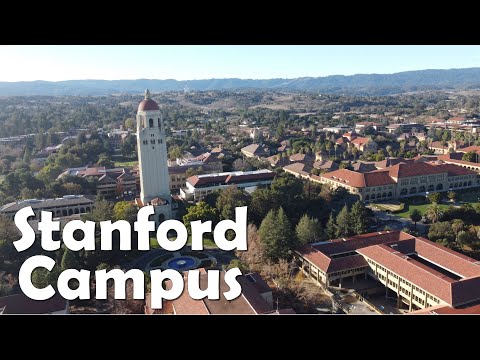
Stanford University is located in Palo Alto, California, in the heart of Silicon Valley. The campus spans 8,180 acres, making it one of the largest university campuses in the United States. The climate is Mediterranean, with mild, dry summers (temperatures 27-32 degrees Celsius) and cooler winters (10-18 degrees Celsius). Unlike many American universities, Stanford does not have a traditional enclosed campus; instead, it is integrated into the broader Silicon Valley community, providing students with access to major technology companies, venture capital firms, and networking opportunities.
Housing: Stanford provides graduate housing to a subset of students, though not all graduate students are guaranteed on-campus housing. On-campus graduate housing is modern and well-maintained, with average monthly rent of US$2,425 for a one-bedroom apartment. Many students opt for off-campus housing in Palo Alto or neighboring towns like Mountain View and Sunnyvale. Average rent for a one-bedroom apartment off-campus is US$2,200 to US$2,800 per month. Shared housing with roommates reduces costs to US$1,200-US$1,800 per month. Indian students often benefit from sharing accommodations with other international students, both for cost-sharing and cultural comfort.
Living Costs and Budget: A realistic monthly budget for a graduate student at Stanford is approximately US$2,800 to US$3,500, broken down as follows: rent (US$1,200-US$1,500), groceries and dining (US$350-US$450), utilities and internet (US$120-US$150), public transit or car-sharing (US$80-US$150), health insurance (US$200-US$300, usually covered by tuition), phone and entertainment (US$100-US$150), and miscellaneous (US$200-US$300). Over a 12-month year, living costs (excluding tuition) are approximately US$33,600 to US$42,000 (?32 to ?40 lakhs). Combined with tuition, Indian students should plan for annual expenditure of approximately US$96,000 to US$105,000 (?91 to ?100 lakhs).
Transportation: Public transportation in the Bay Area is accessible via Caltrain (commuter rail), local buses, and ride-sharing services. Many Stanford students use bicycles to navigate the sprawling campus. Students with valid U.S. driver’s licenses can drive; however, car ownership incurs additional costs for insurance, maintenance, and parking. Many international students opt for public transit or carpooling.
Graduate Student Community: Stanford has a vibrant graduate student body of approximately 9,500 students from 125 countries. Indian students form a significant international cohort (typically 8-12 percent of graduate enrollment). Graduate student organizations, cultural associations, and professional clubs provide ample opportunities for networking and community building. Indian student associations regularly organize cultural events, sports activities, and professional development workshops.
Dining and Social Life: The campus features multiple dining facilities, though most graduate students cook independently or use meal plans selectively. Palo Alto and surrounding areas offer diverse cuisine options, including Indian restaurants and grocery stores specializing in South Asian products. The proximity to Silicon Valley tech companies means many students intern or work part-time during studies, creating vibrant entrepreneurship and professional development communities.
Graduate Outcomes and Career Placement for Stanford ICME Graduates
Stanford’s Master of Science in Computational and Mathematical Engineering, particularly the Finance specialization, leads to exceptional career outcomes and earning potential. Graduates are highly sought after by top-tier financial institutions, quantitative investment firms, technology companies, and research organizations worldwide. The combination of Stanford’s prestige, rigorous curriculum, and Silicon Valley location creates an unparalleled employment landscape for Indian and international students.
Employment Outcomes: Stanford ICME graduates achieve placement rates exceeding 95 percent within six months of graduation. The vast majority secure full-time positions before their final semester concludes. Companies actively recruit from Stanford through campus recruiting events, which occur throughout the academic year. Major employers of ICME Finance graduates include Goldman Sachs, Morgan Stanley, JP Morgan Chase, Bloomberg, Google, Apple, Amazon, Microsoft, and specialized quantitative finance firms like Citadel, Two Sigma, and Renaissance Technologies.
Salary and Compensation: Graduate salary data for Stanford ICME Finance specialization graduates reflects premium compensation. Typical base salaries for finance roles range from US$120,000 to US$180,000 annually, with signing bonuses of US$10,000 to US$50,000. Total compensation (including bonuses, stock options, and benefits) often exceeds US$200,000 in the first year for top-tier financial firms. Quantitative analyst and trader positions command even higher compensation, with total packages reaching US$300,000 to US$500,000 in some cases. Technology company roles (software engineer, data scientist, machine learning engineer) offer base salaries of US$150,000 to US$220,000 with significant equity packages.
For Indian Graduates: Indian students graduating from Stanford ICME Finance are particularly competitive in the global job market. Those who secure U.S. employment through sponsorship can leverage Optional Practical Training (OPT) and later H-1B visa pathways (detailed in the Visa section). Alternatively, many Indian graduates return to India to work for multinational financial firms, fintech startups, or asset management companies, where Stanford ICME credentials command premium salaries in the range of ?20-40 lakhs annually for entry-level roles, with rapid progression to ?50+ lakhs as experience accumulates. The global Stanford alumni network facilitates job searches across both the United States and India.
Further Education: Approximately 5-10 percent of ICME graduates pursue doctoral research (Ph.D. programs) in mathematics, computer science, or engineering at top universities. Stanford facilitates direct transitions from the Master’s program to Ph.D. programs for outstanding students.
Entrepreneurship: The Silicon Valley location and Stanford’s entrepreneurial ecosystem encourage some ICME graduates to launch startups. Several successful fintech companies have been founded by Stanford ICME alumni, particularly in areas like algorithmic trading, portfolio optimization, and financial data analysis. The Stanford Graduate School of Business also admits qualified ICME graduates to its MBA program, providing additional pathways to leadership roles.
Visa and Immigration for Indian Students at Stanford University
Indian students pursuing the Master of Science in Computational and Mathematical Engineering at Stanford will obtain an F-1 student visa, the standard visa for international students enrolled in accredited U.S. educational institutions. Understanding F-1 visa requirements and post-graduation work authorization is essential for Indian students planning their careers in the United States.
F-1 Student Visa Requirements: To obtain an F-1 visa, Indian applicants must provide Stanford’s International Student Advisor with completed Form I-20 documentation. The I-20 confirms enrollment, funding sources, and estimated costs of attendance. Indian students must demonstrate they have sufficient financial resources (either personal, family, or institutional scholarships) to cover costs without needing unauthorized employment. The U.S. Consulate in India will require an in-person visa interview, typically at the Delhi, Mumbai, Bangalore, or Chennai consulates. Visa interviews generally last 2-5 minutes and focus on demonstrating intent to return to India after studies (though this requirement is increasingly waived for Master’s degree holders from top universities).
On-Campus Employment: F-1 students are permitted to work up to 20 hours per week during academic terms and full-time (40 hours per week) during official university breaks and vacations. Many graduate students work as teaching assistants, research assistants, or tutors, earning US$15 to US$25 per hour. On-campus employment does not require special authorization and is a major source of income for Indian students.
Off-Campus Employment and Practical Training: During the first two years of study, off-campus employment is generally prohibited unless the student obtains Optional Practical Training (OPT) authorization. However, OPT is typically granted after graduation, allowing up to 12 months of full-time work authorization. For STEM degree holders (including ICME), the U.S. government grants an additional 24-month STEM extension, bringing total OPT eligibility to 36 months (three years). This extended OPT period is invaluable for Indian students seeking to gain U.S. work experience, transition to H-1B sponsorship, or secure permanent residency.
Optional Practical Training (OPT): After completing the Master’s degree, Indian graduates can apply for OPT, a work authorization that does not require employer sponsorship. OPT allows graduates to work with any U.S. employer for up to 12 months (or 36 months for STEM fields like ICME). During this period, the graduate gains practical experience, earns income, and can explore career options before transitioning to H-1B sponsorship or returning to India. OPT application requires an Employment Authorization Document (EAD), which is typically granted within 4-6 weeks of application to USCIS.
H-1B Visa Sponsorship: After completing OPT, many Indian graduates transition to H-1B visa status, which allows skilled workers to be sponsored by employers for up to six years (three-year initial period, renewable for another three years). H-1B sponsorship requires the employer to demonstrate that no U.S. workers are available for the position and that the foreign worker is being paid the prevailing wage (typically above US$60,000 annually, often much higher for Stanford ICME graduates). Indian students graduating from Stanford ICME with strong technical skills and job offers are highly likely to secure H-1B sponsorship. The annual H-1B lottery is competitive (over 600,000 applicants for 85,000 visas in recent years), but exemptions exist for advanced degree holders from U.S. institutions, providing Indian Stanford graduates with higher approval probabilities.
Green Card and Permanent Residency: Many Indian H-1B holders pursue Employment-Based (EB) green cards, which offer a pathway to U.S. permanent residency. The EB category process typically takes 5-15 years for Indian nationals due to annual per-country visa number limits. However, employers sponsoring skilled tech workers from Stanford and similar institutions frequently pursue green card sponsorship, recognizing the long-term value of retaining qualified employees.
Return to India: Indian students completing the Master’s degree at Stanford have the option to return to India immediately, without U.S. work experience. The Stanford degree and network significantly enhance career prospects in India’s financial and technology sectors. Many Indian graduates work for multinational firms’ India operations (Goldman Sachs, McKinsey, Google India, Amazon India, etc.), fintech startups, or investment firms, where Stanford credentials command substantial premium salaries and fast-track career progression.
Peer Program Comparison
To contextualize Stanford’s Master of Science in Computational and Mathematical Engineering – Finance within the global landscape, it is valuable to compare it with comparable programs at other leading institutions. The following table provides a comprehensive comparison of Stanford ICME with three peer institutions renowned for quantitative finance and computational engineering education.
| University | Program Name | Annual Tuition (USD) | QS 2026 Rank | Acceptance Rate |
|---|---|---|---|---|
| Stanford University | MS Computational and Mathematical Engineering (Finance) | US$58,650 | #1 (Overall); #1 Math; Top-5 CS | 2.5-3% |
| MIT | Master of Finance (MFin) | US$93,834 (12-month) | #1 (Overall); #1 CS | ~12% |
| Carnegie Mellon University | MS in Computational Finance (MSCF) | US$69,000 | #3 (Overall); #3 CS | ~21.7% |
| UC Berkeley | Master of Financial Engineering (MFE) | US$82,901 | #9 (Overall); #3 CS globally | Not disclosed |
Key Comparative Insights:
Stanford ICME Finance offers the most selective admission (2.5-3 percent acceptance rate versus MIT’s 12 percent or CMU’s 21.7 percent), reflecting its extraordinary prestige. While tuition at Stanford is slightly lower than MIT’s 12-month MFin program (US$58,650 versus US$93,834), Stanford’s one-year intensive format and need-blind financial aid make it financially more accessible to Indian students despite the premium cost. Stanford’s ranking advantage in mathematics (#1 globally) and near-top position in computer science provide unmatched theoretical depth, particularly valuable for the Finance specialization.
CMU’s MSCF is more affordable at US$69,000 annually and has a higher acceptance rate, making it more accessible for applicants outside the absolute elite tier. However, CMU’s finance program, while excellent, is less integrated with quantitative mathematics at Stanford’s depth. UC Berkeley MFE is geographically proximate to Silicon Valley and offers strength in financial engineering from an applied perspective, with tuition between Stanford and MIT.
From an Indian student perspective, Stanford offers the best combination of need-blind aid, one-year rapid completion, and global recruitment networks. The post-graduation OPT and H-1B sponsorship pathways are equally robust across all four institutions, but Stanford’s global alumni network in finance and technology is unparalleled, particularly valued when students return to India or pursue opportunities in Asia.
World Rankings and Academic Reputation at Stanford University
Stanford University ranks among the top three universities globally across all major international rankings. Its Computational and Mathematical Engineering program, while not separately ranked by most agencies, benefits from Stanford’s exceptional strength in mathematics, computer science, and engineering disciplines. The following table summarizes Stanford’s 2026 international rankings:
| Ranking Agency | Overall Rank | Subject-Specific Strength | Rank (Subject) |
|---|---|---|---|
| QS World University Rankings 2026 | 5 | Mathematics | #1 globally |
| Times Higher Education Rankings 2026 | 3 | Mathematics | #2 globally |
| U.S. News & World Report 2026 | 4 | Engineering (all disciplines) | Top 3 (tied) |
| Academic Ranking of World Universities (ARWU) 2026 | 2 | Mathematics and Sciences | #1 globally |
Stanford’s exceptional rankings reflect its world-leading faculty, research output, employer reputation, and international recognition. For the Master of Science in Computational and Mathematical Engineering, the program directly leverages Stanford’s #1 mathematics ranking globally and top-tier computer science and engineering positions. The Imaging Sciences track, closely aligned with the Finance specialization in rigor and mathematical depth, is recognized internationally as a gold-standard program for graduate education in applied and computational mathematics.
From an Indian student perspective, Stanford’s rankings are particularly valuable for securing employment, visa sponsorship, and professional recognition in India. Employers in India and globally recognize Stanford as one of only a handful of institutions offering equivalent prestige to Cambridge, Oxford, and MIT. An ICME degree from Stanford is viewed as exceptional qualification for senior positions in finance, technology, and research sectors.
Employer Recognition: Stanford ICME graduates are sought after by leading financial institutions, technology companies, and research organizations worldwide. The program’s rigor ensures that graduates have deep technical competency in mathematical finance, algorithm design, scientific computing, and software engineering. Top employers actively conduct recruiting on Stanford’s campus and prioritize Stanford graduates for leadership development programs and premium compensation packages.
Research Contributions: Stanford ICME faculty are among the most-cited researchers globally in applied mathematics, numerical methods, and computational science. Many program courses are taught by faculty conducting cutting-edge research in mathematical finance, optimization, machine learning, and high-performance computing. This creates a research-informed curriculum where students learn directly from leading experts in their field.
Frequently Asked Questions (FAQs)
1. Do I need to have a background in finance to be admitted to the Stanford ICME Finance specialization?
No. The Stanford ICME Finance specialization is designed for students with strong mathematical foundations rather than finance-specific backgrounds. Prerequisites include linear algebra, multivariable calculus, differential equations, and programming proficiency. Most admitted students have undergraduate degrees in mathematics, physics, computer science, or engineering. The program teaches financial theory and applications from the ground up, ensuring that students from pure mathematics or computer science backgrounds can transition into finance roles successfully. However, prior coursework in probability theory, statistics, or numerical methods significantly strengthens applications. Many admitted Indian students come from IIT mathematics, physics, or computer science backgrounds, transitioning into finance during the master’s program.
2. Is the Stanford ICME degree valued equally in India as it is in the United States?
Yes, absolutely. Stanford ICME is recognized globally as one of the world’s finest master’s programs in applied mathematics and computational engineering. In India, particularly within financial services, technology, and consulting sectors, a Stanford ICME degree commands exceptional prestige and leads to premium compensation. Multinational banks like Goldman Sachs, Morgan Stanley, and JP Morgan, which operate substantial operations in India, actively recruit Stanford ICME graduates for leadership roles. Indian fintech startups, investment firms, and technology companies also highly value Stanford credentials. An ICME graduate returning to India typically commands starting salaries of ?20-30 lakhs, with rapid progression to ?50+ lakhs within 5-7 years. The degree is particularly valuable for roles in quantitative finance, algorithmic trading, data science, and machine learning across both multinational and Indian companies.
3. What is the typical employment timeline after completing the ICME Master’s degree?
Stanford ICME graduates typically secure employment before graduation or immediately upon completing the degree. Recruiting happens throughout the academic year, beginning in fall quarter (September-November) for graduation-cycle positions. Most full-time job offers are finalized by February-March, several months before June graduation. For Indian students seeking U.S. employment sponsorship, the timeline allows them to complete the degree in June, apply for OPT (Optional Practical Training) immediately, receive OPT work authorization within 4-6 weeks (by late July), and begin employment by August-September. The one-year degree completion ensures that students enter the job market quickly, minimizing the funding gap between completing studies and earning employment income. Those pursuing H-1B sponsorship coordinate with employers to file H-1B petitions (typically April-June for October employment start), ensuring continuous work authorization without gaps.
4. Can I work while pursuing the Stanford ICME Master’s degree as an international student on an F-1 visa?
Yes, but with important limitations. F-1 student visa holders are permitted to work up to 20 hours per week during academic terms (fall, winter, spring quarters) and full-time (40 hours per week) during official university breaks and summer vacation. Most Stanford ICME graduate students work as teaching assistants, research assistants, or tutors on campus, earning US$15 to US$25 per hour. Many students work 15-20 hours weekly during terms, supplementing their income while remaining in compliance with visa regulations. On-campus work requires no special authorization and does not count against visa restrictions. However, off-campus employment during studies (before graduation) typically requires Optional Practical Training (OPT) authorization, which is granted after degree completion. Some students pursue Curricular Practical Training (CPT), a program-affiliated off-campus work authorization, but ICME generally discourages CPT, as the intense curriculum leaves limited flexibility for external work. Balancing part-time work (approximately 15 hours weekly) with full-time studies is achievable for disciplined students, particularly in the latter part of the degree program after coursework intensifies.
5. What is the possibility of securing H-1B sponsorship after completing the Stanford ICME Master’s degree?
H-1B sponsorship is highly likely for Stanford ICME graduates who secure relevant employment offers and meet H-1B criteria. The U.S. H-1B visa program is designed for specialty occupations (requiring at least a bachelor’s degree), and computational/quantitative finance, software engineering, and data science positions all qualify. An ICME graduate from Stanford is highly sought after by employers and typically receives multiple offers from major financial institutions and technology companies, many of which actively sponsor H-1B visas for qualified candidates. Stanford ICME graduates with job offers from major firms have H-1B sponsorship approval rates exceeding 95 percent in lottery selection (and higher still through the advanced-degree exemption category, which prioritizes U.S. master’s degree holders from advanced STEM fields). The bottleneck is not sponsorship approval but rather annual visa number limits (85,000 visas annually in the U.S. versus over 600,000 applicants globally). However, Stanford graduates benefit from an exemption category for advanced-degree holders from U.S. institutions, significantly improving approval odds. Most Stanford ICME graduates who seek H-1B sponsorship successfully transition from OPT to H-1B status within 12-18 months of graduation, allowing an extended stay in the United States for career development and potential pathways to permanent residency (green card) if desired.
Tuition Fees
| Year | 1st Year Fees |
|---|---|
| Tuition Fees | $67686 |
Other Expenses
| Head | Avg Cost Per Year |
|---|---|
| Housing | $24480 |
| Food | $9840 |
Important Dates
| Event | Application Date |
|---|---|
| Application deadline for Autumn Intake | |
Scores Required
125
Application Fees


Do you think the Rankings are wrong ? Report Here
Key Resources for Your Study Abroad Journey


Course Guides
Best MS Courses in USA for International Students in 2025
Masters (MS) in USA: Colleges, Courses, Deadlines, Eligibility & Fees
Masters in Engineering in USA: Fees, Deadlines 2024, Eligibility
Masters in Mechatronics in USA: Fees, Deadlines, Scholarships, and Job Outcomes
Scholarship Grants & Financial Aids
| Name | Scholarship Per Student | Level of Study | Type | |
|---|---|---|---|---|
| Ritchie-Jennings Memorial Scholarship Program | Scholarship per student$ 10,000/Yr$10,000 | Level Of StudyBachelor | TypeMerit-Based | |
| Axol Science Scholarship | Scholarship per student$ 2,000/Yr$2,000 | Level Of StudyBachelor | TypeCompany-Sponsored | |
| VueVille Future Technology Scholarship | Scholarship per student$ 1,000/Yr$1,000 | Level Of StudyBachelor | TypeMerit-Based | |
| R&D Systems Scholarship | Scholarship per student$ 1,500/Yr$1,500 | Level Of StudyBachelor | TypeMerit-Based | |
| QS Connect Master’s Scholarship | Scholarship per student$ 5,000/Yr$5,000 | Level Of StudyMaster | TypeMerit-Based | |
| Go Clean Scholarship | Scholarship per student$ 3,500/Yr$3,500 | Level Of StudyBachelor | TypeMerit-Based |
Similar Programs
| Program | Important Date | Total Fees | Median Exams Score | Action |
|---|---|---|---|---|
| USD 67,686 /Yr |
| |||
| USD 69,870 /Yr |
| |||
Application Deadline for Fall 2027 Intake (2nd Feb 2027) | USD 40,192 /Yr |
| ||
-- | USD 14,430 /Yr |
| ||
| USD 65,622 /Yr |
|


Do you think the Dates are wrong ? Report Here
interested in this College ?
Follow & Share this college to get information about admission.



Comments