


What Students Say
Likes
- CO-OP: It's the whole reason you go here. They basically line up real jobs for you, so you graduate with a stacked resume and actual experience. It's a massive advantage.
- PROFESSORS: A lot of the professors have actually worked in the industry. They cut the academic nonsense and teach you stuff that's actually useful for your career.
- COURSEWORK: The classes are hands-on. You build things and work on projects you can actually put on your portfolio, not just memorize a textbook.
Dislikes
- EXPENSIVE: The place costs a fortune, and living in Boston is no joke either. Co-op helps, but the price tag is still brutal.
- ON-CAMPUS JOBS: Pretty much worthless. They're hard to get, don't pay well, and everything revolves around co-op anyway.
- STRINGENT: The administration is a pain. There's a rule for everything and zero flexibility. Trying to get anything done feels like navigating a maze of red tape.
Course Curriculum
10
- The difficulty level for the courses I chose was 9/10. I wanted to take more difficult courses to learn more and get the best out of the study abroad experience. There are difficult and easy courses and students can choose whatever they like. Most positive aspect would be that the curriculum is built to bridge the gap between being a technical engineer and an effective manager, and it does that perfectly. The constant group projects, while sometimes stressful, are a realistic simulation of the modern workplace.
- You learn how to collaborate with people from different backgrounds and manage team dynamics, which is a critical soft skill. While the core curriculum is solid, the availability and quality of elective courses can be mixed. Sometimes a really interesting elective isn't offered for a particular semester. In a week I would usually have 4 classes, but it depends on the semester. Average number of students depends on the course taken; for me it was around 30-40 in one class. Indian students were 80%.
Admission Experience
-
I applied to 4 colleges
- DUKE: REJECTED Engineering Mgmt
- UIUC: REJECTED Technology Mgmt
- NCSU: ACCEPTED Engineering Mgmt
- NEU: ACCEPTED Engineering Mgmt
- For Duke, I think the biggest issue was timing. I submitted my application very close to the final deadline. Top-tier schools like Duke get a flood of applications, and applying that late probably didn't show a high level of interest on my part. The earlier application rounds are often less competitive, and by waiting, I put myself in the toughest possible pool of applicants.
- With UIUC, it came down to experience. I was applying to a highly competitive programme, likely their engineering technology management course. When I compare my profile to the students who get in, I realise my practical experience was a bit thin. UIUC really looks for candidates with significant research, killer personal projects, or relevant internships, and other applicants probably just had a stronger, more specialised resume than I did at the time.
- I chose Northeastern University (NEU) in Boston primarily for its popular co-op programme and its location in a major tech hub. NEU's focus on practical, real-world experience. It was the ultimate deciding factor for me. Choosing between Northeastern and North Carolina State University was a tough call, as both have excellent engineering management programmes.
- Honestly, the co-op programme was what sold me. I kept thinking about how different it would be to graduate with 6-8 months of actual work experience already under my belt; for something like Engineering Management, where you really need to understand how businesses actually operate, that hands-on experience seemed way more valuable than just sitting in more classes.
- Boston was a huge factor too. I visited both campuses, and while Raleigh's Research Triangle is impressive, there's just something about being in a city where you can literally walk to dozens of tech companies and startups. The networking opportunities felt endless. Plus, I'm not going to lie; I liked the idea of living in a big city for a couple of years and exploring more opportunities.
- The way NEU structures the programme also felt different. Many professors have worked in industry, so the case studies and projects felt more relevant to actual problems I'd face in my career. NC State is an excellent school, but NEU's focus on experiential learning just aligned better with what I wanted. The application itself was pretty straightforward; everything was done through their online portal. I had to write a statement of purpose, which took me forever because I kept overthinking it. I basically explained why I wanted to transition from pure engineering into management and what I hoped to do with the degree. Start your statement of purpose early. Mine went through like seven drafts before I felt good about it. Line up your recommenders well in advance; professors get swamped with these requests. And honestly, just make sure your application tells your story. Why this program? why now? what do you actually want to do with it? That authenticity matters more than sounding overly polished.
- I applied for the Fall intake. The entire admission process, from submitting my application to receiving my acceptance, took just under two months.
- Choosing the Fall Intake:
- I chose the Fall intake for a few practical reasons. First, it aligned perfectly with my academic calendar, as I was finishing my undergraduate degree in the spring. This gave me the summer to get my finances in order, arrange for housing in Boston, and mentally prepare for graduate school without feeling rushed.
- Second, the Fall semester is the primary starting point for most graduate programmes. This means the largest cohort of students starts at the same time, which is great for networking and going through orientation activities together. It also sets up a better timeline for securing a co-op, as many recruiting cycles are geared towards students who follow a traditional academic year.
- My Admission Timeline
- My experience was relatively quick and straightforward since Northeastern's College of Engineering uses a rolling admissions process for many of its programmes.
- Application Submitted: January 10, 2023
- I submitted my completed application, including my statement of purpose, recommendations, and transcripts, about a week before the priority deadline.
- Application Under Review: March 8, 2023
- About two weeks after hitting submit, the status on my application portal changed from "Submitted" to "Awaiting Review." This was a good sign that all my documents were received and my file was complete.
- Admission Offer Received: April 27, 2023
- This was the big day. I received an email notifying me of an update to my portal, where I found my official letter of acceptance. The wait during February felt long, but getting the decision in early March left me plenty of time to make my final choice.
Faculty
10
- Faculty to student ratio is quite good; I am not aware of the exact numbers. The Teaching methodology is very good; the professors are very experienced and amazing people in their fields. they are industry veterans.
- Yes, they definitely assist in finding jobs. They don't hand out jobs, but their support is invaluable. If you build a good relationship with a professor by being engaged in class and attending office hours, they will help. Professor Andre Goschin, He taught Product Management, I really admire him; he's the most understanding, flexible, lenient, inspiring, and motivating professor.
Campus Life
10
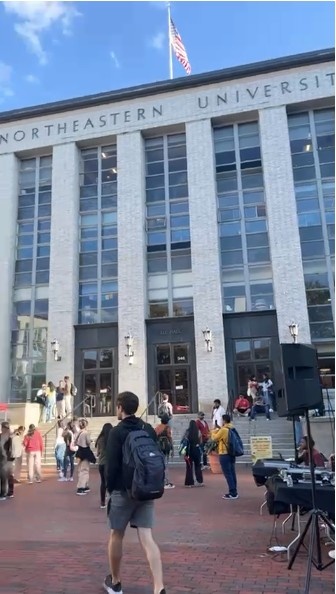
- Boston is the primary hub for undergraduate life, academics, and research; Northeastern's full network is designed for graduate studies, research, and co-op opportunities.
- The major campuses include:
- Boston, Massachusetts (Main Campus)
- Arlington, Virginia
- Charlotte, North Carolina
- London, UK
- Miami, Florida
- Oakland, California
- Portland, Maine
- Seattle, Washington
- Silicon Valley, California (San Jose)
- Toronto, Canada
- Vancouver, Canada
- The Boston campus is packed with all the facilities you'd need as a student.
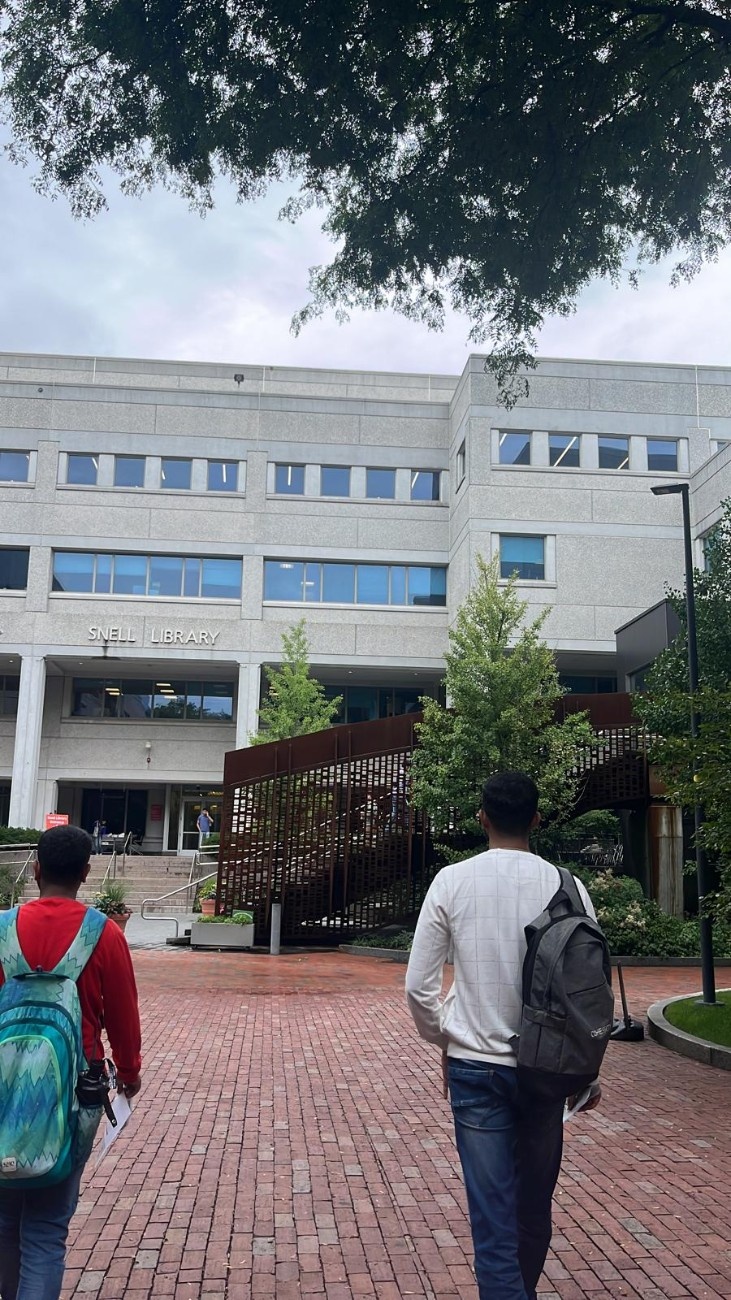
- Library: The Snell Library is the heart of campus academics. It's a massive, modern space that’s open 24/7 during the semester, with bookable group study rooms, quiet floors, a 3D printing studio, and a coffee shop to keep you going.
- Sports Facilities: For fitness and sports, we have the Marino Recreation Center, which is the main student gym with weights, cardio machines, and basketball courts. There's also the SquashBusters Center for squash and additional gym space. For varsity sports, Matthews Arena is our historic ice hockey and basketball arena—it’s the place to be for big games.
- Medical Services: On-campus health is covered by University Health and Counselling Services (UHCS). You can make appointments for medical care, receive vaccinations, and access mental health counselling and wellness resources, all right on campus.
- Extracurricular Activities
- Beyond the major events, there are over 500 student clubs and organisations, so there's something for everyone.
- Sports: You can get involved at any level. We have NCAA Division I Varsity teams (go Huskies!), which are very competitive, especially our hockey teams. There are also dozens of Club Sports like rugby, ultimate frisbee, and skiing that are still competitive but with less time commitment. Finally, Intramural Sports are perfect for just having fun and playing with friends in casual leagues.
- Cultural Organisations: There is a huge range of cultural and identity-based student groups that host some of the best events on campus. Groups like UTSAV (the Indian Graduate Student Association), the Chinese Students and Scholars Association, and the Latin American Student Organization host incredible festivals, food fairs, and celebrations for events like Diwali and Lunar New Year.
- Student Organisations: Whatever your interest, there’s a club for it. We have professional organisations like the Entrepreneurs Club and the Consulting Club, service groups like Alternative Spring Break, and countless special interest clubs for everything from photography and dance to video games and cheese tasting. Getting involved in these is a core part of the NEU experience.
Part Time Jobs
- In my program, I’d say a very small fraction, maybe 10-15% of students at most, manage to secure one. If you do land one, the pay is usually a set stipend for the semester rather than an hourly wage, and it often comes with a valuable tuition credit, which is why they are so competitive. Usually it ranges from $12 to $18 per hour. for on-campus work, you'll be looking at jobs in places like the RSO, Snell Library, the Marino Rec Center, campus cafes, or as an office assistant. Maximum hours depend on the job, but mostly it is 20 hours per week and 40 during the summer. On a scale of 10, I would say it is 5.
- I am only aware of on-campus part-time jobs, which are RSO, Snell Library, the Marino Rec Center, campus cafes, office assistant, Wollastons, etc. It is quite tough to get those. On a scale of 10, I would say it is 5. Mostly works by applying on Northeastern's Workday site, and also sometimes referrals for places like dunkin, Wollaston's, saxbys, etc.
Placement
8
- 80% of the batch secures a job in 6 months, but the current market is really bad, so we really can't say for the current times. Average starting salary is 80,000 - 100,000. Mostly everyone applied through job sites like LinkedIn. It's been really interesting to see where everyone from my batch has landed. The most common path for my batchmates was definitely into the tech industry.
- We have a significant number of people who ended up at Amazon. You'll find recent grads working as Technology Consultants at places like Deloitte, PwC, and Accenture.
Accommodation
Off Campus
8
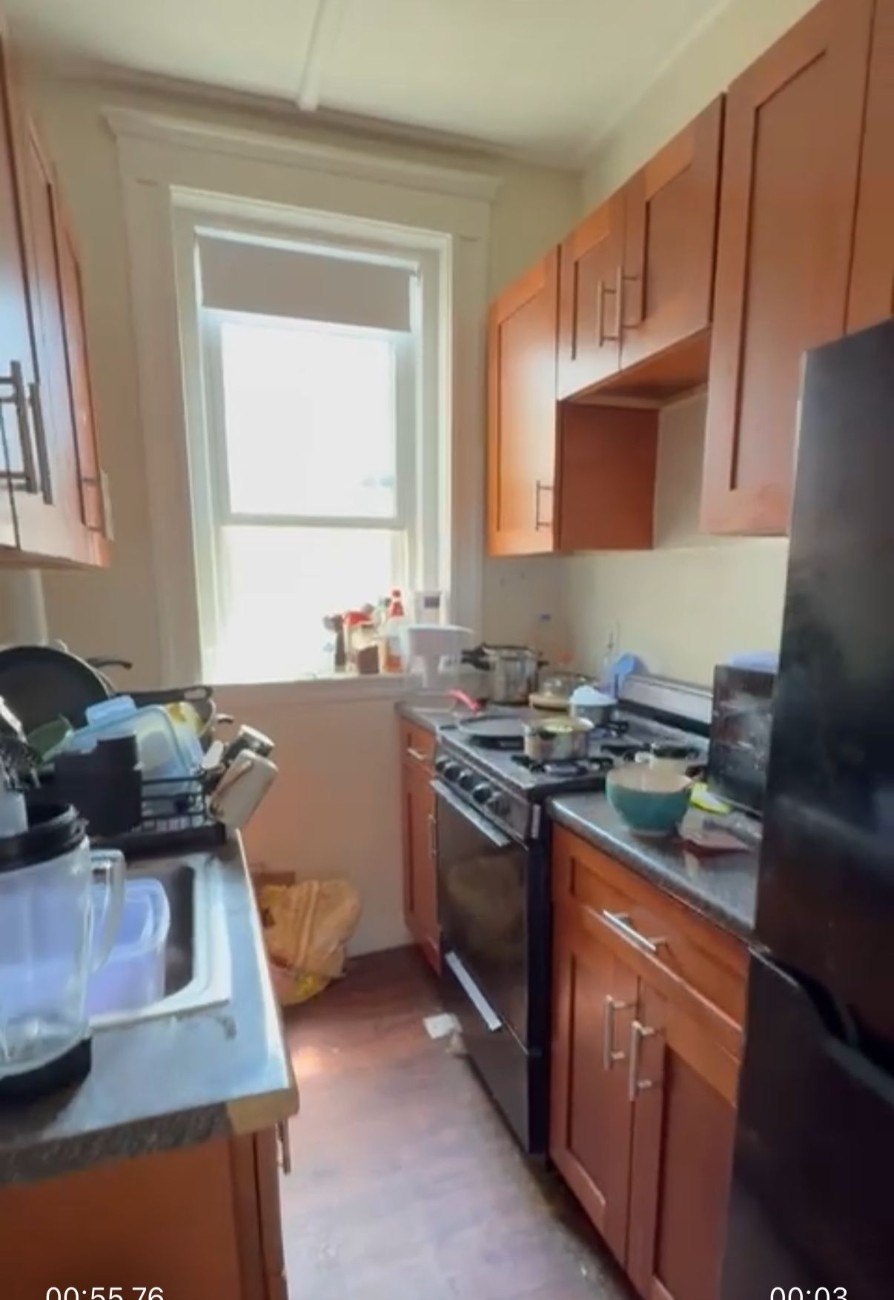
- I found it through whatsapp and Facebook groups; Monthly rent was 600 USD. this was for a shared room in a three-bedroom apartment, which is how I managed to get the cost so low in an expensive area like Fenway/Kenmore. The Boston housing market is incredibly fast-paced, especially from July to September. Good, affordable places would get dozens of enquiries within hours of being posted. I had to be constantly checking the groups and messaging people immediately. Sharing a room is the most effective way to save money. Finally, try to connect with seniors from your programme; they often have rooms opening up and can give you the most reliable leads.
- The accommodation is a 15 minute walk from the university. A large number of Indian and other international students at Northeastern tend to live in neighbourhoods that offer a good balance of affordability and proximity to campus. The most common areas are Mission Hill, Roxbury Crossing, and parts of Jamaica Plain (near the Orange Line T station).
Exams
- the GRE was not required for the Engineering Management programme. This is a huge advantage, as it saves a lot of time and stress during the application season. Of course.
- I had to provide proof of proficiency. The university accepts several tests, and I submitted my IELTS scores. The other accepted exams are TOEFL (Test of English as a Foreign Language) and the Duolingo English Test, SOP, a two-page essay, and LORs. I submitted two from my undergraduate professors and one from a manager at a company where I had interned. Resume/CV, Official Transcripts, Application Fee.
- No, there was no interview as part of my application process.
Fees
- Northeastern charges tuition per credit, which is nice because you have some control over how much you're spending each semester based on your course load. The Engineering Management programme requires 32 credits total, and each credit costs about $1,780. Do the math and you're looking at roughly $57,000 in tuition for the whole programme.
- But tuition isn't everything. There are mandatory fees every semester that add up quickly. The student health insurance (NU-SHIP) is around $2,500-$3,000 a year, though you can waive it if you already have decent coverage. Then there's the health and counselling fee (about $250 per semester) and student activity fees (another $150-$200). All told, these extras can add $3,000-$4,000 annually to your bill.
- Now let's talk about actually living in Boston; this is where it gets real. I initially thought I could get by on $1,250 a month, which would be $30,000 over two years. Technically possible? Sure. Comfortable? Not really. Boston's expensive, and most grad students I know budget closer to $1,600-$2,000 monthly.
- Here's what that looks like:
- Rent is your biggest hit. I'm paying around $1,100 for a room in a three-bedroom apartment in Mission Hill. You might find cheaper options in Roxbury or Jamaica Plain if you're willing to have more roommates, but expect $900-$1,300 for your share. Groceries run me about $450 a month. I cook most of my meals and only eat out occasionally. If you're disciplined about meal prep, you can definitely keep this under $500. Transportation is $90 for the monthly T pass, which is non-negotiable unless you want to bike everywhere (not fun in winter).
- Utilities—my share of electricity, heat, and internet comes to about $100 monthly. Everything else (phone bill, occasional coffee, social stuff) adds another $200 or so. Bottom line: You can technically survive on less, but I'd recommend planning for closer to $1,800 a month so you're not constantly stressed about money.
Scholarship
- The Real Story on Scholarships and Financial Aid
- Let me be completely honest about the scholarship situation because I wish someone had explained this to me before I applied.
- My Scholarship
- I received the Double Husky Scholarship, which is exclusively for Northeastern alumni. Since I did my undergrad here, I automatically qualified when I enrolled in the graduate programme. The scholarship covered 25% of my tuition, which worked out to roughly $14,250 over the entire 32-credit programme. That discount honestly made a huge difference in my decision to stay at NEU rather than exploring other schools. Without it, I probably would've looked more seriously at state schools with lower tuition.
- What My Classmates Got
- In my cohort of around 60 students, I'd say only about 10-12 people had any meaningful financial support. Most students were paying full price, which was a reality check for a lot of us.
- A couple of students landed Teaching Assistant positions, which came with a stipend of around $2,000-$3,000 per semester plus a partial tuition waiver covering maybe 25-50% of their credits. One guy I knew got a Research Assistant position working on a funded project, and his deal was even better—full tuition coverage plus a $15,000 annual stipend. But those positions are incredibly competitive and usually require you to have specific technical skills the professor needs.
- Three or four international students had external funding—government scholarships from their home countries or corporate sponsorships. One woman from India had a full scholarship from her country's education ministry. Another classmate's employer back in Brazil was covering everything because they wanted him to return with advanced management training.
- The Average Picture
- If I had to estimate, only about 15-20% of students received any aid at all. Among those who did, the average was probably around $5,000-$10,000 total for the programme—enough to help but nowhere near covering everything. The few with RA/TA positions or full external scholarships were definitely the exception, not the rule.


