Bihar BEd CET 2025 Question Paper (Available): Download Solution PDF with Answer Key

Shivam Yadav's profile photo

Shivam Yadav

Updated 3+ months ago

The Bihar B.Ed. CET 2025 exam was conducted in offline mode in a single shift from 11:00 AM to 1:00 PM on May 28, 2025. The Bihar B.Ed. CET 2025 question paper with solution PDF is available here.

The Bihar B.Ed CET 2025 exam consists of 120 questions, for 120 marks in total divided into 5 sections: General English Comprehension (15 questions), General Hindi (15 questions), Logical & Analytical Reasoning (25 questions), General Awareness (40 questions) and Teaching-Learning Environment in Schools (25 questions) with 1 marks awarded for each correct answer and no negative marking for incorrect answers.

Bihar B.ED 2025 Question Paper Answer Key PDF Download

Bihar B.Ed 2025 Question Paper With Answer Key Download PDF Check Solutions
Bihar BEd CET 2025 Question Paper Download Solution PDF with Answer Key

Question 1:

Find the number of squares in the given figure:

  • (1) 20
  • (2) 25
  • (3) 32
  • (4) 36

Question 2:

If \(32 \times 5 = 25\) and \(19 \times 4 = 40\), then \(54 \times 3 =\) ?

  • (1) 33
  • (2) 34
  • (3) 27
  • (4) 29

Question 3:

If all the A are dropped from the given arrangement, which of the following option will be eleventh from the left in the given arrangement?

CUBAEDEDABEBBAUCDBCADB

  • (1) U
  • (2) E
  • (3) C
  • (4) D

Question 4:

Study the given pattern carefully and select the number that can replace the question mark (?) in it:
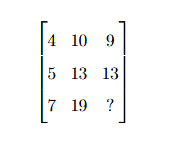
Q4

  • (1) 23
  • (2) 13
  • (3) 17
  • (4) 21

Question 5:

Select the number that can come in place of the question mark (?) in the following series:
\[ 3,\ 7,\ 15,\ 31,\ 63,\ ? \]

  • (1) 127
  • (2) 128
  • (3) 138
  • (4) 212

Question 6:

If the rank of Reena in a group of 48 candidates is 11th from the top, then what will be the rank of Reena from the bottom?

  • (1) 47
  • (2) 49
  • (3) 45
  • (4) 38

Question 7:

The mid day meal scheme was launched on:

  • (1) August 15, 2001
  • (2) August 15, 1992
  • (3) August 15, 1995
  • (4) August 15, 2002

Question 8:

Which of the following is lightest metal?

  • (1) Copper
  • (2) Silver
  • (3) Lithium
  • (4) Gold

Question 9:

Which was the early capital of Magadh?

  • (1) Rajgriha
  • (2) Nalanda
  • (3) Ara
  • (4) Patna

Question 10:

Who was the chairman of the 'drafting committee' of the constituent assembly?

  • (1) Jawaharlal Nehru
  • (2) Dr. Rajendra Prasad
  • (3) Sardar Vallabhbhai Patel
  • (4) Dr. Bhimrao Ambedkar

Question 11:

____________________ is the capital of Kerala.

  • (1) Silvassa
  • (2) Thiruvananthapuram
  • (3) Daman
  • (4) Chennai

Question 12:

Who was the first woman president of India?

  • (1) Pratibha Patil
  • (2) Droupadi Murmu
  • (3) Indira Gandhi
  • (4) None of the above

Question 13:

Konark Sun Temple is located in which of the following states?

  • (1) Gujarat
  • (2) Uttar Pradesh
  • (3) Odisha
  • (4) Andhra Pradesh

Question 14:

Full form of W.T.O. is:

  • (1) World Life Therapeutic Organisation
  • (2) World Trade Organisation
  • (3) World Telematics Organisation
  • (4) None of these

Question 15:

What is the number of Earth satellites?

  • (1) 0
  • (2) 1
  • (3) 2
  • (4) 8

Question 16:

What is the minimum age limit to be elected as the President of India?

  • (1) 25 years
  • (2) 30 years
  • (3) 35 years
  • (4) 40 years

Question 17:

Which planet is known as the 'Red Planet'?

  • (1) Mars
  • (2) Mercury
  • (3) Venus
  • (4) Saturn

Question 18:

Who declared East Pakistan as an independent republic 'Bangladesh'?

  • (1) Indira Gandhi
  • (2) Sheikh Mujibur Rahman
  • (3) Sheikh Khalida Jiya
  • (4) Kazi Nazrul Islam

Question 19:

When did Gandhiji start the civil disobedience movement?

  • (1) 1921
  • (2) 1935
  • (3) 1930
  • (4) 1942

Question 20:

The green planet in the solar system is:

  • (1) Mars
  • (2) Uranus
  • (3) Venus
  • (4) Earth

Question 21:

The largest public sector undertaking in the country is:

  • (1) Petroleum
  • (2) Airways
  • (3) Railways
  • (4) Roadways

Question 22:

Which is the deepest ocean?

  • (1) Pacific Ocean
  • (2) Indian Ocean
  • (3) Atlantic Ocean
  • (4) Arctic Ocean

Question 23:

Who is known as the father of computer?

  • (1) John Thomas
  • (2) Zuckerberg
  • (3) Charles Babbage
  • (4) None of the above

Question 24:

Which Article of the Indian Constitution deals with 'Right to Equality'?

  • (1) Article 14
  • (2) Article 19
  • (3) Article 21
  • (4) Article 32

Question 25:

Which vitamin is known as the 'Sunshine Vitamin'?

  • (1) Vitamin A
  • (2) Vitamin B12
  • (3) Vitamin C
  • (4) Vitamin D

Question 26:

The 'fundamental rights' in the Indian Constitution have been taken from the constitution of which country?

  • (1) Ireland
  • (2) Britain
  • (3) Germany
  • (4) United States of America

Question 27:

At first which ruler made ancient India a integrated nation?

  • (1) Akbar
  • (2) Chandragupta Maurya
  • (3) Ghananand
  • (4) Chandragupta Vikramaditya

Question 28:

Who founded the 'Satyashodhak Samaj'?

  • (1) Rajaram Mohan Roy
  • (2) Ishwar Chandra Vidyasagar
  • (3) Mahatma Jyotiba Phule
  • (4) Gopal Krishna Gokhale

Question 29:

The ancestor of astronaut Sunita Williams belongs to which state of India?

  • (1) Tamil Nadu
  • (2) Kerala
  • (3) Odisha
  • (4) Gujarat

Question 30:

Quality of a population depends upon:

  • (1) Literacy rate
  • (2) Illiteracy
  • (3) Skill formation
  • (4) Health of a person

Question 31:

Who coined the phrase 'Unity in Diversity'?

  • (1) Shaheed Bhagat Singh
  • (2) Mahatma Gandhi
  • (3) Jawaharlal Nehru
  • (4) Sardar Vallabhbhai Patel

Question 32:

When was the first general election held in India?

  • (1) 1947
  • (2) 1948
  • (3) 1950
  • (4) 1951

Question 33:

When was the first general election held in India?

  • (1) 1947
  • (2) 1948
  • (3) 1950
  • (4) 1951

Question 34:

Unequality in India is due to:

  • (1) Caste and gender
  • (2) People's religion
  • (3) Dignity
  • (4) Monetary status

Question 35:

Which of the following is a worldwide system of computer networks?

  • (1) Intranet
  • (2) Webpage
  • (3) Internet
  • (4) Website

Question 36:

What is the full form of UPI?

  • (1) Unified Payments Interface
  • (2) Universal Payments Integration
  • (3) Unified Processing Interface
  • (4) Universal Processing Integration

Question 37:

The concept of Public Interest Litigation (PIL) in India is inspired from which country?

  • (1) America
  • (2) Britain
  • (3) France
  • (4) Germany

Question 38:

Which planet is known as the Blue Planet?

  • (1) Venus
  • (2) Earth
  • (3) Jupiter
  • (4) Saturn

Question 39:

In which year did Gandhiji undertake the Dandi March?

  • (1) 1922
  • (2) 1927
  • (3) 1930
  • (4) 1932

Question 40:

Indian Constitution does not approve of:

  • (1) Democracy
  • (2) Secularism
  • (3) Sovereign
  • (4) Tyranny

Question 41:

The longest continent in area is:

  • (1) Africa
  • (2) Asia
  • (3) Europe
  • (4) North America

Question 42:

The aims of education should be:

  • (1) To prepare students for practical life
  • (2) Preparing students for examinations
  • (3) Preparing students for jobs
  • (4) To impart knowledge of subjects to the students

Question 43:

An objective of learning should be:

  • (1) Behaviour changes
  • (2) Adjustment
  • (3) None of these
  • (4) Both (1) and (2)

Question 44:

The first step of learning is:

  • (1) Curiosity
  • (2) Intelligence
  • (3) Hard work
  • (4) Concentration

Question 45:

Who said that children should learn to write first?

  • (1) Montessori
  • (2) Tagore
  • (3) Herbert Spencer
  • (4) Gijju Bhai

Question 46:

A teacher should check the homework:

  • (1) Regular
  • (2) Never
  • (3) At the request of the guardian
  • (4) In a week

Question 47:

According to Tagore, in which language should children be educated?

  • (1) Mother tongue
  • (2) Bengali
  • (3) Hindi
  • (4) English

Question 48:

According to John Dewey, children have interests:

  • (1) Interest in talking
  • (2) Interest in creating
  • (3) Interest in artistic expression
  • (4) All of the above

Question 49:

Rousseau was a supporter of:

  • (1) The child's freedom
  • (2) Discipline
  • (3) Divine discipline
  • (4) The state discipline

Question 50:

What measures can be taken to eliminate indiscipline among children?

  • (1) Personal contact between teachers and students
  • (2) The school environment should be made moral and cordial
  • (3) Children should be given appropriate punishment in school
  • (4) Both (1) and (2)

Question 51:

A good teacher:

  • (1) Establishes communication with students
  • (2) Inspires to read from the books
  • (3) Emphasis on rote learning
  • (4) None of these

Question 52:

Must be in primary teacher:

  • (1) Patience
  • (2) Love
  • (3) (1) and (2) both
  • (4) Strict discipline

Question 53:

What is teaching?

  • (1) An art
  • (2) A skill
  • (3) (1) and (2) both
  • (4) Management

Question 54:

The right way to bring discipline in students is:

  • (1) Ideal behaviour of a teacher
  • (2) Harsh behaviour of the teacher
  • (3) Dialogue between students and teachers
  • (4) Both (1) and (3)

Question 55:

How can a teacher enhance children's learning in the classroom?

  • (1) By competition
  • (2) By training
  • (3) By relating the subject matter to students' lives
  • (4) By hard work

Question 56:

Child centered lessons take children forward:

  • (1) Excessive action
  • (2) Complete development
  • (3) Development of civic qualities
  • (4) None of these

Question 57:

Who among the following is a child educationist?

  • (1) Giju Bhai Badheka
  • (2) Vivekananda
  • (3) Gandhi
  • (4) Jawaharlal Nehru

Question 58:

There is a benefit in changing the seats of students in the classroom:

  • (1) The child does not feel inferior in the class
  • (2) New students are welcomed
  • (3) It promotes interaction among children
  • (4) None of these

Question 59:

Who said that 'School is a miniature society'?

  • (1) Rousseau
  • (2) John Dewey
  • (3) Tagore
  • (4) Montessori

Question 60:

A teacher should do it:

  • (1) Strengthening your subject
  • (2) Enhancing teaching skill
  • (3) Enhancing your students' understanding
  • (4) All the above

Bihar B.Ed CET 2025 Difficulty Analysis

The difficulty level of the Bihar B.Ed CET 2025 exam is expected to be moderately tough, with General English and Hindi expected to be moderately difficult (40%), focusing on language skills. Logical & Analytical Reasoning is expected to be challenging (60%). General Awareness will be the toughest section (75%), covering the syllabus of current affairs and general knowledge. Teaching-Learning Environment is expected to be moderately difficult (50%), testing conceptual understanding of pedagogy.

Section Difficulty Level Approximate Difficulty (%) Description
General English Comprehension Moderate 40% Tests grammar, vocabulary, and reading comprehension.
General Hindi Moderate 40% Focuses on grammar, comprehension, and basic language skills.
Logical & Analytical Reasoning Moderate to High 60% Involves puzzles, series, and reasoning problems requiring quick thinking.
General Awareness High 75% Covers current affairs, educational policies, and general knowledge across diverse topics.
Teaching-Learning Environment in Schools Moderate 50% Tests knowledge of pedagogy, educational psychology, and school environment concepts.

Bihar B.Ed CET 2025 Last Minute Tips

Comments


No Comments To Show