




MP Board is conducting the Class 12 Home Management Nutrition & Textile Board Exam 2026 on February 18, 2026. Class 12 Home Management Nutrition & Textile Question Paper with Solution PDF is available here for download.
The official question paper of MP Board Class 12 Home Management Nutrition & Textile Board Exam 2026 is provided below. Students can download the official paper in PDF format for reference.
MP Board Class 12 2026 Home Management Nutrition & Textile Question Paper with Solution PDF
| MP Board Class 12 2026 Home Management Nutrition & Textile Question Paper with Solution PDF | Download PDF |
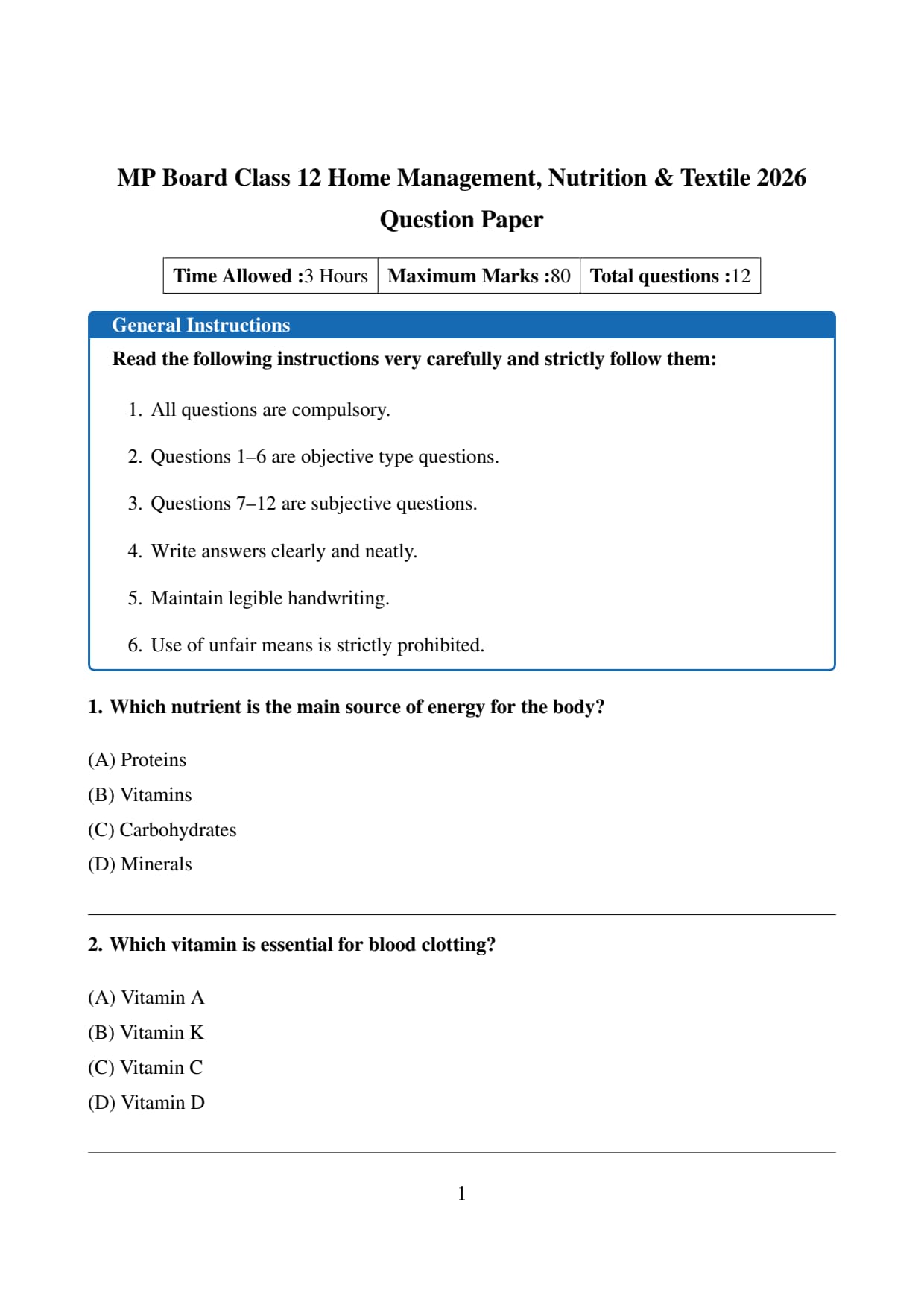
Which nutrient is the main source of energy for the body?
View Solution
Carbohydrates are the primary source of energy for the body. They are converted into glucose which fuels body activities.
Step 1: Analyze the options.
- Proteins: Body-building nutrient.
- Vitamins: Protective nutrient.
- Carbohydrates: Main energy source.
- Minerals: Regulate body processes.
Step 2: Conclusion.
Hence, carbohydrates are the main source of energy.
Final Answer: \[ \boxed{(C) \, Carbohydrates} \] Quick Tip: Rice, wheat, sugar and potatoes are rich sources of carbohydrates.
Which vitamin is essential for blood clotting?
View Solution
Vitamin K helps in blood coagulation. Its deficiency may cause excessive bleeding.
Step 1: Analyze the options.
Vitamin A — Vision.
Vitamin K — Blood clotting.
Vitamin C — Immunity.
Vitamin D — Bone health.
Step 2: Conclusion.
Thus Vitamin K is correct.
Final Answer: \[ \boxed{(B) \, Vitamin K} \] Quick Tip: Green leafy vegetables are rich in Vitamin K.
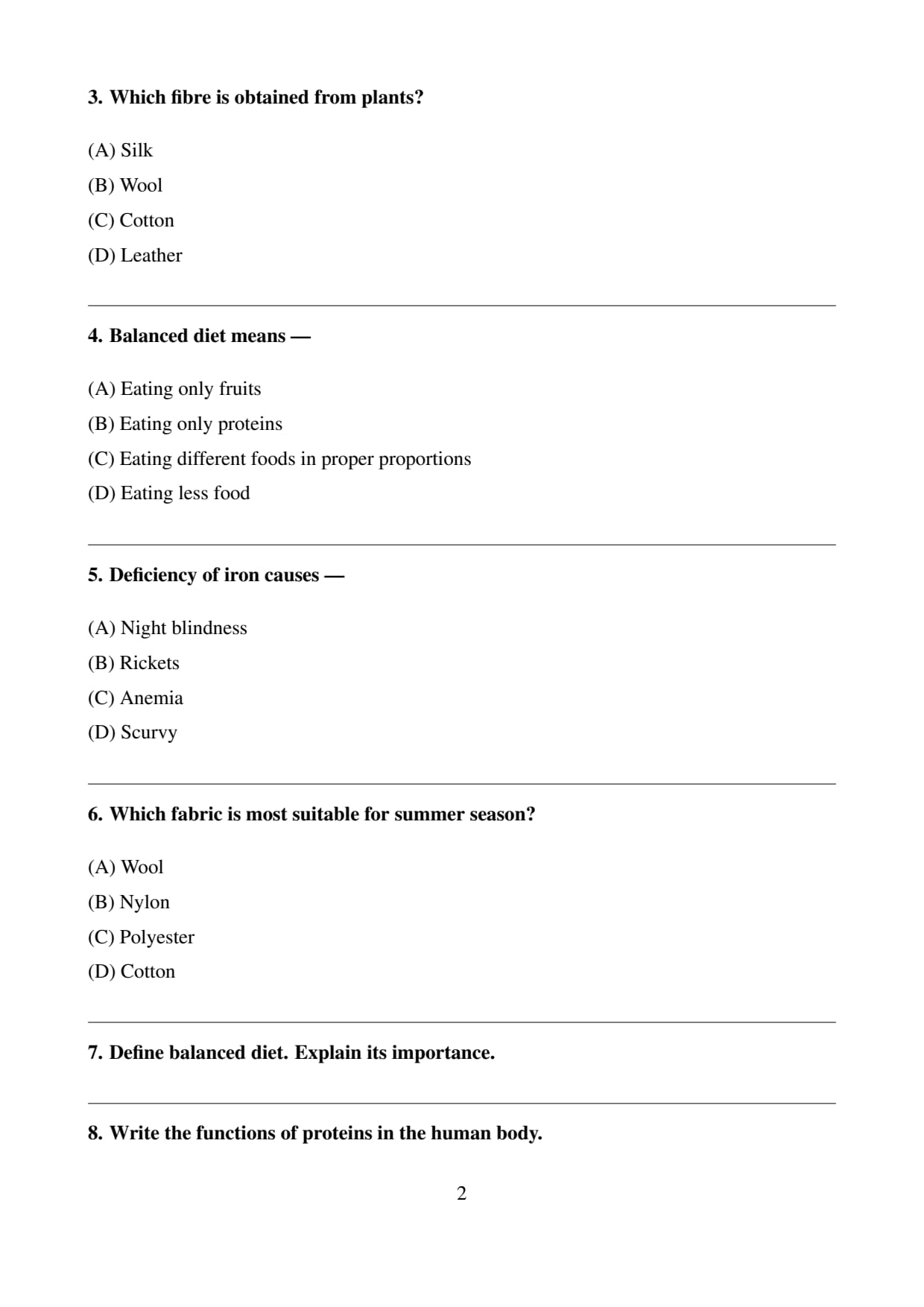
Which fibre is obtained from plants?
View Solution
Cotton fibre comes from the cotton plant and is widely used in textile production.
Step 1: Analyze the options.
Silk and wool are animal fibres. Leather is animal skin. Cotton is plant fibre.
Step 2: Conclusion.
Therefore cotton is plant-based fibre.
Final Answer: \[ \boxed{(C) \, Cotton} \] Quick Tip: Cotton fabric is soft, breathable, and comfortable.
Balanced diet means —
View Solution
A balanced diet provides all essential nutrients in correct amounts for maintaining health.
Step 1: Analyze the options.
Only option C provides complete nutrition.
Step 2: Conclusion.
Hence option (C) is correct.
Final Answer: \[ \boxed{(C) \, Eating different foods in proper proportions} \] Quick Tip: Balanced diet prevents diseases and promotes growth.
Deficiency of iron causes —
View Solution
Iron deficiency reduces hemoglobin formation, leading to anemia.
Step 1: Analyze the options.
Each disease corresponds to different deficiencies; anemia is caused by lack of iron.
Step 2: Conclusion.
Therefore option (C) is correct.
Final Answer: \[ \boxed{(C) \, Anemia} \] Quick Tip: Iron-rich foods include spinach, jaggery, and lentils.
Which fabric is most suitable for summer season?
View Solution
Cotton fabric absorbs sweat and allows air circulation, keeping the body cool.
Step 1: Analyze the options.
Wool keeps warm; synthetic fabrics trap heat; cotton keeps cool.
Step 2: Conclusion.
Thus cotton is best for summer.
Final Answer: \[ \boxed{(D) \, Cotton} \] Quick Tip: Loose cotton clothes are ideal in hot weather.
Define balanced diet. Explain its importance.
View Solution
A balanced diet is a diet that contains all essential nutrients — carbohydrates, proteins, fats, vitamins, minerals, roughage, and water — in proper proportions according to the body’s needs. It provides sufficient energy for daily activities and supports growth, repair, and maintenance of body tissues.
The importance of a balanced diet is very high for maintaining good health. It helps in proper physical growth and mental development, especially in children and adolescents. A balanced diet strengthens the immune system, enabling the body to fight diseases and infections effectively. It prevents deficiency diseases such as anemia, rickets, and scurvy. Proper nutrition also supports healthy skin, hair, bones, and teeth.
Moreover, a balanced diet helps maintain an ideal body weight and prevents lifestyle diseases like obesity, diabetes, and heart problems. It improves concentration, productivity, and overall well-being. For pregnant and lactating women, a balanced diet is essential for the health of both mother and child. Thus, consuming a variety of foods from different food groups daily is necessary to maintain optimal health and lead an active life. Quick Tip: Balanced diet is essential for physical and mental well-being.
Write the functions of proteins in the human body.
View Solution
Proteins are essential nutrients required for the growth, repair, and maintenance of body tissues. They are often called the “body-building nutrients.” One of the primary functions of proteins is to support the growth and development of muscles, bones, skin, and organs. During childhood, adolescence, pregnancy, and illness, the body’s protein requirement increases.
Proteins also help repair damaged or worn-out tissues. They play a crucial role in the formation of enzymes, hormones, and antibodies that regulate body processes and protect against diseases. Hemoglobin, which carries oxygen in the blood, is also a protein.
In addition, proteins help maintain fluid balance in the body and support proper functioning of cells. Although not the main source of energy, proteins can provide energy when carbohydrates and fats are insufficient. They are also necessary for healthy hair, nails, and skin Quick Tip: Proteins are called body-building nutrients.
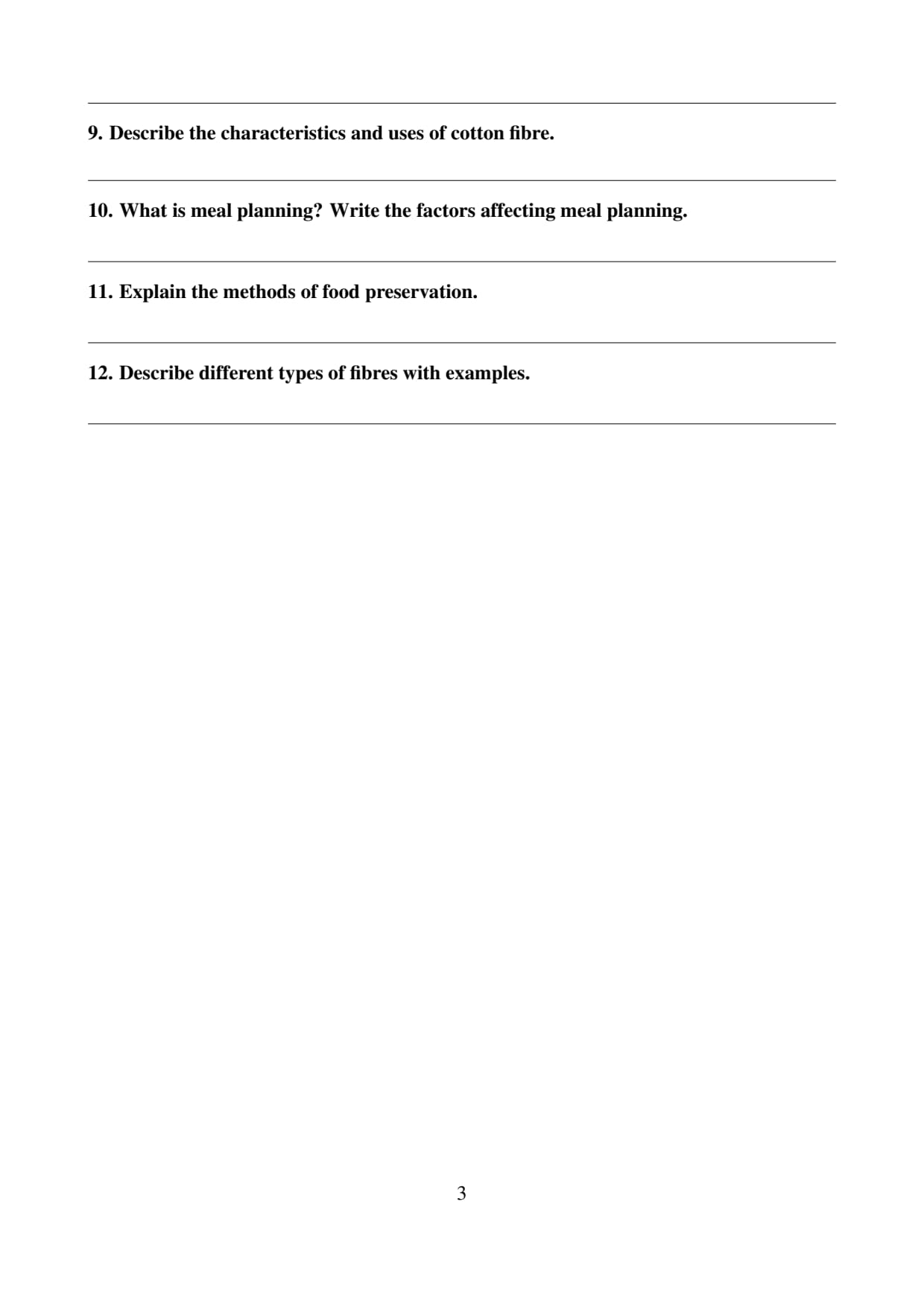
Describe the characteristics and uses of cotton fibre.
View Solution
Cotton fibre is a natural plant fibre obtained from the cotton plant. It is one of the most widely used fibres in the textile industry due to its comfort and versatility. Cotton fibres are soft, light, and breathable, making them very comfortable to wear, especially in hot climates.
One of the main characteristics of cotton is its high absorbency. It can absorb moisture and sweat easily, keeping the body cool and dry. Cotton is also strong, durable, and becomes even stronger when wet. It is easy to wash, dye, and maintain. However, cotton wrinkles easily and may shrink after washing if not properly treated Quick Tip: Cotton is suitable for daily wear in hot climates.
What is meal planning? Write the factors affecting meal planning.
View Solution
Meal planning is the process of deciding in advance what foods will be prepared and consumed to meet the nutritional needs of individuals or families. It ensures that meals are balanced, economical, and suitable for all members. Proper meal planning helps maintain health and prevents nutritional deficiencies.
Several factors influence meal planning. Age, gender, and physical activity level are important because nutritional needs vary for children, adults, elderly people, and workers. Health conditions also matter; for example, sick individuals may require special diets. Economic status affects the type and quantity of food that can be purchased.
Cultural traditions, food habits, and personal preferences also play a role. Availability of food items in different seasons influences meal choices. Time, cooking skills, and family size are additional considerations. For example, working individuals may prefer simple and quick meals. Quick Tip: Good meal planning ensures proper nutrition and reduces waste.
Explain the methods of food preservation.
View Solution
Food preservation refers to techniques used to prevent food spoilage and extend its shelf life while maintaining nutritional value. Microorganisms, air, moisture, and temperature cause food to spoil, so preservation methods aim to control these factors.
Common methods include refrigeration and freezing, which slow down bacterial growth by lowering temperature. Drying or dehydration removes moisture, making it difficult for microbes to survive. Salting and sugaring preserve food by drawing out water from microorganisms through osmosis. Pickling uses vinegar or oil to create an acidic environment that prevents spoilage.
Canning and bottling involve heating food to kill microorganisms and sealing it in airtight containers. Chemical preservatives are also used in some processed foods. Pasteurization, commonly applied to milk, destroys harmful bacteria through controlled heating Quick Tip: Preservation allows seasonal foods to be stored for long periods.
Describe different types of fibres with examples.
View Solution
Fibres are thin, thread-like structures used to make yarns and fabrics. They are broadly classified into natural fibres and synthetic fibres. Natural fibres are obtained from plants, animals, or minerals. Plant fibres include cotton and jute, which are soft and breathable. Animal fibres such as wool and silk come from sheep and silkworms and provide warmth and softness.
Synthetic fibres are man-made and produced from chemical substances, mainly petrochemicals. Examples include nylon, polyester, and acrylic. These fibres are strong, durable, wrinkle-resistant, and easy to maintain. However, they may not be as breathable as natural fibres.
Another category is semi-synthetic fibres like rayon, which are made from natural materials but processed chemically. Each type of fibre has specific properties and uses. Natural fibres are commonly used for comfort wear, while synthetic fibres are preferred for durability and special purposes like sportswear and ropes Quick Tip: Blended fabrics combine advantages of natural and synthetic fibres.



Comments