NEET SS 2024 DrNB Medical Genetics Paper 3 Question Paper Available - Download Here with Solution PDF

Shivam Yadav's profile photo

Shivam Yadav

Updated on - Dec 10, 2025

NEET SS 2024 DrNB Medical Genetics Paper 3 Question Paper with Solutions PDF is available for download. NEET SS 2024 exam is conducted by the National Board of Examinations in Medical Sciences (NBEMS). NEET SS 2024 question paper consists of 10 questions to be attempted in 3 hours. The paper is divided into broad-specialty topics (40%) and super-specialty topics (60%).

You can download NEET SS 2024 question paper with answer key and solutions PDF using the links given below.

NEET SS 2024 DrNB Medical Genetics Paper 3 Question Paper with Solutions

NEET SS 2024 DrNB Medical Genetics Paper 3 Question Paper download iconDownload Check Solutions
NEET SS 2024 DrNB Medical Genetics Paper 3 Question Paper with Solutions

Question 1:

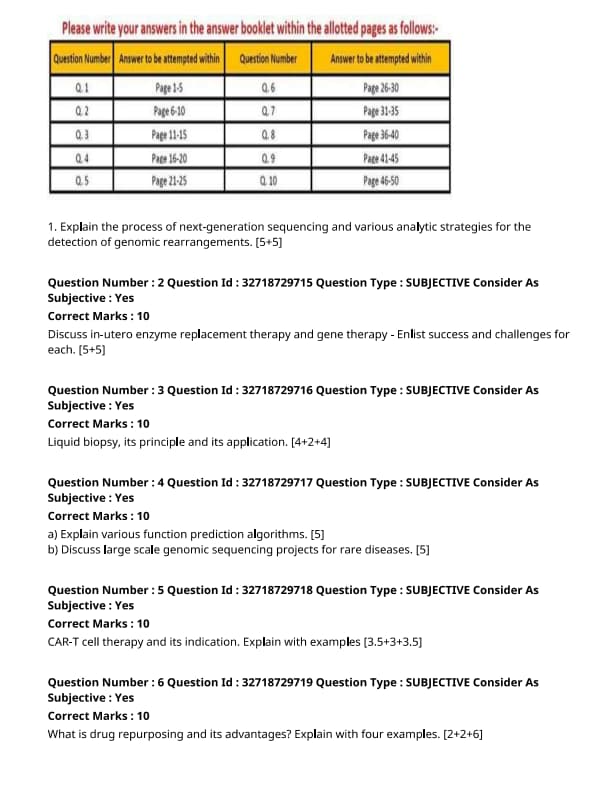
Explain the process of next-generation sequencing and various analytic strategies for the detection of genomic rearrangements.

Correct Answer:
View Solution

Next-generation sequencing (NGS) is a high-throughput technique used to sequence DNA and RNA, allowing for the detection of genomic rearrangements, mutations, and other genetic variations.

Step 1: Process of Next-Generation Sequencing:

1. Sample Preparation: DNA is extracted from the sample (e.g., tissue or blood) and fragmented into small pieces. Adaptors are then added to these fragments to facilitate sequencing.

2. Library Construction: The fragmented DNA is converted into a sequencing library, which includes the addition of barcodes for multiplexing and primers for amplification.

3. Amplification and Sequencing: The library is amplified through PCR, and then sequenced using one of the NGS platforms (e.g., Illumina, Ion Torrent). During sequencing, millions of DNA fragments are read in parallel.

4. Data Analysis: The raw data (short sequences or reads) are aligned to a reference genome, and variants are called (e.g., single-nucleotide polymorphisms, insertions, deletions, structural rearrangements).

Step 2: Analytical Strategies for Detecting Genomic Rearrangements:

1. Read Depth and Coverage Analysis: Structural variants, such as duplications or deletions, can be detected by analyzing the depth of sequencing coverage across the genome. Uneven coverage can indicate genomic rearrangements.

2. Paired-End Sequencing: Paired-end reads can be used to detect inversions, translocations, and other large rearrangements by comparing the distances between paired reads and their orientation.

3. Split-Reads: These are reads that span a break point in the genome. Identifying split-reads can help detect structural variations such as translocations and inversions.

4. Chimeric Reads: Chimeric reads are formed when sequences from different parts of the genome are incorrectly joined. They can indicate genomic rearrangements, such as fusions. Quick Tip: Next-generation sequencing offers powerful tools for detecting genomic rearrangements, with methods like paired-end sequencing and split-reads being crucial for accurate detection.


Question 2:

Discuss in-utero enzyme replacement therapy and gene therapy - Enlist success and challenges for each.

Correct Answer:
View Solution

In-utero enzyme replacement therapy (ERT) and gene therapy are advanced treatment options for genetic disorders. Both therapies aim to address the underlying genetic causes, but they differ in their approach.

In-Utero Enzyme Replacement Therapy (ERT):

In-utero ERT involves the administration of enzymes to a fetus in utero to compensate for the lack of functional enzymes due to genetic disorders like lysosomal storage diseases.

Successes:

1. Early Intervention: ERT administered early can prevent the progression of disorders, reducing the severity of symptoms post-birth.

2. Improved Outcomes: Studies have shown that ERT can lead to better developmental outcomes and organ function in treated infants.

Challenges:

1. Delivery Method: The challenge of safely delivering enzymes across the placenta without causing harm to the fetus.

2. Limited Availability: The therapy is still in the experimental phase for many diseases, with limited clinical availability and regulatory approval.


Gene Therapy:

Gene therapy involves introducing, removing, or altering genetic material within a patient's cells to treat or prevent disease.

Successes:

1. Long-Term Effectiveness: Gene therapy has shown promise in providing long-lasting effects by correcting the genetic defect at the source.

2. Success in Rare Diseases: Gene therapy has had notable success in treating rare genetic diseases such as spinal muscular atrophy and certain types of inherited blindness.

Challenges:

1. Immune Response: One major challenge is the immune system's potential rejection of the modified cells or viral vectors used in gene delivery.

2. Safety Concerns: There are concerns about unintended genetic changes or insertional mutagenesis, which could lead to cancer or other health problems. Quick Tip: Both in-utero enzyme replacement therapy and gene therapy hold significant potential, but they face challenges related to delivery methods, safety, and long-term effectiveness.


Question 3:

Liquid biopsy, its principle and its application.

Correct Answer:
View Solution

Liquid biopsy is a non-invasive method of detecting and analyzing genetic material, tumor cells, or biomarkers from body fluids, such as blood, urine, or saliva. It is increasingly used in cancer diagnosis, monitoring treatment response, and detecting minimal residual disease.

Step 1: Principle of Liquid Biopsy:

1. Detection of Circulating Tumor DNA (ctDNA): Liquid biopsy primarily involves the detection of ctDNA, which is released into the bloodstream by tumor cells. This DNA carries genetic mutations and alterations that are specific to the tumor.

2. Circulating Tumor Cells (CTCs): Another target is CTCs, which are tumor cells shed into the bloodstream. Their presence can provide valuable information about tumor metastasis.

3. Exosomes and MicroRNAs: Liquid biopsy can also detect exosomes and microRNAs, which are small vesicles and RNA molecules secreted by tumors. These contain tumor-related biomarkers that can be analyzed to understand the tumor’s characteristics.

Step 2: Applications of Liquid Biopsy:

1. Early Detection of Cancer: Liquid biopsy is used for the early detection of various cancers by identifying genetic mutations and biomarkers associated with specific cancers.

2. Monitoring Treatment Response: It helps in monitoring how well a patient is responding to treatment by analyzing changes in ctDNA and CTC levels over time.

3. Minimal Residual Disease Detection: Liquid biopsy is also used to detect minimal residual disease after treatment, which can help in identifying patients at high risk of relapse. Quick Tip: Liquid biopsy is a promising tool for non-invasive cancer diagnosis, monitoring, and personalized treatment plans. Its ability to detect genetic alterations in tumor-related materials is revolutionary.


Question 4:

Explain various function prediction algorithms.

Correct Answer:
View Solution

Function prediction algorithms are computational methods used to predict the biological function of proteins or genes based on their sequence or structure. These algorithms play a crucial role in bioinformatics, especially in functional genomics and systems biology.

Step 1: Sequence-Based Function Prediction:

1. BLAST (Basic Local Alignment Search Tool): This algorithm compares a query protein or nucleotide sequence with a database of known sequences to find regions of local similarity. It helps in inferring the function of a gene based on homology.

2. InterProScan: InterProScan integrates multiple databases of protein domains and families to predict protein function based on the presence of specific conserved motifs or domains.

Step 2: Structure-Based Function Prediction:

1. Protein Structure Prediction: Tools like AlphaFold use machine learning techniques to predict the 3D structure of proteins from their amino acid sequence. Understanding the structure of a protein is crucial for predicting its function.

2. Docking Simulations: These simulations predict how proteins interact with other molecules, helping to predict their functional roles in biological processes. Programs like AutoDock are widely used for such predictions.

Step 3: Machine Learning Approaches:

1. Random Forest and Support Vector Machines (SVM): These machine learning algorithms are used to classify proteins based on features such as sequence motifs, hydrophobicity, and secondary structure.

2. Deep Learning: Neural networks, particularly convolutional and recurrent networks, are increasingly being used to predict protein function by learning complex patterns from large datasets. Quick Tip: Function prediction algorithms are essential for understanding the roles of uncharacterized genes and proteins, especially when experimental validation is not feasible.


Question 5:

Discuss large scale genomic sequencing projects for rare diseases.

Correct Answer:
View Solution

Large-scale genomic sequencing projects for rare diseases aim to identify genetic causes of uncommon diseases and provide insights for targeted therapies. These projects leverage high-throughput sequencing technologies and bioinformatics tools to study the genomes of individuals with rare diseases.

Step 1: Genomic Sequencing Techniques:

1. Whole Genome Sequencing (WGS): WGS sequences the entire genome, providing a comprehensive view of genetic variations, including single nucleotide polymorphisms (SNPs), copy number variations (CNVs), and structural variants.

2. Whole Exome Sequencing (WES): WES targets the protein-coding regions of the genome, providing a cost-effective method for identifying mutations that may cause rare diseases.

Step 2: Notable Large-Scale Projects:

1. The 100,000 Genomes Project (UK): This project aims to sequence the genomes of 100,000 patients with rare diseases and their families to uncover genetic variants associated with these conditions.

2. The Rare Genomes Project (USA): Focused on families with a single member suffering from a rare genetic disorder, this project uses genomic sequencing to identify novel disease-causing mutations and facilitate clinical trials.

Step 3: Applications and Benefits:

1. Diagnosis and Personalization: Genomic sequencing helps in diagnosing rare diseases more accurately by identifying the underlying genetic causes. It also facilitates personalized treatment plans based on genetic information.

2. Discovery of New Disease Genes: These projects have led to the discovery of new genes involved in rare diseases, enhancing our understanding of human genetics and disease mechanisms.

Step 4: Challenges and Future Directions:

1. Data Interpretation: Interpreting vast amounts of genomic data is a significant challenge, requiring advanced bioinformatics tools and expertise.

2. Ethical Issues: Issues like consent, privacy, and the incidental findings of unrelated genetic conditions need to be addressed in large-scale sequencing studies. Quick Tip: Large-scale genomic sequencing projects are transforming the landscape of rare disease research, offering new insights into diagnosis, treatment, and prevention.


Question 6:

CAR-T cell therapy and its indication. Explain with examples.

Correct Answer:
View Solution


CAR-T (Chimeric Antigen Receptor T-cell) therapy is a form of immunotherapy where a patient's T cells are genetically modified to better recognize and attack cancer cells. This cutting-edge therapy is particularly effective in hematologic cancers like leukemia and lymphoma.

Step 1: Mechanism of CAR-T Therapy:

CAR-T cells are T cells that are taken from a patient’s blood and modified in the laboratory. The T cells are equipped with a chimeric antigen receptor (CAR), which is designed to target a specific antigen on cancer cells. Once modified, the CAR-T cells are infused back into the patient, where they recognize and kill the targeted cancer cells.

Step 2: Indications of CAR-T Therapy:

CAR-T therapy has shown promising results in treating various types of blood cancers, particularly those that have not responded to traditional treatments. Some common indications include:
1. Acute Lymphoblastic Leukemia (ALL): CAR-T cells targeting CD19 have been used successfully to treat relapsed or refractory ALL, especially in children and young adults.
2. Non-Hodgkin’s Lymphoma (NHL): CAR-T therapy has also shown effectiveness in treating relapsed or refractory NHL, with CAR-T cells targeting the CD19 protein.

Step 3: Examples of CAR-T Therapies:

1. Kymriah: A CAR-T therapy used to treat ALL and large B-cell lymphoma by targeting the CD19 antigen.
2. Yescarta: Approved for the treatment of relapsed or refractory large B-cell lymphoma and other types of NHL. Quick Tip: CAR-T therapy is still an evolving treatment, and its application is expanding with ongoing clinical trials targeting more types of cancers.


Question 7:

What is drug repurposing and its advantages? Explain with four examples.

Correct Answer:
View Solution


Drug repurposing (also known as drug repositioning) refers to the process of identifying new therapeutic uses for existing drugs that are outside the scope of their original medical indications. This approach leverages the known safety profiles of existing drugs, thus reducing the time and cost required to bring them to market for new indications.

Step 1: Advantages of Drug Repurposing:

1. Cost-Effectiveness: Since the drugs have already undergone clinical trials, the development costs are significantly lower compared to new drug discovery.

2. Faster Time to Market: With known safety and pharmacokinetic data, drugs can be repurposed more quickly, reducing the time to reach patients.

3. Higher Success Rate: Given the extensive clinical data available for repurposed drugs, the likelihood of failure during later stages of development is lower.

4. Better Patient Access: Repurposing drugs for new indications allows for faster treatment options for patients with unmet medical needs.

Step 2: Four Examples of Drug Repurposing:

1. Sildenafil (Viagra): Originally developed to treat angina, sildenafil was later repurposed to treat erectile dysfunction and pulmonary hypertension.

2. Thalidomide: Initially used as a sedative, thalidomide was repurposed for the treatment of multiple myeloma and leprosy-related complications.

3. Minoxidil: Initially developed as a treatment for high blood pressure, minoxidil was later repurposed for hair regrowth in the treatment of baldness.

4. Raloxifene: Developed to treat osteoporosis, raloxifene was also repurposed as a preventive treatment for breast cancer in postmenopausal women. Quick Tip: Drug repurposing accelerates drug discovery and provides a cost-effective way to treat various diseases, utilizing already known medications.


Question 8:

Preimplantation genetic diagnosis and its types.

Correct Answer:
View Solution

Preimplantation genetic diagnosis (PGD) is a technique used to detect genetic defects in embryos before implantation during an in vitro fertilization (IVF) cycle. PGD allows for the selection of embryos without specific genetic conditions, ensuring healthier pregnancies.

Step 1: Process of PGD:

1. Embryo Biopsy: In PGD, a single cell is removed from an embryo at the 6-8 cell stage (usually on day 3 of development). The DNA from this cell is then analyzed for genetic defects.

2. Genetic Testing: The biopsy cells are tested for specific genetic disorders, chromosomal abnormalities, or inherited mutations using techniques like PCR (Polymerase Chain Reaction) or FISH (Fluorescence In Situ Hybridization).

Step 2: Types of Preimplantation Genetic Diagnosis:

1. PGD for Single Gene Disorders: This involves testing embryos for single gene disorders, such as cystic fibrosis, sickle cell anemia, or Huntington’s disease. This type of PGD is performed when one or both parents are carriers of a known genetic condition.

2. PGD for Chromosomal Disorders: This is used to detect chromosomal abnormalities such as Down syndrome (trisomy 21) or other chromosomal rearrangements. This type of PGD is typically recommended for older women or those with a history of recurrent miscarriage.

3. PGD for HLA Typing: In this case, embryos are tested to identify whether they can be a potential match for a sibling needing stem cell or bone marrow transplant. This is done for cases where a child needs a stem cell donor, such as in certain blood cancers.

Step 3: Ethical Considerations:

While PGD offers significant benefits, there are ethical concerns about embryo selection, especially when used for non-medical purposes like gender selection. Additionally, the potential for the rejection of certain embryos can raise emotional and moral dilemmas for parents. Quick Tip: PGD helps prevent the transmission of genetic disorders by selecting embryos free of specific genetic conditions, but it comes with ethical and social implications.


Question 9:

Explain National Policy for Rare Disease (NPRD) of India.

Correct Answer:
View Solution

The National Policy for Rare Diseases (NPRD) of India was introduced to address the challenges faced by patients with rare diseases, improve accessibility to treatment, and provide financial assistance for rare disease treatment. Rare diseases are defined as conditions that affect a small percentage of the population, but they often lead to severe health consequences and require specialized care.

Step 1: Objectives of NPRD:

1. Financial Support: The policy aims to provide financial support to patients, including funding for expensive treatments and medications for rare diseases.

2. Healthcare Infrastructure: It focuses on improving healthcare infrastructure, setting up specialized treatment centers, and increasing access to healthcare services.

3. Research and Development: The policy encourages research on rare diseases and aims to foster collaborations with international organizations to develop treatments.

Step 2: Key Features of the Policy:

1. Orphan Drug Development: The policy advocates for the development of orphan drugs (medications designed for rare diseases), which are not commercially viable for pharmaceutical companies to develop.

2. Awareness and Education: Efforts to raise awareness about rare diseases and educate healthcare professionals are integral to the policy.

3. Data Collection: The policy emphasizes collecting data on rare diseases to better understand the prevalence, causes, and treatment outcomes. Quick Tip: The NPRD aims to support patients with rare diseases in India by providing financial assistance, improving healthcare access, and promoting research on rare diseases.


Question 10:

Discuss associated challenges in implementation of the policy.

Correct Answer:
View Solution

Although the NPRD is a significant step towards improving the care and treatment of patients with rare diseases in India, several challenges remain in its implementation.

Step 1: Challenges in Policy Implementation:

1. High Treatment Costs: Rare diseases often require expensive and specialized treatments. The financial assistance provided by the policy may not be sufficient to cover all costs, and many families struggle to afford the treatment.

2. Lack of Awareness: There is limited awareness about rare diseases among the general public and healthcare professionals, which leads to delayed diagnosis and treatment.

3. Limited Infrastructure: Specialized healthcare facilities and trained professionals to manage rare diseases are limited in India, which makes it difficult to provide adequate care to patients in rural areas.

Step 2: Additional Barriers:

1. Data Collection Issues: Collecting accurate and comprehensive data on rare diseases is challenging due to the lack of registries and centralized reporting systems.

2. Dependency on External Funding: Many rare disease treatments depend on international support, and India’s self-reliance in funding and research is still developing.

3. Regulatory Hurdles: The approval processes for orphan drugs and treatments can be slow, further delaying access to life-saving medications. Quick Tip: Addressing the challenges in implementing the NPRD requires improved funding, infrastructure, and awareness programs, as well as better regulatory mechanisms.


Question 11:

Explain haemopoietic stem cell transplantation.

Correct Answer:
View Solution

Haemopoietic stem cell transplantation (HSCT), also known as bone marrow transplant, is a medical procedure in which hematopoietic stem cells (the cells that form blood and immune cells) are infused into a patient to restore bone marrow function after it has been damaged or destroyed.

Step 1: Indications for HSCT:

1. Leukemia and Lymphoma: HSCT is commonly used in patients with blood cancers, such as leukemia, lymphoma, and myelodysplastic syndromes.

2. Aplastic Anemia: In conditions like aplastic anemia, where the bone marrow is unable to produce enough blood cells, HSCT can restore hematopoiesis.

3. Inherited Blood Disorders: Conditions like sickle cell anemia and thalassemia can be treated by HSCT, which aims to replace defective stem cells with healthy ones.

Step 2: Types of Haemopoietic Stem Cell Transplantation:

1. Autologous Transplant: In an autologous transplant, the patient's own stem cells are collected, processed, and reinfused after chemotherapy or radiation. This approach avoids immune rejection.

2. Allogeneic Transplant: An allogeneic transplant involves stem cells from a genetically matched donor. This approach is often used for diseases like leukemia, but requires careful matching to prevent graft-versus-host disease (GVHD).

Step 3: Procedure and Risks:

1. Preparation: The patient typically undergoes chemotherapy and/or radiation to destroy diseased bone marrow.

2. Infusion: The healthy stem cells are infused into the patient's bloodstream, where they migrate to the bone marrow and begin to produce blood cells.

3. Complications: Risks include infection, graft-versus-host disease (in allogeneic transplants), organ toxicity, and relapse of the disease. Quick Tip: HSCT is a potentially curative treatment for various blood-related disorders, but it requires careful patient selection, conditioning, and monitoring for complications.


Question 12:

Write 4 absolute indications amongst rare inherited disorders.
Correct Answer:
View Solution

Absolute indications for haemopoietic stem cell transplantation (HSCT) among rare inherited disorders are conditions where the benefits of transplantation significantly outweigh the risks, offering potential for a cure or long-term survival.

Step 1: Common Indications for HSCT in Inherited Disorders:

1. Severe Combined Immunodeficiency (SCID): SCID is a group of rare genetic disorders characterized by a severe defect in the immune system. HSCT is the treatment of choice to restore immune function.

2. Wiskott-Aldrich Syndrome: This rare inherited disorder affects the immune system and platelets. HSCT can provide a cure for this condition and prevent life-threatening infections and bleeding.

3. Hurler Syndrome (Mucopolysaccharidosis type I): This genetic disorder affects multiple organs. HSCT can help improve organ function and reduce symptoms if performed early in life.

4. Fanconi Anemia: A rare inherited blood disorder that increases the risk of leukemia and other cancers. HSCT can improve blood counts and decrease the risk of cancer in these patients. Quick Tip: For inherited disorders like SCID and Wiskott-Aldrich Syndrome, early diagnosis and HSCT offer the best outcomes, preventing life-threatening complications.


Question 13:

Explain about RNA therapeutics and its applications with examples.

Correct Answer:
View Solution

RNA therapeutics involves the use of RNA molecules to treat diseases by either modifying or replacing the defective or missing RNA in a patient’s cells. This emerging field holds significant promise for treating a wide range of diseases, including genetic disorders, cancers, and viral infections.

Step 1: Types of RNA Therapeutics:

1. mRNA Therapeutics: Messenger RNA (mRNA) is used to instruct cells to produce proteins that can treat or prevent disease. mRNA vaccines, for example, are designed to provoke an immune response against a specific pathogen.
2. RNA Interference (RNAi): RNAi therapeutics aim to silence or reduce the expression of specific genes by using small RNA molecules, such as small interfering RNAs (siRNAs) or microRNAs, to target and degrade messenger RNAs (mRNAs) that code for disease-causing proteins.
3. Antisense Oligonucleotides (ASOs): These are short RNA molecules that bind to specific mRNA sequences, preventing the production of harmful proteins or correcting splicing defects in genetic diseases.

Step 2: Applications of RNA Therapeutics:

1. mRNA Vaccines: The development of COVID-19 vaccines such as Pfizer-BioNTech and Moderna, which use mRNA technology to instruct cells to produce the spike protein of SARS-CoV-2 and trigger an immune response.
2. Gene Silencing in Genetic Diseases: RNAi-based therapies, such as Onpattro (patisiran), are used to treat hereditary transthyretin amyloidosis by silencing the gene responsible for producing the defective protein.
3. Antisense Oligonucleotide Therapy: Spinraza (nusinersen), used to treat spinal muscular atrophy, works by correcting the splicing of the SMN2 gene, leading to the production of functional SMN protein. Quick Tip: RNA therapeutics have revolutionized the treatment of previously untreatable diseases, with mRNA vaccines and RNAi therapies leading the charge in personalized medicine.


Fees Structure

CategoryState
General4250

In case of any inaccuracy, Notify Us! 

Comments


No Comments To Show