




Maharashtra Board Class 12 Biology Question Paper 2022 with Answer Key is available for download. The exam was conducted by the Maharashtra State Board of Secondary & Higher Secondary Education (MSBSHSE) on March 17, 2022 in the Morning Session 10:30 AM to 2 PM. The medium of paper was English. In terms of difficulty level, Maharashtra Board Class 12 Biology paper was of Easy level. The question paper comprised a total of 31 questions divided among 4 sections.
Maharashtra Board Class 12 2022 Biology Question Paper with Answer Key
| Maharashtra Board Class 12 Biology Question Paper 2022 with Answer Key |  Download Download |
Check Solution |
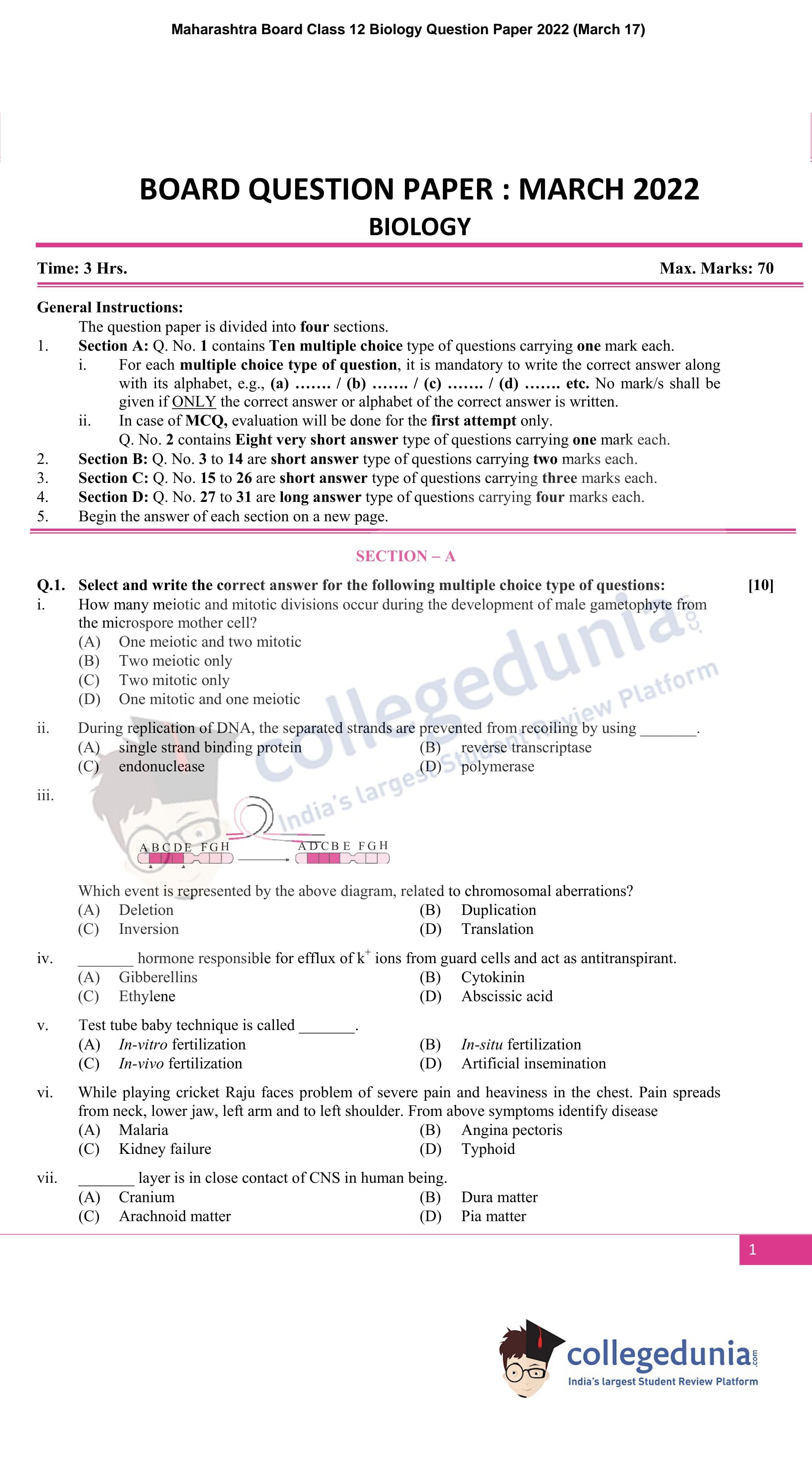
How many meiotic and mitotic divisions occur during the development of male gametophyte from the microspore mother cell?
During replication of DNA, the separated strands are prevented from recoiling by using ______.
Which event is represented by the above diagram, related to chromosomal aberrations?
______ hormone is responsible for efflux of K\(^+\) ions from guard cells and acts as an antitranspirant.
Test tube baby technique is called ______.
While playing cricket Raju faces problem of severe pain and heaviness in the chest. Pain spreads from neck, lower jaw, left arm and to left shoulder. From above symptoms identify disease ______.
______ layer is in close contact of CNS in human being.
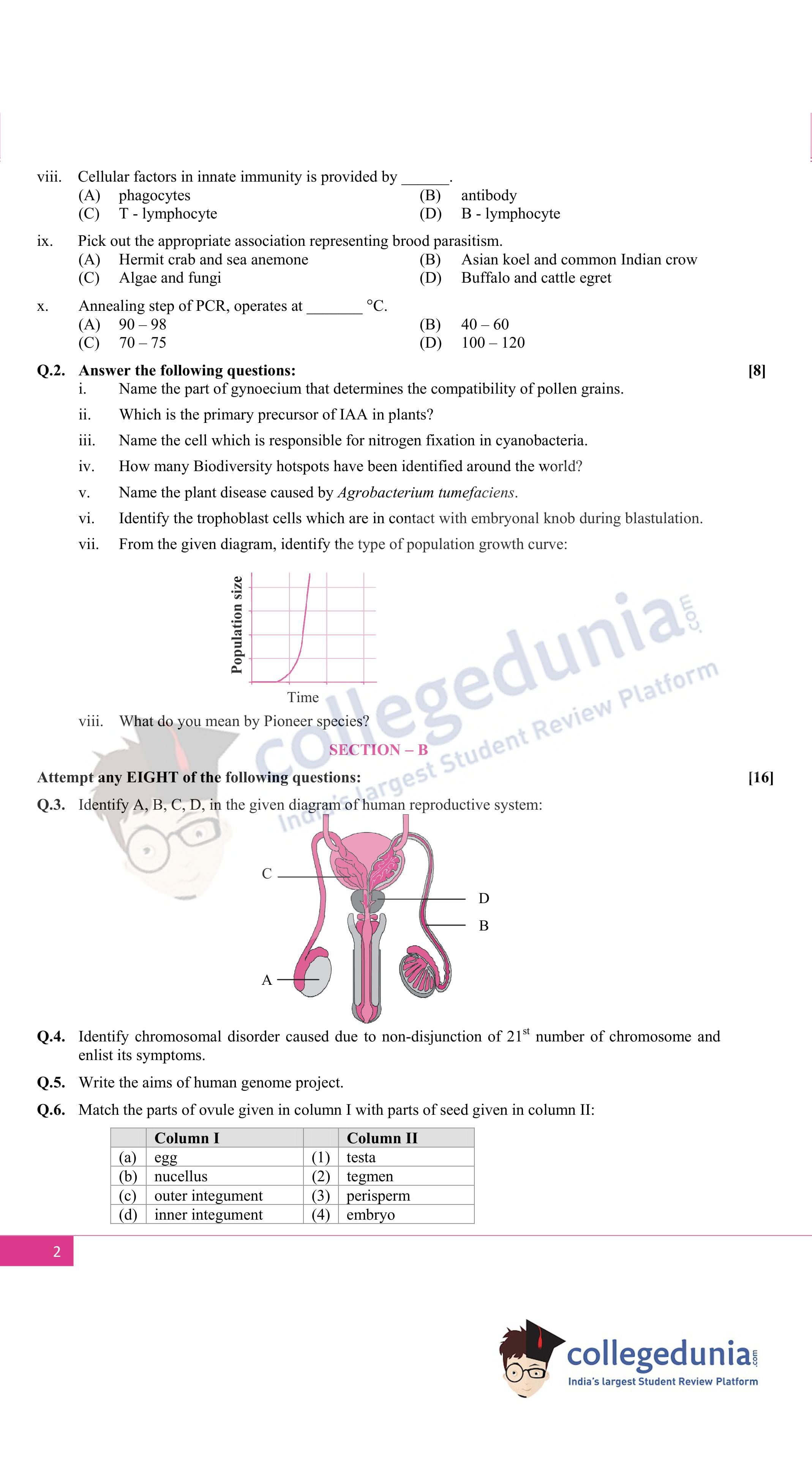
Cellular factors in innate immunity is provided by ______.
Pick out the appropriate association representing brood parasitism ______.
Annealing step of PCR, operates at ______°C.
Name the part of gynoecium that determines the compatibility of pollen grains.
Which is the primary precursor of IAA in plants?
Name the cell which is responsible for nitrogen fixation in cyanobacteria.
How many Biodiversity hotspots have been identified around the world?
Name the plant disease caused by Agrobacterium tumefaciens.
Identify the trophoblast cells which are in contact with embryonal knob during blastulation.
From the given diagram, identify the type of population growth curve:

What do you mean by Pioneer species?
Identify A, B, C, D, in the given diagram of human reproductive system:

Identify chromosomal disorder caused due to non-disjunction of 21st number of chromosome and enlist its symptoms.
Write the aims of human genome project.
Match the parts of ovule given in column I with parts of seed given in column II:
Column I Column II
(a) Egg (1) Testa
(b) Nucellus (2) Tegmen
(c) Outer integument (3) Perisperm
(d) Inner integument (4) Embryo
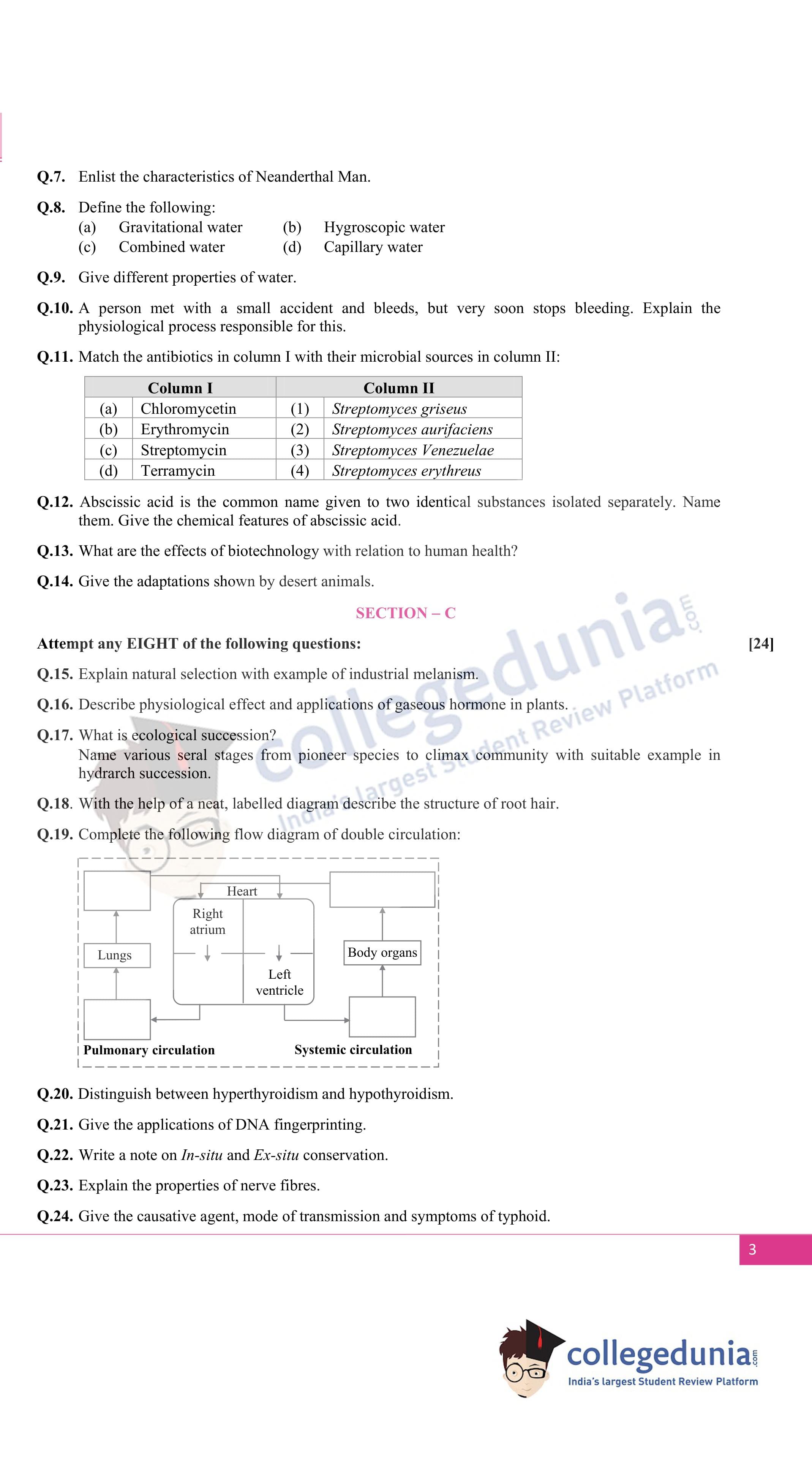
Enlist the characteristics of Neanderthal Man.
Define the following: (a) Gravitational water, (b) Hygroscopic water, (c) Combined water, (d) Capillary water
Give different properties of water.
A person met with a small accident and bleeds, but very soon stops bleeding. Explain the physiological process responsible for this.
Match the antibiotics in column I with their microbial sources in column II:
Column I Column II
(a) Chloromycetin (1) Streptomyces griseus
(b) Erythromycin (2) Streptomyces aurifaciens
(c) Streptomycin (3) Streptomyces venezuelae
(d) Terramycin (4) Streptomyces erythreus
Abscissic acid is the common name given to two identical substances isolated separately. Name them. Give the chemical features of abscissic acid.
What are the effects of biotechnology with relation to human health?
Give the adaptations shown by desert animals.
Explain natural selection with example of industrial melanism.
Describe physiological effect and applications of gaseous hormone in plants.
What is ecological succession? Name various seral stages from pioneer species to climax community with suitable example in hydrarch succession.
With the help of a neat, labelled diagram describe the structure of root hair.
Complete the following flow diagram of double circulation:

Distinguish between hyperthyroidism and hypothyroidism.
Give the applications of DNA fingerprinting.
Write a note on In-situ and Ex-situ conservation.
Explain the properties of nerve fibres.
Give the causative agent, mode of transmission and symptoms of typhoid.
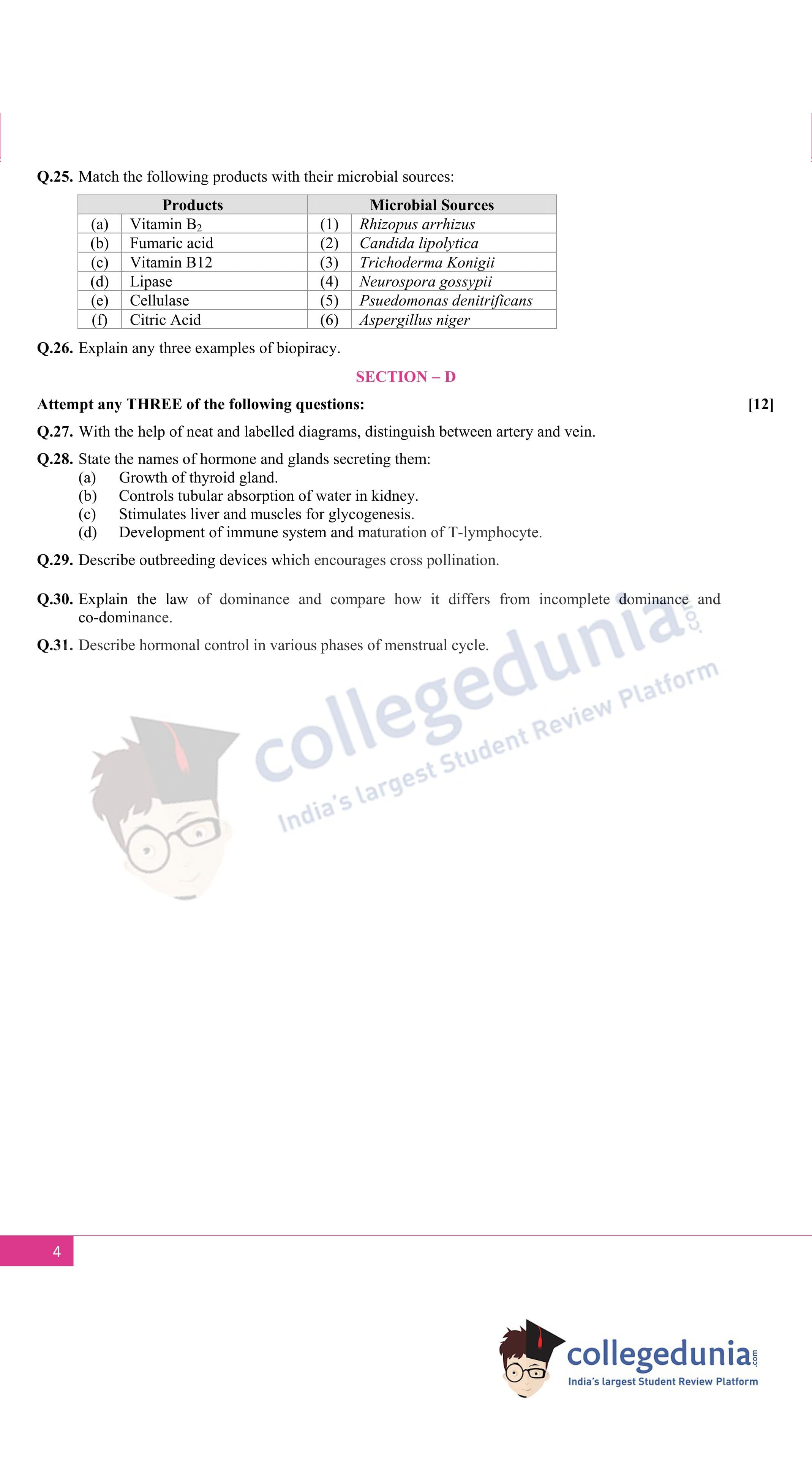
Match the following products with their microbial sources:
Products Microbial Sources
(a) Vitamin B2 (1) Rhizopus arrhizus
(b) Fumaric acid (2) Candida lipolytica
(c) Vitamin B12 (3) Trichoderma konigii
(d) Lipase (4) Neurospora gossypii
(e) Cellulase (5) Pseudomonas denitrificans
(f) Citric acid (6) Aspergillus niger
Explain any three examples of biopiracy.
With the help of neat and labelled diagrams, distinguish between artery and vein.
State the names of hormone and glands secreting them:
(a) Growth of thyroid gland.
(b) Controls tubular absorption of water in kidney.
(c) Stimulates liver and muscles for glycogenesis.
(d) Development of immune system and maturation of T-lymphocyte.
Describe outbreeding devices which encourage cross pollination.
Explain the law of dominance and compare how it differs from incomplete dominance and co-dominance.
Describe hormonal control in various phases of menstrual cycle.



Comments