


Reviewed on Oct 9, 2025(Enrolled 2021)
What Students Say
Likes
- The facilities at the university are very modern - labs and buildings.
- The university is very helpful and supportive to international students making students feel at home.
- The location of my university was very central - the city centre was very close, the beach and other local places as well.
Dislikes
- My university had multiple campuses - Talbot and Lansdowne - commuting between these campuses was a bit hectic.
- The cost of living in Bournemouth was a bit high as it was a tourist hub.
- Although the placement support was provided, the competition was a bit high and it was difficult to find placement for most of the students.
Course Curriculum
10
- My course was a bit of both theory and practical due to the nature of my course. It wasn't difficult but a lot to learn and that was challenging.
- When I enrolled in the course the Data Science was booming and it gave me knowledge before most of the other students.
- I had 6 sessions every week. The maximum hours I had per day was 3 hours for a session. The sessions were divided throughout the week.
- There were 60 students on average. There was an option to attend classes online as well due to COVID.
- My course had about 30 Indian students.
Admission Experience
- I had only applied to Bournemouth University, as it had the integrated course that I wanted (MSc in Data Science and AI) and they also had courses starting in January and it aligned well with my plan of moving to the UK.
- I did not receive confirmed admission from any other college, as I did not apply to any other.
- No, I did not receive a rejection from any college.
- I chose Bournemouth University, as it had the integrated course that I wanted – an MSc in Data Science and Artificial Intelligence. Another factor was time when my course was starting (January)
- Application process – At first I had to apply for the course, keeping a statement of purpose (SOP). After I was selected for this course, I had to send them 2000 GBP to finalise my spot. I then received the CAS letter from them, which was required for my visa application. After I got my visa approved, I booked my flight tickets and flew to Bournemouth.
- During my admission the university had waived off the GMAT score due to COVID. I had to show proof that my higher education was in English (which I got from my UG college in India) and also proof of my English marks (CBSE).
- The overall admission process was lengthy but smooth. The support was amazing from the university team.
- I applied for the 2021, January intake.
- My admission process took around 2 months. I remember making my first application in the first week of November. I received my CAS letter by the end of November and the rest was the visa process. For the visa process I first had to get the CAS and apply at a VAS centre. There were a number of documents I had to keep ready before my visa application.
Faculty
10
- I would say the faculty-to-student ratio was 1 faculty per 5 students. The ratio would affect a lot, as lots of students require 1-1 attention.
- The teachers helped a lot to get a student placed. They provided us with guidance, other certifications we could take, and much other support.
- I had a faculty member who helped me enrol in a CISCO course and he helped me get my first job in the UK.
- I admired my networking faculty – David Newell – the most. He assisted me in my master's project and also assisted me in getting my job.
Campus Life
10
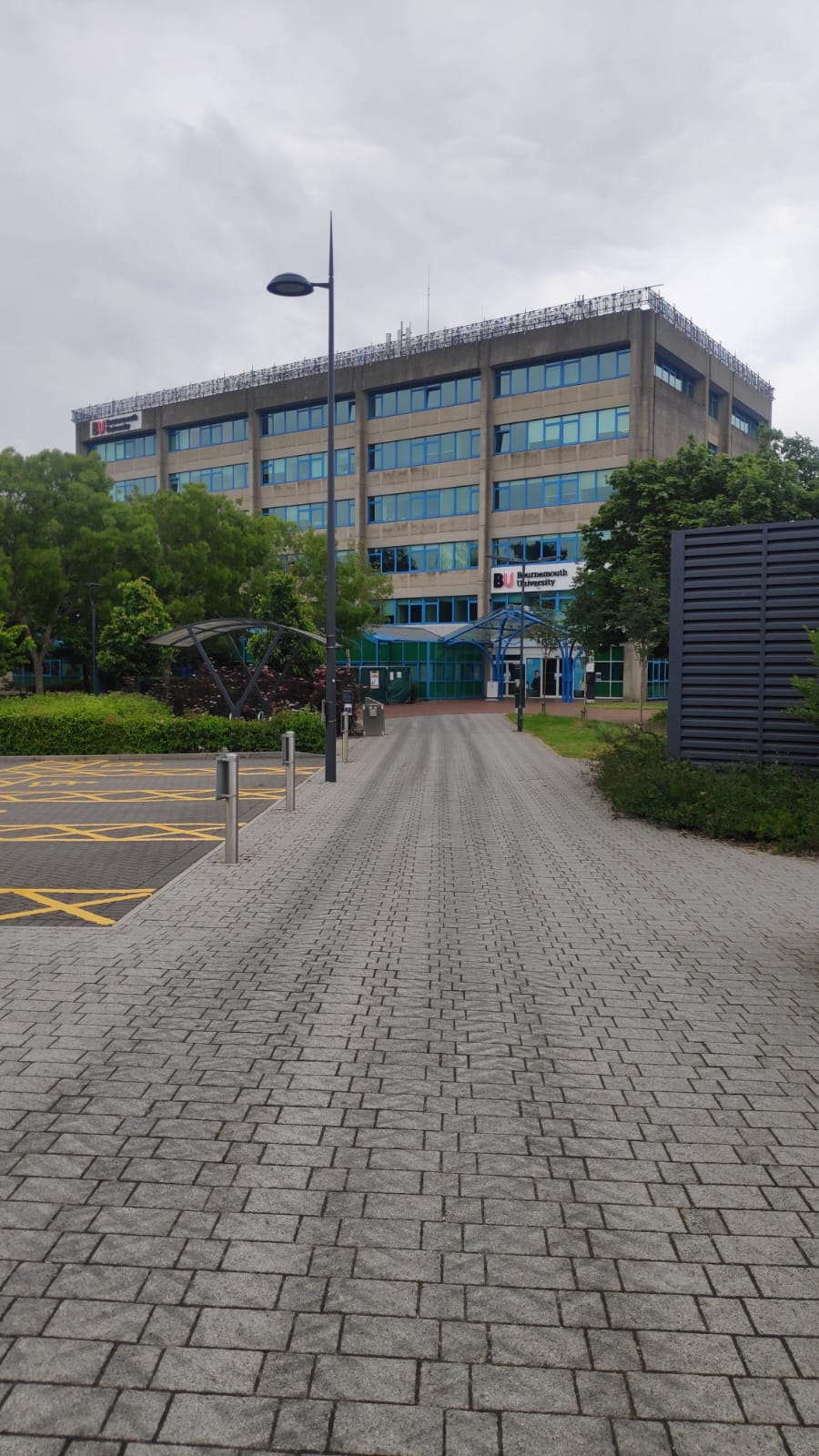
- My university had 2 campuses – Talbot and Lansdowne. The Talbot campus is the older campus and the Lansdowne is the newer one. The Talbot campus was a bit far from the main city, whereas Lansdowne was in the heart of the city.
- Both the campuses had their own libraries. Talbot campus had the sports centre that included - football, hockey, rugby, indoor badminton court, and a university pub.
- My university had the UK's largest student festival – Summerball. This event was conducted by the end of every year. It was a full-day event – 2pm to 6am.
- The students' union had many clubs that included cooking, yoga, sports, etc. activities.
Part Time Jobs
- The university provides many part-time opportunities – student ambassador being the main role. The role for TA/RA/DA is mainly for Phd students.
- The pay range usually ranges from 11-14 GBP/hr. The Students' Union has other positions in the University kitchen and pub for the students. As an international student, the allowed hours per week are 20 hours and the administration keeps that in mind before submitting the rota, as it causes issues with the immigration department and the student can also be deported if they work more than 20 hours per week. It's not difficult to secure an on-campus part-time job.
- Students usually make the basic hourly rate of 12 GBP/hr. As Bournemouth is a tourist attraction, there are lots of opportunities in the hospitality sector, and most of the students find it easy, as it doesn't require any previous experience. Usually the jobs are posted in job portals such as indeed. The process is usually providing them with a CV and an interview process, which is pretty simple.
Placement
8
- I would say, for undergrads, more than 60% of students secure employment but it's lower for postgraduate students. Around 20-30% of postgraduate students get the job in their own domain. Currently, students get up to 30000 GBP/year as their basic pay.
- Most common way to secure a job is through networking or campus events.
- My batchmates got placed in many companies, such as Natwest, HSBC etc.
- The major companies that hire graduates from my programme are TFL, Natwest, HSBC, Siemens etc.
Accommodation
Off Campus
8
- I had opted for off-campus accommodation. I had a friend who lived in Bournemouth and he helped me get accommodation in the same building he was staying in – Douglas towers.
- I paid around 500 GBP (including bills) for my accommodation.
- I did not have any issues in getting the accommodation, as i had a friend who helped me secure a place in the same building as him.
- I would recommend the students get the accommodation provided by the university so that they live with fellow students and it would help in their academics.
- My accommodation was 5 km from the university. I commuted by cycle most of the time. Indian students stayed in the university-provided accommodations.
Exams
- During my admission process, all the exams were waived off due to COVID. But ideally a student has to prove the GMAT score and IELTS score.
- Statement of purpose, Letter of recommendation, previous years' mark sheet, conversion certificate for marks, certificate that my education was in English.
- I did not have an interview process. I don't think my university has an interview process.
Fees
- The total fees were 14000 GBP – I had to pay 11000 GBP, as I got a scholarship for 3000 GBP.
- The fees could be paid all at once or semester-wise – I paid it all in one go; hence, I'm not sure how the breakdown is semester-wise.
- Monthly the average expense was around 800 GBP – 500 for my accommodation, 200 for food and 100 for travel and other miscellaneous expenses.
Scholarship
- Yes, I did receive a scholarship of 3000 GBP. Any student can get this scholarship if they have distinction in their previous course (>70%). It's a scholarship provided by the university itself.
- 3000 GBP reduction in my course fees.
- Not sure about the number of students who receive the scholarship each year, but I've heard there are a number of other scholarships awarded for international students.


