




Master of Engineering [MEng] (Mechanical Engineering)
Field of Study:
$22,514 /Yr

McGill University Master of Engineering [MEng] Mechanical Engineering is an 18-month, full-time, non-thesis engineering programme designed for international students seeking postgraduate qualifications in mechanical systems, control systems, and advanced manufacturing. Located in Montreal, Quebec, the programme costs between C$31,269 and C$50,630 per year for international students (INR 21.93 Lakhs to INR 35.53 Lakhs annually). The MEng accepts two intakes: September and January. The minimum admission requirement is an undergraduate engineering degree with strong academic performance. This programme is open to international students from all countries, including India.
McGill University’s MEng Mechanical Engineering trains graduates to design, build, and optimise mechanical systems in aerospace, automotive, renewable energy, and robotics sectors. McGill’s programme emphasises advanced computational methods, control systems design, and sustainability engineering. The ideal applicant is an engineer with 2-4 years of undergraduate coursework, strong mathematics fundamentals, and interest in advanced mechanical design and systems optimisation. Graduates secure roles as mechanical engineers, systems engineers, and design engineers within 3 to 6 months of graduation.
- 18-month non-thesis format accelerates entry into engineering career roles.
- Canada’s Post-Graduation Work Permit allows 2-3 years of full-time work after graduation.
Current Admission Status
Applications for the September 2027 intake are Open. International student deadline: 15 January 2027.
Indian applicants must submit TOEFL (minimum 100 overall) or IELTS (6.5 overall) scores alongside academic documents. WES credential evaluation takes 7 to 14 days; complete this before the deadline.
McGill University Master of Engineering Mechanical Engineering Fees and Living Costs 2027
International students pay a combined C$50,630 (INR 35.53 Lakhs) annually in tuition and ancillary fees. The 18-month programme totals approximately C$75,945 (INR 53.30 Lakhs) in direct educational costs. This includes tuition, student health insurance, books, supplies, and application deposits.
| Cost Component | Per Year (C$) | Per Year (INR) | 18-Month Total (C$) | 18-Month Total (INR) |
|---|---|---|---|---|
| Tuition (per year) | C$31,269 | INR 21.93 Lakhs | C$46,903.50 | INR 32.90 Lakhs |
| Ancillary Fees (per year) | C$3,500 | INR 2.46 Lakhs | C$5,250 | INR 3.68 Lakhs |
| Student Health Insurance (18 months) | C$650 | INR 45,578 | C$650 | INR 45,578 |
| Books and Supplies (18 months) | C$1,500 | INR 1.05 Lakhs | C$1,500 | INR 1.05 Lakhs |
| Application Fee + Deposit | - | - | C$642 | INR 45,050 |
| Total Direct Costs | C$34,769 | INR 24.39 Lakhs | C$54,945.50 | INR 38.53 Lakhs |
Source: McGill University International Student Fee Schedule 2026-2027; ancillary fees increase 3 per cent annually.
All INR conversions in the article use a conversion rate of C$ 1 = INR 70.12 as of June 2026. Rates fluctuate daily; verify before applying.
- Tuition is locked for the duration of the 18-month programme for international engineering students.
- Ancillary fees cover student services, library access, recreation, and institutional support.
- International students are eligible for employer health plans after graduation; Canadian provincial coverage does not apply.
- Summer internships in co-op roles can offset living costs through income between C$4,500 and C$5,500 / Rs. 3 – 3.7 lakhs monthly.
Also, Check: McGill University Fees
Cost of Living in Montreal for Master of Engineering Students
Montreal is one of Canada’s most affordable major cities. Monthly living costs for graduate students range from C$1,100 to C$1,500 (INR 77,132 to INR 1.05 Lakhs), depending on accommodation type and lifestyle choices.
| Expense Category | Monthly Low (C$) | Monthly Low (INR) | Monthly High (C$) | Monthly High (INR) | 18-Month Total (C$) | 18-Month Total (INR) |
|---|---|---|---|---|---|---|
| Rent (shared apartment) | C$550 | INR 38,566 | C$750 | INR 52,590 | C$9,900 | INR 6.95 Lakhs |
| Food and Groceries | C$280 | INR 19,633 | C$380 | INR 26,645 | C$5,040 | INR 3.54 Lakhs |
| Transportation (STM Metro Pass) | C$80 | INR 5,609 | C$80 | INR 5,609 | C$1,440 | INR 1.01 Lakhs |
| Utilities and Internet | C$70 | INR 4,908 | C$100 | INR 7,012 | C$1,260 | INR 88,560 |
| Dining and Social | C$140 | INR 9,816 | C$240 | INR 16,828 | C$2,520 | INR 1.77 Lakhs |
| Monthly Total | C$1,120 | INR 78,532 | C$1,550 | INR 1.09 Lakhs | C$20,160 | INR 14.15 Lakhs |
Key Insight: Total programme cost (tuition plus living) is approximately INR 52.68 Lakhs (C$75,105) for 18 months. This is significantly lower than engineering master’s programmes in Australia, the UK, or the USA.
McGill University Master of Engineering Mechanical Engineering Admission 2027
McGill admits engineering master's applicants with strong undergraduate qualifications. The programme seeks candidates with an engineering bachelor’s degree, solid foundational mathematics, and a background in mechanics or control systems. Two intakes allow flexibility: September (winter application deadline January 15) and January (fall application deadline October 15).
| Admission Criterion | Requirement | Indian Applicant Context |
|---|---|---|
| Undergraduate GPA | Minimum 3.0 / 4.0 (or equivalent 75 per cent) | Indian 10-point scale: 7.5 out of 10 or A-grade in B.Tech/B.E. |
| Engineering Background | Bachelor’s in Mechanical, Civil, Aerospace, or related discipline required | Four-year B.E. / B.Tech from AICTE-accredited institutions preferred. |
| Prerequisite Subjects | Undergraduate calculus, linear algebra, physics, thermodynamics, mechanics | Standard B.Tech curriculum covers all prerequisites; no gap courses needed. |
| Application Materials | Transcripts, statement of purpose, two academic references | WES or U7Net evaluation required for Indian degrees (7-14 days processing). |
| Intake Options | September 2027 and January 2028 | Both open to Indian nationals; no caps or regional restrictions. |
For More Details, Check: McGill University Admissions
English Language Proficiency for Master of Engineering Students
All international applicants must demonstrate English language competency through standardised tests. The MEng Mechanical Engineering accepts TOEFL (Internet-based), IELTS, and Duolingo English Test scores. Minimum thresholds are designed to ensure classroom participation and technical writing success.
- TOEFL iBT (Internet-based): Minimum 100 overall score; 23+ in speaking and writing; 20+ in reading and listening. Approximately 80-90 hours of preparation recommended.
- IELTS (Academic): Minimum 6.5 overall band; 6.0 minimum per component. IELTS is more accessible for Indian test-takers; 8-12 weeks of preparation typical.
- Duolingo English Test: Minimum 130 score. Fastest pathway; results available within 1 to 2 days. Accepted equivalently to TOEFL and IELTS.
- Waiver: Undergraduate degree completed in English from a recognised English-speaking institution may waive the test requirement; confirm with admissions.
For More Details, Check: McGill University Acceptance Rate
McGill University Master of Engineering Mechanical Engineering Application 2027
The application process is entirely online through McGill’s graduate admissions portal. Timelines differ by intake: September intake closes January 15; January intake closes October 15. Processing typically takes 4 to 8 weeks after submission of all documents. Acceptance notifications are sent via email.
| Intake | Application Deadline | Decision Timeline | Status |
|---|---|---|---|
| September 2027 | 15 January 2027 | 6-8 weeks (by March 2027) | Open |
| January 2027 | 1 August 2026 | 6-8 weeks (by December 2026) | Open |
Indian applicants should begin the credential evaluation process (WES or U7Net) immediately; evaluation adds 7 to 14 days and must be complete before the deadline. TOEFL or IELTS results are typically processed within 2 to 3 weeks of exam completion; schedule tests 8 weeks before the application deadline.
Application Tip: Submit transcripts and test scores at least one week before the deadline to avoid portal bottlenecks. Late submissions within 48 hours may be reviewed on a case-by-case basis but are not guaranteed consideration.
McGill University Master of Engineering Mechanical Engineering Scholarships 2027
McGill offers merit-based entrance awards and in-study scholarships for master’s students. Scholarships are highly competitive and based on academic excellence; most international students receive partial tuition waivers rather than full scholarships.
Entrance scholarships range from C$5,000 to C$20,000 (INR 3.51 Lakhs to INR 14.02 Lakhs) and are awarded automatically based on academic performance at admission. In-study awards of C$3,000 to C$10,000 (INR 2.10 Lakhs to INR 7.01 Lakhs) are available after the first semester for students maintaining 3.5+ GPA. Approximately 35 per cent of international master’s students receive some form of funding support. Indian students are eligible for all scholarships; no country-specific restrictions exist.
External scholarships for Indian applicants include MHRD fellowships (for sponsored candidates only), Inlaks Foundation scholarships (for meritorious postgraduate students), and TCS scholarships (for engineering graduates). These are separate from McGill institutional aid and require direct application to the funding organisations.
Scholarship Reality: Budget the full tuition cost; scholarships are competitive and should not be counted on for financial planning. Use scholarships as a positive reduction if awarded.
McGill University Master of Engineering Mechanical Engineering Salary and Placements 2027
McGill’s MEng Mechanical Engineering graduates achieve a 90 per cent placement rate within 6 months of graduation. Entry-level mechanical engineers earn between C$60,000 and C$78,000 (INR 42.07 Lakhs to INR 54.69 Lakhs) annually in Canada. Mid-career engineers (4-7 years experience) earn C$90,000 to C$120,000 (INR 63.11 Lakhs to INR 84.14 Lakhs). Senior roles (8+ years) command C$120,000 to C$160,000 (INR 84.14 Lakhs to INR 1.12 Crore).
Primary employers include Bombardier Aerospace, Pratt & Whitney Canada, CAE Inc., SNC-Lavalin, Stantec, and Canadian automotive suppliers. Sector-specific outliers: aerospace engineering roles pay 15-25 per cent premiums; renewable energy and robotics roles pay 8-12 per cent premiums.
| Career Stage | Salary Range (C$) | Salary Range (INR) | Years of Experience | Typical Role Title |
|---|---|---|---|---|
| Entry-Level | C$60,000 to C$78,000 | INR 42.07 Lakhs to INR 54.69 Lakhs | 0-2 years | Mechanical Engineer, Design Engineer |
| Early Career | C$78,000 to C$95,000 | INR 54.69 Lakhs to INR 66.61 Lakhs | 2-4 years | Senior Mechanical Engineer, Systems Engineer |
| Mid-Career | C$95,000 to C$125,000 | INR 66.61 Lakhs to INR 87.65 Lakhs | 4-7 years | Engineering Manager, Thermal Systems Lead |
| Senior | C$125,000 to C$170,000 | INR 87.65 Lakhs to INR 1.19 Crore | 8+ years | Principal Engineer, Technical Director |
Source: Glassdoor Canada, Statistics Canada Job Bank (NOC 2131 - Mechanical Engineers), McGill Graduate Employment Survey 2025.
After-tax take-home is approximately 55-60 per cent of gross salary in Ontario (Canada’s largest job market). CPP contributions (5.95 per cent) and EI (1.62 per cent) are deducted from gross pay; federal tax ranges 14-33 per cent and provincial tax 5-13 per cent depending on salary band.
ROI Reality: 18-month MEng cost (INR 52.68 Lakhs) is recovered within 18-24 months of employment. Starting salary (INR 42-54 Lakhs) significantly exceeds programme cost, making this a high-return investment for Indian engineers.
Canada Visa and Work Permit for Mechanical Engineering Graduates 2027
Canadian student visas are valid for the duration of your study programme. After graduation, all international graduates are eligible for a Post-Graduation Work Permit (PGWP) — an open work permit allowing full-time employment with any employer in Canada.
- PGWP validity: 18 months (matching your programme duration). Work full-time with any Canadian employer without a job offer or sponsorship requirements.
- Skilled Worker Pathways: After 12 months of Canadian work experience, apply for Express Entry or Ontario Provincial Nominee Program (PNP). Mechanical Engineers (NOC 2131) are high-demand occupations in Ontario and qualify for accelerated processing.
- Permanent Residence Timeline: 3-6 months (Express Entry) to 9-12 months (PNP) after application. Salary threshold for skilled worker intake is typically C$62,000+ (INR 43.49 Lakhs) annually.
- Spouse and Dependent Visas: Family members can apply for dependent visas; spouses can apply for open work permits while you are studying and after graduation.
Visa Reality: PGWP guarantees 18 months of full-time work rights post-graduation. Combined with strong salary and employer demand, pathway to permanent residence is realistic for mechanical engineers within 2-3 years of completing the MEng.
Also Check: Canada Student Visa Process
McGill University Engineering Ranking 2026
McGill University is ranked 45th globally in Engineering by QS World University Rankings (2026) and 27th overall in comprehensive university rankings. However, McGill’s engineering faculty consistently ranks in the top 30 globally for applied research output, with particular strength in control systems, aerospace, and renewable energy research.
Employer perception of McGill mechanical engineering graduates is strong in Canada, Australia, and the UK. Top employers actively recruit from McGill’s engineering graduate cohorts; placement outcomes reflect this high demand.
Key Insight: Global Mechanical engineering rank of 49th positions McGill above many Russell Group universities in the UK and Group of Eight institutions in Australia, despite lower overall university ranking. Engineering-specific reputation is a major differentiator.
Also, Check: McGill University Rankings
This 18-month programme is ideal if you want to accelerate your engineering career without a thesis component, secure Canadian work experience, and gain qualification from a top-30 global engineering school. Strong salary outcomes (INR 42-54 Lakhs entry) and clear pathways to permanent residence make this programme attractive for Indian engineers seeking to build careers in North America. Budget approximately INR 52.68 Lakhs for the full cost and apply by January 15, 2027 for the September 2027 intake.
Master of Engineering [MEng] Mechanical Engineering FAQs
Ques. Is the MEng Mechanical Engineering thesis-based or coursework-based?
Ans. The MEng is a non-thesis, course-based programme. You complete 45 credits (approximately 15 courses) over 18 months with no independent research thesis. This accelerates graduation and employment entry compared to thesis-based research master's.
Ques. Can I work part-time during my studies in Canada?
Ans. Yes. International students on a valid study permit can work up to 20 hours per week during the academic semester and full-time during scheduled breaks. Co-op internship positions (available for 40 per cent of MEng students) count toward your work permit limit but pay C$4,500 to C$5,500 monthly.
Ques. What is the job market like for mechanical engineers in Canada post-graduation?
Ans. The job market is strong. Mechanical engineers (NOC 2131) are in-demand occupations in Canada, with a 90 per cent placement rate within 6 months. Entry-level positions are available in aerospace, automotive, energy, and consulting sectors. Canadian work experience gained via PGWP significantly improves Express Entry Comprehensive Ranking System (CRS) scores for permanent residence applications.
Ques. Do I need to pass the Professional Engineer (P.Eng.) exam after graduation?
Ans. No, the P.Eng. certification is optional and recommended only if you plan a long-term career in engineering design or consulting. Most entry-level and mid-career engineering roles do not require P.Eng. designation. The MEng degree satisfies the academic requirements for P.Eng. eligibility; you need 12 months of documented work experience and must pass the Professional Practice Exam (PEE) to obtain the licence.
Ques. Can I transition to Canada’s permanent residence programme after completing the MEng?
Ans. Yes. After 12 months of Canadian work experience (via PGWP), you become eligible for Express Entry or the Ontario Provincial Nominee Program (PNP). Mechanical engineers with 12+ months of Canadian experience and a salary of C$62,000+ (INR 43.49 Lakhs) typically receive an Invitation to Apply (ITA) within 6 months. Most MEng graduates secure permanent residence within 2-3 years of graduation.
Tuition Fees
| Year | 1st Year Fees |
|---|---|
| Tuition Fees | $22514 (CAD 31269) |
Other Expenses
| Head | Avg Cost Per Year |
|---|---|
| Living Expenses | $15840 (CAD 22000) |
| Health Insurance | $832 (CAD 1155) |
Previous Year Tuition Fees
| Year | 1st Year Fees |
|---|---|
| 2024 | $21442 (CAD 29780) |
| 2023 | $22387 (CAD 31093) |
| 2021 | $13791 (CAD 19154) |
Important Dates
| Event | Application Date |
|---|---|
| Application Deadline For Winter 2026 Intake | |
Reviews
26 Reviews Found
Likes
- First and foremost is the affordable tuition fee which is called "Semester contribution" in Germany. During my time it was somewhere around 340 euros per month for my university. But this is totally worth it as with this you get a student ID with which you can access the publica transport free of cost in the city and even someone of the regional trains called RE in lower saxony region.
- Another thing is the "Mensa facility" which is Indian equivalent of mess/dining services. Here in mensa all students along with the faculties can get fresh and hot breakfast and lunch (as till operate till 3 PM) at very subsidized and affordable prices (considering international students).
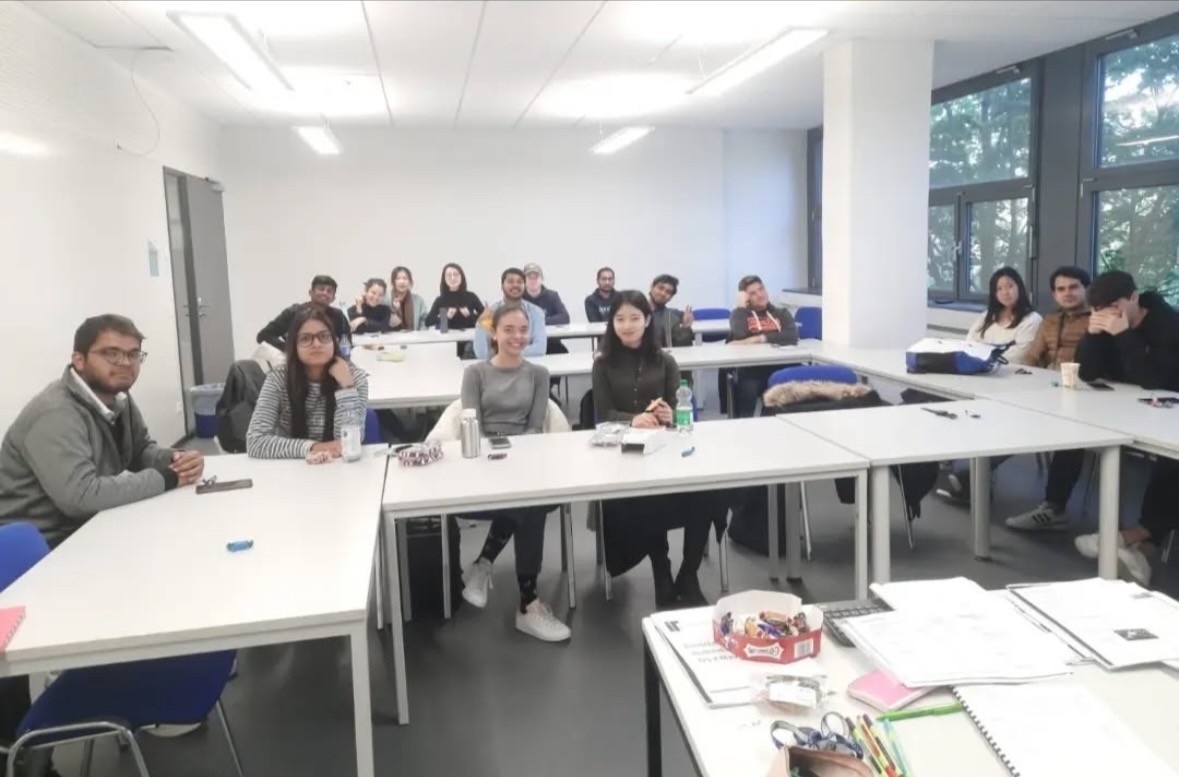
- Diverse culture and gender diversity, you will find people from all part of the world including Europe, Asia, Australia, and the US. This is a fantastic opportunity to make connection and learn different culture as well. these connection will help you in future to grow as an individual on both personal and professional.
Dislikes
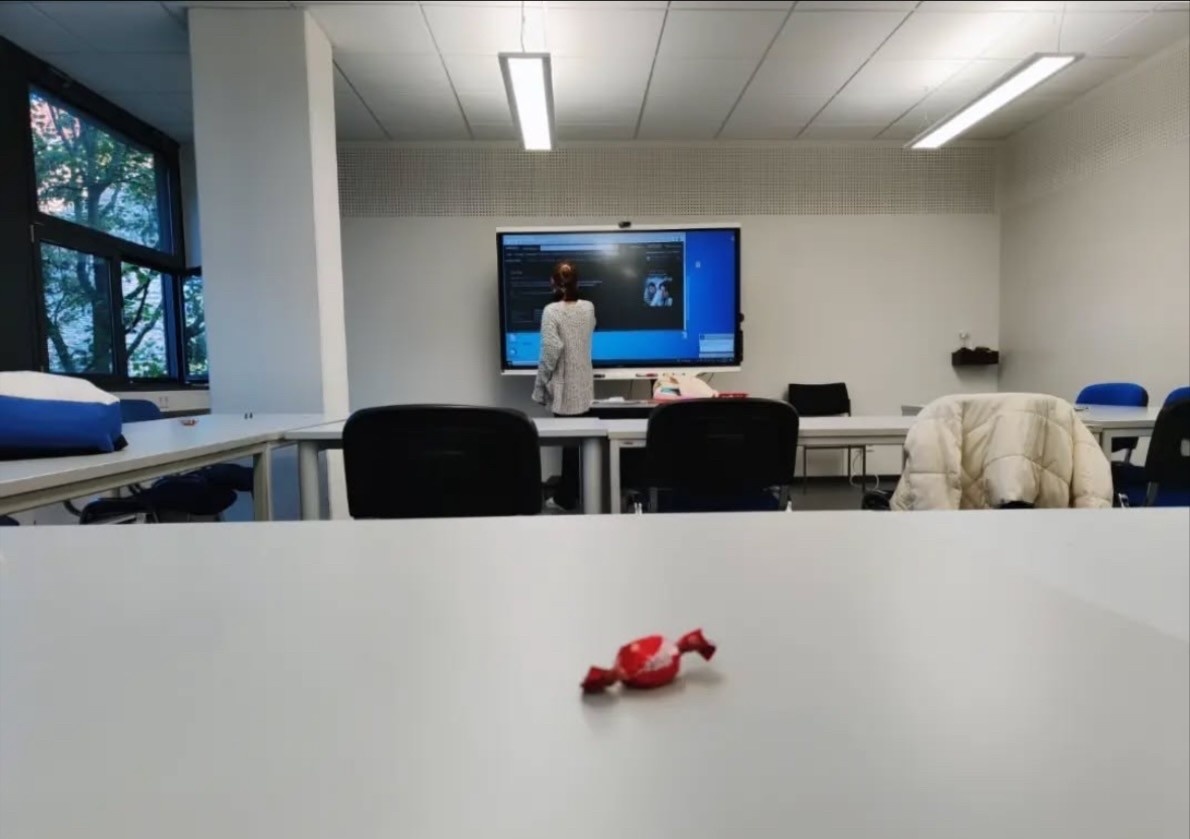
- Location of my department (Mechanical Engineering) it is a bit far from city centre (around 15-20 mins by tram/bus). Though the building new is quite advanced and close to nature but for me i felt it is a bit isolated. After working hours you will not be able to find a lot of people around. So pro-tip is take accommodation near city centre so you can have a good social life.
- Your social life outside the university and up to an extent in the university highly depends on your proficiency in the local language (German). Since Hanover is a small town not a lot of people talk in English outside of university.
- There is no concept of campus placement (unlike India) so once you graduate you are at your own to find the job (here the language and your connection can help)
- I went through an agency called Studentenwerk; I would recommend this, as it is cheap and especially for international students.
- For me the monthly rent was around 300 euros a month back in 2022 but it must have increased; you can expect around 600 euros for a good studio in hanover.
- The thing with accommodation is, it is very difficult to get with studentenwerk. So the suggestion is to book as early as possible after you receive the confirmation of your admission.
- It is not that far; if you are based on the main campus, you can reach it in 2-3 mins by tram/bus but if you are based in mechanical engineering, it will take you 15-20 mins to reach from the city centre. Another option is to have an accommodation near Mechanical engineering campus, depending on your liking.

Scores Required
TOEFL: 90 overall with a minimum of 20 points in each section.


Do you think the Rankings are wrong ? Report Here
Key Resources for Your Study Abroad Journey


Course Guides
Best Post-Graduate Courses in Canada in 2025
Masters in Canada: Fees 2024, Top Colleges, Placements & Salaries
Masters in Engineering in Canada: Fees 2024, Top Colleges, Placements & Salaries
College Student Profiles

Scholarship Grants & Financial Aids
| Name | Scholarship Per Student | Level of Study | Type | |
|---|---|---|---|---|
| FINCAD Women in Finance Scholarship | Scholarship per student$ 14,400/Yr$20,000 | Level Of StudyMaster | TypeMerit-Based | |
| Ontario Graduate Fellowship | Scholarship per student$ 6,390/Yr$8,875 | Level Of StudyDoctorate | TypeMerit-Based | |
| Jared J. Davis Grant | Scholarship per student$ 720/Yr$1,000 | Level Of StudyBachelor | TypeMerit-Based | |
| Golden Key Graduate Scholar Award | Scholarship per student$ 1,080/Yr$1,500 | Level Of StudyMaster | TypeMerit-Based | |
| Axol Science Scholarship | Scholarship per student$ 1,440/Yr$2,000 | Level Of StudyBachelor | TypeCompany-Sponsored | |
| Business Administration Scholarships | Scholarship per studentVariable Amount | Level Of StudyBachelor | TypeMerit-Based |
Similar Programs
| Program | Important Date | Total Fees | Median Exams Score | Action |
|---|---|---|---|---|
-- | USD 21,442 /Yr CAD 29,780 /Yr |
| ||
Application Deadline For Winter 2026 Intake (15th Sep 2026) | USD 45,633 /Yr CAD 63,379 /Yr |
|


Do you think the Dates are wrong ? Report Here

interested in this College ?
Follow & Share this college to get information about admission.



Comments
Found 1 Comment
A four-year bachelor’s degree is typically required to apply for graduate admission at McGill University. However, the university also somtimes accepts applications from students who have completed a three-year bachelor’s degree on a case-by-case basis. However, meeting the minimum admission requirements does not guarantee admission to the program, as admission decisions are highly competitive and based on a holistic review of each students’s credentials.