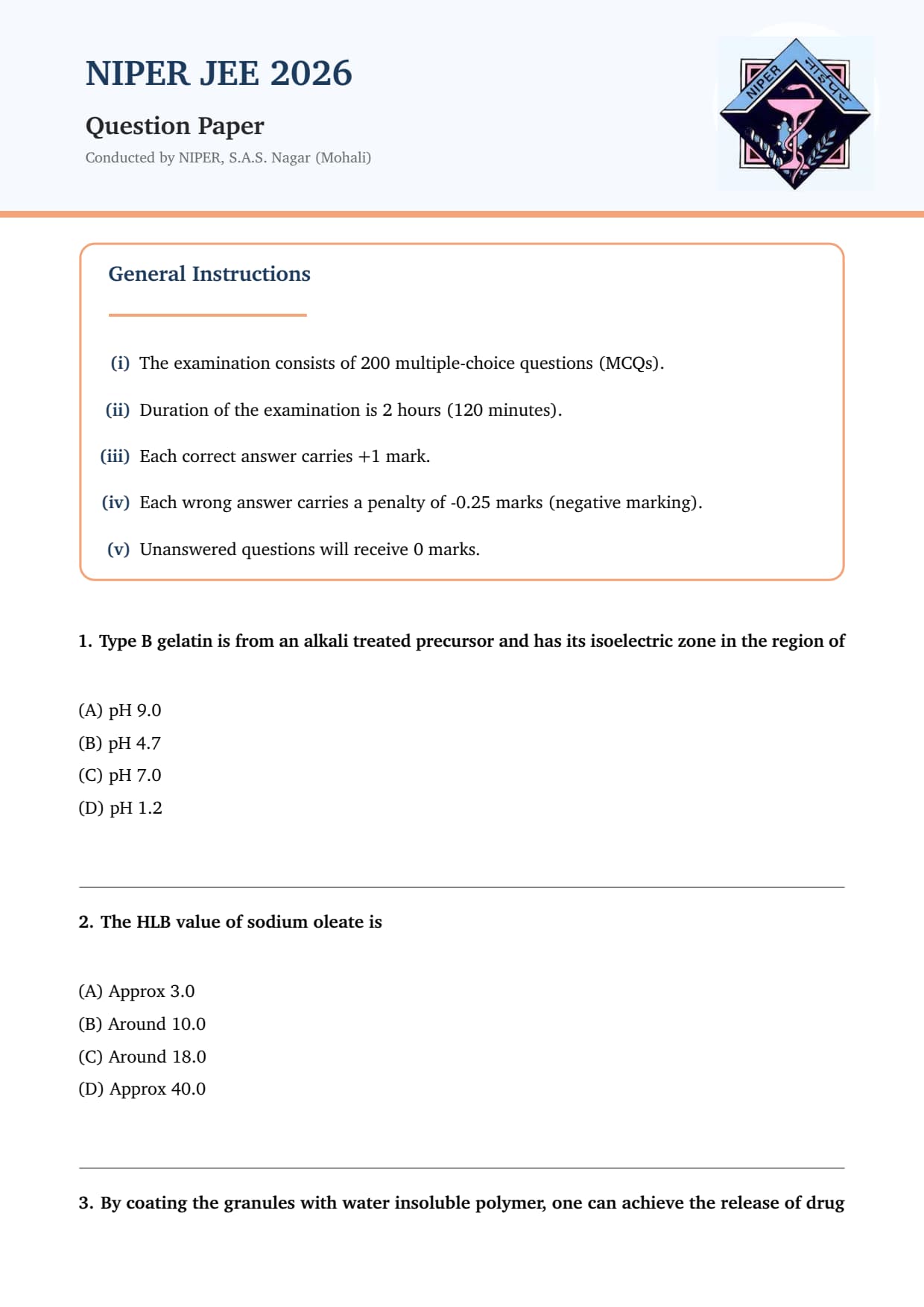
NIPER JEE 2026 Question Paper with Solution PDF is available here for download.NIPER Mohali is conducting the NIPER JEE Exam on June 13, 2026 in CBT Mode.

The Question Paper consists of 200 Questions to be completed in 2 hours.As per the marking scheme 0.5 Marks for Every Correct Answer and 0.125 Marks deducted for every incorrect answer.

Candidates can download the NIPER JEE 2026 Question Paper with Answer Key and Solution PDF from the links provided below.

NIPER JEE 2026 Question Paper with Solution PDF

NIPER JEE 2026 Question Paper  Download PDF Check Solution

Question 1:

Type B gelatin is from an alkali treated precursor and has its isoelectric zone in the region of

  • (A) pH 9.0
  • (B) pH 4.7
  • (C) pH 7.0
  • (D) pH 1.2
Correct Answer: (B) pH 4.7
View Solution


Step 1: Understanding the Concept:

Gelatin is derived from collagen. There are two main types of gelatin: Type A and Type B.

Type A is acid-processed, while Type B is alkali-processed.


Step 2: Detailed Explanation:

Alkali processing of collagen converts asparagine and glutamine residues into aspartic and glutamic acid.

This shift changes the net charge of the protein molecule.

Type B gelatin typically exhibits an isoelectric point (pI) in the acidic range, specifically between pH 4.7 and 5.2.

Type A gelatin generally has an isoelectric point in the range of pH 7.0 to 9.0.


Step 3: Final Answer:

The isoelectric zone of Type B gelatin is in the region of pH 4.7.
Quick Tip: Remember: "A" for Acid-treated (higher pI) and "B" for Base/Alkali-treated (lower pI).


Question 2:

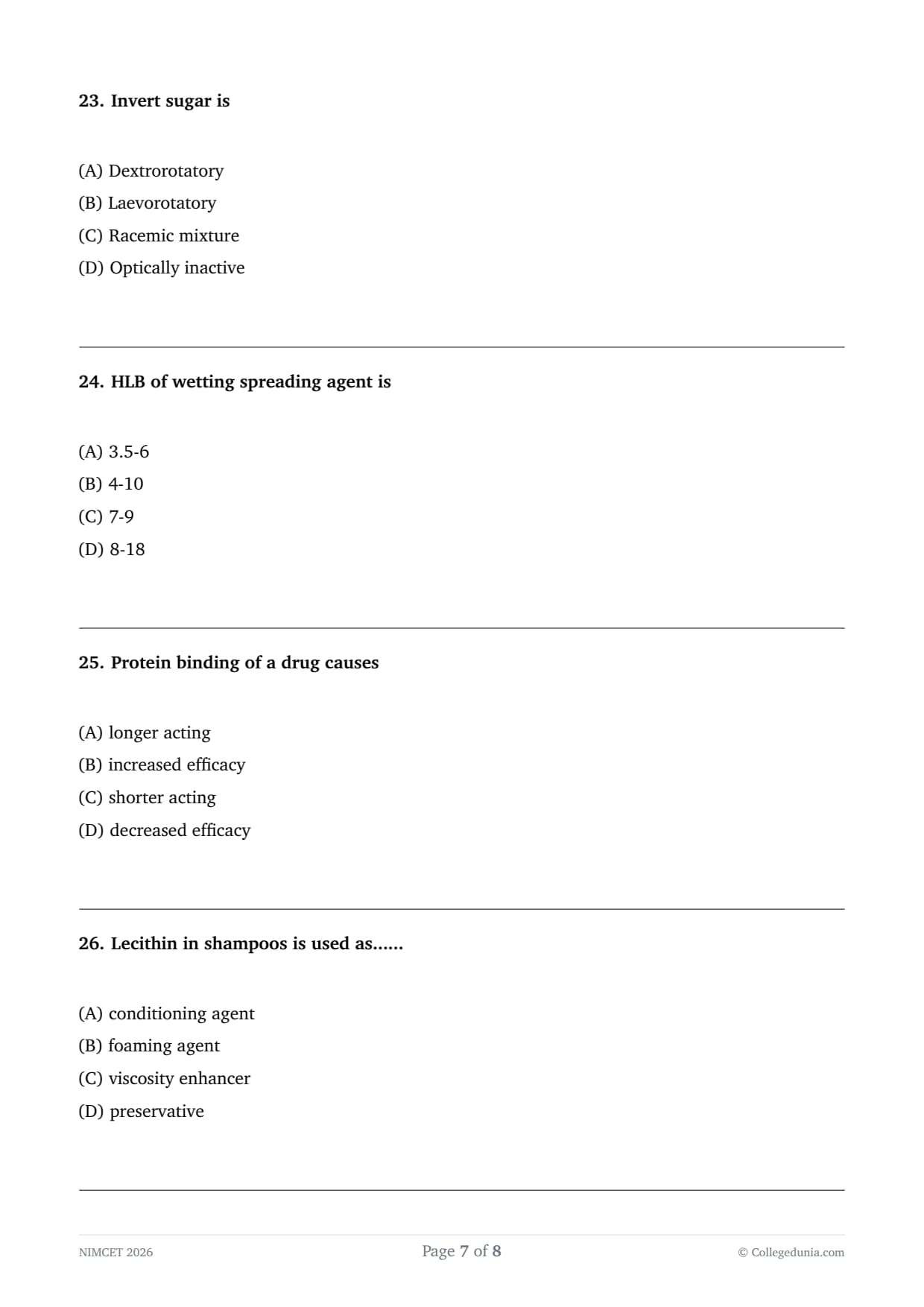
The HLB value of sodium oleate is

  • (A) Approx 3.0
  • (B) Around 10.0
  • (C) Around 18.0
  • (D) Approx 40.0
Correct Answer: (C) Around 18.0
View Solution


Step 1: Understanding the Concept:

The Hydrophilic-Lipophilic Balance (HLB) scale is used to describe the characteristics of surfactants.


Step 2: Detailed Explanation:

Sodium oleate is a classic anionic surfactant, which is the salt of a long-chain fatty acid.

Due to its strong hydrophilic carboxylate head group and hydrocarbon tail, it is highly water-soluble.

Surfactants with HLB values in the range of 15 to 20 are generally considered to be solubilizing agents or detergents, which corresponds to the properties of sodium oleate (typically cited as approximately 18).


Step 3: Final Answer:

The HLB value of sodium oleate is around 18.0.
Quick Tip: HLB values: 3-6 (W/O emulsifiers), 7-9 (Wetting agents), 8-18 (O/W emulsifiers), 15-20 (Solubilizers).


Question 3:

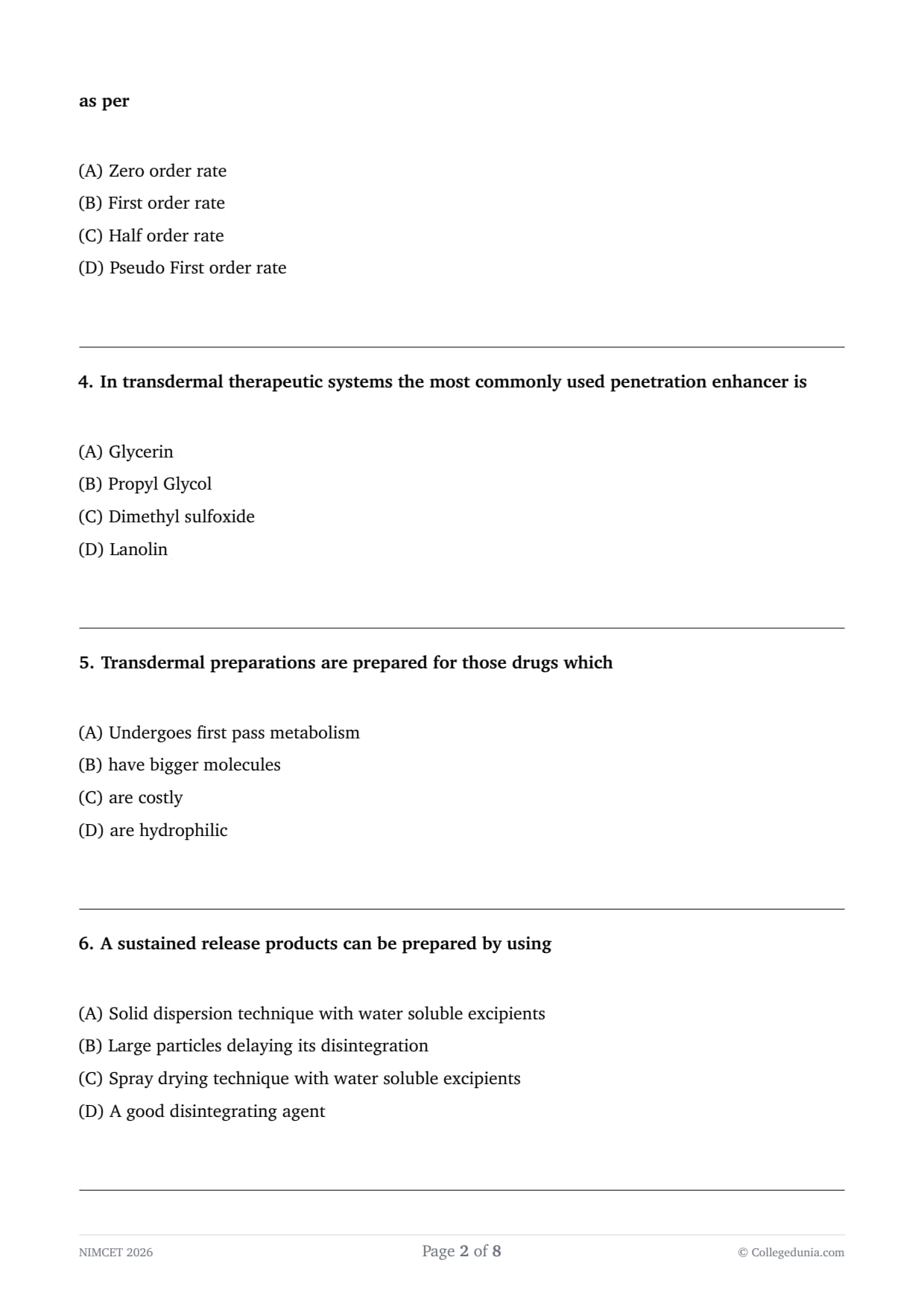
By coating the granules with water insoluble polymer, one can achieve the release of drug as per

  • (A) Zero order rate
  • (B) First order rate
  • (C) Half order rate
  • (D) Pseudo First order rate
Correct Answer: (A) Zero order rate
View Solution


Step 1: Understanding the Concept:

Controlled release dosage forms are designed to release drug at a constant rate over time, known as zero-order kinetics.


Step 2: Detailed Explanation:

When granules are coated with a water-insoluble, permeable polymer (like ethylcellulose), the polymer acts as a rate-controlling membrane.

The drug diffuses through this membrane at a constant rate, independent of the remaining concentration of the drug within the core.

This maintenance of a constant release rate is the hallmark of zero-order delivery systems.


Step 3: Final Answer:

Coating with water-insoluble polymers primarily aims to achieve a zero-order release rate.
Quick Tip: Zero-order release kinetics are ideal for maintaining steady-state plasma concentrations of a drug.


Question 4:

In transdermal therapeutic systems the most commonly used penetration enhancer is

  • (A) Glycerin
  • (B) Propyl Glycol
  • (C) Dimethyl sulfoxide
  • (D) Lanolin
Correct Answer: (C) Dimethyl sulfoxide
View Solution


Step 1: Understanding the Concept:

Penetration enhancers are substances that increase the permeability of the skin to allow for the absorption of drug molecules.


Step 2: Detailed Explanation:

Dimethyl sulfoxide (DMSO) is a potent solvent and one of the most widely studied chemical penetration enhancers.

It works by disrupting the lipid structure of the stratum corneum, thereby lowering the barrier function and facilitating drug transport.

While others like propylene glycol can act as solvents, DMSO is classically recognized in pharmacological texts for its significant enhancement properties.


Step 3: Final Answer:

Dimethyl sulfoxide is considered a commonly used and highly effective penetration enhancer.
Quick Tip: Penetration enhancers work by modifying skin lipids, denaturing proteins, or improving drug solubility.


Question 5:

Transdermal preparations are prepared for those drugs which

  • (A) Undergoes first pass metabolism
  • (B) have bigger molecules
  • (C) are costly
  • (D) are hydrophilic
Correct Answer: (A) Undergoes first pass metabolism
View Solution


Step 1: Understanding the Concept:

The main purpose of the transdermal route is to deliver drugs systemically while bypassing the gastrointestinal tract and liver.


Step 2: Detailed Explanation:

Oral drugs often suffer from extensive hepatic first-pass metabolism, which reduces their bioavailability.

By applying the drug through the skin, it enters the systemic circulation directly via capillaries, avoiding the initial pass through the liver.

For a drug to be suitable for transdermal delivery, it should be lipophilic, have a low molecular weight, and be potent to compensate for the limited surface area of application.


Step 3: Final Answer:

Transdermal delivery is preferred for drugs that undergo significant first-pass metabolism to improve overall bioavailability.
Quick Tip: Transdermal candidates usually follow the "Rule of 5" for absorption: small molecule, lipophilic, and potent.


Question 6:

A sustained release products can be prepared by using

  • (A) Solid dispersion technique with water soluble excipients
  • (B) Large particles delaying its disintegration
  • (C) Spray drying technique with water soluble excipients
  • (D) A good disintegrating agent
Correct Answer: (B) Large particles delaying its disintegration
View Solution

N/A Quick Tip: Sustained release strategies include: osmotic pumps, matrix systems, and reservoir coating.


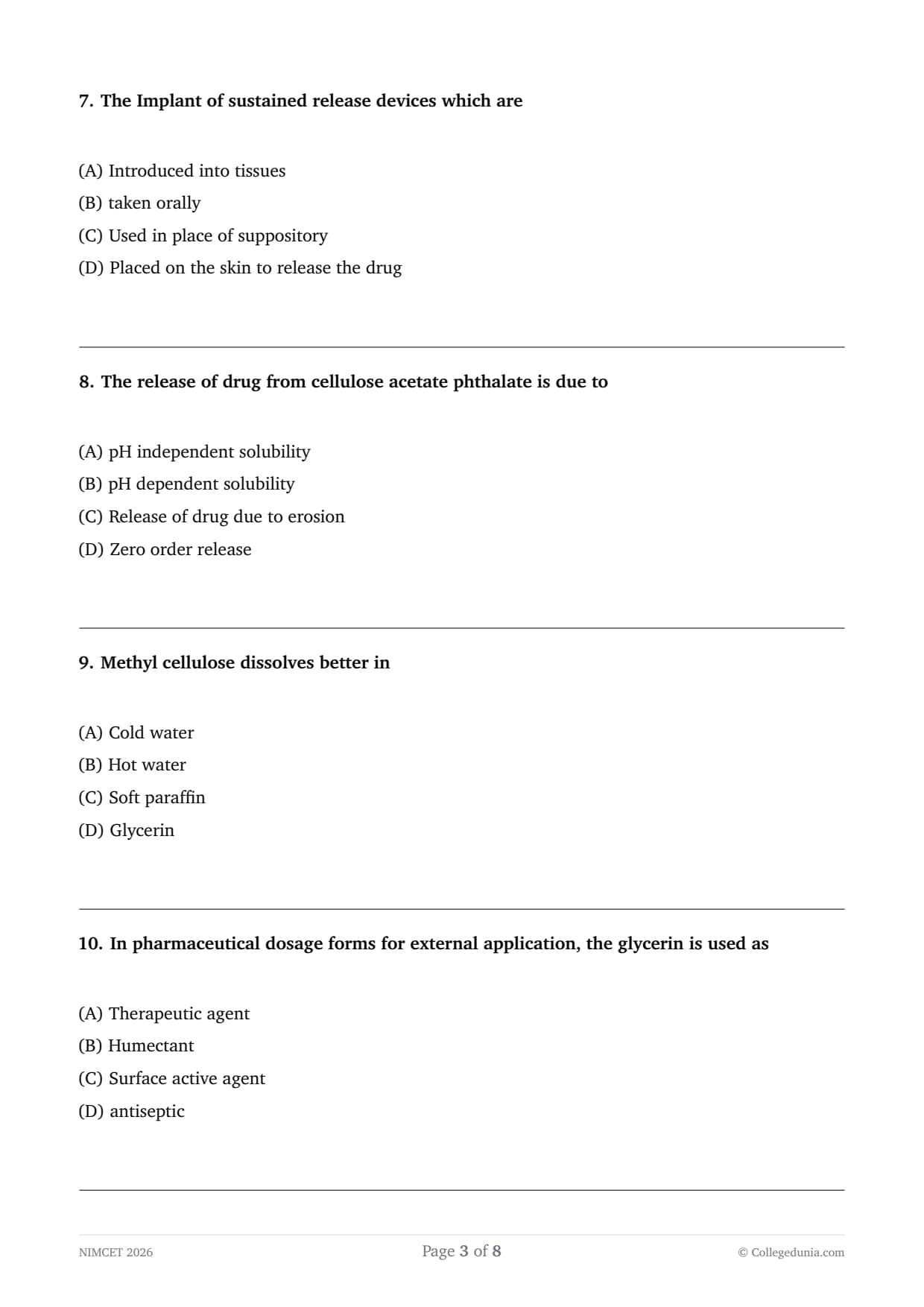
Question 7:

The Implant of sustained release devices which are

  • (A) Introduced into tissues
  • (B) taken orally
  • (C) Used in place of suppository
  • (D) Placed on the skin to release the drug
Correct Answer: (A) Introduced into tissues
View Solution


Step 1: Understanding the Concept:

Implantable drug delivery systems are sterile devices designed to be inserted into the body to release drugs at a controlled rate.


Step 2: Detailed Explanation:

Implants are placed directly into body tissues (such as subcutaneous, intramuscular, or specific organ sites) via minor surgical procedures or trocars.

Once in the tissue, they slowly release the drug over days, months, or even years, maintaining localized or systemic levels.

Examples include contraceptive rods or specialized chemotherapy delivery devices.


Step 3: Final Answer:

An implant is a device surgically introduced into tissues for sustained drug release.
Quick Tip: Implants are strictly sterile and must be biocompatible to avoid tissue rejection.


Question 8:

The release of drug from cellulose acetate phthalate is due to

  • (A) pH independent solubility
  • (B) pH dependent solubility
  • (C) Release of drug due to erosion
  • (D) Zero order release
Correct Answer: (B) pH dependent solubility
View Solution


Step 1: Understanding the Concept:

Cellulose acetate phthalate (CAP) is a widely used enteric coating polymer.


Step 2: Detailed Explanation:

CAP contains free carboxylic acid groups that are insoluble in the acidic environment of the stomach (low pH).

As the dosage form moves to the small intestine, the higher pH (above 6.0) causes the ionization of these carboxyl groups.

This ionization makes the polymer soluble, allowing the coating to dissolve and release the drug specifically in the intestine.


Step 3: Final Answer:

The mechanism of release is based on pH-dependent solubility.
Quick Tip: Enteric polymers protect acid-labile drugs or prevent stomach irritation by the drug.


Question 9:

Methyl cellulose dissolves better in

  • (A) Cold water
  • (B) Hot water
  • (C) Soft paraffin
  • (D) Glycerin
Correct Answer: (A) Cold water
View Solution


Step 1: Understanding the Concept:

Cellulose derivatives have unique solubility characteristics depending on the substitution pattern.


Step 2: Detailed Explanation:

Methyl cellulose is a non-ionic water-soluble polymer.

It exhibits a property called inverse solubility, meaning it is more soluble in cold water and becomes insoluble or forms a gel when heated.

When added to hot water, it tends to agglomerate, making uniform dissolution difficult.


Step 3: Final Answer:

Methyl cellulose shows better solubility and hydration in cold water.
Quick Tip: Always disperse methyl cellulose in hot water first, then add cold water to hydrate and dissolve it efficiently.


Question 10:

In pharmaceutical dosage forms for external application, the glycerin is used as

  • (A) Therapeutic agent
  • (B) Humectant
  • (C) Surface active agent
  • (D) antiseptic
Correct Answer: (B) Humectant
View Solution


Step 1: Understanding the Concept:

Topical formulations need ingredients to maintain moisture and prevent the formulation from drying out.


Step 2: Detailed Explanation:

Glycerin (or glycerol) is a polyol that is hygroscopic, meaning it attracts and holds water.

In external applications like creams and lotions, it acts as a humectant by keeping the skin hydrated and preventing the product from hardening due to evaporation.


Step 3: Final Answer:

Glycerin is primarily used as a humectant in topical products.
Quick Tip: Humectants are crucial in lotions to provide a cooling effect and maintain skin suppleness.


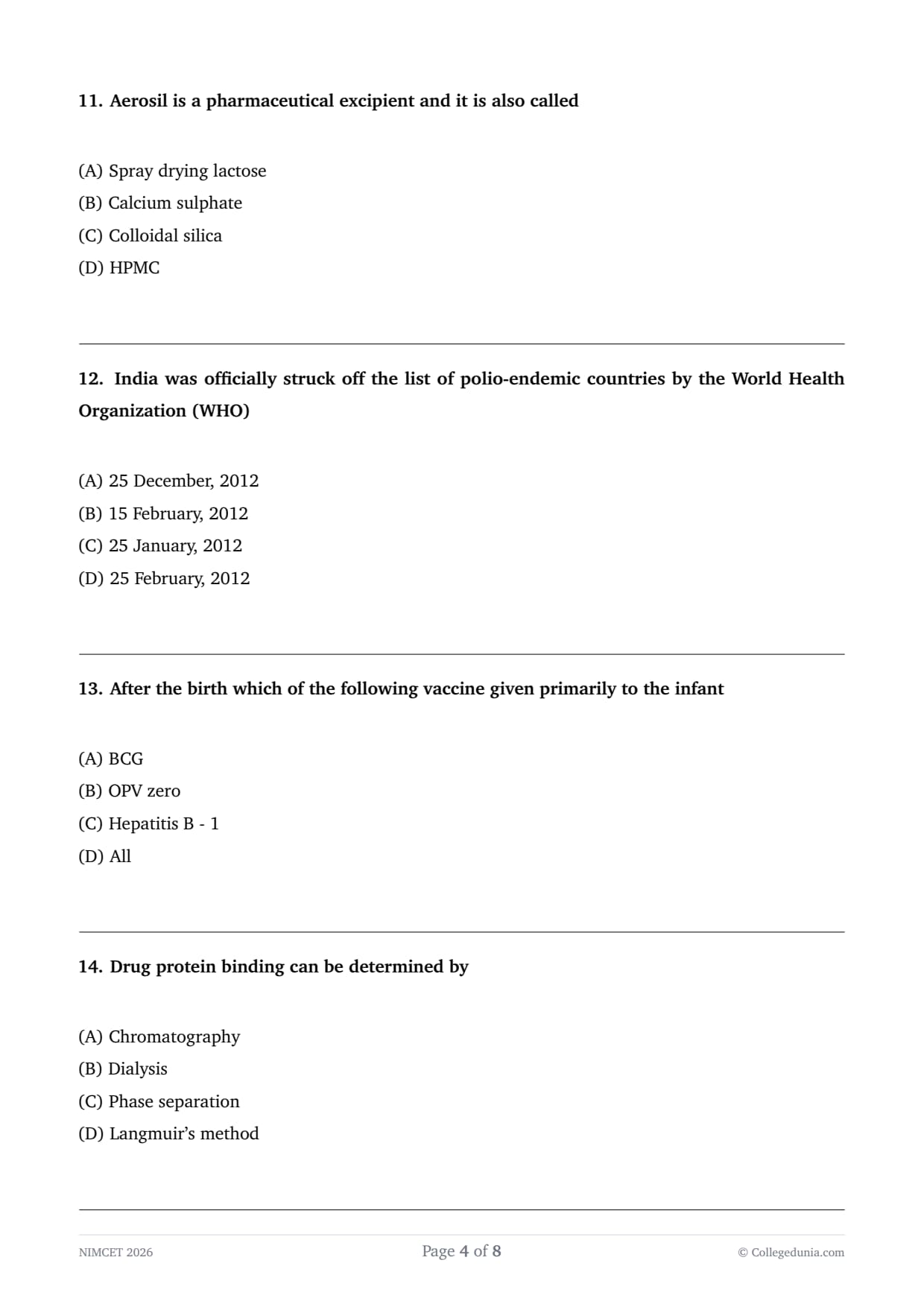
Question 11:

Aerosil is a pharmaceutical excipient and it is also called

  • (A) Spray drying lactose
  • (B) Calcium sulphate
  • (C) Colloidal silica
  • (D) HPMC
Correct Answer: (C) Colloidal silica
View Solution


Step 1: Understanding the Concept:

Aerosil is a brand name for a common pharmaceutical additive used to improve powder flow.


Step 2: Detailed Explanation:

Aerosil is chemically known as colloidal silicon dioxide or colloidal silica.

It is used in very small concentrations as a glidant to improve the flowability of granular materials during tableting and to prevent powder bridging.


Step 3: Final Answer:

Aerosil is commonly referred to as colloidal silica.
Quick Tip: Aerosil is highly effective as a glidant even at very low concentrations (0.1-0.5%).


Question 12:

India was officially struck off the list of polio-endemic countries by the World Health Organization (WHO)

  • (A) 25 December, 2012
  • (B) 15 February, 2012
  • (C) 25 January, 2012
  • (D) 25 February, 2012
Correct Answer: (D) 25 February, 2012
View Solution


Step 1: Understanding the Concept:

This is a factual question regarding global public health milestones in India.


Step 2: Detailed Explanation:

After a sustained effort and mass vaccination campaigns, India achieved a significant milestone by remaining polio-free for a year.

The WHO officially removed India from the list of polio-endemic countries on February 25, 2012.


Step 3: Final Answer:

The correct date for India being struck off the polio-endemic list by the WHO is 25 February, 2012.
Quick Tip: Public health awareness questions require memorizing dates of major health milestones.


Question 13:

After the birth which of the following vaccine given primarily to the infant

  • (A) BCG
  • (B) OPV zero
  • (C) Hepatitis B - 1
  • (D) All
Correct Answer: (D) All
View Solution


Step 1: Understanding the Concept:

The expanded program on immunization dictates specific vaccines to be administered immediately after birth.


Step 2: Detailed Explanation:

The standard birth dose immunization schedule includes:

1. BCG (Bacillus Calmette-Guérin) for tuberculosis protection.

2. OPV (Oral Polio Vaccine) - zero dose.

3. Hepatitis B birth dose.

Since all three are recommended at birth, the correct choice is "All".


Step 3: Final Answer:

All the listed vaccines (BCG, OPV zero, and Hepatitis B-1) are typically administered shortly after birth.
Quick Tip: Remember the "Birth Dose Trio": BCG, OPV, and Hep-B.


Question 14:

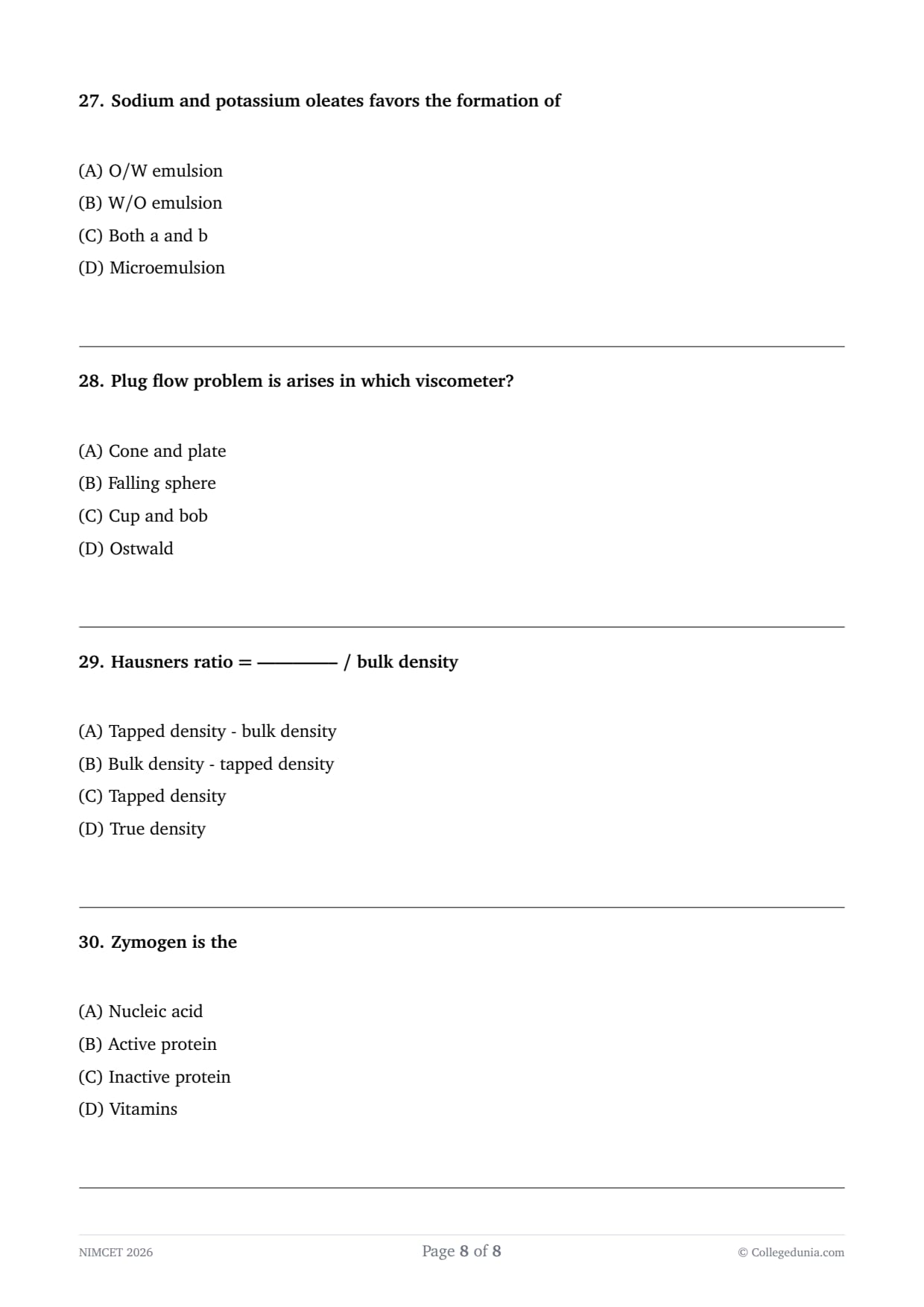
Drug protein binding can be determined by

  • (A) Chromatography
  • (B) Dialysis
  • (C) Phase separation
  • (D) Langmuir's method
Correct Answer: (B) Dialysis
View Solution


Step 1: Understanding the Concept:

Equilibrium dialysis is the standard laboratory technique to study the extent of drug-protein interaction.


Step 2: Detailed Explanation:

In equilibrium dialysis, a protein solution and the drug are placed on one side of a semi-permeable membrane.

The membrane allows the free drug to pass through but retains the protein and the protein-bound drug.

After reaching equilibrium, the concentration of the drug on both sides is measured, allowing the calculation of the fraction of drug bound to the protein.


Step 3: Final Answer:

Dialysis (specifically equilibrium dialysis) is the most common method to determine drug protein binding.
Quick Tip: Ultrafiltration and equilibrium dialysis are the two gold-standard techniques for protein binding studies.


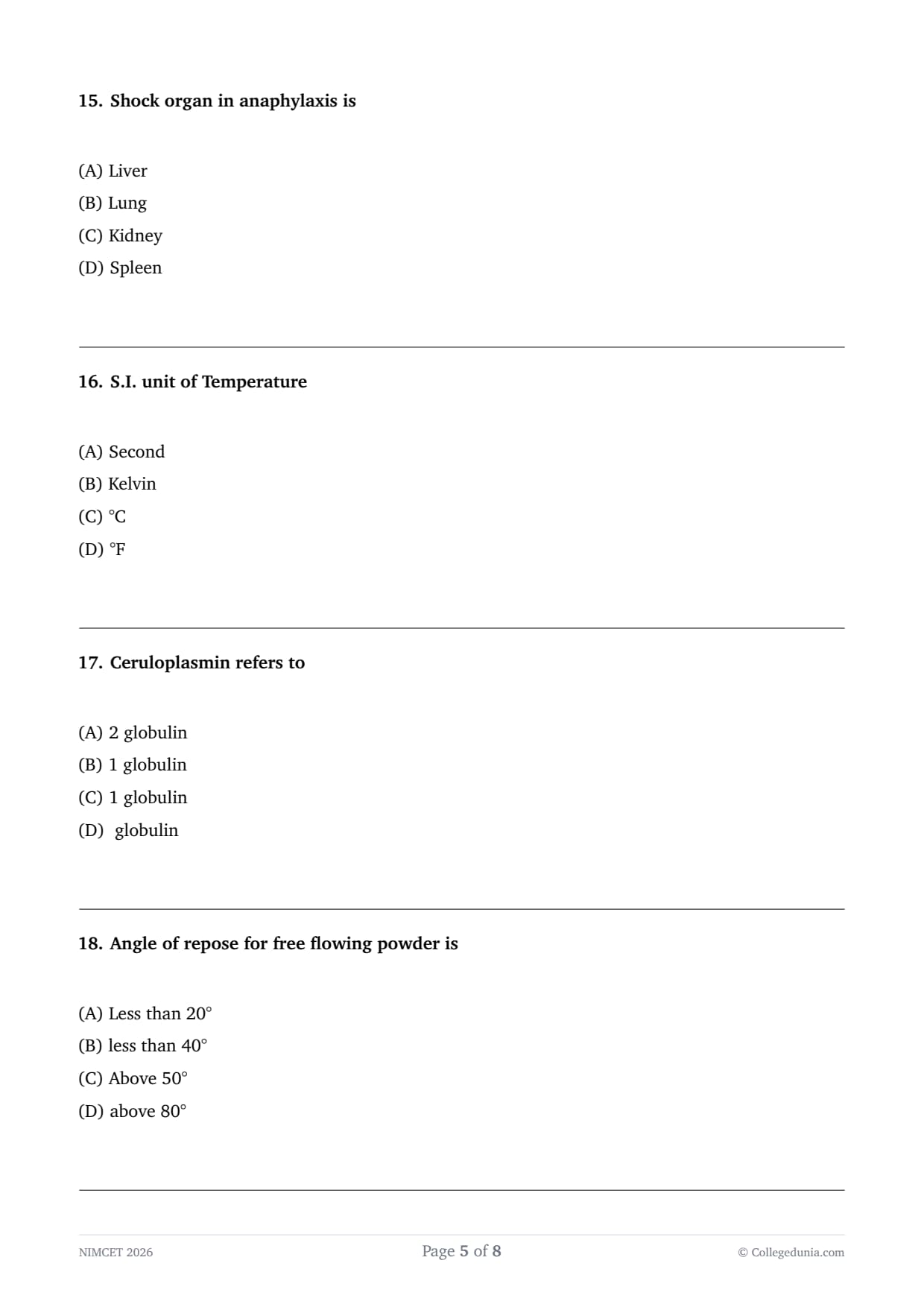
Question 15:

Shock organ in anaphylaxis is

  • (A) Liver
  • (B) Lung
  • (C) Kidney
  • (D) Spleen
Correct Answer: (B) Lung
View Solution


Step 1: Understanding the Concept:

Anaphylaxis is an acute, severe, systemic allergic reaction characterized by bronchoconstriction.


Step 2: Detailed Explanation:

The term "shock organ" refers to the organ most severely affected during an anaphylactic reaction.

In humans, the lung is primarily affected due to the release of histamine and other mediators causing airway constriction and respiratory distress, which is a hallmark of anaphylactic shock.


Step 3: Final Answer:

The lung is considered the shock organ in systemic anaphylaxis in humans.
Quick Tip: In guinea pigs, the lungs are also the primary shock organ, making them a common model for anaphylaxis.

NIPER JEE Exam Pattern

Parameter Details
Exam Name NIPER JEE (Joint Entrance Examination)
Conducting Body NIPER, SAS Nagar, Mohali
Mode of Exam Computer-Based Test (CBT)
Language English
Total Questions 200
Question Type Multiple Choice Questions (MCQs)
Duration 2 Hours (120 Minutes)
Correct Answer +0.5 Marks
Wrong Answer −0.125 Marks
Unattempted 0 Marks
Subjects Chemistry, Pharmacology, Biotechnology, Pharmaceutical Analysis, General Aptitude
Courses Offered M.Pharm, M.S. (Pharm), M.Tech (Pharm), MBA (Pharm), PhD
Syllabus Based On B.Pharm / M.Sc. (Graduation Level)

NIPER JEE 2026 Exam Analysis