



Bachelor of Science [B.S] (Geography: Geospatial Analysis of Environment)
bn5Mpn:
$21,000 /Yr

Bachelor of Science in Geography: Geospatial Analysis of Environment at Central Michigan University
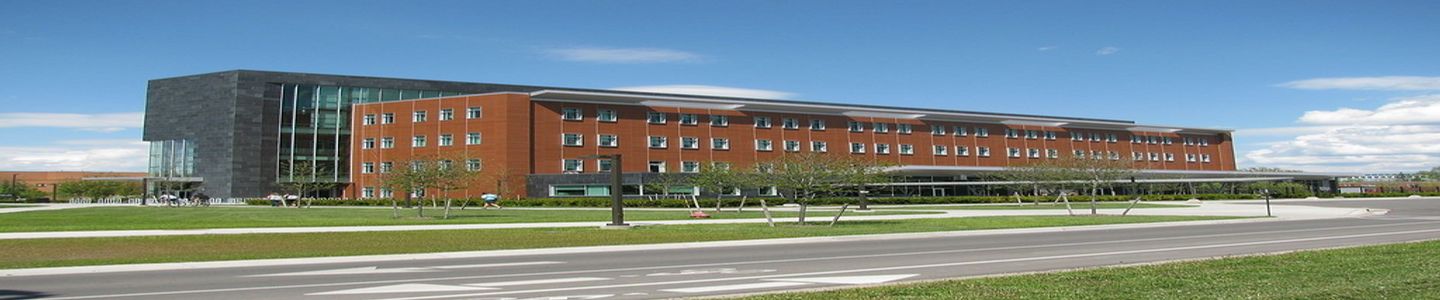
Central Michigan University’s Bachelor of Science in Geography with a concentration in Geospatial Analysis of Environment stands out as one of North America’s most practical pathways into the booming geospatial technology sector. Located in Mount Pleasant, Michigan, CMU offers a four-year undergraduate programme that combines cutting-edge GIS (Geographic Information Systems), remote sensing, and spatial analysis with fieldwork on the Great Lakes—one of the world’s most studied freshwater ecosystems.
For Indian students, this programme presents a compelling opportunity. Geospatial skills command a 30-45% salary premium in India’s job market, where the Smart Cities Mission drives relentless demand for GIS analysts and spatial data experts. CMU’s curriculum bridges global environmental challenges with locally grounded applied work, training you to become a geospatial intelligence analyst, environmental consultant, or urban planner in either the US or India.
The university boasts a 94.9% graduate placement rate and maintains 150 Indian students on campus, with an active Indian Student Association. CMU’s Institute for Great Lakes Research partnerships and EPA collaborations mean your coursework directly contributes to real conservation and policy work—not just theory. With 36 months of Optional Practical Training (OPT) available post-graduation and a strong alumni network in India’s geospatial sector, this degree opens doors across two continents.
Total programme cost sits at USD 81,600 over four years (approximately ?77.73 lakhs), with scholarships reducing that burden by up to USD 72,000 (approximately ?68.53 lakhs). Application deadlines fall in early August for Fall 2026 intake and mid-November for Spring 2027. English-language fluency requirements are IELTS 6.5 or TOEFL 79—slightly higher than CMU’s other science programmes, reflecting the technical writing demands of GIS reporting.
Cost of the Bachelor of Science Geography Programme at Central Michigan University
Understanding the total financial commitment is essential for Indian families evaluating study-abroad options. CMU’s international student fees for the Bachelor of Science in Geography: Geospatial Analysis of Environment break down as follows over the four-year programme.
Tuition stands at USD 20,400 per year (approximately ?19,43,668 per year at the current exchange rate of 95.18 INR/USD). On-campus housing averages USD 6,200 annually (approximately ?5,90,636), with meal plans costing approximately USD 4,800 per year (approximately ?4,56,864). Books, supplies, and course materials add approximately USD 2,000 per year (approximately ?1,90,360), while personal expenses and transport run approximately USD 1,669 annually (approximately ?1,58,805). Health insurance is mandatory for international students and costs approximately USD 1,200 per year (approximately ?1,14,216).
The total annual cost of attendance reaches approximately USD 35,869 per year (approximately ?34,15,549). Over four years, your gross expenditure totals approximately USD 143,476 (approximately ?1,36,62,196). However, merit scholarships available to international students typically reduce this by USD 5,000 to USD 18,000 per year, bringing your net annual cost to between USD 17,869 and USD 30,869 (approximately ?17,02,549 to ?29,39,049).
| Expense Category | Annual (USD) | Annual (INR) | 4-Year Total (USD) | 4-Year Total (INR) |
|---|---|---|---|---|
| Tuition | 20,400 | 1,94,367 | 81,600 | 7,77,468 |
| Housing | 6,200 | 59,064 | 24,800 | 2,36,256 |
| Meals | 4,800 | 45,686 | 19,200 | 1,82,744 |
| Books & Supplies | 2,000 | 19,036 | 8,000 | 76,144 |
| Personal & Transport | 1,669 | 15,881 | 6,676 | 63,524 |
| Health Insurance | 1,200 | 11,422 | 4,800 | 45,688 |
| Total Annual | 35,869 | 3,41,555 | 143,476 | 13,66,220 |
Most Indian families find that combining tuition scholarships with part-time work (up to 20 hours/week on-campus during term, unlimited during breaks) reduces the net annual cost to USD 20,000-25,000 (approximately ?19,03,600-23,79,500). Many students also reduce living costs by sharing off-campus housing at USD 450-550/month (approximately ?42,831-52,349), saving USD 2,000-3,000 annually compared to on-campus dorms.
Scholarships for International Students in CMU’s Geography Programme
Central Michigan University awards merit-based scholarships directly tied to academic achievement, with no separate application required beyond the admission process. These scholarships are the most significant lever for reducing your out-of-pocket cost.
The International President’s Award, CMU’s flagship merit scholarship, ranges from USD 5,000 to USD 18,000 per year for students demonstrating strong academic credentials. This award is renewable annually if you maintain a 2.75 GPA or higher. Indian applicants with 85%+ cumulative marks in 12th grade and demonstrated English fluency typically qualify for the mid-to-upper range of this award.
The International Scholar Award provides USD 4,000 per year for students with good academic records (typically 75-84% cumulative). The International Opportunity Award covers USD 1,000 per year for students who demonstrate potential despite slightly lower test scores or GPA. Some geography and environmental science departments offer discipline-specific scholarships of USD 500-2,000 per year to students pursuing work in GIS, remote sensing, or conservation—particularly valuable for your concentration.
Beyond merit scholarships, Indian students often qualify for need-based aid. The Free Application for Federal Student Aid (FAFSA) (opened to international students via CMU’s private loan partnerships) can yield USD 2,000-8,000 in additional federal work-study or institutional funding. CMU also partners with external scholarship bodies: the American Geophysical Union (AGU) offers fellowships of USD 5,000-10,000 for students pursuing environmental science, and India-based organizations like ICRIER and the Ministry of Human Resource Development sponsor select study-abroad fellowships worth USD 3,000-6,000.
A realistic scholarship package for a strong Indian applicant includes USD 12,000/year from CMU merit (President’s + Scholar combined) plus USD 3,000/year from external sources, totalling USD 15,000/year (approximately ?14,27,700) or approximately 42% of total annual costs. This brings your net annual expense to approximately USD 20,869 (approximately ?19,87,849), substantially lowering the family burden.
Admission Requirements for Central Michigan University Geography Programme
CMU’s Geography: Geospatial Analysis of Environment programme applies consistent academic standards across its science cohort, with specific emphasis on quantitative skills given GIS’s mathematical and computational demands.
Minimum academic requirements include a high school diploma or equivalent (12th pass certificate from a recognized Indian board: CBSE, ICSE, or state board). CMU expects a cumulative GPA of 2.5 or higher in your 12th-standard marks (students averaging 60%+ typically qualify). For Indian students, this translates to minimum 60% aggregate across all 12th-standard subjects; students in the 70-80% range are competitive for merit scholarships.
English language proficiency is non-negotiable. TOEFL (Test of English as a Foreign Language) score of 79 or above is the baseline; IELTS (International English Language Testing System) score of 6.5 or above is the alternative; Duolingo English Test score of 105 or above is increasingly accepted. These scores are slightly higher than CMU’s general admission threshold (TOEFL 61/IELTS 6.0) because geography coursework involves technical report writing, GIS documentation, and complex spatial analysis communication. Strong students aim for TOEFL 90+ or IELTS 7.0+ to demonstrate confidence in academic writing.
A WES (World Education Services) or Naces-approved credential evaluation for your 12th-standard transcript is mandatory. This evaluation typically costs USD 200-300 (approximately ?19,036-28,554) and takes 5-10 business days. Submit this alongside your application to CMU’s admissions office.
Additional requirements include a Statement of Purpose (250-500 words explaining why you want to study geospatial science and your career goals) and one academic reference letter (ideally from a teacher in mathematics, physics, chemistry, or geography). While SAT scores are not required for international applicants, many competitive applicants submit SAT Math scores of 550+ or ACT STEM composite of 24+ to strengthen their profile, particularly if seeking maximum scholarship money.
| Requirement | Minimum | Competitive Range | Indian Student Notes |
|---|---|---|---|
| 12th Standard Pass Marks | 60% | 70-80% | CBSE, ICSE, or state board accepted |
| TOEFL | 79 | 90-100 | Academic English required for technical writing |
| IELTS | 6.5 | 7.0-7.5 | Accepted as TOEFL alternative |
| Duolingo English Test | 105 | 115-130 | Fastest, cheapest to retake |
| WES Credential Eval | Required | Within 5 days of app | USD 200-300; use online option |
| SAT Math (optional) | 550 | 650+ | Strengthens scholarship case; not required |
Indian applicants commonly face one admissions question: "Will I get into CMU?" The answer is yes for students with 60%+ aggregate marks and TOEFL 79+. However, scholarship viability (which significantly impacts net cost) improves dramatically with 70%+ aggregate and TOEFL 90+. Plan accordingly: weaker profiles still gain admission but may pay closer to full price; stronger profiles unlock meaningful merit funding.
Application Process and Timeline for CMU Geography Programme
The CMU application process is straightforward and online, though timing is crucial for international students juggling examination schedules and credential evaluations.
Applications open in September each year for Fall intake (September-December) and Spring intake (January-April). For Fall 2026, the application window opens in September 2025 and closes on August 1, 2026. For Spring 2027, the window closes on November 15, 2026. International students are strongly encouraged to apply by early July for Fall intake and by early October for Spring intake to secure on-campus housing and maximize scholarship funding (which is often allocated on a rolling basis as applications arrive).
Step 1 involves creating your applicant portal on CMU’s website and paying the non-refundable application fee of USD 55 (approximately ?5,235). You will then submit your transcripts (12th-standard marks), English test score (TOEFL/IELTS/Duolingo), WES credential evaluation, Statement of Purpose (250-500 words outlining your interest in geospatial science and post-graduation plans), and one academic reference letter (emailed directly by your teacher or school principal).
Step 2 requires requesting your WES evaluation. Visit wes.org, upload scans of your 12th-standard certificate and marks sheet, and request an evaluation. WES will mail an official report directly to CMU within 7-10 days. Cost is USD 200 for standard evaluation or USD 300 for rush (3-5 days).
Step 3 involves demonstrating financial capacity. CMU requires an Affidavit of Support (Form I-864 equivalent) showing that your family can cover at least USD 40,000/year (approximately ?38,07,200). Submit a bank statement (FD, savings account, or parent’s business/employment documents) covering at least this amount. If you have been awarded a CMU merit scholarship, that amount reduces the required financial documentation proportionally.
Step 4 is visa preparation. Once admitted and you have issued an I-20 (Affidavit of Eligibility for F-1 Status), you will apply for your F-1 student visa at the US Embassy in New Delhi, Mumbai, Hyderabad, or Chennai. Processing takes 1-4 weeks (expedited service available for USD 200). You will need your passport (minimum 6 months validity), I-20, financial documents (bank statements), admission letter from CMU, visa fee receipt (USD 160, approximately ?15,229), and proof of English language test. Most Indian applicants receive visa approval within 2 weeks of application.
| Milestone | Timeline | Action Items |
|---|---|---|
| Application Opens | September 2025 | Create CMU portal; gather documents |
| Early Application Deadline | Early July 2026 | Submit app, transcripts, English test, SOP |
| Final Fall Deadline | August 1, 2026 | All materials must be in CMU’s system |
| WES Evaluation (parallel) | July 2026 | Order WES; ensure report reaches CMU by Aug 1 |
| Admission Decision | August-September 2026 | CMU rolls out acceptances; merit scholarships awarded |
| I-20 Issuance | September 2026 | Receive once you submit enrollment deposit |
| Visa Application | September-October 2026 | Apply at nearest US Embassy; allow 2-4 weeks |
| Fall Semester Begins | September 2, 2026 | On-campus orientation, course registration |
A common error: submitting your application before your WES evaluation arrives. Always request WES by early July to ensure the report reaches CMU by the August 1 deadline. If WES delays, contact CMU admissions immediately—many will hold your decision for 2-3 weeks pending the credential evaluation, but this risks housing assignment.
Campus Life and Lifestyle at Central Michigan University
Mount Pleasant, Michigan, is a college town of 25,000 people in the heart of Michigan’s Lower Peninsula. CMU’s 600-acre campus sits adjacent to the Chippewa River, with hiking trails, kayaking, and camping within 30 minutes. Fall colors and winter snow are iconic here; expect temperatures ranging from minus 10 degrees Celsius in January to plus 25 degrees Celsius in July. Indian students typically describe the weather as "manageable with proper clothing"—winter is real, but residential life quickly becomes community-driven and indoor-focused.
On-campus housing is mandatory for first-year and second-year students. Dorms are shared (2-4 per room), equipped with internet, and include laundry facilities. Many dorms have a kitchen area for preparing home-cooked meals if you feel homesick for Indian food. Third- and fourth-year students transition to off-campus apartments and shared houses, reducing housing costs to USD 450-550/month (approximately ?42,831-52,349) compared to USD 6,200/year (approximately ?59,064) for on-campus housing.
The Indian Student Association (ISA) is active and well-established on campus with approximately 150 Indian undergraduates, 50 graduate students, and several faculty members of Indian origin. ISA organizes Diwali celebrations, Holi events, Bollywood movie nights, and monthly potluck dinners. You will find curry, samosa, and roti at ISA gatherings, as well as a strong peer support network for navigating visa regulations, culture shock, and homesickness. Indian students often group-house near campus, creating informal "Little India" clusters that ease the transition.
Extracurricular involvement is high. Geography students join the Student Geospatial Club, which participates in national GIS competitions, conducts fieldwork along the Great Lakes, and invites visiting GIS professionals from environmental consulting firms. Environmental organizations like the Conservation Club and Sustainability Committee welcome geospatial students. Intramural sports (basketball, cricket, badminton) are popular among Indian students, and CMU’s recreational facilities—gym, pool, climbing wall, sports fields—are included in your student fees.
Dining options range from CMU’s dining hall (included in meal plan; serves some vegetarian and Indian-friendly options) to off-campus restaurants. A 15-minute drive reaches several Indian restaurants serving North and South Indian cuisine. Grocery stores stock dal, rice, spices, and paneer at reasonable prices. Many Indian students cook communally—sharing ingredients and preparing meals in shared apartments is both economical and culturally centering.
Social life is integrated. The town hosts an annual International Festival where international students showcase their culture. International student services provide free assistance with F-1 visa regulation compliance (important for work authorization, travel, and employment). CMU’s Multicultural Center offers counseling, cultural competency training, and networking.
Graduate Outcomes and Career Placement for Geography Graduates
Central Michigan University reports a 94.9% placement rate for recent graduates within six months of graduation—the programme is explicitly data-driven about outcomes. For geography and geospatial science majors, the three most common pathways are environmental consulting, GIS analysis, and urban/regional planning.
Environmental consulting firms (e.g., AEW, Stantec, AECOM) hire CMU geospatial graduates as GIS analysts, environmental data specialists, and project coordinators. These roles involve using ArcGIS, QGIS, and remote sensing to conduct environmental impact assessments, land-use mapping, water quality monitoring, and climate adaptation planning. Entry-level salary ranges from USD 40,000 to USD 55,000 per year (approximately ?38,07,200 to ?52,34,900). With 3-5 years of experience and advanced skills (Python scripting, cloud GIS, machine learning), salaries reach USD 65,000-80,000 (approximately ?61,86,700 to ?76,14,400).
Government agencies and non-profits employ CMU graduates in roles such as GIS Specialist (US Fish and Wildlife Service, EPA, state environmental departments), Cartographer (USGS, state geological surveys), or Resource Manager (National Parks Service, state conservation bureaus). These positions offer strong benefits, job security, and mission-driven work. Entry salary: USD 42,000-52,000 (approximately ?40,02,756 to ?49,53,360). Advancement to Senior GIS Analyst or Program Manager positions yields USD 60,000-75,000 (approximately ?57,10,800 to ?71,38,500) within 7-10 years.
Urban planning and regional development firms (e.g., AECOM, Jacobs, Esri resellers) hire CMU graduates as GIS specialists and data analysts for smart city projects, transportation planning, and land-use optimization. These roles are particularly relevant to India’s Smart Cities Mission—CMU alumni working in India’s urban development sector have expanded significantly since 2015. Entry salary: USD 38,000-48,000 (approximately ?36,18,840 to ?45,68,640). Senior positions: USD 70,000-90,000 (approximately ?66,62,600 to ?85,66,200).
For Indian students specifically: India’s geospatial market offers salary premiums of 30-45% for graduates with advanced skills (Google Earth Engine, Python, cloud GIS platforms like AWS GIS). Average GIS analyst salary in India is approximately ?10,53,845 per year; entry-level approximately ?7,91,440; experienced (8+ years) approximately ?12,02,218. However, the real opportunity lies in India’s Smart Cities Mission, which drives demand for GIS professionals capable of change detection, land-use classification, and spatial data visualization. CMU graduates returning to India with US work experience command approximately ?15,00,000-20,00,000 per year in senior roles.
Notable CMU graduate examples include Jordan Storey (Transportation Planner, State of Michigan Department of Transportation), Mike Visscher (GIS Analyst, Michigan Department of Environmental Quality), and Anthony Kowalchick (Geographic Information Sciences Analyst, AEW Engineering). Many of these professionals later transition to consulting firms, start-ups, or return to India to lead geospatial divisions in Indian companies.
The post-graduation trajectory is clear: CMU’s geospatial science degree qualifies you for immediate employment in three continents—North America (US/Canada), Europe, and Asia (India increasingly). The skills are globally portable; the salary premiums favor English-fluent professionals with advanced tools expertise, which CMU’s curriculum emphasizes.
Visa, Work Authorization, and Post-Graduation Pathway in the United States
All international students at CMU pursue the F-1 student visa status, granted after CMU issues an I-20 (Certificate of Eligibility for Nonimmigrant Student Status) upon your enrollment deposit. The F-1 visa allows you to study full-time in the US for the duration of your programme plus one month of grace period (to settle affairs and depart or continue on work authorization).
During your four-year undergraduate programme, you are permitted to work on campus (at CMU’s library, dining hall, student center, or department offices) up to 20 hours per week during the academic term and up to 40 hours per week during scheduled breaks (winter break, spring break, summer). This employment helps offset living costs—typical student worker wage is USD 15-17/hour (approximately ?1,428-1,619 per hour), yielding USD 300-340 per week (approximately ?28,554-32,361) during term and USD 600-680 per week (approximately ?57,108-64,722) during breaks. Many students earn USD 3,000-5,000 (approximately ?2,85,540-4,75,900) per summer, reducing family contributions substantially.
Optional Practical Training (OPT) is the critical post-graduation work authorization. Upon graduation, you can apply for OPT, which allows you to work in your field of study for a designated period. CMU’s geography/geospatial programme qualifies for the STEM (Science, Technology, Engineering, Mathematics) extension under current USCIS regulations, granting you 36 months of OPT work authorization (12 months base plus 24-month STEM extension). You can work for US employers immediately after graduation while searching for visa sponsorship for long-term employment (typically H-1B visa, available after you have worked 1-2 years and employer demonstrates need).
During your 36 months of OPT, you are free to change employers, negotiate salary, and gain real-world GIS and environmental consulting experience. Many CMU graduates secure H-1B sponsorship within 18-24 months, particularly if employed by large consulting firms (AEW, AECOM, Stantec) that sponsor international talent. H-1B visa requires your employer to demonstrate that no US workers are available for your role and that your salary meets the wage threshold (currently USD 60,000+, approximately ?57,10,800+). Senior or specialized GIS roles easily exceed this threshold.
Green Card (permanent residency) eligibility begins after H-1B sponsorship, but timelines vary (3-7 years on average given current immigration backlogs). However, many CMU graduates return to India after 3-5 years of US work experience, commanding premium salaries in India’s geospatial sector due to international expertise and English fluency.
For Indian students: the F-1 visa process is straightforward. Apply at the US Embassy in New Delhi, Mumbai, Hyderabad, or Chennai after receiving your CMU I-20. You will need proof of financial capacity (family bank statements covering USD 40,000+, approximately ?38,07,200+), your I-20, passport, SEVIS I-901 fee payment confirmation (USD 350, approximately ?33,313), and your English test score. Visa approval typically takes 2-4 weeks. Medical examination (chest X-ray and vaccinations) is required and can be completed at authorized panel physicians in any Indian city.
Health insurance is mandatory for all F-1 students and costs approximately USD 1,200/year (approximately ?1,14,216), typically included in your enrollment cost. This insurance covers medical and dental care and is a legal requirement for visa maintenance.
Peer Programme Comparison: CMU Geography vs. Competitors
How does CMU’s geography programme compare to other major US universities? The table below compares CMU with three strong alternatives: Pennsylvania State University (Penn State), University of Wisconsin-Madison, and UC Davis. Each institution offers excellent geospatial science education, but with different strengths and costs.
| Institution | Annual Tuition (Intl) | Annual Total Cost | 4-Year Total Cost (USD) | Scholarship Range | GIS Ranking & Specialization | Geographic Location |
|---|---|---|---|---|---|---|
| Central Michigan University | USD 20,400 | USD 35,869 | USD 143,476 | USD 5K-18K/year | Regional focus; Great Lakes research | Mount Pleasant, Michigan |
| Penn State University (GIS Master’s) | USD 26,448 | USD 38,000-42,000 | USD 76,000-84,000 (2-year) | Limited intl merit; need-based available | Top 50 globally; strong online option | University Park, Pennsylvania |
| University of Wisconsin-Madison | USD 28,718 | USD 40,000-45,000 | USD 160,000-180,000 (4-year) | Minimal merit; need-based for US only | Top 20 geography globally; sunsetting GIS degree | Madison, Wisconsin |
| UC Davis | USD 29,000 | USD 42,000-48,000 | USD 168,000-192,000 (4-year) | Limited intl merit; CA resident preference | Strong environmental GIS; climate focus | Davis, California |
Key insights: CMU’s tuition is the lowest of the four, at USD 20,400/year compared to Penn State’s USD 26,448, UW-Madison’s USD 28,718, and UC Davis’s USD 29,000. Total four-year cost at CMU (approximately ?1,36,62,196) is significantly lower than competitors, especially when you factor in CMU’s aggressive international merit scholarships (USD 5K-18K/year). After merit aid, your CMU net cost drops to approximately USD 17,869-30,869/year (approximately ?17,02,549-29,39,049/year), whereas competitors offer minimal international merit, making their net cost remain near full price.
Academically, Penn State and UW-Madison rank higher globally in geography subject rankings (Top 50 and Top 20 respectively vs. CMU’s regional ranking). However, UW-Madison is sunsetting its Master of Science in Cartography & GIS program in late 2026, making it a less stable option for international students concerned about programme continuity. Penn State’s GIS Master’s programme is excellent but requires a prior bachelor’s degree and is research-heavy, whereas CMU’s undergraduate programme provides hands-on fieldwork and employer partnerships immediately.
For Indian students balancing cost, practicality, and outcomes: CMU emerges as the strongest value. You pay the least tuition, receive the most generous merit scholarships, graduate with immediately employable skills (not research credentials), and benefit from CMU’s strong placement rate (94.9%) and alumni network in India’s geospatial sector. Competing programmes cost 40-50% more and offer no comparative advantage in post-graduation employment outcomes for undergraduate geography degrees.
Frequently Asked Questions: Geography Programme at Central Michigan University
1. Do I need advanced mathematics or programming skills to enter the geography programme?
No, but you must be willing to learn. CMU’s geography curriculum begins with foundational GIS courses (Introduction to GIS, Remote Sensing Fundamentals) that assume no prior coding experience. However, the programme ramps quickly into spatial analysis, which requires algebra and basic statistics. If your 12th standard marks were weak in mathematics, consider completing a pre-arrival online course (Khan Academy algebra or Coursera’s Statistics Foundations—both free) to refresh concepts. Python and spatial SQL are taught in later years. Strong students with no programming background graduate and succeed; weak math skills plus avoidance of remedial learning lead to struggles in junior and senior years.
2. Can I complete the geography degree in three years or work part-time during studies?
The four-year curriculum is structured and cannot be compressed to three years. You can take summer courses to accelerate degree completion by one semester (graduating 4.5 years), but CMU does not offer a compressed three-year track. You can work part-time (up to 20 hours/week on campus during term; unlimited during summer breaks), and many Indian students do, working in the library, dining hall, or campus offices to earn USD 300-340/week. However, balancing work and full-time coursework requires strong time management—do not underestimate the workload of field labs and GIS projects.
3. What is the difference between the "Geography: Geospatial Analysis of Environment" and "Geography: Urban and Community Planning" concentrations?
Both concentrate on geography but emphasize different applications. Geospatial Analysis of Environment (your programme) focuses on environmental monitoring, climate data, ecosystem mapping, remote sensing, and natural resource management—ideal if you want to work on conservation, environmental consulting, or climate adaptation. Urban and Community Planning emphasizes city planning, transportation networks, social policy, and human geography—suited for urban planners, municipal government roles, and community development. If undecided, both share foundational GIS and statistics courses; you choose your concentration in sophomore year, allowing time to explore both before committing.
4. Are there guaranteed internships or job placements upon graduation?
CMU does not guarantee internships or placements, but the Career & Professional Development Center connects students with employers. Geography and geospatial students typically secure summer internships (unpaid or USD 15-18/hour, approximately ?1,428-1,714 per hour) during sophomore and junior years through the Center’s database, campus recruiting events, and faculty referrals. The 94.9% placement rate reflects strong outcomes but does not mean every student is guaranteed employment—success depends on your initiative in applying, interviewing well, and building a portfolio of GIS projects. Many students accept entry-level environmental or GIS roles immediately after graduation; a smaller cohort pursues graduate degrees or returns to India.
5. Can I intern or work in India during summer breaks, and how does that affect my visa status?
Yes, but with limitations. During scheduled breaks (winter, spring, summer), you can work outside the US if you maintain full-time enrollment status in your programme. However, working in India requires your employer to comply with US visa regulations—most Indian employers are unfamiliar with this and will not hire F-1 students. The practical approach: take a summer internship in the US (paid USD 15-18/hour, approximately ?1,428-1,714 per hour) or return home for unpaid experience with family contacts. Some students conduct remote GIS work for US firms during summer while in India, which is technically permissible but operates in a grey area—confirm with CMU’s International Student Services before pursuing this. After graduation on OPT, you are free to work for any employer in your field globally; at that point, Indian employers readily hire you.
6. How do I transition from F-1 student status to H-1B work visa or permanent residency after graduation?
After graduation, you apply for OPT (Optional Practical Training) within 60 days, which grants 36 months of work authorization in your field. During these three years, you work for US employers and build experience. Your employer can sponsor an H-1B visa (typically filed in April each year for October start; your employer bears the sponsorship costs of approximately USD 1,500-2,500, approximately ?1,42,770-2,37,950). The USCIS caps 65,000 H-1B visas annually, meaning competition is fierce—your employer must demonstrate they cannot hire a US worker and that your salary meets thresholds (USD 60,000+, approximately ?57,10,800+). For geography/GIS roles, H-1B sponsorship is standard because demand exceeds US worker supply. Green Card sponsorship follows after H-1B approval, adding another 3-7 years. Alternatively, return to India after OPT and leverage your US experience to command premium salaries in India’s geospatial sector without pursuing permanent US residency.
8EJTse
| Year | 1st Year Fees |
|---|---|
| Tuition Fees | $21000 |
XA/HUy
| 3PAU4M | N4s6oj |
|---|---|
| 2023 | $20400 |
| 2021 | $18936 |
mbcuVI


3o6p3A
| 6YtxFj | a+VJO9 | sFGV92 | +zy2Nq | |
|---|---|---|---|---|
| Comindware Scholarship | NDHjH0$ 4,000/Yr$4,000 | 70v4DRApprenticeship | +zy2NqMerit-Based | |
| Forktip Women’s- Innovation Scholarship | NDHjH0Variable Amount | 70v4DRBachelor | +zy2NqCollege-Specific | |
| Ritchie-Jennings Memorial Scholarship Program | NDHjH0$ 10,000/Yr$10,000 | 70v4DRBachelor | +zy2NqMerit-Based | |
| Axol Science Scholarship | NDHjH0$ 2,000/Yr$2,000 | 70v4DRBachelor | +zy2NqCompany-Sponsored | |
| VueVille Future Technology Scholarship | NDHjH0$ 1,000/Yr$1,000 | 70v4DRBachelor | +zy2NqMerit-Based | |
| R&D Systems Scholarship | NDHjH0$ 1,500/Yr$1,500 | 70v4DRBachelor | +zy2NqMerit-Based |
FfUuzJ
| 8MIU1T | S2h7Mt | BxsfMK | uN65io | bwRvnp |
|---|---|---|---|---|
-- | USD 21,000 /Yr |
| ||
-- | USD 17,695 /Yr |
|


Do you think the Dates are wrong ? Report Here
rd7VuE
qd/VKU



Comments