



Bachelor of Business Administration [B.B.A] (Finance)
$21,000 /Yr

Bachelor of Business Administration (B.B.A) in Finance at Central Michigan University
Central Michigan University (CMU), established in 1892 and located in Mount Pleasant, Michigan, offers a highly regarded Bachelor of Business Administration degree with a specialization in Finance. This four-year undergraduate programme is a top choice for Indian students seeking to build careers in financial analysis, corporate finance, investment banking, and risk management in the United States.
The Finance B.B.A. at CMU combines rigorous analytical training with practical experience, preparing graduates to excel in a competitive global finance sector. With a median starting salary of ?57,27,477 (USD 60,023), CMU’s Finance programme delivers strong return-on-investment for international students. The university ranks #260 nationally, while its Finance major ranks #120 among U.S. business schools, offering exceptional value and career outcomes.
Indian students benefit from comprehensive support through the Office of International Students and Scholar Services, with over 150 Indian nationals currently enrolled and an active Indian Student Association on campus. F-1 visa eligibility, 36-month STEM extension opportunities for Optional Practical Training (OPT), and strong alumnus networks in technology and finance hubs make CMU an excellent pathway to U.S. work authorization and career growth.
Finance B.B.A. Programme Structure and Curriculum
Central Michigan University’s Finance B.B.A. is a 120-credit, four-year full-time programme delivered across eight semesters. The curriculum integrates foundational business coursework with specialized finance modules covering corporate finance, investments, financial analysis, and risk management. Students complete core courses in accounting principles, managerial accounting, financial reporting, and auditing alongside quantitative methods and business strategy.
The Finance specialization requires students to take courses such as Corporate Finance (covering capital budgeting, dividend policy, and corporate valuation), Investments and Portfolio Management, Financial Markets and Institutions, Financial Analysis, and Derivatives and Fixed Income Securities. Upper-level electives allow students to tailor their education toward areas like international finance, merger and acquisitions, venture capital, or treasury management.
| Semester | Core Courses | Credits |
|---|---|---|
| Semesters 1-2 | General Education, Accounting I & II, Business Fundamentals | 30 |
| Semesters 3-4 | Corporate Finance, Investments, Managerial Accounting, Economics | 30 |
| Semesters 5-6 | Financial Analysis, Risk Management, Financial Institutions, Electives | 30 |
| Semesters 7-8 | Advanced Finance Topics, Capstone Project, Electives | 30 |
Beyond coursework, students gain practical experience through internships with Fortune 500 companies, local financial institutions, and investment firms. CMU’s location in mid-Michigan provides access to regional banking headquarters and financial centers, with many students completing summer internships and converting them to full-time offers post-graduation.
Admission Requirements for Finance B.B.A.
Central Michigan University welcomes international students and maintains clear, transparent admission standards for the Finance B.B.A. programme. Undergraduate admission requires a high school diploma (or equivalent qualification such as 10+2 from an Indian board), a minimum cumulative grade point average of 2.5 in STEM subjects, and standardized English proficiency test scores.
For Indian applicants, the following core requirements apply: high school average of 60-70% in the best four subjects (excluding Hindi and Physical Education), strong performance in mathematics (algebra II minimum; pre-calculus preferred), and demonstrated competency in English. CMU accepts TOEFL (minimum 61), IELTS (minimum 6.0), or Duolingo English Test (minimum 95) as proof of English proficiency.
Additionally, international students must submit official transcripts evaluated through credential evaluation services such as WES (World Education Services). Applicants with strong academic records in commerce or science streams have a competitive advantage. CMU’s 91% acceptance rate reflects an accessible yet quality-focused admissions process, with most admitted students scoring above the minimum requirements. SAT/ACT scores are recommended but not mandatory for most international applicants.
Application Process and Deadlines
Central Michigan University operates on a rolling admissions basis, meaning applications are reviewed as received, and decisions are made continuously throughout the admission cycle. This process benefits early applicants with faster decisions and greater financial aid availability. The university offers Fall and Spring semester intake options, each with distinct application deadlines.
| Intake Term | Application Deadline | Enrolment Date |
|---|---|---|
| Fall 2026 | 15 July 2026 | August 2026 |
| Spring 2027 | 15 November 2026 | January 2027 |
| Fall 2027 | 15 July 2027 | August 2027 |
The application process involves submitting the CMU online application form, official high school transcripts, English proficiency test scores, and a statement of purpose. International students must also provide evidence of financial support (Affidavit of Support) and a valid passport copy. Credential evaluation through WES typically takes 10-15 business days, so plan accordingly before the deadline. Once admitted, international students receive an I-20 form required for F-1 visa application at the U.S. Embassy in India.
Programme Cost and Fee Breakdown
International students pursuing the Finance B.B.A. at Central Michigan University pay standard international tuition rates. The annual international tuition for the B.B.A Finance programme is USD 20,400, equivalent to approximately ?19,38,672 based on the current exchange rate of 95.18 INR per USD. This cost covers tuition for up to 18 credit hours per semester.
Beyond tuition, students must budget for additional mandatory expenses. Housing costs vary depending on accommodation choice: on-campus dormitory residence (mandatory for first two years) averages USD 6,510 per year (?6,19,287), while off-campus rentals range from USD 450-550 per month (?42,831-52,349), or approximately USD 5,400-6,600 annually (?5,14,000-6,28,000). A meal plan for on-campus residents costs approximately USD 6,392 per year (?6,08,341), while independent students budget USD 300-350 monthly (?14,277-16,823).
Books, course materials, and supplies average USD 3,500 per year (?3,33,130). International students must maintain mandatory health insurance through CMU’s plan, which costs approximately USD 1,550 annually (?1,47,529). Personal expenses, transportation, and miscellaneous costs add USD 2,000-2,500 per year (?1,90,360-2,37,950). The total estimated annual cost for international Finance B.B.A. students is approximately USD 39,000-40,000 (?37,13,000-38,07,000), or USD 156,000-160,000 (?14,85,000-15,23,000) for the complete four-year degree.
Scholarships and Financial Aid
Central Michigan University provides substantial financial support for international students, with scholarship awards ranging from USD 1,000 to USD 18,000 per year. These merit-based scholarships are awarded automatically upon admission based on academic credentials, English proficiency test scores, and overall academic profile, with no separate application required.
| Scholarship Name | Award Amount (USD/Year) | INR Equivalent |
|---|---|---|
| International Presidents Award | 8,952 | ?8,52,000 |
| International Scholar Award | 4,000 | ?3,81,000 |
| International Opportunity Award | 1,000 | ?95,000 |
| Business School Merit Awards | 500-3,000 | ?47,500-2,85,000 |
Students with exceptional TOEFL/IELTS scores (TOEFL 100+, IELTS 7.0+) and strong academic records (equivalent of 85%+) often qualify for the maximum scholarship tier. Scholarships are renewable annually, provided students maintain a minimum GPA of 3.0 and full-time enrolment status. Beyond scholarships, international students are eligible for part-time employment on campus through work-study programmes, and may work up to 20 hours per week during regular semesters (full-time during authorized breaks). Post-graduation, F-1 visa holders qualify for Optional Practical Training (OPT), permitting up to 36 months of work authorization for STEM-related employment.
Student Life and Campus Experience
Central Michigan University’s Mount Pleasant campus spans over 700 acres and offers a vibrant student community with extensive facilities and resources. The university houses approximately 16,000 students, creating a balanced blend of residential college experience with access to Big Ten academic networks and resources. On-campus housing is mandatory for first and second-year students, fostering community engagement and convenient access to academic facilities.
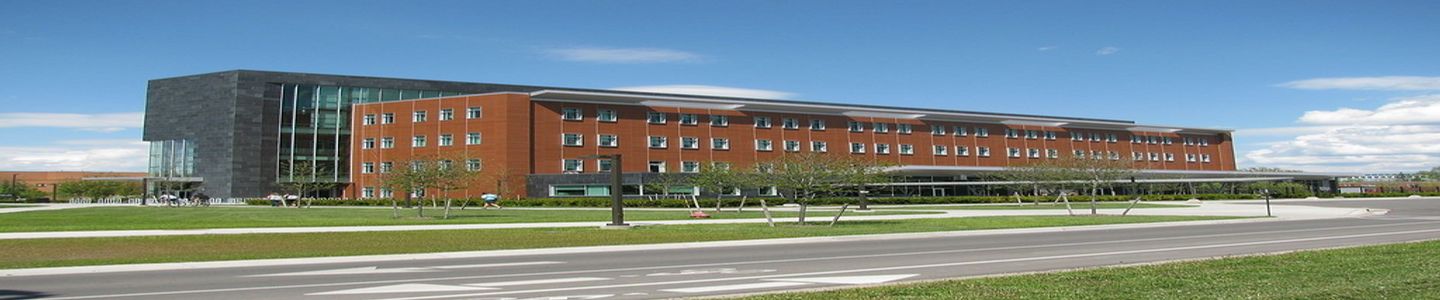
The Finance B.B.A. programme benefits from state-of-the-art classroom facilities, trading simulation labs, and access to financial databases including Bloomberg Terminal and FactSet. Students participate in case competitions, stock market simulations, and real-world investment portfolio management. The Upson Hall houses the College of Business Administration with dedicated study spaces, computer labs, and collaboration areas for group projects.
CMU’s Indian Student Association actively organizes cultural events, Diwali celebrations, Holi festivals, and networking events throughout the academic year. Indian cuisine options are available in multiple dining halls, and the International Student Office provides comprehensive support for visa matters, cultural adjustment, and community building. Mount Pleasant is a college town with strong town-gown relations, affordable living costs, and safe neighborhoods. The university is located approximately two hours from Detroit Metropolitan Airport, providing convenient travel connections to India via major international hubs.
Visa and Immigration Pathways
Finance B.B.A. graduates qualify for the F-1 student visa, the standard visa category for full-time undergraduate study in the United States. The F-1 visa allows students to work on-campus up to 20 hours per week during regular semesters and full-time during official university breaks. This visa category is renewable annually throughout the four-year degree programme.
Upon graduation, F-1 visa holders qualify for Optional Practical Training (OPT), which permits direct work authorization in the United States without requiring a separate visa change. While Finance is not classified as a STEM field for purposes of the extended OPT programme, non-STEM Finance majors receive 12 months of standard OPT eligibility. However, students specializing in quantitative finance, financial analytics, or pursuing additional coursework in data science or computer science may qualify for the 24-month STEM extension, extending total OPT duration to 36 months.
After completing OPT, Finance graduates can transition to H-1B work visas (specialty occupations such as financial analyst, investment analyst, or portfolio manager). The H-1B visa requires an employer sponsorship and a minimum annual salary threshold of USD 60,000 (approximately ?57,10,000), which Finance graduates typically exceed. Ultimately, skilled workers on H-1B visas can apply for permanent residency (Green Card) through the employment-based immigration pathway, with visa processing handled by employers.
Career Outcomes and Graduate Placements
Central Michigan University’s Finance B.B.A. programme achieves strong employment outcomes, with graduates securing positions across banking, investment management, corporate finance, and financial technology sectors. The median starting salary for Finance B.B.A. graduates is USD 60,023 (approximately ?57,27,477), significantly higher than the university’s overall graduate average of USD 35,300 after six years. This premium reflects the strong market demand for finance professionals and CMU’s solid curriculum and employer networks.
Top recruiting firms include major financial institutions such as JPMorgan Chase, Bank of America, Merrill Lynch, and regional banking networks throughout the Midwest. Corporate finance divisions of Fortune 500 companies (automotive, technology, consumer goods) actively recruit CMU graduates for financial analyst, budgeting, and treasury positions. Investment management firms, insurance companies, and fintech startups also hire CMU Finance graduates for roles spanning portfolio analysis, risk management, and quantitative analysis.
The Career Services Office coordinates on-campus recruitment events, maintains job boards, and provides interview coaching and resume workshops. Alumni networks connect graduating cohorts with established professionals across banking centers in New York, Chicago, Detroit, and emerging financial hubs in technology regions. Six months post-graduation, approximately 94% of Finance majors are employed or pursuing further education, demonstrating strong programme efficacy and market value. Many graduates pursue MBA programmes within five years, leveraging their finance background into management and executive roles.
Peer Comparison and Programme Standing
Central Michigan University’s Finance B.B.A. programme ranks #120 among U.S. undergraduate business schools specializing in finance, positioning it as a nationally recognized mid-tier programme with competitive career outcomes. The university ranks #260 overall in U.S. News national universities rankings and is a respected public research institution with strong regional presence and employer recognition.
| University | Finance Ranking | Overall Ranking | Intl Tuition (USD/Year) |
|---|---|---|---|
| Central Michigan University | #120 | #260 | 20,400 |
| University of Michigan (Ross) | Top 10 | #25 | 49,000 |
| UT-Austin (McCombs) | Top 10 | #38 | 37,500 |
| University of Florida (Warrington) | Top 15 | #28 | 30,000 |
CMU offers exceptional value compared to higher-ranked programmes like University of Michigan Ross (top 10 finance, USD 49,000/year tuition). CMU’s lower international tuition (USD 20,400 vs USD 30,000-49,000 at peer institutions) combined with competitive scholarship awards (up to USD 8,952/year) makes the programme accessible and affordable for Indian students. The 91% acceptance rate and rolling admissions process provide realistic pathways for qualified applicants, unlike highly selective tier-1 programmes requiring SAT 1450+ and GPAs exceeding 3.8.
CMU Finance graduates achieve comparable starting salaries to graduates from higher-ranked programmes, with strong placement in financial services, corporate finance, and management consulting. The programme’s strength lies in balancing rigorous finance education, accessible pricing, comprehensive international student support, and demonstrated career outcomes, making it an excellent choice for Indian students seeking value and quality in U.S. finance education.
Frequently Asked Questions
What is the minimum GPA required for Finance B.B.A. admission at CMU?
Central Michigan University requires a minimum cumulative GPA of 2.5 on a 4.0 scale, which typically translates to 60-70% in the best four subjects (excluding Hindi and Physical Education) for Indian 10+2 students. Stronger applicants with GPA equivalent to 75%+ receive automatic merit scholarships. While the minimum is 2.5, most admitted students exceed this threshold, with average admitted GPA around 3.0-3.2 equivalent.
Can international students work while studying the Finance B.B.A. at CMU?
Yes, F-1 international students can work up to 20 hours per week during regular academic semesters. CMU offers on-campus employment opportunities through work-study programmes in the library, dining facilities, administrative offices, and business school facilities. Students can work full-time (40+ hours) during official university breaks, winter break, and summer vacation. Off-campus employment is not permitted during regular semesters but becomes available during OPT after graduation, allowing full-time work authorization for up to 36 months in STEM-eligible finance roles.
What is the job market outlook for Finance B.B.A. graduates from CMU?
The finance sector remains one of the strongest employment markets for U.S. graduates. CMU’s Finance programme reports a 94% placement rate within six months of graduation. Median starting salaries of USD 60,023 (?57,27,477) exceed most undergraduate engineering and non-technical fields. Career opportunities span banking (JPMorgan Chase, Bank of America), corporate finance (Ford, General Motors), investment management, fintech, insurance, and management consulting. Indian students particularly benefit from H-1B visa eligibility and growing Indian diaspora networks in U.S. financial centres.
What is the total cost of the Finance B.B.A. programme, and how does it compare to other U.S. universities?
The estimated total four-year cost is USD 156,000-160,000 (?14,85,00,000-15,23,00,000) including tuition (USD 20,400/year), housing (USD 6,510/year on-campus), meals (USD 6,392/year), books and materials (USD 3,500/year), health insurance (USD 1,550/year), and personal expenses. With automatic merit scholarships of USD 4,000-8,952 per year (?38,07,200-85,20,000), net cost reduces to approximately USD 120,000-140,000 (?11,42,00,000-13,32,00,000) for the complete degree. CMU’s tuition is 40% lower than University of Michigan (USD 49,000/year) and 33% lower than University of Florida (USD 30,000/year), making it an exceptional value proposition.
What are the visa and work authorization options after completing the Finance B.B.A.?
Finance B.B.A. graduates qualify for F-1 Optional Practical Training (OPT), permitting 12 months of direct work authorization. If the student has completed additional STEM coursework (mathematics, statistics, computer science, data science), they may qualify for a 24-month STEM extension, extending total OPT to 36 months. After OPT, graduates can pursue H-1B visa sponsorship for roles such as financial analyst, investment analyst, or portfolio manager, with a minimum salary threshold of USD 60,000. Ultimately, skilled finance professionals can apply for employment-based permanent residency (Green Card), transitioning from temporary to permanent resident status.
Tuition Fees
| Year | 1st Year Fees |
|---|---|
| Tuition Fees | $21000 |
Previous Year Tuition Fees
| Year | 1st Year Fees |
|---|---|
| 2023 | $20400 |
| 2021 | $18936 |
Scores Required

Do you think the Rankings are wrong ? Report Here
Key Resources for Your Study Abroad Journey


Scholarship Grants & Financial Aids
| Name | Scholarship Per Student | Level of Study | Type | |
|---|---|---|---|---|
| BeArt Presets-Academic Scholarship | Scholarship per student$ 2,500/Yr$2,500 | Level Of StudyBachelor | TypeMerit-Based | |
| Chuan Ai Lu Engstrom Memorial Scholarship | Scholarship per student$ 1,000/Yr$1,000 | Level Of StudyBachelor | TypeMerit-Based | |
| Jagdish Bhagwati Fellowship | Scholarship per studentVariable Amount | Level Of StudyBachelor | TypeCollege-Specific | |
| Comindware Scholarship | Scholarship per student$ 4,000/Yr$4,000 | Level Of StudyApprenticeship | TypeMerit-Based | |
| Forktip Women’s- Innovation Scholarship | Scholarship per studentVariable Amount | Level Of StudyBachelor | TypeCollege-Specific | |
| Jane M. Klausman Women in Business Scholarship | Scholarship per student$ 5,000/Yr$5,000 | Level Of StudyBachelor | TypeMerit-Based |
Similar Programs
| Program | Important Date | Total Fees | Median Exams Score | Action |
|---|---|---|---|---|
-- | USD 21,000 /Yr |
| ||
-- | USD 17,695 /Yr |
| ||
-- | USD 15,510 /Yr |
| ||
-- | USD 10,710 /Yr |
| ||
-- | USD 40,882 /Yr |
|


Do you think the Dates are wrong ? Report Here

interested in this College ?
Follow & Share this college to get information about admission.



Comments