





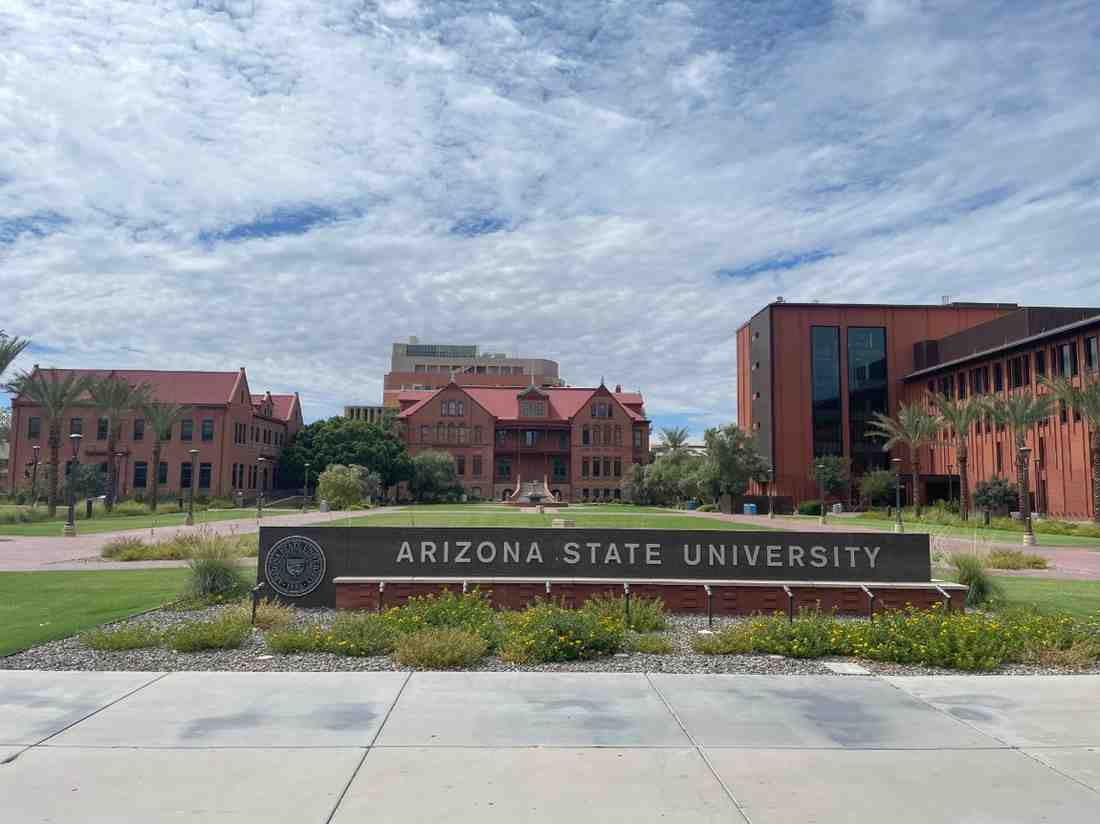
More than 8,000 miles separate ASU’s Tempe campus from New Delhi. Yet the distance has not slowed the steady pipeline of Indian students choosing the Arizona-based university.
Between 2014 and 2024, ASU graduated 14,619 alumni from India. In Fall 2024 alone, 6,641 Indian students were enrolled, accounting for over one-third of the university’s international student population.
The numbers position ASU among the most significant US universities for Indian students in recent years.
A Decade of Growing India-ASU Ties
The sustained rise in Indian enrollment reflects more than just admission access. University leaders have actively engaged with India through alumni outreach, academic partnerships, and leadership visits.
ASU President Michael Crow and senior officials recently visited India to meet government leaders, education stakeholders, and alumni. It signals that India remains central to the university’s global strategy.
Academic Reputation Driving Applications
Indian alumni cite academic strength, particularly in business, engineering, and global management, as a primary factor.
- W. P. Carey School of Business is frequently ranked among the top US business schools.
- Ira A. Fulton Schools of Engineering attracts a significant share of Indian STEM applicants.
- Thunderbird School of Global Management emphasizes international business, appealing to globally oriented professionals.
Tanvi Raorane, an alumna of W. P. Carey, now vice president at JPMorganChase in California, said affordability compared to West Coast universities and strong job prospects influenced her decision.
“Cost of living compared to California is a big factor,” Tanvi noted, adding that academic reputation and alumni outcomes strengthened ASU’s appeal.
Read more: ASU Acceptance Rate
Support Systems Ease the Transition
Beyond academics, former students highlighted structured support systems that eased relocation from India.
Reported support included:
- Pre-arrival orientation sessions
- Active Indian Students Association networks
- Airport pickup assistance
- Temporary housing arrangements
- Peer WhatsApp and Facebook groups
For Shashwat Srivastava, who graduated with a master’s degree in industrial engineering and now works with VFS Global in New Delhi, the transition process began before departure.
“By the time I reached campus, I already knew 30 to 35 people,” Shashwat said, describing virtual meetups organized before the semester began.
For Indian students entering a new academic and cultural environment, such networks can significantly reduce adjustment stress.
Career Outcomes and Industry Proximity
Alumni also pointed to ASU’s proximity to major employers as a strategic advantage. Companies such as Honeywell and semiconductor giant TSMC operate near campus, strengthening internship and employment pathways in engineering and technology fields.
Digvijay Kanwar, a Thunderbird graduate and senior vice president at NEXT Biometrics in New Delhi, said the school’s global business framework shaped his international career.
“ASU did a lot for me,” Digvijay added, citing exposure to cross-border business strategies and international trade frameworks.
Why Do Indian Students Continue to Choose ASU?
Several structural factors explain the sustained interest:
- Strong STEM and business programs. Explore the programs offered by ASU
- Large Indian student community of over 6,000 students
- Competitive tuition compared to coastal universities
- Active alumni presence in India
- Visible administrative support for international students
What It Means for Prospective Indian Students in 2026?
ASU’s India pipeline suggests more than popularity. It reflects institutional alignment with Indian student priorities:
- Academic credibility
- Cost-conscious decision-making
- Career mobility
- Cultural support networks
However, with Indian students now forming a substantial portion of the international cohort, competition for internships, research roles, and on-campus jobs may intensify.
ASU’s decade-long engagement with India indicates that the relationship is structural rather than temporary. For Indian students evaluating US universities in 2026, the decision is no longer simply about rankings or admission chances. It is about ecosystem strength- academic, professional, and community support. On that front, ASU appears determined to remain a central hub for India–US higher education mobility.





interested in this College ?
Follow & Share this college to get information about admission.



Comments