



Content Writer | Updated On - Jun 12, 2026
The JEECUP 2026 exam is currently ongoing and is being conducted from June 2 to June 9, 2026. The Joint Entrance Examination Council, Uttar Pradesh (JEEC UP) is conducting the Computer-Based Test (CBT) for the first time in 2026 at various centres across the state.
Students who appeared on 2nd June’2026 has described the paper as easy to moderate.
This exam is conducted for admission to diploma and polytechnic programmes. The exam covers multiple course groups including Group A, B, C, D, E, F, G, H, I, L, and K1 to K8, running over eight days until June 9, 2026.
| Admit Card of all Groups for UPJEE (polytechnic) online entrance examination is available on website |
The exam was originally scheduled from May 15 to May 22, 2026. After extending the online application deadline to May 20, 2026 in response to candidates' requests, JEEC UP officially revised the exam dates to June 2 to June 9, 2026.
- The official notification is available at the JEECUP portal: jeecup.admissions.nic.in.
- The exam is conducted in three daily shifts: 8:00 AM to 10:30 AM, 12:00 PM to 2:30 PM, and 4:00 PM to 6:30 PM.
- No negative marking applies in JEECUP 2026; 4 marks are awarded per correct answer.
- Provisional answer key release is expected within 3 to 5 days after the last exam date (around June 12 to 14, 2026). (Expected)
- JEECUP 2026 result is expected around June 10 to 14, 2026 at jeecup.admissions.nic.in. (Expected)
- Counselling registration window: June 5 to July 15, 2026. (Announced)
Related Links:
What are the JEECUP 2026 exam shift timings?
| Particulars | Details |
|---|---|
| Shift 1 Timing | 8:00 AM to 10:30 AM |
| Shift 2 Timing | 12:00 PM to 2:30 PM |
| Shift 3 Timing | 4:00 PM to 6:30 PM |
| Reporting Time | At least 60 minutes before the exam starts |
| Gate Closure Time | 15 minutes before the exam begins |
| Exam Duration | 150 minutes (2 hours 30 minutes) per group |
JEECUP 2026 Subject-Wise Question Distribution
| Group | Program | Subjects | Question Distribution |
|---|---|---|---|
| Group A | Engineering Diploma | Mathematics, Physics, Chemistry | 50, 25, 25 |
| Group B | Agriculture Engineering | Physics & Chemistry, Agriculture | 50, 50 |
| Group C | Fashion Design / Home Science | English & Hindi, Reasoning, General Knowledge | 50, 25, 25 |
| Group D | Modern Office Management | Hindi, English, Reasoning | 50, 25, 25 |
| Group E1 | Pharmacy (Biology Stream) | Physics, Chemistry, Biology | 25, 25, 50 |
| Group E2 | Pharmacy (Mathematics Stream) | Physics, Chemistry, Mathematics | 25, 25, 50 |
| Group F / G | Hotel Management & Catering | Reasoning, Hindi, English, General Knowledge | 25, 25, 25, 25 |
| Group K1–K8 | Lateral Entry Engineering | Mathematics, Science/Technical Subject | 50, 50 |
Check: JEECUP Exam Pattern 2026: Check Subject-Wise Pattern, Syllabus & Marking Scheme
The JEECUP 2026 Exam for the 2026-2027 academic session has come to an end. The exam was conducted successfully. No session was either cancelled or postponed.
|
Parameter |
Difficulty Level |
Key Observations |
|
Overall |
Moderate |
Balanced and syllabus-aligned paper, similar to previous shifts on June 9. Good attempts: ~70-82 with good accuracy. |
|
Mathematics (50 Qs) |
Moderate |
Application-based, with some calculation-heavy and lengthy problems. Key topics: Algebra, Trigonometry, Coordinate Geometry, Calculus, and Mensuration. |
|
Physics (25 Qs) |
Easy – Moderate |
Conceptual and formula-based questions. Relatively easier section for most students (Mechanics, Electricity, Optics, Modern Physics). |
|
Chemistry (25 Qs) |
Moderate |
Balanced NCERT-level mix of factual, theoretical, and application-based questions across Organic, Inorganic & Physical Chemistry. |
Students found the Shift 3 paper moderate. Most described the questions as balanced, syllabus-based, and similar to previous shifts. Physics was relatively easier for many, while Mathematics was calculation-heavy and Chemistry was moderate. Overall, students felt it was a fair and manageable paper with good time management.
|
Parameter |
Difficulty Level |
Key Observations |
|
Overall |
Moderate |
Balanced and syllabus-aligned paper, similar to previous shifts. Good attempts: ~70-82 with accuracy. |
|
Mathematics (50 Qs) |
Moderate – Tough |
Calculation-heavy and application-based questions. Major topics: Algebra, Trigonometry, Coordinate Geometry, Calculus, and Mensuration. Time-consuming for many students. |
|
Physics (25 Qs) |
Easy – Moderate |
Conceptual and formula-based. Relatively easier section (Mechanics, Electricity, Optics, Modern Physics). |
|
Chemistry (25 Qs) |
Moderate |
Balanced NCERT-level mix of factual, theoretical, and application-based questions across Organic, Inorganic & Physical Chemistry. |
Students found the Shift 2 paper moderate in difficulty. Most said the questions were balanced, syllabus-oriented, and similar to previous shifts. Mathematics was calculation-heavy and time-consuming for many, while Physics was relatively easier, and Chemistry was moderate. Overall, students felt it was a fair paper but required good time management.
|
Section |
Number of Questions |
Difficulty Level |
Key Highlights / Important Topics |
|
Mathematics |
50 |
Moderate |
Formula-based but calculation-heavy. Major topics included Algebra, Trigonometry, Coordinate Geometry, and Mensuration. |
|
Physics |
25 |
Easy to Moderate |
Highly conceptual and scoring. Focus was on mechanics, electricity, modern physics, momentum, and kinetic energy. |
|
Chemistry |
25 |
Easy to Moderate |
Balanced and completely NCERT-aligned. Included direct theoretical questions and basic chemical reactions. |
|
Overall |
100 |
Easy to Moderate |
Well-balanced paper following the official syllabus with no out-of-bounds questions. |
Students who took the JEECUP exam on the morning of June 9 found it easy to moderate in difficulty.
The Physics and Chemistry questions were straightforward and based directly on standard textbook topics. The Math section was also manageable, though it took a bit more time to solve due to the calculations.
|
Parameter |
Difficulty Level |
Key Observations |
|
Overall |
Moderate |
Balanced, simple, and direct questions. Similar to previous shifts, fully syllabus-aligned. Good attempts: ~72-85 with accuracy. |
|
Mathematics (50 Qs) |
Moderate |
Application-based with some calculation-heavy problems. Key topics: Algebra, Trigonometry, Coordinate Geometry, Calculus, Mensuration. |
|
Physics (25 Qs) |
Easy – Moderate |
Conceptual and formula-based. Relatively easier section for most (Mechanics, Electricity, Optics, Modern Physics). |
|
Chemistry (25 Qs) |
Moderate |
Balanced NCERT-level mix of factual, theoretical, and application-based questions across Organic, Inorganic & Physical Chemistry. |
Students found the Shift 3 paper moderate in difficulty. Most said the questions were balanced, simple, direct, and fully aligned with the syllabus, similar to previous shifts. Physics was relatively easier, while Mathematics was calculation-heavy but manageable, and Chemistry was moderate. Overall, students felt satisfied and described it as a fair paper.
|
Parameter |
Difficulty Level |
Key Observations |
|
Overall |
Moderate |
Balanced paper, syllabus-aligned, and similar to previous shifts. Good attempts: ~70-80 with accuracy. |
|
Mathematics (50 Qs) |
Moderate – Tough |
Calculation-heavy and application-based. Topics like Algebra, Trigonometry, Coordinate Geometry, Calculus, and Mensuration were prominent. Time-consuming for many. |
|
Physics (25 Qs) |
Easy – Moderate |
Conceptual and formula-based questions. Relatively easier section for most students (Mechanics, Electricity, Optics, Modern Physics). |
|
Chemistry (25 Qs) |
Moderate |
Balanced mix of factual, theoretical, and NCERT-based application questions across Organic, Inorganic, and Physical Chemistry. |
Students found the Shift 2 paper moderate in difficulty. Most said the questions were balanced and syllabus-oriented, similar to previous shifts. Mathematics was calculation-heavy and slightly tougher, while Physics was easier, and Chemistry was moderate. Overall, students felt it was a fair paper but required good time management.
|
Parameter |
Difficulty Level |
Key Observations |
|
Overall |
Moderate |
Balanced and similar to previous shifts. The syllabus is aligned with no major surprises. Good attempts: ~72-82 with good accuracy. |
|
Mathematics (50 Qs) |
Moderate |
Application-based, with some calculation-heavy questions. Key topics: Algebra, Trigonometry, Coordinate Geometry, Calculus, and Mensuration. |
|
Physics (25 Qs) |
Easy – Moderate |
Conceptual and formula-based. Manageable for most students (Mechanics, Electricity, Optics, Modern Physics). |
|
Chemistry (25 Qs) |
Moderate |
Balanced NCERT-level mix of factual, theoretical, and application questions across Organic, Inorganic & Physical Chemistry. |
Students found the Shift 1 paper moderate in difficulty. Most said the questions were balanced, syllabus-based, and similar to previous days. Physics was relatively easier for many, while Mathematics was a bit calculation-heavy but manageable. Chemistry was moderate. Overall, students felt satisfied with the paper.
|
Parameter |
Difficulty Level |
Key Observations |
|
Overall |
Moderate |
Balanced and syllabus-aligned paper. Similar to other shifts, fair for well-prepared students. Good attempts: ~70-82 with accuracy. |
|
Mathematics (50 Qs) |
Moderate |
Application-based, with some lengthy calculations. Major topics: Algebra, Trigonometry, Coordinate Geometry, Calculus, and Mensuration. |
|
Physics (25 Qs) |
Moderate |
Conceptual + formula-based questions. Focus on Mechanics, Electricity, Optics, and Modern Physics. Manageable for most. |
|
Chemistry (25 Qs) |
Moderate – Tough |
NCERT-level mix of factual, theoretical, and application-based questions. Organic, Inorganic, and Physical Chemistry covered; slightly trickier for some. |
Students found the Shift 3 paper moderate in difficulty. Many said the questions were balanced and syllabus-based, but Chemistry felt a bit tougher compared to other sections. Physics and Mathematics were manageable for well-prepared students. Overall, most students were satisfied and felt the paper was fair.
|
Parameter |
Difficulty Level |
Key Observations |
|
Overall |
Moderate |
Balanced but slightly tougher than Shift 1. The syllabus is aligned with no major surprises. Good attempts: ~70-80 with accuracy. |
|
Mathematics (50 Qs) |
Moderate – Tough |
Calculation-heavy and application-based questions. Topics like Algebra, Trigonometry, Coordinate Geometry, and Calculus were prominent and time-consuming for many. |
|
Physics (25 Qs) |
Easy – Moderate |
Conceptual and formula-based questions. Manageable for most students (Mechanics, Electricity, Optics, Modern Physics). |
|
Chemistry (25 Qs) |
Moderate |
Balanced mix of factual, theoretical, and NCERT-based application questions across Organic, Inorganic, and Physical Chemistry. |
Most students said the questions were balanced, straightforward, and based on the syllabus. Physics was the easiest for many, while Maths and Chemistry were manageable. Overall, students were satisfied and felt it was a good paper.
|
Parameter |
Difficulty Level |
Key Observations |
|
Overall |
Easy – Moderate |
Student-friendly paper, well-aligned with the syllabus and similar to previous shifts. Good attempts: ~75-85+ with accuracy. |
|
Mathematics (50 Qs) |
Moderate |
Balanced mix of conceptual and application-based questions. Topics like Algebra, Trigonometry, Coordinate Geometry, and Calculus were prominent, with some calculation-heavy problems. |
|
Physics (25 Qs) |
Easy |
Easiest section for most students. Conceptual and formula-based questions from Mechanics, Electricity, Optics, and Modern Physics. |
|
Chemistry (25 Qs) |
Easy – Moderate |
Balanced NCERT-level questions covering Organic, Inorganic, and Physical Chemistry. Factual + application-based mix. |
Most said the questions were balanced, straightforward, and based on the syllabus. Physics was the easiest for many, while Maths and Chemistry were manageable. Overall, students were satisfied and felt it was a good paper.
|
Parameter |
Difficulty Level |
Key Observations |
|
Overall |
Easy – Moderate |
Balanced and student-friendly paper. Well-aligned with the syllabus. Good attempts: ~75-85+ with good accuracy. |
|
Mathematics (50 Qs) |
Moderate |
Mix of conceptual and application-based questions. Topics like Algebra, Trigonometry, Coordinate Geometry, Calculus, and Mensuration were prominent, some calculation-heavy problems. |
|
Physics (25 Qs) |
Easy |
Conceptual and formula-based questions. Easier section for most students. Focus on Mechanics, Electricity, Optics, and Modern Physics. |
|
Chemistry (25 Qs) |
Easy – Moderate |
Balanced mix of factual, theoretical, and NCERT-based application questions. Organic, Inorganic, and Physical Chemistry are covered evenly. |
Most students found the Shift 3 paper easy to moderate. Many said the questions were balanced and aligned well with the syllabus. Physics was the easiest section, while Maths and Chemistry were manageable for well-prepared students. Overall, they felt confident and happy with the paper.
|
Parameter |
Difficulty Level |
Key Observations |
|
Overall |
Moderate |
Balanced paper, syllabus-aligned. Similar to other shifts, manageable with good preparation. Good attempts: ~70-80+ (depending on accuracy). |
|
Mathematics (50 Qs) |
Moderate |
Mix of conceptual and application-based questions. Topics like Algebra, Trigonometry, Coordinate Geometry, Calculus, and Mensuration had weightage. Some calculation-heavy or lengthy problems, but not overly tough. |
|
Physics (25 Qs) |
Moderate |
Conceptual questions from Mechanics, Electricity, Optics, Modern Physics, etc. Required formula application and understanding; balanced mix. |
|
Chemistry (25 Qs) |
Moderate – Tough |
Mix of factual, theoretical, and application-based (NCERT level). Organic/Inorganic reactions, periodic properties, and stoichiometry are likely featured. Slightly trickier than other sections for some students. |
Students have reported that the paper was Moderate overall, balanced, and syllabus-aligned, similar to recent shifts. The mathematics section was Moderate to tough, calculation-heavy, and application-based for many students. Some found it time-consuming.
JEECUP 2026 June 6 Shift 2 Exam begins on its scheduled time across all its designated exam centres.

Early reactions from exam centres are positive to moderate. Students coming out are saying the paper was student-friendly and similar to previous days.
|
Shift |
Difficulty Level |
Good Attempts (Overall) |
Notes |
|
Shift 1 |
Moderate to Difficult |
76-82 |
GA tougher in some reports |
|
Shift 2 |
Moderate / Easy-Moderate |
76-82 (or up to 81+) |
Generally balanced/easier |
|
Shift 3 |
Moderate to Difficult |
76-82 |
Similar to Shift 1 |
|
Parameter |
Difficulty Level |
Key Highlights |
Good Attempts |
|
Overall |
Moderate |
Well-balanced, NCERT-based, no major out-of-syllabus questions |
75 – 90 |
|
Mathematics (50 Qs) |
Moderate |
Mix of direct formula-based and some calculation-heavy questions |
38 – 45 |
|
Physics (25 Qs) |
Easy to Moderate |
Conceptual questions dominant, scoring section for most |
19 – 23 |
|
Chemistry (25 Qs) |
Moderate |
Direct theory + some application-based reactions |
17 – 21 |
|
Section |
No. of Questions |
Difficulty Level |
Key Highlights / Important Topics |
|
Mathematics |
50 |
Moderate |
Application-based questions with some lengthy calculations. Topics: Algebra, Trigonometry, Coordinate Geometry, Mensuration, Probability & Statistics. |
|
Physics |
25 |
Easy to Moderate |
Conceptual and formula-based questions. Strong focus on Mechanics, Electricity, Modern Physics & Basic Numericals. |
|
Chemistry |
25 |
Moderate |
Balanced mix of factual, theoretical & application questions (NCERT-based). Organic & Inorganic sections were slightly tricky for some. |
|
Overall |
100 |
Moderate |
Balanced paper, student-friendly compared to Shift 2. No out-of-syllabus questions. Good scoring opportunity with strong fundamentals. |
The JEECUP 2026 June 5 Shift 3 has ended at all its scheduled times across all its designated exam centres. The students will be exiting the exam hall in 5 to 10 mins.
The exam was medium to hard, making it a bit more challenging than the morning session because the math section required a lot of heavy calculations. Since the test just ended at 2:30 PM, full reviews are still rolling in. However, everything on the paper stayed strictly within the official syllabus, with no unexpected questions.

|
Section |
No. of Questions |
Difficulty Level |
Key Highlights / Important Topics |
|
Mathematics |
50 |
Moderate |
Application-based, with some lengthy calculations. Key topics: Algebra, Trigonometry, Coordinate Geometry, Mensuration, Probability & Statistics. |
|
Physics |
25 |
Easy to Moderate |
Conceptual & formula-driven questions. Focus on Mechanics, Electricity, Modern Physics & basic numericals. |
|
Chemistry |
25 |
Moderate |
Balanced factual + application questions (NCERT-based). Organic, Inorganic & Physical Chemistry covered evenly. |
|
Overall |
100 |
Moderate |
Balanced & syllabus-adherent paper. Similar to June 4 Shift 1/3. Good scoring potential with strong fundamentals & time management. |
The exam was of medium difficulty. It was well-balanced, based entirely on the syllabus, and similar to the easier exam sessions from the past few days. While more detailed student feedback is still coming in as the test finishes, early reports show that the paper was easy for students to handle and had no unexpected questions.
Overall Difficulty: Moderate
Many students found the paper balanced and syllabus-aligned, with no major out-of-syllabus questions. Well-prepared students reported good confidence; the paper was described as fair compared to previous shifts. Time management was generally okay, though some calculation-heavy questions in Maths took time.
|
Section |
No. of Questions |
Shift 1 Good Attempts |
Shift 1 Accurate Attempts (80-90% accuracy) |
Shift 2 Good Attempts |
Shift 2 Accurate Attempts (80-90% accuracy) |
|
Mathematics |
50 |
35 – 42 |
32 – 38 |
32 – 40 |
28 – 36 |
|
Physics |
25 |
18 – 23 |
17 – 21 |
17 – 22 |
15 – 20 |
|
Chemistry |
25 |
16 – 21 |
14 – 19 |
16 – 21 |
14 – 19 |
|
Overall |
100 |
75 – 90+ |
68 – 82 |
70 – 85+ |
62 – 78 |
|
Section |
No. of Questions |
Difficulty Level |
Key Highlights / Important Topics |
|
Mathematics |
50 |
Tough |
More application-based & calculation-heavy. Lengthy problems in Algebra, Trigonometry, Coordinate Geometry, Mensuration, and Calculus elements. Time-consuming for many. |
|
Physics |
25 |
Moderate |
Conceptual questions from Mechanics, Electricity, and Modern Physics. Balanced but required a good understanding of formulas. |
|
Chemistry |
25 |
Moderate |
Mix of factual, theoretical & application-based (NCERT-aligned). Physical, Inorganic & Organic basics covered. |
Overall Difficulty: Moderate to Tough (slightly tougher than Shift 1 for many students). The paper remained syllabus-aligned with no major out-of-syllabus questions, but Mathematics increased the challenge level for several candidates.
|
Section |
No. of Questions |
Difficulty Level |
Key Highlights / Important Topics |
|
Mathematics |
50 |
Moderate |
Mix of formula-based & application questions. Lengthy calculations in some problems. Topics: Algebra, Trigonometry, Coordinate Geometry, Mensuration, Statistics & Probability. |
|
Physics |
25 |
Easy to Moderate |
Conceptual & direct questions. Emphasis on basics like Momentum, Kinetic Energy, Mechanics, Electricity, and Modern Physics elements. A few tricky numericals. |
|
Chemistry |
25 |
Easy to Moderate |
NCERT-aligned, factual & balanced. Direct questions from textbook concepts (Physical, Inorganic & Organic basics). |
|
Overall |
100 |
Easy to Moderate |
Student-friendly paper. No major out-of-syllabus questions. Focus on Class 10 fundamentals. |
The JEECUP 2026 exam for June 4 Shift 1 saw mostly positive feedback from students. Overall, the paper was described as Easy to Moderate, with no major surprises or out-of-syllabus questions reported.
The JEECUP 2026 Shift 1 exam has entered its most crucial time period – the last half hour. Now is the time for students to go back to the questions that they have marked for review and revise their answers if they have written everything correctly or might have skipped any question knowingly or unknowingly.
|
Section |
No. of Questions |
Good Attempts |
Expected Accurate Attempts (with 80-90% accuracy) |
|
Mathematics |
50 |
35 - 42 |
32 - 38 |
|
Physics |
25 |
18 - 23 |
17 - 21 |
|
Chemistry |
25 |
16 - 21 |
14 - 19 |
|
Overall |
100 |
75 - 90+ |
68 - 82 |
|
Parameter |
Difficulty Level |
Key Highlights |
|
Overall Difficulty |
Moderate |
Balanced, syllabus-aligned, student-friendly paper. No major out-of-syllabus questions reported. |
|
Mathematics (50 Qs) |
Moderate |
Mix of formula-based and application questions. Some calculations are heavy but solvable with practice. |
|
Physics (25 Qs) |
Easy to Moderate |
Conceptual + direct NCERT-based questions. Easiest section for most students. |
|
Chemistry (25 Qs) |
Moderate to Tough |
Some tricky application-based and reaction/mechanism questions. Organic & Inorganic had weightage. |
JEECUP 2026 3rd Shift (typically 4:00 PM - 6:30 PM) students' reactions were generally positive, with the paper described as moderate overall. It was considered balanced and syllabus-aligned, though some sections had varying difficulty.
Yes, JEECUP is the official entrance examination for admission into D.Pharma (Diploma in Pharmacy) courses in Uttar Pradesh.
Yes, a rank of 20,000 is considered a good and safe rank in POLYCET (AP or TS). It easily qualifies you for counseling and guarantees a seat in most of the reputed government-aided and top private polytechnic colleges.
While you might face tight competition for highly demanded branches like Computer Science in elite institutions, you can comfortably secure core branches like Civil, Mechanical, or Electrical Engineering.
|
Category |
Expected Cutoff Marks (Out of 400) |
|
General (UR) |
210 – 250+ |
|
Other Backward Classes (OBC) |
190 – 230+ |
|
Economically Weaker Sections (EWS) |
185 – 220+ |
|
Scheduled Castes (SC) |
150 – 180+ |
|
Scheduled Tribes (ST) |
120 – 150+ |
|
Score Range (Out of 400) |
Admission Outlook & College Targets |
|
295+ Marks |
Top Preference Absolute Safe Zone: High probability of securing highly competitive branches (Computer Science, IT, Electronics) at elite institutions like Government Polytechnic Lucknow and Kanpur. |
|
235 – 290 Marks |
Highly Competitive: Ensures a smooth, guaranteed admission into a well-established, premium government polytechnic college across Uttar Pradesh. |
|
180 – 230 Marks |
Reliable Cutoff Zone: A safe bracket for securing conventional core branches (Civil, Mechanical, Electrical) in standard government or highly reputed aided colleges. |
|
140 – 179 Marks |
Qualifying Zone: Grants eligibility for counseling, generally opening up allocations in newly established rural government polytechnics or top private institutes. |
|
Below 140 Marks |
Limited Selection: Restricts choices mostly to private colleges or lesser-demanded vocational branches in aided institutions. |
|
Parameter |
Details & Student Verdict |
|
Overall Difficulty |
Easy to Moderate. The paper was balanced and strictly based on the standard syllabus. |
|
Physics Section |
Concept-heavy but manageable. Formulas from core mechanics and thermodynamics were prominent. |
|
Chemistry Section |
Easy. Highly direct, theoretical, and memory-based questions dominated this section. |
|
Mathematics Section |
Moderate. Slightly lengthier compared to the morning shift, requiring active calculation time. |
|
Average Attempts |
Most well-prepared students confidently attempted 78 to 84 out of 100 questions. |
|
Paper Structure |
Symmetrical distribution of topics with clear, unambiguous question phrasing. |
Continuing the trend of the first shift, the overall difficulty level for Shift 2 has been reported as Easy to Moderate, providing another highly student-friendly paper.
|
Score Range (Out of 400) |
Admission Prospect & Target Colleges |
|
300+ Marks |
Guaranteed Top-Tier Seats: Secures elite branches (CS, IT, Mechanical) at premier institutes like the Government Polytechnic Lucknow, Kanpur, or GB Pant (Okhla). |
|
240 – 290 Marks |
Highly Competitive: Comfortably secures a seat in any well-established, highly-rated government polytechnic college across UP. |
|
180 – 230 Marks |
Reliable Admission: Safe for a seat in standard government or top-tier aided colleges, though you may need to compromise slightly on branch or location. |
|
140 – 170 Marks |
Qualifying Zone: Eligible for counseling; typically leads to allocations in newly established government colleges, aided institutes, or top private colleges. |
|
Below 140 Marks |
Restricted Options: Focuses primarily on private institutions or lesser-demanded branches in aided colleges. |
| Parameter | Student Verdict |
| Overall Difficulty | Easy to Moderate. No major surprises or out-of-syllabus questions were reported. |
| Physics Section | Straightforward, leaning heavily toward conceptual clarity and fundamental formulas. |
| Chemistry Section | Highly approachable, mostly factual, and NCERT/textbook aligned. |
| Mathematics Section | Standard and highly doable, though a few multi-step questions required basic calculation time. |
Initial student reactions and expert feedback for the JEECUP 2026 Shift 1 indicate a highly positive, student-friendly start to the entrance exam. The overall difficulty level for Shift 1 has been widely described by candidates as easy to moderate.
- Entry to the examination centre will close 15 minutes before the commencement of the exam.
- Candidates arriving after gate closure may not be allowed to enter the examination hall.
- Students are advised to plan their travel accordingly.
- The JEECUP 2026 Shift 1 examination is scheduled from 8:00 AM to 10:30 AM.
- Candidates should be seated in their allotted computer terminals before the exam starts.
- Late entry may not be permitted after gate closure.
- Candidates appearing for Shift 1 should reach their allotted examination centres at least 60 minutes before the exam begins.
- Early reporting will help complete frisking, biometric verification, and document checks smoothly.
- Candidates must carry their admit card and a valid photo ID proof.
- Students and experts believe that upcoming shifts are likely to follow a similar pattern.
- Question formats may change, but the overall difficulty level is expected to remain consistent.
- Candidates should focus on revising key formulas, concepts, and frequently asked topics before their exam.
- Candidates targeting top-ranked government polytechnic colleges should aim for 300+ marks.
- Scores above 350 marks may significantly strengthen admission chances in highly sought-after institutes and branches.
- Final cutoffs will depend on overall candidate performance and seat availability.
- Questions related to Momentum and Kinetic Energy were reportedly asked.
- A question based on the Gun and Bullet principle appeared in the Physics section.
- Candidates also reported questions on the discovery of electrons.
- Basic conceptual questions from mechanics and modern physics were included.
- The final shift of the day will conclude at 6:30 PM.
- Complete exam analysis, memory-based questions, and student feedback will be available after the shift ends.
- Candidates can then focus on the answer key and result-related updates expected in the coming days.
- Students across multiple exam centres indicated that no extremely difficult questions appeared in the paper.
- Physics, Chemistry, and Mathematics sections were largely based on standard syllabus concepts.
- Candidates described the overall paper as student-friendly.
- The third shift of JEECUP 2026 will commence at 4:00 PM.
- Candidates will get 150 minutes (2 hours 30 minutes) to complete the examination.
- The CBT examination will continue until 6:30 PM.
- Candidates appearing in Shift 3 should arrive at the examination centre at least one hour before the exam.
- Authorities will verify admit cards and photo identity proofs before allowing entry.
- Students should carefully follow all examination-day guidelines.
- Shift 2 candidates will complete their examination at 2:30 PM.
- Expert analysis and student reactions are expected after the conclusion of the shift.
- Candidates should preserve their admit cards for future reference.
- Based on student feedback, many candidates were able to confidently attempt 75 to 80 questions out of 100.
- Some high-scoring aspirants claimed to have attempted over 90 questions with accuracy.
- Students reported that time management was not a major challenge in today's exam.
- The second shift of JEECUP 2026 will be conducted from 12:00 PM to 2:30 PM.
- Candidates should follow all instructions displayed on the computer screen before beginning the test.
- The examination will be conducted in Computer-Based Test (CBT) mode.
- Candidates allotted Shift 2 should report to the examination centre well before the scheduled reporting time.
- Admit card verification and security checks will be conducted before entry.
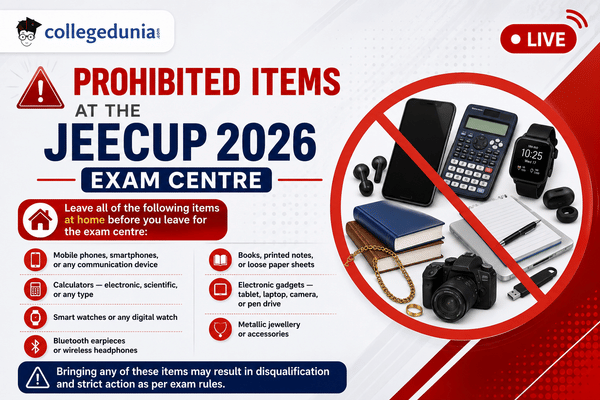
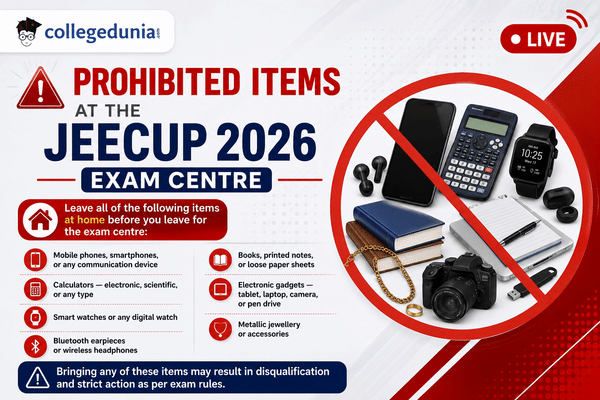
- Candidates should avoid carrying prohibited items to the exam centre.
- The first shift of JEECUP 2026 will conclude at 10:30 AM.
- Candidates can expect memory-based questions and exam analysis shortly after the shift ends.
- Feedback regarding difficulty level and subject-wise weightage will be available post-exam.
- The JEECUP 2026 Shift 1 examination is scheduled from 8:00 AM to 10:30 AM.
- Candidates should be seated in their allotted computer terminals before the exam starts.
- Late entry may not be permitted after gate closure.
- Entry to the examination centre will close 15 minutes before the commencement of the exam.
- Candidates arriving after gate closure may not be allowed to enter the examination hall.
- Students are advised to plan their travel accordingly.
- Candidates appearing for Shift 1 should reach their allotted examination centres at least 60 minutes before the exam begins.
- Early reporting will help complete frisking, biometric verification, and document checks smoothly.
- Candidates must carry their admit card and a valid photo ID proof.

- JEECUP 2026 is expected to witness participation from more than 4 lakh candidates, making it one of the largest polytechnic entrance examinations in India.
- For comparison, 4,12,759 candidates registered in 2024, highlighting the exam's massive popularity among diploma aspirants.
- Through JEECUP 2026, candidates can compete for admission to over 2.28 lakh diploma seats across Uttar Pradesh.
Not all, but most JEECUP hall tickets have designated spaces for invigilator signatures, seals, and verification marks.
- Present the admit card during verification of your candidature.
- Preserve the admit card even after the exam, for counseling.
- These are essential for attendance records and authentication.

A wrong category or group on the admit card may lead to disqualification or a wrong seating arrangement. Candidates must immediately connect with authorities for support.
- Check all the details on the application form and avoid any negligence.
- Contact the helpline/email quickly if there is an issue/discrepancy.
- Keep proof of submitted information so that it helps in the easy verification process.
- Avoid any last-minute correction attempts, as they do not happen and may lead to disqualification.
- Practising JEECUP Chemistry sample papers helps candidates understand the exam pattern, question types, and chapter-wise weightage.
- Chemistry forms an important section of the JEECUP Group A examination and is based primarily on the Class 10 syllabus.
- Regular practice with sample papers can improve accuracy, speed, and confidence before the examination.
JEECUP 2025 Question Paper with Solution PDF
| Paper | Question Paper PDF | Solution PDF |
|---|---|---|
| JEECUP 2025 Polytechnic Question Paper (Memory Based) | Download PDF | Check Solution |
JEECUP 2024 Question Paper with Solution PDF
| Paper | Question Paper PDF | Solution PDF |
|---|---|---|
| JEECUP 2024 Group A Polytechnic Question Paper | Download | Check Solution |
| JEECUP 2024 Group B Polytechnic Question Paper | Download | Check Solution |
| JEECUP 2024 Group C Polytechnic Question Paper | Download | Check Solution |
| JEECUP 2024 Group D Polytechnic Question Paper | Download | Check Solution |
- The JEECUP 2026 examination is being conducted from June 2 to June 9, 2026.
- Earlier, the exam was scheduled between May 15 and May 22, 2026, but the dates were revised by the authorities.
- The examination is being held in Computer-Based Test (CBT) mode across multiple shifts and exam centres.

| Group | Qualifying Examination | Minimum Marks Required |
|---|---|---|
| Group A | Class 10 with Mathematics, Physics, and Chemistry | 35% |
| Group B | Class 10 or Class 12 with Agriculture or Science | 35% |
| Group C | Class 10 (Any Stream) | 35% |
| Group D | Class 10 (Any Stream) | 35% |
| Group E1 | Class 12 with Physics, Chemistry, and Biology | 50% (Gen/OBC), 45% (SC/ST) |
| Group E2 | Class 12 with Physics, Chemistry, and Mathematics | 50% (Gen/OBC), 45% (SC/ST) |
| Group F | Class 10 Pass | 35% |
| Group G | Class 12 (Any Stream) | 35% |
| Group H | Class 10 with Science and Mathematics | 50% |
| Group K1 to K8 | Two-Year ITI in Relevant Trade | 35% |
| Group L | Class 10 with Relevant Stream | 35% |
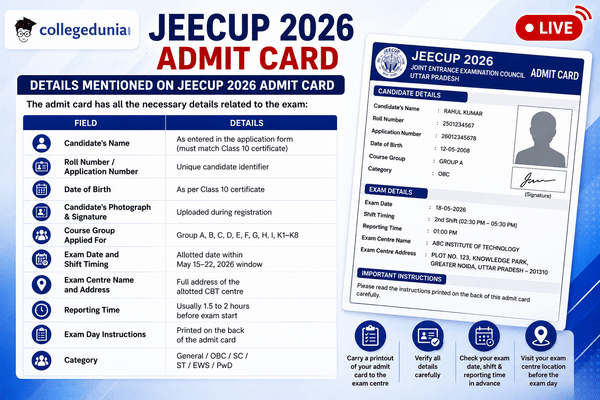
| Field on Admit Card | What to Check |
|---|---|
| Candidate's Name | Must match your government-issued photo ID exactly. |
| Application Number / Roll Number | Note it down separately as it will be required during result checking and counselling. |
| Group Applied For | Ensure it matches the diploma course/group you applied for. |
| Exam Date | Verify your allotted exam date within the June 2 to June 9, 2026 examination window. |
| Shift Timing | Check whether you have been assigned Shift 1, Shift 2, or Shift 3 and report accordingly. |
| Exam Centre Name & Address | Confirm the location and consider visiting the centre beforehand to avoid confusion on exam day. |
| Photograph & Signature | Ensure both are clearly visible and match the details submitted during registration. |
| Exam Instructions | Read all guidelines carefully and follow the instructions mentioned on the admit card. |
- JEECUP 2026 was initially scheduled to be conducted from May 15 to May 22, 2026.
- The examination dates were revised after the authorities extended the online application deadline.
- The application window was extended until May 20, 2026, following requests from students and coaching institutes seeking additional preparation time.
- To accommodate the extended registration process, JEECUP rescheduled the examination window from June 2 to June 9, 2026.
JEECUP released the admit card for Groups A, E1, and E2 on May 27, 2026. Admit cards for remaining groups followed shortly after. If you have not downloaded your admit card yet, follow these steps immediately before the exam day.
| Step | Process |
|---|---|
| 1 | Visit the official portal: jeecup.admissions.nic.in |
| 2 | Click on the "JEECUP 2026 Admit Card" link on the homepage. |
| 3 | Select your group from the dropdown — Group A (for Engineering) or Group B to K (for other courses). |
| 4 | Enter your Application Number and Password or Date of Birth. |
| 5 | Click "Submit" and verify all details — name, exam date, shift, and centre address. |
| 6 | Download and print at least 2 copies. Keep one copy safe for the admission process. |
Login Tip: If you forgot your password, use the "Forgot Password" option on the login page. Enter your registered mobile number or email ID to receive an OTP and reset your password.
.png?h=127&w=254&mode=stretch)





.jpeg?h=40&w=40&mode=stretch)


.jpeg?h=40&w=40&mode=stretch)

.jpeg?h=40&w=40&mode=stretch)



Comments