


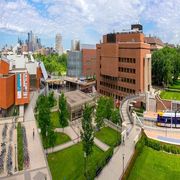
University of Minnesota Duluth is a state-funded institution found in Duluth, Minnesota in the Duluth metropolitan area. It is a mid-sized university with 8,863 undergraduate students. Admissions are relatively competitive as the University of Minnesota Duluth acceptance rate is around 82%. Offered majors include Business, Engineering, Biological Sciences, Psychology, and Education. Six-year graduation rate is 56%, and the University of Minnesota Duluth graduating students have a median starting salary of about INR 42,07,000 (ten years after graduation, equivalent to $51,000 median earnings).
University of Minnesota Twin Cities is a public research university situated in Minneapolis and St. Paul, Minnesota in the Twin Cities metropolitan area. It is a large university with 36,209 undergraduate students enrolled. Admissions are competitive since the University of Minnesota Twin Cities acceptance rate is approximately 77%. Popular majors include Business, Engineering, Social Sciences, Biological Sciences, and Computer Science. The six-year graduation rate is 83%, and graduates of the University of Minnesota Twin Cities still achieve a median starting salary of about INR 55,36,000 (converted from $67,000 median earnings ten years after graduation).
| University of Minnesota- Duluth | University of Minnesota - Twin Cities | |
|---|---|---|
| Collegedunia Score | 4.8 sfHSI/ | 6.1 sfHSI/ |
| CtVgo0 | # 460 Collegedunia Study Abroad 2026 # 1611 Center for World University Rankings 2025 # 1396 US News 2023 | # 76 US News 2026 # 149 Collegedunia Study Abroad 2026 # 49 Center for World University Rankings 2025 |
| Programs | K6FNSL -6 +BcTMq -1 | K6FNSL -102 +BcTMq -93 uAFC26 -6 |
| Acceptance Rate | 82.0 % | 77.0 % |
| Exam Score | ACT-22 IELTS-6.5 PTE-59 SAT-1050 TOEFL-79 | - |
| Cost to Study | 78XRnV 61042 [NgDAAz] 78XRnV 25628 [xcXOsd] 4fro2k + zNMGDV - 17520 j5deyA | 78XRnV 61042 [NgDAAz] 78XRnV 13206 [xcXOsd] 4fro2k + zNMGDV - 21904 j5deyA |
| CollegeDunia Reviews | 5.5/10 FlUcco | 8.3/10 FlUcco |
jSgp2K
| ranking | - | # 35 sQv06Y Business by US News 2025 # 96 sQv06Y Business by QS World University 2025 # 101 sQv06Y Business by Times Higher Education 2023 |
| sjq1dk | - | Duolingo - 115/120IELTS - 6.5/9PTE - 59/90TOEFL - 4.5/6 |
| cost to study | Mr9Uej | Mr9Uej52248 |
| documents required | F4a/y1 | F4a/y1 |
| application dates | - | Oct 1, 2026 (Round 1 Application Deadline for 2027 Intake) Dec 1, 2026 (Round 2 Application Deadline for 2027 Intake) Feb 1, 2027 (Round 3 Application Deadline for 2027 Intake) |
rep7Hb






| H1Mbuo | University of Minnesota- Duluth | University of Minnesota - Twin Cities |
|---|---|---|
| Type of University | Campus | University |
| Established | 1902 | 1851 |
| Hostel | #Off campus (with family) - $2304 #On campus - $7608 #Off campus (not with family) - $7608 | #Off campus (with family) - $2200 #On campus - $9852 #Off campus (not with family) - $9852 |
| Weather |
University of Minnesota Duluth against University of Minnesota Twin Cities
Subject Strength & Global Rankings (2025/2026)
The University of Minnesota Twin Cities is the flagship university of the University of Minnesota system and is ranked very high in global systems of universities. University of Minnesota Twin Cities ranks #210 in QS and 87th in Times Higher Education whereas University of Minnesota Duluth does not show up in rankings. The University of Minnesota Twin Cities is globally ranked by subject in Engineering, Computer Science, Medicine, Business, and Social Sciences, and its numerous programs rank in the 100–150 range worldwide. The University of Minnesota Duluth is especially well known in Engineering, Business, Education, Environmental Science, and Liberal Arts but less international.
General Information
The University of Minnesota Duluth, which was established in 1947, is a mid-sized public research university in Duluth, Minnesota, with approximately 9,000 students. It is focused on undergraduate education, applied research, and outreach to the community, particularly in fields such as environmental sustainability and regional development.The oldest and largest campus of the system, located in Minneapolis and Saint Paul, Minnesota, is the University of Minnesota Twin Cities, founded in 1851. With a student enrollment of almost 50,000, it provides a full scope of undergraduate, graduate, and professional programs.
Acceptance Rate & Admissions
University of Minnesota Duluth has an acceptance level of about 82 percent, which is an indicator of its wide accessibility while it upholds competitive levels for some programs like Engineering and Business. The University of Minnesota Twin Cities is less accepting, with a volume of admissions for about 77 percent of applicants, albeit with more competitive admission for programs like Computer Science, Engineering, and Business.
Research Impact & Facilities
The University of Minnesota Duluth is a regional research university with specialized centers in freshwater research, environmental studies, business development, and engineering applications. Its amenities include the Large Lakes Observatory and regional research institutes.The University of Minnesota Twin Cities is an R1: Doctoral University with very high research activity and one of the top public research institutions in the United States. It boasts more than 300 research institutes, state-of-the-art laboratories, and collaborations across sectors, especially healthcare, biotechnology, engineering, and agriculture.
Cost & Financial Aid
Since both are public universities under the same system, fee is nearly alike but could differ slightly by campus and program.For the University of Minnesota Duluth, out-of-state and foreign students usually pay $20,000–$23,000 annually in tuition.At University of Minnesota Twin Cities, the fees are a bit higher, with international students requiring around $25,000–$28,000 each year. Both campuses have available scholarships, although University of Minnesota Twin Cities can offer more substantial merit and research-based ones given its greater funding pool.
Career Outcomes & Alumni Success
University of Minnesota Duluth graduates thrive in the regional business, education, engineering, and healthcare industries, especially in Minnesota and the Midwest. Alumni have strong connections with local industries and community programs.University of Minnesota Twin Cities graduates have access to a more extensive, international alumni network with strong representation in Fortune 500 firms, research, medicine, technology, and public policy. Its career implications are more robust abroad, aligning with its global stature and flagship designation.As a whole, the University of Minnesota Duluth is more individualized, undergraduate-oriented with solid regional connections, whereas the University of Minnesota Twin Cities is a large world-class research university with broad professional and academic scope.


