



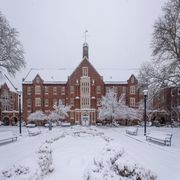
Quinnipiac University is a private, coeducational college located in Hamden, Connecticut, in a suburban area near New Haven. Quinnipiac is a mid-sized university with approximately 6,210 undergraduate students. Admissions are moderately competitive with an acceptance rate of around 77%. Some of the most popular majors are Health Sciences, Business, Communications, Nursing, and Social Sciences. The six-year graduation rate is around 78%, and the median salary for Quinnipiac graduates is around $65,500 ten years after graduation.
University of Connecticut (UConn) is a public research university in Storrs, Connecticut, and is situated in a rural area in the Hartford metropolitan region. It is a large university with approximately 25,300 undergraduate students at the flagship Storrs campus and over 27,000 students total across all campuses. Admissions are competitive with an acceptance rate of around 55%. Major fields of study include Engineering, Business, Social Sciences, Biology, and Psychology. The six-year graduation rate is 83%, and the median salary of graduates from UConn is around $62,000 ten years post-graduation.
| Quinnipiac University | University of Connecticut | |
|---|---|---|
| Collegedunia Score | 4 Out of 10 | 4.8 Out of 10 |
| ranking (overall) | # 170 US News 2024 # 215 Forbes 2019 | # 458 QS World University 2027 # 309 Collegedunia Study Abroad 2026 # 312 US News 2026 |
| Subject Strength | # 118 for Medicine by US News 2024 # 146 for Law by US News 2024 | # 254 for Engineering by Collegedunia Study Abroad 2026 # 184 for Medicine by Collegedunia Study Abroad 2026 # 168 for Law by Collegedunia Study Abroad 2026 |
| Programs | UG Programs -48 PG Programs -8 | UG Programs -90 PG Programs -64 Doctorate Programs -6 |
| Acceptance Rate | 77.0 % | 53.9 % |
| Exam Score | ACT-23 IELTS-6.5 SAT-1080 TOEFL-85 | ACT-26 IELTS-6.5 SAT-1210 TOEFL-79 |
| Cost to Study | Average Tuition Fees 47590 [For UG Program] Average Tuition Fees 31050 [For PG Program] Hostel + Meal - 33850 Per Year | Average Tuition Fees 40746 [For PG Program] Hostel + Meal - 27628 Per Year |
| placement (average package) | Some of the programs and the average salary are as follows: Masters in Science: $70,000 Bachelor of Science: $60,000 Bachelor of Arts: $50,000 | Some of the programs and average salary are: Doctorate: $110,000 Masters in Science: $96,000 MBA: $91,000 Bachelor of Science: $87,000 Bachelor of Arts: $80,000 |
| application requirements | Completed online application form. Check program specific requirements | Submit official transcripts Submit LORs Submit personal statement Submit English language proficiency Check program specific requirements |
| Campuses and B-Schools | NA | School of Business, University of Connecticut |
Top Courses Comparison
| ranking | # 108 for Business by US News 2025 | # 201 for Business by QS World University 2026 # 401 for Business by Times Higher Education 2025 # 93 for Business by US News 2024 |
| exam scores | Duolingo - 110/160GMAT - 550/800IELTS - 6.5/9TOEFL - 90/120 | Duolingo - 110/160IELTS - 6.5/9TOEFL - 4.5/6 |
| cost to study | Total Cost (Tuition + Living) -31050 | Total Cost (Tuition + Living) - |
| documents required | #Letter of Recommendation + Statement of Purpose | #Letter of Recommendation + Statement of Purpose |
Other Popular Comparisons






| General Facts | Quinnipiac University | University of Connecticut |
|---|---|---|
| Type of University | University | University |
| Established | 1929 | 1881 |
| Student:Faculty Ratio | 16:1 | 13:1 |
| Male:Female | 39% Male, 61% Female | 50% Male, 50% Female |
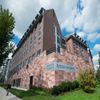
| Location Facts | Quinnipiac University consists of three campuses: the Mount Carmel campus off of Mount Carmel Avenue in Hamden; the York Hill campus off of Sherman Avenue in Hamden, and the North Haven Campus in North Haven, just north of New Haven, Connecticut. | The primary and original UConn campus is in Storrs, a division of the Town of Mansfield, 22 miles (35 km) east of Hartford, Connecticut's capital and bordered by the towns of Ashford, Coventry, Willington, and Windham. The University of Connecticut's Waterbury campus serves more than 1,000 students annually and offers nine four-year undergraduate degrees. Located at Constitution Plaza in downtown Hartford, UConn's Graduate Business Learning Center (GBLC) at Hartford campus is home to the UConn School of Business full-time, part-time and Executive MBA program along with several other program offerings. The Stamford Campus of the University of Connecticut offers complete undergraduate degree programs in thirteen majors as well as the Bachelor of General Studies Degree Program. |
| Library | The 48,000-square-foot Arnold Bernhard Library on Mount Carmel Campus features a sprawling, contemporary design with 620k e-books, 153 research databases. The Edward and Barbara Netter Library on North Haven Campus mainly serves medical, nursing and health sciences students, but is open to the entire Quinnipiac community. It has around 14k journal subscriptions, 40k e-book titles and 76 databases. The Lynne L. Pantalena Law Library features an attractive, 3-story atrium and offers law students and faculty access to a wide range of resources and technology, from legal treatises that date back to the 18th century to current journals with 450k+ volumes. | The Babbidge-based collection places UConn among the top 30 universities in the nation for library holdings and funding, containing more than 2.5 million print volumes, approximately 2,500 current print periodicals, more than 35,000 unique electronic journals through the eJournal locator, 2.8 million units of microfilm, 180,000 maps at the Map and Geographic Information Center (New England's largest public map collection), millions of electronic books, and an array of free electronic information sources. |
| Campus Life | There are many benefits to living on campus, from a robust student life experience, a focus on health and safety, and valuable amenities available. The university offers more than a dozen modern residence halls featuring traditional, apartment and suite-style accommodations that foster a community environment with options to ensure your living space fits your life. The student life on campus includes annual events, including guest speakers, concerts, student group events and food festivals. Students can join a range of student-run clubs and organizations, as well as numerous intramural, club and Division I sports teams. The campus provides Living-Learning Communities that allow you to live with fellow Bobcats who share similar passions and academic interests. The amenities on campus include a shuttle network providing safe transport to the 3 campuses, local shopping and entertainment destinations, trackable via university's real-time mobile app. A wide variety of food options and flexible dining plans are available on each of 3 campuses. | There is a wide variety of student organizations on campus, including fraternities and sororities, musical groups, and religious, athletic, political, cultural, business, military, artistic, and community service clubs. The university's programming board, the Student Union Board of Governors (SUBOG), plans the largest students events on campus. The organization is completely student run and plans events like the annual concerts, Homecoming, One Ton Sundae, weekly movies, and hosts a range of comedians and speakers each month. Storrs Downtown Center has been a popular area for UConn students, nearby residents, and visitors. It is a long-term construction project that continues to open new stores. It is a mixed-use town center that includes retail shops, restaurants, offices, and housing, situated on Connecticut Route 195 across from the UConn campus. Some new features include a new Price Chopper supermarket, family oriented restaurants, and an extension of the UConn Co-op bookstore. Since 2003, UConn has established university-owned Greek housing in the "Husky Village", created an Office of Fraternity and Sorority Life, and hired full-time staff to administer the Greek Life program. The University of Connecticut athletic teams are nicknamed the "Huskies" and compete at the NCAA's Division I level and in the Football Bowl Subdivision. |
| Hostel | #On campus - $14190 #Off campus (not with family) - $14960 #Off campus (with family) - $4700 | #On campus - $12514 #Off campus (not with family) - $12514 #Off campus (with family) - $2600 |
| Famous Alumni | Sam Anas – professional ice hockey player | Meg Ryan, actress Ray Allen, former professional basketball player John Fetterman, U.S. Senator from Pennsylvania Ron Palillo, actor best known for his role as Arnold Horshack on Welcome Back, Kotter Bobby Moynihan, comedian |
| City Life | Hamden, Connecticut is a vibrant town located in New Haven County. The city is filled with historic homes, lush parks, and unique attractions that make it a great destination for visitors and residents alike. The area boasts an abundance of outdoor activities such as hiking, fishing, skiing, and golfing along with plenty of shopping and dining options. Hamden also has a thriving arts scene with several renowned galleries, theaters, and music venues. Hamden provides something for everyone to experience, making it the perfect place to explore! | The University of Connecticut is located on a beautiful rural campus in Storrs, CT and home to state of the art research and recreational facilities. The cost of living is extremely low in the areas surrounding campus, and residents enjoy a thriving restaurant and entertainment district in downtown Storrs. Storrs is a charming town located close to Hartford -- providing students with diverse educational opportunities along with recreational activities on its extensive grounds such as skiing slopes in winter months or summertime swimming pools plus plenty of green space perfect for picnics or taking part in outdoor sports. Capital city - North-central Connecticut along the Connecticut River, 40 miles from the Long Island Sound. |
Quinnipiac University vs University of Connecticut
Subject Strength & Global Rankings (2025/2026)
Quinnipiac and UConn are both highly ranked, but UConn is quite a bit higher-ranked in the world. In the QS World University Rankings 2026, UConn is about # 534, but Quinnipiac is not ranked within the top 1000. In Times Higher Education 2025, UConn ranks in the 201–250 range, while Quinnipiac falls below the top 600. UConn performs very well in Engineering, Social Sciences, and Agriculture, ranking frequently in the global top 100–200. Quinnipiac excels in Health Sciences, Communications, and Business, with its physician assistant and nursing programs ranked in the top 100 in the nation.
General Information
UConn, with an overall undergraduate enrollment of approximately 25,300, is much larger than Quinnipiac's 6,210. UConn's Storrs campus covers 4,400 acres, with over 100 undergraduate and close to 100 graduate programs, as well as additional campuses in Hartford, Stamford, Waterbury, and Avery Point. Quinnipiac has three campuses—Mount Carmel, York Hill, and North Haven—spanning 750 acres, and offers 59 undergraduate majors and 22 graduate offerings, including professional schools of law and medicine. The public status of UConn allows for a wider academic reach, while Quinnipiac focuses on smaller class sizes and student orientation.
Acceptance Rate & Admissions
UConn admissions are more selective with a 55% acceptance rate, while Quinnipiac stands at 77%. UConn students have better average academic markers, with an average SAT score of 1250 to Quinnipiac's 1095, and average ACT scores of 29 to 25. UConn admitted students also possess a better average GPA of 3.74 to Quinnipiac's 3.39. Both schools are test-optional, but UConn's is more competitive and based on rigorous coursework. Quinnipiac's holistic approach to admissions offers more access, especially for health sciences and communications.
Research Impact & Facilities
UConn is a very high research activity R1 research university with the support of highly advanced laboratories, massive library collections, and research centers like the Institute for Collaboration on Health, Intervention, and Policy. It enjoys national reputation in engineering, agriculture, and social sciences. Quinnipiac, though smaller in research presence, boasts robust applied research in health sciences and communications underpinned by facilities like the Frank H. Netter MD School of Medicine and cutting-edge media and simulation labs. UConn's global collaborations and research output significantly surpass Quinnipiac's more focused applied research.
Cost & Financial Aid
Quinnipiac costs around $55,480 annually compared to UConn's in-state rate of $15,672 and out-of-state rate of around $39,000. Quinnipiac's average net cost is $39,632, which is much more than UConn's $23,985. Quinnipiac gives financial assistance to almost all students, with 100% of the undergrads receiving grants or scholarships with an average of $30,035. UConn gives around 84% of its students financial aid, with an average grant of $14,678. UConn is cheaper, particularly for Connecticut residents, and Quinnipiac's more expensive price is mitigated by its generous packages of aid.
Career Outcomes & Alumni Success
Quinnipiac graduates have median salaries of $65,500 a decade after graduation, a bit more than UConn's $62,000. Quinnipiac also has a very high rate of employment, with 98% of graduates working or in graduate school after six months. It has its strengths in nursing, health sciences, business, and communications. UConn alumni enjoy a wider alumni pool, especially in engineering, business, and academia, and convenience in proximity to Hartford and other large markets. UConn's six-year graduation rate is 83%, compared to Quinnipiac's 78%, indicating higher overall student retention and graduation.


