
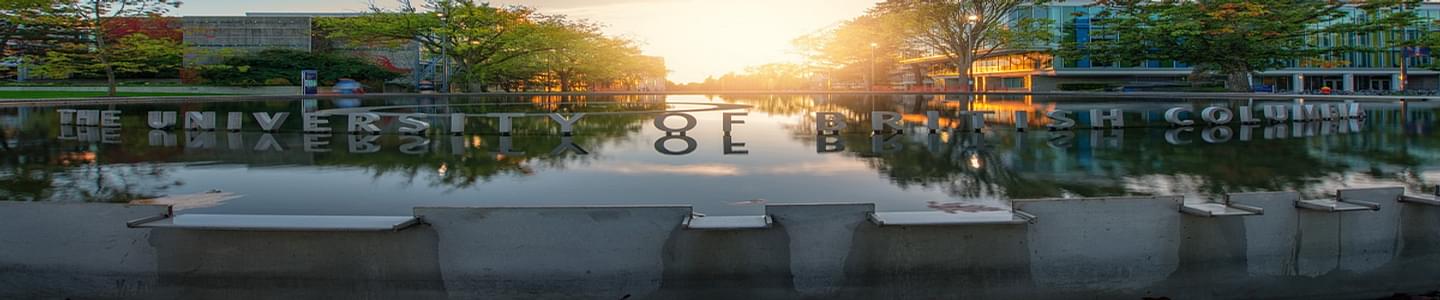

LLM Taxation at UBC: Fees Dates & Requirements

LLM Taxation at UBC: Fees Dates & Requirements

Vancouver, British ColumbiaLocation
UniversitySchool type
Estd1908established year
59150enrollment
Public
Partner [1 Courses]

Master of Law [LLM] (Taxation)

1 year
Full Time
On Campus

Field of Study

$18,434 /Yr

CA$25,603 /Yr
Study Abroad Team's profile photo

Study Abroad Team

Updated on - Aug 14, 2026

The University of British Columbia (UBC) Master of Laws (LL.M.) in Taxation is a one-year, full-time, in-person, 30-credit course-based degree in Vancouver. It accepts applicants with a Juris Doctor (JD) or Bachelor of Laws (LLB), or a relevant degree plus significant tax work. July 2027 tuition is unpublished; the 2026S or 2026W rate was C$51,207.60 (INR 35.05 Lakhs), as a prior-cycle reference, and applications are open.

UBC’s Peter A. Allard School of Law delivers the programme in person at the Vancouver campus. The curriculum builds tax-law depth through a required foundations course, at least 24 tax and tax-policy elective credits and up to 6 non-tax law electives. It suits lawyers, accountants and experienced tax professionals seeking technical specialization, while its course-based structure is less suitable for applicants seeking a thesis-led route into doctoral research.

  • The programme covers international taxation, corporate reorganization, partnerships, trusts and estates, tax policy and dispute resolution electives.
  • The mandatory summer foundations course is mostly online with a short in-person component, helping students start the tax sequence before the main academic terms.
  • The 2027 international application round includes an early review stage on 15 September 2026 before the final submission date.

Current Admission Status

Applications for the July 2027 intake are Open. International student deadline: 30 October 2026.

UBC lists transcript and reference deadlines as 13 November 2026. Submit a complete file by 15 September 2026 to enter the listed early review, because UBC requires all three references and supporting documents for that pool.

Also Check: UBC course admission details

UBC LLM Taxation Fees and Living Costs 2027

July 2027 tuition is unpublished. UBC’s current programme fee page lists the international rate effective 1 May 2026, so the figures below separate prior-cycle tuition from current published charges.

Tuition is charged per credit and the programme requires 30 credits. The current international rate is C$1,706.92 (INR 1.17 Lakhs) per credit. Thirty credits therefore produce C$51,207.60 (INR 35.05 Lakhs), but UBC says fees can change annually before a later start date.

Fee context: The 30-credit figures are 2026S or 2026W prior-cycle references, while the application fee belongs to September 2026 to August 2027. UBC’s student-fee and deposit lines are current published estimates rather than July 2027-confirmed charges.

Cost itemCAD amountINR equivalentPayment detail
International tuition per credit, 2026S or 2026W prior-cycle referenceC$1,706.92INR 1.17 Lakhs30 credits required
International programme total, 2026S or 2026W prior-cycle referenceC$51,207.60INR 35.05 LakhsCurrent published rate, not confirmed for July 2027
Student fees, current published approximationC$1,170INR 80,073Per year
Admissions deposit, current published amountC$1,000INR 68,439Non-refundable and credited to the first term
International application fee, September 2026 to August 2027C$168.25INR 11,515Non-refundable

All INR conversions in the article use a conversion rate of CAD 1 = INR 68.4387 as of 14 August 2026. Rates fluctuate daily, verify before applying.

Source: UBC Allard School of Law tuition page and UBC Graduate School application-fee page, checked 14 August 2026.

The fee structure creates a material budgeting risk for Indian applicants because the published 30-credit total is not tied to July 2027. Use it to size funding, then update the calculation after UBC posts the incoming rate.

  • Use the C$1,000 (INR 68,439) deposit as a cash-flow item, because UBC says it is non-refundable but credited toward the first-term account.
  • Do not treat C$1,170 (INR 80,073) student fees as a final July 2027 amount, because the programme page labels them approximately and UBC reviews fees annually.
  • Reserve the C$168.25 (INR 11,515) application fee separately, since the fee is non-refundable and applies to each programme and intake.

Cost of Living in Vancouver for LLM Taxation Students

UBC’s official cost-of-attendance page provides an off-campus housing-and-food estimate valid through August 2027. It also gives separate transport and personal-expense amounts.

Living-cost context: The table uses UBC’s full academic-year off-campus estimates. Monthly figures are calculated by dividing the annual amounts by 12, so they are planning figures rather than quoted monthly rents.

ExpenseMonthly CADMonthly INRAnnual CADAnnual INR
Housing and foodC$2,286.50INR 1.56 LakhsC$27,438INR 18.78 Lakhs
TransportationC$262.50INR 17,965C$3,150INR 2.16 Lakhs
Miscellaneous personal expensesC$426INR 29,155C$5,112INR 3.50 Lakhs
Total UBC living estimateC$2,975INR 2.04 LakhsC$35,700INR 24.43 Lakhs

Source: UBC Cost of Attendance estimates valid through August 2027; monthly figures are calculated from annual amounts.

Prior-cycle planning illustration: Tuition was C$51,207.60 (INR 35.05 Lakhs). Student fees were C$1,170 (INR 80,073), and living costs were C$35,700 (INR 24.43 Lakhs). The calculated total is C$88,077.60 (INR 60.28 Lakhs). This excludes the application fee, deposit timing, health coverage, books, airfare and study-permit costs, so July 2027 planning should use a buffer.

Fee verification

July 2027 tuition is not named in the checked official fee surfaces. Verify the target fee on the official fee page before paying.

ROI reality: The prior-cycle illustration reaches INR 60.28 Lakhs before several excluded costs, so secure funding for the full Vancouver budget and recheck the incoming tuition rate.

UBC LLM Taxation Admission 2027

Admission requires a first law degree or a tax-professional alternative. UBC asks most applicants for a Juris Doctor or Bachelor of Laws, while relevant graduates without a first law degree need a superior academic record and significant tax work.

For Indian credentials, UBC’s country guidance normally expects a four-year bachelor’s degree or a master’s degree. It lists First Class or Division 1 at 65% or Very Good at 8 on a 10-point scale. The programme remains competitive because minimum eligibility does not guarantee an offer.

UBC’s published 2025 programme statistics show 24 applications, 16 offers and 10 new registrations. These figures describe the 2025 registration year rather than the July 2027 pool, but they show that the programme is small and selection is not based on minimum grades alone.

The official listing records full-time study in person at UBC Vancouver and a part-time option. This page focuses on the full-time international route because it matches the published July 2027 intake, while part-time classification requires prior approval and has separate study-permit implications.

Academic eligibility context: The table combines the programme rule with UBC’s India-specific graduate baseline. The Graduate Committee evaluates transcripts with the issuing institution’s marking guide, so Indian applicants should upload complete records rather than rely on a self-converted percentage.

RequirementUBC ruleIndian applicant action
Primary academic routeJuris Doctor or Bachelor of Laws degreeUpload the complete law transcript and degree evidence
Alternative professional routeRelevant undergraduate degree, superior academic record and significant tax workShow the tax role, duration and technical responsibilities clearly
India academic baselineFour-year bachelor’s degree or master’s degree; First Class or Division 1 at 65% or Very Good at 8 on a 10-point scaleInclude the university marking guide with the transcript
Admissions testsGRE and LSAT are not requiredUse the statement and references to demonstrate tax preparation instead
Selection evidenceAcademic record, institution, English result, references, statement and relevant activities are reviewedConnect tax work or law study to the programme’s course-based goals

The LSAT is the Law School Admission Test, while the GRE is the Graduate Record Examination. Neither test is required for this programme, which shifts attention toward academic evidence, professional relevance and the statement of intent.

English Language Proficiency (ELP) Scores

English language proficiency (ELP) depends on the language of instruction across the applicant’s entire university. A degree taught in English at only one department does not automatically qualify for a waiver, so Indian applicants should request institutional confirmation when relying on this exception.

IELTS means International English Language Testing System, and TOEFL iBT means Test of English as a Foreign Language internet-based test. UBC accepts both routes with the scores shown below.

Score context: UBC’s current programme page lists both TOEFL scales after the January 2026 change. Do not convert the new 1 to 6 scale into the older 0 to 120 scale, because UBC publishes separate requirements.

Test routeOverall requirementComponent requirementsValidity and submission
IELTS Academic7.0Reading 7.0, Writing 7.0, Speaking 6.5, Listening 6.5Single sitting and valid for 24 months
TOEFL iBT new scale5.0Reading 5.0, Writing 5.0, Speaking 4.0, Listening 5.0Single sitting and valid for 24 months
TOEFL iBT old scale100Reading 25, Writing 25, Speaking 21, Listening 25Single sitting and valid for 24 months

UBC’s frequently asked questions also name General Certificate of Education (GCE) as an approved English route, but the checked Taxation eligibility page does not publish a GCE minimum. Confirm the score before relying on that route.

  • Submit the required English result by the 13 November 2026 document deadline, because UBC says later results can leave an application incomplete.
  • Request a registrar letter only when English was the primary language of instruction across the entire university, not merely the law programme.
  • Do not expect conditional admission or an English-language deferral, because UBC says intensive language study does not replace the required result.

Check Out: UBC university profile

Honest take: The strongest Indian applications will combine the 65% or 8 on 10 country baseline with evidence of tax practice and precise references. Their English score should also clear every component.

UBC LLM Taxation Application 2027

Apply through UBC’s graduate application system and select “Law, L.L.M.T.”, the application label for the Master of Laws in Taxation. The international file has an early review date, a final submission date and a later document deadline, so references should be arranged before the online form is submitted.

UBC lists July 2027 as the current intake and July 2028 as the next announced intake. The programme page does not publish a decision date or a deadline timezone, so the portal’s displayed cutoff controls and applicants should avoid submitting at the last hour.

Application timeline: The dates below are official international-applicant dates. UBC says completed files received by 12:01am on the early-review date enter the early pool, provided all references and supporting documents are present.

Intake and stageInternational dateWhat the applicant must do
July 2027 application opens1 July 2026Create the graduate application and select Law, L.L.M.T.
July 2027 early application review15 September 2026Complete the file, including all three references
July 2027 application submission30 October 2026Submit the online form and pay the application fee
July 2027 documents and references13 November 2026Upload documents and ensure every reference is received
July 2028 application opens1 July 2027Use the later cycle only if July 2027 is not feasible
July 2028 application submission15 October 2027Submit the form by the next published international deadline
July 2028 documents and references30 October 2027Complete the supporting-file requirements

Stage recommendation: The 15 September 2026 early review is the useful milestone for a strong file, while 30 October 2026 remains the final application deadline. The later 13 November 2026 date does not extend the application submission deadline.

The application requires a curriculum vitae, official post-secondary transcripts with marking guides and three references. It also requires a roughly 500-word statement of intent, English results when applicable and immigration documents for permanent residents. Indian applicants with documents not in English must also upload certified English translations.

  • Ask referees before submitting the form, because free-email referees may need to mail hard copies instead of using the electronic system.
  • Write the statement around tax skills, relevant work, professional goals and the features that distinguish the application.
  • Upload each institution’s transcript as a separate portable document format (PDF) file, including the marking guide and any required certified translation.
  • Do not contact faculty for thesis supervision, because this is a course-based degree without a thesis component.

UBC says there is no admission interview, although the Graduate Committee may contact an applicant for further information. Decisions are communicated by email when available, so keep the application contact details active after submission.

Read More: Canada application deadlines and guides

Application tip: Treat 15 September 2026 as the practical target because an early-review file needs three completed references and every supporting document before that date.

UBC LLM Taxation Scholarships 2027

Funding is limited for this course-based professional degree. UBC says professional and course-based programmes usually do not provide merit-based funding, so Indian applicants should treat awards as competitive supplements rather than a tuition plan.

The checked Allard funding page names two Taxation-specific awards and also points students toward external and need-based routes. The Law Foundation fellowship can support an incoming student, while the Kellough prize is awarded at graduation and cannot reduce the initial study budget.

Award context: The amounts below are current published award terms, not July 2027 tuition offsets. Neither listed award has a published July 2027 applicant deadline, so confirm the active competition window through the stated route before relying on it.

AwardPublished valueEligibility or routeDeadline status
Law Foundation of British Columbia Graduate FellowshipUp to 6 awards of C$15,000 each (INR 10.27 Lakhs each)Incoming or continuing graduate students, including LLM Tax; apply directly to the Law FoundationNot published for July 2027
Kellough Tillinghast Nitikman Prize in Tax LawC$2,000 (INR 1.37 Lakhs)Top graduating LLM Tax student; programme awardNo incoming application

The Law Foundation route is the only named award here that can affect an incoming student’s funding plan. UBC does not publish a guaranteed amount for department awards or Work Learn on the checked course page. Exclude those items from a confirmed budget until an award is offered.

  • Apply through the Law Foundation route when its current competition opens, because Allard does not state that the graduate application automatically enters candidates.
  • Do not count the C$2,000 (INR 1.37 Lakhs) prize against pre-arrival costs, because it is awarded to the top graduating student.
  • Ask an employer about tuition support when the planned tax specialization directly serves the existing role, because UBC describes the degree as professional and course-based.
  • Keep a self-funded plan ready, because UBC’s published funding guidance does not promise merit aid for this programme.
Scholarship reality: The Law Foundation fellowship is worth checking before submission. Its unpublished July 2027 deadline and limited awards mean the INR 60.28 Lakhs prior-cycle illustration cannot support the budget.

UBC LLM Taxation Salary 2027

UBC does not publish a course-specific salary or placement rate for the LLM in Taxation. Allard instead documents tax-career preparation through its curriculum and career activity, so applicants must separate programme evidence from broader labour-market data.

Allard’s career material describes tax LLM alumni working in public practice, industry, government and entrepreneurial settings. Those destinations show possible career directions rather than a typical outcome, and the degree itself does not establish a provincial licence to practise law.

External market benchmark: Canada’s Job Bank reports British Columbia (BC) tax-attorney wages under National Occupational Classification (NOC) 41101. For its 2023 to 2024 reference period, the published hourly range is C$37.98 to C$107.69 (INR 2,599 to INR 7,370). The median is C$65.00 (INR 4,449).

Evidence scopePublished measureCAD amountINR equivalent
External BC tax-attorney market benchmark, NOC 41101Low hourly wage, 2023 to 2024 reference periodC$37.98INR 2,599
External BC tax-attorney market benchmark, NOC 41101Median hourly wage, 2023 to 2024 reference periodC$65.00INR 4,449
External BC tax-attorney market benchmark, NOC 41101High hourly wage, 2023 to 2024 reference periodC$107.69INR 7,370

Source: Canada Job Bank wage report, updated 2 June 2026; this is an external market benchmark, not an LLM Taxation graduate report.

Job Bank also states that practising lawyers require licensing through the relevant provincial law society. Therefore, an Indian applicant should treat the LLM as tax specialization and verify the licensing route separately before assuming that a market wage applies to the intended role.

Hourly market figures are gross benchmarks, not take-home pay. Payroll deductions vary by province and employment details, so use the Canadian payroll deductions calculator when modelling net income.

ROI decision test: The prior-cycle cost illustration and the absence of a course salary report make funding discipline more important than a headline wage. The following checks connect the verified inputs to the career decision.

  • The prior-cycle total was INR 60.28 Lakhs before excluded costs, so update tuition and living inputs before approving a borrowing amount.
  • The wage figures are external BC benchmarks rather than graduate outcomes, so obtain role-specific salary evidence and confirm licensing requirements before using them in repayment planning.
  • An eligible master’s graduate may receive a PGWP (Post-Graduation Work Permit) for up to three years, so verify eligibility and reserve funds for the job-search period.
  • UBC does not promise merit funding for this course-based degree, so treat an award as upside and build the main funding plan without it.

Check Out: UBC placement and career information

ROI reality: The course offers a focused tax-law pathway, but the evidence does not support a payback promise. Price the degree against a licensed target role, verified funding and the time needed to secure work after graduation.

Canada Visa for UBC LLM Taxation Students 2027

A one-year master’s needs a Canadian study permit for international study. The current permit fee is C$150 (INR 10,266), while biometrics cost C$85 (INR 5,817). Applicants must also show one year of living funds of C$22,895 (INR 15.67 Lakhs) outside Quebec, excluding tuition and transportation, so this amount cannot replace the UBC budget.

Since January 2026, most master’s students are exempt from the Provincial Attestation Letter (PAL) requirement under the current federal and UBC guidance. Submit the permit application with the programme letter and financial evidence, then verify the rule again before July 2027 because immigration requirements can change.

The PGWP (Post-Graduation Work Permit) route can provide up to three years for an eligible master’s degree of at least eight months. The permit is a work window rather than a job or permanent-residence guarantee.

  • Meet the PGWP language rule of Canadian Language Benchmarks (CLB) 7 in all four skills and retain the documents needed to prove programme eligibility.
  • The standard spouse route covers master’s programmes of at least 16 months, so this one-year LLM falls below that threshold.
  • The Canadian Experience Class (CEC) requires one year or 1,560 hours of paid skilled Canadian work within three years, and student work does not count.
  • Tax-law practice may require provincial law-society licensing, so confirm the licence route before treating the LLM and PGWP as access to a practising-law role.

Permanent residence (PR) planning: The CEC is one possible route after eligible skilled work, but it has no universal salary threshold and does not guarantee selection. Keep a separate immigration plan because the course length, licence requirements and post-study job all affect eligibility.

Use the official Canadian study-permit guidance for the current document list, fees and eligibility checks. The university’s one-year duration means spouse eligibility and post-study planning deserve verification before accepting the offer.

Visa reality: The three-year PGWP possibility improves the work window, but it does not remove licensing, employment or permanent-residence risk. Budget the permit fee, excluded maintenance costs and a job-search period before accepting the July 2027 place.

UBC LLM Taxation Ranking 2027

UBC ranks third in Canada and 43rd globally for Law in the Times Higher Education (THE) 2026 subject ranking. This is a discipline-level result for Law, not a Taxation LLM placement measure or a guarantee of admission.

The ranking supplies academic context because the programme sits within Allard’s law faculty. It cannot answer immediate questions about July 2027 tuition, tax-law licensing or graduate salaries. Applicants should use the curriculum, course-based format and published funding evidence for those decisions.

Ranking scope: The positions below refer to the same 2026 THE Law table, so the national and global figures are comparable within that edition.

Ranking scopeEditionUBC positionDecision meaning
Global Law subject rankingTHE 202643rdAcademic discipline context for the host law faculty
Canada Law subject rankingTHE 20263rdNational discipline context, not a course outcome

A subject ranking is useful when an applicant values the academic setting behind the Taxation curriculum. It should remain secondary to the verified course structure, target-cycle fee status, professional funding risk and licensing implications.

Honest take: The THE Law position supports UBC’s academic context. The course-specific decision still turns on tax preparation, the INR 60.28 Lakhs prior-cycle illustration and no published graduate salary report.

UBC’s LLM in Taxation fits an Indian lawyer or experienced tax professional seeking a one-year, course-based specialization in Vancouver. Its tax foundations and elective structure create a focused technical route, but the degree does not itself establish a licence to practise law. The financial risk is material because July 2027 tuition is unpublished and the prior-cycle planning illustration reached INR 60.28 Lakhs before excluded costs. For the open July 2027 cycle, prepare references and documents for 15 September 2026 early review. Treat 30 October 2026 as the final application date and 13 November 2026 as the document deadline.

UBC LLM Taxation FAQs

Ques. Is UBC’s LLM in Taxation suitable for an Indian applicant without an LLB?

Ans. Yes, if the applicant has a relevant degree, a superior academic record and significant tax work. UBC’s FAQ describes significant experience as at least five years for non-law applicants, so an accountant should document the tax role and technical responsibilities.

Ques. Which English score should Indian applicants submit for UBC LLM Taxation?

Ans. IELTS Academic requires 7.0 overall with minimum component scores of 7.0, 7.0, 6.5 and 6.5. UBC also publishes TOEFL iBT requirements on the new 1 to 6 scale and the older 0 to 120 scale. Submit a single valid sitting without self-converting scores.

Ques. What should an Indian applicant budget for UBC LLM Taxation?

Ans. July 2027 tuition is unpublished. The 2026S or 2026W tuition reference plus student fees and UBC’s annual living estimate produced a calculated prior-cycle illustration of INR 60.28 Lakhs. That figure excludes several costs, so update the fee when UBC posts the target rate.

Ques. What is the July 2027 UBC LLM Taxation application deadline?

Ans. The international application deadline is 30 October 2026, with early review on 15 September 2026 and documents and references due on 13 November 2026. UBC does not publish a decision date, so complete the file before early review if you want that stage.

Ques. Does this LLM qualify an Indian graduate for Canadian tax-law employment and post-study work?

Ans. The degree develops tax specialization but does not itself provide provincial law licensing, and UBC does not publish a course salary report. An eligible graduate may receive a PGWP for up to three years, subject to federal rules, while employment still depends on the role, licence and job search.


Tuition Fees

Year1st Year Fees
Tuition Fees$18434 (CAD 25603)

Other Expenses

HeadAvg Cost Per Year
Housing/Accommodation$8908 (CAD 12372)
Food/Groceries$3888 (CAD 5400)

Previous Year Tuition Fees

Year1st Year Fees
2024$32141 (CAD 44640)
2022$30624 (CAD 42534)
2021$23553 (CAD 32712)

Important Dates

EventApplication Date
Application Deadline for 2027 Intake Aug 1, 2026 - Nov 14, 2026

Scores Required

6.5 / 9

Avg. Score in

IELTS

4 / 6

Avg. Score in

TOEFL

168

Application Fees

30

ECTS Credits


Required Document List

  • Academic transcripts (all universities attended)
  • Degree certificates
  • English proficiency test scores (IELTS/TOEFL/PTE if required)
  • Statement of Purpose (SOP) / Personal Statement
  • CV / Resume
  • Letters of Recommendation (usually 2–3)
  • Research proposal (mainly for PhD)
  • Writing sample / Portfolio (program-specific)
  • Passport copy (for international students)
  • Proof of permanent residency/status (if applicable)

Ranking

2026202520242023202220212020201920182017

Collegedunia Study Abroad logo

QS World University logo
Law 26 out of 403 in Global Ranking
( #2 out of 13 in Canada 2026)

Do you think the Rankings are wrong ?  Report Here

TOP Scholarships

Scholarship nameAward amountEligibility
International Tuition AwardUp to $3,200 per yearStudents must be assessed international tuition fees.


Career and Placement after Course

  • The average salary of the students after getting placed is 133,000 USD.
  • The Job roles to follow after graduation are:
    • Tax Analyst,
    • Tax Consultant,
    • Tax Professional,.. etc.


Comments


Found 20 Comments

A
anna pianga
Aug 14, 2024 14:14
Hi Am a school principal and would like to study masters in Human Resource Management at UBC. I have degree in Applied Science and a Post Graduate Dipoma in Education. Am from Papua New Guinea, a country North of Australia Am eligible to apply?
A
Arman Mulla
Aug 17, 2024 13:19

No, the University of British Columbia (UBC) does not offer a Master of Science (MS) degree specifically in Human Resource Management.

G
grace idachaba
Jul 24, 2024 09:46
Hello. I am Grace Idachaba from Nigeria. I have completed my bachelors of science in Nursing (4 year course) in Norther Cyprus. I graduated in July of 2023. I have no other experience apart from the internship placements we had during our time in school. This is due to the language barrier we face here (Turkish). Am I still elidgible to apply for the MSc in Nursing program at UBC?
K
Karan Gupta
Jul 24, 2024 14:08

Yes, You can apply for the program. Academic Eligibility are:

  • Applicants must hold a bachelor’s degree or equivalent from a recognized institution.
  • A GPA of at least 3.0/4.0 is required to be eligible for the program.

Along with the minimum eligibility requirements, international students hailing from non-English speaking countries need to prove English proficiency through IELTS/TOEFL/any equivalent test to get admission to this program. For more information, You can check here.

S
sharvari bhat
Apr 22, 2024 20:05
Hello I am Sharvari Bhat from India. I have completed my bachelor's in pharmacy and masters in pharmacology. Have 4 months of work experience in Nivea as a trainee formulator and currently working at Tata memorial cancer research center as a researcher. Kindly guide me for the application procedures
K
Karan Gupta
Jun 1, 2024 10:32

You can apply for admission to UBC through their online application portal. You need to fulfill all the admission requirements and submit mandatory documents on the portal. You can check on UBC admissions

Scholarship Grants & Financial Aids

NameScholarship Per StudentLevel of StudyType
UBC Graduate Dean’s Entrance ScholarshipScholarship per studentVariable AmountLevel Of StudyMasterTypeCollege-Specific
Forktip Women’s- Innovation ScholarshipScholarship per studentVariable AmountLevel Of StudyBachelorTypeCollege-Specific
FINCAD Women in Finance ScholarshipScholarship per student$ 14,400/Yr$20,000Level Of StudyMasterTypeMerit-Based
Ontario Graduate FellowshipScholarship per student$ 6,390/Yr$8,875Level Of StudyDoctorateTypeMerit-Based
Jared J. Davis GrantScholarship per student$ 720/Yr$1,000Level Of StudyBachelorTypeMerit-Based
Golden Key Graduate Scholar AwardScholarship per student$ 1,080/Yr$1,500Level Of StudyMasterTypeMerit-Based

Similar Programs

ProgramImportant DateTotal FeesMedian Exams ScoreAction
Application Deadline for 2027 Intake (30th Nov 2026)
USD 7,258 /Yr
CAD 10,081 /Yr
  • IELTS: 7
  • TOEFL: 5
--
USD 22,513 /Yr
CAD 31,268 /Yr
  • IELTS: 6.5
  • TOEFL: 86
Application Deadline For Summer 2026 Intake (1st Feb 2026)
USD 17,277 /Yr
CAD 23,996 /Yr
  • TOEFL: 72
  • IELTS: 6.5
  • PTE: 50
Application Deadline for September 2027 Intake (1st Dec 2026)
USD 6,174 /Yr
CAD 8,575 /Yr
  • TOEFL: 5
  • IELTS: 7
  • PTE: 68
Application Deadline for Fall 2027 Intake (15th Jan 2027)
USD 9,307 /Yr
CAD 12,927 /Yr
  • TOEFL: 4.5
  • IELTS: 7

Do you think the Dates are wrong ?  Report Here

Videos

interested in this College ?

Get free counselling