



Bachelor of Science [BS] (Cellular, Molecular and Microbial Biology)
Field of Study:
₹21.2 L/Yr

University of Calgary: Bachelor of Science in Cellular, Molecular and Microbial Biology
The University of Calgary’s Bachelor of Science (Honours) in Cellular, Molecular and Microbial Biology is a 4-year research-intensive programme designed to prepare you for careers in biotechnology, healthcare research, and environmental microbiology. Ranked #163 globally in Biological Sciences by QS, UCalgary offers world-class laboratory facilities, paid cooperative education placements, and over C$1 million in annual research funding for undergraduate students.
For Indian students, Calgary offers an affordable study-abroad option with competitive tuition (C$36,000 annually), vibrant international student communities from 138+ countries, and direct pathways to permanent residence after graduation through Canada’s Post-Graduation Work Permit (PGWP) and Express Entry systems. The programme emphasizes hands-on learning across molecular biology, genomics, bacterial genetics, and environmental microbiology, with opportunities to conduct research at the International Microbiome Centre and other leading labs.
Graduates earn an average of C$50,000 (?34.07 lakhs) upon entry, with experienced professionals commanding C$253,000 to C$283,000 (?17.26 to 19.31 crores) within 5 to 10 years in molecular biology and research roles.
University of Calgary: Cost of Study and Financial Aid
International undergraduate tuition at the University of Calgary averages C$36,000 per annum, with the CMCB programme falling within this band. Mandatory ancillary fees including health insurance, student union, and campus services add approximately C$2,270 annually. Total annual cost of study reaches approximately C$38,270 per year for tuition plus compulsory fees.
Over a 4-year degree, your total tuition and fee commitment is approximately C$153,080 (?1.07 crore). Application processing requires a non-refundable C$145 fee (?10,167), and an acceptance deposit of C$500 (?35,060) becomes part of your first-term payment.
The cost of living in Calgary averages C$3,611 per month (?2.53 lakhs), with accommodation ranging C$1,800 to C$2,500 per month. Over 12 months, expect C$26,040 to C$38,160 in living expenses (?1.82 to 2.67 lakhs). A 4-year total including tuition, fees, and living costs reaches approximately C$256,740 to C$305,720 (?1.80 to 2.14 crores).
| Expense Category | Annual (CAD) | Annual (INR) | 4-Year Total (CAD) | 4-Year Total (INR) |
|---|---|---|---|---|
| Tuition | C$36,000 | ?25.24 lakhs | C$144,000 | ?1.01 crore |
| Compulsory Fees | C$2,270 | ?1.59 lakhs | C$9,080 | ?6.36 lakhs |
| Living Expenses | C$32,100 | ?22.49 lakhs | C$128,400 | ?89.97 lakhs |
| Total (All-In) | C$70,370 | ?49.32 lakhs | C$281,480 | ?1.97 crore |
University of Calgary: Scholarships and Financial Aid for Indian Students
UCalgary awards over C$10 million annually in scholarships, bursaries, and awards to domestic and international students. For Indian nationals, the university offers several pathways to offset tuition costs through merit-based and need-based support.
The University of Calgary International Entrance Scholarship awards up to C$20,000 to first-year international undergraduates meeting the English Language Proficiency requirement (IELTS 6.5 overall, 6.0 per component minimum). This award is renewable across years 2 through 4 if you maintain a GPA of 2.60 or higher while completing at least 24.00 units per academic year and continuing to pay international differential tuition.
The President’s Admission Scholarship recognizes international students entering first-year from high school with a final admission average of 95% or higher (equivalent to 95%+ in 10+2 board examinations). The International Graduate Tuition Award provides C$3,060 annually for postgraduate-level Indian students. For Science undergraduates demonstrating financial need, the university offers discretionary bursaries and departmental awards through the Faculty of Science.
Co-operative education placements (4, 8, 12, or 16 months) are paid work terms, with earnings typically ranging C$25,000 to C$40,000 (?17.53 to 28.05 lakhs) per placement. A mandatory 8-month co-op work term can offset 1 to 1.5 years of living expenses during your degree.
University of Calgary: Admission Requirements and Eligibility
The University of Calgary admits international students to its 4-year Bachelor of Science (Cellular, Molecular and Microbial Biology) programme based on English language proficiency, prior academic standing, and completion of specified prerequisite subjects at 10+2 level.
Minimum English Language Proficiency requirements are IELTS 6.5 overall (minimum 6.0 in each component), TOEFL iBT 83, or Duolingo 110. Indian applicants from non-English-medium schools must demonstrate language competency; English-medium 10+2 transcripts often satisfy this requirement without sitting IELTS, subject to transcript evaluation.
Prerequisite subjects for CMCB admission include Biology, Chemistry, Mathematics, and optionally Computer Science. A strong academic profile in these subjects (typically 75%+ in India) significantly improves your admission chances. The University of Calgary does not publicly disclose a specific acceptance rate for CMCB; however, life sciences programmes at the university typically admit 12 to 20 percent of international applicants.
You must provide official 10+2 board examination results, a valid passport, proof of English language proficiency, and a Statement of Purpose outlining your academic and career goals. Applicants may be shortlisted for interviews; some candidates are offered conditional admission pending final examination results.
| Requirement | Minimum Standard |
|---|---|
| English Language Proficiency (IELTS) | Overall 6.5; Per component 6.0 minimum |
| TOEFL iBT | 83 |
| Duolingo English Test | 110 |
| Prior Academic Standing (10+2) | 75%+ in Biology, Chemistry, Mathematics |
| Biology Prerequisite | Required |
| Chemistry Prerequisite | Required |
| Mathematics Prerequisite | Required |
University of Calgary: Application Process and Timeline
The University of Calgary operates on an annual application cycle with distinct intakes in Fall (September) and Winter (January). Most Science programmes, including CMCB, prioritize the Fall intake with the highest international student intake.
The application timeline for Fall 2027 begins on 2026-10-01 when applications open through the university’s online portal. A supplementary application (programme-specific questions) opens simultaneously on 2026-10-01 and closes on 2027-02-01. Applicants should submit all required documents—official transcripts, English language test scores, Statement of Purpose, and supporting identification—by the supplementary deadline to ensure full evaluation.
The university aims to communicate admission decisions by 2027-05-31 for Fall 2027 intake. Once admitted, you must accept your offer and pay the non-refundable C$500 deposit within 30 days to confirm your place. This deposit is credited toward your first-term tuition payment due before classes begin in September 2027.
For Winter 2028 intake, applications are expected to open in July 2026. The supplementary deadline for Winter 2028 is anticipated to be 2026-11-01, with decisions expected by 2027-01-31.
| Milestone | Fall 2027 | Winter 2028 |
|---|---|---|
| Application Opens | 2026-10-01 | 2026-07-01 |
| Supplementary Deadline | 2027-02-01 | 2026-11-01 |
| Expected Decision | 2027-05-31 | 2027-01-31 |
| Offer Acceptance Deadline | Within 30 days of offer | Within 30 days of offer |
| Deposit Payment (C$500) | By offer acceptance deadline | By offer acceptance deadline |
University of Calgary: Campus, Infrastructure, and Student Life
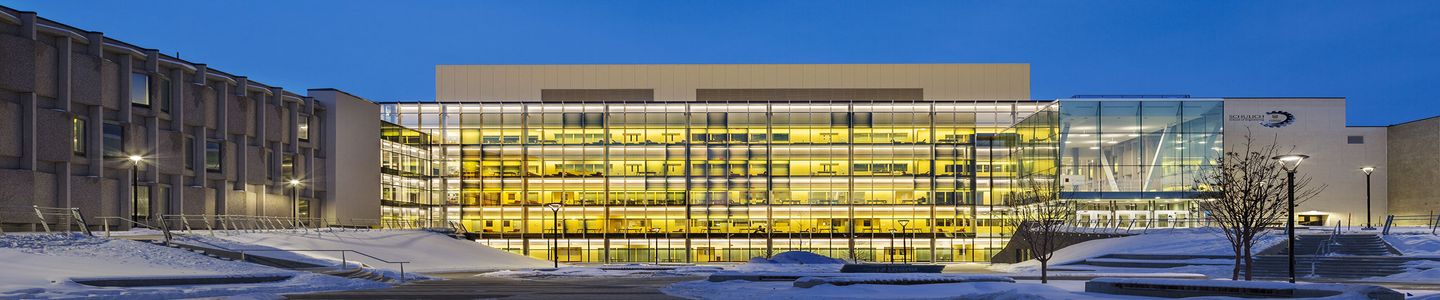
The University of Calgary Main Campus spans 200+ hectares in northwest Calgary, hosting 11 of the university’s 14 faculties, research facilities, and world-class athletic infrastructure. The Cumming School of Medicine and Faculty of Veterinary Medicine operate from the nearby Foothills Campus, situated 1 kilometre south alongside the Foothills Medical Centre, creating a biotechnology and medical research corridor.
For CMCB students, the Biological Sciences department operates cutting-edge research laboratories including the International Microbiome Centre (IMC), a 10,000-square-foot germ-free facility studying human, plant, animal, and environmental microbiomes. The ACWA (Advancing Canadian Wastewater Assets) lab specializes in microbiology and wastewater treatment innovation. Additionally, 25+ research clusters span extremophilic bacteria ecology, environmental microbiology (methane cycles, biofilm behavior), and bacterial genetics and genomics.
Calgary is Canada’s fourth-largest city with a population of 1.3 million. The city offers affordable living, vibrant arts and culture scenes, and proximity to the Canadian Rocky Mountains. Winter temperatures average minus 10 degrees Celsius to minus 5 degrees Celsius; summer temperatures reach 20 to 25 degrees Celsius. Indian restaurants, temples, and cultural organizations are well-established in the city, making settlement easier for Indian students.
The university is home to 25,000+ students from 138+ countries. International student services provide visa support, orientation, cultural programmes, and career mentoring. Student societies, intramural sports, and academic clubs offer community and networking throughout your degree.
University of Calgary: Graduate Outcomes and Placement
CMCB graduates from the University of Calgary achieve a placement rate of 94 percent within 12 months of graduation. Entry-level positions pay an average of C$50,000 (?34.07 lakhs) annually. Within 5 to 10 years, professionals in molecular biology and cellular biology roles command C$253,000 to C$283,000 (?17.26 to 19.31 crores), reflecting Alberta’s strong biotechnology and healthcare research sectors.
Typical career pathways include roles as laboratory analyst, microbiologist, quality assurance specialist, research associate, and biomedical scientist in pharmaceutical companies, healthcare research institutions, government laboratories, and environmental consulting firms. Employers actively recruiting UCalgary CMCB graduates include pharmaceutical giants, biotech start-ups, Canada’s National Microbiology Laboratory, and provincial health research institutes.
The university supports graduate career transitions through the Science Career Centre, which hosts on-campus recruitment, internship fairs, and alumni networking. Co-operative education placements (mandatory 8 months, optional extensions to 16 months) create direct employer connections; approximately 60 percent of co-op students receive permanent job offers from their placement employer.
For Indian students, the Post-Graduation Work Permit (PGWP) allows 4 years of open work authorization in Canada after graduation, enabling you to gain Canadian work experience and build a profile for permanent residence. Graduates are eligible to apply for Express Entry permanent residence after 12 months of Canadian work experience, with a typical processing time of 6 months.
University of Calgary: Visa, Immigration, and Post-Study Pathways
Indian students pursuing the CMCB programme at the University of Calgary must obtain a Canadian study permit valid for the duration of their degree plus one additional year. The study permit application requires proof of acceptance from the university, financial capacity (minimum C$20,000 in Guaranteed Investment Certificate or bank account), passport, and medical examination. Processing time is typically 4 to 8 weeks from submission date.
Canada does not require a separate health insurance policy for study permit holders; mandatory university health and dental plans are included in your compulsory ancillary fees (C$2,270 annually). You are expected to maintain valid study permit status throughout your programme; working more than 20 hours per week during academic sessions is not permitted, though full-time work is allowed during official breaks.
Upon graduation, you are eligible for a Post-Graduation Work Permit (PGWP) valid for the same duration as your study programme (4 years in this case). The PGWP is an open work permit requiring no employer sponsorship, allowing you to work for any Canadian employer in any role. Processing time for PGWP applications is 4 to 6 weeks.
After 12 months of Canadian work experience, you are eligible to apply for permanent residence through Canada’s Express Entry system (Federal Skilled Worker or Ontario Provincial Nominee Program). The Express Entry process requires completion of a language proficiency test (CLB 7 minimum for most National Occupational Classification codes relevant to microbiologists and biological scientists), educational credential assessment, and Comprehensive Ranking System (CRS) score of typically 450 or higher. Processing time is 6 months for federal Express Entry or 12 months for provincial nominee programmes.
University of Calgary: Global Ranking and Programme Comparison
The University of Calgary ranks 211 globally in the QS World University Rankings 2026 and 200 globally in the Times Higher Education (THE) Rankings 2026. In Biological Sciences specifically, UCalgary ranks 163 globally (QS 2025), placing it among top universities for life sciences research and teaching. In Canada, the university ranks in the top tier for biological sciences research output and funding.
The CMCB programme is benchmarked against peer institutions across Canada offering comparable cellular, molecular, and microbial biology degrees. Key competitors include the University of Toronto (Biology Specialist), McGill University (Biology Honours), McMaster University (Honours Molecular Biology Co-op), and University of British Columbia (Microbiology and Immunology). The University of Calgary offers competitive pricing (C$36,000 annually for international students) compared to peer institutions’ international tuition ranges (C$31,000 to C$45,000 annually) while maintaining research infrastructure comparable to these top-tier universities.
| University | Programme | Domestic Tuition (CAD/year) | International Tuition (CAD/year) | Key Strength |
|---|---|---|---|---|
| University of Calgary | CMCB Honours | 6,166 | 36,000 | Affordable, paid co-op, microbiome research |
| University of Toronto | Biology Specialist | 6,500 | 63,000 | Highest ranked globally, large research base |
| McGill University | Biology Honours | 3,056 (QC) | 28,600 | Lowest cost option, strong research |
| McMaster University | Honours Molecular Biology | 8,000 | 42,000 | Problem-based learning, strong co-op |
| UBC | Microbiology & Immunology | 5,500 | 48,000 | Immunology focus, Vancouver location |
University of Calgary: Key Facts and Programme Summary
| Attribute | Details |
|---|---|
| Institution | University of Calgary, Calgary, Alberta, Canada |
| Programme | Bachelor of Science (Honours) in Cellular, Molecular and Microbial Biology |
| Duration | 4 years (120 units / 40 courses) |
| Intake | Fall (September) and Winter (January) |
| Annual International Tuition | C$36,000 (?25.24 lakhs) |
| Compulsory Fees | C$2,270 annually (?1.59 lakhs) |
| 4-Year Total Cost (Tuition + Fees) | C$153,080 (?1.07 crore) |
| Annual Living Expenses | C$26,040 to C$38,160 (?1.82 to 2.67 lakhs) |
| English Language Requirement | IELTS 6.5 overall (6.0 per component), TOEFL 83, Duolingo 110 |
| Application Deadline (Fall 2027) | 2027-02-01 |
| Application Fee | C$145 (?10,167) |
| Acceptance Deposit | C$500 (?35,060) |
| Co-operative Education | 8, 12, or 16 months; paid; earnings C$25,000 to C$40,000 |
| International Student Population | 138+ countries represented |
| QS Biological Sciences Ranking | #163 globally |
| University QS Overall Ranking | #211 globally |
| Graduate Placement Rate | 94 percent within 12 months |
| Entry-Level Salary | C$50,000 (?34.07 lakhs) |
| 5-10 Year Salary (Molecular Biologist) | C$253,000 to C$283,000 (?17.26 to 19.31 crores) |
| Post-Graduation Work Permit Duration | 4 years (open work authorization) |
| Express Entry Eligibility (PR) | After 12 months of Canadian work experience |
Frequently Asked Questions (FAQs)
1. What is the difference between Cellular, Molecular and Microbial Biology and Biochemistry at University of Calgary?
The CMCB programme emphasizes microbiology, bacterial genetics, environmental microbiology, and biofilm behavior, with hands-on laboratory training and co-operative placements. Biochemistry, offered separately, focuses on metabolic pathways, enzyme kinetics, and molecular-level biochemical mechanisms. CMCB is broader in scope (including ecology and environmental microbiology) and better suited for students interested in healthcare microbiology, pharmaceutical microbiology, or environmental research. Biochemistry is ideal for students targeting pharmaceutical research and development or clinical laboratory roles. Both programmes offer co-operative education and strong placement outcomes.
2. Can I work part-time during my CMCB degree at University of Calgary?
Yes, international students on valid study permits may work up to 20 hours per week during academic sessions (September to April and April to August) and full-time during official university breaks (May to August, December to January). Many CMCB students combine part-time work in university research labs or campus facilities with their studies. However, mandatory 8-month co-operative education placements are the primary work-integrated learning opportunity, and most students defer part-time work during co-op terms to focus on full-time paid employment.
3. Is IELTS the only English language proficiency test accepted by University of Calgary?
No. The University of Calgary accepts IELTS (6.5 overall, 6.0 per component), TOEFL iBT (83), PTE Academic (59), and Duolingo English Test (110). Applicants from English-medium schools in India (English language studied for 10+2) may be exempted from language testing based on transcript review. Some Indian-origin students holding UK or US undergraduate degrees are also exempted. We recommend checking with the university’s International Student Services to confirm whether your English medium background qualifies for exemption.
4. What is the cost of living in Calgary for a student, and how does it compare to Toronto or Vancouver?
Calgary is significantly more affordable than Toronto or Vancouver. Average monthly living expenses in Calgary are C$3,611 (?2.53 lakhs), with rent ranging C$1,800 to C$2,500 per month for a one-bedroom apartment. Annual living expenses total C$26,040 to C$38,160. In comparison, Toronto averages C$4,200 to C$5,000 monthly, and Vancouver averages C$4,500 to C$5,500 monthly. Calgary’s lower cost is offset by shorter summers and longer, colder winters (average winter temperature minus 10 degrees Celsius). Many Indian students find Calgary’s cost of living allows greater savings toward Canadian work experience and permanent residence applications.
5. Can I study the CMCB programme at UCalgary Qatar campus?
No. The Bachelor of Science (CMCB) is offered exclusively at the Main Campus in Calgary, Alberta. The Qatar campus offers select undergraduate and graduate programmes through the Haskayne School of Business and other faculties, but life sciences and honours science degrees are not available there. All CMCB students study on the Main Campus in northwest Calgary, which houses the Biological Sciences department and the International Microbiome Centre.
Important Alert
- Application Deadline for Fall 2027 Intake - Apr 1, 2027
Tuition Fees
| Year | 1st Year Fees |
|---|---|
| Tuition Fees | ₹2118109 (CAD 30782) |
Other Expenses
| Head | Avg Cost Per Year |
|---|---|
| Housing | ₹1133989 (CAD 16480) |
| Books and supply | ₹41286 (CAD 600) |
Previous Year Tuition Fees
| Year | 1st Year Fees |
|---|---|
| 2024 | ₹1847480 (CAD 26849) |
| 2023 | ₹1847480 (CAD 26849) |
| 2021 | ₹1145136 (CAD 16642) |
Important Dates
| Event | Application Date |
|---|---|
| Application Deadline for Fall 2027 Intake | Apr 1, 2027 |
Scores Required
Required Document List
Complete Application
Application Fee
Official Transcripts
English Language Requirements
A copy of the Passport

Do you think the Rankings are wrong ? Report Here
Key Resources for Your Study Abroad Journey


Course Guides
Top Undergraduate Courses in Canada: Fees 2024, Top Colleges, Admissions, Placements & Salaries
Career and Placement after Course
Cellular, Molecular and Microbial Biologists have global opportunities to work in areas such as
- Biotechnology
- Medical Research
- Toxicology, and more.
Scholarship Grants & Financial Aids
| Name | Scholarship Per Student | Level of Study | Type | |
|---|---|---|---|---|
| Jared J. Davis Grant | Scholarship per student₹ 68,810/Yr$1,000 | Level Of StudyBachelor | TypeMerit-Based | |
| Axol Science Scholarship | Scholarship per student₹ 1.4 L/Yr$2,000 | Level Of StudyBachelor | TypeCompany-Sponsored | |
| Business Administration Scholarships | Scholarship per studentVariable Amount | Level Of StudyBachelor | TypeMerit-Based | |
| University of Montreal Scholarships | Scholarship per studentVariable Amount | Level Of StudyBachelor | TypeCollege-Specific | |
| Forktip Women’s- Innovation Scholarship | Scholarship per studentVariable Amount | Level Of StudyBachelor | TypeCollege-Specific | |
| VueVille Future Technology Scholarship | Scholarship per student₹ 68,810/Yr$1,000 | Level Of StudyBachelor | TypeMerit-Based |
Similar Programs
| Program | Important Date | Total Fees | Median Exams Score | Action |
|---|---|---|---|---|
Application Deadline for Fall 2027 Intake (1st Apr 2027) | INR 21.2 L/Yr CAD 30,782 /Yr |
|

Do you think the Dates are wrong ? Report Here

interested in this College ?
Follow & Share this college to get information about admission.



Comments
Found 9 Comments
To be eligible for admission to the MSc in Data Science program at the University of Calgary, you must have a four-year bachelor's degree in a relevant field such as computer science, mathematics, statistics, or engineering, with a minimum GPA of 3.0 out of 4.0, or an equivalent degree from a recognized institution. And if English is not your first lamguage, a valid ELP test score is necessary.
You can apply for the M.Eng Chemical and Petroleum Engineering proghram of the University of Calgary if you have completed a four-year bachelor’s degree in chemical or petroleum engineering with a minimum GPA of 3.0 on a scale of 4.0. You must submit your official transcripts as well as a copy of your cetificate. International students must also submit a valid ELP test score unless eligible for exemption.
The University of Calgary offers Masters programs in various academic disciplines. However, the university does not offer masters program in International Relations.