




The Himachal Pradesh Board of School Education (HPBOSE) successfully conducted the Class 10 Home Science Exam 2026. The HP Board Class 10 Home Science Question Paper with Solution PDF is now available for download.
The HP Board Class 10 Home Science paper covered key topics from nutrition, human development, family resource management, and textiles. Students should focus on understanding basic nutritional concepts, child development, household management, and fabric care. The exam is marked out of 100, with 60 marks for the theory paper and 40 for internal assessment.
HP Board Class 10 2026 Home Science Question Paper with Solution PDF
| HP Board Class 10 Home Science Question Paper 2026 | Download PDF | Check Solution |

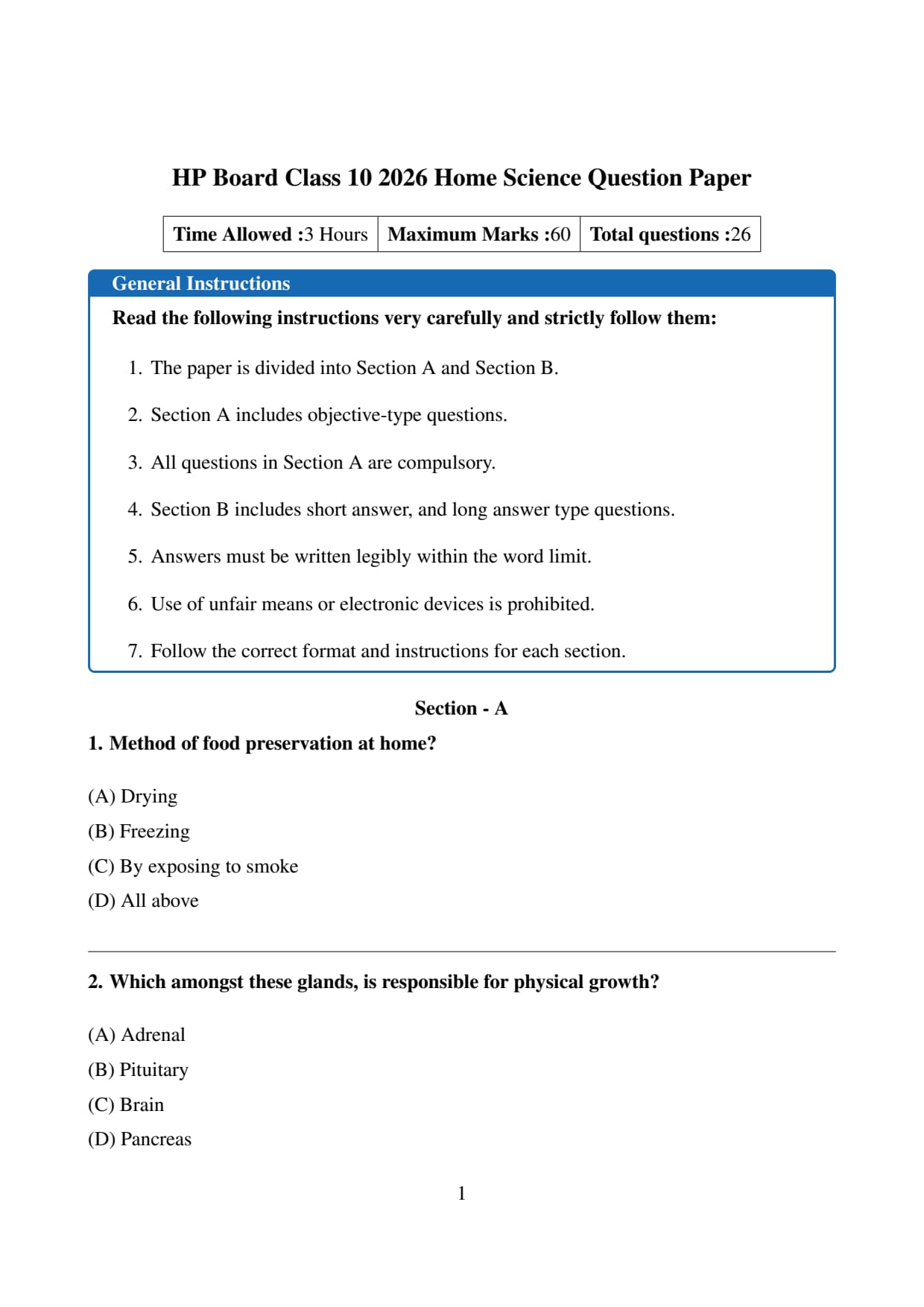
Method of food preservation at home?
View Solution
Step 1: Different methods of food preservation.
At home, food preservation can be done using several methods, including drying, freezing, and exposing food to smoke. These methods help in preventing spoilage by inhibiting the growth of microorganisms.
Step 2: Explanation of each method.
(A) Drying: Drying is a common method of food preservation where moisture is removed from the food, making it less hospitable to bacteria and molds.
(B) Freezing: Freezing helps in preserving food by slowing down the metabolic activity of microorganisms, preventing spoilage.
(C) By exposing to smoke: Exposing food to smoke, like in the case of smoked meats, is another preservation technique that has been used historically. The chemicals in smoke act as preservatives.
(D) All above: Correct. All of these methods—drying, freezing, and smoking—are effective techniques for preserving food at home.
Step 3: Conclusion.
All the listed methods (drying, freezing, and exposing to smoke) are valid and commonly used for food preservation at home.
Final Answer: All above. Quick Tip: Drying, freezing, and smoking are all great ways to preserve food and extend its shelf life. Each method works in a different way to prevent spoilage.
Which amongst these glands, is responsible for physical growth?
View Solution
Step 1: Understanding the glands responsible for physical growth.
The pituitary gland, often referred to as the "master gland," plays a key role in regulating physical growth through the release of growth hormone (GH).
Step 2: Evaluation of the options.
(A) Adrenal: Incorrect. The adrenal glands produce hormones involved in stress response, metabolism, and immune function, but not directly in physical growth.
(B) Pituitary: Correct. The pituitary gland is responsible for secreting growth hormones, which regulate physical growth.
(C) Brain: Incorrect. While the brain controls body functions, it does not directly release growth hormones.
(D) Pancreas: Incorrect. The pancreas regulates blood sugar but does not play a role in physical growth.
Step 3: Conclusion.
The pituitary gland is primarily responsible for physical growth due to its secretion of growth hormones.
Final Answer: Pituitary. Quick Tip: The pituitary gland releases growth hormones that directly influence physical development and growth in the body.
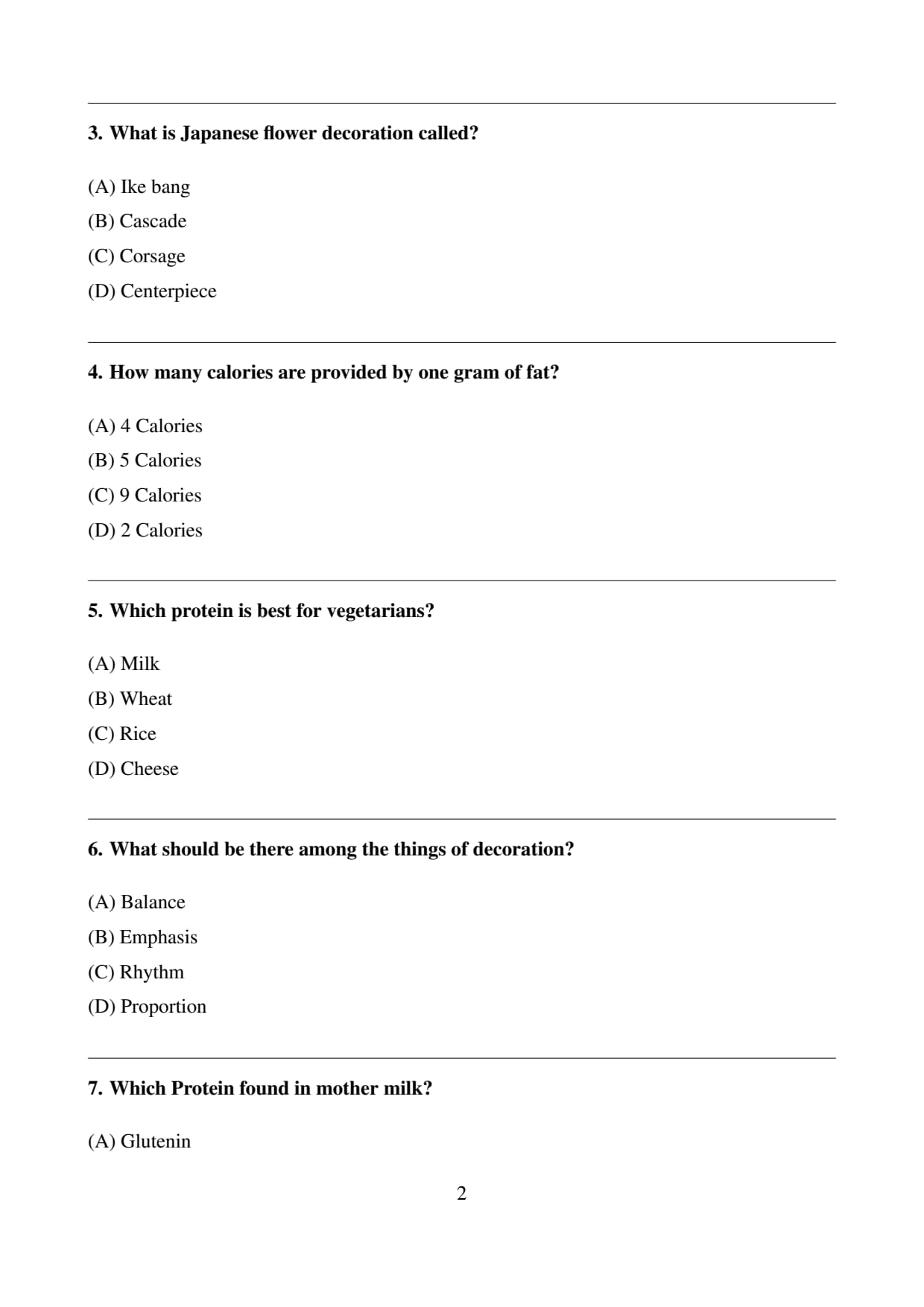
What is Japanese flower decoration called?
View Solution
Step 1: Understanding Japanese flower decoration.
Japanese flower decoration is known as "Ikebana," which is the art of arranging flowers in a harmonious and aesthetically pleasing way.
Step 2: Evaluation of the options.
(A) Ike bang: Correct. "Ike bang" is likely a misspelling of "Ikebana," which refers to the Japanese flower arrangement style.
(B) Cascade: Incorrect. Cascade refers to a type of floral arrangement but is not the term for Japanese flower decoration.
(C) Corsage: Incorrect. A corsage is a small bouquet of flowers worn, usually on formal occasions, but not related to the art of Japanese flower decoration.
(D) Centerpiece: Incorrect. A centerpiece is a decorative item for the center of a table, but not specific to Japanese flower decoration.
Step 3: Conclusion.
Ikebana is the traditional Japanese flower arranging art form, and "Ike bang" is an incorrect form of the name.
Final Answer: Ike bang. Quick Tip: Ikebana is the traditional Japanese art of flower arrangement, emphasizing harmony and minimalism.
How many calories are provided by one gram of fat?
View Solution
Step 1: Understanding calorie content of fat.
Fats are a dense source of energy. Each gram of fat provides approximately 9 calories, which is higher than carbohydrates and proteins.
Step 2: Energy values of different macronutrients.
- Fats provide 9 calories per gram.
- Carbohydrates and proteins each provide around 4 calories per gram.
Step 3: Comparison with other options.
(A) 4 Calories: Incorrect. This is the energy provided by carbohydrates or proteins, not fats.
(B) 5 Calories: Incorrect. This is not the standard calorie value for fats.
(C) 9 Calories: Correct. Fats provide 9 calories per gram.
(D) 2 Calories: Incorrect. This is much lower than the energy content of fat.
Step 4: Conclusion.
Therefore, the correct answer is (C) 9 Calories, as fats provide 9 calories per gram.
Final Answer: 9 Calories. Quick Tip: Fats are the most calorie-dense macronutrient, providing 9 calories per gram compared to 4 calories per gram for carbohydrates and proteins.
Which protein is best for vegetarians?
View Solution
Step 1: Understanding the options.
The question asks which protein is best for vegetarians. For vegetarians, it is essential to consider plant-based or dairy-based sources of protein that provide complete amino acids, which are crucial for human health.
Step 2: Evaluation of the options.
(A) Milk: Correct. Milk is a complete source of protein, containing all essential amino acids. It is a good protein source for vegetarians, particularly those who consume dairy products.
(B) Wheat: Incorrect. While wheat provides some protein, it is not a complete protein, as it lacks certain essential amino acids. It can be part of a balanced vegetarian diet but should be complemented with other protein sources.
(C) Rice: Incorrect. Rice, like wheat, provides some protein but lacks certain essential amino acids, making it less effective as the primary protein source for vegetarians.
(D) Cheese: Incorrect. Although cheese is a dairy product with good protein content, the question asks for the best protein, and milk is a more universally accessible and complete source of protein for vegetarians.
Step 3: Conclusion.
Milk stands out as the best protein source for vegetarians due to its complete amino acid profile and the fact that it is widely consumed in vegetarian diets.
Final Answer: Milk. Quick Tip: Milk is one of the best sources of complete protein for vegetarians, providing all essential amino acids required for health.
What should be there among the things of decoration?
View Solution
Step 1: Understanding the options.
The question asks about the important aspects of decoration, which involve aesthetic balance, visual appeal, and harmony between the different elements used in decoration.
Step 2: Evaluation of the options.
(A) Balance: Correct. In decoration, balance ensures that the elements are distributed in a way that creates visual harmony. It is one of the key principles of design.
(B) Emphasis: Incorrect. Emphasis highlights a particular area of decoration, but it alone does not ensure overall harmony.
(C) Rhythm: Incorrect. Rhythm involves the flow or repetition of elements, but balance is the more crucial element in decoration.
(D) Proportion: Incorrect. While proportion is important for visual appeal, balance remains the most important in overall decoration.
Step 3: Conclusion.
Balance is the key principle in decoration, ensuring that no one part dominates the design and that the elements complement each other.
Final Answer: Balance. Quick Tip: Balance in decoration ensures a pleasing arrangement of elements. It is vital for creating a harmonious design.
Which Protein found in mother milk?
View Solution
Step 1: Understanding the question.
The question asks about the primary protein found in mother’s milk. Lactoferrin is a key protein in milk, known for its role in iron binding and immune support.
Step 2: Evaluation of the options.
(A) Glutenin: Incorrect. Glutenin is found in wheat and is not a protein present in milk.
(B) Lactoferrin: Correct. Lactoferrin is a major protein found in mother’s milk, essential for immunity and iron absorption.
(C) Legumin: Incorrect. Legumin is found in legumes and is not a protein present in milk.
(D) Mayocin: Incorrect. Mayocin is not a protein found in mother’s milk.
Step 3: Conclusion.
Lactoferrin is the key protein found in mother’s milk and plays a vital role in protecting newborns from infections.
Final Answer: Lactoferrin. Quick Tip: Lactoferrin in mother’s milk helps with immune protection and iron absorption, playing an essential role in the infant’s development.
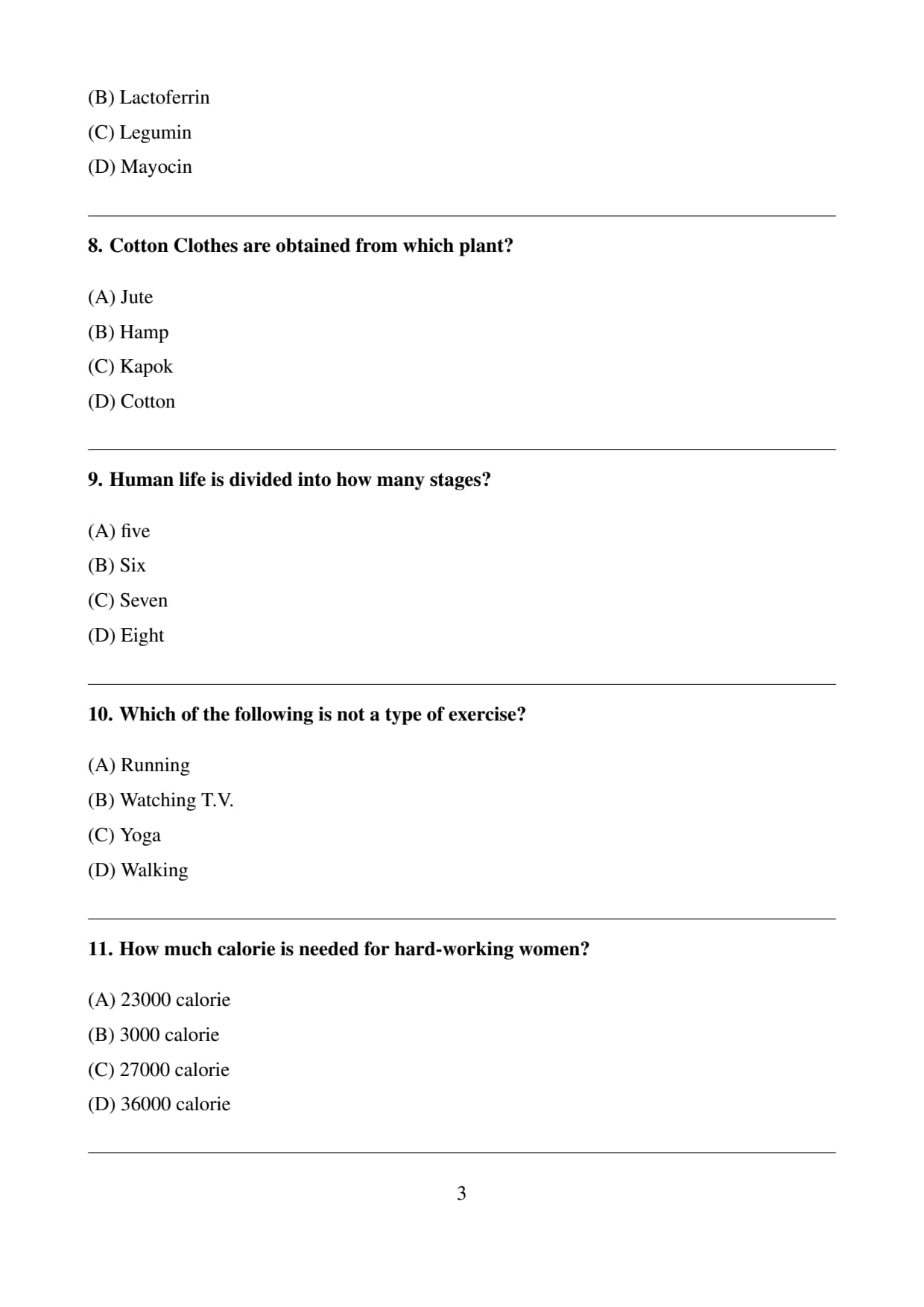
Cotton Clothes are obtained from which plant?
View Solution
Step 1: Identifying the source of cotton.
Cotton is a soft fiber obtained from the seeds of the cotton plant, which is widely used to make fabrics for clothing.
Step 2: Evaluation of the options.
(A) Jute: Incorrect. Jute is used to make burlap, sacks, and ropes, but not cotton clothes.
(B) Hamp: Incorrect. Hamp is another name for hemp, which is used to make ropes and textiles but not cotton clothes.
(C) Kapok: Incorrect. Kapok comes from the seeds of the kapok tree and is used for stuffing but not for cotton clothing.
(D) Cotton: Correct. Cotton is the fiber obtained from the cotton plant and is used to make cotton clothes.
Step 3: Conclusion.
Cotton clothes are made from the fiber obtained from the cotton plant.
Final Answer: Cotton. Quick Tip: Cotton is the most commonly used natural fiber in clothing due to its softness and breathability.
Human life is divided into how many stages?
View Solution
Step 1: Understanding the concept of life stages.
Human life can be categorized into various stages based on physical, psychological, and social development. These stages help in understanding human growth and aging.
Step 2: Evaluation of the options.
(A) five: Correct. Human life is commonly divided into five stages: infancy, childhood, adolescence, adulthood, and old age.
(B) six: Incorrect. Six stages are not commonly used in standard life stage categorizations.
(C) seven: Incorrect. Seven stages is not a standard classification for human life stages.
(D) eight: Incorrect. Eight stages is also not a standard classification.
Step 3: Conclusion.
The correct and most widely accepted classification of human life includes five distinct stages: infancy, childhood, adolescence, adulthood, and old age.
Final Answer: five. Quick Tip: Human life stages are typically divided into five: infancy, childhood, adolescence, adulthood, and old age. Understanding these stages is crucial for studying human development.
Which of the following is not a type of exercise?
View Solution
Step 1: Understanding the types of exercise.
Exercise is physical activity that improves or maintains physical fitness. Running, yoga, and walking are all examples of physical exercises. Watching T.V. is not a physical activity and does not involve exercise.
Step 2: Evaluation of the options.
(A) Running: Incorrect. Running is a physical exercise that promotes cardiovascular health.
(B) Watching T.V.: Correct. Watching T.V. is a sedentary activity and not a type of exercise.
(C) Yoga: Incorrect. Yoga is a physical and mental exercise that involves poses and breathing exercises.
(D) Walking: Incorrect. Walking is a low-impact form of physical exercise.
Step 3: Conclusion.
Watching T.V. is the only option that is not considered a type of exercise.
Final Answer: Watching T.V. Quick Tip: Physical exercise helps improve health, whereas sedentary activities like watching T.V. do not contribute to physical fitness.
How much calorie is needed for hard-working women?
View Solution
Step 1: Understanding the calorie requirement.
Hard-working women, especially those involved in physical labor, require more calories to maintain energy and body function. The average calorie intake for an active woman is around 3000 calories.
Step 2: Evaluation of the options.
(A) 23000 calorie: Incorrect. This amount of calorie is excessively high for a normal human requirement.
(B) 3000 calorie: Correct. Active women require around 3000 calories to maintain energy and support physical activities.
(C) 27000 calorie: Incorrect. This is too high for daily caloric intake.
(D) 36000 calorie: Incorrect. This is also an unrealistic amount of calories for daily intake.
Step 3: Conclusion.
The correct average calorie requirement for hard-working women is 3000 calories.
Final Answer: 3000 calorie. Quick Tip: The daily calorie requirement for active women is generally around 3000 calories, depending on their physical activity and age.
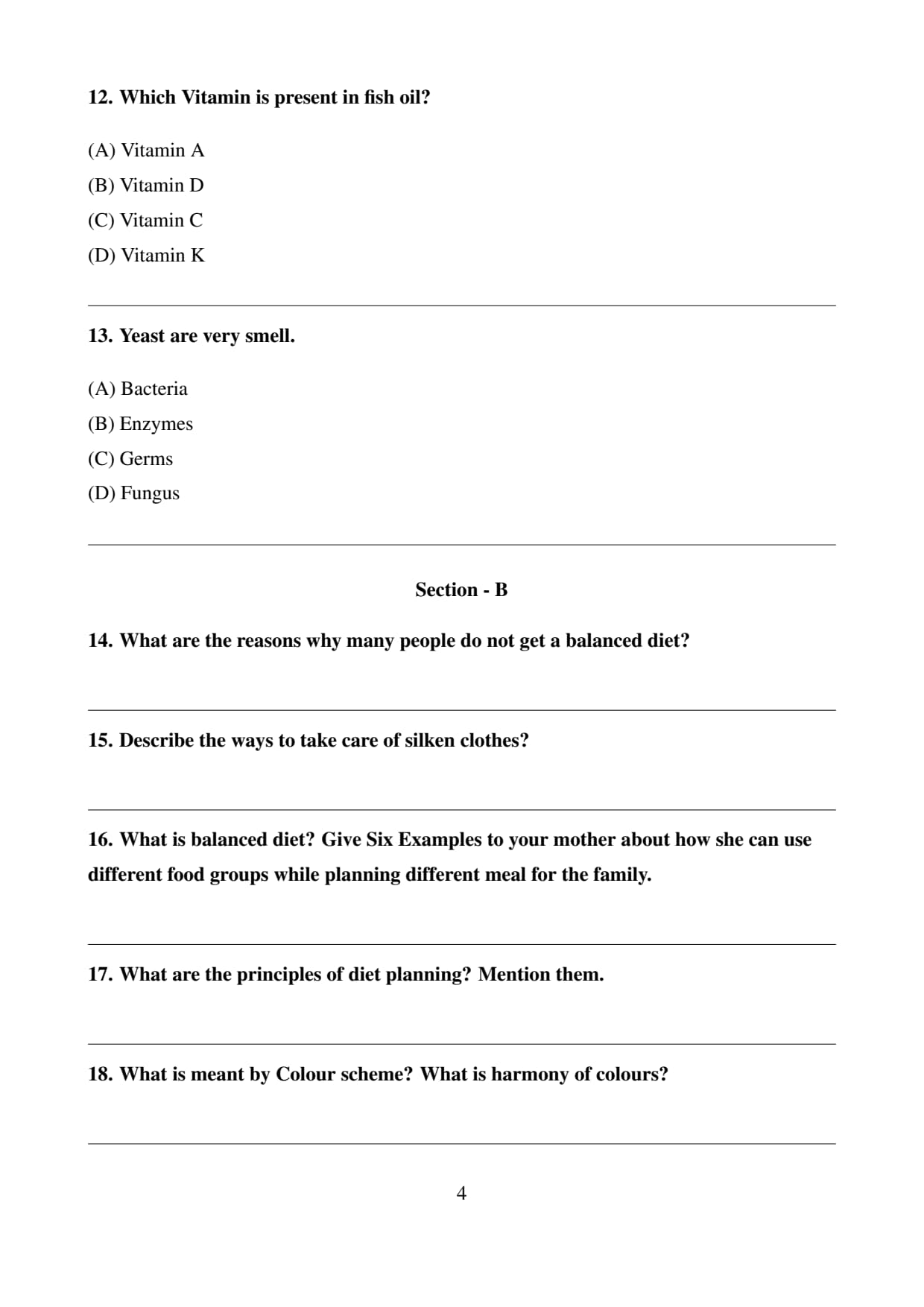
Which Vitamin is present in fish oil?
View Solution
Step 1: Vitamin in fish oil.
Fish oil is a rich source of Vitamin D, which is essential for maintaining strong bones and supporting immune function.
Step 2: Explanation of vitamins.
- Vitamin A is important for vision and immune health, but it is not found in high amounts in fish oil.
- Vitamin D, found in fish oil, helps with calcium absorption and bone health.
- Vitamin C is not found in fish oil, and it is important for immune function and skin health.
- Vitamin K is also not found in significant amounts in fish oil; it helps with blood clotting.
Step 3: Conclusion.
The correct answer is (B) Vitamin D, as it is the primary vitamin present in fish oil.
Final Answer: Vitamin D. Quick Tip: Fish oil is a great source of Vitamin D, essential for bone health. It is also rich in Omega-3 fatty acids.
Yeast are very smell.
View Solution
Step 1: Yeast as a fungus.
Yeast is a type of fungus, which is responsible for fermentation processes. It does not belong to bacteria, enzymes, or germs.
Step 2: Explanation of options.
- (A) Bacteria: Incorrect. Bacteria are single-celled organisms that can cause infections, but they are different from yeast.
- (B) Enzymes: Incorrect. Enzymes are proteins that catalyze biochemical reactions, but they are not related to yeast.
- (C) Germs: Incorrect. Germs is a general term for microorganisms, but yeast specifically is a fungus.
- (D) Fungus: Correct. Yeast is a type of fungus.
Step 3: Conclusion.
Yeast belongs to the fungus category, and it plays an essential role in food fermentation.
Final Answer: Fungus. Quick Tip: Yeast is a fungus and is used in baking and brewing due to its ability to ferment sugars.
What are the reasons why many people do not get a balanced diet?
View Solution
Step 1: Lack of awareness about nutrition.
Many people are not fully aware of the importance of a balanced diet and its components. Lack of education about proper nutrition can lead to poor food choices.
Step 2: Financial constraints.
For many individuals, especially in low-income areas, a balanced diet may be unaffordable. Healthy foods such as fruits, vegetables, and proteins often cost more than processed or fast foods.
Step 3: Limited availability of nutritious food.
In some regions, especially rural areas or food deserts, there is limited access to fresh, nutritious food. People may rely on what is easily available, which is often unhealthy.
Step 4: Cultural and lifestyle factors.
Cultural food preferences and busy lifestyles can also contribute to the lack of a balanced diet. Some people may prioritize convenience or traditional foods that are not necessarily balanced.
Step 5: Misleading food marketing.
Marketing tactics by food industries often promote unhealthy products as balanced or healthy, leading people to make poor dietary choices. Quick Tip: Remember: A balanced diet is crucial for health. Awareness, availability, affordability, and lifestyle choices play key roles in ensuring proper nutrition.
Describe the ways to take care of silken clothes?
View Solution
Step 1: Washing Silken Clothes.
Silken clothes should be washed with care. Hand washing is recommended to preserve the delicate texture. Use mild detergent and lukewarm water, avoiding harsh chemicals.
Step 2: Drying Silken Clothes.
Never wring silken clothes. Instead, gently squeeze out excess water and lay the fabric flat to dry. Avoid hanging as it may stretch the fibers.
Step 3: Ironing Silken Clothes.
Iron silken clothes on a low temperature setting while the fabric is slightly damp. Place a cloth between the silk and the iron to prevent direct heat contact, which can damage the fabric.
Step 4: Storing Silken Clothes.
Store silken clothes in a cool, dry place, away from direct sunlight. Use padded hangers or store them in cotton bags to maintain their shape.
Step 5: Cleaning Stains.
For stains, immediately blot the area with a clean cloth. Avoid rubbing. For persistent stains, use a special silk detergent or consult a professional dry cleaner. Quick Tip: Silk is a delicate fabric and requires gentle handling. Always follow care instructions to preserve its texture and sheen.
What is balanced diet? Give Six Examples to your mother about how she can use different food groups while planning different meal for the family.
View Solution
Step 1: Define Balanced Diet.
A balanced diet is one that provides all the essential nutrients required by the body in the right proportions. It includes carbohydrates, proteins, fats, vitamins, and minerals.
Step 2: Importance of a Balanced Diet.
A balanced diet helps in maintaining optimal health, supports growth and development, and provides energy for daily activities.
Step 3: Food Groups and Examples.
Here are six examples to help plan balanced meals for the family:
1. Fruits and Vegetables: Include green leafy vegetables, carrots, apples, and oranges. These provide essential vitamins, minerals, and fiber.
2. Proteins: Include lean meats, eggs, beans, and legumes. These provide the body with the building blocks for muscle growth and repair.
3. Carbohydrates: Include rice, whole wheat bread, pasta, and potatoes. These provide energy and fuel for the body.
4. Dairy Products: Include milk, yogurt, and cheese. These provide calcium and support bone health.
5. Fats: Include olive oil, nuts, and avocados. These provide essential fatty acids needed for energy and cell structure.
6. Water: Ensure the family drinks plenty of water to stay hydrated and maintain overall bodily functions. Quick Tip: A balanced diet includes foods from all food groups in the right proportions. Always try to include a variety of colorful fruits and vegetables in every meal.
What are the principles of diet planning? Mention them.
View Solution
Step 1: Define Diet Planning.
Diet planning involves creating a balanced and healthy meal plan that provides all the necessary nutrients to maintain good health.
Step 2: Principles of Diet Planning.
The principles of diet planning are as follows:
1. Balance: A balanced diet includes all essential nutrients in the right proportion – carbohydrates, proteins, fats, vitamins, and minerals.
2. Variety: It is important to include a variety of foods from different food groups to ensure adequate nutrient intake.
3. Adequacy: The diet must provide enough calories and nutrients to meet the body’s energy and nutritional needs.
4. Moderation: Avoid excessive intake of any nutrient, especially those that can be harmful when consumed in excess, such as sugar, salt, or fats.
5. Caloric Control: Ensure that the total calorie intake is in line with the individual’s activity level and health goals, such as maintaining or losing weight.
6. Personalization: The diet should be tailored to meet individual preferences, age, gender, health status, and lifestyle. Quick Tip: Remember, a well-planned diet is a combination of balance, variety, and moderation, helping to meet all nutritional needs while maintaining health.
What is meant by Colour scheme? What is harmony of colours?
View Solution
Step 1: Explanation of Colour scheme.
A colour scheme refers to the selection of colours used in design or decoration. It is a harmonious arrangement of colours that creates visual interest and balance in a space, artwork, or product.
Step 2: Types of Colour schemes.
Common types of colour schemes include complementary, analogous, monochromatic, and triadic. Each type involves a specific relationship between colours to create visual effects such as contrast, harmony, and balance.
Step 3: Explanation of Harmony of Colours.
Harmony of colours refers to the aesthetic pleasing arrangement of colours. It occurs when colours are combined in a way that is visually satisfying, evoking feelings of tranquility or energy, depending on the design purpose.
Step 4: Creating harmony.
To achieve harmony, designers often use colour wheel principles, considering relationships like complementary colours (opposite on the wheel), analogous colours (next to each other), or using varying shades and tints. Quick Tip: Remember: A well-planned colour scheme enhances the aesthetic appeal of any space, and harmony in colours is key to a balanced design.
What are the principles of Interior Decorations? Describe principles.
View Solution
Step 1: Overview of interior decoration principles.
Interior decoration involves the design and arrangement of spaces within a room or building. The principles focus on achieving harmony, balance, and functionality while reflecting personal taste.
Step 2: Principles of interior decoration.
1. Balance: Distributing visual weight across a room to create equilibrium, using symmetrical, asymmetrical, or radial balance.
2. Harmony: Achieved by using a consistent style, colour scheme, and theme that creates unity throughout the room.
3. Proportion and Scale: Ensuring the size of furniture and decor items are appropriate to the size of the room and the other objects in the space.
4. Rhythm: Creating a sense of movement through repetition of patterns, colours, or materials.
5. Contrast: Adding variety through the use of contrasting elements like light and dark colours or different textures.
Step 3: Importance of these principles.
Following these principles ensures that the space is aesthetically pleasing, functional, and comfortable for the inhabitants. Quick Tip: Remember: Interior decoration principles help create visually appealing and practical spaces that reflect the personality and needs of the occupants.
Which type of micro-organisms spoil the food?
View Solution
Step 1: Types of microorganisms.
Micro-organisms that spoil food include bacteria, fungi (yeasts and molds), and certain viruses. These microorganisms break down the food and produce harmful substances.
Step 2: Bacteria.
Bacteria are the most common culprits in food spoilage. They thrive in warm, moist environments and can rapidly multiply. Some types of bacteria also produce toxins that can lead to foodborne illnesses.
Step 3: Fungi (yeasts and molds).
Yeasts cause fermentation in food, and molds grow as fuzzy patches on food surfaces. Both fungi can alter the appearance, texture, and taste of the food, leading to spoilage.
Step 4: Viruses.
Although less common, viruses such as norovirus can cause foodborne illness when food is contaminated. However, viruses typically don't spoil food in the same way bacteria or fungi do. Quick Tip: Remember: Proper food handling, hygiene, and storage are crucial to prevent contamination by microorganisms.
Describe the advantage and disadvantage of exercise.
View Solution
Step 1: Advantages of Exercise.
Exercise provides numerous health benefits, including improving cardiovascular health, increasing strength, and enhancing flexibility. It also boosts mood, reduces stress, and helps with weight management.
Step 2: Disadvantages of Exercise.
Over-exercising can lead to injuries, exhaustion, or burnout. Without proper guidance, improper technique may result in muscle strain or joint injuries. It is important to balance exercise with rest and recovery. Quick Tip: Exercise is beneficial for health but should be done in moderation to avoid injuries.
Which factors are responsible for all-round development of a child?
View Solution
Step 1: Biological factors.
The genetic makeup of the child plays a crucial role in their physical growth, mental capabilities, and overall health. These inherited traits form the foundation for the child's development.
Step 2: Environmental factors.
A child's environment, including their home, school, and community, significantly influences their development. Positive family support, a stimulating learning environment, and healthy peer relationships foster growth.
Step 3: Nutrition.
Proper nutrition is vital for a child's physical and cognitive development. A balanced diet with essential nutrients promotes healthy growth and helps in building immunity, supporting brain function, and physical health.
Step 4: Emotional and social factors.
A supportive emotional environment, including love and care from parents and caregivers, aids in developing emotional stability, confidence, and social skills. Socialization with peers helps children learn communication and cooperation.
Step 5: Educational influences.
A proper educational system that focuses on intellectual growth, creativity, and physical activity helps in the overall development of a child. Early education programs and extracurricular activities contribute to cognitive and emotional development. Quick Tip: Remember: All-round development of a child requires a combination of biological, environmental, social, and educational factors working together to foster their growth.
What things should be kept in mind to teach good habits in children?
View Solution
Step 1: Lead by Example.
Parents and teachers should practice good habits themselves as children learn by observing the actions of adults.
Step 2: Be Consistent.
Consistency is key. Children need to see habits reinforced regularly for them to internalize and adopt them.
Step 3: Positive Reinforcement.
Praise and reward children when they display good habits. Positive reinforcement encourages them to continue these behaviors.
Step 4: Set Realistic Expectations.
The habits should be age-appropriate and achievable, ensuring that the child does not feel overwhelmed. Quick Tip: Children are more likely to adopt good habits when they see them modeled consistently and positively reinforced.
Mention the sleeping habits of children?
View Solution
Step 1: Regular Sleep Schedule.
Children benefit from having a regular sleep routine. Going to bed and waking up at the same time every day helps establish healthy sleep patterns.
Step 2: Adequate Sleep Duration.
The amount of sleep varies by age. Infants need up to 14-17 hours, toddlers require 12-14 hours, and school-age children generally need 9-11 hours of sleep.
Step 3: Sleep Environment.
Children need a quiet, dark, and cool environment to sleep. A comfortable bed and a calming bedtime routine, like reading a story or listening to soothing music, can help them fall asleep faster.
Step 4: Limited Screen Time Before Bed.
Exposure to screens (TV, phones, tablets) should be limited before bedtime, as the blue light emitted by these devices can interfere with the production of melatonin, making it harder to sleep.
Step 5: Active During the Day.
Children who are physically active during the day tend to fall asleep faster and enjoy deeper sleep at night.
Step 6: Comfort and Reassurance.
Some children may feel anxious at bedtime. Offering comfort, such as a nightlight or a favorite stuffed animal, can help them feel secure and promote better sleep. Quick Tip: Establishing a consistent bedtime routine and creating a calm, quiet environment is essential for ensuring that children get enough restful sleep.
Describe the emotional development of the child?
View Solution
Step 1: Emotional Expression.
Children begin to express emotions like happiness, sadness, and anger at a young age. As they grow, they learn to manage these emotions and understand the feelings of others.
Step 2: Developing Empathy.
Children develop empathy around the age of 2 to 3, learning to recognize and respond to the emotions of others, which is essential for social interactions.
Step 3: Emotional Regulation.
As they mature, children learn to control their emotional responses. This ability is crucial for handling frustration, disappointment, and stress in a healthy way.
Step 4: Building Self-Esteem.
Positive interactions and achievements help children build self-esteem, which plays a key role in their emotional development, making them feel secure and confident. Quick Tip: Emotional development in children is a gradual process that involves learning to understand and manage their emotions, as well as develop empathy for others.
What is meant by the colours that provide coolness and warmth?
View Solution
Step 1: Explanation of coolness and warmth in colours.
Colours can have psychological and physical effects. Light colours, like blue, white, and green, are associated with coolness, while darker colours like red, yellow, and orange evoke warmth.
Step 2: Colours of coolness.
Cool colours such as blue and green reflect light and heat, providing a sense of coolness. These colours are often used in places designed to feel fresh and calming, such as bedrooms or aquatic environments.
Step 3: Colours of warmth.
Warm colours, like red, yellow, and orange, absorb light and heat. These colours are commonly used to create a cozy or energizing atmosphere, such as in living rooms or outdoor spaces exposed to sunlight.
Step 4: Cultural significance.
In various cultures, the association of colours with coolness and warmth may differ. However, the general psychological effect remains the same. Quick Tip: Remember: Cool colours are typically light, while warm colours are darker and more vibrant. They impact the way we perceive temperature in a space.



Comments