



Bachelor of Science [BS] (Economic Science)
Field of Study:
₹57.1 L/Yr

Worcester Polytechnic Institute Bachelor of Science in Economic Science — A Complete Guide for Indian Students
Worcester Polytechnic Institute (WPI) offers one of the most career-focused Bachelor of Science degrees in Economic Science in the United States. This four-year programme combines rigorous mathematical and theoretical economics training with hands-on project-based learning. Indian students pursuing quantitative economics, finance, or management careers find WPI particularly attractive.
WPI ranked #65 in US News & World Report, sits in the heart of Massachusetts’ technology corridor. The programme emphasizes experiential learning through internships, international projects, and the renowned WPI Global Project Program. Students graduate with strong placement outcomes: average starting salary of $81,200 (?7,74,696) for the Class of 2024.
This guide covers everything Indian students need to know: admission requirements, costs, scholarships, visa procedures, and career prospects. Whether you aim for finance, management consulting, or economic research, WPI’s Economic Science degree provides both rigorous theory and practical experience valued by employers worldwide.
Worcester Polytechnic Institute — Programme Overview & Curriculum
The Bachelor of Science in Economic Science at WPI is a structured four-year programme requiring approximately 120 credits. Students develop expertise in microeconomics, macroeconomics, econometrics, and applied economic analysis. The curriculum balances theoretical foundations with real-world problem-solving.
Core courses include intermediate microeconomics, macroeconomics, economic theory, econometrics, international trade, and financial accounting. Mathematics forms the backbone: students must complete six mathematics courses including integral calculus (MA 1022), differential equations (MA 2051), and statistics (MA 2611). This mathematical rigor prepares students for quantitative roles in finance, consulting, and research.
WPI’s signature differentiator is its project-based learning model. The Economics programme operates the Experimental Economics Lab where students conduct computerized economics experiments and analyse data. The seven-week Global Project Program sends students to international locations to conduct original economic research or community development projects. Indian students particularly benefit from this international immersion.
Specialization areas include industrial economics, finance and banking, management, marketing, and labour-management relations. Students interested in "economics and technology"—information economics, engineering economics, tech industry dynamics—find WPI’s location in the tech corridor ideal. The programme permits acceleration through the BS/MS option, allowing high-achieving students to complete a master’s degree within five years total.
The degree emphasises internship and co-op opportunities with Fortune 500 companies, government agencies, and non-profits. Students secure positions at McKinsey, Goldman Sachs, Google, World Bank, and Federal Reserve Banks. Indian students with strong English proficiency (IELTS 6.5+ / TOEFL 90+) and mathematical background thrive in this environment.
Worcester Polytechnic Institute — Admission Requirements for International Students
WPI welcomes international students, including those from India, with an acceptance rate of 41.3% for both domestic and international applicants. This transparent, equal admissions policy removes uncertainty for Indian applicants. The institute uses holistic review: academic record, test scores, extracurricular activities, essays, and leadership potential.
Academic requirements: minimum GPA of 3.0 (on a 4.0 scale) is the floor; successful applicants average 3.8 GPA. Most Indian students applying to WPI complete CBSE, ICSE, or state board examinations with 85%+ aggregate scores. Students with IIT JEE Main scores above 90 percentile or strong board marks in Physics, Chemistry, and Mathematics are well-positioned.
English proficiency for international students: TOEFL minimum 90 (internet-based) or IELTS minimum 6.5. Indian students frequently score 100–110 on TOEFL if they prepare for 3–4 months. No application fee is charged, removing financial barriers for Indian applicants to apply to multiple US universities.
Standardised tests: SAT or ACT are required. The middle 50% of admitted students score 1380–1510 on SAT (or 31–34 on ACT). Indian students preparing for SAT should focus on the quantitative reasoning section, where strong mathematical backgrounds often yield 750+ scores. The writing section requires English fluency developed over 2–3 months of targeted practice.
Supporting materials: school transcripts, teacher recommendations (2–3 letters from science/mathematics teachers), a personal essay, and optional video submission strengthen applications. WPI particularly values students with sustained involvement in mathematics olympiads, science competitions, or entrepreneurship. Indian applicants with Indian National Mathematics Olympiad (INMO) or Science Olympiad participation have competitive advantage.
| Requirement | International Student (India) | Notes |
|---|---|---|
| GPA | Minimum 3.0, average 3.8 | CBSE/ICSE 85%+ aggregate recommended |
| SAT Score | Middle 50%: 1380–1510 | Mathematics 700+, Evidence-Based Reading 680+ |
| ACT Score | Middle 50%: 31–34 | Composite score; alternative to SAT |
| TOEFL (iBT) | Minimum 90 | Most Indian applicants score 100–110 |
| IELTS | Minimum 6.5 | Alternative to TOEFL; 7.0+ competitive |
| Application Fee | $0 | No fee for international students |
| Acceptance Rate | 41.3% | Same for international & domestic |
Worcester Polytechnic Institute — Application Process & Deadlines
WPI operates three decision tracks: Early Decision (binding), Early Action (non-binding), and Regular Decision. Indian students should carefully choose: Early Decision requires commitment to enrol if admitted, but guarantees minimum $25,000 (?2,38,250) annual merit scholarship. Students unsure of financial aid should apply Regular Decision.
The application itself is submitted via the Common Application platform. Students create an account at commonapp.org, fill in personal information, academic history, and extracurricular activities. WPI requires an additional supplemental essay asking about intellectual curiosity and fit with the institute’s project-based learning philosophy. Indian students should emphasize their problem-solving approach and eagerness to work in diverse teams.
Documents required: official school transcripts (request English translation if in Hindi or regional language), SAT or ACT scores sent directly by the testing agency, TOEFL/IELTS scores, teacher recommendations uploaded through Common Application. Indian students should request recommendations from mathematics and science teachers who know them well and can comment on analytical ability.
Application strategy for Indian students: begin in summer before senior year (Class 12 for CBSE). Take TOEFL/IELTS in June–July. Complete SAT by July. File application in late August or early September. Submit Early Action application by November 1 for December decision; this is ideal for Indian students since it is non-binding. Early Decision II (Jan 5 deadline) and Regular Decision (Feb 1 deadline) are alternatives.
Notification timelines vary: Early Decision I admits receive notification by mid-December. Early Action and ED II admits notified by mid-February and late-February respectively. Regular Decision admits notified by mid-March. Indian students can plan VISA appointments accordingly once admission is confirmed.
| Decision Type | Deadline | Notification Date | Binding? | Minimum Merit Scholarship |
|---|---|---|---|---|
| Early Decision I | November 1 | Mid-December | Yes | $25,000/year (?2,38,250) |
| Early Decision II | January 5 | Late February | Yes | $25,000/year (?2,38,250) |
| Early Action I | November 1 | Mid-December | No | Merit aid varies |
| Early Action II | January 5 | Mid-February | No | Merit aid varies |
| Regular Decision | February 1 | Mid-March | No | Merit aid varies |
Worcester Polytechnic Institute — Cost & Financial Aid
Total cost of attendance at WPI is $81,551 (?7,77,491) per year for 2025–2026, comprising tuition $60,765 (?5,79,294), room and board $16,600 (?1,58,198), books and supplies $1,200 (?11,436), personal expenses $1,200 (?11,436), and miscellaneous $1,786 (?17,027). Over four years, the total investment is approximately $326,204 (?31,09,882).
For Early Decision admits, WPI guarantees minimum $25,000 (?2,38,250) annual merit scholarship, reducing annual cost to $56,551 (?5,39,241). Average merit aid across all admits is $30,806 (?2,93,806) per year, reducing annual cost to $50,745 (?4,83,985). Indian students with exceptional academic records, leadership experience, or demonstrated financial need often receive higher merit packages.
WPI practices need-blind admissions for US citizens and permanent residents but meets demonstrated need for international students through a combination of merit scholarships and limited need-based aid. Indian students should not be discouraged by sticker price. The institute meets 100% of demonstrated need for admitted students; families typically pay reduced amounts based on financial circumstances.
Scholarship maximum reported for Indian students is ?22,18,000 (approximately $23,250) annually, though exceptional candidates have received ?30,00,000+ (approximately $31,500+). Indian students are competitive for institutional scholarships if they demonstrate strong academics, STEM olympiad participation, or unique personal circumstances (first-generation, economically disadvantaged, geographic diversity).
Federal loans are available to US citizens and permanent residents only. International students must rely on merit aid, institutional grants, or family funding. WPI recommends exploring external scholarships for Indian students: Inlaks Foundation, Spartan India Scholarship, IAESTE programmes, and government of India schemes for studying abroad. Many Indian private banks (ICICI, HDFC, Axis) offer education loans at 9–11% for US education with parental co-signature.
| Cost Component | Annual USD | Annual INR (at 95.3 rate) | 4-Year Total USD | 4-Year Total INR |
|---|---|---|---|---|
| Tuition | $60,765 | ?5,79,294 | $2,43,060 | ?23,17,176 |
| Room & Board | $16,600 | ?1,58,198 | $66,400 | ?6,32,792 |
| Books & Supplies | $1,200 | ?11,436 | $4,800 | ?45,744 |
| Personal & Misc | $2,986 | ?28,463 | $11,944 | ?1,13,852 |
| Total Annual | $81,551 | ?7,77,391 | $326,204 | ?31,09,564 |
| Avg Merit Aid | -$30,806 | -?2,93,806 | -$1,23,224 | -?11,75,224 |
| After Avg Aid | $50,745 | ?4,83,985 | $202,980 | ?19,34,340 |
Worcester Polytechnic Institute — Campus Life & Accommodation
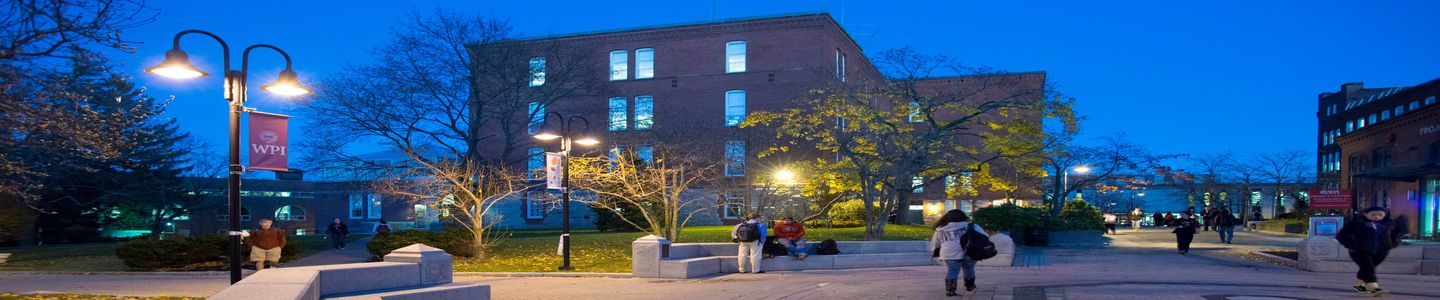
WPI’s residential campus in Worcester, Massachusetts creates a vibrant student community. Approximately 60% of undergraduate students live on campus, with first-year students required to reside in college housing. On-campus living correlates with higher academic performance, graduation rates, increased professor interaction, and deeper club engagement. Housing includes high-speed internet (crucial for Indian students maintaining family contact), streaming entertainment subscriptions, laundry facilities, and 24-hour facilities staff support.
Housing costs break down as follows: first-year dorm residence approximately $19,117 (?1,82,245) per academic year, or $10,200 (?97,206) for residence hall portion plus dining plan $8,700 (?82,959). Upper-class housing in college-owned apartments is comparable, while upper-class students choosing off-campus housing near the "Residential District" find apartments ranging from $600–900 (?5,718–8,577) monthly. Indian students often share apartments to reduce costs, bringing off-campus living to $500 (?4,765) monthly per person.
Student life at WPI is heavily structured around student clubs (150+ organisations), intramural sports, and project teams. The Indian Students Association (ISA) organises regular cultural events, celebrates Diwali, Holi, and Independence Day, and provides peer mentorship. The tight-knit Indian community helps newly arrived students navigate American college culture while maintaining cultural connections. Hindu, Muslim, and Sikh religious communities have prayer spaces and organised programming.
International student support is comprehensive: the International Student Office assists with visa, insurance, work authorisation, and cultural adaptation. Housing for international students includes guaranteed on-campus placement all four years (different from some US universities). Health insurance is mandatory; WPI’s student health plan costs approximately $2,000 (?19,060) annually and covers preventive care, illness, and emergency services.
Worcester city offers limited nightlife compared to Boston (45 minutes by car) but features tech companies, restaurants, museums, and city parks. Indian restaurants including Tamil Nadu, Dosa Garden, and Masala serve the local Indian community. The area is safe, with campus security visible and blue light emergency phones throughout. Most Indian students venture to Boston monthly for larger Indian events, temple visits, and social outings.
Worcester Polytechnic Institute — Career Outcomes & Graduate Placement
WPI’s Economic Science graduates secure positions at Fortune 500 companies, government agencies, investment banks, and consulting firms. The average starting salary for the Class of 2024 Business programme (which includes Economics) was $81,200 (?7,74,696). Sixty-eight percent of graduates secure full-time employment within six months of graduation; the remainder pursue advanced degrees or travel.
Major employers of WPI Economics graduates include Goldman Sachs (finance, risk analysis), McKinsey & Company (strategy consulting), Google (econometrics, market analysis), Microsoft (pricing strategy), World Bank (development economics), Federal Reserve Banks (monetary policy research), and Deloitte (consulting). Indian graduates have particularly strong placement in consulting and finance sectors due to their quantitative backgrounds and cultural understanding of Asian markets.
Internship and co-op opportunities accelerate career development. WPI’s seven-week internship model allows students to work with paying employers (typical $20–25 per hour, or ?1,906–2,383 monthly) during compressed semesters. The co-op program permits students to alternate semesters of work and study, graduating in five years with three semesters of professional experience. Indian students in co-op roles at Goldman Sachs, McKinsey, or Google strengthen career prospects significantly.
Graduate school placement is also strong. Approximately 25% of WPI Economics graduates pursue master’s degrees, many at top-tier programmes: MIT Sloan, Harvard Kennedy School, University of Chicago Booth, or Johns Hopkins SAIS. The BS/MS acceleration programme at WPI permits strong students to earn a master’s degree in five years, with the fifth year tuition reduced 50%. This is particularly valuable for Indian students aiming for PhD or research careers.
WPI’s International Projects Program enhances career prospects. Students conduct research in India, Thailand, Vietnam, Rwanda, Guatemala, and other countries, developing cross-cultural understanding and gaining project management experience. Economics students have analysed microfinance in rural India, cryptocurrency adoption in emerging markets, and informal economy structures. These international projects differentiate WPI graduates in global job markets.
Worcester Polytechnic Institute — Visa & Post-Study Work for Indian Students
Indian students admitted to WPI are eligible for the US F-1 student visa. The process begins once you receive your acceptance letter and I-20 document from WPI’s international student office. The I-20 confirms your enrollment, programme duration, and financial capability to fund your education. Indian applicants should apply for F-1 visa in India at the US Embassy or Consulate (Delhi, Mumbai, Chennai, Kolkata, or Hyderabad) approximately 4–6 weeks before departure.
F-1 visa appointment requires: valid passport, completed DS-160 online application form, application fee ($185, approximately ?1,763), proof of financial sponsorship (bank statements showing ?30–35 lakhs or equivalent), I-20 from WPI, and ability to demonstrate intent to return to India post-graduation. Approximately 30% of Indian applicants face secondary interview, where visa officers assess language skills, university choice rationale, and post-graduation plans. Clear answers increase approval probability.
On-campus work is permitted up to 20 hours weekly during the academic term and full-time during breaks. Most WPI Indian students work in the library, student center, or academic departments earning $15–17 (?143–162) hourly. This work helps cover incidental expenses but does not constitute career employment.
Optional Practical Training (OPT) is the most critical post-study benefit. Upon graduation, F-1 visa holders are eligible for 12 months of OPT to work in the United States. Economics, business, and mathematics graduates can qualify for STEM OPT extension, extending work authorisation to 36 months total (three years). This extension is critical for Indian graduates to gain US work experience, establish professional networks, and potentially transition to H-1B visa sponsorship.
H-1B visa sponsorship (specialty occupation visa) is available to WPI graduates employed by US companies. The employer must sponsor; Indian graduates of WPI are highly sought after. However, H-1B is lottery-based (only 65,000 regular + 20,000 advanced-degree visas issued annually for 500,000+ applications). Many Indian graduates pursue this pathway but should not assume sponsorship. Return to India, work in India, or pursue green card through employer sponsorship are realistic alternatives.
Return and work in India is increasingly common. With US degree + WPI alumni network + $81,200 starting salary equivalent experience, Indian graduates secure positions at McKinsey India, Goldman Sachs India, Google India, or Indian startups at competitive compensation. Many return within two years to manage family business or pursue entrepreneurship, leveraging US education as differentiator.
| Post-Study Pathway | Duration | Requirement | Notes for Indian Graduates |
|---|---|---|---|
| F-1 Status (Study) | 4 years | Full-time enrollment | On-campus work only; max 20 hrs/week during term |
| OPT (Non-STEM) | 12 months | Economics, Business majors eligible | Work authorization; no H-1B required |
| STEM OPT Extension | 24 additional months | Mathematics/Analytics-heavy Economics | Total 36 months work; supports H-1B transition |
| H-1B Visa | 3 years (renewable) | Employer sponsorship; lottery-based | Competitive; ~50% Indian grads pursue this path |
| Return to India | No limit | Cancel F-1 status; no sponsor needed | US degree highly valued in Indian job market |
Worcester Polytechnic Institute — Peer Institution Comparison
WPI’s Economic Science programme is strong but competes with other technical universities offering similar degrees. Peer institutions include Carnegie Mellon University (Pittsburgh, Pennsylvania), Rensselaer Polytechnic Institute (Troy, New York), Case Western Reserve University (Cleveland, Ohio), and Northeastern University (Boston, Massachusetts). Each offers rigorous programmes, but WPI offers the lowest tuition among peers while delivering equivalent career outcomes.
WPI’s competitive advantage: $60,765 tuition annually versus Carnegie Mellon $68,086, RPI $66,350, Case Western $68,596, and Northeastern $69,328. Total four-year cost at WPI ($326,204 / ?31,09,882) is approximately $8,000–13,000 (?76,240–1,24,090) less than peers. After average merit aid, net WPI cost falls to $202,980 (?19,34,340), approximately 15% lower than comparable programmes.
WPI’s project-based learning distinguishes it from traditional universities. The seven-week Global Project Program sends students to international locations to conduct original research or community development. Carnegie Mellon and Northeastern emphasize co-op placements; WPI balances both global projects and internships. This blend appeals to students seeking both international experience and professional development.
Placement outcomes are comparable: Carnegie Mellon graduates average $95,000+ (?9,05,350+) starting salary but face significantly higher competition. RPI and Case Western average $75,000–80,000 (?7,15,750–7,62,400). WPI’s $81,200 average places it solidly in the top tier, with lower relative cost. For Indian students, WPI’s significantly lower tuition combined with strong placement justifies choosing WPI over higher-priced alternatives.
| Institution | Location | Annual Tuition | Annual Tuition (INR) | 4-Year Total | Avg Starting Salary | US News Ranking |
|---|---|---|---|---|---|---|
| Worcester Polytechnic (WPI) | Worcester, MA | $60,765 | ?5,79,294 | $326,204 | $81,200 | #65 |
| Carnegie Mellon | Pittsburgh, PA | $68,086 | ?6,49,140 | $366,344 | $95,000+ | #22 |
| Rensselaer Polytechnic | Troy, NY | $66,350 | ?6,32,676 | $357,400 | $78,000 | #58 |
| Case Western Reserve | Cleveland, OH | $68,596 | ?6,53,837 | $369,584 | $76,000 | #48 |
| Northeastern University | Boston, MA | $69,328 | ?6,61,023 | $373,312 | $77,500 | #52 |
Worcester Polytechnic Institute — Living in Worcester, Massachusetts & Student Safety
Worcester is Massachusetts’ second-largest city with 190,000 residents. Located 45 miles west of Boston, it offers a smaller-city atmosphere with access to urban amenities. The city is home to 11 colleges and universities, creating a student-oriented community with restaurants, coffee shops, and entertainment catering to students. Worcester’s cost of living is 15–20% lower than Boston, stretching student budgets further.
Transportation within Worcester is primarily by foot or bus (Worcester Regional Transit Authority). Most students walk to campus from on-campus or nearby housing. Public transit costs approximately $50 (?477) monthly. For trips to Boston, the MBTA commuter rail connects Worcester to Boston in 45 minutes ($15 / ?143 each way). Many Indian students make monthly trips to Boston’s Indian restaurants, temples, and cultural events.
Indian restaurants in Worcester and nearby areas include Tamil Nadu (South Indian dosa, sambar, idli), Masala (Indian fusion), and Gopuram (vegetarian Indian). These establishments serve the large local Tamil and North Indian communities. Grocery stores like Patel Brothers (15 miles away in Boston) stock Indian spices, lentils, and frozen Indian foods. Indian students can cook traditional meals in dorm kitchens or off-campus apartments.
Safety on campus and in Worcester is strong. WPI’s campus is well-lit, with security patrol and blue light emergency phones throughout. Violent crime is rare; property theft is the primary concern. Indian students should exercise standard precautions: avoid isolated areas at night, secure dormitory doors, and travel in groups. The surrounding student neighbourhood ("Residential District") is safe during daytime but should be avoided alone after dark.
Weather is New England winter: temperatures drop to freezing December–March, with 30–50 inches of annual snowfall. Indian students from warmer climates should prepare for cold-weather living. Waterproof coat, thermal clothing, and waterproof boots are essential. The college provides snow removal on campus, and buses operate year-round. This transition is manageable with preparation and is considered part of the authentic New England college experience.
Frequently Asked Questions — WPI Economic Science for Indian Students
1. What are the minimum IELTS and TOEFL scores required for admission?
WPI requires TOEFL (internet-based) minimum 90 or IELTS minimum 6.5 for international students. The middle 50% of admitted international students score TOEFL 100–110 or IELTS 7.0–7.5. Indian students should aim for TOEFL 100+ or IELTS 7.0+ to be competitive, especially for scholarships. Both tests measure academic English proficiency; IELTS emphasises British English and conversational fluency, while TOEFL emphasises American English and academic listening. Most Indian students find TOEFL more familiar after US curriculum exposure.
2. Is there a separate application fee for international students, and what is the actual cost?
No application fee is charged by WPI for any students, domestic or international. This is unusually generous; many US universities charge $50–90 per application. WPI’s zero-fee policy removes financial barriers for Indian applicants, allowing students to apply without expense. However, standardised test fees (SAT $80, TOEFL $213, ACT $75) remain the student’s responsibility. English proficiency test fees cost approximately ?6,000–7,000 in India when conducted at authorised centres.
3. What scholarships are available specifically for Indian students or international students?
WPI offers merit-based scholarships to international students based on academic strength, standardised test scores, and extracurricular achievements. Early Decision admits automatically receive minimum $25,000 (?2,38,250) annual merit scholarship. Average merit aid across all admits is $30,806 (?2,93,806) annually. Indian students with exceptional academic records (CBSE/ICSE 90%+), SAT 1400+, or demonstrated leadership receive packages up to $35,000–40,000 (?3,34,050–3,81,200) annually. Need-based aid for international students is limited but available; families demonstrating financial need may receive additional institutional grants. External scholarships from Inlaks Foundation (up to ?10 lakhs annually), Spartan India Scholarship (?2–5 lakhs), and state-specific schemes should be explored separately.
4. What is the estimated cost of living in Worcester specifically for Indian students?
On-campus housing is approximately $19,117 (?1,82,245) annually or $10,200 (?97,206) for dorms with $8,700 (?82,959) dining plan. Off-campus housing in the Residential District averages $600–900 (?5,718–8,577) monthly per person; when shared with roommates, typically $500–600 (?4,765–5,718) monthly. Personal expenses (clothing, toiletries, phone, entertainment) are budgeted at $1,200–1,500 (?11,436–14,295) annually. With careful budgeting and on-campus work, Indian students can manage living expenses within the institutional budget. Cooking Indian meals at home reduces food costs significantly compared to dining plan.
5. Can international students work after graduation, and what are the pathways to staying in the US?
Yes. F-1 visa holders are eligible for 12 months of Optional Practical Training (OPT) immediately after graduation to gain work experience. Economics and mathematics majors can qualify for the STEM OPT extension, adding 24 additional months of work authorisation for 36 months total. This three-year window allows building professional networks, securing H-1B sponsorship, or returning to India with US experience. H-1B visa sponsorship (specialty occupation visa) is possible but lottery-based; employers must sponsor and only 85,000 H-1B visas are allocated annually for 500,000+ applications. Alternatively, many WPI Economics graduates return to India, where a US degree from a ranked university commands premium salaries (?25–40 lakhs) in consulting, finance, and technology sectors. Staying in the US is not the only successful pathway; returning to India with US education is equally valued and increasingly common.
Tuition Fees
| Year | 1st Year Fees |
|---|---|
| Tuition Fees | ₹5706126 (USD 59700) |
Other Expenses
| Head | Avg Cost Per Year |
|---|---|
| Housing | ₹944330 (USD 9880) |
| Meal | ₹671927 (USD 7030) |
Previous Year Tuition Fees
| Year | 1st Year Fees |
|---|---|
| 2023 | ₹5352480 (USD 56000) |
| 2021 | ₹5222491 (USD 54640) |
Scores Required

Do you think the Rankings are wrong ? Report Here
Key Resources for Your Study Abroad Journey


Scholarship Grants & Financial Aids
| Name | Scholarship Per Student | Level of Study | Type | |
|---|---|---|---|---|
| BeArt Presets-Academic Scholarship | Scholarship per student₹ 2.4 L/Yr$2,500 | Level Of StudyBachelor | TypeMerit-Based | |
| Chuan Ai Lu Engstrom Memorial Scholarship | Scholarship per student₹ 95,580/Yr$1,000 | Level Of StudyBachelor | TypeMerit-Based | |
| Jagdish Bhagwati Fellowship | Scholarship per studentVariable Amount | Level Of StudyBachelor | TypeCollege-Specific | |
| Comindware Scholarship | Scholarship per student₹ 3.8 L/Yr$4,000 | Level Of StudyApprenticeship | TypeMerit-Based | |
| Forktip Women’s- Innovation Scholarship | Scholarship per studentVariable Amount | Level Of StudyBachelor | TypeCollege-Specific | |
| Jane M. Klausman Women in Business Scholarship | Scholarship per student₹ 4.8 L/Yr$5,000 | Level Of StudyBachelor | TypeMerit-Based |
Similar Programs
| Program | Important Date | Total Fees | Median Exams Score | Action |
|---|---|---|---|---|
-- | INR 32.7 L/Yr USD 34,200 /Yr |
| ||
-- | INR 57.1 L/Yr USD 59,700 /Yr |
| ||
Early Decision I Application Deadline for 2027 Intake (1st Nov 2026) Notification for Early Decision I Application Deadline (15th Dec 2026) Regular Decision Application Deadline for 2027 Intake (2nd Jan 2027) Early Decision II Application Deadline for 2027 Intake (2nd Jan 2027) Notification for Early Decision II Application Deadline (15th Feb 2027) Notification for Regular Decision Application Deadline (1st Apr 2027) Spring Freshmen Application Deadline for 2027 Intake (1st Nov 2027) Notification for Spring Freshmen Application Deadline (15th Dec 2027) | INR 69 L/Yr USD 72,180 /Yr |
|


Do you think the Dates are wrong ? Report Here

interested in this College ?
Follow & Share this college to get information about admission.



Comments