

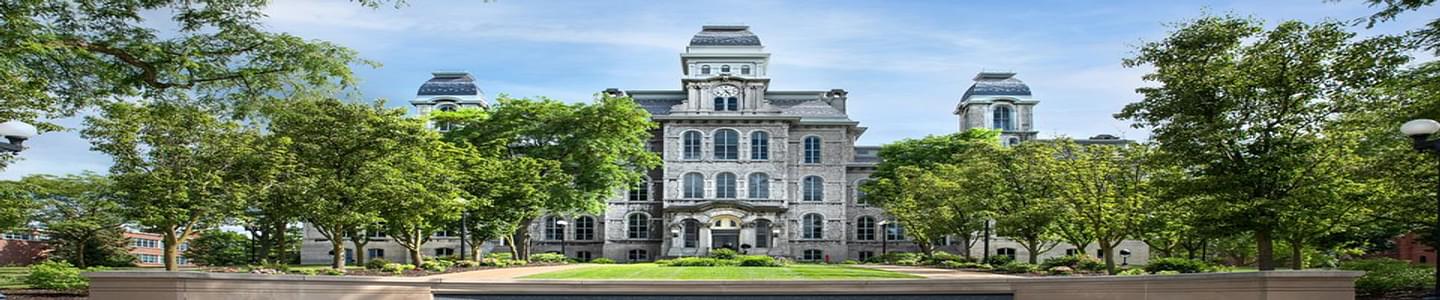


Bachelor of Science [BS] (Aerospace Engineering with Business Administration)
Field of Study:
$66,580 /Yr

Syracuse University Bachelor of Science Aerospace Engineering is a four-year undergraduate degree that trains students to design, test, and improve aircraft and spacecraft. The programme combines rigorous physics and mathematics with hands-on labs, wind tunnel work, and real-world projects for NASA and industry. Domestic and international students begin together in fall and spring intakes. Total annual cost reaches US$89,760 (INR 85.57 Lakhs) including tuition, fees, and housing. English language proficiency and SAT/ACT scores are required. The programme is distinctive for access to advanced simulators, subsonic and supersonic wind tunnels, and capstone projects with major employers like Boeing, Lockheed Martin, and SpaceX.
Syracuse’s aerospace engineering curriculum emphasises hands-on learning over pure theory. Students build rockets, design aircraft, and complete industry-sponsored design projects in teams. The College of Engineering ranks 73rd nationally by US News, reflecting solid research output and employer recognition. Ideal applicants combine strong mathematics ability with curiosity about how aircraft work and resilience for a demanding workload.
- Access to Fidelity MOTUS 622i flight simulator and subsonic wind tunnels for practical design verification.
- Capstone projects with real deliverables for NASA, Boeing, and other aerospace contractors.
- Strong placement record: 93% of 2022 graduates employed or pursuing graduate studies within six months.
Current Admission Status
Applications for the Fall 2027 intake are Open. International student deadline: 15 November 2026.
Indian applicants planning to apply should initiate transcript evaluation with WES or NACES immediately if attending a non-US high school. Processing takes 4-6 weeks. Spring 2027 applications close 5 January 2027, but on-campus housing availability in spring is limited.
Also Check: Syracuse University Bachelor of Science Aerospace Engineering Admission
Syracuse University Bachelor of Science Aerospace Engineering Fees and Living Costs 2026
Syracuse charges the same tuition for all undergraduate engineering majors regardless of specialisation. International students pay the same fees as domestic students. The full annual cost shown below includes housing, health insurance, and engineering lab fees.
| Cost Component | Amount (USD) | Amount (INR) |
|---|---|---|
| Tuition (annual) | US$69,180 | INR 65.93 Lakhs |
| Room and Board | US$20,580 | INR 19.63 Lakhs |
| Health Insurance (mandatory) | US$2,872 | INR 2.74 Lakhs |
| Total Annual Cost | US$89,760 | INR 85.57 Lakhs |
| Four-Year Total | US$359,040 | INR 3.42 Crore |
All INR conversions in the article use a conversion rate of US$ 1 = INR 95.3 as of June 2026. Rates fluctuate daily, verify before applying.
- Room and Board includes a single or shared dormitory room, meal plan, and utilities within campus housing.
- Health insurance is mandatory and billed to the account of all international students; no opt-out permitted.
- Engineering lab fees are embedded in the tuition charge and do not scale by the number of lab classes taken.
- No additional ancillary fees for aerospace engineering are charged; compare this to some universities charging US$500–1,000 annually for engineering specialisations.
Cost Reality for Indian Families: A four-year degree totalling INR 3.42 Crore requires substantial investment or a combination of scholarships and education loans. Banks in India typically finance 80% of the cost for students at US institutions ranked in the top 150; explore loans through ICICI, HDFC, or SBI before application.
Cost of Living in Syracuse for Aerospace Engineering Students
On-campus housing is included in the room and board figure above. Off-campus apartments are available but not recommended for first-year international students due to visa rules.
| Expense Category | Monthly Estimate (USD) | Monthly Estimate (INR) |
|---|---|---|
| Housing (on-campus included in fees) | — | — |
| Food (meal plan included) | — | — |
| Personal Care and Incidentals | US$200 | INR 19,060 |
| Transport (local bus pass) | US$75 | INR 7,148 |
| Books and Course Materials | US$150 (averaged annually) | INR 14,295 |
Living Cost Insight: Syracuse winter is severe and isolated. Students commonly underestimate clothing and heating costs. Budget an additional US$200–400 in November through February for winter gear. On-campus meal plans are adequate but monotonous; many engineering students spend US$50–100 monthly on supplementary food from local shops.
Read More: Syracuse University Fees
Syracuse University Bachelor of Science Aerospace Engineering Admission 2026
Syracuse admits approximately 43% of applicants across all programmes. Engineering is more competitive; aerospace engineering acceptance rates are not publicly disclosed, but engineering applicants typically have SAT scores above 1450 and GPAs above 3.8. The university admits both domestic and international students on the same academic basis.
| Intake | Application Period | Decision Timeline |
|---|---|---|
| Fall 2027 | August 2026 – 15 November 2026 | Decisions by 1 April 2027 |
| Spring 2028 | September 2027 – 5 January 2028 | Rolling (typically 4 weeks) |
- Syracuse uses the Common Application; the application fee is US$75 (INR 7,148).
- International students from non-English-speaking countries must submit either SAT/ACT scores (with English section) or TOEFL/IELTS results.
- Transcripts from Indian schools must be submitted with certified English translation by a notary.
Academic Eligibility
Applicants to aerospace engineering are expected to have completed secondary-school coursework in mathematics through calculus, chemistry, and physics. STEM grades are weighted more heavily than humanities; a student with 9.0 CGPA overall but 8.5 in science subjects will be at a disadvantage compared to one with 8.5 overall but 9.5 in science.
- Minimum GPA expectation: 3.7 out of 4.0 (equivalent to 92-93% in Indian CBSE/ICSE boards).
- Standardised test requirement: SAT composite score of 1450 or higher, or ACT composite of 33 or higher.
- Students scoring below these ranges are rarely admitted to engineering, though holistic review may consider low-STEM applicants with exceptional extracurricular achievements.
English Language Proficiency
International students must demonstrate English proficiency by submitting one of the following test scores. If you have studied in English-medium schools for the past four years, some waivers are available; contact admissions@syr.edu to discuss.
| Test | Minimum Overall | Minimum Reading/Speaking (if applicable) | Validity |
|---|---|---|---|
| TOEFL iBT | 85 | Reading 20, Listening 20, Speaking 20, Writing 20 | 2 years |
| IELTS | 6.5 | No single section below 6.0 | 2 years |
| Duolingo English Test | 110 | No band below 90 | 2 years |
- TOEFL iBT 85 is a low bar for engineering; strong aerospace students typically score 95–105 to access lab-heavy coursework without additional writing support.
- IELTS 6.5 is equivalent to TOEFL 79–93; if you score 6.5 exactly, request a waiver for a pre-session English course—the University offers an optional two-week bridge course in August before the fall semester.
- Duolingo is accepted and often faster to schedule than TOEFL or IELTS, especially for Indian applicants; the test costs US$49 and results are available within 48 hours.
Honest Take on Admissions: Syracuse admits 43% overall, but engineering admits closer to 25–30%. Indian applicants face no formal discrimination, but a student with a 3.6 GPA and 1400 SAT will likely be waitlisted or rejected, whereas a domestic student with similar scores may be admitted. Aim for 1470+ SAT and 9.2+ CGPA to be competitive.
The university ranks 73rd nationally by US News. This ranking reflects the entire institution; engineering is not separately ranked by US News, though aerospace is competitive with other top-100 engineering schools in the United States.
Also Check: Syracuse University Profile
Syracuse University Bachelor of Science Aerospace Engineering Application 2026
The application cycle begins in August and closes in mid-November for fall intake. Decisions are released in April. International students should submit applications by October to allow time for visa processing if admitted.
| Milestone | Date | Action Required |
|---|---|---|
| Application opens | 1 August 2026 | Register with Common Application, fill in Syracuse supplemental essay |
| Transcript submission deadline | 15 November 2026 | Request certified English-translated transcripts; school must submit directly to Syracuse |
| Test score submission deadline | 15 November 2026 | SAT/ACT and TOEFL/IELTS scores sent via official testing agency to code 6629 (Syracuse) |
| Decision notification | 1 April 2027 | Check the portal for admission decision, scholarship offer, and financial aid package |
| Deposit deadline | 1 May 2027 | Submit non-refundable US$500 deposit and confirm enrollment |
| I-20 request | By 1 May 2027 | Contact international admissions; I-20 issued typically within 2 weeks |
| Visa interview appointment | June–July 2027 | Schedule F-1 visa interview at US embassy or consulate in your country; expect 1-4 week wait |
| Fall semester begins | 25 August 2027 | Arrive in Syracuse by 22 August for international student orientation |
- Syracuse uses rolling admissions; applicants heard earlier may receive larger merit-based scholarships.
- Supplemental essay typically asks about your interest in engineering or Syracuse specifically; a generic response will not strengthen your application.
- Demonstrated interest is not considered; attending an info session does not improve your odds.
Application Tip for Indian Students: Many Indian applicants submit applications in the final two weeks before the deadline. The admissions office experiences a surge in transcripts and test scores in November, delaying review. Submit by 1 November to avoid the queue and increase chances of earlier decision notification.
Read More: Syracuse University Rankings
Syracuse University Bachelor of Science Aerospace Engineering Scholarships 2026
Syracuse awards merit-based scholarships to international students. The average merit award is US$22,500 (INR 21.46 Lakhs), reducing the annual cost from US$89,760 to US$67,260 (INR 64.10 Lakhs). Approximately 65% of Syracuse undergraduates receive merit aid. Scholarships are awarded automatically upon admission; you do not need to submit a separate application.
| Scholarship Type | Range (USD) | Range (INR) | Basis |
|---|---|---|---|
| Merit Scholarship (minimum) | US$10,000 | INR 9.53 Lakhs | GPA + test scores |
| Merit Scholarship (maximum) | US$69,180 | INR 65.93 Lakhs | Full tuition (rare; typically awarded to first-generation or economically disadvantaged students) |
| Average Merit Award | US$22,500 | INR 21.46 Lakhs | Academic excellence |
- Merit scholarships are awarded automatically at the time of admission based on your academic profile; no essay or additional application is required.
- International students are eligible for merit aid on the same basis as domestic students; no separate international scholarship pool exists.
- Full-tuition scholarships (US$69,180) are awarded to fewer than 1% of admitted students and typically require demonstrated financial hardship or exceptional circumstances.
Scholarship Reality: With a 3.8 GPA and 1480 SAT, expect an award of US$18,000–25,000, reducing annual cost to US$64,760–71,760. With a 3.6 GPA and 1400 SAT, expect US$10,000–15,000, leaving annual out-of-pocket at US$74,760–79,760. Merit awards do not cover living expenses or health insurance.
Check Out: Syracuse University Scholarships and Financial Aid
Syracuse University Bachelor of Science Aerospace Engineering Salary 2026
Aerospace engineering graduates from Syracuse enter the workforce with strong earning potential. The median salary for a bachelor’s degree graduate is US$71,417 (INR 68.07 Lakhs) within the first five years. Entry-level aerospace engineers at major contractors earn more.
| Career Stage | Typical Job Title | Salary (USD, Gross) | Salary (INR, Gross) |
|---|---|---|---|
| 0–2 years | Aerospace Engineer / Design Engineer | US$69,362 – 79,702 | INR 66.13 – 75.99 Lakhs |
| 2–4 years | Senior Aerospace Engineer | US$85,000 – 105,000 | INR 81.01 – 100.07 Lakhs |
| 5+ years | Lead Engineer / Engineering Manager | US$110,000 – 140,000 | INR 1.05 – 1.33 Crore |
Source: Syracuse University Class of 2022 and 2025 Engineering Outcomes Reports; Payscale.com salary data for Syracuse alumni in aerospace roles.
- Entry salaries vary by employer: NASA and Lockheed Martin pay on the higher end (US$75,000–82,000); smaller contractors pay US$65,000–72,000.
- Take-home after federal income tax (22% bracket), Social Security (6.2%), Medicare (1.45%), and state tax (5% New York) is approximately 35–38% of gross, or US$44,000–52,000 in year one.
- Aerospace engineering salaries scale faster than other engineering disciplines; by year 10, senior engineers at major contractors earn US$140,000–180,000.
ROI Reality: A four-year degree costs INR 3.42 Crore. First-year salary is INR 66–76 Lakhs. After US taxes and living expenses, net savings are minimal year one. However, career earnings over 30 years exceed INR 3.0 Crore, making the degree a sound long-term investment for students who secure permanent residency or return to India after five years with H-1B sponsorship.
Also Check: Syracuse University Graduate Outcomes
United States Visa and Work Pathways Aerospace Engineering 2026
International students studying in the United States are sponsored on the F-1 student visa. This visa permits full-time study and on-campus work during the semester, plus internships and practical training after graduation.
- F-1 Visa permits four years of study (or the full duration of your programme if longer than four years).
- On-campus work is limited to 20 hours per week during the semester and 40 hours during official breaks (winter and summer).
- Optional Practical Training (OPT) allows 12 months of paid full-time work in the United States after your degree, extendable to 36 months if your field is designated STEM (Aerospace is STEM-eligible).
- H-1B skilled worker visa is available after OPT expires; the annual cap is 65,000 visas, and employers must sponsor you. Median waiting time is 3–5 years due to the visa lottery. Salary threshold for sponsorship is US$60,000 (Aerospace typically exceeds this).
- Spouse and dependent visas (F-2) are available; dependents cannot work or study in the United States but can apply for dependent visas.
Visa Reality for Aerospace Engineers: Aerospace engineering roles are in high demand with US defense and space contractors. Major employers (Lockheed Martin, Boeing, SpaceX, Raytheon) regularly sponsor H-1B applications for engineering hires. Your probability of securing sponsorship is high if your employer is a defence contractor; smaller firms may decline due to sponsorship costs (US$5,000–10,000). Plan to spend 3–5 years on H-1B before potentially transitioning to permanent residency sponsorship through Employment-Based Second Preference (EB-2).
Read More: United States Student Visa and Work Authorisation
Syracuse University Bachelor of Science Aerospace Engineering Ranking 2026
Aerospace engineering is not separately ranked by major international ranking bodies. The University as a whole ranks 73rd nationally by US News and in the 401–500 band by Times Higher Education. Engineering programmes at Syracuse are not subject-ranked by QS or other discipline-specific rankers, so a dedicated aerospace ranking does not exist.
For context, other aerospace engineering programmes in the top 100 in the United States include MIT (1st), Stanford (4th), Georgia Tech (6th), and Purdue (8th). Syracuse’s 73rd overall ranking places it in the second tier of US universities but reflects solid engineering research output and employer recognition. The programme is known for hands-on learning rather than pure research rankings.
Honest Take: Ranking is one factor among many. A degree from Syracuse Aerospace will open doors at major US contractors; Indian employers and immigration officers recognise the university. However, if you are admitted to MIT or Caltech as well, those institutions offer higher prestige. Conversely, if you are choosing between Syracuse and a lower-ranked school, Syracuse is the clear choice for aerospace engineering in the United States.
The Syracuse Aerospace Engineering degree bridges rigorous theory and hands-on application in a competitive programme. International applicants face an acceptance rate of approximately 25–30% (lower than the stated 43% for the overall university), requiring strong academics and demonstrated engineering interest. The financial commitment is substantial—INR 3.42 Crore over four years—but merit scholarships reduce this by 20–30% for competitive applicants. Graduates secure roles at NASA, SpaceX, Boeing, and other major contractors, with starting salaries of INR 66–76 Lakhs and pathways to H-1B sponsorship and eventual permanent residency.
Bachelor of Science Aerospace Engineering FAQs
Ques. Is the Bachelor of Science in Aerospace Engineering at Syracuse open to international students from India?
Ans. Yes. Syracuse admits international students on the same academic basis as domestic applicants. Approximately 14,500 undergraduates from 120 countries enrol at Syracuse; international engineering students comprise 15–20% of engineering cohorts. Indian nationals do not face discrimination, though acceptance rates for international students in engineering are typically 25–30%, compared to 43% overall. You must demonstrate English proficiency via TOEFL, IELTS, or Duolingo and submit SAT or ACT scores.
Ques. What is the total cost of the degree for an Indian student, including living expenses and books?
Ans. Tuition plus room, board, and health insurance total US$89,760 annually (INR 85.57 Lakhs), or INR 3.42 Crore over four years. Additional personal expenses (textbooks, clothing, transport, phone) add US$400–600 per month (INR 38,000–57,000), or approximately US$5,000–7,000 annually (INR 4.77–6.68 Lakhs). Total four-year cost ranges from INR 3.61 Crore to INR 3.75 Crore, depending on lifestyle. Merit scholarships reduce tuition by 10–100%, but not living expenses. Many students work part-time on campus (20 hours per week, US$15–17 per hour) to offset this.
Ques. Is a business administration component offered alongside the Aerospace Engineering degree?
Ans. Syracuse offers a five-year dual-degree programme: BS in Aerospace Engineering plus MBA in Business Administration. This is a sequential programme (three years engineering, two years MBA), not a combined four-year bachelor’s. Additionally, engineering students may earn a business minor through elective coursework, though this does not modify the degree title. If you are interested in management or entrepreneurship, the five-year dual-degree is the formal option; a business minor is not prominently marketed and requires advising approval.
Ques. What are the prospects for securing an H-1B visa and long-term residency after graduation?
Ans. Aerospace engineering graduates have strong H-1B sponsorship prospects. Major US defence and space contractors (Lockheed Martin, Boeing, Raytheon, SpaceX, NASA contractors) actively hire and sponsor international engineers. You are eligible for 12–36 months of Optional Practical Training (OPT) immediately after graduation, which allows you to work full-time without visa restrictions. After OPT, H-1B sponsorship is common; visa lottery waiting times are 3–5 years. Permanent residency sponsorship typically begins after 2–3 years of H-1B employment, extending the total timeline to US residency to 5–8 years from graduation. Not all employers sponsor, so job search strategy and employer choice are critical.
Ques. How demanding is the coursework, and what is the typical GPA for aerospace engineering graduates?
Ans. Aerospace engineering is one of the three most challenging engineering majors, alongside chemical and aerospace engineering. Coursework includes advanced calculus, differential equations, thermodynamics, aerodynamics, propulsion systems, and design-intensive capstone projects. First-year students take 15–18 credit hours per semester, with six to eight hours in STEM courses. Average GPA for engineering majors is 3.2–3.4, slightly lower than the university-wide average of 3.5. International students and first-generation students report longer study hours and greater tutor usage. Expect 40–50 hours per week of study time outside class. Success requires strong mathematics background and disciplined time management, not exceptional innate ability.
Tuition Fees
| Year | 1st Year Fees |
|---|---|
| Tuition Fees | $66580 |
Other Expenses
| Head | Avg Cost Per Year |
|---|---|
| Room and Board | $16356 |
| Health Insurance | $2664 |
Previous Year Tuition Fees
| Year | 1st Year Fees |
|---|---|
| 2024 | $63710 |
| 2023 | $61310 |
| 2022 | $13980 |
| 2021 | $54270 |
Important Dates
| Event | Application Date |
|---|---|
| Application Deadline for Spring 2026 Intake | |
Scores Required
Required Document List
Complete Application
Application Fee
Official Transcripts
English Language Requirements
A copy of the Passport
Documentation of Financial Support
One academic recommendation

Do you think the Rankings are wrong ? Report Here
Key Resources for Your Study Abroad Journey


Course Guides
BBA in USA: Universities, Fees, Admissions 2024-25, & Job Opportunities
BTech in USA: Deadlines, Fees, Scholarships & Jobs
STEM Courses in USA in 2025: Eligibility, Fees, Job Opportunities
Scholarship Grants & Financial Aids
| Name | Scholarship Per Student | Level of Study | Type | |
|---|---|---|---|---|
| Ritchie-Jennings Memorial Scholarship Program | Scholarship per student$ 10,000/Yr$10,000 | Level Of StudyBachelor | TypeMerit-Based | |
| Axol Science Scholarship | Scholarship per student$ 2,000/Yr$2,000 | Level Of StudyBachelor | TypeCompany-Sponsored | |
| VueVille Future Technology Scholarship | Scholarship per student$ 1,000/Yr$1,000 | Level Of StudyBachelor | TypeMerit-Based | |
| R&D Systems Scholarship | Scholarship per student$ 1,500/Yr$1,500 | Level Of StudyBachelor | TypeMerit-Based | |
| BL Mandhana Scholarships | Scholarship per student$ 10,000/Yr$10,000 | Level Of StudyBachelor | TypeMerit-Based | |
| Go Clean Scholarship | Scholarship per student$ 3,500/Yr$3,500 | Level Of StudyBachelor | TypeMerit-Based |
Similar Programs
| Program | Important Date | Total Fees | Median Exams Score | Action |
|---|---|---|---|---|
Application Deadline for Spring 2027 Intake (15th Nov 2026) Early Decision Deadline for 2027 Intake (15th Nov 2026) Regular Decision Deadline for 2027 Intake (5th Jan 2027) Early Decision II Deadline for 2027 Intake (5th Jan 2027) | USD 66,580 /Yr |
|

Do you think the Dates are wrong ? Report Here
interested in this College ?
Follow & Share this college to get information about admission.



Comments